

The fastest way to become the house everyone talks about is to assume the rules don’t apply because nobody posted them. Property lines, parked cars, late mowers, a photo of the block party with someone’s kid in the background — none of it comes with a handbook. You absorb it by living next to people, and sometimes by getting it wrong first. These are the quiet agreements that keep a street civil. Break one and you’ll feel the chill before anyone says a word. Get them right and your corner of the world runs smoother than you’d expect.
47. Return a Neighbor’s Wave
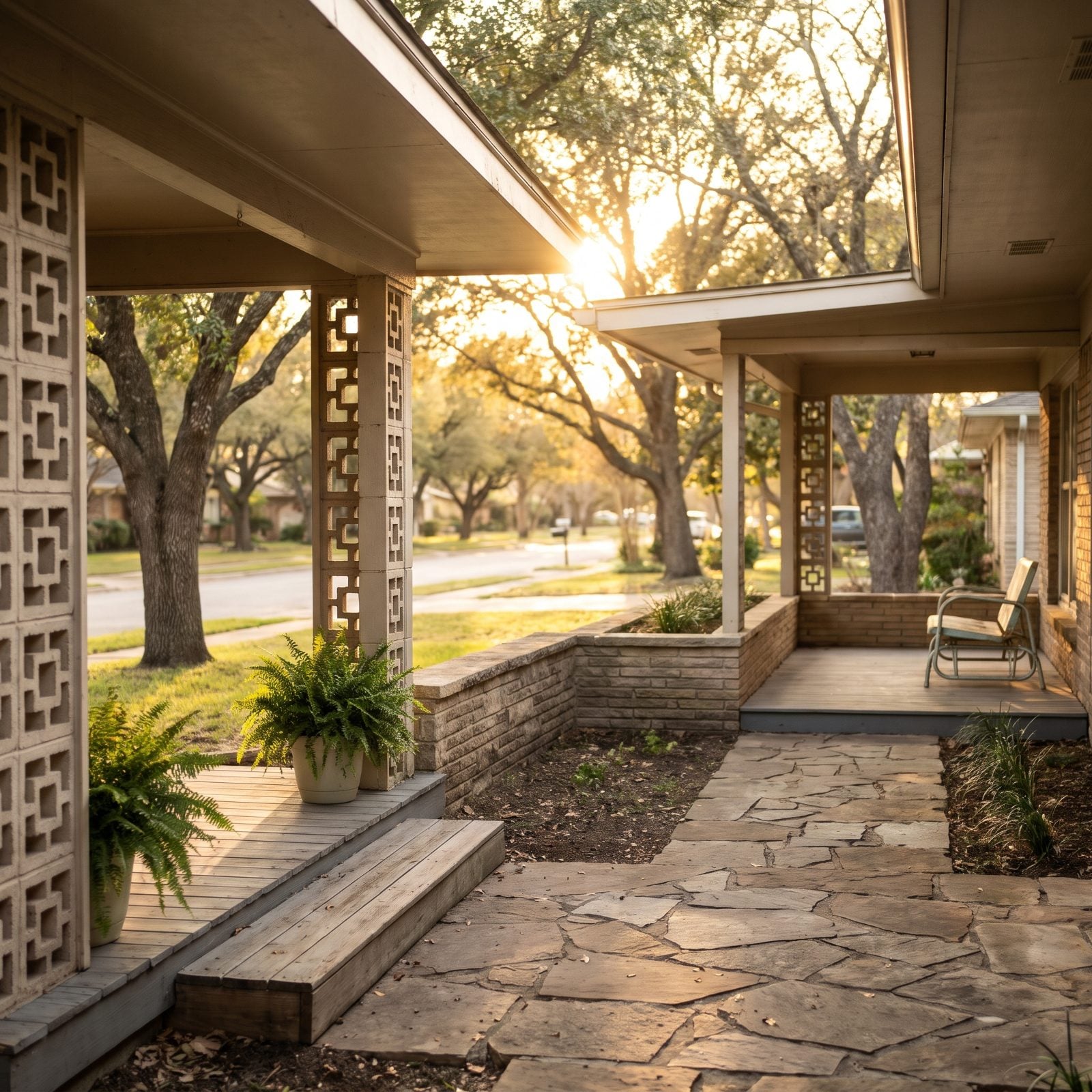
The smallest gesture on the block carries the most weight. A wave costs nothing and signals everything: I see you, we’re fine, this is a street where people acknowledge each other. Skip it twice and you’ve quietly told the person next door you’d rather they didn’t exist.
In order to come up with the very specific design ideas, we create most designs with the assistance of state-of-the-art AI interior design software. Also, assume links that take you off the site are affiliate links such as links to Amazon. this means we may earn a commission if you buy something.
You don’t have to be warm, and you don’t have to stop and chat — just lift a hand from the driveway. That tiny loop of recognition holds up everything else on this list.
46. Introduce Yourself Soon After Moving In
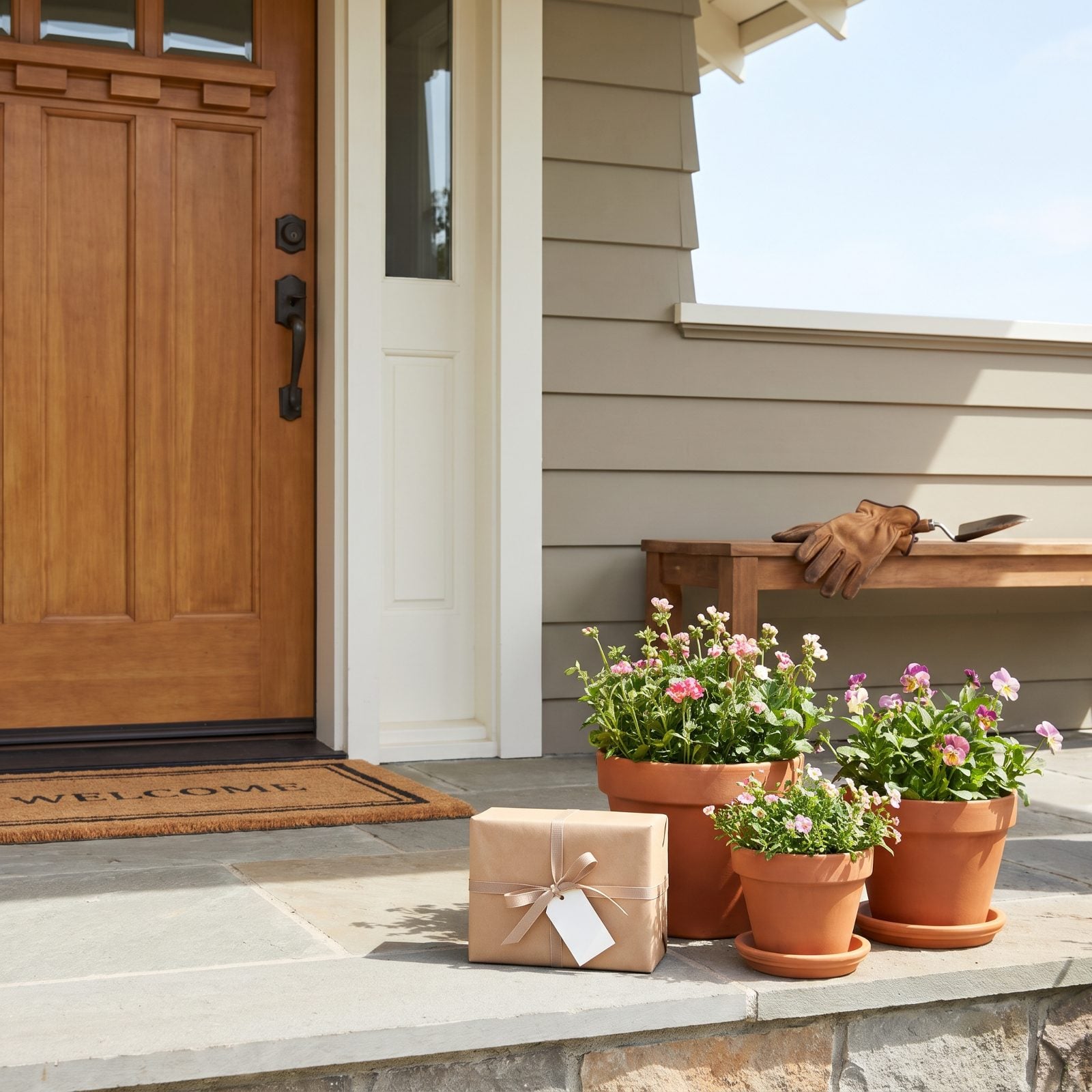
The first two weeks in a new house are a free pass, and it expires fast. Walk next door, say hi, give your name. That’s the whole ritual.
Do it early and you’re the pleasant new household. Wait six months and the same knock feels strange, like you’re apologizing for having ignored them. The window matters more than the words. We moved into a place once and dragged our feet on this for an entire season, and the first real conversation was about a drainage problem — which is the worst possible way to meet someone.
45. Bring Minor Grievances Directly to the Neighbor First
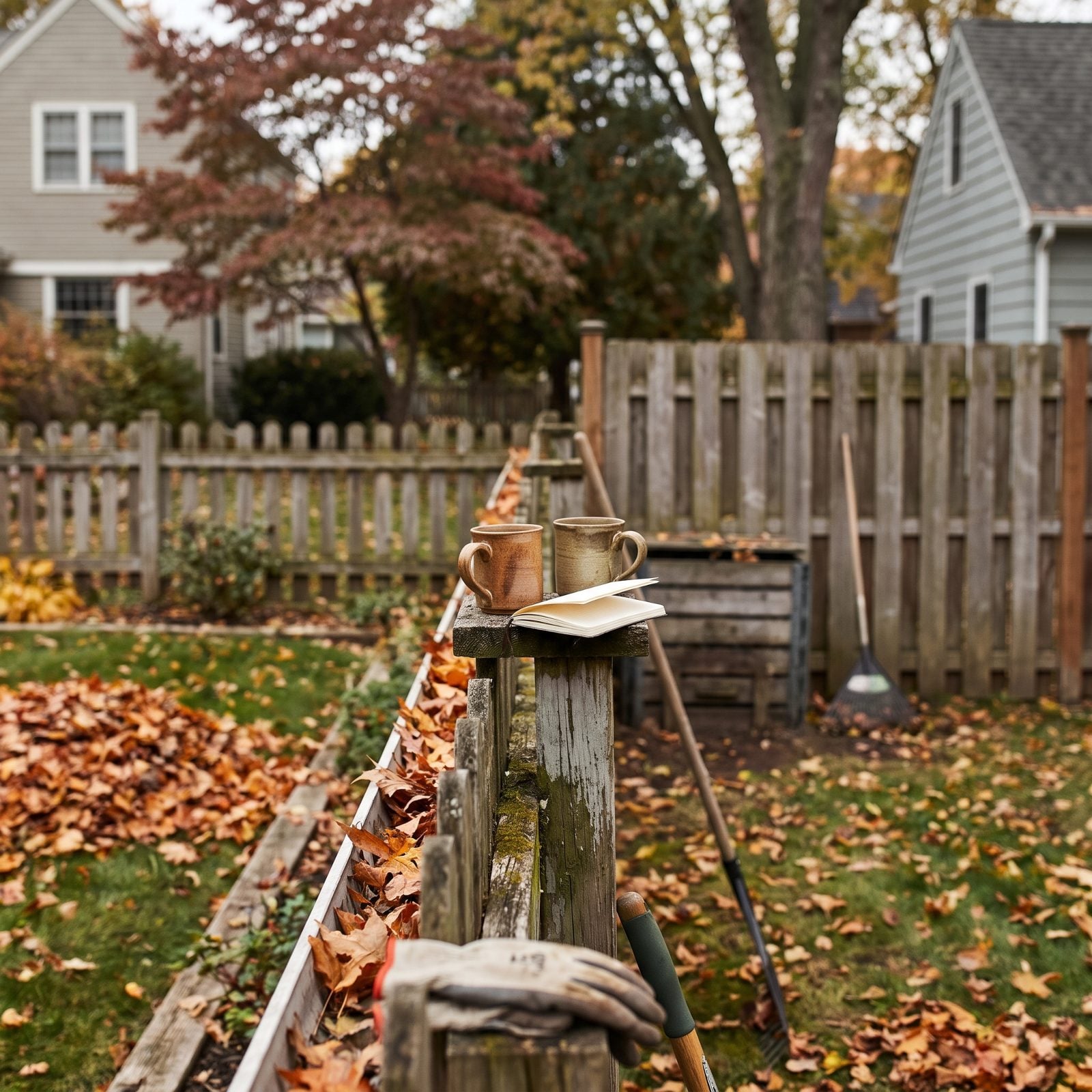
Say your neighbor’s tree drops leaves all over your gutters every October. You have two options. Knock on their door and mention it, calmly, like two adults who share a fence. Or call the city, post about it, or stew for three years until you explode over something unrelated.
The first option almost always works. Most people have no clue they’re causing a problem until someone tells them. Going over their head first is the move that turns a minor annoyance into a feud, and nobody forgets being reported before they were asked.
44. Keep Neighborhood Group Chats Useful, Not Punitive

The block chat has a job, and it’s narrow. Lost dog. Suspicious car. Package thief caught on a doorbell cam. A heads-up that the water’s getting shut off Tuesday.
What it is not: a courtroom. The moment it becomes a place to name and shame the family with the long grass or the guy who parks a foot over the line, people start muting it or quietly leaving. A good group chat makes the street feel watched over. A bad one makes it feel watched. Those are very different feelings to live inside.
43. Leave Other Households’ Private Business Alone

You’ll notice things — whose car came home late, which marriage sounds tense through an open window, who had a visit from a tow truck. Living close means seeing more than you meant to.
The etiquette is simple: file it away and let it go. Speculating about a neighbor’s job loss, divorce, or health to the rest of the block is the fastest way to become the person everyone shares their fence line with but tells nothing.
42. Ask Before Posting Photos Showing Neighbors or Their Children
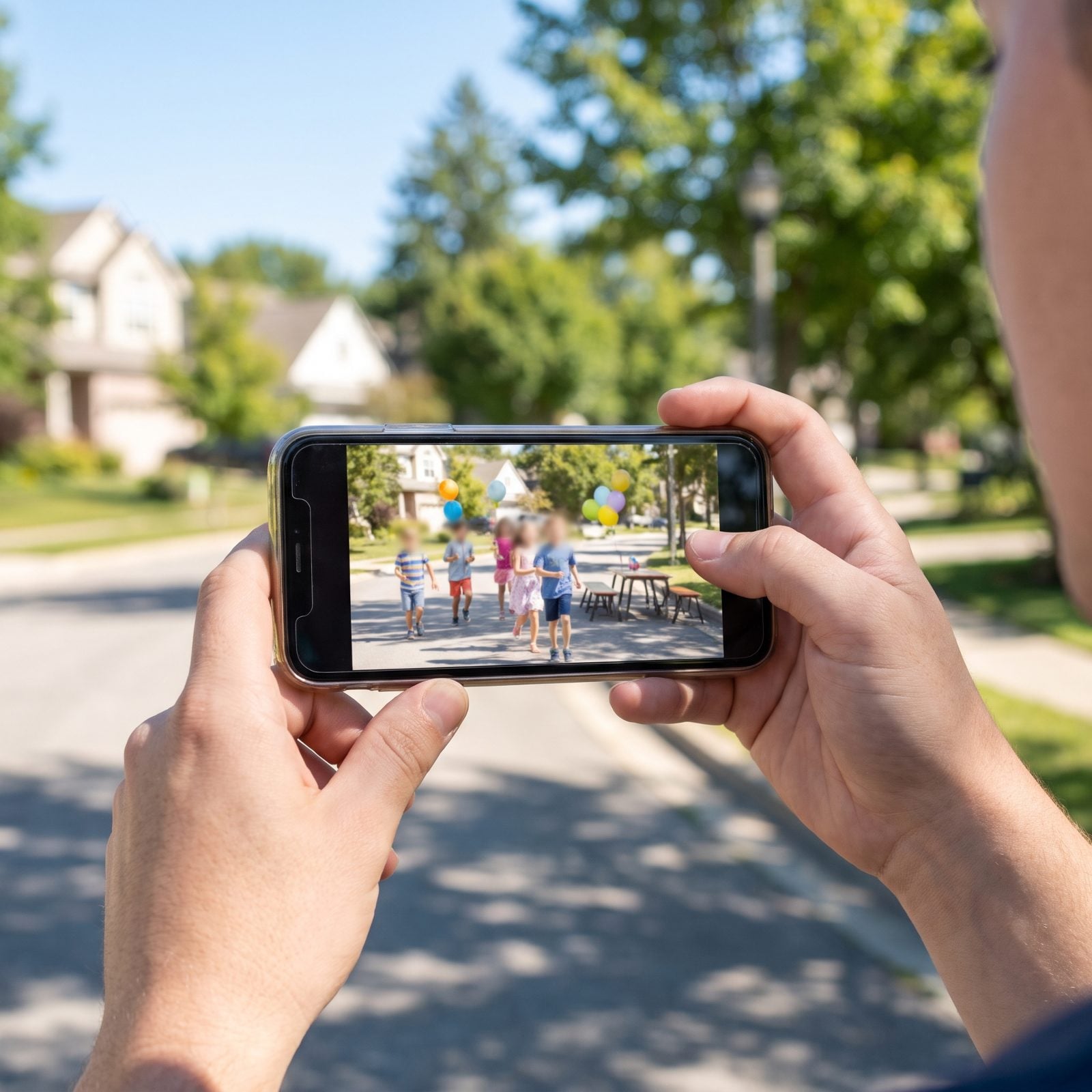
You snap a nice shot at the block party. The light’s good, the kids are laughing, you want to post it. One quick check first: did you get the parents’ okay to put their children online?
Plenty of families have firm rules about their kids never appearing on social media, and they shouldn’t have to find their child on your public feed to learn you ignored it. Same courtesy for adults who’d rather not be tagged standing in their own front yard. Ask, or crop them out. Ten seconds now saves a very awkward conversation later.
41. Repay Favors Instead of Treating Them as Free Services
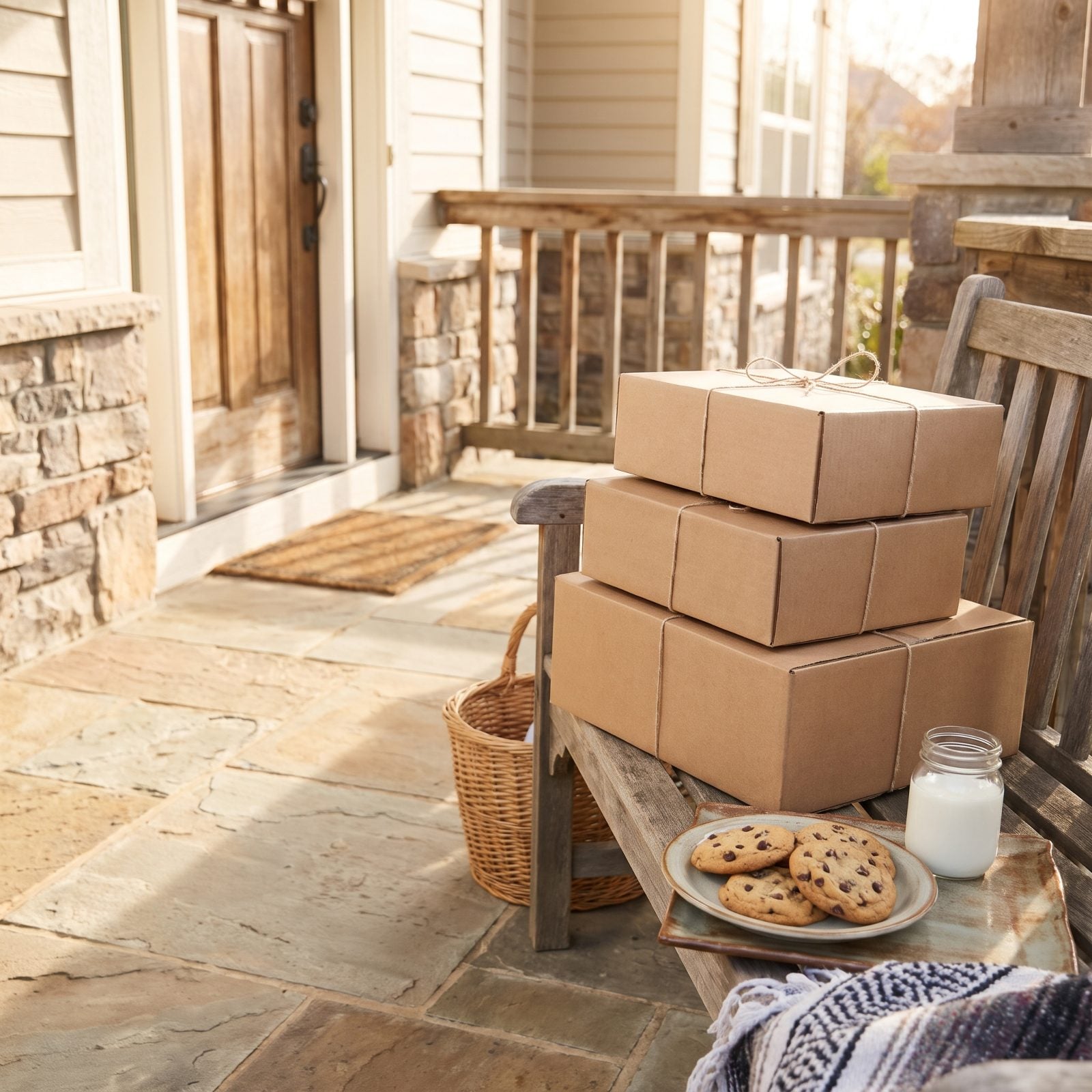
There’s a neighbor on every street who’s generous to a fault. They’ll grab your packages, water your plants, lend you a ladder, keep an eye on the house while you’re gone. And there’s always someone who takes all of it and gives nothing back.
Favors run on an invisible ledger. Nobody wants it spoken out loud, but everyone’s keeping it. Bring back the borrowed ladder with a six-pack. Offer to take their trash cans in. Watch their place when they travel. The neighbor who only ever receives eventually stops getting asked, and stops getting offered.
40. Ask Before Borrowing Tools, Equipment or Supplies
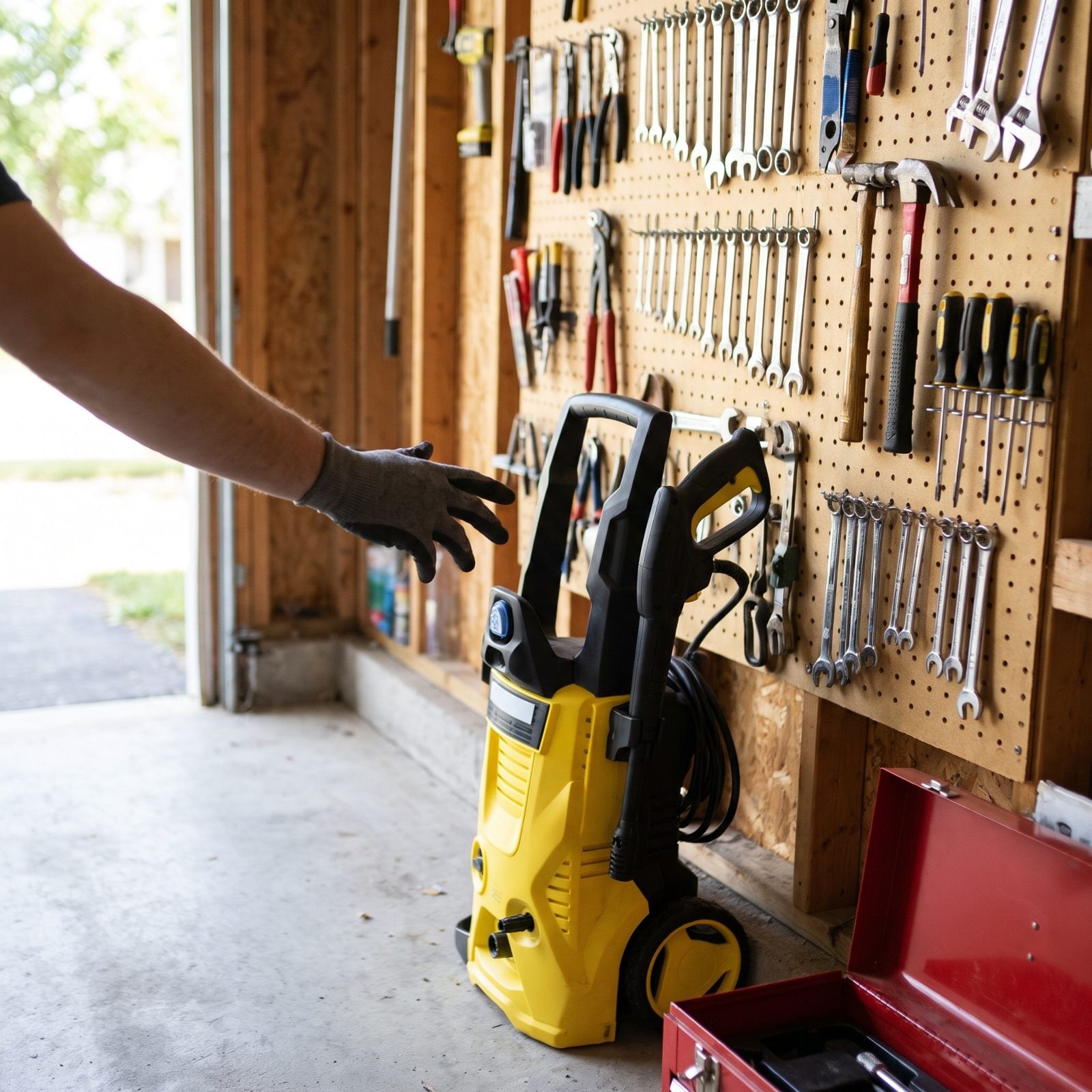
The open garage is not an open invitation. Even the friendliest neighbor wants to be asked before their pressure washer disappears over the fence for the weekend.
Ask first, return it clean, return it when you said you would, and replace it if you break it. Four rules. Break any one and you’ve quietly closed a door that was wide open. We lent out a good drill once and got it back with the battery dead and the case full of grit, and we can tell you exactly how fast that ends the lending.
39. Confirm the Property Line Before Starting Outdoor Work
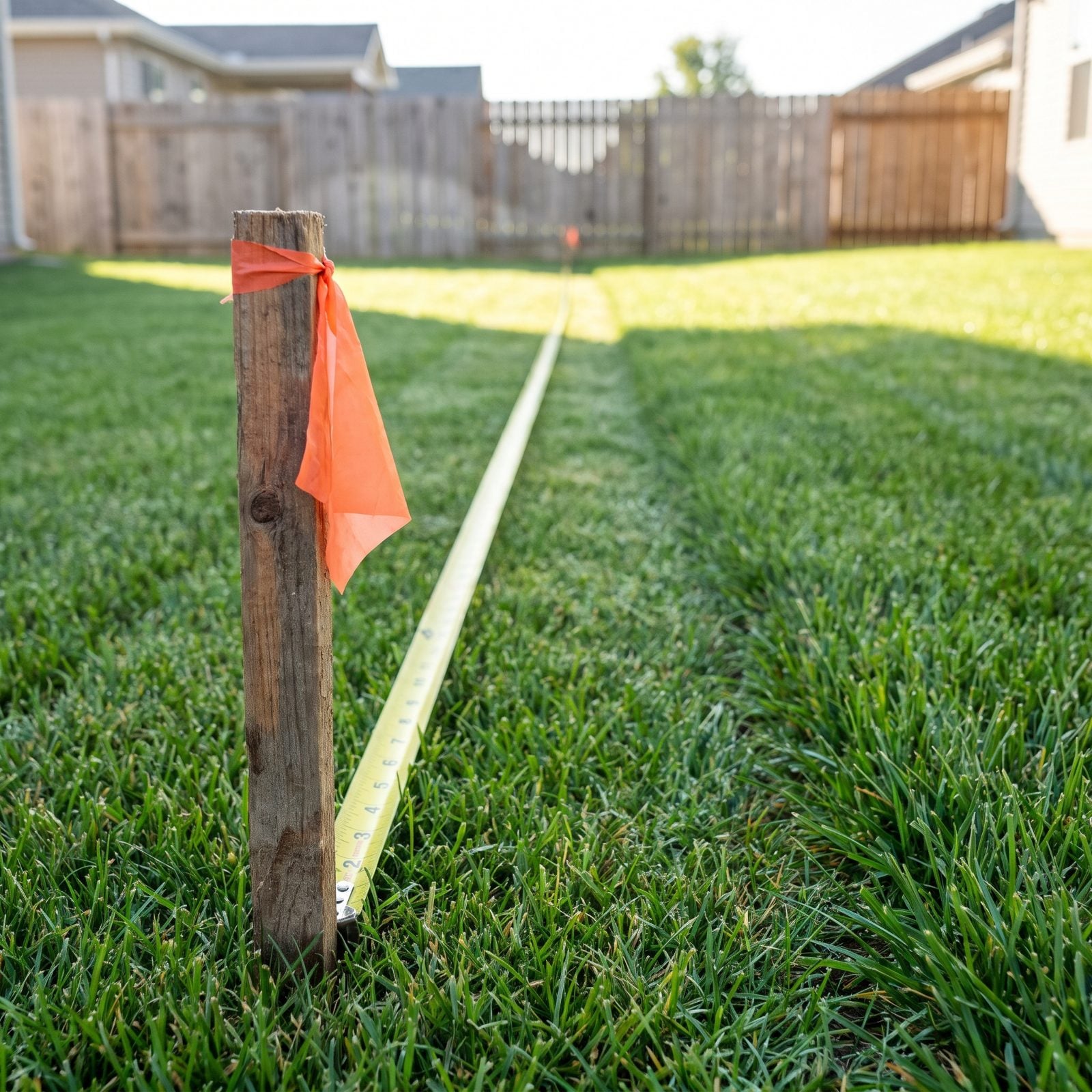
That strip of grass you’ve mowed for years might not be yours. The old fence line, the hedge, the spot where the sprinklers stop — none of it legally means anything until a survey says so.
Before you plant a tree, pour a patio, or dig a flower bed near the edge, know where the line actually falls. Build across it, even by a foot, and you could be tearing the whole thing out later at your own cost. A quick check of the plat or a chat with the neighbor beats an expensive surprise.
Before anyone digs near the edge of a lot, a licensed land surveyor warns that “Just because you and your neighbor have mowed to approximately the same place for years doesn’t necessarily mean it’s the property line.”
38. Discuss a New Boundary Fence Before Installing It
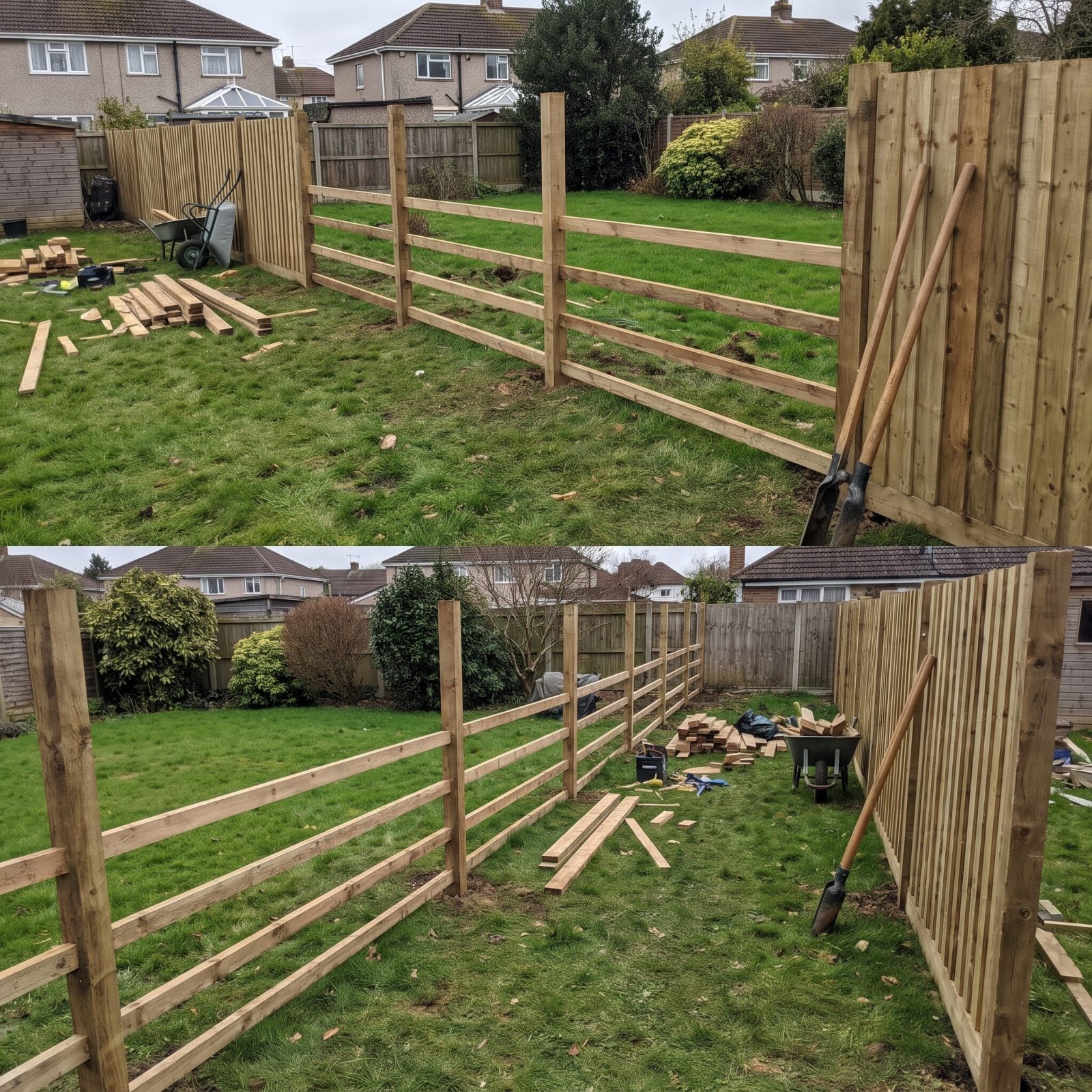
A fence is the one home project that lands on someone else’s view whether they like it or not. They have to look at it every single day. So they get a conversation before the first post goes in.
Talk about height, materials, and which side faces out — the finished side goes toward the neighbor, by the way, an old and sturdy custom. Sort out who pays if it sits exactly on the line. A six-foot stockade thrown up overnight with no warning reads as a wall built against someone, even when it isn’t.
The fastest fence is the one you discuss first. The slowest one is the surprise you end up tearing down.
Get the talk out of the way and the fence becomes a shared decision instead of a line in the sand. Good fences make good neighbors, but only when the neighbor saw them coming.
37. Ask Before You Step Into a Neighbor’s Yard
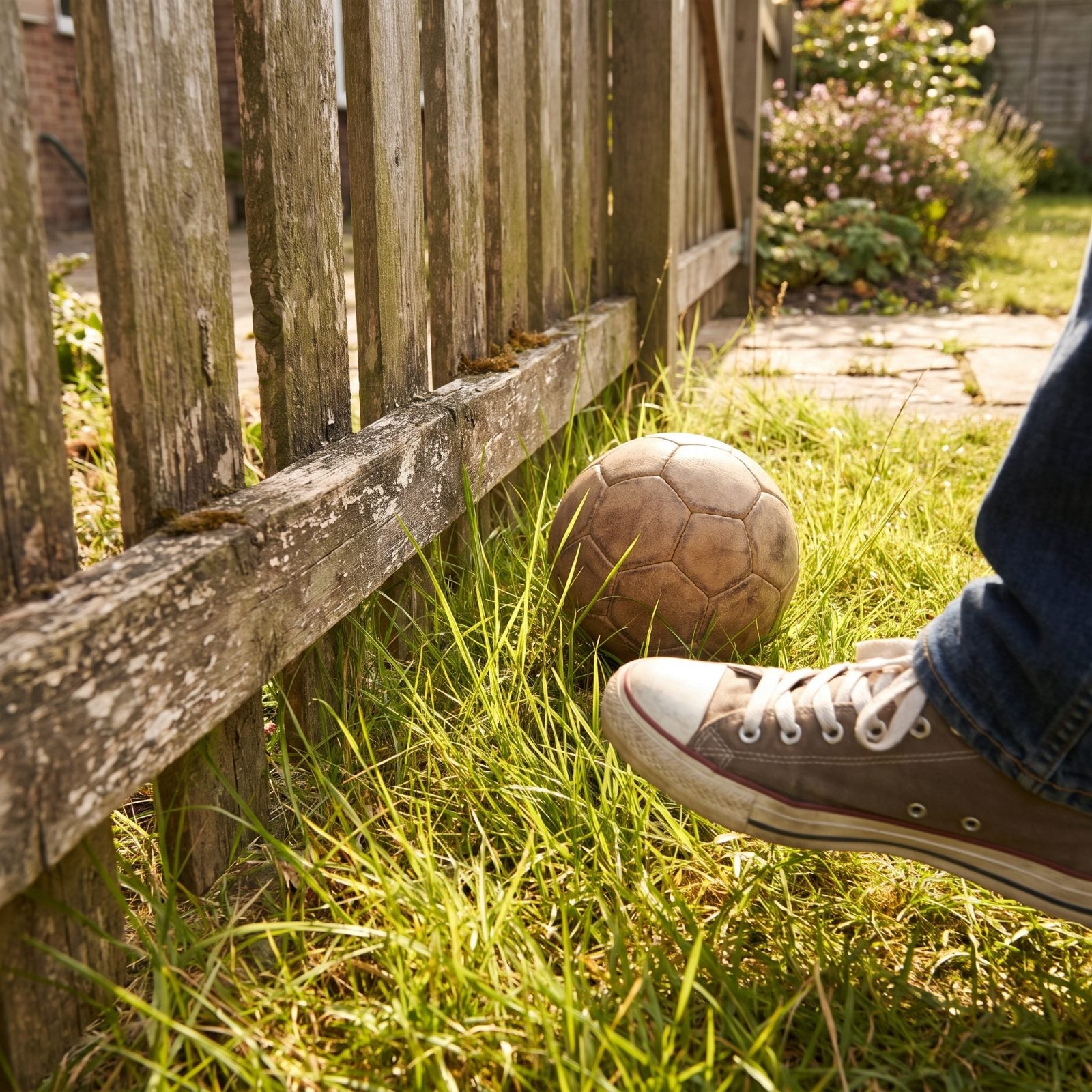
That soccer ball sitting three feet past the fence line feels like a free pass to walk over and grab it. It isn’t. A yard stays private property even with the gate open and nobody watching.
So knock first, or fire off a quick text. Most neighbors say yes in half a second, and the asking is the whole point — you’re signaling that you respect the line even when the stakes amount to one lost ball.
36. Talk It Through Before Pruning a Border Tree
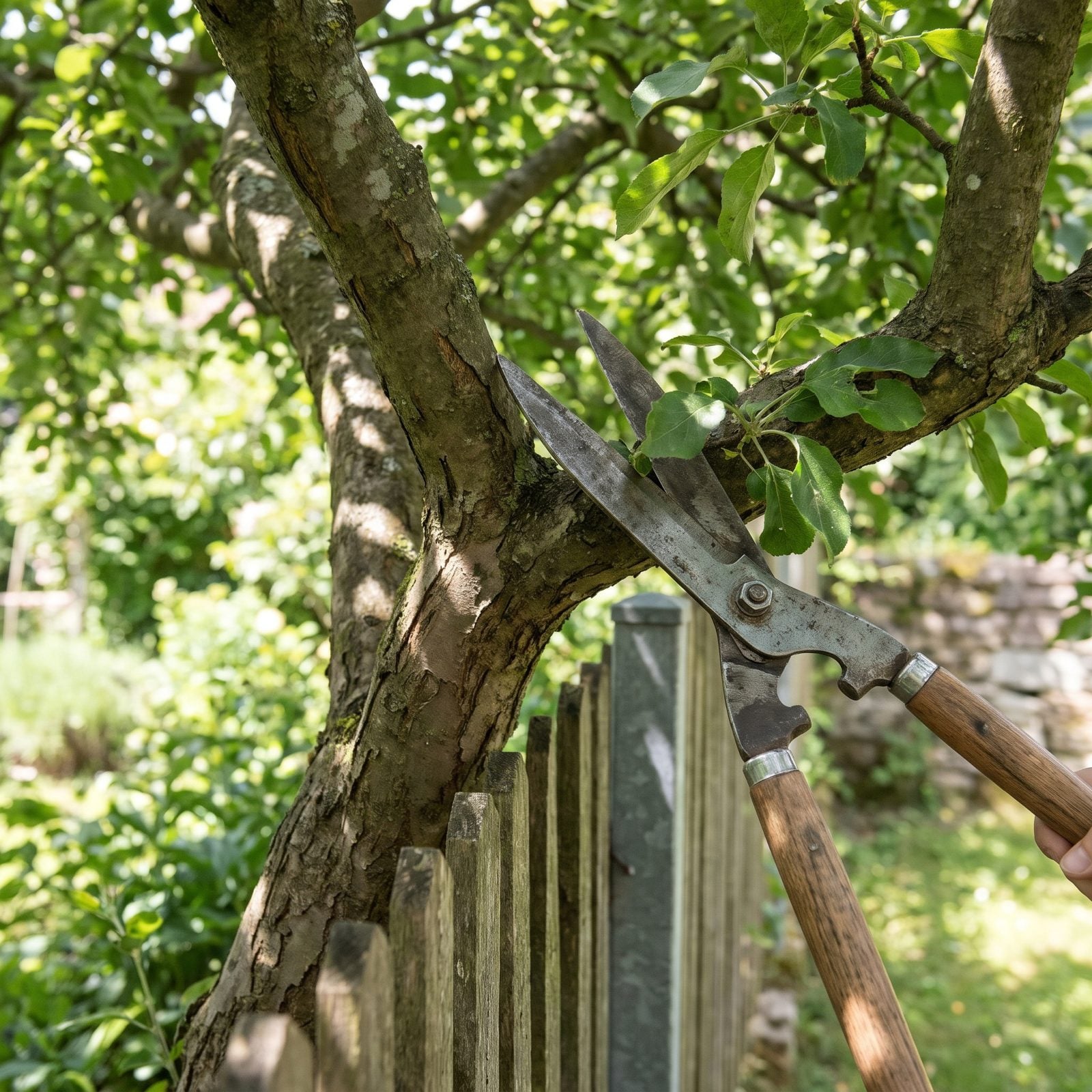
A tree whose trunk sits on the line belongs to both of you, legally and morally. Lopping branches on your side seems harmless until you’ve thrown the whole canopy off balance and killed half the crown on theirs.
Call an arborist together if the tree is big, and split the cost. The healthiest border trees I’ve ever seen are the ones two households decided to keep alive on purpose.
Writing about trees that sit right on the property line, a tree care company owner advises: “When in doubt, before signing a tree contractor’s contract accepting full ownership, speak to your neighbor(s) and get written permission prior to any work to a boundary line tree.”
35. Keep Your Leaves and Clippings on Your Own Grass
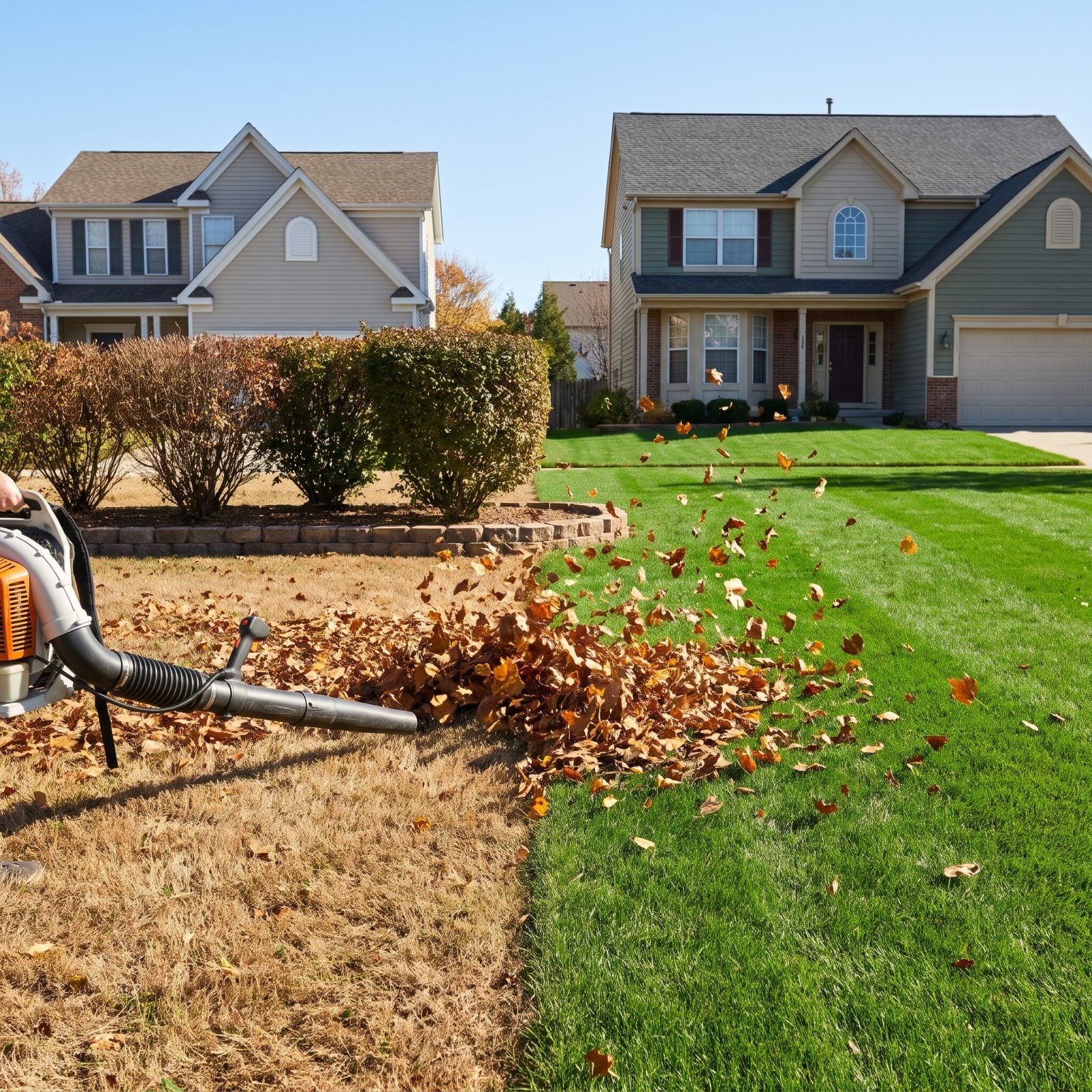
Blowing your leaves into the neighbor’s yard is the lawn-care equivalent of sweeping dust under someone else’s rug. Everybody knows who did it.
Aim the blower back toward your own property and bag what you gather. If the wind keeps carrying debris across the line, work earlier when the air is still. A clean border might be the quietest good-neighbor gesture going.
34. Don’t Send Your Stormwater Downhill to Them
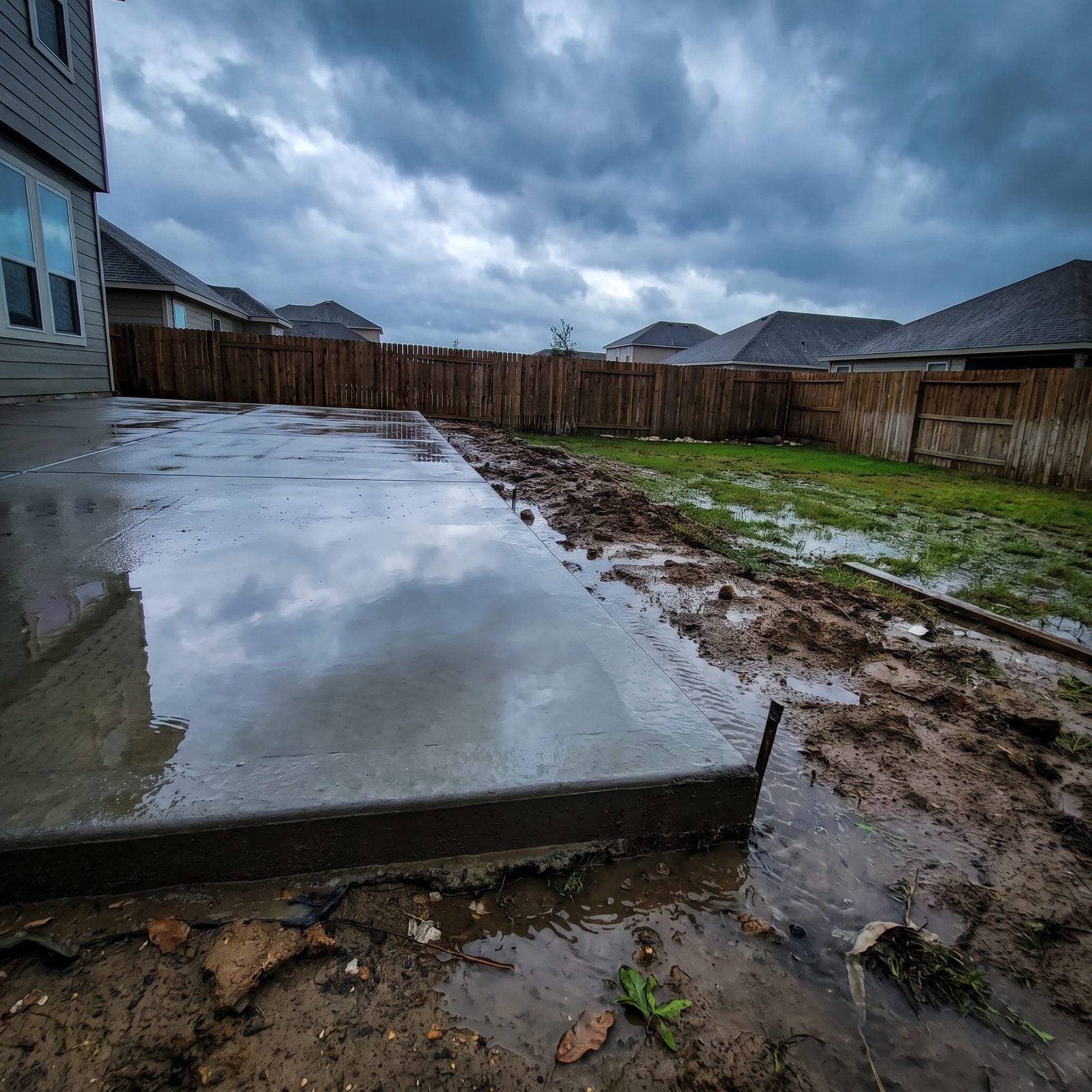
Regrading your yard or pouring a new patio can quietly turn your runoff into their flooded basement. Water follows gravity, not property deeds, and the lower lot always pays.
Point downspouts toward the street or a dry well. A rock-lined swale moves heavy rain without sending it over the fence. In a lot of places, redirecting stormwater onto a neighbor is a flat-out liability issue — so this is etiquette with teeth.
Before you extend or reroute a downspout, a licensed home inspector advises: “Trace where water will travel from the downspout to its final discharge point, and make sure that path doesn’t cross a neighbor’s property line, run over a septic field, or sit near buried utility lines.”
33. Point the Sprinklers Away From the Sidewalk and Their Car
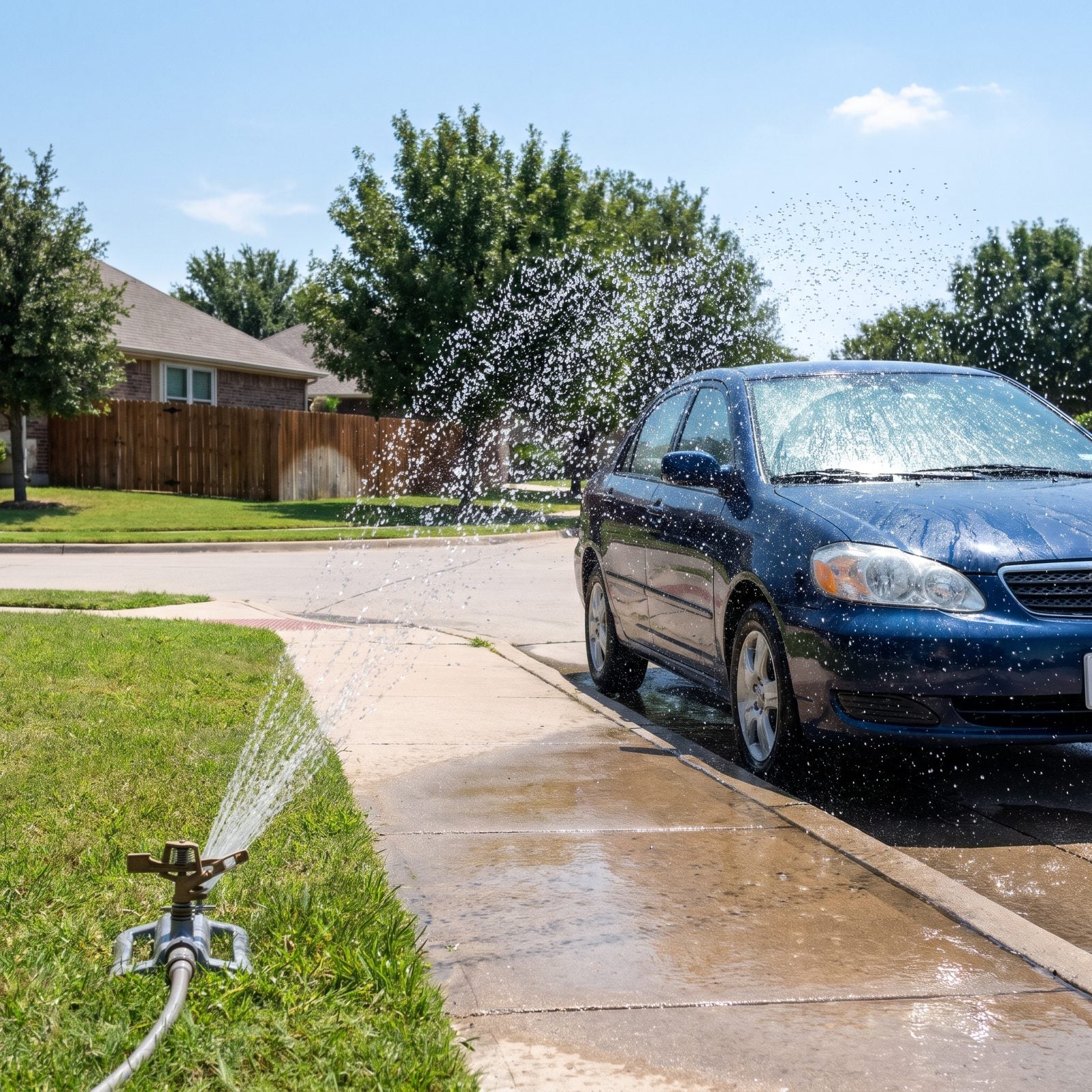
Nobody wants to walk through a sprinkler on the way to work. Nobody wants their just-washed car speckled with hard-water spots either, and one misaligned head manages both before you’ve finished your coffee.
Walk the system while it runs and adjust any head soaking the sidewalk or the curb. Five minutes of twisting nozzles saves a whole season of soggy shoes and resentful glances.
32. Keep the Sidewalk Along Your Property Walkable
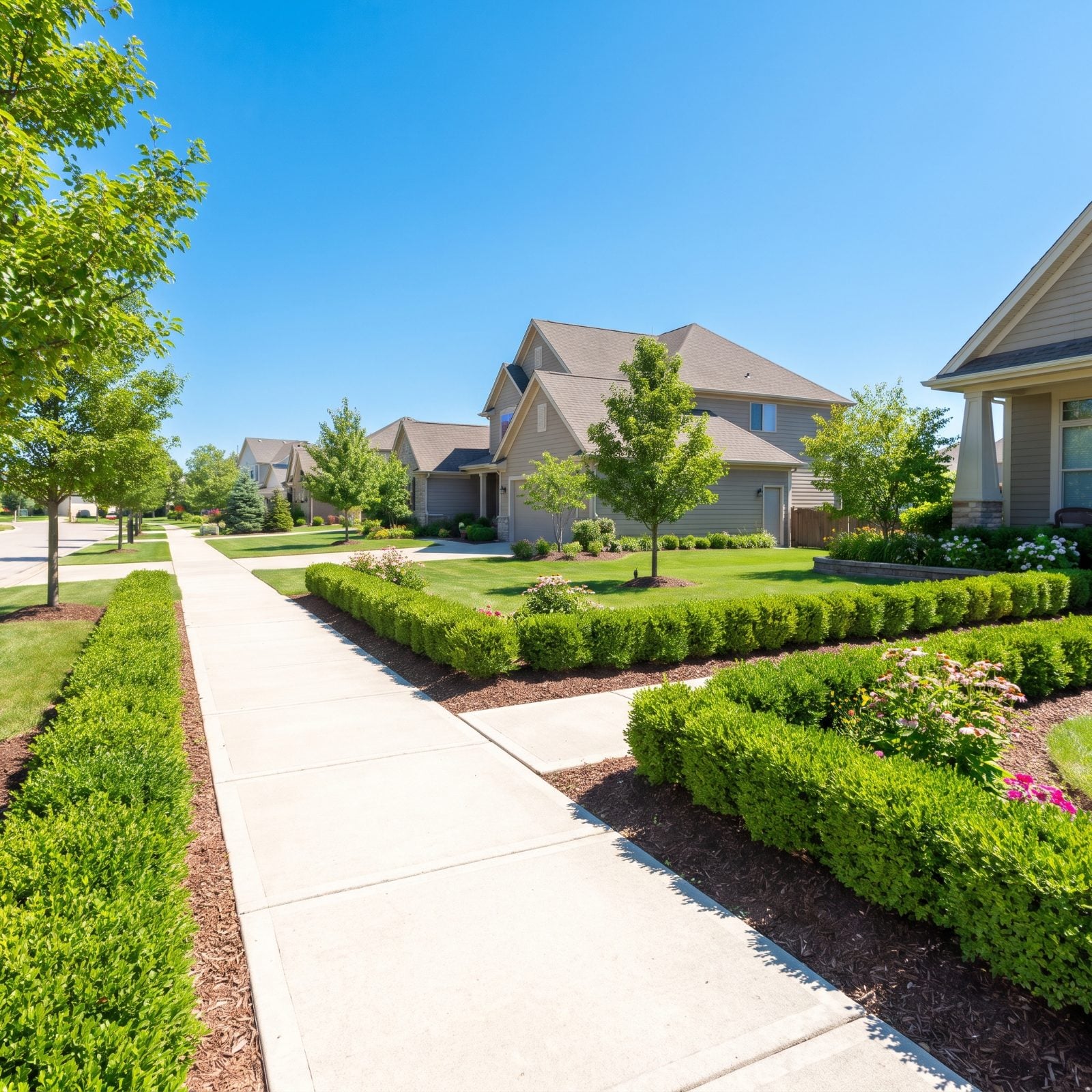
The sidewalk in front of your house is public, but you’re the one keeping it usable. Overgrown hedges, tipped-over bins and sprawling planters turn a simple walk into an obstacle course for anyone pushing a stroller or leaning on a cane.
Trim back to the property line. Pull bins in after collection. A wheelchair should get past without a detour — that’s a low bar worth clearing.
31. Never Wall Off a Neighbor’s Driveway With Shoveled Snow
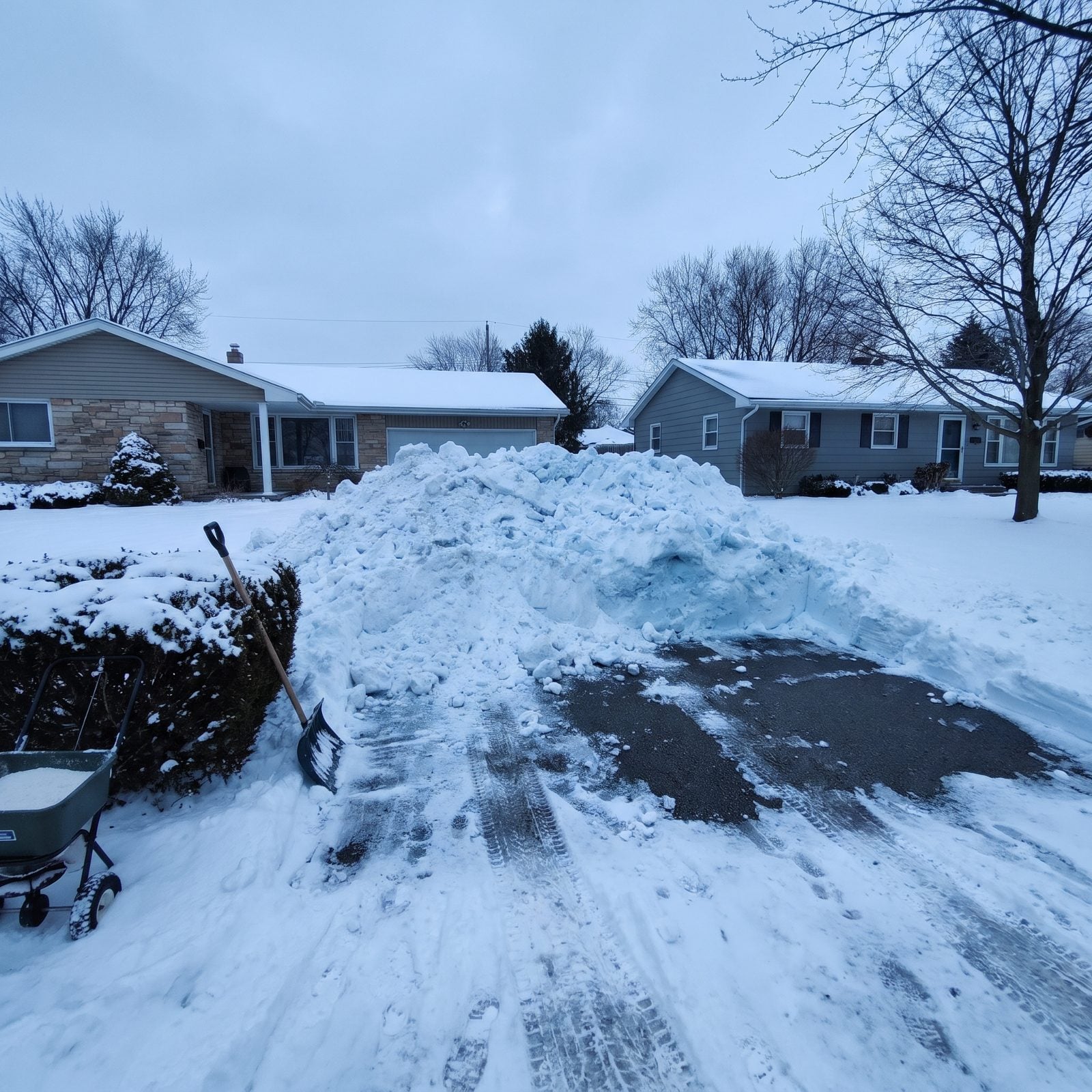
Clearing your driveway only to dump the pile across the neighbor’s entrance? That’s the kind of move that starts feuds outlasting the winter itself.
Throw snow onto your own lawn, or to the side where it bothers no one. And if the plow has already buried their apron while you’re out there anyway, clearing that last pass is the quiet neighborly thing that gets remembered all year.
30. Keep the Corner Plantings Below a Driver’s Eyeline
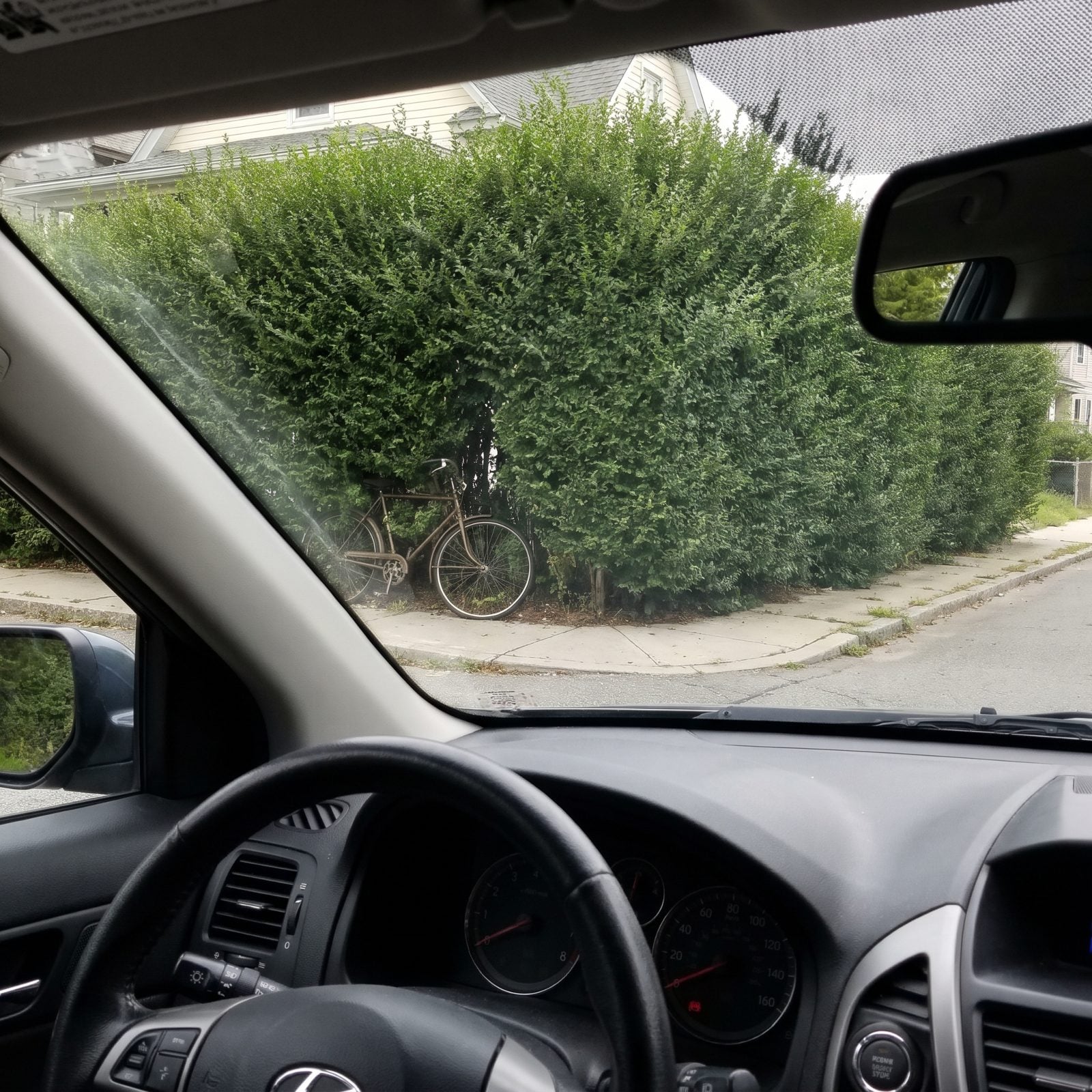
Tall hedges on a corner lot look lush right up until they hide a kid on a bike from a turning car. At an intersection, sightlines beat privacy every single time.
Keep anything near the corner low — roughly below three feet, so drivers can see across. Then plant your privacy screen along the sides of the yard instead, where it blocks views without blocking the road.
Explaining the rules for corner lots, a traffic safety columnist notes that “In order to ensure that drivers can see cross-traffic and street signs, property owners are restricted from building or planting anything tall in the vision triangle.”
29. Angle Your Exterior Lights Down, Not Into Their Bedroom
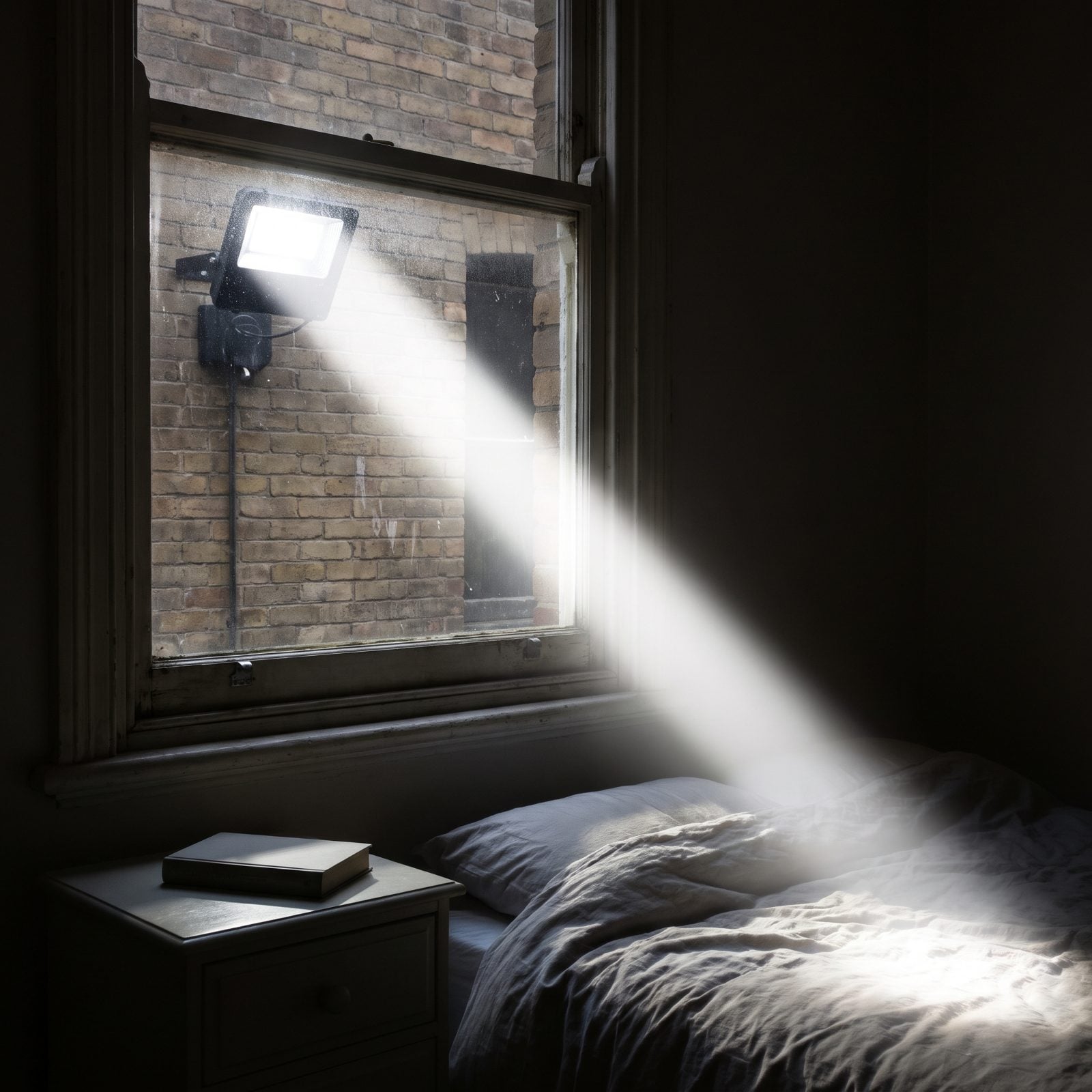
A floodlight mounted right beside a bedroom window, its beam slicing sideways through the glass, is light pollution you’ve pointed at someone else’s house. Whoever sleeps in that room lies awake, and resentment grows in the dark.
Choose shielded, downward-aimed fixtures that light your path and your door, not their pillow. Warm bulbs on a motion sensor handle security fine without turning the cul-de-sac into a parking lot at 2am.
28. Keep the Security Cameras Off Their Private Spaces
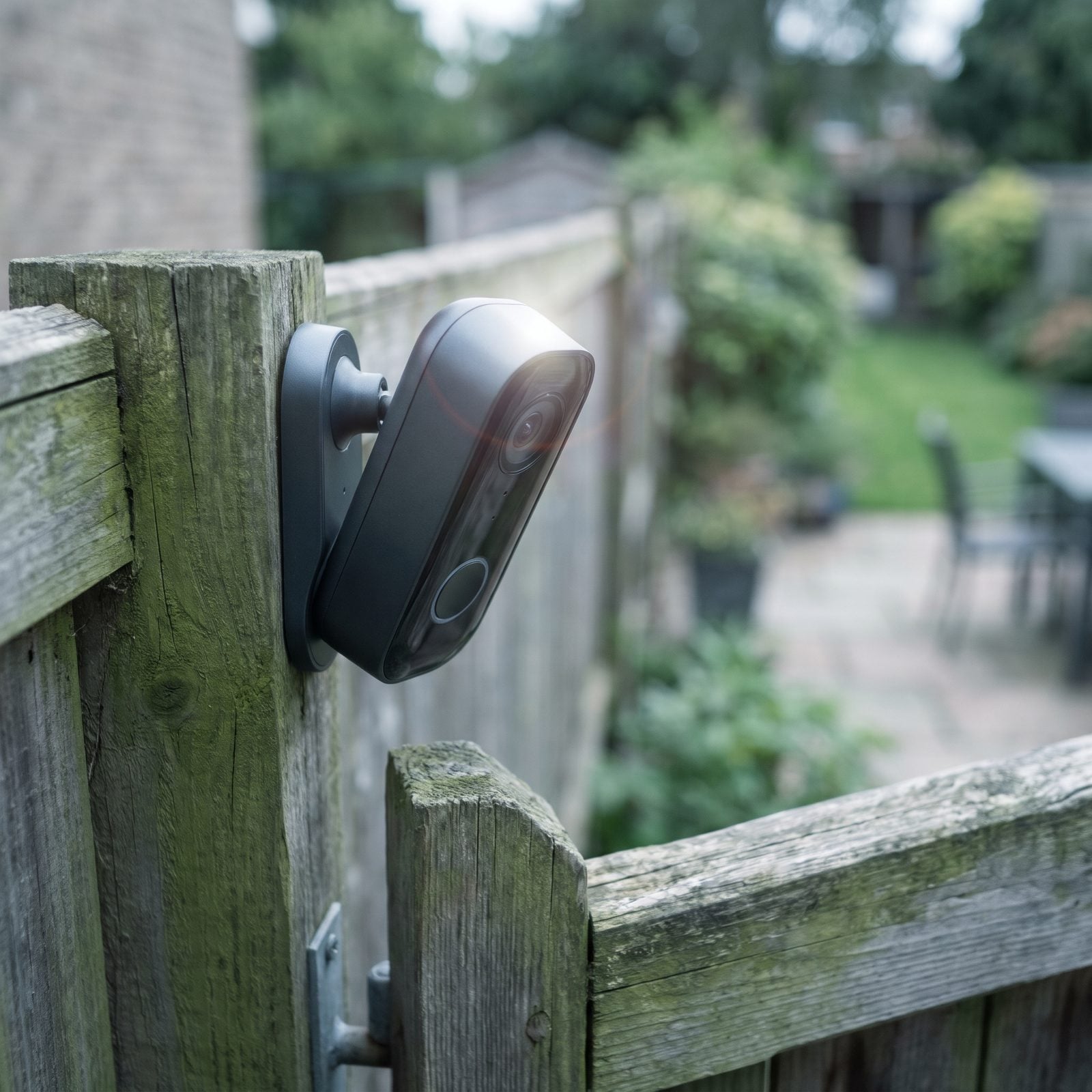
A doorbell cam pointed at your own stoop is smart. The same camera arcing across the fence to record the neighbor’s back door, their kids in the pool, their comings and goings — that crosses a line that feels different than it reads on a spec sheet.
Point lenses at your own entrances and driveway, and use privacy masking to black out anything beyond your property. A camera watching your door makes neighbors feel safer. One watching theirs makes them feel surveilled, and a whole street’s worth of trust can vanish in a single glance.
27. Place Portable Generators Where Exhaust and Noise Will Not Drift Next Door
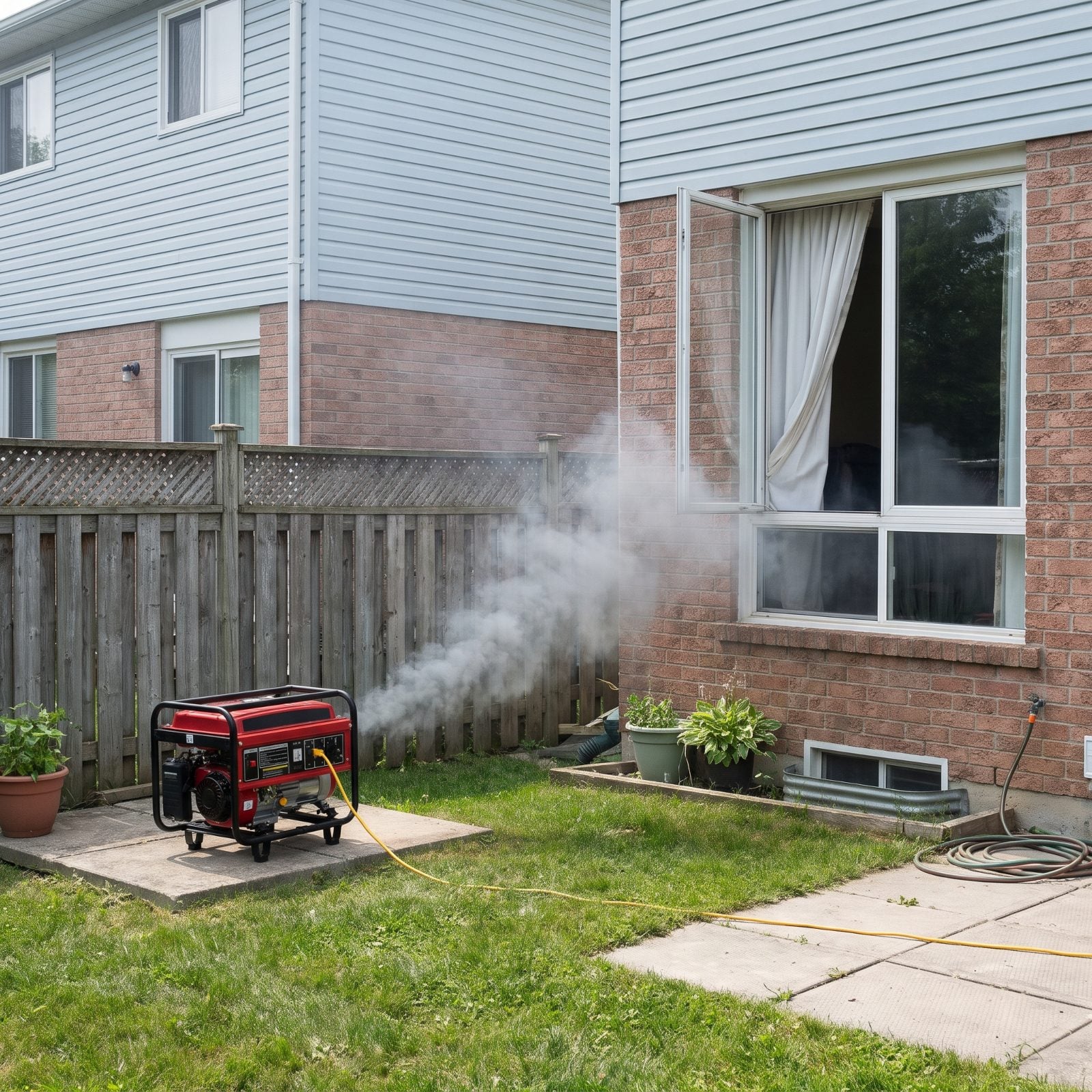
A generator is the loudest apology you can make to a sleeping street. Point the exhaust at your own backyard, not the bedroom window twenty feet away, and put the unit as far from the shared fence line as the cord allows.
Carbon monoxide is invisible and odorless, which is the real reason distance matters more than noise. Twenty feet from the house is the common minimum, not the goal. If a storm has your whole block running on backup power, the neighbor who faced the exhaust toward the open field is the one nobody complains about on Monday.
In its guidance on portable generator placement, a generator retailer advises: “Be aware of your neighbor’s home and how generator placement may affect them. Point the exhaust away from your home and garage and away from nearby homes.”
26. Keep Trash Bins Within the Collection Window
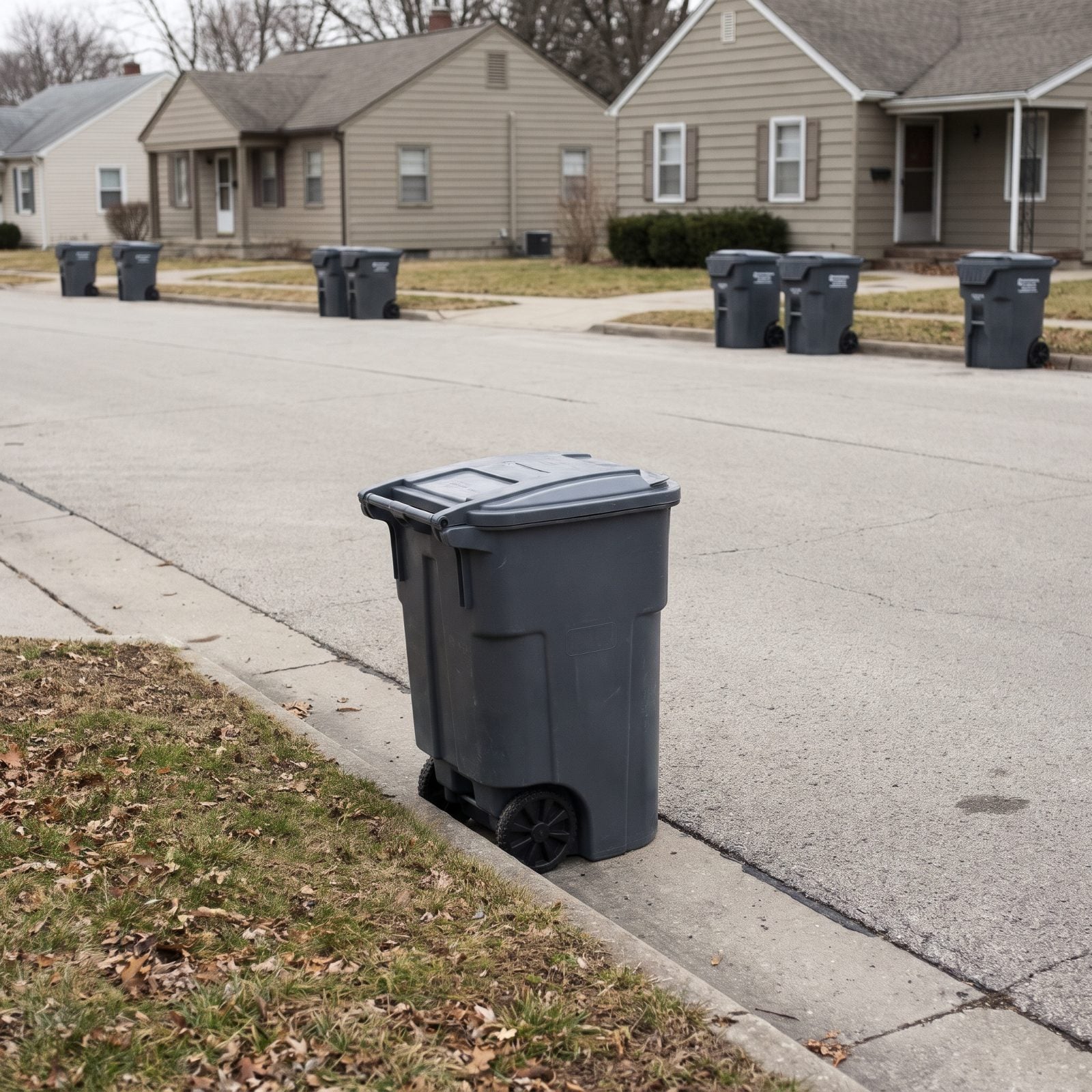
Bins out the night before, back in by evening. That’s the whole contract, and most blocks run on it without anyone saying a word.
The trouble is the cart that lives at the curb from Tuesday to Sunday. It reads as neglect to everyone driving past, and it quietly drags down how the whole street photographs when someone’s house two doors down goes up for sale. You don’t have to love your neighbors to pull a bin back up the driveway. You just have to not become the reason the HOA mails a letter.
25. Retrieve Recycling That Blows Down the Street
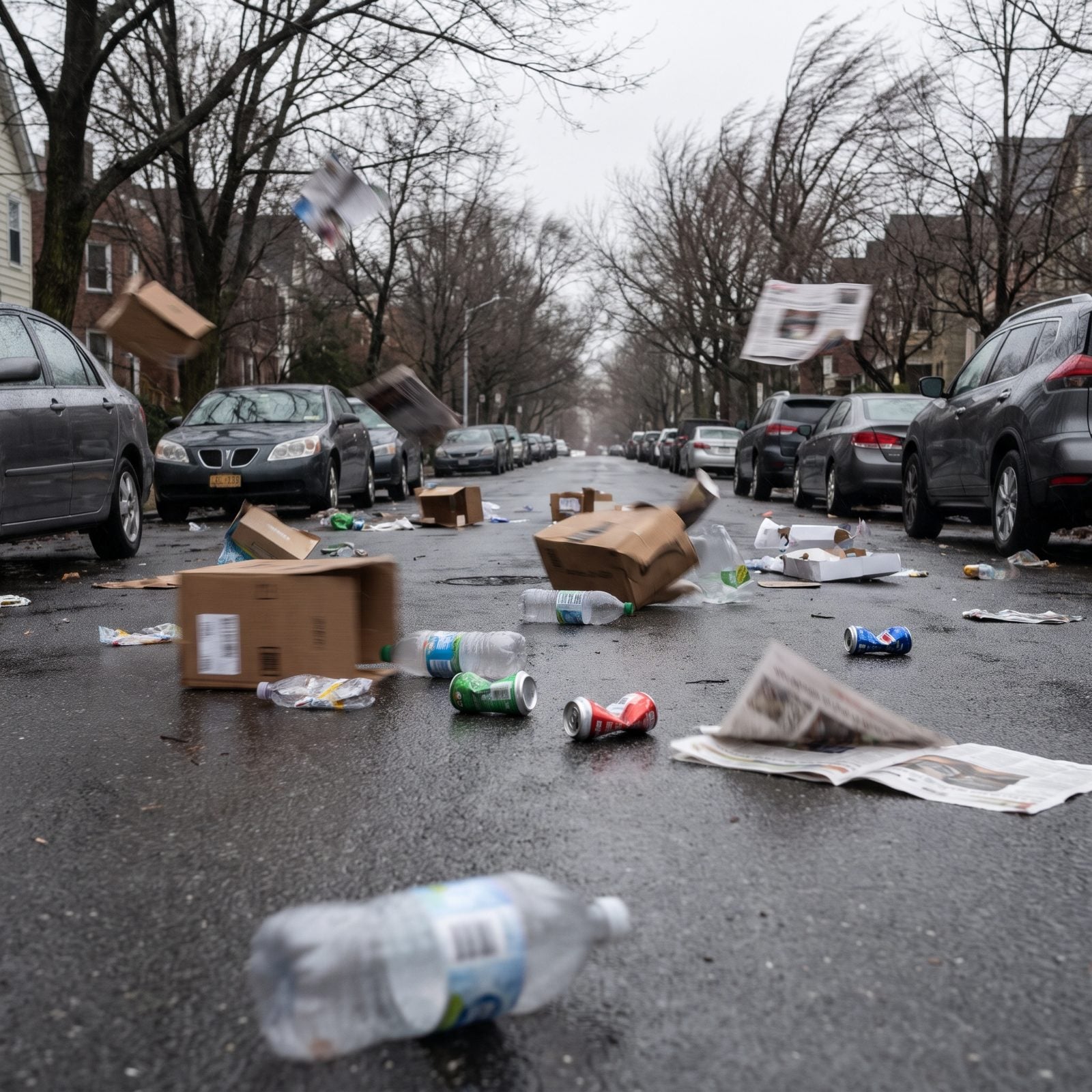
Wind doesn’t respect property lines, but you should. When a gust empties your recycling cart across the block, the empties on someone else’s lawn are yours to collect, even after the truck has already rolled through.
What earns goodwill is picking up the jug that landed four houses down, not just the one in your own gutter. Weigh the lid with a brick on windy mornings and you solve the whole thing before it starts.
24. Arrange Prompt Pickup for Bulky Curbside Waste
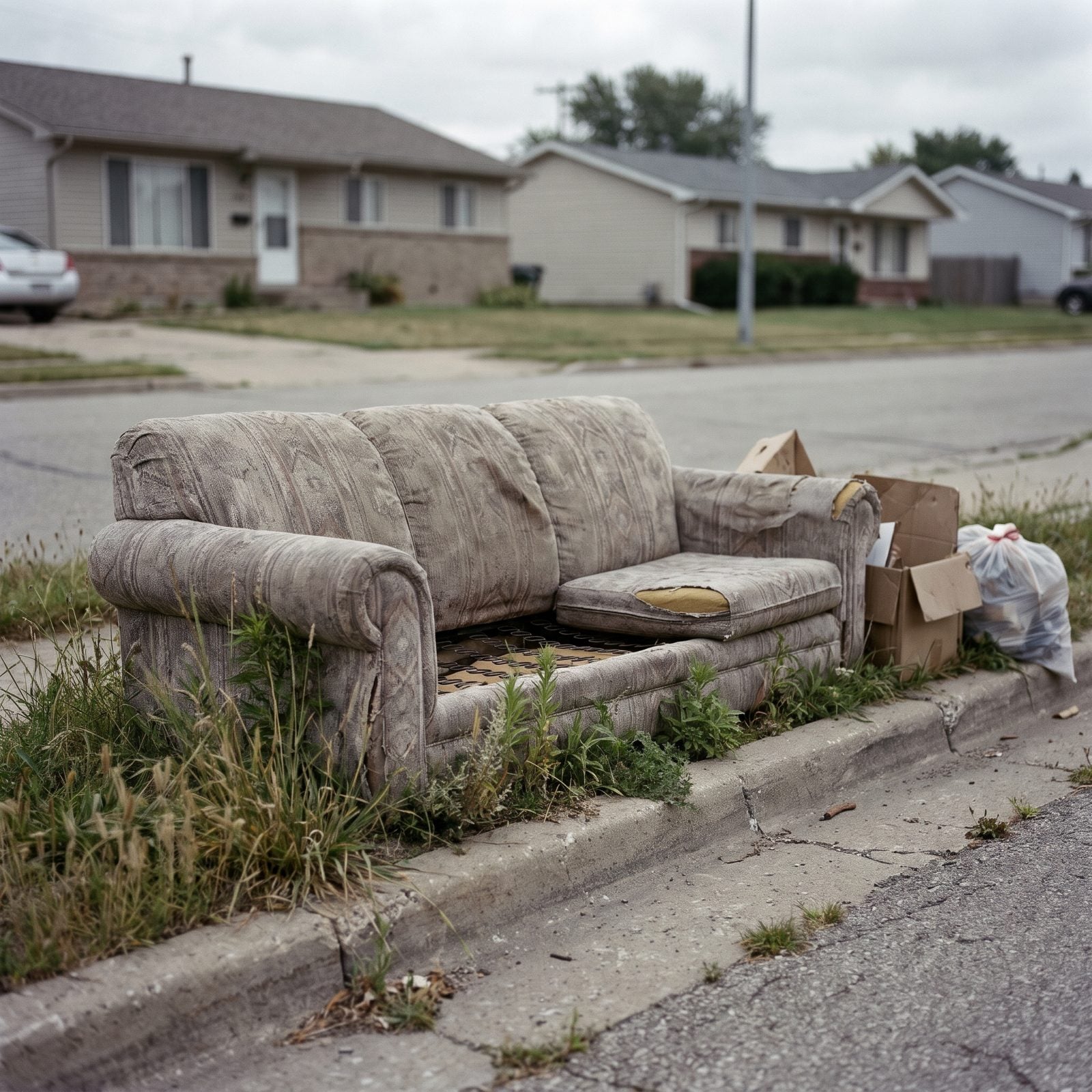
A dead couch at the curb becomes a landmark fast. Not the good kind.
Bulky pickups run on a schedule, so the courteous move is to call it in before you drag the mattress out, timing the set-out to the window rather than letting it marinate by the mailbox for two weeks. Rain gets into the cushions, kids climb on it, raccoons move in. A few days of forethought keeps your street from looking like it gave up.
23. Never Block Even Part of a Neighbor’s Driveway
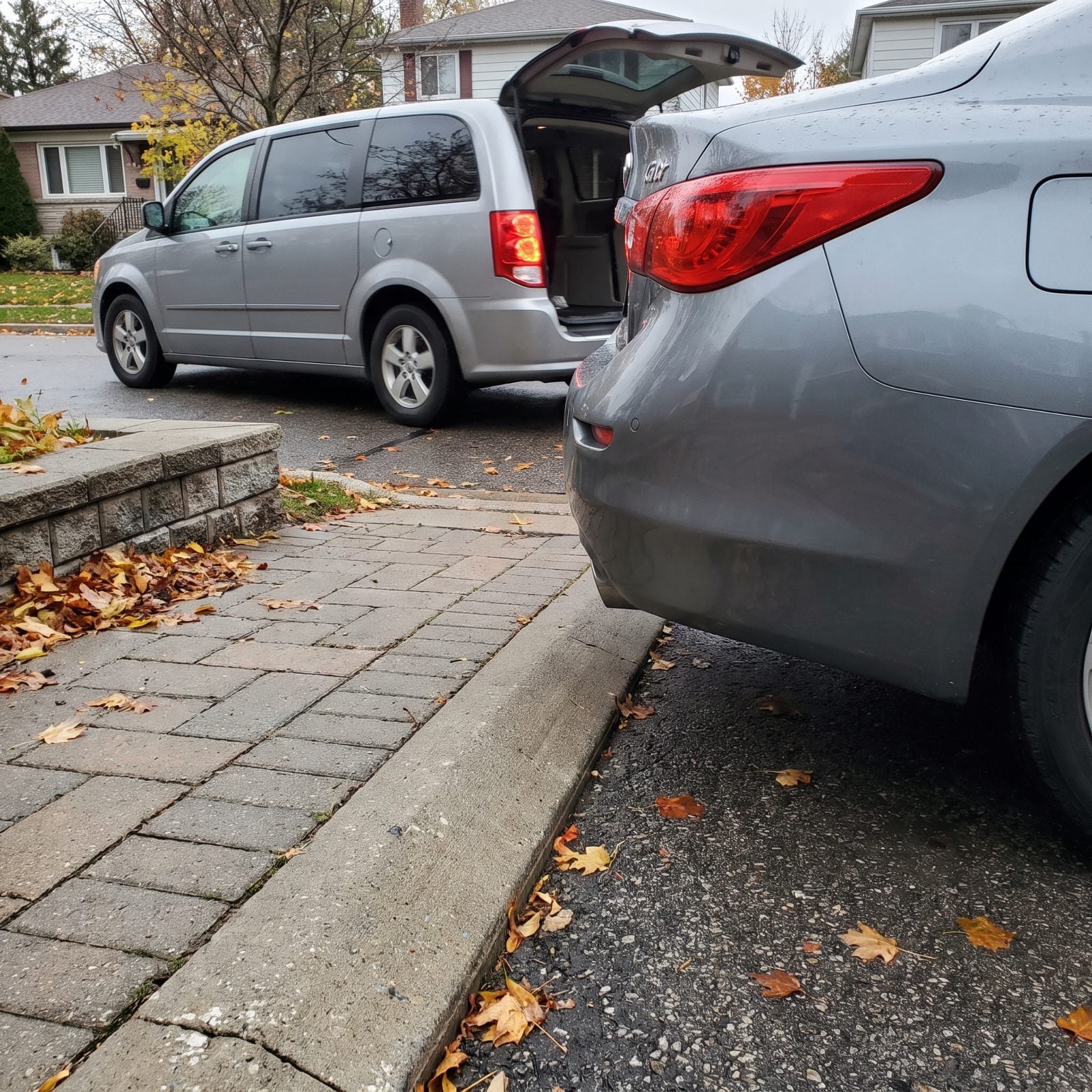
Half a driveway is a whole problem. Backing a minivan out of a two-car garage needs a wide arc, and a bumper clipping the apron turns a thirty-second exit into a careful ten-point maneuver.
The rule is simpler than people make it: if any part of your car crosses the curb cut, you’ve parked wrong. Nothing cools a friendly block faster. Pull up two feet. Nobody ever resented a neighbor for leaving too much room.
22. Do Not Treat the Public Curb as Reserved Personal Parking
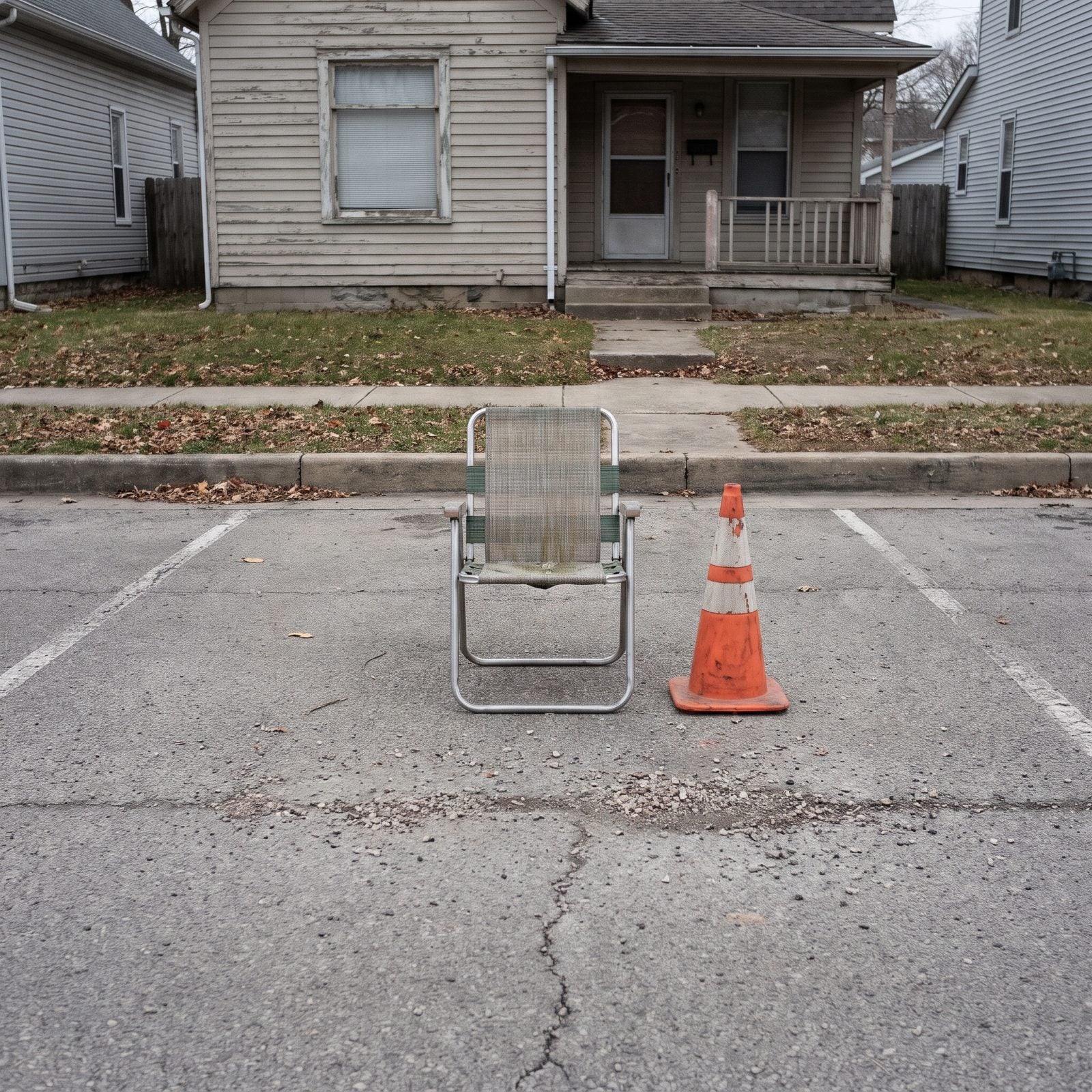
The chair-and-cone routine has started more feuds than loud music ever did. A public curb in front of your house is not yours. It feels like it should be, which is exactly why this one gets heated.
Setting out a cone to hold a spot reads as a claim you don’t actually have the right to make, and your neighbors know it even when they say nothing. Genuinely need loading space for a move? Knocking on two doors beats a lawn chair every single time.
21. Tell Guests Where They Can Park Without Crowding Neighbors
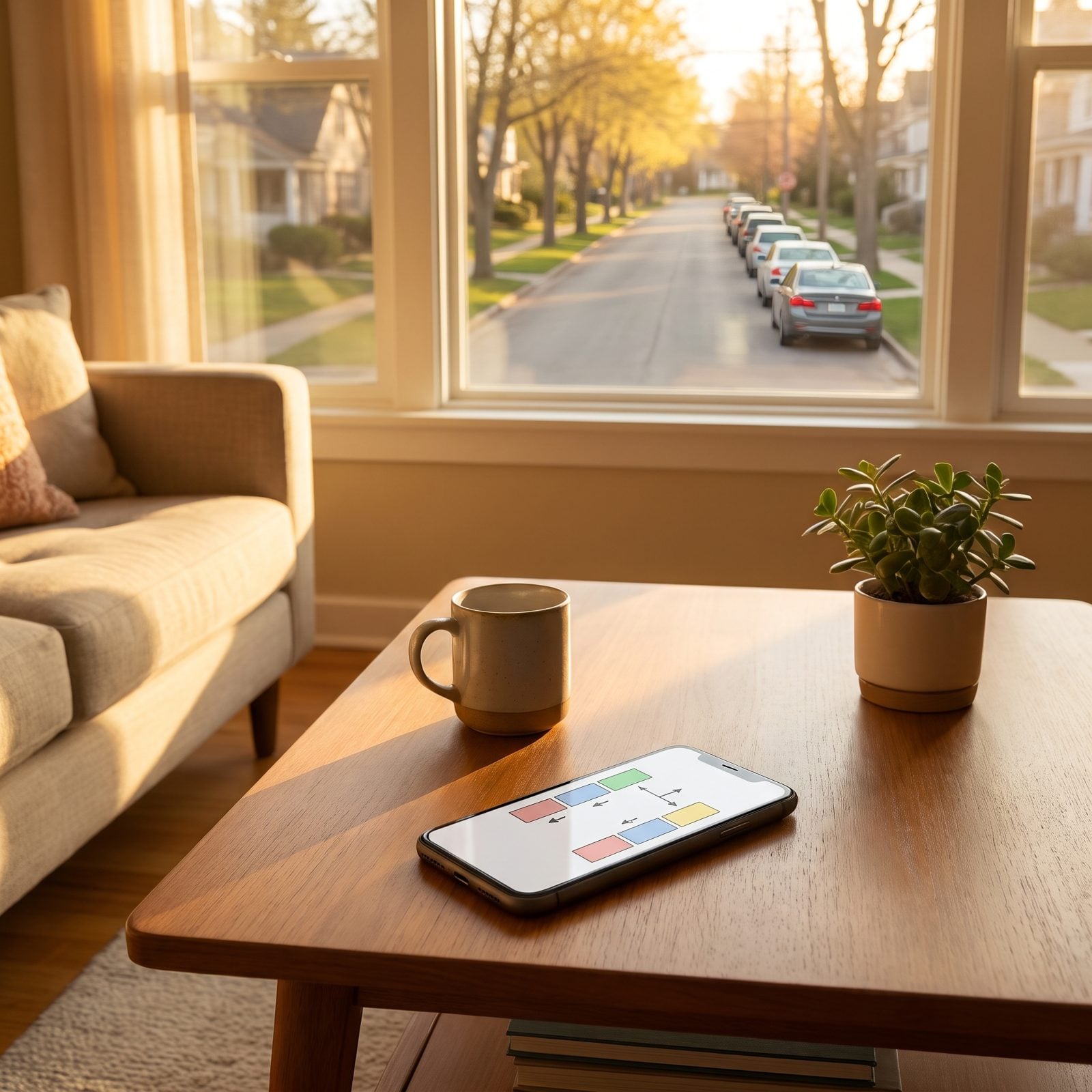
A dinner party shouldn’t box in the whole block. One text before guests arrive handles it: park on the odd-numbered side, leave the Hendersons’ driveway clear, don’t straddle the curb cut by the corner.
Guests have no idea where the invisible friction lines run on your street. You do. Ten seconds of warning turns six strangers’ cars from an annoyance into a non-event, and your neighbors notice the difference even when they can’t name it.
20. Preserve Clear Access to Curbside Mailboxes
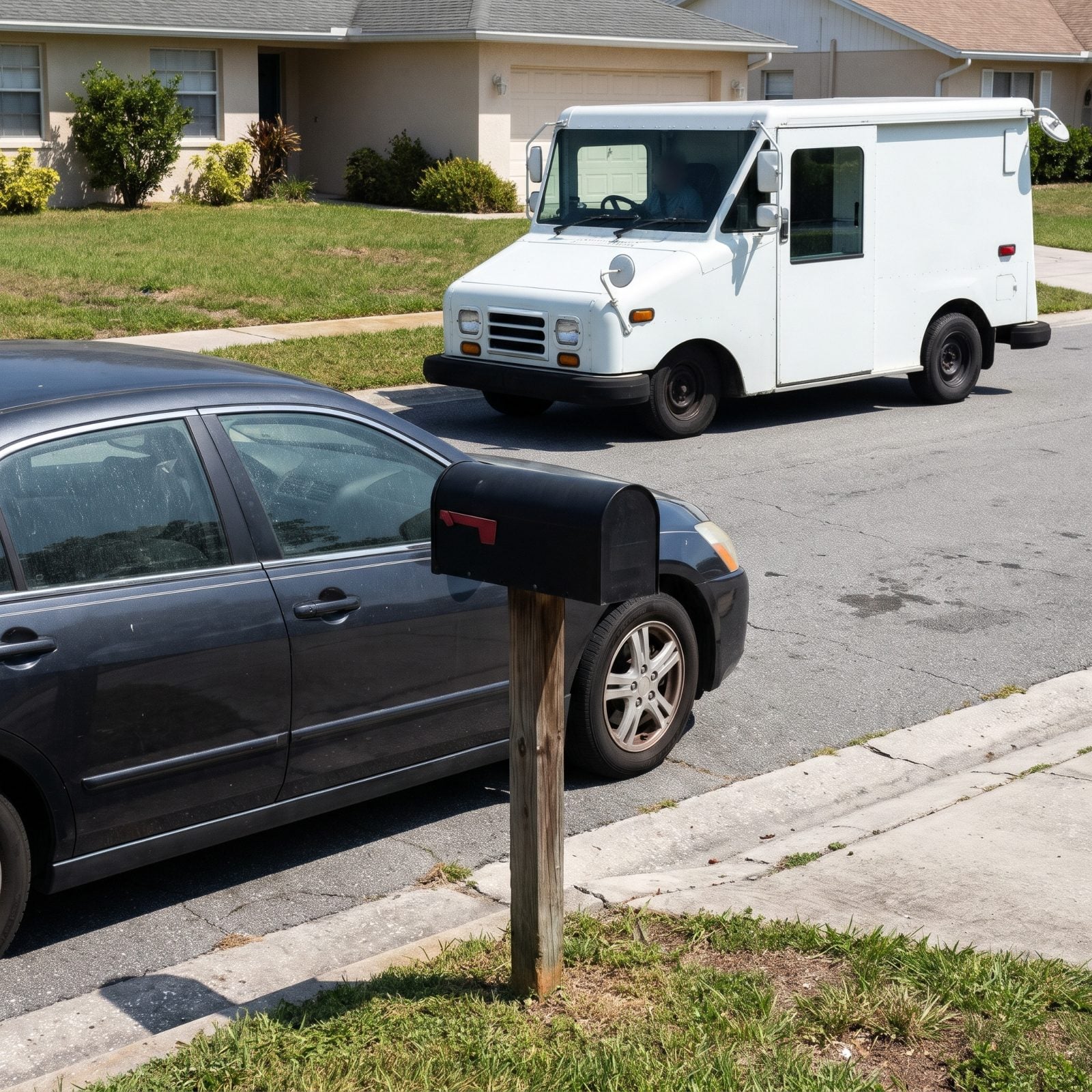
Mail carriers won’t dismount for a blocked box on a drive-up route. They roll past, and your neighbor’s package goes back to the depot because your car sat in front of the wrong post.
A vehicle parked tight against a curbside mailbox stops delivery cold, and the carrier has every right to skip it. Leave the span in front of the boxes open from mid-morning until the route runs. Costs you nothing, and it spares someone a trip to the post office counter.
19. Do Not Use a Private Driveway as a Turnaround
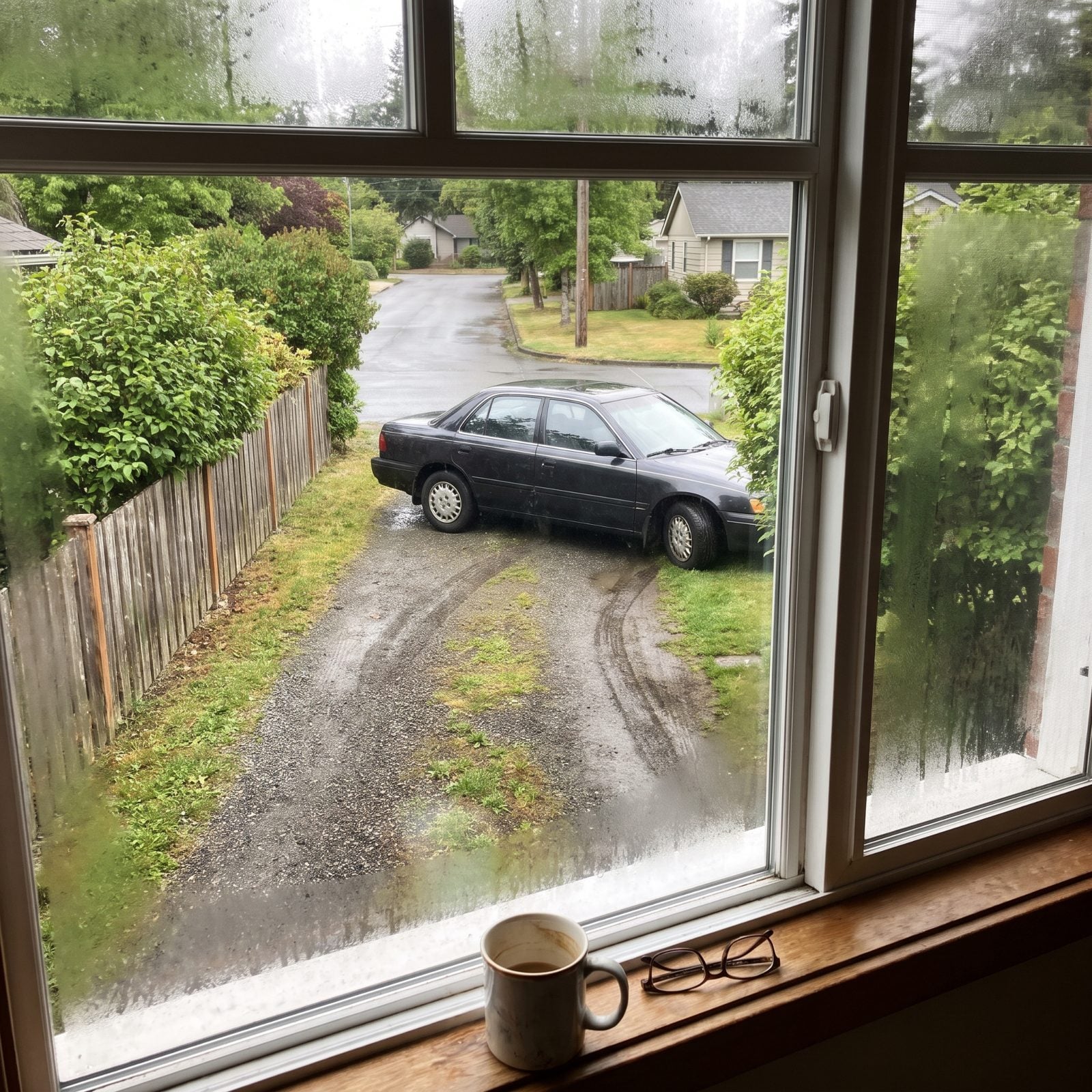
Every dead-end street has one driveway that’s become the neighborhood roundabout. The owners hear tires on their apron a dozen times a day.
Repeated turnarounds chew up the lawn edge and crack the apron over time, and the family inside flinches at every engine that slows near the house. Back up at the actual dead end, or use the wide spot the street was built with. A stranger’s driveway isn’t a cul-de-sac just because it happens to be convenient.
18. Keep Parked Vehicles From Blocking the Sidewalk
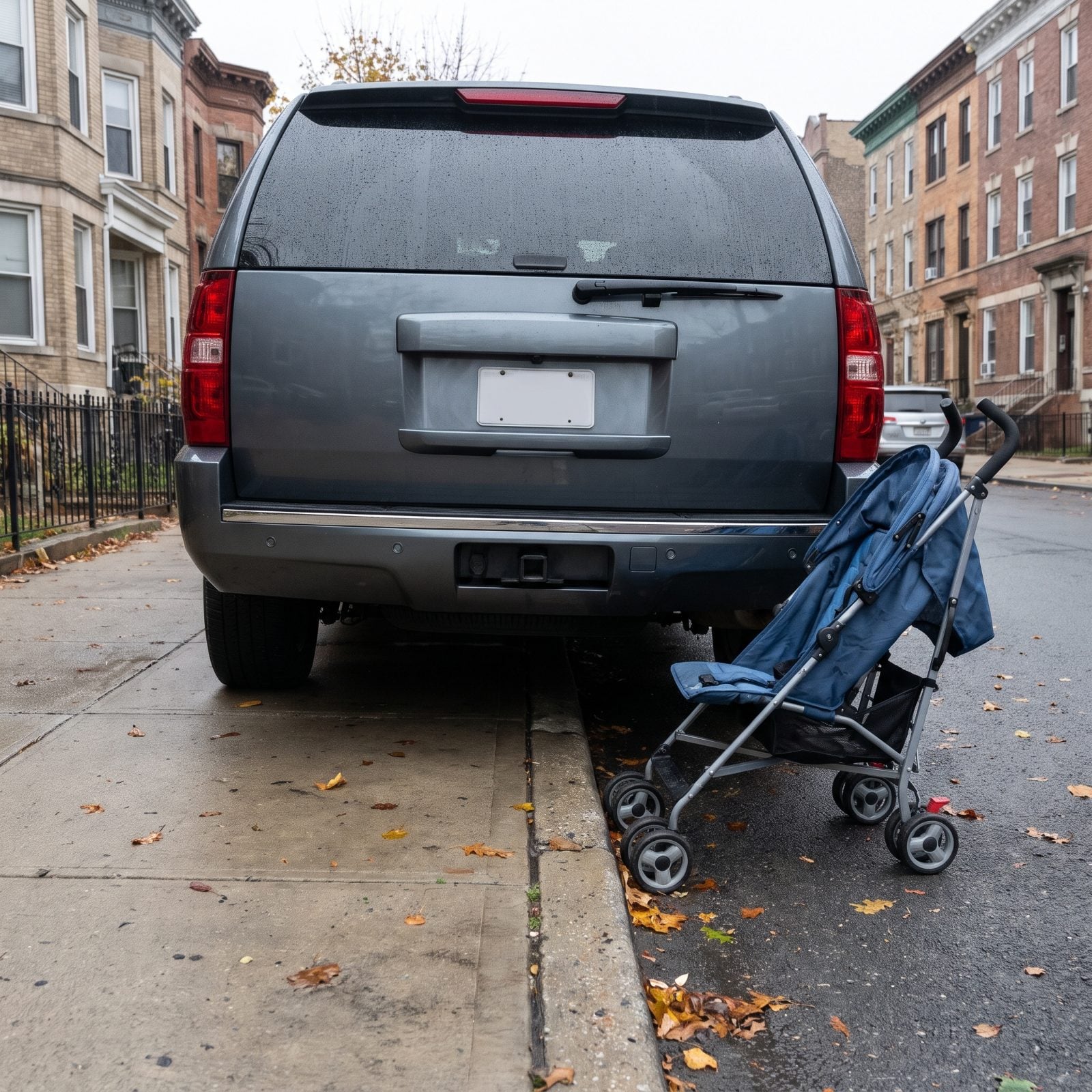
A sidewalk is a right-of-way, not overflow parking. Back the SUV up onto the curb and the rear bumper forces every walker into the street.
Think about who actually uses that path. A parent pushing a stroller, someone in a wheelchair, a kid walking to school — none of them can hop a bumper. Pull forward until the car clears the curb, and keep all four wheels down in the street. That three feet of pavement behind you belongs to the whole block, and keeping it open is about the quietest way there is to be a good neighbor.
17. Slow Down Where Neighbors Walk and Children Play
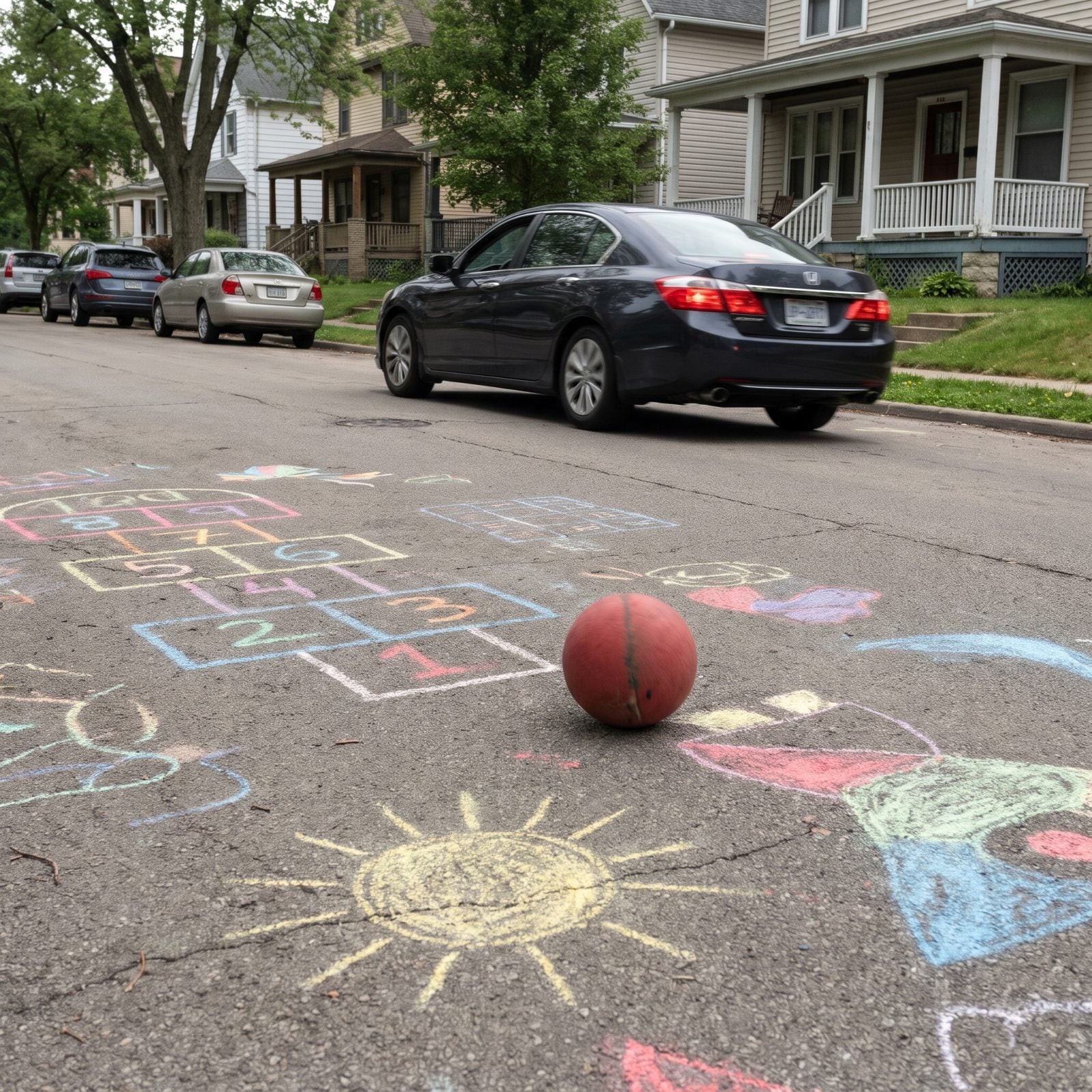
Twenty-five miles an hour on a street with chalk drawings is still too fast, and you know it the second a ball rolls out from between two parked cars. The streets inside a neighborhood aren’t a shortcut — they’re where people live, where kids wobble on bikes, where someone’s grandmother takes her slow evening loop.
Ease off the gas the moment you turn in. It costs you maybe forty seconds, and it buys you the one thing you can never get back if you get it wrong.
16. Lower the Car Stereo Before Entering the Neighborhood
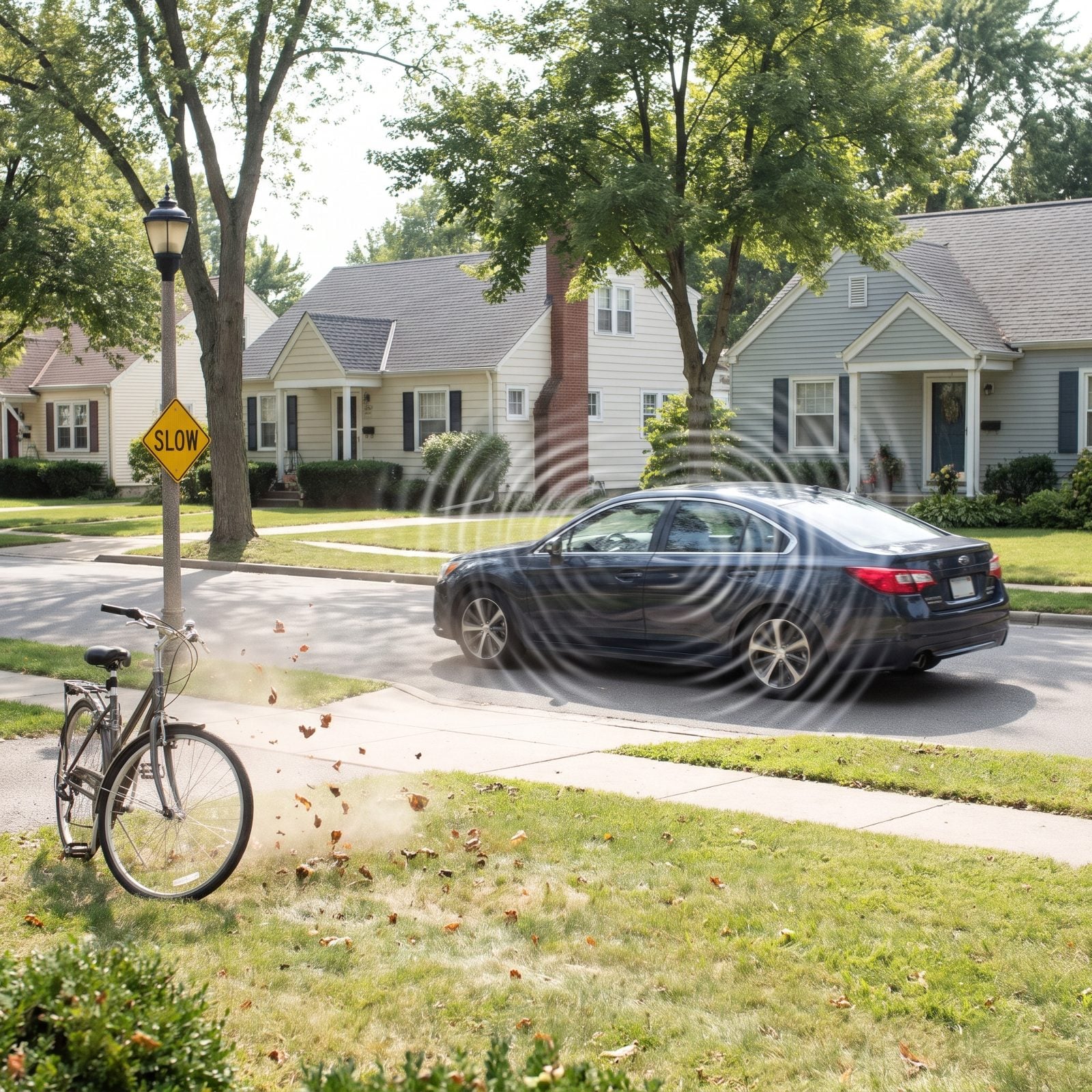
You’ve felt the bass before you’ve seen the car. Windows up, and still the whole block gets the drum line. Here’s the catch with car stereos near houses: the sound you’re enjoying is the same sound leaking straight into someone’s living room.
Roll the volume down a few notches as you make the turn onto your street. Nighttime especially. A sleeping baby two doors down doesn’t care how good the track is.
15. Avoid Unnecessary Idling, Horn Honking and Engine Revving
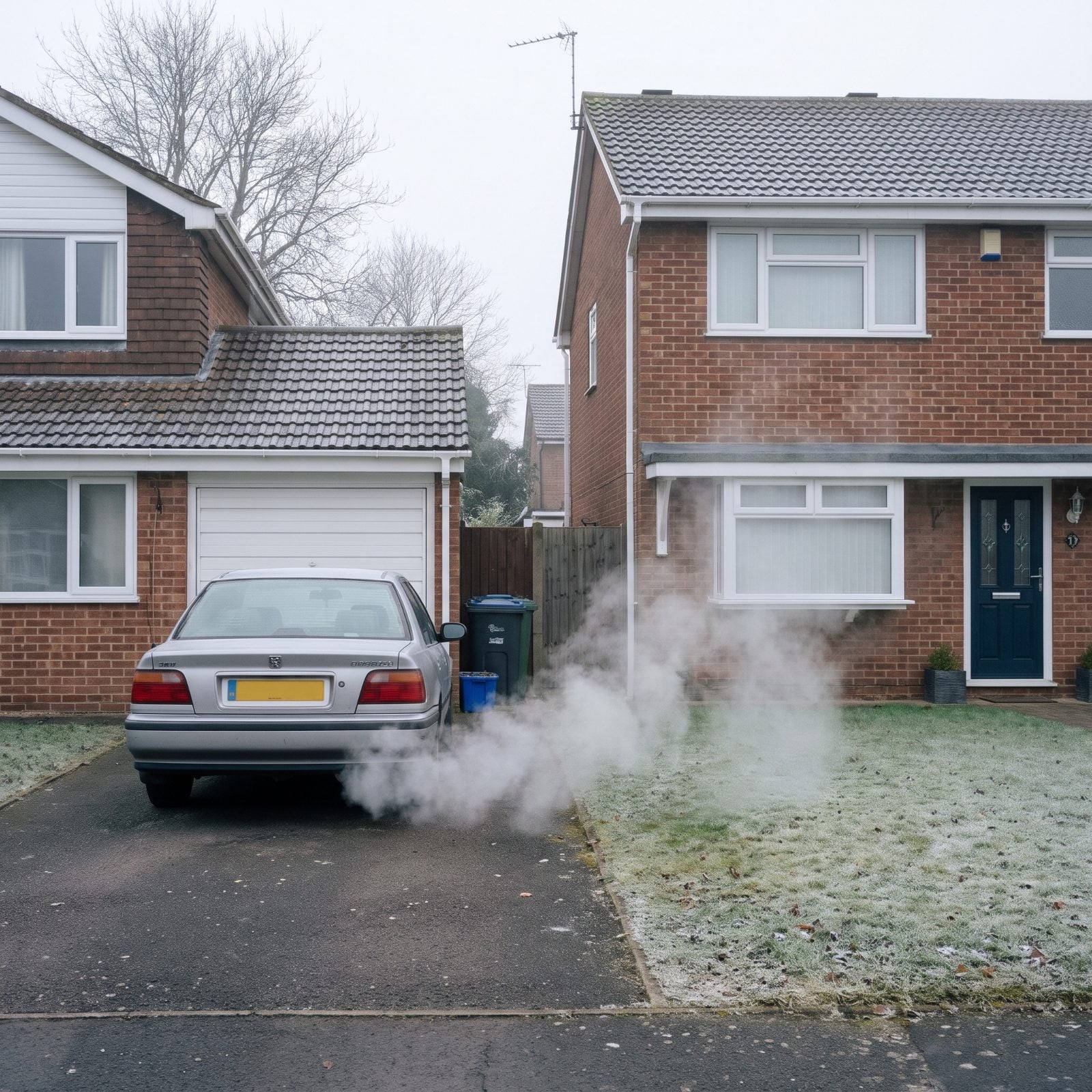
Idling in a driveway for ten minutes is a small cruelty dressed up as a warm-up. The exhaust drifts into open windows and the low hum carries, and the person who honks twice to announce they’ve arrived for a pickup has just told the entire block their business.
Text instead of honk. Shut the engine off while you wait. Save the throttle for the highway where it belongs.
14. Give Advance Notice of Disruptive Construction
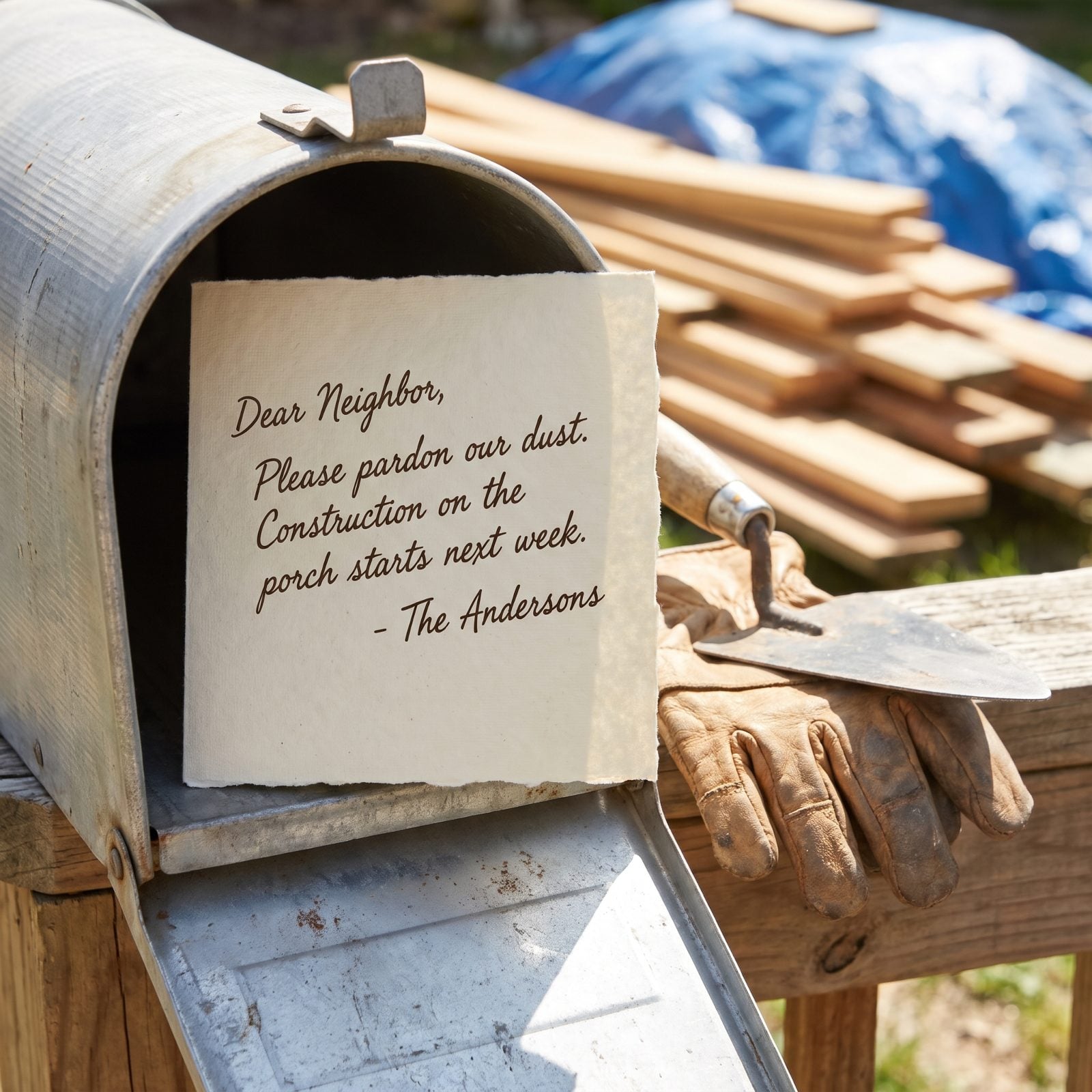
A note in the mailbox a week before the jackhammers show up changes everything. Not because it stops the noise — because it hands your neighbor the one thing noise takes away, which is a sense of control.
Tell them what’s coming and roughly how long it’ll last. Someone working night shifts can plan around it. Someone with a newborn can brace for it. The surprise is what makes people furious, not the drill.
13. Keep Contractors Within Reasonable Working Hours
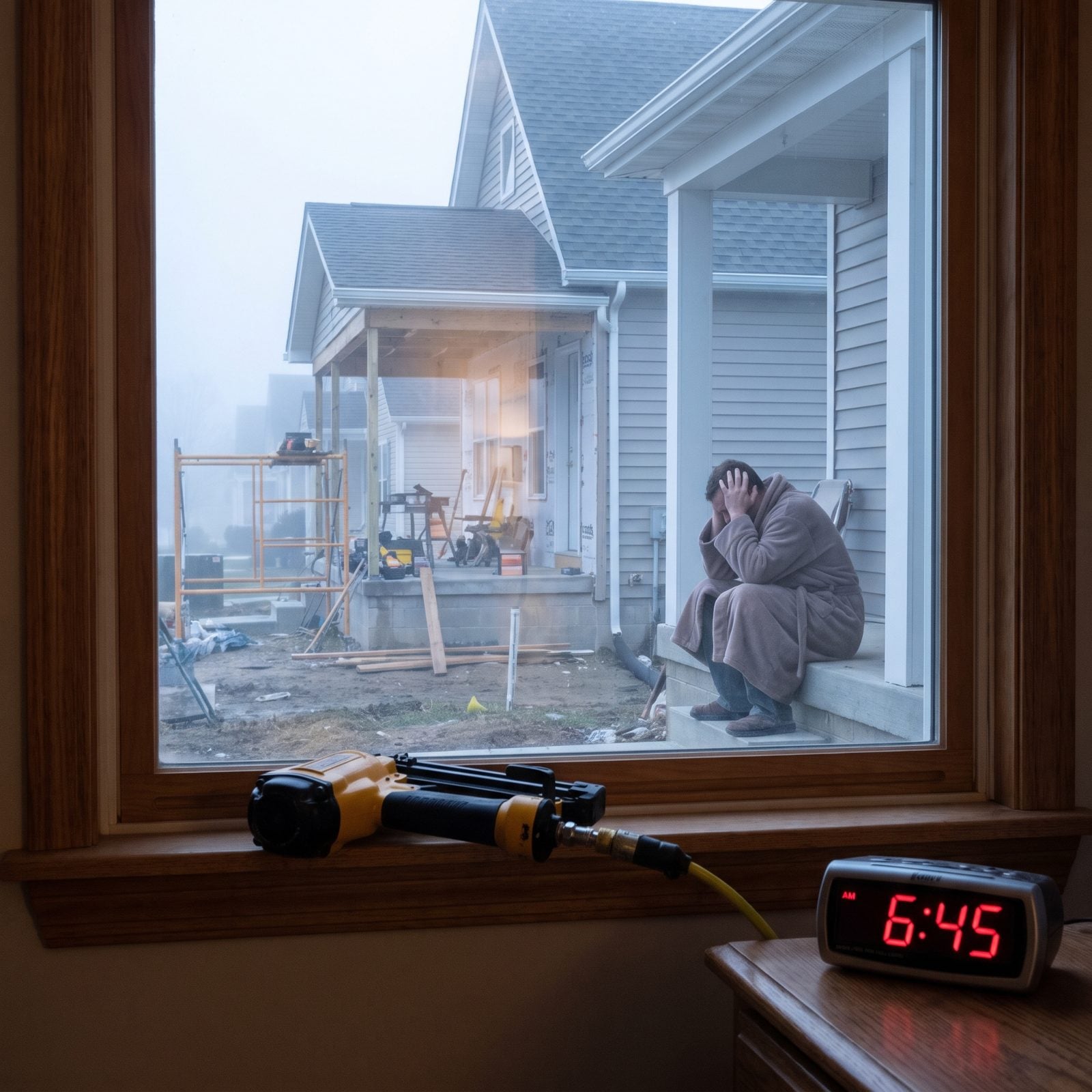
Nobody wants a nail gun firing at 6:45 on a Saturday. Most towns draw a line somewhere around seven or eight in the morning, with a hard stop in the evening and quieter rules on weekends.
Tell your crew the hours and mean it. A good contractor already knows. The ones who start loud at dawn to beat the heat are just solving their problem by handing it to everyone who lives near you.
The jackhammer doesn’t care what day it is. You’re the one who has to.
12. Contain Renovation Dust, Nails and Debris

Drywall dust finds everything. It settles on the car two houses down, films over the pool next door, drifts through a window someone left cracked for the breeze.
Tarp the piles and hose down the dust. And the nails — run a magnetic sweeper over the street and the shared driveway at the end of each day. A flat tire on your neighbor’s car from your framing scraps is a conversation you really don’t want to have.
11. End Outdoor Gatherings at a Reasonable Hour
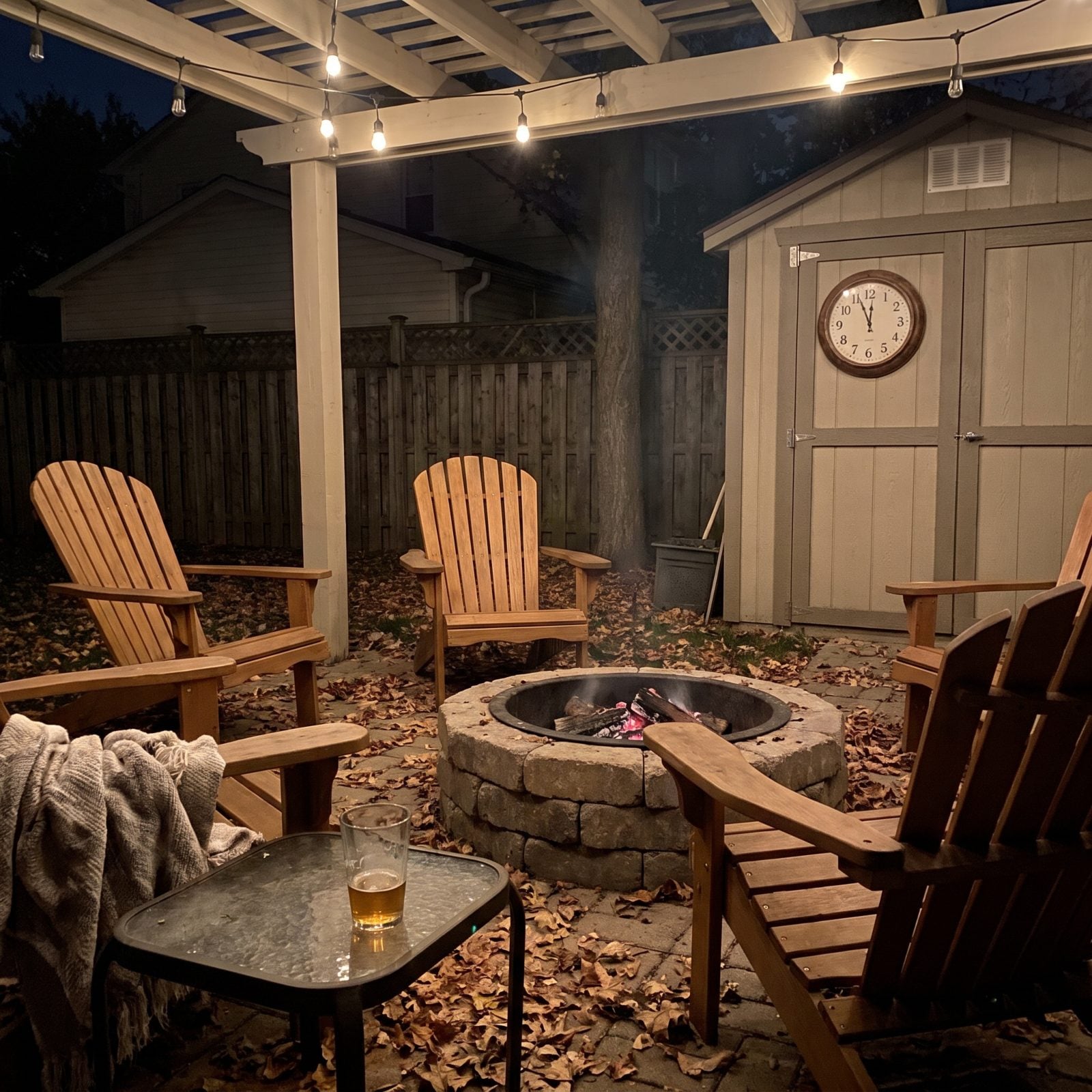
Sound travels further at night than it has any right to. The laughter that felt perfectly normal at nine lands like a shout at midnight, when the whole street has gone quiet and there’s nothing left to absorb it.
Most places call ten or eleven the line on weeknights, a little later on weekends. Move the party indoors as it winds down. The last stragglers can keep going — just not under a neighbor’s bedroom window with the volume where it was at sundown.
10. Give Advance Notice Before Setting Off Legal Fireworks
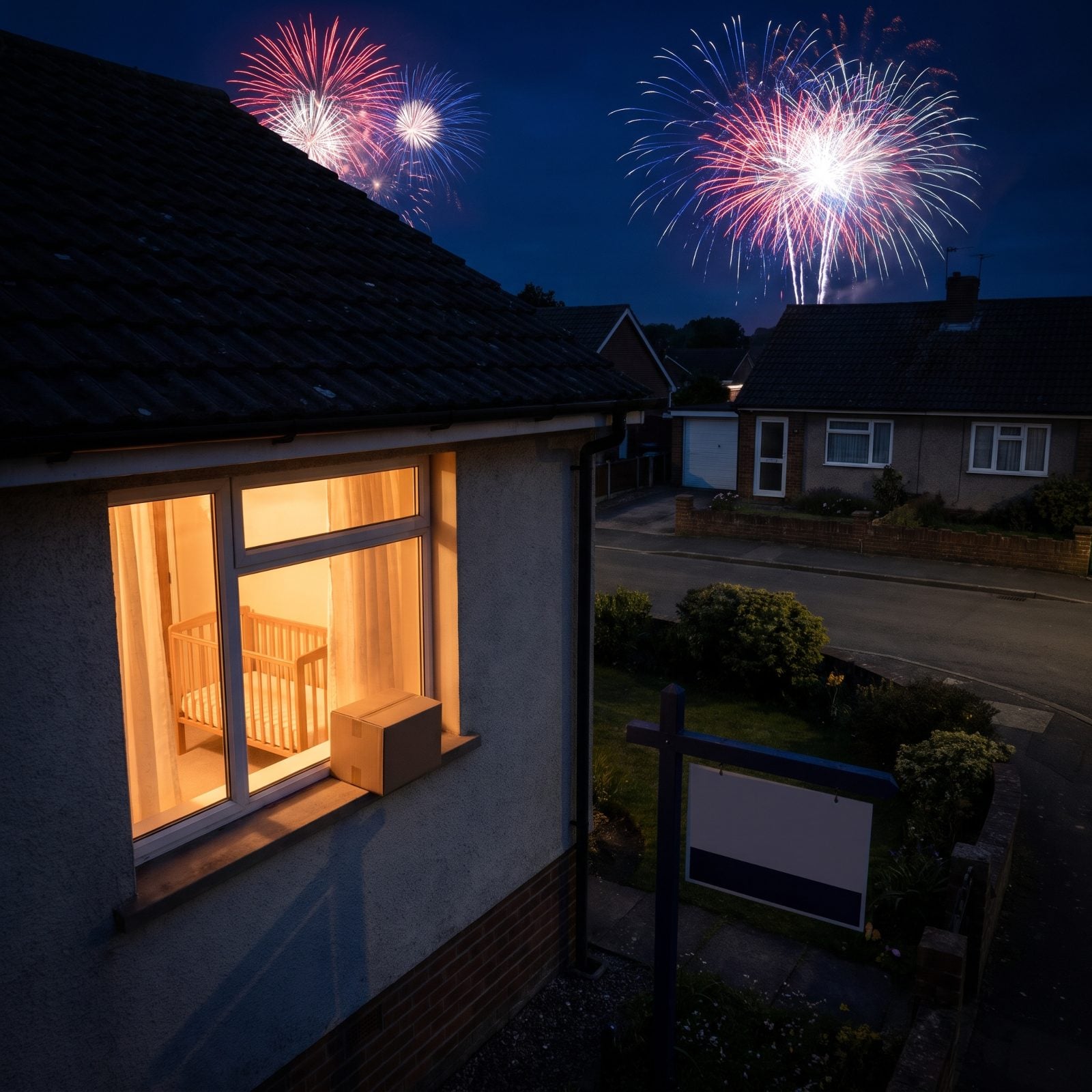
Even where fireworks are legal, the bang doesn’t ask permission. It hits the house with a newborn, the veteran who flinches at the crack, the old dog three yards over who’s going to shake till dawn.
A quick word to the block beforehand changes the whole night. Tell them when you’ll light them and roughly when you’ll stop. People who are warned pull their pets inside and shut their windows. People who are ambushed call it in.
9. Control Firepit Smoke, Sparks and Late-Night Noise
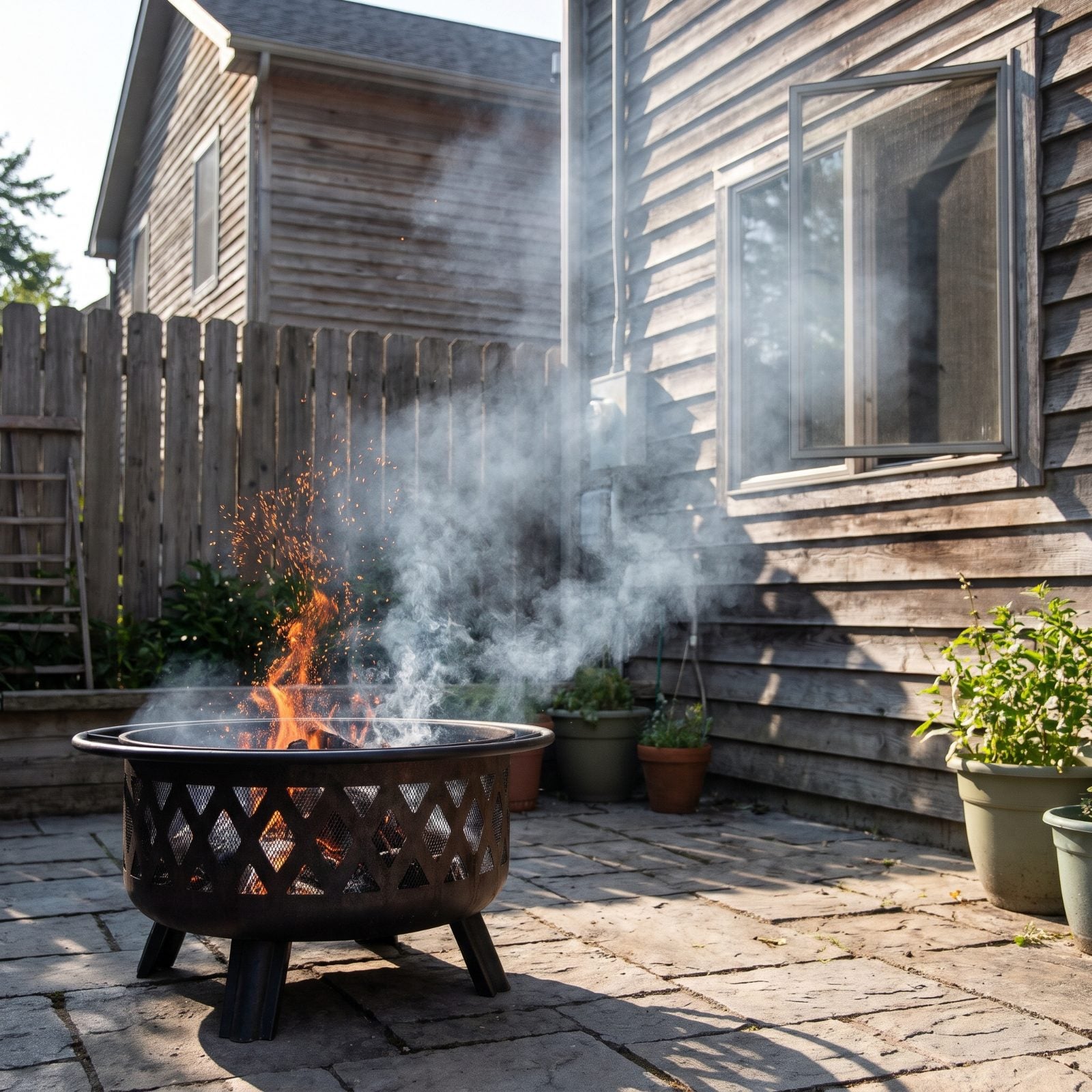
A firepit downwind of someone’s open bedroom window turns a nice night into their problem. Wet or green wood is the real culprit — it smolders instead of burns, and that thick smoke drifts straight next door.
Burn dry seasoned wood only. Keep a spark screen on and a hose within reach. And when the conversation gets loud around eleven, read the room, because voices carry further in the dark than the fire ever will. Douse it fully before you head in. A banked ember and a gust of wind is how fences catch.
On late-night fire pits, a construction company executive points out that “Cities often prohibit open burning from midnight to 6 a.m. to minimize smoke complaints and reduce the liability of overnight supervision”
8. A Neighbor’s Pool Is Not the Neighborhood Pool
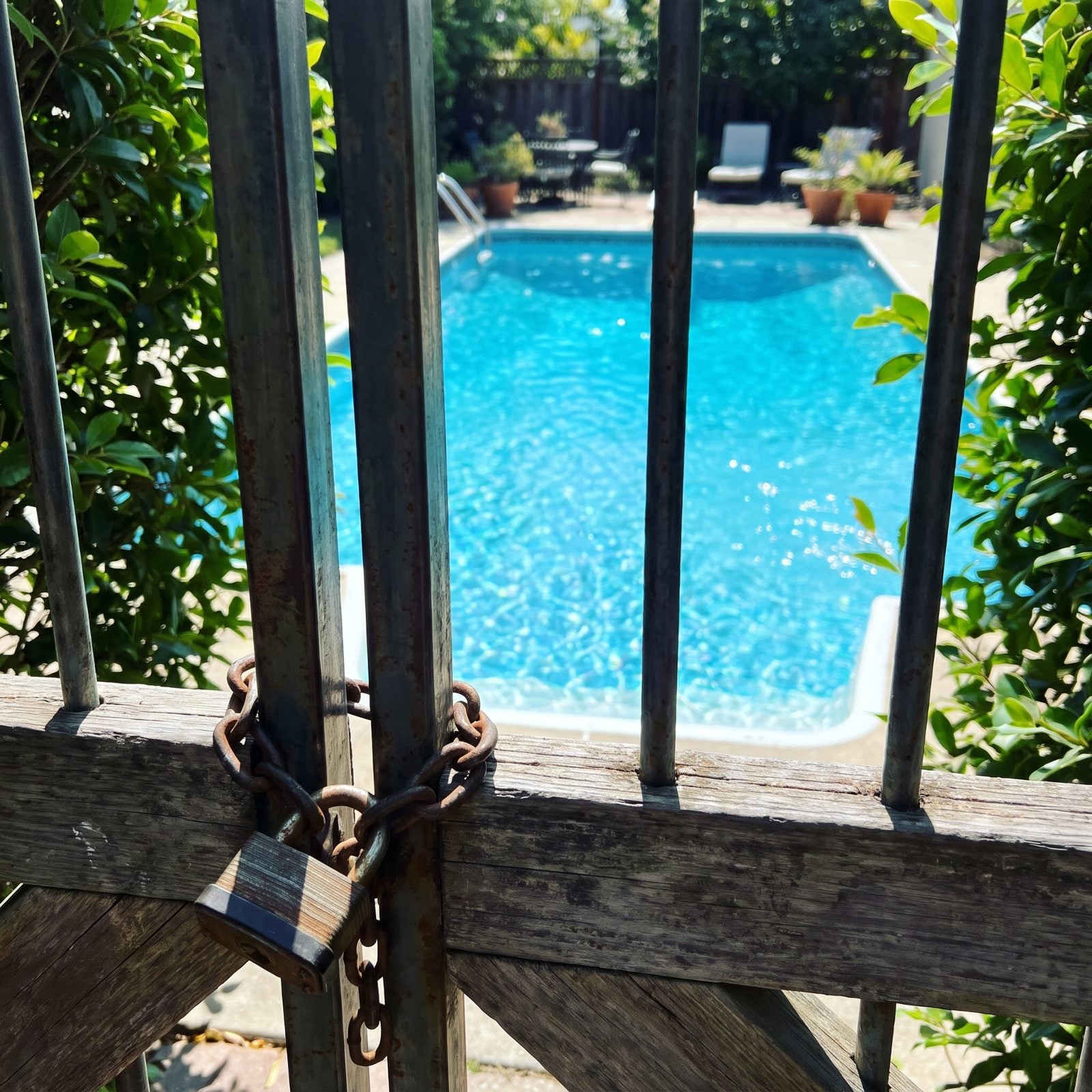
That blue water is magnetic on a 95-degree day. Doesn’t mean the gate is open to you.
A private pool is a liability, a utility bill, and a chemistry project the owner handles alone. Treat it as a shared amenity just because the fence is low, and you’ve put them in an awful spot, where they either host you or play the villain. So wait for the real invitation. It carries more weight when it comes freely instead of being wrung out of a kid who presses their face to the chain-link every Saturday.
7. Pick Up After Your Dog, Even on the Lot That Looks Abandoned
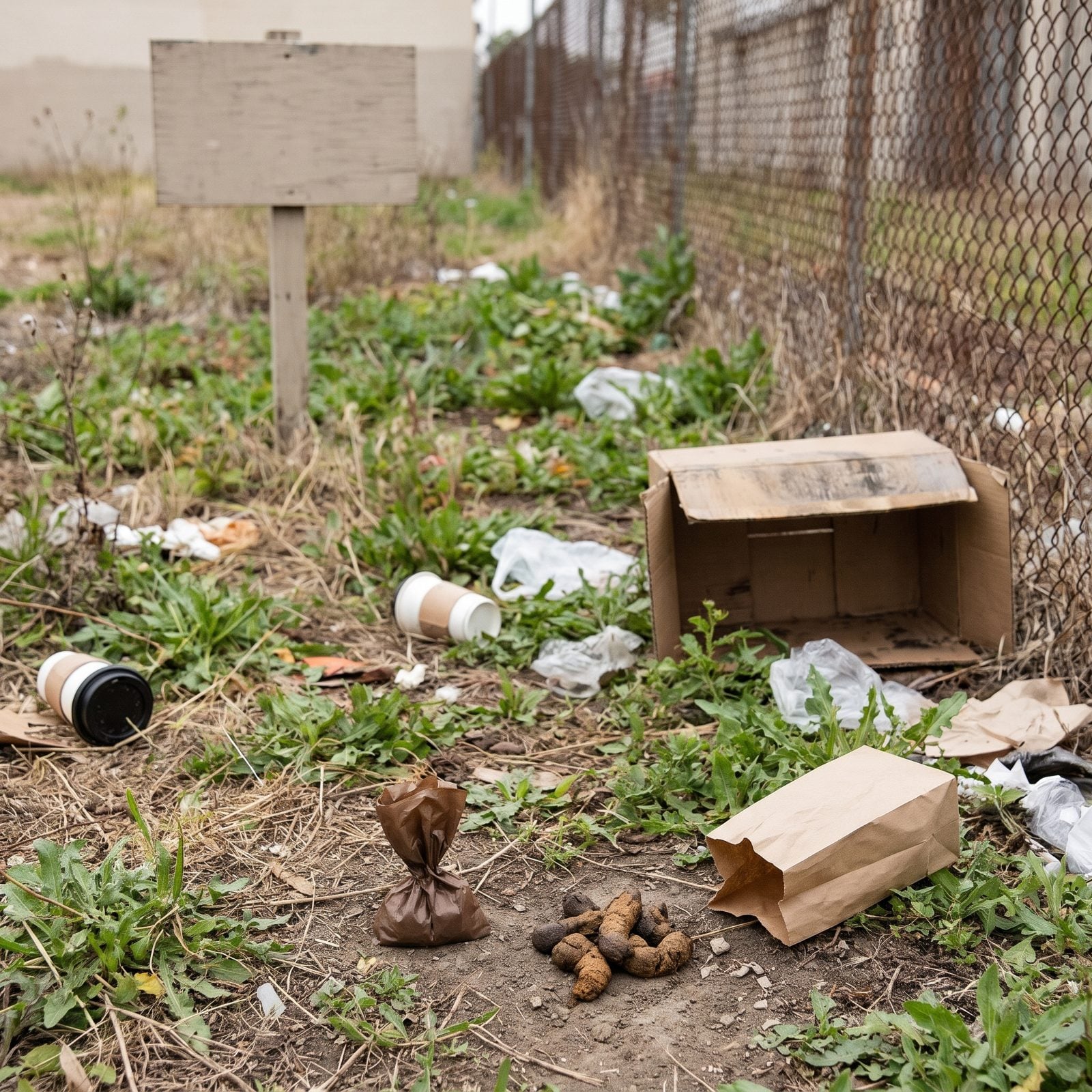
The empty lot feels like nobody’s problem. Somebody owns it. And somebody walks across it in sandals.
That grass gets mowed by a person who eventually finds what you left behind. Vacant land fills in with houses faster than you’d guess, and the new owner inherits whatever’s been composting under the weeds for a season or two. Carry the bag. Use the bag. Every yard belongs to someone, including the one that looks like it belongs to no one.
6. Leash It or Fence It, No Exceptions
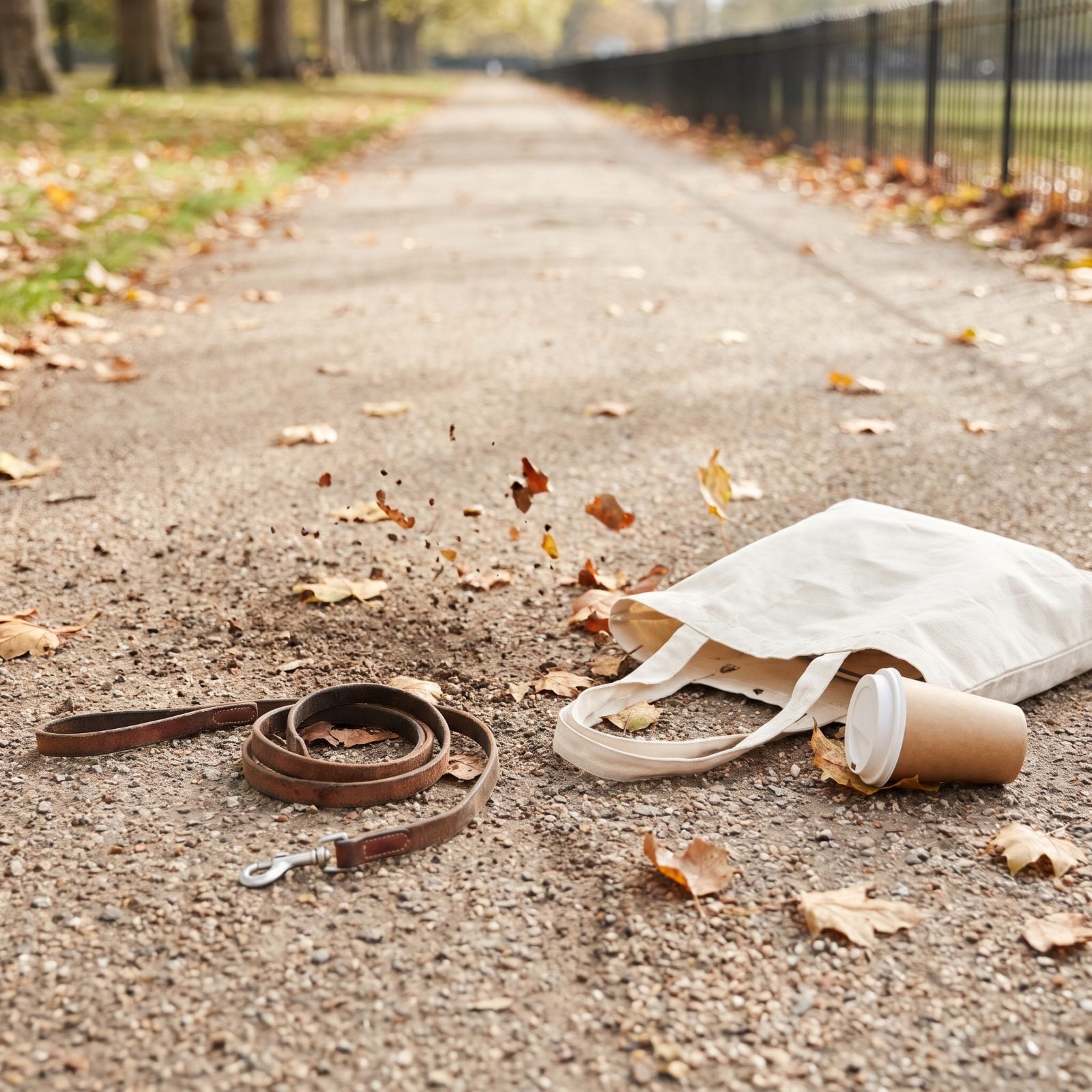
A friendly dog off-leash is still an off-leash dog to the person it’s running toward.
You know your dog won’t bite. The jogger rounding the corner doesn’t, and neither does the toddler, or the leashed reactive dog whose owner just watched two years of patient training unravel in the moment you let yours loose. Containment is a courtesy to everyone who can’t read your dog’s mind. A fence with a latch that actually catches, or a leash in your hand, and the whole guessing game disappears.
5. Fix the Barking Before the Complaint Shows Up
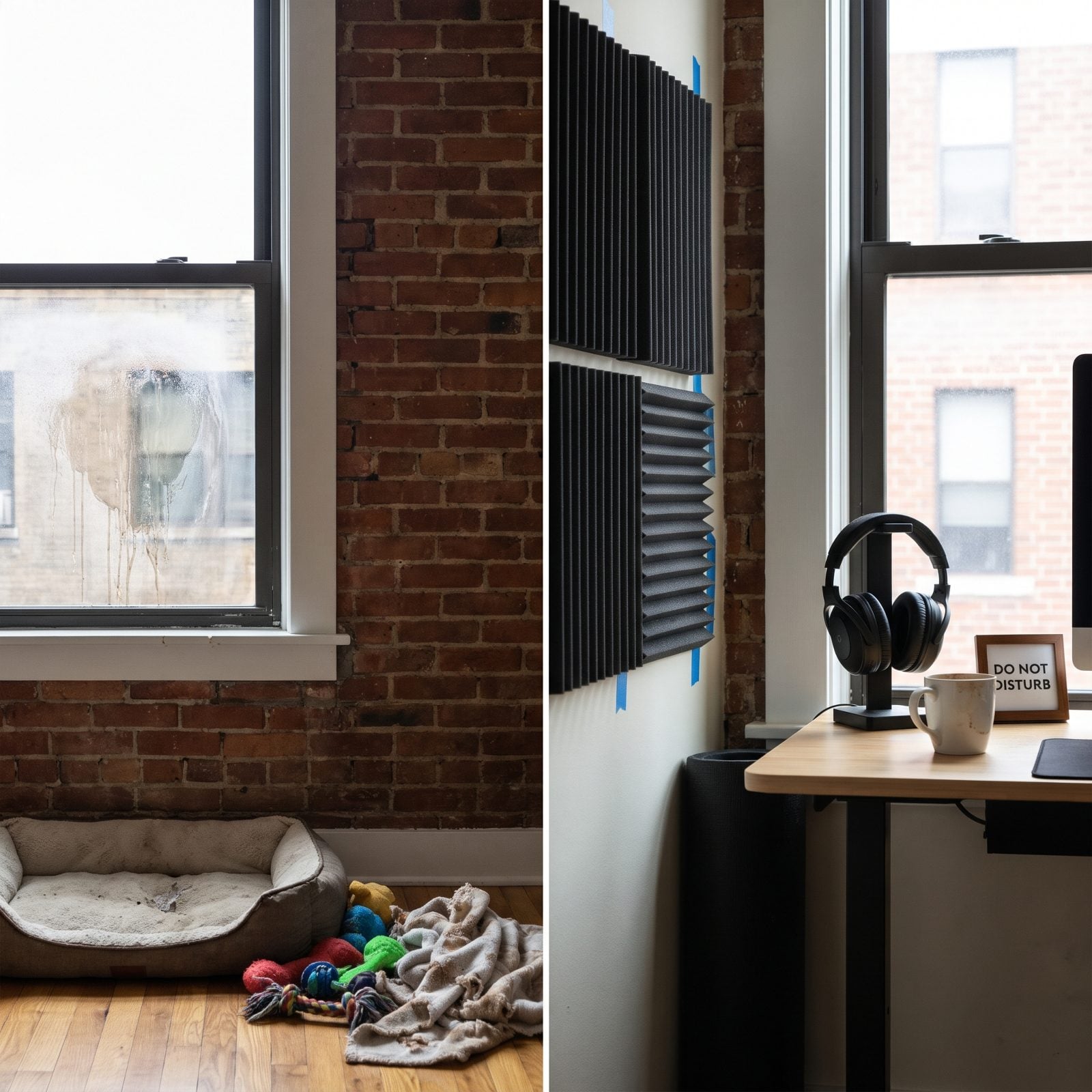
Your dog barks when you leave, and you don’t hear it because you left. Your neighbor working from home three feet past the fence hears every second.
By the time someone knocks or files a noise complaint, they’ve already sat through weeks of it and hit their limit. So handle it on the front end. A tired dog is a quiet dog, which means a real walk beats any gadget you can buy. And if it’s separation anxiety, that’s a trainer’s territory, worth the money. The neighbor who never had to complain stays the neighbor who waves back.
Answering an owner whose neighbors complained about barking, a certified dog trainer says: “A very important step (that I recommend all dog owners do) is recording the dog’s behavior during their absence.”
4. Keep Your Cat Out of the Neighbor’s Flower Beds
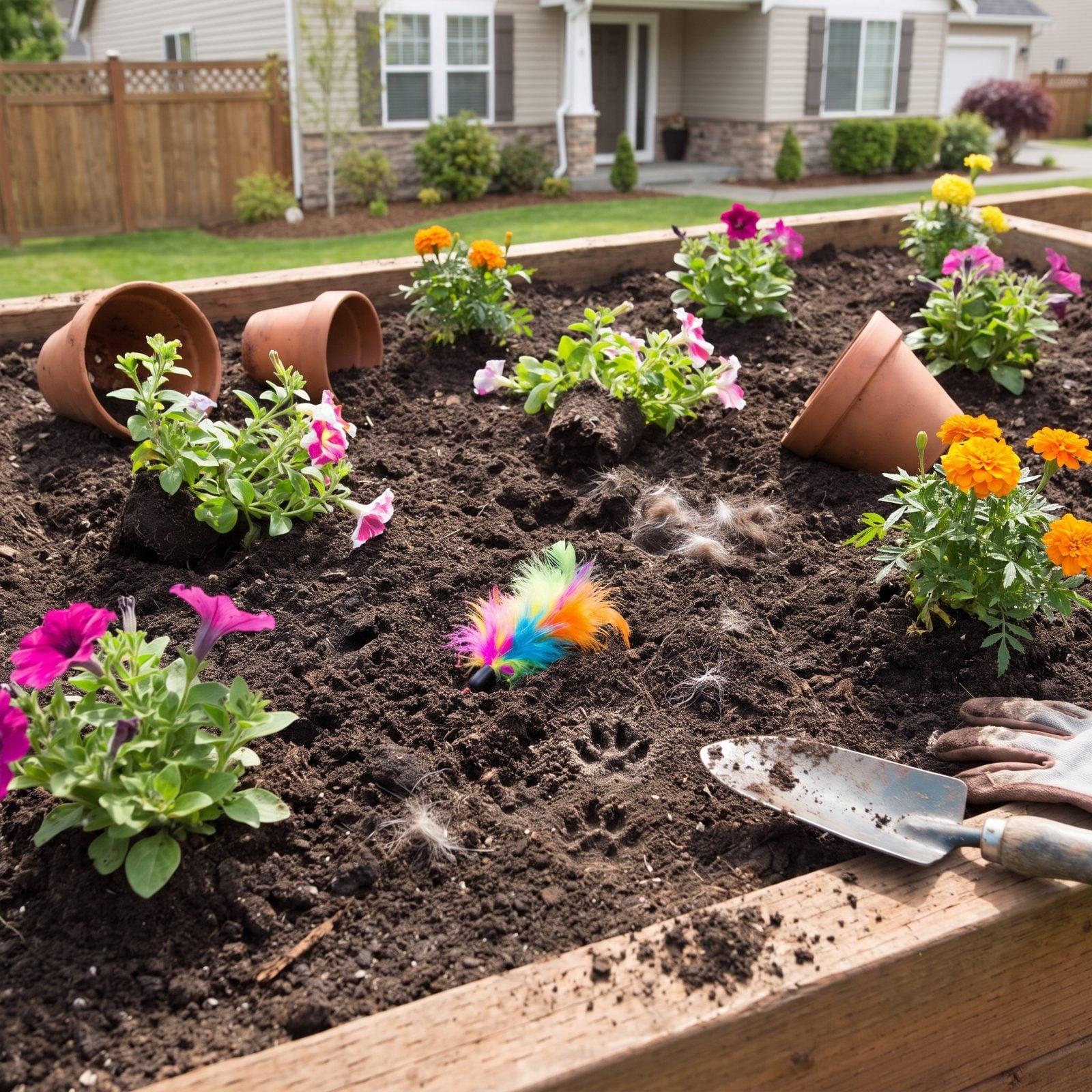
Freshly turned soil is a litter box to a cat. To the person who spent Saturday planting it, it’s a betrayal.
A roaming cat will dig in someone’s vegetable bed and do its business among the carrots, and the owner finds it with their bare hands. That’s not a minor annoyance. It’s a genuine health issue in a food garden. Keep the cat in, build a catio, or at least offer to pitch in once you know it’s happening. A motion sprinkler on the neighbor’s side solves it fast, and nobody has to have the awkward conversation.
3. Stop Feeding the Wildlife That Everyone Else Pays For
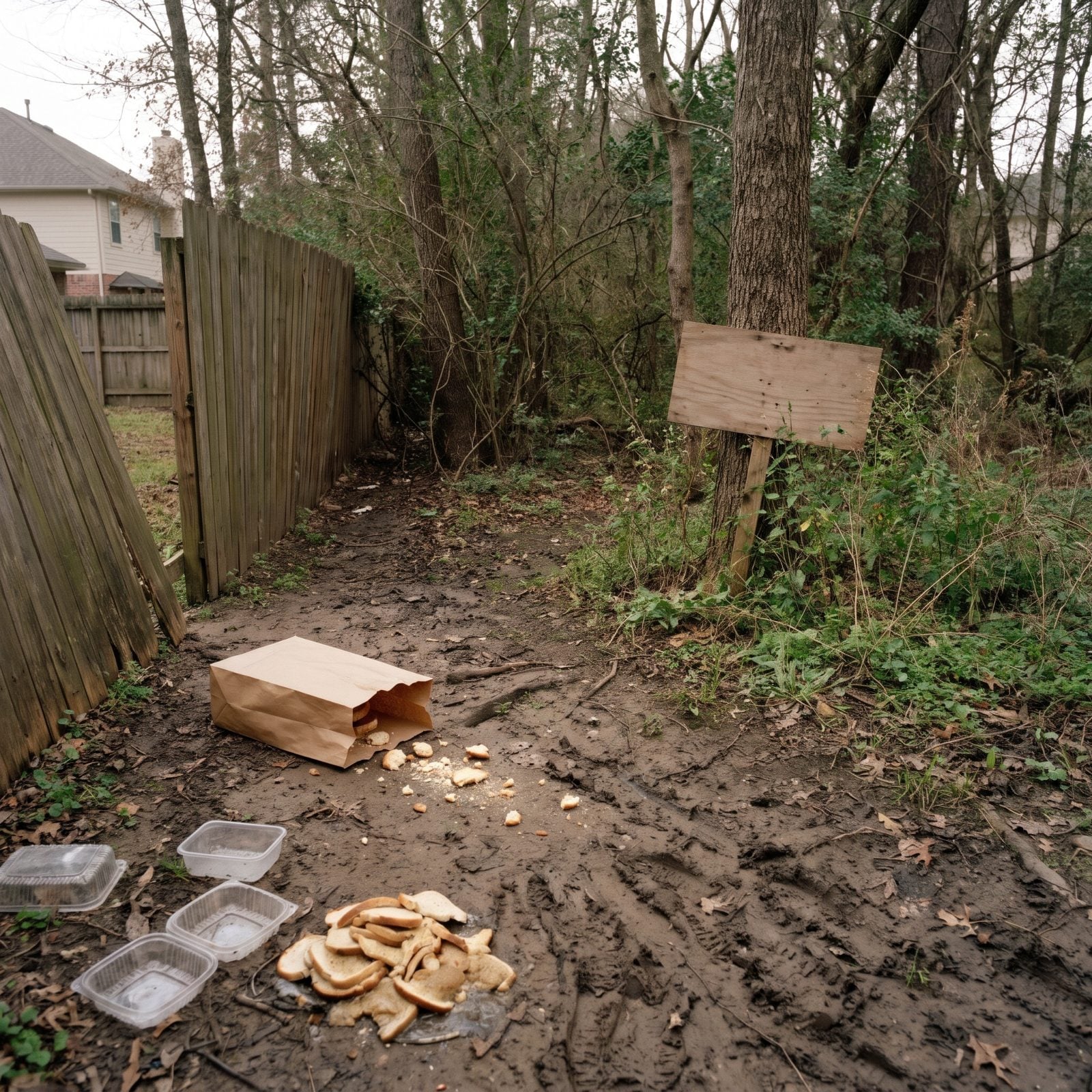
Tossing bread to the ducks feels generous. The raccoons, rats, and emboldened deer that show up next door do not.
Feed wildlife on a regular schedule and you train it to stop fearing houses. Then it’s your neighbor’s garden stripped bare and their trash cans dragged across the driveway at 2 a.m. The animal you fed is now everyone’s problem, and it can’t tell the difference between your yard and theirs. A bird feeder is one thing. A nightly buffet of corn and scraps is how a whole street ends up on a first-name basis with the pest control guy.
Advising homeowners dealing with nuisance animals, a state wildlife biologist explains: “Keep in mind that wild animals are in search of food, water, shelter and safety. Eliminating these attractions on your property can greatly reduce wildlife problems.”
2. Teach Kids Where the Neighbor’s Yard Starts
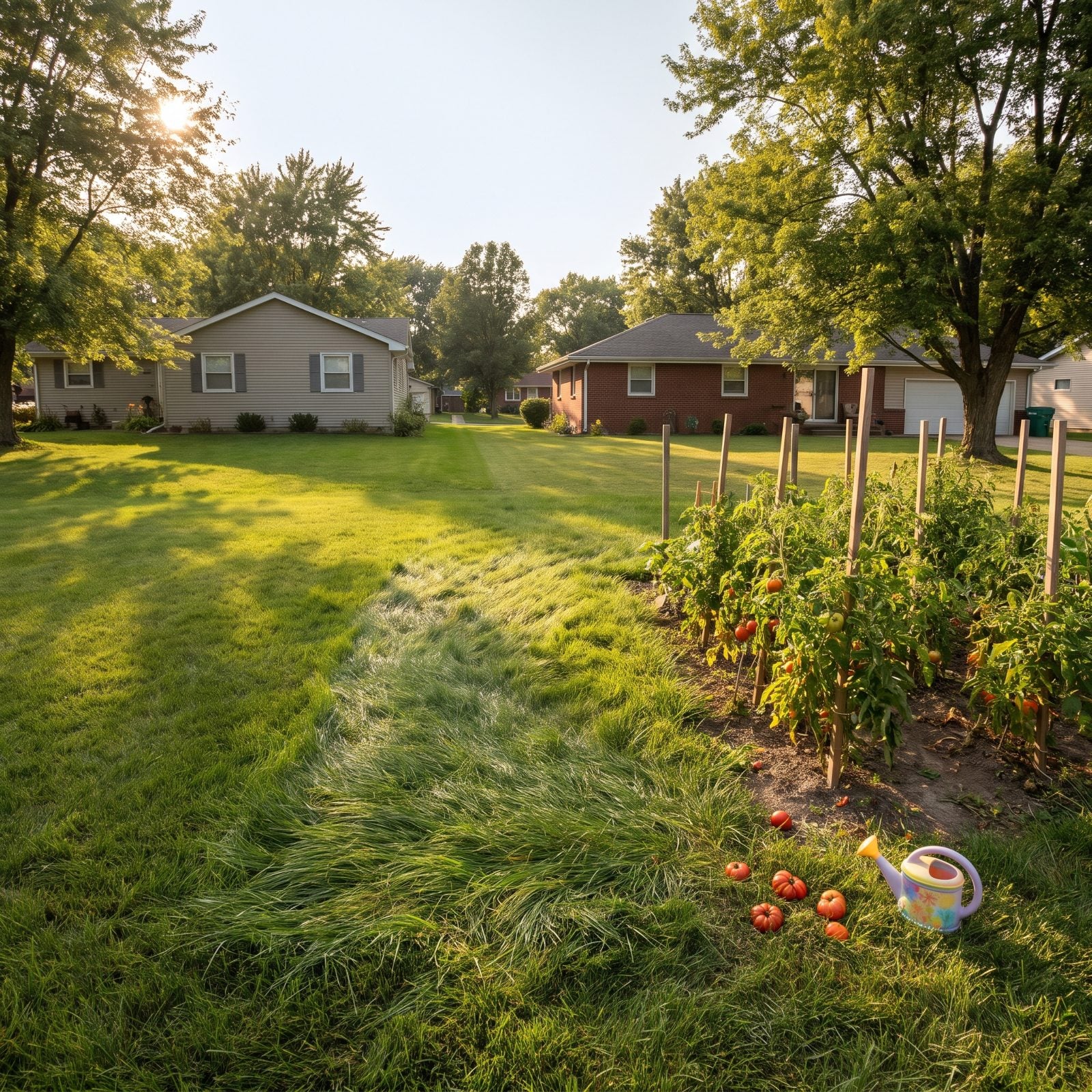
Open-plan lawns with no fences are great until the whole block becomes a playground and someone’s tomato plants get trampled.
Kids genuinely don’t see property lines, so this one lands on the grown-ups. Walk the perimeter with them and sort it out: this hosta row is where our yard ends, that’s where theirs begins. Most neighbors stay relaxed about a stray cartwheel or a chalk drawing creeping over the edge. What they notice is whether anyone bothered to teach the difference. A gorgeous front porch and tidy steps count for nothing if the lawn gets treated like common land.
1. Sort Out Kid Conflicts Adult to Adult

Two kids fall out over a game. Within an hour it’s a text thread between two households with everyone picking a side. That’s how a cul-de-sac goes cold for a decade.
Kids squabble and forget it by dinner. Parents hold the grudges. When something real happens, handle it directly and calmly, face to face, before the version your kid told you hardens into fact. Assume the other parent wants the same peaceful street you do. A ten-minute conversation on the driveway beats five years of avoiding eye contact at the mailbox.