🔥 Would you like to save this?
The thermostat says 68. The room still feels wrong at 3am. Most sleep advice stops at buy a better mattress and go to bed earlier, which is fine but nowhere near the whole story. The real culprits are smaller and sneakier: stale air you can’t see, light bleeding over the top of your blackout curtains, a pipe humming behind the headboard. These are the odd fixes experienced sleepers swear by and almost nobody mentions. Each one goes after a specific enemy of good sleep, and most of them won’t empty your wallet. Here are the ones worth stealing.
37. Park a CO2 Monitor on the Nightstand to Read the Air You’ve Been Breathing
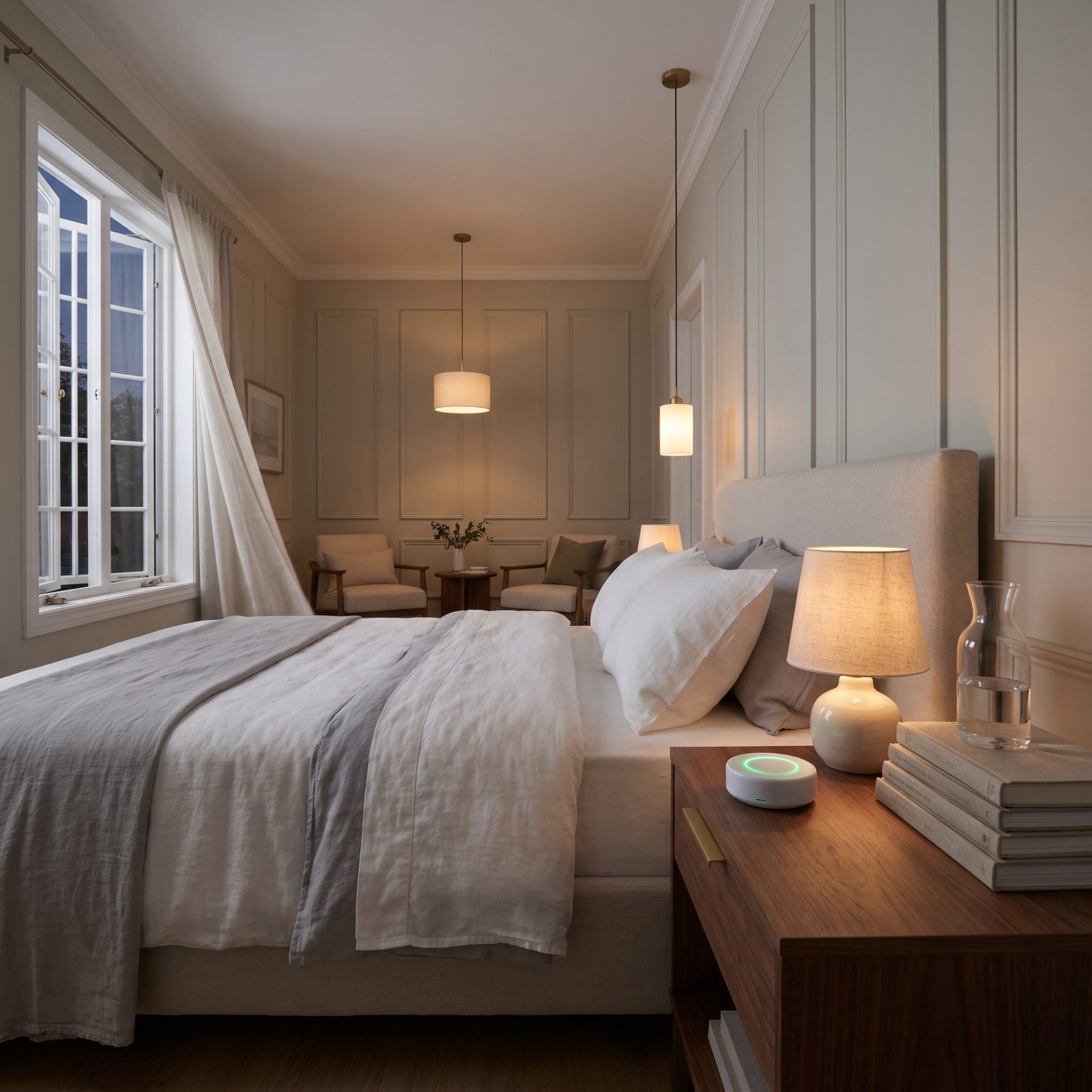
A closed door, two sleepers, eight hours. By morning the CO2 in a small room can climb high enough that the heavy-headed grogginess you’ve been blaming on the mattress is really just stale air you’ve been rebreathing all night. A little tabletop monitor finally puts a number on something you’ve felt for years without naming.
In order to come up with the very specific design ideas, we create most designs with the assistance of state-of-the-art AI interior design software. Also, assume links that take you off the site are affiliate links such as links to Amazon. this means we may earn a commission if you buy something.
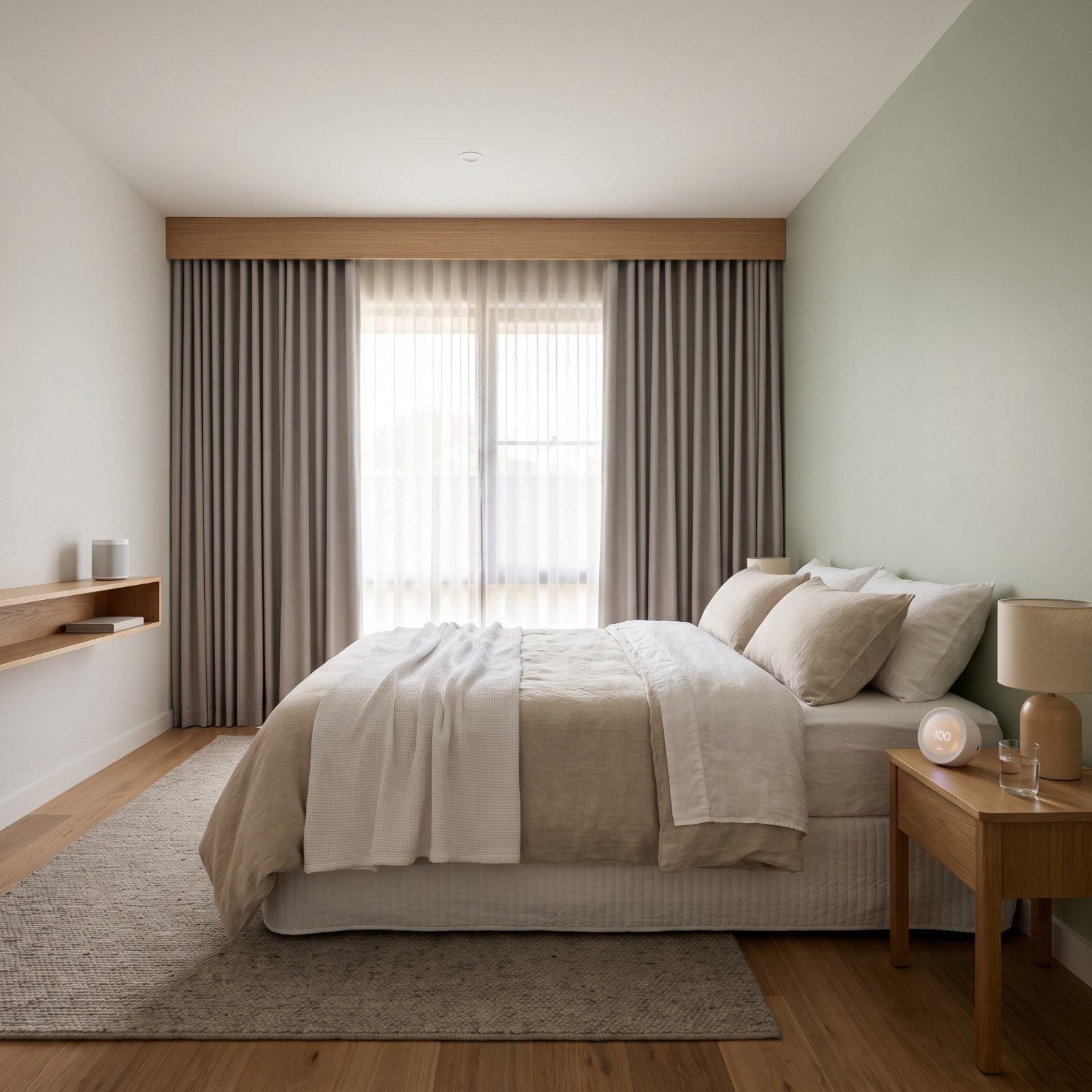
The transitional setup here keeps it honest. Walnut nightstand, warm lamp, a small sensor that reads the room instead of decorating it. Green ring means breathe easy, and anything creeping toward orange is your cue to crack the window or kick on the fan.
36. Slide an Under-Sheet Bed Fan Underneath for Cooling That Nobody Sees
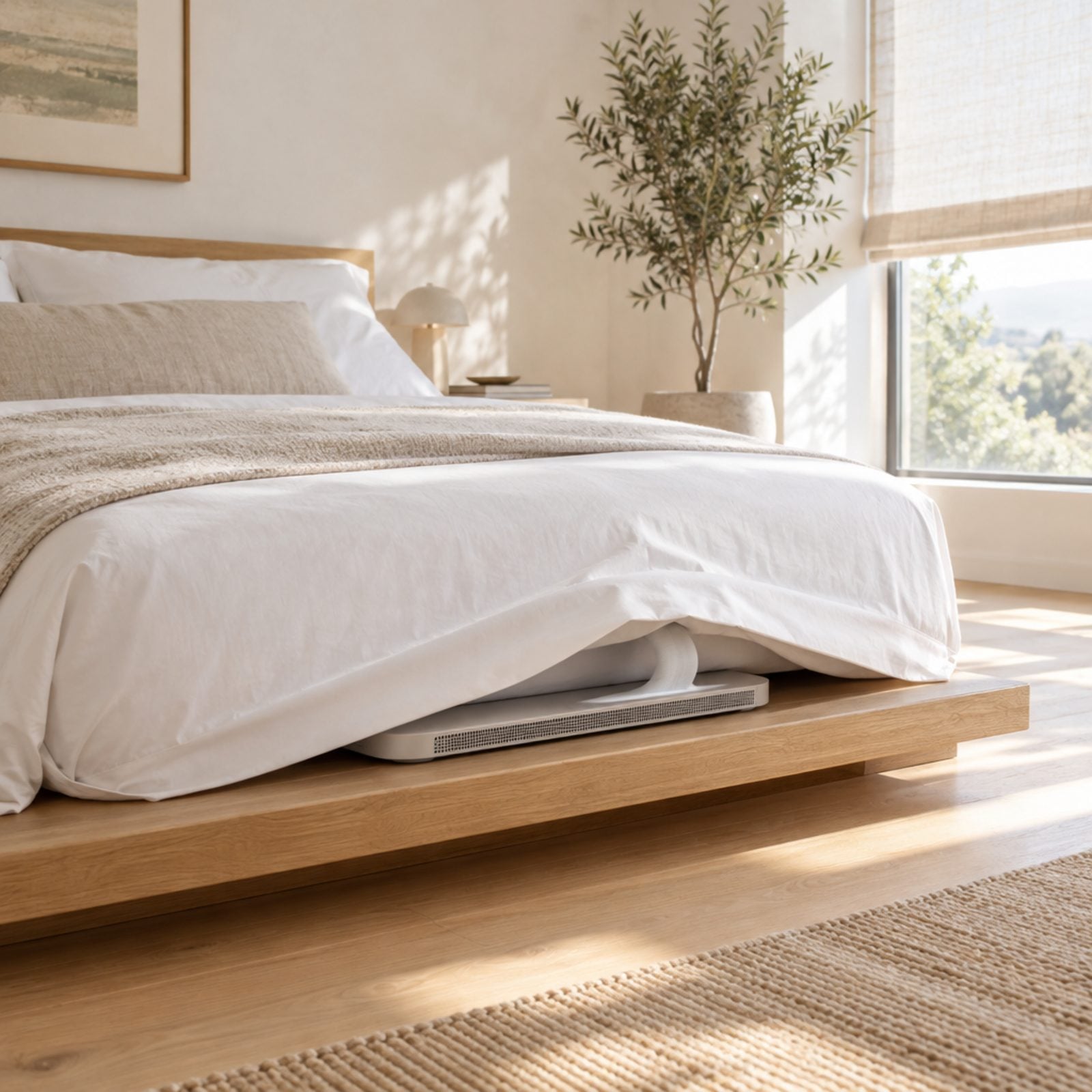
Running the AC to cool one hot sleeper is like heating the whole house to warm a mug of tea. An under-sheet bed fan skips all that overkill by pushing a thin stream of air directly between your sheets, so the heat and moisture building up against your skin get carried off before they ever wake you.
This airy, minimalist room keeps it low-key. The white unit sits on the ledge of a low wooden platform bed, its flexible hose looping up under the draped linen duvet, and it blends in with the soft whites around it. You just stop flipping the pillow to the cold side.
35. Aim a Pink-Noise Speaker at the Wall Between You and the Racket
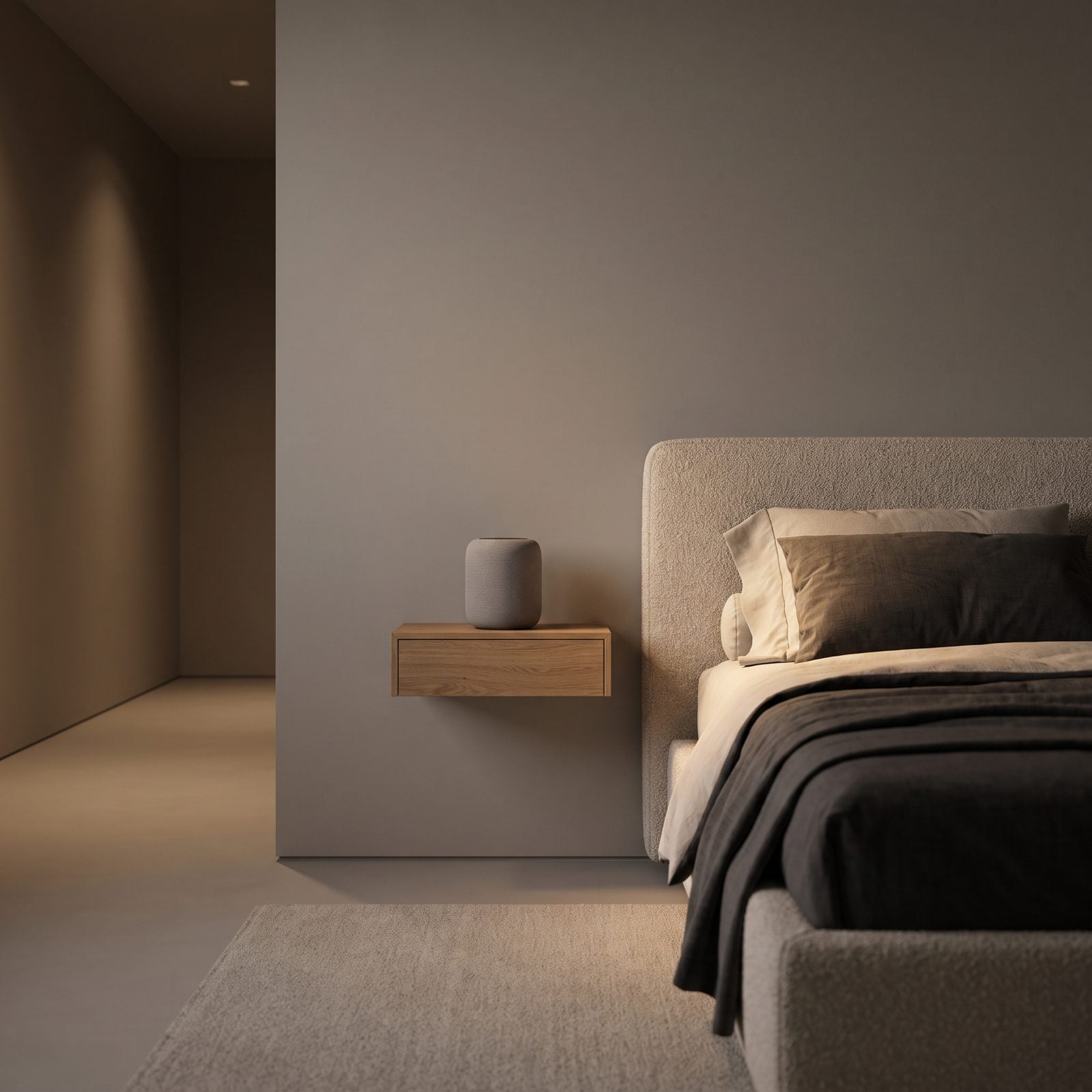
White noise gets all the press, but pink noise is the smarter cousin. It carries more energy down in the low frequencies, which is exactly where traffic rumble, a snoring partner, and a dishwasher two rooms away all live, so it buries those sounds instead of laying a hiss on top of them.
Placement is the part most people botch. Put the speaker between the bed and whatever’s making the racket, not way over on the far nightstand. In this contemporary room it sits on a shelf against the shared wall, doing the blocking before the sound ever reaches your pillow.
34. Pre-Warm the Foot of the Bed and Fall Asleep Faster
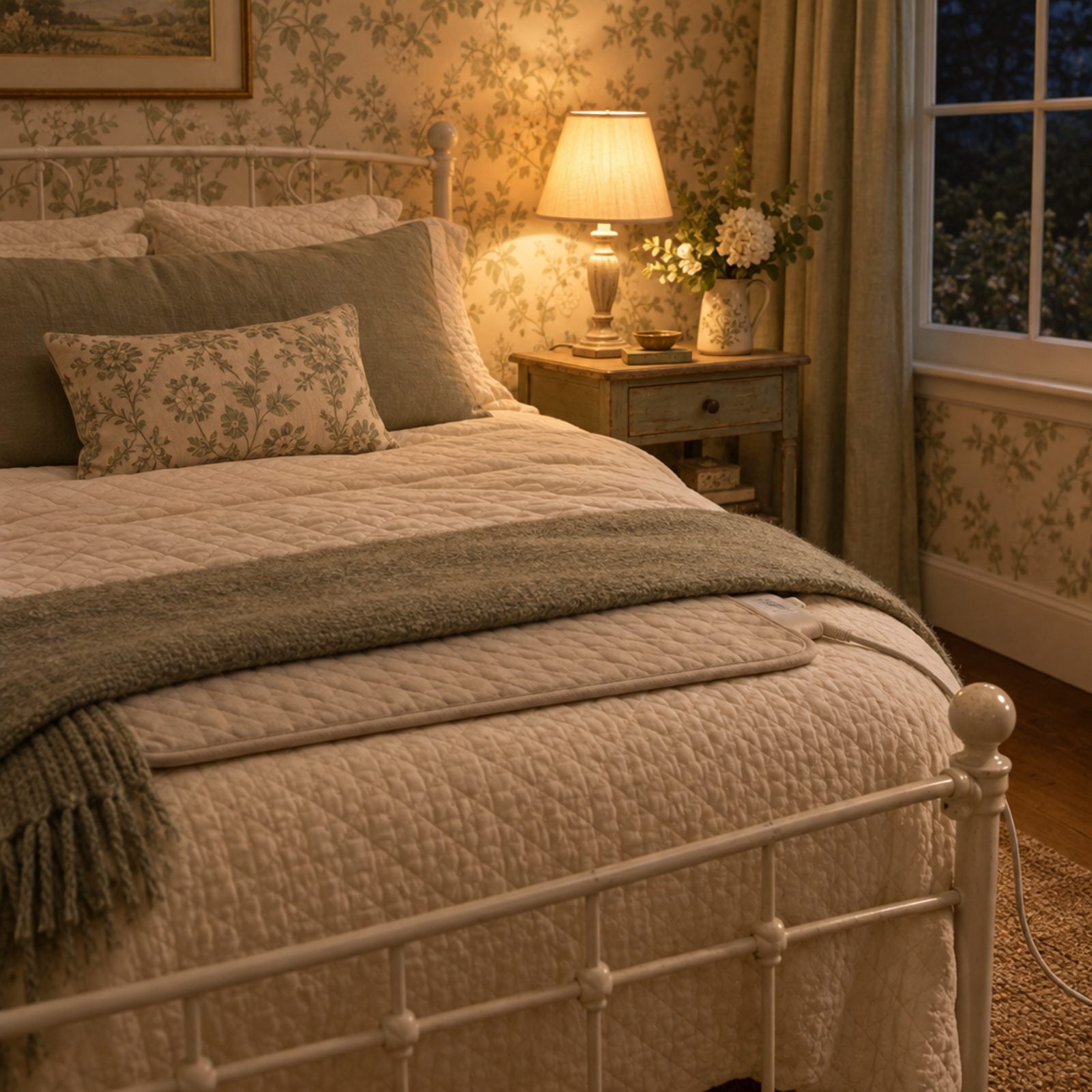
Sounds backwards: warm your feet to cool down for sleep. But warming your feet and hands opens the blood vessels there, which dumps core heat and triggers the temperature drop your body reads as its cue to sleep. Cold feet keep that door shut.
Pre-warm just the foot of the bed for ten minutes before you climb in, then switch it off. This English cottage room lays a slim white heating pad right on top of the cream quilt, its controller resting on the bedding and a long white cord trailing across the bed to the floor, with a wool throw draped beside it.
33. Ditch the Shared Cover for Two Twin Duvets on One Bed
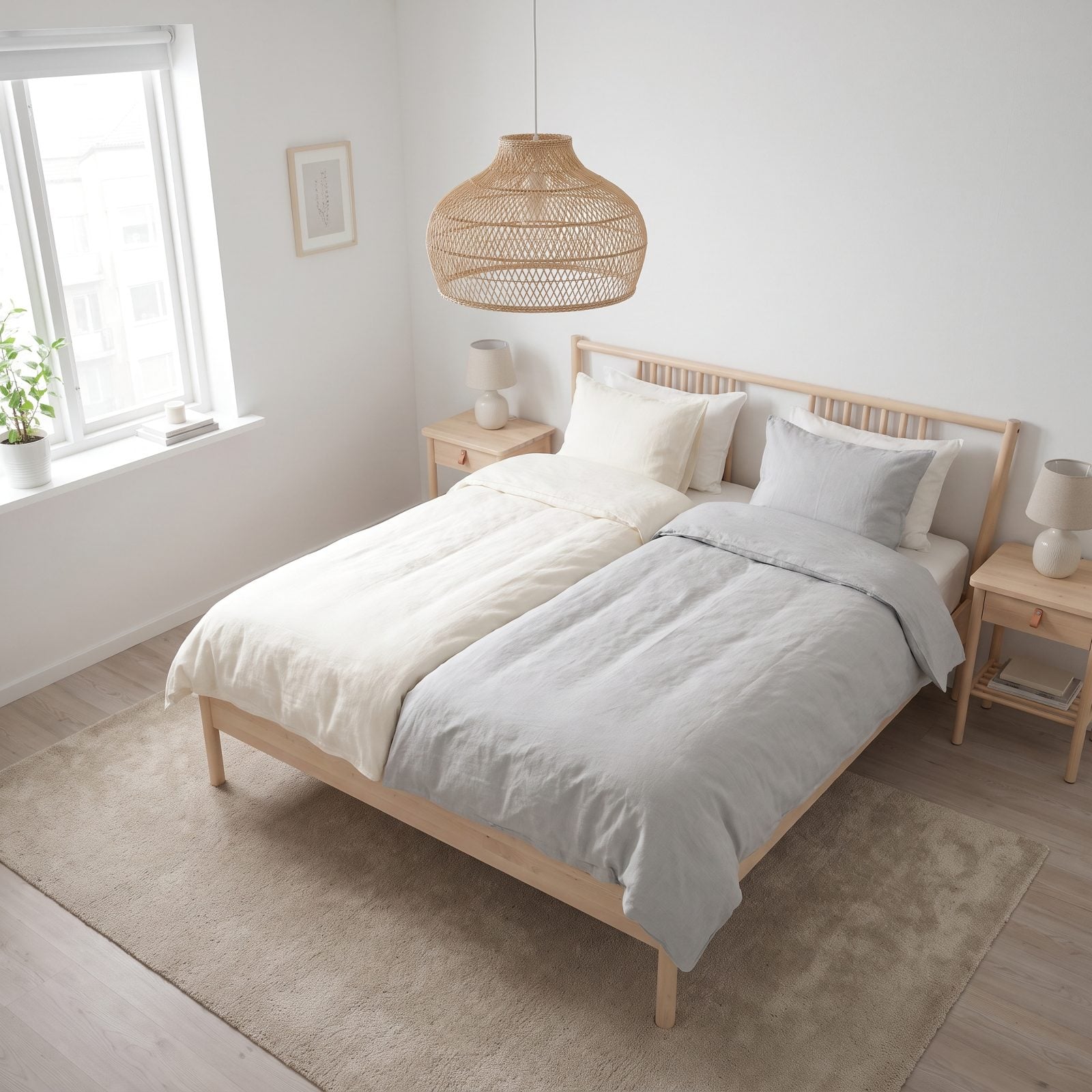
The Scandinavians have been doing this for generations, and they’re right. Two separate twin duvets on one bed means nobody loses the cover at 2am and nobody wakes up roasting under a partner who sleeps like a furnace. Each of you picks your own weight and your own warmth.
Looks tidy, too. Here the duvets sit side by side on a birch frame, one warm white, one pale grey, both folded clean. The cream bed inspiration reads minimal without going cold.
32. Cap Your Blackout Drapes With a Pelmet to Kill the Light Halo
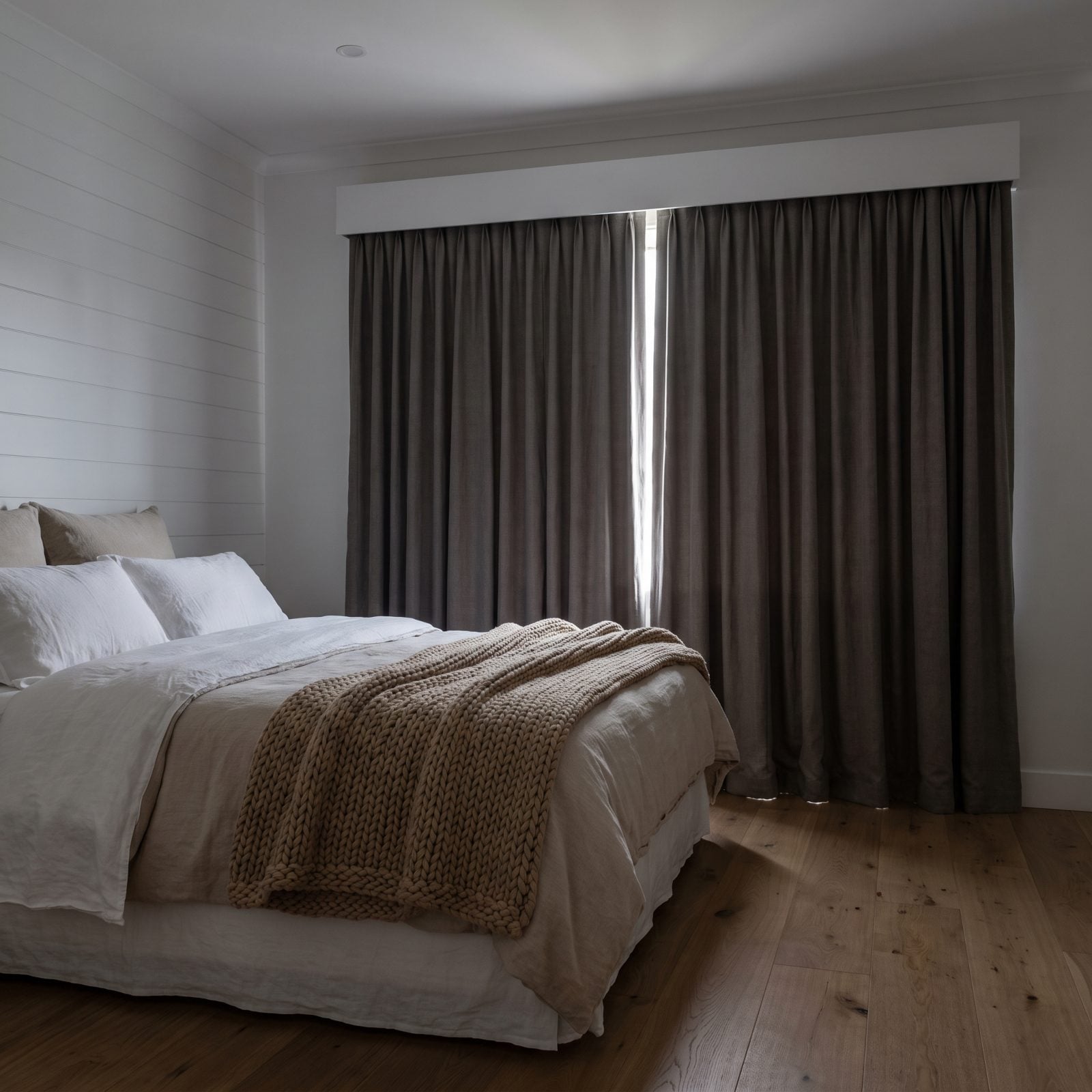
You bought blackout curtains and the room still glows at the top. That halo is streetlight or dawn spilling over the rod, and it’s enough to knock your melatonin off schedule even through closed eyelids.
A pelmet fixes it in an afternoon. This modern farmhouse room caps charcoal drapes with a matte white box that seals the gap along the top of the window, so the dark stays dark.
31. Move the Headboard Off the Plumbing Wall for Good

That faint gurgle and knock behind your head at 1am? It’s the pipes. Push your headboard against the wall your bathroom shares and you’ve essentially bolted your sleeping brain to a plumbing system that runs all night long.
So relocate the bed to an interior wall. In this mid-century room the walnut platform sits well clear of the wet wall, mustard and teal pillows and an oatmeal knit throw setting the tone, a brass sputnik light overhead. Same room, half the 3am noise.
30. Build Split Firmness With Two Twin XL Toppers

Two people almost never want the same firmness. One likes a plank, the other wants to sink in. Buying two mattresses is expensive and looks like a split screen, but two Twin XL toppers on a single king sort it all out for a fraction of the cost.
Side by side they add up to king width exactly. This modern organic room layers one firmer topper and one plusher under oatmeal linen on a light ash frame, and once the bed’s made you’d never know the split was there.
29. Fit a Removable Secondary Window Panel to Shut Out Street Noise

Street noise doesn’t come through the wall. It comes through the window, and a single pane does almost nothing against a bus pulling away at midnight.
A removable secondary panel fits inside the existing frame and traps a pocket of air between two layers of glass or acrylic, and that air gap is the part that actually kills the sound. This exposed-brick loft bedroom slots one into a tall black-framed window, snug and barely noticeable from across the room, with Edison pendant bulbs and amber light doing the rest.
28. Lose the Footboard So Tall Sleepers Can Finally Stretch Out

A footboard looks finished and feels like a cage if you’re over six feet. Night after night of tucking your feet or sleeping on a diagonal adds up fast, and no amount of fancy bedding can rescue a bed that’s physically too short for the person in it.
Drop the footboard and the whole length of the mattress is yours. This coastal room goes open at the foot, pale blue stripes and a rattan bench standing in for the usual wooden bar, the sea light making the space feel as roomy as it now sleeps.
27. Cover a Shared Wall With a Full Bookcase to Muffle Neighboring Activity
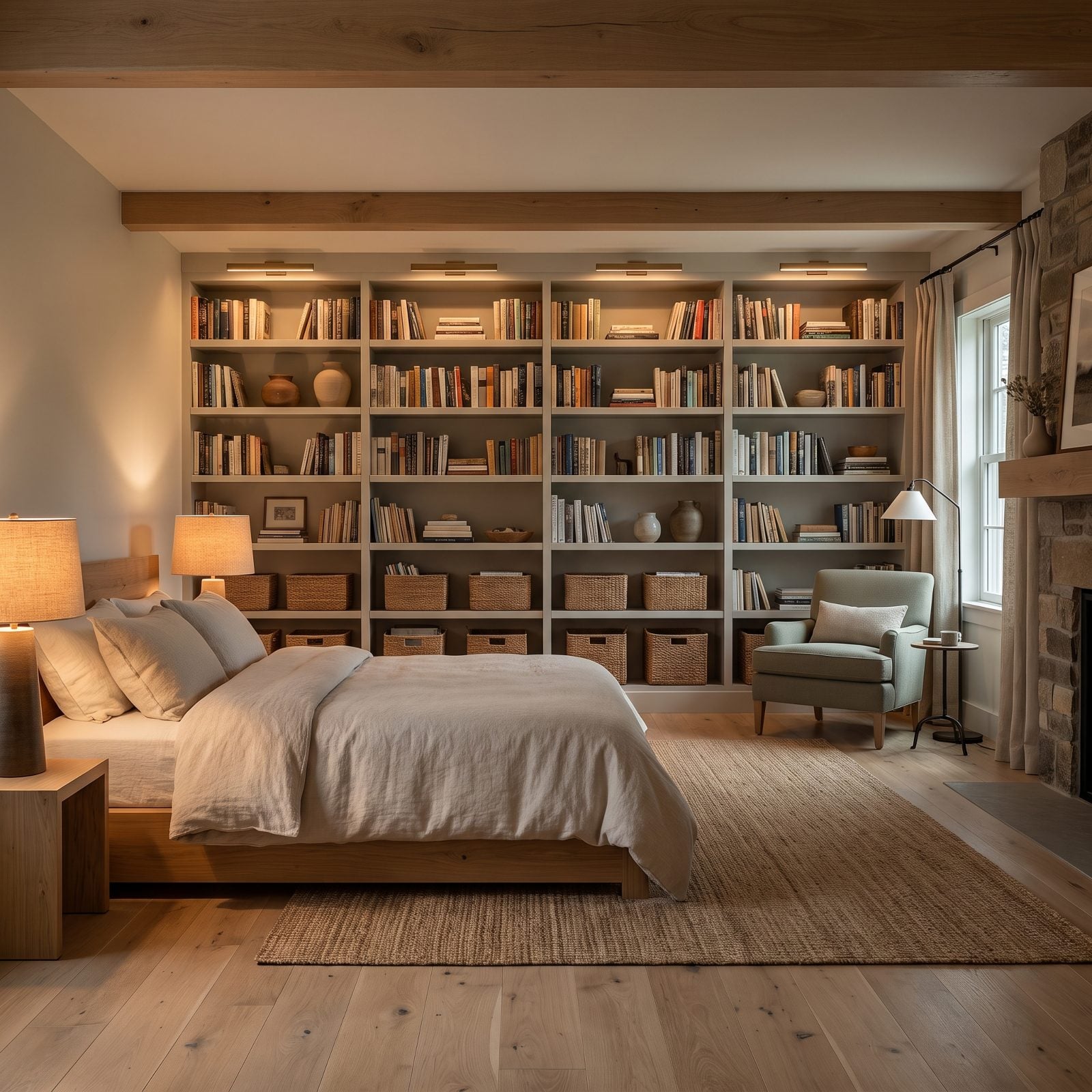
A wall of books is one of the oldest sound tricks there is, because all that uneven paper and spine depth breaks up the flat surface that would otherwise bounce your neighbor’s late-night footsteps straight into your pillow. Deeper, more packed shelves work better. Simple as that.
The farmhouse version here keeps it warm: greige built-ins, oatmeal linen duvet, a jute rug underfoot. Function hiding inside something that looks like it was always meant to be there.
26. Install a Dim Amber Motion Light Under the Bed
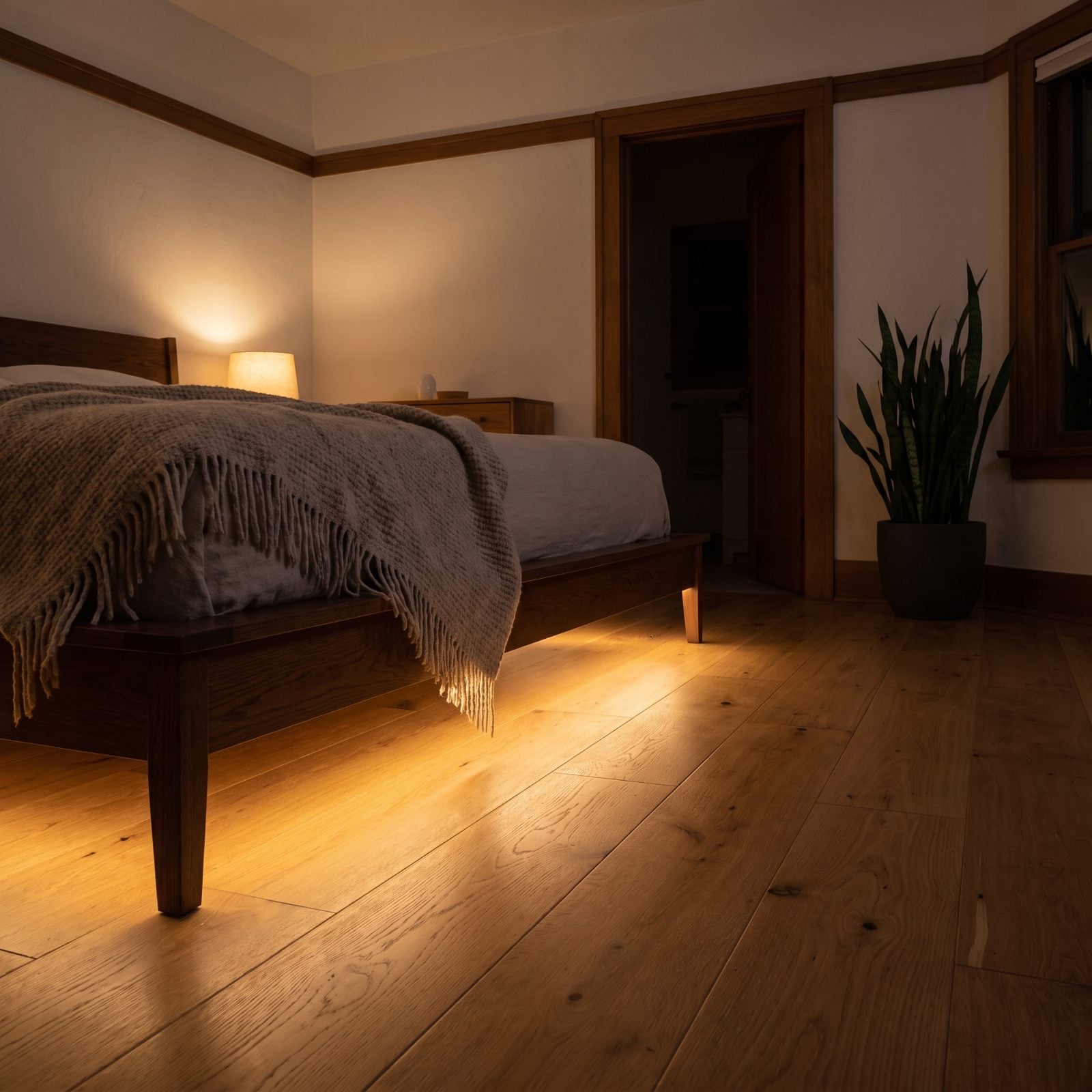
Flip on the overhead at 3 a.m. and you’ve just told your brain it’s morning. Melatonin drops, and you’re wide awake for the trip back from the bathroom. An amber motion strip under the bed solves it without the drama.
Amber light sits at the warm end of the spectrum, the part that barely registers as a wake-up signal, so it clicks on when your feet hit the floor and fades out after. You see where you’re going, and your body never files it as daytime.
25. Anti-Vibration Pads Under the Appliances That Hum All Night
🔥 Would you like to save this?
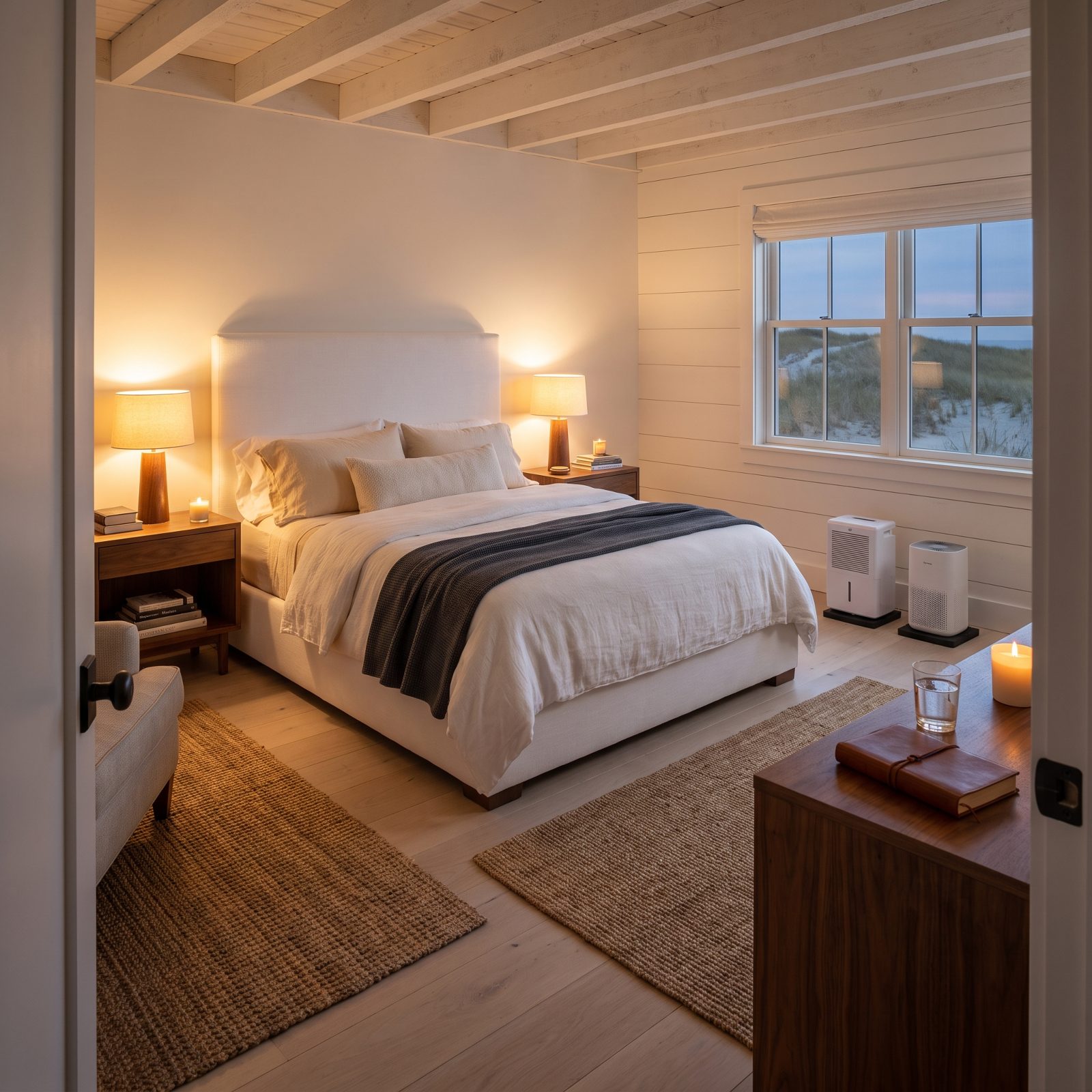
That low hum you’ve stopped noticing? Your nervous system still hears it. A dehumidifier or air purifier pushes vibration straight through a hard floor, and in a loft with concrete, it travels a long way.
Cheap rubber anti-vibration pads under each foot break the connection. The appliance keeps running, but the droning resonance that was buzzing through your bed frame just goes away. A few dollars, five minutes, real difference.
24. Silence a Rattling Vent Grille With Foam Gasket Tape
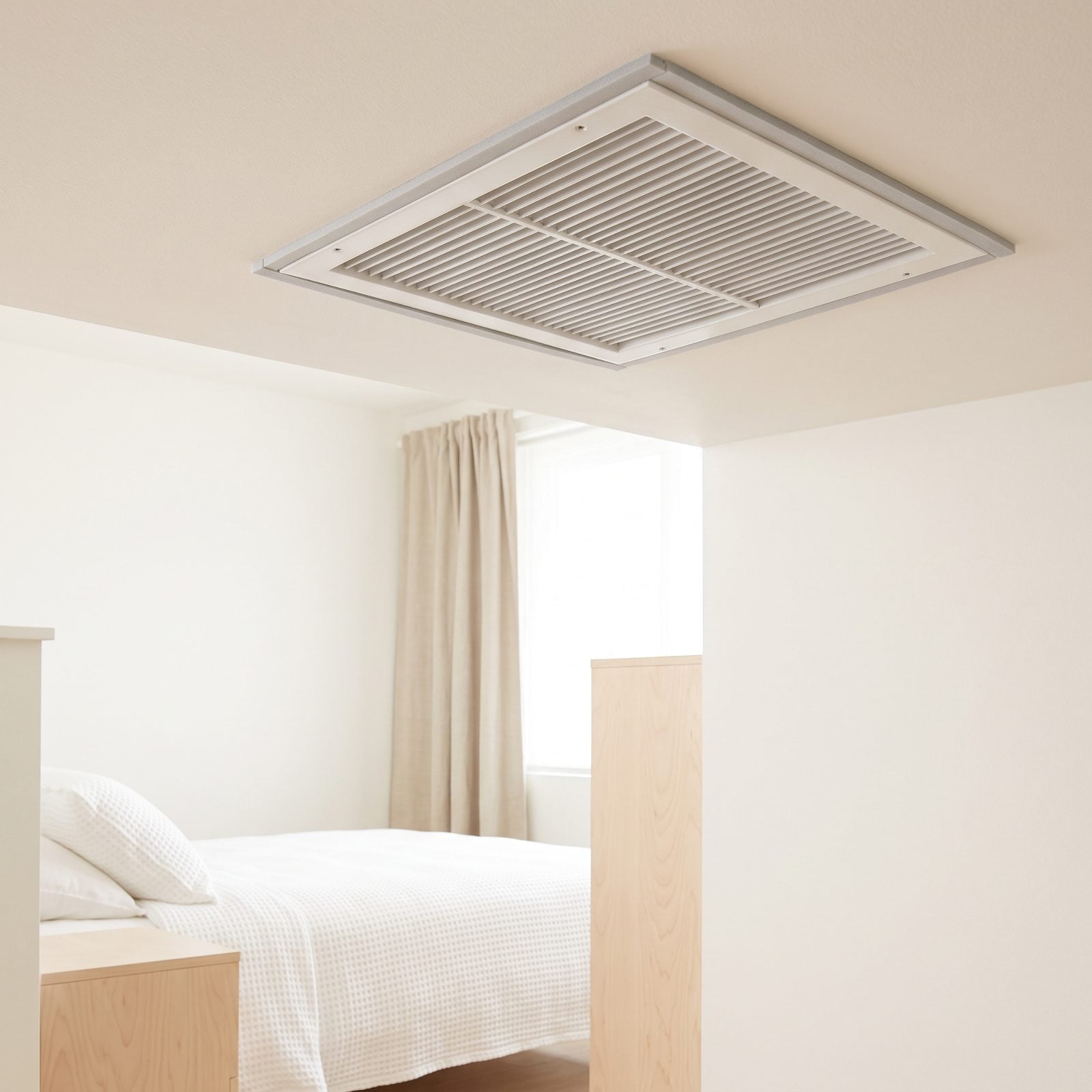
You know the sound. The furnace kicks on and some metal grille starts buzzing against its screws, a tiny maddening rattle that your ear locks onto the second the room goes still.
Foam gasket tape around the grille’s lip cushions that metal-on-metal contact, and the buzz stops the moment air moves through. Here it shows as a thick light grey border framing the white grille on the cream ceiling; hardly invisible, but the quiet is rather the point. Boring fix, blessed silence.
23. A Split Adjustable Base So Each Side Reclines on Its Own

One of you reads sitting up. One of you wants to lie flat the second the lights go out. A split adjustable base ends that negotiation for good, since each side reclines independently and nobody has to wreck their spine to keep the peace.
Beyond the reading-versus-sleeping truce, raising a head section helps with snoring and congestion, and a little leg elevation eases pressure for anyone who stands all day. The transitional setup here tucks the mechanism under a quilted mattress and a taupe wingback headboard, so it reads as a calm grown-up bedroom. Not a hospital ward.
22. When Schedules Keep Clashing, Separate Beds Are Not a Last Resort
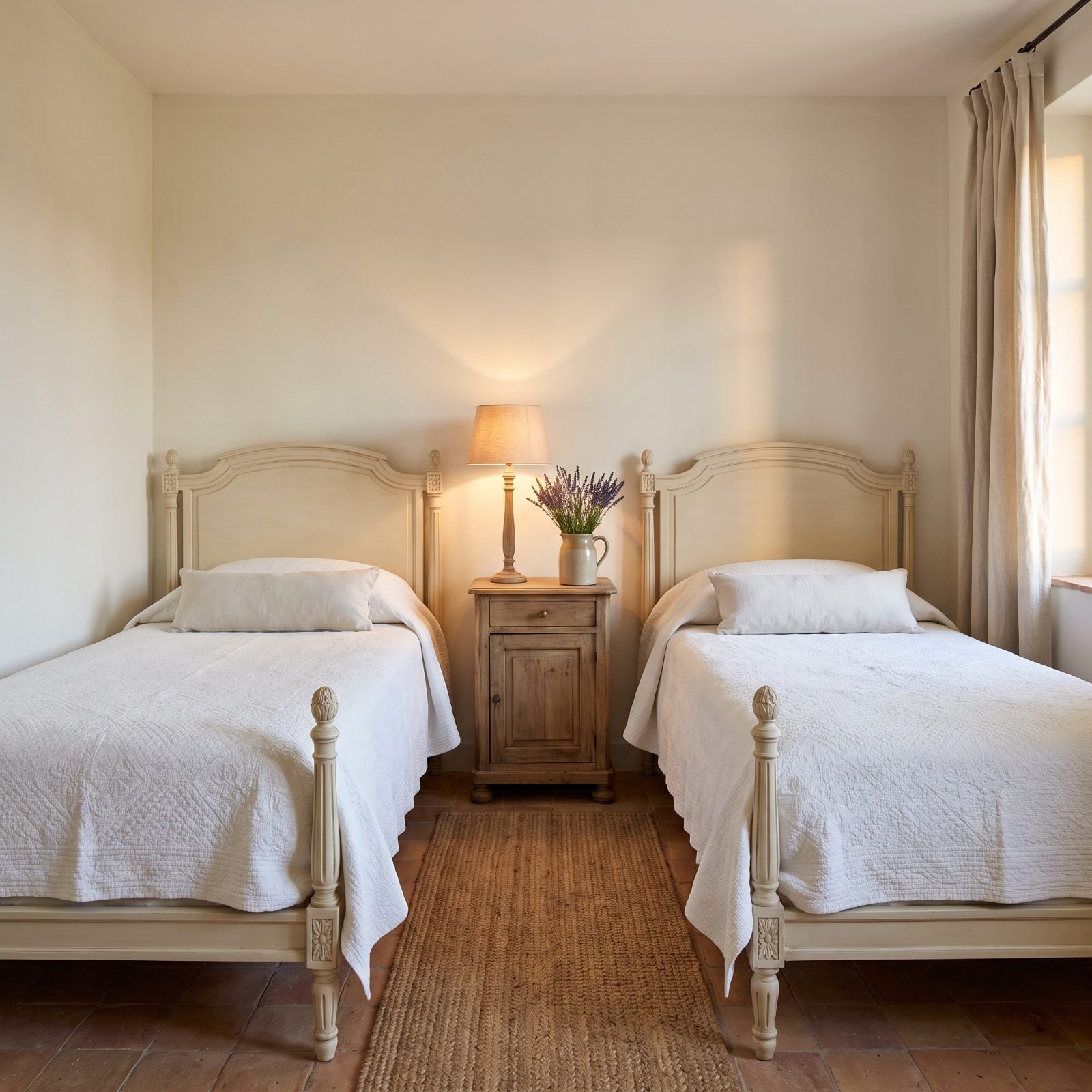
There’s an old assumption that a couple sharing a room must share a mattress, and it costs a lot of people real rest. When one partner is up at 5 a.m. and the other reads till midnight, or one tosses all night long, two beds stop the chain reaction of waking each other.
The French country version here proves it can look deliberate rather than sad. Matching ivory frames, white matelassé coverlets, lavender in a stoneware pitcher on the shared nightstand. Symmetry does most of the emotional work.
21. A Dual-Zone Mattress Pad for the Hot Sleeper Next to the Cold One
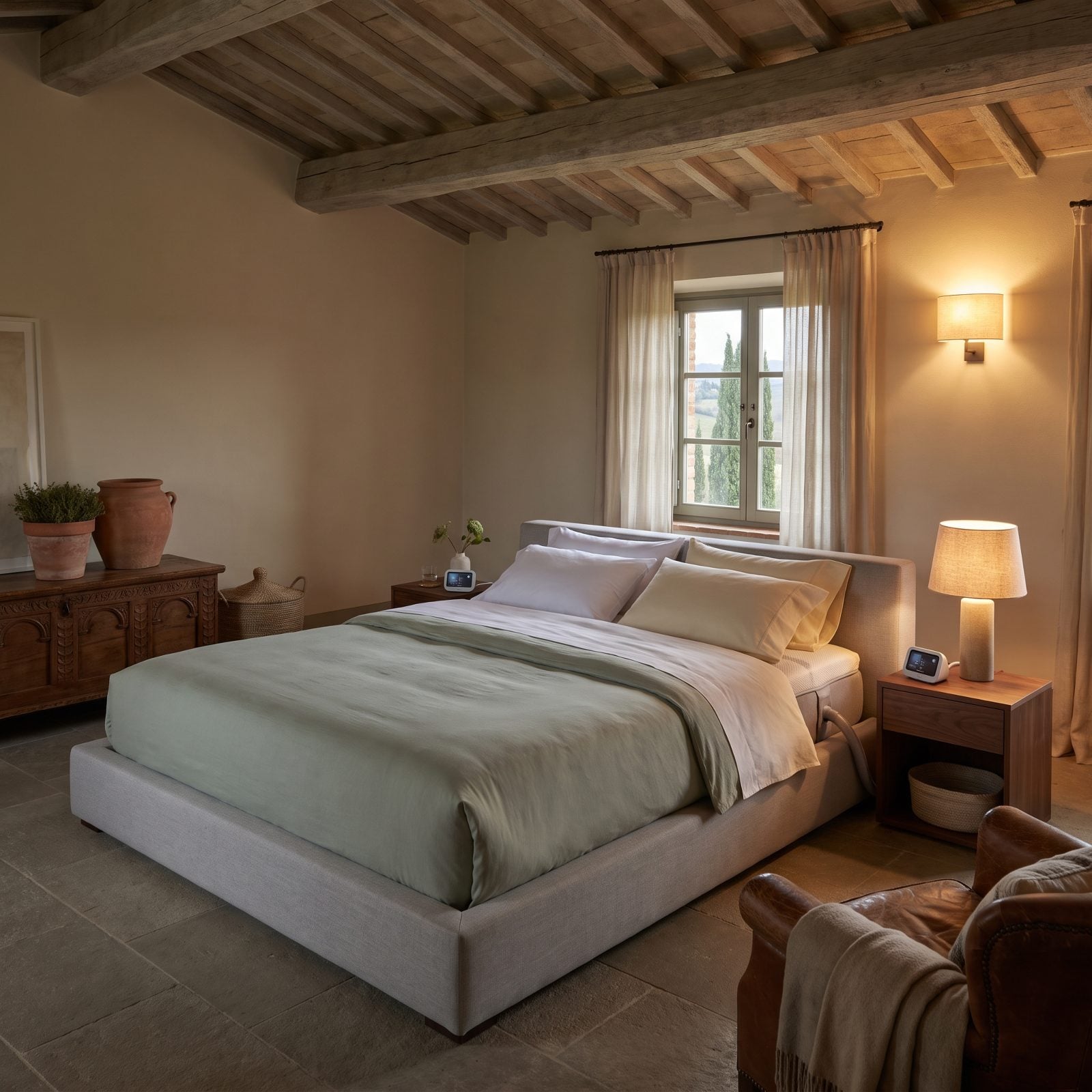
Thermostat wars ruin more sleep than almost anything. A dual-zone mattress pad hands each side its own temperature, warming one half while cooling the other, with no miserable middle-ground truce.
Core body temperature has to drop a little for deep sleep to kick in, which is exactly why the hot sleeper keeps surfacing all night. Fix their side and they stop radiating heat into yours.
20. Raise the Head of the Bed to Keep Reflux From Waking You
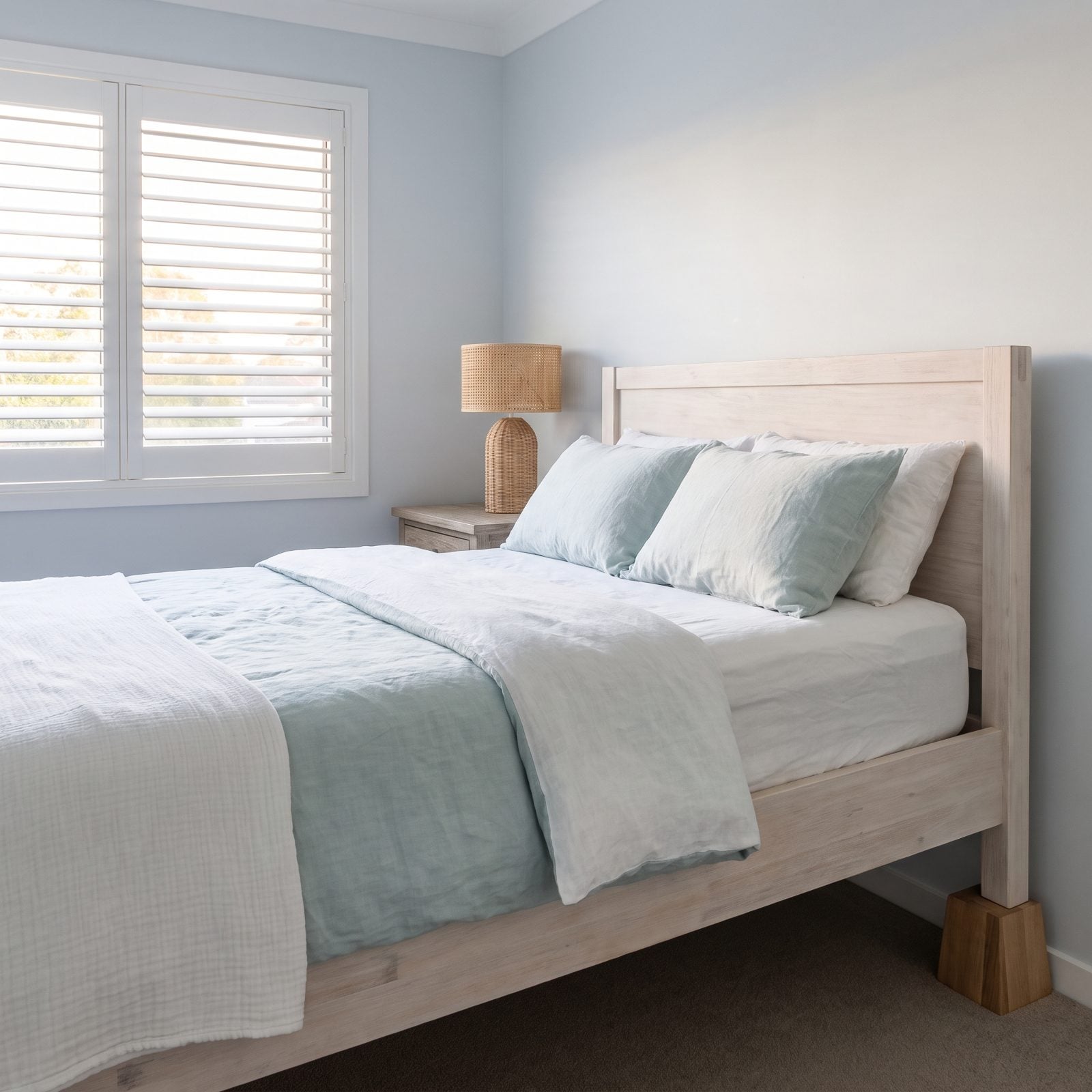
Stacking extra pillows feels like the obvious fix for nighttime reflux, but it mostly bends you at the neck and does nothing for your stomach. The acid still travels.
Raising the whole head of the bed a few inches, with sturdy risers under the headboard legs or an adjustable base, keeps gravity working all night so stomach contents stay where they belong. The coastal room here pairs simple wooden riser blocks with a pale whitewashed flat-panel headboard and a lightweight cotton coverlet. For anyone chasing calmer, more traditional bedroom inspiration, this one earns its keep, and the plain wood blocks blend right in with the room.
19. A Removable Blackout Insert That Sits Right Inside the Window Frame
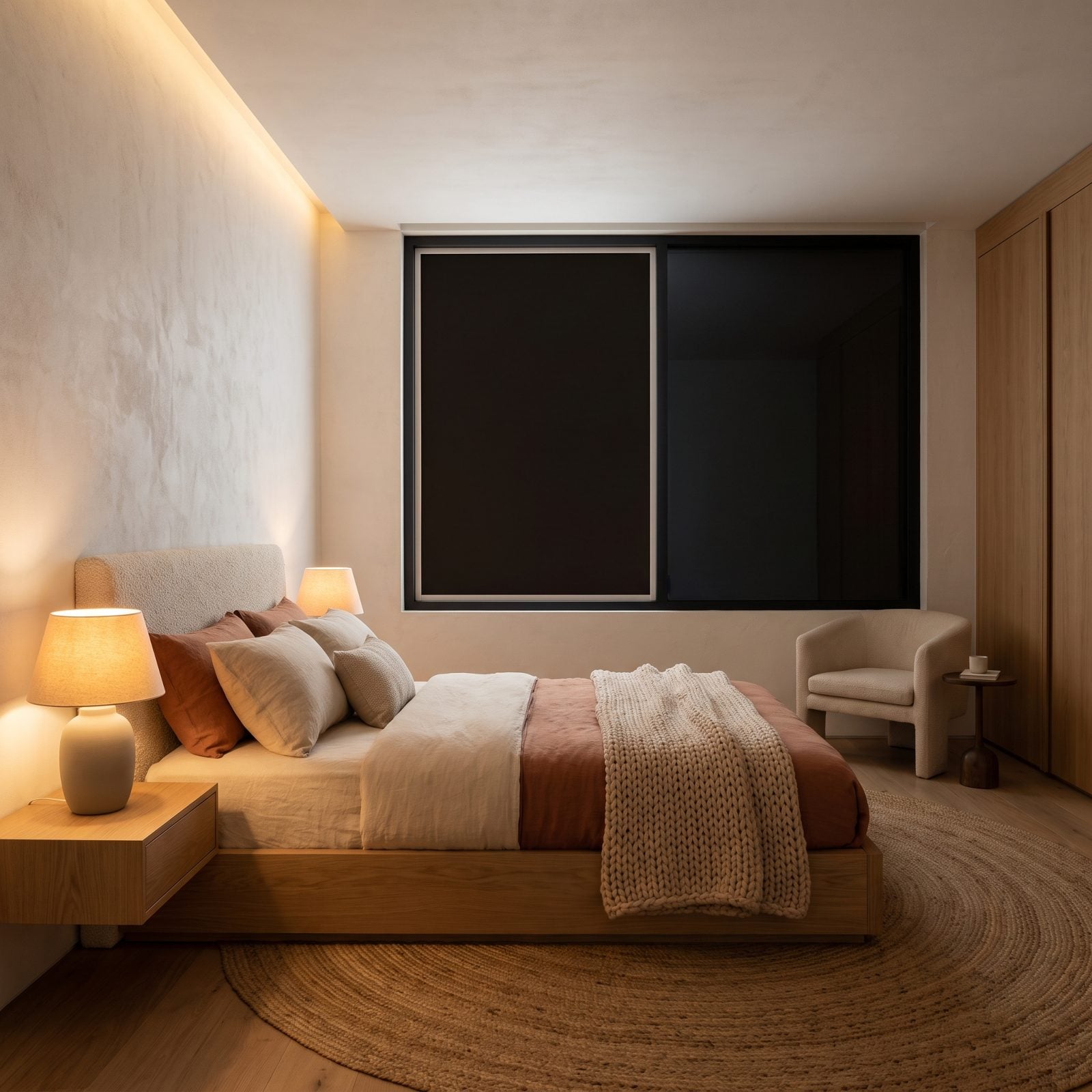
Curtains lie to you. Even the heavy blackout kind leak a halo of light around every edge, and a streetlight or an early sunrise finds every gap. A rigid insert cut to sit inside the window frame itself fixes what fabric can’t.
Fitted tight to the recess, it kills light at the edges where curtains fail, then pops out in seconds when you want the view back. Everything else in this modern organic room stays soft, warm cream, a boucle headboard, clay tones, so the one dark panel just melts into the window.
18. Swap Synthetic Duvet Fill for Temperature-Regulating Wool
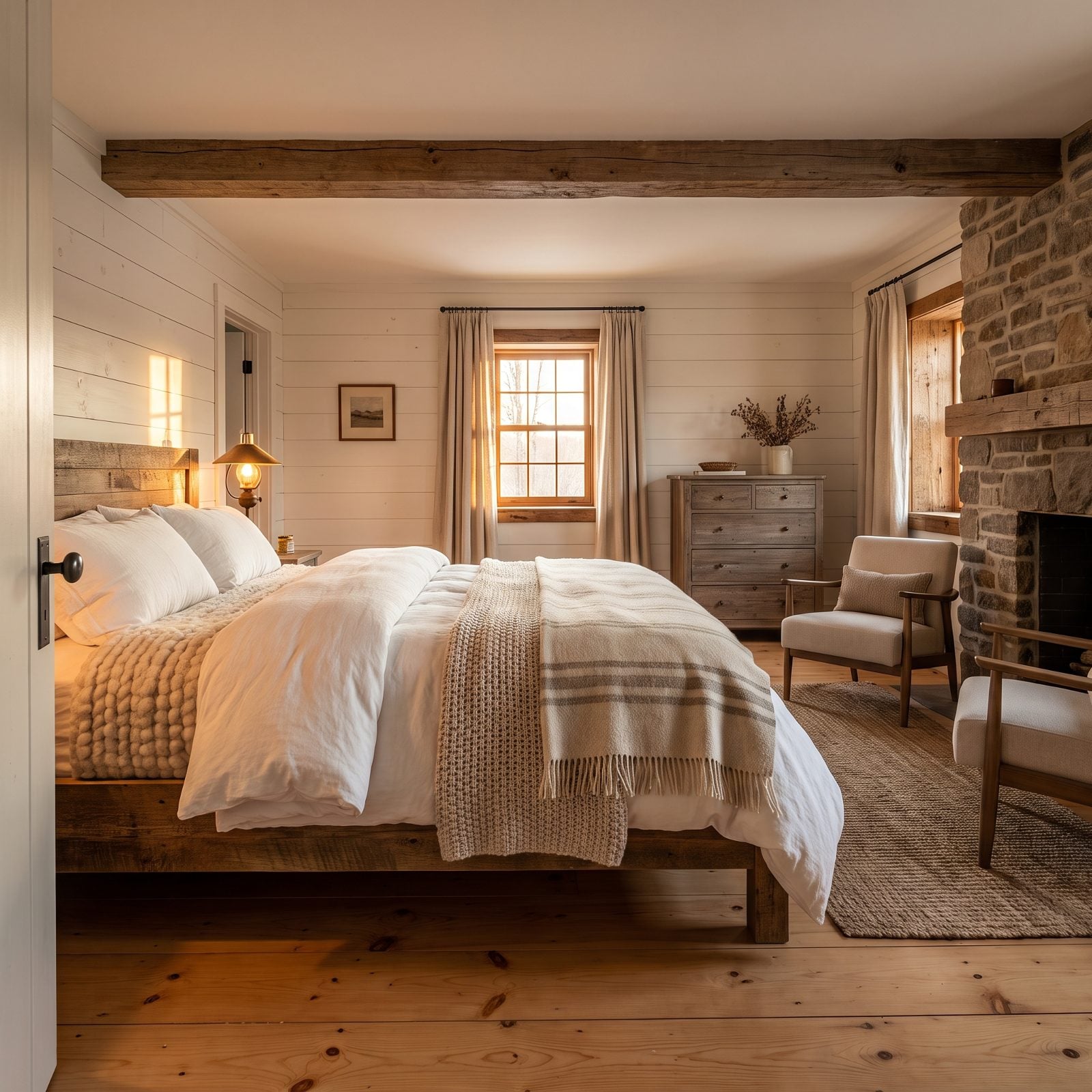
Polyester fill does one thing. It traps heat and holds it, which is why you wake up kicked out from under it at 2 a.m. and freezing by 4. Wool does the opposite, wicking moisture and buffering temperature swings so you stay in one comfortable zone instead of riding the sweat-then-shiver cycle all night.
The rustic room here leans all the way in, a lofty wool duvet in washed cotton, an oatmeal knit throw, a striped wool blanket layered over reclaimed timber. Natural fill breathes, too, which keeps the damp, stuffy feeling of synthetics from building up overnight. Building out a warm, grounded scheme? There’s more cream bed inspiration worth stealing. Honestly, this is the swap most people underrate the hardest.
17. A Knee Pillow Between the Legs to Keep the Hips Honest
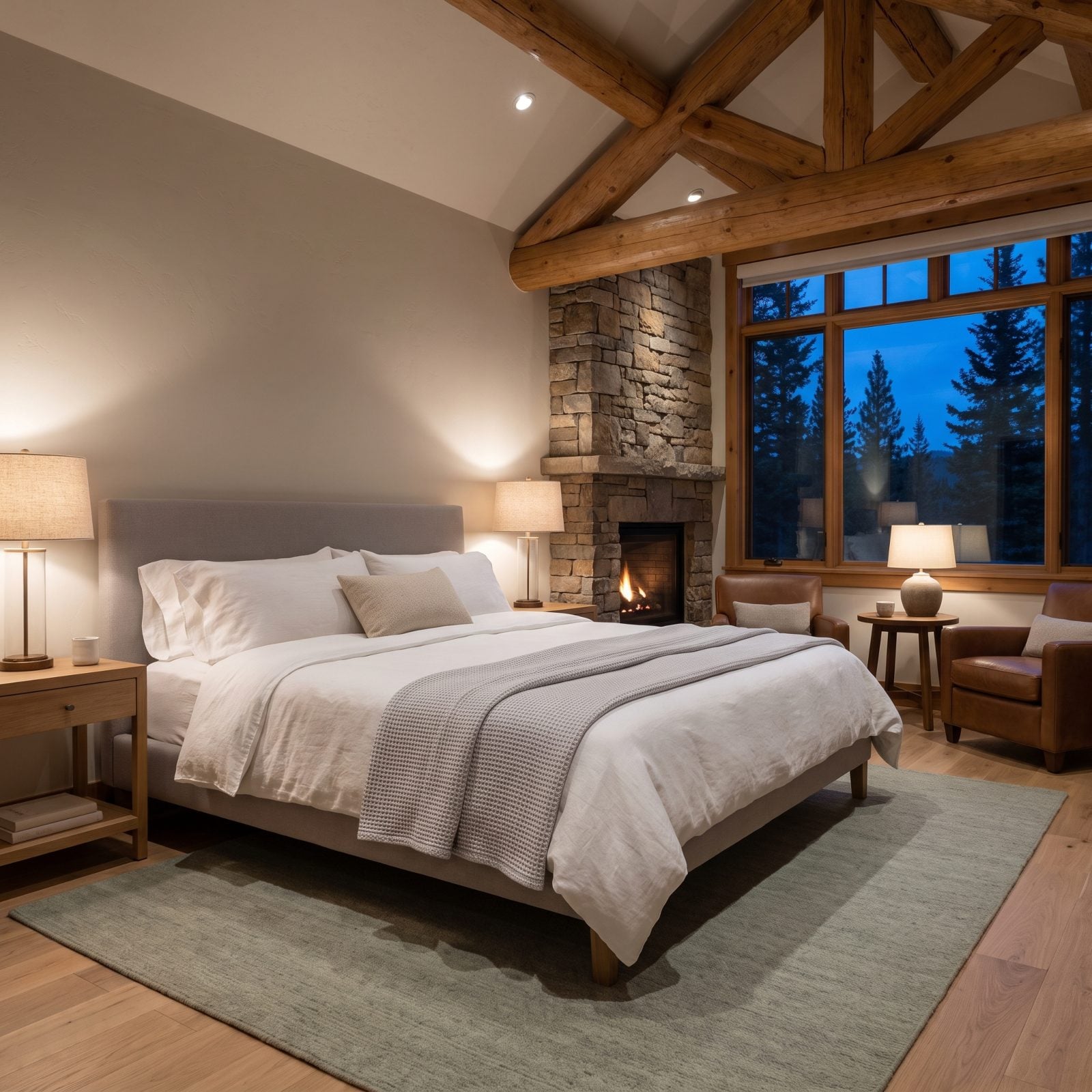
Most people reach for a knee pillow after a bad night, not before one. That’s backwards. For side sleepers, a firm cushion between the knees stops the top leg from dragging the pelvis forward, which keeps the lower spine from twisting all night.
The one in this room is nothing fancy — oatmeal cotton cover, dense foam, sized to sit between the knees without sliding off. Hips stay stacked. The lower back stops compensating, and the body quits waking up every ninety minutes to renegotiate its position.
16. The Charging Station That Lives in the Hallway, Not the Headboard
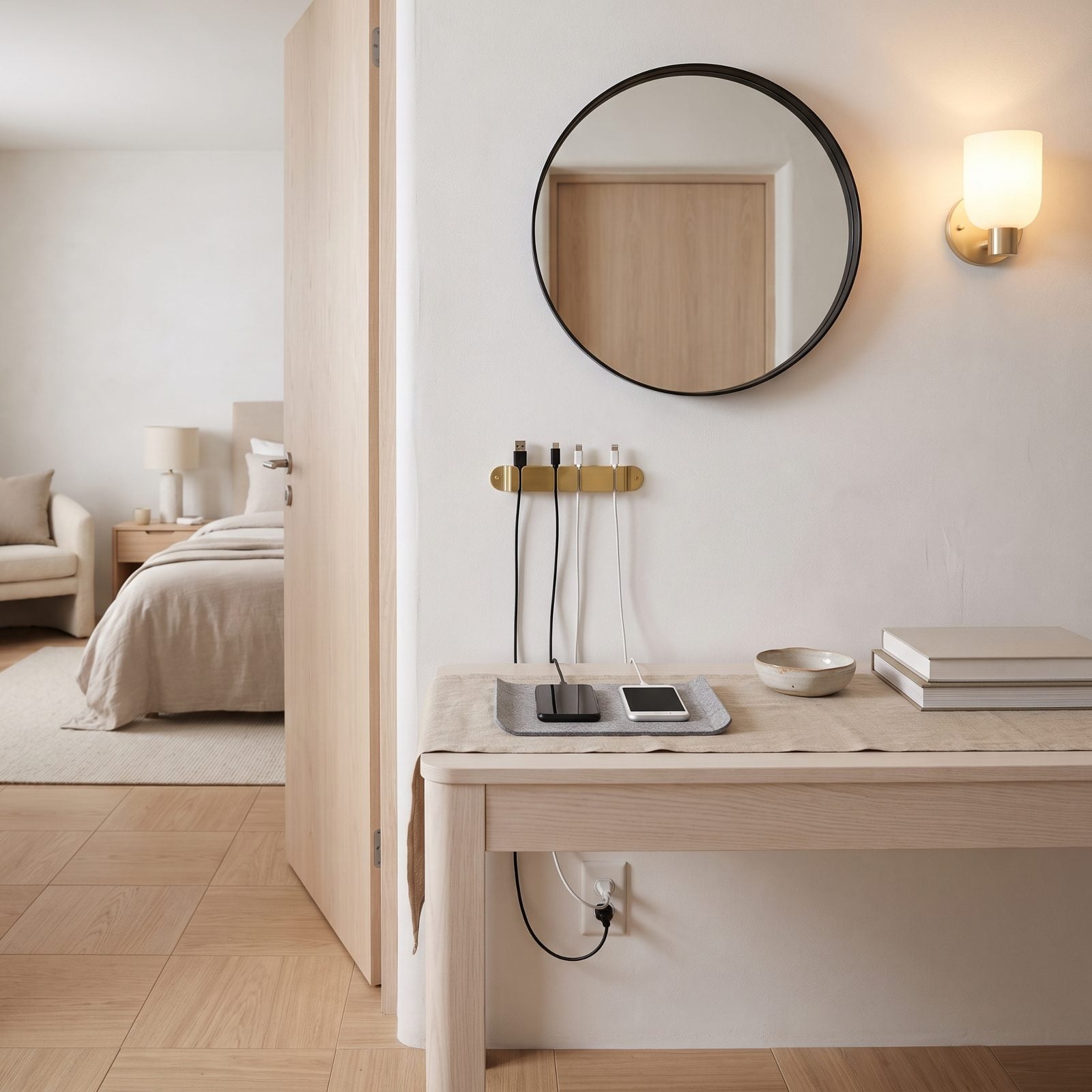
Put the charger where the phone sleeps, and that’s exactly where you’ll sleep too: half awake, thumb ready. Move the whole setup into the hallway and the loop breaks.
Here it’s a slim ash console with a brass cable organizer and a felt tray, parked just past the bedroom door. The phone charges somewhere you can’t grab it from bed. By morning it’s topped off and so are you — the only trade worth making.
15. When the Desk Disappears Behind Closing Doors
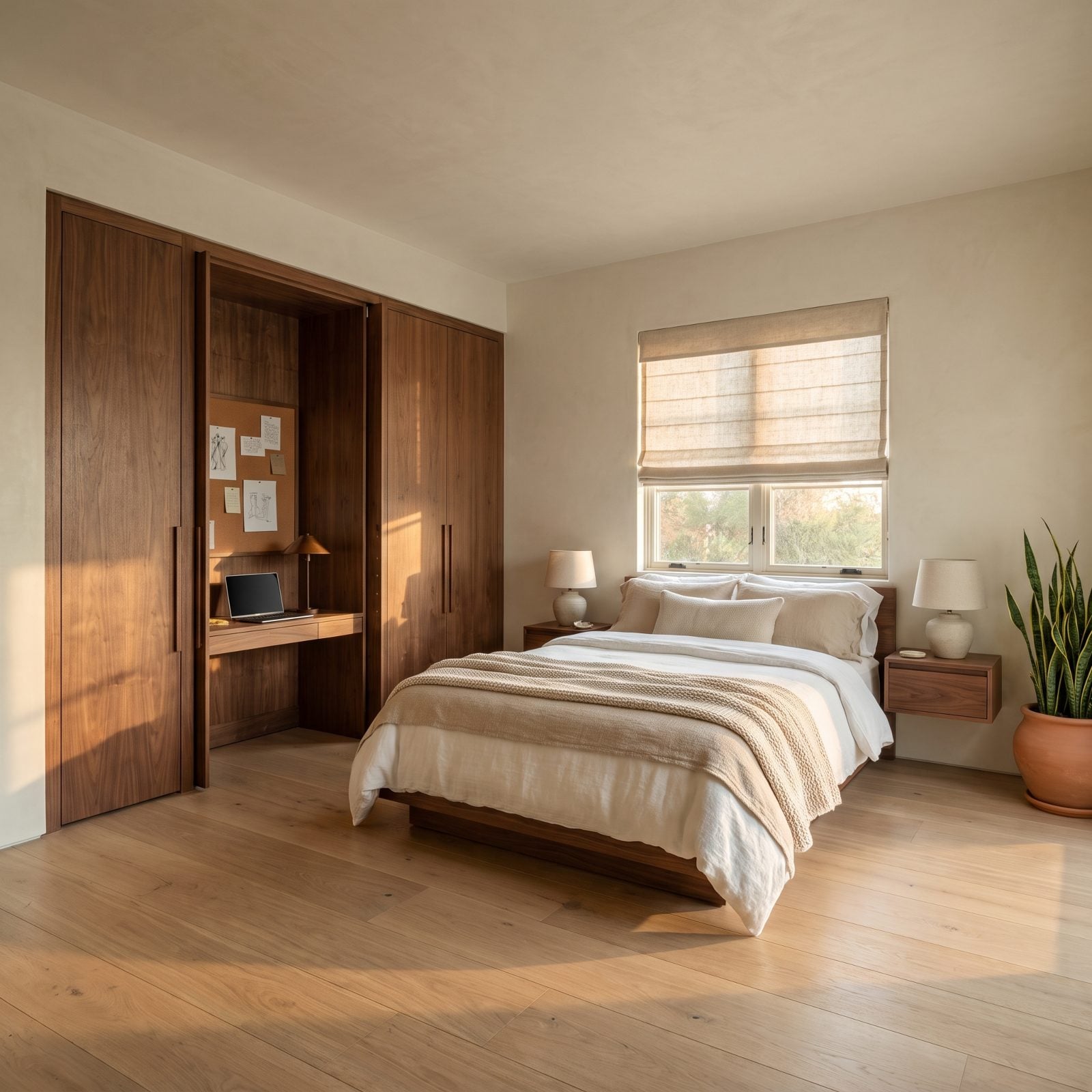
A visible desk in the bedroom keeps the brain clocked in. You see the laptop, you remember the email, and sleep gets shoved to the back of the line.
Doors solve it. Work spills out all day, then folds up and vanishes behind flush walnut panels at night. Out of sight really does mean out of mind. The wall goes back to being a wall, and the room remembers it’s for sleeping. If a full built-in feels like a lot, an armoire with a drop-down shelf does the same job for less.
14. A Morning Chair Parked Where the First Light Lands
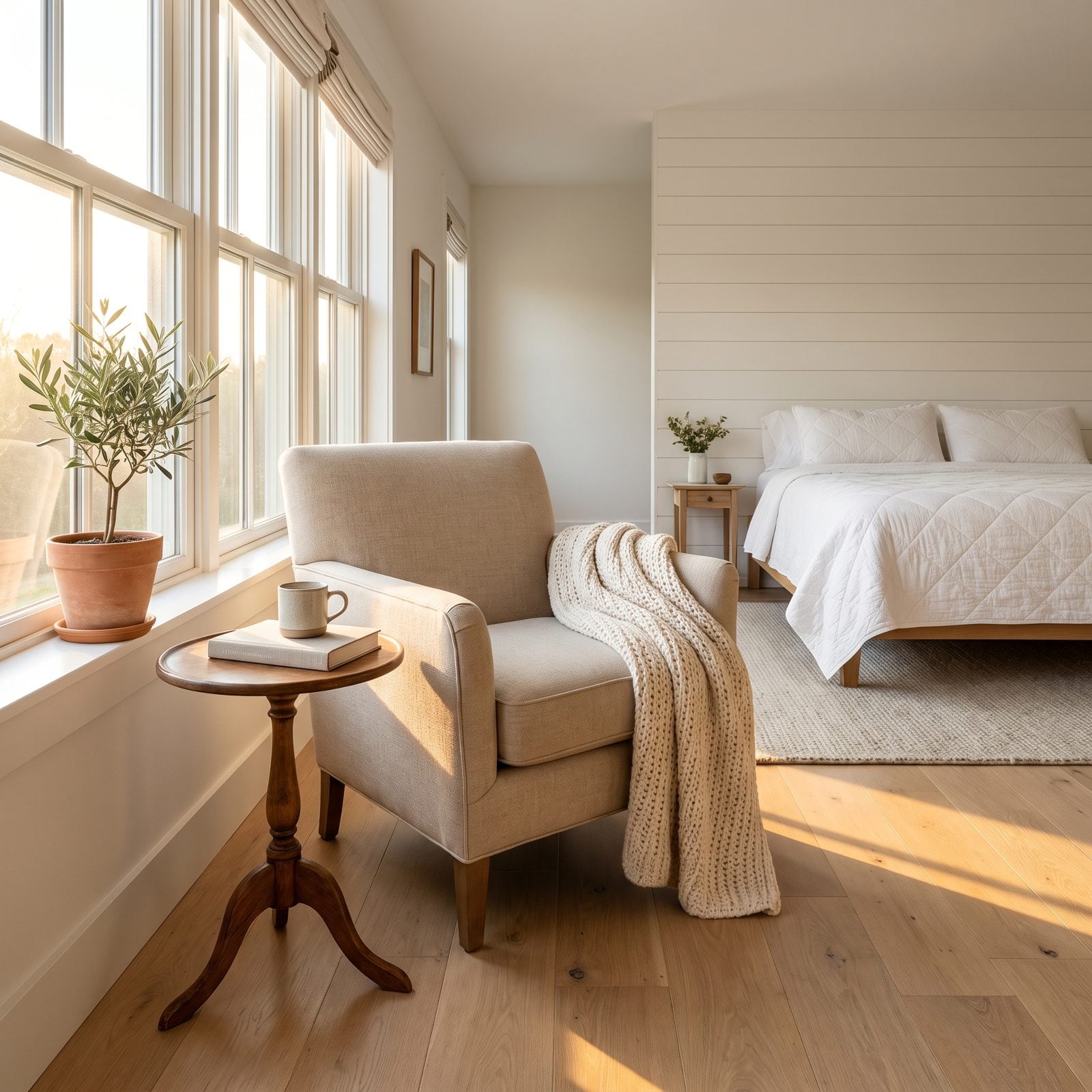
Morning light sets the clock for the night ahead.
Bright light in your eyes early tells the body what time it is, which quietly fixes when you get sleepy fourteen hours later. A chair by an east window makes it automatic. You sit, you drink the coffee, the sun handles the rest.
This oatmeal linen armchair lives in the sunrise, knit throw over the arm, mug within reach. No app, no supplement — just ten minutes in the light before the day grabs you by the collar.
13. Flipping a Reversible Window Fan to Push the Day’s Heat Out
🔥 Would you like to save this?
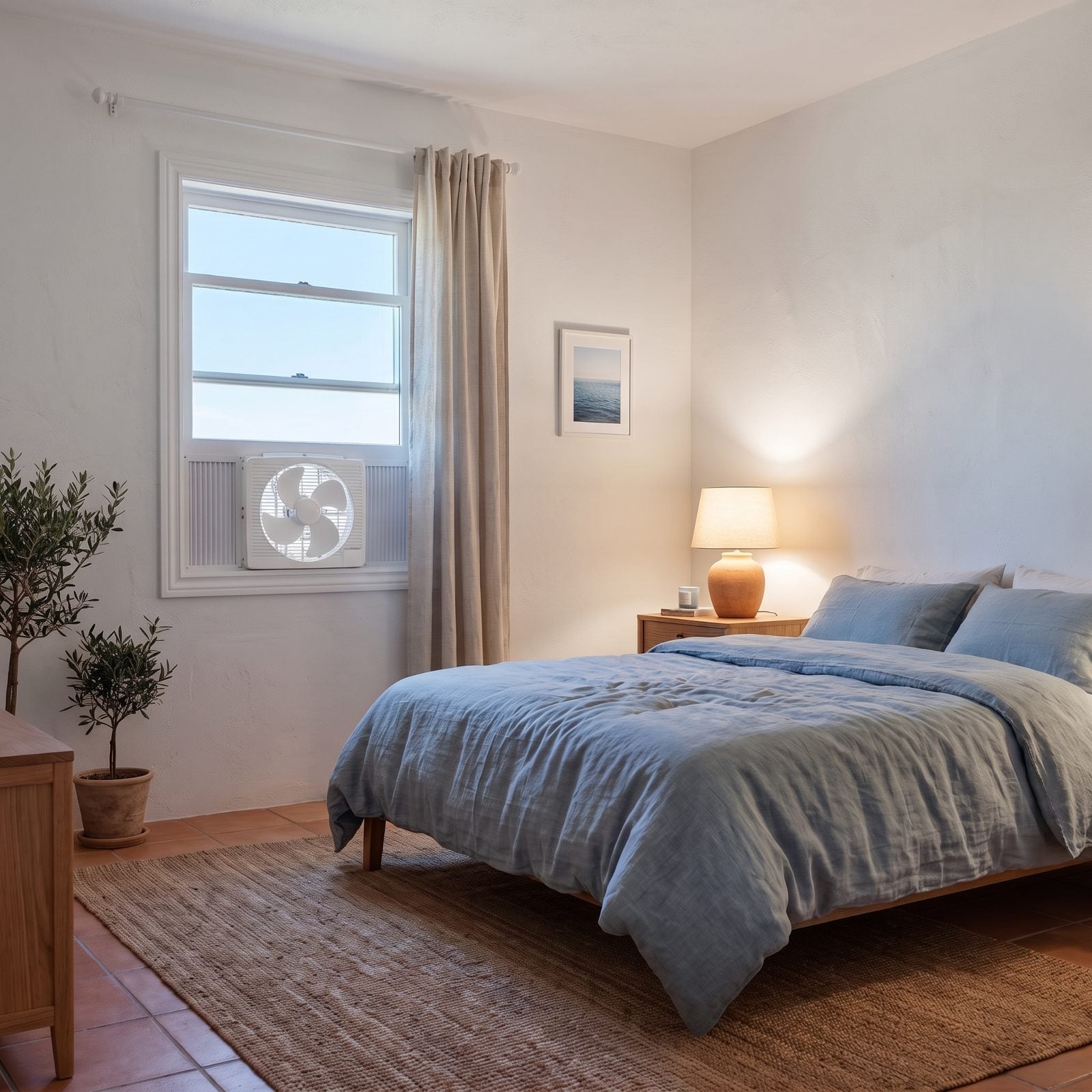
Here’s what nobody does right: they run a window fan blowing the wrong way all summer. Reverse it. In the evening, set it to exhaust so it drags the day’s trapped heat out instead of pulling warm outdoor air in.
Once the air outside drops below the air inside — usually around sunset — flipping the fan clears that hot ceiling layer fast. The white window fan in this room sits in the open gap under a raised sash, with accordion filler panels sealing the sides, so every bit of air it moves goes through the fan and that heat has somewhere to go. Cooler room, less tossing, and no air-conditioning bill to apologize for.
12. Fine-Mesh Screens So the Window Opens Without the Bugs

Half the reason people sleep hot is they won’t open the window. Bugs. Fair enough.
Fine-mesh screens end the standoff — tighter weave than a standard screen, so the window stays open all night and the mosquitoes stay out in the yard where they belong. This marble-walled bedroom runs with the casements swung wide, sheer curtains breathing in and out, pale-blue velvet headboard catching the last of the daylight. Fresh air all night, no welts in the morning.
11. The Sealed Solid-Core Door That Shuts the House Out
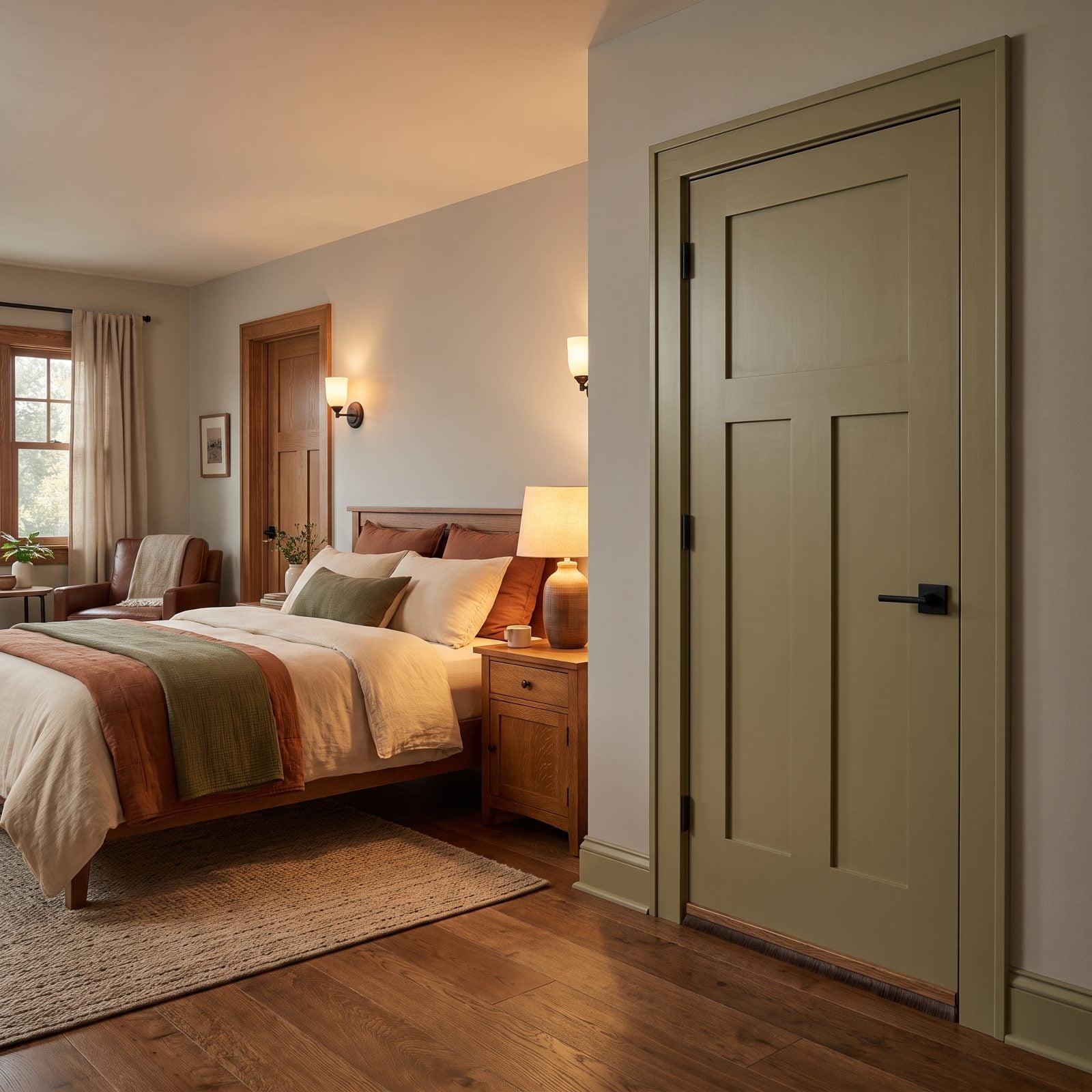
A hollow builder-grade door is basically a drum. Every footstep, every late-night laugh track, every dishwasher cycle walks right through it.
A sealed solid-core slab is the fix people skip because it sounds boring. It isn’t. The dense core blocks sound, and the weatherstripping plus a bottom sweep close the gaps where noise and hallway light sneak under. The sage craftsman interior door here has both, pressed tight to the oak threshold. Want something cheaper to start with? A draft-sealing kit on your existing door gets you most of the way. Pair it with some traditional bedroom inspiration in warm creams and rust and the whole room goes still.
10. Matte Walls That Swallow the Glare of Passing Headlights
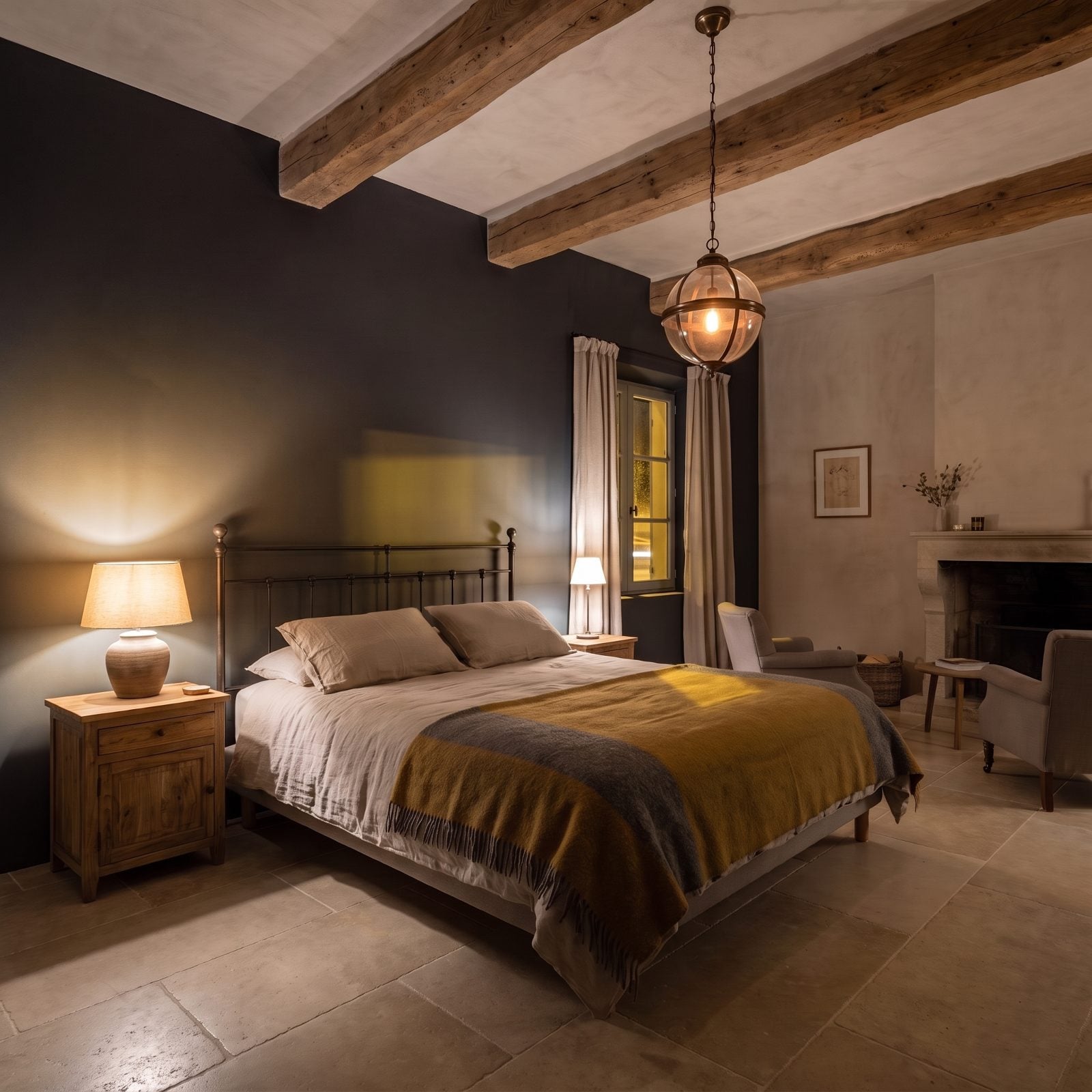
Glossy walls are mirrors you didn’t mean to install. Every car that swings through the street throws its headlights onto the ceiling and across your eyelids.
Matte paint drinks that light instead of bouncing it. The charcoal wall in this rustic farmhouse room stays mostly flat and dark even with headlights crawling past the window — a yellow headlight patch still lands on the wall behind the headboard and a hot streak slides across the blanket on the wrought-iron bed, but the matte surface keeps that light soft-edged instead of glaring back. One finish change, and the street stops broadcasting into the room.
9. Turning the Mirror Away From the Bed
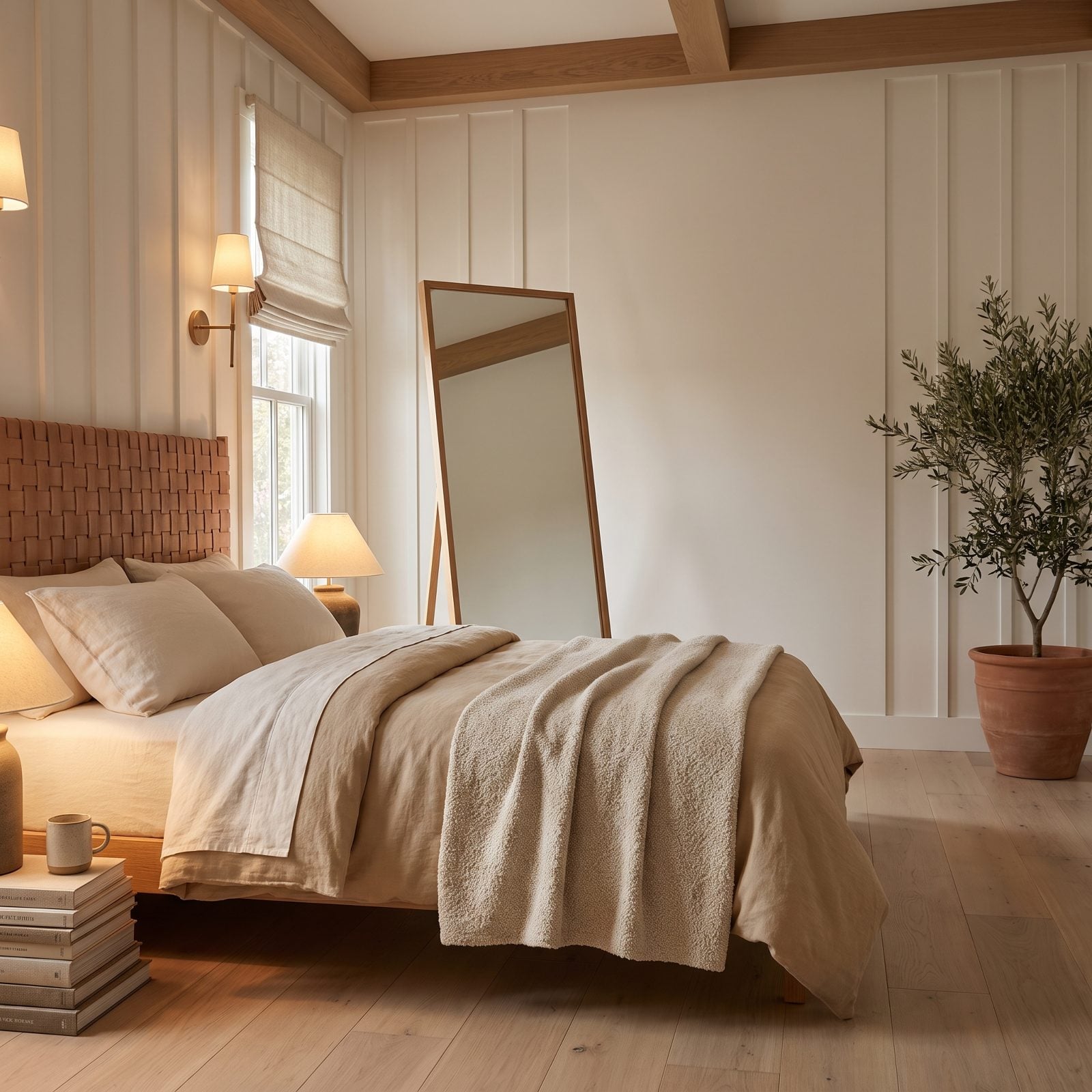
A mirror facing the bed does one quiet, irritating thing: it catches the streetlight or the hallway glow and fires it straight at your pillow. You never see the source, just the strange bright patch you keep blinking at.
The fix costs nothing. Angle the glass toward a blank wall — not the window, not the bed. In this organic-modern room the slim oak floor mirror still faces into the room, toward the bed — exactly the setup to fix. Turn that same mirror ninety degrees toward the paneled wall, and the room finally goes dark the way it should.
8. Kill the Standby LEDs With Removable Blackout Dots
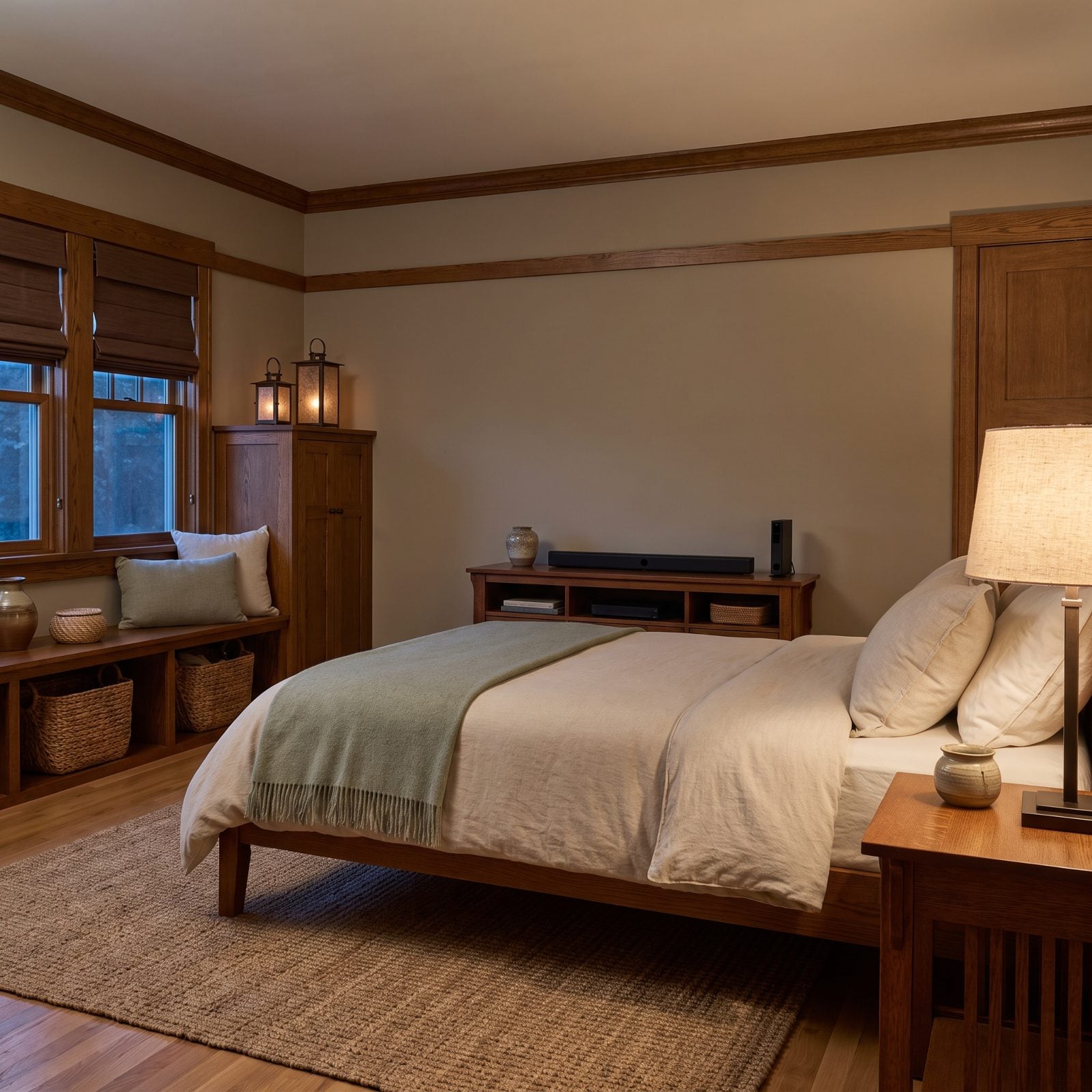
You’ve lain awake and watched a router blink green across the room like it’s trying to signal a passing ship. Those standby lights are tiny, but your eyes catch them anyway, and that stray glow nudges your brain toward alert when it should be shutting down for the night.
The fix costs almost nothing. Buy a sheet of matte black blackout dots, peel one, and press it over each LED on the soundbar, the charger, the modem. They lift off when you need to check a status light, then stick right back. The transitional setup here keeps everything on one oak console, so you black it all out once and forget about it.
7. Chase Down Every Squeak by Tightening the Frame Joints
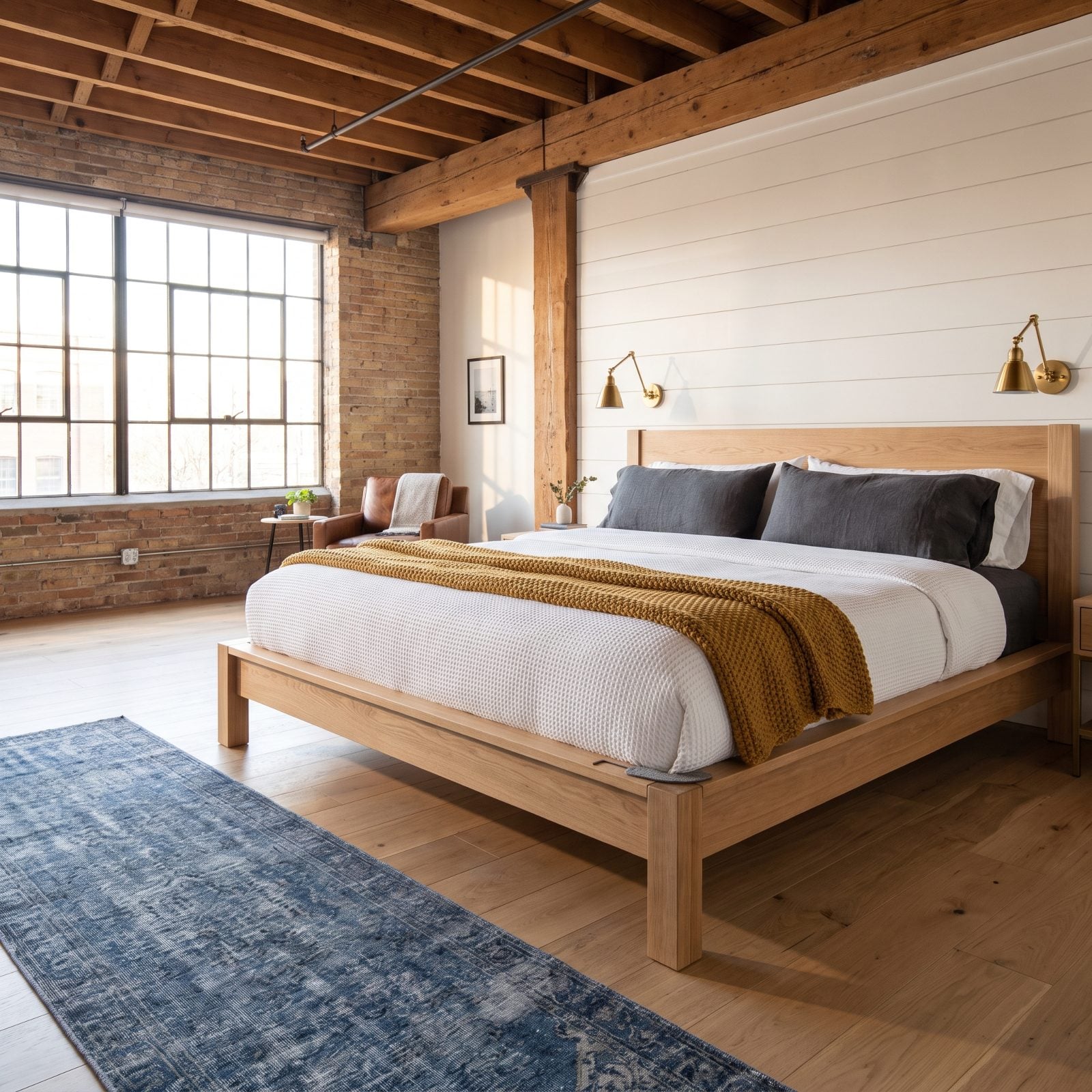
That squeak isn’t the mattress. It’s almost always a loose bolt where the rail meets the headboard, metal grinding against wood every time you roll over. People put up with it for years and curse the mattress for ruining their nights.
Grab a hex key and go around snugging every joint, then slip felt pads wherever slats touch rails. On this modern farmhouse frame the heavy white oak goes silent once the hardware is tight, and a 2 a.m. roll stops jolting you awake.
6. Seal the Mattress and Pillows in Dust-Mite-Proof Covers
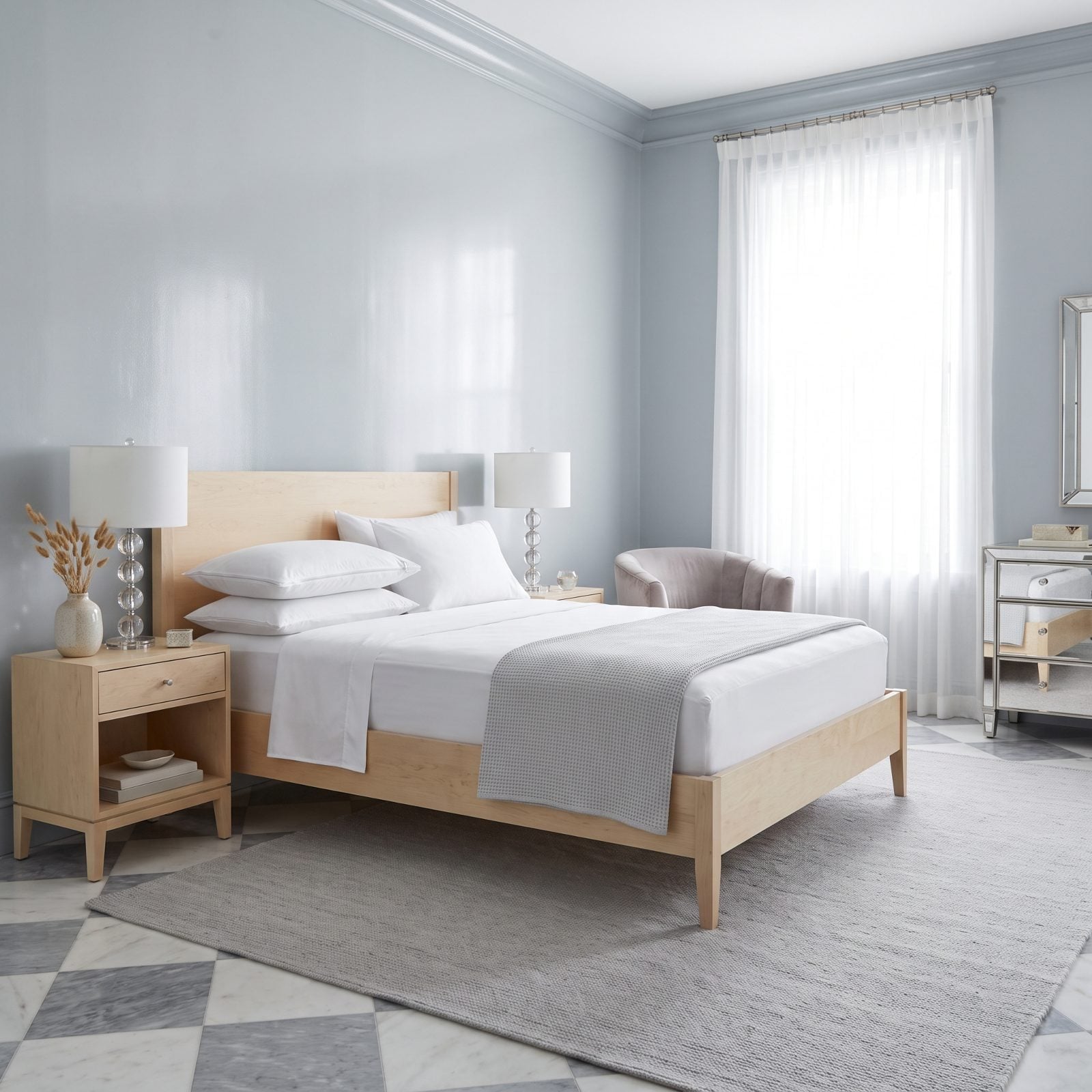
Now for the uncomfortable part. Your pillow gets heavier over the years, and a good chunk of that added weight is dust mites and what they leave behind. If you wake up stuffy or sneezing, the bed itself is usually the culprit.
Tightly woven, zippered encasements seal the mattress and pillows so mites can’t settle in or feed. The Scandinavian look here layers crisp white cotton over the top, which hides the clinical-looking zippers and keeps the room reading light instead of like a hospital.
5. Run a Humidifier the Right Way With a Hygrometer

Dry winter air cracks your throat and leaves you waking at 3 a.m. parched, so people buy a humidifier and crank it to the top. Then the walls start sweating, the room takes on a faint damp smell, and you’ve traded one problem for a worse one.
Pair the humidifier with a cheap hygrometer and aim for a comfortable middle reading, never soggy. Too much moisture feeds the exact mold and mites you were trying to dodge. This California modern room parks both units on one walnut nightstand, so you glance, adjust, done.
4. Pull the Plug-In Fragrances and Let the Room Breathe

🔥 Would you like to save this?
A plug-in scent seems harmless. Nice, even. But for plenty of people those synthetic fragrances are precisely what’s clogging their sinuses and handing them a dull morning headache they wrongly pin on bad sleep.
Unplug it. Open a window for a few minutes before bed, and if you want something in the air, lay down a sprig of real eucalyptus instead of the fake vanilla cartridge. This coastal setup makes the case on its own: a breeze drifting through sheer curtains does more for your nose than any plug-in ever managed.
3. Give the Pet Its Own Sleep Station Outside the Bedroom
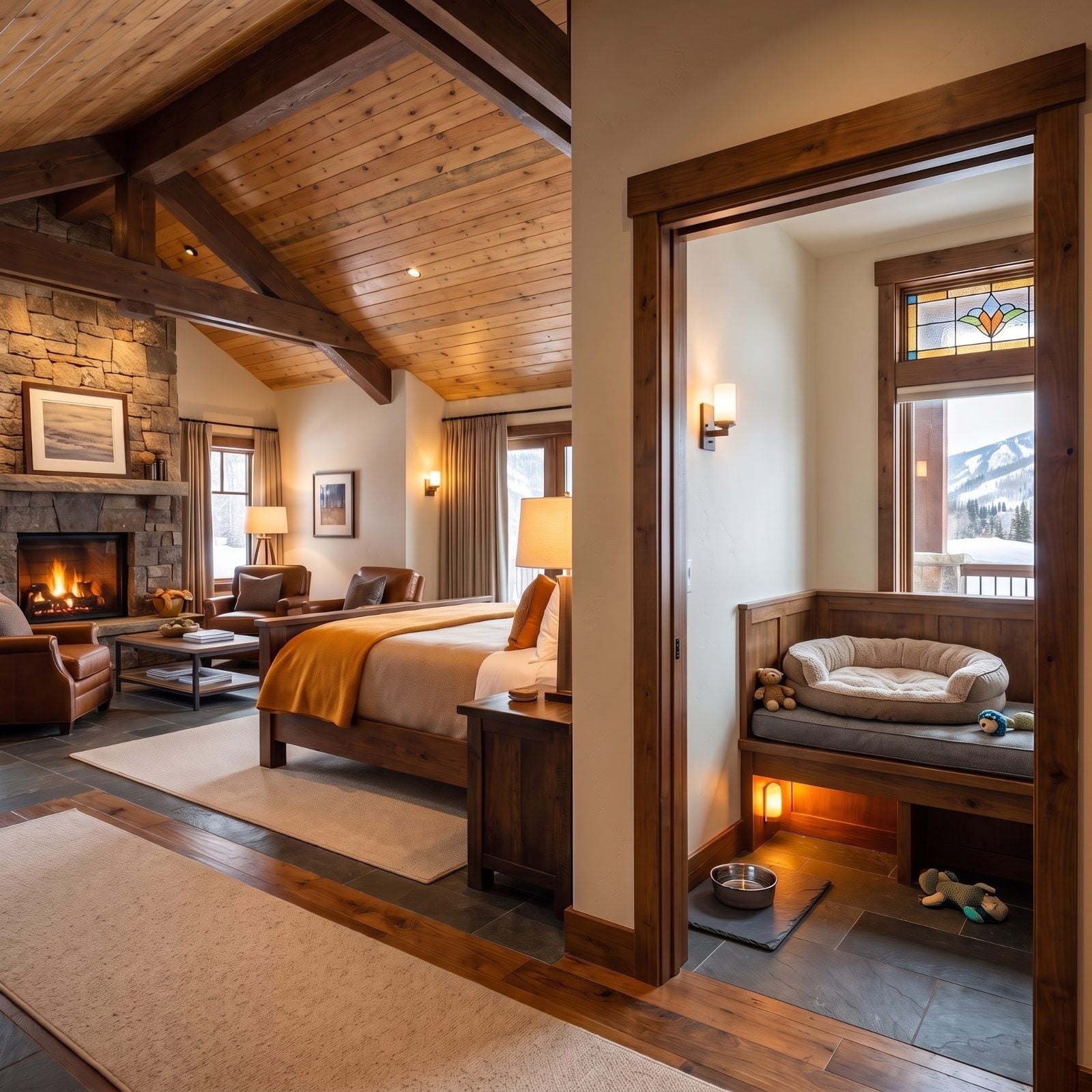
You love the dog. The dog does not care about your sleep. Every stretch, circle, and heavy sigh registers as a micro-wake, and you rack up dozens a night without ever quite noticing.
So build the pet a real station just beyond the bedroom door: a proper bed, a blanket that smells like home, a steel water bowl on its own mat so it never has to come looking for a drink. This craftsman nook builds a cushioned wooden bench right into the wall beneath the window, on a slate tile floor just past the door. Close enough to feel near you, far enough that neither of you wakes the other.
2. Wake to a Sunrise Alarm Instead of a Jarring Buzz
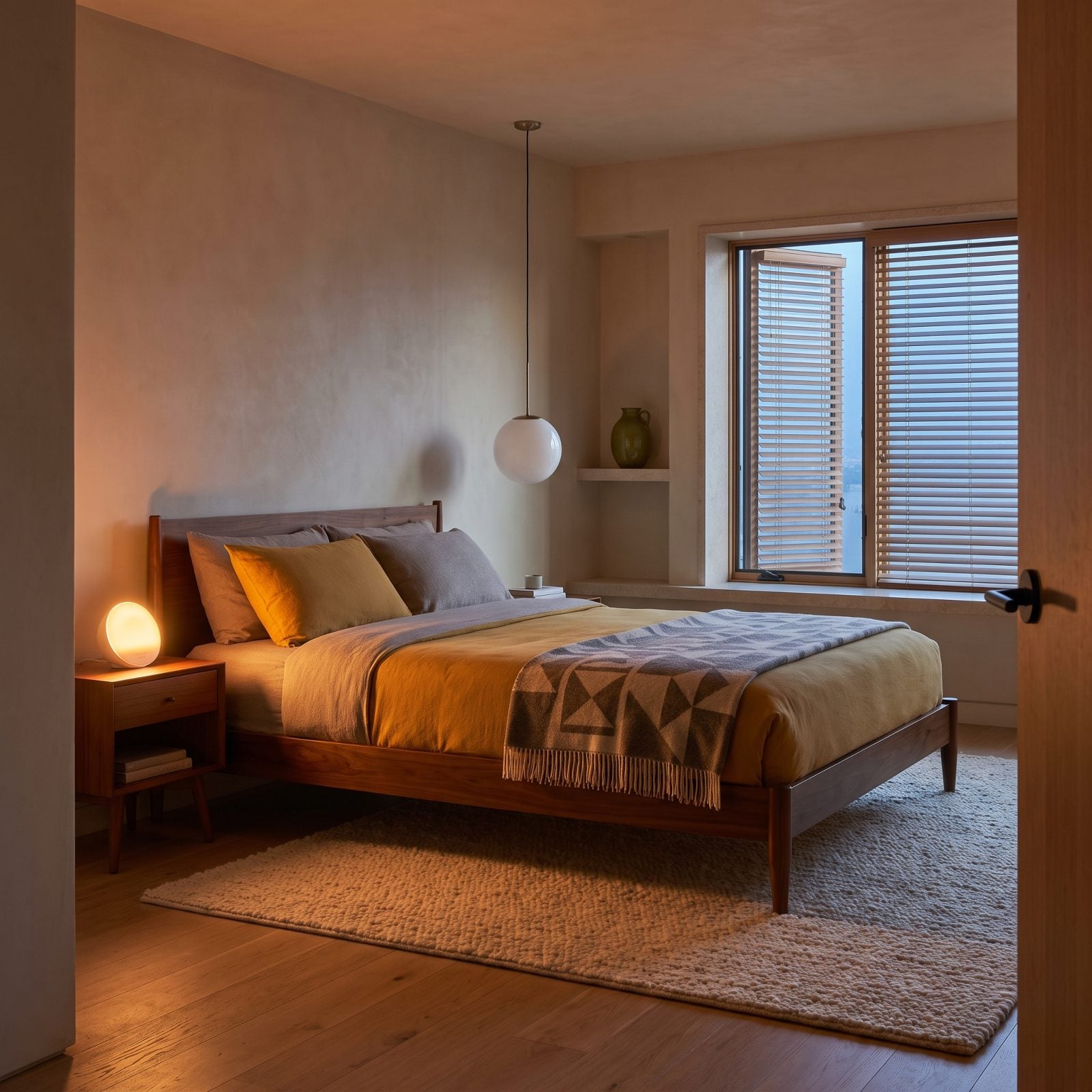
A phone alarm is a slap. One second you’re deep in a dream, the next a klaxon has your heart pounding before your feet even touch the floor. That spike is cortisol, and it sours the tone of the whole day before it’s begun.
A sunrise alarm fades light into the room over twenty or thirty minutes, so you surface gradually rather than getting yanked out. The warm amber glow in this mid-century room imitates real dawn, the oldest wake-up cue your body knows.
1. Turn the Clock Face to the Wall and Stop Watching the Hours
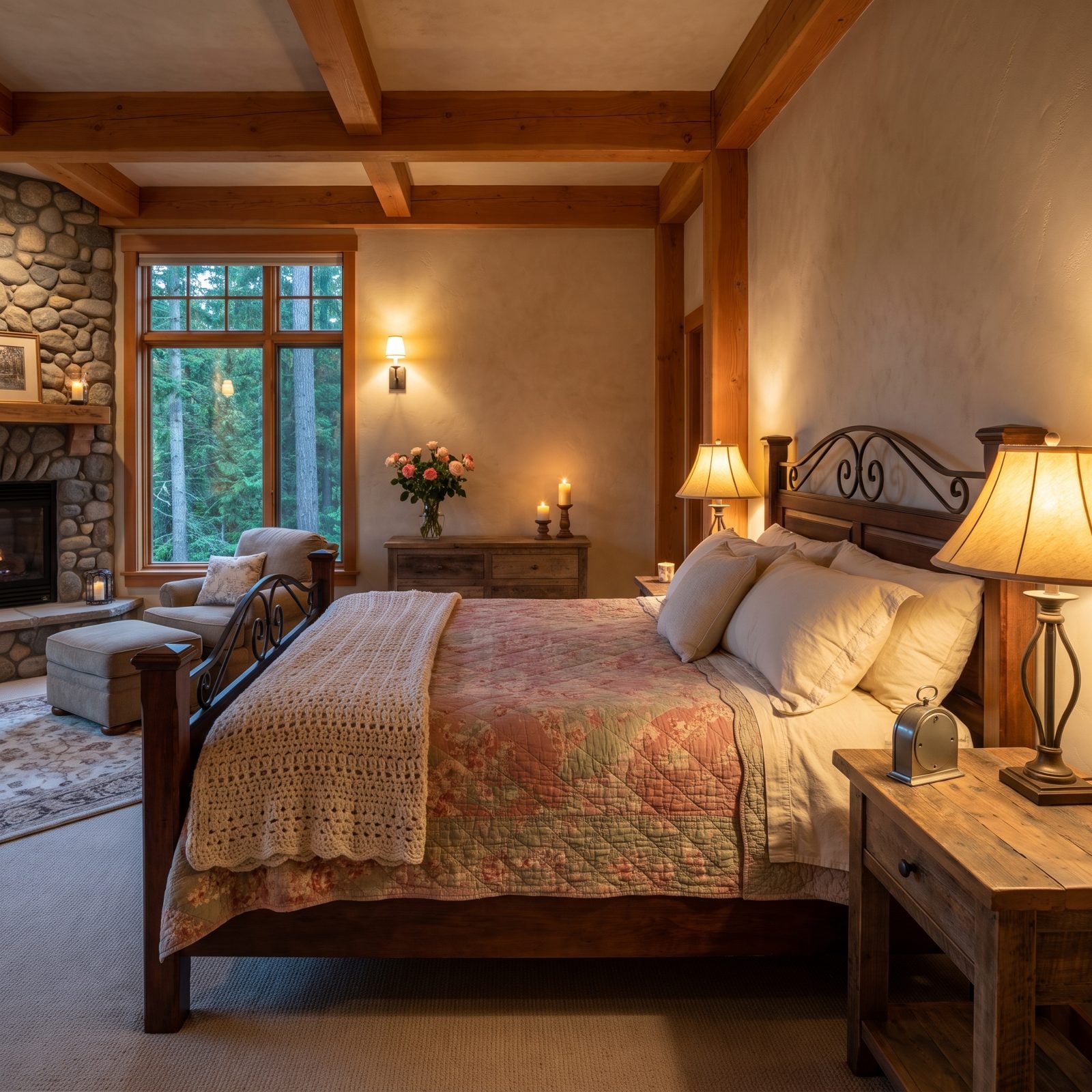
Three in the morning, wide awake, and the first thing you do is check the time. Now you know exactly how little sleep is left, and the math alone keeps you pinned there. Almost everyone falls into it.
Turn the clock to face the wall. You don’t need the number, do you? If the alarm’s set, the time means nothing until it goes off, and not knowing lets you drift back without that running tally spinning in your head. This English cottage nightstand hides a plain vintage clock, back turned, doing its one job.