🔥 Would you like to save this?
The coziest room you’ve ever sat in was probably not expensive, probably not even that tidy. What it had was softness in the right places and light that didn’t feel like a dentist’s office. Cozy is not a style you buy in one trip. It’s a stack of small decisions, most of them cheap and a few of them free. Lamps instead of ceiling glare. A blanket you actually reach for. Paint that warms instead of chills. Here are the habits and choices that do the quiet work of making a house feel like somewhere you want to stay.
23. Layer Your Light Instead of Relying on One Ceiling Fixture
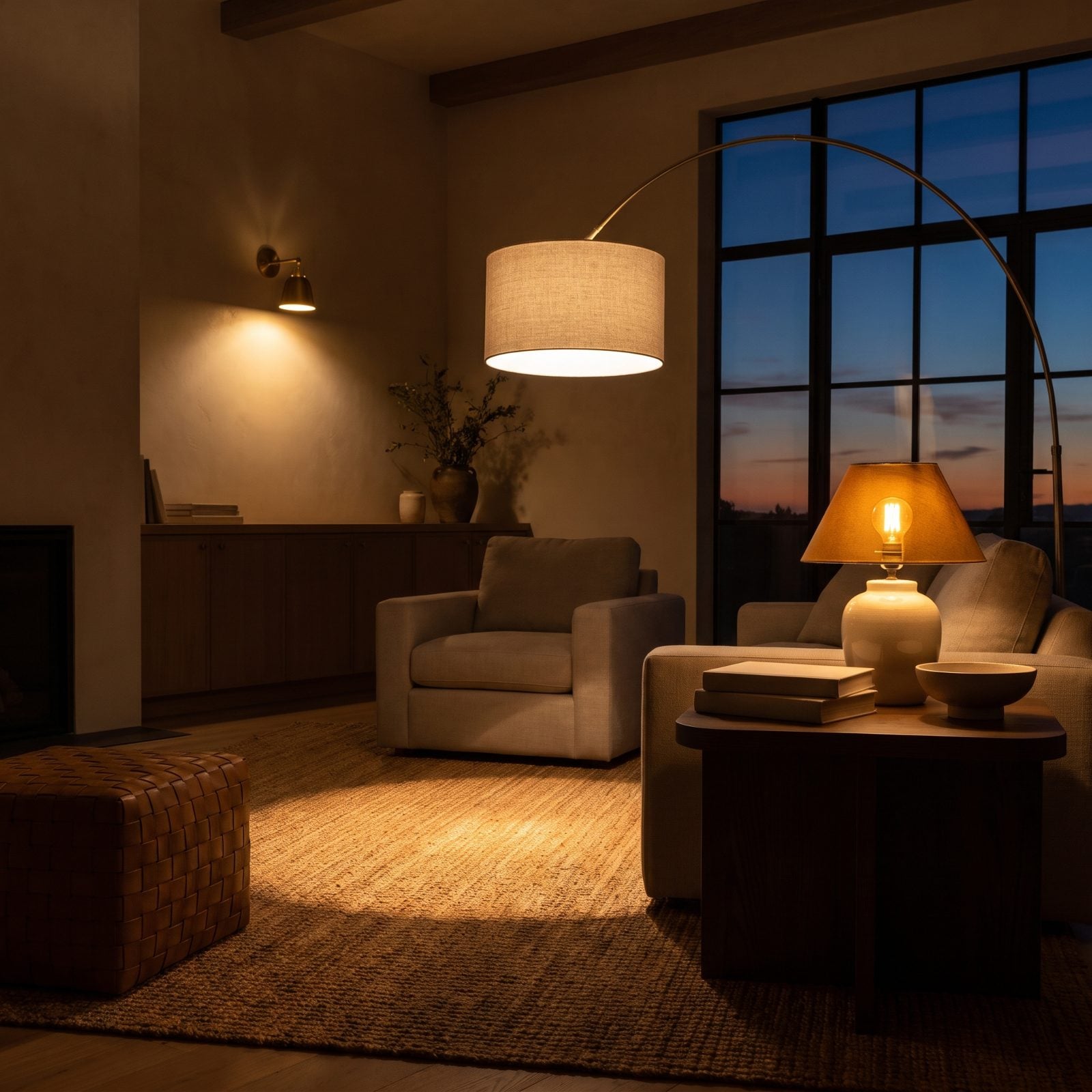
One ceiling light flattens a room like a photocopier, hitting everything with the same glare and leaving nothing to the imagination. The fix costs you a few lamps and nothing else.
In order to come up with the very specific design ideas, we create most designs with the assistance of state-of-the-art AI interior design software. Also, assume links that take you off the site are affiliate links such as links to Amazon. this means we may earn a commission if you buy something.
Spread your light across three heights. A floor lamp, a table lamp, a little uplight behind the bookshelf, and suddenly the corners have depth and the room has mood. That pool-and-shadow effect is what your eye reads as warmth, the same way firelight does. Plenty of us go years with a single overhead bulb thinking the room is just naturally unwelcoming. It wasn’t. It was the lighting the whole time.
22. Swap Bright White Bulbs for Warm-Toned Ones
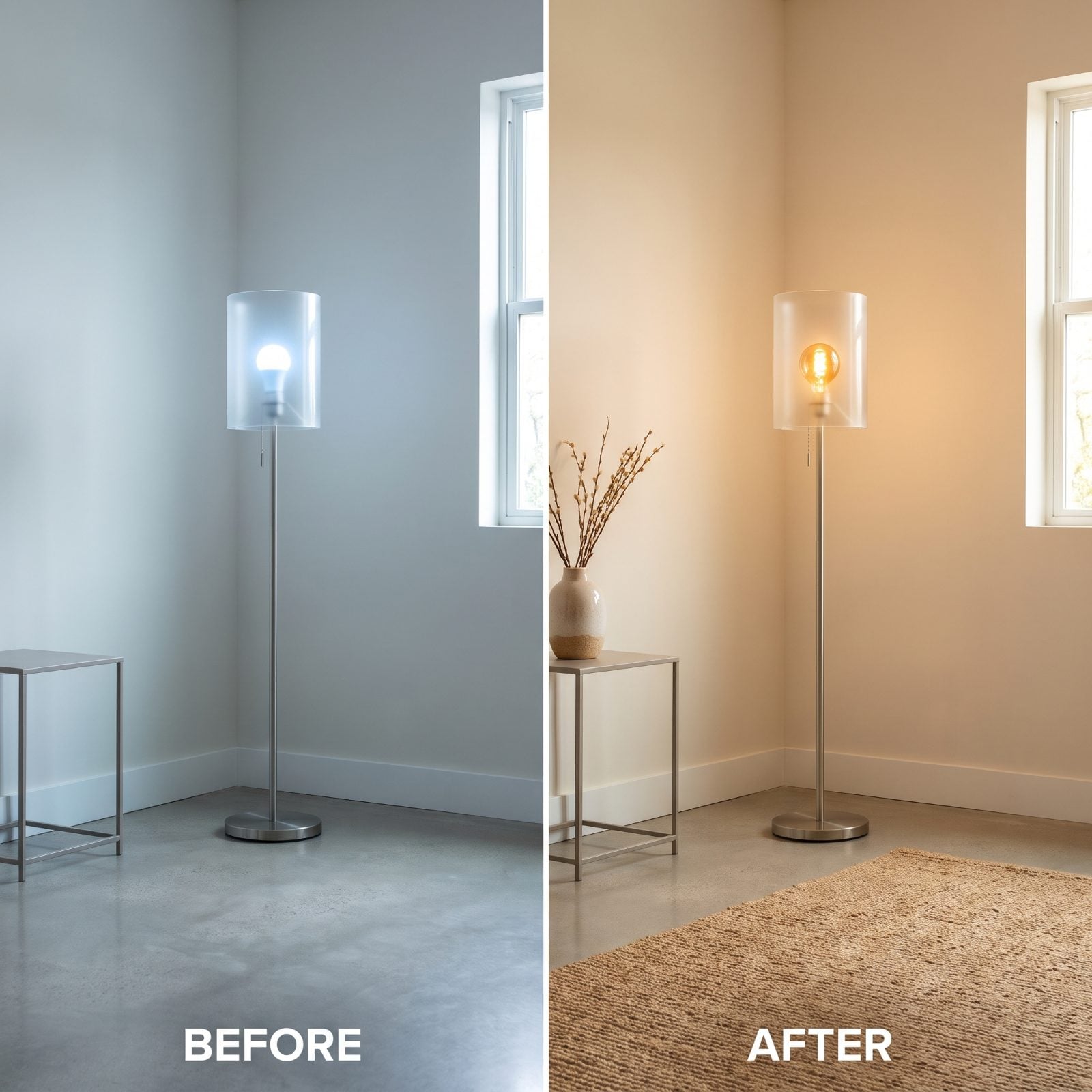
Bulb color temperature is the cheapest upgrade in your whole house. Anything over 3000K goes blue and clinical. Drop to 2700K or lower and the room turns gold.
Candlelight sits way down around 1800K, which is why it feels so good, and while you can’t quite get there with bulbs, warm white gets close. Check the box before you buy. The number is right there, and most people never read it.
21. Put Everything on Dimmers
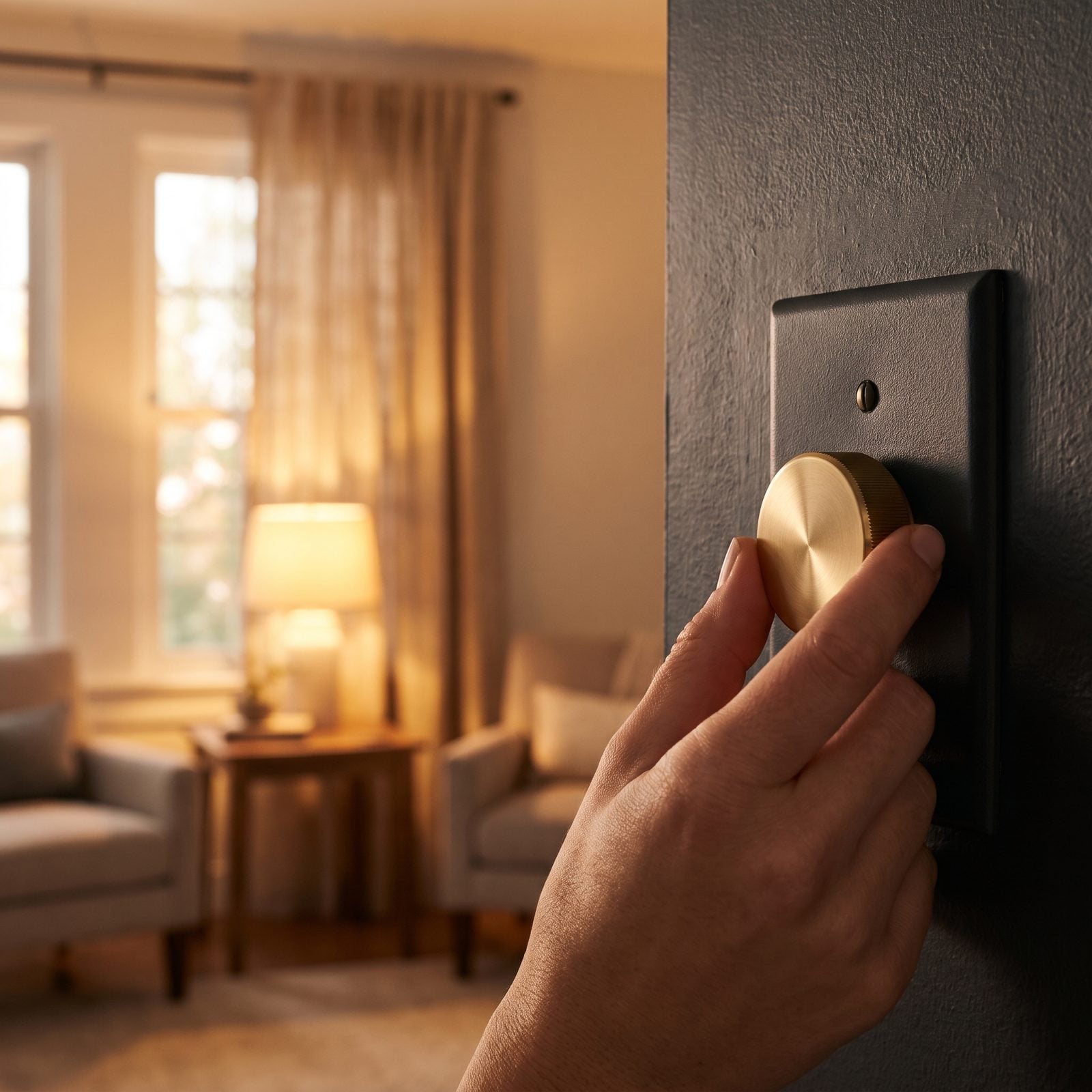
Full brightness has exactly one job: finding the thing you dropped. The rest of the evening, you want maybe a third of it.
Dimmers let the same fixture do daytime work and nighttime mood without you buying a second lamp. Turn everything down after dark and watch the room soften. It’s about the closest thing a space has to a volume knob.
20. Light Candles When the Sun Goes Down
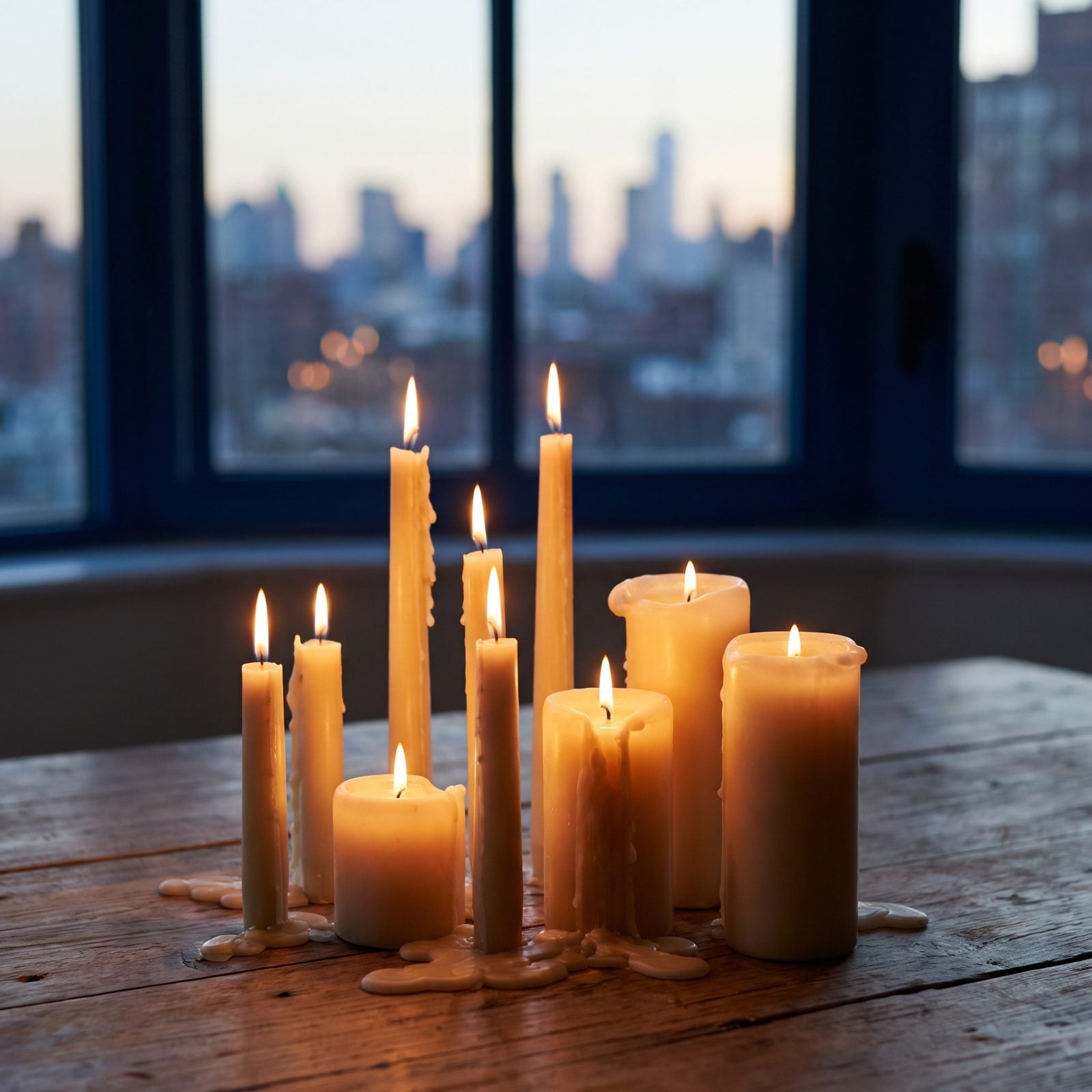
There’s a reason every restaurant you’ve ever liked keeps the lights low and a candle on the table. Flame flickers, your eye never fully settles, and that gentle movement reads as alive in a way no bulb can fake.
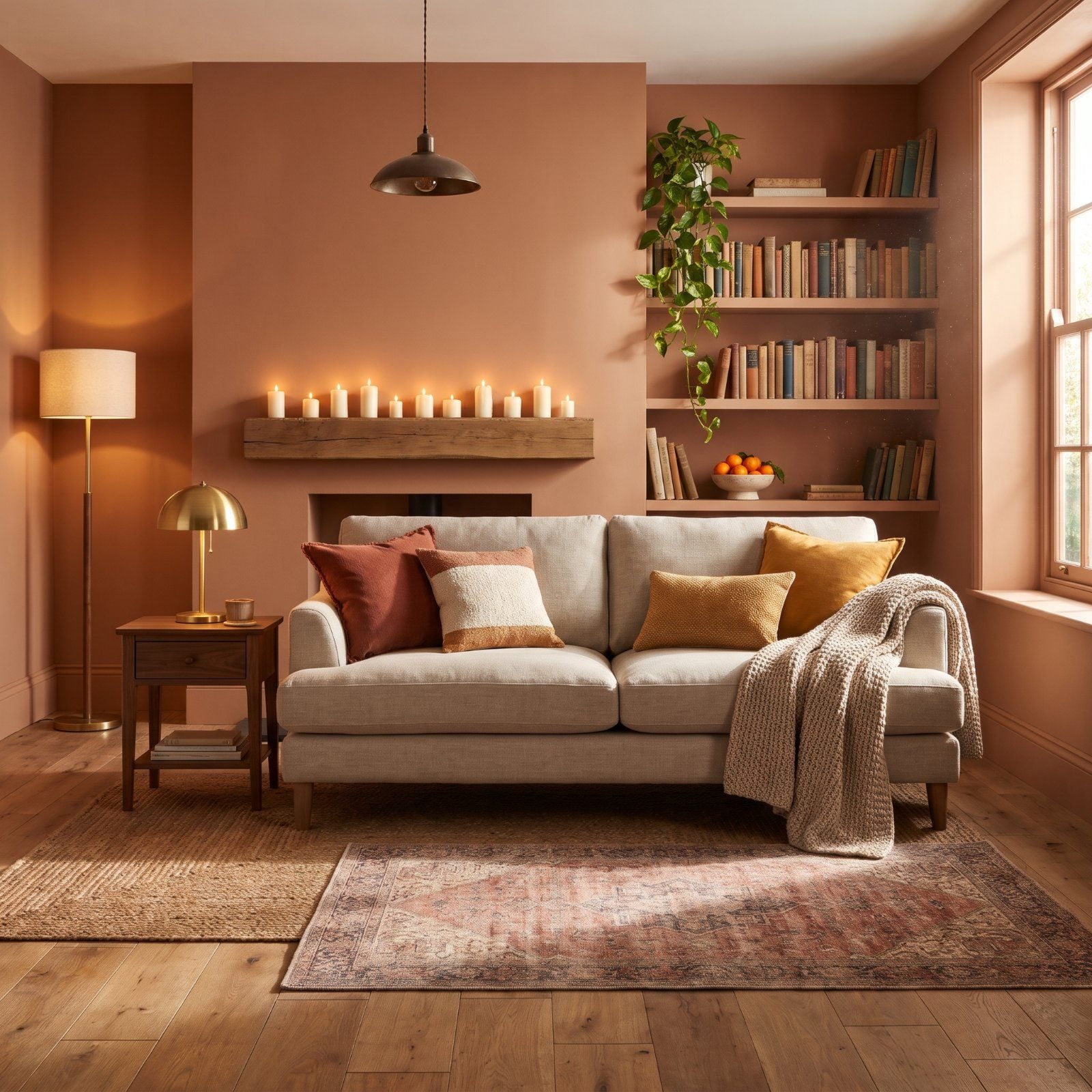
Group a few at different heights on a mantel or tray rather than scattering singles around. A cluster of warm pillar candles pulls the whole corner together and does more for the mood than most lamps. Just blow them out when you leave the room. A scorch mark on a side table is a hard way to learn this.
19. Keep a Basket of Throw Blankets Within Arm’s Reach
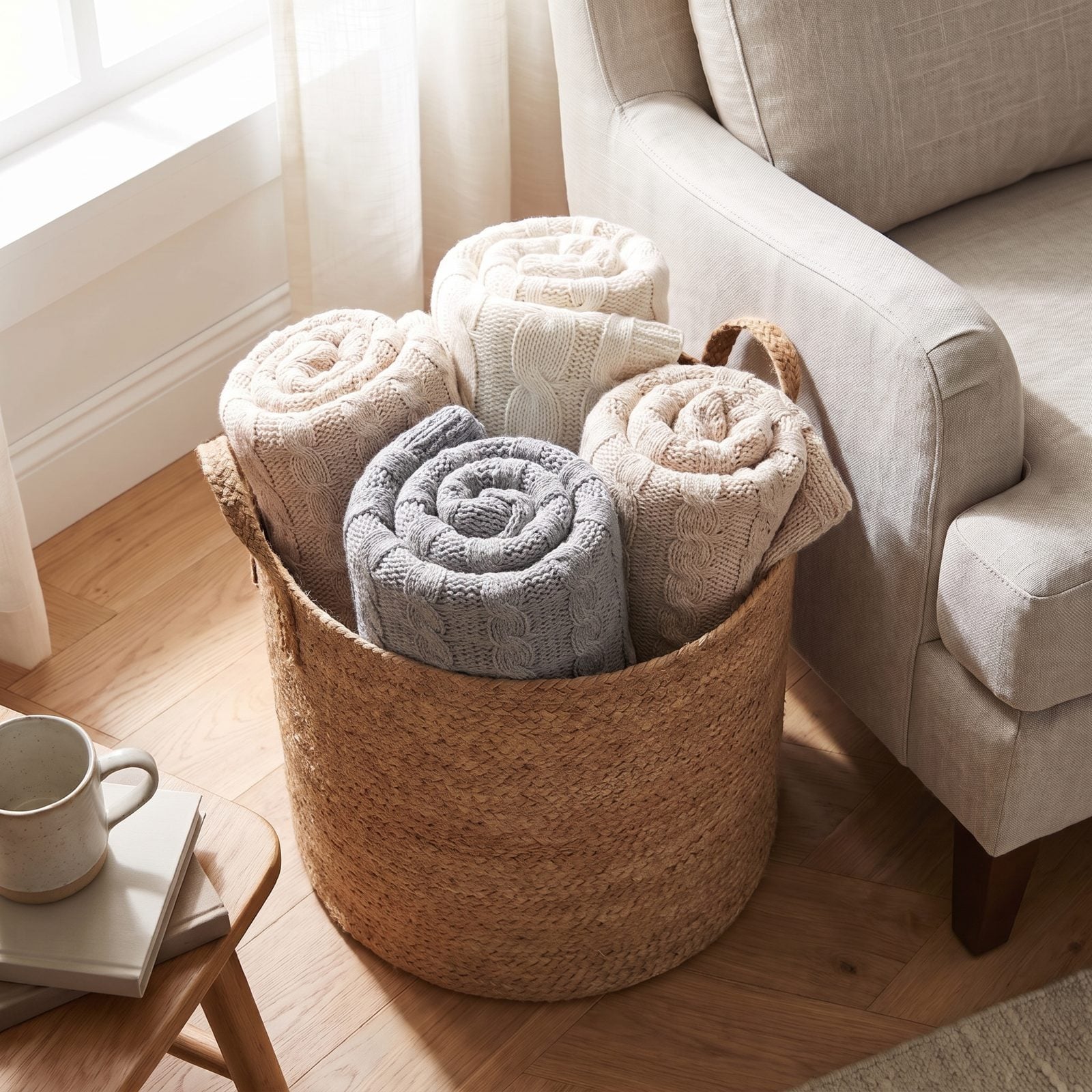
A blanket you have to go hunting for is a blanket you’ll never use. Cozy only works if it’s lazy-friendly.
Park a woven seagrass basket right next to wherever you sit and fill it with a few chunky knit throws in soft, mixed neutrals: cream, oatmeal and a warm gray for cold nights and everything in between. The basket itself reads as warm, all that natural texture, and the blankets are there the second you want one.
18. Drape a Knitted Throw Over the Armchair
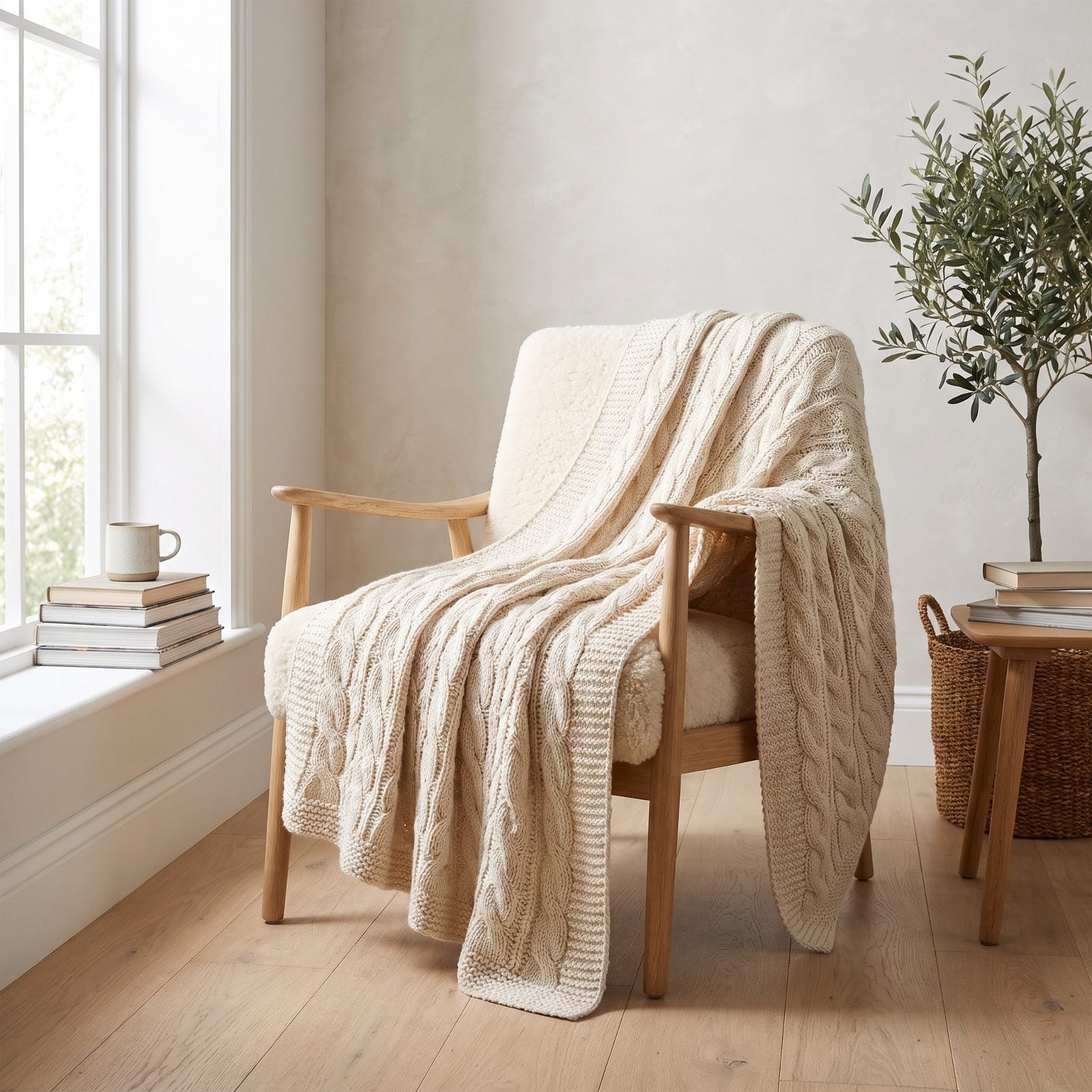
An empty armchair looks like it’s waiting for a job interview. Toss a cream cable-knit throw over the arm and it instantly looks like somewhere you’d actually sit.
The trick is the casual drape, not the fold. Let it spill a little over the seat and onto the floor. A too-perfect throw reads as staged, and staged kills coziness faster than anything. You want it to look like someone got up two minutes ago.
17. Choose Warm Paint Tones Over Cool Grays
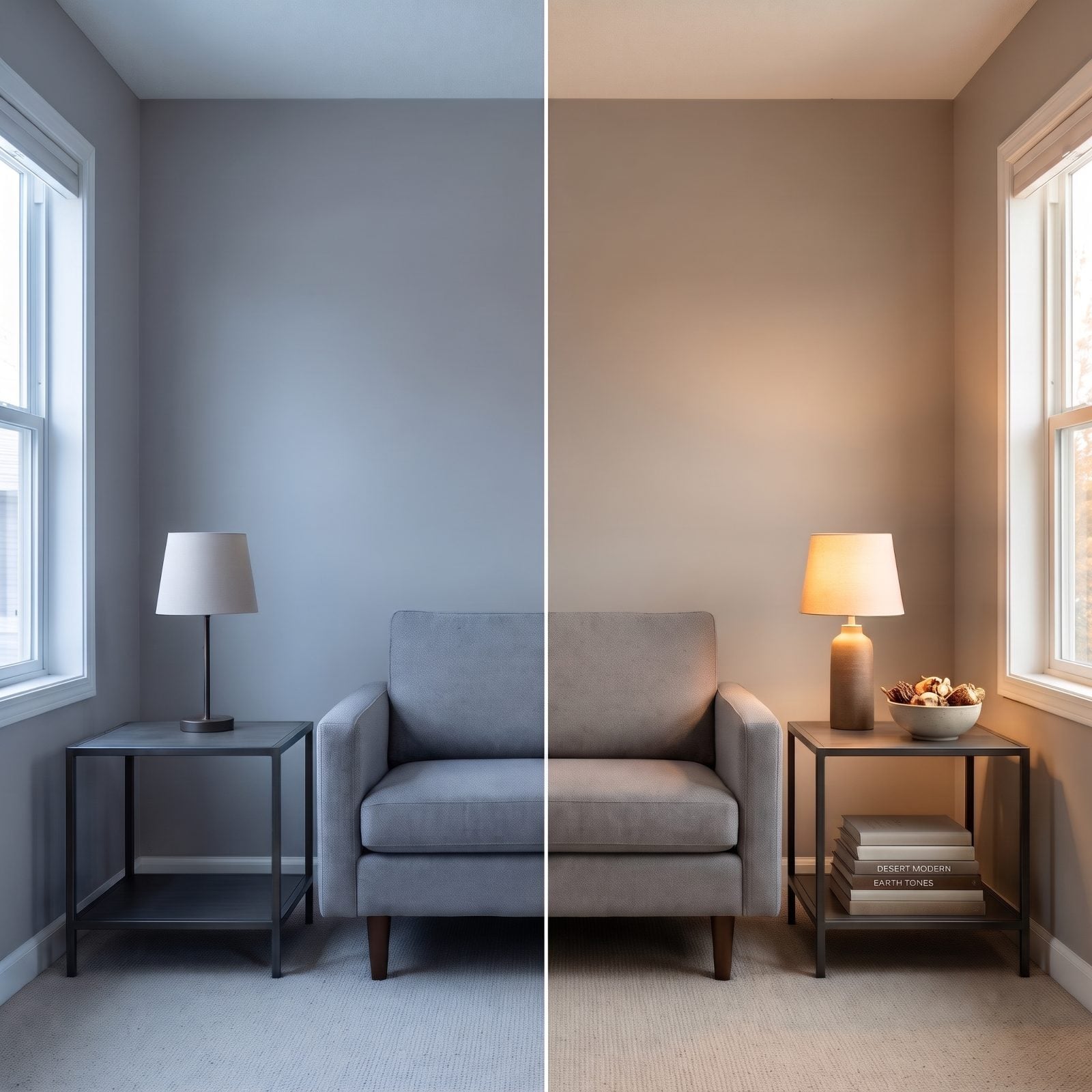
The gray-everything era gave a lot of homes the warmth of a parking garage. Cool grays with blue undertones go cold the second the sun drops, and then you’re living in a photo of a room instead of a room.
Warm neutrals do the opposite. A putty, a greige with brown or yellow undertones, a soft clay, they hold light and give it back warm. Paint a test patch and check it at night under your actual lamps, not in the store. Store lighting lies, and it lies specifically to sell you gray.
16. Put a Textured Rug Underfoot
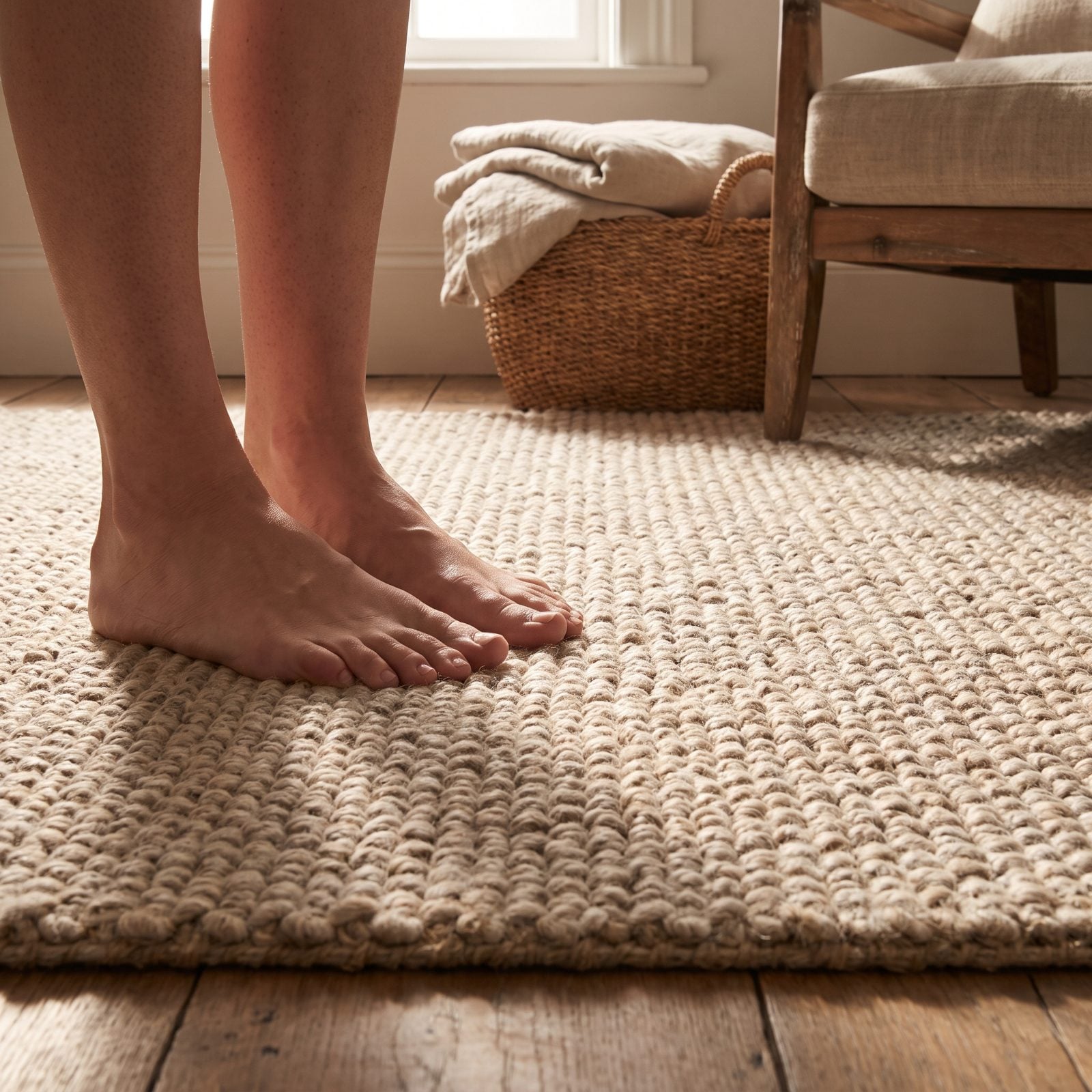
Bare floors sound cold even when they aren’t. Your eye registers the hardness before your feet do, and a room full of hard surfaces never quite relaxes.
A rug with real texture fixes it: a chunky wool, a nubby jute, something with a pile deep enough to catch the light. It warms the floor underfoot and softens the sound of the room at the same time. Hard rooms echo. Rugs hush them.
15. Layer One Rug on Top of Another
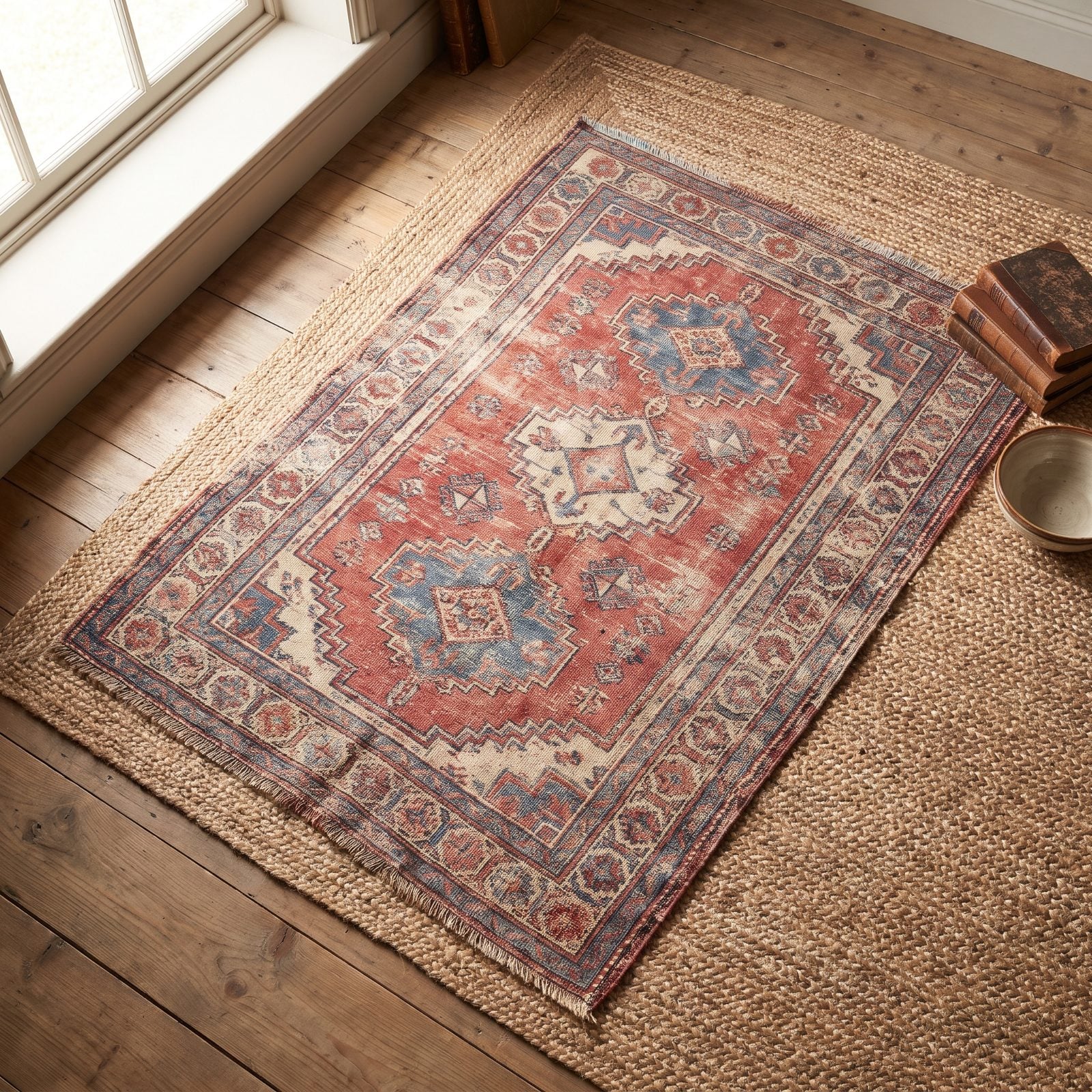
Layering rugs is the oldest trick for making a room look like it was gathered over time rather than bought in an afternoon.
Start with a big neutral base, usually jute or sisal, then float a smaller vintage Persian rug on top, offset at a slight angle. That contrast between coarse and soft does all the work. It doubles the underfoot cushion and gives a bland floor a story. Bonus: a cheap base rug can carry a small expensive one that could never cover the room alone.
14. Pile the Sofa With Pillows in Mixed Textures
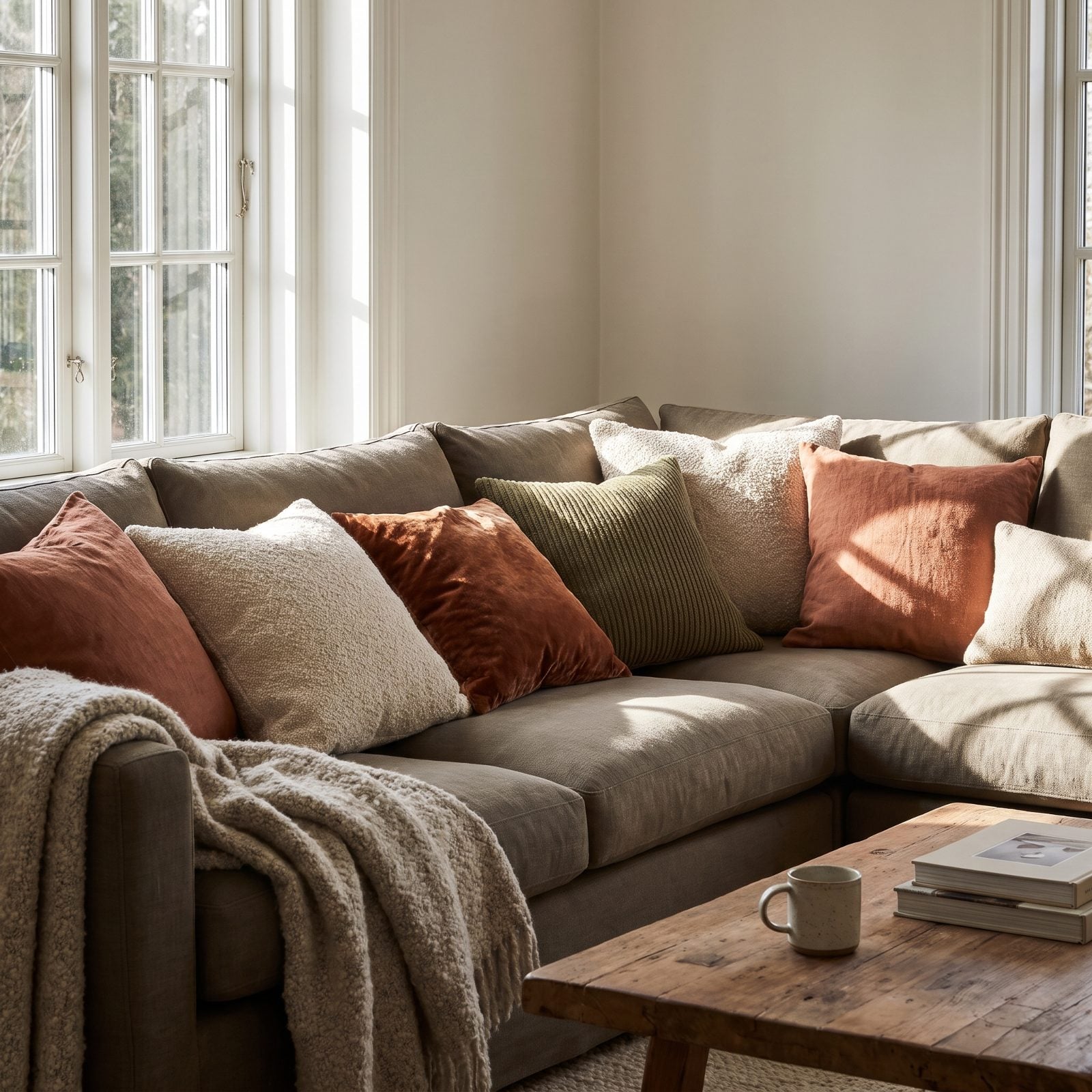
Matching pillow sets are where coziness goes to die. Two identical pillows at each end of the sofa look like a showroom nobody told it had closed.
Mix it up instead. A rust velvet pillow next to a cream boucle pillow next to a worn kilim. Texture contrast is what makes it feel collected, and the different sizes stop it looking staged. Keep a loose color thread running through them so it reads as intentional, not chaotic. And karate-chop the big ones if you want, but honestly? The slightly-dented, just-leaned-on look beats any crisp point. Comfortable over correct, every time.
13. Let Houseplants Take Over (A Little)
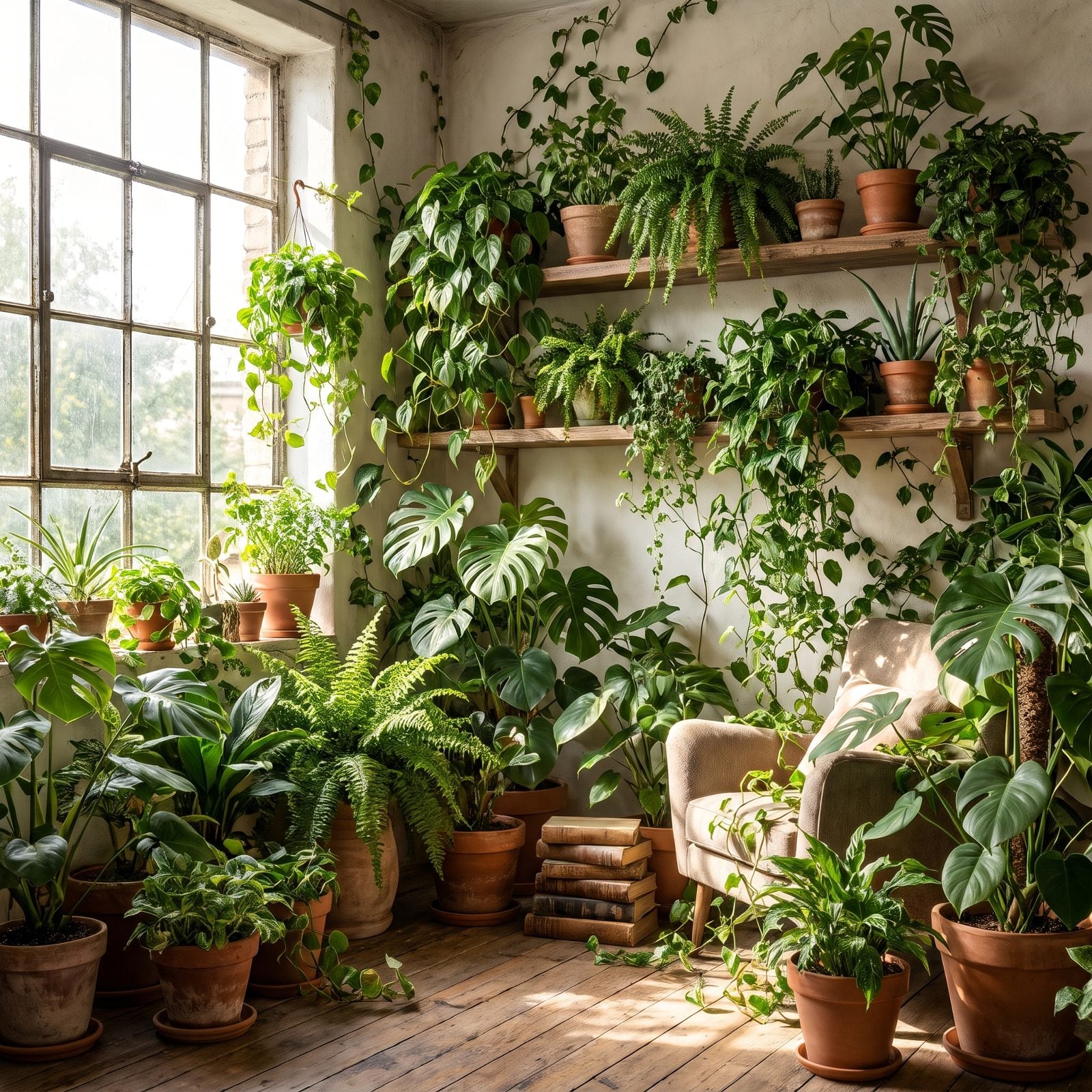
Plants are the fastest way to make a room feel alive without buying a single piece of furniture. A trailing pothos spilling off a shelf does more for a dead corner than any throw pillow ever will.
The trick is grouping. One lonely plant on a windowsill reads as an afterthought, while three or five clustered at different heights in mismatched terracotta pots reads as a decision somebody made on purpose.
12. Put Your People On The Walls
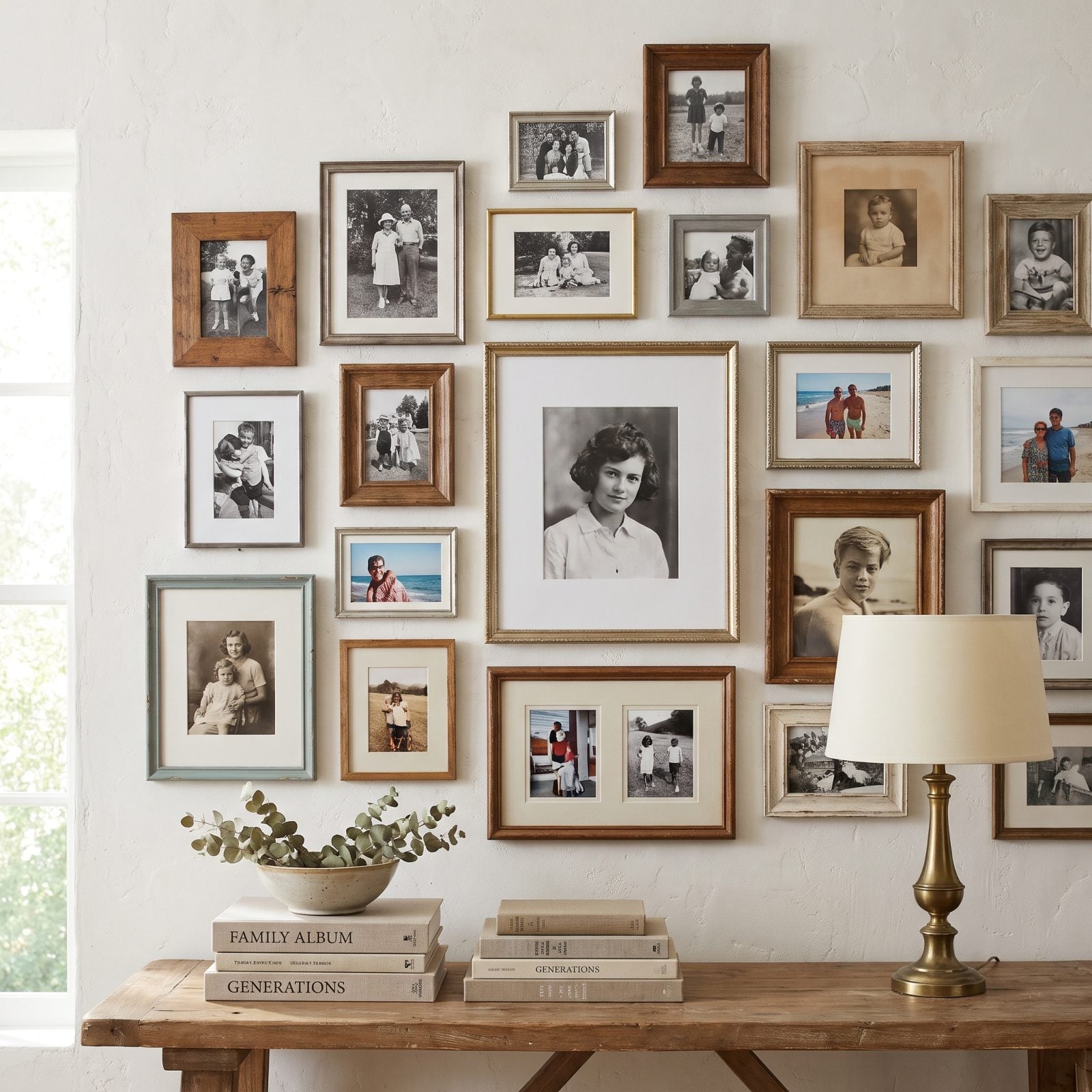
A house full of generic wall art looks like a hotel. Nice, forgettable, nobody lives there. Swap even a few prints for framed photos of people you actually love and the whole room changes temperature.
Mix your frame finishes. Matching sets look like you bought them in one trip, because you did. A brass frame beside walnut beside matte black reads collected rather than ordered, and if you group them tight, a few inches apart, they keep talking to each other. And please, print the photos. A screen full of memories warms no room. A bright hallway design is a perfect place to start, since you pass it a dozen times a day.
11. Bring In Wood You Can Actually See The Grain On
🔥 Would you like to save this?
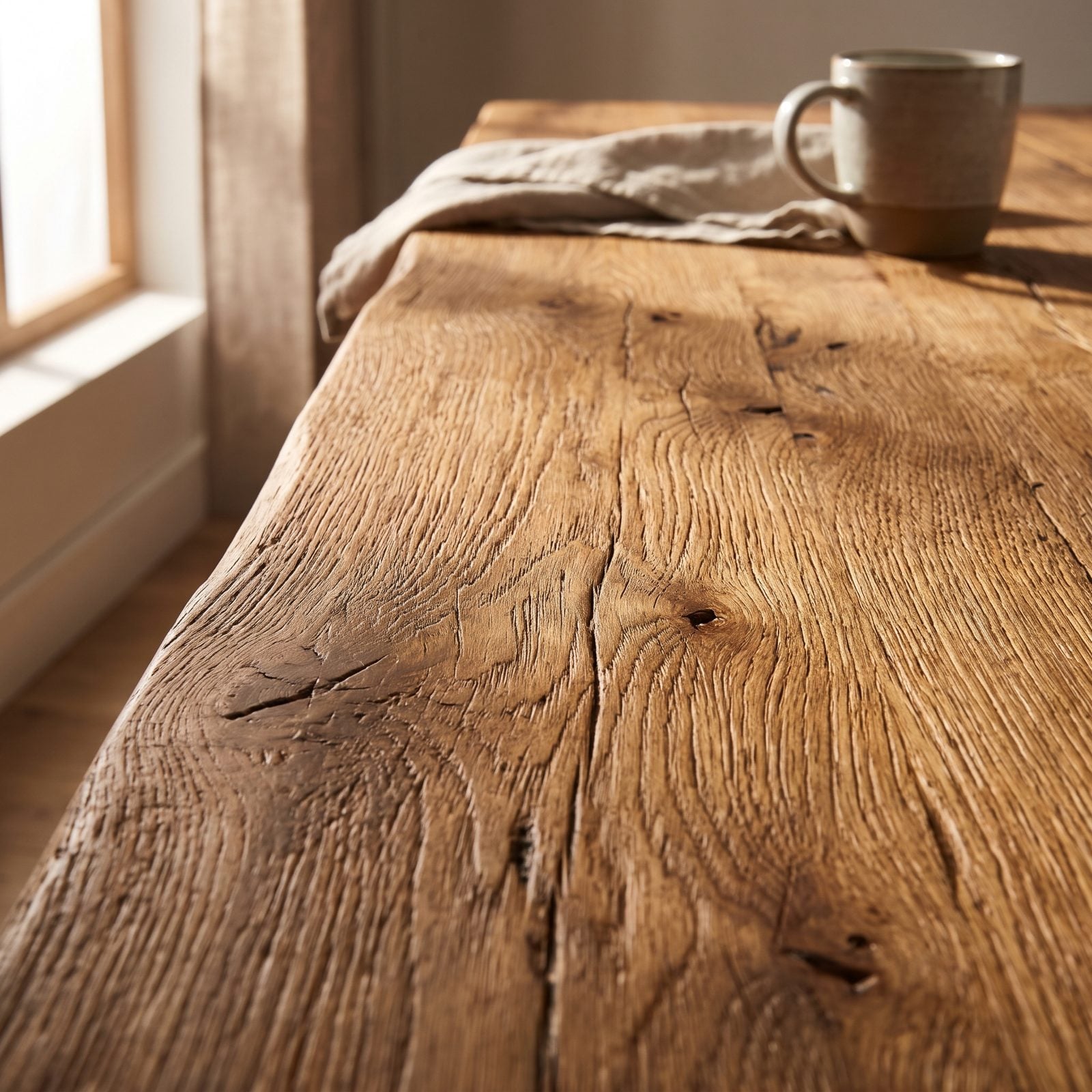
Wood warms a room in a way paint never can. It carries grain, variation, the sense that something grew before it got here.
The mistake is matching everything. A room where the floor, the table, and the shelves are the identical shade of oak flattens out and reads like a showroom. Let your tones argue a little. A honey-oak floor under a walnut dining table next to a teak sideboard has depth. Three woods, three temperatures, one warm feeling.
10. Hang Curtains That Kiss The Floor
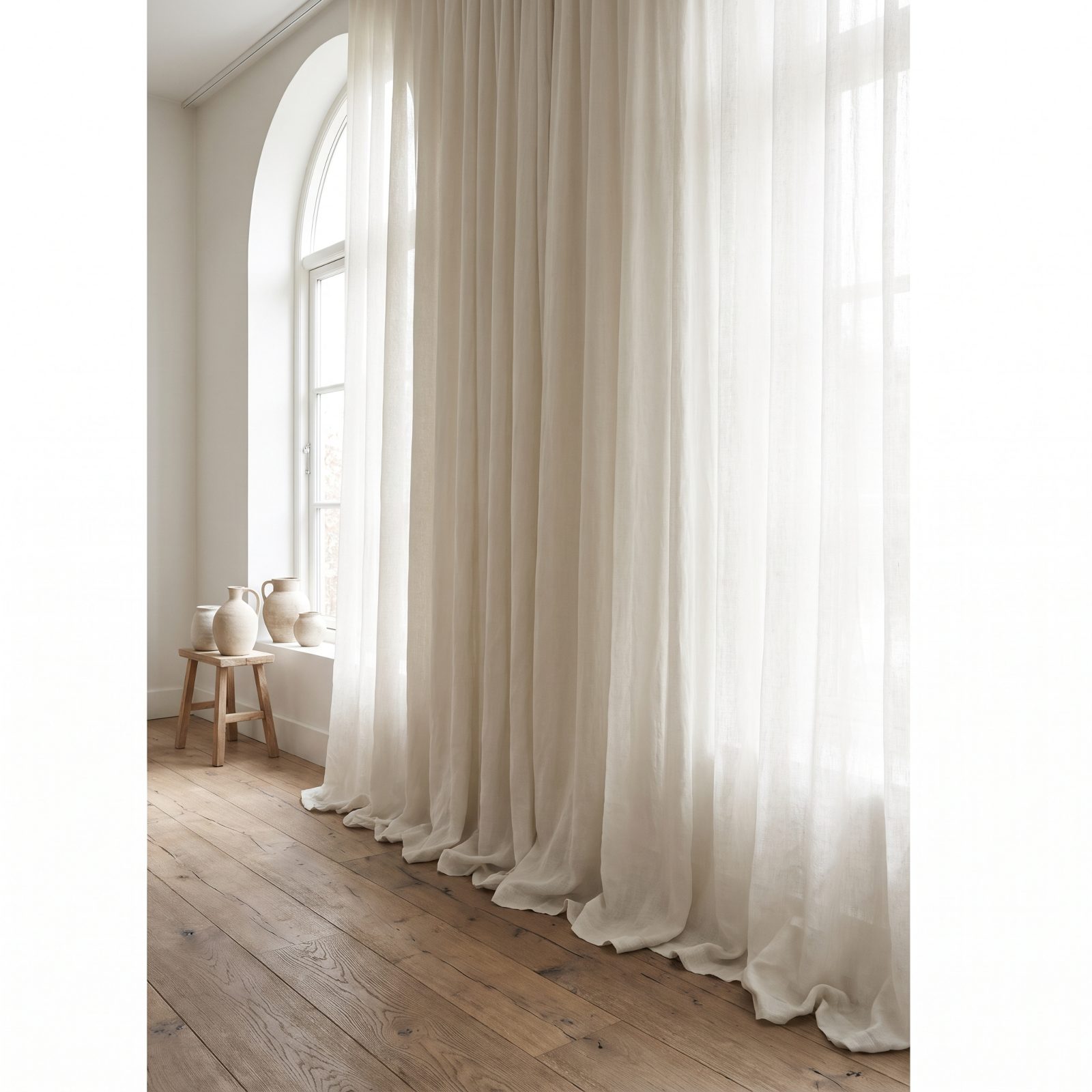
Curtains that stop at the windowsill look like pants that end at the ankle. Technically fine. Slightly off.
Hang the track high and wide, let the fabric break on the floor with an inch or two of slack, and the whole window reads taller and softer. Linen curtains do this best because they drape with weight instead of stiffness. Mount a white ceiling track right on the ceiling, not just above the frame. Your ceilings will thank you for the extra few inches of apparent height.
9. Build A Nook That’s Only For Reading
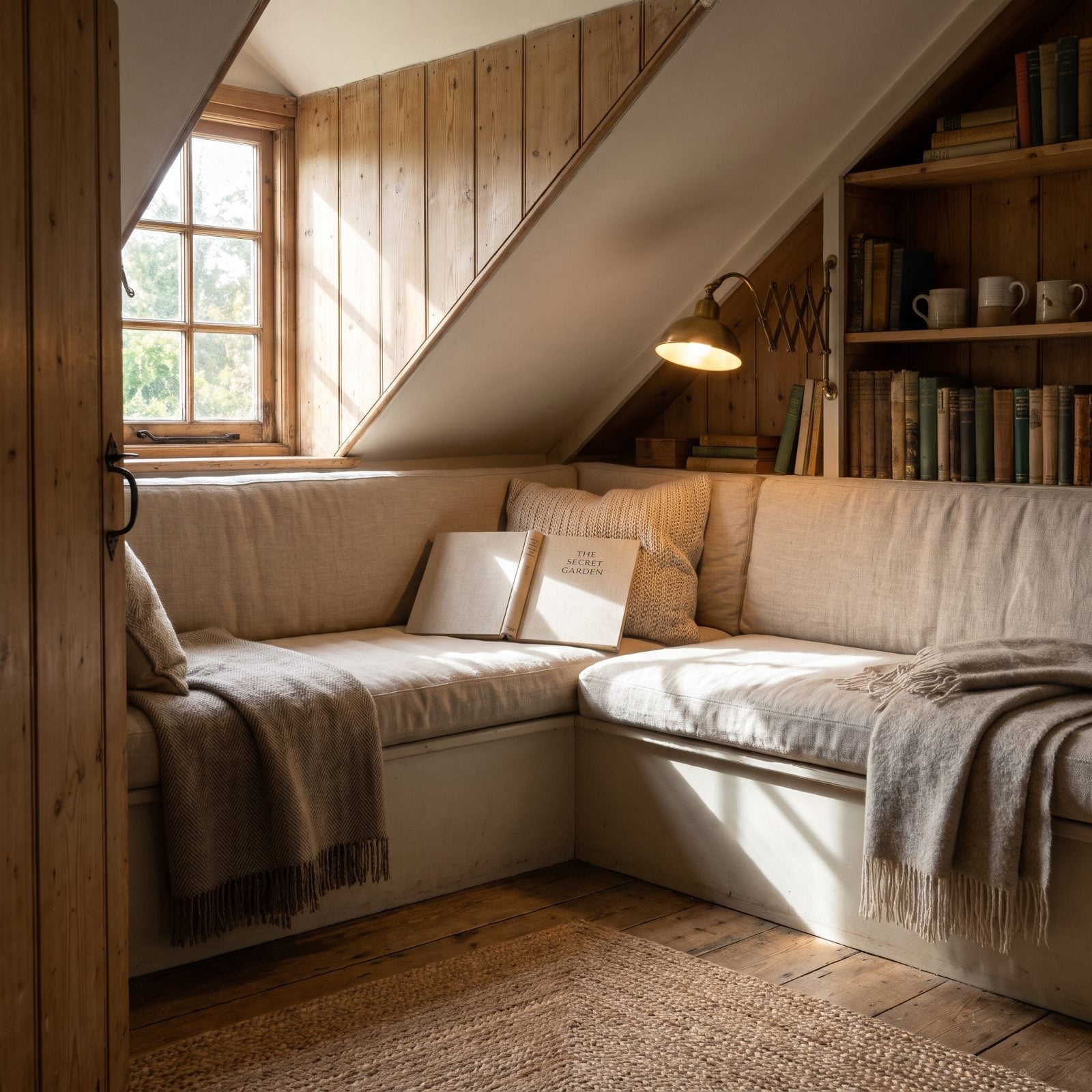
The best reading nooks feel a little bit like hiding. Low ceiling, a seat that holds you, a wall at your back, one good light.
That’s not an accident. Designers call it prospect and refuge, the ancient instinct to tuck into a protected spot with a view out, and a window seat under a sloped roof nails both. An attic corner works beautifully here, and a timber-beamed attic design gives you that sheltered feeling without any extra square footage.
Give it its own light. A brass swing-arm sconce beats an overhead fixture every time. And a faded kilim-style cushion deep enough to fold your legs onto.
8. Keep Real Books Out Where You Can See Them
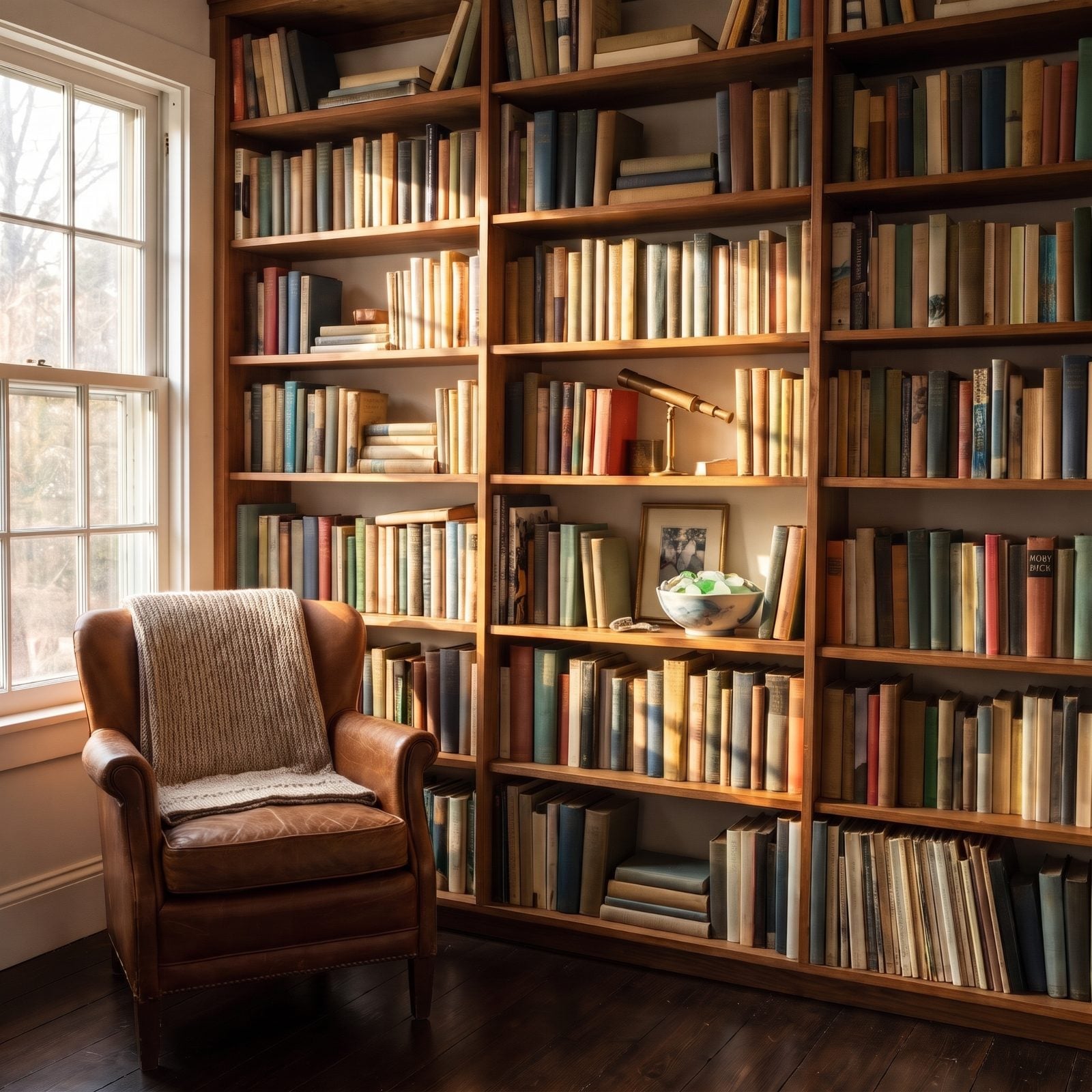
A home with real books on display tells you something before anyone says a word. It says somebody here is curious. Somebody sits still long enough to finish things.
Don’t color-sort them unless you genuinely love the look. Spines organized by subject, or just by what you’ve actually read, feels human. Break up the rows with objects: a small brass sculpture, a short stack laid flat, a bowl of sea glass, a framed photo leaning against the backs. The gaps are what keep a bookshelf from looking like a store display.
7. Pick Seating You Have To Climb Out Of
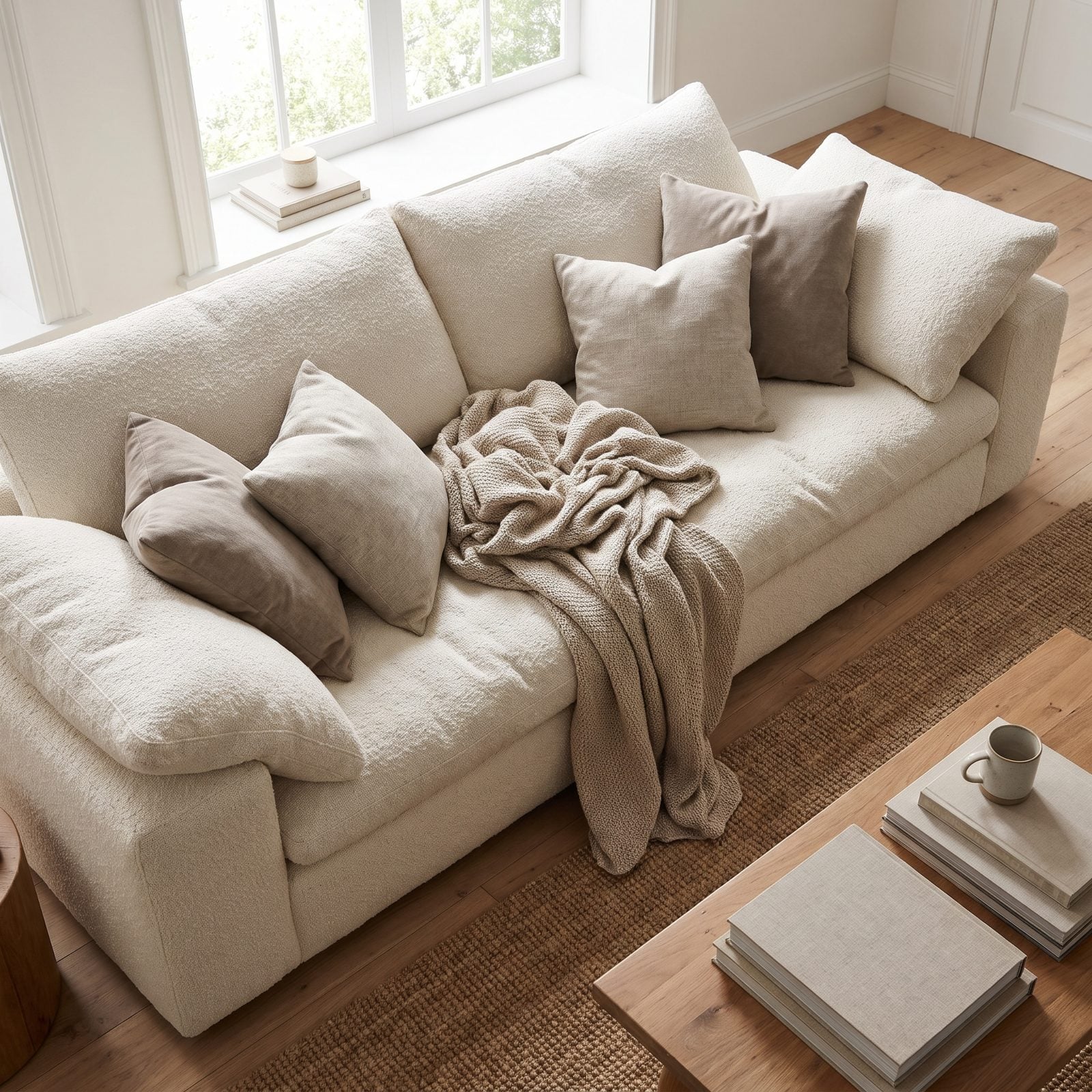
There’s a difference between a sofa you perch on and a sofa you disappear into. Stiff, shallow seating looks sharp in photos and punishes you by hour two.
So go deep. A seat you have to lean into, cushions you sink past, the kind of chair that makes getting up feel like a negotiation. A bouclé sofa with down-wrapped cushions is as good as it gets. Add a chunky wool throw and the invitation is complete.
The best compliment a couch can get is that nobody wants to leave it.
6. Give The Room A Fire To Gather Around
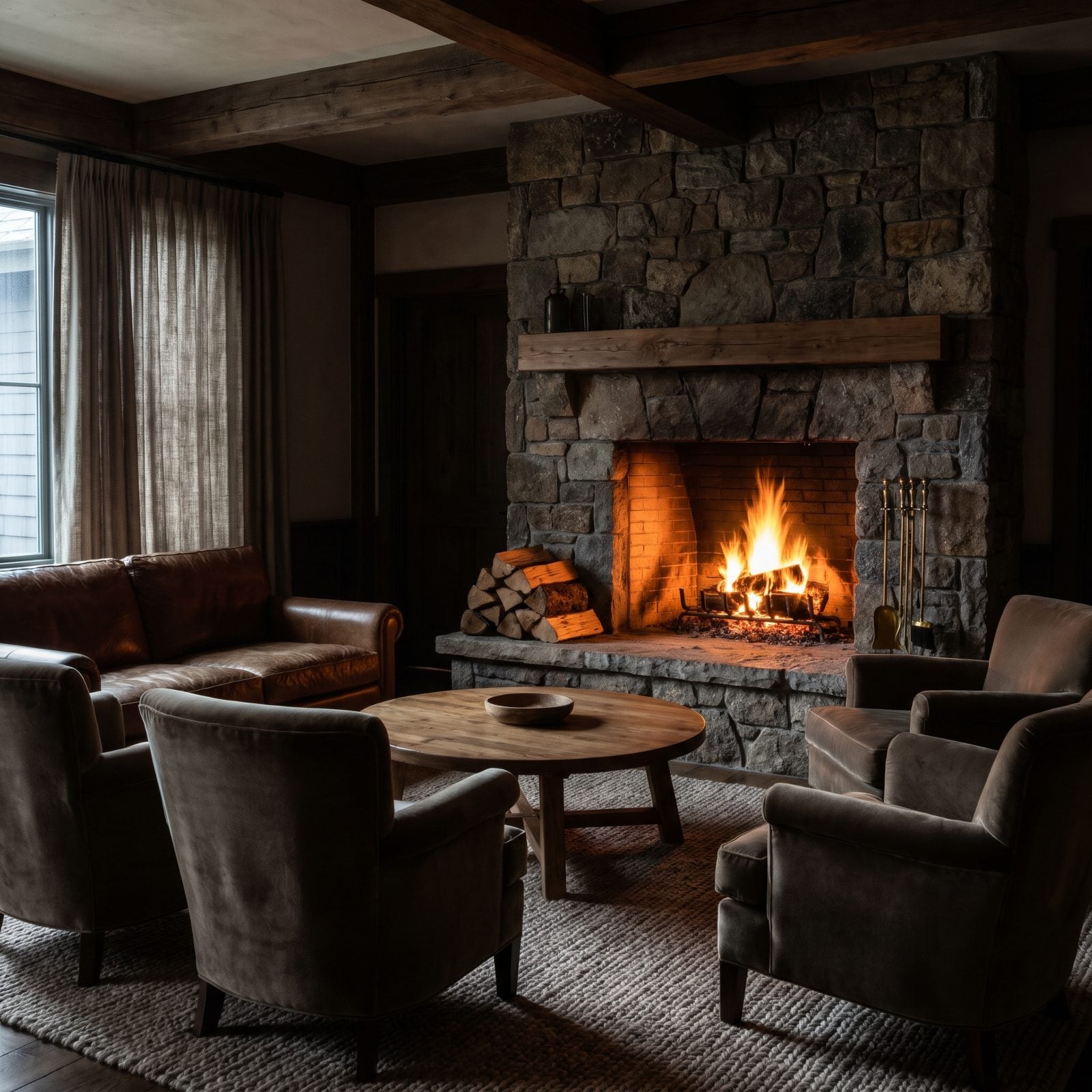
A fire gives a room a center of gravity. Even an unlit one. Even a faux one.
We’re wired to turn toward flame, which is why the furniture practically arranges itself the second a fireplace enters the chat. No hearth? An electric insert or a cluster of pillar candles in the firebox does most of the emotional work for a fraction of the renovation. Dress the mantel with a leaning frame, a pair of brass candlesticks, and one trailing plant. Then point your armchairs at it and let the room sort itself out.
5. Mix In The Old Stuff, Especially The Inherited Kind
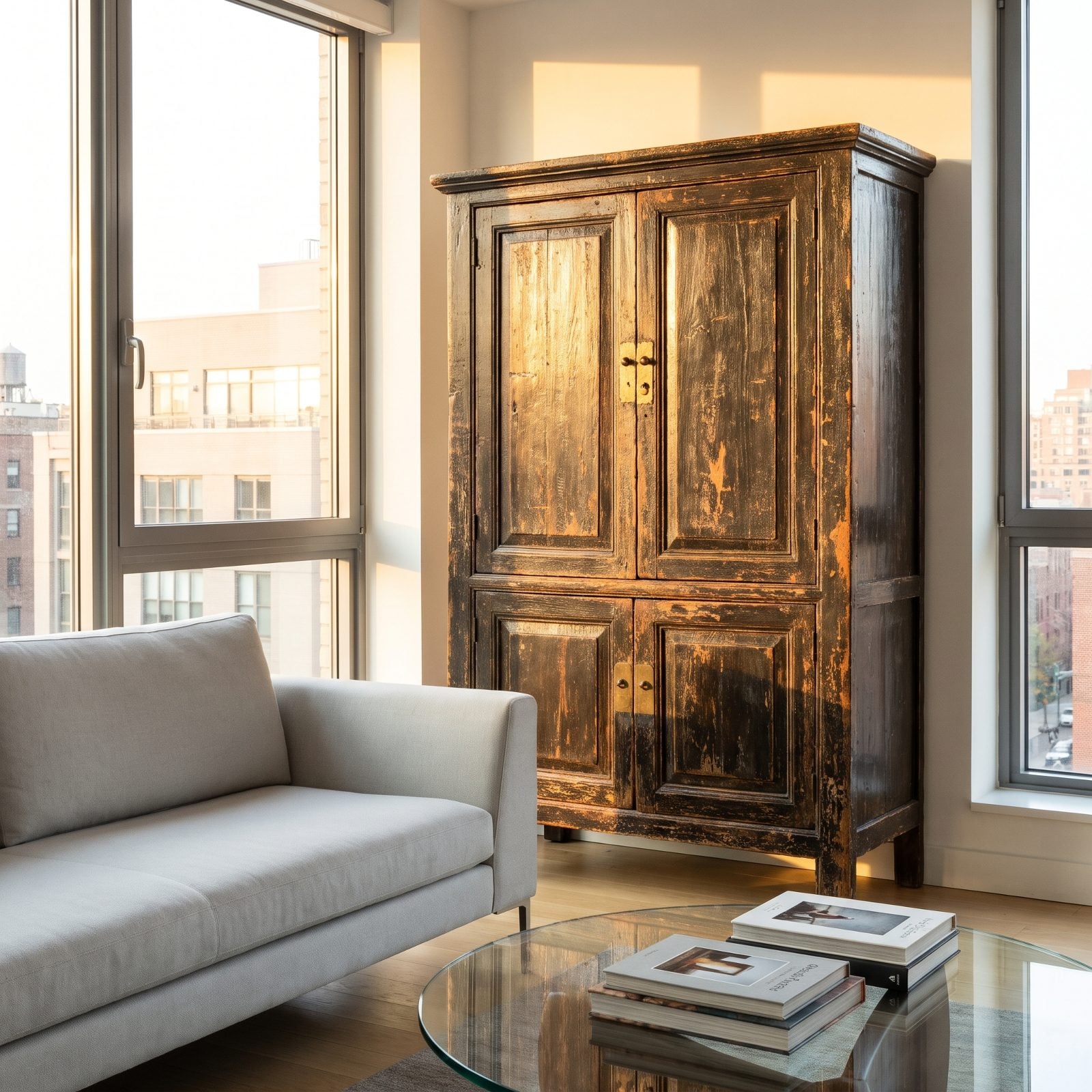
New furniture all bought at once has no memory. Everything arrived the same Tuesday and it shows.
One old piece changes the whole story. A grandmother’s brass lamp, a flea-market chest pressed into service as a coffee table, a faded Persian rug that’s been walked on for decades. Patina is the one thing you cannot fake and cannot rush. The scratches are the point.
4. Style Your Surfaces, But Leave Room To Live
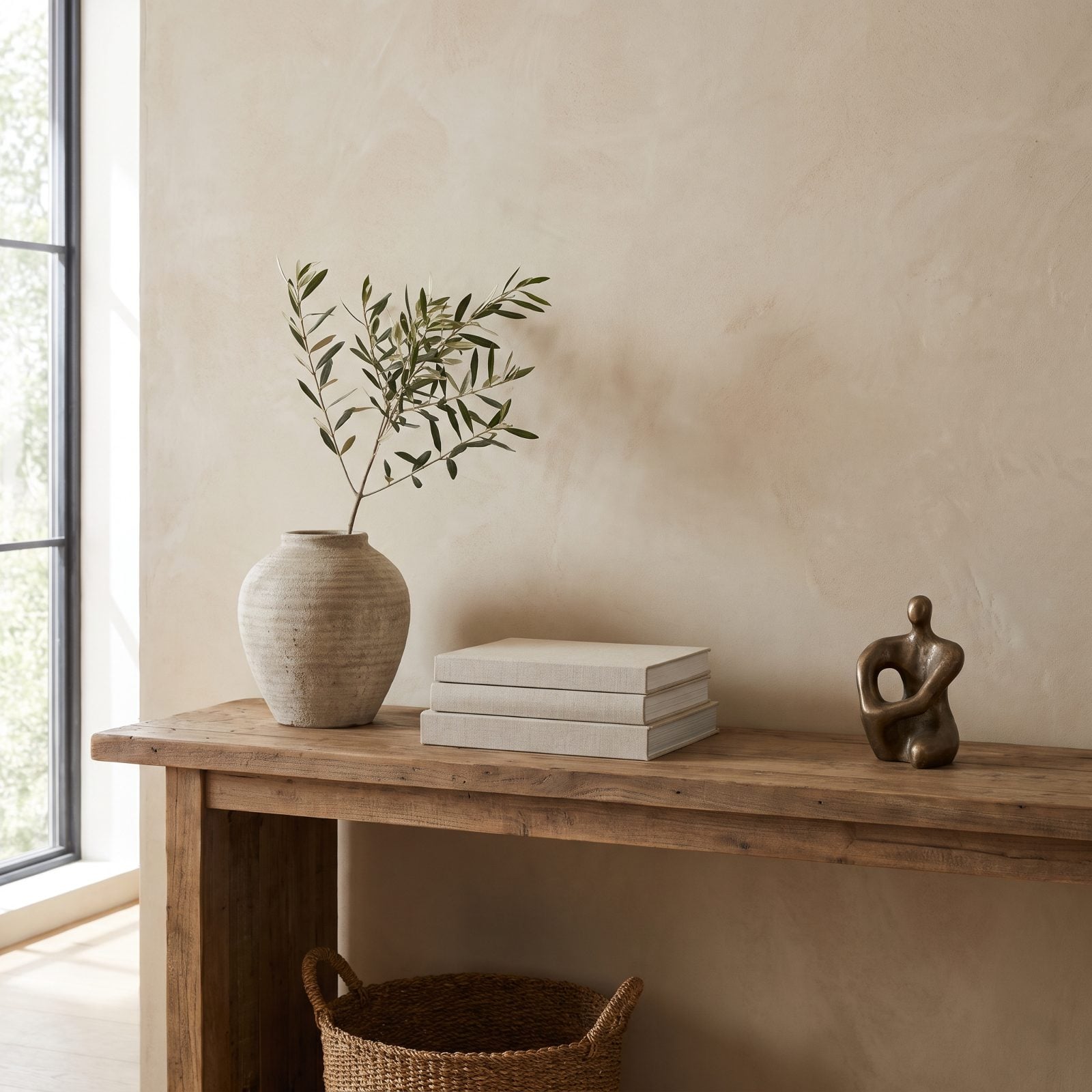
A bare surface feels like a house staged to sell. A crowded one feels like a house you can’t find your keys in. The cozy version lives between the two.
Group things in odd numbers, vary the heights, and leave real negative space around each cluster so your eye can rest. One lamp, a short stack of books, a ceramic vase with a few stems, maybe a brass tray to corral the small stuff. Then stop. That empty space isn’t wasted. It’s what lets the good pieces breathe.
3. Let Brass and Copper Do the Warming
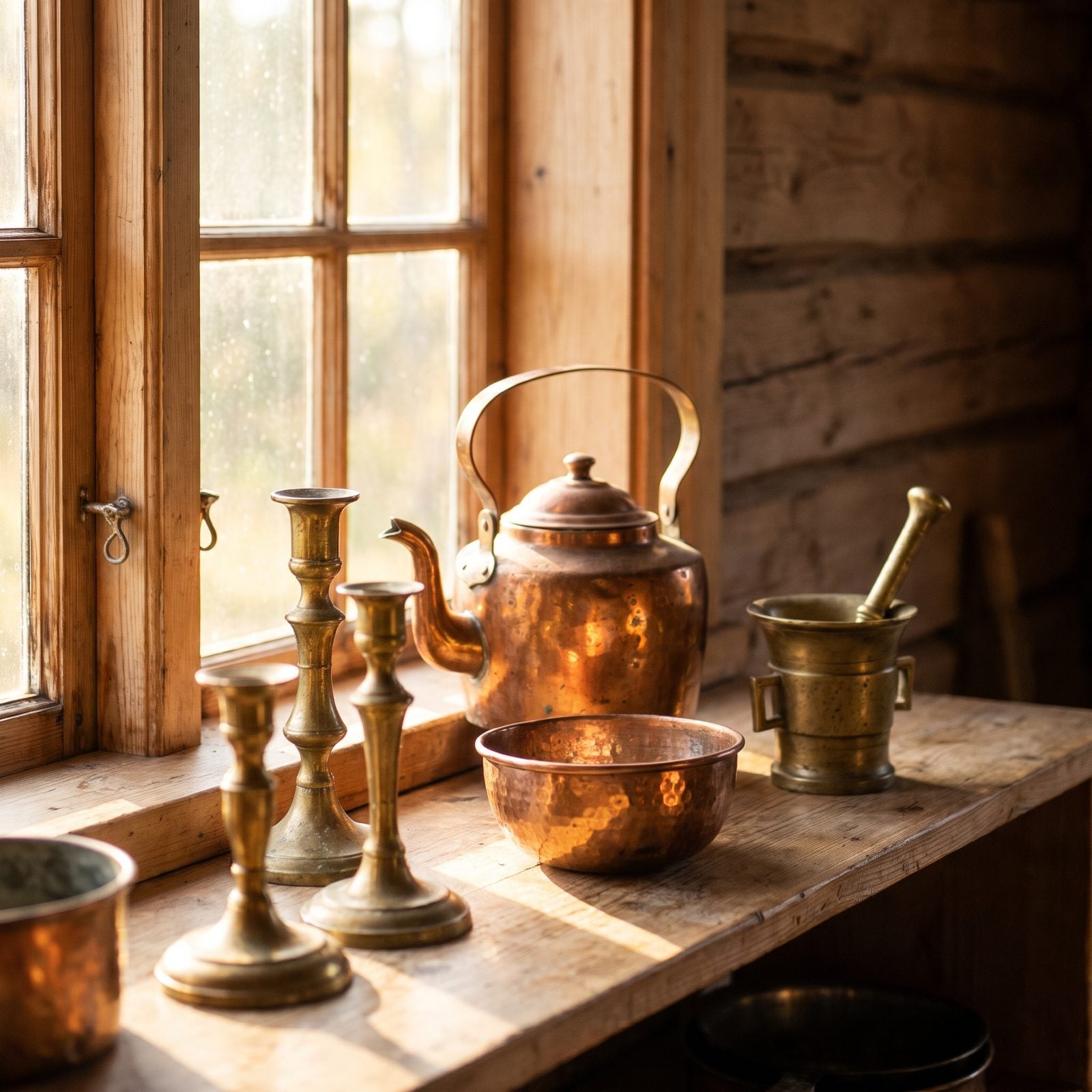
Brass and copper read warm because they actually are. Chrome and nickel throw back a cold blue light, while these old metals hold onto the amber end of the spectrum and hand it right back to the room. One brass sconce can make a whole wall feel lit from within.
You don’t need much. A few aged brass candlesticks, a hammered copper bowl on a side table, maybe brushed brass wall sconces pulling their weight after dark. Let them patina. The dull spots are the point.
2. Give the House a Scent It Wears Every Day
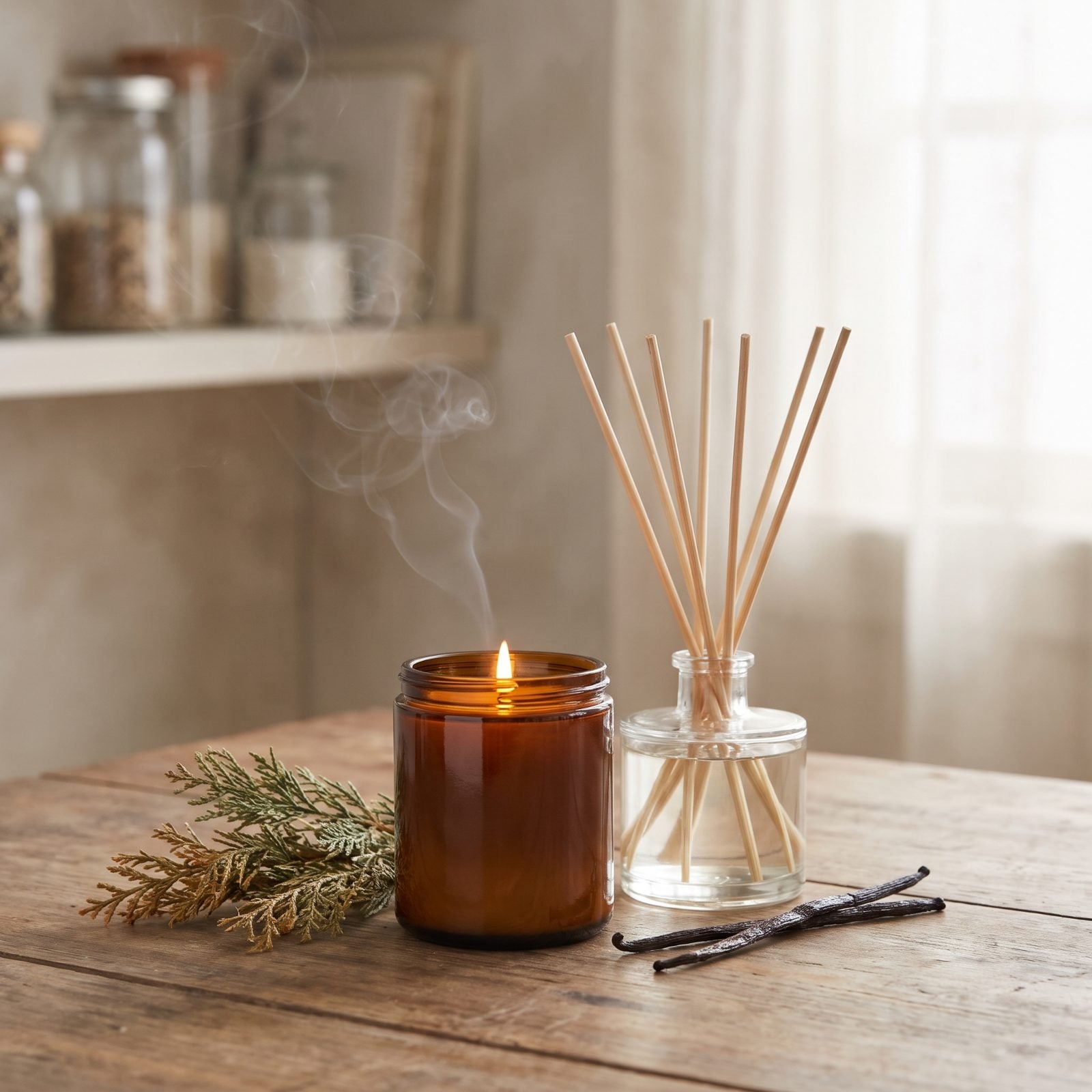
Scent is the detail nobody sees and everybody remembers. Walk into a home that smells faintly of cedar or baked vanilla and you relax before your coat is off. Walk into one that smells of nothing, or worse, of last night’s salmon, and some part of you stays on guard the whole visit.
Smell bypasses the thinking brain entirely and goes straight to memory. It’s the fastest route to a feeling a room has.
Layer it. A soy candle for the evening, a reed diffuser for the slow all-day hum, dried eucalyptus hung where the shower steam can hit it. And keep it quiet. A scent you can name from across the room is already too loud, and what you’re after is a feeling, not an announcement.
1. Pick Fabrics You Want to Press Your Hand Against
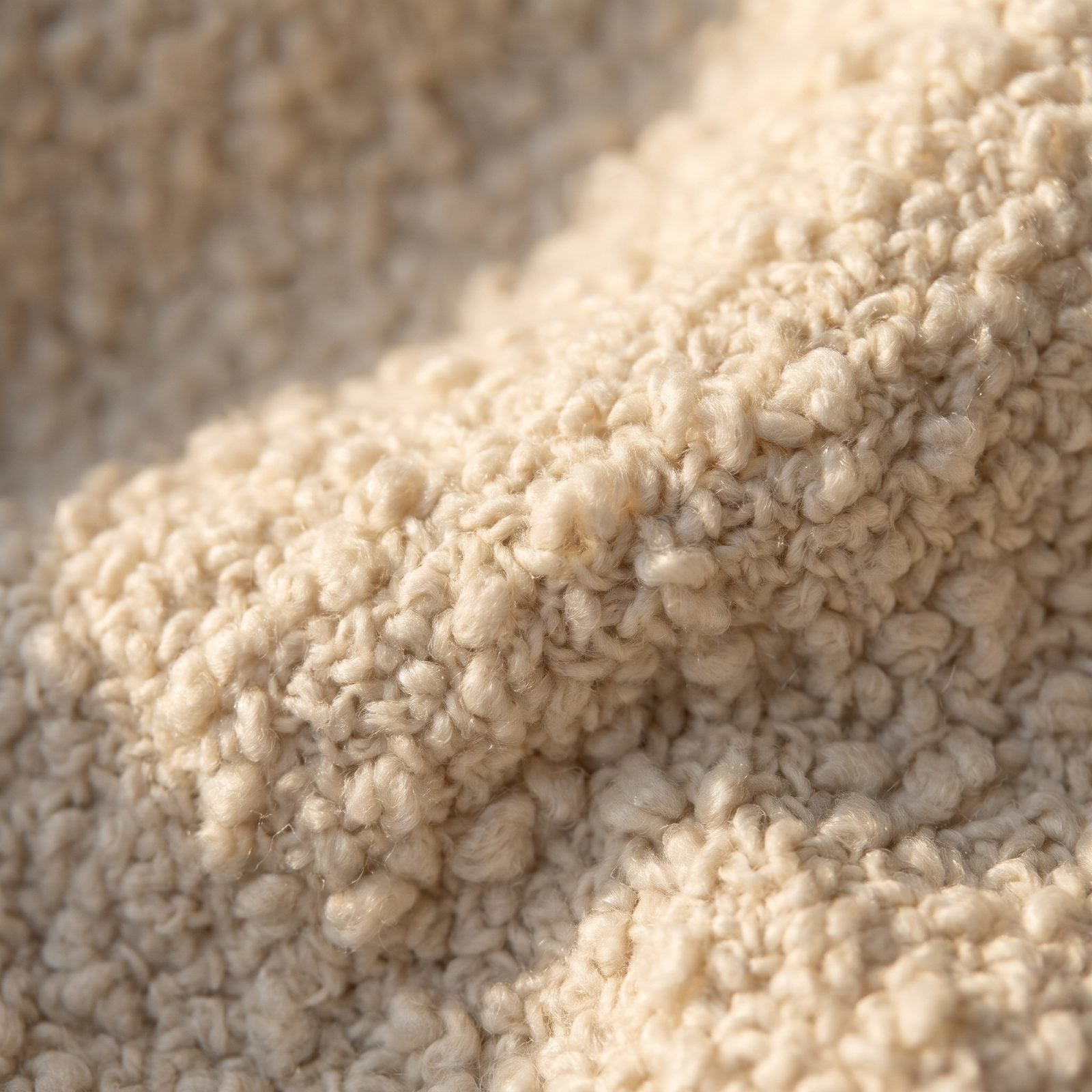
Run your hand along a smooth leather sofa, then along bouclé. The bouclé wins, and it isn’t close. Texture is what the eye reads as warmth long before your fingers ever confirm it.
Go for the fabrics that catch light unevenly — bouclé, mohair, chunky knit, corduroy, a velvet with a real nap to it. The shadows caught in the weave do most of the work. A flat cotton drum chair photographs well and then sits in your living room feeling like a dentist’s waiting room.