
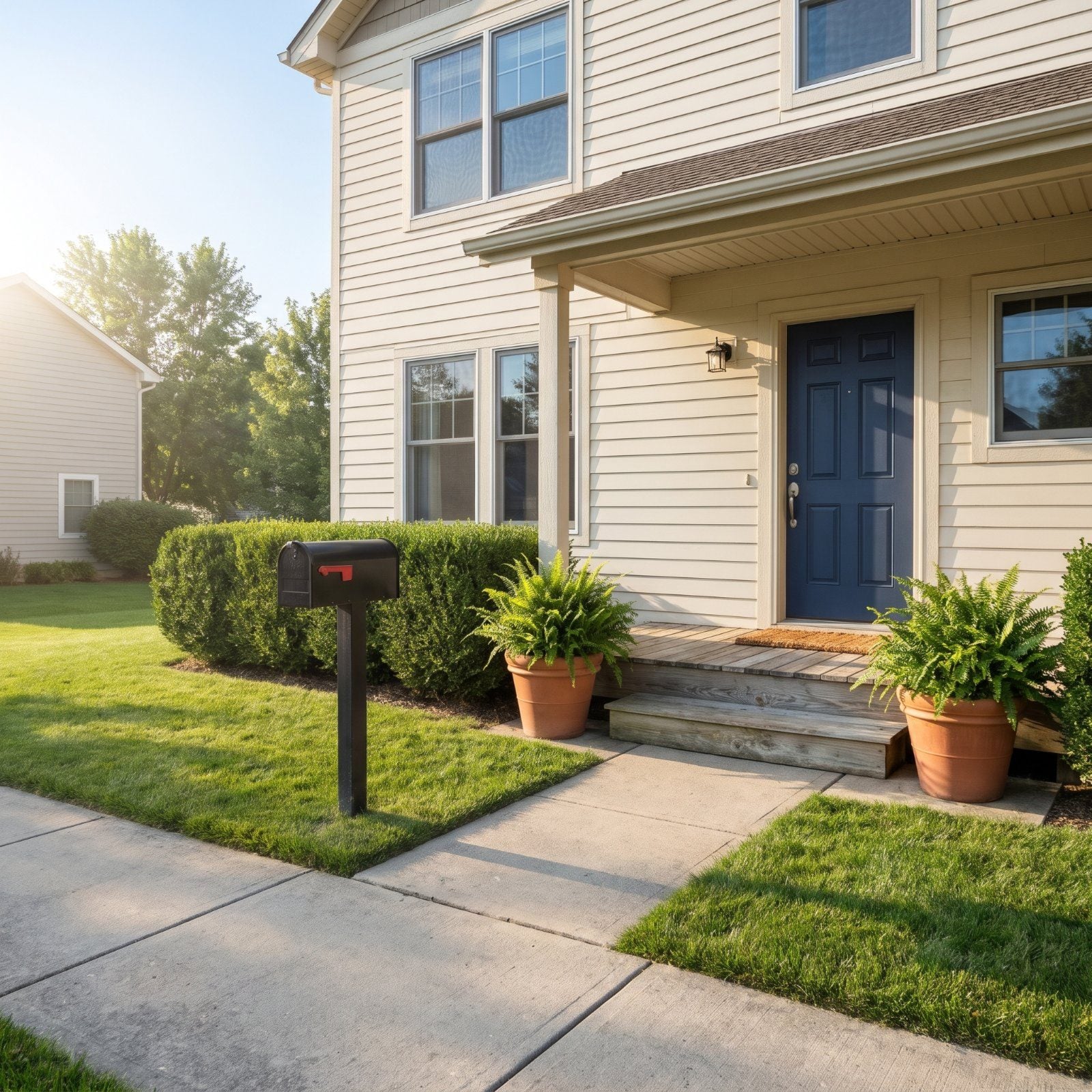
A home stager makes up their mind about your house before their hand touches the doorknob. The walk from the car to the front door is maybe forty feet, and in that stretch they’ve already cataloged the stuff you stopped seeing years ago — the stuff you’d be mortified to know they noticed. Buyers do the same thing, just without the vocabulary for it. First impressions aren’t fair, and they aren’t negotiable. What follows are the exact details a trained eye logs on approach, and most of them cost nothing to fix.
41. A Car Parked Dead in Front of the Facade
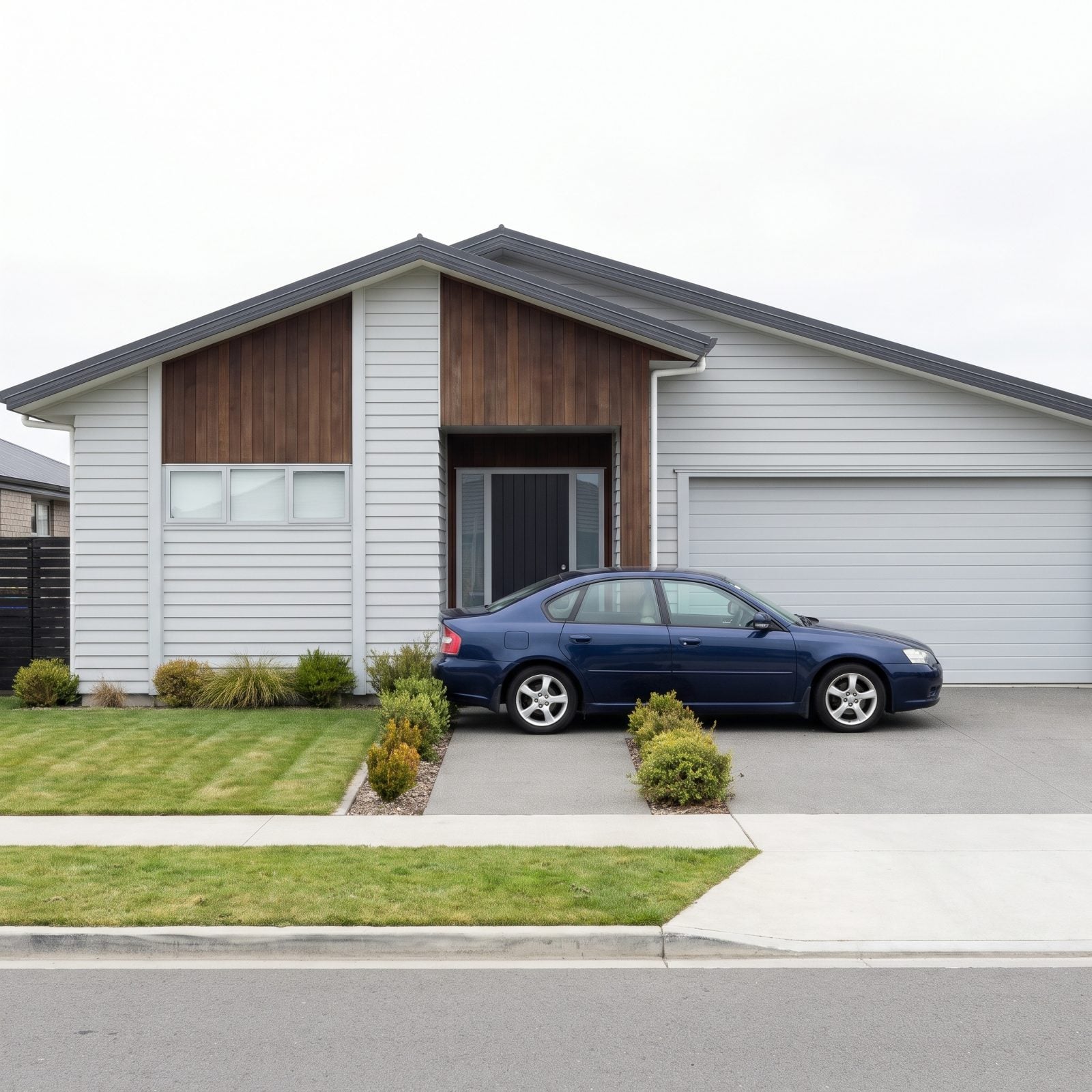
A stager wants a clean read on the house. A vehicle parked bumper-to-nose across the front wrecks that in half a second — it chops the facade in two and tells the eye there’s something to work around before anyone’s even out of the car.
In order to come up with the very specific design ideas, we create most designs with the assistance of state-of-the-art AI interior design software. Also, assume links that take you off the site are affiliate links such as links to Amazon. this means we may earn a commission if you buy something.
Move it to the driveway or around the corner, and empty the driveway too while you’re at it. A clear approach lets the house be the first thing a buyer sees. That’s the whole point.
40. House Numbers You Have to Squint to Find
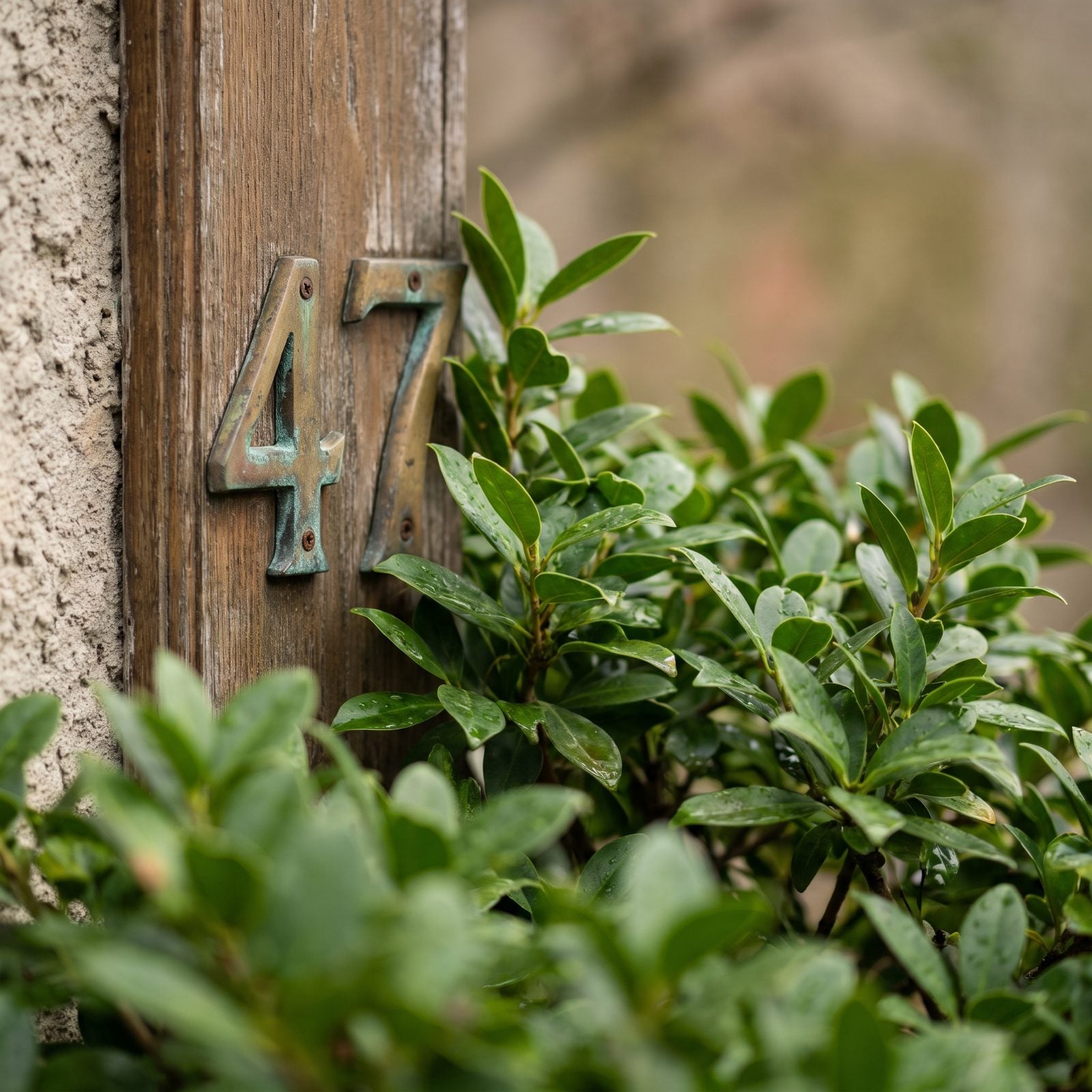
Tiny tarnished numbers hidden behind a shrub do more damage than you’d think. If a buyer’s agent circles the block twice trying to confirm the address, they show up mildly annoyed, and that mood colors everything that follows.
Big, high-contrast numbers read as a house that gets taken care of. Cheap fix, outsized return.
39. Whether the Front Door Has a Clean Shot
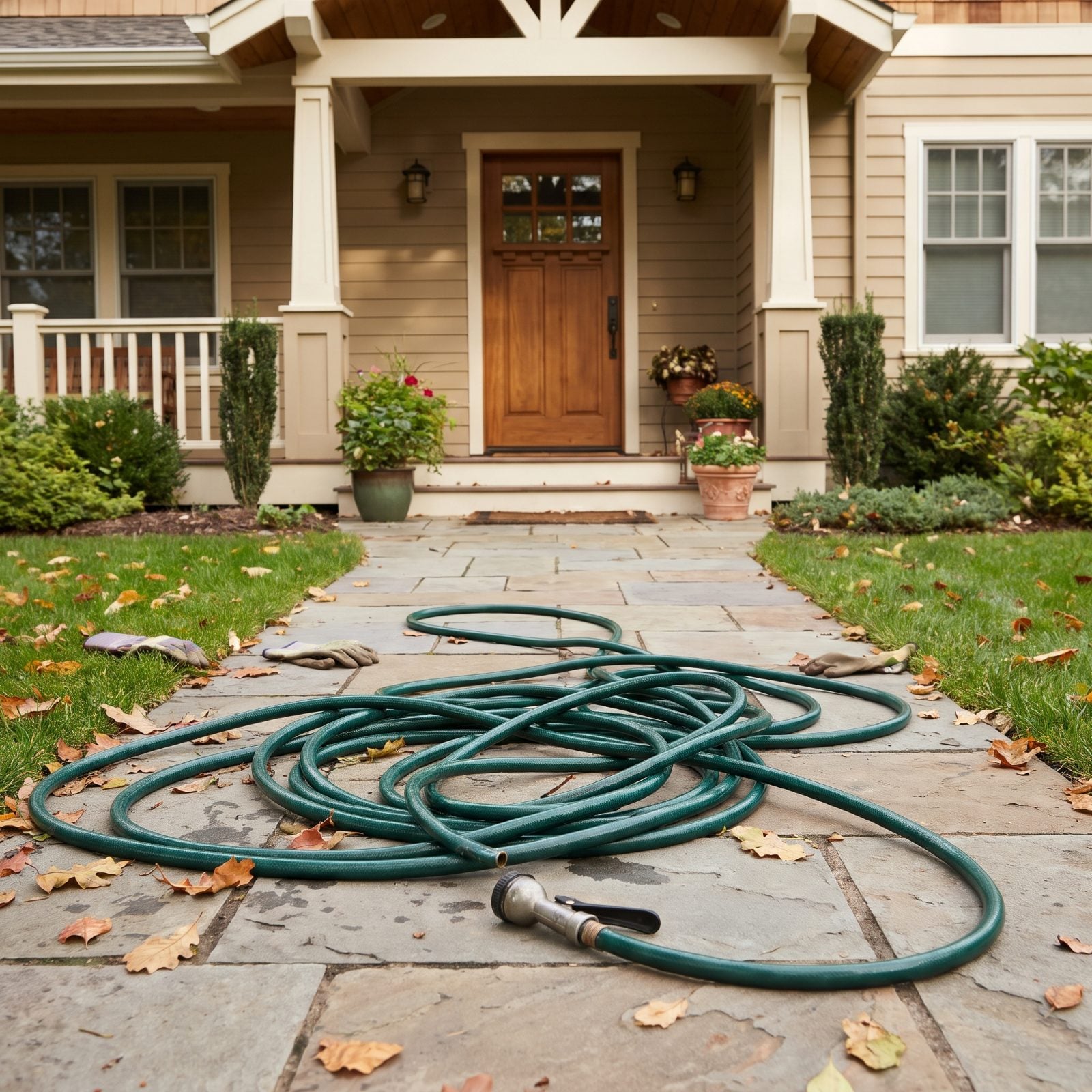
Stagers walk the path a buyer will walk and ask one question: is anything in the way? A garden hose coiled across the pavers. A bike leaned on the rail. A wheelbarrow parked by the steps. Each one is a tiny speed bump for the eye.
The door should pull you toward it with nothing competing. A straight, open line to the threshold feels like hospitality before a single word is spoken.
38. Dead Plants Slumped in the Entry Planters

Dead flowers by the door are a confession. They say the owner stopped paying attention a while ago, and buyers quietly wonder what else got the same treatment.
I’ve watched a single pot of brown mums undo an otherwise sharp entry. You don’t need a nursery’s worth of color — two healthy ferns or a pair of boxwood balls in matching pots will carry it. And if you can’t keep live ones alive, go with good faux. Yes, I know I’d normally fight you on fake plants.
37. Shrubs Swallowing the Front Windows
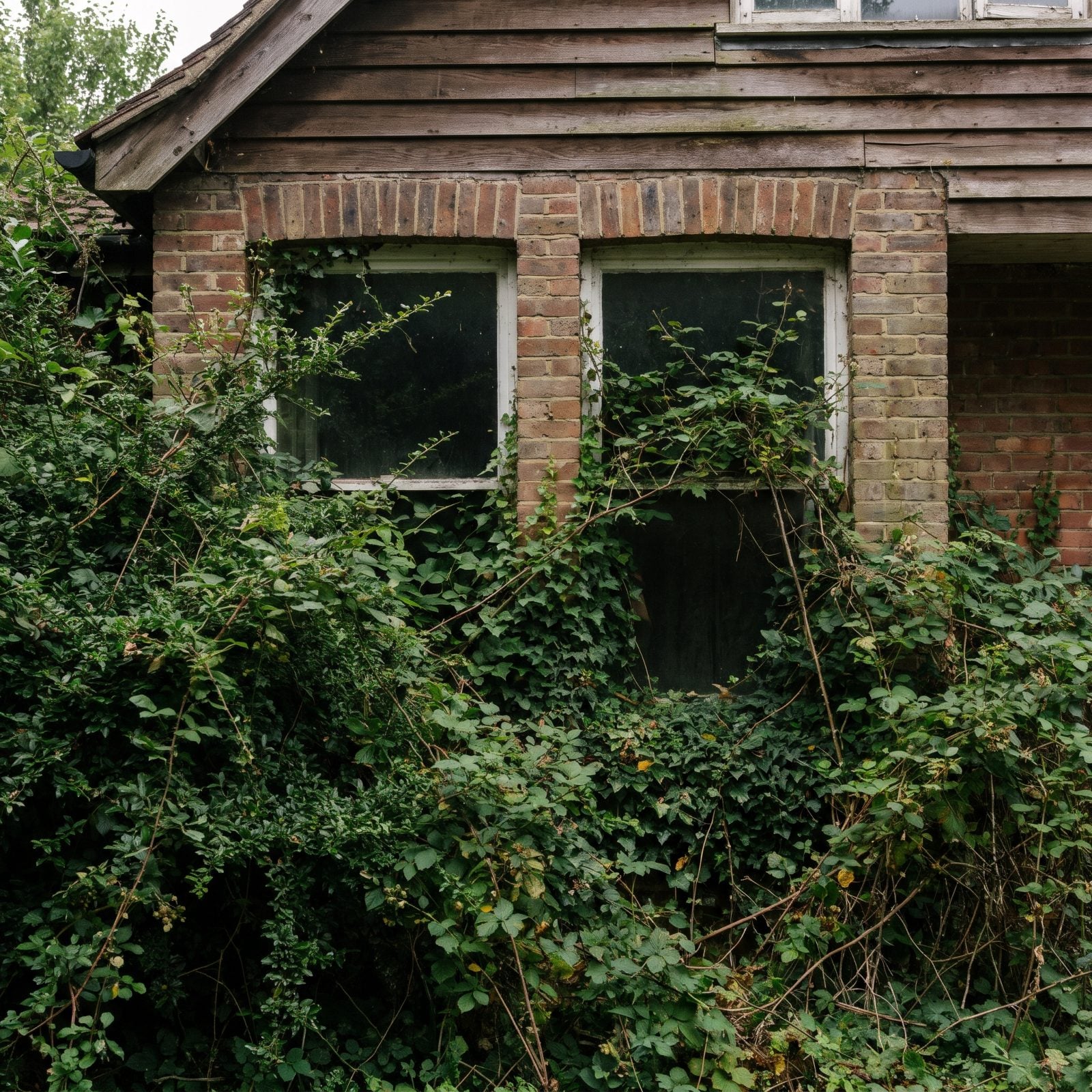
Shrubs that have crept up over the windowsills do two bad things at once: they hide the glass, and they block the light from getting inside.
Overgrown foundation plantings make a house look like it’s hiding. Cut them back below the sill line and suddenly the windows breathe, the rooms behind them brighten, and the whole front looks cared-for.
36. Cracked and Heaved Walkway Pavers

A heaved paver that catches someone’s toe does more than look shabby. It plants a seed of doubt about the whole property. If the path isn’t level, what about the foundation?
Stagers notice the trip hazard first and the cosmetics second. Reset the worst slabs, pull the weeds out of the joints, and the walkway stops whispering that nothing here gets maintained.
35. Trash Bins Parked Where the Curb Can See Them

Three wheelie bins stationed at the front of the house are an instant eyesore, and a stager clocks them before anything else because they’re loud, plastic, and parked right where the eye lands.
Tuck them behind a gate, in the garage, or along the side of the house. Out of the sightline is all you need.
34. Peeling Paint Around the Exterior Trim
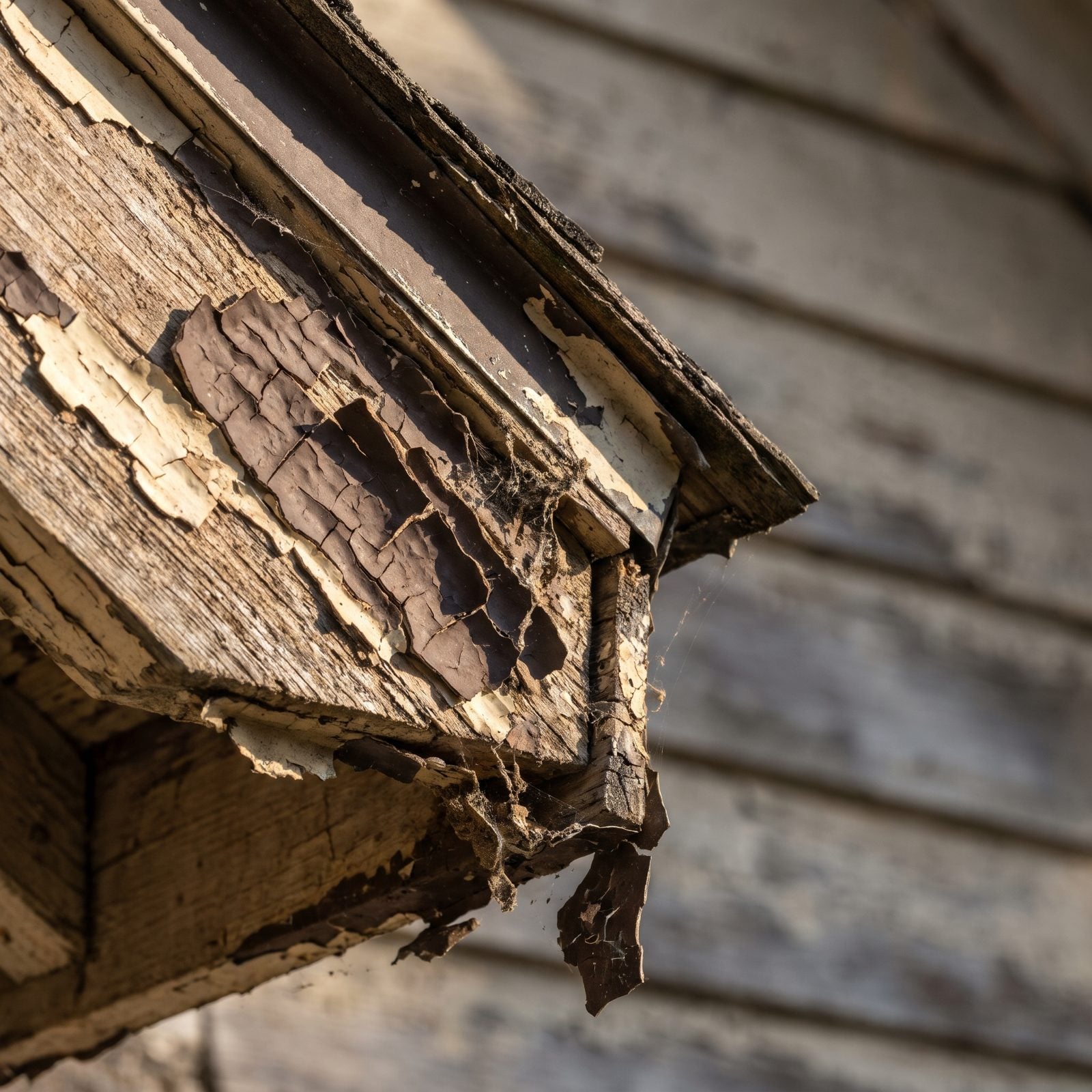
Peeling trim is the detail stagers can’t unsee. Flaking paint around the eaves and window casings doesn’t just look tired — it hints at moisture getting into the wood, and moisture is the word that scares buyers off.
Scrape, prime, and repaint the worst stretches. Even a touch-up on the trim around the front door resets the whole first impression. Fresh paint says somebody’s staying on top of this place.
33. Packages and Clutter Stacked on the Porch

A porch buried under cardboard reads as chaos the moment you step up to the door. Delivery boxes, muddy boots, a folded chair — all the random stuff that piles up at a threshold.
Clear it down to one or two intentional pieces: a clean bench, a single plant, a fresh mat. The porch is the last thing a buyer sees before the door opens, and you want their shoulders to drop, not tense.
32. Seasonal Decorations That Overstayed Their Welcome

Nothing dates a house faster than a Christmas wreath in July. Faded holiday garland or a sun-bleached bow tells a stager the owner isn’t keeping current with the little things, and buyers read it as a house that’s drifting.
Pull the leftover decorations and swap in something undated — a green wreath, a seasonless mat, a clean door. You want a porch that could be photographed any month of the year without betraying how long the listing’s been sitting.
As a resort-town real estate agent puts it, “Holiday decorations time-stamp your listing and can subtly suggest it’s been sitting unsold for a while, even if that’s not the case.”
31. A Worn-Out Welcome Mat
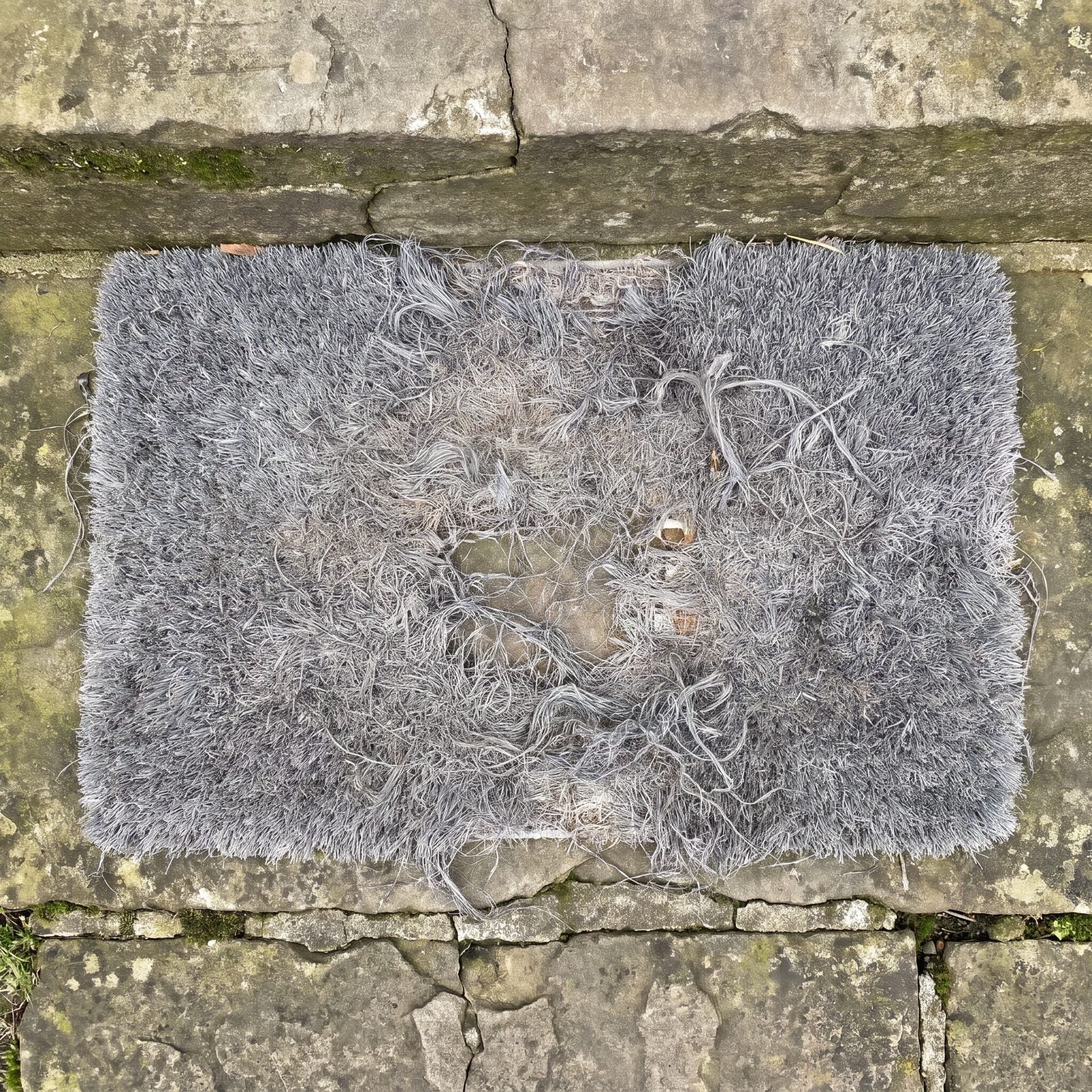
The mat is the first handshake. A grey shag mat matted into tangles and worn bald through the middle tells a stager you stopped caring about the parts that show, and it’s the cheapest fix on this whole list — also the one people skip most.
Swap it before a showing. A fresh, stiff-bristled mat under forty dollars reads as attention to detail, and buyers treat details as a proxy for everything they can’t see.
30. A Front Door With a Faded Finish
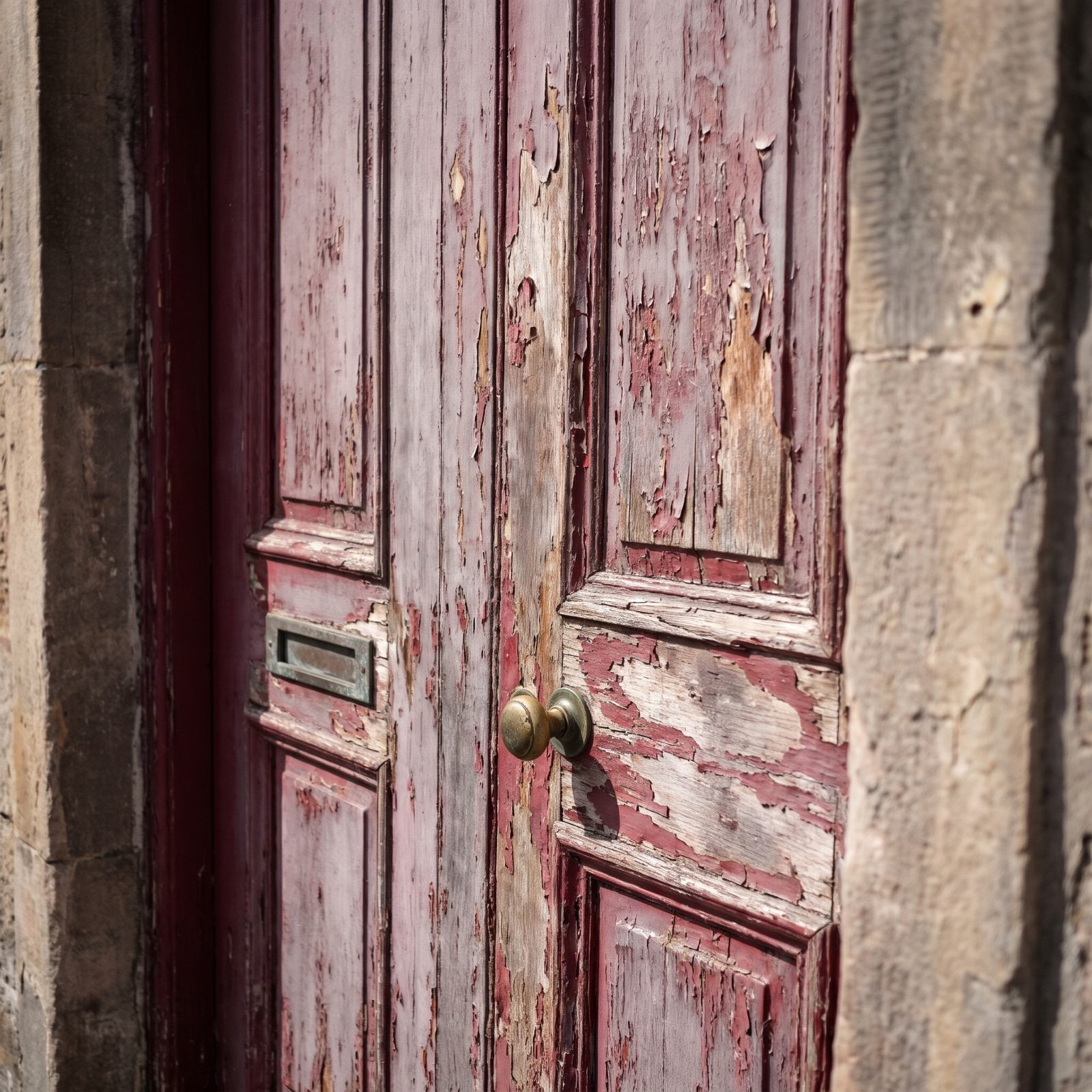
Sun does to a front door what it does to a car left in a parking lot for a decade. The color goes chalky, the clearcoat flakes, and the whole thing looks tired before anyone has knocked.
A faded door signals deferred maintenance, and buyers extrapolate. If the door went this long, what about the roof? One quart of exterior paint and an afternoon buys that trust back. Pick a saturated color that contrasts the siding and let it read as a decision rather than an accident.
29. Cobwebs Around the Entry
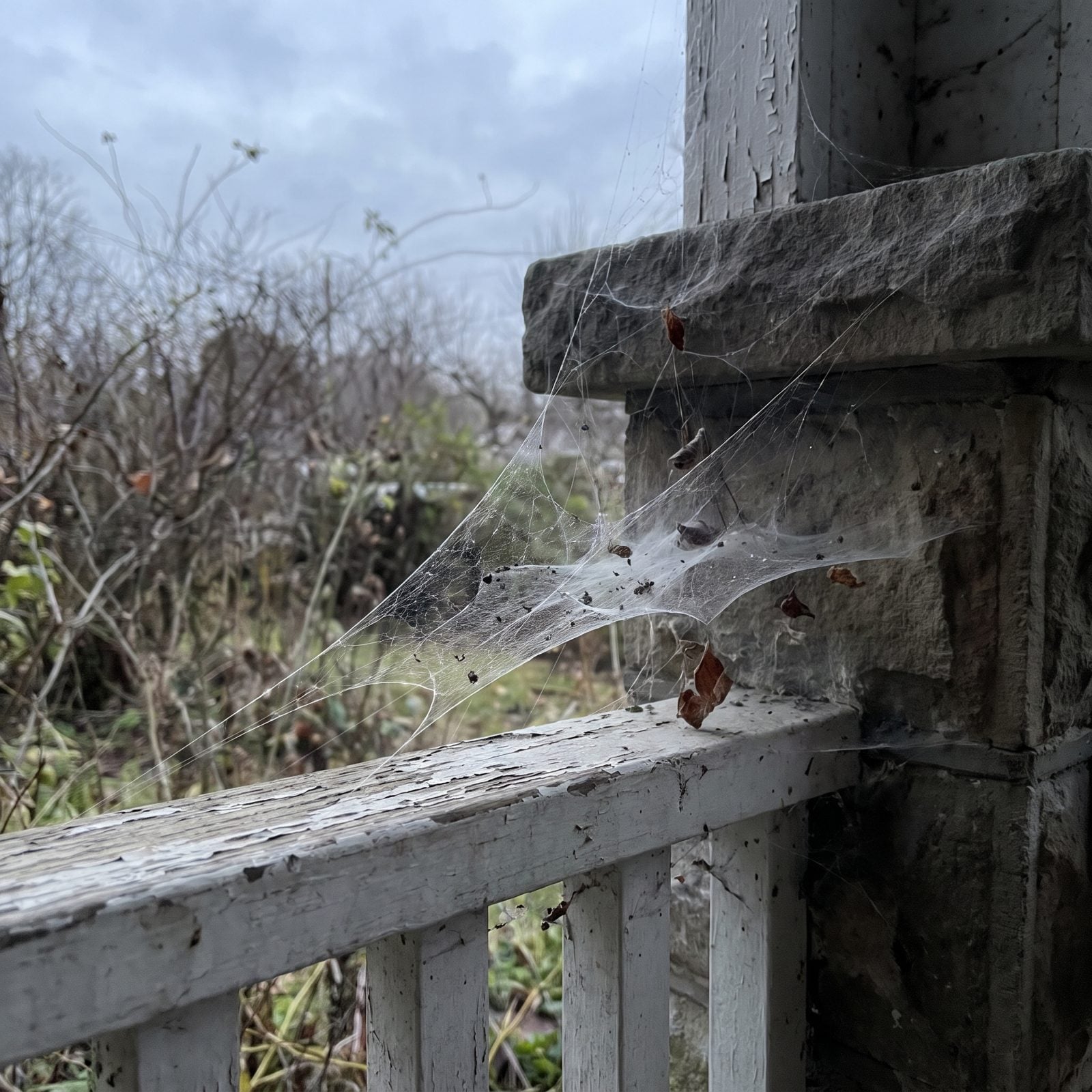
Cobwebs in the porch corners read as nobody’s home even when someone is.
A broom clears them in five minutes. Stagers zero in on the light fixtures, where webs collect in the corners of the glass and under the lantern. That one dusty, web-draped fixture is what makes an otherwise clean house feel neglected right at the threshold.
28. Fingerprints Across a Glass Storm Door
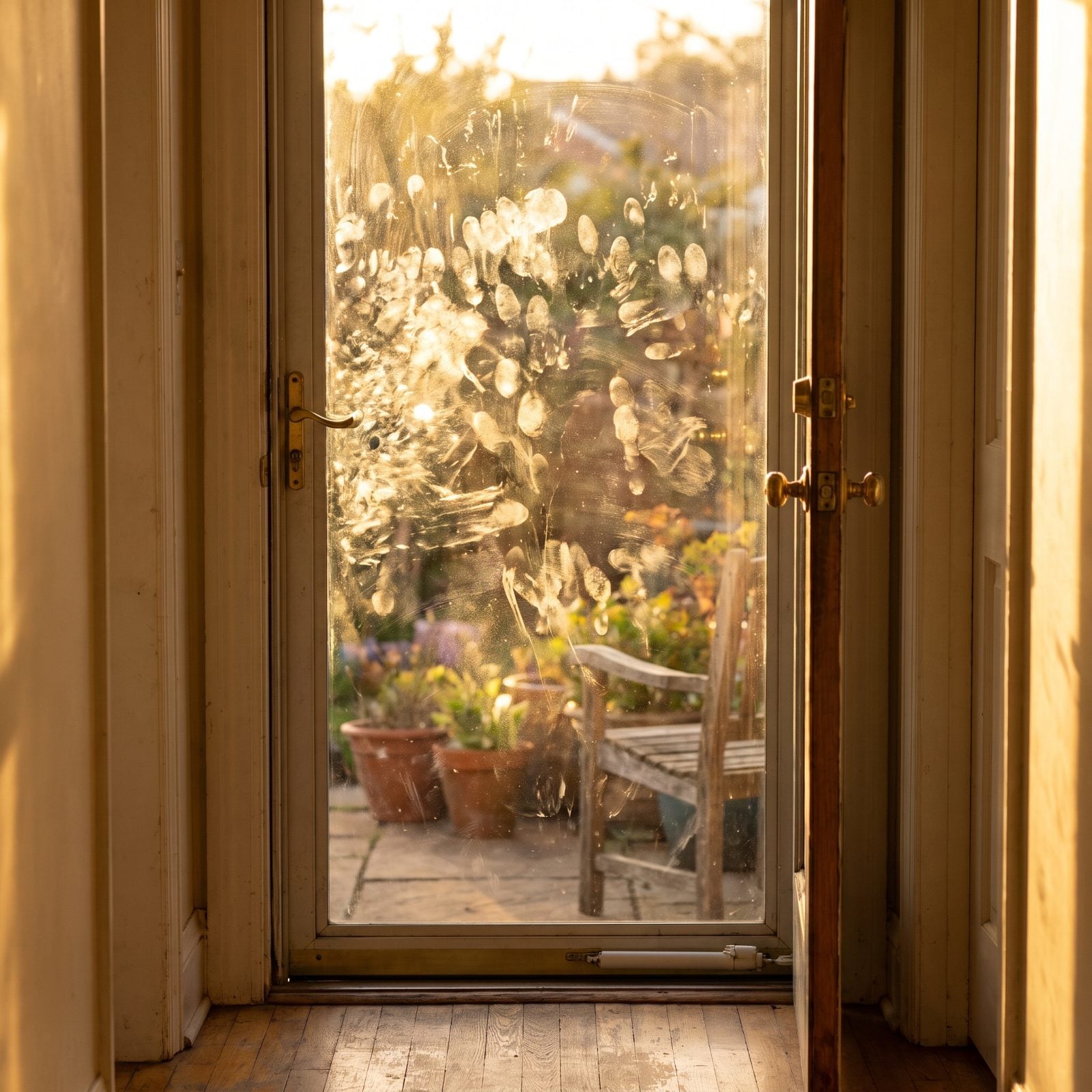
Glass is honest in a way the rest of the house isn’t. Backlit by afternoon sun, a storm door shows every smear, every print clustered around the handle at hand height, every nose-level smudge near the bottom.
Glass cleaner and a microfiber cloth erase it in two minutes. Buyers approach that door, reach for the handle, and the first thing their hand finds is grime. First physical contact with your house should feel clean, not sticky.
27. Crooked Blinds Visible From Outside
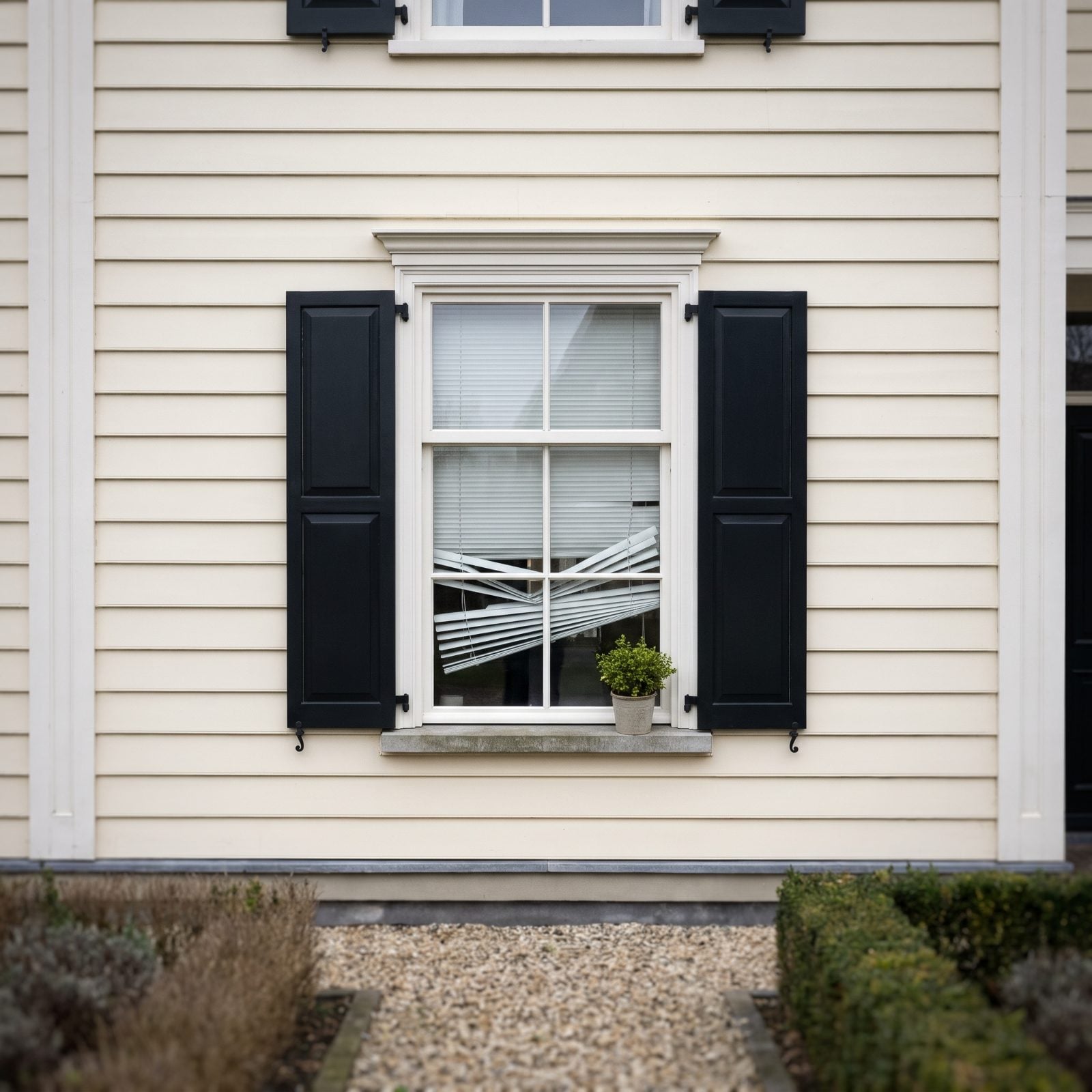
You’ve seen the house with one blind hanging at a drunken angle, slats bent, pulled to a different height than its neighbor. It drags the whole facade down.
From the curb, crooked blinds broadcast that the inside matches the outside — nobody’s fussing over the small stuff here. Straighten them, replace the bent slats, and set every front window to the same height. A uniform facade does more for curb appeal than most landscaping ever manages.
26. Heavy Air Freshener That Appears to Mask an Odor

Five plug-ins crammed into one power strip, a candle, and a reed diffuser stacked by the door don’t say clean. They say what are you hiding. Overwhelming fragrance at the entry is the olfactory version of fresh paint slapped over a water stain.
Stagers are trained to walk through heavy scent hunting for the thing underneath it. One subtle scent, or nothing at all, reads as far more honest than a wall of vanilla.
As a professional home stager puts it, “Strong scents also make buyers and realtors suspicious that something is being covered up.”
25. Pet Odor Near the Entry
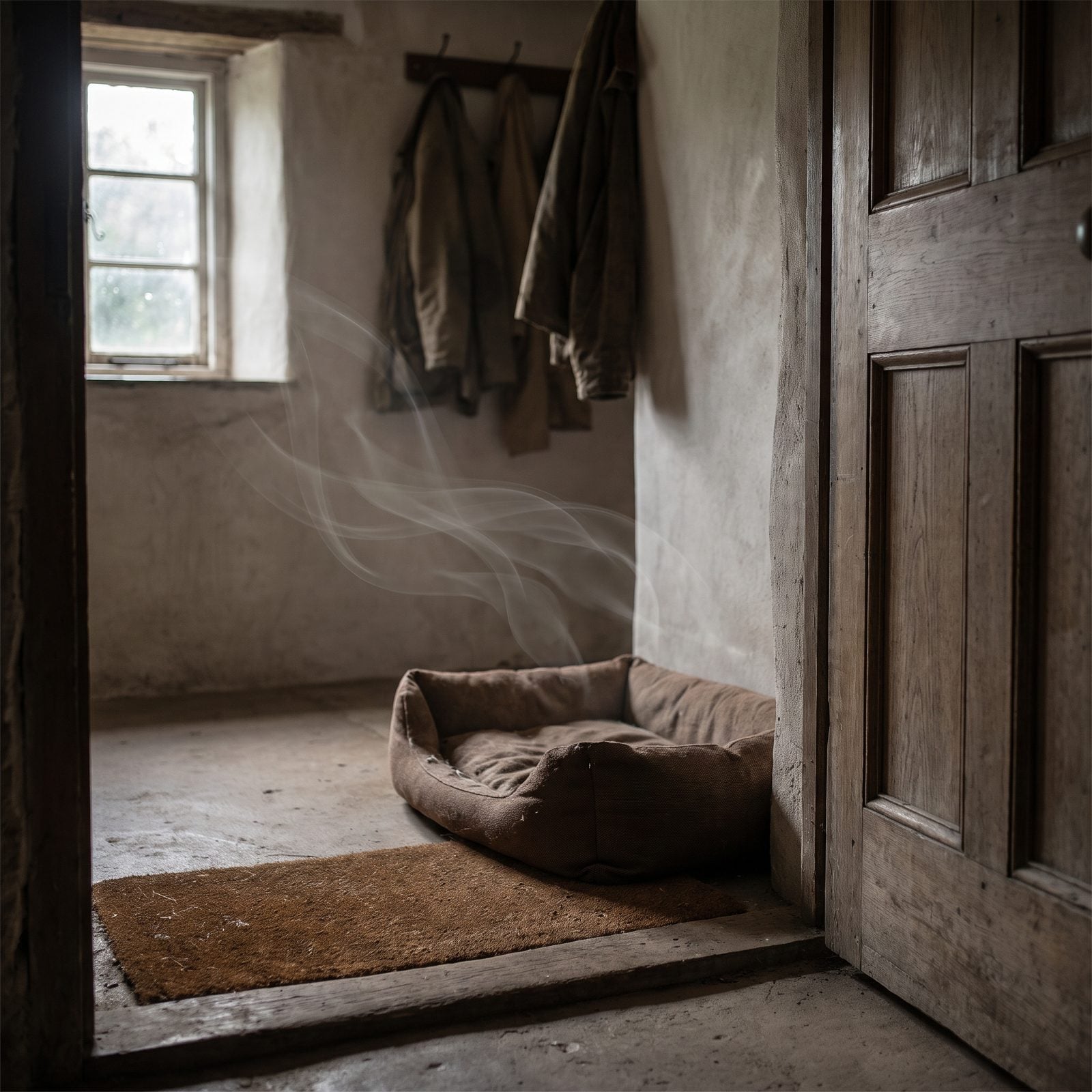
You stop smelling your own pet within a week of living with one. Buyers catch it the second they cross the threshold, and the entry is usually where it hits hardest — that’s where the bed, the bowls, and the leash all live.
Move the pet station out of the sightline for showings, wash the bed, and treat the carpet at the door where traffic stains collect. An enzyme cleaner handles what shampoo can’t. Nose blindness is real, even with the best-behaved dog.
As a residential listing agent puts it, “Lingering pet odors—whether from a litter box, wet dog, or small animal cage—can be a major red flag for buyers and lead them to question how well the home has been maintained.”
24. A Musty Smell Suggesting Moisture
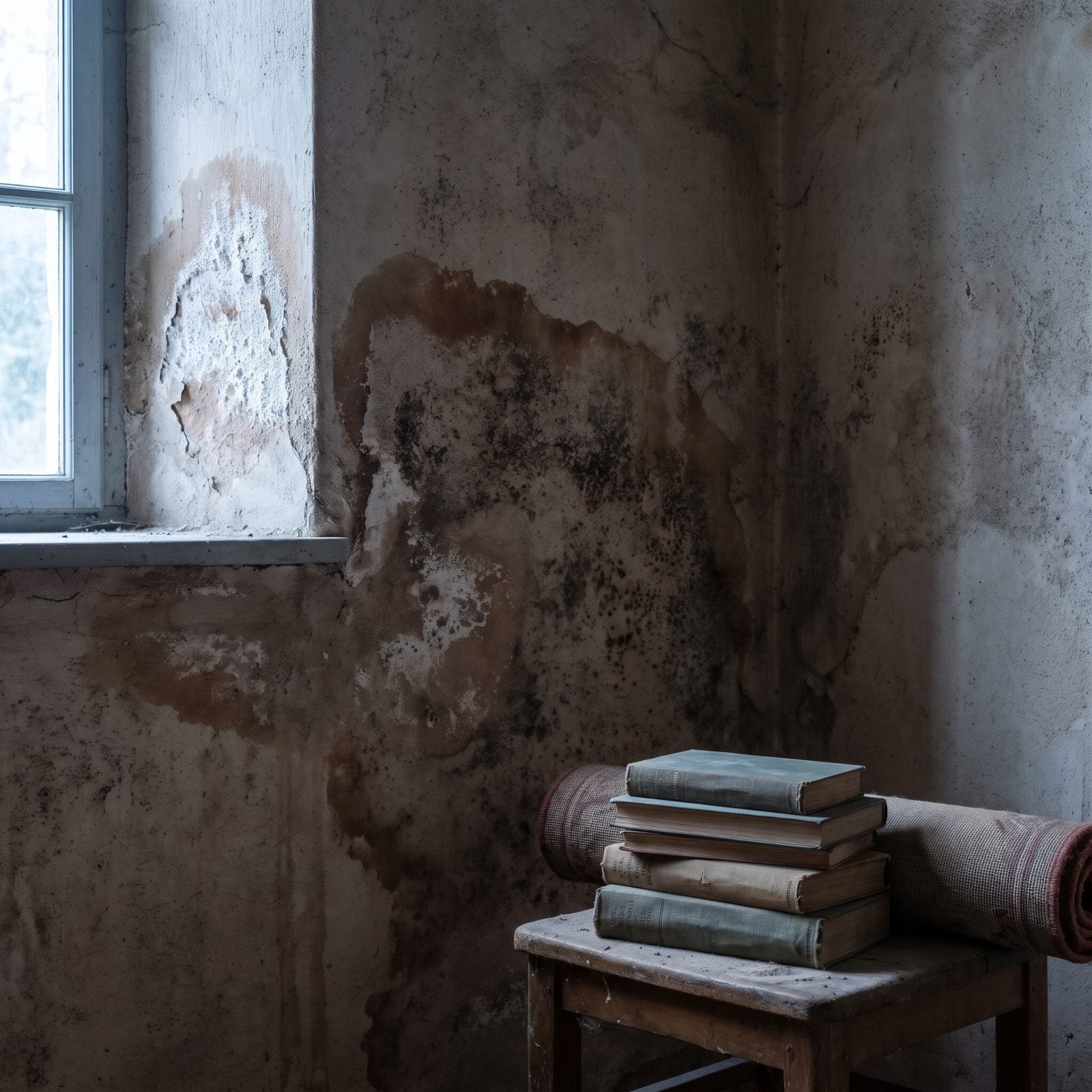
Musty is the one smell you can’t decorate your way out of. It means water somewhere, and buyers know it the moment it reaches them.
A dehumidifier, better ventilation, and finding the actual source matter more than any candle ever will. Stagers clock the chalky white bloom on basement walls and the softened corner of a cardboard box, because those are the visual tells that back up what their nose already caught.
You can mask a smell for one showing. You cannot mask the reason it’s there.
Writing for a real estate trade publication, a home insurance insights expert explains that “A persistent damp or musty odor in a house can be more than unpleasant but a sign of a moisture control problem.”
23. An Interior That Feels Too Hot or Too Cold
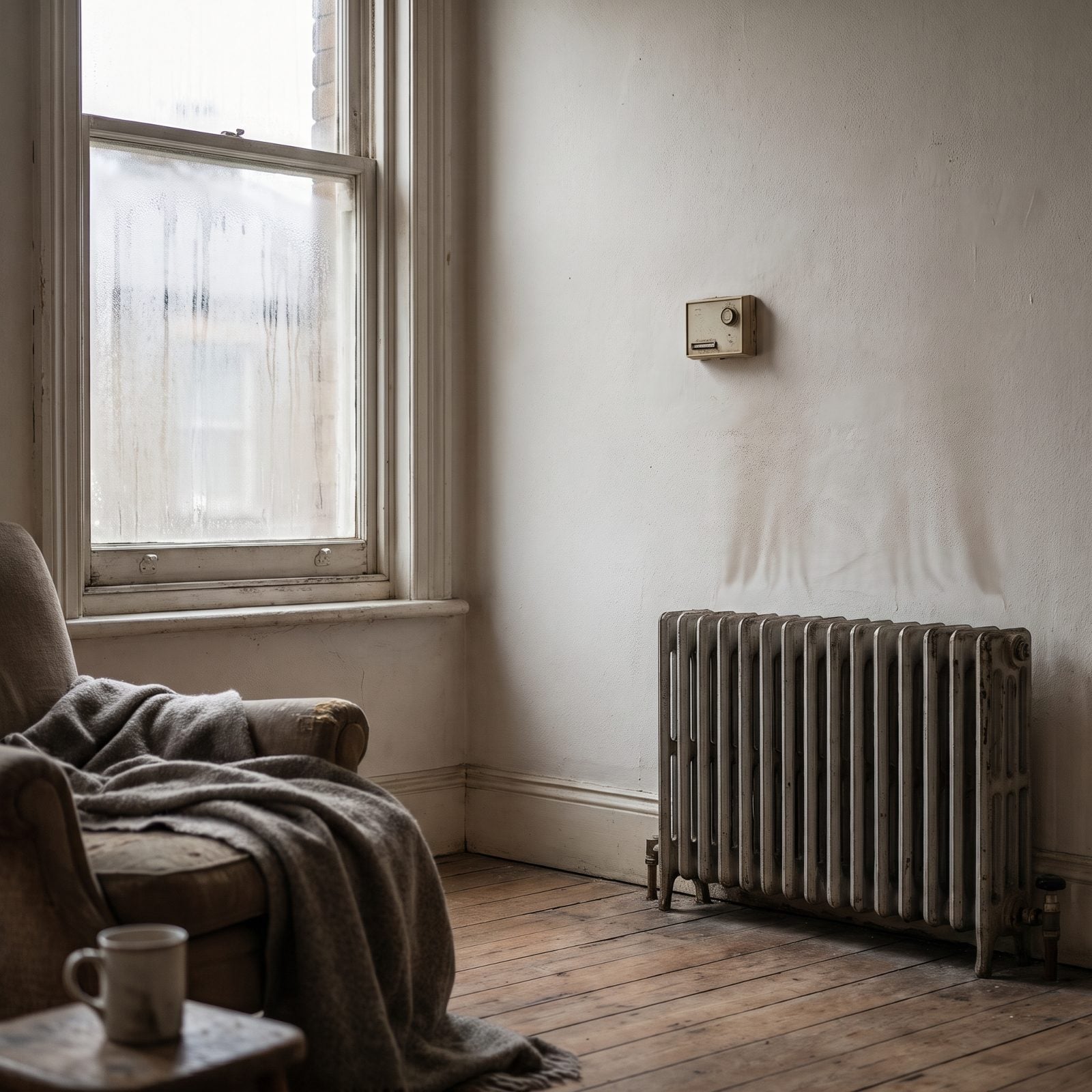
Temperature is the detail nobody lists and everybody feels. Walk into a house that’s stuffy and hot, or cold enough to keep your coat on, and the whole place starts working against you before you’ve seen a single room.
A comfortable temperature keeps buyers lingering, and lingering is exactly what you want. Too hot and they rush. Too cold and they can’t picture living there. Set it to the boring middle, hide the space heaters, and let the house feel like somewhere a person already lives well. That quiet physical ease is the last thing a stager checks — and the first thing a buyer’s body decides on.
22. A Foyer That Is Too Dark
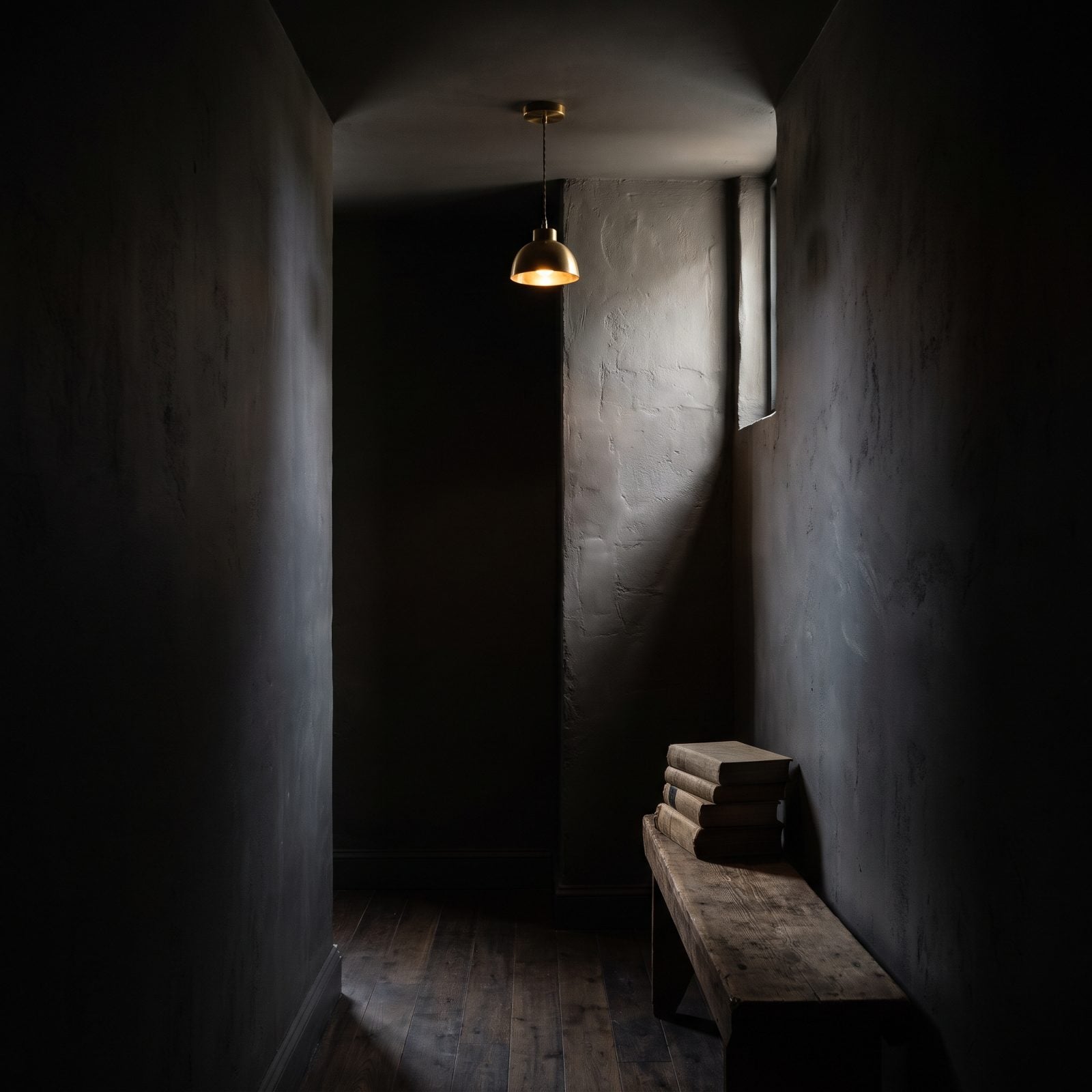
The first thing a stager clocks walking in is how little they can see. A dark foyer reads as a shrinking foyer, because your eye can’t find the edges of the room and your brain fills in the blank with something smaller than the truth.
Nobody decorates for the entry. It’s the one spot people pass through instead of sitting in, so it inherits the weakest bulb in the house. Fix the light before you touch anything else. A brighter fixture and one lamp on a side table will outperform a fresh coat of paint, and it costs a fraction as much.
21. Conflicting Lightbulb Color Temperatures
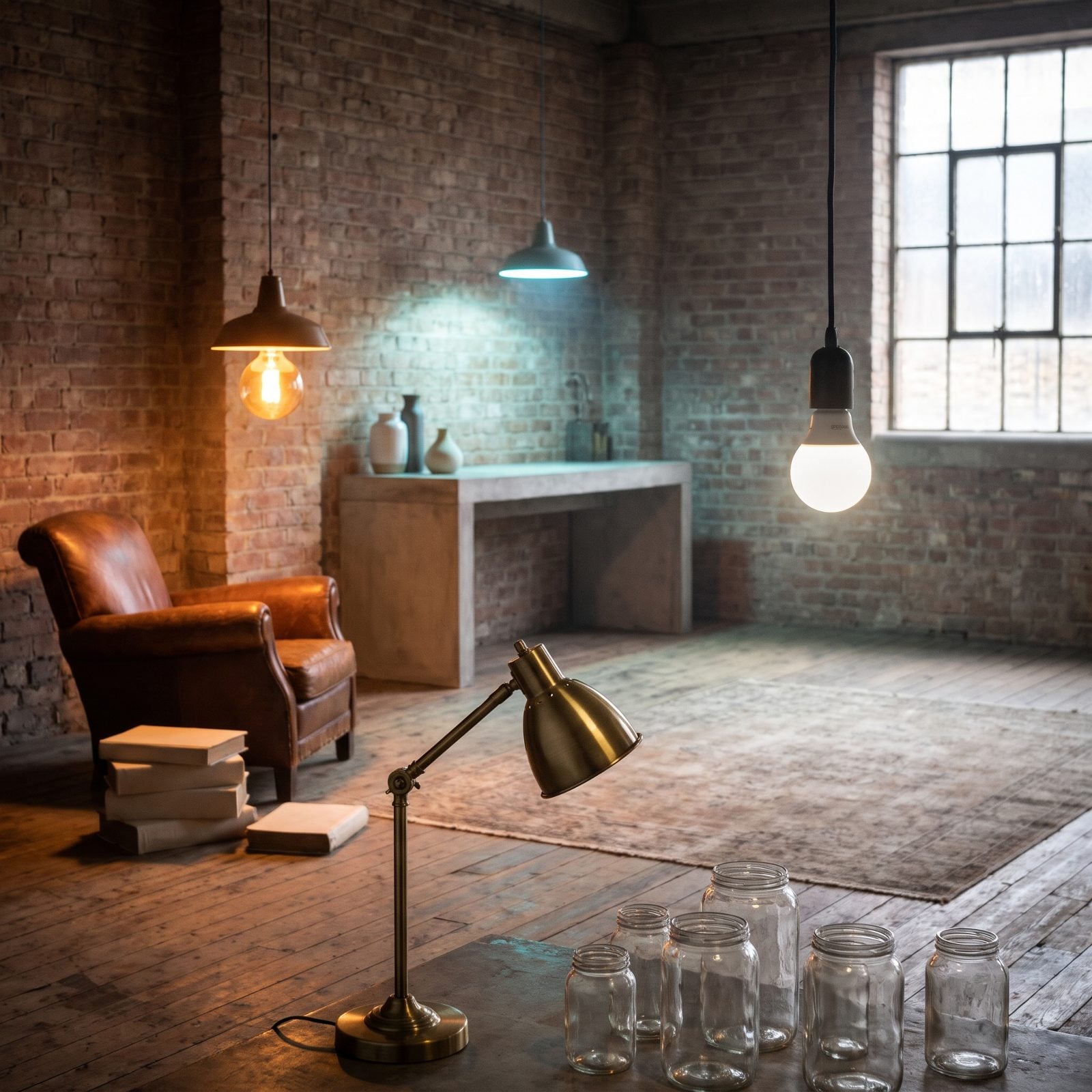
Walk into a space lit by three different bulbs and something feels off before you can name it. One fixture glows warm amber, the next throws cold blue-white, and a third leans vaguely green. Your eye bounces between them and never settles.
Mismatched color temperature is the most common lighting mistake I see, and the fix is practically free. Pull every bulb, read the Kelvin rating off the box, and standardize. Around 2700K reads warm and flattering in living areas. Pick one number, commit to it across the whole entry, and the whole place stops fighting itself.
As a home staging company owner puts it, “It’s five different bulbs, bought at five different times, in five different colors, all burning in the same room.”
20. A Console Table Crowding a Narrow Entry
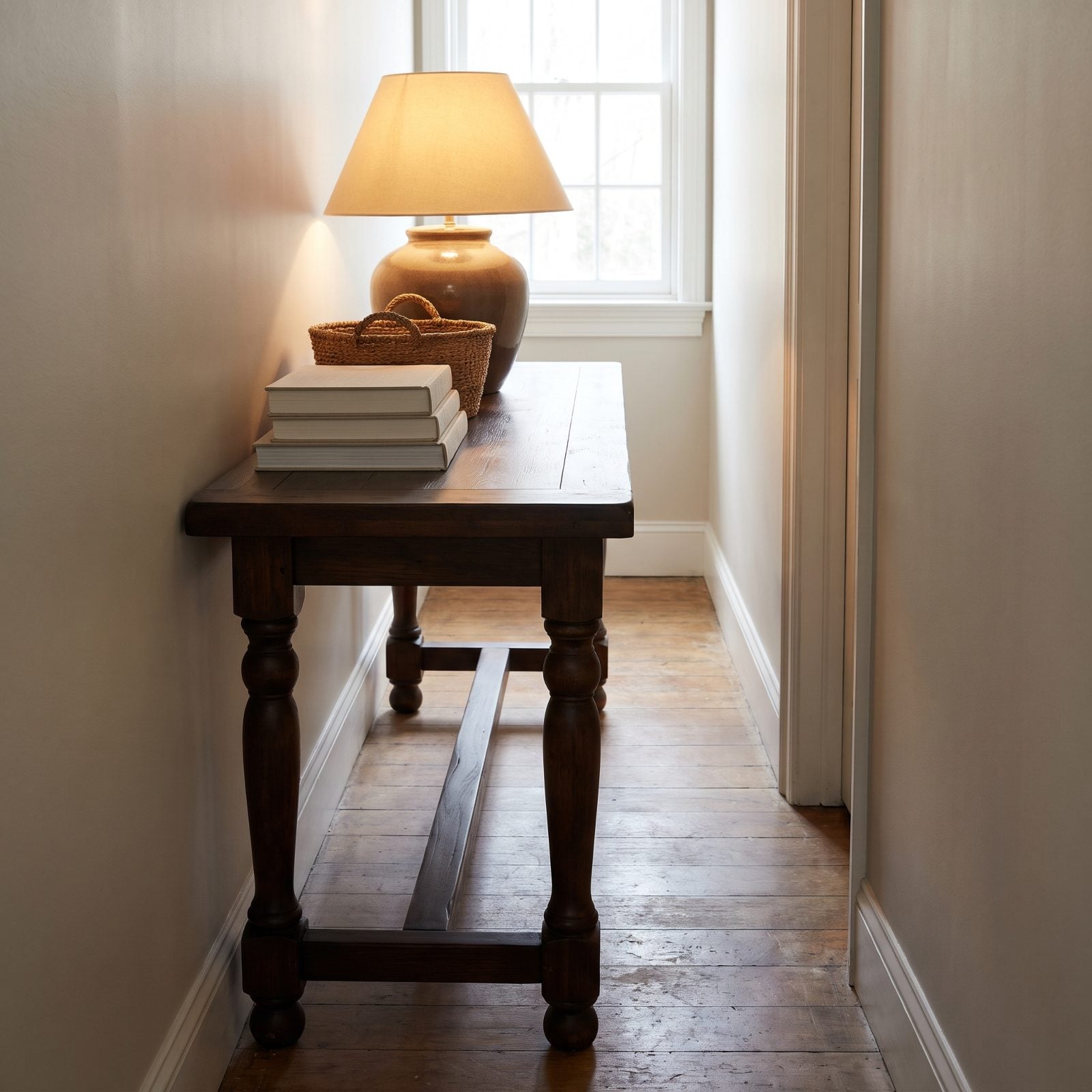
That console looks fine in photos. In person, you turn sideways to get past it.
A deep table in a tight entry fights you the second you walk in, and a stager catches it because circulation is the first thing bodies register. If a piece makes you adjust your shoulders to pass, it’s wrong for the room. Swap in a slim console table under twelve inches deep, or just a wall-mounted shelf, and suddenly the hall can breathe.
The entry’s job is to move you through it, not slow you down.
19. Furniture Blocking the Front Door Swing
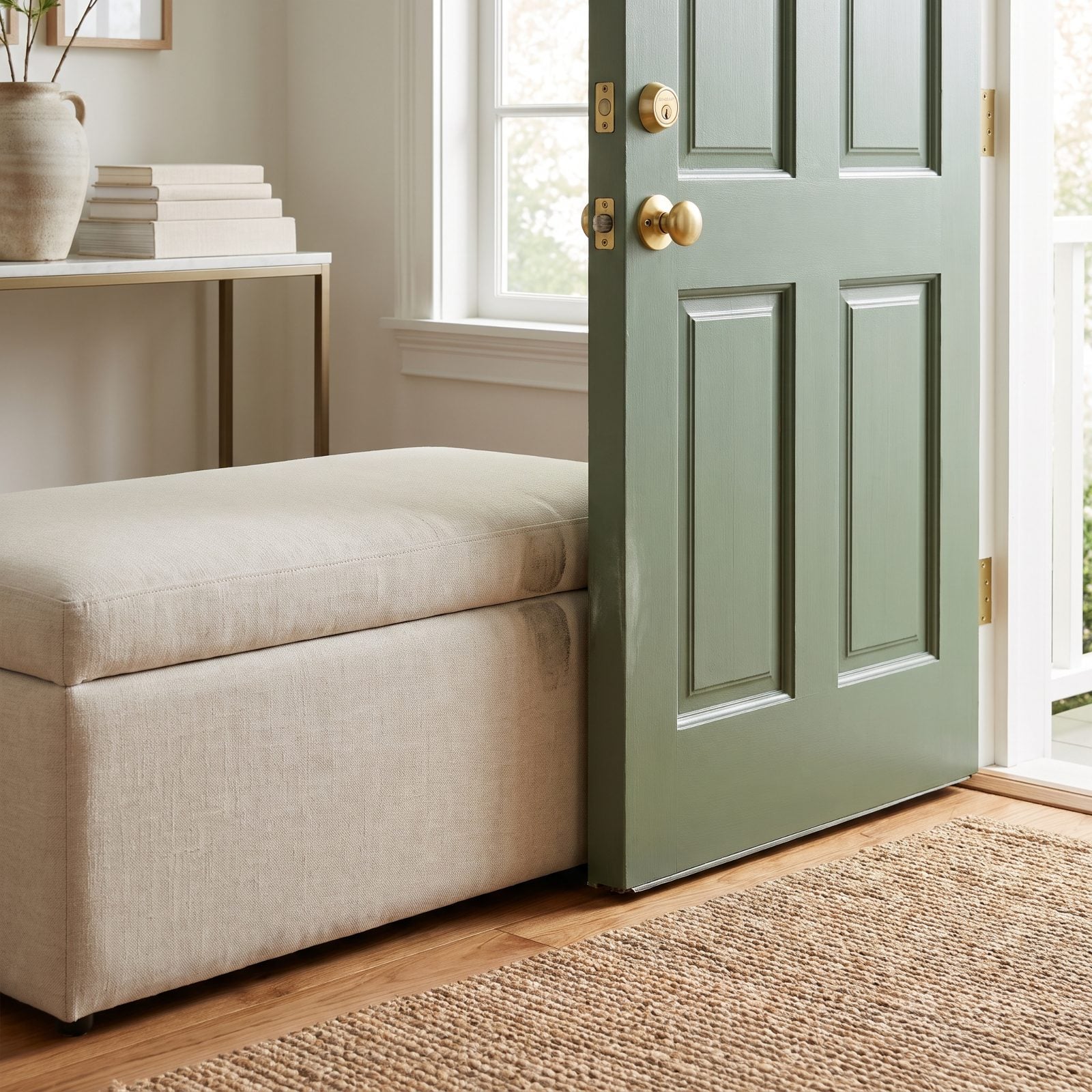
Open the door and it bumps something. Every single time.
Furniture that intrudes on the door’s arc is friction you stop noticing in your own home and a stranger clocks immediately. A bench, a plant stand, a tall basket, anything parked in the swing radius makes the whole entry feel accident-prone. So measure the full arc before you place a single thing. Leave that quarter-circle empty and the entry instantly reads more generous.
18. Shoes Piled Beside the Door
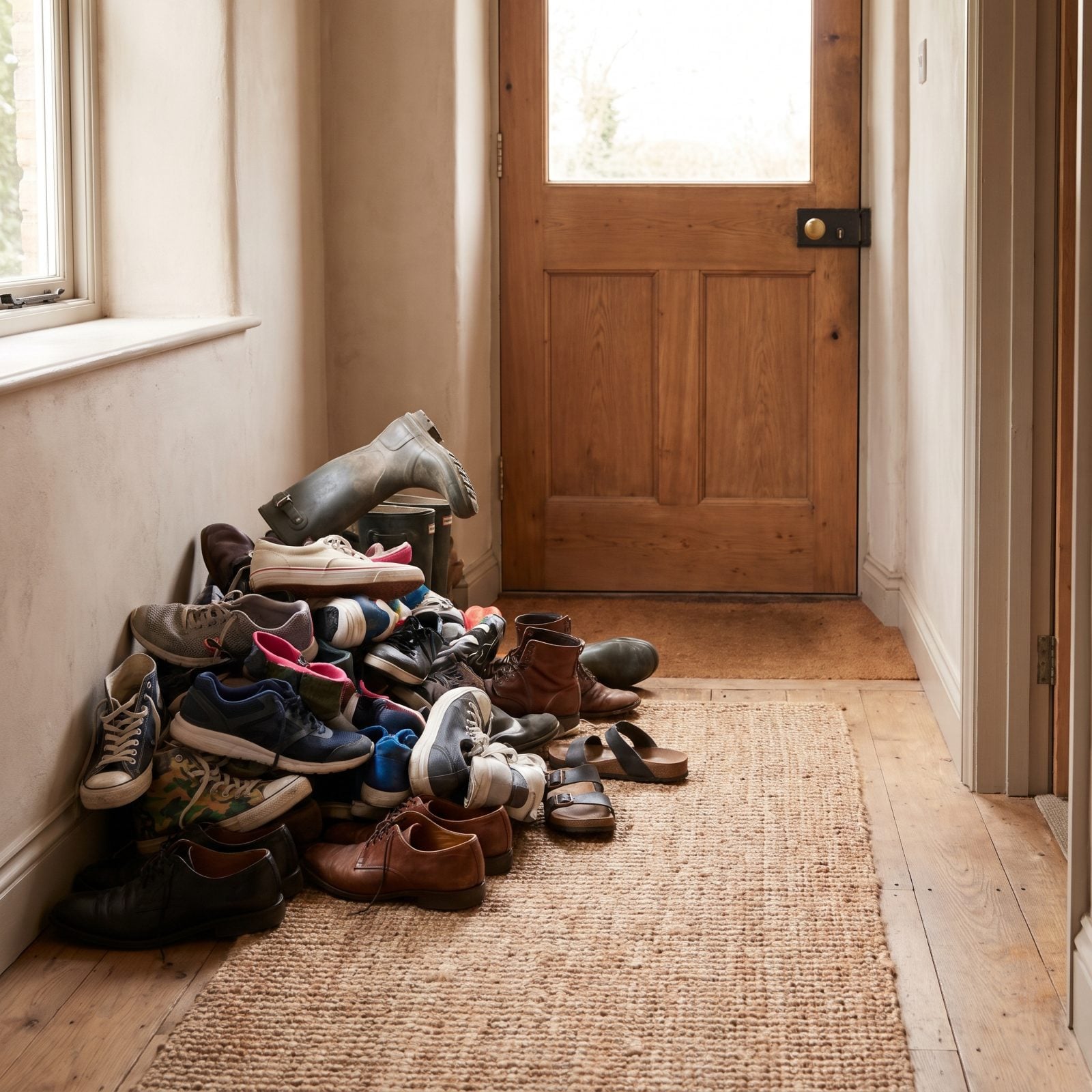
A shoe pile by the door tells a stranger more than you’d like. It says the household is at capacity, that storage ran out, that nobody has a system. Harsh, but that’s the read.
The fix isn’t a lecture about tidiness. It’s a shoe storage bench that hides the pile and gives people somewhere to sit while they wrestle with laces. Contain the chaos and the entry stops apologizing for itself.
17. An Overloaded Coat Rack

Here’s a test. Can you hang one more coat without a struggle? If not, the rack has become a wall of fabric, and a wall of fabric reads as clutter even when it’s technically organized.
An overloaded rack hides the wall behind it too, which costs the entry its sense of depth. A stager strips it down to a few pieces for showings and stashes the rest. Off-season coats belong in a closet, not on parade at eye level.
16. Mail and Keys Covering the Drop Zone

The drop zone is where good intentions go to pile up. Keys, mail, sunglasses, a charger cable, loose change, a receipt nobody will ever read again.
Most people swear the bowl is a system. It isn’t. A single tray or brass catchall bowl only works if it’s the one thing allowed to collect stuff. The second the surface around it fills, the whole console becomes a dumping ground. Clear it back to one intentional object and the entry regains its composure.
15. Scratches in the Entry Flooring
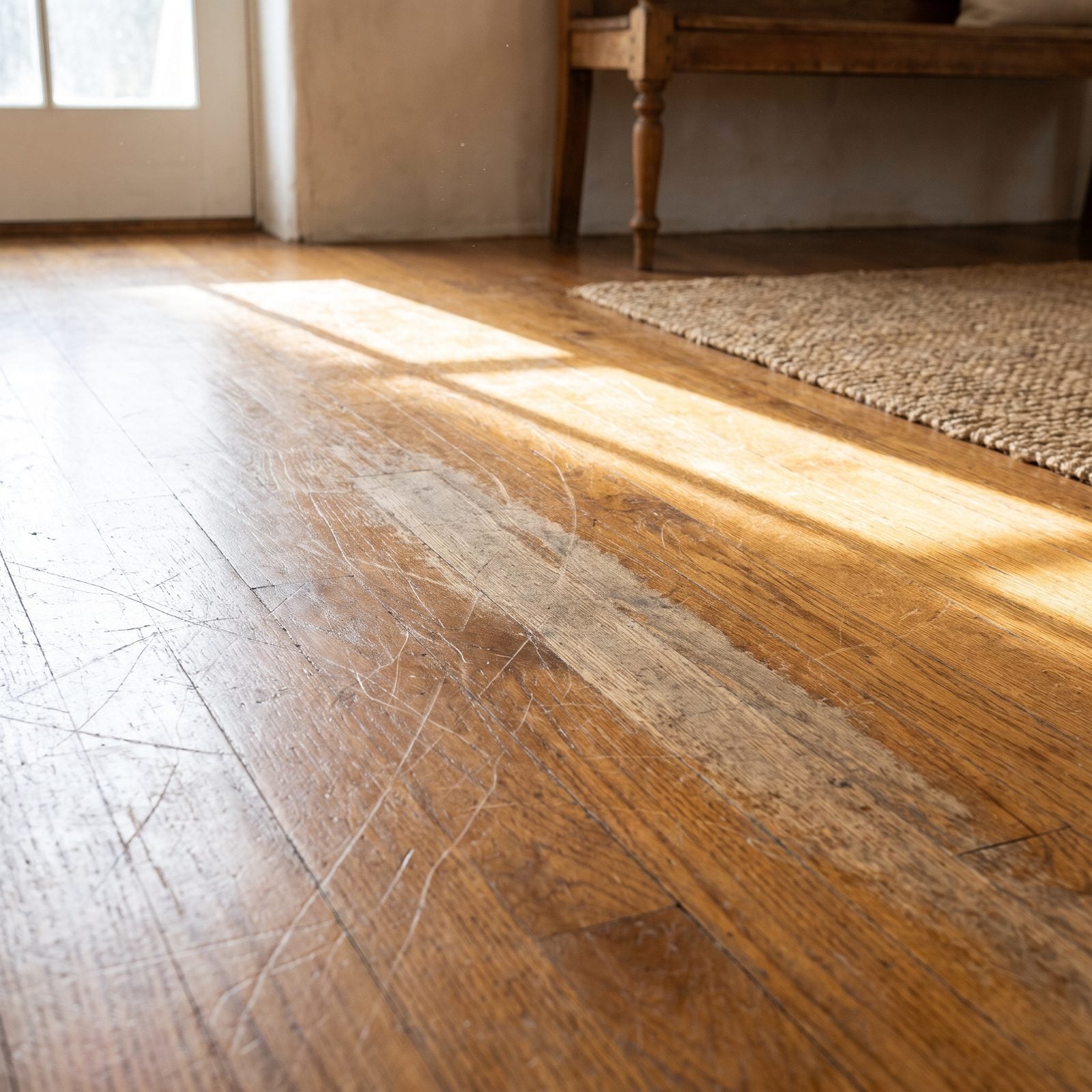
Raking light across an entry floor exposes everything: the dull worn path, the drag marks, the grit-gouges right at the threshold where shoes grind outdoor dirt into the finish.
Entry floors take the hardest beating in the house and show it first. Buffing and recoating runs cheaper than a full refinish and knocks back the worst of it. And if replacing isn’t in the home renovation budget this year, a well-placed runner hides the worn track and gives feet somewhere soft to land.
14. A Rug Corner Creating a Trip Hazard
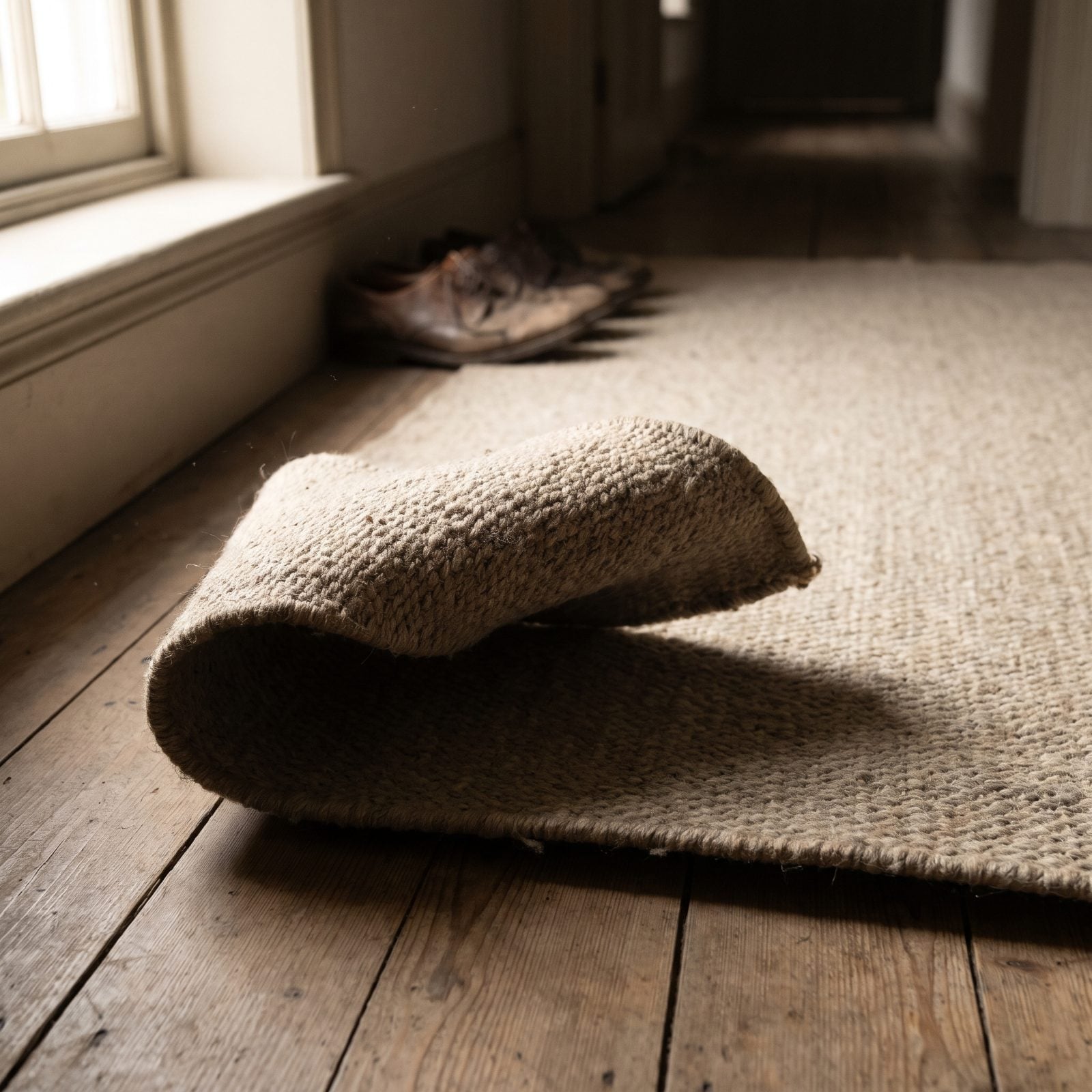
A curled rug corner is a small thing that announces itself loudly. One lifted edge, caught in the raking light, reads as neglect even in an otherwise spotless entry.
And beyond the look, it’s a genuine hazard right where people arrive loaded with bags and half distracted. A non-slip rug pad or a few corner grips flatten it for good in about five minutes, and that one fix removes the detail that makes a visitor’s first step feel uncertain.
13. Scuffs at Hand and Shoulder Height
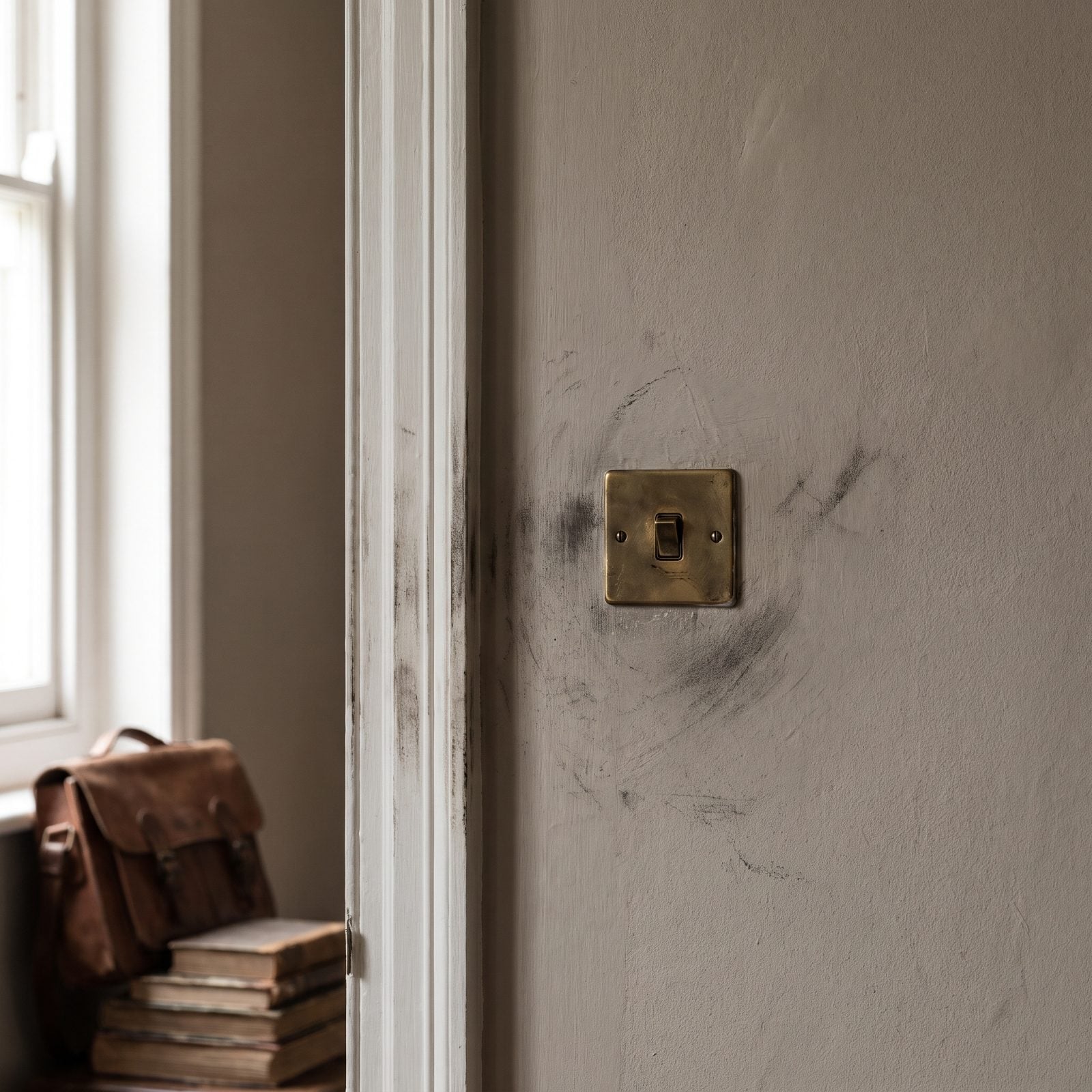
Look at the wall around the light switch. Then the door jamb where hands push. Then the corner where shoulders and bags brush past.
Those three spots grime first, and a stager scans them without thinking. Years of hands and bags leave a gray halo that creeps in slowly enough that you stop seeing it. A magic eraser handles most of it, and where the smudge won’t lift, a quick touch-up of the original paint resets the whole wall. One of the cheapest first-impression upgrades there is, and one people often skip.
12. A Water Stain on the Foyer Ceiling
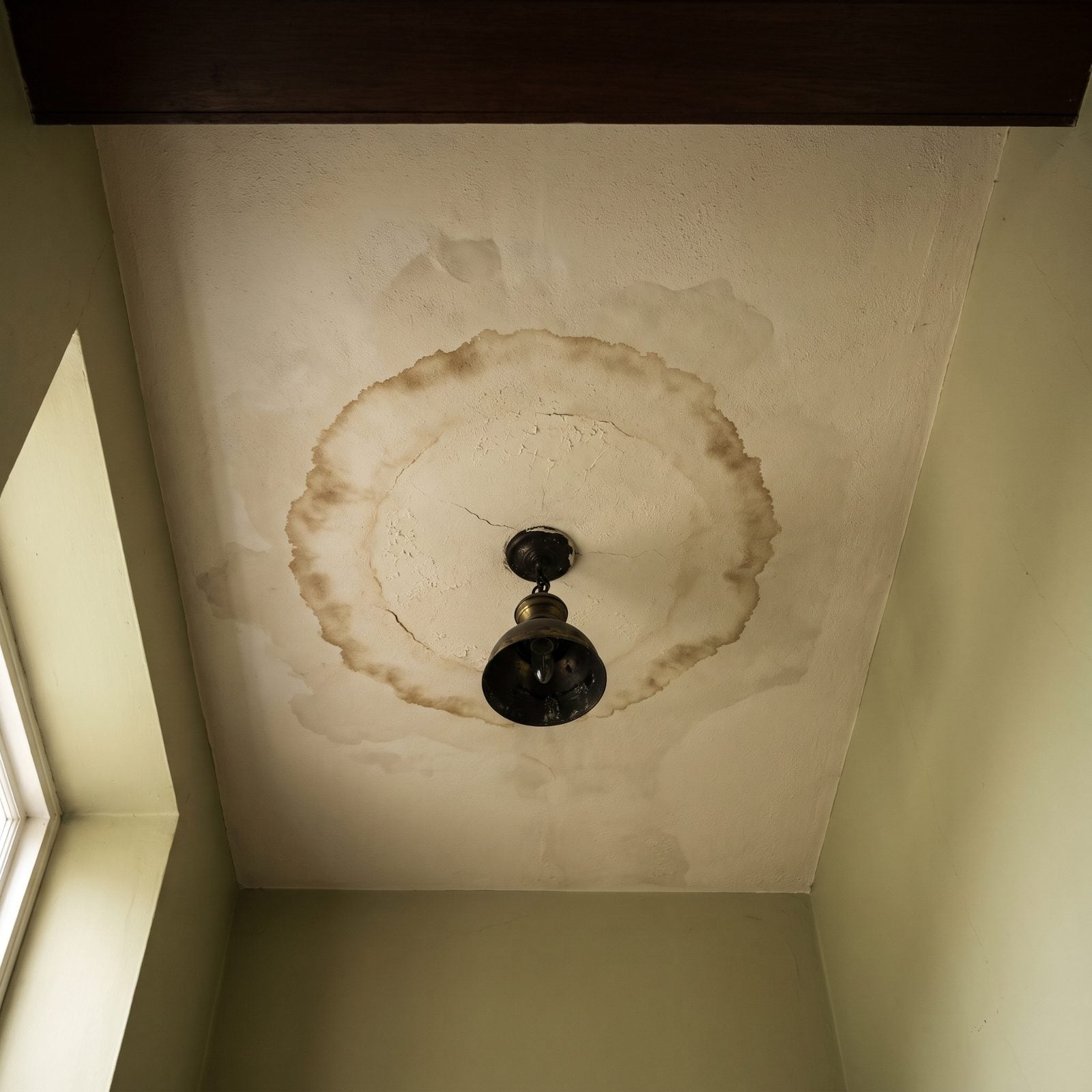
Nothing drops a buyer’s confidence faster than a brown halo overhead the second they walk in. A stain on the foyer ceiling reads as one word before anyone says it out loud: roof. And that word is expensive.
Stagers know the paint-over trick fools no one when the edges still ghost through. The fix is boring and real: find the leak, prove it’s dead, then seal and repaint. A fresh ceiling with no backstory beats a suspiciously fresh ceiling every time.
11. Traffic Noise After the Door Closes
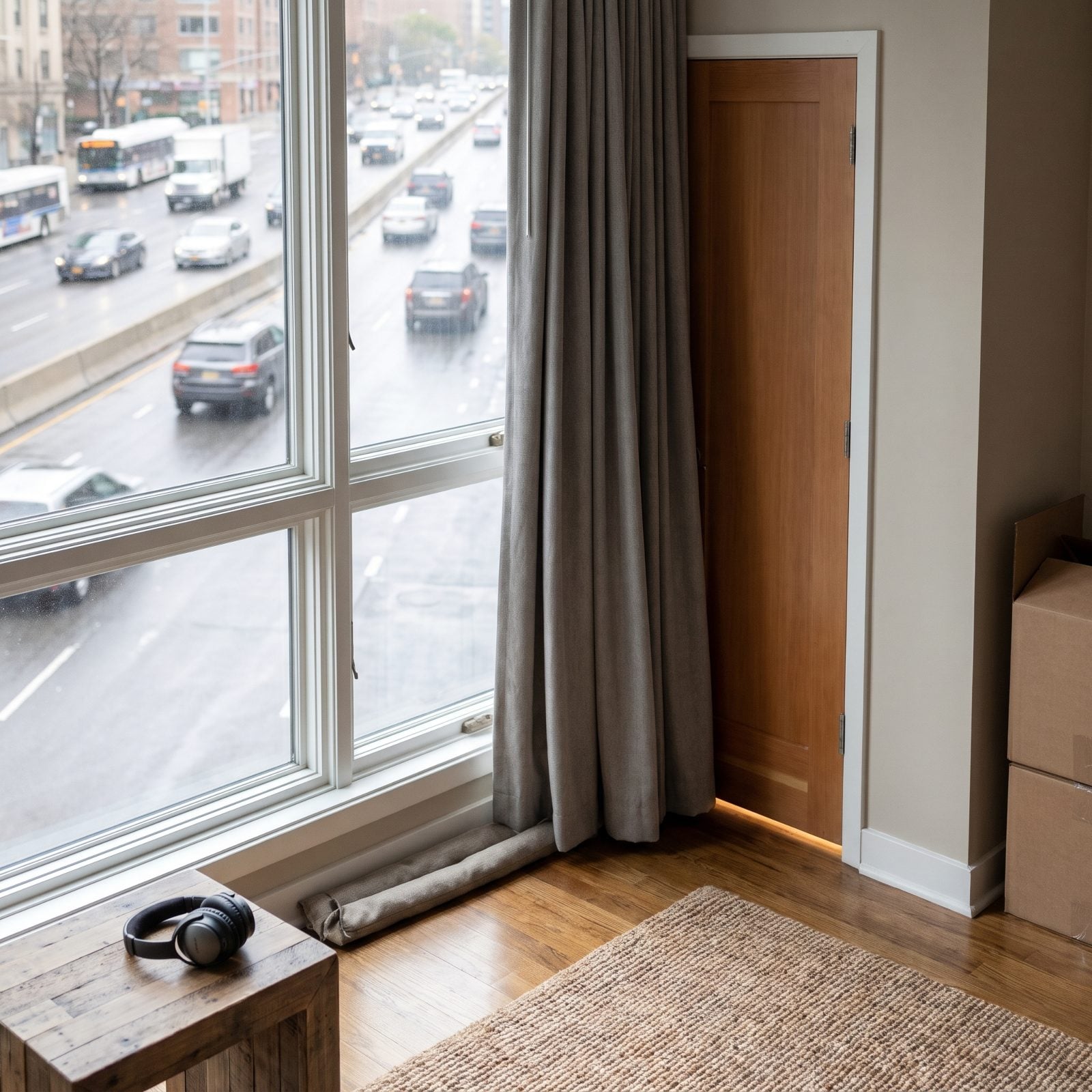
The door shuts and the room should go quiet. When it doesn’t, buyers notice before they can explain why they feel tense.
Single-pane windows and hollow doors let the street right in. A stager can’t move the road, so the work shifts to masking and framing: soft music during showings, heavier drapery that absorbs sound, a water feature that gives the ear something pleasant to grab onto instead. You’re not hiding the noise so much as handing the brain a reason not to fixate on it.
10. A Barking Dog Disrupting the Arrival
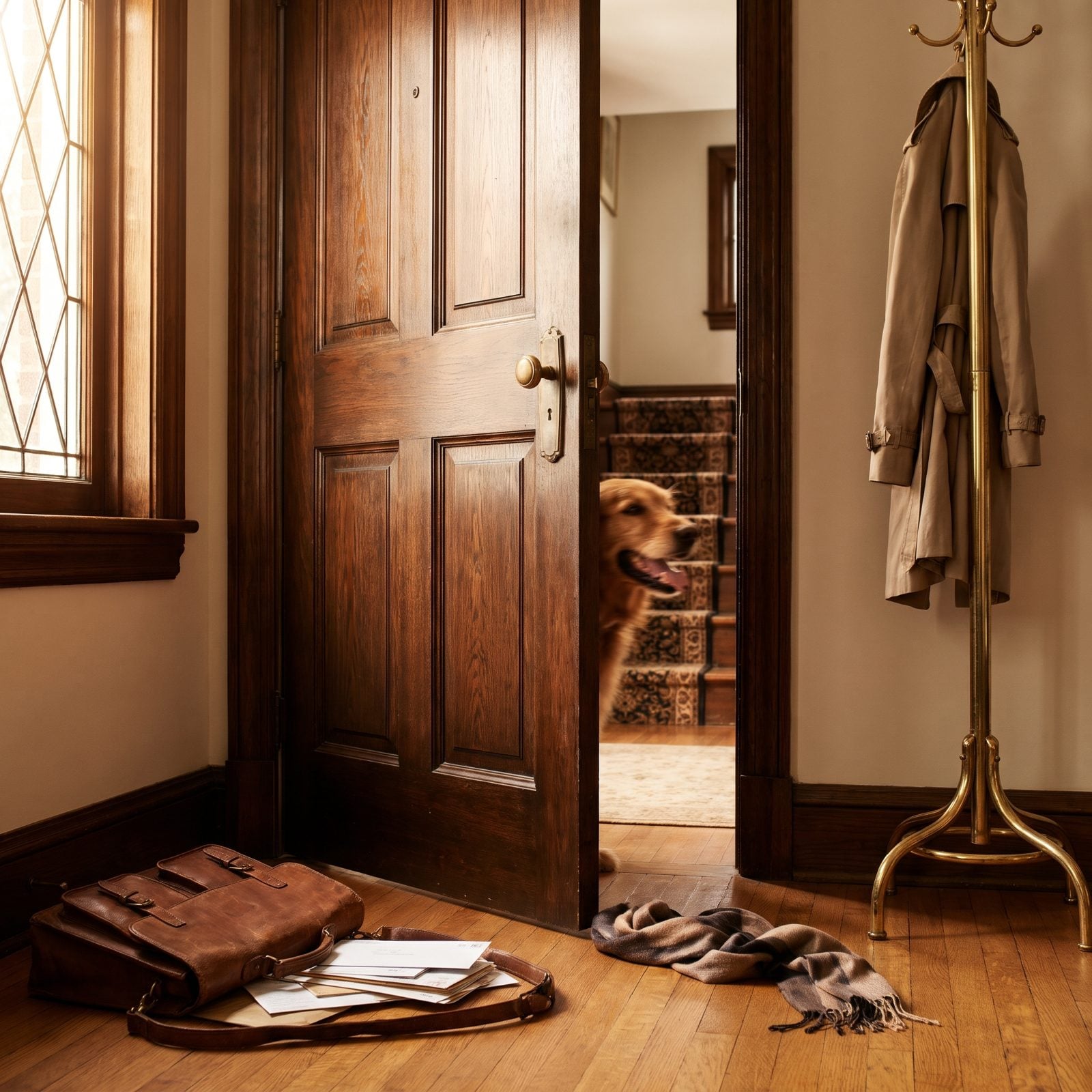
A dog going off in the next room erases the first ninety seconds of a showing. Buyers aren’t looking at the crown molding. They’re bracing.
Arrival is where a buyer decides whether they feel welcome or on edge, and a startled bark lands them squarely in the second camp. So stagers push hard: pets out of the house during showings, not just crated. The leftover cues get neutralized too — the bed, the bowls, that faint smell down by the baseboard.
As a residential real estate team puts it, “Even the most well-behaved pets can unintentionally take attention away from your home. Barking dogs, curious cats, or even pet odors can impact a buyer’s experience.”
9. Kitchen Counter Clutter in the First Sightline
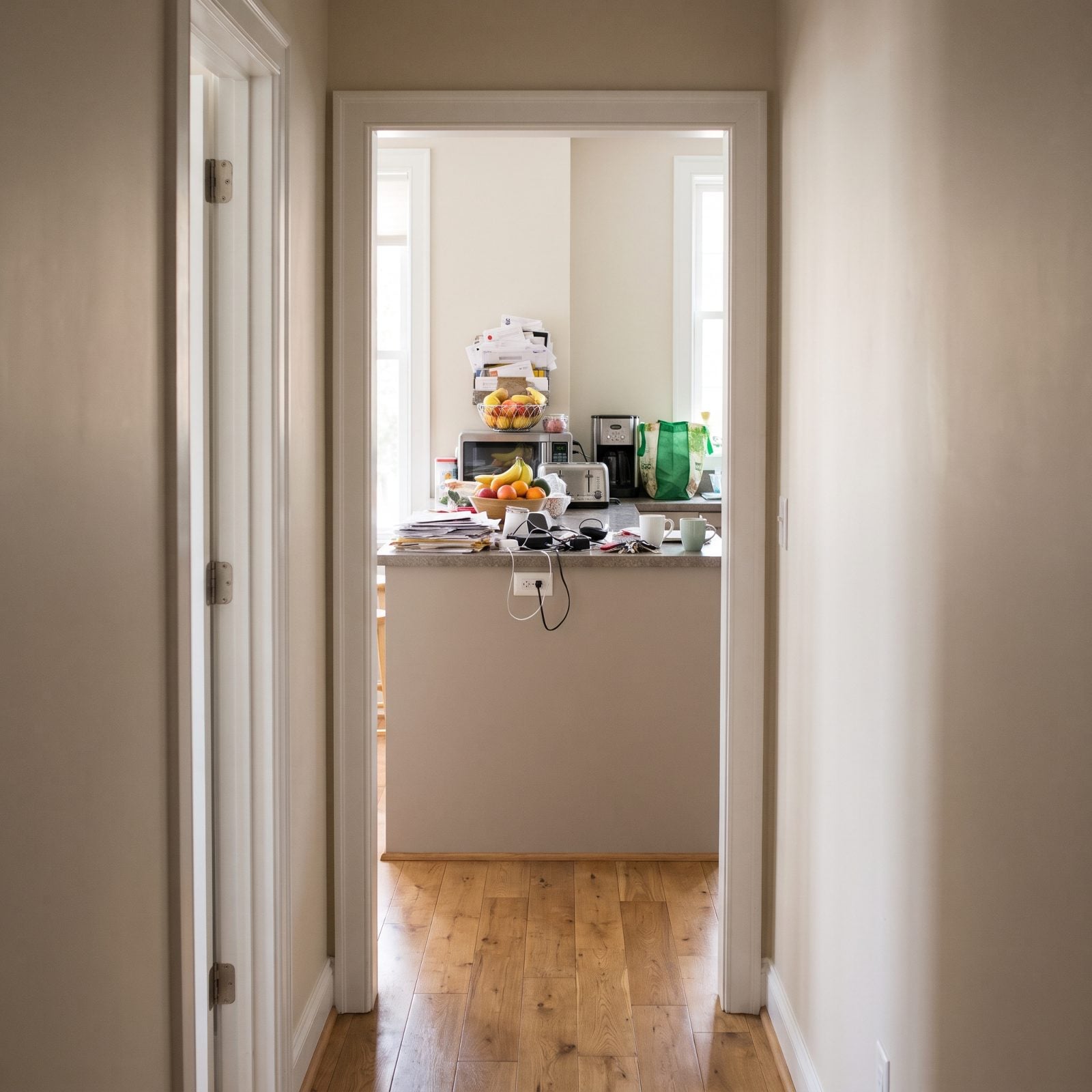
The first thing a buyer’s eye finds down the hall is usually the kitchen counter, and a crowded one shrinks the room on sight.
Toaster, coffee maker, knife block, the drifting pile of mail. Each item is fine alone. Pile them together, though, and they tell the brain the kitchen is short on space even when it isn’t. The white cabinets and bright window read clean — but the buyer’s looking at the chaos in front of them, not the finishes. Clear everything but one or two sculptural pieces and the counters suddenly look twice as long.
8. A Bathroom Visible Through an Open Door
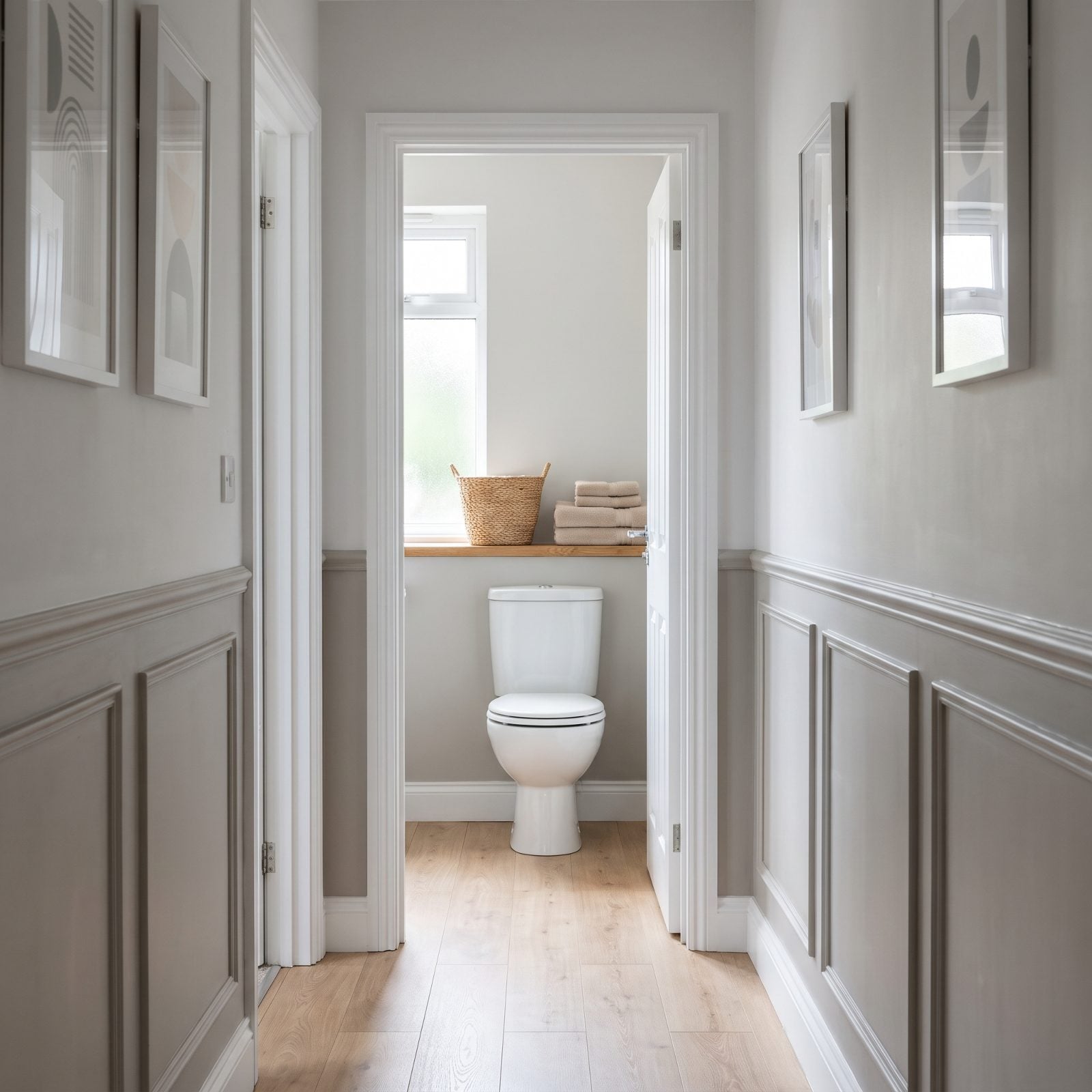
An open bathroom door that frames the toilet as the hero shot of the hallway quietly works against you. Nobody wants that to be the view.
Stagers close the door, or they dress the bathroom so it earns being seen: lid down, a rolled towel, one plant, a clean curtain. The aim is that a glance down the hall lands on something pleasant instead of plumbing.
7. An Unmade Bed Visible From the Hall
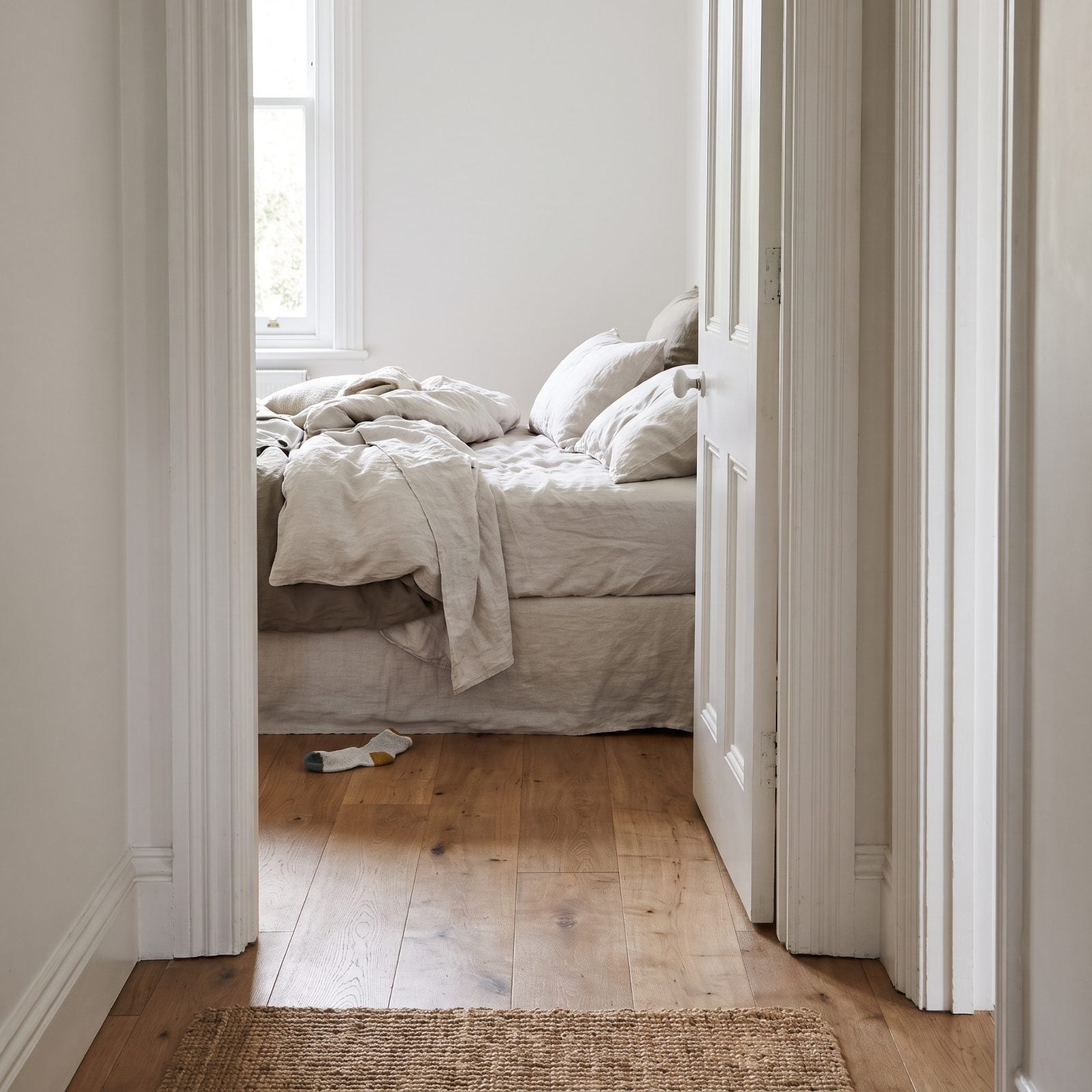
You catch a rumpled bed through a doorway and your brain files the whole house under “not quite ready.” Unfair, sure. Also automatic.
A made bed with a crisp duvet and a couple of layered pillows reads as calm, cared-for, and move-in ready. Same mattress, same room, completely different story. Stagers treat the hall-framed bedroom view like a photo they’re composing, because to the buyer standing in that doorway, that’s exactly what it is.
6. Heavy Curtains Cutting Off Natural Light
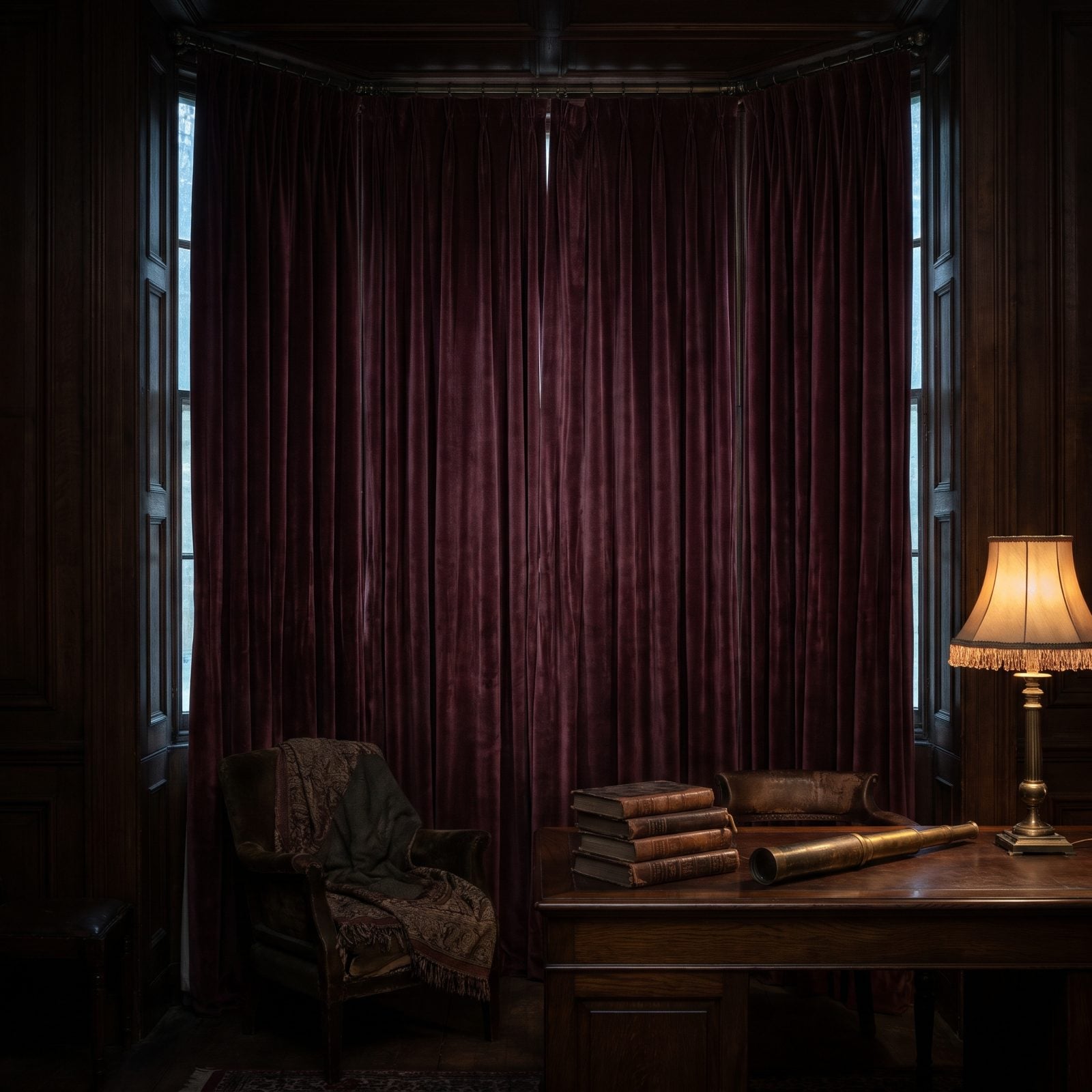
Thick velvet drapes pulled across a good window do more damage than almost anything else in a showing. They choke the light, and dark rooms read as small, closed-in, and somehow unloved.
Open them wide, or swap them for sheers that filter rather than block. A room that holds light feels larger and newer without a single structural change. One of the cheapest upgrades in staging, and one people fight surprisingly hard.
There’s a biophilic ease that comes with daylight, something no lamp replicates, and it’s why buyers linger longer in bright rooms. Let the window do its job.
5. The Back of a Sofa Facing Arriving Buyers
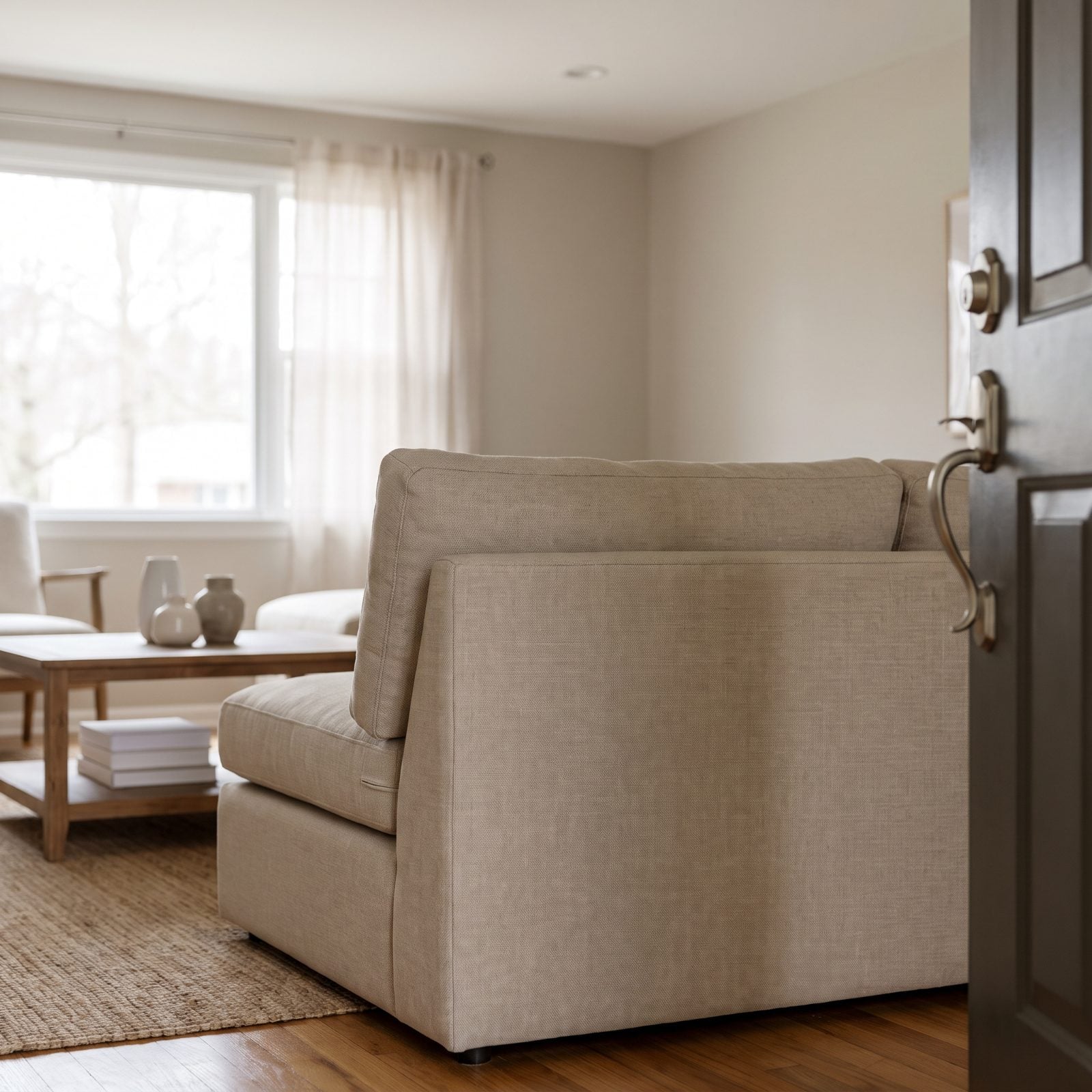
Walk in and meet the back of a couch, and the room has just told you to keep out.
Furniture that turns its spine to the entrance blocks the sightline and makes the space feel closed before a buyer takes a step. So pull the sofa forward, angle it, or float it in the middle so arriving eyes travel past it toward the window. The sofa itself is fine. Its orientation is the problem.
4. A Room Whose Purpose Is Not Immediately Clear

Every house has one. The room that’s part gym, part storage, part forgotten card table. Buyers stand in the doorway and don’t know what they’re looking at, and a room they can’t name is a room they can’t value.
Give it one job. Pick an office, a reading nook, a nursery, a guest room, and stage the whole thing toward that single story. When a buyer walks in and instantly thinks “this is where I’d work,” you’ve handed them a reason to pay for the space.
3. Every Visible Surface Covered With Objects

Another thing a stager clocks walking in is how little flat space is actually free. When every console, shelf, and windowsill is carrying objects, the eye has nowhere to land, and a buyer reads that visual noise as less square footage than the house really has.
Clutter whispers something else too. There’s not enough storage here, it says — and even when that’s flatly untrue, the brain fills the gap. Clear two-thirds of every surface and the same room suddenly breathes.
2. Large Displays of Personal Family Photos

A wall packed with family portraits says this is someone’s home. That’s exactly the problem. The buyer needs to picture their own life on these walls, and thirty smiling faces make that hard.
Stagers aren’t being cold about it — they just know what happens when a prospect stands in the foyer and scans a staircase of frames. They stop imagining and start intruding on somebody else’s life. Swap the portraits for a mirror or two pieces of quiet art, and the wall goes from theirs to anyone’s.
1. A Strong Paint Color Dominating the First View
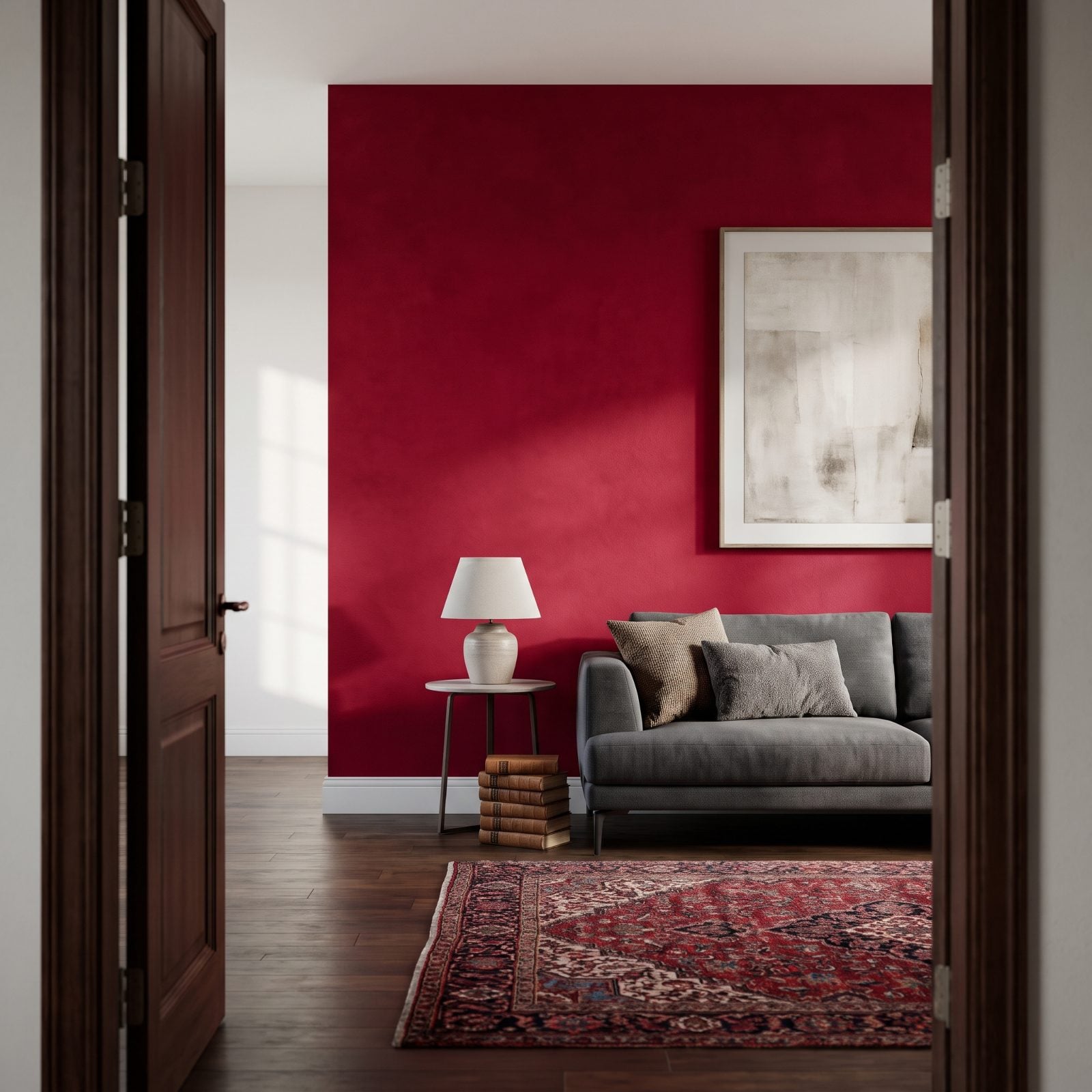
You open the door and a deep red wall grabs you before anything else does. A stager sees that and winces — not because red is wrong, but because it’s the loudest thing a buyer meets on arrival.
Bold color is a strong opinion, and the first few seconds in a house are no place for one. A buyer who hates that red starts mentally repainting before they’ve even found the kitchen. Soft greige or warm white hands the room back to them, which is really what a home renovation done with resale in mind is after.