Walk into a house built in 1974 and your feet knew it before your eyes did. Shag swallowed your toes. Wood paneling drank the light, and somewhere down the hall an intercom crackled to life with a radio station nobody chose.
These weren’t flukes — they were the standard spec, the stuff every builder put in without asking. Then, one by one, they vanished. The features below used to be everywhere. Now they live only in memory and the occasional untouched basement.
In order to come up with the very specific design ideas, we create most designs with the assistance of state-of-the-art AI interior design software. Also, assume links that take you off the site are affiliate links such as links to Amazon. this means we may earn a commission if you buy something.
31. The Sunken Conversation Pit You Actually Had to Step Down Into
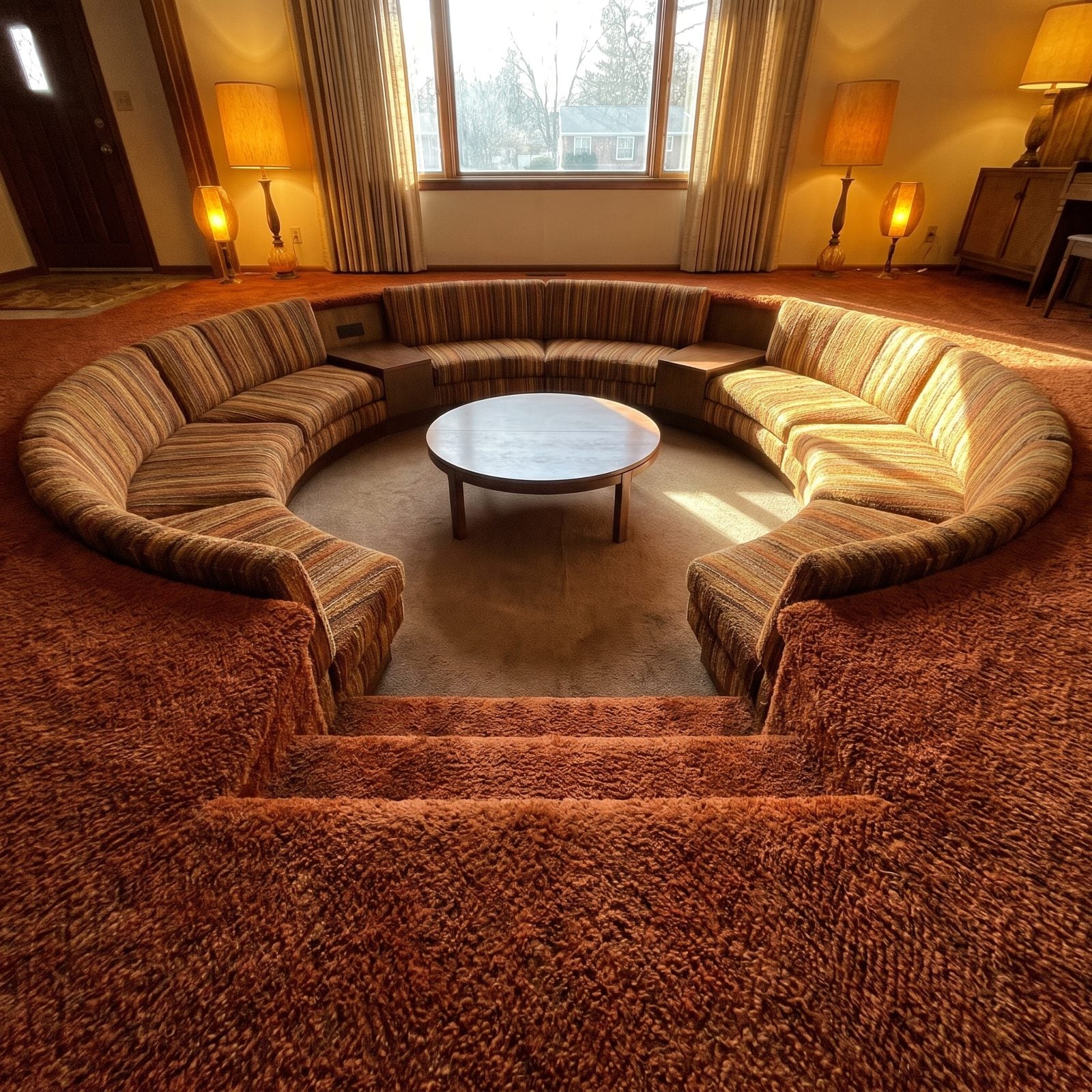
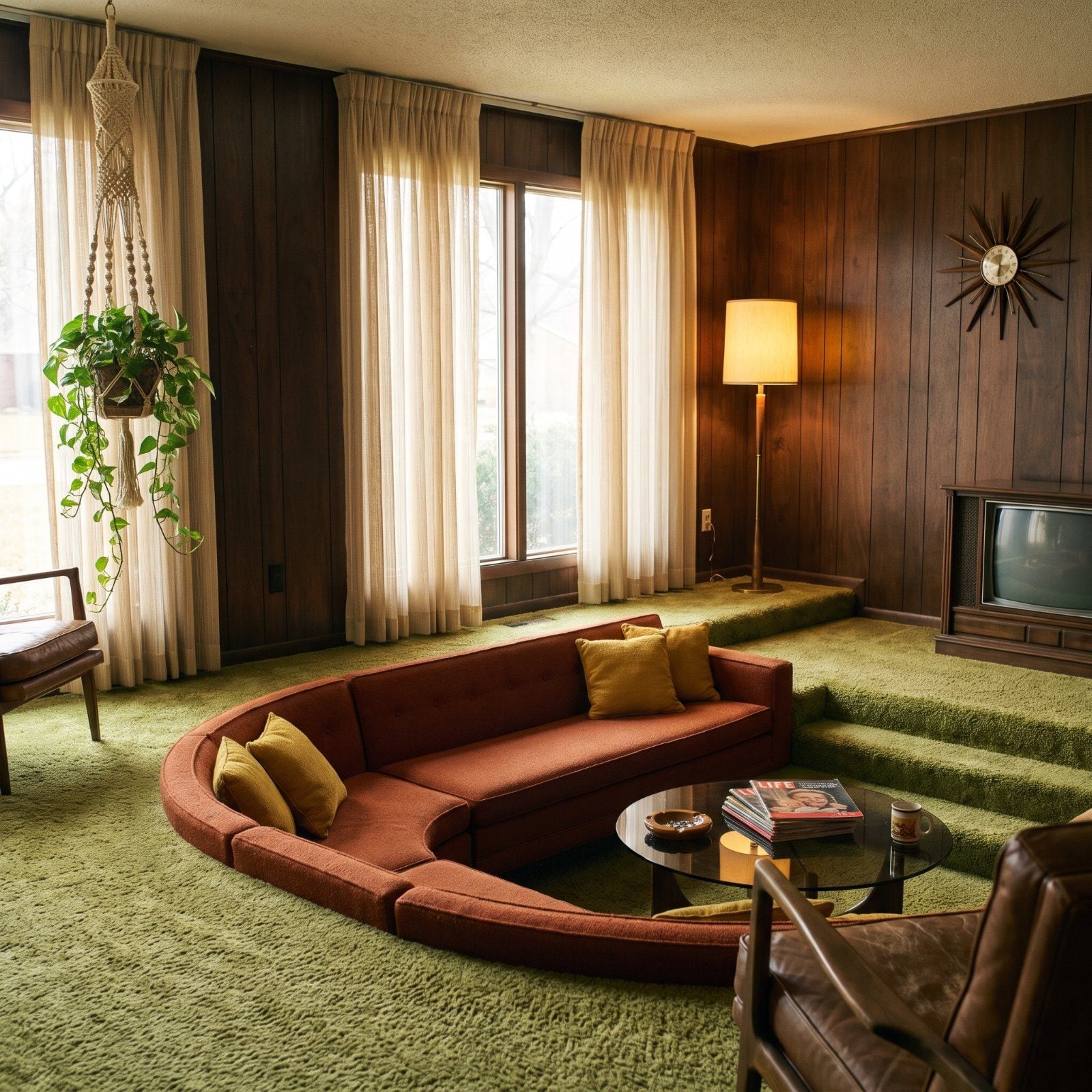
You remember the first step down. That little drop into the pit felt like entering a different room, except there were no walls to tell you so, and the whole family funneled into one sunken circle with knees nearly touching. Nobody could leave a conversation early without a visible climb out.
Builders loved them because they made ceilings feel taller and rooms feel designed. Then someone tripped carrying a tray of drinks, insurance got nervous, and the open-plan era filled every pit back in with concrete.
30. Shag Carpet So Deep in Avocado or Gold You Could Lose a Toy in It
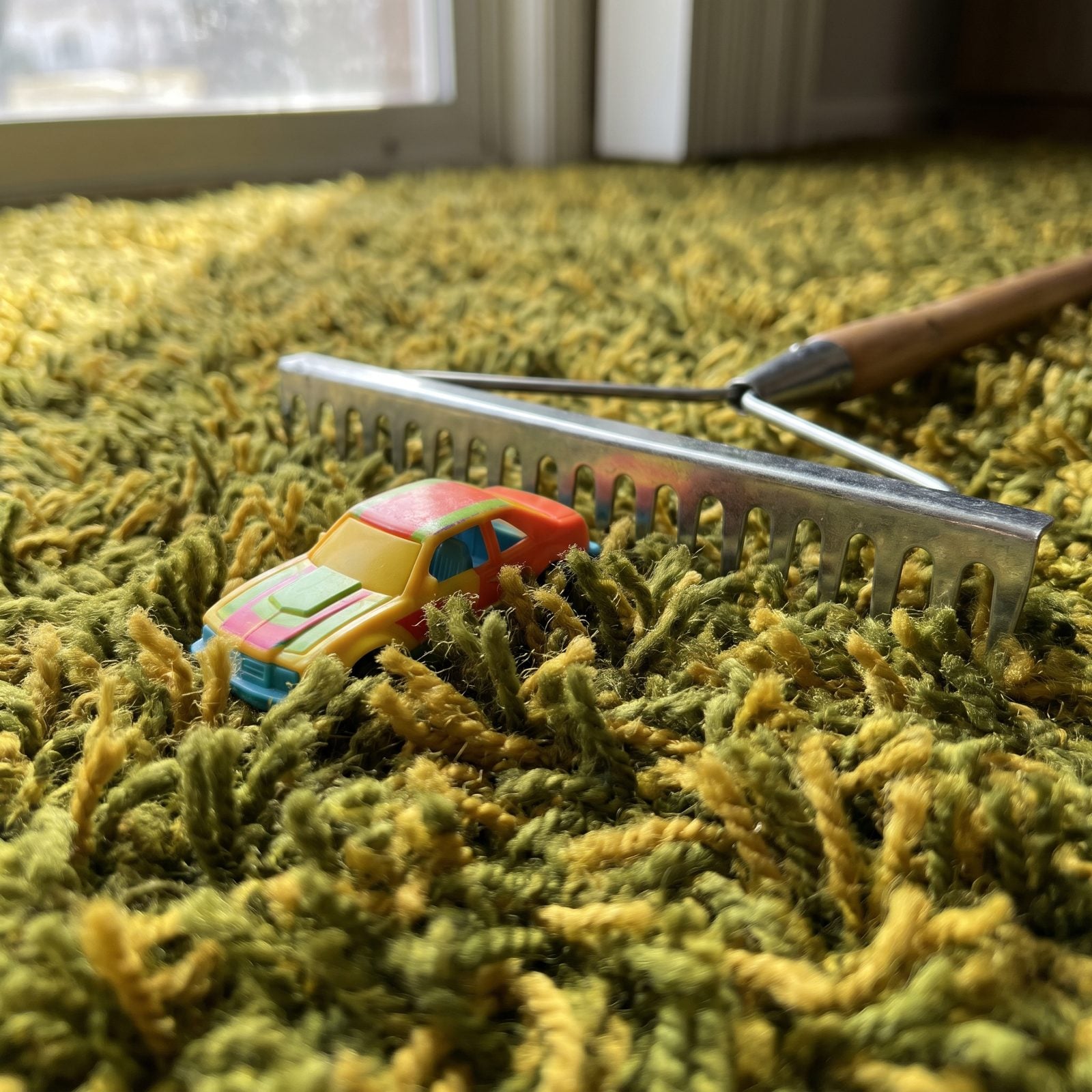
Avocado or gold. Occasionally a brave household went rust. The pile stood an inch tall and you ran a special rake over it, leaving those satisfying parallel grooves that lasted about four minutes before somebody walked through.
It hid everything — crumbs, cereal, a Hot Wheels car you wouldn’t find until you moved out. That’s exactly why it left. Nobody wanted to think about what lived at the bottom of three decades of shag. Modern builders swapped it for low-pile neutrals and hard floors you can actually clean, which is sensible and slightly less fun.
29. Wood Paneling That Covered Every Single Wall in the House
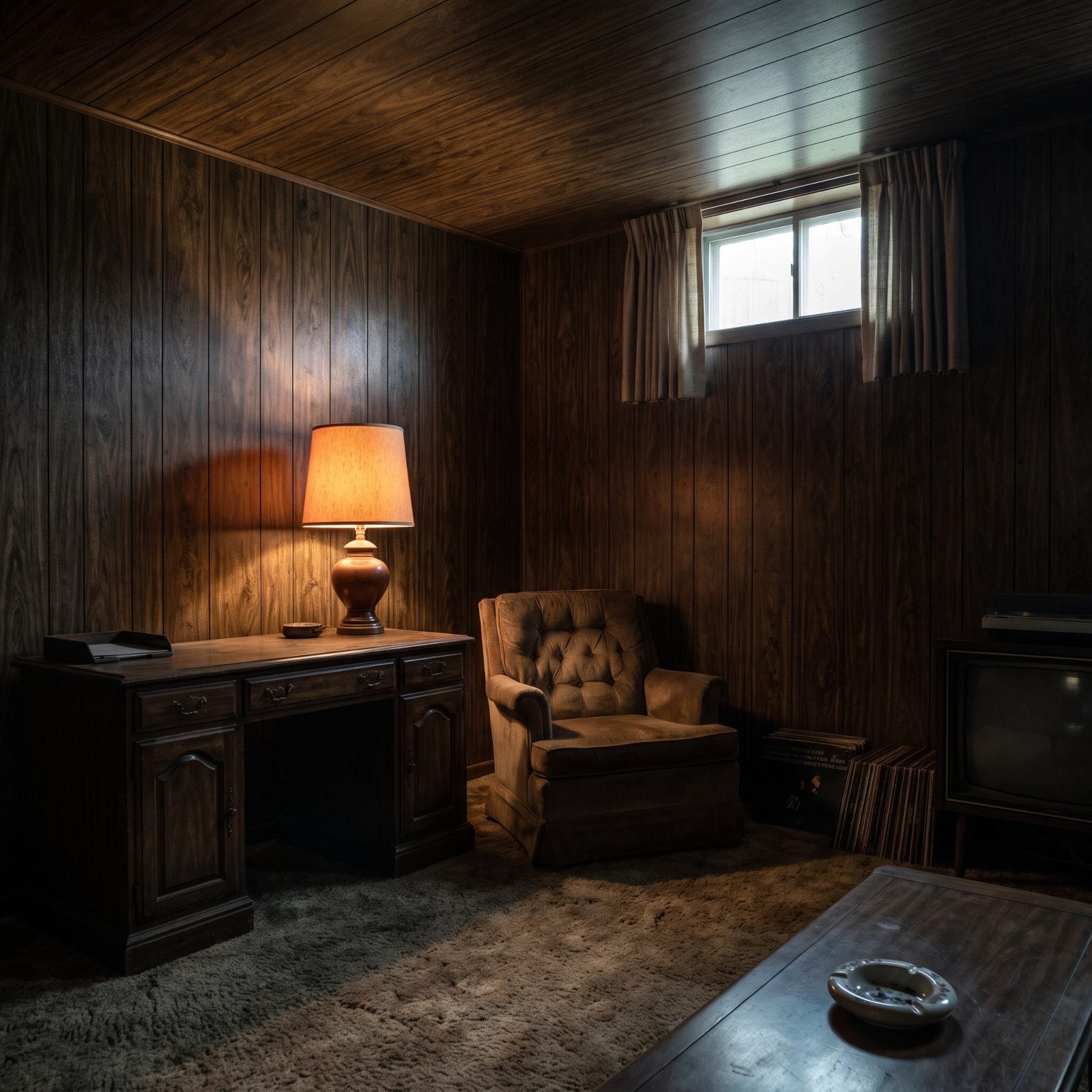
The paneling drank light like a sponge. Rooms clad in it stayed dim no matter how many lamps you plugged in, which is partly why every 1970s den has that cave-like, cozy quality in your memory.
Most of it wasn’t even real wood. It was a thin veneer or printed photo-finish over hardboard, tacked up in four-by-eight sheets over a weekend. Cheap, fast, and it made a basement feel finished. Builders dropped it the moment drywall and light paint became the signal of a modern home. Honestly, painting over paneling in white is the single most common renovation I’ve seen on these houses.
What Our Readers Say
- Today, Home Stratosphere readers give interiors with dark wood tones fewer hearts than the other images in the same articles, 46% versus 51%.
From Home Stratosphere reader polls and votes.
28. Popcorn Ceilings That Sparkled If You Looked Up at the Right Angle
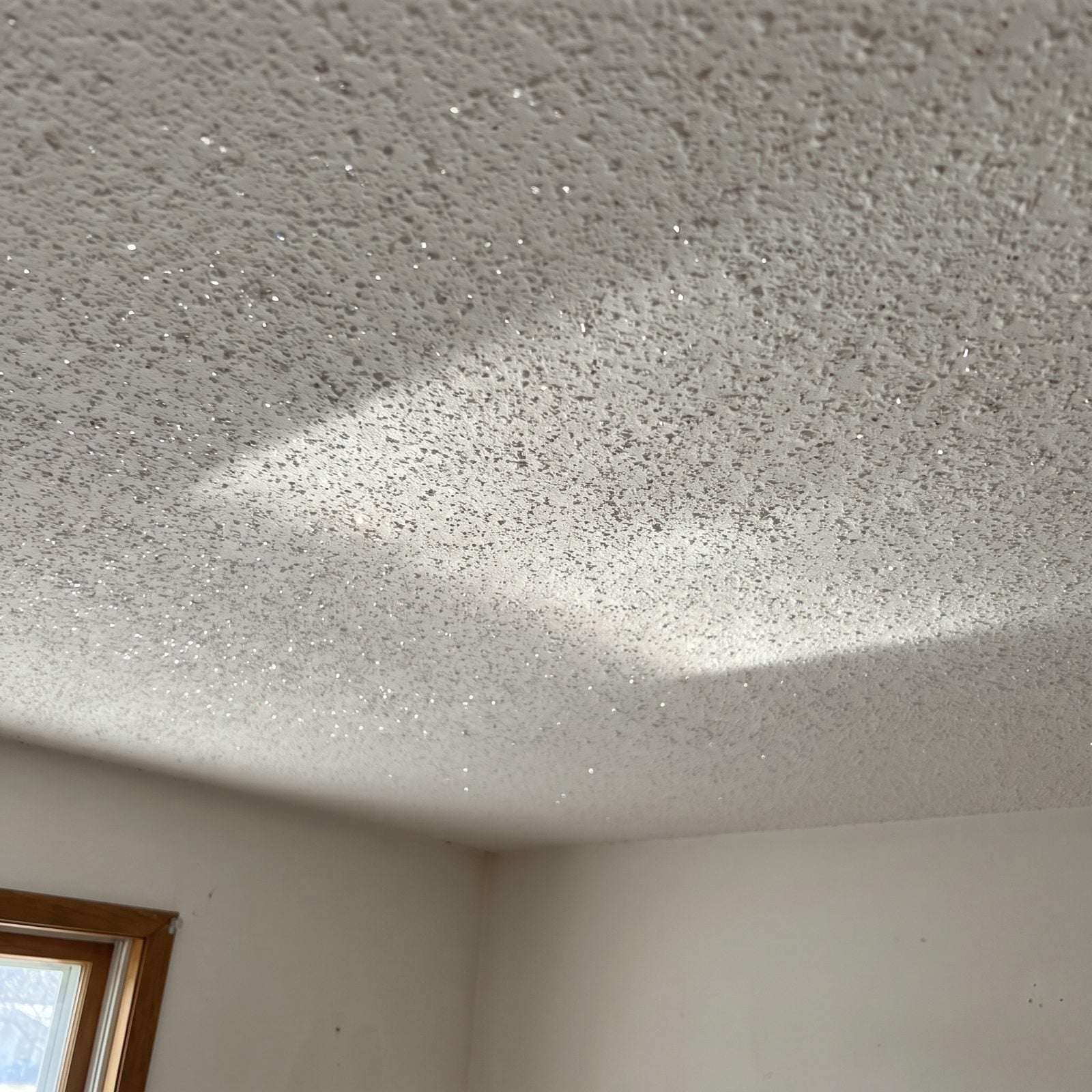
Some of it genuinely glittered. Builders mixed in flecks that caught the light, so a kid lying in bed staring up could find whole constellations in the stucco.
The pitch was practical: the texture hid drywall seams, muffled sound, and a sprayer could coat a whole house in a day. Then word got out that older batches could contain asbestos, and suddenly nobody wanted to scrape it off themselves. Smooth ceilings became the mark of an updated home, and the popcorn quietly disappeared from the spec sheet.
27. Avocado Green Appliances That Matched the Carpet on Purpose
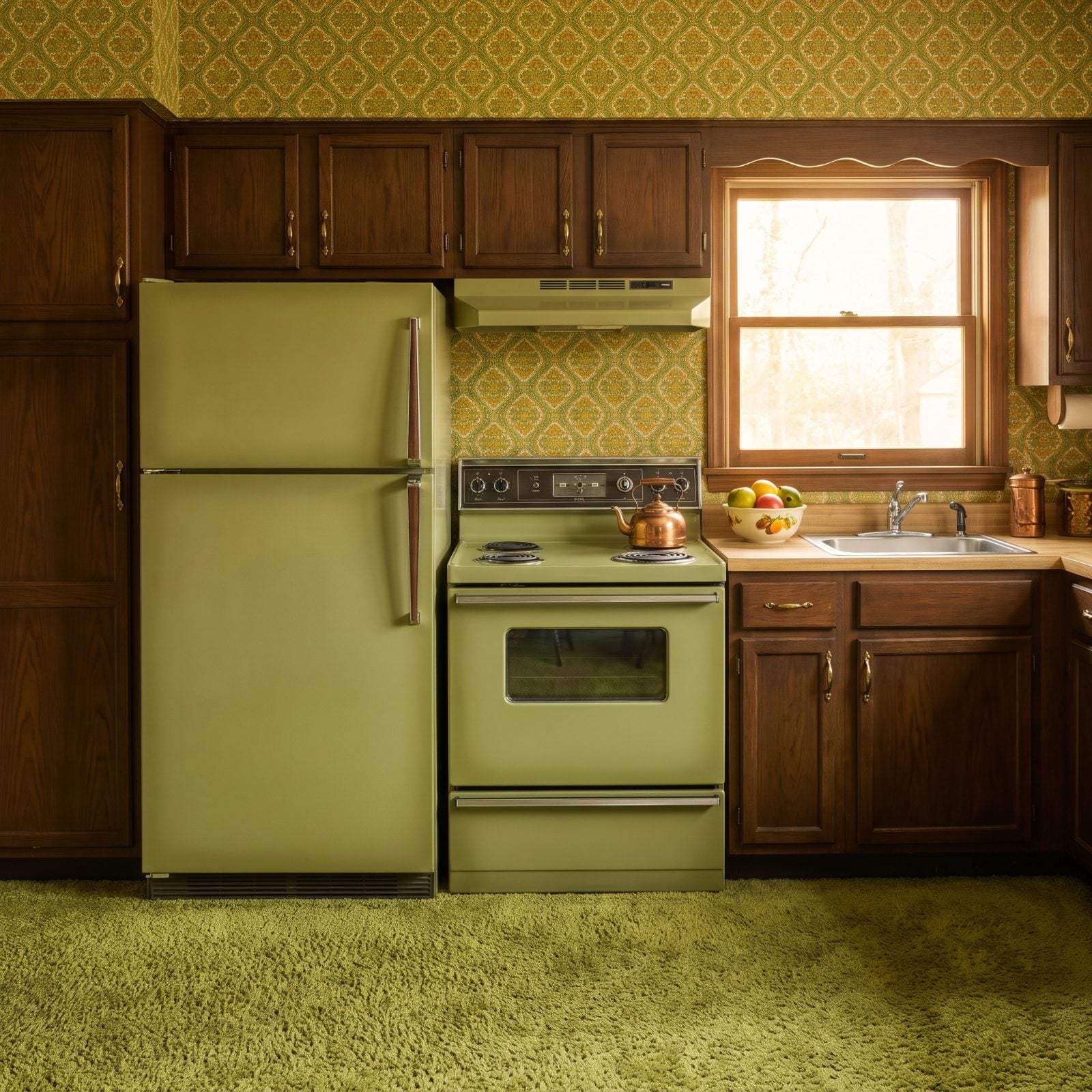
They didn’t come green by accident. You chose avocado, paid extra over the plain white, and felt good doing it because the fridge, the stove, and the range hood all matched like a set.
The whole kitchen color-blocked together, and against dark cabinets it looked deliberate and expensive. That coordinated look is a world away from today’s modern kitchen design with its stainless and matte black. Almond and white killed the color appliance almost overnight, and now a working avocado fridge is a prize at an estate sale.
26. Harvest Gold Refrigerators and Stoves in the Other Half of Kitchens
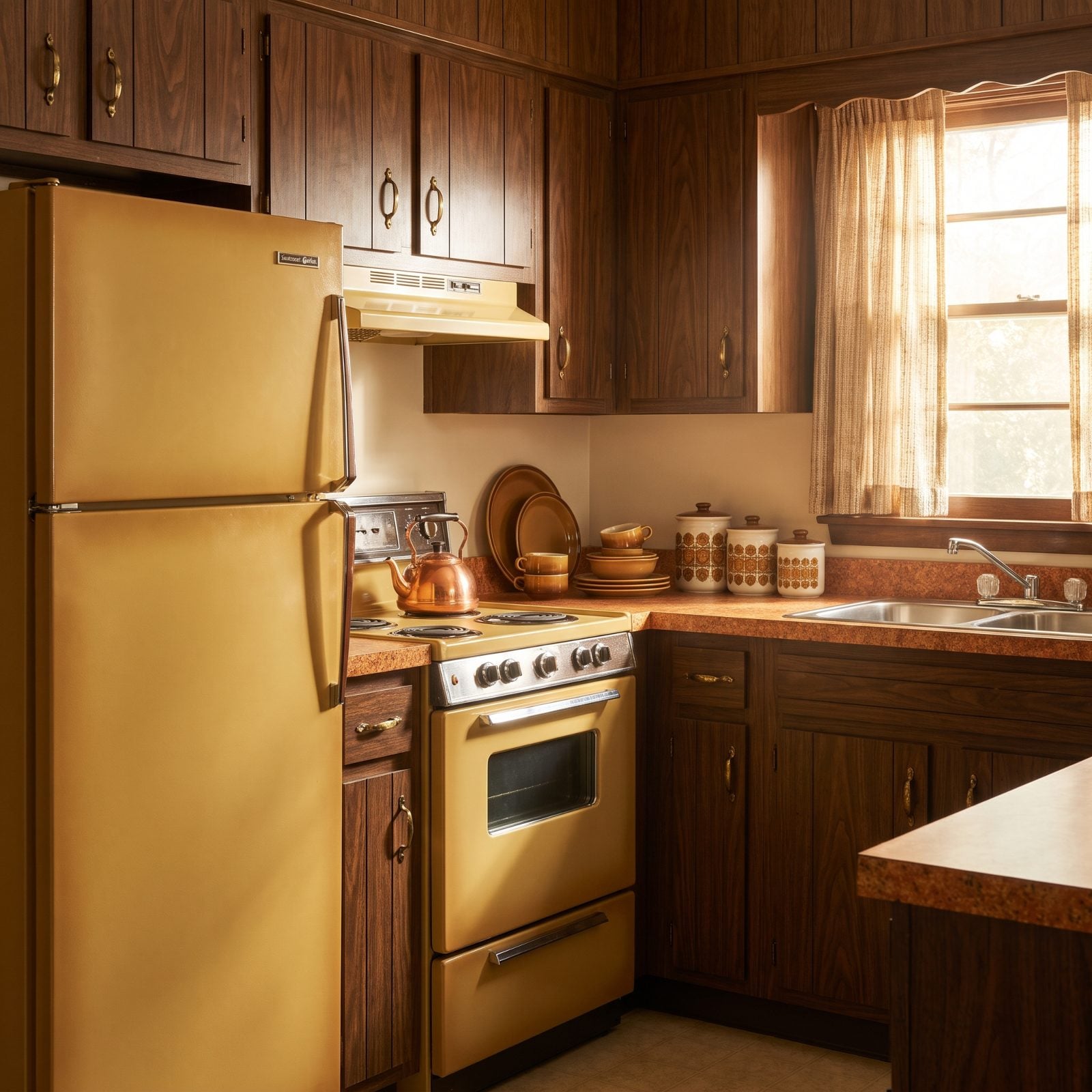
If your kitchen wasn’t avocado, it was almost certainly harvest gold. The two divided the decade down the middle, and the gold ones glowed under the amber swag lamp like a jar of honey.
Gold aged differently than green. It warmed up a dark-cabinet kitchen and photographed beautifully in the holiday pictures, which is why so many Thanksgiving snapshots from the era have that same buttery hum in the background. Both colors lost to the great beige-ing of the 1980s. And I’ll admit a working harvest gold stove still makes me want to cook on coils.
Harvest gold hasn’t won many hearts back: in our readers’ votes, kitchens with gold accents got hearts 38% of the time, compared with 47% for other kitchens in the same articles.
25. Formica Counters in Patterns Loud Enough to Hear Across the Room
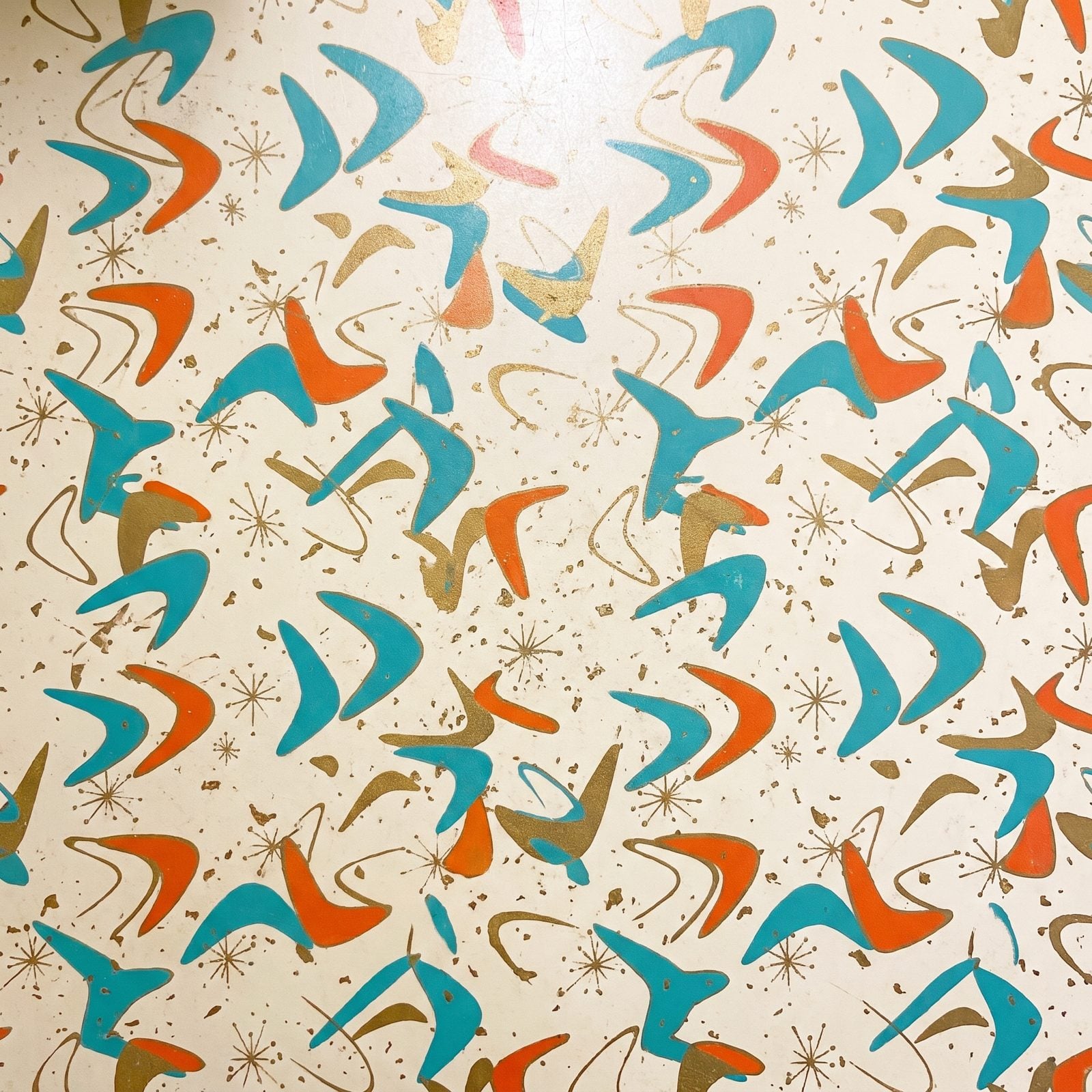
Boomerangs. Starbursts. Gold flecks suspended in white like they were trapped mid-sparkle. The Formica in a 1970s kitchen wasn’t trying to look like stone — it was trying to look like tomorrow.
The edge was rolled chrome or a thin metal band that caught your sleeve. The surface took a hot pan mark if you weren’t careful and never fully let it go. Granite and quartz chased it out of the showroom, selling the idea that a counter should imitate rock instead of shout for attention. The bold laminates got quieter, then disappeared.
24. The Built-In Intercom That Piped Radio Into Every Room
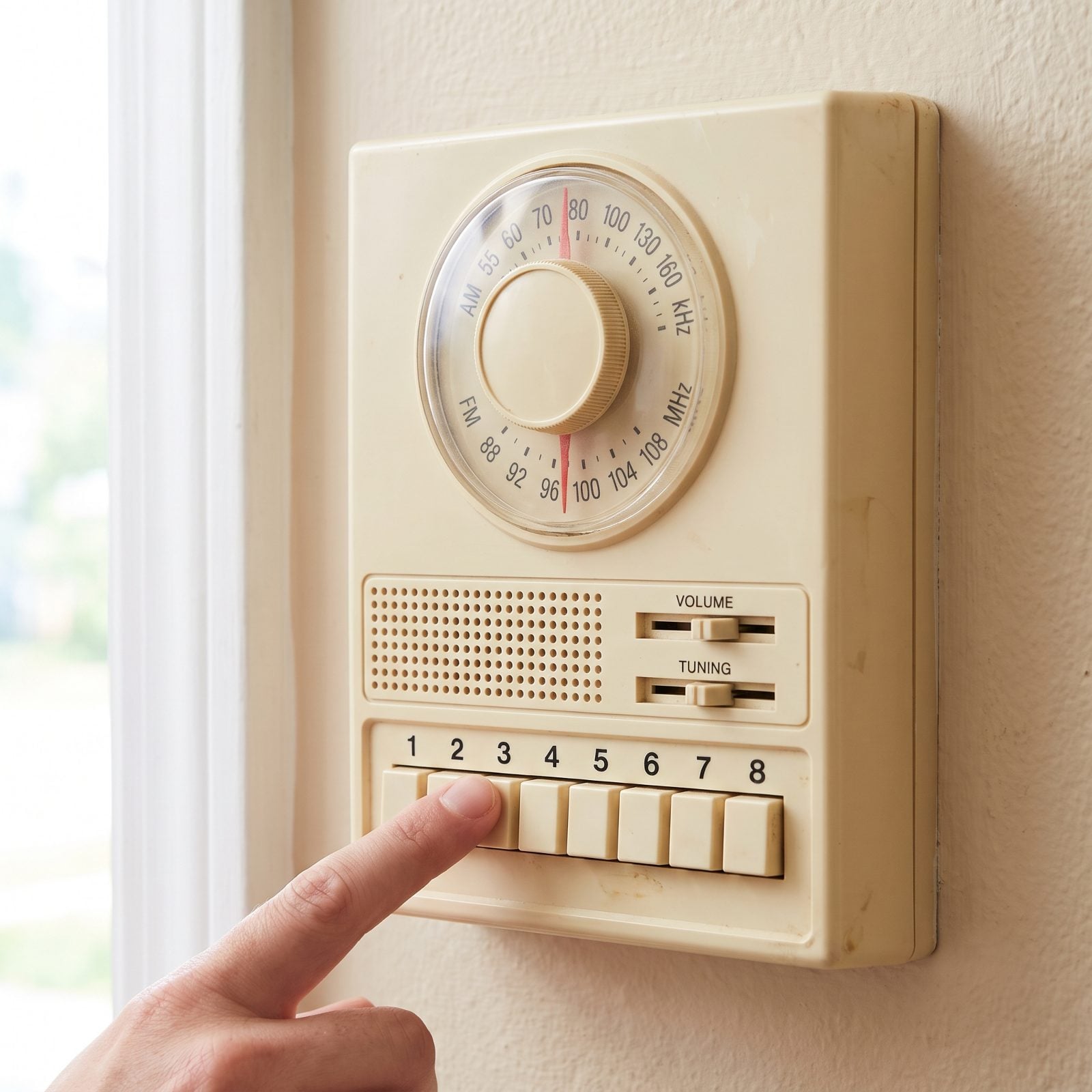
There was a cream plastic panel in the hallway with buttons for every room and a radio dial built right in. You could call the kids down for dinner without yelling, and most parents used it to blast the morning news through the whole house whether anyone wanted it or not.
The speakers lived flush in the walls, slightly crackly, carrying a hum of static under the music. Felt futuristic. Cordless phones and then cell phones made the whole thing pointless, so builders stopped wiring them in, and the dead panels still sit in these walls — buttons that light up and connect to nothing.
23. Faux-Brick Vinyl Flooring That Fooled Exactly No One
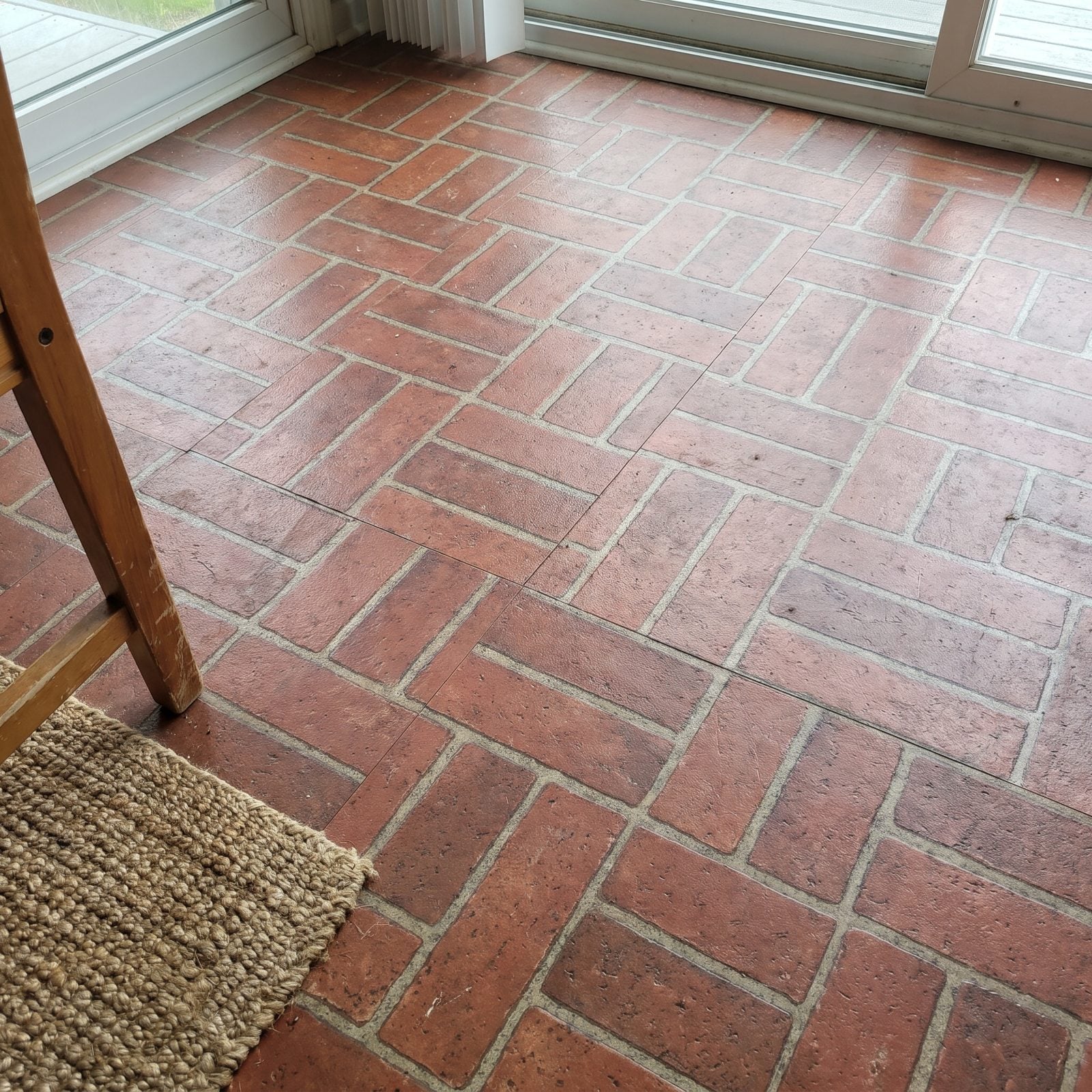
Nobody believed it was brick. You’d catch the repeat in the pattern within the first few tiles, the same chipped corner showing up every eighteen inches across the kitchen.
Didn’t matter. It was warm underfoot, forgiving on dropped dishes, and you could mop it in two minutes. It gave a flat vinyl floor the rustic-cottage feeling that paneling gave the walls. Real tile and engineered wood pushed it out, and faux-brick vinyl became shorthand for a kitchen that hadn’t been touched since Nixon. There’s a worn, cheerful honesty to it that newer floors can’t quite fake.
22. Macramé Plant Hangers Looped Onto Built-In Ceiling Hooks
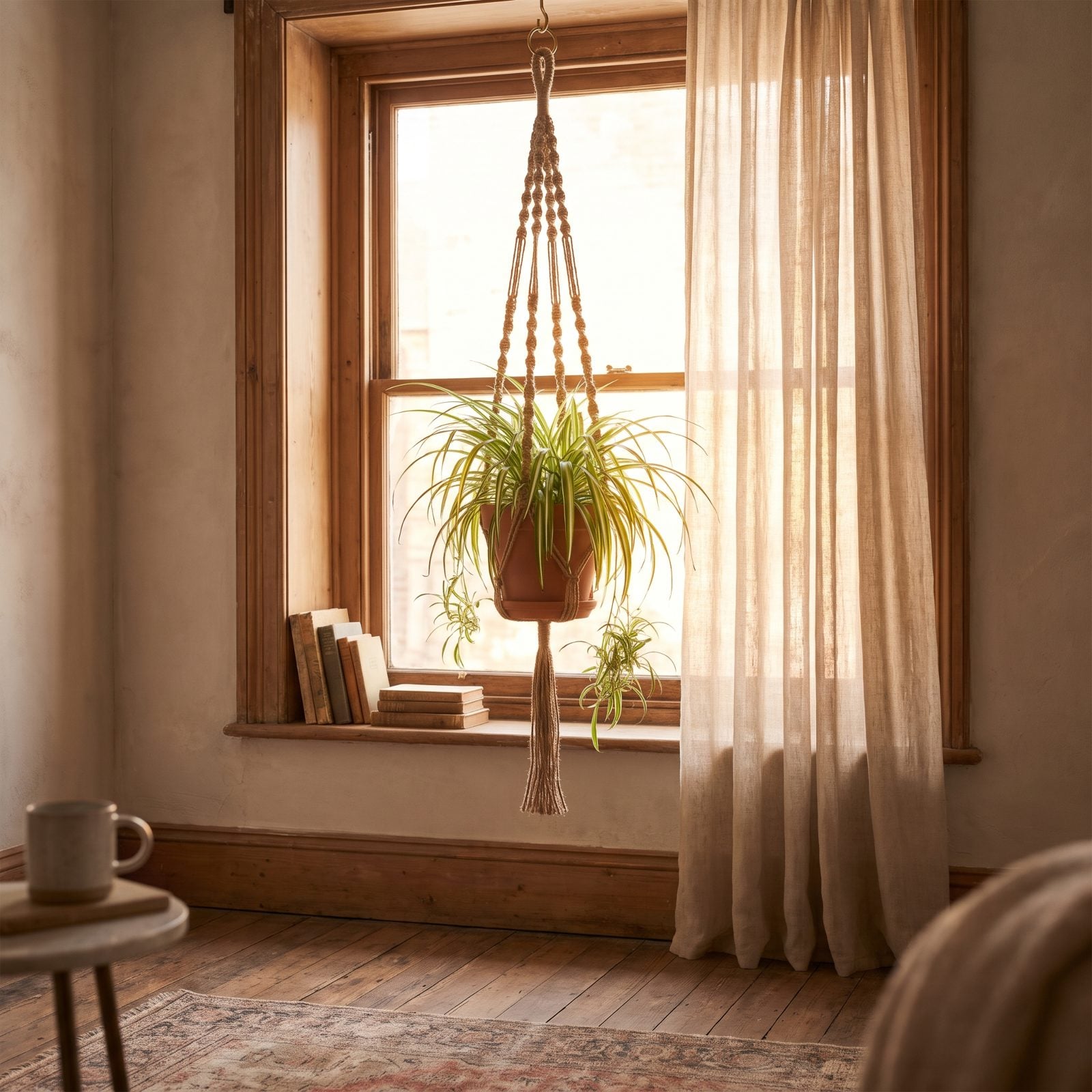
The hooks came with the house. Builders set little brass or steel eye-hooks into ceilings near windows because everyone — and I mean everyone — hung plants from the ceiling in knotted cord.
The macramé itself was often made at home from a kit, cream cotton rope twisted into spirals with wooden beads worked in. A spider plant or a pothos swung in the window light, dropping the occasional leaf onto the shag below, softening a corner the way nothing hard ever could. The hooks got painted over decades ago. Still there in the ceiling, waiting for a plant that moved out in 1985.
21. Shag-Carpeted Bathrooms, Right Up to the Base of the Toilet
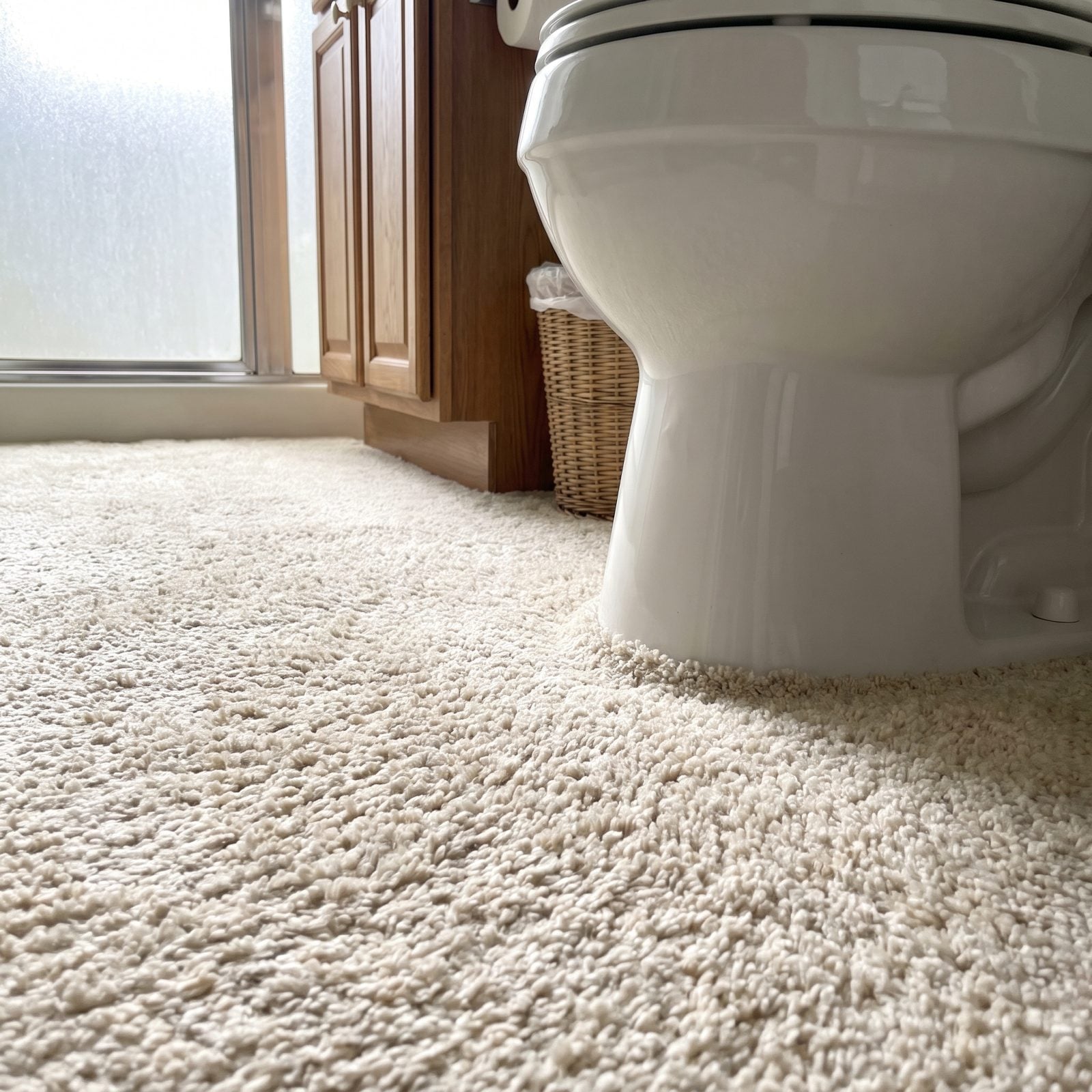
You could sink your toes into it on a cold morning, which was the entire selling point. Carpet ran right across the bathroom floor and curled around the toilet base like it belonged there. Matching lid cover, matching tank cozy, the works.
Nobody wanted to think too hard about what that carpet absorbed over the years, and we didn’t. It felt warm and plush and looked coordinated, and in 1974 that settled the argument.
20. Mirrored Closet Doors That Covered a Whole Wall
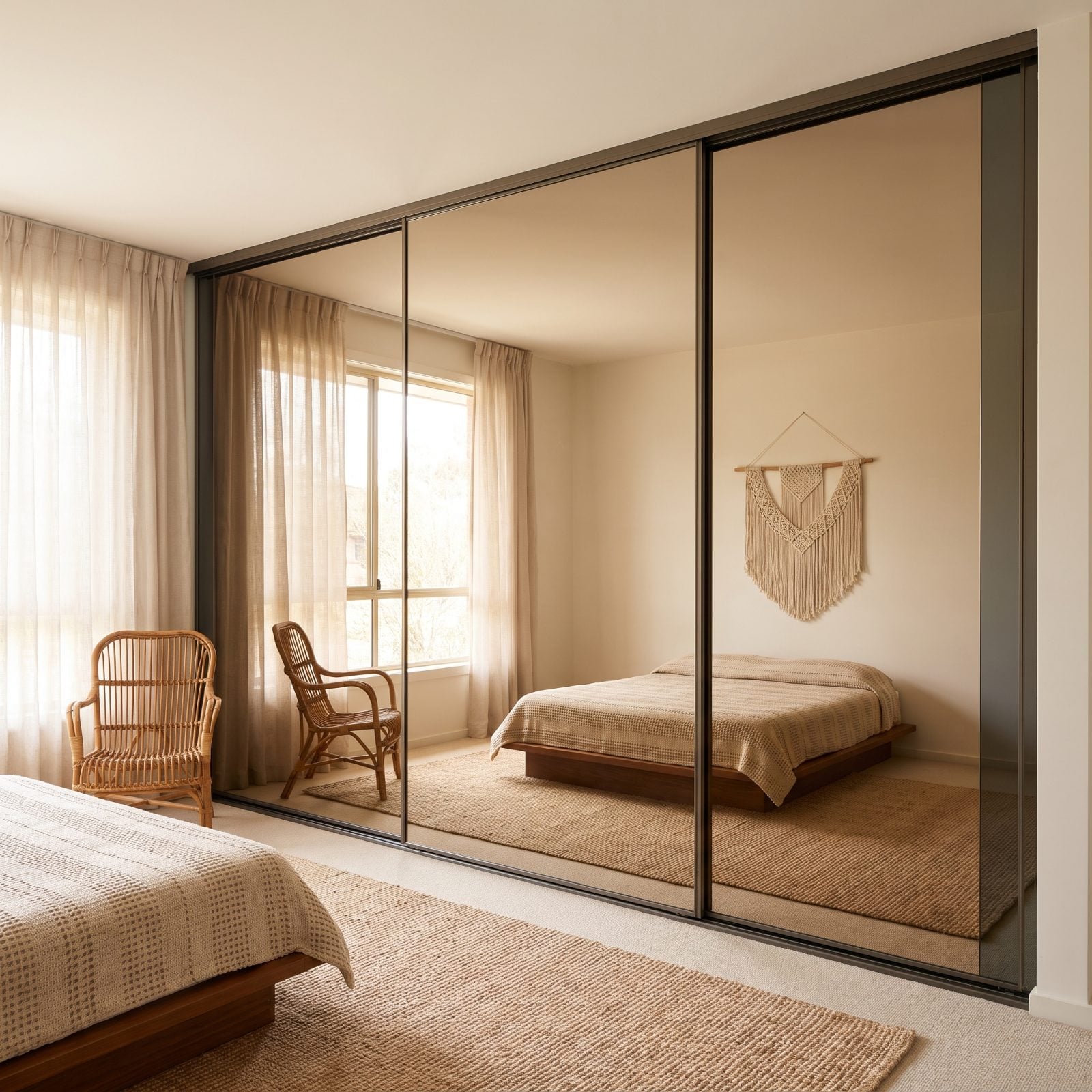
They doubled the size of the room, or at least they claimed to. A whole wall of sliding mirror panels meant you could check your outfit head to toe without owning a single standalone mirror.
The dark bronze aluminum frames were thin as a pencil and rattled faintly every time you slid a door. And you learned fast that catching your own reflection at the wrong angle at 2 a.m. would scare you half to death. Builders loved them for making cramped bedrooms feel generous; buyers loved them because mirrors felt glamorous. Nobody loved cleaning the smudges.
19. Brass and Smoked-Glass Light Fixtures Hanging Low Over the Table
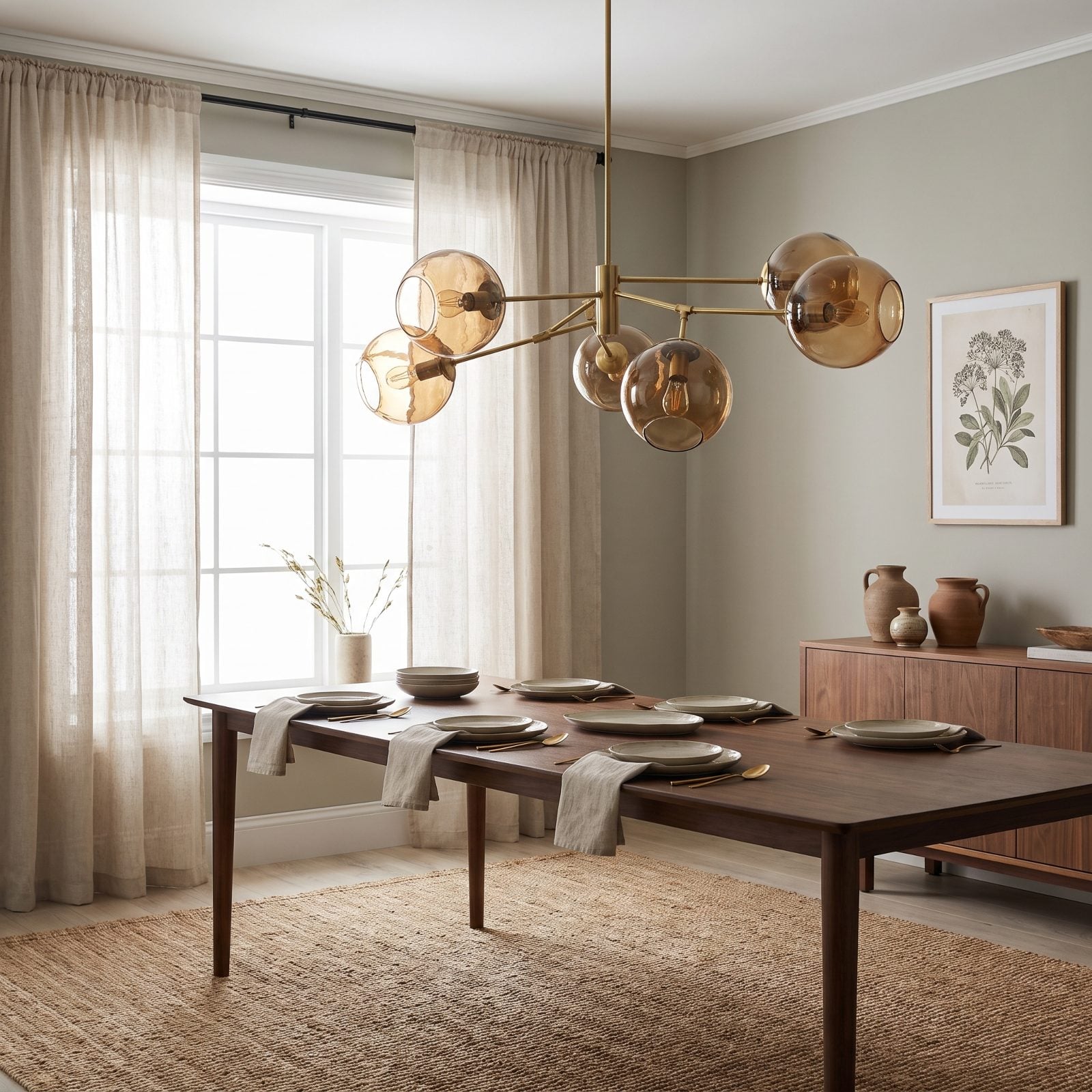
The glass was tinted the color of weak tea, so the light came out dim no matter how many bulbs you crammed in. We told ourselves it was atmospheric. It was really just dark.
Brass arms, smoked amber globes, a rigid brass rod dropping them low over the dining table whatever the occasion — these fixtures announced that someone in the house had opinions about ambiance. The brass tarnished and the glass trapped dust. Swapping a bulb meant unscrewing a globe without dropping it on your dinner.
18. Linoleum Kitchen Floors in Loud Geometric Prints
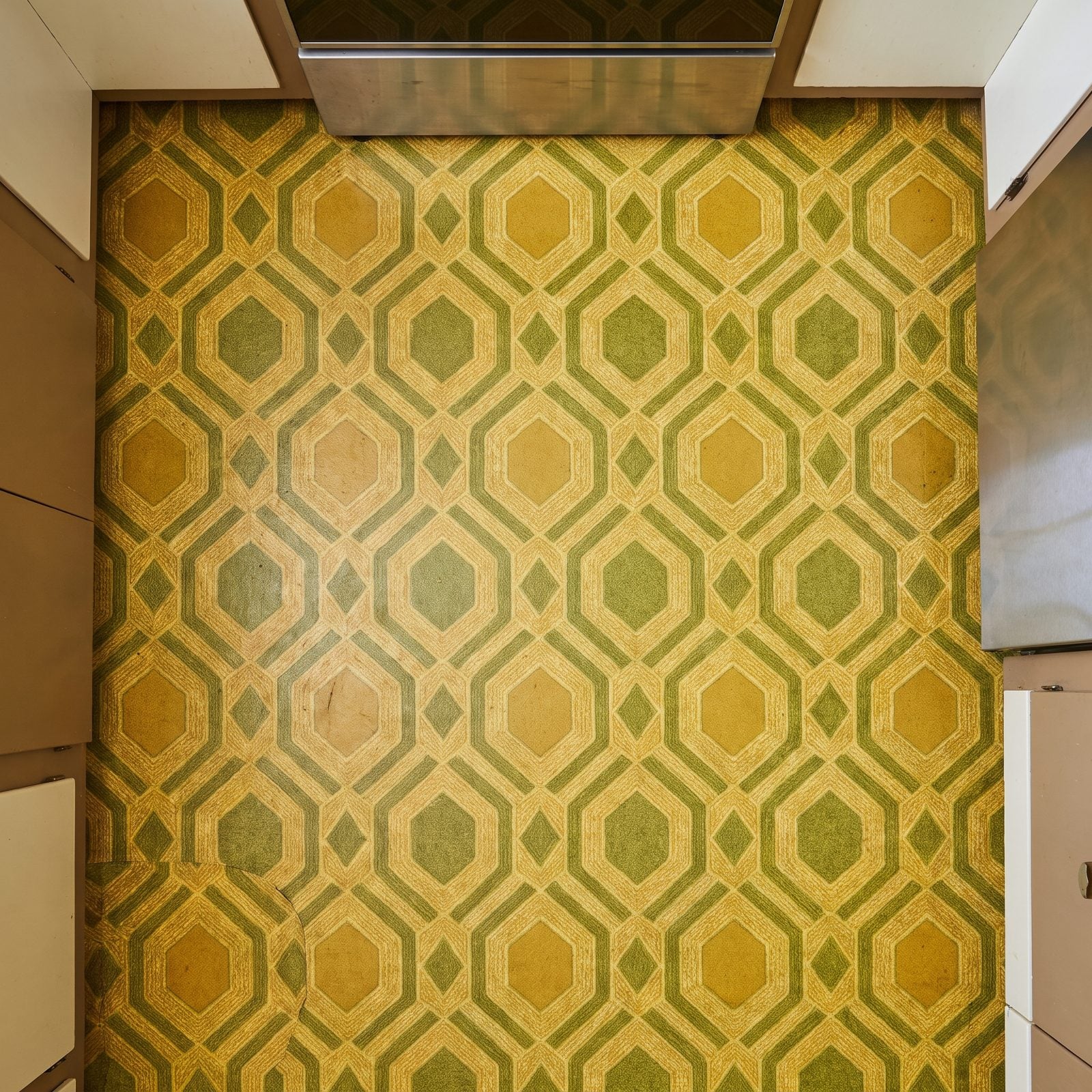
The pattern hit you before anything else did. Hexagons, diamonds, interlocking hexes in gold and avocado — the kind of print that didn’t so much cover the floor as announce itself to the whole kitchen.
Sheet linoleum was cheap, warm underfoot, and forgiving of a dropped glass. You could mop it in two minutes flat. The seams yellowed and the corners curled eventually, but a good geometric print hid a multitude of sins, which is probably why builders put it everywhere. Today’s modern kitchen design would never commit this hard to a single pattern.
17. The Wet Bar With a Padded Vinyl Front
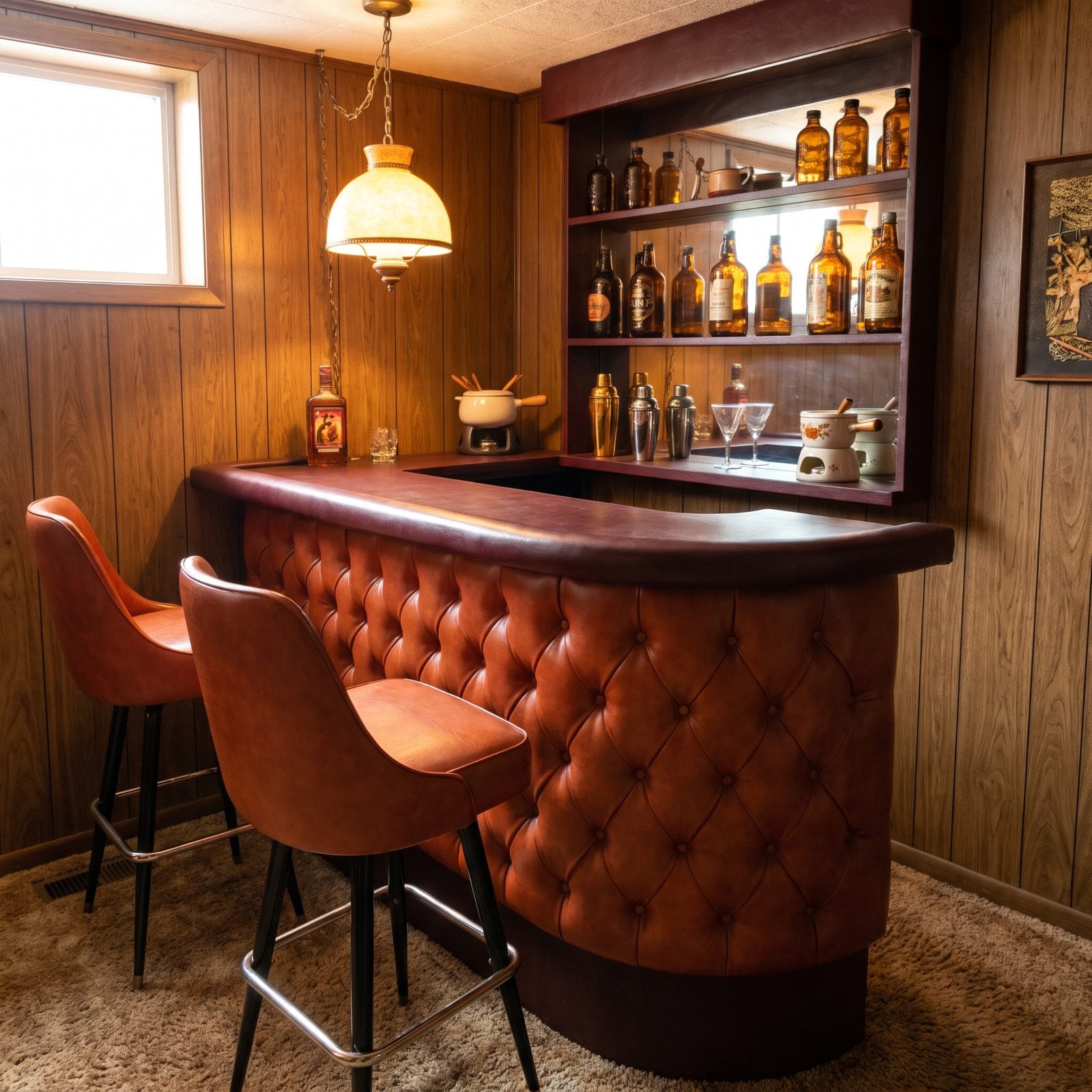
Every finished basement worth its salt had one. A built-in bar faced in tufted vinyl, usually burnt orange or oxblood, with little brass nailheads pressed in rows down the front. You could lean against it and it had give, like a padded headboard for your hip.
Behind it: a mirrored back shelf, smoked-glass tumblers, maybe a tiny sink that got used twice a year. The wet bar was less about mixing drinks and more about signaling that this house knew how to entertain. The vinyl cracked at the seams over time, and nobody ever reupholstered it. They just lived with the splits.
16. Central Vacuum Outlets Set Into the Baseboards
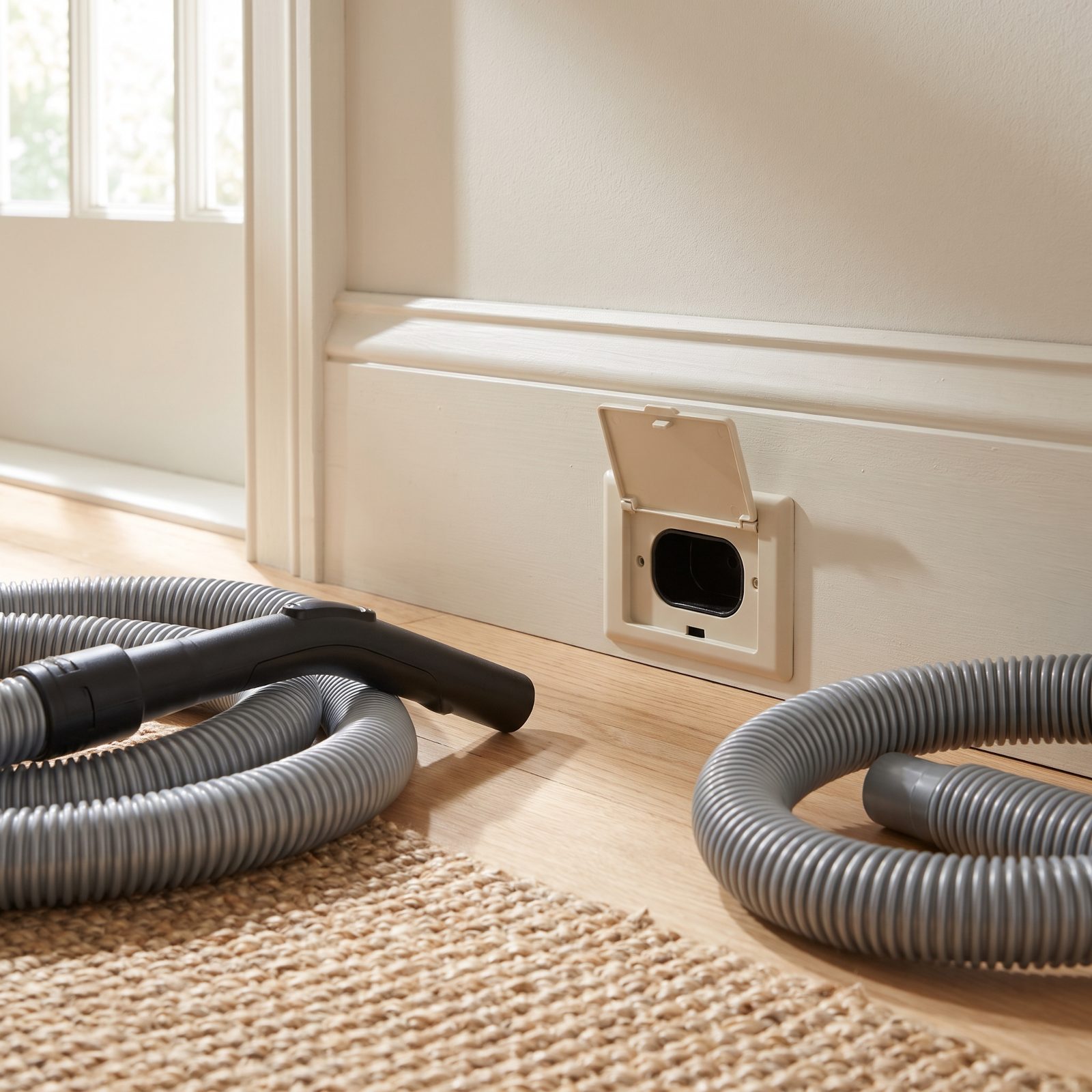
You’d find them tucked into the baseboard every room or two, a little hinged beige door flush with the wall. Pop it open, snap in the hose, and a motor buried in the garage roared to life somewhere far off.
No lugging a canister up the stairs. The dirt got sucked clear across the house into one big bin you emptied monthly. It was genuinely clever, which makes it stranger that builders quietly stopped putting them in. The hose was thirty feet of unwieldy vinyl you had to store somewhere, and that somewhere was usually a closet nobody could close properly.
15. The Floor-to-Ceiling Stone Fireplace With a Raised Hearth You Could Sit On
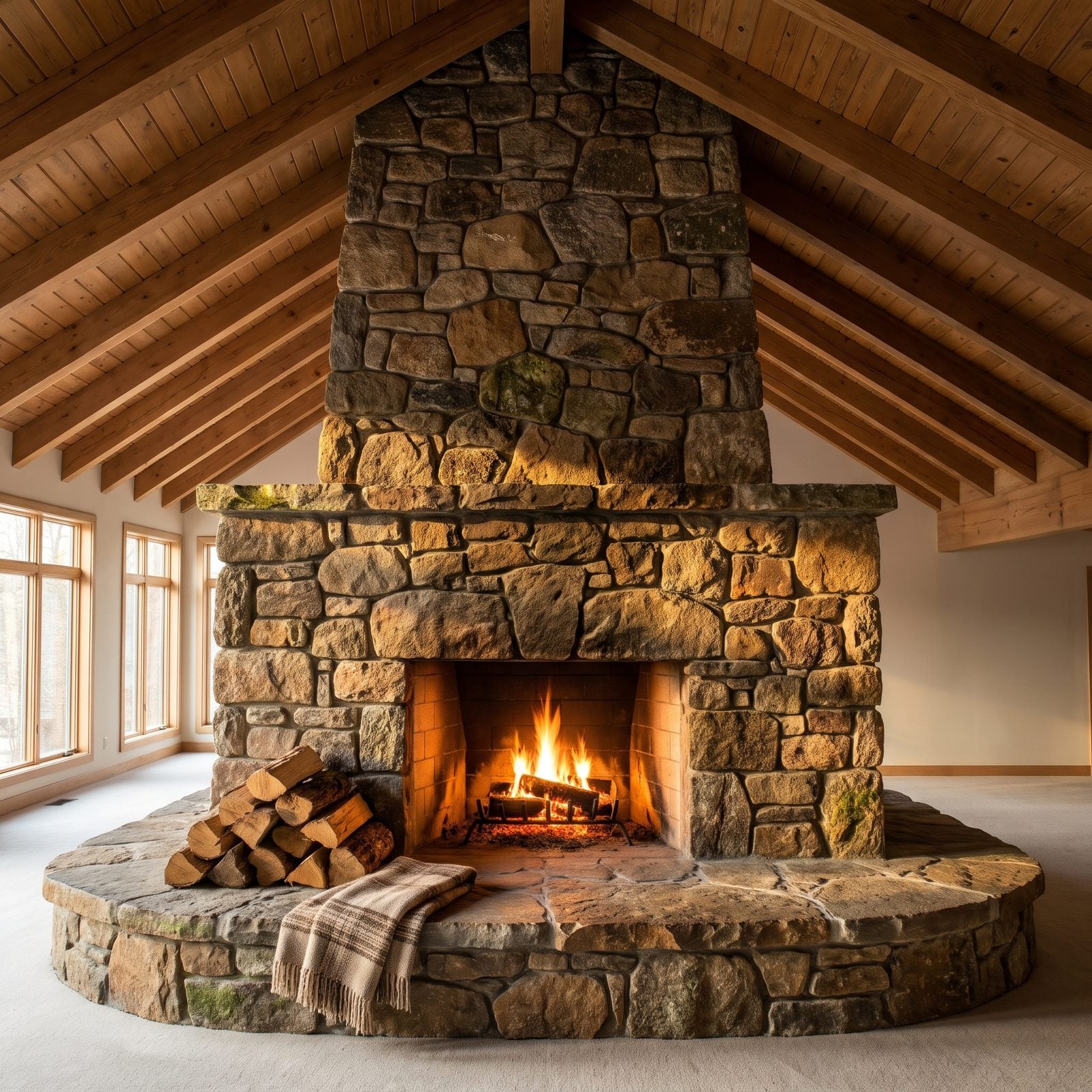
It climbed the whole wall, floor to vaulted ceiling, a cliff of rough fieldstone with a flat flagstone hearth jutting out at exactly the right height to perch on. Kids claimed that hearth as a seat. So did the family dog.
The stone was real and heavy and ran cold until you got a fire going, and then the whole mass held warmth for hours. This was the heart of the house, the thing the furniture pointed at and the spot everyone drifted toward. Modern builds favor sleek linear gas inserts now, clean and efficient and about a tenth as commanding. Something about a stone wall that big made the room feel anchored. A modern den rarely gets a centerpiece this unapologetically massive.
14. Bi-Fold Louvered Closet Doors That Folded Back on Themselves
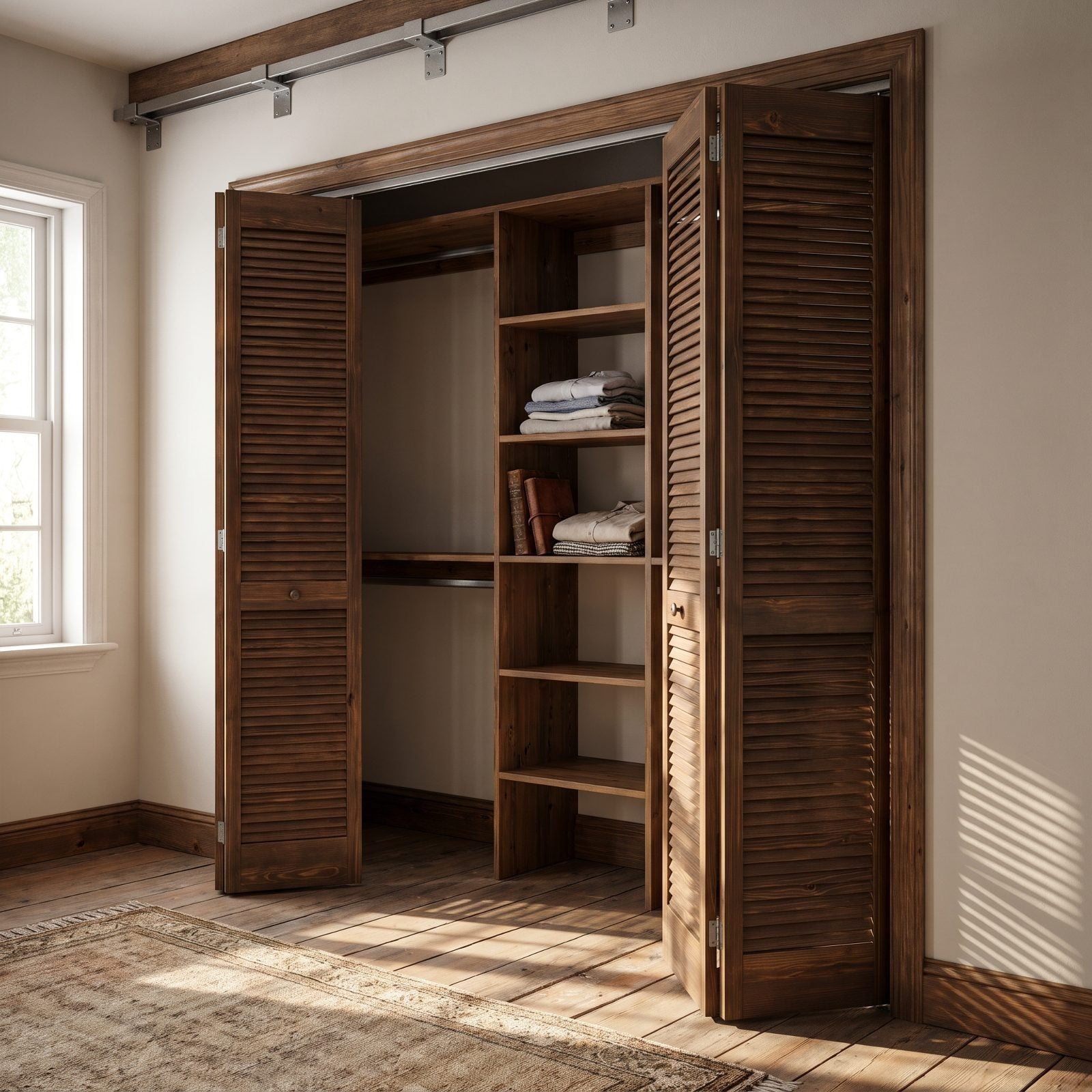
They folded back on a track in a neat accordion, two panels of stained pine louvers hinged in the middle, and they never once did it smoothly. The track collected grit, a door jumped the rail, and you’d be standing there wiggling the thing at an angle trying to coax it back on.
The horizontal slats threw pretty striped shadows and let air move through the closet, which supposedly cut down on musty smells. Mostly they let dust settle into every single slat, a hundred thin ledges nobody ever managed to clean.
13. Pull-Chain Ceiling Fans With Dark Wood Blades
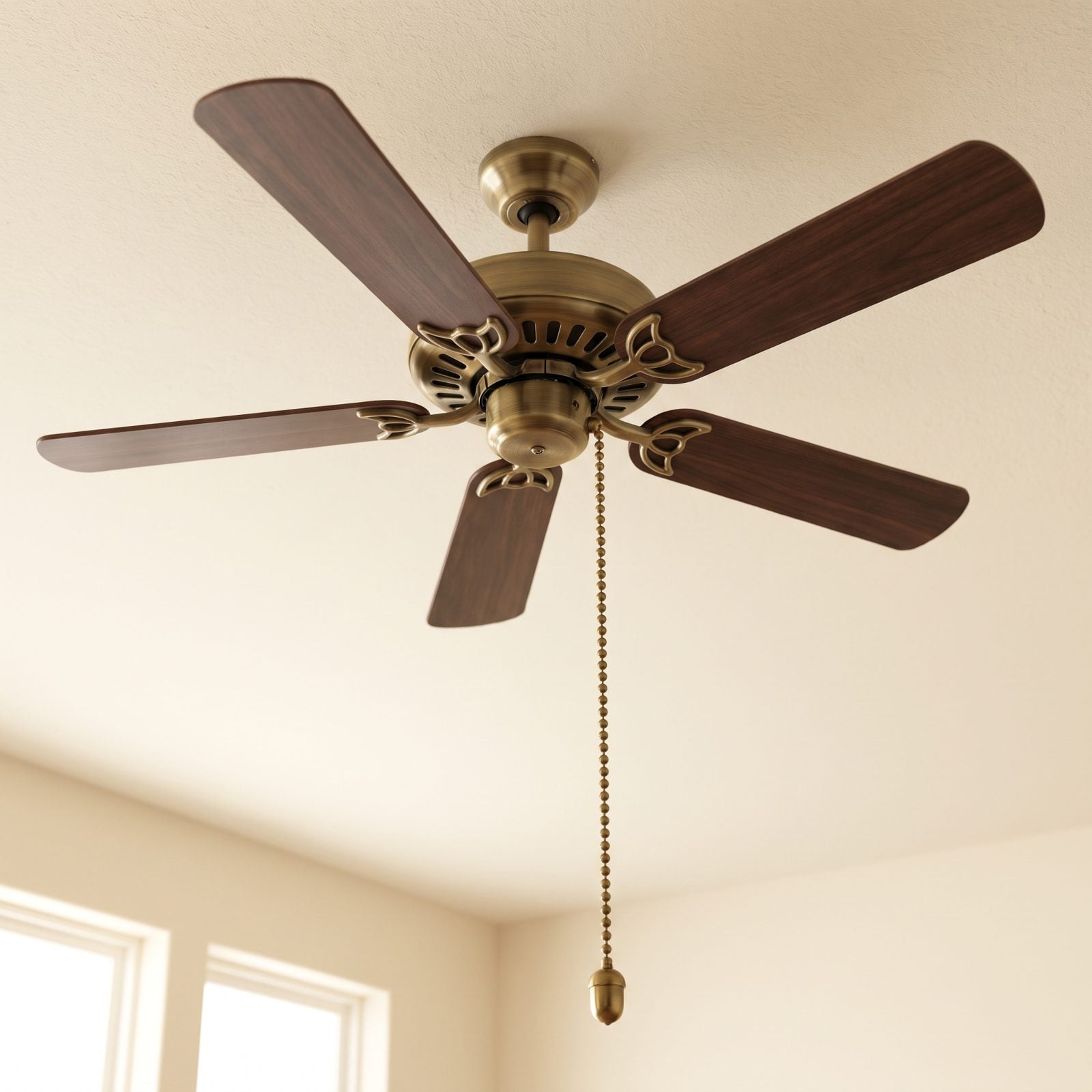
No remote, no wall dimmer, no app. Just a beaded brass chain you yanked to cycle through the speeds, ending in a little brass acorn pull.
The blades were dark stained wood or wood-grain laminate, five of them, usually paired with an antiqued brass housing. On a hot night it was the only thing moving air in the room. The chain tangled, the fan wobbled if the blades fell out of balance, and over the years you learned exactly how many pulls got you to the speed you wanted.
12. The Rotary Phone Nook Built Right Into the Hallway Wall
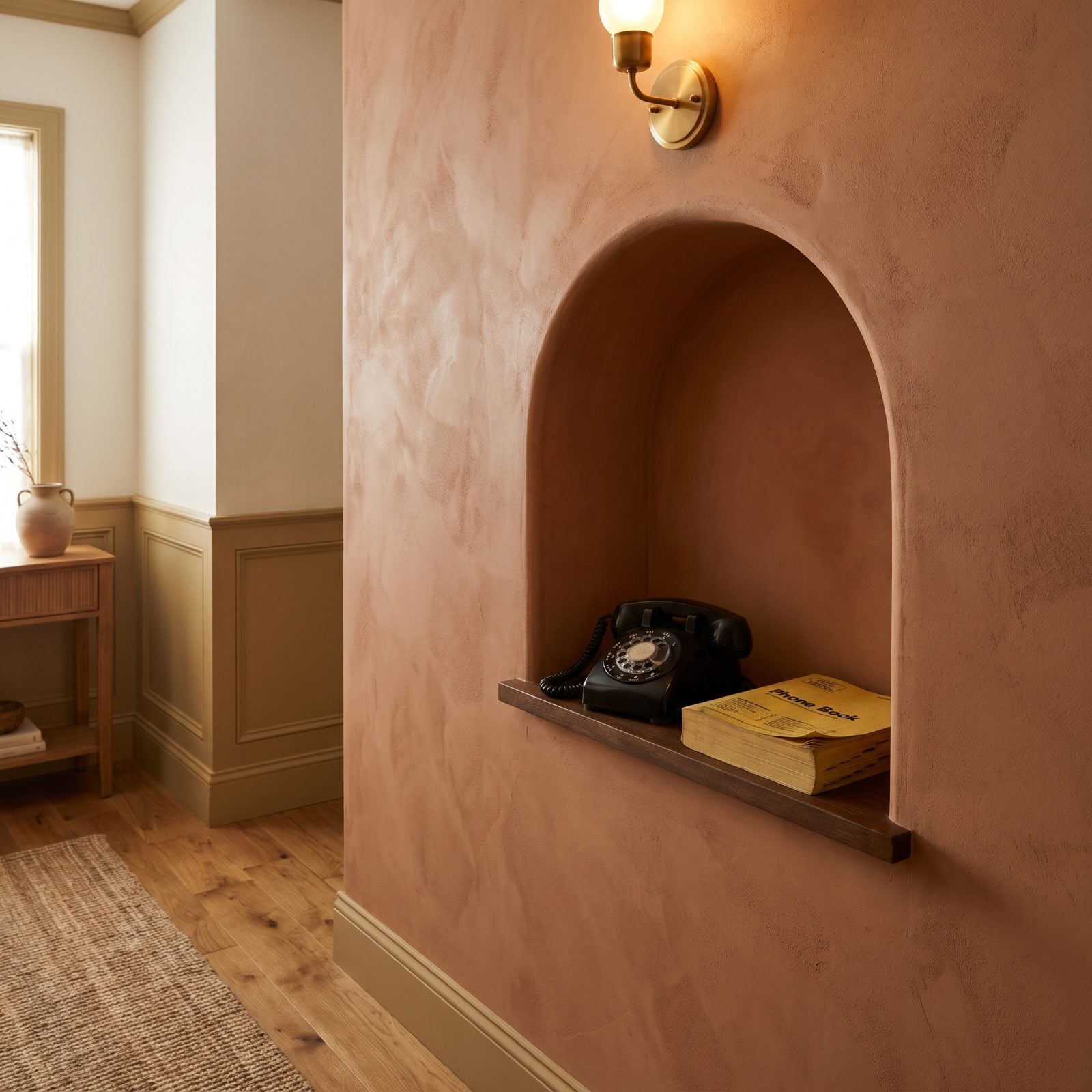
A little shelf carved right into the hallway wall, just deep enough for the phone and the fat phone book stuffed in the cubby below. Sometimes a tiny light. Sometimes a built-in seat so you could settle in for a long call.
The coiled cord stretched to the next room over if you pulled it hard enough, which every teenager in America discovered independently. You dialed by dragging your finger around the rotary and waiting for it to click back, and if you misdialed the last digit, you started the whole thing over.
The nook outlived the rotary phone by decades. Builders kept carving the little shelf long after cordless and then cell phones made it pointless, until one day they just stopped, and nobody noticed it was gone.
11. Pink and Seafoam Tile Tub Surrounds
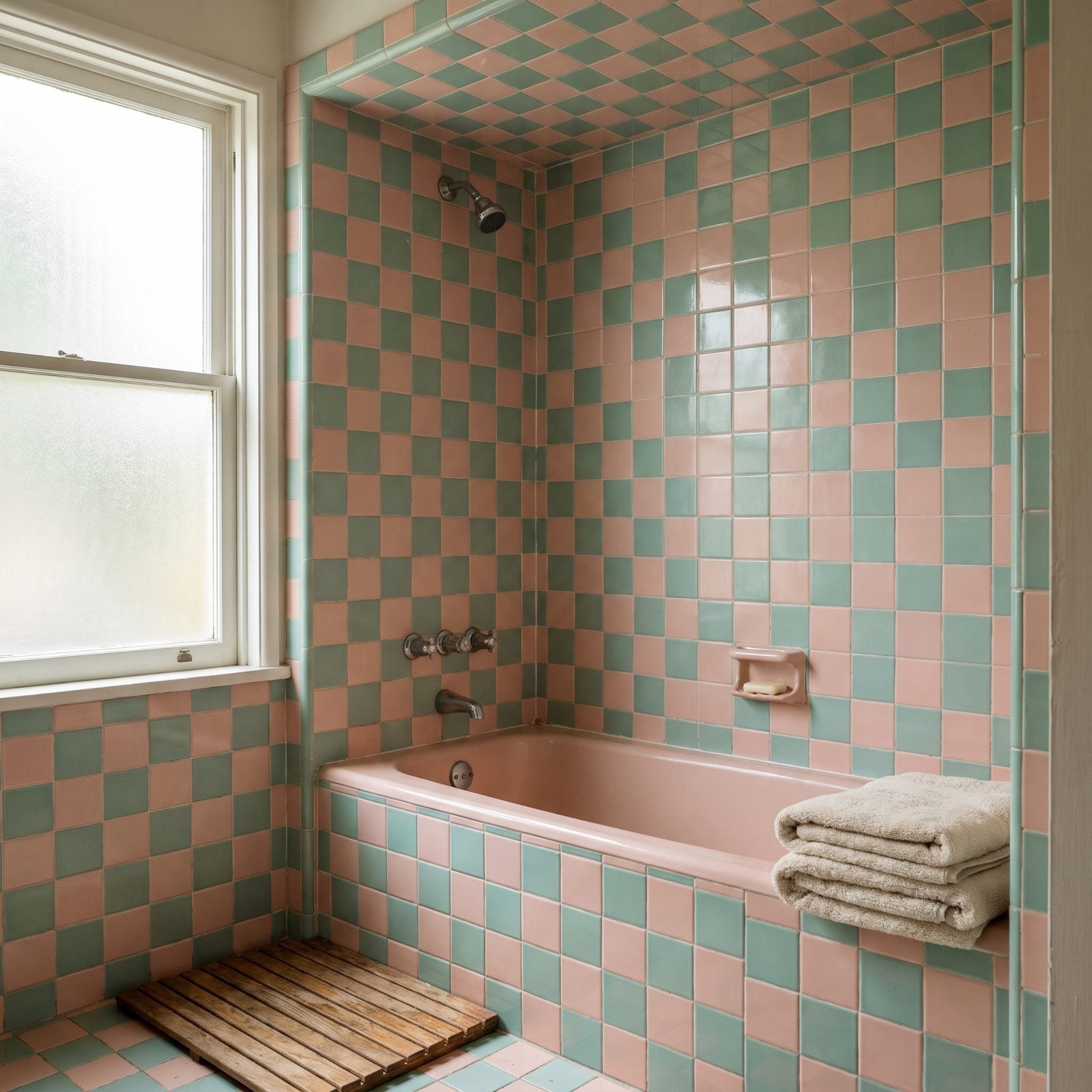
Pink tile wasn’t an accident. Somebody stood in a showroom and chose it, square by square, all the way to the ceiling. Seafoam got the same treatment in the houses next door.
The tile went everywhere a splash might reach, then kept going for good measure. A contrasting pink border running at eye level was the mark of a builder who had opinions. These rooms have aged into something people now rip out on day one of a remodel, which is a shame, because that glossy four-inch ceramic was fired to outlast the mortgage.
10. Faux-Wood Beam Ceilings That Held Up Nothing
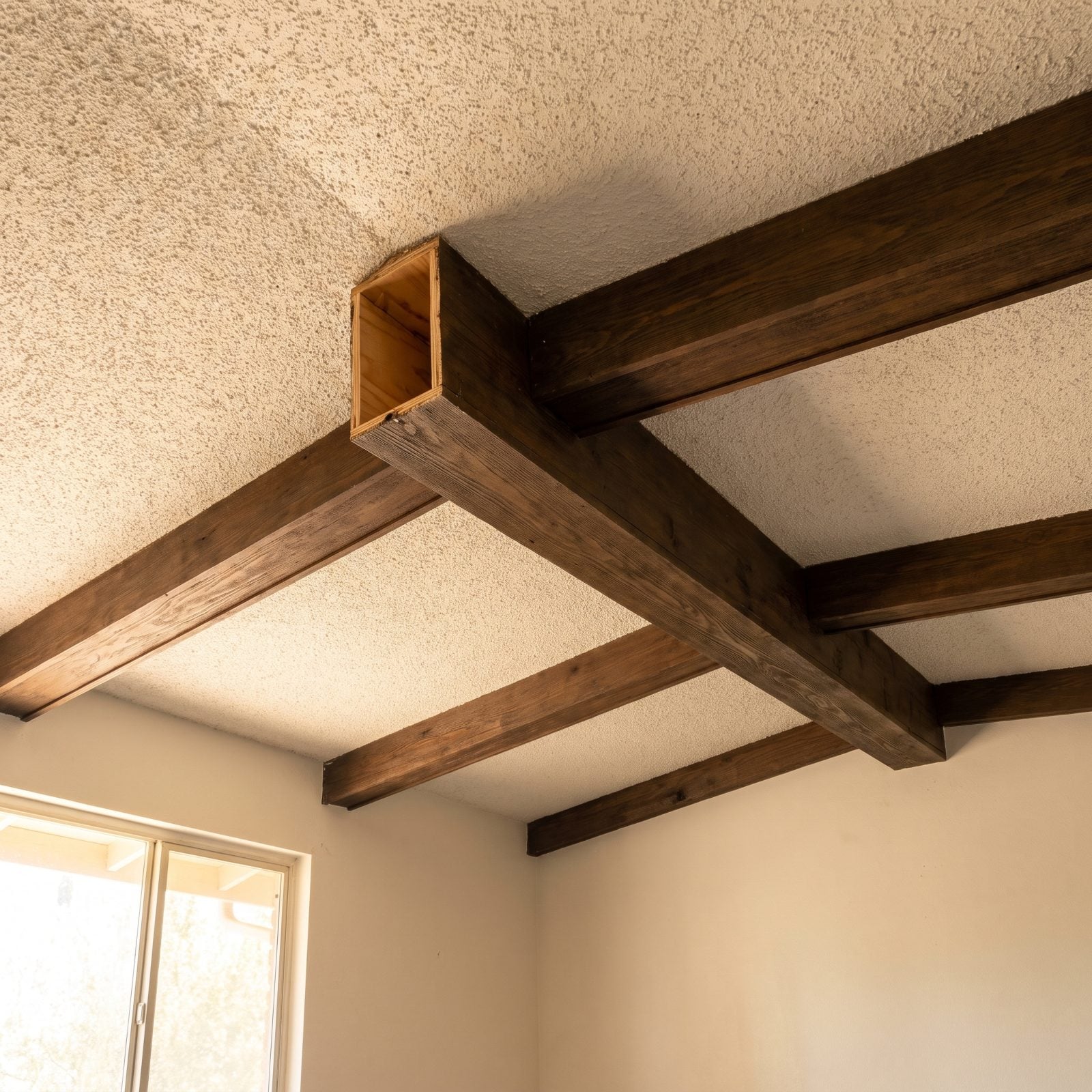
The beams looked like they were holding up the roof. They were holding up nothing. Most were hollow boxes of stained pine or molded foam, tacked to a flat ceiling to borrow the feeling of a lodge nobody had actually visited.
And they worked. A plain tract ceiling got instant weight and shadow for the cost of a weekend. You’ll still find them in modern den designs, but today’s version tends to apologize for itself. The 1970s one committed, dark stain and all.
9. Accordion Vinyl Room Dividers
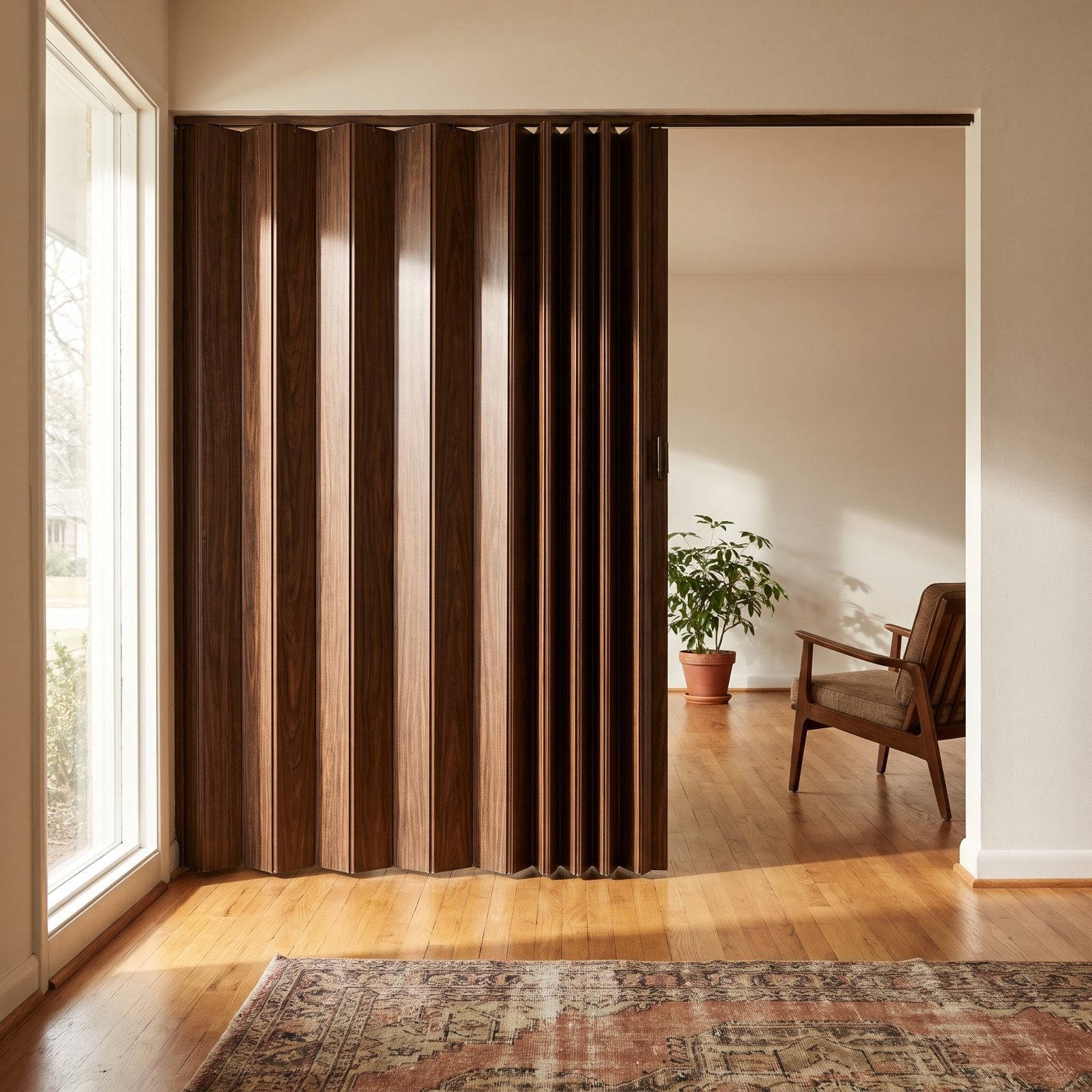
There’s a specific sound to an accordion divider closing. A soft vinyl clatter, panel folding into panel, then the little click of the latch finding its catch.
These things turned one room into two whenever company split off or a card game wanted privacy. They slid on a ceiling track, usually in a wood-grain vinyl that matched nothing and offended no one. Nobody builds in a vinyl divider anymore. We knock walls down now and call it open concept, which is the same idea running in reverse.
8. Carpeted Kitchens
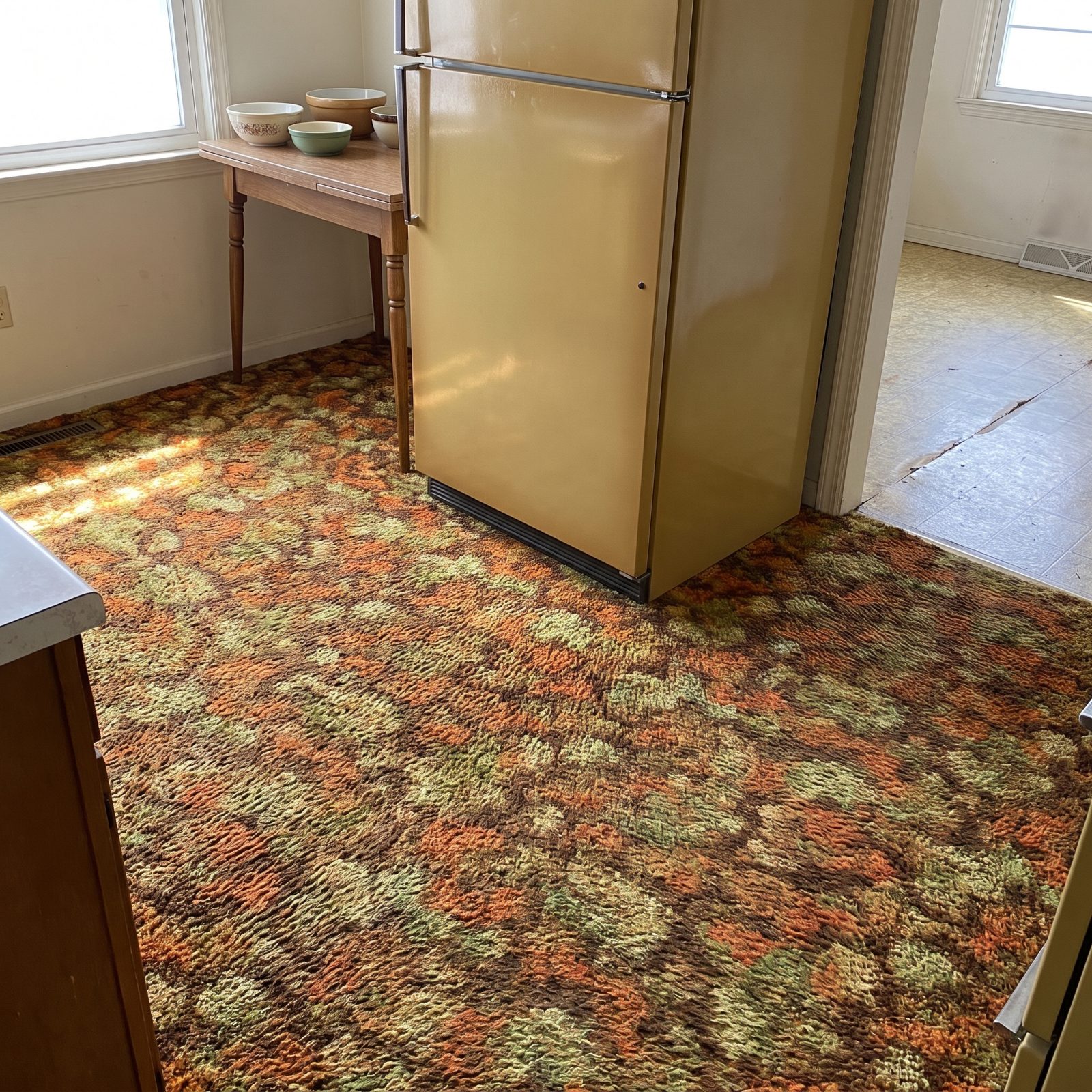
Carpet. In the kitchen. Right up to the base of the harvest gold refrigerator and under the breakfast table, where the toast crumbs went to live forever.
The logic made a certain sense at the time: warmer underfoot, softer on dropped glassware, quieter in a busy house. Then reality turned up a surface that fought every spill and lost. Today’s modern kitchen design wouldn’t dream of it. But there was something to standing barefoot on carpet at six in the morning, waiting for the coffee to drip.
7. Avocado and Gold Toilets and Sinks
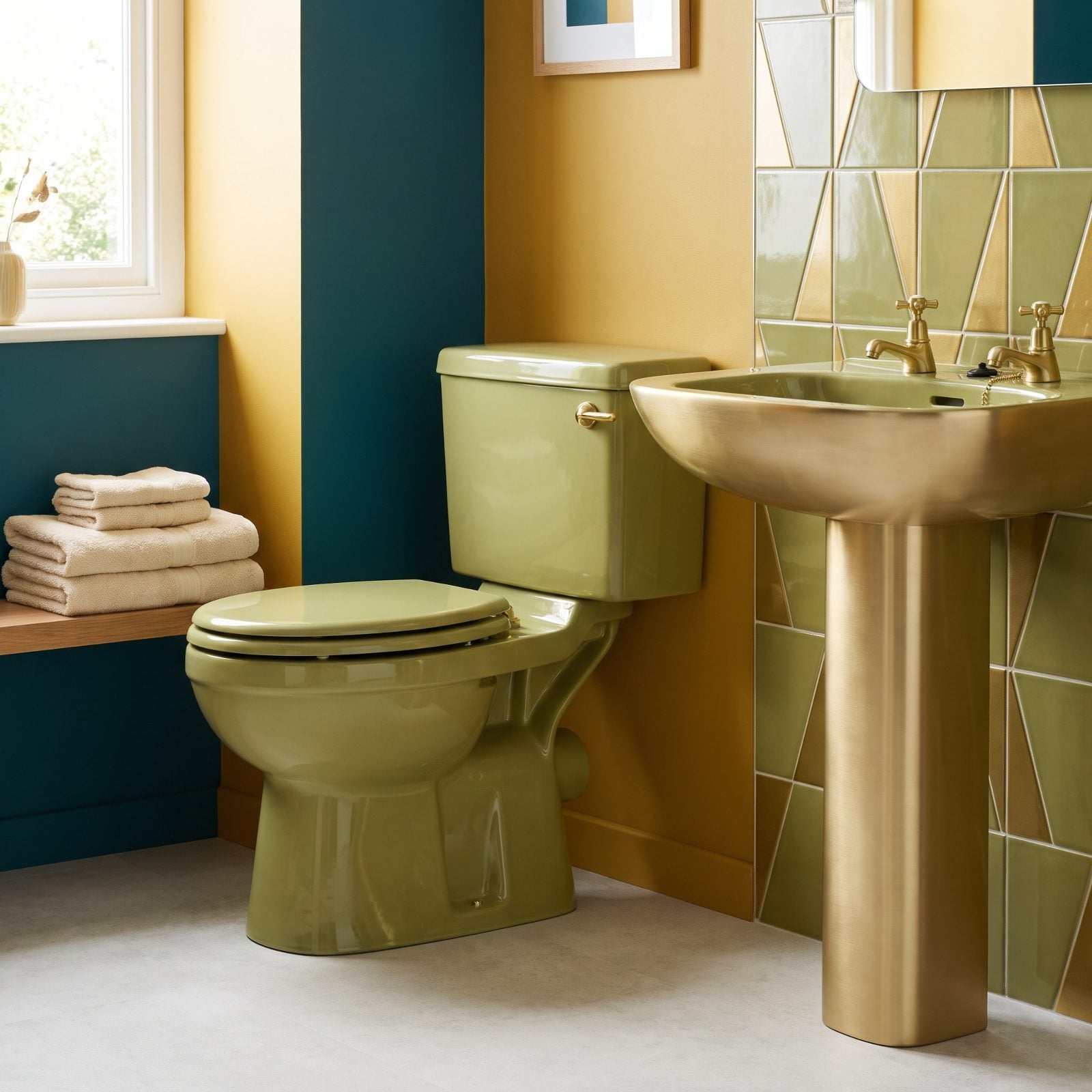
White was for people with no imagination. The 1970s wanted its fixtures in avocado, in harvest gold, in a shade of green named after a fruit nobody could pronounce yet.
A matching avocado toilet, sink, and tub announced a bathroom that had made up its mind. And these things were practically indestructible, which is the cruel part. A colored toilet from 1974 will outlast three white ones, and it’s usually the first thing a buyer wants gone. I understand the impulse. I also think we lost our nerve somewhere.
6. Burnt Orange Kitchen Cabinetry
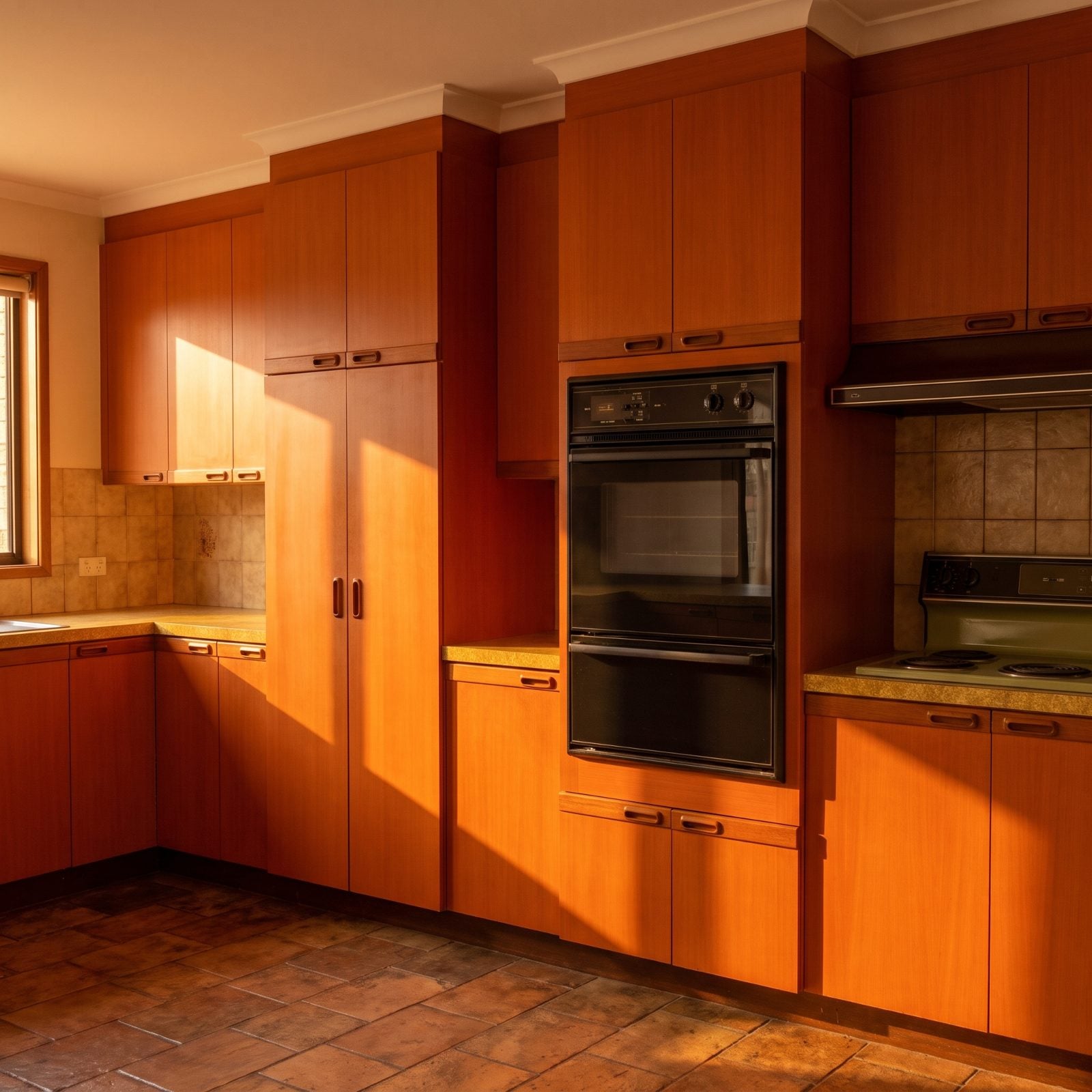
Imagine walking into a kitchen the color of a sunset that decided to stay. Burnt orange cabinets, floor to counter, with sleek slab doors and recessed wooden pulls and not a shred of hesitation.
This was a house that knew what it liked. Orange wasn’t an accent back then. It ran the whole show, paired with chrome-trimmed and black wall ovens and a beige-tan tiled backsplash. White shaker boxes took over everything for two decades, and only lately have people started painting cabinets a real color again. The 1970s was there first, and it went all the way.
Our readers still aren’t sold on that sunset look, since rooms dominated by orange got fewer hearts than the other images in the same articles, 26% against 33%.
5. Glass Block Windows and Dividers
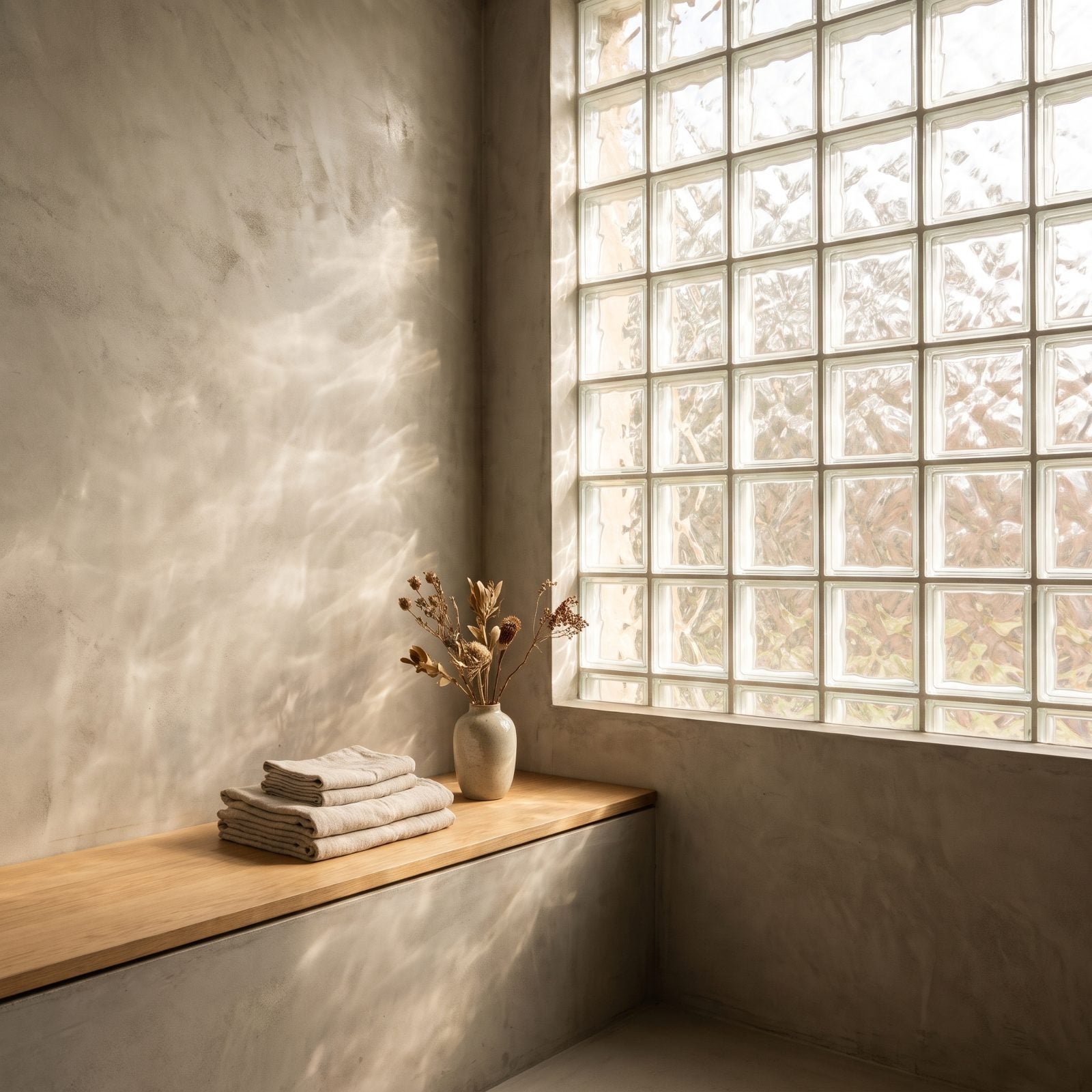
Light came through glass block the way it comes through water, soft and wavy and impossible to see a clear shape behind. That was the appeal.
These thick glass cubes let the sun in while keeping the neighbors out, which made them a bathroom favorite. Builders also stacked them into half-walls between rooms, dividing space without killing the light. They went briefly out of fashion and are quietly creeping back, though rarely with the thickness and heft the 1970s used. There’s a weight to the real thing.
4. The Built-In China Hutch With Amber Glass Doors
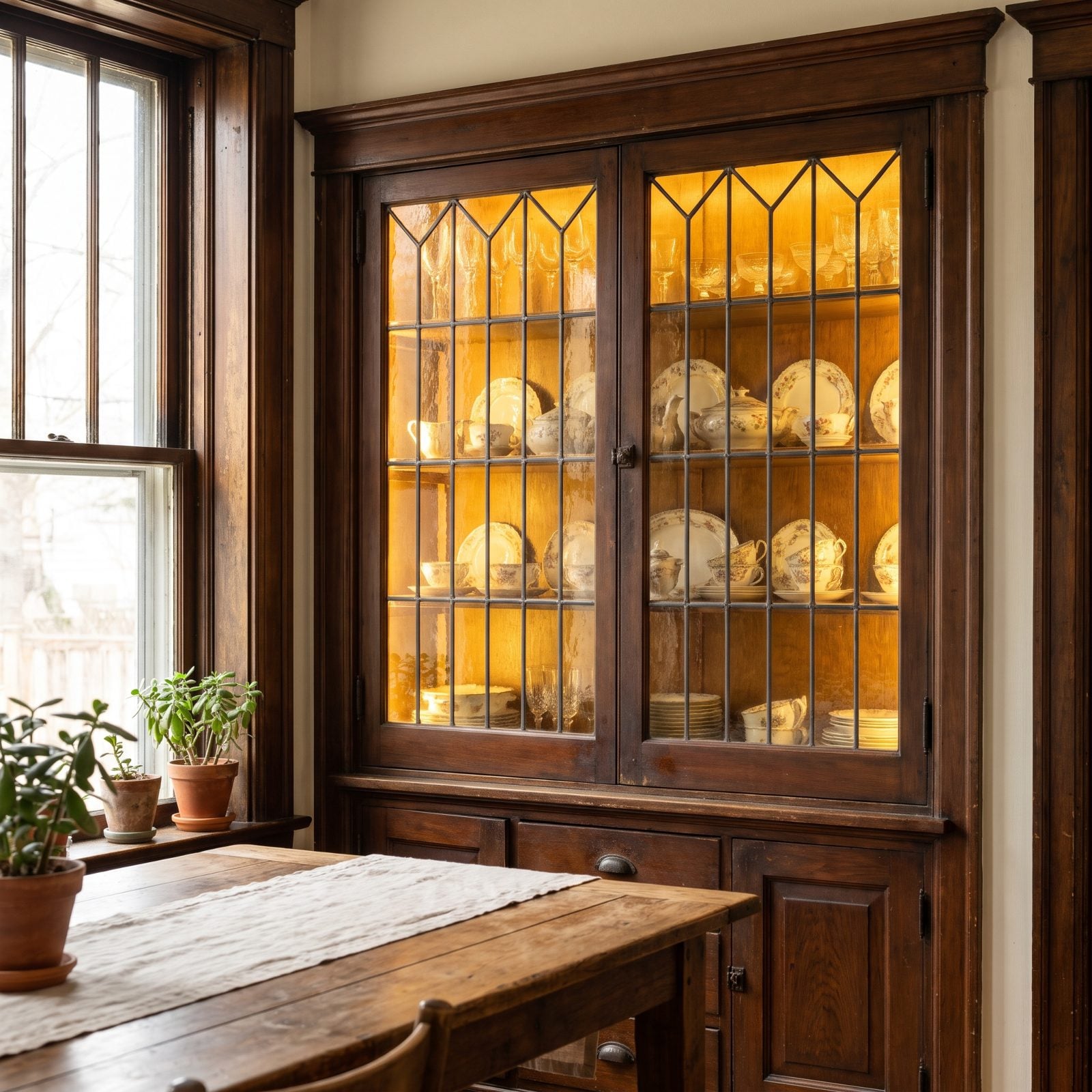
The good dishes lived behind amber glass, lit from within, glowing like something in a church. You weren’t allowed to touch them except on holidays.
A built-in china hutch was the dining room’s crown, floor-to-ceiling walnut with leaded amber-tinted doors that turned every plate inside a shade of honey. It held the gold-rimmed set, the cut-glass goblets, the serving dishes used twice a year. Nobody builds these in anymore. We don’t have formal dining rooms to put them in, and we stopped owning a separate set of dishes for company. That part I genuinely miss.
3. Low-Pile Indoor-Outdoor Patio Carpet
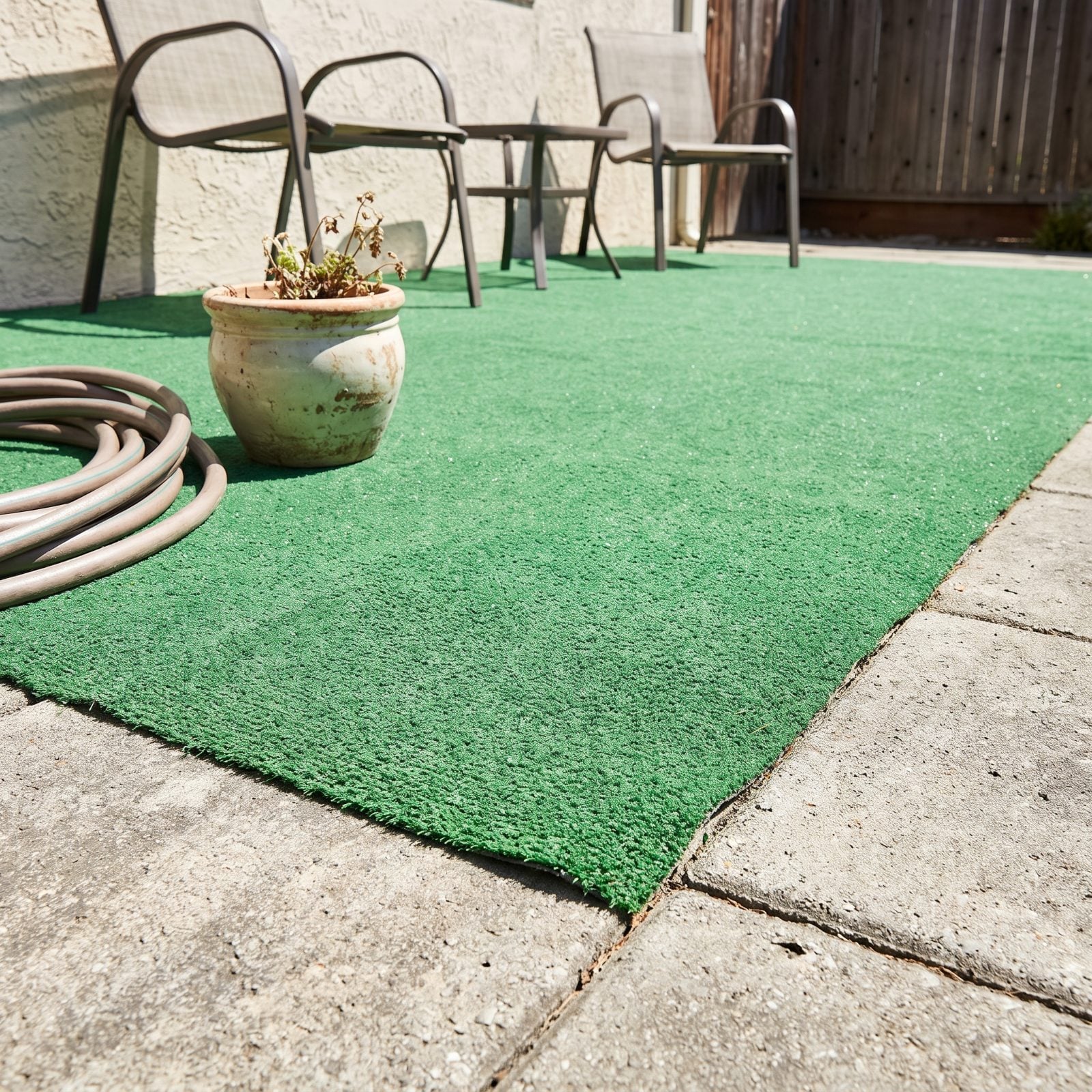
The patio had carpet too, a flat scratchy green that pretended to be grass and fooled absolutely nobody. It ran from the sliding door straight out to the webbed lawn chairs.
Indoor-outdoor carpet was the compromise between a concrete slab and an actual lawn. It drained, it dried, it burned your bare feet a little in July, and it turned a bare porch into a room you’d actually sit in. You rarely see it now. We went back to concrete and composite decking, tidier and about half as inviting on a slow summer evening.
2. Decorative Wrought-Iron Room Screens That Divided Without Really Dividing
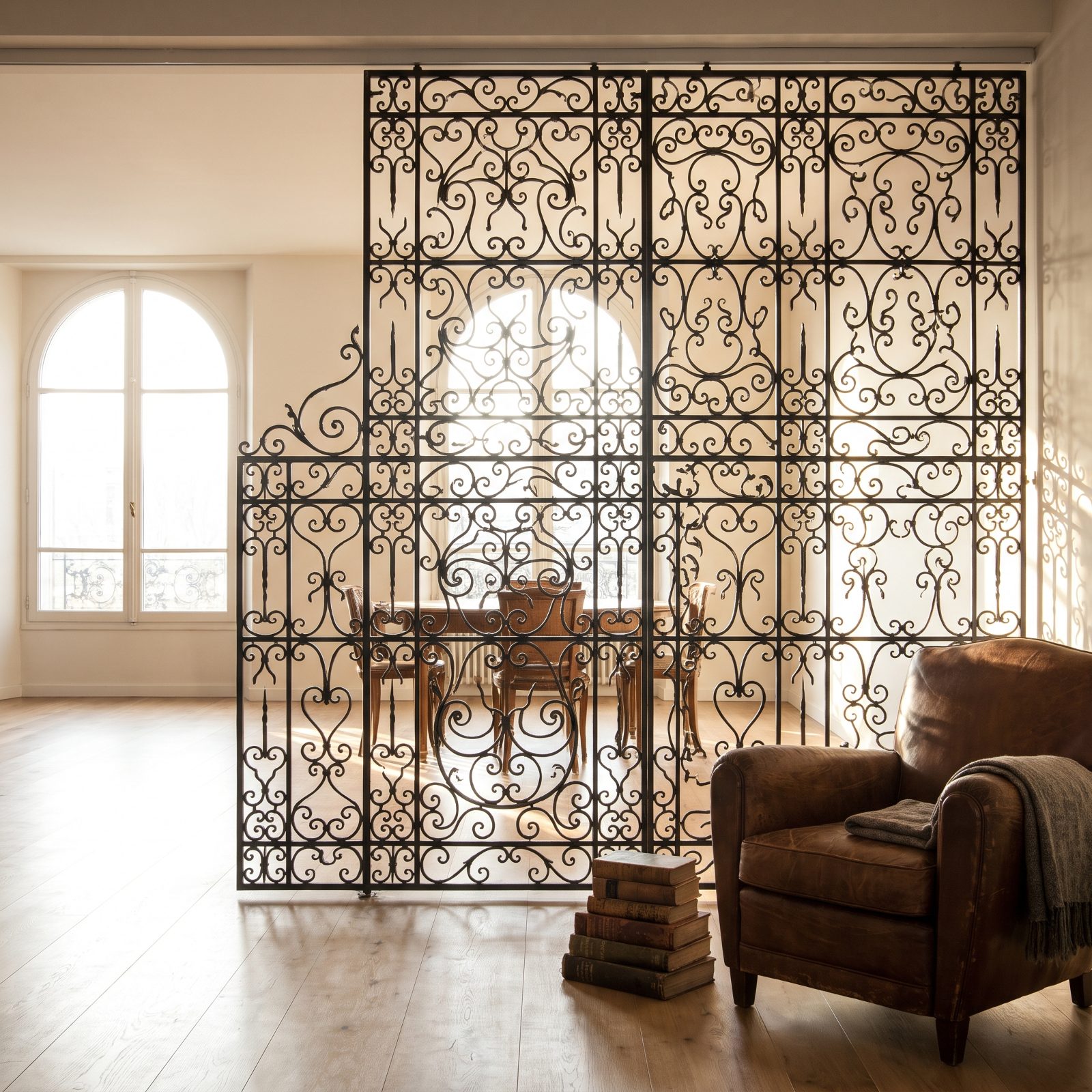
It stood between the living room and the dining area, black iron bent into scrolls, hearts and curlicues from the floor nearly to the ceiling. You could see straight through it to the table and chairs on the other side, which was the whole point. The screen announced that two rooms existed without blocking anyone’s view of who was eating the last of the onion dip.
The look rode the Spanish and Mediterranean wave that swept through so many 1970s houses, the same impulse that brought heavy carved furniture and arched everything. When afternoon sun hit the scrollwork, it threw lacy shadows across the floor and walls, and that part was lovely. Dusting it was not. Every curl collected lint, kids treated it like a jungle gym, and open-plan builders eventually decided a living room didn’t need a fancy fence running down the middle. A kitchen island or a half wall does the job now, and most of those iron screens ended up at the salvage yard.
1. Vinyl Flocked Wallpaper in Dark, Velvety Florals
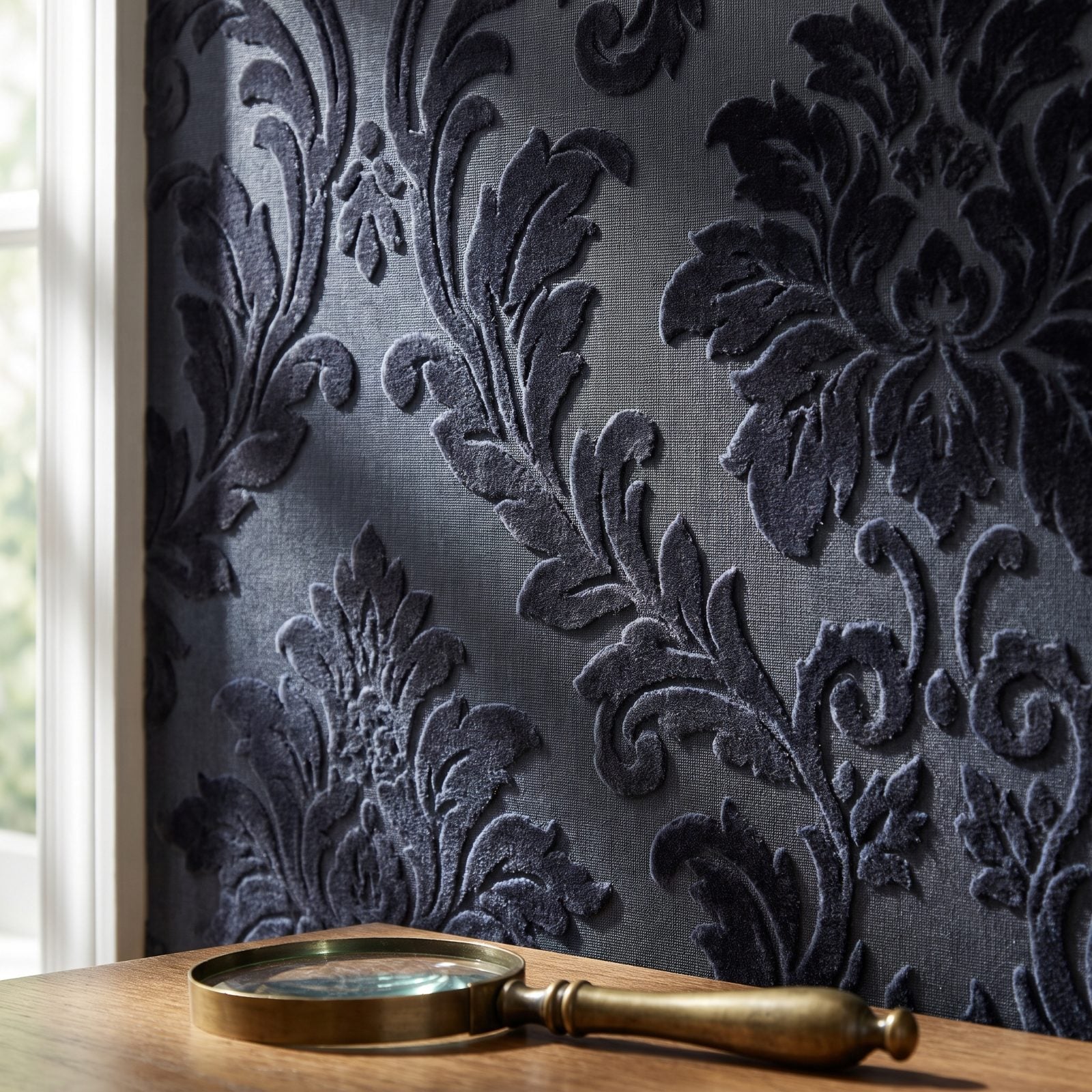
Run your hand across it and the pattern pushed back. That raised velvet pile was the entire reason flocked wallpaper existed — florals you could actually feel, usually deep burgundy or forest green with the roses rendered in soft black fuzz. It showed up in dining rooms and powder rooms, basically anywhere a house wanted to put on airs.
And the vinyl backing made it nearly indestructible, which is partly why so much of it still clings to walls in older homes. Steam from the kitchen, candle smoke, a decade of dinner parties. It took all of it without blinking.
Modern builders walked away from it entirely. The dark palette reads heavy to a market chasing light and airy rooms, and stripping the stuff off a wall is a genuine chore — ask anyone who’s tried. A shame, honestly. Nothing on a flat painted wall pulls off that same hushed drama when the evening light comes in sideways and catches the pile.
Velvet textures haven’t made a full comeback with Home Stratosphere readers, who gave interiors featuring velvet hearts only 33% of the time, versus 49% for the other images alongside them.