🔥 Would you like to save this?
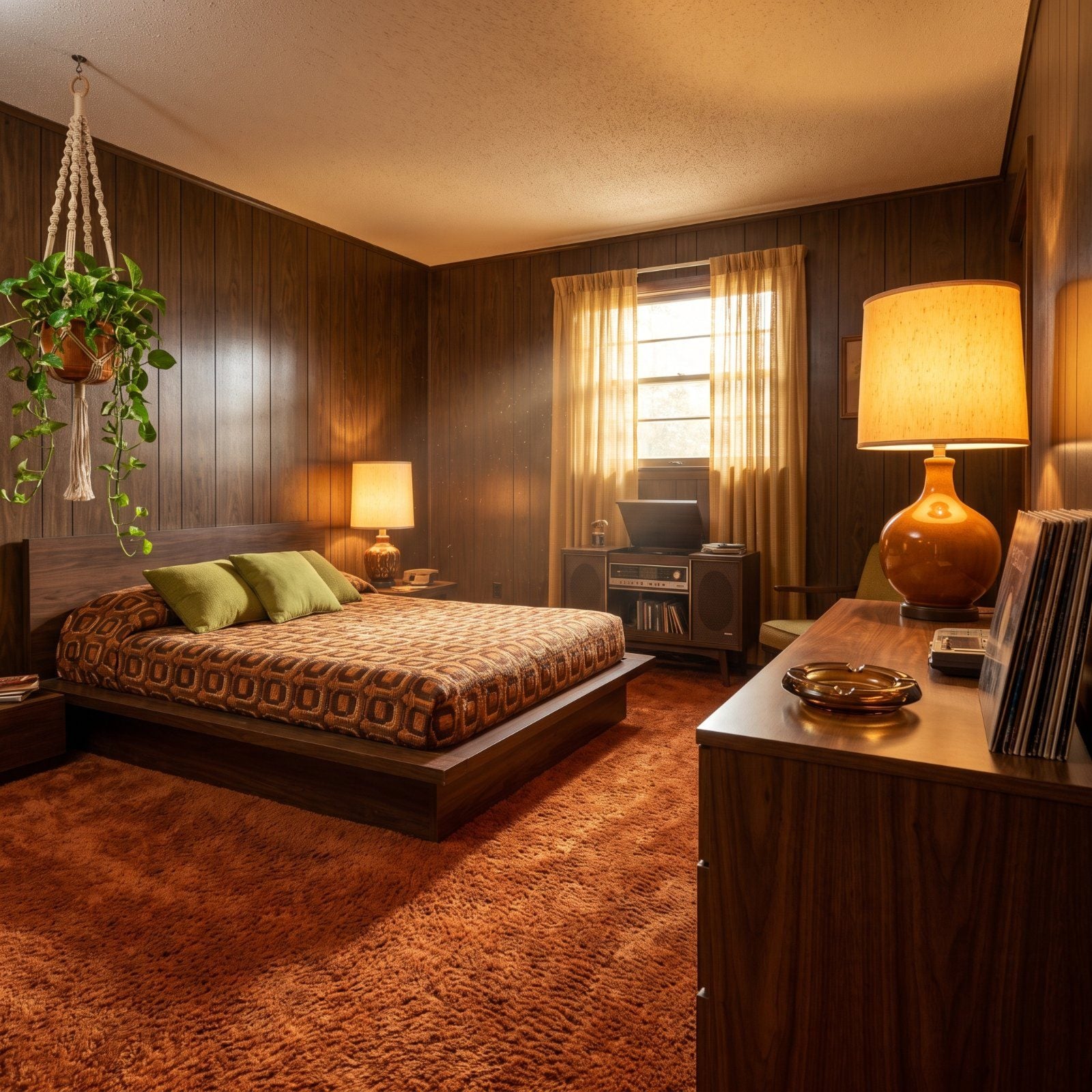
The shag was so deep you could lose a watch in it. The waterbed sloshed when the furnace kicked on, and everything smelled faintly of the amber incense on the dresser mixed with the warm dust inside a console stereo somebody left running too long. Bedrooms back then weren’t neutral boxes staged to sell. They were committed, saturated, slightly damp, and entirely their own. What follows is a walk back through the features that defined them — the ones that would send a staging consultant reaching for a gray paint deck.
48. Wall-to-Wall Shag Carpet in Burnt Orange
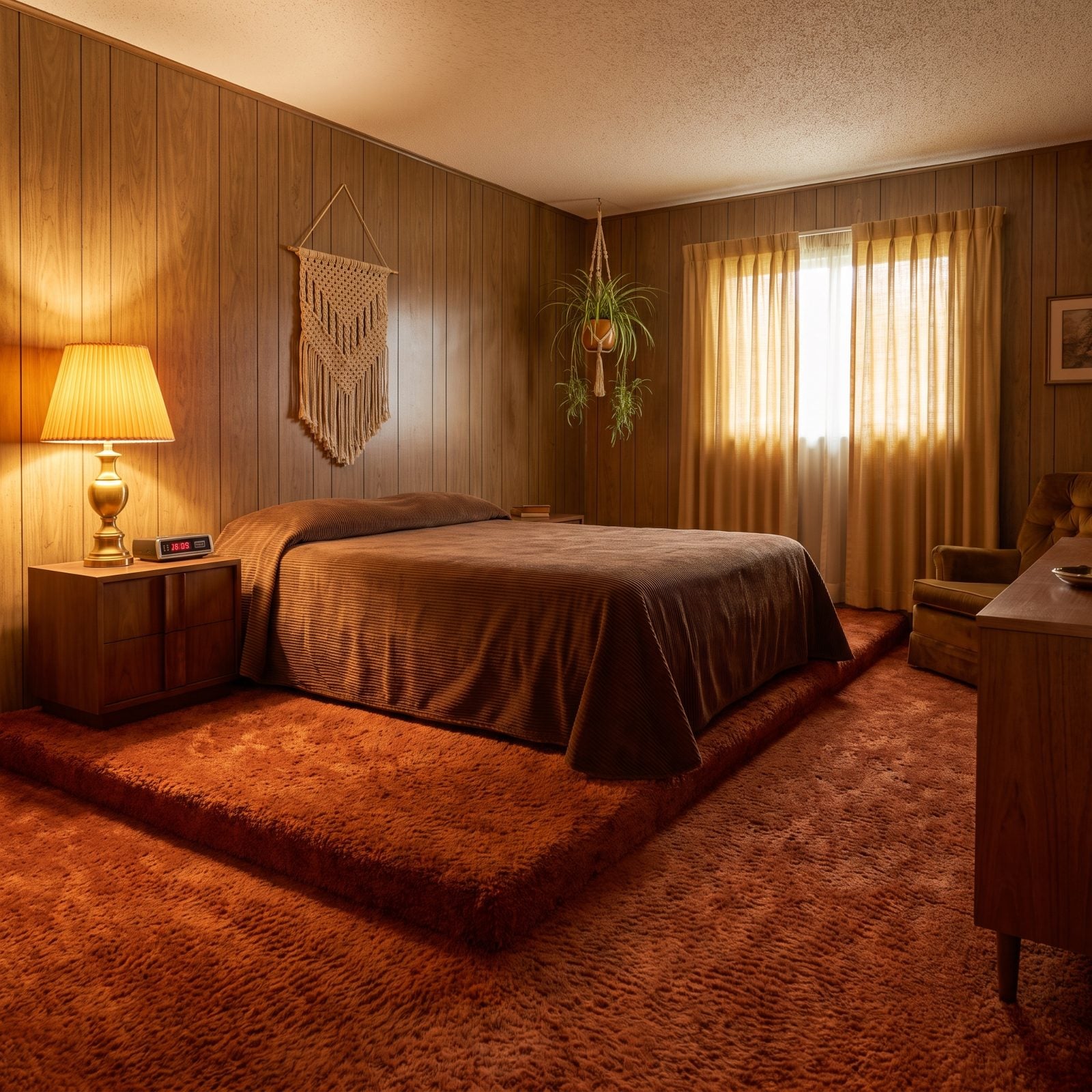
You could rake it. The living room had a little plastic carpet rake, and the bedroom shag got the same Saturday-morning treatment, leaving neat parallel rows that lasted maybe four minutes before someone walked across them.
In order to come up with the very specific design ideas, we create most designs with the assistance of state-of-the-art AI interior design software. Also, assume links that take you off the site are affiliate links such as links to Amazon. this means we may earn a commission if you buy something.
Burnt orange was the color of the decade, and nobody did half-measures. The carpet ran wall to wall, climbed any platform in its path, and swallowed the occasional earring whole. A modern stager would pull it on day one and lay down something the color of unsalted crackers. But a floor you sank into had real warmth to it. For a softer, earthier take on that same instinct today, there’s plenty of copper bed inspiration working the same palette with restraint.
47. A Sloshing Vinyl Waterbed Nobody Could Make Properly
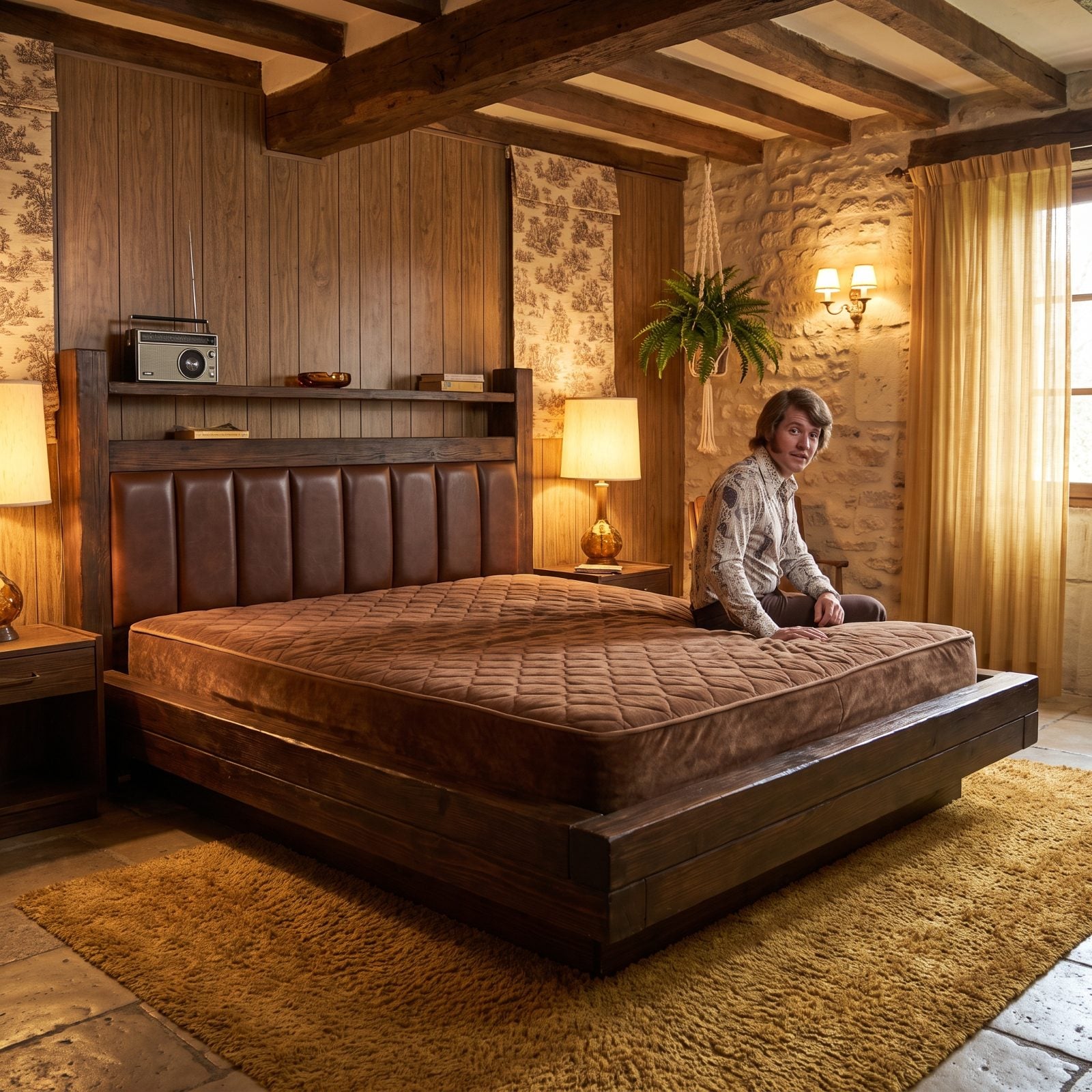
It sloshed when you sat. It sloshed when the cat jumped. And it heated up with an electric pad underneath, because otherwise you were sleeping on a cold lake — the hum of that heater became the sound of the room at night.
The frame was a fortress of dark-stained wood with a padded vinyl headboard and a shelf for your ashtray and paperback. You didn’t change the sheets casually; you wrestled them. Every waterbed owner knew someone whose seam had given out and turned a second-floor bedroom into a very bad afternoon. A stager wants a bed that reads calm and still. This one moved when you breathed.
46. A Carpeted, Multi-Level Platform Surrounding the Bed
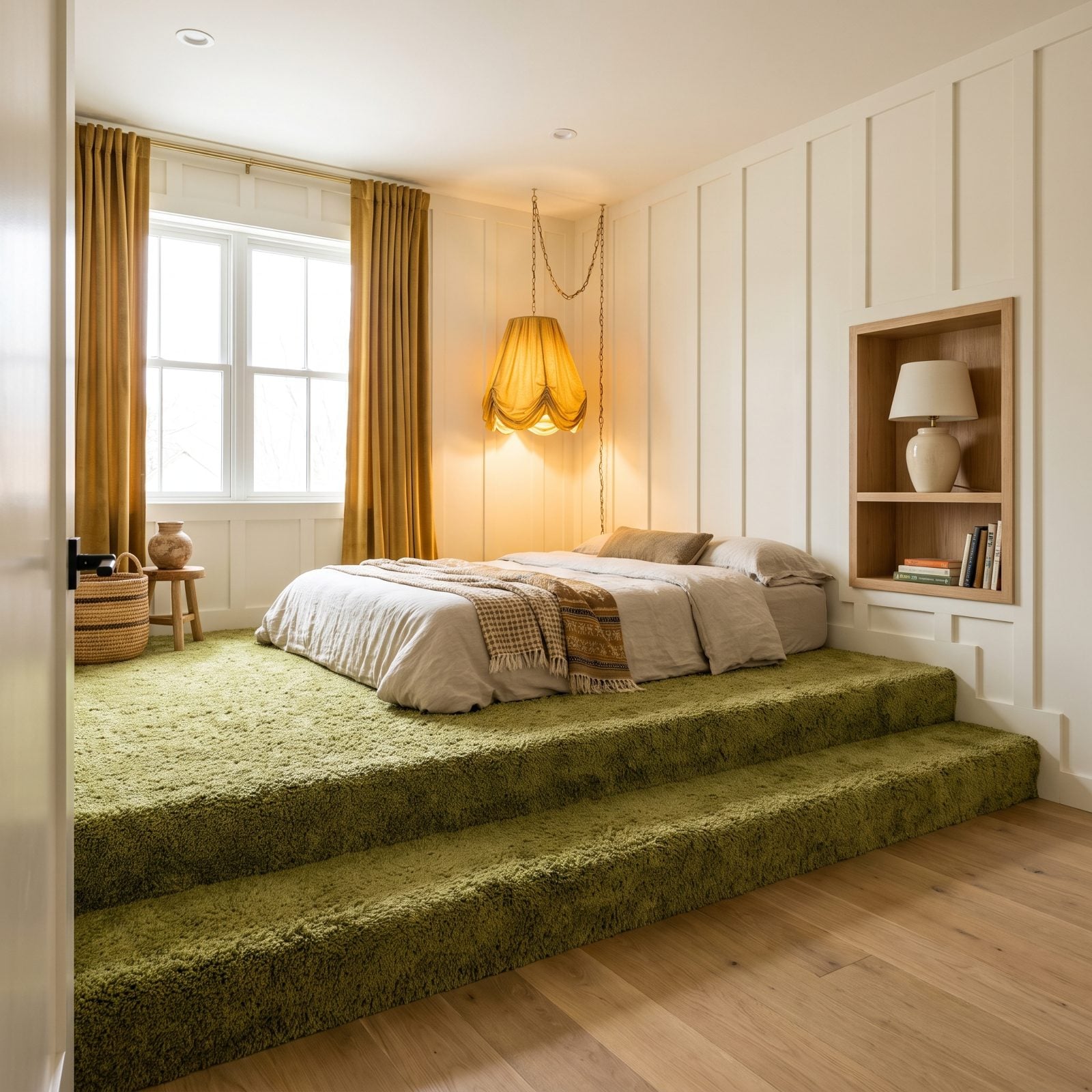
The bed had a stage, and you climbed up to it. Builders and ambitious homeowners framed a wooden platform, carpeted every inch including the risers, and set the mattress on top like it was being presented to the room.
Some had a step, some had two, and the best ones had a second level off to the side wide enough for a lamp, a potted plant, and a place to sit. It made the bedroom feel like a little landscape instead of a flat rectangle. Modern staging advice says keep floors continuous and clean so a buyer can read the square footage fast. The platform did the opposite — it carved the room into zones and made you commit a step to reaching your own bed.
45. A Round Bed That Consumed the Floor Plan
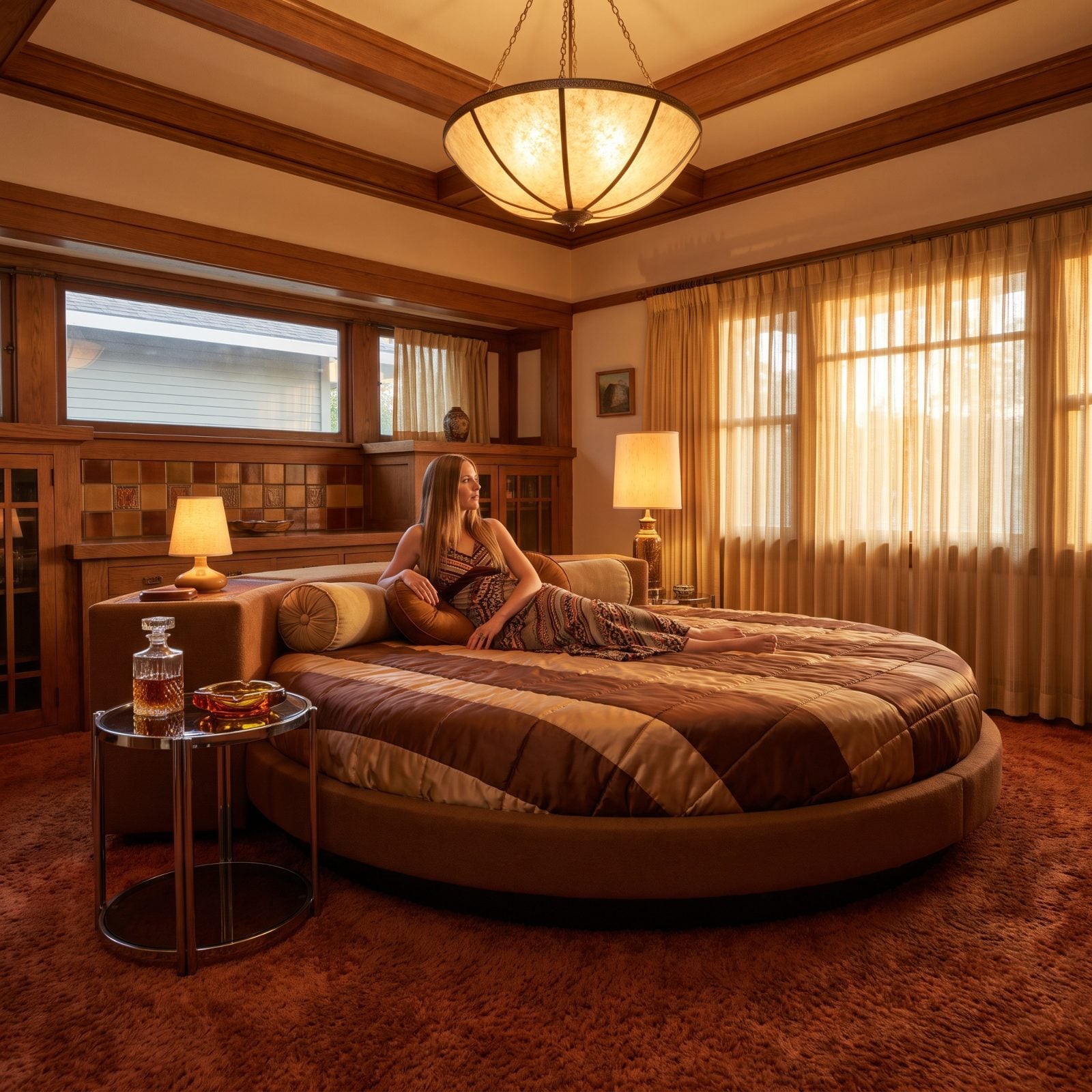
A circle in a rectangle — the geometry problem nobody wanted to solve. So they just let the round bed win and lived with the awkward corners it left behind.
Round beds were the height of swagger, the furniture equivalent of a velvet smoking jacket. Finding fitted sheets for one was a quest. Walking around it meant edging through gaps too narrow for a nightstand. A stager’s entire job is making a room feel bigger, and the round bed did the reverse with total confidence. It didn’t care about efficiency. It cared about arriving. For grounded takes that keep the drama without the circle, there’s good emerald bedroom inspiration in the same warm register.
44. A Sunken Bathtub Installed Right in the Open Bedroom
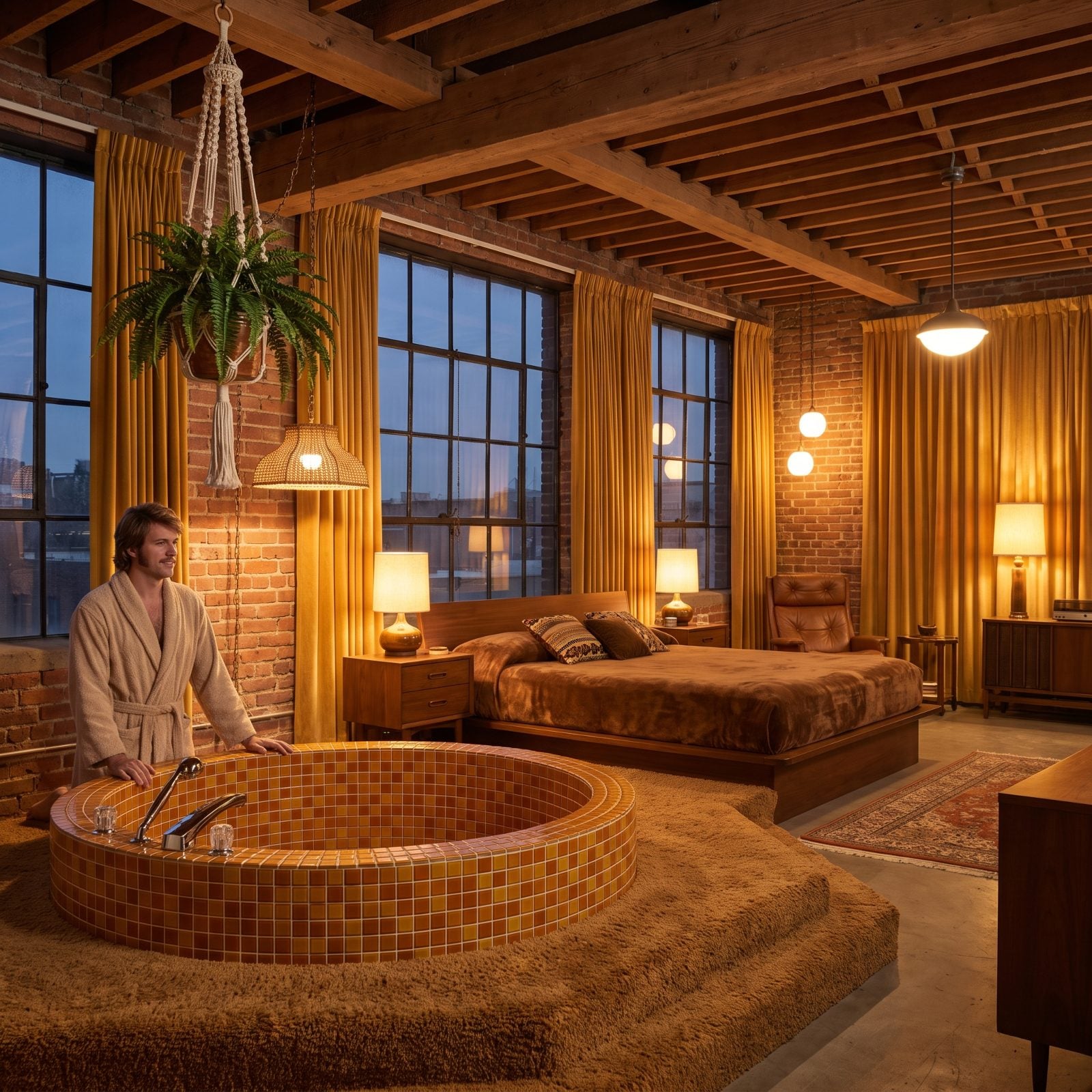
No wall. No door. Just a tub sitting a few steps from the bed, often sunk into its own carpeted platform with the shag running right up to the rim.
It was the ultimate leisure flex — the bedroom declaring that bathing was a lounge activity and not something to be hidden behind plumbing. The practical problems were enormous: steam, splash, and a bathtub in your sightline while you slept. Today’s home-staging rulebook would have a quiet breakdown. Wet zones belong behind doors, the thinking goes, and privacy sells. But there was something gloriously carefree about soaking in the open while the stereo played across the room.
43. Avocado-Green Walls from Floor to Ceiling
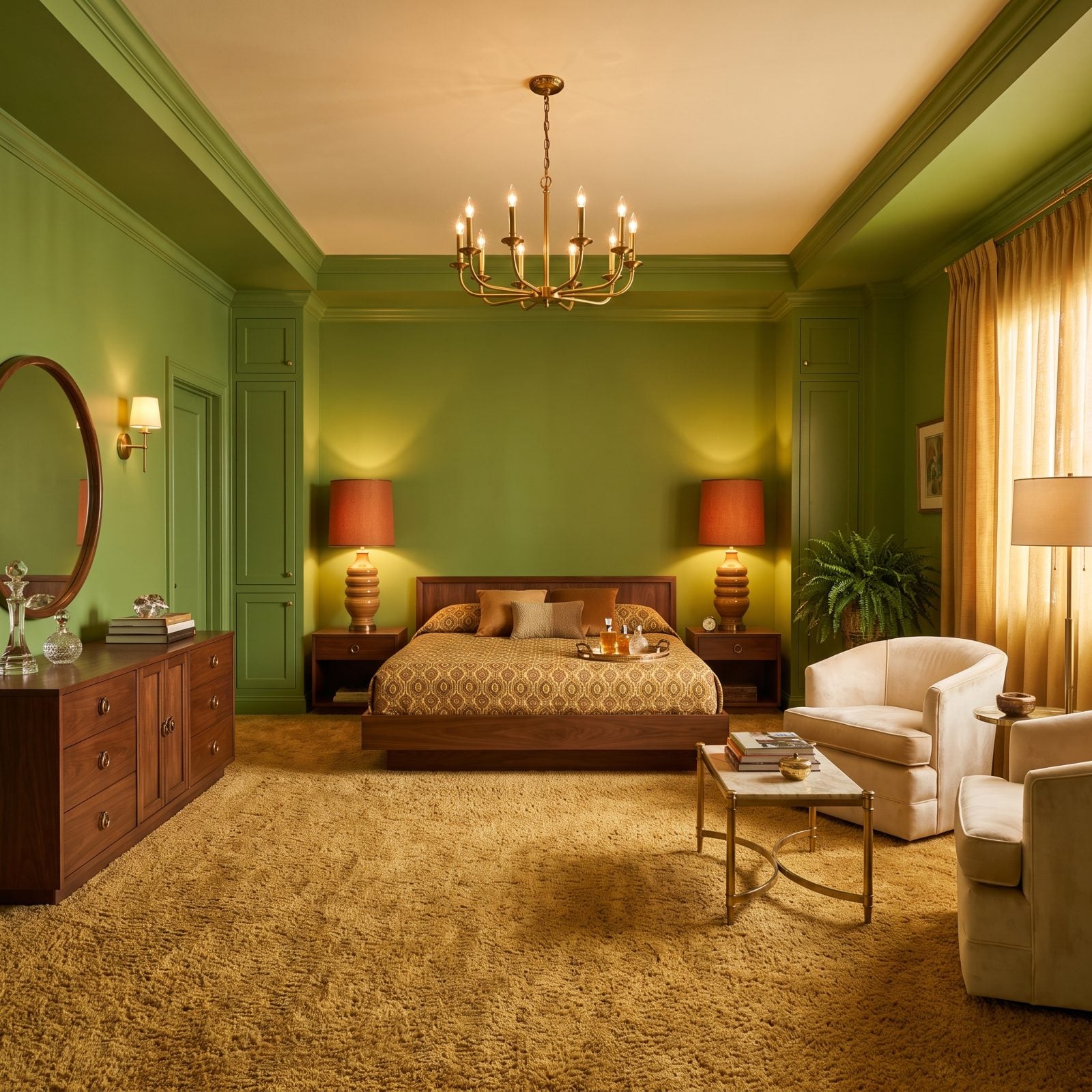
Avocado was not a color you dabbed on an accent wall. You drenched the room in it, corner to corner, until the whole space glowed a muddy, confident green that matched the fridge in the kitchen and the toilet in the bathroom.
At the time it read earthy and modern, part of a palette that pulled from nature and landed somewhere near guacamole. Staging consultants now preach greige and soft white so a buyer can picture their own life on a blank wall. The 1970s had no interest in blank. The wall was part of the statement, and the statement was green.
42. Orange-and-Brown Geometric Wallpaper That Vibrated

Interlocking circles. Repeating hexagons. A pattern so busy it seemed to move a little when you stared at it before falling asleep — which is not an experience a modern bedroom is supposed to offer.
Orange and brown geometric wallpaper wrapped the whole room, often the ceiling too if the household was feeling bold. It was optimistic and loud and completely of its moment. Every stager alive would strip it and talk about letting the walls breathe. But there’s an argument for a room that commits to something instead of apologizing, and this wallpaper apologized for nothing.
41. Faux-Wood Paneling Running Across Every Wall
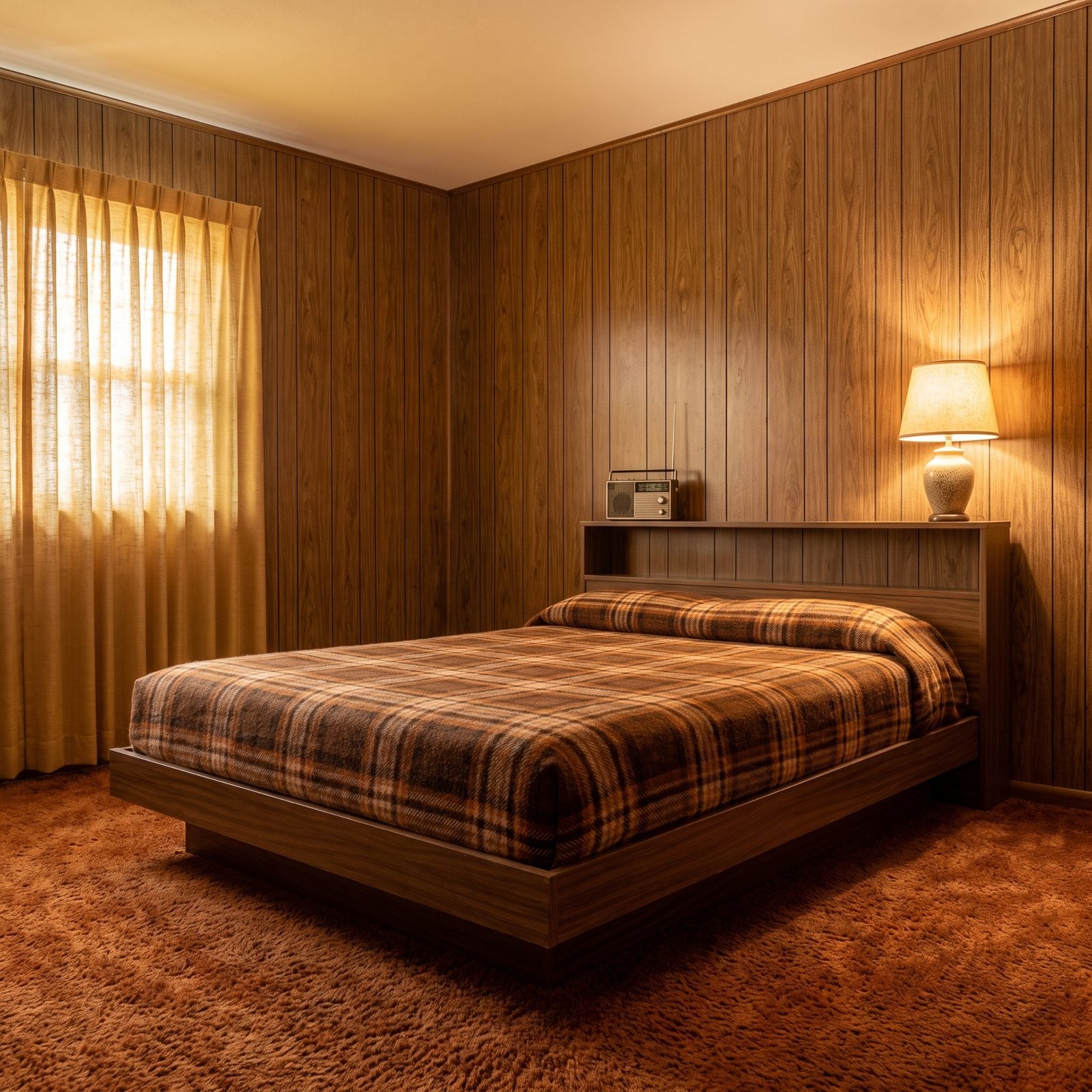
It was not real wood and nobody pretended it was. The grain repeated if you looked, the same knot showing up three sheets over, and the whole thing came in four-foot panels you nailed up over a weekend.
Faux-wood paneling made a bedroom feel like a cabin, a den, a cozy brown cave you could burrow into on a cold night. It swallowed light, which is exactly what a stager tries to avoid now. Bright and airy sells. Dark and enclosed does not, officially. Unofficially? A paneled room at night with one amber lamp going was one of the most comforting places a kid of that decade ever fell asleep. The same enveloping instinct lives on in a good farmhouse bedroom, just with real timber and a lot more white.
40. Smoked-Mirror Tiles Stacked Behind the Headboard
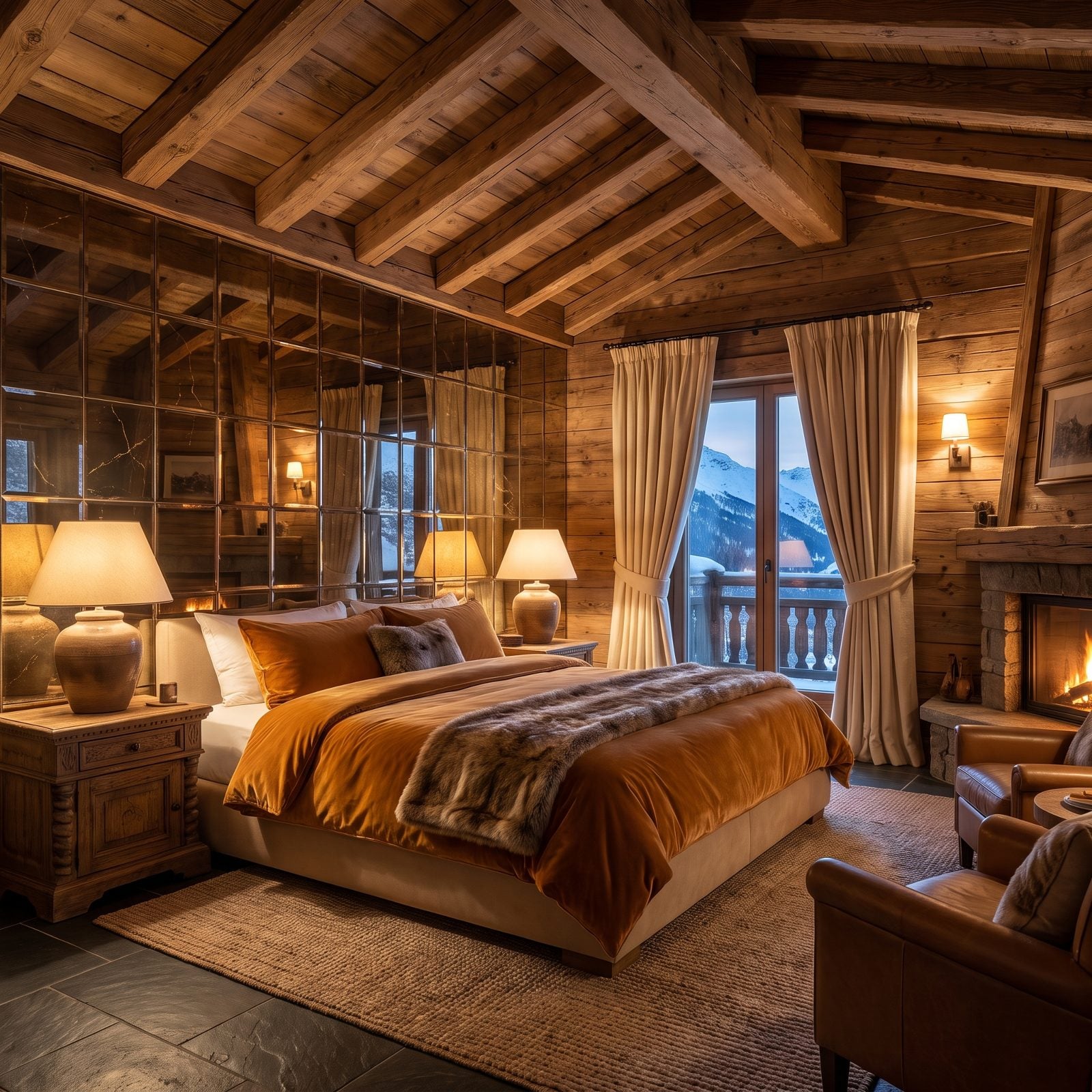
The tiles came in a box, peel-and-stick, tinted smoky bronze and sometimes veined with fake gold to look like marble that had been smoked. You pressed them up behind the bed one by one and never got the grid perfectly straight.
They reflected the room back in a warm haze, doubled the lamplight, and made the headboard wall feel like a lounge. Modern staging treats a wall of mirror behind a bed as a red flag — too much, too flashy, impossible to picture a buyer’s life against. But the smoked tint flattered in a way clear glass never does. Everything looked a little golden and a little soft in it.
39. A Full Cork Accent Wall Nobody Talks About Anymore
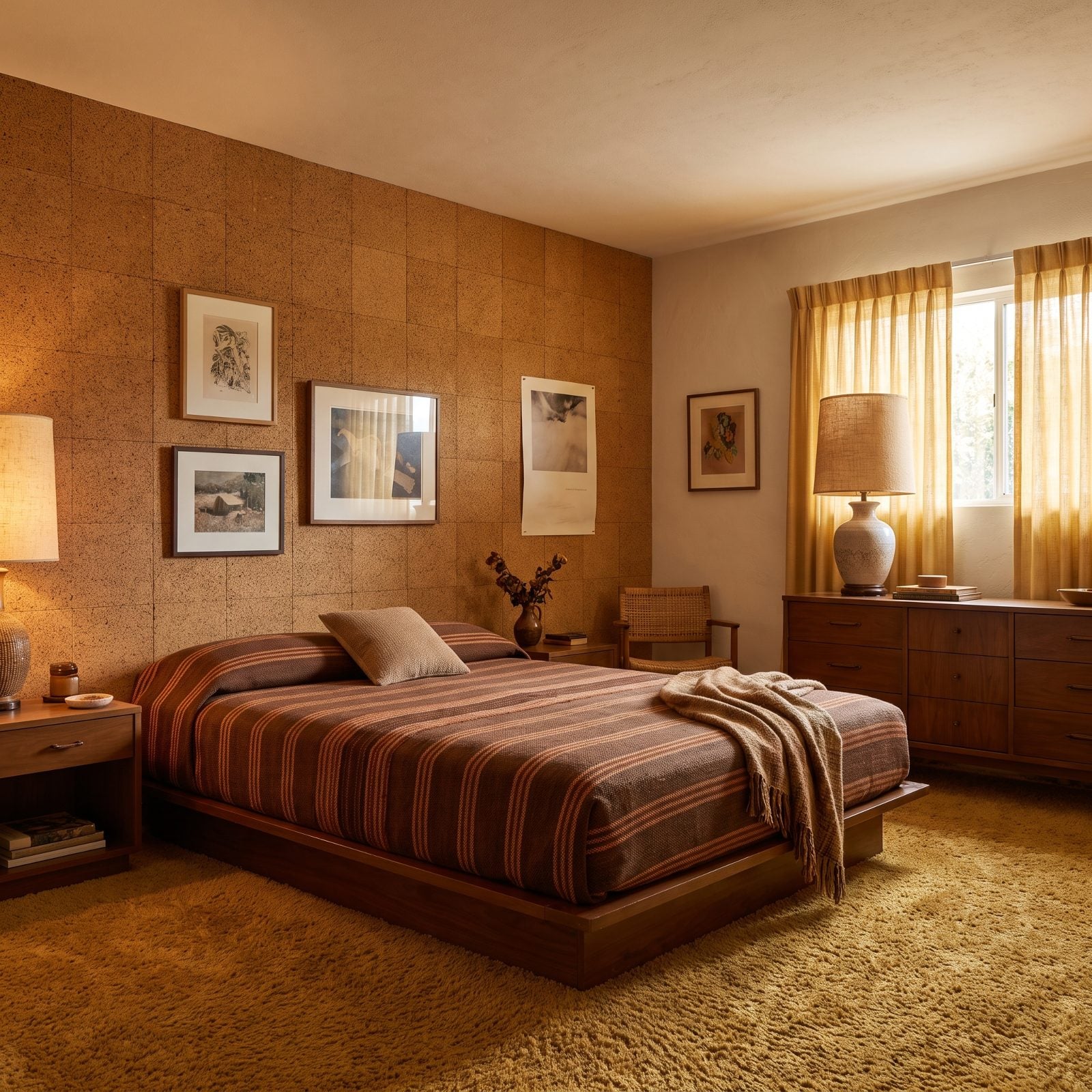
Cork tiles — the same material as a bulletin board — pressed across an entire wall. You could pin a poster straight into it without a nail. You could lean against it and it gave slightly, warm and faintly spongy.
It was sold as sound-dampening and insulating, and it genuinely softened a room, both the noise and the feel of it. The honey-brown color sat perfectly inside the decade’s palette. A stager today would never, because it reads as dated and it holds every pinhole from every poster ever hung. But a cork wall was quiet in a way drywall never manages, and quiet is the thing a bedroom is actually for.
38. Metallic Foil Wallpaper That Caught Every Lamp in the Room
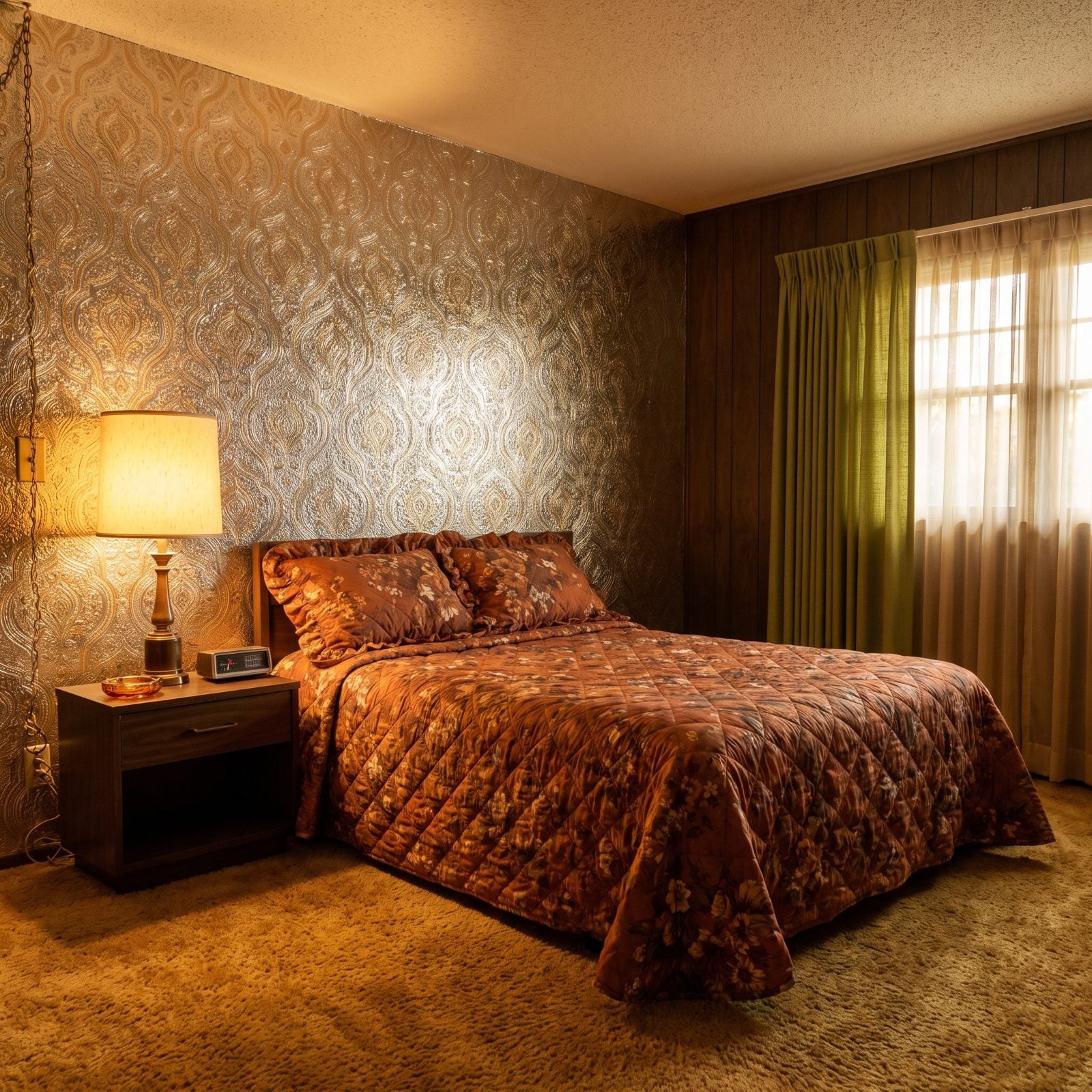
Foil wallpaper was a gamble, and plenty of people lost it. Hang one strip crooked and the seam glared at you for the next fifteen years. But when it worked, it genuinely transformed a room — every lamp in the place got a second life bouncing off that raised paisley, so a single bedside bulb could make the whole wall shimmer. The silver-and-gold stuff was the loudest. It read as luxury to a generation that had grown up with flat painted plaster and wanted something, anything, to catch the eye. Dust was the enemy. The raised texture held it like a magnet, and you couldn’t just wipe it down without smearing the finish. Worth it, most people decided.
37. The Floor-to-Ceiling Photographic Forest Mural Behind the Bed
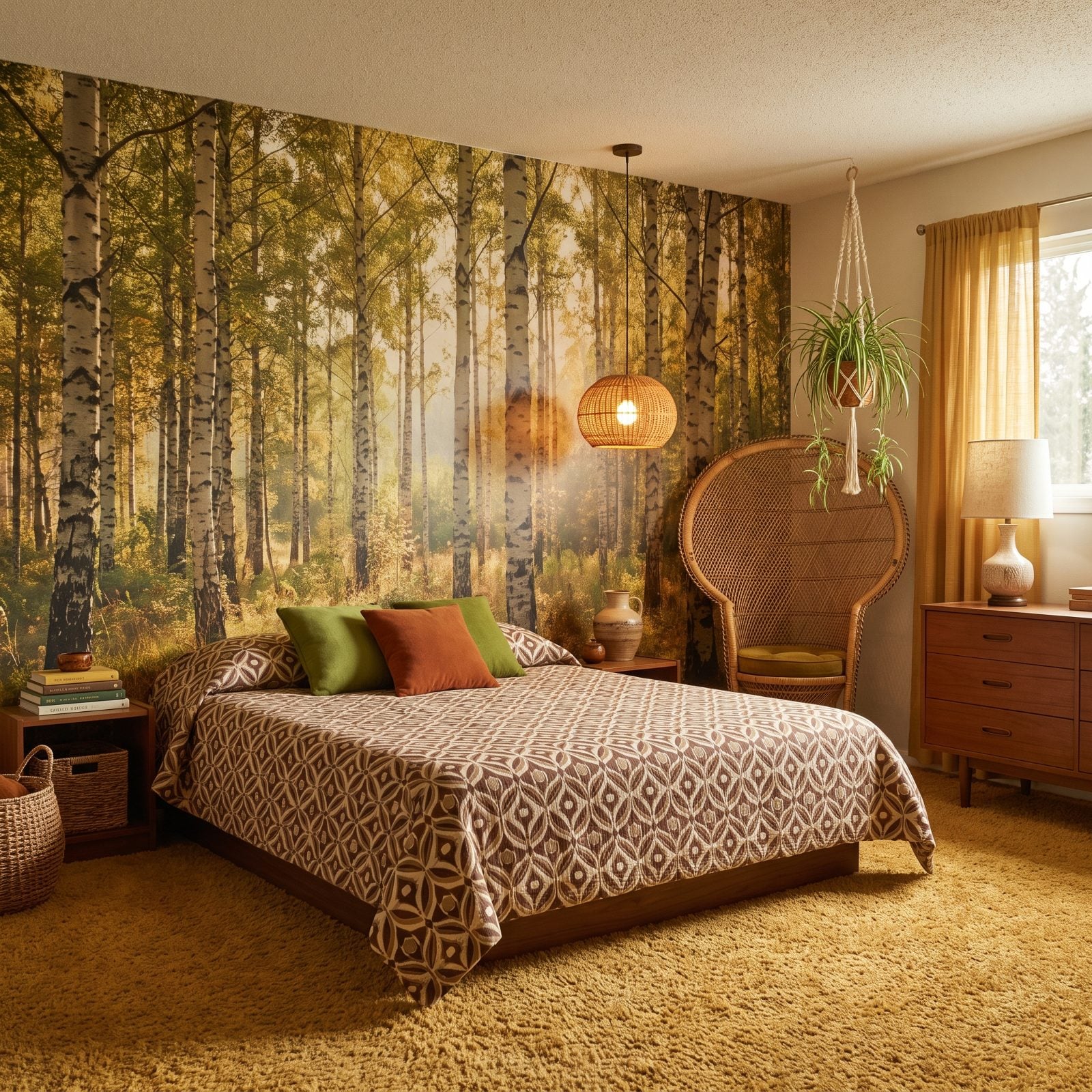
Imagine waking up to a birch forest. That was the pitch, and for a few years a lot of people bought it. These photographic murals came in panels you matched edge to edge, and the birch forest was far and away the bestseller — all that pale bark and dappled light played nicely with the browns and golds everyone already had on the floor. The effect in person was bigger than you’d expect from a photo. A small bedroom suddenly had depth, a horizon, somewhere for your eye to wander before sleep. Matching the panels was fussy work, though, and a half-inch of drift at the top of the wall turned your serene woodland into a jigsaw that didn’t quite fit. People lived with it anyway, because the alternative was blank drywall and who wanted that.
36. A Giant Macramé Wall Hanging Knotted Over the Headboard
🔥 Would you like to save this?
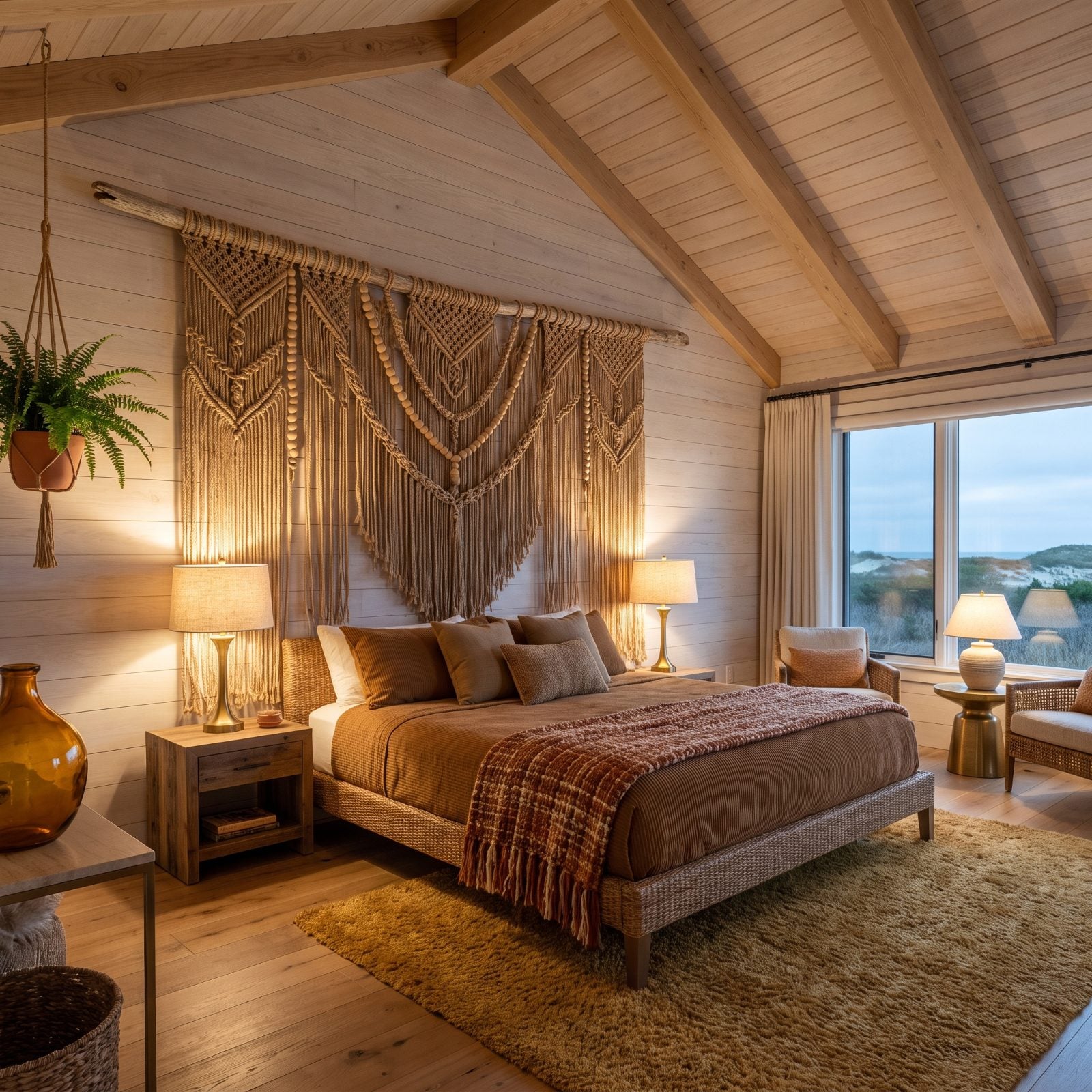
Half the macramé hangings in America were made at a kitchen table by someone who’d bought a how-to booklet and a cone of jute. The really ambitious ones spanned the full width of the bed — driftwood dowel across the top, cascades of square knots and clove hitches, wooden beads worked into the pattern, fringe trailing almost down to the pillows. Craft, not decoration, and you could tell at a glance who’d stuck with it past the easy first row. The brass lamp beside the bed threw shadows through all that knotwork at night, which was half the point. And it softened a wood-paneled wall better than anything you could buy framed. The downside was spiders. Nobody warned you that fringe and knots make excellent real estate for things with eight legs.
35. A Chain-Hung Swag Lamp Dangling Over the Nightstand
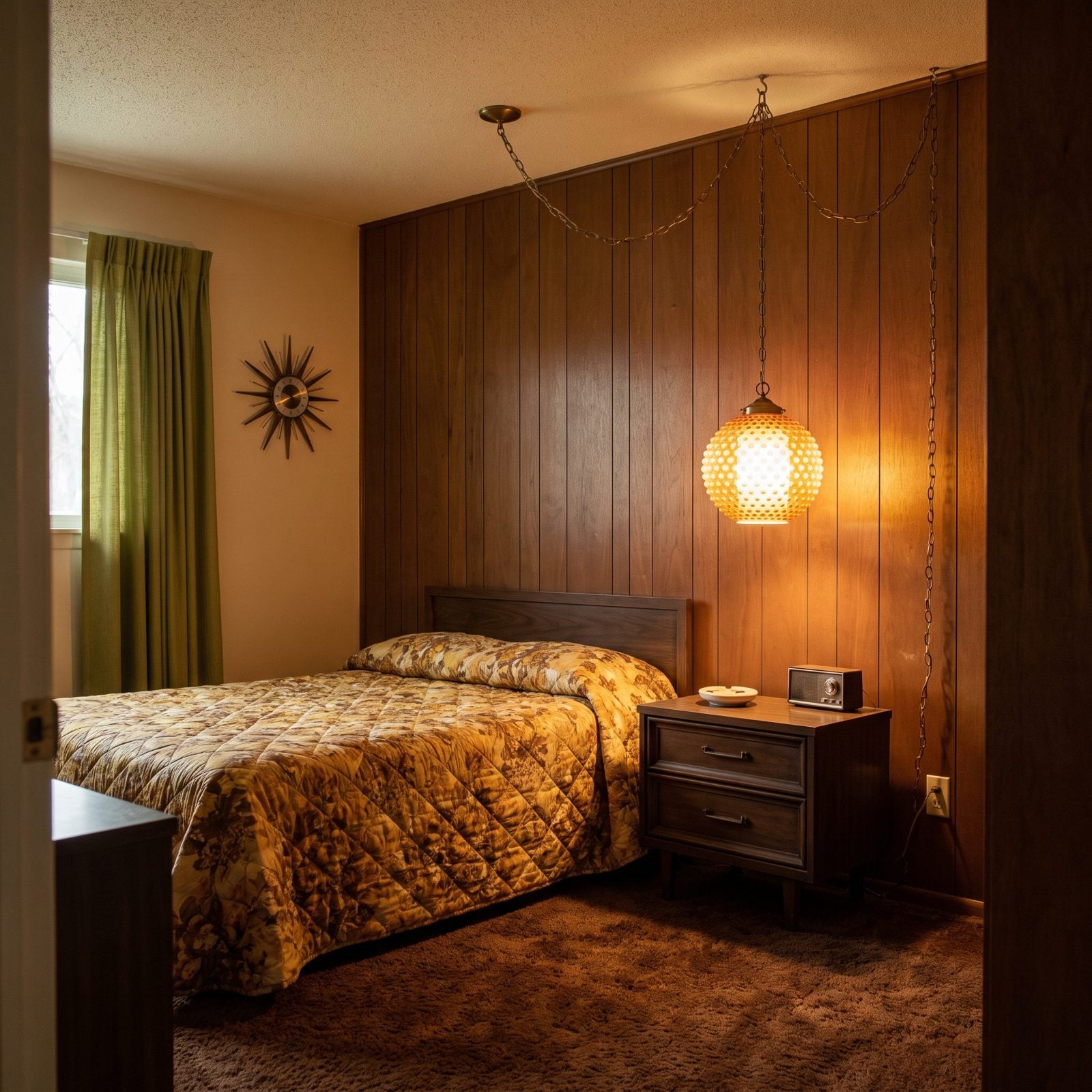
The genius of the swag lamp was that it needed no electrician and no wiring in the ceiling. You screwed a cup hook into a joist, hung the lamp on a brass chain, then draped the cord across the ceiling and down the wall to the nearest outlet. Instant overhead light, renter-friendly, no permission required. The hobnail glass globes were the favorite — amber or white pebbled glass that scattered the bulb into a warm pool right over wherever you’d parked it, usually a nightstand, so the table lamp could retire. Reading in bed finally got a dedicated light. That visible swagged cord looping along the ceiling bothered absolutely no one at the time, which tells you something about where the bar sat. Today a decorator would faint. Back then it was just how you lit a room you didn’t own.
34. A Lava Lamp Doing the Whole Job of a Bedside Light
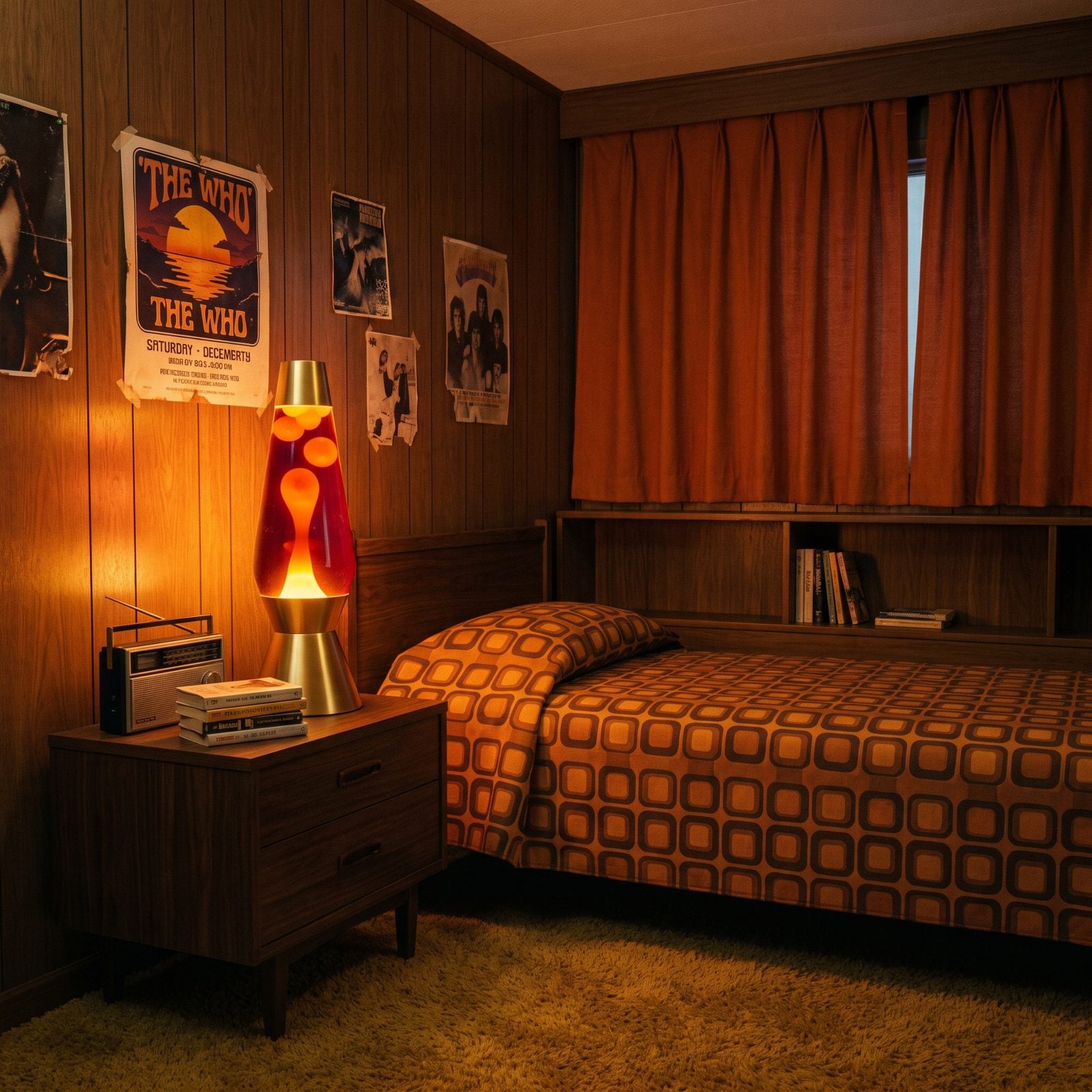
Nobody bought a lava lamp to read by. It threw off maybe enough light to find your way across the room without stubbing a toe, and that was being generous. In plenty of teenage bedrooms it was the only light switched on after dark anyway — the overhead was too harsh, the desk lamp too businesslike, so the lava lamp won by default. You lay there and watched the wax climb and split and sink. That was the appeal, start to finish. The gold-based models with red fluid and orange blobs were the ones everyone wanted, and they took a solid hour to warm up before the show really got going. A metaphor for teenage patience if ever there was one.
33. Mushroom-Shaped Lamps and Accessories on Every Surface
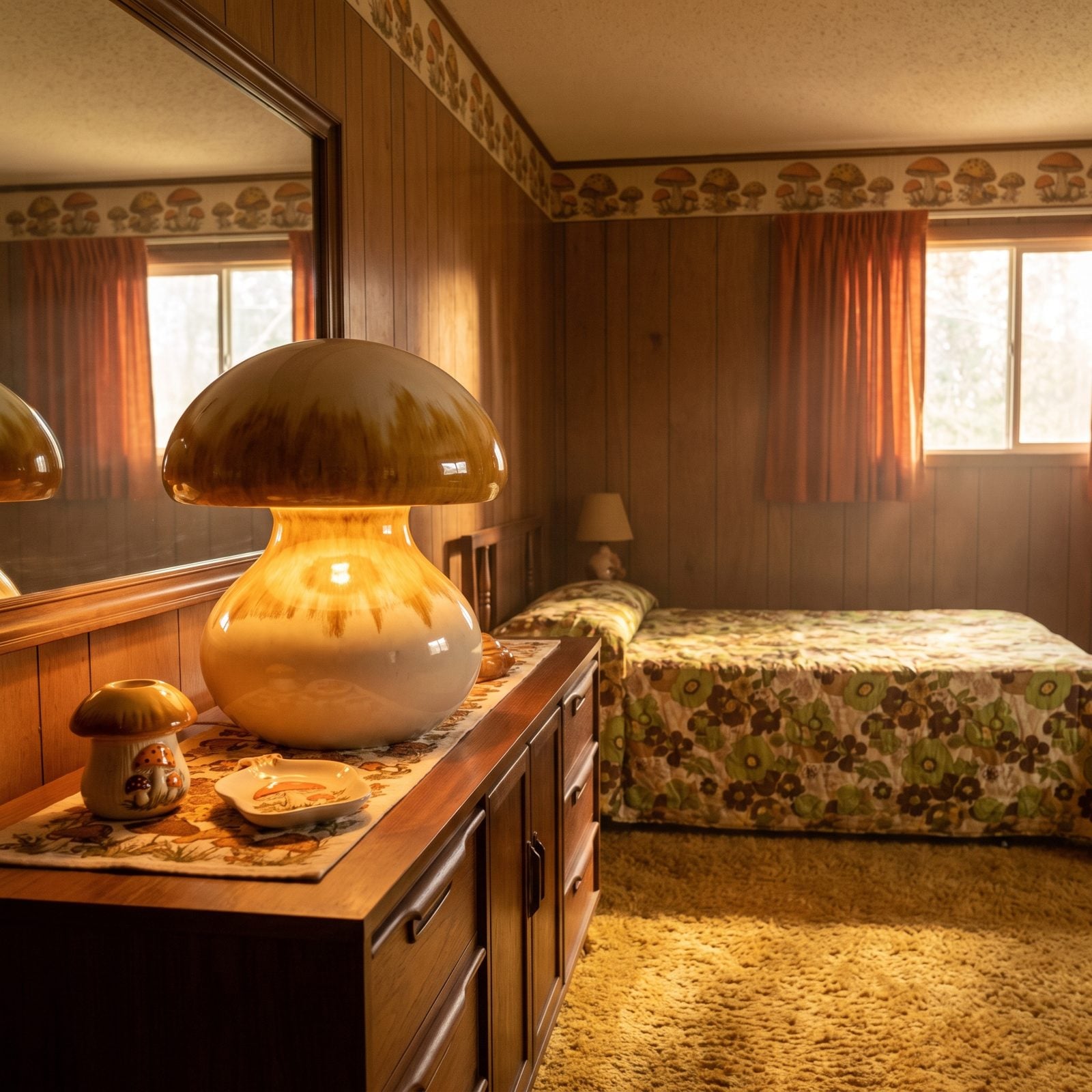
Why the mushroom? Nobody has ever fully explained the decade’s obsession, but there it was, sprouting on every surface of the bedroom. The ceramic mushroom table lamp was the anchor — a chunky harvest-gold cap that diffused the bulb into a soft glow and sat there looking like it had grown out of the dresser overnight. Once you had the lamp, the rest followed like a creeping fungus: a mushroom candle holder, a mushroom trinket dish, a mushroom wallpaper border running along the top of the paneling, a mushroom-printed runner draped across the dresser top. It tipped from charming into deranged somewhere around item four, and most people never noticed they’d crossed the line. The glaze colors — gold, avocado, brown — matched everything else in the room, which was the quiet reason it all worked instead of looking like a hallucination.
32. A Ruffled Canopy Bed Crammed Into a Low-Ceilinged Room
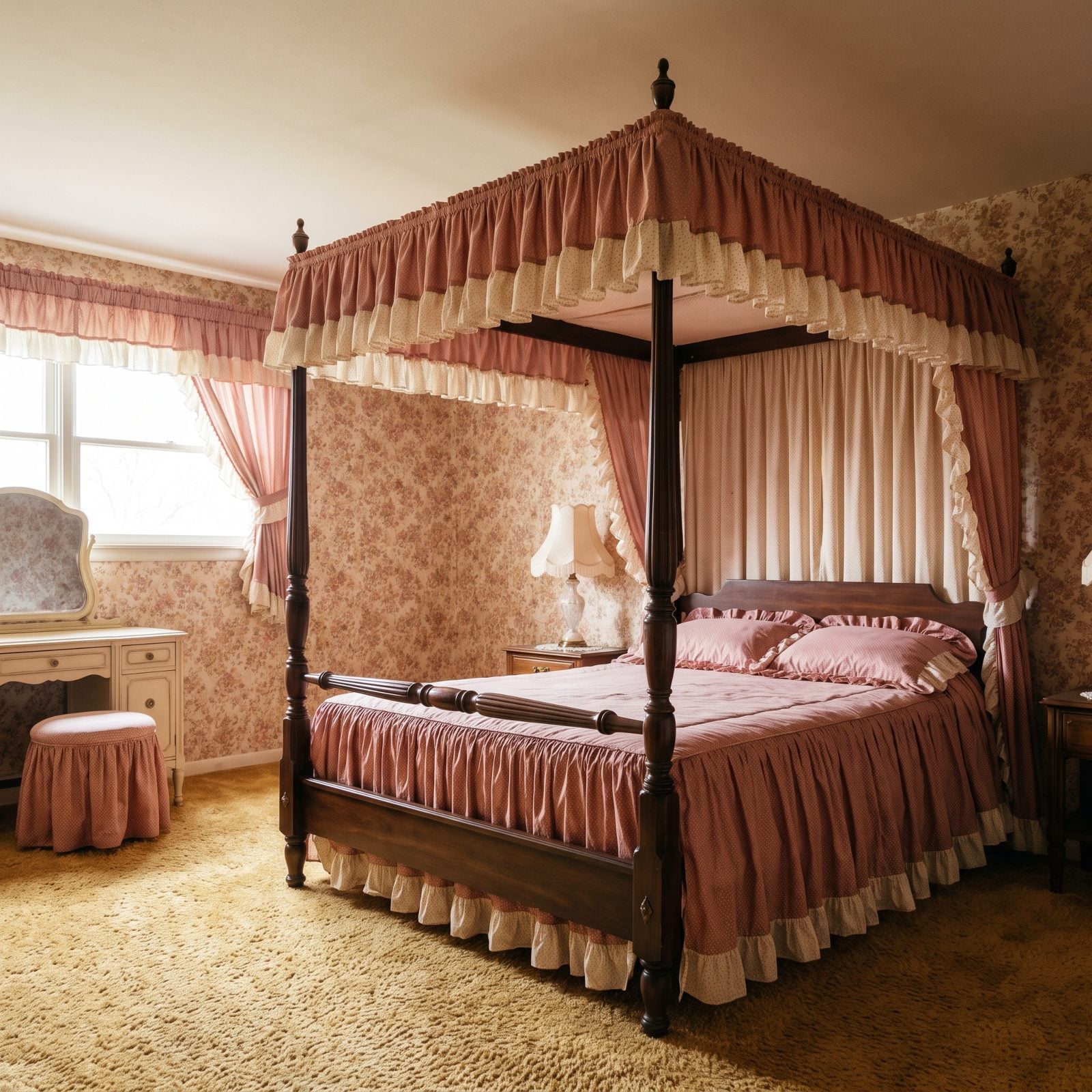
The canopy bed had a scale problem that nobody wanted to admit. These were pieces designed for high-ceilinged rooms in old houses, and the average 1970s suburban bedroom gave you eight feet of ceiling, period. So the tiered dotted-swiss ruffles crowned out barely an inch below the plaster, and the whole frame seemed to be apologizing for taking up the room. It didn’t matter. The romance was the entire draw — dusty rose ruffles on the canopy, matching the bed skirt, matching the shams, matching the curtains, matching a vanity stool skirted in the same fabric until the room read like the inside of a jewelry box. You either loved it or found it suffocating. There was rarely a middle ground, and a lot of husbands quietly landed in the second camp.
31. A Monumental Headboard Wall With Built-In Cabinets and Shelves
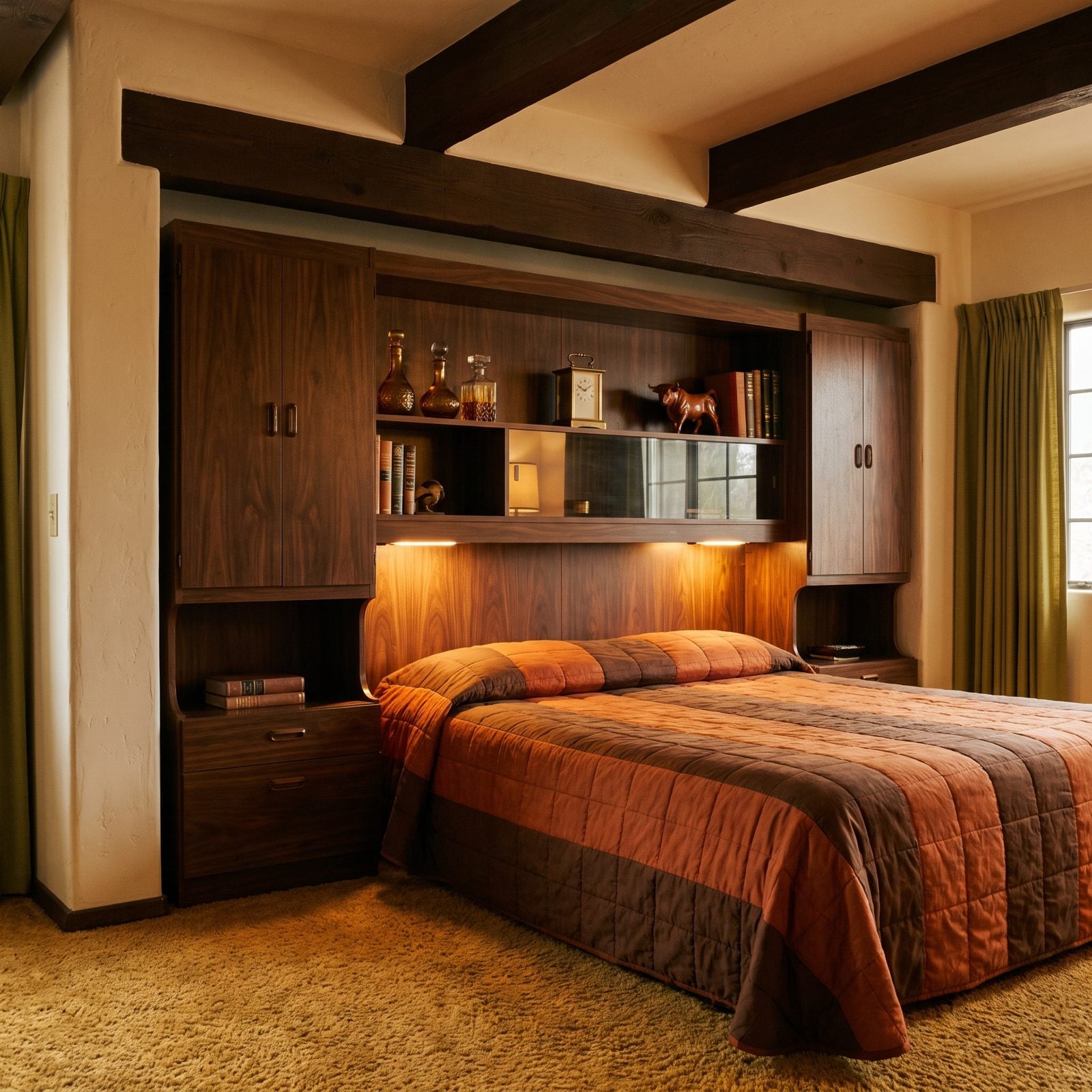
This wasn’t a headboard so much as a wall that happened to have a bed attached. Dark walnut veneer, full width, cabinets down both sides, open shelves, sliding glass compartments, and little reading lights wired right into the structure so you never needed a nightstand lamp. The whole command center wrapped around the sleeper. People filled those shelves with the good stuff — amber glass decanters, hardcovers nobody had read, a ceramic bull figurine that every single one of these units seemed legally required to display. The reading lights were the smart part, glowing down over the pillows without a cord in sight. The dumb part came when you wanted to rearrange the furniture and discovered the bed could only go in exactly one place forever. Moving day for the next owner was a special kind of hell.
30. An Aquarium Built Right Into the Headboard
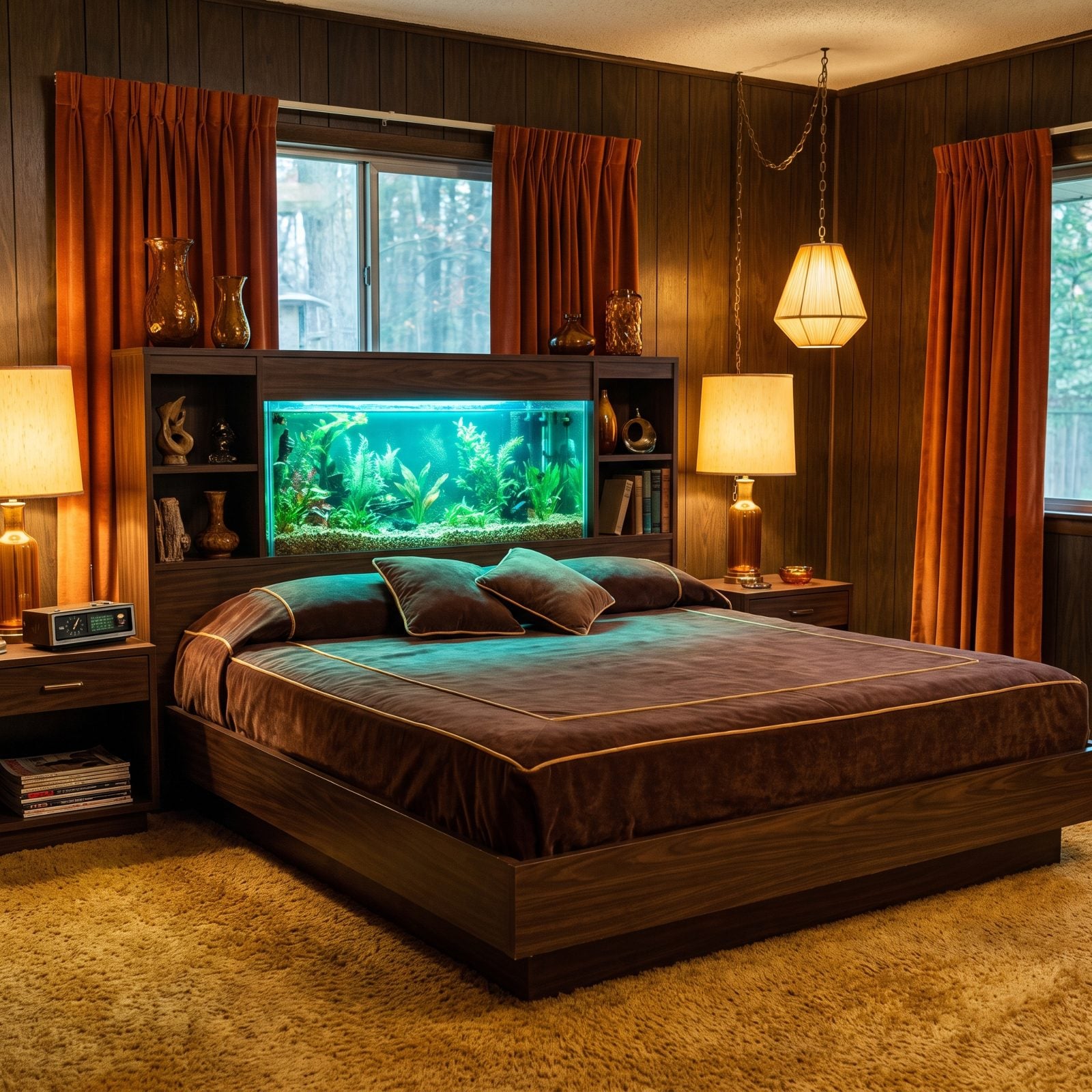
Someone, somewhere, looked at a perfectly good headboard and thought: what this needs is live fish. And here we are. The built-in aquarium headboard was exactly what it sounds like — a lit tank set into the center of a platform-bed headboard, water and plants and gravel glowing aqua-green against all the warm brown around it. Peaceful, in theory. You drifted off to the hum of the filter and the soft blue shimmer thrown across the pillows. In practice you also drifted off to that same hum when you very much wanted silence, and you woke up to it, and you heard it through dinner. Cleaning the thing meant kneeling on your own bed with a siphon hose. When the filter clogged at 2 a.m., the gurgle was not what anyone would call restful. Still, people kept them for years, because there is nothing on earth quite like falling asleep to your own private reef.
29. A Built-In Stereo Console Running the Length of One Wall
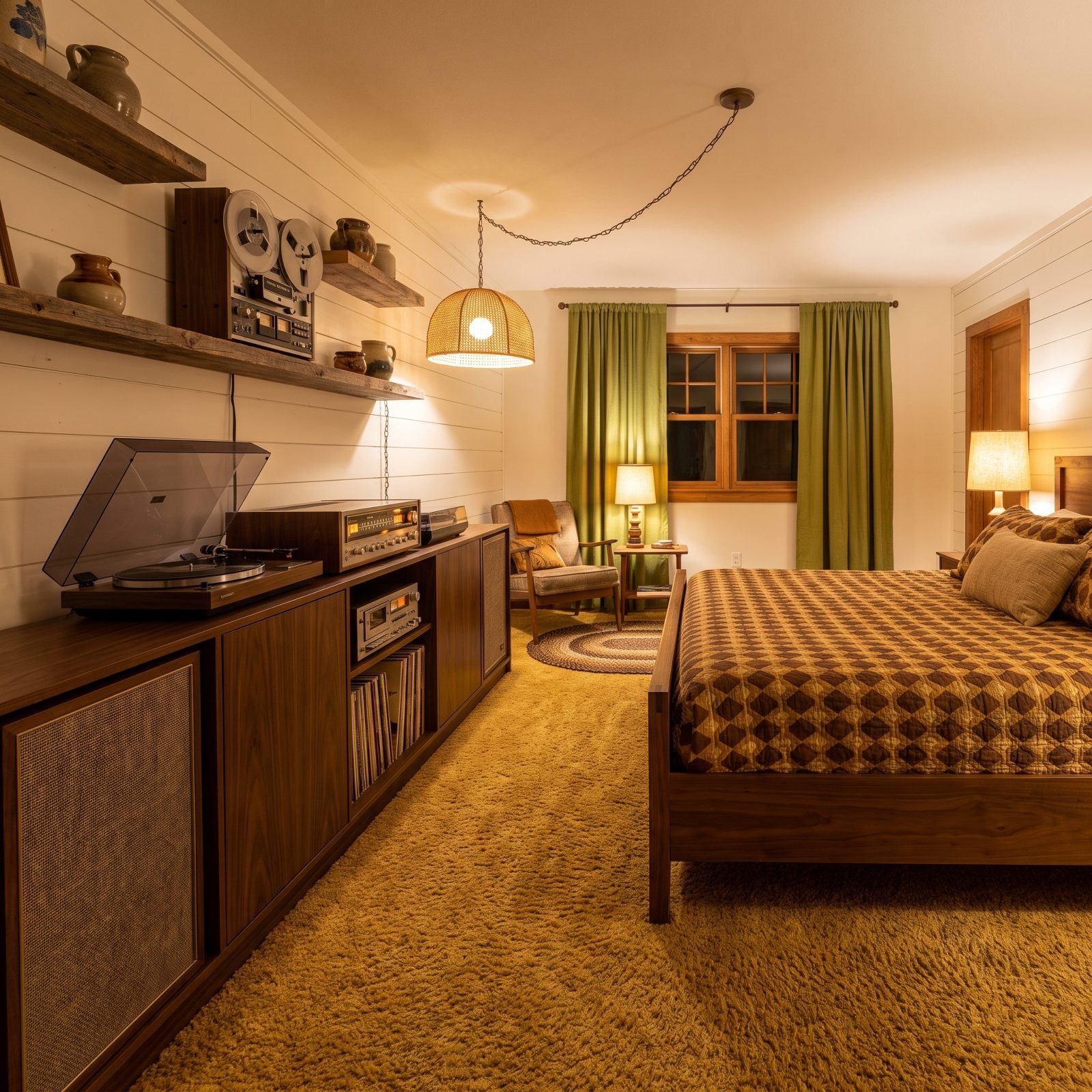
A whole wall of music, built into the bedroom. The stereo console stretched the full length of the wall in dark walnut veneer — turntable under a smoked acrylic lid, silver-faced receiver with illuminated dials that glowed in the dark, a cassette deck, LPs stored upright in a long row, and a pair of wood-grain speaker cabinets anchoring each end. The bed sat opposite, facing it like you’d face a hearth. There was real ceremony to it. You got up, crossed the room, slid a record out of its sleeve, set the needle, and walked back to bed to listen to the whole side the way the artist meant it heard. No shuffle, no skip. You committed to an album. Teenagers and bachelors loved these the most, and the receiver dials doubling as a nightlight was a small bonus nobody complained about.
28. The Pair of Huge Floor Speakers Standing Guard at the Headboard
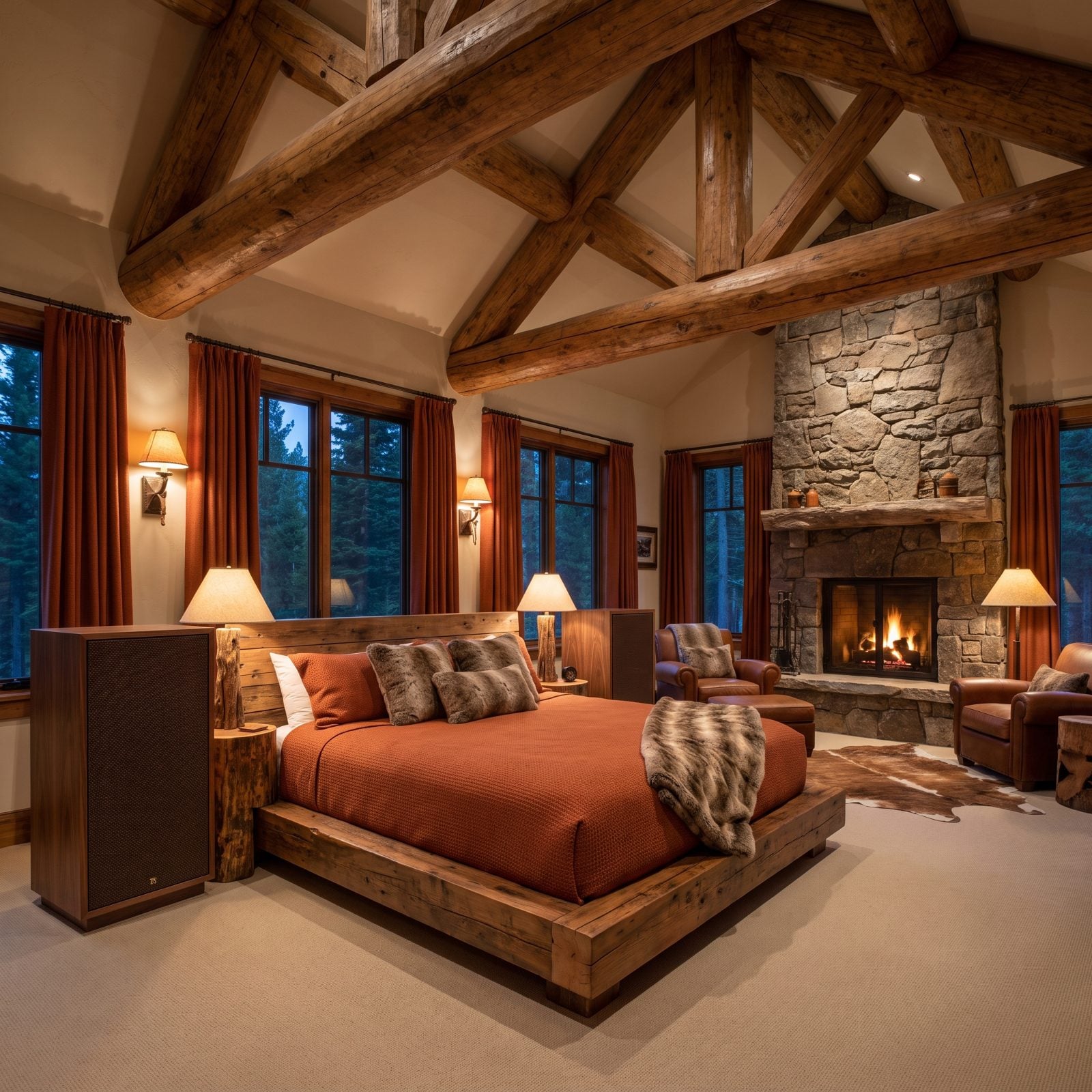
Stereo was furniture before it was a feature. These cabinets stood knee-to-waist high, wrapped in walnut veneer, loud enough to rattle the headboard when a bass line dropped. You didn’t tuck them away — you built the room around them.
Modern staging wants speakers invisible or gone. Back then the opposite logic ran the house, and a big pair flanking the bed announced that somebody here took music seriously. Those woofers earned their square footage every single night.
27. The Bulky Wood-Grain Television Parked at the Foot of the Bed
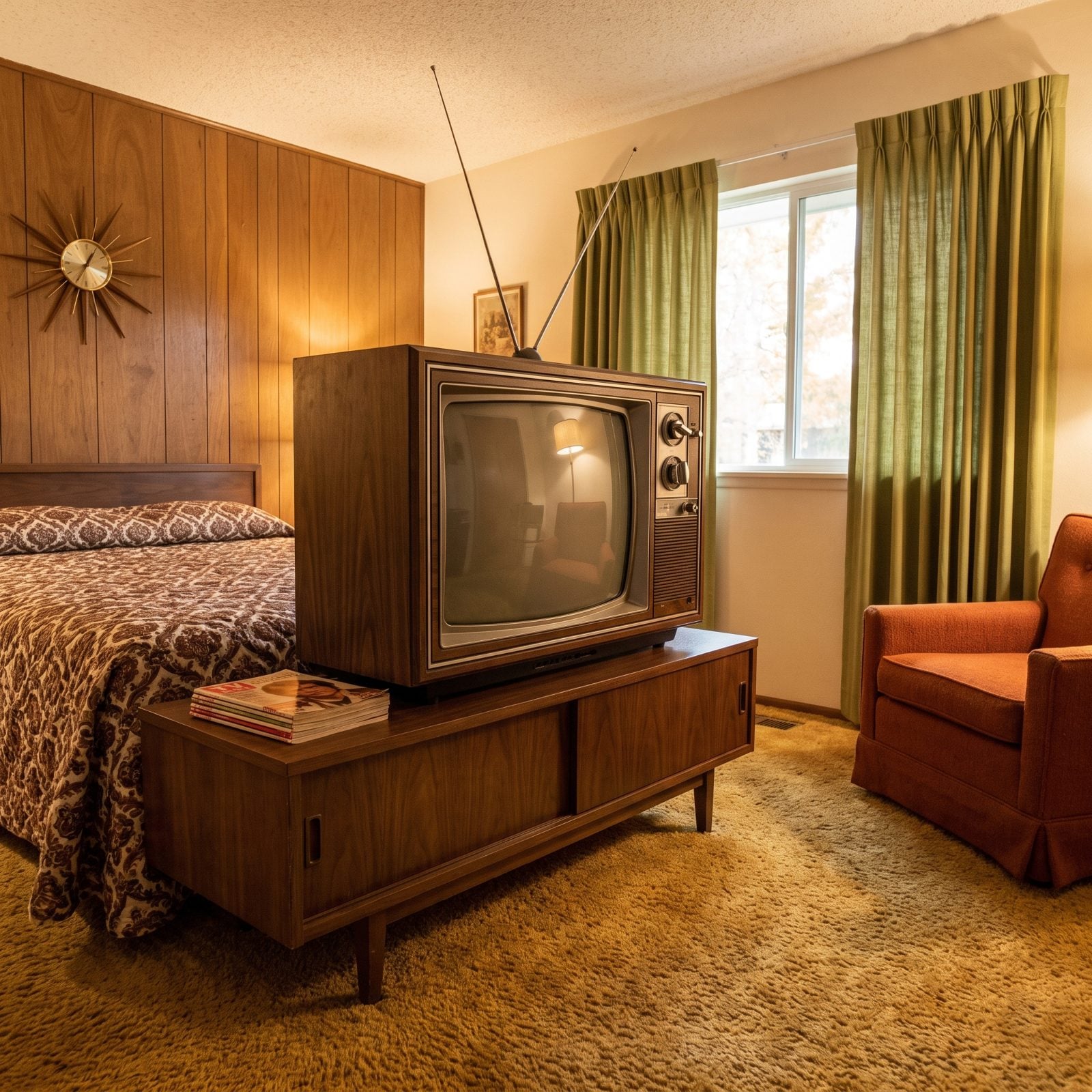
It weighed as much as a small dresser, and once you set it down it never moved again. Wood-grain cabinet, convex glass, a dial you turned with a satisfying click that carried across the room.
Today’s advice says keep the bedroom a screen-free sanctuary. We missed that memo by about forty years. The set sat at the foot of the bed like a second piece of furniture, and getting up to change the channel was the most exercise some of us got after nine o’clock.
26. The Eight-Track Player Holding Court on the Dresser
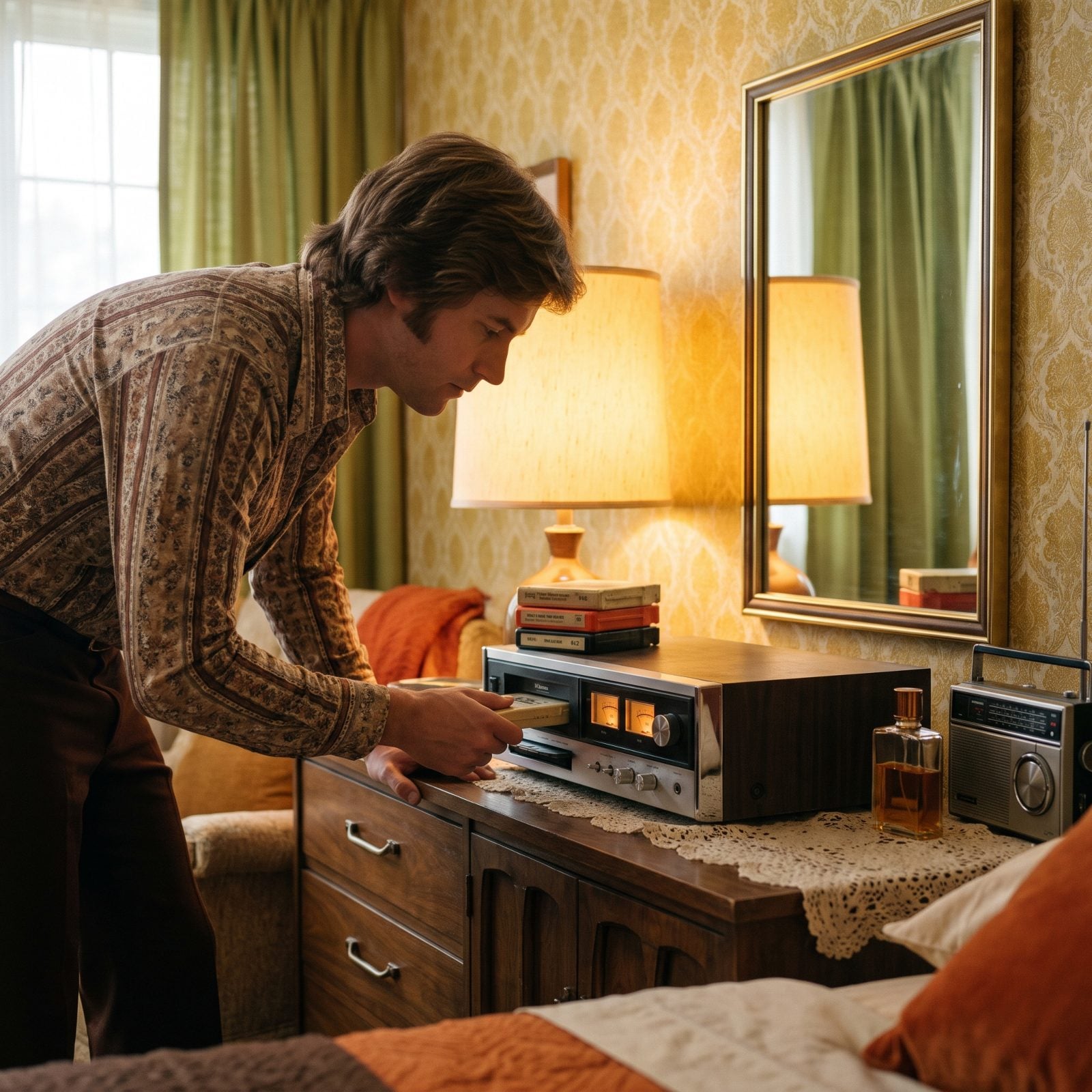
The cartridge went in with a thunk you could feel in your fingertips.
Eight-tracks skipped programs mid-song and clicked loudly when they changed tracks, and you learned to live with it. The player sat on the dresser — no remote, no screen, no apology.
Plenty of people kept a matchbook jammed under one cartridge to stop the warble. That’s the kind of fix the format demanded, and nobody complained because nothing else sounded quite like it.
25. The Oversized Vinyl Beanbag That Swallowed You Whole
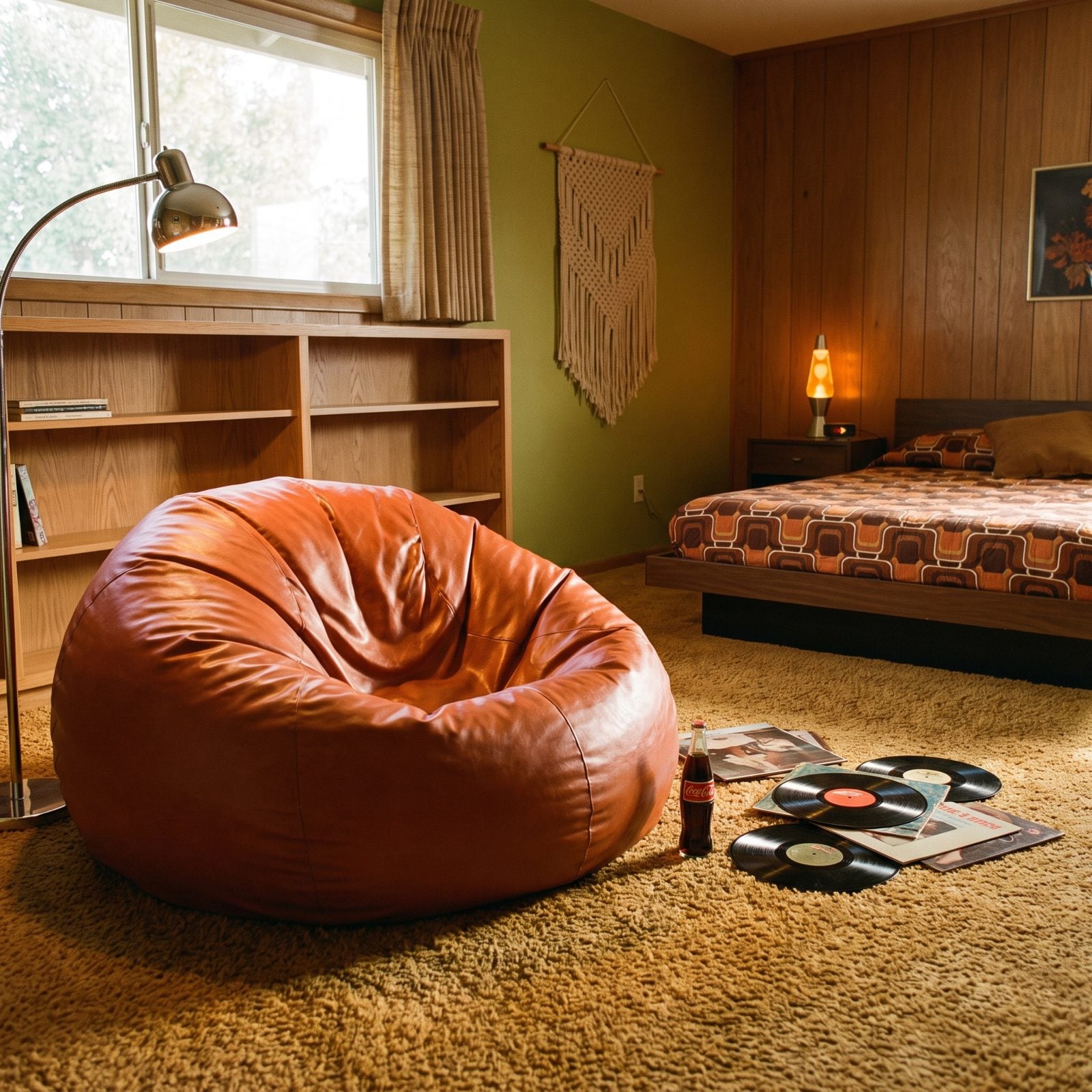
You dropped into it and it exhaled, a crunch of tiny foam beads shifting under your weight. Getting out took actual commitment. The vinyl stuck to the backs of your legs in summer and squeaked every time you moved.
Staging books now want clean sightlines and chairs that photograph well. The beanbag ignored all of it, slumped in the corner in burnt orange, molding itself to whoever landed there last. Most honest seat in the house.
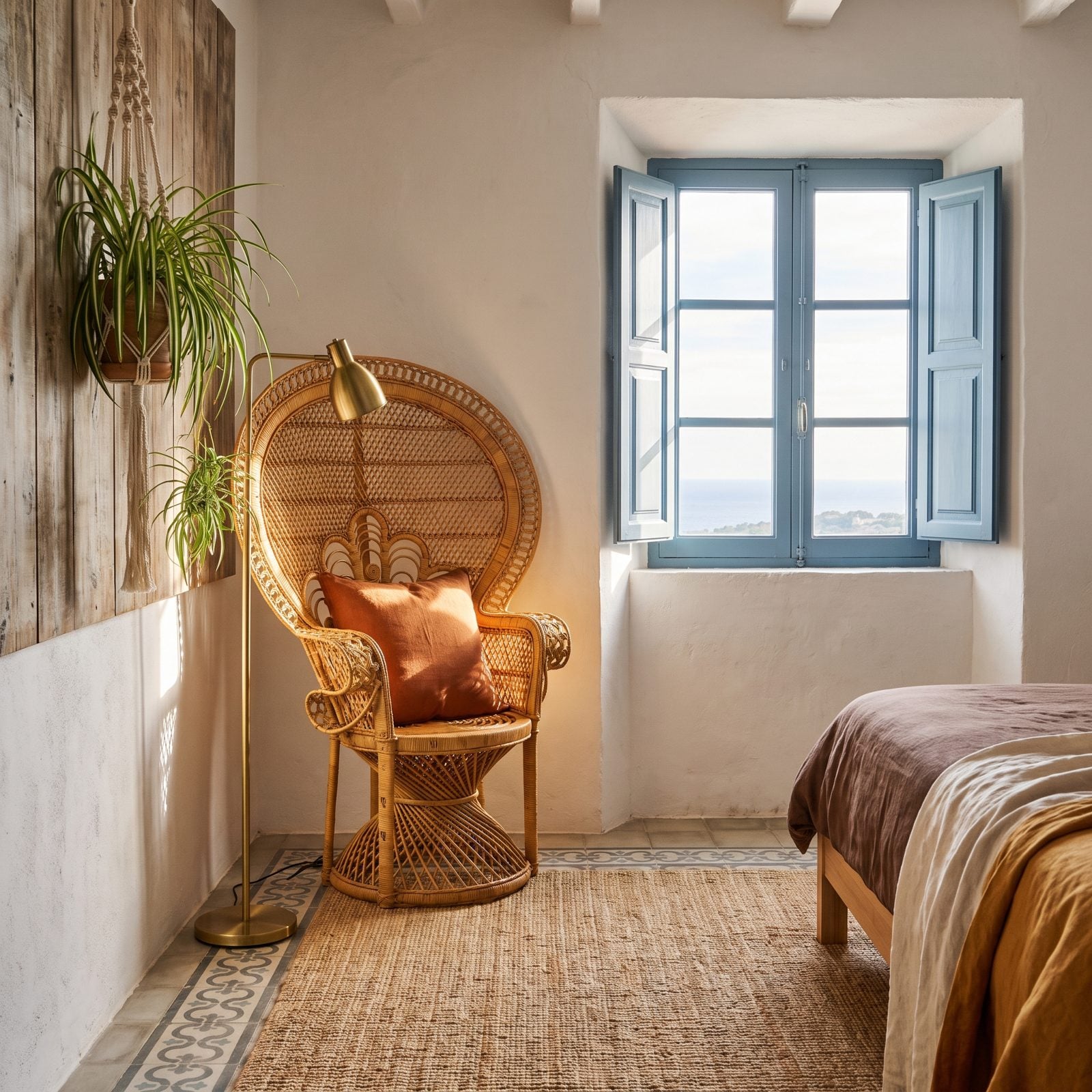
24. The Wicker Peacock Chair Fanned Out in the Corner
🔥 Would you like to save this?
That fanned rattan back rose nearly to the ceiling — part throne, part houseplant. Everyone’s aunt had one, or wanted one, and it always landed in the corner with a cushion that never quite matched.
The weave creaked when you sat. It shed little splinters of rattan onto the shag. And somehow it made that corner of the bedroom feel like somewhere worth sitting, which is more than most corners manage.
23. The Rattan Hanging Chair Swinging From a Ceiling Hook
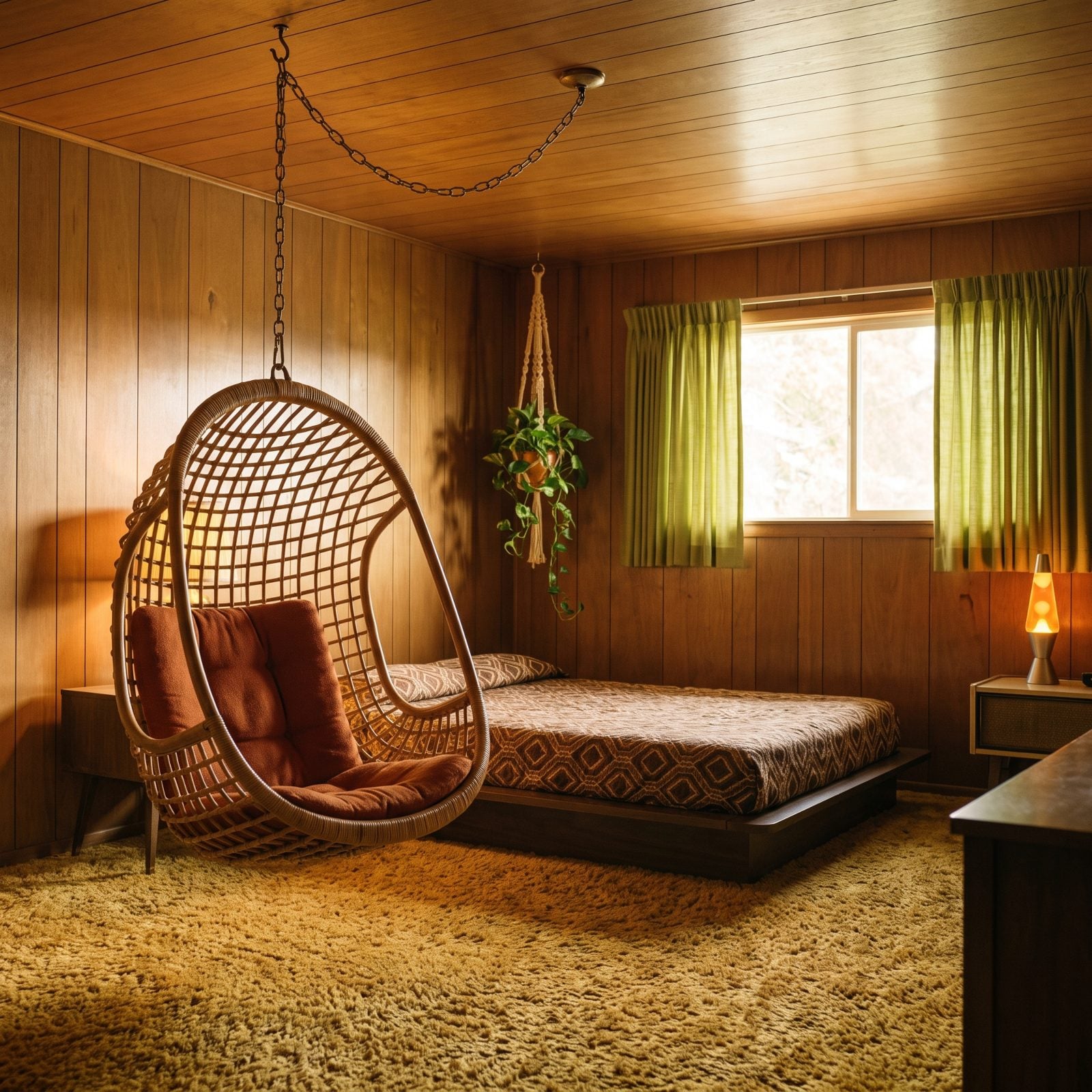
Someone drilled a hook into the ceiling joist and prayed.
The hanging rattan chair swayed every time you shifted, the chain ticking faintly against itself. You’d kick off and spin slowly while a record played in the next room.
No staging consultant alive would hang a chair from a bedroom ceiling today. Liability, sightlines, the hole it leaves in the drywall. But for a kid in 1974 that swinging basket was the best seat going, and the gentle motion put you half to sleep before you knew it.
22. The Matching Nightstand Ashtrays on Both Sides of the Bed
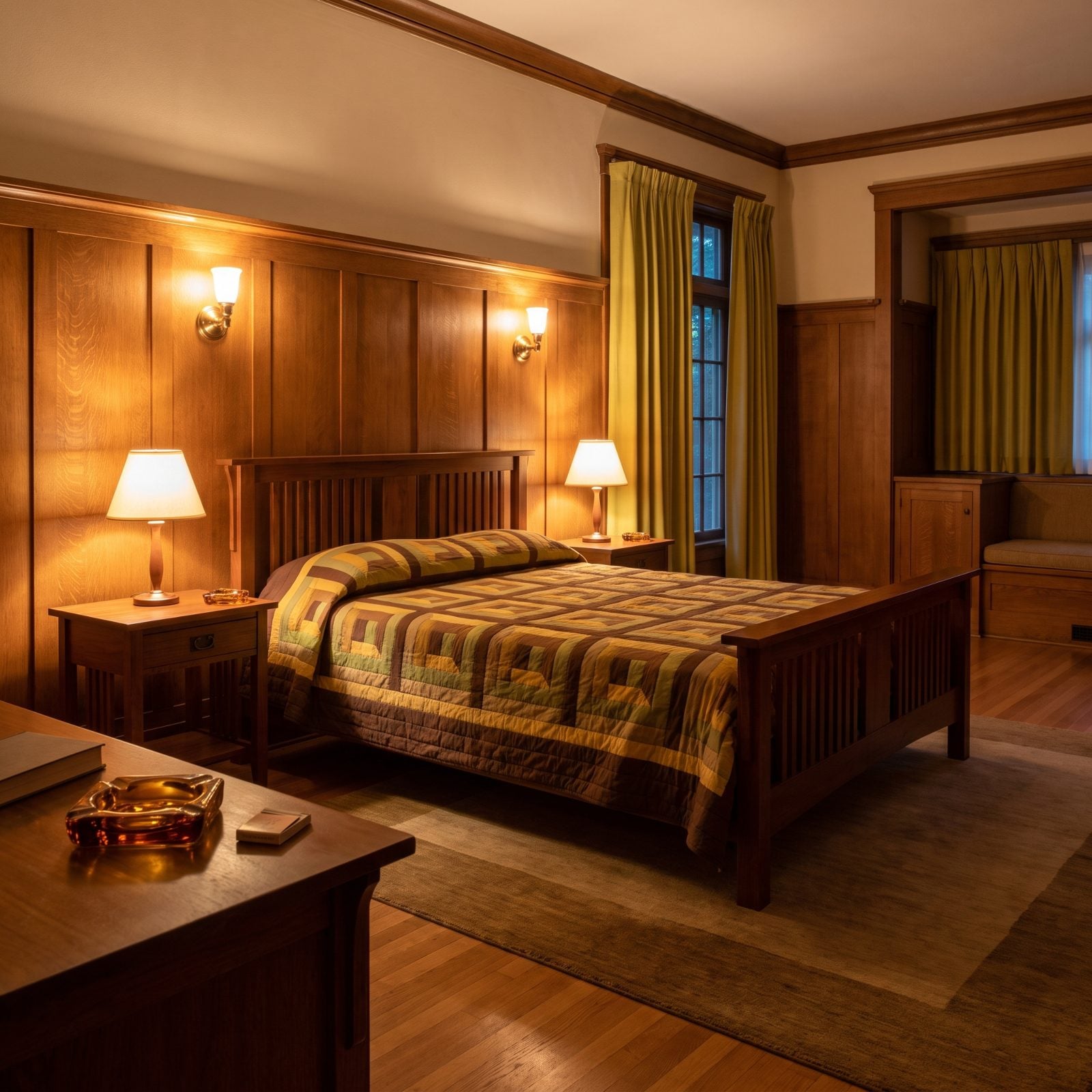
Heavy amber glass, molded with little ridges to rest a cigarette, one on each nightstand like bookends. They matched the lamps. They matched the drapes. Somebody chose them on purpose.
You can’t stage this detail now without the whole room reading like a cautionary tale. But in the ’70s a matching pair flanking the bed was just part of a well-set room — as ordinary as coasters, and twice as decorative.
21. The Rotary Telephone Waiting on the Nightstand
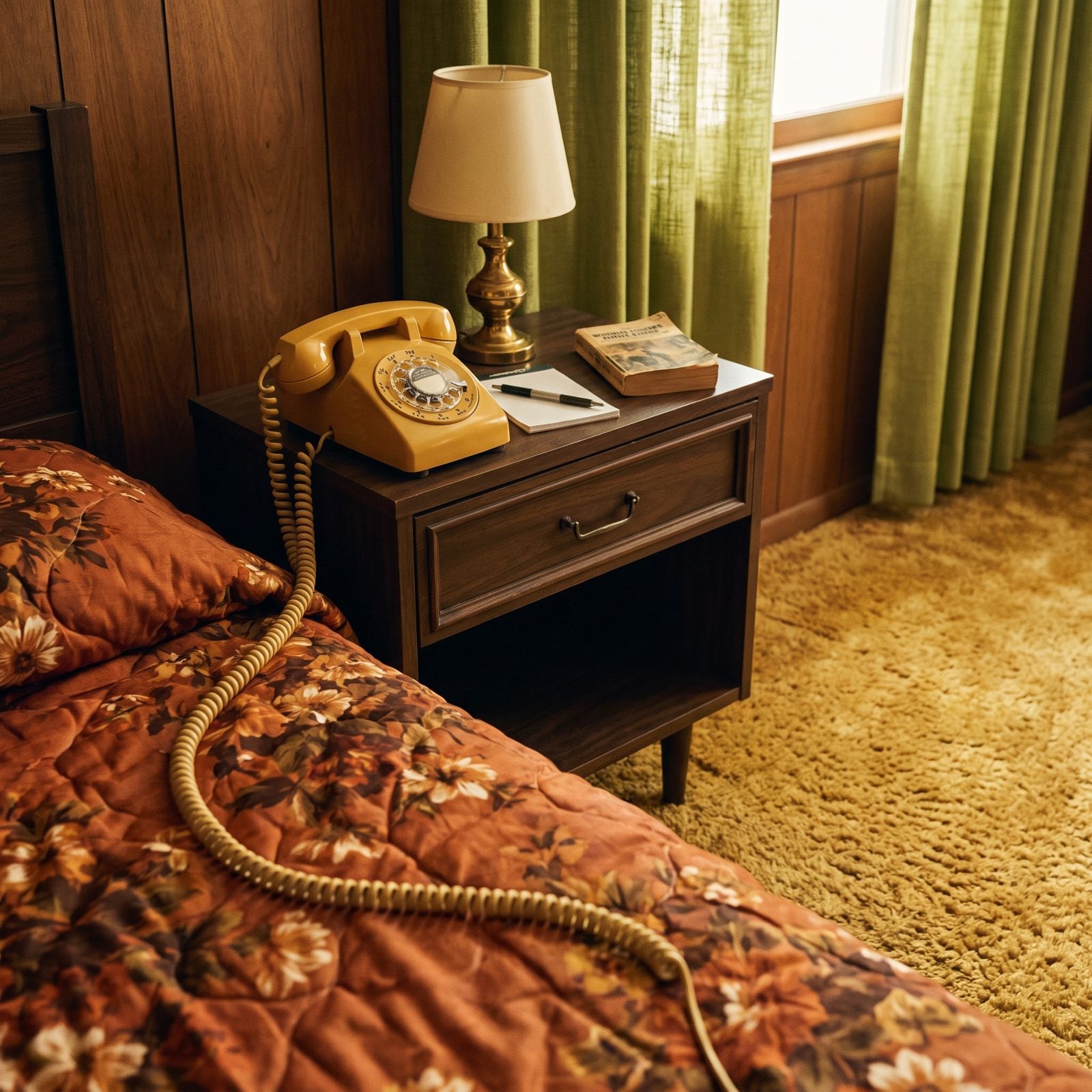
The dial spun back with a whir, and if you flubbed the last number you started the whole thing over. That coiled cord stretched impossibly far — far enough to pace into the hallway and shut the door on a private conversation.
In harvest gold or avocado, the bedside phone was built to match the room, not vanish into it. No chargers, no screen, no notifications. Just a heavy handset and the small theater of untangling the cord before you could hang up.
20. The Flip-Number Clock Radio Clacking Through the Night
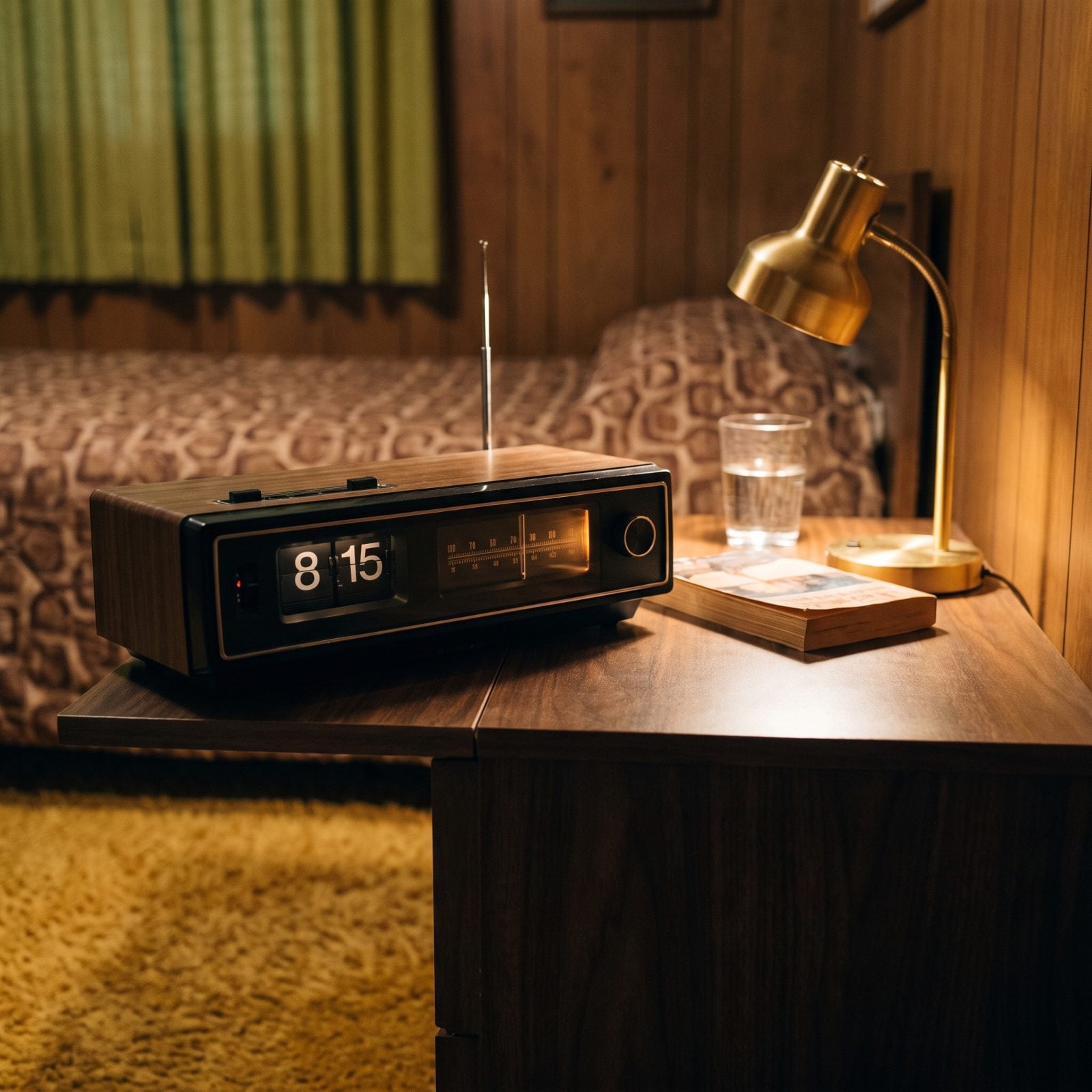
You woke to the amber glow on the nightstand and the numbers already flipped to a new minute.
The flip-number clock kept time with a soft clack every sixty seconds, the split flaps turning over in the dark. The faux wood grain matched the dresser. A long rectangular radio dial glowed amber beside the numbers.
Anyone who slept next to one for years has the sound of those flaps turning burned into memory. Staging advice now wants a bare nightstand, maybe a single candle. We had a glowing brick that clacked all night, and nobody thought twice.
19. The Fluorescent Blacklight Poster Taped Above the Bed
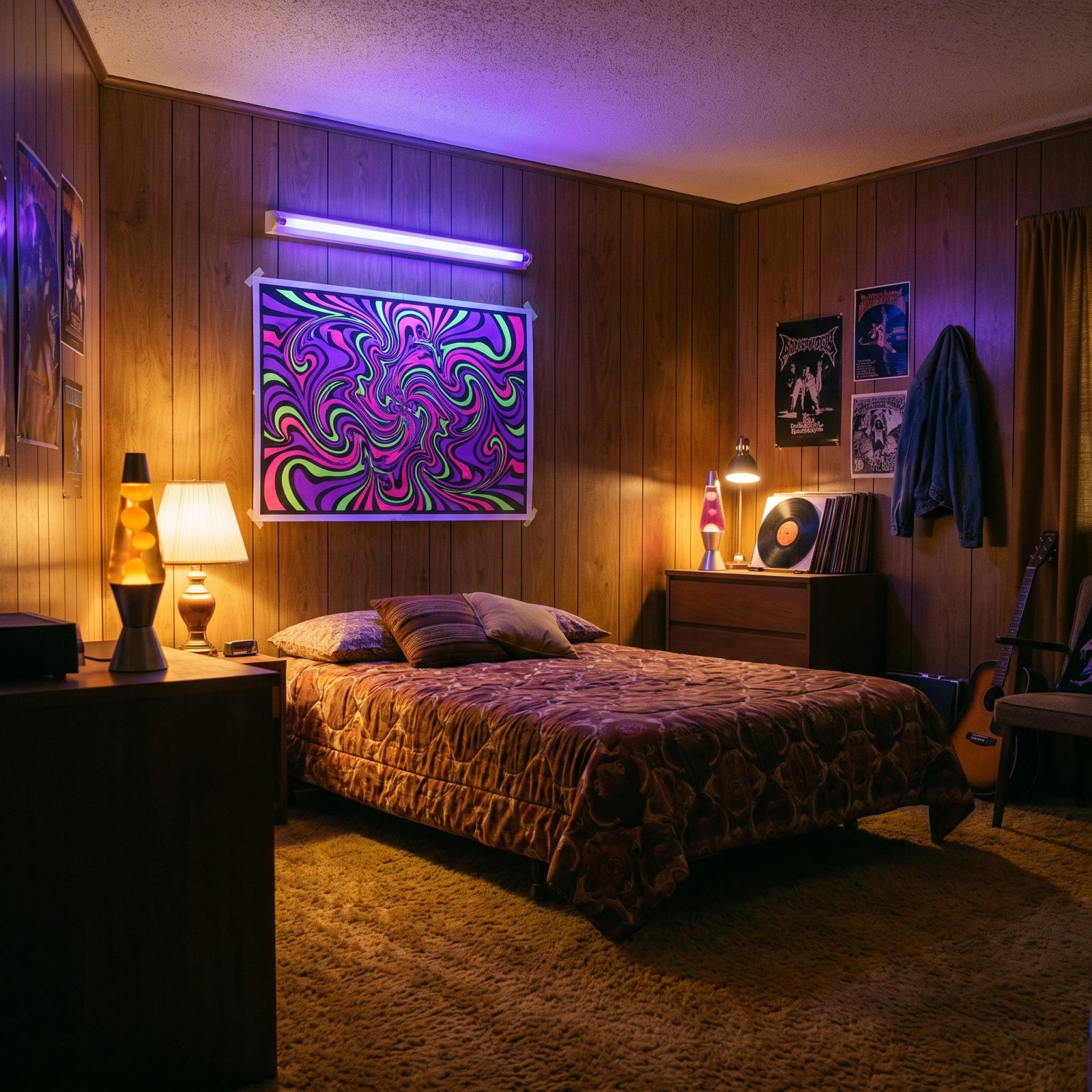
Flip the blacklight on and the whole poster came alive in colors that didn’t exist in daylight — electric violet, radioactive pink, a green that seemed to float an inch off the wall. Around it, the lamps kept the rest of the room glowing a warm amber, with only the ceiling washed in purple.
No staging guide would ever hang one today, and that’s exactly why it mattered. The blacklight poster wasn’t furniture or function. Pure teenage atmosphere, taped crooked above the bed, glowing like the room had a pulse.
18. The Velvet Fantasy Poster Tacked Above the Headboard
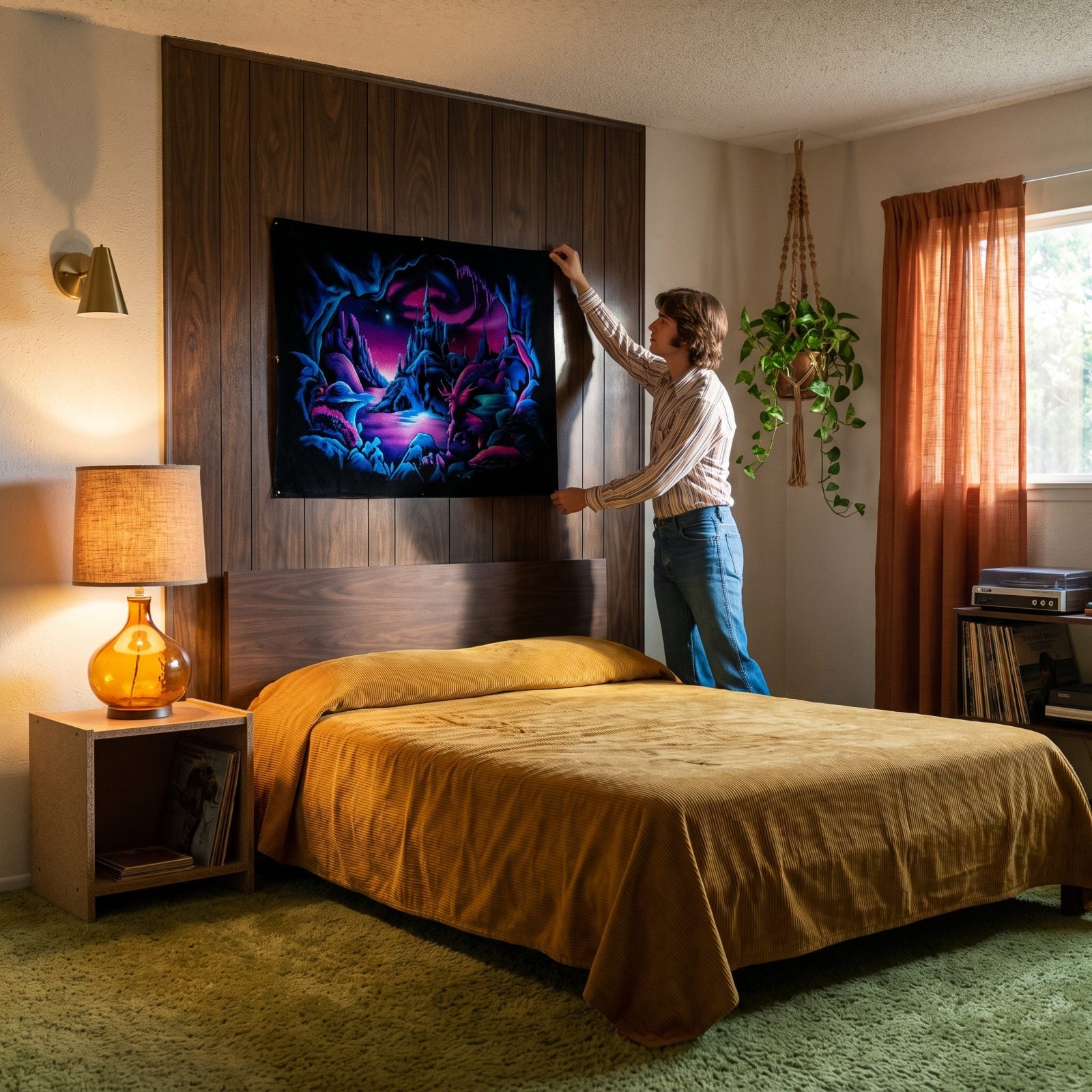
Every staging guide alive will tell you to strip the walls back to neutral so buyers can picture themselves in the room. The velvet poster did the opposite, announcing in airbrushed magenta exactly whose room this was.
You remember the feel of it more than the look — that strange flocked nap that collected dust and held it. Tacked dead level above the headboard, lit by an amber table lamp and a brass wall sconce, it turned the whole wall into a declaration. Resale value? Nobody’s concern. This was a teenager’s cathedral, and the poster hung over it like an altar.
17. Bronze-Tinted Mirrored Closet Doors Running Floor to Ceiling
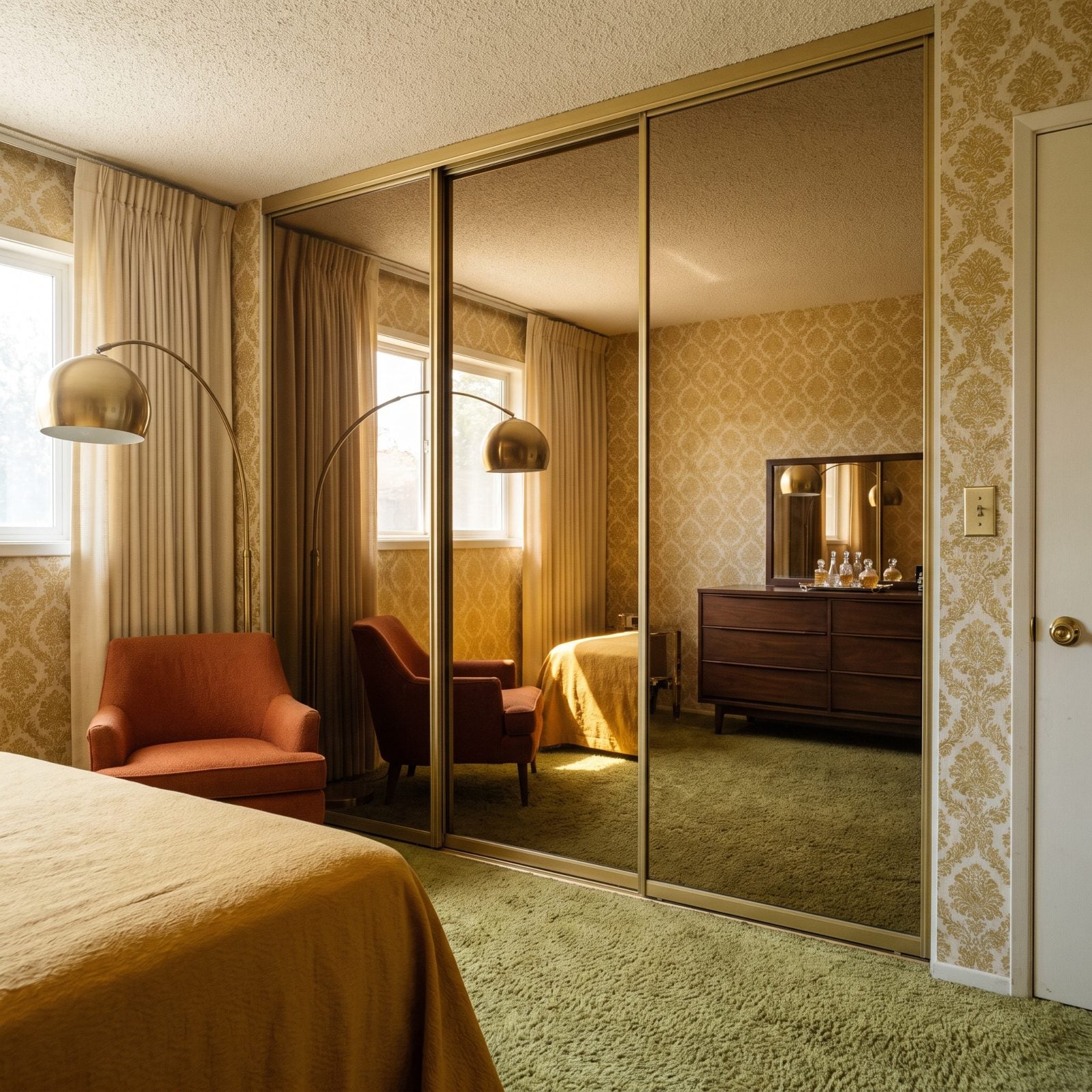
Bronze-tinted, slim-framed in brass, reflecting everything back under warm sunlight — these doors made a modest bedroom feel twice its size. That was the whole appeal. Builders loved them because they sold square footage that wasn’t technically there.
Modern staging wants mirrors used sparingly and strategically. The 1970s bedroom wanted an entire wall of them, bronze-tinted glass edged in thin brass frames. You get dressed in your own lamplit reflection every morning, which, honestly, is a small daily kindness. For copper bed inspiration that plays with the same warm-metal glow, the instinct behind these doors still holds up.
16. The Vinyl Accordion Door That Folded Instead of Swung
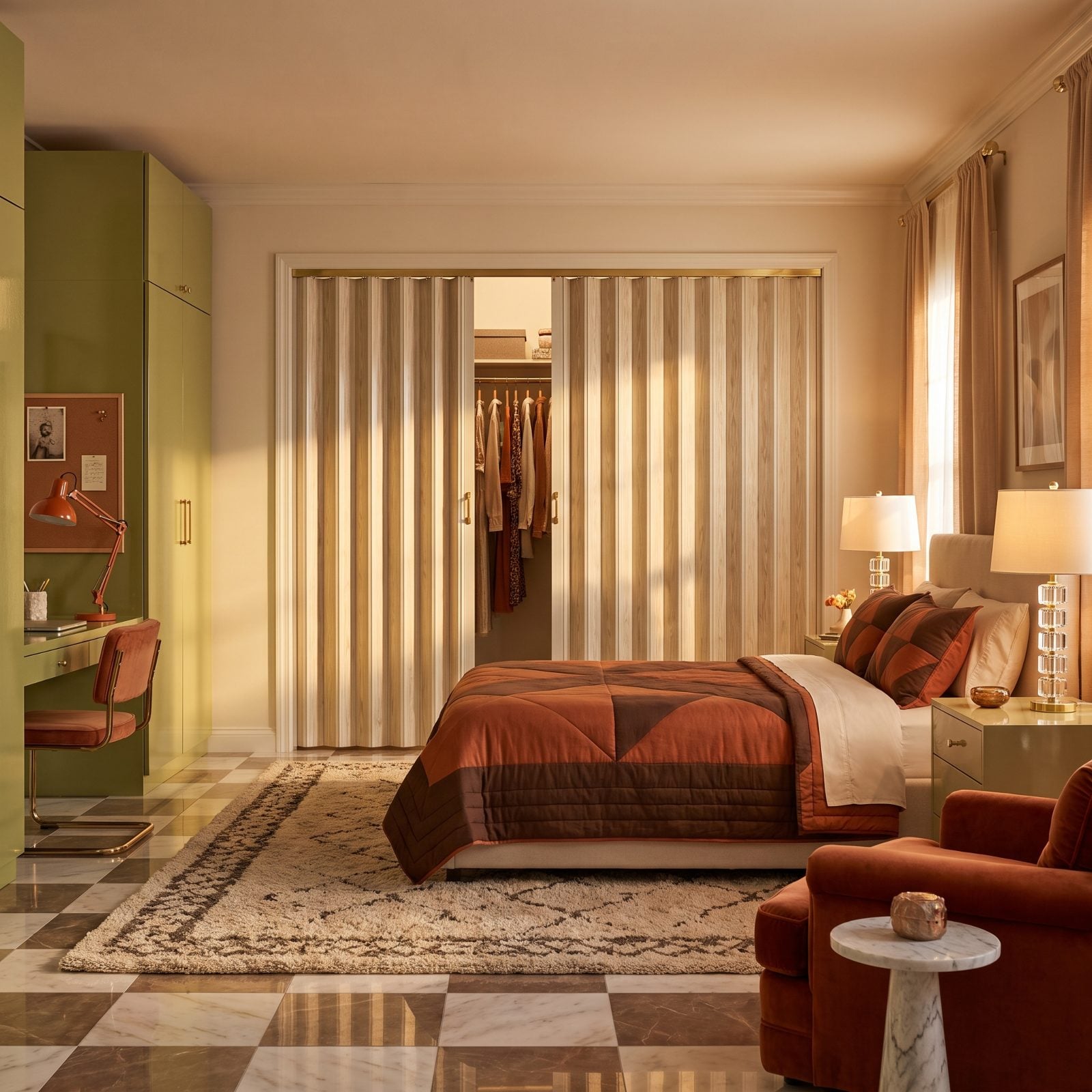
You could hear it before you saw it. That papery ribbed whuff-whuff-whuff as the panels folded against themselves, then the little magnetic catch snapping shut at the end.
Staging advice today treats a proper hinged door as non-negotiable, and the accordion closet door ignored all of that. It saved floor space, cost next to nothing, and bowed outward at the bottom if a kid leaned on it hard enough. The wood-grain vinyl print fooled no one. Nobody cared.
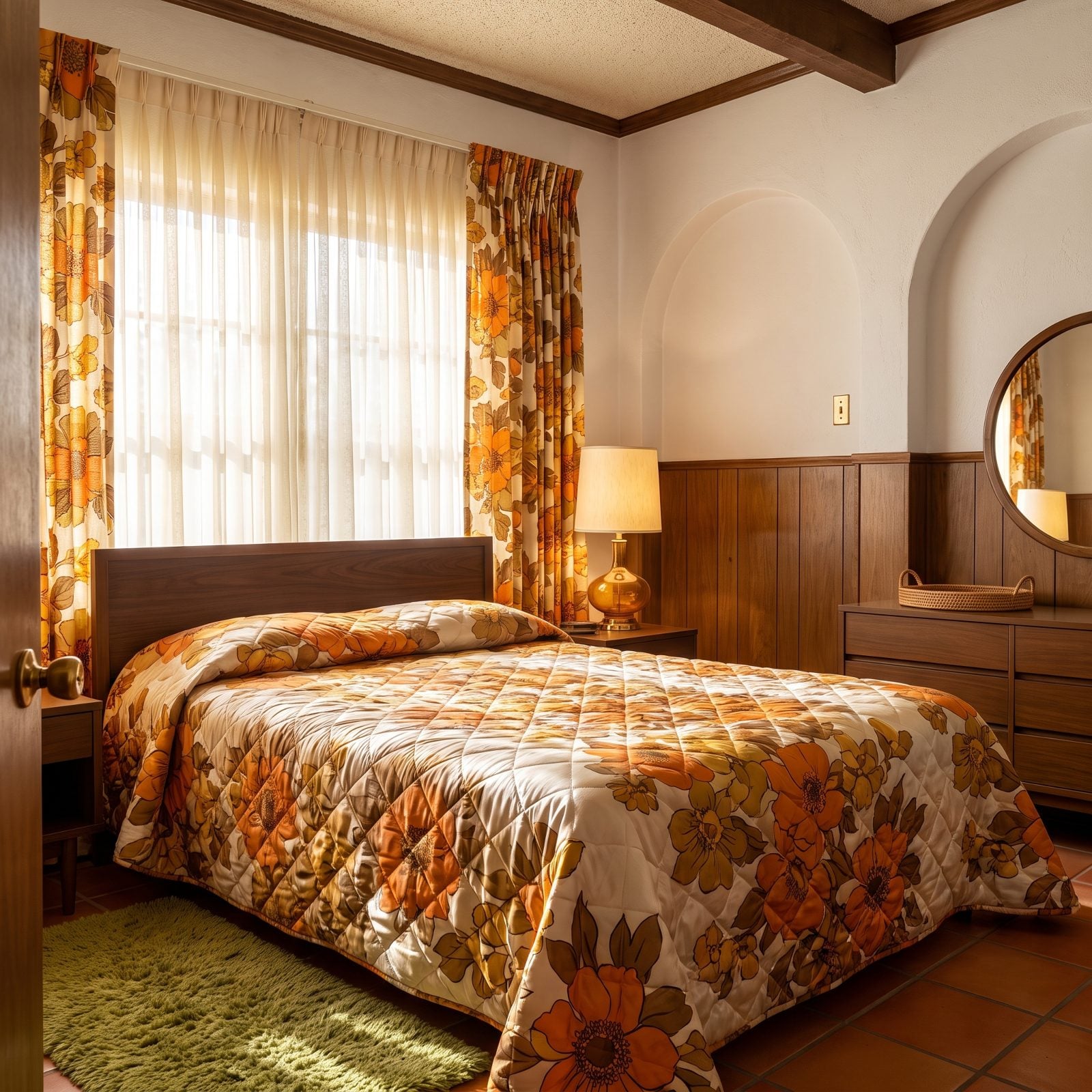
15. The Polyester Bedspread Covered in Flowers the Size of Dinner Plates
🔥 Would you like to save this?
Loud doesn’t begin to cover it. Flowers bloomed across this thing in orange and gold at a scale no real flower ever managed, printed on polyester that shone a little under the lamp and felt cool and slick against your legs.
Staging gospel preaches neutral bedding so the eye rests. This spread did not want your eye to rest — it wanted your eye on alert. And yet there was something comforting about pulling that familiar riot of blooms up to your chin at night. For today’s softer take, a farmhouse bedroom leans the opposite way, but the urge to let the bed be the story hasn’t gone anywhere.
14. Novelty Pillows Shaped Like Lips, Dice, or a Giant Number 1
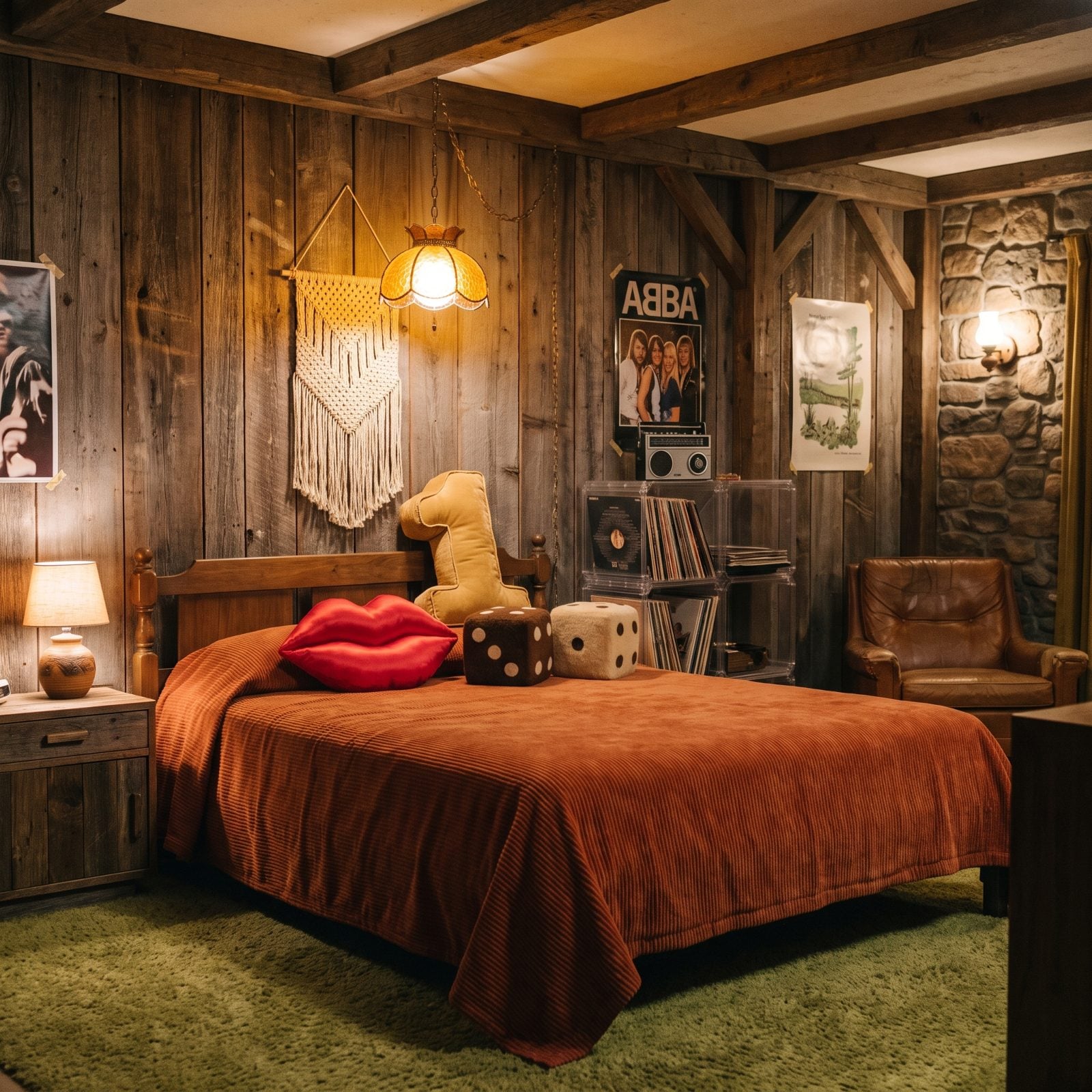
A pair of plump red satin lips. Two giant felt dice. Maybe a plush number one, because why not. These pillows were never meant to be slept on, and everyone understood that instantly.
They got shoved to the floor at bedtime and arranged back on the bed every morning like a tiny shrine to personality — pure decoration, pure fun, zero practical function. A home stager would quietly remove all of them before the first open house. A fourteen-year-old would have defended them to the death.
13. Clear Plastic Covers Protecting Furniture Nobody Was Allowed to Enjoy
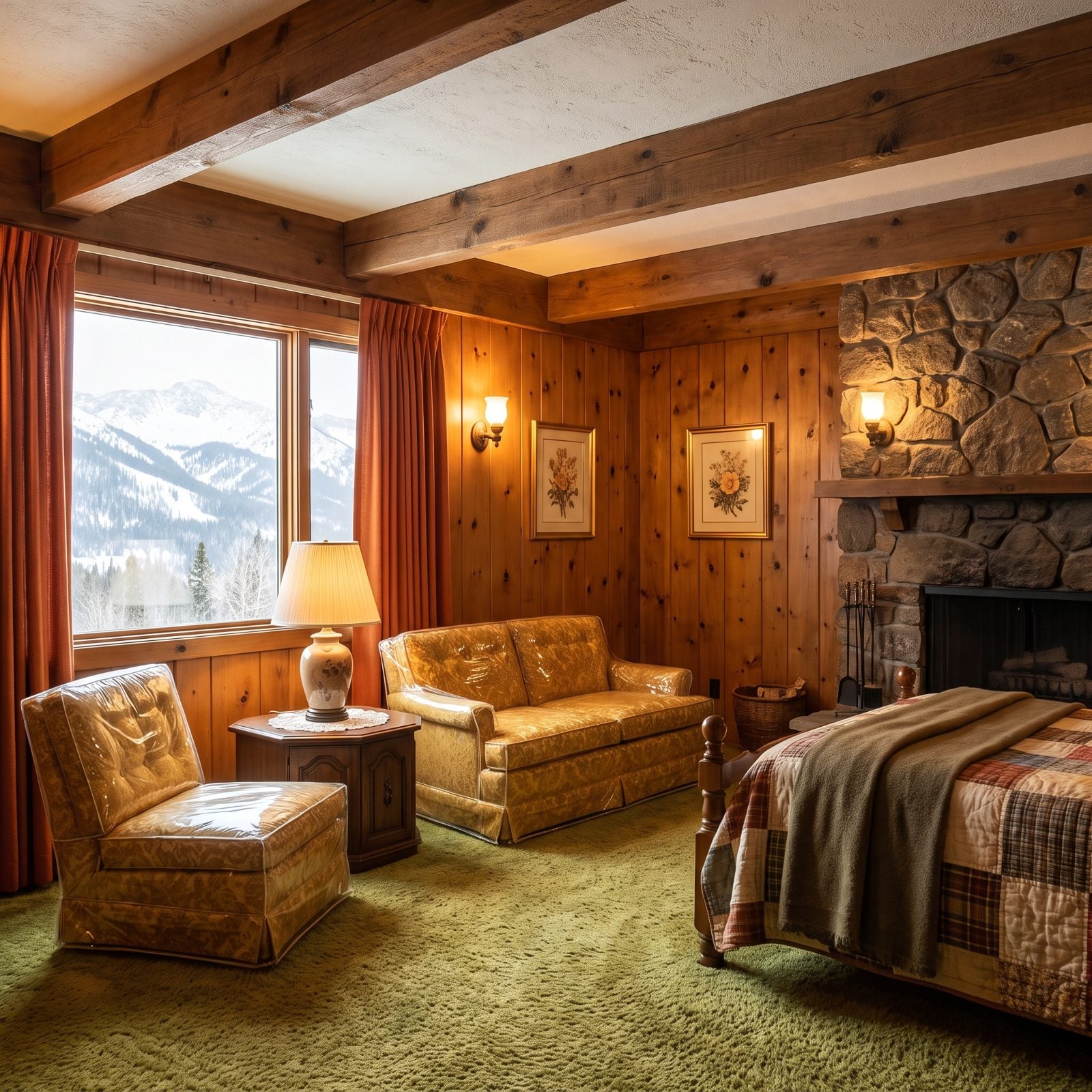
The sound gives it away before anything else — that stiff crinkle when you sat down, the way the plastic grabbed the backs of your legs in summer and sent a chill up them in winter.
The logic was airtight at the time. Protect the good furniture so it stays nice forever, which meant nobody ever actually enjoyed it. The plastic yellowed slowly while the upholstery underneath stayed pristine and unseen for decades. Stagers want furniture that looks touchable and welcoming. This was furniture under glass, a museum piece in your own bedroom, and there was a strange pride in keeping it that way.
12. The Deep-Pile Flokati Rug That Swallowed Everything You Dropped
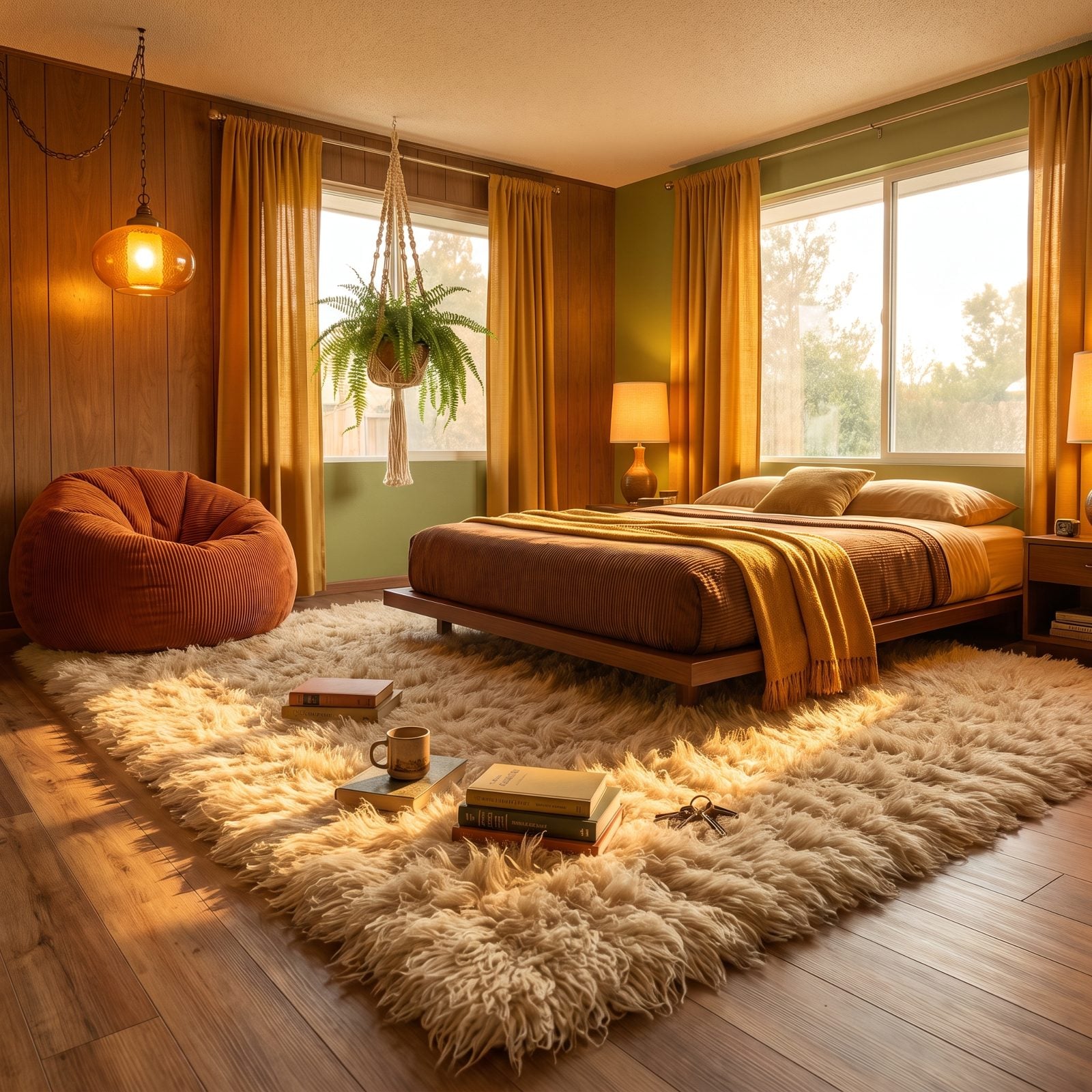
Sink your bare feet into it and they disappeared past the ankle. The flokati rug — long-stranded Greek wool piled thick as a sheepdog — was the softest thing in the house and the single worst idea for cleaning ever committed to a bedroom floor.
Everything vanished into it. Earring backs, beads, loose change, a dropped button you’d never see again. Vacuuming just redistributed the chaos. Staging advice now favors low, easy-clean flooring that photographs flat. The flokati photographed like a cloud and lived like a trap, and we loved it anyway.
11. The Popcorn Ceiling Shot Through with Glitter
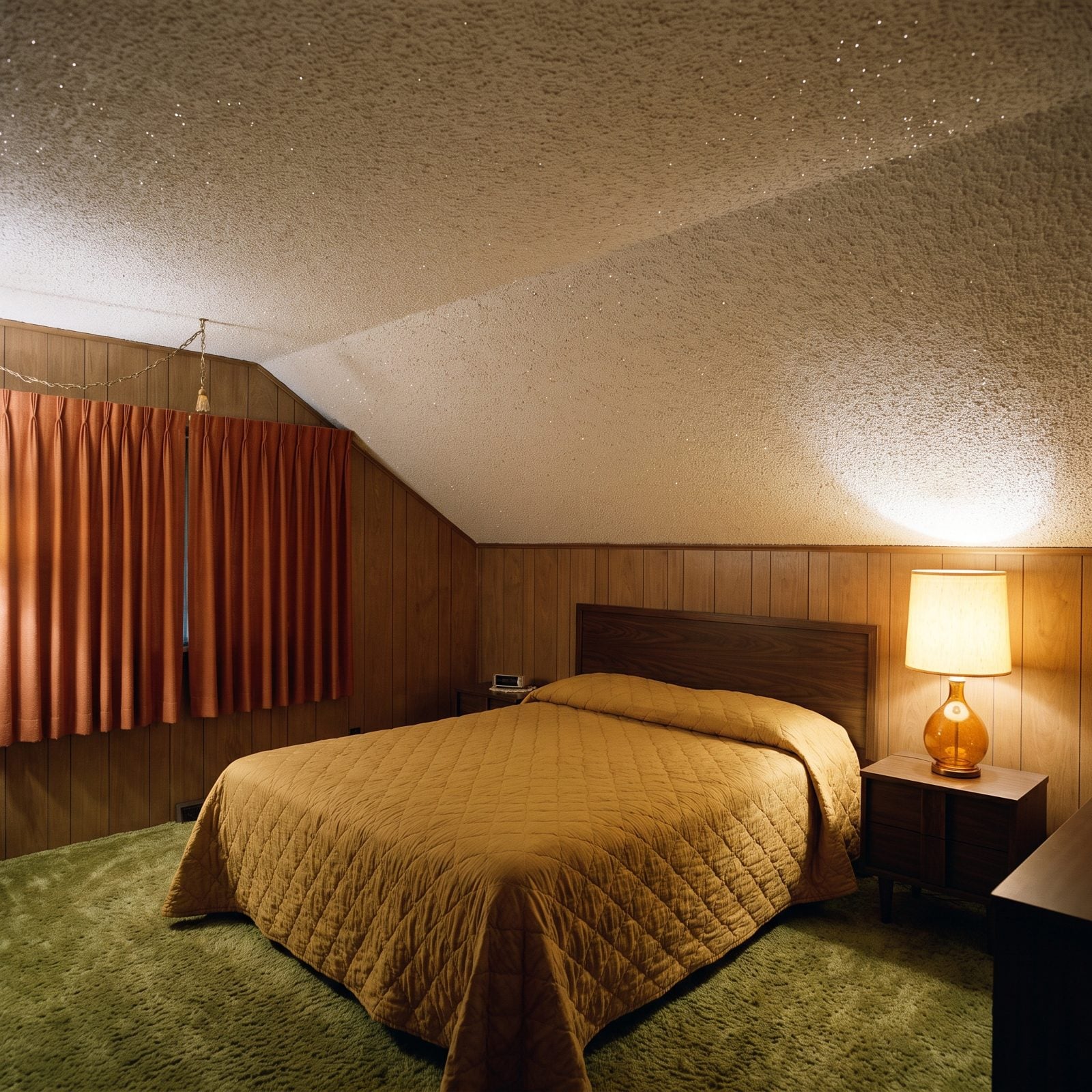
Lie on your back, let the lamp hit it just right, and the whole ceiling twinkled. Someone sprayed glitter into the acoustic popcorn texture and called it a feature, and for a kid staring upward at bedtime, it was practically a galaxy.
Nothing makes a modern home inspector sigh harder than popcorn ceiling, glittered or not. It traps dust, it’s miserable to remove, and the sparkle version refuses to paint over cleanly. But those tiny flecks caught every bit of light in the room. Falling asleep under your own private night sky was worth every future renovation headache.
10. The Sunken Conversation Pit, Right There in the Bedroom
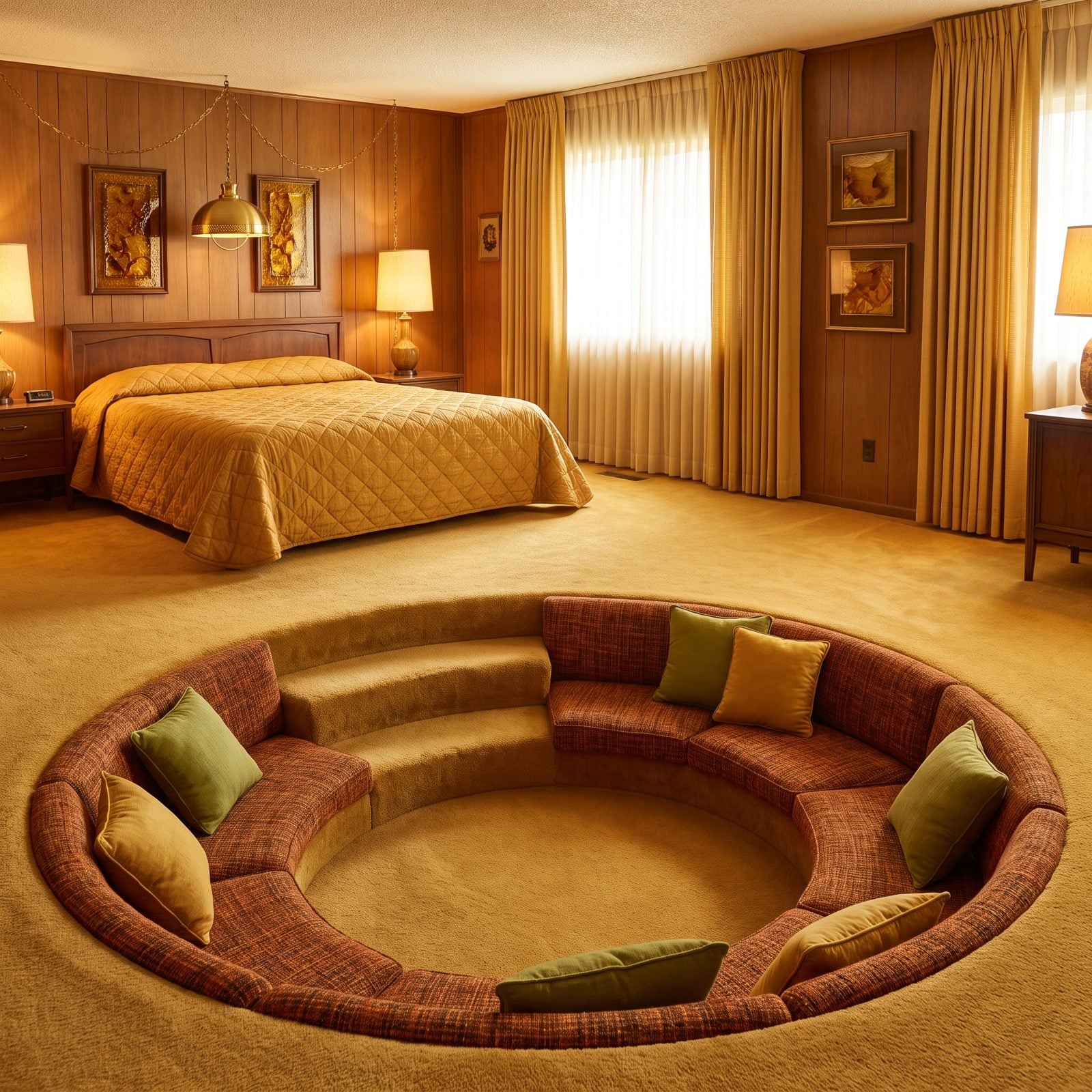
Two carpeted steps down into a little upholstered world of its own. The conversation pit migrated out of the living room and straight into the bedroom — a sunken lounge of tweed benches and oversized pillows where you could sit and talk at a different altitude than the bed.
Modern staging is obsessed with open, step-free flow, partly for resale, partly because buyers are terrified of stubbed toes. A sunken pit is the enemy of that philosophy, and also the most ambitious thing a middle-class bedroom ever attempted — proof of a decade that wasn’t afraid to carve a room into layers. A similar impulse to zone a space for lounging shows up in a teal bonus room done right today.
9. Bright Plastic Modular Storage Cubes Stacked Into a Wall
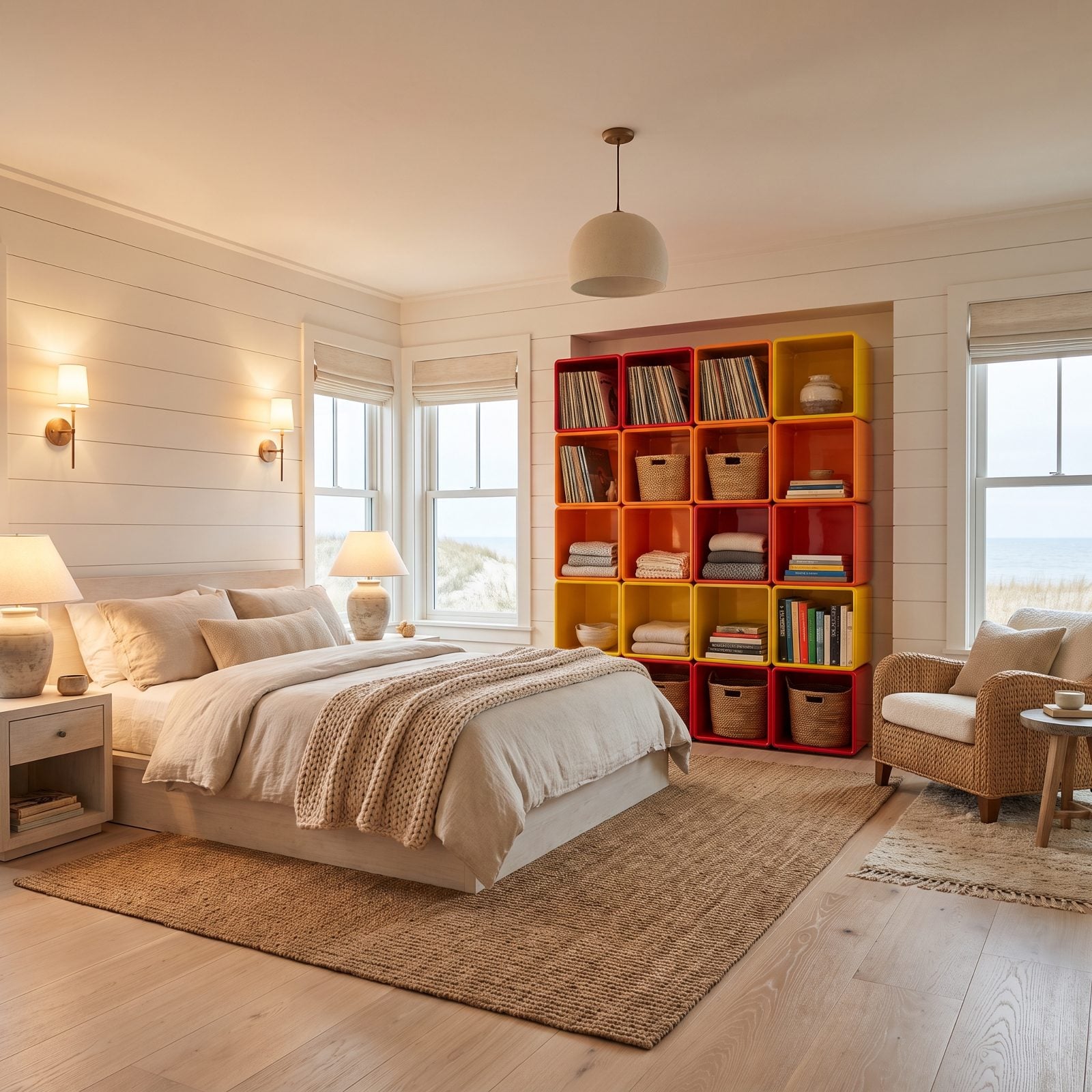
Glossy, lightweight, loud in primary colors, these molded plastic cubes clicked together into whatever shape your floor space allowed. Records in one, paperbacks in another, a transistor radio balanced on top. Furniture you could rearrange on a Saturday afternoon with your bare hands.
Staging advice today pushes matched wood tones and hidden storage. These cubes went the other way entirely — storage as a bright, proud graphic. They scuffed, they cracked at the corners, and they never once pretended to be anything other than cheerful plastic. For a brighter kid’s space in the same spirit, these gray bed ideas show how color-blocked storage still earns its keep.
8. The Silent Butler Standing Guard With Tomorrow’s Clothes
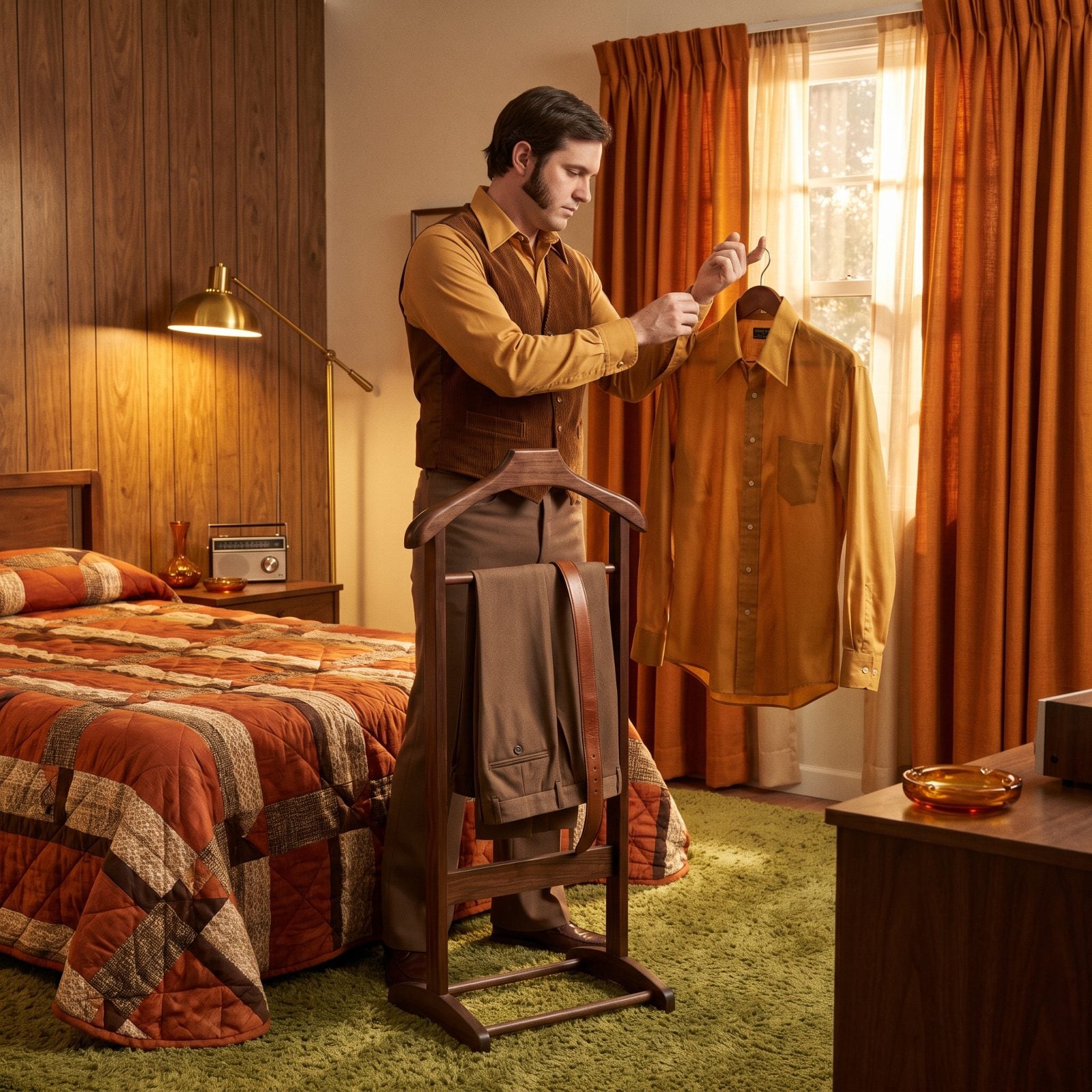
Every well-run bedroom kept a wooden sentry in the corner, a valet holding tomorrow’s outfit like it had somewhere important to be. You hung the shirt on the shoulder rail, draped the slacks over the bar, slipped the belt through before bed, and woke up already half-dressed in theory.
Modern stagers want corners empty and sightlines clean. This thing? The opposite of empty. It’s furniture whose entire job is holding more stuff, planted right where a stager would set a leggy fern and a floor lamp.
7. Spider Plants Hanging in a Macramé Jungle
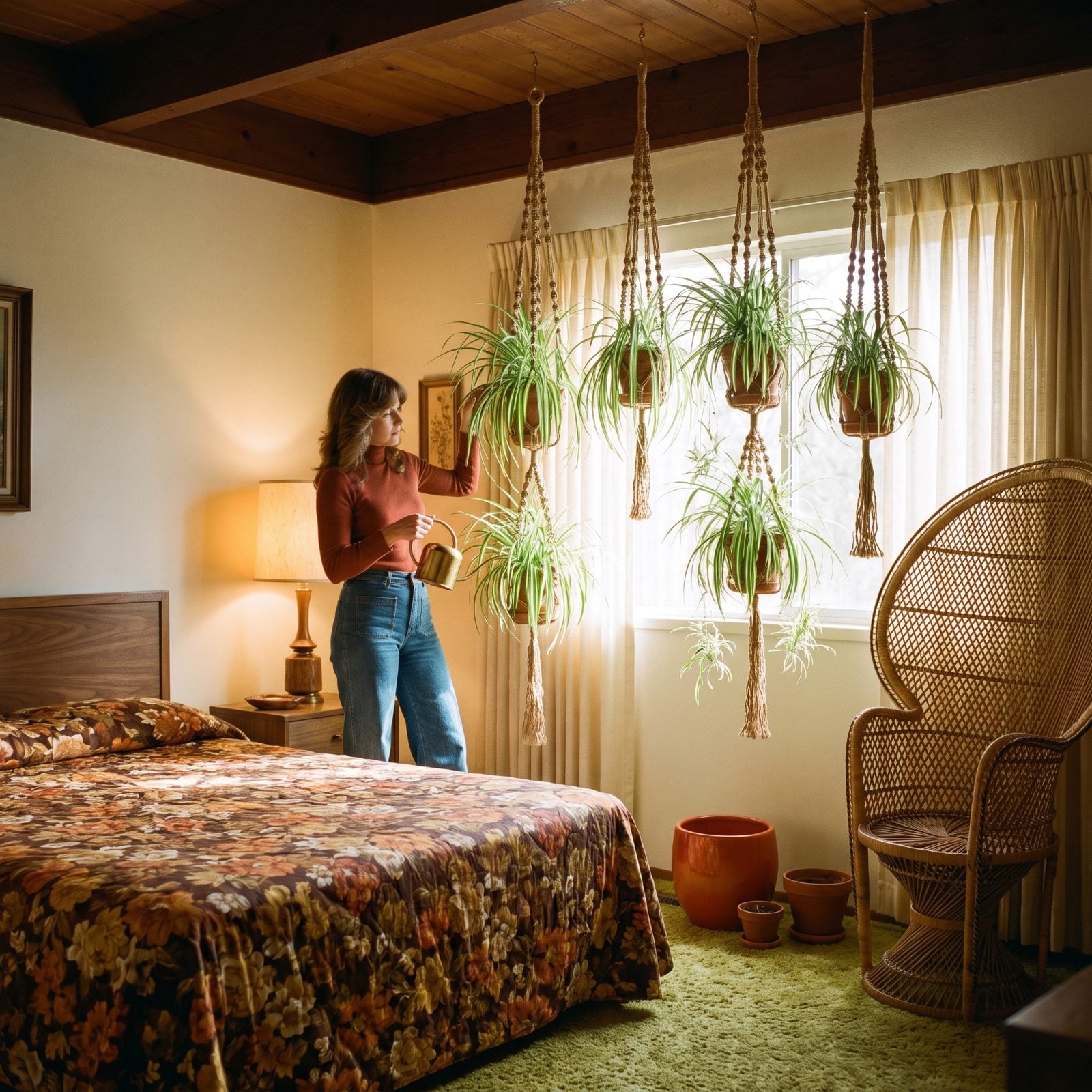
If the ceiling wasn’t dripping with greenery, were you even decorating? Spider plants swung from knotted jute hangers, their baby plantlets dangling like little green chandeliers you could clip off and root into forever. One plant became six because they practically reproduced in your sleep.
Today’s staging advice says one tidy plant, maybe two, nothing that drops leaves or needs explaining. A ceiling grove that throws moving shadows across the walls breaks every clean-sightline rule on the list, and we love it for that. If the look appeals, these emerald bedroom inspiration ideas lean into the same leafy warmth.
6. A Beaded Curtain Clattering in the Doorway
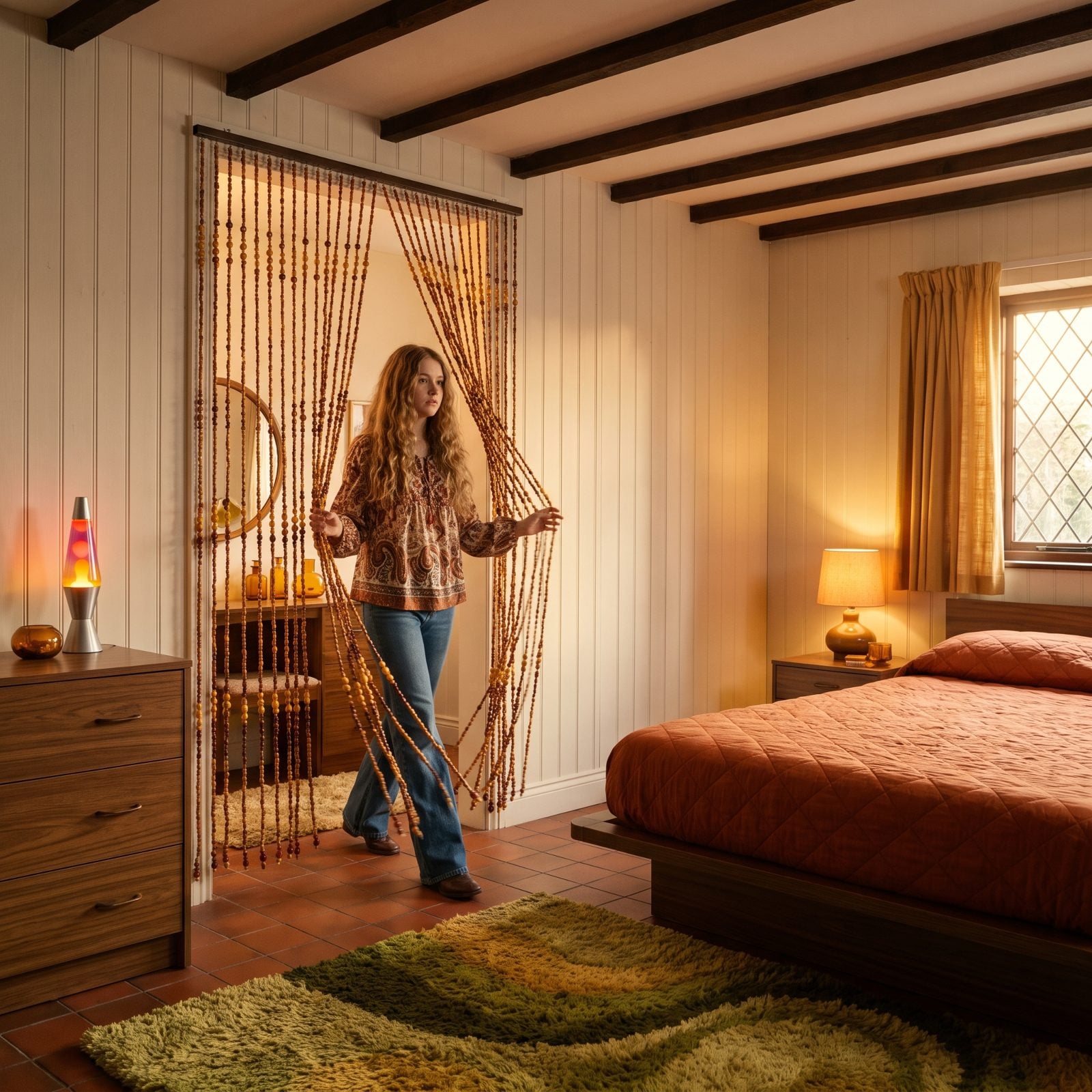
You heard it before you saw anyone. That soft wooden clatter of beads sliding back into place announced every entrance and exit like a tiny round of applause. Strands of amber and chestnut hung across the doorway, part room divider, part sound effect, part mood.
Stagers want doorways to read as open passage, nothing swinging, nothing that makes a visitor pause and sweep strands aside with their hand. Which is exactly the point. A door tells you to keep out. A beaded curtain tells you to come through, and to announce yourself doing it.
5. Western Saloon Doors Swinging Into the Bathroom
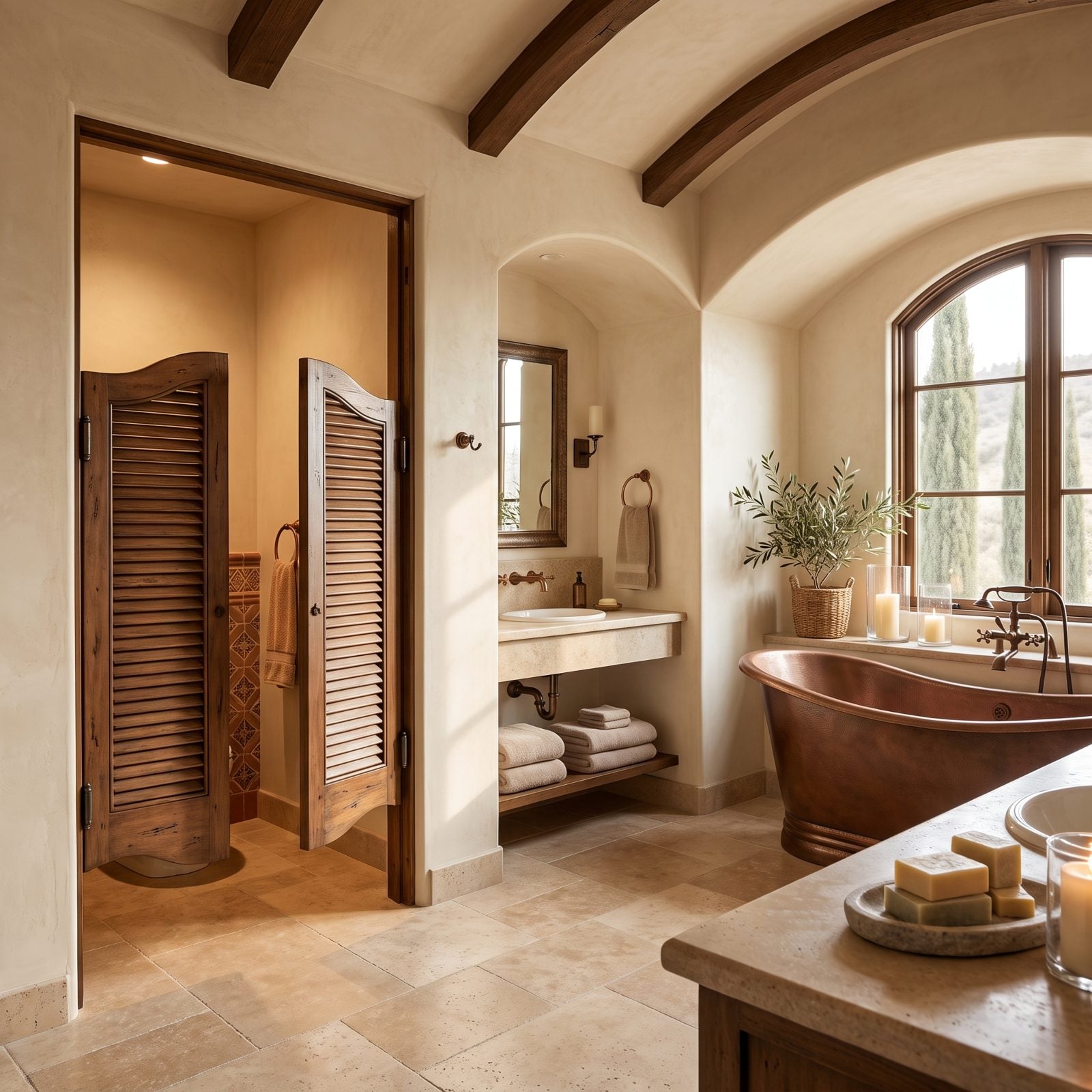
Nothing announced a master bath quite like saloon-style doors swinging into the toilet closet. Nearly full-height louvered panels, a little spring action, and your bathroom suddenly carried the energy of a dusty frontier watering hole. You half expected a tumbleweed to roll past.
The modern staging rulebook demands a solid door for the one room that genuinely needs privacy and sound control. Swinging slats offer neither. But they committed to a theme, and we respect a bathroom that knew exactly what it wanted to be.
4. An Owl Collection Watching From Every Shelf
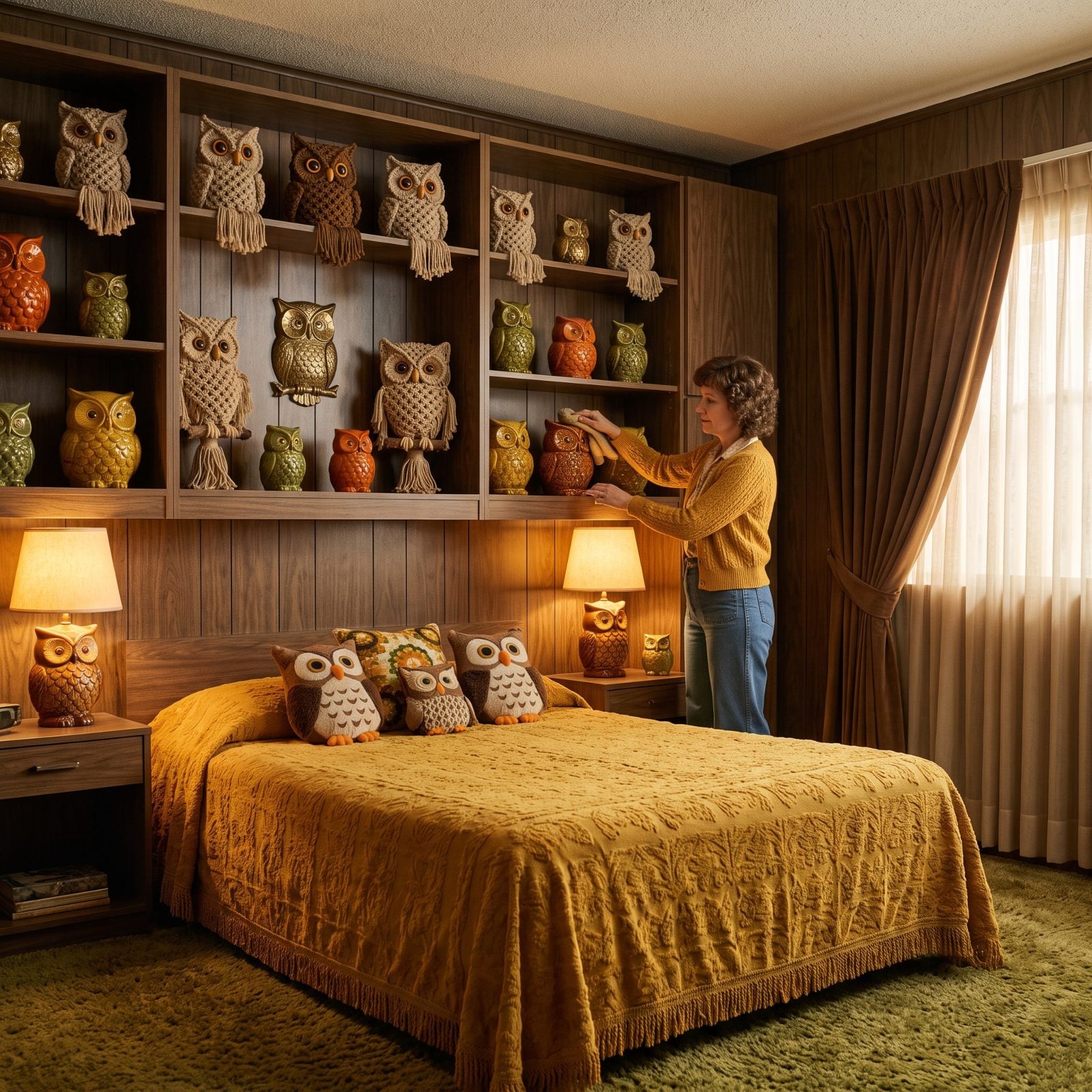
Owls. Everywhere. Macramé owls with wooden bead eyes, ceramic owls on the dresser, an owl lamp, owl throw pillows, a hammered-brass owl plaque on the wall. The second you owned one, relatives decided owls were your entire personality, and the collection snowballed with every birthday that followed.
Stagers preach depersonalization, strip the shelves, let buyers picture their own stuff up there. Now go say that to forty wide-eyed owls staring you down. The appeal ran the other direction entirely. This room belonged to someone, and that someone really, really liked owls.
3. The Giant Wooden Spoon and Fork Mounted on the Wall
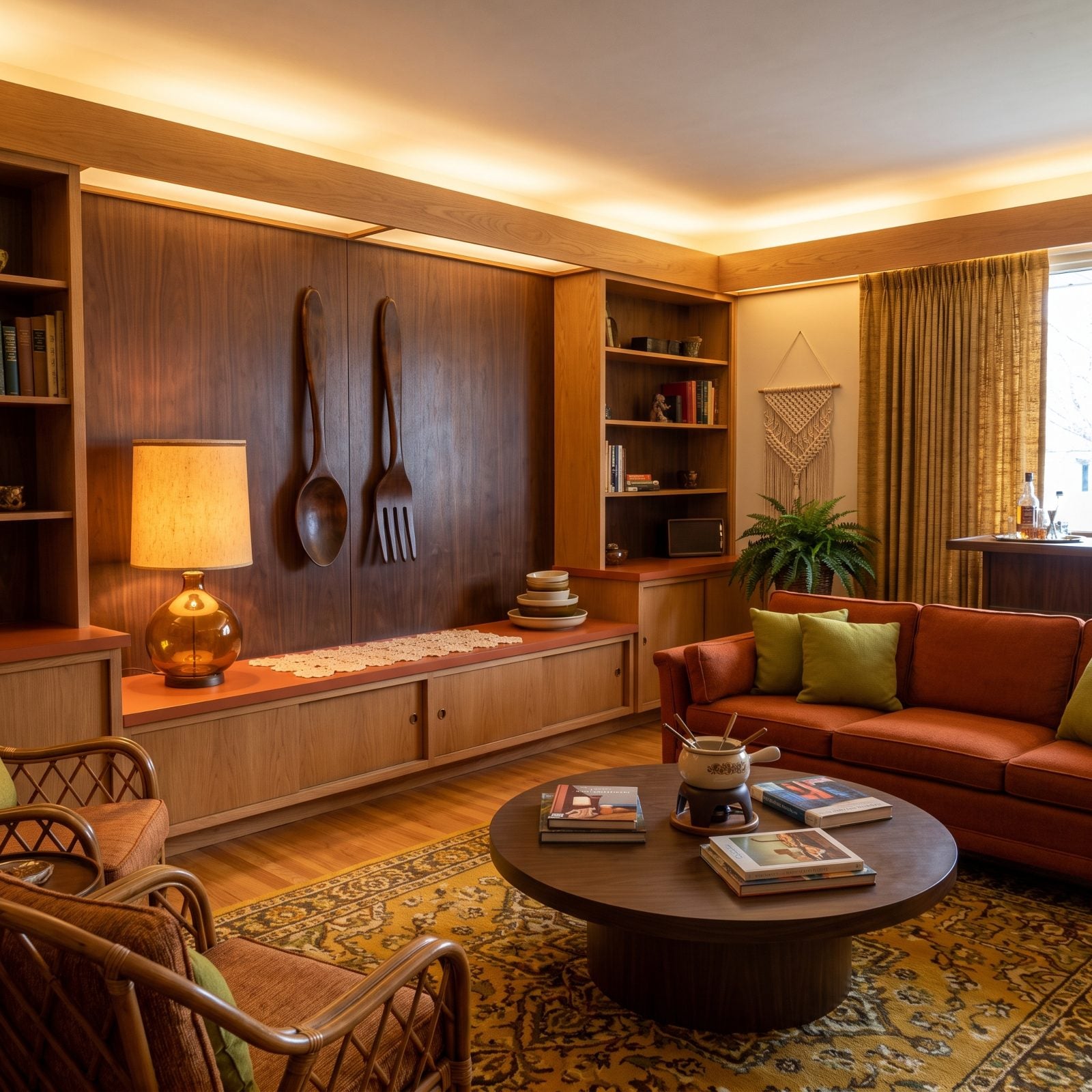
Somewhere along the way the giant wooden spoon and fork escaped the kitchen entirely and turned up in bedrooms and dens, hung on the wall like trophies from a dinner nobody remembers eating. Three feet long, dark walnut, grinning down at you for reasons no one could ever quite explain.
A stager would pull these on sight. Too odd, too specific, too utensil. And yet they were a near-universal fixture, the decorating equivalent of a handshake. Grow up around them and you don’t question it. You just know they were always there. That same woodgrain warmth shows up in these farmhouse bedroom looks.
2. A Mirrored Disco Ball Spinning Over the Bed
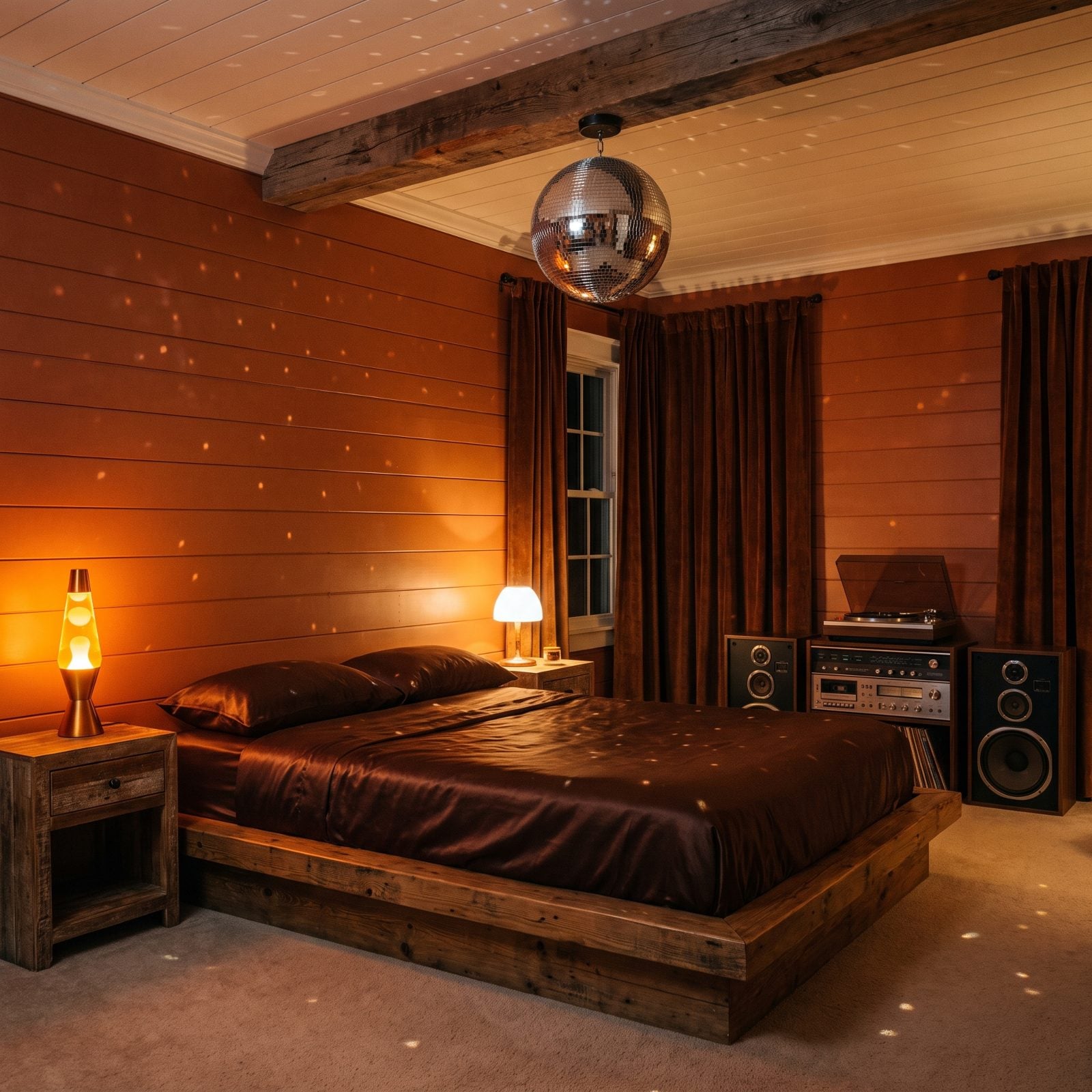
A little mirrored ball, maybe eight inches across, turning slowly over the bed and flinging specks of light across every surface. Flip on the lamp beside it and the whole room filled with drifting constellations. Pure disco-era ambition, scaled down to fit a suburban bedroom.
Modern staging wants ceilings clean and lighting even, nothing dangling, nothing that reads as party. A spinning disco ball over your bed might be the least neutral lighting choice imaginable, and that was precisely the idea. This room wasn’t trying to sell itself to a stranger. It was having a good time.
1. The Ceiling Mirror Staring Back From Above the Bed
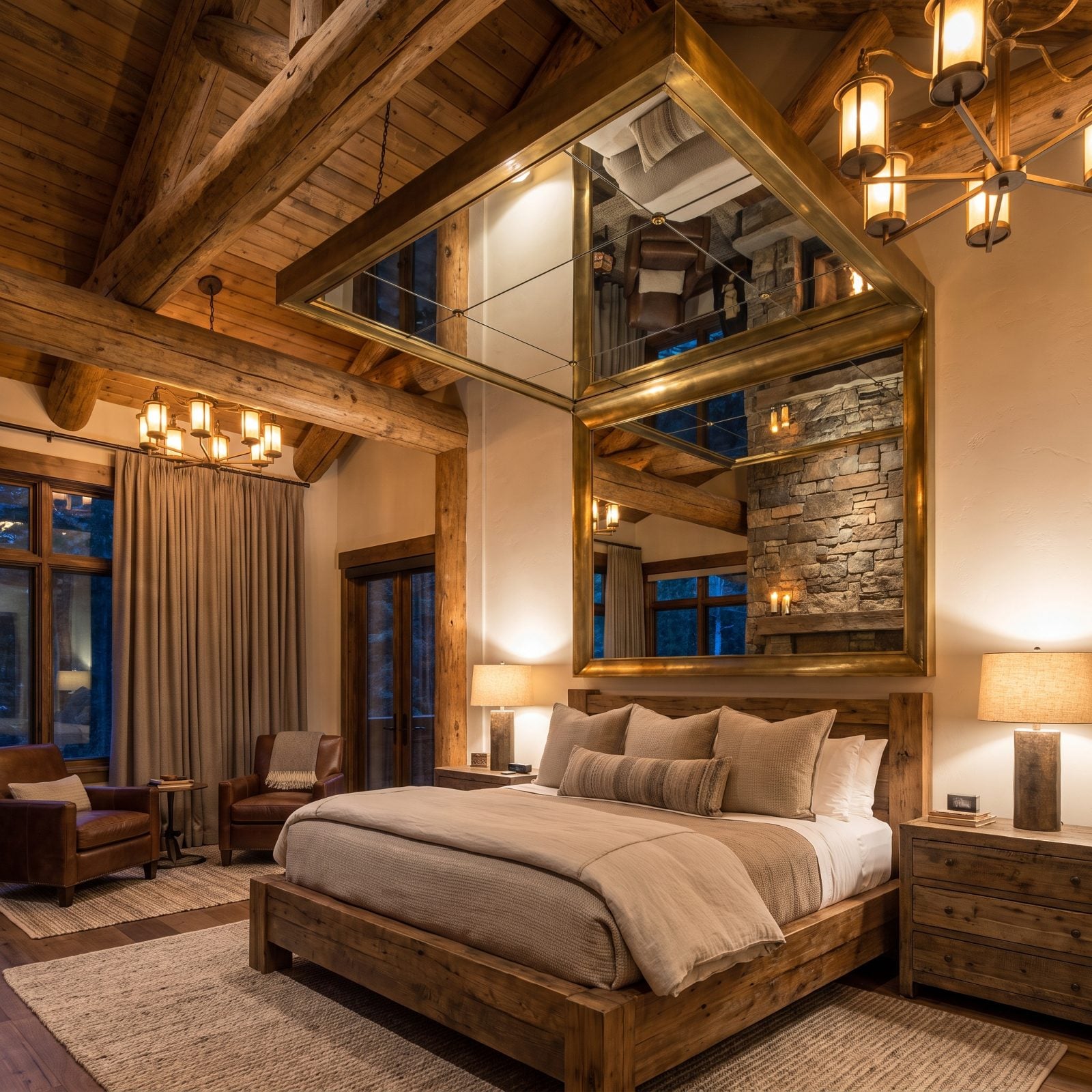
And then there was the big one. A brass-framed mirror mounted on the ceiling directly over the bed, handing you back the whole room the second you lay down. Nothing said grown-up 1970s bedroom quite like looking straight up and finding yourself looking right back.
No staging consultant alive would sign off on this. Heavy, deeply personal, and it tells a buyer far more than they asked to know about the previous owners. But it was a real feature in real homes, and it committed harder than any accent wall ever managed.