
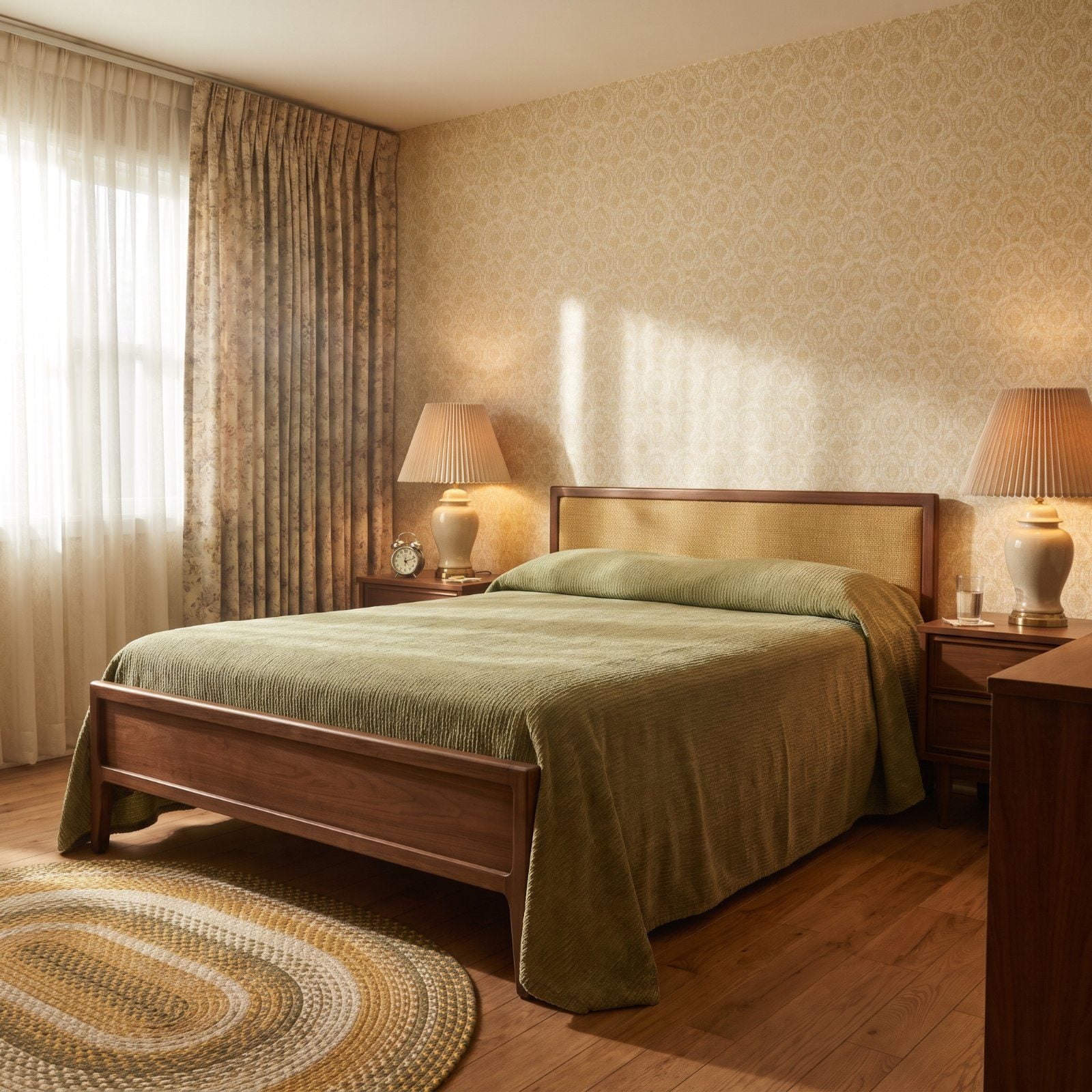
The 1960s bedroom knew exactly what it was for. A bed you could sit up in. A lamp that threw warm light instead of a blue-white glare, and a chenille bedspread that smelled faintly of cedar and made the whole room look finished by nine in the morning.
Then somewhere along the line we swapped most of it for platform beds the size of a parking space and a phone propped on the pillow. The ones below are the quiet, workable ideas worth remembering.
In order to come up with the very specific design ideas, we create most designs with the assistance of state-of-the-art AI interior design software. Also, assume links that take you off the site are affiliate links such as links to Amazon. this means we may earn a commission if you buy something.
42. Solid-Wood Bed Frames That Outlived Their Owners
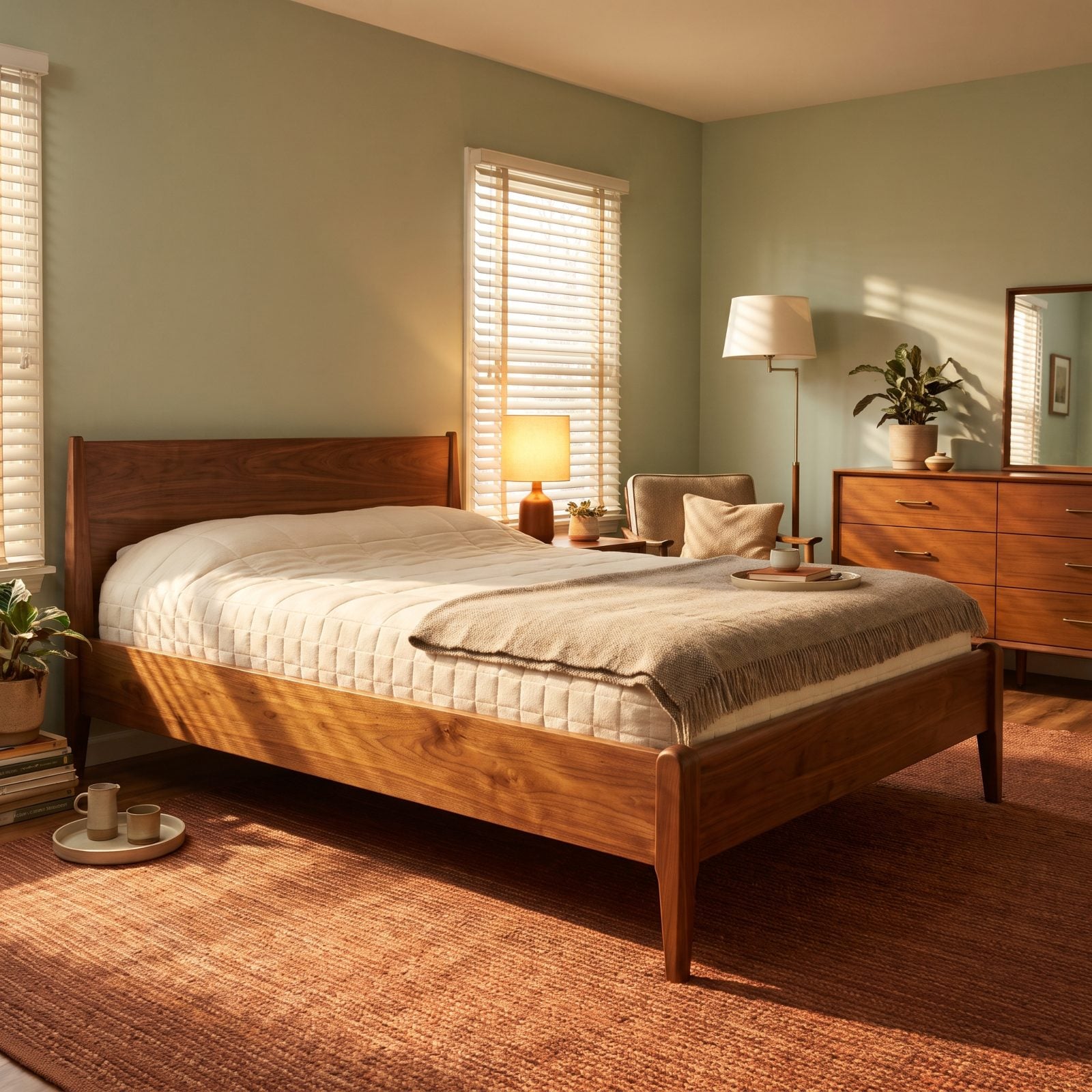
You could tighten the bolts with a wrench from the kitchen drawer and the thing would last another forty years. That was the whole idea. These frames came out of mills that still used actual walnut, maple, and teak, with joinery you could inspect by hand.
Compare that to the particleboard platform you assembled with a tiny Allen key last spring, the one that already creaks when you turn over. Solid wood develops a patina; the cheap stuff develops a wobble, then a landfill appointment three years later.
The look reads brown bed designs at their most honest: grain, weight, and a finish you can refresh instead of replace.
41. Human-Scale Beds That Left Room to Walk Around
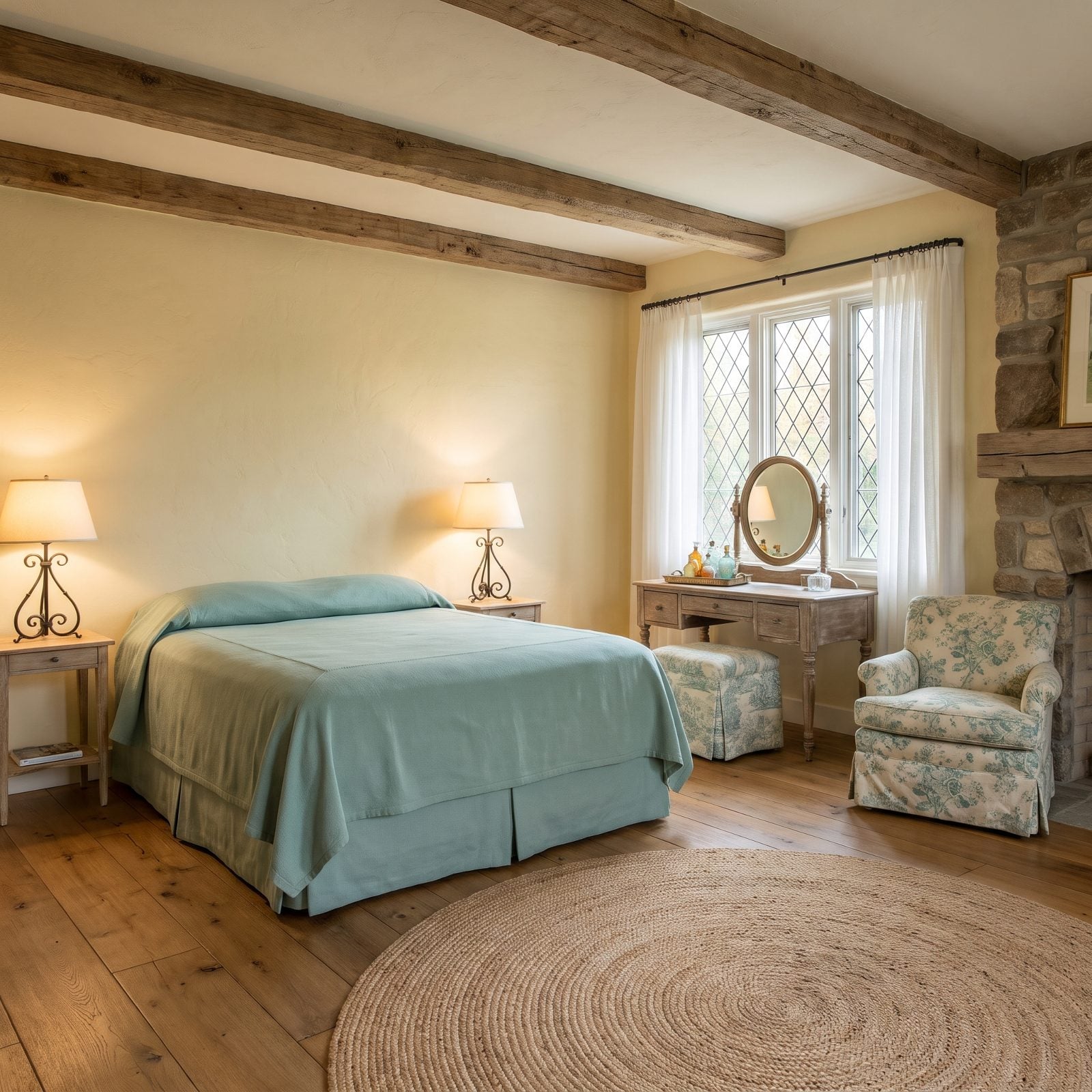
The bed used to be furniture, not a floor plan. A full or queen could tuck one side snugly into an alcove and still leave real open floor on the other, enough to pull out a drawer, walk to the window, and keep a reading chair in the corner.
Now the king eats the room. You side-step along a nine-inch gap to reach the closet and somehow call it luxury. Proportion is a quiet comfort, and the 1960s had it figured out.
40. Padded Headboards You Could Actually Lean Against
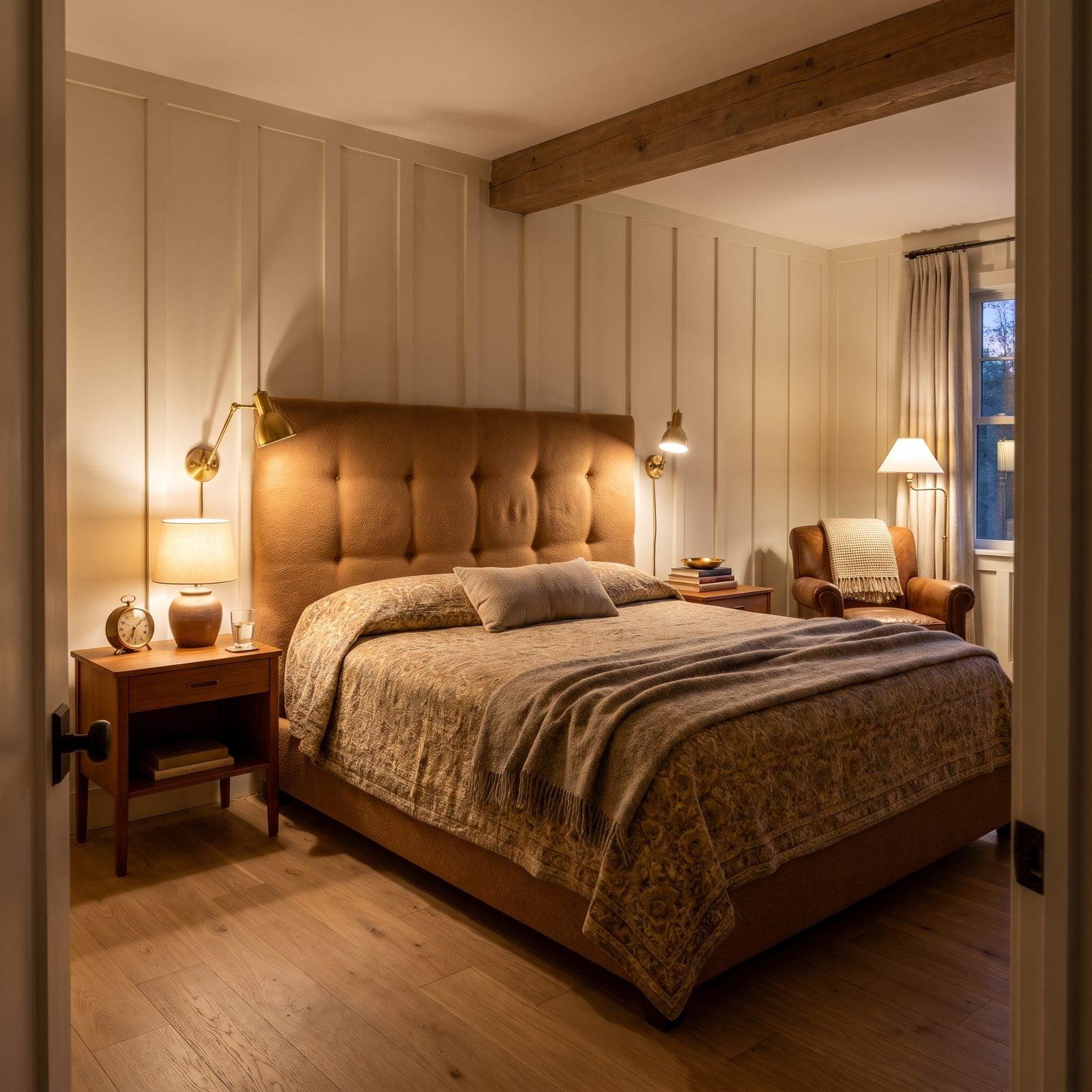
A headboard used to have a job. You leaned on it, you read against it. The 1960s padded it in vinyl or nubby fabric, often button-tufted, so sitting up in bed with a paperback felt like sitting in a chair.
Half of today’s headboards are a decorative plank bolted eight inches too low. Or there’s nothing at all, just pillows sliding into the gap between the mattress and the wall. Comfort got styled right out of the room.
Home Stratosphere readers are split on headboards: asked which they would order, 49% chose tall upholstered and 48% low wood, a genuine coin toss.
39. Chenille Bedspreads That Finished the Room by 9 A.M.
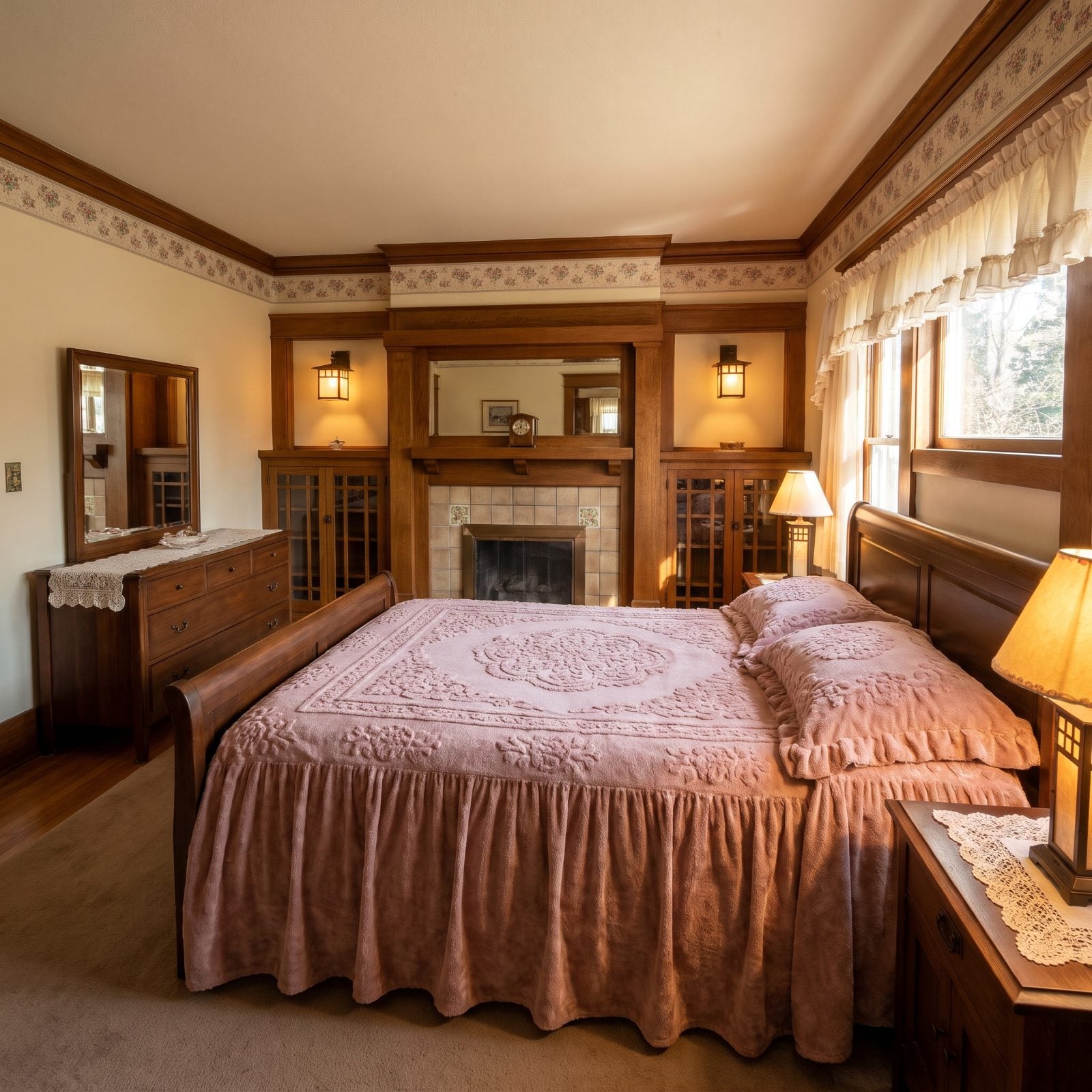
You pulled it up, smoothed it once, and the room was done. Chenille bedspreads carried the whole look, draping clean to the floor with a raised pattern you could trace with a fingertip while you lay there avoiding getting up.
The modern alternative is a duvet that needs an hour of fluffing and still looks lumpy, plus a pile of throw pillows you stack on the floor every night and resent every morning. A single well-made spread was less fuss and more polish. Good green bedroom ideas still lean on exactly this move, a coverlet that does the work.
38. Crisp Cotton Sheets That Breathed Through a Hot Night
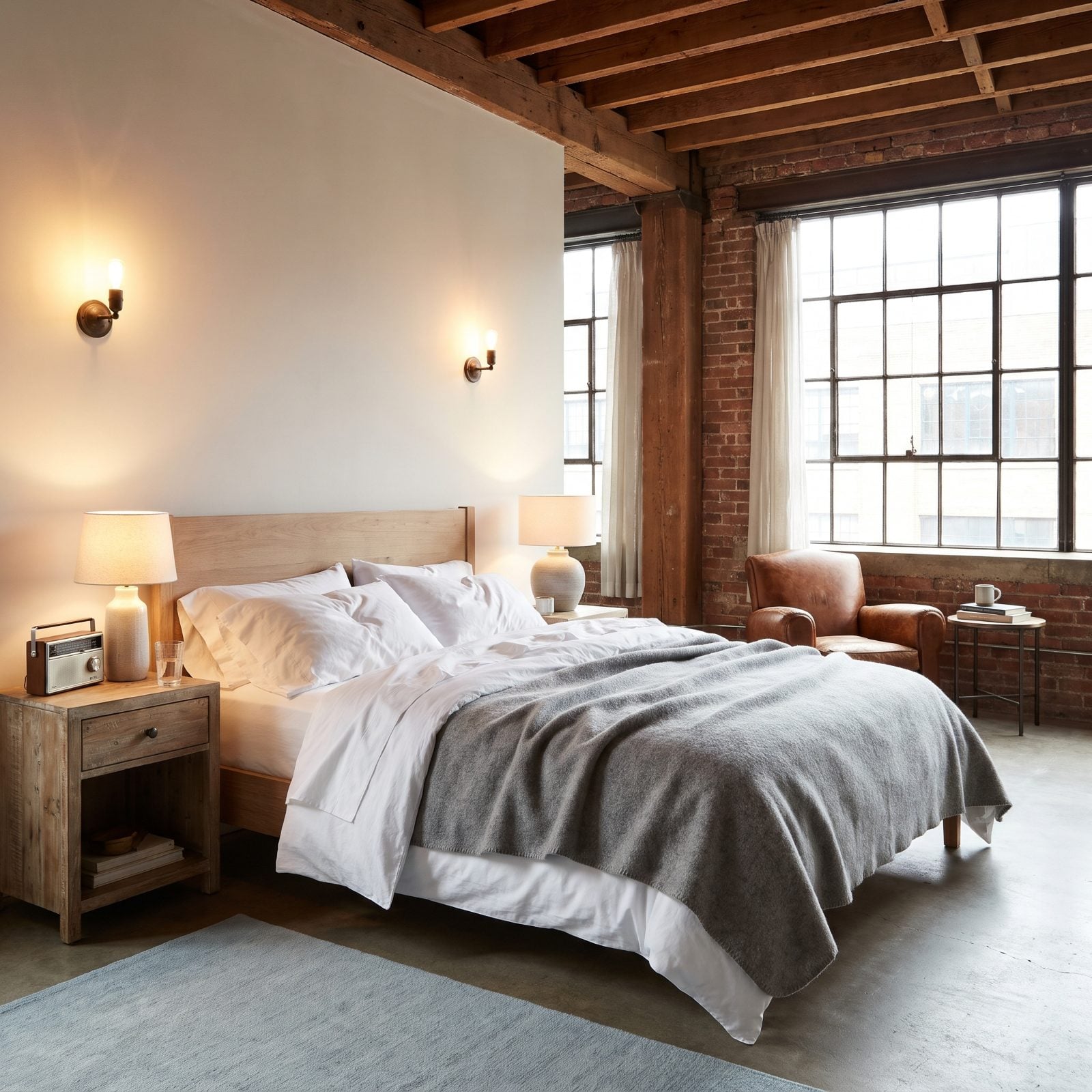
Cool on the first night, cooler by the hundredth wash. Cotton percale breathed, wicked, and softened with age instead of pilling into static-clingy little balls.
Then microfiber showed up promising wrinkle-free and delivered a sheet that sleeps hot and smells like a gym bag by August. Natural cotton beats a polyester blend every single summer. Your skin knew it before the marketing did.
37. Layered Wool Blankets You Could Peel Back One at a Time
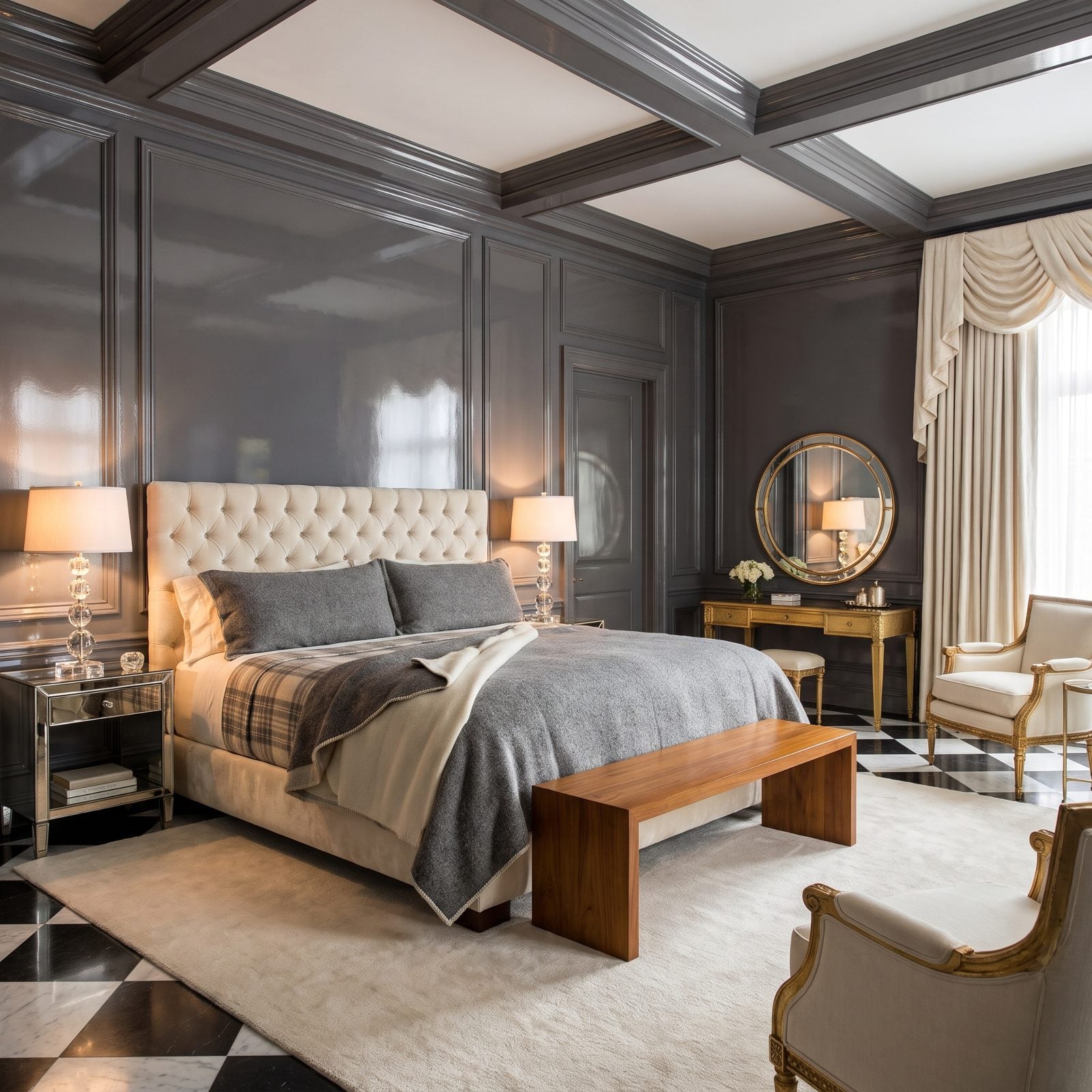
Cold snap? Add a blanket. Warm night? Peel one off. Climate control ran by hand back then, with layered wool you adjusted through the night without a thermostat or an argument.
The single thick duvet we all sleep under now gives you two settings: suffocating, or kicked-off-and-freezing. Layering was smarter, and one of those blankets lived folded at the foot of the bed all summer, ready for the first cold snap in October.
36. Curtains and Bedding Cut From the Same Cloth
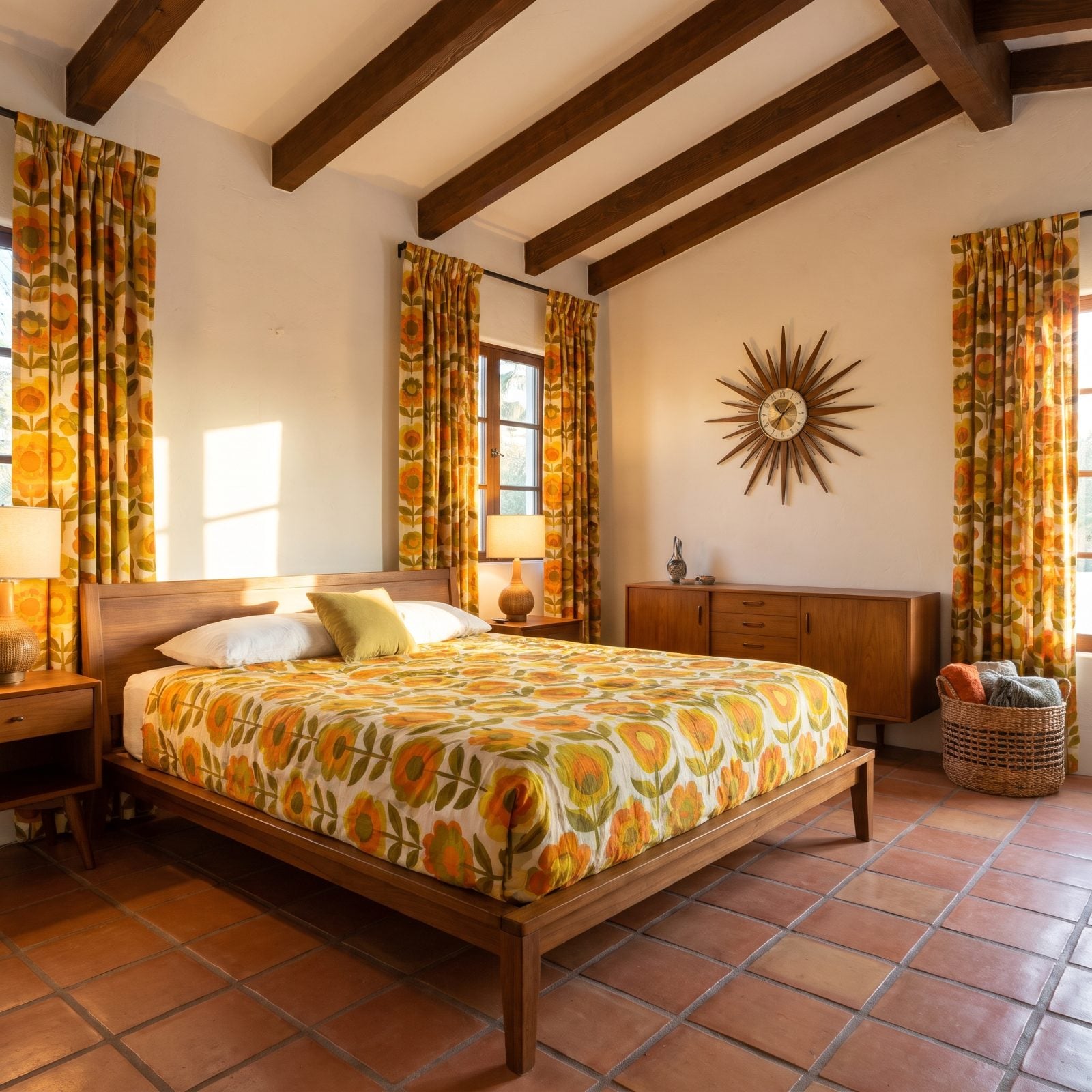
The curtains matched the bedspread, and nobody apologized for it. Coordinated barkcloth, often the same atomic floral top to bottom, pulled the whole room into one intention instead of a committee of unrelated purchases.
We’re so afraid of “matchy” now that bedrooms read like three people decorated them on different weekends. A little coordination isn’t dated. It’s the room agreeing with itself.
What Our Readers Say
- In our Hot or Not photo matchups, pictures of minimalist rooms won fewer of their head-to-head matchups than expected, taking 31% against an expected 45%.
From Home Stratosphere reader polls and votes.
35. Nightstands With Drawers That Swallowed the Clutter
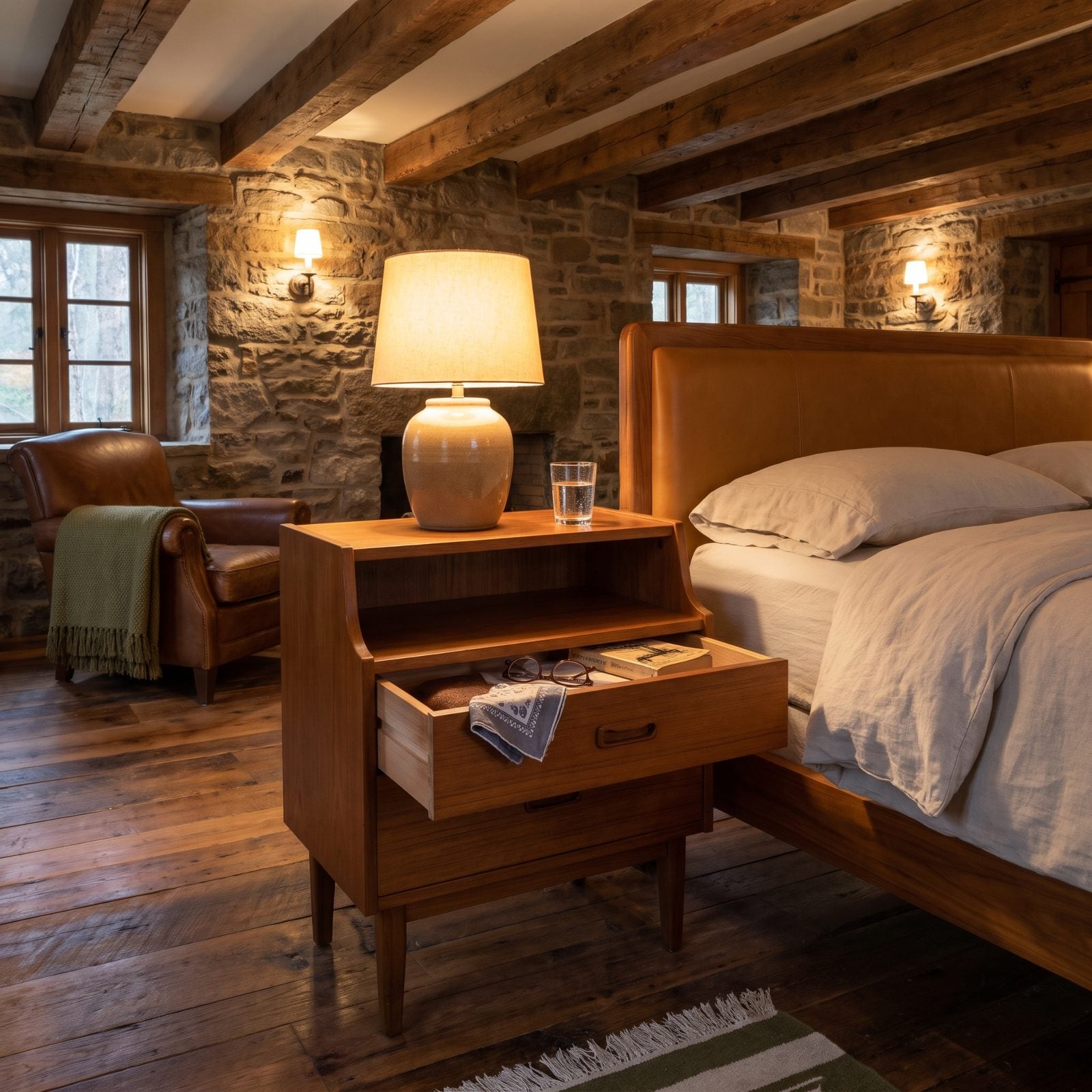
A drawer, not a tray. These nightstands gave you somewhere to hide the reading glasses, the hand cream, the half-read paperback, so the top stayed a clean surface for a lamp and a glass of water.
The floating ledge or the single open shelf we’ve drifted toward puts your whole private junk pile on display. A contemporary nightstand can pull the same trick, it just has to remember that a drawer earns its footprint. Out of sight was half the appeal.
34. Matching Bedside Lamps That Threw Warm, Forgiving Light
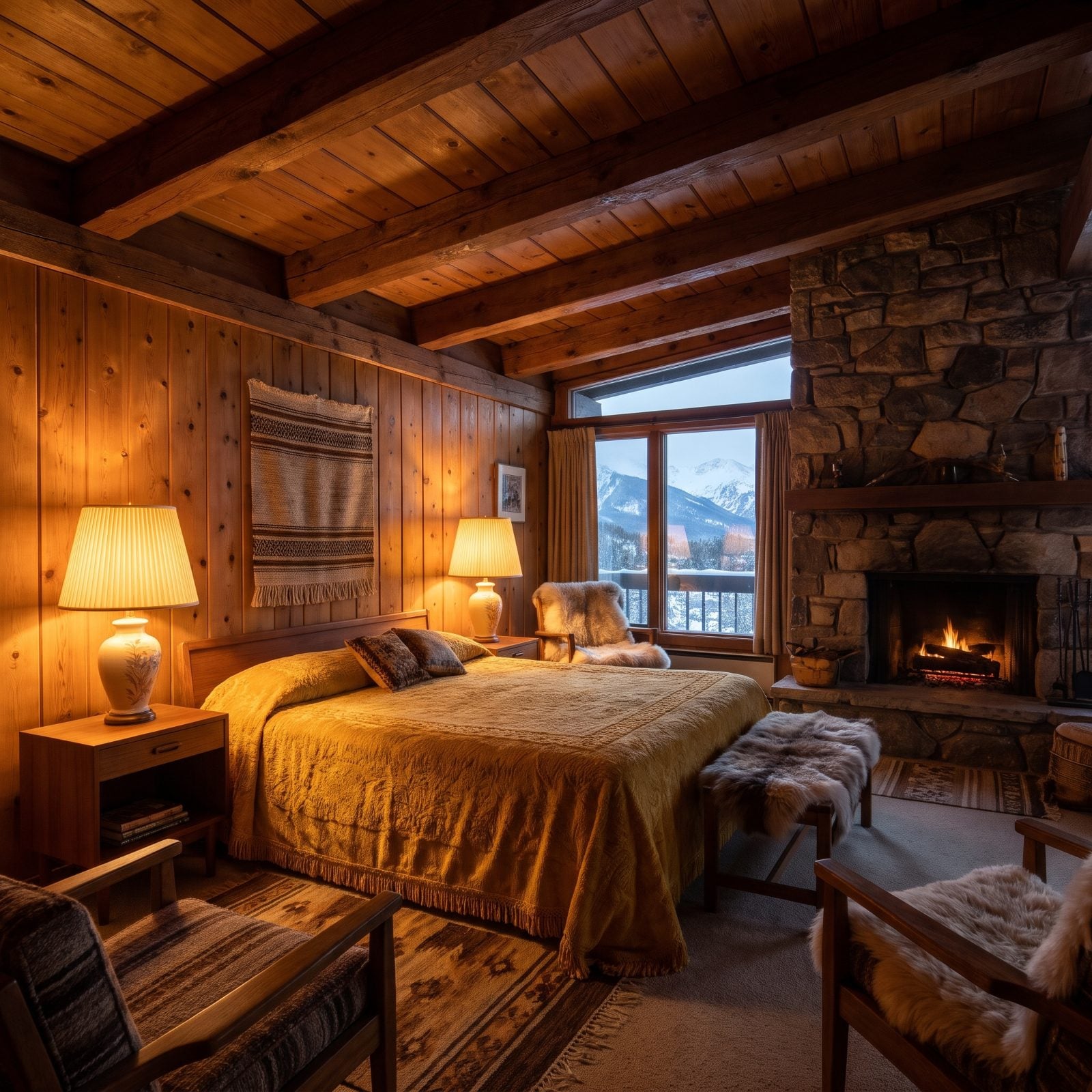
Two lamps, one on each side, both throwing the same amber glow. These rooms understood that light at bedtime should be warm and low, incandescent bulbs in fabric shades that made faces look softer and the day feel over.
Now half of us read by a blue-white LED that could light a surgical theater and then wonder why we can’t sleep. Warm light is a signal to the body, and the old lamps sent it clearly. Pair them, keep them low, thank me at 10 p.m.
33. A Real Wind-Up Clock That Kept the Phone Out of Bed
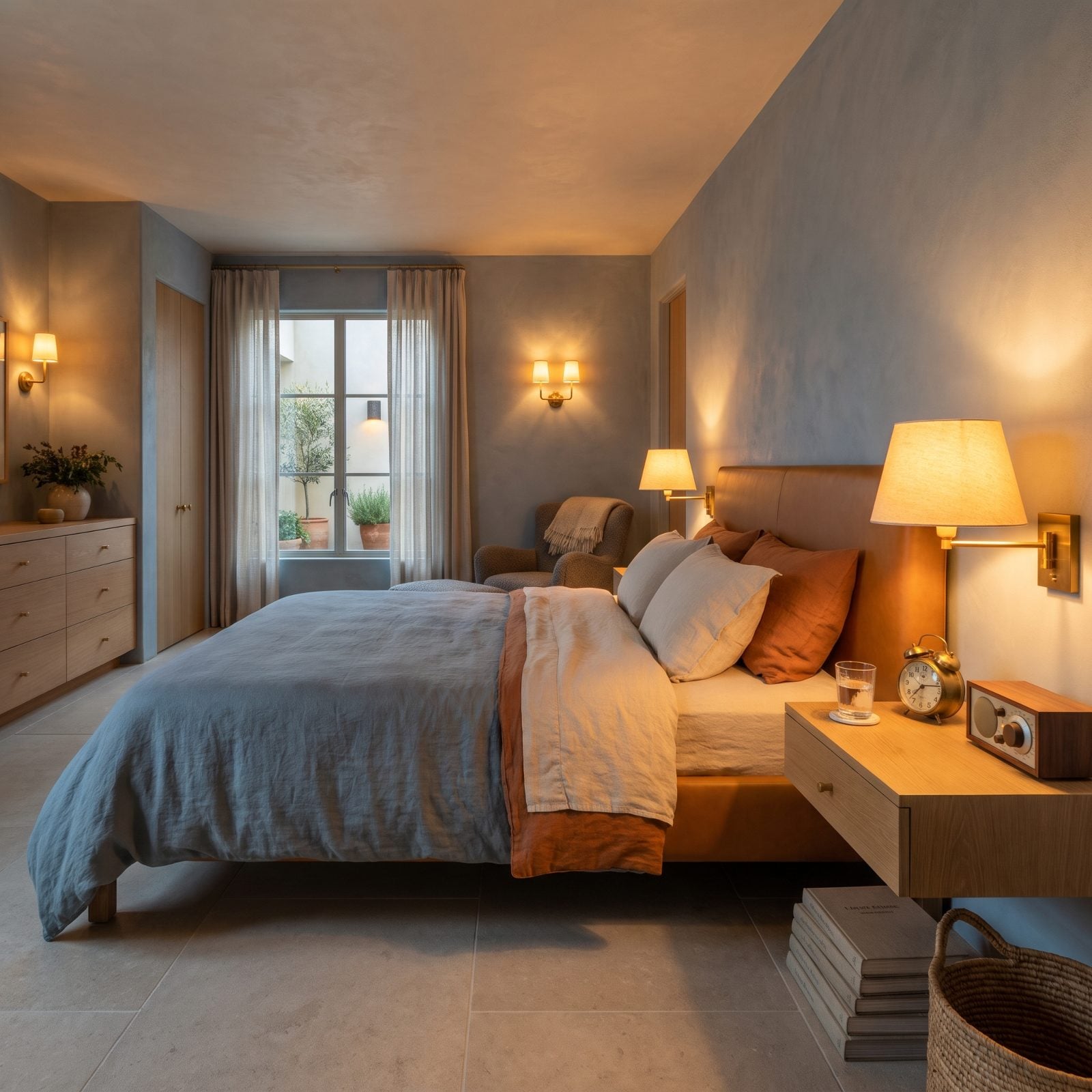
You wound it at night, set the little bell, and that was the last object your hand touched before the lamp went off. The bedside clock had exactly one job and did it without ever once showing you the news.
Compare that to the phone on the pillow, the one that tells time and also forty other things you didn’t ask about at 1 a.m. The clock kept the bedroom a bedroom. Ask anyone who slept in one, and the sound they remember most is a soft tick and nothing else.
32. Lined Drapes That Actually Blocked the Morning Light
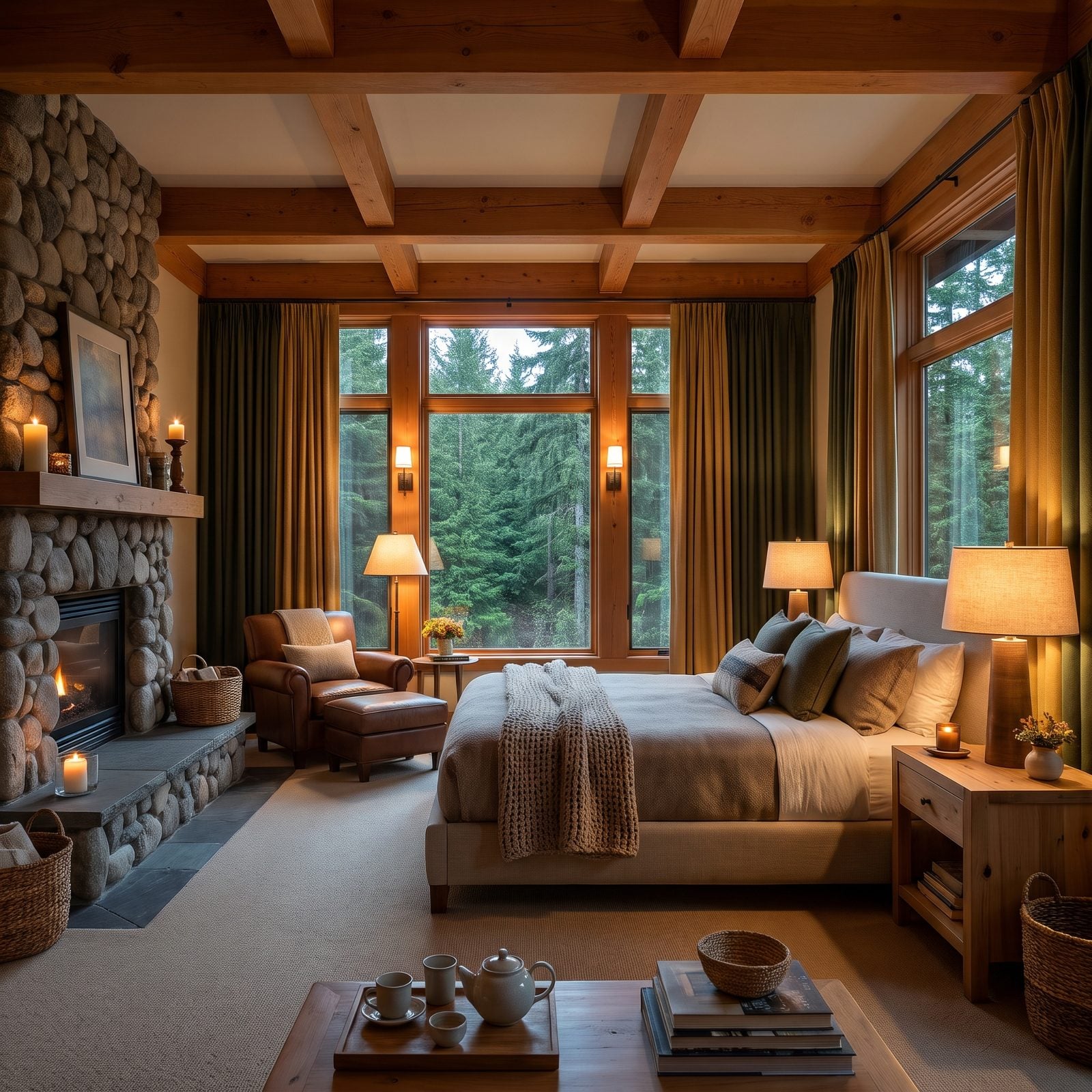
Pull the cord and the room went dark. Not dim, not a hazy gray, but actually dark. A 1960s bedroom drape was heavy fabric backed with a full lining, pinch-pleated, and hung on a traverse rod so both panels met cleanly in the middle with no gap for the sunrise to sneak through.
Now look at the unlined linen panels in half the bedrooms on your feed. They look airy and relaxed in a photo and do almost nothing at 5:30 on a June morning. So we buy sleep masks and blackout liners after the fact, fixing a problem the old drapes never had.
The lining did more than block light. It protected the face fabric from fading, helped the drapes hang straight, and added a layer between you and a cold window pane in winter.
31. Sheer Curtains Hung Behind the Drapes for Daytime Privacy
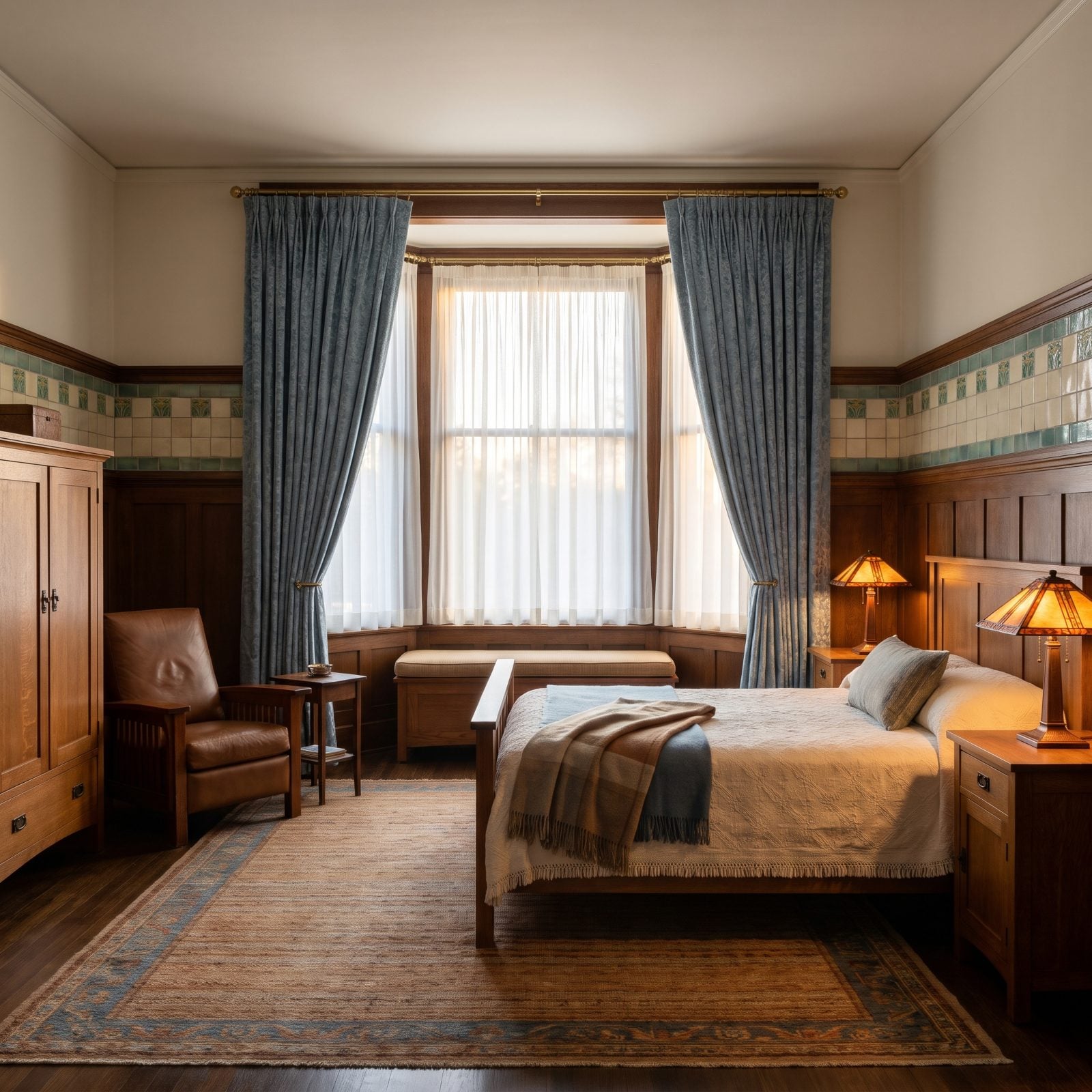
Two layers, two jobs. The sheers stayed drawn during the day, softening the light and keeping the neighbors from seeing straight in, while the heavy drapes stood open at the sides. At night the drapes closed over everything. A double rod handled both without any fuss.
Today most bedrooms get one setting or the other: bare glass, or blackout. Neither works at two in the afternoon when you want daylight but not an audience. The sheer filled that gap so well that nobody thought of it as a design choice. It was just how a window was dressed.
The effect on the room mattered too. Filtered light is kinder to wood, fabric, and faces, and it made even a plain bedroom glow a little through the middle of the day.
30. Windows You Could Actually Crank Open for a Cross-Breeze
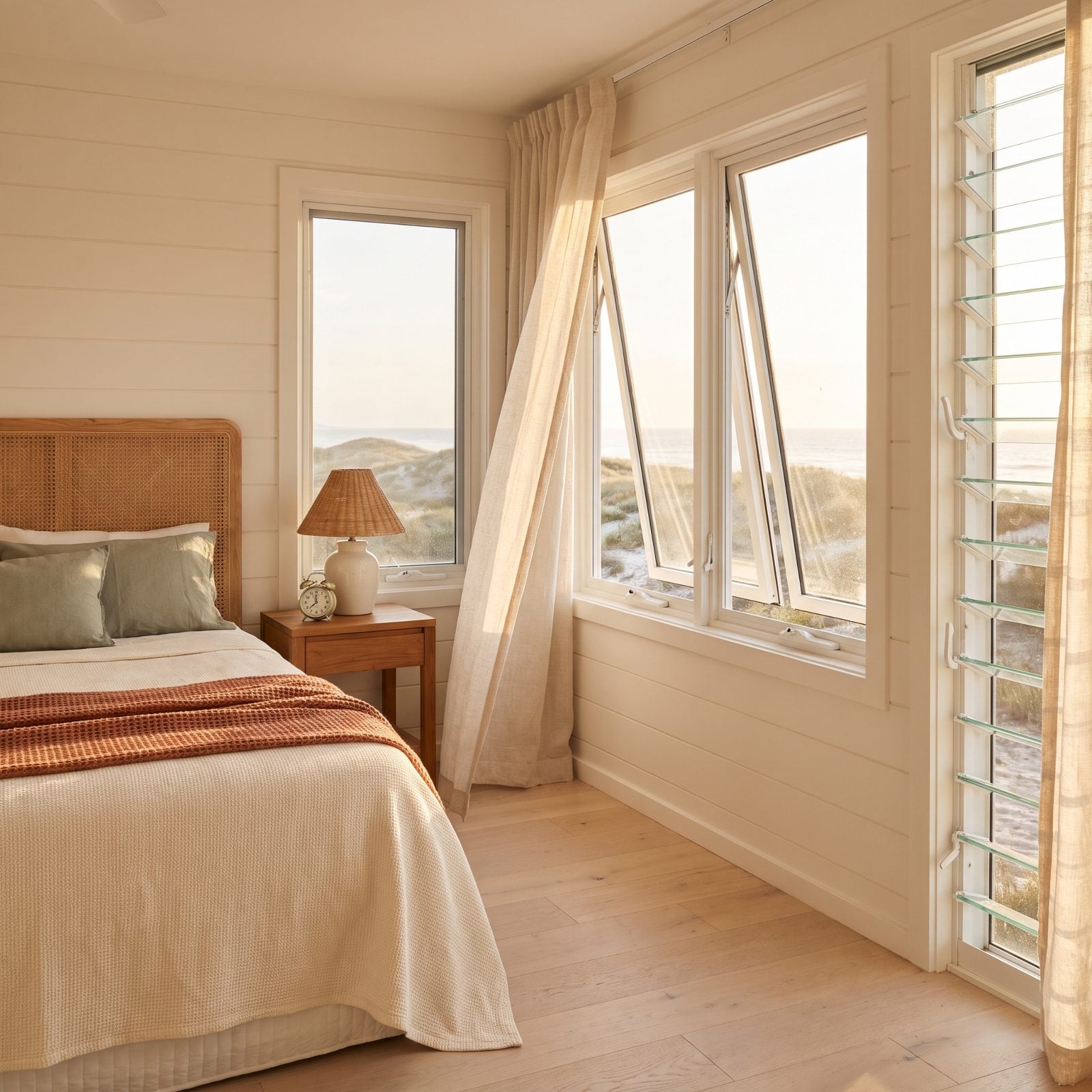
A few turns of a little handle and the casement swung out to catch whatever breeze was moving. Plenty of 1960s houses were built before central air was standard, so bedrooms were planned around moving air, with windows on two walls whenever the layout allowed it and screens in place all summer.
Open one side, open the other, and the room flushed itself out in minutes. You slept with fresh air on your face and woke up to birds instead of the hum of a compressor.
Plenty of newer bedrooms have a single window wall, often blocked by an oversized bed, and the whole room leans on the HVAC to do what a cross-breeze did for free. The windows open, technically. Nobody bothers, because nothing was designed for it.
29. The Blanket Chest at the Foot of the Bed That Doubled as Seating
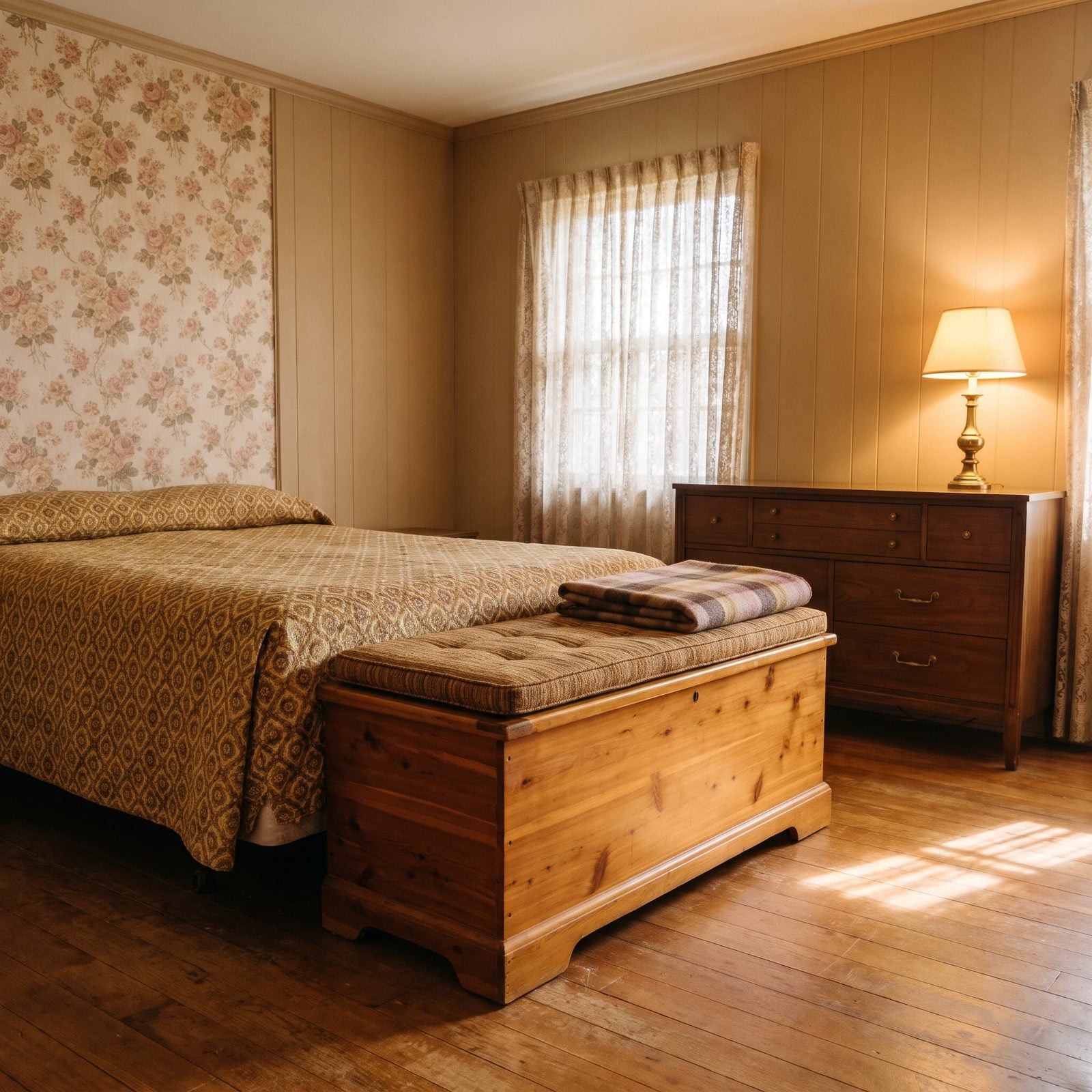
Lift the lid and the smell of cedar came up to meet you. Inside: the winter blankets in July, the spare quilt, the good linens saved for company. Close the lid and it became the place you sat to pull on your socks every morning.
That double duty is the whole point. The modern bedroom bench is usually a padded slab on four legs, pretty enough, but there’s nothing underneath it except dust. Or it’s a storage ottoman holding decorative pillows that only exist to be moved off the bed at night.
A solid chest at the foot of the bed also anchored the room. It gave the bed a finished edge and a bit of visual weight, the way a good frame finishes a painting.
28. The Dressing Table With Its Own Round Mirror and Little Stool
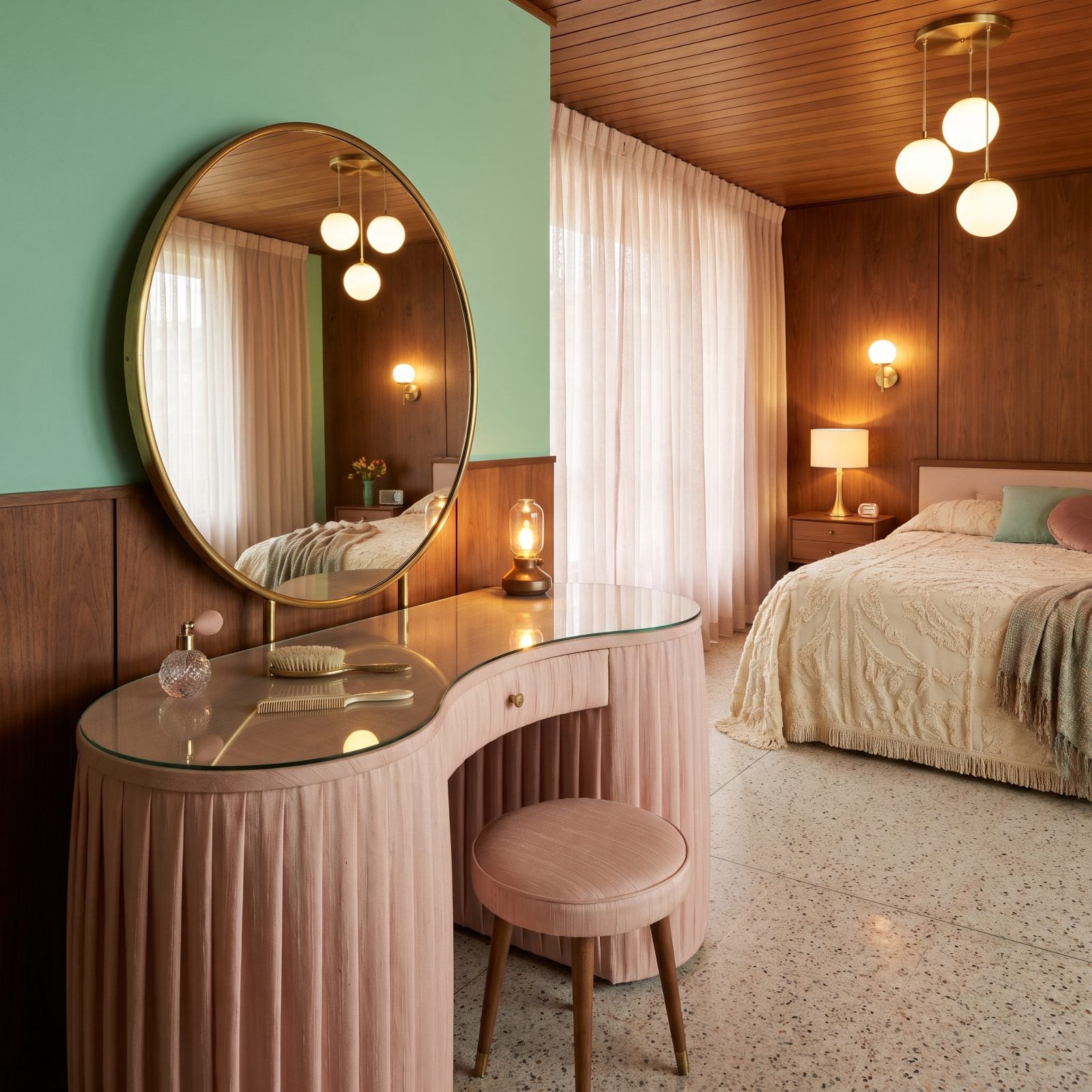
A round mirror, a narrow top just deep enough for a hairbrush and a jewelry dish, and a little upholstered stool that slid underneath when you were done. The dressing table gave getting ready its own spot, with good light from the window and a place to sit down.
These days most of us do our makeup and hair standing at the bathroom sink, under harsh overhead light, elbowing whoever else needs the mirror. The dressing table took that whole routine out of the bathroom traffic jam and made it something you could do slowly, sitting down.
The round mirror was a nice touch, too. It softened all the straight lines of the bedroom furniture around it and turned an ordinary wall into a focal point.
27. The Full-Length Mirror Positioned Exactly Where You Got Dressed
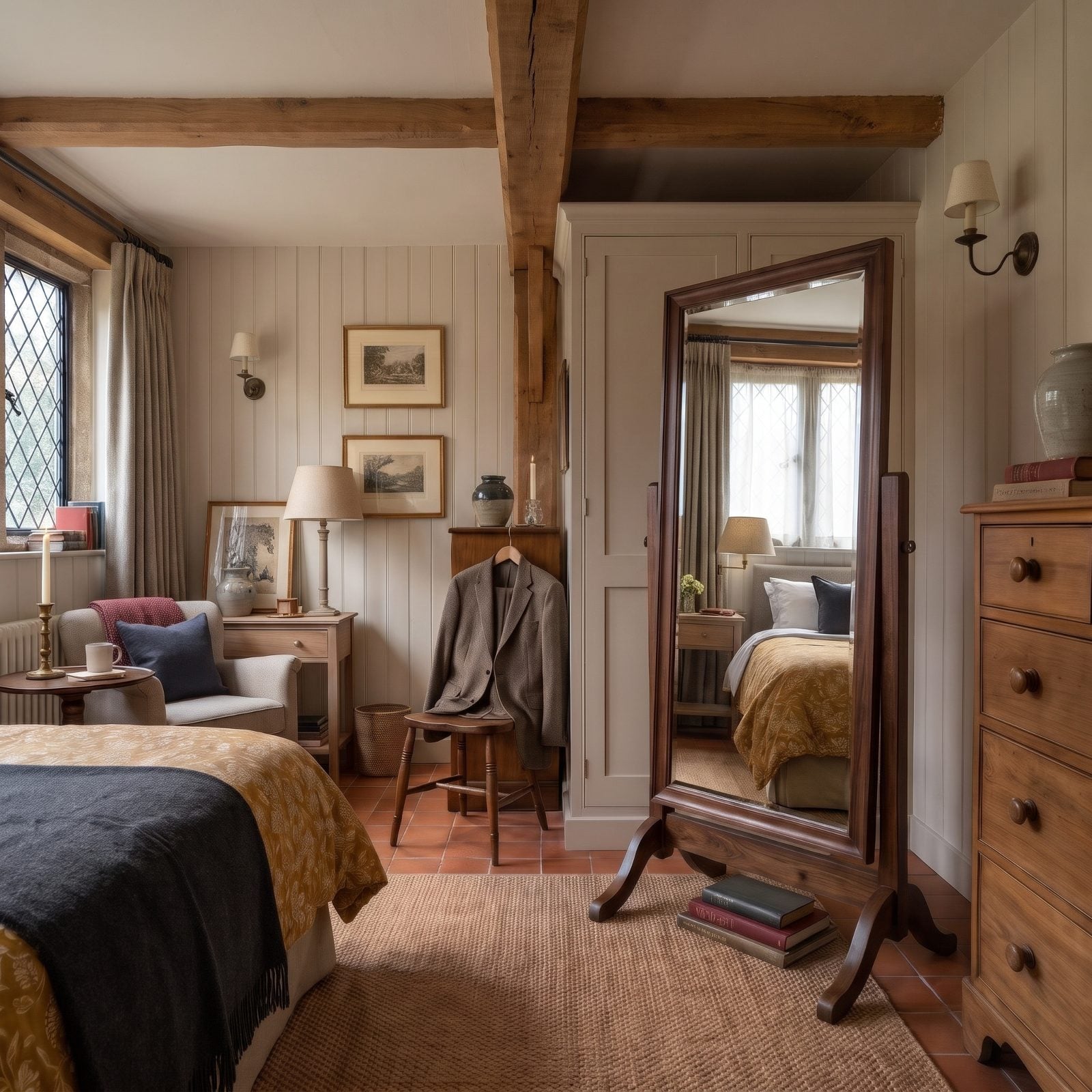
It hung on the back of the closet door or stood on its own swivel stand right beside the dresser, which meant you saw the whole outfit at the exact moment you were putting it together. Shoes and all. No walking down the hall to check.
Somewhere along the way the full-length mirror became a decorating prop, an oversized arched thing leaned against a wall wherever it looked best in photos, often nowhere near where clothes actually live. Or it disappeared entirely and we started checking our outfits with a phone camera held at arm’s length.
The old placement was pure common sense. Clothes come out of the closet, go on in front of the mirror, and you’re out the door. One spot, one step.
26. The Long, Low Dresser With Drawers Deep Enough to Mean Something
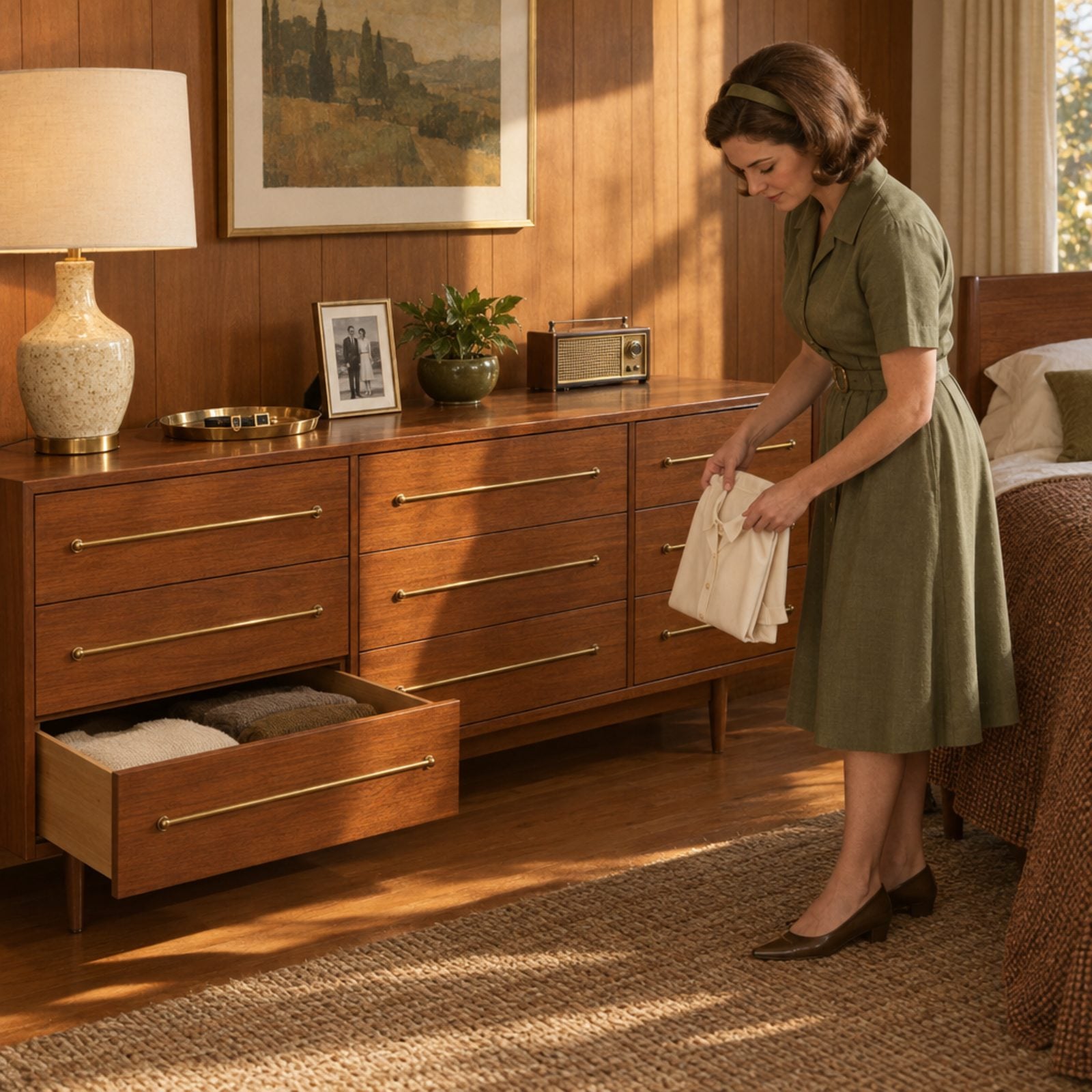
Long and low, sometimes six drawers across, sometimes nine, with a top at roughly waist height that held a lamp, a tray for keys and cufflinks, and usually a framed painting or mirror hung above it. The 1960s dresser stretched along one wall and made the whole bedroom feel calmer and more grounded.
And the drawers were real. Deep enough for a stack of folded sweaters, built on solid runners, often dovetailed at the corners so they didn’t come apart after a few years of yanking. Today’s tall, narrow chests have shallow drawers that jam on cheap tracks and fit about four T-shirts before they refuse to close.
The low profile mattered visually, too. It kept sightlines open across the room, so even a modest bedroom felt wider than it was.
25. Built-In Wardrobes That Read as Part of the Wall
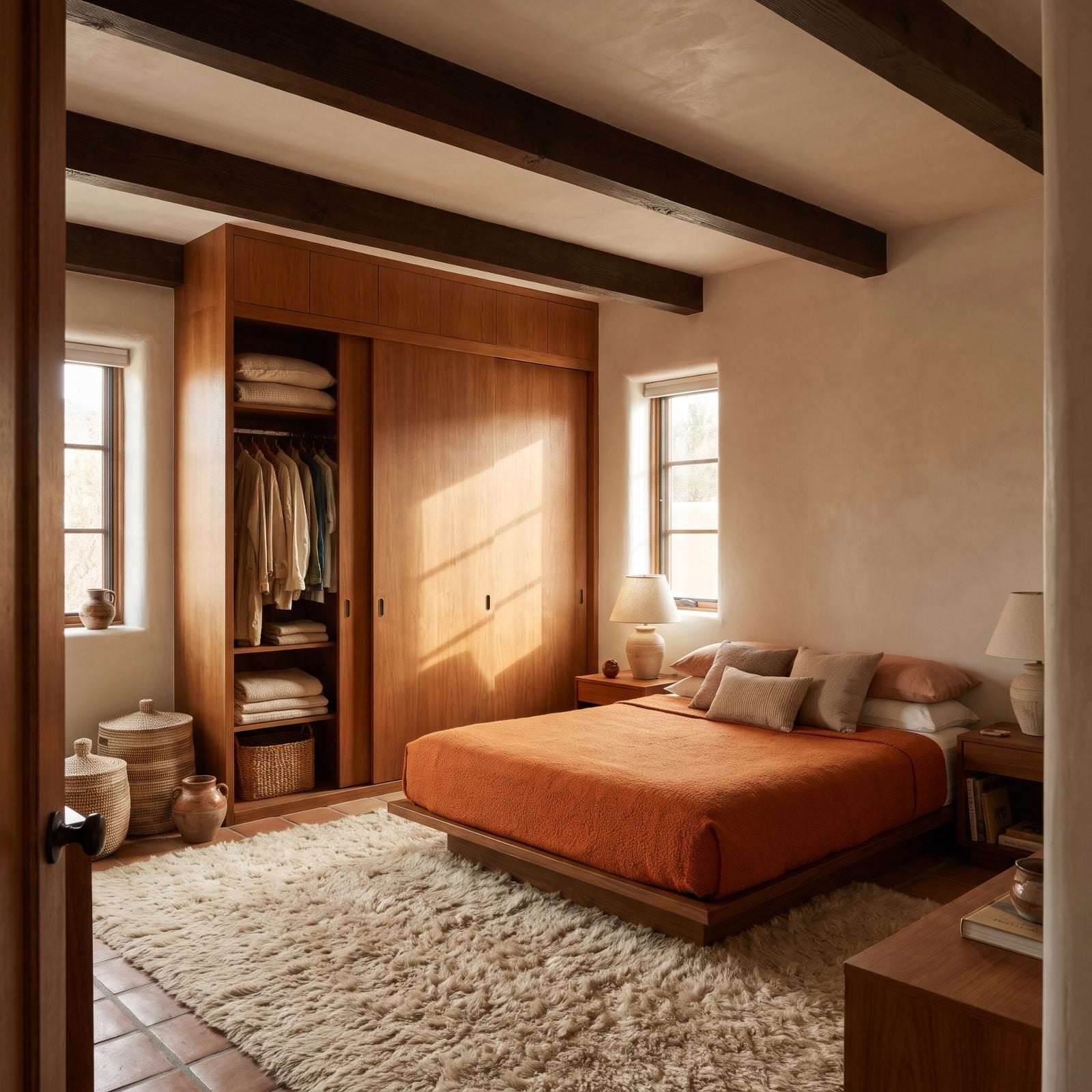
Floor to ceiling, flush with the wall, painted to match or paneled in wood. The built-in wardrobe didn’t sit in the room so much as become part of it. No gap on top collecting dust and forgotten boxes, no wobbly sides, no awkward space behind it where things fall and are never seen again.
The modern alternative is a freestanding flat-pack wardrobe that looks fine the day it goes together and then starts to sag at the doors. It eats floor space, it reads as furniture parked in front of a wall, and it rarely uses the height the room actually has.
A built-in used every inch. Upper cabinets held off-season clothes and spare pillows, and the clean front made a small bedroom look tidier than any piece of furniture could.
24. Closets With Real Hinged Doors That Hid All the Chaos
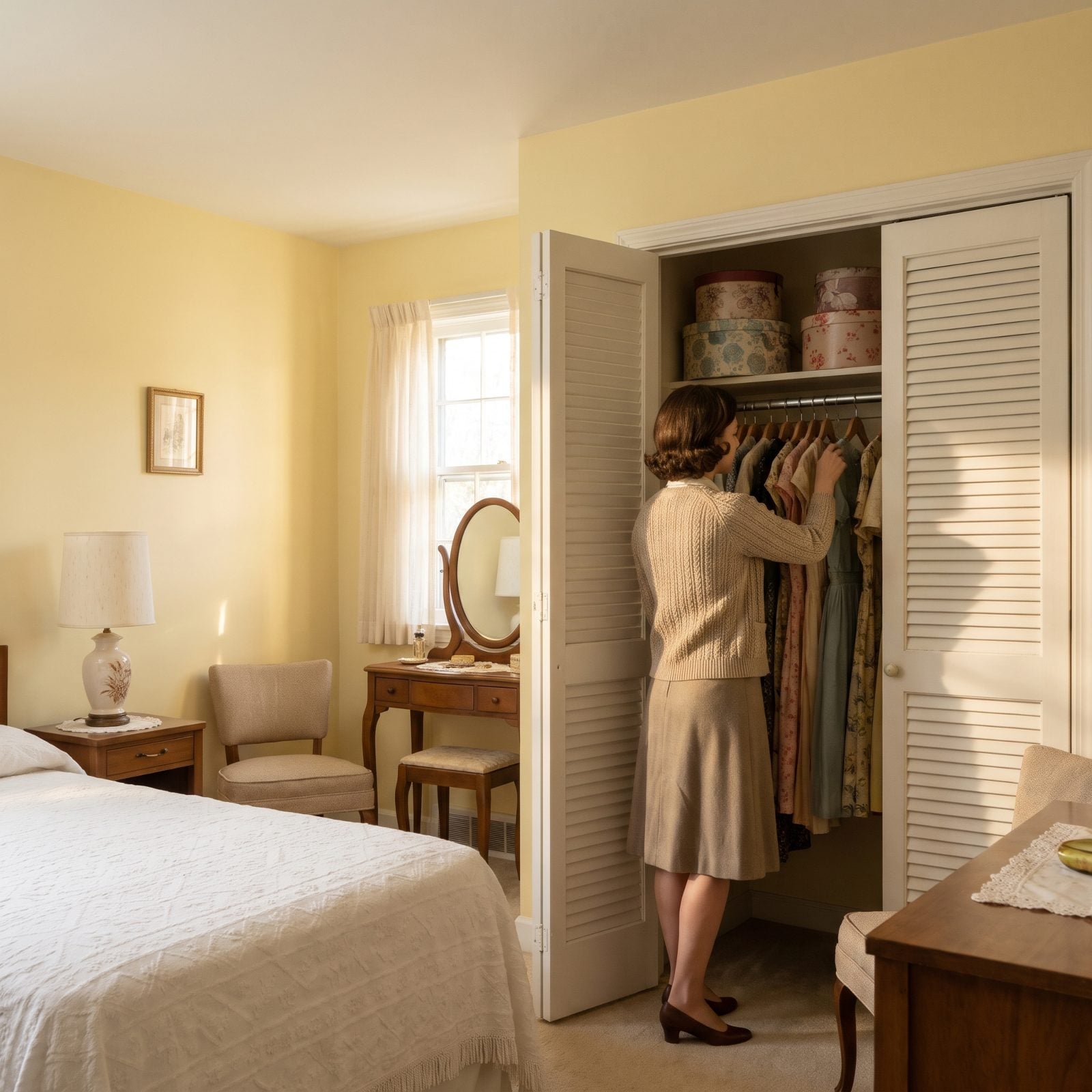
Shut the door and the mess was gone. That was the deal. A 1960s closet had proper hinged louvered doors that folded wide open, so you could see everything at once, and closed firmly, so nobody else had to.
Today’s options are either open closets styled like boutique displays, which only work if every hanger matches and every shirt is color-sorted, or flimsy sliding doors that jump their tracks and only ever show you half the closet at a time. Neither one forgives a busy week.
Louvered panels also earned their keep. The slats let air reach the clothes on the rail, and the shelf above held hatboxes, turning dead space into storage without anyone thinking twice about it.
23. Under-Bed Storage That Was Built In, Not an Afterthought
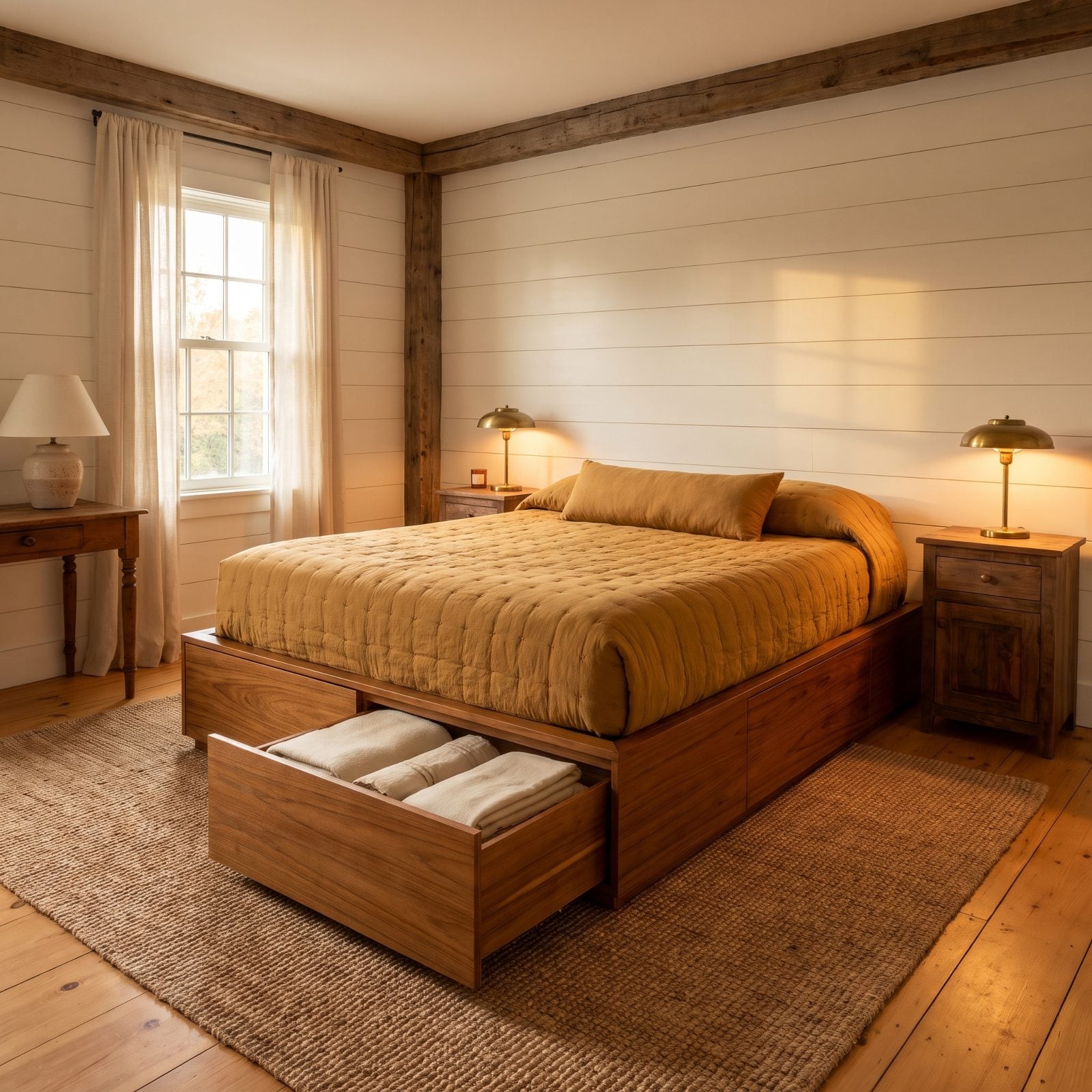
Pull a 1960s platform bed away from the wall and you’d often find drawers built right into the base. Not plastic totes shoved under a frame — actual cabinetry, teak-fronted, running the length of the bed and deep enough to swallow a comforter plus the winter wool you only need for three months.
The logic was simple. A bed eats the single largest footprint in any room, so all that volume underneath was free real estate, and builders of the era treated it as a feature rather than a gap to hide with a dust ruffle. The same thinking shows up today in good brown bed designs, though somewhere along the way it went from standard to splurge.
I’ve wasted whole afternoons trying to make clear plastic bins look intentional under a bed. They never do. The 1960s had it right: fold the storage into the thing you were already buying, then forget it exists.
22. The Little Writing Table That Did the Job a Whole Desk Pretends To
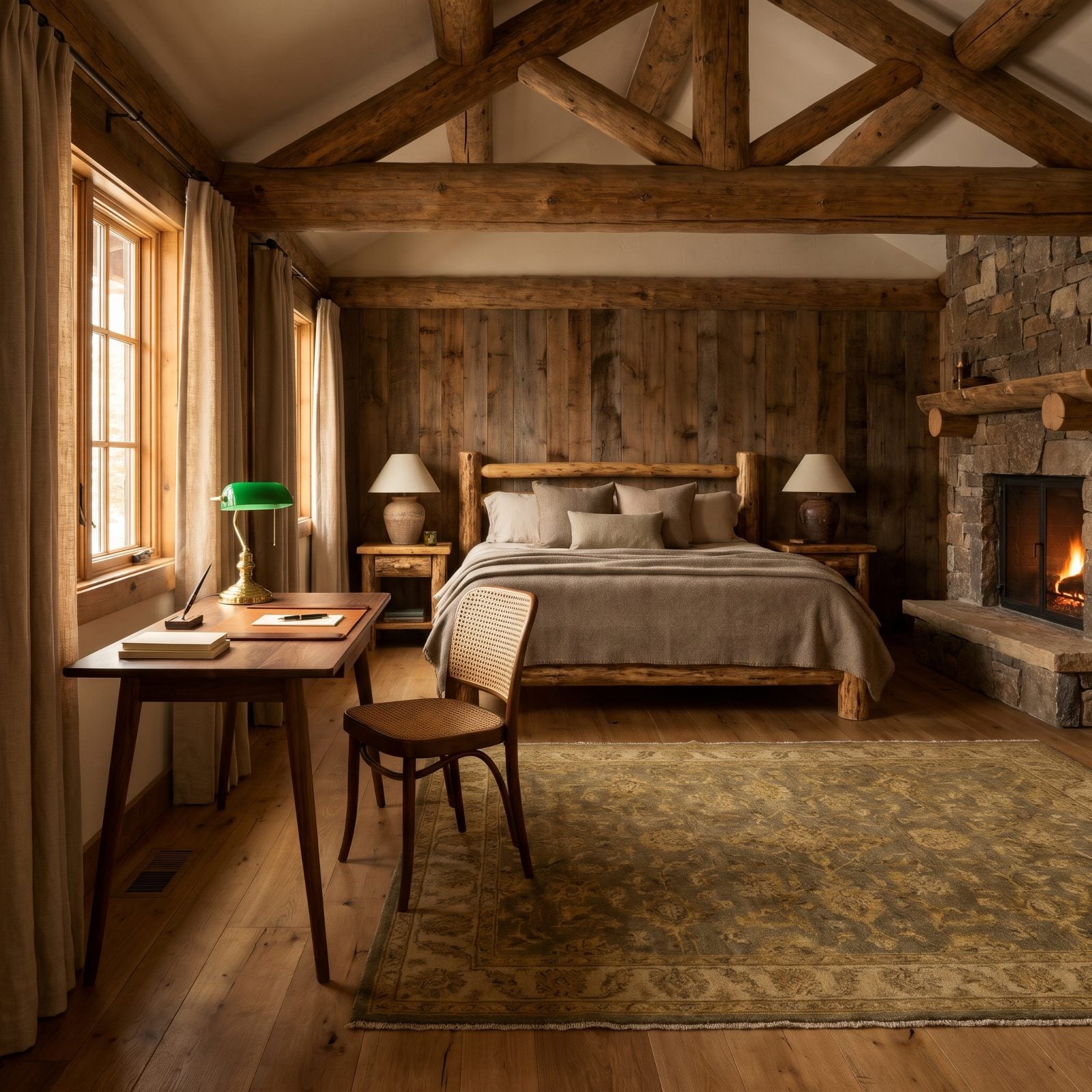
Notice how small it is. A 1960s writing table was barely bigger than a nightstand, and that was exactly the point: you sat down to write a letter or balance the checkbook, and when you stood up, the room went back to being a bedroom.
Compare that to the hulking L-shaped command centers people wedge into bedrooms now, which swallow a whole wall, collect cable spaghetti, and turn the one room meant for rest into a second office. The old walnut writing table knew its place. It worked, then it got out of the way.
21. Built-In Bookshelves That Made Reading Part of the Furniture
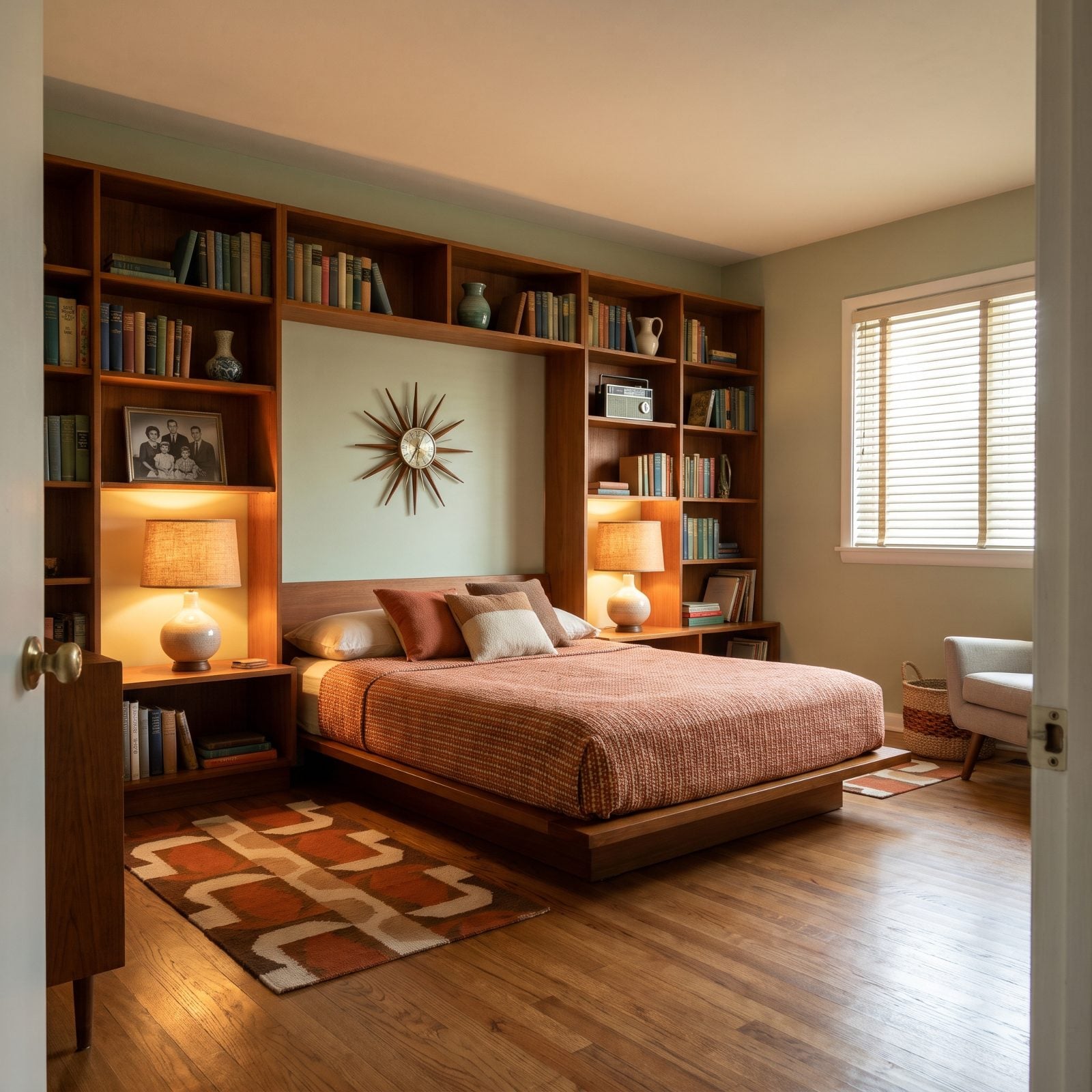
Books lived in the bedroom back then, and not as decoration staged by color. The built-in shelf meant your next read was an arm’s length from the pillow. You finished one, you reached over, you started another.
The teak here carries a warmth painted MDF never manages, and shelves holding actual worn hardbacks give the room a spine. A room with books in it feels inhabited by a mind. That’s not sentimentality — it’s just true. For more of this earthy, grounded mood, these earthy bedroom inspiration rooms chase the same calm.
20. The Reading Chair Nobody Was Allowed to Pile Laundry On
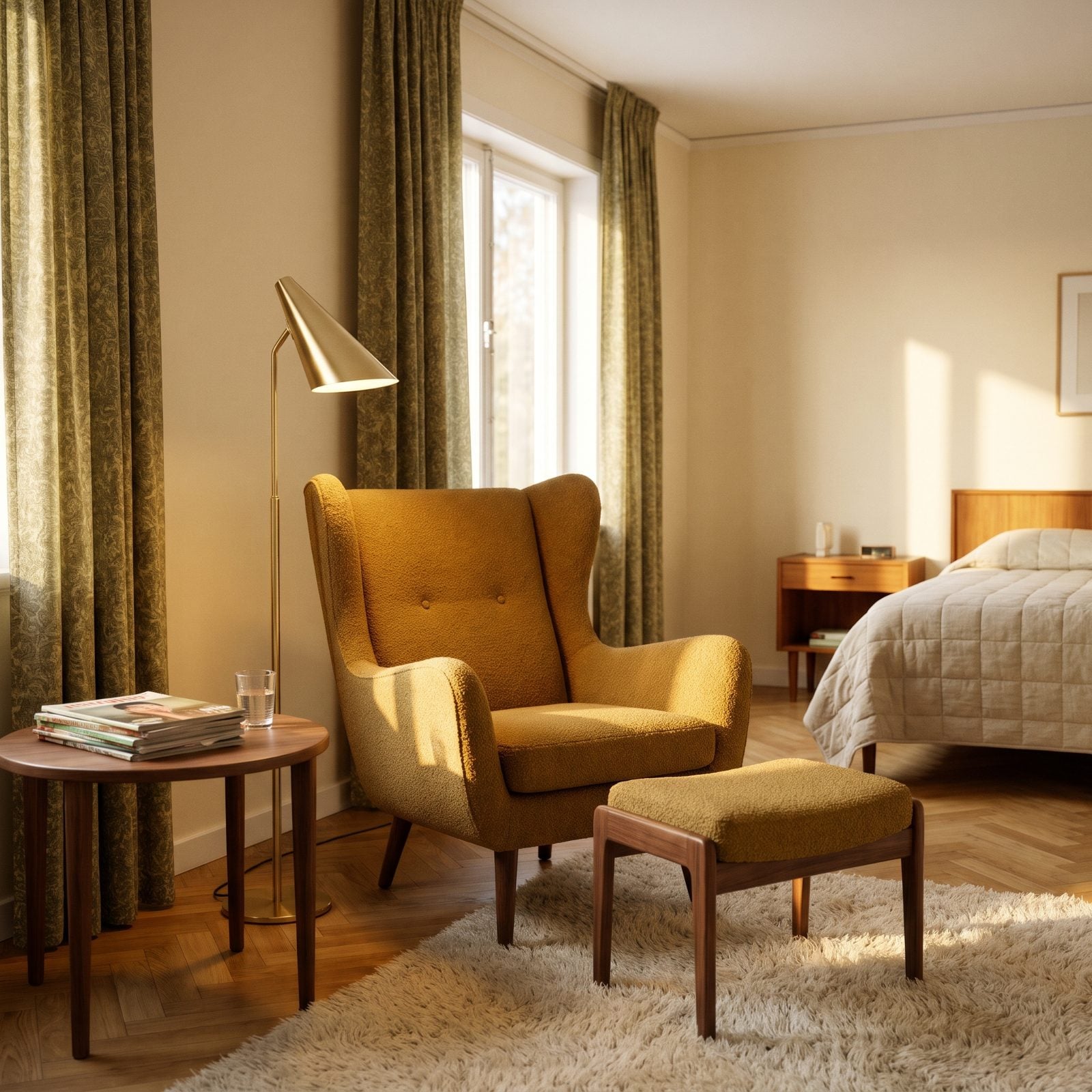
Every well-run 1960s bedroom had one chair that meant business.
It wasn’t for sitting to put on shoes, and it was never a landing pad for yesterday’s clothes. It was the reading chair, upholstered in something like this mustard bouclé, positioned by the best light in the room with a lamp aimed over one shoulder.
The modern version exists in most bedrooms too. It just has a sweater avalanche on it and nobody’s sat in it since March. The difference is intent. Give a chair a real job and it gets used; leave it jobless and it becomes storage.
When our readers were asked which accent chair they would buy, a traditional design took 52% of the vote, well ahead of transitional at 34% and contemporary at 8%.
19. Window Seats That Turned a Dead Corner Into the Best Spot in the House
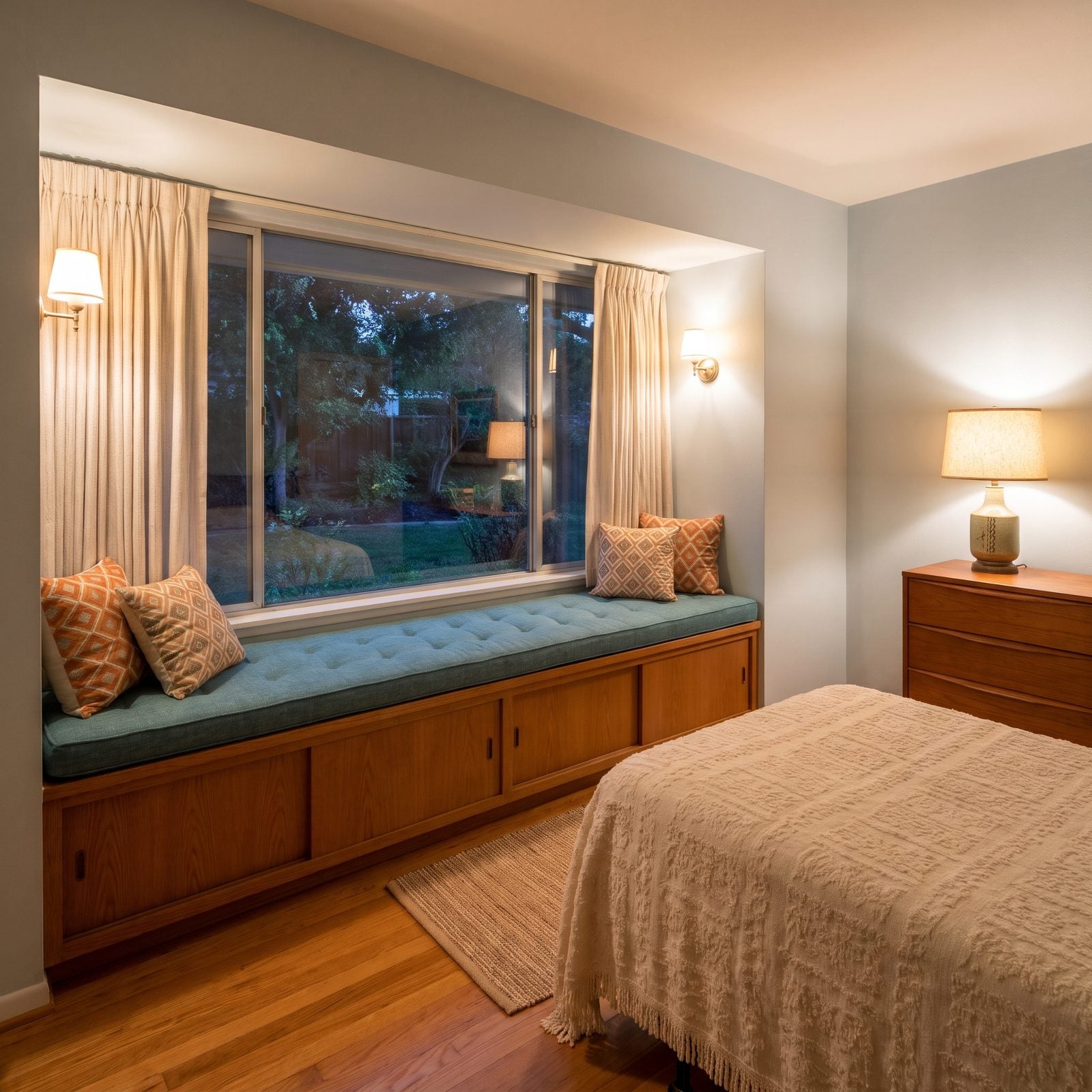
The window seat solved two problems at once. It made use of the awkward space under a window, and it handed you storage in the cabinet below, which is where blankets and board games went to live.
But the real magic was psychological. Tucked into a nook with a window at your back and the room spread out in front of you, you got what designers call prospect and refuge — the deep comfort of seeing everything while being sheltered yourself. Kids claimed these seats for hours. So did adults who said they were just resting their eyes.
18. Two Twin Beds, Matching Spreads, and a Room That Actually Made Sense
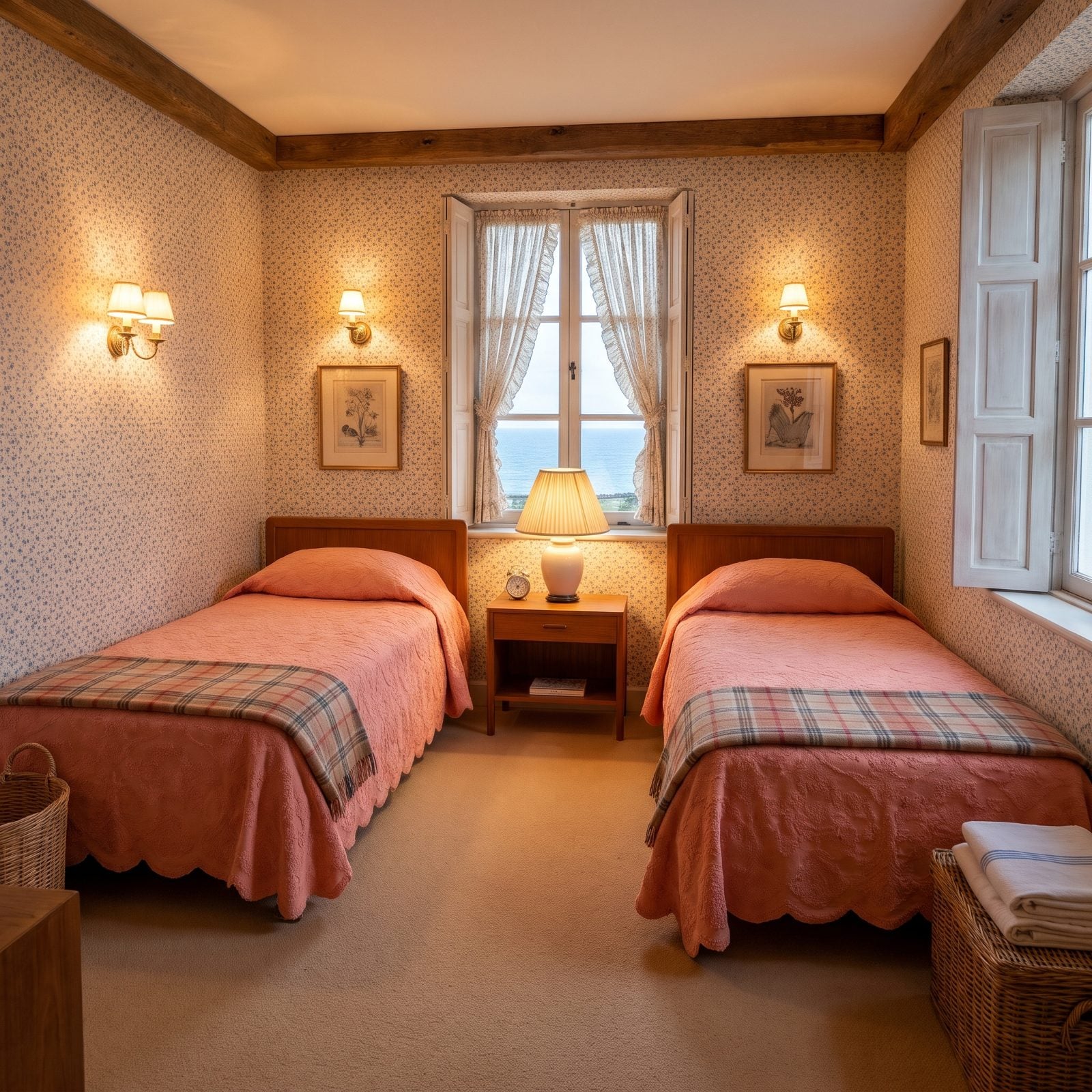
There’s an undeniable logic to the matched twin layout. Mirror the beds, mirror the lamps, mirror the prints above each headboard, and a shared room suddenly reads as calm instead of chaotic. Symmetry lowers the mental noise. Your eye knows where everything belongs.
Siblings got their own clearly defined territory, which cut down roughly half the arguments. And when guests came, the room converted without fuss. We’ve swapped this for one oversized bed and a pile of throw pillows, which looks fine in photos and works for exactly one person. For kid-focused rooms, these kids’ bedroom ideas show the layout still has legs.
17. The Toy Chest at the Foot of the Bed That Made Cleanup a One-Step Job
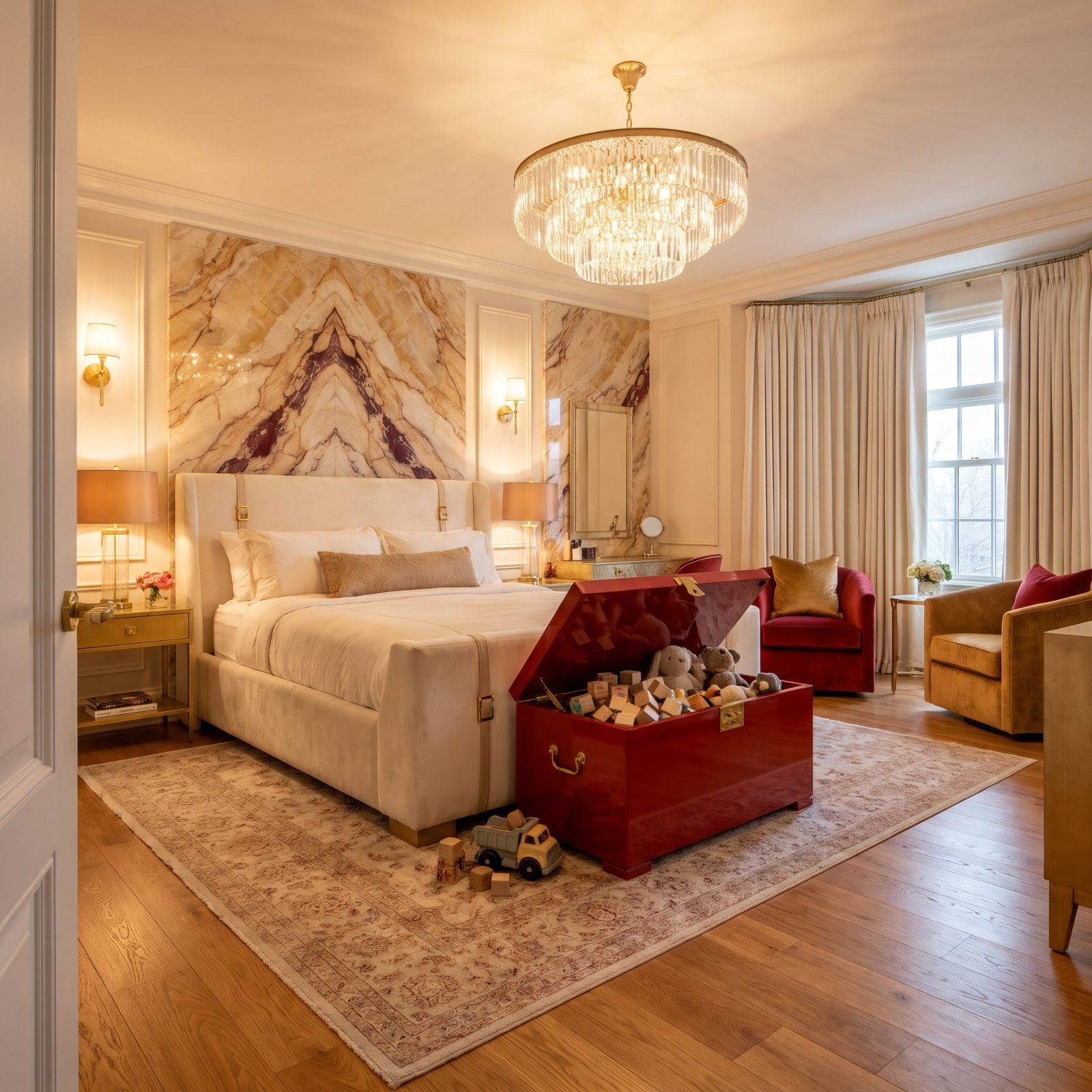
One lid. That was the genius of it. Cleanup wasn’t a sorting exercise with twelve labeled bins — lift the lid, sweep everything in, drop the lid. A five-year-old could manage it, which meant a five-year-old actually did.
The glossy painted chest at the foot of the bed doubled as a bench, a step stool, and a surface for laying out tomorrow’s clothes. Today’s version is the open-cube shelf with coordinated fabric baskets, which looks great empty and becomes a guilt machine the second it’s full. If you want that cheerful, organized kids’ energy, a colorful utility room captures the same spirit.
16. Peg Rails That Gave Everyday Clothes Somewhere to Land
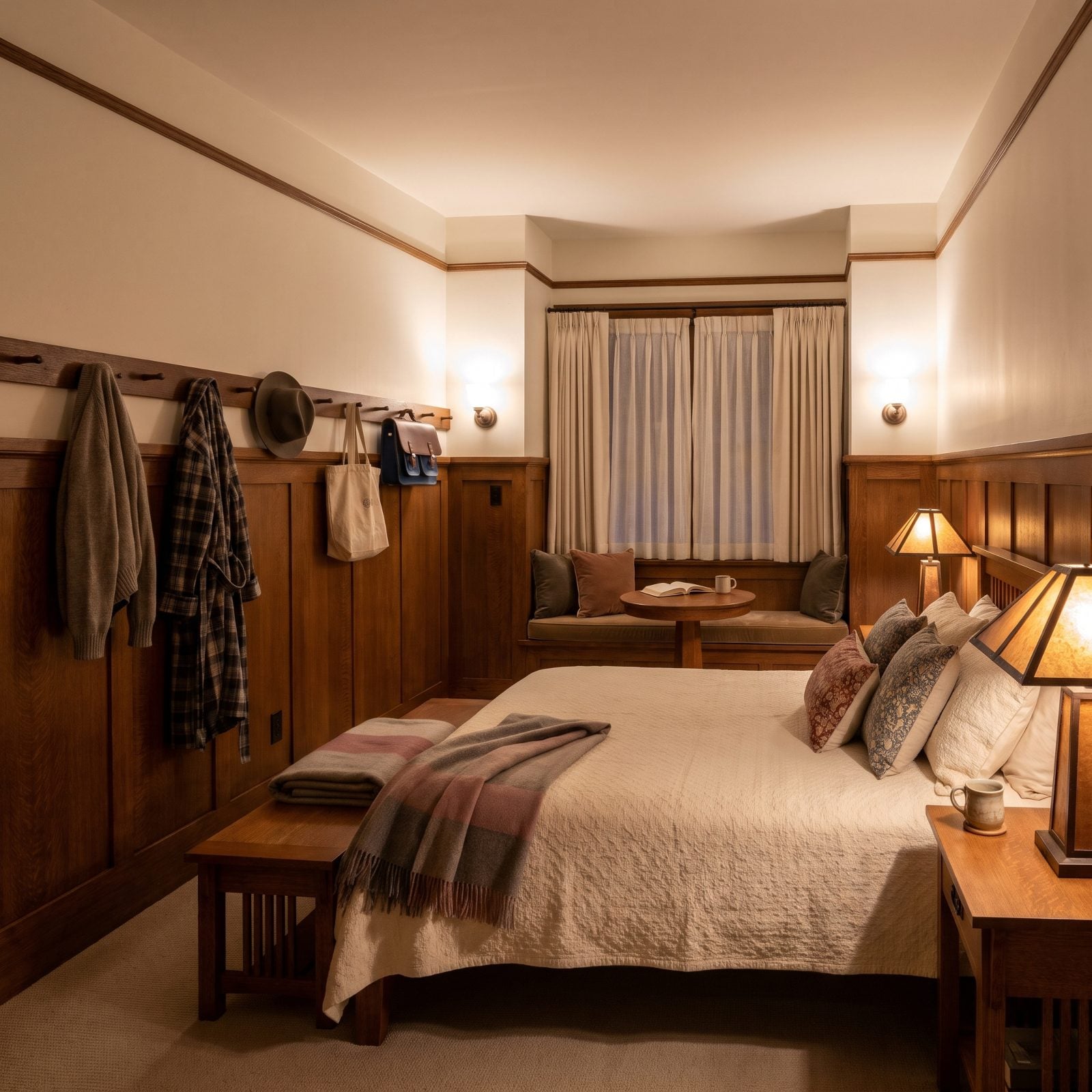
The chair-draping instinct is ancient and universal. You’ve got a cardigan you’ll wear tomorrow, it’s not dirty, it’s not quite clean, and the closet feels like a commitment — so it goes on a chair. Then another thing goes on the chair. You know how this ends.
The peg rail solved it with zero effort. A row of wooden pegs at shoulder height, screwed to the wall, giving half-worn clothes a dignified home that wasn’t the floor. Robes, hats, bags, tomorrow’s sweater. Everything visible, everything reachable, nothing in a heap.
15. The Folding Luggage Rack That Kept Suitcases Off the Bed Entirely
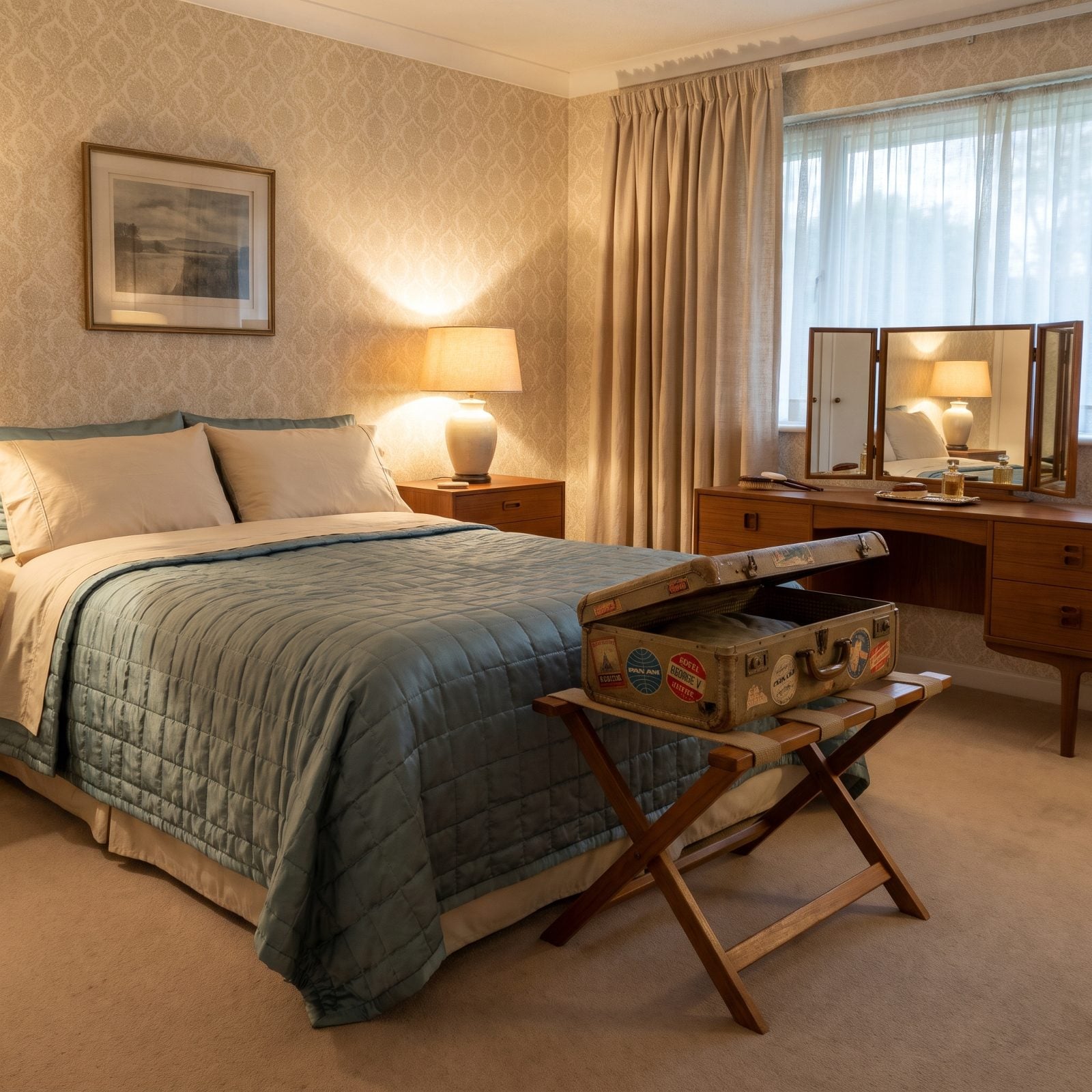
Every proper guest room had one tucked in the corner, folded flat until a visitor arrived. The folding luggage rack with its canvas webbing straps gave the suitcase a dedicated perch, which meant your guest wasn’t living out of a bag sprawled across the bed or the floor for three days.
A small courtesy that signals a lot. It says we thought about your stay before you got here. The webbing lets you pack and unpack at waist height instead of bent over the mattress. Hotels still use them. Homes quietly dropped the habit.
14. Wall-to-Wall Carpet That Met Cold Mornings With Something Soft
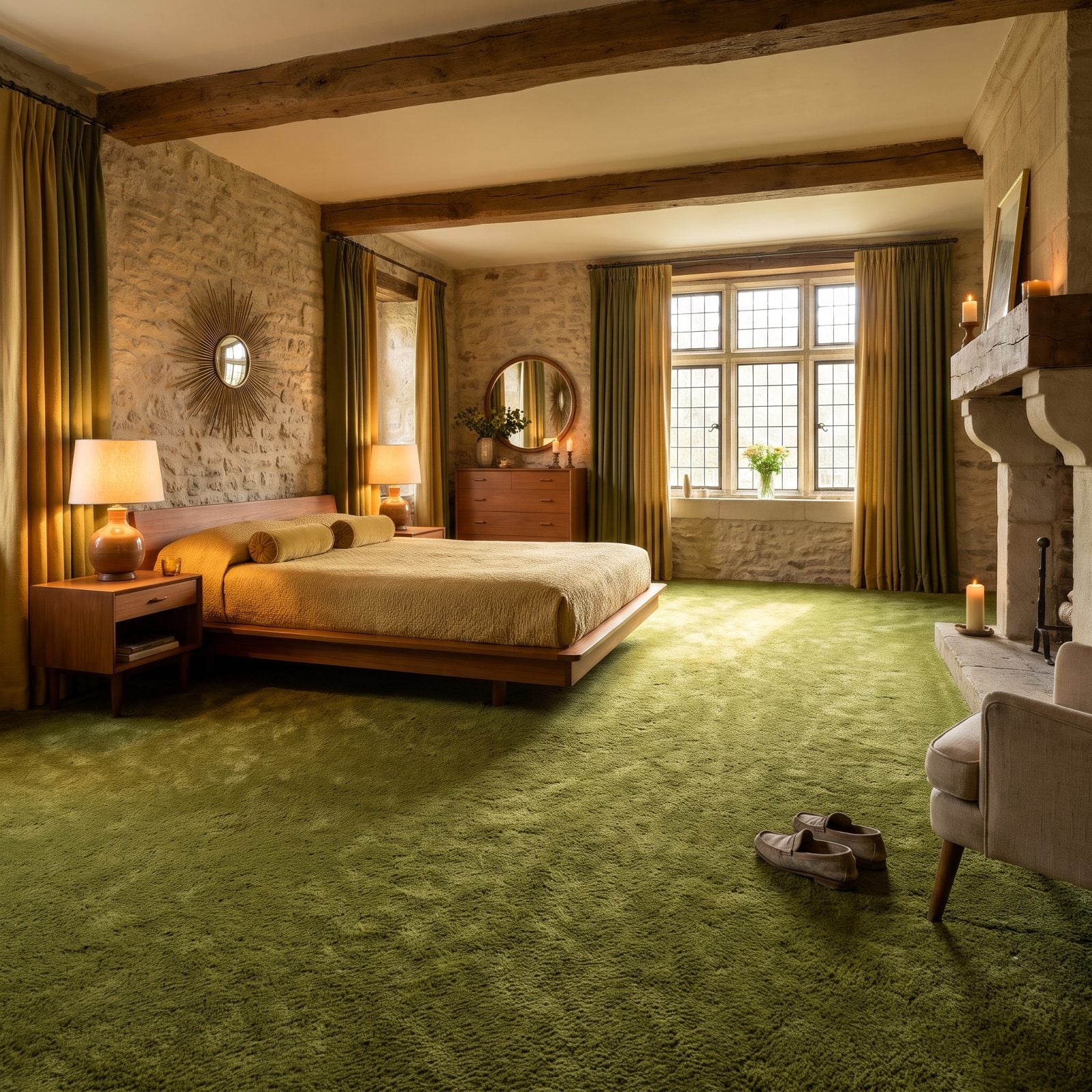
Your bare feet hit the floor on a January morning and the floor hit back, soft and warm. There’s the whole argument for wall-to-wall carpet in the bedroom, and honestly it’s a good one. Nobody groggy and half-asleep wants to step onto cold tile or an icy plank.
The thick pile also ate sound. Carpeted bedrooms were quieter, more muffled, more cave-like in the good way. Then we ripped it all out for hardwood, and now everyone sells area rugs to put the softness back exactly where the carpet used to be. There’s a lesson in that somewhere.
13. Wallpaper That Gave the Bedroom a Personality You Couldn’t Get From Paint
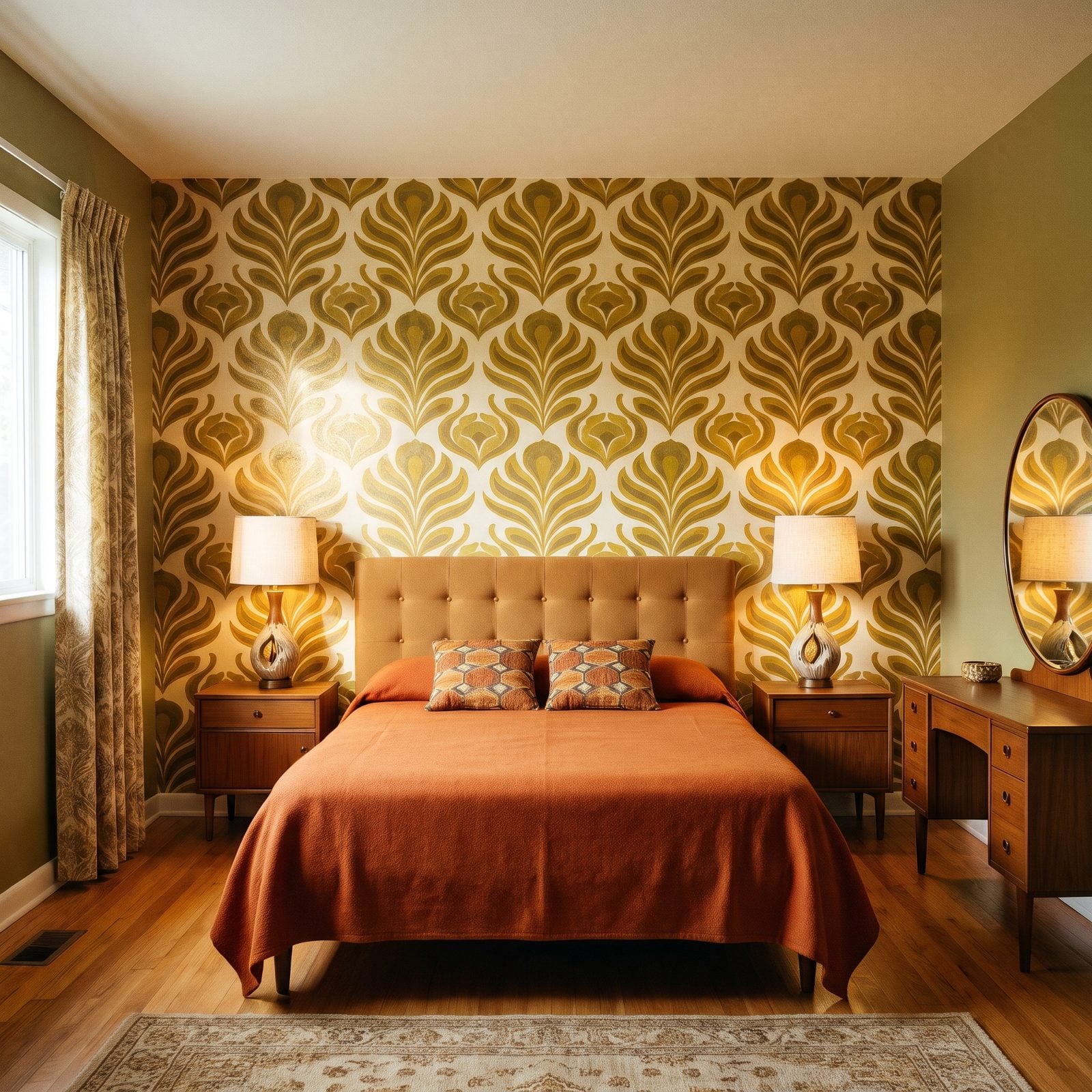
Paint gives you a color. Wallpaper gave you a point of view. That gold-and-olive botanical pattern behind the bed did something a plain wall never could — it made the room feel decided, like someone had an opinion and committed to it.
We went greige for a decade because greige is safe, photographs well, and offends nobody. But safe rooms don’t stick in your memory. The ones you remember from childhood had a pattern you traced with your eyes from bed, every leaf and swirl memorized. That’s a room with a soul. Modern green bedroom ideas are finally circling back to pattern and color with some nerve.
A beige room is a room nobody will remember. A papered one is a room a child memorizes from the pillow.
12. Color Palettes That Went Beyond Beige and Gray
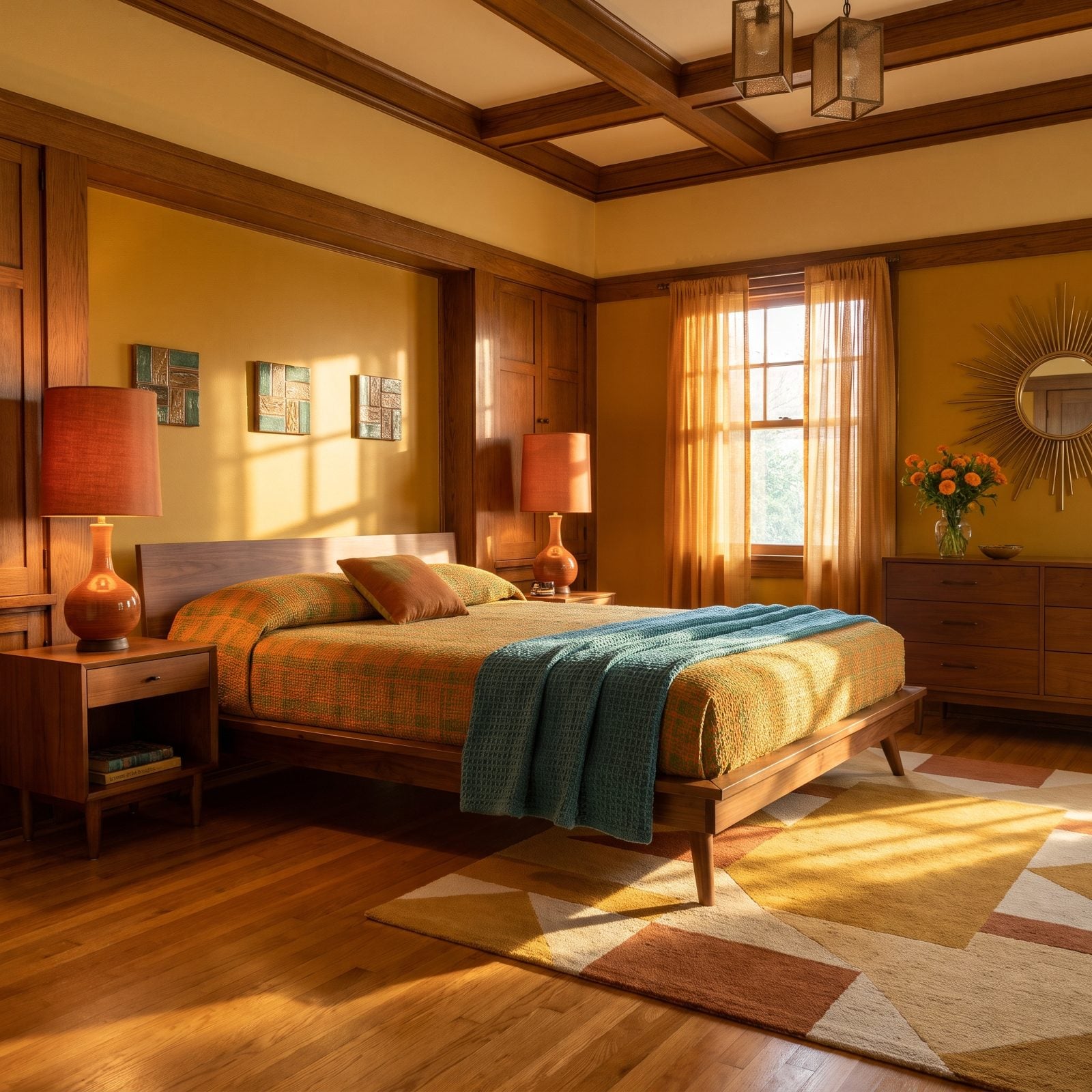
The first thing that hits you in a 1960s bedroom is the color. Not a whisper of greige. A full voice — mustard gold on the walls, avocado on the blanket, burnt orange on the lampshade, all of it talking at once and somehow agreeing.
We got scared of color somewhere along the way. Beige feels safe because it commits to nothing, and committing to nothing is how you end up with a room that could belong to anyone. The sixties bedroom picked a mood and lived in it. Harvest tones made a space feel warm before you ever flipped a switch.
11. Floral Fabrics That Brought the Garden Inside
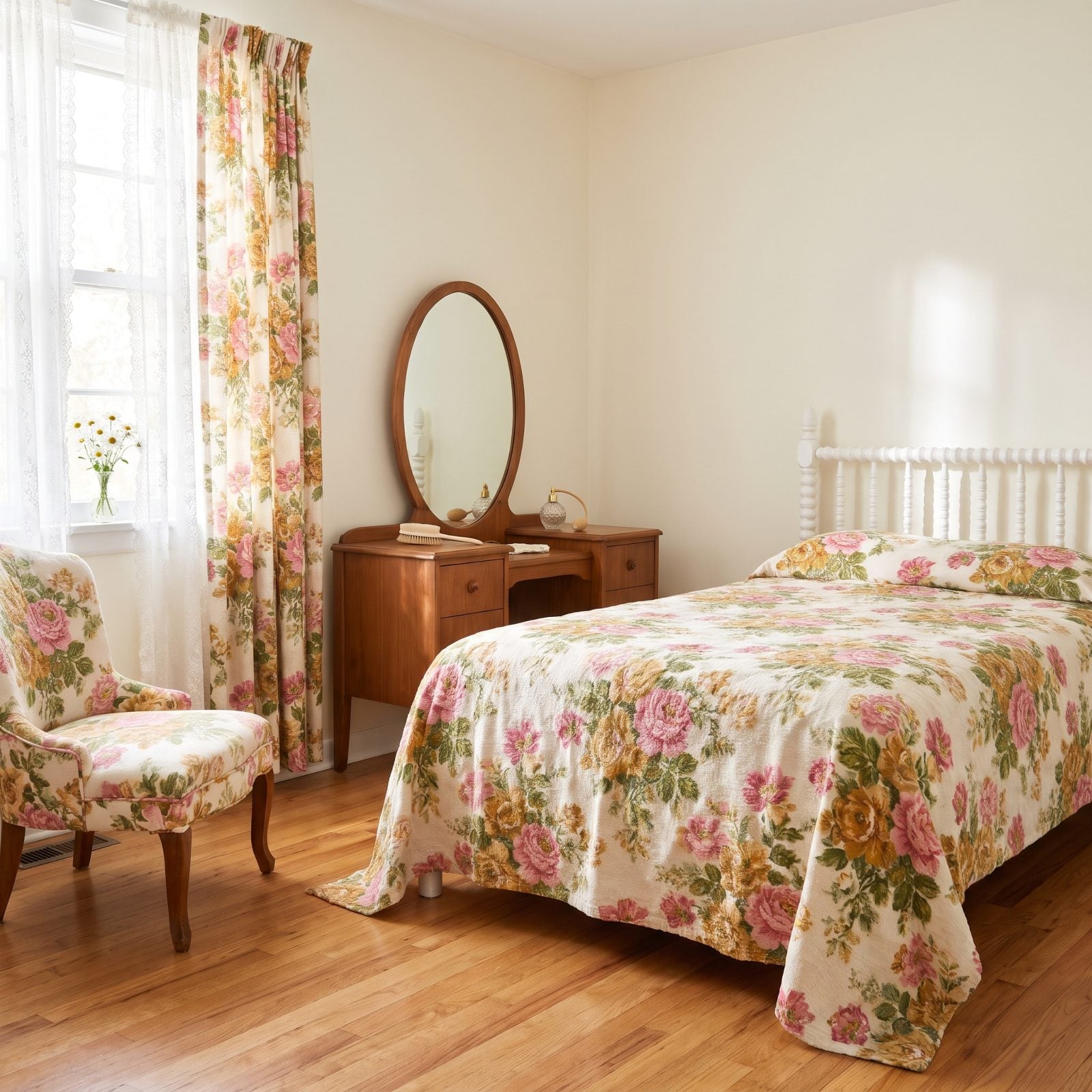
Florals in a 1960s bedroom weren’t a timid botanical print tucked onto a throw pillow. They were the whole room — curtains, bedspread, and the little slipper chair in the corner, all blooming at once, like the garden got invited inside and decided to stay.
Scale and repetition did the work. Big blooms, repeated across surface after surface, until the pattern became the room’s whole frame instead of a nervous accent. You felt surrounded by something alive. Pull a few of these ideas into a green bedroom today and the effect still lands.
Floral can seem fussy on paper, but there’s a reason it calmed people down.
10. Geometric Prints Used Without Apology
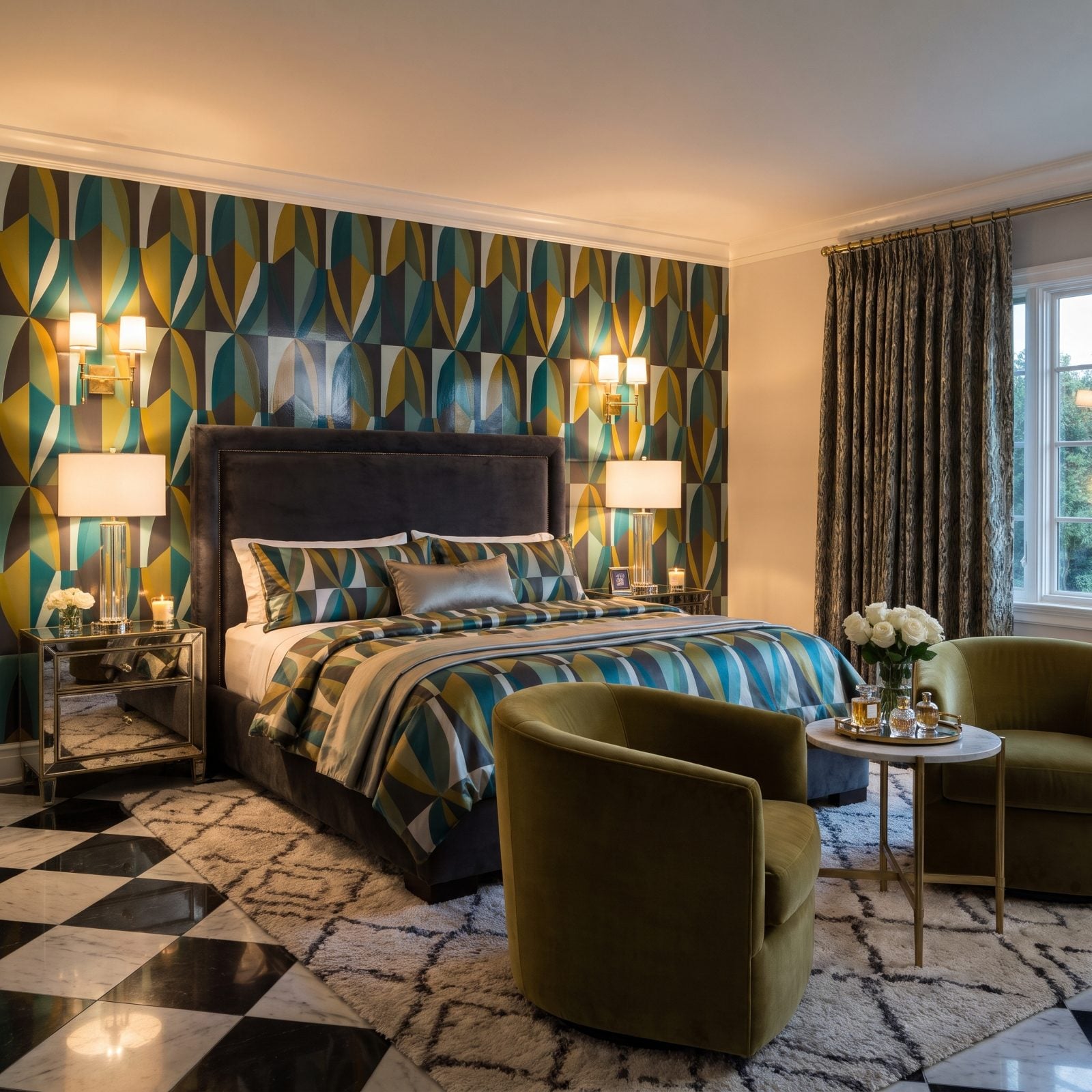
Chevrons, diamonds, interlocking circles, used at full strength. The 1960s bedroom didn’t settle for a single geometric throw pillow as a token nod. It put the pattern on the wall, the bed and the floor, and dared you to look away.
Restraint in color against boldness in shape is what made it click. A single arc-and-diamond pattern in teal, mustard and olive, repeated across the full wall of wallpaper behind the bed, the bedspread and the pillow shams, and set against a solid charcoal velvet headboard, plain olive velvet tub chairs and a cream lattice rug, keeps the eye from overloading. The pattern does the shouting; the headboard, chairs and rug stay quiet.
9. Painted Trim That Framed Every Door and Window
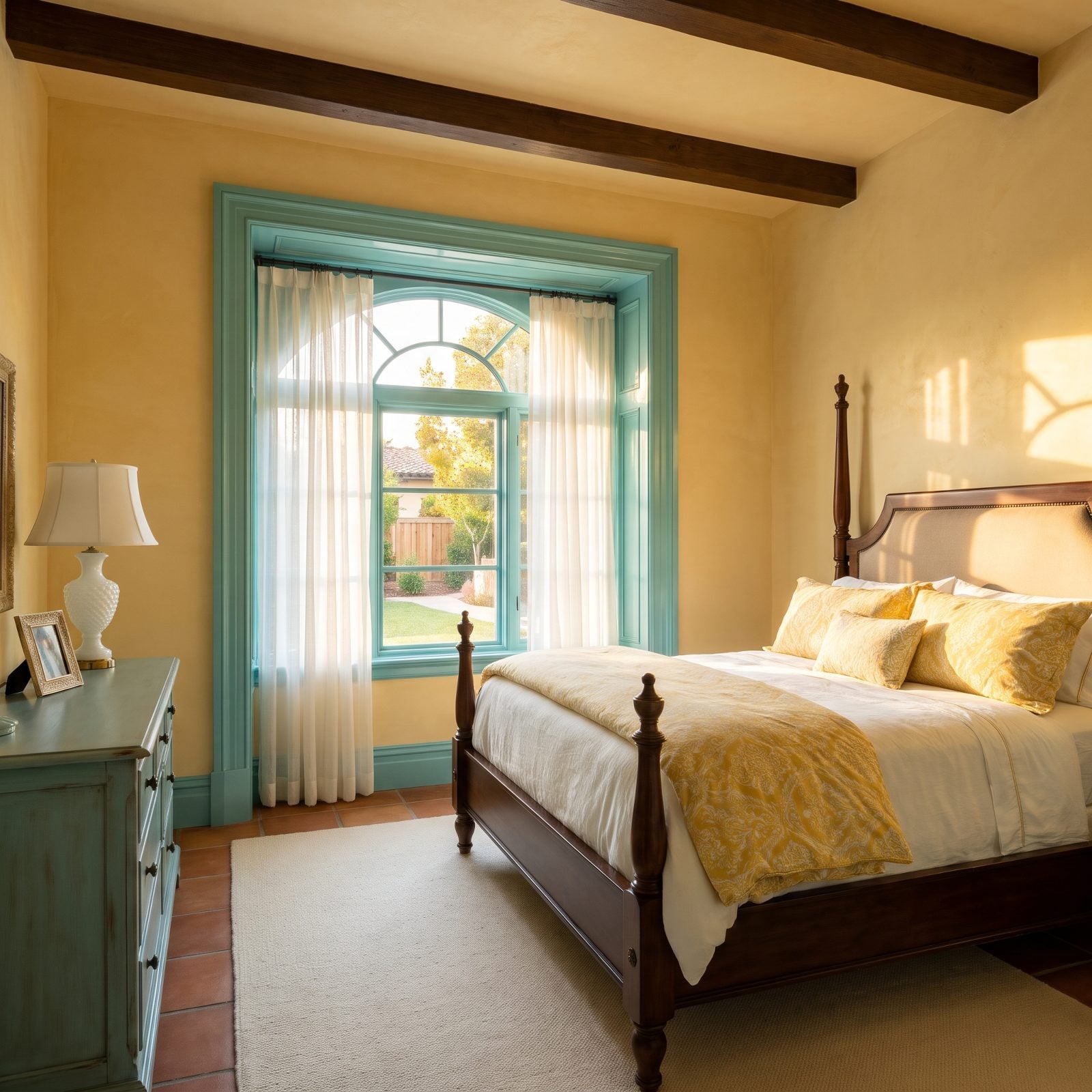
Look at a 1960s bedroom and you notice the edges. The trim around the doors and windows wasn’t the same flat white as everything else — it was painted a contrasting color, turquoise against butter yellow, so the bones of the room announced themselves.
Builders gave rooms real casings back then, wide enough to carry a color. Paint turned functional woodwork into a frame, the way a mat sets off a photograph. We’ve since sanded that instinct down to a thin line of builder-grade white, and the room lost its outline.
Cheap to do, enormous payoff. A quart of paint on your window trim does more than a new piece of furniture ever will.
Not everyone agrees: in our reader polls, readers who picked white ceilings chose white trim 71% of the time, compared with 52% of readers who picked something else.
8. Ceiling Color That Made the Whole Room Feel Intentional
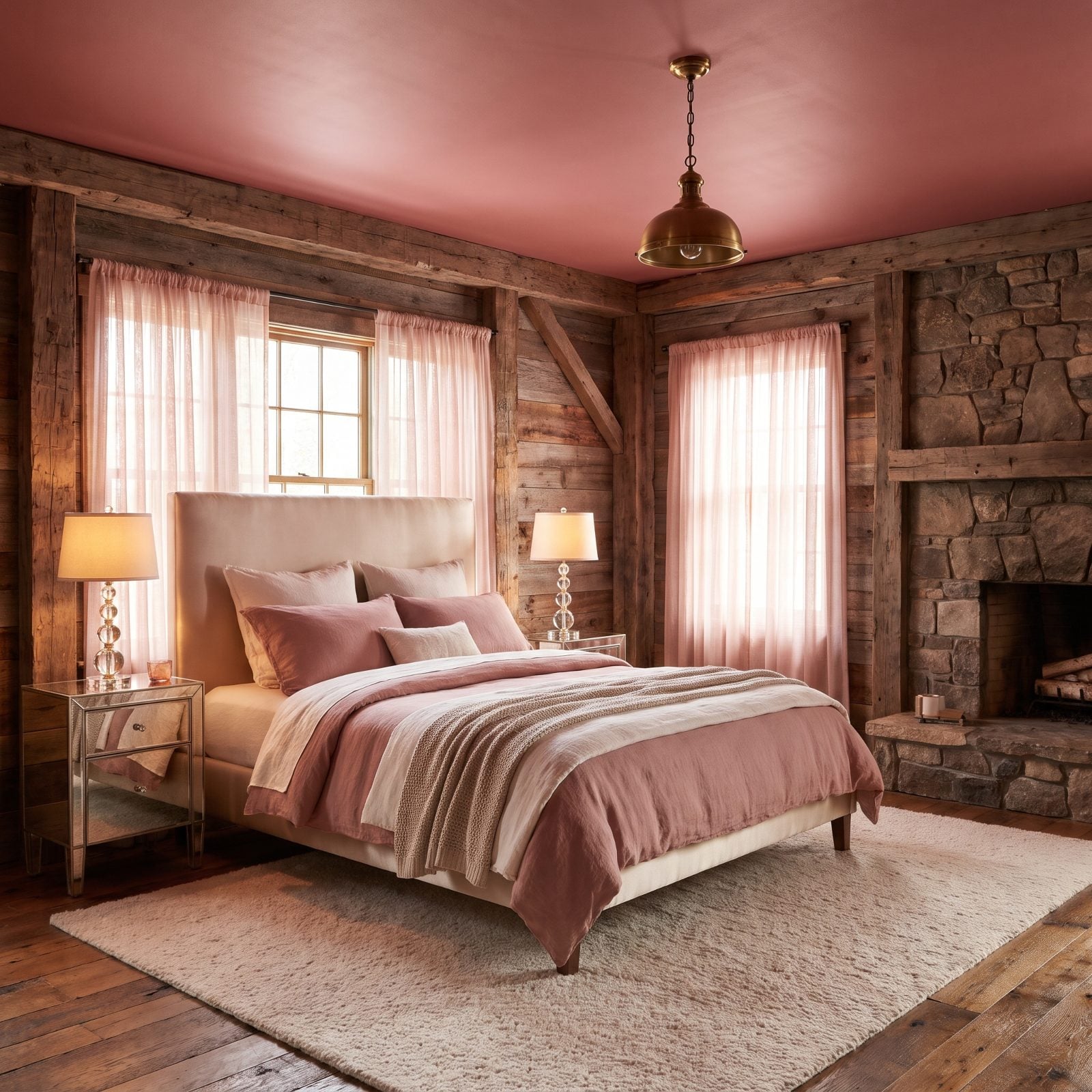
Everyone forgets the fifth wall. The 1960s bedroom didn’t. A painted ceiling — a dusty rose, a soft sky blue — turned a plain box into a room that had clearly been thought about.
We treat the ceiling as a default white nobody’s supposed to look at. That’s the mistake. A colored ceiling glows, bouncing warm light down onto everyone below. And in a bedroom you actually spend real time looking up at it, lying there before sleep, which is exactly why it deserves a color.
7. Framed Family Photographs Instead of Generic Wall Art
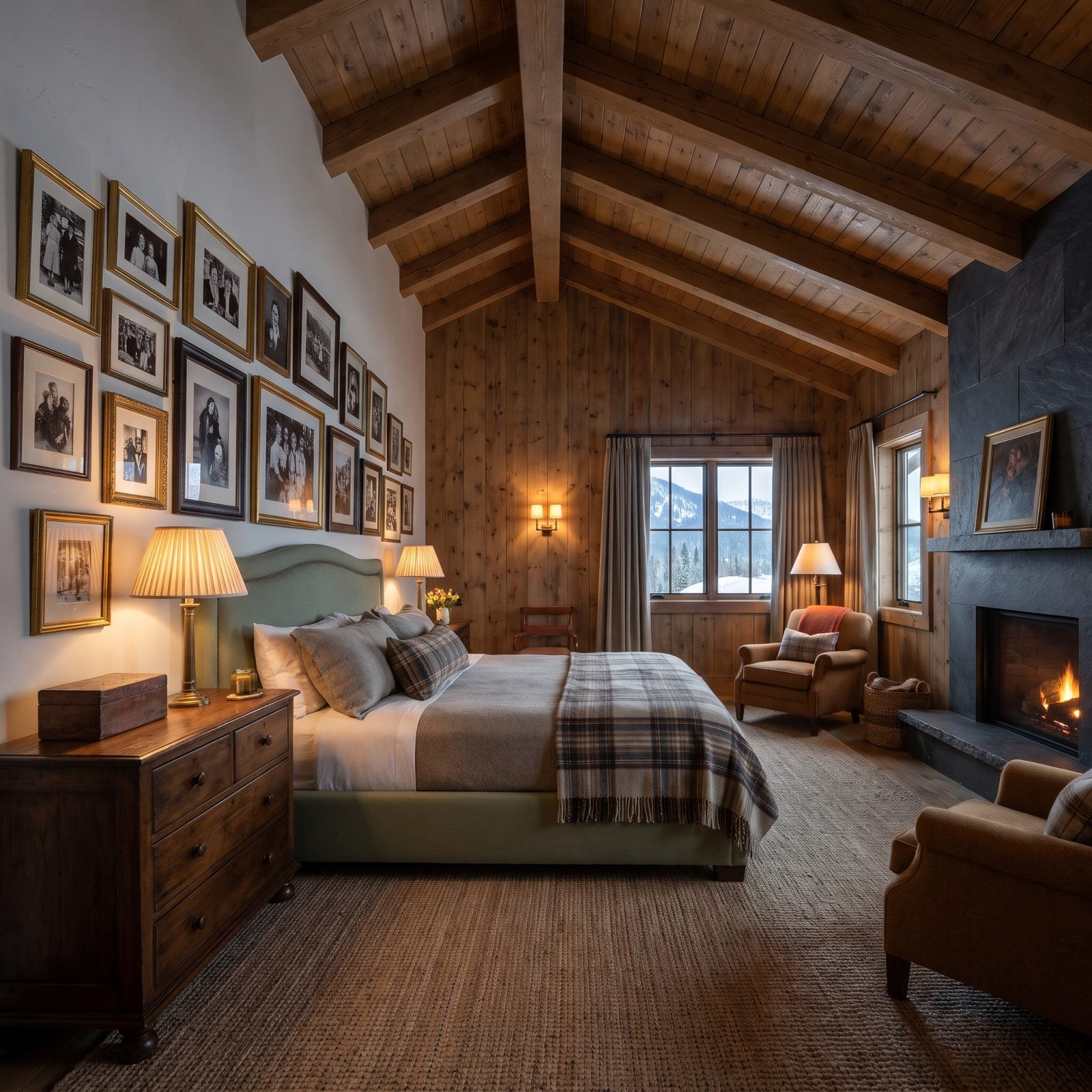
The wall above the dresser held faces. Grandparents, a wedding, a kid squinting on a porch step, all in mismatched brass and gilt frames that nobody tried to coordinate. It looked like a family, not a catalog.
Now we buy a canvas of a word. PEACE in a nice font, mass-produced, hanging in a thousand identical bedrooms. The sixties put the actual people in it on the wall. You looked at them every morning, and the room knew who lived there.
There’s no faster way to make a bedroom feel like yours and no one else’s. Print the photos. Frame them in whatever you have. Hang them crooked. That’s the point.
6. Needlework and Handmade Art With Real Meaning Behind It
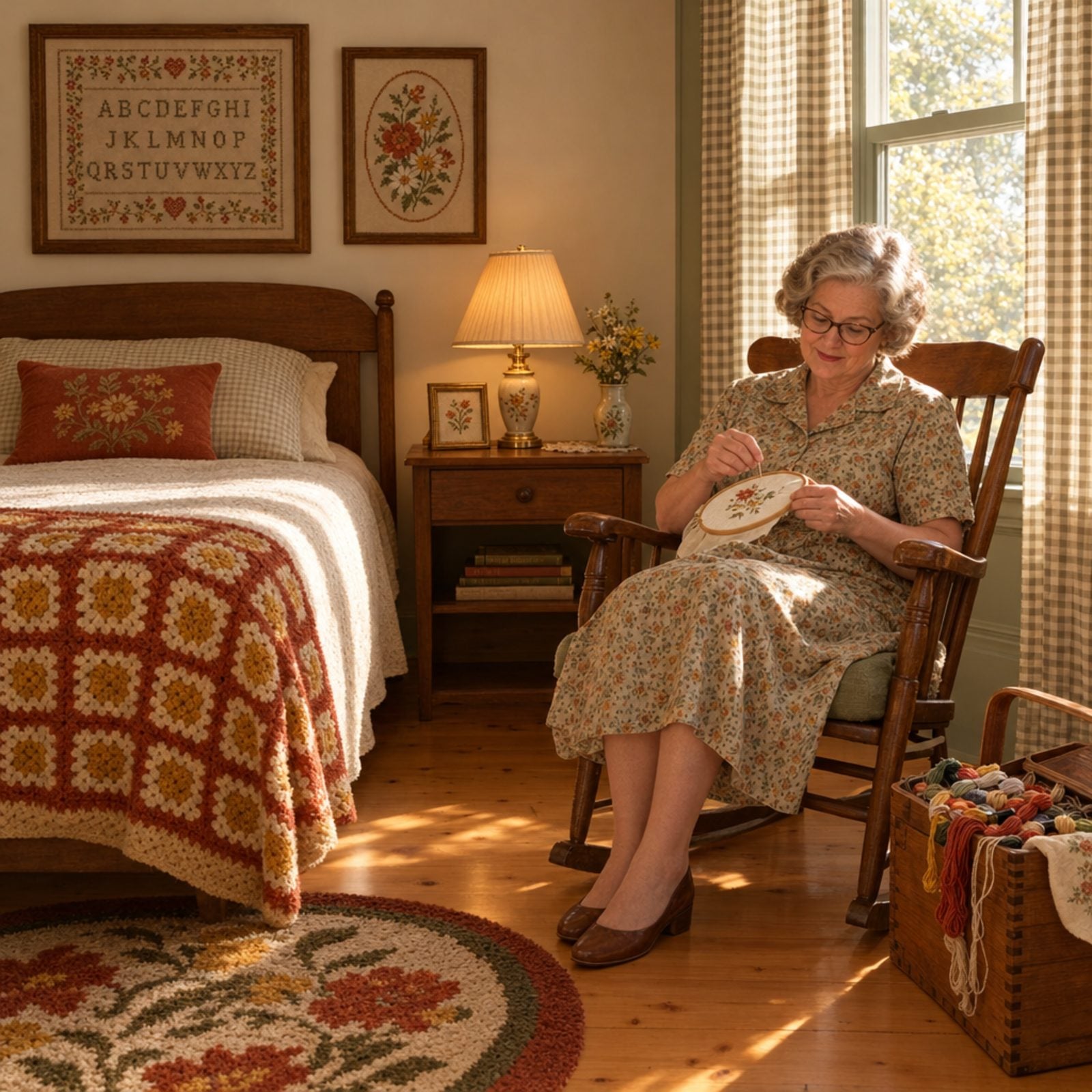
Someone’s hands made it. The cross-stitch sampler over the bed, the crocheted afghan folded at the foot, the hooked rug underfoot — hours went into each one, usually by someone in the family, and the room carried that effort in its bones.
This is the thing contemporary bedrooms gave up hardest. We outsourced our walls to a factory. The handmade piece has a flaw in it somewhere, a stitch that pulled, and that flaw is exactly why you’d never throw it out.
5. The Analog Radio That Played Music Without a Screen
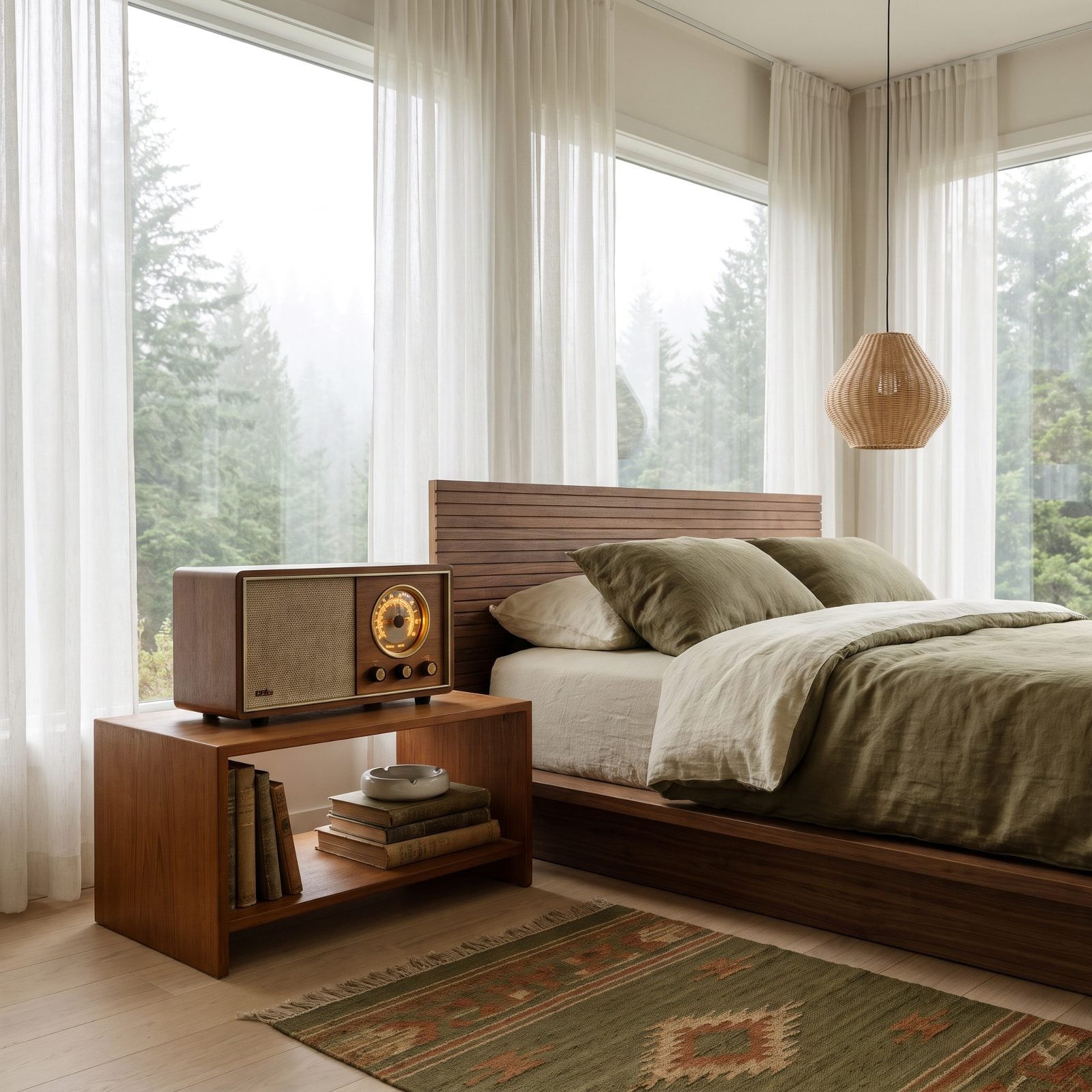
The dial glowed amber in the dark. You turned a knob, the signal drifted in and out, and music filled the room without a single screen lighting your face. That radio on the nightstand was the only thing you looked at before sleep, and it didn’t look back.
And here’s the quiet genius of it. The analog radio gave you sound without stimulation — no feed, no notifications, no blue light telling your brain it’s still daytime. Just a song you didn’t choose, playing low.
We replaced it with a phone that does everything, which turned out to be the problem. A device built for one job stays in its lane. Something about that lamp-lit dial made the whole room feel settled.
4. Bedrooms Without a Television by Default
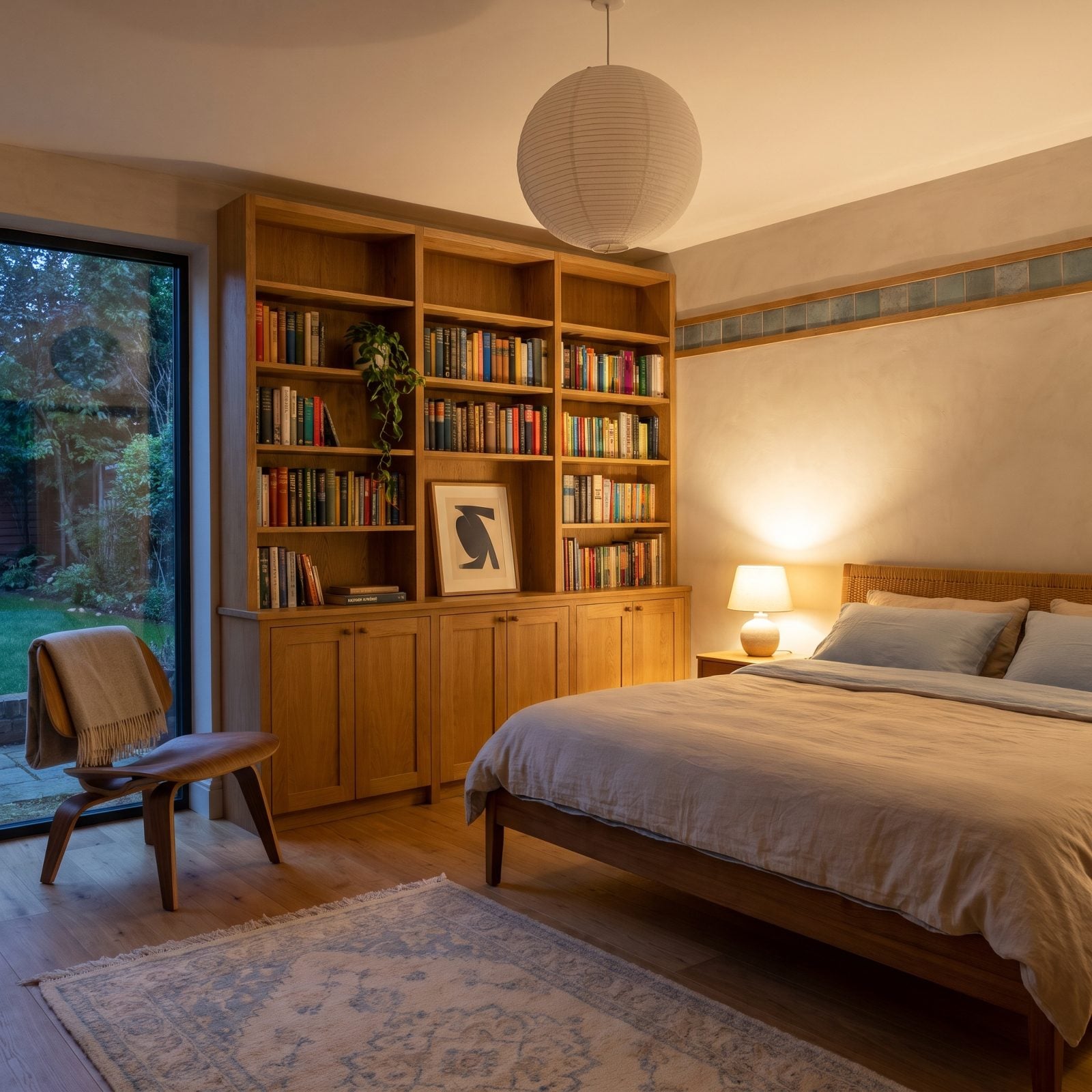
No television across from the bed. Not as a sacrifice — just as the obvious arrangement. The wall opposite held books, a dresser, a reading chair by the window. The bedroom was for sleeping and reading, laid out to do both well.
We quietly accepted a glowing rectangle as a bedroom appliance, then wondered why we scroll until one in the morning. The sixties didn’t fight that temptation. It simply never built the temptation into the room.
Put a bookshelf where the TV would go. You’ll read more and sleep harder.
3. The Single Telephone That Lived Outside the Bedroom
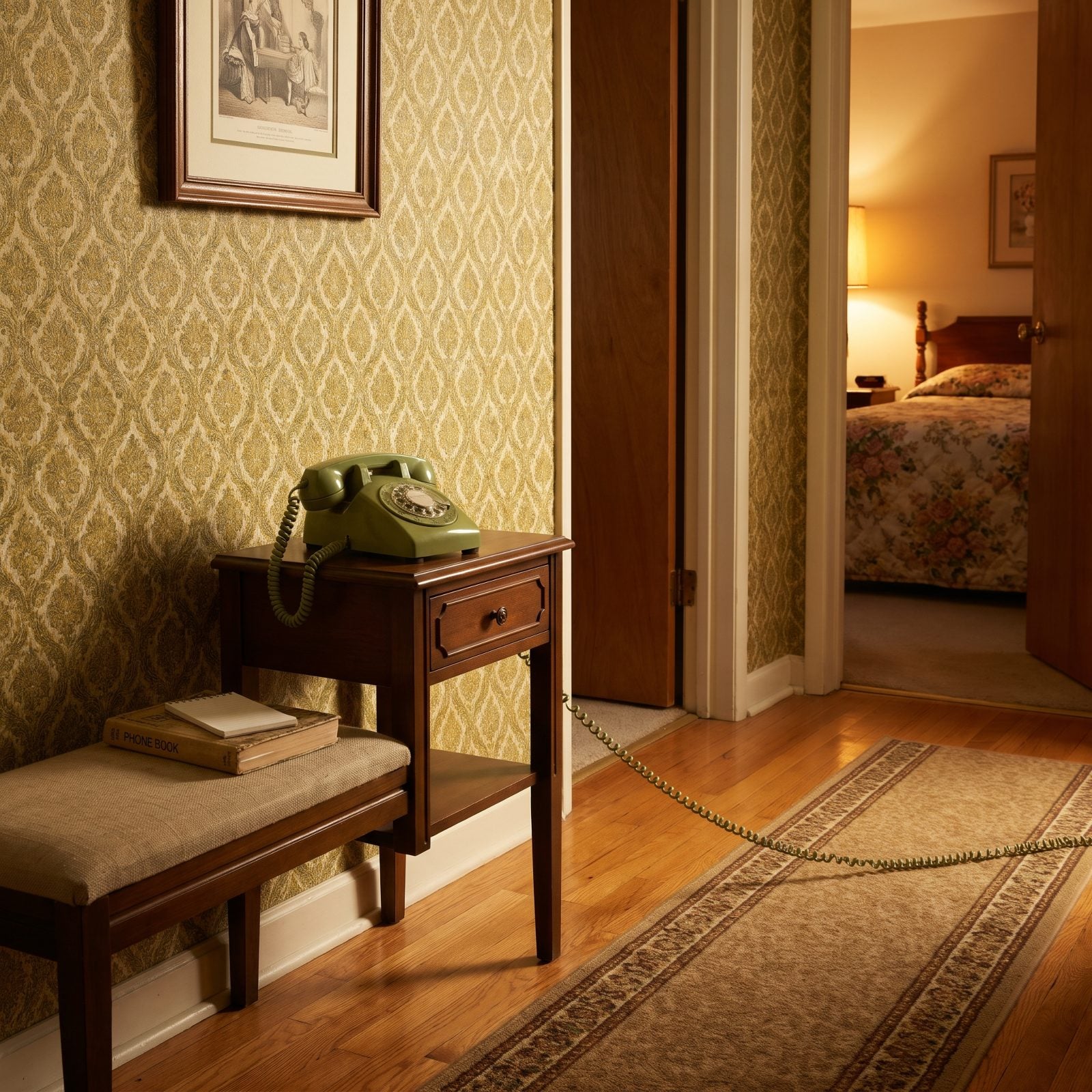
One phone. It lived in the hallway, maybe the kitchen, bolted to the wall or sitting on its own little table with a bench built for the purpose. You walked to it. And the curled cord stretched off down the hall runner, which meant privacy was something you negotiated with the length of a wire.
The cord could reach a good way down the hall, but the phone itself never moved into the bedroom. It stayed on its table in the hallway, and when you finally hung up and went to bed, the world’s ability to reach you stayed out there with it. That’s a kind of peace we’ve engineered completely out of our lives.
The phone stayed in the hall, and so did everyone else’s problems once you shut the bedroom door.
I’m not telling you to rip out the outlets and go back to a rotary. But there’s a lesson in that cord stretched along the hallway while the phone stayed put on its table. The best thing the bedroom ever did was keep the outside world on the other side of the door.
2. The Wicker Hamper That Pretended It Was a Side Table
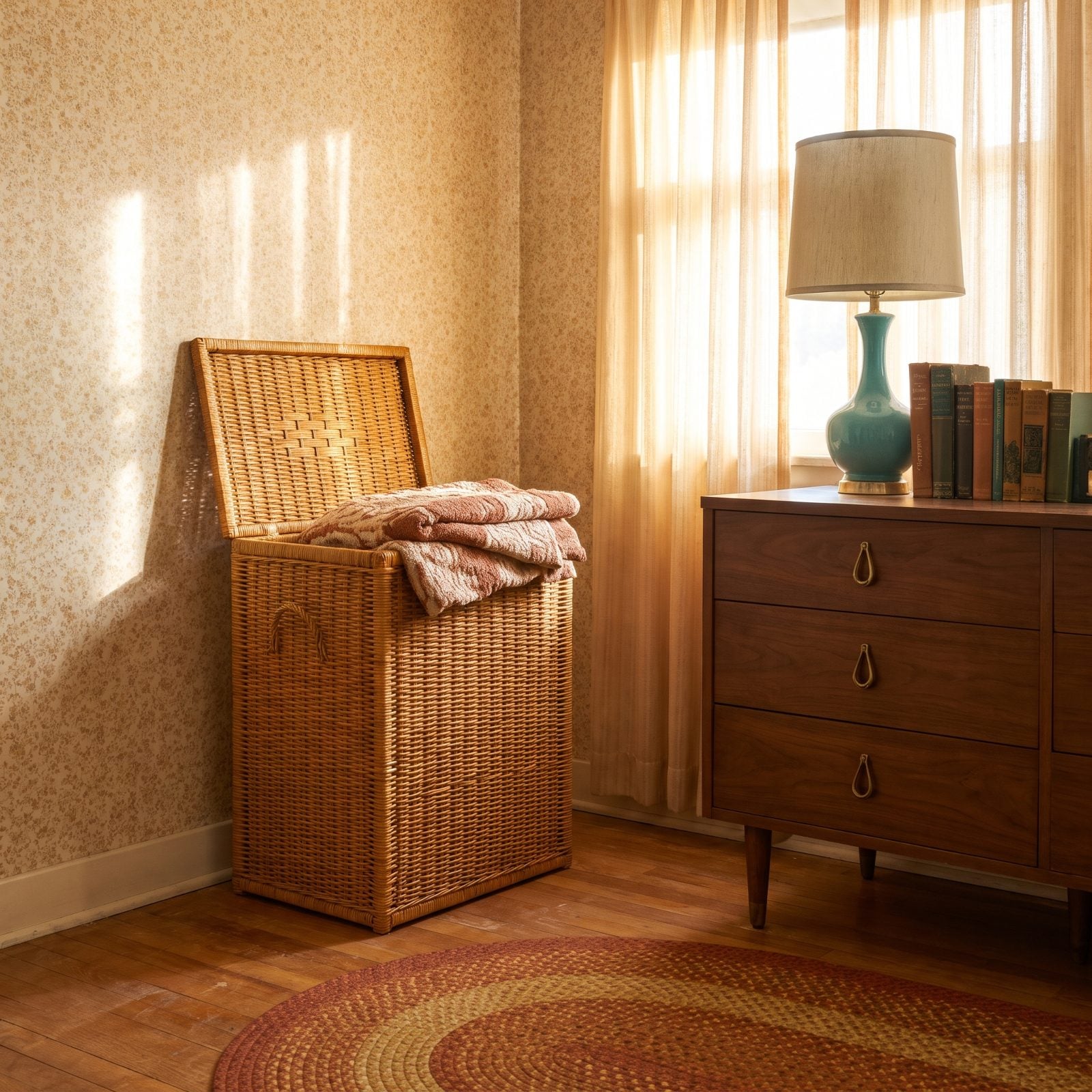
That wicker basket in the corner wasn’t hiding anything — it was part of the room. The woven rattan caught the lamplight the same way the dresser did, and nobody treated it like the embarrassing laundry situation it technically was.
Contemporary bedrooms shove the hamper into the closet or settle for a collapsible mesh bag with a drawstring that never stays open. The 1960s version earned its floor space: a hinged lid you could set a folded quilt on, and a weave that aged into something warmer instead of looking worse. You can chase the same idea with a modern woven wicker laundry hamper that doubles as a bedside drop zone.
1. A Bed Built for Sleeping, With a Nightstand That Held a Book and Nothing Else
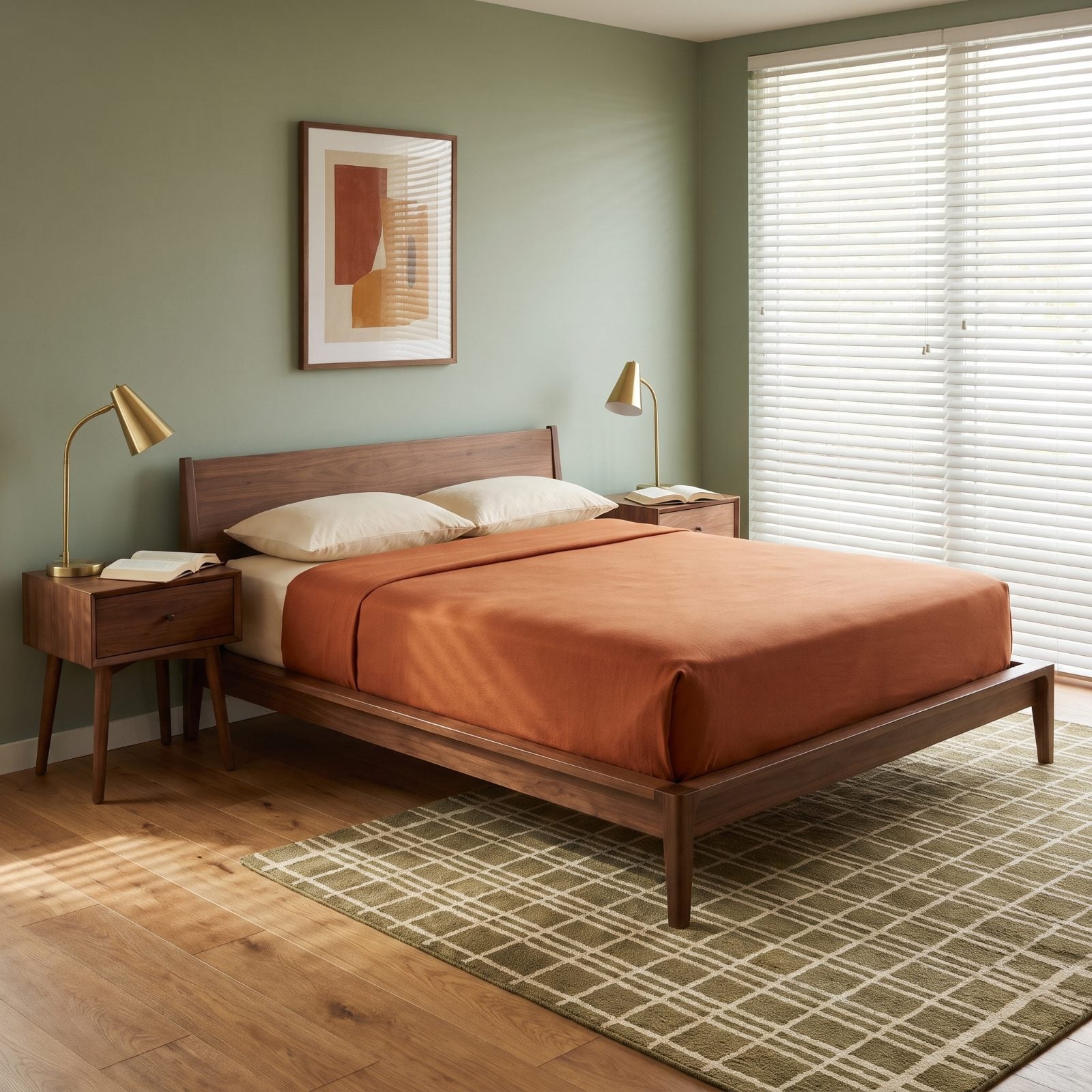
The nightstand held a reading lamp, a glass of water, and whatever book you were two chapters into. That was the whole system — no charging dock, no tangle of cables, no bright rectangle pulling your attention past midnight.
Beds back then were low, firm, and pointed at one job. The headboard was for leaning while you read, not propping a laptop. A walnut platform bed paired with a small-drawer contemporary nightstand brings that same discipline back, assuming you can keep the drawer free of cords.
The 1960s had the better idea: give the bed one purpose and let it keep that purpose. For more of this grounded feeling, these brown bed designs lean on the same wood-forward calm.