
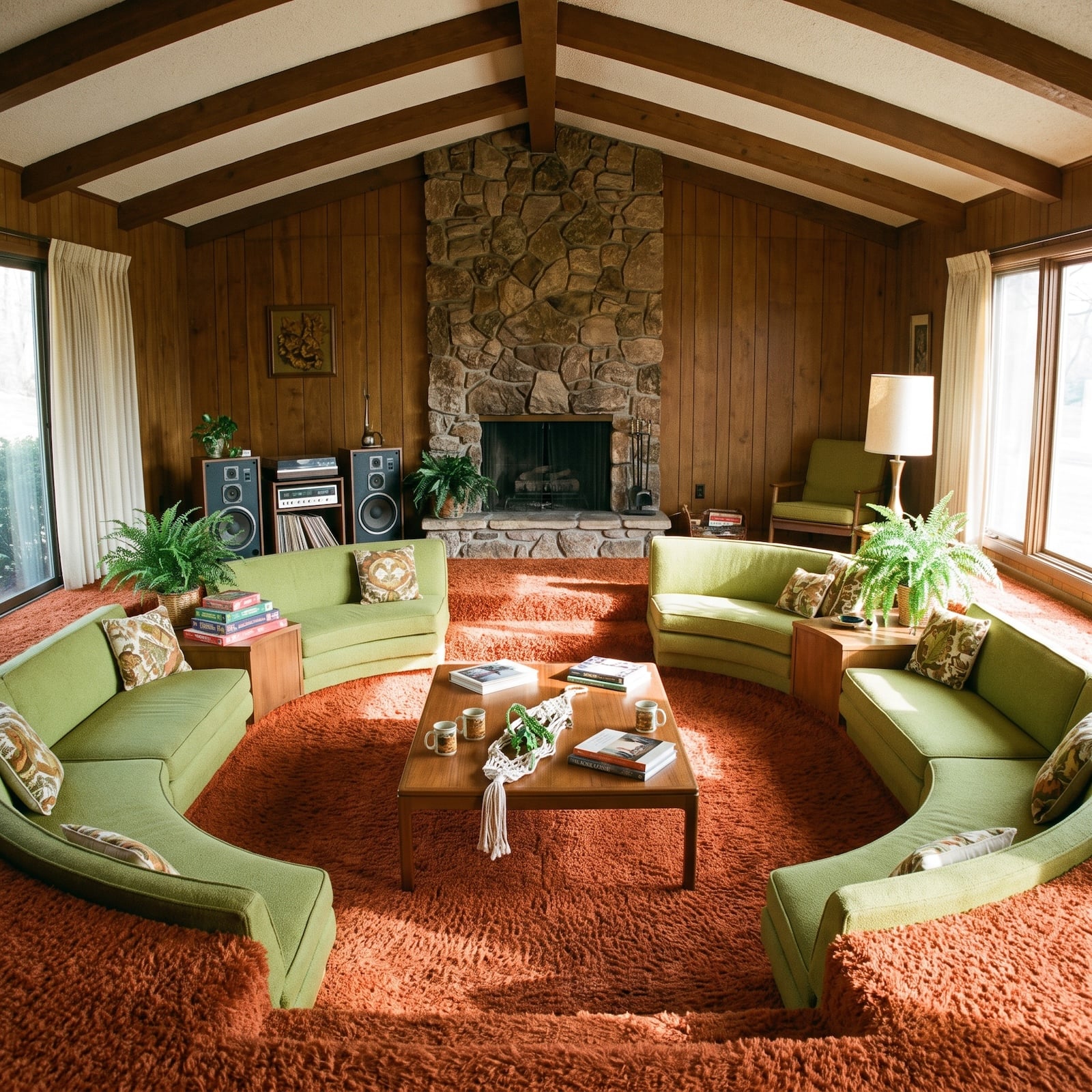
Somewhere beneath all that rust-colored shag carpeting was a very good architectural idea. The 1970s conversation pit had everything going for it: a vaulted ceiling, handsome timber beams, a monumental stone fireplace, and seating arranged for people who actually intended to speak to one another. Unfortunately, it also had enough carpet to keep a vacuum cleaner occupied until Christmas.
In order to come up with the very specific design ideas, we create most designs with the assistance of state-of-the-art AI interior design software. Also, assume links that take you off the site are affiliate links such as links to Amazon. this means we may earn a commission if you buy something.
The question isn’t whether the shag should go. That’s the easy part. What happens to the sunken floor, the exposed rafters, the enormous fireplace, and those sweeping curves once the decade’s decorating habits are stripped away? Does the room become a minimalist retreat, a velvet-lined cocktail lounge, a private cinema, or something considerably stranger?
One room. Thirty-seven radically different answers. The original architecture provides the starting point for every transformation, but the finishes, furnishings, lighting, and attitude are entirely up for grabs. Marble replaces fieldstone. Lacquer challenges timber. Bouclé takes over from avocado upholstery. Some designs embrace the room’s 1970s character; others appear determined to send it into the next century. The conversation pit survives them all, which may be the most interesting revelation.
37. Tangerine Takes the Space Age for Another Spin
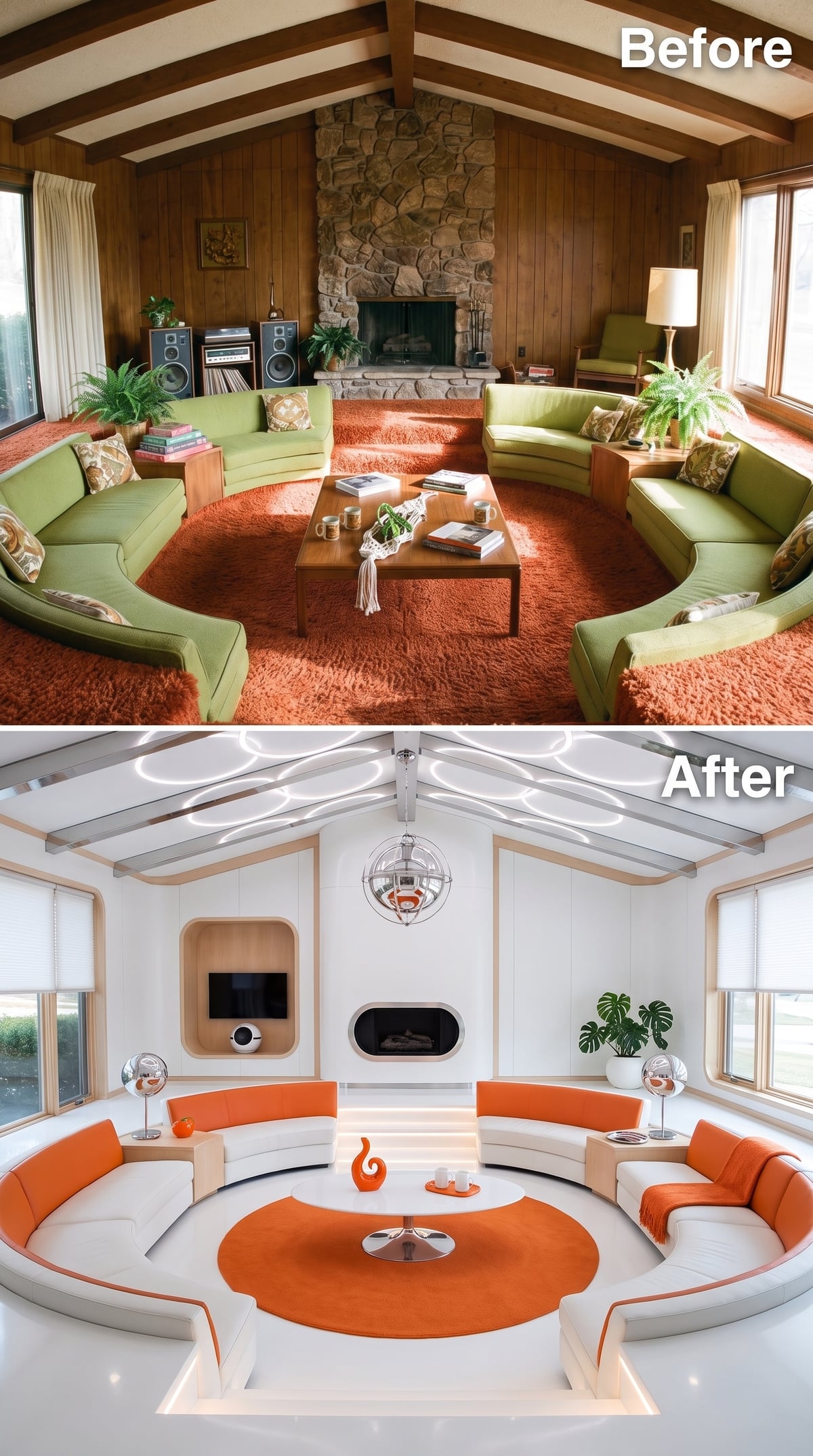
Who knew the old conversation pit was one chrome pendant away from a space-age revival? White plaster replaces the dark wood paneling, while curved ceiling housings incorporate linear lighting along the rafters. The original vaulted structure remains unmistakable, although its new treatment belongs to an entirely different design vocabulary.
White sectional seating wraps around the sunken floor, punctuated by tangerine cushions and a circular orange rug. An oval fireplace, birch media cabinetry, and polished chrome lighting complete the transformation. The geometry is still unmistakably seventies. The execution has traded nostalgia for a remarkably fresh dose of retro-futurism.
36. The Conversation Pit Discovers the Virtues of Cream Bouclé
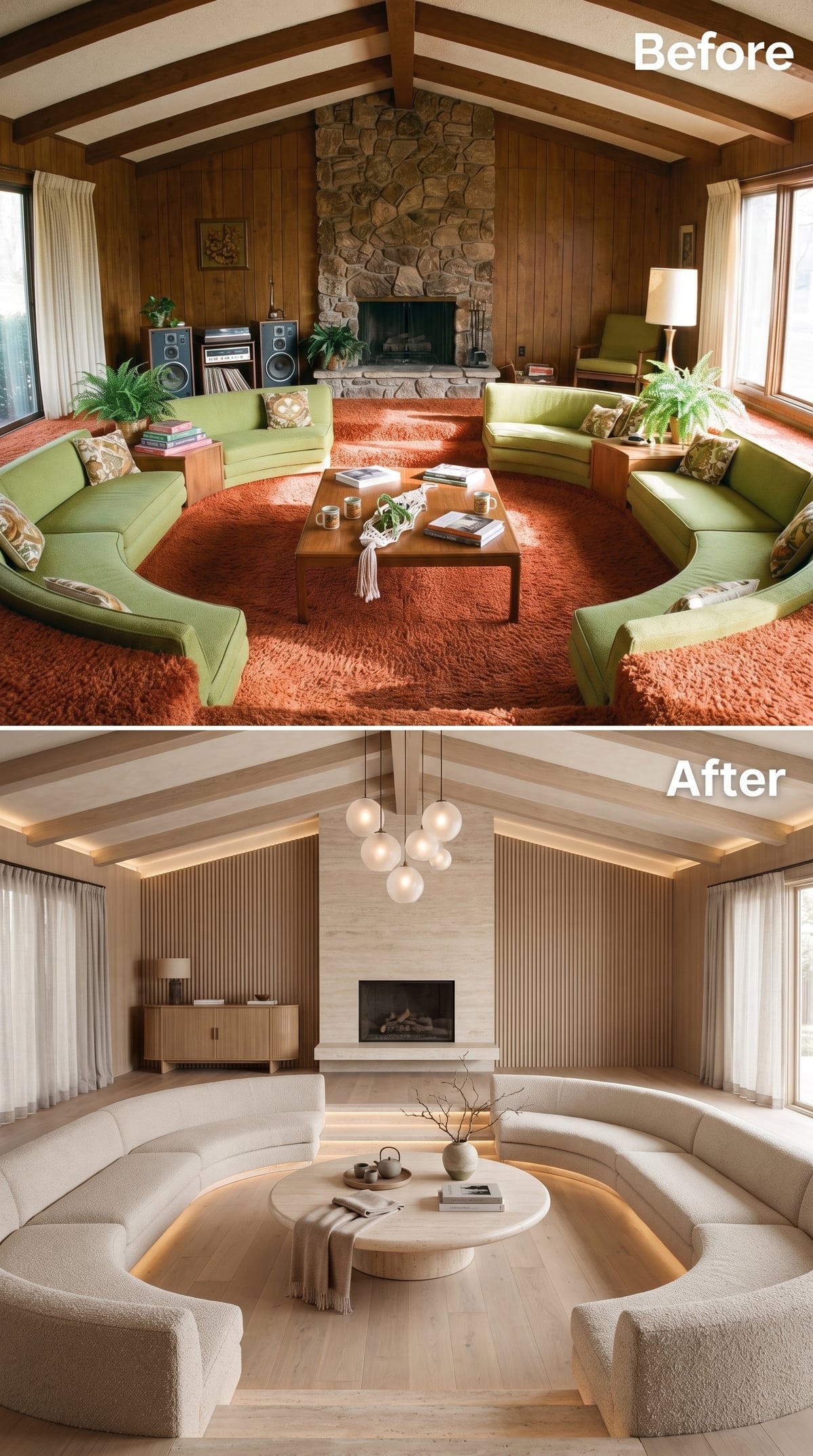
The original room’s curves were never the problem. Here, they become the foundation for an almost sculptural arrangement of cream bouclé seating, with warm lighting tucked beneath the curved bases. A low travertine coffee table follows the same rounded geometry without introducing another competing shape.
Vertical oak slats replace the old paneling, the fireplace becomes a restrained stone composition, and pale timber beams lighten the vaulted ceiling. A cluster of glass globe pendants supplies the decoration overhead. The sunken footprint remains, but the transformation makes a persuasive case for preserving the architecture while changing practically everything touching it.
35. Plum Walls, Gold Velvet, and Absolutely No Interest in Restraint
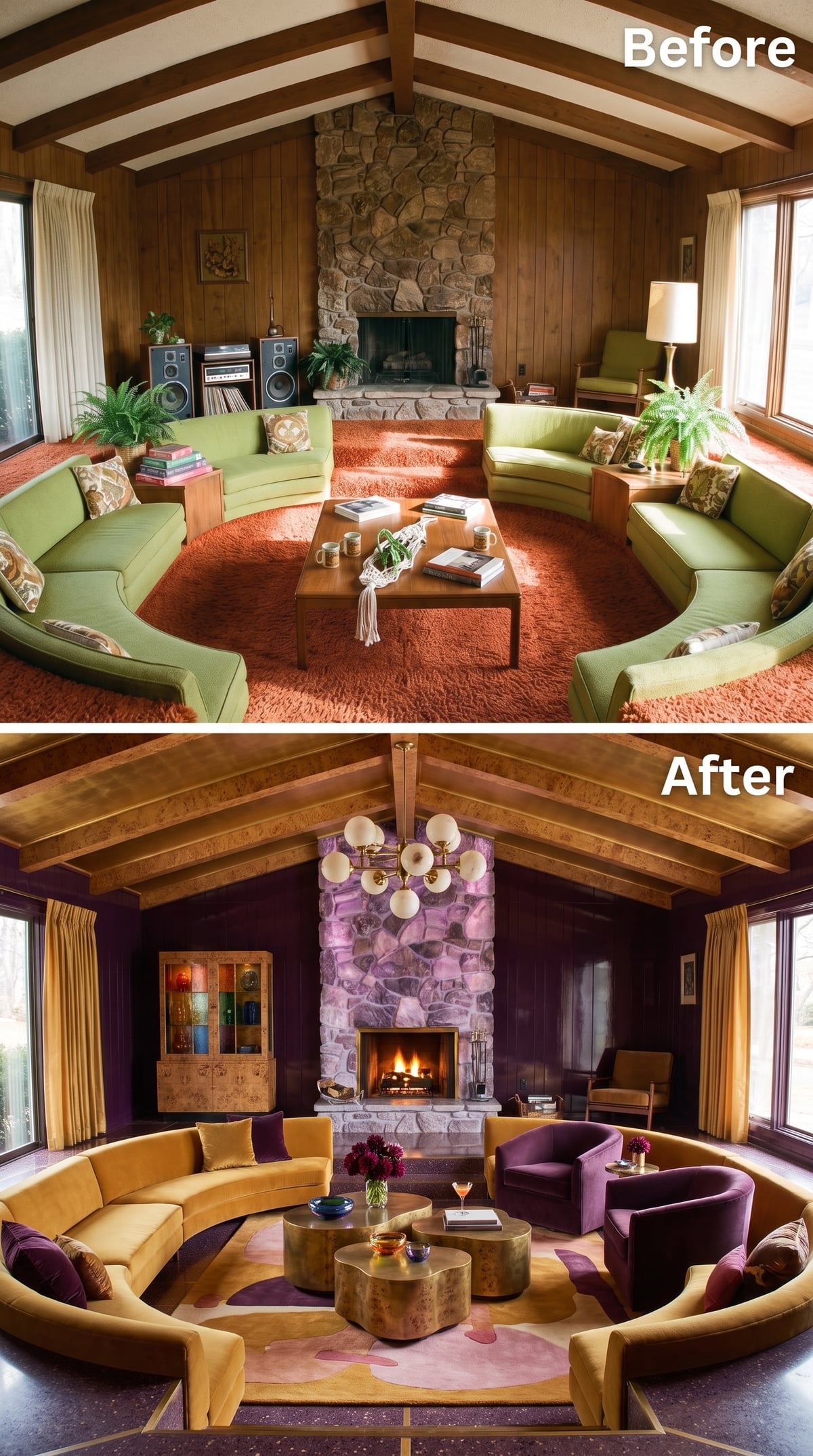
Deep plum covers the walls, mustard-gold velvet wraps the circular seating, and a lavender-veined fireplace surround introduces another unexpected color. The original room’s appetite for saturation has survived the renovation, although the shag carpet and avocado upholstery have been replaced by a considerably more deliberate palette.
Brass cylindrical coffee tables gather at the center, while a globe-bulb chandelier illuminates the seating from above. Plum barrel chairs extend the color beyond the pit. This is a transformation that understands the original room’s exuberance and refuses to confuse sophistication with beige.
34. White Shiplap, Dark Timber Beams, and a Fireplace Dressed in Marble
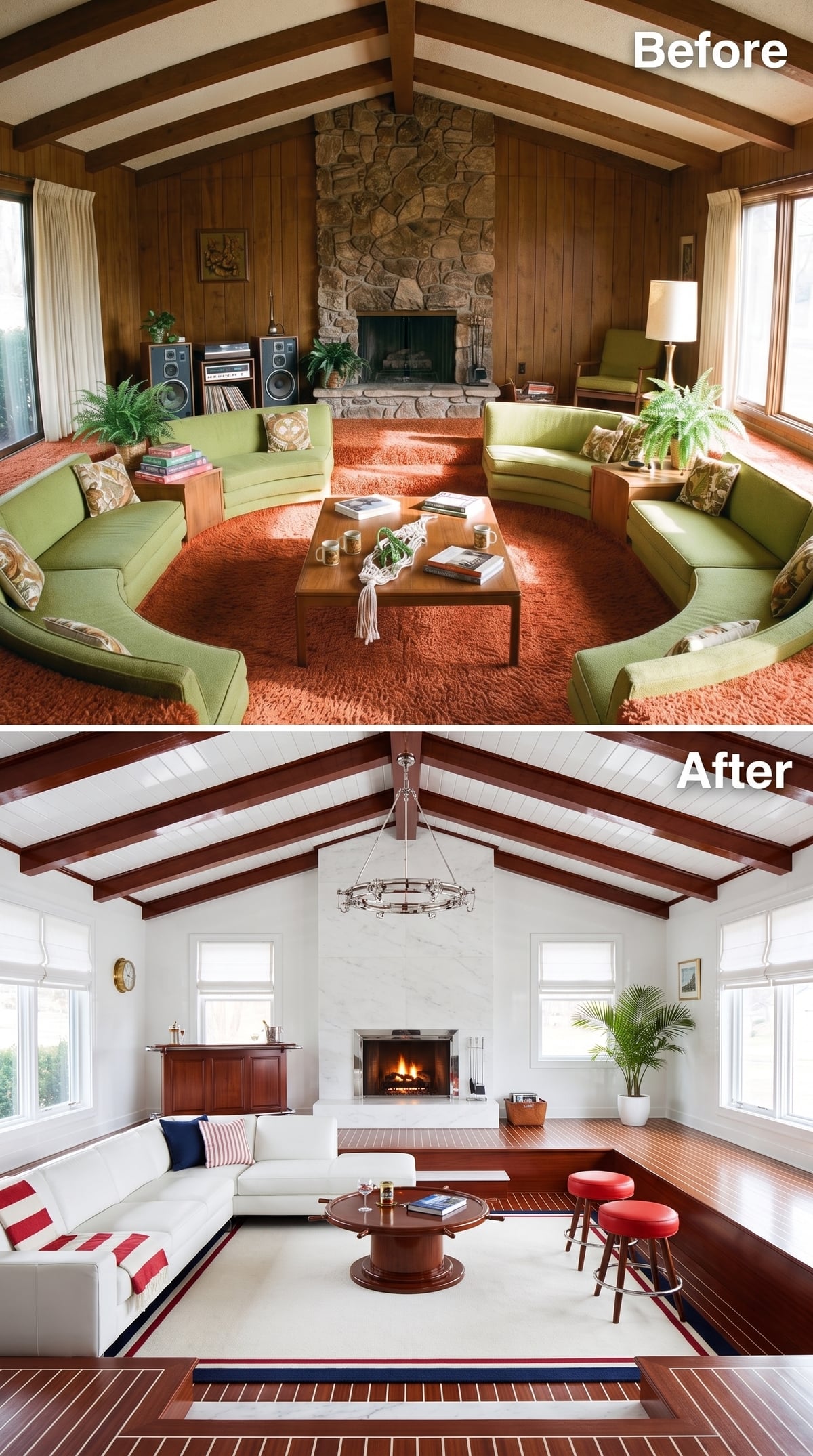
White shiplap ceiling panels establish a crisp backdrop for the dark timber beams, allowing the vaulted roof to retain its original architectural emphasis without the oppressive effect of matching wood paneling on every surface.
The fireplace receives a marble surround, exchanging rough stone texture for a more polished finish. Dark timber against white paneling gives the room a restrained nautical influence, though the substantial beams keep the composition grounded in the original architecture.
33. A Burgundy Velvet Cinema Rises From the Shag Carpet
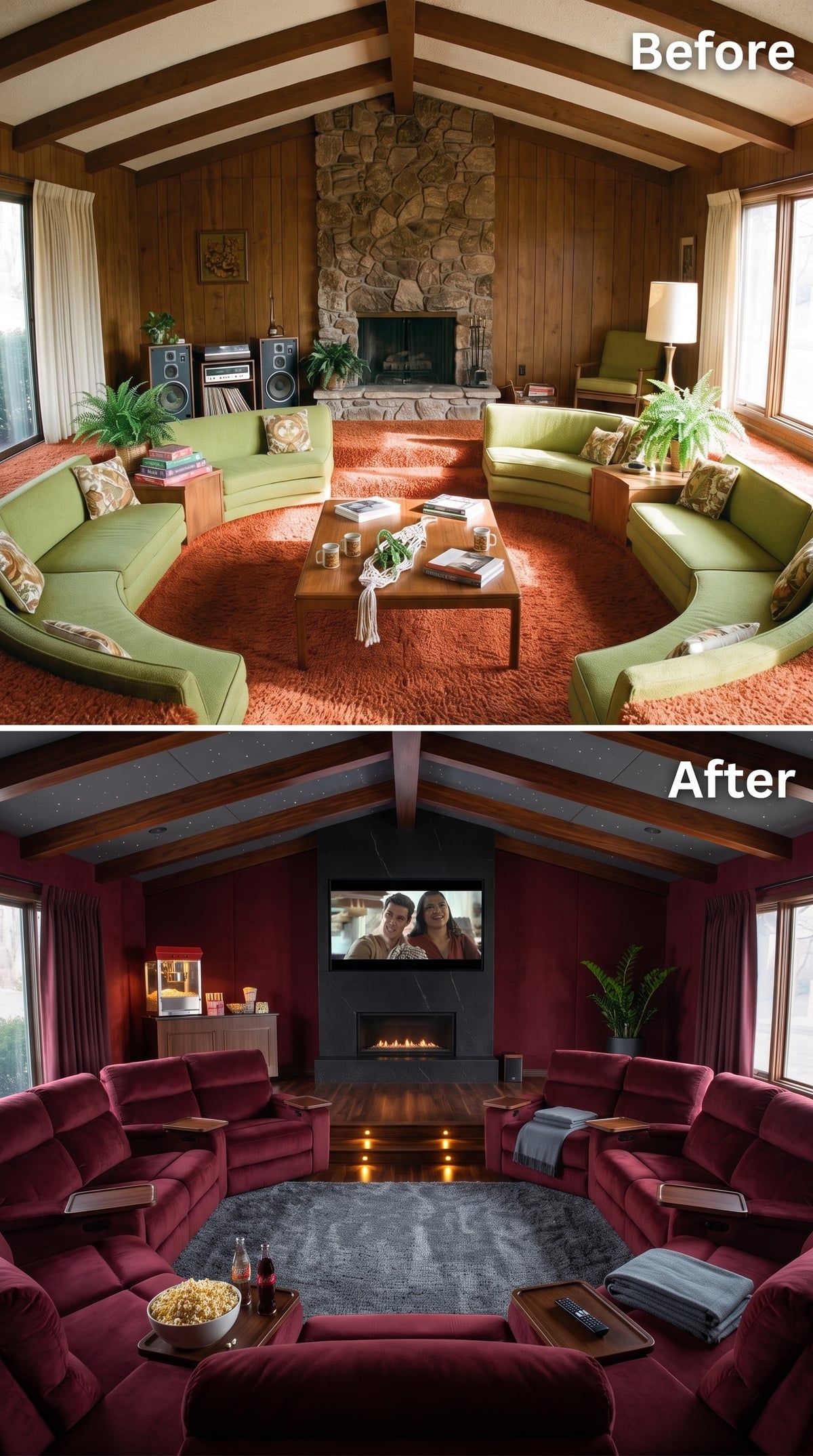
The conversation pit has changed its priorities. Burgundy velvet recliners form a horseshoe around a media wall, where a television sits above a linear fireplace framed in charcoal slate. The sunken arrangement remains, but the furniture now faces the screen rather than encouraging conversation across the room.
Star-point lights scattered between the dark ceiling beams give the vaulted roof a cinematic treatment. A popcorn machine completes the theater atmosphere. The original room was designed for an evening of conversation; this version is considerably better prepared for a double feature.
32. Sky Blue and Butter Yellow Give the Old Pit a New Outlook
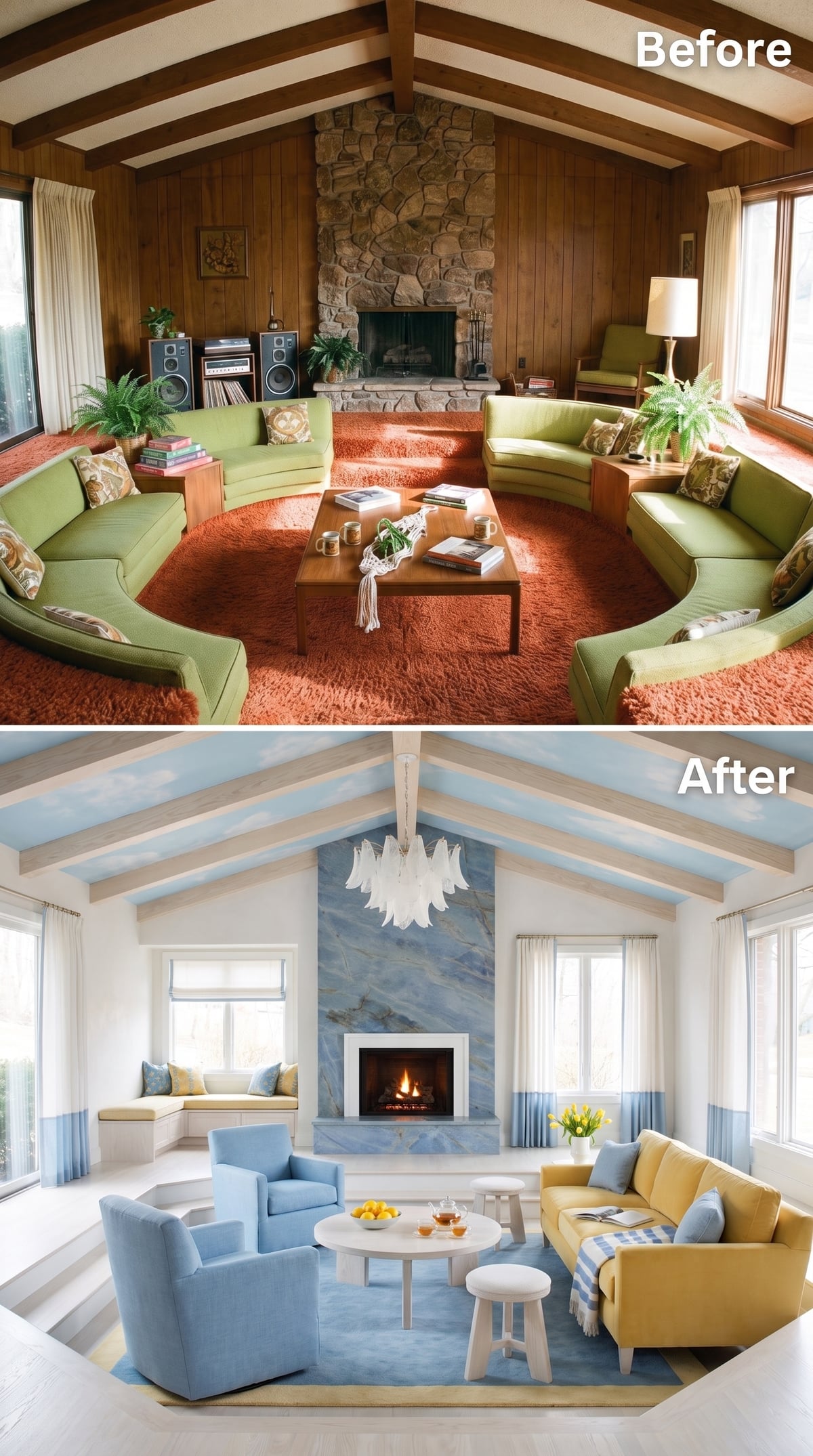
Sky-blue ceiling panels transform the vaulted roof into an expansive wash of color, while the exposed beams retain the rhythm of the original structure. The former stone fireplace gives way to a blue marble surround that carries the palette down to the floor.
Powder-blue swivel chairs gather around a white pedestal table, with a mustard-yellow sofa introducing warmth and contrast. Sheer curtains admit daylight, and a feather-inspired chandelier adds a softer silhouette overhead. The result is bright without abandoning color, a useful distinction in a room once dominated by dark wood.
31. Black Marble Meets Blush Velvet in a Rather Grand Reversal
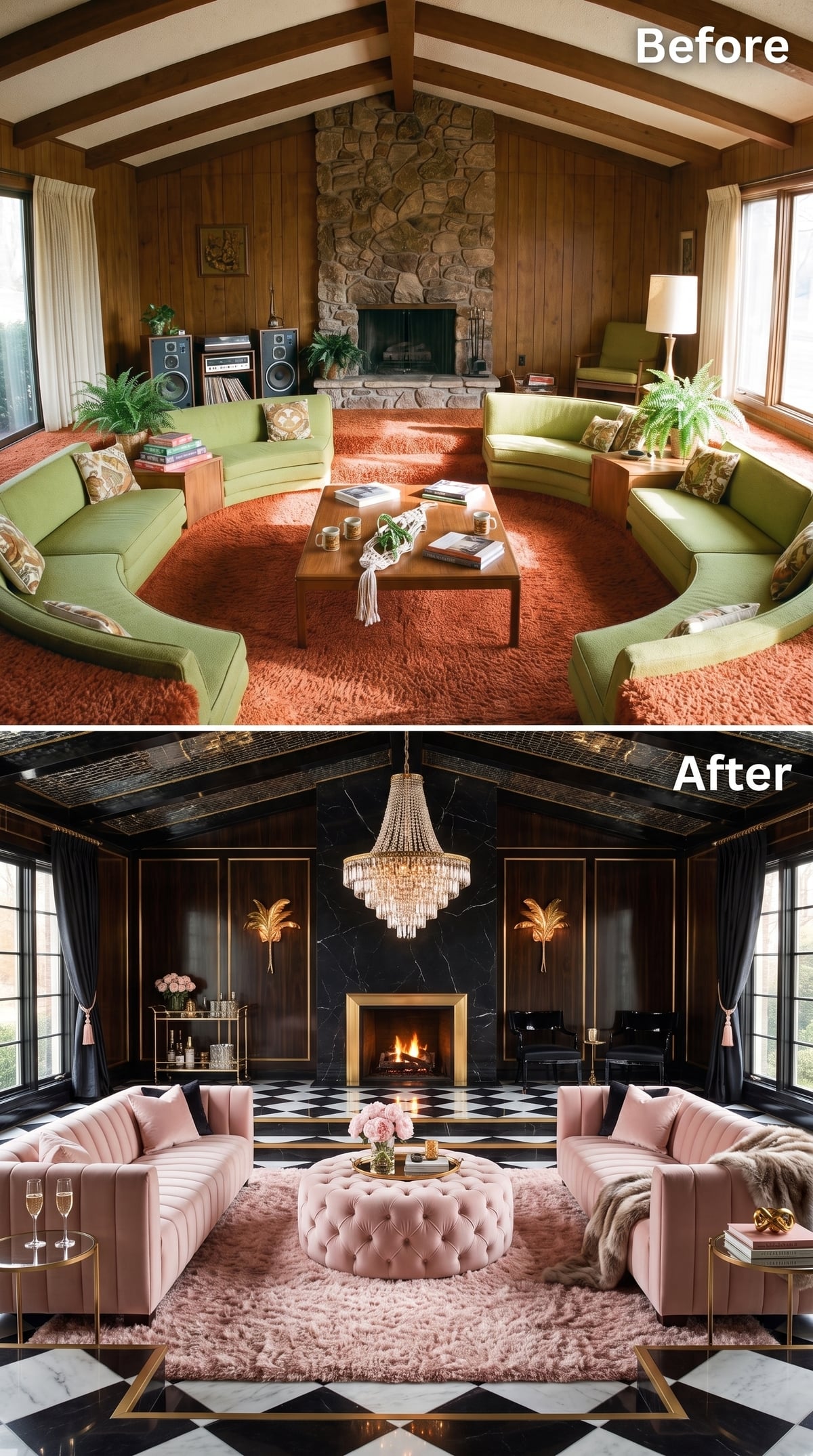
Black marble with a gold-toned frame gives the fireplace a commanding presence, while blush velvet seating introduces a surprisingly delicate counterpoint. Dark wood paneling, brass trim, and a substantial crystal chandelier establish an atmosphere closer to a glamorous hotel lounge than a suburban family room.
The floor shifts from a plush pink rug inside the pit to black-and-white diamond tile around its perimeter. That change of material makes the seating area legible without additional partitions. Gold palm-leaf sconces complete a design that has clearly decided subtlety is somebody else’s responsibility.
Design Detail: The contrast between flooring materials can emphasize the boundary of a sunken seating area. Clear visibility of steps and level changes remains important, particularly where dark and light finishes meet.
30. Pale Wood, Rattan, and the Softer Side of the Seventies
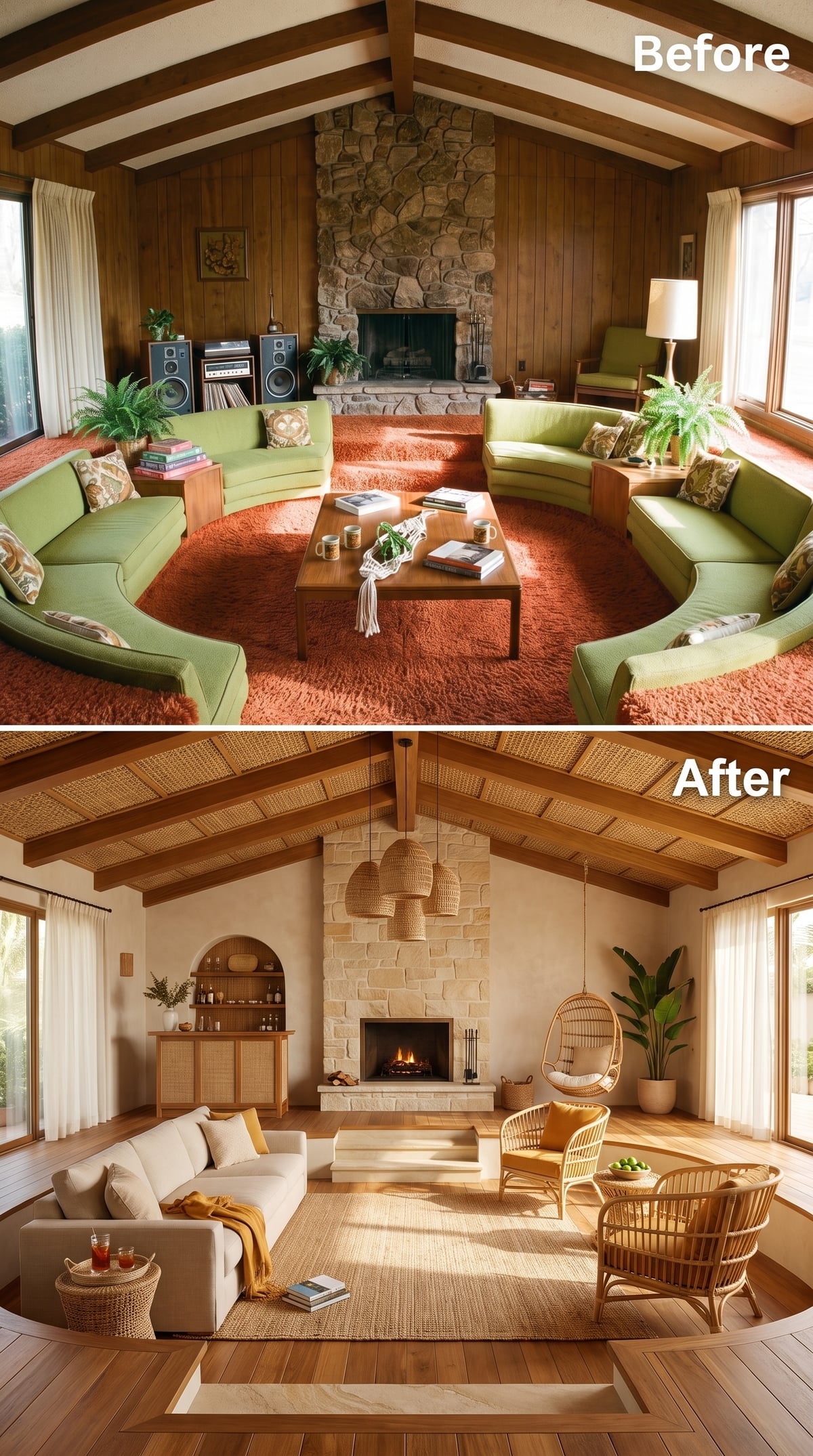
Cream plaster walls and wide-plank wood flooring replace the original dark surfaces, while the stone fireplace retains its texture beneath a pale limewash finish. The change is less about erasing the past than reducing its visual weight.
Rattan pendants cluster above the hearth, their woven shades introducing texture against the vaulted ceiling. A low linen sofa and woven chairs extend the natural-material palette. Even the ceiling infill contributes warmth without introducing another strong color. The seventies loved texture; this transformation simply chooses a different assortment.
What Our Readers Say
- In our Hot or Not photo matchups, living room pictures dominated by brown won more of their head-to-head matchups than expected, 61% against an expected 53%.
- Retro isn’t an automatic win with our readers: mid-century living rooms got hearts 31% of the time, versus 48% for other images in the same articles.
From Home Stratosphere reader polls and votes.
29. Teal Walls and Stained Glass Turn the Rafters Into an Event
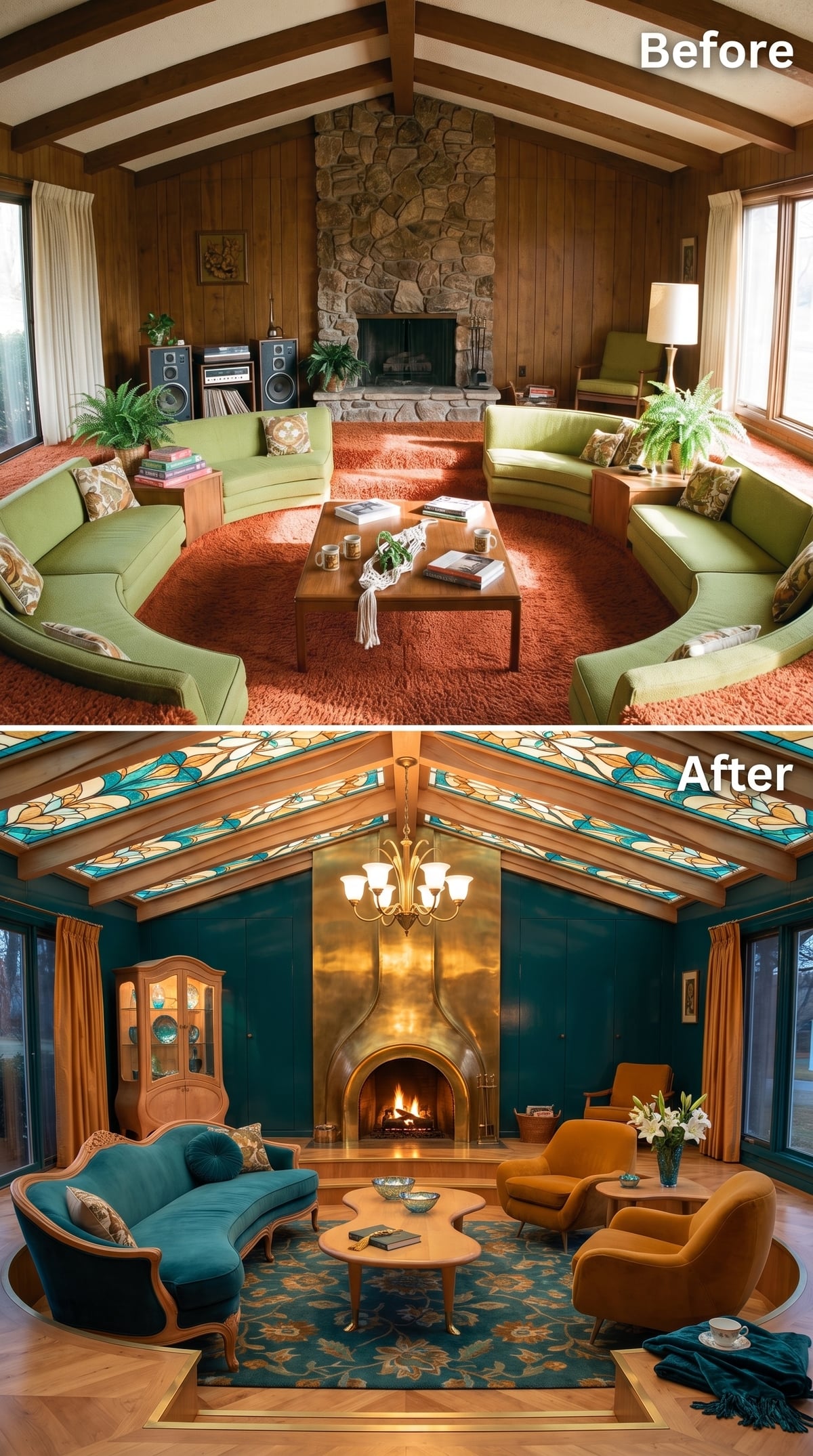
Teal covers the walls with considerable conviction, while a brass fireplace surround provides a bright metallic counterpoint. The most unusual intervention occurs overhead, where stained-glass detailing introduces pattern and color into the spaces associated with the exposed ceiling beams.
Instead of concealing the roof structure, the design turns it into an ornamental feature. The result is richly layered, with the ceiling claiming as much attention as the fireplace. After decades of whitewashed minimalism, the willingness to decorate an entire vaulted room feels almost rebellious.
Design Consideration: Decorative stained-glass panels can introduce color and pattern overhead. Their lighting effect depends on whether they receive daylight, artificial backlighting, or neither; glass installed against an opaque surface will not transmit sunlight.
28. Gray Paneling, Pale Blue Sofas, and a More Formal Kind of Conversation
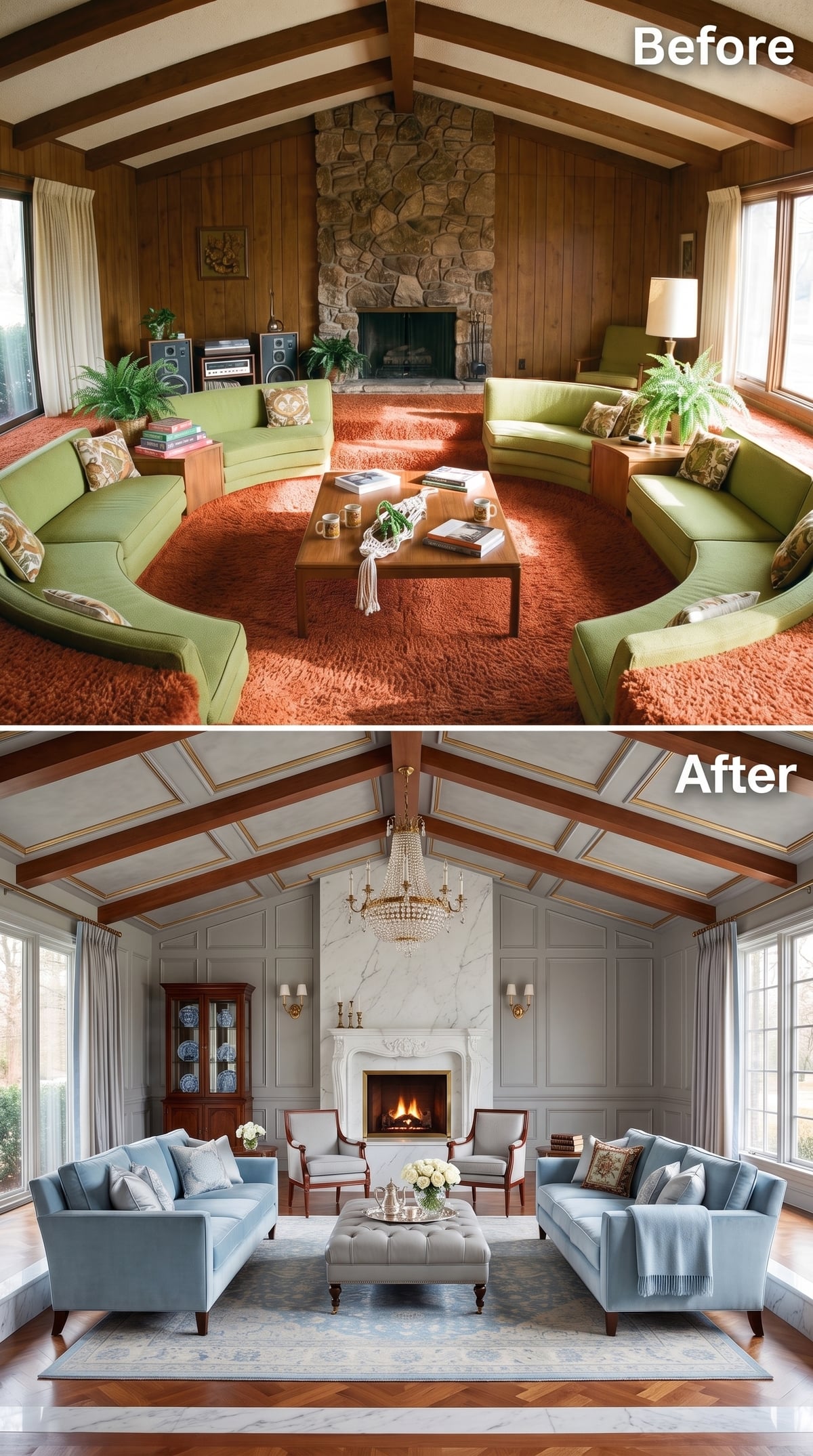
Gray wall panels introduce a tailored architectural rhythm beneath the retained timber beams. A white marble fireplace rises through the center, and a crystal chandelier occupies the full height of the vaulted ceiling rather than disappearing into its upper reaches.
Two powder-blue sofas face inward, supported by taupe armchairs and a tufted central ottoman. The arrangement is more formal than the original curved green seating, yet the lowered conversation area still encourages an intimate furniture grouping. The room has exchanged shag carpeting for drawing-room manners.
27. Red Lacquer Gives the Vaulted Ceiling the Last Word
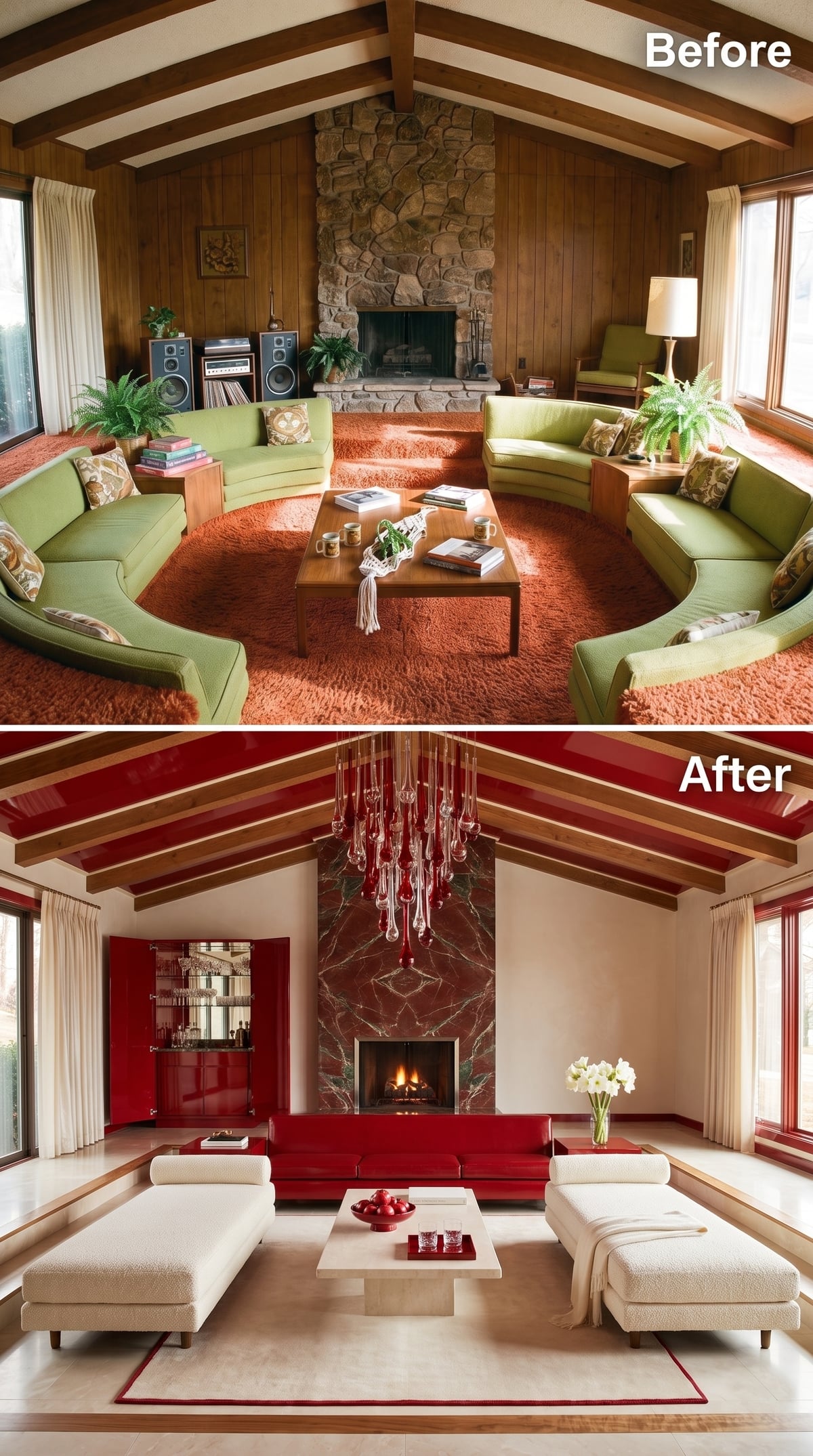
Most renovations lighten a dark timber ceiling. This one takes the opposite approach, applying crimson lacquer across the vaulted surfaces and making the roof itself the dominant decorative gesture.
The exposed beams remain visible against the glossy red, while a marble fireplace and lighter surrounding finishes prevent the color from overwhelming every surface. Reflections across the lacquer emphasize the angles of the ceiling. A bold overhead treatment changes the entire room before a single piece of furniture enters the discussion.
26. Slate, Shoji Panels, and a Paper Lantern Quiet the Room Down
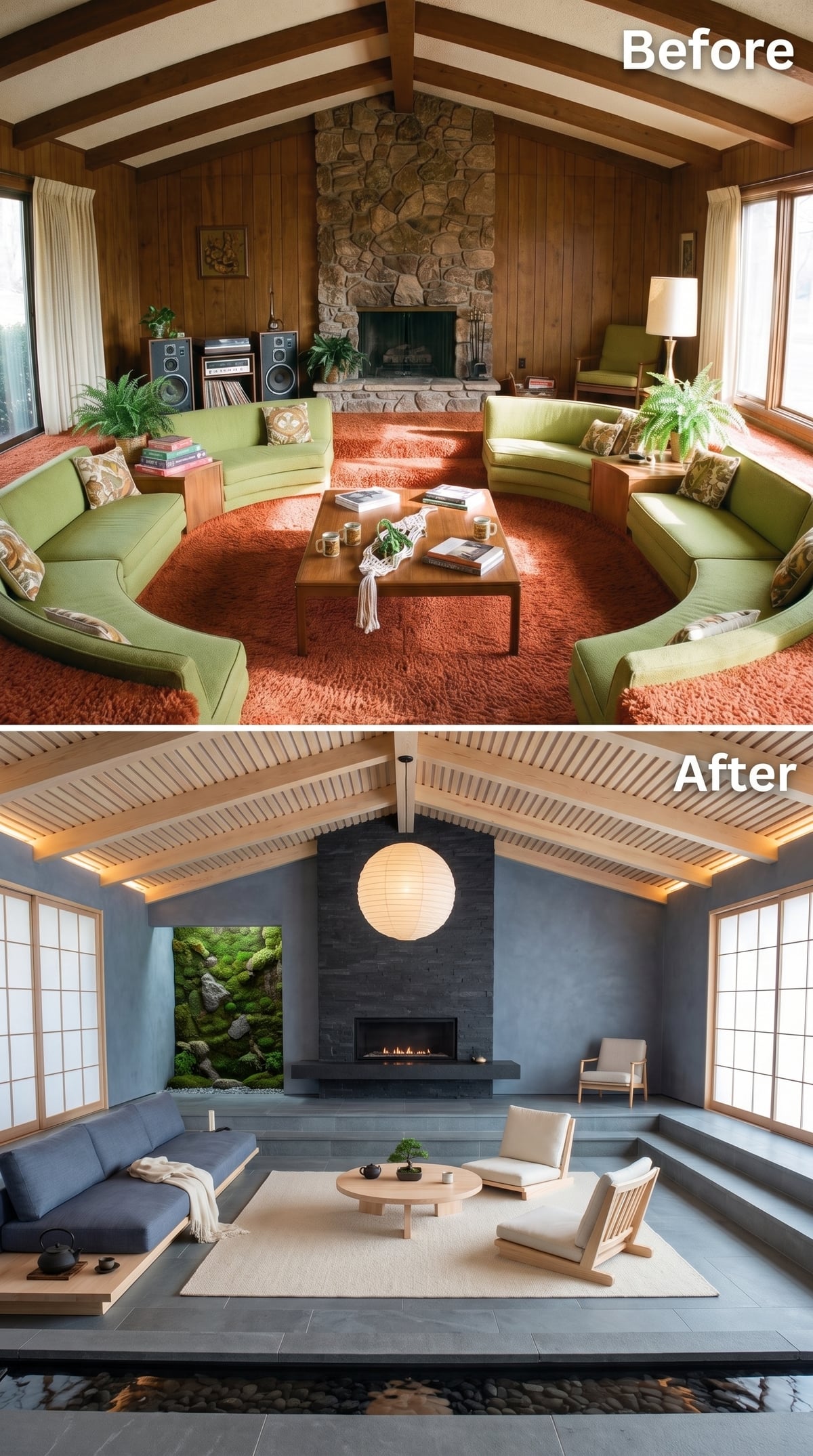
Dark stacked slate gives the fireplace a slender, contemporary profile, while a framed moss installation introduces a deep green accent against pale blue-gray plaster. Shoji-style panels, low platform seating, and a paper lantern pendant draw the room toward a quieter Japanese-Scandinavian aesthetic.
Whitewashed tongue-and-groove panels sit between pale timber beams, with concealed lighting emphasizing the ceiling structure. A round travertine table and restrained furnishings leave space around the seating rather than filling every corner. The original conversation pit’s inward-facing arrangement remains, but the atmosphere has become almost meditative.
25. Green Marble and Cognac Leather Make Room for a Library
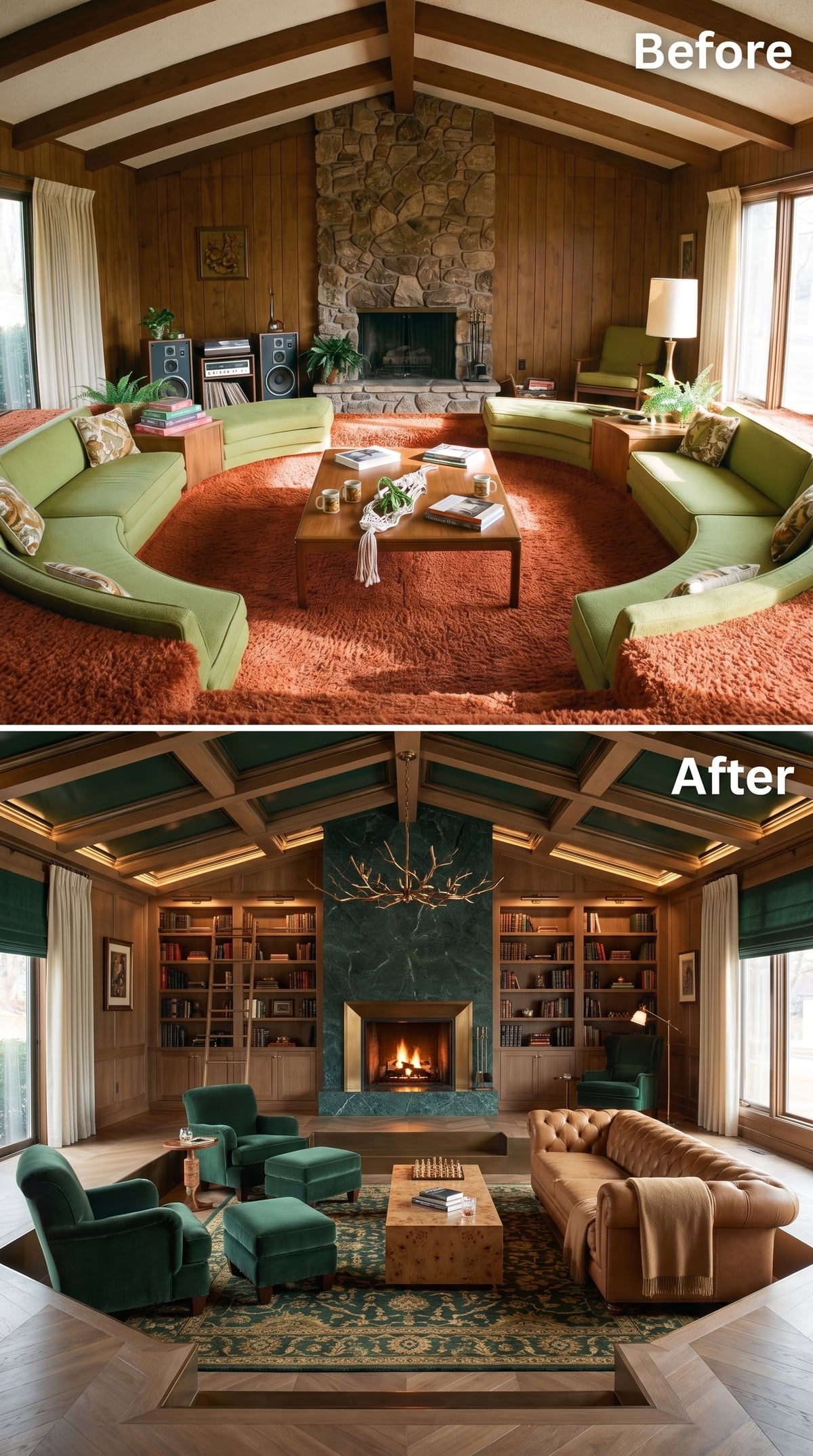
Rich green marble transforms the fireplace into a dramatic vertical centerpiece. Built-in bookshelves flank the surround, complete with rolling ladders that make the room feel as much like a private library as a living room.
A cognac leather Chesterfield faces deep-teal velvet seating, with a burl wood coffee table introducing another richly figured surface. Recessed uplighting within the coffered ceiling treatment draws attention upward. The combination of books, leather, velvet, and stone gives the former shag-carpeted pit a distinctly clubby atmosphere.
24. Terracotta Velvet and Backlit Onyx Bring the Fireplace to Life
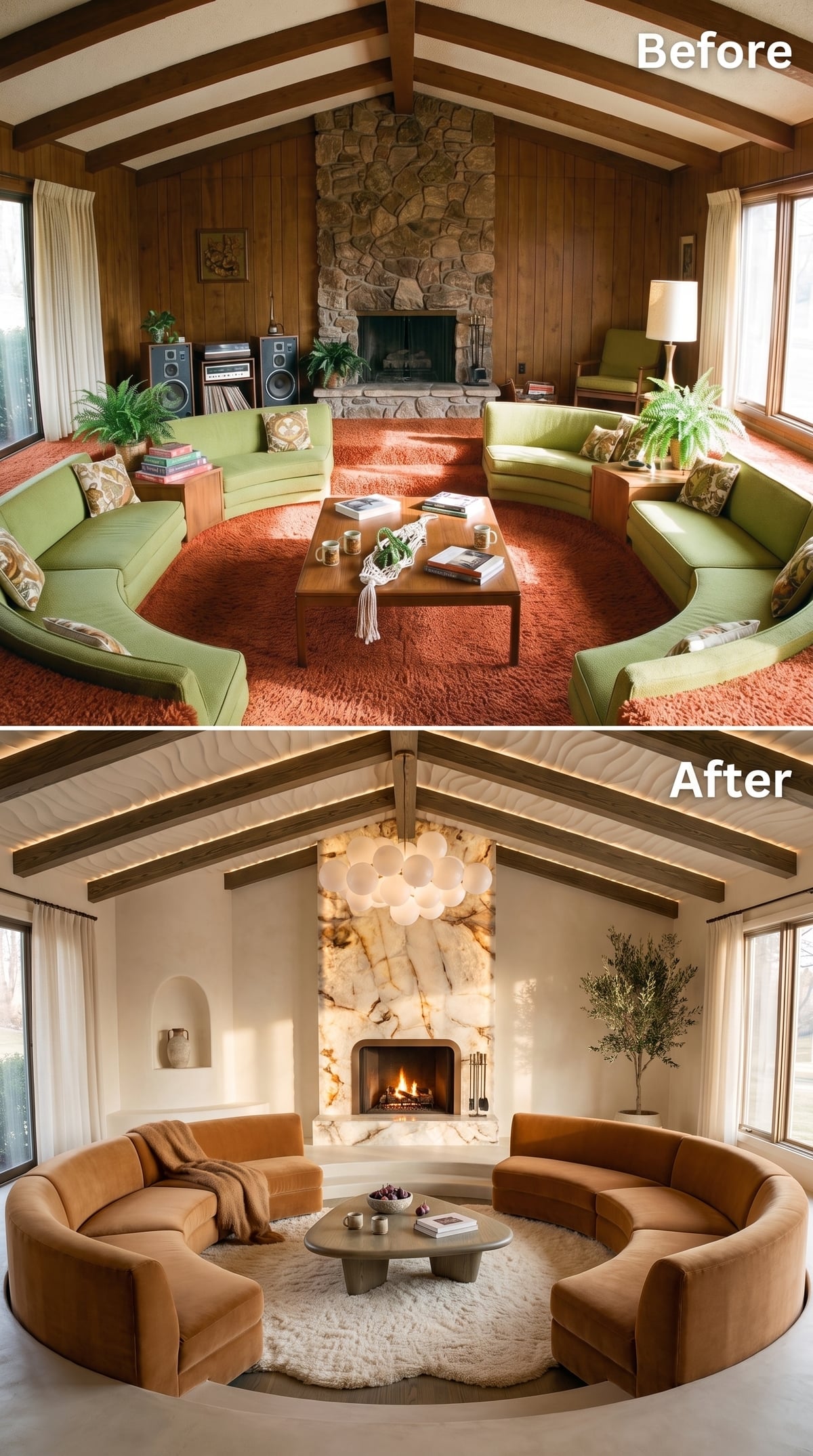
Amber and ivory veining turn the backlit onyx fireplace into a luminous centerpiece. Rather than depending entirely on the fire for illumination, the stone itself becomes part of the lighting composition.
A curved terracotta velvet sectional follows the pit’s circular footprint, while weathered gray-oak beams introduce a cooler note above the cream plaster. The warm seating and glowing stone have an obvious affinity, but the restrained ceiling prevents the room from becoming a continuous wash of orange.
Material Detail: Some varieties of onyx are translucent enough for backlighting, creating a luminous effect when appropriately fabricated and illuminated. Fireplace applications require suitable materials, heat clearances, and installation methods.
23. Charcoal Walls and Burgundy Leather Give the Pit a Darker Temperament
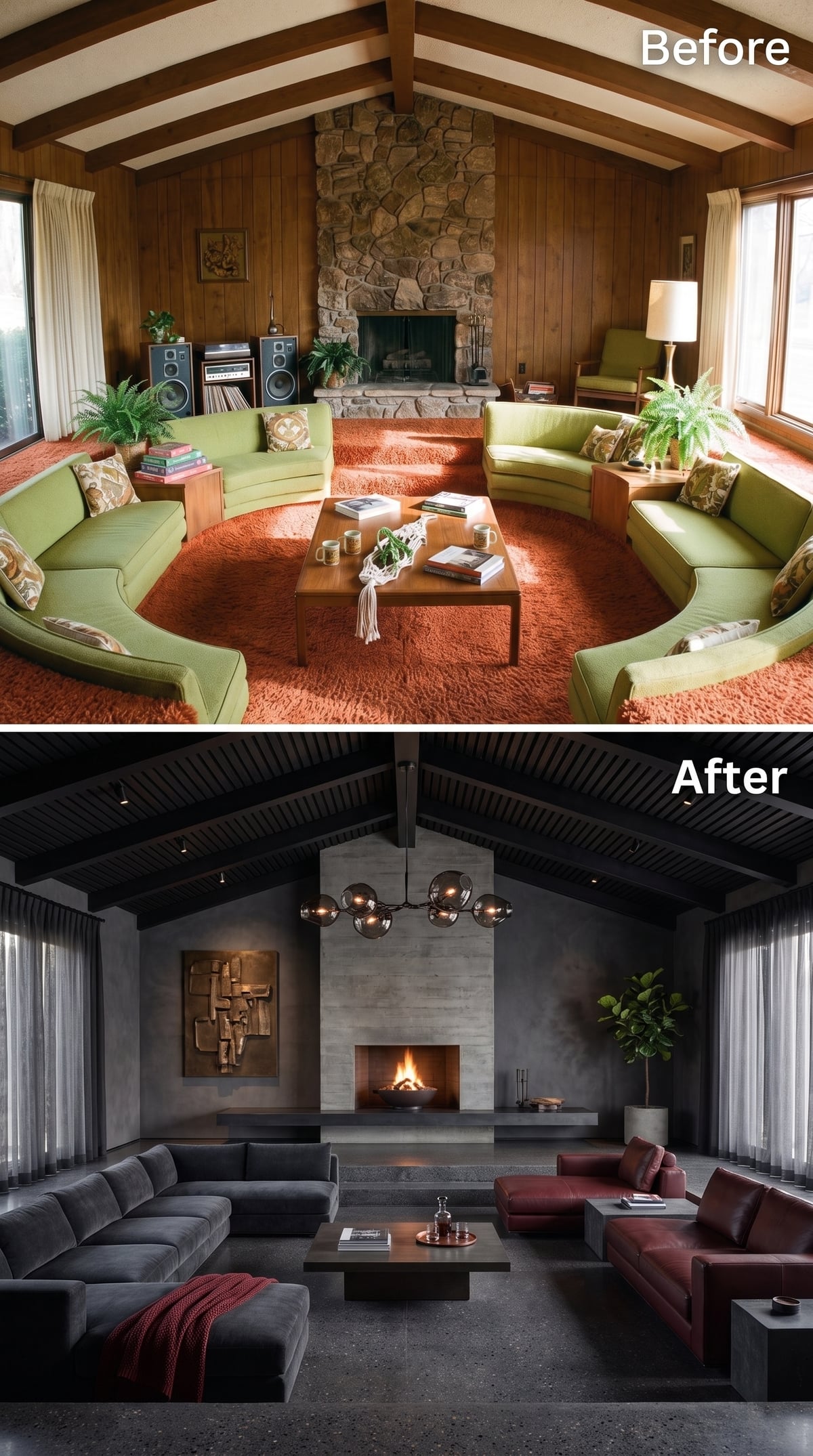
Matte charcoal plaster extends across the walls and vaulted ceiling, while black-painted beams sharpen the roof’s geometry. A smoked-glass globe chandelier hangs from the ridge, introducing a softer reflective element into the dark architecture.
The fireplace receives a board-formed concrete treatment, its horizontal texture contrasting with the smoother walls. Burgundy leather seating faces a slate velvet sectional across the sunken floor. The color palette is restrained, but the difference between leather, velvet, plaster, and concrete prevents the room from becoming a single dark mass.
22. Stone White and Terracotta Make the Circular Pit the Main Attraction
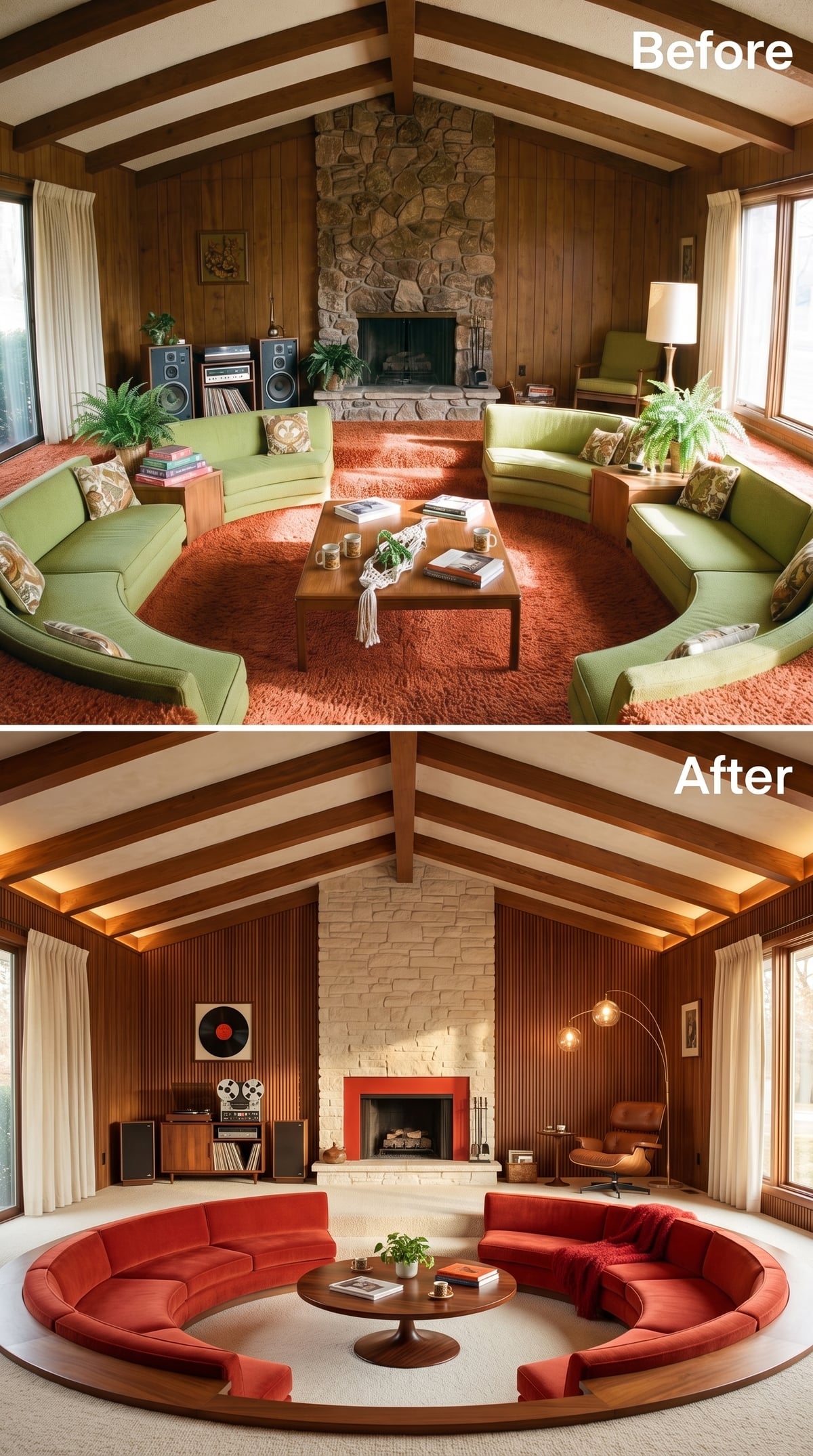
A complete circle of terracotta velvet seating makes the sunken area unmistakably central to the room. Pale limestone replaces the rugged original fireplace treatment, with a red-orange firebox accent connecting the hearth to the upholstery.
The surrounding wood platform establishes a distinct threshold, while amber cove lighting traces the exposed ceiling beams. A walnut pedestal table occupies the center. The composition retains the social ambition of the original seventies design, with cleaner materials and a much more deliberate relationship between seating, fireplace, and floor.
21. Polished Concrete and Chesterfield Leather Replace Shag With Swagger
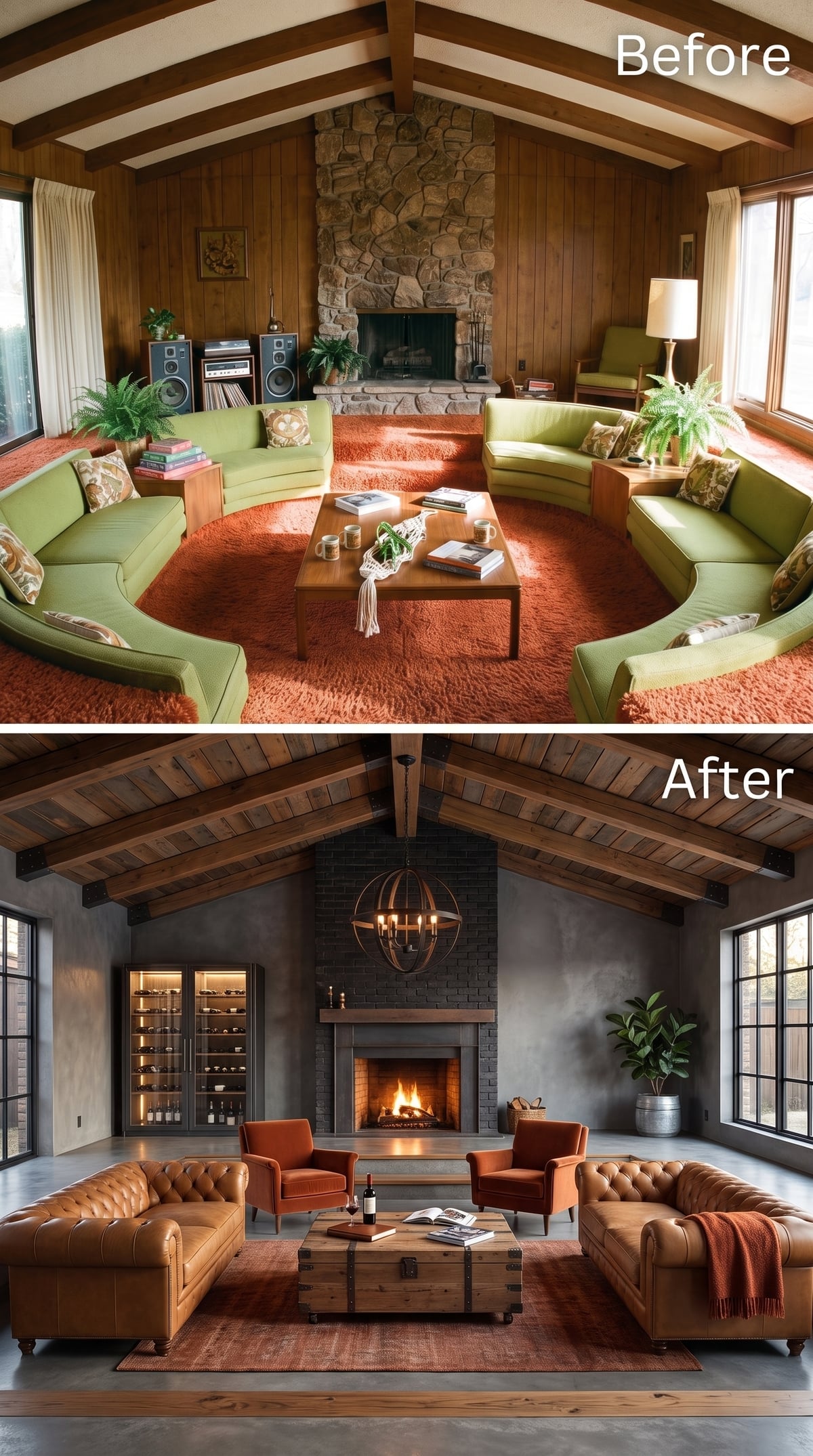
Polished concrete takes over from the shag carpet, replacing deep pile with a hard, reflective surface. Two cognac leather Chesterfield sofas establish a substantial seating arrangement, while rust-colored armchairs bring warmth to the industrial palette.
The fireplace’s painted brick blends into gray plaster walls, allowing the furniture to take precedence. An orb chandelier hangs beneath the vaulted roof. The transformation preserves the original room’s generous proportions while giving them the character of a converted urban loft.
20. Rose-Toned Stone and Mauve Velvet Make a Case for Soft Color
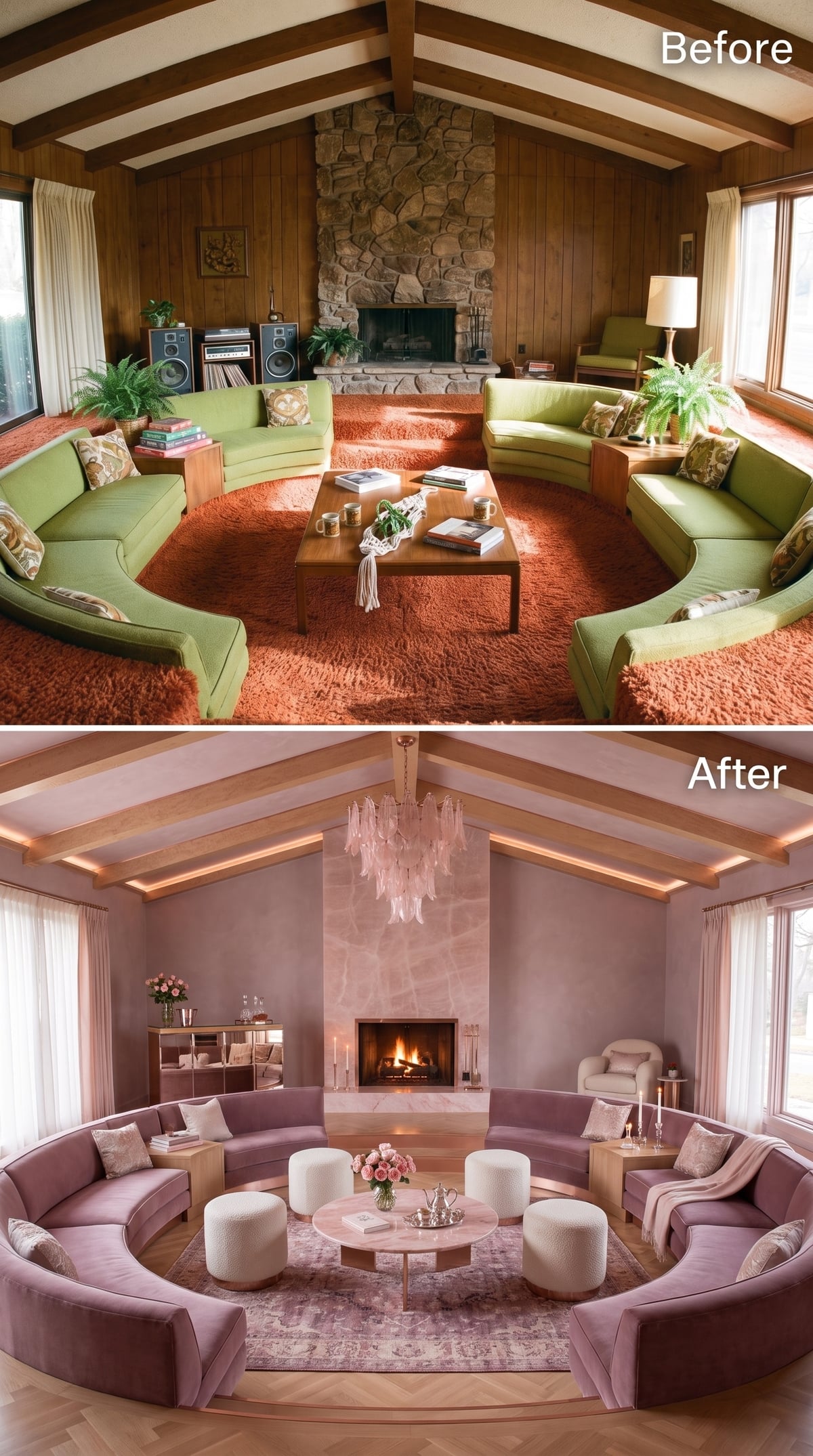
Dusty mauve velvet wraps the curved seating, while a rose-toned stone fireplace introduces a related shade with an entirely different texture. White bouclé ottomans and a round marble table interrupt the pink palette with pale, neutral surfaces.
The ceiling beams take on a honey-washed wood finish, bringing warmth to the upper half without adding another saturated color. A translucent rose chandelier completes the tonal arrangement. Rather than relying on sharp contrast, the design explores how many variations of a soft color can coexist before the room loses definition.
19. Black Walls, Trailing Vines, and a Terrazzo Fireplace Go Wild
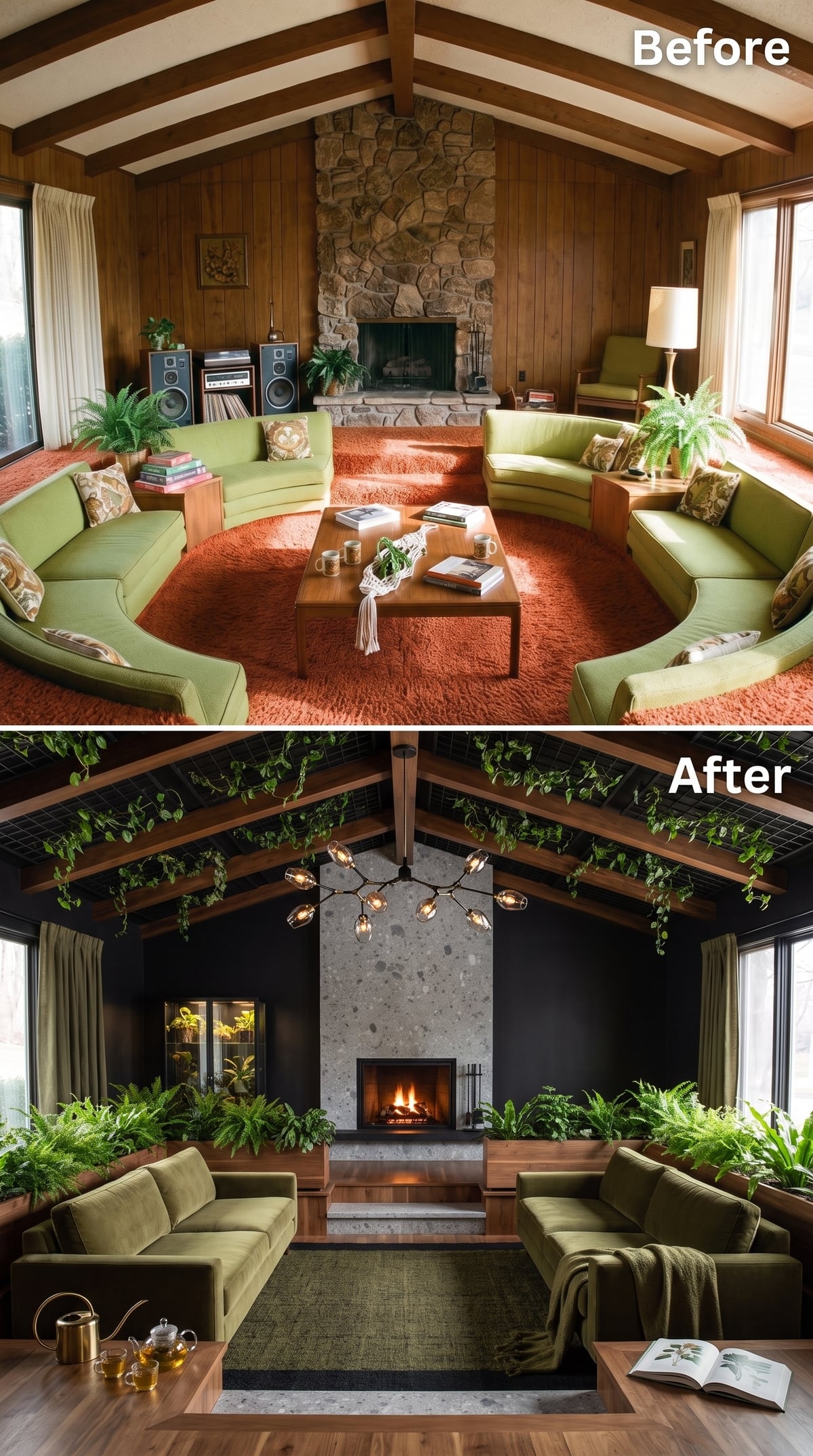
Matte black covers the walls and ceiling, making the gray-and-white terrazzo fireplace stand out with unusual clarity. Trailing greenery follows the exposed walnut beams, introducing an organic element into an otherwise tightly controlled dark palette.
Olive velvet seating occupies the sunken area, while a Sputnik-inspired pendant casts warm light over the center. Ferns gather near the fireplace, extending the botanical theme toward the floor. The result falls somewhere between a private lounge and an indoor garden, with the original room’s timber structure providing a useful framework for both.
Not everyone is sold on going this dark, though: black-dominant living rooms got fewer hearts from our readers than the other images in the same articles.
18. White Shiplap and Black Cabinetry Bring Graphic Order to the Pit
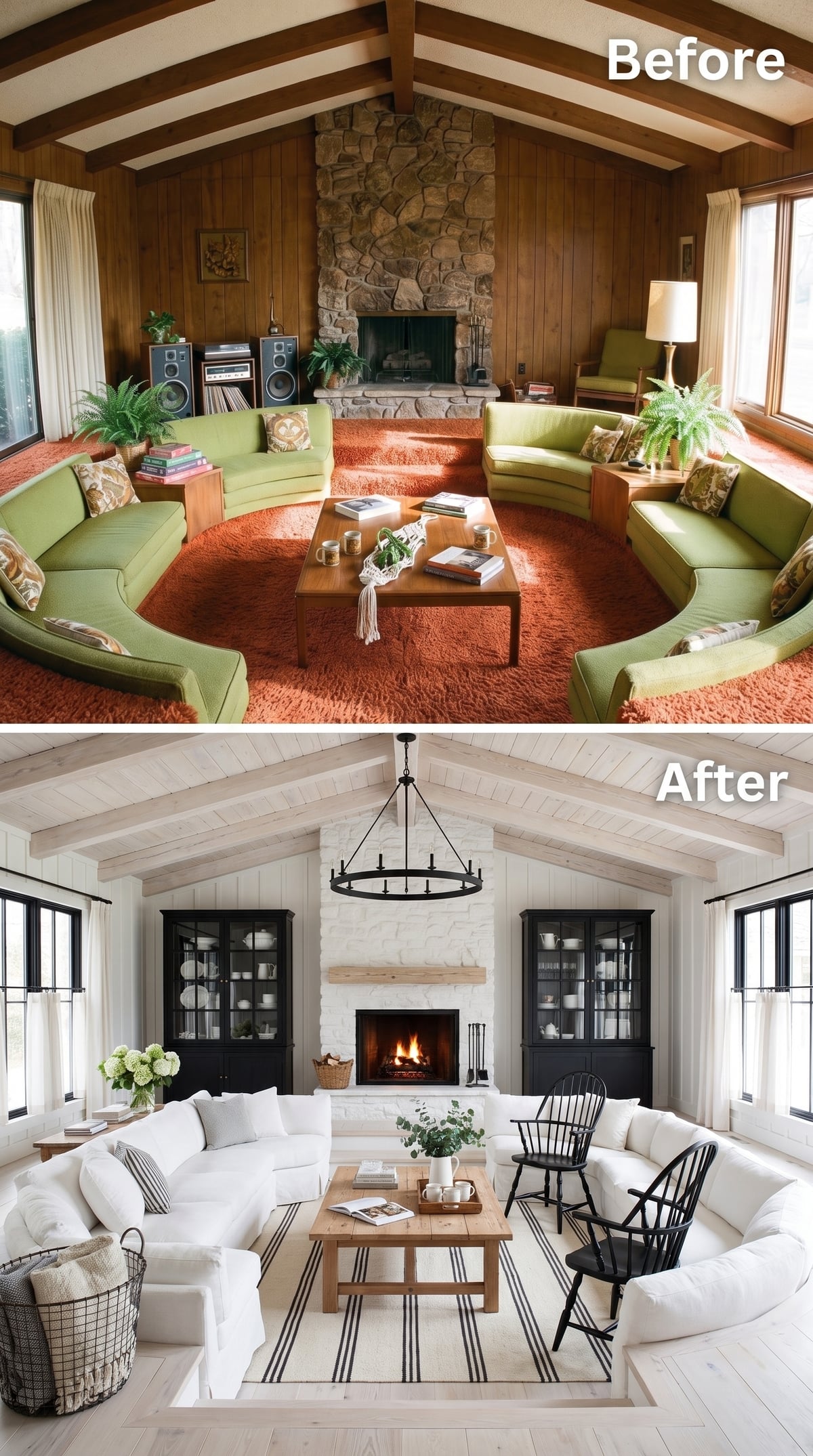
White shiplap extends across the walls and vaulted ceiling, creating a continuous pale background for black-framed display cabinetry and a circular wrought-iron chandelier. The fireplace combines light stone with a natural wood mantel, retaining warmth within the high-contrast scheme.
A U-shaped sectional follows the pit’s outline, with black Windsor-style chairs providing additional seating. The striped rug introduces another graphic element beneath the furniture. Rather than removing the room’s architectural complexity, the design organizes it through a disciplined black-and-white palette.
17. Smoke-Gray Plaster and a Wine Wall Turn the Pit Into an Evening Destination
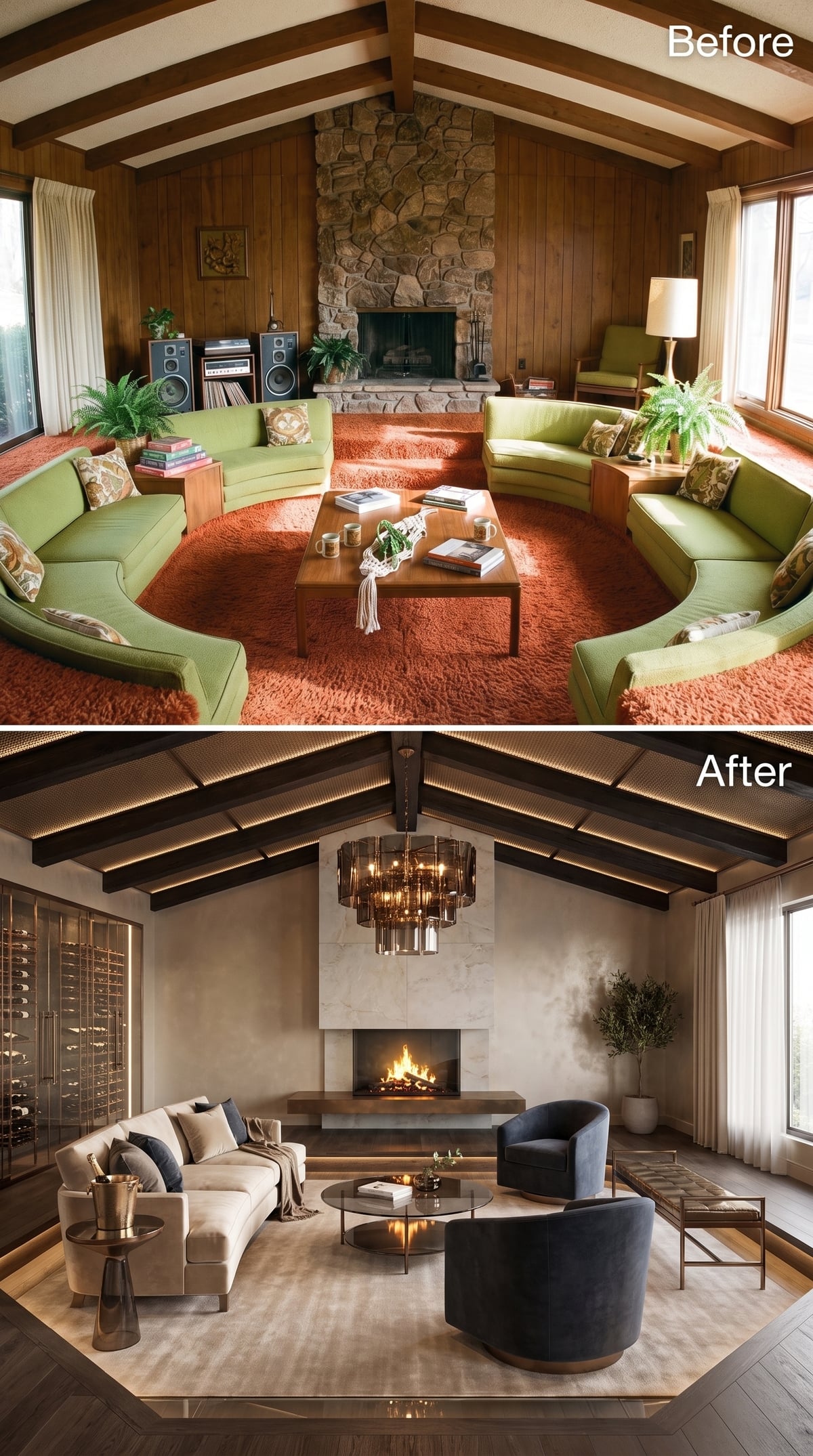
Near-black stained ceiling beams carry concealed linear lighting, giving the vaulted roof a defined presence after dark. Smoke-gray plaster surrounds a pale, minimally veined fireplace treatment that reads almost like polished concrete from a distance.
A cream sectional and slate velvet barrel chair soften the darker architecture. In the corner, floor-to-ceiling wine storage introduces an entirely new function to the room. The conversation pit’s original social purpose remains intact, although its surroundings now suggest a considerably more sophisticated drinks menu.
16. Rammed-Earth Colors and Horizontal Travertine Change the Room’s Direction
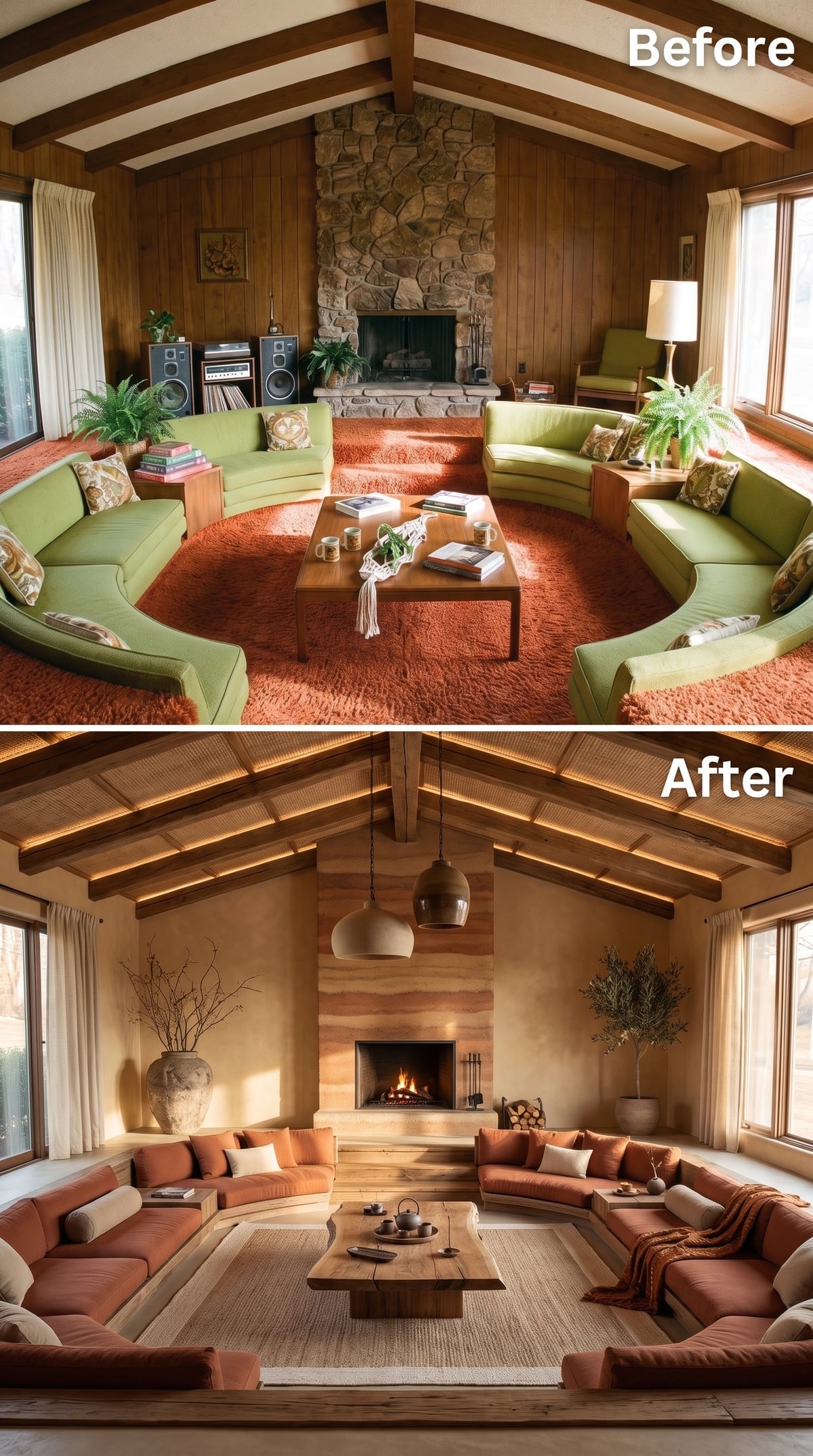
Limewashed plaster replaces the dark paneling, introducing the warm, mineral character associated with earthen interiors. The fireplace becomes a broad composition of horizontally banded travertine, a dramatic departure from the irregular stonework of the original room.
Terracotta velvet seating follows the curve of the sunken floor, while a natural-fiber rug and slab coffee table emphasize the restrained material palette. The horizontal stone pattern draws attention across the fireplace rather than concentrating it entirely on the chimney’s height. A simple change in the direction of the lines alters the room’s proportions.
15. Gold Sunburst and Olive Velvet Bring Back a Little Seventies Showmanship
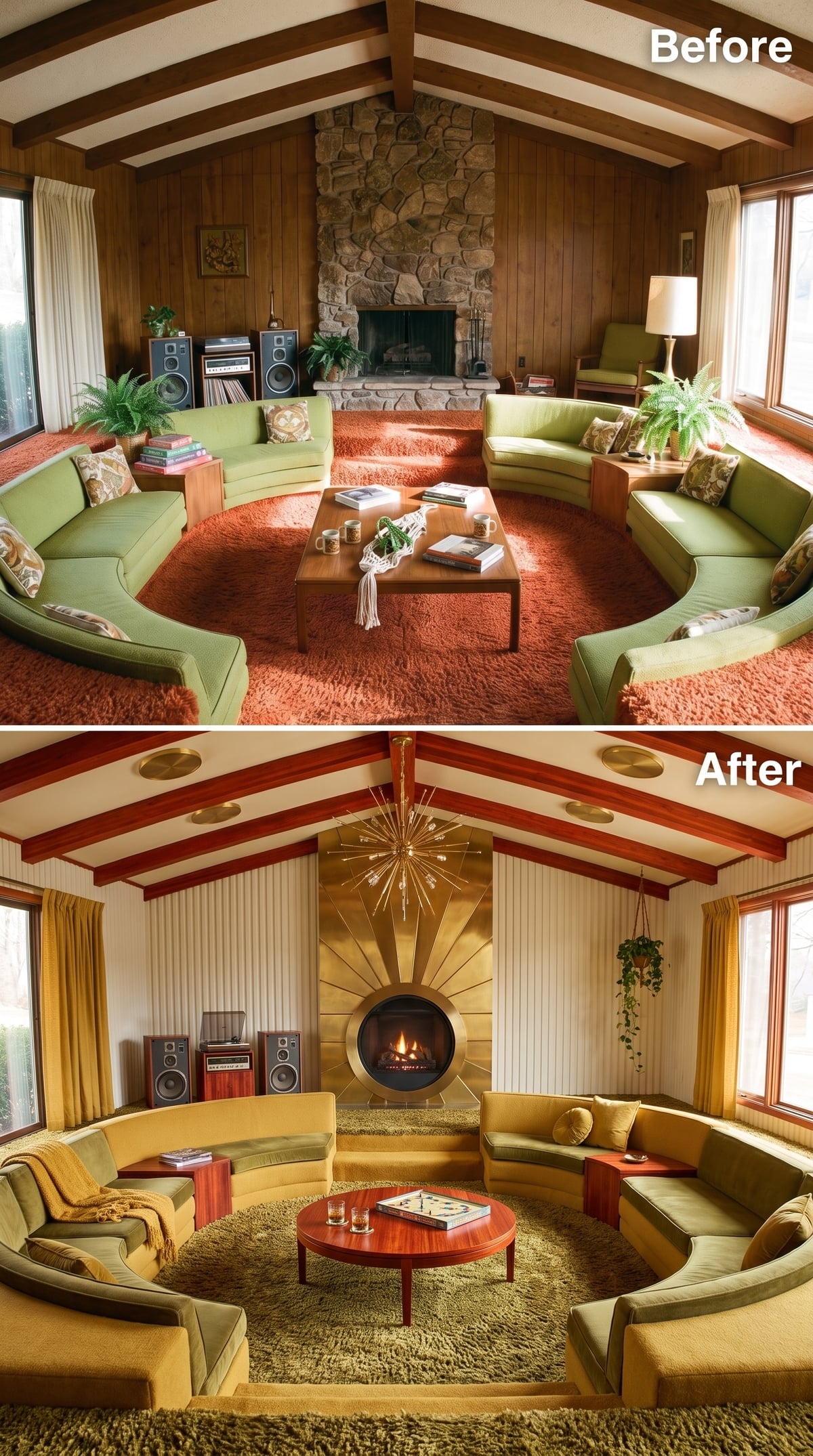
Brass-finished rays spread from a circular fireplace, turning the hearth into an enormous sunburst against vertical white paneling. The design borrows the decorative confidence of the original decade while replacing its heavy wood-and-stone palette with something brighter.
Olive velvet seating encircles a matching green shag rug, with a round cherry coffee table at the center. The shag has returned, but in a smaller, more controlled role. Rather than burying the entire floor in deep pile, the texture now serves as one element within a carefully composed seating area.
Design Detail: Round tables suit inward-facing seating arrangements because they avoid projecting corners. Adequate clearance around the table and a clearly visible route into and out of the sunken area remain essential.
14. Navy Walls and Coral Botanicals Give the Ceiling a Garden
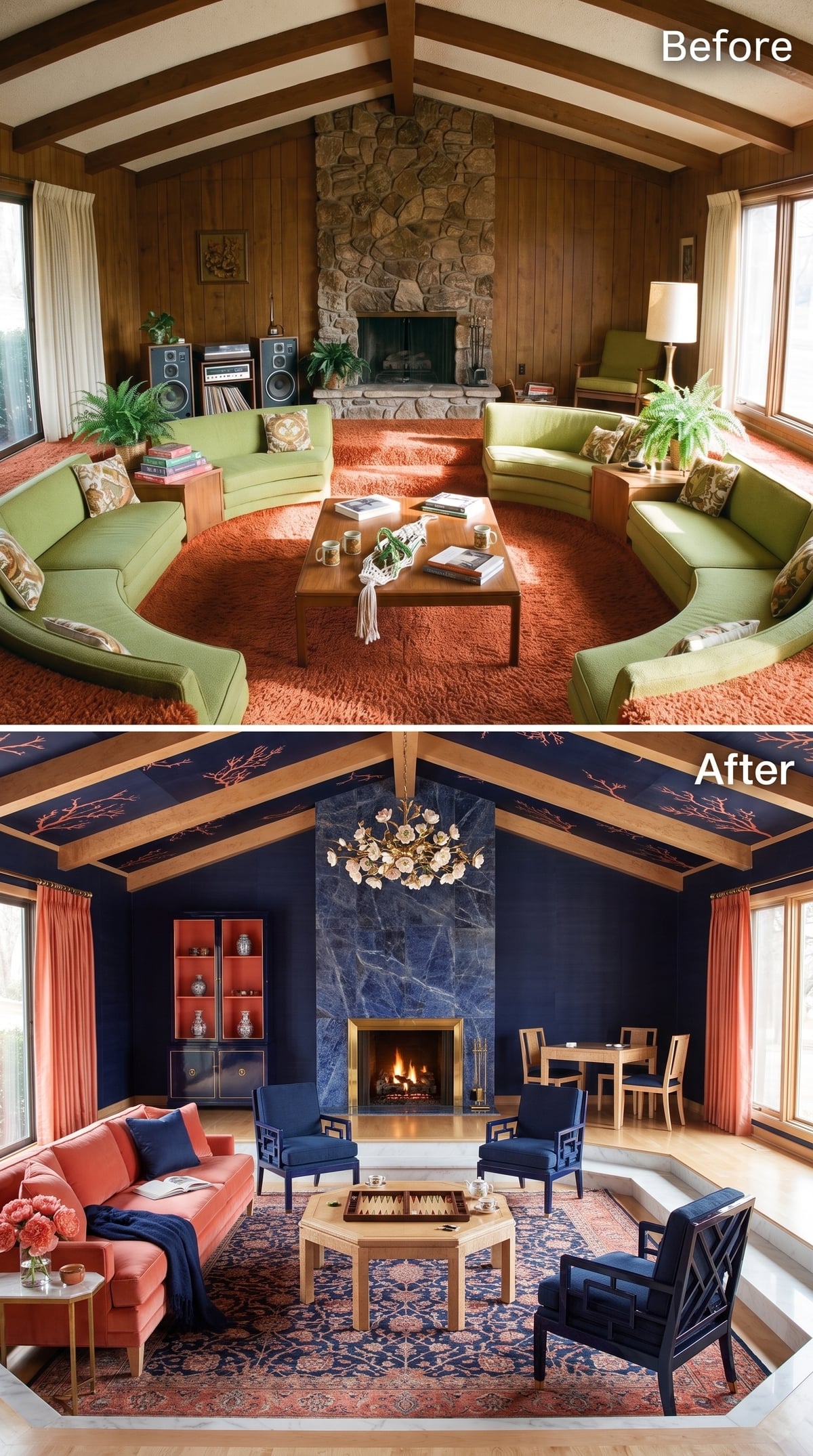
Coral botanical artwork climbs between the exposed ceiling beams, transforming the vaulted roof into an illustrated canopy. Deep navy walls provide a saturated background, while a blue marble fireplace extends the cool palette through the room’s central architectural feature.
A coral velvet sofa and matching curtains bring warmth below, balanced by navy armchairs with gold detailing. The combination is exuberant, but the botanical ceiling treatment gives it a distinctive identity. Few of the other transformations make such a deliberate feature of the spaces between the beams.
13. Limestone, Cognac Leather, and Walnut Return to the Natural Order
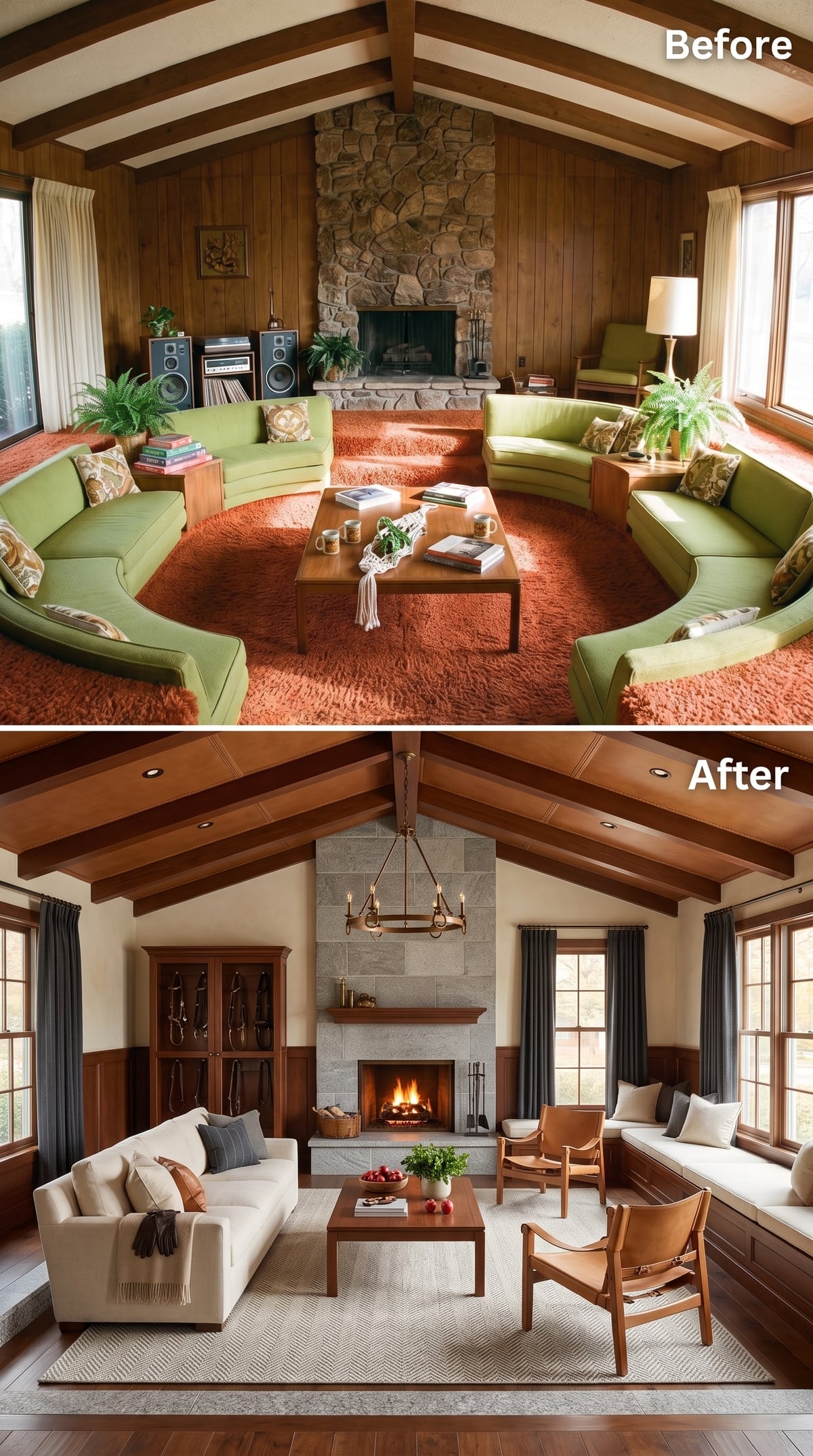
Gray limestone gives the fireplace a cooler, quieter surface than the original fieldstone. Above it, walnut-finished beams retain the warmth of the vaulted roof, with recessed lighting integrated between the structural members.
Cognac leather chairs face a linen sofa, bringing two contrasting upholstery textures into the same seating arrangement. Charcoal curtains repeat the cooler tones of the fireplace, while the wood ceiling prevents the palette from becoming austere. The transformation depends less on spectacle than on the careful balance of warm and cool materials.
12. Crimson Glass and Red Lacquer Make the Darker Room Sparkle
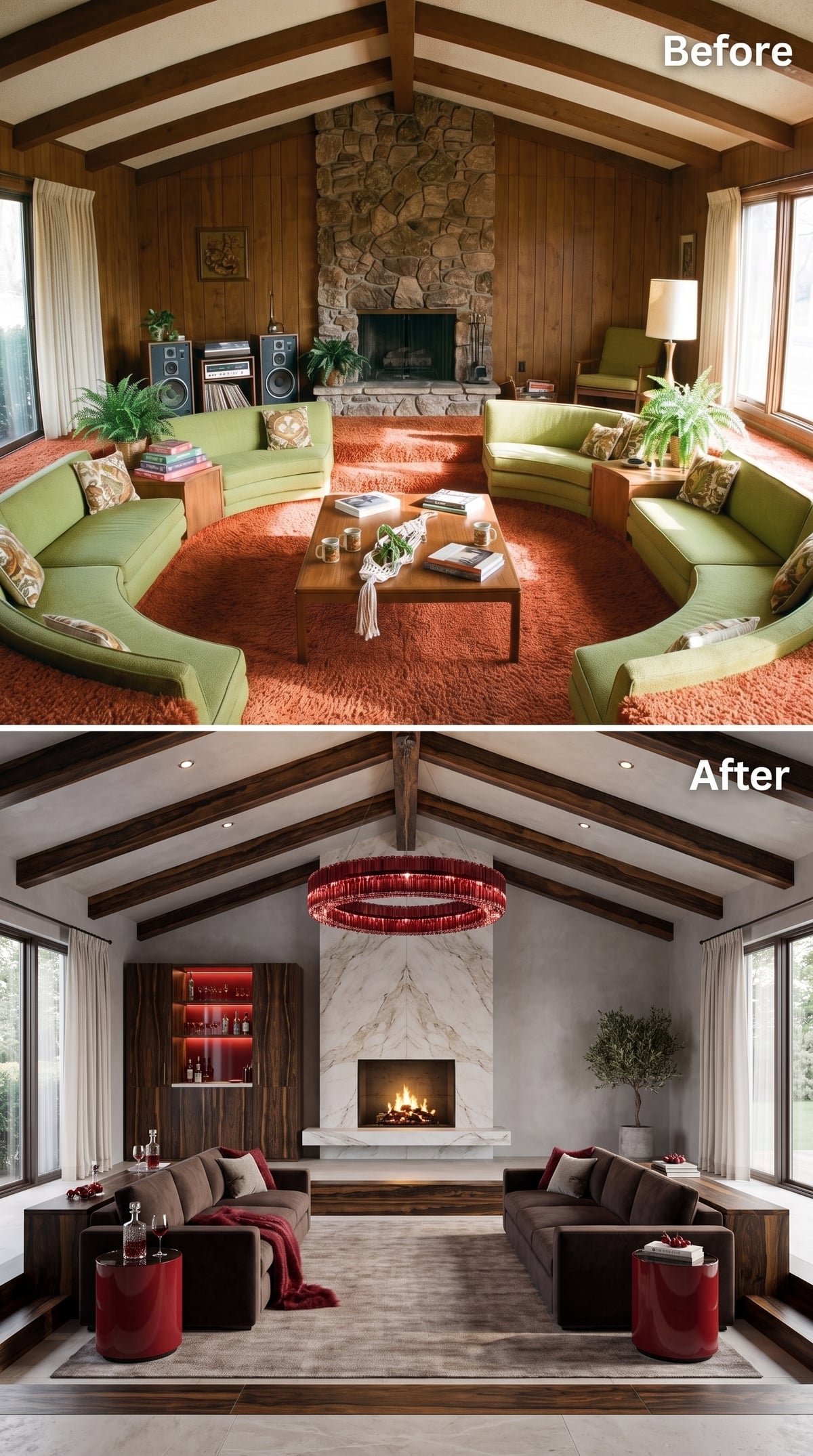
Warm-gray plaster and dark walnut beams establish a restrained background, but the furnishings have other ideas. Red lacquered side tables and a chandelier of looped crimson glass introduce concentrated flashes of color across the room.
A floor-to-ceiling marble fireplace occupies the far wall, while chocolate-brown seating keeps the central pit grounded. To one side, a built-in bar glows with red accent lighting. The red appears in several distinct forms—glass, lacquer, and light—without taking over every wall and ceiling surface.
11. White Marble, Sea Glass, and a Ceiling That Suddenly Feels Twice as Tall
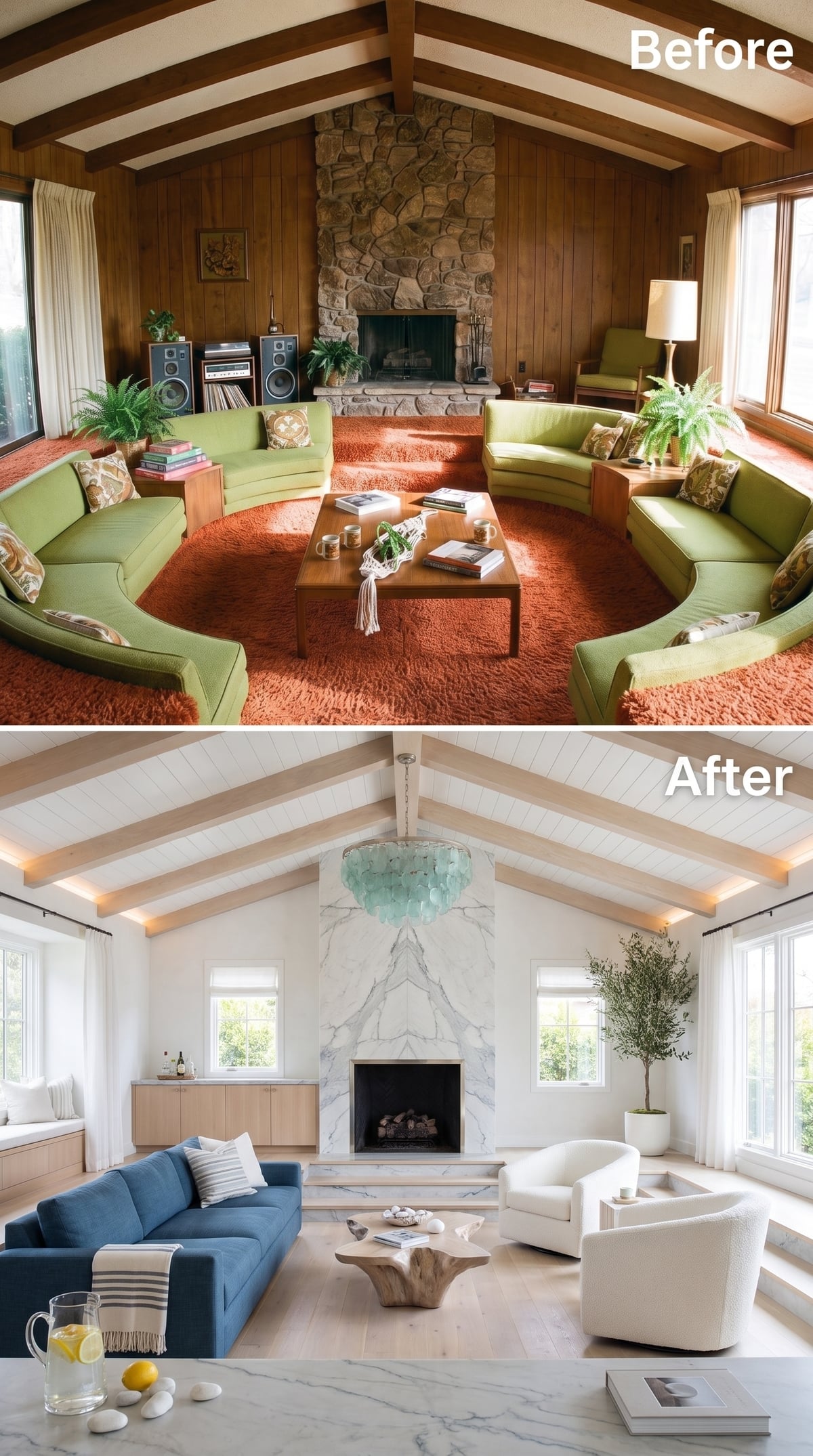
White-painted shiplap panels sit between blond wood beams, giving the vaulted ceiling a pale, airy appearance without concealing its structure. A dramatically veined white marble fireplace introduces movement against the otherwise quiet architectural finishes.
Above the seating, a sea-glass chandelier provides the decorative counterpoint. Its translucent elements bring color and movement to a composition dominated by pale wood, white surfaces, and stone. The room demonstrates how much of the original architecture can remain recognizable even after its visual weight has been substantially reduced.
10. Navy Velvet and Dark Timber Make the Marble Look Brighter
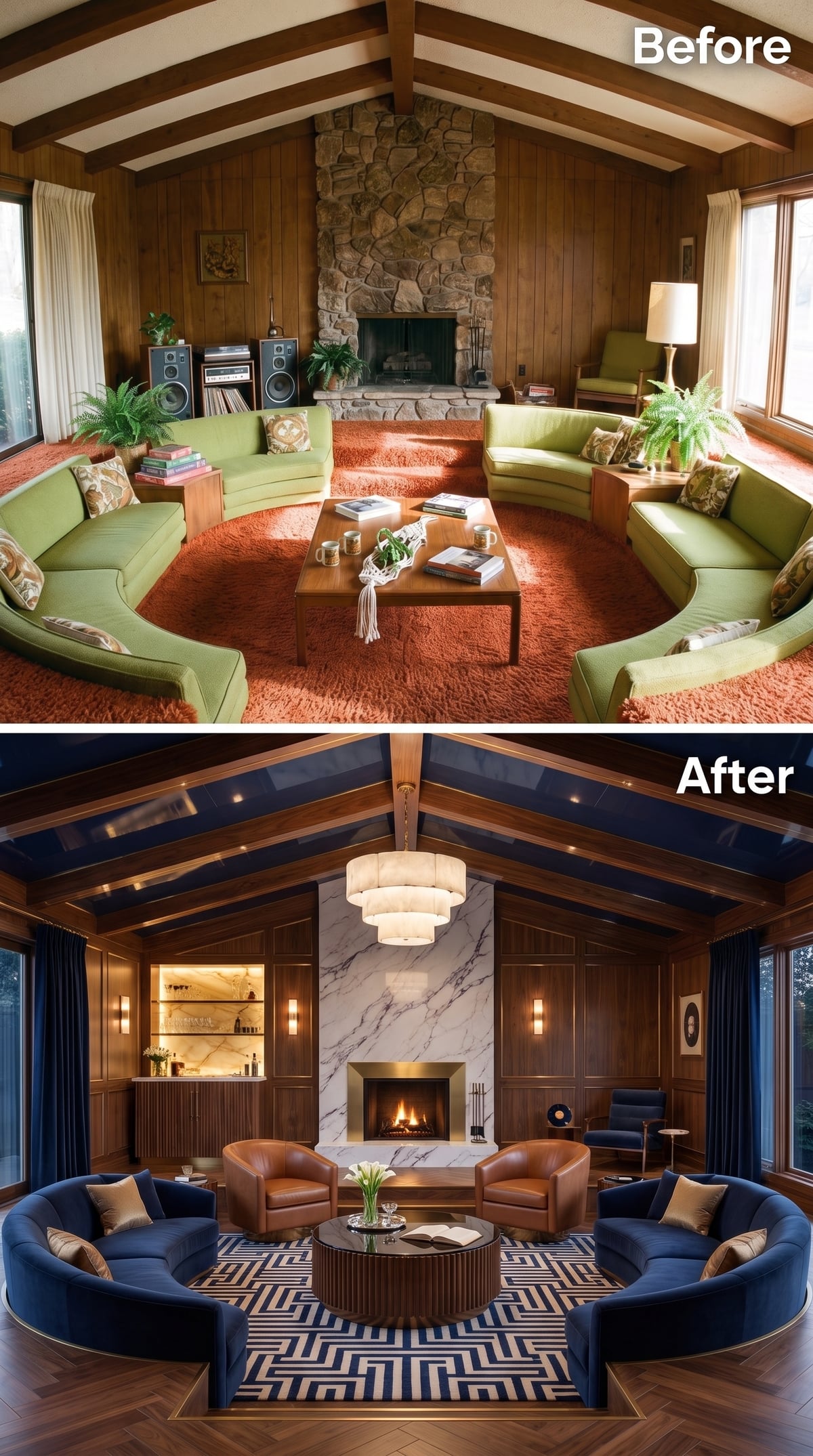
Walnut-stained beams and matching paneling give the room a deep, enveloping character, setting up a strong contrast with the white marble fireplace. The pale stone becomes the clearest architectural interruption in an otherwise dark composition.
Navy velvet seating follows the pit’s curved footprint, with cognac leather club chairs introducing warmth. A geometric navy-and-cream rug draws attention toward the center, while a layered chandelier occupies the roof’s highest point. The built-in bar and illuminated shelving add further detail without changing the room’s fundamentally intimate scale.
9. Adobe Curves Bring Desert Warmth to the Conversation Pit
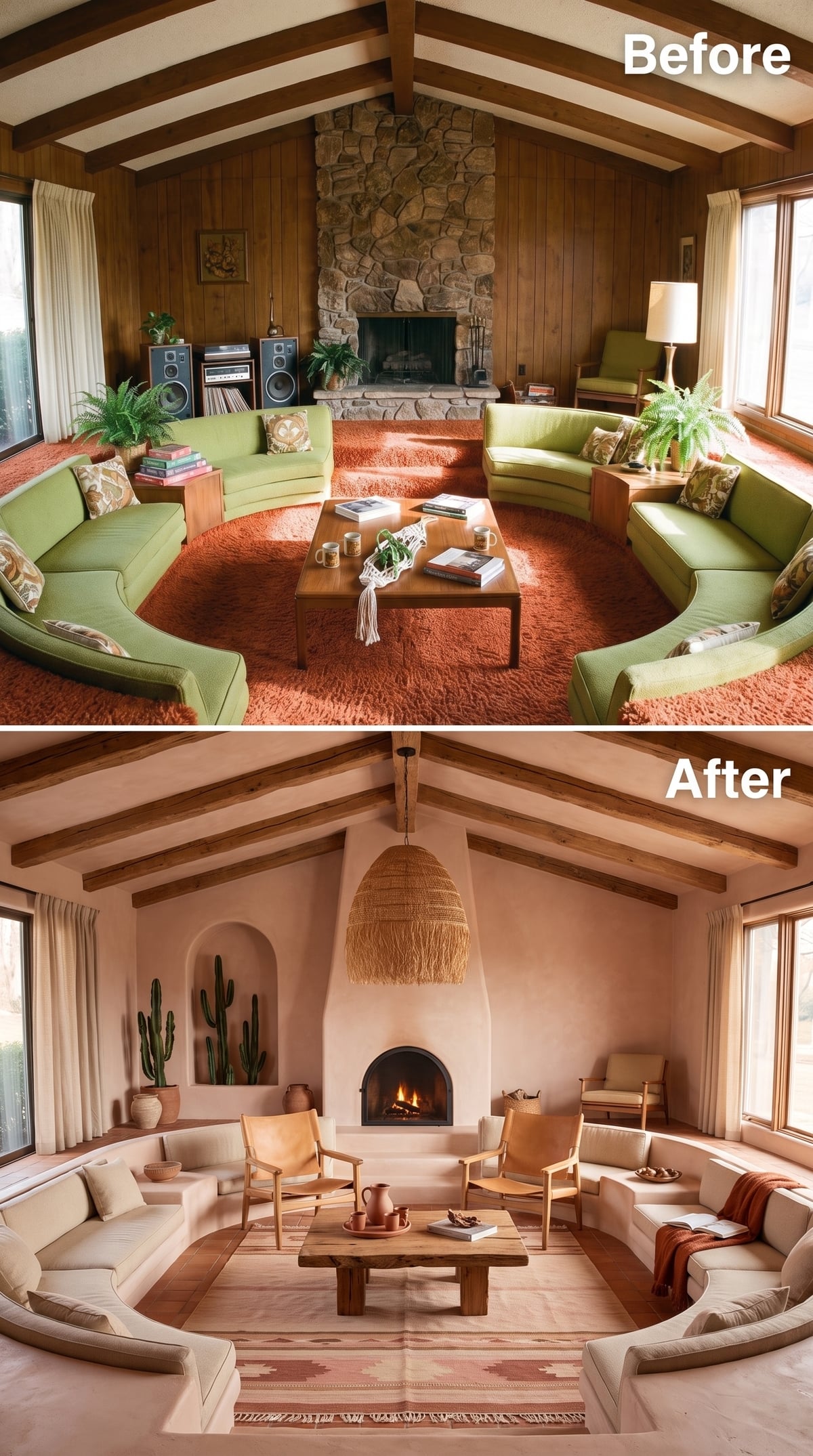
Sun-bleached terracotta plaster replaces the original wood paneling, while an arched fireplace niche introduces a softer architectural language. The exposed rafters remain, their natural finish bringing definition to the pale ceiling.
A low cream sectional curves around the sunken floor, joined by wood-framed chairs with leather sling seats. The restrained furnishings allow the plaster surfaces and rounded forms to establish the atmosphere. The transformation gives a distinctly Southwestern character to architecture that began with a very different set of seventies references.
8. Gunmetal Plaster and Copper Turn Up the Industrial Heat
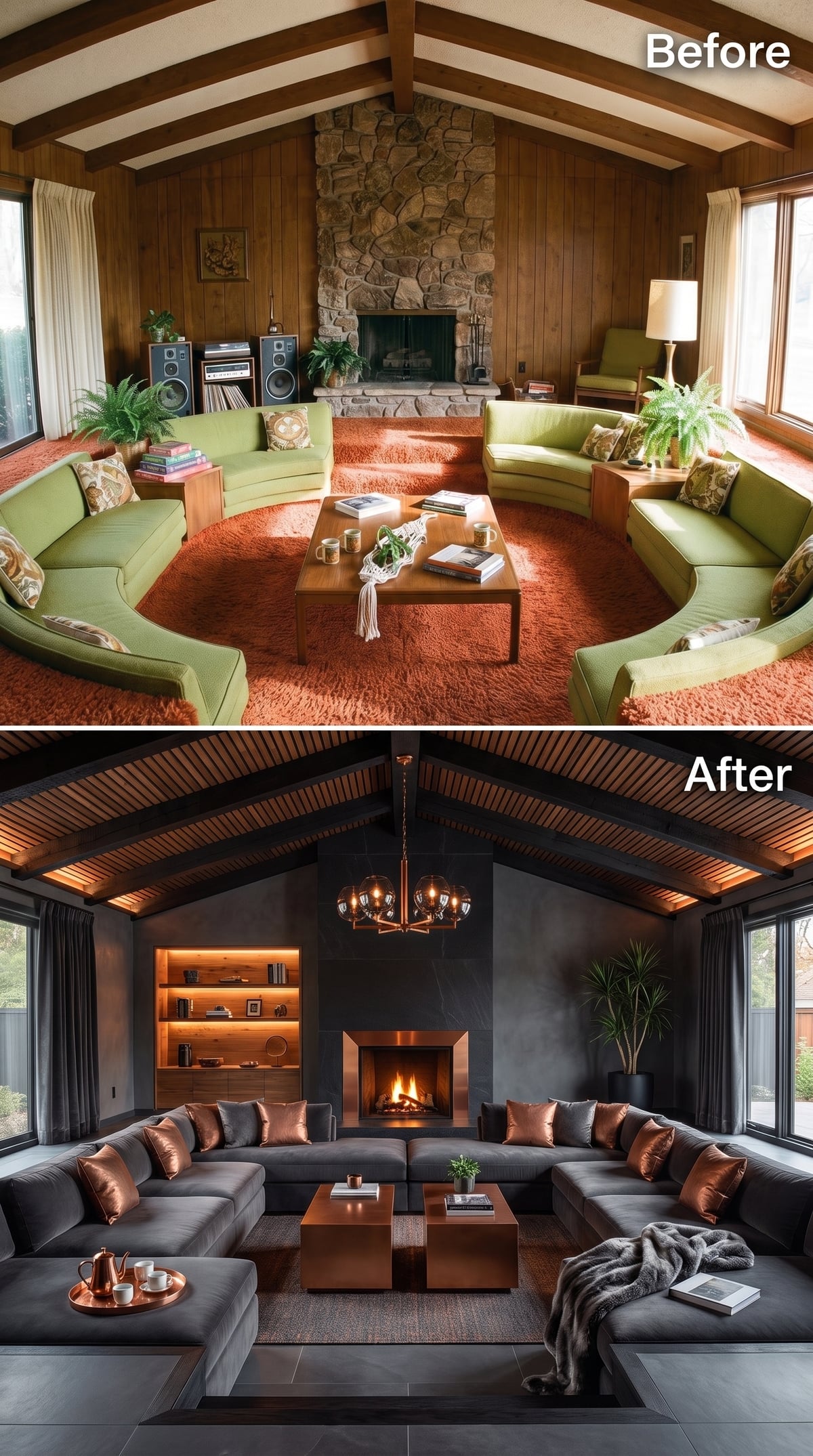
Gray velvet seating surrounds a square copper coffee table, replacing the original room’s rounded central arrangement with a more angular composition. Dark slate frames the fireplace, where a copper-toned firebox introduces a warm metallic accent.
Backlit timber shelving adds amber light to the left wall, while an industrial chandelier hangs beneath the exposed beams. Copper-satin cushions connect the warm shelving and fireplace details to the cooler gray upholstery. The interplay of metal, stone, wood, and velvet creates a richer effect than any one material could manage alone.
7. White Bouclé and Black Beams Give the Vault a Graphic Edge
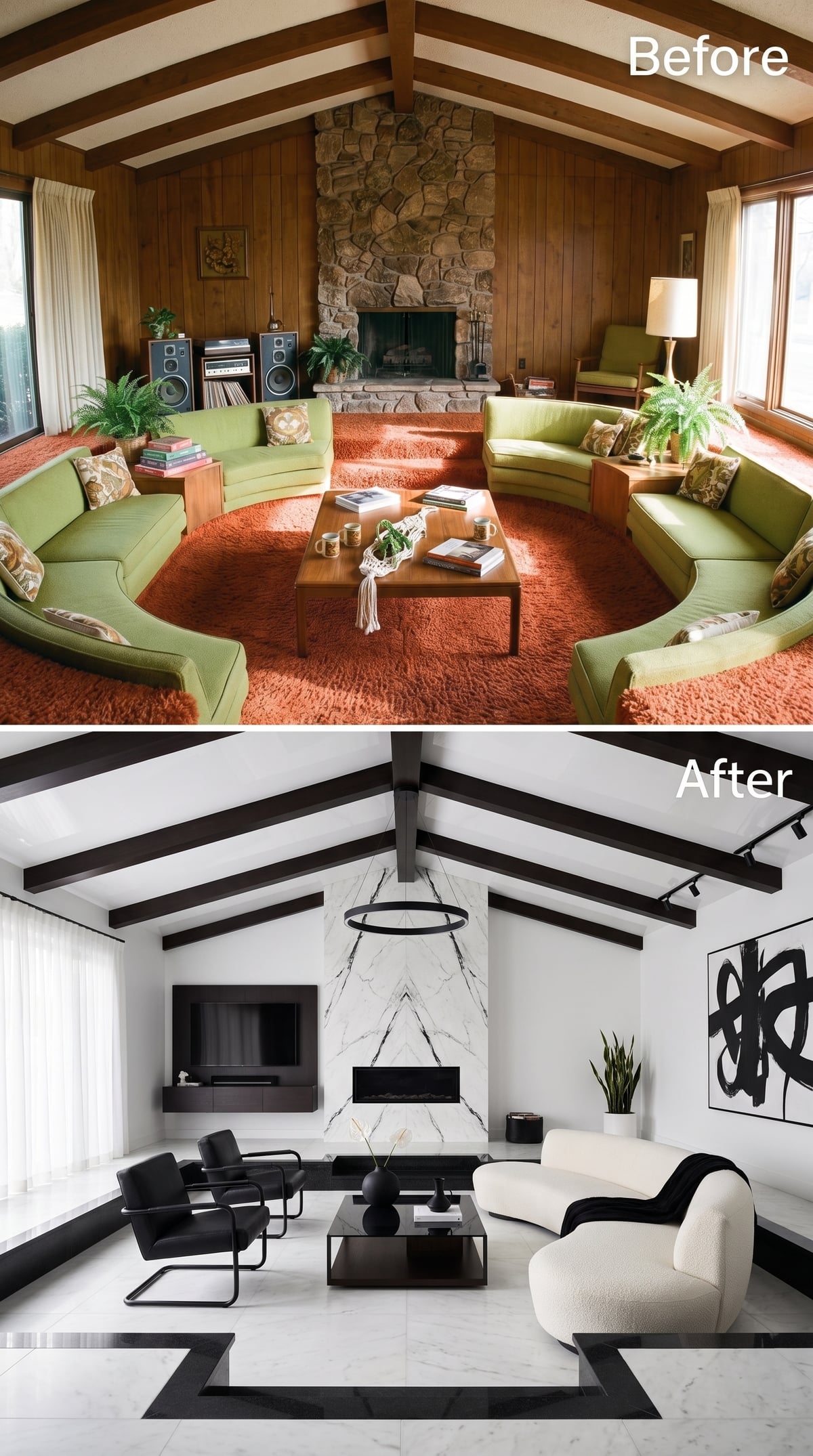
Black-painted beams stand out against the white vaulted ceiling, tracing the roof’s structure with almost graphic precision. The fireplace features a white marble treatment with mirrored veining, drawing attention toward the center of the wall.
A curved bouclé sofa faces black cantilever chairs, repeating the contrast between soft white surfaces and dark architectural lines. A circular ring pendant introduces another clean geometric form overhead. The composition feels distinctly modern without removing the beams or abandoning the original sunken seating arrangement.
6. Dark Wood and a Live-Edge Table Bring Back the Cabin Without the Shag
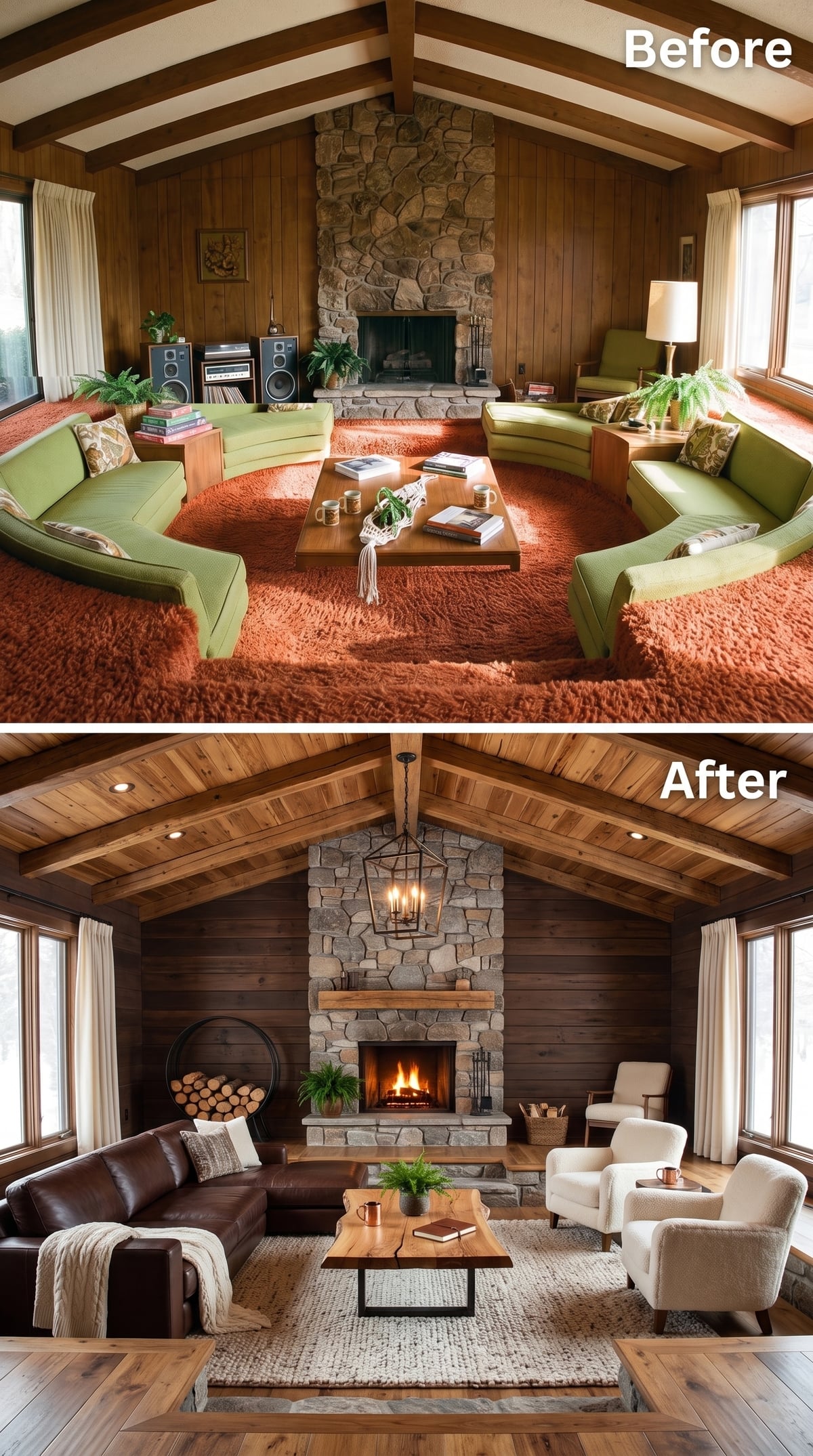
Dark wood remains a defining feature, but the furnishings introduce more contrast than the original green-and-rust arrangement. A brown leather sectional faces cream bouclé armchairs across a live-edge coffee table supported by iron legs.
The stone fireplace retains its rugged character, with a raw timber mantel reinforcing the natural-material palette. Recessed lighting and a lantern pendant illuminate the vaulted structure. Rather than attempting to modernize every surface, this version refines the room’s cabin-like qualities through texture, furniture proportions, and lighting.
5. Slate Marble and Navy Velvet Give the Pit a Cooler Kind of Luxury
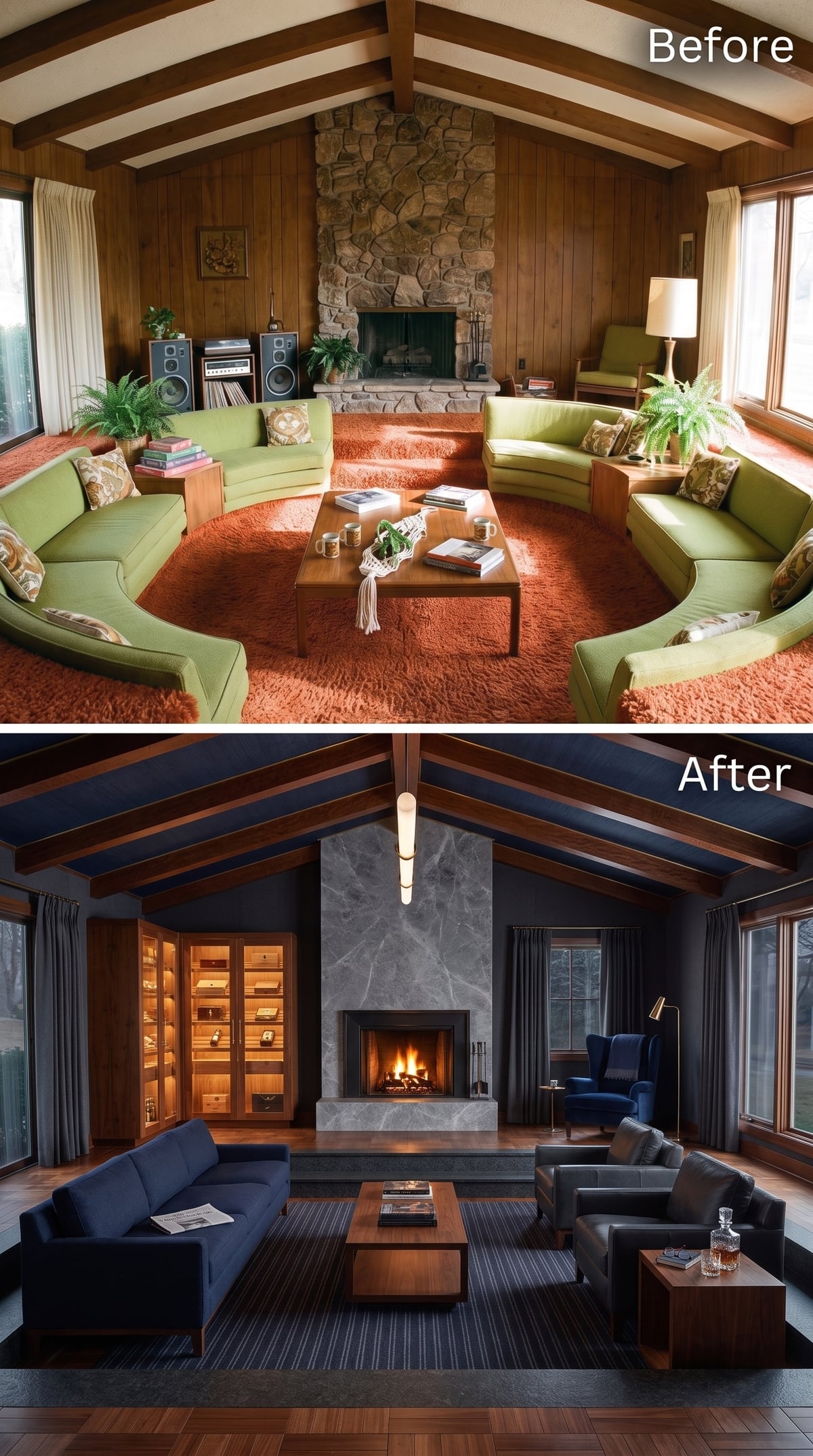
Dark navy velvet seating and a slate-toned marble fireplace establish a cool, saturated palette. The exposed ceiling beams retain their dark finish, preserving a strong connection to the original room’s timber architecture.
Illuminated built-in cabinetry introduces a warm counterpoint beside the fireplace, while a tubular frosted pendant hangs from the ridge beam. The lighting is deliberately distributed between the ceiling, shelving, and hearth, preventing the dark finishes from appearing visually flat.
4. Ivory Bouclé and Gold Give the Conversation Pit a Luminous Finish
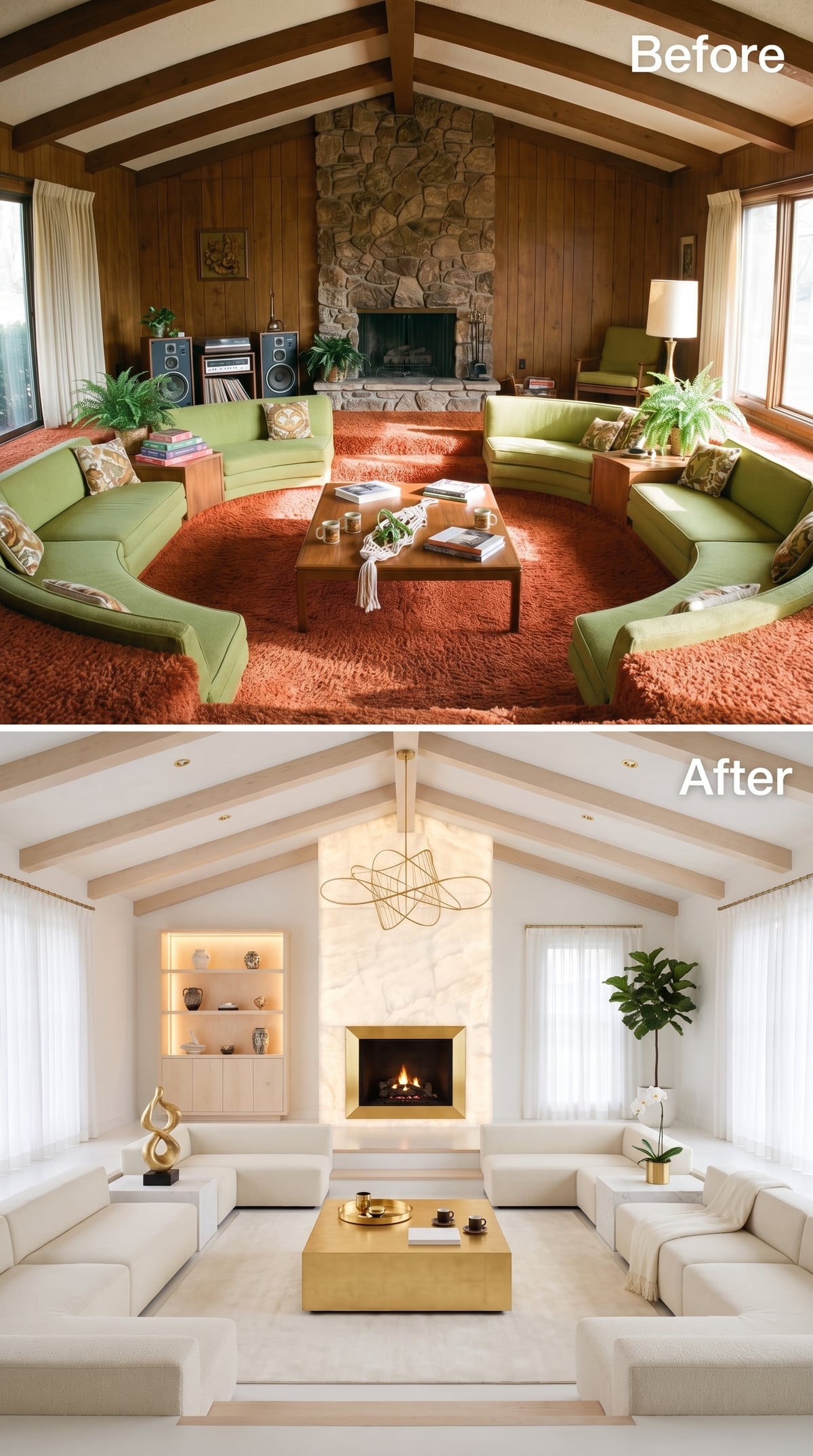
Cream and warm white dominate nearly every surface, from the curved bouclé seating to the painted ceiling beams. A gold-framed fireplace introduces a bright metallic boundary around the pale stone, giving the otherwise tonal room a clear focal point.
The sunken seating retains its original footprint, now furnished with a cleaner modular arrangement and a square gold coffee table. Backlit shelving adds depth to one wall, while a brass chandelier provides another warm accent overhead. The old room’s heavy colors have disappeared, but its curved social center remains intact.
3. Brown Marble and Chocolate Velvet Take the Pit Into Club Territory
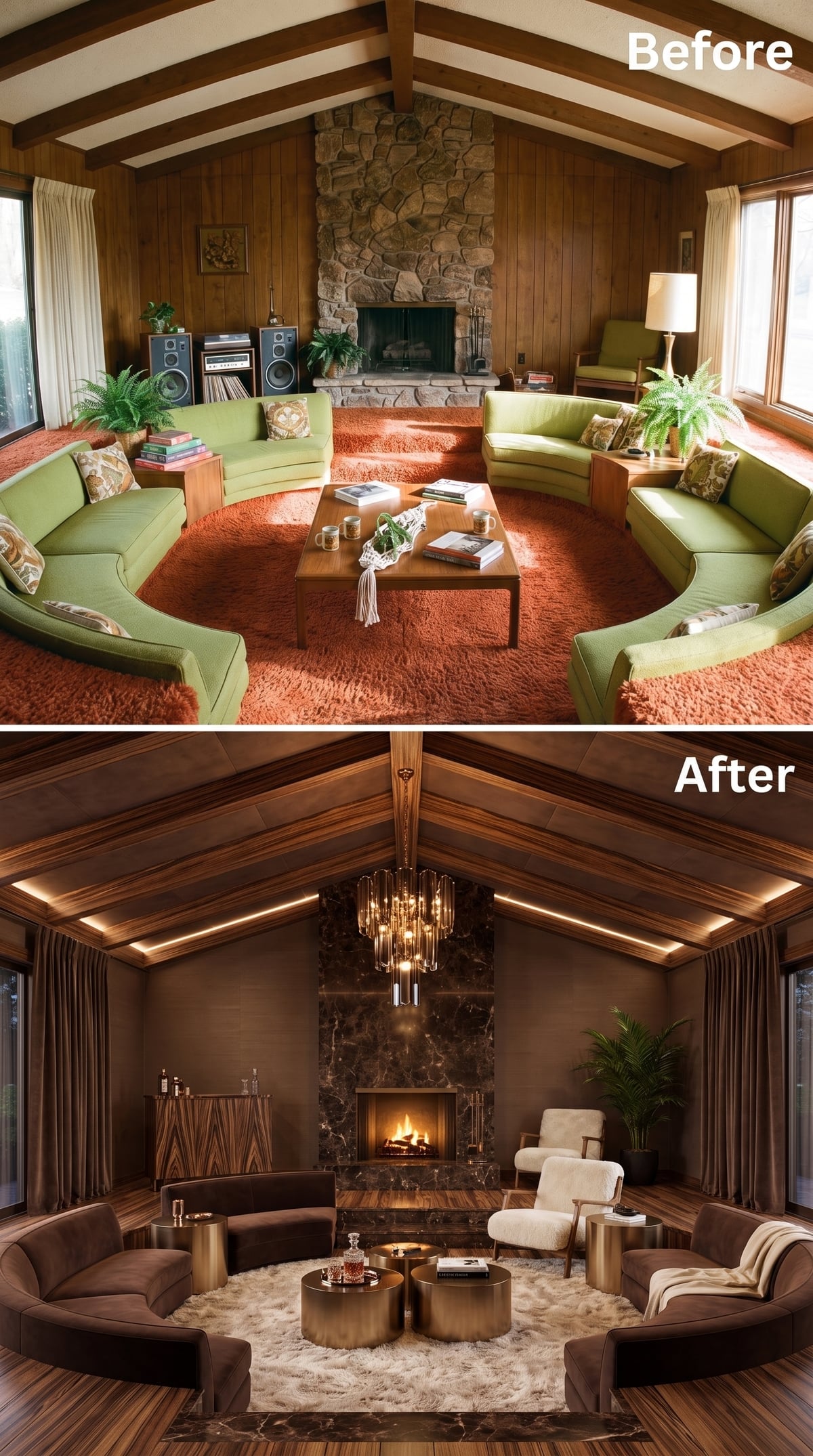
Brown marble with pale veining covers the fireplace wall, its contrasting pattern bringing movement to an otherwise richly colored surface. Chocolate velvet seating follows the pit’s curve, interrupted by a cream bouclé chair that lightens the arrangement.
Brass cylindrical coffee tables introduce reflective surfaces at the center, while a tiered chandelier occupies the vaulted ceiling. Cove lighting traces the roofline and highlights the timber grain. The materials are traditional luxury staples, but their concentration around the original sunken floor gives the room a particularly intimate atmosphere.
2. Plaster, Limewashed Beams, and a Pit That No Longer Needs to Shout
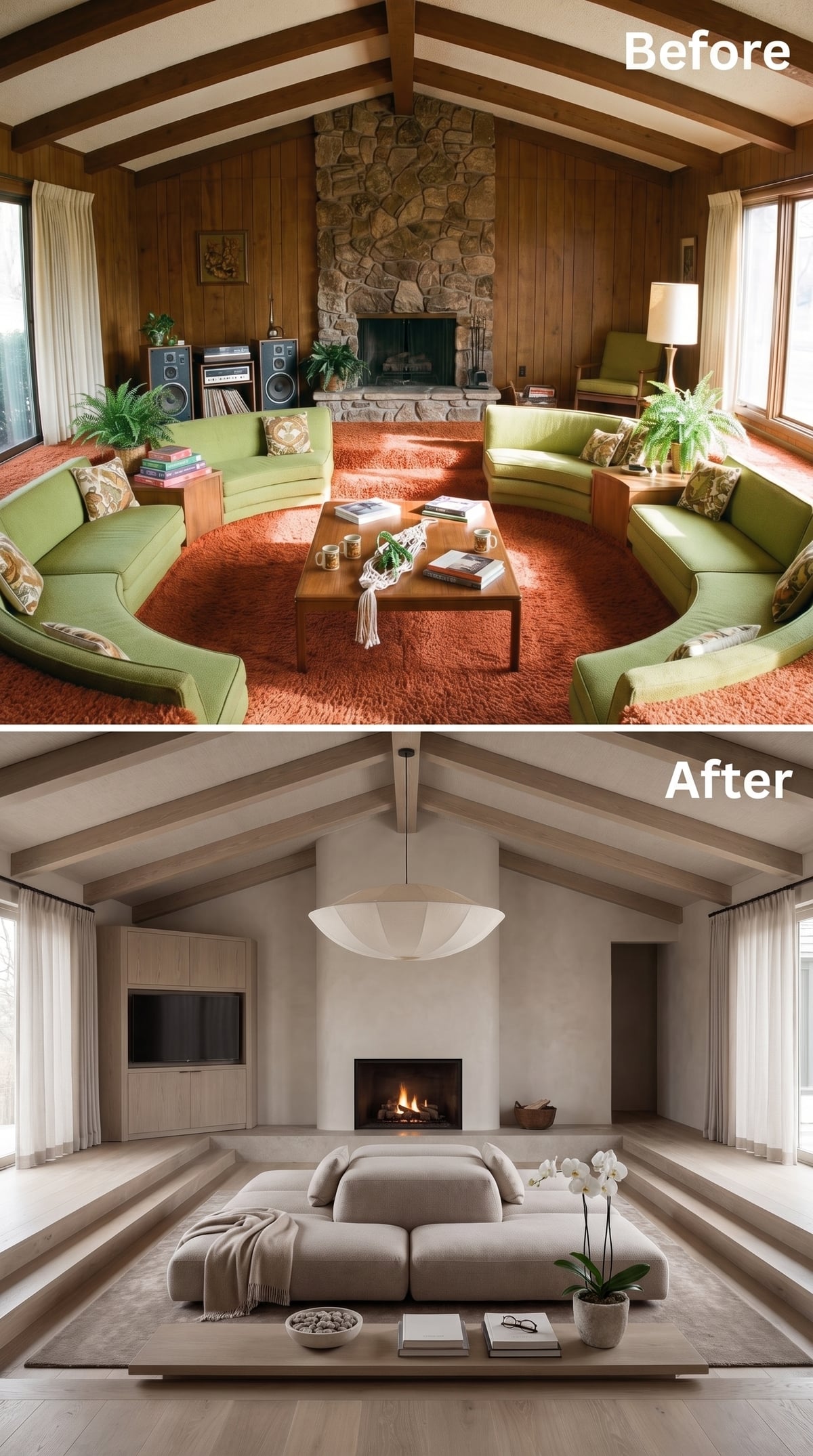
Greige plaster replaces the original dark paneling, while limewashed beams soften the vaulted ceiling without hiding its shape. A rectangular fireplace insert occupies a smooth surround, accompanied by pale oak cabinetry that keeps the far wall orderly.
The sunken floor survives beneath a low taupe sectional and flat-weave rug. Stone-toned platform edges define the change in level, while a single pendant and restrained accessories leave much of the room visually quiet. After the velvet, marble, lacquer, and metallic drama elsewhere, the absence of ornament becomes a design decision in its own right.
Greige walls are a safe bet with our readers, who picked it in half of all votes in our wall colour poll, well ahead of green and white.
1. Slate, Pale Ash, and a Cast-Iron Stove Give the Pit a Different Kind of Warmth
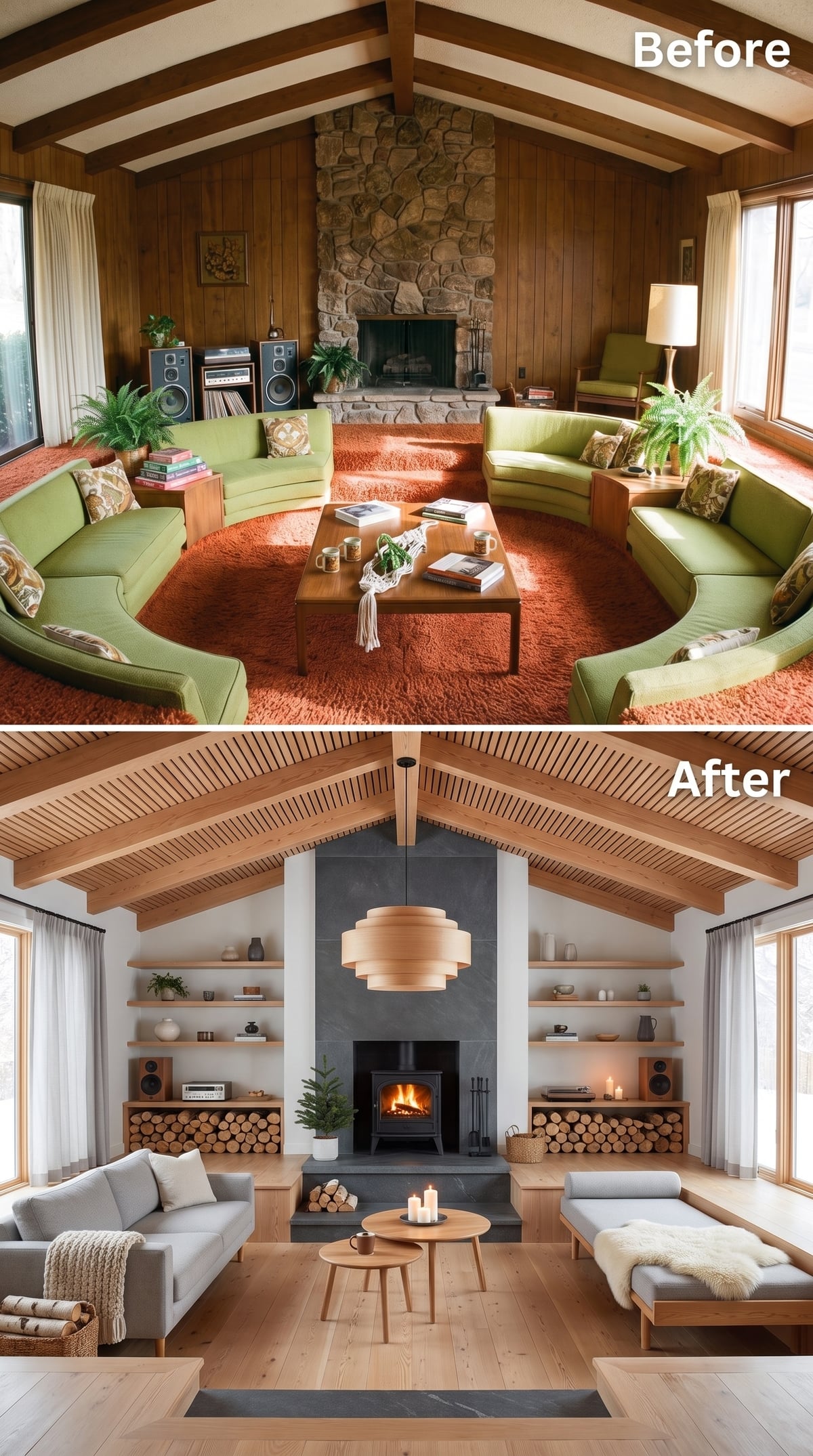
Light ash flooring and whitewashed walls replace the shag and dark paneling, allowing the original timber beams to stand out against a much quieter backdrop. The fireplace receives a floor-to-ceiling surround of cool blue-gray slate, with a freestanding cast-iron stove positioned at the hearth. The change gives the room a distinctly cabin-like warmth without restoring its seventies heaviness.
Open shelving flanks the fireplace, with stacked firewood below and display space above. Gray linen seating and a sheepskin throw introduce soft texture, while a sculptural pale-wood pendant draws the eye up to the ridge beam. The shag carpet is history. The sunken floor remains. And the room has lost none of its appetite for company.