🔥 Would you like to save this?
The best household fixes almost never come from the store. They come from someone staring at a stuck picture wire, realizing the fork in their hand has exactly the right shape, and never going back. These are the tricks experienced people swear by and most folks have never heard of. No gadgets. No subscriptions. Just ordinary objects doing a second job they were never designed for. Some solve problems you didn’t know had solutions, and a few will make you a little annoyed you spent years doing it the hard way.
46. Guide Picture Wire Onto a Nail With a Dinner Fork
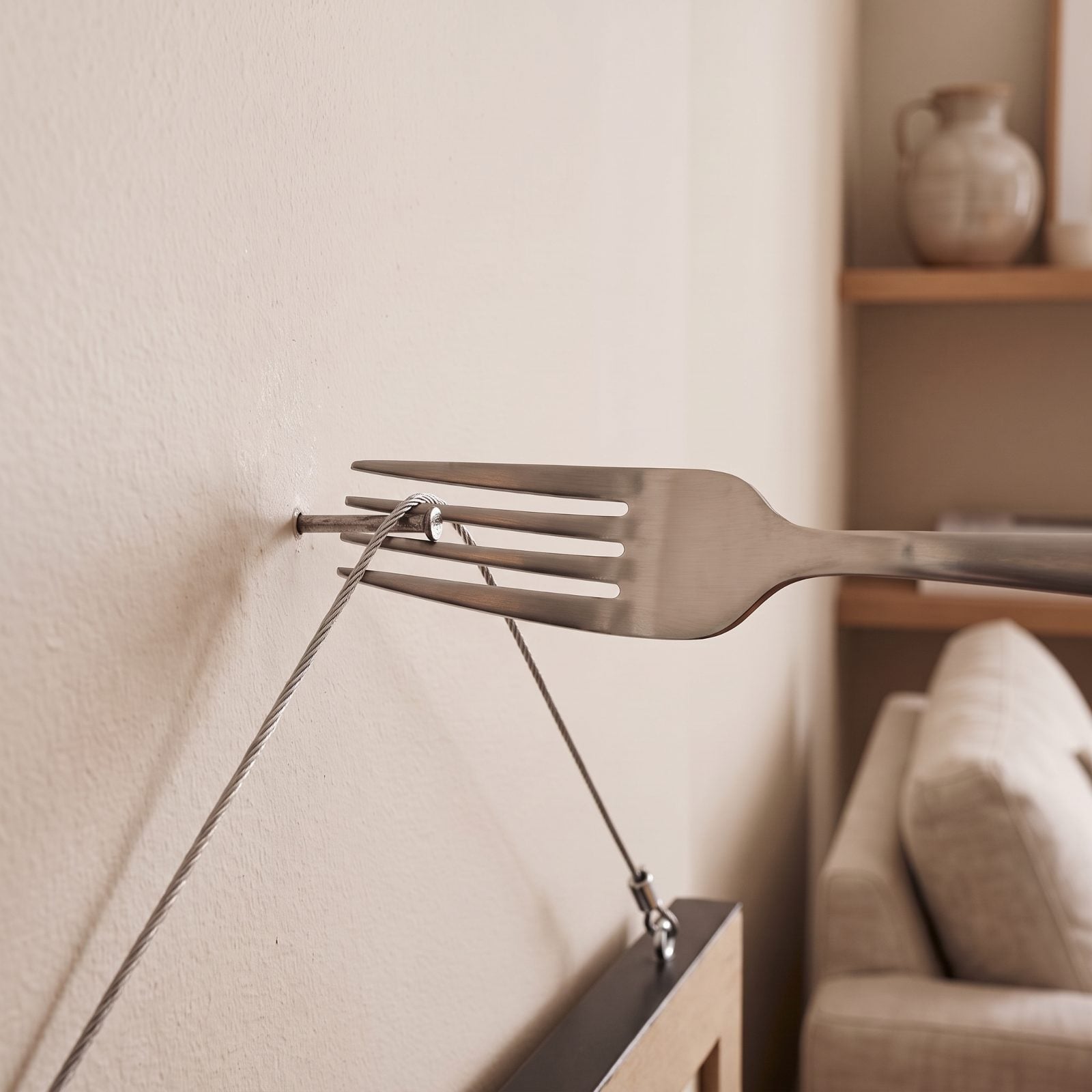
Hanging a frame alone is a small act of patience, mostly ruined by that last inch. You’ve got the frame flat against the wall, you can’t see behind it, and the wire refuses to find the nail. Everyone’s been there, blindly scraping metal on plaster.
In order to come up with the very specific design ideas, we create most designs with the assistance of state-of-the-art AI interior design software. Also, assume links that take you off the site are affiliate links such as links to Amazon. this means we may earn a commission if you buy something.
A dinner fork fixes it. Press the fork to the wall with the nail running parallel between the second and third tines, its head nestled among them and its shank passing back into the wall, then slide the wire down the fork’s neck — it drops straight into the slot, right onto the nail, every time. You’re guiding by feel through a tool instead of guessing.
45. Lay Wax Paper on Top of Cabinets to Catch Greasy Dust
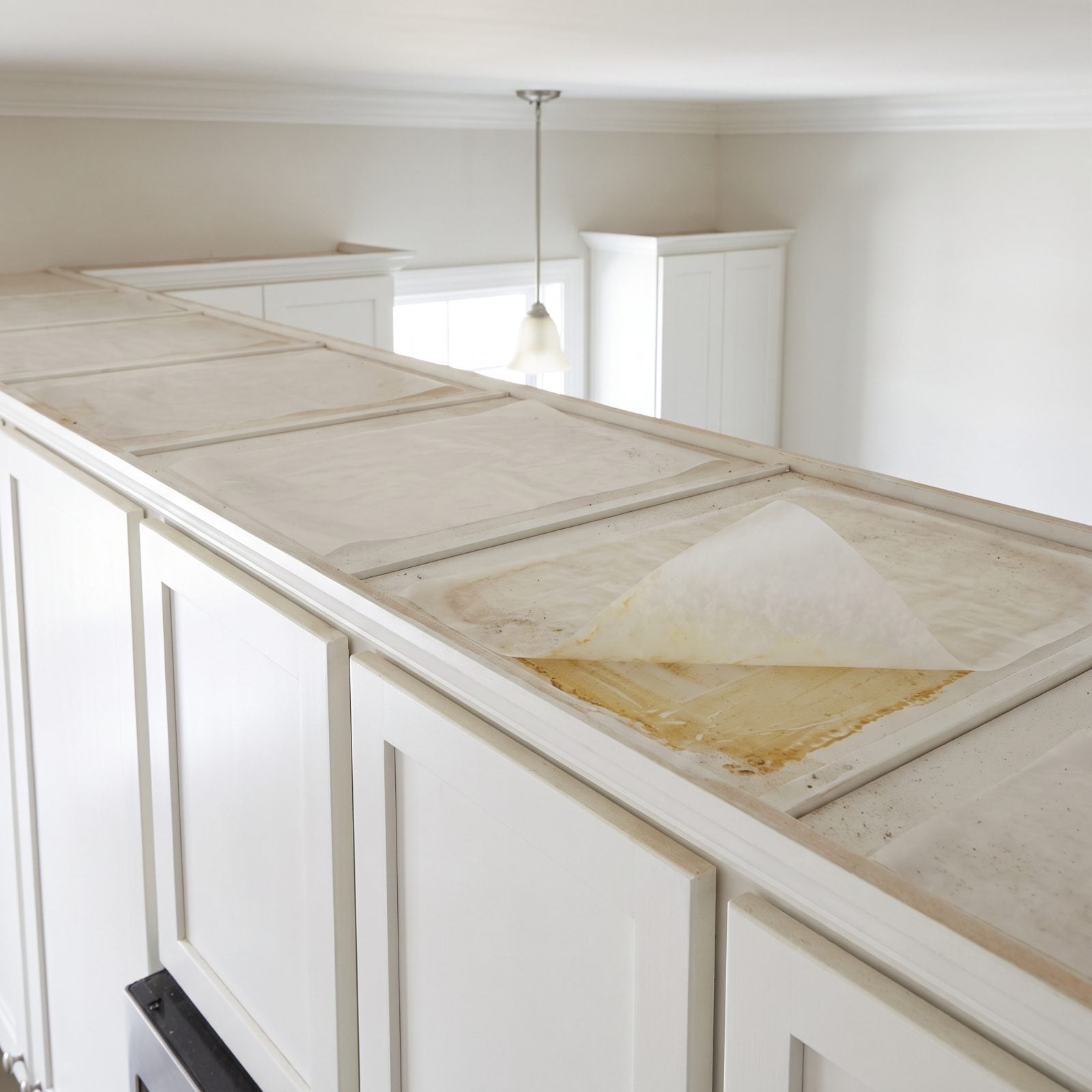
The tops of your kitchen cabinets collect a film you can’t see and don’t want to feel. Airborne cooking grease plus dust equals a sticky grey layer that takes a scraper and a bad mood to remove.
Lay sheets of wax paper up there instead. Every few months, pull the old sheets, toss them, and lay fresh ones — most of the grime leaves with the paper. Grease can still soak through and leave a yellow-brown stain on the cabinet top underneath, so swap the sheets before they get saturated. Nobody looks up there, so it never has to be pretty. If you’re working with small kitchen decor where every surface counts, this keeps the hidden ones from turning into a project.
44. Mark the Short Edge of a Fitted Sheet So It Fits First Try
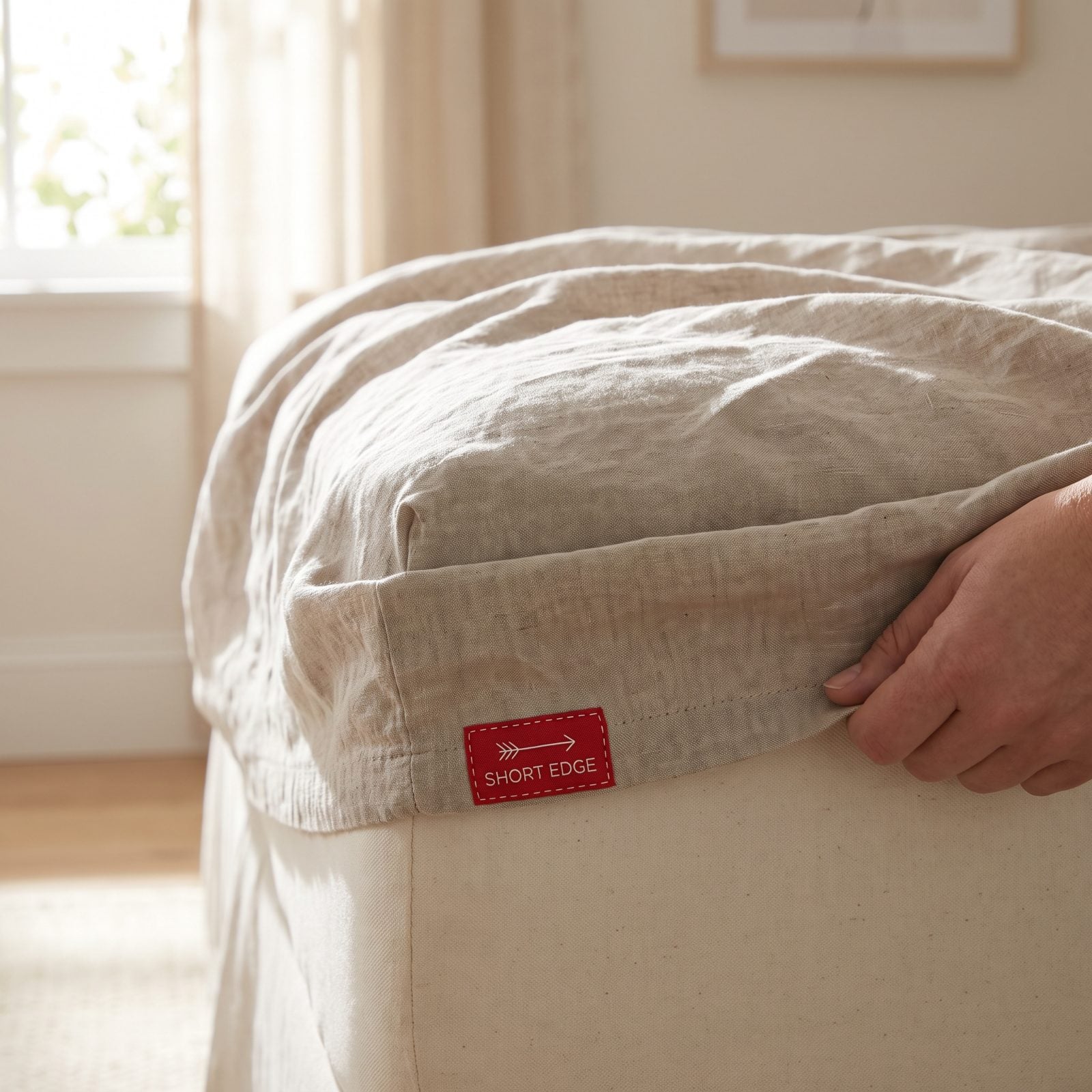
Fitted sheets have no grammar. You wrestle a corner onto the mattress, the whole thing’s crooked, and you start over, because you can’t tell the short side from the long side until it’s already wrong.
Fix it once with a fabric pen. A small mark on the hem of each short-end corner, and from then on you line those marks up with the top and bottom of the bed and the sheet drops on in one motion. A ten-second scribble buys you out of a minor fight twice a week.
43. The Frozen Cup and Coin Test for Freezer Thaws
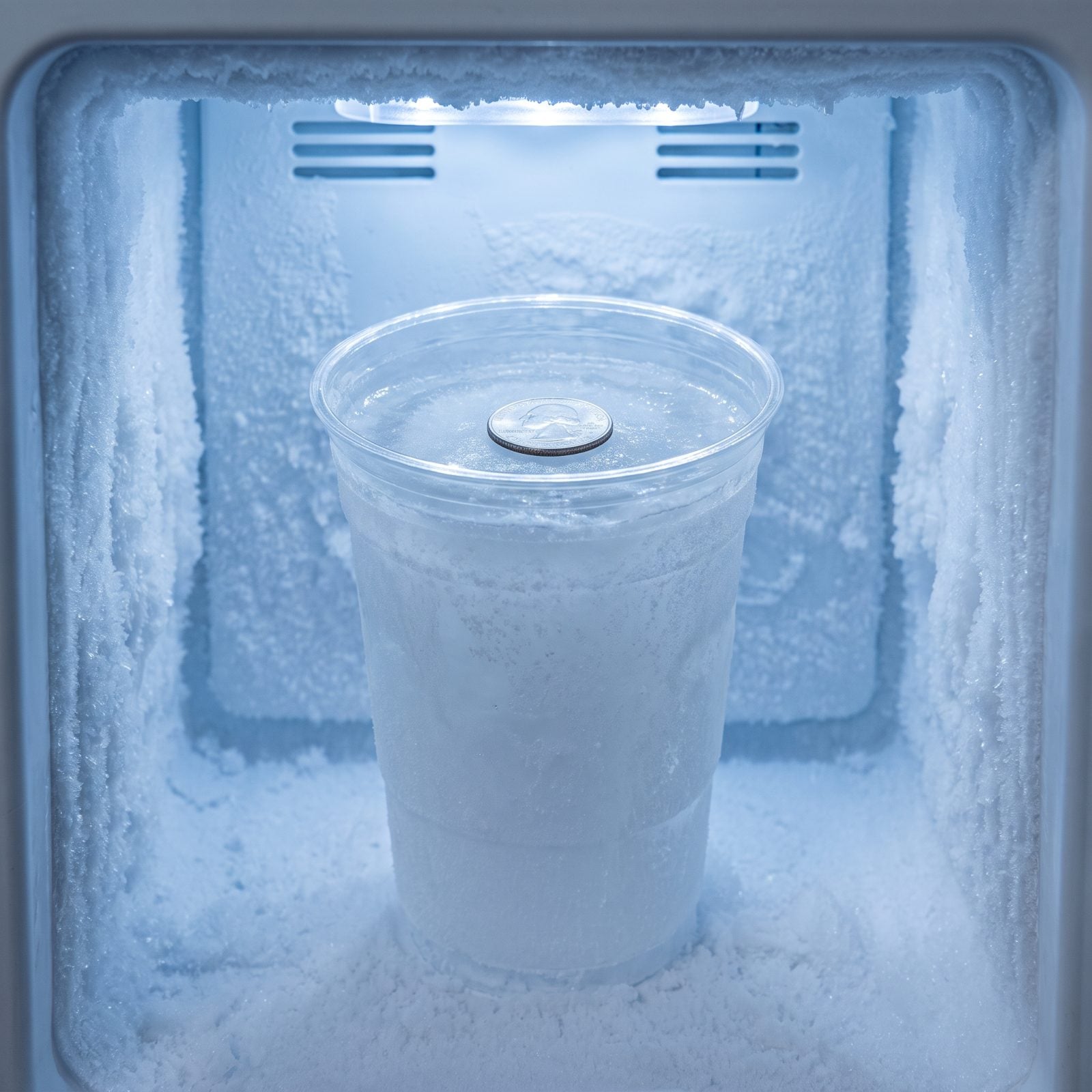
You come home after a long weekend. The freezer’s cold now — but was it cold the whole time? A power blip while you were gone could have thawed everything and refrozen it, and food refrozen after a full thaw can be unsafe to eat.
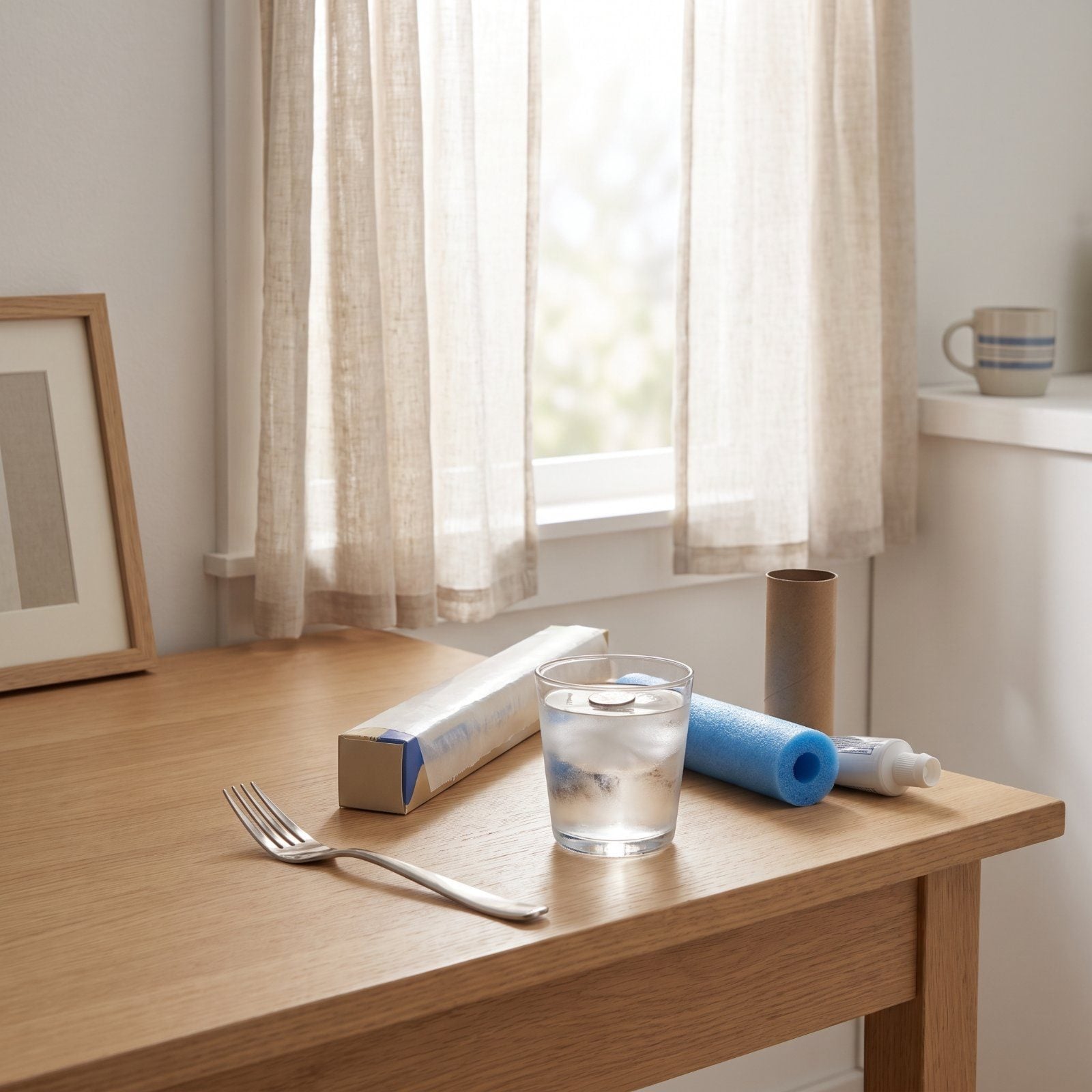
Here’s the read. Freeze a cup of water solid, set a coin on the ice, and leave it. If the coin’s still sitting on top when you check, the ice never melted. Sunk to the bottom, or floating partway down? You had a serious thaw. It shows you a problem you otherwise couldn’t see.
42. An Upside-Down Hook Keeps the Trash Liner From Slipping
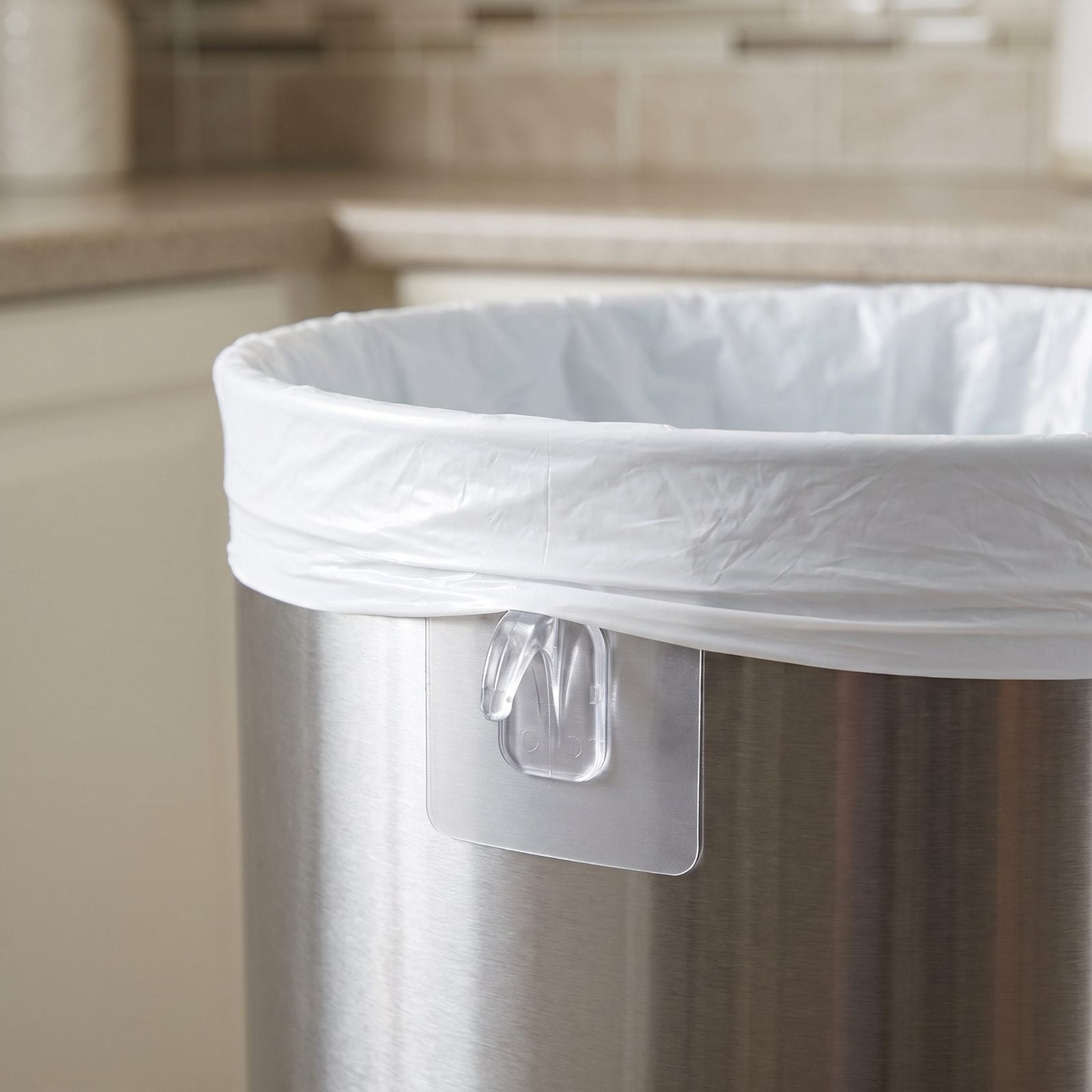
Pull out a bag of trash and the liner slides down into the can right as you lift. Classic. The weight drags the bag off the rim and now you’re reaching elbow-deep into the bin.
Stick a small adhesive hook upside-down on the outside of the can, near the top, and loop the bag’s edge over it. The inverted hook grabs the liner and won’t let it slide. One hook does it, maybe two for a big can, and the bag stays put.
41. A Cardboard Tube Turns Your Vacuum Hose Into a Flexible Crevice Tool
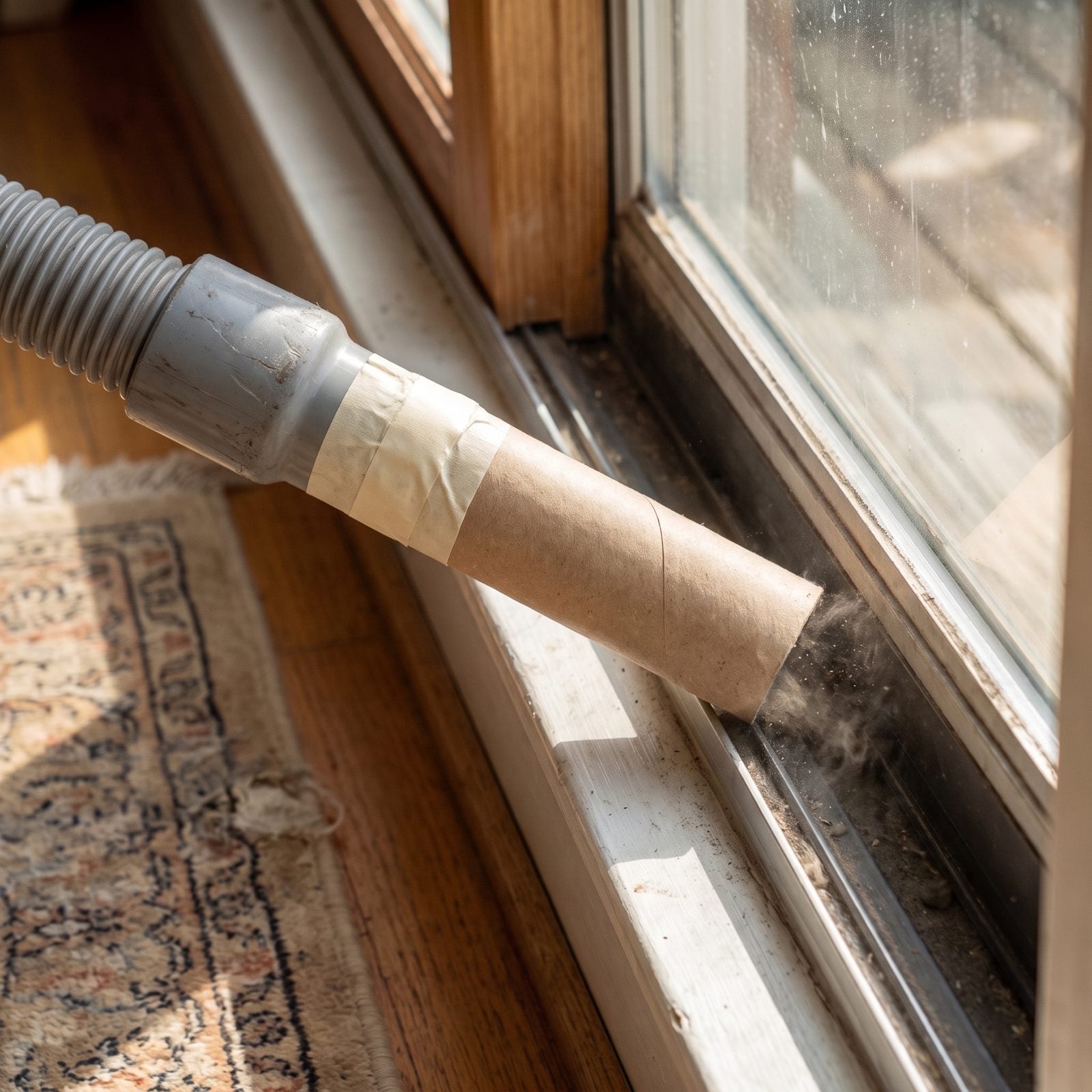
Factory crevice tools are rigid and short. Meanwhile the dust you actually want is deep in a window track, behind a radiator, or buried in the seam of the couch where no straight nozzle reaches.
Slide one end of a cardboard tube over the hose, tape it in place, and now you’ve got a disposable slim nozzle that reaches down into the gap you’re fighting. Grubby after a round? Throw it out and make another in thirty seconds.
40. Transfer Picture-Hanger Positions to the Wall With Toothpaste
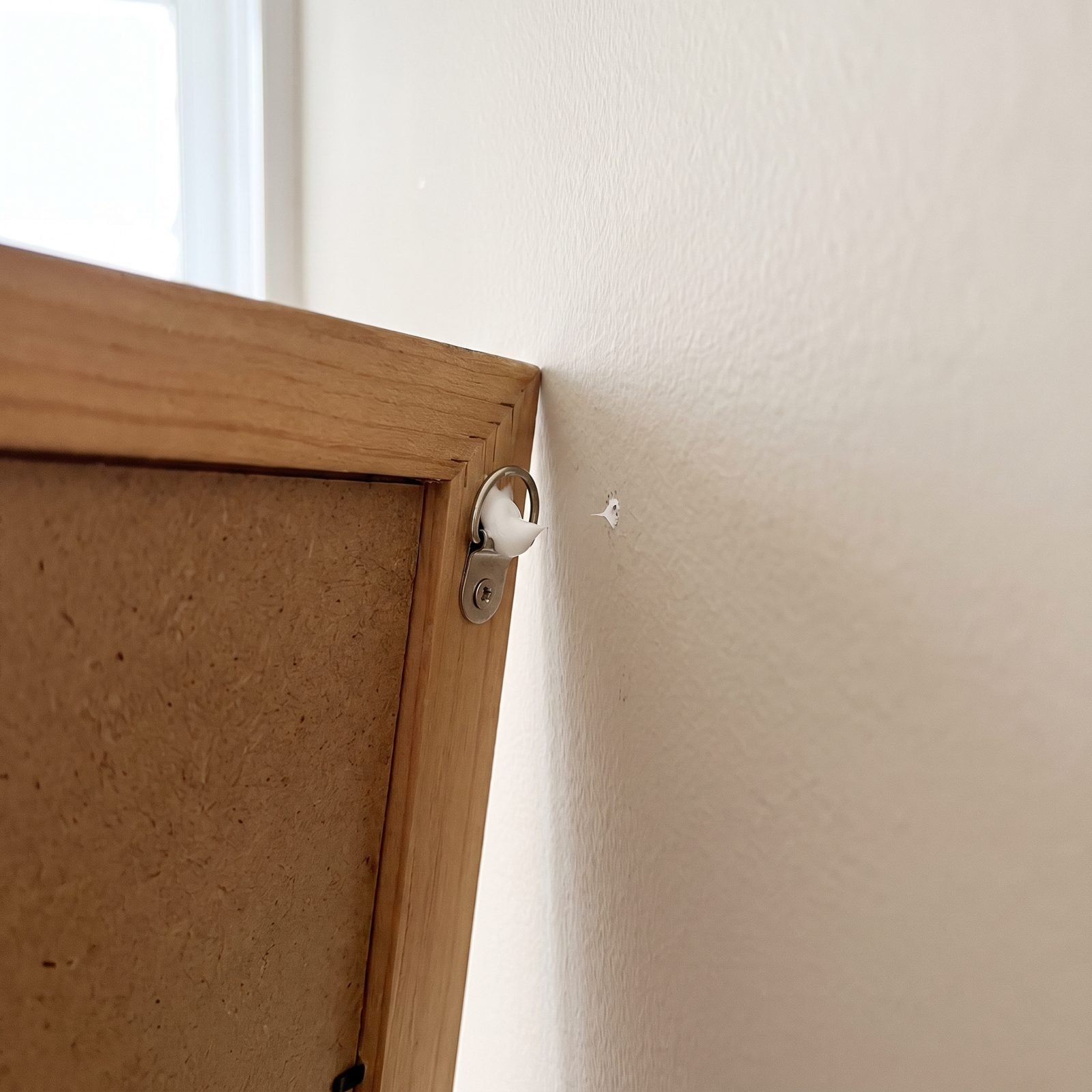
Measuring for a nail behind a frame is a guessing game. You eyeball the hanger, mark the wall, and hang it an inch off from where you pictured it.
So skip the measuring. Dab a little toothpaste on the hanging hardware, hold the frame level where you want it, and press. The toothpaste leaves a tiny mark on the wall at the exact nail spot — drive your nail through the dot, wipe the smudge off with a damp finger, done. Handy for a small fireplace mantel gallery wall where every frame has to line up.
39. A Chunk of Pool Noodle Stops Drawer Organizers From Sliding
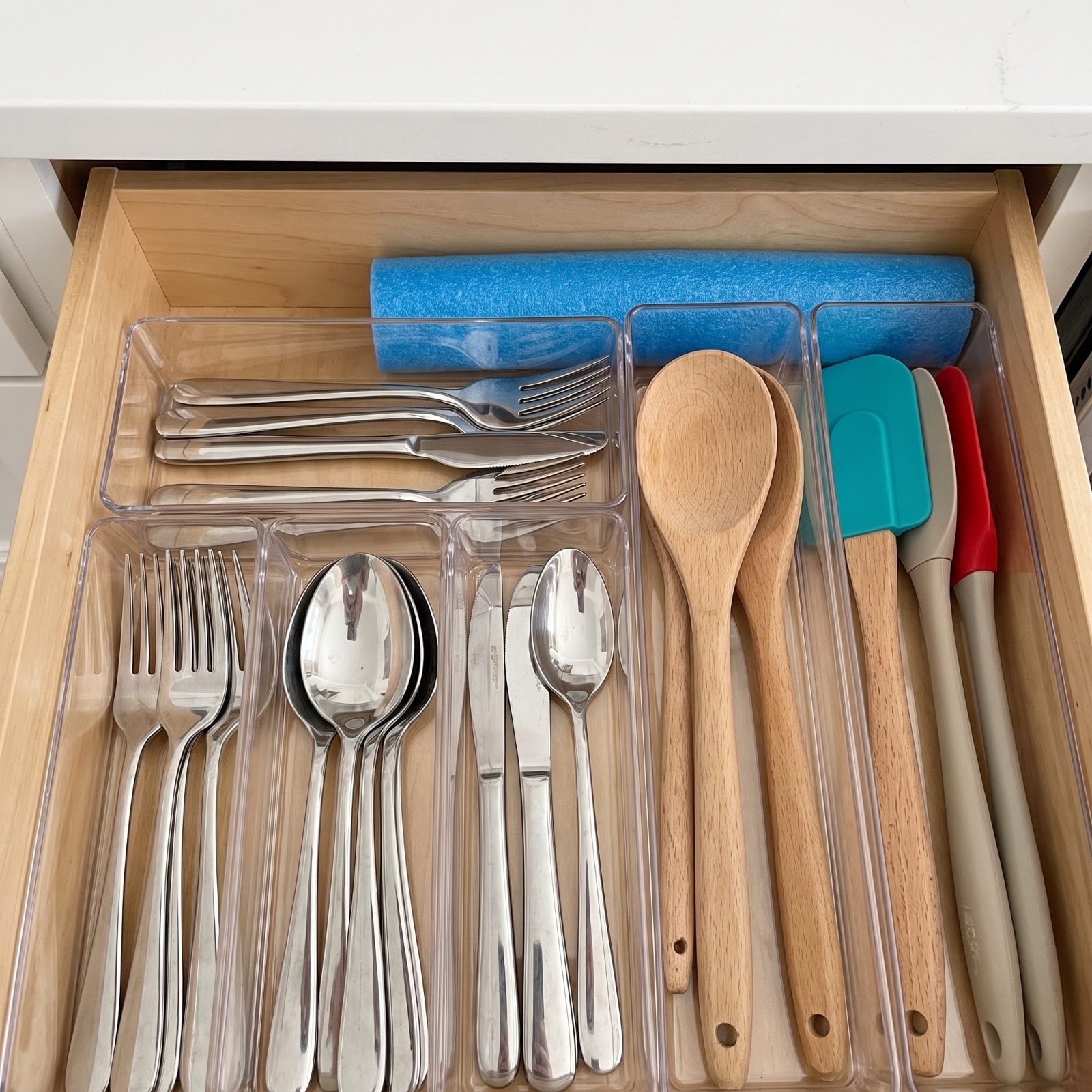
Drawer organizers never fill the drawer exactly, so they slide around every time you open it — forks migrating into the spoon slot, the whole thing jumbled by Thursday.
Cut a length of pool noodle and wedge it into the empty gap behind or beside the trays. The foam compresses just enough to hold firm, grips both sides, and absorbs the slam when the drawer shuts. One of those fixes that quietly ends a nuisance you’d stopped even noticing.
38. Clean a Cloudy Coffee Carafe With Ice and Salt
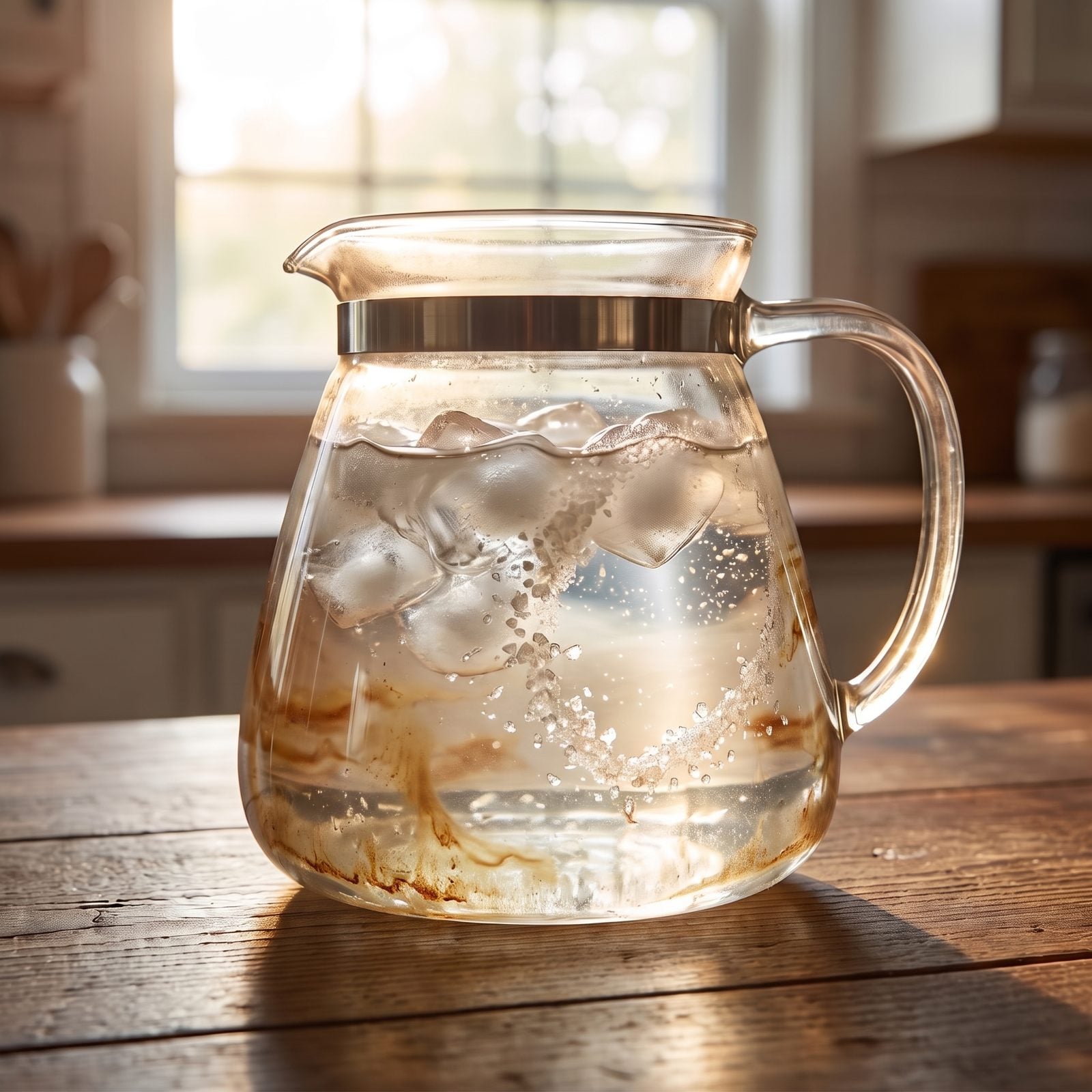
Coffee stains the inside of a glass carafe where your hand and your sponge can’t reach. That brown film at the bottom laughs at scrubbing.
Drop in a handful of ice, a few tablespoons of coarse salt, and enough water to fill the carafe most of the way, then swirl hard for a minute. The ice bangs around while the salt scours, and the stains lift right off the glass. Rinse, and it looks new. No scrubber, no bent wrist, no toxic cleaner.
37. Foam Pipe Insulation on the Garage Wall Saves Your Car Doors
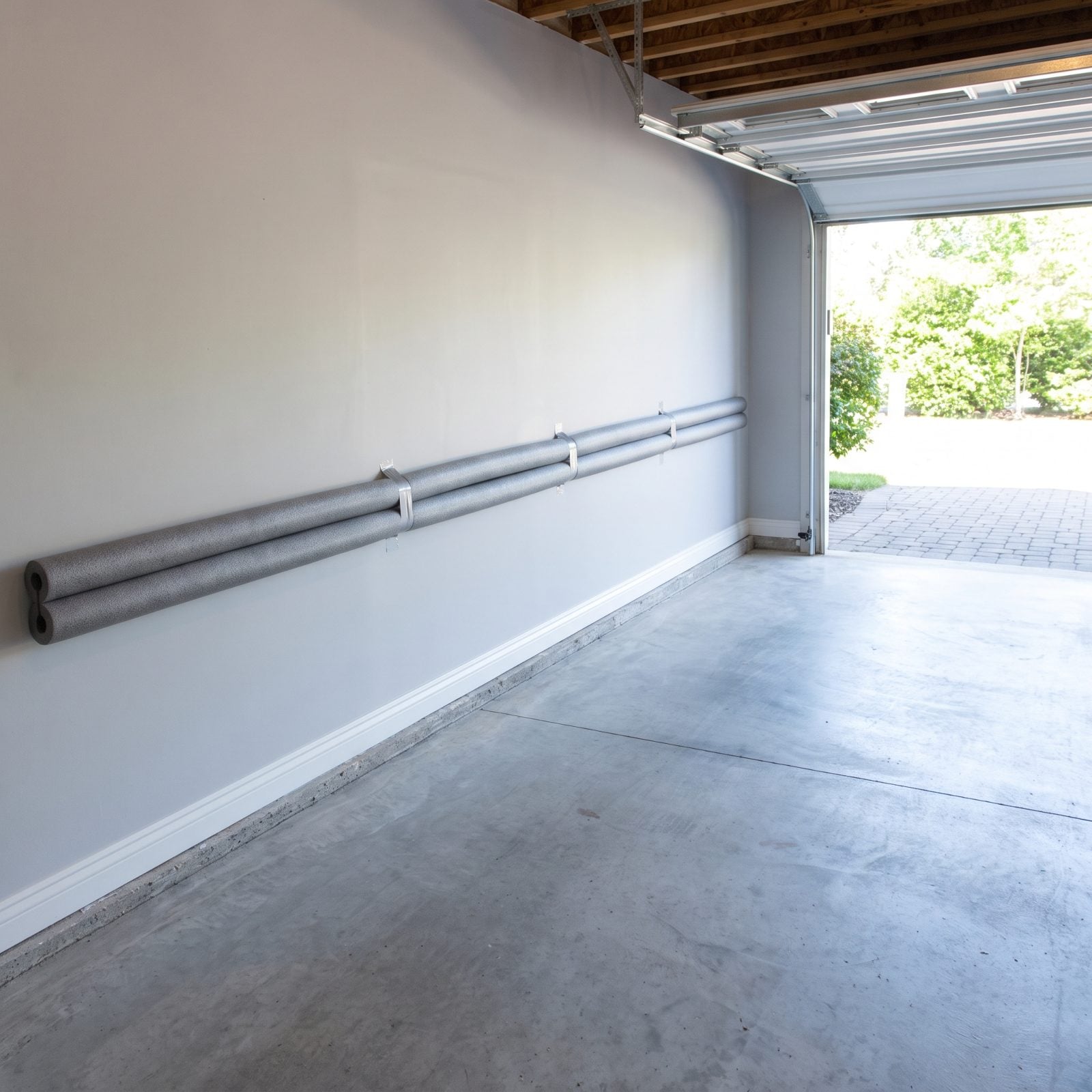
Tight garage. Every time a door opens it kisses the wall, and over years that’s a row of dings down your car’s edge with chipped paint on the wall to match.
Slit a length of foam pipe insulation — it’s already split down one side — and mount it on the wall right at door-swing height. The foam cushions every bump. Cheap, grey, and genuinely effective. Add a second strip where the bumper might nudge the front wall and the whole garage forgives your parking.
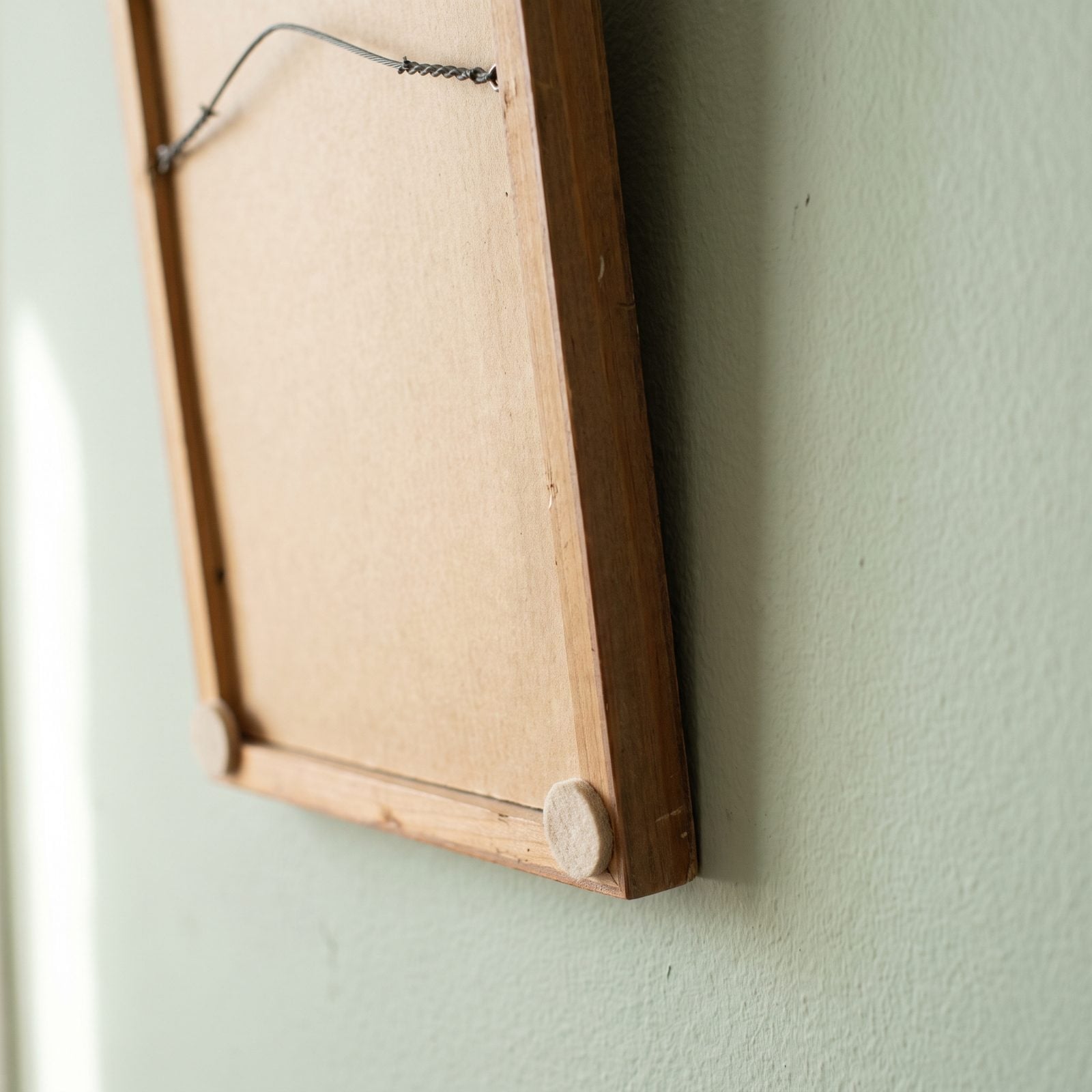
36. Stick Felt Pads Behind Frames to Keep Them Level
35. Use Museum Putty to Stabilize Small Décor and Table Lamps
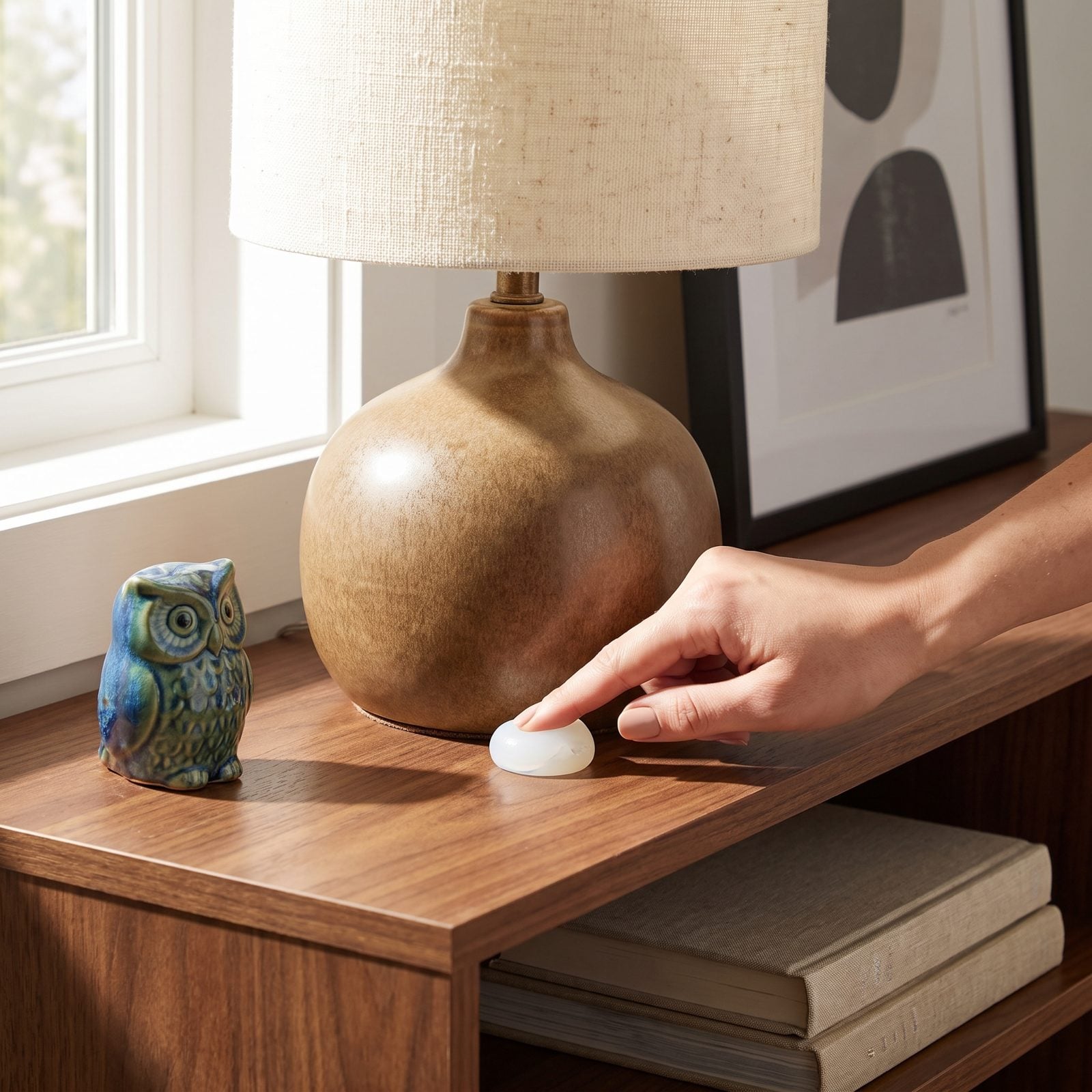
Kids, cats, a slammed door, a heavy footstep on an old floor — small ceramics live one wobble away from the tile. A few small balls of clear museum putty pressed under the base of a vase or a top-heavy lamp anchor it and grip without leaving a mark, and it peels off clean when you move house.
Here’s the part most people skip. Warm it between your fingers first, because cold putty barely sticks. Thirty seconds of kneading and it bonds like it means it.
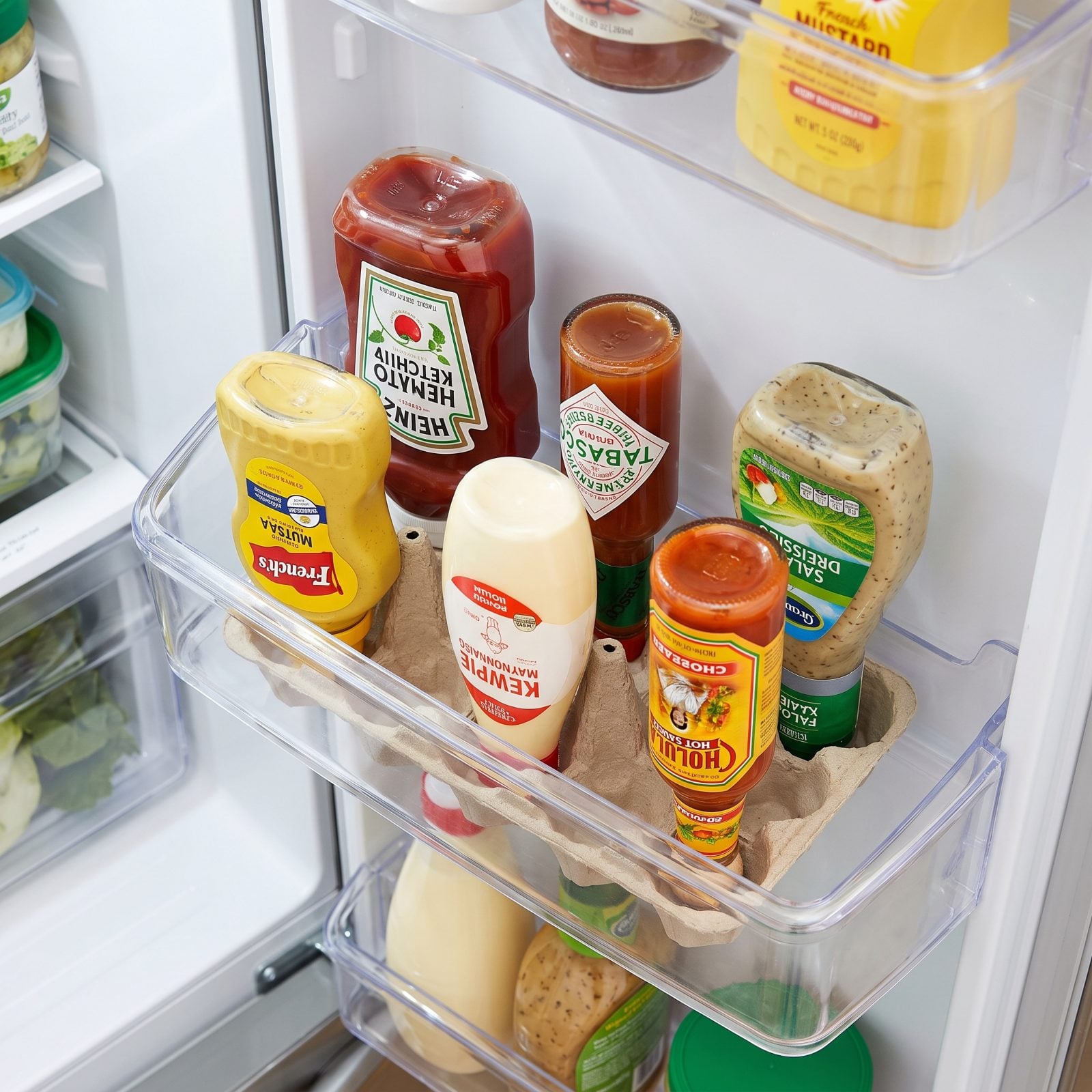
34. Store Condiment Bottles Upside Down in an Egg Carton
🔥 Would you like to save this?
Nobody wants to shake a near-empty ketchup bottle like a maraca for two minutes before dinner. Flip the bottles cap-down and the contents gather right where you need them.
An old egg carton becomes a free rack that keeps the bottles standing on their heads. Cut it to fit the fridge door shelf, and the pulp grips the caps so nothing topples. You get the last stubborn third of every bottle instead of chucking it in the bin.
33. Run Dental Floss Under Sticky Labels to Lift Them Cleanly
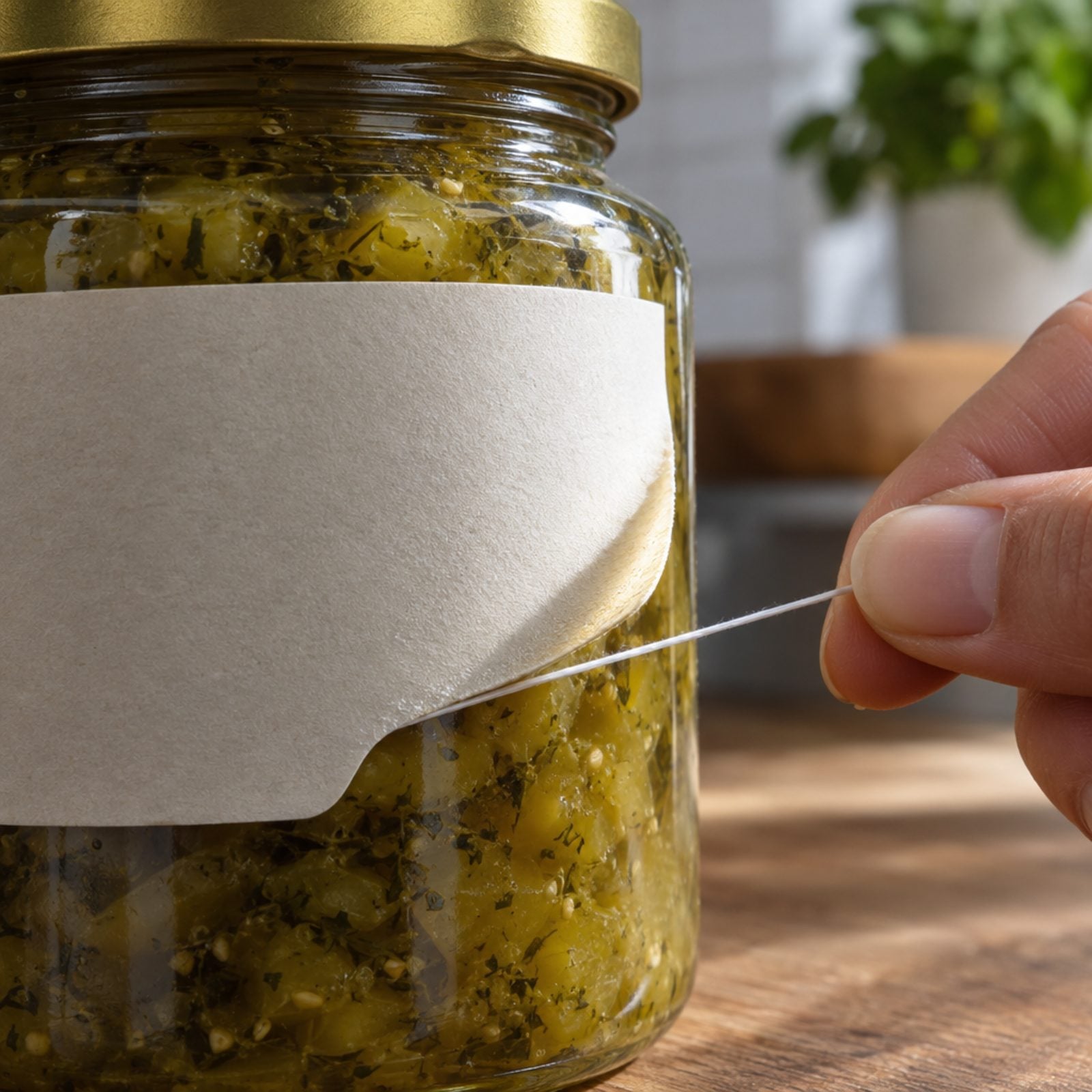
Scraping a label with a fingernail gets you a shredded mess and gummy residue packed under the nail. Floss does it in one pass.
Peel back one corner, slip a strand of floss taut underneath the lifted corner, and draw it along from there. The waxy coating cuts the adhesive without gouging ceramic, glass, or finished wood. Jar labels, price stickers, anything stuck flat — all fair game.
32. Lay a Flashlight Flat on the Floor to Reveal Broken Glass
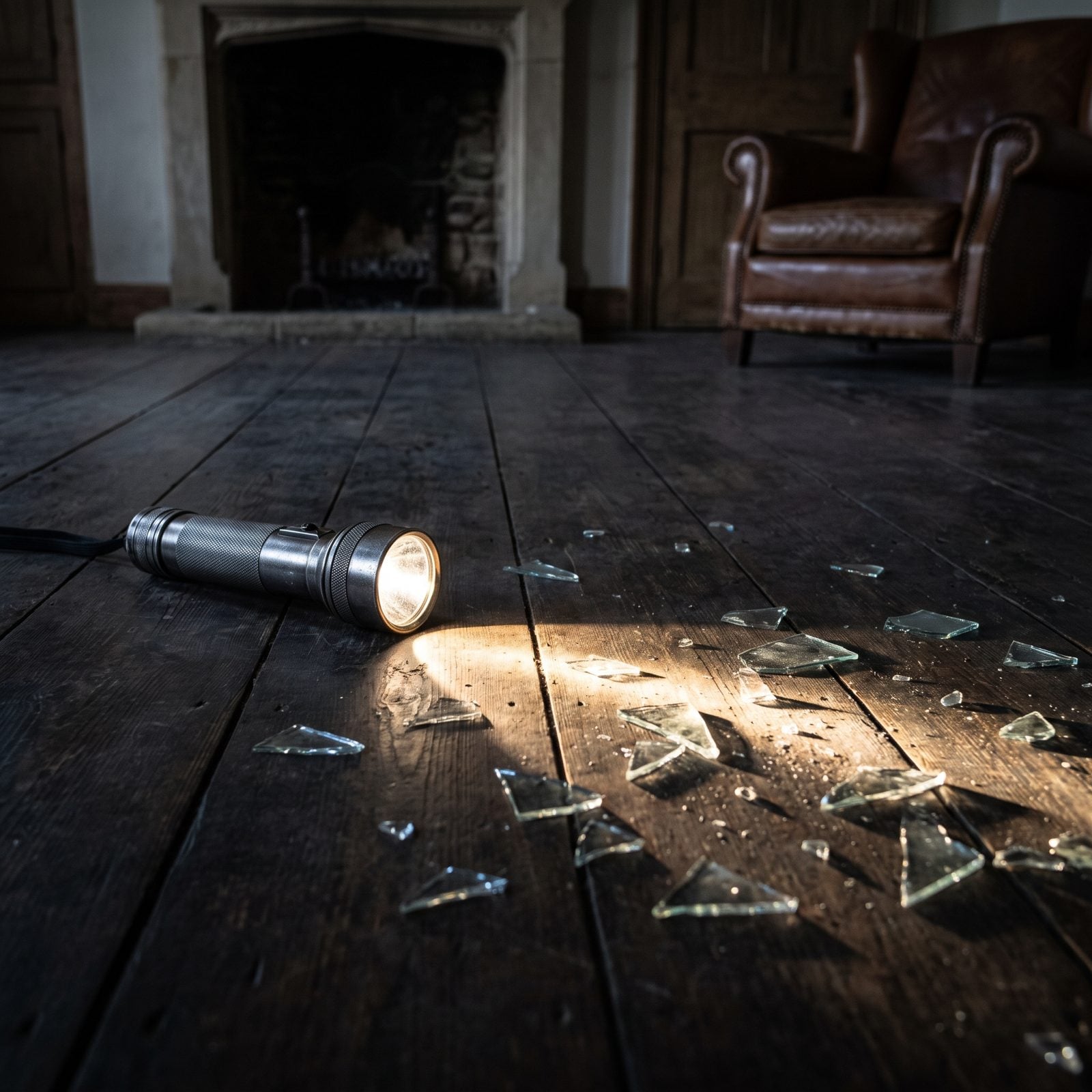
You sweep, you mop, you’re sure you got every piece. Then a sliver finds a bare heel three days later.
Kill the overhead light and set a flashlight flat on the floor so the beam travels low across the surface. Every tiny shard throws a long shadow and glints like a spark, and what was invisible from above suddenly announces itself. Big pieces first, then grab the glitter with a damp paper towel.
31. Use Bread Tags to Label Cords at the Power Strip
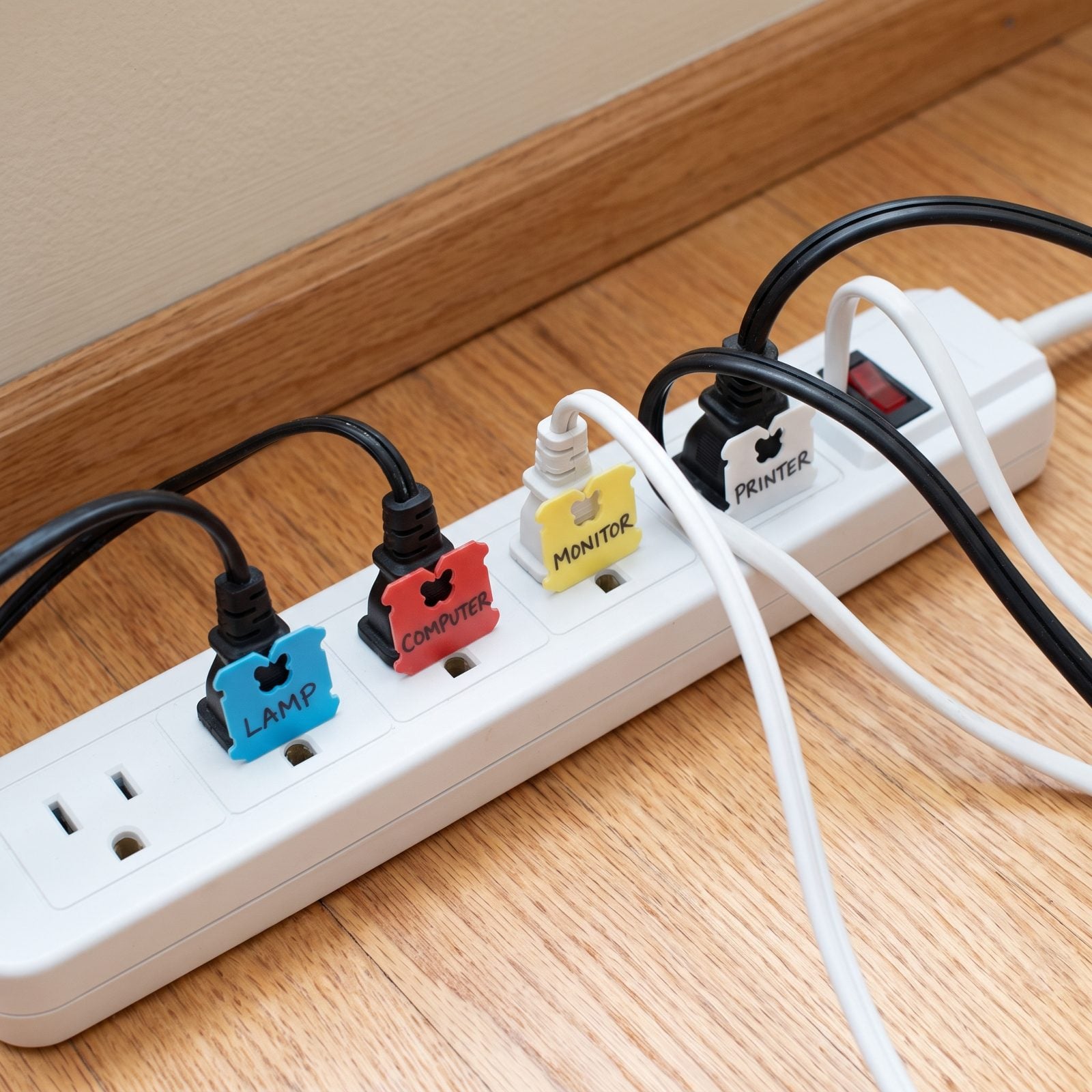
Unplugging the wrong cord and killing your router mid-call is a special kind of annoying. Bread tags fix it for free.
Clip one around each cable at the plug end and write what it powers. Now the tangle behind the desk reads like a labeled switchboard, and nobody yanks the modem thinking it’s the lamp again.
30. Add a Key Ring to a Stubborn Zipper for Better Grip
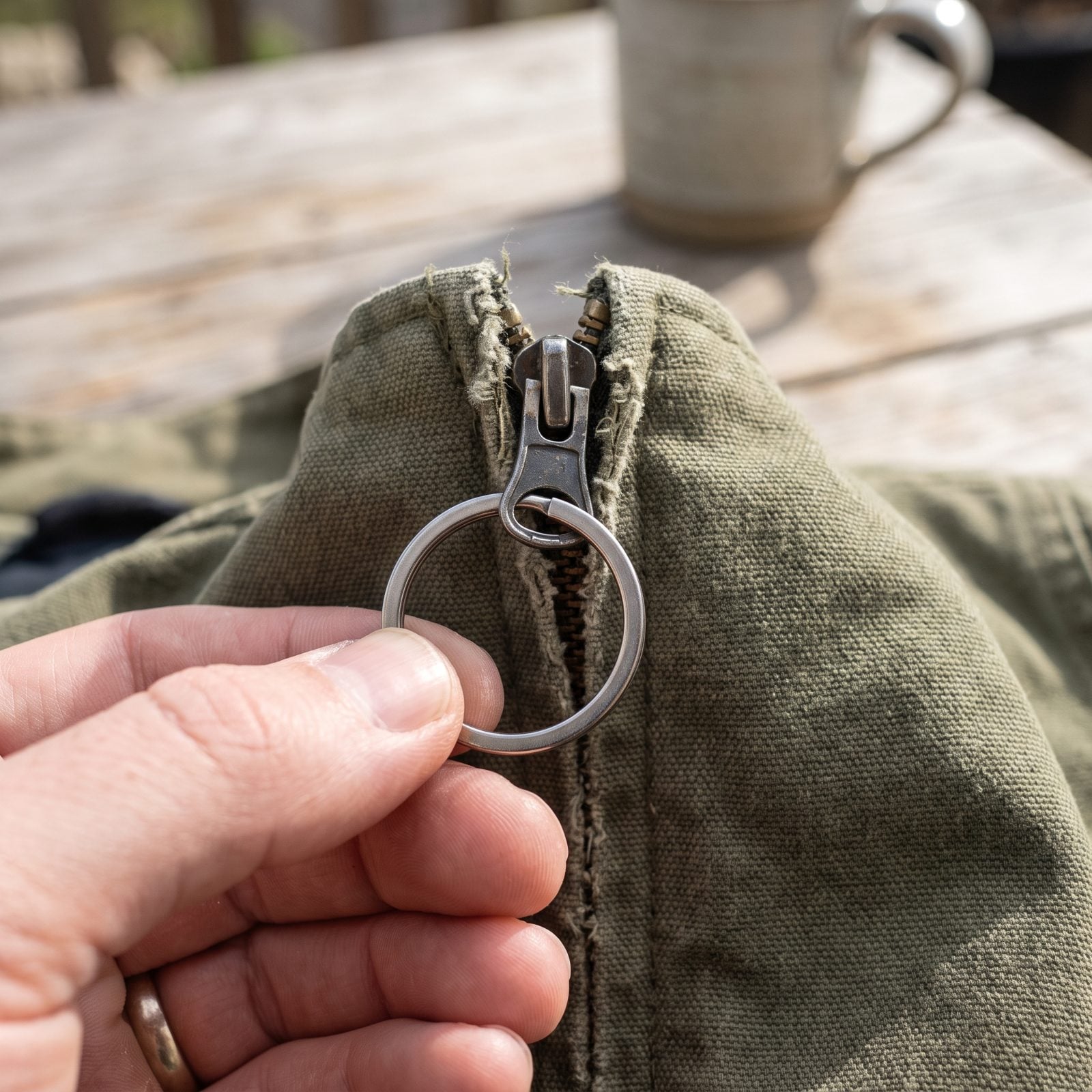
Tiny zipper pulls are a quiet cruelty aimed squarely at cold fingers and anyone with arthritis. A cheap split key ring threaded through the pull tab gives you a loop you can actually hook a finger into.
Boots, backpacks, coats, the stuck tent flap at 6 a.m. — it works on all of them. Bigger grip, less fumbling, and it costs about a nickel.
29. Add Glow Tape to Frequently Lost Remotes and Flashlights
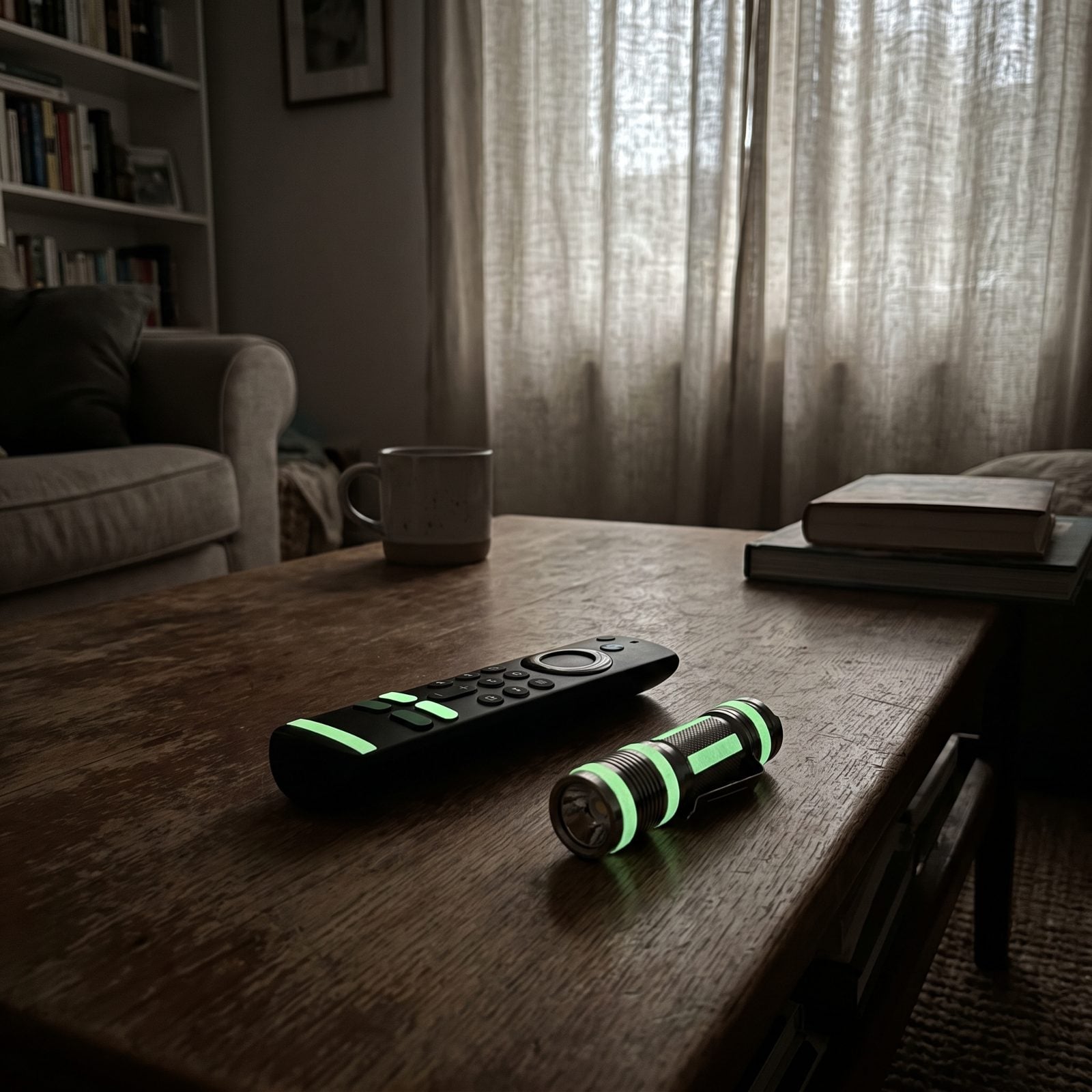
The remote vanishes into the couch cushions every single night, and a flashlight you can’t find during a blackout might as well not exist. A few strips of glow-in-the-dark tape solve both.
Stick it along the edges and around the main button. It charges off your room lights through the day, then gives off a soft green glow for hours after dark. When the power drops, the one thing you actually need is now the one thing you can see.
28. Slide a Pool Noodle Under the Sofa to Block Lost Toys
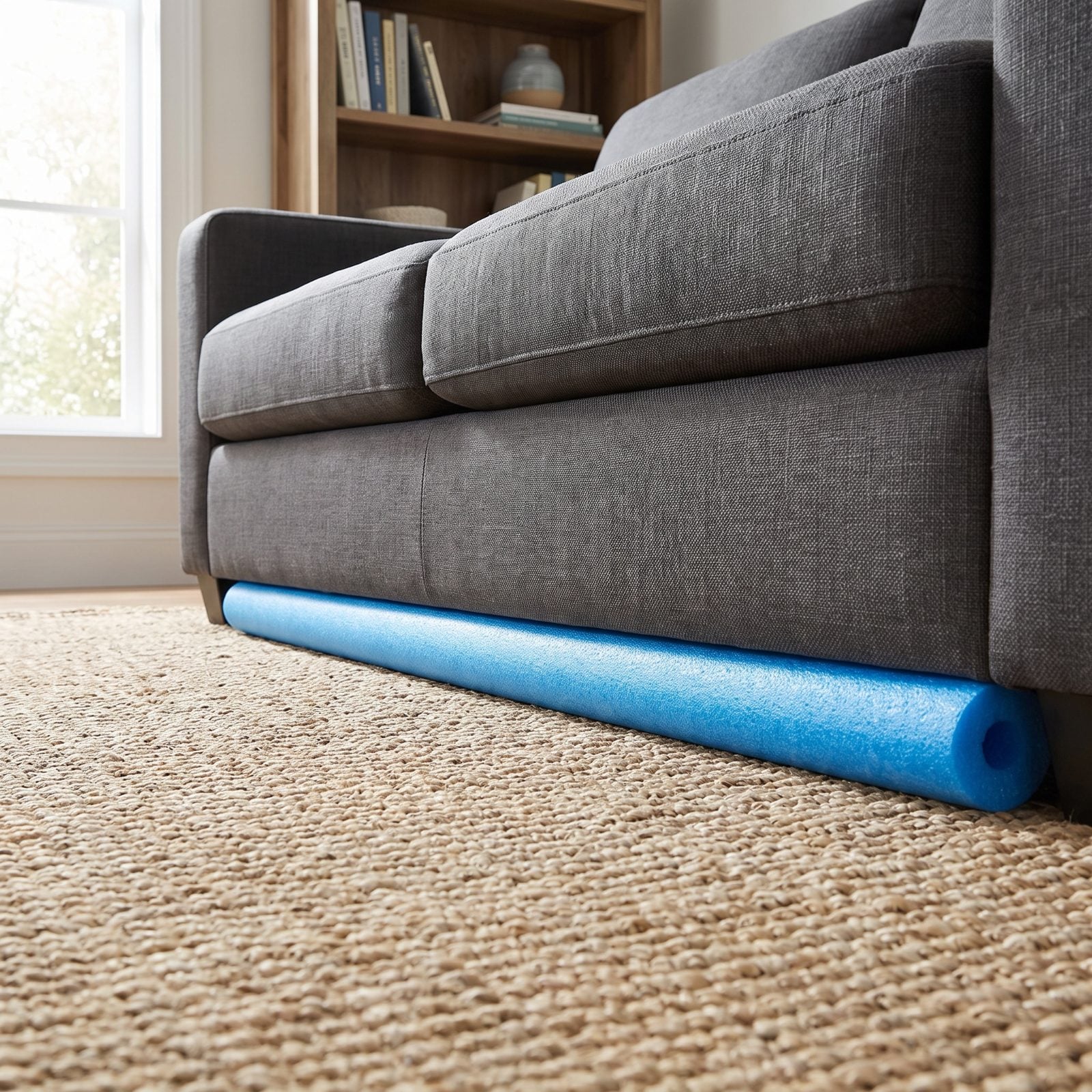
The dark zone under the sofa swallows socks, cat toys, crayons, and the one puzzle piece you need. Shove a pool noodle into the gap and it seals the space off like a draft stopper for lost things.
Cut it to length, wedge it under the base, and the dust bunnies lose their hiding spot too. No more flashlight-and-broom-handle archaeology dig at bedtime. The same gap-blocking logic quietly helps under beds, which is where the real treasure tends to roll.
27. Rub Candle Wax Along Wooden Drawer Runners to Stop Sticking
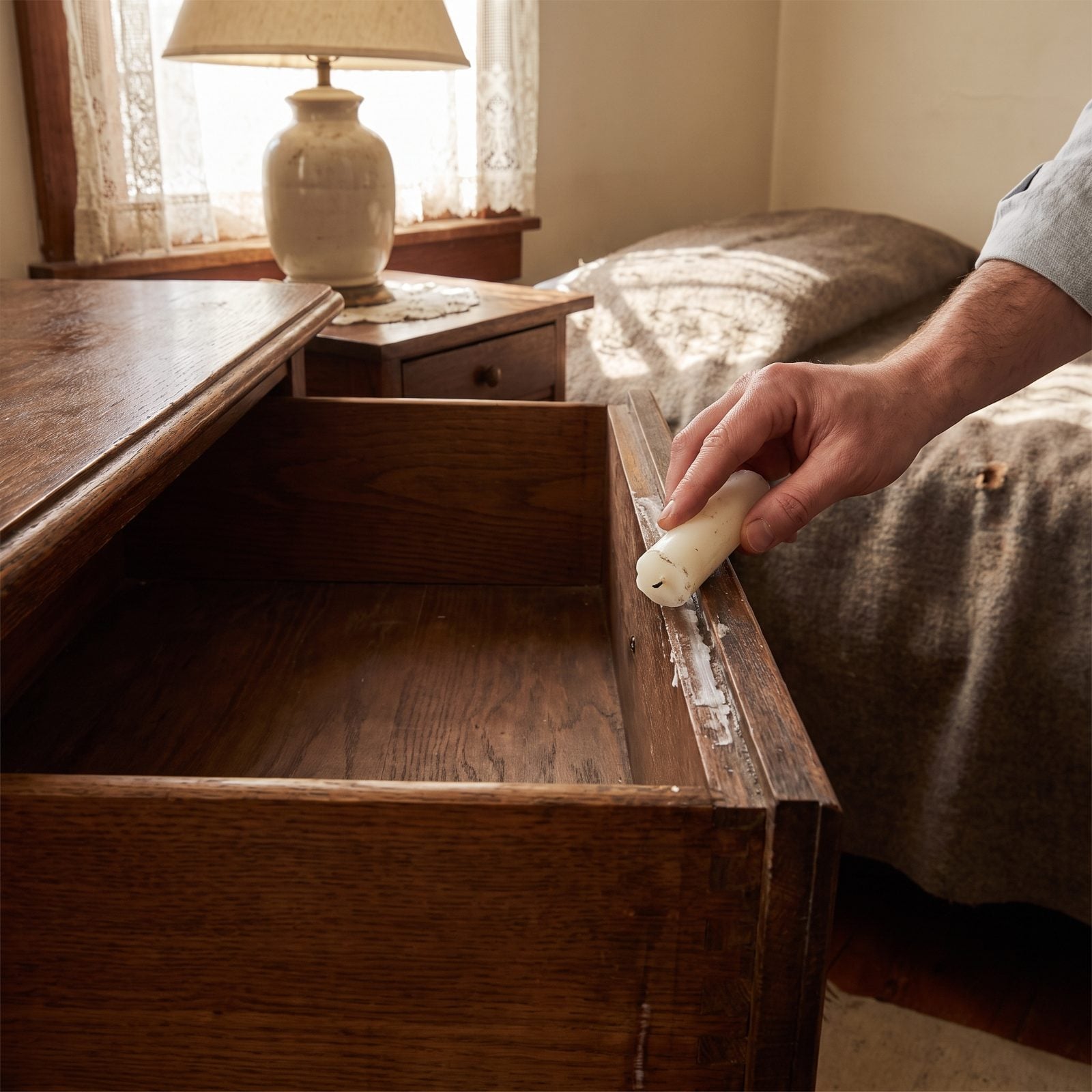
That drawer that jerks and screeches every time you open it isn’t broken. The old wax is simply gone.
Pull the drawer open and rub a plain white candle — or an old crayon — firmly along the wooden runners and the bottom edges of the drawer sides where they rub against the frame, then slide it back and forth a few times to spread the wax. The screech stops cold and the drawer glides like it did the day it was built. Grandmothers knew this. Beats every spray-on gadget sold since, if you ask me.
26. Mark Your Drill Bit With Painter’s Tape to Nail the Exact Hole Depth
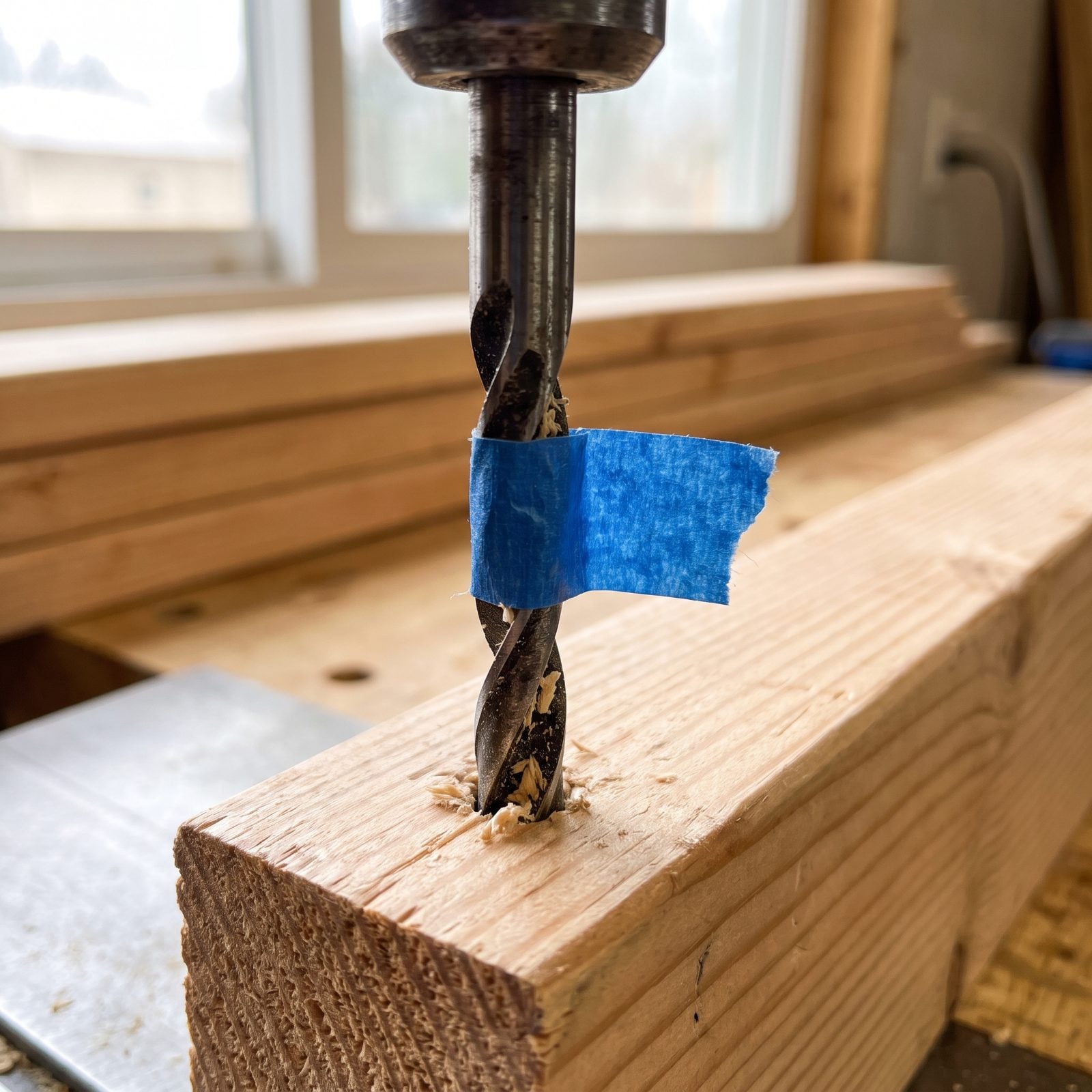
Drilling deeper than you meant to is how a cabinet screw ends up poking out the far side of a wall. One wrap of painter’s tape around the bit fixes it: you stop when the tape kisses the surface, and that’s your depth every time, no guesswork.
Costs nothing. It’s the kind of thing seasoned carpenters do without thinking, and the tape even gives you a little flag that flicks dust away as it spins.
25. Tape an Open Envelope Under the Drill Hole to Catch Falling Dust
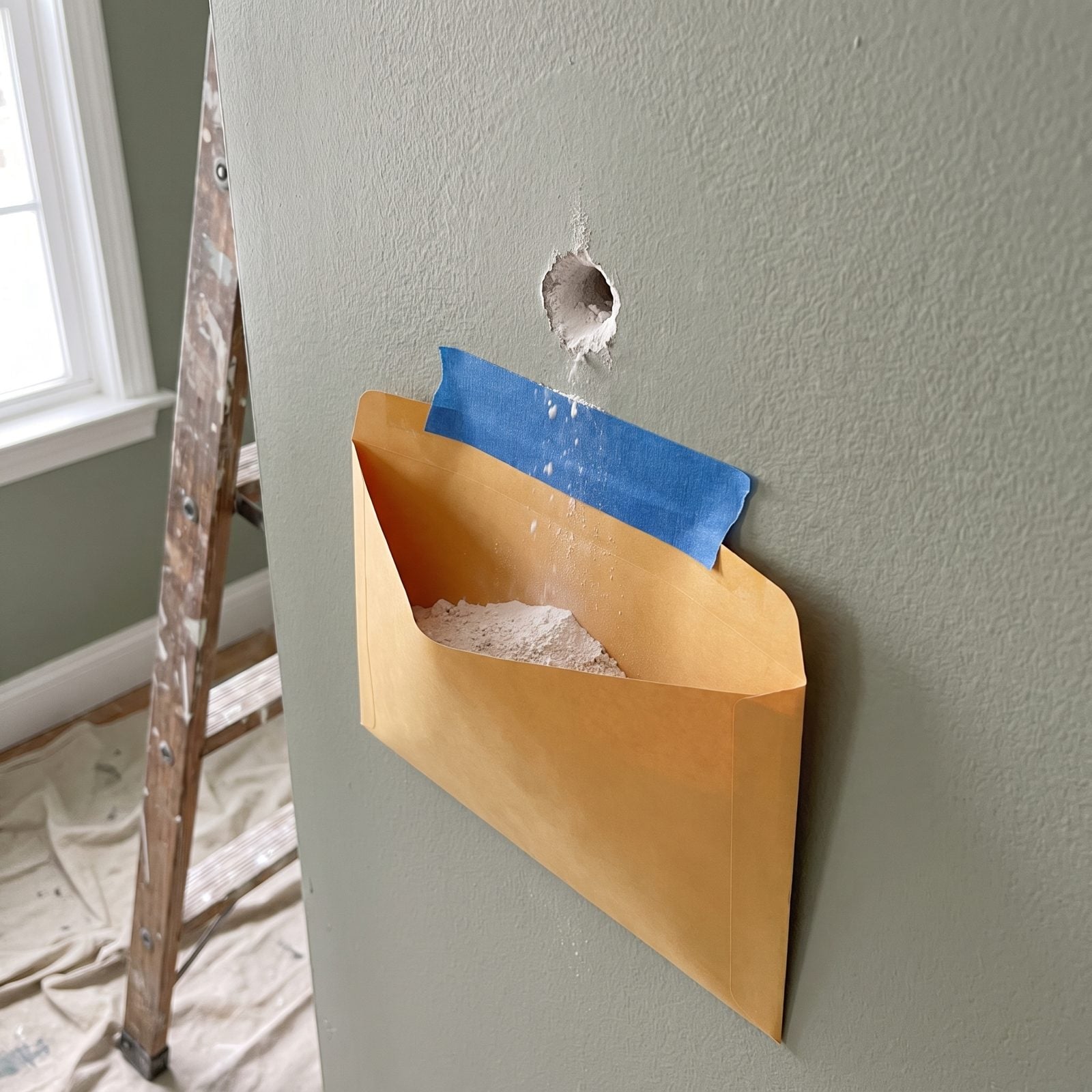
You know the grey smear drywall dust leaves running down a wall after you drill. An opened envelope taped just below the hole catches nearly all of it before it ever reaches your skirting or floor.
Fold the flap out to make a little lip, press two strips of tape along the top edge, and drill. Peel it off afterward and tip the dust into the bin. No vacuum. No wiping. No grey ghost down the paint.
24. Hold the Nail With a Comb So You Stop Hitting Your Thumb
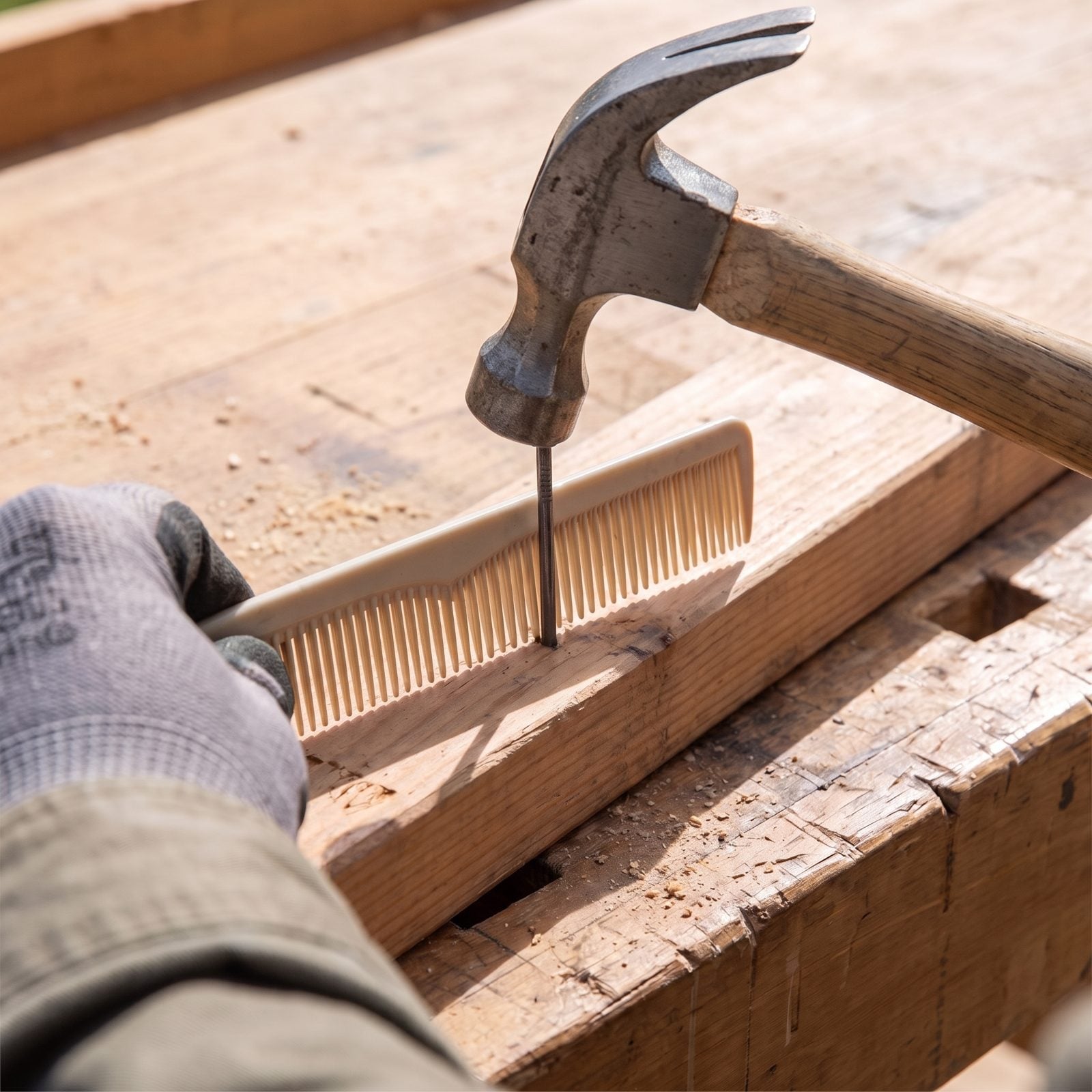
Starting a small nail means holding it with fingers parked right in the hammer’s path. Anyone who’s done it knows the flash of pain after a bad swing.
Slot the nail between the teeth of a plastic comb instead. The comb braces it upright and keeps your hand well out of range, so you can tap away until the nail holds on its own, then pull the comb away and finish the job. Works a treat for picture hooks and trim nails.
23. Stretch a Rubber Band Across the Paint Can to Wipe Your Brush Clean
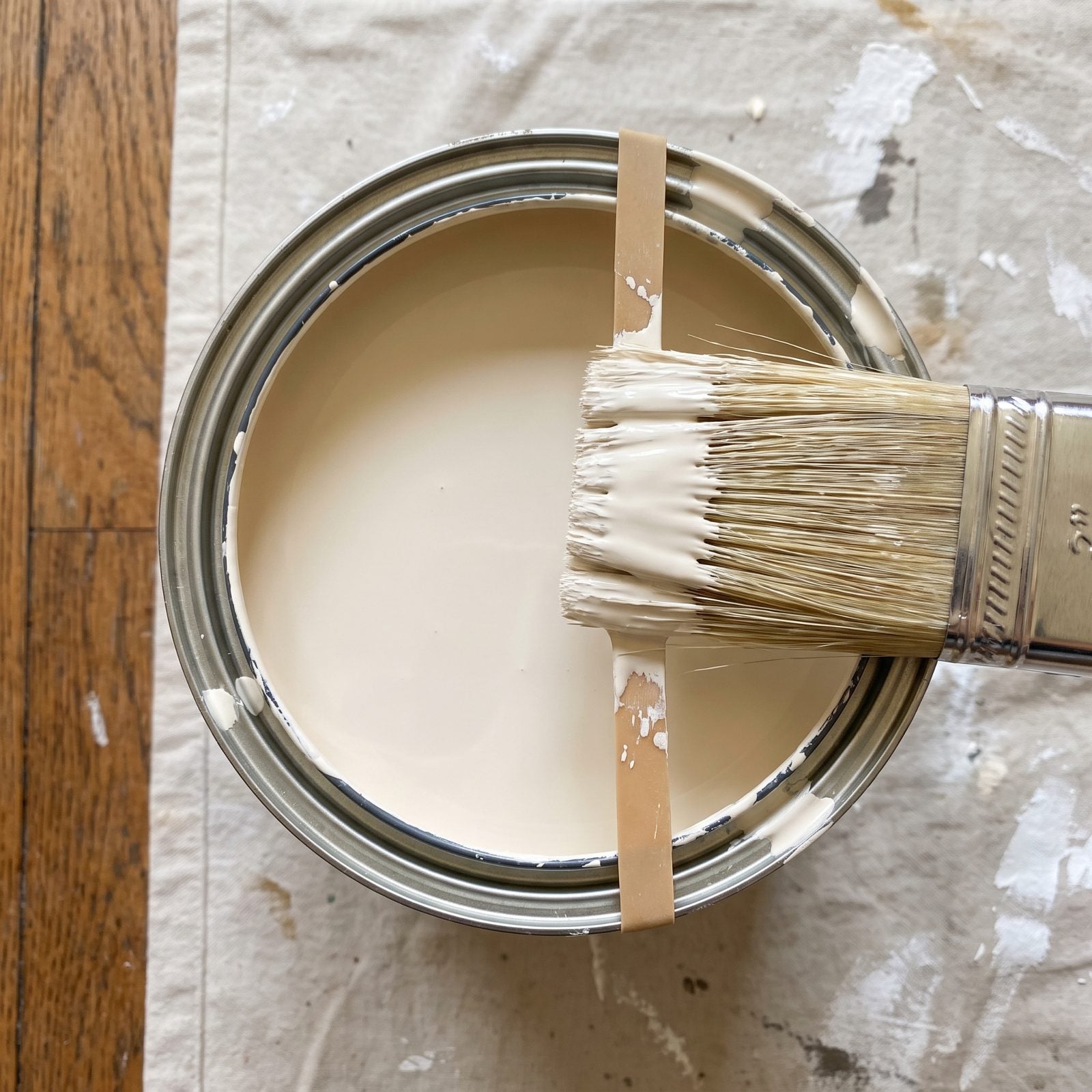
Wiping a loaded brush on the can rim does two bad things. It clogs the groove so the lid never seals again, and it leaves paint running down the side.
Stretch a rubber band over the open can, top to bottom, then drag the brush against the band to knock off the excess. Drips fall straight back in, the rim stays clean, and the lid actually closes when you’re done.
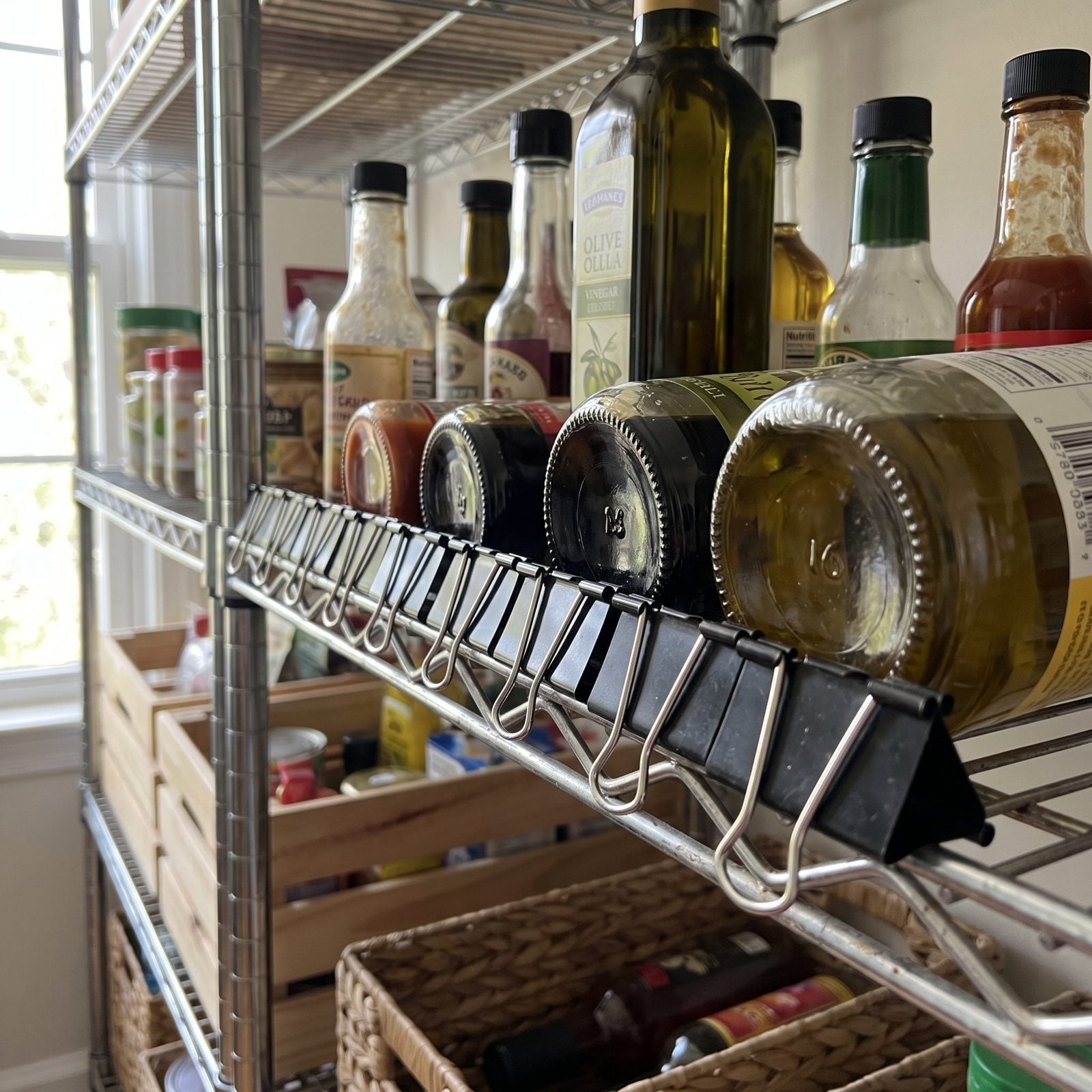
22. Clip Binder Clips to Wire Shelves to Stop Bottles From Rolling
🔥 Would you like to save this?
Wire shelving has one flaw. Round things roll off the front the second you nudge the shelf. Clip a row of binder clips along the front wire with the metal arms folded down, and you’ve built yourself a little fence.
Bottles, cans, and jars bump into it and stay put. It works on fridge shelves, pantry racks, and those over-door organizers too. Cheap, removable, and you probably have a drawer full of them doing nothing.
21. Store Reusable Water Bottles on Their Sides in a Magazine File
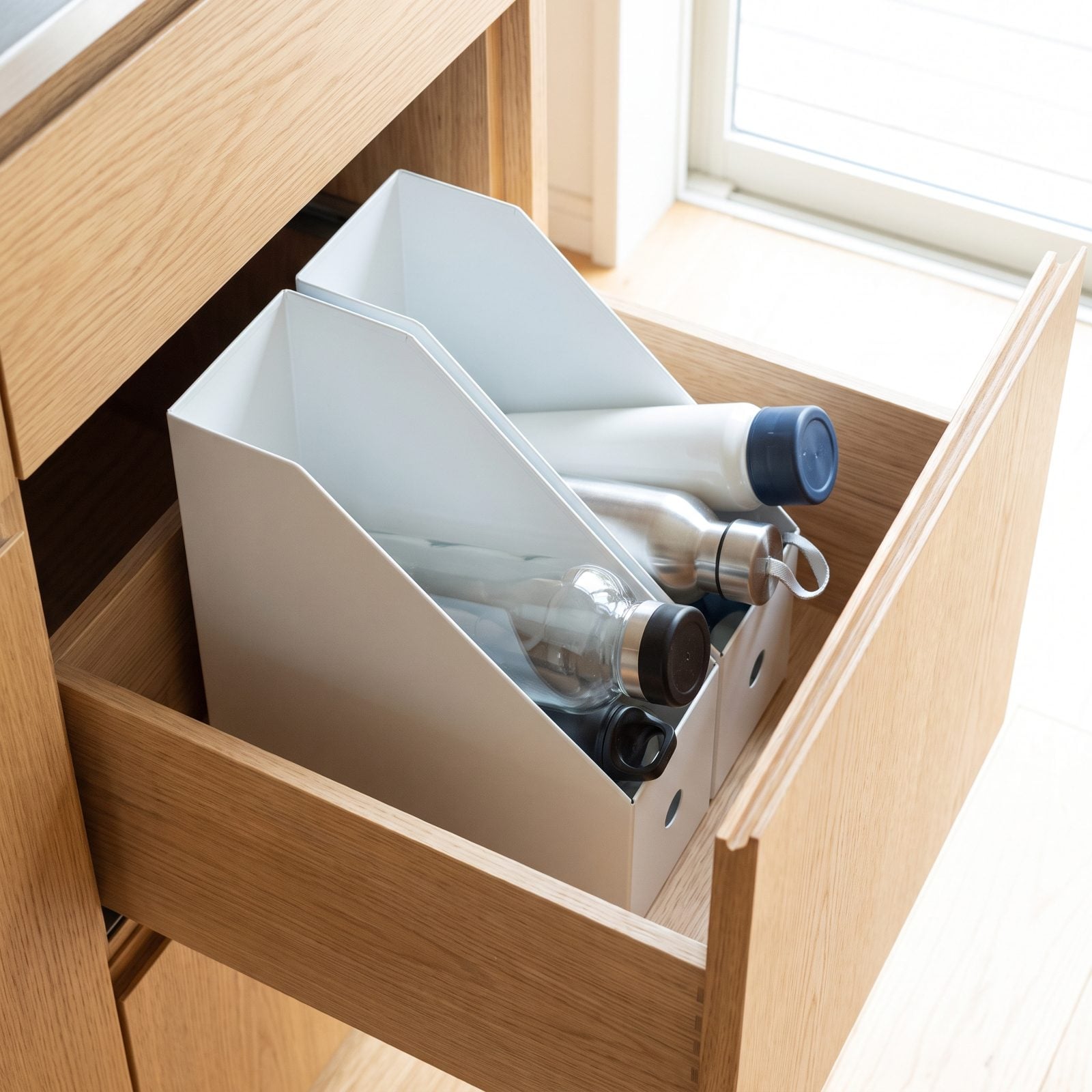
Reusable bottles are a drawer’s worst enemy. They roll, they clatter, they hog the whole drawer lying loose. Stand a magazine file upright and they lean in diagonally on their sides, snug and contained.
Pull one out and the rest stay put, so no avalanche when you pull open the drawer. One file holds four or five, and you can line a couple side by side in a deep drawer. The same trick corrals rolls of foil and cling film.
20. Park a Turntable Under Countertop Appliances for Instant Access
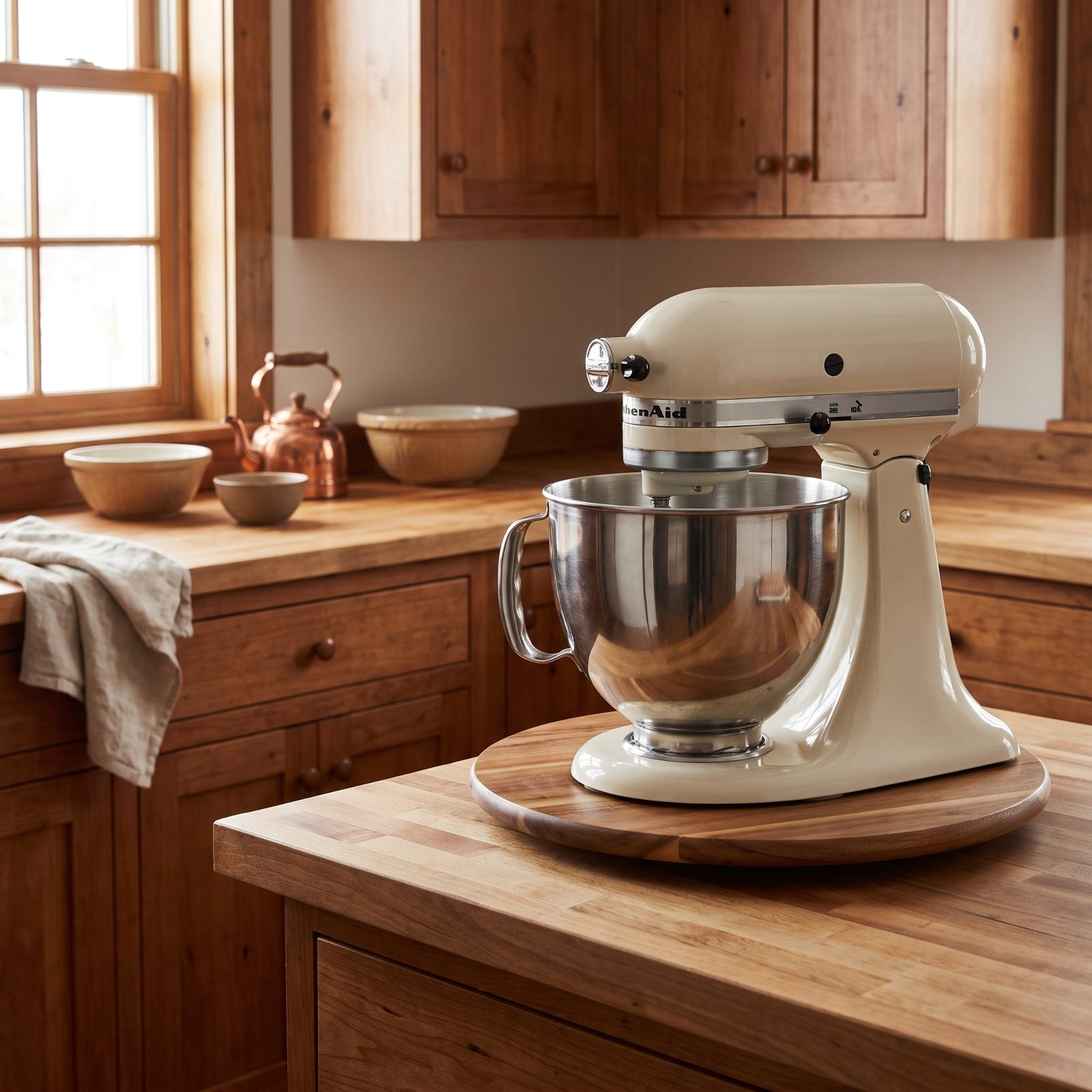
Heavy appliances shoved into a corner make you drag them forward every single time. Set a turntable underneath and you just spin them to face you. No lifting, no scraping the counter, no reaching awkwardly behind the toaster for a dial.
For a cramped corner in small kitchen decor, where every inch has to pull double duty, it’s the best move going. Put a bamboo lazy Susan under a stand mixer and the controls always come to you.
19. Hang Spray Bottles From a Tension Rod Under the Sink
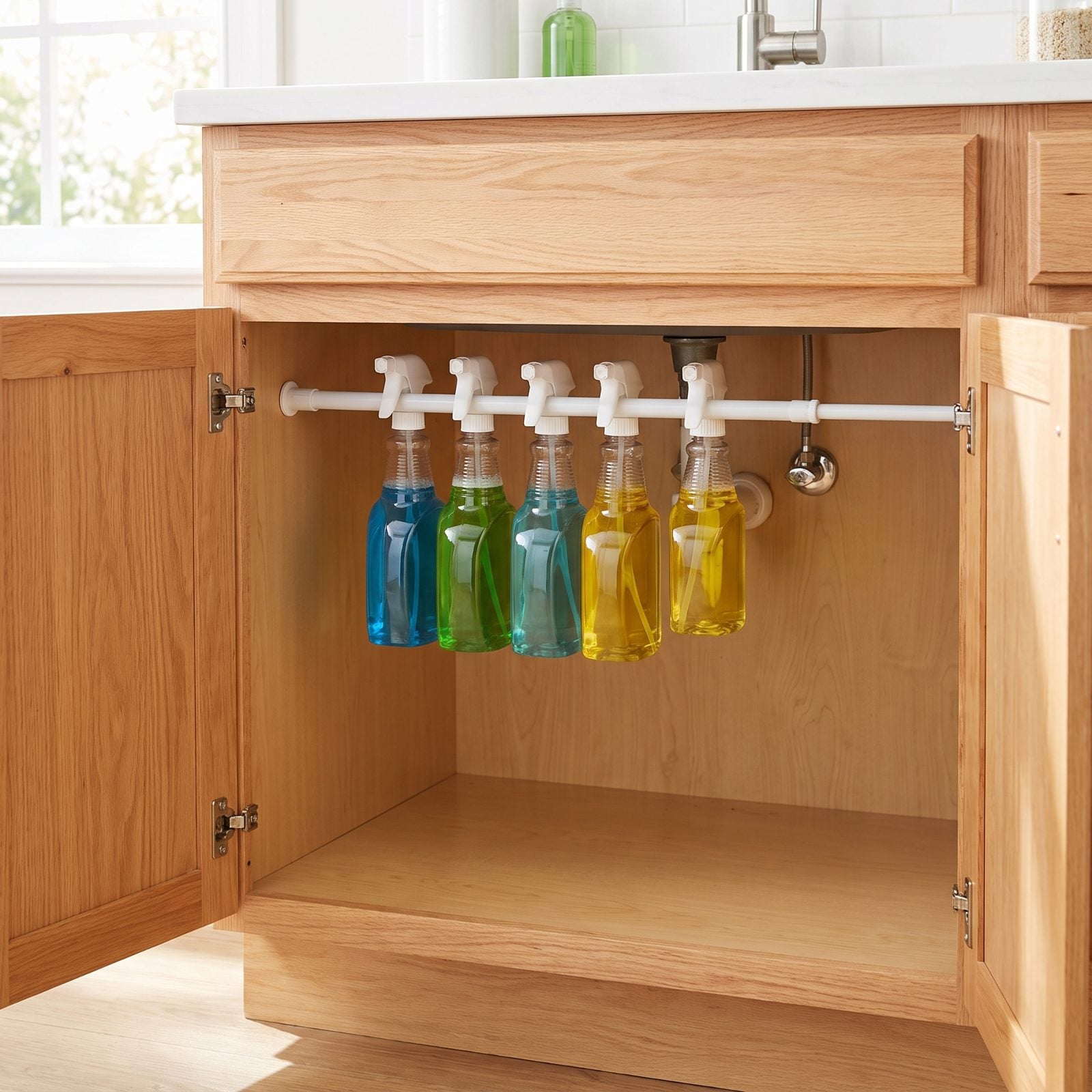
The cabinet under the sink is where cleaning bottles go to fall over. Wedge a cheap tension rod across the space and hang your spray bottles from it by their triggers.
Now the cabinet floor is empty. You can see what you’ve got, grab a bottle without knocking three others down, and tuck a bin or a stack of cloths underneath. Two minutes to set up, and it reclaims the whole lower shelf.
The best storage trick is the one that turns wasted vertical air into usable space.
18. Trap Ceiling-Fan Dust Inside an Old Pillowcase
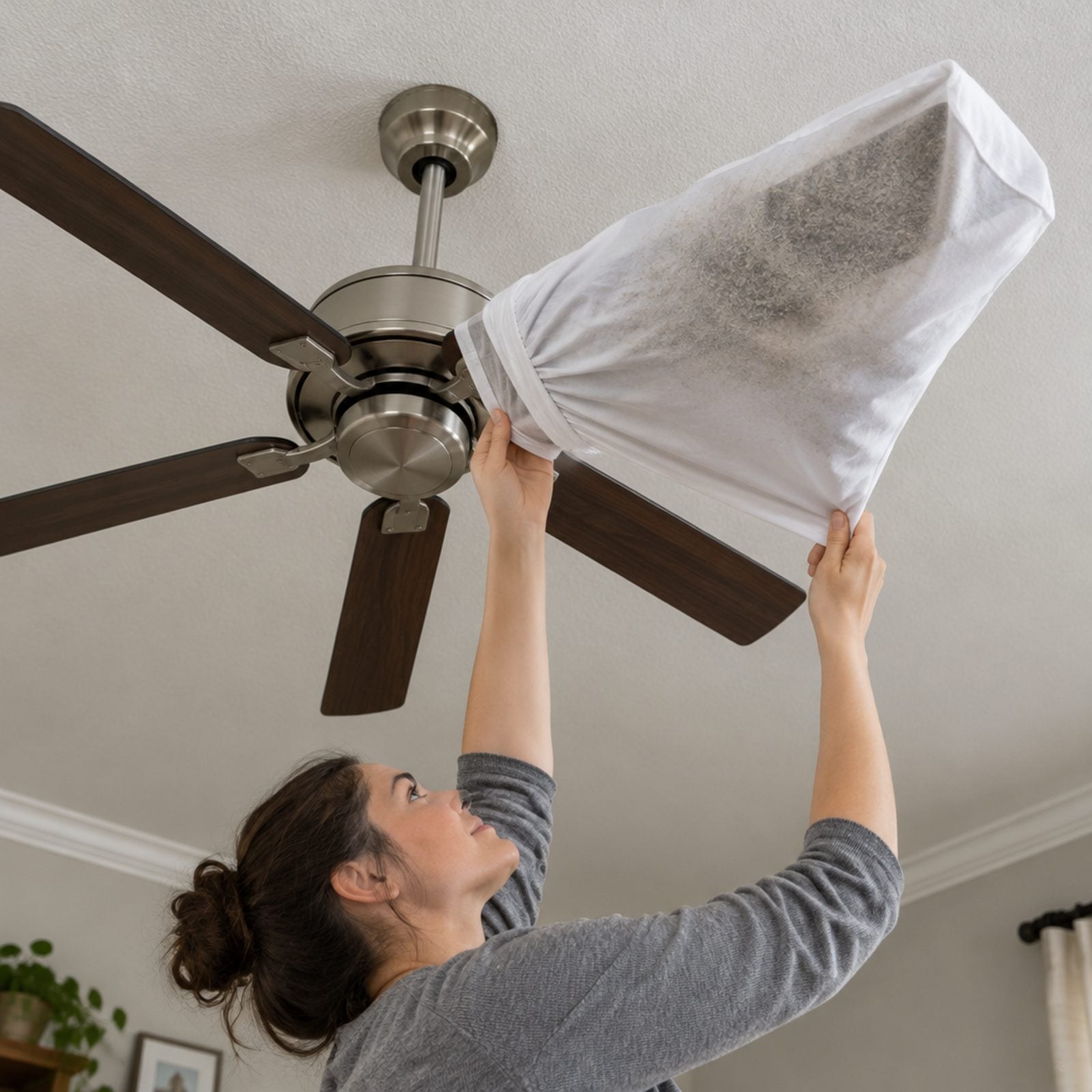
Dusting a ceiling fan with a cloth just dumps a grey blizzard onto the bed below. Slip an old pillowcase over each blade instead, then draw it back toward you.
The fabric wipes both sides at once and catches most of the dust, though some still puffs out of the opening as you pull it back. Shake it out over an outdoor bin and you’re done. Throw an old sheet over the bed and floor first, because a little debris will escape, but you only touch the fuzz once. I wish someone had told me this before I ruined a set of sheets learning it the hard way.
17. Rake Embedded Pet Hair From Carpet With a Rubber Window Squeegee
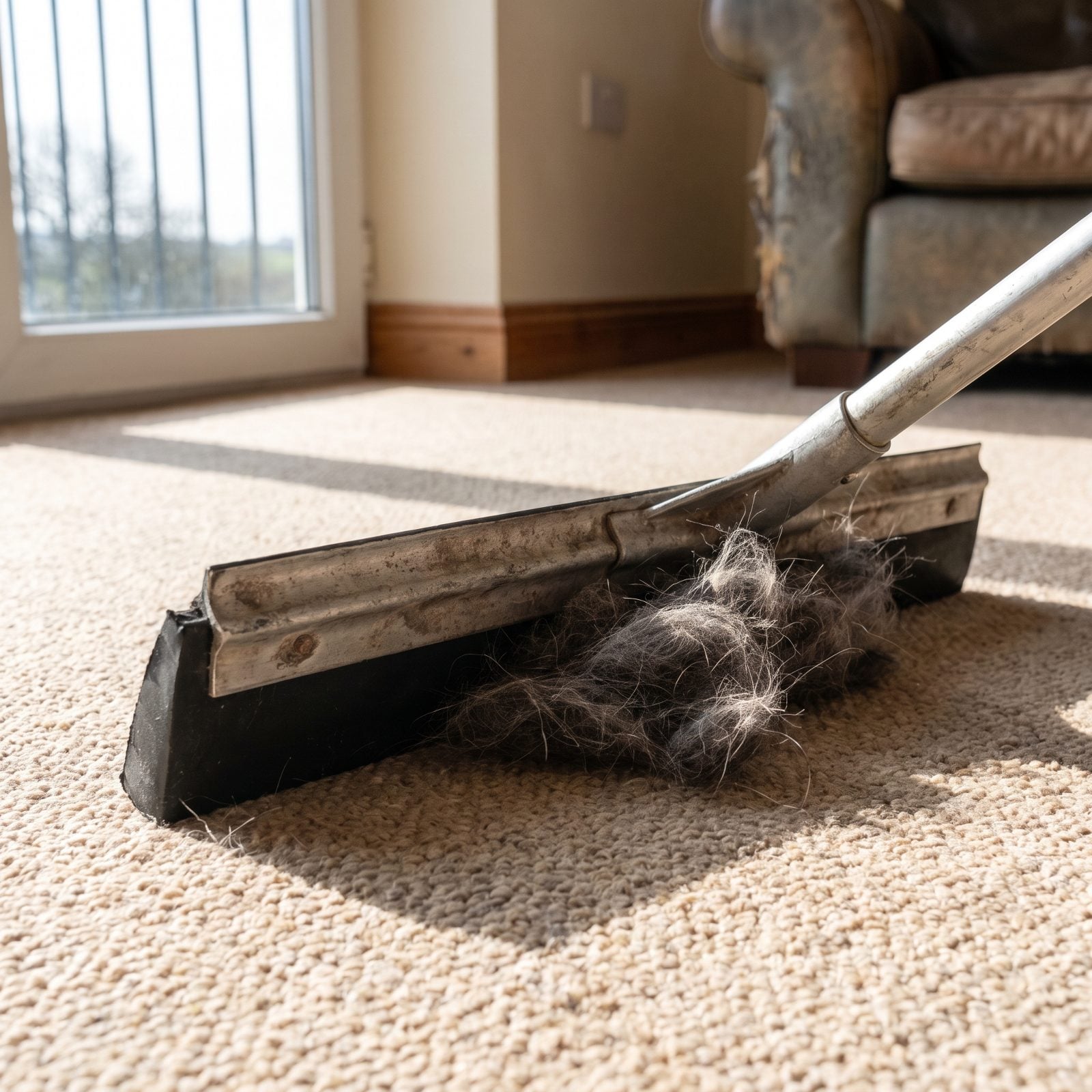
Vacuums skim right over pet hair that’s woven deep into carpet fibers. A rubber window squeegee drags it out instead, the edge grabbing the hair and rolling it into a clump you can lift off in one piece.
Short, firm strokes in one direction work best. It’s tedious across a whole room, so save it for the spots that matter: the sofa base, the stair edges, that patch by the back door where the dog turns around forty times before lying down. Then vacuum up what you’ve gathered.
16. Clean Both Sides of Blinds at Once With Microfiber-Wrapped Tongs
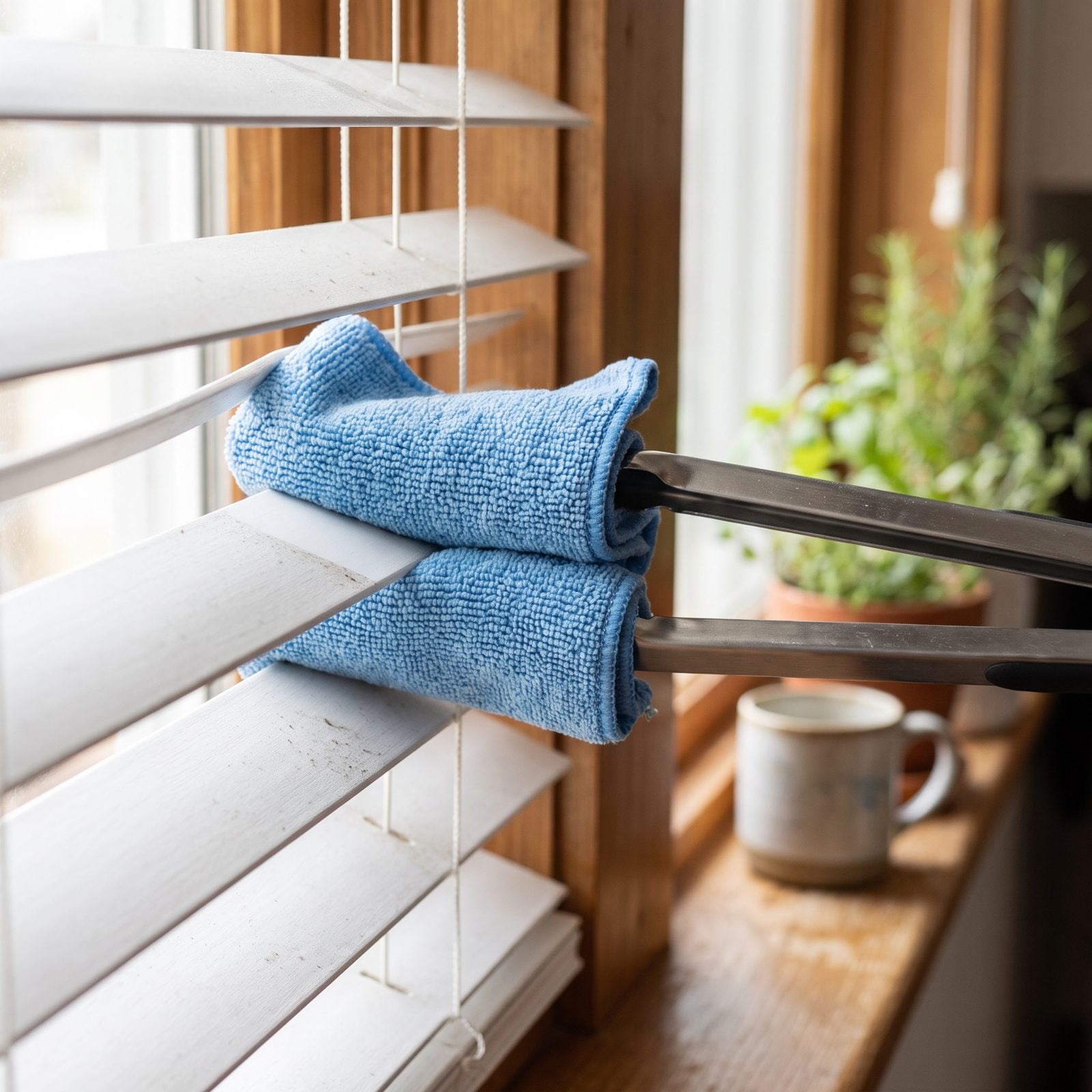
Dusting blinds one slat at a time is the kind of chore that makes you consider ripping the whole set out and starting over. Wrap a cloth around each arm of your kitchen tongs, clamp, and slide — both sides get done in a single pass.
The grip does what your fingers can’t. You squeeze, the microfiber hugs the slat, and the dust lifts instead of smearing across in grey streaks. For stubborn kitchen grease near a stove window, dampen the cloth a little first.
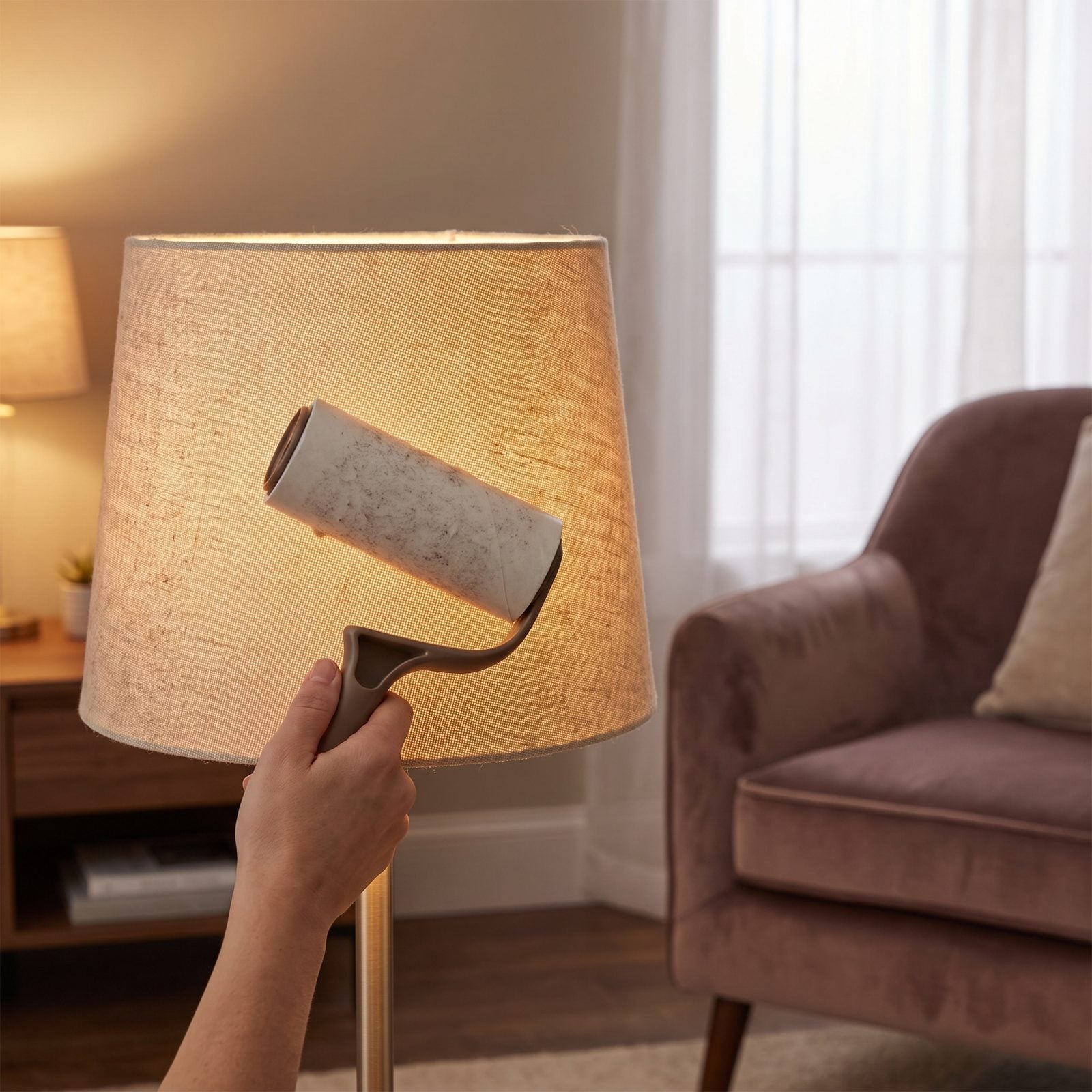
15. Lift Dust From Lampshades With a Lint Roller
14. Scrub the Bottom of Narrow Vases With Rice and Soapy Water
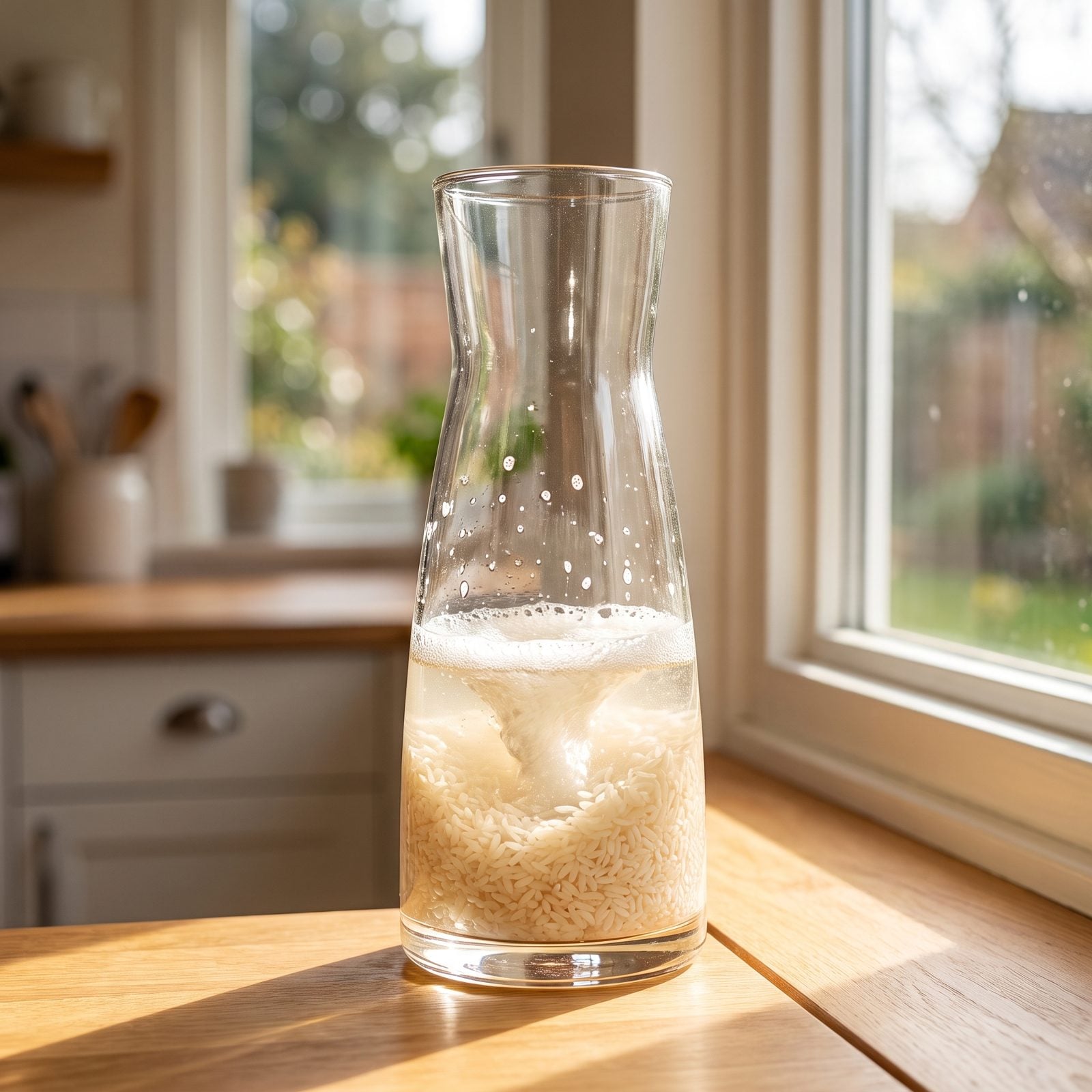
You’ve reached into a skinny vase, realized your hand won’t fit, and just given up on the murky residue at the bottom. A bottle brush never reaches the curve right. Rice does.
Drop in a spoonful of uncooked rice, a squirt of dish soap, and warm water, then cover the top with your palm and shake like you mean it. The grains bounce against every inch of glass the brush can’t touch, working like a swarm of tiny scrubbers. Rinse, and the grime that’s been hiding down there for months is gone.
13. Soak a Crusted Showerhead in a Bag of Vinegar
🔥 Would you like to save this?
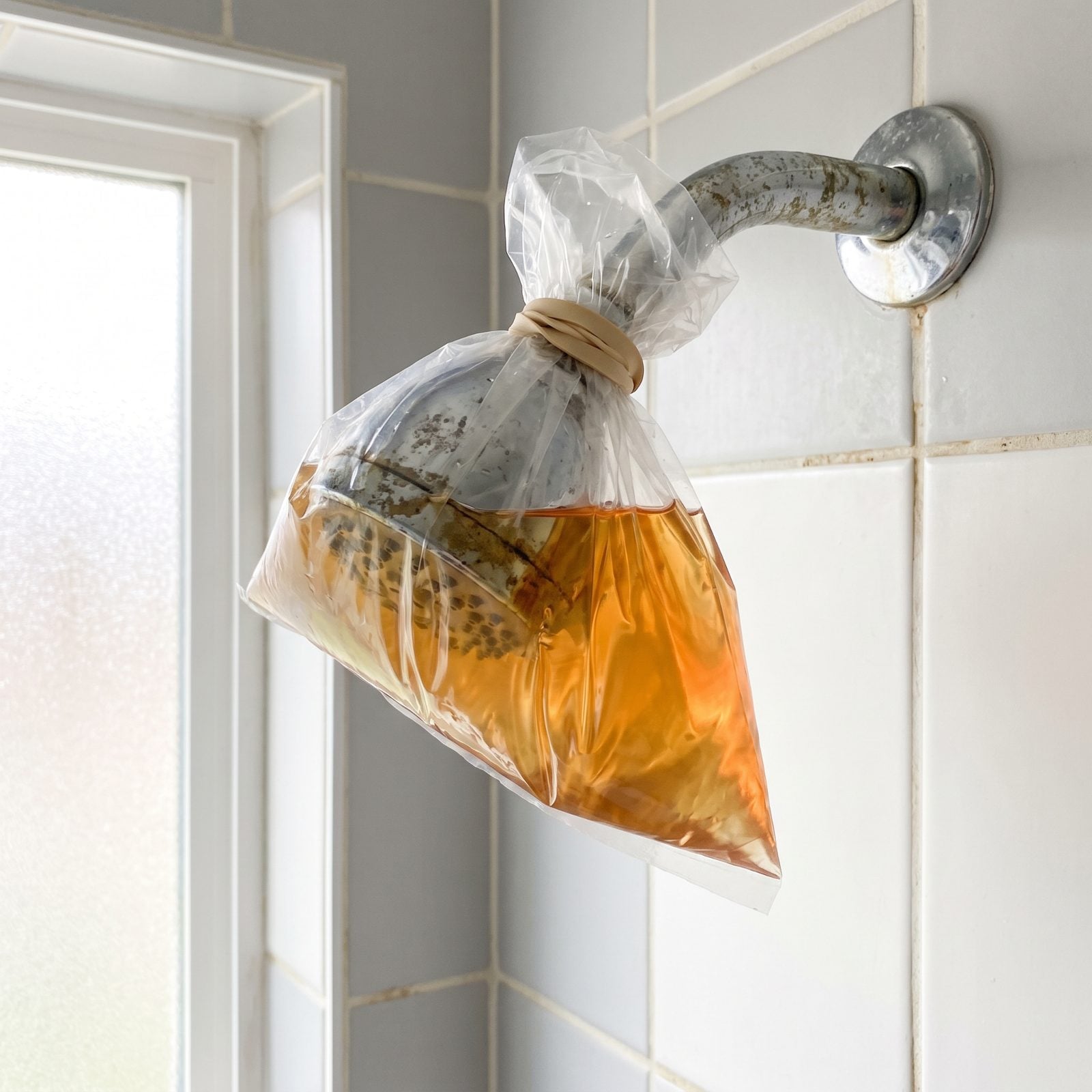
Hard water turns a strong shower into a sad dribble. The mineral buildup clogs the nozzles one by one until you’re standing under a drizzle, wondering what happened to your water pressure.
Fill a plastic bag with apple cider vinegar, slip it over the showerhead so the nozzles are submerged, and tie it on with a rubber band. Leave it overnight. The acid dissolves the calcium crust without a single scrub. Rinse in the morning, run the water hot for a minute, and the spray comes back to full force.
12. Slice Soft Cake and Cheese With Unflavored Dental Floss
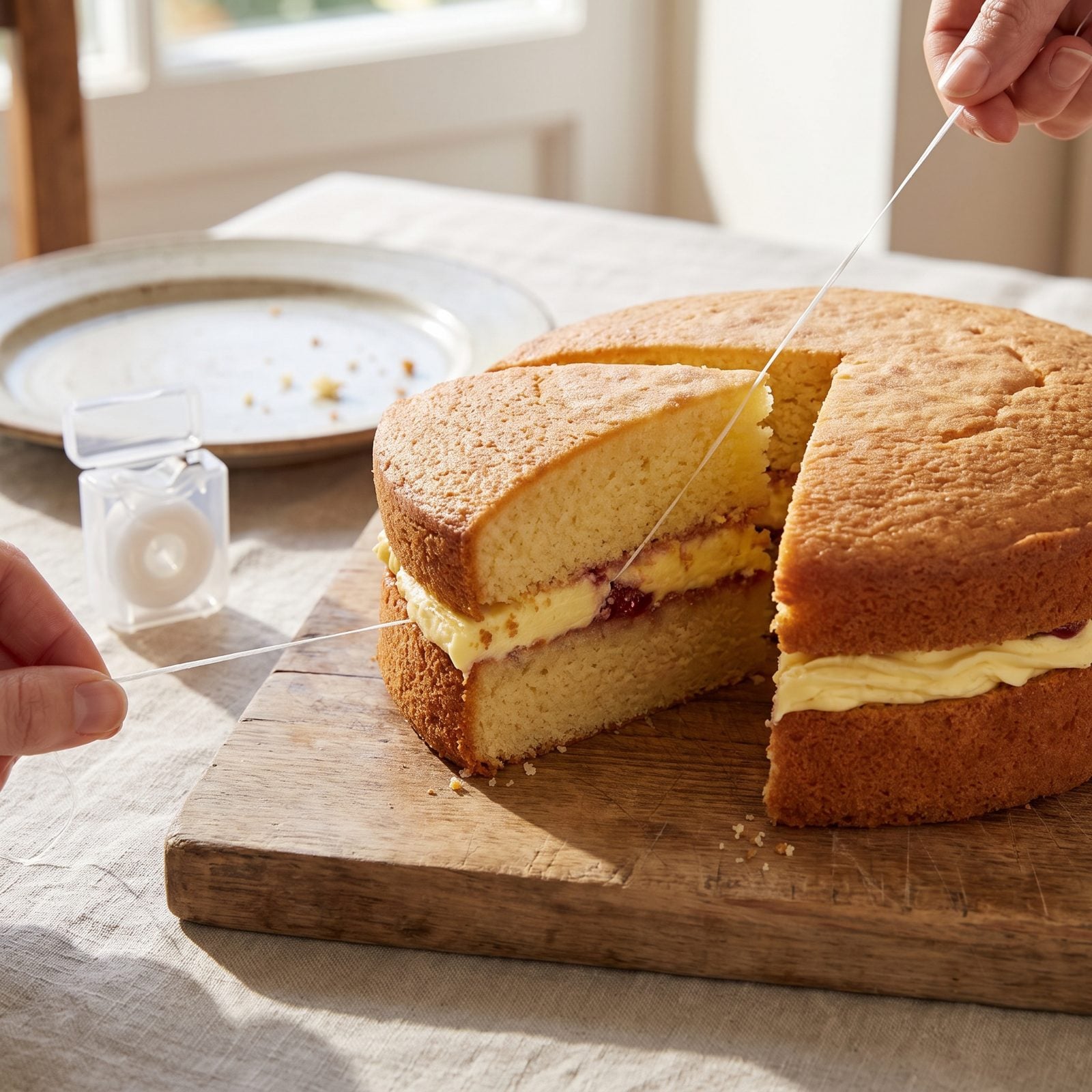
A knife drags through a soft cake and leaves a mangled edge. Dental floss cuts clean through it.
Draw a length of it down through the cake at an angle, from the top edge across the plate, and let the thread do the slicing. It pulls off the same trick on fresh mozzarella, goat cheese, and cinnamon rolls. Unflavored only, though — unless you want dessert tasting faintly of mint.
11. Peel Fresh Ginger With the Edge of a Teaspoon
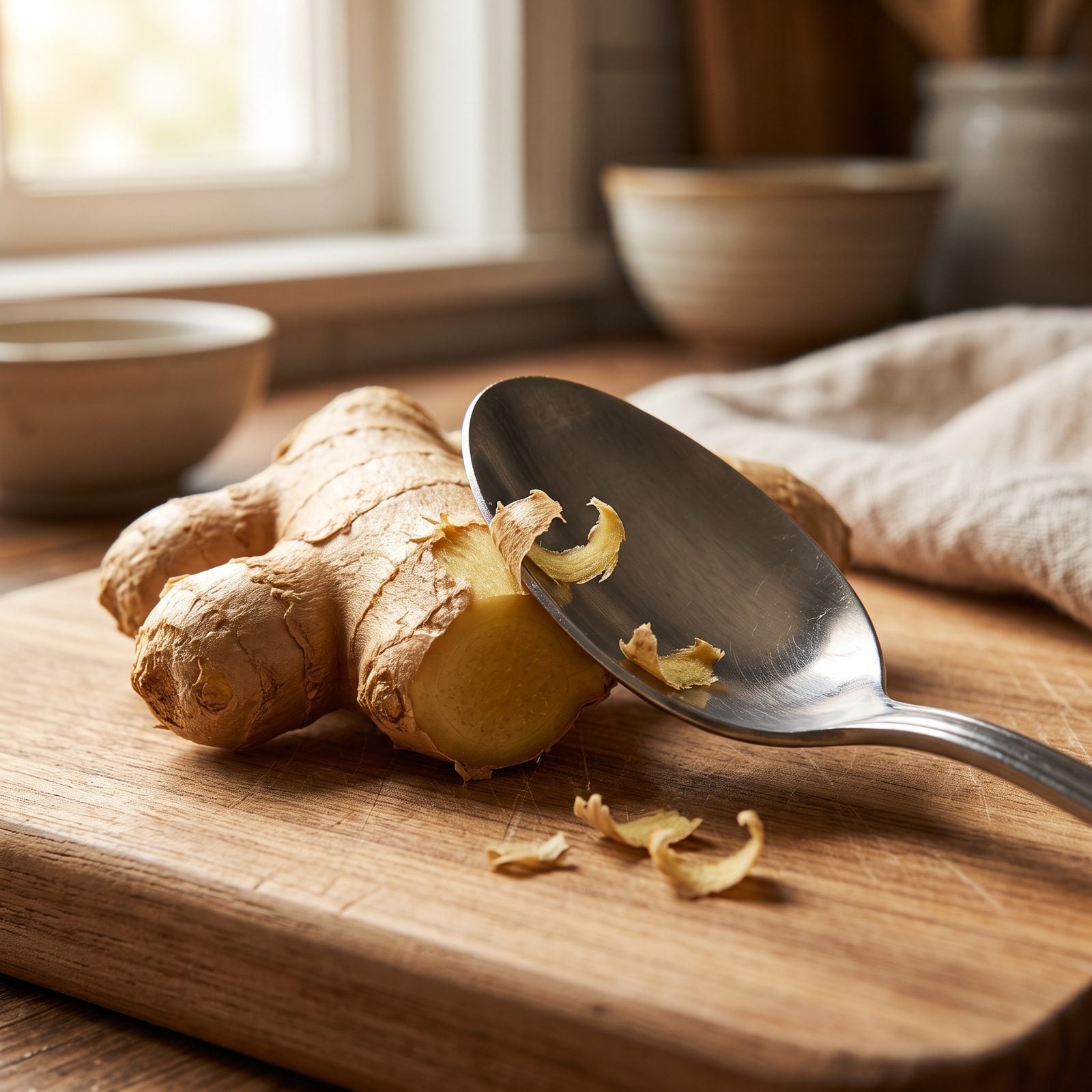
A vegetable peeler takes half the ginger along with the skin, especially around those gnarled joints where most of the flavor hides. A teaspoon takes only the skin.
Hold the root in one hand and scrape the edge of the spoon against it. The thin peel slides right off, and the spoon curves into the awkward nooks a peeler skips entirely. You lose almost nothing of the good stuff underneath.
10. Use Kitchen Tongs as a Handheld Citrus Press
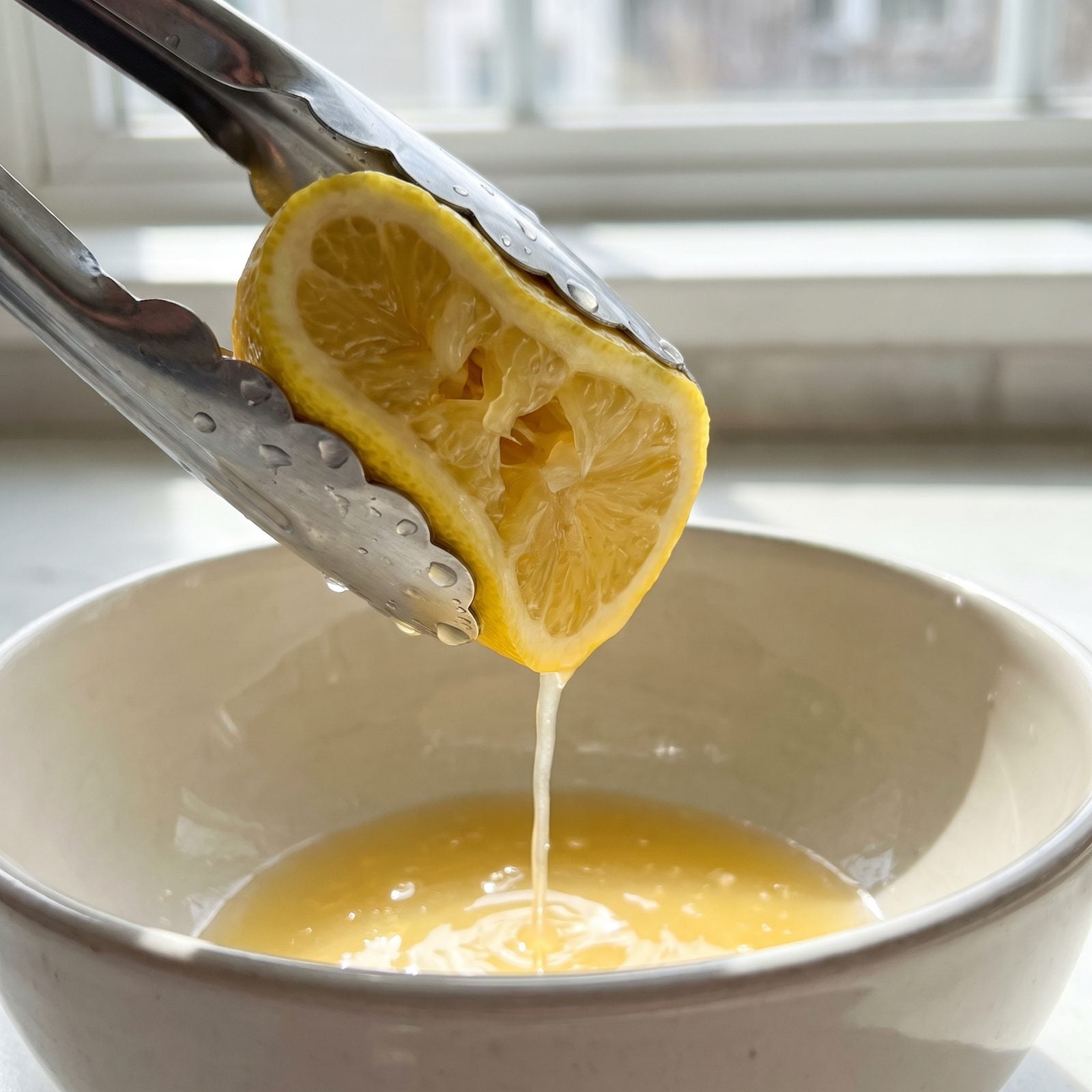
No citrus press in the drawer? The tongs you already own beat your bare hands every time.
Grip a lemon or lime half by its rim between the arms, cut face out, and squeeze. The metal spreads even pressure across the whole fruit, pushing out more juice than a fist, though a few seeds may slip through, so fish them out of the bowl afterward. Clamp hard, twist a little, and you’ve wrung it dry.
9. Grate Cold Butter for Faster Mixing and Spreading
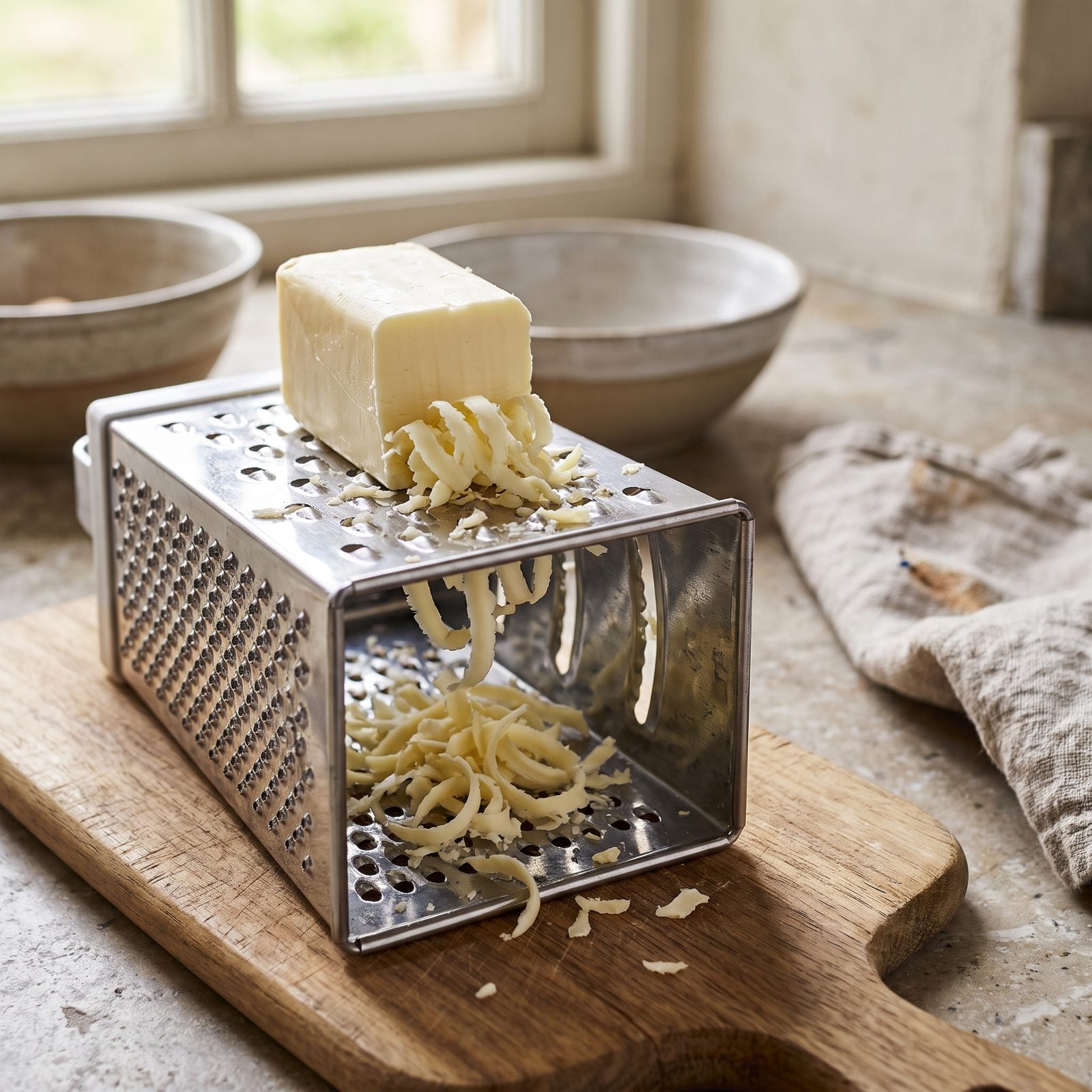
Forgot to soften the butter again? Grate it straight from the fridge.
Run a cold stick across the large holes of a box grater and it falls into soft, ribbed curls that fold into dough or batter in seconds, no creaming required. Bakers swear by this for flaky biscuits and pastry, since those cold curls melt into little steam pockets in the oven. The same move turns a rock-hard stick into something spreadable for toast without shredding the bread to bits.
8. Wrap Celery Tightly in Foil to Keep It Crisp Longer
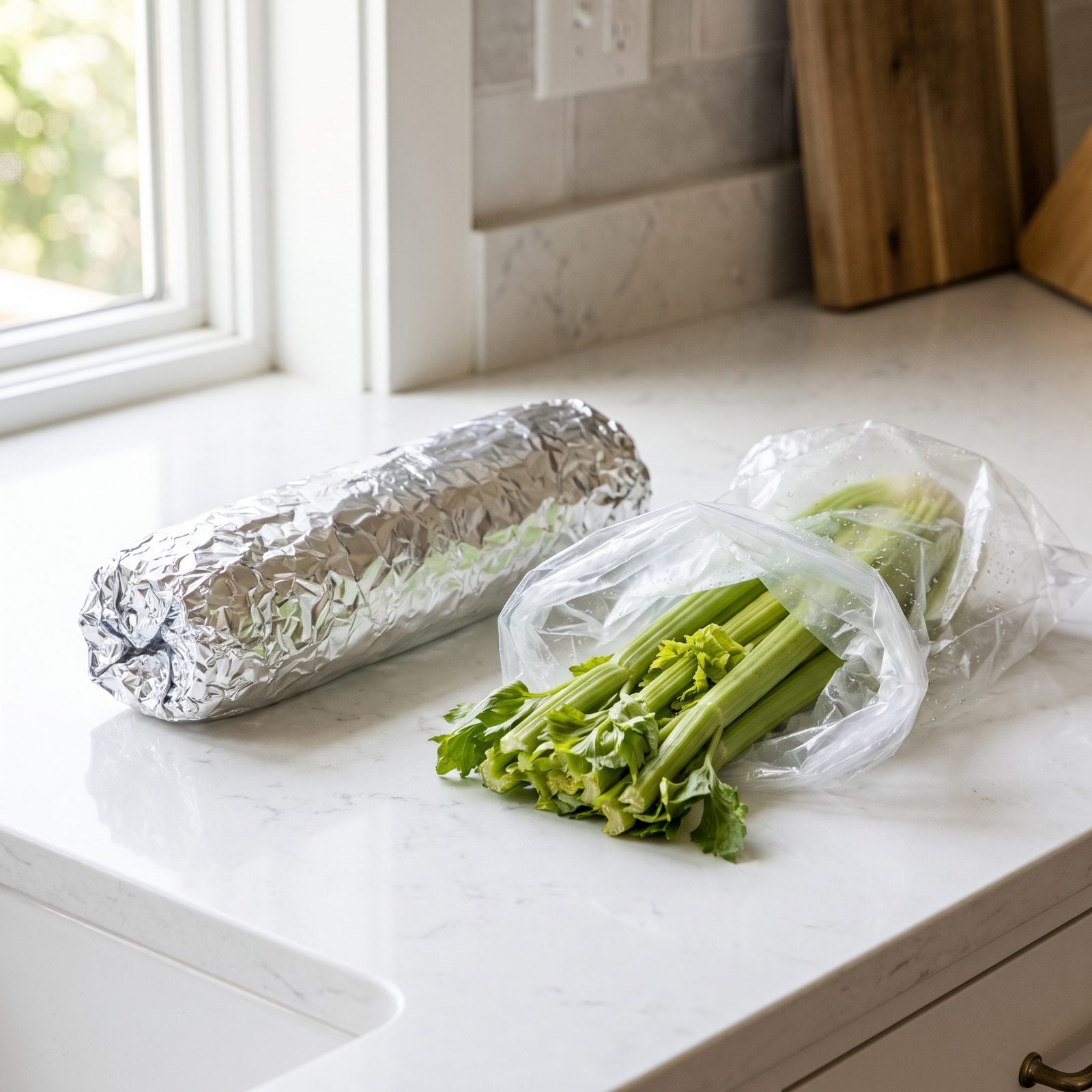
Celery stored in its plastic bag goes limp and rubbery within days. Wrap it in foil instead and it stays snappy for weeks.
Here’s the mechanism. The plastic traps the ethylene gas celery gives off, which speeds up its own decay, while foil lets that gas escape and still holds the moisture in. Wrap the whole bunch tightly before it goes in the fridge and you’ll still be snapping crisp stalks long after the bagged version would’ve gone to mush.
7. Freeze Chopped Herbs in Oil for Ready-to-Use Flavor Cubes
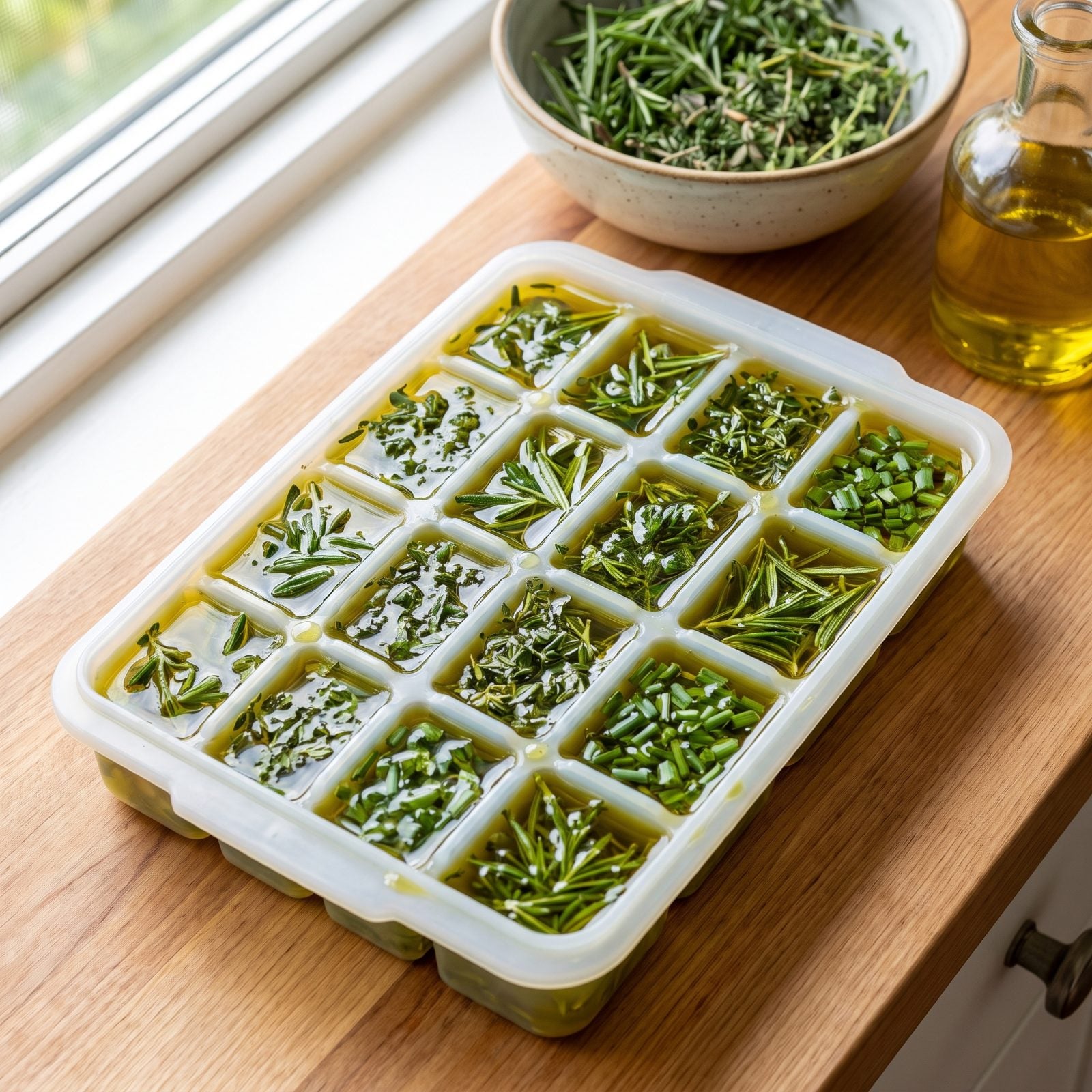
That bunch of basil you bought with good intentions is wilting in the crisper right now, half of it already slimy. Freeze what’s left in oil before the rest follows.
Chop whatever herbs you’ve got, pack them into an ice cube tray, and top each well with olive oil. Freeze, pop out the cubes, and stash them in a bag. Then, when you’re cooking, drop one straight into a hot pan — the oil melts, the herbs let go of their flavor right where you need it, and nothing ends up in the bin.
6. Mount Pot Lids Inside Cabinet Doors With Adhesive Hooks
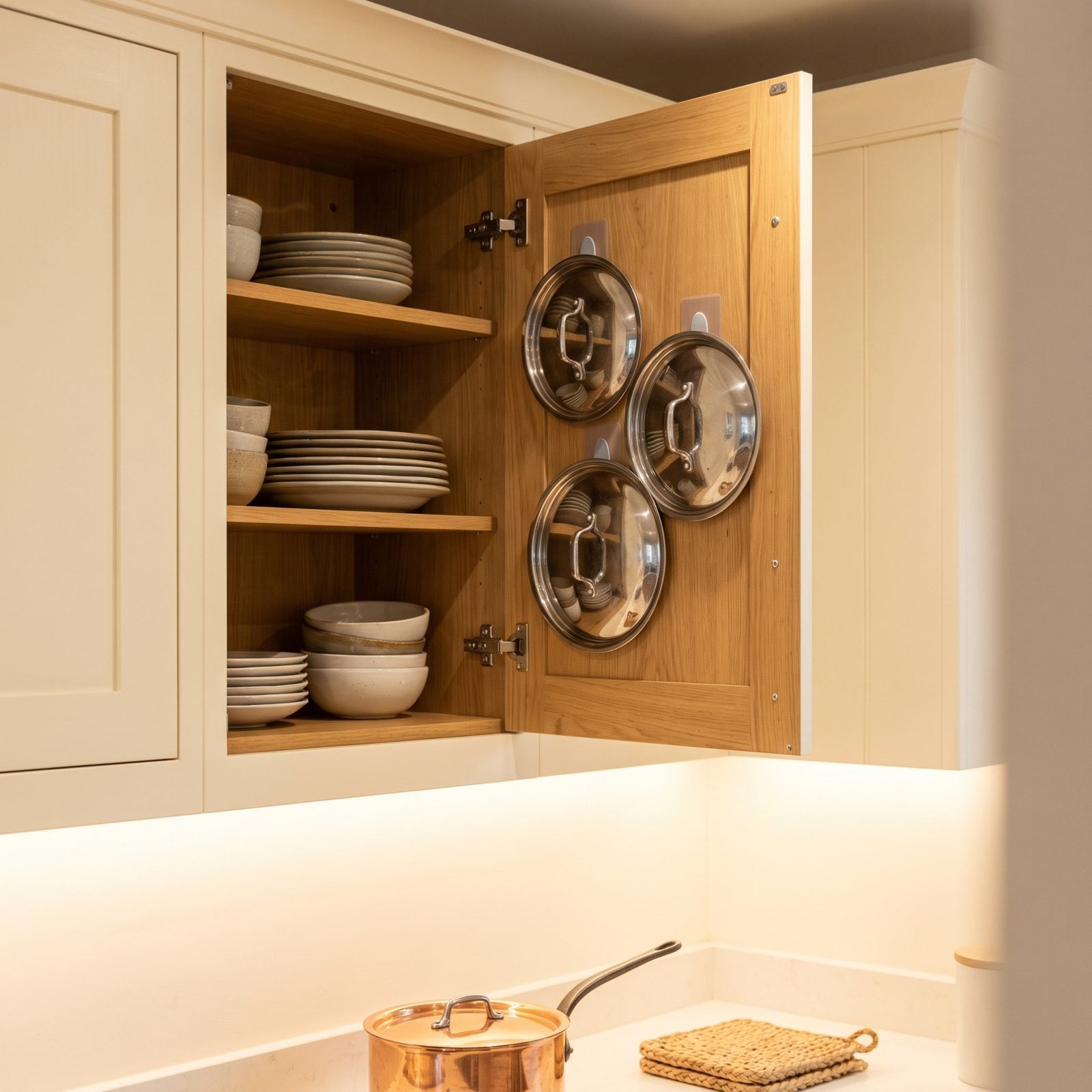
Pot lids are the socks of the kitchen. They vanish, they clatter, and they’re never the one that fits the pot in your hand. Press a few clear adhesive hooks inside your cabinet doors and the whole headache evaporates — each lid hangs by its rim, knob facing out, where you can see it, and the pots below finally stack flat.
What makes it click is that you’re using space you already paid for and never touched: the flat inner face of the door. No drilling into the box. No new drawer. Just hooks, and the lids that were driving you up the wall.
5. File Baking Sheets and Cutting Boards Like Paperwork
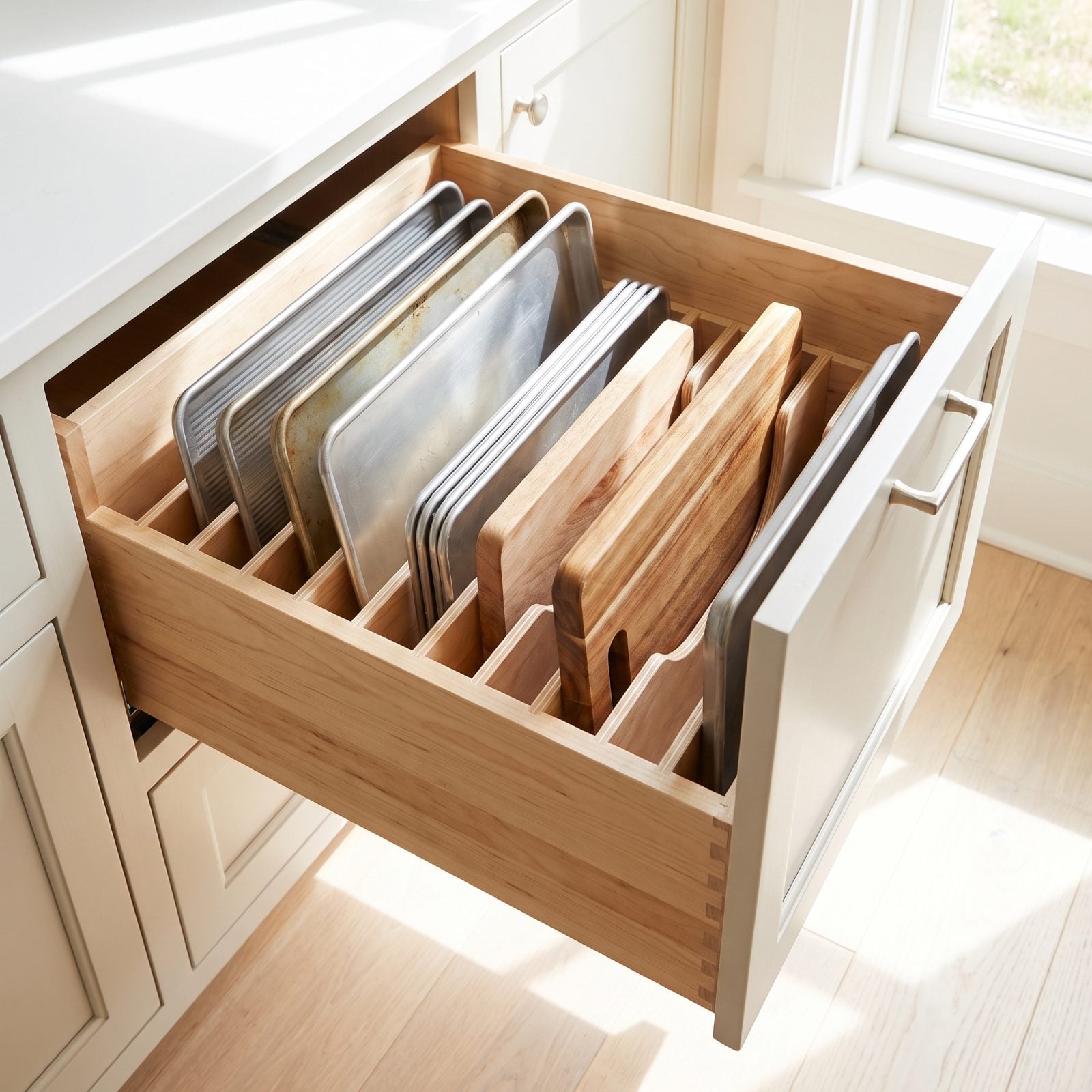
Stacked baking sheets are a trap. You want the one on the bottom, so you lift the whole leaning tower and pray nothing slides onto your foot. A deep drawer fitted with wooden dividers ends that circus — slot sheets, tins, and boards into the channels (matching sheets can nest together in one), and lift out exactly what you need with two fingers.
Going vertical is one of those small kitchen decor moves that earns its keep daily, turning a wrestling match into a reach. I’ll admit it: this is the one that changed how irritated I was by my own cupboards.
4. Clip a Razor Off the Wet Shower Ledge
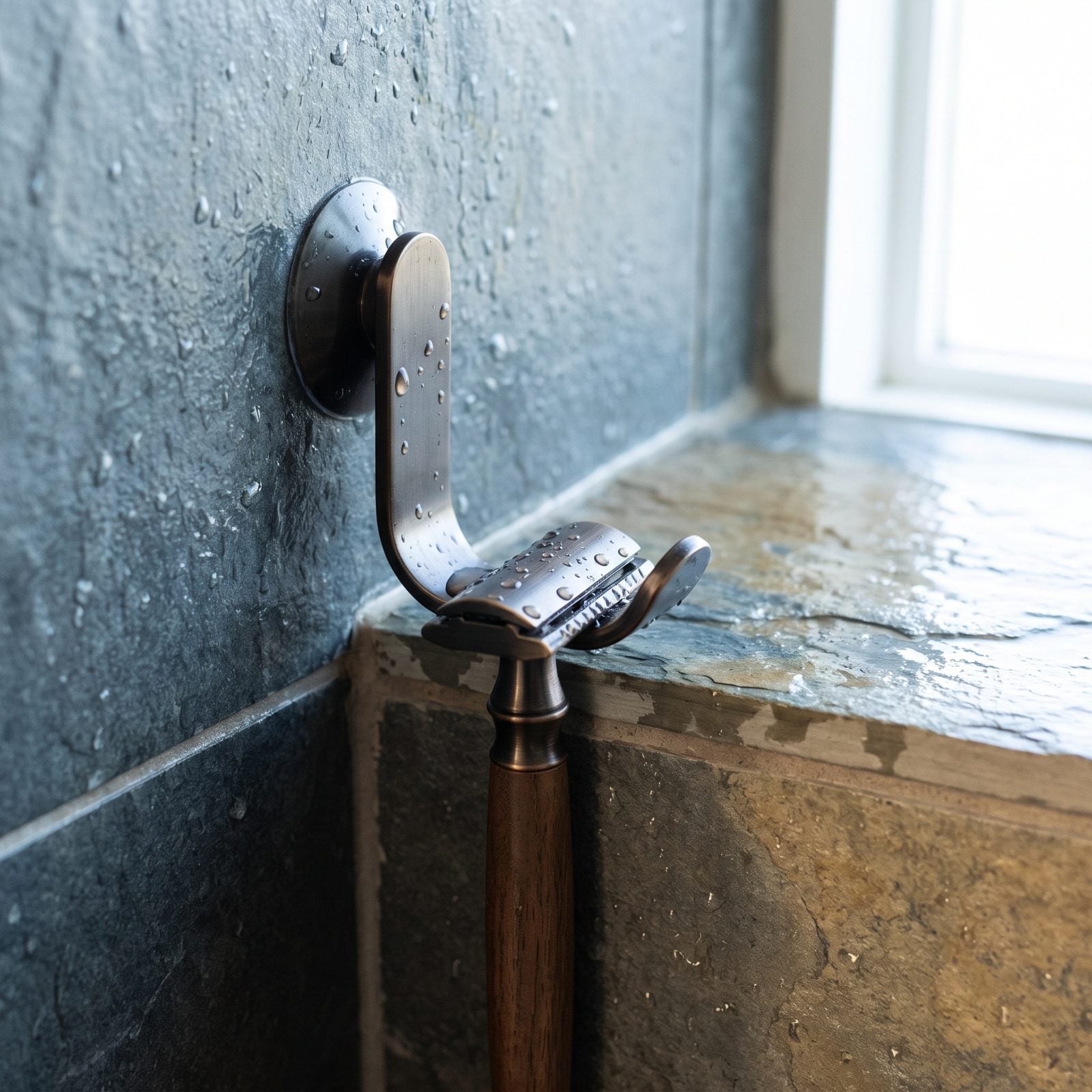
A razor left flat on a wet ledge is a rusty razor by Thursday. The blade sits in standing water, dulls fast, and quietly costs you a fresh cartridge every week.
Stick a stainless adhesive hook onto the face of the ledge, then hang the razor head-up from the hook so the handle points down, the head sits just off the wet surface, and water drains off the handle instead of pooling around the blade. The blade lasts far longer, and you stop feeding the razor aisle your paycheck.
3. Pin Tweezers and Clippers to a Magnetic Strip
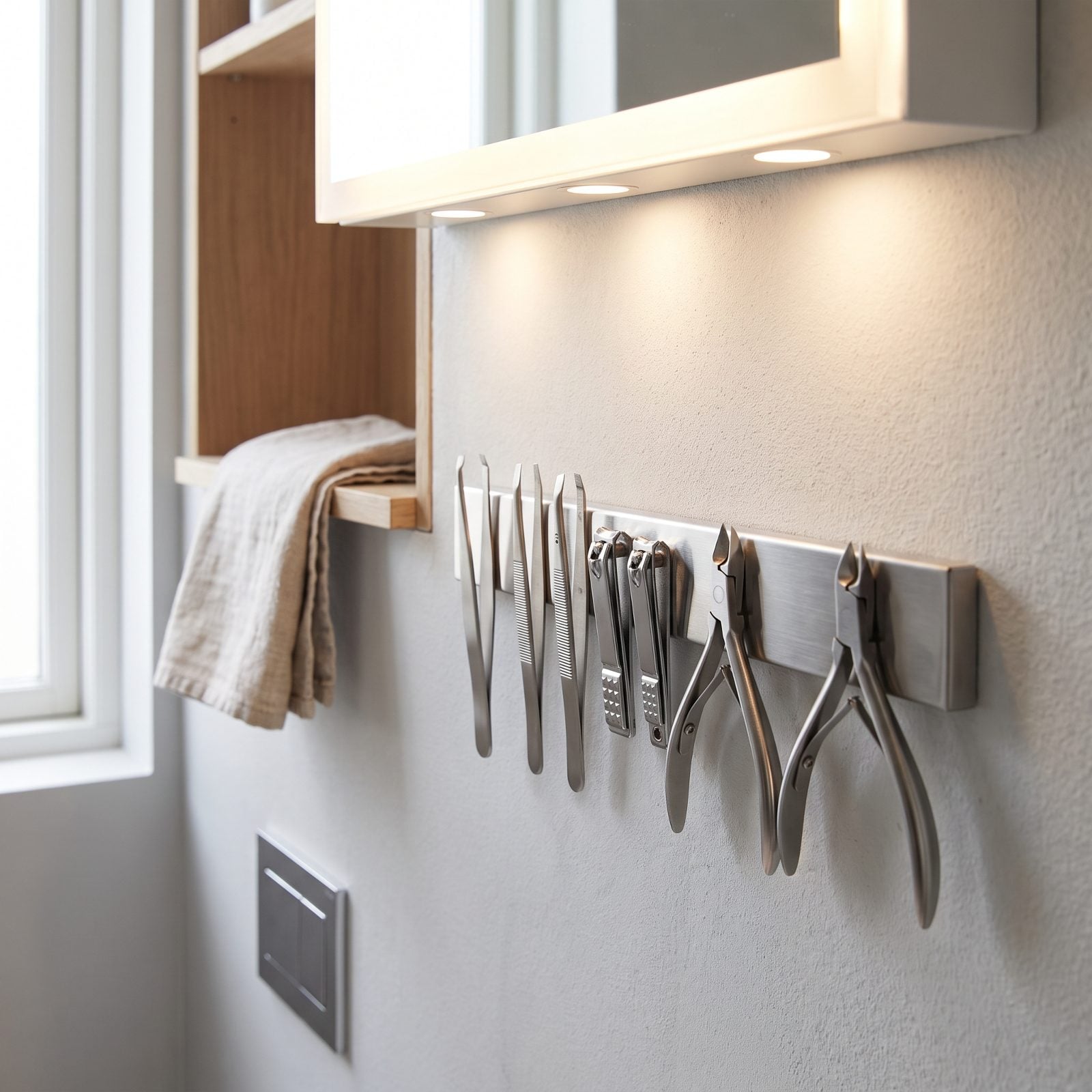
Small metal grooming tools are escape artists. Tweezers roll behind the tap, clippers bury themselves in a drawer of chaos, and bobby pins turn up everywhere except the one moment you need one. Mount a magnetic strip on the wall and the hunt is over.
Everything steel snaps to it and stays, visible and off the counter. There’s a quiet payoff too — a clear surface reads as a calm one, so your brain stops flagging the mess every time you pass the mirror.
2. Make the Bed in Thirty Seconds With the Duvet Roll

Stuffing a comforter into a duvet cover is a full-body argument you usually lose. The roll method skips the fight.
Turn the cover inside out, lay it flat with the comforter on top, roll the whole thing into a long tube from head to foot, then flip the open end over each roll like a burrito. Unroll, give it one shake, done. First time it looks like sleight of hand, and it keeps working every time after.
Washed white linen duvet cover fabric makes it even easier, since the slight grip of linen keeps the comforter from sliding loose as you roll.
1. Stop Sliding Sofa Cushions With a Strip of Rug Gripper
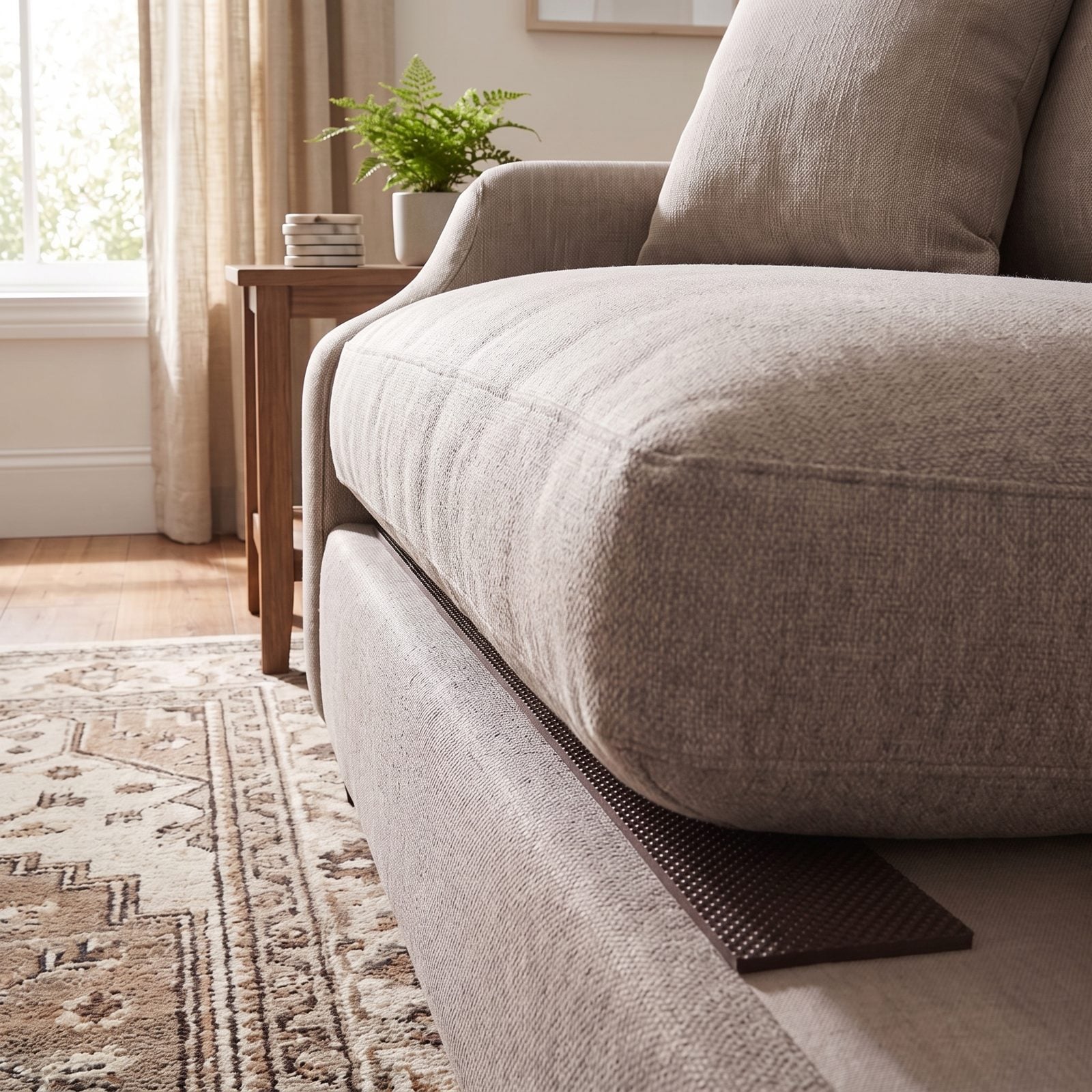
You know the sofa. The one whose cushions creep forward all evening until you’re perched on a cliff of fabric and crumbs, forever shoving them back. There’s no polite way to describe how maddening that is.
Cut a strip of rubber rug gripper, lay it so it runs from the top of the front rail down onto the sofa deck under each cushion. The waffle grip bites both surfaces, and the cushions quit traveling. The same little fix that keeps a small bench throw pillow from sliding off does the job here, and once the cushion is back in place, the strip is hidden underneath.