
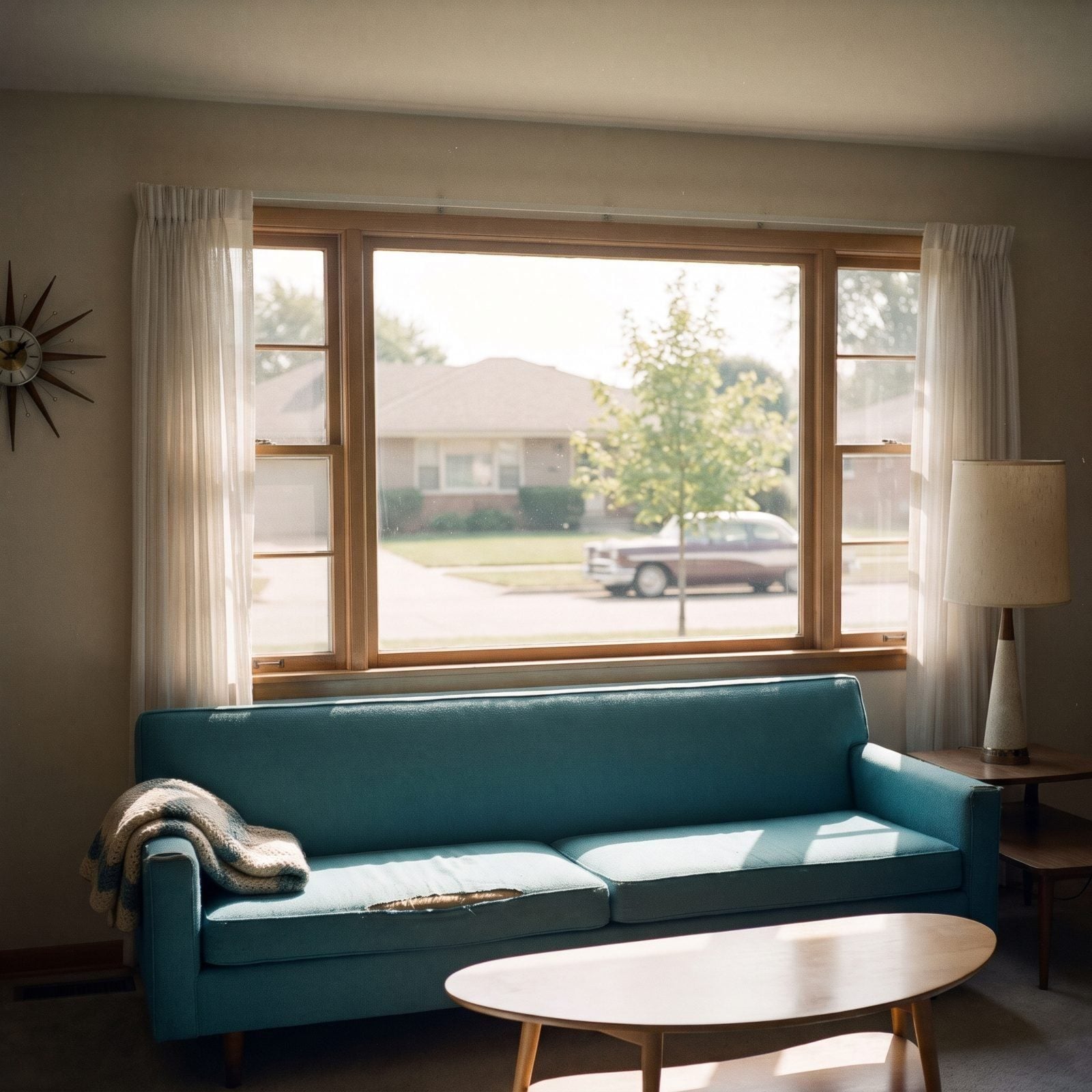
The screen door had a sound. A specific one. A spring that stretched and a slap of aluminum against the frame, and anybody in the house could tell who was coming in by the rhythm of it. That’s the thing about a real 1950s ranch. It wasn’t grand. It sat low and long on its lot, one story of Roman brick and picture glass, and it knew exactly what it was. If you came up inside one of these houses, the details below will land somewhere between your ribs. You remember the smell of the pine cabinets. You remember where the heat vents were. Let’s go find them.
21. The Picture Window That Swallowed the Whole Front of the House
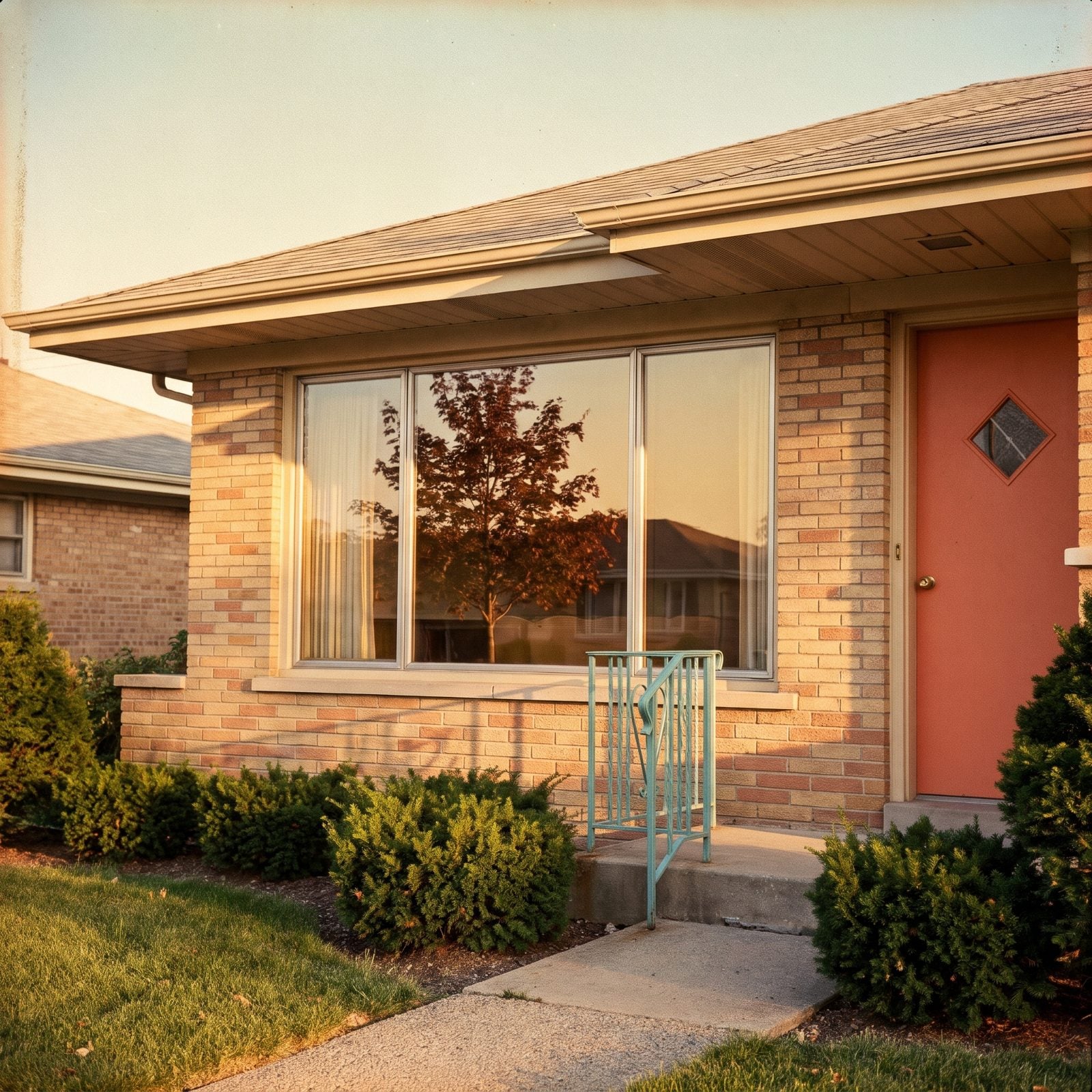
You could see the whole living room from the sidewalk. That was the point. The picture window wasn’t shy about it.
In order to come up with the very specific design ideas, we create most designs with the assistance of state-of-the-art AI interior design software. Also, assume links that take you off the site are affiliate links such as links to Amazon. this means we may earn a commission if you buy something.
Ranch builders in the 1950s treated glass like a bragging right. One enormous fixed pane, usually flanked by two skinny ones, aimed straight at the street. No curtains during the day. The lamp in the window at dusk told the neighborhood someone was home.
It fogged in winter. It baked the carpet to a paler shade in a long rectangle by August. And it framed every arriving car in the driveway like a drive-in screen.
20. Knotty-Pine Cabinets That Smelled Faintly of Pancake Syrup Forever
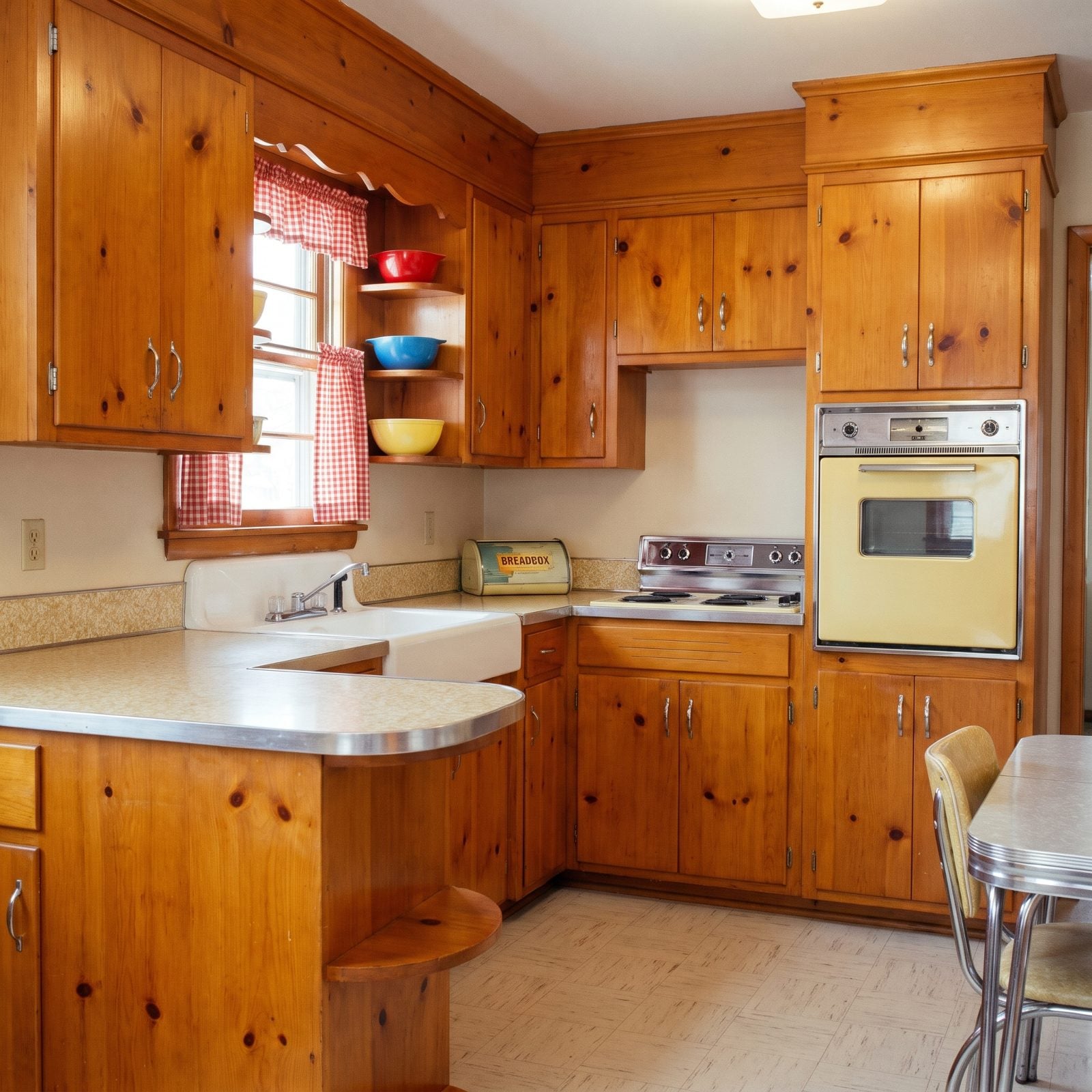
Open the cabinet and there it was: that warm, sweet, resinous pine smell that never fully left. Decades of syrup, coffee, and Sunday bacon soaked into wood that was already fragrant to begin with.
Those knotty-pine doors had character baked in. Every knot was a little dark eye you memorized as a kid, tracing them while waiting for dinner. The varnish went from honey to amber to near-caramel over the years, and nobody minded.
If you want more on the little touches that made these rooms sing, the kitchen details of the era tell the whole story. The boomerang counters. The chrome-banded edges. The vintage Pyrex mixing bowls stacked by color on an open shelf.
19. A Hallway Bathroom Tiled Floor-to-Ceiling in a Color They Don’t Make Anymore
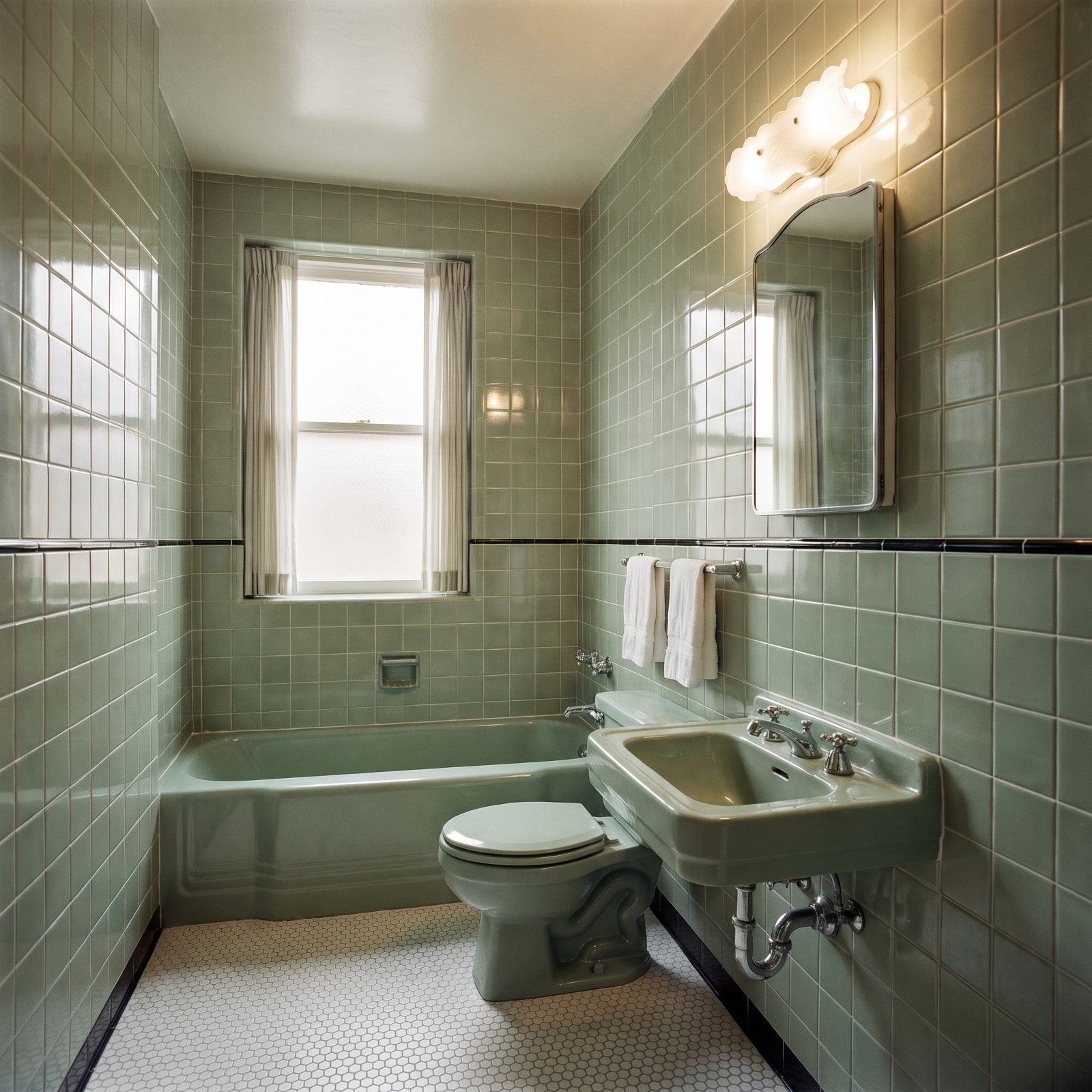
Seafoam green. Mamie pink. Dusty lavender. Butter yellow. Ranch bathrooms came in colors that sound like nail polish and feel like time travel.
The tile went up the walls in little four-inch squares, glossy and cool to the touch, usually with a slim black trim line running like a pencil stroke around the room. The tub matched. The toilet matched. Even the sink joined in, seafoam porcelain hung right on the wall.
Try finding that exact green now. You can’t. Manufacturers retired it, which is why ripping one out feels a little like a crime.
What Our Readers Say
- Today’s taste has moved on a little: in our Hot or Not photo matchups, pictures where pink dominated the room won fewer of their head-to-head matchups than expected.
- Asked which kitchen wall clock they would buy, Home Stratosphere readers were fairly split: Modern 36%, Farmhouse 32%, and Vintage still pulling 25%.
From Home Stratosphere reader polls and votes.
18. The Den Paneled in Real Wood Where the TV Lived Like Furniture
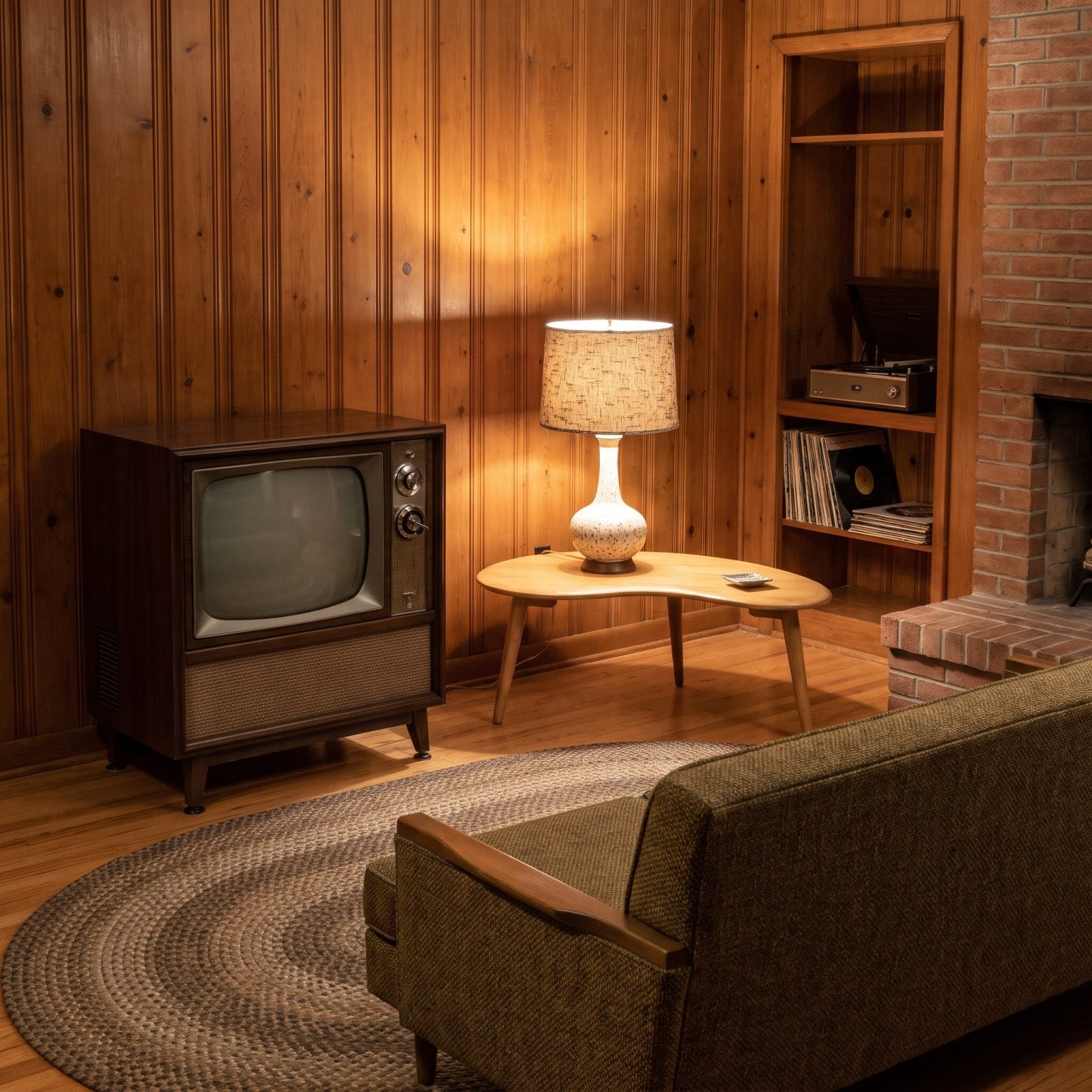
The TV wasn’t a screen. It was a cabinet. A heavy wooden console on little legs with a fabric grille and chrome dials, and it sat against the paneling like it paid rent.
Everything in the den was wood. Real tongue-and-groove paneling with vertical grooves you ran your fingernail down during long commercials. The warmth of it changed the whole room. Lamplight bounced off that grain and turned the space the color of weak tea by evening.
A blonde kidney coffee table held the TV Guide. An olive tweed sofa took the pounding of three kids and never complained. The den was where the house actually lived.
17. Built-In Shelves and a Pass-Through That Made Walls Earn Their Keep
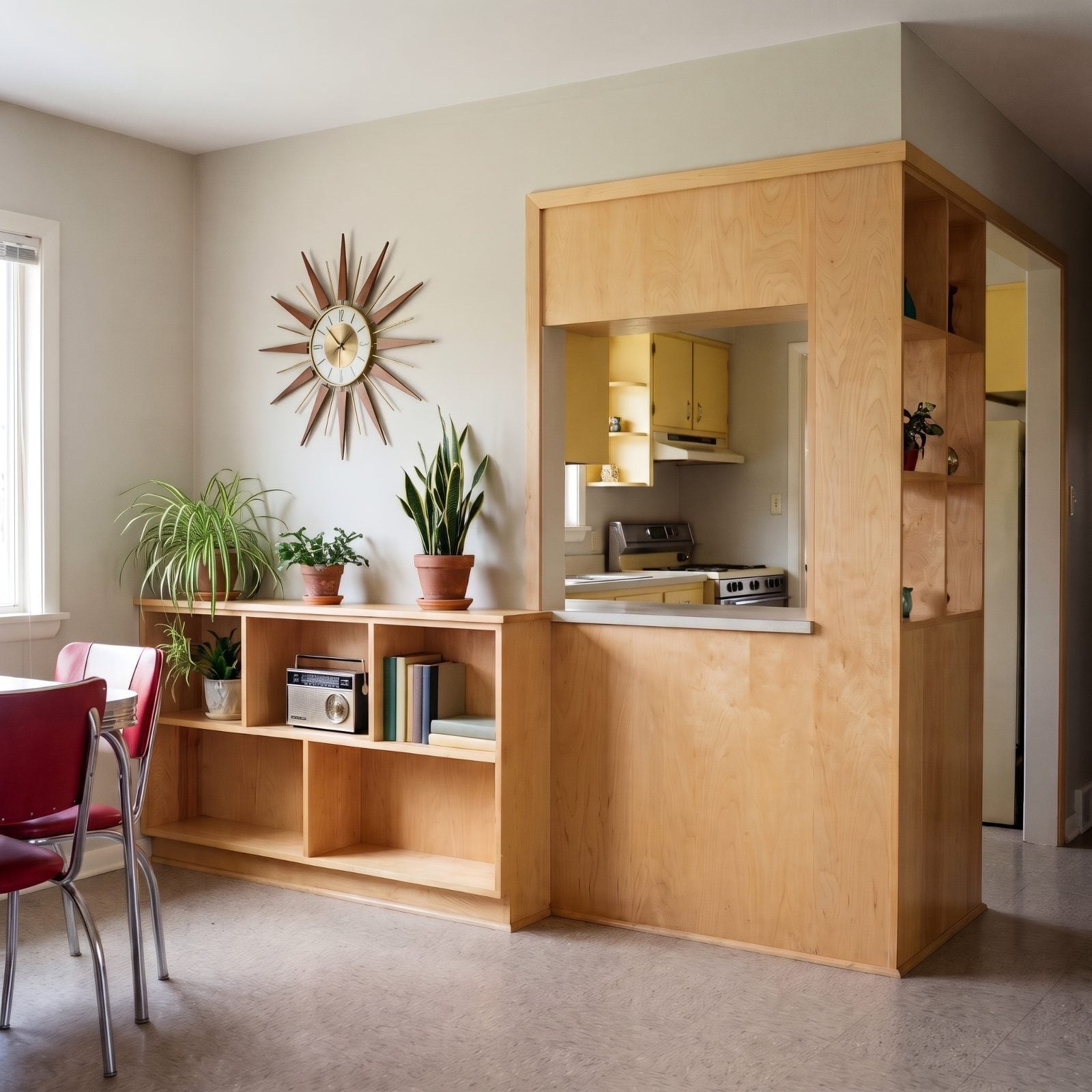
Ranch houses hated wasted space. If a wall could do a job, it got a job.
Built-ins were everywhere. A low shelf dividing the kitchen from the dining nook. A cubby for the phone and the fat paper directory. A pass-through window where plates slid through at dinner and nobody had to walk around. Everything tucked, everything deliberate.
A sunburst wall clock hung above the shelf, ticking over a transistor radio and a row of potted plants, a spider plant and a snake plant among them.
16. The Attached Carport Where the Family Car Slept With the Rakes
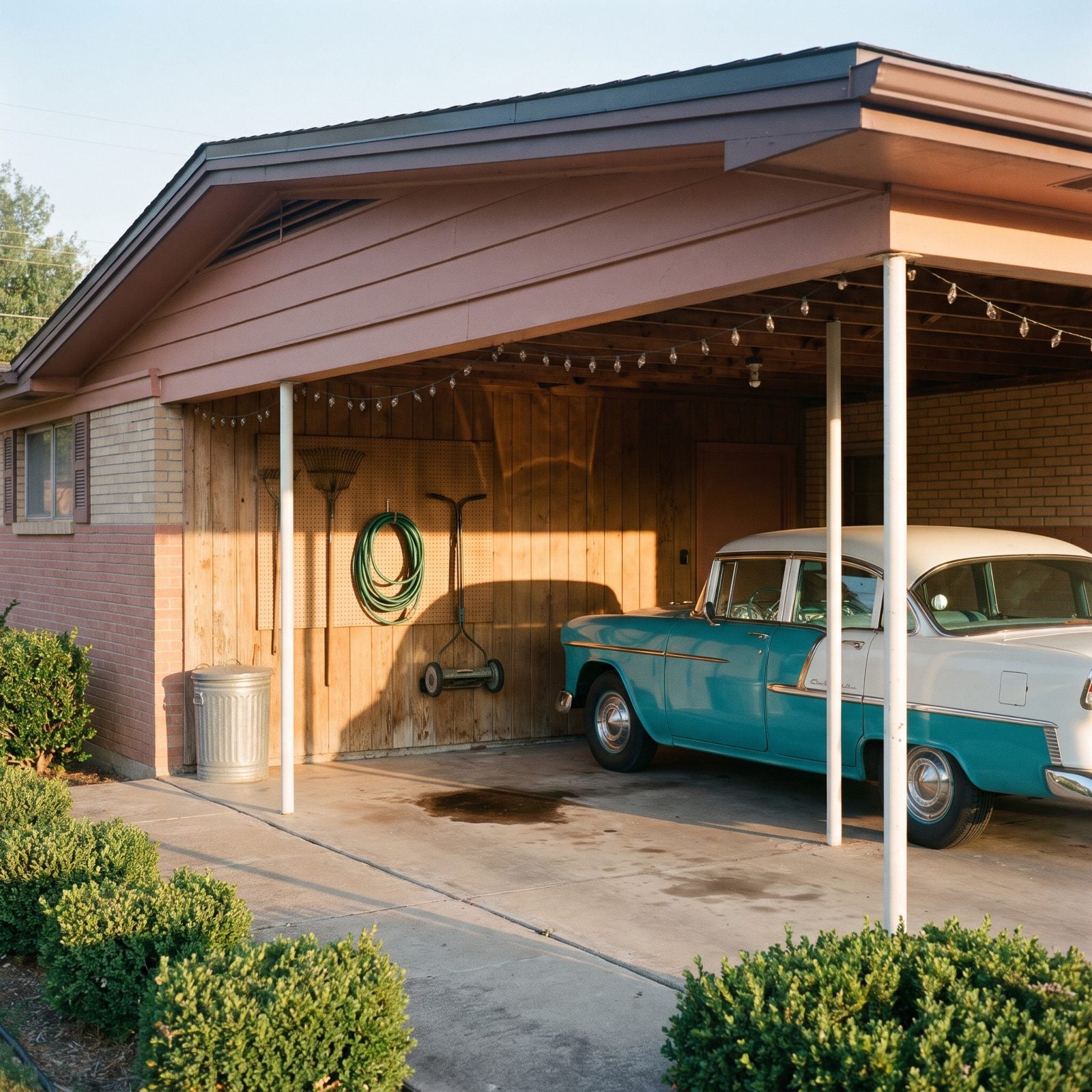
Not a garage. A carport. Open on the sides, flat roof, held up by a couple of skinny posts, and it was pure 1950s practicality.
The car parked half in the weather and half out of it. The back wall was a pegboard jungle: a rake, a coiled hose, a push mower, a galvanized trash can standing guard in the corner. There was always an oil stain shaped like a continent on the concrete.
Kids learned to ride bikes under that roof in the rain. It was a garage that forgot to put its walls on, and somehow that made it better.
15. The Hallway Floor Register You Learned to Stand On in Winter
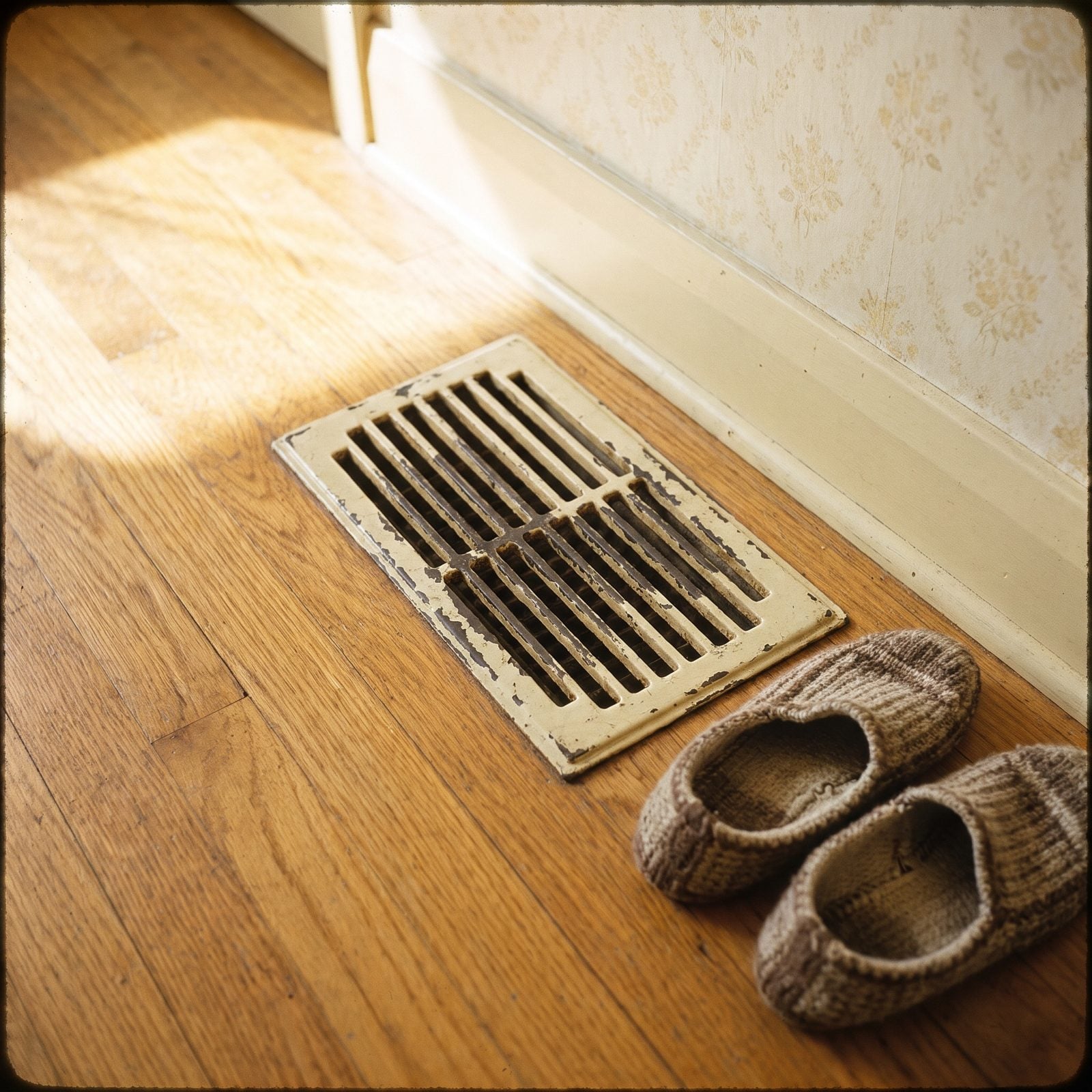
Every ranch house had one spot the heat came up through, and you knew exactly where it was.
The forced-air furnace would kick on with a low thump somewhere under the house, and the metal grille in the hall floor would start pushing warm air up through your pajama legs. You stood on it. Everybody did. Bare feet on painted cast iron, nightgown or robe ballooning slightly, waiting for the whole floor to catch up.
The register was usually the first thing to go dull, chipped down to grey metal from forty winters of feet.
14. The Built-In Room Divider Full of Someone’s Good Dishes
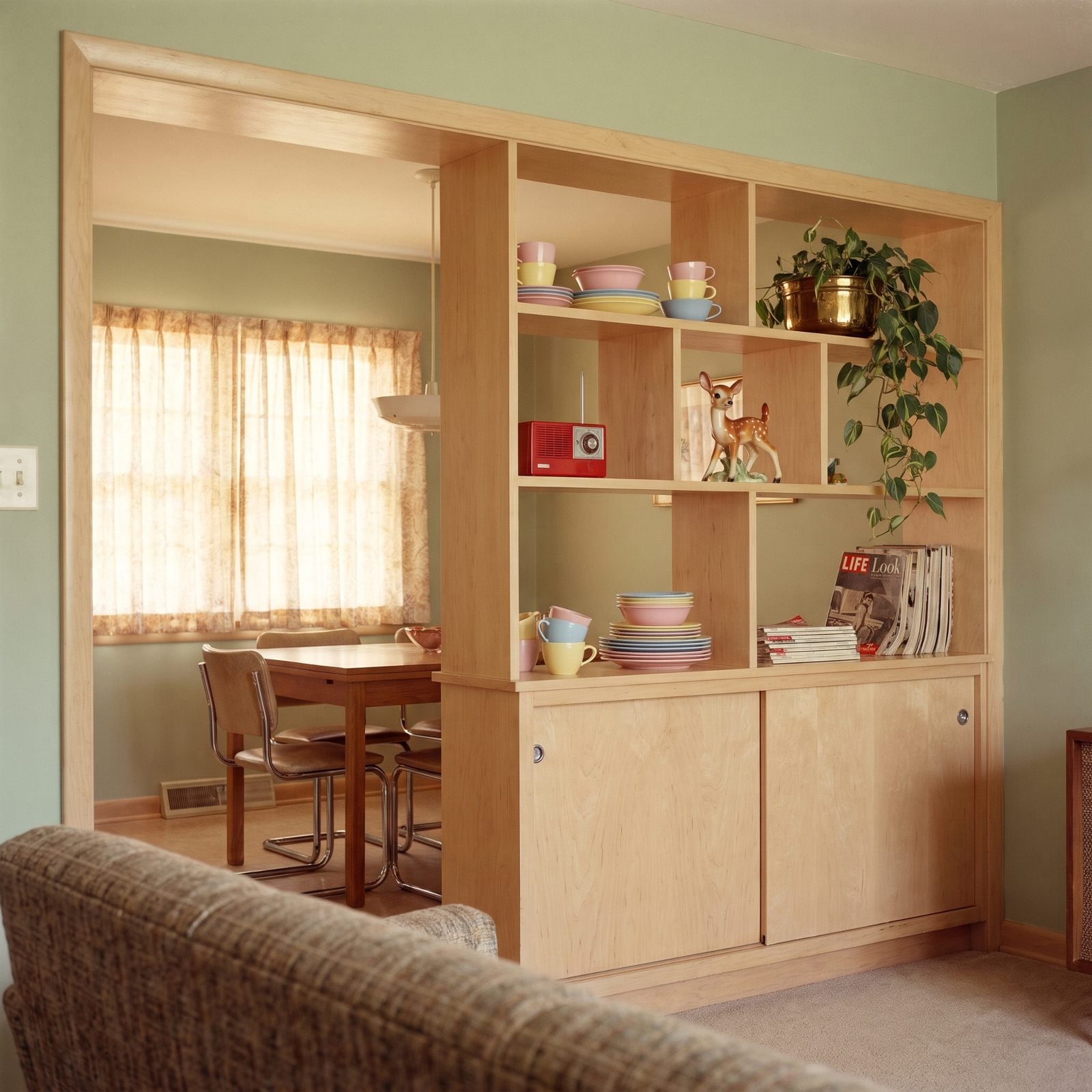
Open-plan living got its start with a piece of furniture that was also a wall.
The room divider let the ranch feel open without feeling like one big echoing box. Half shelf, half low cabinet, blonde wood, planted somewhere between the living room and the dining nook. The top shelves held the stuff you were allowed to look at but not touch: the good dishes, a figurine from a trip somewhere, a brass planter with a philodendron that outlived several pets.
13. The Attached Garage You Entered the House Through, Not the Front Door
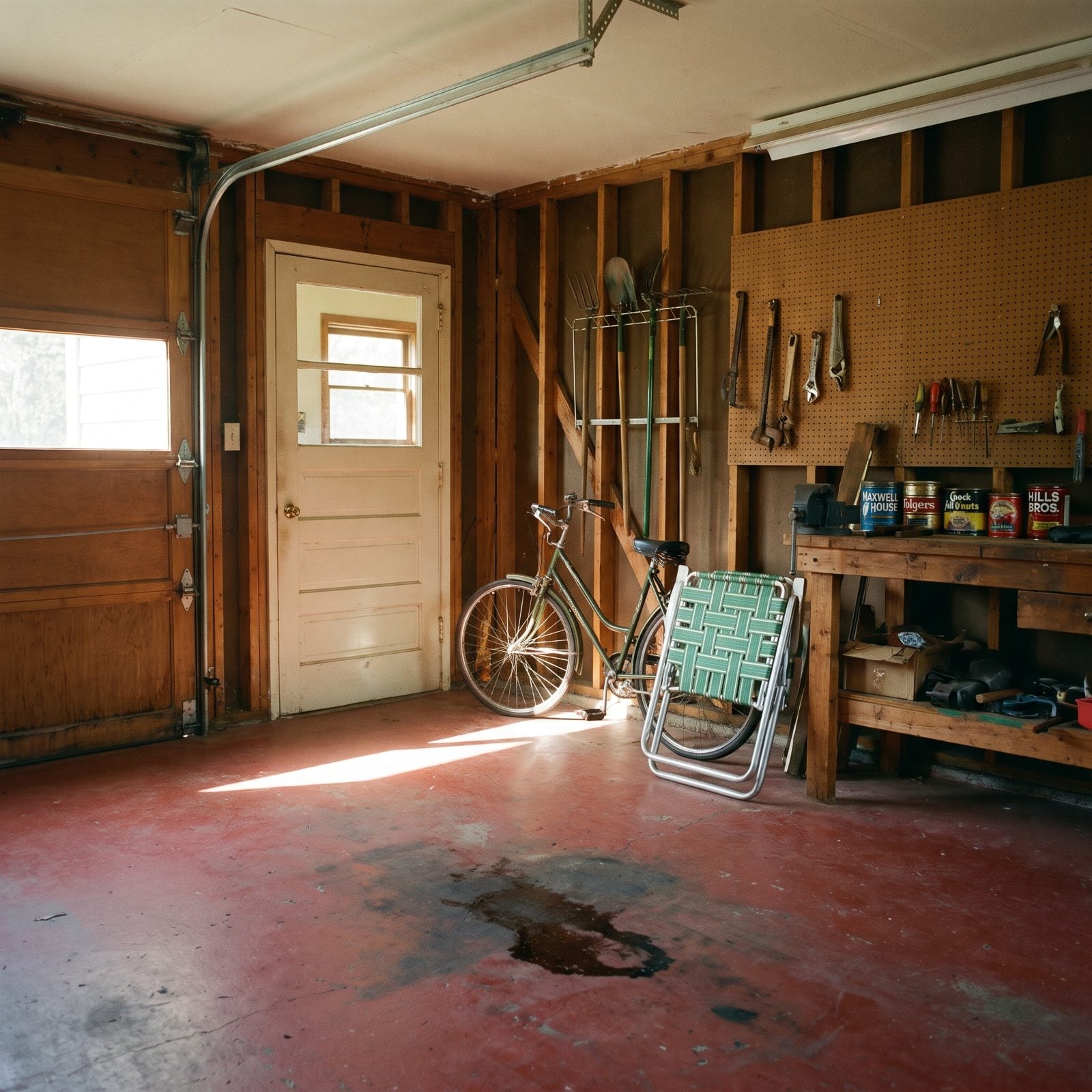
Nobody in a ranch house used the front door. That was for strangers and salesmen.
You came in through the garage. The ranch made it standard to glue the garage right onto the living space, and it rewired how families moved. You parked, you squeezed past the workbench and the folded lawn chairs, you hit that little side door, stepped inside, and you were home.
The front door, meanwhile, led to a formal entry that mostly collected a bowl of keys and a dish of butterscotch nobody ate. The real entrance smelled like motor oil and grass clippings.
12. The Doorbell That Lit Up Like It Had Somewhere to Be
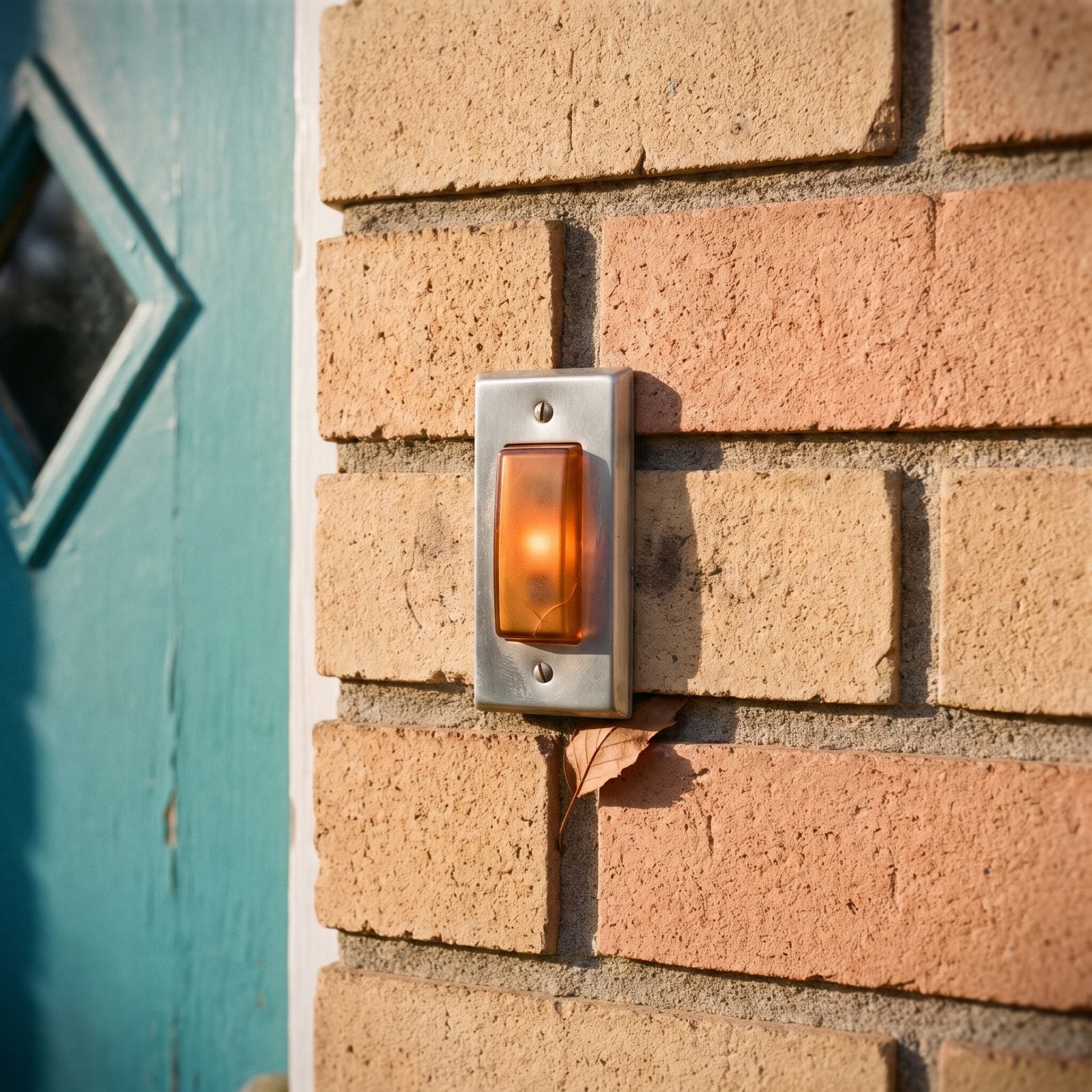
You pressed it just to watch it glow. Everybody did. That little amber rectangle set into the brush-metal plate, warm as a nightlight, lit from inside like the house itself was expecting company.
The chime inside wasn’t a buzz. It was two soft tones, ding and dong, that carried down the hall and made the whole family freeze mid-sentence. A doorbell meant someone had arrived with casserole, or trouble, or both.
11. Knotty Pine Walls That Smelled Like Sap on a Warm Day
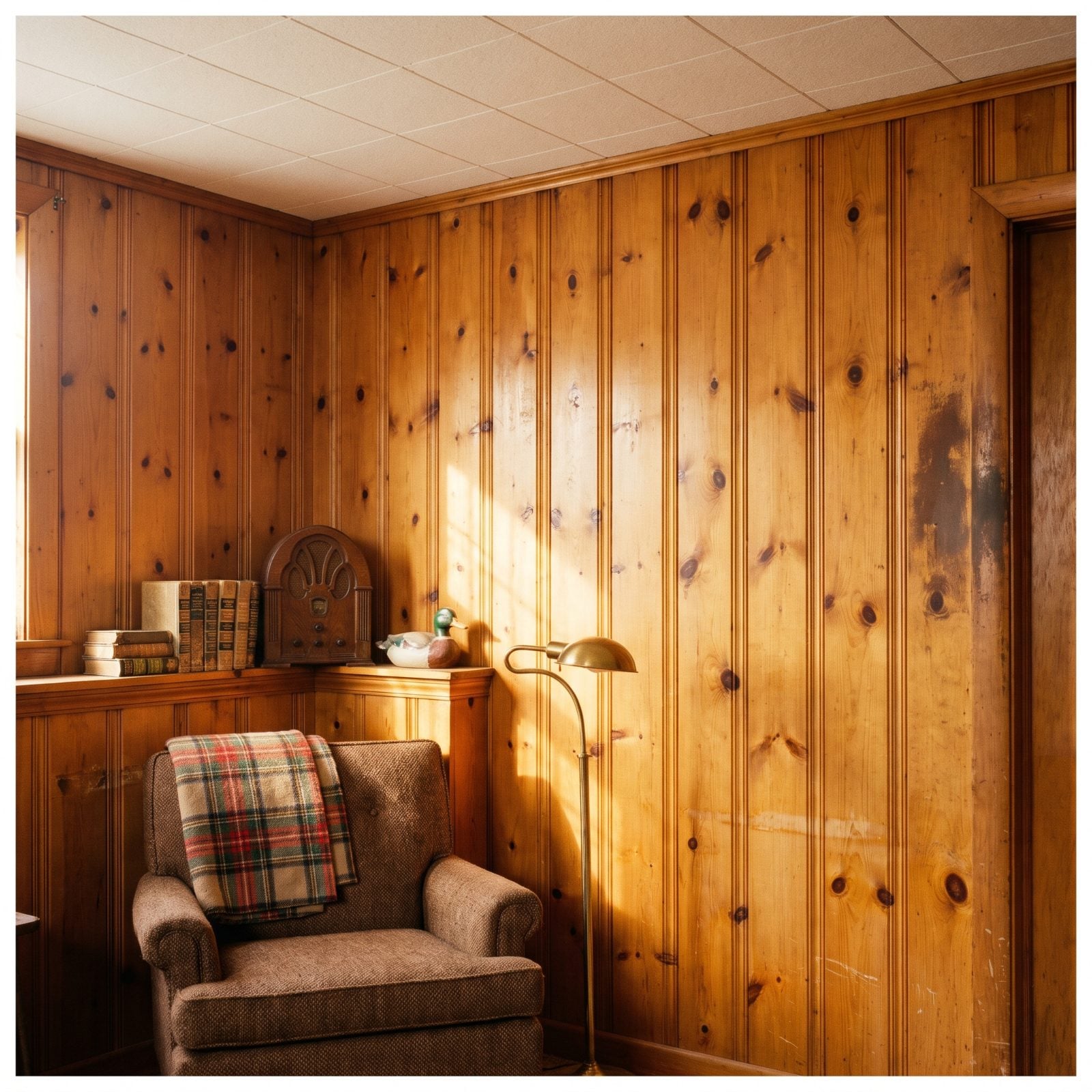
Run your hand across it and you could feel every knot, every ridge where the grain swelled. On a hot afternoon the whole room gave off a faint resin smell, pine sap warmed by the sun through the picture window.
The den was always the pine room. Darker than the rest of the house, cooler in a way that had nothing to do with temperature. It held sound differently. Voices went soft against all that wood.
Half the country paneled a basement or a rec room in it, and the good installs still look right today. The bad ones went orange and glossy. The ones that aged well kept their honey tone and their character knots. We’d take real knotty pine over a thousand faux-wood vinyl planks, and we’ll say that to anyone.
10. The Clothesline Out Back and Sheets That Smelled Like the Yard
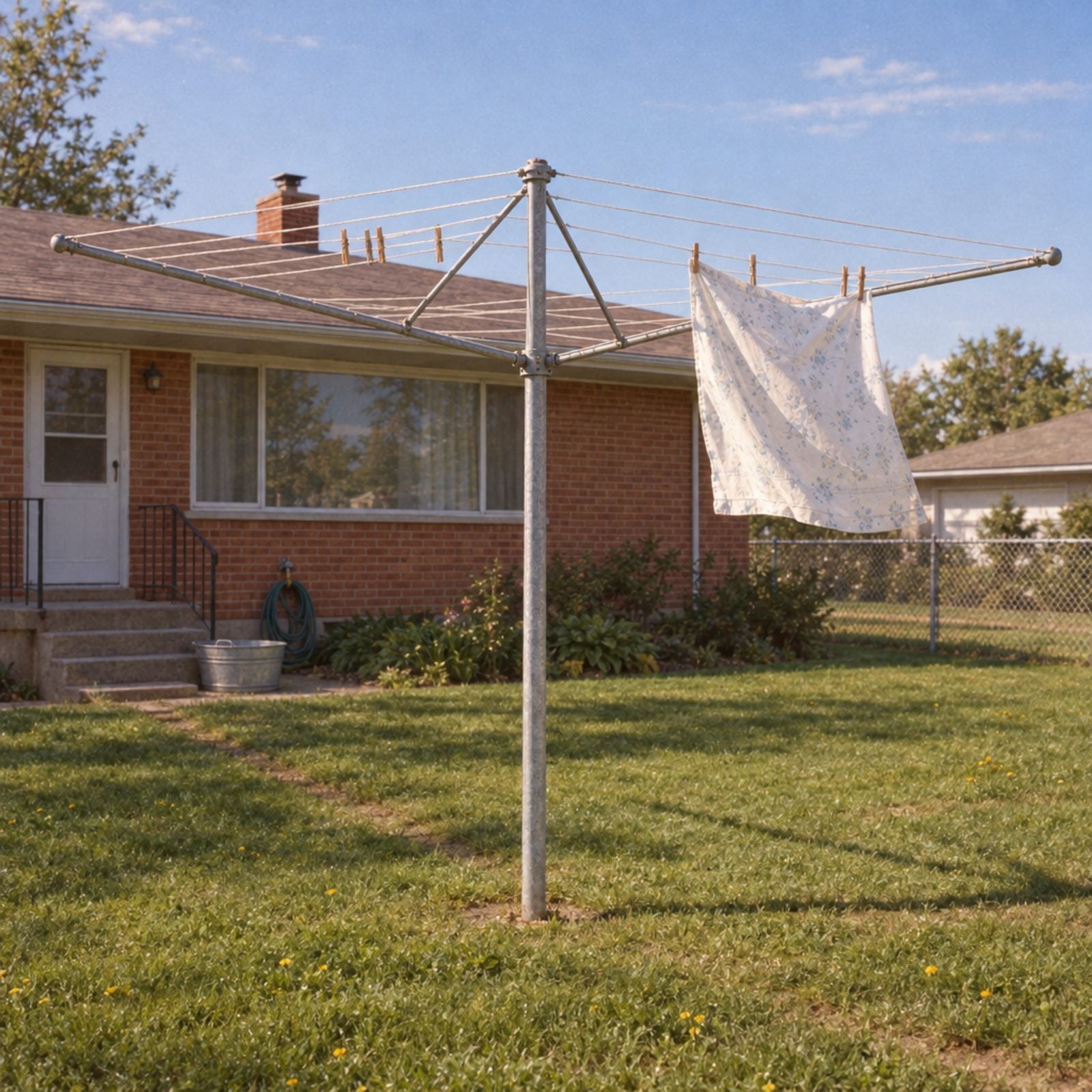
Nobody owned a dryer worth trusting, so the backyard did the work. The rotary line spun on its pole, and the sheets hung pegged out there all afternoon catching whatever the day smelled like: cut grass, warm dirt, the neighbor’s barbecue.
You slept on that pillow that night and it smelled like outside. No fabric softener ever matched it. They tried, and they still try, with bottles that promise meadows. A clothesline on a breezy Saturday beats every one of them.
9. A Kitchen Wall Phone With a Cord You Could Jump Rope With
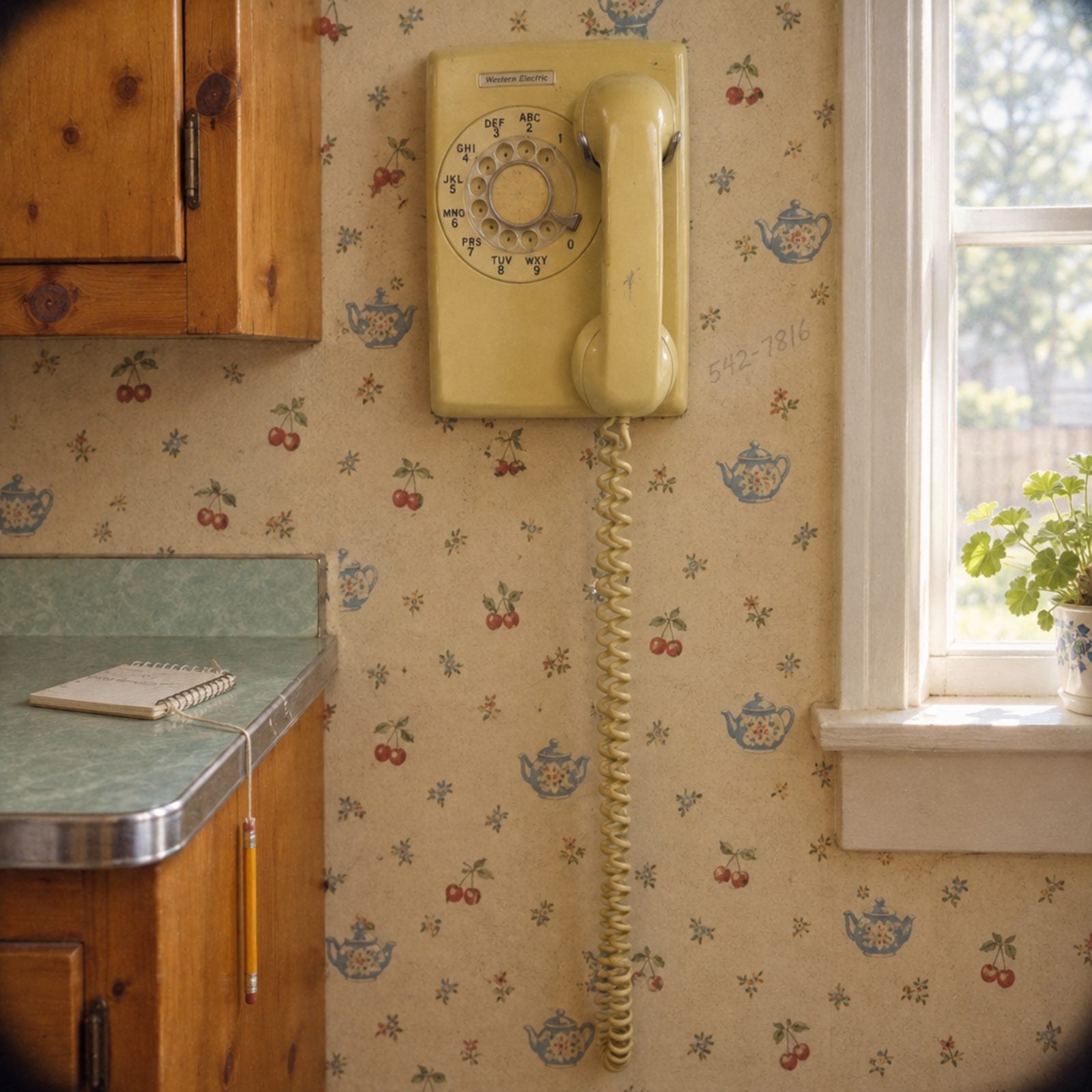
It hung on the kitchen wall where everyone could hear your business. The cord was the whole point. Over the years it stretched from a tight coil into something that reached the pantry, the back step, halfway down the hall if you leaned hard enough.
You dialed with your finger in the holes and waited for the wheel to spin back. Call a wrong number and you started over. There was no hanging up on anybody by accident. You slammed the handset into the cradle and it meant it.
8. The Picture Window That Framed the Whole Street
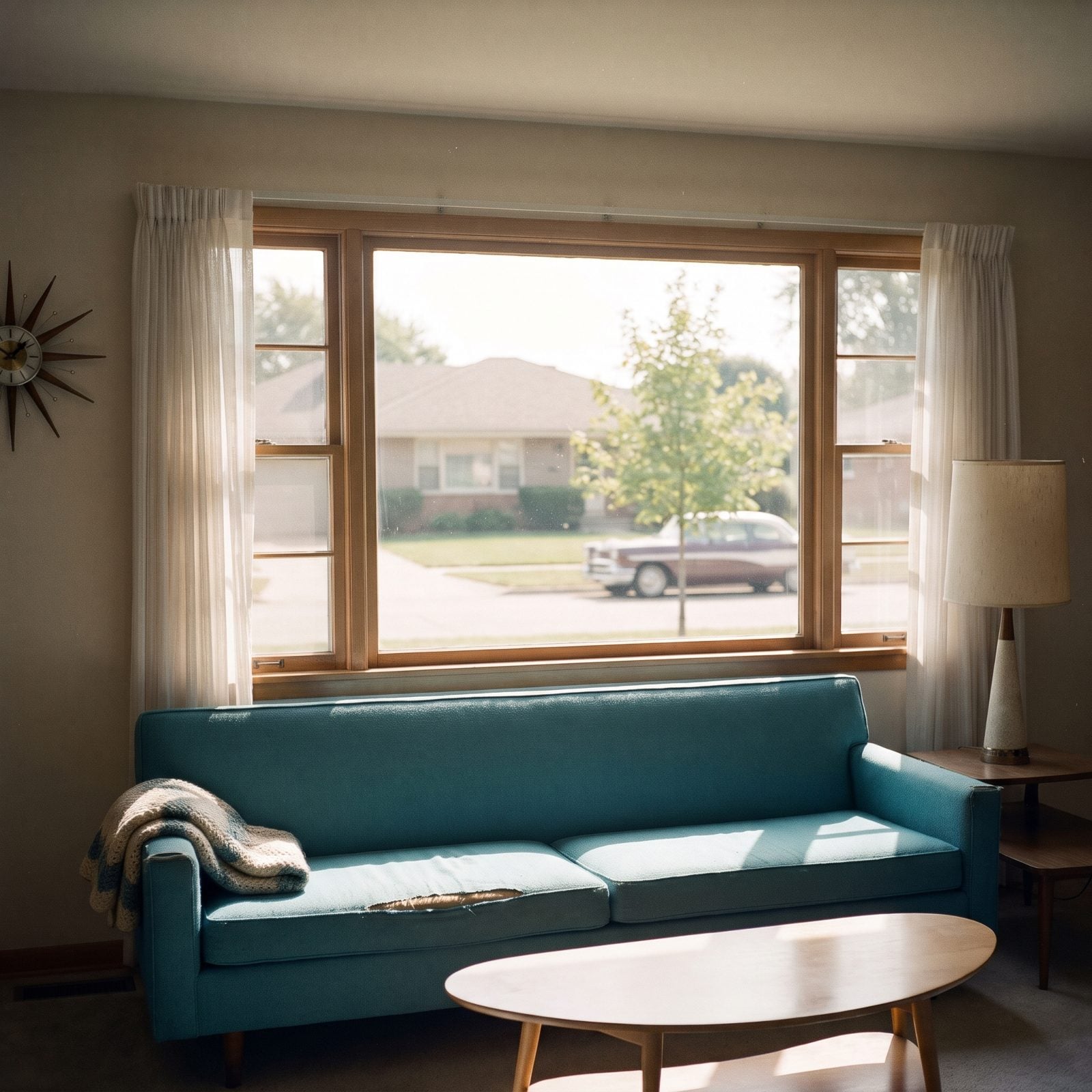
The front of the house was mostly glass. One enormous horizontal pane, low to the ground, that turned the living room into a front-row seat for the whole block.
You knew who was coming up the walk before they rang. You watched the mail arrive, the neighbor wash his car, the streetlights buzz on at dusk. The turquoise sofa parked under the sill so you could kneel backward on the cushions and press your nose to the cold glass.
It was also, if we’re honest, a fishbowl. The whole neighborhood could see your living room lit up at night. Nobody minded. That was the deal in a street full of these houses. You saw them, they saw you, and the picture window made everybody’s house a little bit public.
7. Metal Kitchen Cabinets That Shut With a Satisfying Clang
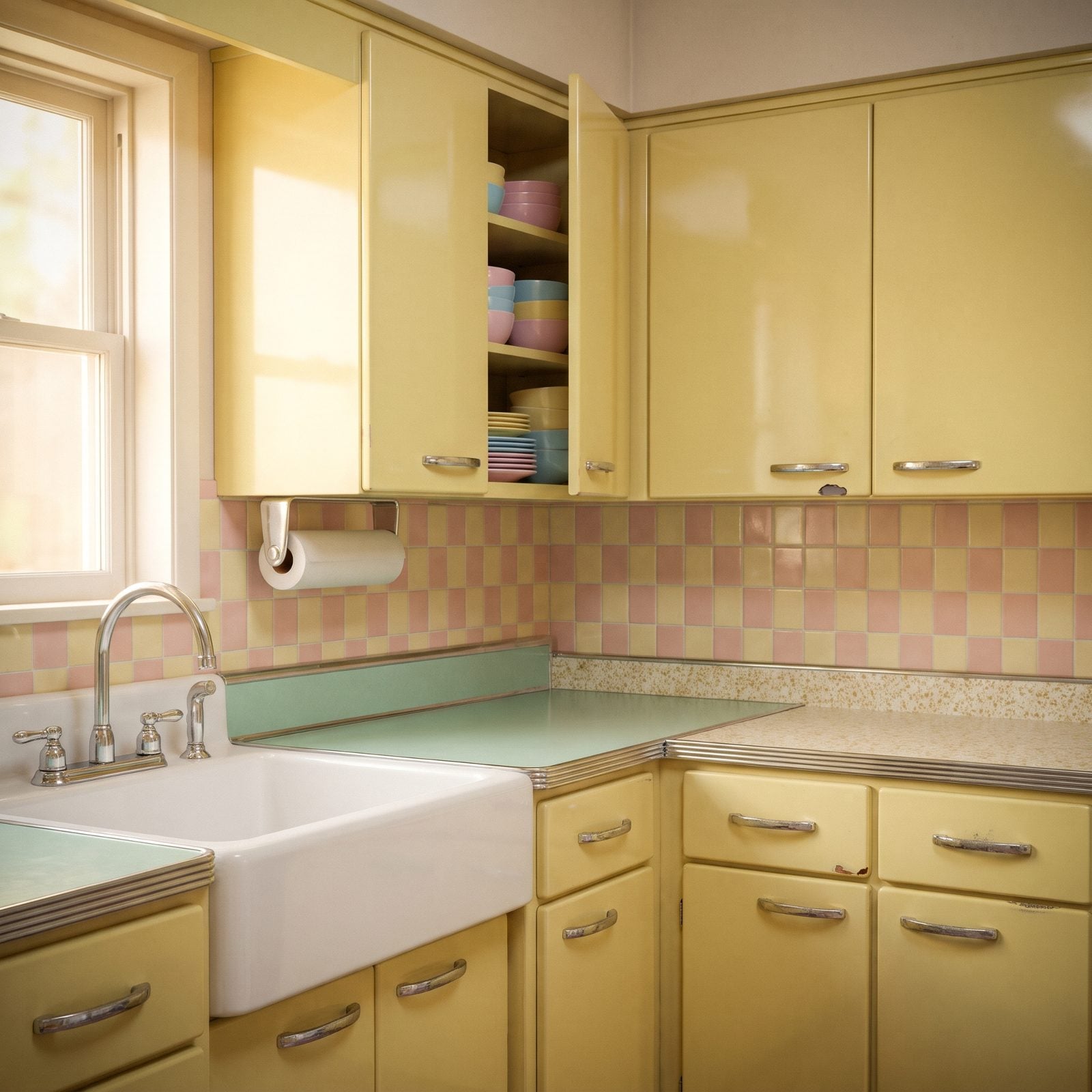
Steel cabinets, baked enamel, chrome pulls. Open one and it moved with a weight that modern particleboard will never have. Close it and you got that clang, metal meeting metal, a sound that said this kitchen was built like a battleship.
They came in colors you’d never pick now and should. Pale yellow, mint, a pink that had no business working and somehow did against the pastel tile. The kitchen details of a house like this leaned hard into cheer.
Here’s the thing people forget. Those cabinets outlived three generations of wood boxes. Rip them out of an original ranch and you’re throwing away something that’ll never dent and never swell. We’ve seen them repainted, rehung, still slamming shut after seventy years. Try that with your flat-pack uppers.
6. The Milk Chute Nobody Uses Anymore
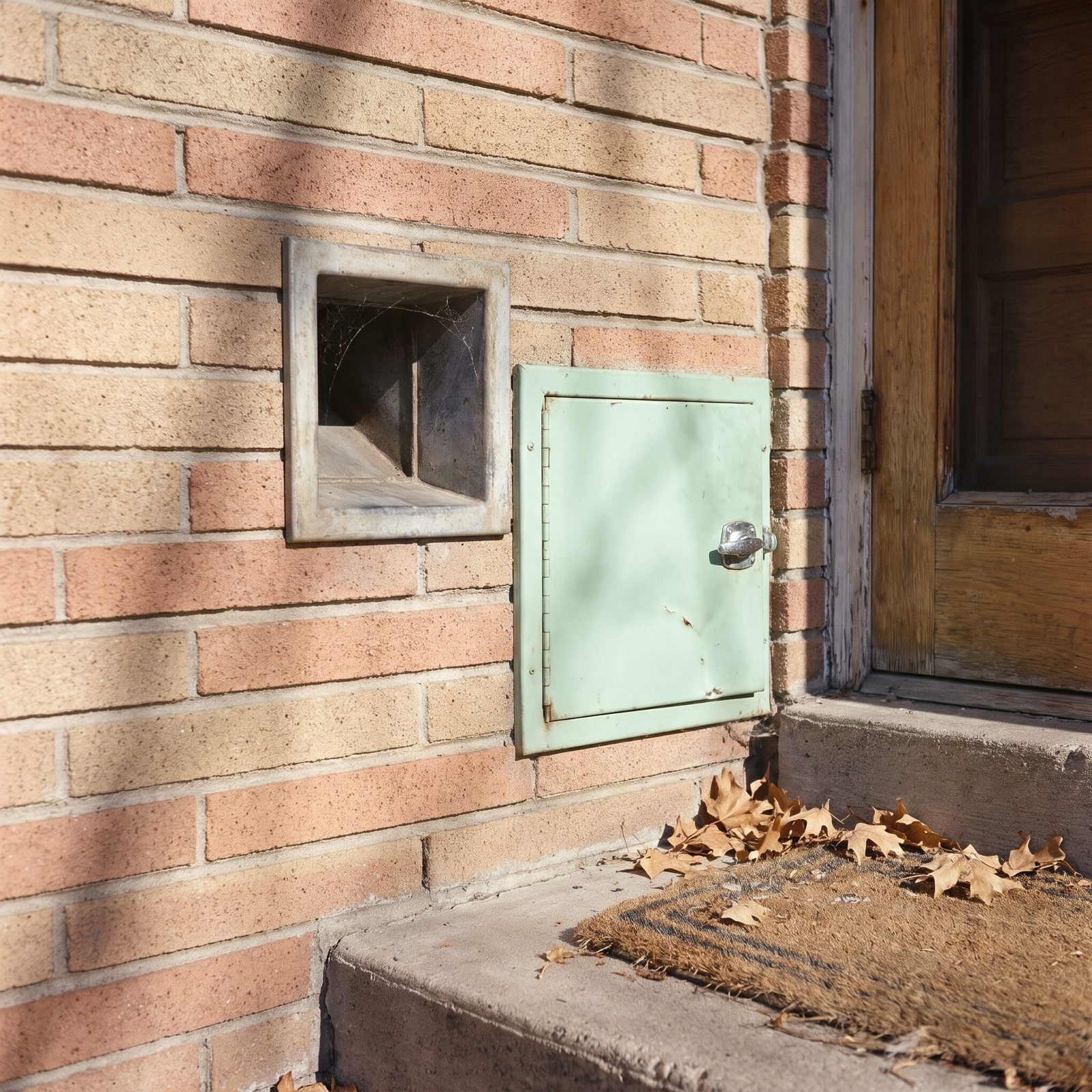
Every ranch had one. A little metal door set into the brick beside the kitchen, maybe a foot square, with a chrome latch that clicked shut. The milkman loaded it from outside before dawn. You opened it from the pantry side and found cold glass bottles waiting, the cream risen to the top in a thick yellow plug.
By the time home refrigerators got big enough, the chute went quiet. Most got painted over or stuffed with a dish towel to stop the draft. But the little door stayed. You still find them in old ranches, sealed shut, a hinge nobody oils, a mystery to anyone born after 1970.
5. That Thermostat With the Little Mercury Vial That Clicked
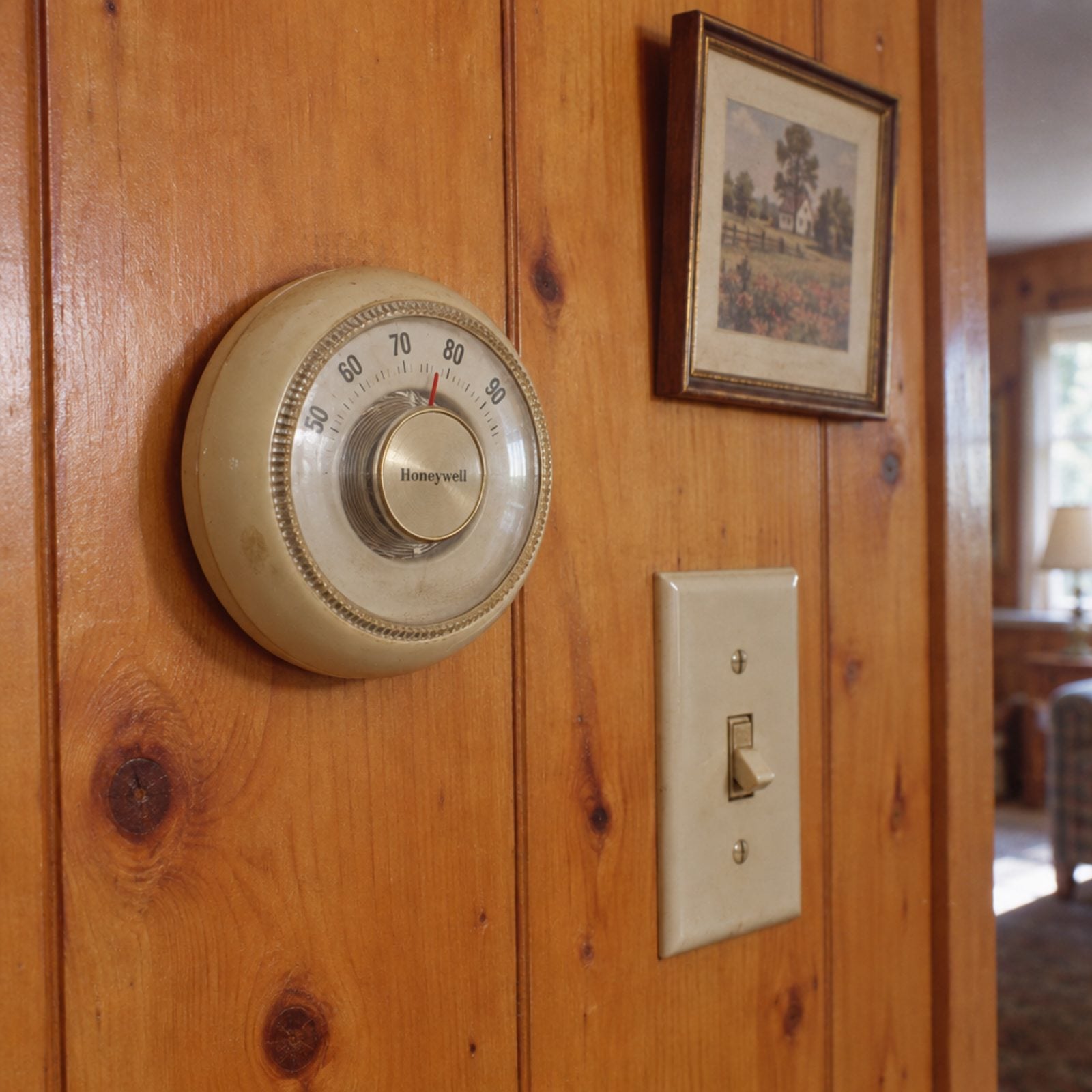
You set it before bed by turning the little ring, and somewhere in the wall a drop of mercury slid across two contacts and the furnace woke up with a thunk.
That round dial was the brain of the whole house. Cream plastic, a thin red needle, numbers you squinted at in the dark. You learned the sound it made. A soft tick, then warm air rolling up through the floor register minutes later.
Nobody explained how it worked and nobody needed to. You turned it up, the house got warmer, and the mystery was enough.
4. The Picture Window That Framed the Whole Front Yard Like a Postcard
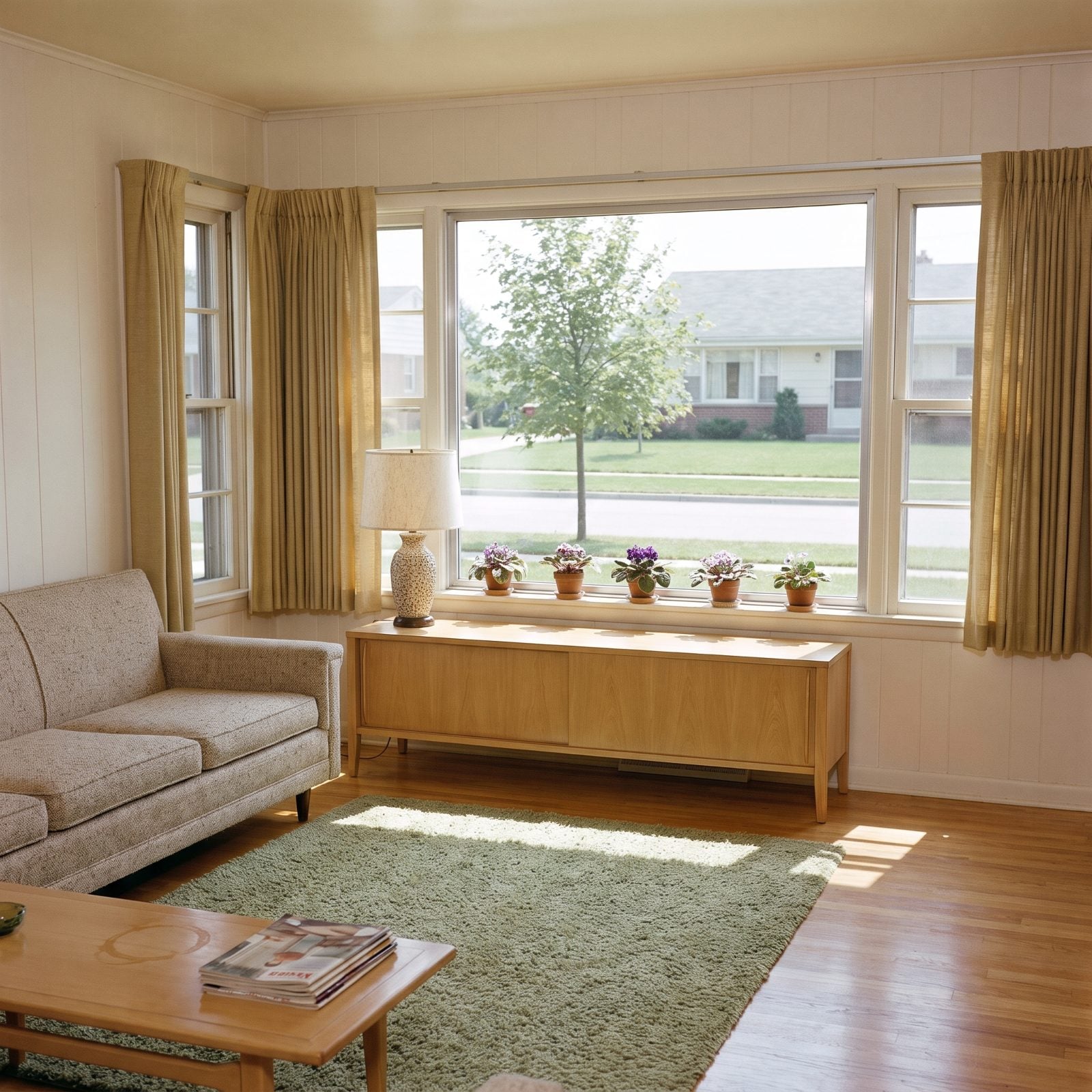
The picture window was the whole point of the front room. One enormous pane of glass, low and wide, turning the yard into something you watched like a slow movie. Mail trucks. The neighbor’s sprinkler. The light changing across the lawn at six o’clock.
You weren’t meant to open it. That was what the skinny windows on either side were for. The big one just held the view, framed by a cotton valance and a sill crowded with African violets that somebody’s grandmother kept alive out of stubbornness.
Kids pressed their faces to it waiting for a car to turn in the drive. Everyone did it. The glass always a little cold on your forehead.
3. The Sunken Soap Dish Tiled Right Into the Shower Wall
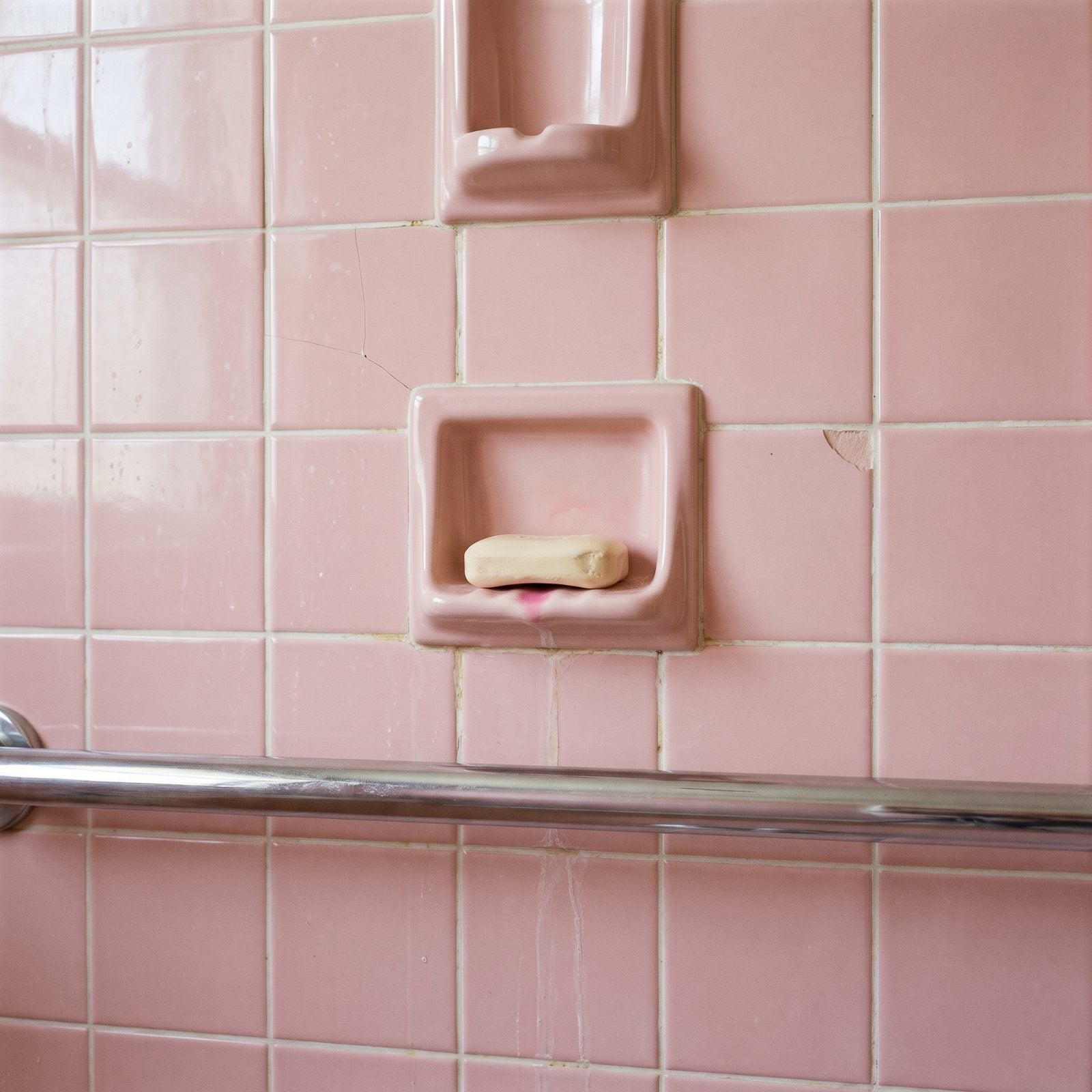
Built right into the tile, molded in the same pink as everything else, with a little chrome-free dish your bar of Dial lived in for decades. There was usually a smaller cubby above it for the drinking glass nobody ever used.
The soap dish stained over the years. A pale rust ring under the bar that no amount of Comet could shift. You stopped seeing it. It was just part of the shower, like the slick glossy tile and the drain that gurgled.
These recessed dishes were a quiet piece of good kitchen details thinking carried into the bath: build the storage into the wall so nothing sticks out, nothing falls, nothing clutters the room.
2. The Hallway Lined With School Photos Hung in a Perfect March to the Bedrooms
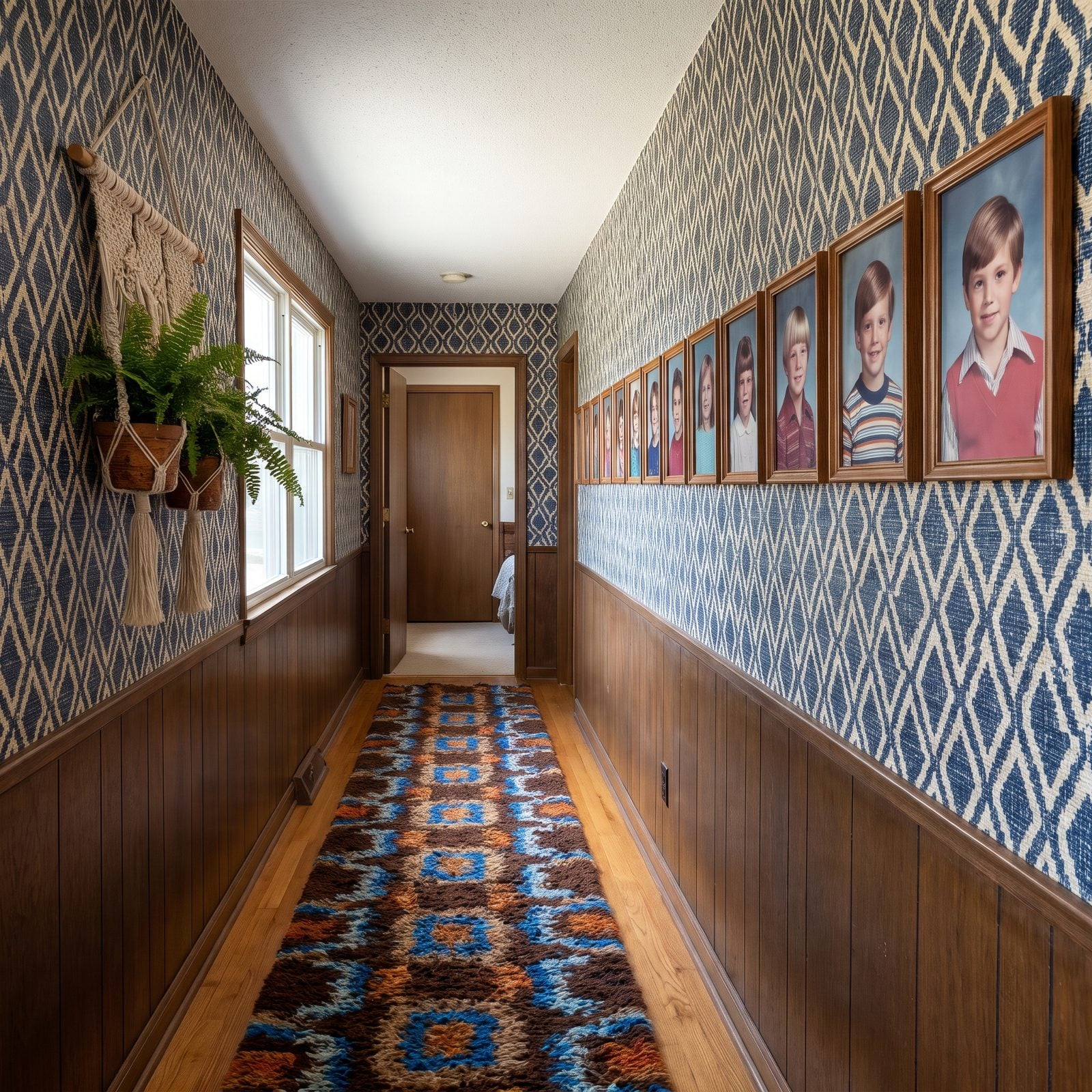
Every ranch had the hallway. Short, narrow, dark walnut paneling halfway up the wall, one frosted dome light overhead. It connected the bedrooms and it was where the photos lived.
School portraits in little wood frames, marching down the wall in rough order of age. You could watch somebody grow up in eighteen inches of plaster. The crooked tooth year. The bad haircut year. The frame that never hung quite straight no matter how many times someone nudged it.
At the far end a bedroom door stood open, light leaking across the oak floor. You walked it in the dark a thousand times, hand trailing the paneling, knowing exactly where the heat register breathed warm air against your ankles.
1. The Pastel Tile Bathroom That Refuses to Apologize for Being Pink
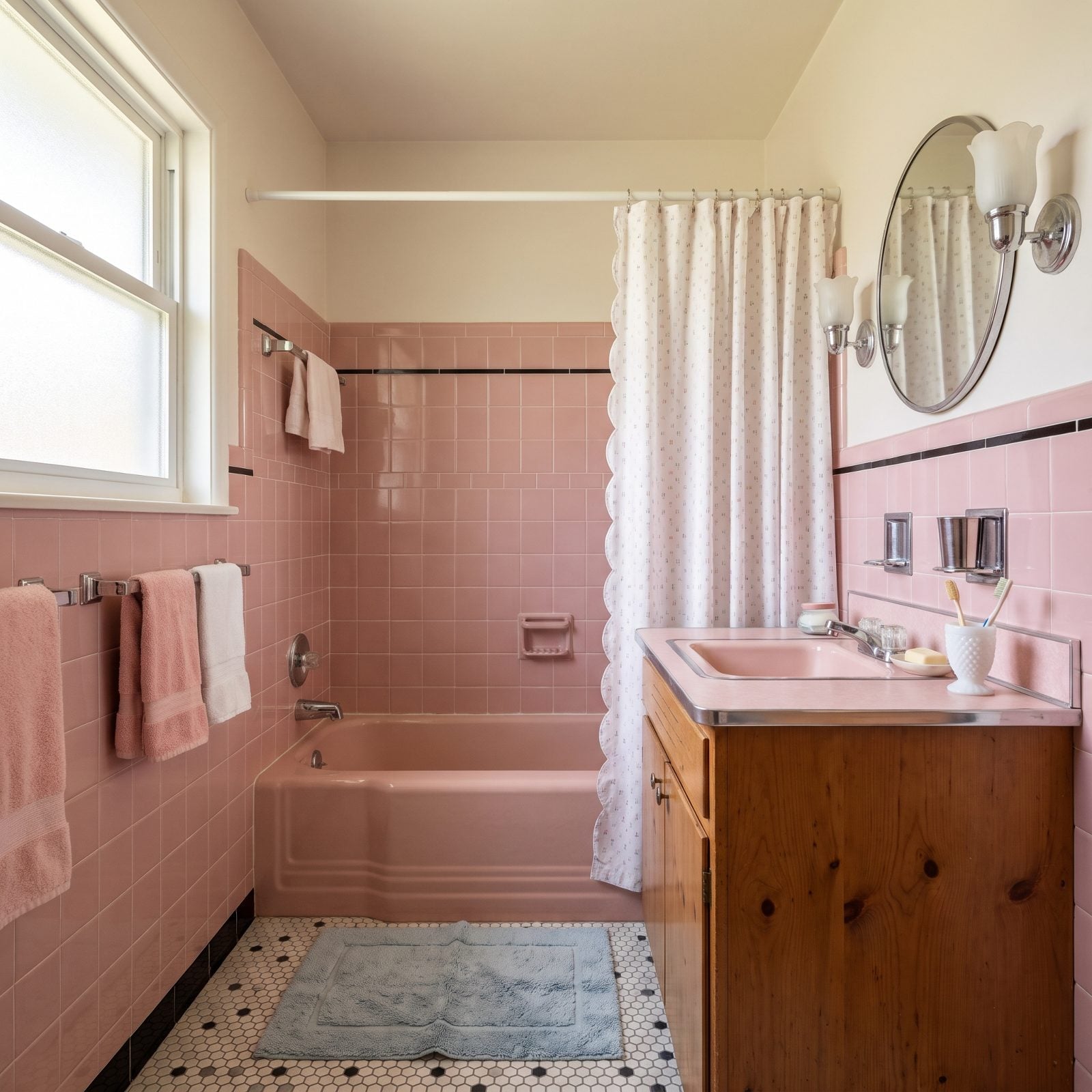
Pink tile. Floor to shoulder, glossy, with a black pencil stripe running along the top like it meant business. People rip it out now and regret it later.
The whole color scheme felt coordinated in a way bathrooms stopped being. A pink tub. A pink sink. Black hexagon accents on a white floor. All of it matched because the manufacturers made it match, and the result was a room with an actual opinion about itself.
These rooms were tiny. One small frosted window, a medicine cabinet with a mirror that squeaked, and barely enough room to dry off. But the tile was built to outlast everyone, and most of it did. You can still find these period details intact in houses that never got updated, glossy as the day they went in.