🔥 Would you like to save this?
A 1980s bathroom rarely treated coordination as a quiet suggestion. Color traveled from porcelain to towels; oak, brass, floral paper, and plush pile all claimed space in the same compact room.
Some choices shaped the room from the walls outward. Others came down to a small object on the vanity or a soft layer underfoot. Together, they turned practical necessities into part of the decor.
In order to come up with the very specific design ideas, we create most designs with the assistance of state-of-the-art AI interior design software. Also, assume links that take you off the site are affiliate links such as links to Amazon. this means we may earn a commission if you buy something.
Colored fixtures, oversized mirrors, busy patterns, and shell-shaped accents all made the same point: no surface was too small to join the design.
34. The Colored Porcelain Sink That Matched the Toilet
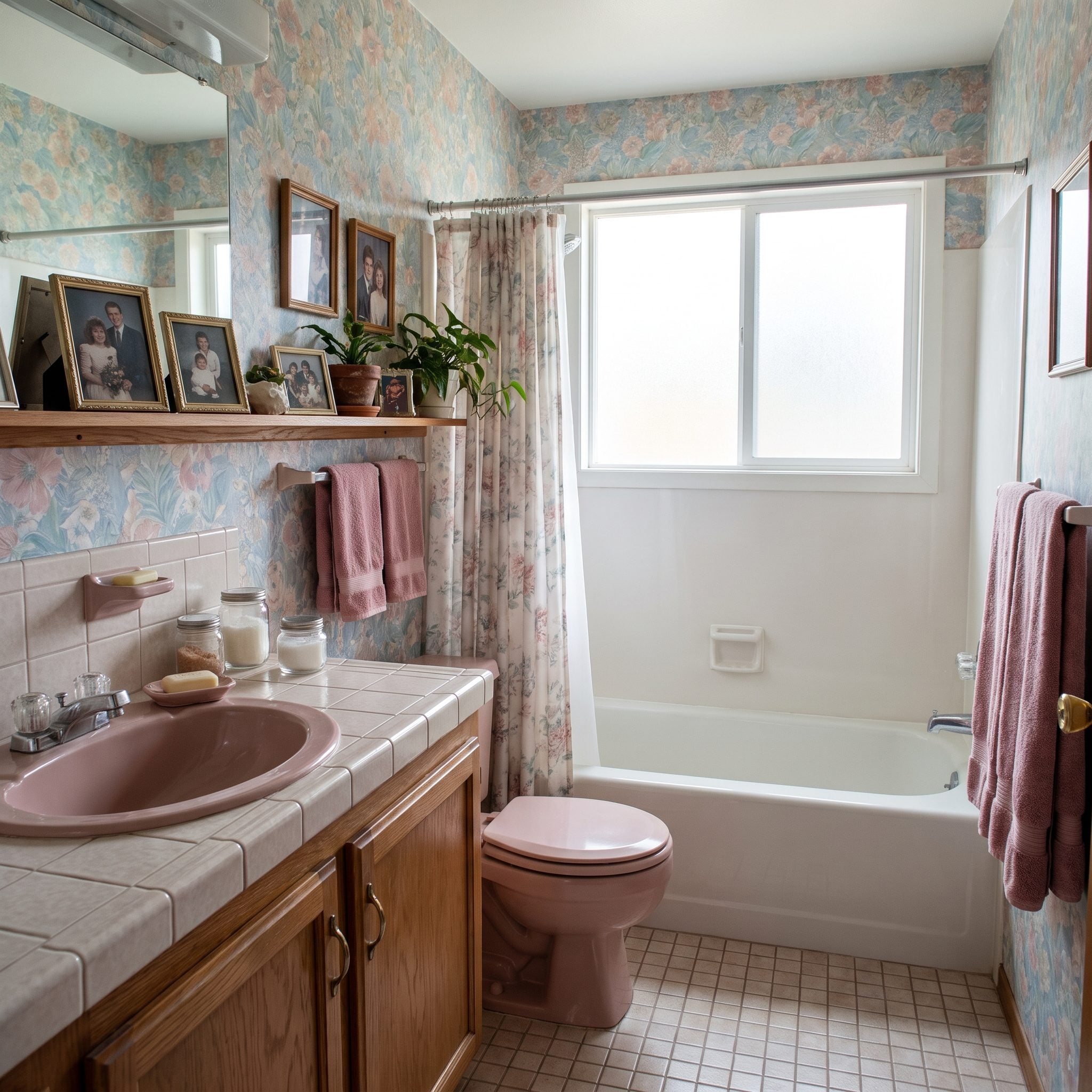
A colored sink changes the room’s balance at once. Dusty rose, beige, blue, or another period shade carried across the porcelain, turning the basin and toilet into a deliberate pair rather than neutral fixtures against a colorful backdrop.
That matched suite committed the room to its palette in a way a towel or shower curtain never could.
33. The Large Plate-Glass Mirror Above the Vanity
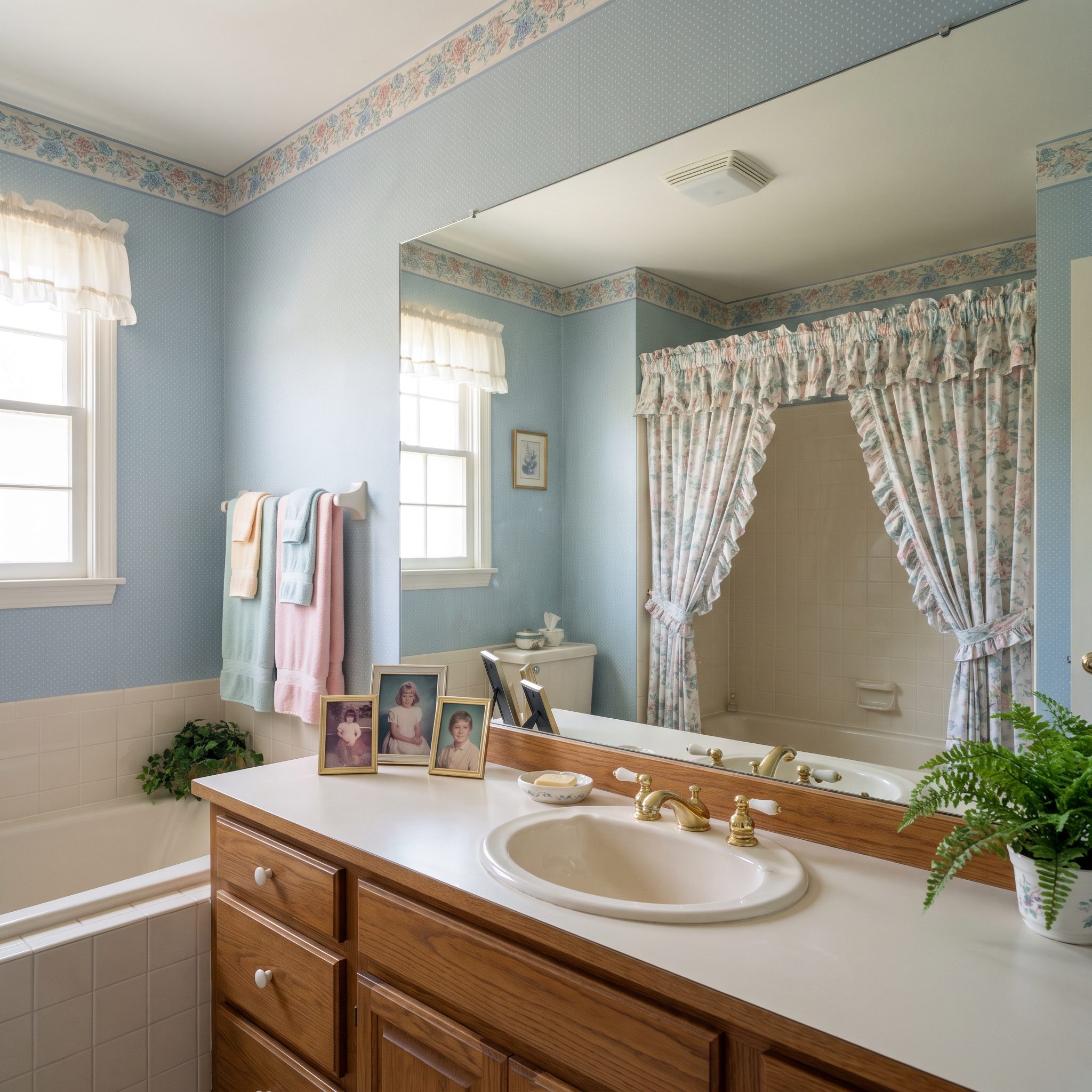
A broad, frameless mirror stretched across the vanity, often leaving little wall visible between its edges and the surrounding surfaces. The unbroken sheet reflected the room’s colors and light, giving a compact bathroom a brighter, more open appearance.
Some mirrors were attached with adhesive, clips, or both. Their plain edges let the glass recede into the wall, while its scale made it one of the room’s dominant features.
32. A Brass-and-Glass Shower Enclosure
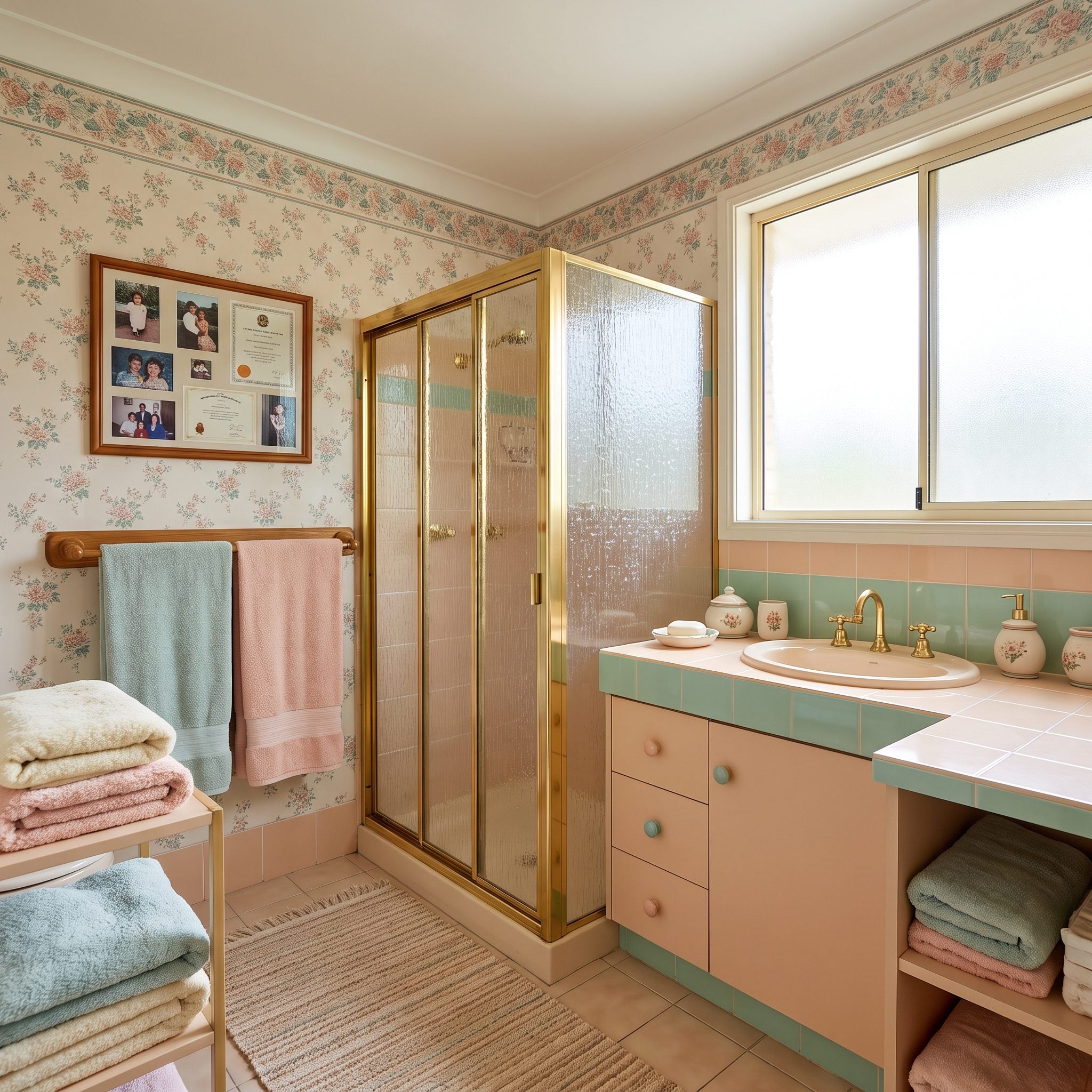
Textured or pebbled glass softened the view through the shower enclosure, turning the shapes behind it into blurred patterns. A brass-colored frame outlined the glass with a bright metallic border.
The combination gave the bathing area a more finished look than a simple curtain, setting translucent glass and reflective metal against the tile around the tub.
31. The Oak Vanity With Raised-Panel Cabinet Doors
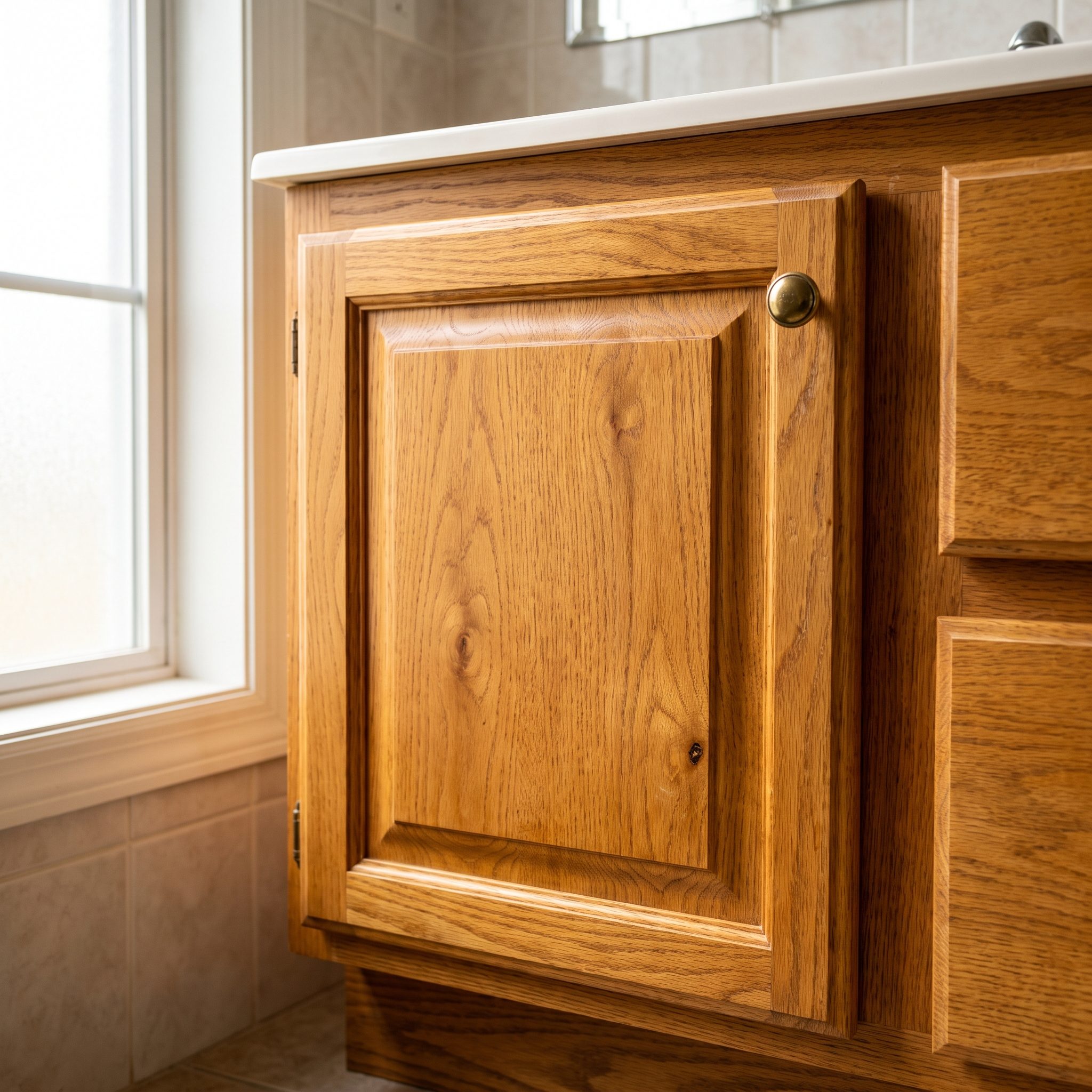
Golden oak brought a warm, pronounced grain to the vanity. Raised-panel doors added shadow and depth to the cabinet fronts, while a glossy finish made the wood’s honey-orange tones stand out.
Brass or brass-colored pulls carried that warmth down to the hardware. Against porcelain and tile, the substantial wood vanity gave the room a clear visual anchor.
30. The Matching Colored Bathtub
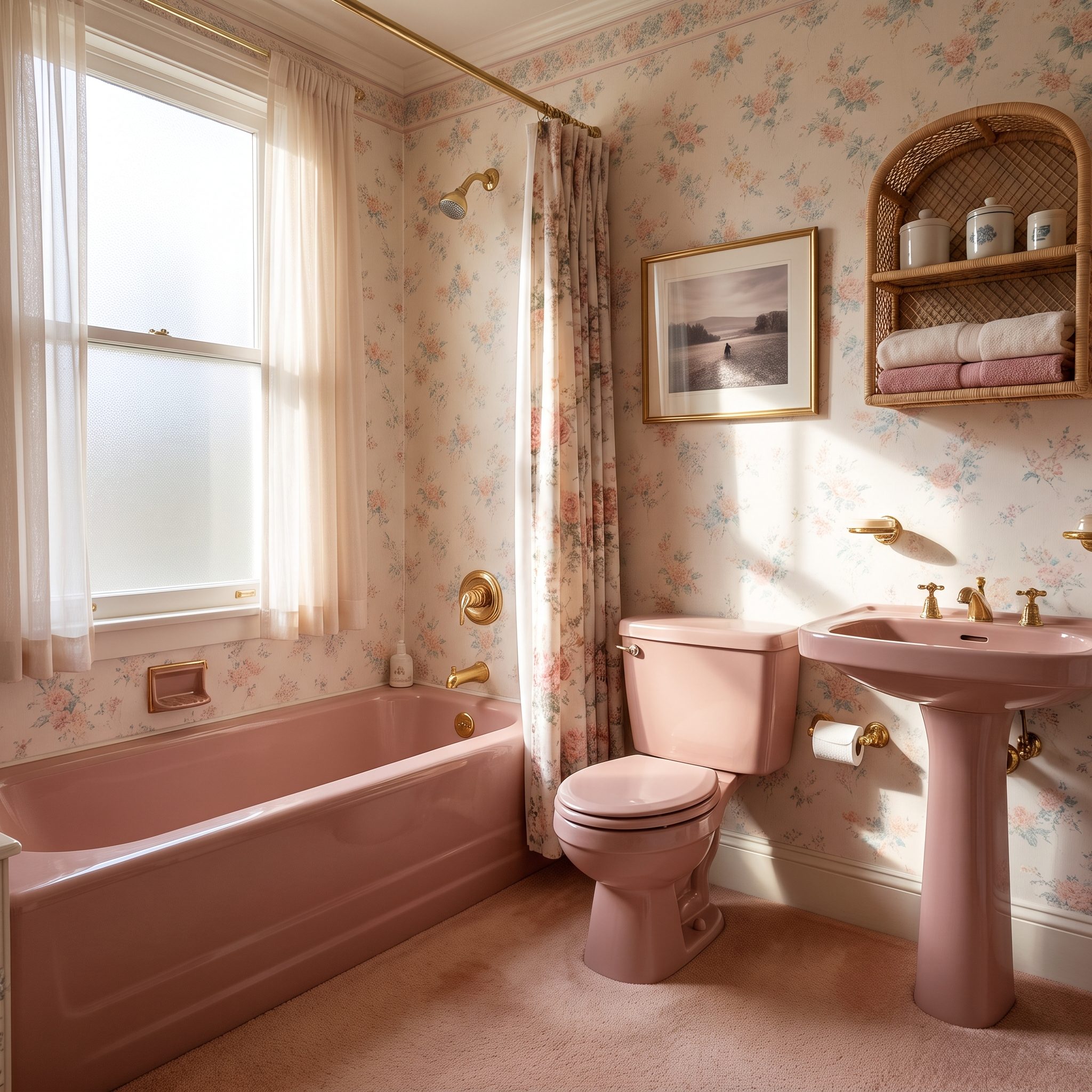
A colored tub turned the bathing area into a focal point. Pink porcelain, brass-trimmed glass doors, and a frosted floral pattern brought several distinctive finishes together in one sweep.
When the tub matched the sink and toilet, the color scheme extended across the room’s largest fixtures. It was a commitment measured in porcelain, not just paint or fabric.
29. Tiny Floral Wallpaper Covering the Rest of the Walls
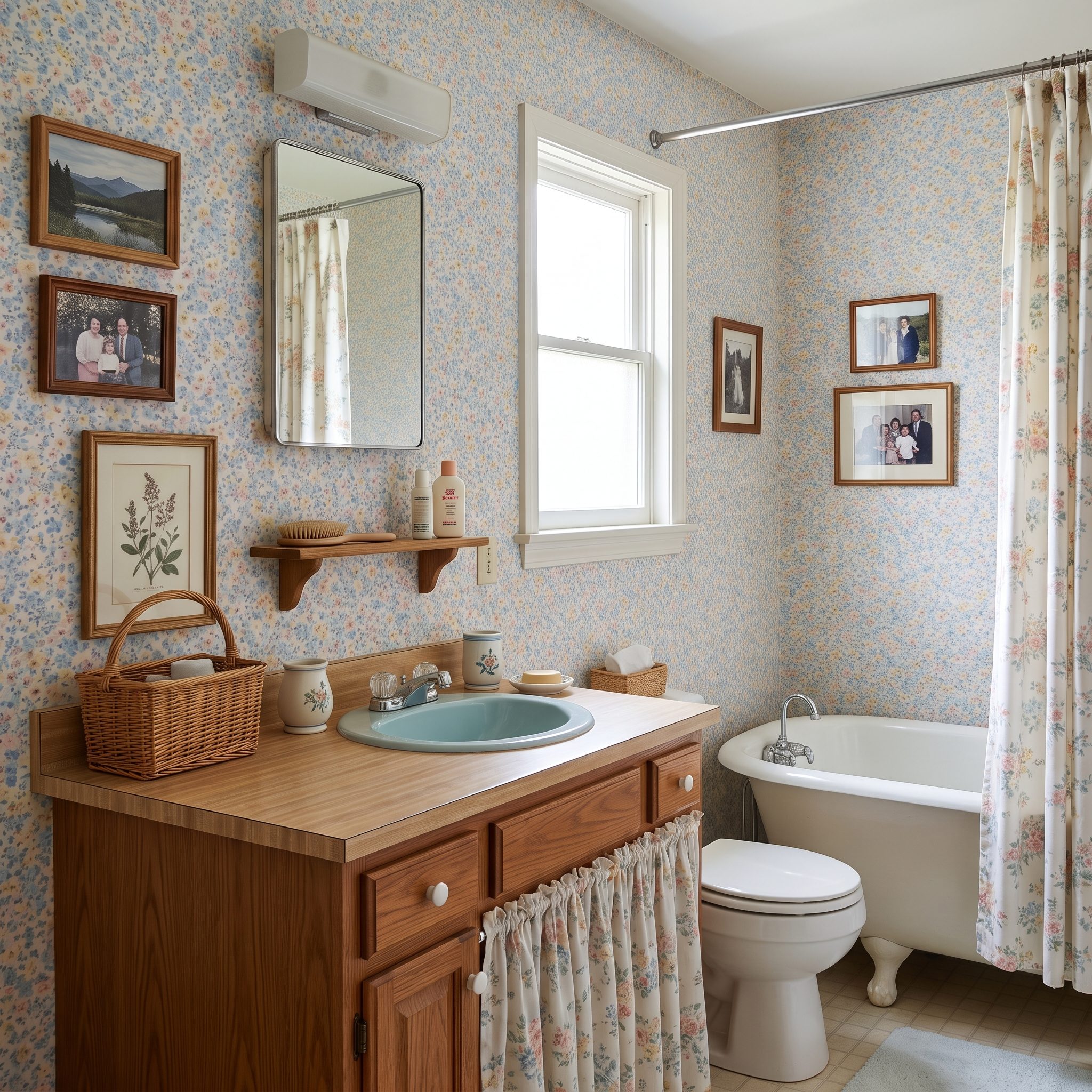
A close-set floral repeat can read almost like texture from across the room, then reveal its pattern at closer range. Vinyl-coated papers offered a practical surface for some bathrooms, while their sheen caught the light.
Small motifs filled the walls without relying on a single oversized print. Paired with a border or matching fabric, they gave a plain rectangular room a distinct decorative identity.
28. The Wallpaper Border Running Around the Top of the Room
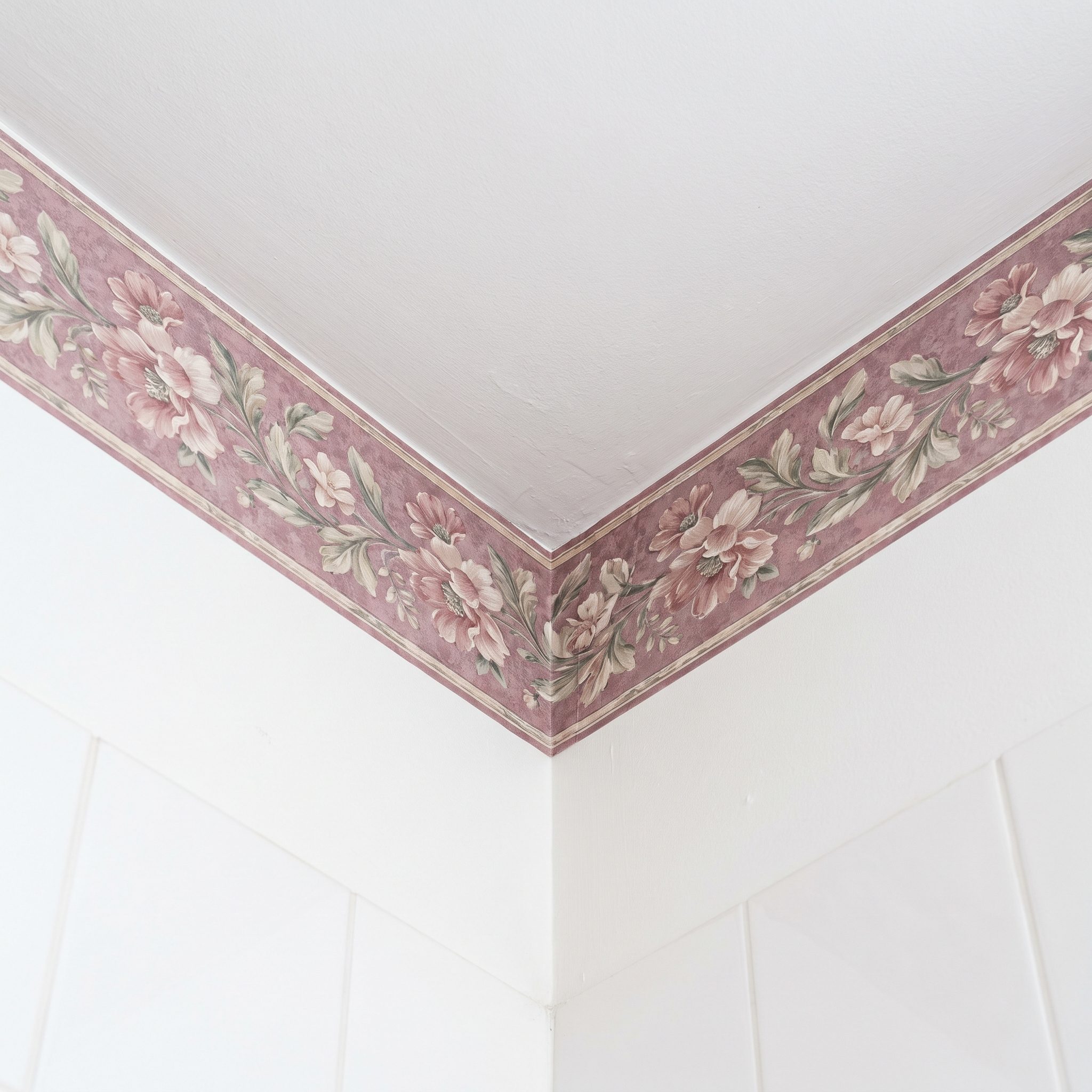
A narrow border marked the transition between wall and ceiling, carrying a repeating pattern of geese, ribbons, hearts, or flowers around the room. Against plain paint, it supplied a concentrated band of color; against wallpaper, it continued the pattern overhead.
The strip was small, but its continuous line drew the eye around the room’s perimeter.
27. Dusty Rose, Peach, Mauve, or Country Blue Everywhere
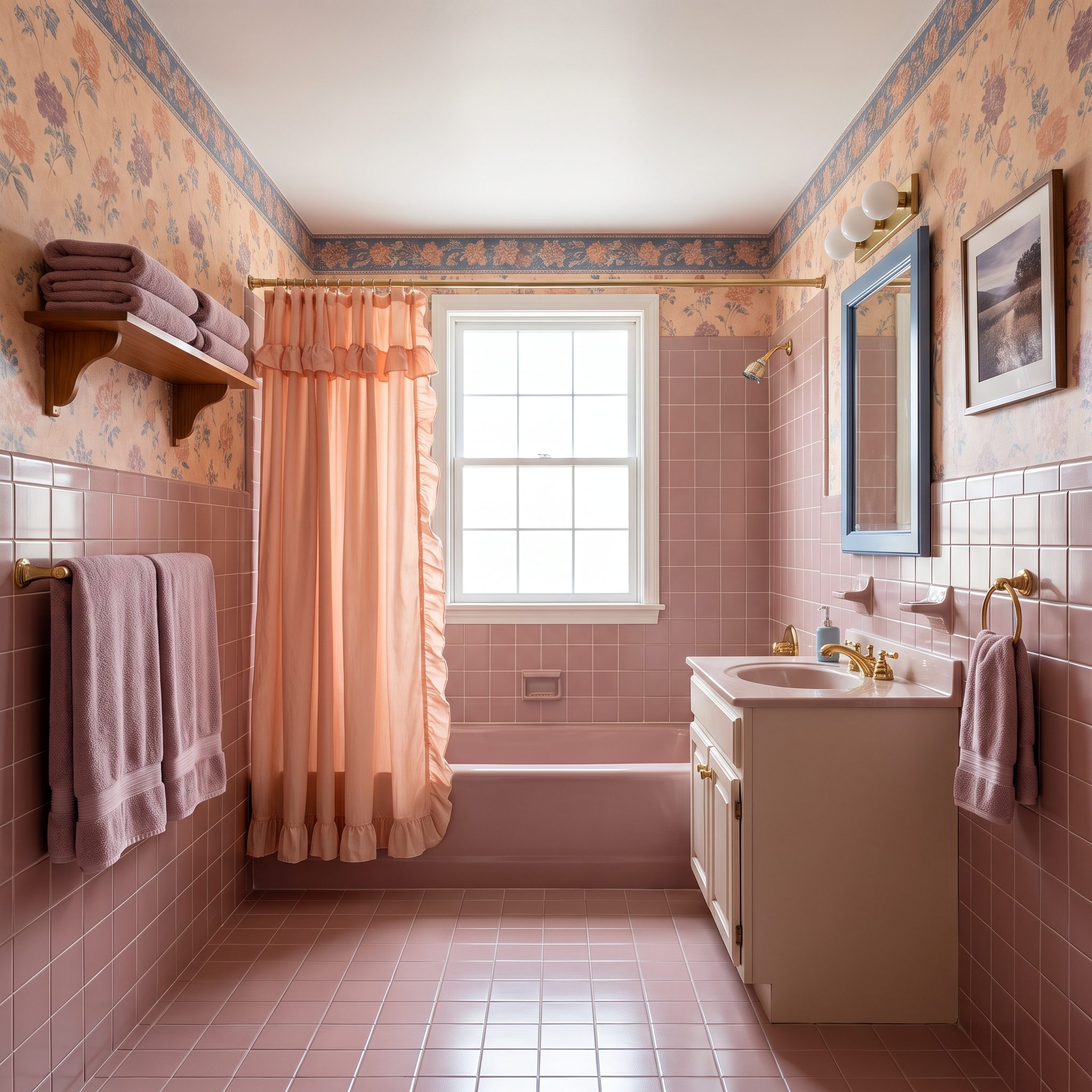
Dusty rose, peach, mauve, and country blue offered alternatives to all-white bathrooms. The color might appear on walls, towels, a bath mat, or a tissue-box cover, with each surface adding another layer.
Muted shades kept the look gentle; repeating them made it unmistakable.
26. The Sliding Mirrored Medicine Cabinet
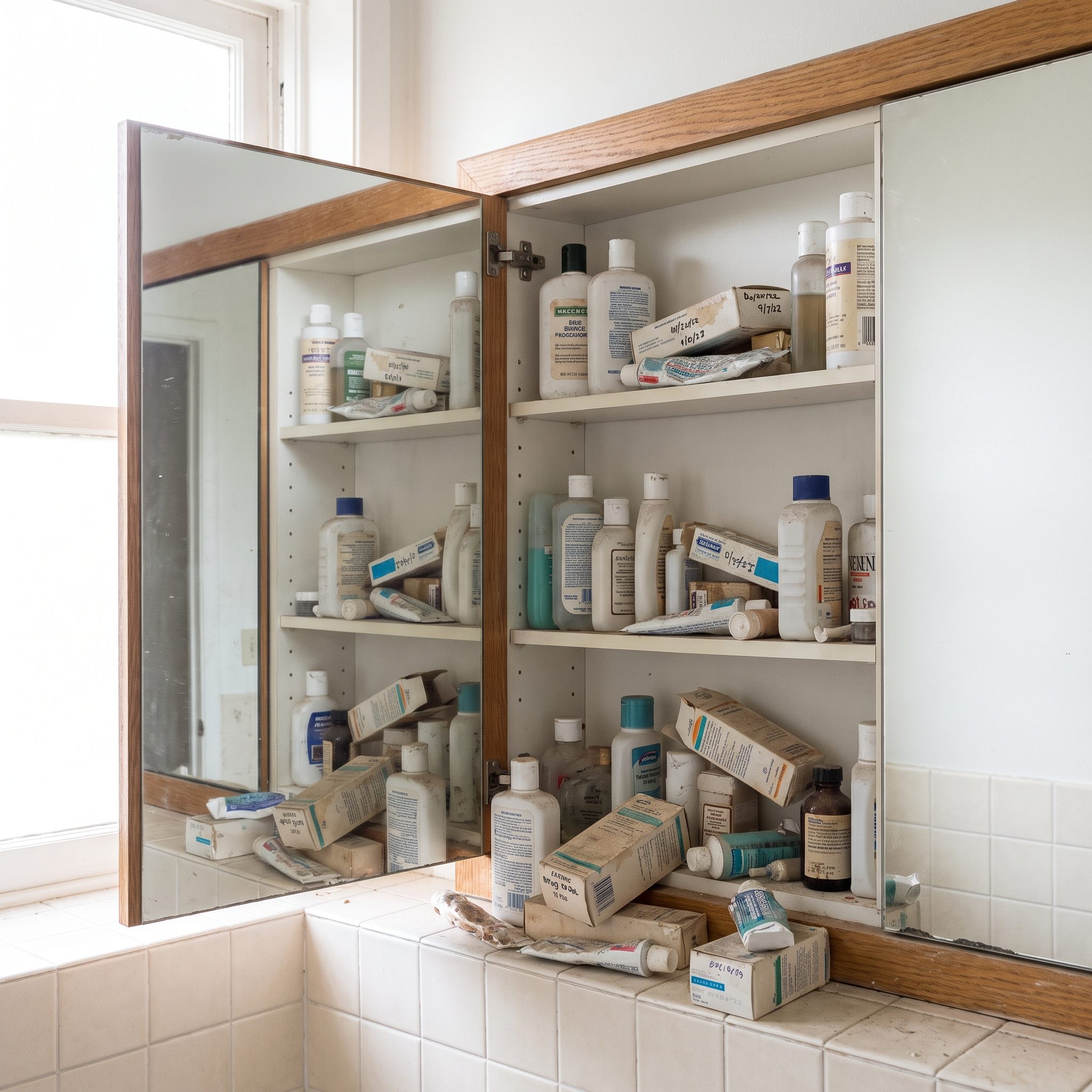
Sliding mirrored doors concealed shelves for toiletries while adding another reflective surface above the sink. The track let one panel move aside to reveal the cabinet’s contents without swinging into the room.
Small shelves made use of narrow wall space, though bottles, tubes, and everyday supplies could fill them quickly. The mirror’s second job was keeping those items out of view.
25. A Telephone in the Bathroom, or the Phone Jack Waiting Patiently for One
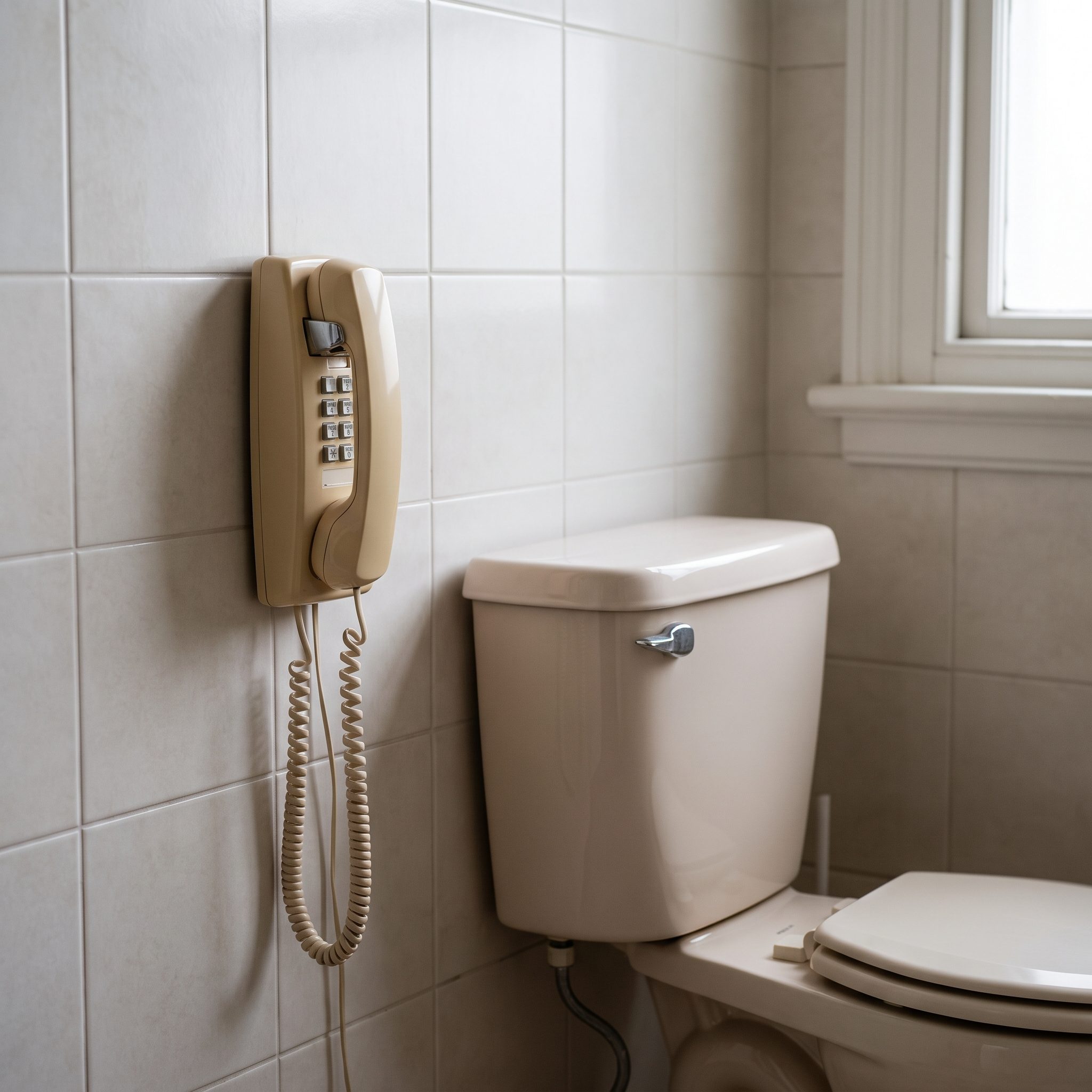
A wall-mounted push-button phone brought the household landline into the bathroom. A long coiled cord offered some reach; a phone jack alone left the spot ready for a handset that might never arrive.
Today, the fixture reads as a compact portrait of a more tethered era, when a phone could be built into the room instead of carried from it.
24. The Oak Toilet Seat That Matched the Vanity
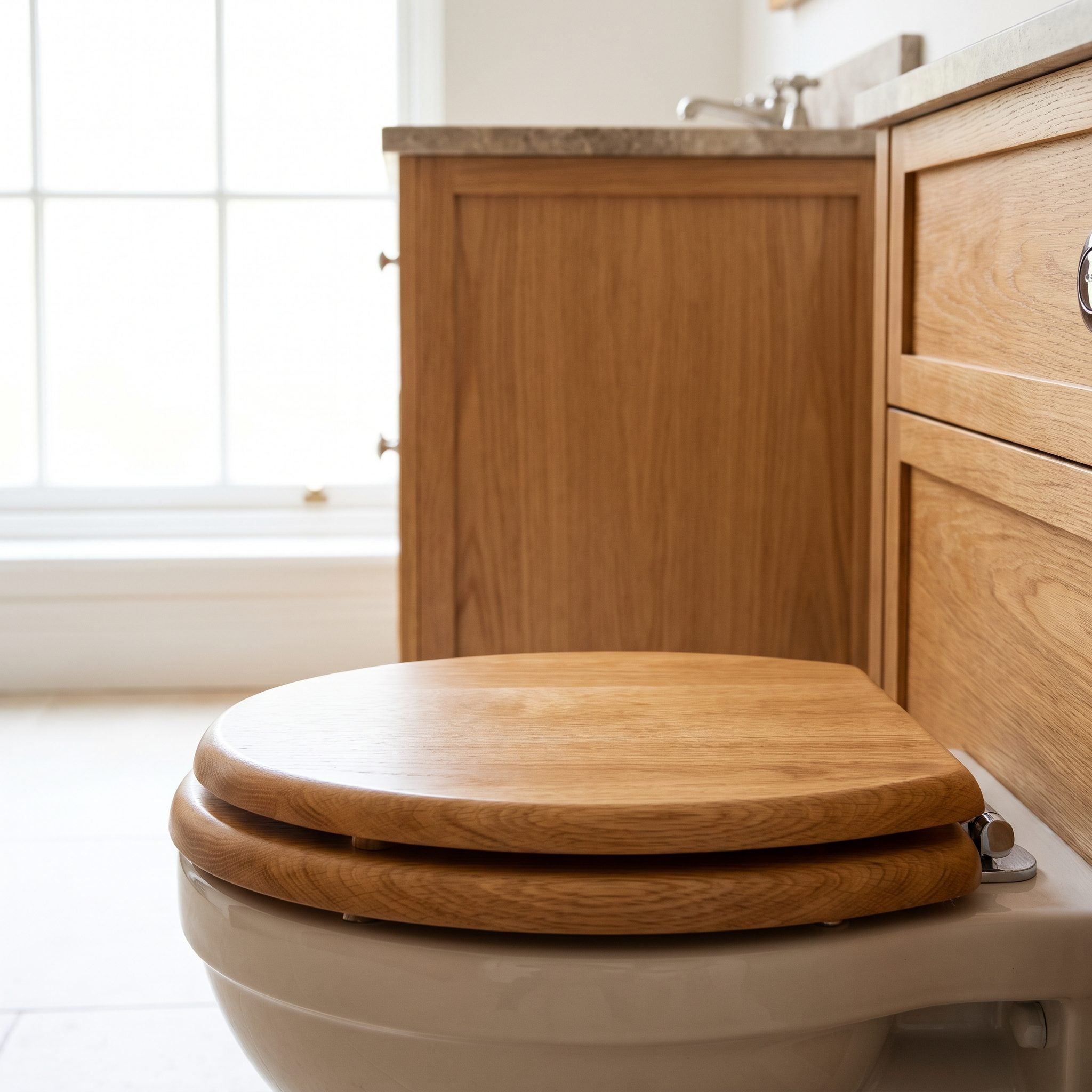
A wood-finish toilet seat echoed the oak vanity across the room, carrying the cabinet’s warm grain into a less expected place. Against white or colored porcelain, the seat became a small but unmistakable accent.
Even the toilet could join the palette. The detail is memorable because it extended the matching scheme beyond the obvious fixtures.
23. The Cultured-Marble Vanity Top With an Integrated Sink
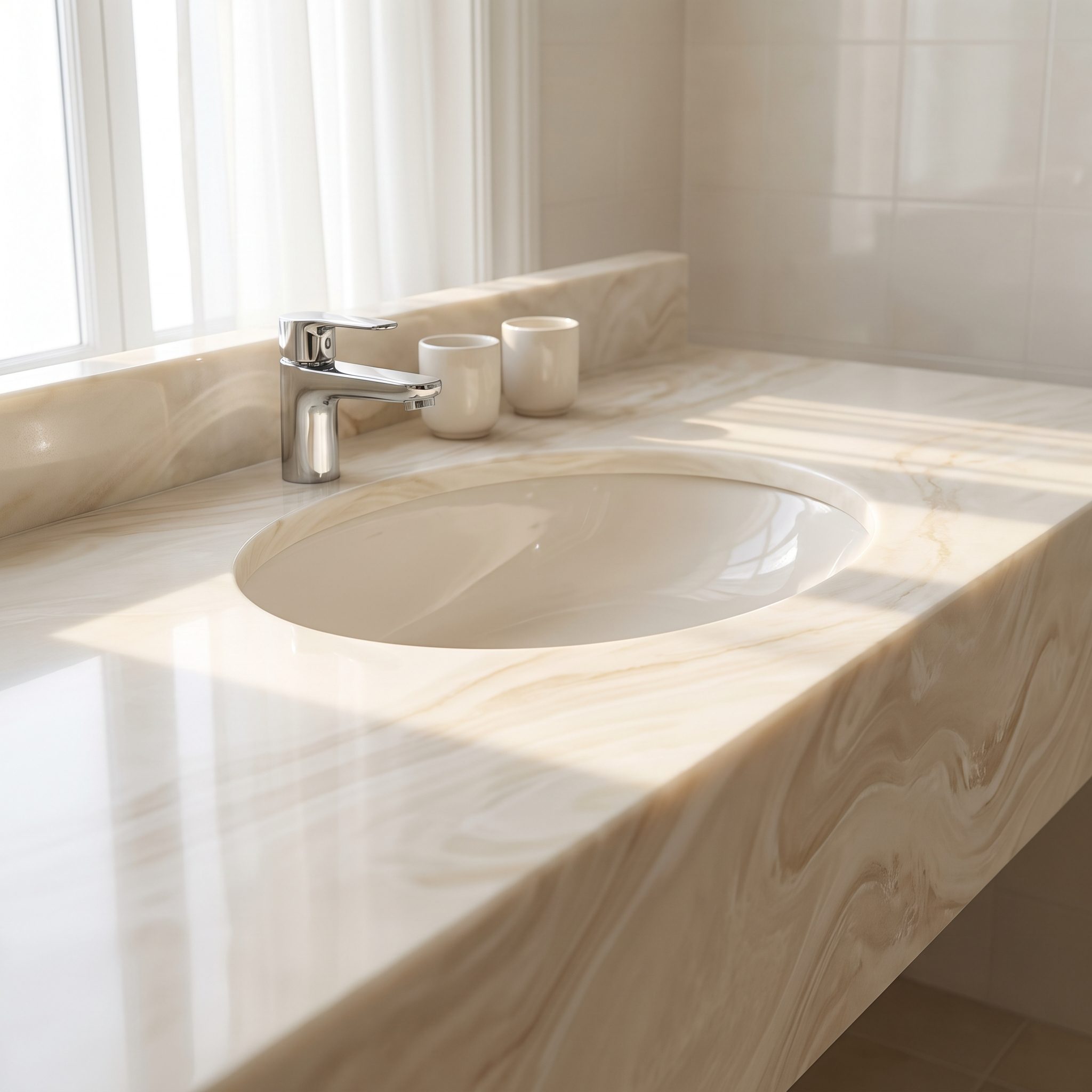
A molded vanity top with an integrated basin created one continuous surface, without a separate sink rim interrupting the counter. Cream and beige veining suggested stone while keeping the look glossy and uniform.
The uninterrupted curve from counter to basin was the appeal: easy to wipe and distinctly different from a separate porcelain sink set into a countertop.
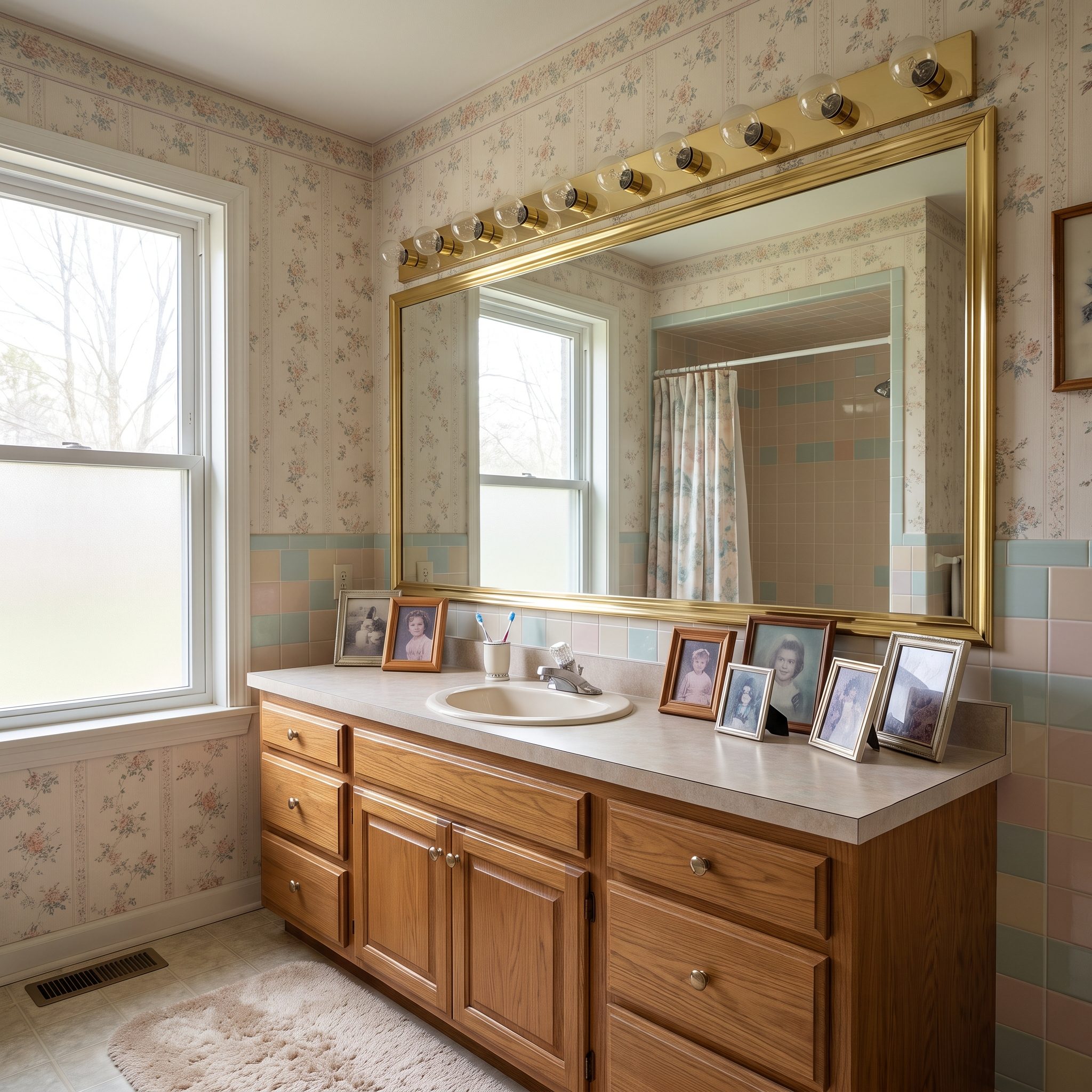
22. The Strip of Globe Bulbs Above the Mirror
🔥 Would you like to save this?
Frosted globe bulbs lined up above the mirror, turning a functional fixture into a row of bright, round forms. Their repeated shapes echoed the mirror’s horizontal span and made the vanity wall hard to miss.
The globes supplied a band of illumination with the air of a dressing-room set.
21. Polished Brass Faucets and Bathroom Hardware
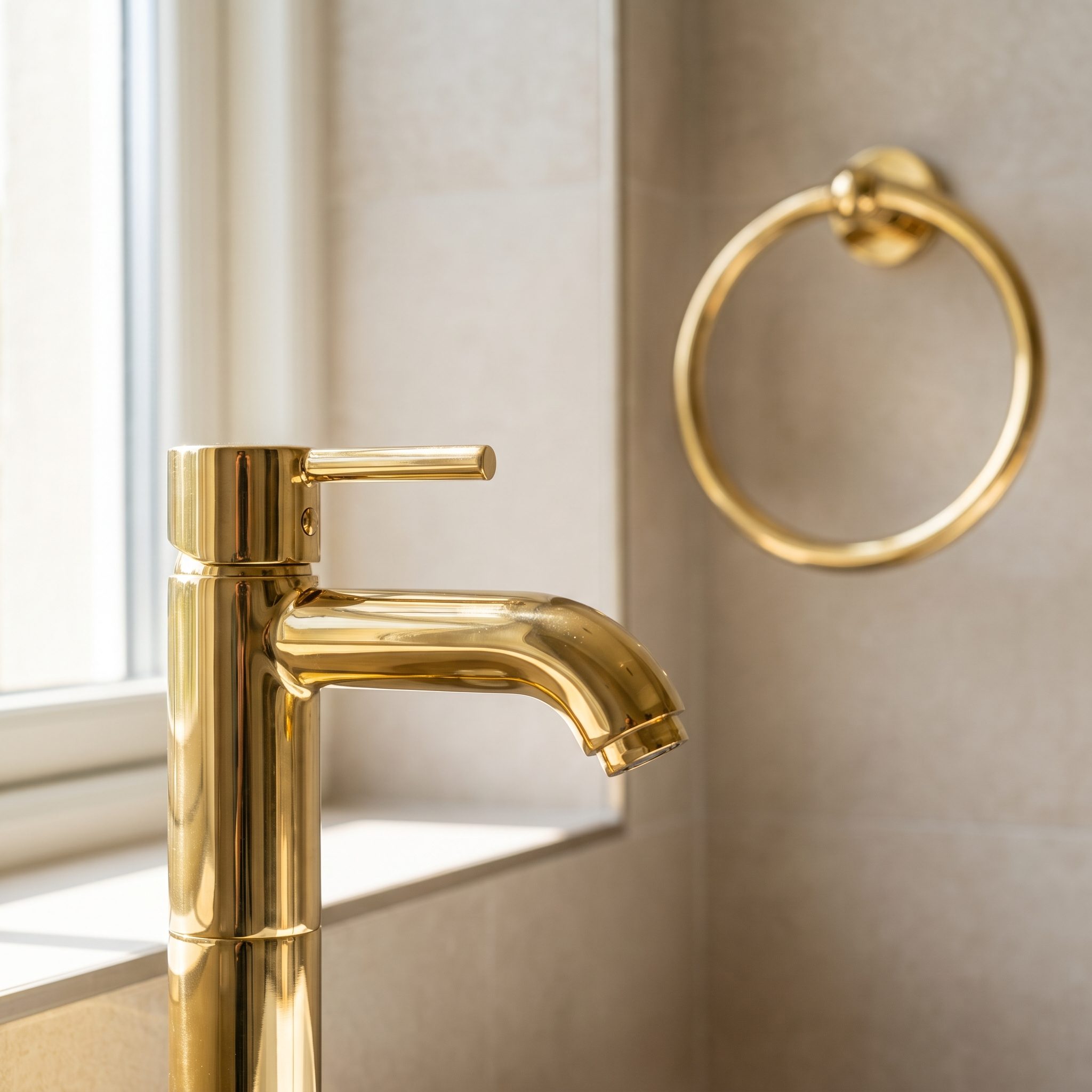
Polished brass gave faucets, towel rings, and toilet-paper holders a bright golden finish. Clear acrylic handles added another reflective detail, catching light like cut glass.
Against cream, almond, or wood, the hardware supplied a warm metallic note. Repeating the finish across several fixtures made the smaller details feel deliberate.
20. Framed Floral, Swan, or Duck Art Over the Toilet
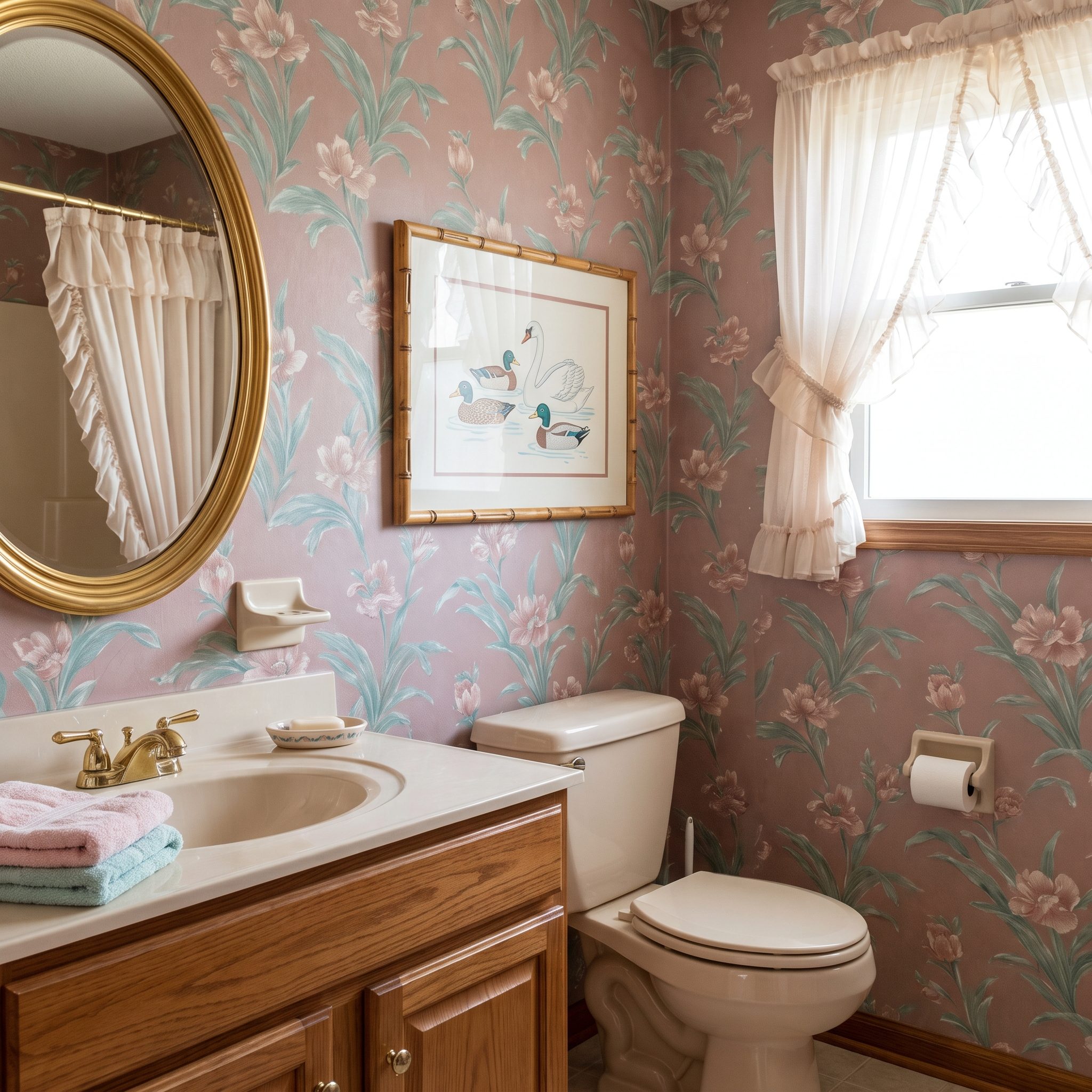
A floral print, swan, or pair of ducks could give an empty wall its own subject. Oak frames and colored mats picked up the room’s finishes, while a matched pair turned a small display into a more formal arrangement.
The pictures added pattern at eye level and brought a touch of country style into the room. Their subject might be playful; the frame and mat helped them belong.
19. A Small Wooden Wall Shelf Crowded With Tiny Decorative Objects
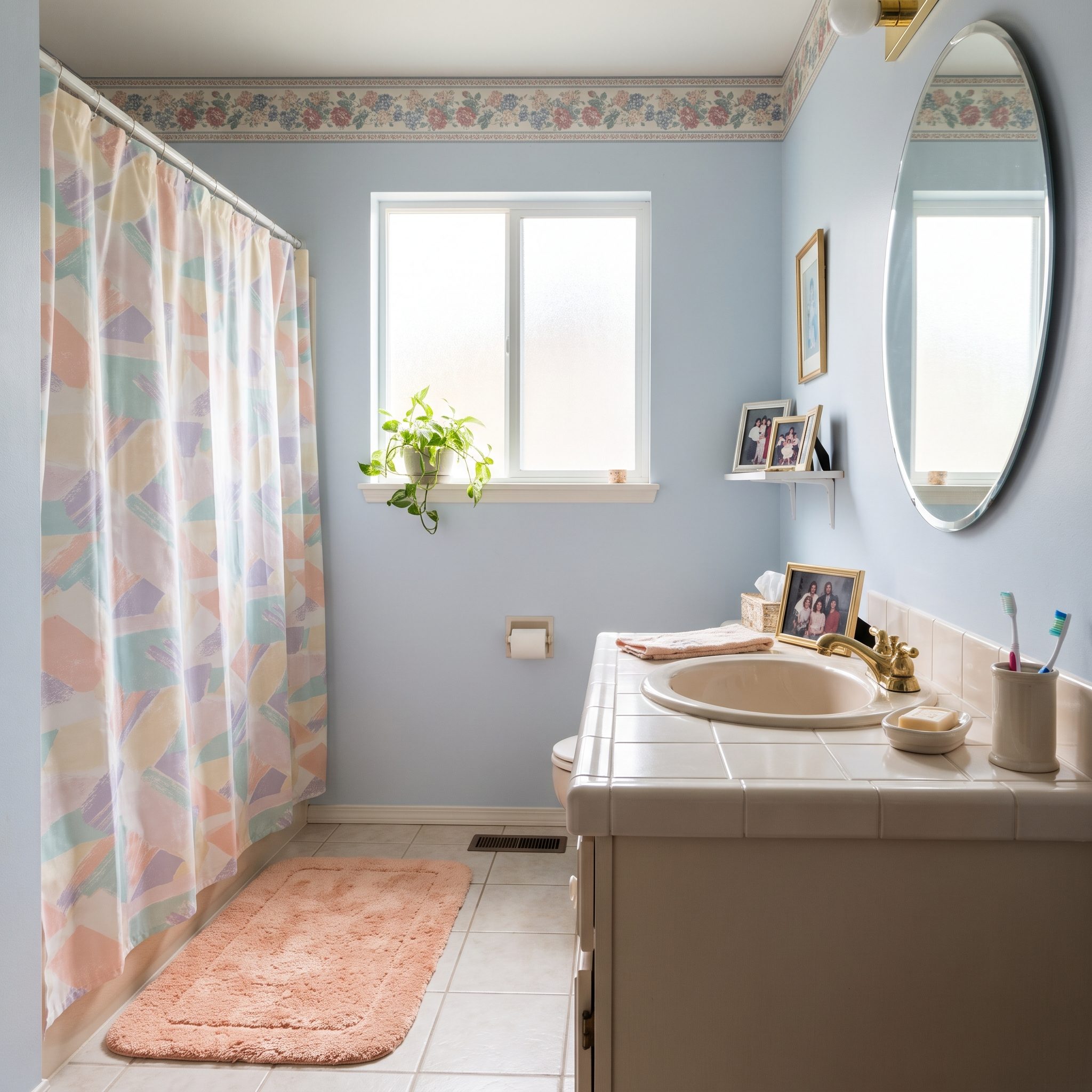
A narrow oak shelf with a spindle rail or cutout detail turned a patch of wall into a display ledge. Miniature baskets, ceramic figures, and small keepsake boxes filled the available space.
The objects were less about storage than composition. Their shapes, finishes, and colors picked up details from the wallpaper, woodwork, or towels nearby.
18. A Seashell or Coastal Theme Nowhere Near the Ocean
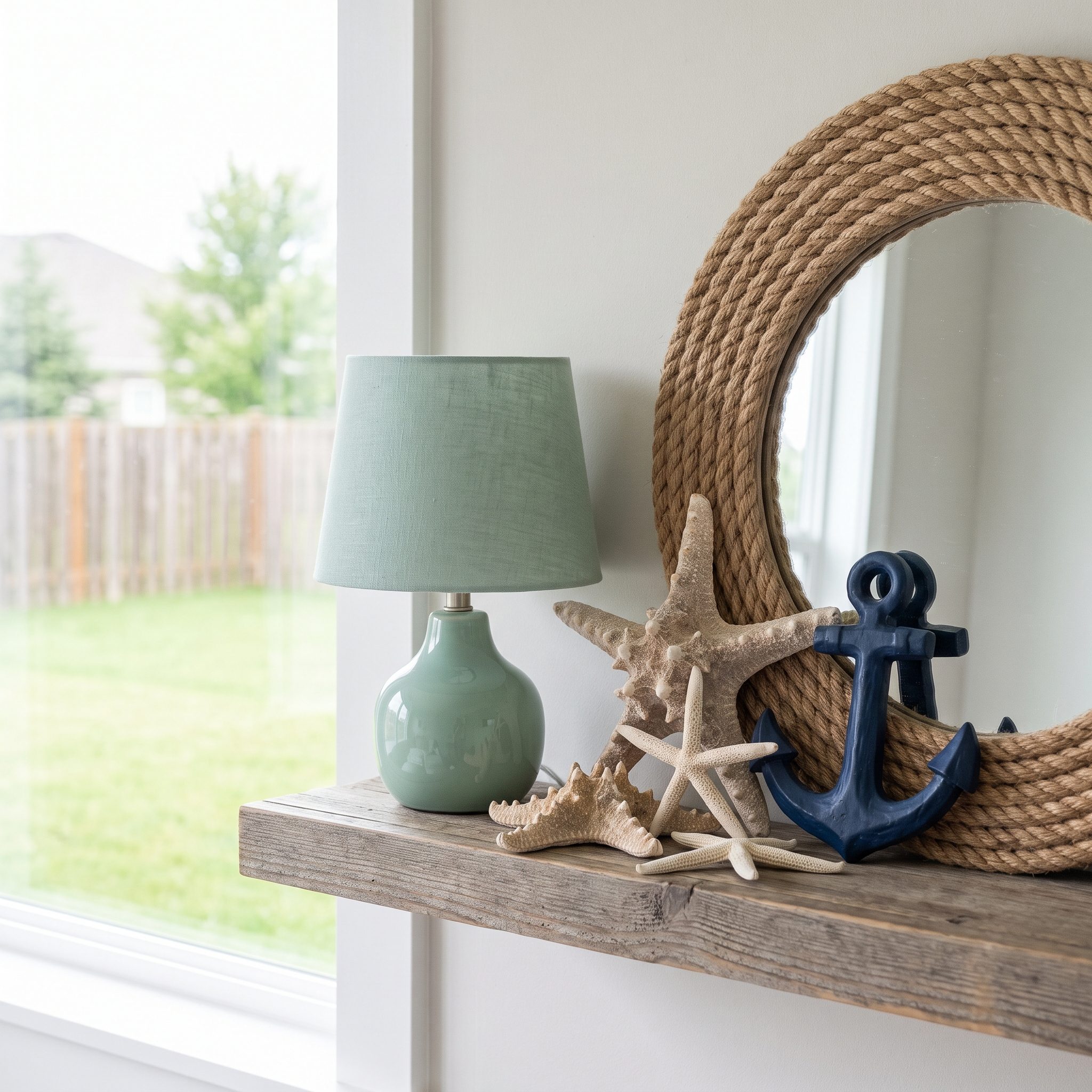
Shells, starfish, fishing net, and nautical accents could give a bathroom a coastal mood far from the shore. A conch shell or a scatter of pale shapes brought a beach reference indoors without changing the layout.
One seaside object suggested a motif; several repeated it across the walls, vanity, and accessories.
17. Hollywood-Style Vanity Lighting That Turned the Mirror Into a Landing Strip
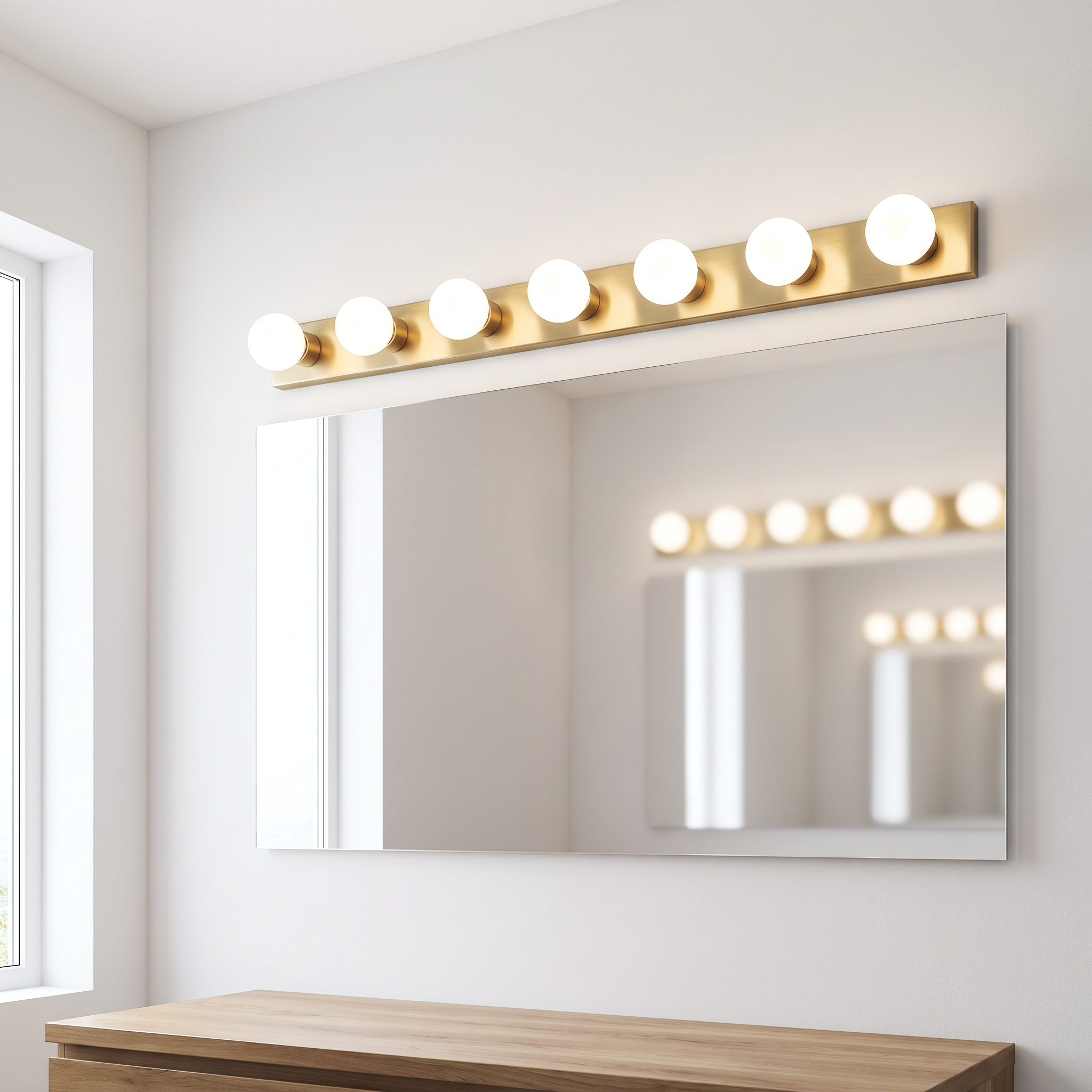
With a row of globes spanning the mirror, the vanity took on the scale of a backstage dressing table. The bright horizontal bar gave the room a theatrical edge, especially against brass, large expanses of glass, and pale walls.
Its charm lies in the directness: the mirror wall becomes the room’s main event.
16. The Fabric Shower Curtain With Ruffles or a Floral Print
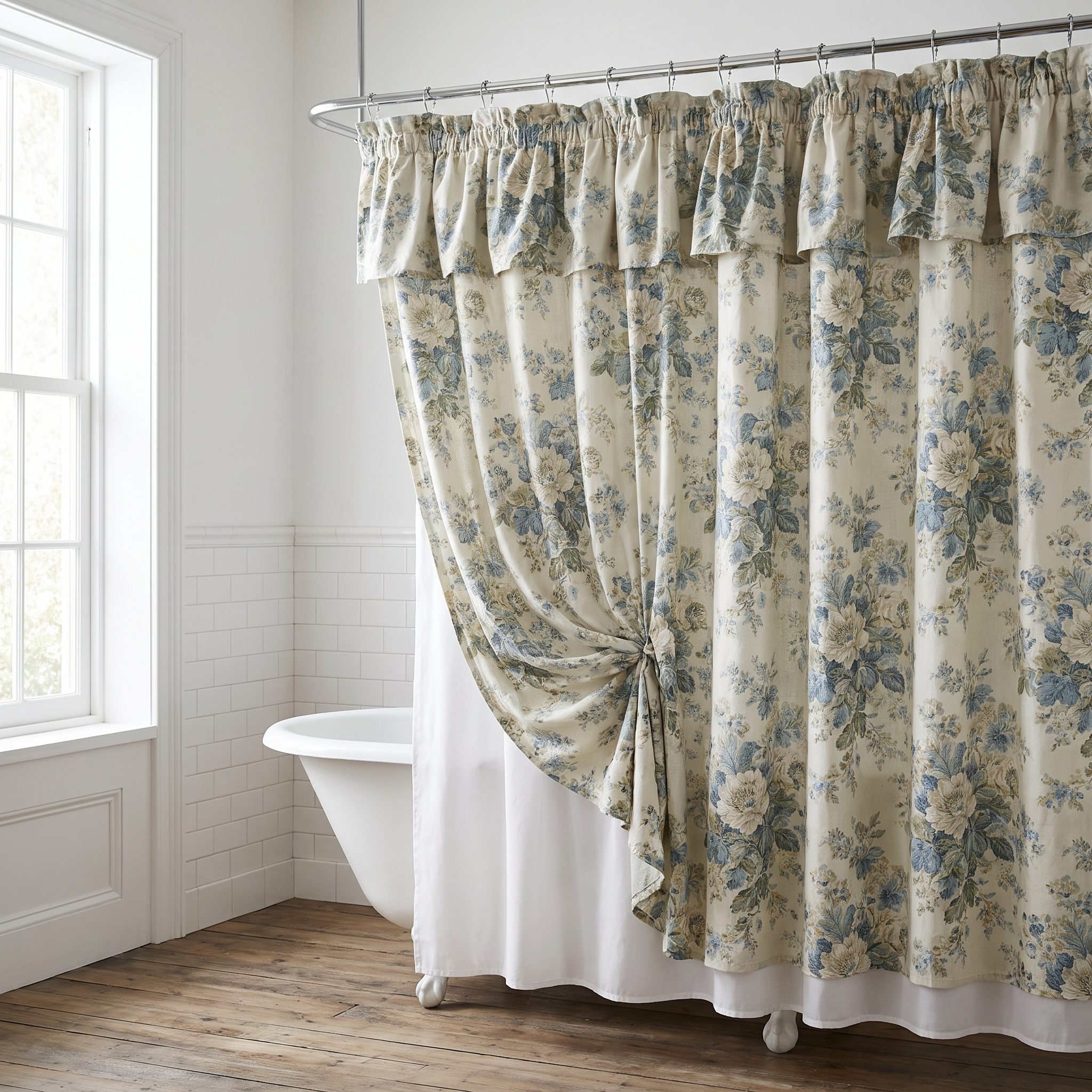
A floral fabric curtain put a large field of pattern beside the tub. A gathered ruffle softened the top edge, adding another layer of detail to the decorative surface.
A liner could sit behind the fabric to handle the water, while the outer curtain carried the color and print. The contrast made the shower area both practical and dressed up.
15. The Matching Window Valance
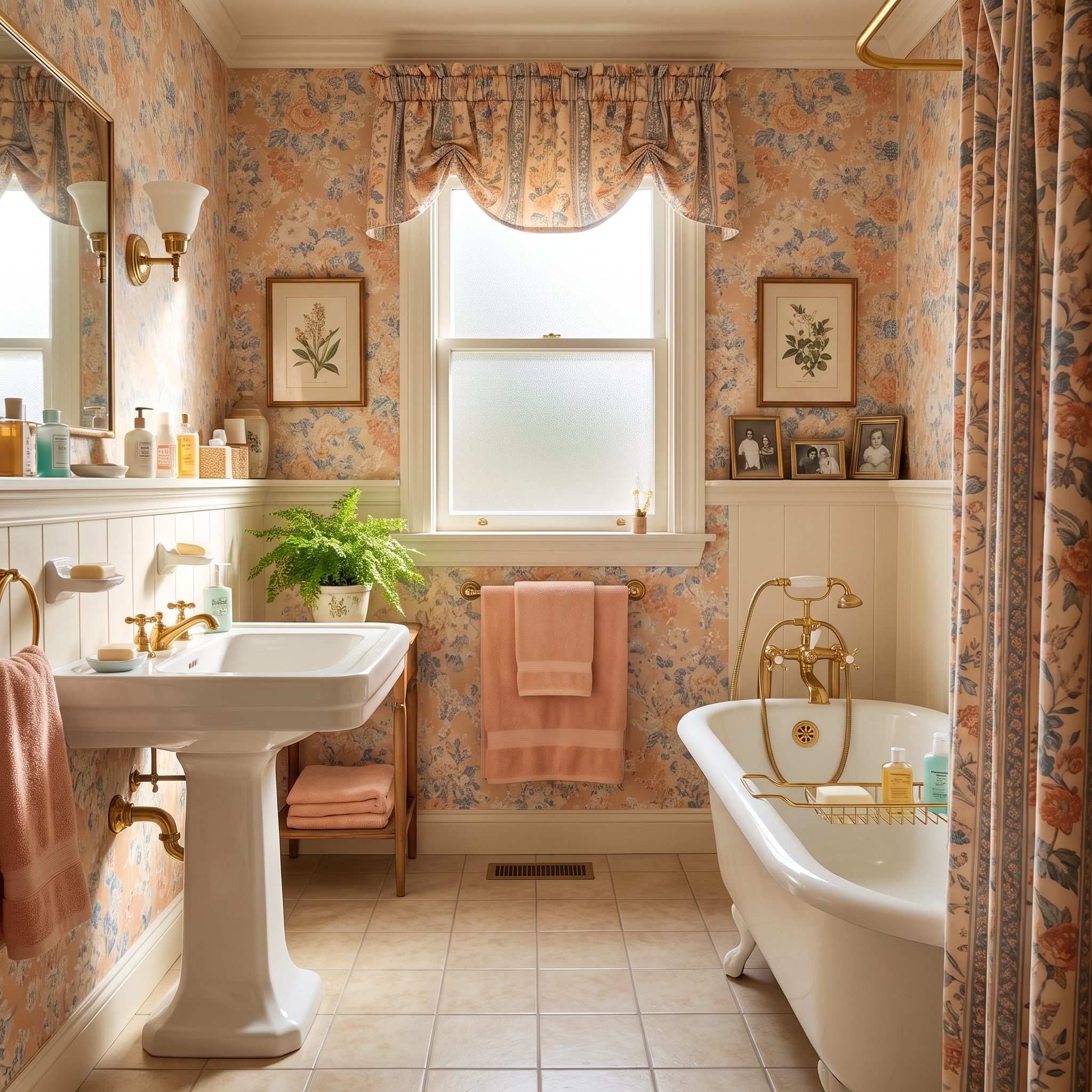
A short valance gathered along a brass rod gave the window a finished top edge. In a matching floral print, it linked the window to the shower curtain without covering the full pane.
A narrow band of fabric pulled the window into the room’s broader pattern.
14. Decorative Guest Towels
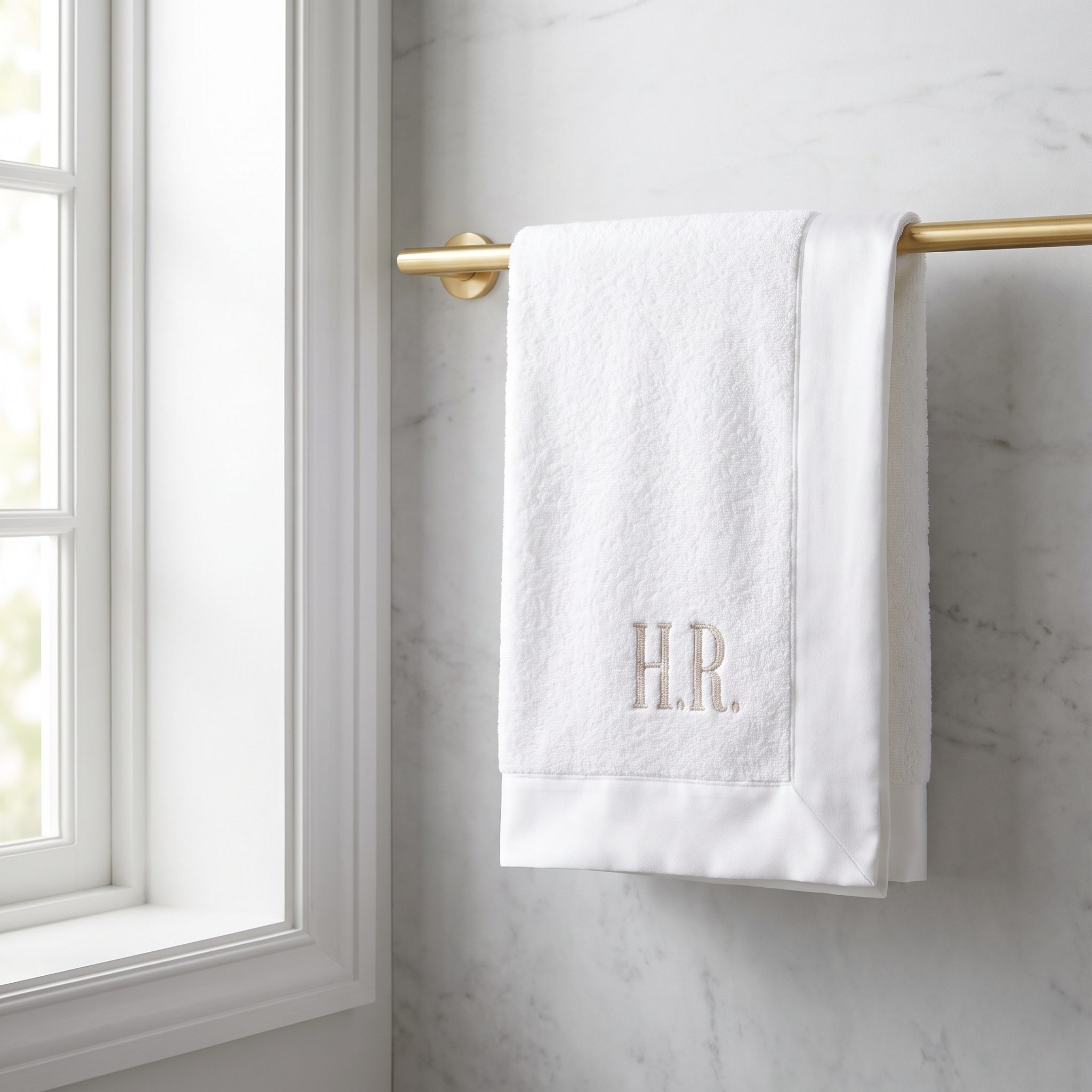
Monogramming, satin edging, embroidery, or a decorative fold could make a hand towel feel more like an accessory than a utility. Hung neatly on a brass bar, the detail added a small finish to the vanity area.
Some households reserved their best towels for display or guests, turning the distinction between useful and decorative into part of the room’s staging.
13. The Towel Bar Styled in Layers
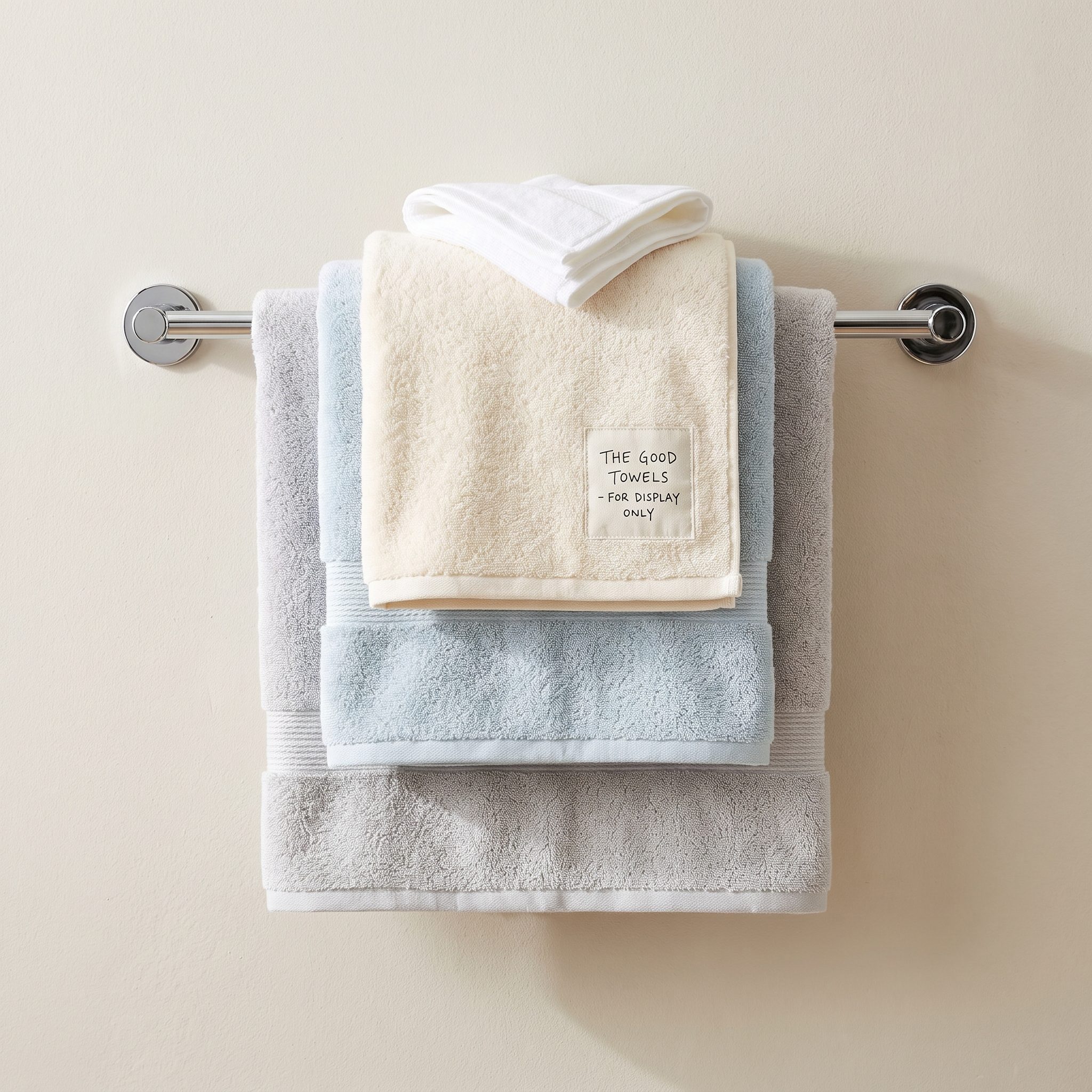
A towel bar could become a tiered display, with larger towels behind a folded hand towel and perhaps a decorative accent on top. The layered arrangement gave the wall more volume than a single towel would.
Matching colors kept the display orderly; the folds supplied its structure. The effect was closer to a small textile arrangement than a towel hung up to dry.
12. The Matching Fuzzy Toilet-Lid Cover
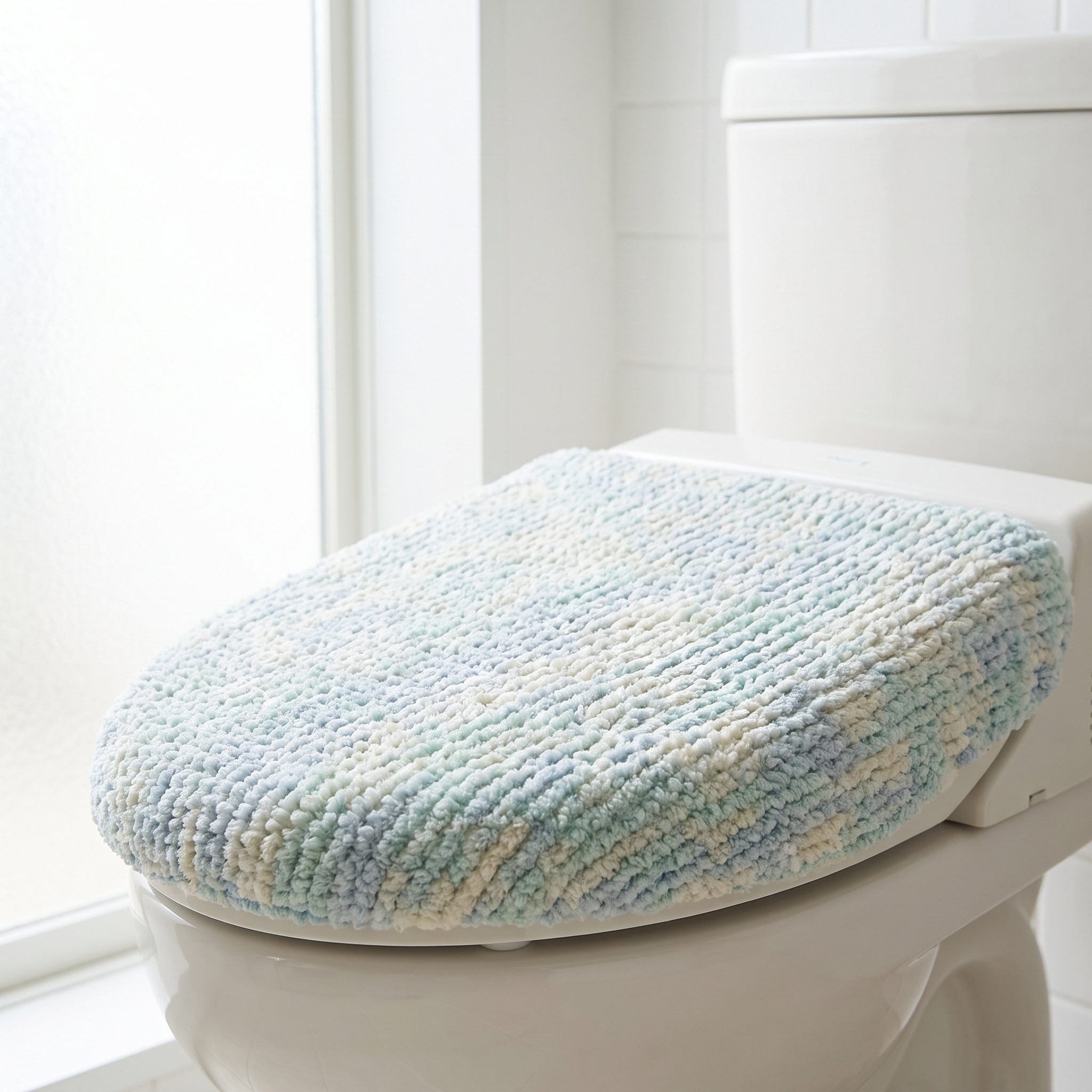
A plush cover gave the toilet lid a soft, fabric surface and extended the bathroom’s color to an unexpected place. An elastic edge held the cover around the lid, setting fuzzy texture against hard porcelain.
Coordinated with the rug or bath mat, it brought the color scheme right to the toilet.
11. The Fuzzy Contoured Rug Wrapped Around the Toilet
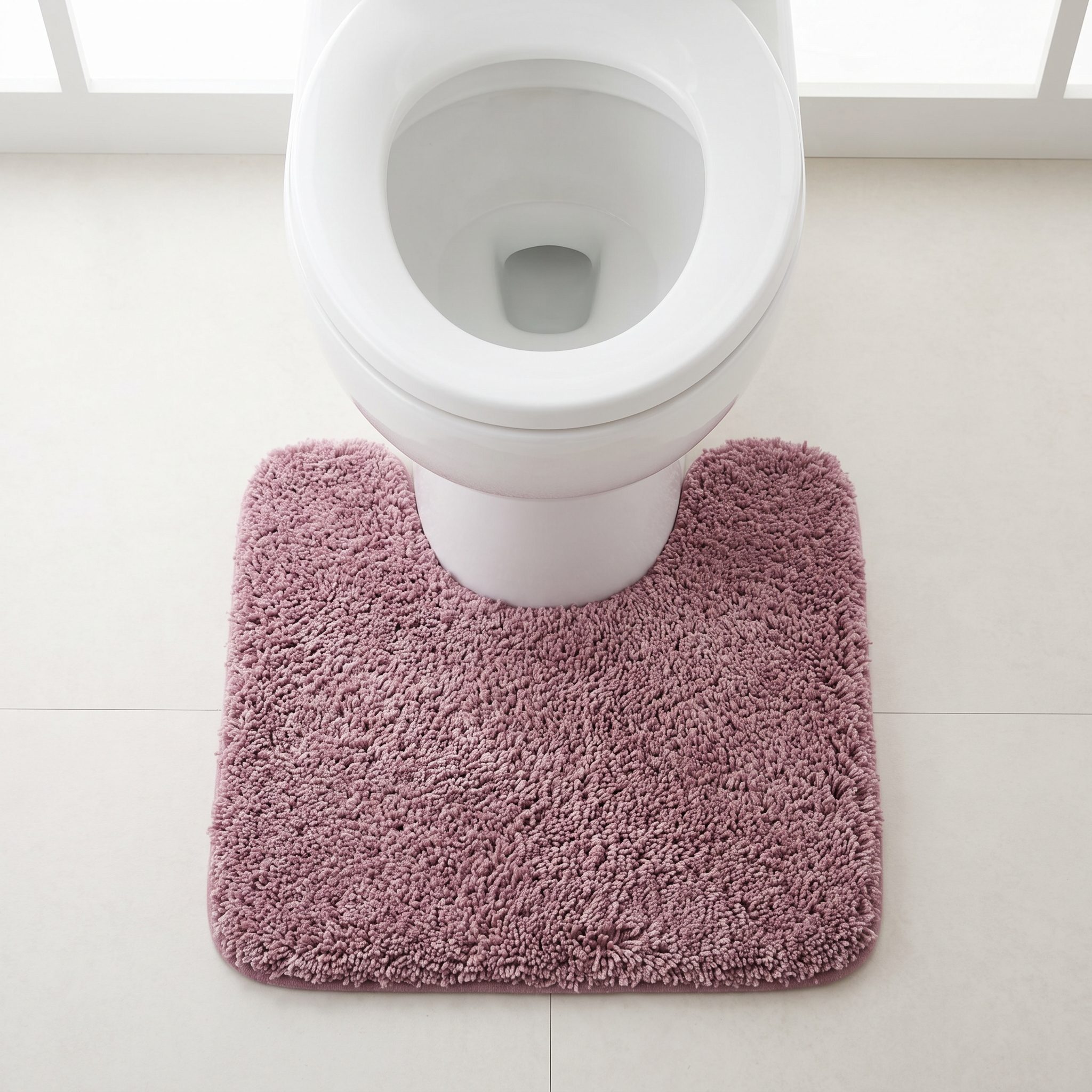
Cut to fit around the toilet base, a contoured rug softened the hard line where porcelain met tile or vinyl. Its U-shaped outline made it one of the room’s most recognizable accessories.
Deep pile added texture at floor level, while the color often echoed nearby towels or bath mats.
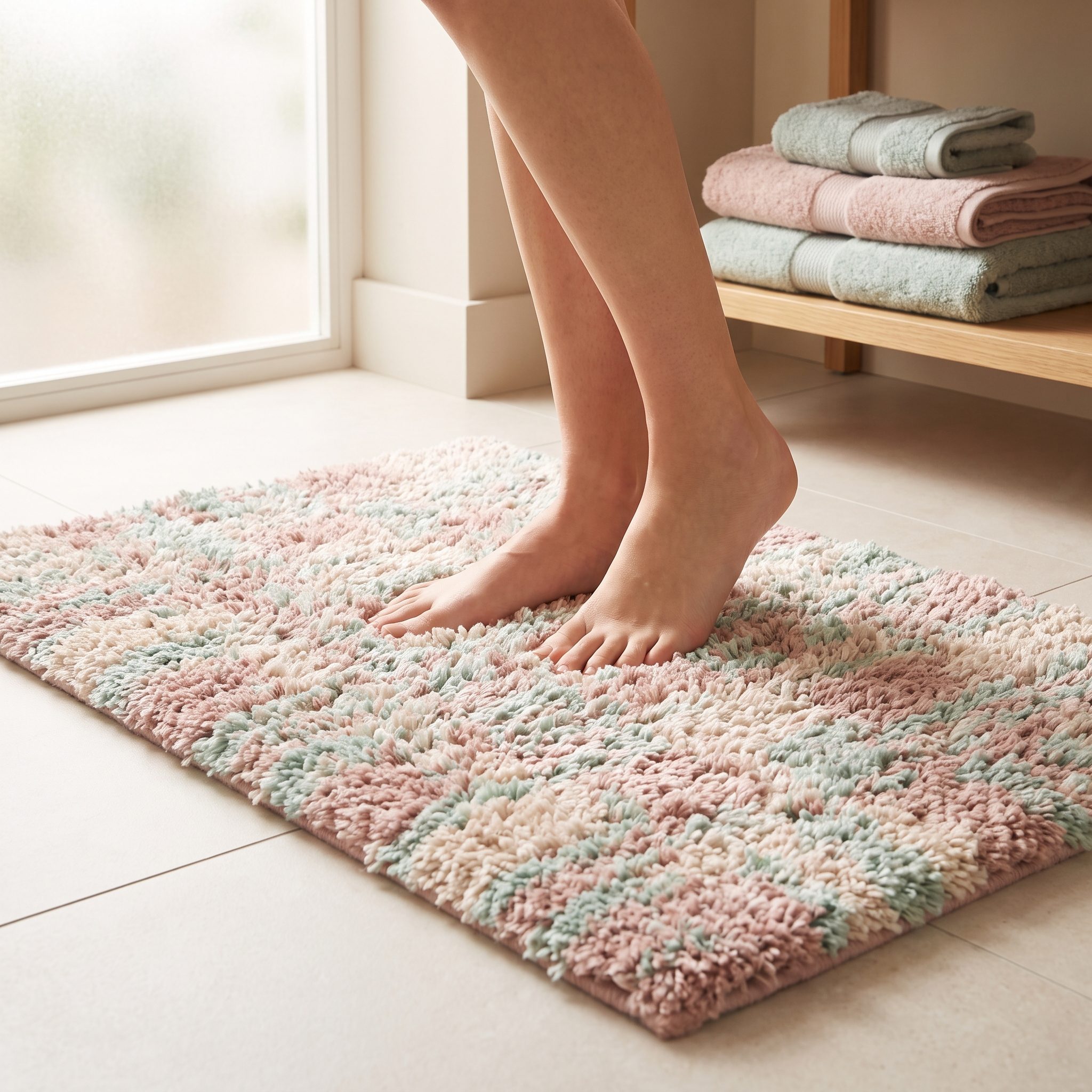
10. The Plush Bath Mat That Coordinated With the Room
🔥 Would you like to save this?
A thick chenille bath mat added softness beside the tub or shower, setting a plush rectangle against the bathroom’s harder surfaces. Dusty rose, mauve, and similar shades tied the floor to nearby fabric accents.
Unlike the toilet-shaped rug, the mat followed a simple rectangular outline. Together, the two floor coverings layered texture across the room.
9. The Wicker Basket of Rolled Towels or Extra Toilet Paper
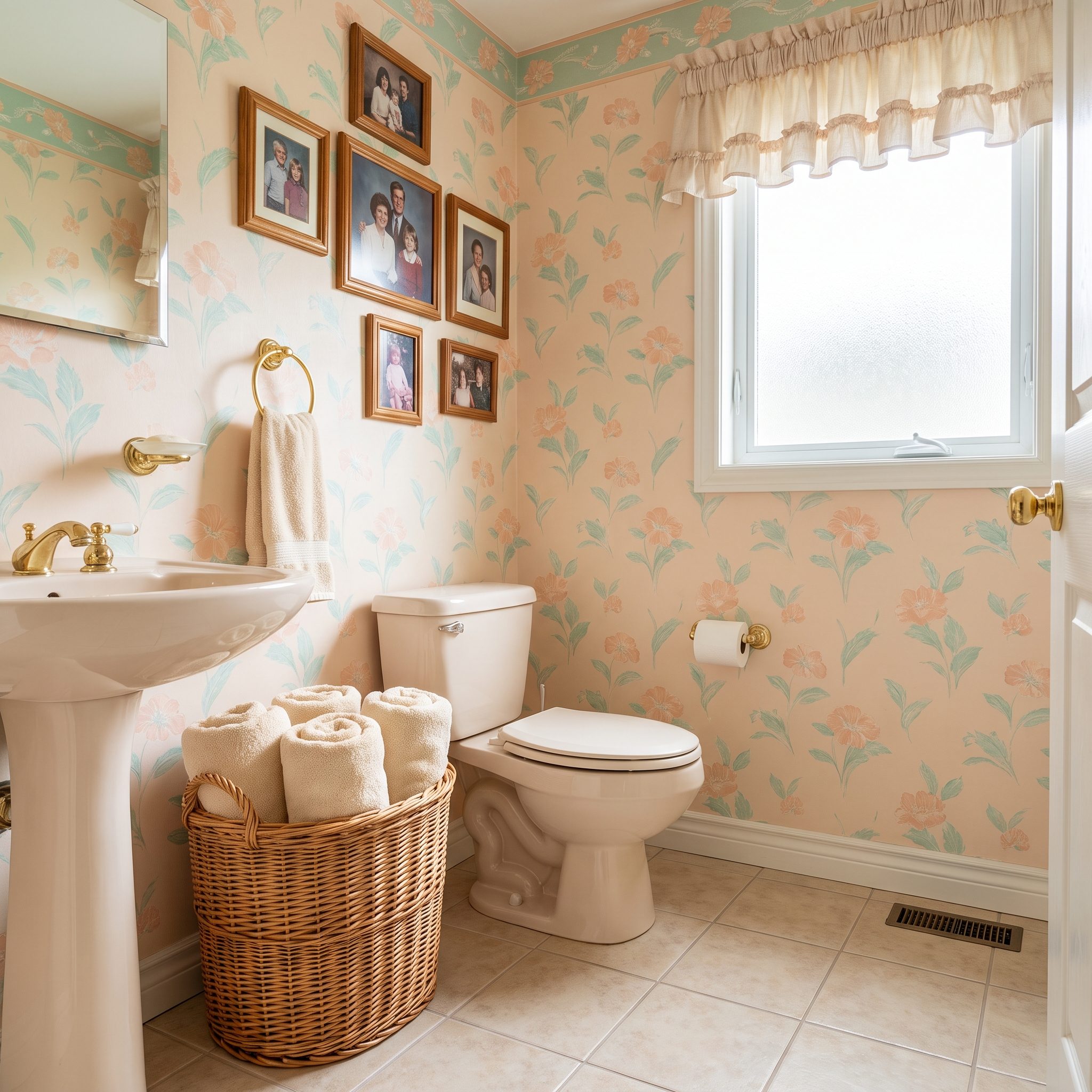
A floor basket gave rolled towels or spare toilet paper a visible place to live. Wicker added natural texture against glossy tile, porcelain, and brass.
Rolled towels turned storage into a display; stacked paper made the basket useful at a glance. Either way, the woven container softened an empty corner.
8. A Decorative Ceramic or Wicker Wastebasket
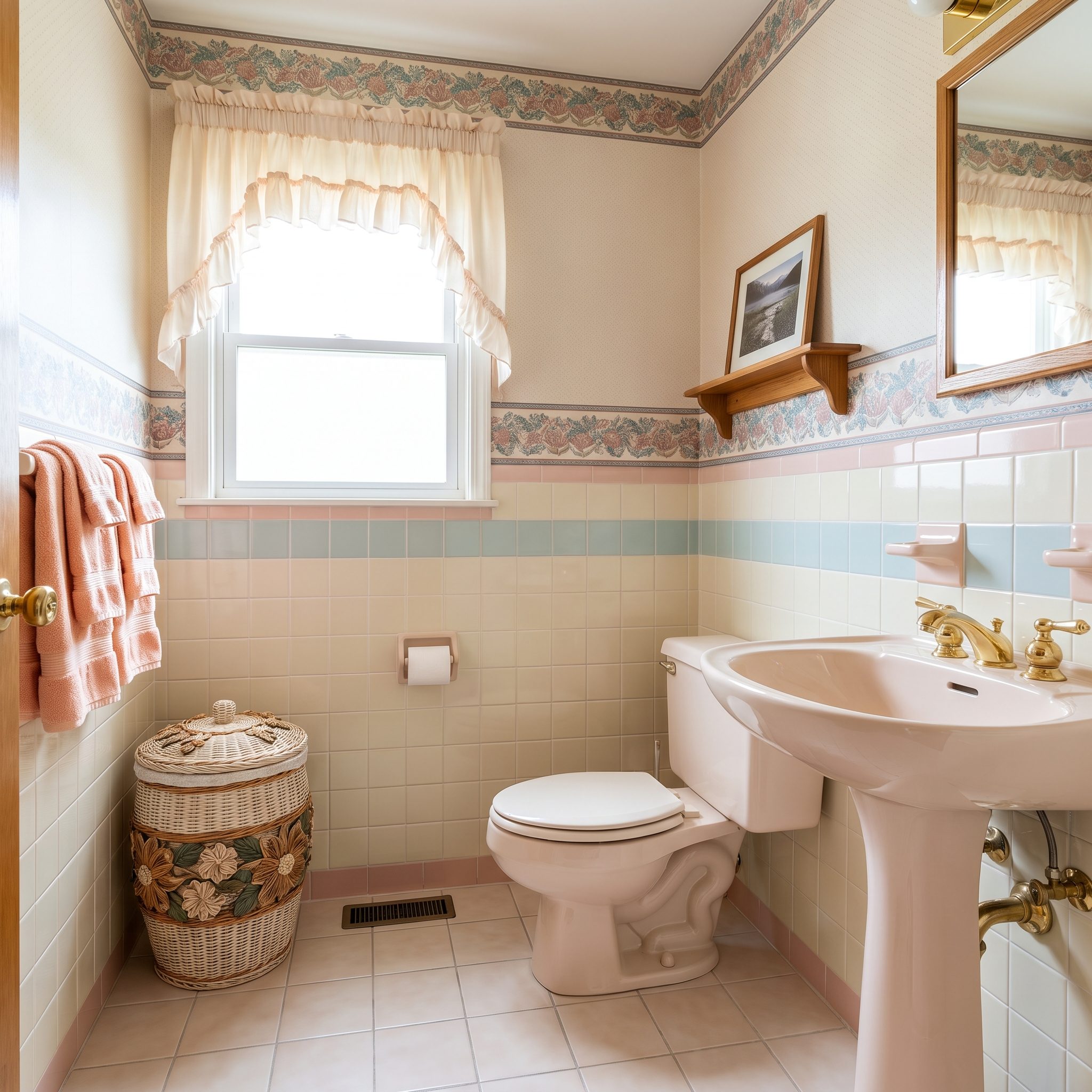
A wicker basket with a fabric liner or a glazed ceramic bin could coordinate with the room instead of disappearing into a corner. Pattern or finish turned a practical object into part of the decor.
The decorative wastebasket was an ordinary bin dressed for a more elegant assignment.
7. The Decorative Tissue-Box Cover
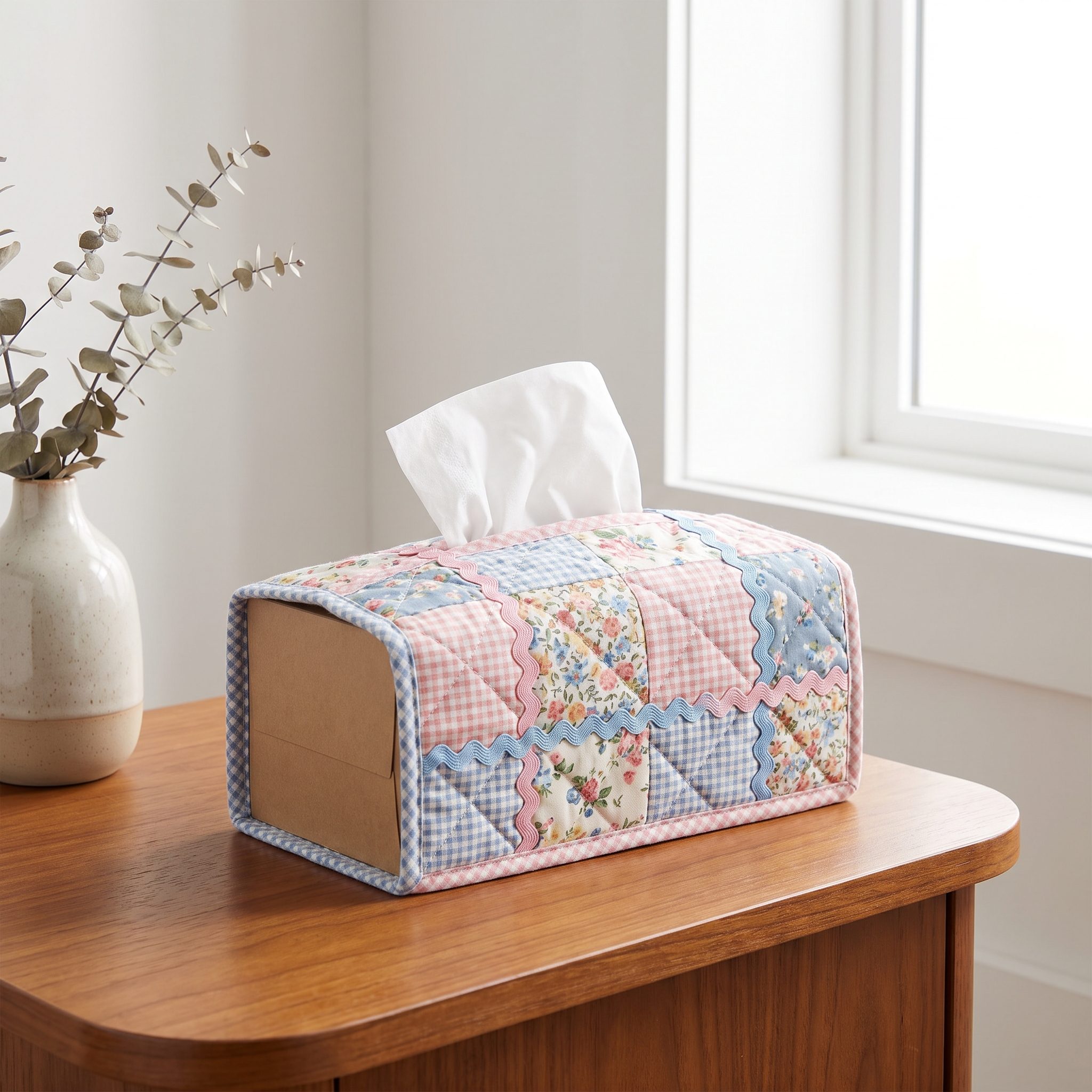
A fabric tissue-box cover concealed the cardboard carton beneath quilted panels, a padded top, or gathered trim. Ceramic versions offered a harder, glossier alternative.
The cover brought a disposable household item into the bathroom’s decor. The box could change; its disguise stayed in place.
6. A Bowl or Basket of Potpourri Near the Sink
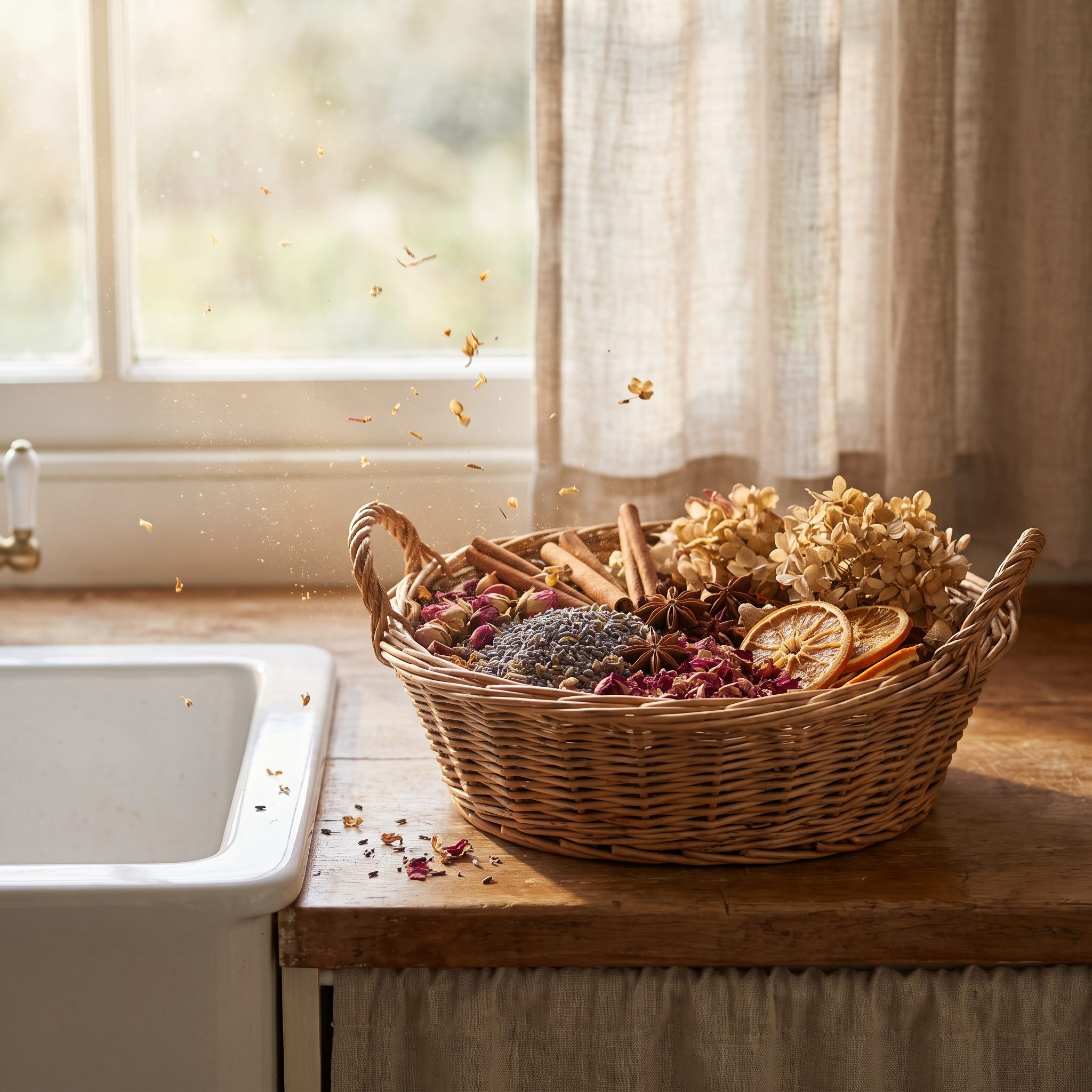
Potpourri added color and fragrance to the vanity, usually displayed in a shallow bowl or small basket. Dried petals, spices, and decorative pieces made the arrangement as visual as it was aromatic.
As the fragrance faded, the bowl remained as an accent, picking up the colors and materials nearby.
5. Artificial Ivy or Silk Flowers Trailing Off the Vanity
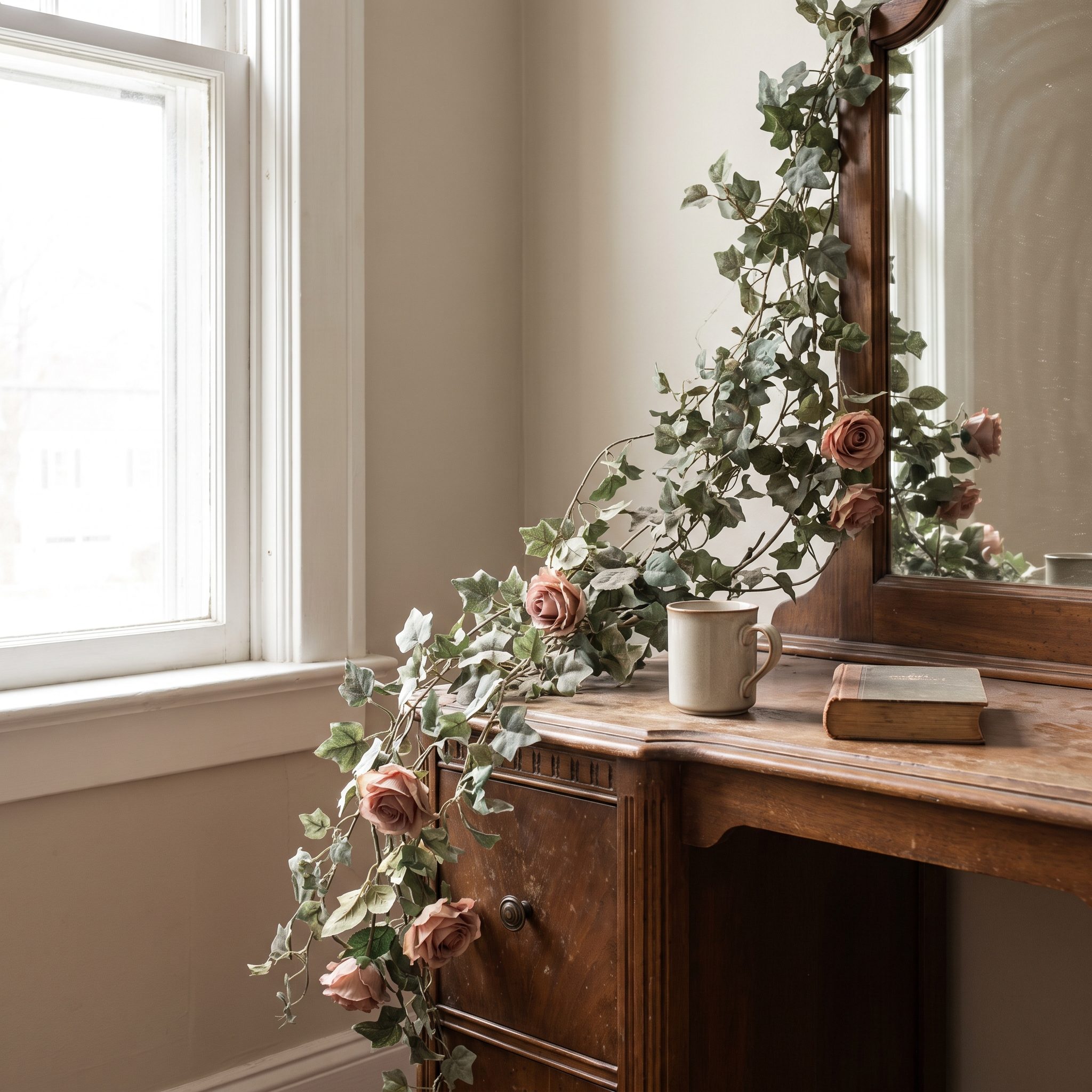
Artificial ivy draped over the vanity edge or silk flowers brightened a counter without taking up much room. Green leaves and colorful petals stood out against hard finishes and repeated patterns.
Faux greenery did not need watering, though it could still collect dust. The trailing shape softened the cabinet’s outline.
4. The Seashell-Shaped Soap That Nobody Was Supposed to Use
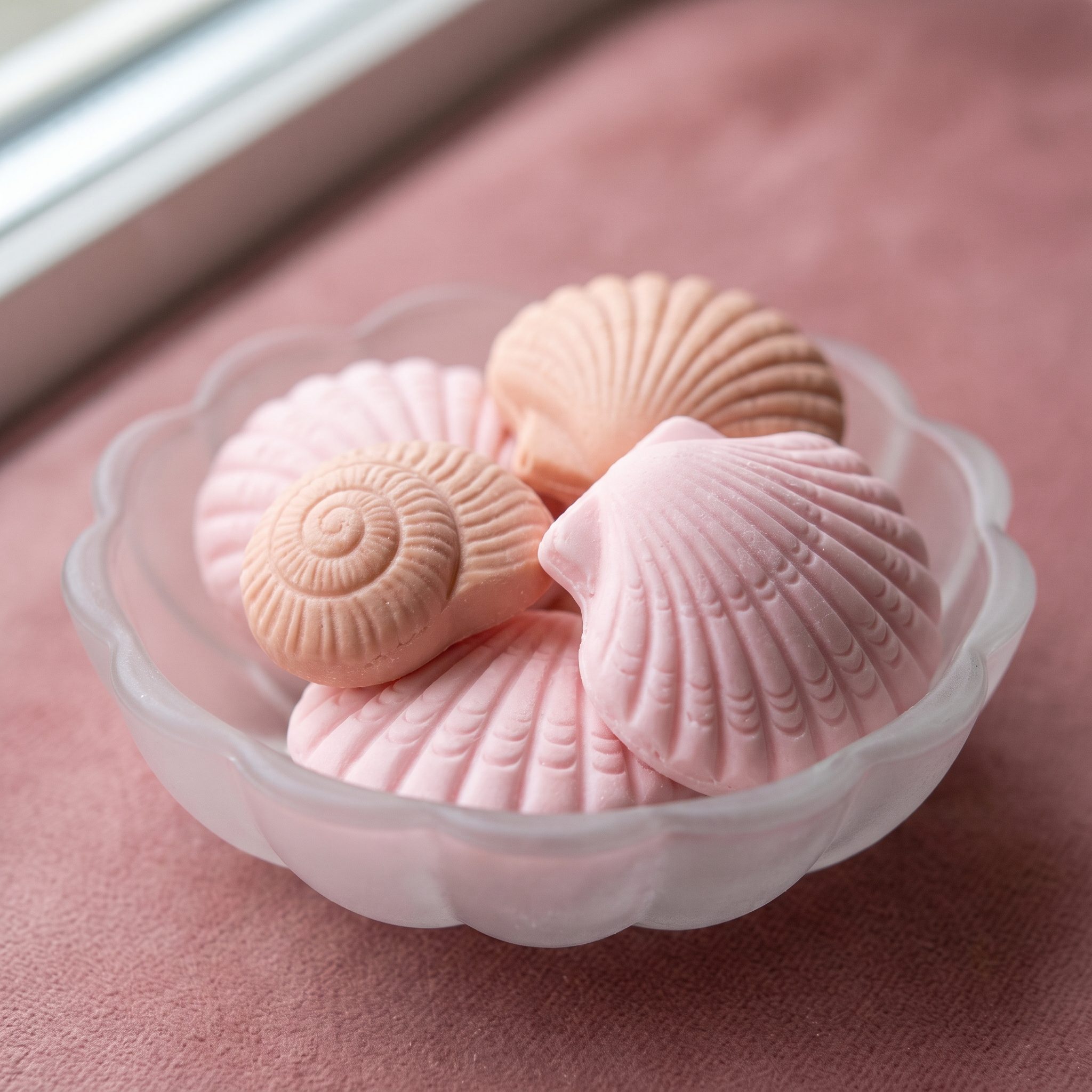
Shell-shaped soap turned an everyday object into a small decorative sculpture. Pastel colors and pearly finishes made each piece look more suited to a glass dish than to the sink.
Placed beside the faucet or on a vanity tray, the soap reinforced a coastal or floral motif. Its shape did most of the decorating.
3. The Matching Ceramic Soap Dish, Toothbrush Holder, and Tumbler Set
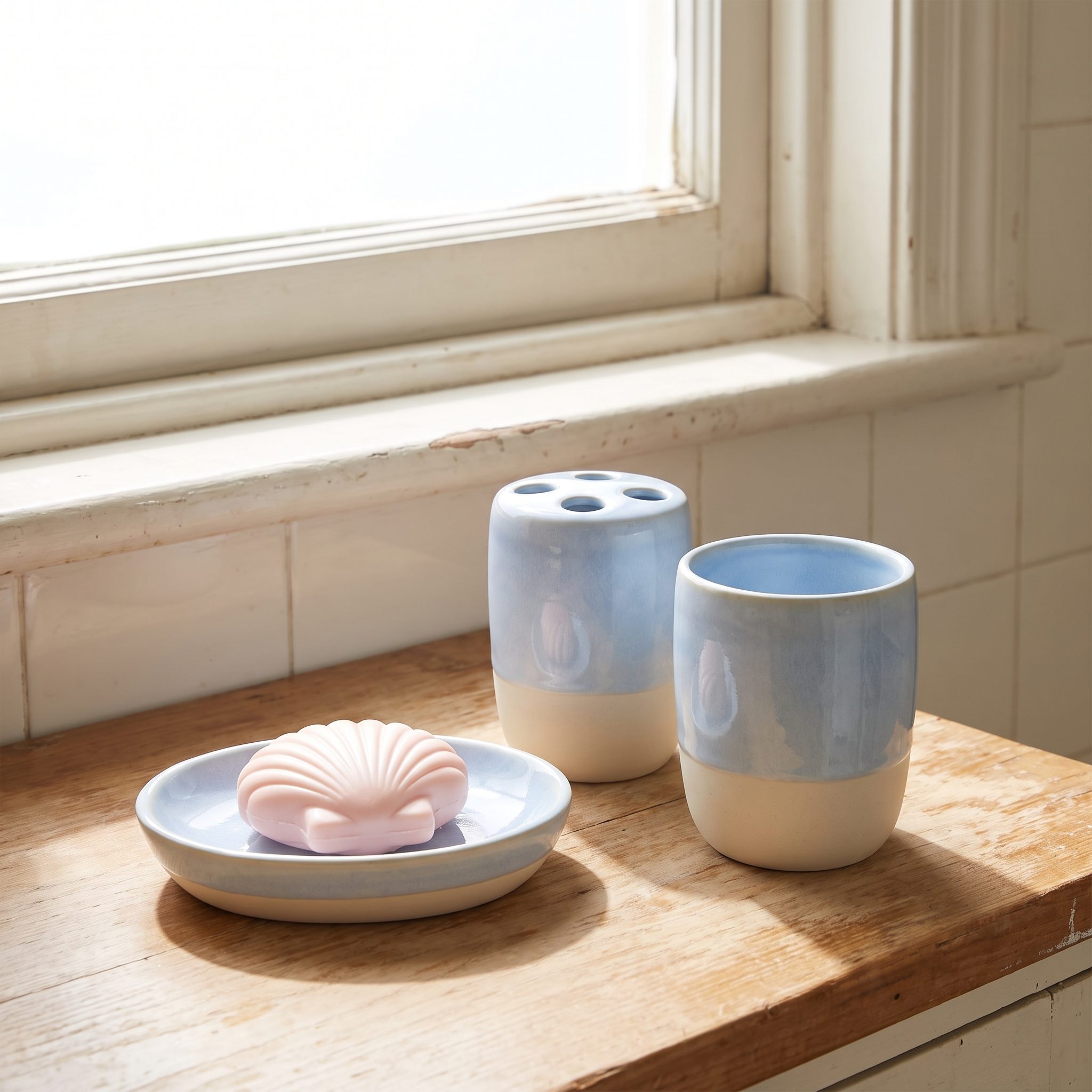
A ceramic soap dish, toothbrush holder, and tumbler brought several countertop necessities into one matching set. A shared glaze and small painted flowers gave the pieces a unified look without taking over the vanity.
The soap dish held a bar, the holder gathered toothbrushes, and the tumbler added another repeating shape. Separate objects, one finish.
2. The Shower Curtain, Soap Dish, and Rug Repeating the Same Shell Motif
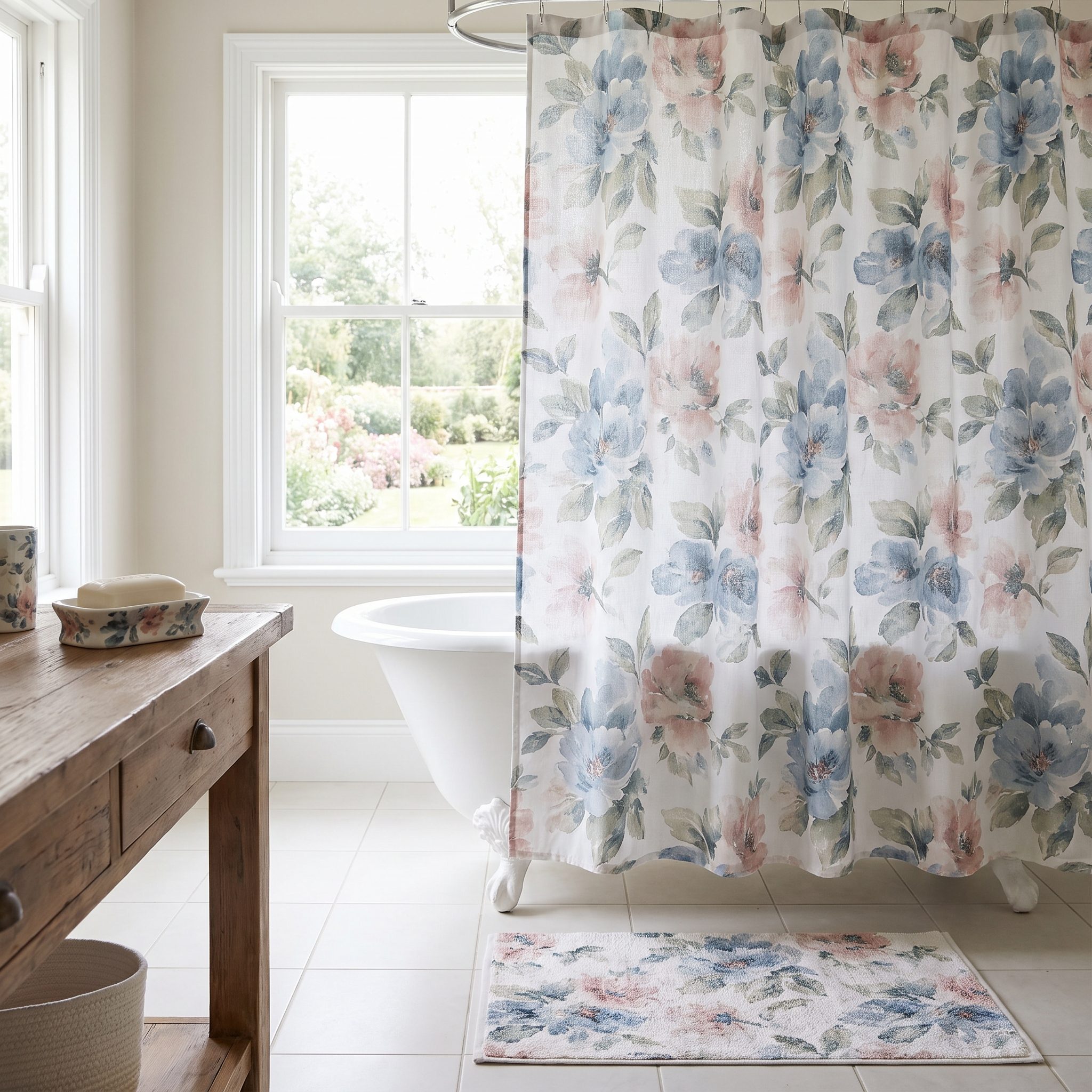
A shell print could travel from the shower curtain to a soap dish and then onto a rug, repeating the motif across different materials. Fabric, ceramic, and plush pile gave the same shape three distinct textures.
Repeated across the room, a single shell motif became the organizing idea.
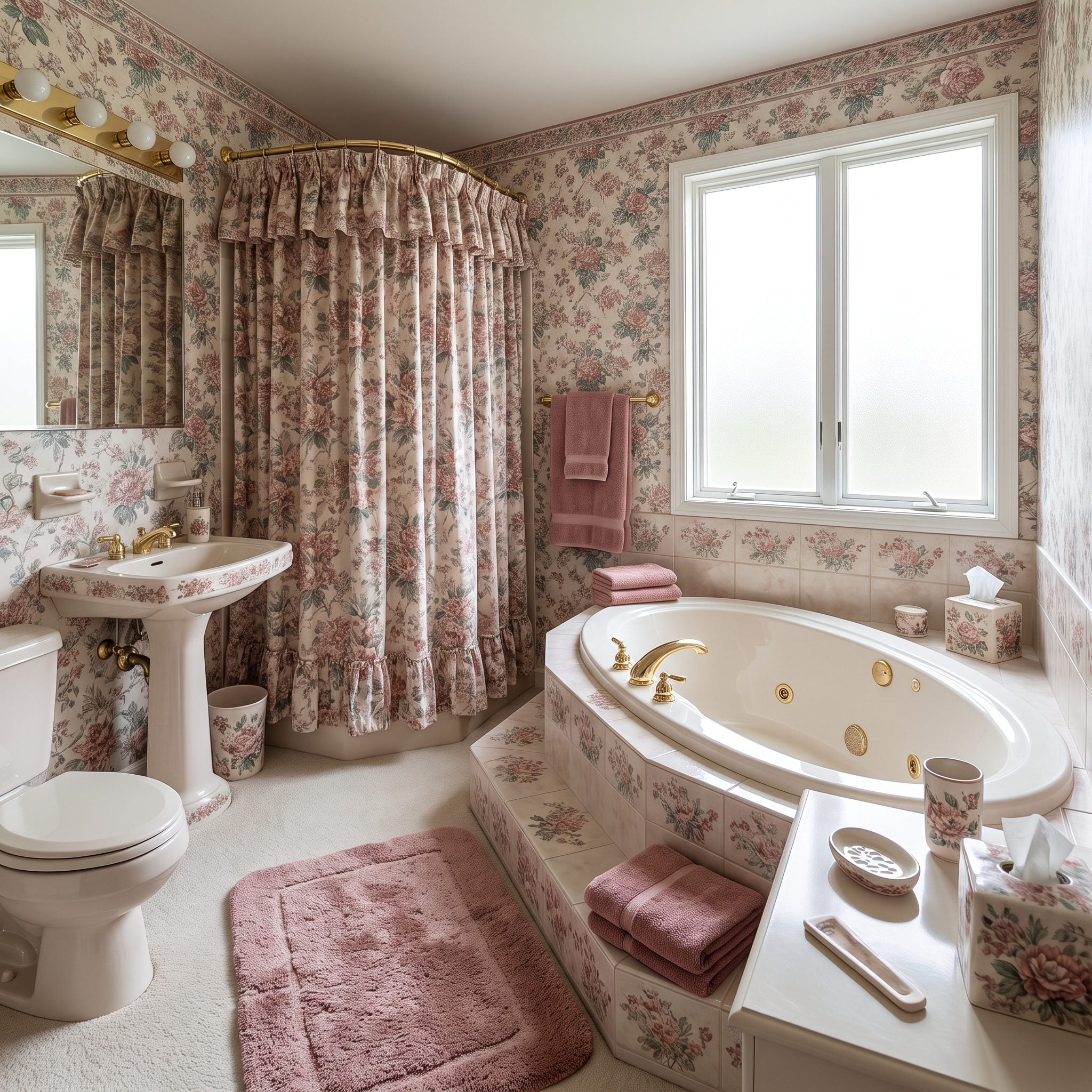
1. The Bathroom That Looked Like Someone Bought the Entire Coordinating Collection in One Trip
🔥 Would you like to save this?
In the fully coordinated bathroom, no single accessory had to carry the scheme. The tissue cover, soap dish, towels, wastebasket, and wallpaper shared colors or motifs, turning separate elements into one continuous composition.
The result could feel charmingly complete or gloriously overcommitted. Every finish, pattern, and carefully matched detail made the same point.