
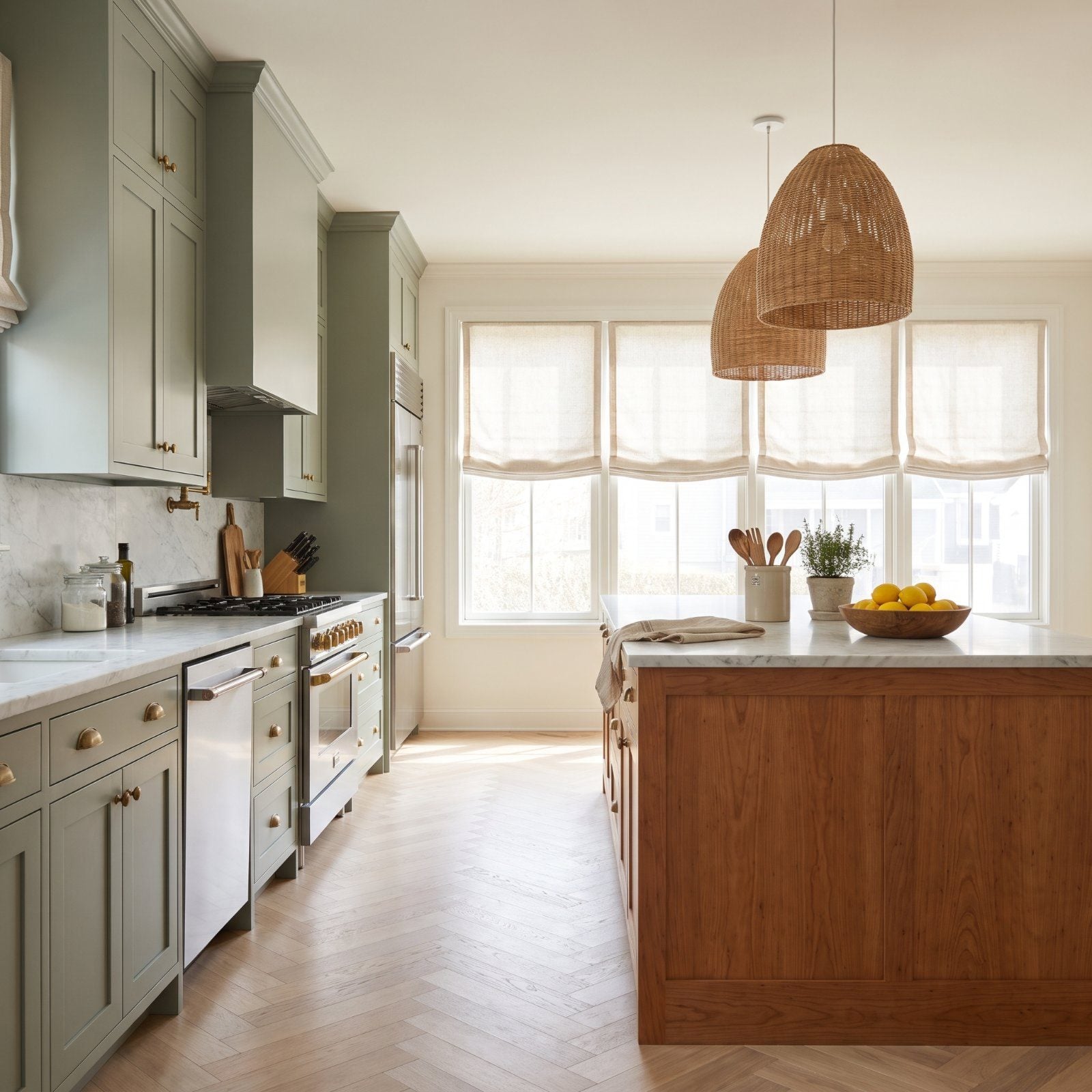
Cherry wood got written off for a decade. Too red, too dated, too much of a certain early-2000s moment nobody wanted to repeat. Then sage green walked in and changed the math. Put real cherry grain next to a muted, dusty green and the wood reads warm instead of loud while the green reads grounded instead of trendy. The kitchens below take that pairing and run it through every layout and architectural identity we could dream up. Different cabinetry, different islands, different ways of letting two strong materials share a room without either one shouting the other down.
36. Shaker Sage Cabinets Anchored by a Waterfall Cherry Island
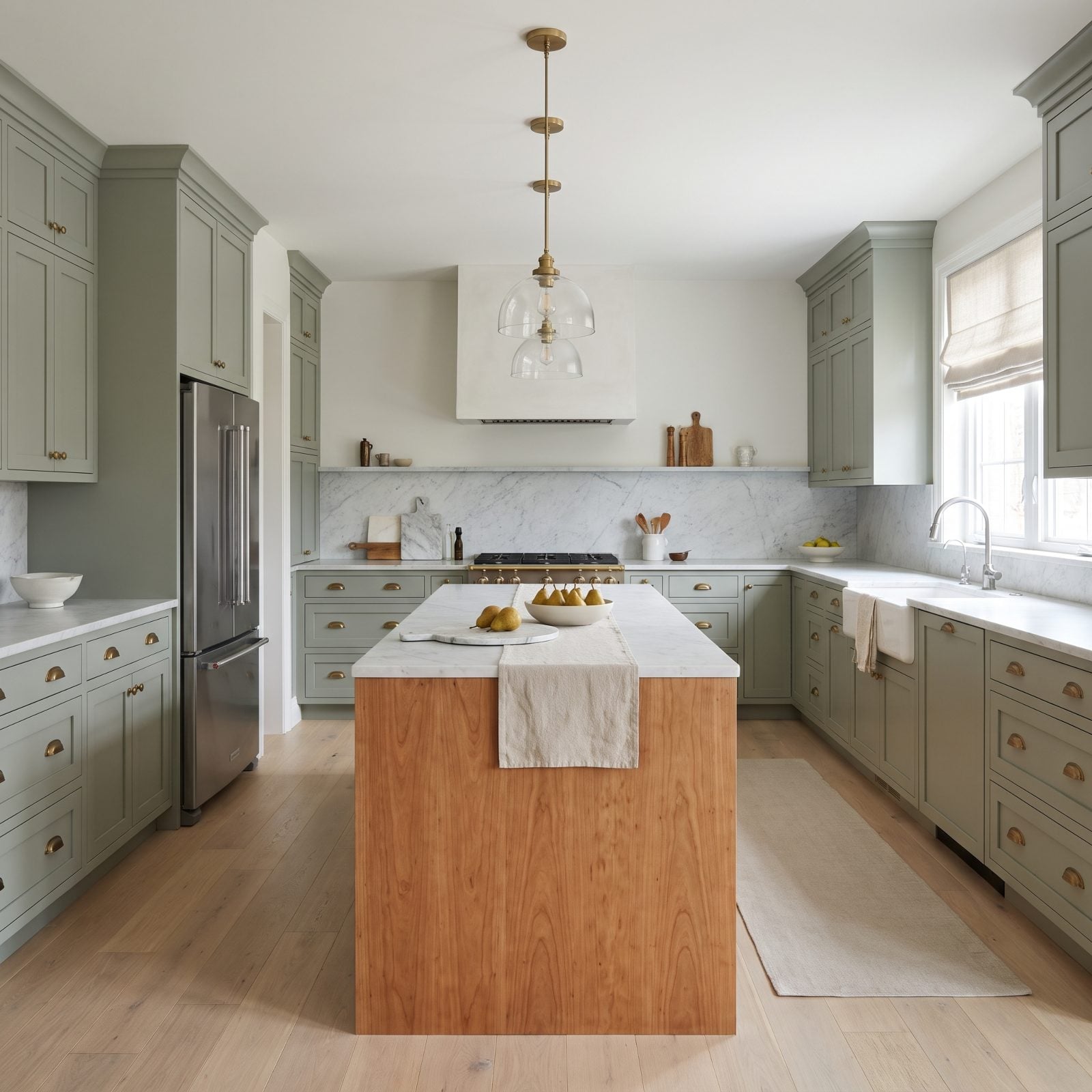
That waterfall island is the whole argument. Running the cherry grain vertically down both ends turns the island into one solid block of wood, and against the chalky sage perimeter it reads like a piece of furniture someone chose on purpose.
In order to come up with the very specific design ideas, we create most designs with the assistance of state-of-the-art AI interior design software. Also, assume links that take you off the site are affiliate links such as links to Amazon. this means we may earn a commission if you buy something.
The honed marble counters keep the top light so the wood never tips into heavy, and the aged brass cup pulls bridge both tones. Balanced, drenched in neither color.
35. Flat-Panel Sage Cabinetry Framed by Cherry Tall Units
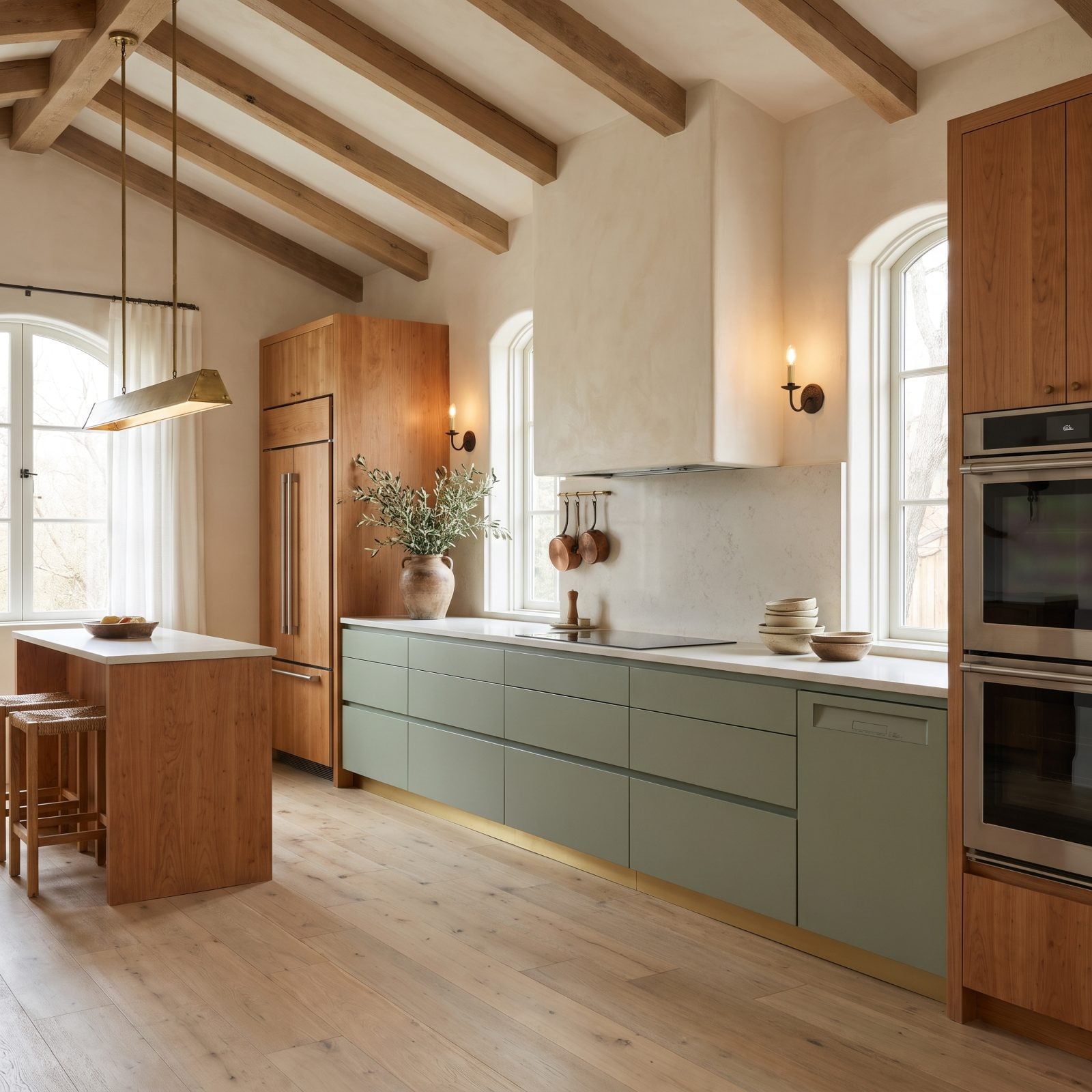
Flat sage runs down low, cherry runs floor to ceiling on either side, and the symmetry does something sneaky: your eye reads the cherry columns as pilasters framing a stage. The green becomes the quiet middle.
Handleless fronts keep the sage calm so the vertical cherry grain carries the drama. Smart move for a smaller footprint, and the kind of layout you’ll find in plenty of small kitchen inspiration galleries worth stealing from.
34. Cherry Lower Cabinets Beneath Soft Sage Uppers
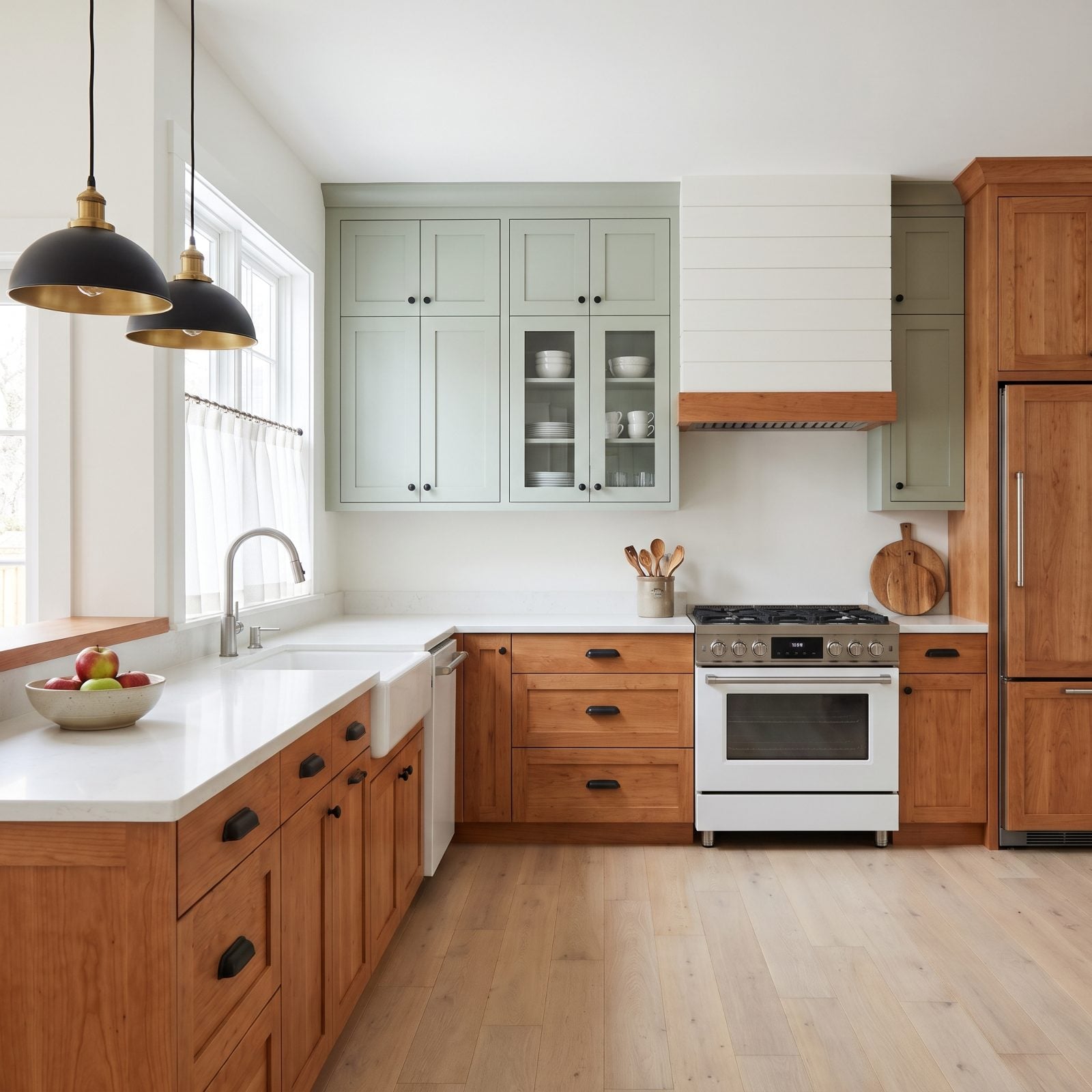
Flipping the usual formula pays off here. Grounding the room with cherry down low and floating sage up top keeps the weight where your eye expects it, so the kitchen feels settled instead of top-heavy.
The glass-front sage uppers lighten the whole upper register, and those matte black bin pulls stop the cherry from reading sweet. Warm and solid, the way a kitchen that actually gets cooked in should feel.
What Our Readers Say
- Sage has a good track record with Home Stratosphere readers: bathroom photos dominated by sage got hearts 73% of the time, versus 60% for the other images in the same articles.
From Home Stratosphere reader polls and votes.
33. A Fluted Cherry Island Against Sage Perimeter Cabinets
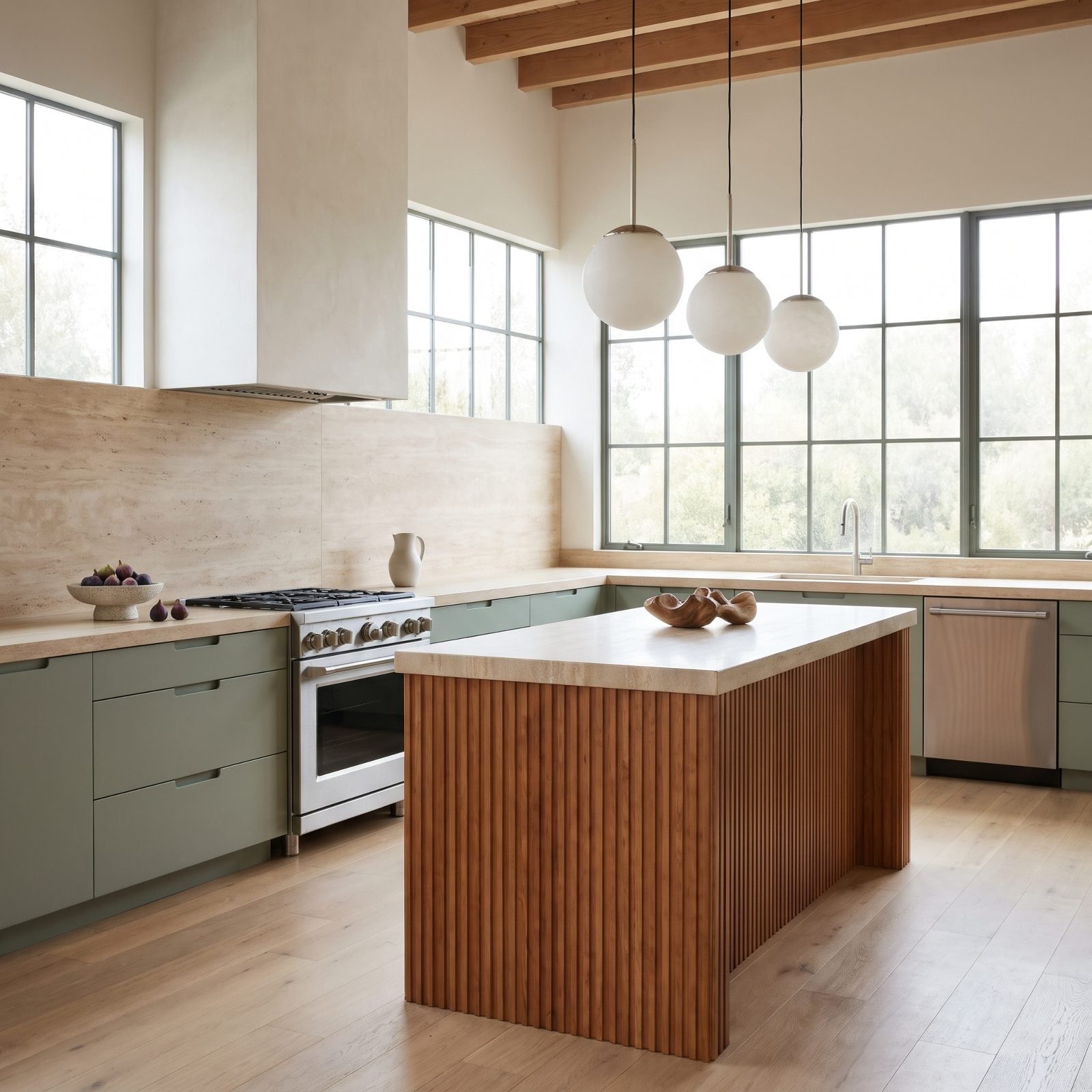
Fluting the cherry island is a texture play that photographs quietly and lives loud. The reeded vertical grain catches every bit of that steel-window daylight, so the island shifts shade as the sun crosses the room.
Travertine was the right call for the tops. Its warm honey tone sits between the sage and the cherry and flatly refuses to pick a side.
32. Cherry Cabinetry With a Full-Height Sage Backsplash
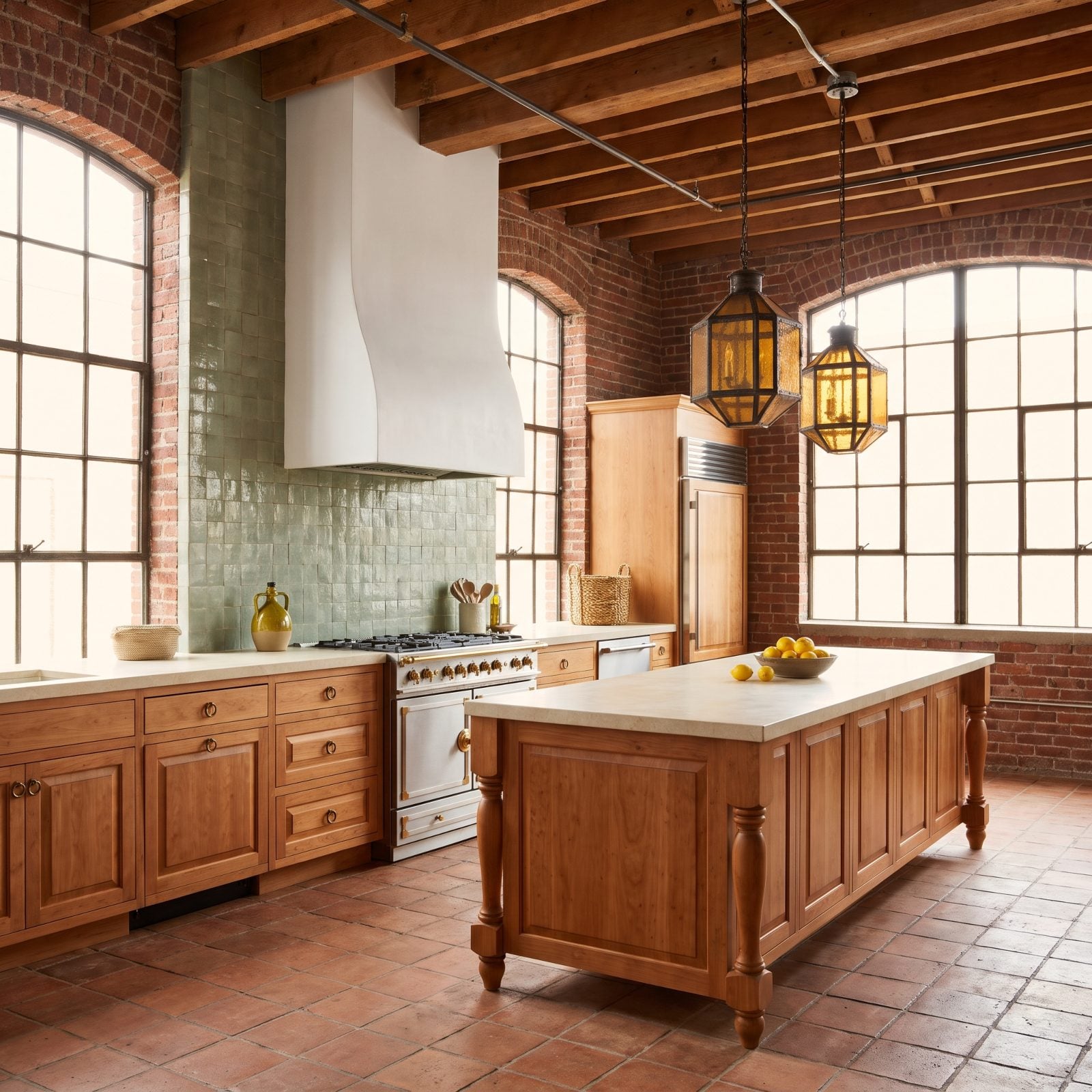
Here the sage shows up as one hero move. A floor-to-ceiling run of hand-glazed zellige climbs the wall behind the range, and the slight irregularity in each tile means no two reflect the warm light the same way, so the whole surface shimmers rather than sits flat.
Against all that cherry and limestone, the green becomes an accent wall that happens to be tile. One concentrated hit of color beats spreading it thin across every door.
31. Sage Cabinets With Cherry Open Shelving and Brass Rails
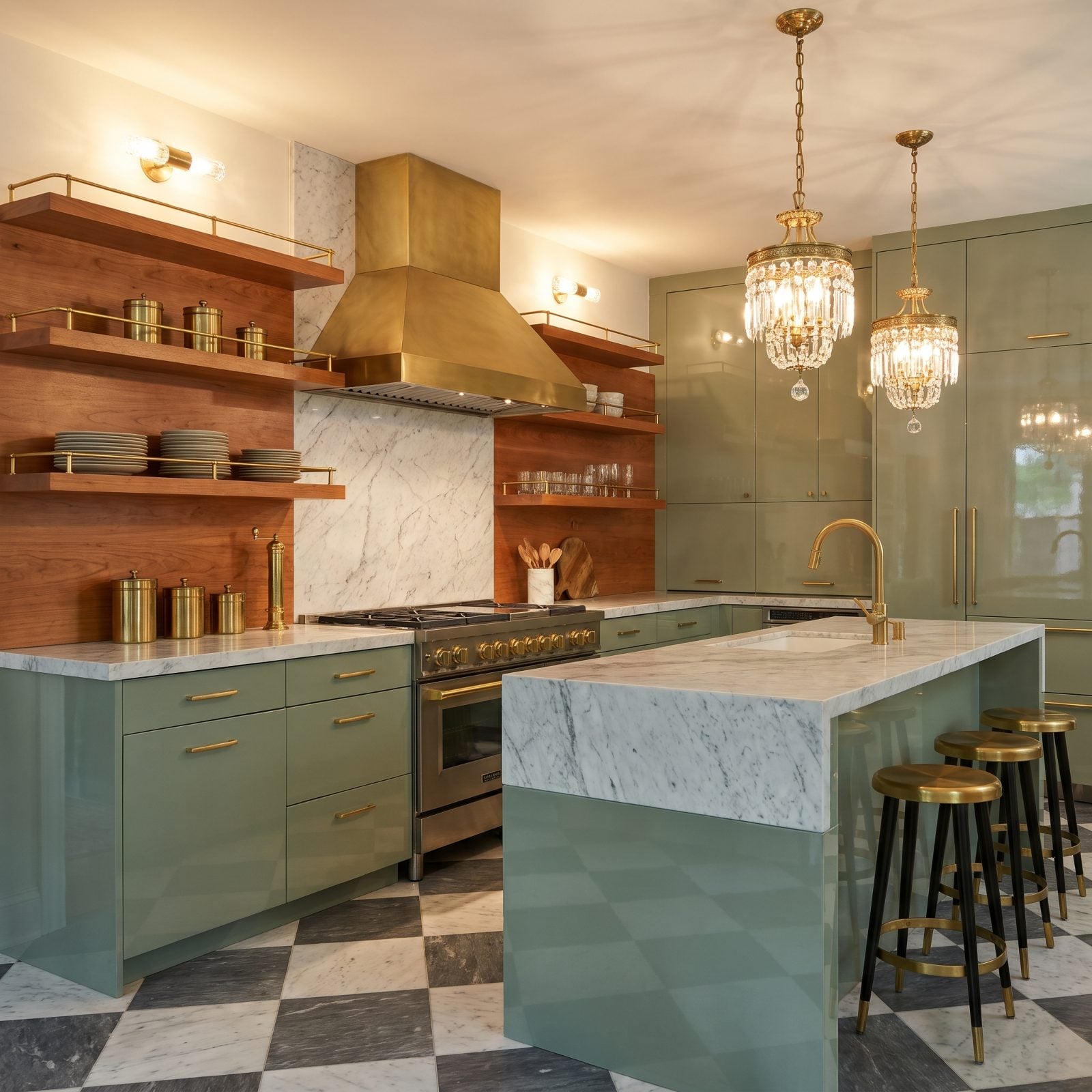
Swapping upper cabinets for thick floating cherry planks with no visible brackets opens the whole top half of the room up. Those brass gallery rails along the shelf edges are the detail that makes it work: part function, part jewelry.
White veined marble counters pull the sage toward its cooler, crisper side, which keeps this from going cottage. The cherry stays warm in the middle of all that cool stone.
30. A Two-Tone Galley Running Sage One Side, Cherry the Other
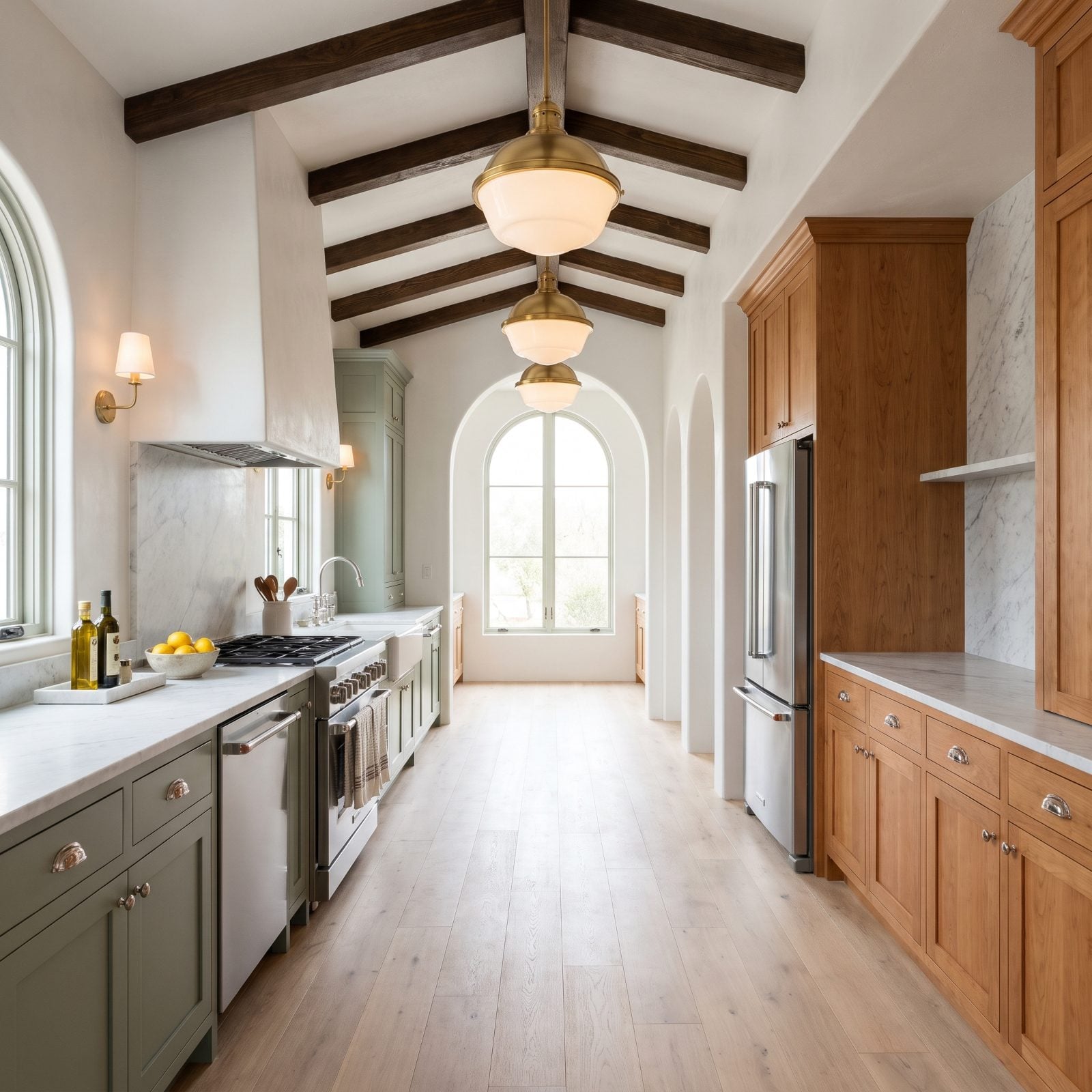
A galley is the honest test of this pairing. Sage on one wall, cherry on the other, nothing to buffer them, and because the marble counters and nickel pulls repeat on both sides, the two runs read as a matched set rather than a standoff.
Straight-down-the-barrel symmetry makes a narrow room feel longer and intentional.
29. English Country Cupboards in Sage, With Freestanding Cherry Worktables
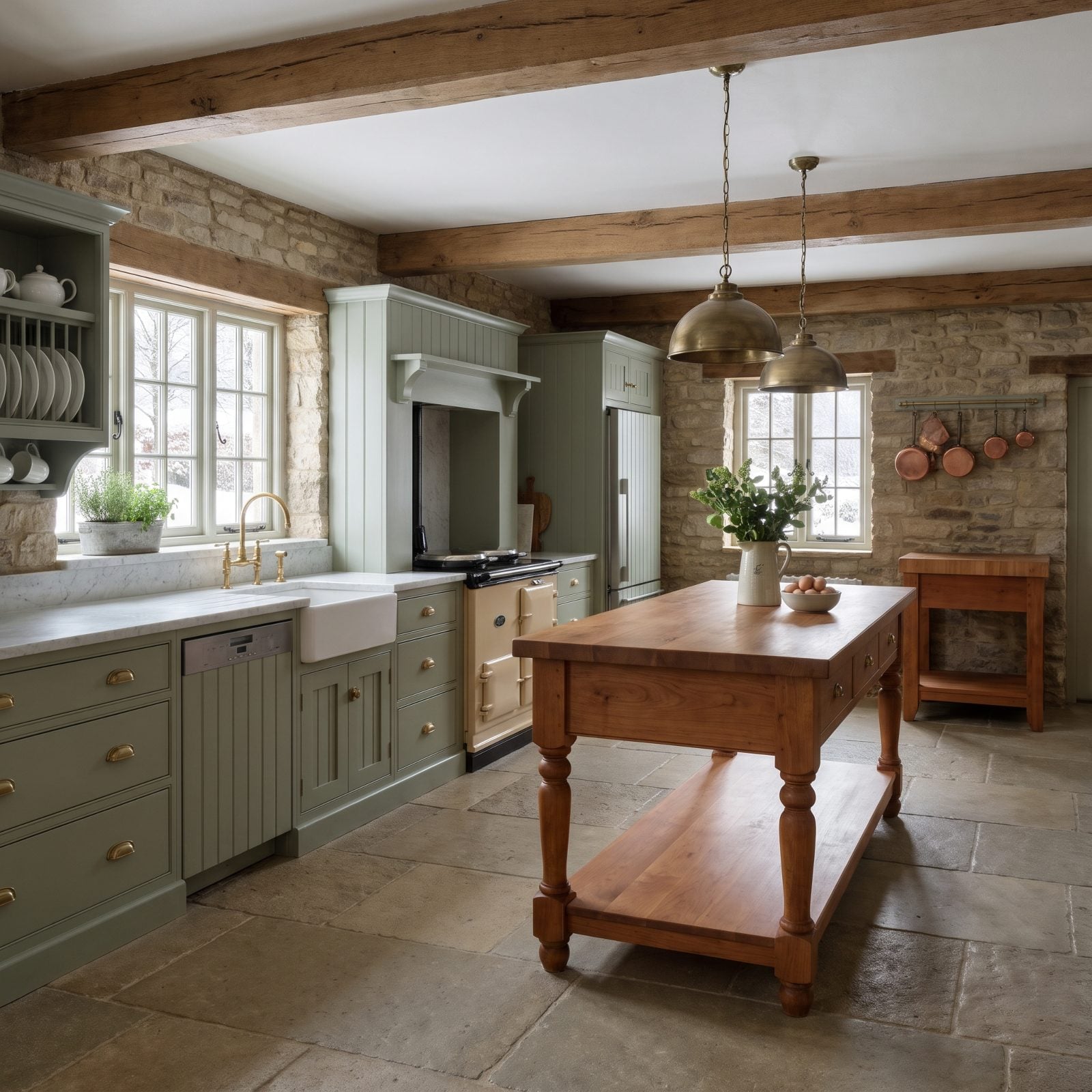
This is the unfitted look done right. Instead of one continuous island, you get freestanding cherry worktables with turned legs that look like they wandered in from different decades, set against built-in sage cupboards.
That deliberate mismatch is what makes an English country kitchen feel collected over years rather than bought in one afternoon. The unlacquered brass will go dark and lovely as it ages, which is the whole idea. Love this palette? The same sage carries into a green laundry room off the back hall without missing a beat.
Describing the appeal of unfitted, freestanding kitchens, a kitchen design director says “By deliberately mismatching components, each item can be designed with precision as a stand-alone piece. However, when they are curated together the feeling is rich but less formal”
28. Honest Joinery: Sage Cabinetry Against Cherry Craftsman Millwork
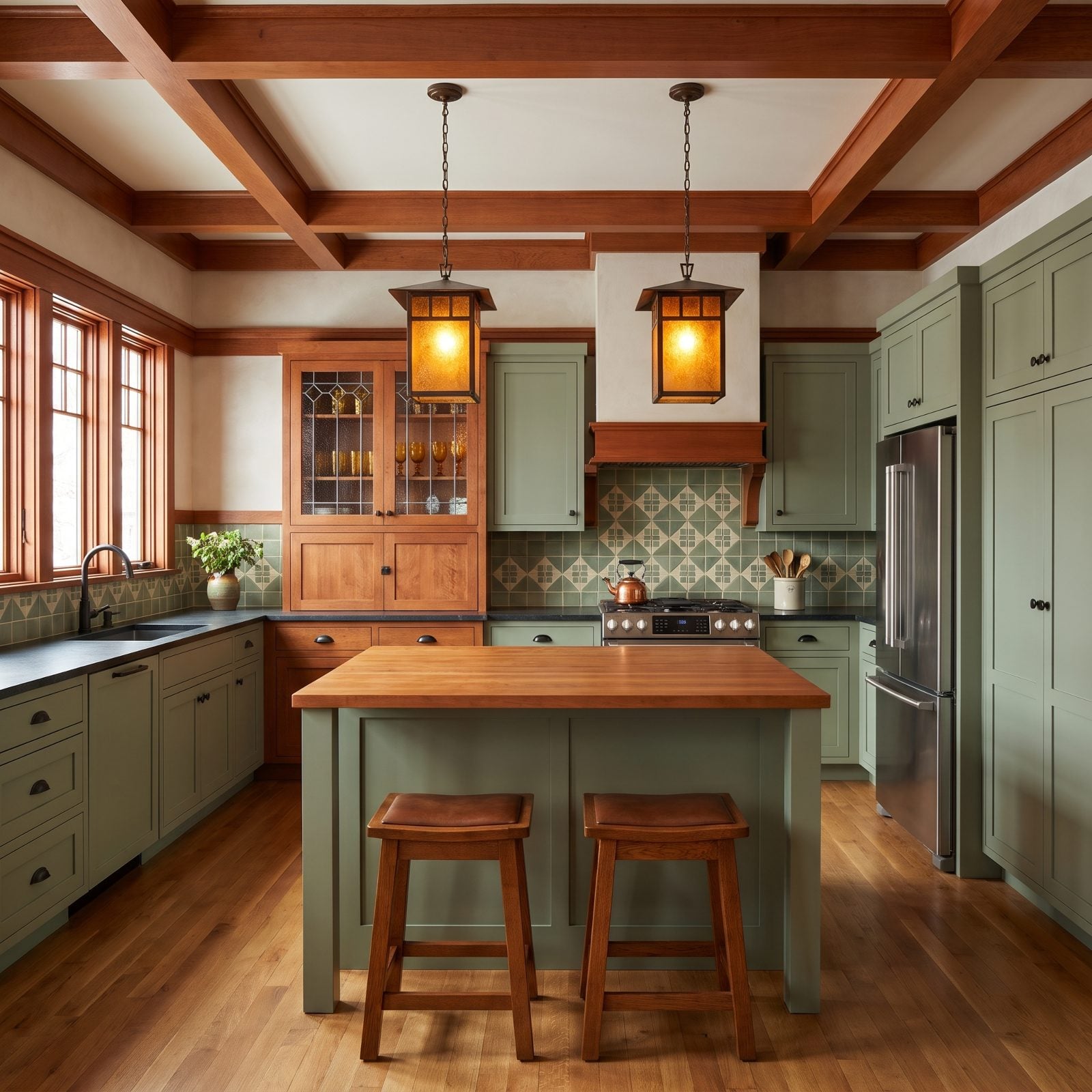
Craftsman is about honest joinery, so the cherry millwork gets to show its work: exposed beams, a plate rail, window casings you’d want to run your hand along. Quartersawn cherry has that flecked ray pattern cheaper wood can’t fake.
Sage inset cabinets sit quietly inside all that structure. The handmade geometric tile picks up the green and keeps the backsplash from going flat. Those mica pendant lanterns throw a warm amber light that makes the cherry read even deeper at dusk.
Wood trim tends to travel in pairs for our readers: those who picked wood interior doors chose wood window frames 47% of the time, compared with 8% of everyone else.
27. Mediterranean Warmth Under Cherry Beams and Sage Cabinets
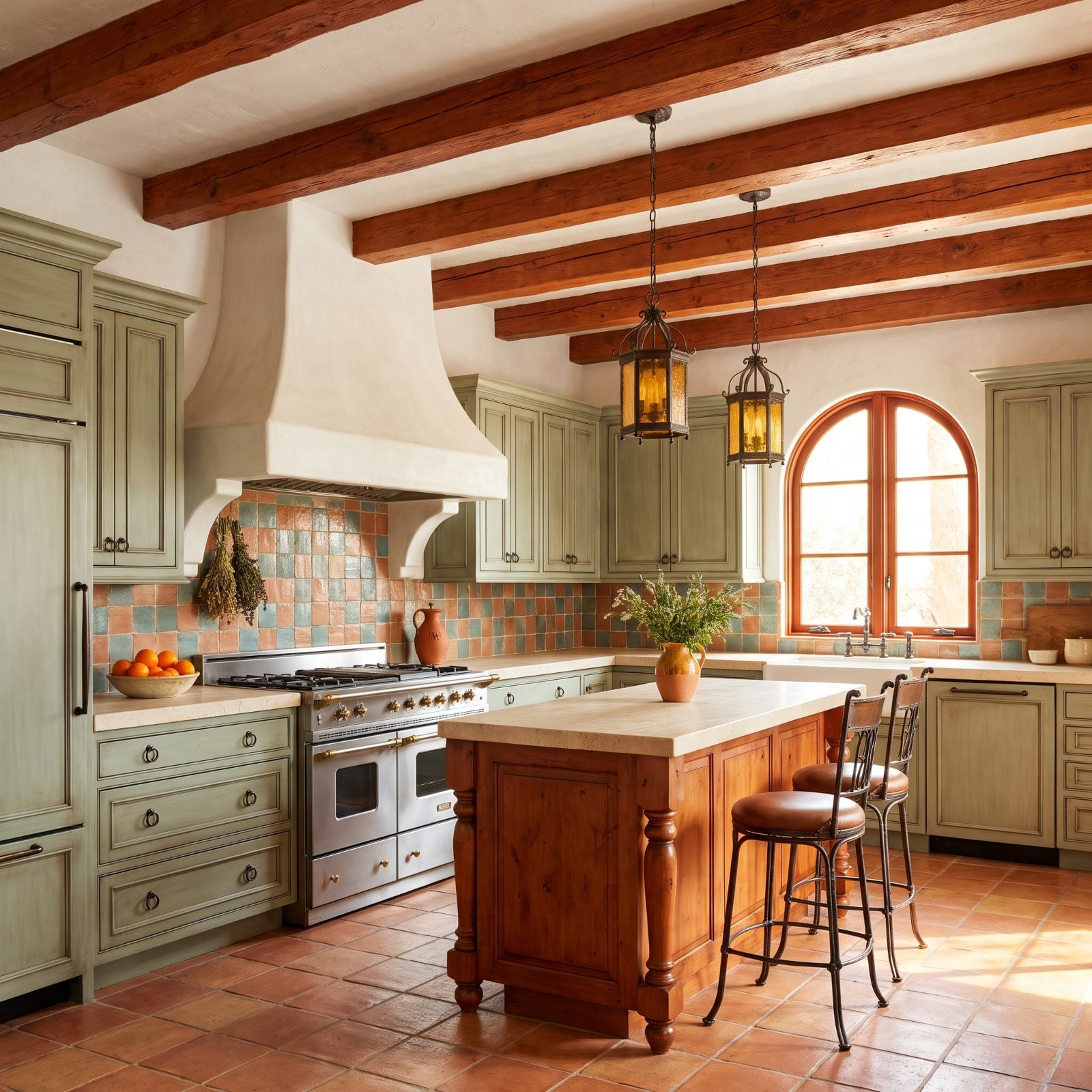
Look up. The cherry beams carry this one, stretched across white plaster so the wood reads as structure rather than decoration, and a Mediterranean kitchen always loves a ceiling that does something.
The sage cabinets wear an aged, washed finish that keeps them from looking brand new, which matters in a room going for sun-faded warmth. Zellige tile in terracotta and blue-green bounces light around, and that plaster hood arching over the range is the kind of soft shape the whole style leans on.
26. Glossy Sage and Ribbed Cherry Bring Deco Drama to the Kitchen
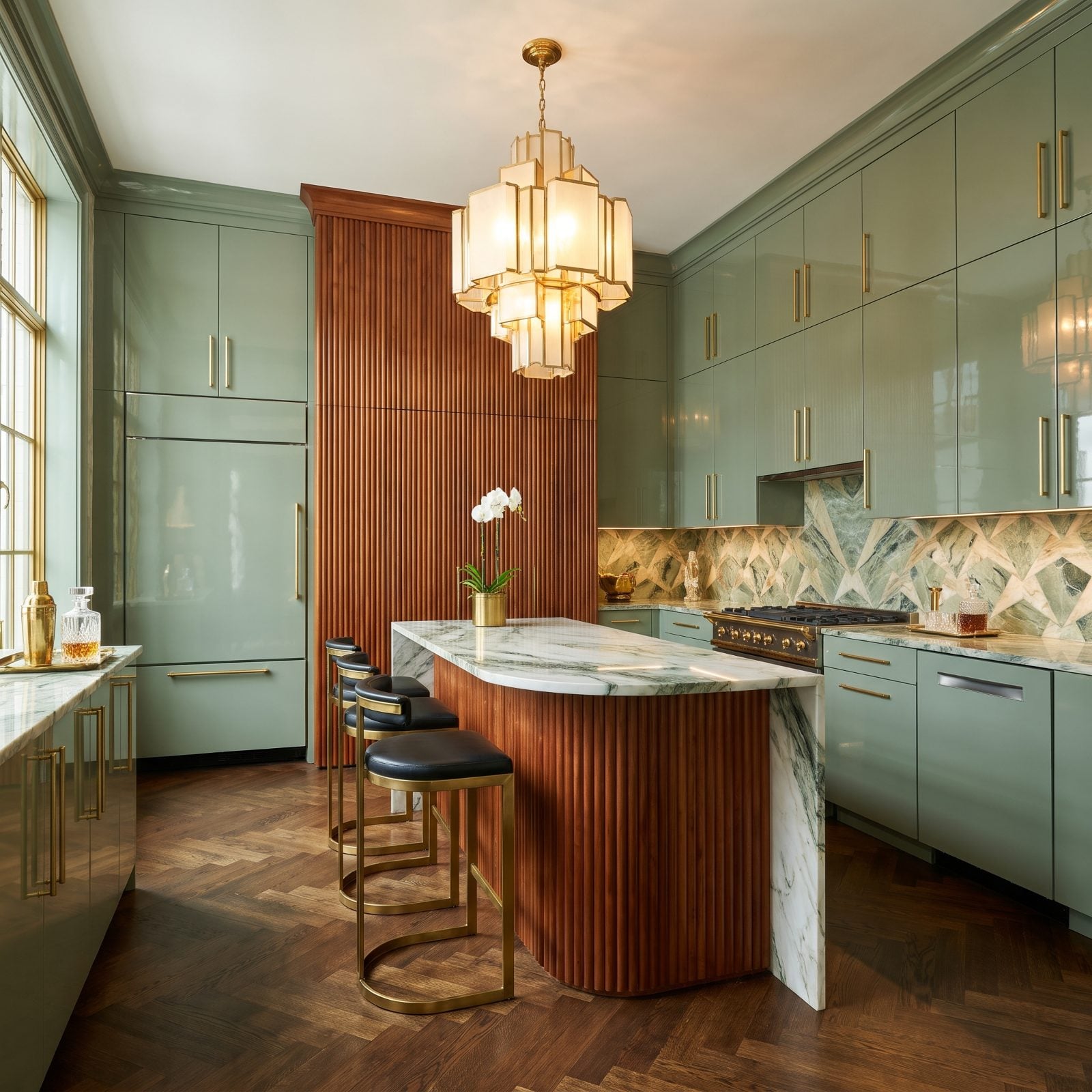
Everything here has a sheen, and that’s the Deco play. Lacquered sage cabinets catch the light like glass, while the ribbed cherry wall behind the island pulls it all back to warmth before it tips cold.
Fluted cherry paneling is the detail I’d steal. Vertical ribs stretch the wall, catch shadow, and give a flat surface rhythm. The brass finger pulls and that stepped brass Deco chandelier finish the thought.
Gloss on sage, grain on cherry: two finishes, one disciplined room.
25. Dusty Sage Cabinets Meet a Vintage Cherry Table in a Cottage
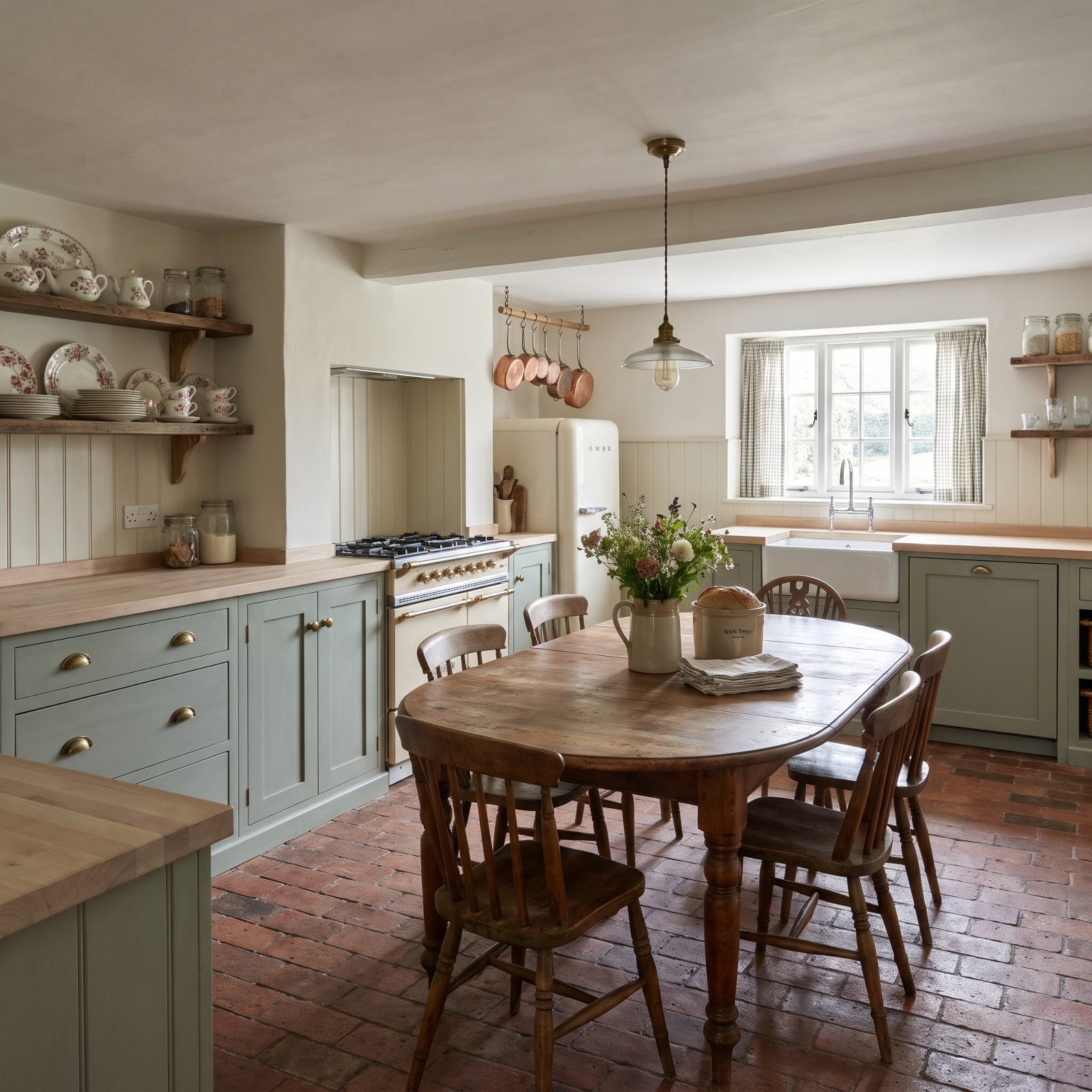
The cherry table is the oldest thing in the room and it shows, in the best way — a genuine worn patina you can’t buy new. That single aged piece does more for a cottage kitchen than any amount of fresh cabinetry.
Dusty sage with a chalky matte finish reads soft and a little faded, exactly the register cottage style wants. Nothing matches perfectly here, and that’s the charm. For more of this lived-in approach, our small kitchen inspiration leans the same way.
24. A Cherry Breakfast Nook Wrapped in Sage Cabinetry
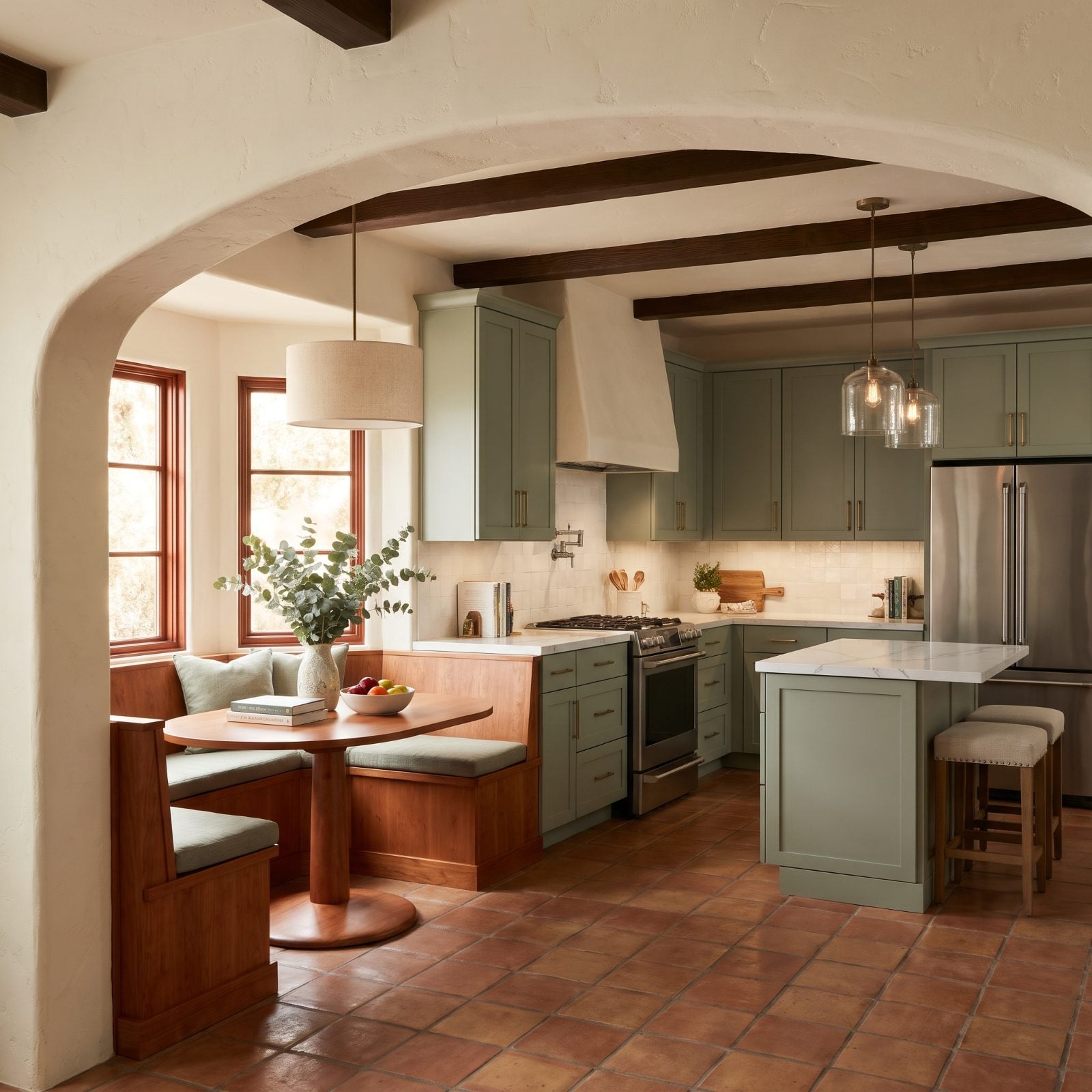
The nook is where this kitchen earns its keep. Built-in cherry bench seating tucks into a corner, wrapped by sage cabinetry on every side, so the eating spot feels held rather than tacked on.
That’s prospect and refuge at work. A seat with your back protected and an open view out the window is the corner everyone fights over at breakfast. The cherry pedestal table and warm bench keep the nook glowing while the sage cabinets stay cool and recessive around it.
23. Sage Cabinets With a Built-In Cherry Coffee Bar
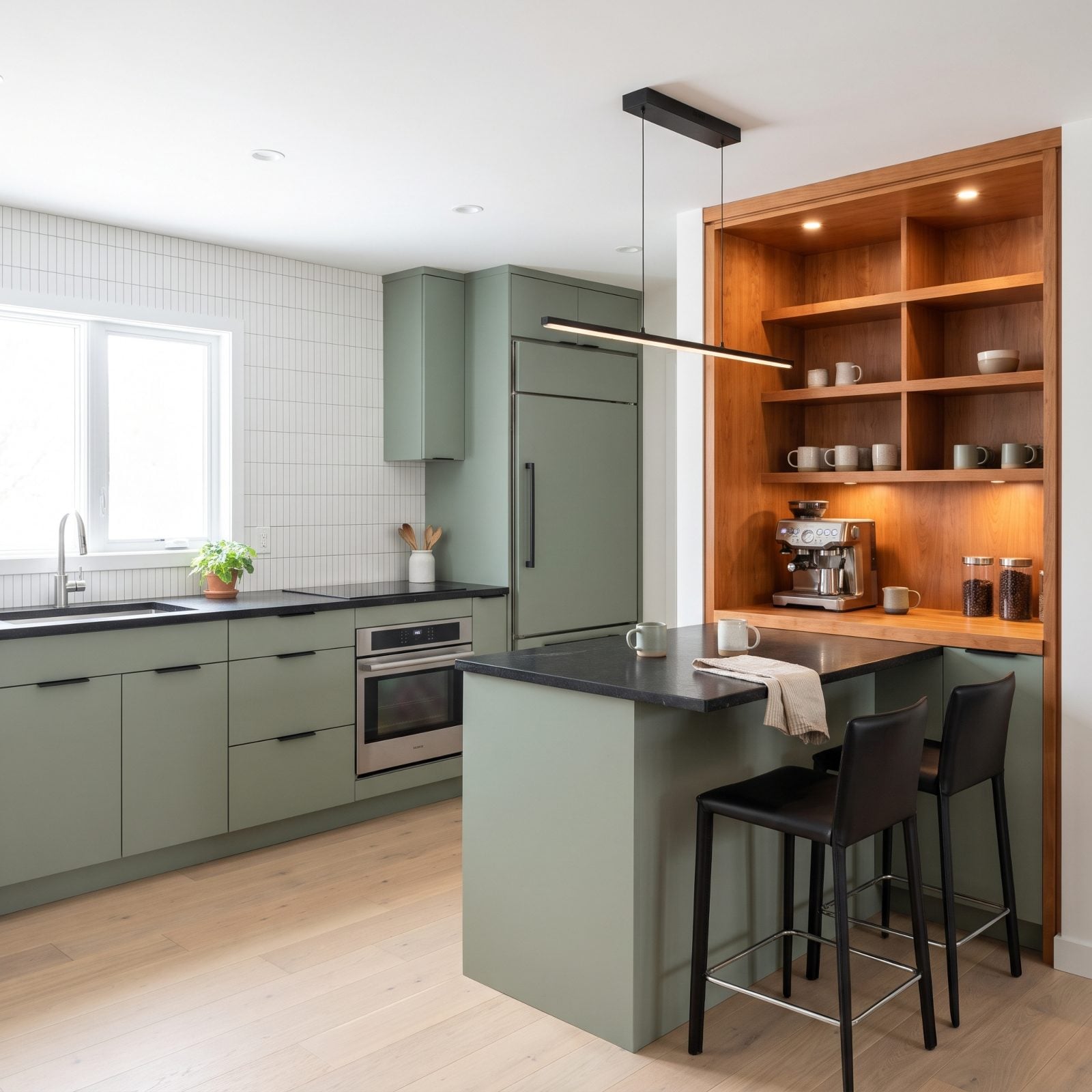
Carving out a cherry coffee bar inside a sage kitchen is a quiet flex. The niche gets its own material, its own warm puck lighting, and suddenly the morning routine has a home instead of crowding the main counter.
The cherry alcove glows against the cool sage slab fronts around it, which is exactly why your eye goes straight to it. Keep the main run in black hardware and black stone so the wood zone stays the one warm thing.
22. A Cherry Appliance Wall Facing a Sage Prep Island
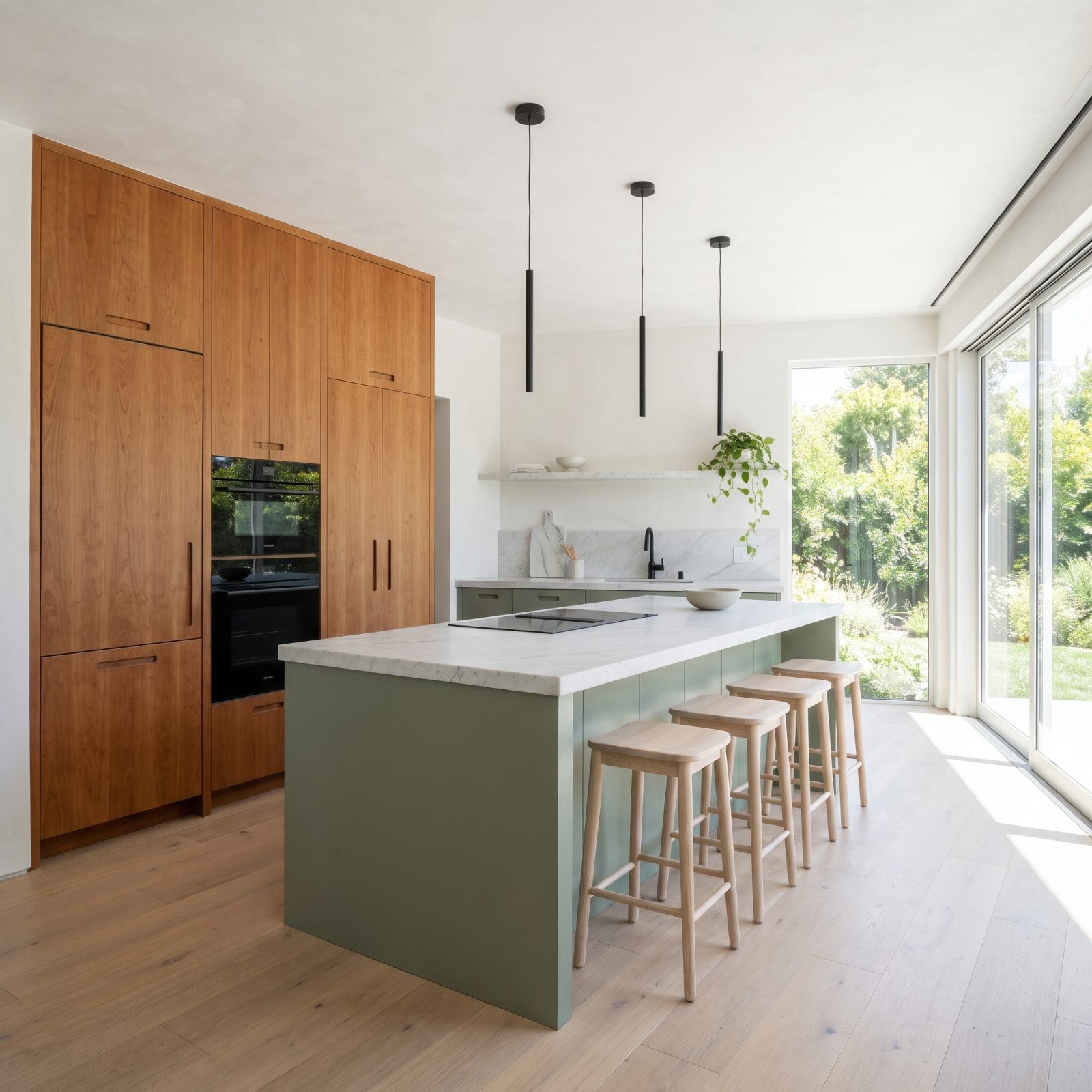
This one commits. A whole cherry wall hiding most of the appliances on one side, a sage prep island on the other, and the two colors face off across the floor like they planned it.
Flush cherry panels with recessed finger pulls, plus slim wooden bar pulls on the tall doors, keep the wall reading as warm joinery, not a bank of machines. The fridge and storage disappear into the grain, leaving only a stack of two black glass wall ovens exposed at the center. Meanwhile the sage island — honed marble on top, induction cooktop set in — becomes the one cool surface you actually work at. Open-plan light from the glass doors keeps both tones honest.
21. A Cherry-Framed Pass-Through Window Cuts Into the Sage
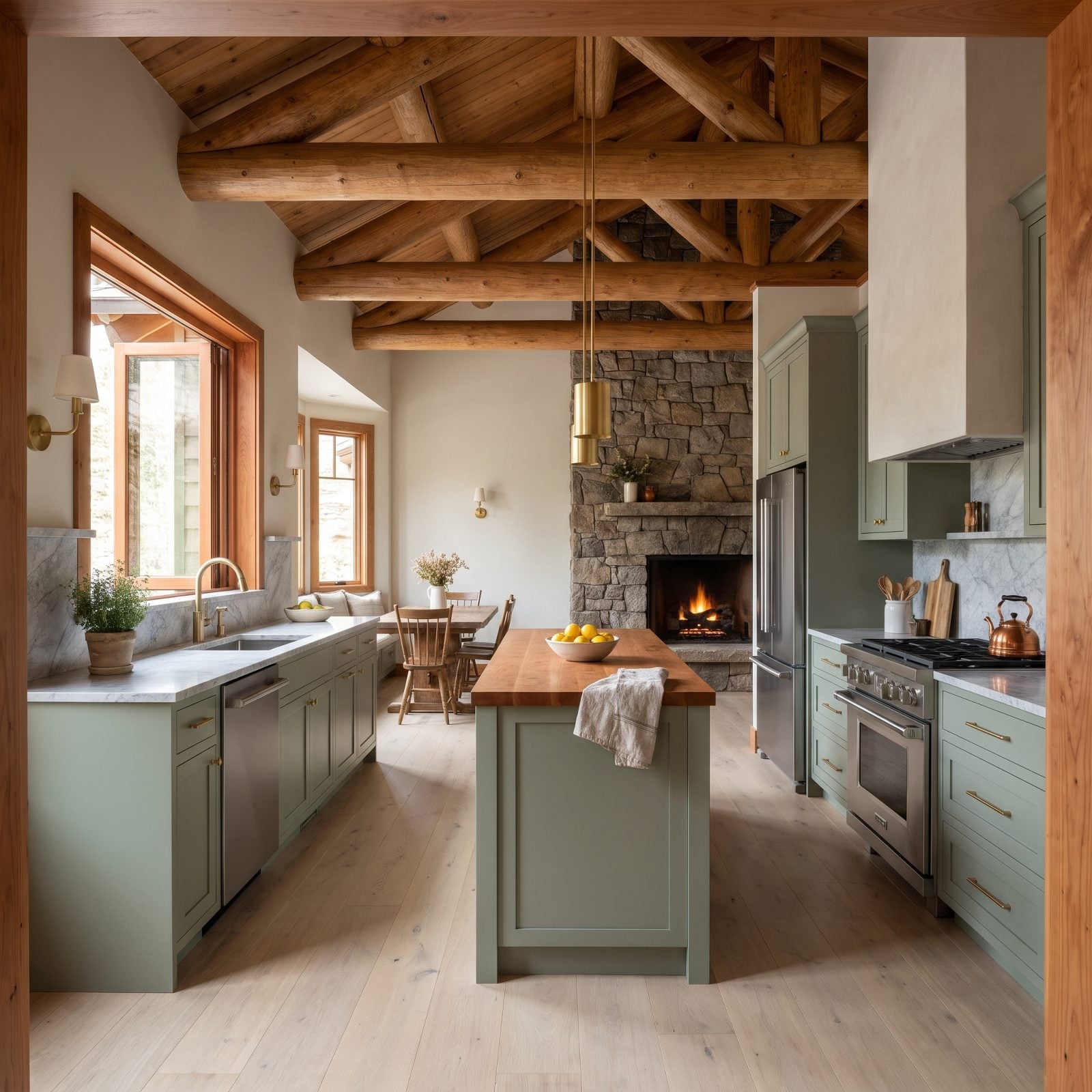
That cherry-framed pass-through is the whole trick. It punches a warm rectangle through the sage and gives your eye somewhere to land, so the green reads calm instead of flat.
Natural cherry grain against honed grey marble keeps the pairing from going too sweet, and the brass pendant lights echo the pulls to tie both tones together without shouting about it.
20. Sage Cabinets Carry a Cherry-Planked Ceiling Overhead
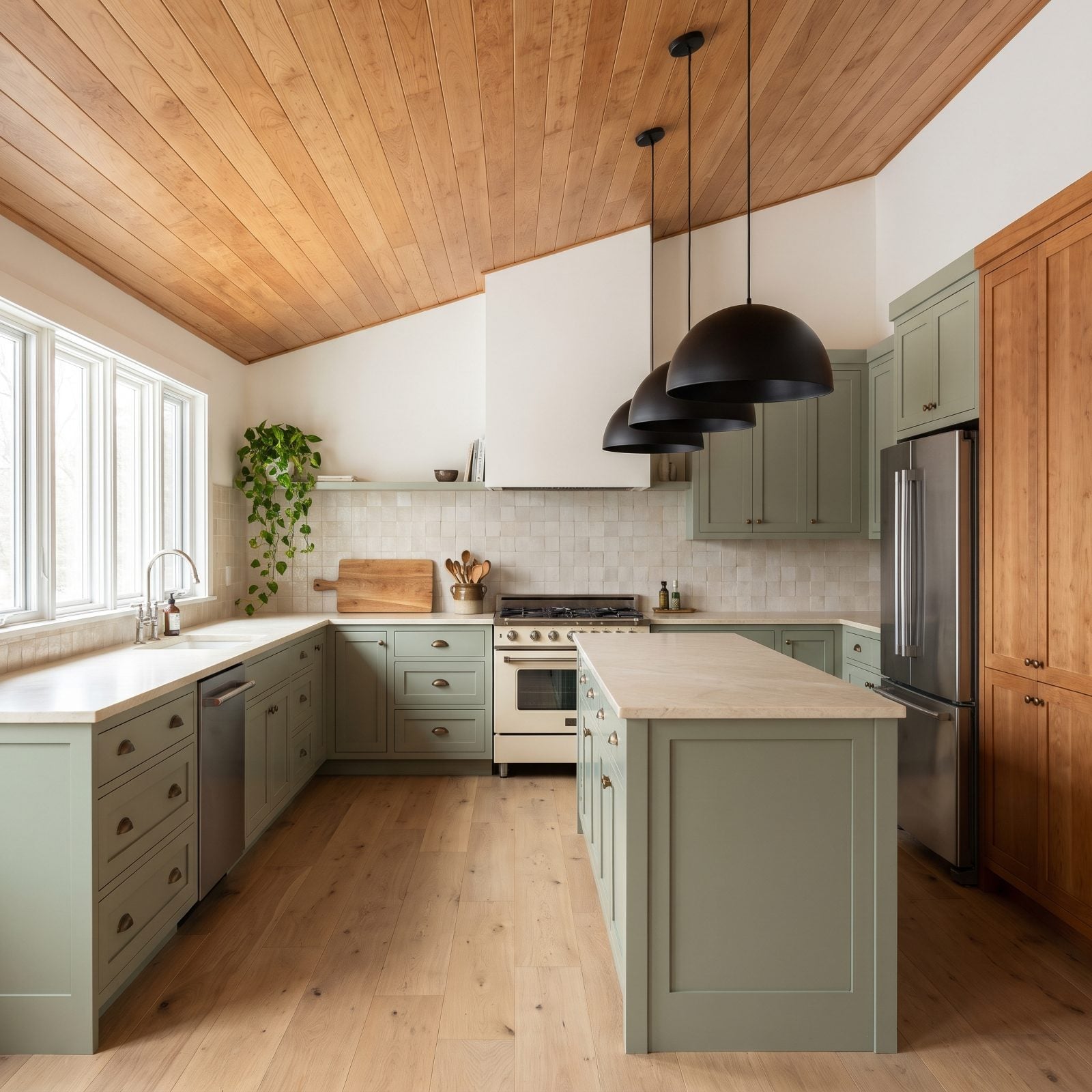
Most people reach for sage on the cabinets and call it done. Running cherry across the ceiling instead flips the usual order and makes you look up.
The warm plank overhead and the sage shakers below hold the room between them like two bookends. Cream stone counters and oatmeal zellige keep the middle quiet so neither wood nor green has to compete.
19. Reeded Glass in Cherry Frames Softens the Sage Uppers
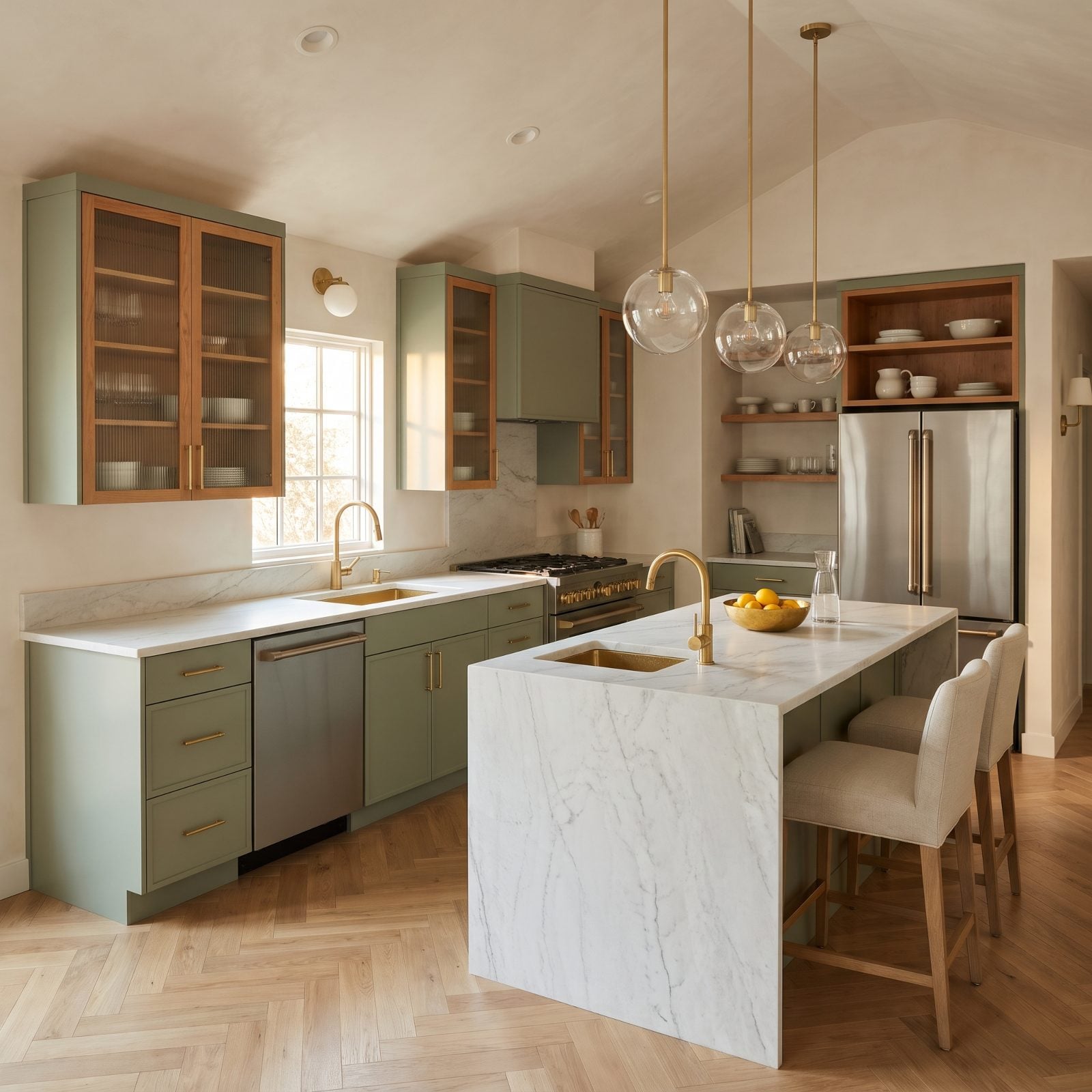
Reeded glass behind cherry mullions does something open shelving can’t. It hints at what’s inside without showing you the mess, so you get texture and privacy in one move.
The vertical flutes catch morning light and throw it soft, so the sage uppers never go heavy. Pair it with unlacquered brass that’ll patina over the years and the whole wall ages well.
Explaining why she steers clients toward textured or reeded glass doors, a principal interior designer says “The result is having the lightness of open shelves with the practicality of concealed storage.”
18. A Sculptural Range Hood Anchors the Sage and Cherry
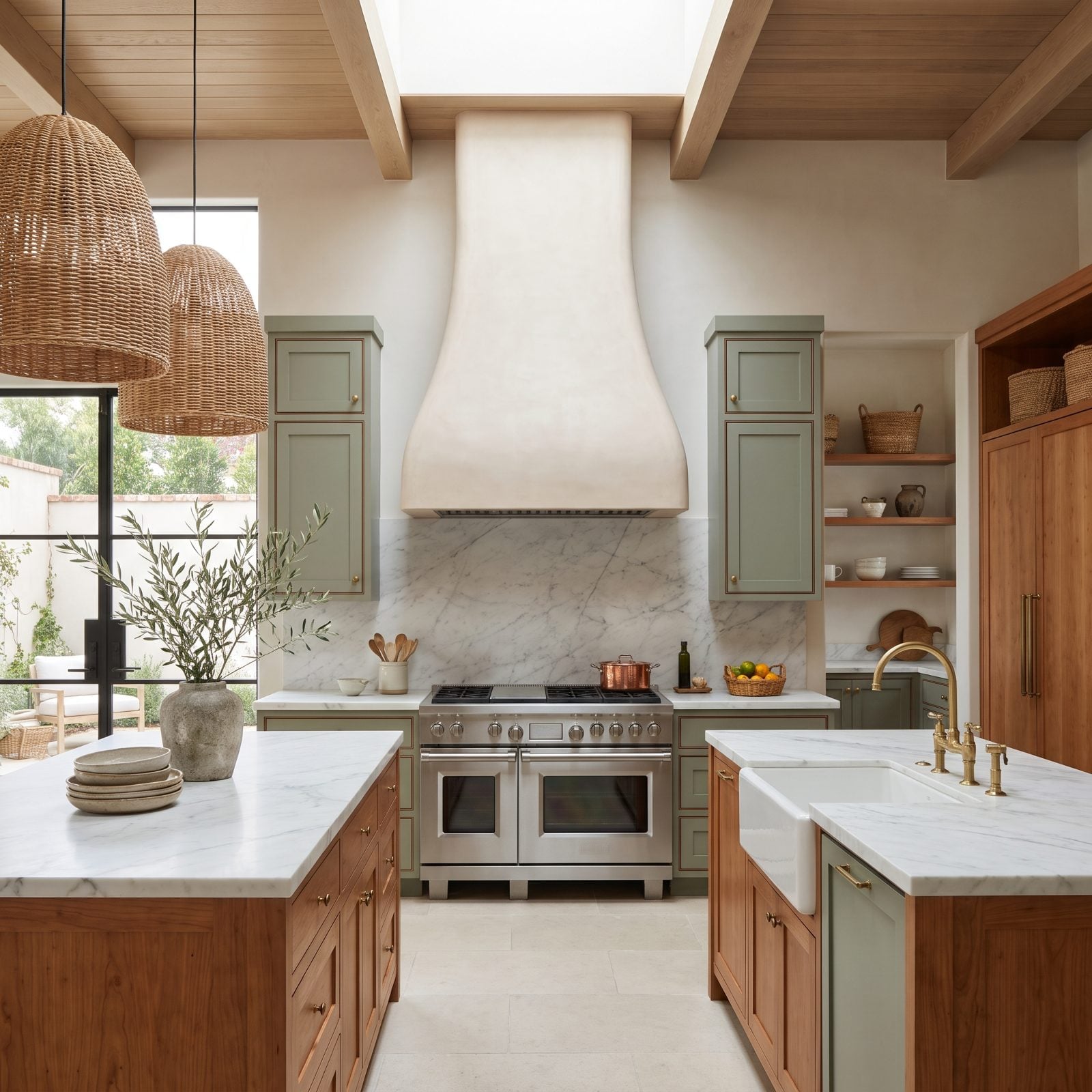
The plaster hood is the hero here, and everything else steps back for it. Its curve pulls your eye straight up the marble slab, which is precisely what a shape like this is built to do.
Sage cabinets with inset cherry trim keep the color story grounded while the cherry island carries real warmth at hip height. Cool up top, warm in the middle. That split is why the room feels balanced instead of busy.
17. Sage Cabinetry Wraps a Cherry Wood Range Alcove
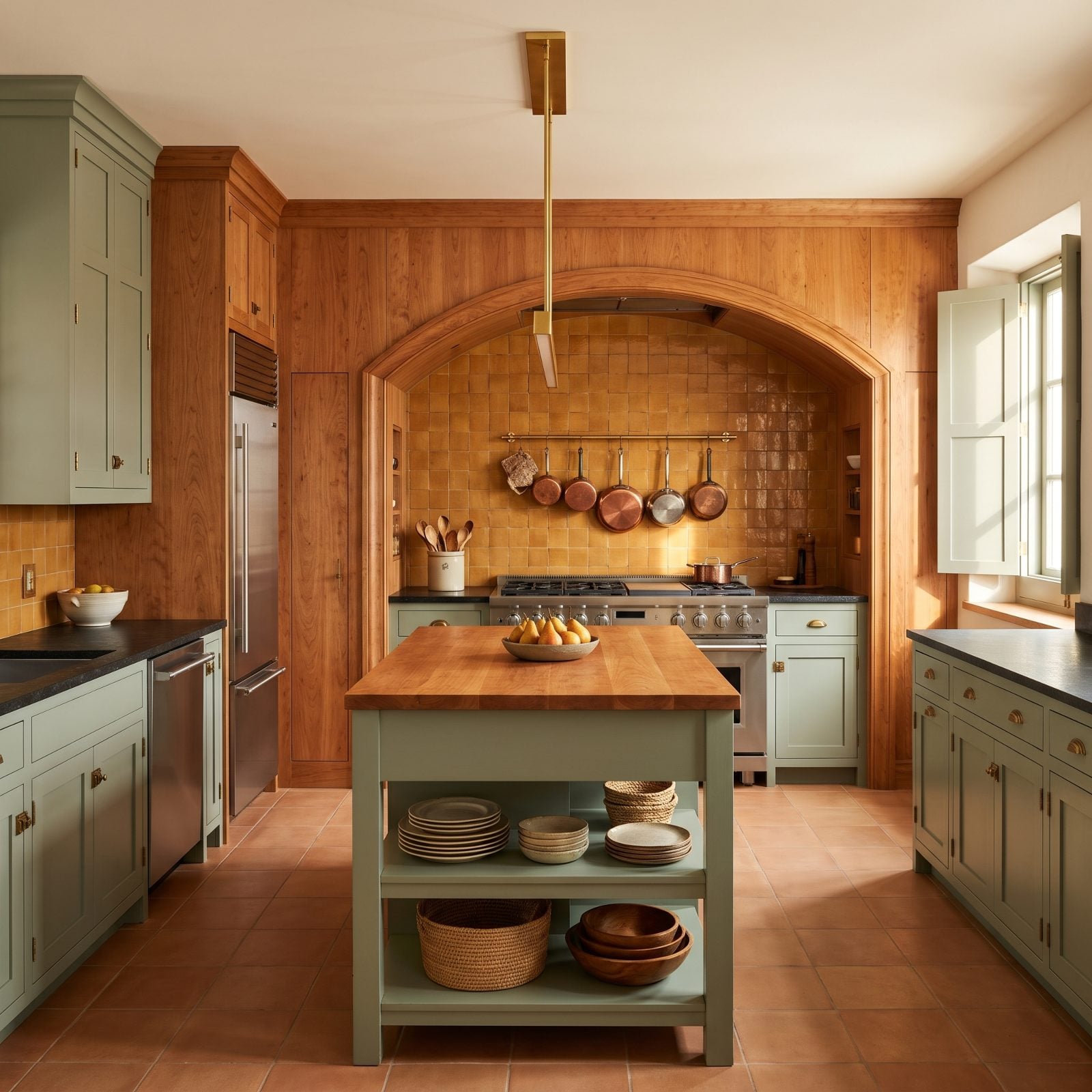
Framing the range in a cherry-lined alcove turns the stove into the fireplace of the room. Old instinct, still works. You want the eye to settle on the warmest, deepest point, and it does exactly that.
Sage shakers all around keep that pocket of cherry from reading as a one-off. The leathered black granite grounds both, and the terracotta floor pulls the warmth down to your feet.
16. A Cherry Peg Rail Turns Plates Into the Wall Art
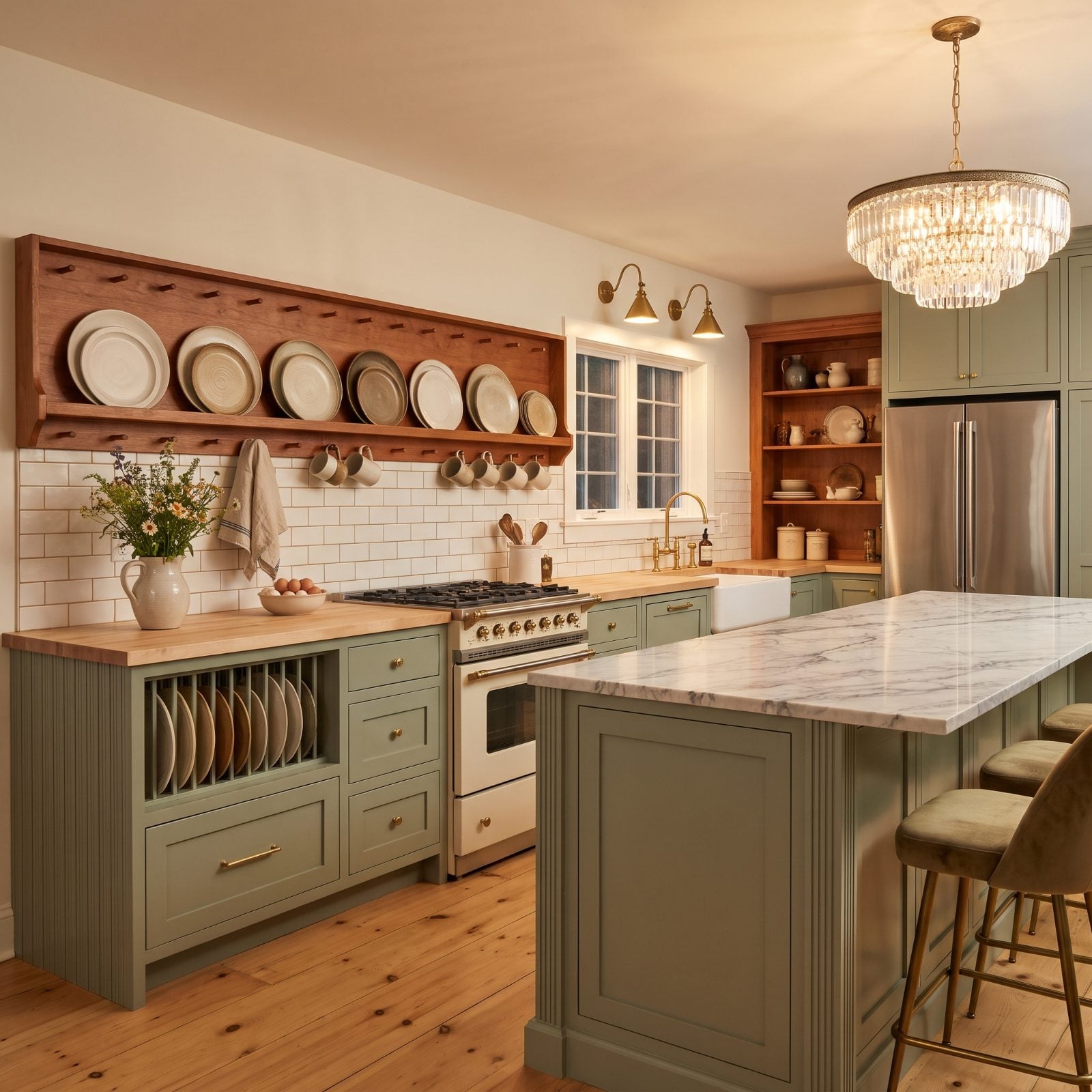
A cherry Shaker peg rail is the cheapest high-impact move in this whole gallery. Hang your everyday plates and mugs on it, and the wall pulls double duty as storage and display.
The warm cherry stripe breaks up a run of sage so nothing feels like a wall of green. It’s the kind of small kitchen inspiration that works in a rental too, since the rail mounts and comes off with a few screws.
15. A Cherry Library Ladder Scales the Sage Pantry Wall
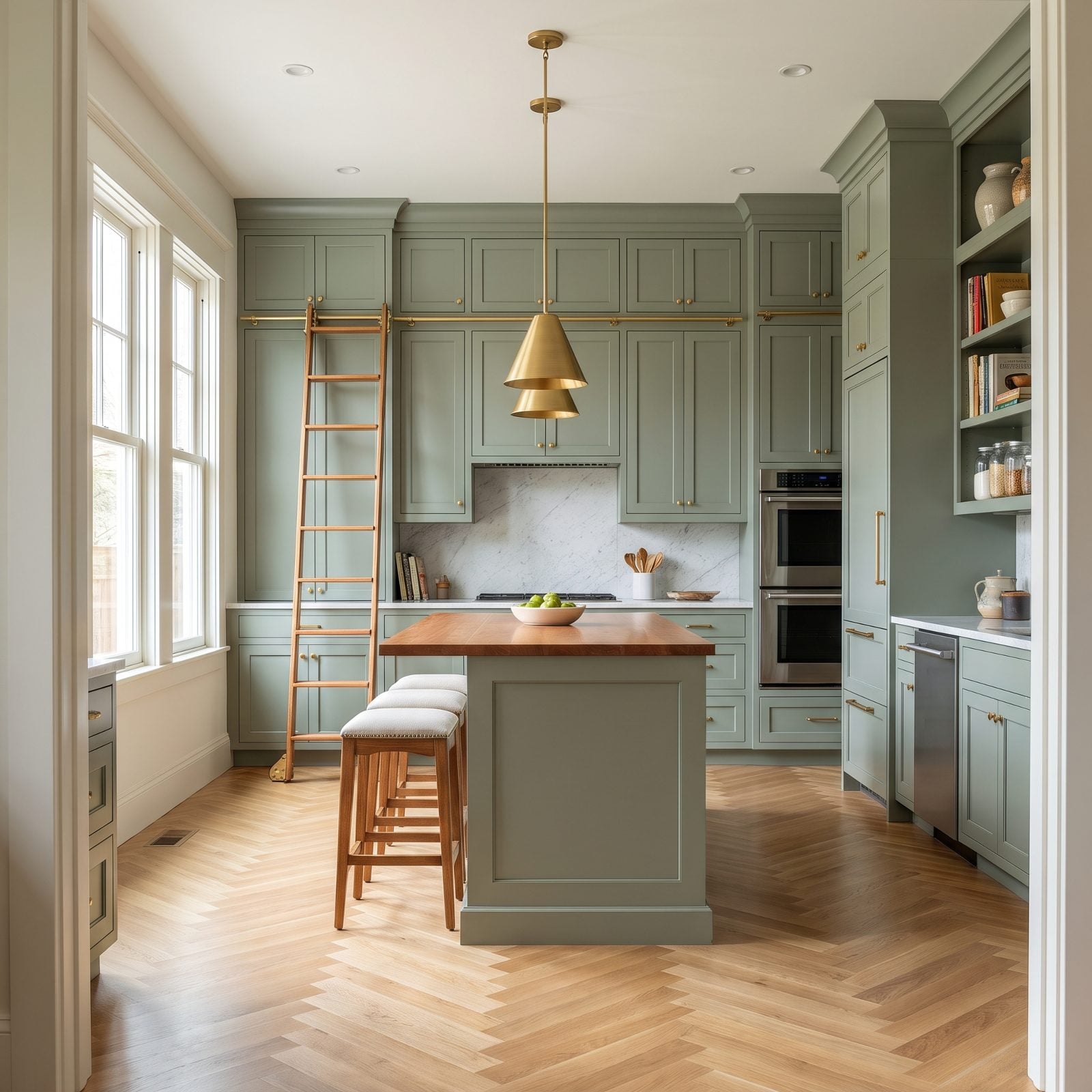
Everything about this wall says reach the top shelf without a stepstool, and the cherry ladder makes the solution look intentional instead of apologetic.
Tall sage cabinets can read as a solid green slab, which is a lot to take in. The rolling cherry ladder cuts a warm diagonal across it and gives the eye a line to follow.
14. The Cherry Island Grows Its Own Sage Herb Trough
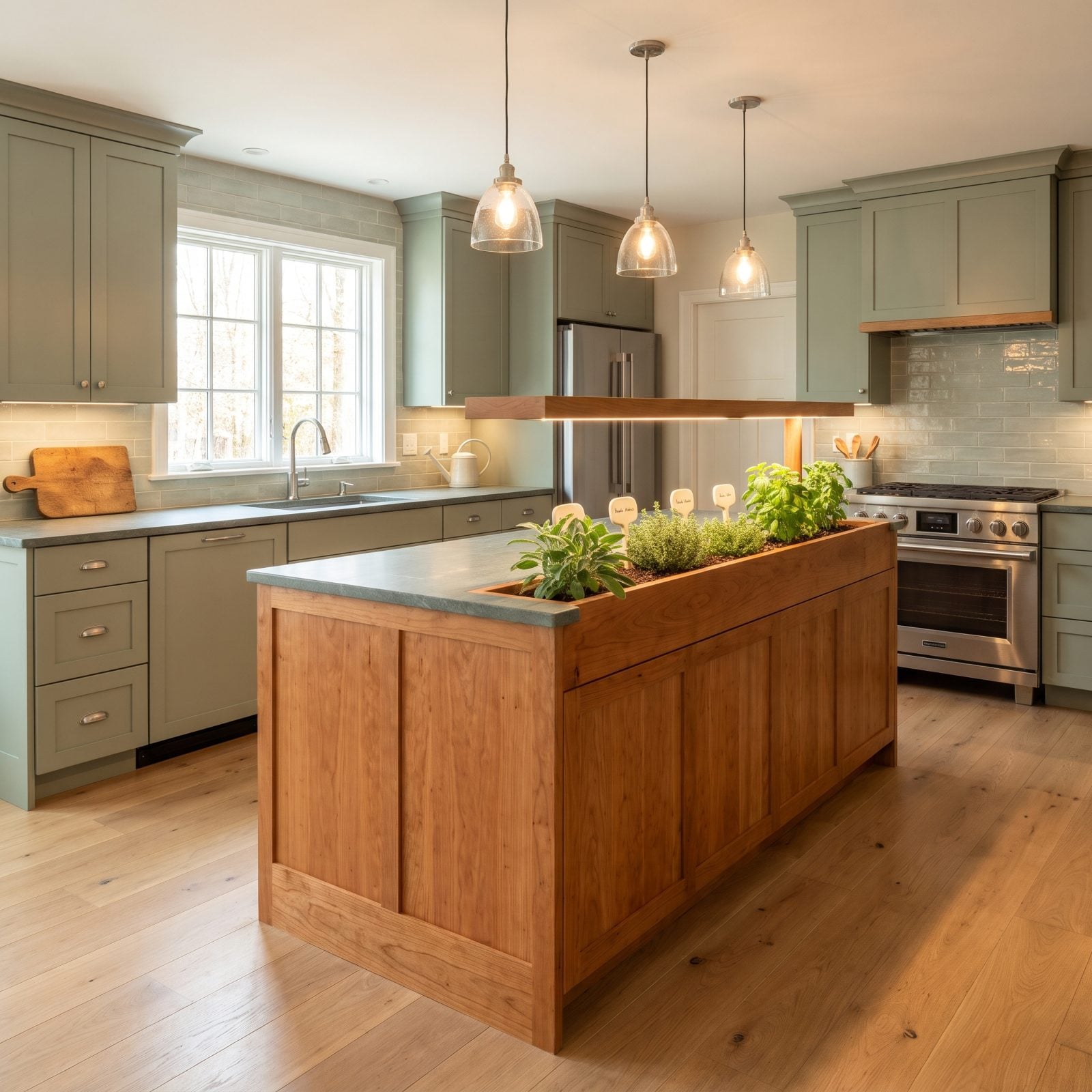
Building a live herb trough into the cherry island is the rare feature that earns its keep every single day. You cut basil mid-cook without crossing the room.
The living sage in the planter rhymes with the sage cabinets, so the color story extends into something you can actually smell. Biophilic design that feeds you dinner beats the kind that just sits in a frame.
13. A Concealed Cocktail Cabinet Hides in the Cherry Run
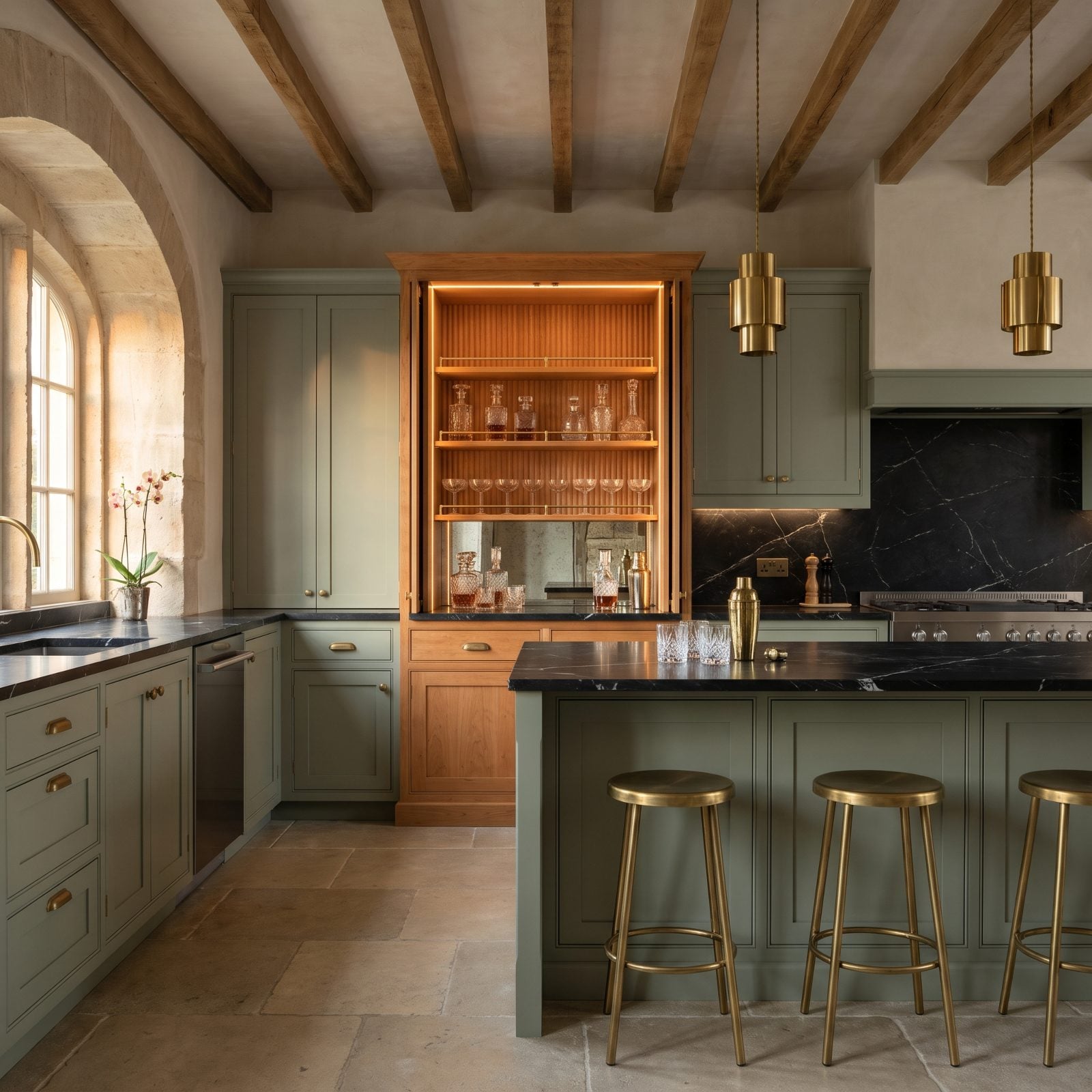
Pocket doors swallow the cocktail cabinet into the cherry run until you want it, then open onto a fluted back panel, brass rails, and a mirror that doubles the bottles.
Against the sage, the warm cherry interior glows the moment the hidden strip lights kick on. The black marble keeps the whole thing from tipping into theme-bar territory. Grown-up glam, not a gimmick.
12. Behind the Sage Doors, a Full Cherry Scullery Hides
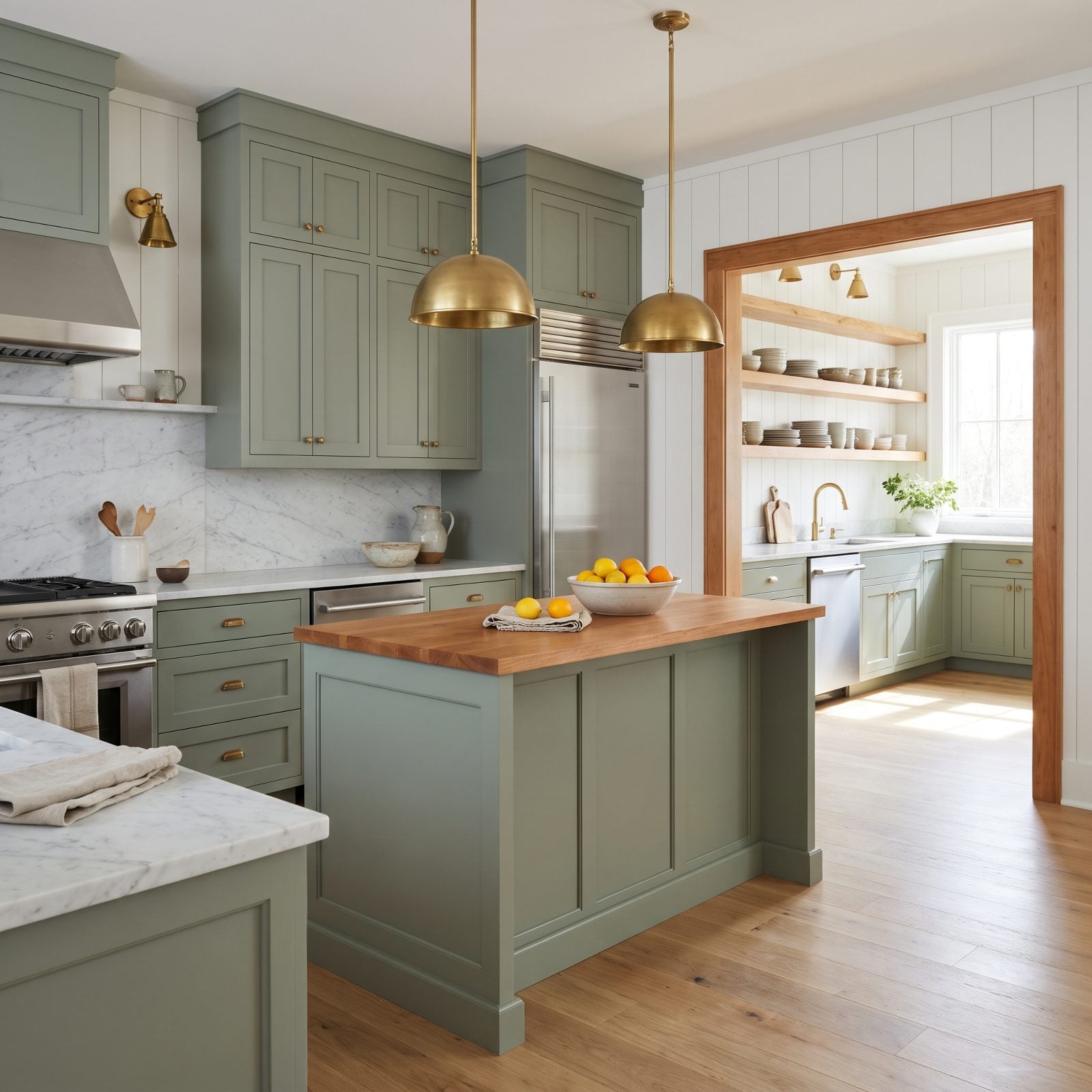
The front kitchen stays serene in sage while the real work hides behind a single cherry-framed doorway, opening onto a scullery out back with a window, sink and open cherry shelving. One room for show, one for mess.
Framing that opening in cherry tells your eye there’s more beyond without demanding you look. Daylight pulling through from the scullery window draws you deeper, which is the oldest trick in spatial design: a bright spot at the end of a view makes you want to walk toward it.
Explaining why open-plan clients increasingly want a secondary kitchen, an interior design studio owner says “Trying to clean up before guests arrive isn’t always practical, so having a place to hide stuff becomes desirable.”
11. Sage Transitional Kitchen With a Cherry Dining Peninsula
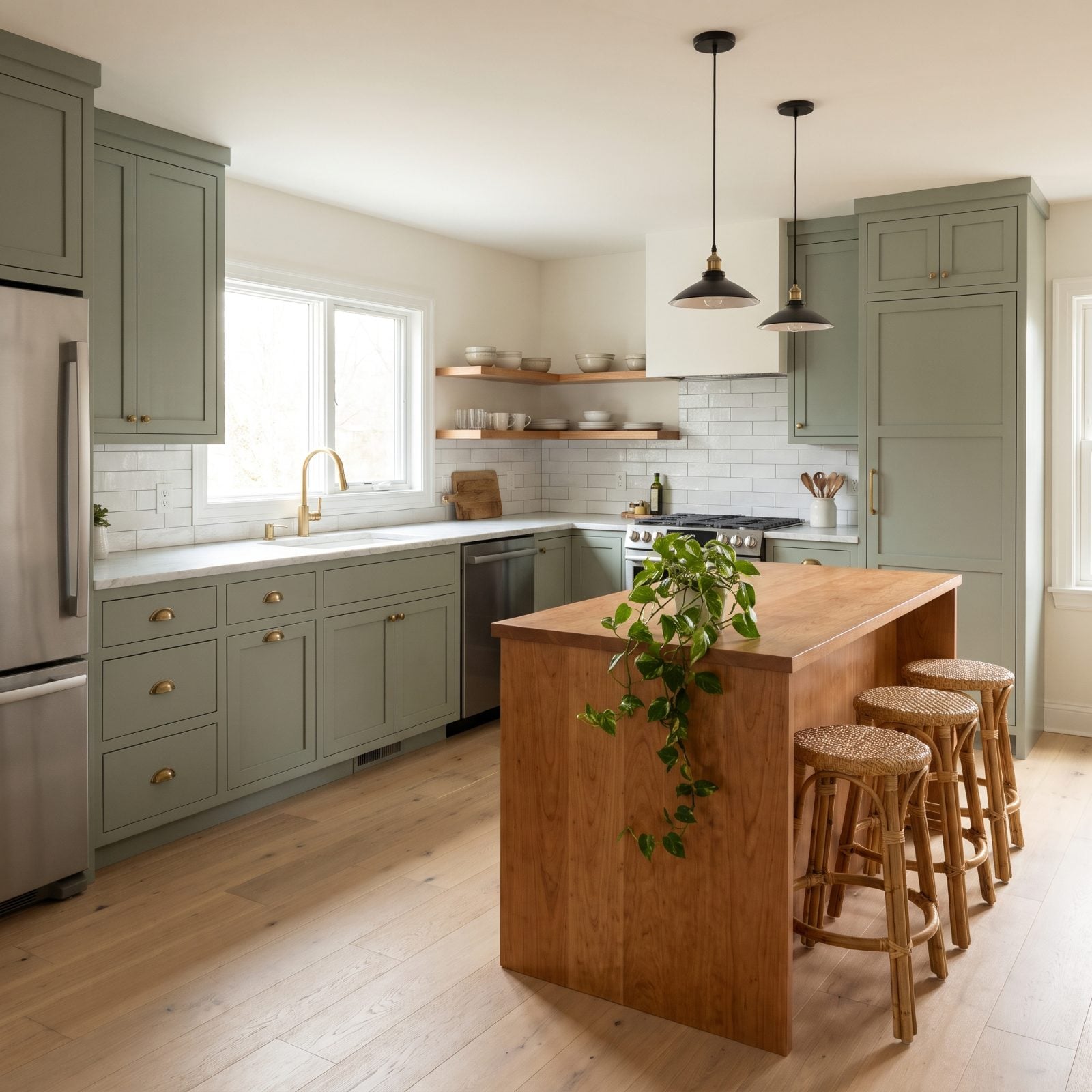
The cherry peninsula is the quiet star here, reaching out from a wall of sage shaker cabinets and reading more like a piece of furniture than built-in cabinetry. Honeyed cherry grain against dusty green reads warm instead of loud, because the marble counters and white subway tile keep everything calm between them.
Three rattan stools let the island pull double duty as breakfast bar and homework table. The overhang is the trick — a dining spot that costs you no extra floor.
10. A Round Cherry Gathering Island Softens a Sage Kitchen
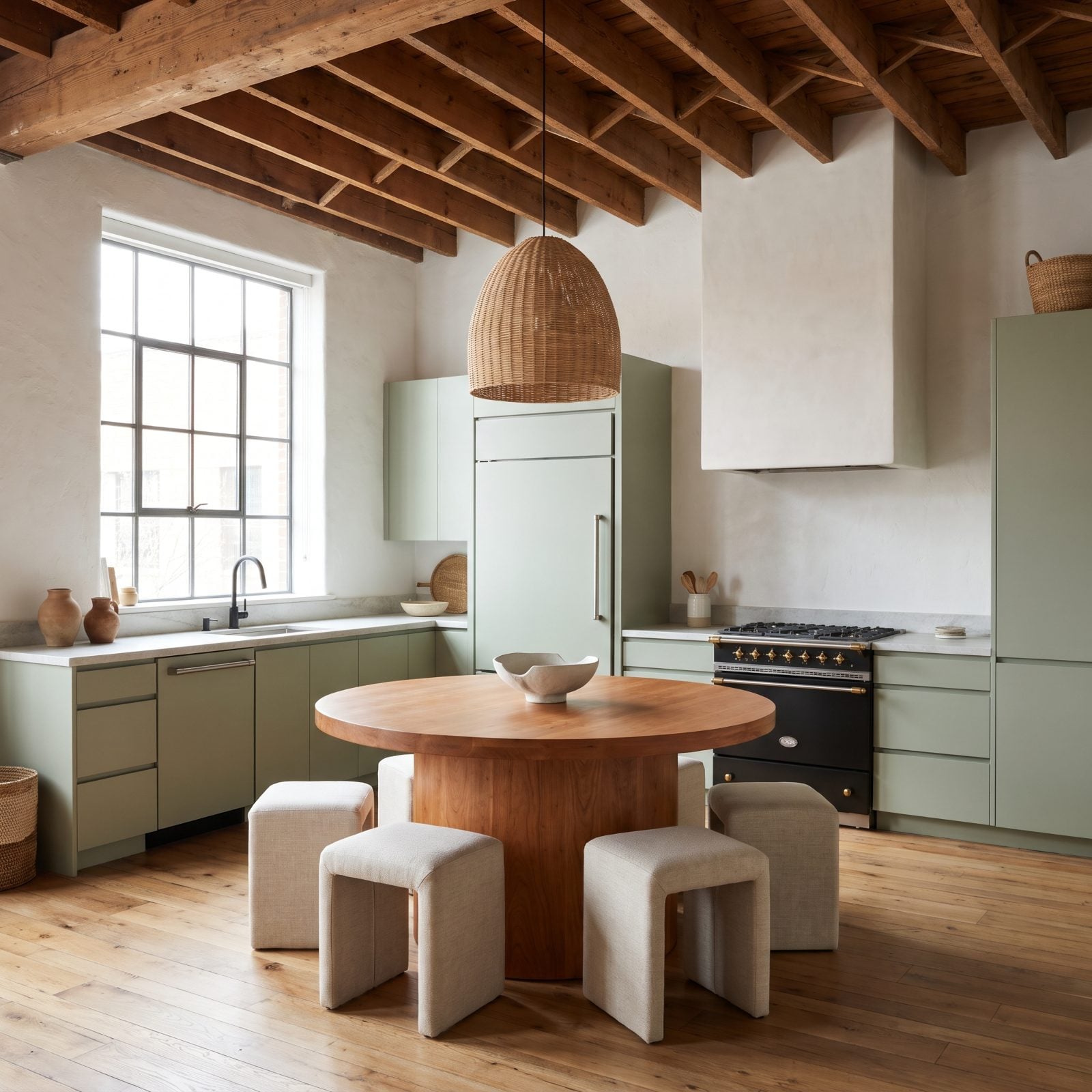
Round islands are rare for a reason: they eat more floor than they give back. Give the room some breathing space, though, and that circular cherry top changes a kitchen’s whole energy — no sharp corners to steer around, no head of the table, everyone sitting equal.
Against the handleless sage perimeter, the cherry island becomes the only curved, grainy, tactile thing around. Your eye goes straight to it and stays.
9. Slim Cherry Mobile Island Rolls Into a Sage Galley
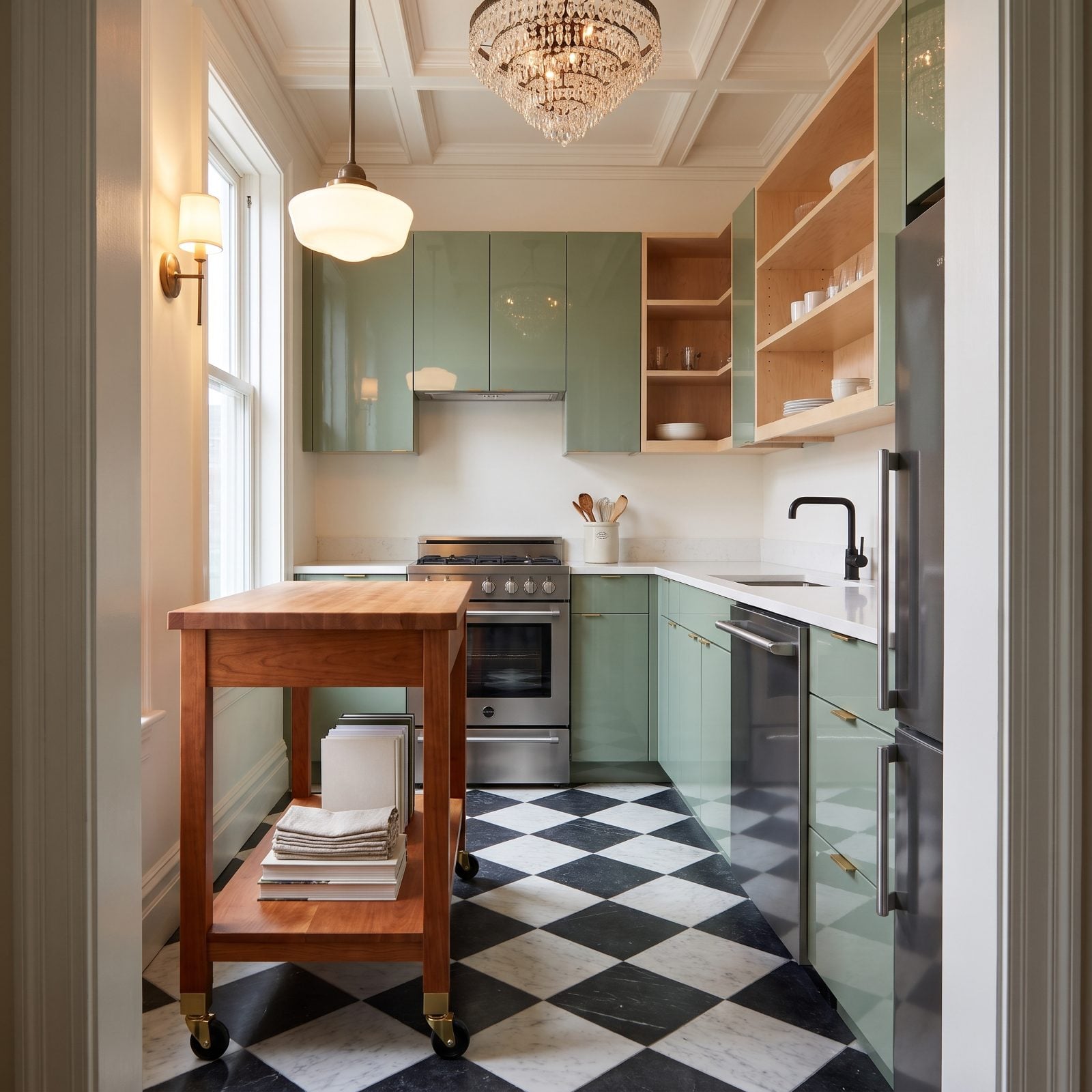
Small kitchens don’t get islands. Except they do now, on wheels. This slim cherry cart locks into place for prep and rolls out of the way when you need the floor back.
That cherry butcher-block top takes a beating and ages better for it, while the sage galley behind stays clean and quiet. For more ideas on working with tight footprints, our small kitchen inspiration gallery is worth a look.
8. Twin Cherry Prep Islands Anchor a Wide Sage Kitchen
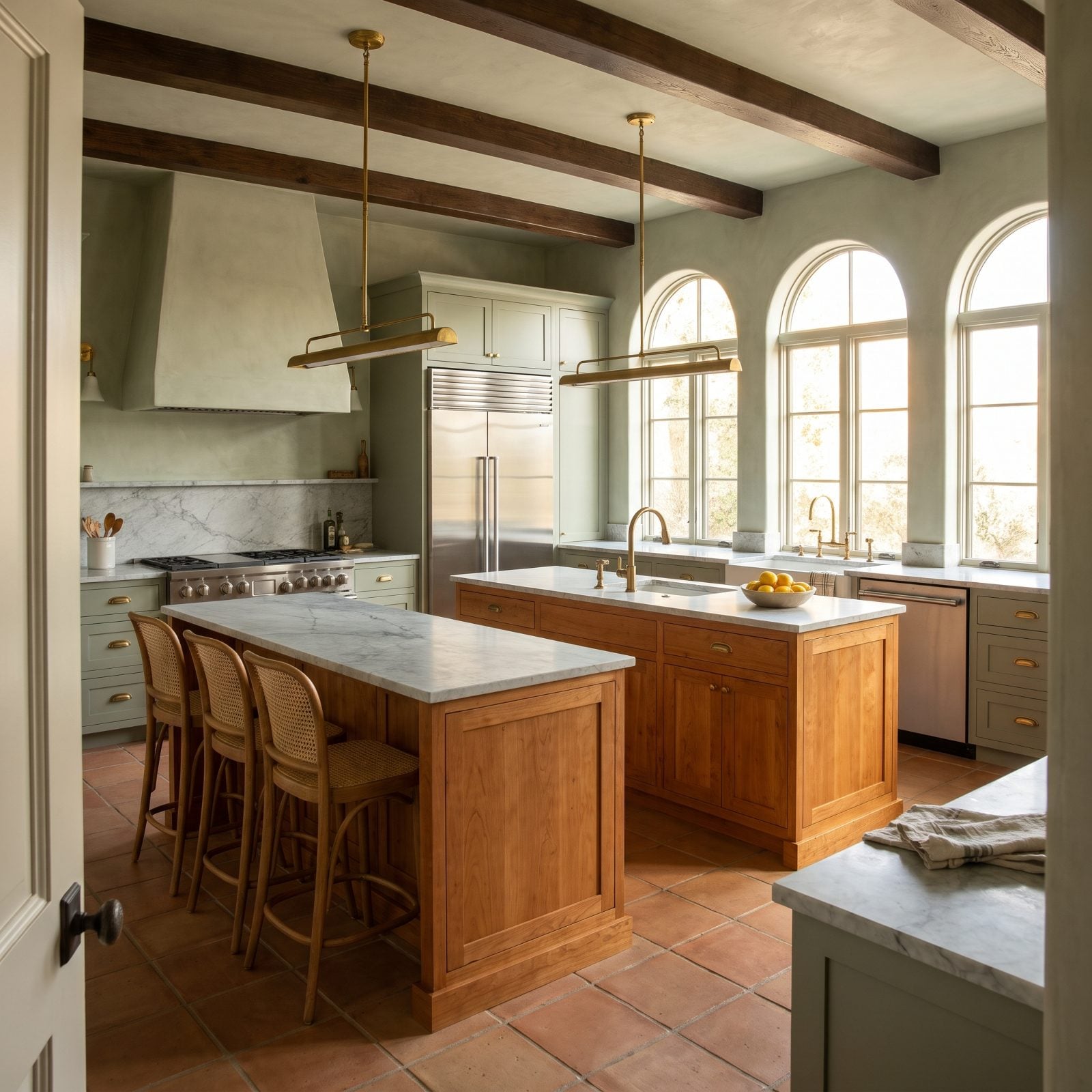
One island is standard. Two cherry islands set side by side with an aisle between them is a layout move for people who actually cook with company — the right island with its brass faucet and sink handles prep, its matching twin on the left with its stools handles gathering, and nobody’s reaching across anybody.
Matching them in cherry keeps the pair from splitting the room into two disconnected zones. The sage perimeter reads as backdrop while the cherry blocks become the furniture of the room.
7. Compact Sage Kitchen With a Cherry Fold-Down Table
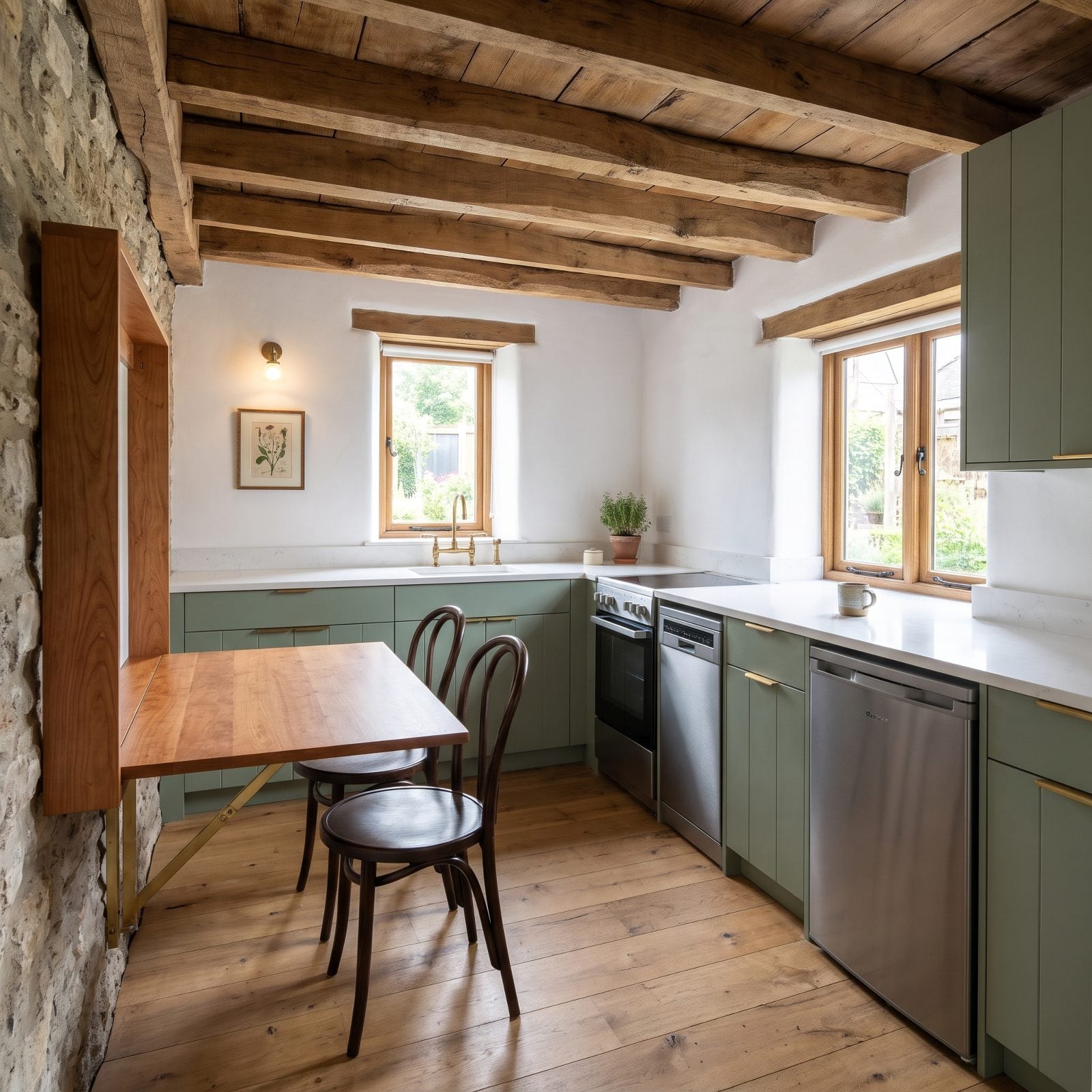
That cherry table folds flat against the wall when breakfast’s over, and suddenly you’ve got a kitchen you can actually walk through. The warm grain stops the sage-and-white scheme from going cold and clinical, which is where small kitchens tend to drift.
It’s the smartest piece in the room precisely because it’s barely there half the time.
6. A Cherry Slat Divider Splits an Open-Plan Sage Kitchen
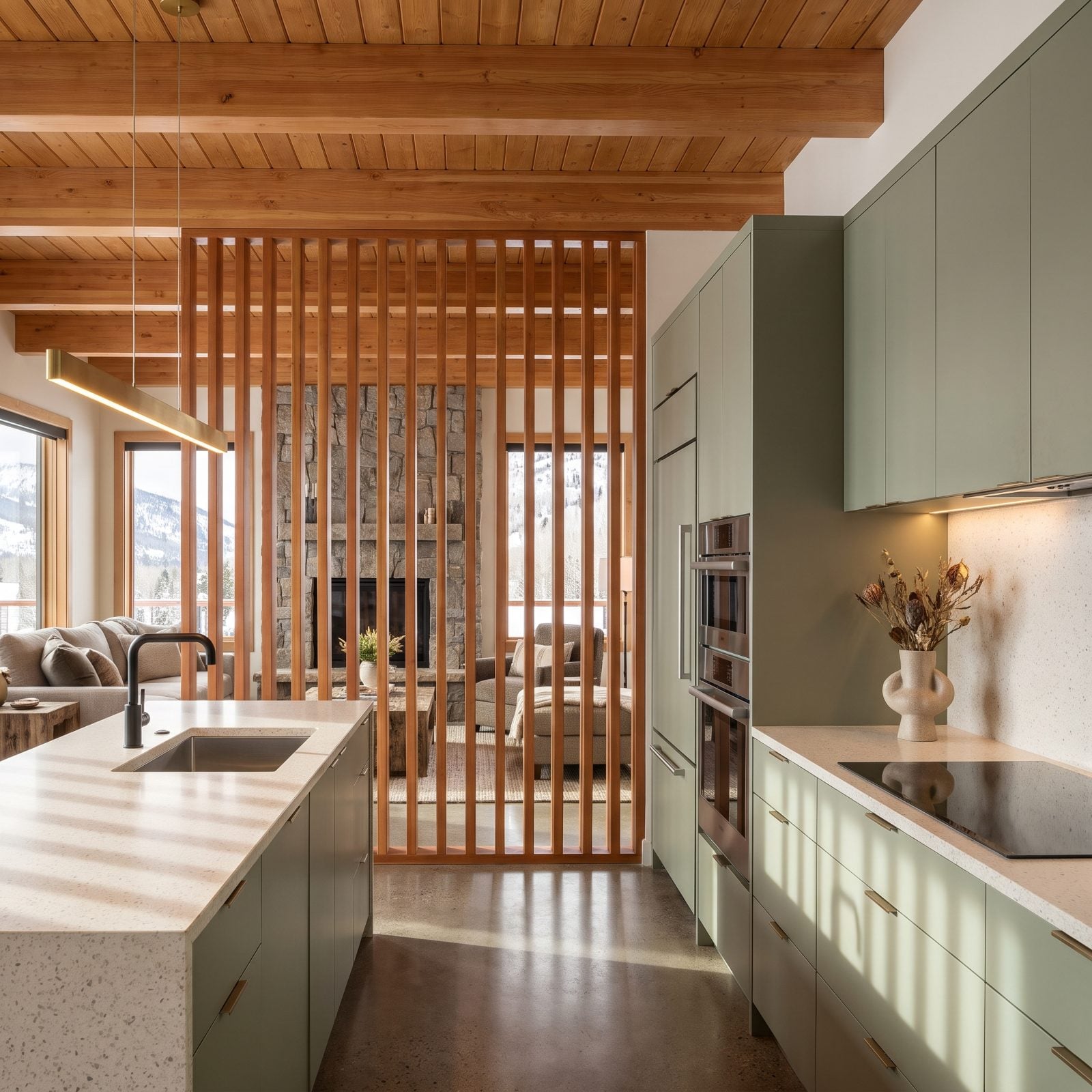
The cherry slat screen does what a wall can’t: it defines the kitchen without closing it off. Light and sightlines pass right through, so the open plan stays open while the cooking zone gets its own edge.
Vertical slats also drag your eye upward, which makes the ceiling feel taller than it really is. Set against cool sage and polished concrete, that warm wood keeps the whole floor from reading like a showroom.
5. Cherry Pocket Doors Hide the Mess in a Sage Kitchen
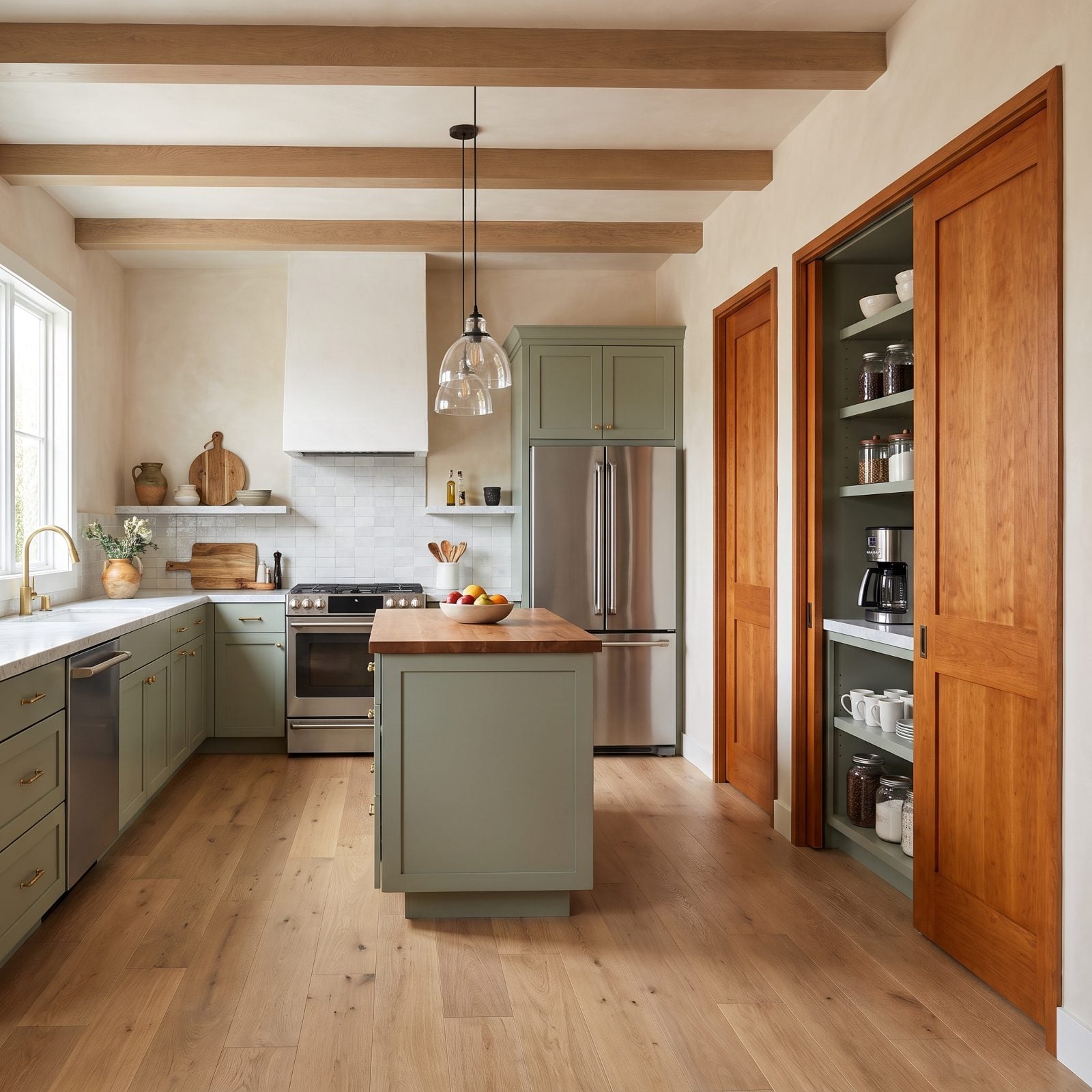
Cherry pocket doors answer the eternal kitchen problem — the appliance garage that looks like chaos the second you open it. Slide them shut and the mess vanishes. Slide them back and the warm wood frames the coffee station like a proper built-in.
Save the cherry for just the pocket doors, with sage cabinets everywhere else, and the wood stays a deliberate accent instead of hijacking the room.
4. Sage Cabinetry With Cherry-Integrated Finger Pulls
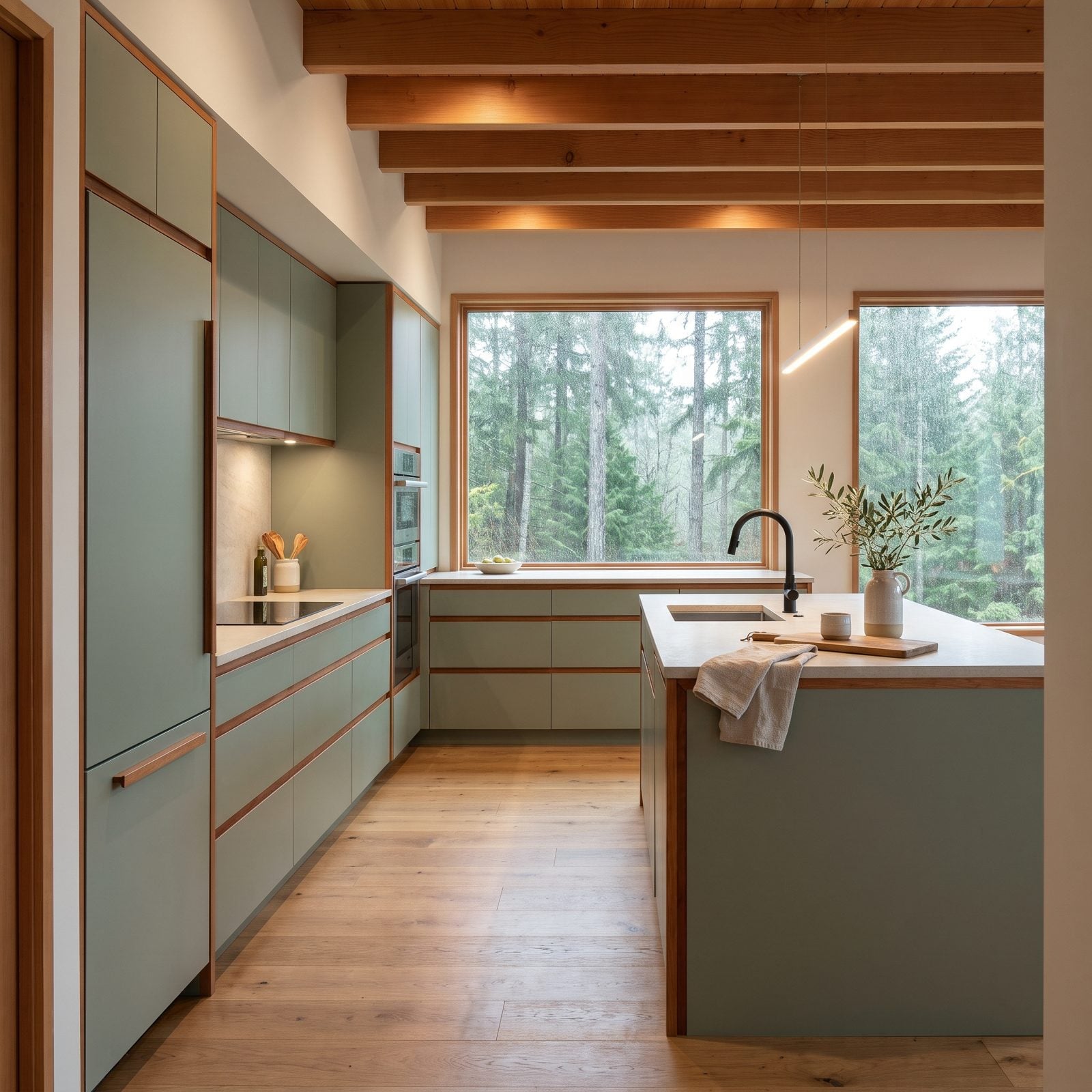
Almost no hardware — just a thin line of cherry running along the cabinet edges where your fingers catch to open them, with a pair of slim cherry bar pulls reserved for the tall column. The wood pulls double duty as both the hardware and the room’s main decorative move.
This is cherry at its most restrained, a ribbon rather than a slab. On the largely handleless sage cabinets, those warm reveals give the flat fronts just enough grain to feel human instead of austere.
3. Soapstone Surfaces Ground a Sage and Cherry Kitchen
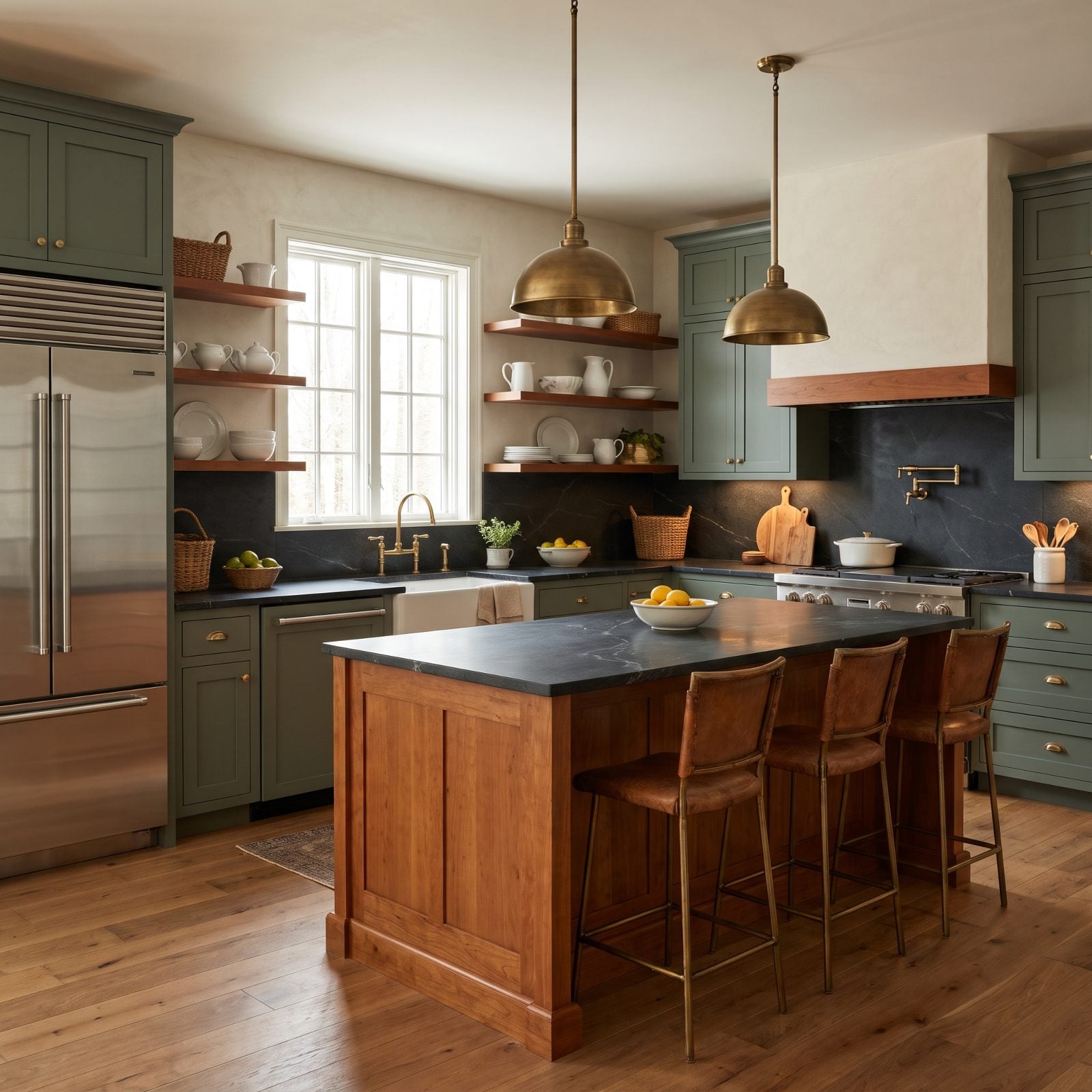
Soapstone is the dark horse here. That near-black honed stone with its soft grey veining pulls the sage cabinets deeper and lets the cherry island read even warmer by contrast. Three materials, each doing a job the other two can’t.
And it ages with a patina you can’t fake, picking up a soft sheen from years of hands and oil. The most tactile surface in any kitchen.
Asked how the stone ages, a longtime soapstone fabricator explains “Every soapstone that gets used darkens over time. That darkening is the patina, and it’s the reason soapstone owners chose soapstone.”
2. Mediterranean Villa Warmth: Sage Cabinets Over Handmade Terracotta
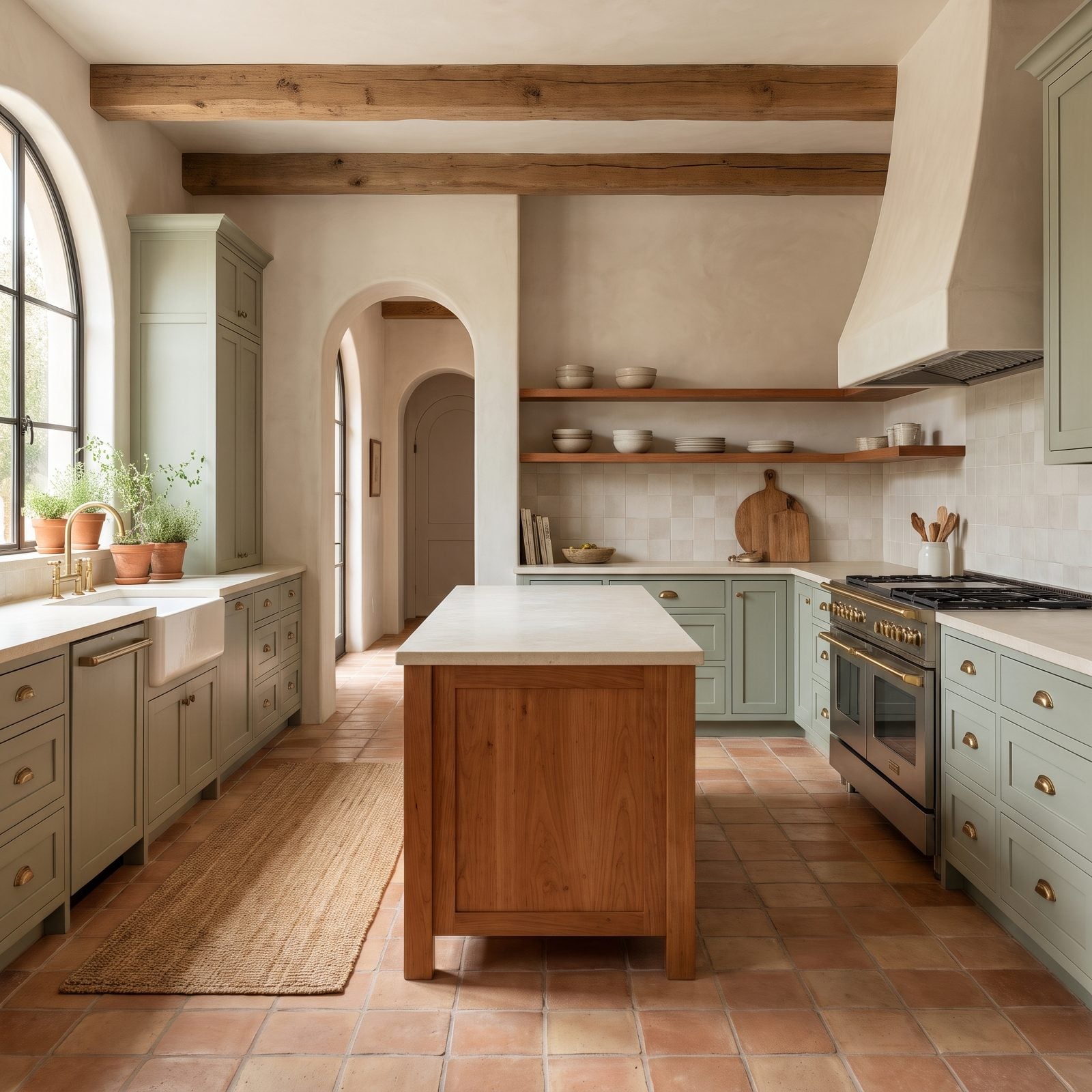
The terracotta is the anchor here, and everything else leans into it. Those clay tiles pull the red undertones straight out of the cherry island, so the warm wood reads intentional instead of random. Sage perimeter cabinets cool the whole thing down before it tips into hot.
The hand-troweled plaster hood is the quiet hero, and honestly it’s the detail nobody notices first but everybody misses if you take it away. It keeps the brass hardware from carrying the room alone, and it rounds off every hard edge in a space otherwise full of stone and tile.
1. Rosy Terrazzo Counters Bridge Sage Cabinetry and a Cherry Island
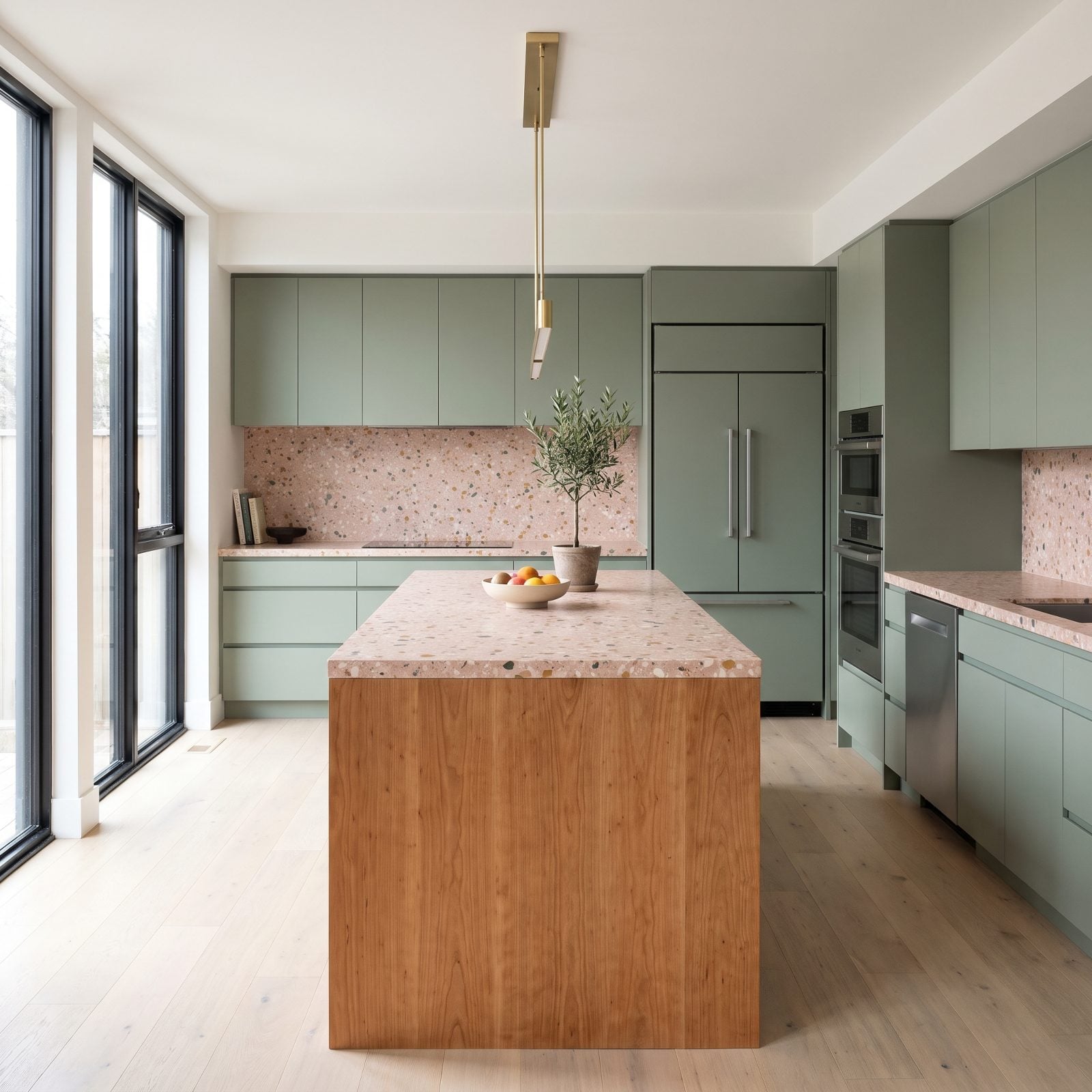
Pink counters in a kitchen sound like a dare. These aren’t. The rosy terrazzo reads as a soft neutral because the blush is muted and the aggregate pulls in cream and ochre, which turns out to be exactly the bridge sage and cherry needed.
Handleless flat-slab cabinets keep the sage calm, almost architectural. Then the cherry island shows up with a waterfall edge and takes over as the centerpiece, and because the terrazzo runs across both surfaces, the whole room agrees with itself.