🔥 Would you like to save this?
A buyer decides in the first ninety seconds whether a house is a maybe or a no. The feet keep moving, but the body already knows. After staging and photographing hundreds of homes, here’s what we’ve learned: the places buyers linger aren’t the ones stuffed with features. They’re the ones that give the eye somewhere to rest and the body a reason to sit down. These ten details do that quiet work, and none of them need a full renovation. Most cost less than the closing gift. All of them buy you the one thing that sells a house — time in the room.
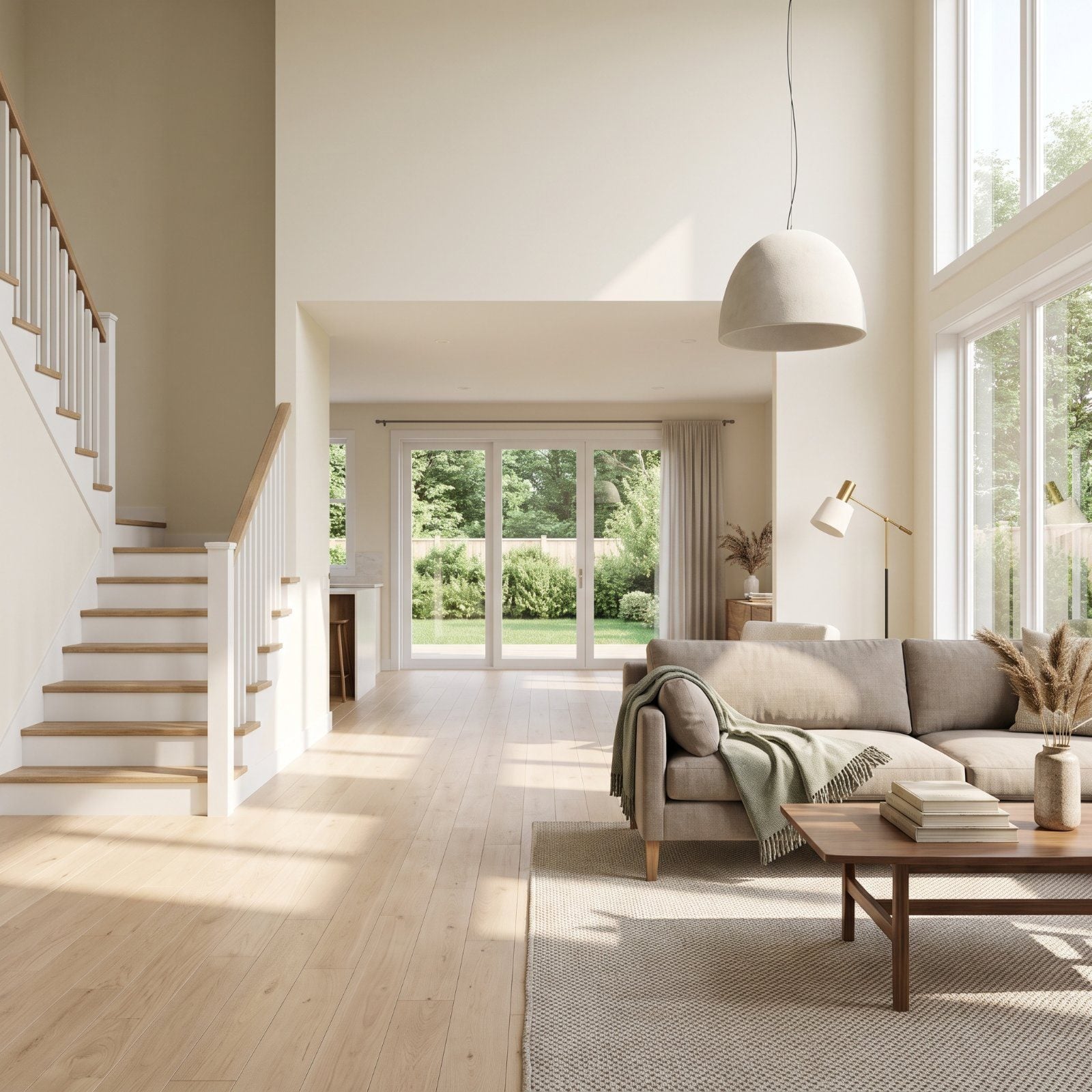
43. Abundant Natural Light Across the Main Floor
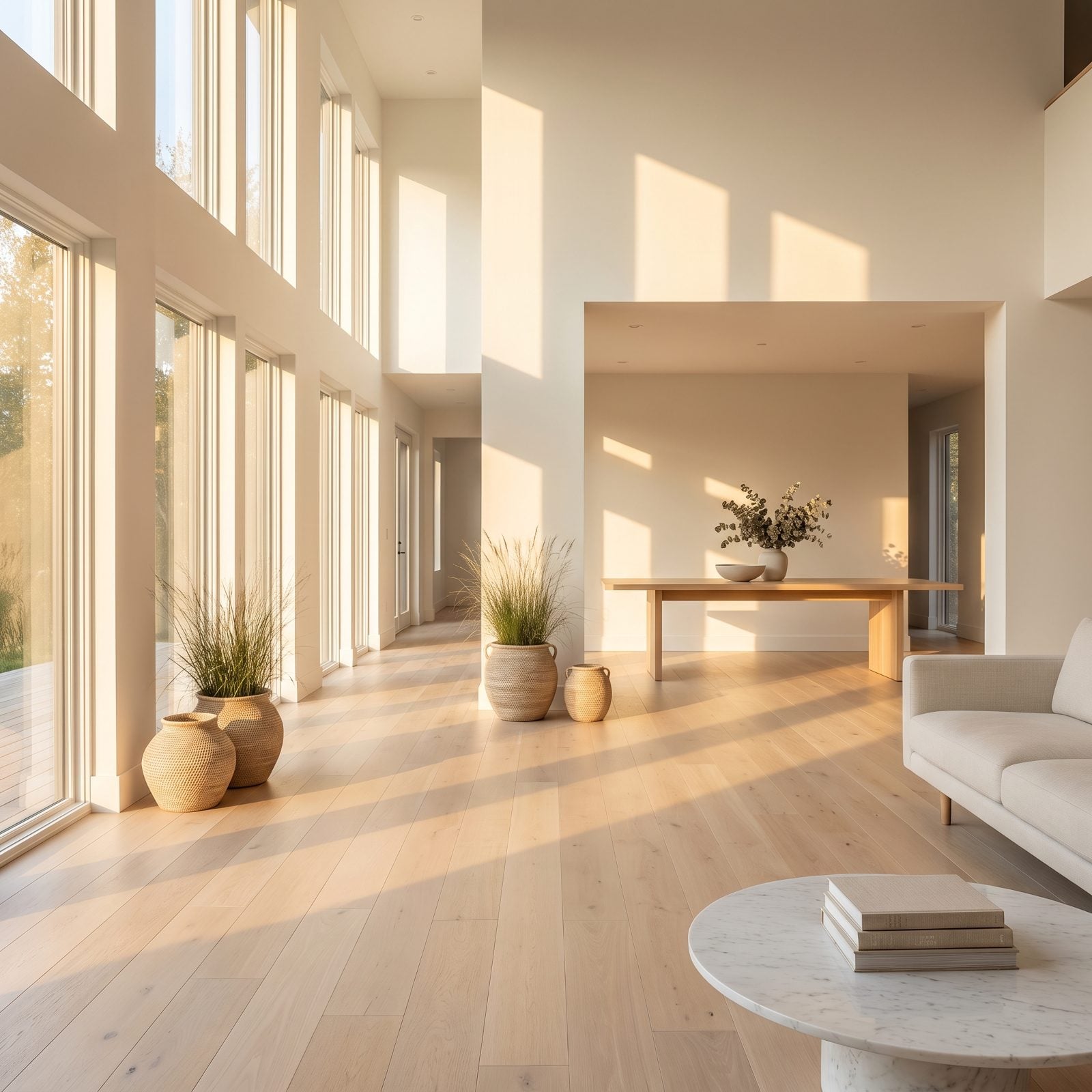
Light is the first thing a buyer reads and the last thing they forget. We’ve watched people stop mid-sentence in a well-lit main floor — not because anything was expensive, but because their shoulders dropped half an inch.
In order to come up with the very specific design ideas, we create most designs with the assistance of state-of-the-art AI interior design software. Also, assume links that take you off the site are affiliate links such as links to Amazon. this means we may earn a commission if you buy something.
Pull the heavy drapes. Clean the glass inside and out, then swap any yellowing bulbs for soft daylight tones so the artificial light doesn’t fight the real thing. A room that reads bright at 10am sells the idea of every morning after move-in.
42. An Inviting Front Walk With Layered Landscaping
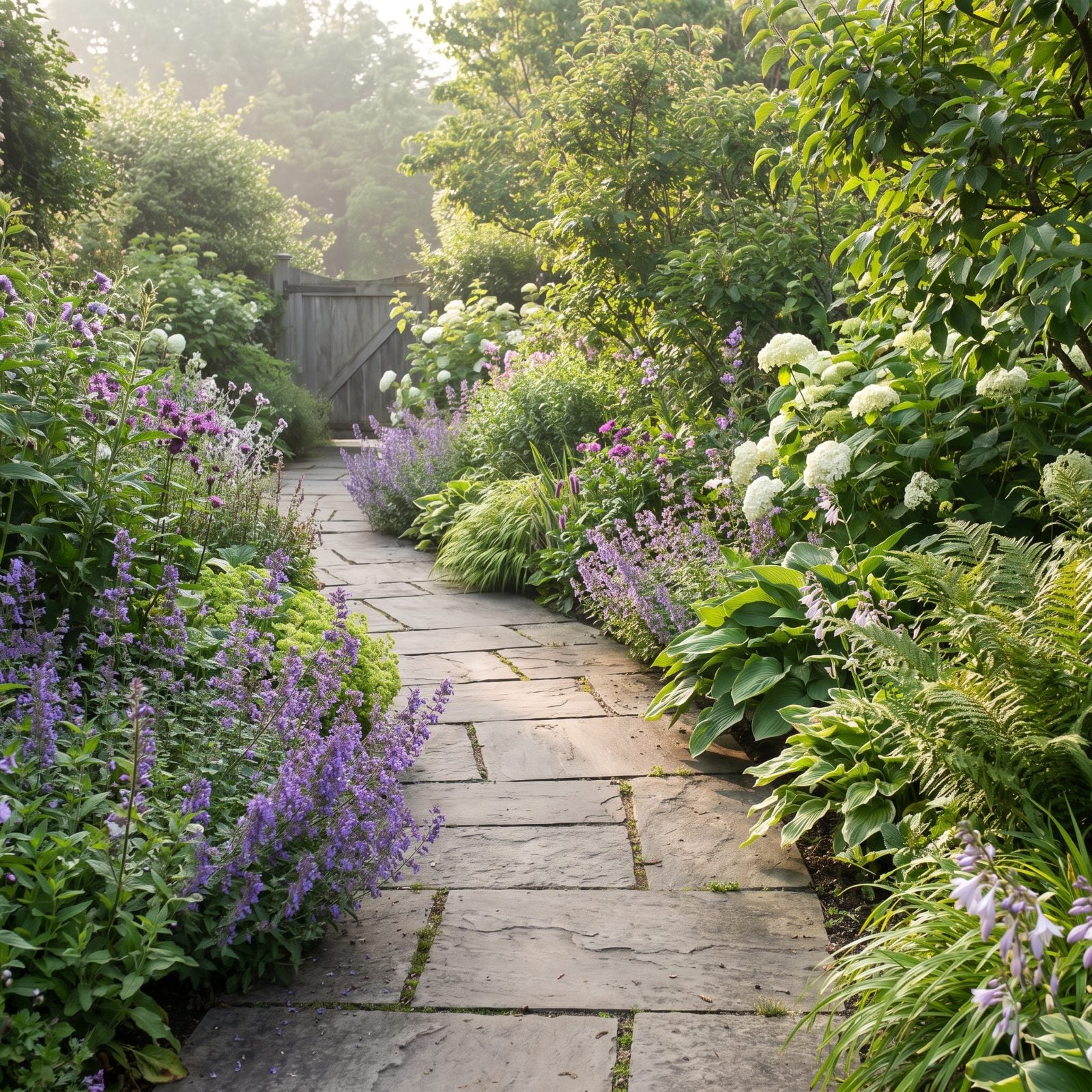
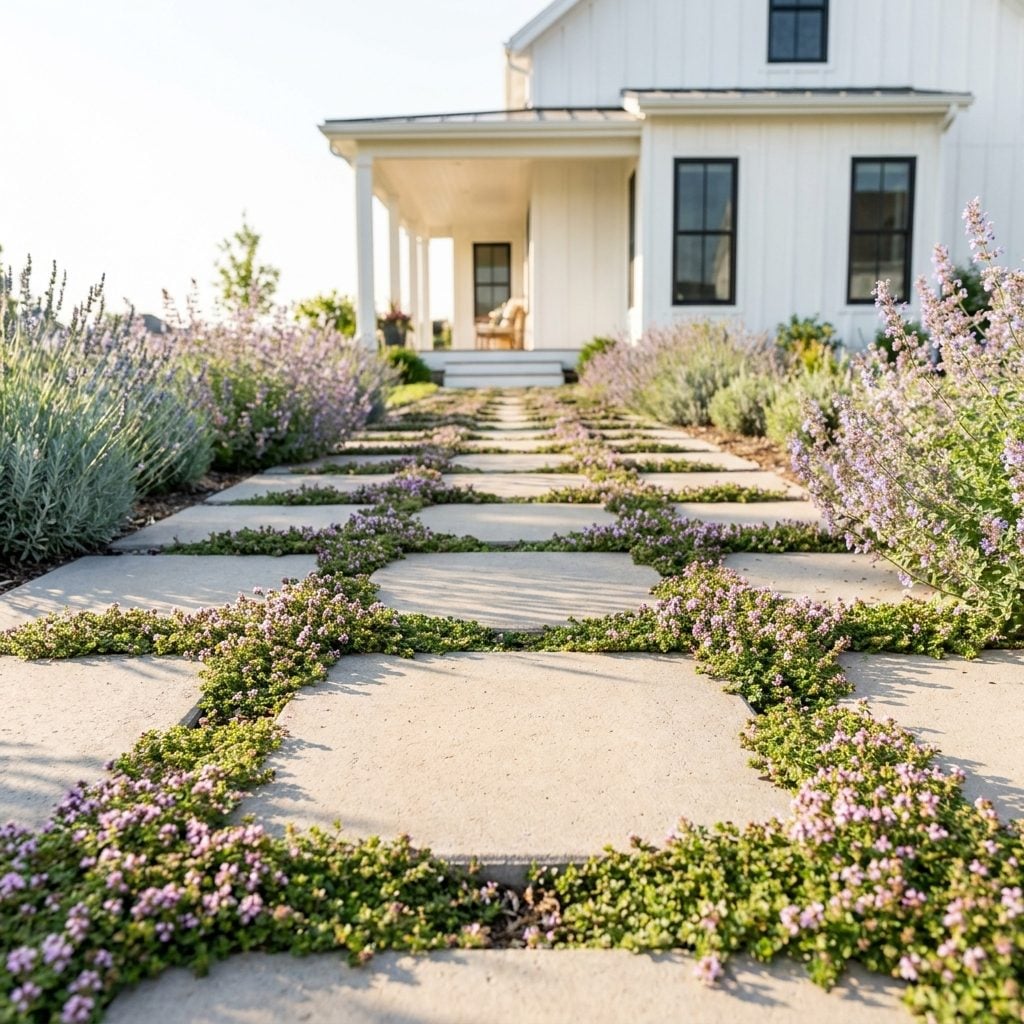
A straight bare path says nothing. A path with a bend and a little height on either side makes you want to walk it, and walking it slowly is the whole idea.
Layer your beds in three tiers: low at the edge, medium behind, one tall anchor at the corner. That staggered depth gives the eye somewhere to travel before it reaches the door. Fresh mulch and a swept walk do more for a first impression than any new window.
41. A Front Porch Arranged for Conversation
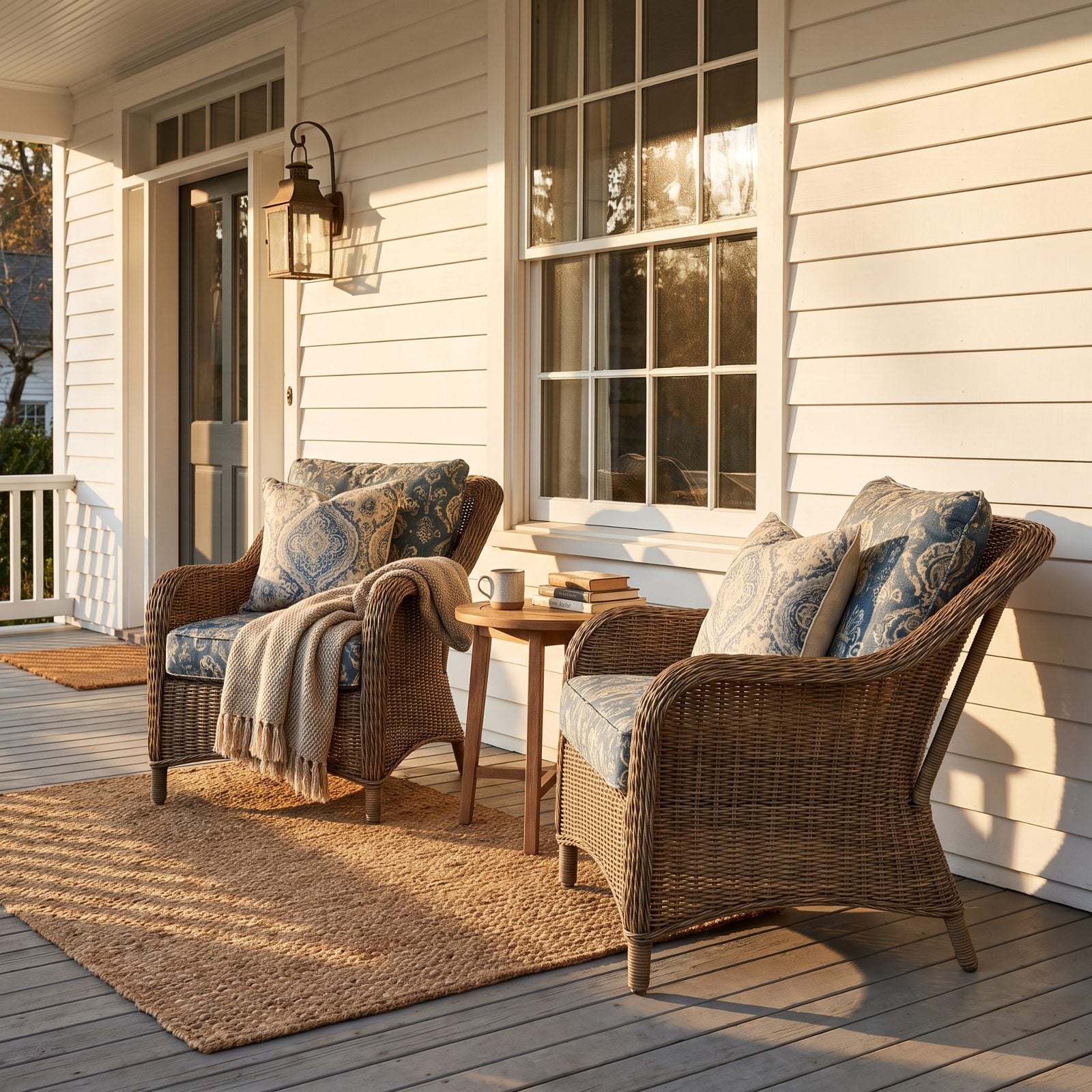
Two chairs angled toward each other do something a single bench never will: they imply company. They tell the buyer this is a place where people actually sit, not a prop.
Leave the door slightly ajar during a showing. It’s a small trick, and it works, because an open door reads as welcome and nudges the eye inside before the buyer has even taken the first chair.
40. A Bright Foyer With a Clear Place to Pause
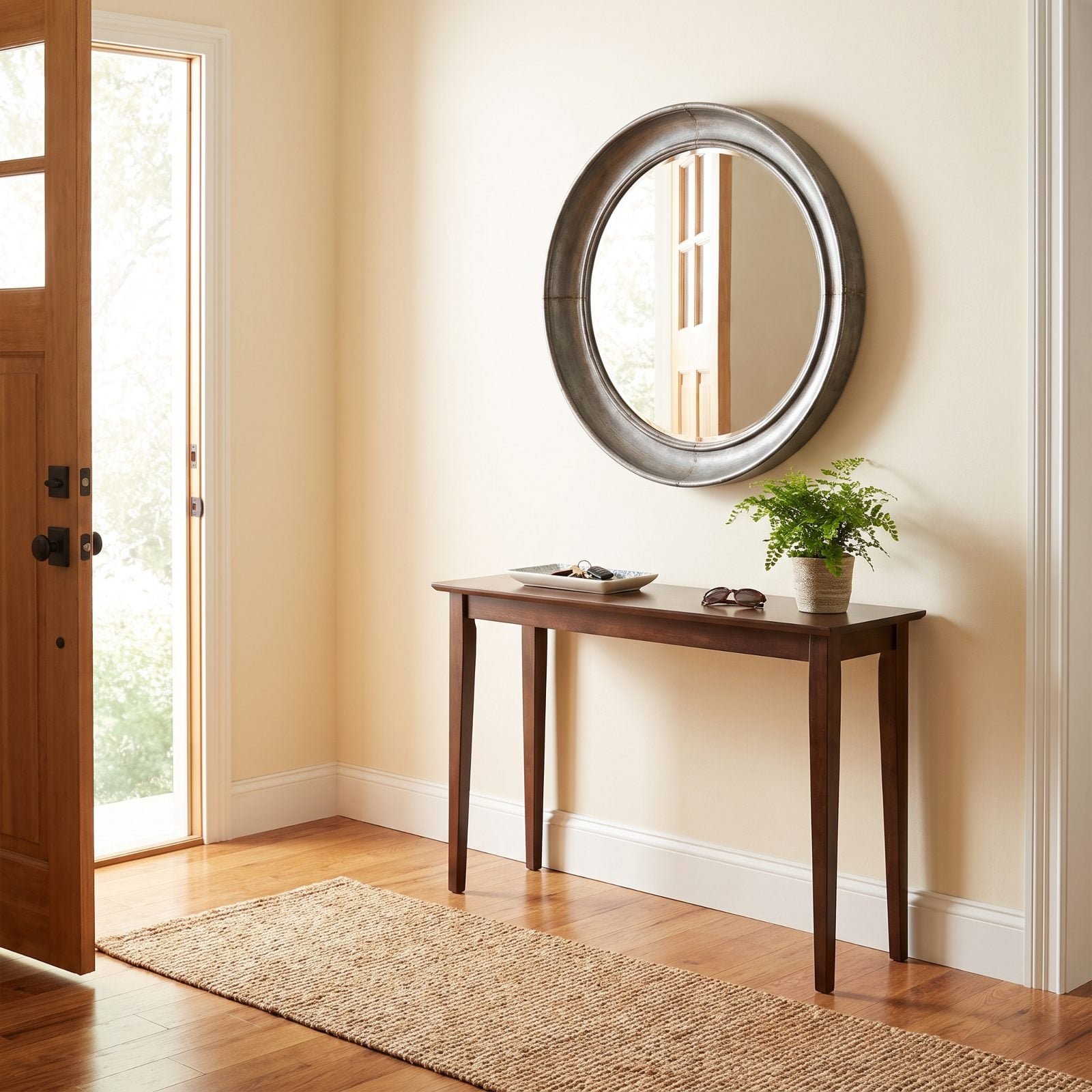
A foyer with nowhere to land makes a buyer keep moving fast, and fast is the enemy of falling in love. Give them a reason to stop: a bench, a mirror, a lamp already on.
The mirror pulls double duty. It bounces light and quietly flatters anyone standing in it, which makes the whole house feel better by association. A warm ceramic table lamp left glowing beats overhead light every time.
39. An Entry Sightline Extending to the Backyard
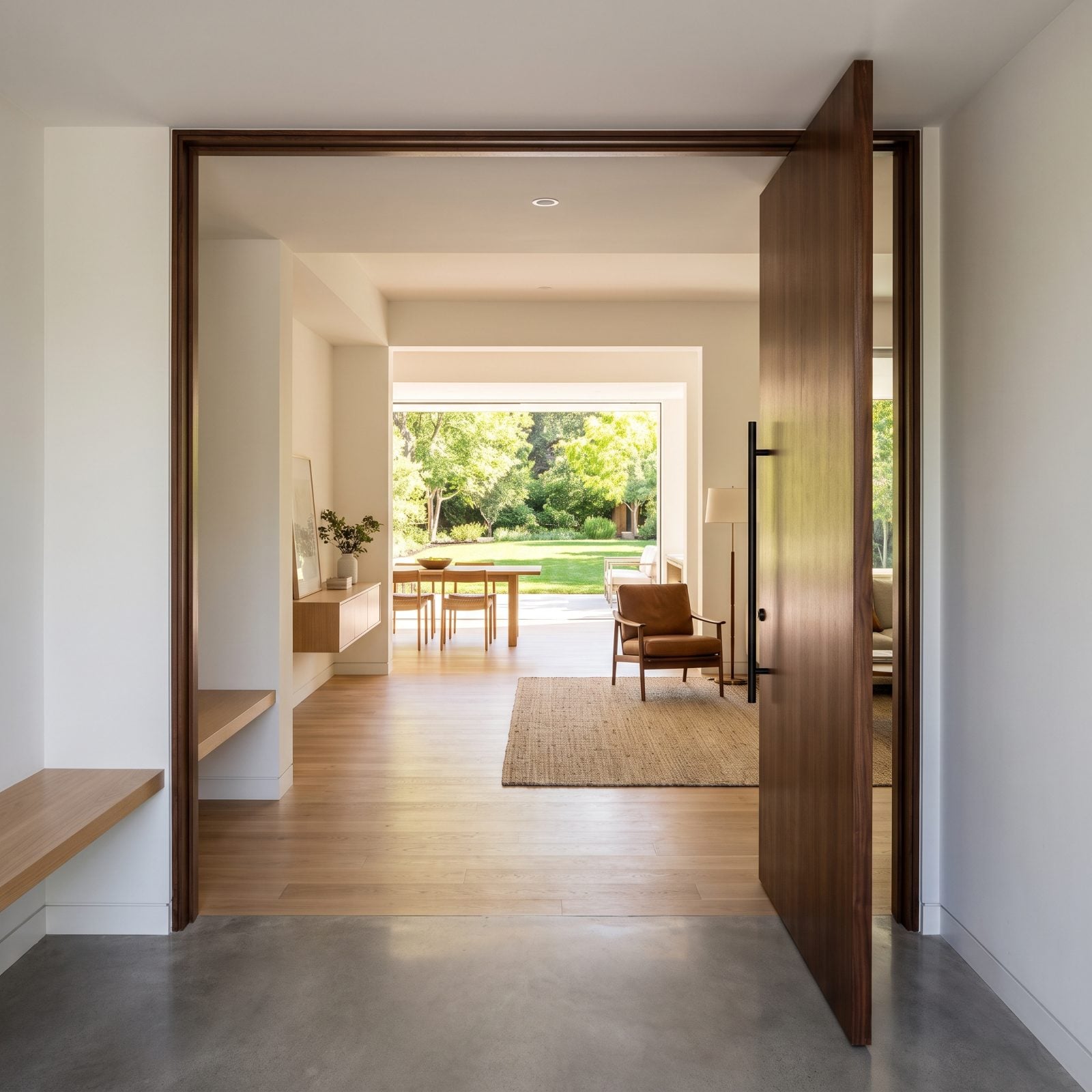
Stand in the front entry. If you can see straight through to green, you’ve already won. A clean sightline from door to backyard is the single most powerful pull a house has, because the eye chases depth and light automatically.
Clear anything that breaks the line — pull a chair six inches aside, move the console that juts into the path. One unobstructed view through the whole house makes a modest floor plan feel generous.
The eye chases depth and light. Give it a clear run from the front door to the garden and the buyer follows on foot.
38. Layered Ambient, Task, and Accent Lighting
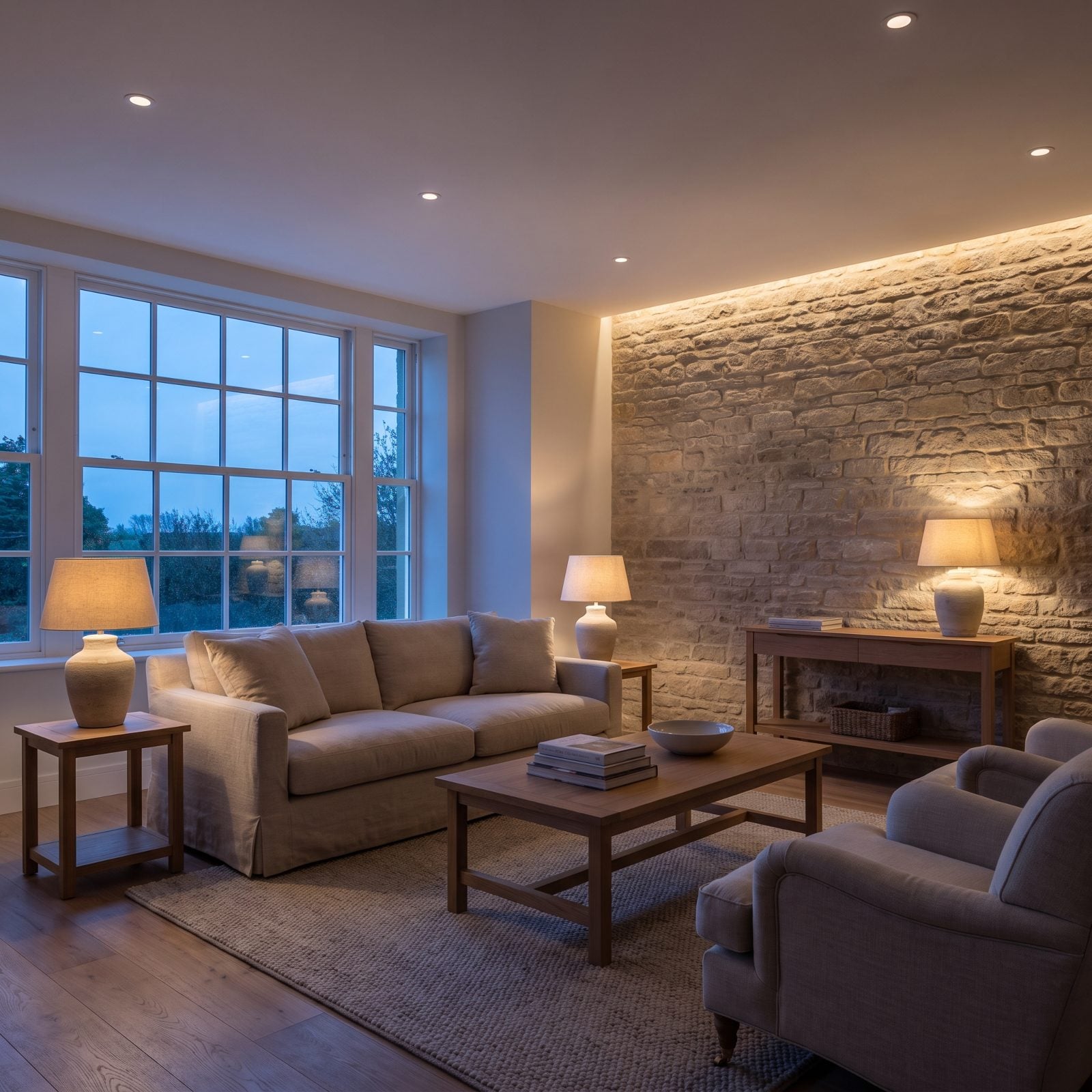
One ceiling fixture blasting a room flat is the fastest way to make a home feel like a waiting room. Layer instead: overhead for the base, a lamp for the chair, a small accent on the art.
Three sources at three heights gives a room depth after dark, and depth is what makes a buyer wander instead of glance. A brass floor lamp beside a reading chair sells the fantasy of a quiet evening in that exact spot.
37. Tall Ceilings in the Main Living Area
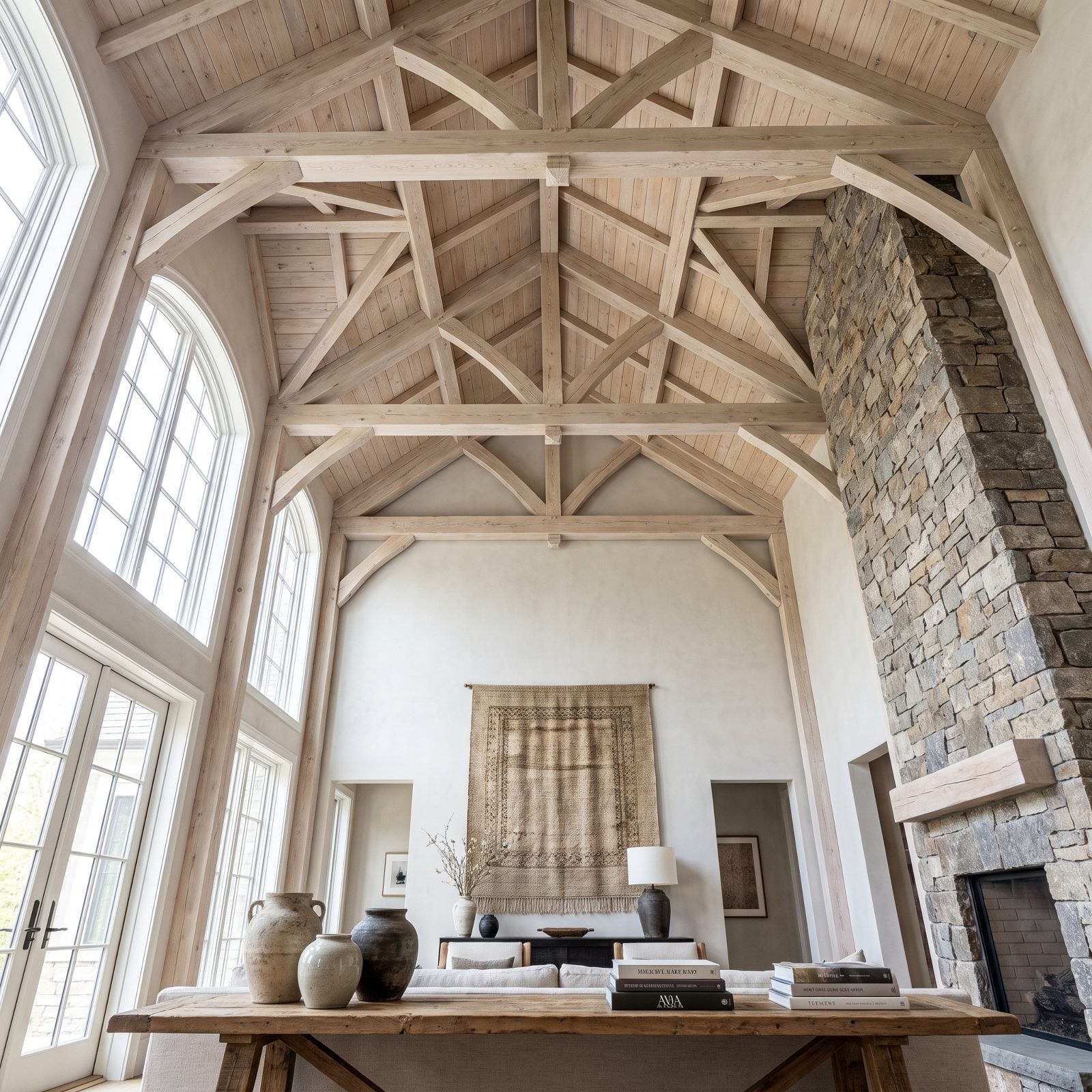
Height is a feeling before it’s a measurement. A buyer walks under a tall ceiling and takes a deeper breath without knowing why.
Play it up. Hang the drapes near the ceiling, not the window frame, and keep the furniture low so the volume above stays open. Let one vertical element — a tall plant, a long pendant — draw the eye up and remind everyone the room has room to spare.
36. Well-Maintained Hardwood Flooring
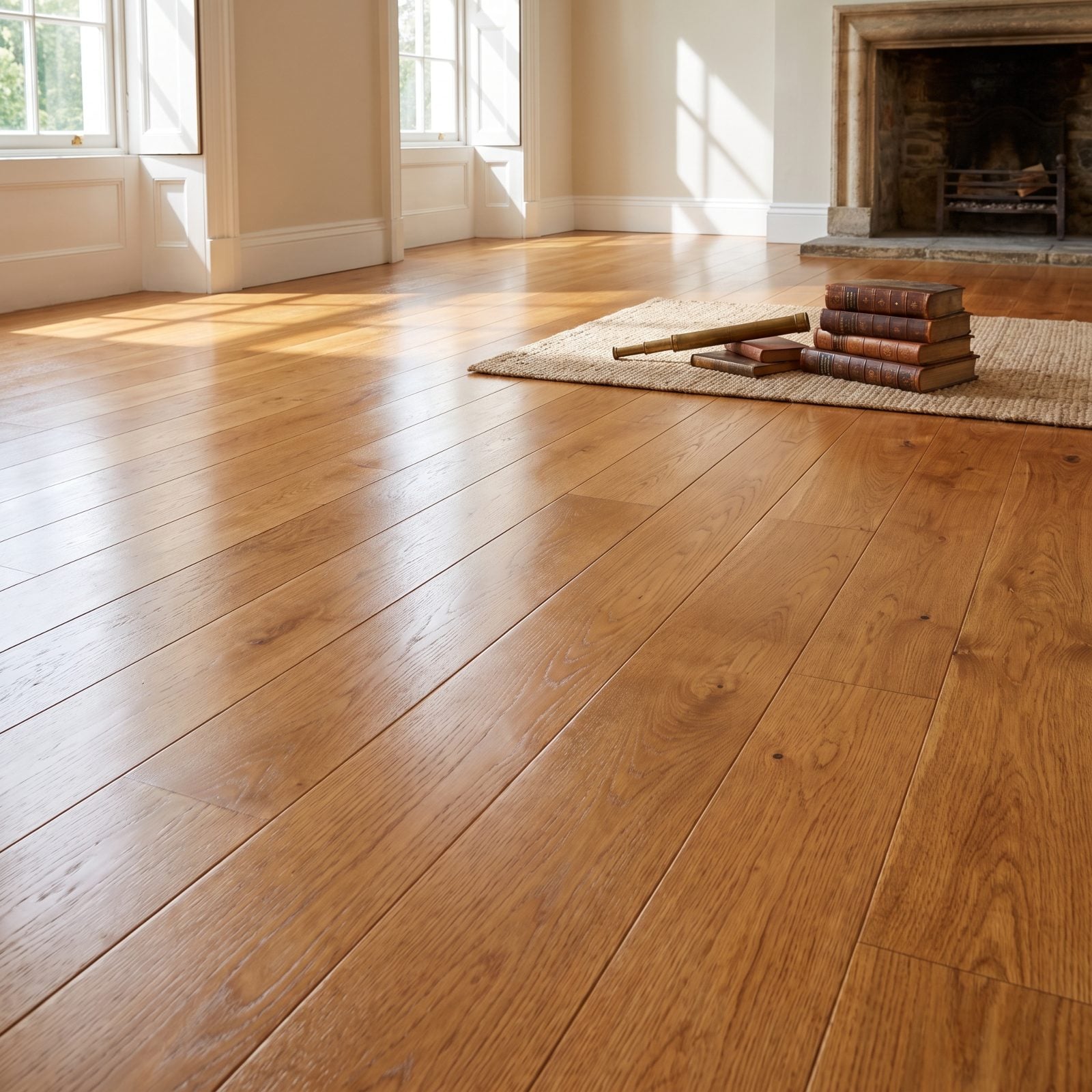
Buyers notice floors with their feet before their eyes. A hardwood floor that’s buffed and even reads as a house that was cared for, and that impression carries into every room after.
Pull the rug back a little in photos and showings to prove the condition underneath. Nothing undermines trust faster than a buyer suspecting you’re hiding damage. Honest, well-kept wood does more quiet selling than almost any upgrade.
35. A Working Fireplace With Comfortable Seating Around It
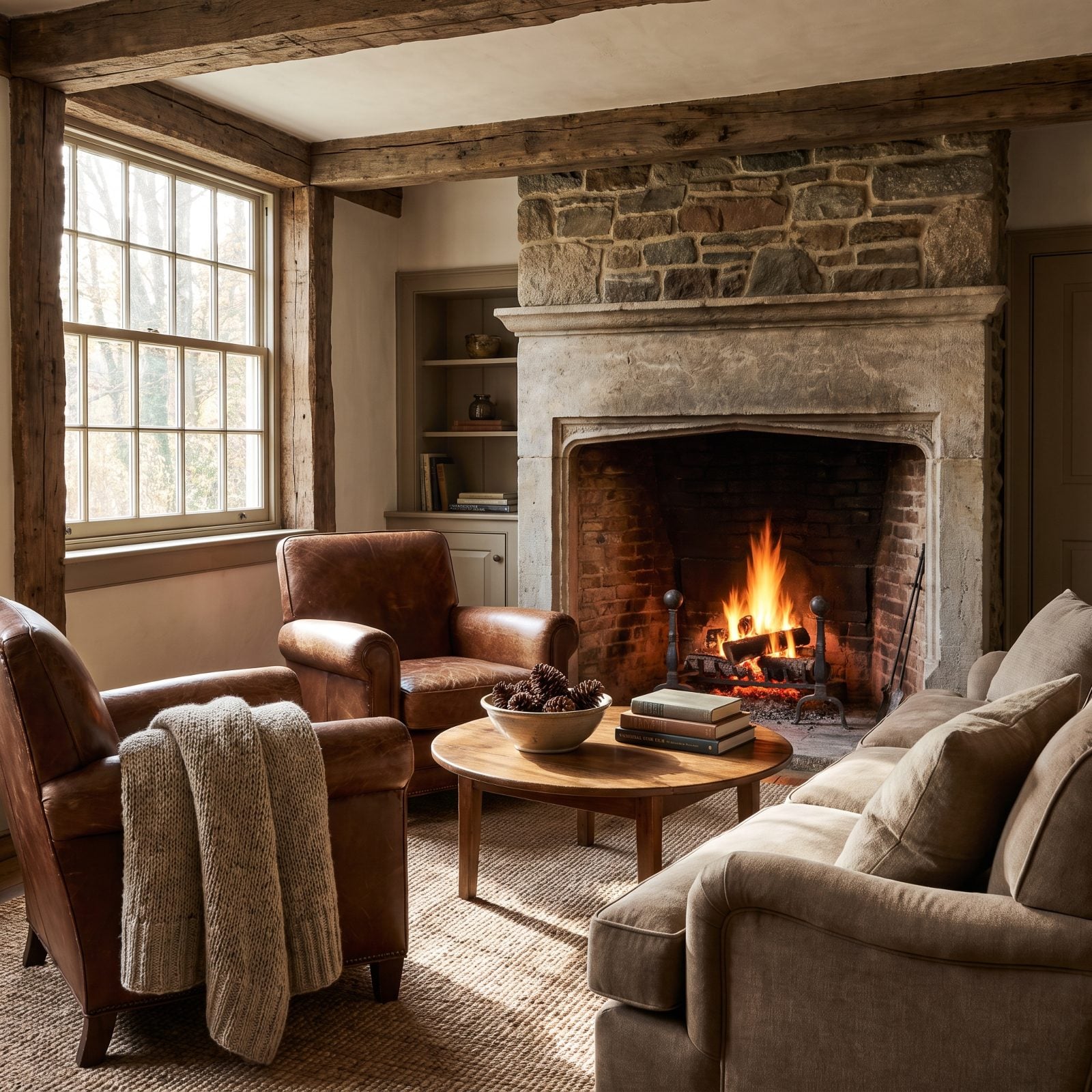
A fireplace is the oldest furniture arrangement trick there is. Pull the chairs in close around it and you’ve built a reason to sit, and a seated buyer is a buyer imagining their life here.
Light it if you can, even briefly during a showing. The flicker, the faint warmth, the pull toward the hearth — it all slows people down. Drape a soft wool throw over one armchair and set a mug on the table. You’re not staging a room. You’re staging a feeling.
34. Built-In Shelving Styled With Restraint
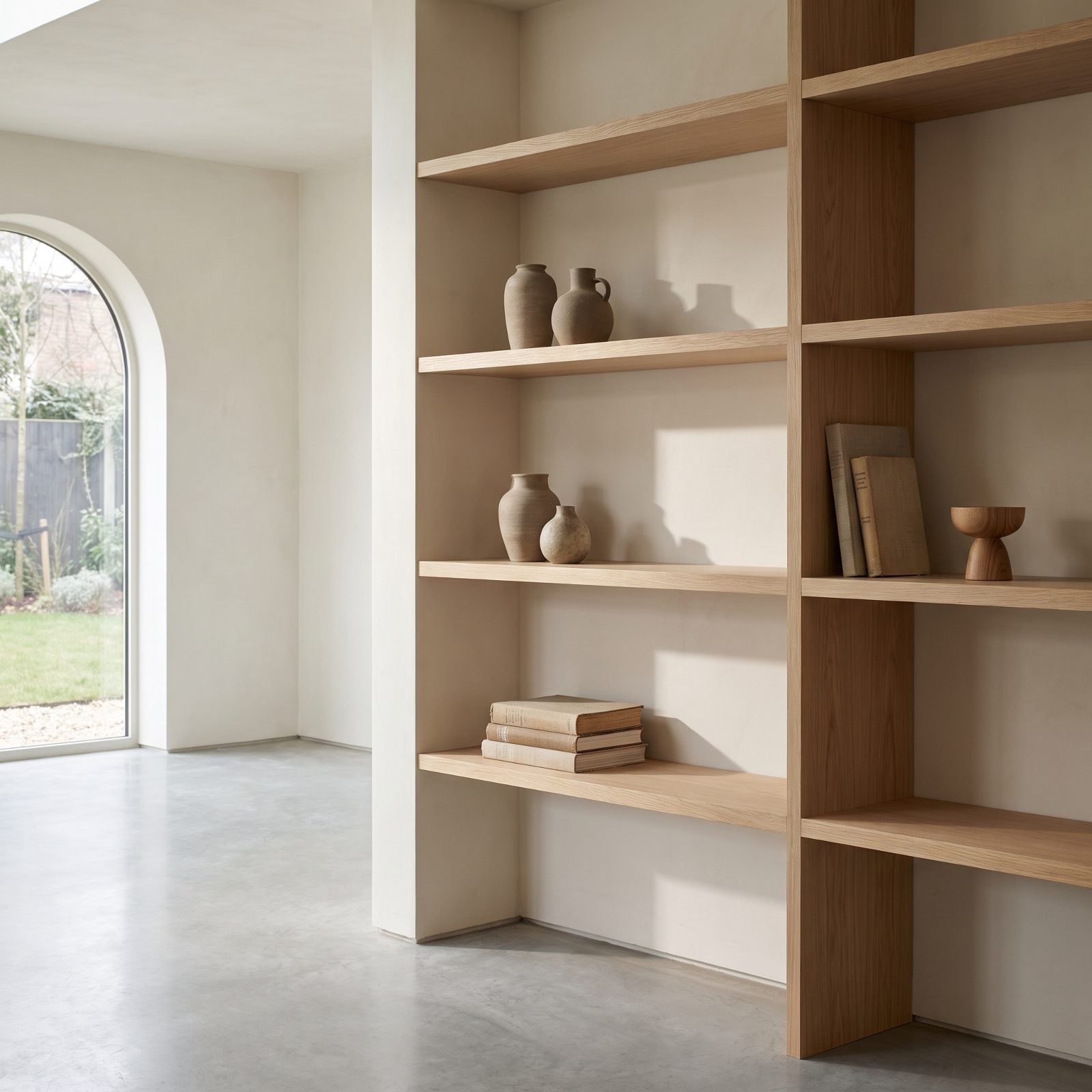
Crammed shelves make a buyer’s eyes glaze over. Half-empty ones make them lean in. The negative space is the whole move.
Style in groups of odd numbers, mix horizontal book stacks with vertical, and leave real gaps between vignettes. One trailing plant and a couple of ceramics do more than forty tchotchkes ever could. Restraint reads as confidence, and confidence is contagious at a showing.
33. A Living Room Arranged for Face-to-Face Conversation
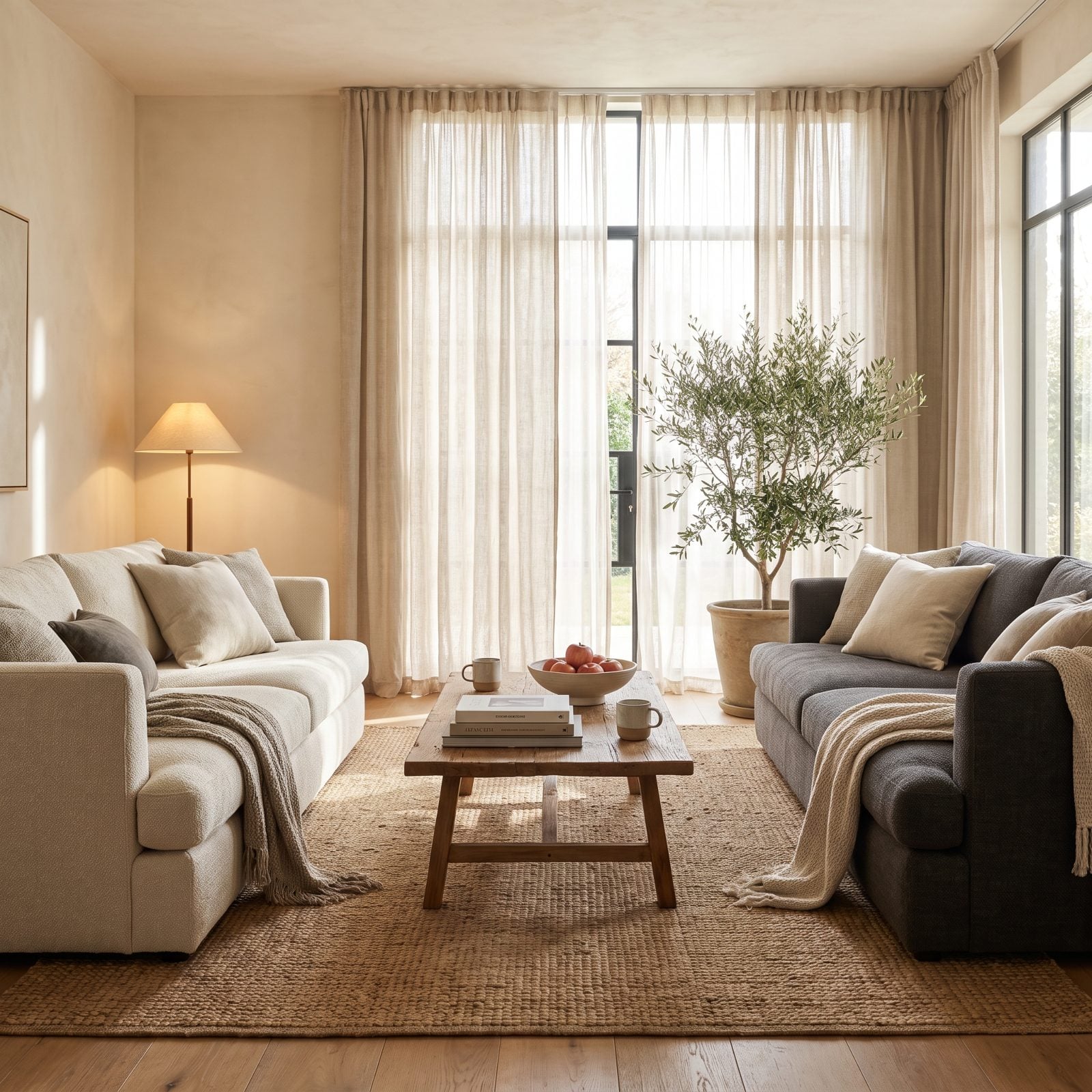
Push the sofas together and watch buyers linger. Most living rooms get shoved against the walls like chairs in a waiting room, and the whole thing reads cold. Here two sofas face each other close enough to actually talk, with a pair of armchairs finishing the square, and the sage green linen sofa and cream boucle across from it make the space feel occupied even when it’s empty.
The round jute rug does the quiet work of holding the group together. A buyer walks in and reads the room as a place where people stay.
32. A Window Seat Overlooking the Yard
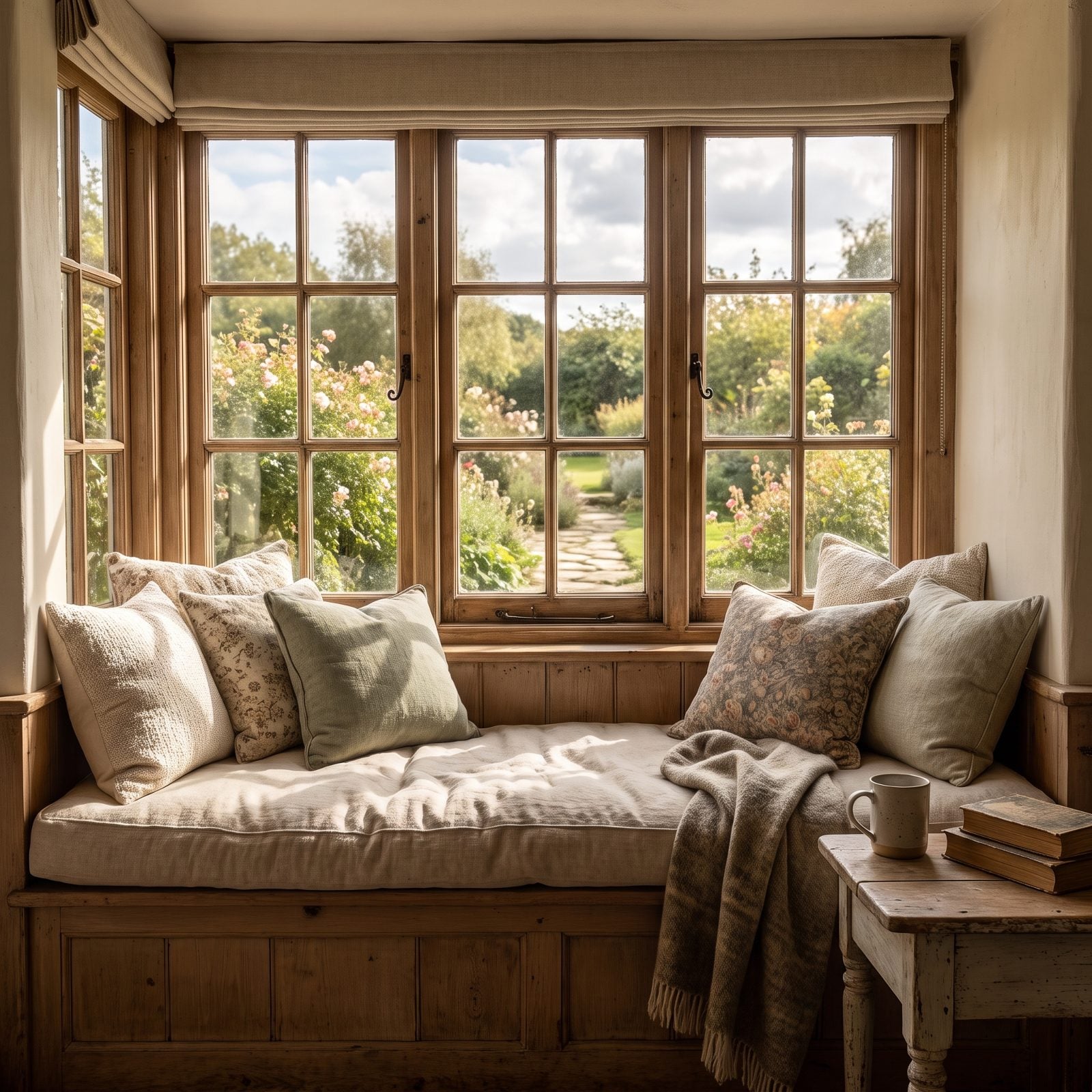
A window seat sells the daydream before it sells the house. Buyers see this oatmeal linen cushion under the glass and they’re already picturing a Sunday with coffee and nowhere to be, the yard spread out beyond like a painting they get to own.
The storage cubbies underneath earn their keep. Woven baskets, a few books, a home for the throw. People pull out their phones and photograph this corner during a showing, and that’s the tell — if they’re taking pictures, they’re already moving in.
31. An Open Sightline Between the Kitchen and Living Room
🔥 Would you like to save this?
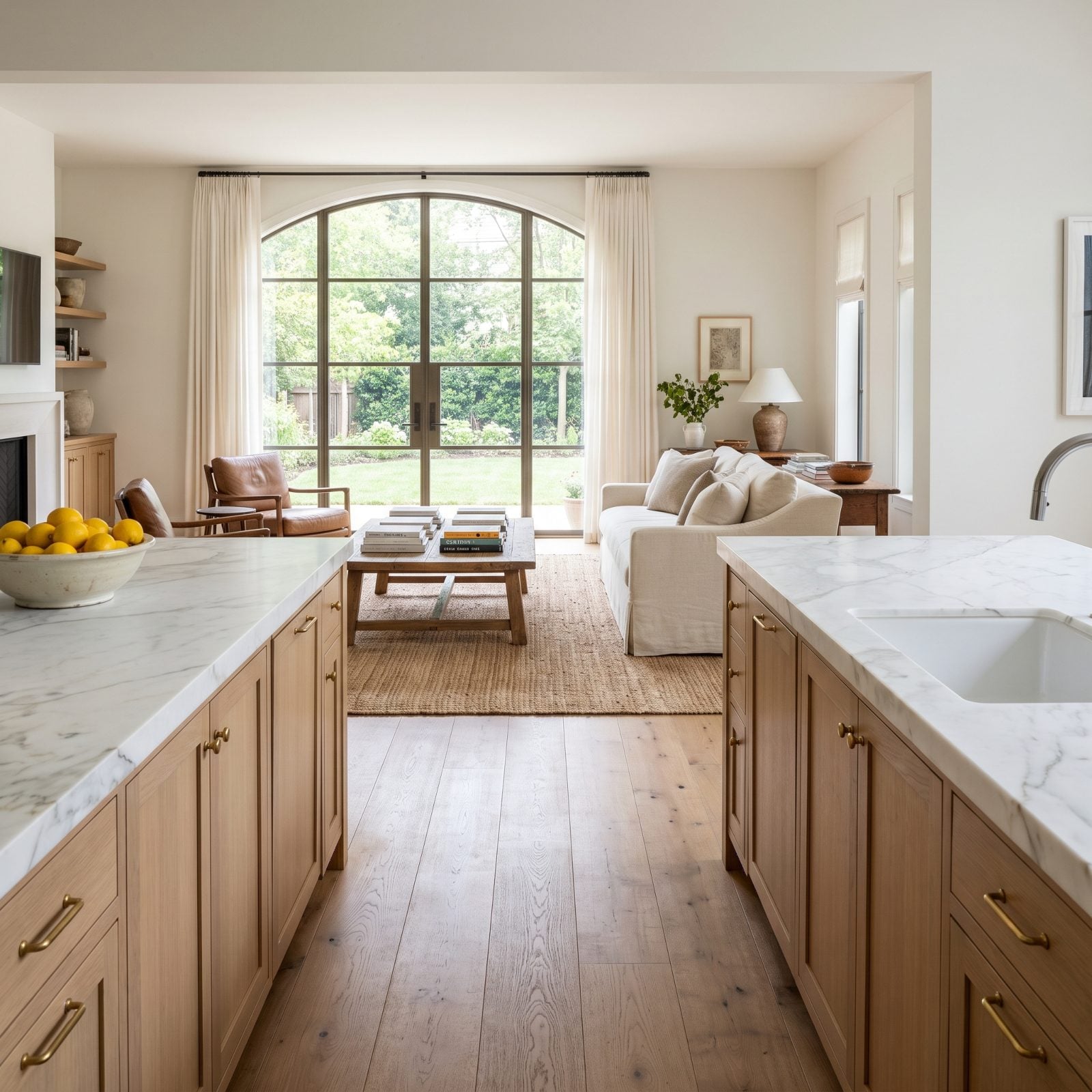
Walls divide, and the absence of one connects. Standing at this honed marble island, you can see straight through to the sectional and the fireplace beyond, and that uninterrupted line is what makes a house feel bigger than its square footage. Buyers feel it the second they step in.
Here’s what sells the openness: the oak flooring never stops. No thresholds, no color break, nothing to tell your eye where one room ends. Brass pendants over the island tie the two zones together without a single partition. A cook stays in the conversation. A host never leaves the room.
30. A Kitchen Island With Comfortable Seating
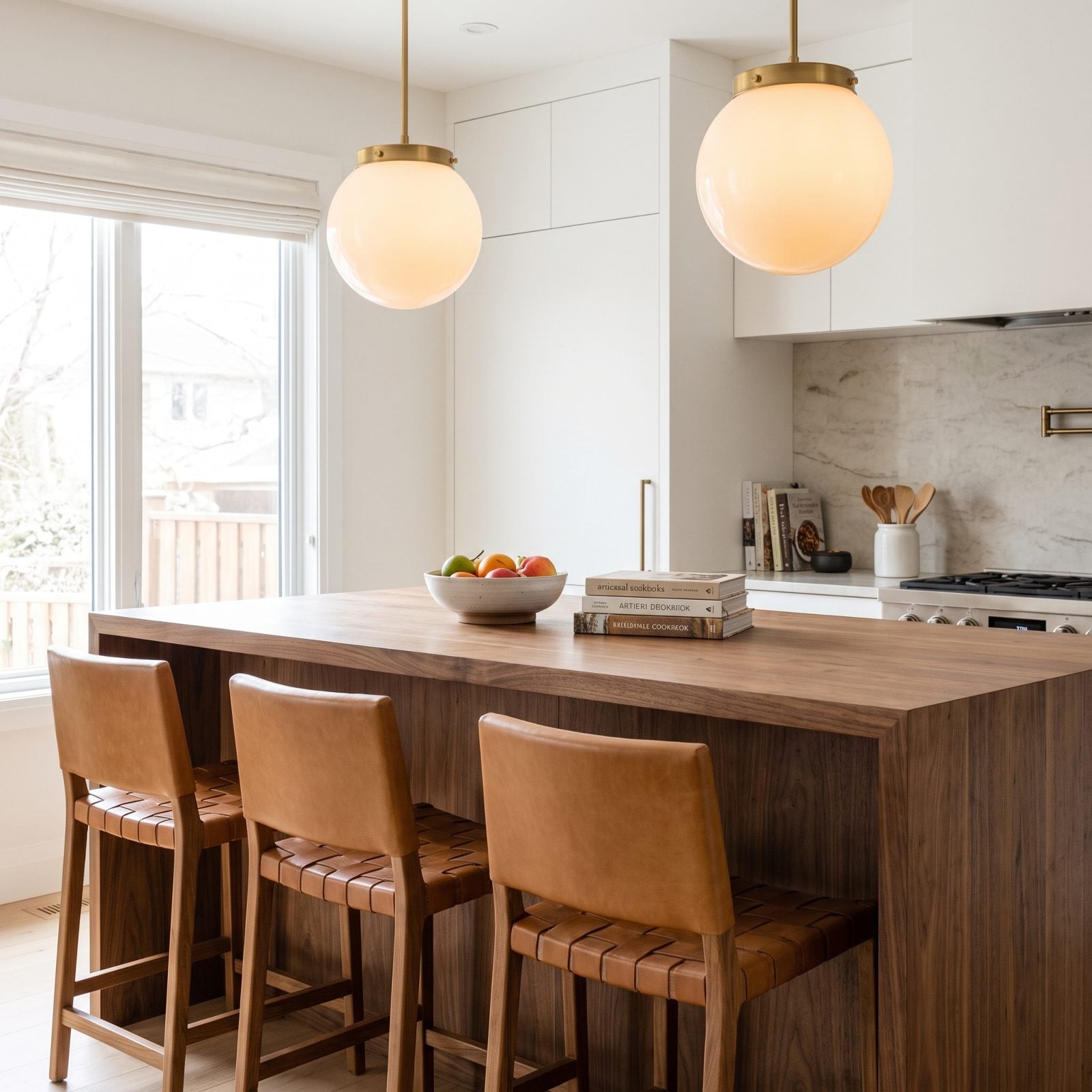
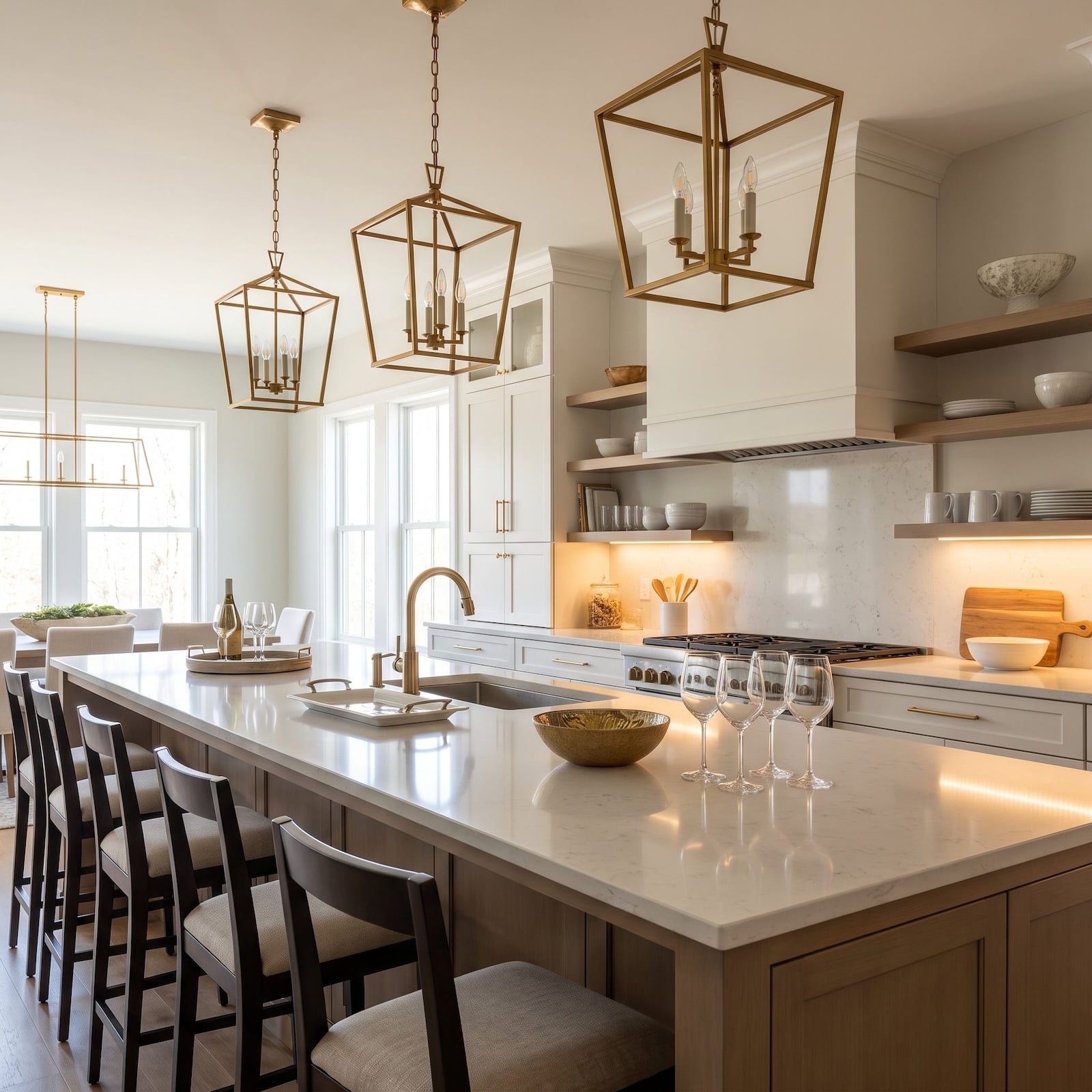
The island earns its welcome with the stools. Low-back caramel leather, spaced so nobody’s knocking elbows, tucked under a quartz waterfall edge that catches the morning light. Three seats say pull one out and stay a while.
I’ve watched buyers walk straight past a bare island without a glance. Add seating and they stop cold. A hand lands on the counter. They start imagining the weekday scramble and the slow Saturdays, and only then do they clock the panel-front dishwasher, the vented range, the stainless fridge. The stools come first. Everything else is a footnote.
29. Generous, Clutter-Free Counter Space
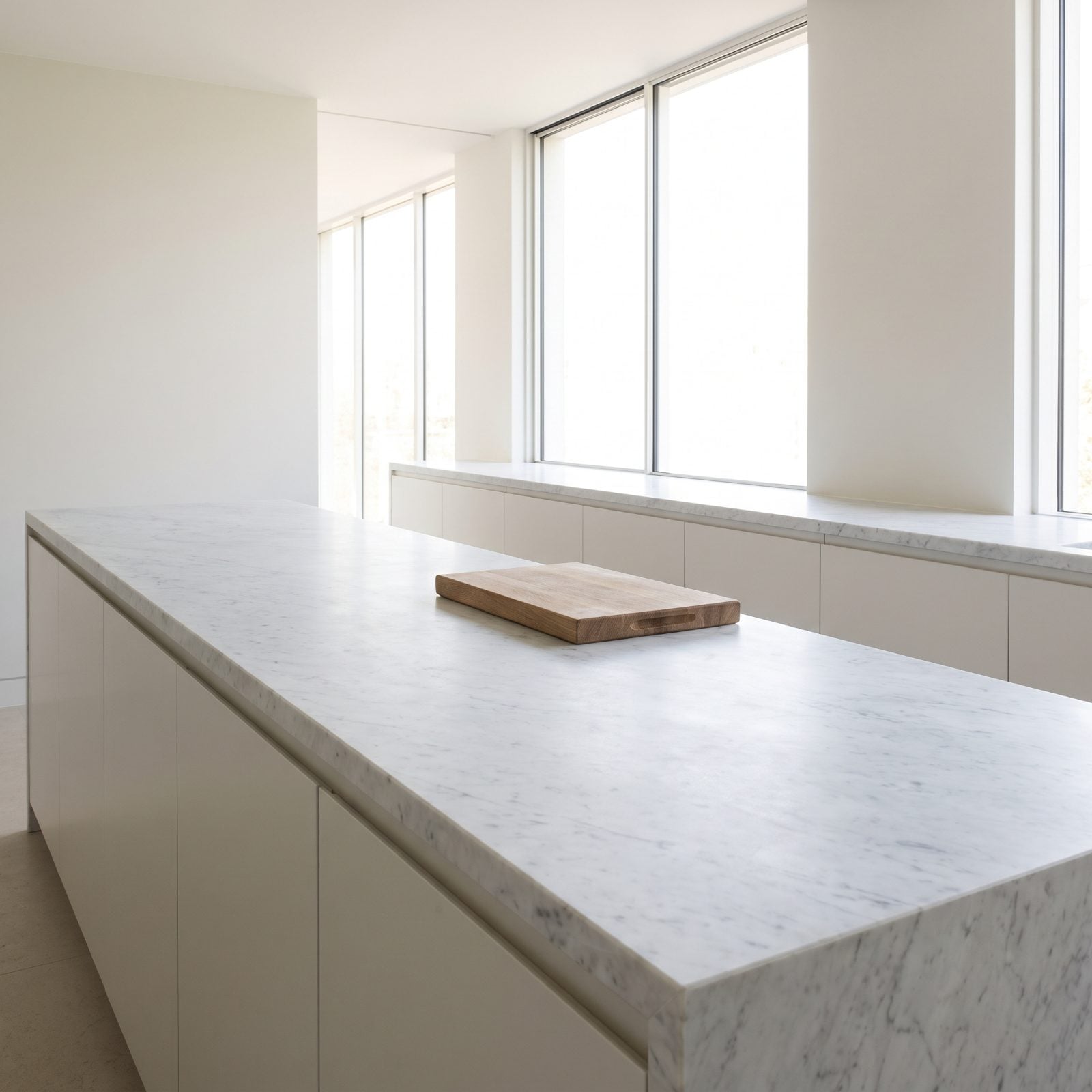
Empty counter is a luxury, and buyers read it instantly. These honed marble runs hold almost nothing — a cutting board, a utensil crock, one potted herb by the window — and all that open surface whispers that there’s room for your life here.
Clutter makes a kitchen feel small and overwhelmed. Clear it and the same square footage finally breathes.
28. A Walk-In Pantry Buyers Can Enter and Explore
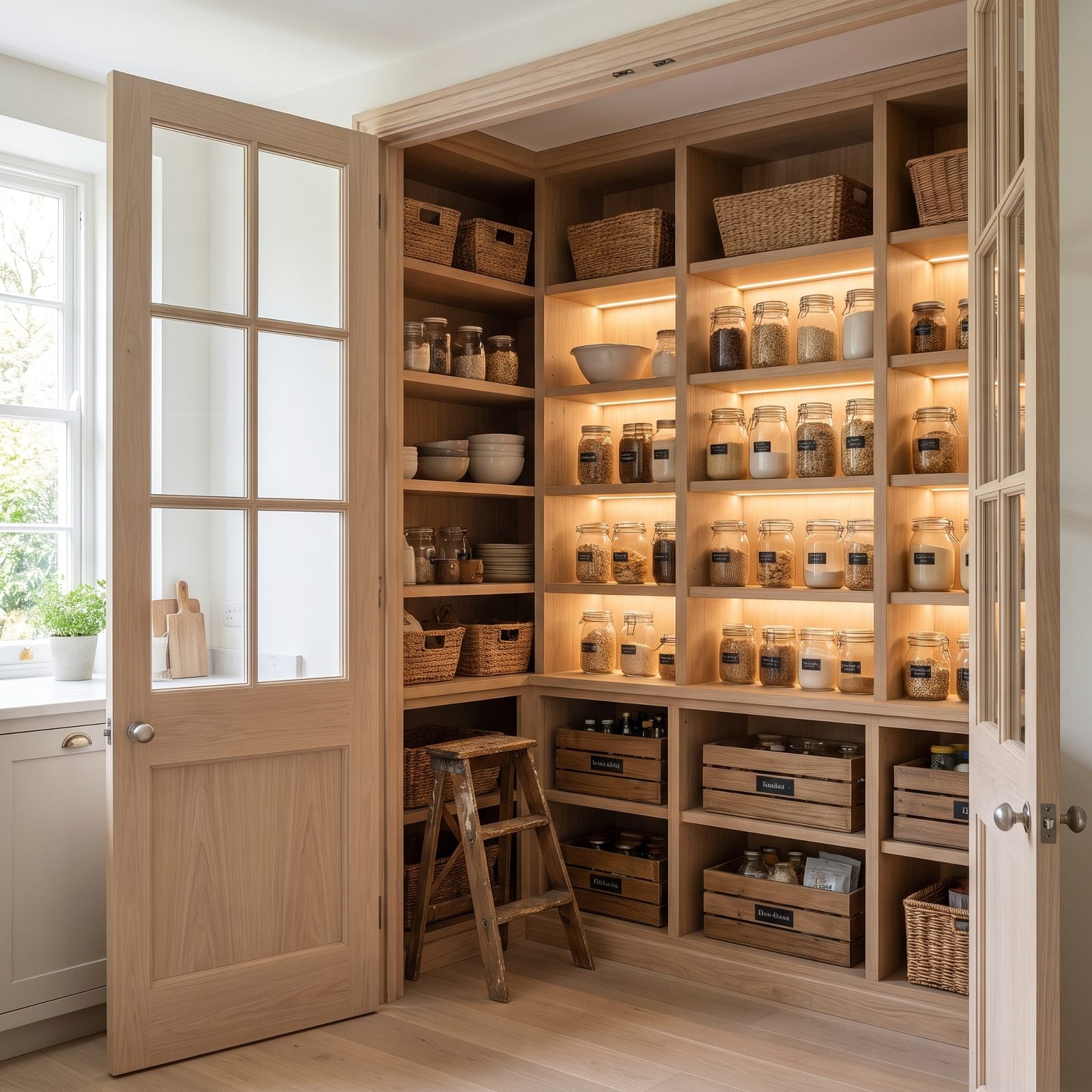
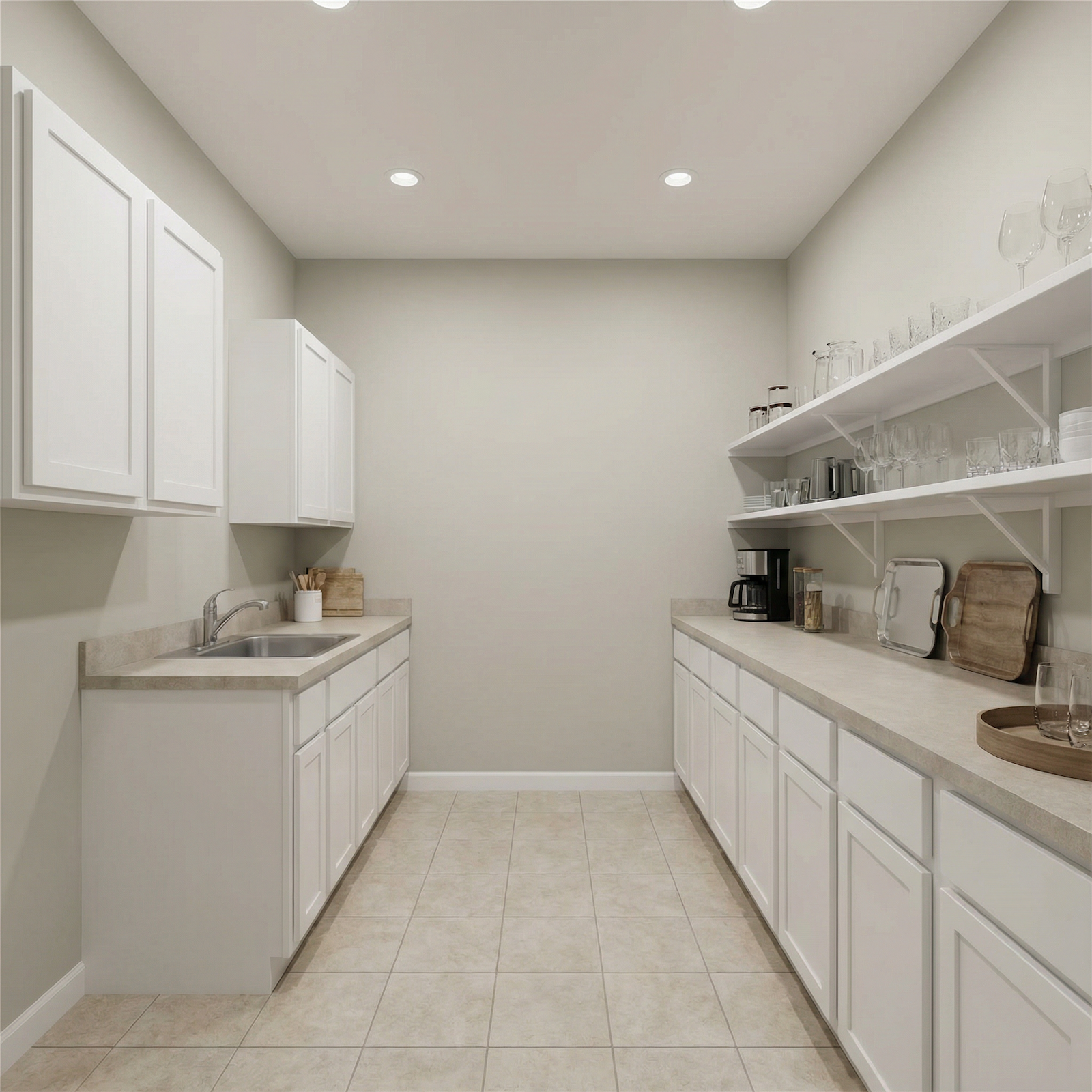
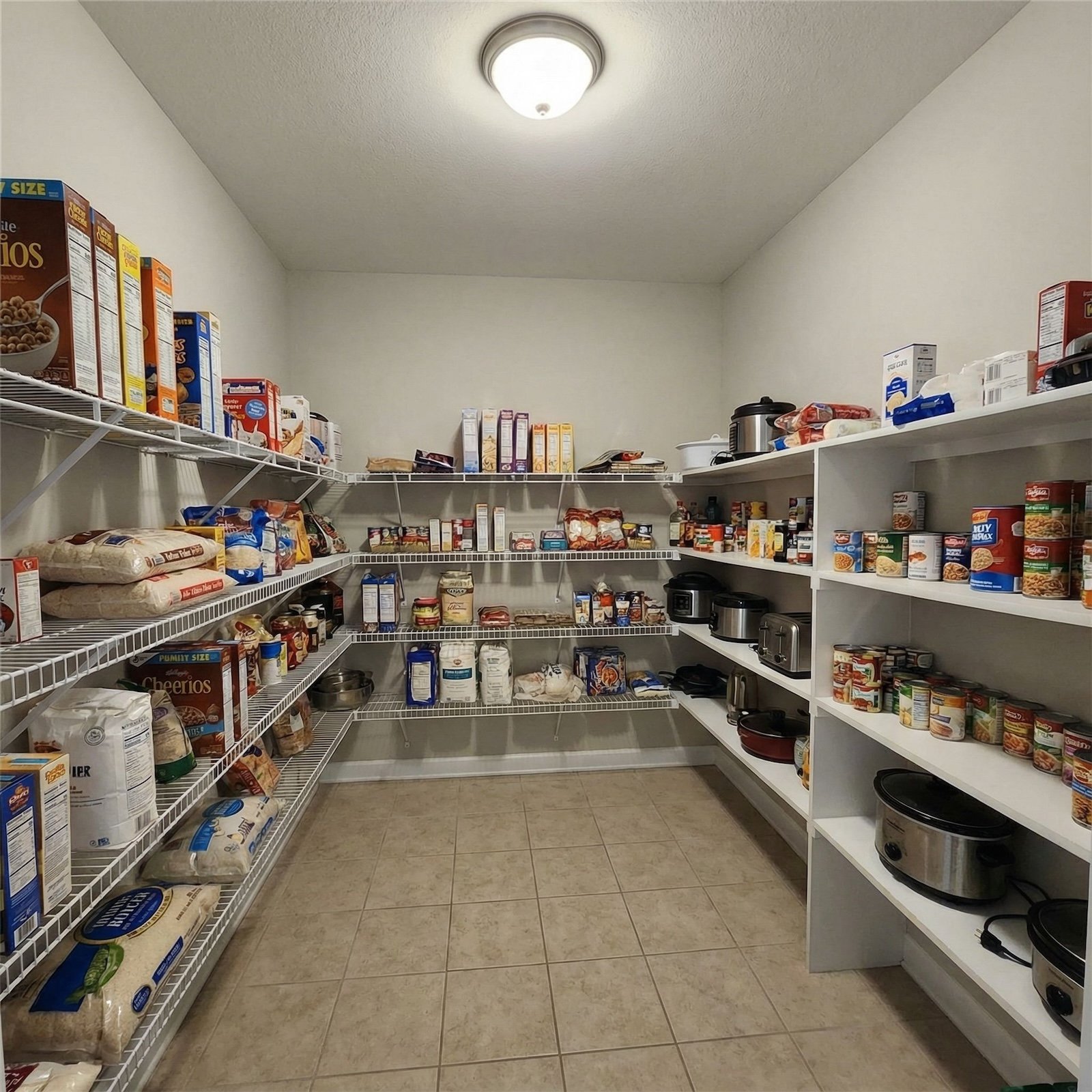
Most storage is a cabinet. This is a room. The open door is the invitation, and buyers take it every time, stepping inside to run their eyes along floor-to-ceiling shelving lined with glass jars and woven baskets.
A walk-in pantry pokes at something buyers can’t help: curiosity. A small window at the far end pulls them all the way in, and the little butcher-block counter with a coffee maker tucked at the side turns plain storage into a space they can picture using. Give someone a room to walk through and they stop evaluating. They start imagining.
27. A Dedicated Coffee Bar
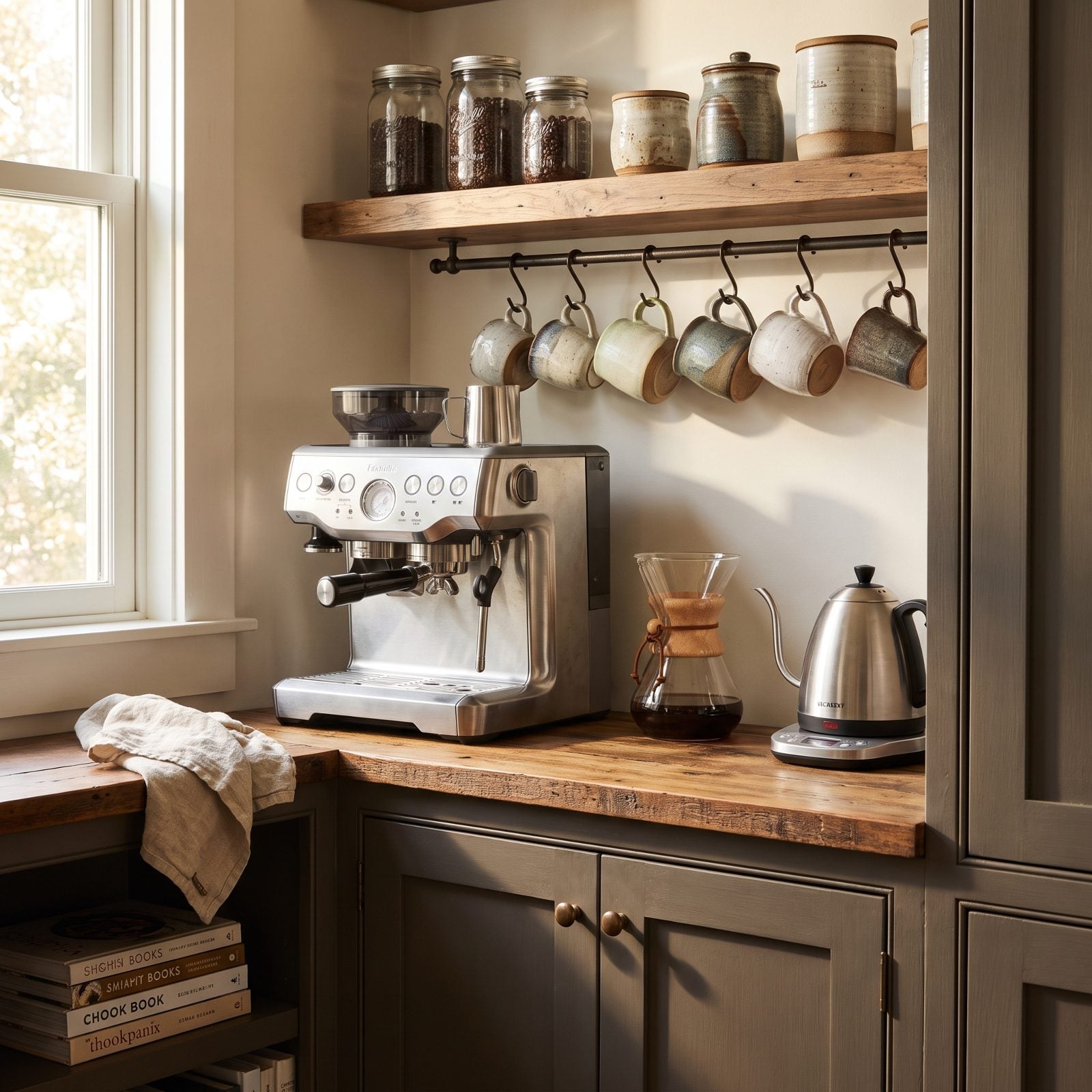
A coffee bar is a tiny luxury that photographs like a big one. Carve out a strip of counter, add an espresso machine, a mug tree, a glass canister of beans, and the kitchen suddenly has a ritual built in. That sage zellige tile behind it does more for the corner than any appliance.
Buyers see themselves here at 7am. That’s the sale.
26. A Sunny Breakfast Nook
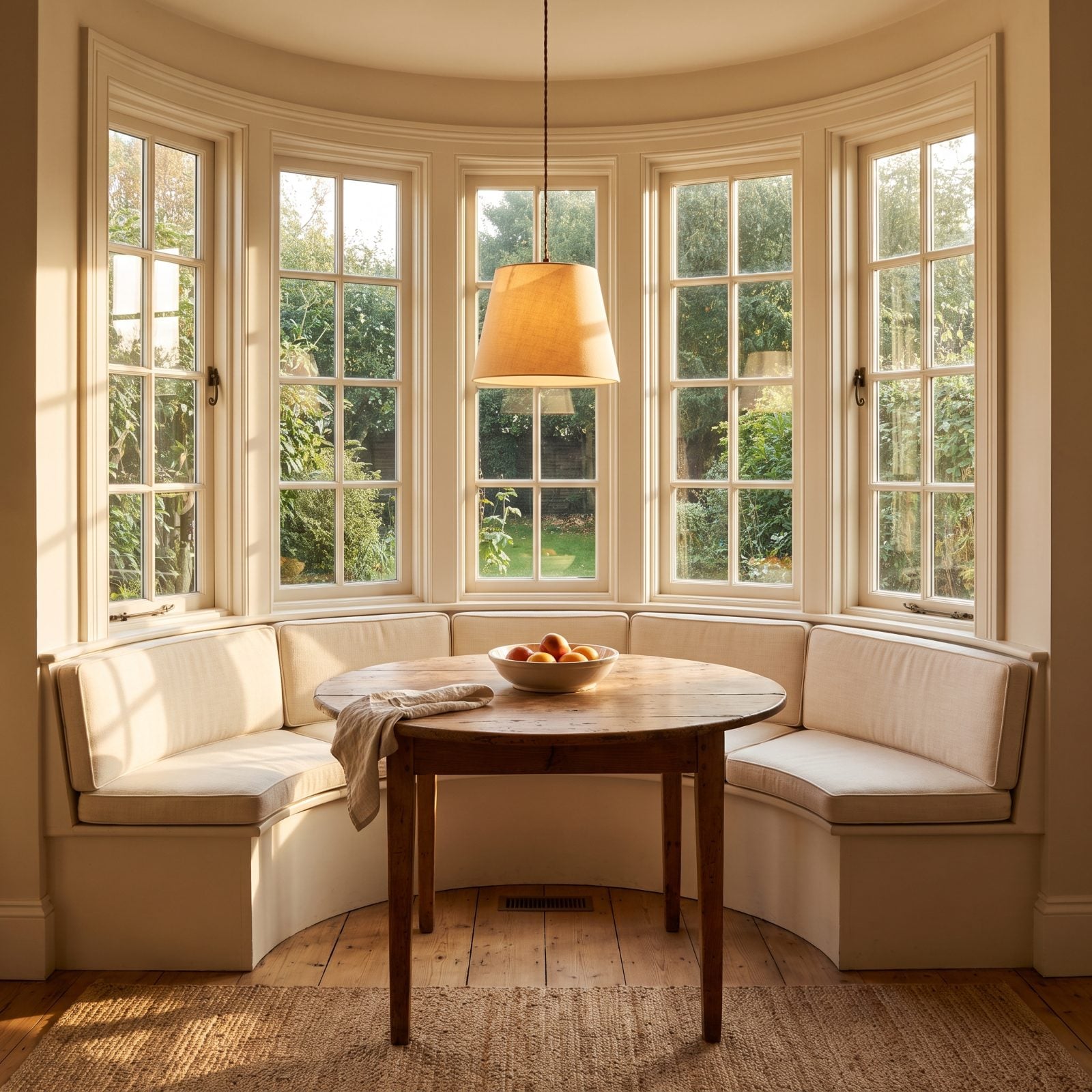
Sun does the selling here. The bay window wraps this nook in morning light, and the curved cream linen banquette turns a corner most homes waste into the spot everyone wants — a ceramic pitcher of wildflowers on the oak table, two place settings, the garden glowing through the glass.
Buyers slow down in a nook like this without knowing why. It’s prospect and refuge working together: an open view out, a tucked and protected seat. You feel held and free at the same time, and that combination is hard to walk away from.
25. A Formal Dining Room Staged for Flexible Use
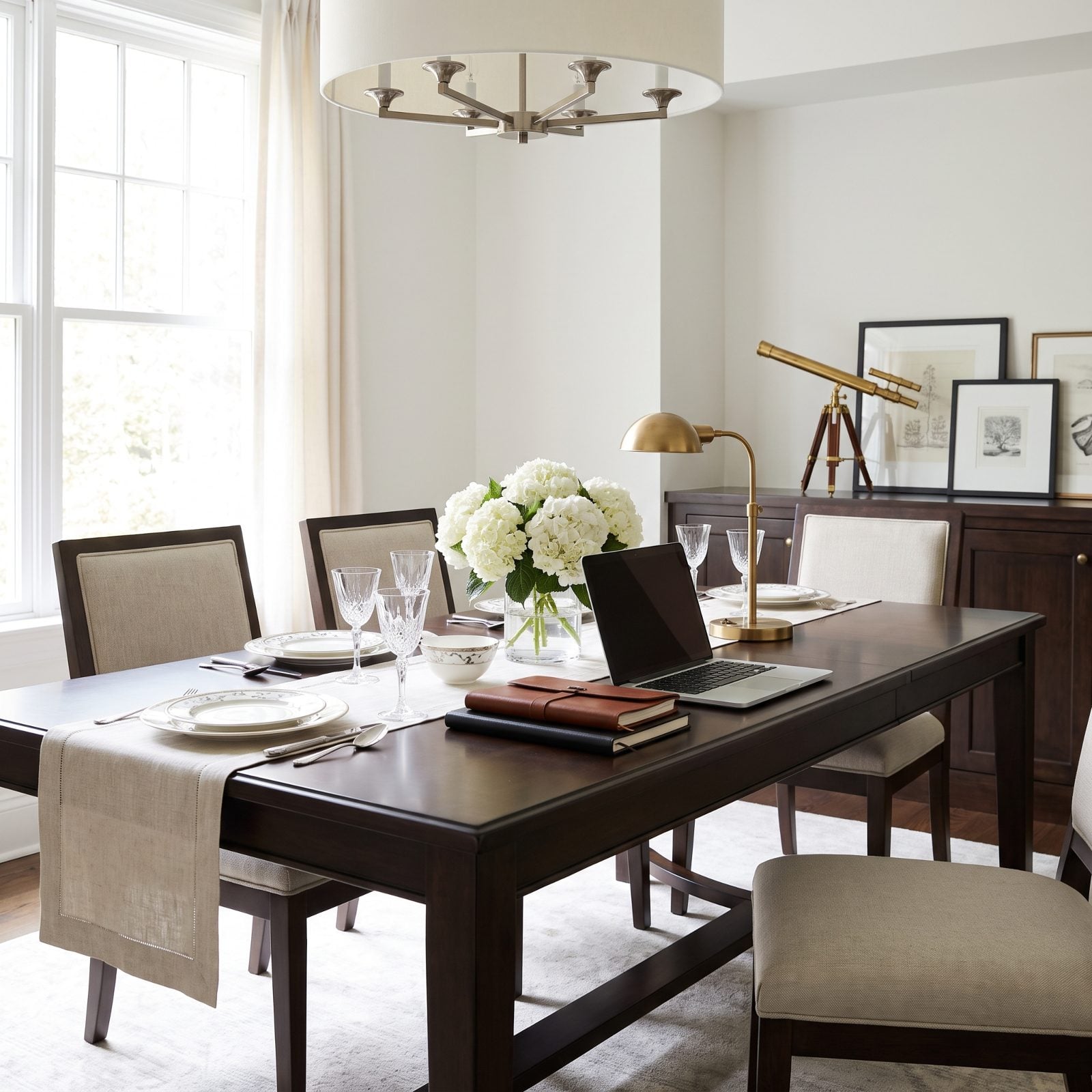
The formal dining room is dying, so smart staging shows it pulling double duty. This one reads dinner-party-ready with dusty blue velvet chairs and a drinks console, while a closed laptop and a stack of books at the table’s end quietly whisper workspace.
That flexibility is the whole pitch. Buyers hesitate over a room they’d use twice a year. Show them it bends to real life and the hesitation evaporates.
24. Wide Glass Doors Opening to the Patio
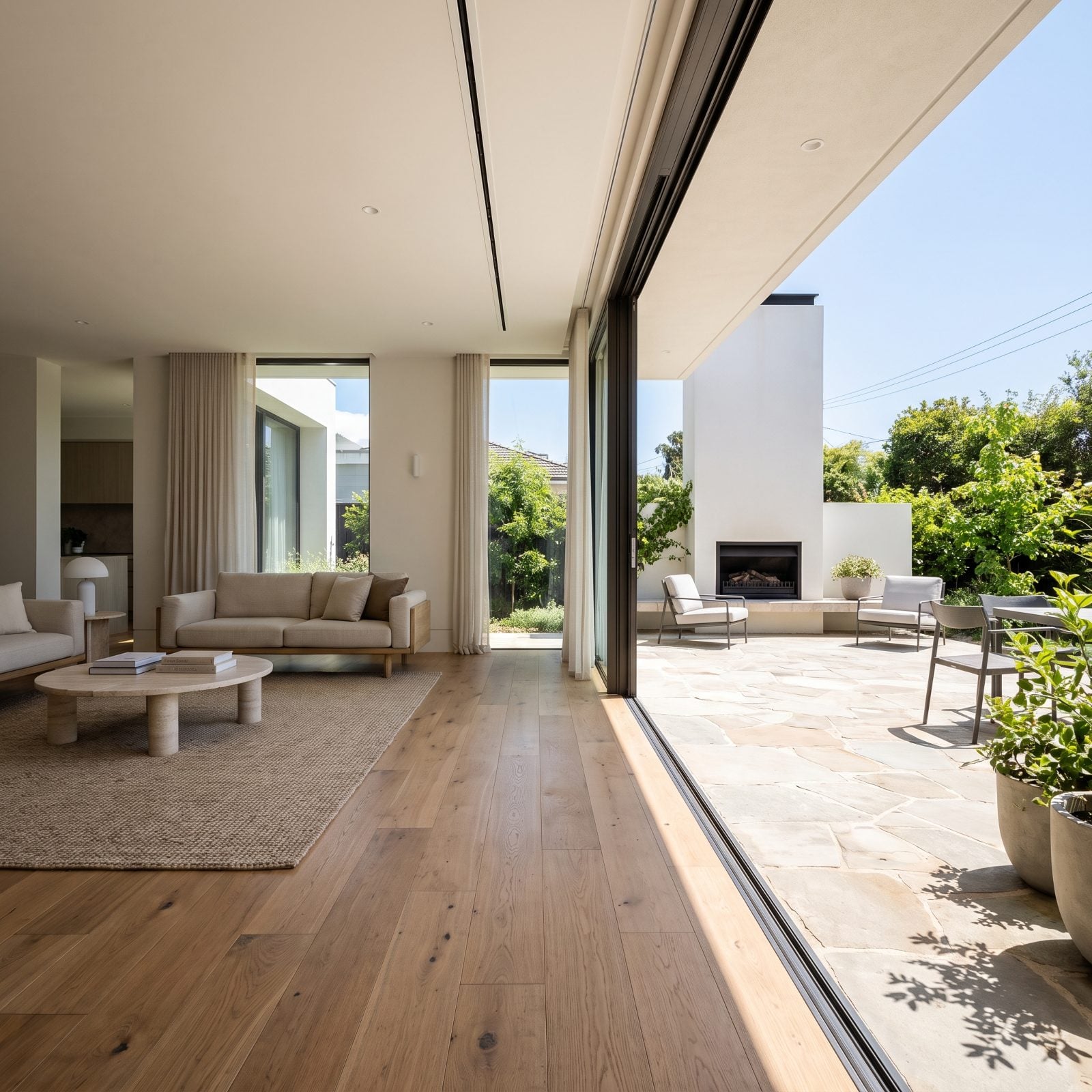
Slide these doors open and the house doubles. The threshold vanishes, the oak floor runs toward the stone patio, and the living room suddenly includes a garden. Buyers feel the square footage expand in real time.
Multi-panel glass is one of the most reliable wins in any home renovation because the payoff hits your gut, not your calculator. You stand inside, afternoon light floods across the grey linen sofa, and your eye runs straight out to the teak lounge and terracotta planters under the pergola.
Nothing makes a home feel generous like erasing the wall between inside and out.
23. An Outdoor Dining Area Set for a Meal
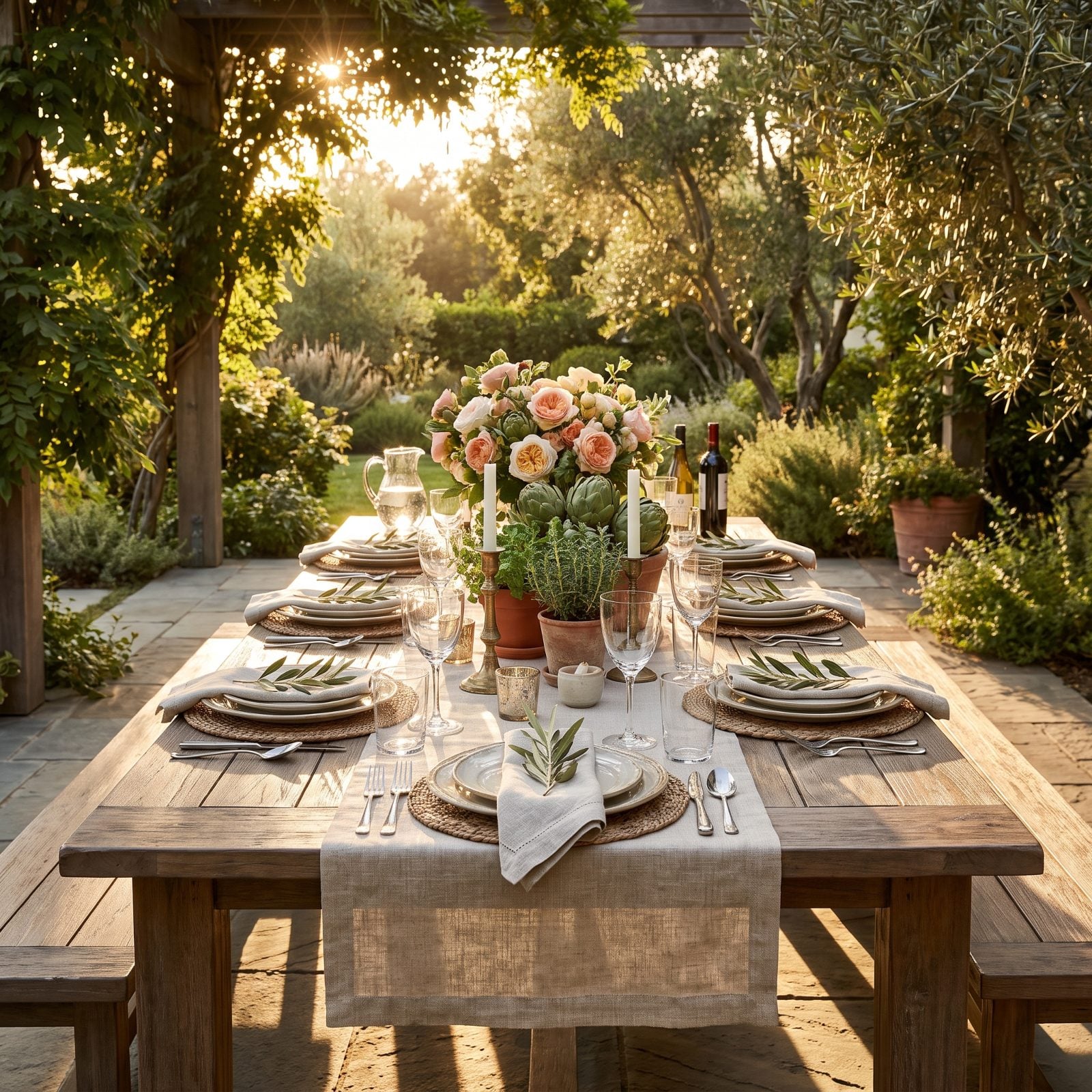
A table already set does something sneaky to the brain. The yard stops reading as real estate and starts reading as Sunday lunch, and that’s the whole trick.
The win here is restraint. Filled water glasses, a bowl of lemons, two napkins folded without fuss — nothing screams staged, which is precisely why it works. That weathered teak table under the wisteria reads lived-in, not showroom.
22. A Landscaped Backyard With Distinct Activity Zones
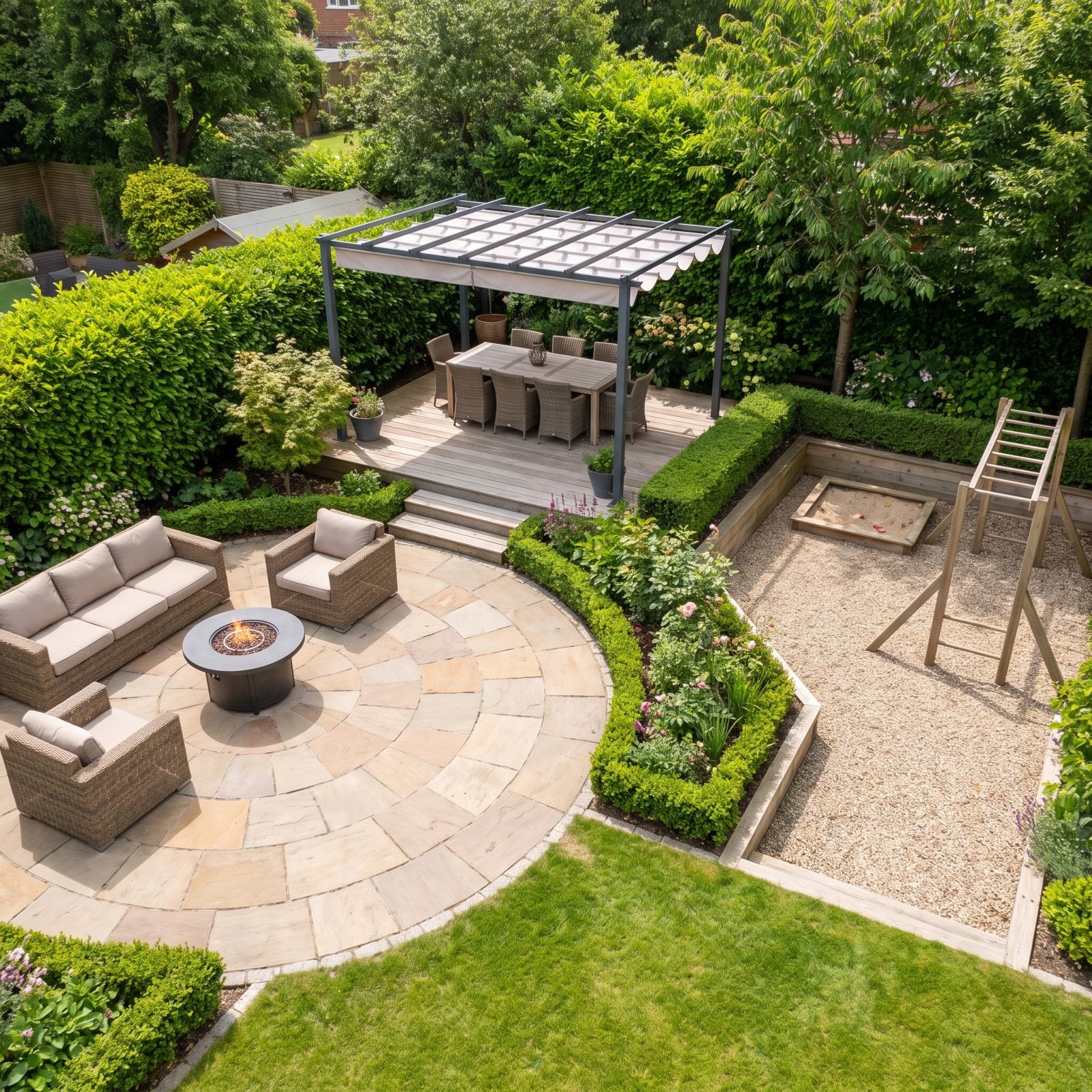
Buyers don’t fall for a yard. They fall for how many lives they can imagine living in it.
Three zones, each doing one job. The lawn for kids or a dog. The gravel nook with slate-blue Adirondack chairs for morning coffee. And then a curving path that disappears behind the hydrangeas, which is the real move — you can’t see where it ends, so you have to walk it. That one curve is worth more than any fountain you could drop back there.
21. Mature Privacy Screening
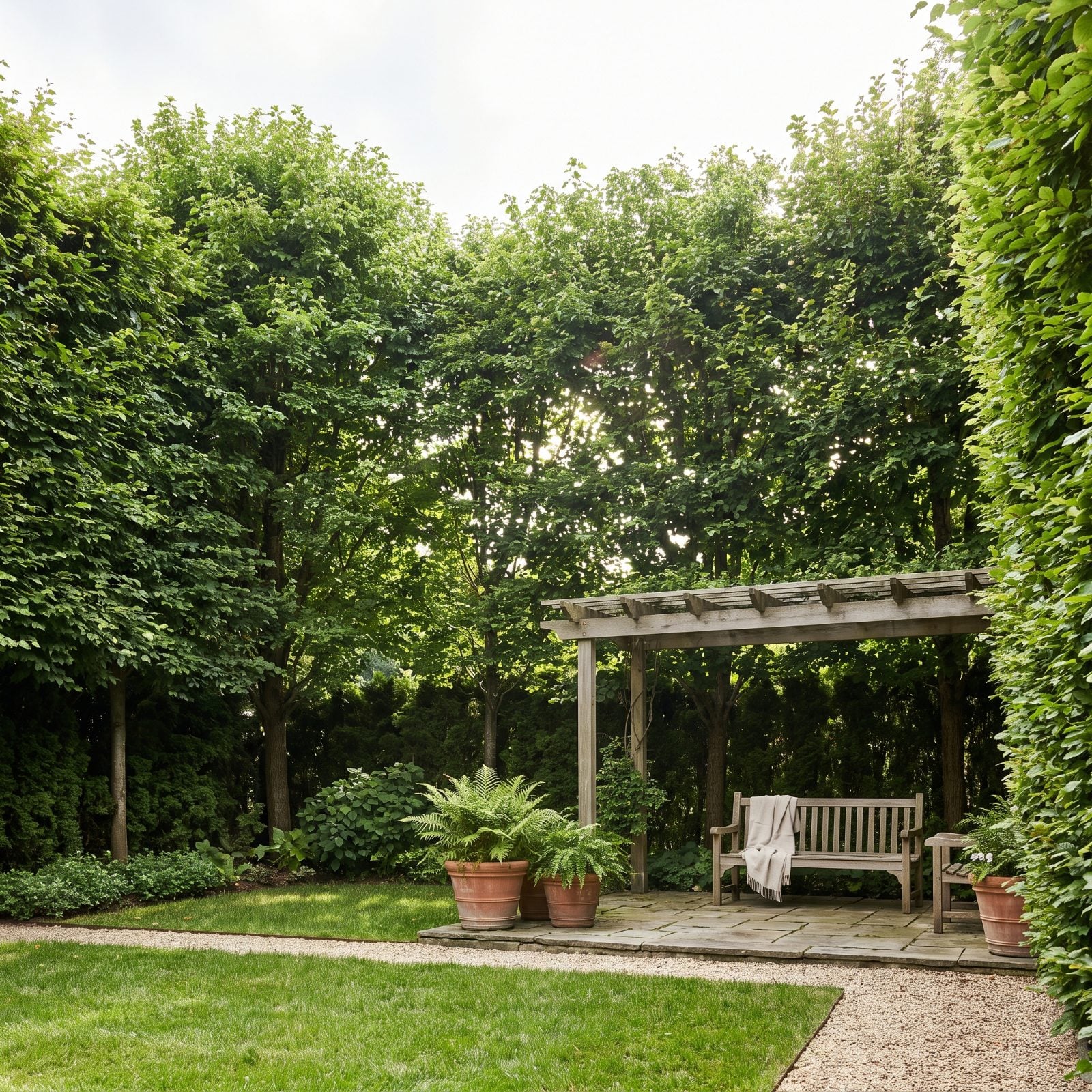
A tall fence says keep out. A wall of mature trees says you’re safe here, and buyers read that difference without knowing they’ve read it.
Call it prospect and refuge in plant form. The dense arborvitae closes the yard off from the neighbors, and the brain relaxes the second it stops scanning for exposure. A single oatmeal linen lounge chair with a stack of books does the rest — this is where you’d vanish with coffee and nobody would find you.
20. A Fire-Pit Area With Permanent Seating
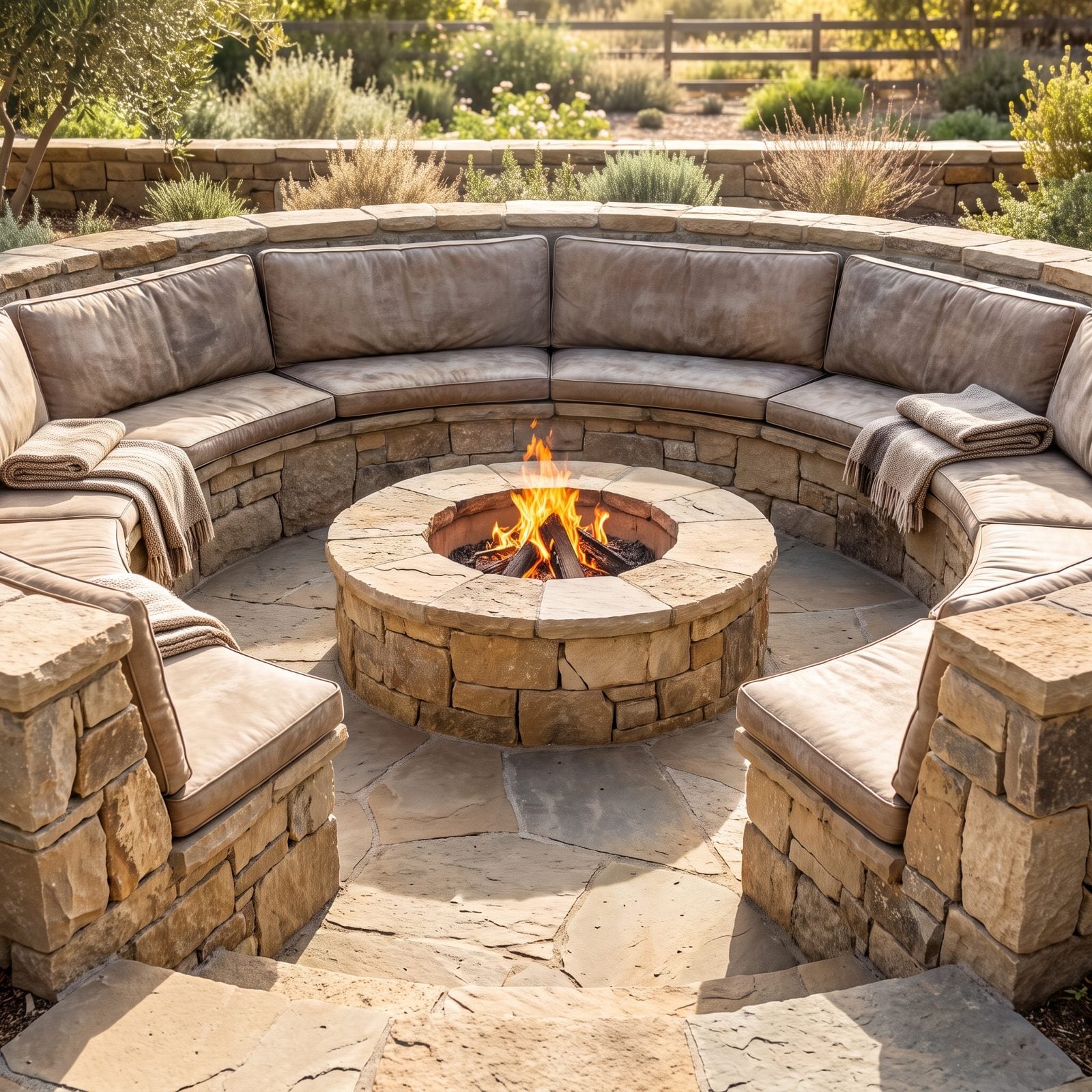
Movable chairs around a metal bowl read as temporary. Built-in stone seating reads as permanent, which is the point.
The curved limestone bench wraps two-thirds of the circle, so bodies face each other — that’s deliberate. We’re wired to slow down around fire, and a permanent structure tells a buyer the gatherings already happened and will keep happening. Those terracotta cushions and rust throw pillows keep the whole thing from feeling like cold masonry.
19. A Productive Raised-Bed Garden

🔥 Would you like to save this?
A productive garden does something a lawn can’t. It promises the buyer a better version of themselves.
Nobody thinks they’ll become the kind of person who grows their own basil. Then they see three cedar beds crammed with chard and cherry tomatoes, a galvanized watering can left on the edge, gloves still dusty — and suddenly they do. I’ve watched people linger at a raised bed longer than at a renovated kitchen. The slight mess is what sells it. Dew on the kale, a split in the compost bag. Scrub it too clean and the fantasy collapses.
18. A Clean, Well-Integrated Swimming Pool
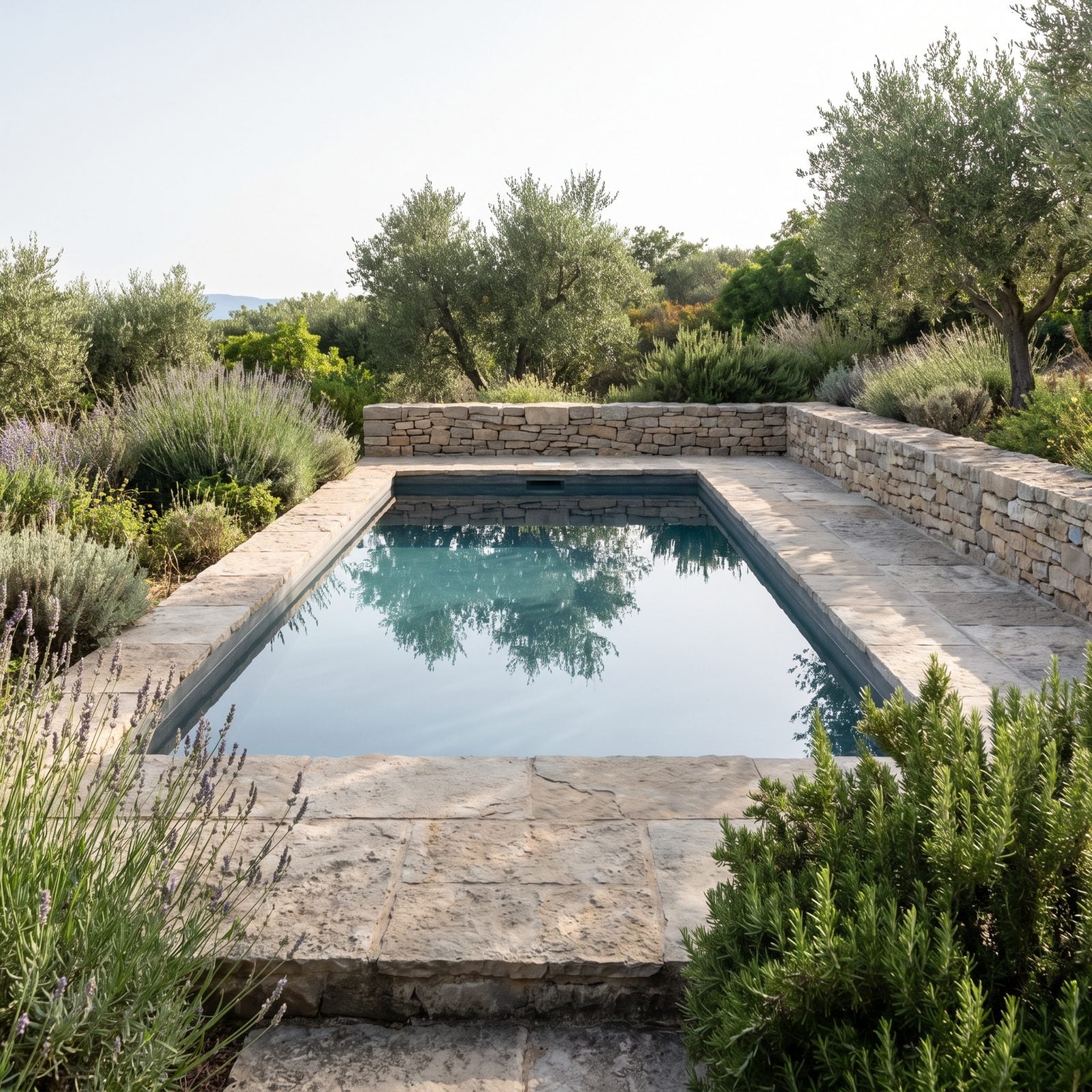
A pool reads as either burden or escape. Upkeep and scale decide which.
This one lands because it’s modest and clean. Still turquoise water, grey stone coping flush with the limestone, no broken safety fence or algae patch to signal work ahead. The two teak loungers with their rolled towels say rest, not maintenance. And the sightline runs straight back to the glass-walled living room, so the pool belongs to the house instead of sitting out there like a chore someone bolted onto the yard.
17. A Calm Primary Bedroom Suite
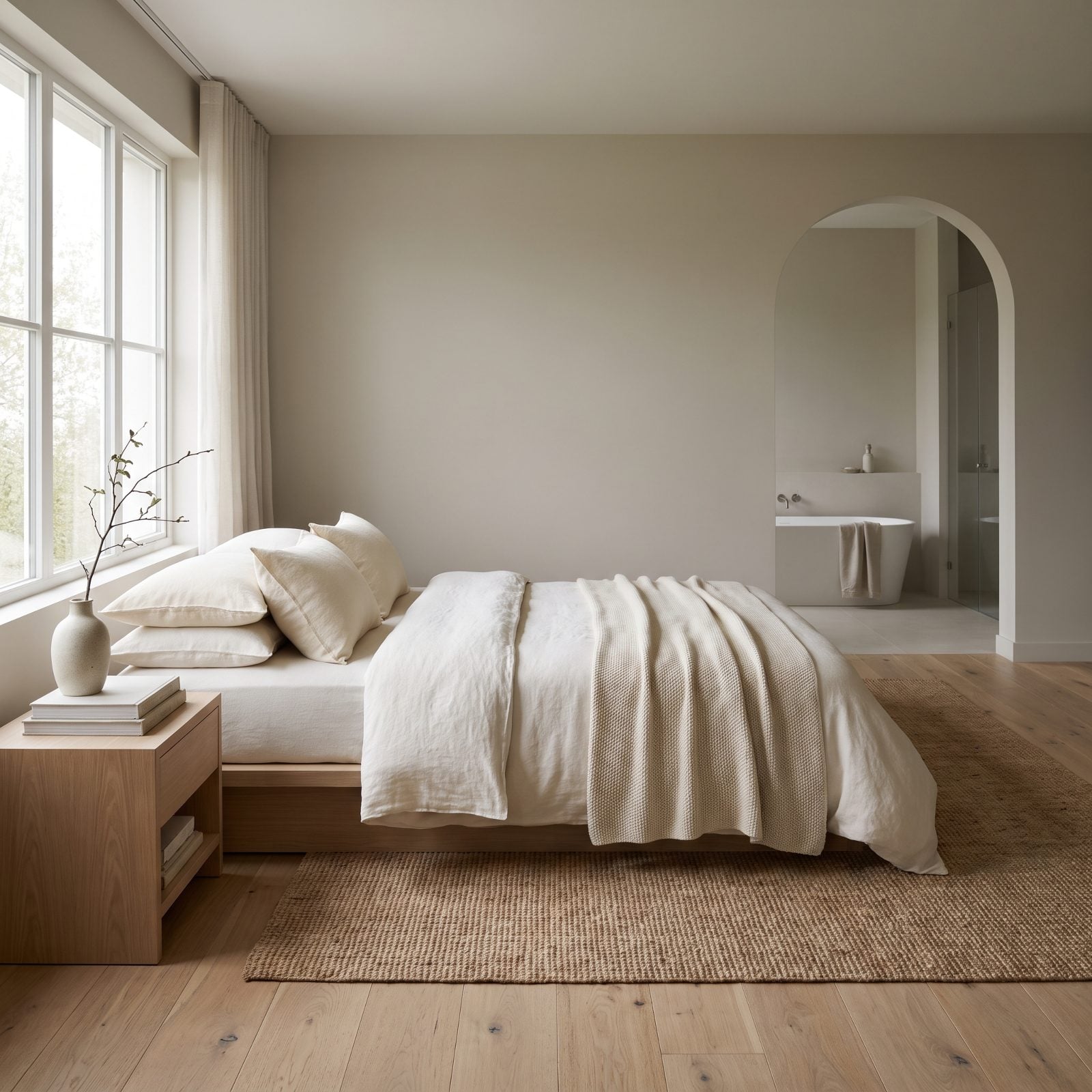
The bedroom is where a showing either lands or falls apart. Buyers have already made up their minds about the kitchen by now. This is where they picture actually living.
Clutter is the enemy. The clay plaster behind the headboard, the sheer curtains dialing the light down to a hush, a single sage knit throw folded at the foot — nothing fights for attention. The open door to the ensuite keeps them moving, but slowly. A room like this lowers a heart rate, and a buyer with a lowered heart rate makes offers.
16. A Walk-In Closet With Visible Organization
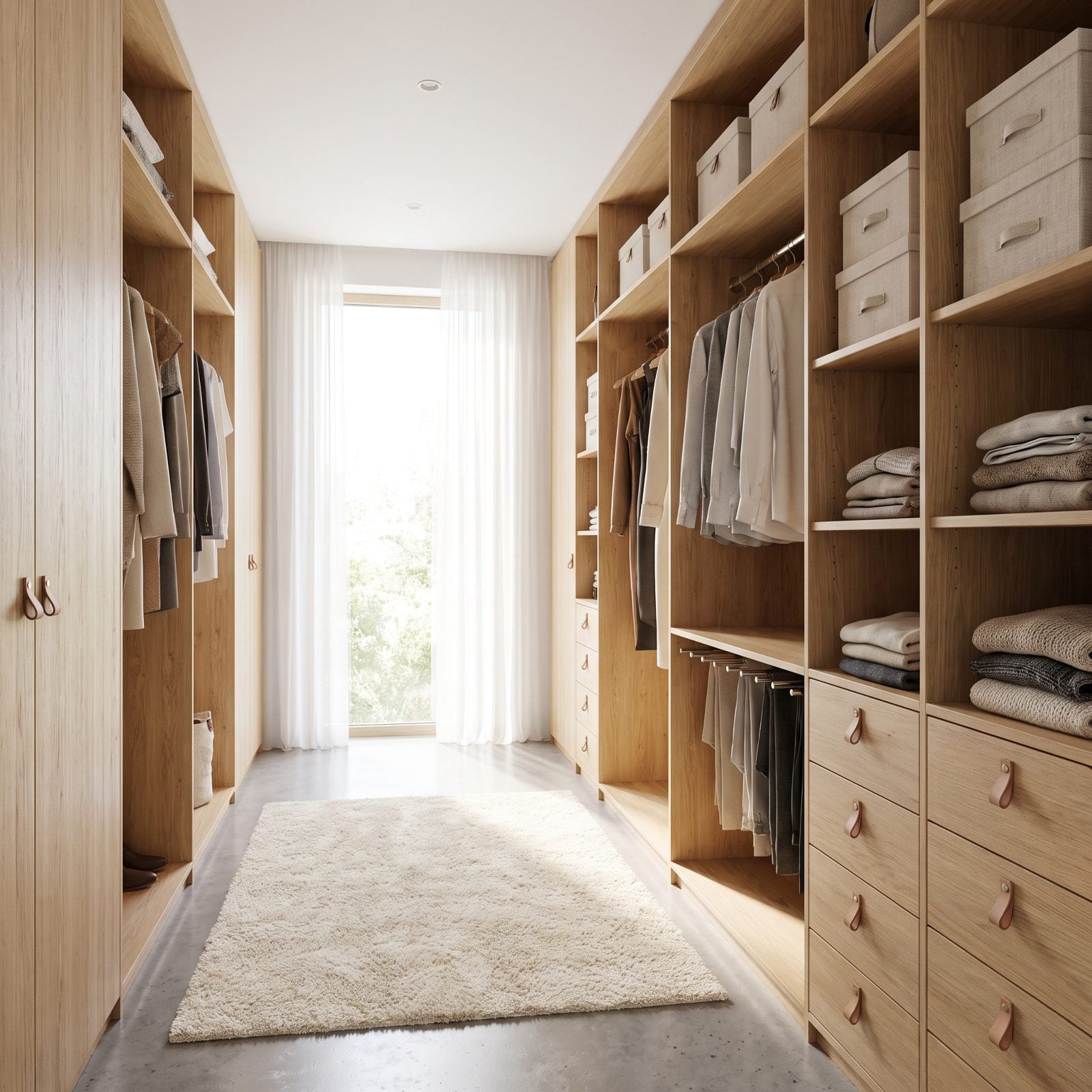
Visible order sells harder than square footage. See a system and you imagine keeping it. See a mess and you imagine one more thing to fix.
Color-graded clothing, matching woven baskets, warm oak rods spaced evenly, a skylight pouring daylight over all of it. The brass hooks and the stone-topped island at the center turn plain storage into something closer to a boutique, and it flatters the buyer into thinking they’re already more organized than they actually are.
15. A Double Vanity With Personal Storage
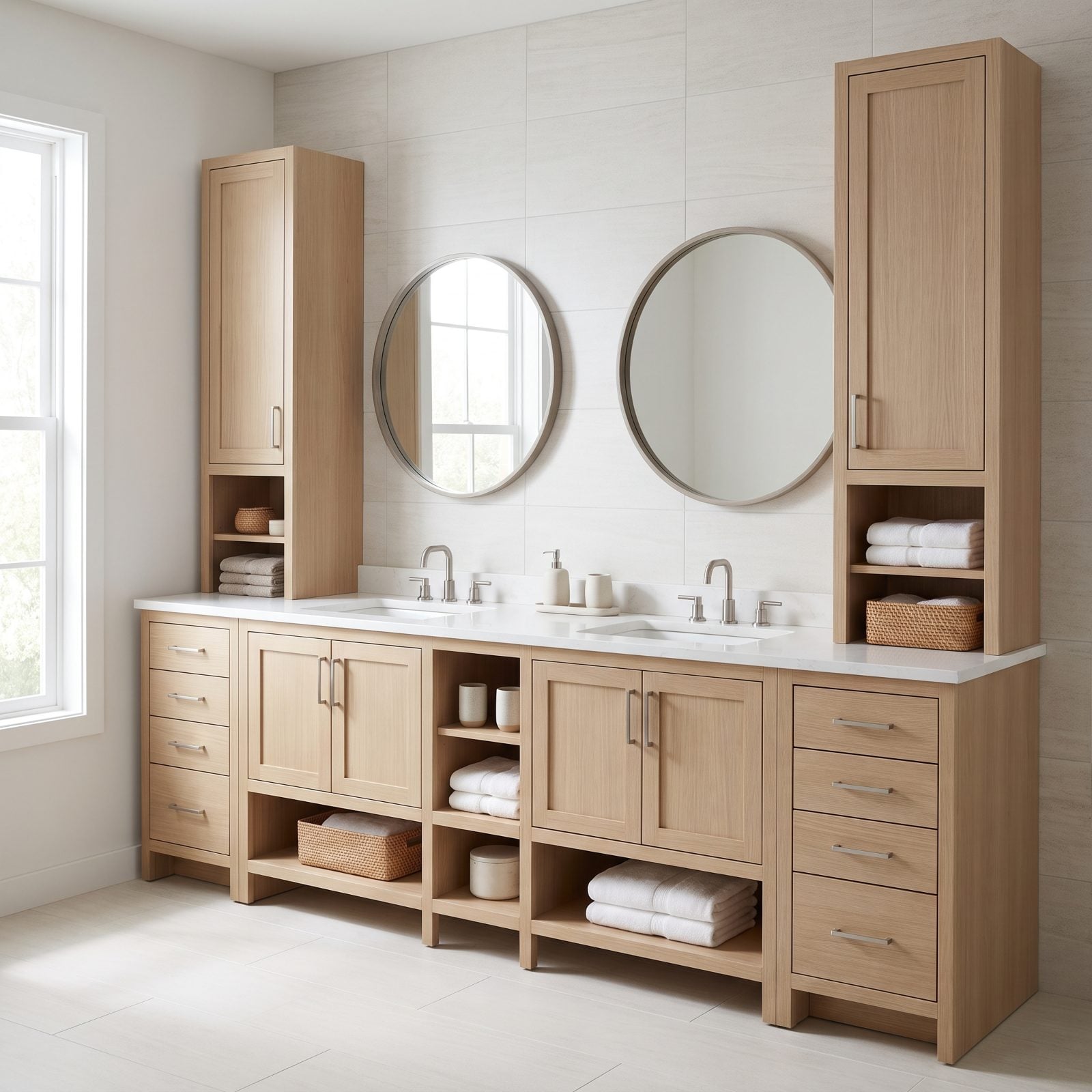
Two sinks end an argument that hasn’t happened yet. That’s the quiet appeal of a double vanity.
What makes this one land is the storage underneath and the near-empty counter. Rolled towels on open walnut shelves, two matching baskets, a honed marble top holding almost nothing. The sage zellige behind catches the light and keeps the room from going clinical. And buyers read a clear counter as a promise — you’ll have room for your own clutter here.
14. A Freestanding Soaking Tub
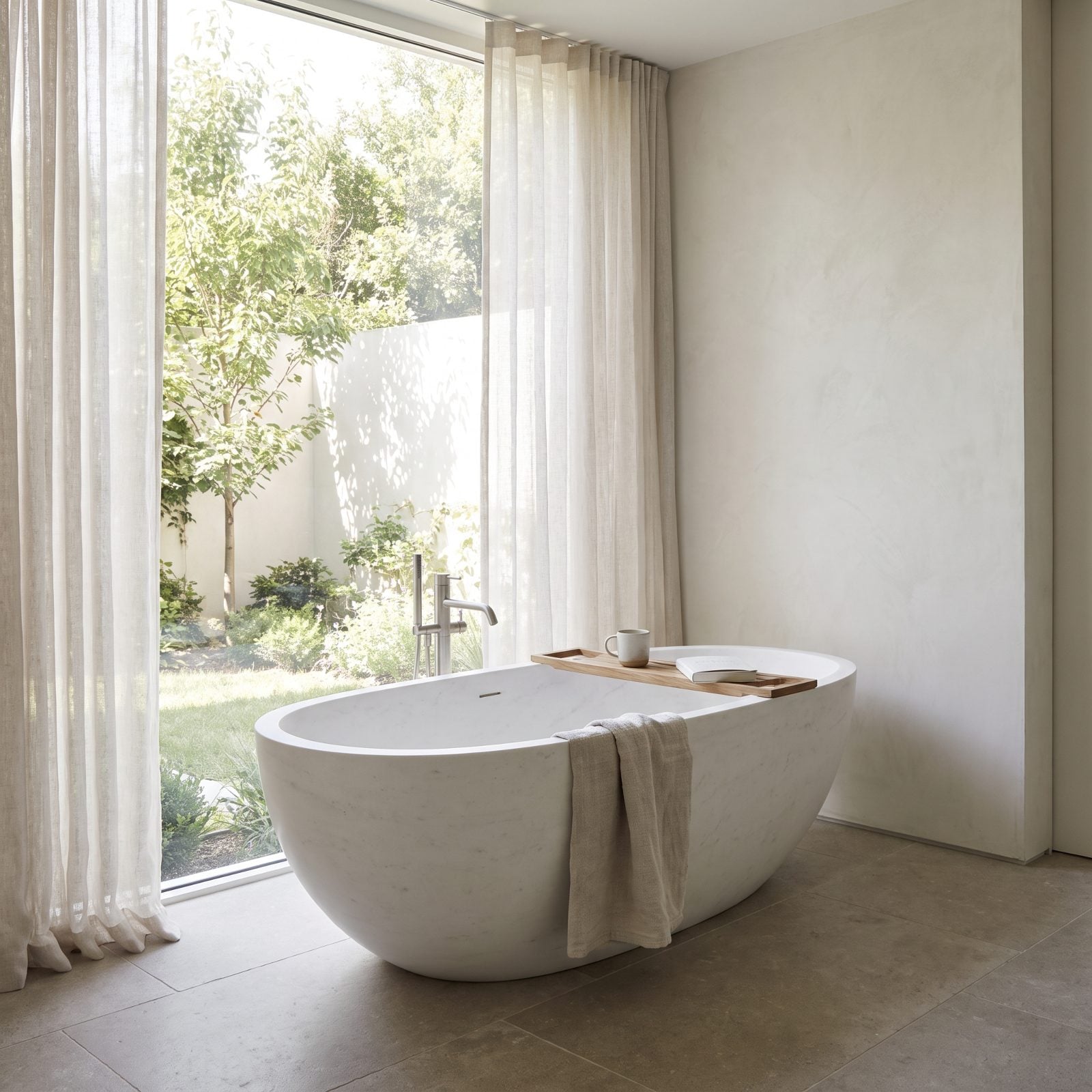
The honest truth? Most people with a soaking tub use it twice a year. Doesn’t matter. The tub isn’t selling baths — it’s selling the idea of being the kind of person who takes them.
Still, this one earns its spot. A sculptural matte-white oval under the window, warm oak underfoot, a brushed-brass floor faucet arcing over one end. A wooden stool with a folded towel and a candle. Green treetops through the glass. A buyer stands in that doorway and something in them goes quiet, and quiet is the whole game at a showing.
13. A Spacious Glass-Enclosed Shower
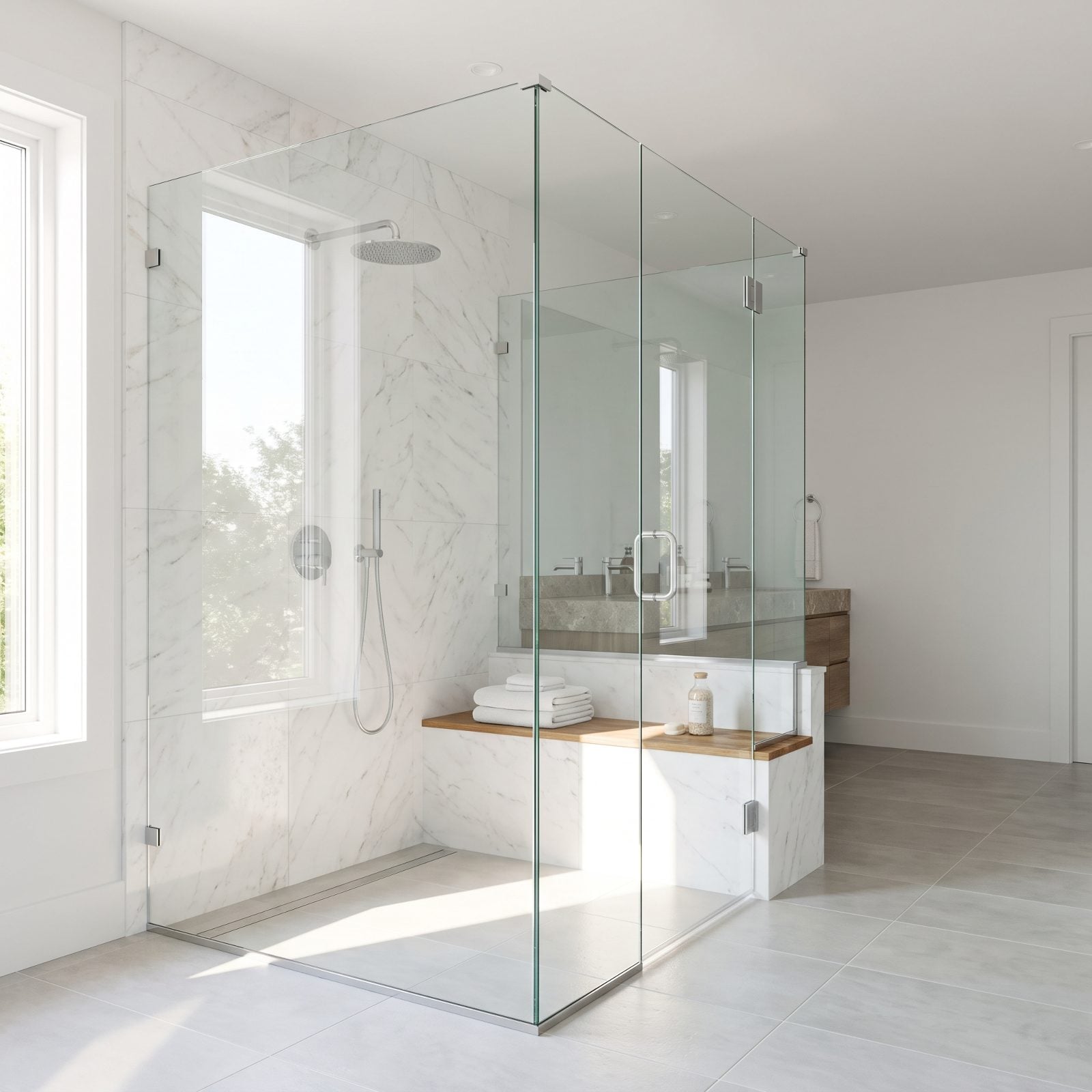
That frameless glass is doing quiet work. There’s no shower curtain to chop the room in half and no bulky enclosure eating the floor, so the eye runs straight through to the back tile wall and the bathroom reads twice its size.
Buyers slow down here because nothing blocks the view. A teak shower bench and a brushed brass rainfall showerhead signal this is a place to linger, not just rinse and bolt.
12. A Hidden Powder Room Near the Entertaining Areas
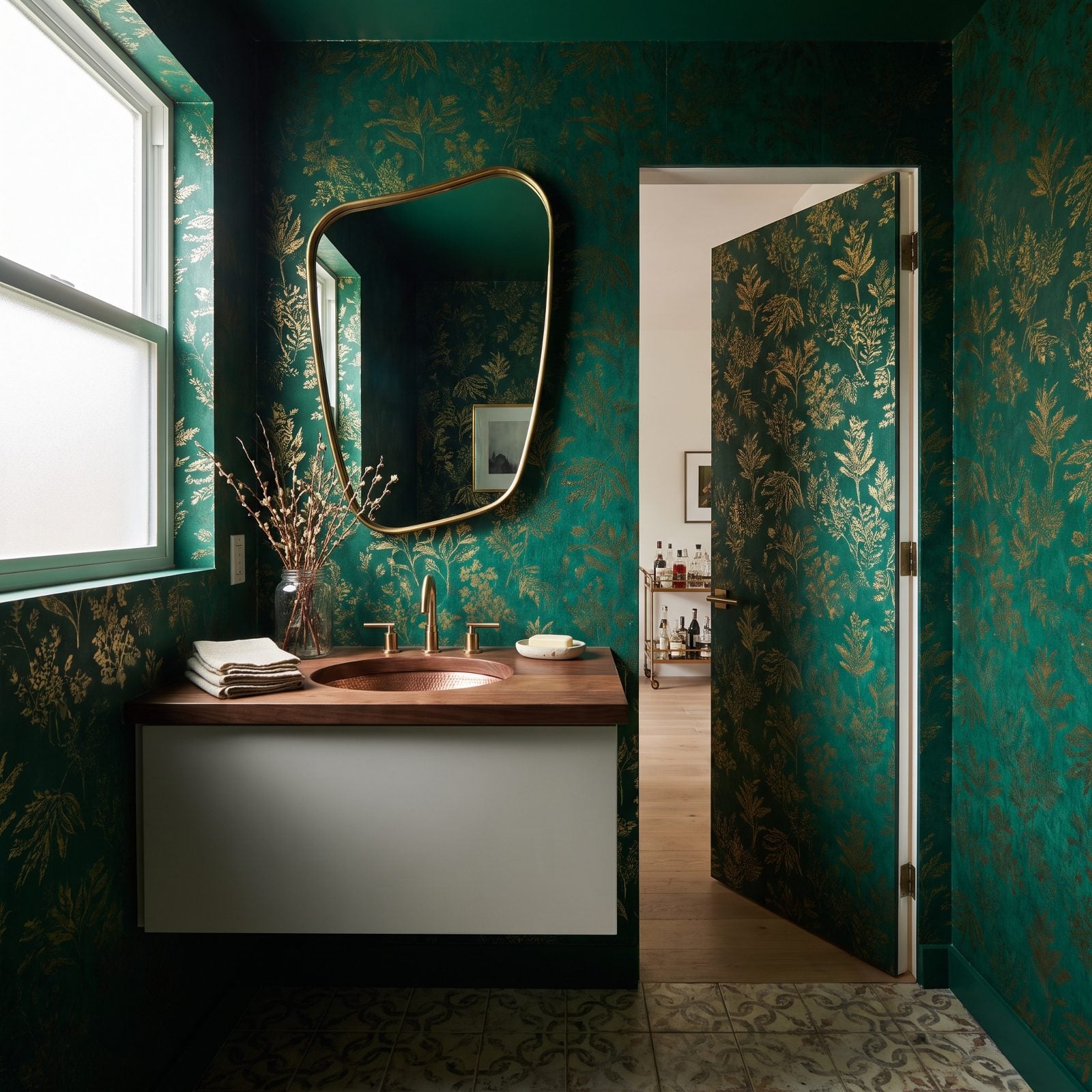
Guests notice this one without knowing why. A powder room near the kitchen and living area means no awkward trek past the bedrooms during a dinner party — convenience dressed up as a tiny indulgence.
The small footprint is a gift. You can go bold in here, and it won’t cost much. A powder room is the one spot where forest green grasscloth wallpaper and an arched brass mirror feel like a surprise rather than a splurge.
11. A Dedicated Home Office
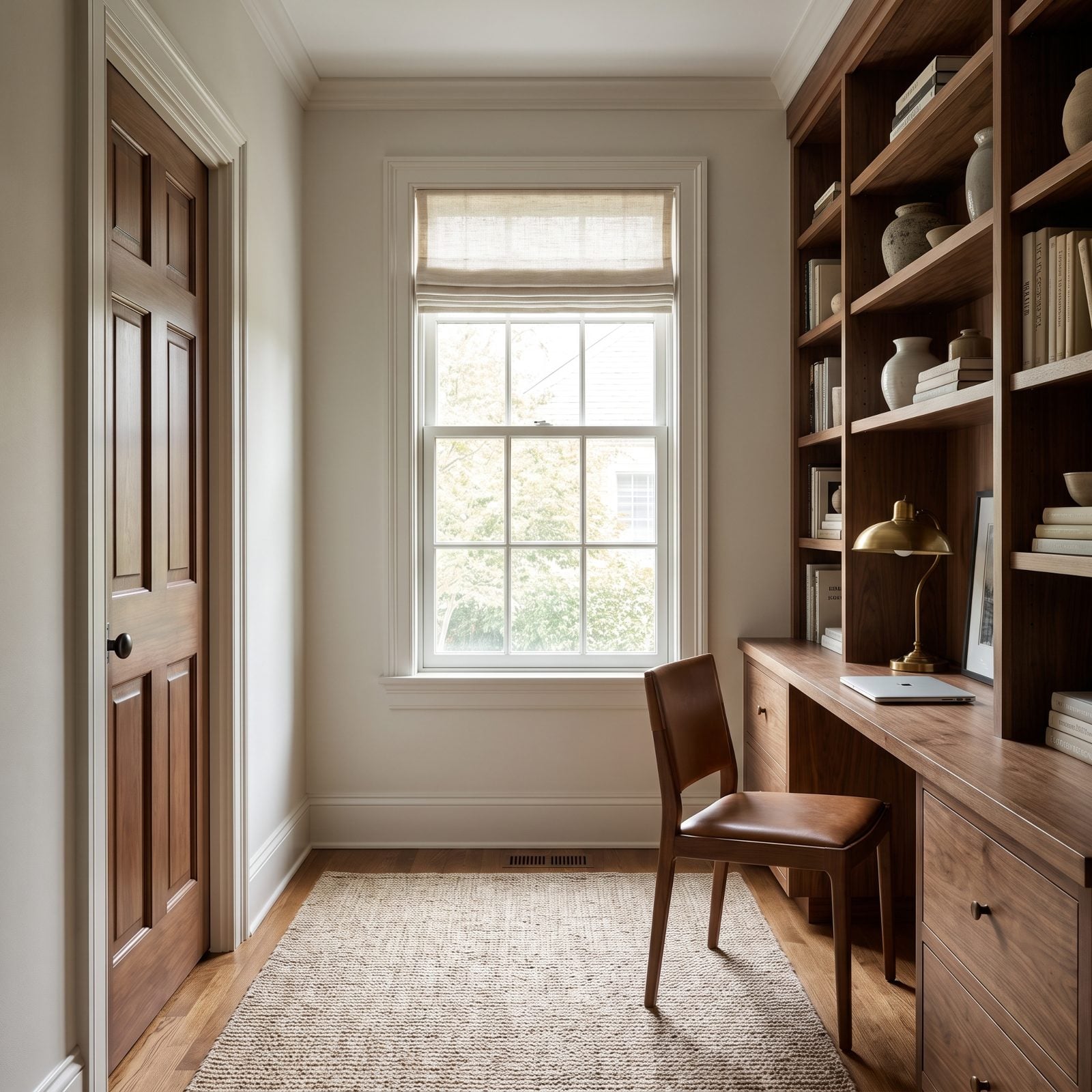
A real office with a door that closes sells harder than it used to. Buyers tour with a checklist now, and “where do I take calls” sits near the top of it.
The built-in oak shelving framing the window is what carries this room. It feels permanent, not a desk shoved into a spare corner and apologized for. Style a warm home office like this — add a brass desk lamp, a leather chair — and someone pictures their own workday in five seconds flat. Want it softer? A blush home office plays well when the rest of the house leans feminine.
10. A Flex Room With More Than One Obvious Purpose
🔥 Would you like to save this?
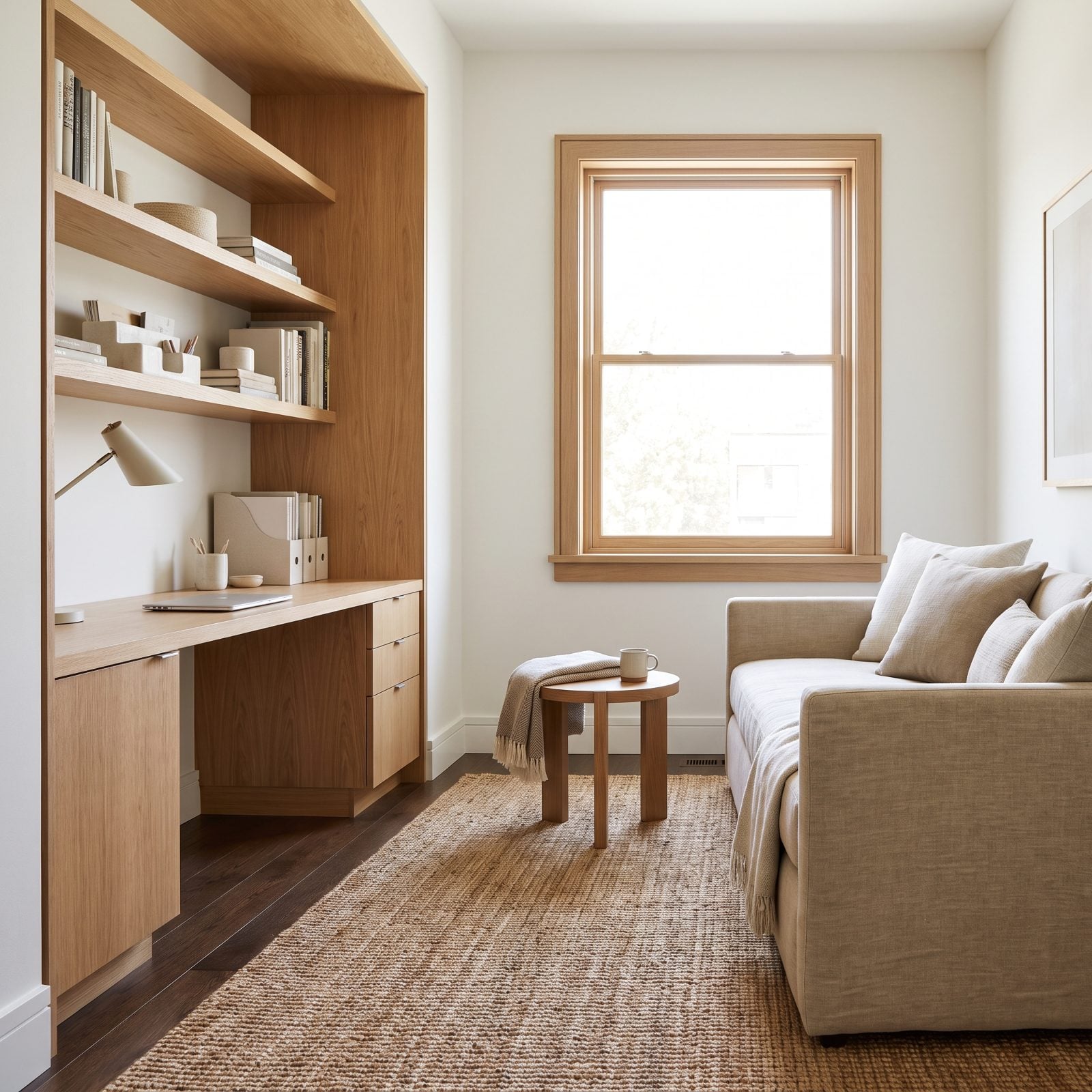
The smartest staging move in any house is a room that answers two questions at once. Nursery or office? Guest room or den? Let the buyer decide, and they start mentally moving in.
A linen daybed plus a small table says this space works hard without committing to a single story. That ambiguity is a feature, not a flaw.
9. A Finished Basement With Natural-Looking Light
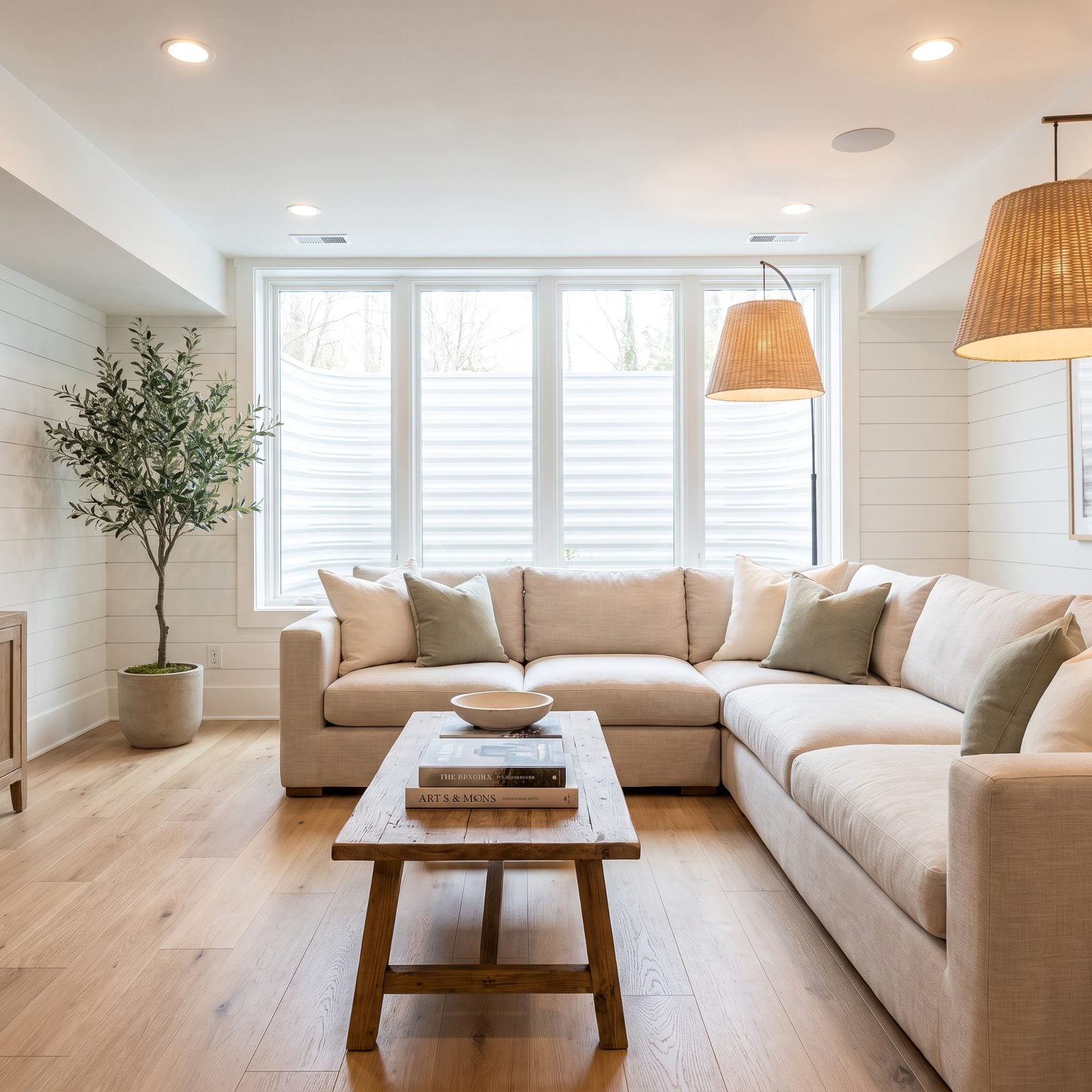
Most basements lose buyers at the bottom of the stairs. The air changes, the light dies, and the brain quietly files the whole level under “storage.”
This one fights back. Egress windows pull real daylight, warm LED recessed fixtures fake the sun, and pale flooring refuses to go dim. An oatmeal sectional sofa keeps it soft instead of cold. Suddenly a home renovation down here reads as bonus square footage rather than a consolation prize.
8. A Proper Laundry Room With Folding Space
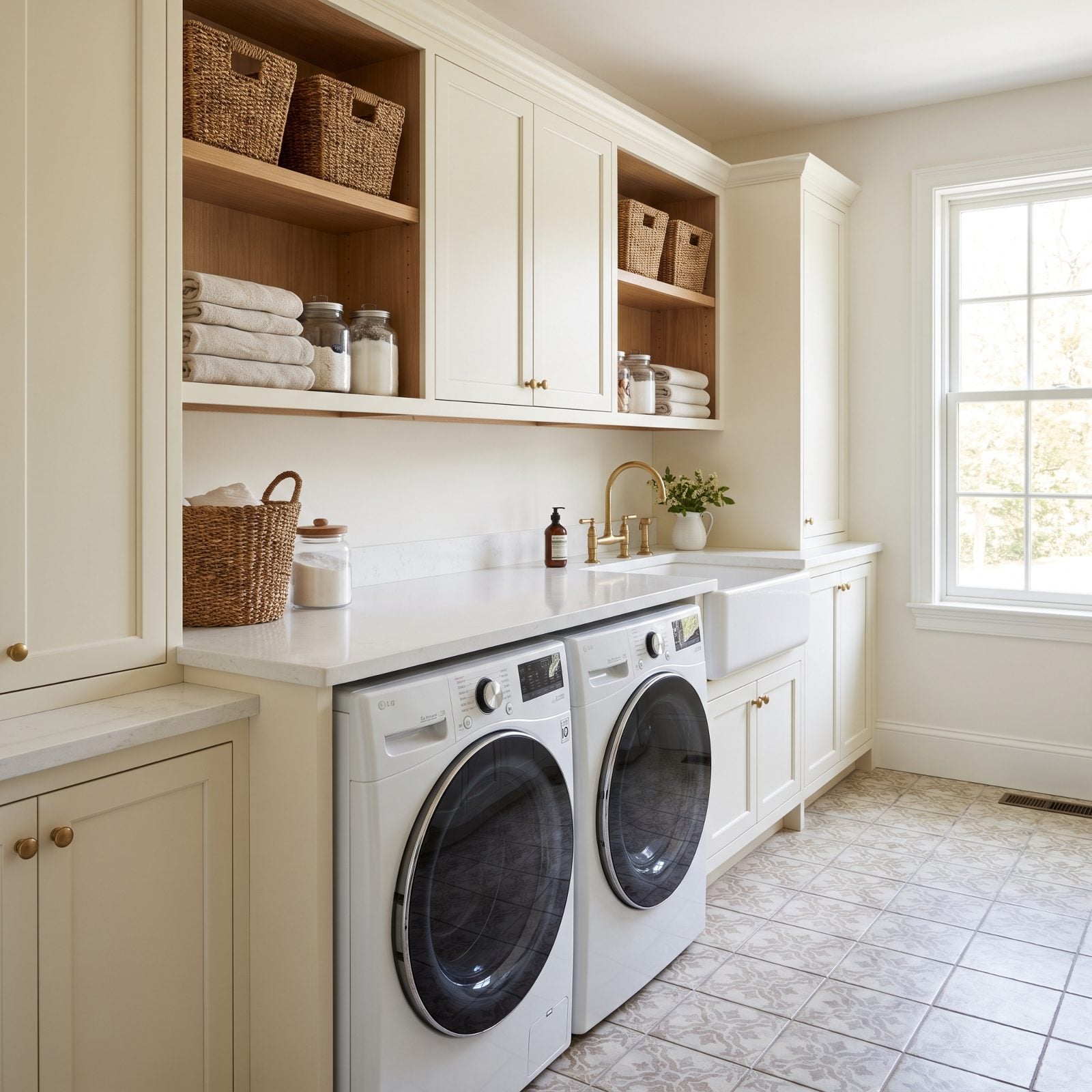
A folding counter sells a lifestyle, not a chore. The second a buyer sees a flat quartz surface over the machines, they stop picturing laundry heaped on the dining table.
The muted blue cement-tile floor keeps a utilitarian room from feeling clinical — small detail, real payoff. A woven laundry hamper and a herb on the sill make it somewhere you wouldn’t mind spending ten minutes.
7. A Mudroom With Individual Cubbies
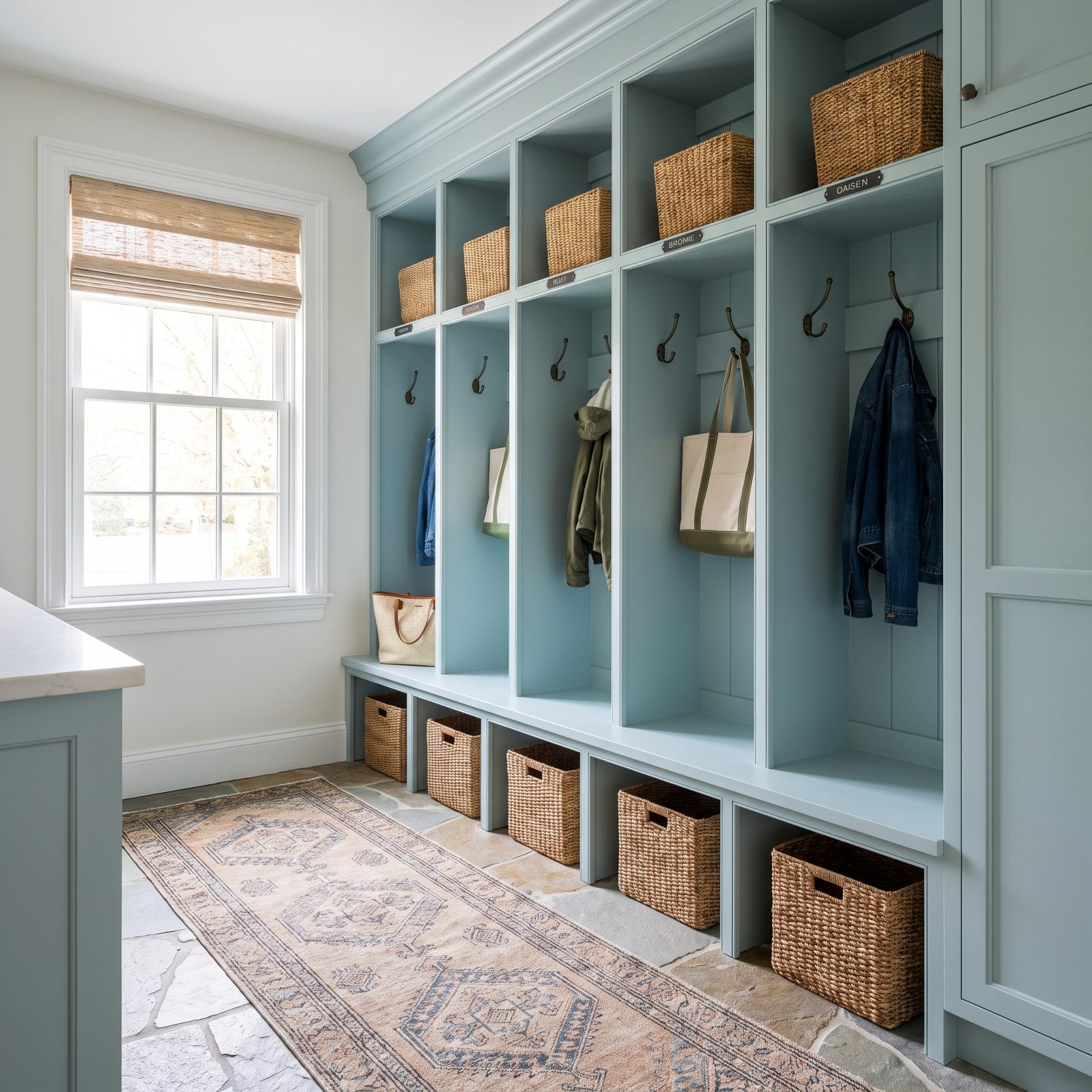
Cubbies do something a coat closet never will. They assign everyone a spot, and buyers with kids see the end of the backpack avalanche by the front door the moment they walk in.
One per person is the whole trick. The sage shiplap and white oak bench keep it from reading like a gym locker room, while the brass wall hooks add just enough polish to look intentional.
6. An Organized Garage With a Finished Floor
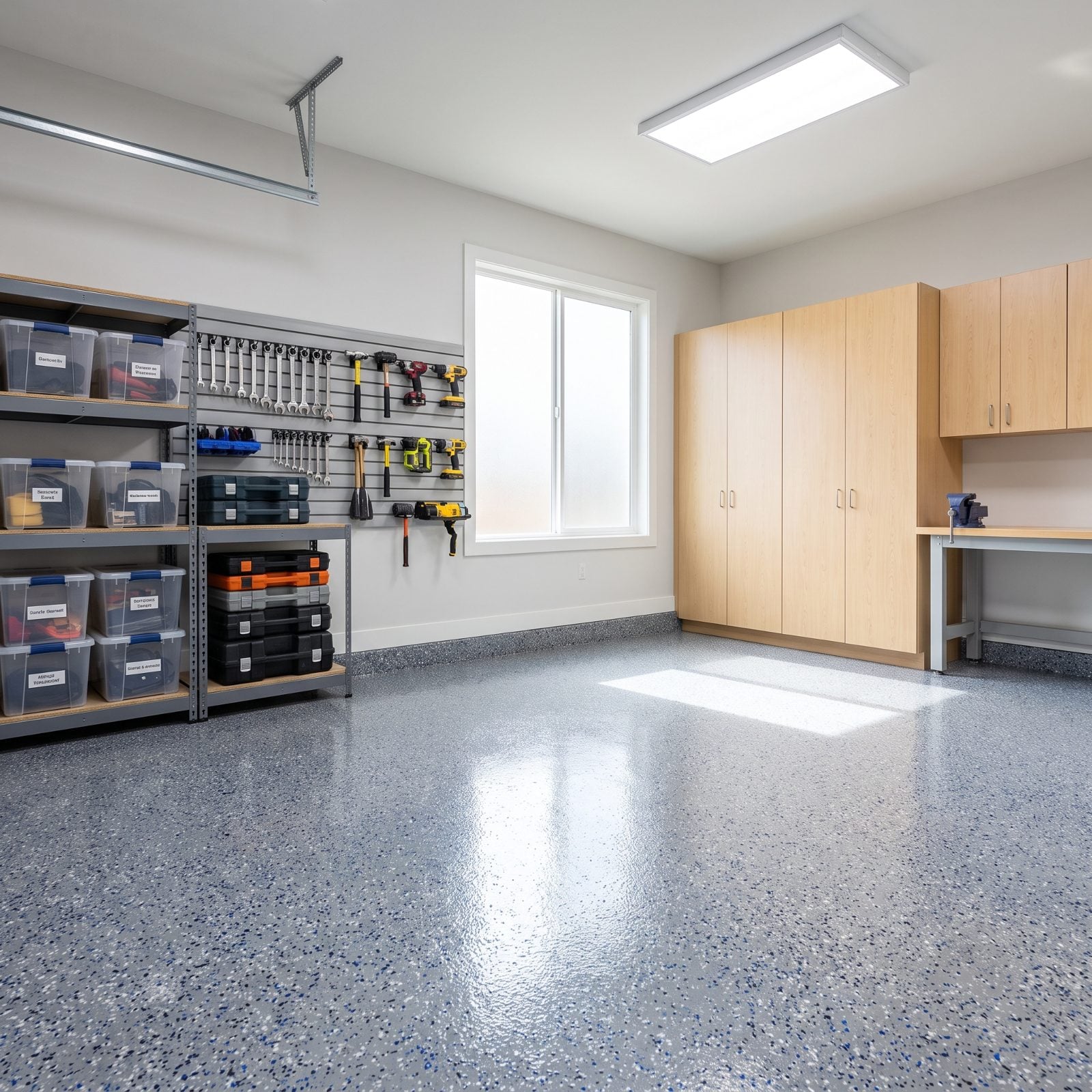
A finished garage floor is the cheapest flex in real estate. Grey epoxy with a fleck turns a grimy slab into something that looks like it belongs to a person who has their life together.
Slat-wall and white garage storage cabinets get the clutter off the ground. Buyers walk in, see a clean reflective floor, and start imagining their own gear on the walls instead of in a pile against the wall.
5. Smart-Home Controls Buyers Can Test
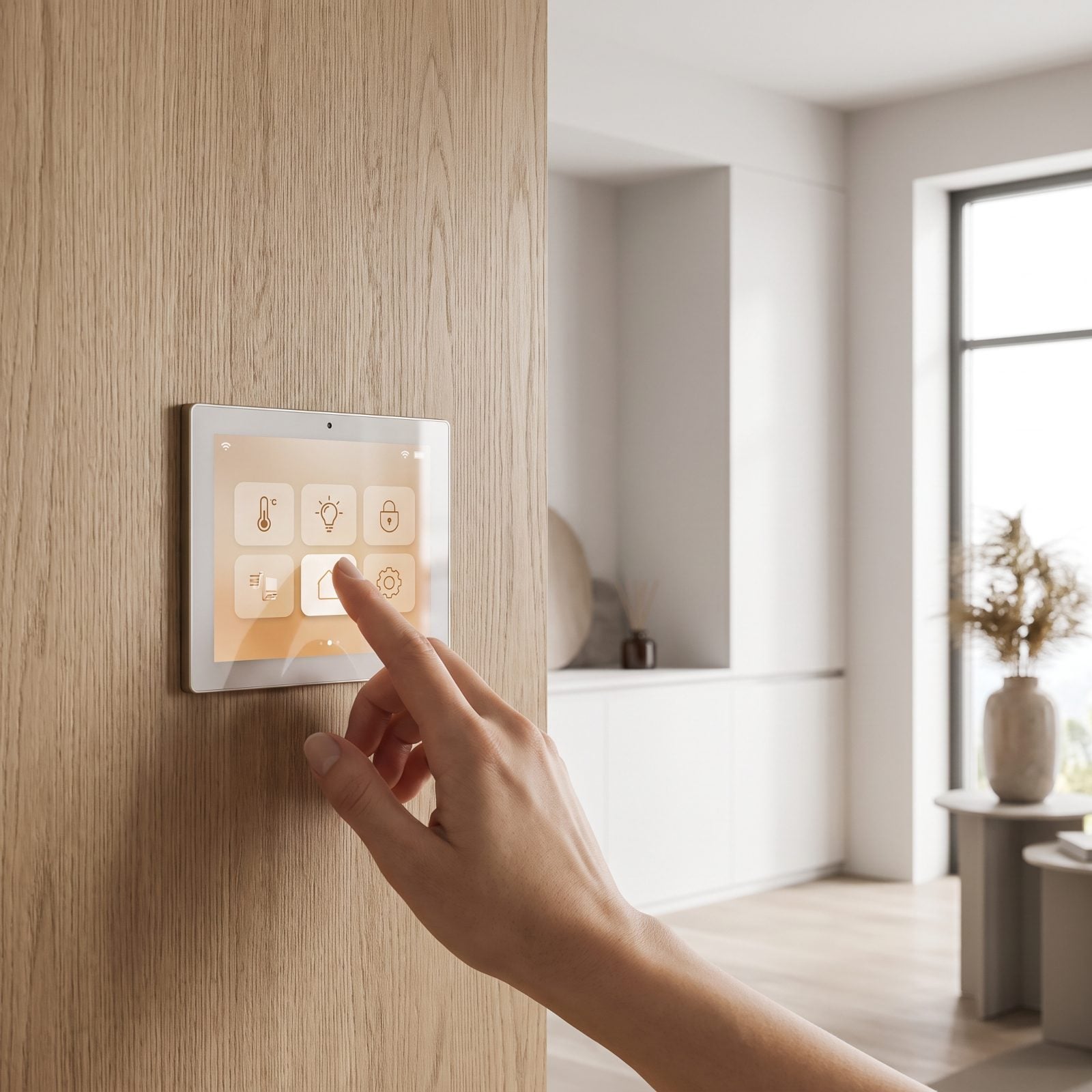
Nobody tells sellers this one, so here it is: a smart home only sells if the buyer can touch it. A panel they can tap, shades that actually move, a thermostat that responds. Working beats listed every single time.
Hand someone a dimmer to slide mid-showing and watch what happens. They stop touring and start playing. And play is the exact moment they forget they’re being sold to.
The buyer who tests the lights has already moved in, in their head.
4. A Noticeably Quiet Interior
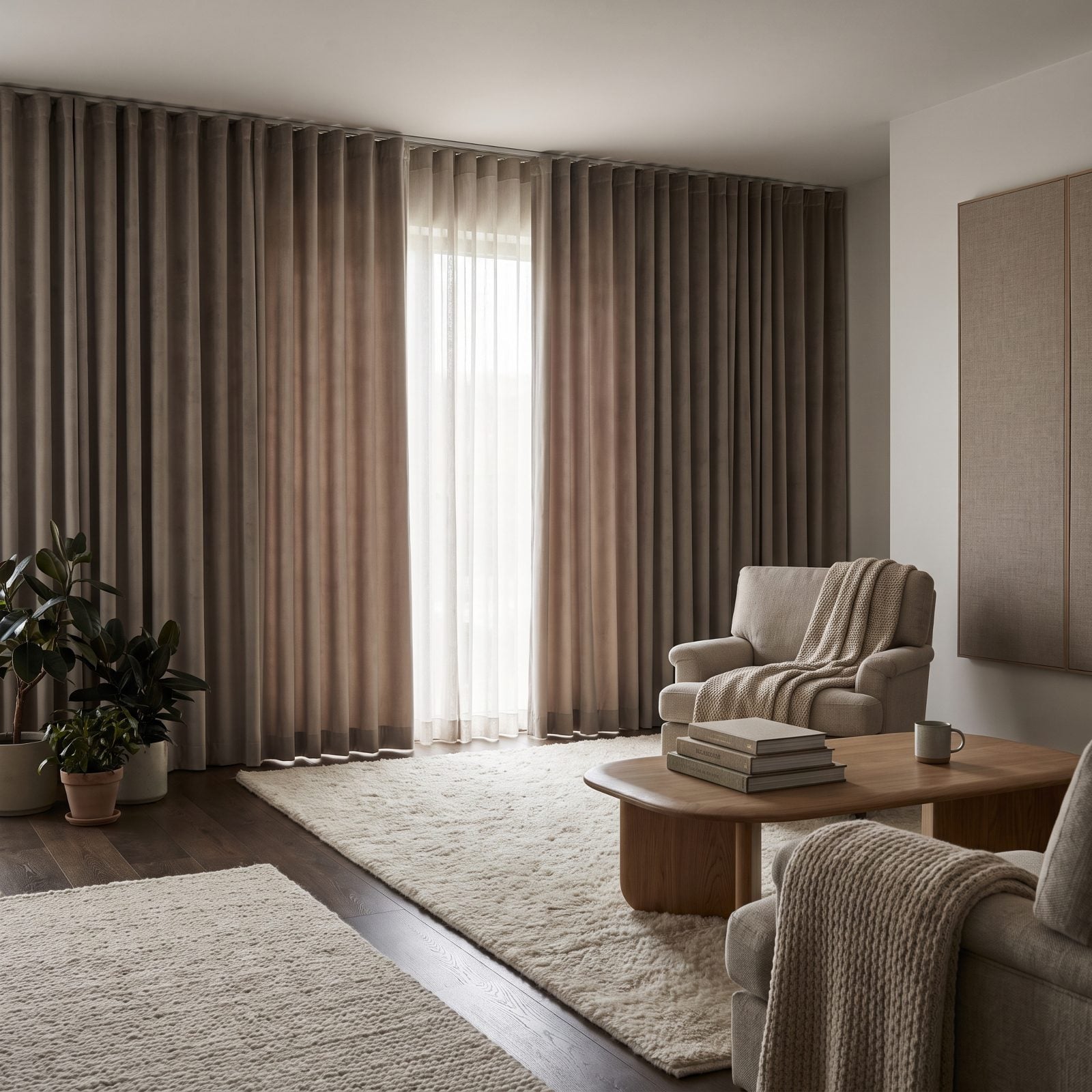
Quiet is the feature buyers can’t name but always feel. They step inside, the street noise drops away, and something in their shoulders lets go.
Soft surfaces do the work. Heavy oatmeal textured drapery, a dense wool area rug, a wall of books eating the echo. Hard, empty rooms bounce sound and put people on edge, which no one wants from a first impression. A room that swallows noise invites them to sit down and stay — and staying is what you’re after in a showing.
3. Modern Updates That Preserve Original Character
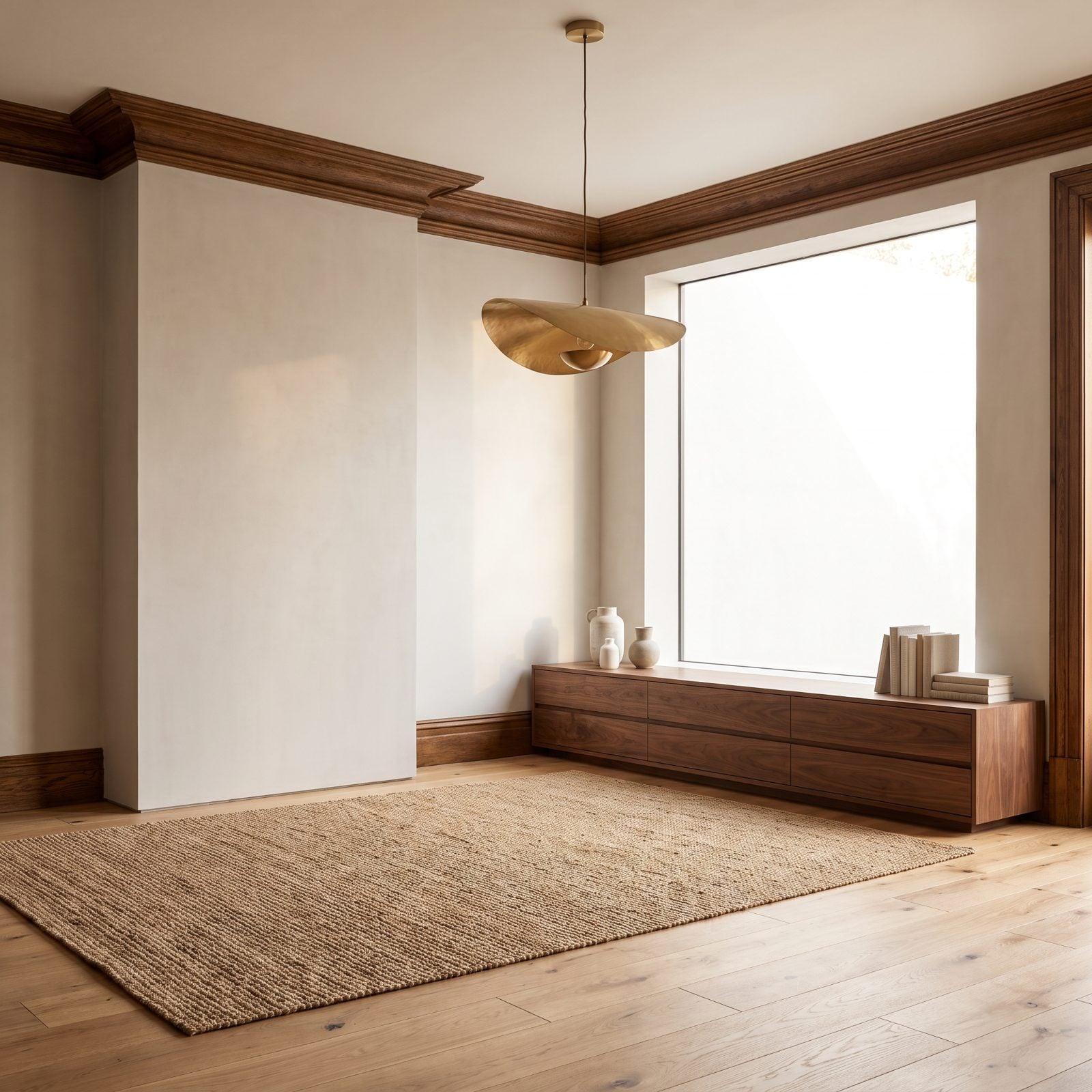
The trick that makes a buyer trust an old house? New work that knows when to shut up. Here the original oak molding and plaster ceiling medallion stay put while a slim brass pendant light and honed black hearth handle the modernizing without raising their voices. Nothing fights the bones of the room, and you feel that restraint the second you walk in — a buyer reads it as care, and care is contagious.
If the owners refinished the walnut armchair but left the trim well enough alone, what else did they get right? That one nagging question is what slows a walkthrough down.
2. A Long-Distance View Framed by a Main Window
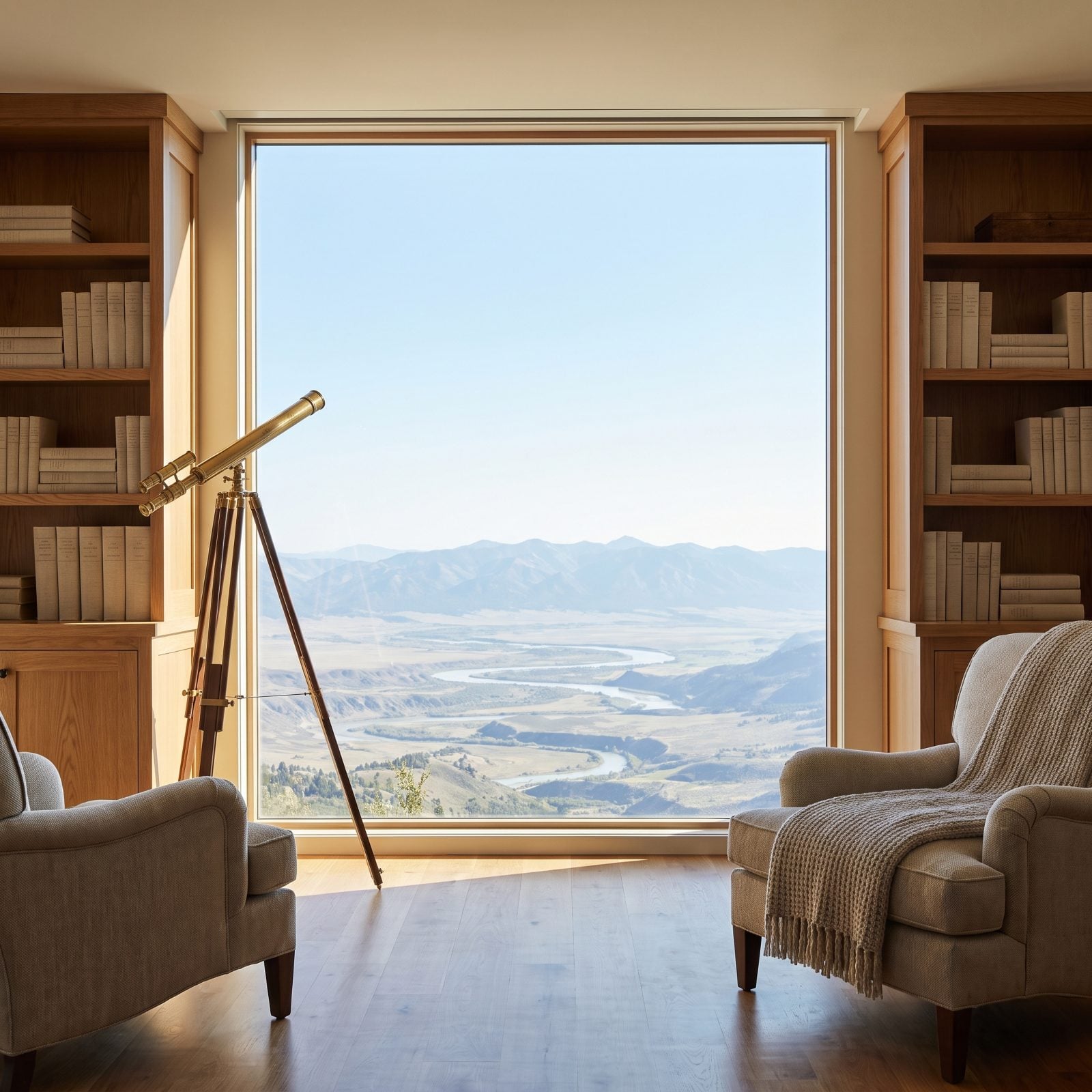
A window that reaches past the backyard to something far off is about the closest thing staging has to a magnet. The hills just sit there, framed by thin black steel mullions, and every buyer in the room drifts toward the glass without anyone telling them to.
So point the furniture at the view. Not the fireplace, not the TV. The oatmeal boucle sofa here faces the horizon, which quietly settles the question of where a buyer should look and where they should sit. That’s prospect and refuge doing their work — open distance to gaze across, a safe nook to do it from.
A long view makes a small room feel like it borrowed the land next door.
1. A Circular Floor Plan That Encourages Exploration
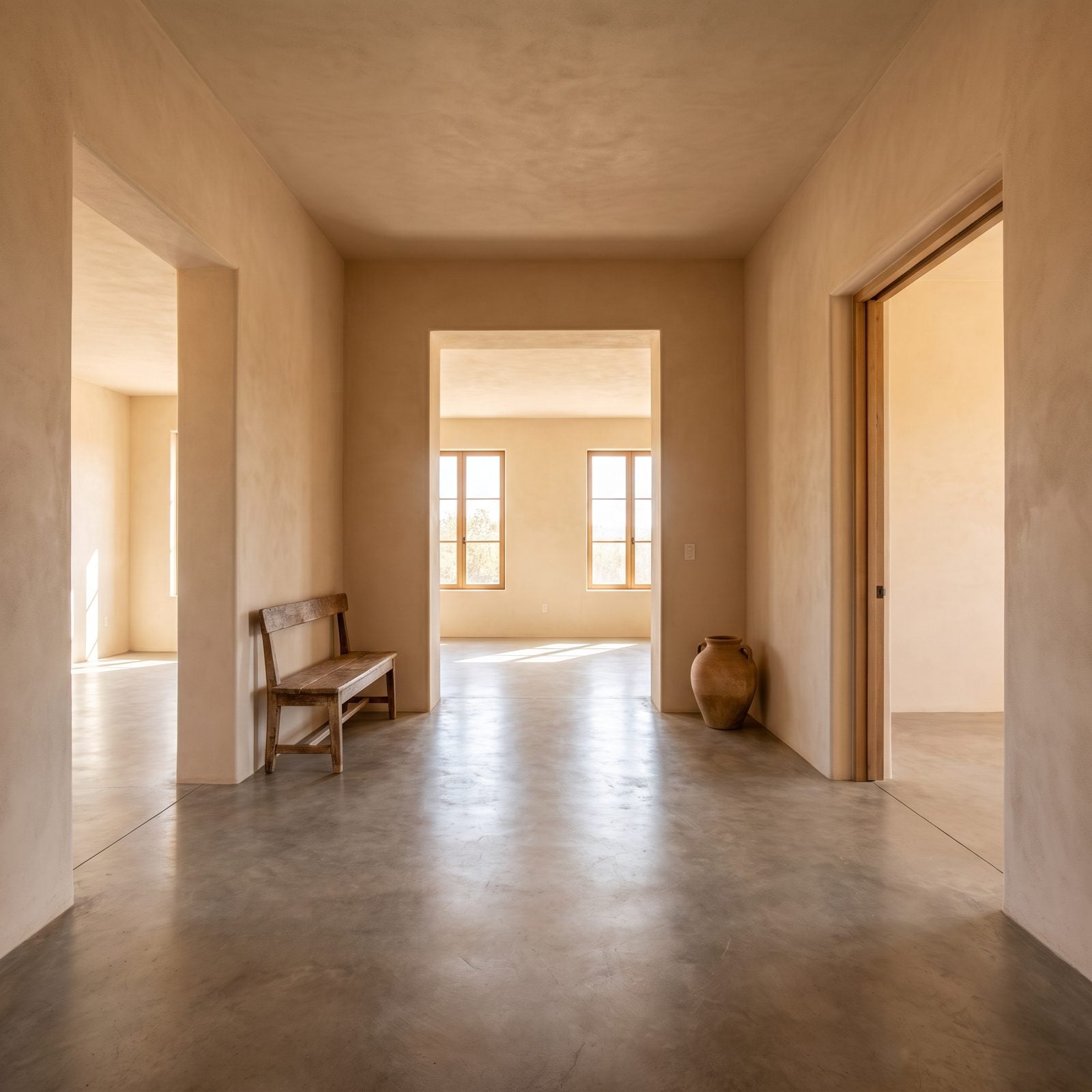
You know the dead-end floor plan. Walk into a room, turn around, back out the way you came, repeat until the showing feels like a chore. A loop plan flips that on its head — every room hands you off to the next, and the buyer keeps drifting because there’s always one more sightline tugging them along.
Here the white oak floor runs unbroken through the kitchen, past the island with its stainless refrigerator, slide-in stove, and panel-ready dishwasher, and on toward a sunlit sitting area. Nothing reads as a stopping point. That continuous flooring is the sneaky little cue keeping feet in motion.
Circulation gets almost no credit in a home renovation, which is a shame, because it’s the thing buyers feel long before they can name it. A home you can wander without backtracking gets wandered longer — and the longer someone wanders, the more time they spend quietly imagining their own life in the place.