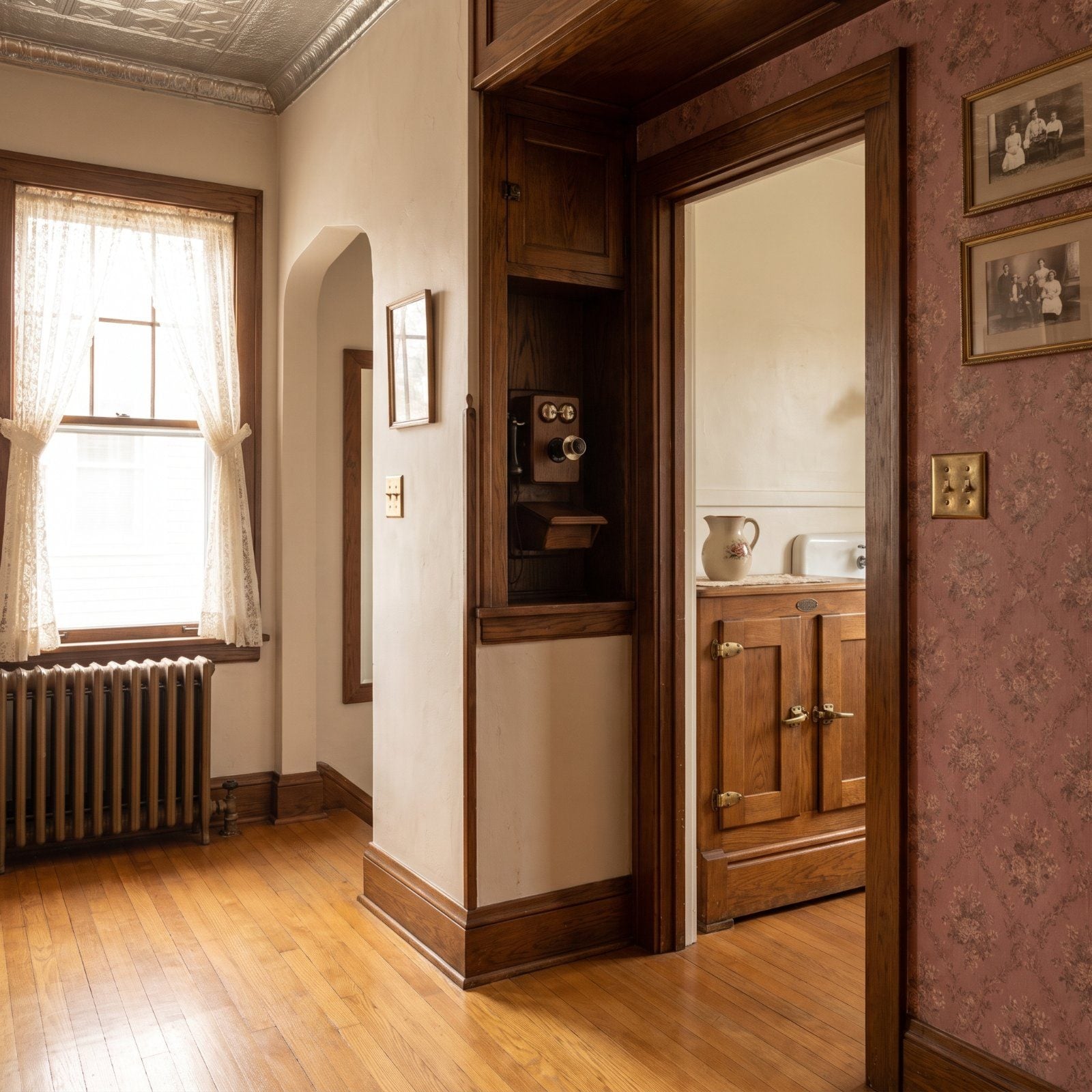
Pull a corner trim off a plaster wall in a house built before 1960 and you might find a decade of rusted razor blades sitting in the cavity. Nobody warns you about this stuff when you buy an old house — you just find it. A slot behind the medicine cabinet, an odd metal triangle screwed into a stair corner, a tiny door low on the window frame. Every one had a job, and at the time every one of those jobs made perfect sense. Here’s what the ones below were really for.
37. The Medicine-Cabinet Slot That Fed Used Razor Blades Straight Into the Wall
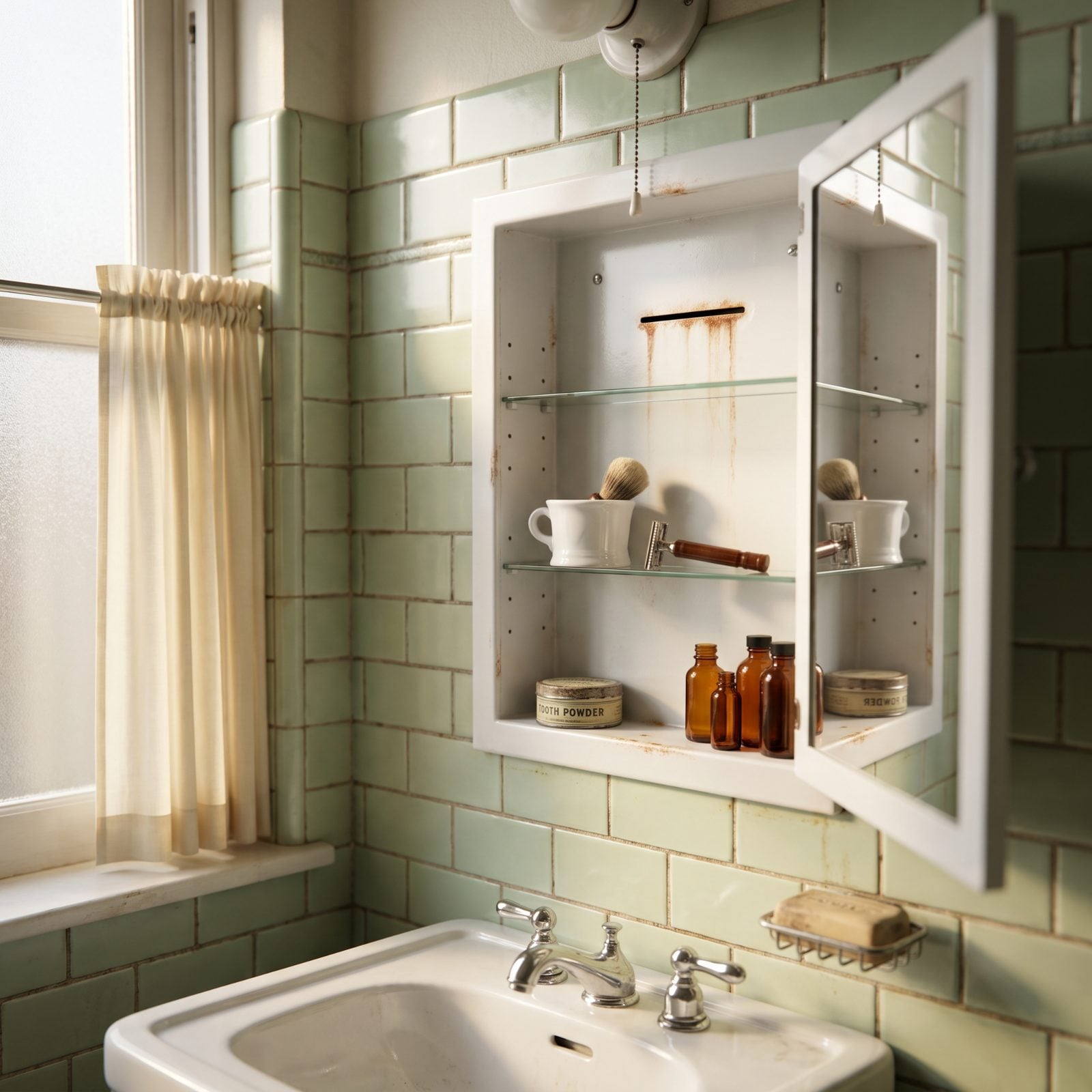
Peel open the wall behind an old bathroom medicine cabinet and you may hear it before you see it: a soft metallic shift, like coins settling. That’s decades of used razor blades, dropped one at a time through a slot machined into the back of the cabinet.
In order to come up with the very specific design ideas, we create most designs with the assistance of state-of-the-art AI interior design software. Also, assume links that take you off the site are affiliate links such as links to Amazon. this means we may earn a commission if you buy something.
The logic was grim and practical. Double-edged safety blades were cheap, disposable, and lethally sharp, and tossing them in the household trash meant someone’s fingers eventually paid for it. So builders gave the blades a one-way exit into the stud cavity, where they’d sit forever.
Nobody planned for the house to outlive the system. Renovators tearing out a wall still find rusted piles of them pooled at the base of the studs.
36. The Metal Stair Corners That Kept Dust From Pooling in the Angles
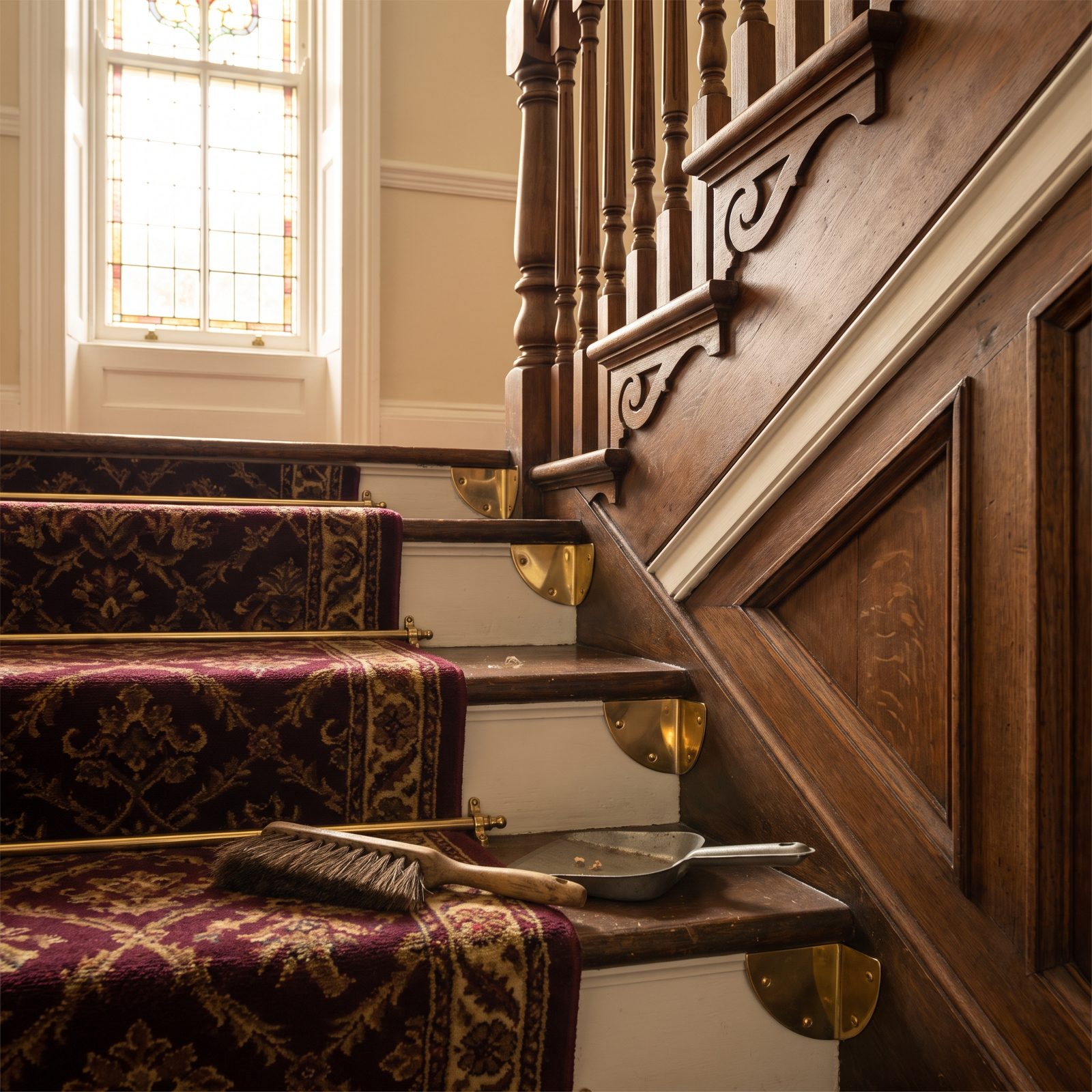
Look at the inside corner of an old staircase, right where the tread meets the riser, and you might spot a thin brass rod lying across the carpet runner, held at each end by a small bracket screwed into the wood. People assume it’s decorative. It wasn’t.
A carpet tacked down into that angle is a dust trap — grime works into the fold and a broom can’t get it back out. In houses with live-in staff, these brass rods held the runner snug without tacks, so it could be slipped free, carried outside and beaten, and the bare corners underneath swept clean.
A tiny detail, but it tells you everything about how much hand-labor went into keeping a house clean before the vacuum existed. A whole set of hardware, invented so a maid could lift a runner off the stairs without prying up a single tack.
35. The Turnspit Wheel Built Into the Hearth to Let a Dog Rotate the Roast
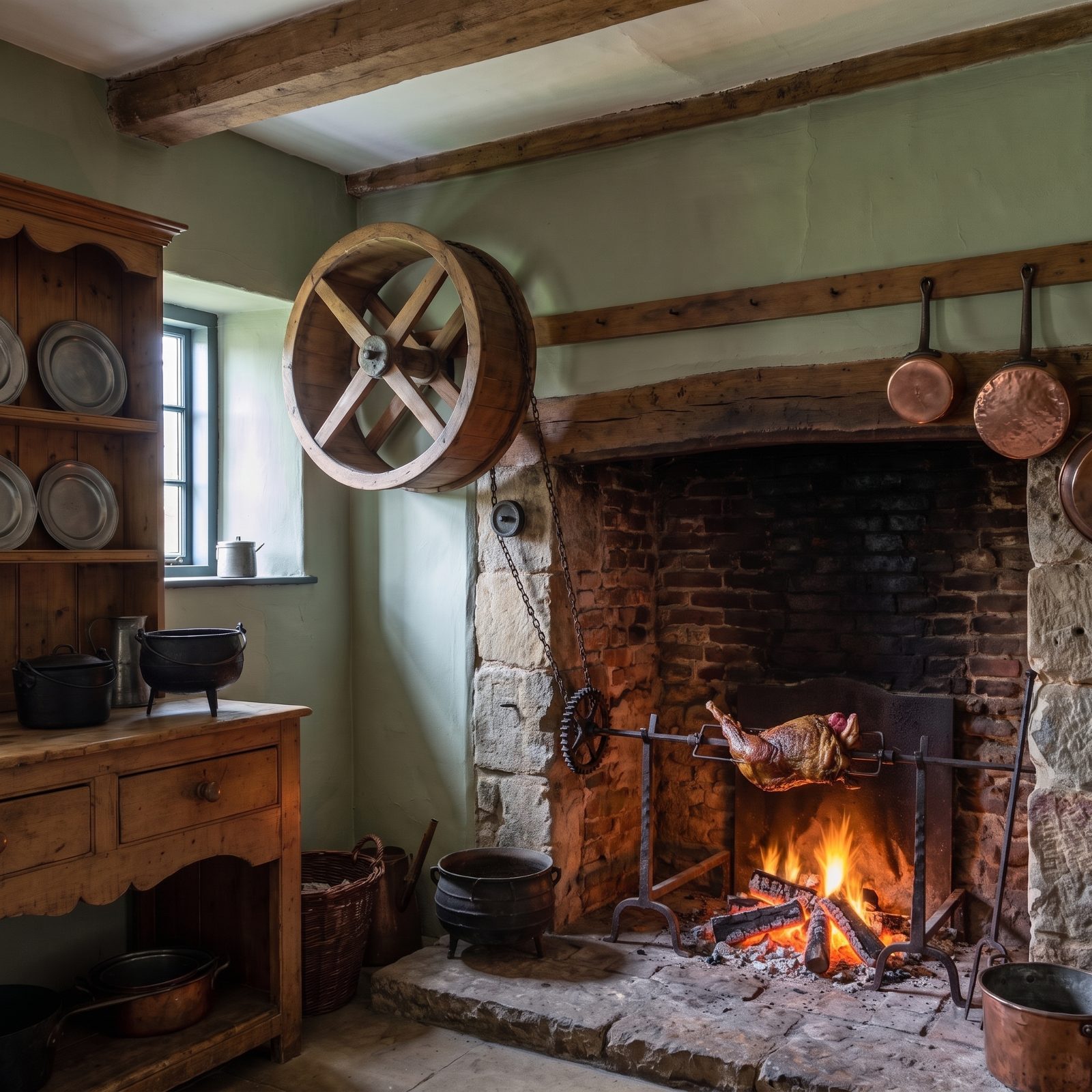
Somewhere high on the wall beside an old hearth, there’s a wooden wheel the size of a small barrel. It looks like a spoked cartwheel set inside a wooden drum, with cross-spokes and a bolted hub across its open face, and a chain running from it over a small pulley and down the wall to a toothed gear at the end of the spit.
Roasting meat evenly meant turning the spit constantly for hours. That job fell to a small, short-legged dog bred specifically for it — a turnspit dog, whose steady trotting powered a chain that rotated the roast. The breed was so tied to this one function that when the mechanism disappeared, the dog disappeared with it. Extinct by the late 1800s, bred out of existence once clockwork jacks and then kitchen ranges made the whole arrangement pointless.
34. The Bee Bole: A Wall Niche Built to Shelter a Woven Straw Beehive
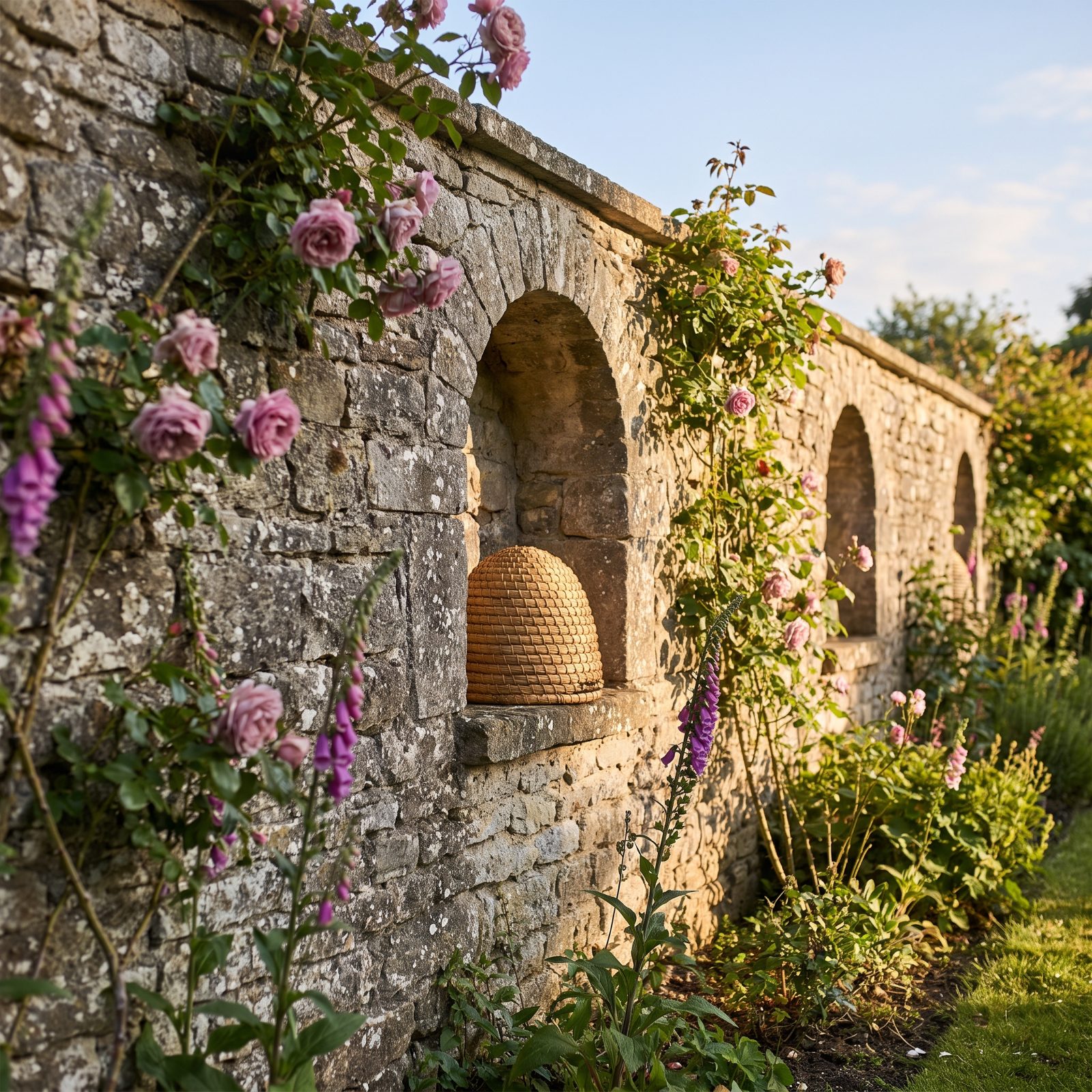
On an old stone garden wall, you’ll sometimes find a set of shallow arched recesses cut right into the masonry, each about the size to cradle a large flowerpot. These are bee boles, and they held the household’s bees.
Before wooden box hives came along, bees lived in skeps — dome-shaped baskets woven from coiled straw. A skep had no weatherproofing, so the recess handled that, facing south or southeast to catch the morning sun and shelter the colony from rain and wind. Honey and beeswax were household essentials, not hobbies, and the bee bole kept the supply alive through the seasons.
Find one today and you’re looking at a wall built around the needs of insects.
33. The Servant-Call Annunciator That Flagged Exactly Which Room Rang
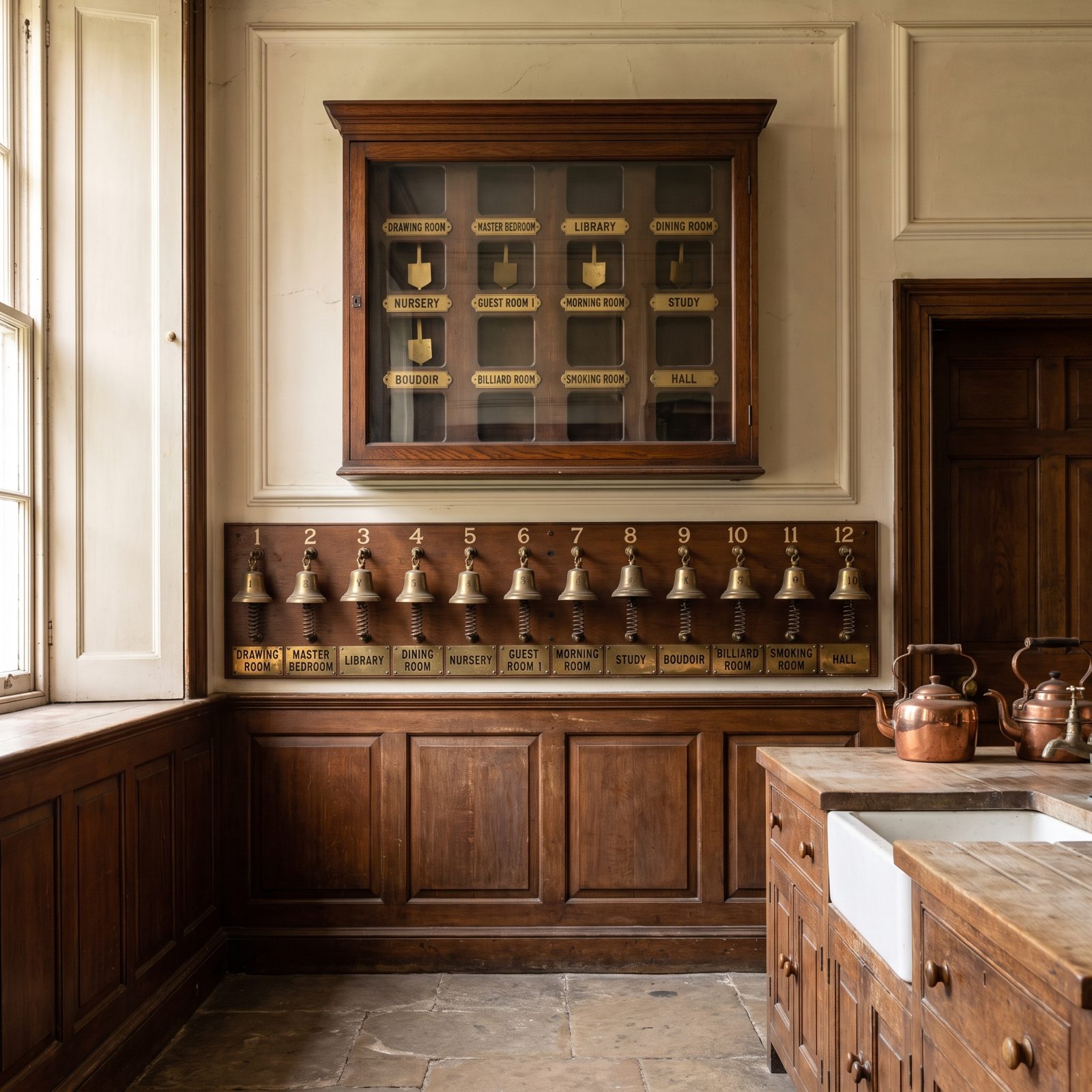
In the servants’ hall of a big old house, look up for a glass-fronted wooden box crossed with a grid of little labeled windows. When a bell wire was pulled upstairs, a flag or pendulum dropped behind the matching window, so staff knew instantly whether the call came from the library, the drawing room, or the master bedroom.
The clever part was memory. A bell rings and stops, but the annunciator flag stayed dropped until someone reset it. Nobody could miss a summons just by being out of earshot for a moment.
Run your eye along the wall nearby and you’ll usually find the row of coiled bell springs that fed it, each numbered and labeled with a brass plaque naming its room.
32. The California Cooler: A Vented Cabinet That Chilled Food With Outside Air
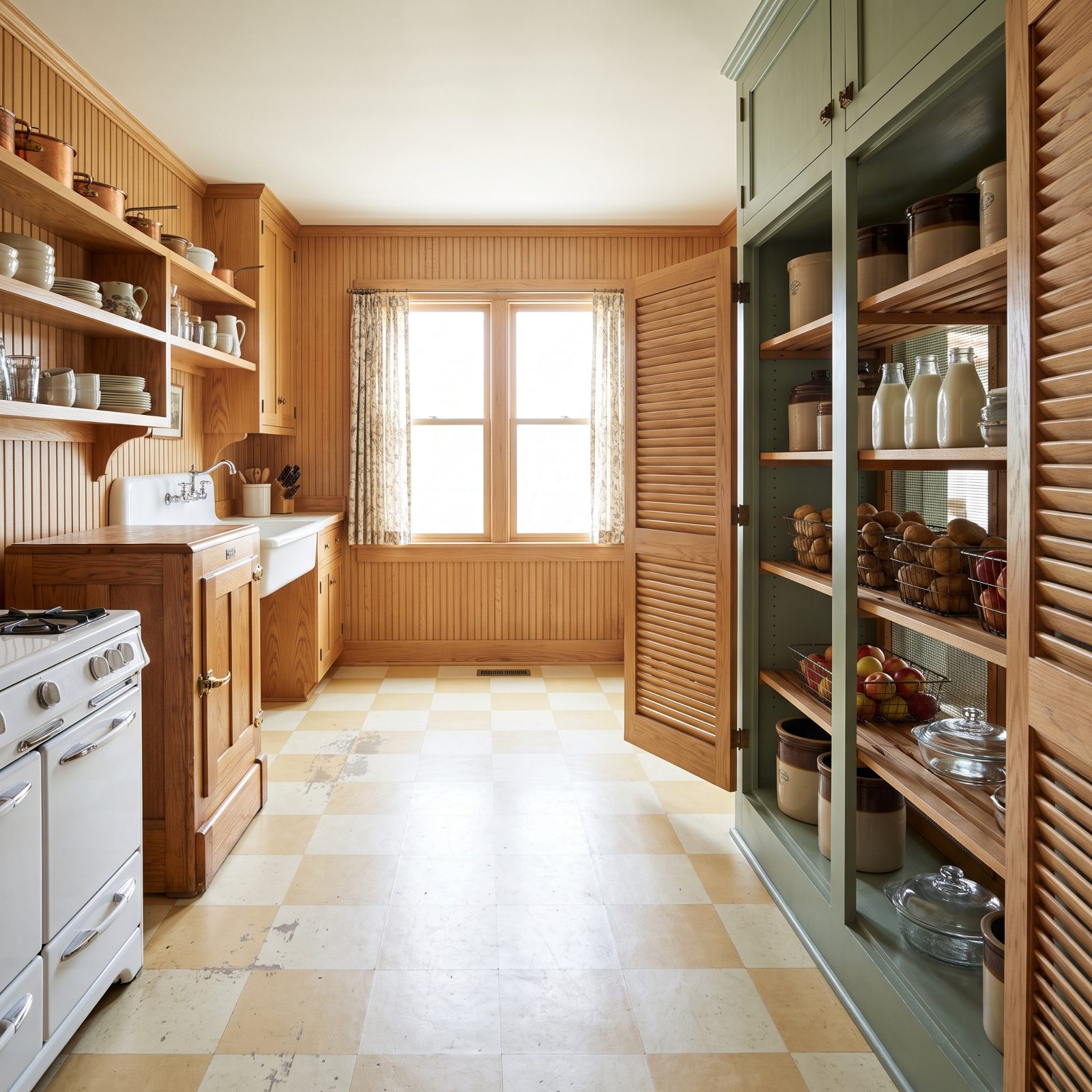
Tucked into the kitchen of an old western bungalow, you’ll find a tall cabinet with slatted shelves and vents running to the outside wall. No motor, no coils. It cooled food on physics alone.
Cool air entered low from outside, rose through the open shelving, and exited high, pulling a steady draft past the butter, eggs, and produce. In dry climates like California’s, where nights stayed cool, it kept perishables fresh without ice or electricity. Families stored anything that didn’t need to be truly cold — root vegetables, canned goods, a crock of lard.
The refrigerator made it obsolete. Plenty survive anyway as pantry cabinets, their original vents painted over and forgotten.
31. The Diagonal Vermont Window Angled to Meet a Later Addition’s Roofline
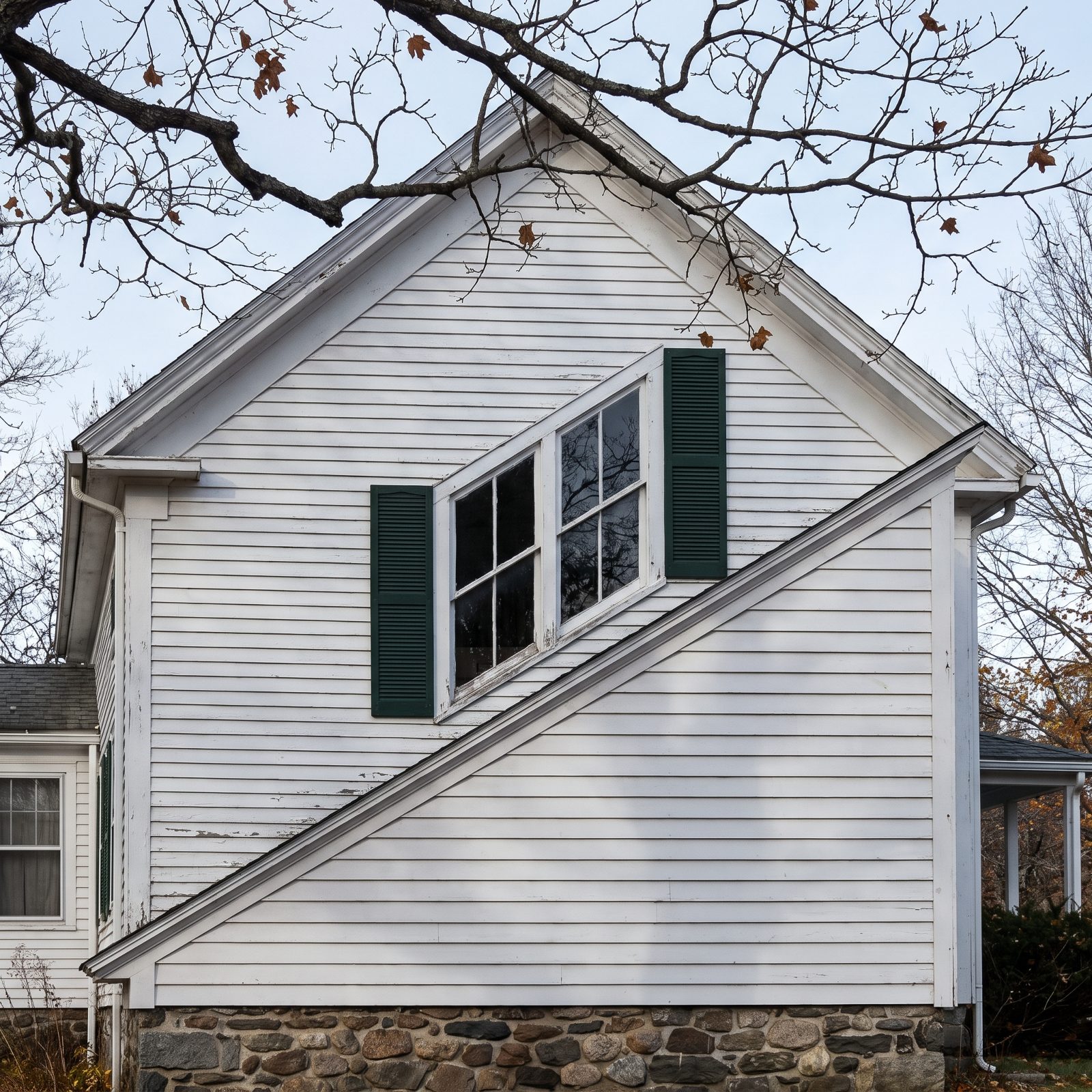
Drive through rural Vermont and you’ll eventually spot a window set on a slant, shaped like a parallelogram instead of a rectangle, its top edge running parallel to the sloping roof of an addition built against the house.
There’s a folk explanation — that a slanted coffin couldn’t be carried out through them, so they warded off death — and it’s almost certainly a tall tale. The real reason is dull and sensible. When a shed-roofed ell or kitchen got added onto a house, its single sloping roofline cut diagonally across an existing upstairs wall. Rather than lose the window, builders angled the sash to fit the leftover triangle of wall and keep light coming into the room.
Function dressed up as superstition. Happens a lot with old houses.
30. The Possum-Belly Table Bins That Held the Household’s Flour and Sugar
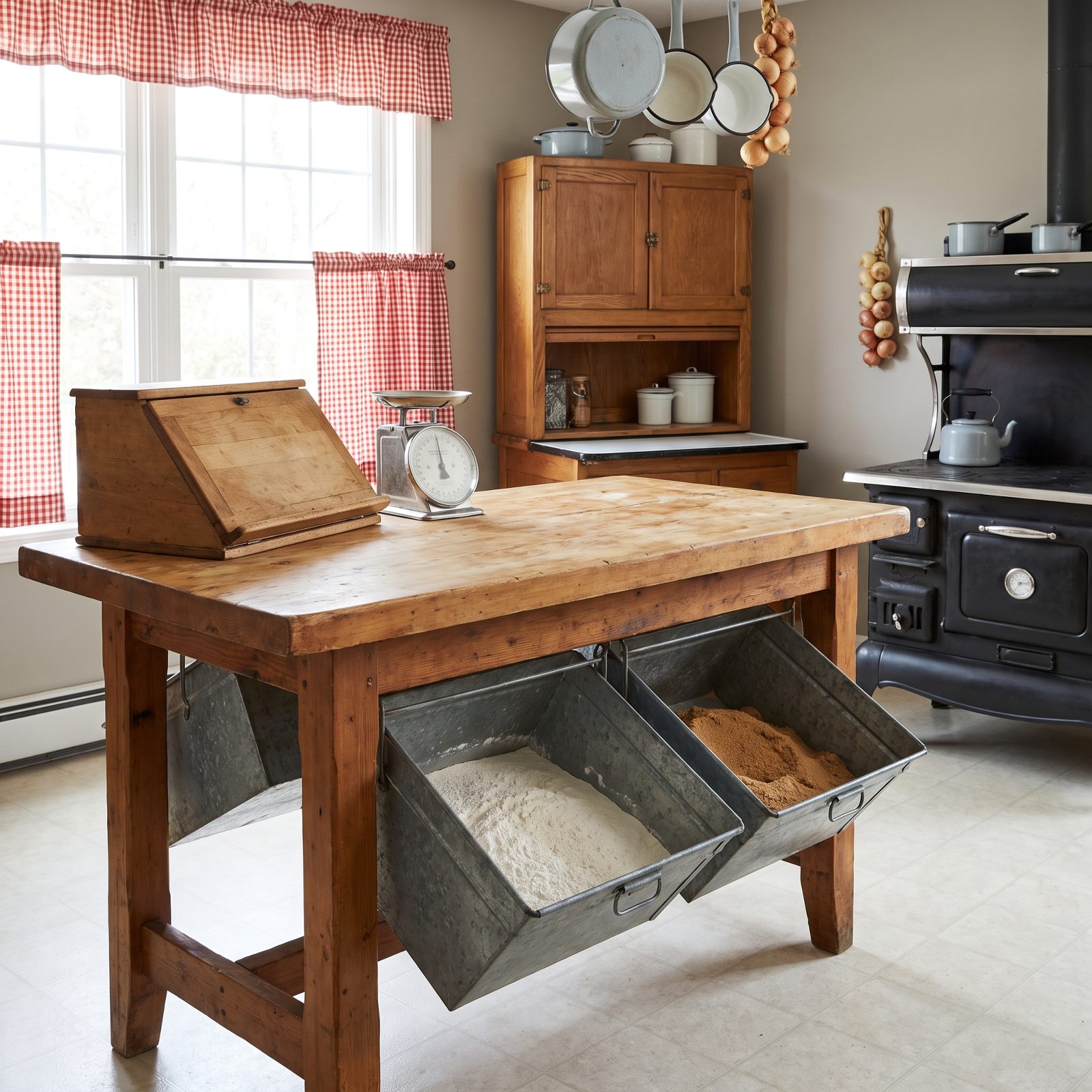
A true possum-belly table has metal bins built in underneath, bulging down like a well-fed animal’s belly, and that shape is where the name comes from. The table here is a simpler cousin: an open-frame wooden work table with galvanized bins hung from a rod beneath the apron, tilting outward past the table’s edge.
Those buckets stored bulk flour and sugar, sometimes cornmeal, right where the baking happened. One reach and the baker had a scoop’s worth within arm’s reach, no trip to the pantry. The galvanized metal stood up to damp and discouraged insects, and tilting a bin outward meant you could get the last of the flour out without digging.
Freestanding versions still turn up at estate sales, often with the bins long gone and the empty frame mistaken for a plain farmhouse island.
29. The Small Sash-Pocket Door That Gave Access to the Window Weights
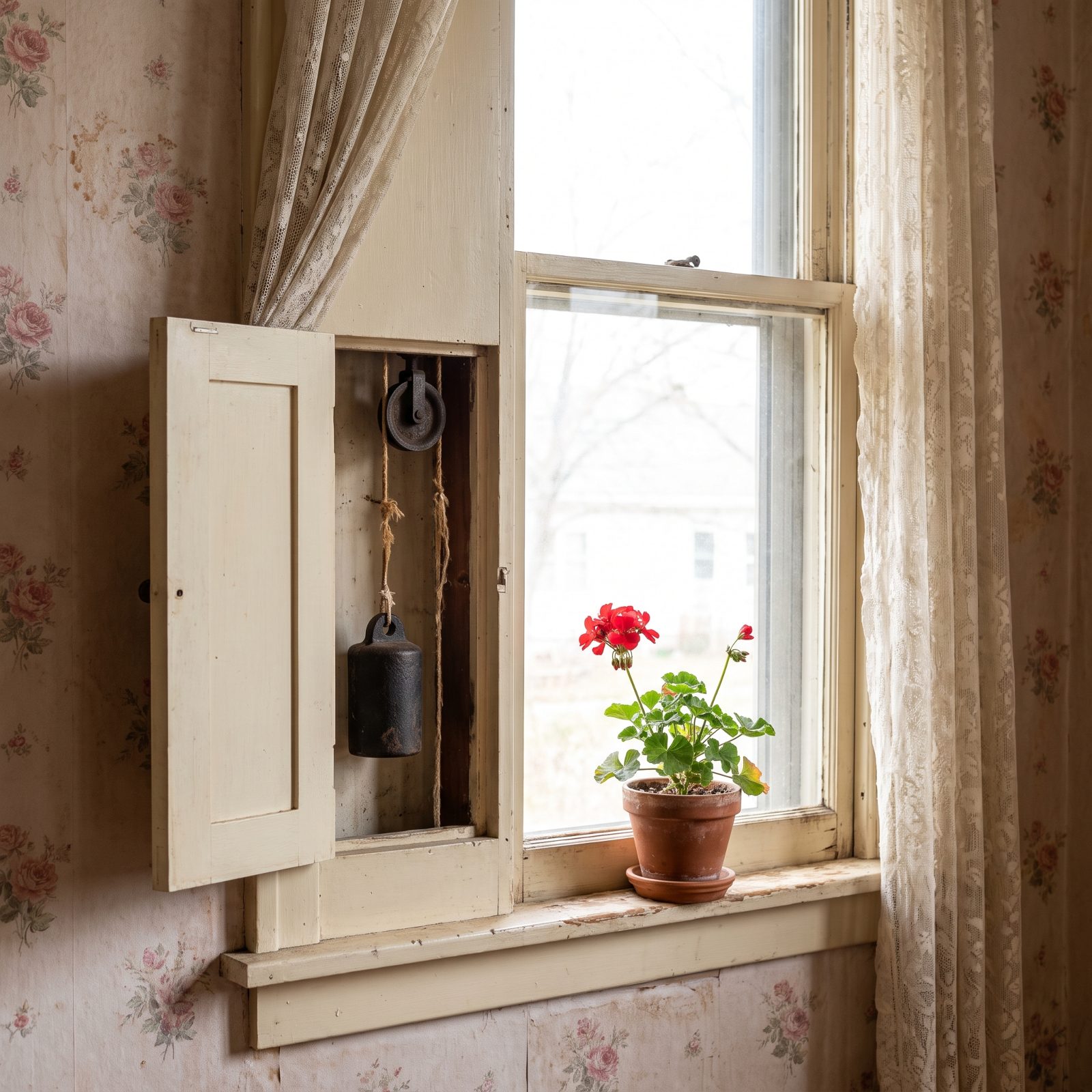
Look along the side casing of an old double-hung window and you may notice a tall hinged door set into a boxed casing beside the window. Swing it open and you’re looking into the sash-weight pocket.
Every original double-hung window ran on hidden counterweights — heavy cast-iron weights tied to the sash by a cord running over a pulley. They’re the reason an old window stays open at any height without a prop. When a sash cord frayed and snapped, the weight dropped to the bottom of the pocket, and this little door was the only way to fish it out and re-string it.
Replacement windows killed the whole system. If your old sashes still glide, those weights are still down there, doing their job.
28. The Decorative Flue Cover That Capped an Unused Stove Opening
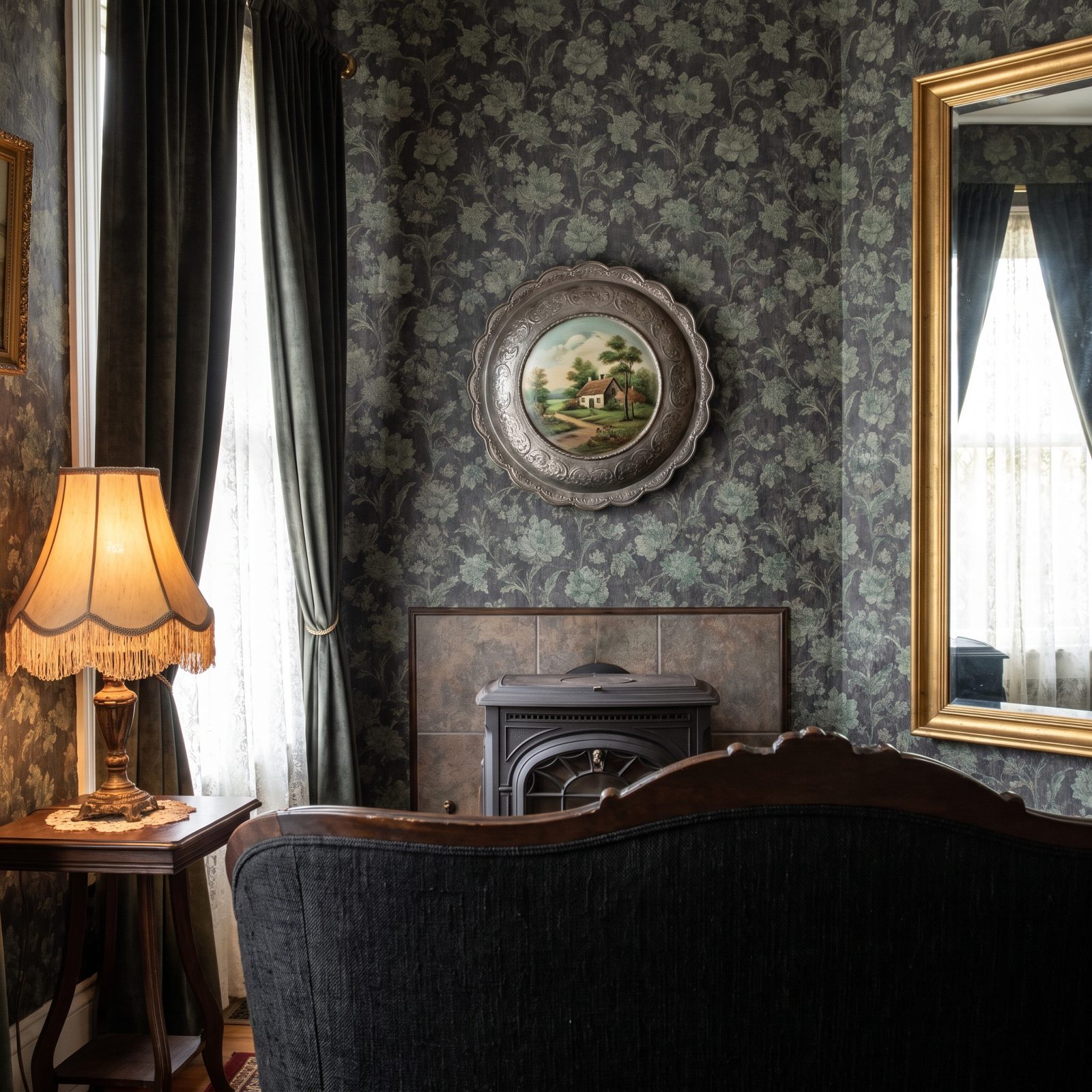
On a plaster wall above an old hearth, you might find a round painted metal disc, maybe a foot across, embossed with flowers or a little landscape. It reads as artwork. It’s actually a lid.
When a room had a stove, its pipe ran into a hole in the chimney flue. Pull the stove out — because a furnace or central heat replaced it — and you’re left with an ugly round hole venting cold air and soot into the room. The flue cover sealed it off, and since it had to hang on the wall anyway, manufacturers made them pretty.
They sold by the thousands around 1900, which is why antique shops are full of them, usually mislabeled as decorative tins by people who have no idea what the hole behind them was for.
27. The Chandelier Pulley That Lowered a Fixture for Lighting and Cleaning
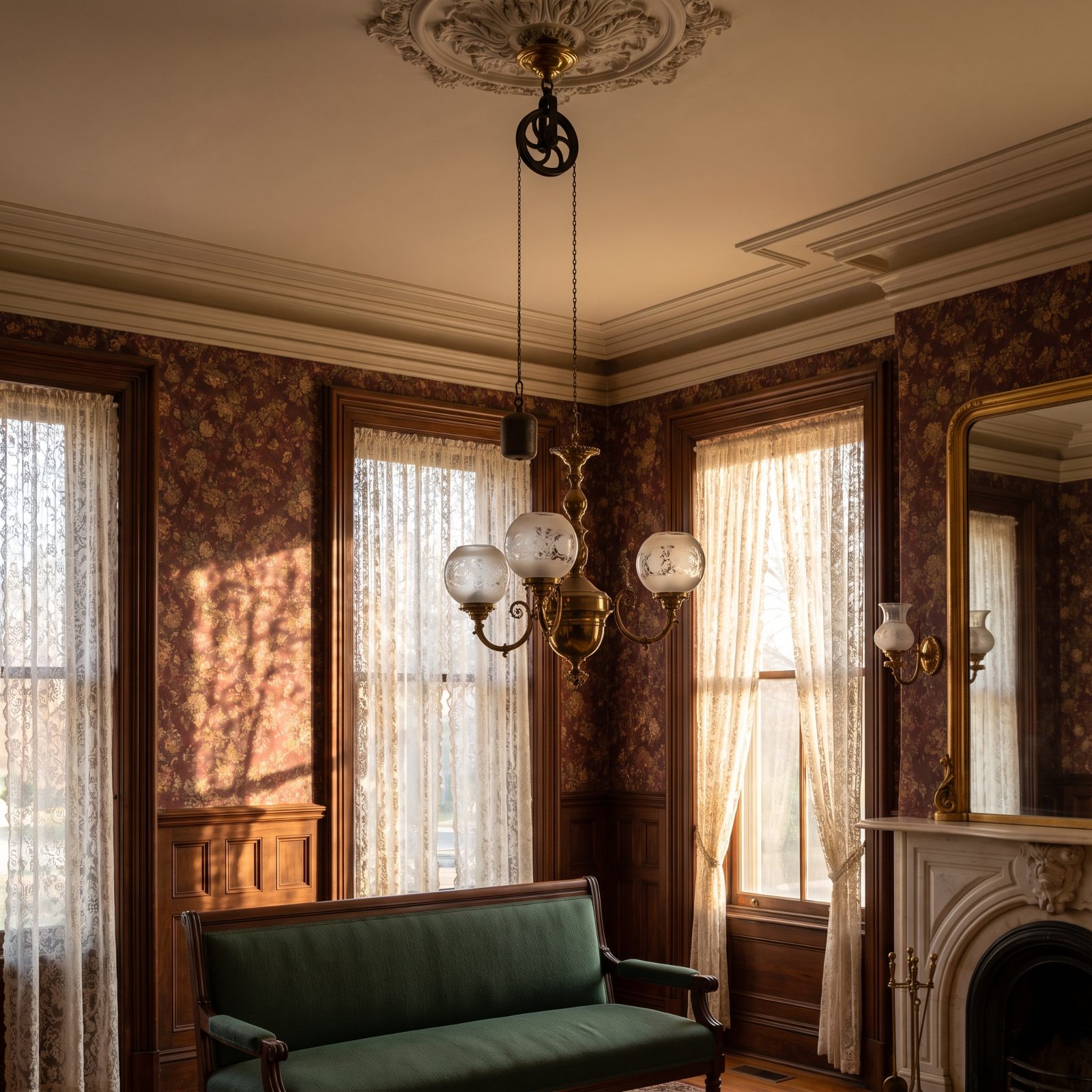
Look up in an old Victorian parlor and you might spot a small wheel tucked into the ceiling molding, trailing a chain most people assume is decorative. It wasn’t. That pulley let the whole chandelier descend, counterweight doing the work, so someone could light the gas jets or wipe soot off the glass globes without hauling out a ladder every single evening.
Gas burned filthy, and the shades blackened fast. So the lowering and wiping and raising became a standing ritual, repeated so often nobody thought twice about it.
26. The Gas-Lighting Key Valve That Controlled a Wall or Ceiling Flame
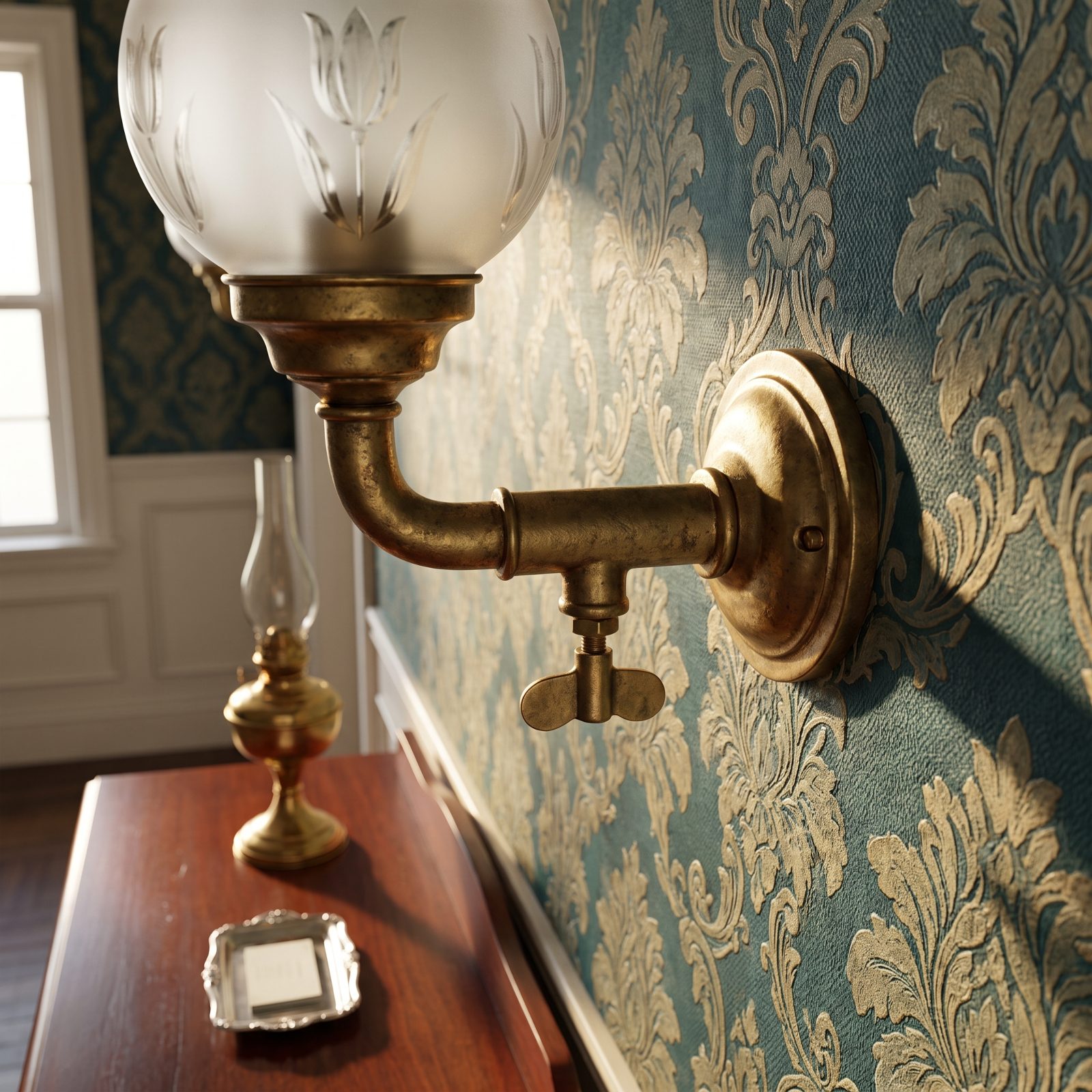
That little winged brass knob poking out of the base of an old wall sconce was the on-off switch of its day. Turn the key and gas flowed to the burner, where you’d touch a match or, later, a pilot flame. Turn it back and the house went dark one room at a time.
Everyone knew the feel of that quarter-turn in the dark. Too far and the flame roared and sooted the globe; not enough and it guttered out. Open flame on the wall meant the whole family, kids included, learned to read a valve by touch.
25. The Hand-Cranked Knife Cleaner That Polished Carbon-Steel Blades
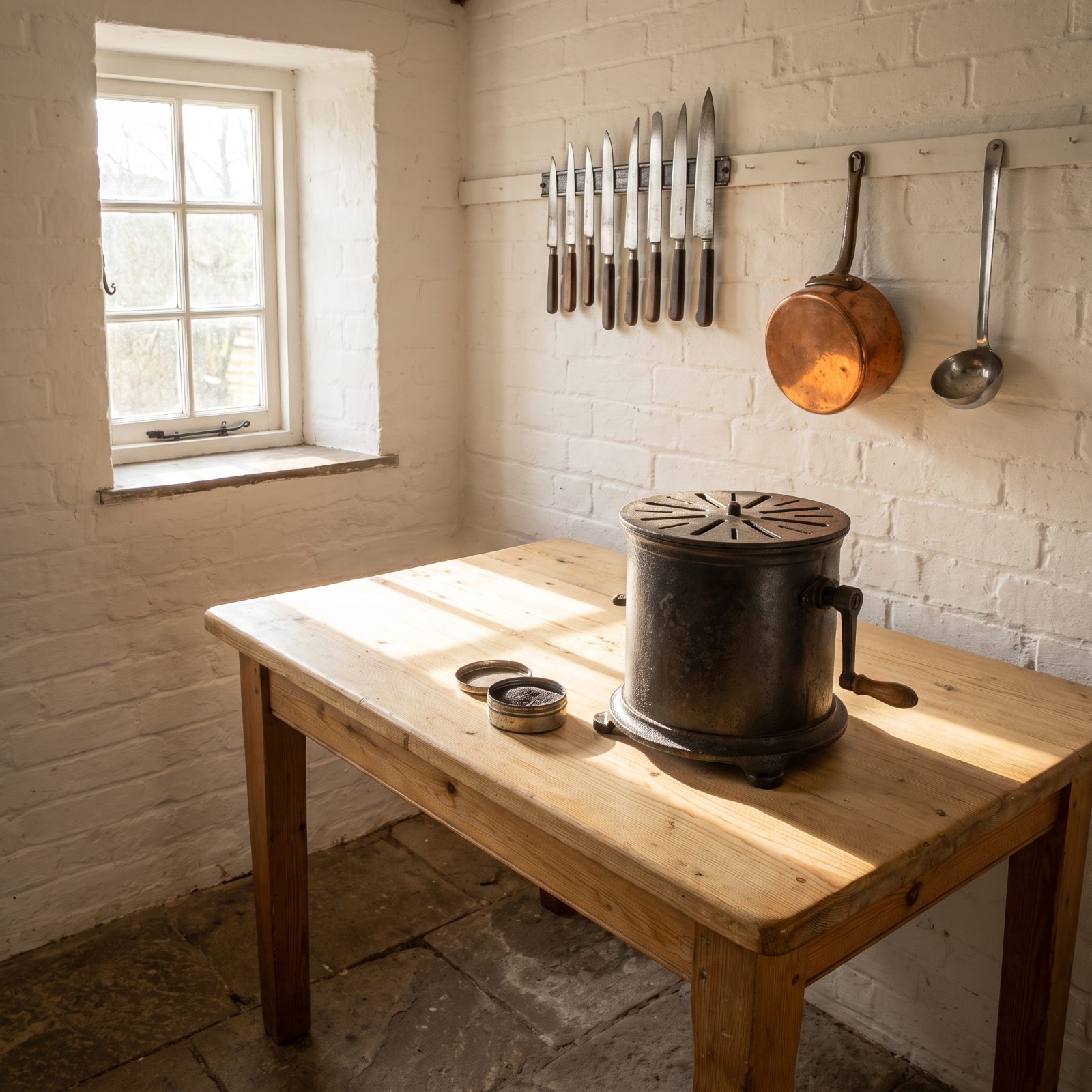
Before stainless steel existed, every kitchen knife was carbon steel, which meant every knife rusted and stained if you so much as looked at it wrong. The fix was a drum-shaped contraption bolted to the scullery table: slots on top, a crank on the side, a charge of emery powder churning inside.
You slid a blade in, cranked, and felt the leather pads and grit scour the steel bright. Loud, dusty work. Usually it fell to whoever ranked lowest in the household.
Stainless steel didn’t just change knives. It quietly retired an entire machine and the daily chore that came with it.
24. The Hoosier Cabinet’s Built-In Sifter That Dispensed Flour
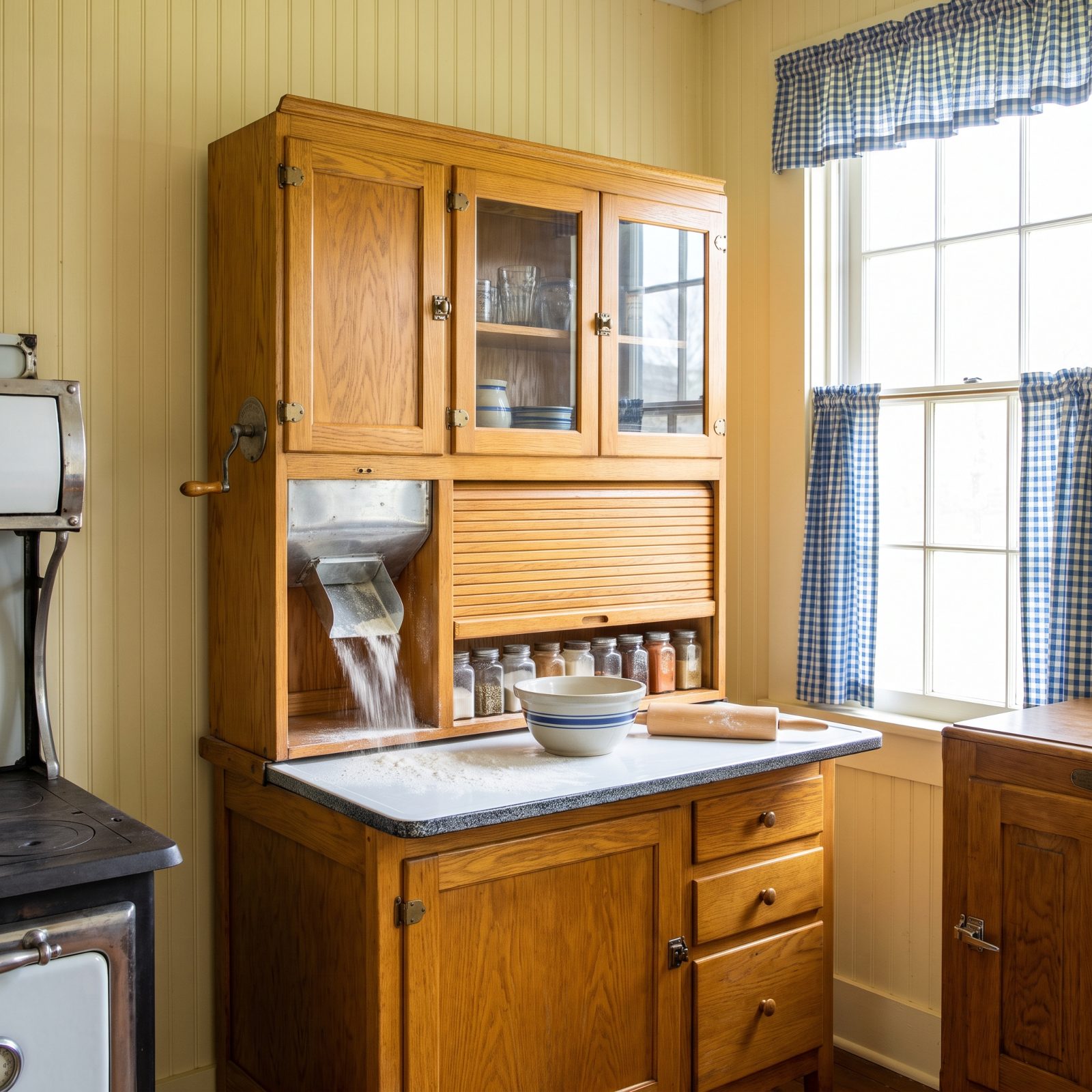
The Hoosier cabinet was the original kitchen workstation, and its cleverest trick lived up top. A tin flour bin with a sifter crank mounted high on the cabinet’s side panel: fill the bin, turn the handle, and sifted flour poured out of the chute below with no separate sieve to wash.
Bakers measured their mornings by that crank. It kept a week’s flour clean, dry, and safe from mice, doling out exactly what a batch of biscuits needed.
23. The Indoor Cistern Pump That Drew Collected Rainwater
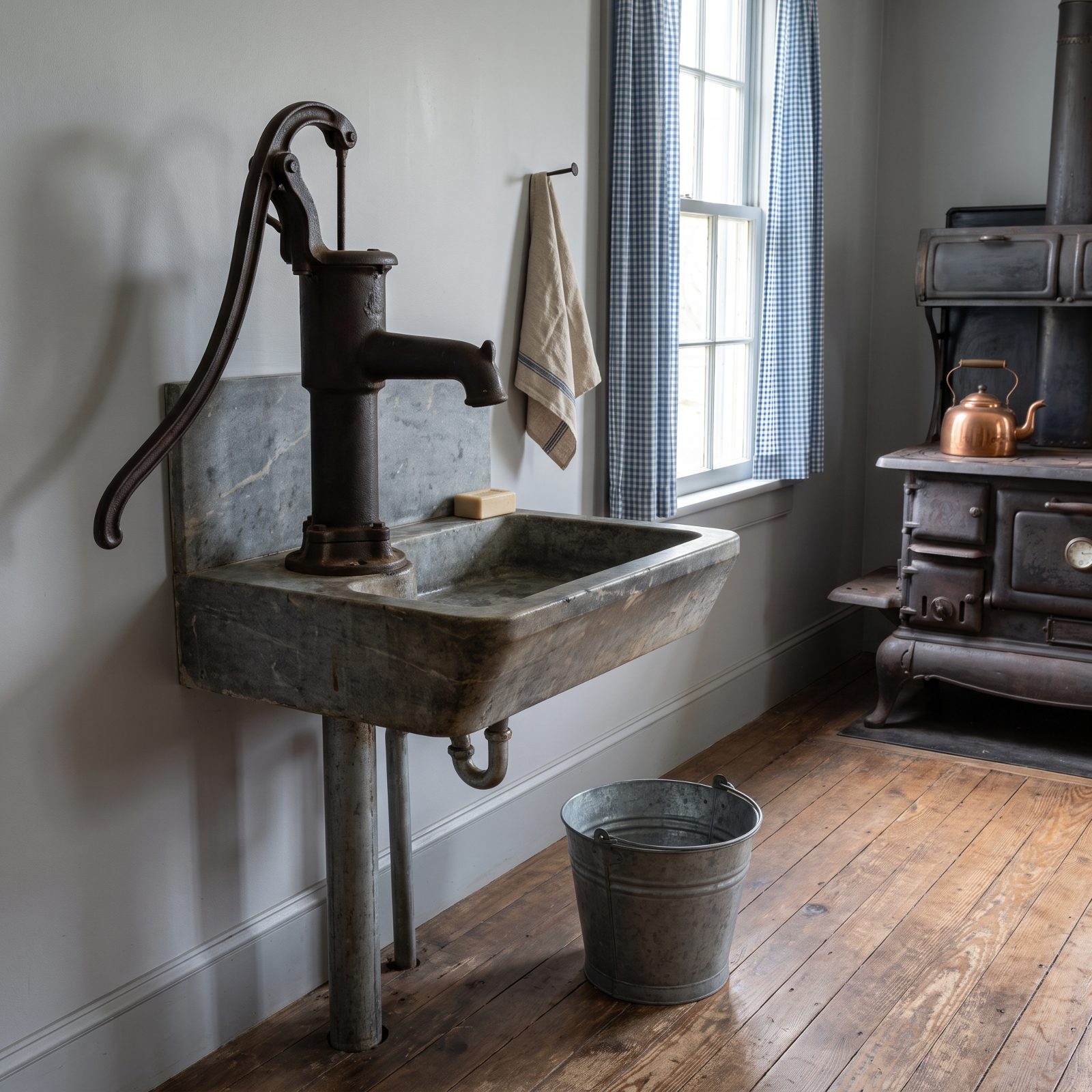
Years before municipal water lines reached most homes, a cast-iron hand pump at the kitchen sink pulled up rainwater collected in an underground cistern. You’d lean into the handle, prime it with a cup of water, and work it until soft rainwater gushed from the spout.
That water was prized. Being soft, cistern rain lathered soap beautifully for washing hair, dishes, and laundry, far gentler than the hard well water sitting right beside it.
22. The Fireplace Ash-Dump Door That Emptied Into the Basement
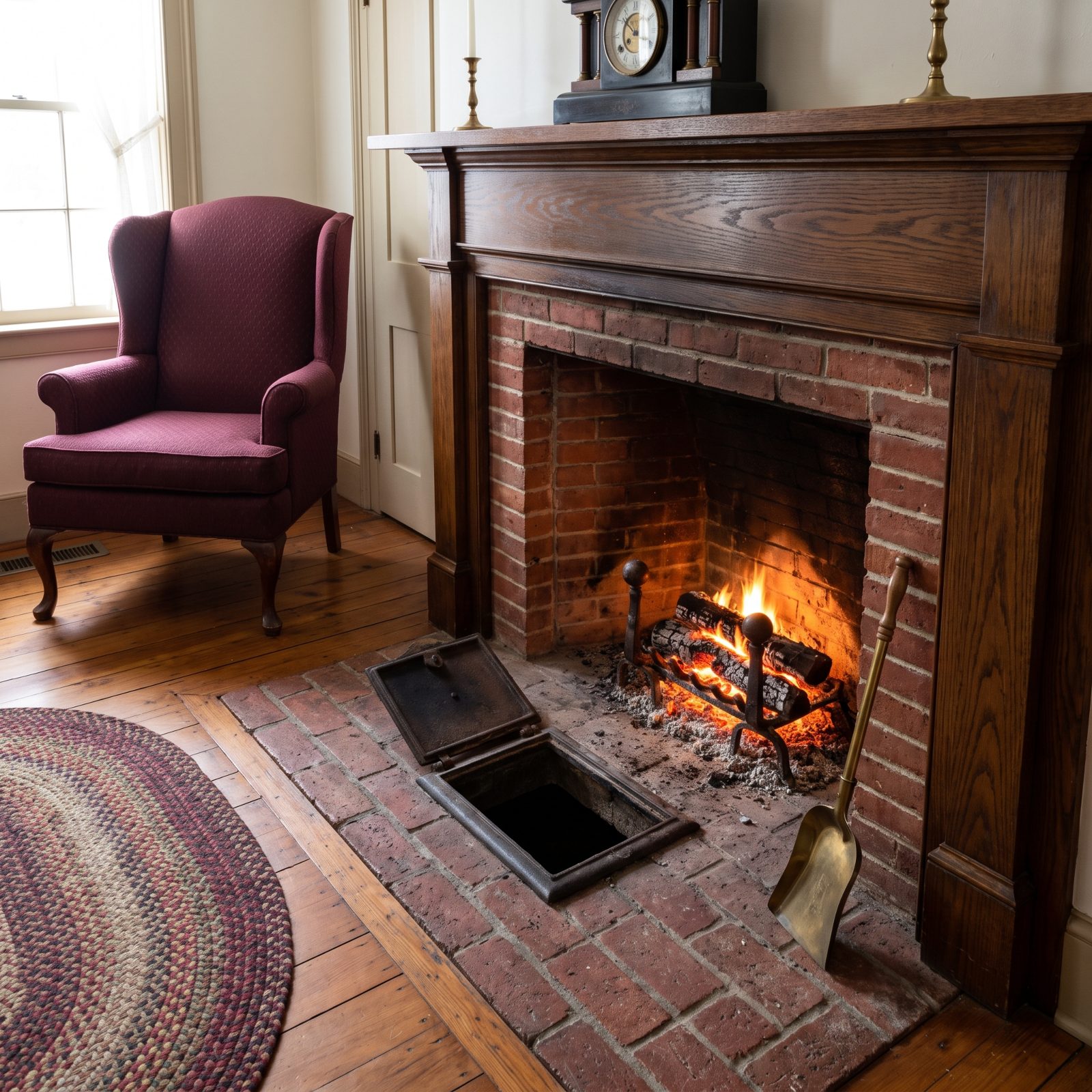
Look at the brick hearth in front of an old fireplace and you may find a wide, hinged iron hatch set into the floor. Lift the handle, push the ashes through, and they drop down a masonry chute into a sealed pit in the basement. No bucket, no grey trail dragged through the house.
Down below, a clean-out door let you shovel the whole lot out at once. Thrifty households saved it, too, since wood ash made lye for soap and a decent de-icer for icy porch steps.
21. The Ice-Delivery Door That Opened Directly Into the Icebox
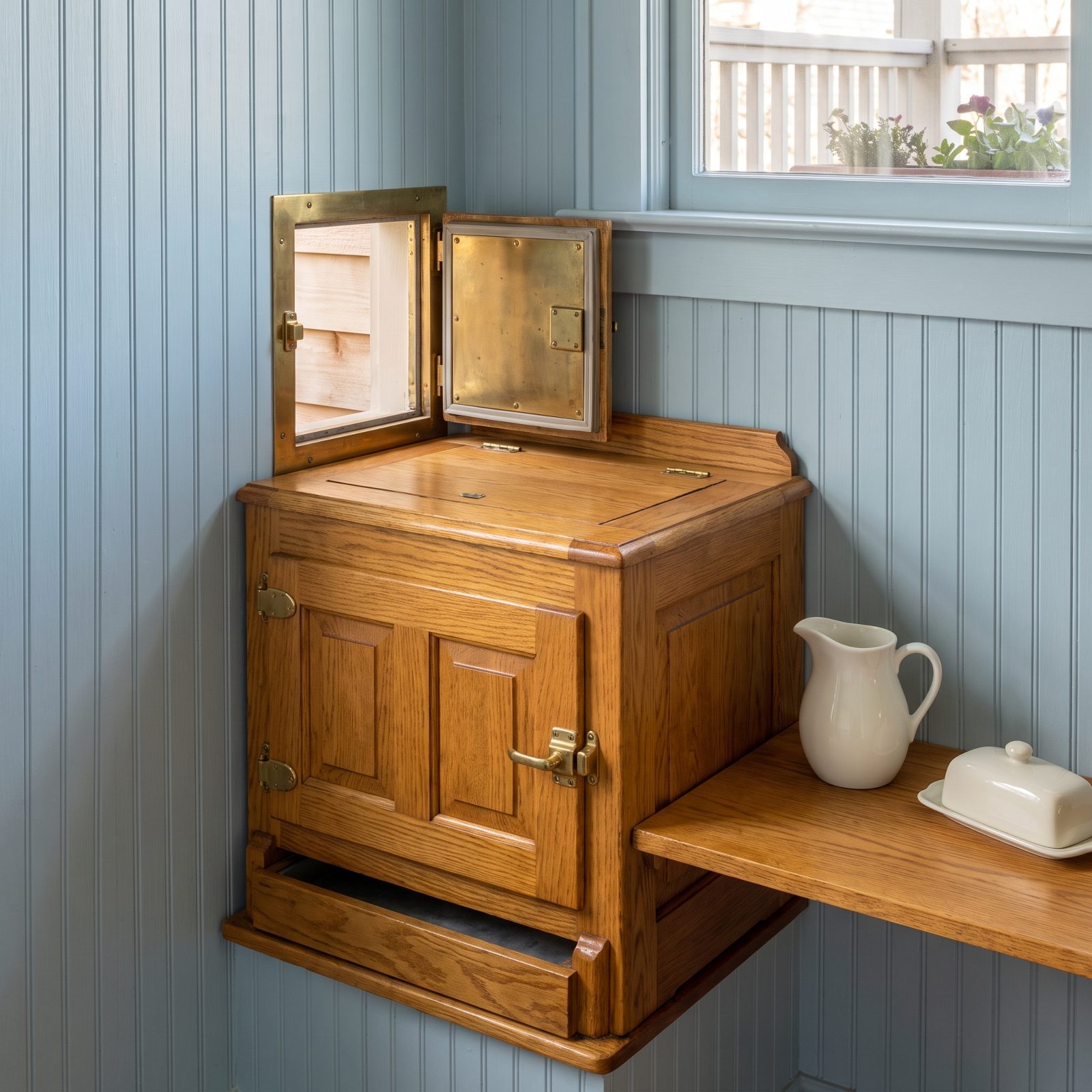
The icebox came before the refrigerator, and keeping it cold meant a block of ice dropped off every few days. Smart houses built a small hatch into the exterior wall, hinged on the inside and swinging out into the kitchen, just above the icebox and its own hinged top lid.
The iceman would read the card in your window telling him what size block you wanted, climb the back steps, wait for someone inside to unlatch the little door, and slide the ice through to be lowered into the icebox. Nobody had to carry it through the house. No melt tracked across the kitchen.
20. The Wall Speaking Tube Used as a Household Intercom
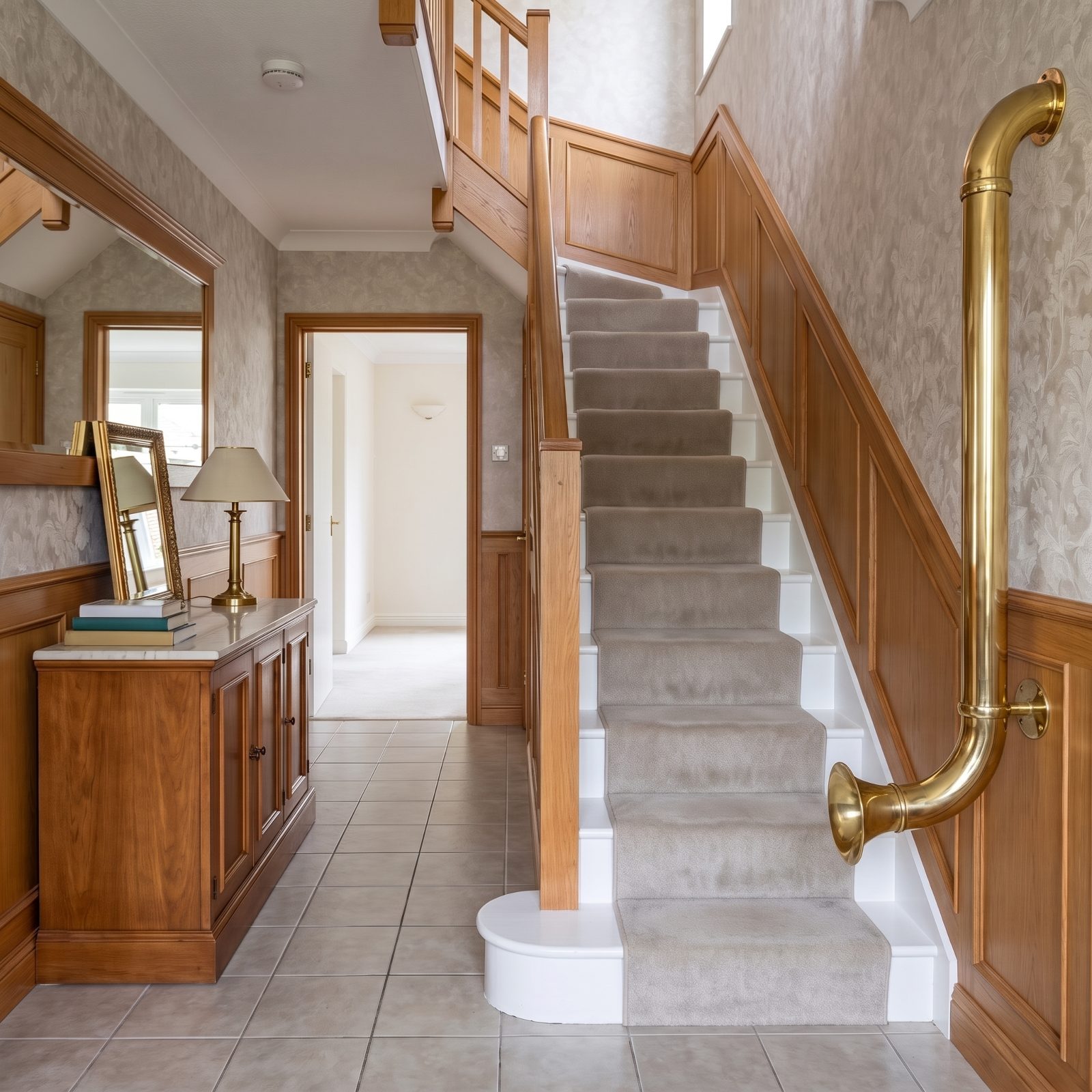
Before electric buzzers, a brass funnel on the wall let you talk to another floor through a brass pipe running openly down the wall. You’d blow into it, a whistle sounded at the far end, and once someone answered you’d speak into the tube like a telephone that ran on lung power.
Big houses used them to call the kitchen or summon help upstairs. And there’s something charming about a system where the entire house could hear you shout for more coffee, assuming you aimed your voice square into the brass.
19. The Milk Door That Allowed Deliveries Without Waking the Household
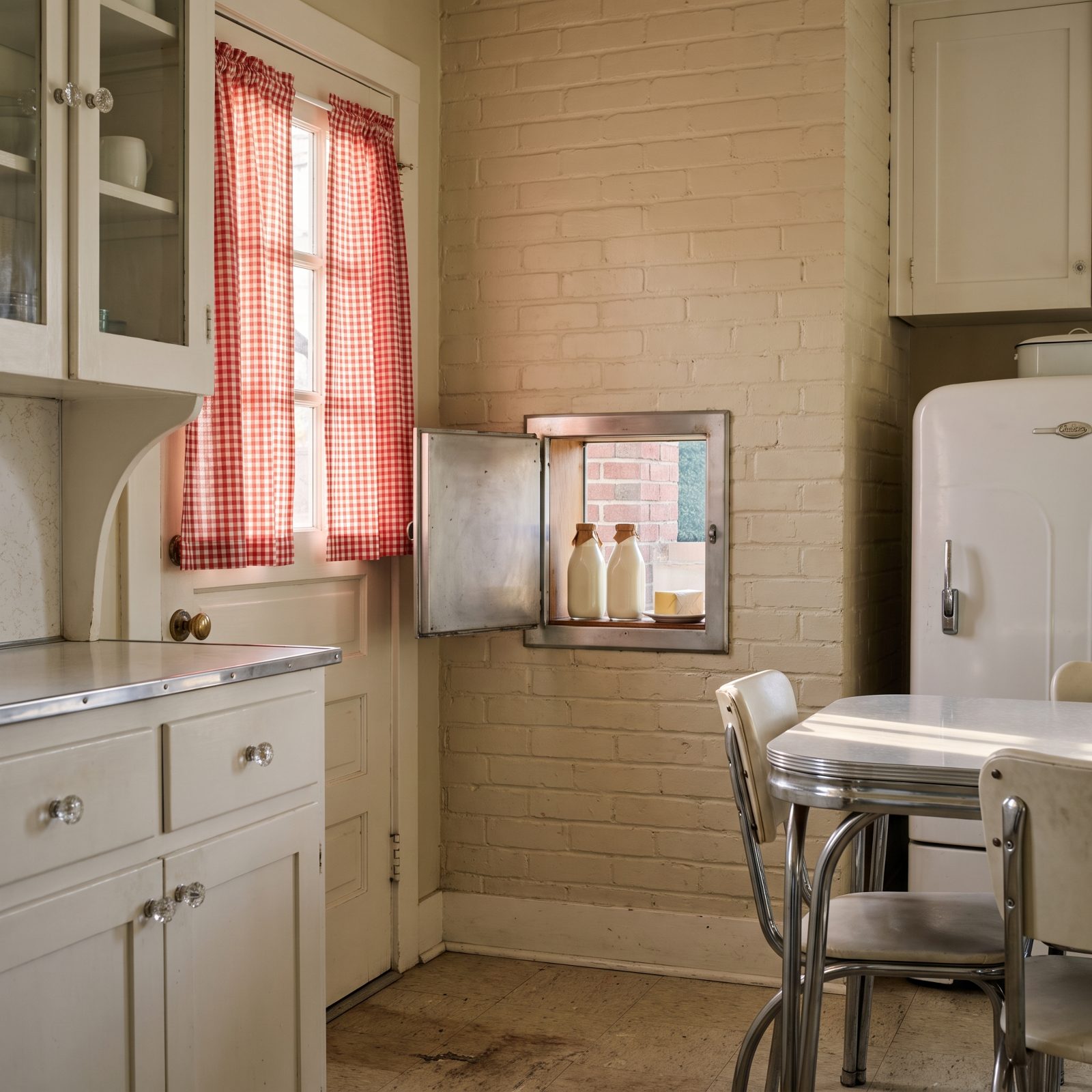
Look for a little two-sided cabinet set into the wall by an older back door. That’s a milk door. The milkman opened it from outside, left fresh bottles on the shelf, took the empties, and the family collected everything from the kitchen side whenever they finally rolled out of bed.
It solved a real problem. Deliveries came at dawn, and nobody wanted a knock on the door or bottles freezing on the step, so the insulated little pass-through kept milk cool and the household asleep.
Plenty still exist. Painted over, forgotten, a small brick-lined reminder of a time when breakfast arrived at the wall while you slept.
18. The Pocket Shutters That Slid Into the Wall Beside a Window
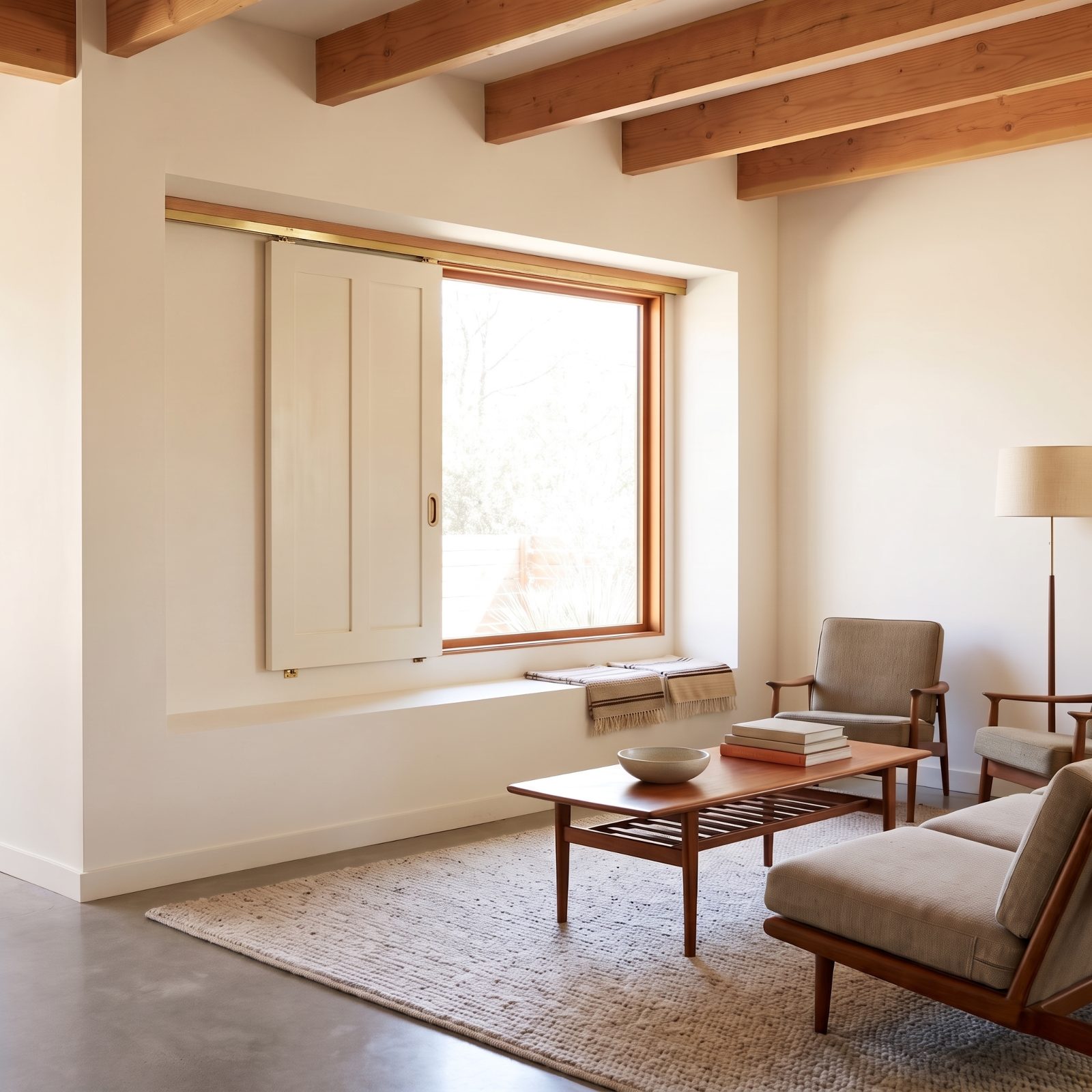
Before blinds came in a box from the hardware store, well-built homes hid their window coverings inside the wall itself. Sliding interior shutters hung from a track inside the deep window reveal, so when you wanted light, they glided aside and parked beside the glass.
The engineering was simple and the result was clean. Solid panels hung from an exposed brass track and rolled sideways along the reveal, clear of the window. No curtains to launder, no fabric cluttering the glass. When night fell or the sun got harsh, you slid them across the glass by their brass pulls and latched them shut. They blocked drafts through single-pane glass and, honestly, they were a security measure too — a barred window from the inside.
Deep window reveals made the whole thing possible. Old masonry walls ran a foot or more thick, which gave carpenters room to hang that track and park the panels inside the reveal. You rarely see this in modern construction because our walls are thin and our windows are efficient. A shame, really.
17. The Lockable Silver Safe Built Into a Butler’s Pantry
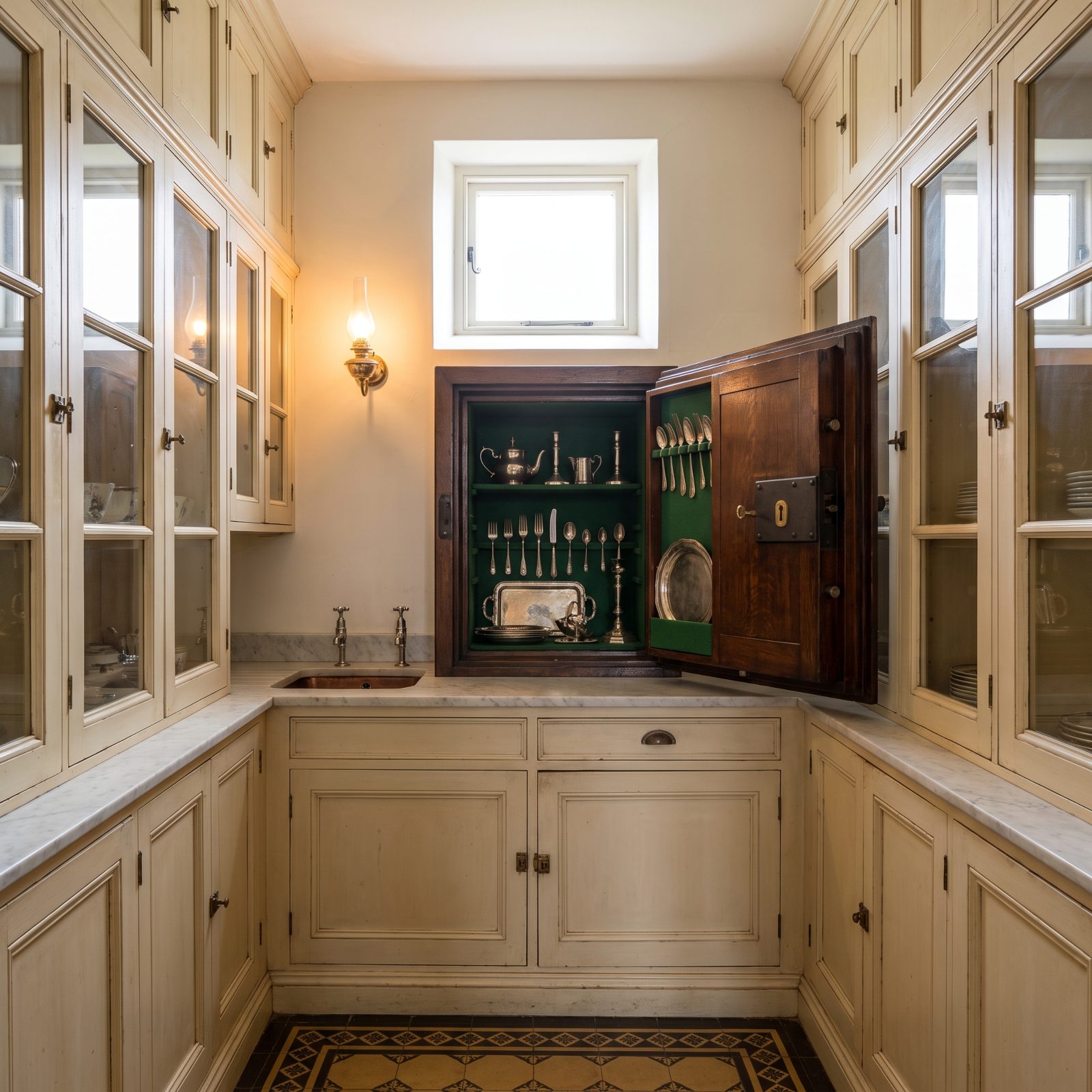
A household’s silver was often its single most valuable moveable asset, so the better Victorian houses gave it a locked home of its own. Tucked into the butler’s pantry, the silver safe was a heavy cabinet with an iron lock plate and felt-lined slots shaped to each piece.
Inside, green baize kept the flatware from rattling and slowed the tarnish. Teapots, candlesticks, serving trays — each had its slot, and the butler held the key. In a house full of servants coming and going, that lock mattered. It wasn’t suspicion of any one person so much as plain accounting: the silver was the butler’s responsibility, and he could prove at a glance whether anything had walked off.
The pantry around it did the supporting work, lined floor to ceiling in cream-painted cabinetry with glass fronts above and a marble counter for polishing. Why marble? It stayed cool and didn’t scratch the finish. These rooms were the backstage of a grand house, and the safe was its quiet vault.
16. The Pass-Through Cupboard That Moved Dishes Between the Kitchen and Dining Room
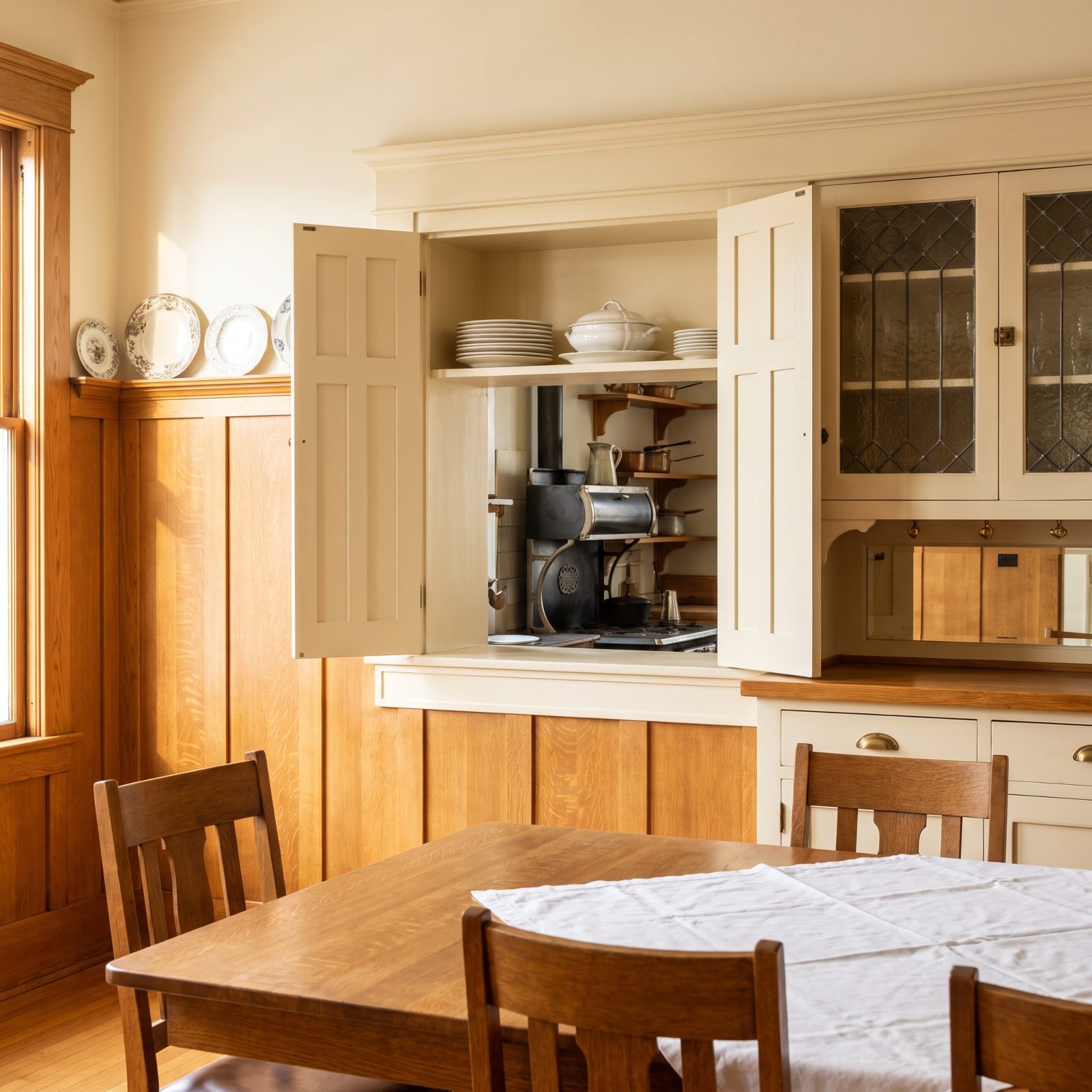
Set into the wall between kitchen and dining room, the pass-through cupboard let food travel from stove to table without anyone circling through a hallway. A pair of small paneled doors opened to a shallow shelved recess, and the kitchen stood right on the other side.
You loaded a platter from the cooking side, swung around to the dining room, and collected it there. Think of the hot dishes that never cooled on a long trek, the serving that stayed quiet during dinner. On the dining side, the cupboard usually sat above a built-in buffet with cup hooks and leaded-glass doors, so the whole wall did double duty as storage and service hatch.
Early-1900s homes loved this kind of built-in efficiency, and it belonged to a time when the cook and the family were sometimes the same person. One woman could serve a full meal without ever leaving the dining room empty-handed. Modern open-plan kitchens killed off the need for it, but there’s a logic here that an island will never match.
15. The Long Transom Pole Used to Open Windows Above Doors
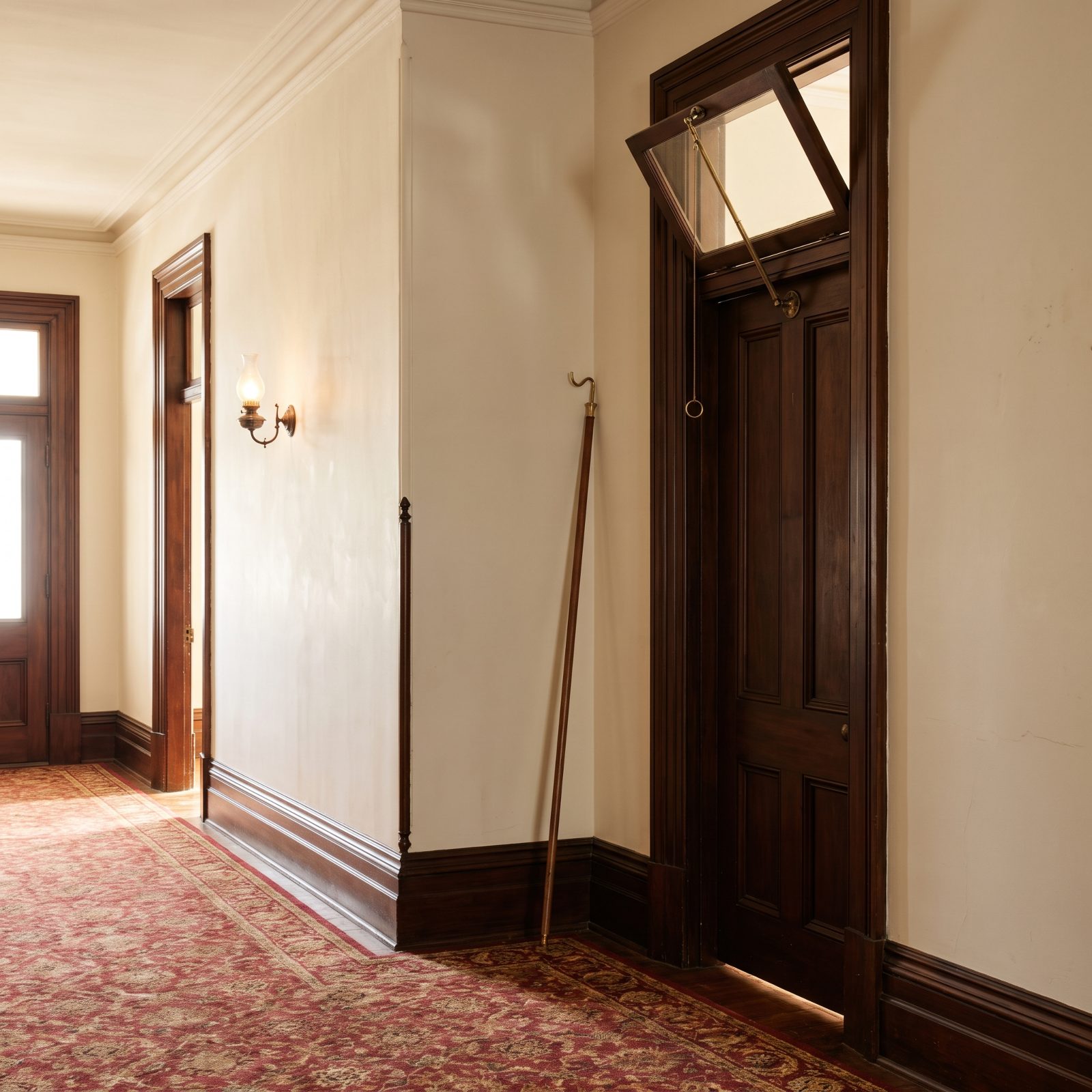
Transom windows — those little hinged panes above interior doors — solved a real problem in houses with no mechanical ventilation. Open one and air moved between rooms even with the door shut tight. But the transom sat well out of reach, so every house that had them needed a way to work them from the floor.
Enter the transom pole. A long slender length of wood with a brass hook at its top and a brass ferrule at its foot, it let you push the hinged sash open or nudge it closed from down below, while a brass rod held the tilted window in position. The pole usually lived in the hall, its brass hooked top resting against the wall and its brass-tipped foot planted on the floor, ready whenever the air went stale.
These transoms did more than move air. They borrowed light, pulling daylight from a bright hall into a dark bedroom, and before electric fans they were the only cooling a hallway got on a August night. The pole is the part most people forget — a humble stick that made the whole clever system usable.
14. The Twist-Handle Mechanical Doorbell That Rang Without Electricity
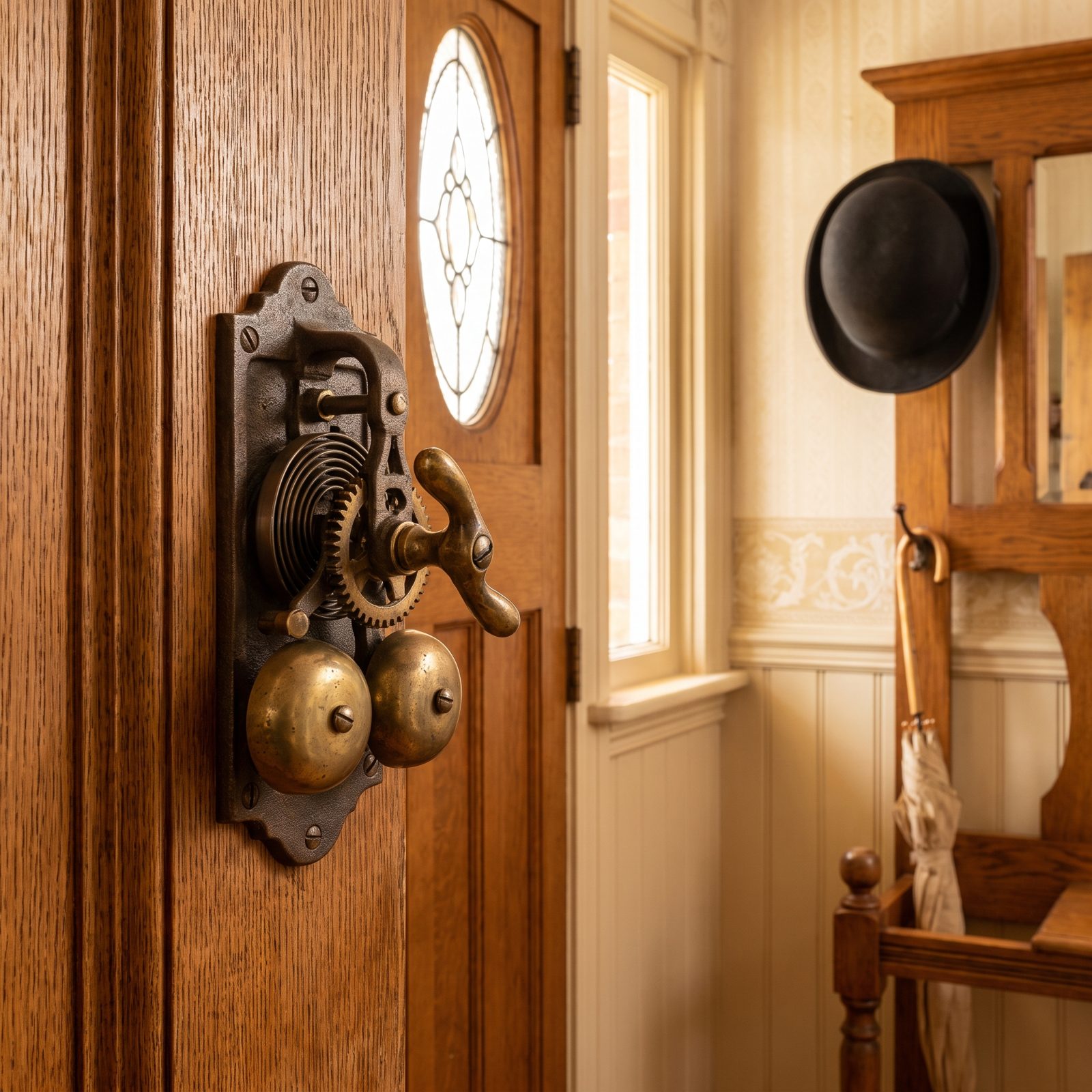
Long before a wired chime, callers announced themselves by giving a handle a good turn. The mechanical doorbell ran on nothing but a spring and a pair of small brass bells mounted through the door itself.
A caller turned the handle outside, which worked a pivoting lever arm set inside an ornate cast-iron plate on the inner face of the door. That motion wound a coiled spring, which snapped a clapper against the bells just below it. No batteries, no wiring, no transformer humming in a closet — just a geared mechanism that rang as long as someone kept turning it. The harder the twist, the more insistent the ring, which meant an impatient caller sounded impatient.
These things lasted. You still find them working on old doors a hundred and thirty years later, the brass gone soft and dark with patina but the clapper still true. A doorbell that never needs a battery feels almost radical now.
13. The Cookstove Reservoir That Supplied Household Hot Water
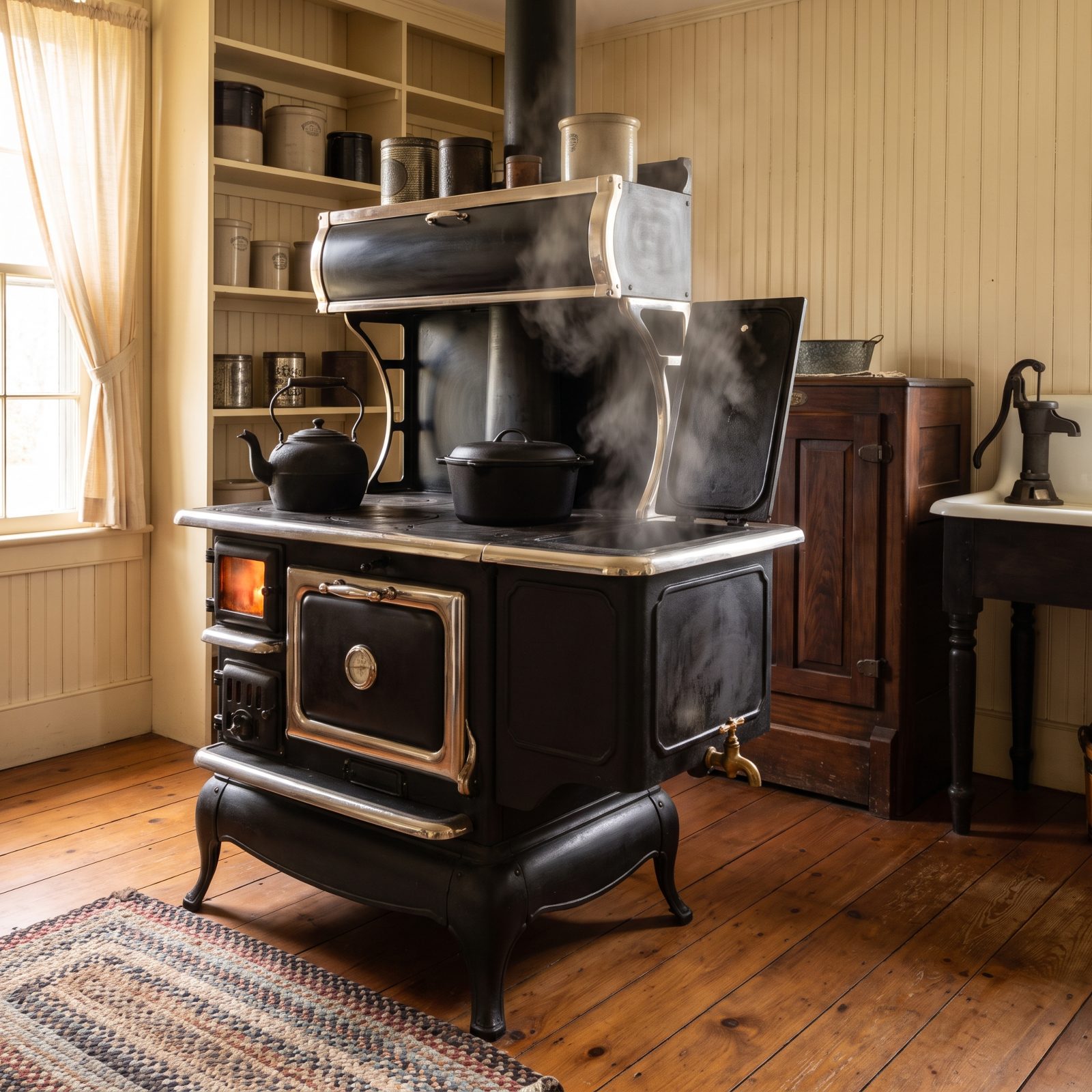
If you wanted hot water in 1900, you got it from the side of the stove. The cookstove reservoir was a built-in tank bolted to the end of a cast-iron range, warmed by the same firebox that cooked dinner, with a small spigot at the base for drawing off a steaming cupful.
Because the fire burned most of the day anyway, the reservoir sat there heating water for free. Washing up, filling a basin, a quick pot of tea — all of it came straight from the tank. A hinged lid let you top it off from the pump, and steam curled off the surface whenever the fire ran hot.
There’s something genuinely admirable about this efficiency. One fire did three jobs: cooked the food, warmed the room, and heated the household’s water, all at once. We’ve since split those tasks across a stove, a furnace, and a water heater, each with its own bill. The old iron range just did the lot.
12. The Beehive Oven That Baked With Heat Stored in Brick
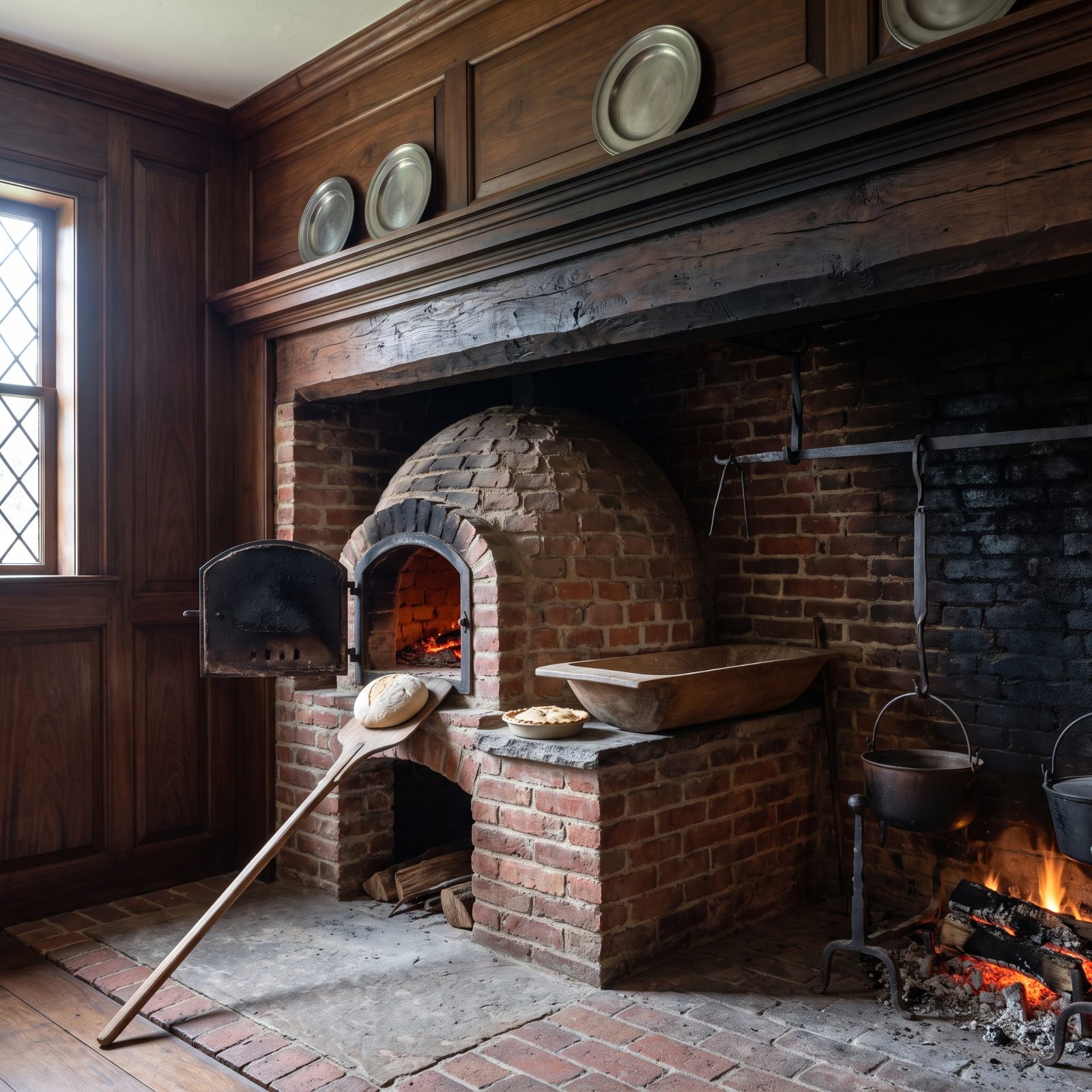
The beehive oven worked on a principle so clever it still gets used in wood-fired kitchens today: heat the brick, then bake in the leftover warmth. Set into the hearth brickwork, this domed chamber got its name from the rounded shape that trapped and radiated heat.
You built a fire inside it and let it roar until the bricks themselves glowed. Then you let the fire burn down to glowing coals and embers, and slid your bread and pies in through the open mouth on a long wooden peel. The coals kept smoldering, but the mass of hot brick did most of the baking, releasing its stored heat slowly over hours. A skilled cook read the temperature by holding a hand near the opening or tossing in a pinch of flour to see how fast it browned.
And here’s the part that sounds like a scheduling nightmare but was really just good planning: the oven cooled in stages, so you baked in order. Bread first while it was hottest, then pies as it eased, then custards and puddings in the last gentle warmth, and finally you left fruit in overnight to dry. One firing, a whole day’s cooking.
11. The Removable Stove-Lid Lifter That Prevented Burned Hands
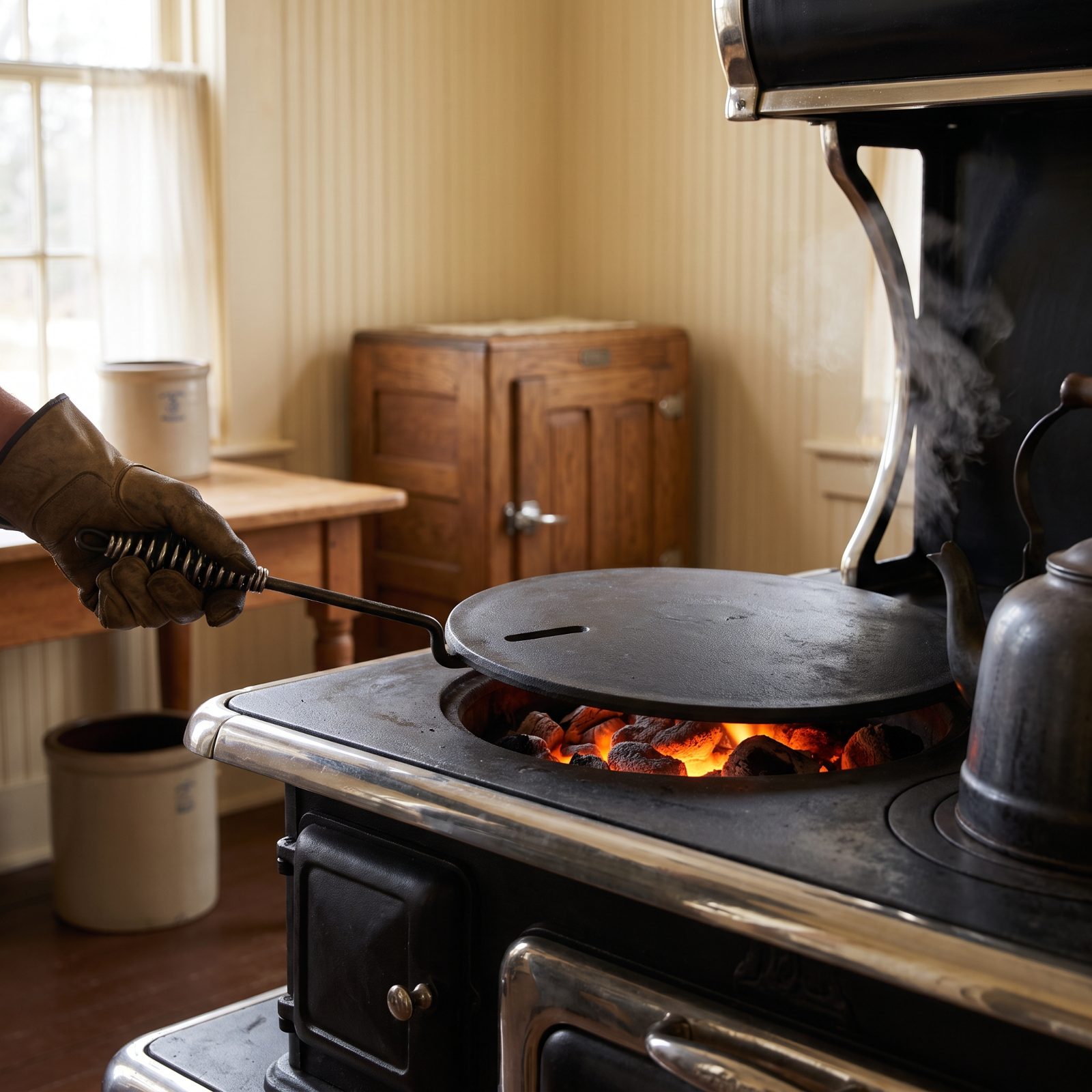
The cooktop of a wood stove had a large round opening over the firebox, capped by a heavy iron lid that got blistering hot. To get at the fire underneath, you needed a lid lifter — a separate iron handle that hooked into a notch in the plate.
Grip the handle, tilt, and the glowing lid came free without a single finger touching hot metal. You lifted the lid to feed the firebox, to set a pot directly over the coals for a fast boil, or to knock down ash. The coiled-wire grip on better lids stayed cool even while the plate itself sat over the coals.
It’s a simple object and it’s easy to overlook, but a kitchen simply couldn’t run without one. Without that handle you were stuck cooking around a fire you couldn’t safely tend. Most stoves came with their own, and a smart cook kept it close and never let it wander.
10. The Fireplace Crane That Swung Cooking Pots Over the Fire
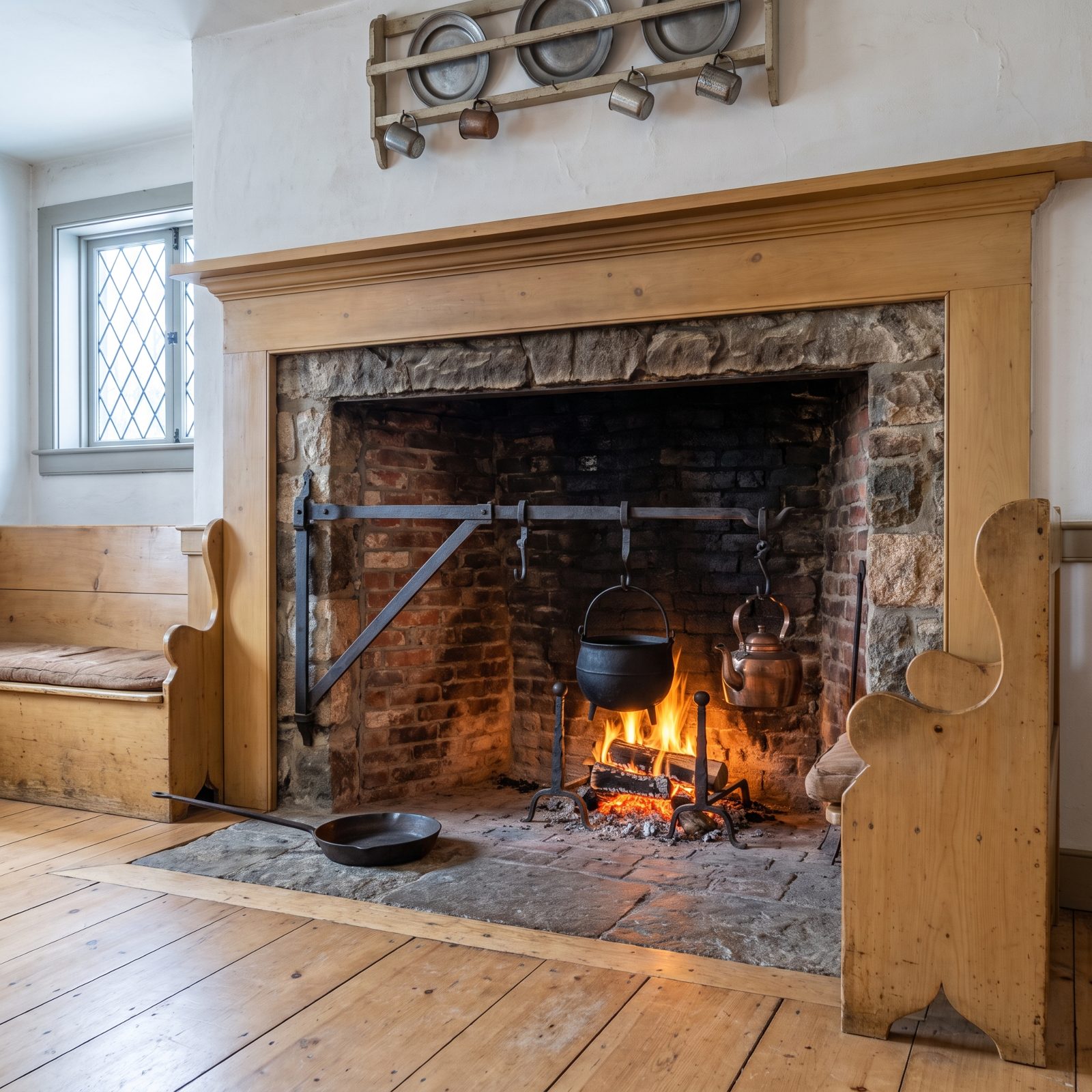
Cooking over an open fire sounds romantic until you picture reaching a bare arm into the flames to lift a thirty-pound cauldron. The fireplace crane fixed that. An L-shaped wrought-iron arm, hinged at one side of the firebox, it swung the whole load in and out of the fire on a pivot.
Pots hung from hooks and trammels dangling off the arm. When you needed to stir or check a stew, you grabbed the crane and swung it out over the hearth, well clear of the flames. Swing it back and the pot returned to the heat. The adjustable trammels raised or lowered each pot, giving you a full boil or a slow simmer depending on where you hung it.
A good crane could carry several vessels at once, so a cauldron, a kettle, and a skillet all shared one fire. It was the heart of every colonial kitchen, and if you’ve ever wrestled a heavy pot off a camp fire, you understand instantly why someone bothered to forge one.
9. The Punched-Tin Pie Safe That Protected Food While Allowing Ventilation
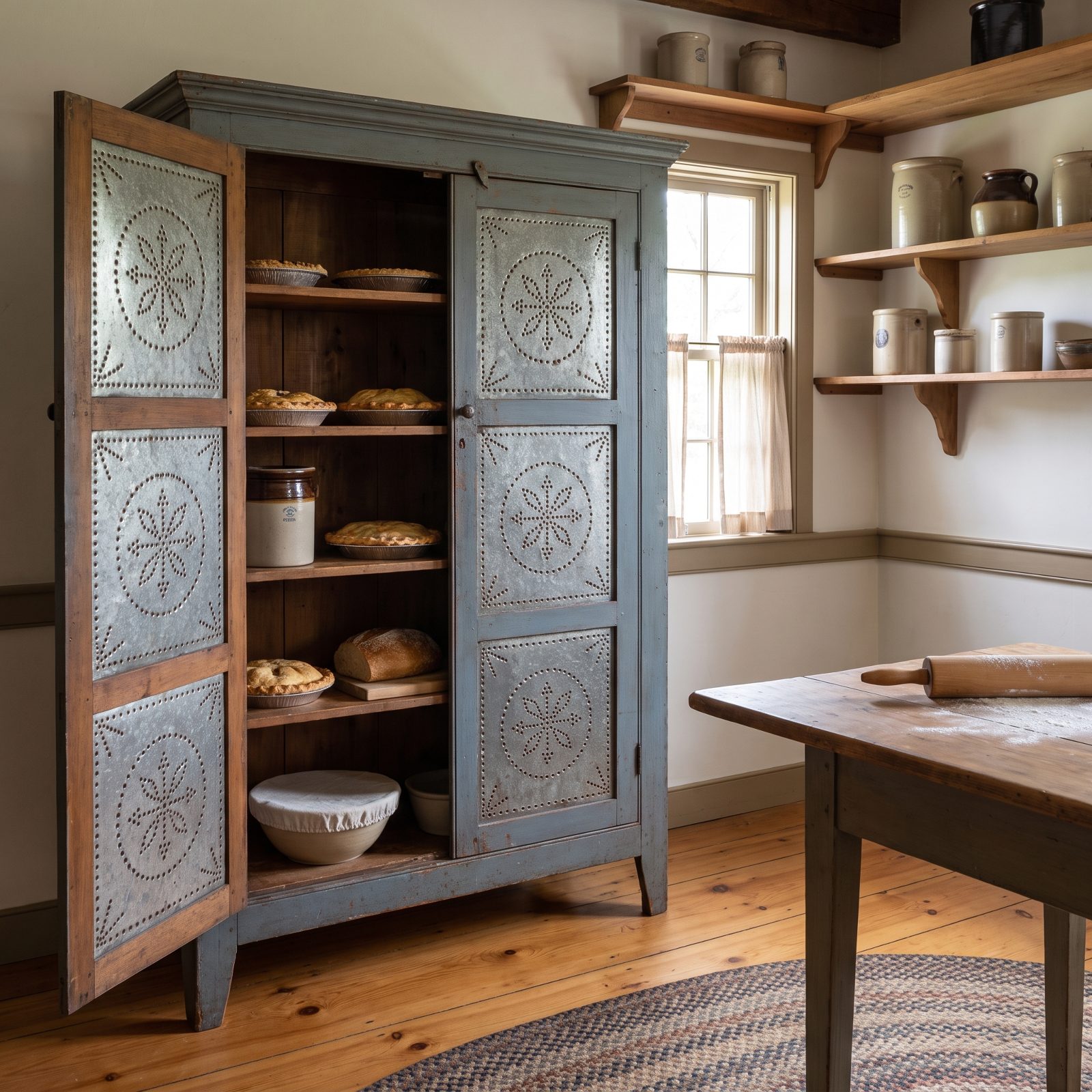
A fresh pie cooling on the windowsill was an invitation to every fly and mouse in the county. The pie safe answered that with a tall wooden cupboard whose doors were panels of tin, punched through with tiny holes in star-and-circle patterns.
Those holes did the clever work. Air moved freely through the pierced tin so pies cooled and bread didn’t go clammy, while the openings stayed too small for insects or rodents to get through. No ice, no refrigeration, just ventilation and a locked door. Inside, wooden shelves held the day’s baking alongside butter crocks and covered bowls.
The punched patterns weren’t only practical. A tinsmith could pierce almost anything into those panels, and families chose designs that doubled as decoration — stars, hearts, eagles, the occasional whole scene. So the pie safe did two jobs: it kept the food safe, and it stood in the corner as one of the prettier objects in a plain working kitchen.
8. The Hand-Cranked Mangle That Pressed Linens Between Rollers
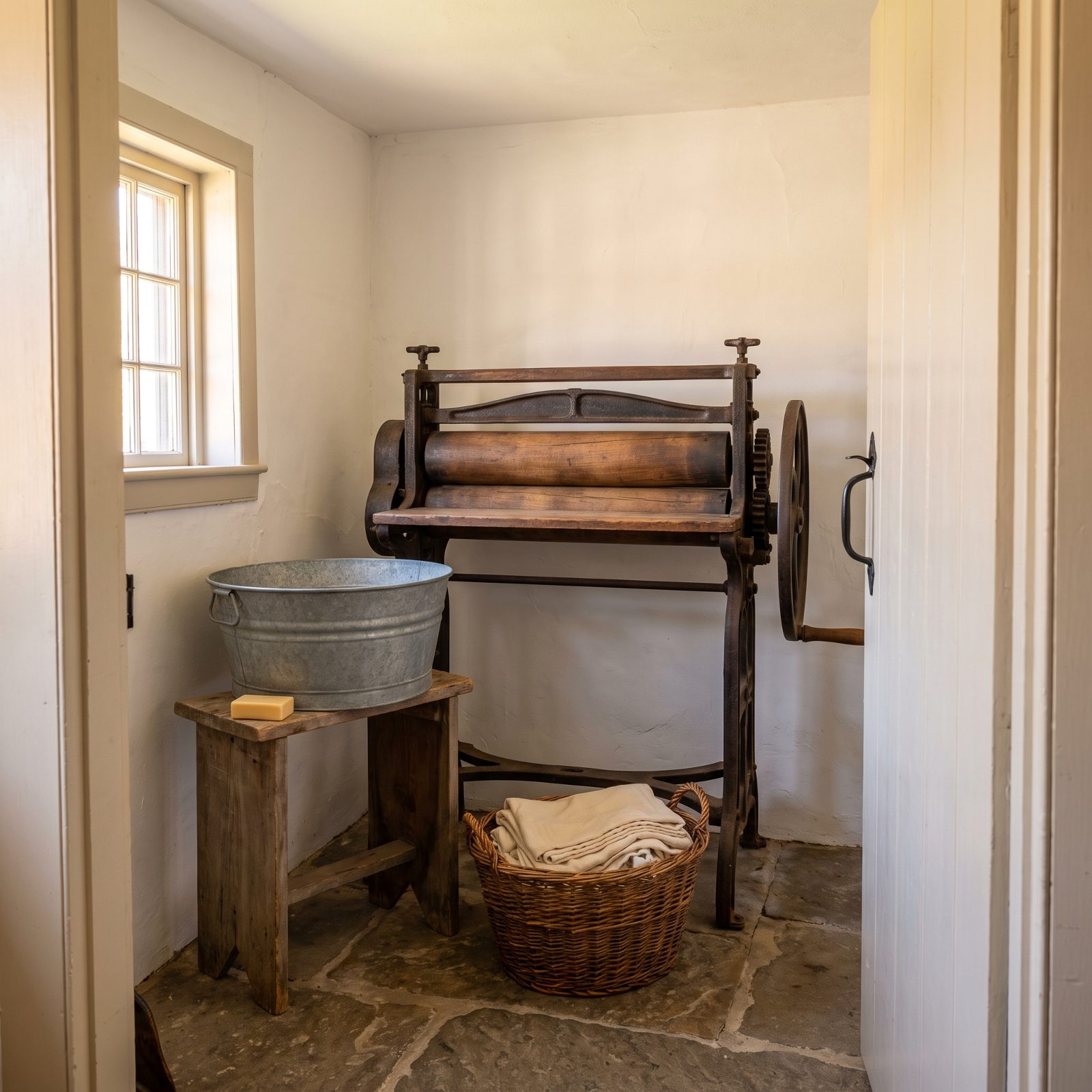
Before anyone owned a steam iron, flat sheets and tablecloths got their finish from sheer pressure. You fed a damp linen between two oak rollers, cranked the handle, and the machine’s own weight squeezed out wrinkles and water in a single pass. Brutal on the forearms. Also oddly satisfying.
Most mangles lived in the scullery or back porch, bolted to a stand so they wouldn’t walk across the floor during a hard crank. Find one in a historic house today and it’s usually half-hidden under a workbench, mistaken for an old printing press by anyone who’s never wrestled laundry through one.
7. The Fold-Down Ironing Board Hidden Inside a Wall Cabinet
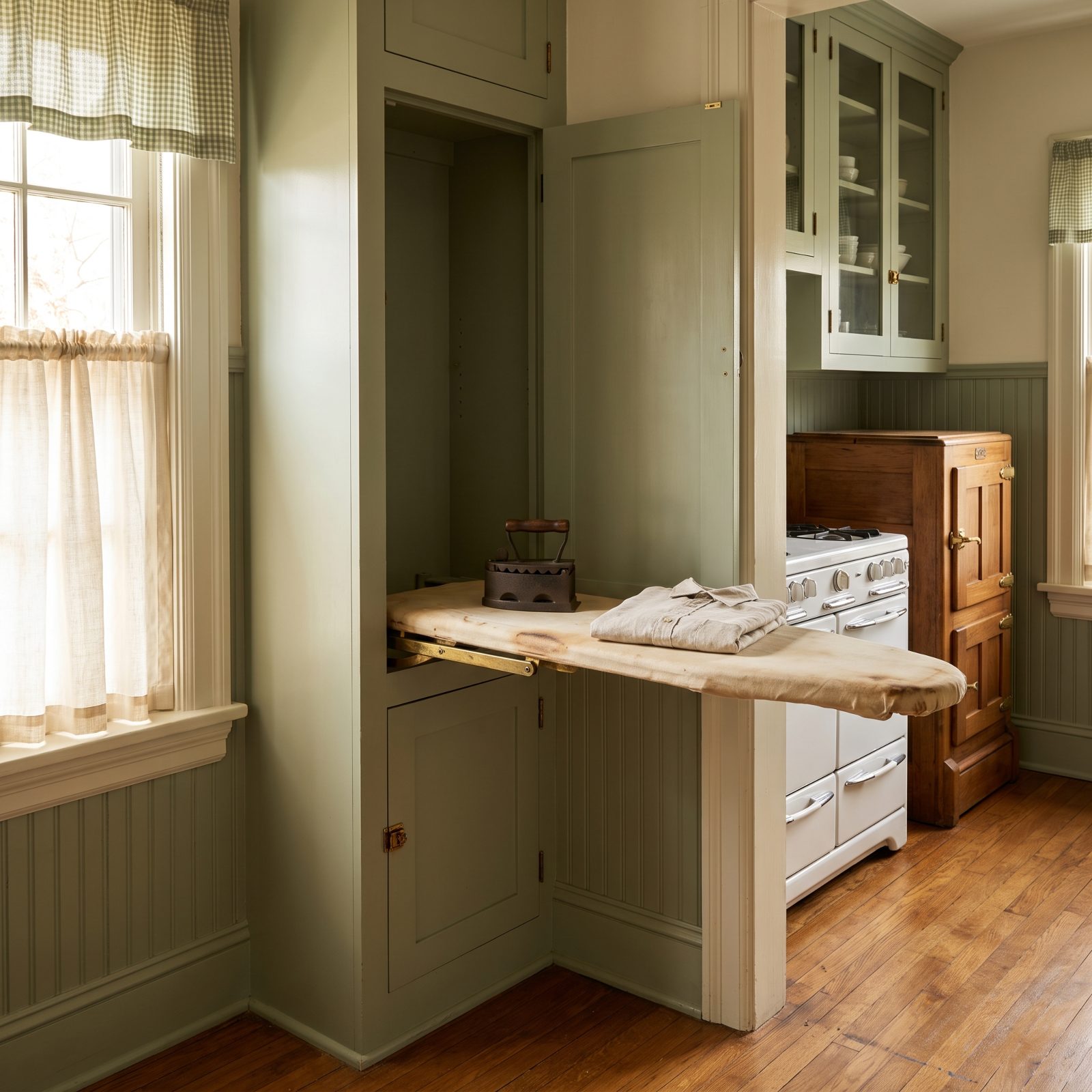
Open what looks like a skinny pantry cupboard in an old house and a full ironing board sometimes swings out at you on a hinge. These built-in boards saved space in bungalows and apartments from roughly 1915 through the 1940s, tucked into the wall between studs and folded flush once the ironing was done.
The canvas cover is almost always scorched in one spot — somebody set a hot iron down too long, decades before you ever arrived. The cavity behind usually held a small shelf for the iron and a rack for the sleeve board. Clever millwork. And most people today paint it shut without ever realizing it opens.
6. The Basement Coal Chute That Fed the Fuel Bin
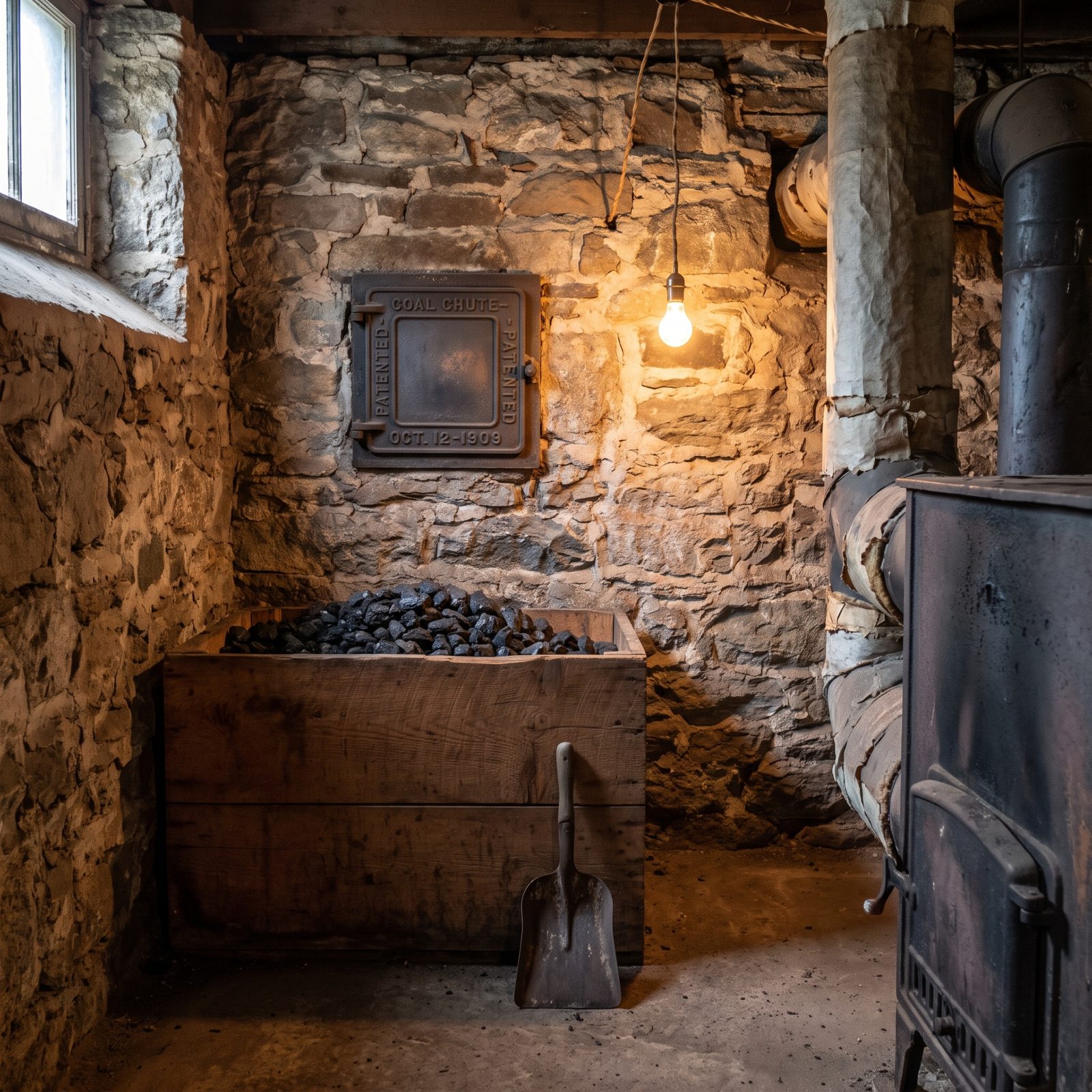
Set into the stone foundation wall of nearly every house built before central oil and gas, there’s a small iron door. Outside, the delivery man backed his truck to the house and slid coal straight down a metal chute through that door and into a bin in the basement. No hauling buckets through the kitchen.
The bin sat right next to the furnace for a reason. You shoveled fuel a few feet, not across the room, usually at dawn when the fire had burned down overnight and the house had gone cold.
5. The Porcelain Knobs and Tubes That Isolated Electrical Wiring
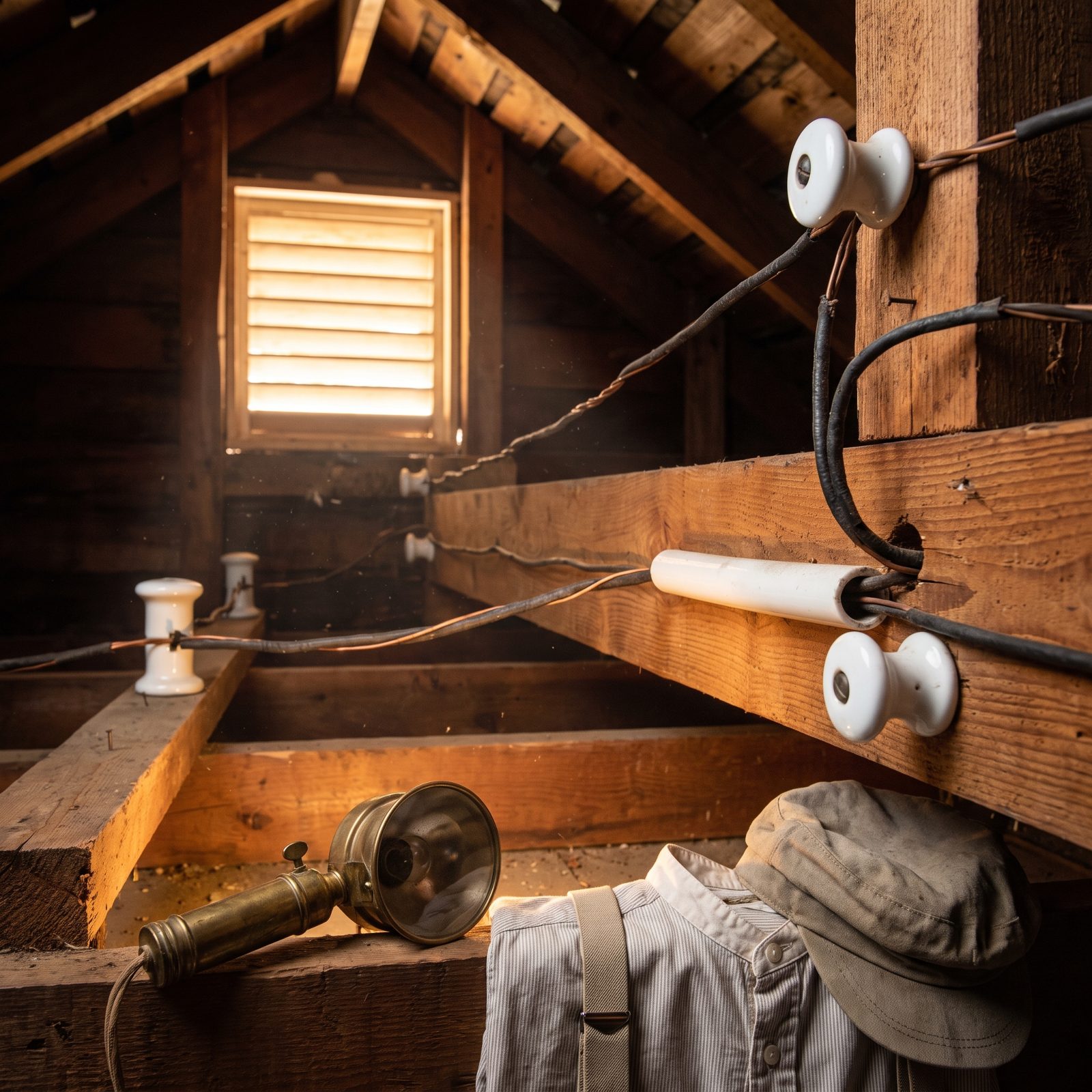
Pull back attic insulation in a house from the early electric era and you’ll find little white porcelain spools nailed to the beams, single wires strung between them like a tiny telegraph line. That’s knob-and-tube, the first widespread way to wire a home for electricity.
The whole idea rode on ceramic separation. Porcelain doesn’t conduct and doesn’t burn, so the knobs were meant to hold each wire clear of the wood framing, while tubes protected the wire where it bored through a joist. Open air around each conductor was supposed to do the insulating. Elegant, in its odd way — and still live in plenty of houses a century later, which is exactly why inspectors flag it the second they spot it.
4. The Paired Push Buttons That Switched Early Electric Lights
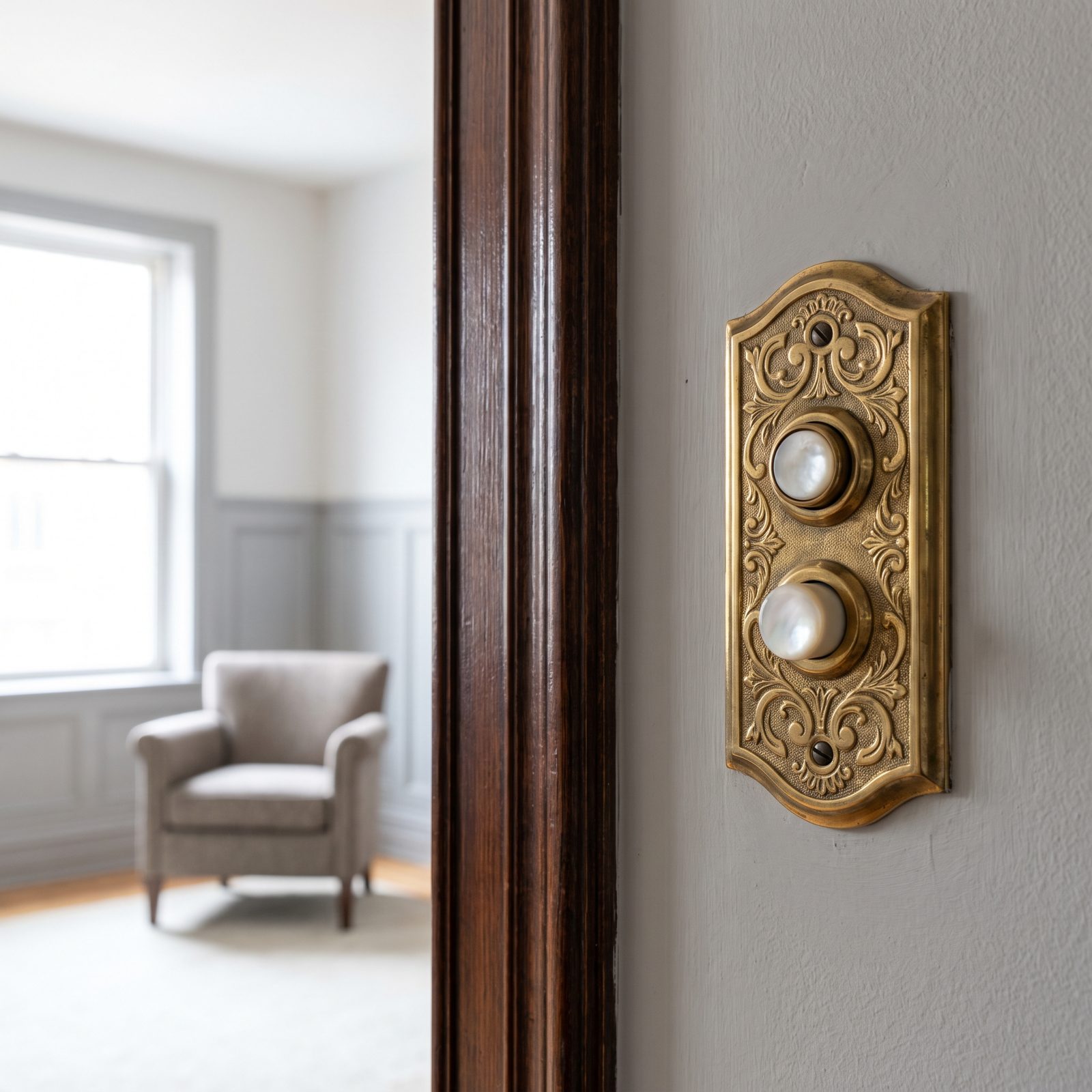
Flip a modern toggle and you barely think about it. The earliest electric switches made you pay attention. Two buttons stacked on a decorative plate: press the top to turn the light on, press the bottom and it popped the top back out, cutting the current. A satisfying mechanical click each way.
Many of the fancy ones had mother-of-pearl buttons and scrollwork face plates in brass or nickel — jewelry for the wall, back when having electric light at all was worth showing off to the neighbors. You still find them working in grand old houses, and collectors pay real money for a clean one.
3. The Ceramic Radiator Humidifier That Added Moisture to Heated Rooms
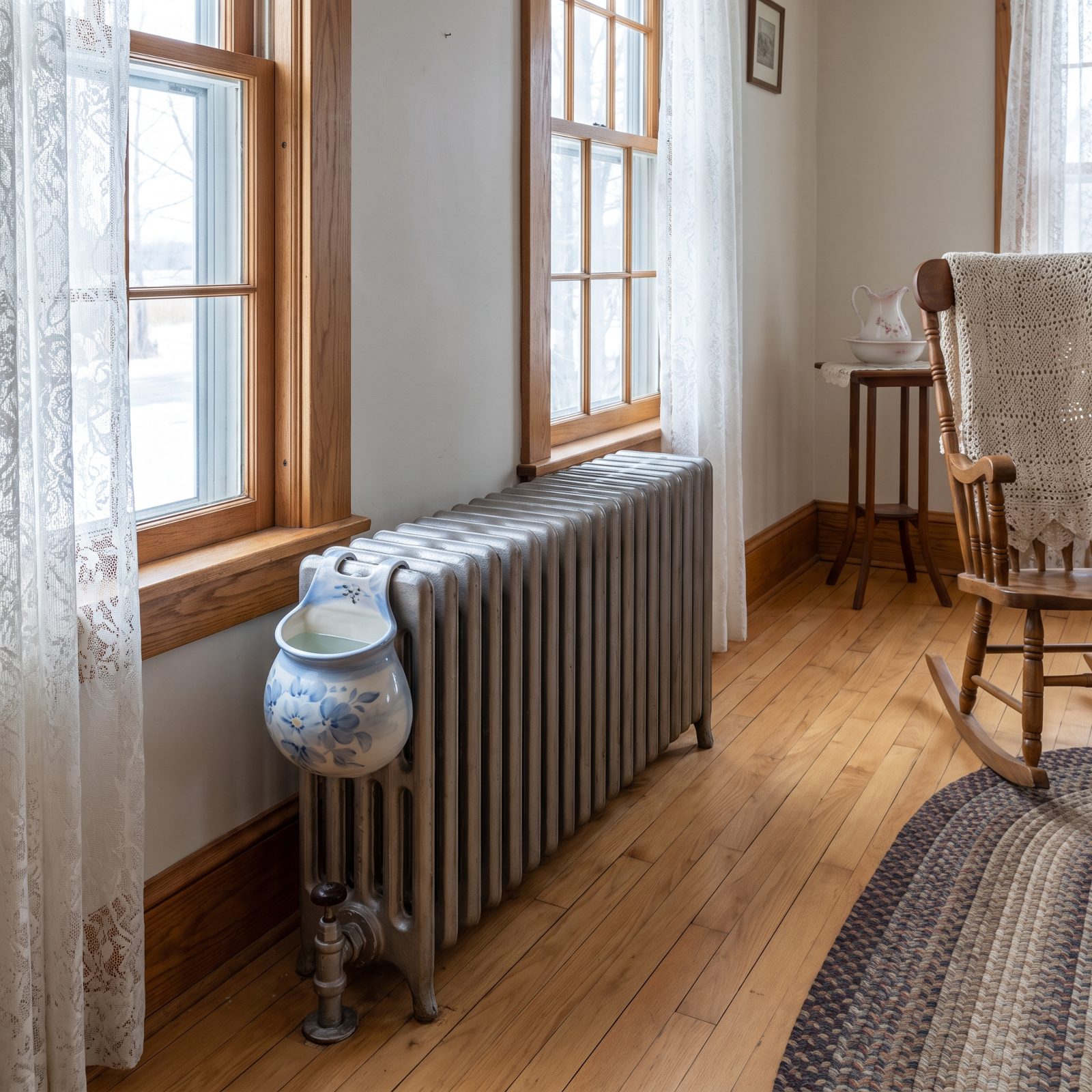
Steam and hot-water radiators heat a room beautifully and dry the air out completely. Long before plug-in humidifiers, the fix was a small ceramic trough that hung off the radiator’s top edge and held an inch or two of water. The heat did the rest, evaporating it slowly into the room all day.
Plenty were decorative, glazed with flowers or landscapes, because they sat in plain view in parlors and bedrooms. You refilled them by hand each morning. Find one still hooked over an old radiator and it’s almost always bone dry, long retired — but it tells you the house was heated by steam.
2. The Long-Handled Bed Warmer Filled With Hot Coals
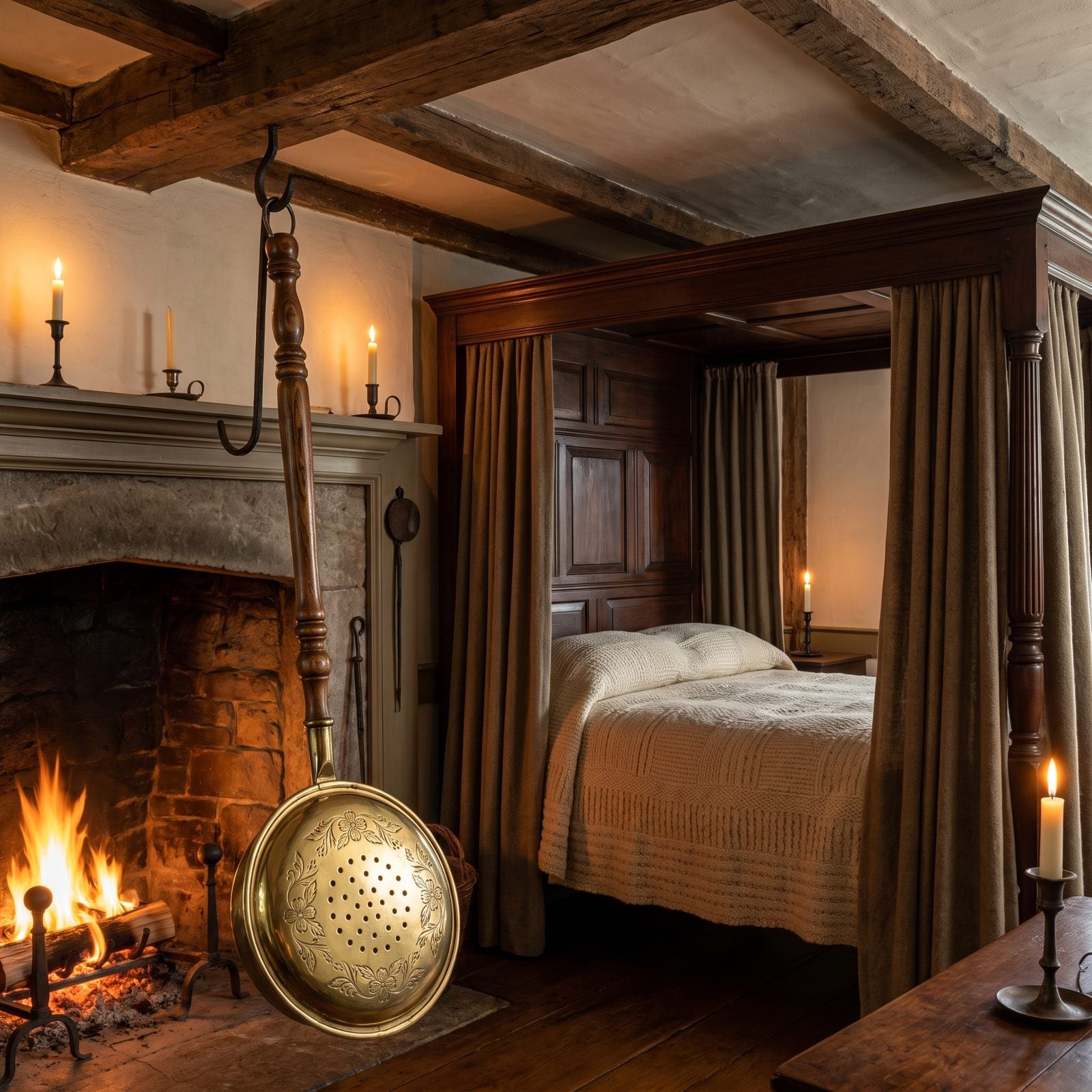
A bedroom with no central heat got cold enough to see your breath. So before climbing in, you filled a flat brass pan with embers from the fire, closed its perforated lid, and ran it between the sheets on its long handle to take the chill off.
That handle was long for a reason. You needed the reach to warm the whole bed and the distance to keep hot brass away from your hands and the linens. These hang on many a historic hearth today, polished to a shine, often mistaken for a warming pan meant for food. Nope. It was for your feet.
The long handle wasn’t decorative. It let you slide live coals across a straw mattress without setting the bed, or yourself, on fire.
1. The Scissor-Shaped Snuffers That Trimmed Candle Wicks
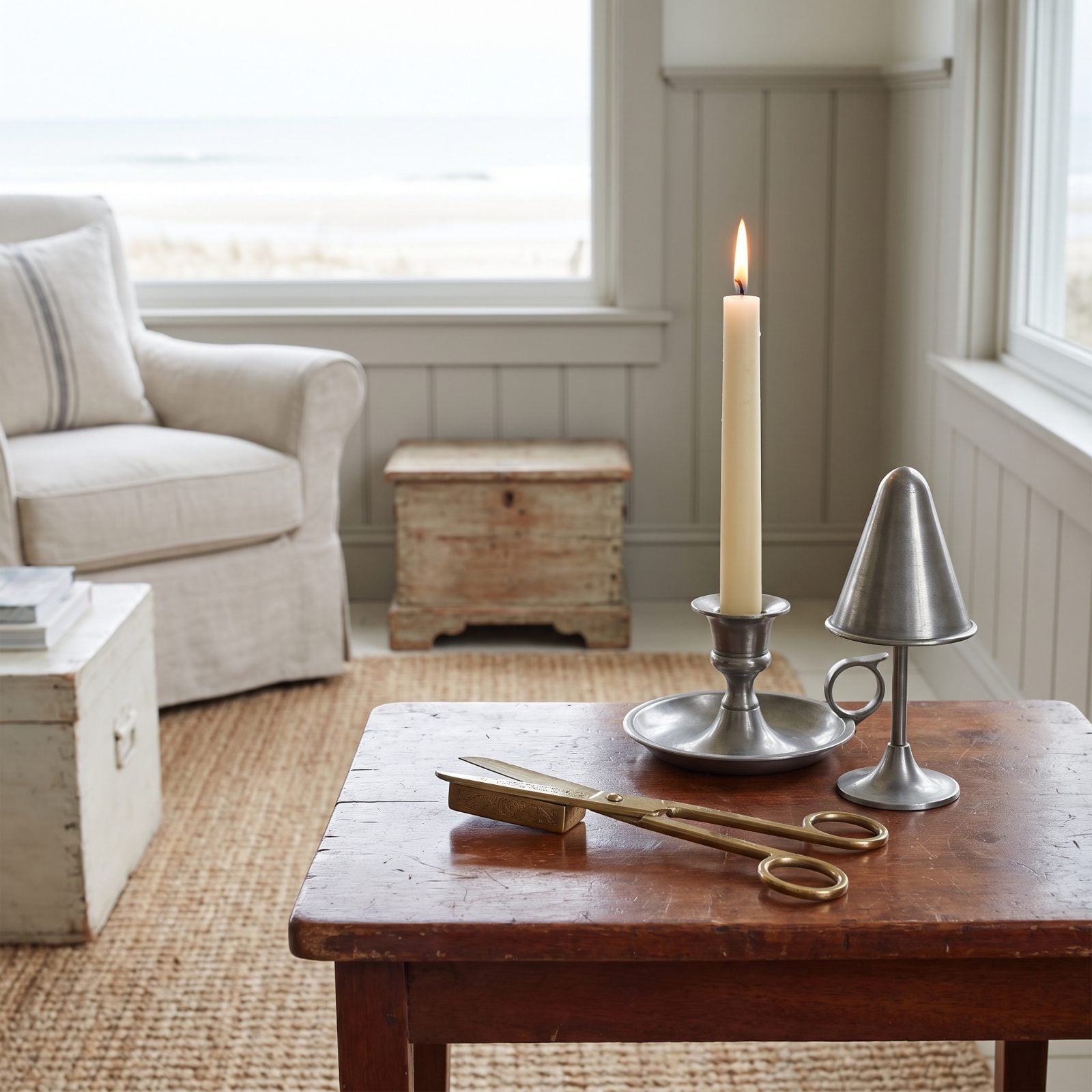
A candle doesn’t tend itself. As it burns, the wick grows too long, starts to smoke, and the flame gutters and drips all over the stick. For centuries the cure was a pair of brass or steel scissors with a little box welded to one blade — you snipped the charred wick and the box caught the trimming so it never dropped into the wax.
People regularly confuse these with the cone-shaped caps that put a flame out, but the scissor type did a completely different job. It kept the candle burning clean and bright. Both lived on the mantel together, and both vanished the moment gaslight and electricity made an open flame unnecessary.