
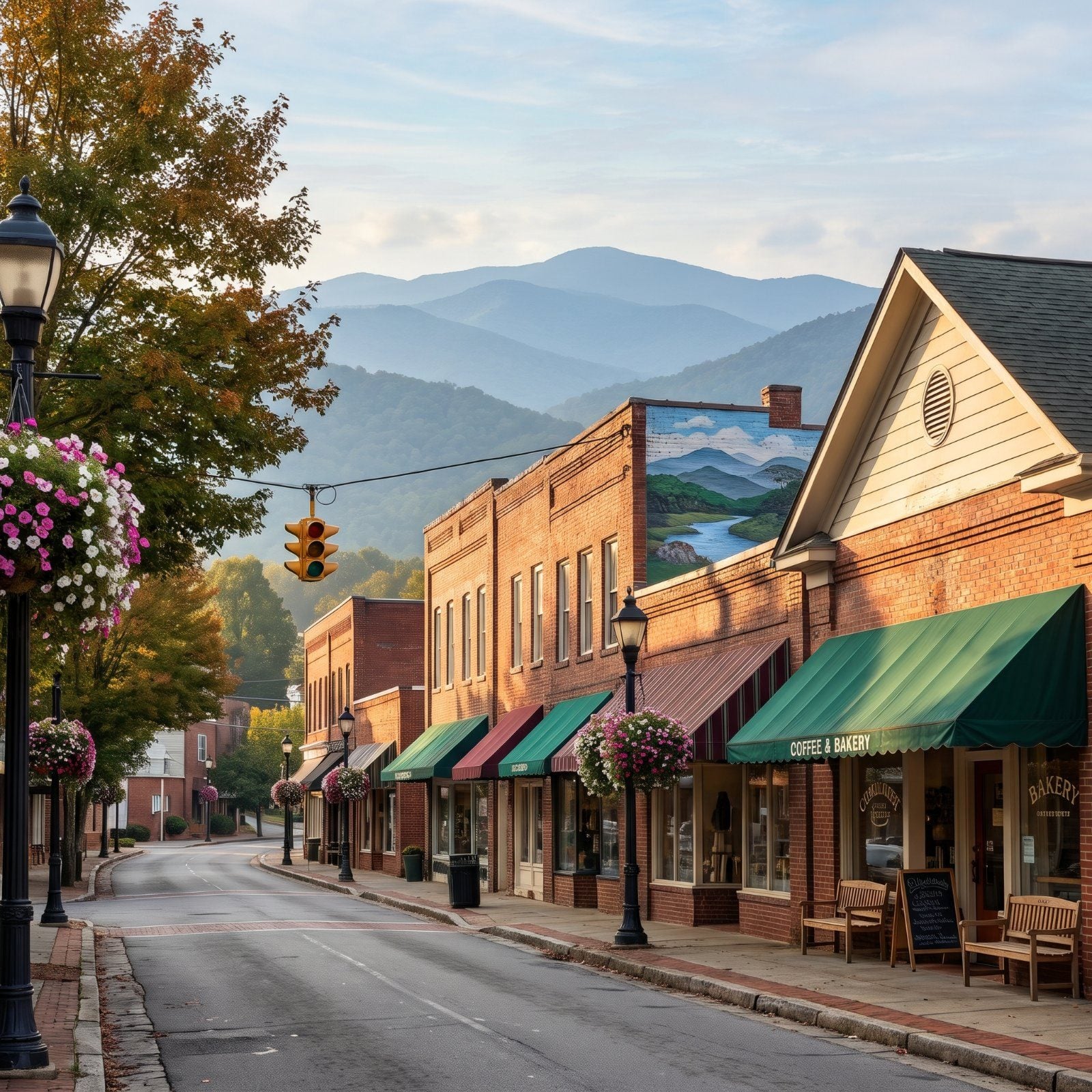
A white squirrel crossing a street in front of a bookstore is not a thing most cities can offer you. North Carolina has a whole run of small towns where the commute is measured in minutes, the barista knows your order, and the mountains or the water sit right at the edge of downtown. You can walk these places. One traffic light, or none at all. The list below runs from the Blue Ridge to the Crystal Coast, and every town on it earns its spot for its own reason. Pick the setting that fits the life you want.
14. Brevard: The Waterfall Town With the White Squirrels
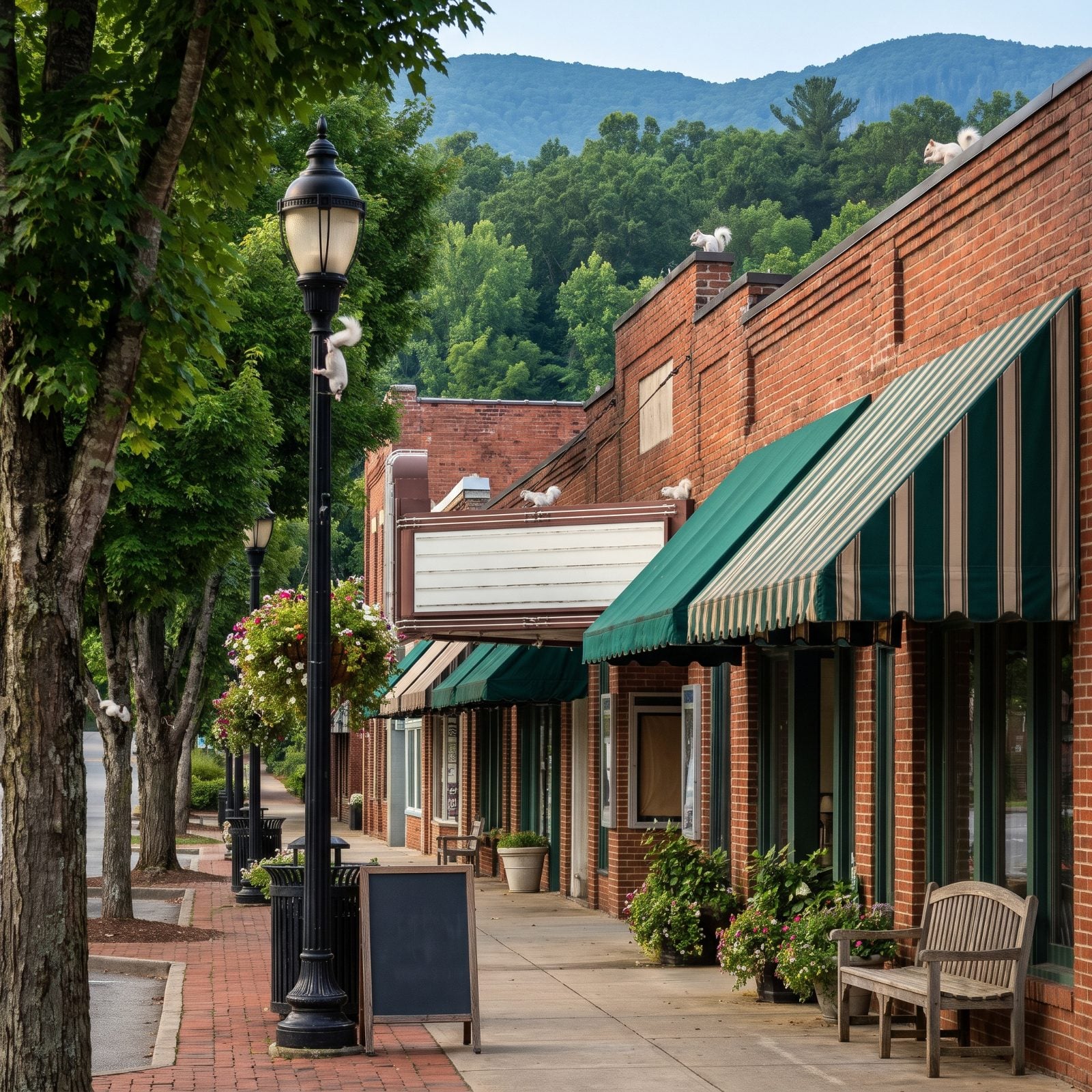
Brevard sits right at the mouth of Pisgah National Forest, hemmed in on three sides by protected land. That’s the whole pitch. Transylvania County calls itself the Land of Waterfalls and claims more than 250 of them, which is not a thing most county seats can say.
In order to come up with the very specific design ideas, we create most designs with the assistance of state-of-the-art AI interior design software. Also, assume links that take you off the site are affiliate links such as links to Amazon. this means we may earn a commission if you buy something.
The town counted just under 7,800 residents at the last census and it’s famous for its white squirrels, complete with a carnival-truck origin legend the city still tells on itself. The one-way commute runs well under the national average. Just know the housing has gotten pricey, so it’s a slower life, not a cheap one.
13. Black Mountain: Asheville Proximity Without Asheville Prices of Attention
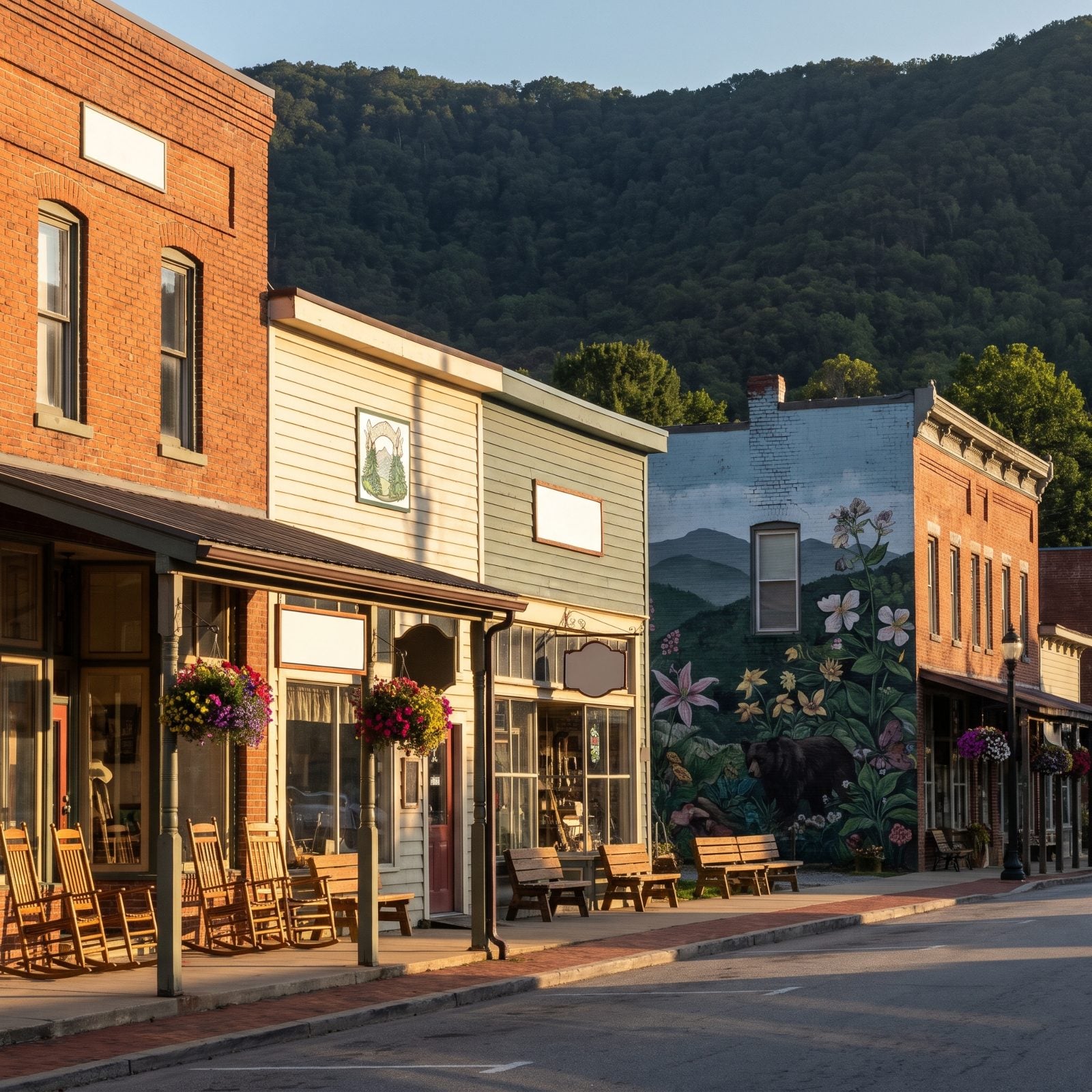
Fifteen miles east of Asheville, founded in 1893, and quiet in a way the bigger town stopped being years ago. The Cherokee and Catawba knew the area as Grey Eagle before the railroad came through.
Home to a shade over eight thousand people, the town leans hard on its historic downtown shopping district and the trails that start just past the last storefront. You get the mountains and the breweries without the parking math. For a lot of people that’s the whole equation.
12. Waynesville: The Gateway Town That Keeps Winning Best Main Street
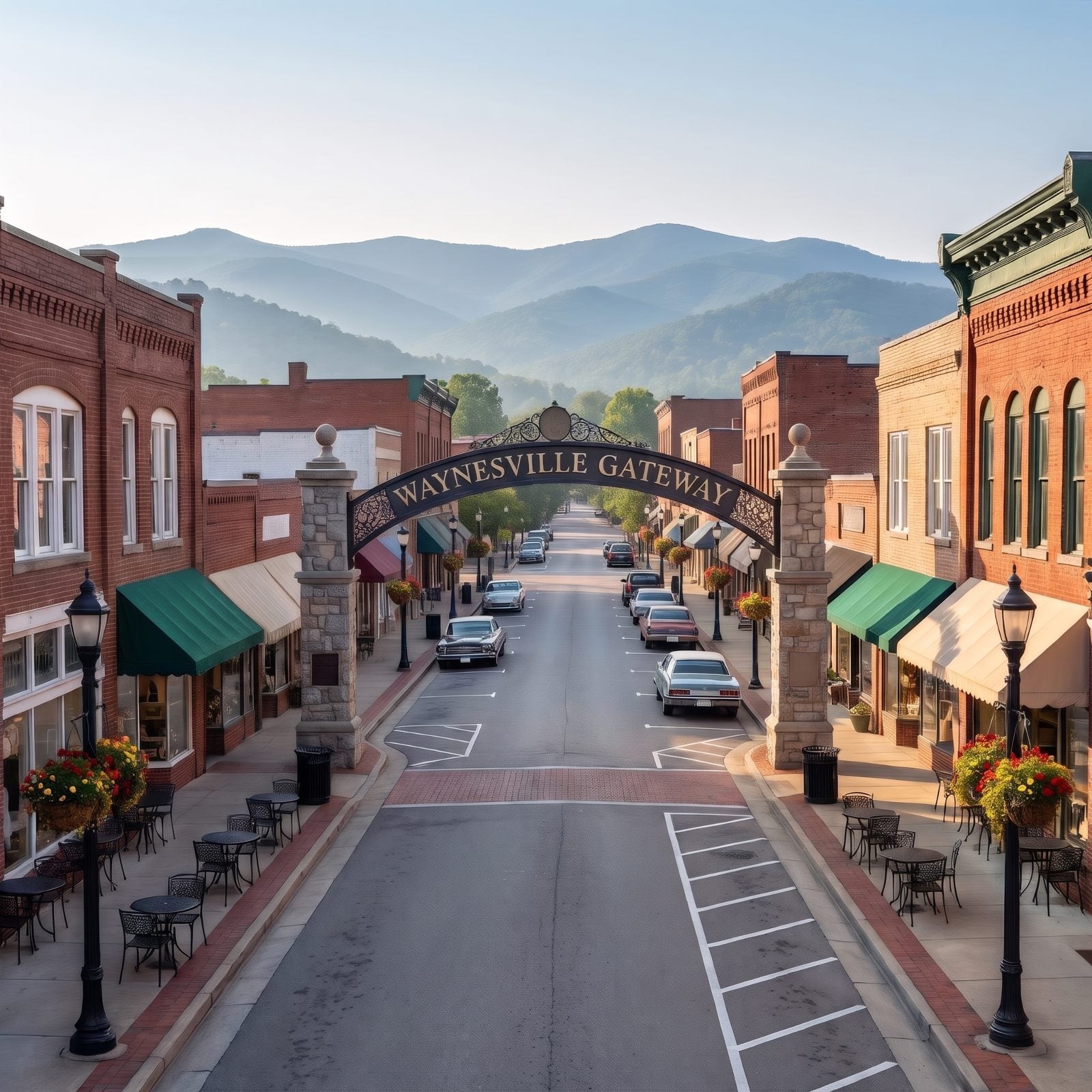
About thirty minutes west of Asheville in Haywood County, Waynesville plays the quieter mountain base camp. The downtown is one long walkable Main Street packed with shops, galleries, restaurants and breweries.
In June 2024 the town unveiled a new gateway arch over Main Street. And it’s collected a shelf of titles from Where to Retire magazine’s retirement guide: Best Mountain Town, Best Main Street Town, and a Low-Cost Eden. A small café table outside half these storefronts is doing more for the town’s reputation than any marketing budget could.
11. Sylva: A Hillside Downtown Under 3,000 People
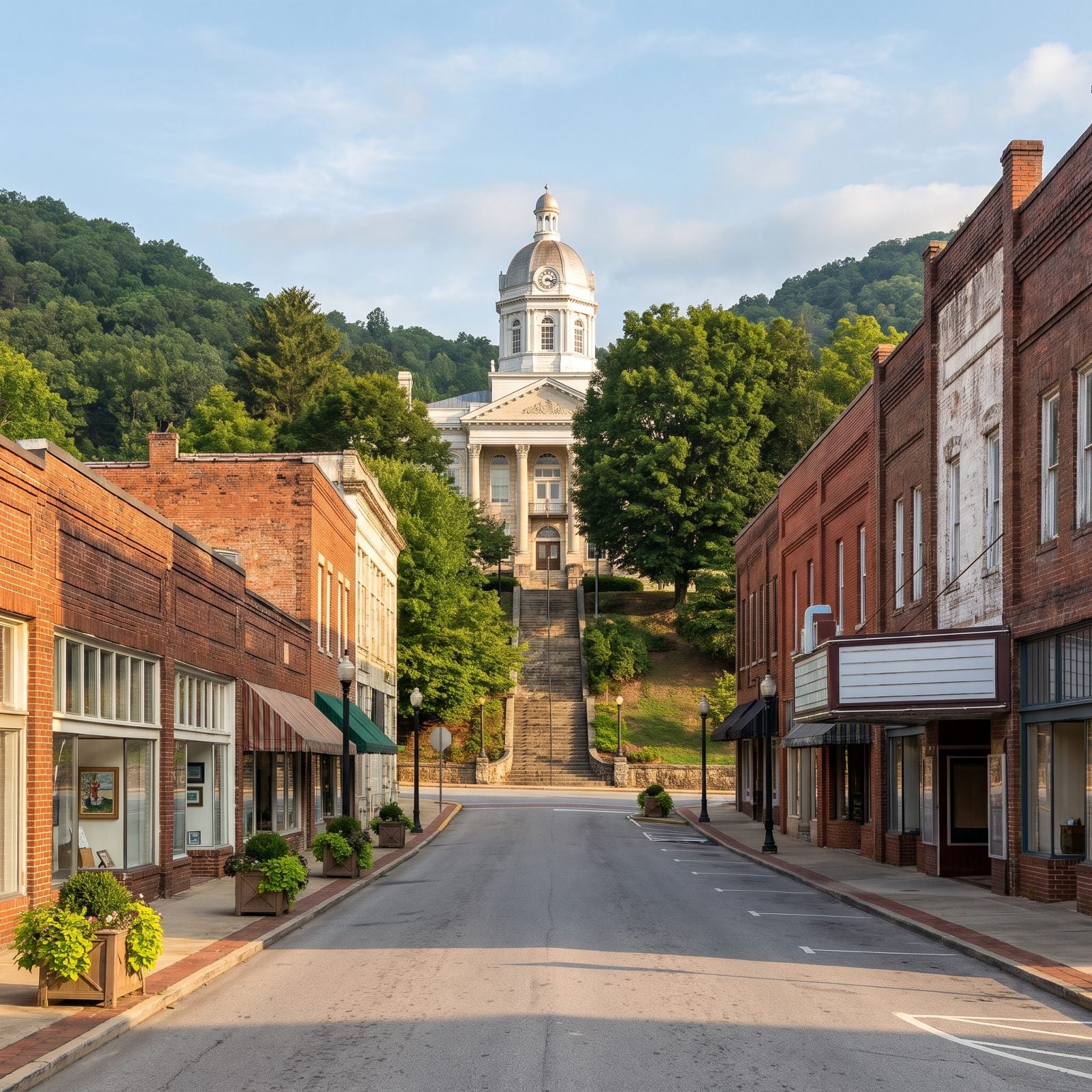
Sylva is tiny on purpose. This Jackson County town holds well under three thousand residents, and the famous hilltop courthouse looms over a Main Street of galleries, a theater and regular live music.
Trails, waterfalls and national forest sit minutes out. Garden & Gun profiled it as a strong-community mountain town that keeps pulling in newcomers, which is the kind of problem a town this size would rather have than not.
10. Blowing Rock: Three Square Miles on the Parkway
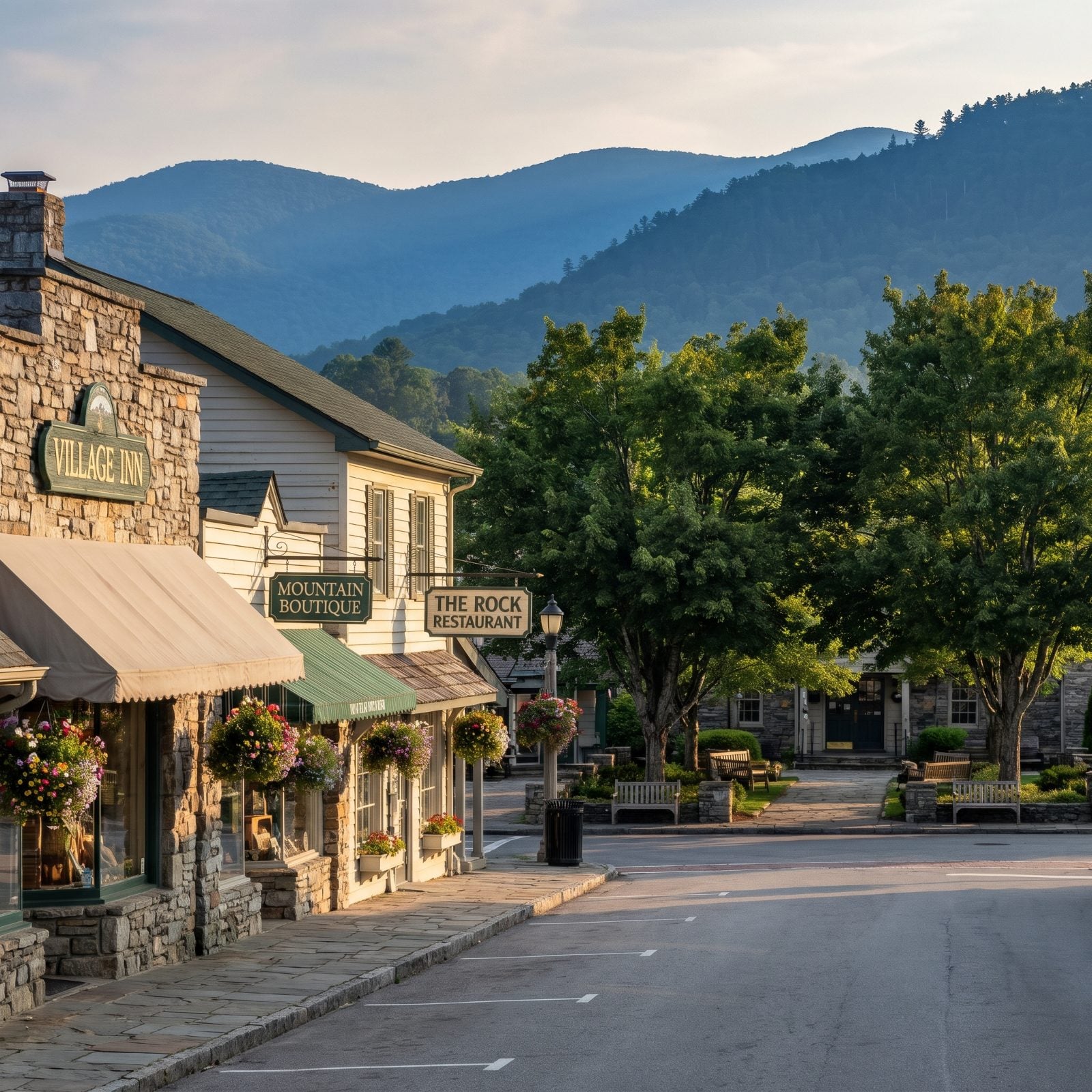
Blowing Rock covers roughly three square miles and nothing more. It perches on the Blue Ridge Parkway along the Eastern Continental Divide, incorporated back in 1889, with a population you could fit in a mid-sized high school.
The town claims nearly thirty restaurants and almost no chains among them, which tells you exactly who runs this place. And here’s the detail that sells it: kids at the downtown elementary school walk to central Memorial Park after classes. A town built around a walk, not a highway.
9. Morganton: ‘Motown’ at the Foot of the Catawba
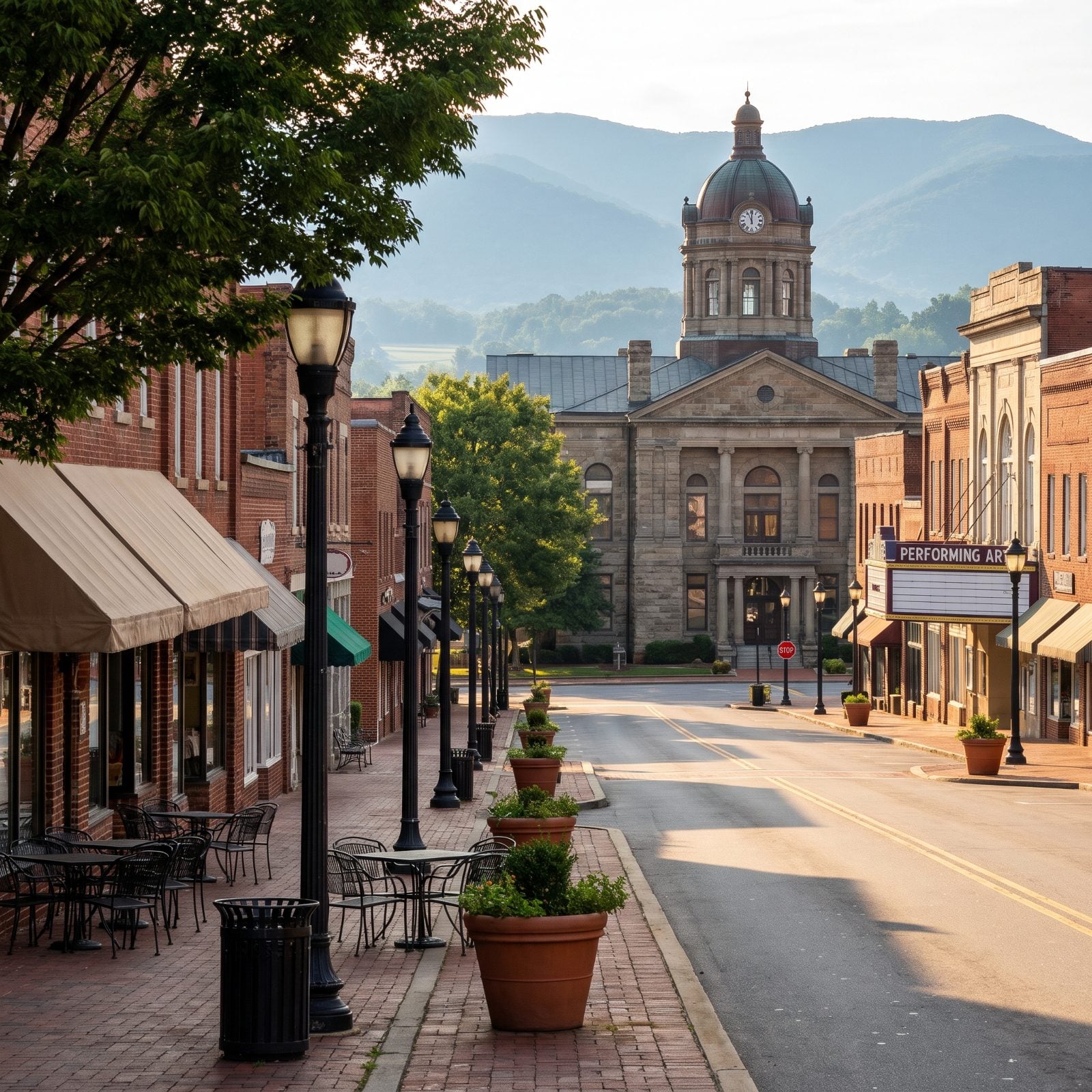
The hub of Burke County, founded in 1784, with a downtown historic district locals shorthand to “Motown.” The walkable core is the draw, but the real geography is the water and the rock around it.
The Catawba River, Lake James and the Blue Ridge are all within easy reach. It runs about an hour from both Asheville and Charlotte, which puts Morganton in that sweet spot: far enough to feel like somewhere else, close enough to leave when you need to.
8. Mount Airy: The Real Mayberry, Granite and All
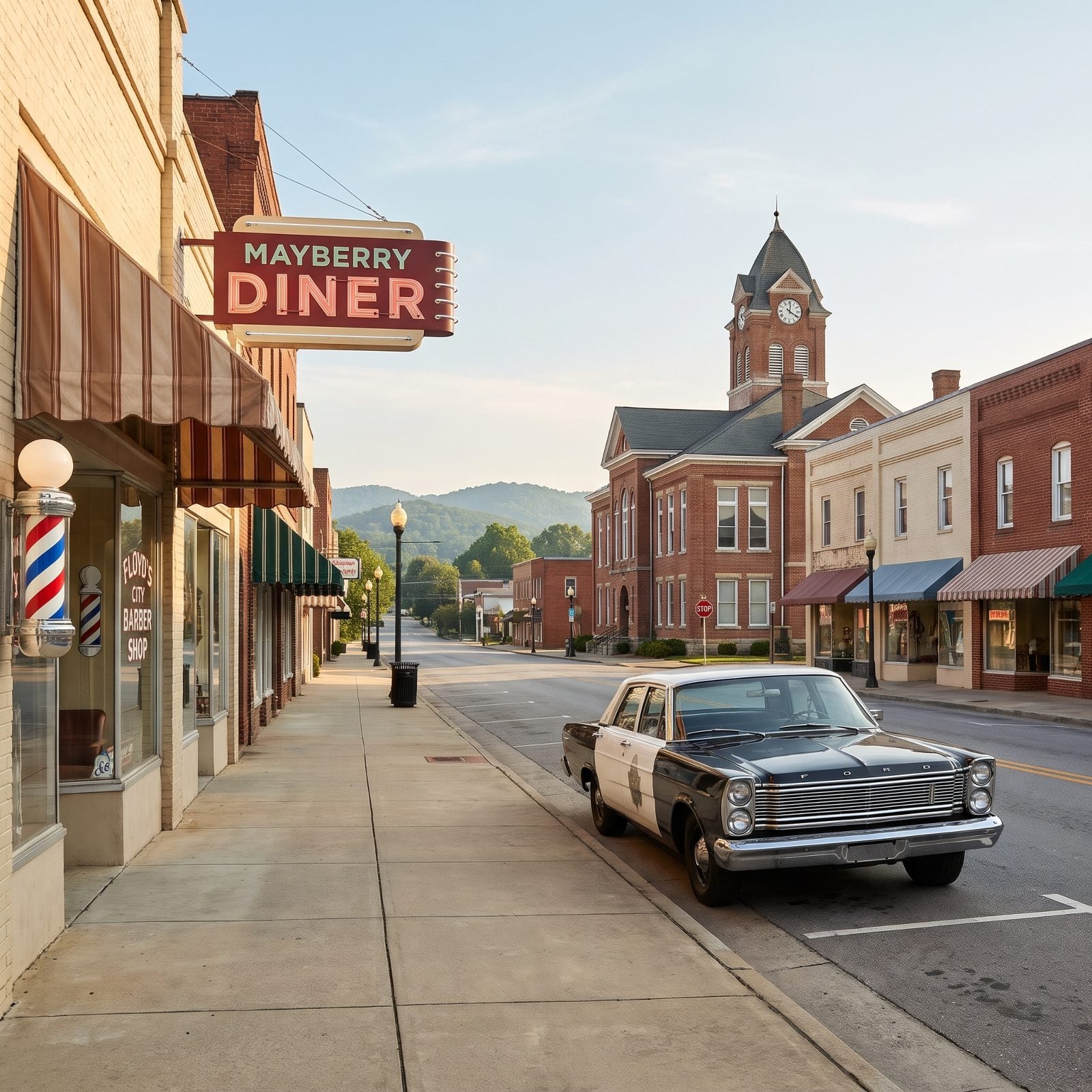
Andy Griffith grew up here, and Mount Airy never let anyone forget it. This Surry County city of roughly ten thousand is the Mayberry blueprint, right down to squad car tours and a replica of the show’s courthouse.
The downtown is a designated National Main Street Community, so the nostalgia isn’t an accident, it’s maintained. Nickname: the Granite City, home to what NCpedia calls the largest open-faced granite quarry in the world. The TV charm gets the clicks. The quarry is what actually built the place.
7. Hillsborough: History on the Eno, a Commute to the Triangle
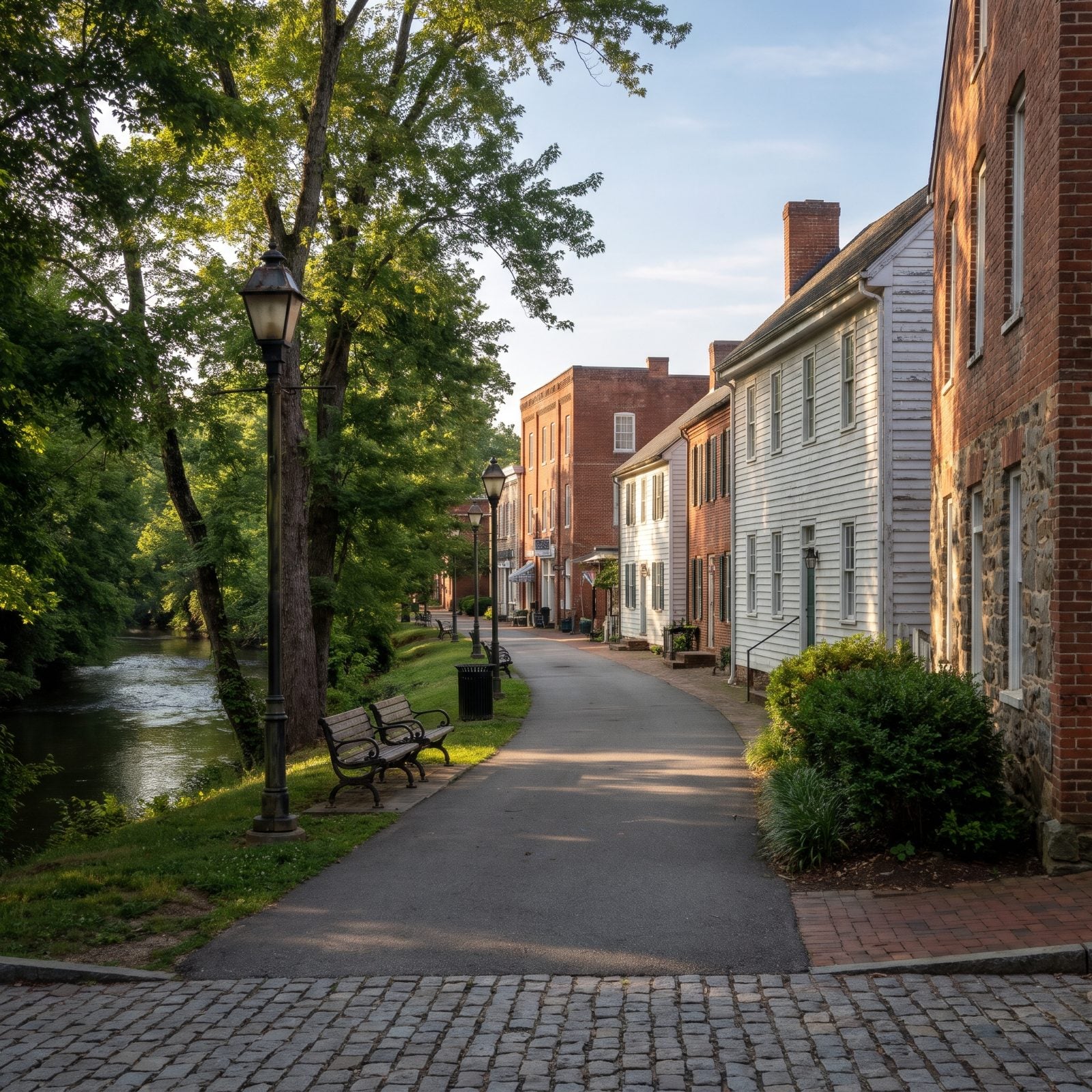
Established in 1754, Hillsborough stacks more history per block than towns ten times its size. The paved, accessible Riverwalk runs along the Eno, and its downtown stretch doubles as the main route of the N.C. Mountains-to-Sea Trail, open daily from 8 a.m. until half an hour after sunset.
Here’s the buyer’s warning worth repeating: homes in the local historic district usually need a Certificate of Appropriateness before any exterior change. Raleigh-area realtors frame the tradeoff plainly. You get a real downtown in exchange for a longer commute into the Triangle. If you work in Durham or Raleigh and want history under your feet at night, that math might work.
6. Southern Pines: Sandhills Golf, Broad Street Walks, Train to the Coast
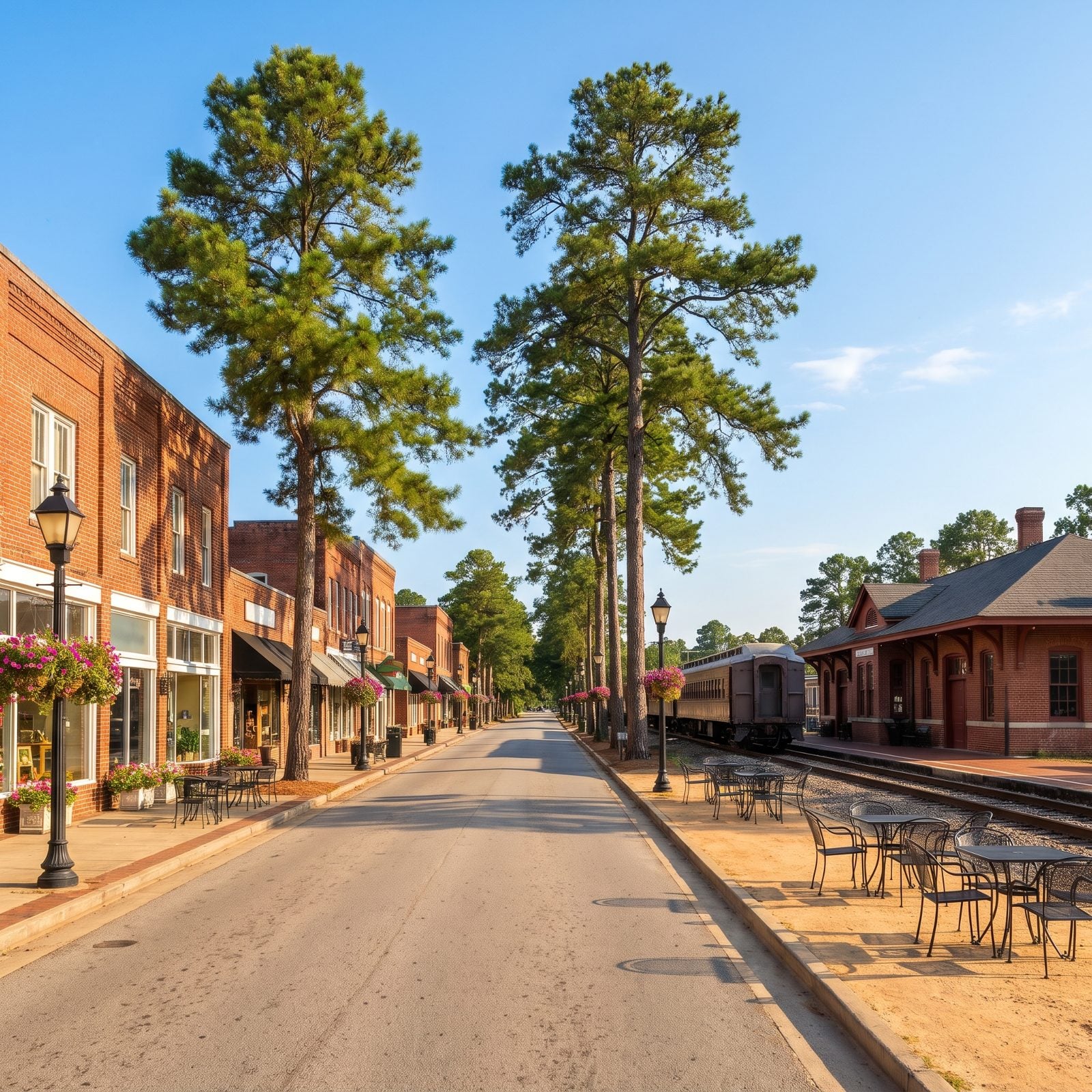
Down in the Moore County Sandhills, Southern Pines runs its shopping and dining along Broad Street under tall longleaf pines. With a population in the mid-teens of thousands per Niche, it’s one of the larger towns here, though it never feels it.
The town actually owns the Amtrak station at 235 NW Broad Street, so you can walk from dinner to a train. It traces back to John T. Patrick, who bought the land in 1884 to build the place, and Niche notes it’s a magnet for retirees and golfers. The golf is world-famous. The walkable Broad Street is the part people underrate.
5. Beaufort: America’s Favorite Town on the Crystal Coast
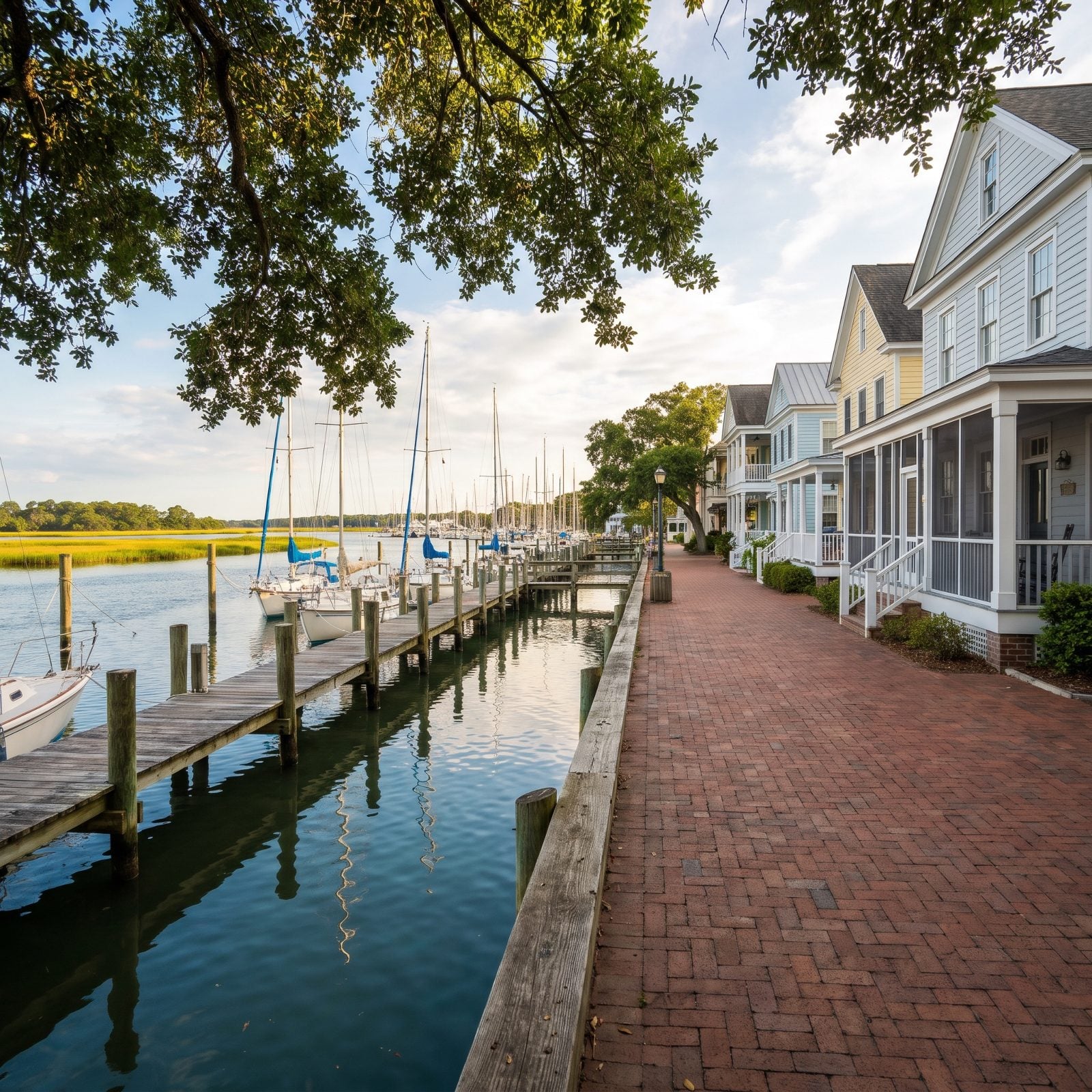
Travel + Leisure named Beaufort “America’s Favorite Town,” and the Crystal Coast waterfront makes the case fast. It’s the third-oldest town in North Carolina, home to a few thousand people, with a two-acre historic site on Turner Street holding six restored buildings.
The NC Maritime Museum on Front Street displays artifacts pulled from Blackbeard’s flagship, Queen Anne’s Revenge. From here you can kayak Taylor’s Creek over to the Rachel Carson Reserve, or just dock a boat downtown and walk to dinner. Pirate history, wild horses across the water, and a Front Street you can stroll.
4. Edenton: A Colonial Capital on Albemarle Sound
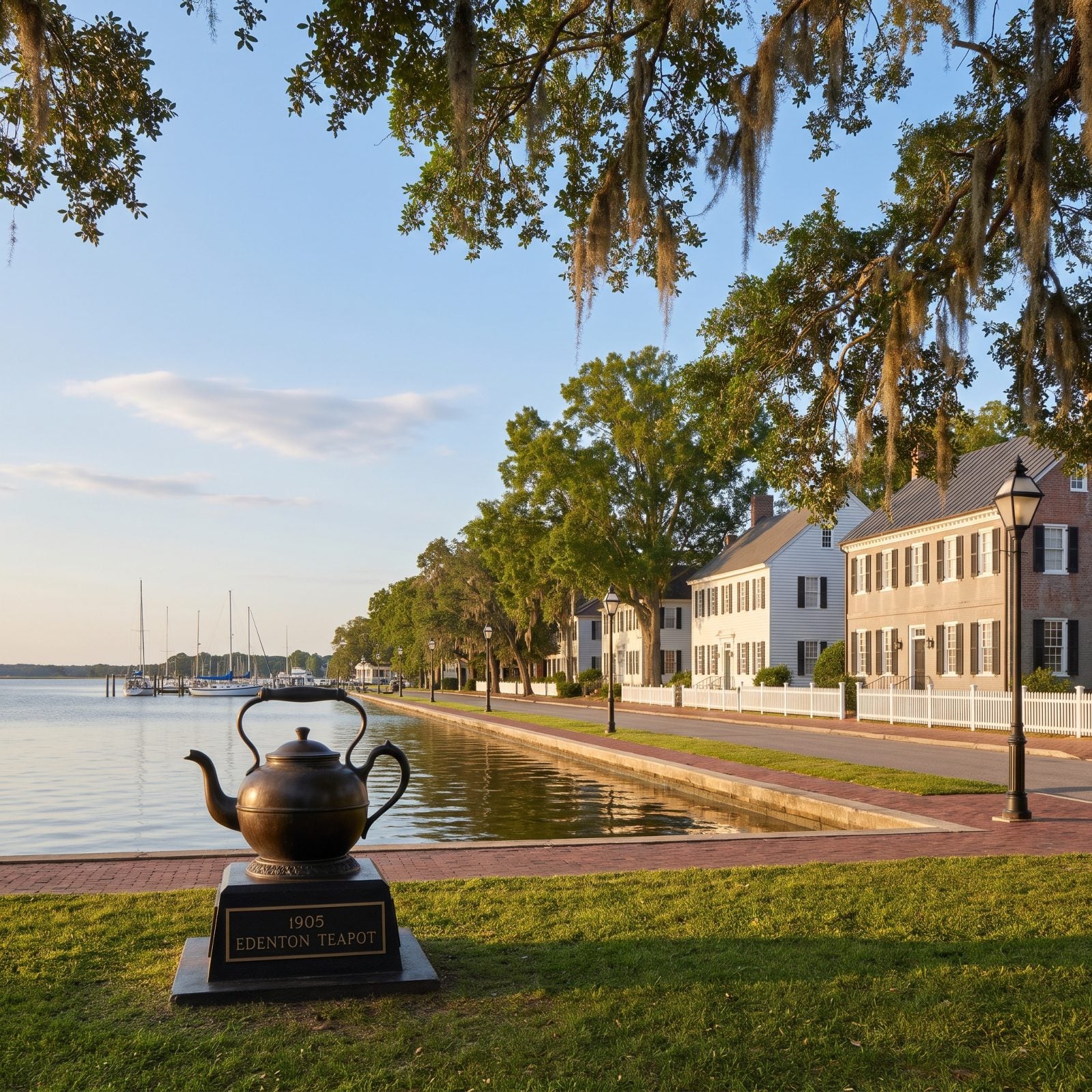
One of North Carolina’s oldest towns has stood here since 1712, and it carries those three centuries without straining to impress anybody. Edenton sits right on the bay, a former colonial capital of roughly 4,400 people, and the state’s own department of natural and cultural resources calls it one of the South’s prettiest towns. Bold claim from a government agency. For once it holds up.
The self-guided walking tour hits more than a dozen sites, including the Old Jail and that odd little 1905 teapot down on the waterfront. You can see the whole thing on foot before lunch.
3. New Bern: The Birthplace of Pepsi and a Riverfront Worth the Drive
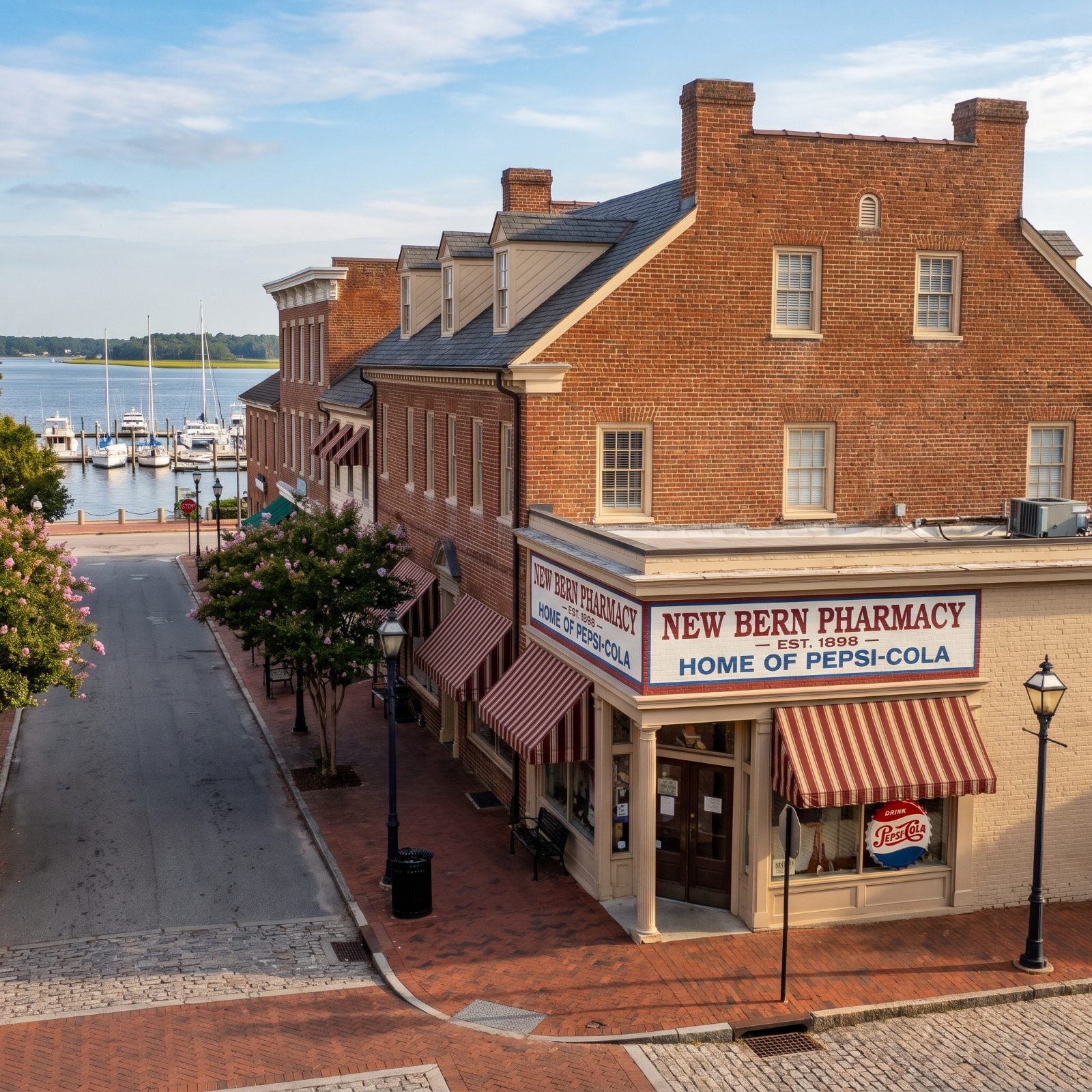
Pepsi was invented here. Caleb Bradham mixed up the first batch in his drugstore in 1893 and called it Brad’s Drink, a worse name, and he knew it. New Bern has worn the title ever since.
But the soda story sells the place short. Founded in 1710 where the Neuse and Trent rivers come together, this Craven County seat of around 31,000 runs on historic neighborhoods, well-ranked schools, and the kind of river access most inland towns would trade a lot to have. It sits a little over a hundred miles east of Raleigh, far enough that the city noise just drops away.
2. Little Washington: The Inner Banks Harbor Town for Boat People
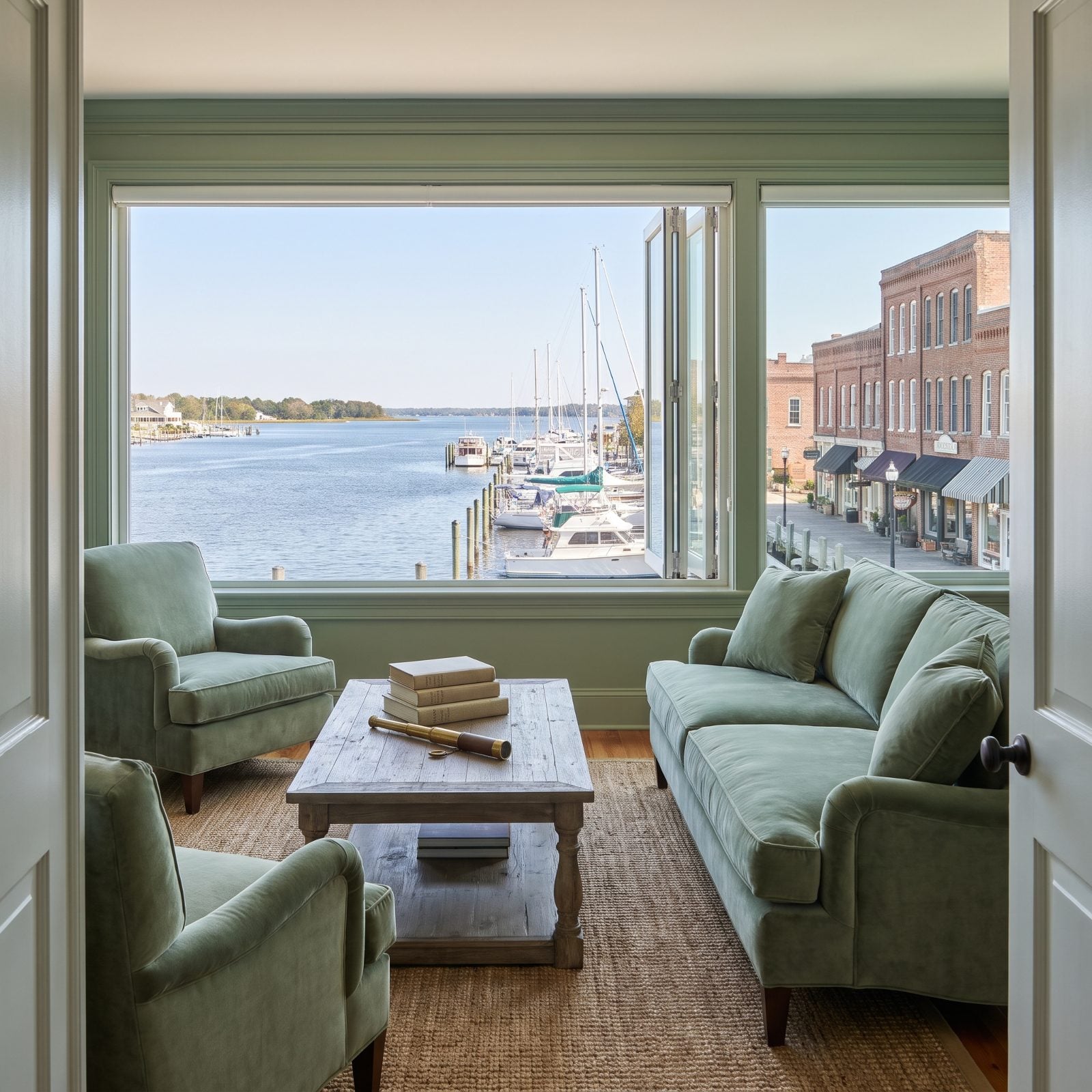
Everyone calls it Little Washington so nobody mixes it up with the other one, and the nickname suits a town built entirely around its water.
Where the Pamlico and Tar rivers meet, this Inner Banks town hangs its whole identity on the Harbor District, a walkable stretch along the Pamlico that WorldAtlas flags as the main draw. Waterway Guide lists it as a favorite stop for cruisers running the Intracoastal Waterway, which tells you plenty. Own a boat? You’ll find your people here faster than you can tie off.
1. Davidson: A College Town on Lake Norman, Twenty Minutes From Charlotte
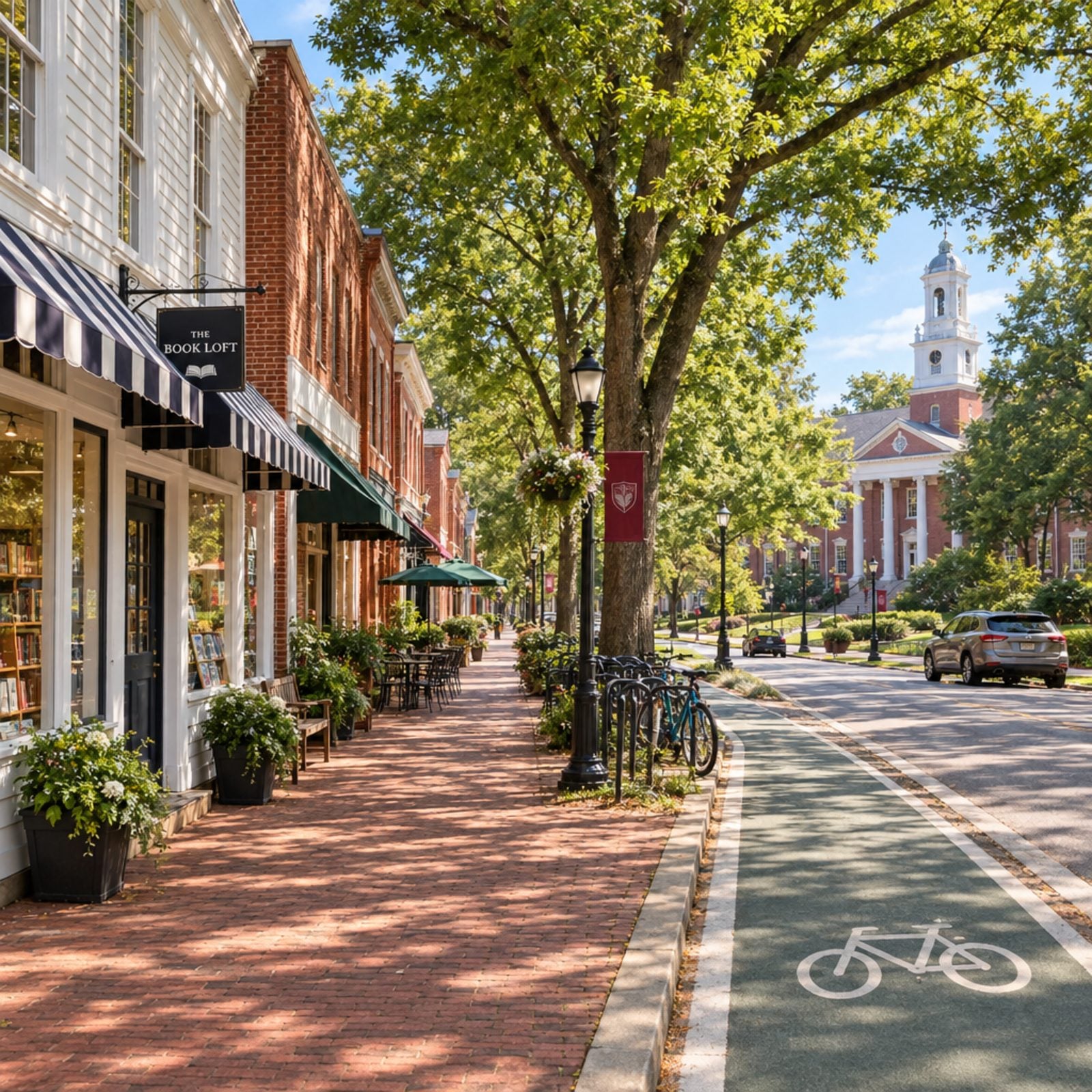
Davidson pulls off the exact trick most people leaving Charlotte are chasing: real small-town streets without cutting the cord to the city.
Founded in 1837 alongside Davidson College, the town grew up around leafy streets, old buildings, and a walkable Main Street that still keeps its own rhythm. It borders Lake Norman and sits about 20 miles north of Charlotte, close enough to commute, far enough to breathe. Miles of bike paths and greenways thread through it, so the car tends to sit in the driveway more than you’d expect.