
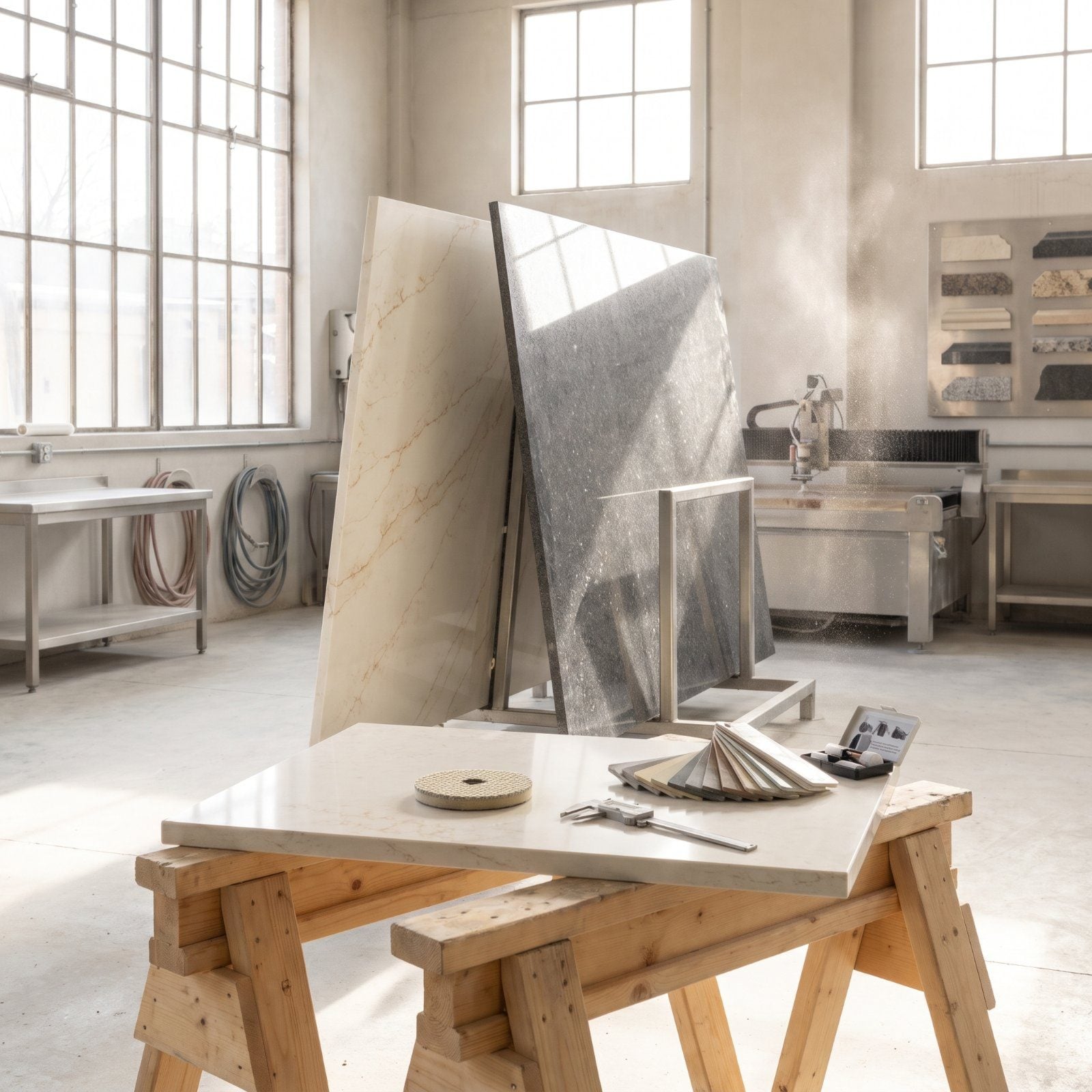
Walk into any fabrication shop and ask the person cutting slabs what makes them wince. The answers come fast. Homeowners arrive with ideas about quartz that sound right and aren’t — that it’s natural stone pulled from a quarry, that it laughs off hot pans and red wine, that the chip in the sample proves nothing bad will ever happen. We sat with the people who shape these slabs for a living and let them set the record straight. What follows are the corrections they repeat most, the ones that save you money, heartbreak, and a warranty claim nobody will honor.
44. Myth: Quartz Is Solid Natural Stone. Fact: It’s an Engineered Composite
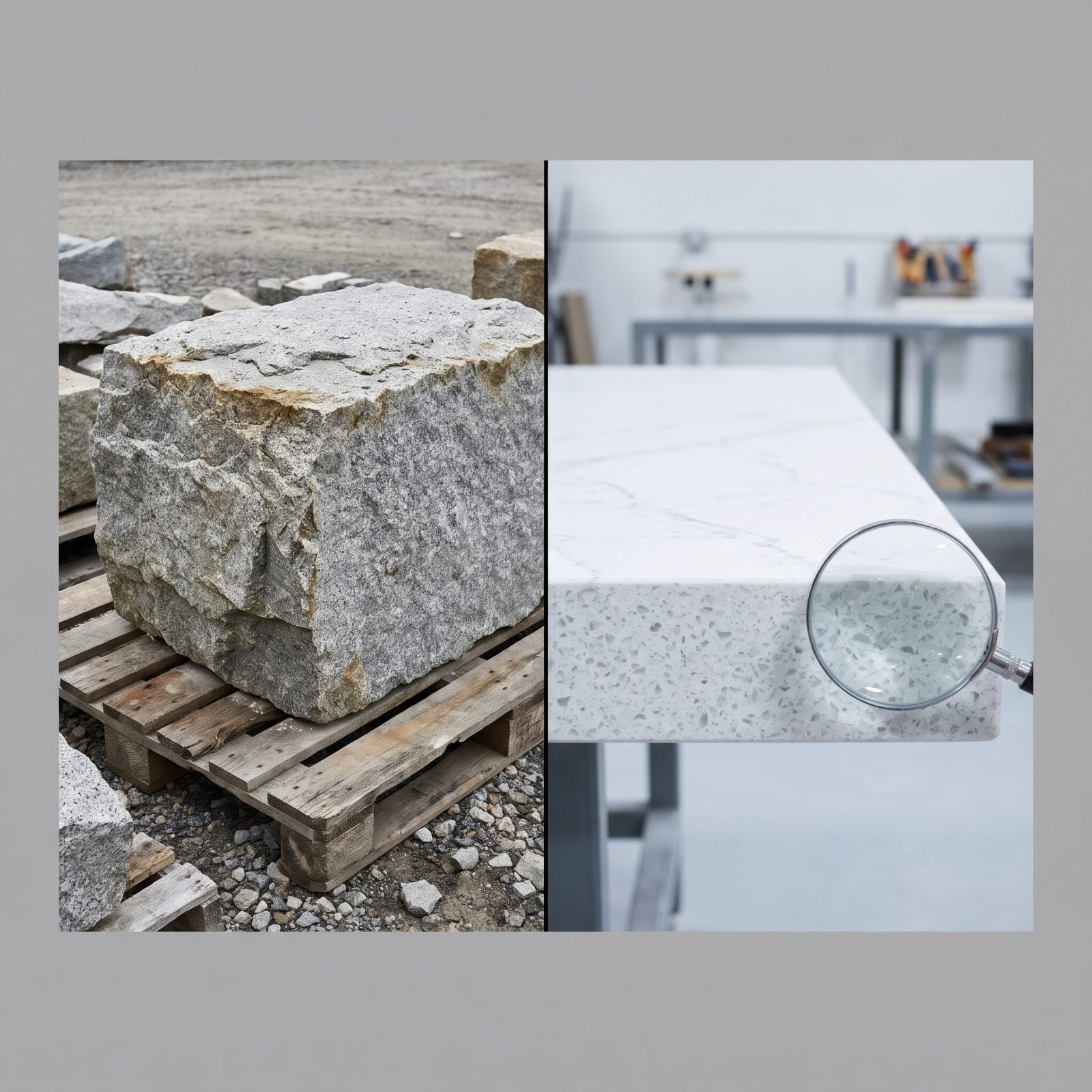
Here’s the correction fabricators make before you’ve finished your first question. Quartz isn’t pulled from the earth in slab form — it’s built. Ground natural quartz crystals, most of the mix, get bound together with polymer resin and pigment, then pressed and cured into the slab you pick out.
In order to come up with the very specific design ideas, we create most designs with the assistance of state-of-the-art AI interior design software. Also, assume links that take you off the site are affiliate links such as links to Amazon. this means we may earn a commission if you buy something.
That composite recipe is why the color runs so consistent, why there’s no natural fault line to worry about, and why two slabs of the same pattern look like twins. Natural stone can’t promise that. The resin is the hero and the limitation, both at once.
43. Myth: Quartz and Quartzite Are Twins. Fact: One’s Made, One’s Mined
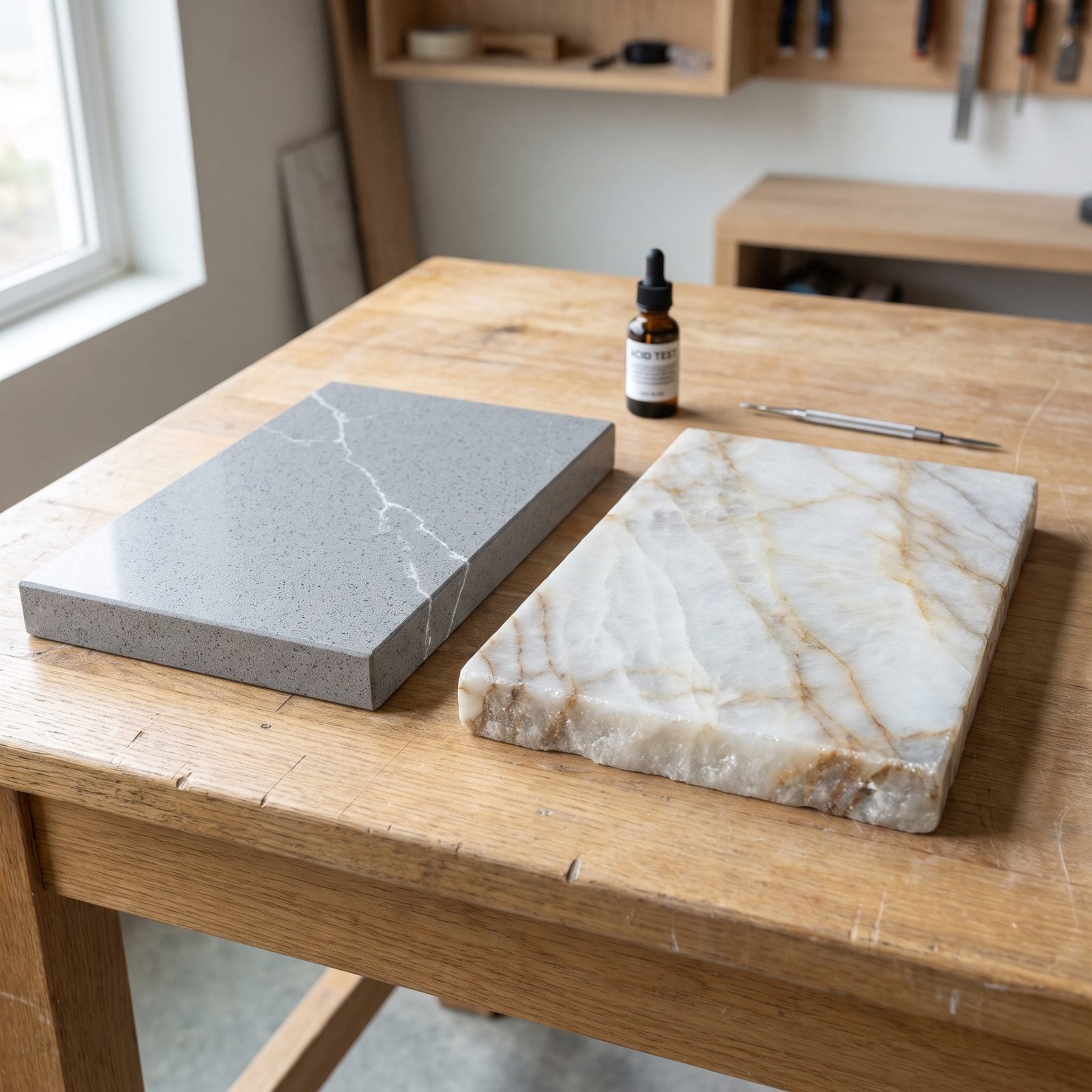
The names rhyme and the confusion costs people real money. Quartzite is natural metamorphic stone, cut from a quarry, veining running clean through the slab. Quartz is the engineered composite. Different material, different care, different price.
Quartzite is harder and shrugs off heat better, but it’s porous and needs sealing. Engineered quartz skips the sealing and holds its color, yet it hates UV and high heat. Ask which one you’re actually buying before you sign anything.
What Our Readers Say
- Comparing countertop materials? Kitchen photos featuring concrete got hearts from our readers 40% of the time, versus 58% for the other images in the same articles.
From Home Stratosphere reader polls and votes.
42. Myth: Nothing Stains Quartz. Fact: It Resists, It Doesn’t Refuse
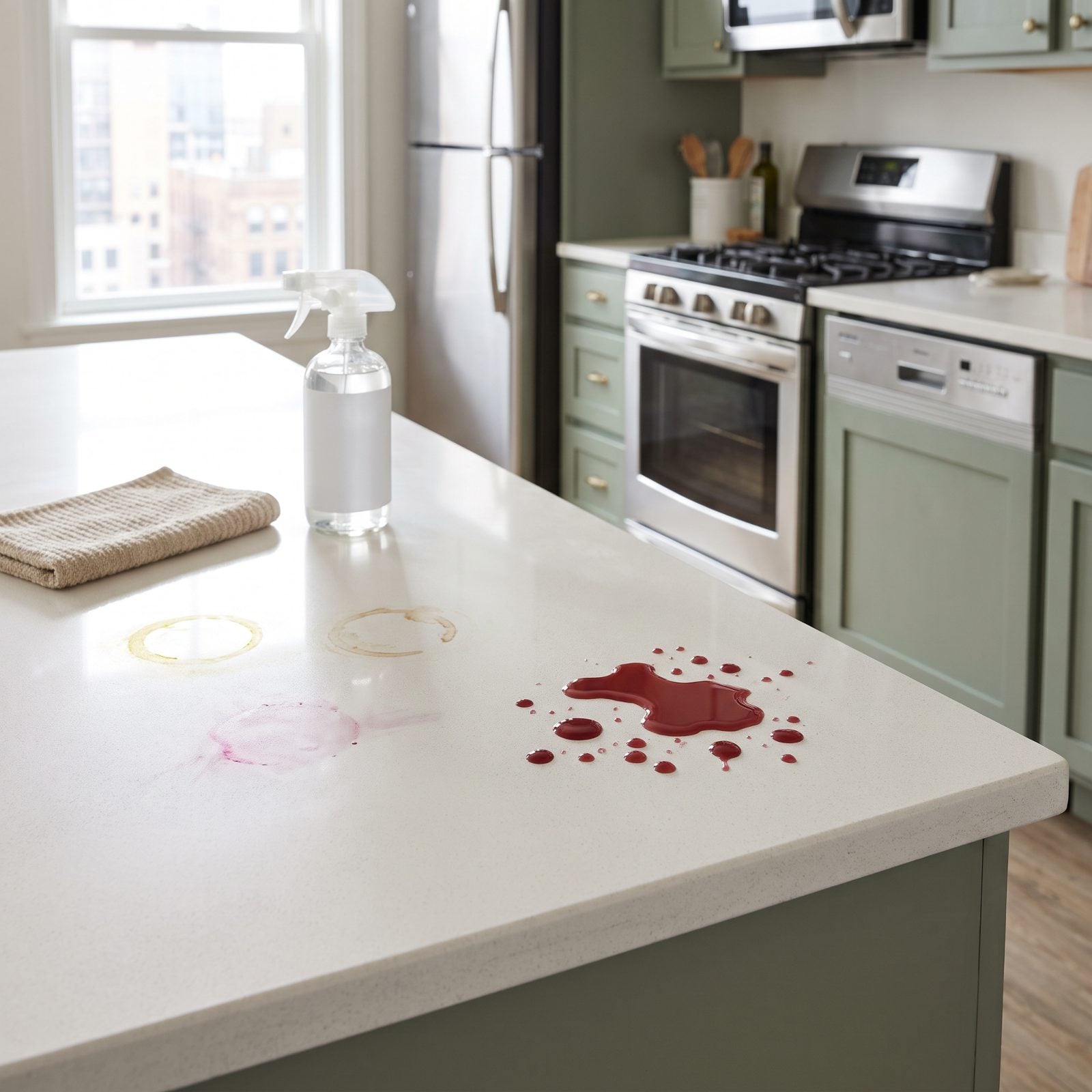
Stain-resistant and stainproof are not the same sentence, and fabricators get tired of explaining the gap.
The resin surface blocks most liquids from soaking in, which is genuinely great. But leave turmeric, red wine, beet juice, or coffee sitting for a day and you can get a mark, especially on pale slabs. Wipe spills reasonably soon and you’ll never meet this problem. Walk away from a splash of curry overnight and you might.
41. Myth: Quartz Can’t Be Scratched. Fact: Grit and Hard Edges Leave Their Mark
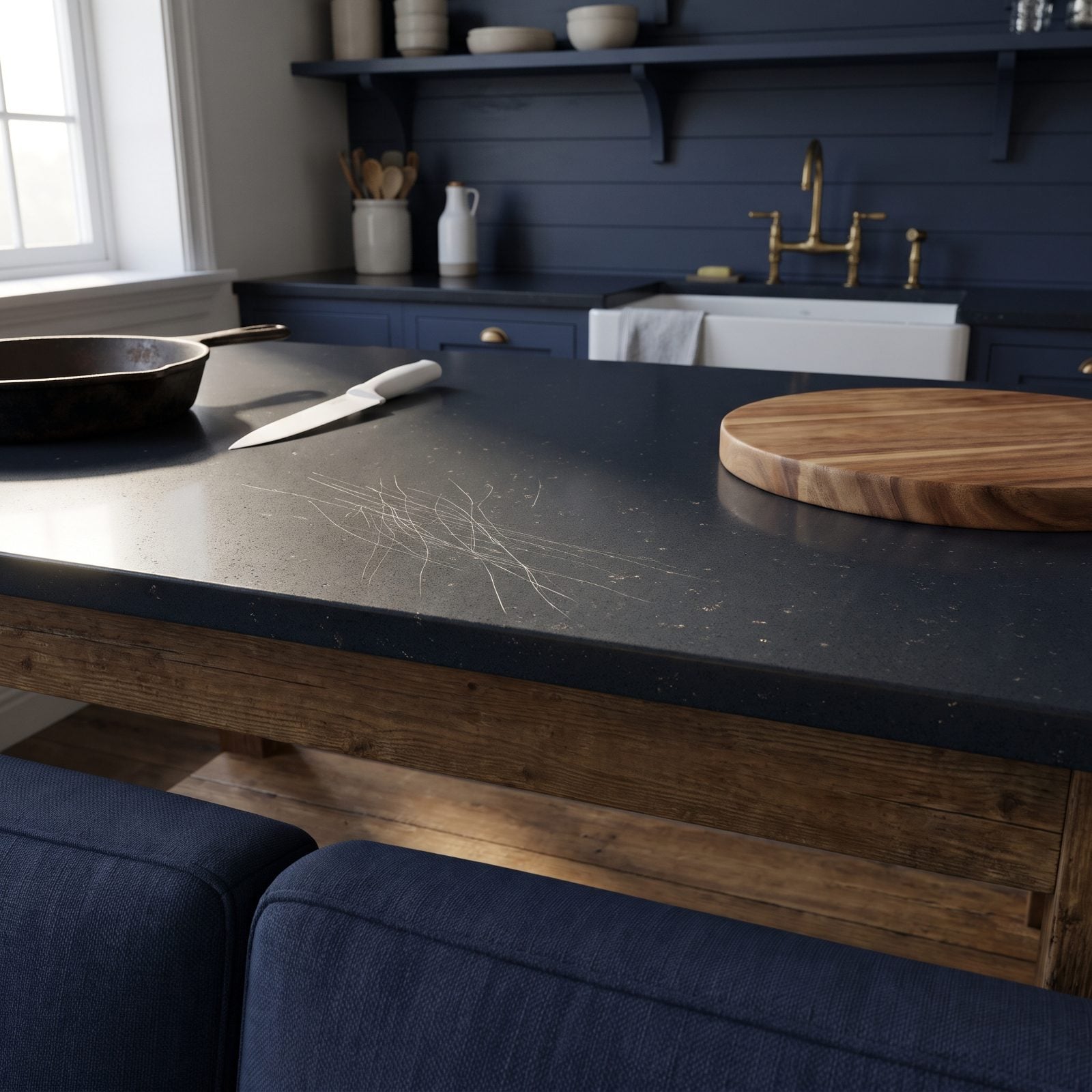
Quartz is hard. Scratch-resistant, not scratch-proof. Push a ceramic knife, a dropped pot, or a bit of trapped grit across the surface and a dark slab will show you the hairlines in the right light.
Dark, glossy finishes are the tattletales here, catching every mark. A cutting board costs a few bucks and solves the whole thing. Use one anyway.
40. Myth: Edges Are Bulletproof. Fact: Corners Chip When You’re Not Looking
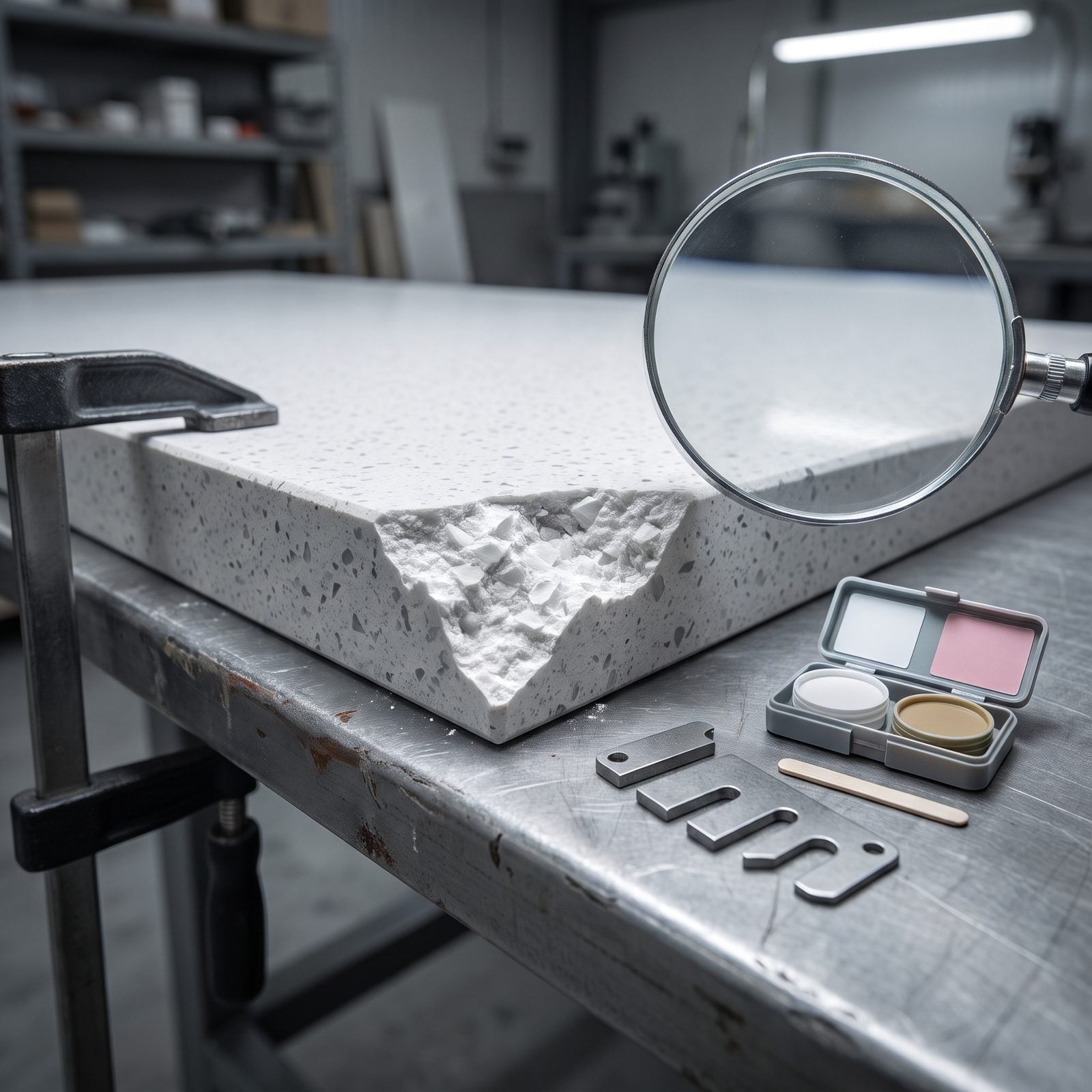
The flat surface takes a beating fine. Your weak spots are the edges and corners, especially the thin runs around a sink cutout or a cooktop.
A dropped cast-iron skillet catching a square corner can chip it. So can a careless mover. That’s why fabricators push eased or rounded edge profiles instead of sharp ninety-degree corners near high-traffic zones — less material to snap off.
39. Myth: You’ll Reseal It Every Year. Fact: Most Engineered Quartz Never Needs It
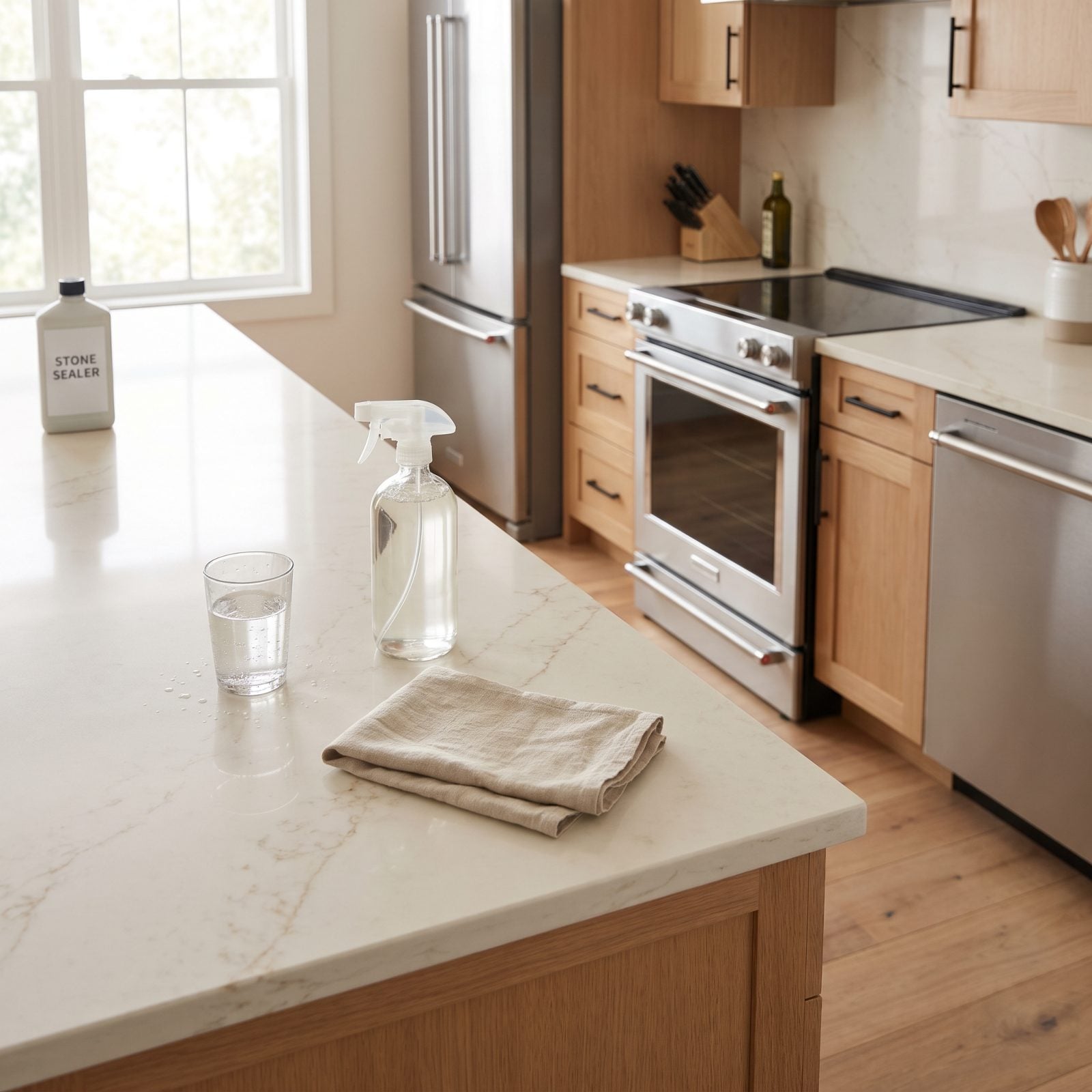
Someone sold a lot of quartz owners sealer they never needed.
The resin binder makes engineered quartz non-porous. There’s almost nowhere for liquid to seep, which means no annual sealing ritual like natural stone demands. Mild soap and water with a microfiber cloth is the whole maintenance plan. The one caution: don’t leave red wine or other dark spills sitting on the surface, because they can discolor the resin over time, so wipe them up promptly. If an installer tells you to seal it yearly, they’re confusing it with granite or marble, and you can politely push back.
38. Myth: Quartz Is Germ-Free on Its Own. Fact: It Still Wants a Wipe-Down
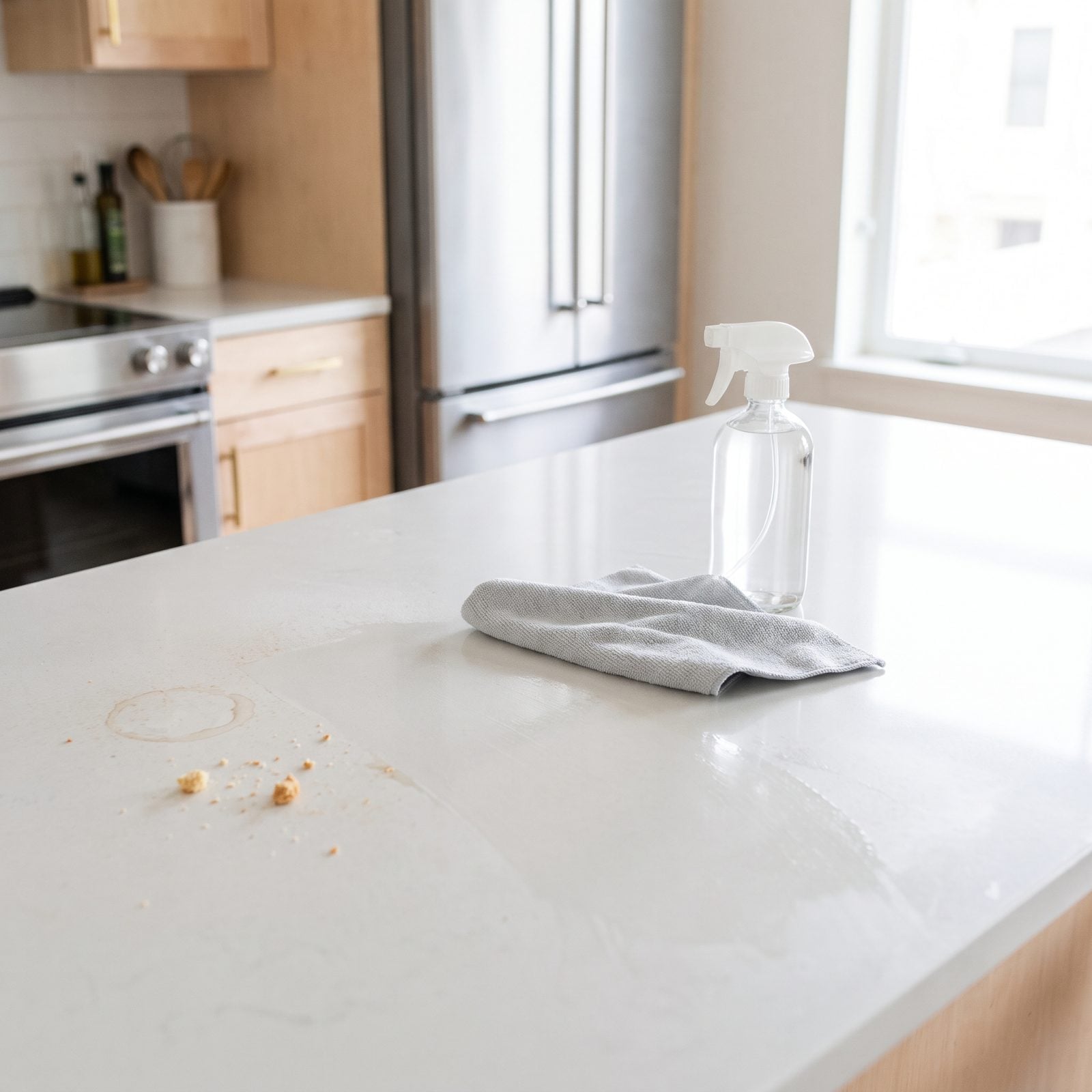
Non-porous gets oversold into hygienic, and the two aren’t identical. Liquids and bacteria can’t soak into the resin, so quartz is easy to keep clean and won’t harbor growth the way porous stone can. Easy to keep clean is the operative phrase. The surface still collects whatever you put on it, so raw chicken juice and crumbs need wiping like any other counter. The material helps. It doesn’t do the dishes.
37. Myth: Take It Outside, It’s Stone. Fact: Sunlight Fades Many Slabs
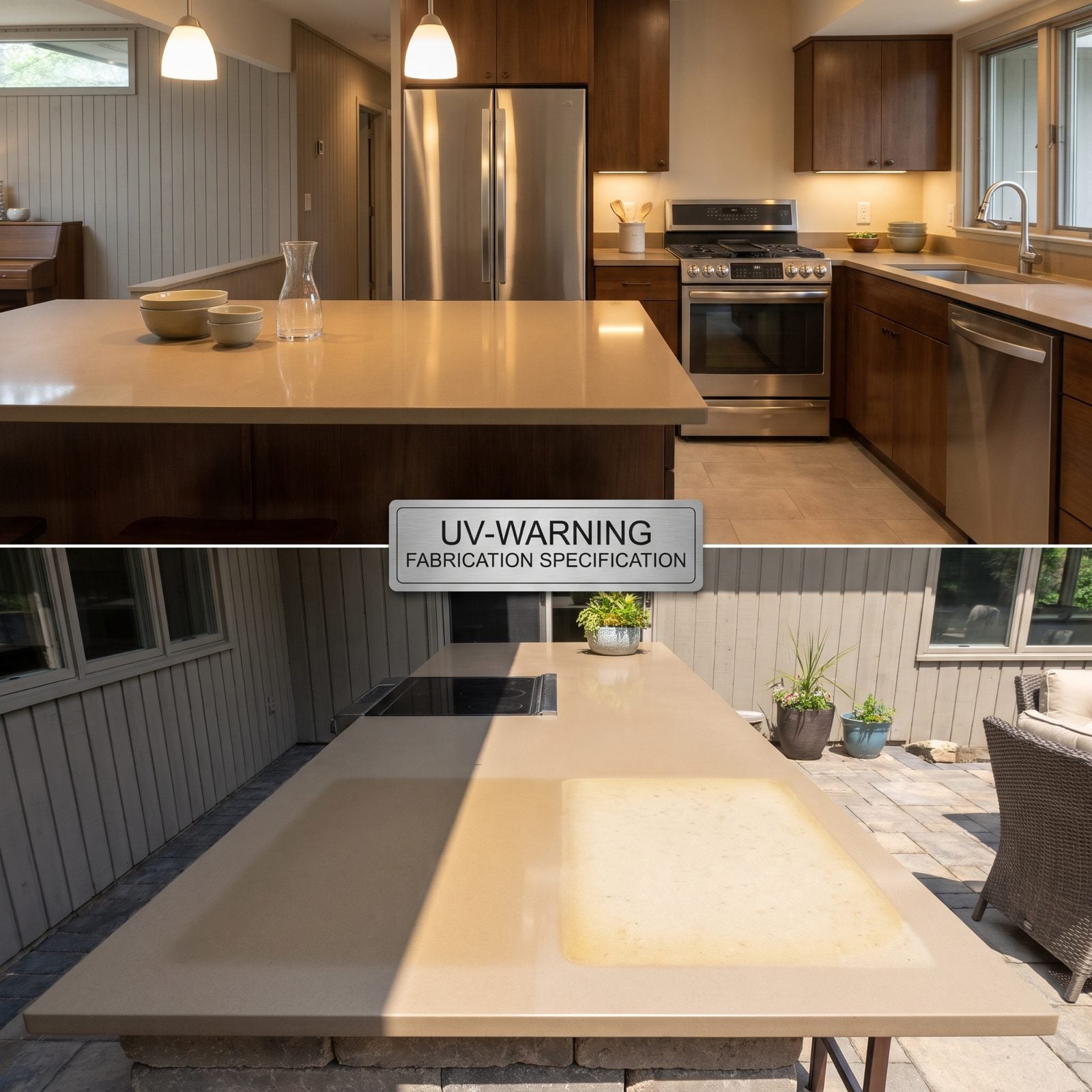
This one breaks hearts on outdoor kitchen projects. Most engineered quartz is not UV-stable. The resin and pigments that make it beautiful indoors are the exact things sunlight attacks, and direct exposure can yellow or fade the slab over months.
A few manufacturers now make UV-rated outdoor quartz, and those are fine. Standard interior product on a sunny patio is a warranty-voiding mistake. Confirm the UV rating in writing before anyone cuts it for the backyard.
36. Myth: The Sample Is the Slab. Fact: Full Slabs Move in Ways Chips Can’t Show
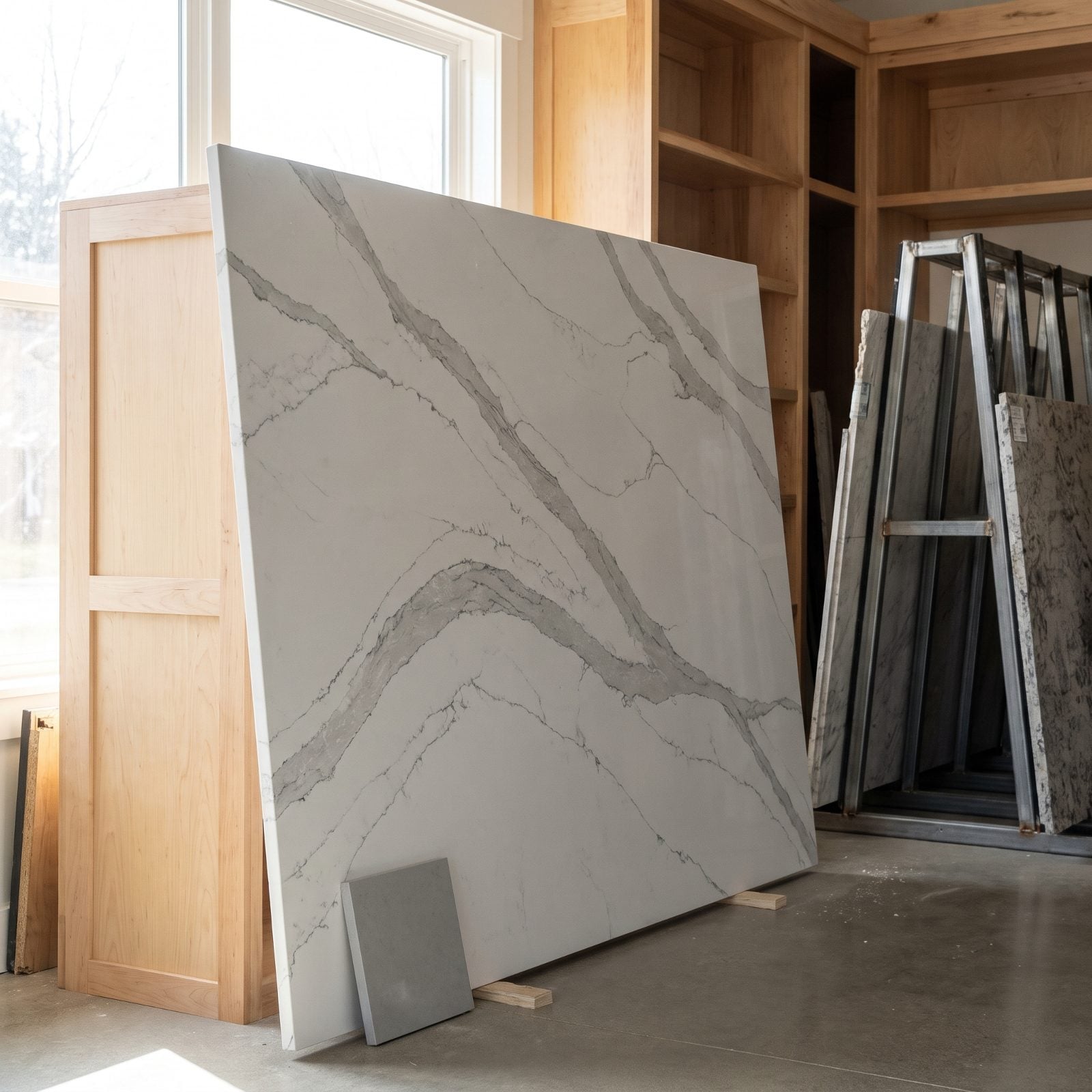
A two-inch sample is a liar by omission. It shows you the color and the general texture, and almost nothing of the veining movement that sweeps across a full slab.
Patterns with big dramatic veins can look completely different at scale. A chip might show you a calm patch while the actual slab has a river running through it. Always ask to see your specific full slabs in person before the cut, and mark the layout with your fabricator so the veining lands where you want it.
35. Myth: That Vein Runs All the Way Through. Fact: Many Patterns Live on the Surface
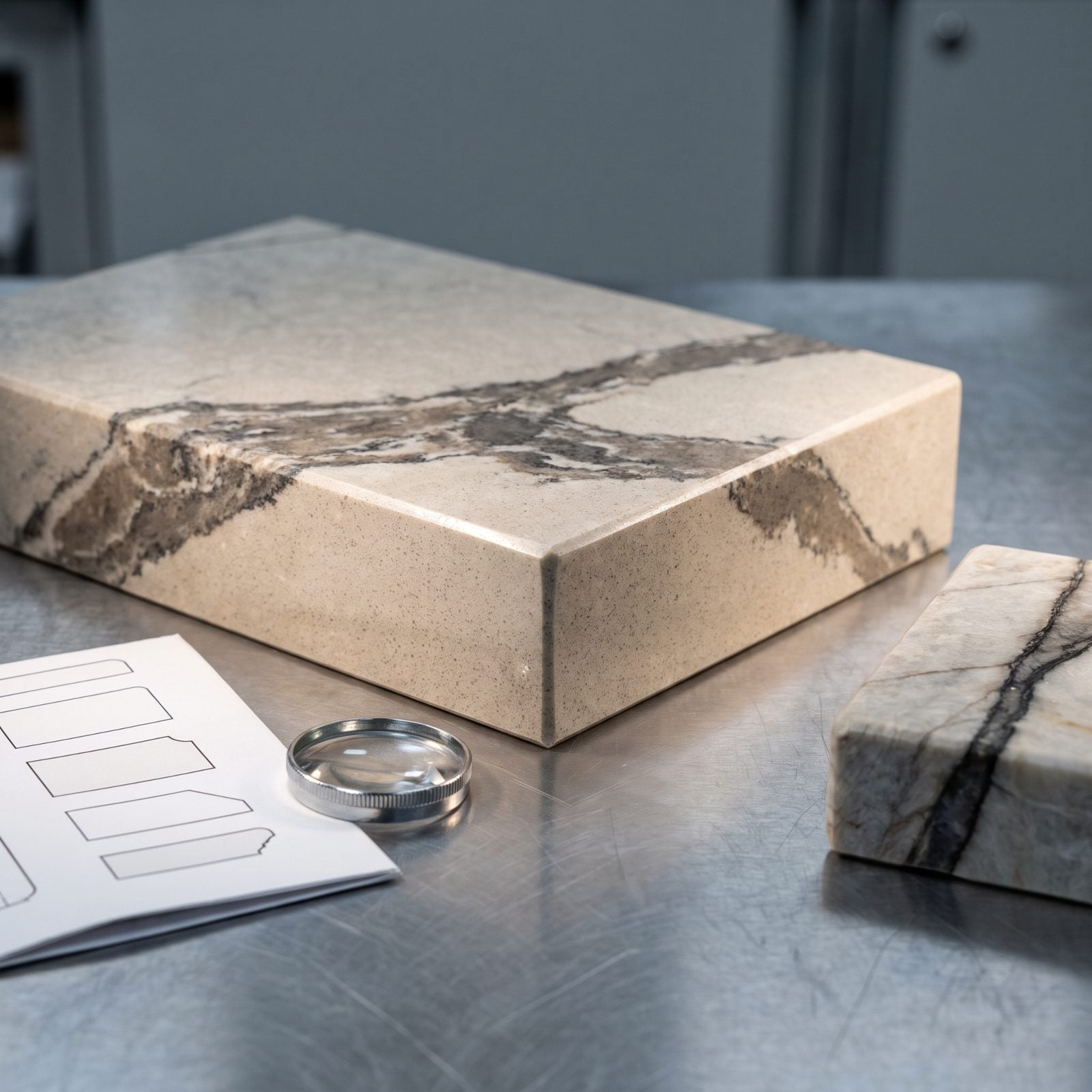
Here’s the detail that surprises people at the seam. On many engineered quartz patterns, the dramatic veining is printed or layered mostly on the surface, not carried all the way through the slab.
So a bold vein on top can vanish at the cut edge, showing only base color underneath. Newer full-body and through-vein products carry the vein from the top down both the front and side faces and look better at mitered edges, but they cost more. Building a thick waterfall island? Ask whether the vein continues down the side, because a pattern that stops at the edge gives that showpiece away in an instant.
34. Myth: Quartz Seams Are Invisible, Fact: A Good Fabricator Just Makes Them Quieter
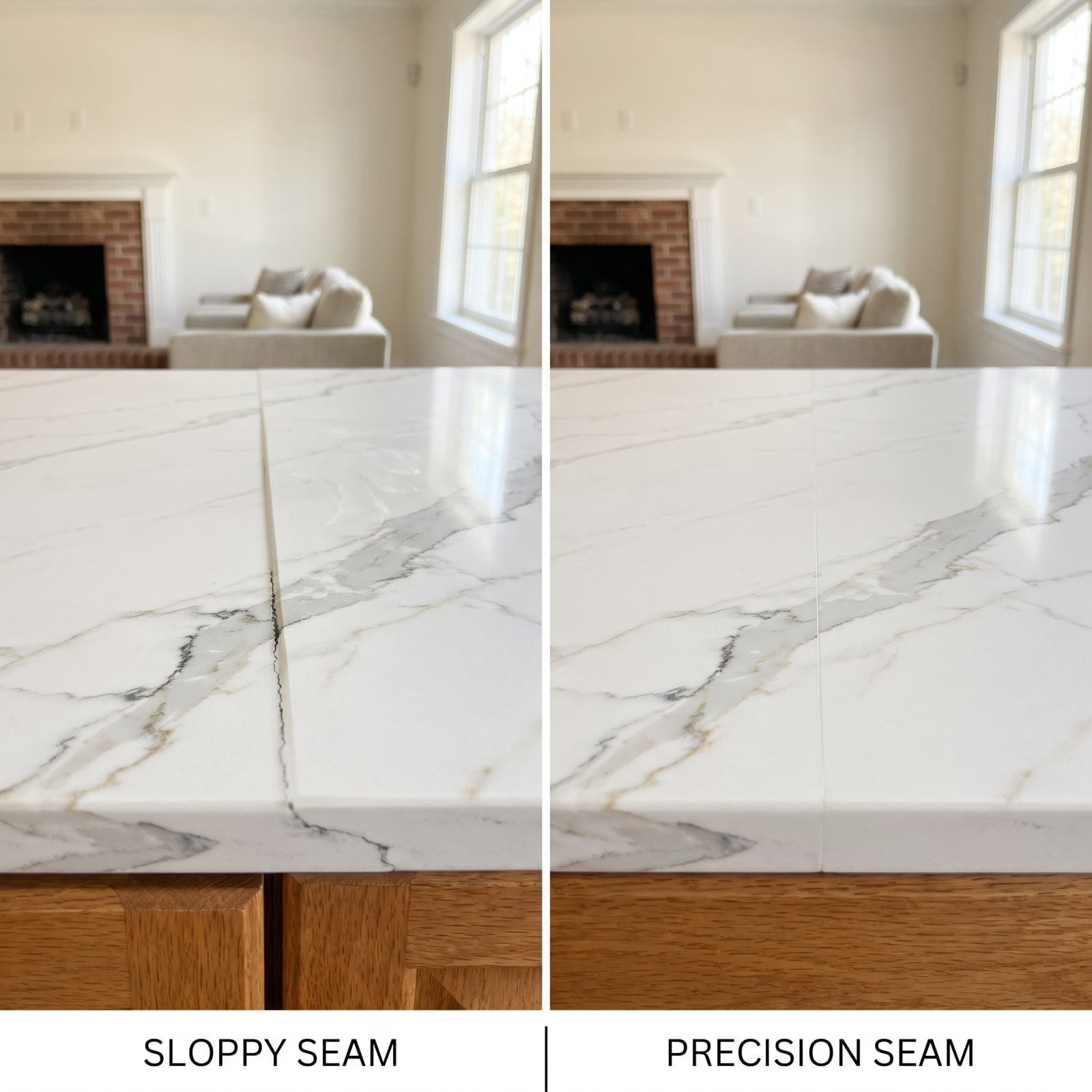
Someone sold you on a seamless kitchen, and then the slab showed up with a joint you can feel with your fingernail.
Here’s the truth fabricators wish more buyers heard up front: quartz has seams. Big islands, long runs, L-shaped layouts all need joints because slabs only come so large. A sharp fabricator color-matches the epoxy, flows the pattern across the gap, and sets both pieces dead flush so light doesn’t catch a ridge. Quiet, not absent. Those are different things, and anyone who promises you the second one is selling.
33. Myth: One Slab Covers Any Island, Fact: Slab Size Draws the Line
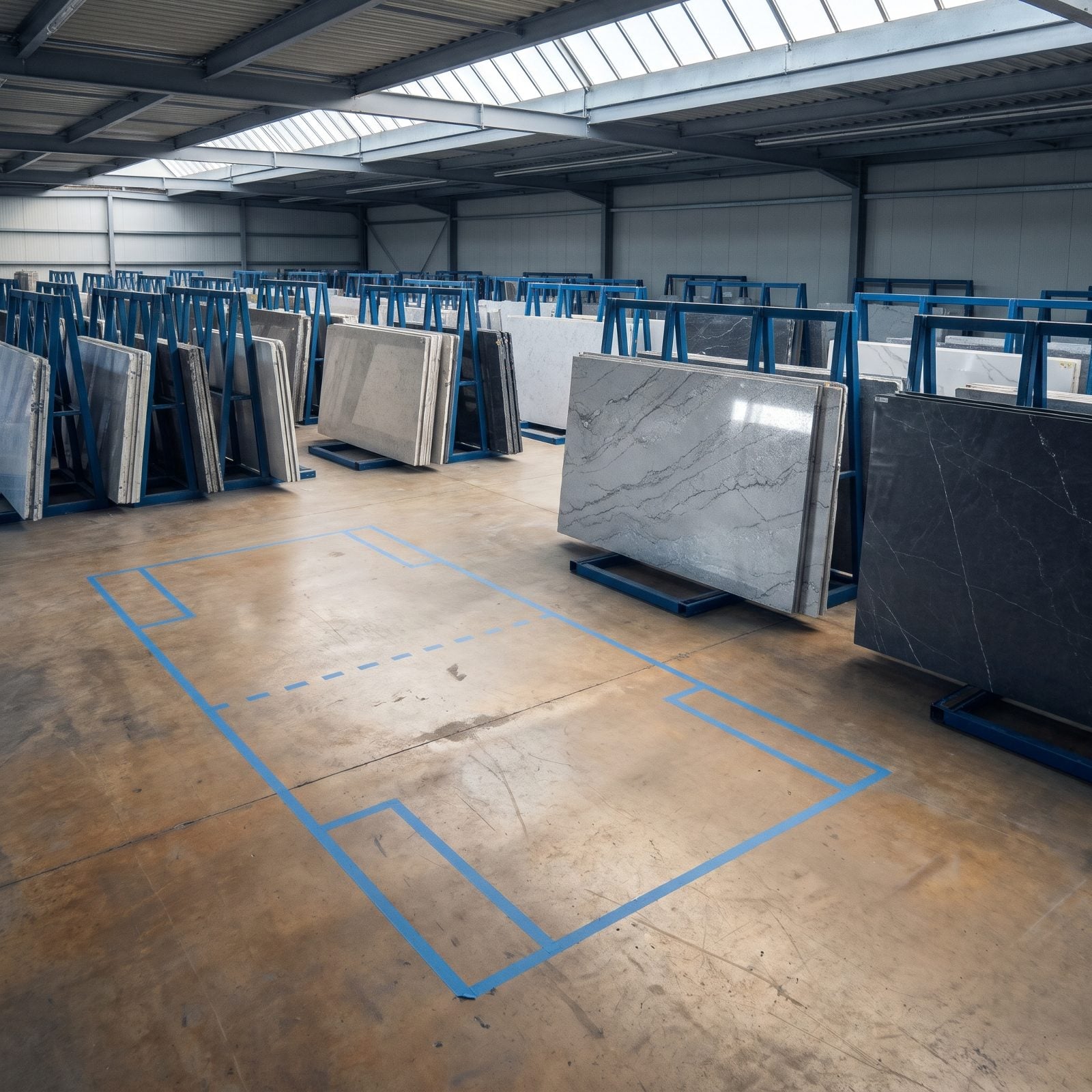
Big islands are where the dream of one perfect slab goes to die. Standard quartz slabs run somewhere near ten feet long and roughly four and a half wide, and plenty of islands blow right past that.
When the footprint beats the slab you’ve got two honest choices: accept a seam, or special-order a jumbo slab that costs more and ships from fewer suppliers. Neither one is a problem. Pretending the limit doesn’t exist, now that’s a problem. Any decent island plan accounts for slab dimensions before the cabinets are even ordered — which is exactly the step most people skip, then wonder where the surprise came from. See how an island is laid out and you’ll start noticing the math behind it.
32. Myth: Thickness Is Just a Look, Fact: It Drives Edges, Weight, and Support
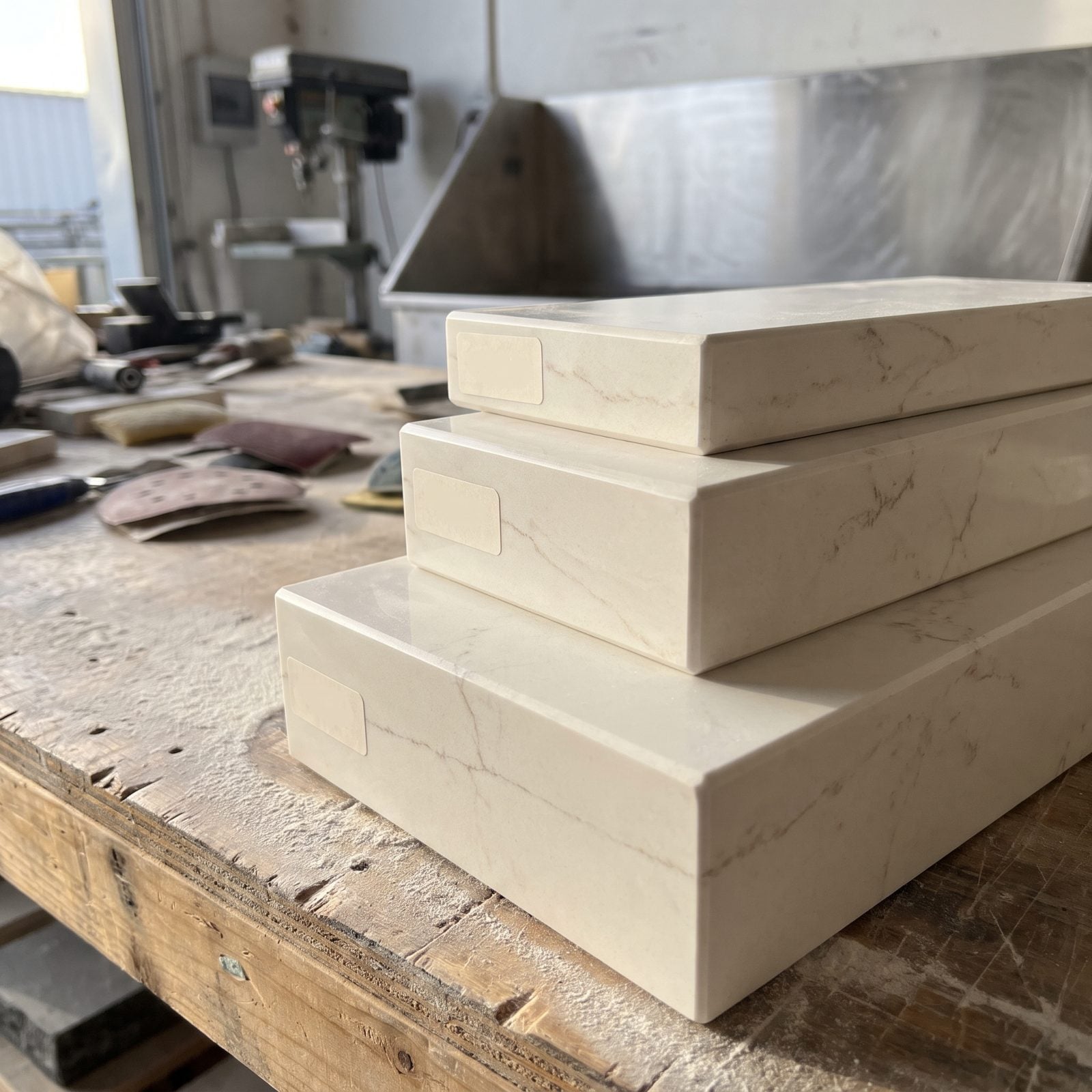
Thickness isn’t a vibe. It’s structure.
Two-centimeter quartz is lighter and cheaper, but it needs plywood backing and limits your edge options. Three-centimeter stands on its own, carries beefier edge profiles, and handles longer unsupported spans. Want that chunky six-centimeter look? That’s usually two pieces mitered together, which piles on weight and hides a seam under the edge. More mass means your cabinets and brackets have to be ready for it, and the number on the quote quietly rewrites all the structural math underneath.
31. Myth: Every Overhang Supports Itself, Fact: Long Spans Want Steel
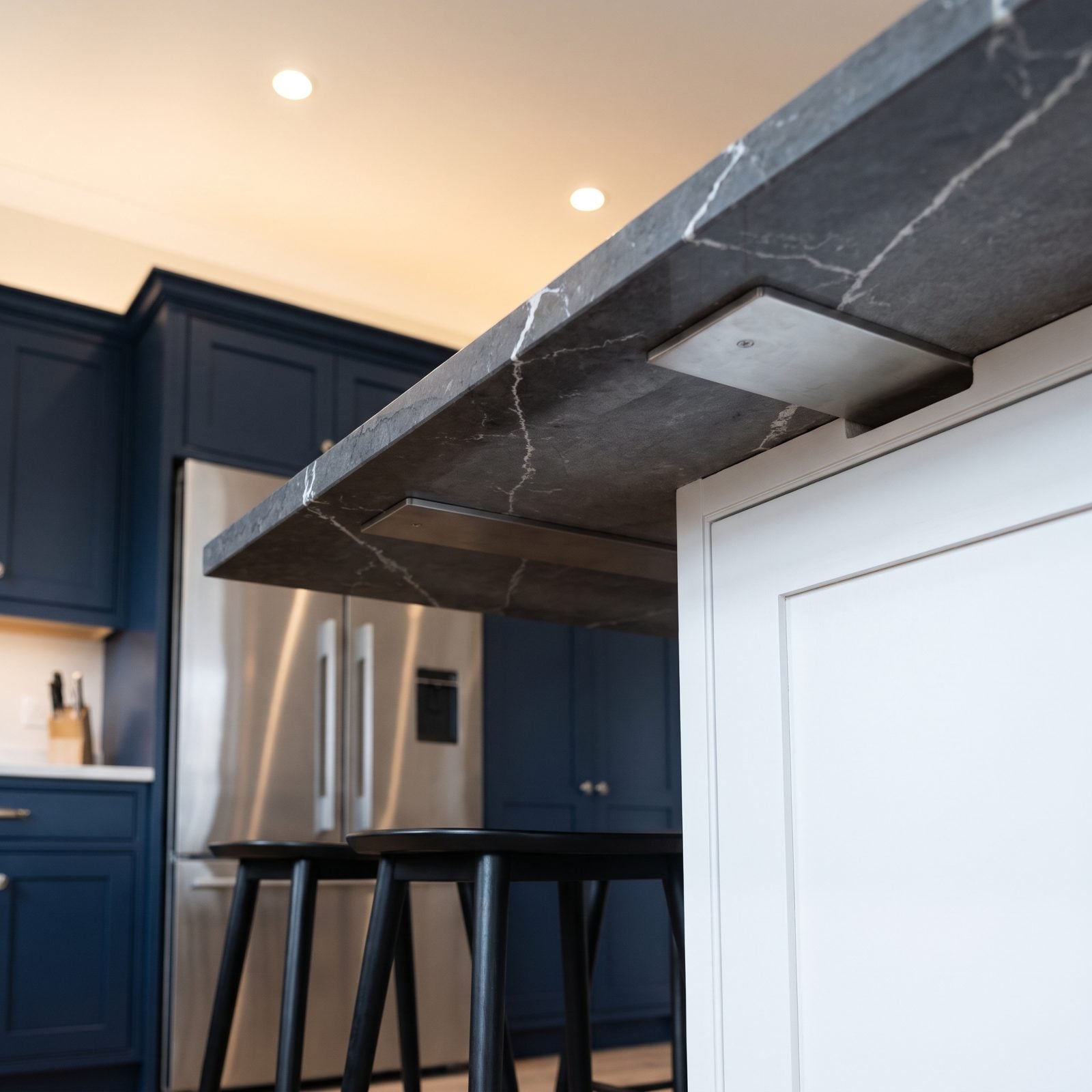
Quartz feels indestructible until you lean on an unsupported overhang and hear a crack you can’t unhear.
Fabricators live by a rough rule: a 3cm slab self-supports maybe ten to twelve inches past the cabinet, and 2cm less than that. Go further and you need steel plates, corbels, or hidden brackets carrying the load. A bar-height overhang where people actually sit and lean? That earns reinforcement, full stop. We’ve watched homeowners skip the brackets to save a hundred bucks and buy a whole new slab instead.
30. Myth: Quartz Can Always Go Over Old Counters, Fact: Somebody Has to Measure First
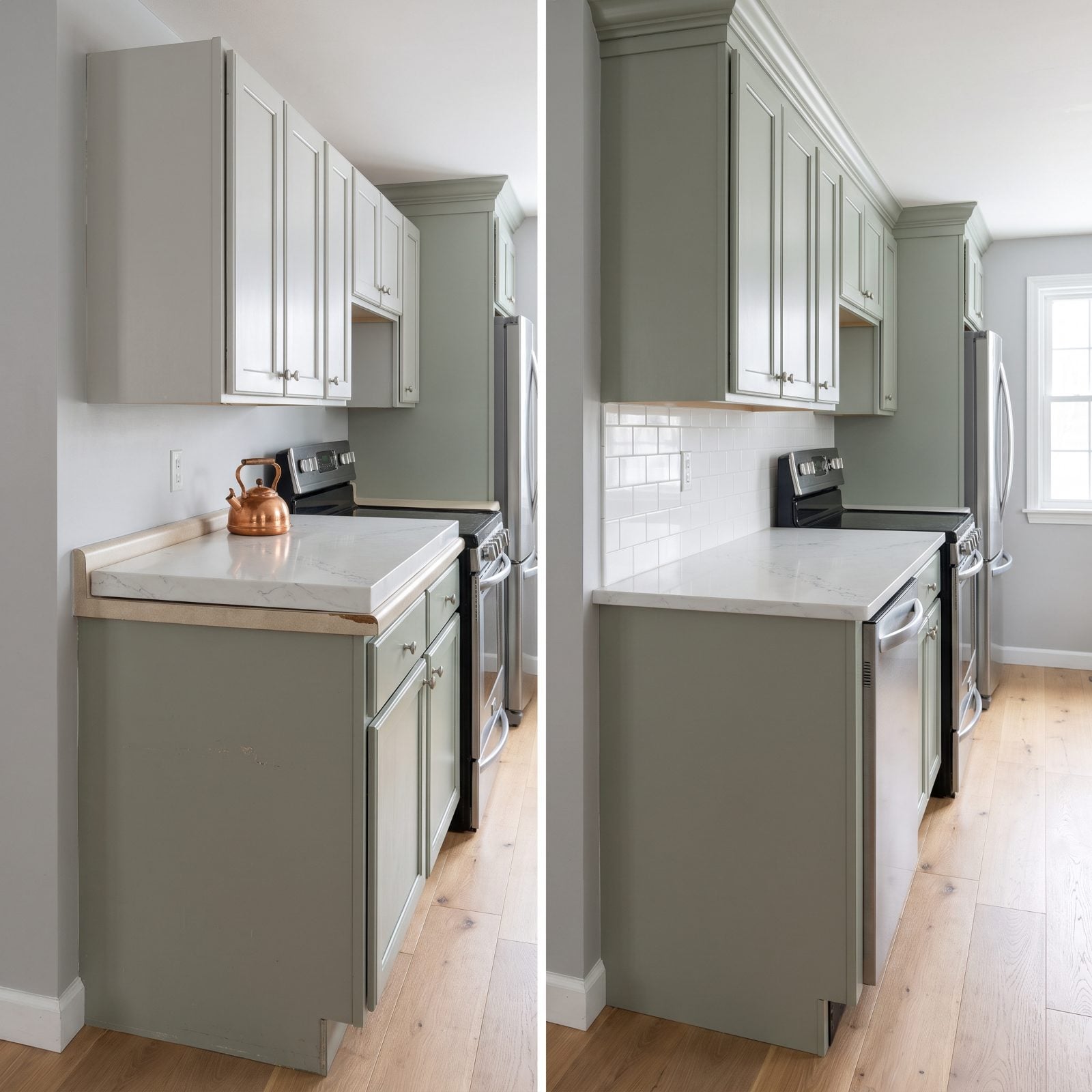
Laying quartz straight over your existing counters sounds like a shortcut. Occasionally it is. Usually it’s a measuring problem waiting to surface.
Stacking adds height, and that extra inch can shove your backsplash clearance, your range fit, and your dishwasher opening out of spec. Then comes the weight question — can the old base plus new stone actually hold together? A fabricator worth hiring assesses the whole stack before anyone pours a drop of adhesive. Height, load, stability, all checked up front, because fixing it after install means tearing out stone you already paid for.
29. Myth: Any Cabinet Box Will Do, Fact: Weak Boxes Need Reinforcing
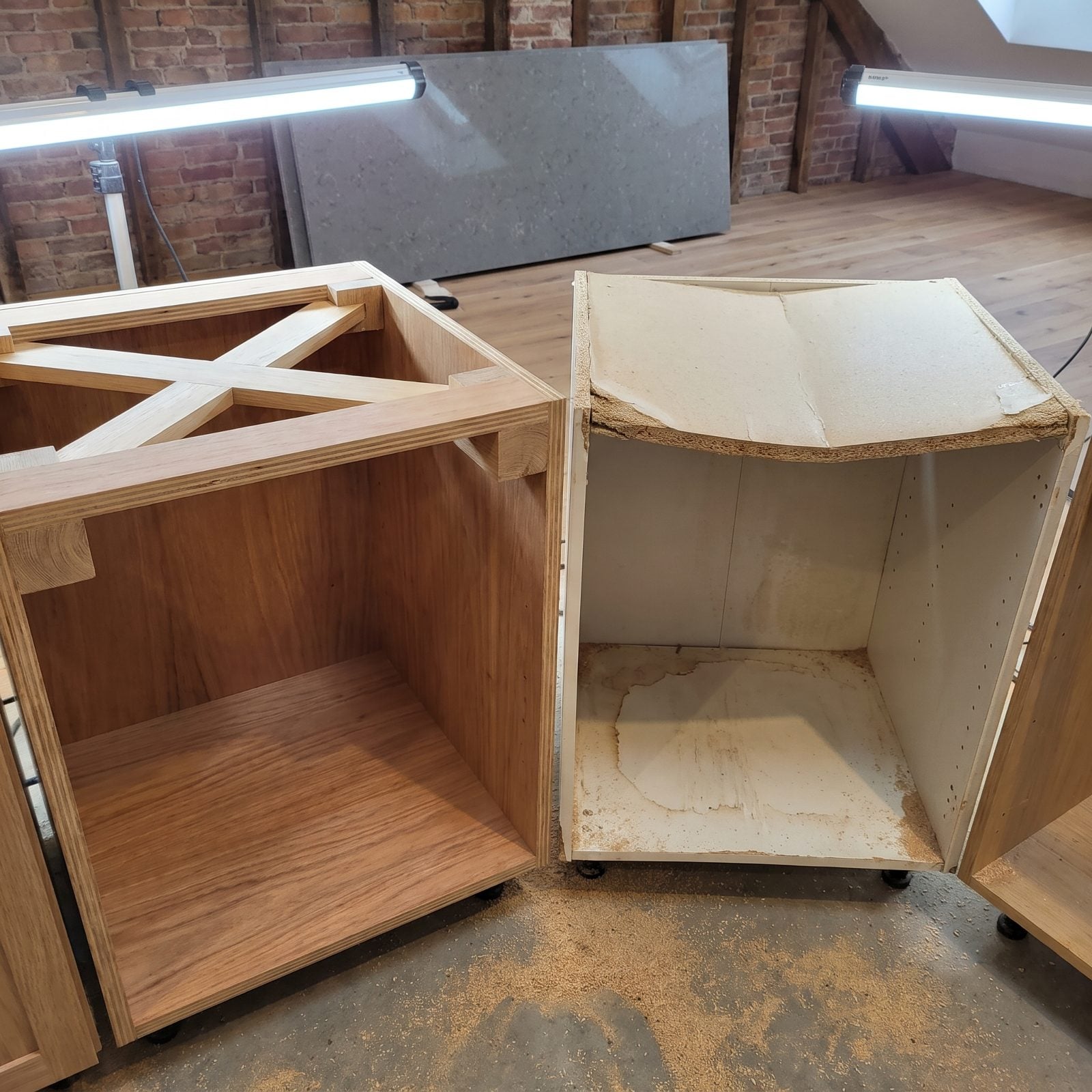
Your cabinets carry the whole show, and a 3cm slab is heavy. It does not care how pretty the doors are.
Solid plywood boxes usually handle quartz fine. Old particleboard, water-swollen bases, or flimsy frameless construction? Those want cross-bracing, corner blocks, or a fresh top panel before stone ever lands on them. Good fabricators poke around in there and tell you the truth. Skip the reinforcement and you get sag, stressed seams, and a slab locked in a losing fight with a base that was never built to hold it.
28. Myth: Level Cabinets Are Optional, Fact: An Uneven Base Stresses the Slab
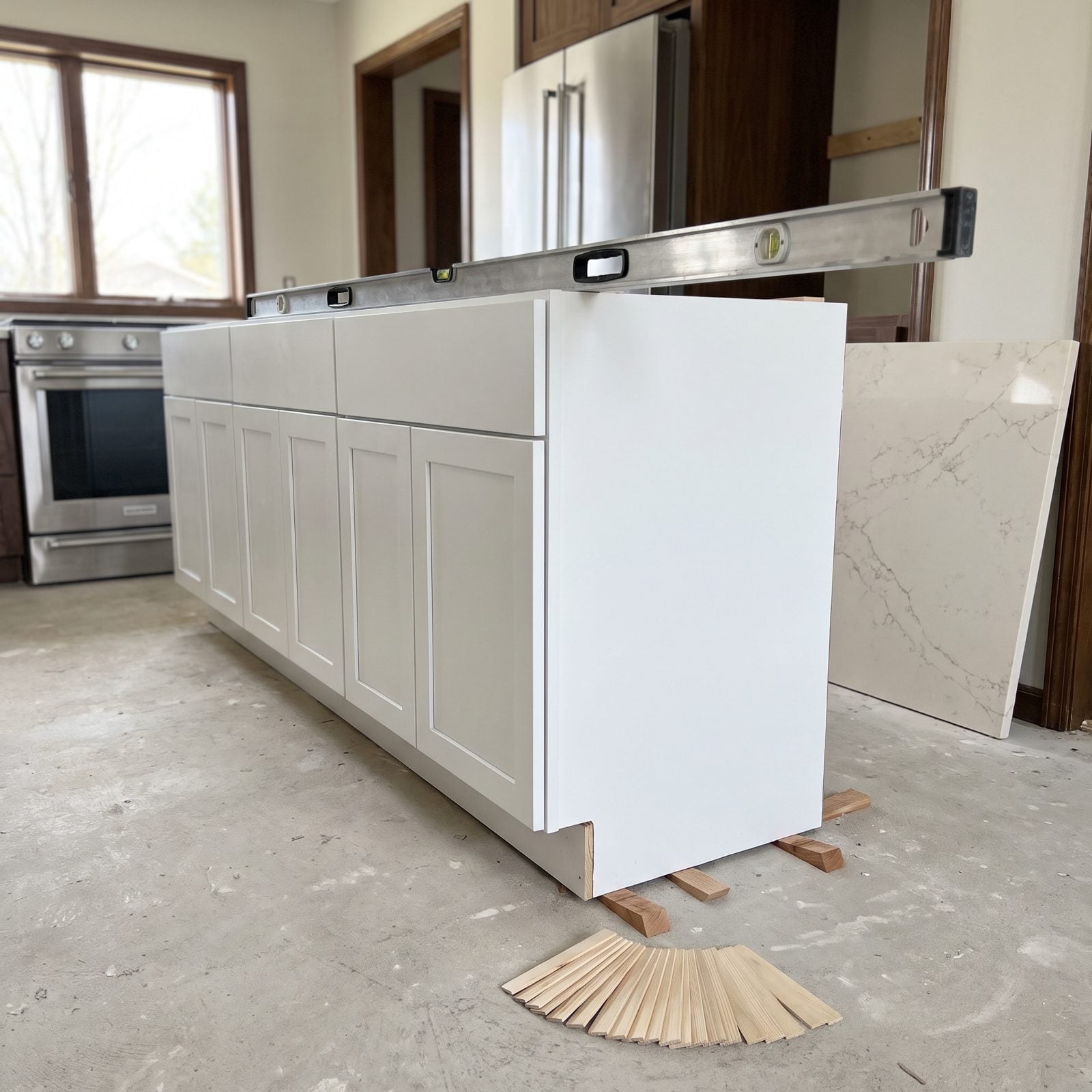
Lay a level across your cabinet tops. If the bubble wanders, so does the stress waiting inside your future countertop.
Quartz is rigid. Set it on a base that dips a quarter inch over six feet and the slab bridges the gap, piling force onto one point until something gives. Shimming the cabinets flat is tedious, unglamorous, and completely non-negotiable. A fabricator who templates without checking level is handing you a cracked seam on a timer.
27. Myth: Template Early, Finish the Kitchen Later, Fact: Final Conditions Come First
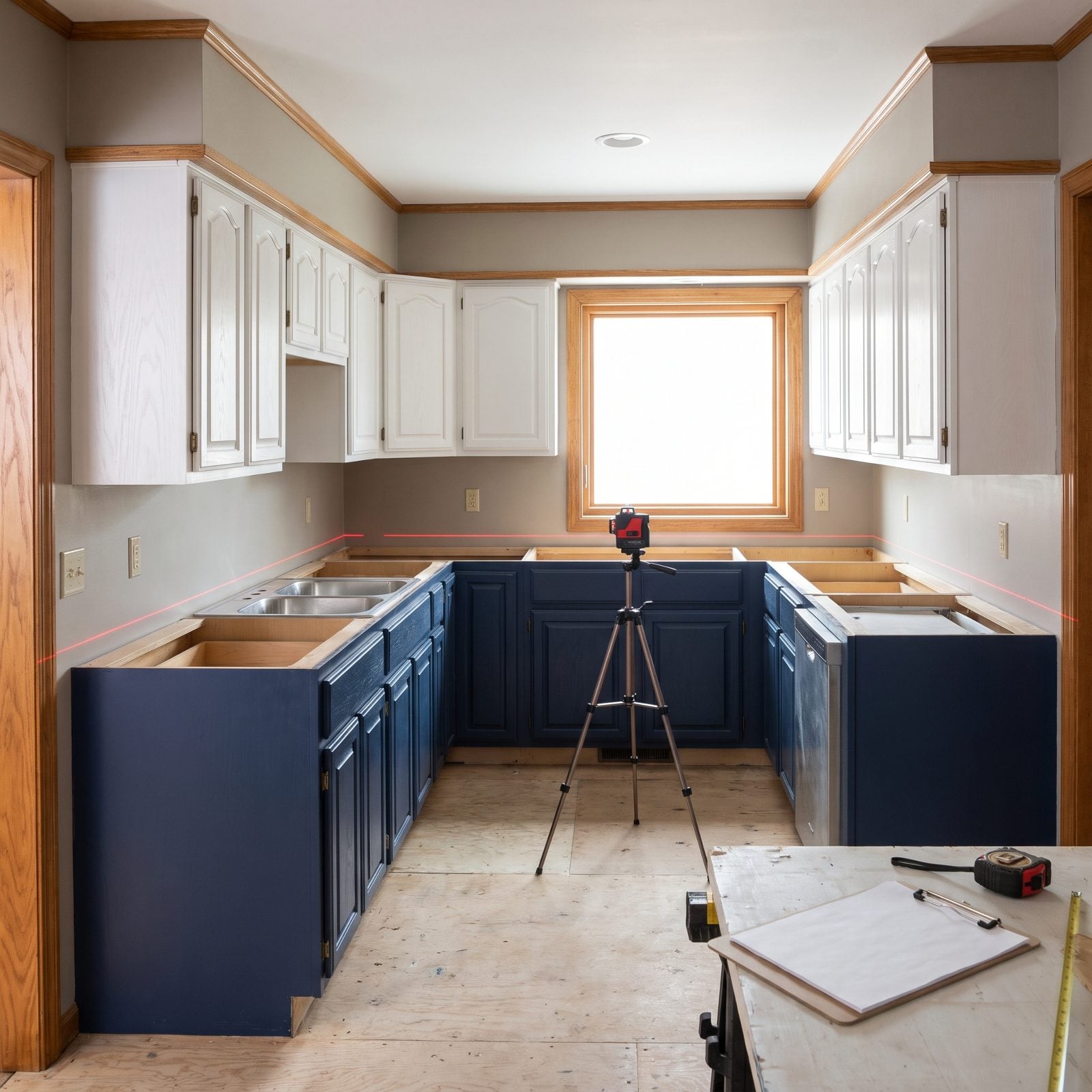
Templating a kitchen that isn’t done is like sizing a suit on someone who hasn’t finished growing.
Cabinets set and level, sink on site, appliance dimensions confirmed, backsplash decisions made — all of it has to be real before the template, because that template becomes the exact map the slab gets cut to. A faucet hole an inch off. A range gap measured against a cabinet that later shifted. Little misreads like those turn into expensive recuts fast. Measure the kitchen that exists, not the one you’re still planning to have.
26. Myth: Crooked Walls Don’t Matter, Fact: They Open Gaps Behind Your Counter
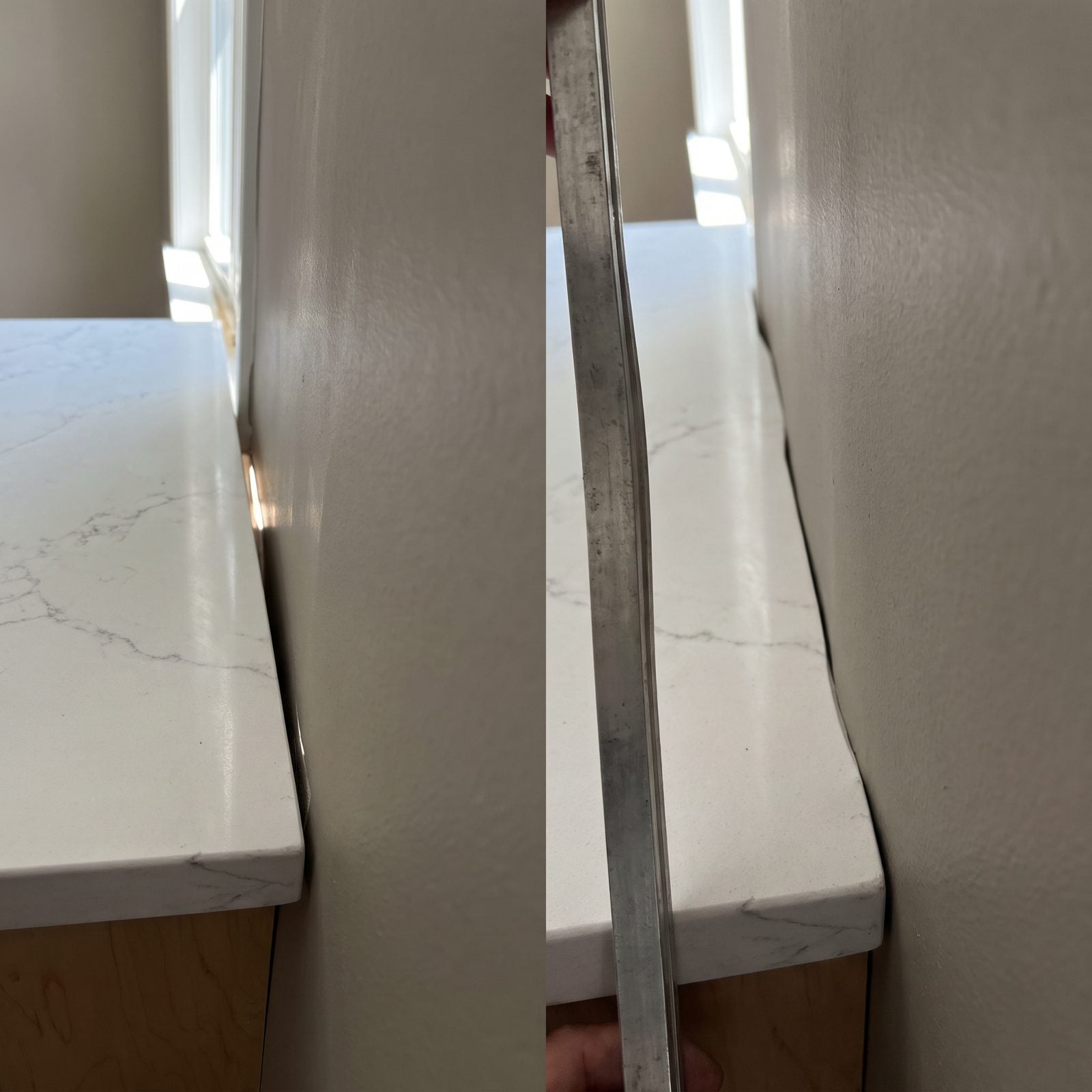
Walls are rarely as straight as you think. Builders know this. Fabricators plan for it.
Run a factory-straight quartz edge against a bowed wall and you get a tapering gap that widens as the wall waves away from the stone. The fix is scribing — tracing the wall’s actual contour onto the quartz and cutting the counter to match, so it hugs the irregularity instead of fighting it. The same gremlin shows up behind your backsplash too. Ignore the wall, and you’re left caulking a canyon.
25. Myth: Fabricators Cut Everything On-Site, Fact: The Heavy Cutting Belongs in the Shop
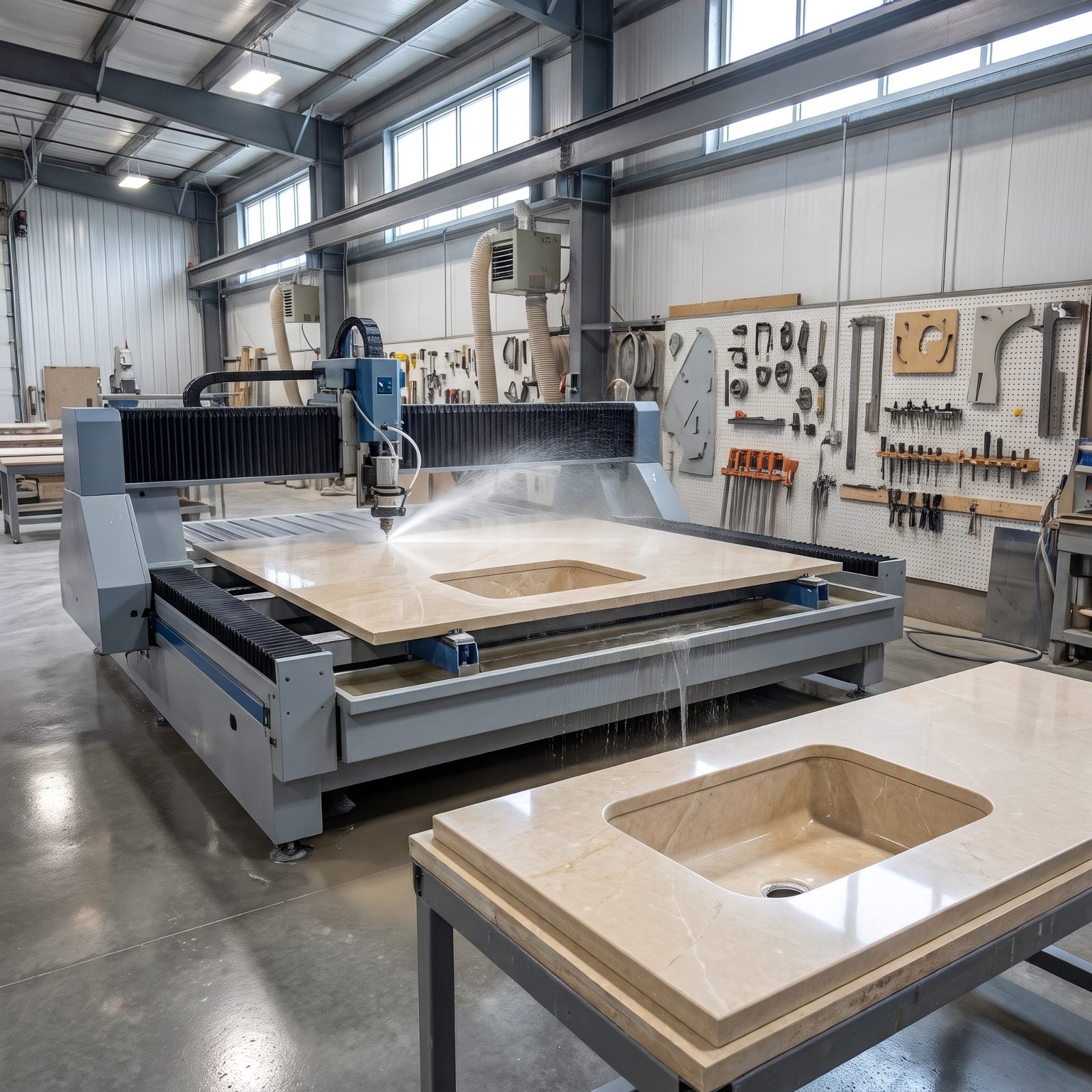
You want your sink cutout done in your kitchen with a handheld grinder? No. You really don’t.
The precision work — sink and cooktop cutouts, mitered edges, polished profiles, radiused corners — happens on CNC machines and water jets back at the shop, under water for dust control, holding tolerances no hand tool can touch. On-site cutting stays limited to the small stuff: an inch shaved to meet a slightly off wall, a scribe tweak, a backsplash notch. Try to do the major cuts in your living space and you’ll get silica dust in every corner of the house plus edges that haunt you for years.
24. Myth: Quartz Installation Is an Easy Weekend DIY, Fact: The Weight and Precision Need a Crew
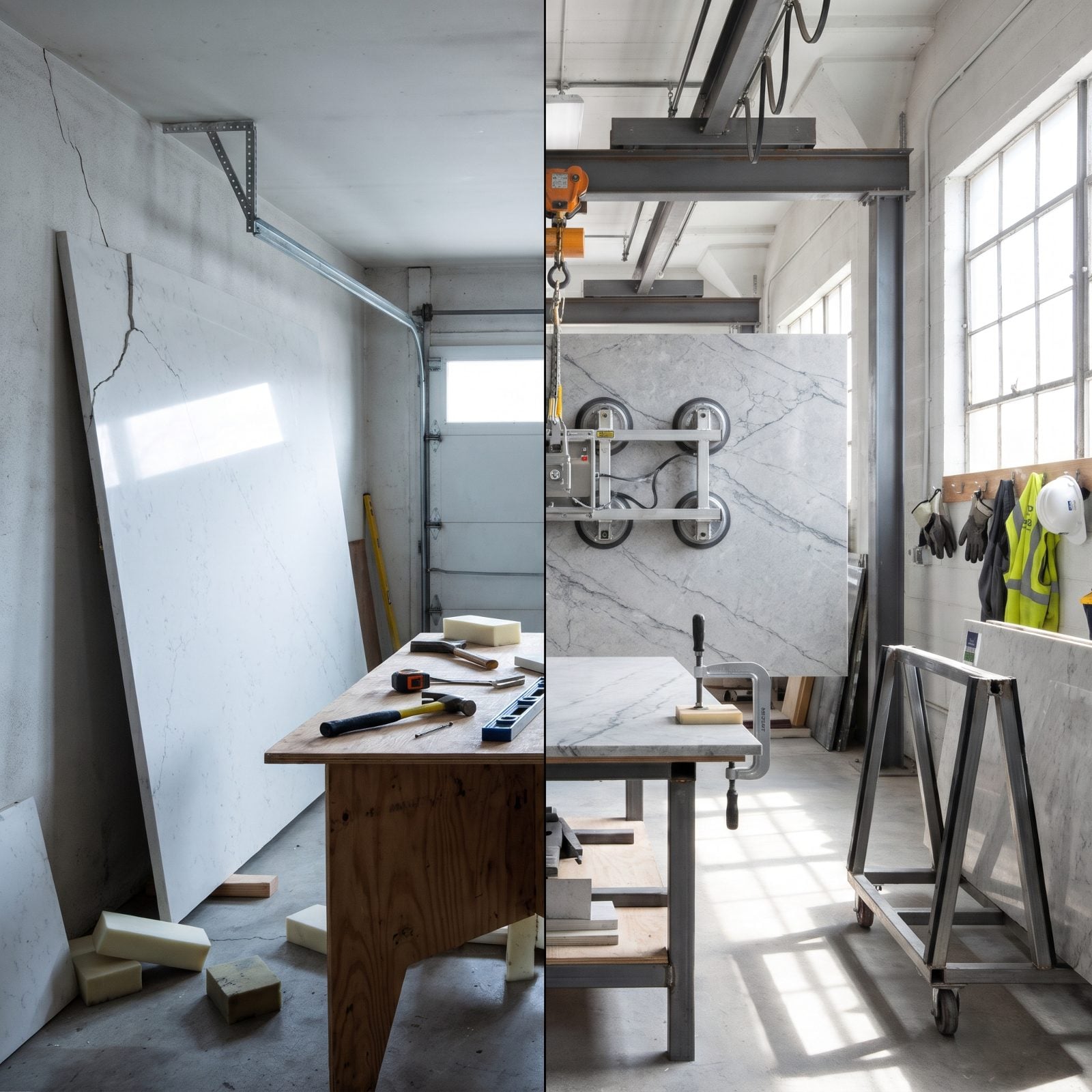
Quartz slabs are heavier than they look. A full three-centimeter slab runs well into the hundreds of pounds, and all that weight wants to crack the second you flex it wrong hauling it up a stairwell. Plenty of people have assumed a buddy and two dollies counted as a plan. They did not.
Pros don’t carry quartz flat. They carry it on edge, braced, often on a vacuum lifter, and they template the cabinets with a laser so the seam lands where it should and the overhang stays even. Miss the measurement by an eighth of an inch and congratulations, you’ve bought yourself a very expensive lesson.
23. Myth: A Matching Slab Later Will Blend Right In, Fact: Lots Shift and Colors Vanish
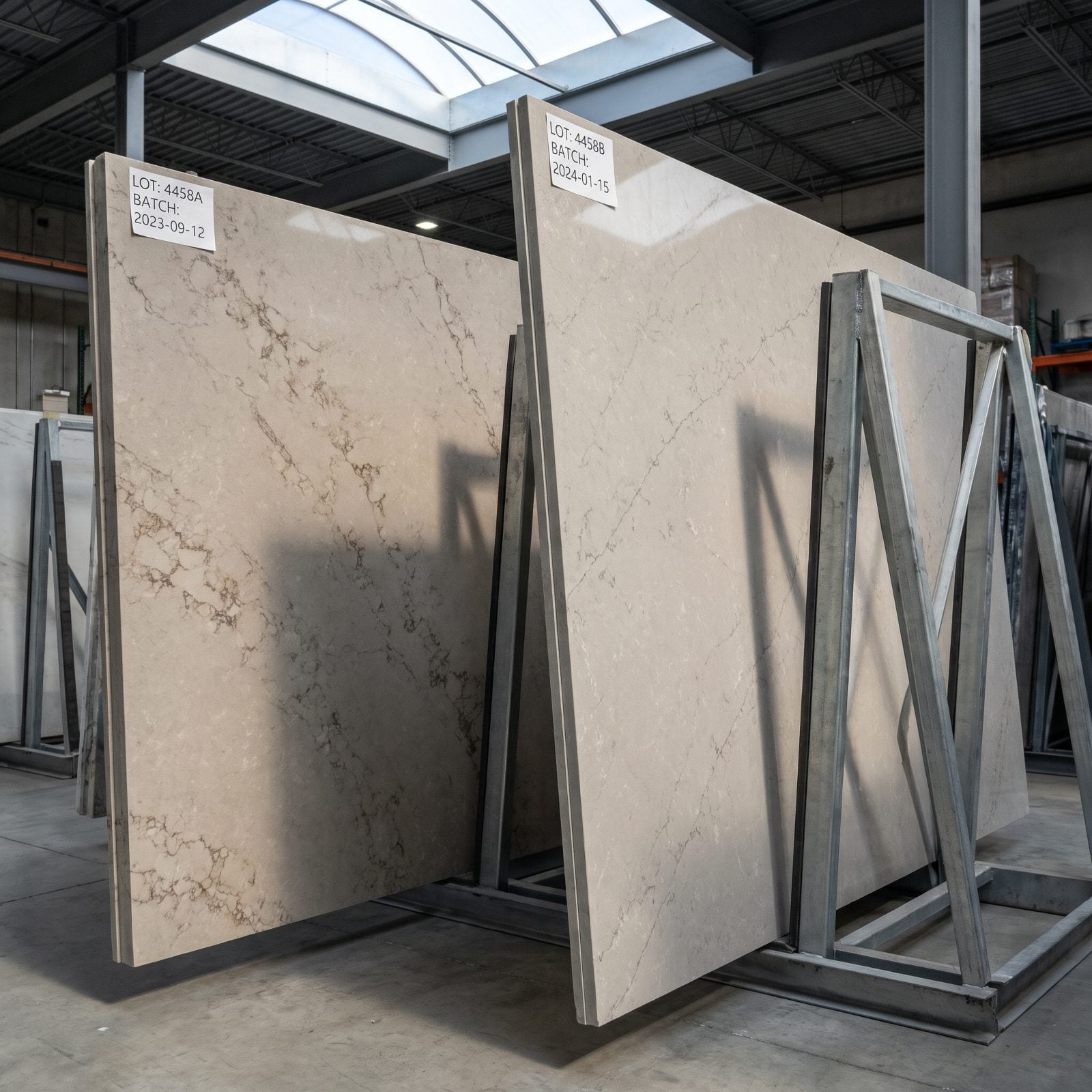
Quartz is manufactured in batches, and batches drift. Same name, same SKU, different lot, and suddenly the veining lands warmer, grayer, or busier than the counter you already own.
Discontinued colors are worse. Popular patterns get retired, reformulated, or renamed every few years, so the slab you’d want down the road may simply not exist anymore. Planning an island or a laundry run for later? Buy the extra slab now and store it flat and covered.
22. Myth: Waterfall Edges Barely Waste Material, Fact: Matching the Pattern Eats the Slab
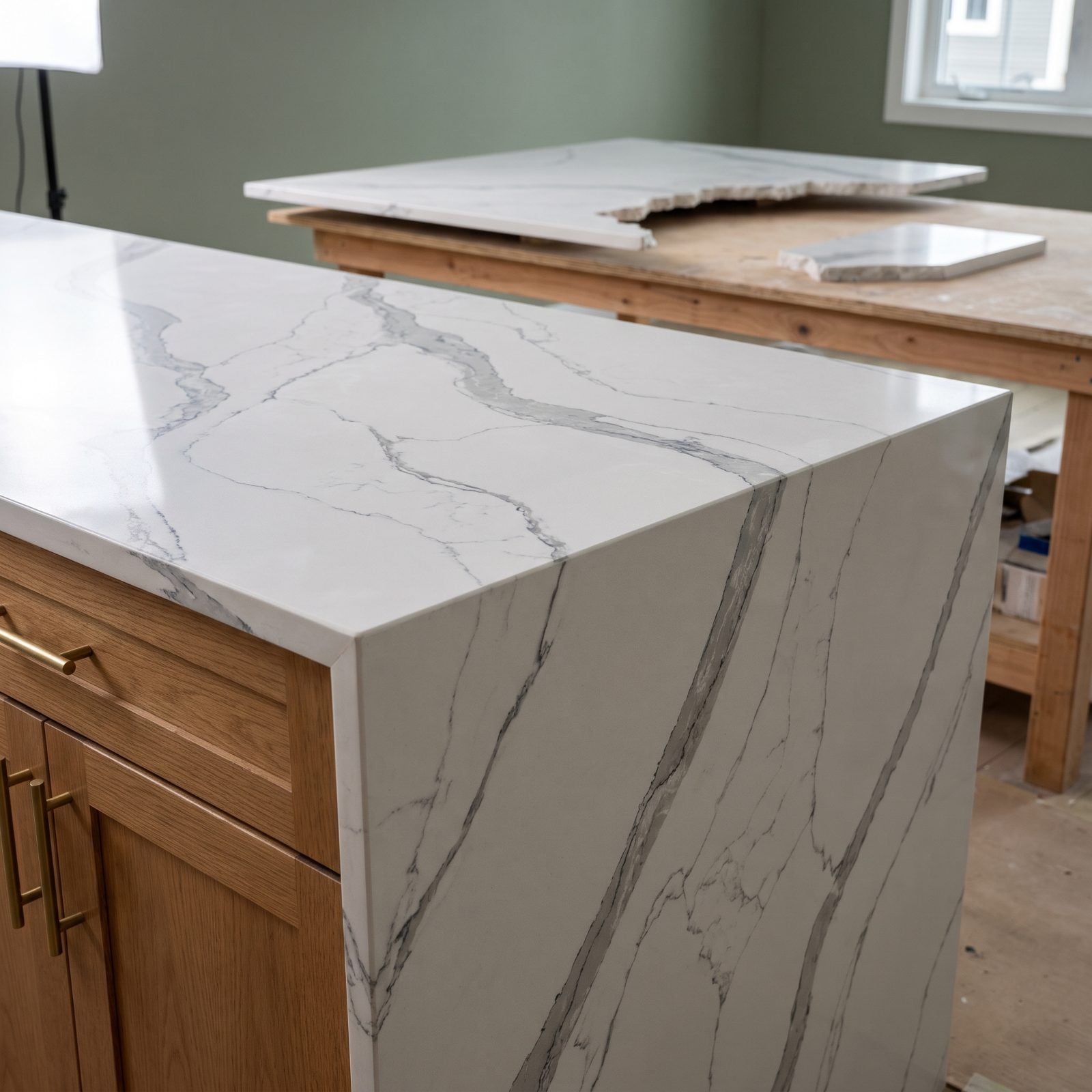
A waterfall edge looks effortless and costs the opposite. To make the veins run unbroken over the corner, the fabricator cuts the vertical panel from the slab right next to the top piece, then miters the corner at forty-five degrees. That continuous-vein alignment often burns a whole second slab, with a fat chunk of it heading straight to the offcut pile.
The seamless look you’re paying for is mostly the stone you never see.
21. Myth: You Only Pay for the Counter You Can See, Fact: Slab Yield Sets the Price
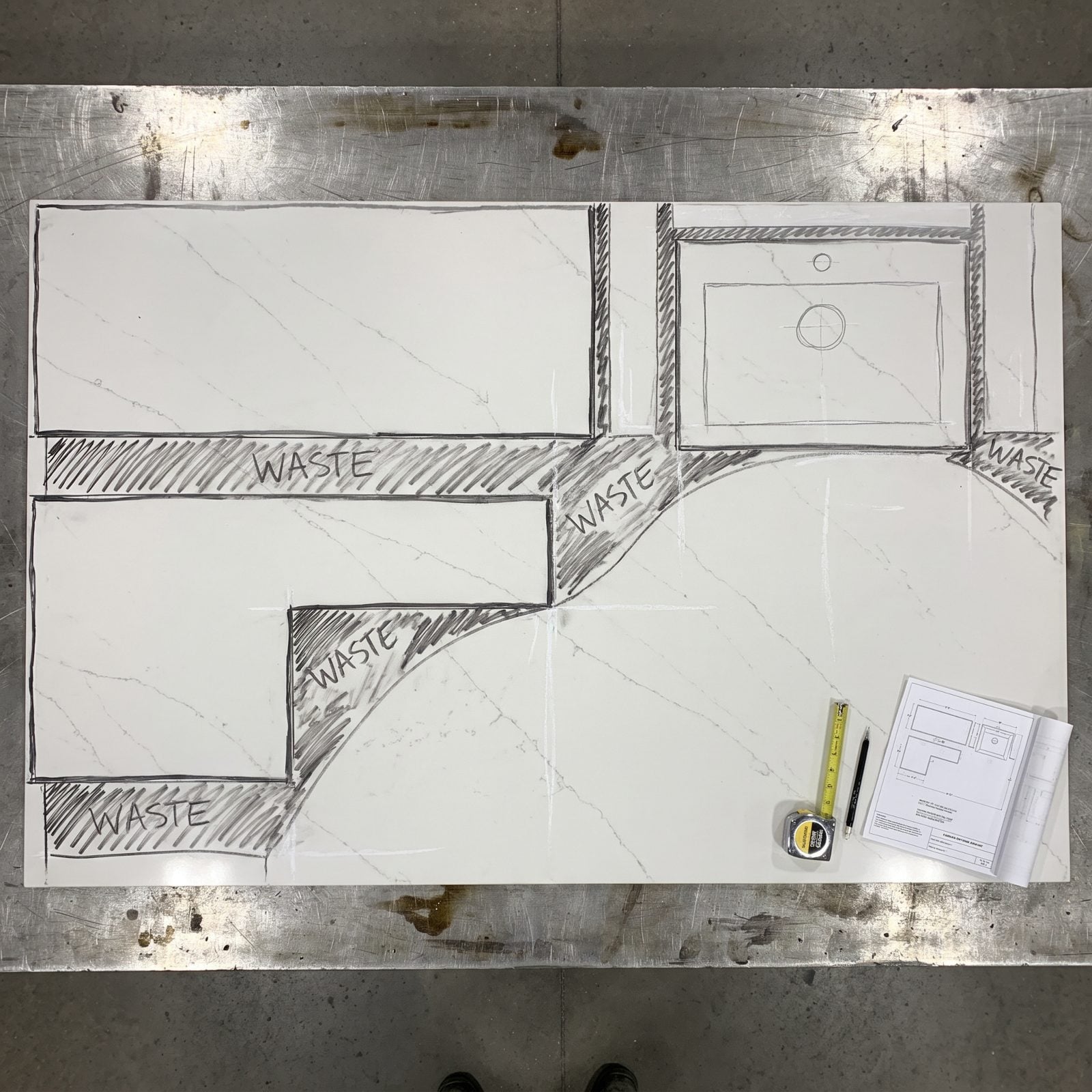
Here’s what catches people off guard: you buy the slab, not just the pieces that end up on your cabinets.
Slabs come in fixed sizes, and your layout rarely fills one neatly. A kitchen that needs a hair more than one slab means you’re paying for two, and all that leftover square footage gets baked into your quote. Odd angles, big islands, seam-free runs — every one of them lowers the yield and shoves the number higher.
20. Myth: Remnants Are Always the Bargain, Fact: Size, Color, and Labor Decide
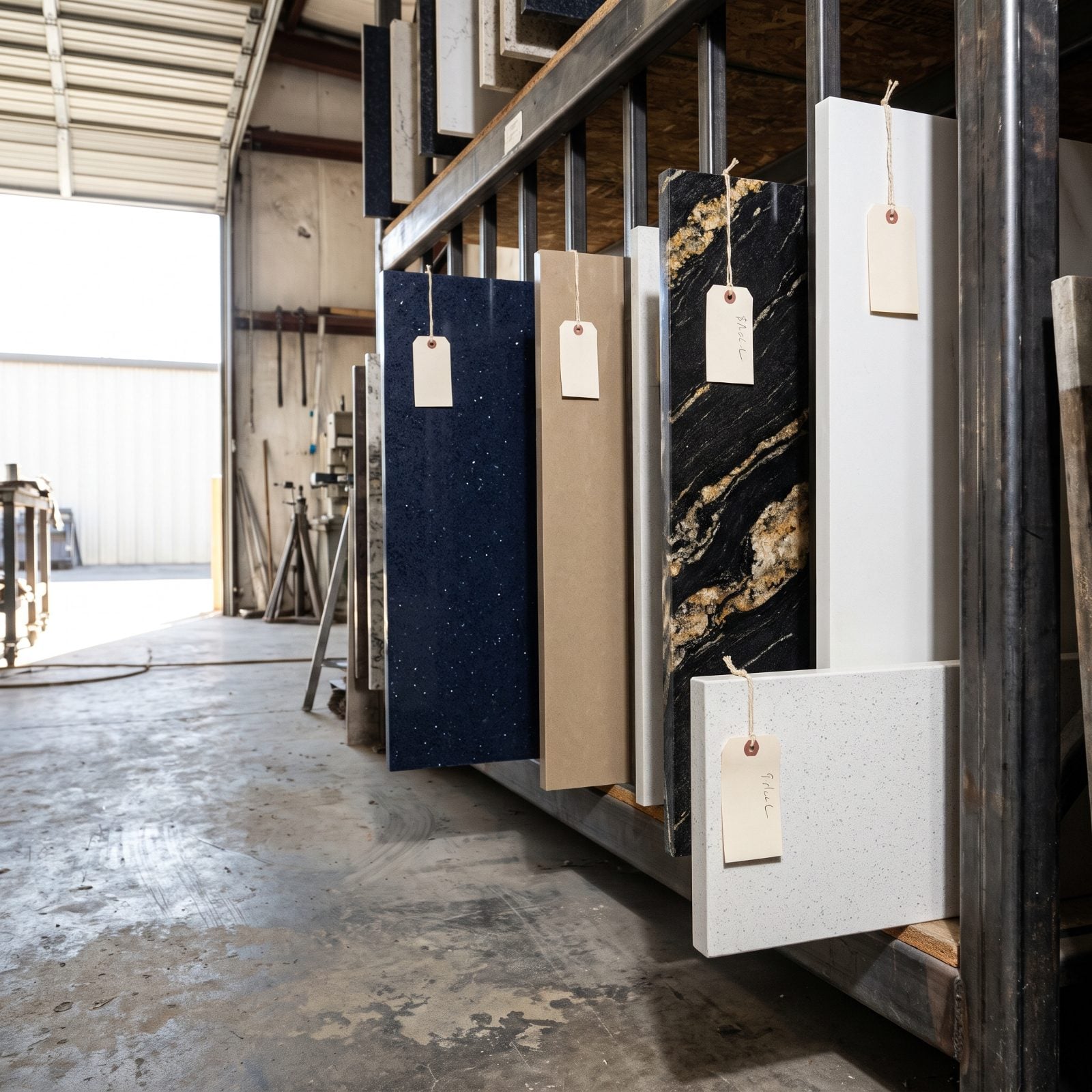
Remnants are great for a bathroom vanity, a small bar top, a window sill. They can be cheap. They can also surprise you.
A remnant’s real value hangs on three things: whether the piece is actually big enough for your project, whether the color still exists in matching inventory if you ever need a second piece, and how much labor that fancy edge or sink cutout tacks on. A heavy ogee edge on a free remnant can run up more in labor than a plain slab would have cost you outright. Measure your space, bring the dimensions, and ask what the fabrication costs before you fall in love with the price tag.
19. Myth: Every Quote Covers the Same Work, Fact: Cutouts, Edges, Removal, and Delivery Vary
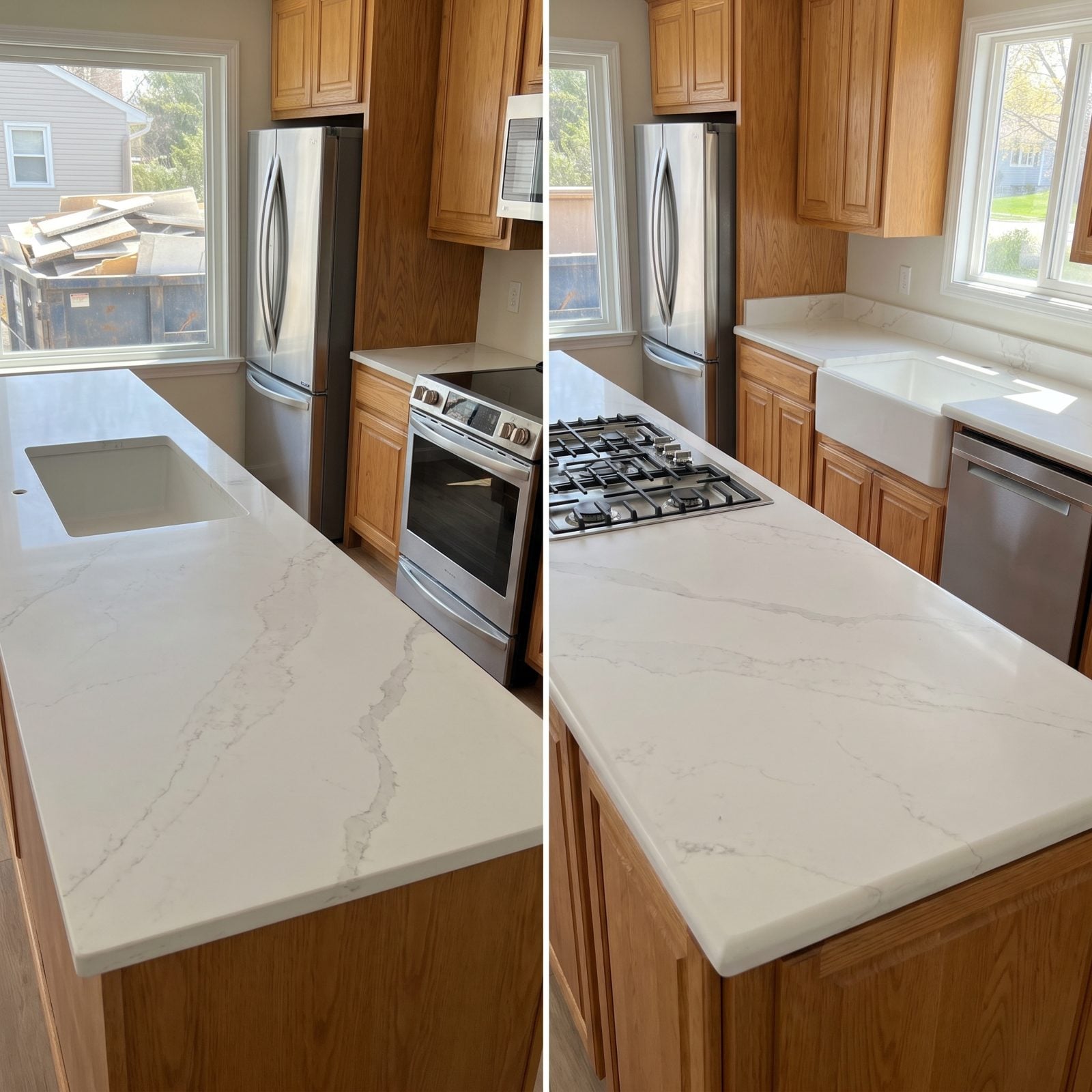
Two quotes, same bottom line, wildly different jobs. One includes tearing out and hauling your old counters, a cooktop and sink cutout, a built-up edge, and delivery to a second-floor condo. The other is bare stone dropped at the curb and good luck.
Read the line items. Edge profile, number of cutouts, backsplash, old-counter removal, plumbing reconnect, delivery and stairs — they all hide in the fine print. The cheapest quote is usually the one that quietly left the most off the page.
18. Myth: All Quartz Brands Are Basically the Same, Fact: Formulas and Quality Control Differ
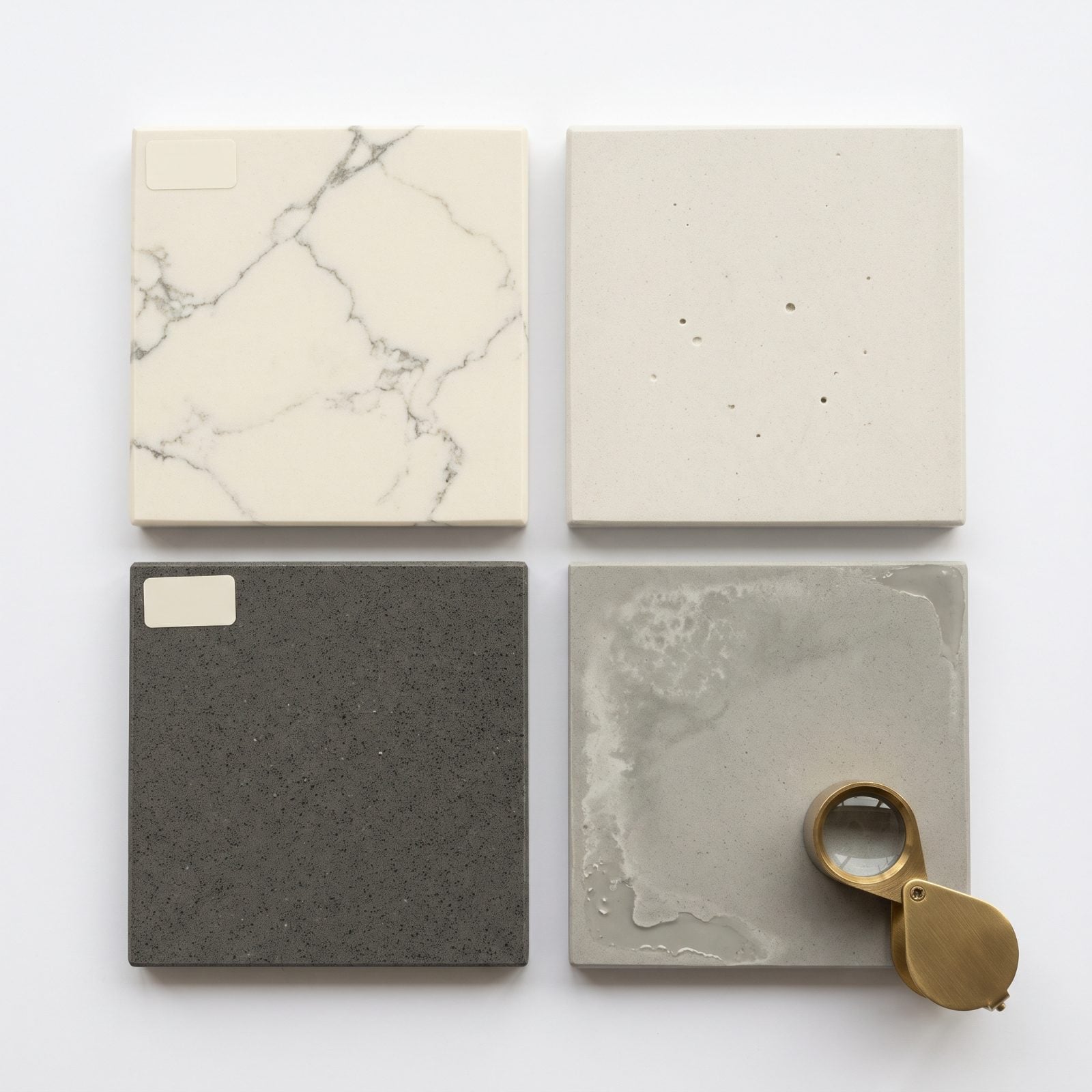
Quartz is engineered stone — ground quartz bound with resins and pigments. The ratio of mineral to resin, the pigment quality, and how tightly the factory controls the pour all change how the surface wears, shrugs off heat, and holds its color over the years.
Premium lines back their consistency with real testing. Bargain imports often run heavier on resin, which means softer surfaces and more color drift in sunlight. The showroom sample tells you how it looks today. The brand’s track record tells you how it’ll look in a decade.
17. Myth: A Lifetime Warranty Covers Everything, Fact: The Exclusions Are the Whole Story
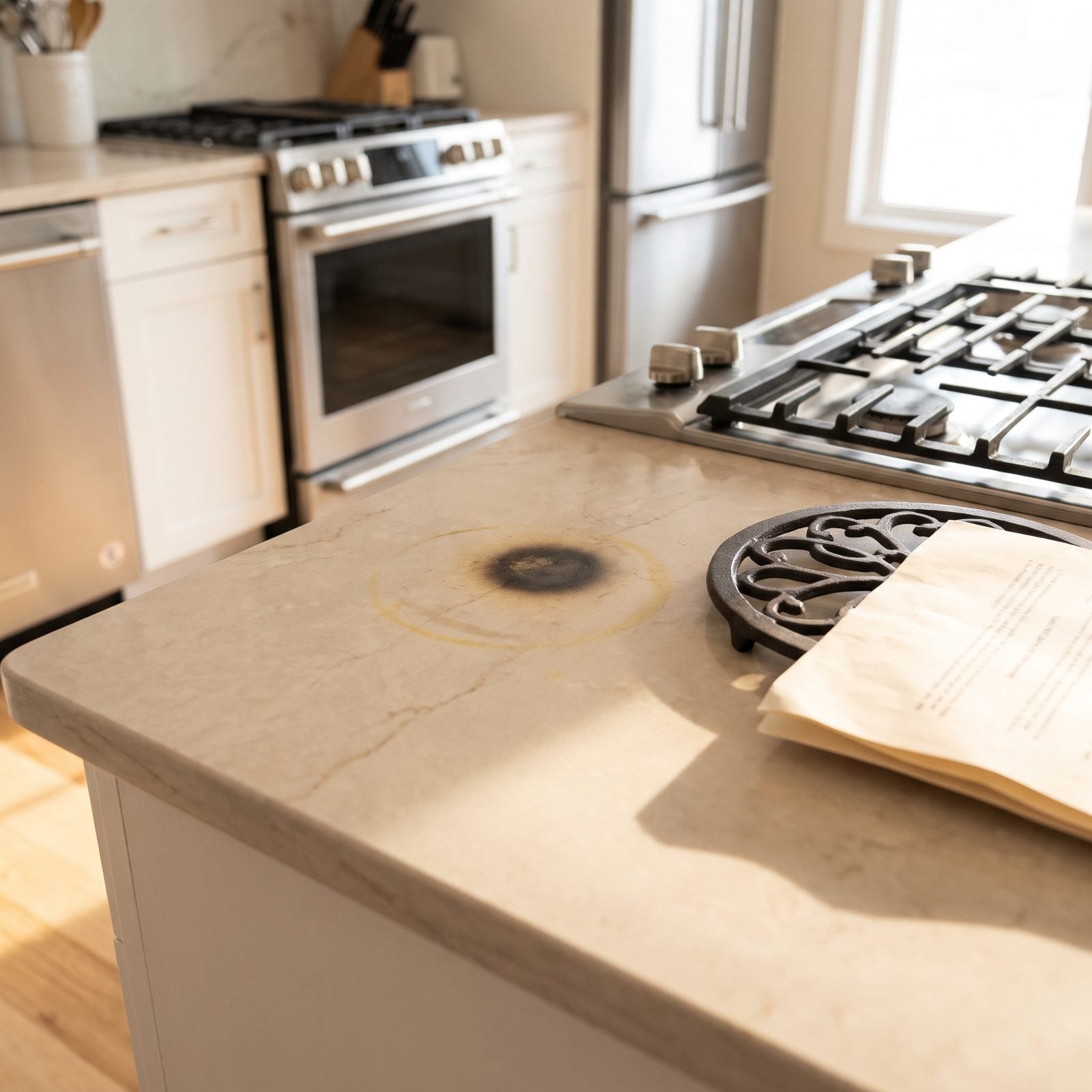
Lifetime sounds absolute. It isn’t. Most quartz warranties cover manufacturing defects on residential, indoor, professionally installed countertops — a much narrower promise than the word lets on.
Heat damage is almost always excluded, which is exactly why your light quartz can scorch under a hot pan and the repair bill is yours. Same goes for chipping from impact, outdoor use, damage from harsh cleaners, and anything a DIY install ever touched. So register the product, keep the installer’s paperwork, reach for a trivet every single time, and leave the abrasive, bleach-heavy stuff in the cupboard. The fine print quietly rewards people who actually read it.
16. Myth: Quartz Is Automatically Greener Than Stone, Fact: Making and Shipping It Counts
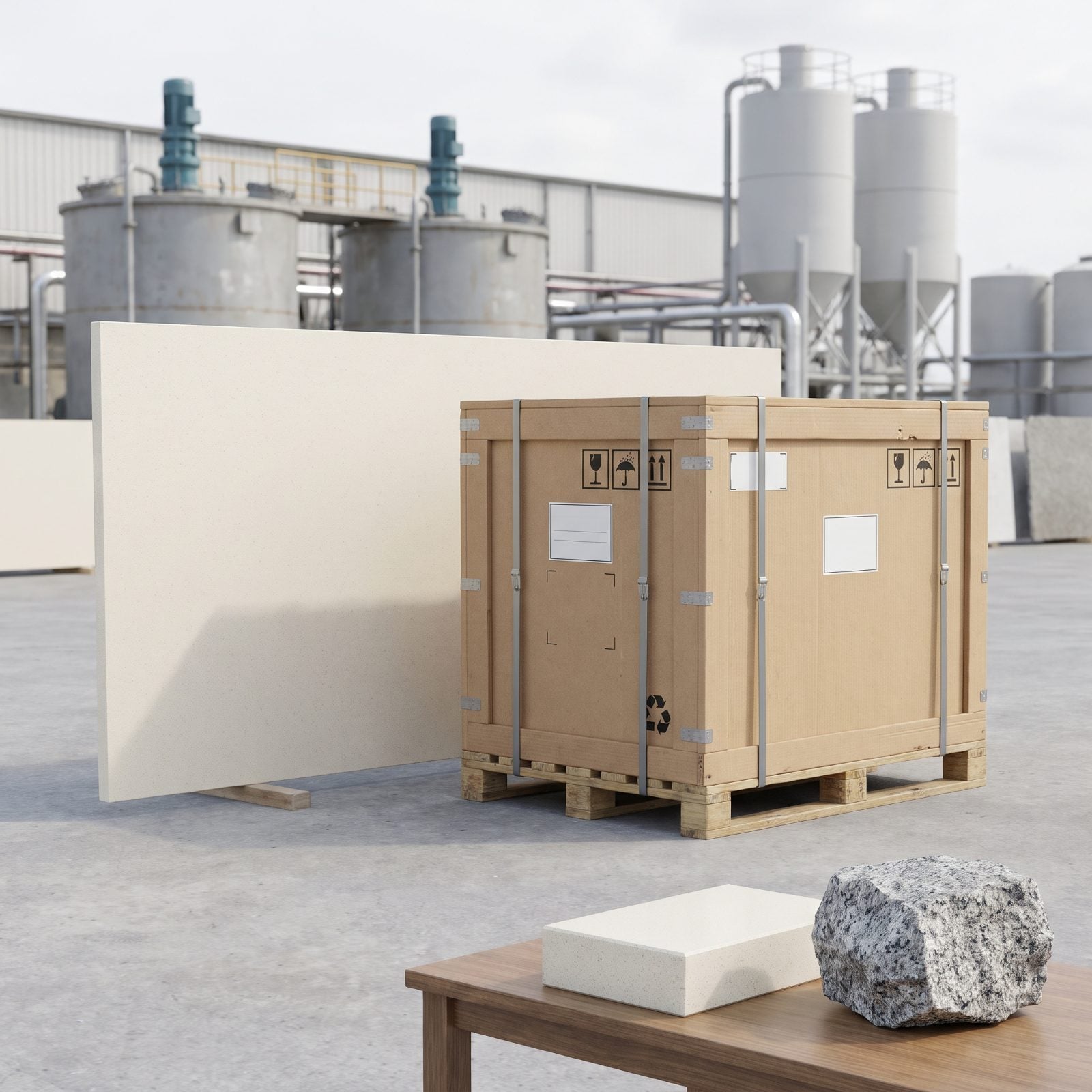
Quartz gets marketed as the eco-friendly pick. The reality is murkier.
It’s engineered, so the manufacturing leans on resins and energy, and a lot of it crosses oceans before it ever reaches your kitchen. That freight is real carbon, no way around it. Natural stone from a regional quarry can sometimes come out ahead on transport alone. If this matters to you, ask where the slab was made, what’s in the binder, and how far it traveled. And don’t forget durability — a counter that lasts thirty years beats one you replace twice.
15. Myth: Quartz Is Silica-Free, Fact: Cutting It Demands Serious Dust Control
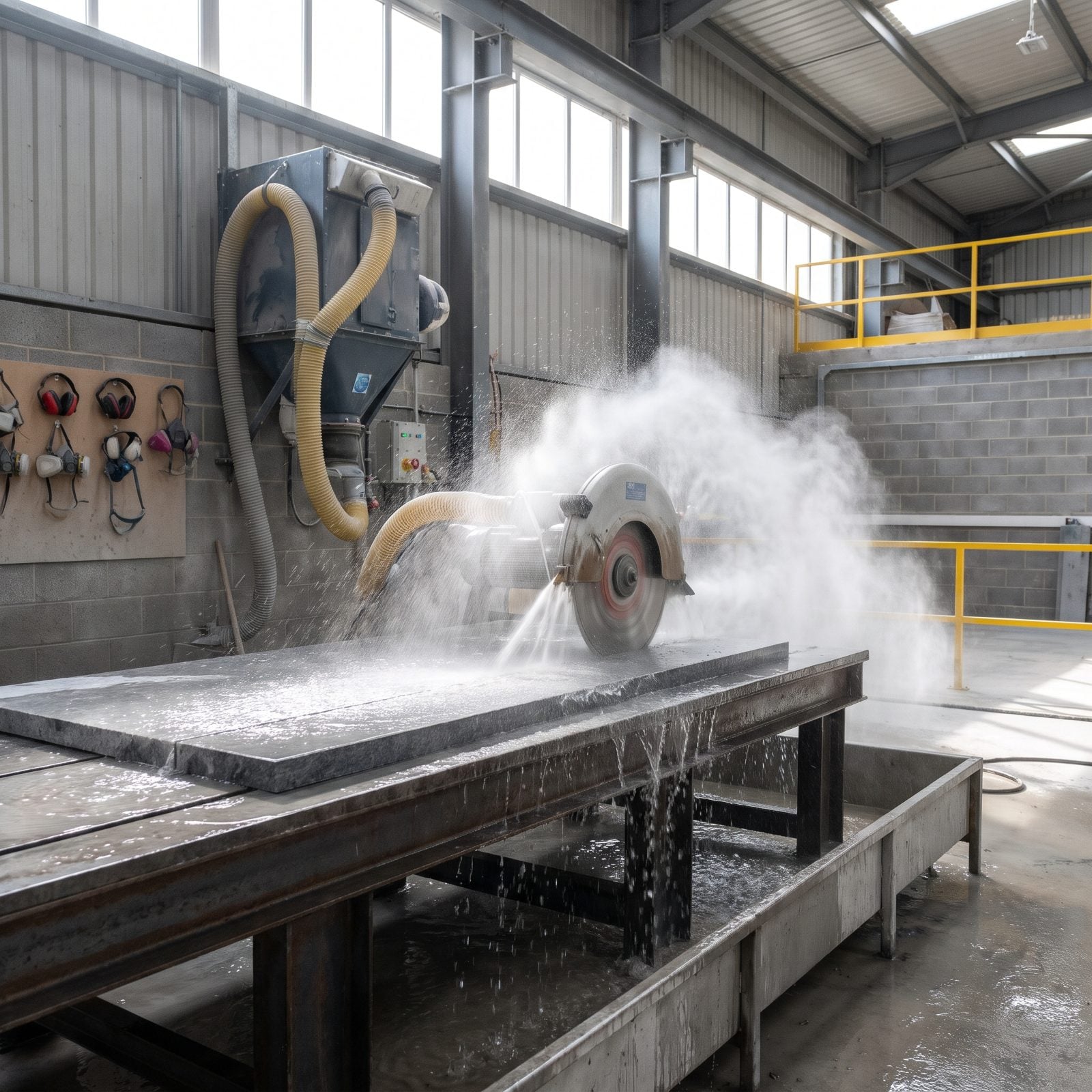
Quartz is mostly crystalline silica. That’s the whole point of the material. The myth that it’s silica-free is dangerously wrong, and it matters most on the fabrication side.
Cutting and polishing it dry releases fine respirable silica dust, a serious lung hazard for the workers doing the job. Reputable shops cut wet, run dust extraction, and wear respirators. For you, the finished counter is inert and perfectly safe. But when you’re choosing a fabricator, the one with proper water suppression and ventilation isn’t just looking after their crew — it’s a tell that the shop does everything else right too.
14. Myth: Any Household Cleaner Is Safe for Quartz. Fact: The Bottle Under Your Sink Matters
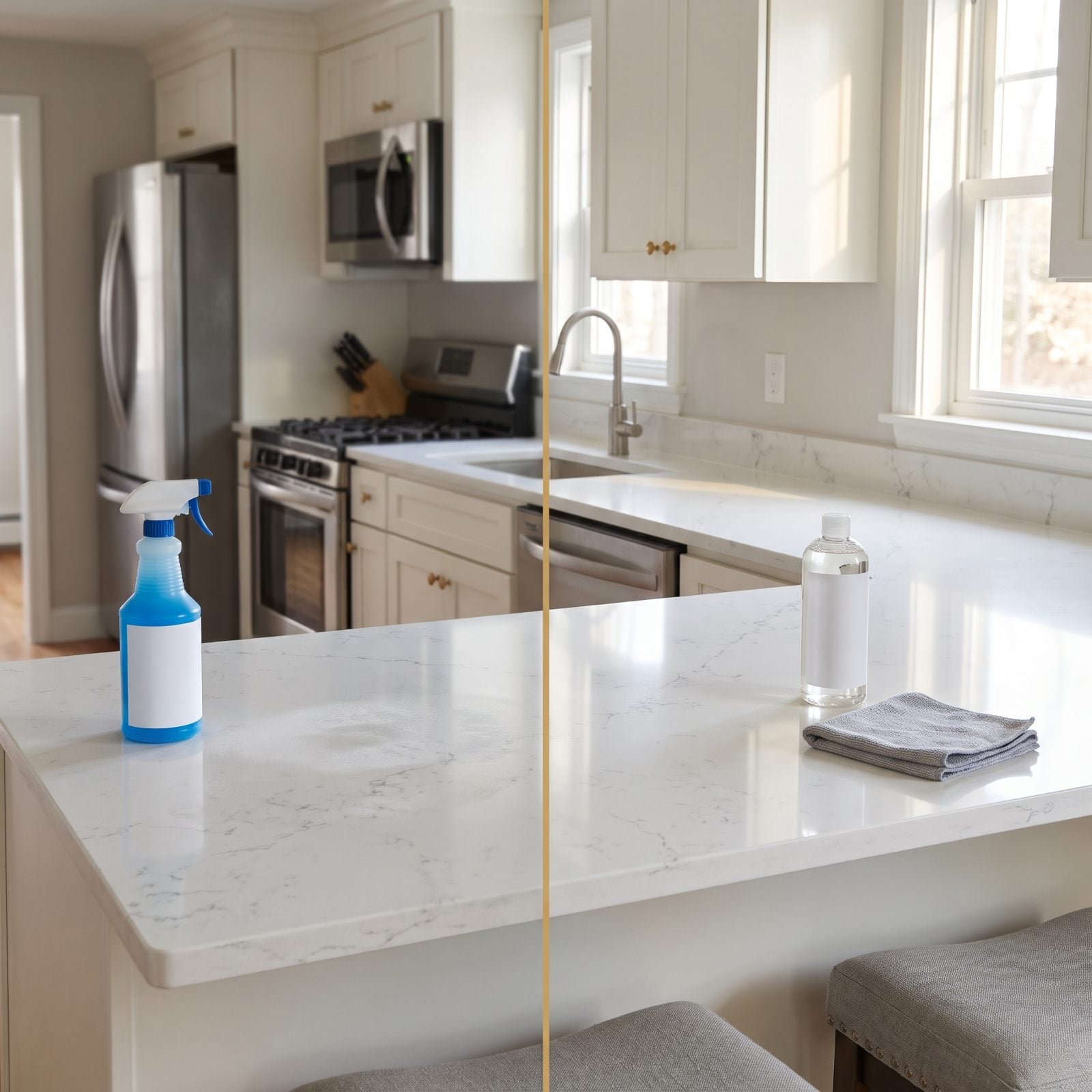
Nobody at the showroom mentions this: the cleaner that keeps your tile sparkling can quietly chew through the resin binding your quartz together. Bleach and high-pH degreasers are the usual suspects. They won’t crack the slab. They dull it, and dull is forever.
Fabricators keep circling back to one answer. Warm water, a drop of dish soap, a soft cloth, and a pH-neutral stone cleaner for anything that fights back. That’s it.
13. Myth: A Scrubbing Pad Lifts Stubborn Marks. Fact: It Trades a Spot for a Scuff
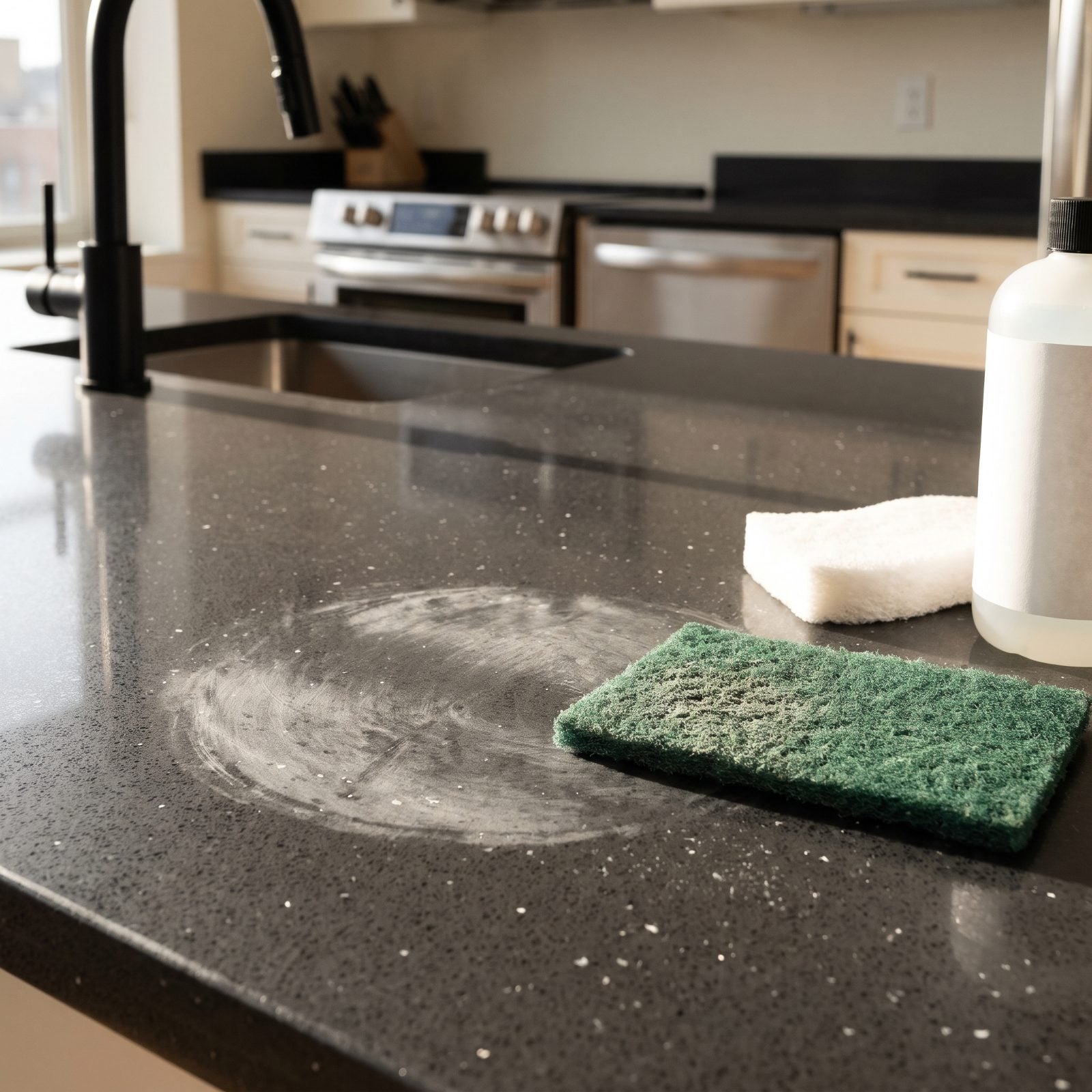
Abrasive pads feel like progress. You scrub, the mark lifts, you win. Except you didn’t. On a polished quartz surface, that green pad sands away the top sheen along with the stain and leaves behind a cloudy halo you’ll clock every single time the light slants across it.
Soft sponge first. Plastic scraper for dried gunk. Abrasives only as a last resort, and only the gentle kind.
12. Myth: Quartz Needs Wax or Stone Polish. Fact: Coatings Just Cloud It Up
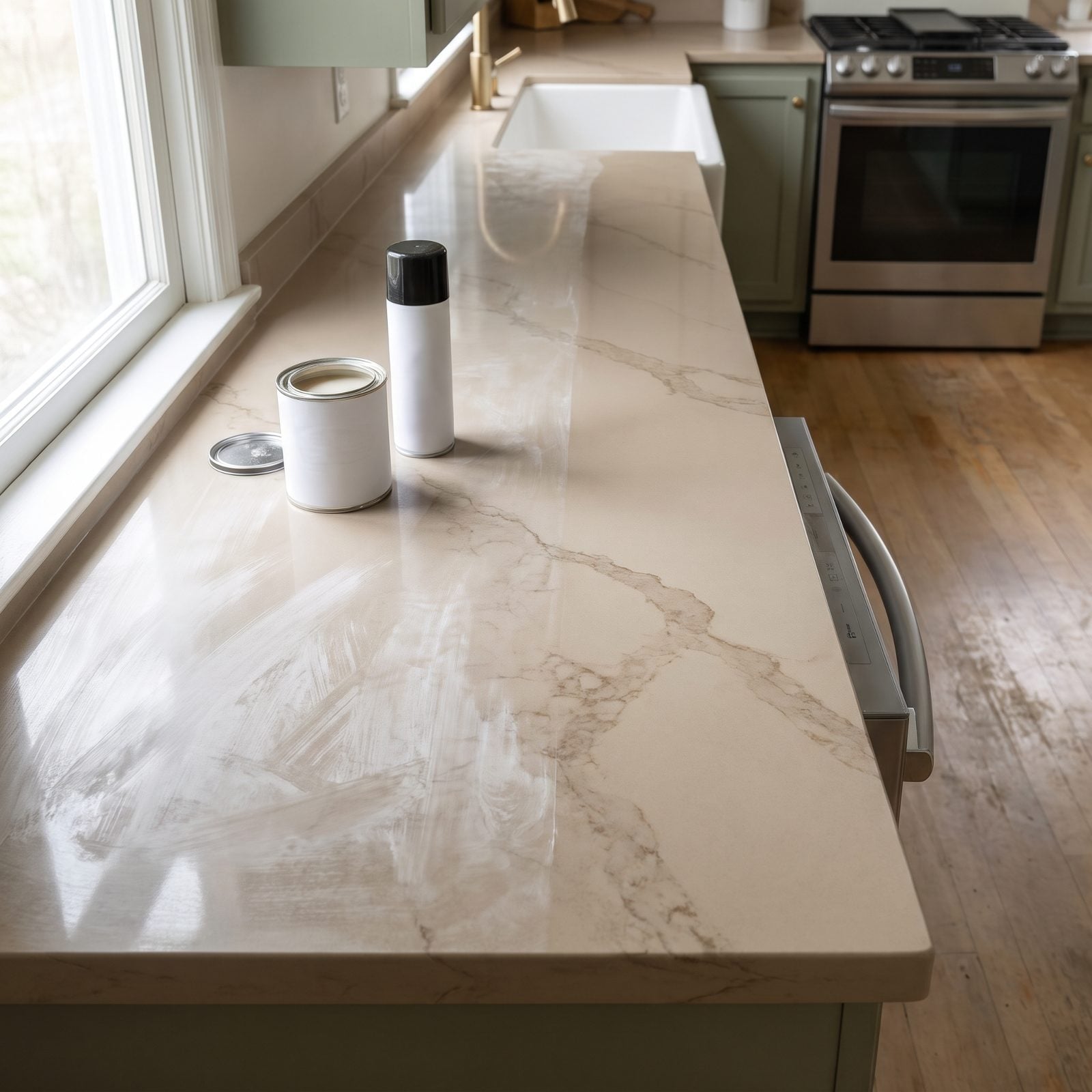
Granite wants sealing. Marble wants babying. Quartz wants neither, which trips people up constantly.
The resin holding the stone together is already non-porous. So when you add a wax or stone polish on top, you’re not protecting anything, you’re layering on a film that grabs dust, streaks in the light, and builds into a haze that gets harder to strip with every coat.
Skip the polish aisle entirely. The finish you bought is the finish that stays.
11. Myth: Standing Water Is Harmless Everywhere. Fact: The Seams Have a Breaking Point
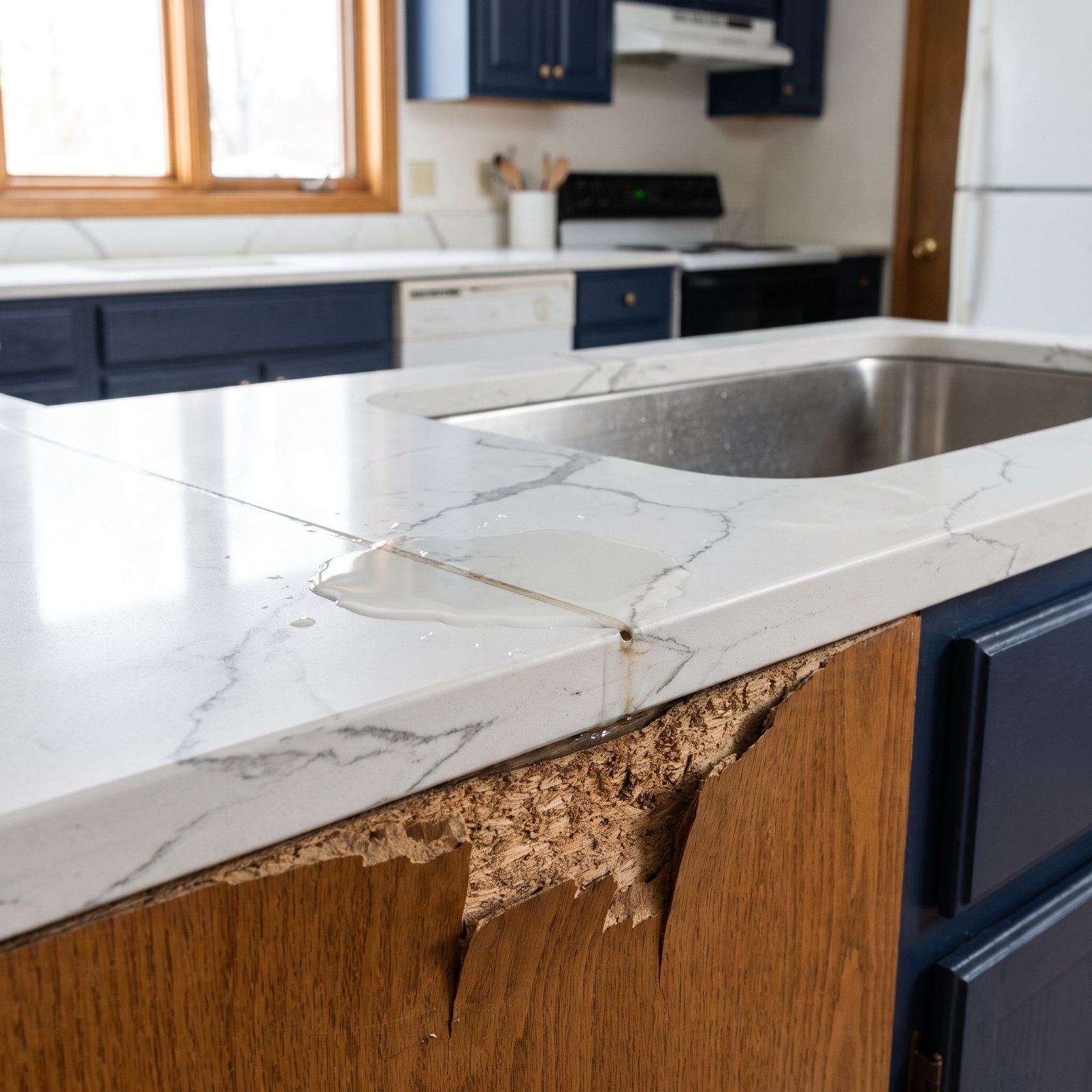
The slab itself couldn’t care less about a puddle. That part of the myth holds up.
But a countertop isn’t one unbroken surface. You’ve got seams, caulk at the backsplash, the sink cutout, and a cabinet box underneath built from materials that very much do care about water. Leave standing water sitting at a seam or around the sink rim long enough and it finds the weak point. Always.
Where you drain dishes matters too: when Home Stratosphere readers were asked which dish rack they would buy, 42% chose a roll-up over the sink and 32% a countertop rack.
10. Myth: Quartz Can’t Get Hard-Water Marks. Fact: Minerals Leave Their Signature
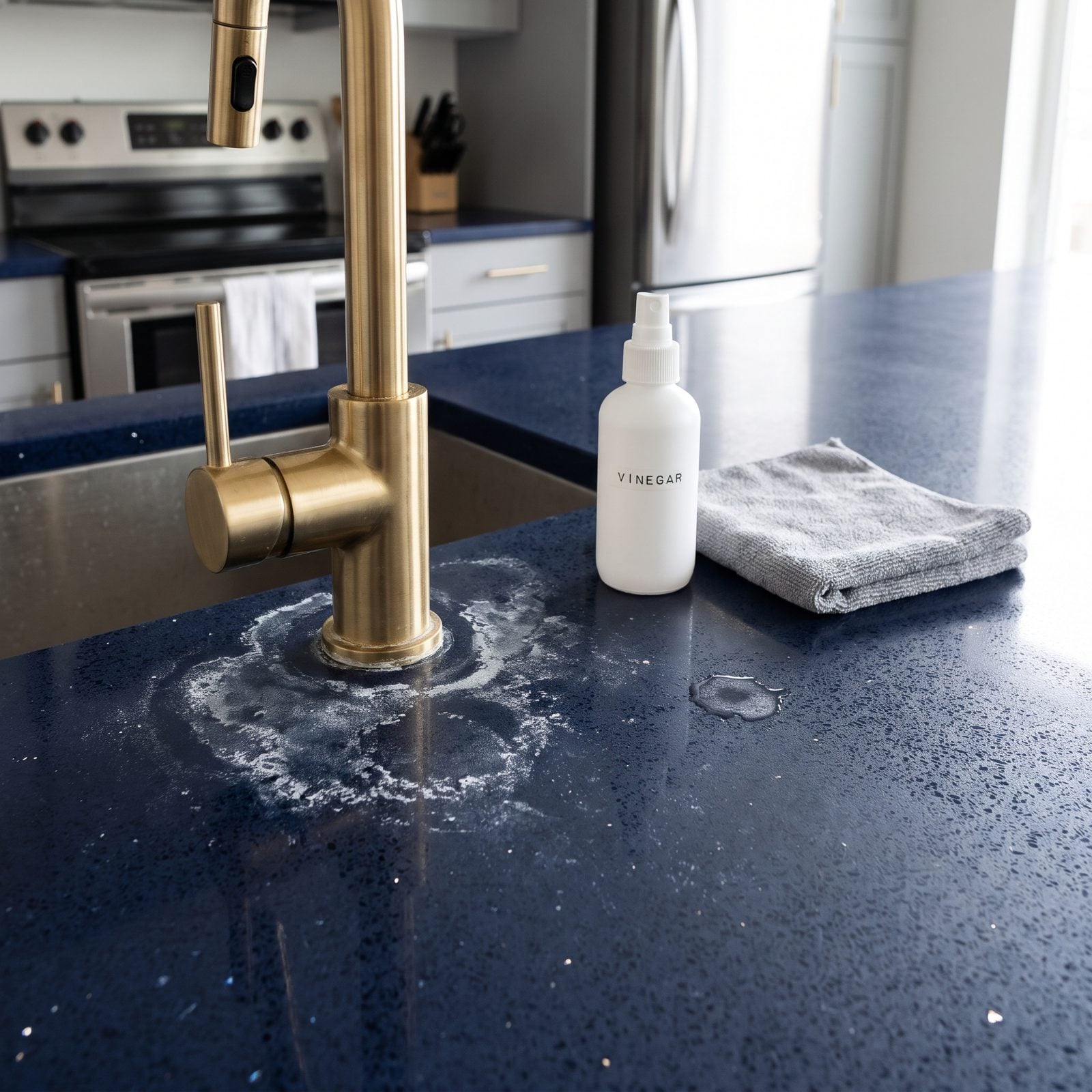
Non-porous doesn’t mean nothing sticks to the top. Hard water evaporates and dumps its minerals right there on the surface, and on a dark quartz those cloudy rings show up like fingerprints on a freshly waxed car hood.
Good news, though: it’s residue, not damage. A diluted vinegar wipe and a soft cloth clears it, then rinse well so the acid doesn’t hang around. On a near-black slab, keeping a cloth stashed by the faucet saves you a world of grief.
9. Myth: Honed Quartz Is the Low-Maintenance Choice. Fact: Matte Shows Everything
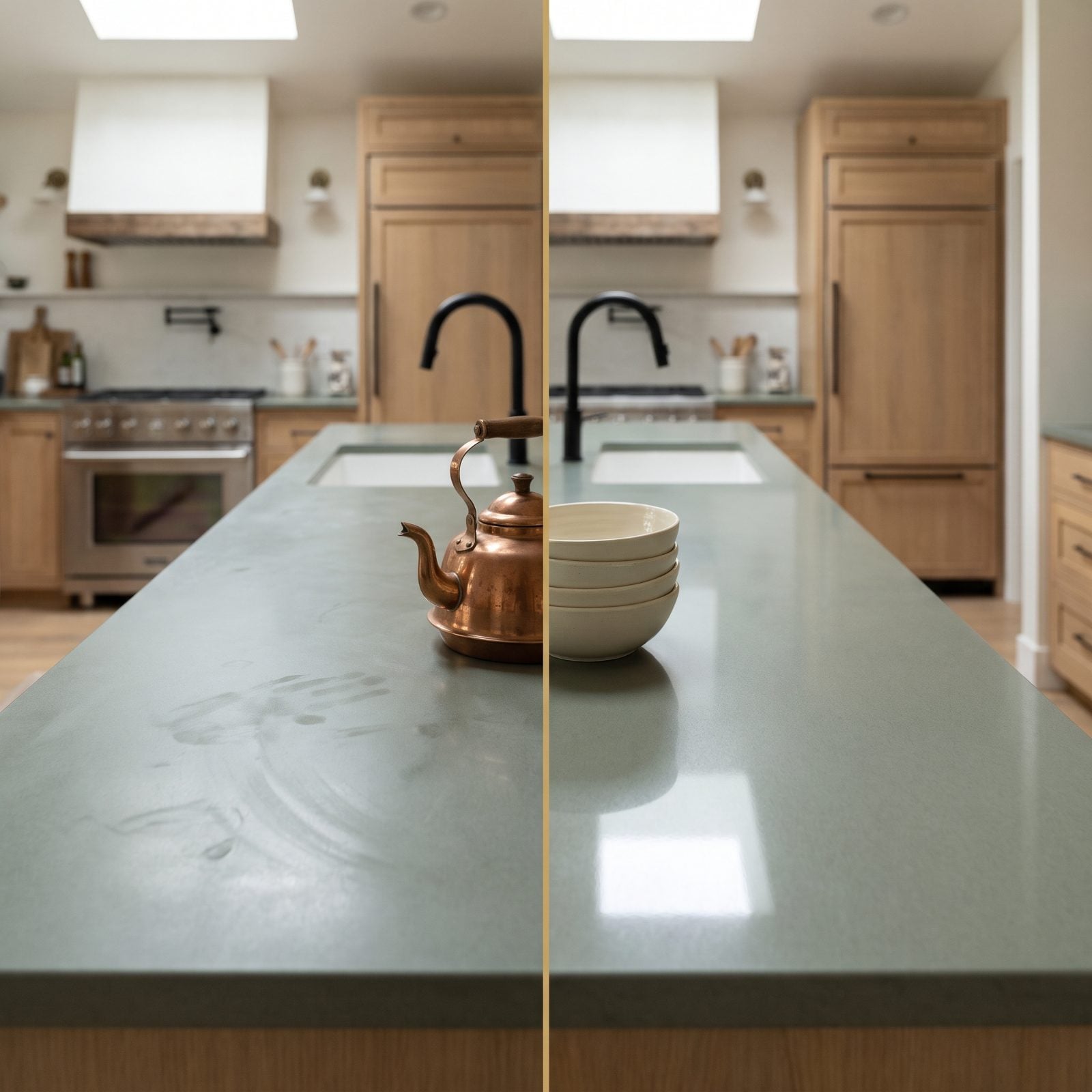
Honed quartz photographs like a dream. Soft, velvety, zero glare. The showroom pitches it as the easy option.
Fabricators will quietly tell you the exact opposite. A matte surface carries microscopic texture that grabs skin oils, and with no reflective sheen to hide them, every fingerprint and water mark reads loud and clear. You wipe more, not less.
Honed is a legitimate look. Just walk in knowing the deal: you’re buying it for how it looks, not for how little it asks of you.
8. Myth: A Damaged Quartz Surface Repairs Invisibly. Fact: The Fix Is Usually Findable
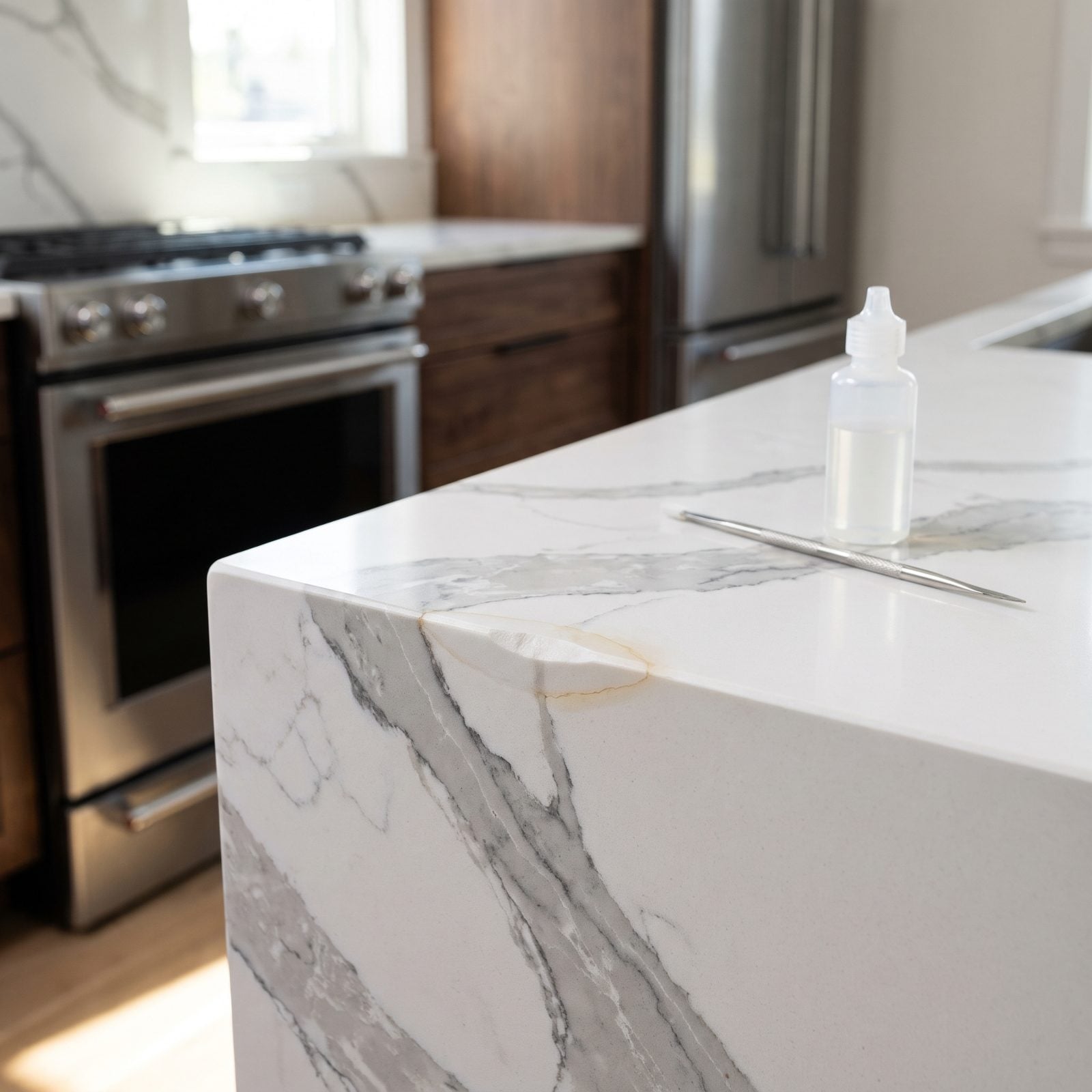
A repair on a chipped edge can go badly wrong. A rough, poorly blended fill at a mitered corner, with visible glue lines and mismatched color, can stand out from across the room.
Even skilled, color-matched work has limits up close. Quartz carries a printed, flowing vein pattern, and filler can’t fake the random drift of that veining perfectly. Catch it under raking light and you’ll usually find where the repair begins.
7. Myth: Quartz Refinishes Like Solid Stone. Fact: The Pattern Lives on the Surface
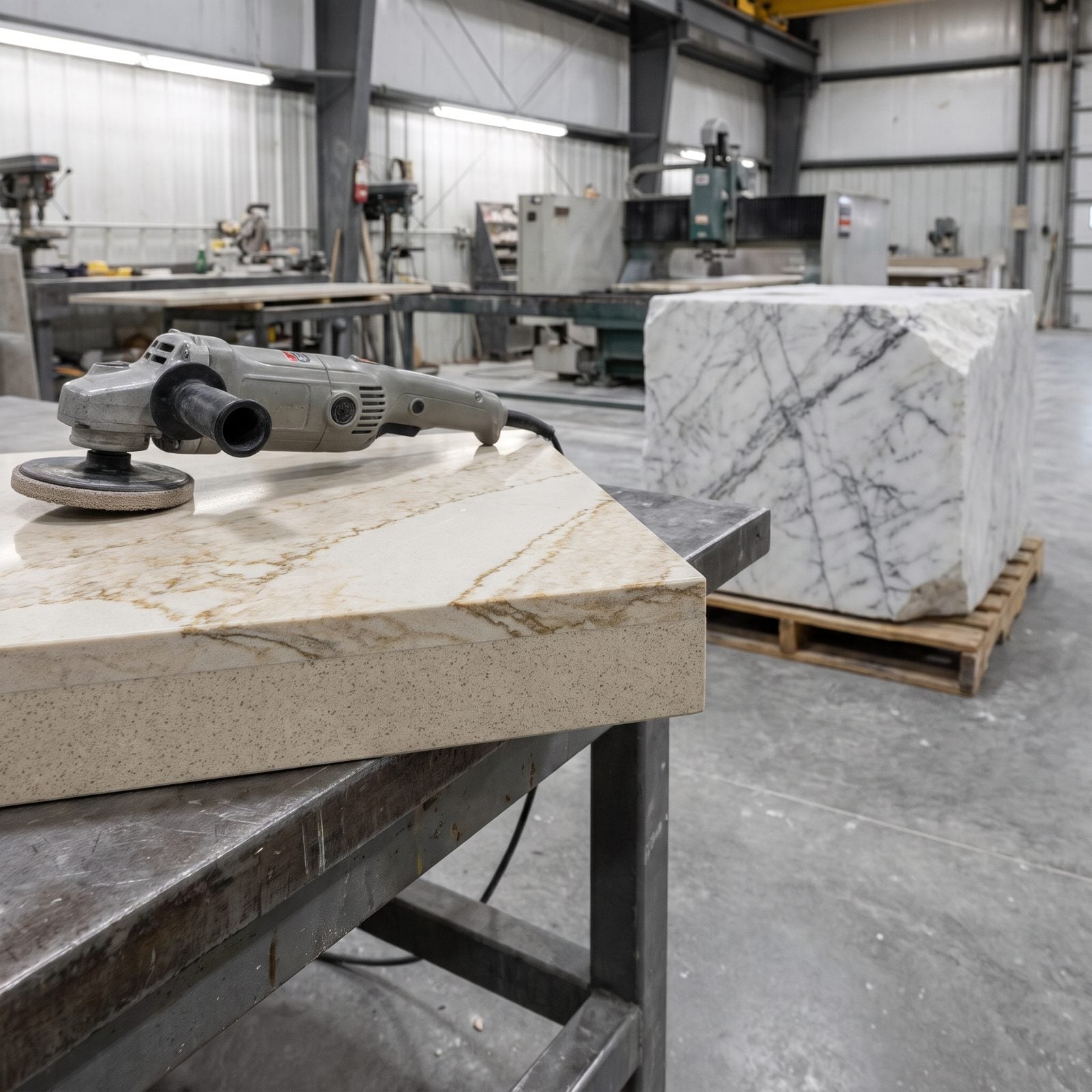
Solid stone forgives. Scratch a marble counter and a stone mason can hone and re-polish the whole thing back to new, because the pattern runs clear through the block.
Quartz plays by a meaner set of rules. The most dramatic veining often sits concentrated near the top layer of the slab. Grind too deep trying to refinish it and you can go right through the look you paid for, exposing a plainer body underneath. That’s why fabricators treat a quartz surface as one-shot rather than renewable.
6. Myth: A Sink Cutout Doesn’t Weaken the Slab. Fact: Those Narrow Rails Need Backup
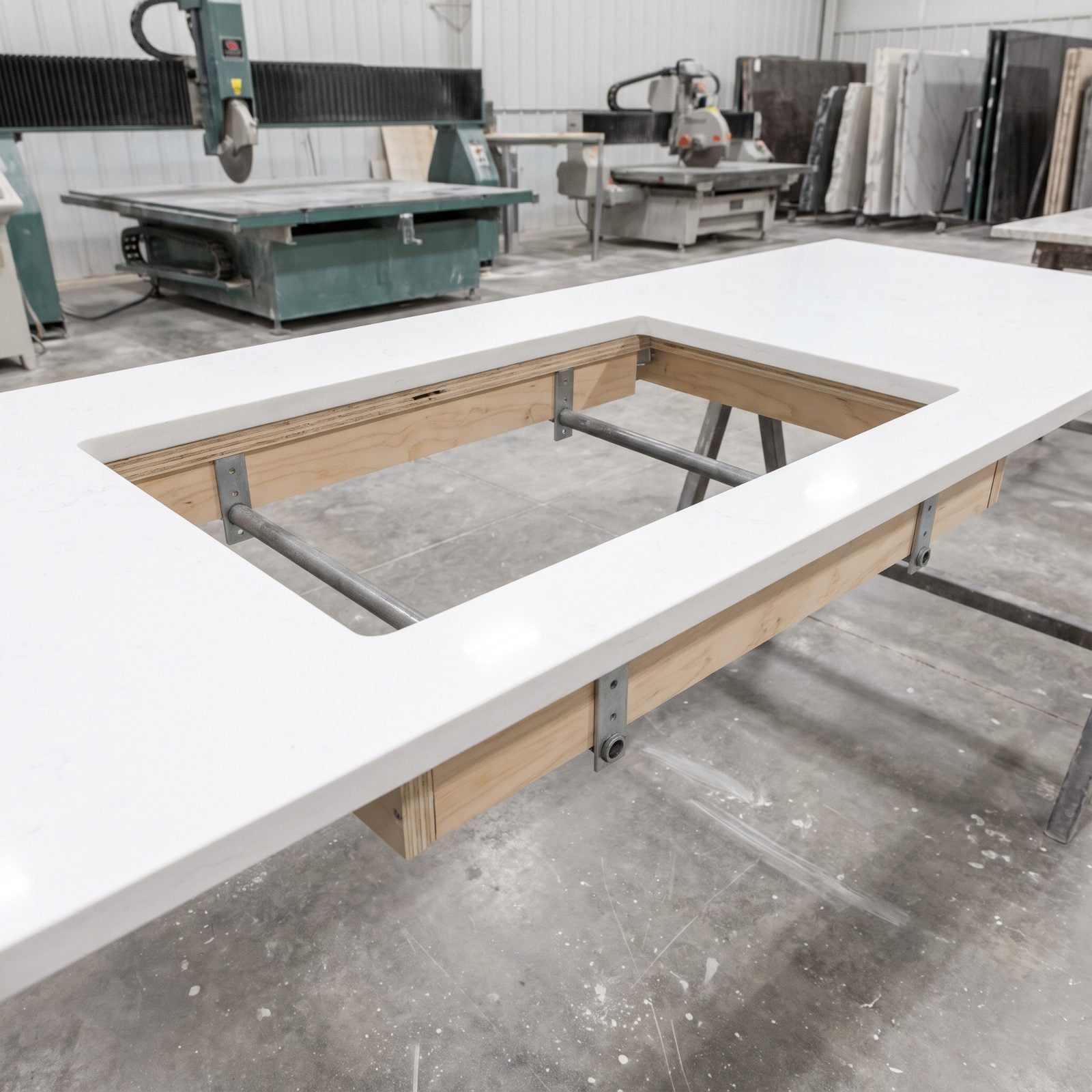
The slab looks bulletproof, so people figure a hole cut into it changes nothing. It changes plenty.
Remove a chunk for the sink and you’re left with narrow rails of quartz running along the front and back of that opening. Those rails take stress every time someone leans on the counter or drops down something heavy. Fabricators brace them from below with steel rods or plywood for exactly that reason, because the cutout is the weakest zone in the entire run.
5. Myth: Any Sink Swaps In Later. Fact: The Cutout Already Decided for You
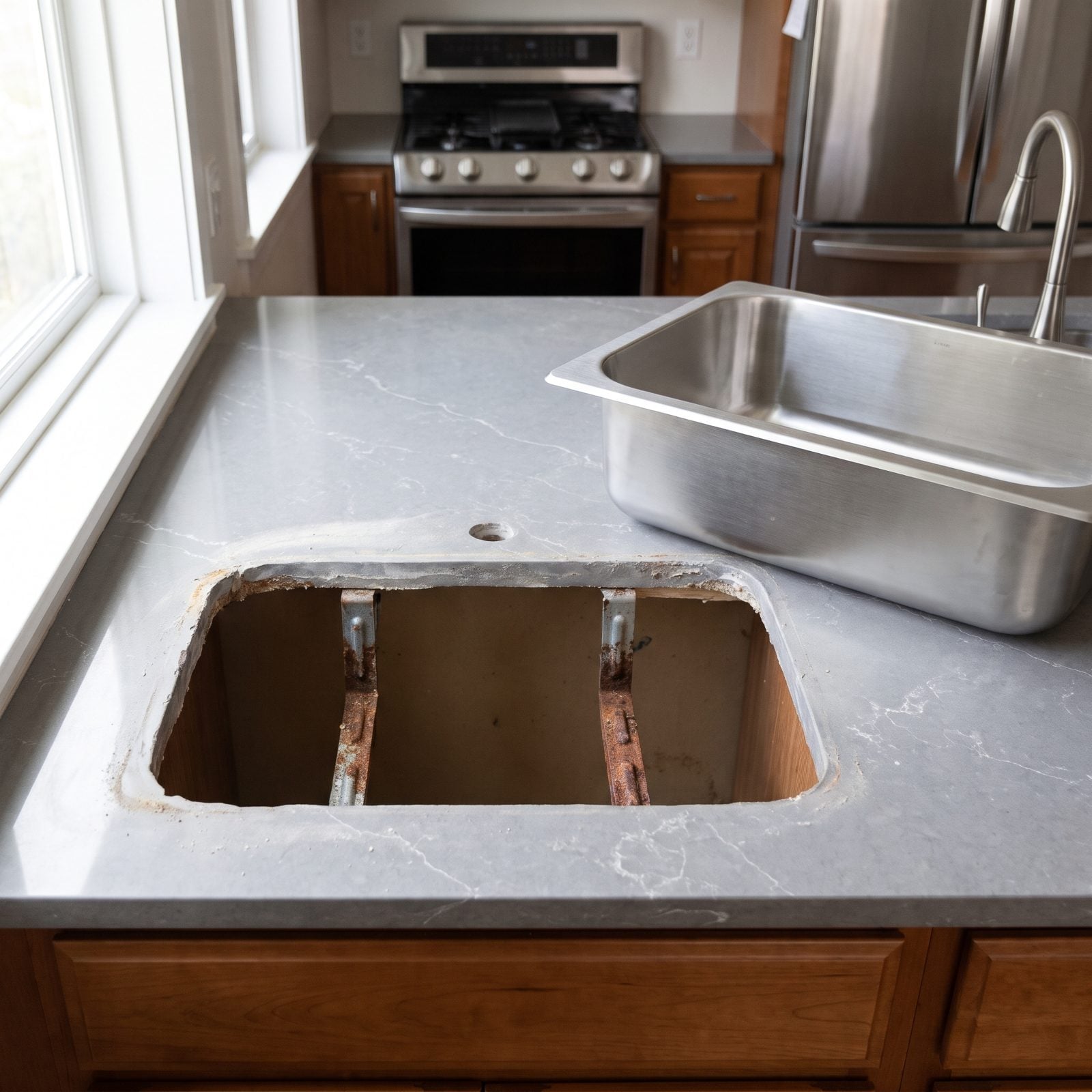
Thinking you’ll upgrade the sink in five years? The counter has an opinion about that.
Quartz gets cut to the exact profile of one specific sink, usually with the undermount reveal dialed in during fabrication. A replacement even a touch larger won’t drop into a smaller hole, and enlarging a cured quartz cutout cleanly is risky, finicky work. Go smaller and you’re left with an awkward gap where the old mounting marks peek through.
The smart move: choose the sink you’ll actually want to keep before the slab goes under the saw. Measure twice, cut once, then live with it happily.
4. Myth: Full-Height Quartz Backsplashes Just Go Up, Fact: Outlets, Seams, and Templating Change Everything
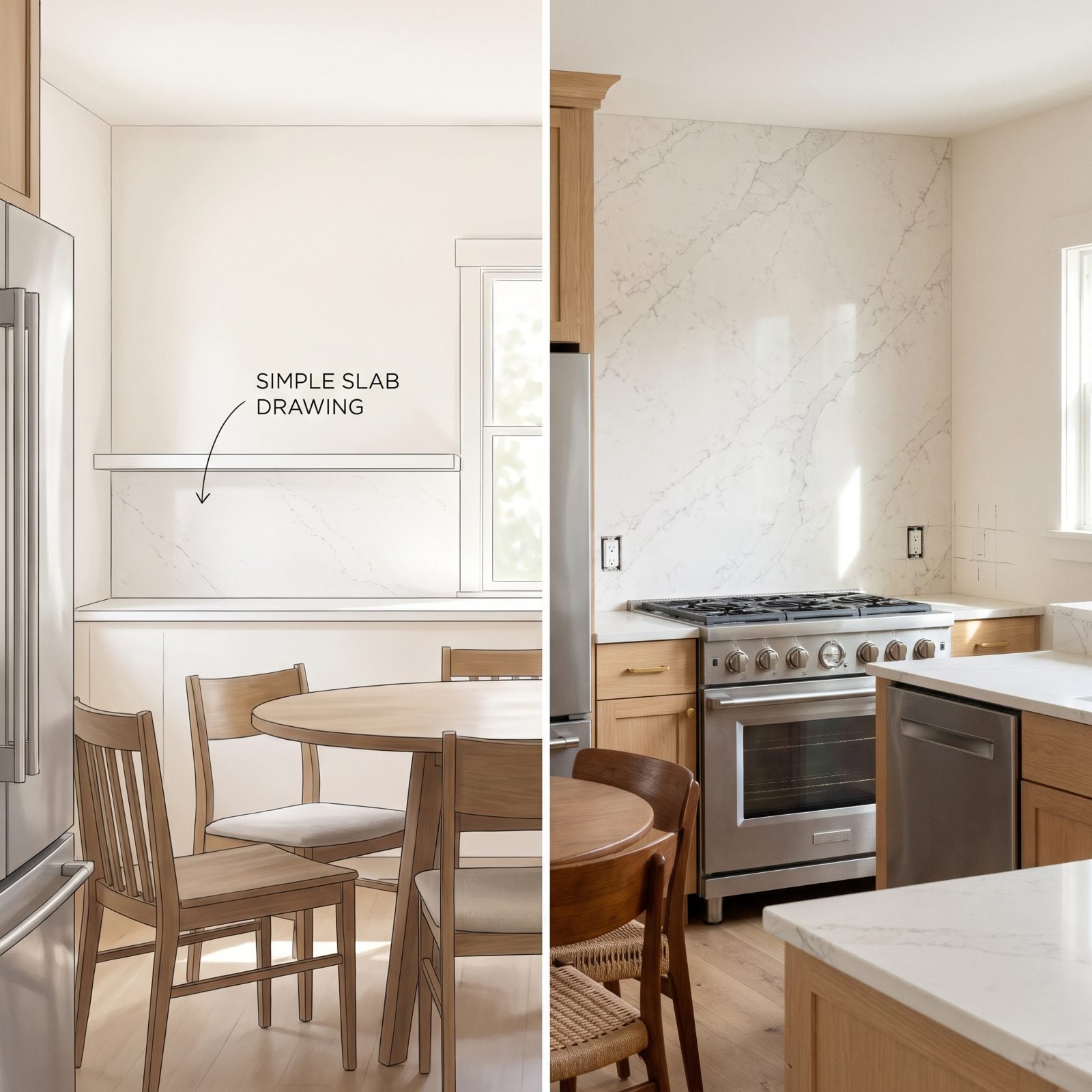
A full-height quartz backsplash looks like one clean sweep of stone, but behind the scenes it’s a logic puzzle. Every outlet needs a cutout, every corner might need a seam, and the template has to account for walls that are never actually plumb.
Fabricators template full-height panels after the lowers are set, because the quartz has to sit on a known surface. Outlet boxes get mapped to the millimeter. Get one wrong and you’re cutting a whole new panel, not patching the old one.
3. Myth: Getting the Slab Into the House Is the Installer’s Problem, Fact: Stairs and Tight Turns Dictate Seam Placement
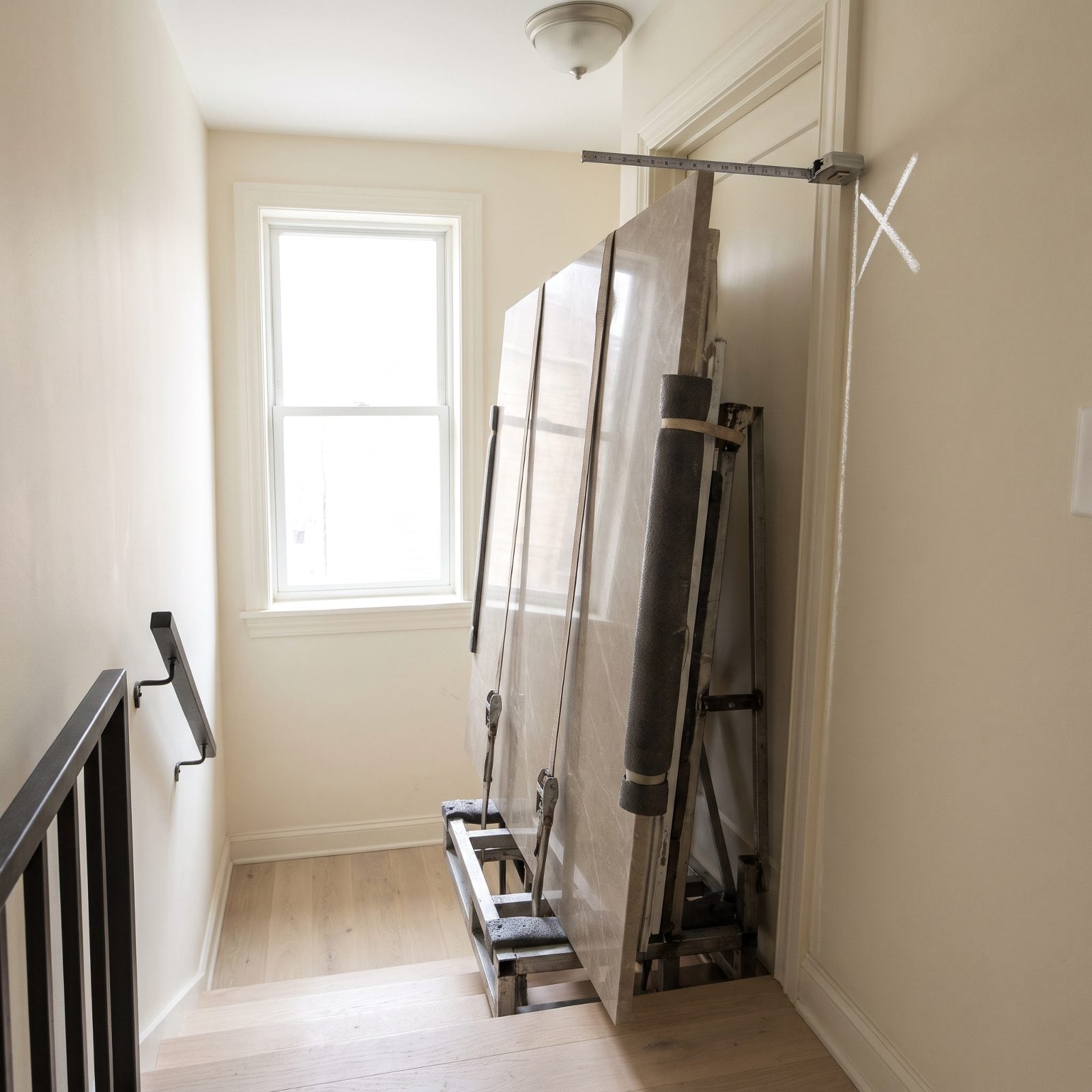
Nobody thinks about this until the slab is wedged on the landing: a countertop that fits your kitchen perfectly might not fit through your front door.
Fabricators measure doorways, hallway widths, and stair turns during the site visit. If a single large piece can’t physically make the trip, they’ll add a seam to split it into carryable sections. That call gets made before anyone cuts stone, not when the crew is sweating halfway up your staircase.
So the seam you didn’t want sometimes exists because of a hallway you forgot you had. Tight turns, low ceilings over basement stairs, a sharp jog past the laundry room — all of it can shove the cut somewhere you’d never have chosen. Worth asking about early, especially in older homes with narrow bones.
2. Myth: One Crew Does the Plumbing and Wiring Too, Fact: Licensed Trades Usually Handle Those Separately
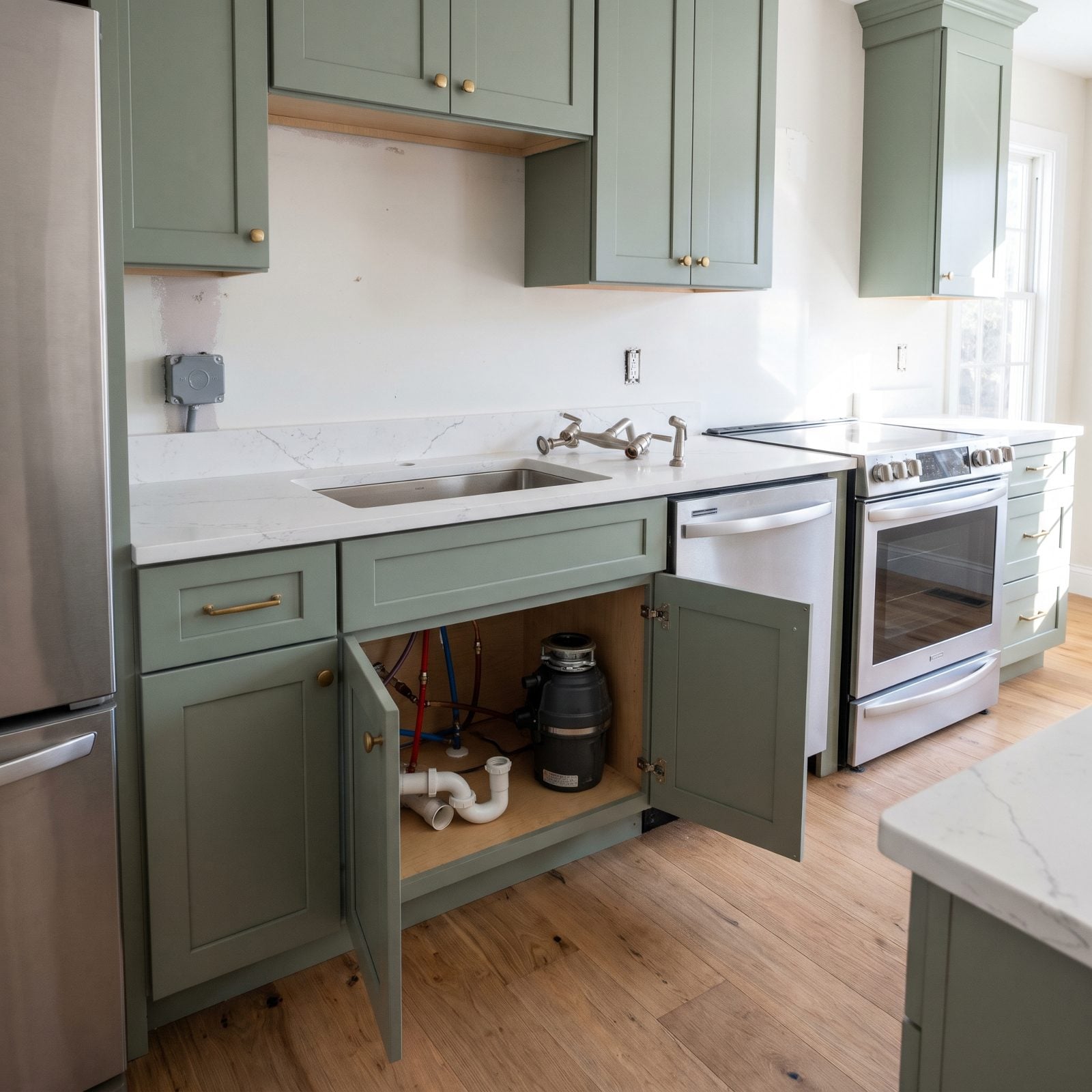
The countertop crew sets your quartz and leaves. The sink still doesn’t drain. The disposal still doesn’t spin. That’s not a mistake — it’s the line where their trade ends.
Most fabricators cut the sink hole and set the stone, and that’s it. Hooking up the plumbing, wiring a new disposal, running a dedicated circuit? Those are licensed plumbing and electrical jobs, and in many areas the law requires them. A reputable shop will tell you upfront to book a separate trade for the final connections.
We’ve watched homeowners schedule the plumber for the same afternoon and then sit in a dead kitchen for days because the counter install ran long. Book the trades a day apart. Give the stone time to settle and the silicone time to cure.
1. Myth: Quartz Shrugs Off a Hot Pan, Fact: The Resin Scorches, So Use a Trivet
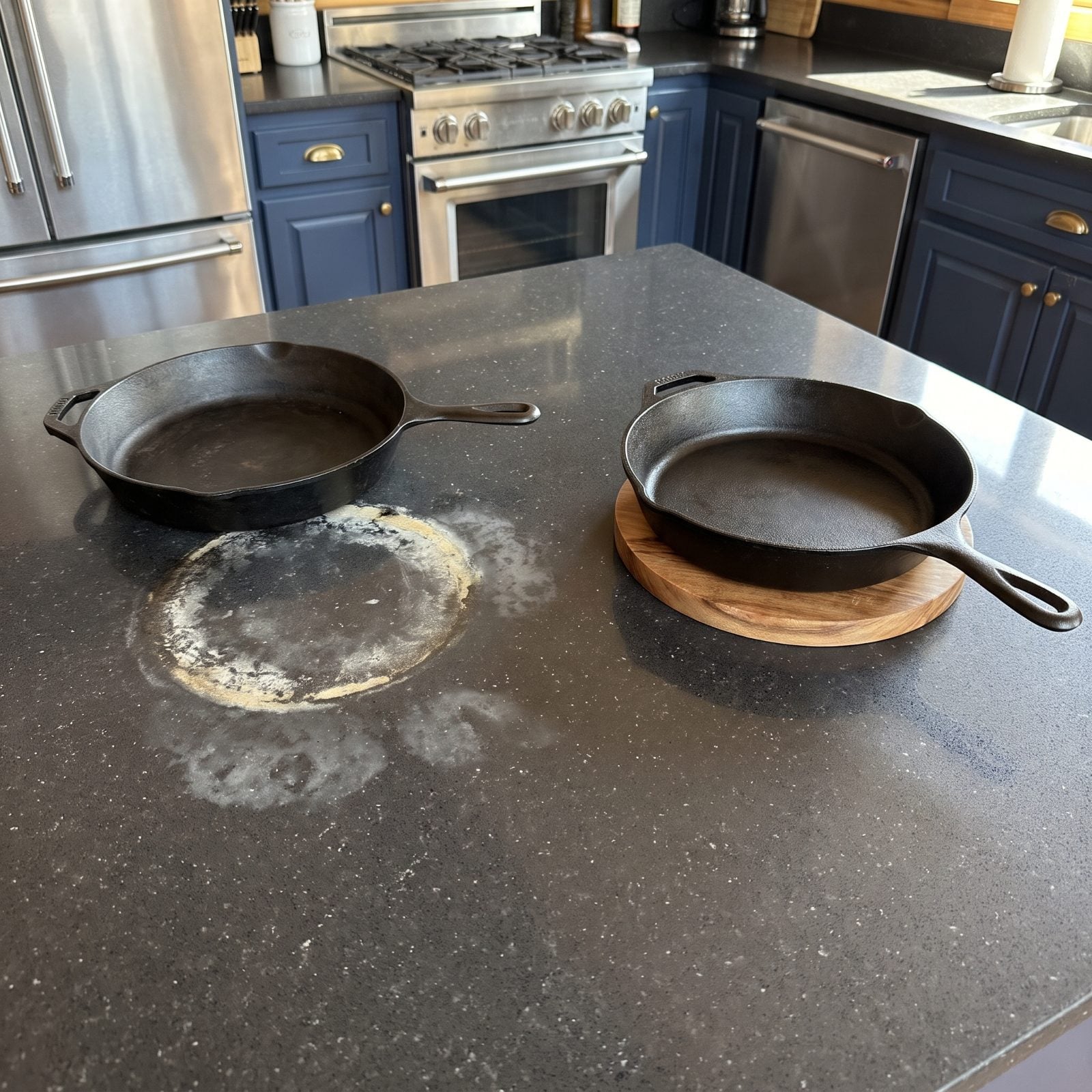
Quartz feels like stone, so people treat it like stone. It isn’t, not entirely.
It’s mostly crushed quartz with a bit of polymer resin binding it together. The quartz doesn’t care about heat. The resin does. Set a scorching pan straight on the surface and that binder can cloud, yellow, or burn into a dull halo that no amount of scrubbing lifts. Permanent. There’s no polite way to say it.
The stone survives the heat. The glue holding it together does not.
A trivet or a folded towel is the whole fix. Feels like overkill, I know, on a surface that handles so much else. But this is the one thing quartz genuinely can’t take, and the damage shows up exactly where you cook, every day, forever. One cheap trivet. Keep it by the stove.
Whatever you cook with, keep a trivet handy: when our readers picked one new pan to buy, stainless, nonstick and cast iron came out as a near three-way split.