🔥 Would you like to save this?
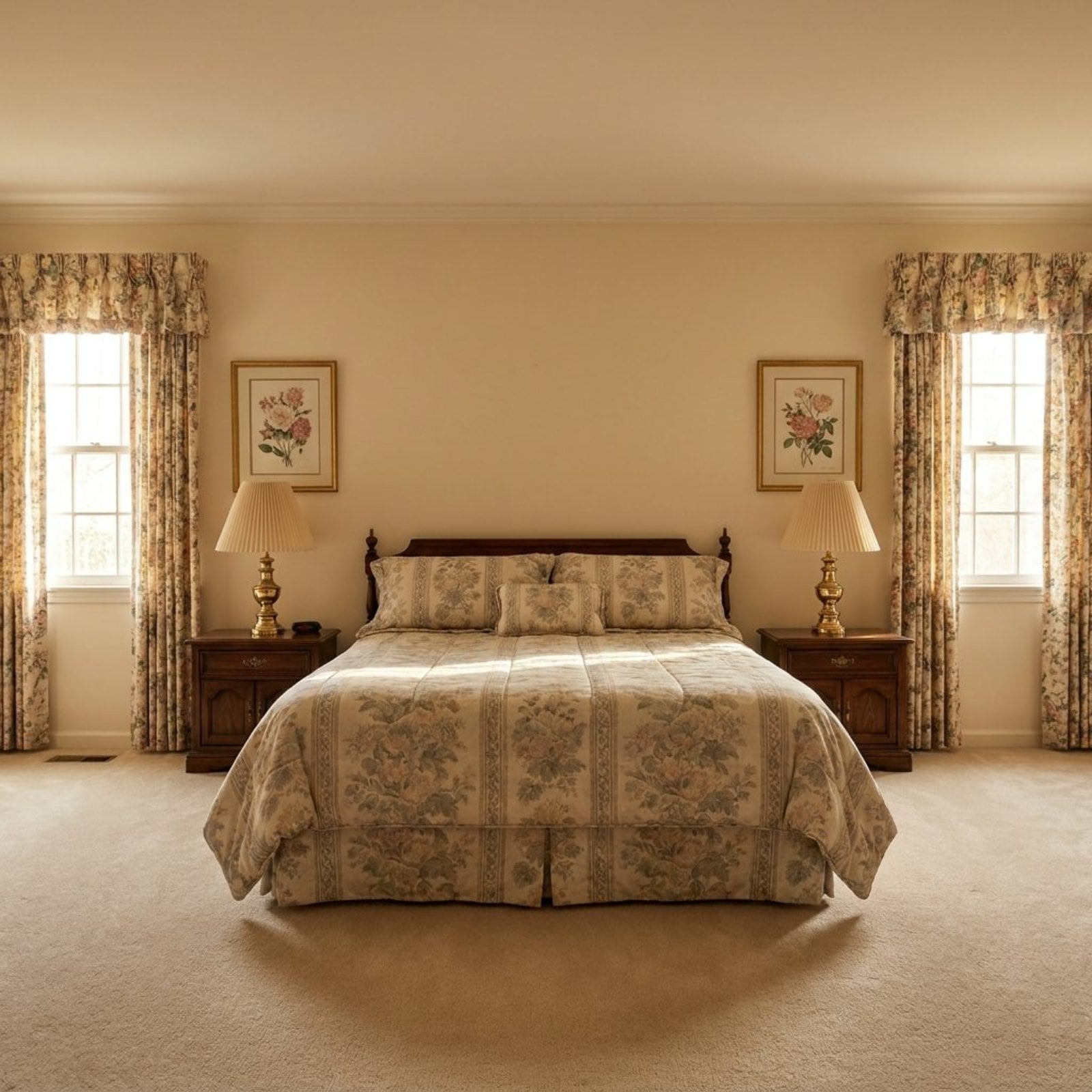
The waterbed sloshed when you rolled over. Floral wallpaper matched the bedspread, the dust ruffle, and the lampshade too, and somebody genuinely thought that was a triumph. Brass headboards caught the light from one dim bulb while shag carpet held forty years of secrets. That was the master bedroom in 1980, a room that committed hard to a look and never apologized for it. Here are 36 of its signature moves, how they aged, and what replaced them.
36. Floral Wallpaper vs. Smooth Painted Walls
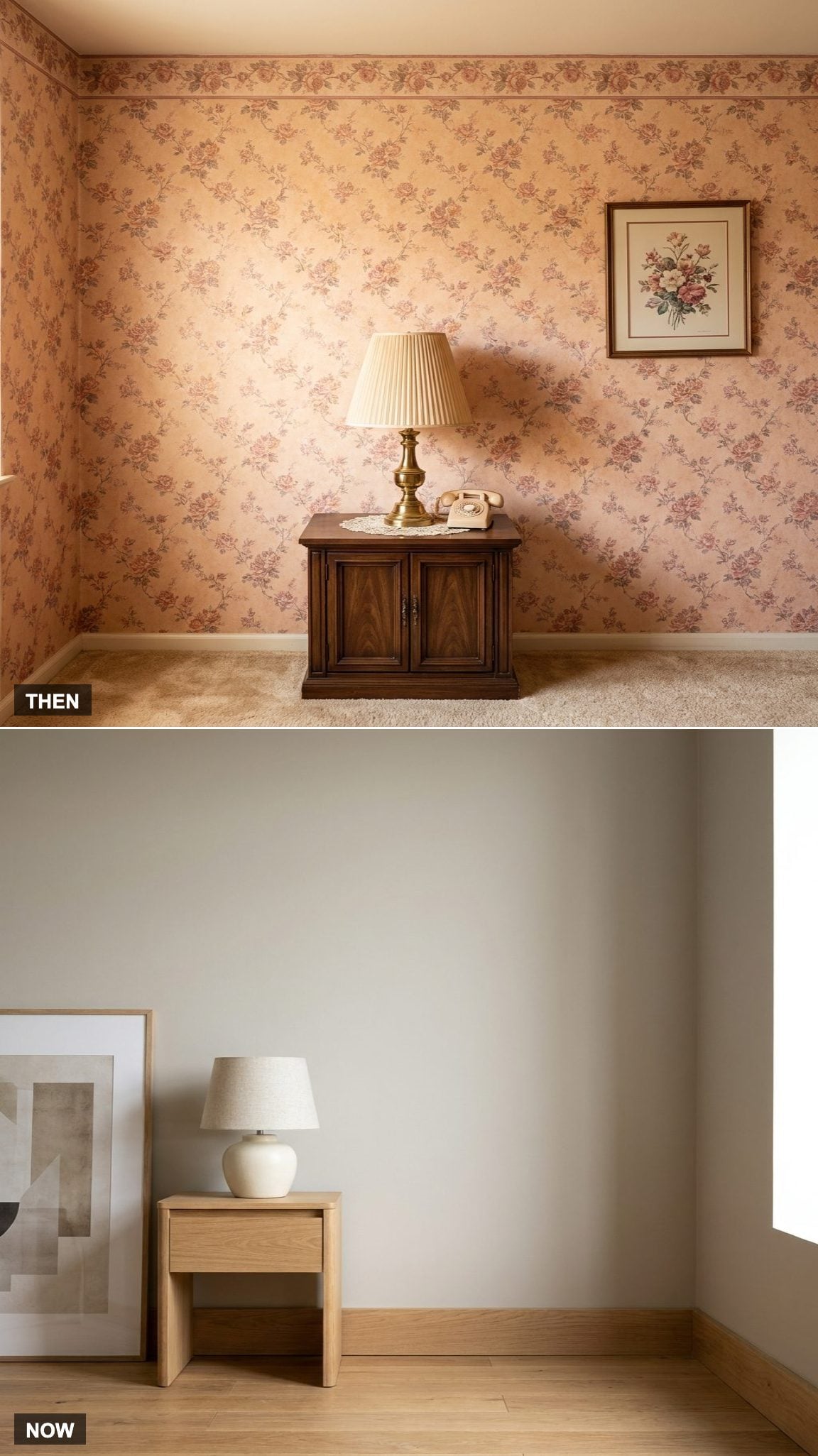
Floral wallpaper in 1980 wasn’t an accent. It was a full commitment, with roses climbing every wall and coordinating fabric carrying the same pattern onto the bed. The pattern hid nothing and demanded everything.
In order to come up with the very specific design ideas, we create most designs with the assistance of state-of-the-art AI interior design software. Also, assume links that take you off the site are affiliate links such as links to Amazon. this means we may earn a commission if you buy something.
Now the walls just breathe. A warm greige, matte and uninterrupted, lets the light do the decorating instead of a thousand tiny roses, so the room feels quieter and somehow bigger. Anyone who has steamed old wallpaper off a wall knows exactly why this trade happened. That glue does not want to leave.
35. Popcorn Ceilings vs. Smooth or Tray Ceilings
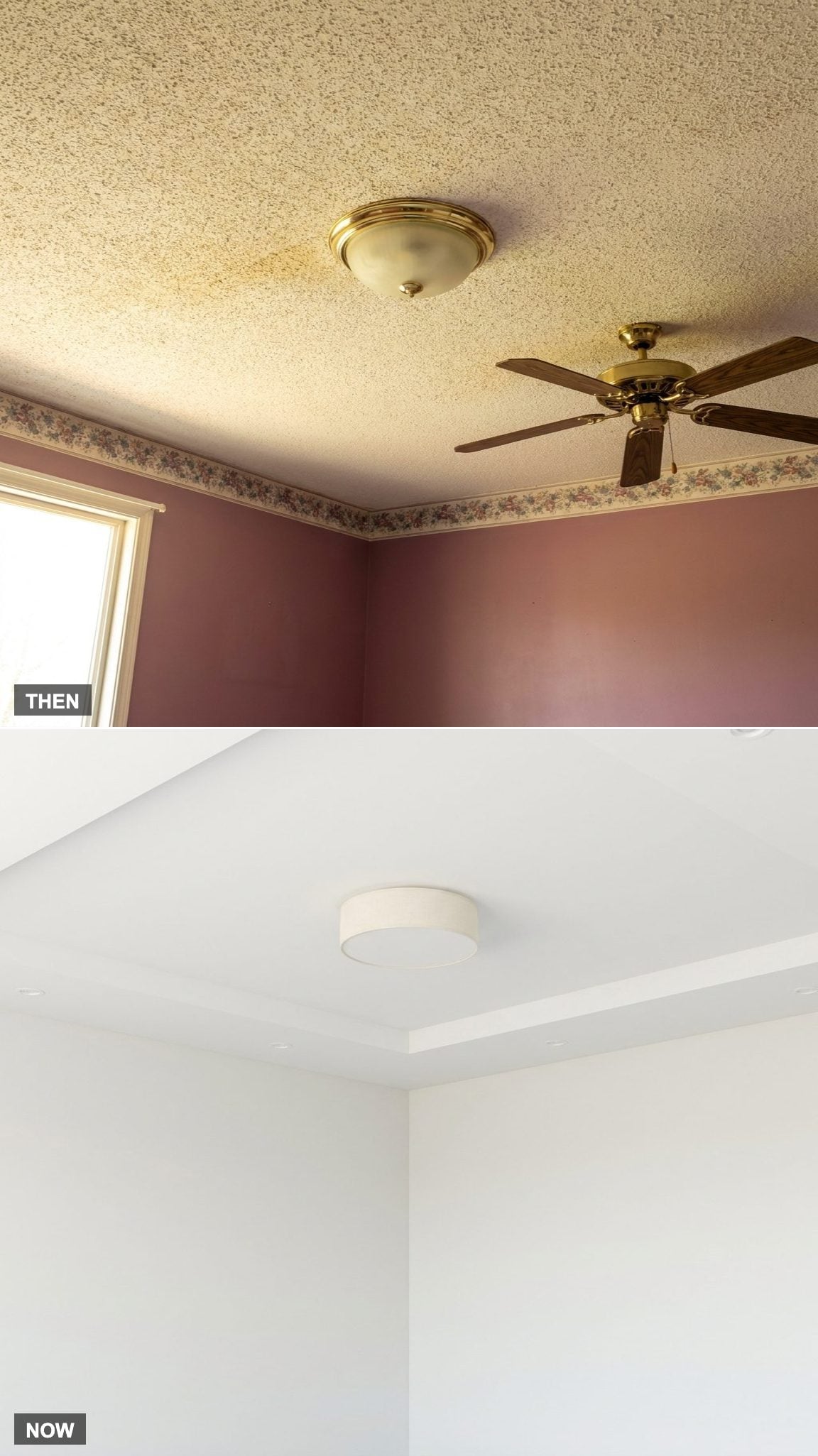
Popcorn ceilings sold on two promises: they hid drywall flaws and dampened sound. What nobody mentioned was that they also collected dust, yellowed over the years, and some older formulations contained asbestos.
The modern ceiling went the opposite direction. Flat, smooth, sometimes stepped up into a shallow tray, with a slim flush mount and recessed lights doing the work quietly. Removing popcorn texture can transform the room, but older ceilings should be tested before anyone starts scraping.
34. Wall-to-Wall Carpet vs. Hardwood Floors
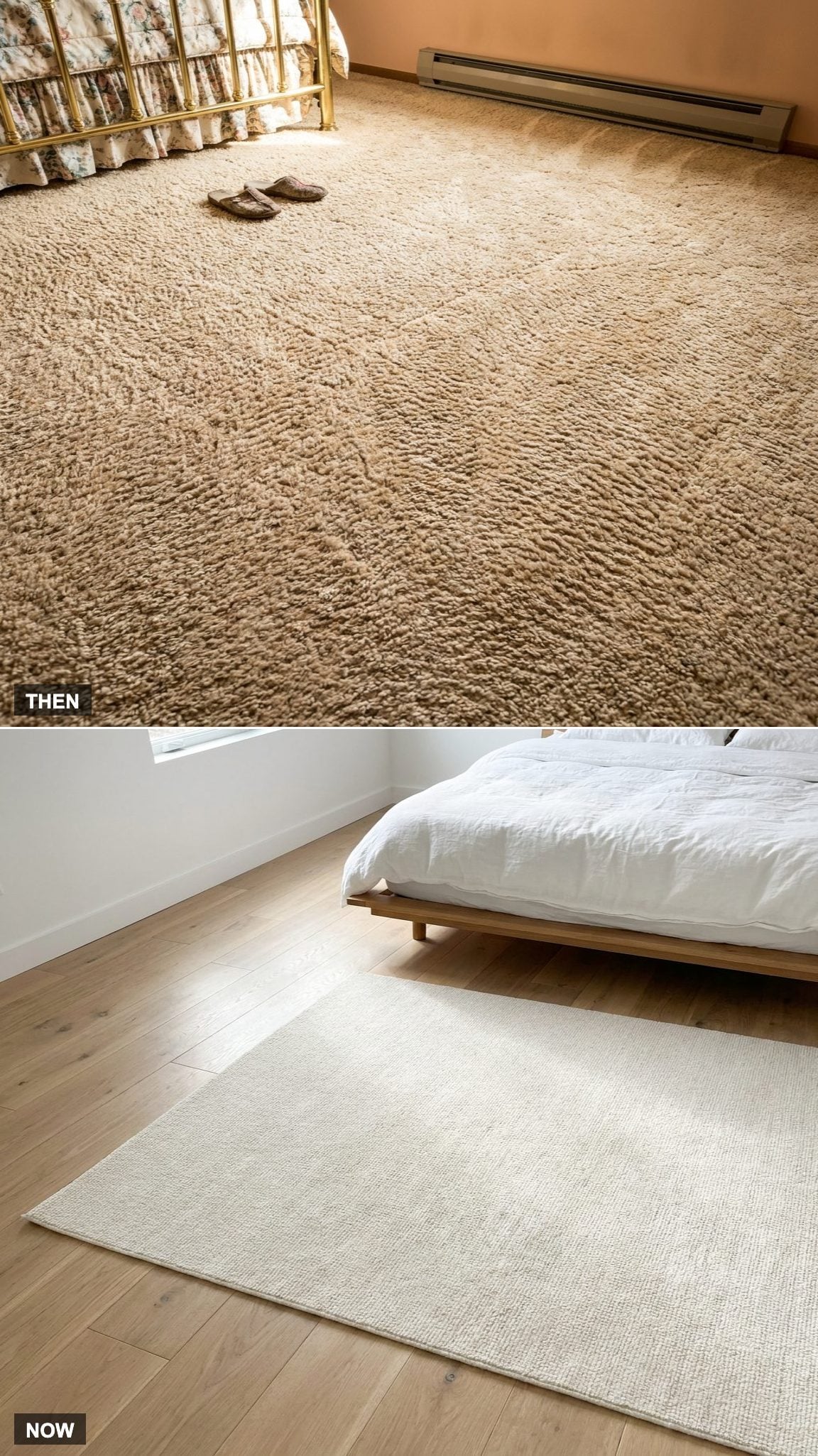
Wall-to-wall shag was king in 1980, and the deeper the pile the better. It felt great underfoot at 6 a.m. and hid a truly alarming amount over the years. Nobody wanted to think about what lived in it.
Hardwood took over because it does the one thing carpet never could: cleans in ten seconds and shows off good light. Wide white oak planks under a soft ivory wool rug give you warmth without the mystery stains.
33. Dark Wood Furniture vs. Light Wood and Mixed Materials
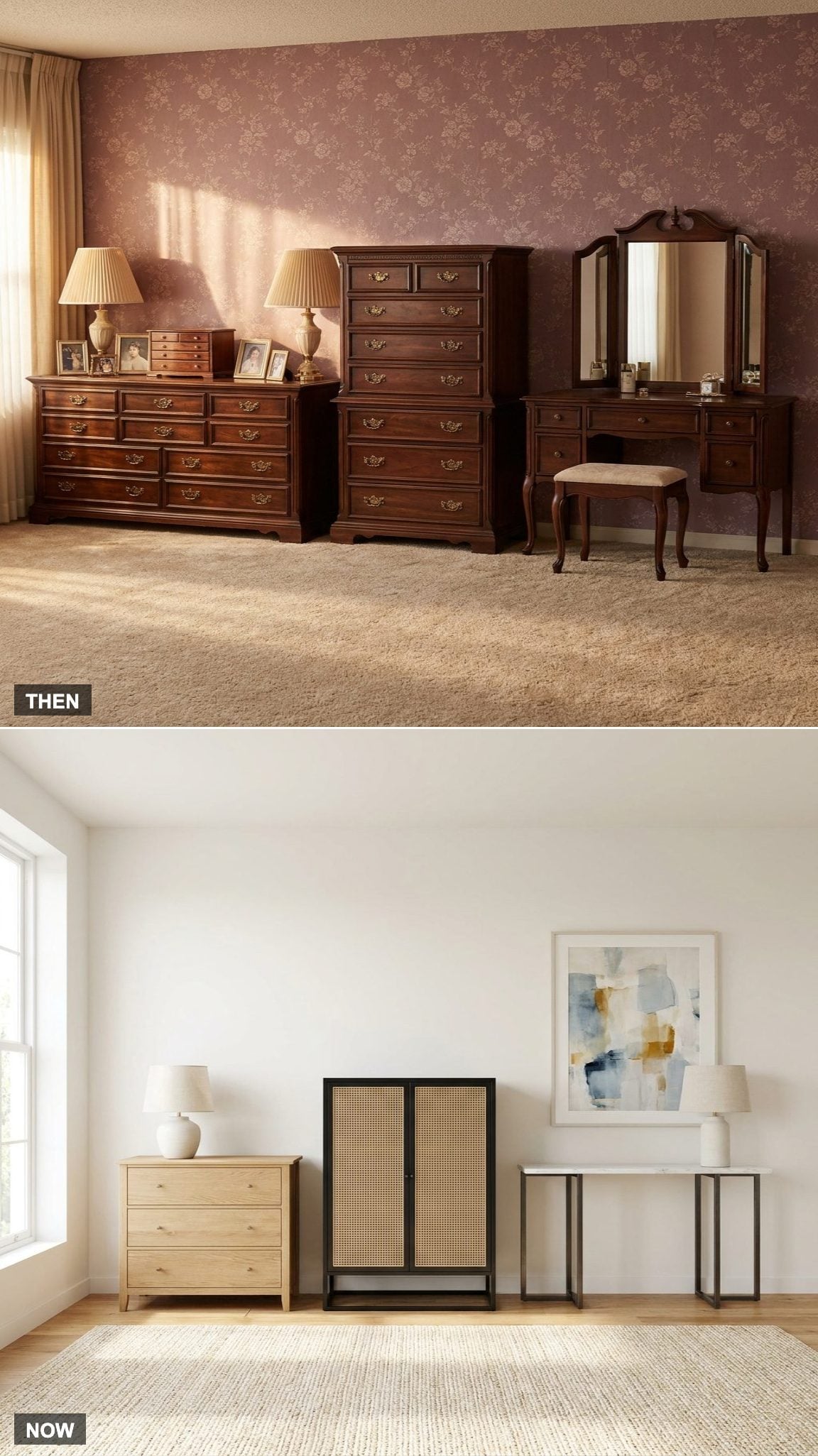
Dark, heavily stained furniture had a strong hold on many 1980s bedrooms, and it usually arrived in bulk. Heavy dressers, taller highboys, mirrored vanities, all in the same reddish-brown stain that swallowed the light and half the room with it.
The modern move is lighter and deliberately mismatched. Picture a pale oak dresser next to a black metal cabinet next to a marble-topped console, each piece a different material and tone, chosen one at a time instead of bought as a wall of matching brown. The lighter mixture makes the room feel less visually dense.
32. Matching Bedroom Sets vs. Curated Furniture Pieces
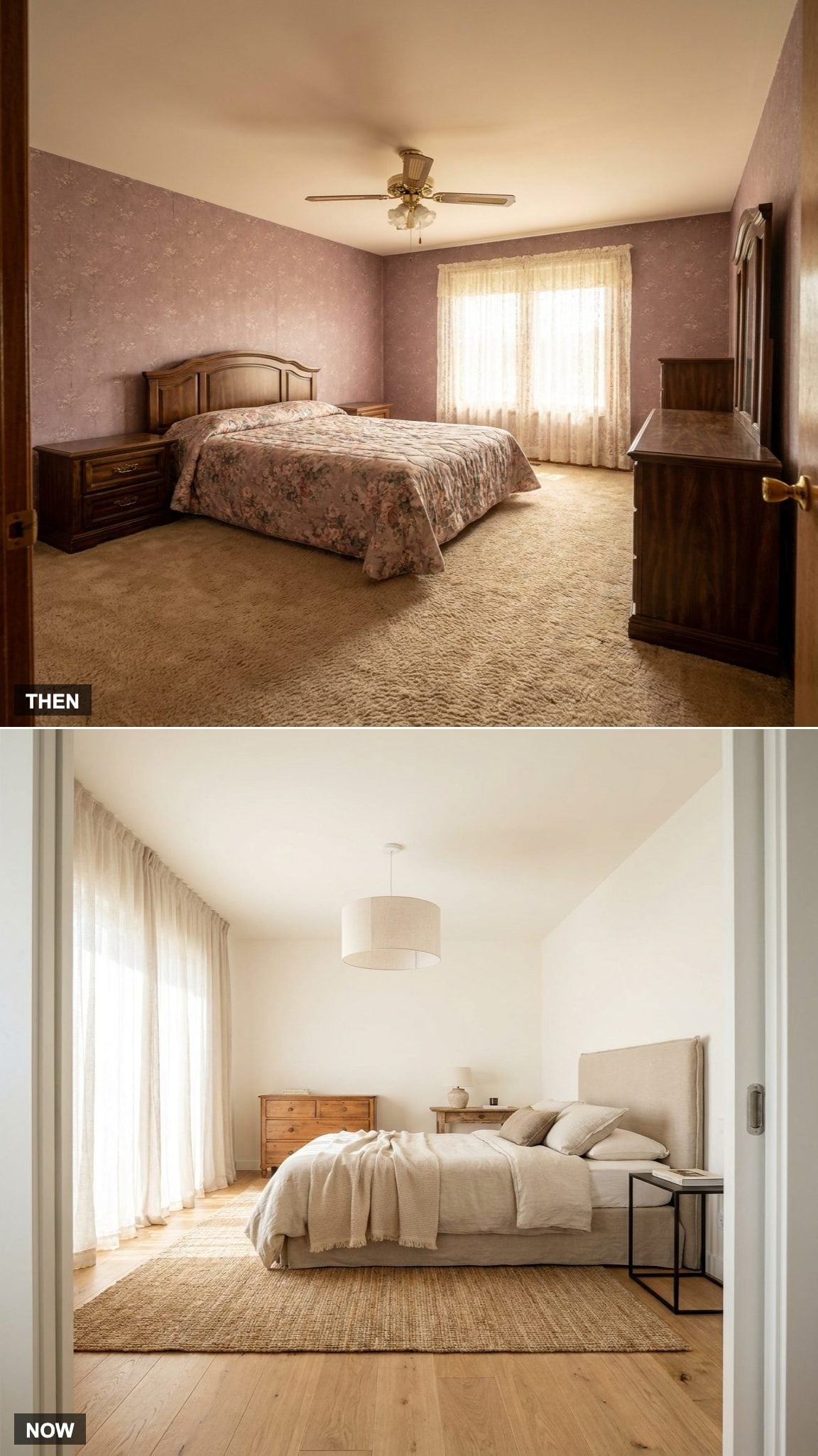
You bought the whole set in 1980. Headboard, two nightstands, dresser, mirror, all one wood, all one hardware, delivered together and arranged exactly as the showroom floor showed you. Decorating was a single decision.
Now the goal is the opposite. Nothing matches, but everything relates: one wood nightstand, one metal, a headboard in linen, a dresser found somewhere else entirely. It looks collected over time even when it wasn’t.
31. Waterbeds vs. Upholstered Platform Beds
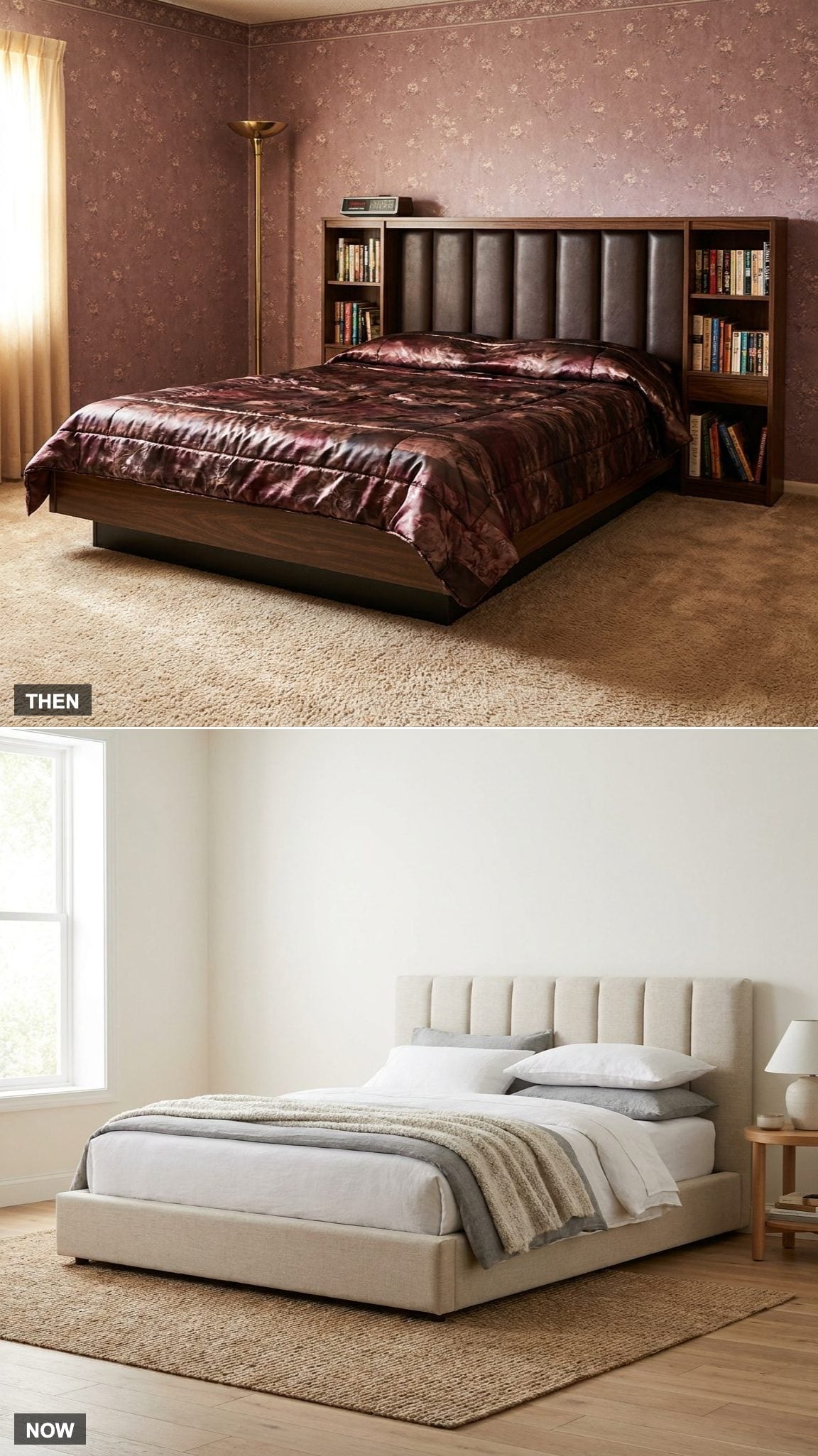
The waterbed was the height of cool in 1980 and a genuine logistical problem. It weighed a ton once filled, needed a heater to stop it from feeling like a lake, and made a sound when you moved that nobody could sleep through forever.
The upholstered platform bed answered every complaint. Firm, level, quiet, wrapped in oatmeal linen with a channel-tufted linen headboard you actually want to lean against. No pump, no heater, no sloshing. The quieter silhouette gives the rest of the room something simple to build around.
30. Brass Bed Frames vs. Minimalist Headboards
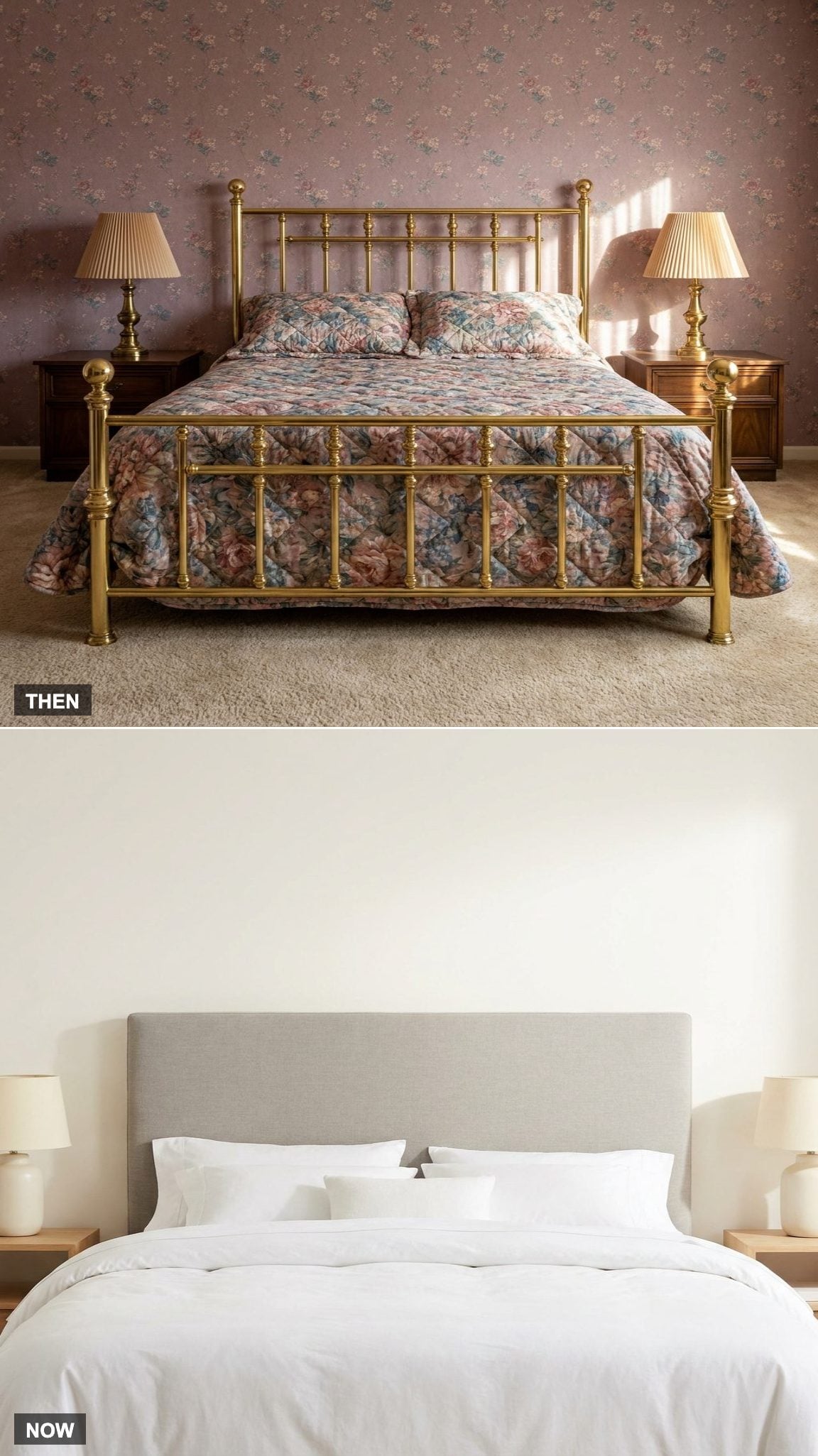
A brass bed brought an unmistakably formal note to many 1980s bedrooms. Gleaming rails, turned posts, finials on top like a Victorian fence, every inch of it catching the one lamp in the room. It also demanded regular polishing, and cold metal against your back at night is a specific kind of unpleasant.
The minimalist headboard does the exact opposite job. No shine, no posts, just a low padded rectangle in linen you can lean into. The room stopped announcing itself and started resting.
29. Heavy Bedspreads vs. Layered Neutral Bedding
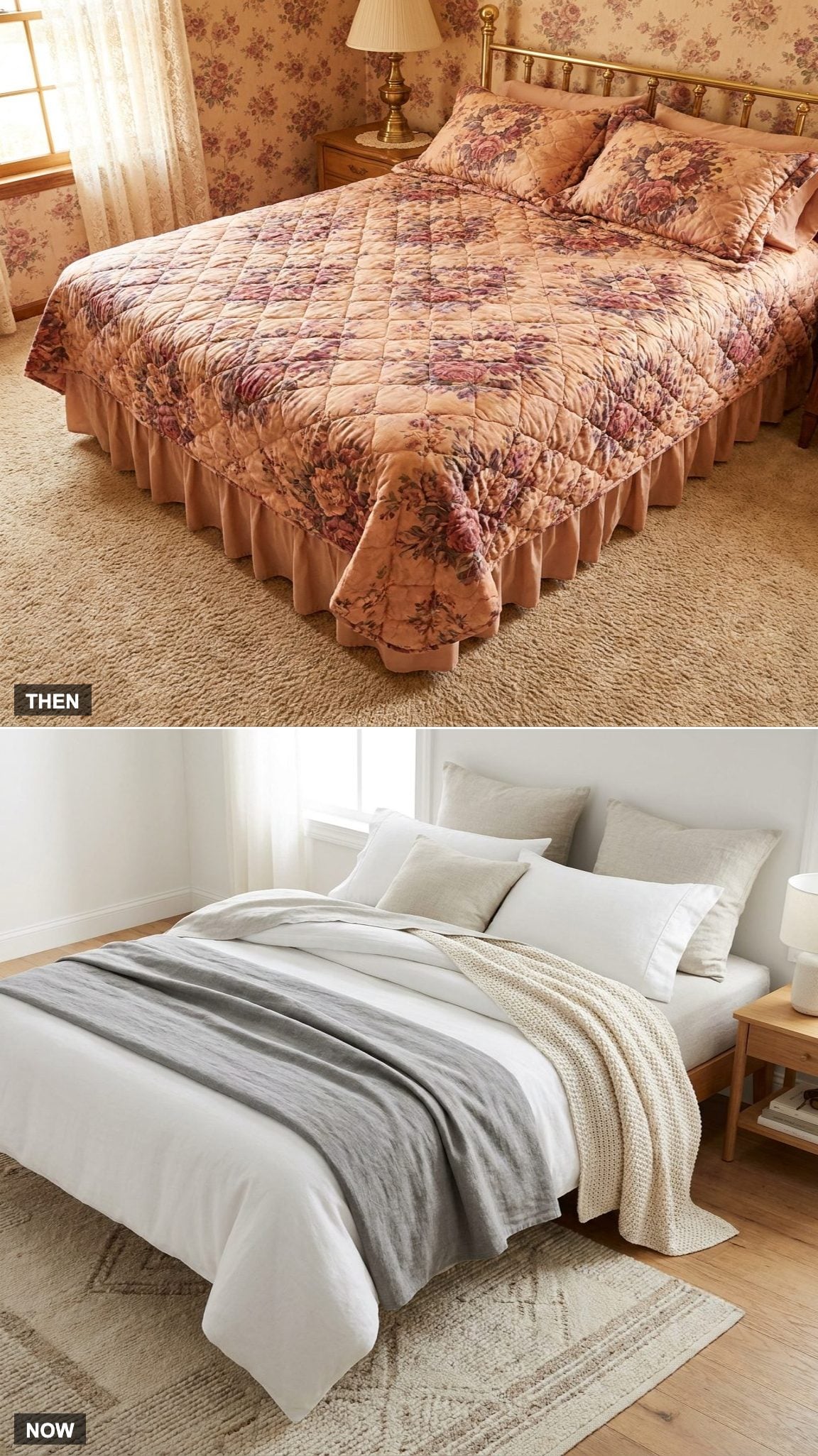
The 1980 bedspread was heavy in every sense. A thick quilted floral pulled taut to the floor, coordinated to the wallpaper, topped with shams nobody actually slept on. Making the bed was a full production.
Layered neutral bedding swapped the single heavy piece for a soft stack: white duvet, linen throw, mixed textures in oatmeal and gray. It reads calm because there’s no pattern shouting, just fabric on fabric on fabric. Want to see how far white can carry a room? This white bed inspiration makes the case.
28. Dust Ruffles vs. Low-Profile Beds
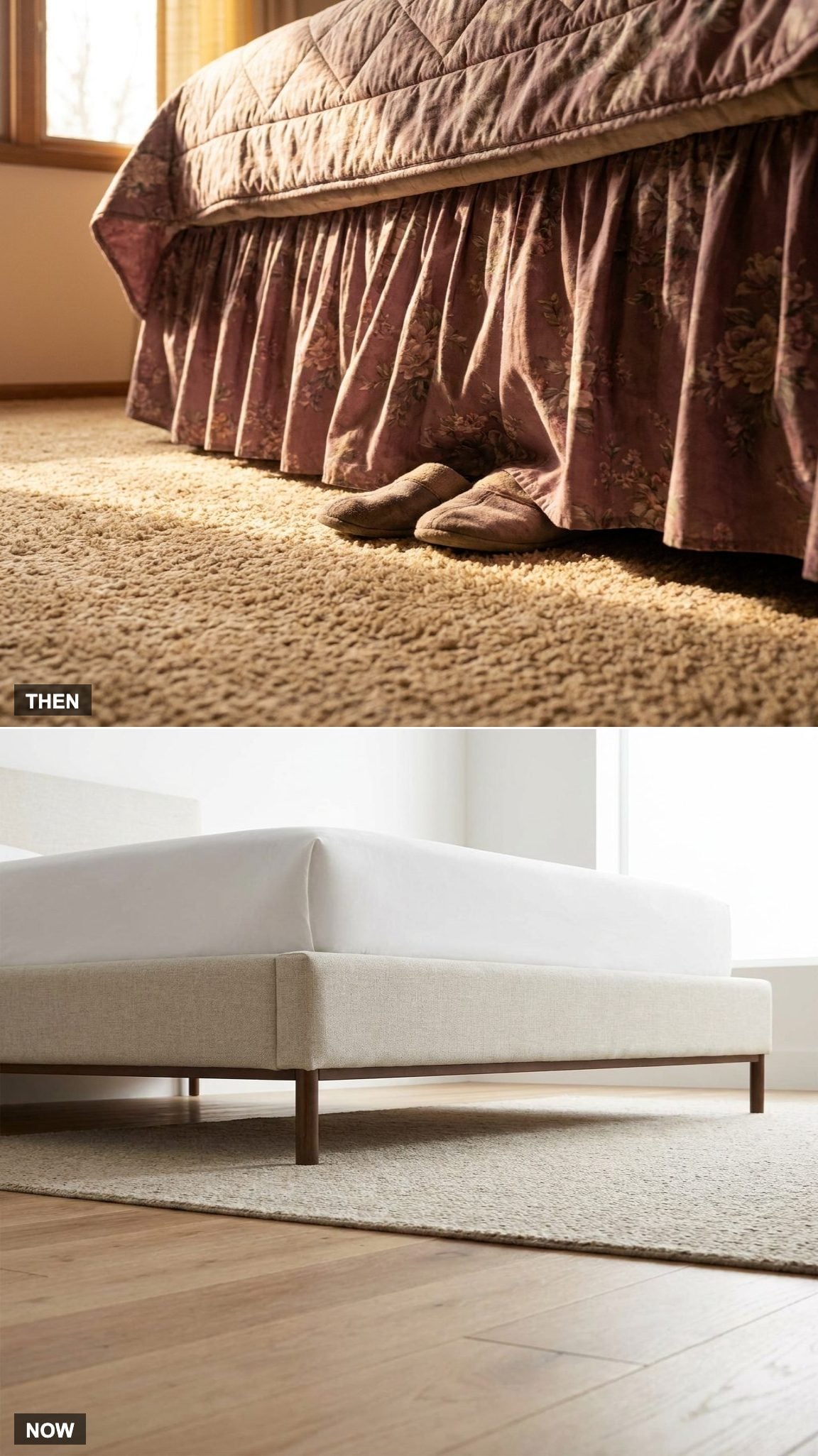
The dust ruffle existed to hide two things: an ugly box spring and whatever you shoved under the bed. It pleated, it gathered, it matched the spread, and it caught dust like a net catches fish.
Low-profile beds killed the need for it. The frame sits close to the floor, often on short or recessed legs, upholstered and honest, with nothing to skirt over. There’s less underneath because there’s barely a gap, and the room feels lower, calmer, more grounded.
27. Lace Curtains vs. Floor-to-Ceiling Drapes
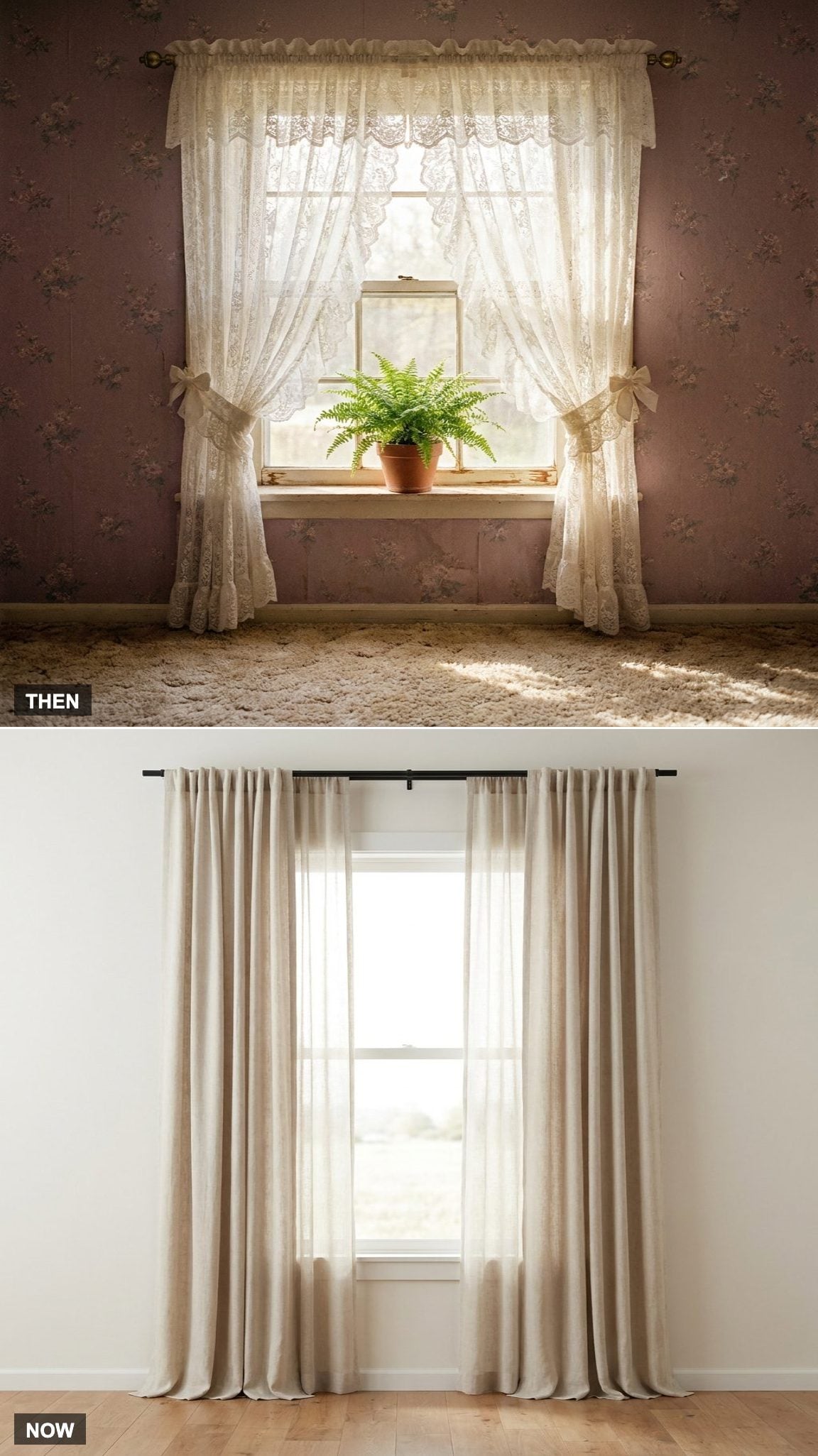
Lace curtains in 1980 stopped at the windowsill, tied back with little bows, topped by a ruffled valance, and framed by a good foot of bare wall above and below. They filtered light into a pretty pattern and made the window look smaller than it was.
Floor-to-ceiling drapes flipped the whole trick. Mounted high and dropped to the floor in oatmeal linen, they visually extend the wall and make the opening feel larger. Same window, entirely different room.
26. Vertical Blinds vs. Wide-Louver Shutters
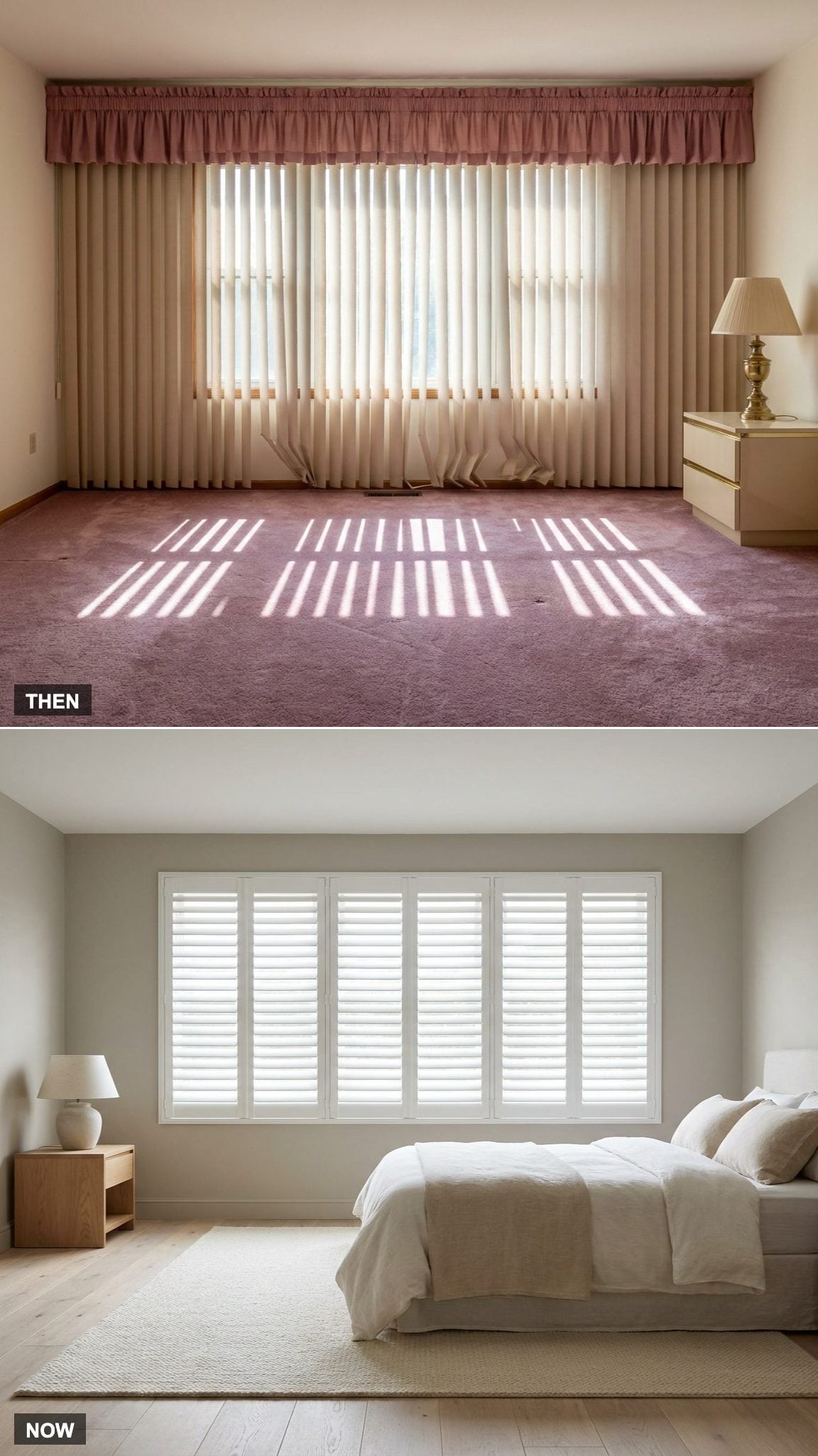
Vertical blinds were the 1980 default, and they behaved like a cheap accordion nobody could fully close. One slat always hung crooked, they clattered every time the heat kicked on, and they sliced the morning sun into prison-bar stripes across the carpet.
Wide-louver shutters do the opposite. Angle the louvers and you control the light like a dimmer, soft and even instead of chopped into ribbons. The white wood frames the window as architecture, not an afterthought. So the window stopped being something you covered and became something you framed.
25. Small Windows vs. Expansive Natural Light
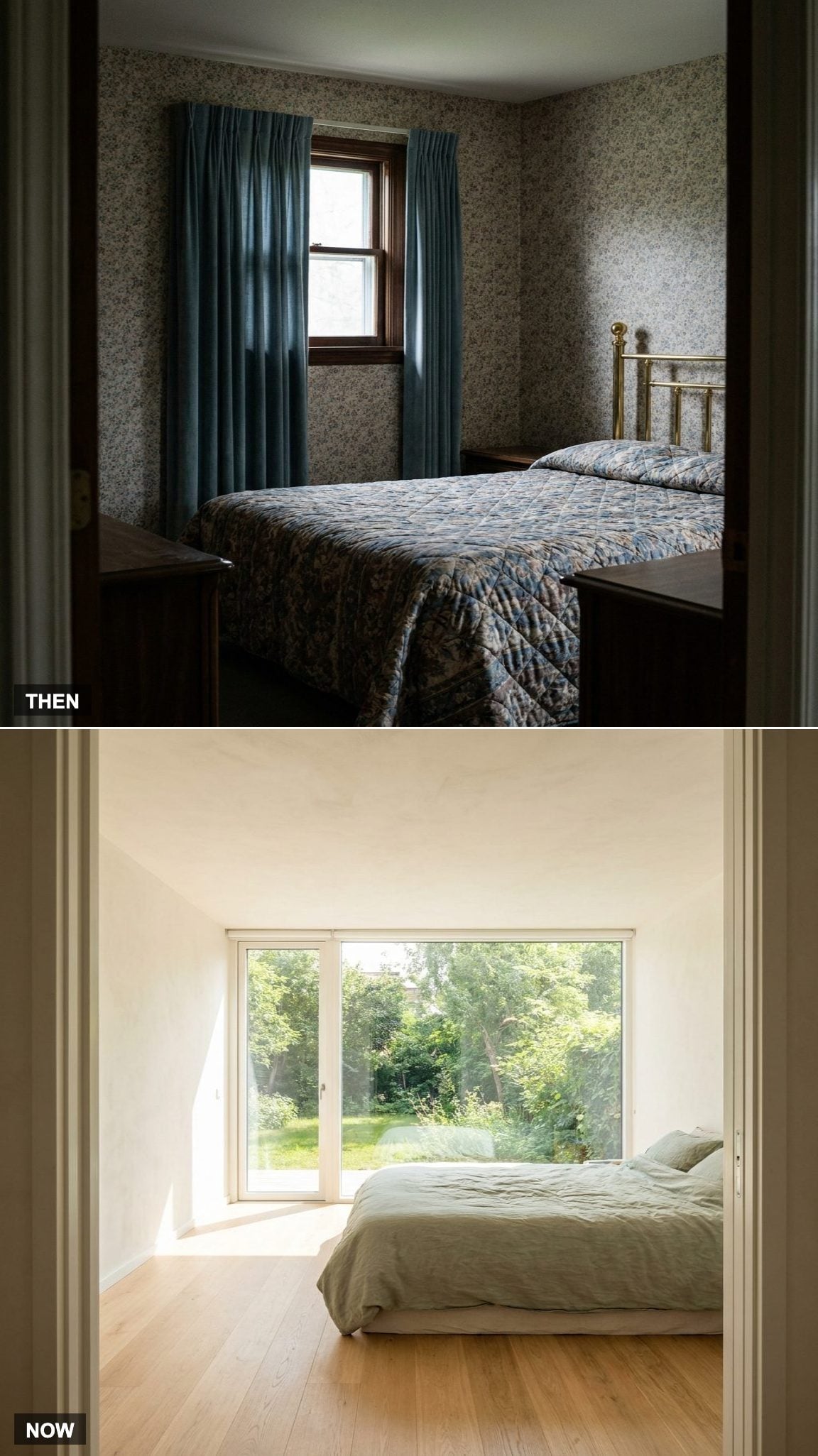
Many ordinary 1980s bedrooms relied on one modest double-hung window, often made to feel even smaller by dark trim and drapes heavy enough to double as blackout curtains. The room stayed dim at noon and nobody questioned it.
Now the exterior wall is mostly glass, and daylight does the decorating, bouncing off pale plaster and pooling on oak floors. There is a practical reason this feels better, not just looks better.
24. Mirrored Closet Doors vs. Custom Built-In Closets
🔥 Would you like to save this?
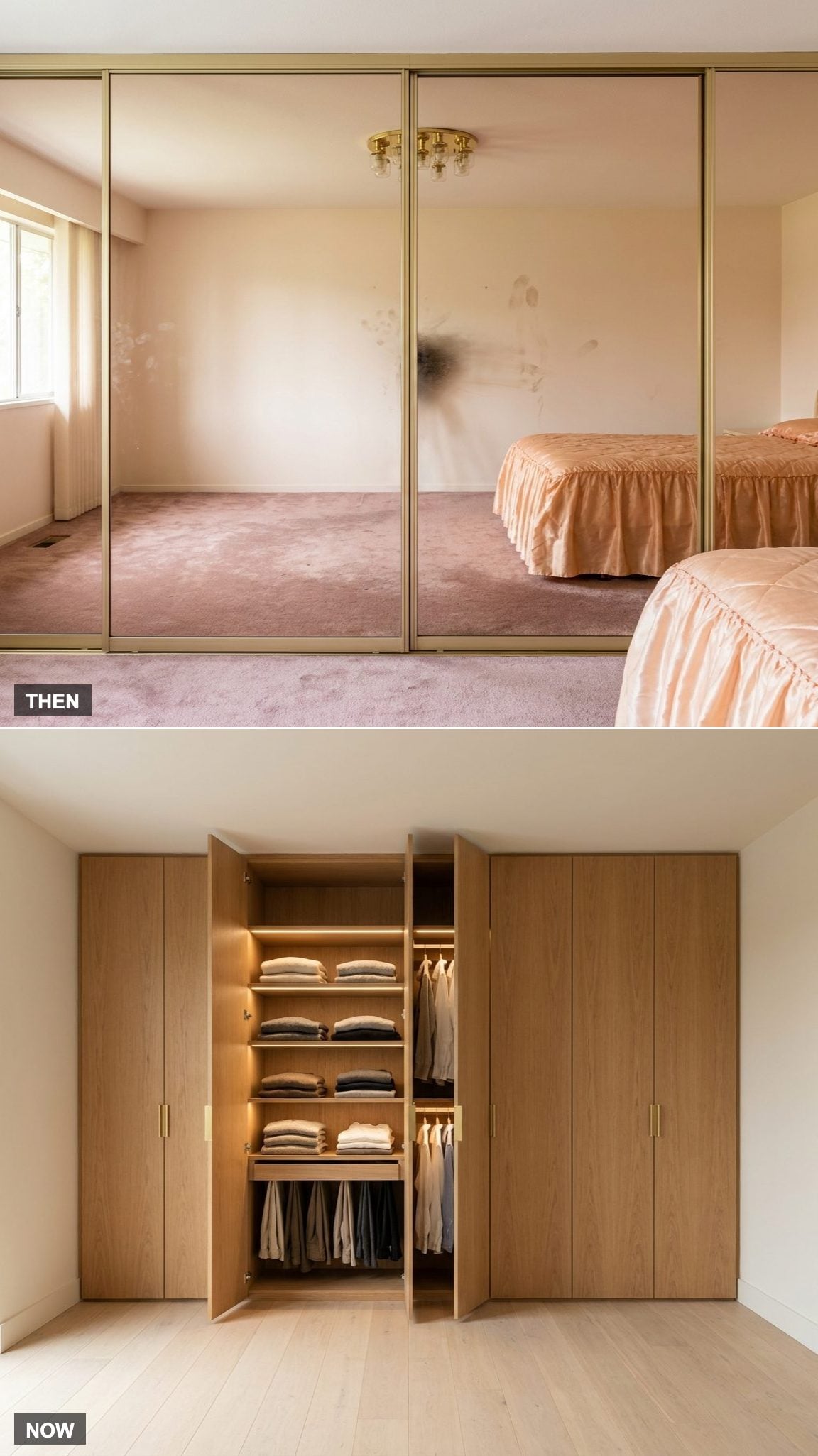
Mirrored sliding closet doors became a familiar sight in 1980s bedrooms: gold aluminum frames, permanent smudges, and a doubled reflection of every mauve surface in the room. Practical, slightly dizzying, and one door always jumped its track.
Built-ins killed the mirror trick and gained everything else. Oak slab fronts with recessed pulls read as furniture rather than hardware-store panels, and integrated lighting means you can actually see what you own. The wall stops shouting and starts working.
23. Sliding Closets vs. Walk-In Closets
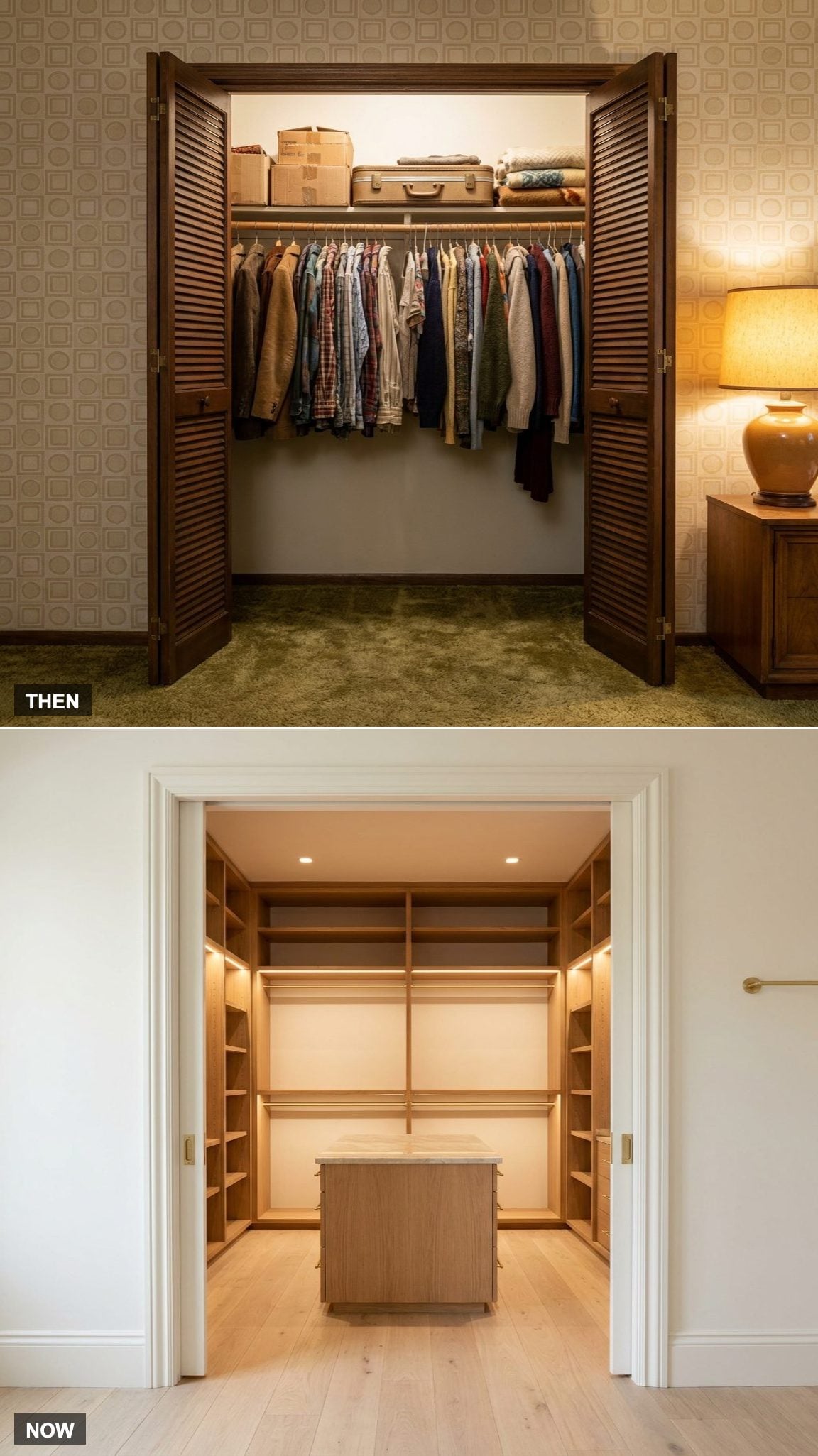
A 1980 closet was a slot in the wall. Bifold louvered doors, one rod, one warped shelf, and a jam of wire hangers you fought every morning. If your suitcase fit up top, that was the entire storage plan.
The walk-in changed the math. Instead of a closet inside a bedroom, you get a small room with double-height rods, an island, and lighting bright enough to tell navy from black. Less a storage slot, more a private dressing area, which is exactly why people covet them now.
22. Standard Closets vs. Closet Organization Systems
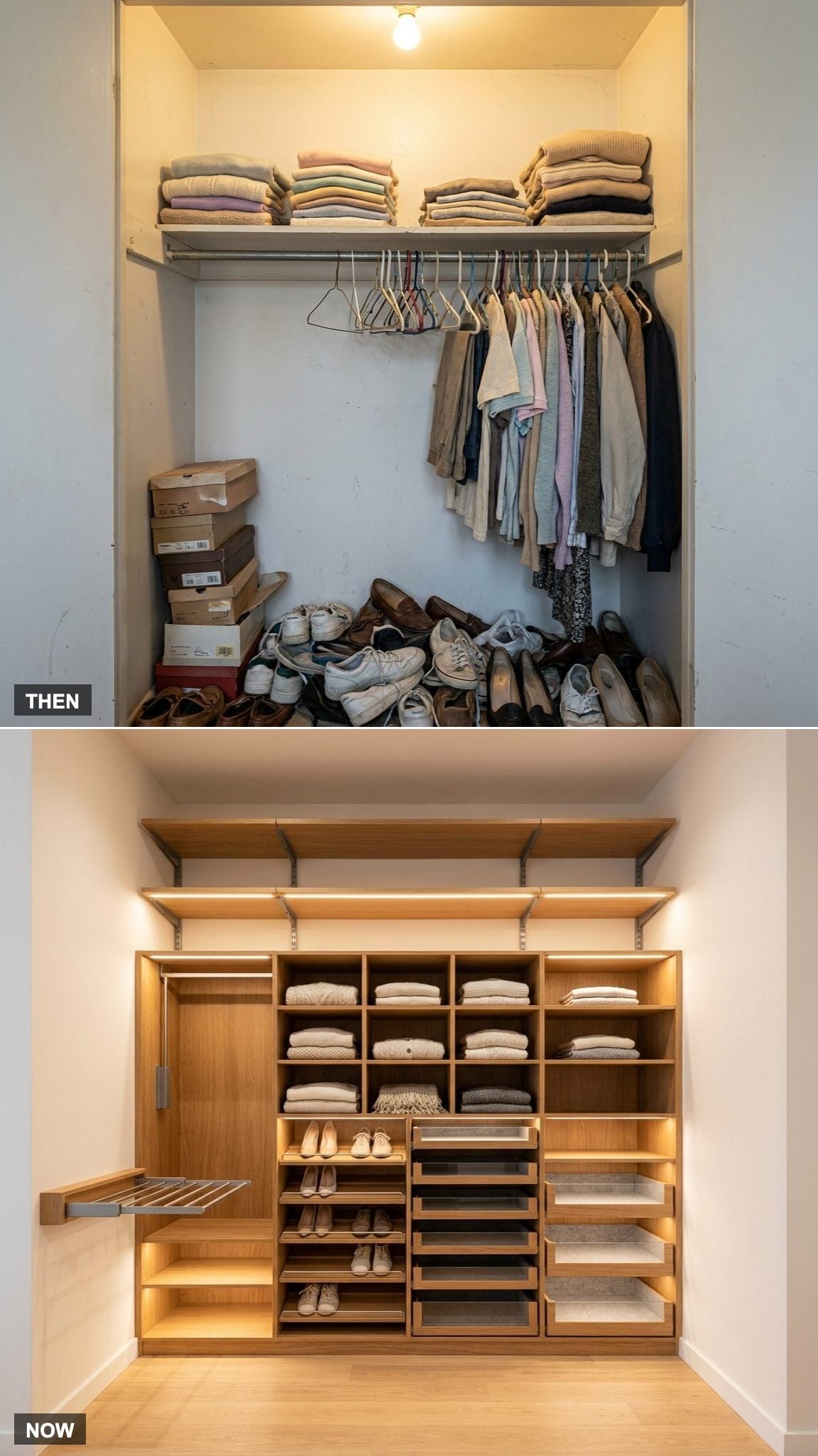
The 1980 organization system was a shelf and a prayer. Sweaters avalanched, shoes went to the floor to die, and the top box tower leaned a little more every season.
Modular systems fixed the chaos with geometry. Adjustable shelves, angled shoe racks, felt-lined drawers, and a valet rod give every category its own address. Sort by color and the whole thing reads like a boutique.
21. Wood Veneer Nightstands vs. Designer Accent Tables
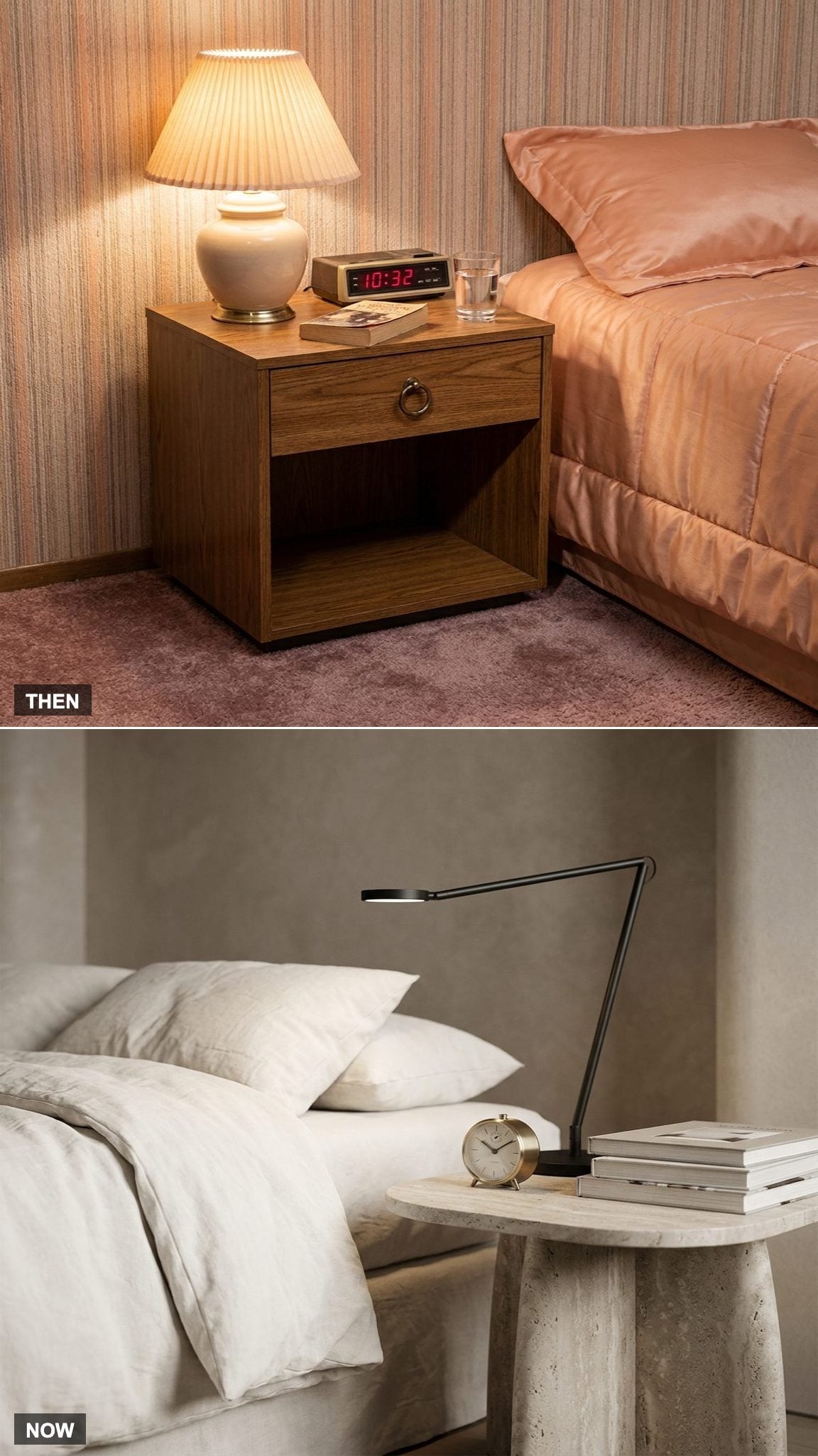
The 1980 nightstand was a laminate box with a brass ring pull, and it held the holy trinity: a pleated ceramic lamp, a paperback, and a clock radio glowing red numbers into your face at 3 a.m. Functional. Forgettable.
Now the bedside gets a sculptural moment. A travertine accent table or a curvy matte black piece turns the corner of the bed into something worth looking at, paired with a slim lamp and books stacked like a still life. The bedside table stopped disappearing into the furniture set and became its own design decision.
20. Basic Table Lamps vs. Layered Ambient Lighting
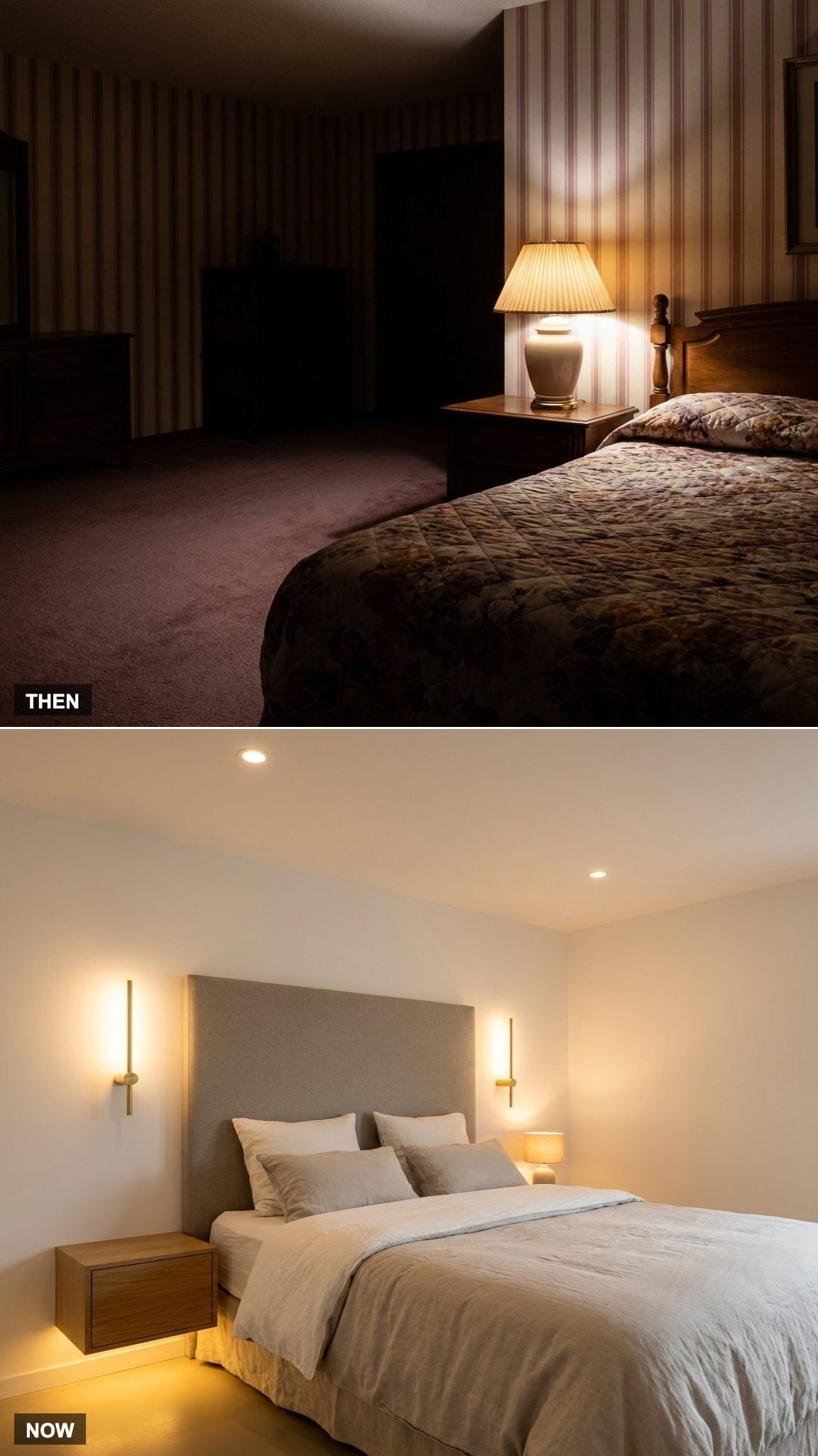
One lamp did all the work in 1980. It threw a warm circle over your book and surrendered the rest of the room to shadow. You either read or you saw the closet. Not both.
Layered lighting spread the load: recessed downlights for the general glow, sconces flanking the headboard for reading, and strip lighting under a floating nightstand to guide a midnight trip to the bathroom. Different sources for different moods, all on dimmers.
19. Flush-Mount Ceiling Lights vs. Statement Chandeliers
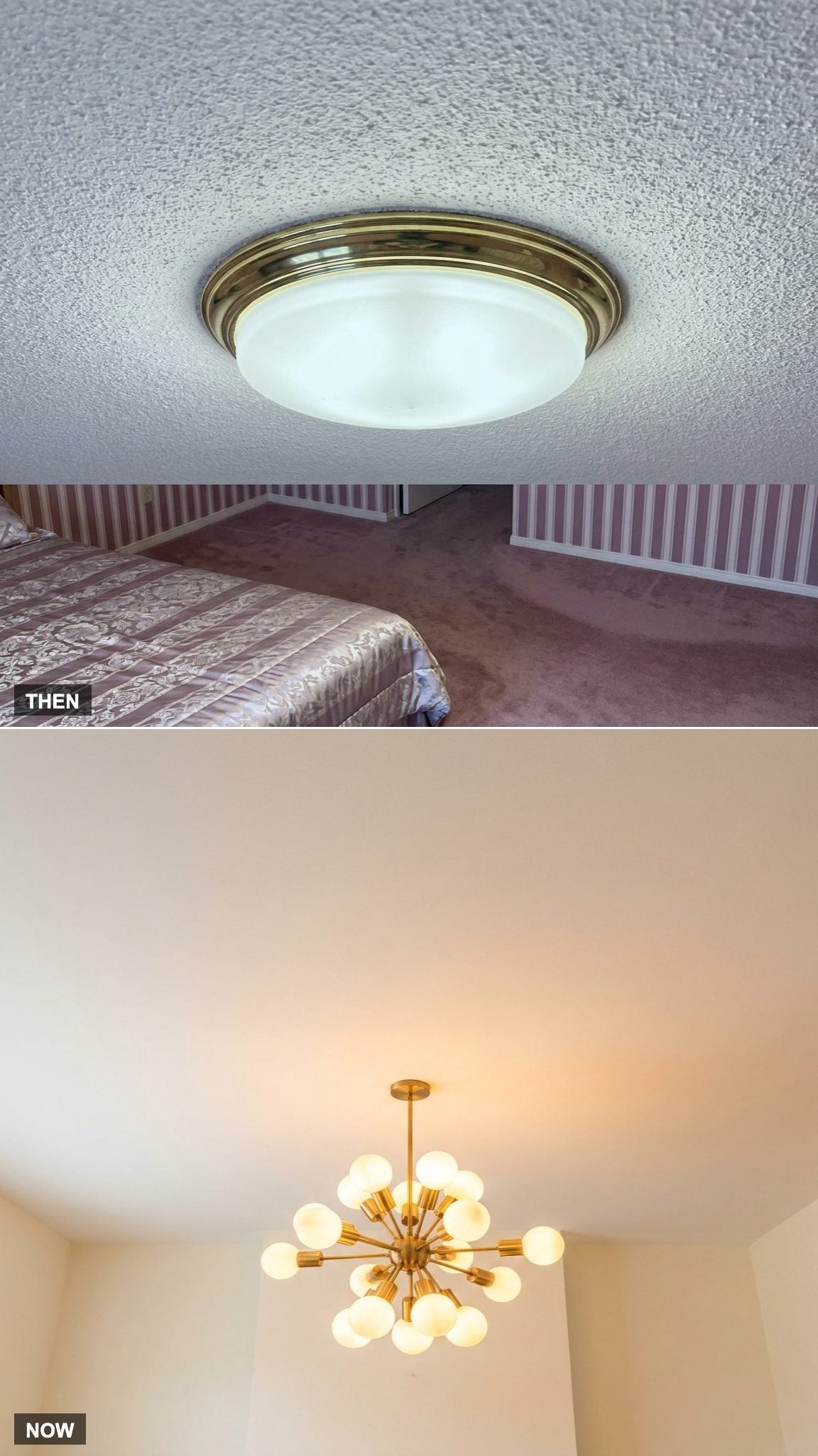
The frosted-glass dome was the 1980 ceiling standard. Flat against the popcorn texture, brass trim ring, one bulb, zero personality. It collected dead bugs and lit the room like a waiting area.
The bedroom chandelier has returned in a more sculptural form. A cluster of brass arms or a sculptural pendant suspended at the right height turns the ceiling into the room’s jewelry. It is the one surface people often forget to consider, which is exactly why giving it real attention changes the room so quickly.
18. Ceiling Fans With Light Kits vs. Sleek Modern Fans
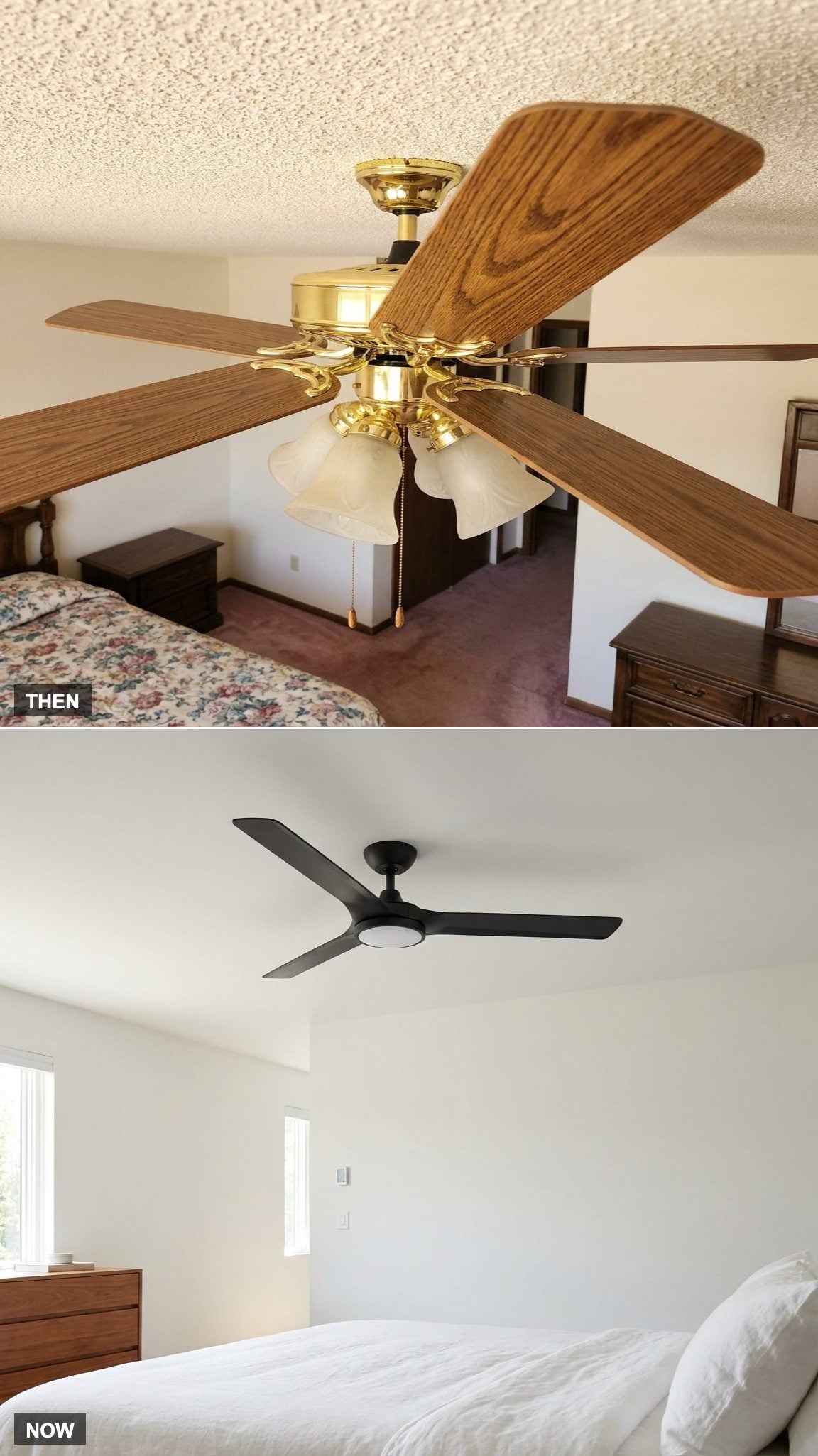
The 1980 ceiling fan was a whole event. Five wood-grain paddles, a brass hub, a chandelier of frosted tulip shades hanging underneath, and two pull chains you yanked in the dark hoping for the right one. It wobbled at high speed and it collected dust like a shelf.
Modern fans slimmed way down. Two or three aerodynamic blades, a low-profile body, an integrated LED, and control from the wall or your phone instead of a chain. Quieter. And finally something you don’t have to apologize for on the ceiling.
17. Box TVs on Dressers vs. Hidden or Wall-Mounted TVs
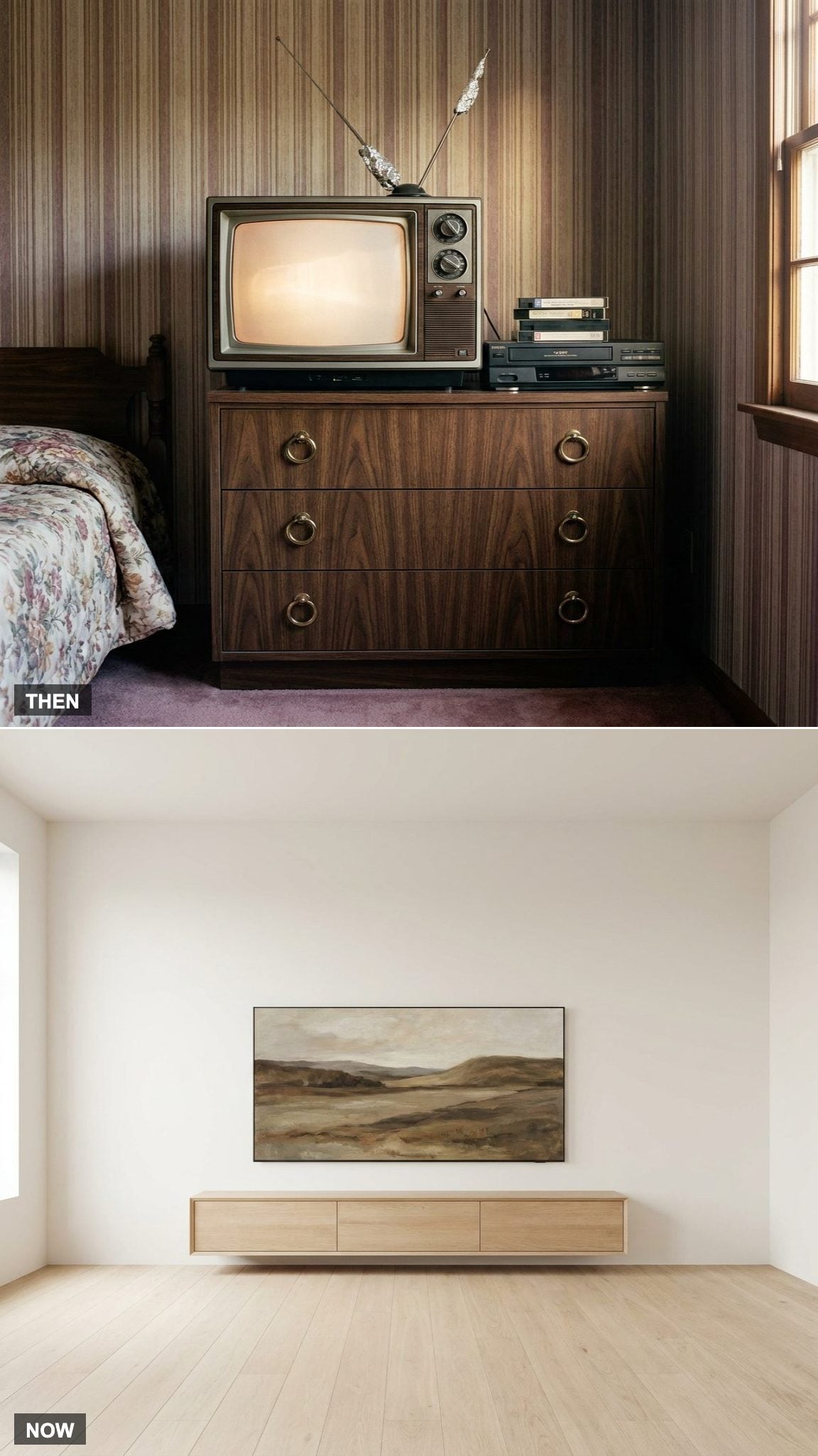
The bedroom TV in 1980 was a piece of furniture that happened to broadcast. A CRT box the size of a microwave sat on top of a dresser, sometimes with rabbit ears wrapped in foil and, as the decade progressed, a VCR and a leaning tower of VHS tapes beside it. It anchored the room whether you liked it or not.
Now the TV either vanishes onto the wall or disguises itself entirely. A frameless art-mode screen sits flush and displays a painting when it’s off, so the room reads as a room, not a den. Hide the technology, keep the calm.
16. Cassette Players vs. Smart Home Audio
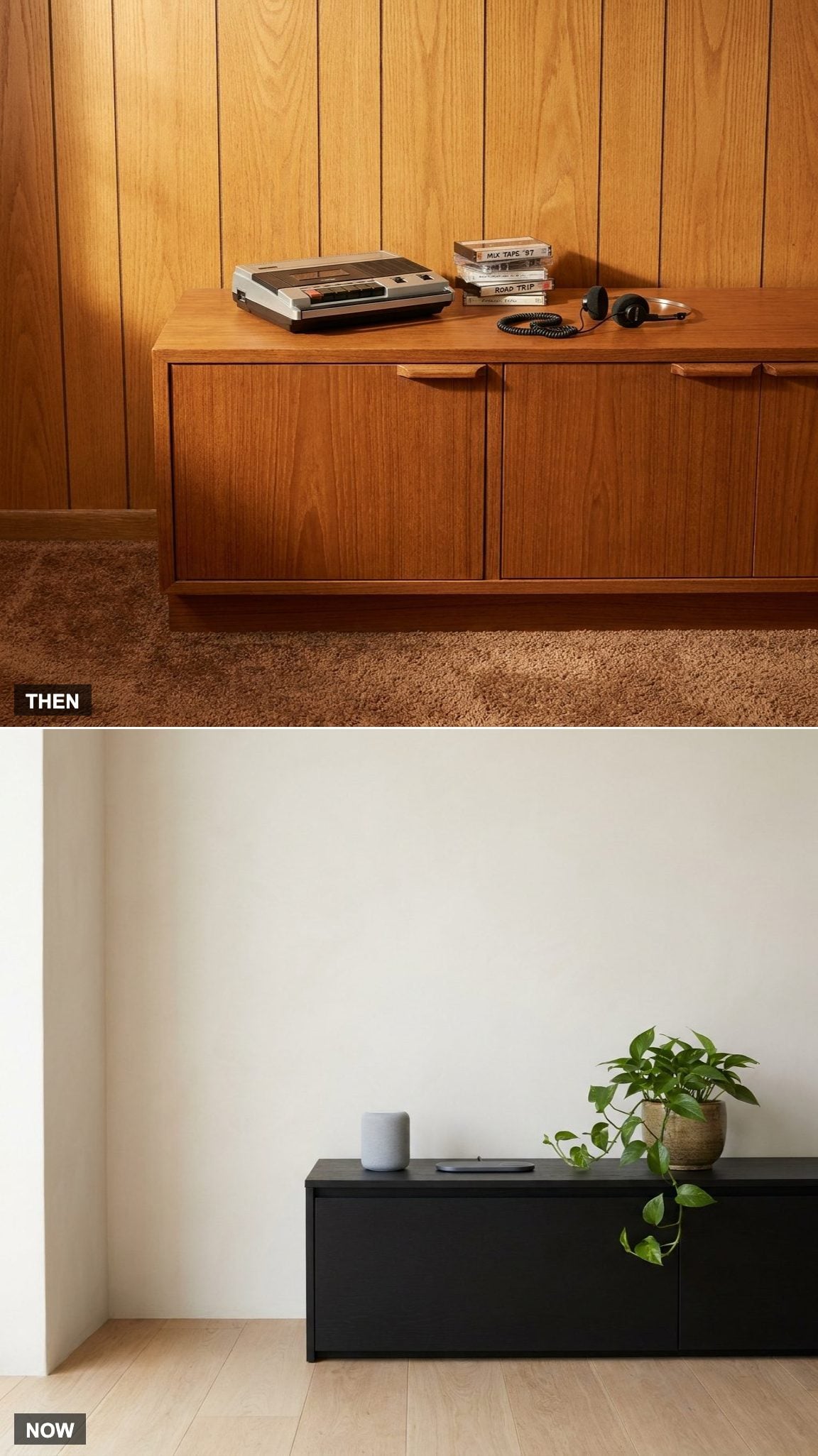
In 1980 your bedroom soundtrack lived in a plastic box with a cassette door that clicked shut like a car glove compartment, and when the tape spooled loose you fixed it with a pencil. Now a gray fabric smart speaker the size of a coffee mug fills the whole room with sound and answers back when you talk to it.
The design win isn’t the tech. It’s that the tech disappeared. The old rig demanded a shelf, a tape rack, and a nest of cords; the new one asks for a corner and nothing else.
15. Dressing Tables vs. Makeup Vanities
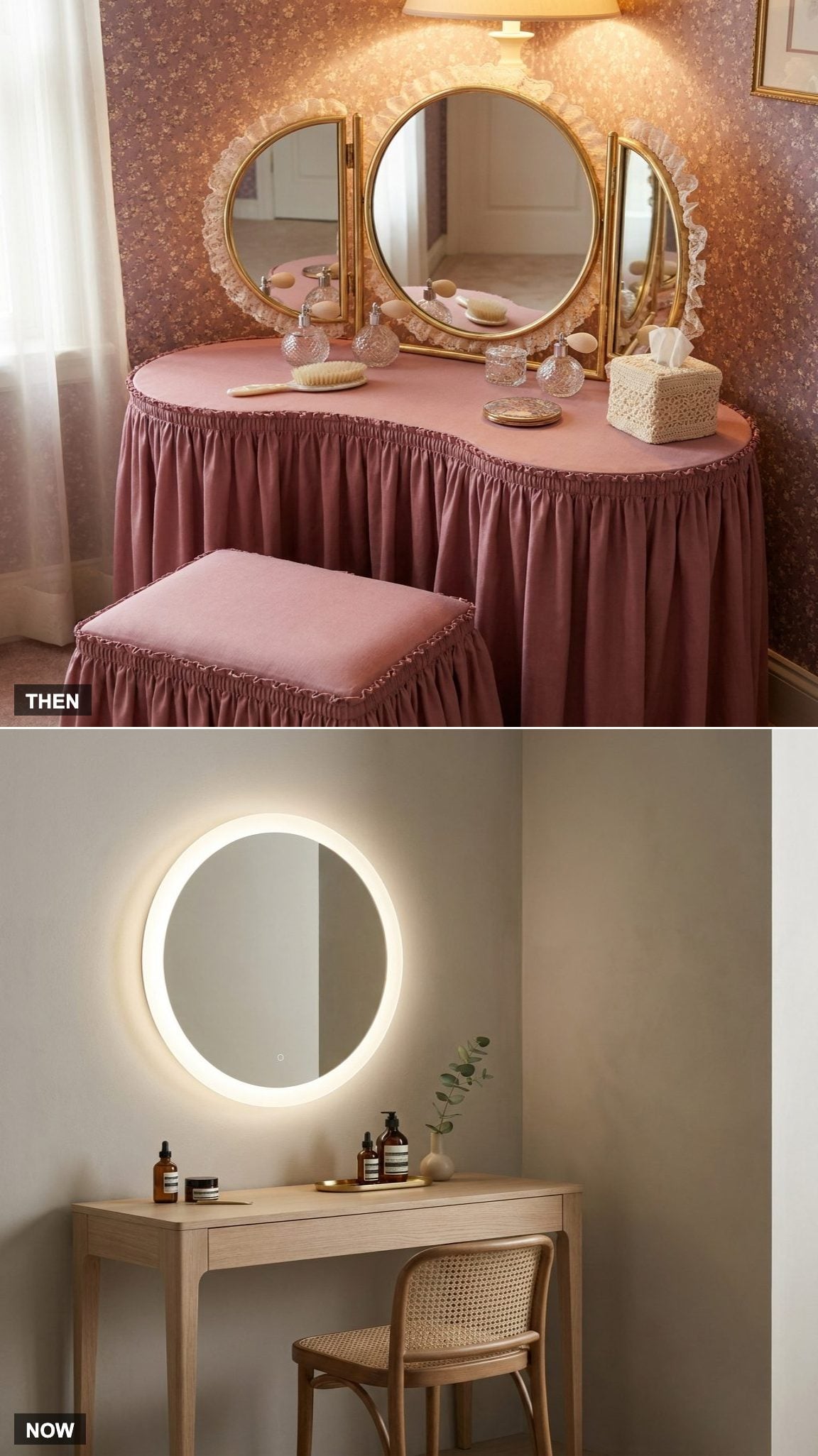
The 1980 dressing table wore a skirt. Layers of ruffled dusty rose fabric hid the legs, a tri-fold mirror caught you from three angles, and the surface held a small city of glass atomizers. It felt like sitting at a vanity in an old film, which was exactly the point.
The modern version stripped the fabric and added a light. A backlit LED round mirror and a white oak vanity desk do the same job with far less theater. Honestly, I miss the atomizers a little. Nobody displays their perfume like it’s a trophy anymore.
14. Bulky Dressers vs. Streamlined Storage
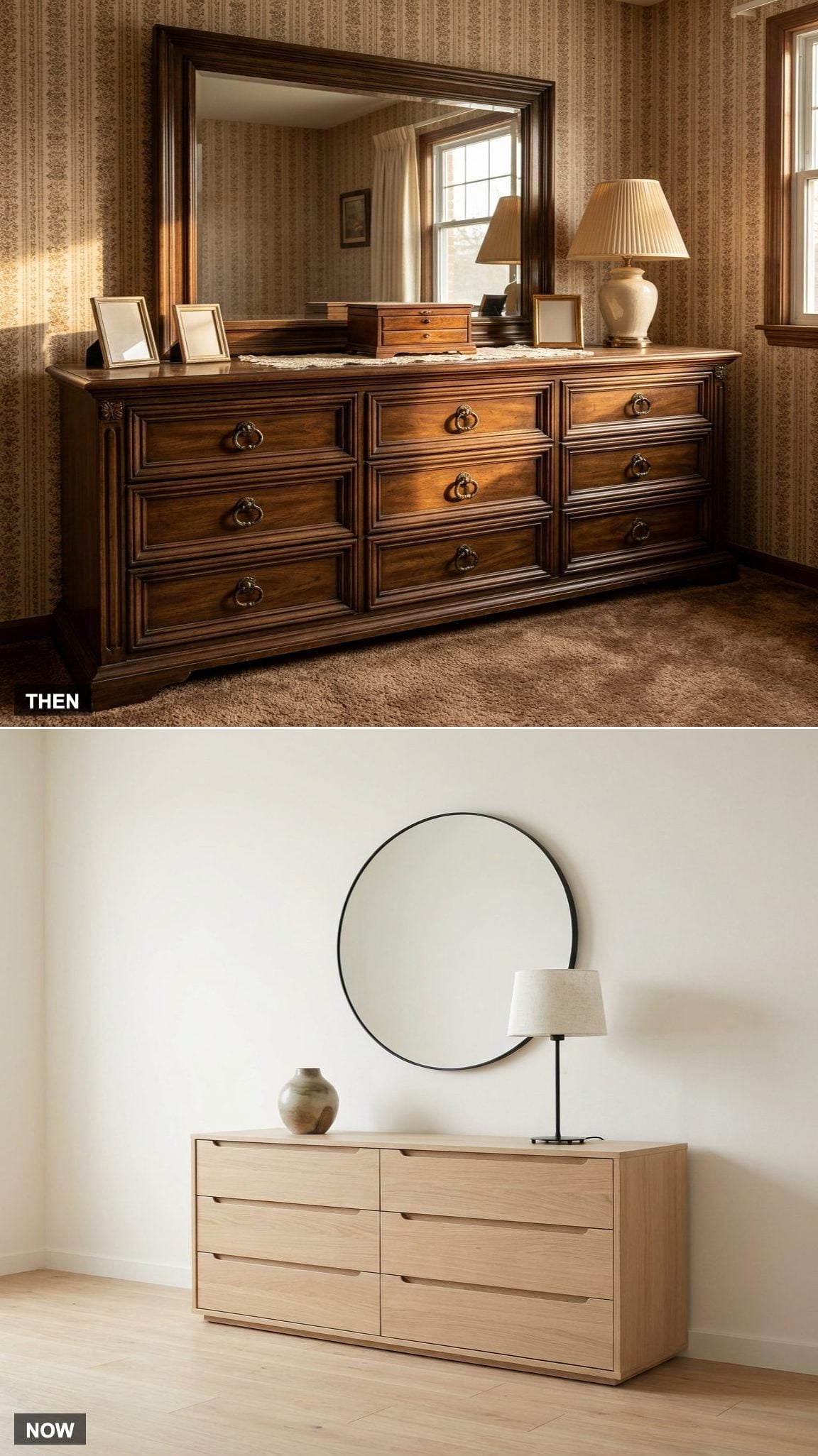
That triple-wide walnut dresser weighed as much as a small car. Nine drawers, brass ring pulls, ornate trim on top, and a mirror so heavy it needed two studs to hang. It anchored the room and dominated it in equal measure.
Today’s storage went low and quiet. A pale oak six-drawer dresser with recessed pulls holds the same sweaters without shouting about it. The doilies retired.
13. Wallpaper Borders vs. Full-Height Accent Walls
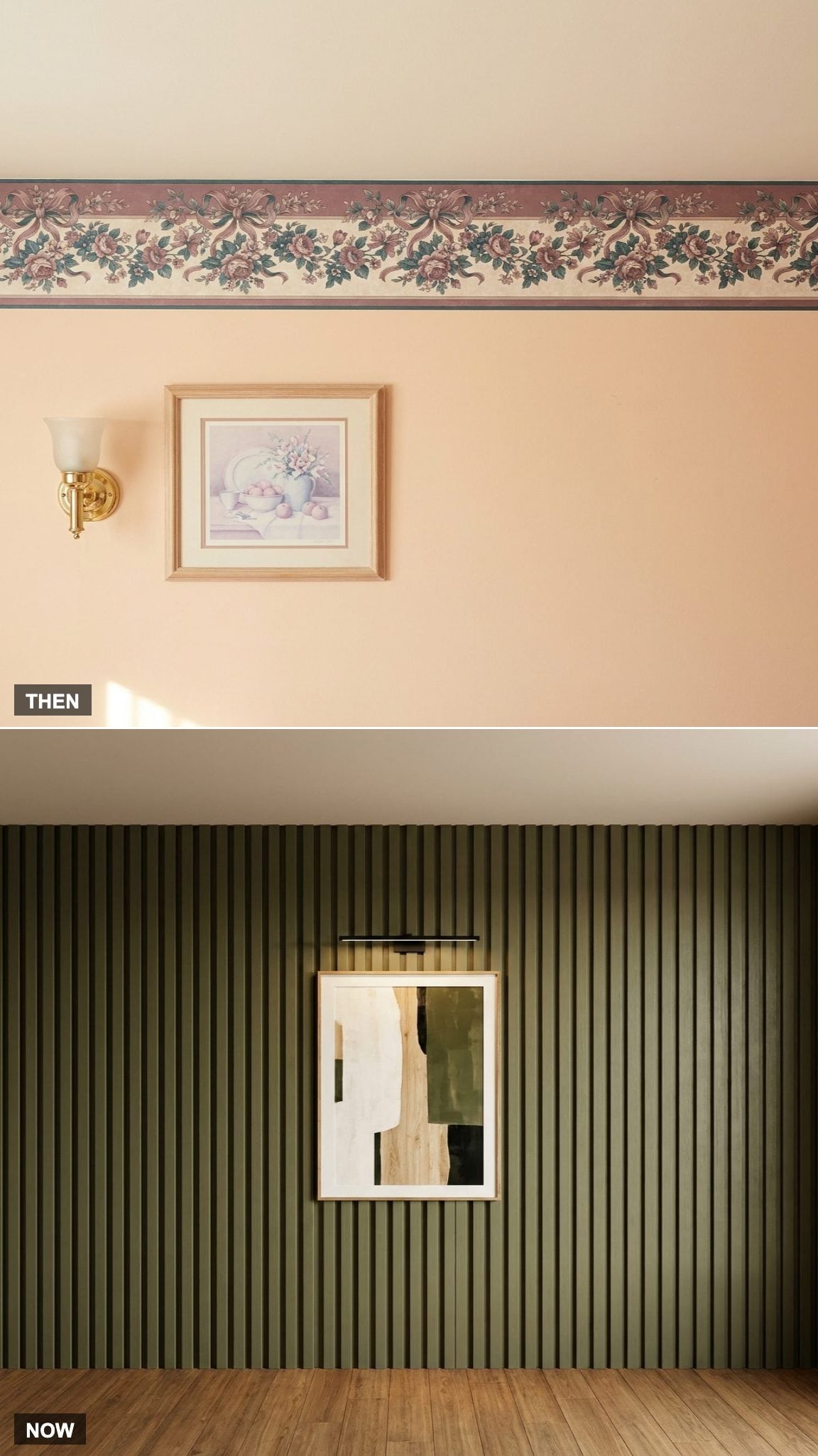
The wallpaper border was the 1980 flex: a single ribbon of floral-and-ribbon print circling the room a foot below the ceiling, doing the decorative work of a crown molding without the cost. The motif appeared in mauve, teal, cream, and nearly every floral combination in between.
The accent wall took the opposite bet. Instead of a thin stripe up high, it commits the entire wall floor to ceiling. Deep olive, fluted wood slat paneling, one big piece of art. More drama, less fuss.
12. Oak Trim vs. Minimal Painted Trim
🔥 Would you like to save this?
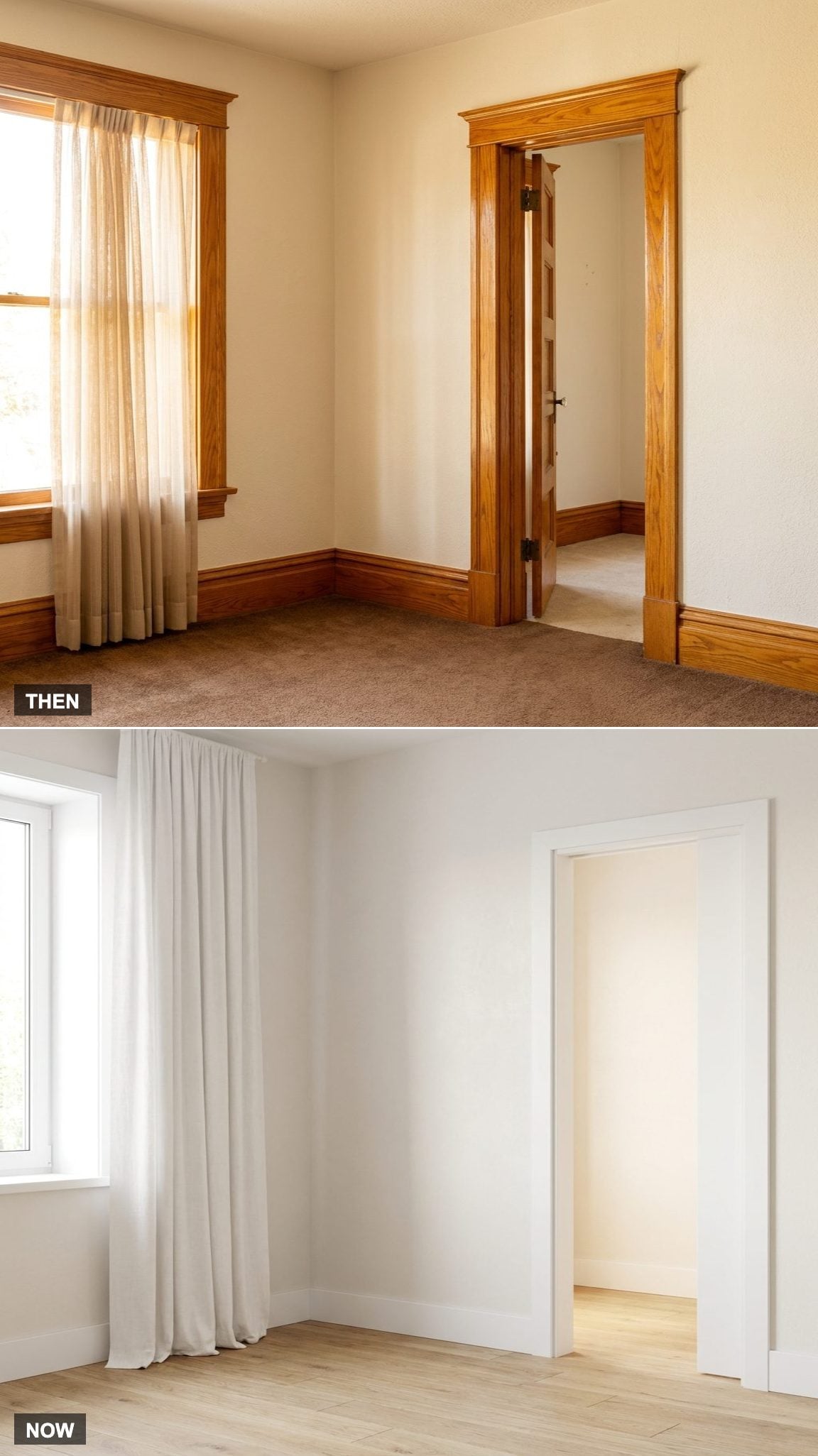
Honey oak trim ran the whole show in 1980. Wide, glossy, varnished until you could see the ceiling light bouncing off it, wrapping every window and door with visible grain and a stepped edge. It read as quality then. It reads as a time stamp now.
Painting it out is one of the least expensive ways to modernize a room. Crisp white on a slim flat profile lets the wall recede and the window take over. I’ve watched this single change transform a room, and it always looks like someone opened a window that wasn’t there before.
11. Honey Oak Doors vs. Modern Paneled Doors
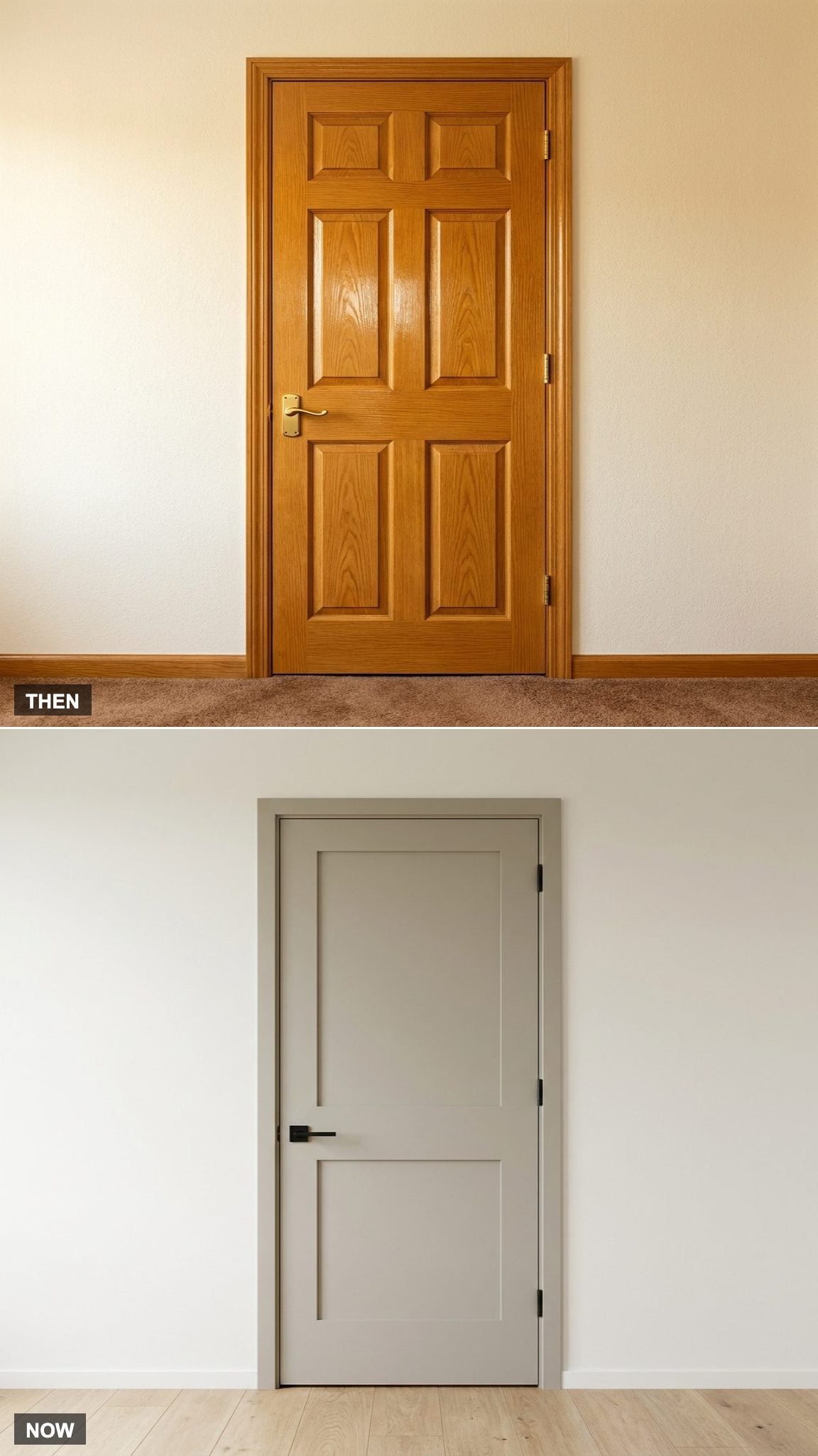
The honey oak six-panel door came with a matching honey oak everything else and a brass lever polished to a mirror. Open one 1980 bedroom door and you could pretty much guess the year without asking.
Modern doors went flat and dark. A soft matte-black finish or a warm greige Shaker panel, paired with a matte black door handle, reads as deliberate instead of default.
10. Busy Patterned Decor vs. Calm Neutral Palettes
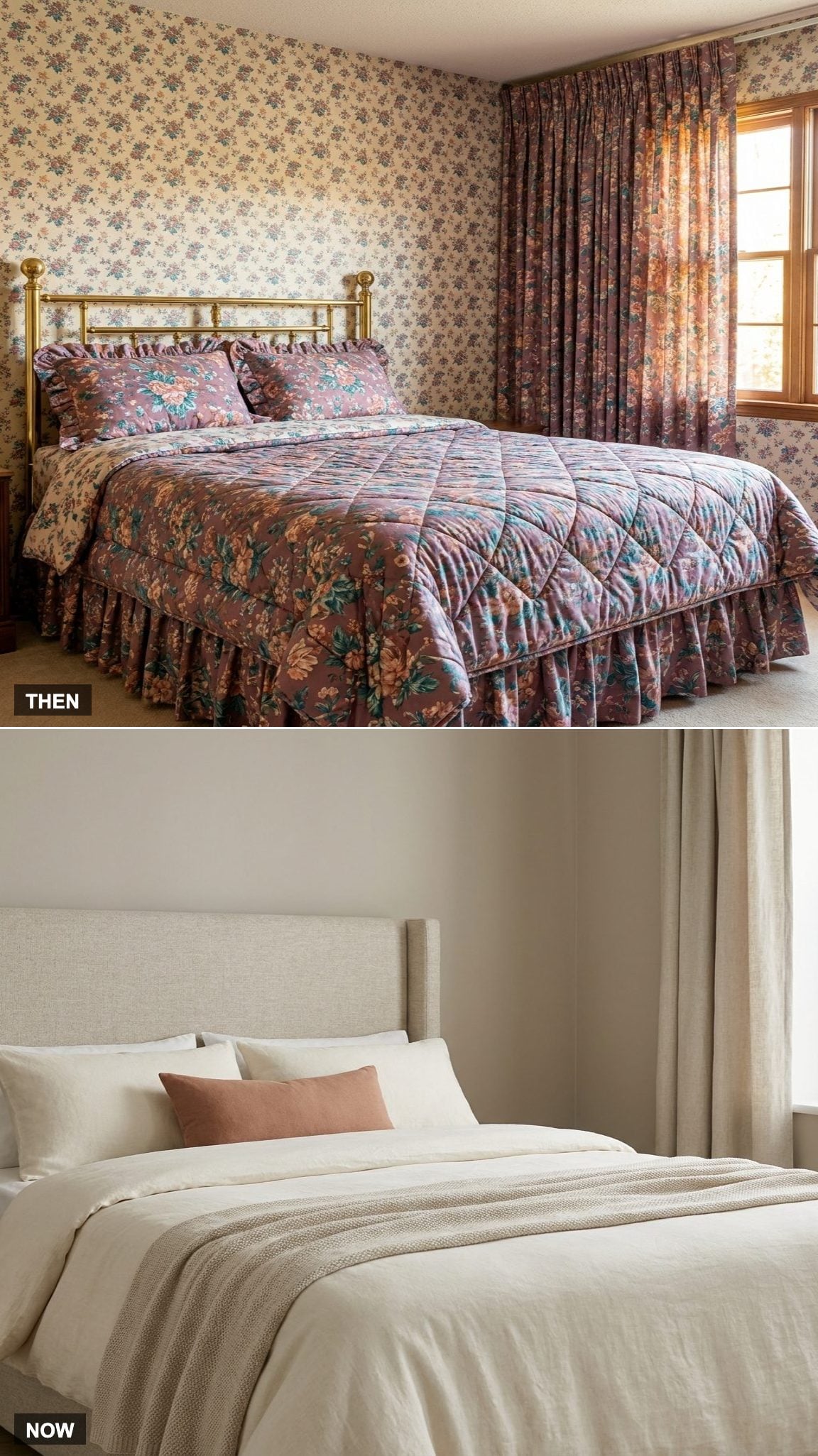
In 1980, pattern didn’t stop. Floral bedding met rose-covered wallpaper and patterned curtains, none of them matching but all of them coordinating, and somehow the whole room hummed at one frequency. Restful was not the goal. Complete was.
The neutral palette calmed everything down. Cream linen, an oatmeal throw, a single muted terracotta pillow doing the accent work.
9. Decorative Faux Plants vs. Real Houseplants
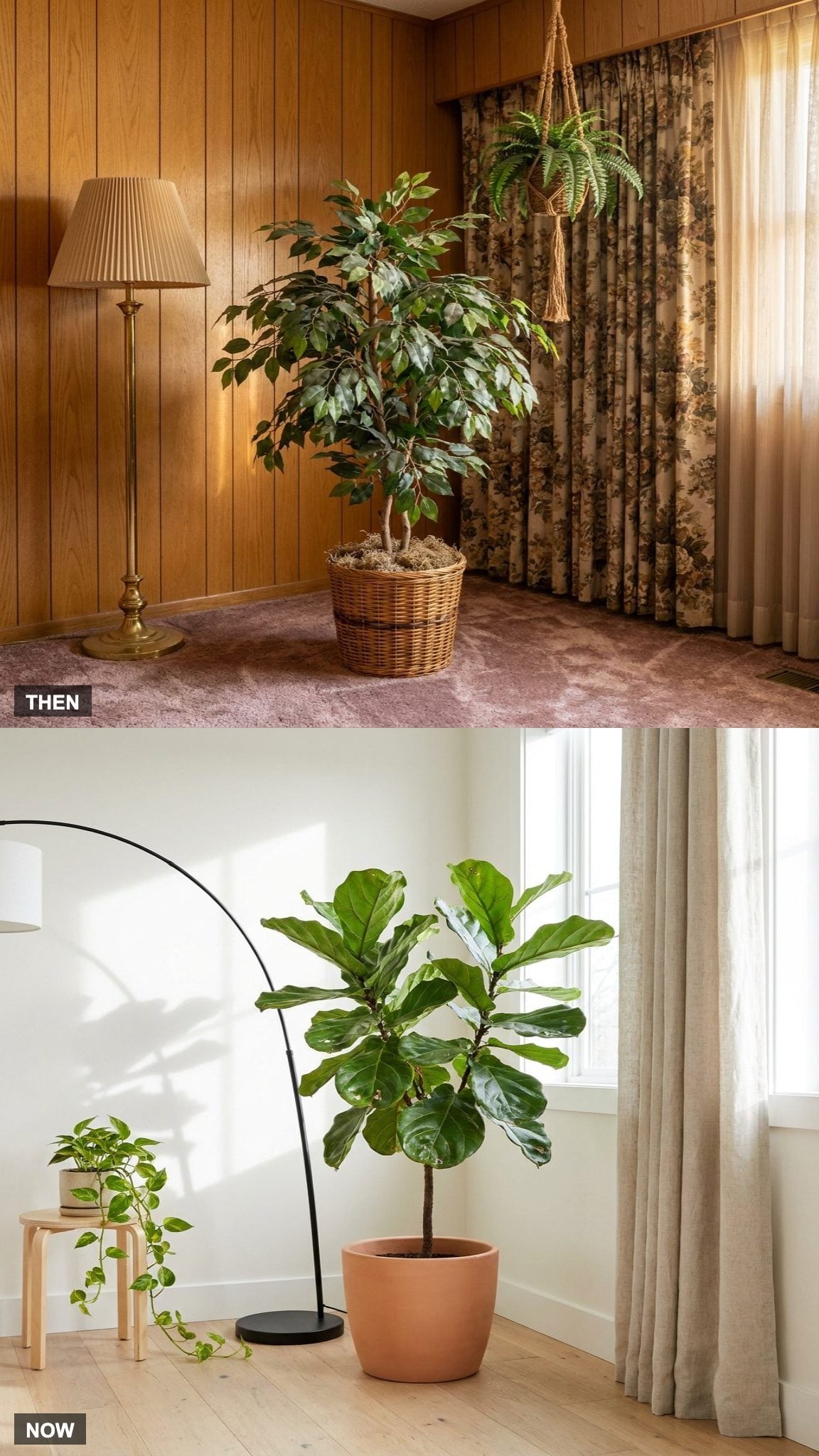
The 1980 corner plant never needed water because it was made of silk. A faux ficus in a rattan planter, glossy leaves catching a little dust, standing in for the real thing without any of the risk. Maintenance meant a feather duster.
Real plants won the corner back. A fiddle-leaf fig in a terracotta plant pot, a trailing pothos that actually grows. I say this as someone who has killed a fair number of both, so the faux ficus had its logic. But a living plant changes the character of a room in a way plastic rarely does.
8. Small Area Rugs vs. Oversized Layered Rugs
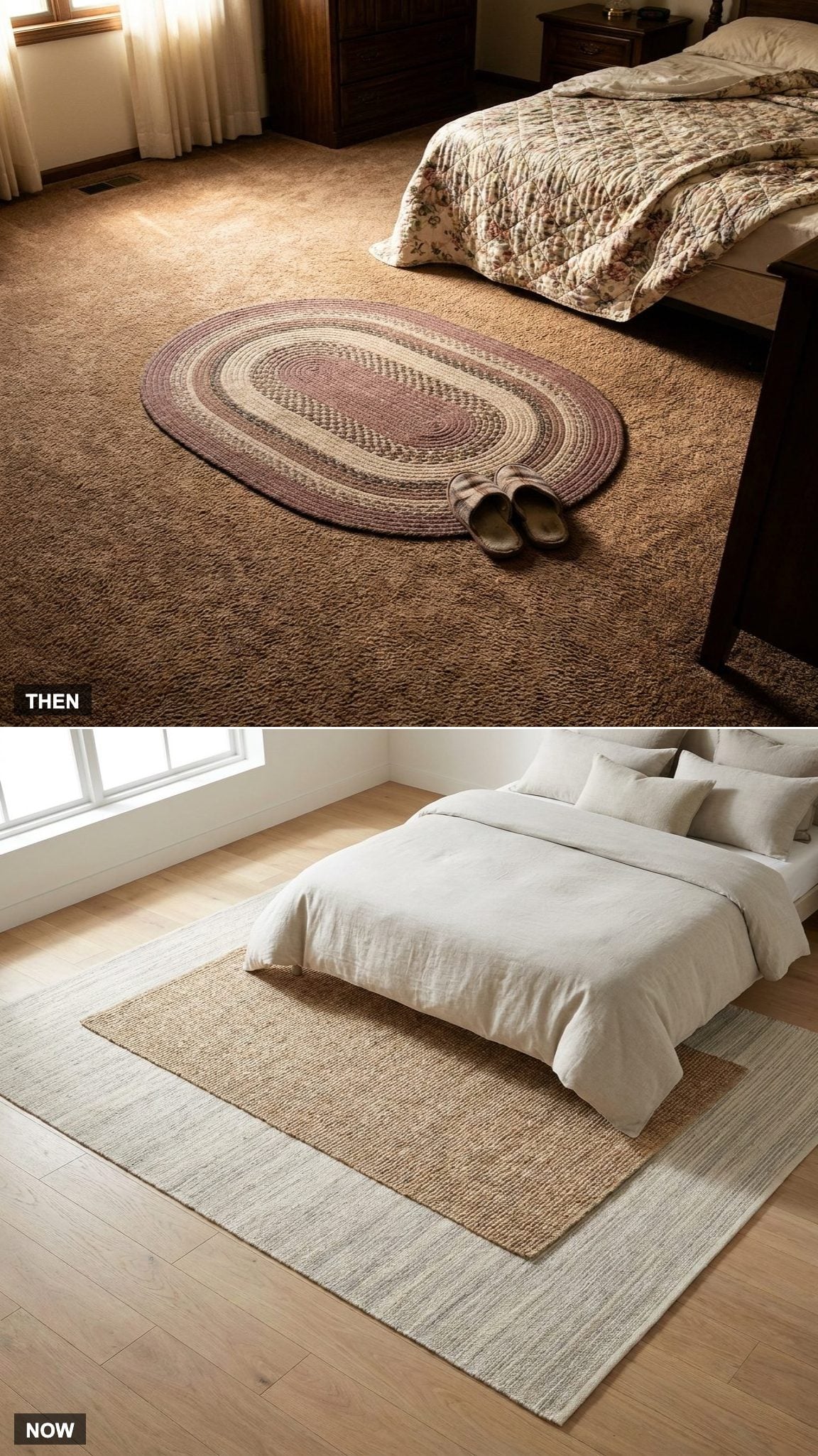
The 1980 bedside rug was a life raft. A little oval braided thing, three feet across, floating in a sea of wall-to-wall carpet with no relationship to any furniture around it. You landed one bare foot on it in the morning and that was its entire job.
Now the rug goes big and layered. A large neutral flatweave rug runs beneath the bed, with a smaller jute layering rug adding texture above it. The larger footprint connects the bed, nightstands, and surrounding floor instead of leaving each piece visually stranded.
7. Separate Bedroom Seating vs. Reading Nooks
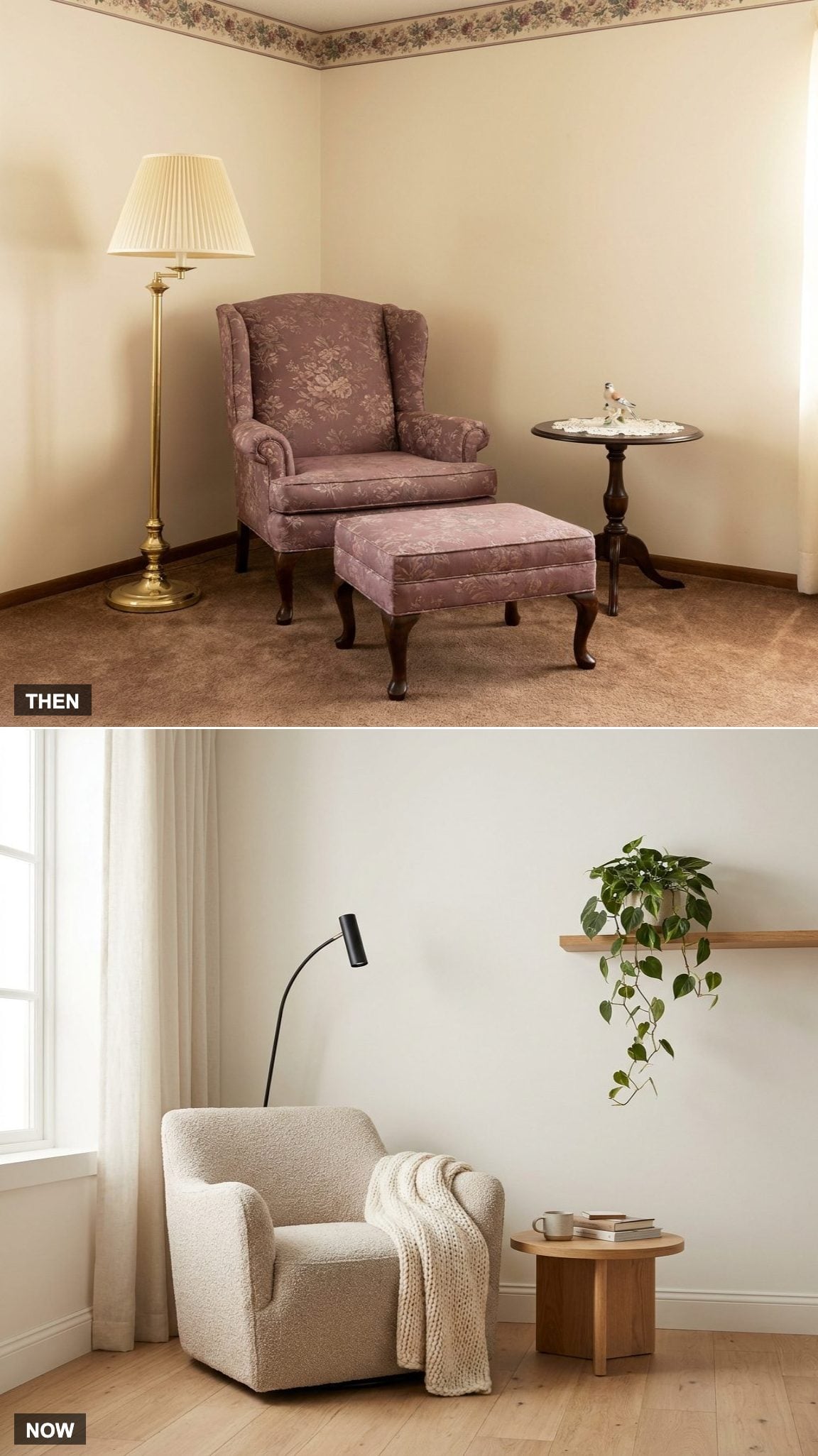
The 1980 bedroom chair was for looking at, not sitting in. A stiff mauve floral wingback with a matching ottoman, parked in the corner beside a brass lamp, holding a doily and a figurine like a museum display. Plenty of rooms seemed to have one, and plenty of those chairs spent more time holding clothes than people.
The reading nook actually invites you over. An oatmeal bouclé armchair angled at the window, a chunky knit throw over the arm, a book already open. The old chair performed comfort. This one delivers it. Curl up, tuck your feet, stay a while.
6. Standard Paint Colors vs. Earthy Designer Tones
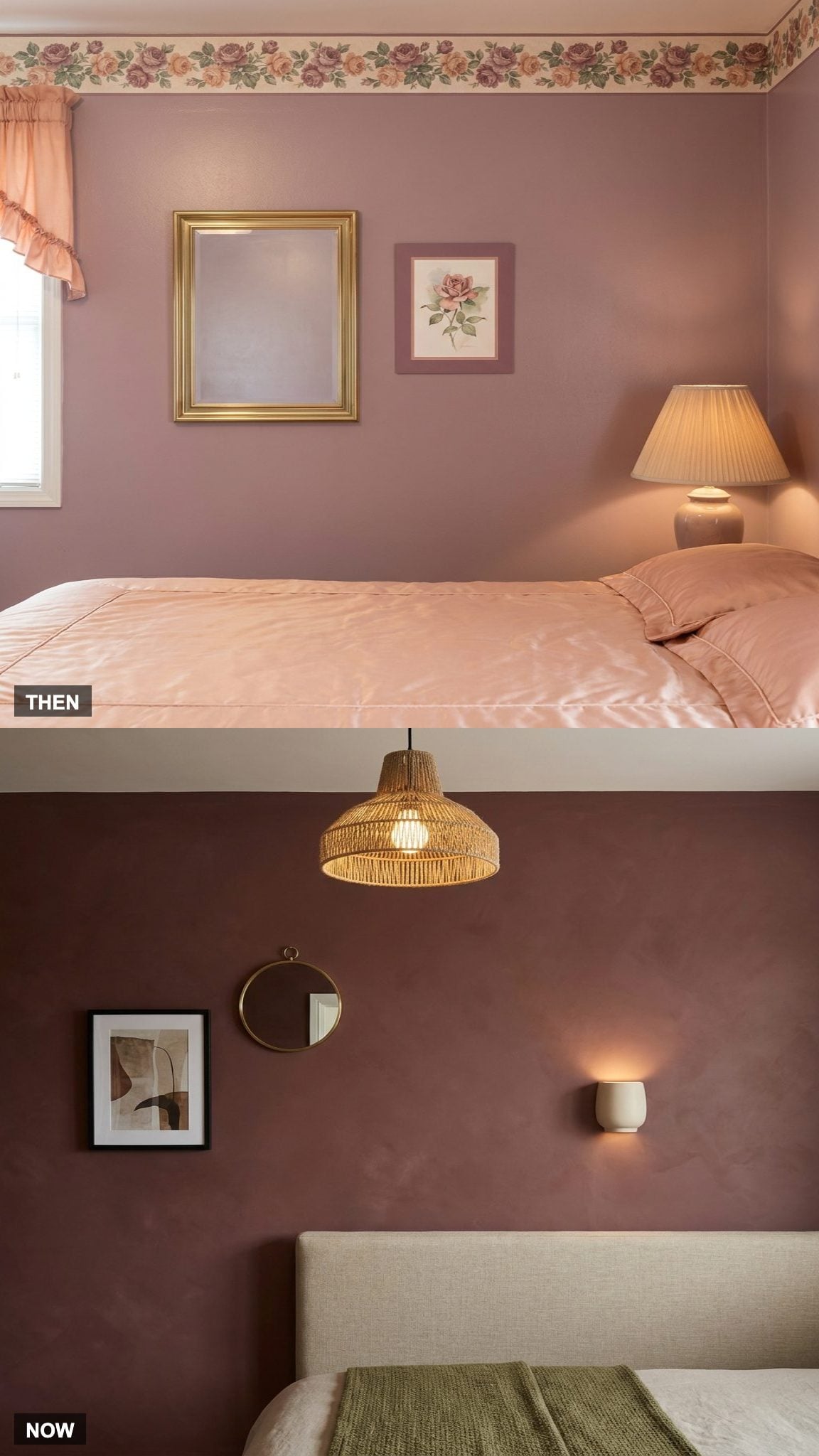
In 1980, mauve seemed to be everywhere. Chalky, dusty, slightly apologetic pink that showed up on walls, valances, and those wallpaper borders nobody asked for. Add a peach comforter and you had the whole decade in a single glance.
Now the walls go deep and grounded—clay, olive, oxblood, burgundy softened with a limewash finish. And the finish matters as much as the color. Matte, a little uneven, so the light lands soft instead of skidding off some plasticky sheen.
5. Cluttered Surfaces vs. Minimal Styling
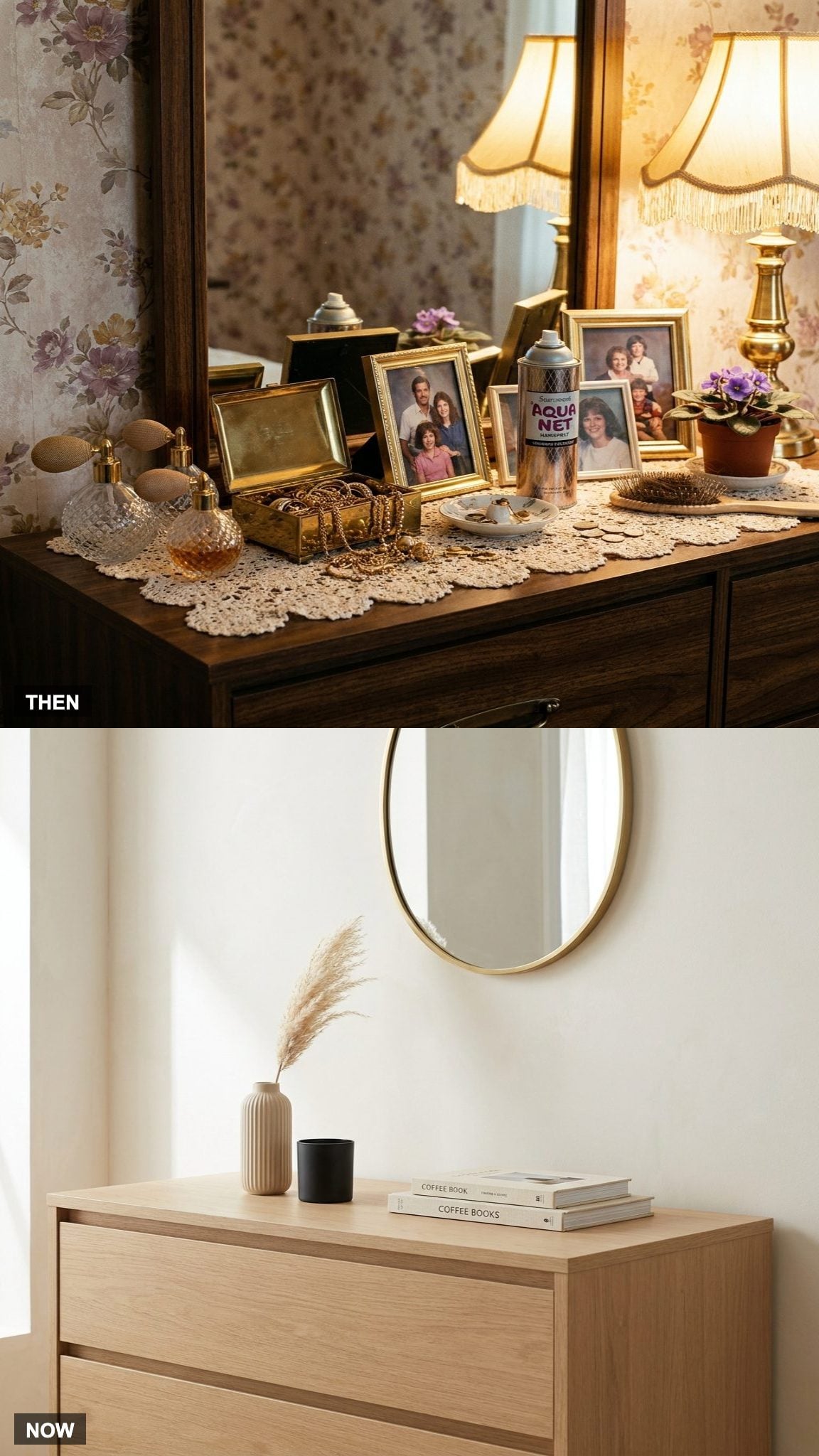
Every flat surface in 1980 was a shrine to something—the dresser held perfume atomizers, a jewelry box that never closed, framed photos three deep, a doily, and a can of hairspray standing guard over all of it.
Today the same surface gets three objects and permission to breathe: a vase, a candle, a stack of books you’ll honestly never read. The empty space is the point.
4. Functional Bedrooms vs. Hotel-Inspired Retreats
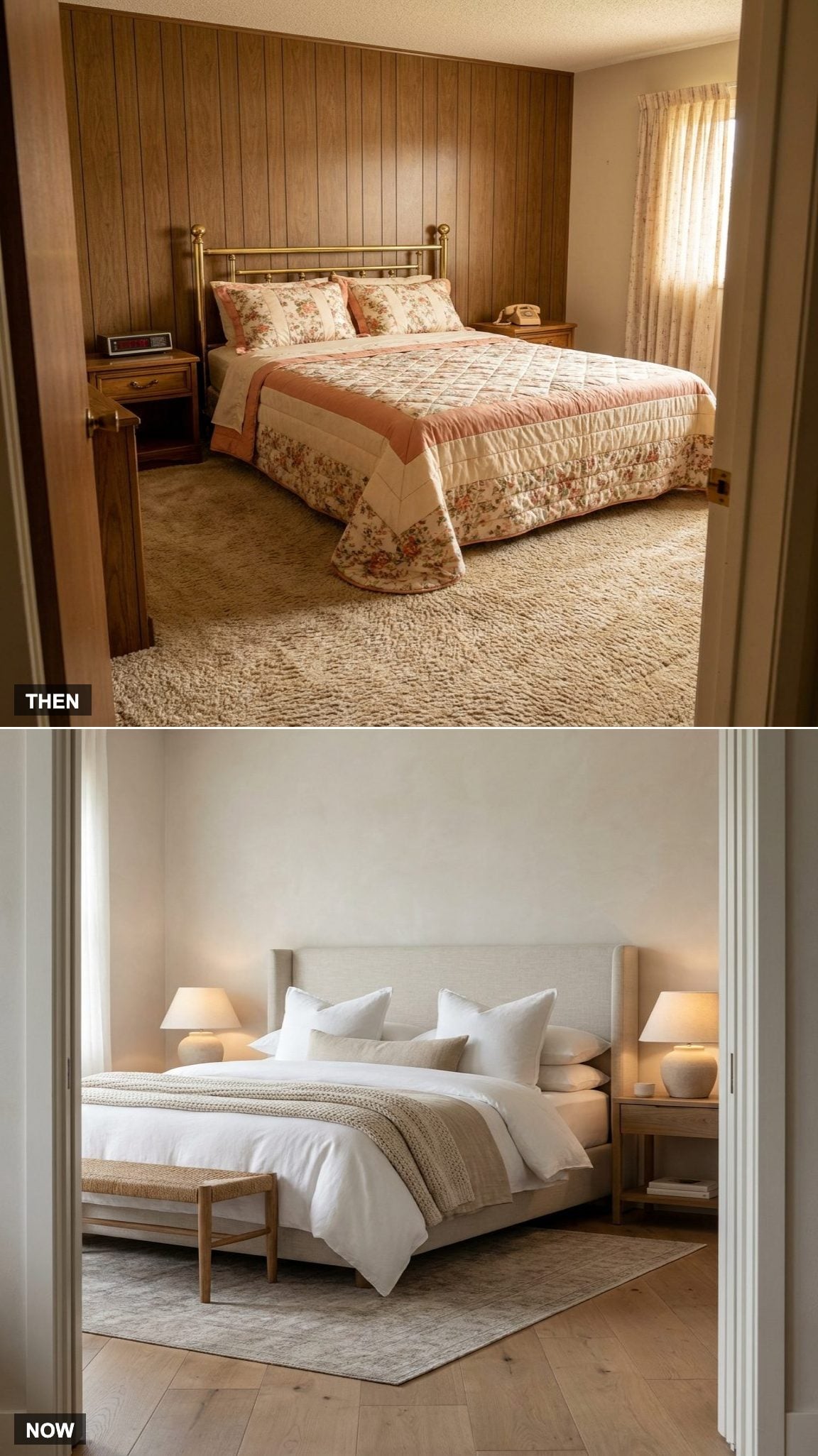
A 1980 master bedroom was expected to be useful, not transporting. It held the bed, the dresser, the laundry basket, and whatever else the rest of the house had nowhere to put.
The modern version wants to feel like a boutique hotel you never check out of—layered white bedding, a bench at the foot, two lamps that match on purpose. The same move appears again and again: build the bed as though it is the reason you came home.
3. Traditional Symmetry vs. Personalized Layouts
🔥 Would you like to save this?
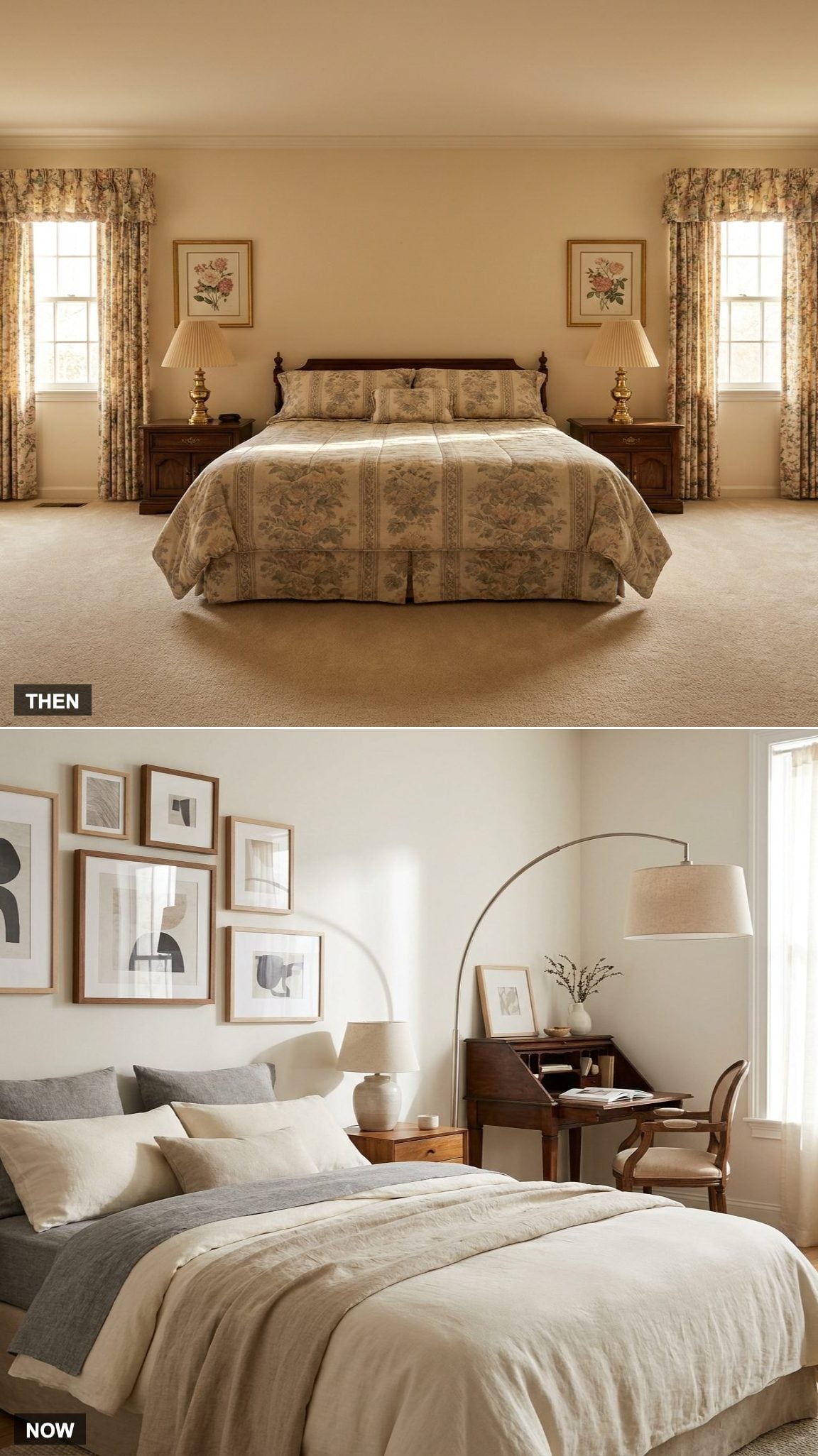
Match everything. That was the rule in 1980—two identical nightstands, two brass lamps, two prints hung at the exact same height, drapes that matched the bedspread that matched the shams. Symmetry read as tidy, and tidy read as done.
Now each side of the bed can answer a different routine: a small writing desk on one side, extra storage or a reading lamp on the other. The layout follows how the people in the room actually live, not a diagram of perfect balance.
Hanging one gallery wall off-center takes more nerve than bookending a bed with twins. The payoff is a room that looks like a person chose it, not a showroom that shipped it.
2. Closed-Off Spaces vs. Primary Bedroom Suites
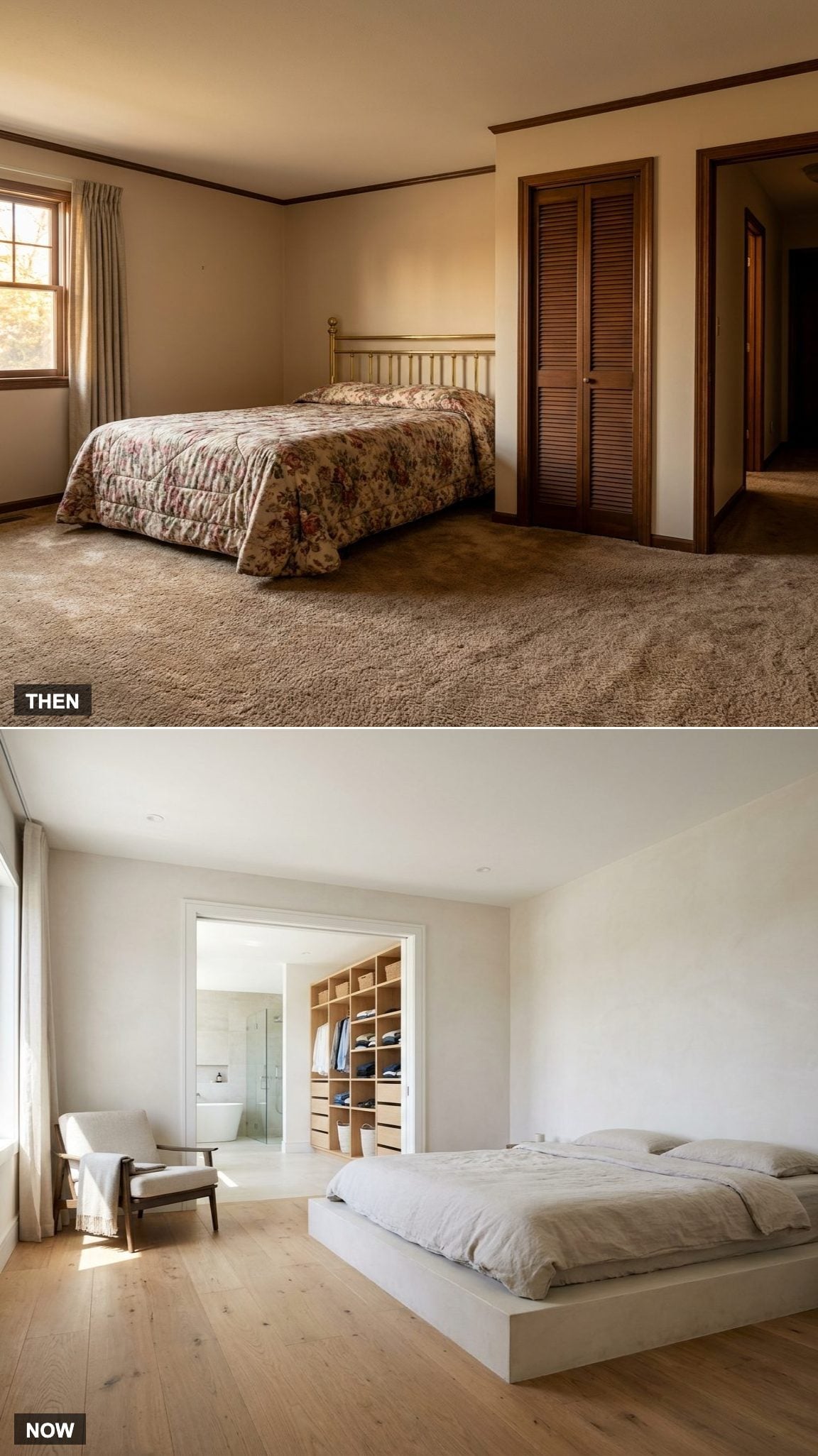
In 1980 the master bedroom was often one closed box with a louvered bifold closet and a door to the hallway. If you were lucky, you got a reach-in closet to fight with every morning. In many ordinary homes, the bathroom still sat down the hall and was shared with the rest of the household.
The primary suite blew the walls out. It is a bedroom that flows into a walk-in closet and an attached bathroom without a single door slamming shut between them. Three separate zones now read as one connected stretch.
1. Bedrooms for Sleeping vs. Multi-Function Wellness Spaces
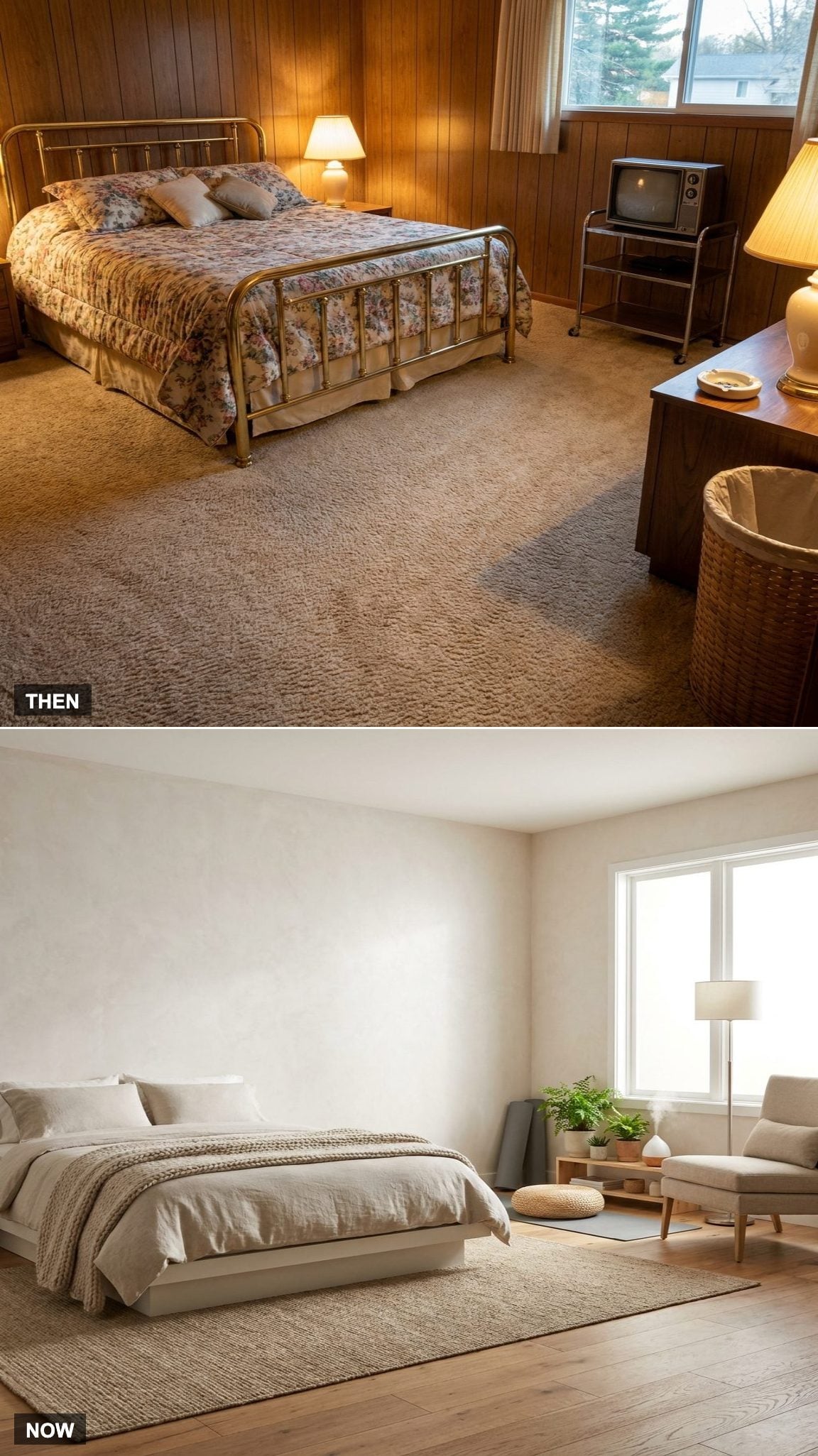
The 1980 bedroom had two jobs: sleep, and watch the little TV on the rolling cart in the corner. Maybe an ashtray on the side table. The room shut down when you did.
That same corner now holds a yoga mat, a reading chair, a shelf of plants, and a diffuser humming away in the background. The bedroom picked up a second career as a wellness room, and honestly, the new role suits the room better than the television ever did. Some people push it further with a meditation nook and a morning-light stretch corner.
The room used to switch off when you did. Now it wants a piece of your morning too.