Robert Adam, a name synonymous with Neo-Classical elegance, left an indelible mark on architectural history. Born in Scotland in 1728, Adam revolutionized the art of designing grand residences, crafting a style that fused classical precision with innovative flair. With roots in the family business of architecture, he quickly surpassed expectations, drawing on a European Grand Tour to infuse Roman and Greek antiquity into British design.
From sprawling country estates to urban townhouses, Adam approached each project with an obsessive attention to detail, designing not just the structures but also their interiors, furniture, and even fittings. The “Adam Style,” as it became known, celebrated movement in architecture — an interplay of forms and spaces that lent his buildings a dynamic grace. His work extended from Scotland to England, leaving a legacy of structures that ranged from the palatial Kedleston Hall to the refined interiors of Kenwood House.
In order to come up with the very specific design ideas, we create most designs with the assistance of state-of-the-art AI interior design software. Also, assume links that take you off the site are affiliate links such as links to Amazon. this means we may earn a commission if you buy something.
While some designs were extravagant country retreats, others like Edinburgh’s Charlotte Square showcased his pioneering spirit in urban planning. Adam’s work was a masterful blend of form, function, and artistic ingenuity.
15. Bowood House – Wiltshire
🔥 Would you like to save this?
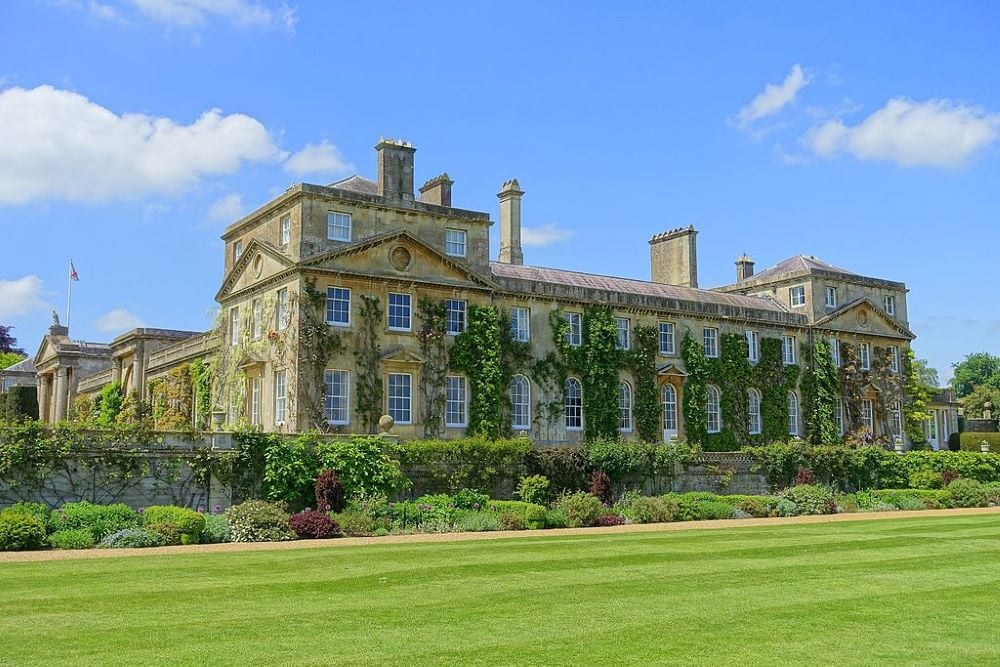
Bowood House in Wiltshire is an architectural playground where Robert Adam flexed his design muscles with giddy abandon. Originally an unassuming 18th-century structure, it gained fame when Adam entered the picture in 1760. Commissioned by the Earl of Shelburne, the future Marquess of Lansdowne, Adam’s role was to transform Bowood into a showpiece of Neo-Classical ambition and he did not disappoint.
Adam’s genius is most evident in the library, a space where his signature movement concept — fluidity of form and proportion — finds full expression. The vaulted ceilings, delicate plasterwork, and Corinthian columns offer a lesson in how to balance grandeur with intimacy. The adjacent sculpture gallery, another Adam masterpiece, is a procession of symmetry and light, designed to showcase the Earl’s impressive art collection.
But Adam’s work at Bowood didn’t stop at the interiors. His input extended to the layout of the grounds, where he collaborated with Capability Brown to ensure that the house blended seamlessly with its surroundings.
14. Fitzroy Square – London

Fitzroy Square is where Georgian elegance collides with Fitzrovia’s bohemian grit. Designed in part by Robert Adam in the 1790s, this square was meant to be aristocratic eye candy, with Portland stone façades that practically beg for powdered wigs and courtly bows. Adam himself crafted the south and east sides with his signature Neo-Classical restraint, while the Napoleonic Wars stalled the rest, leaving an incomplete urban gem that had to wait decades for its north and west sides to catch up.
By the 19th century, the square began its transformation into a hub of creativity. George Bernard Shaw found inspiration at No. 29, while Duncan Grant and the Bloomsbury set stirred up avant-garde chaos at No. 19. Over at No. 37, Ford Madox Brown painted, while his grandson, Ford Madox Ford, wrote modernist literature. Virginia Woolf briefly called it home, adding her literary weight to the square’s legacy.
13. Harewood House – West Yorkshire

Harewood House, an 18th-century architectural gem in West Yorkshire, is as much a testament to Robert Adam’s Neo-Classical genius as it is to the immense wealth of the Lascelles family, who made their fortune in the West Indies. Built between 1759 and 1771, the mansion is a collaborative masterpiece with John Carr laying the structural foundation and Adam orchestrating the interiors.
Adam’s signature touch transformed Harewood into a living canvas of classical design. His interiors are a study in balance and proportion, with intricate plasterwork and soaring ceilings that evoke the grandeur of antiquity. The centerpiece, a library brimming with ornate detailing, reflects Adam’s obsession with blending functionality and beauty. His alterations to Carr’s exterior plans, including courtyards that softened the monumental scale, display his gift for harmony.
The house doesn’t stop at architecture. The sprawling grounds, shaped by Lancelot “Capability” Brown, include landscapes that frame the house in naturalistic perfection. Harewood’s artistic legacy extends to its world-class art collection, featuring works by masters like Joshua Reynolds and J.M.W. Turner.
12. Kenwood House – London

Kenwood House, sitting on Hampstead Heath’s northern boundary, owes much of its character to Robert Adam’s transformative work in the 18th century. Originally a 17th-century structure, the house was commissioned for remodeling by William Murray, 1st Earl of Mansfield, who handed Adam the creative reins. Adam brought his signature Neo-Classical style to the project, crafting a façade with an Ionic portico and refining the building’s symmetry to align with his ideals of balance and proportion.
Inside, Adam’s genius is most evident in the library — a space that embodies his approach to classical elegance without unnecessary ornamentation. The intricate plasterwork and harmonious design create a sense of refined order, fitting for a house that hosted one of Britain’s most prominent legal minds.
Adam’s contribution extended beyond aesthetics; his alterations gave Kenwood a cohesive identity, turning a previously modest house into a model of Neo-Classical sophistication. His work also laid the foundation for the building’s enduring legacy as both a residence and later a public landmark.
11. Syon House – London

Syon House, a monumental presence in west London, represents one of Robert Adam’s most ambitious forays into Neo-Classical design. Commissioned in the 1760s by the 1st Duke and Duchess of Northumberland, Adam transformed a Tudor structure into a masterpiece that defined the “Adam Style.” The result was a stunning marriage of symmetry, classical motifs, and eclectic decorative flourishes.
The entrance hall immediately commands attention with its black and white marble flooring and soaring Corinthian columns. It sets the tone for the series of interconnected state rooms, each more elaborate than the last. The State Dining Room is a study in contrasts, where gilded ornamentation meets cool, austere plasterwork. The Long Gallery, stretching an impressive 136 feet, showcases Adam’s knack for combining formality with livable elegance. This space is punctuated by niches and recesses that blend utility with aesthetic balance.
Adam’s original plans for a domed rotunda were abandoned due to budget constraints, but his remaining designs ensure the house loses none of its intended drama. Beyond its architectural splendor, Syon House carries layers of history, from Tudor royalty to Roman archaeological discoveries on its grounds.
10. Nostell Priory – West Yorkshire

Nostell Priory, an 18th-century Palladian estate in West Yorkshire, already had the bones of grandeur when Robert Adam stepped in. Designed initially by James Paine in 1733, it was Adam’s mid-century touch that gave it its Neo-Classical polish. Sir Rowland Winn, the fourth baronet, didn’t just want a house; he wanted a statement piece, and Adam was only too happy to oblige.
Adam’s work here is equal parts bold and refined. He transformed the interiors into a symphony of symmetry and ornament, adding richly detailed ceilings and elegant plasterwork that seem to float above the Chippendale furniture custom-designed for the space. The double staircase he slapped onto the front façade is an architectural mic drop, merging drama with impeccable proportion.
Then there’s the stable block, because even the horses deserved a touch of grandeur. Adam’s design echoes the house’s classical themes, making even the utilitarian seem poetic. The whole estate suggests the work of a man obsessed with details — whether it’s the curve of a stair or the placement of a decorative urn.
9. Luton Hoo – Bedfordshire

Luton Hoo is where Robert Adam went big, even by his own grand standards. Commissioned by the 3rd Earl of Bute in the 1760s, Adam took a middling country estate and turned it into a Neo-Classical heavyweight. The house became one of his largest projects, its scale matched only by the ambition of its design.
Adam’s plans for Luton Hoo leaned into the dramatic. A colossal central portico anchored the exterior, giving the façade a sense of grandeur that was both imposing and refined. Inside, Adam worked his signature magic with plaster ceilings, elegant cornices, and perfectly proportioned rooms. The dining room and central hall embodied his vision of Neo-Classical design with every detail meticulously tied to the classical ideals he studied in Rome.
Though a fire in 1771 halted some of Adam’s more elaborate plans, what was completed still reflects his knack for balancing beauty with function. Even Capability Brown’s redesigned landscape, with its massive lakes and sweeping views, was carefully choreographed to frame Adam’s architecture.
8. Osterley Park – London

Osterley Park, remade by Robert Adam between 1761 and 1765, is a Georgian masterpiece that doubles as a Neo-Classical design clinic. Originally a Tudor manor built for Sir Thomas Gresham, the architect took the site’s Tudor bones and dressed them in marble elegance, transforming the house into one of Britain’s most striking estates.
Adam approached Osterley with his usual flair for drama and harmony. The grand Ionic portico — framing an open colonnade — sets the stage, but it’s the interiors that steal the show. The entrance hall’s semi-circular alcoves feel almost cinematic, creating an illusion of depth and grandeur. Adam’s plasterwork is restrained but never dull, with delicate detailing that feels sculptural rather than ornamental. His pièce de résistance is the Etruscan dressing room, a space decorated in patterns inspired by Sir William Hamilton’s published collection of “Etruscan” vases (that were actually Greek).
Every room at Osterley reflects Adam’s obsessive attention to coherence. The project illustrates Adam’s belief that architecture should engage the eye, the mind, and the imagination.
7. Apsley House – London

Apsley House, famously nicknamed “Number One, London,” stands at the junction of British history and urban sprawl, its grand façade an ode to Robert Adam’s Neo-Classical genius. Built between 1771 and 1778 for Lord Apsley, the house marked Adam’s ascent in London’s architectural hierarchy. He delivered a structure that was both stately and urbane, a fitting gateway for travelers entering the capital. Its red-brick exterior, later clad in Bath stone, originally embodied Adam’s clean lines and Palladian poise.
Inside, Adam’s hallmark elegance blooms, particularly in the Piccadilly Drawing Room with its apsidal end and signature Adam fireplace. His interiors favored symmetry, grace, and a certain restrained grandeur, setting a template for English aristocratic townhouses.
The later additions by Benjamin Wyatt, including the show-stopping Waterloo Gallery, nod respectfully to Adam’s foundations while injecting a dose of theatricality. Yet, the heart of Apsley remains Adam’s — an understated brilliance anchoring a house that became a monument to Wellington’s legacy and a touchstone of London’s architectural history.
6. Lansdowne House – London

Lansdowne House, designed in the 1760s by Robert Adam for the ambitious Earl of Shelburne — soon to be the 1st Marquess of Lansdowne — epitomized Adam’s Neo-Classical flair.
The original design boasted three drawing rooms, a dining room, and a garden-facing façade. Adam’s interiors wove classical Roman motifs with contemporary tastes. The dining room, now preserved in the Metropolitan Museum of Art, and the drawing room, reassembled in the Philadelphia Museum of Art, remain shining examples of his talent for creating spaces that were as intellectually rigorous as they were visually dazzling.
By the 1930s, municipal zeal for road building saw the demolition of its garden-facing wing. The Lansdowne Amazon and other treasures were dispersed, while Bowood House inherited some Adam masterpieces. Yet, the remaining rooms found a new life in the Lansdowne Club.
5. Kedleston Hall – Derbyshire

Kedleston Hall, a Neo-Classical marvel in Derbyshire, is the kind of house that makes you wonder if Robert Adam ever took a day off. Commissioned by Sir Nathaniel Curzon in 1759, the project began as a Palladian affair under James Paine and Matthew Brettingham. Then along came Adam, initially to design a few garden temples. Impressed by Adam’s vision, Curzon handed him the reins.
The exterior balances Palladian order with Adam’s signature flair. The north façade, dominated by a six-column Corinthian portico, is textbook grandeur. But it’s the south façade where Adam’s genius truly shines — an arch-inspired centerpiece with a sweeping double staircase and a low dome crowning the structure. A Roman villa reimagined for 18th-century England.
Inside, the Marble Hall, with its alabaster columns and Italian marble floor, channels an ancient Roman atrium. The domed saloon, a circular gallery dripping in classical references, could rival any temple in the Forum. Throughout the house, Adam’s work seamlessly integrates architecture, furniture, and ornamentation, creating spaces as cohesive as they are opulent.
4. Newby Hall – North Yorkshire

Newby Hall is what happens when you mix Roman antiquities, Yorkshire charm, and a lot of architectural swagger. Built in 1697 by Sir Edward Blackett, allegedly with a nod from Sir Christopher Wren, the house was already dazzling when Celia Fiennes called it “the finest house I saw in Yorkshire.” But it wasn’t until the 1760s, under William Weddell, that Newby got its Neo-Classical makeover. Cue Robert Adam, who arrived armed with sketchbooks, visions, and his signature flair.
Adam’s contributions are a masterclass in understated opulence. He transformed interiors into a symphony of classical elegance, designed to house Weddell’s vast collection of Roman treasures. His work included refined plasterwork, intricate moldings, and bespoke furnishings that turned drawing rooms into galleries and corridors into architectural statements. The central hall became a temple of enlightenment, its proportions as carefully considered as a Roman forum.
What sets Adam’s work at Newby apart is his ability to balance the gravitas of antiquity with the coziness of a country retreat. The result? A house where marble busts and frescoes coexist with the scent of Yorkshire tea. It’s a Roman holiday transplanted to the Ure River, forever preserving Adam’s genius and Weddell’s impeccable taste.
3. Marlborough House – Brighton

Marlborough House in Brighton is a tale of Neo-Classical glamour gone rogue. Originally built in the 1760s as a red-brick townhouse for local innkeeper Sam Shergold, it didn’t gain its architectural clout until William Gerard Hamilton — better known as “Single-Speech Hamilton” — bought it in 1786. Hamilton enlisted the legendary Robert Adam to give the house a facelift that transformed it into a masterpiece.
The Prince of Wales (later George IV) frequented Marlborough House during the Pavilion renovations, even staying for a three-week honeymoon stint with Princess Caroline in 1795. Adam’s interiors, with their refined plasterwork and intricate fireplaces, embodied 18th-century elite taste. They were stage sets for Brighton’s high society.
2. Charlotte Square – Edinburgh

🔥 Would you like to save this?
Charlotte Square is where Edinburgh’s New Town flexes its architectural muscles, with Robert Adam leading the charge. This Georgian showstopper, at the west end of George Street, was Adam’s last major project before his death in 1792. He didn’t live to see it finished, but his vision of Neo-Classical elegance remains etched into its sandstone façades.
Originally meant to be called St. George’s Square, it dodged confusion with the Old Town’s George Square by borrowing the name of Queen Charlotte, wife of George III. By the 19th century, it was the go-to address for Edinburgh’s legal and medical elite, and today, it houses Bute House, the official residence of Scotland’s First Minister.
The design features townhouses with understated grandeur, punctuated by the classical drama of West Register House — originally St. George’s Church. Adam’s vision for Charlotte Square set the standard for urban planning in Georgian Britain. The harmonious façades and cohesive design demonstrate his genius for large-scale projects.
1. Culzean Castle – Ayrshire, Scotland
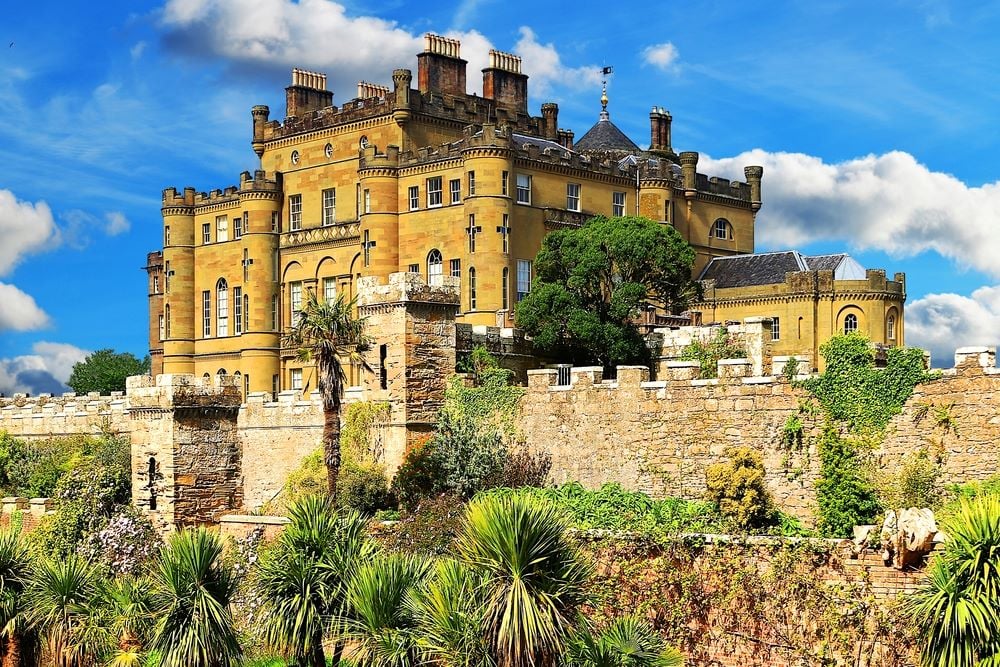
Culzean Castle, set on the cliffs of Scotland’s rugged Ayrshire coast, displays Robert Adam’s architectural flair and the ambitions of the Kennedy clan. Commissioned in 1777 by the 10th Earl of Cassilis, the project transformed a modest L-plan castle into an architectural statement spanning two decades. Adam’s vision was nothing short of cinematic, blending Neo-Classical precision with the romantic drama of the Scottish coastline.
The castle’s centerpiece is the grand drum tower, capped by a circular saloon offering sweeping views of the Firth of Clyde. Inside, Adam’s hallmark details — the soaring oval staircase, intricate plasterwork, and harmonious proportions — turn the interiors into a visual symphony.
Beyond the castle walls, Adam’s influence extended to the grounds, now part of a sprawling country park. The estate includes walled gardens, gasworks, and sea caves. In 1945, Culzean entered a new chapter as a gift to the National Trust for Scotland, complete with a top-floor apartment reserved for Dwight D. Eisenhower.