
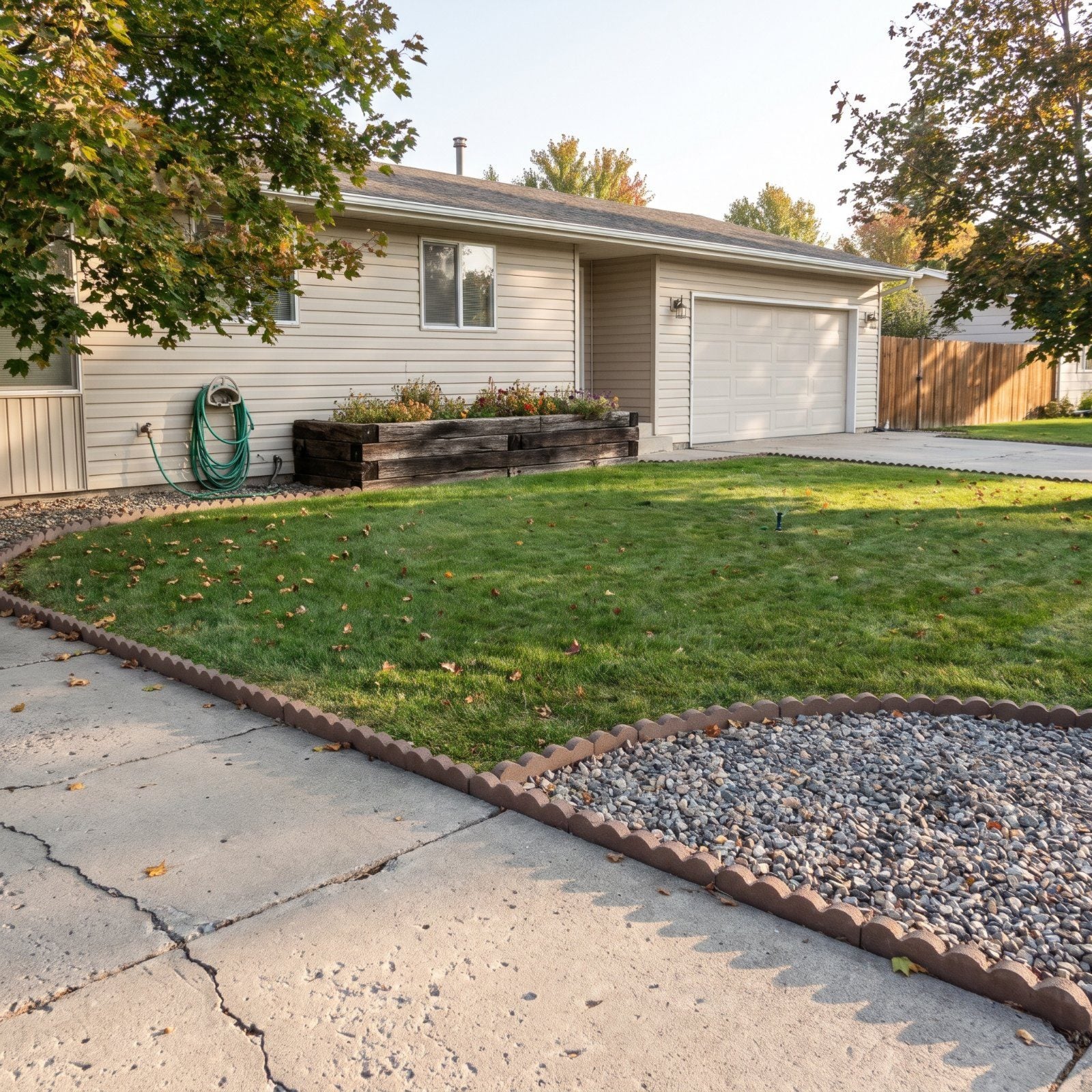
A buyer walks up the driveway, glances at the yard, and makes a decision before they ever reach the door. Not about the kitchen. About the sprinkler clock they’ll inherit, the rubber mulch they’ll have to haul out, the concrete curbing nobody can move. Yards are quietly becoming the thing that kills deals, and here’s why: water bills are up, patience is down, and the features that read as tidy in 2005 now read as a weekend of removal work. The ones below aren’t ugly. They’re liabilities with good lighting. Here’s what’s starting to cost sellers.
43. Water-Hungry Kentucky Bluegrass From Fence to Fence
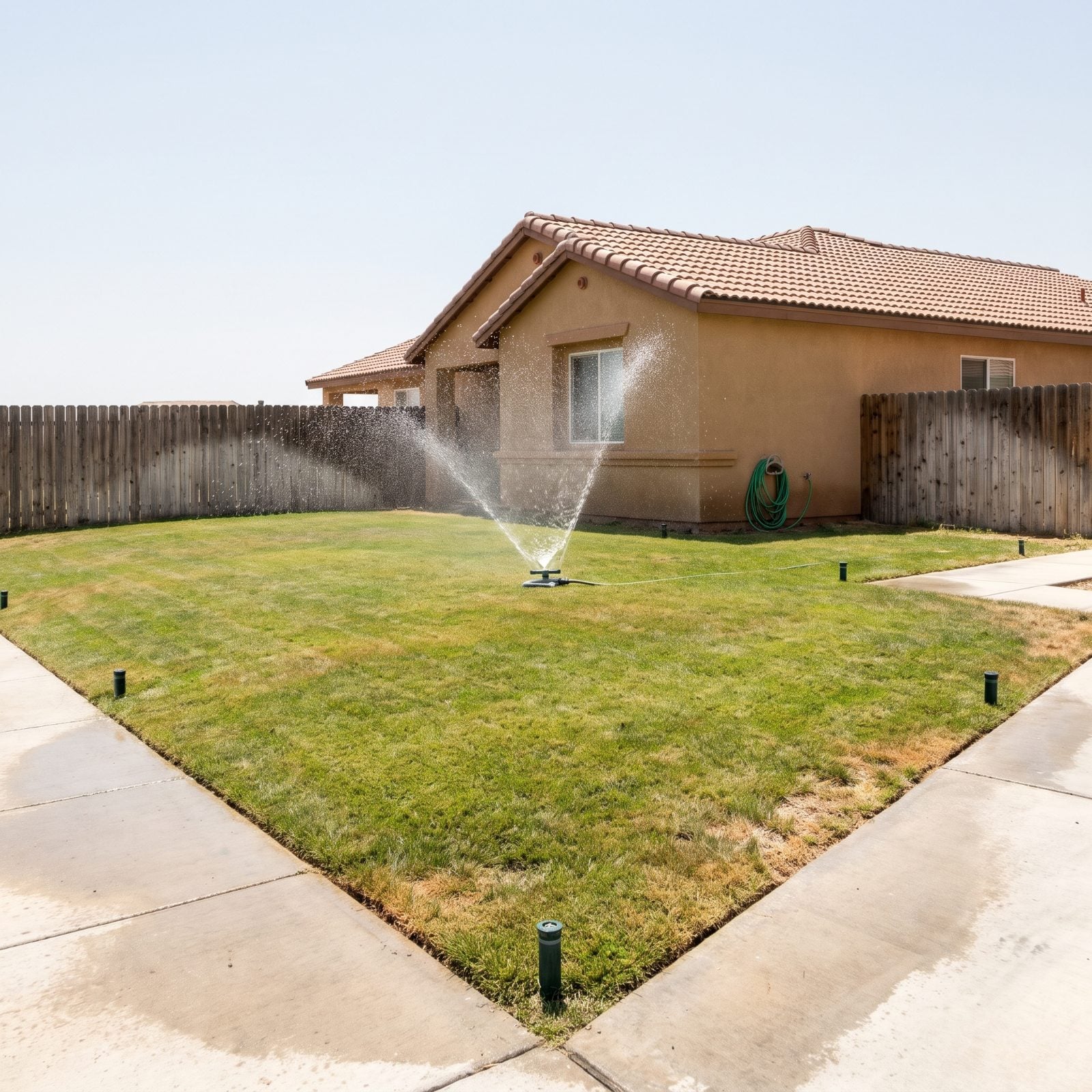
A lawn that drinks like this used to signal that you had your act together. Now it signals a water bill. In a lot of Western and Southwestern markets, an edge-to-edge bluegrass yard reads as a liability before the buyer even asks about the sprinkler schedule.
In order to come up with the very specific design ideas, we create most designs with the assistance of state-of-the-art AI interior design software. Also, assume links that take you off the site are affiliate links such as links to Amazon. this means we may earn a commission if you buy something.
Bluegrass is thirsty, shallow-rooted, and quick to brown the second you ease off the irrigation. Buyers in drought-prone states are doing the math on municipal rates now. A sea of green that only exists because a timer runs every morning isn’t charming to them — it’s a monthly expense wearing a nice coat of paint.
42. Wall-to-Wall Artificial Turf
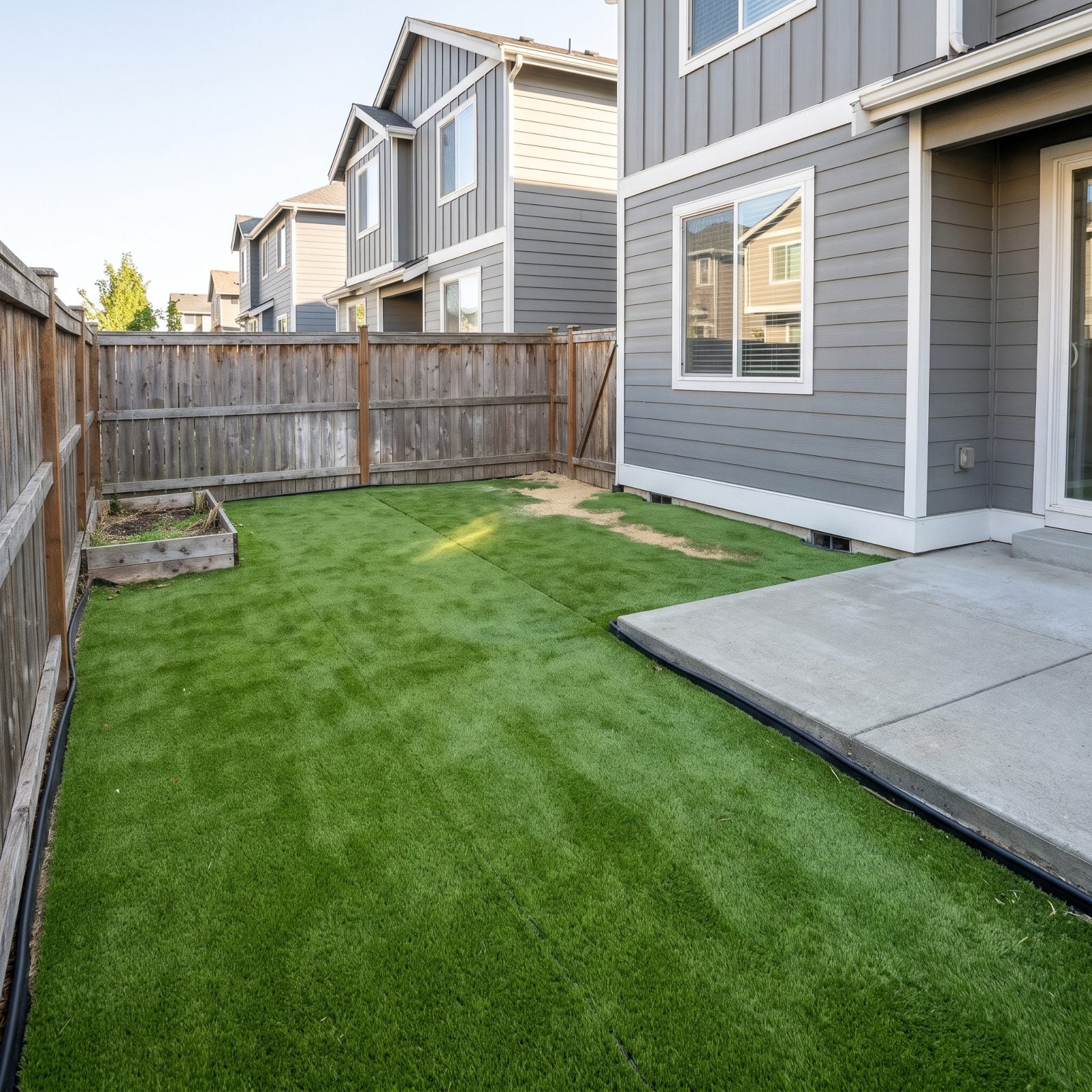
Nobody mentions this until July: artificial turf gets hot. Really hot. Walk across it barefoot on a sunny afternoon and you’ll understand why a growing number of buyers won’t touch it.
It solved a problem — no mowing, no watering, always green. But it reads as a committed choice, and not everyone wants the choice someone else made for them. There’s a permanence to wall-to-wall plastic grass that spooks people. You can’t just plant something in it. You can’t let a kid dig a hole. And when it fades or the seams lift, replacing it is a project, not a weekend.
41. A Front Yard Covered Entirely in Decorative Gravel
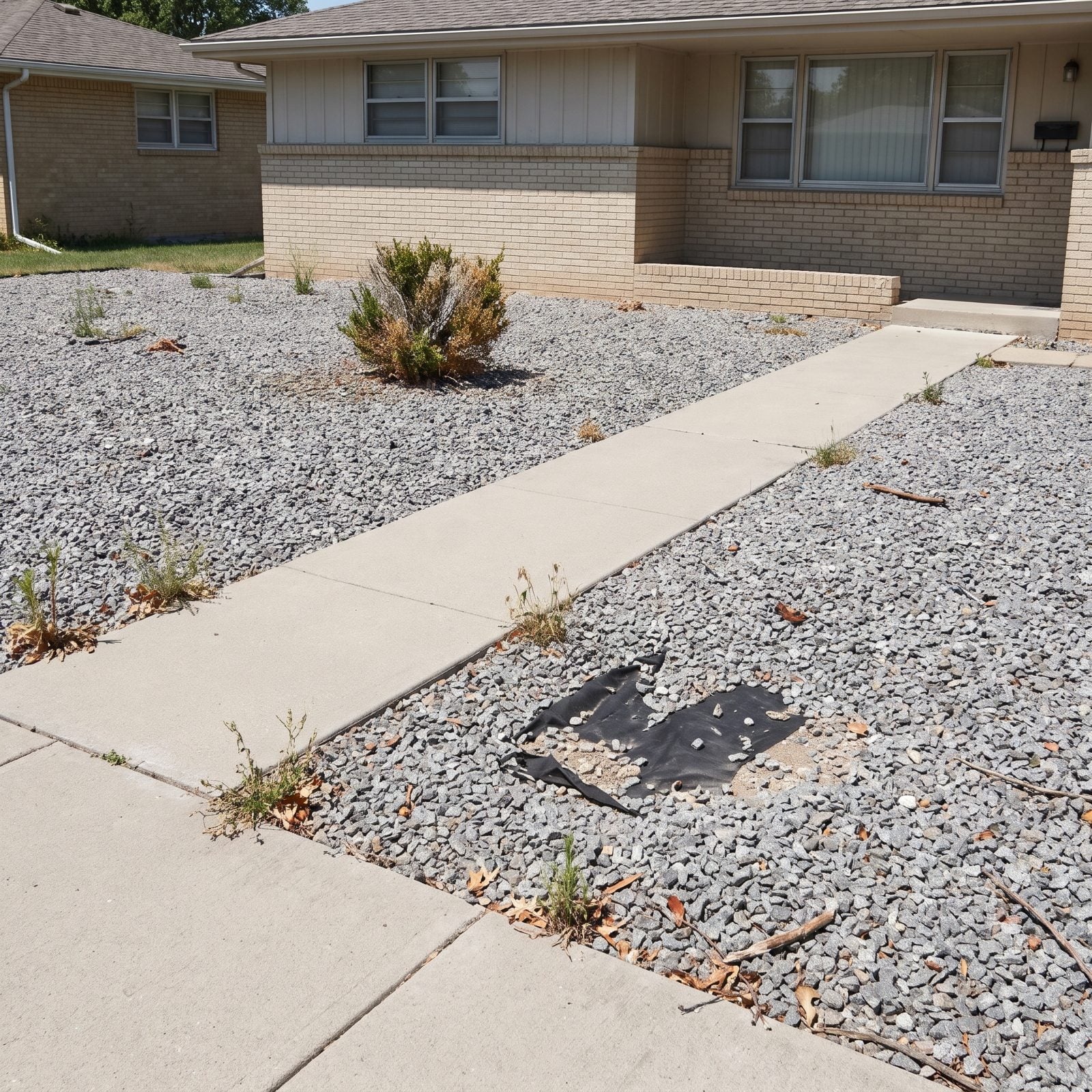
Gravel from curb to door looks maintenance-free in the listing photos. It isn’t. Weeds find the gaps, leaves settle into the stones, and that landscape fabric underneath always eventually shows itself.
Buyers see a front yard with zero softness, zero shade, and a surface that radiates heat back at the house all summer long. It reads as a parking lot that forgot to get paved. And the debris problem is real — try raking leaves out of three inches of rock and you’ll understand the appeal of grass again in about ten minutes.
40. Shredded-Rubber Mulch
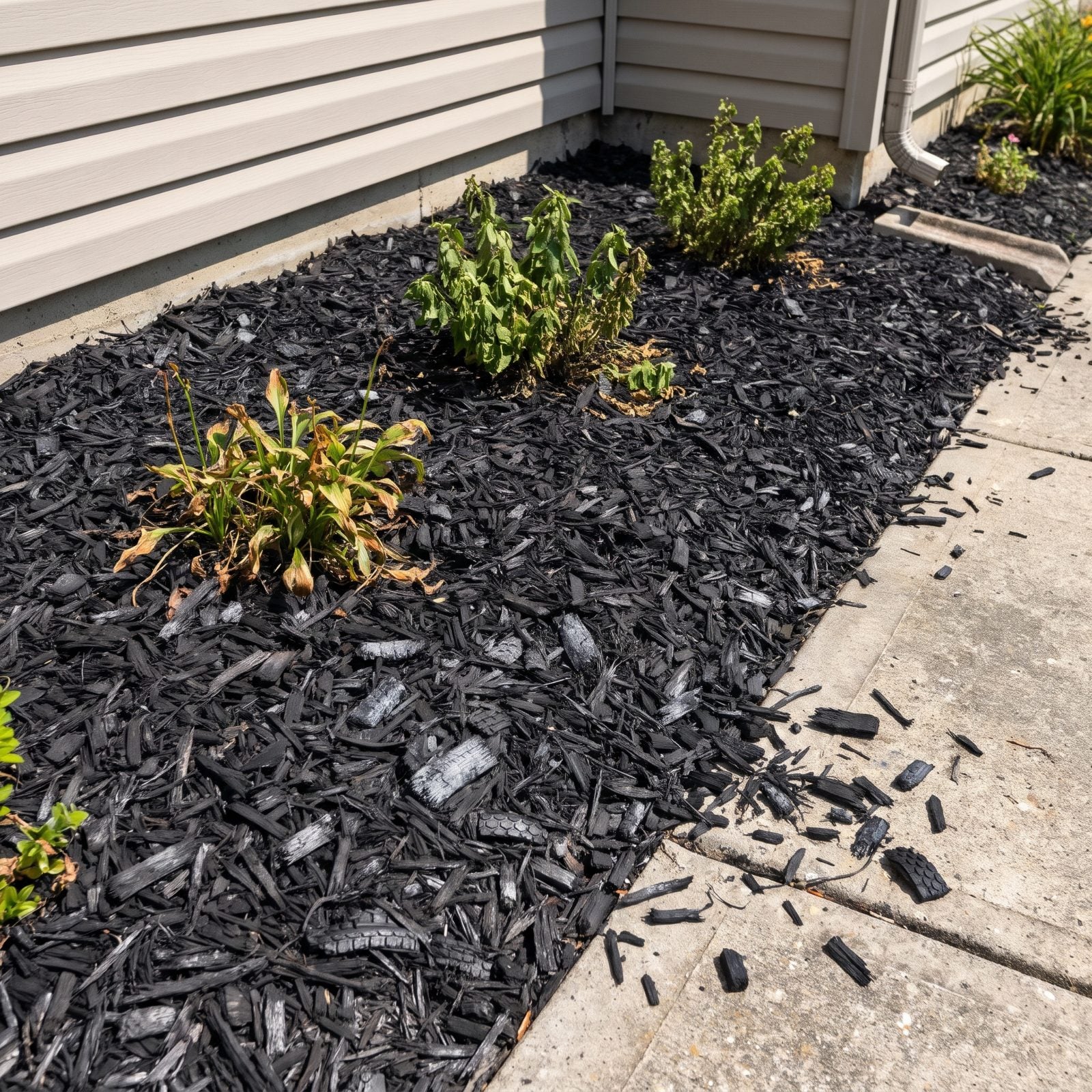
Rubber mulch got sold as the forever mulch. Never decomposes, never needs topping up. All of that is true, which is exactly the problem.
Because it doesn’t break down, it does nothing for the soil, traps heat around plant roots, and fades to a dull gray that starts looking cheap fast. In warm weather you can catch a faint tire smell off a dark bed in full sun. Buyers who garden notice immediately that nothing underneath it is getting fed. Buyers who don’t garden just notice it looks like a playground from 2008.
Answering a reader’s question about tire mulch, an extension urban horticulturist writes that “scientific literature makes abundantly clear that rubber should not be used as a landscape amendment or mulch.”
39. Scalloped Plastic Landscape Edging
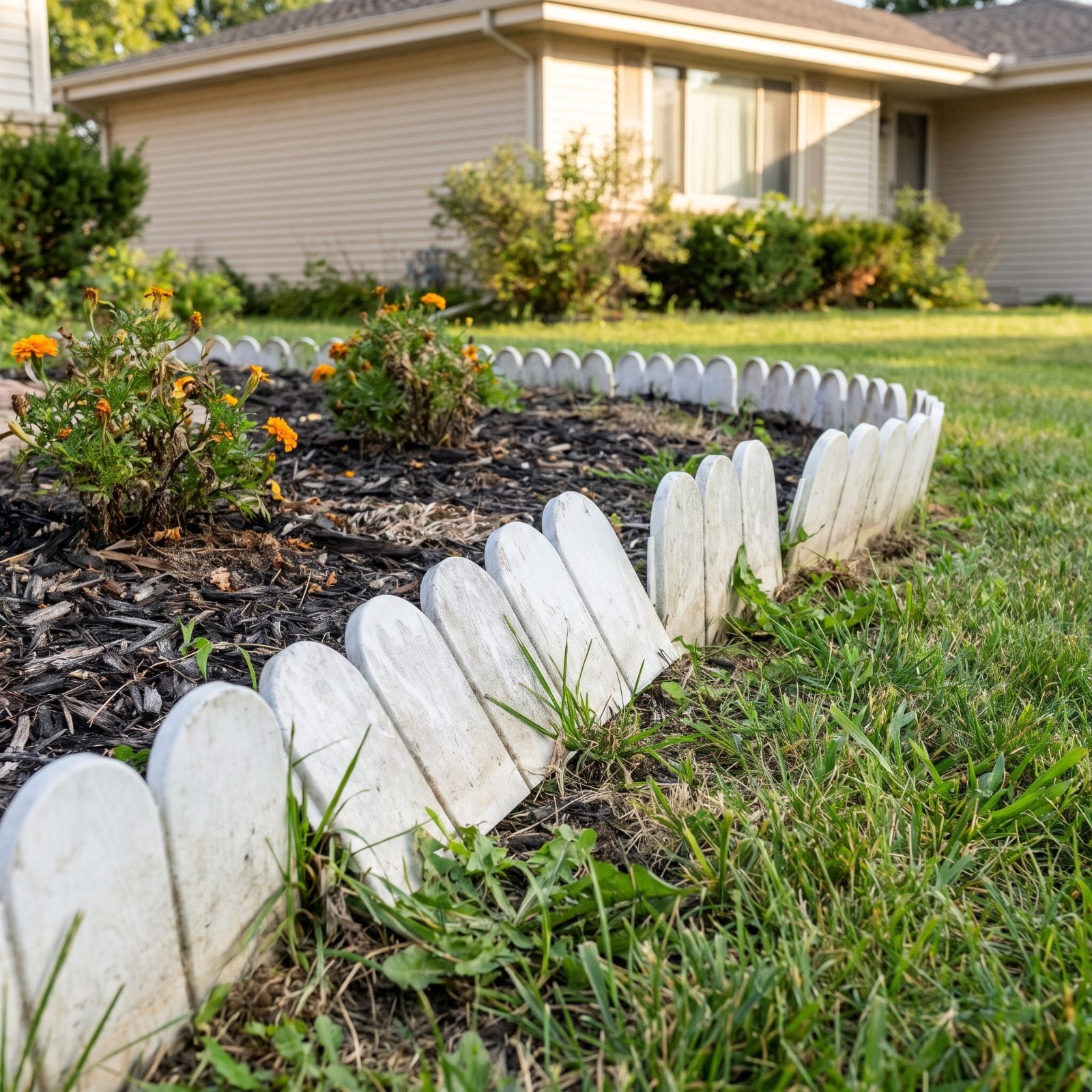
You know this edging. The little white or terracotta plastic scallops, pushed into the dirt in a wavy line, standing maybe four inches tall. It was everywhere in the nineties and it has not aged into anything but nostalgia.
The trouble is it never stays put — frost heaves it crooked, mowers clip it, and within a season or two it’s leaning at angles and bleached pale by the sun. It reads as instantly dated the moment a buyer walks the yard. A clean steel or stone edge costs a bit more and signals the opposite thing.
38. Creosote Railroad-Tie Planters
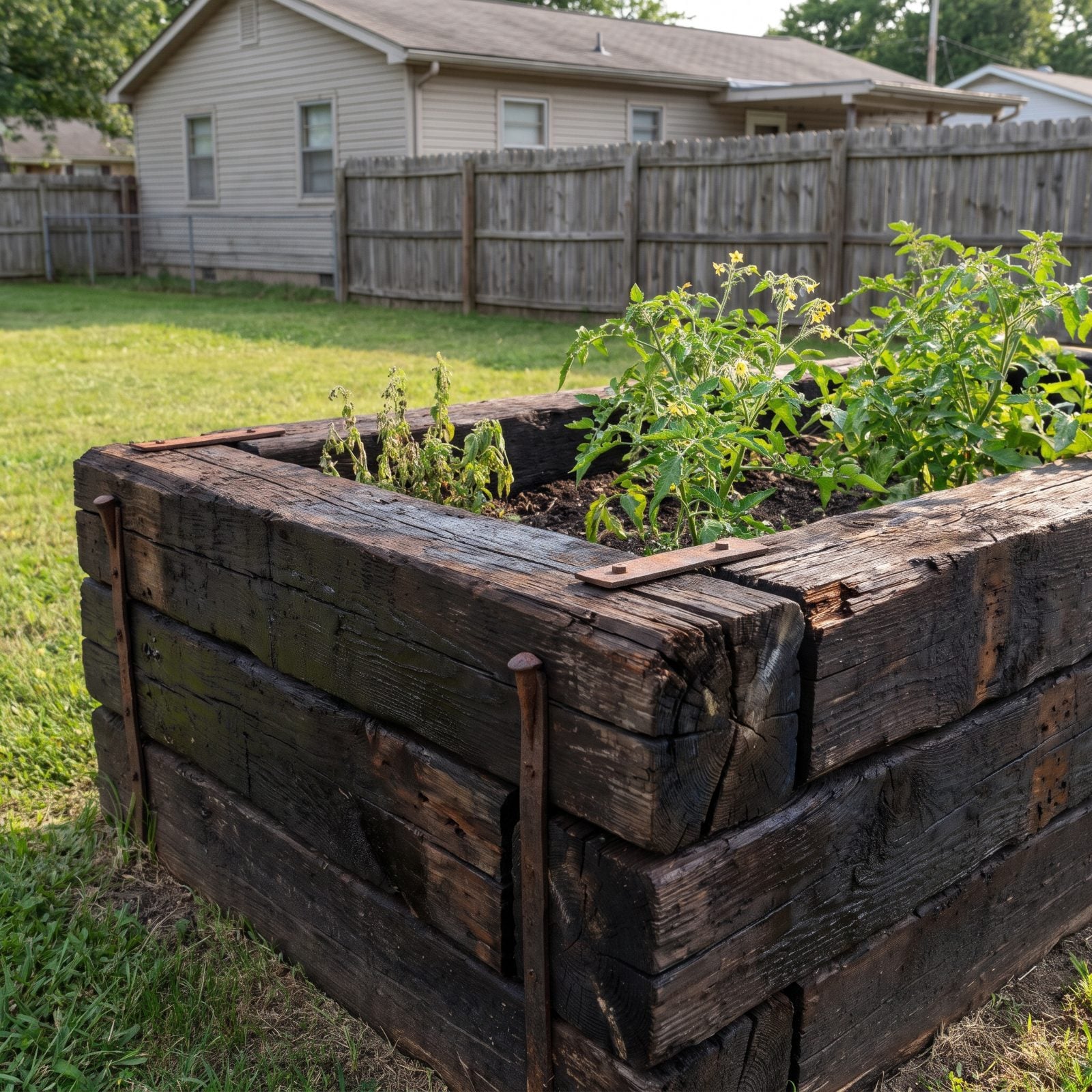
Railroad ties made cheap, rugged planter walls for decades. The issue is what’s in them. Creosote, the stuff that keeps the timber from rotting, is a known contaminant, and it leaches into soil as the wood ages.
A buyer who gardens will clock this instantly, especially if the bed holds vegetables. Even the ones who don’t garden pick up on the splintering black timber and the faint tar smell on a hot day. It’s heavy, it’s oily, and hauling it out is a genuine chore. What once read as sturdy now reads as a thing you’ll pay someone to dispose of.
In a radio interview, a county extension agent said he would avoid creosote-treated railroad ties around gardens because rain, irrigation and weathering can move chemical compounds into nearby soil.
37. Continuous Poured-Concrete Landscape Curbing
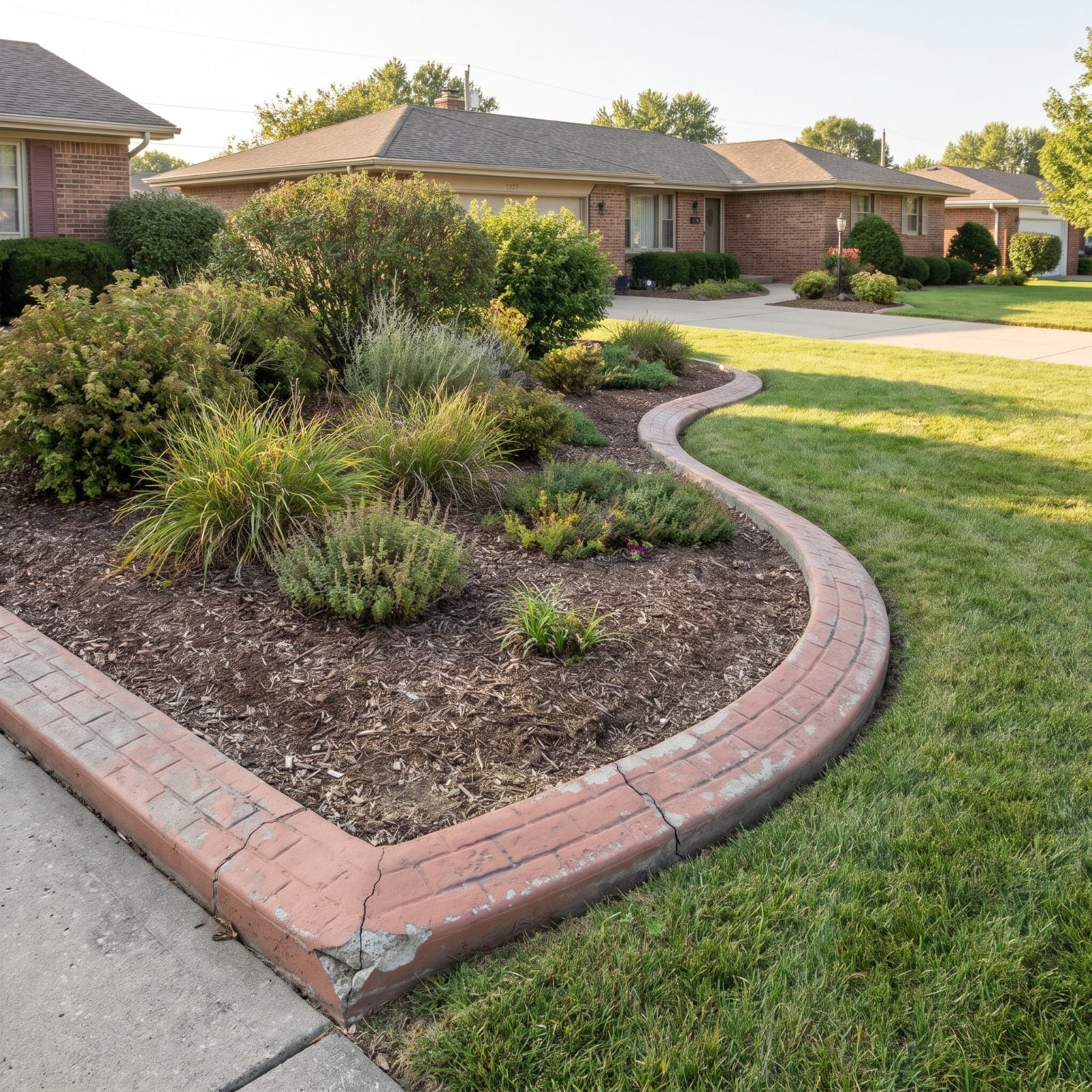
Poured concrete curbing locks your yard into one layout forever. That’s the whole pitch, and that’s the whole problem.
Buyers who want to add a bed, widen a path, or rip out a tired border find themselves facing a jackhammer rental. The extruded concrete reads tidy at first, then you notice the hairline cracks and the faded faux-brick stamping that dates it instantly. A yard should feel like it can still change. This one announces that someone already decided everything, and you’ll be living with it.
The best yards leave room for the next person’s ideas. Concrete curbing is a decision set in, well, concrete.
36. Faux-Flagstone Stamped-Concrete Patios
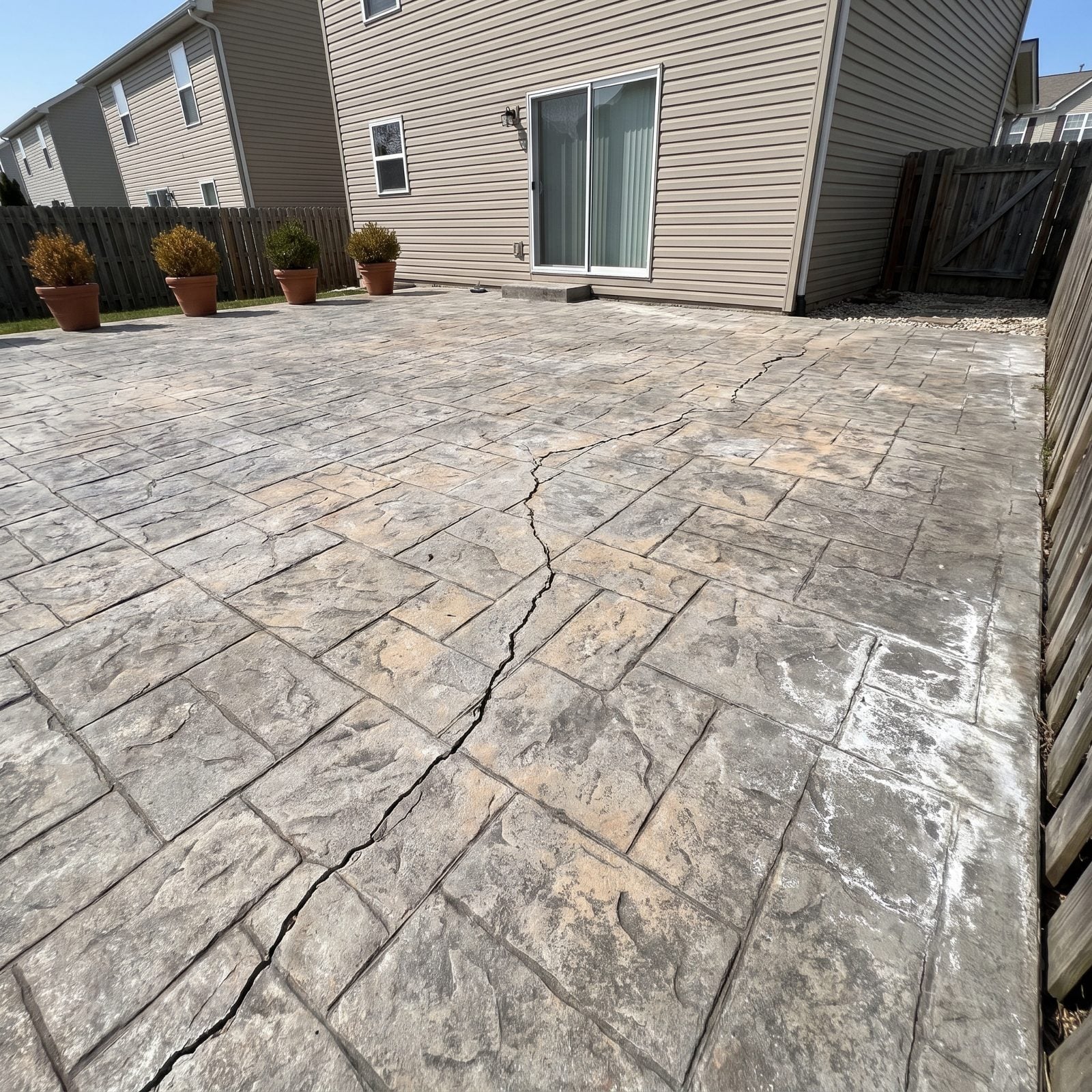
Stamped concrete that imitates flagstone always gives itself away eventually. It’s the repeating pattern. Real stone is irregular, but stamped concrete uses the same few molds over and over, and once you spot the repeat you can’t unsee it.
Then there’s the cracking. Concrete moves, and when it cracks it cracks straight through your fake stone joints, which looks worse than a crack in plain concrete would. The color sealer fades and needs reapplying. Buyers increasingly read it as the surface that was trying to be something it wasn’t — a tough first impression for a patio to recover from.
35. Outdoor Carpet Glued Over a Patio
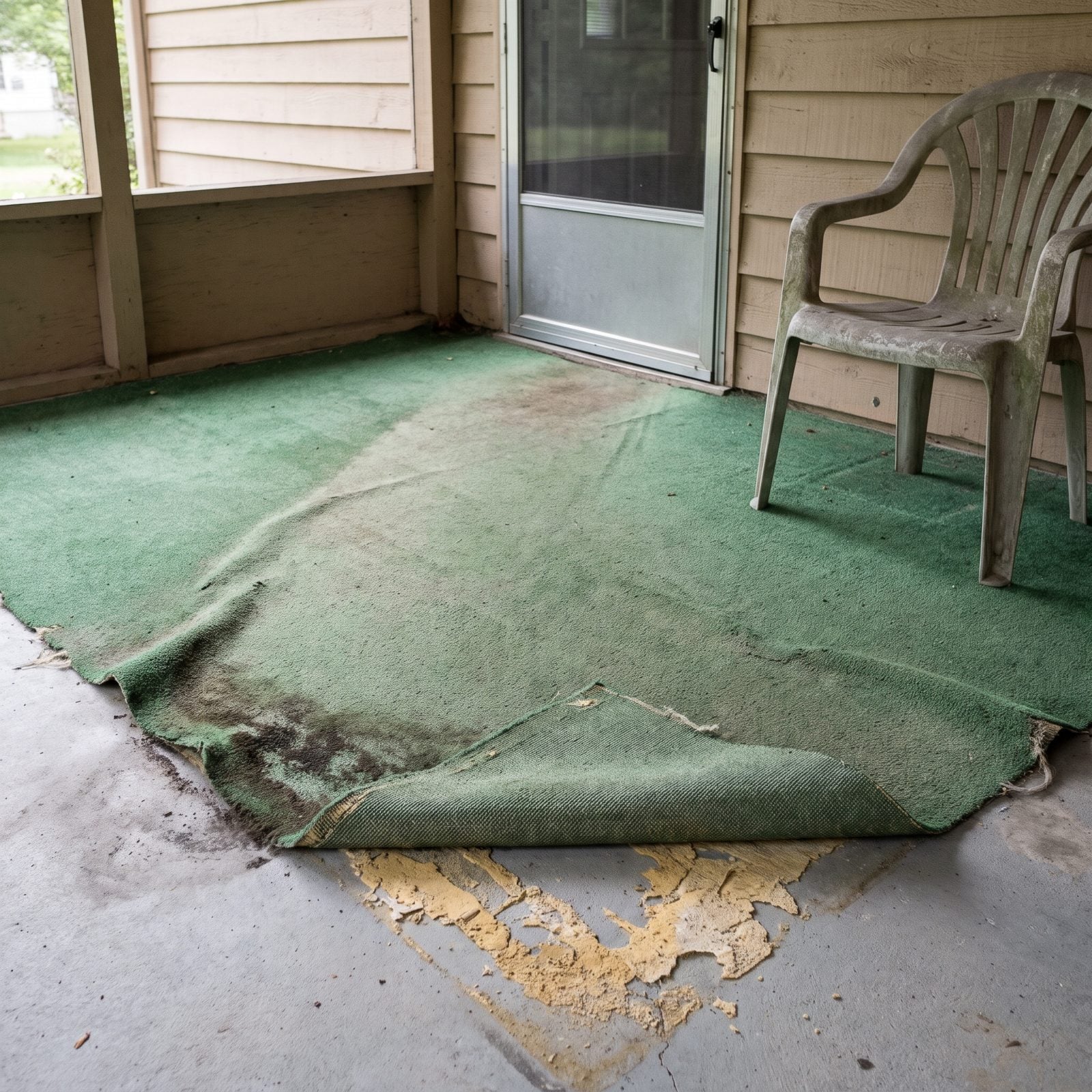
Indoor-outdoor carpet glued over a patio is a smell before it’s a sight. Trapped moisture plus warm concrete equals mildew, and the nose finds it before the eyes do.
The edges curl. The color fades to a tired green. The adhesive underneath turns the whole thing into a scraping, grinding removal job that reveals glue scars on the concrete you’ll then have to deal with too. Buyers see it and immediately picture the project of getting rid of it. There’s almost no version of this that reads as anything but a thing to be torn out.
34. Deep Pea-Gravel Walkways
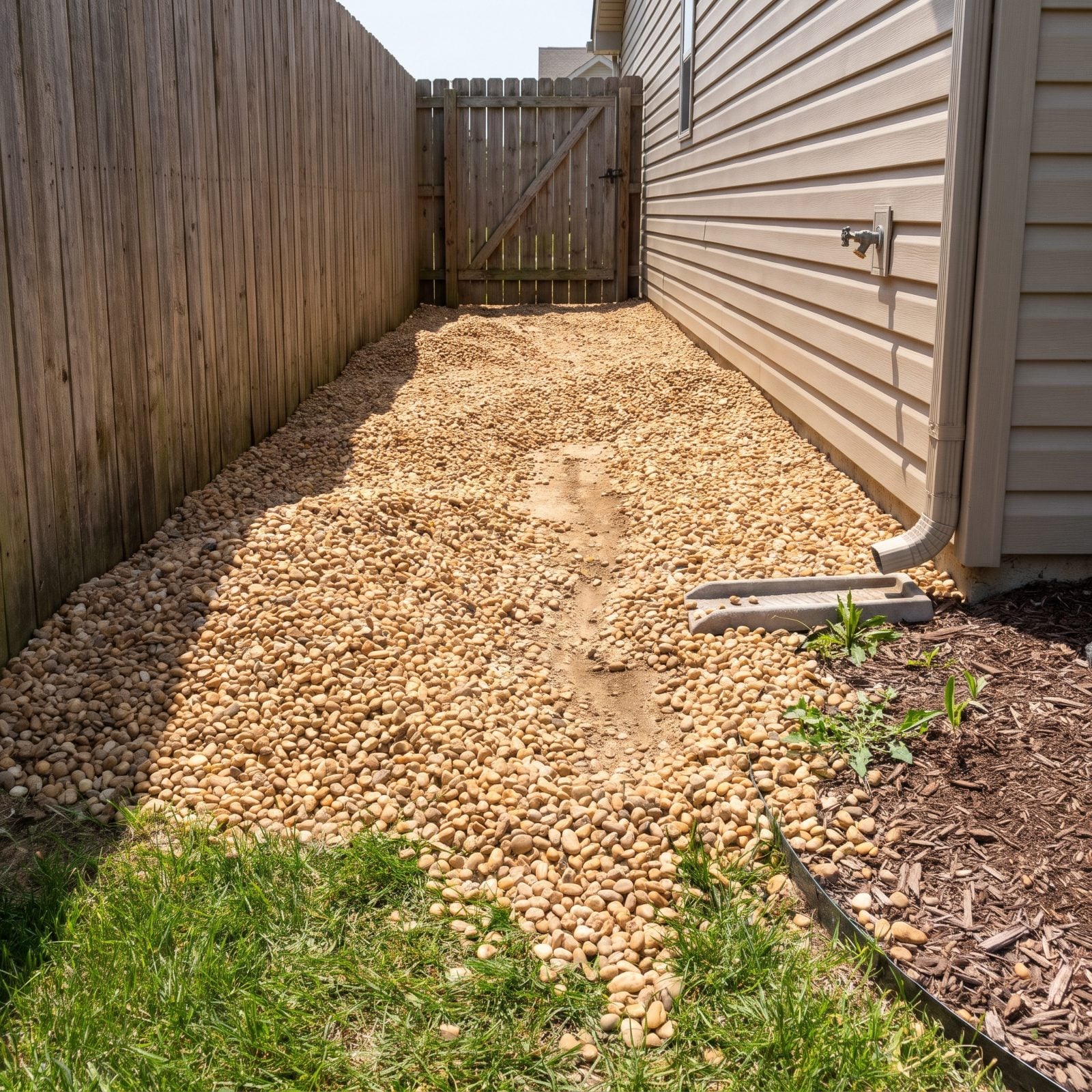
Deep pea gravel feels like walking on a beach, which sounds nice until you do it every day. The stones shift under every step, they scatter onto the lawn, and they migrate out of the path faster than you can rake them back.
Roll a stroller or a wheelbarrow across it and you’ll give up by the third trip. It’s one of the first things accessibility-minded buyers flag, because a loose, shifting surface is a trip hazard and a non-starter for anyone with mobility needs. A compacted gravel or a flagstone path solves it without much more money.
33. The Octagonal Wood Gazebo Nobody Sits In
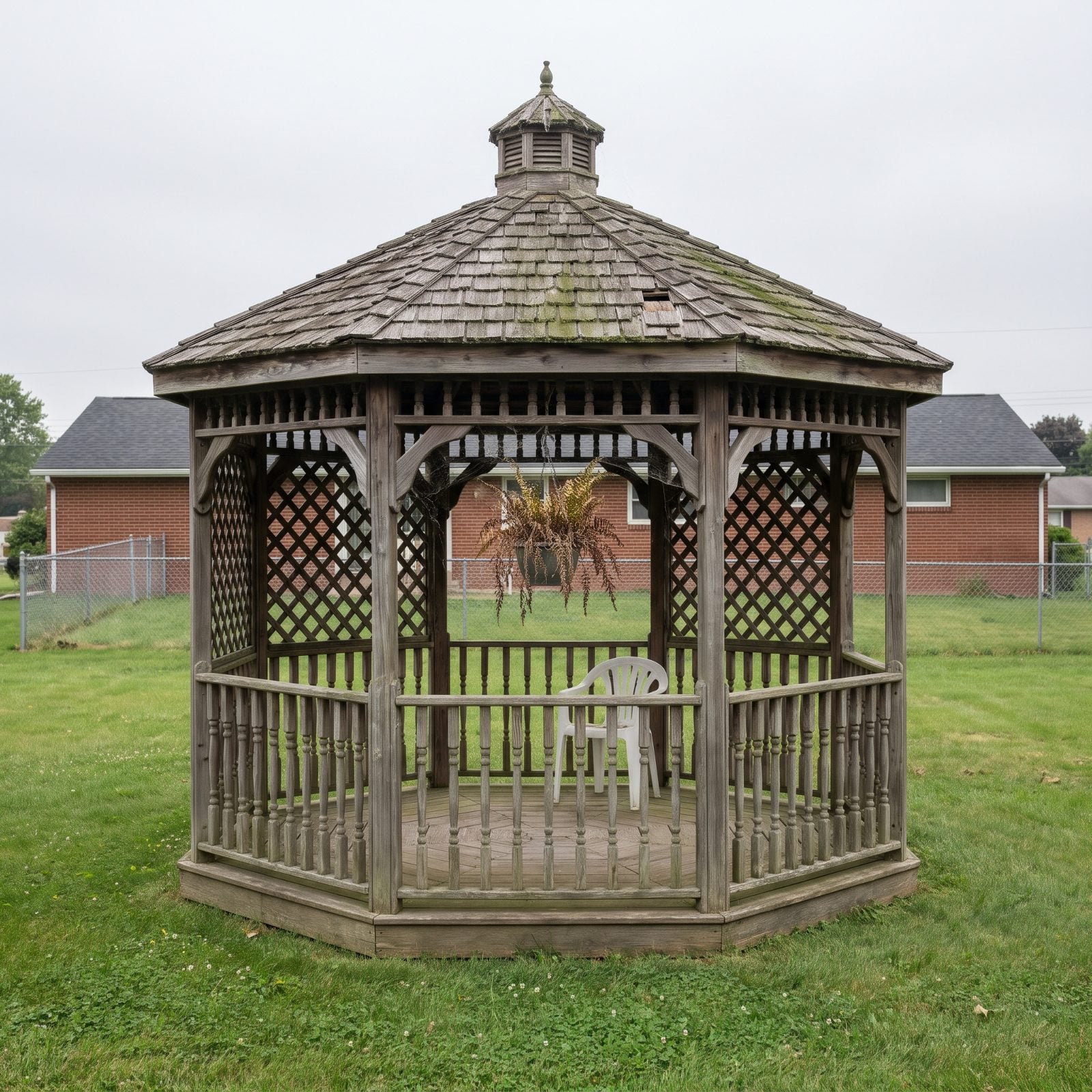
Peak-1998 backyard aspiration right here. The octagonal gazebo looked like class in the catalog and turned into a shingle-cleaning hobby by year three.
Algae loves the shaded north panels, the spindles collect spiderwebs, and because the thing is marooned in the middle of the lawn with no path to it, most people just stop walking out there. A 2027 buyer sees a structure that costs money to keep up and gives back one sad plastic chair.
32. The Thatch-Roof Tiki Bar Marooned in a Suburban Yard
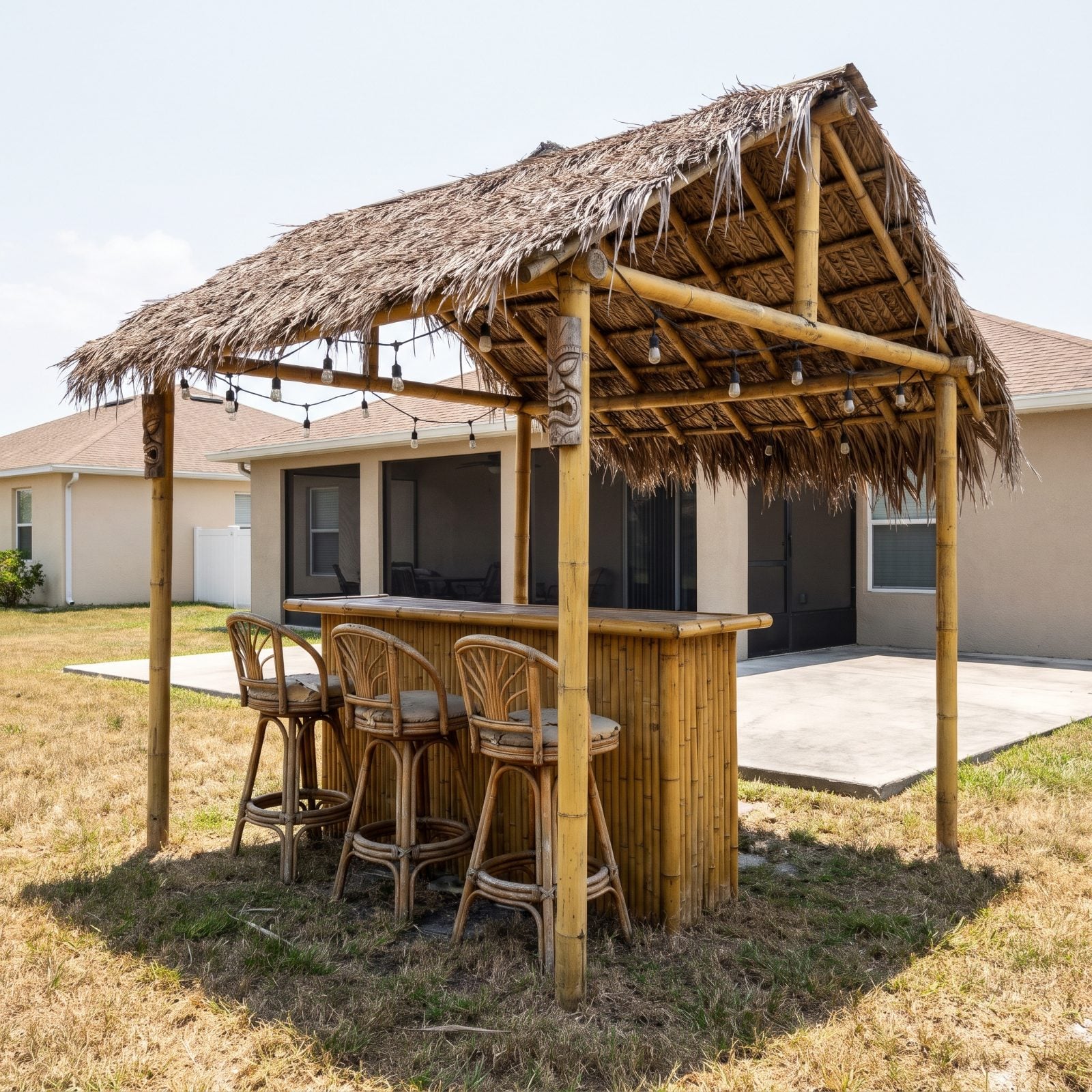
This is somebody’s vacation memory nailed to the backyard. A thatch roof reads great on a resort in Maui. In a suburban cul-de-sac it reads like a project you inherited and can’t quite bring yourself to tear down.
Thatch is organic. It rots, harbors insects, and needs re-layering every few years in a wet climate. The bamboo yellows, the stools crack, and the whole thing becomes a themed liability. If a backyard watering hole is the dream, a clean-lined mid-century home bar indoors ages far better than palm fronds in the rain.
31. The Decorative Pergola That Casts No Shade
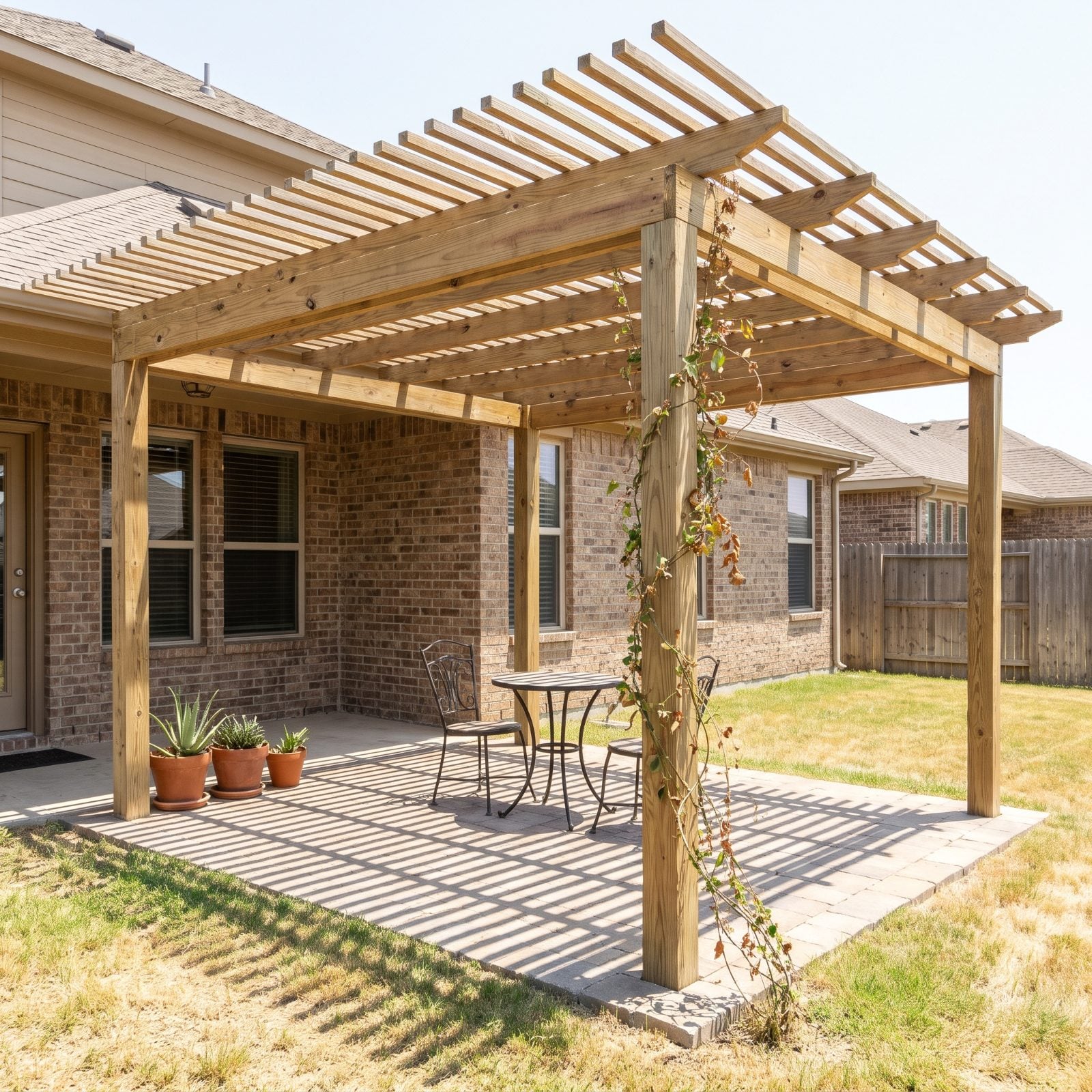
A pergola with open slats and nothing growing on it is a sundial, not shade. At noon you get thin stripes on the patio and a table too hot to touch.
Buyers in hot regions clock this instantly. The structure eats a view, takes up the patio, and delivers none of the relief its silhouette promises. Grow a canopy vine over it or stretch a shade sail across it. Otherwise you’ve got decoration pretending to be function.
30. The Massive Built-In Outdoor Kitchen You Can’t Undo
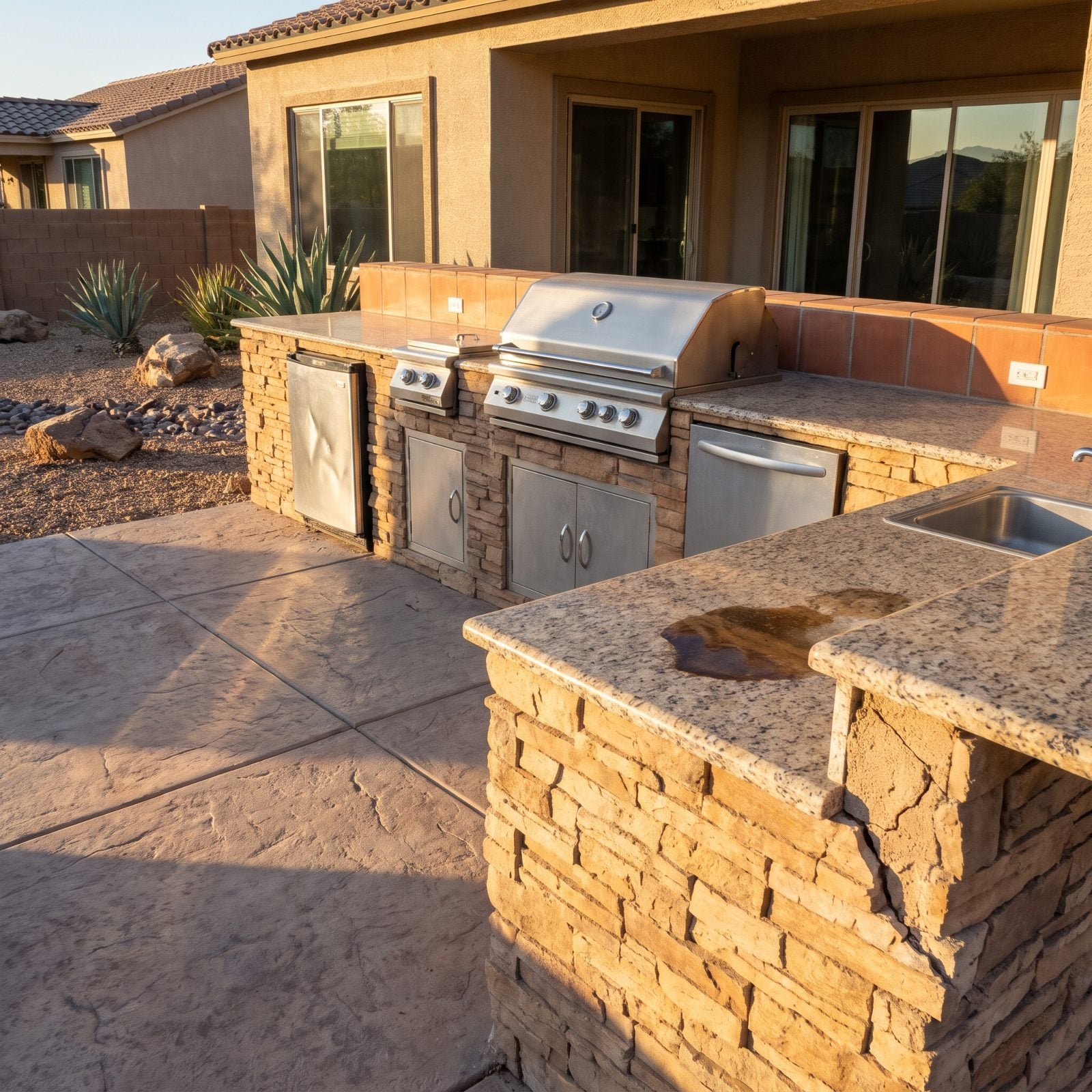
Everything about this says the owner meant to host every weekend forever. Then life happened, and now there’s a masonry monument with a stainless grill, a built-in fridge, a dishwasher drawer, and granite that bakes in the afternoon sun.
The catch is permanence. You can’t roll a built-in outdoor kitchen into the garage or flip it on Marketplace. A buyer who doesn’t cook outside is staring at a demolition quote, not an amenity. The home renovation instinct that built this makes it brutally hard to walk back.
And stainless appliances left outdoors age fast. Salt air, pollen, and UV take their toll, and tracking down replacement parts for an eight-year-old outdoor fridge is its own little adventure.
29. The Freestanding Hot Tub Parked on a Bare Slab
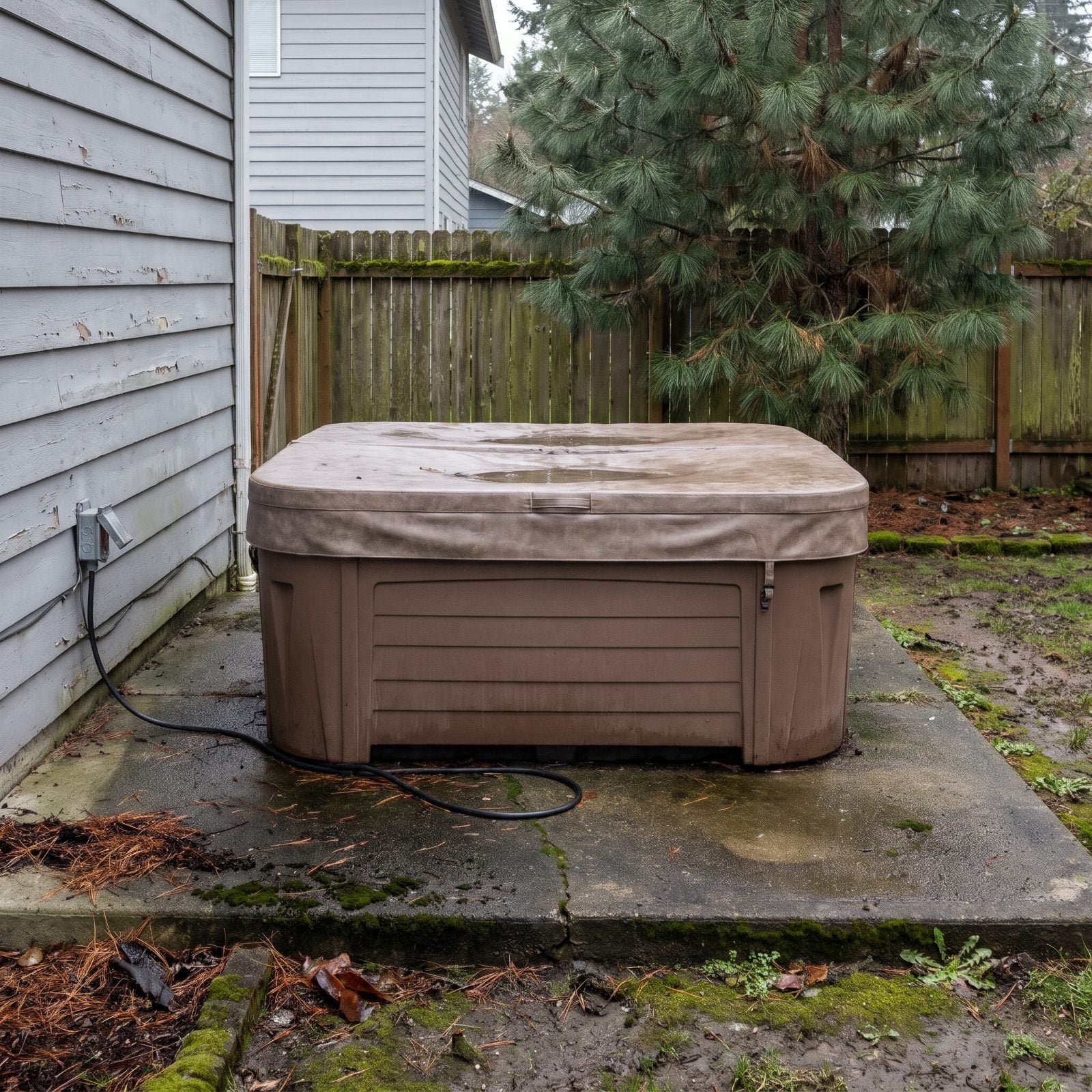
A hot tub plopped on a plain slab with a cord snaking to the house wall looks like exactly what it is: an afterthought. No deck around it, no privacy screen, no step down into the water.
Buyers see the chemical bills, the sagging cover, and one nagging question — was that slab ever poured to hold the weight of a full tub? Hot tubs split a room even when they look sharp. Exposed on bare concrete with moss creeping in, this one reads as upkeep, not luxury.
28. The Above-Ground Pool Dressed Up in a Custom Deck
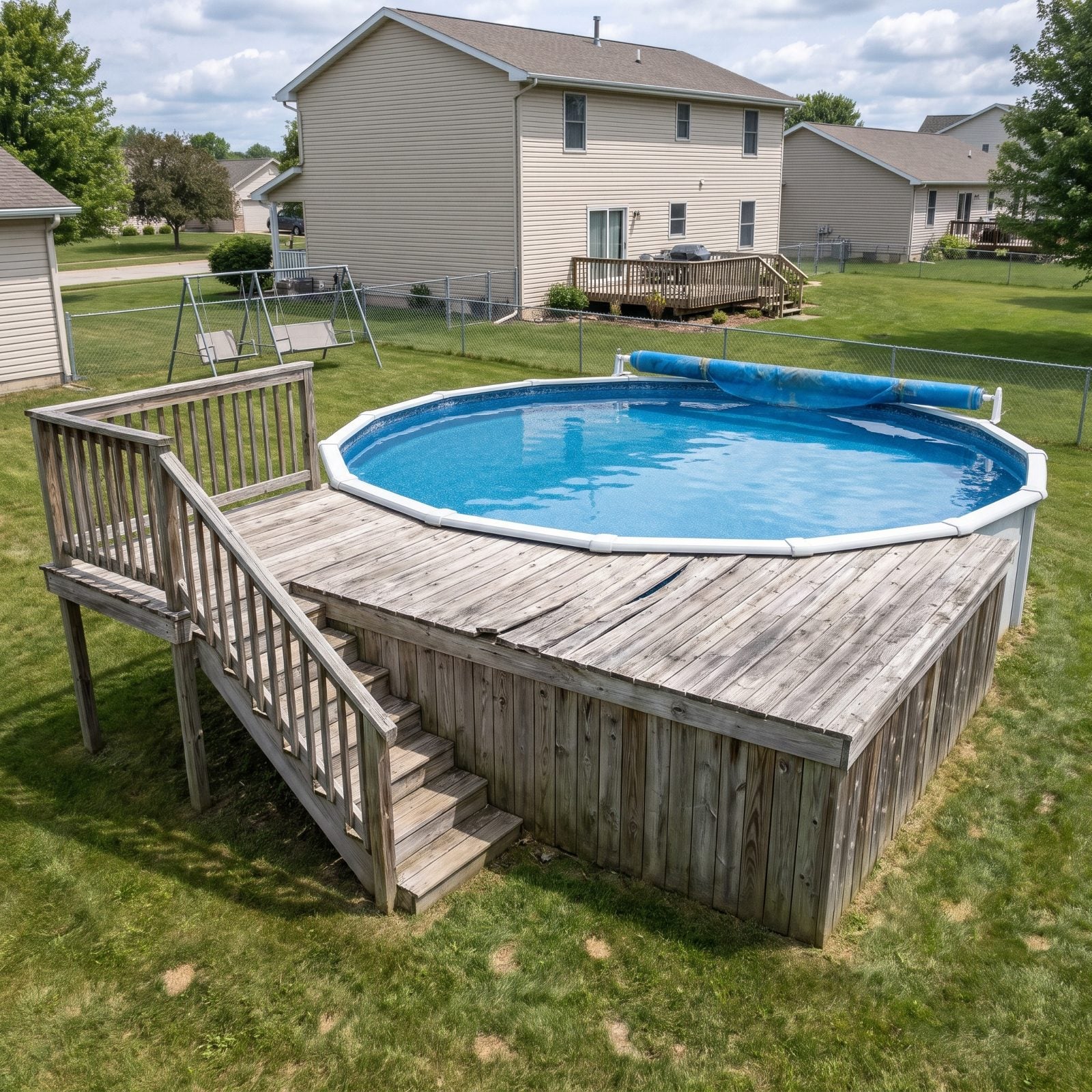
Building a deck around an above-ground pool is a real effort, and buyers respect the ambition. They just don’t want to inherit two depreciating things bolted together.
Above-ground pools have a liner lifespan and a reputation. Wrap one in a wood deck and now you’ve got two surfaces to maintain, plus the awkward question of what becomes of the deck when the pool wears out. The wood near the waterline always warps first.
A permanent structure built around a temporary pool is a mismatch buyers can feel without naming it.
27. The Diving Board That Scares Off Insurers
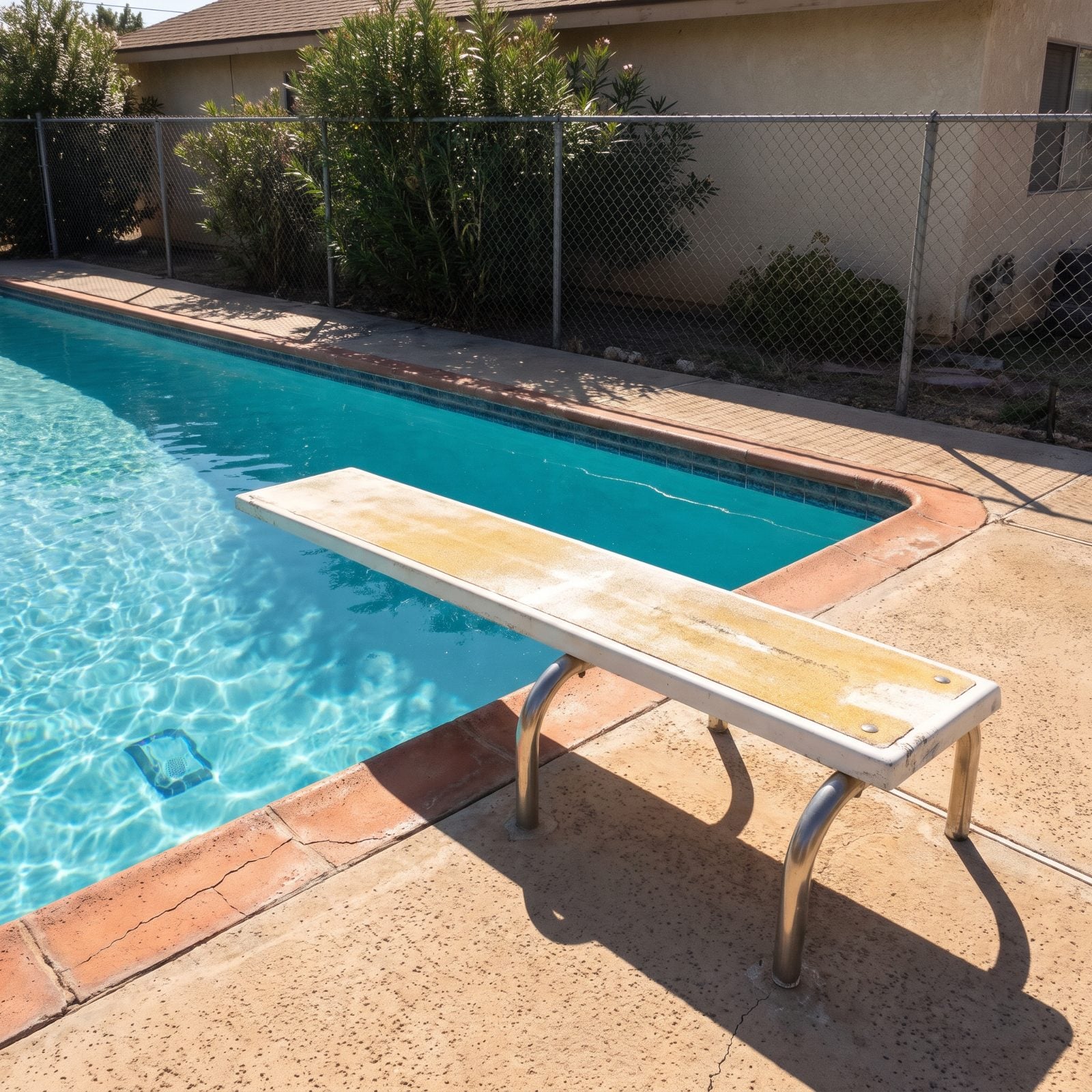
Here’s one that costs money before anyone even jumps. Diving boards raise liability questions, and plenty of home insurers either charge extra for them or won’t write the policy at all.
A buyer with young kids sees a hazard. A buyer without kids sees a feature they’ll never use attached to a premium they’d rather not pay. Many pool owners quietly pull the board before listing, and that tells you everything about how the market reads it in 2027.
26. The Faux-Rock Pool Grotto From a Theme Park Dream
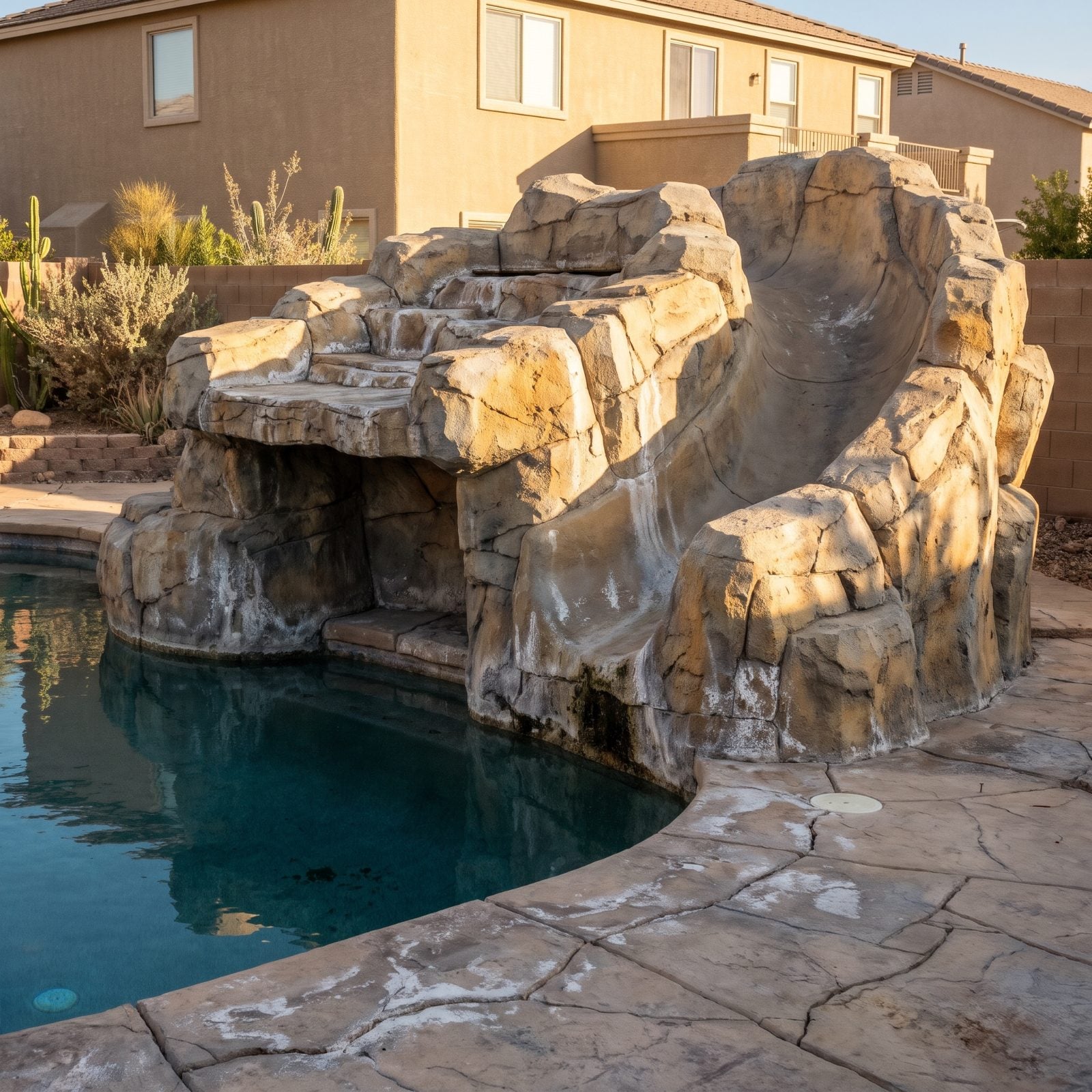
Somebody wanted a resort. What they got was a concrete mountain that now streaks, fades, and grows algae in its crevices.
Faux-rock grottos are intensely personal and intensely permanent. The paint fades in blotches, the hidden plumbing for the waterfall fails in strange ways, and the sculpted cave becomes a shaded algae farm. A 2027 buyer eyeing a clean, simple pool sees an obstacle with a repair bill attached.
25. The Preformed Black-Plastic Garden Pond
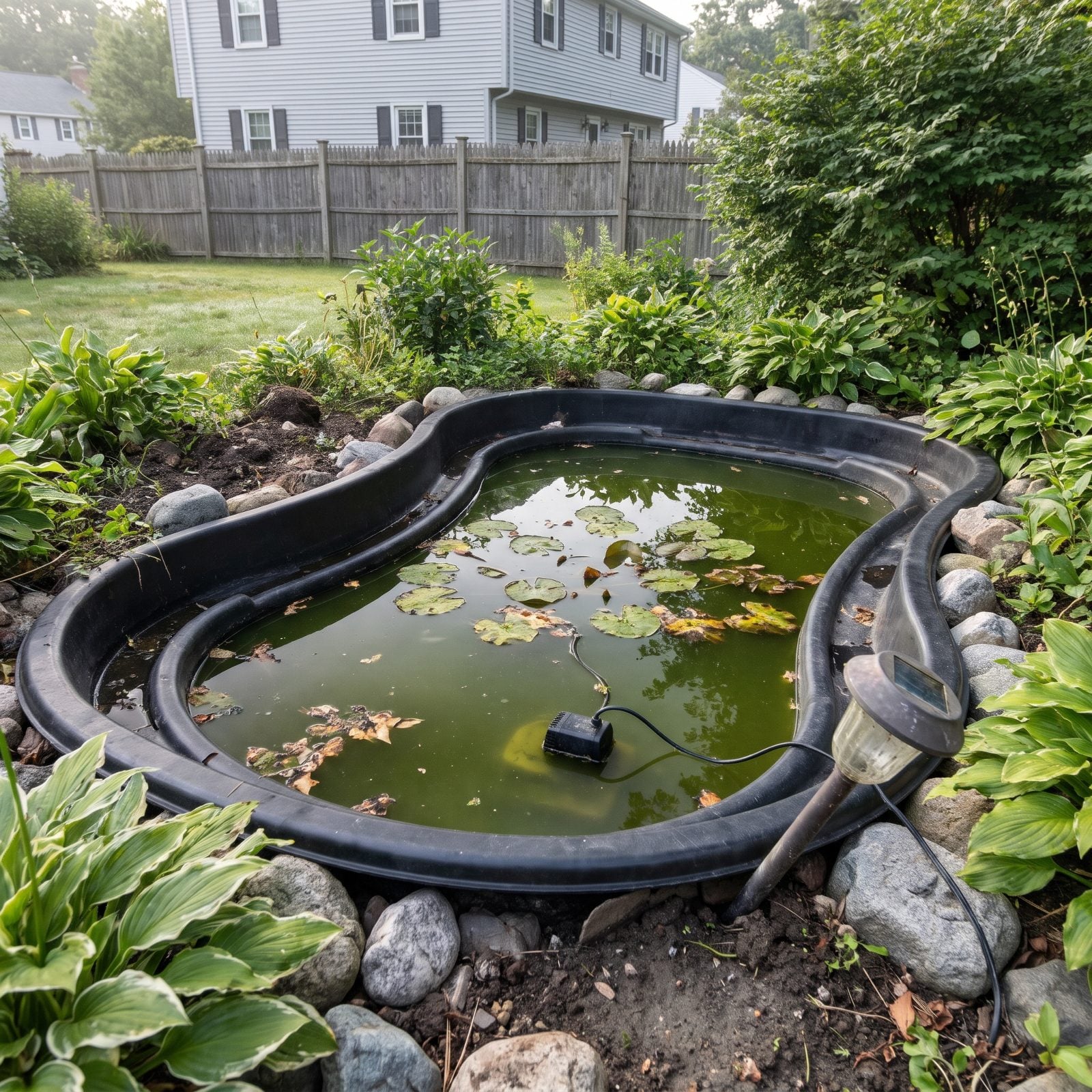
The preformed pond kit sold a dream of koi and lily pads. The reality is a murky green bowl with its black rim poking out where the soil settled.
These need pumps, filters, algae treatment, and winter prep, and the rigid liner heaves as the ground freezes and thaws. Once the rocks shift, the exposed plastic edge gives the game away. Most buyers see a mosquito nursery and start pricing the fill-in. If backyard water features are your thing, go in clear-eyed — the upkeep is real.
24. A Giant Artificial Waterfall Mound
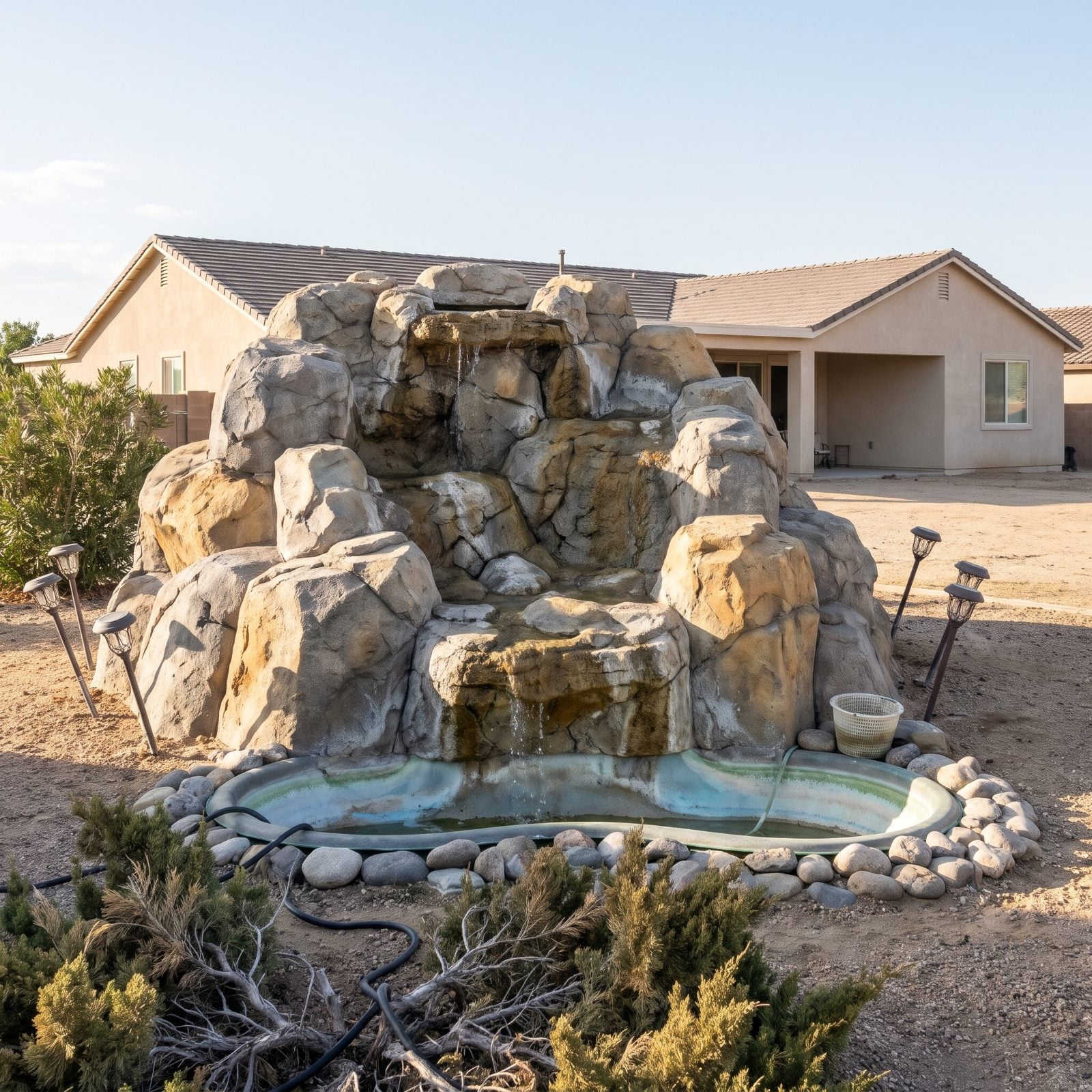
A fake rock waterfall sounds like a resort perk until you price out the pump that runs it. These molded boulder mounds were a 2000s status symbol, and now they mostly read as a maintenance bill waiting to happen.
The water turns green if you blink, the liner cracks in a hard freeze, and the whole thing anchors one corner of the yard so completely that a buyer with other plans has to demolish it first. That’s a lot of rebar and faux stone to haul out before you can plant a single tomato.
23. A Synthetic Backyard Putting Green
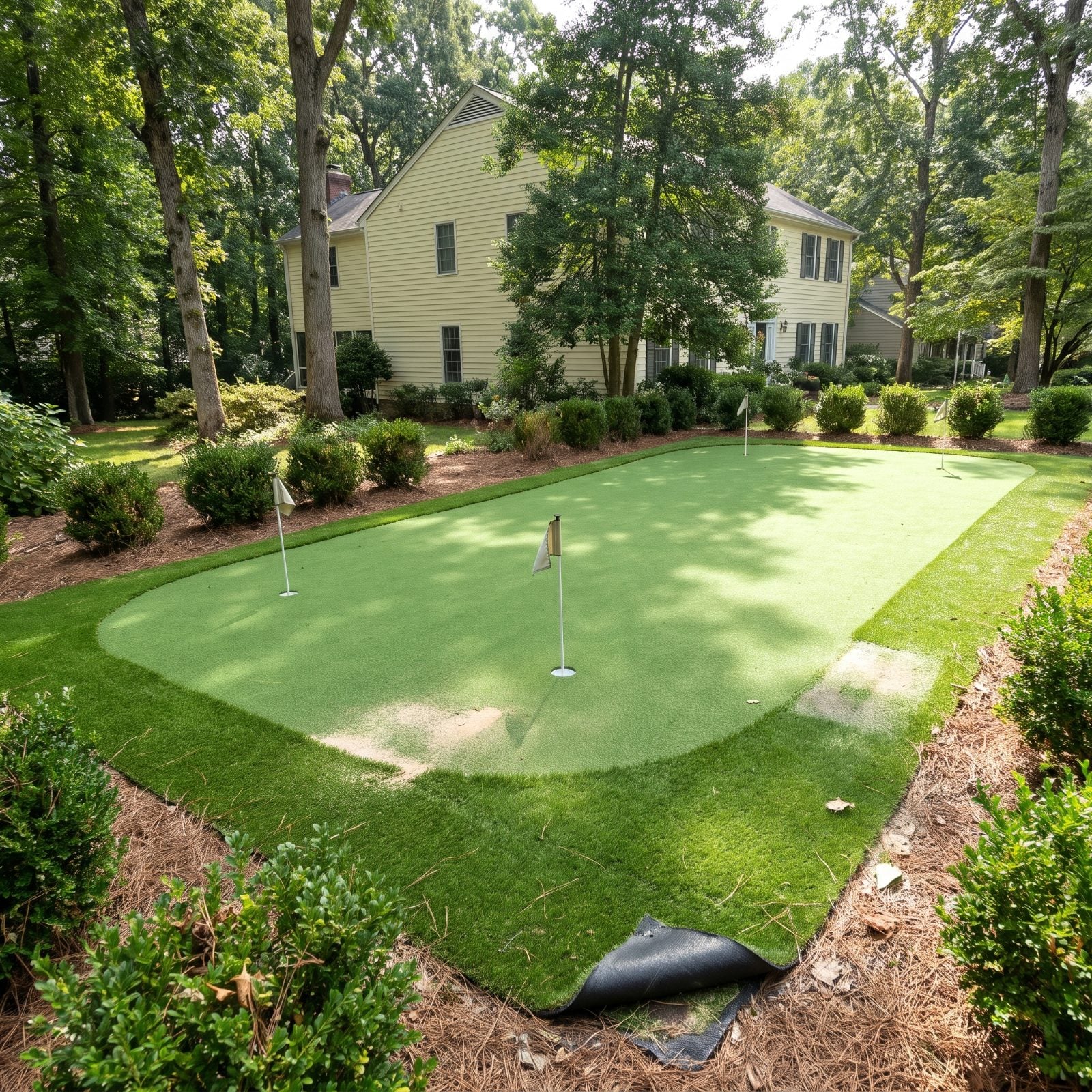
Great if you golf. A problem if you don’t.
A synthetic putting green is about the most personal thing you can bolt into a yard. It serves exactly one hobby, bakes to a griddle under summer sun, and the infill needs regular topping up to keep the roll true. Most buyers walking the lot in 2027 do the math fast — that’s lawn they didn’t ask for, in plastic they can’t compost, over a hobby that isn’t theirs.
22. An In-Ground Trampoline
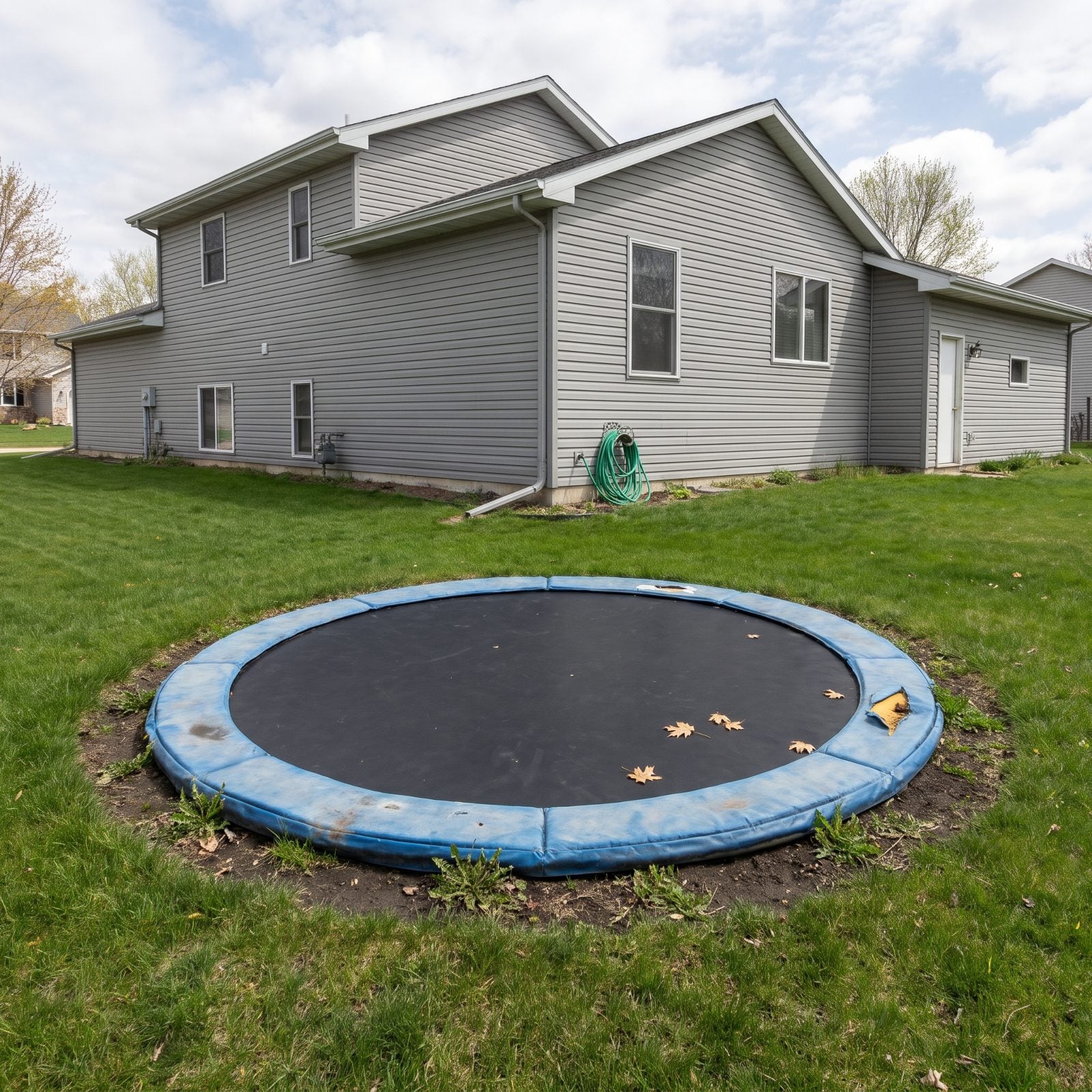
I get the appeal. A trampoline that sits flush with the lawn looks tidier than the caged backyard kind, and nobody breaks an ankle stepping off a ladder.
Dig below the surface, though, and the concerns stack up. The pit underneath needs drainage or it fills like a bathtub. Replacing the mat means working in a hole. And for a buyer without kids the right age, it’s a sunken liability they now have to fill back in with dirt they’ll need to source themselves.
21. A Full-Size Backyard Sport Court
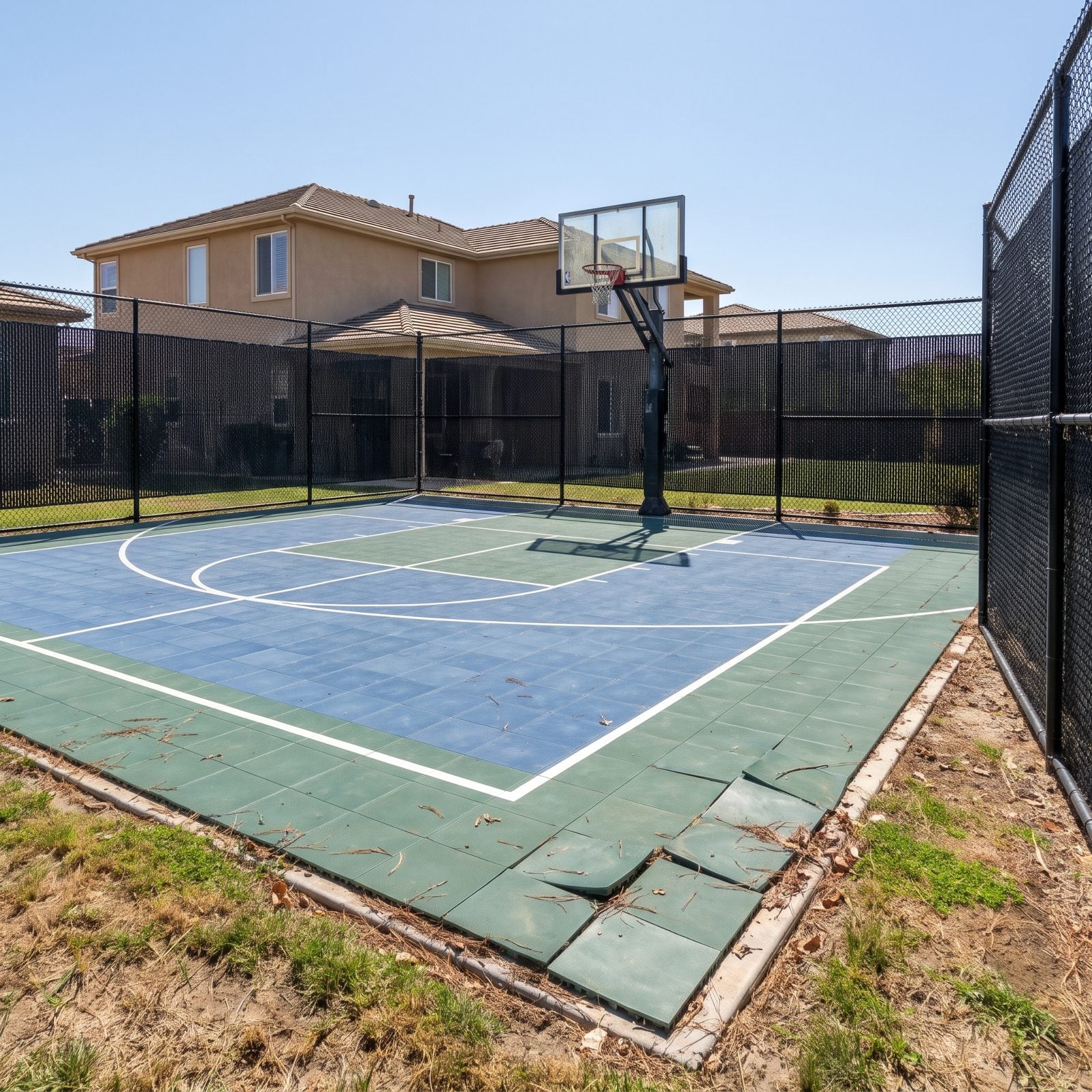
That’s not a yard anymore. That’s a gym with the roof missing.
A full sport court eats the entire backyard and dictates what happens on it forever. The plastic tiles warp in heat and collect grit in every seam, and the tall ball-containment fencing boxes in the whole space. A buyer who wanted a garden, a patio, or room for a future addition is now staring down a demolition project before they can start. Few things kill flexibility faster, and flexibility is what 2027 buyers want most.
20. An Oversized Wooden Playset
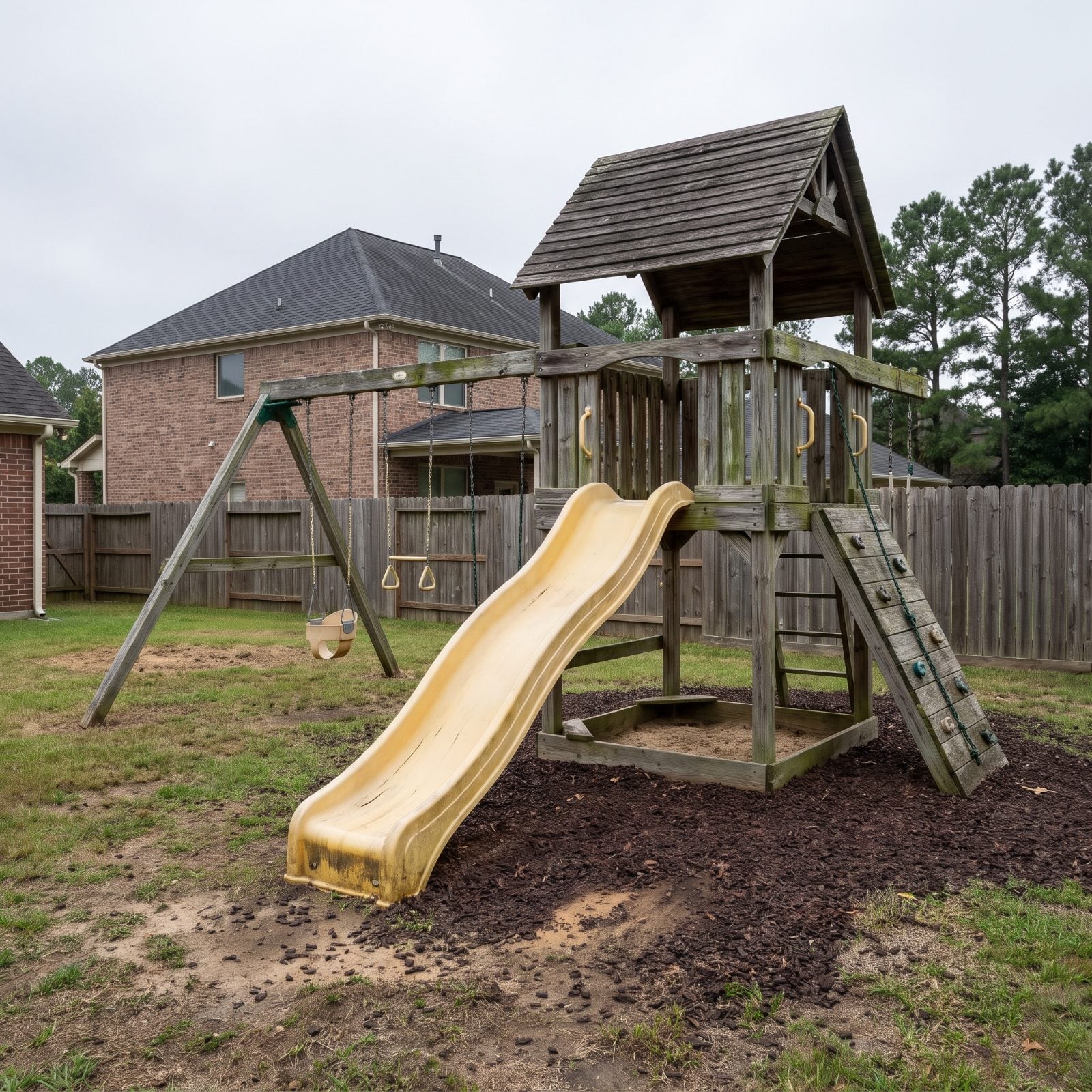
Wooden swing sets have a shelf life, and it’s shorter than people think. Pressure-treated lumber grays, splinters, and grows mildew on the shaded boards within a few seasons if nobody reseals it.
The bigger issue? It’s built for one narrow window of childhood. Buyers with no kids, or kids who are already grown, see an aging structure they’ll have to disassemble and a bald patch of worn dirt underneath. The rubber mulch migrates everywhere. Nobody wants to inherit someone else’s splinters.
19. A Chain-Link Dog Run
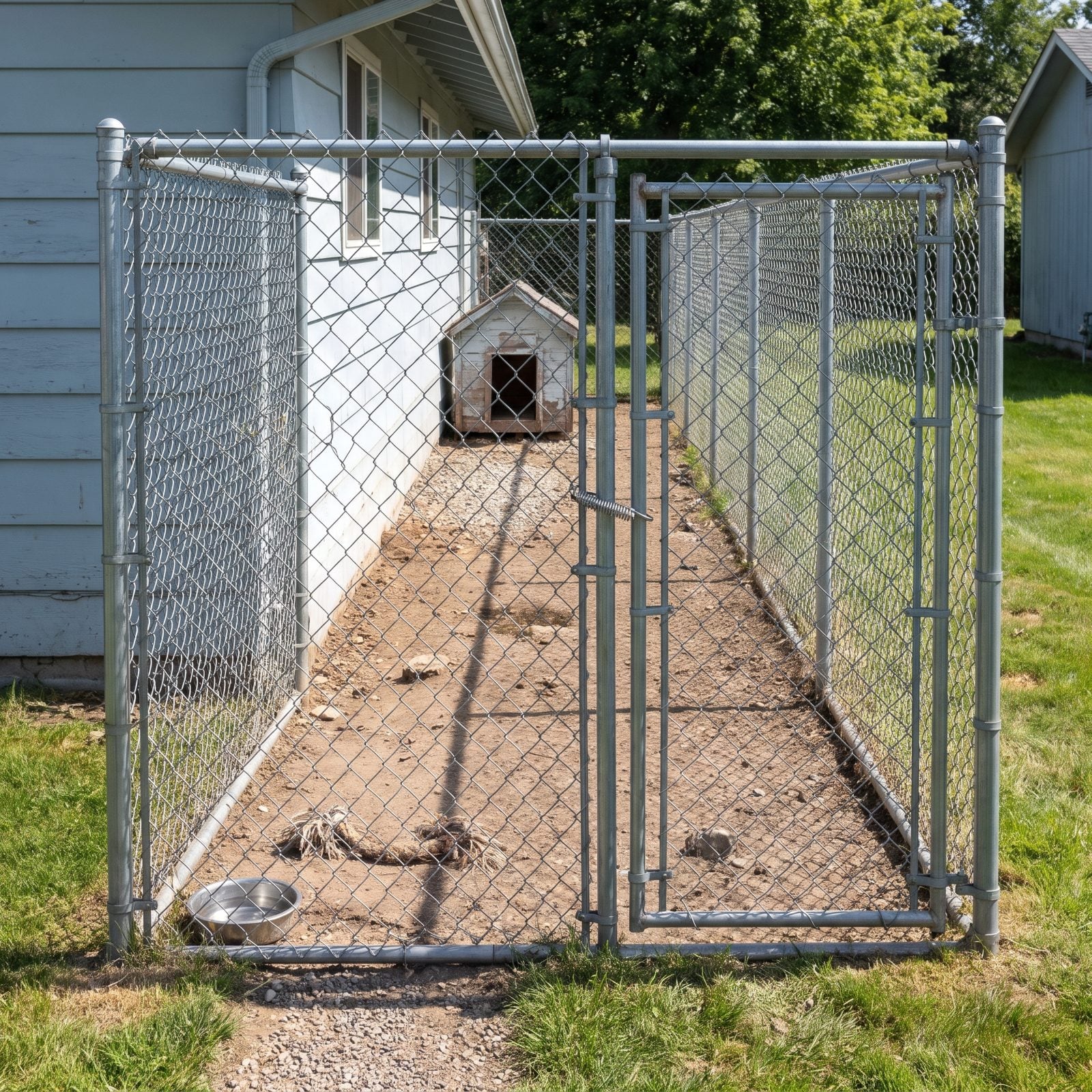
A galvanized chain-link dog run is pure function with zero charm. The ground inside goes bare in a season, the metal grid reads institutional, and it almost always lands in the side yard — the first thing a buyer sees walking up.
Non-dog people see a cage. Dog people usually want their pets in the house, not penned in a dirt strip. Either way it’s a strong candidate for the removal list, and the post holes it leaves behind are their own small headache.
18. Rolled-Bamboo Privacy Screening
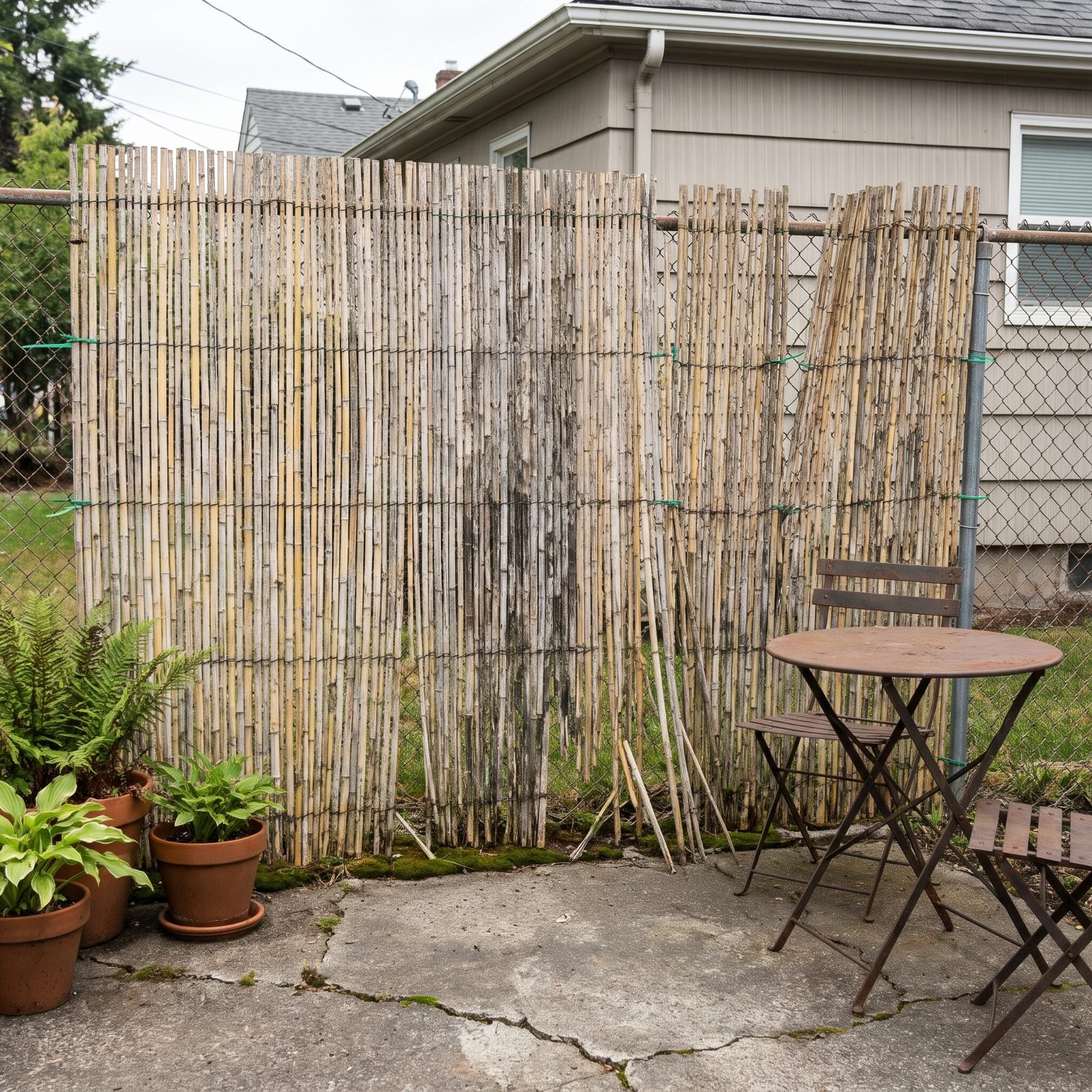
Rolled bamboo screening is the duct tape of privacy. Cheap, fast, and never as temporary as you meant it to be.
It bleaches unevenly, grows mildew on the damp side, and starts shedding splinters and cracked canes within a couple of years. Held on with zip ties and good intentions, it sags and gaps as it ages. A buyer reads it instantly as a patch job over a fence problem nobody solved properly — which gets them wondering what else around here got the quick fix.
17. A Solid Wall of Leyland Cypress
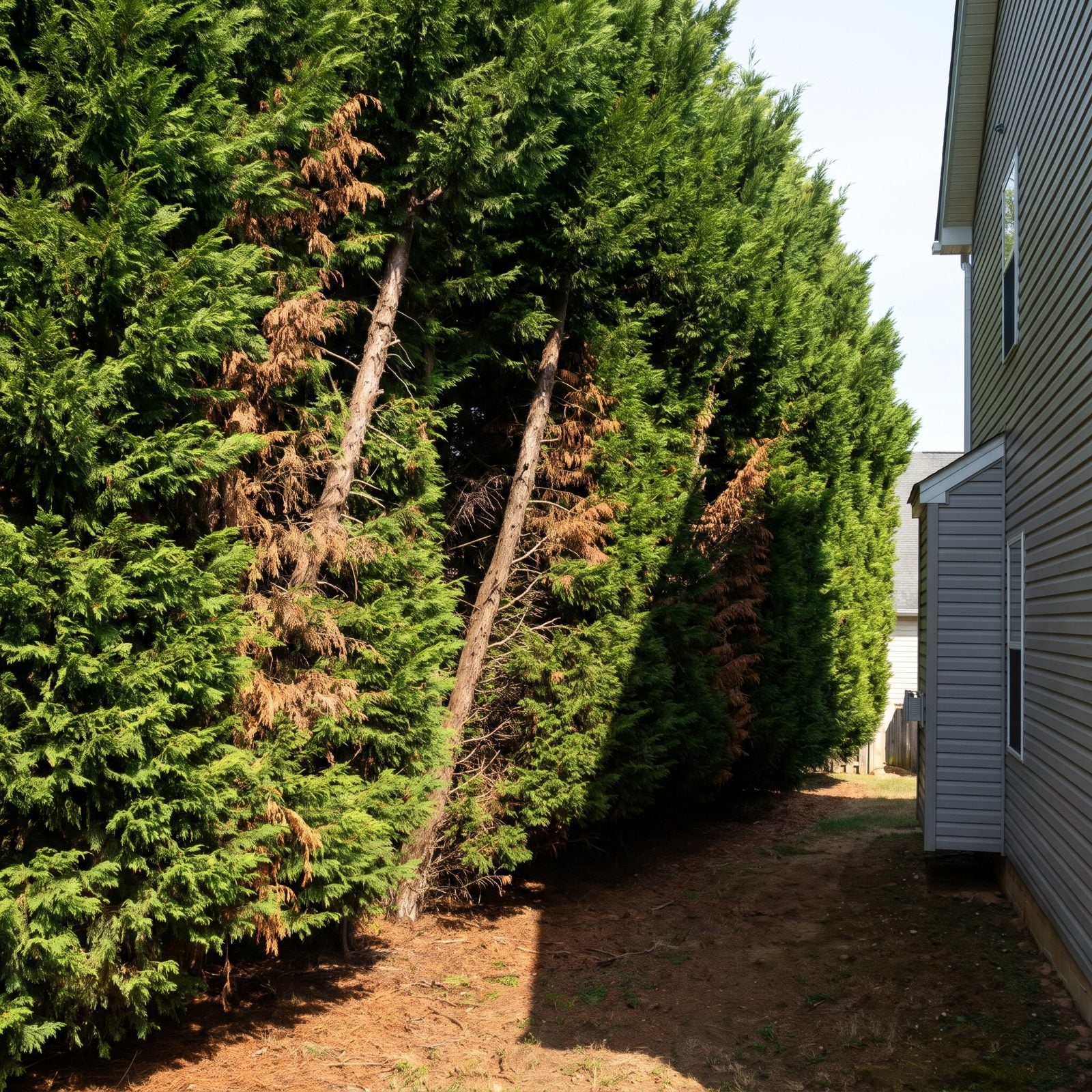
Leyland cypress is the plant people regret. Fast-growing is the selling point and the trap.
Planted as a cheap instant privacy wall, these trees shoot up past thirty feet and keep going, crowding the property line and starving each other out. They’re prone to root rot and a few nasty cankers, so one dead tree leaves a permanent gap in the screen. Pulling a row of twenty-footers costs real money.
A 2027 buyer looks at a solid cypress wall and sees a future invoice with an arborist’s name on it.
Writing for her county extension office, an extension master gardener volunteer notes that “Its popularity has led to overplanting the species to the point that diseases are taking a toll on the landscape.”
16. A Row of Bradford Pear Trees
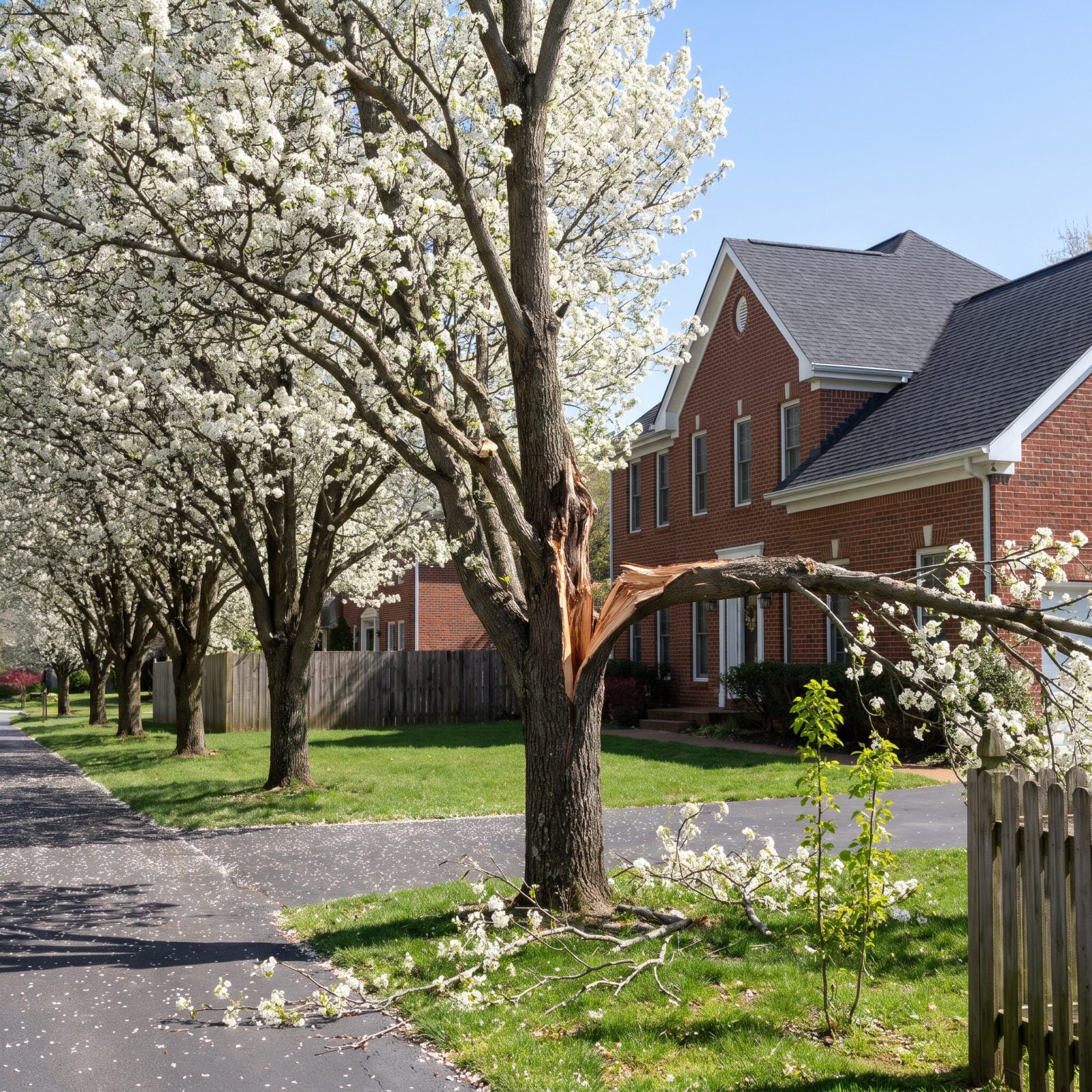
Pretty in April, a liability by July. Bradford pears bloom like a postcard and then earn every bit of their bad reputation.
Weak branching means mature trees split in storms, often across a car or a roofline. The spring blossoms smell genuinely awful up close. And the species is invasive enough that several states now actively discourage planting it. A buyer who knows anything about trees sees a row of these and starts tallying removal costs before they reach the front door.
The prettiest tree in the yard is often the one the next owner pays to cut down.
15. A Running Bamboo Grove
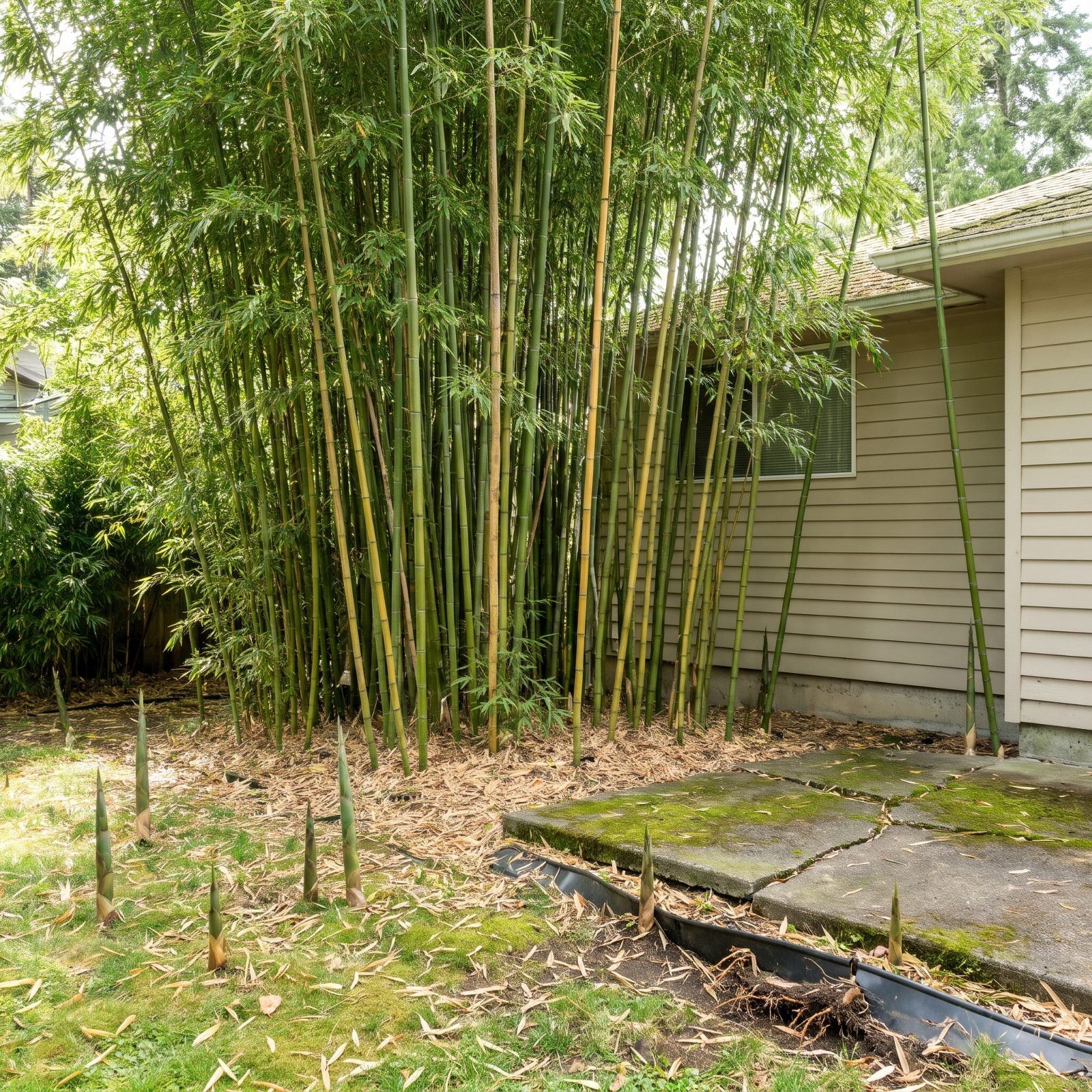
We have a soft spot for bamboo, and we’ll still tell you the running kind is a mistake in most yards. It’s gorgeous right up until it isn’t yours to control.
Running bamboo sends rhizomes sideways underground and pops up wherever it pleases — through the lawn, under the fence, into the neighbor’s beds, up through patio cracks. The barriers meant to contain it fail constantly. Once it’s established, getting rid of it is a multi-year fight with a shovel and a lot of swearing.
A 2027 buyer who spots rogue shoots in the grass knows exactly what they’re looking at, and it isn’t a feature.
14. English Ivy Swallowing the Foundation
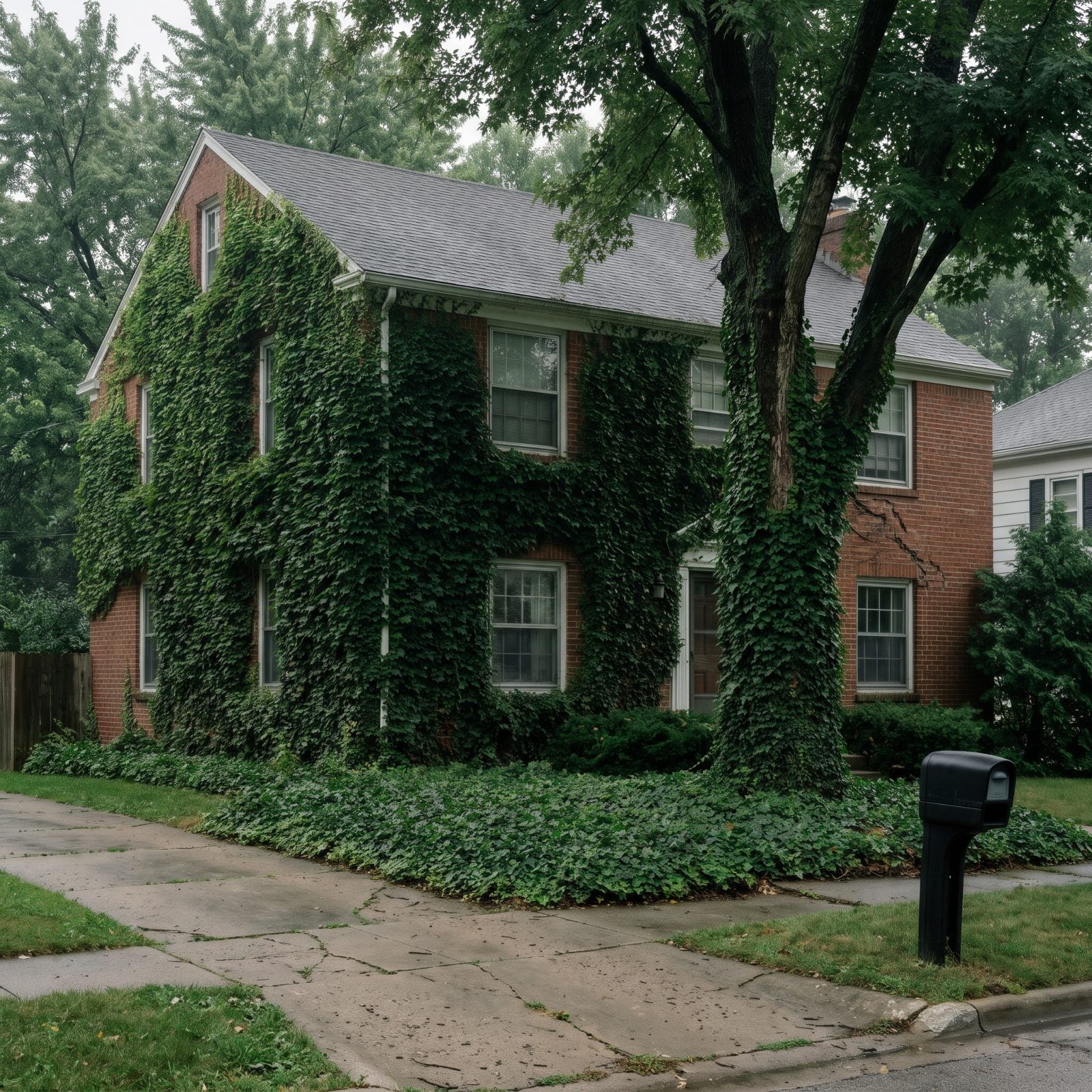
Ivy looks romantic until you try to sell the house under it. Those aerial rootlets pry into mortar and work their way under siding, and a buyer who reads one home inspection report knows exactly what that costs to fix.
It never stays where you plant it. The stuff climbs the maple, chokes the foundation beds, and turns up in the neighbor’s yard by spring. In many states it’s listed as invasive — not a word that helps a listing.
In a fact sheet on controlling ivy, a horticulture extension agent warns “If English ivy is allowed to grow up the side of a home, the attachment of the aerial rootlets can damage stucco, wood, or the mortar of brick homes.”
13. A Wall of Pampas Grass Taking Over the Front
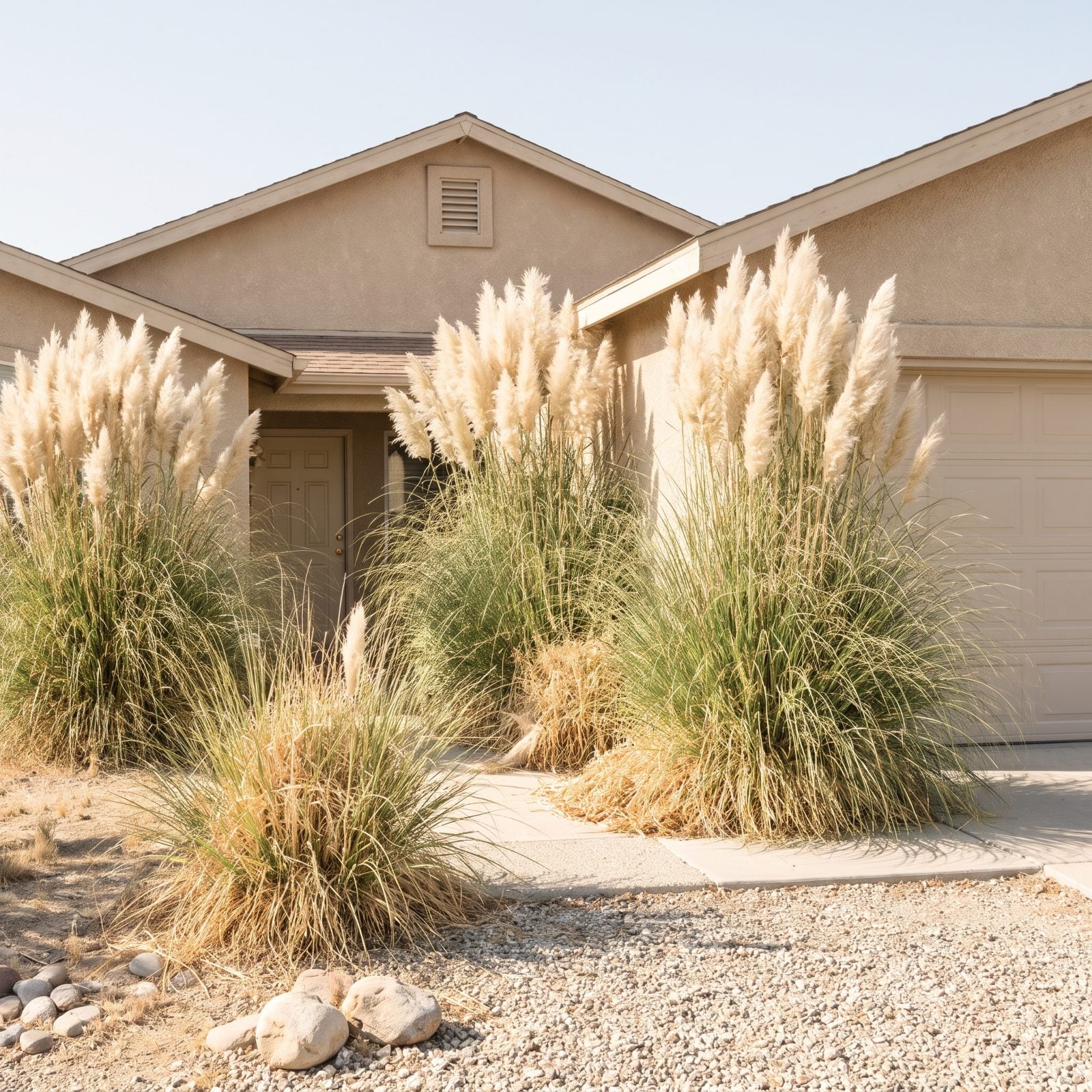
Pampas grass had its moment on every wedding backdrop, and then it kept growing. That’s the problem. One tidy clump becomes a thicket that swallows the front walk, and the blades are serrated enough to slice a hand that reaches in to clean it out.
Buyers in fire-prone regions see something worse — a column of dry tan fuel parked against the house. Parts of California regulate it for exactly that reason.
Describing pampas grass in a university weed guide, a plant scientist notes “Bright green leaves ascend and spread horizontally. Leaf edges are sharp and can easily cut exposed skin.”
12. Sago Palms in a Yard Where Dogs Run
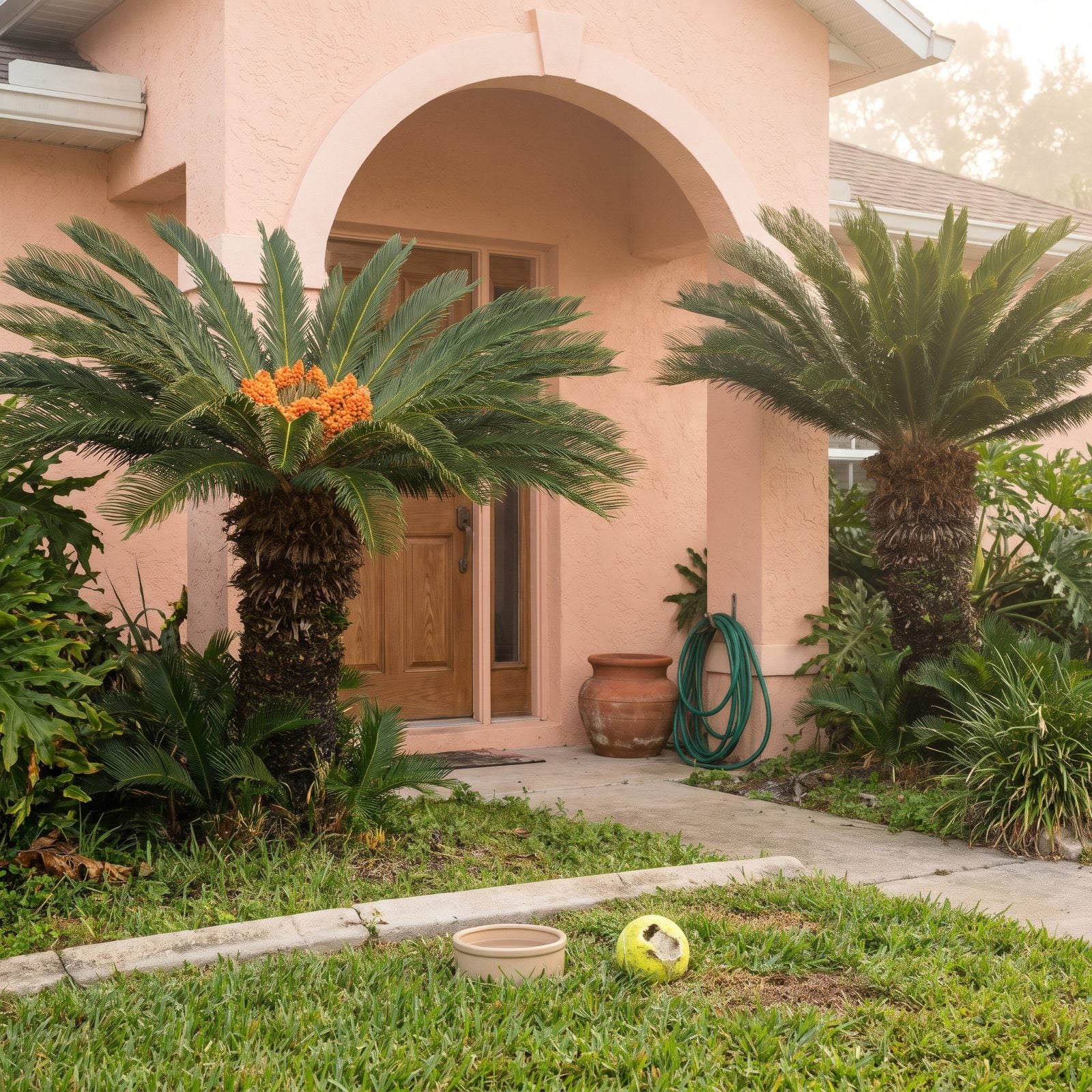
Sago palms look prehistoric and expensive, and every part of them is poisonous. The seeds are the worst of it. And dogs eat them.
A buyer walking the yard with a lab in the car does the math fast — veterinary emergency, liver damage, the kind of bill nobody budgeted for. One pretty plant turns into a liability the second there’s a pet in the picture.
Warning pet owners about the popular landscape plant, veterinarians at a teaching hospital say “many people are unaware that sago palm seeds, leaves, and roots are extremely toxic to pets.”
11. Foundation Shrubs Sheared Into Hard Green Balls
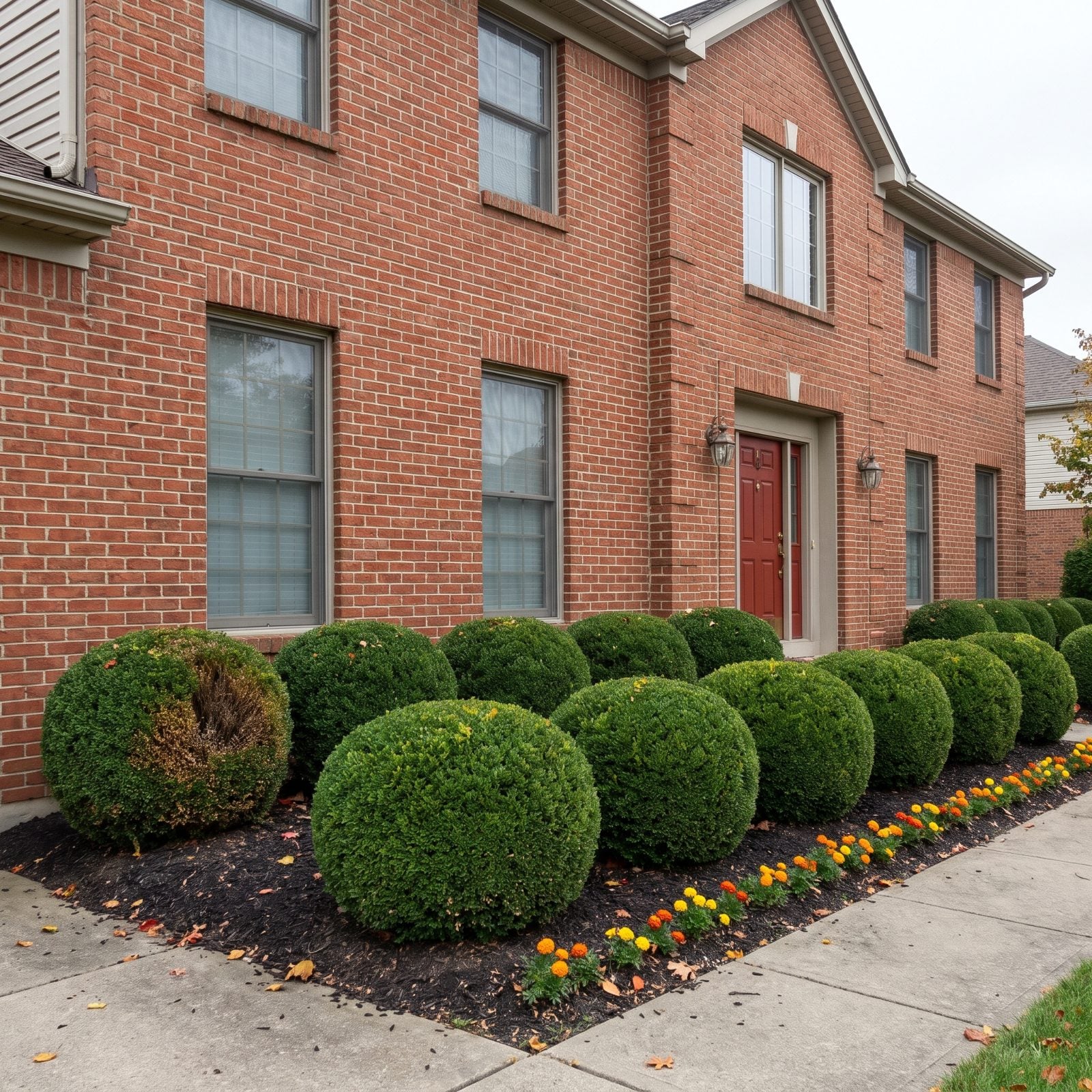
That row of green meatballs under the windows reads as high-effort, low-payoff. Shearing forces dense outer growth that shades out the inside, so the shrub browns at the core and begs for a trim every few weeks all summer just to stay crisp.
Buyers see a chore, not a feature. Loose, natural shrub shapes have taken over the design magazines, and the tight topiary ball now pins a house to a decade nobody’s nostalgic for yet.
10. Overgrown Conifers Blacking Out the Front Windows
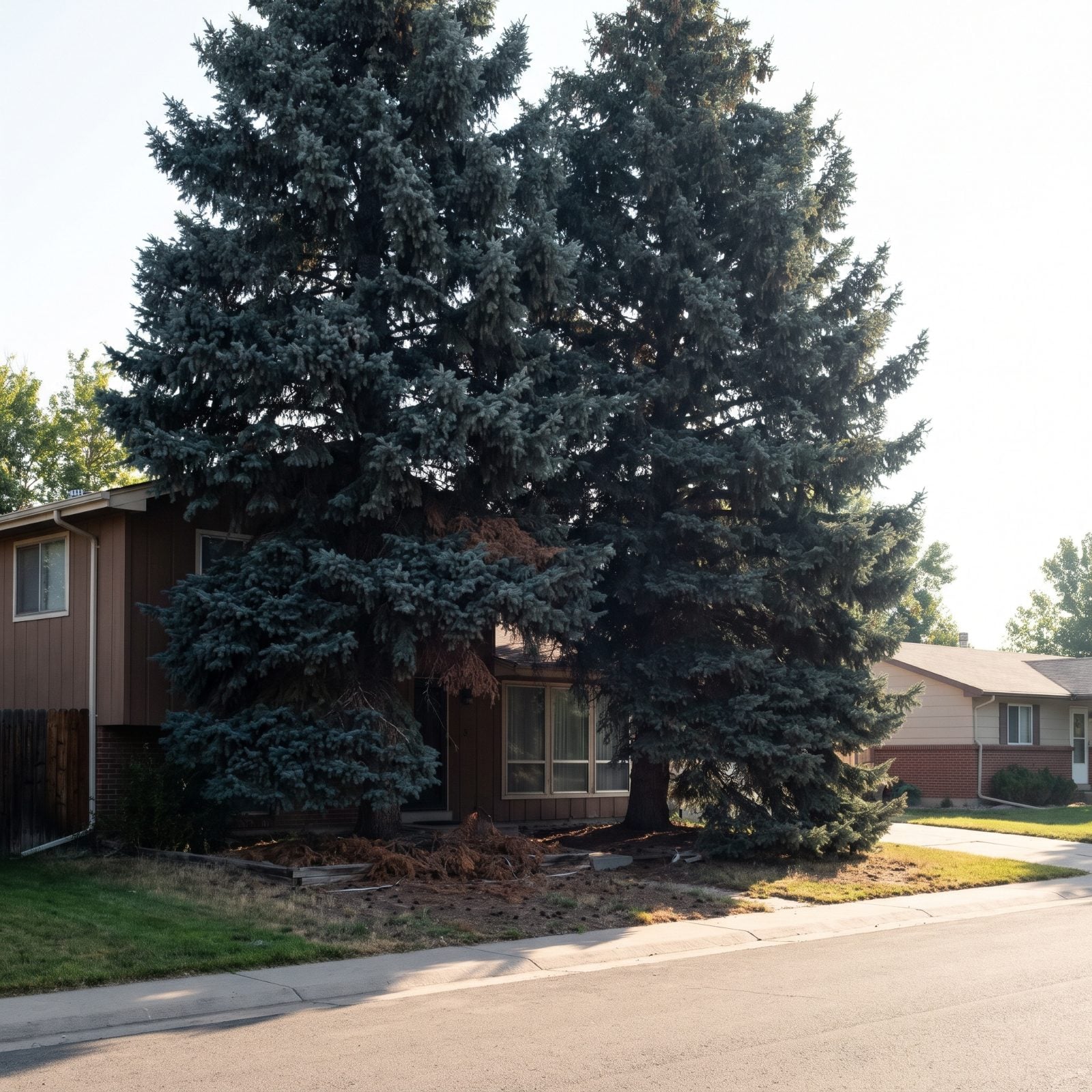
Somebody planted a six-foot spruce three feet from the house in 1985 and nobody ever told it to stop. Now it swallows the picture window, and the living room needs lamps at noon.
Prospect-and-refuge psychology explains the instant unease. People want an open sightline from the front of a home, and a wall of dark conifer takes that away, so buyers feel it before they can name it. Removal runs into real money, and that number gets subtracted from the offer.
A buyer walks up, can’t see the windows, and already feels like the house is hiding something.
9. A Formal Boxwood Knot Garden Out Front
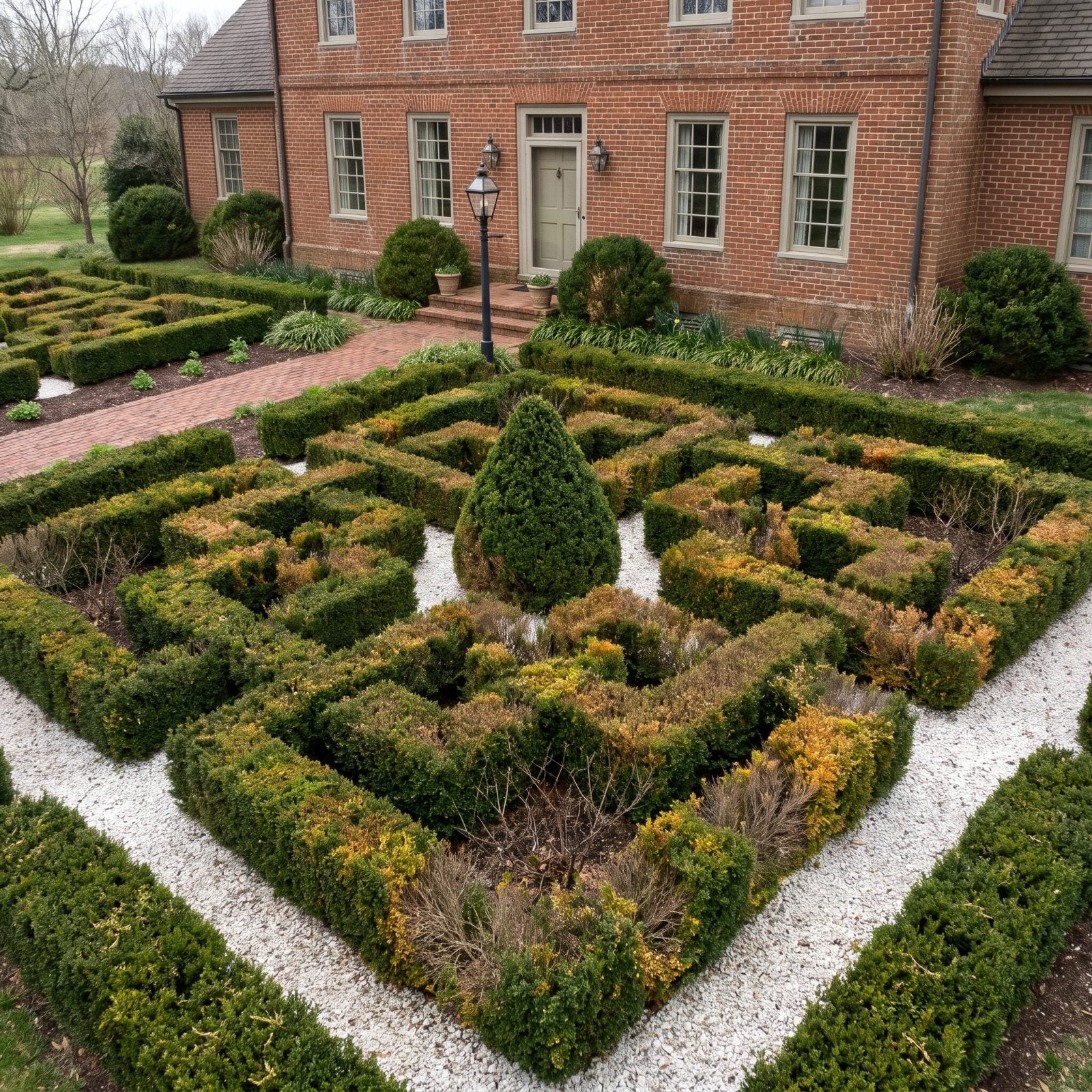
A knot garden is a flex. It says the previous owner had a hedge trimmer and strong opinions.
Here’s the trouble. Boxwood blight has swept through the eastern states, and once it reaches that geometric pattern, a single brown gap breaks the whole thing. Keeping the lines sharp means regular clipping, clippings to rake, a standing replacement plan for whatever dies. Most buyers want a yard — not a part-time job in topiary.
8. A Hybrid Tea Rose Garden That Demands Constant Babysitting
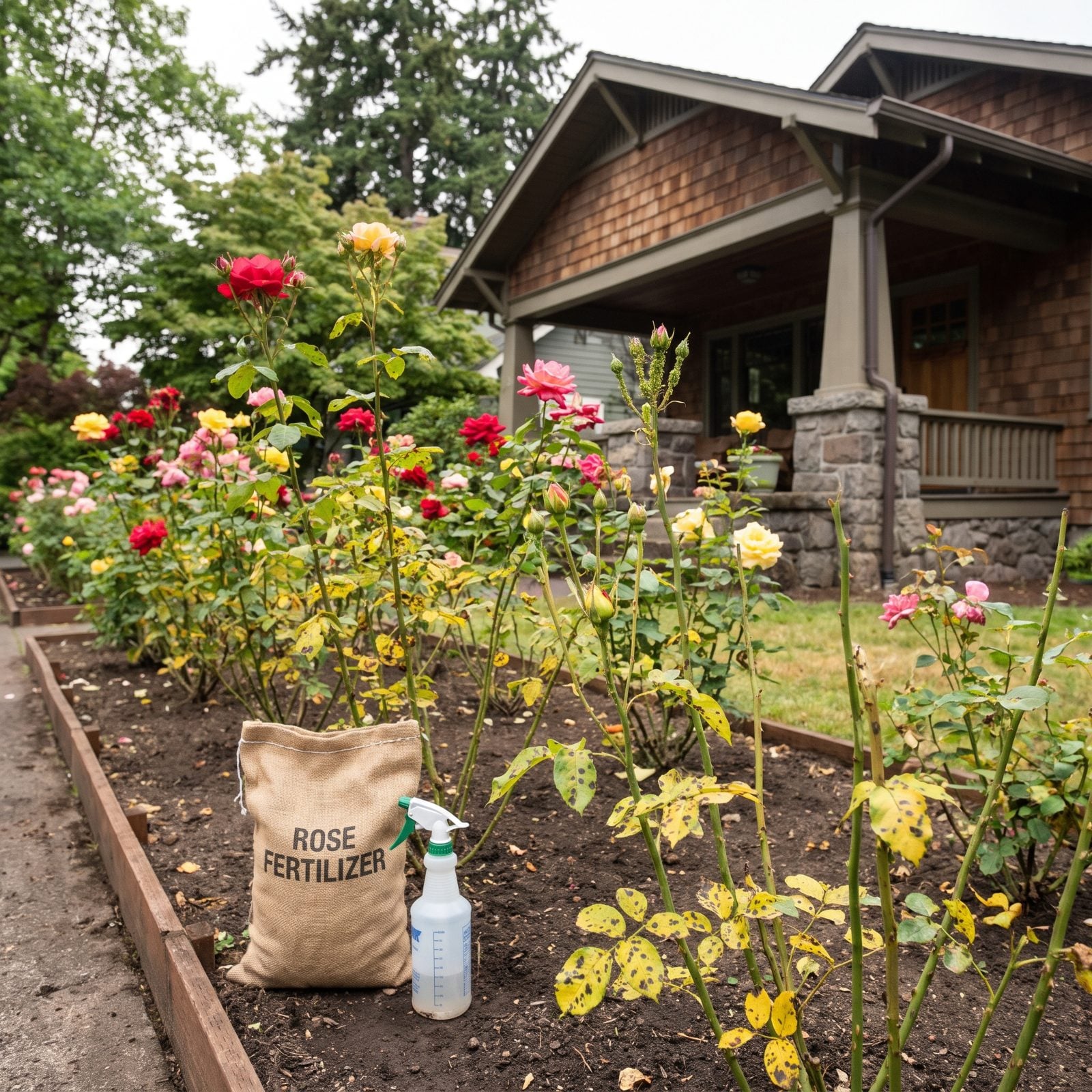
Hybrid teas give you florist roses on your own canes, and they charge for it. Black spot, aphids, Japanese beetles, dieback, plus a feeding schedule that reads like a medication list.
We killed a bed of them three summers running before we gave up and planted shrub roses, so we say this with scars. A buyer who gardens recognizes the commitment on sight. A buyer who doesn’t sees bare thorny canes and dark soil and quietly subtracts.
7. Carpet-Bedding Annuals in Tight Geometric Blocks
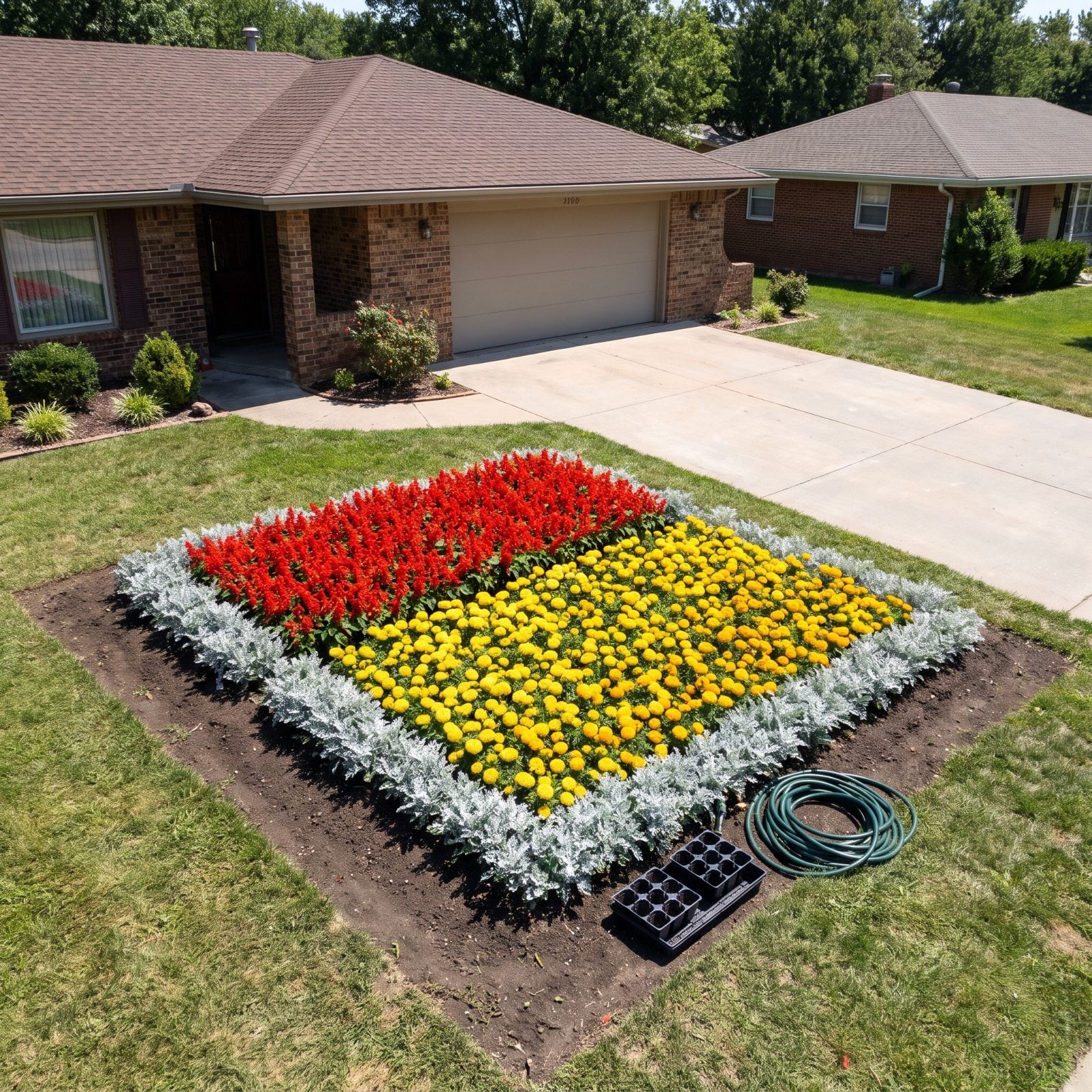
Carpet bedding looks like the front of a civic building, which is exactly the problem in a residential yard. Those crisp blocks of salvia and marigold take hundreds of transplants, a soaker hose running all summer, and a full tear-out and replant twice a year.
Thirsty, annual, and basically a maintenance contract waiting for a new owner to inherit.
6. A Backyard Turned Into Wall-to-Wall Vegetable Beds
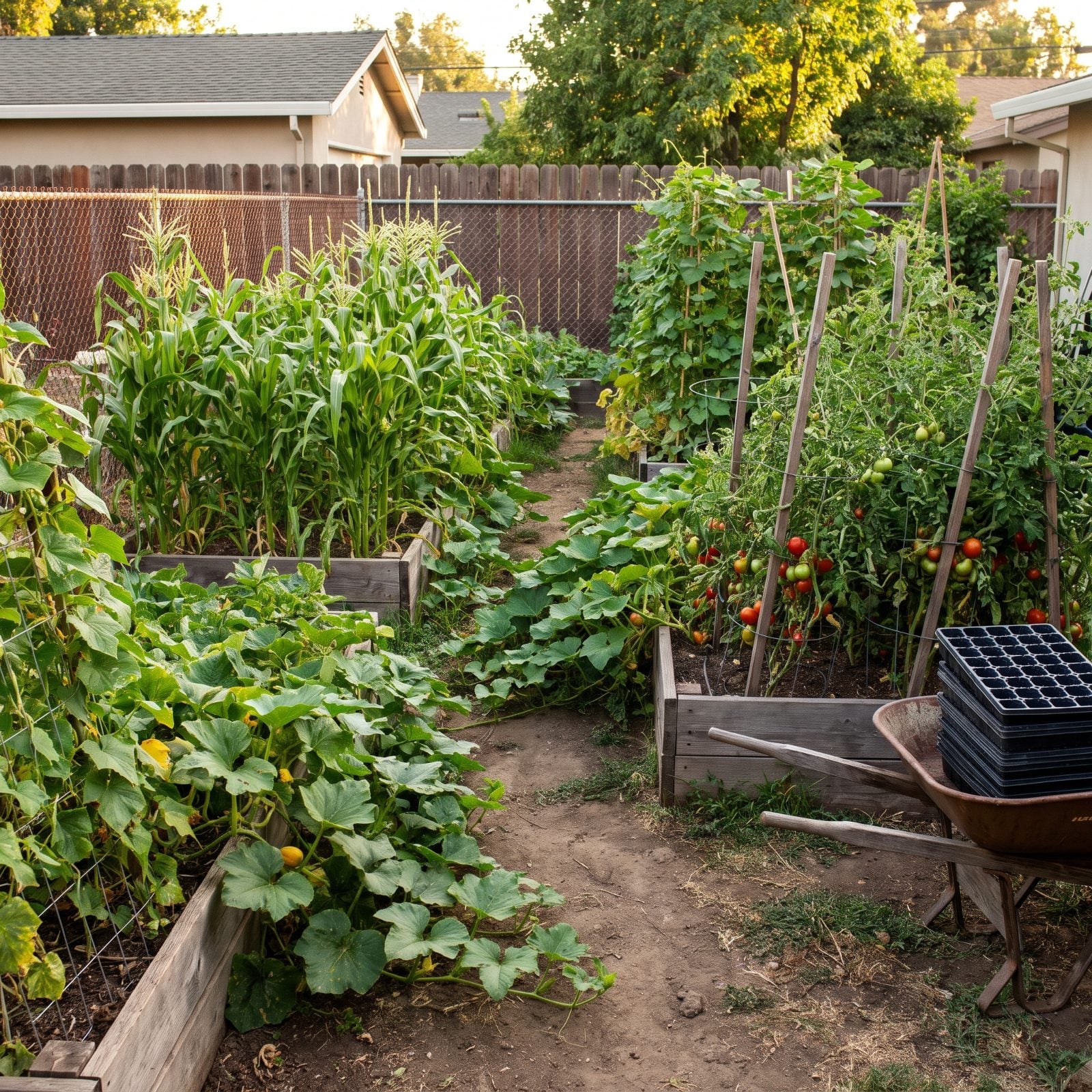
One or two raised beds is a selling point. A backyard where every inch is corn, squash and tomato cages sends a different message: nowhere for the kids to play, nowhere to put a table.
Most buyers picture a yard they relax in, not a small farm they have to keep running or rip out. All that production also means irrigation, pests, and seasonal labor the new owner never signed up for. Hand them flexible space and let them decide what grows there.
5. Raised Beds Hammered Together From Shipping Pallets
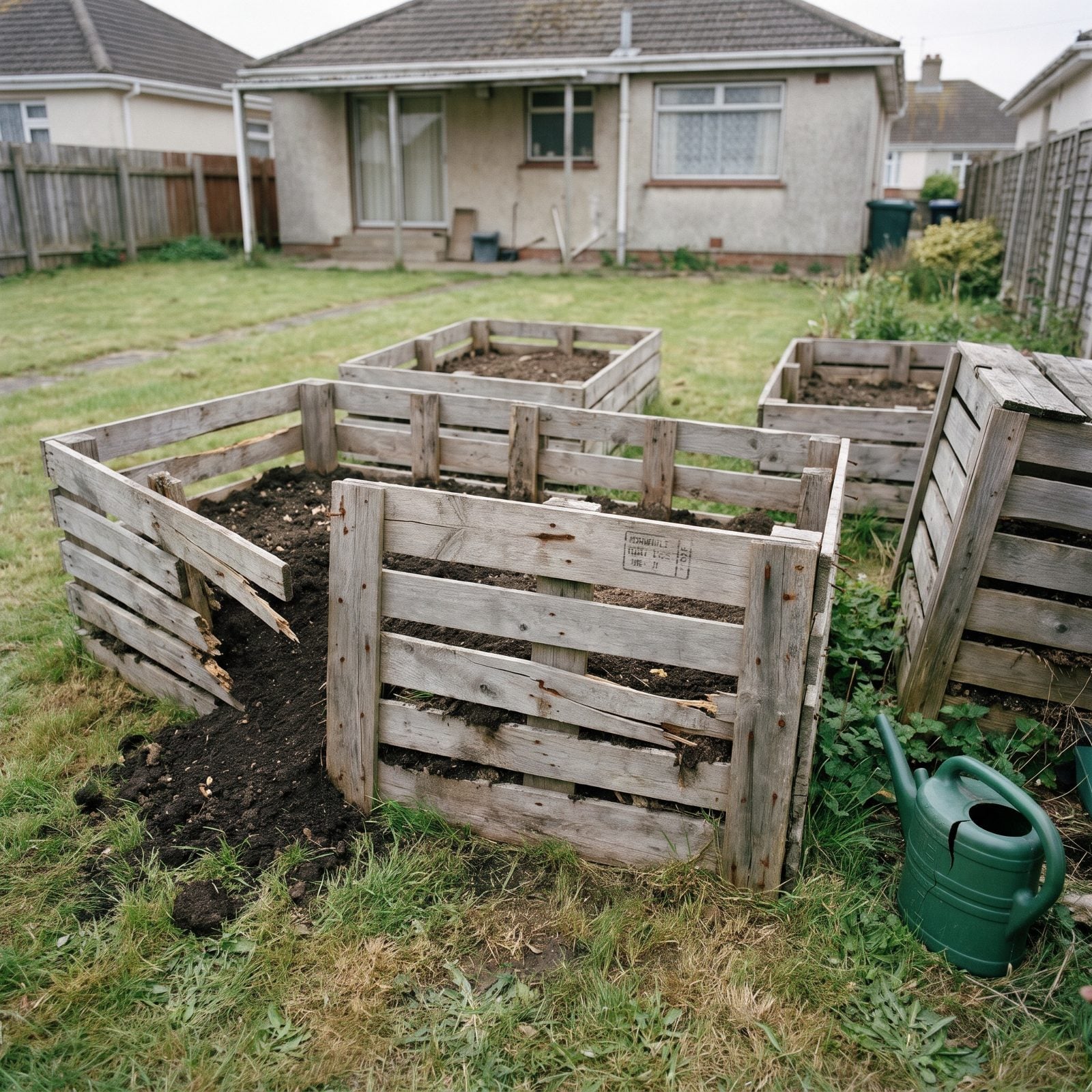
Pallet beds are the thriftiest idea in the yard, and they look it within two seasons. The soft wood splinters, the slats warp, the nails back out, and the whole thing starts sagging into the lawn.
There’s a quieter concern too. Plenty of pallets get treated with chemicals or stamped with codes buyers can’t read, and nobody wants to guess what leached into the soil around their tomatoes. A buyer sees splintering gray wood and rusty nails and files the backyard under future demolition.
4. Large Trees Planted Against the Foundation
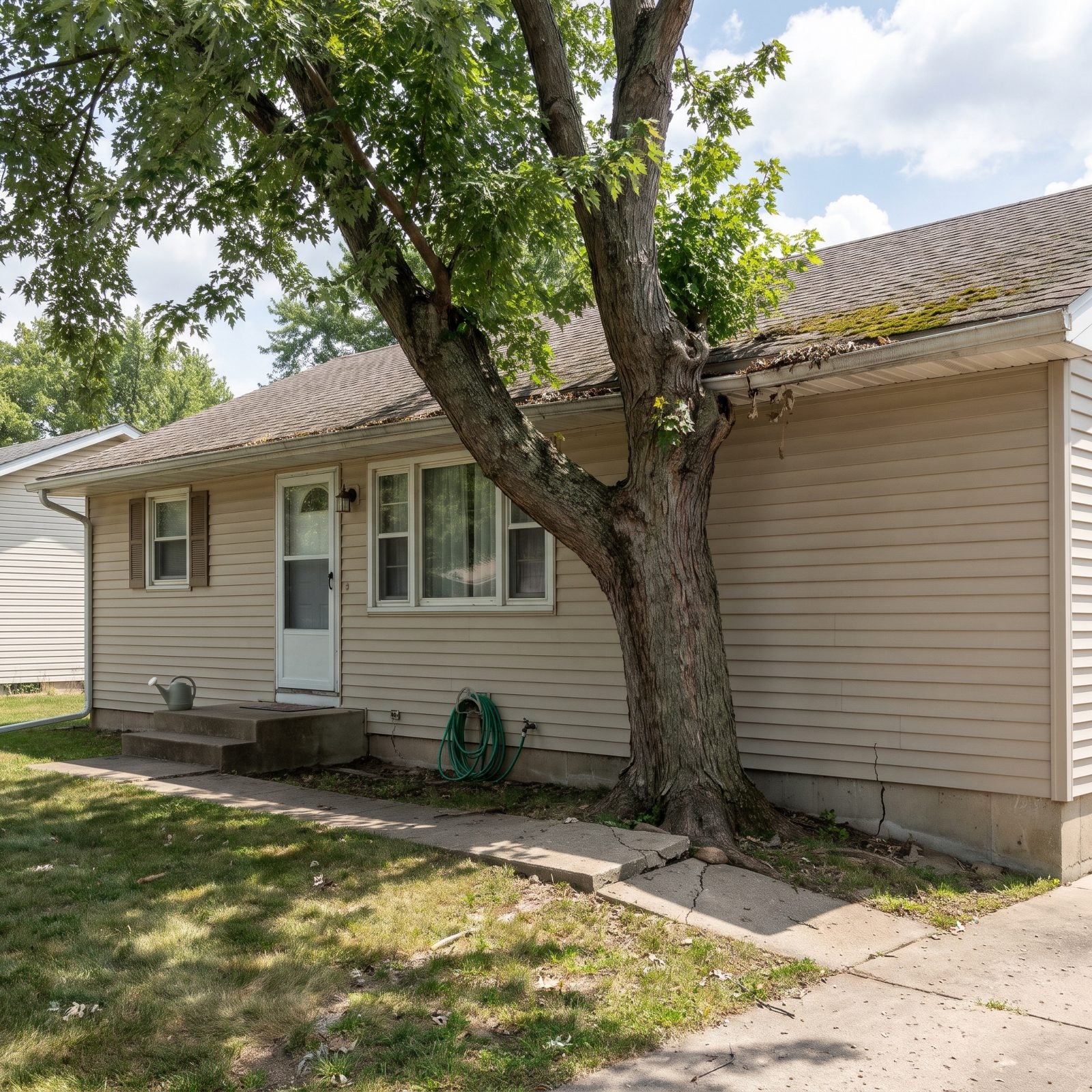
A tree that close to the house looks established and shady. A home inspector sees something else entirely: roots working toward the foundation, branches dragging on the roof, and a gutter that never stays clean. That silver maple pressed against the siding is the kind of thing a 2027 buyer prices into their offer.
Big species planted within a few feet of a wall are a slow problem because roots go where the water is, and the water is under your slab. I’ve watched one hairline crack become a conversation nobody wanted to have at closing.
3. Fruit Trees Dropping Onto the Patio
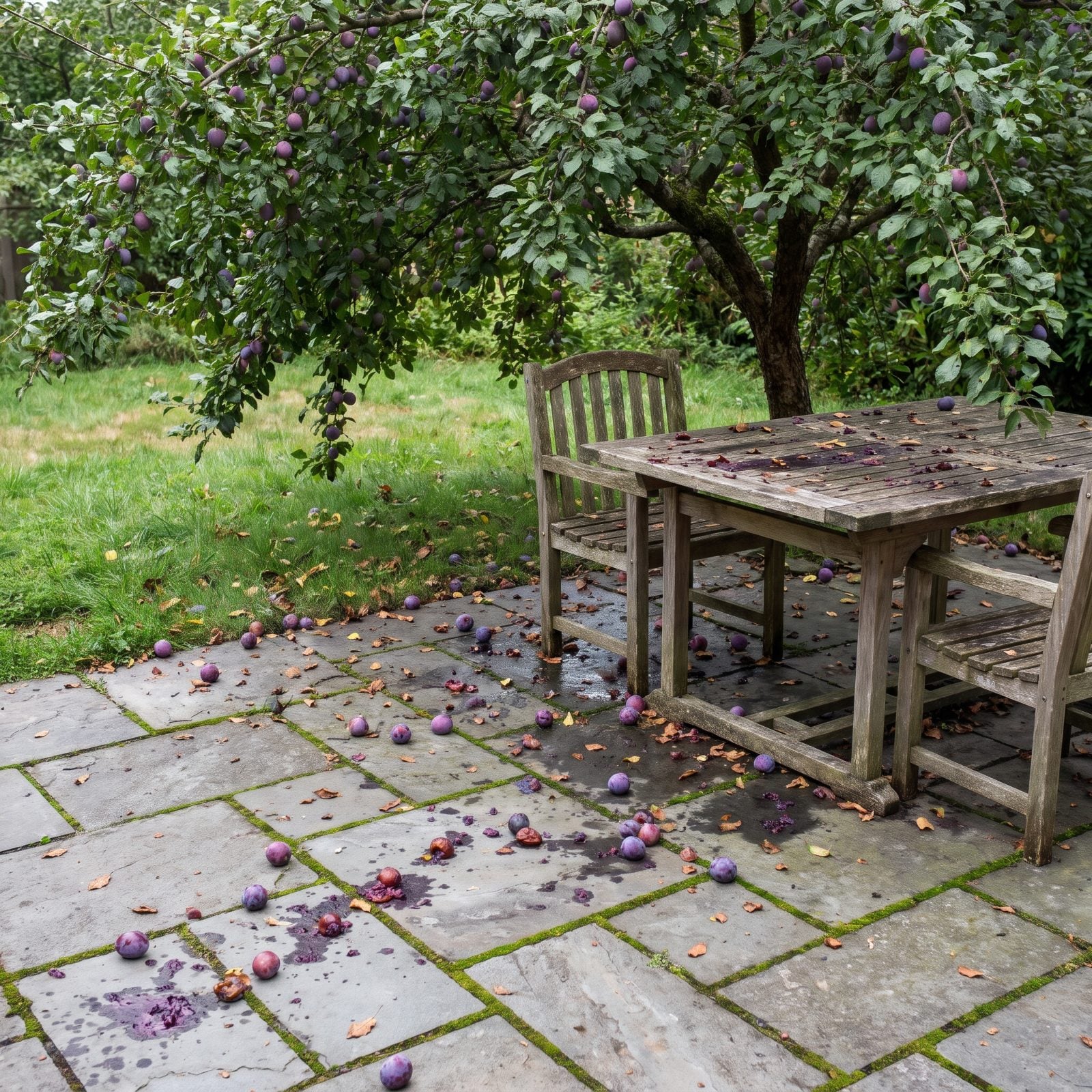
Everybody wants a fruit tree until it’s fruiting. Then August arrives and the patio is a sticky, wasp-drawing mess of fallen plums that stain the flagstone and get tracked inside on every shoe.
A buyer walking that backyard in late summer does the math fast. The tree over the seating area means weekly cleanup, wasps hovering near the dinner table, and grout lines that never come fully clean. Reads as a chore, not a charm.
2. Solar Stake Lights Lining Every Walkway
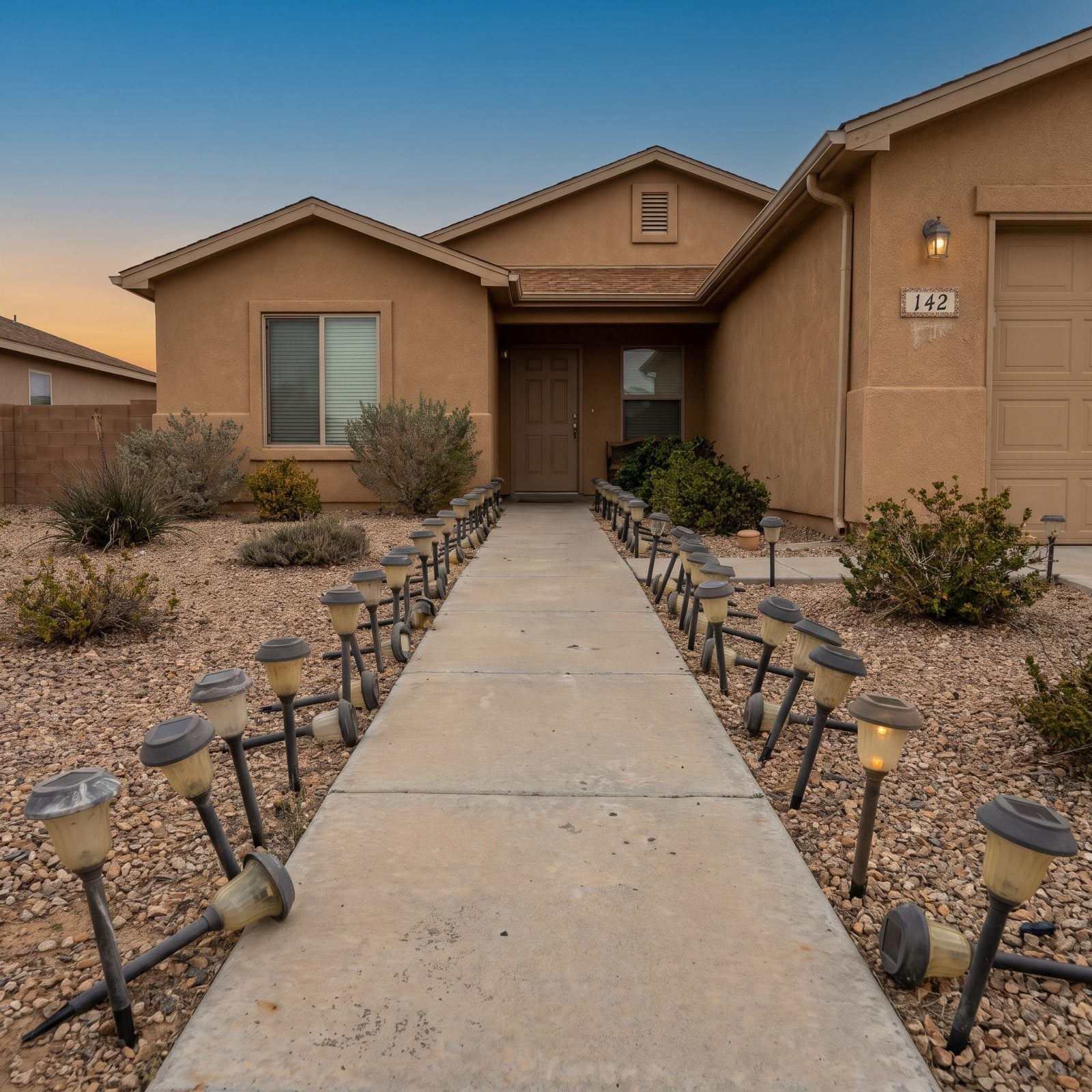
Two cheap solar lights look tidy. Forty of them lining every path turns the yard into an airport runway, and half of them are always dead or leaning drunk.
The fix isn’t more lights. It’s fewer, better ones. A handful of low-voltage fixtures at the turns does more than a cloudy plastic army ever will, and it won’t date the front of the house.
1. A Dense Collection of Lawn Statues

One gnome is a wink. Thirty is a declaration, and not one most buyers want to inherit.
A yard packed wall to wall with cherubs, deer, toadstools, and a mossy fountain reads as deeply personal, which is exactly the problem. Buyers can’t see their own life in it. They see yours, plus a weekend of hauling concrete to the curb.
Keep the ones you love. Pack the rest before the photos. A little open lawn lets a buyer dream, and dreaming is what sells.