🔥 Would you like to save this?
The six-foot stockade fence had a good run. It kept the dog in, kept the sightlines out, and turned every backyard into the inside of a shipping crate. For years privacy meant exactly one thing — a wall tall enough to forget the world existed. That era is quietly ending. The smarter move now is a backyard that screens what it needs to and opens where it can, built from living greenery, warm wood, weathered metal, and glass that changes its mind on command. These are the features designers keep pointing to when the subject is outdoor rooms that feel private instead of fortified.
42. A Layered Evergreen Privacy Border
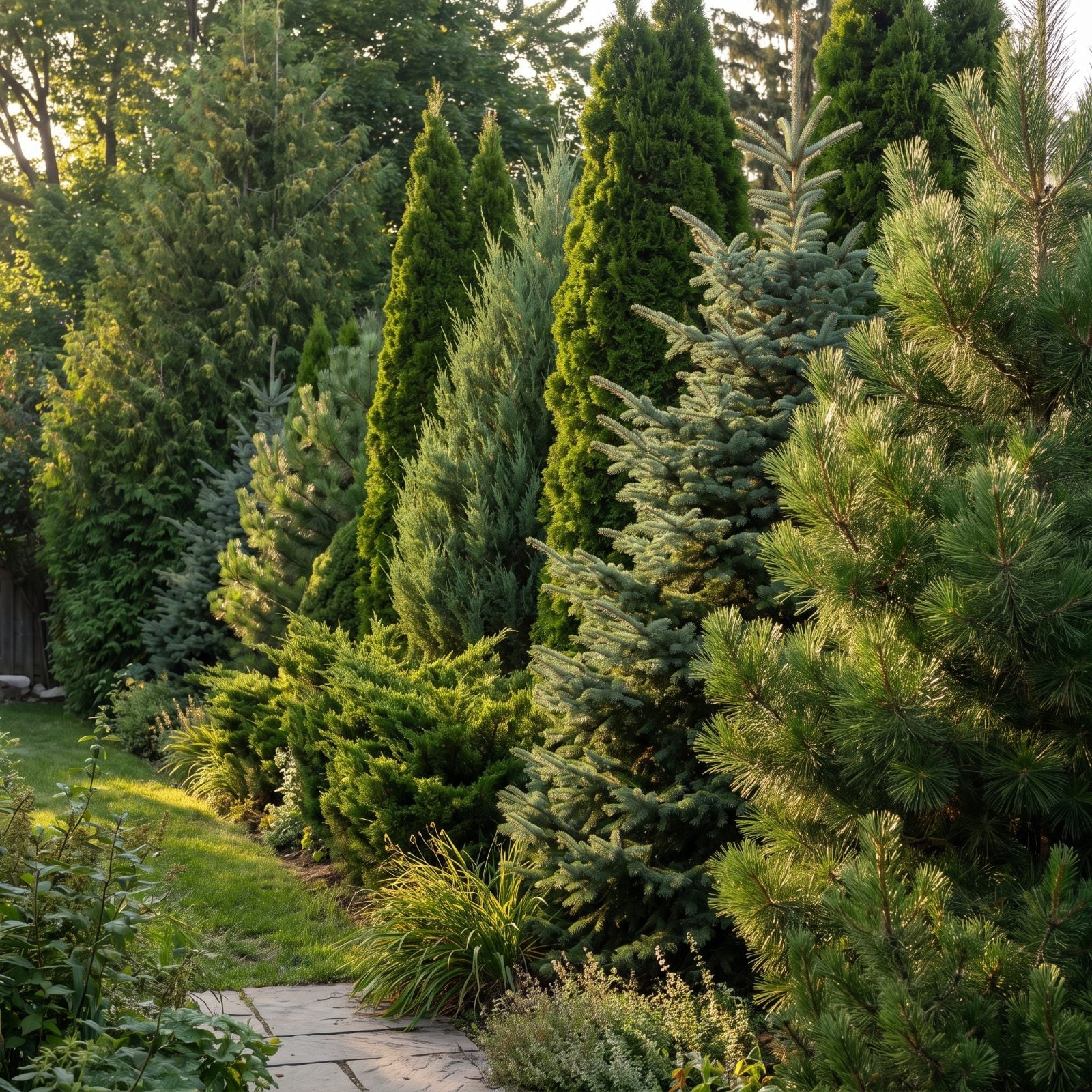
One row of arborvitae screens the neighbors. Three staggered rows screen the neighbors and look like you meant it, which is the whole idea behind a layered border and the privacy move designers keep circling back to for 2027.
In order to come up with the very specific design ideas, we create most designs with the assistance of state-of-the-art AI interior design software. Also, assume links that take you off the site are affiliate links such as links to Amazon. this means we may earn a commission if you buy something.
The logic is simple. A tall back row of arborvitae and columnar evergreens blocks the second-story sightline, a middle tier of spreading juniper fills the gap at fence height, and low ornamental grasses soften the base so nothing reads as a hard wall. Depth does the hiding. The eye never finds the edge, so it stops looking for the house behind it.
41. A Pivoting Louver Privacy Screen
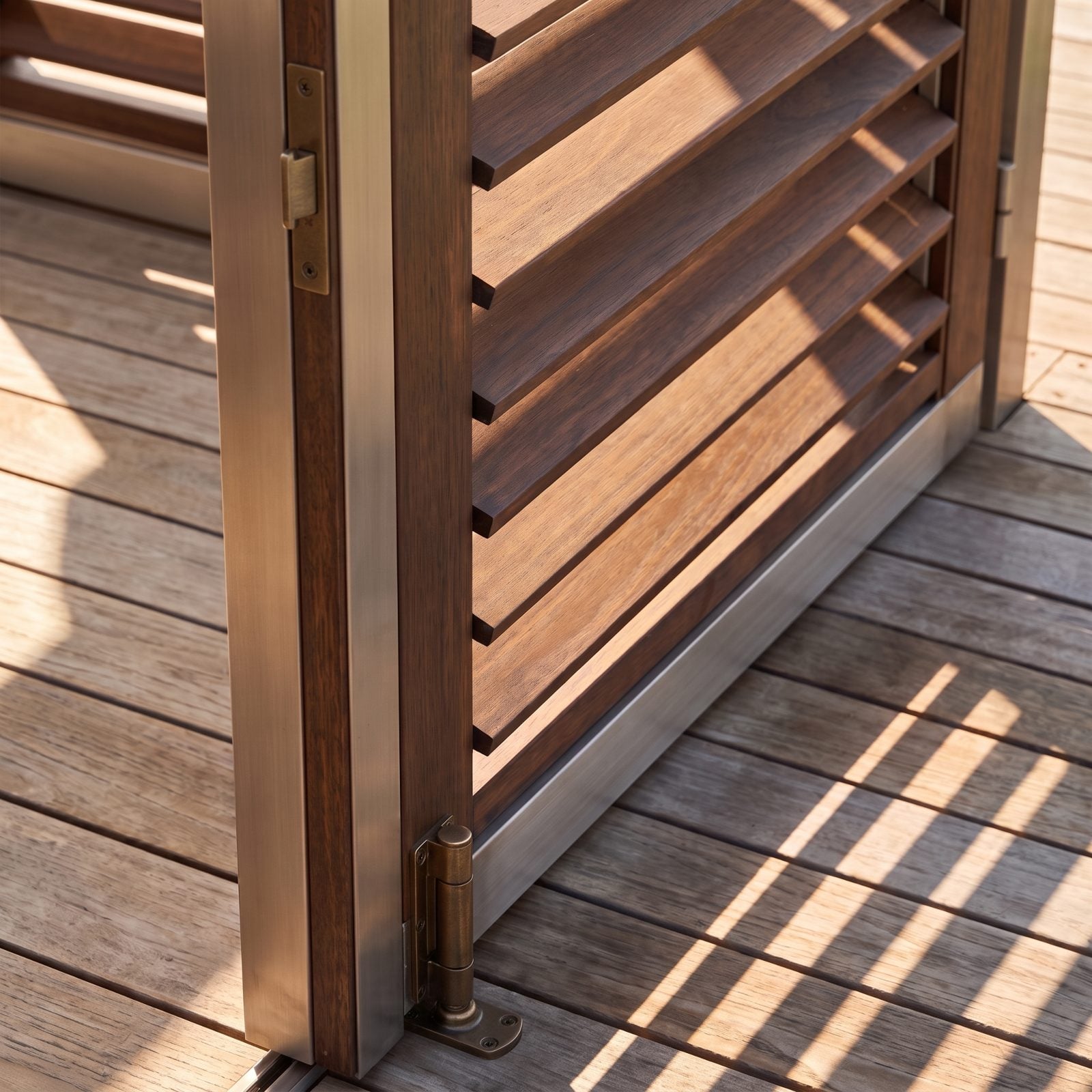
Solid walls make one decision and live with it forever. A louvered screen that swings on a hinge pin lets you change your mind by the hour.
Swing it open in the morning for breeze and an easy path, then latch it shut at dinner when the neighbor’s deck fills up, while the fixed angled slats still let light and air filter through. The warm wood slats set in a brushed metal frame give you a door instead of a wall, and that flexibility is why they keep showing up on 2027 deck plans. Pair one with a concrete planter and the corner reads as an outdoor room, not a barrier.
40. A Mixed Native Hedgerow
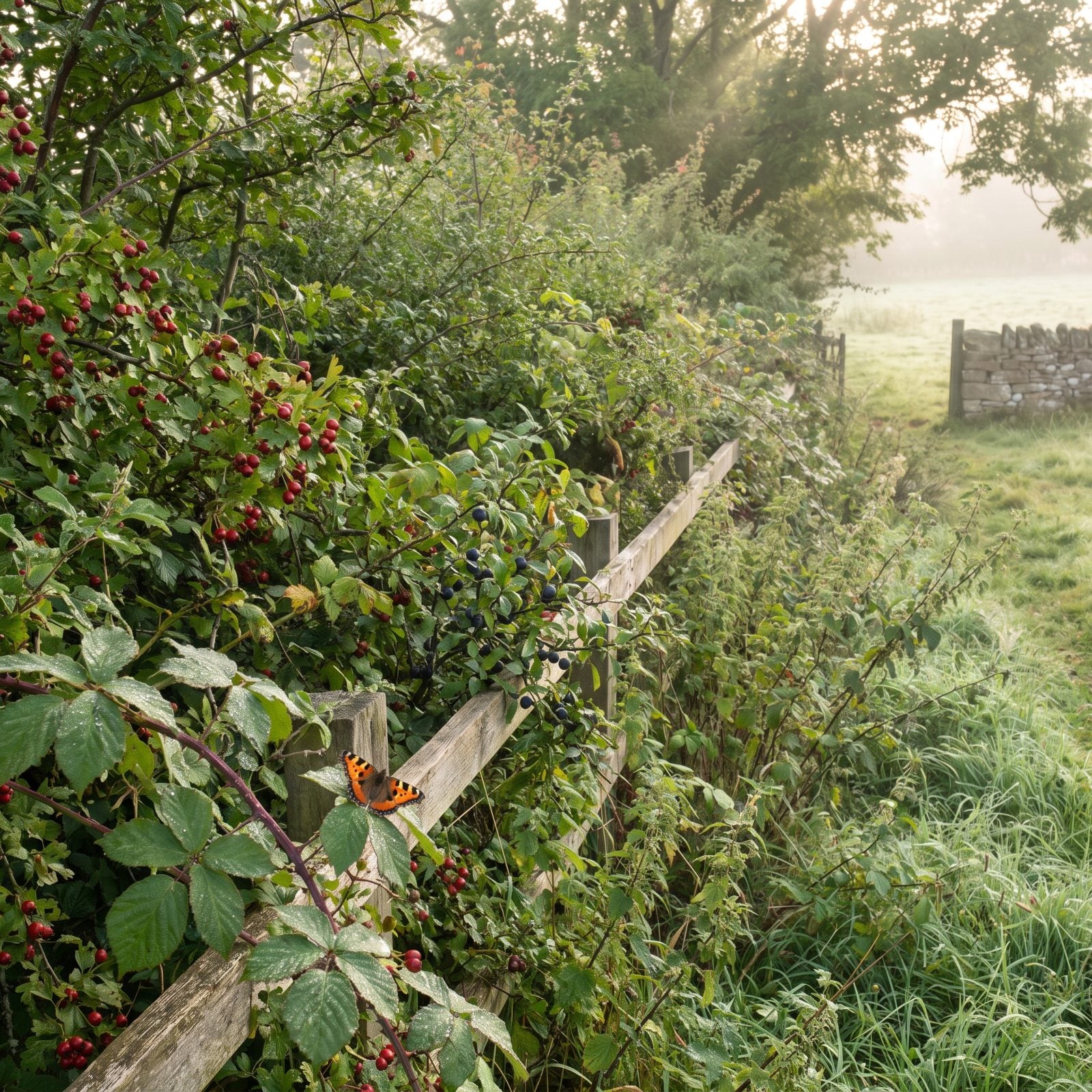
A clipped hedge is a standing appointment with a ladder and a trimmer every few weekends. A mixed native hedgerow is the opposite deal.
You plant serviceberry, viburnum, red-stem dogwood, and elderberry in a loose drift and let them knit into a living wall that screens the shed next door while feeding every bird in the zip code. It never needs to be perfect. The messiness is the aesthetic.
39. Switchable-Opacity Glass for a Garden Room
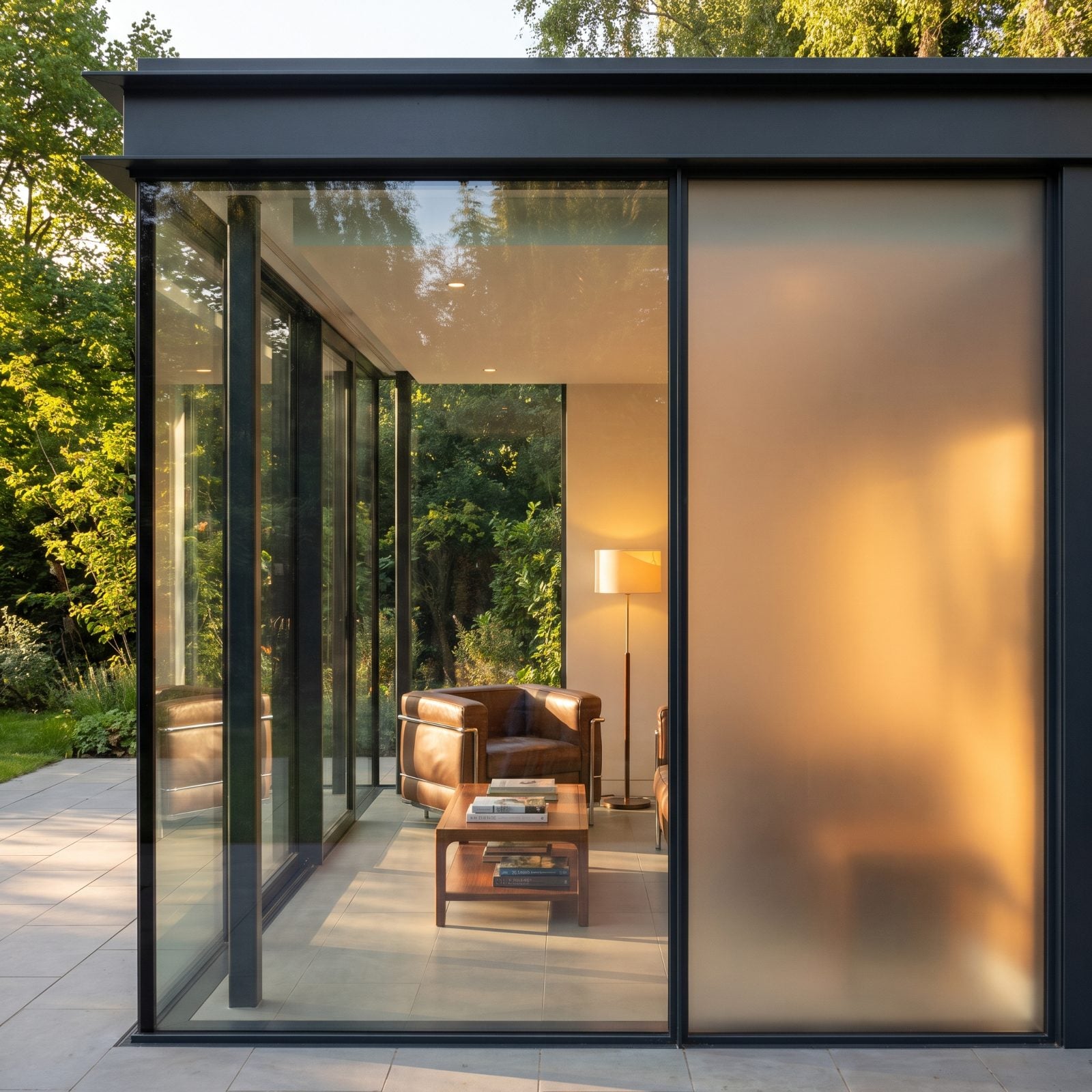
Glass that flips from clear to frosted sounds like a gimmick until you actually use a garden room at dusk.
Clear all afternoon, you get the view and the daylight. Opaque in the evening, the walls go milky and the whole structure becomes a lantern nobody can see into. Designers expect this to work its way into the backyard pavilion and the detached studio by 2027, where privacy comes and goes with the hour instead of staying locked on. It pairs nicely with the enclosed, neutral comfort of a neutral attic design — just out in the garden, with weather.
38. A Pleached Tree Screen
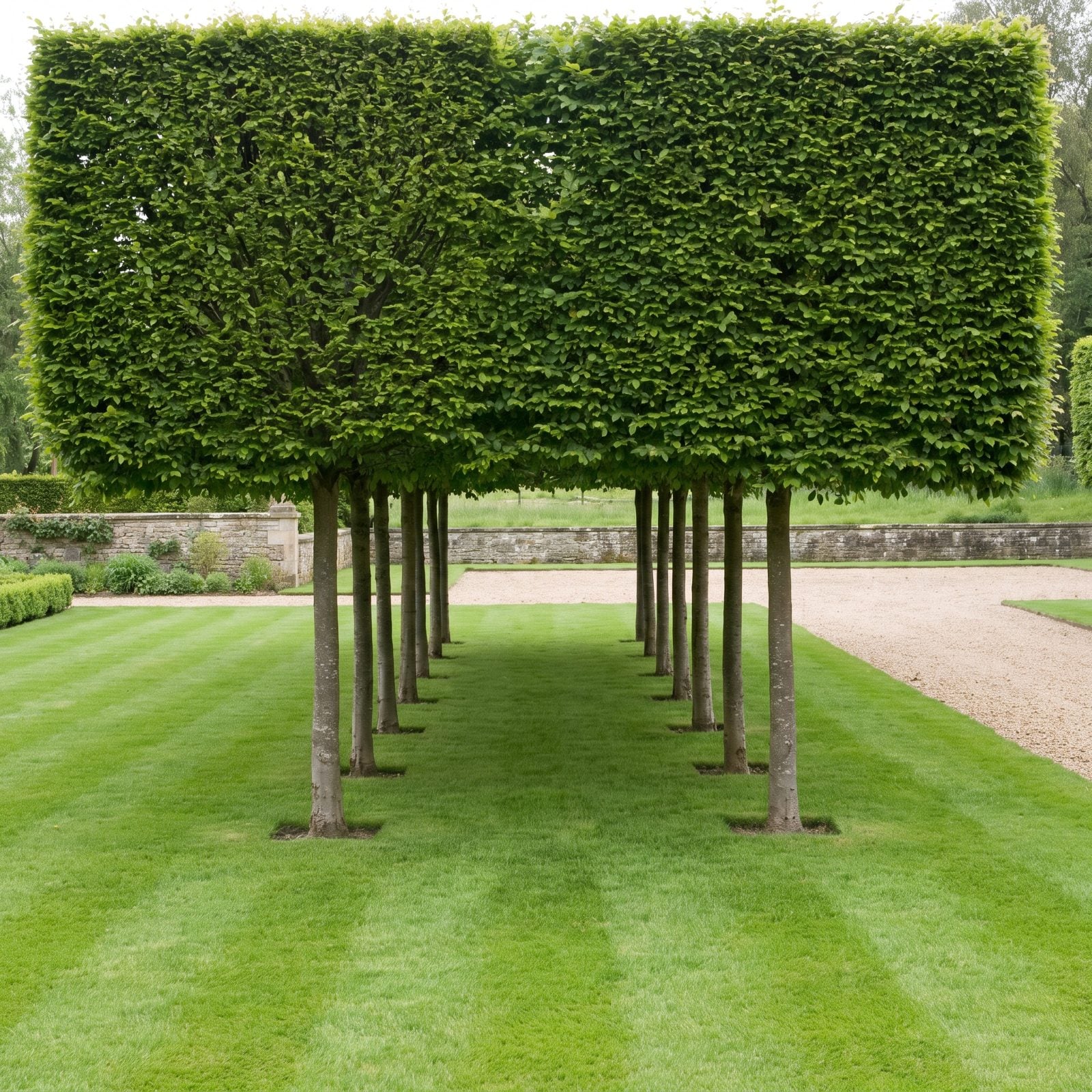
Pleaching is the trick European gardeners have used for centuries to get privacy up high without losing the ground below.
The trees get trained flat along a frame until their canopies fuse into a floating green rectangle, trunks left bare underneath. That raised screen blocks the neighbor’s upstairs windows while your patio stays open and bright beneath it. It’s the answer when the problem is a sightline twelve feet up, not six.
Privacy where you need it, space where you don’t. Pleaching separates the two.
37. A Recycled-Material Acoustic Fence
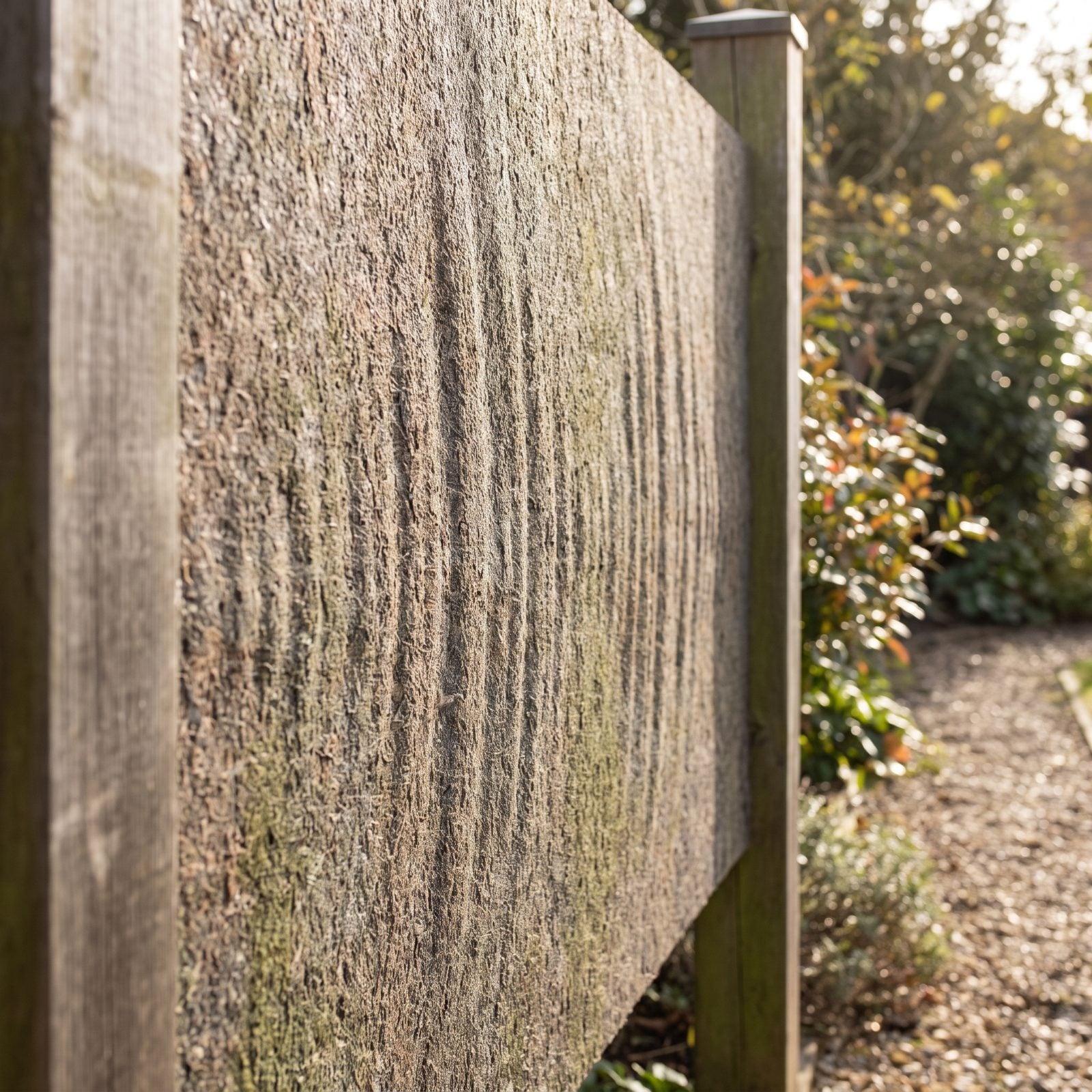
Most fences stop a view and do nothing about the sound. And if you back onto a road, the view was never the real problem.
An acoustic fence runs a dense composite core between reclaimed timber faces, so it swallows the drone of traffic instead of letting it slide right over the top. The recycled-material angle is why it keeps landing on 2027 lists — a privacy wall built mostly from what would’ve gone to landfill.
36. A Sliding Screen Wall That Reconfigures the Patio
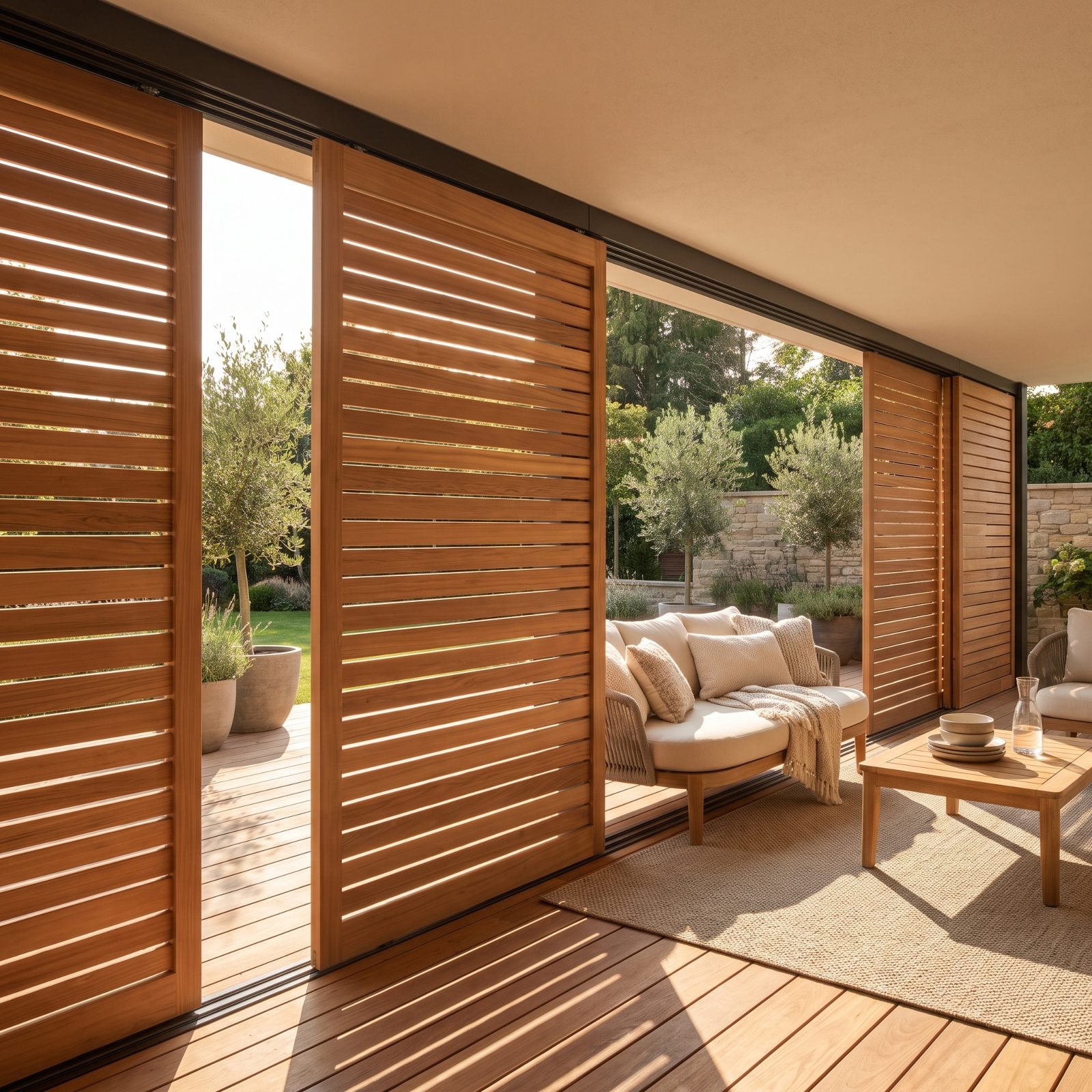
A patio that does one thing all day is a wasted patio.
Hang a few slatted cedar panels on an overhead track and the space reconfigures on demand. Slide them shut and you’ve carved an enclosed nook off the open yard; slide them back and the whole garden opens up again. The barn-door mechanics are low-tech and nearly silent, and the warm cedar keeps the thing from reading as industrial. It’s a smart layering move for narrow backyard ideas where every square foot has to earn two different jobs. Add a light wooden slatted coffee table and the nook feels finished the second you close the panels.
35. A Green-Roofed Privacy Pavilion
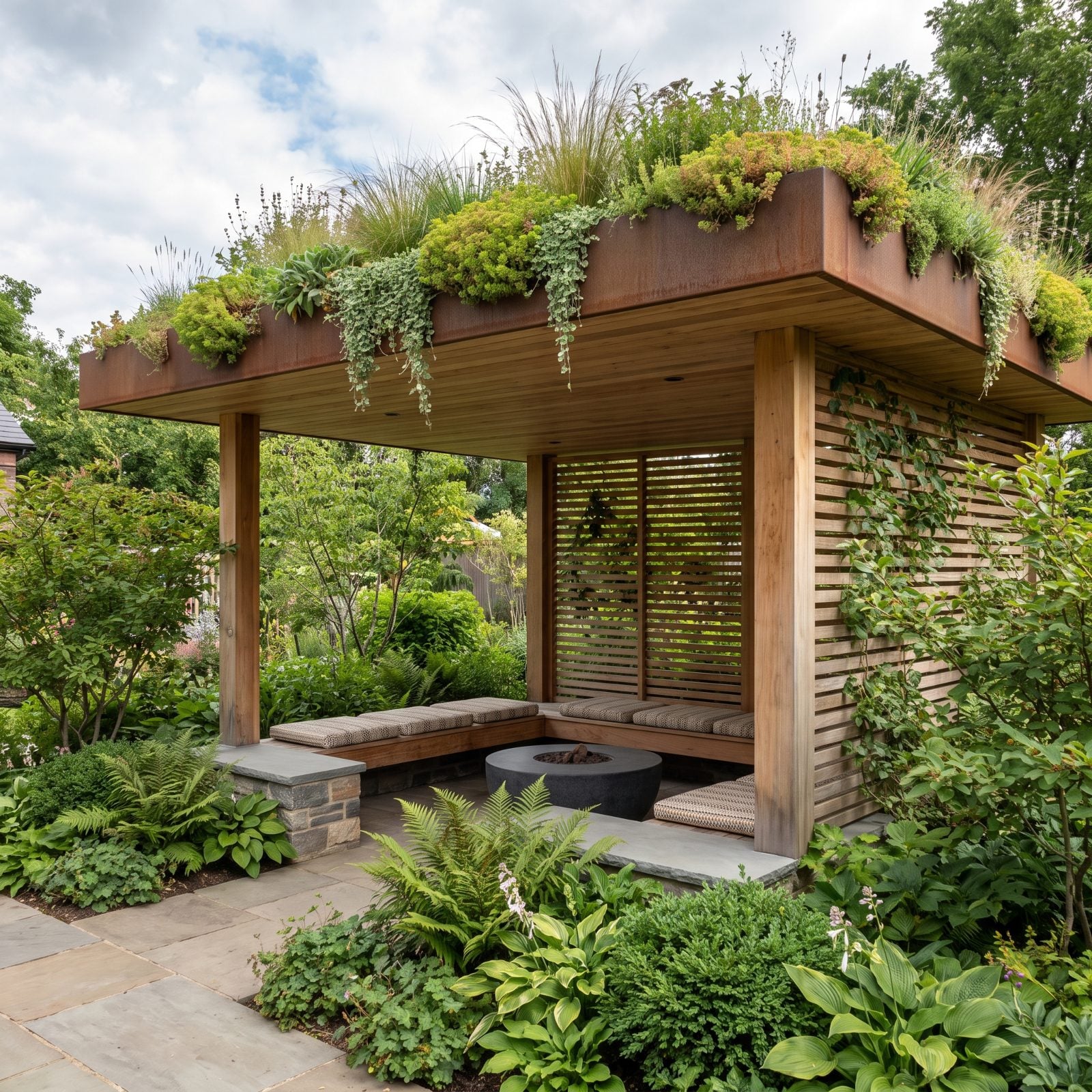
A plain pavilion gives you shade. A green-roofed one gives you shade, screens the neighbors, and insulates itself under a layer of living sedum.
Add a slatted wood screen at one back corner and the structure pulls double duty: the roof cools the space below while the screen blocks the one sightline you never wanted. The open sides still look straight through to your own patio, lawn and garden, so you get refuge without the bunker feeling. It’s the kind of standalone retreat that gives a yard the finish of a proper glam backyard makeover without a single demolition day.
34. A Columnar Tree Allée for Narrow Lots
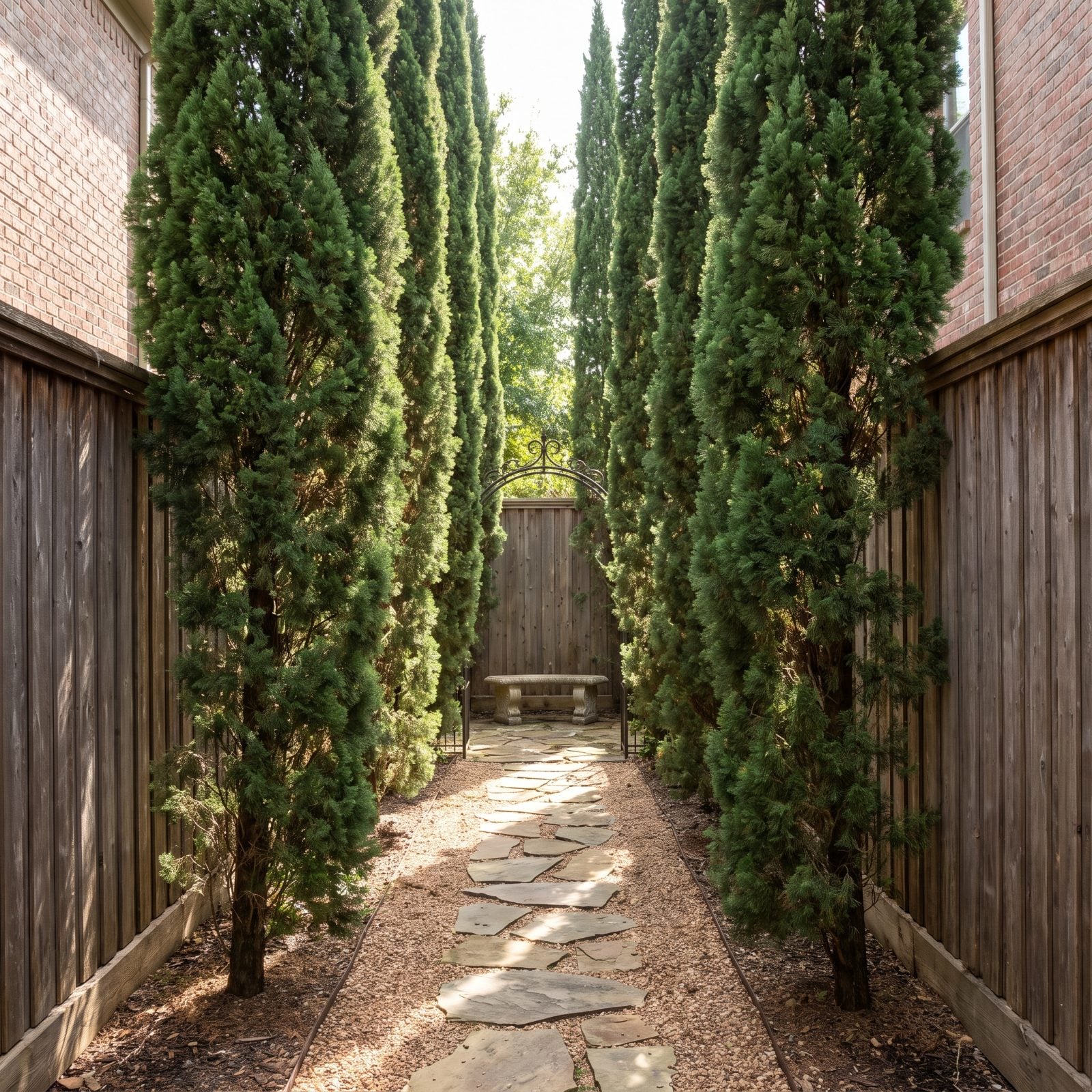
Narrow side yards are where privacy plans usually give up. There’s no room for a proper hedge, so people default to a fence and call it a loss.
Columnar trees solve it. Slim upright cypress or fastigiate hornbeam planted in a tight line give you a green wall that’s tall but barely a foot wide, screening the neighbor’s windows down the whole run without eating the path. Space them close and they read as an allée instead of a row of poles, and that corridor effect actually makes a skinny lot feel longer.
33. A Corten Steel Screen Wall
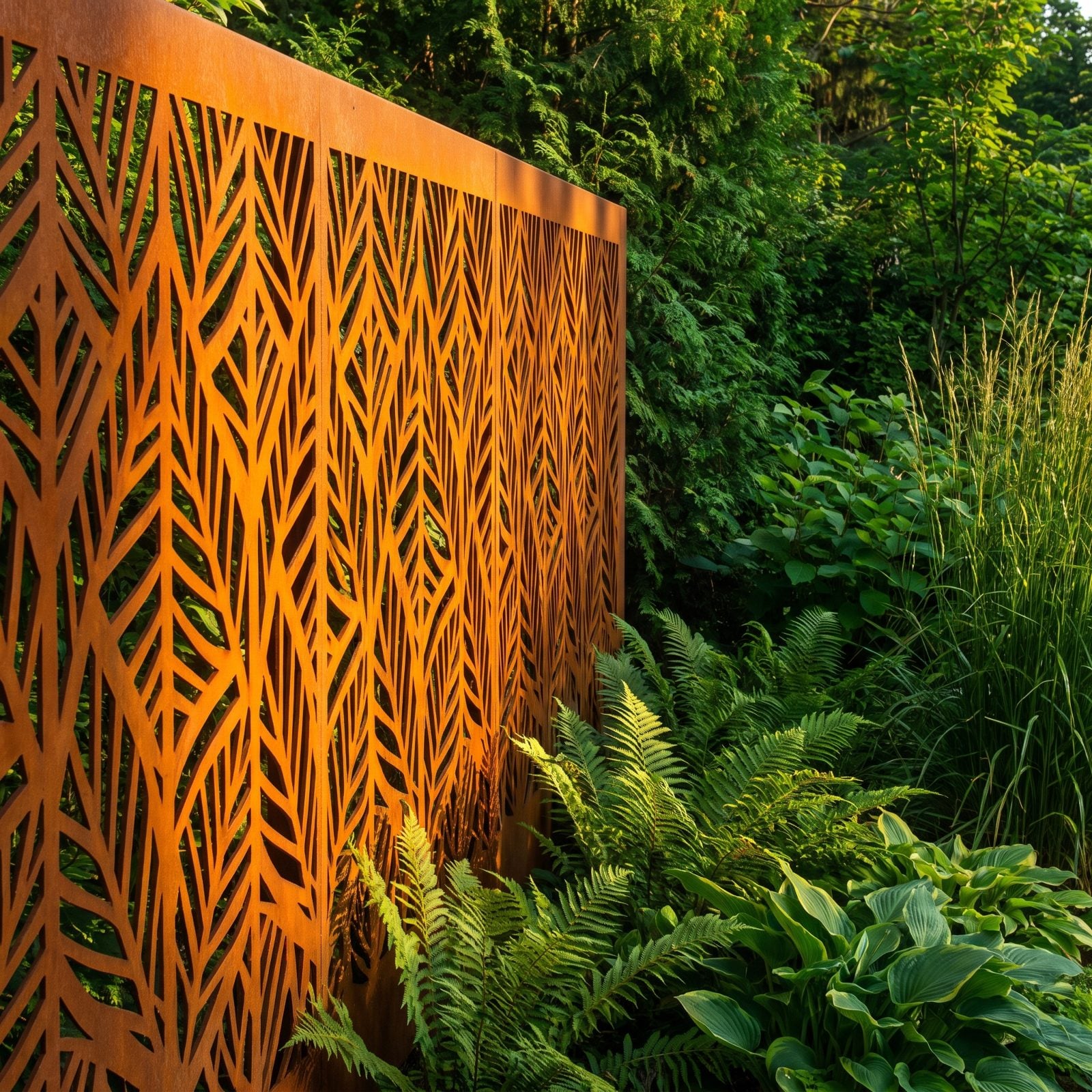
Corten steel rusts on purpose, and that’s the entire appeal.
The panels weather to a warm rust orange that reads as earthy rather than industrial, which is why they settle in so well against planting instead of fighting it. Cut an organic pattern through the steel and the wall screens the house next door while scattering shifting shadows across the patio as the sun moves — solid where you need the block, perforated where you want the light. That same warm rust-and-green pairing works indoors too, the way a tropical basement design leans on natural tone set against foliage.
32. A Retractable Side Awning That Edits the View on Demand
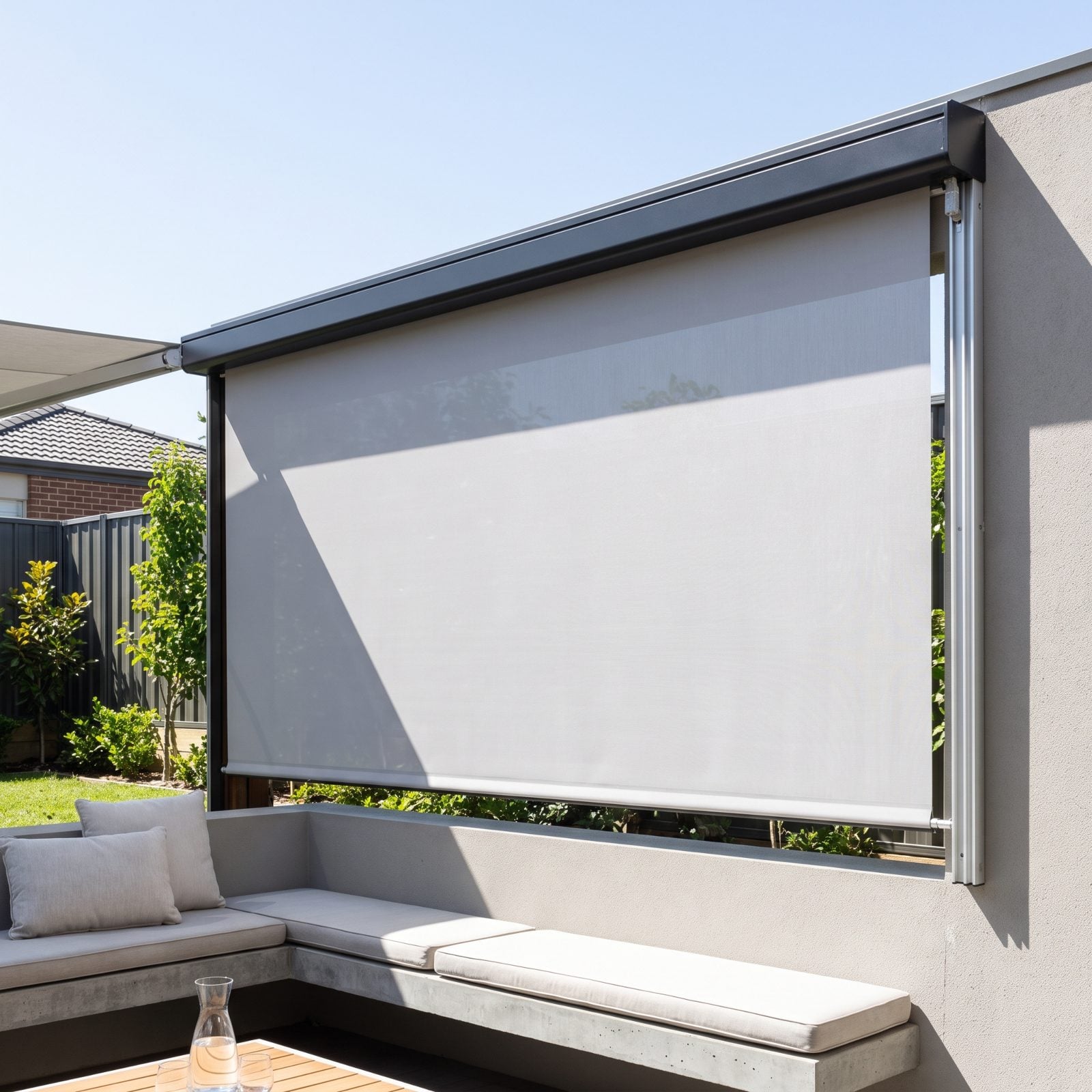
The clever part is that you only screen when you need to. Pull the cassette-mounted canvas out on a Saturday afternoon and the neighbor’s second-floor window disappears; roll it back and your sky returns.
Side awnings read far gentler than a fence because they’re fabric, not wall. That cool light grey stucco wall behind it keeps the whole corner calm instead of defensive. Pair it with a few potted olive trees and the privacy feels like a choice, not a bunker.
31. A Raised Planter Packed With Tall Grasses
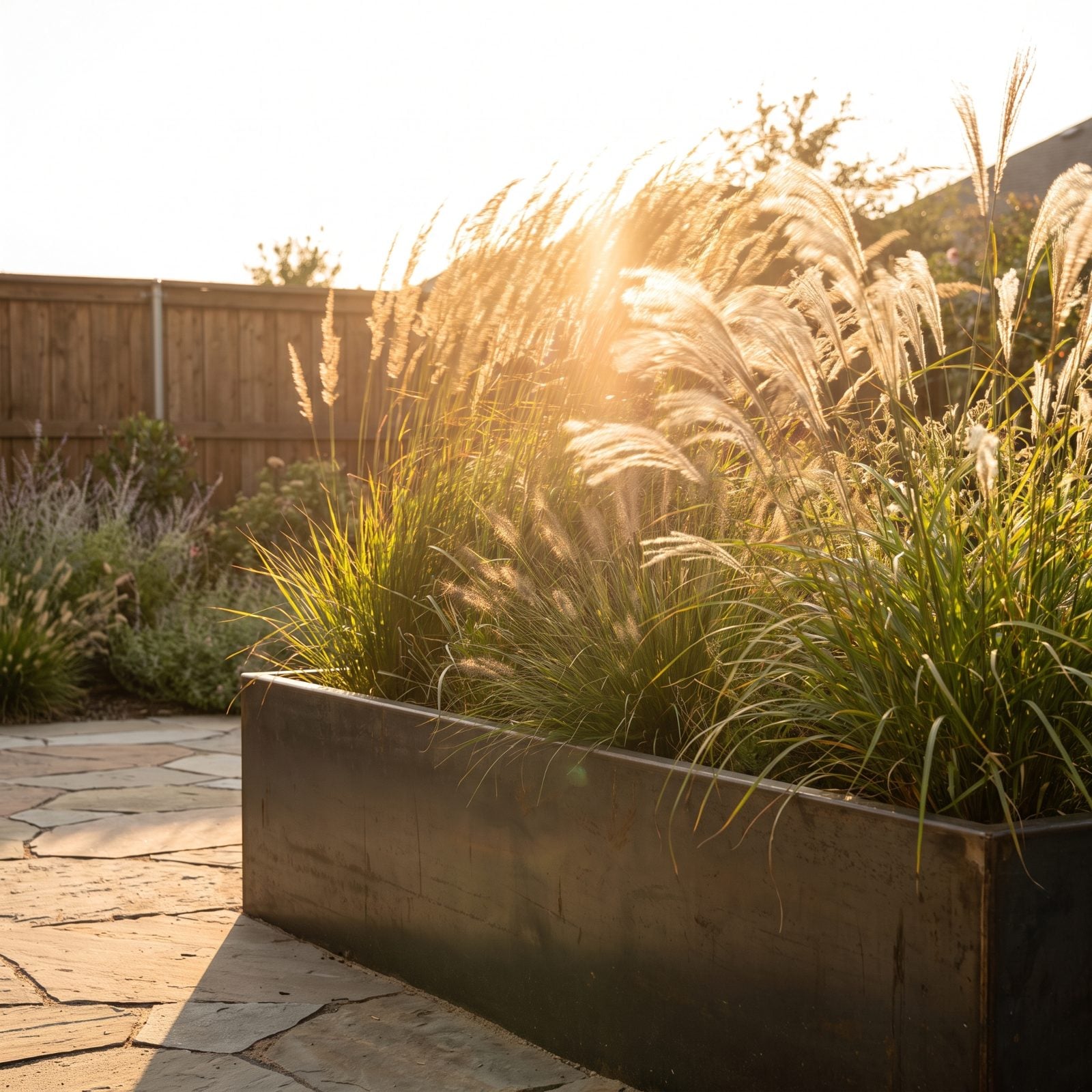
Grasses do something a hedge never will: they move. Wind runs through Miscanthus and the whole screen shivers, which your eye reads as alive rather than as a barrier.
Build the planter to seated eye level and you block the neighbor’s patio exactly where you sit, not where you stand. That’s the trick most people miss. The corten steel planter rusts to a warm bronze that flatters the amber seedheads all autumn.
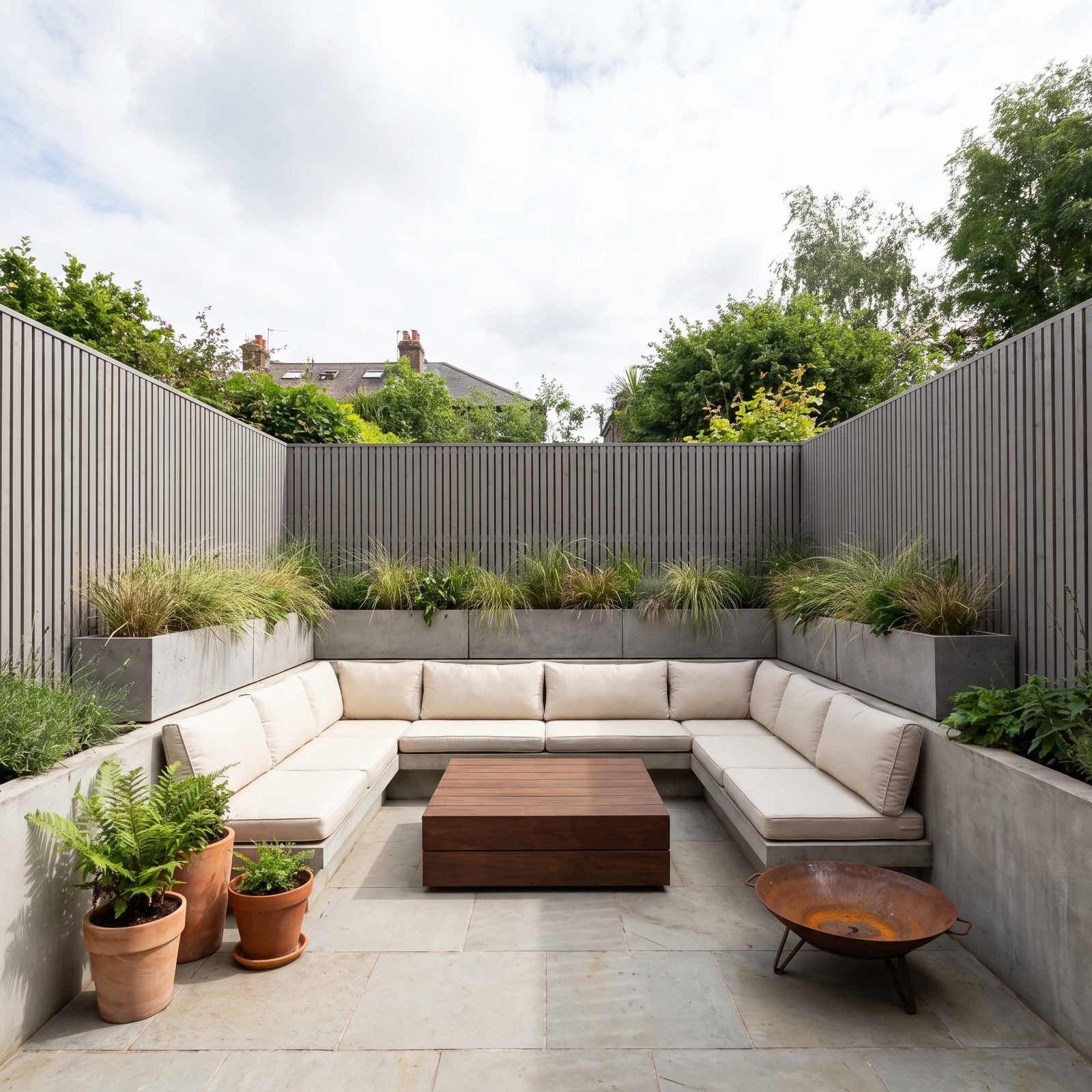
30. A Sunken Patio That Drops You Below the Sightlines
🔥 Would you like to save this?
Drop the floor two feet and privacy becomes geometry. Sit in a sunken patio and your eyeline falls below the fence, which means the neighbor’s windows vanish without a single extra inch of screening.
The smooth rendered walls double as seating, and the lavender along the upper lip softens where the grade meets sky.
29. A Modular Living Wall You Can Rearrange
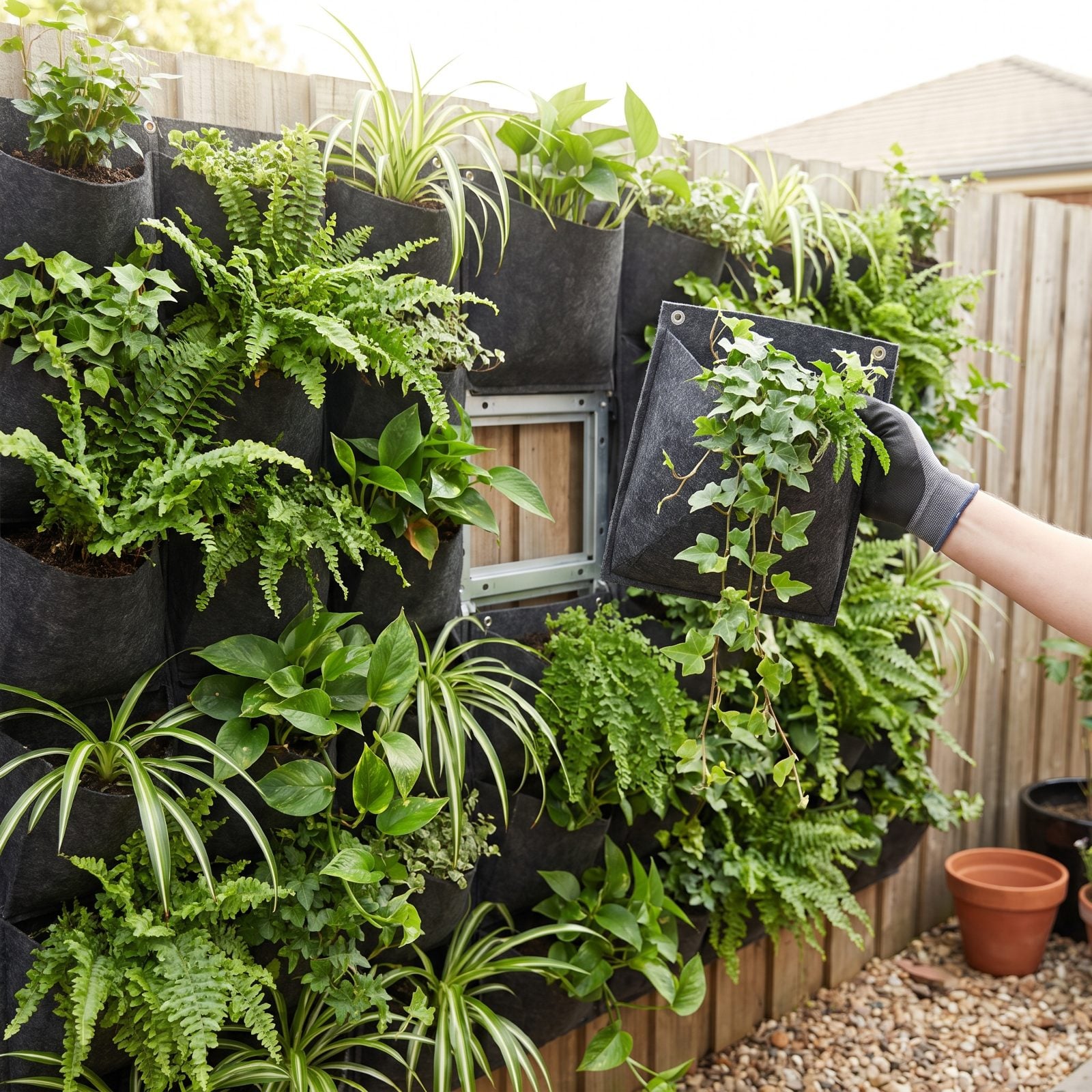
Modular means you can move it. Built from stackable felt pockets, a living wall isn’t locked into one layout, so you shift modules around until the densest planting lands exactly where the neighbor’s balcony peeks over.
Too many living walls get installed and then left to die of thirst, so do yourself a favor and run a drip line along the top before you plant a single fern. The galvanized steel frame hidden behind the pockets keeps the layout tidy, while the charcoal felt keeps the green reading crisp instead of chaotic. Like the layered-greenery thing indoors too? It borrows the same logic as a tropical basement design.
28. A Pool House Angled to Erase the Neighbors
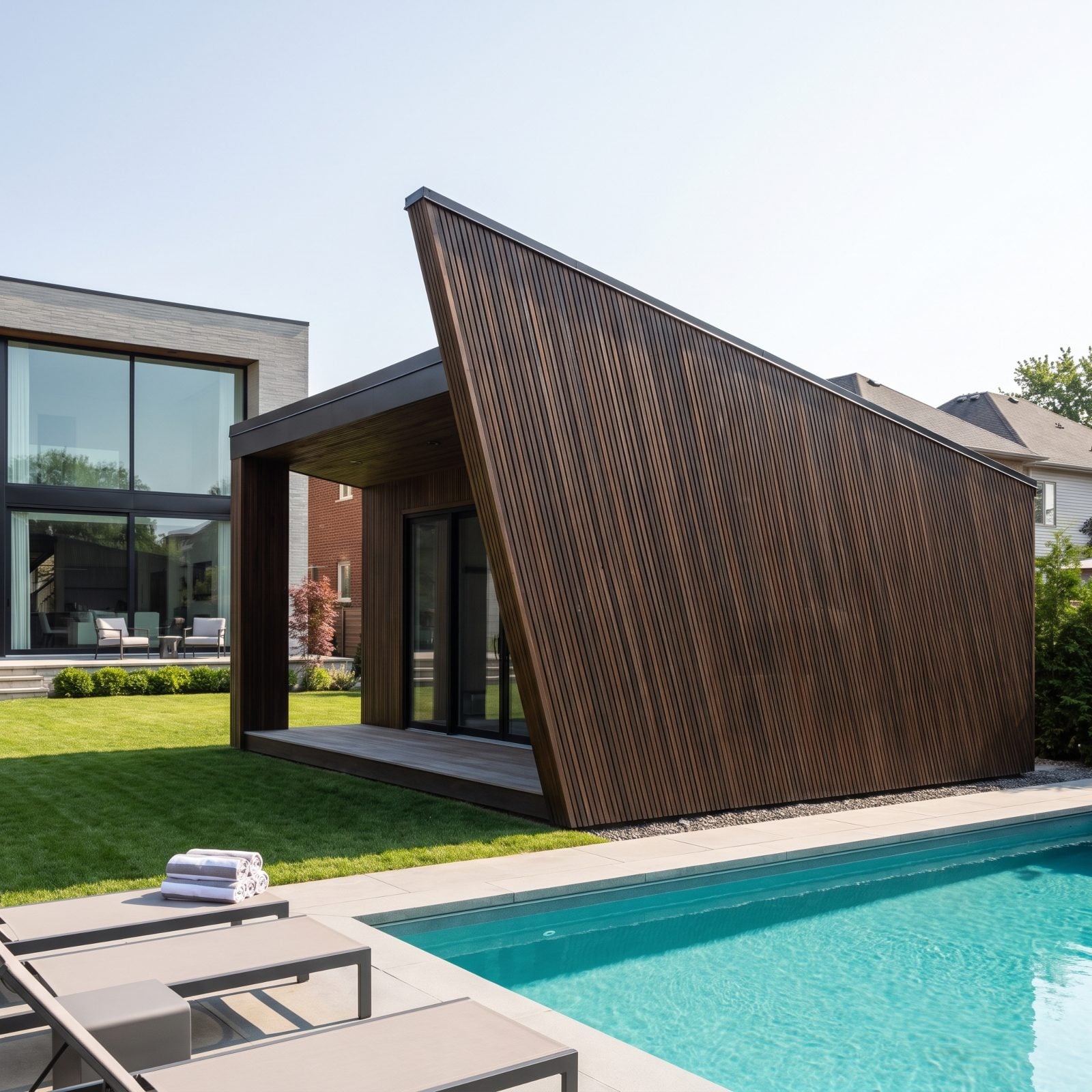
A pool house doesn’t have to sit in the corner doing nothing. Angle it between your water and the neighbor’s windows and it earns its footprint twice over: storage on one side, a privacy wall on the other.
The vertical cedar siding keeps it feeling like a cabana instead of a shed. This is the move that turns an exposed pool deck into something closer to a glam backyard makeover, where every lounger faces away from the fence.
27. A Tall Ornamental-Grass Buffer Along the Property Line
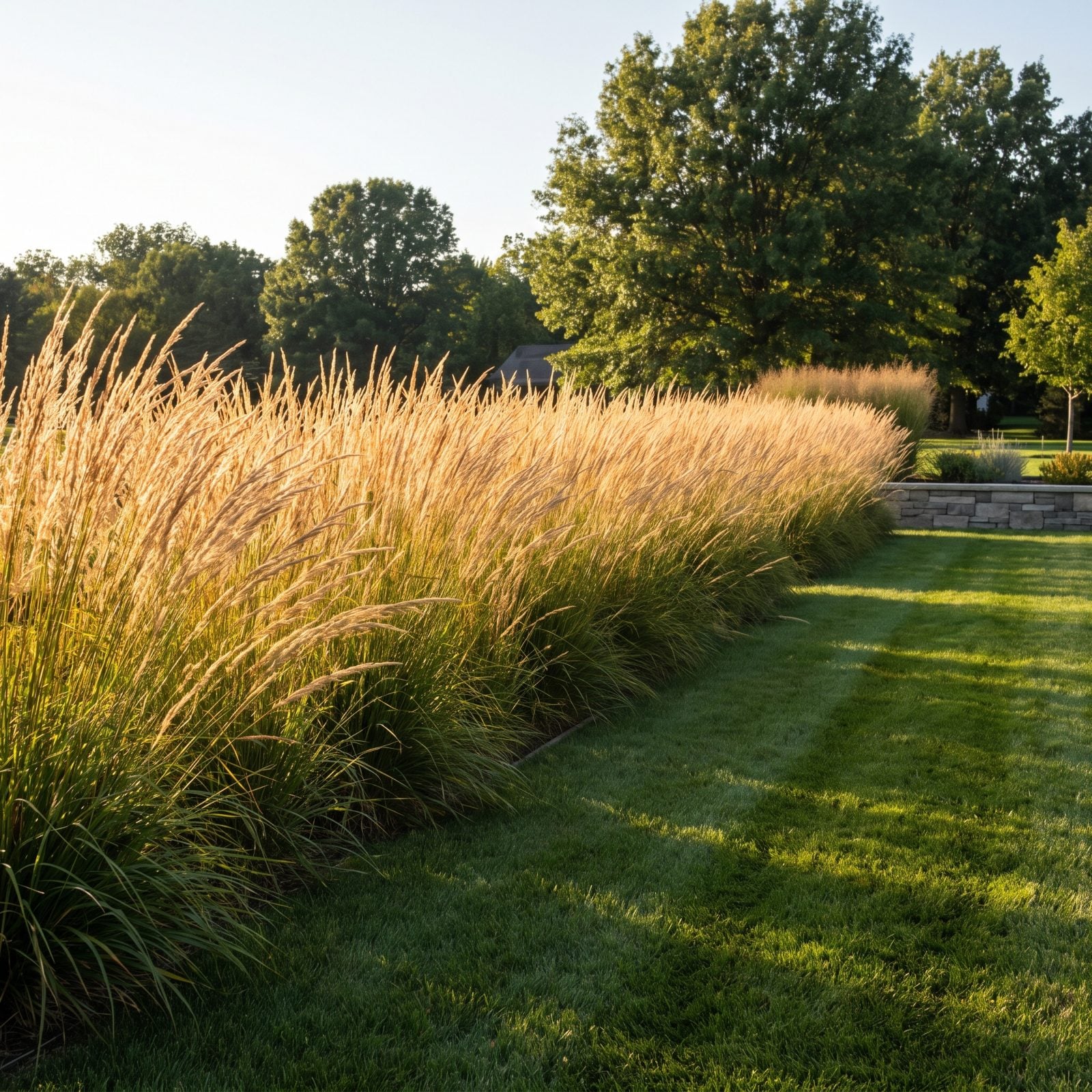
Where a privacy fence costs a fortune and reads like a prison yard, a five-foot band of switchgrass and feather reed grass does the same job for the price of a few plugs. By late summer it’s seven feet of copper-tipped movement.
Plant it deep rather than in a single thin row. One line of grass is a suggestion. A band is a screen.
26. A Perforated Brick Breeze-Block Wall
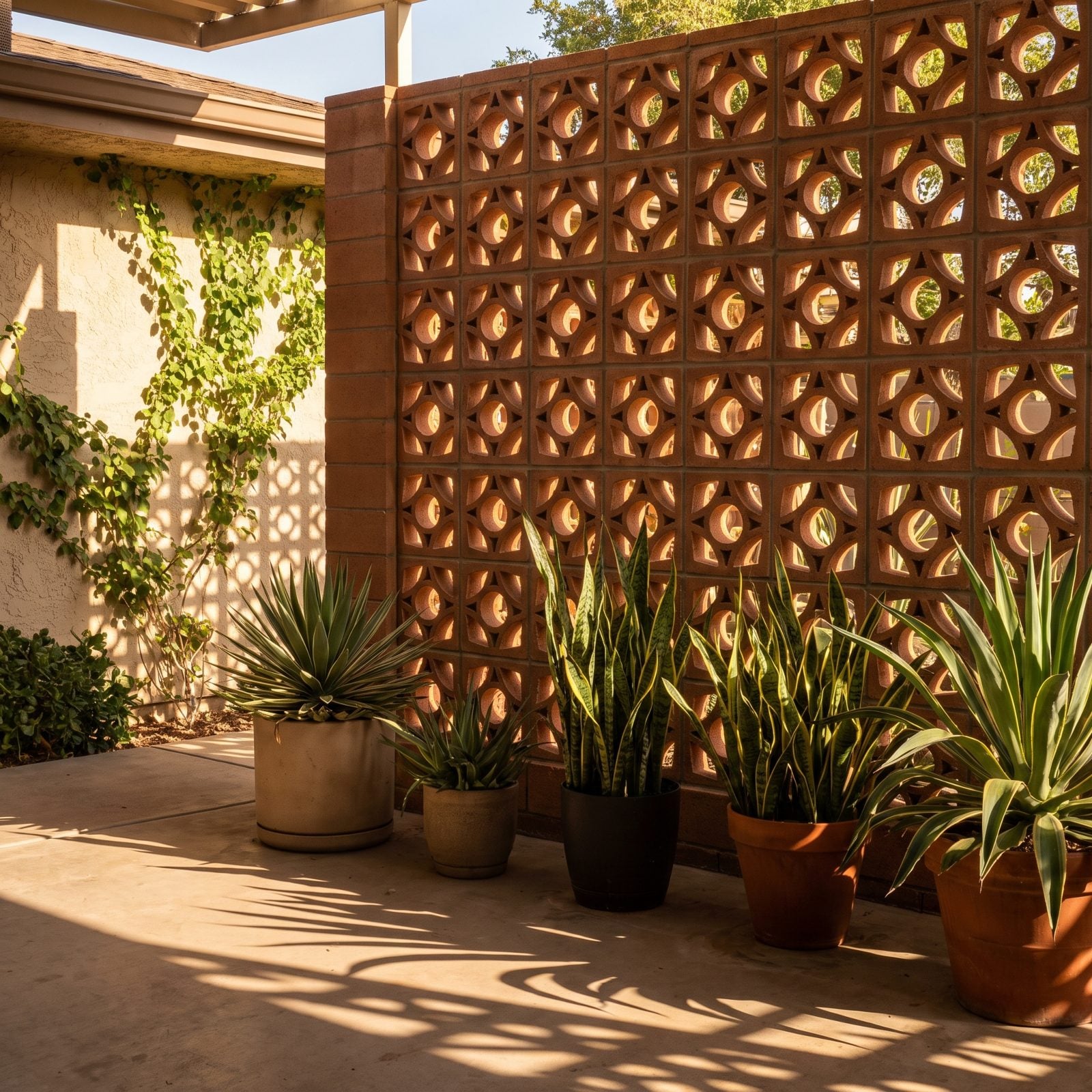
Breeze blocks are back, and for good reason. A perforated brick wall screens the sightline while letting air and light slip right through, something solid masonry never manages.
The real payoff is the shadow. Warm sun filtering through the garden scatters soft, leafy dappled shade across the wall and the concrete floor, and suddenly the whole patio gets a second layer of design for free. Those terracotta tones carry the same warm-mineral palette you’d see in a mid-century porch design.
25. A Private Outdoor Shower Enclosure
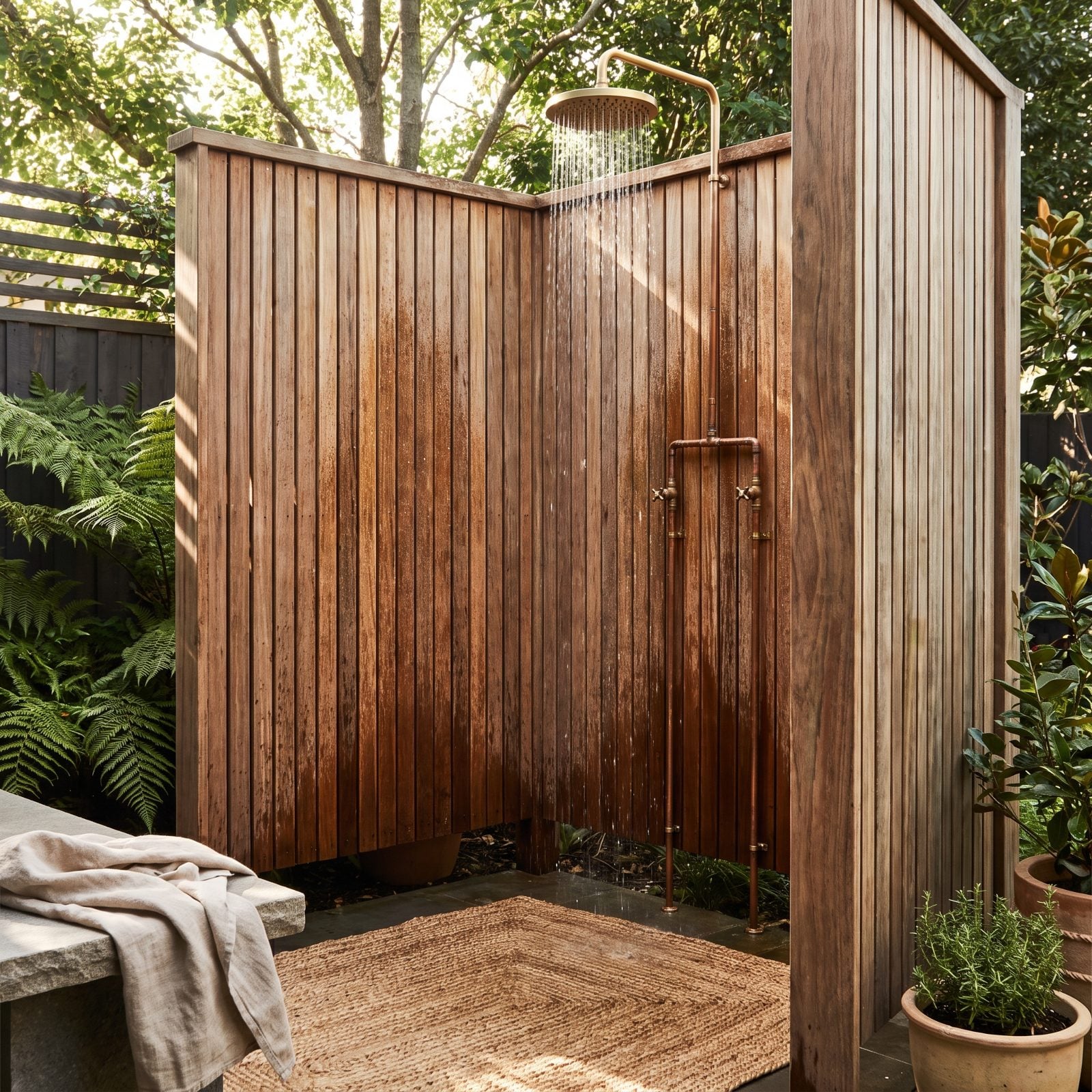
Nothing says your backyard is genuinely yours like showering outside in it. A vertical teak-slat enclosure gives you seven feet of screening with narrow gaps that let air move and light in, so it dries fast and never turns into a damp box.
Tuck it into a side yard and wrap it in magnolia and fern. The brass rainfall showerhead over dark stone paving and a woven jute rug turns a strip of wasted ground into the best ten minutes of your day. Side yards are exactly where this kind of planning pays off, as with clever narrow backyard ideas.
24. A Fast-Growing Clumping Bamboo Screen
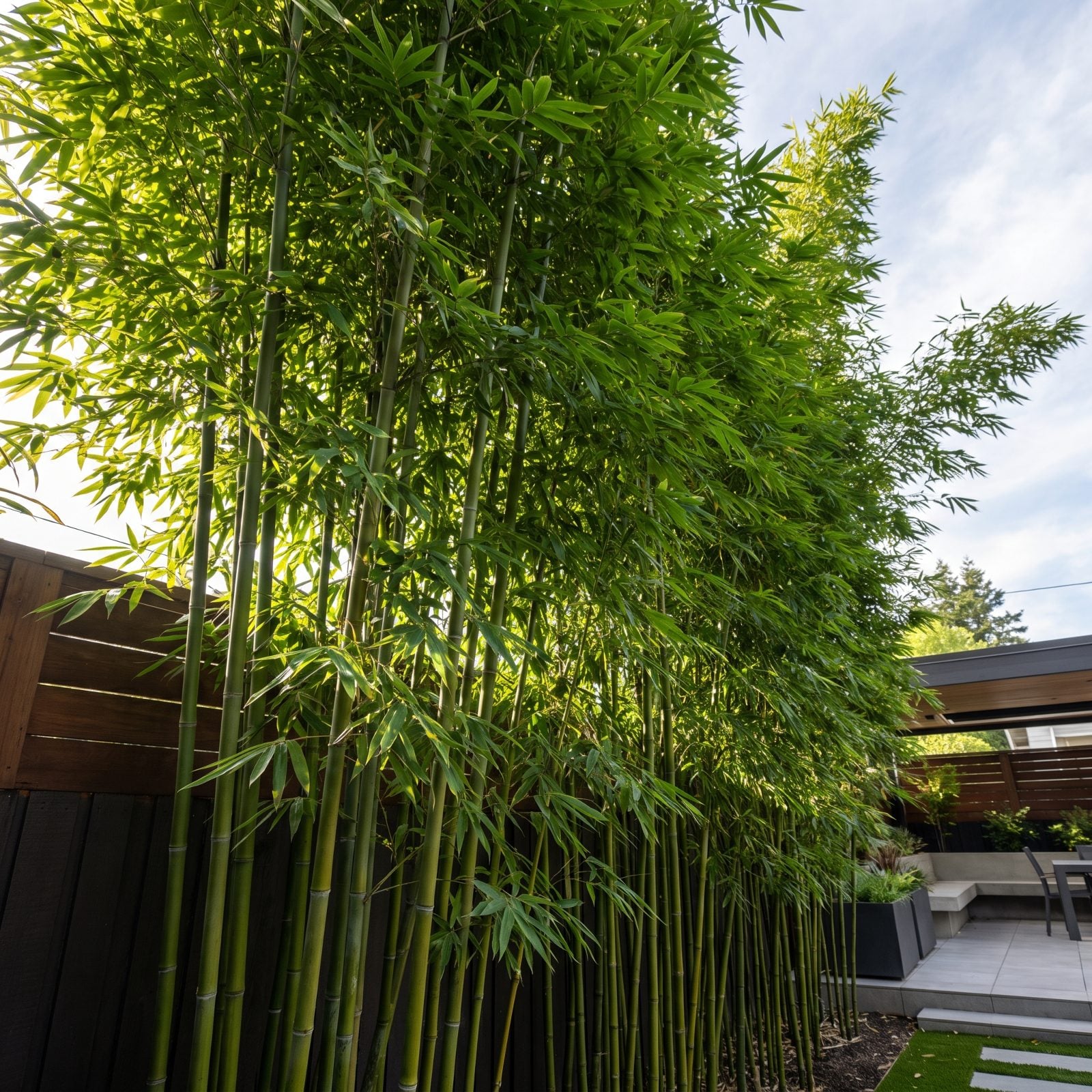
You want a twelve-foot screen by next summer, not in a decade. Bamboo gets you there, but know which kind you’re looking at: you want clumping bamboo, not running bamboo, which sends out rhizomes and colonizes the whole yard if you let it. That habit is what gave bamboo its bad name in the first place.
Planted straight into open ground like this, it fills in fast. Sink a rhizome barrier around the bed for a crisp edge and a little extra insurance. The golden-green canes tower over the fence line the way no hedge can, because hedges don’t grow straight up to twelve feet and still manage to look light.
23. A Roll-Down Pergola Shade for Overhead Privacy
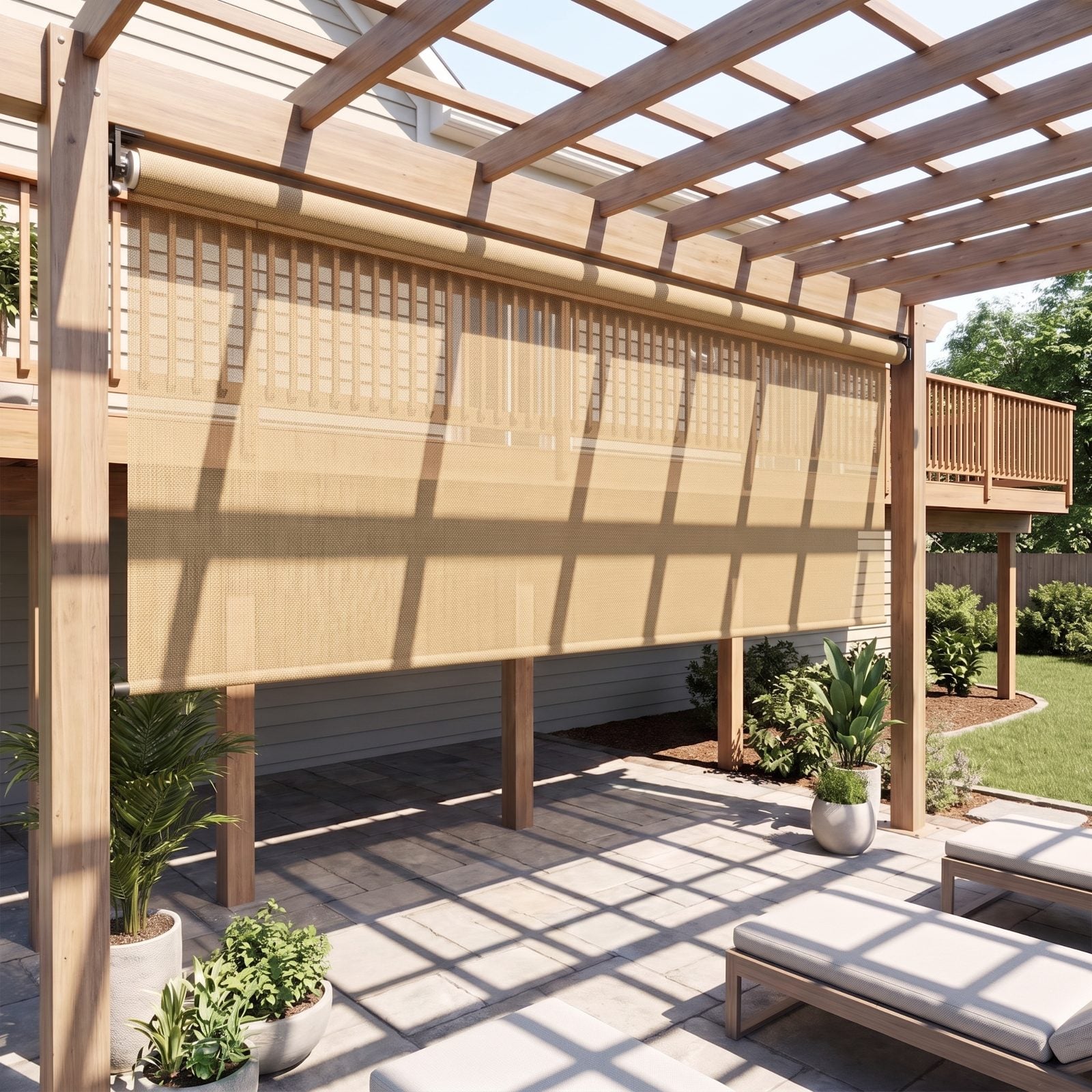
Most privacy thinking stops at eye level and forgets the neighbor’s elevated deck looking straight down into yours. Roll-down pergola screens fix the one problem fences can’t touch: the view from above.
Drop the flax linen panels on the exposed sides and your patio becomes a room with a ceiling. Leave the sunny side open and you keep the light. Underneath, a pair of light gray cushioned chaise lounges on a stone patio make the whole thing read like somewhere you’d actually spend an evening, not just pass through on the way inside.
22. A Gabion Wall Filled With Local Stone
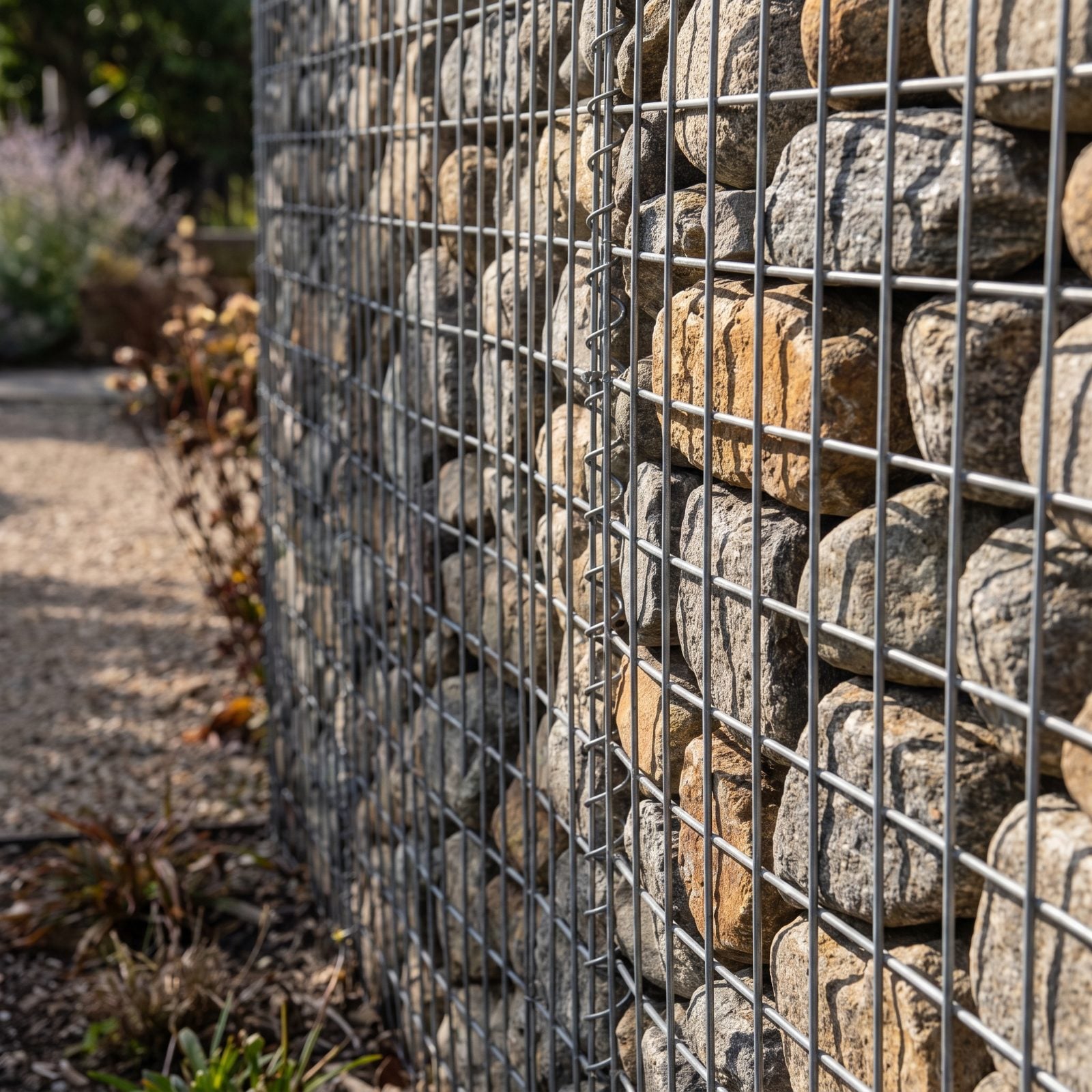
A gabion wall does a quiet, clever thing: it turns a pile of local stone into a solid screen that reads as texture instead of a fortress. The galvanized cages let light and air slip through the gaps, so you get mass without the dead weight of a poured concrete slab.
What sells it here is the planting at the base. Ornamental grasses and silver lavender blur the hard edge of the mesh, so your eye registers a hedge first and a structure second. Pack the cages with stone from your own region and the whole thing looks like it clawed its way up out of the ground.
21. An Offset Garden Path That Conceals the Main Patio
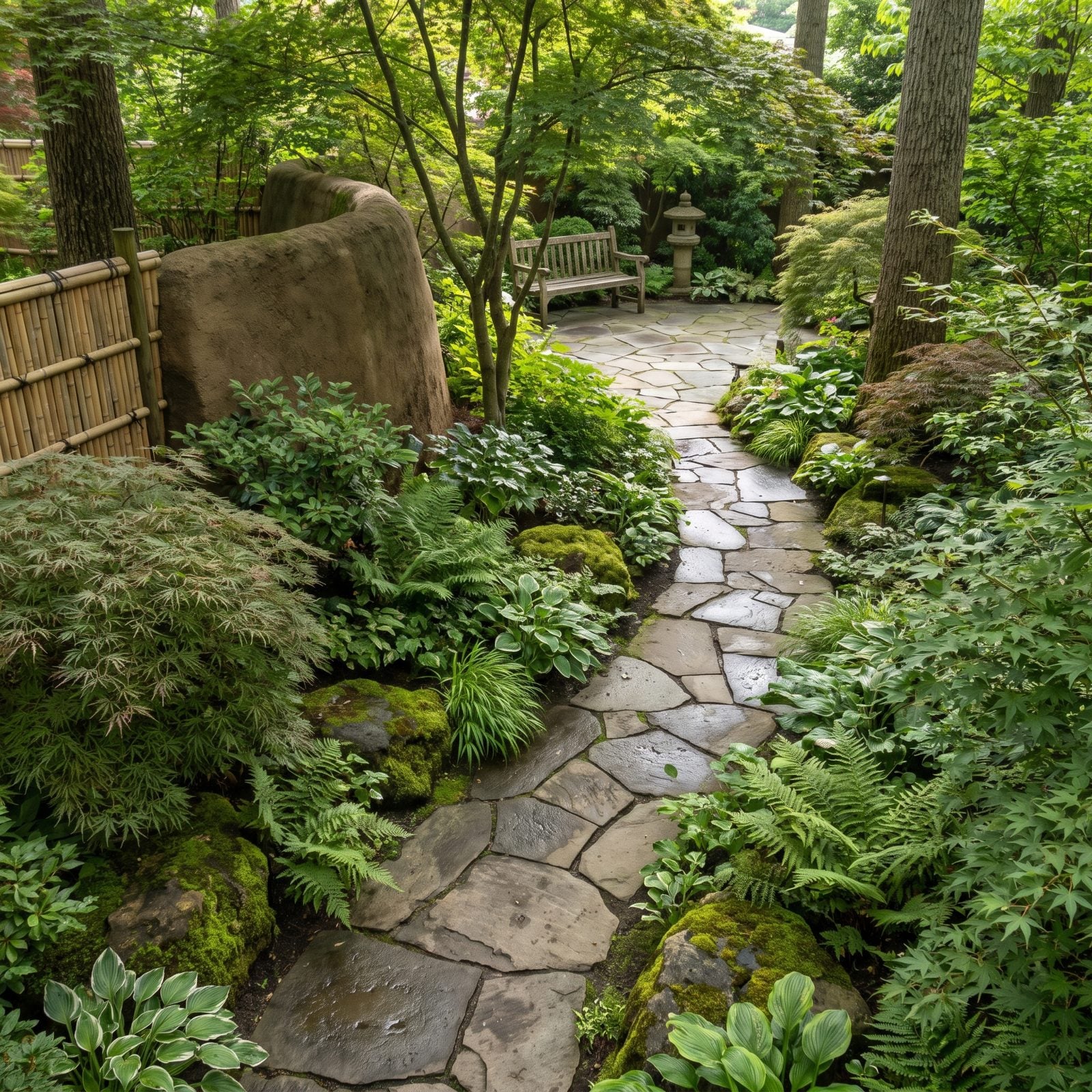
Straight paths give everything away. You stand at the gate and take in the whole yard in one bored glance.
So bend the path. Curve it alongside a planted bed so the patio is framed at the far end, glimpsed through the foliage as you walk past the grasses. The planting pulls double duty: it softens the view of the seating from the gate, and it builds a little anticipation on the way in. This works beautifully in narrow backyard ideas where every square foot has to punch above its weight.
20. A Privacy Screen Integrated With Solar Panels
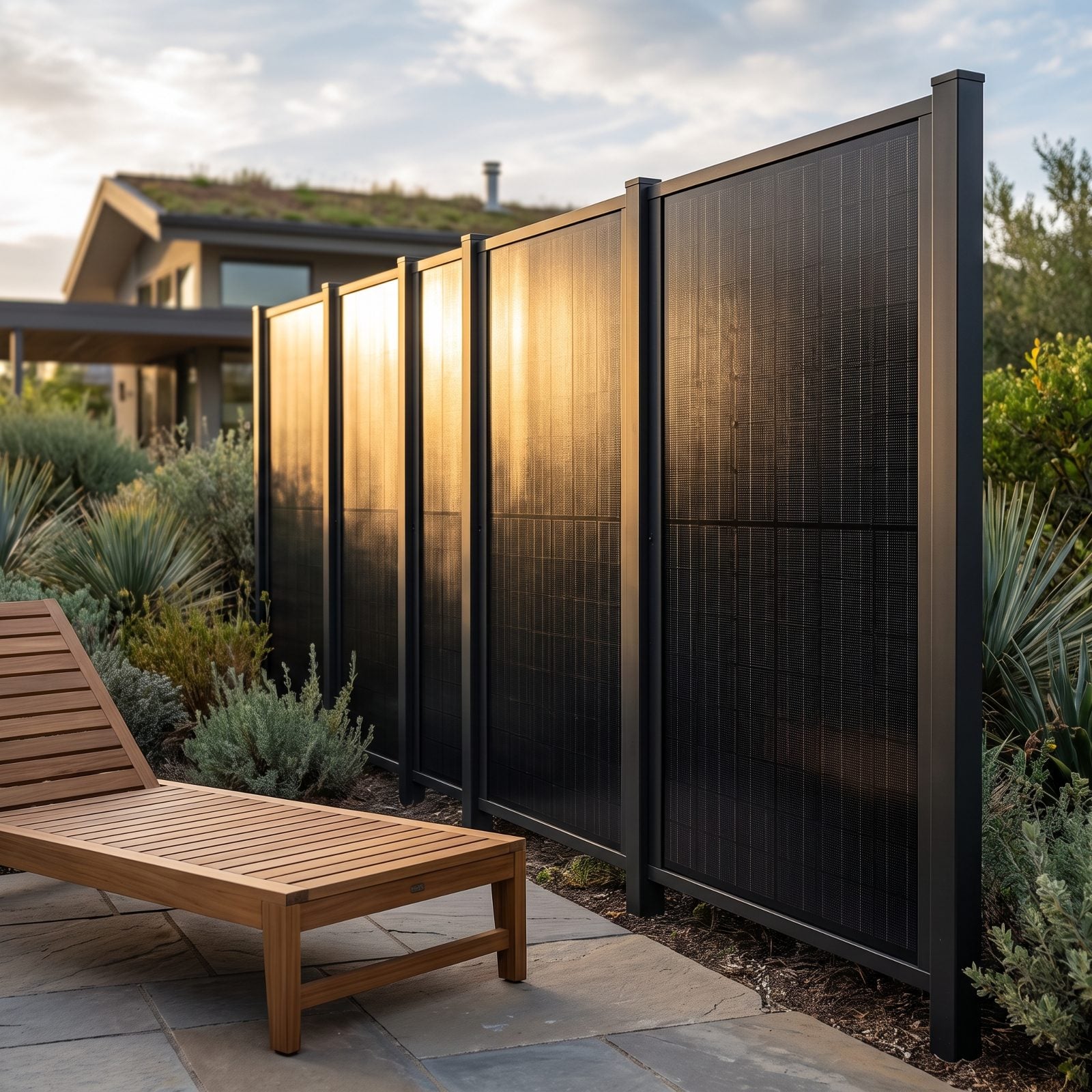
This is the one worth actually spending money on. A vertical screen that blocks your neighbor’s second-story windows and quietly feeds your house power while it does it.
Slim bifacial panels slot into slim black metal frames between matching posts, so the whole thing reads as a sleek garden structure rather than a utility install. Dark glass framed in matte black, softened by the planting around it, keeps it from looking industrial.
19. A Fruit-Bearing Espalier Screen
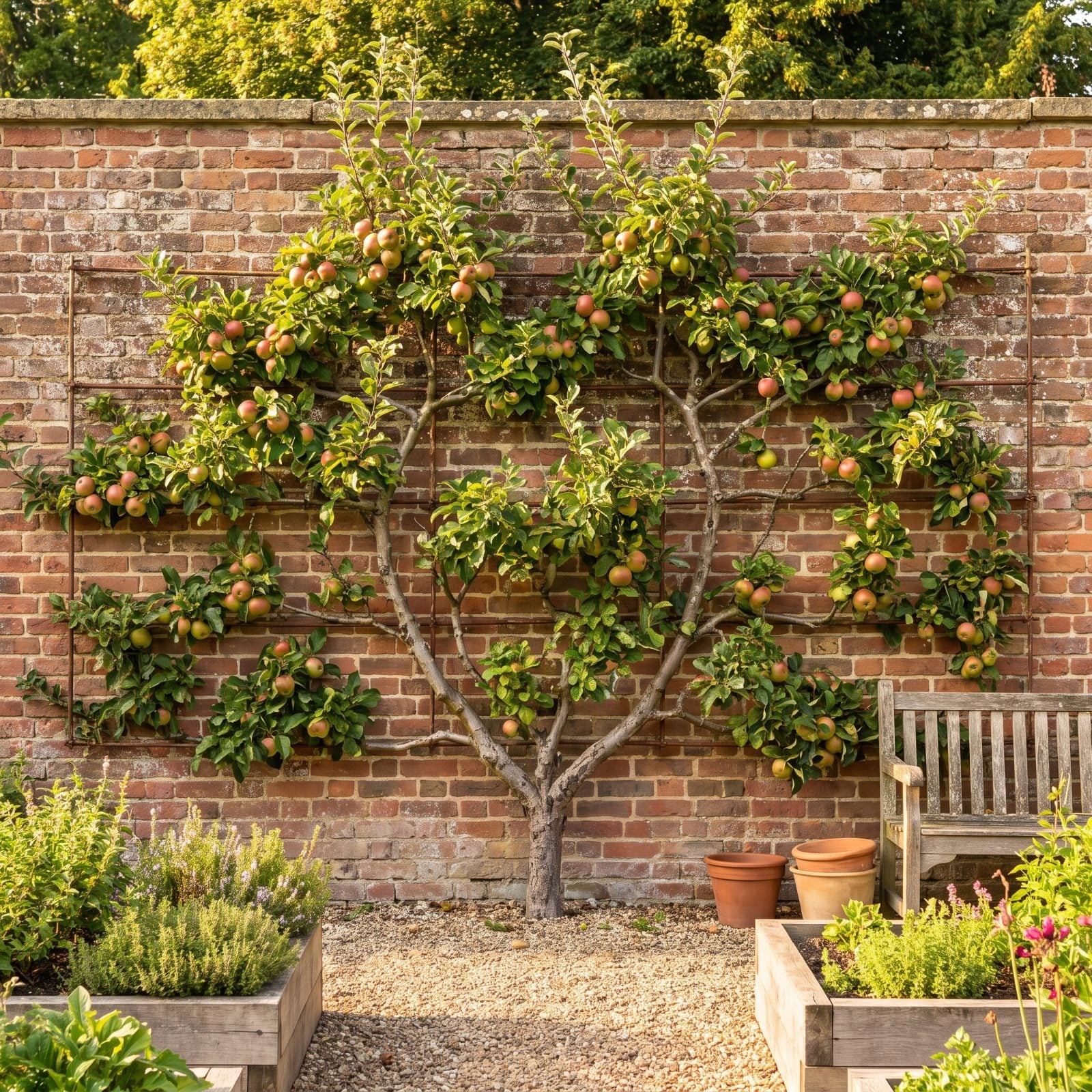
Espalier is an old trick with a new job. Train fruit trees flat against a wire frame and you get a living screen barely a foot deep, which matters enormously in a side yard where a normal hedge would never squeeze in.
Apples and pears pruned into tiers block the view of your neighbor’s bins while handing you fruit every autumn. Fair warning, though. It takes patience and a willingness to prune on a schedule, and if you skip a season the shape goes feral fast.
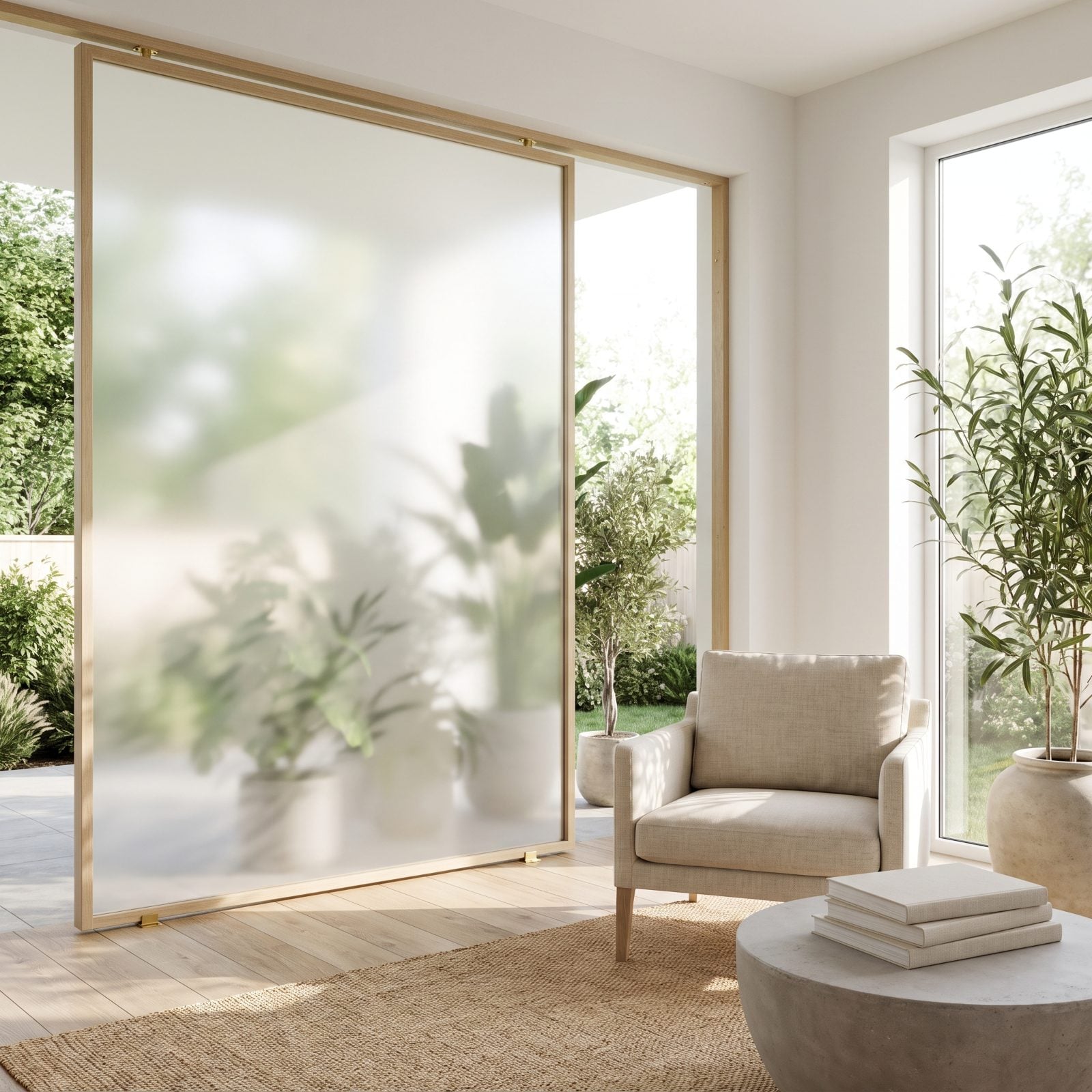
18. A Frosted-Glass Garden Screen
🔥 Would you like to save this?
Frosted glass solves the problem solid fences create. A wood wall around a pool buys you privacy and a dark, boxed-in feeling. Frosted panels block the sightline while letting the light pour straight through.
Here the light natural-wood frame and milky panel reduce the garden foliage behind it to a soft green blur, present but gone. Simple wooden feet resting on the patio floor beside a woven rug keep the glass from reading like a shower enclosure.
17. A Fire-Pit Alcove Wrapped in Planting
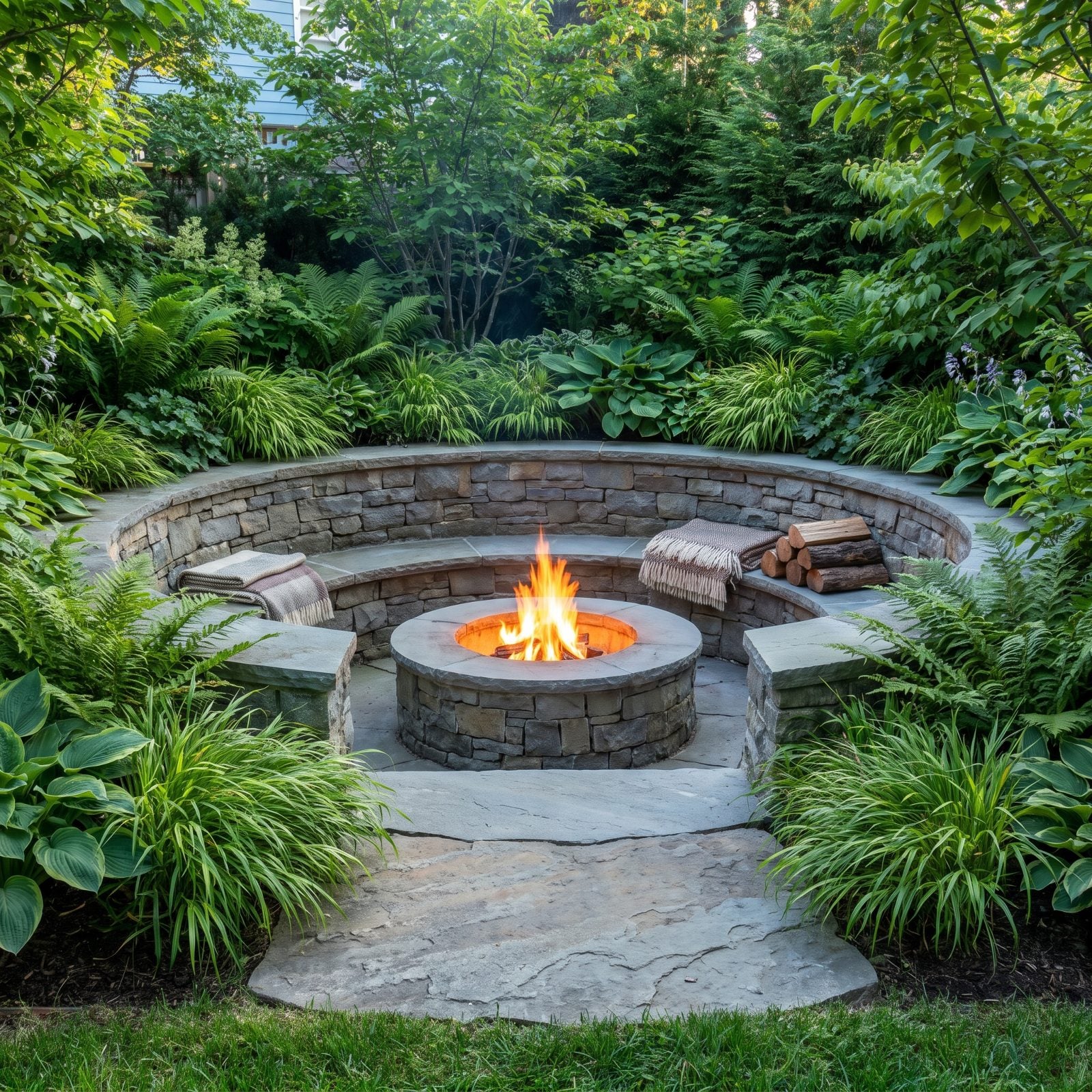
The best fire pits feel like they’re hiding. Drop the seating down a single step and wrap three sides in layered planting, and a corner of the lawn becomes a room with walls made of grass and viburnum.
The dry-stacked stone fire pit at the center earns its keep year-round, its flagstone cap echoing the curved stone bench with its flagstone seat. Prospect and refuge, in physical form. You can see out across the yard, but your back is covered by greenery, and that’s exactly why it feels safe enough to linger past dark.
16. A Fluted Polycarbonate Privacy Wall
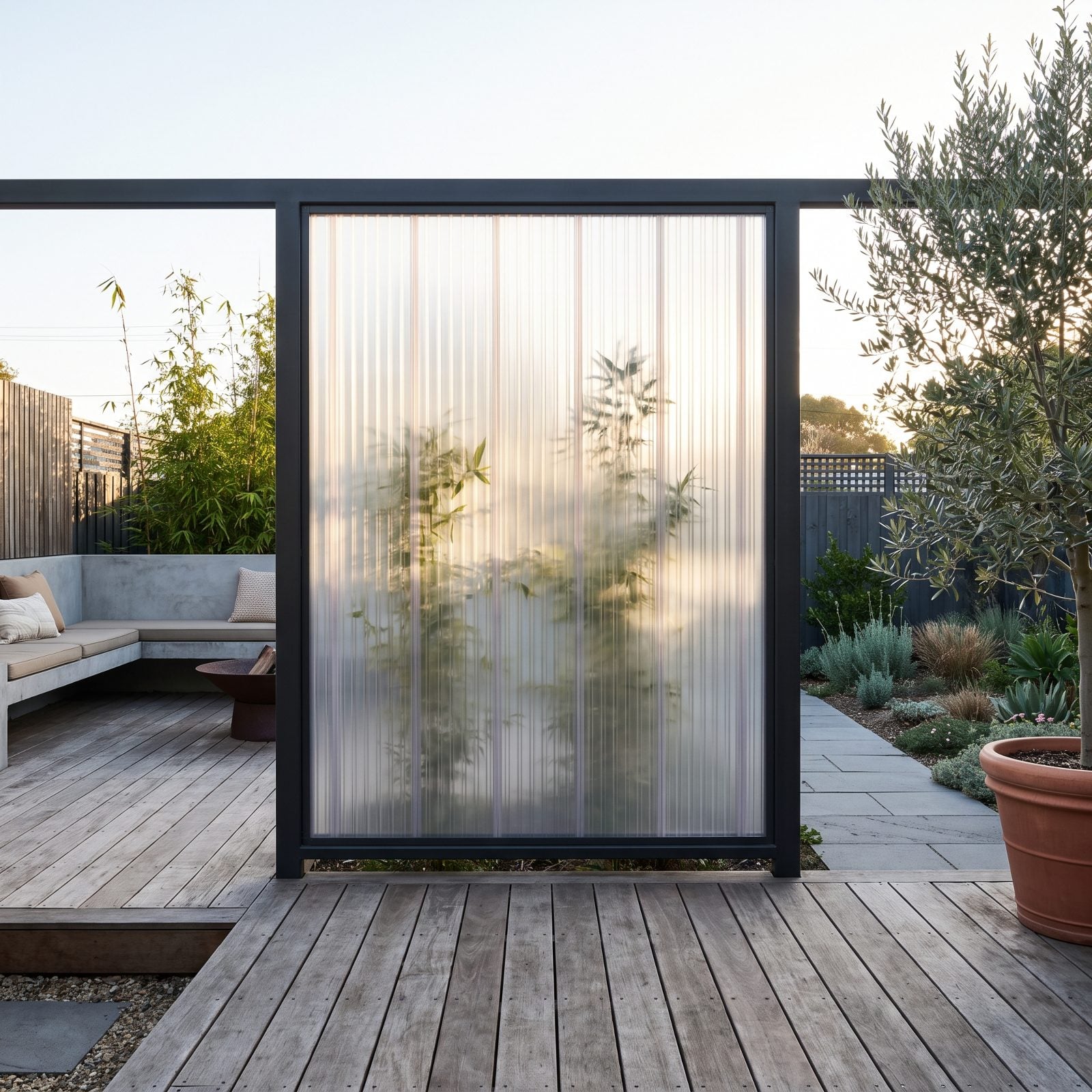
Fluted polycarbonate is the material designers keep stealing from interiors and dropping outside. Those vertical ribs catch daylight and turn the whole panel into a soft lantern, so a privacy wall stops being a dead surface and starts glowing.
The ribs do something to the view behind them too. Your neighbor’s building dissolves into pale vertical stripes, present as light and gone as detail. Pair it with agaves, grasses and silvery shrubs, and the black metal frame and warm wood bench keep it from feeling like a lab.
15. A Layered Water Feature That Masks Voices
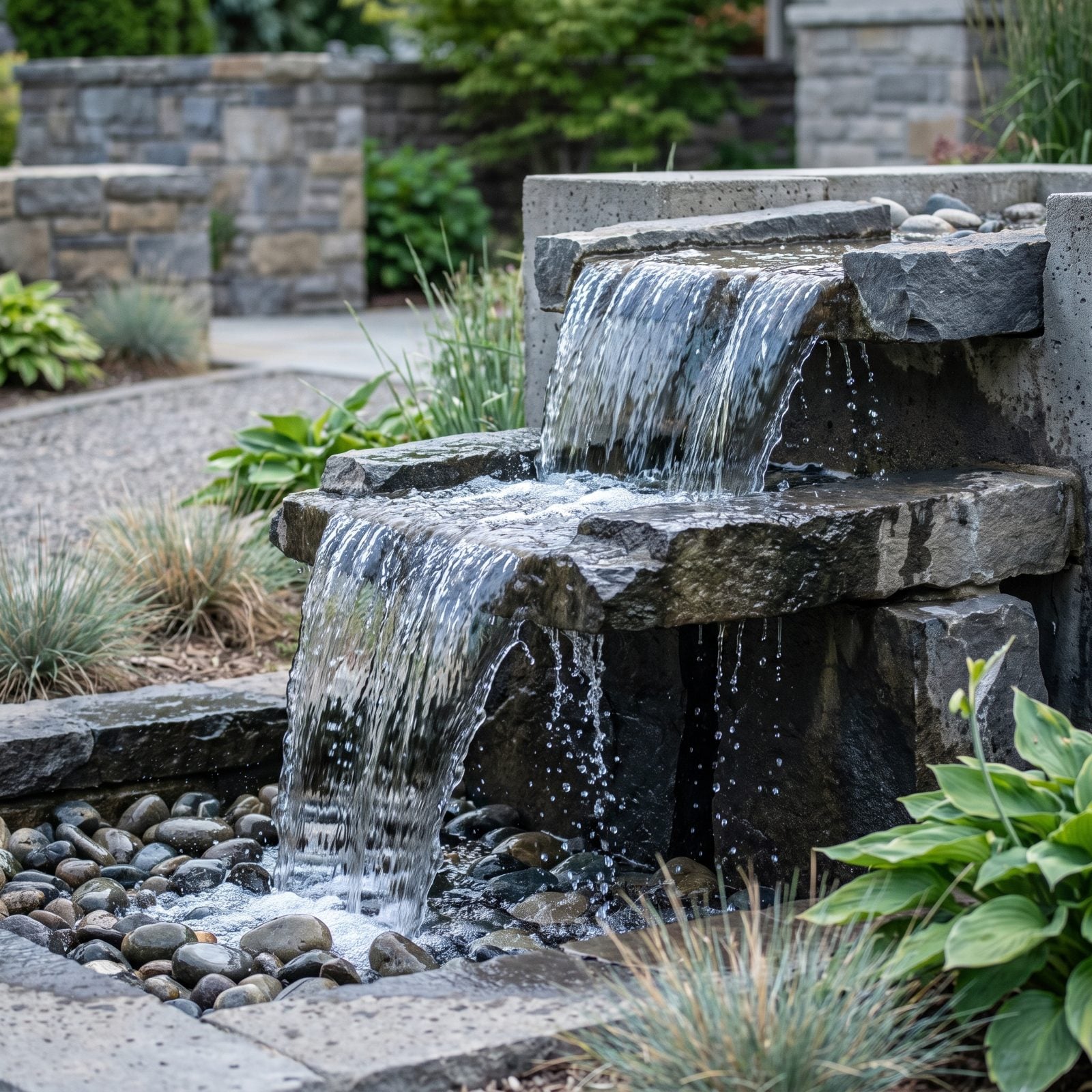
Privacy isn’t only visual. Sound travels, and in a tight city yard you hear every conversation on the other side of the fence, which means they hear yours.
A layered water feature fixes it. Water sheeting over stacked stone slabs into a pebble-lined basin produces a steady wash of white noise that blurs voices before they reach you. The layering is the whole trick: one tier makes a trickle, two make a cover.
14. A Laser-Cut Metal Privacy Panel
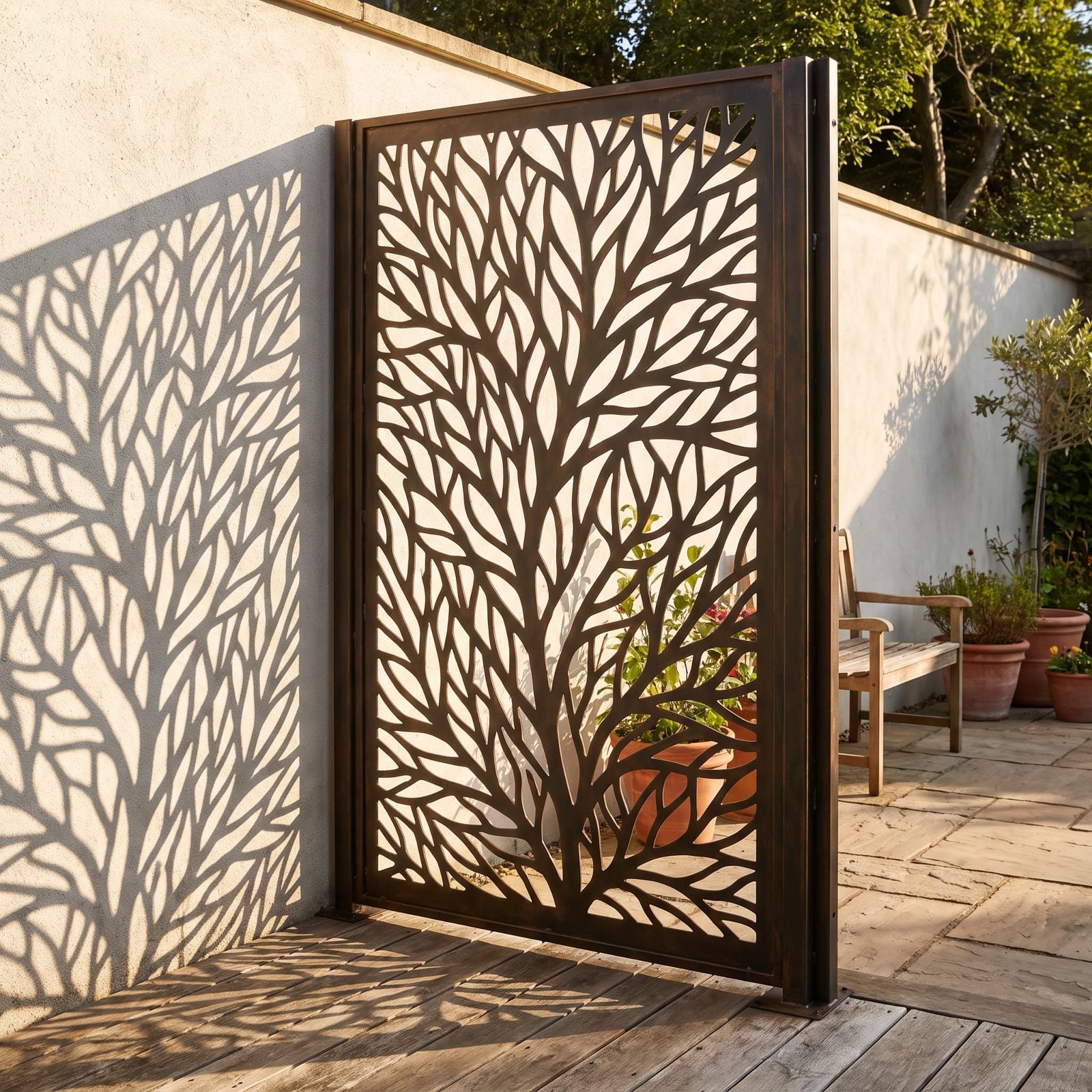
A laser-cut panel is privacy that doubles as art. The branching leaf pattern blocks the direct line to your neighbor’s window, but what makes it worth the money is what the sun does with it.
Low afternoon light throws the cutout shapes across the wall behind it in sharp, moving shadows. The screen stops being a barrier and becomes a thing that paints the wall. A matte charcoal powder-coated finish sits easily against pale stucco, stone pavers and potted greenery, so it feels crafted rather than cold.
13. A Screened Meditation Pod
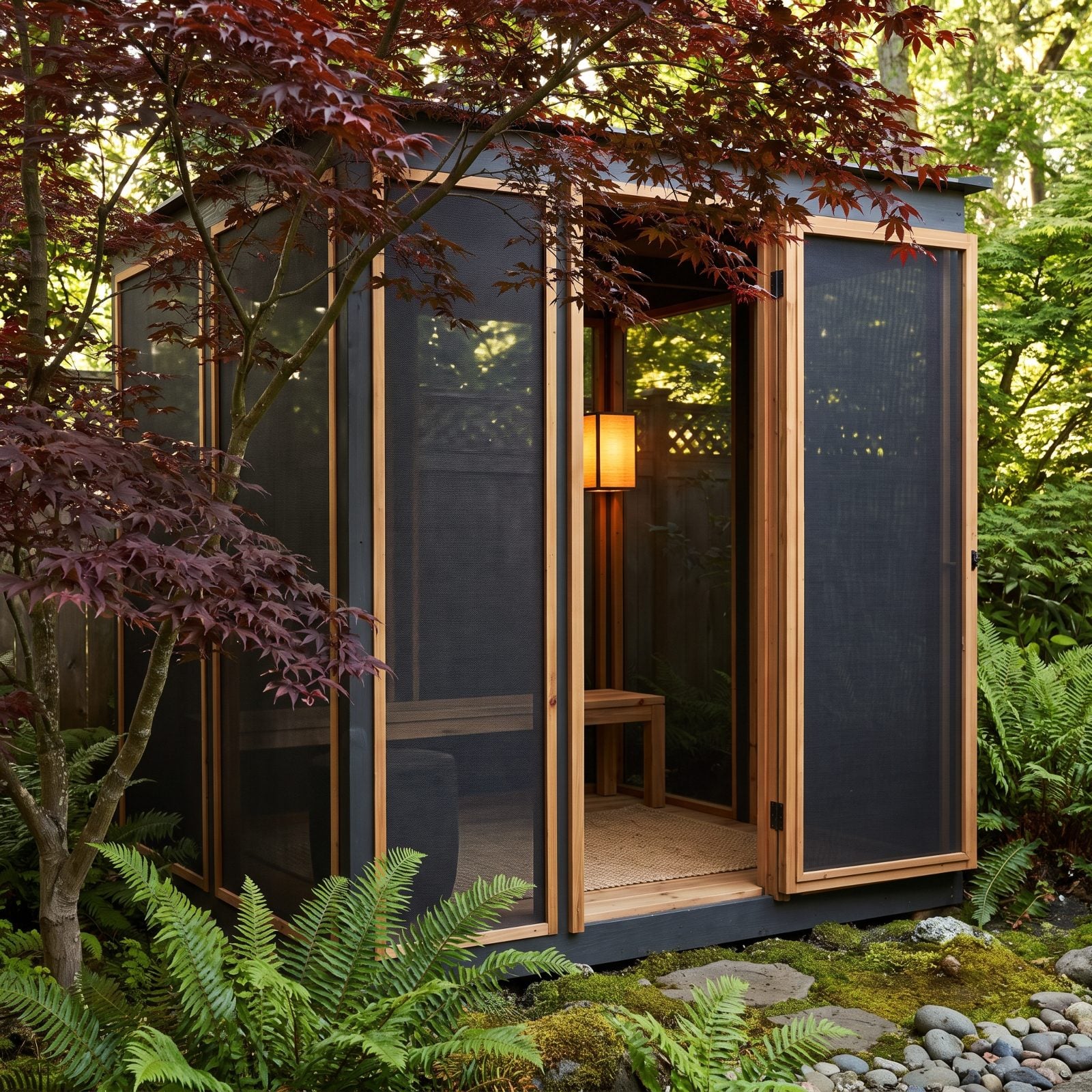
End the yard with a place to disappear. A screened pod in the back corner, half-swallowed by ferns and a Japanese maple, gives you a destination that isn’t the patio and isn’t the house.
The charcoal mesh walls keep the bugs out and the breeze in, so you get the garden without the mosquitoes. A slim, dark metal-edged roof keeps the profile low under the maple canopy, and a mossy stepping-stone path makes the walk there part of the appeal. Call it the outdoor cousin of a neutral attic design, a small quiet room built for one thing.
12. A Board-Formed Concrete Garden Wall
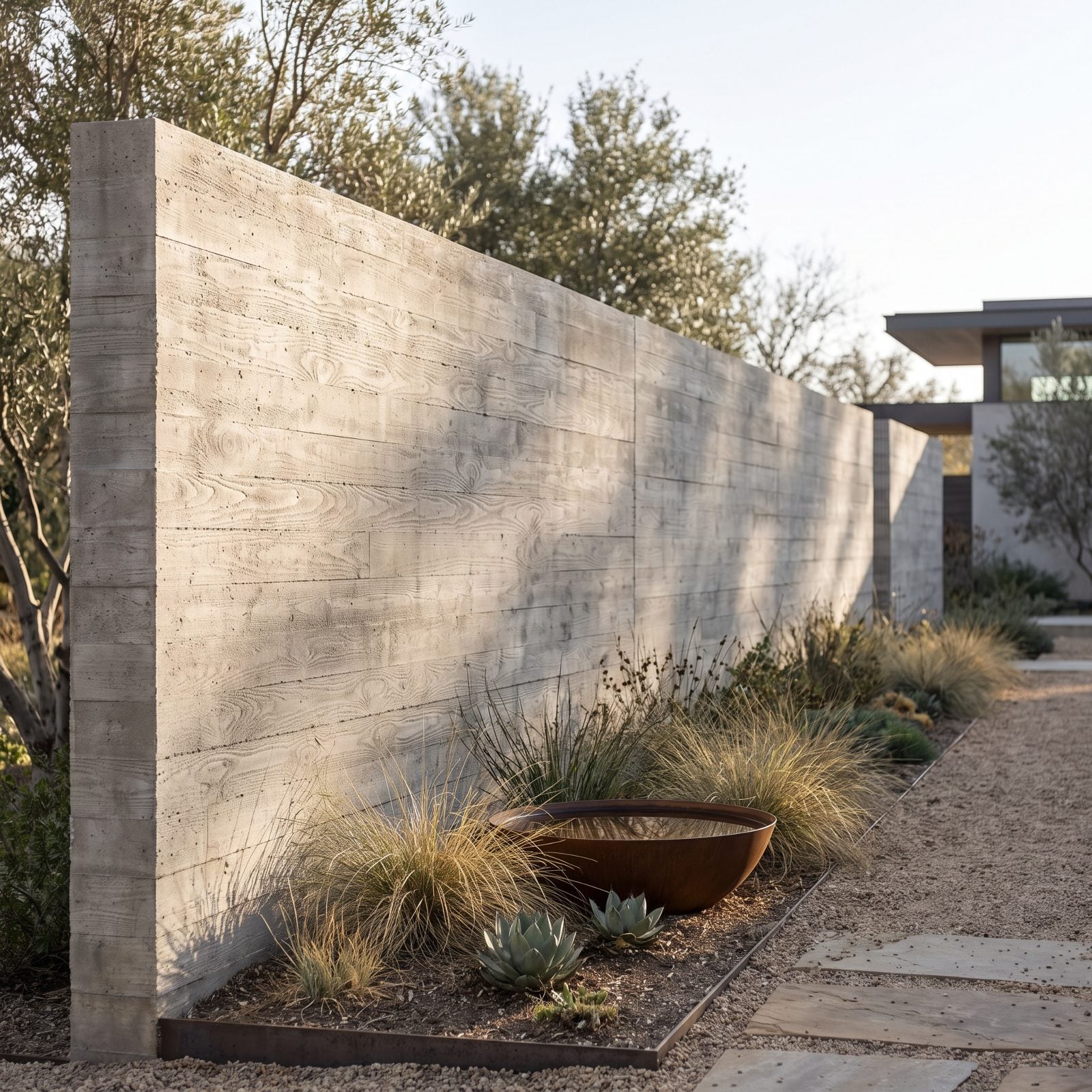
Concrete gets a bad reputation. But pour it against rough-sawn boards first and it comes out wearing the wood grain like a fingerprint, soft horizontal lines that catch afternoon light and make seven feet of solid mass feel like texture instead of a bunker.
The move here is that planting bed at the base. Feathery ornamental grasses, silvery succulents and a rusted corten water bowl against a hard vertical surface, and suddenly the wall feels inviting instead of imposing. That’s what keeps a tall concrete wall from reading as fortress.
11. A Corner Banquette With a Tall Back Screen
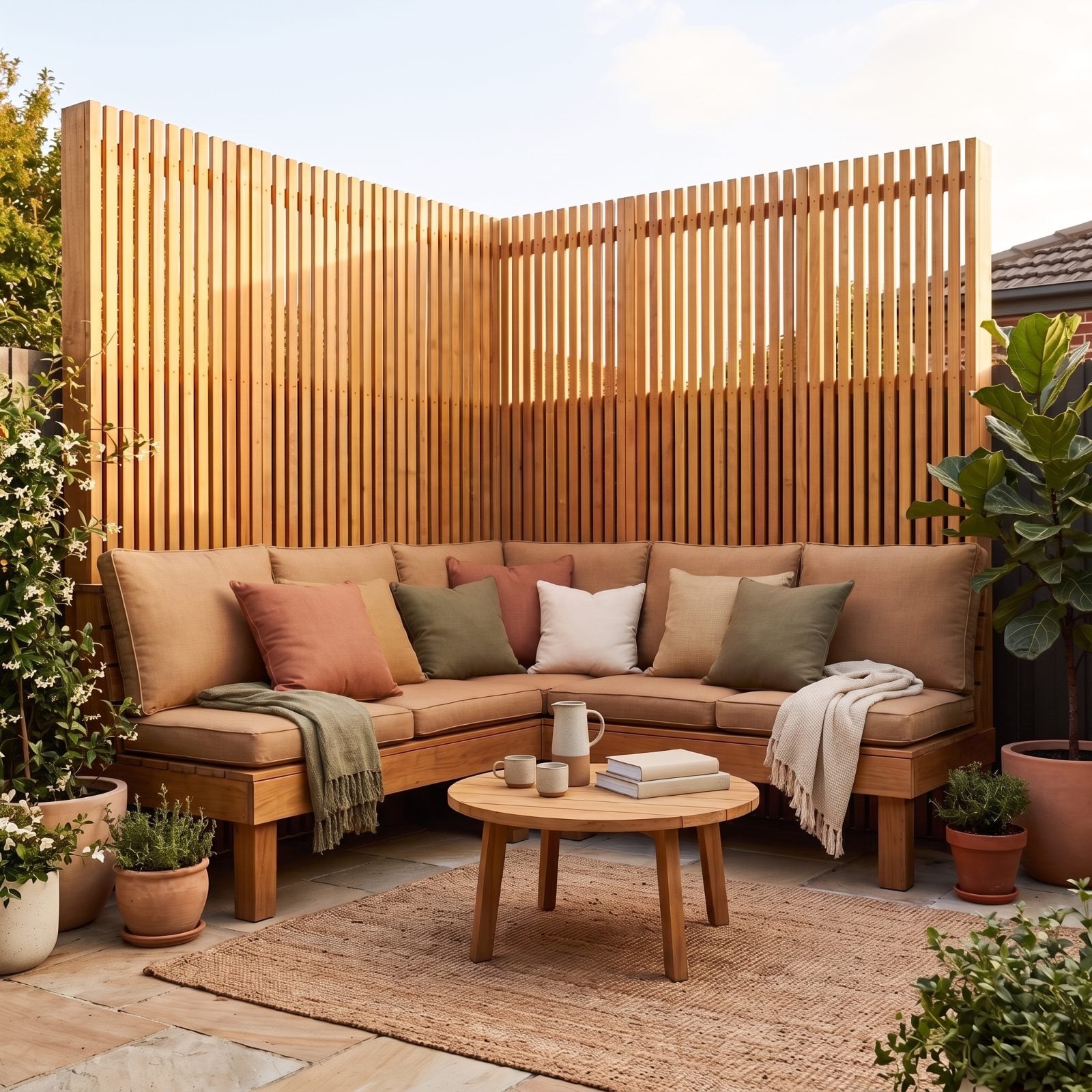
Small yards don’t need less. They need smarter geometry. Tucking an L-shaped banquette into a corner buys you seating for six without eating the whole footprint, and the tall slatted cedar screen rising behind its back cushions serves as a privacy wall.
Those narrow gaps between the slats are what make it work. A solid board would feel like a box. Spaced slats let a little of the neighboring brick show through, air move, and jasmine climb, so you get cover without claustrophobia. The camel seat cushions and terracotta and olive outdoor pillows keep it from going grim.
Want more ideas for tight footprints? These narrow backyard ideas run on the same logic of built-in seating against a boundary.
10. A Weatherproof Fabric Cabana
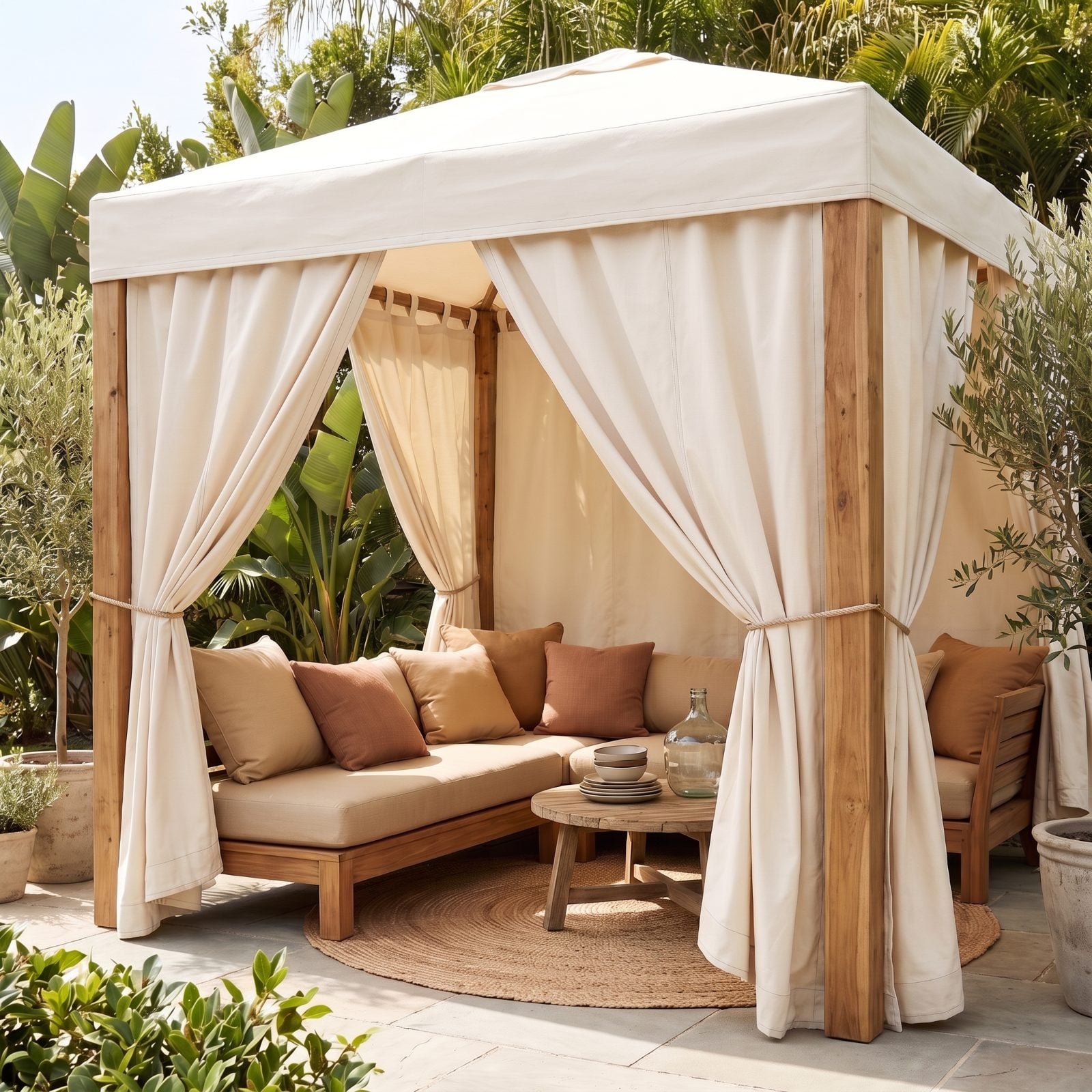
A cabana sounds like a resort splurge until you realize it’s just a privacy screen you can walk inside.
The current version skips the flimsy beach-stall look. Natural timber frame, heavy weatherproof canvas that actually holds its shape in wind, and panels you draw or tie back depending on who’s home next door. Pull one side closed and the neighbor’s upstairs window disappears, while the olive trees and shrubs behind it handle the rest of the fence line.
9. A Smart Fence With Integrated Low-Glare Lighting
🔥 Would you like to save this?
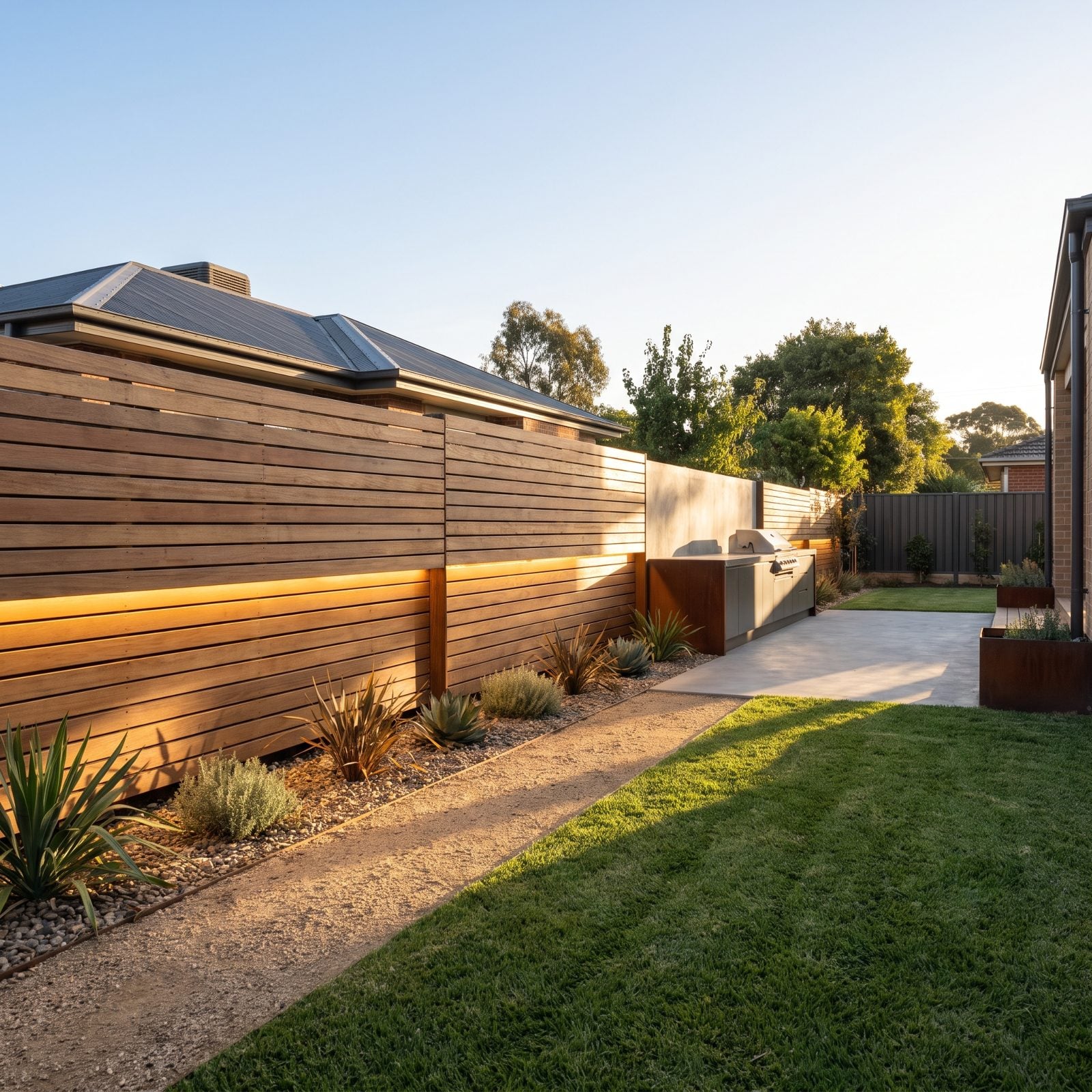
Most landscape lighting makes one of two mistakes. It blasts your eyes with a bare fixture, or it blinds the neighbor and starts a quiet feud. Integrated low-glare lighting fixes both.
Thin LED strips tuck under the top cap and into a couple of horizontal reveals, so the light grazes down the board face instead of firing outward. What you see is the warm walnut composite glowing, never the source. At night the fence turns into the light, which means the harsh spotlights on poles can go away for good.
Here’s the psychology tell: downward, low-level light reads as safe and settled to the human eye. Overhead glare reads as a parking lot.
8. A Grapevine-Covered Dining Arbor
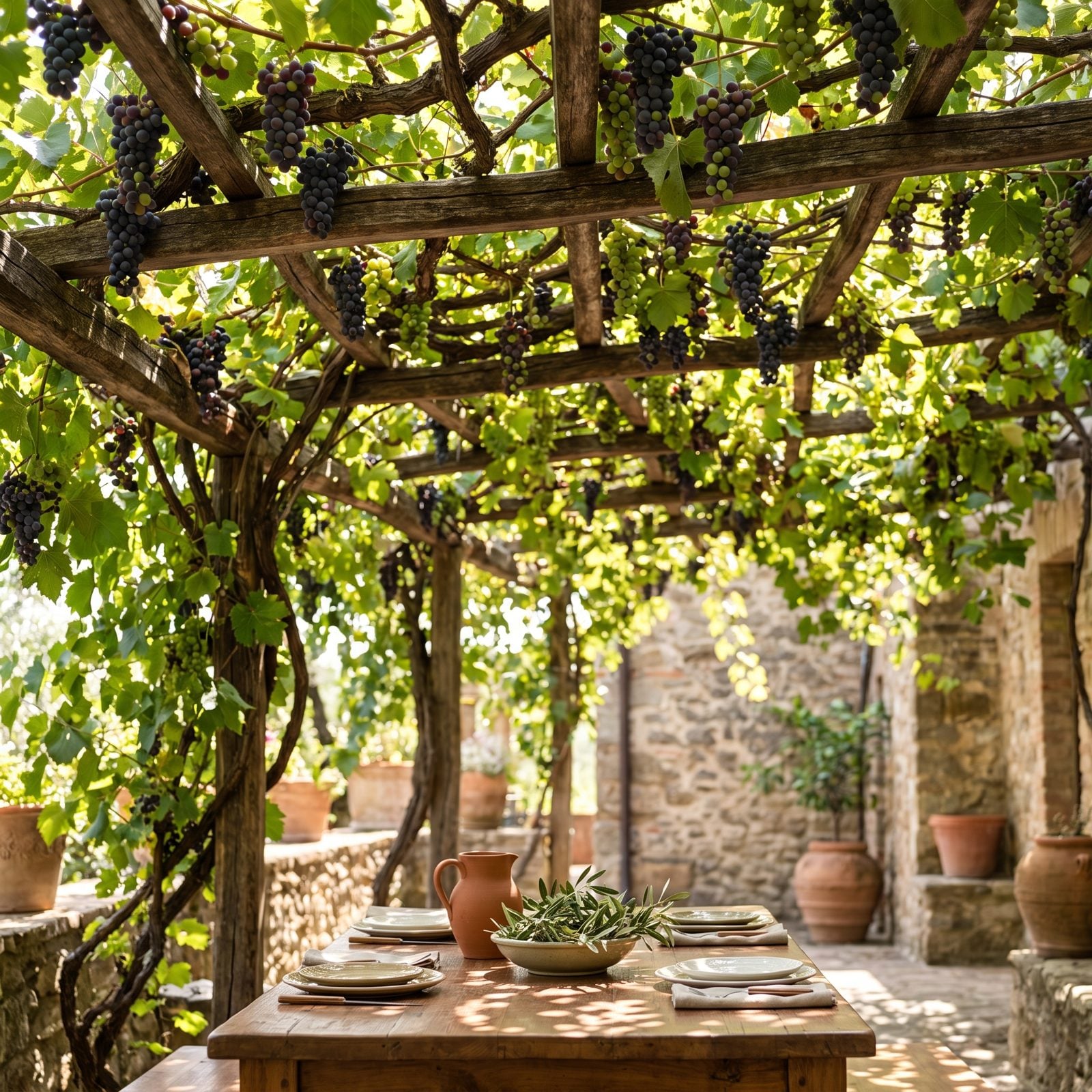
Overhead privacy is the kind nobody thinks about until a neighbor builds a second story and suddenly they’re eating dinner with you.
A grapevine arbor solves it from the top down. The canopy fills in thick by late summer, blocking the sightline from above while dropping dappled shade on the table and, if you’re patient, actual grapes. Weathered oak posts and a long reclaimed-wood table give it that Mediterranean side-garden feel.
7. A Side-Yard Privacy Gate With Solid Infill
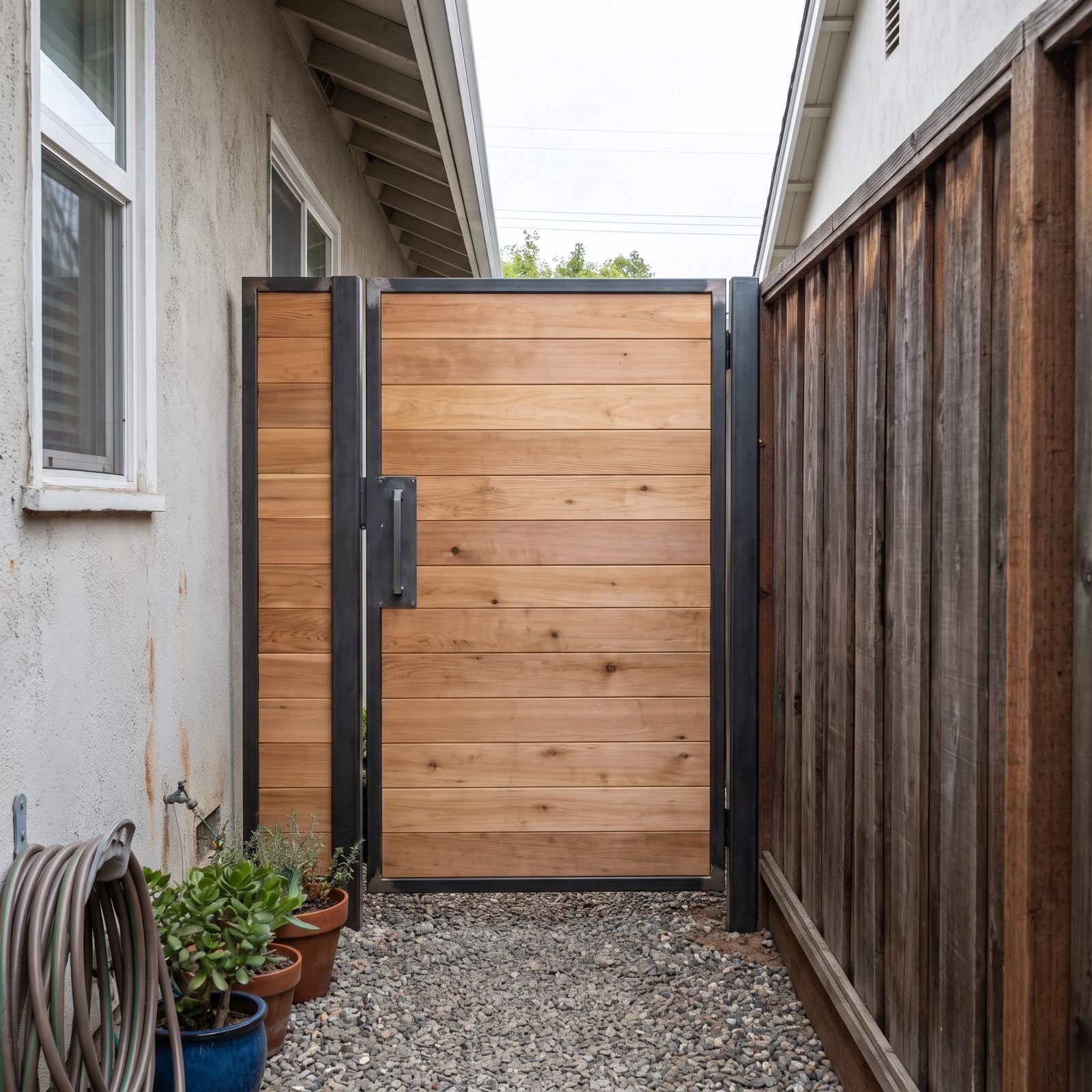
The side yard is the leak in your privacy nobody bothers to close. Everyone fences the back and leaves a clear shot straight down the gap between the houses.
Solid infill on the side gate seals it. No gaps, full-height cedar in a steel frame, two small matte black butt hinges doing the visual work. Stand at the street and your backyard simply isn’t there anymore.
6. A Horizontal Composite Screen for Low Maintenance
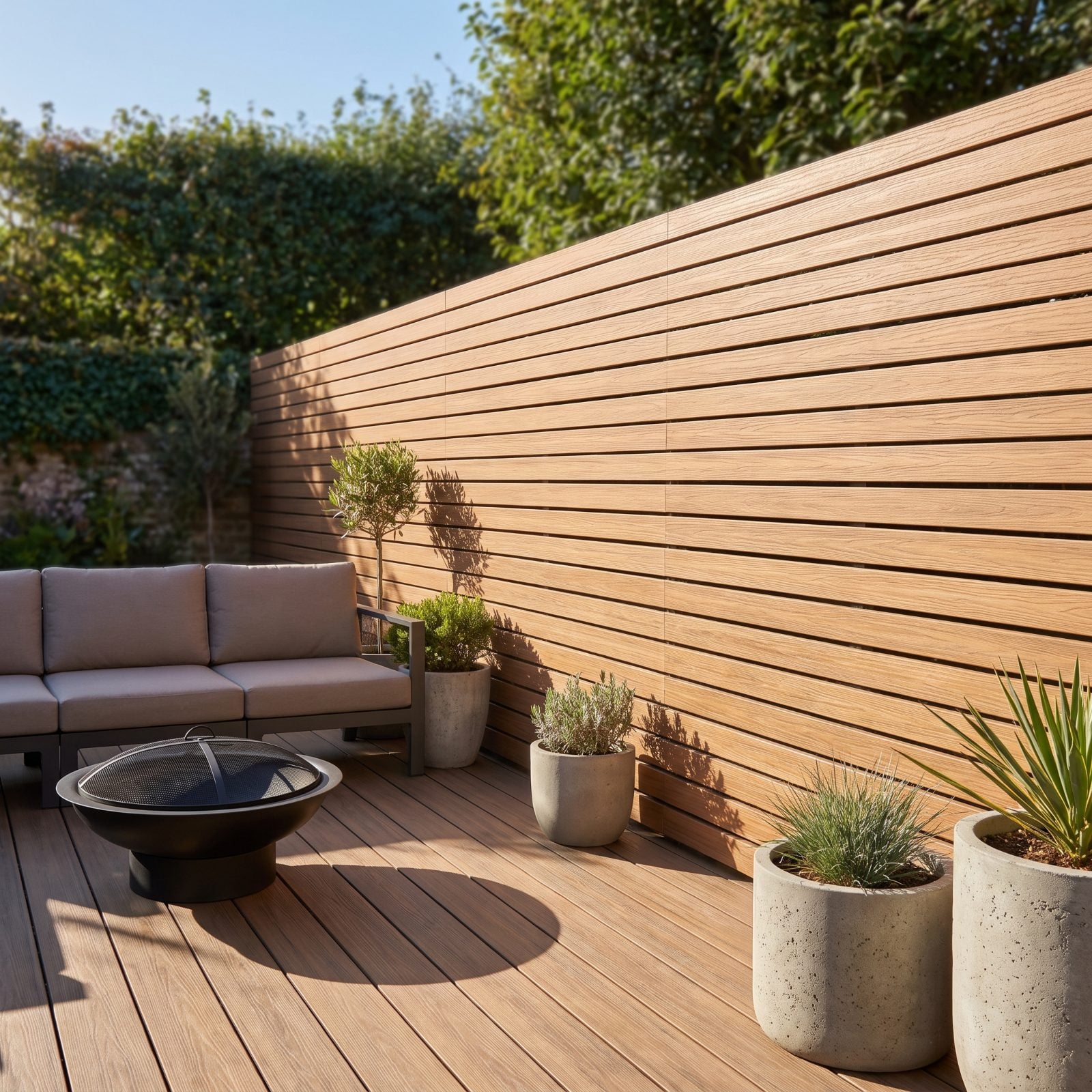
Composite screening is the item we resisted for years, because the early versions looked like plastic pretending to be wood. The current generation finally nailed the grain and matte finish.
Horizontal boards set in matching wood-toned composite posts give you clean lines, consistent reveals, and a surface that never needs sanding, staining, or the annual guilt of a fence you meant to seal. Thin gaps between the boards let air move and hint at the garden shrubs and trees behind without putting everything on display.
Pair it with a taupe modular sofa and a black steel fire bowl and the deck reads finished. Want the whole deck handled? These glam backyard makeover examples lean on the same low-fuss materials.
5. A Double-Gate Entry That Prevents Direct Sightlines
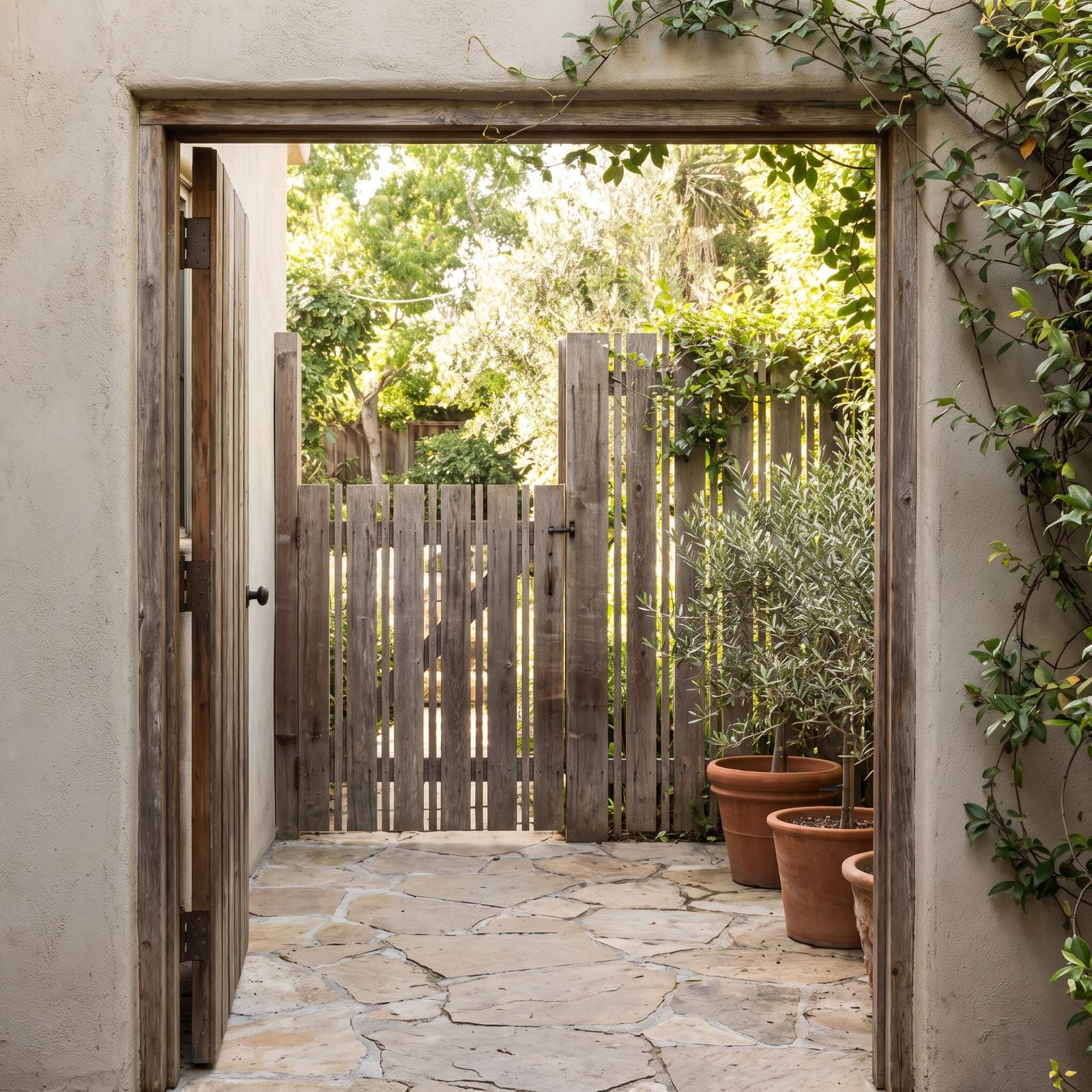
Here’s a trick borrowed straight from courtyard design older than most cities: layer two gates so the view inside is filtered, never wide open.
You walk through the first gate into a small flagstone vestibule, then straight ahead through the slatted second gate into the garden. Even with the outer door open, the slats offer only glimpses of the garden beyond, never a clear shot inside. Small olive trees in terracotta planters make the in-between feel like a room, not a dead zone.
It’s the same instinct behind a good bright entryway design indoors. Control the sightline and the arrival feels intentional.
4. A Vine-Covered Freestanding Trellis
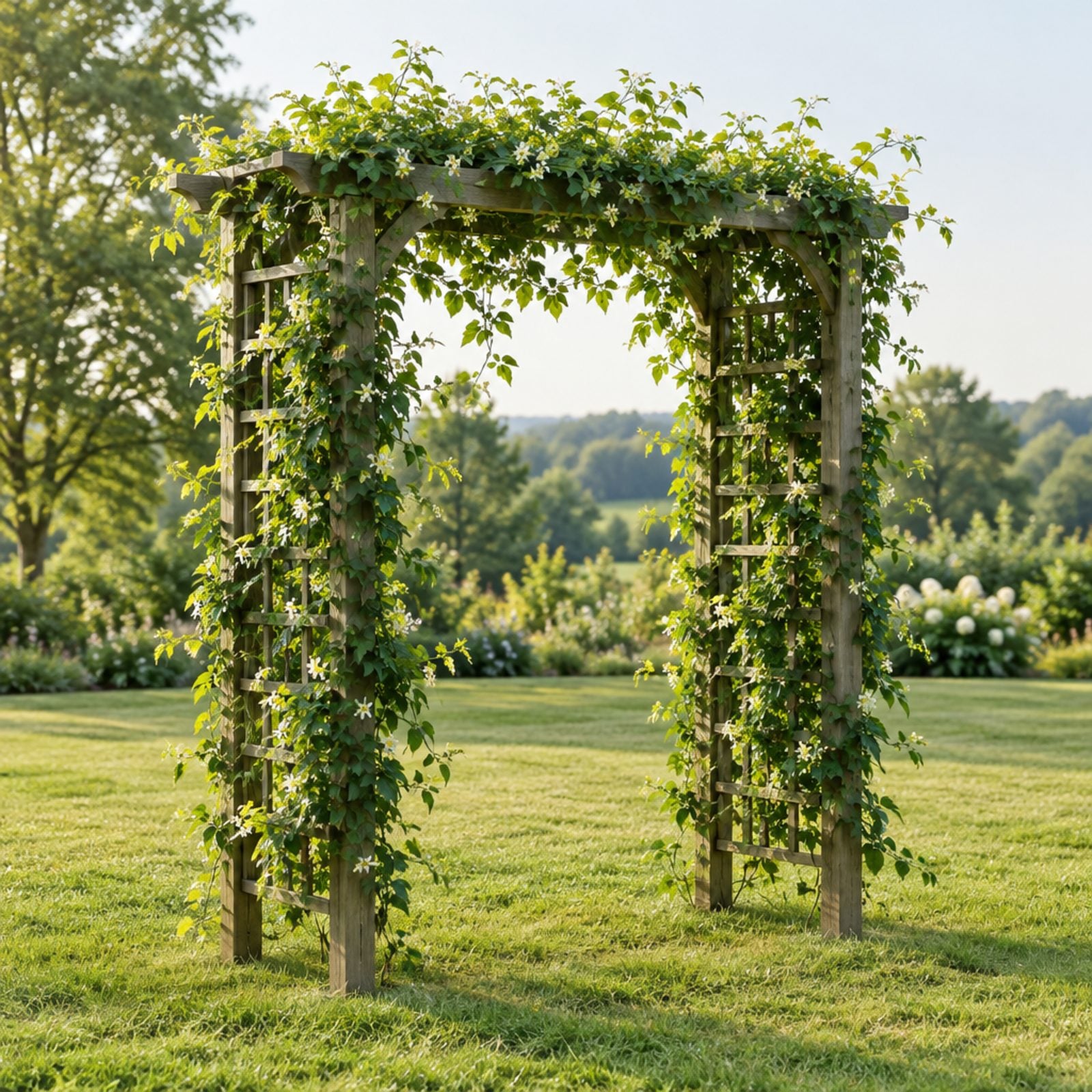
Not every privacy screen has to be bolted to something. A freestanding trellis drops cover exactly where you need it, no fence line required.
Chunky weathered timber posts and beams, wooden lattice slats on each side, and a white star-jasmine-type vine scrambling up until the whole arbor is a wall of green and blossom. Set it on the open lawn and you get a solid flowering screen, the sides and beam packed with foliage and filling in thicker every season.
3. A Folding Shutter System for an Outdoor Kitchen
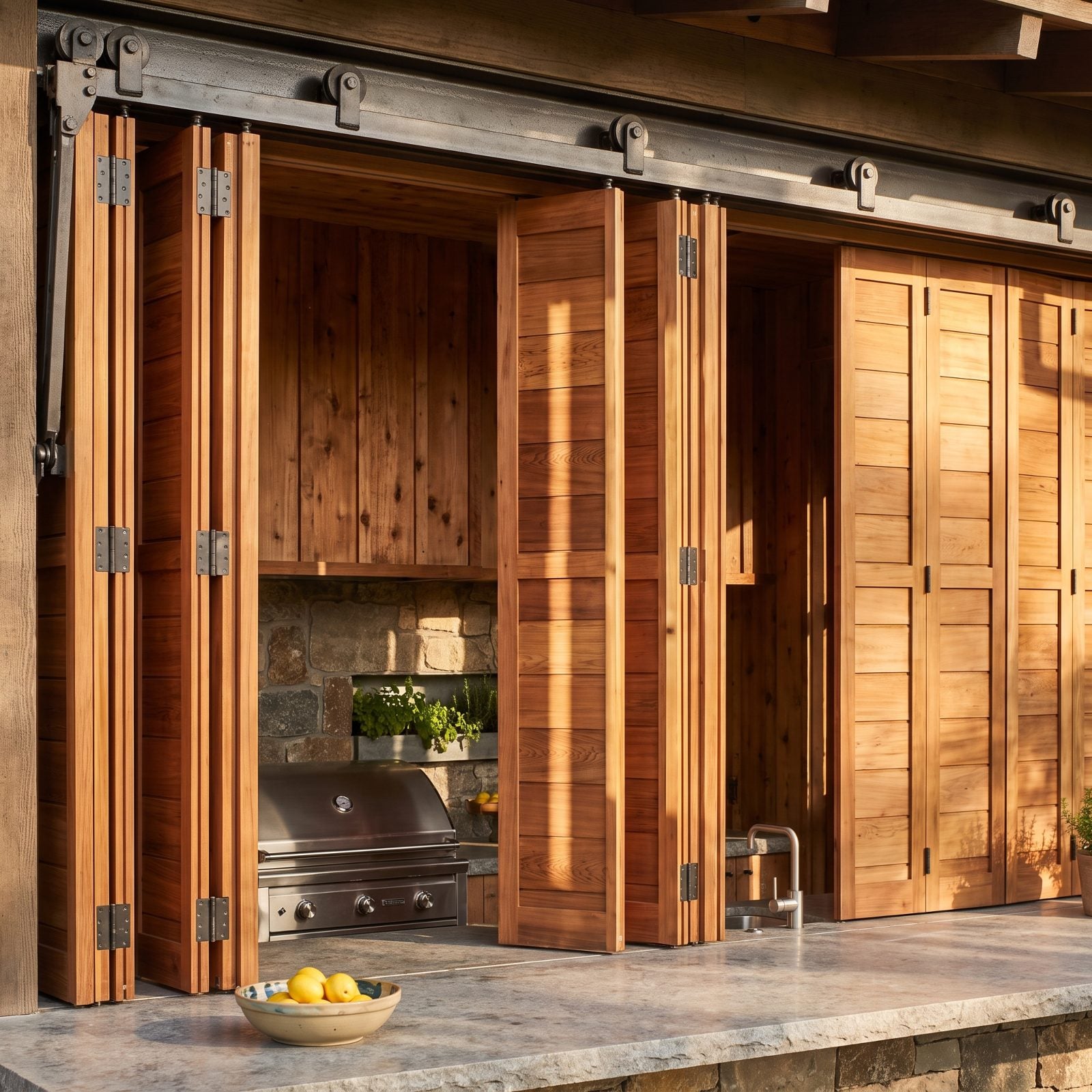
The genius here is the hinge. Those cedar slats fold back when you want the neighbors to feel like company and close up when you want them gone, so privacy becomes a setting rather than a wall you’re stuck with forever.
Notice what the shutters are actually hiding — the whole kitchen, grill and all, once they swing closed. The slats break the sightline without boxing in the glam backyard makeover feel of the space, and honey cedar against cool bluestone keeps it warm instead of clinical. The stainless steel grill gets to read as the hero it is.
2. A Sauna Entry Court Hidden by Planting
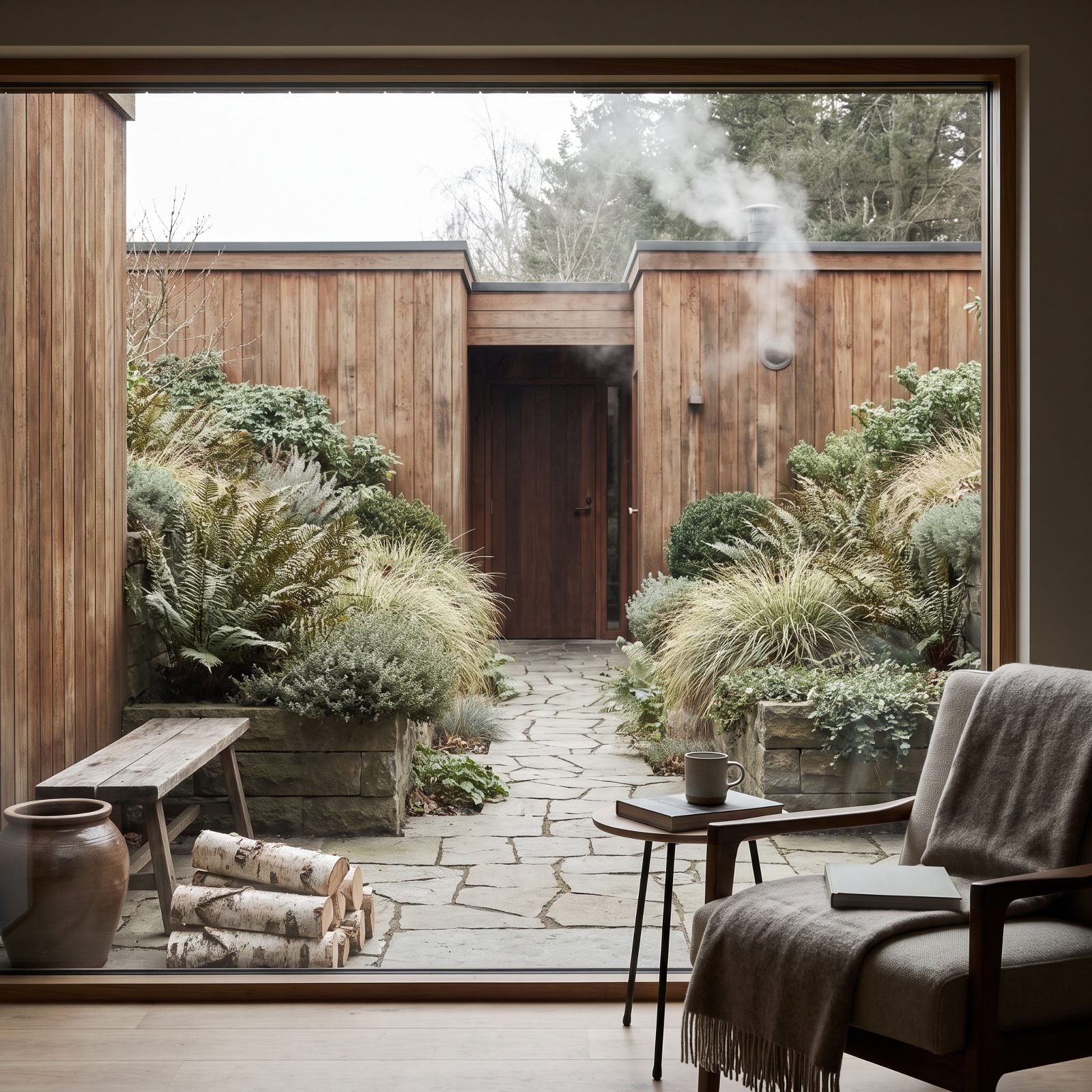
A sauna in the side yard sounds like a stretch until you see how the planting does the heavy lifting.
That bank of ferns and fountain grasses wrapping the entry court isn’t decoration — it’s the whole privacy plan. Grasses give you a soft, movable screen that fills in head-high by midsummer, buffering both the view from the neighboring house and a surprising amount of sound. The warm-toned cedar cladding hangs back quietly, so your eye lands on the pale grasses and silvery shrubs spilling over the sandstone-block beds instead of the walls behind them. Clever use of the narrow strip most people write off as dead space. Pair it with a few flat sandstone steppers and you’ve got one of the better narrow backyard ideas going.
1. A Woven Hazel Hurdle Fence
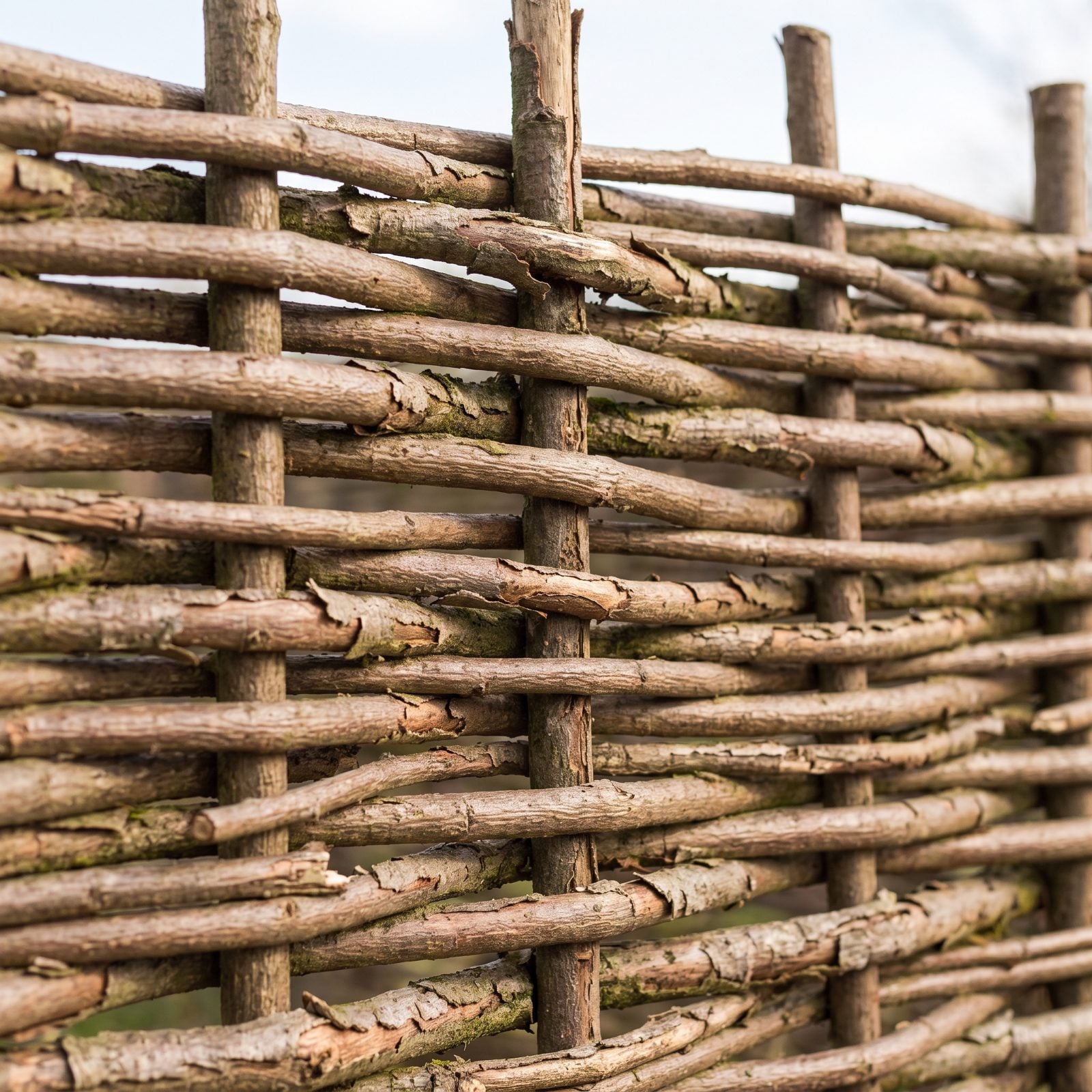
Woven hazel is the oldest trick in the book, and it’s good to see it back.
You could have found this fence behind an English cottage four hundred years ago — whole round rods, bark still on, woven close enough to break a sightline but with gaps loose enough to let wind slip through instead of slamming into it. That matters in a small city garden, where a solid panel just builds you a wind tunnel against a dead flat backdrop. The brown, peeling-bark weave gives you texture a painted board never will, and with the bark flaking and a little moss creeping along the rods, the whole run looks like it grew there. Thread sweet peas through the rods and the whole boundary softens by August.