🔥 Would you like to save this?
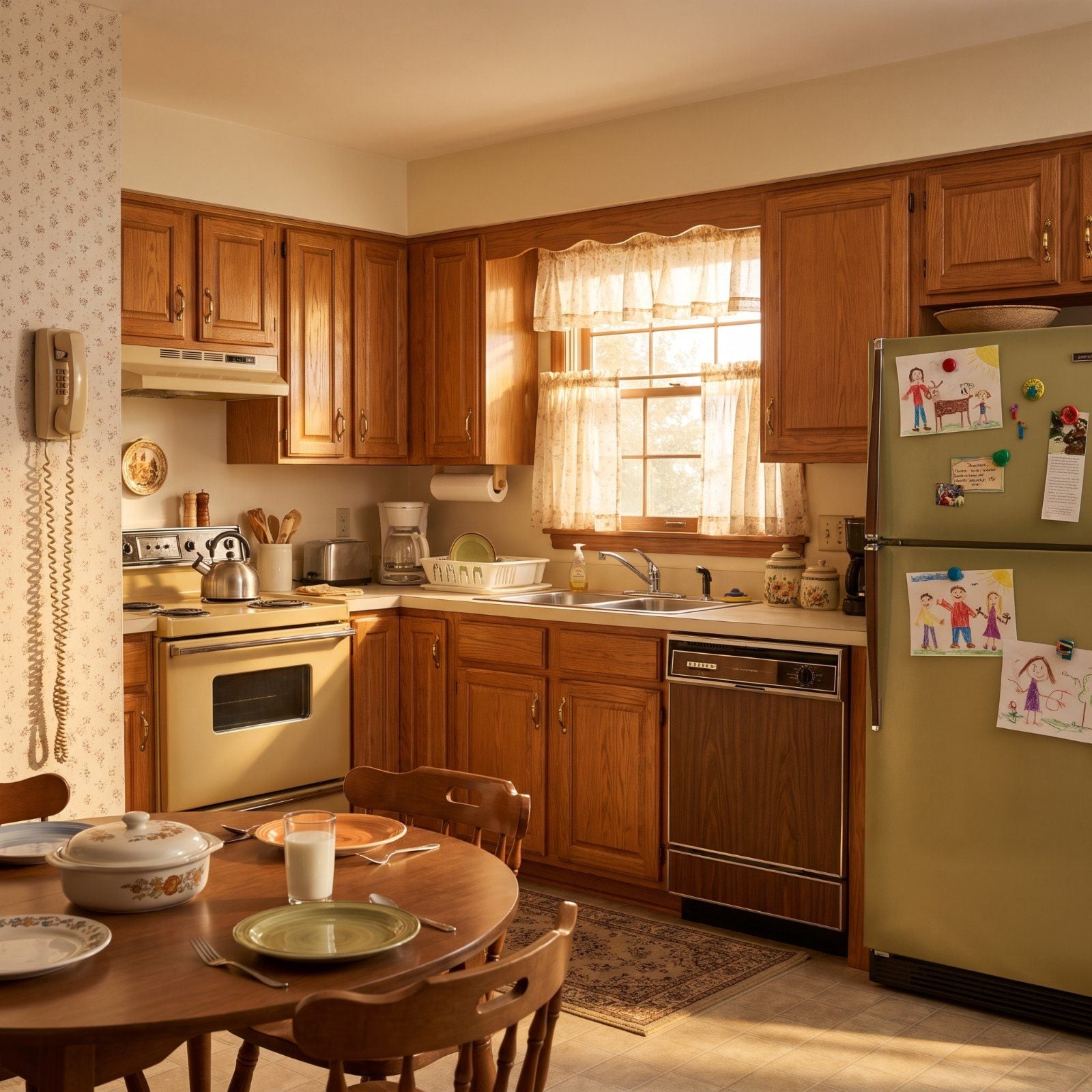
You knew the house was alive before you opened the door. Garlic in a pan. A radio low in the kitchen. Someone’s voice answering before you even called out.
Some homes just run on love and routine, and you don’t notice until you’re grown, standing in a quiet apartment, wondering why it feels off. It was never the square footage. It was the small stuff, repeated so many times it became the shape of home. Here’s what gave it away.
In order to come up with the very specific design ideas, we create most designs with the assistance of state-of-the-art AI interior design software. Also, assume links that take you off the site are affiliate links such as links to Amazon. this means we may earn a commission if you buy something.
31. The Smell of Dinner Cooking When You Walked In
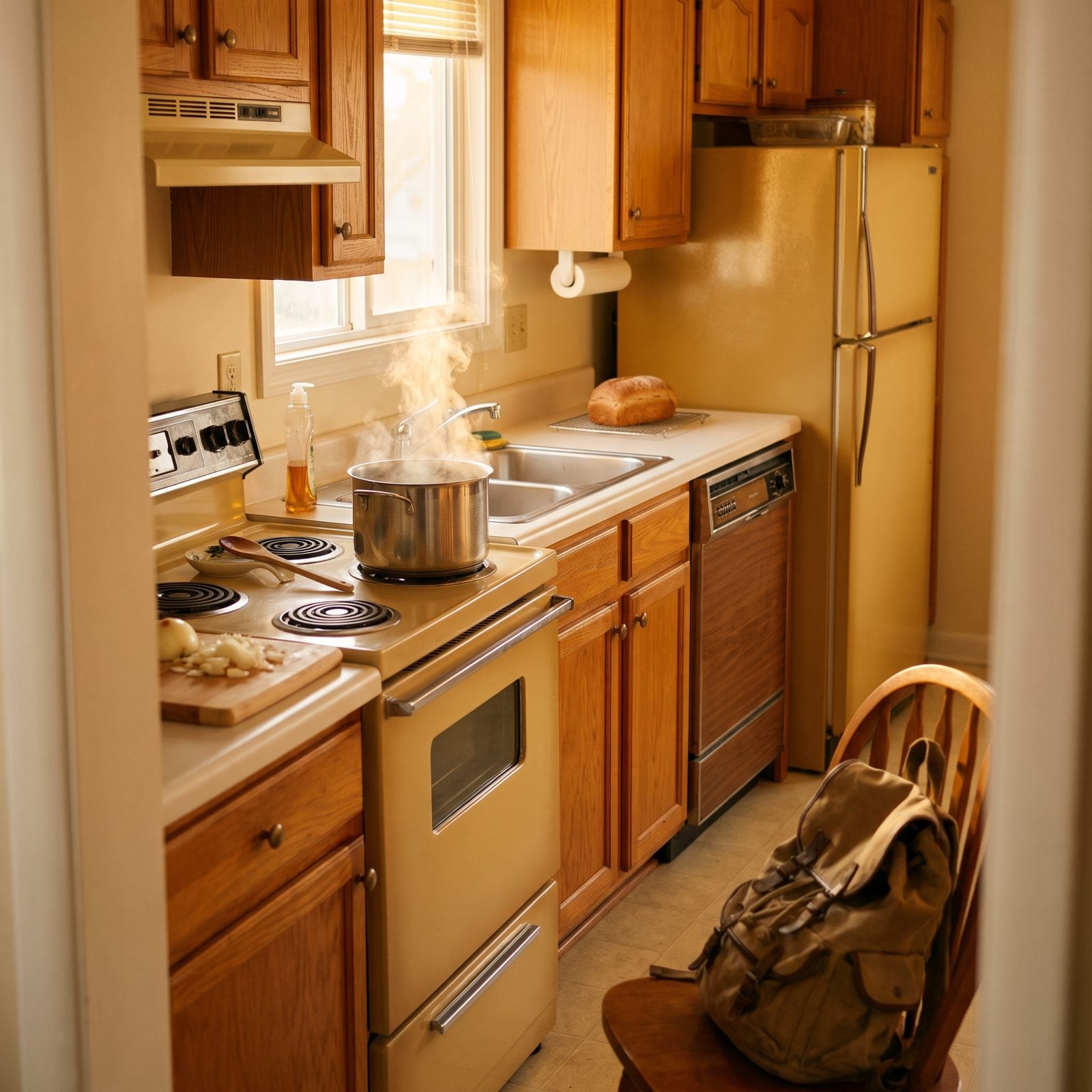
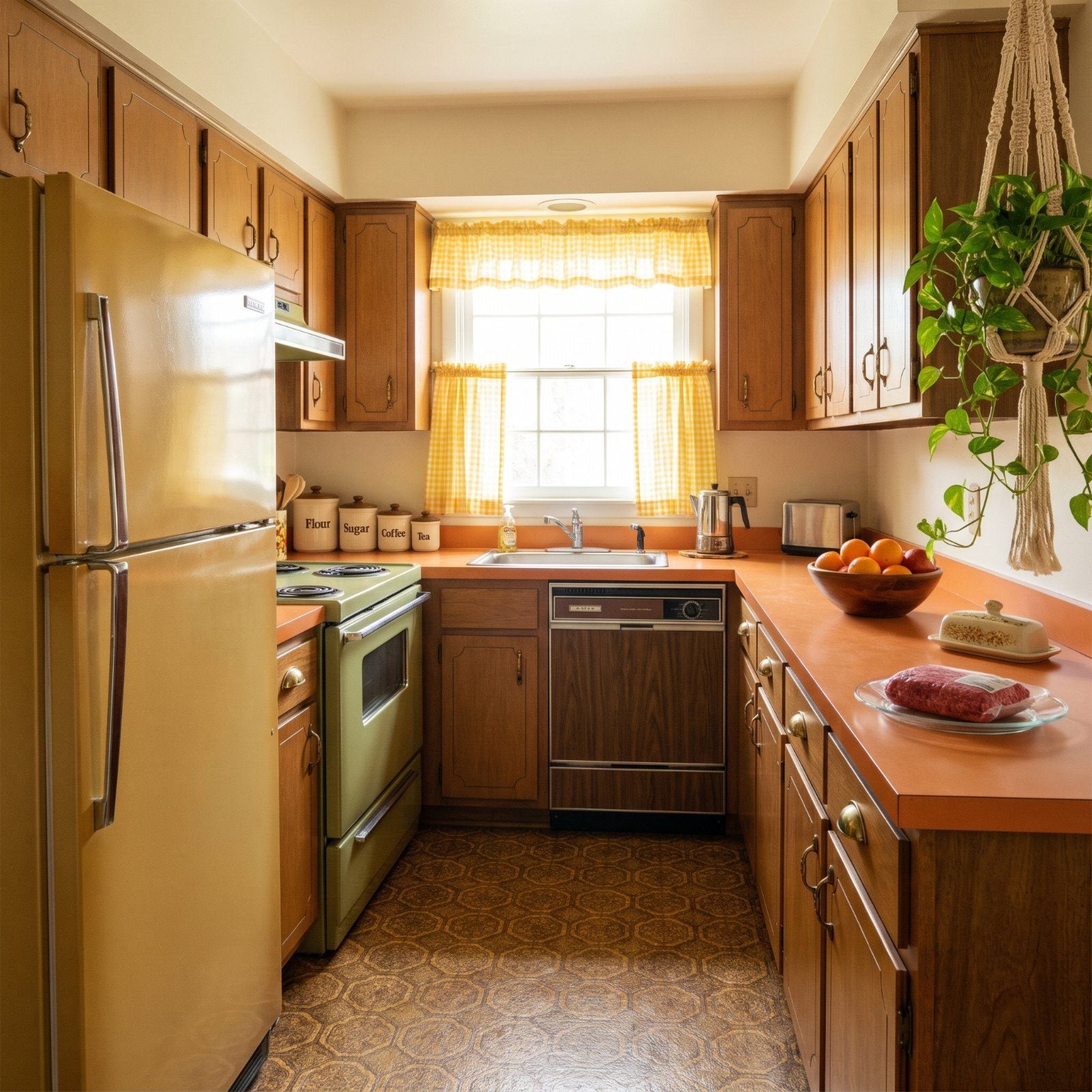
Garlic hitting hot oil. Onions going soft. Some nights it was tomato sauce that had been going since two in the afternoon, and you could smell it from the driveway.
That smell did something before you’d said a word to anyone. It told you someone had been here for hours, thinking about you eating. Dinner didn’t just appear. It got made, on purpose, by someone who planned their whole day around the fact that you’d walk in hungry at six.
30. A Dinner Table Everyone Actually Sat At Together
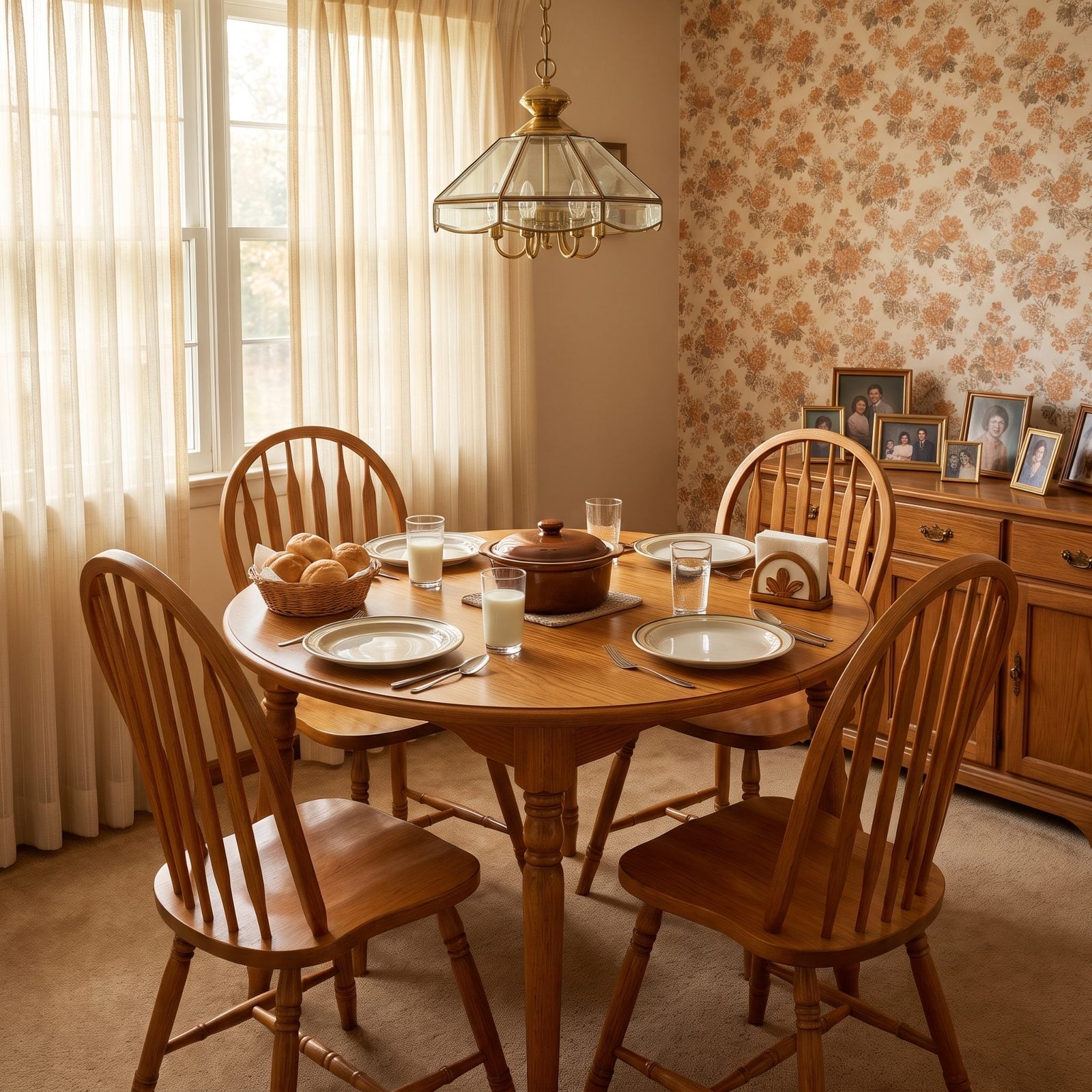
Same seats every night. You didn’t choose yours; it was just yours, the way the dog has a spot on the couch.
Nobody was on a phone, because there was one phone and it was bolted to the wall. The TV stayed off. When someone asked how your day went you actually had to answer, and you learned to talk across a table, which turns out to be a real skill most adults never picked up.
It wasn’t fancy. Sometimes it was fish sticks. But everyone showed up, and showing up every single night with no exceptions is its own kind of love.
29. The Cookie Jar That Was Always, Somehow, Full Again
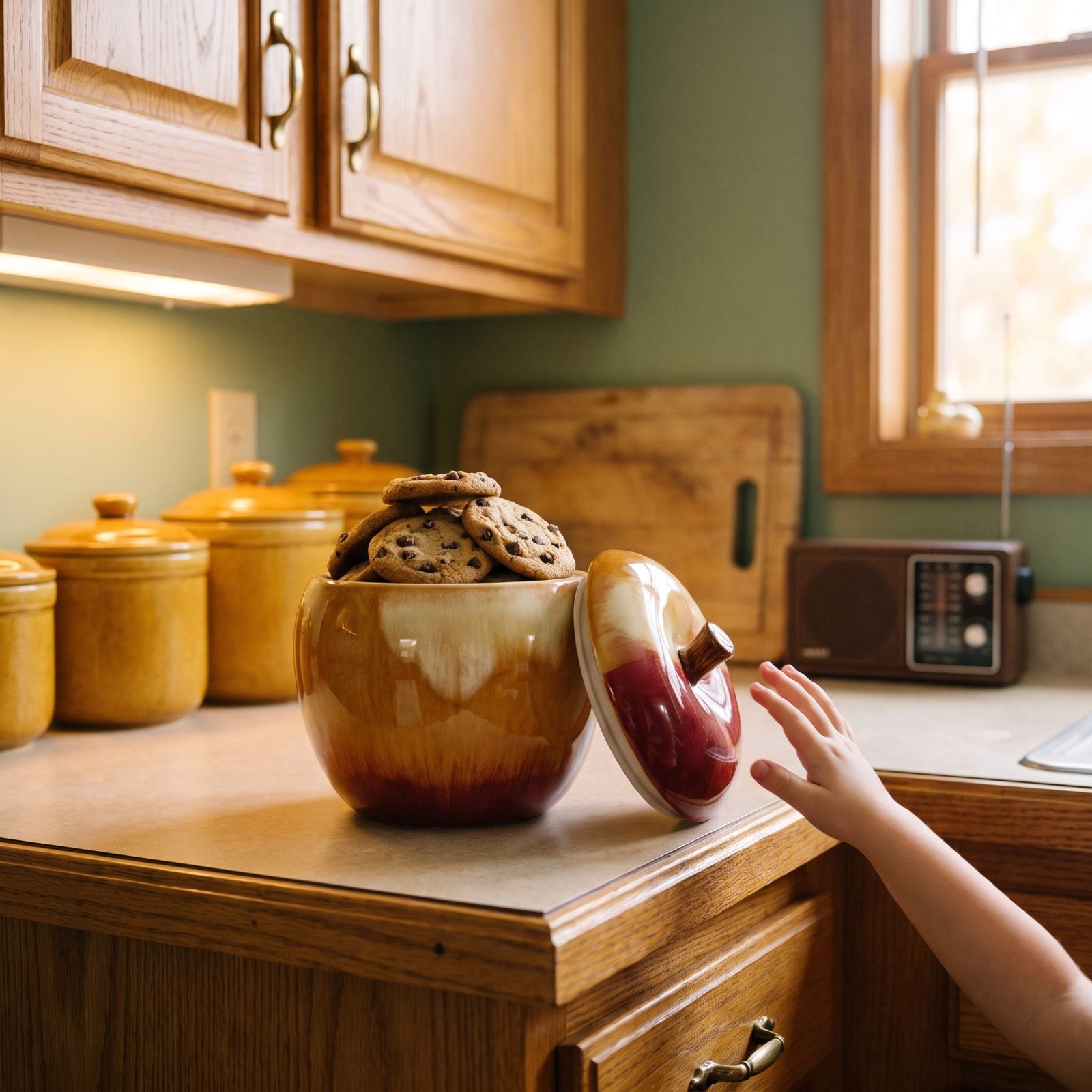
You never once caught it empty and then watched it refilled. That was the trick. You’d take two after school, come back the next day, and it was somehow full again, like the house ran on some quiet logistics operation nobody showed you.
The lid made that specific ceramic clink you could hear three rooms away, which doubled as a security system. Grabbing one before dinner took strategy and a clean getaway.
28. A Refrigerator Buried Under Your Drawings and Report Cards
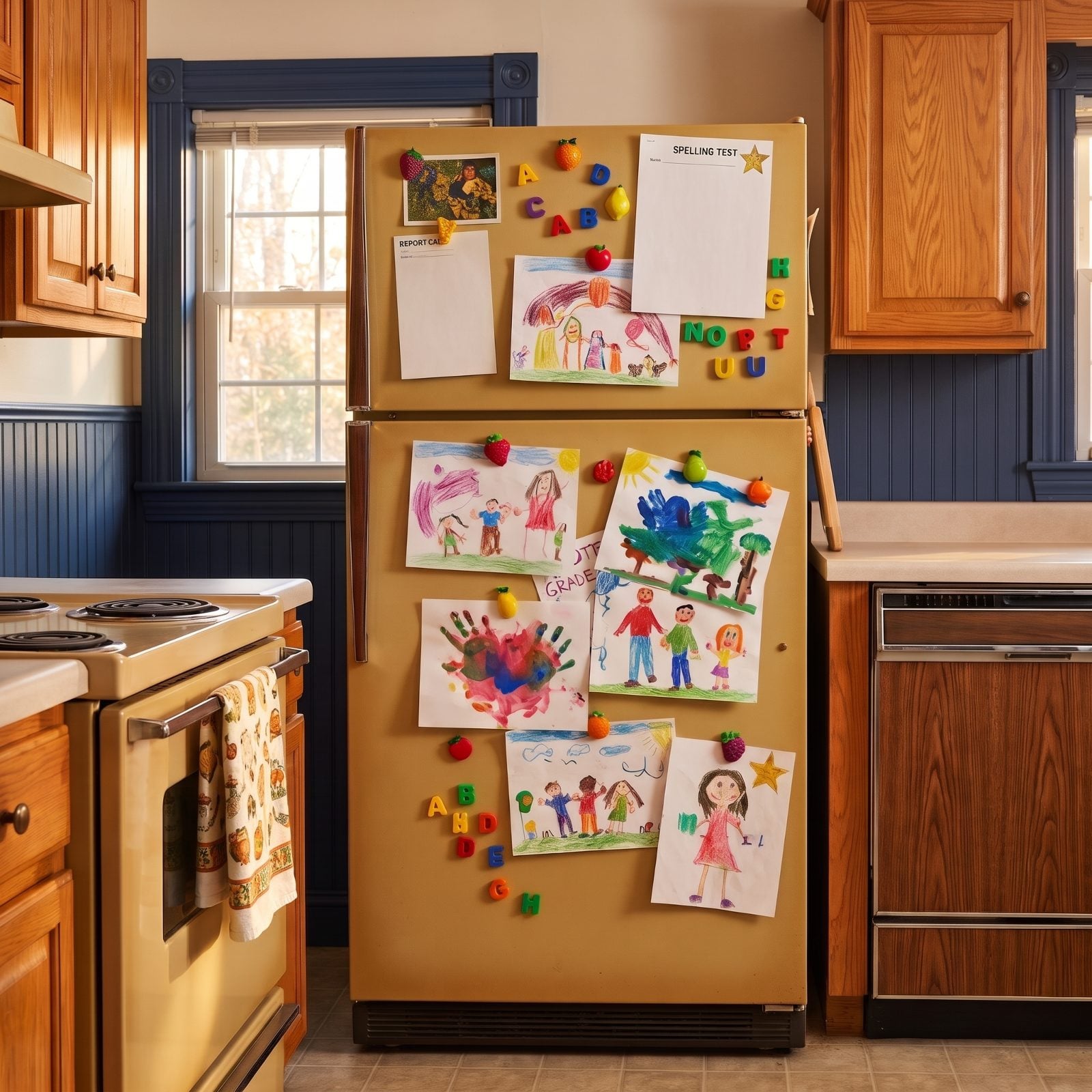
Every crayon scribble made the cut. A stick figure with a triangle body and six fingers got the same prime real estate as a gold star on a spelling test.
Someone who thought your work belonged where everyone could see it curated that fridge, gallery and bragging board rolled into one. The paper curled at the edges from the kitchen heat. Nothing came down until it physically fell. And when it fell? It went in a drawer, not the trash.
27. Clean, Folded Laundry Left Waiting on Your Bed
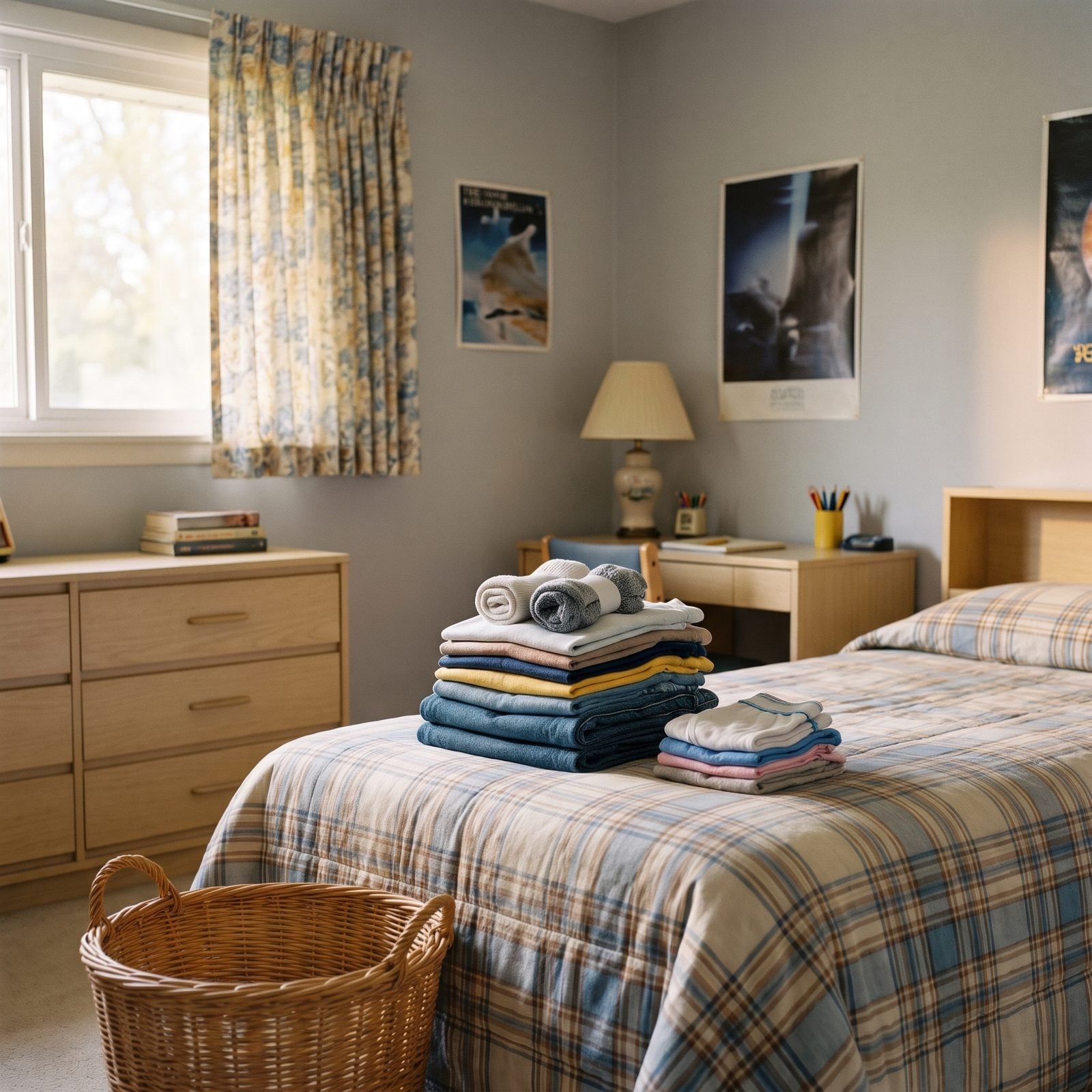
You’d come home and there it was. A tidy stack at the foot of the bed, warm if you caught it early enough, smelling like whatever softener lived in your house and nowhere else.
You didn’t think twice about it. That’s the part that gets you later. Someone sorted your socks, turned your shirts right-side-out, folded the whole pile while you were off being a kid. Then you moved out, did your own laundry at a cramped machine that ate quarters, and understood exactly what that stack had been.
26. The Kitchen Phone With a Cord That Reached the Next Room
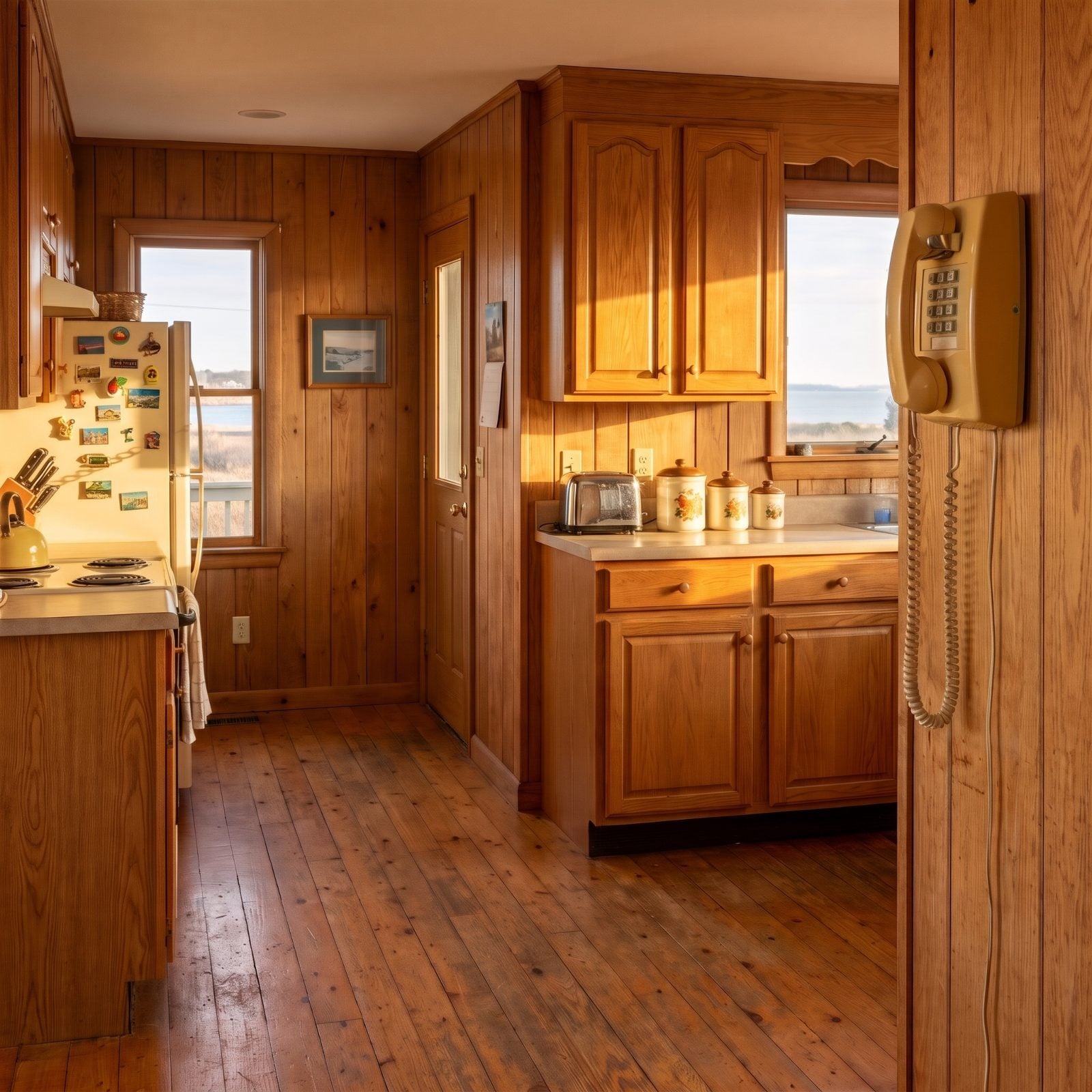
The coiled cord could stretch from the wall phone clear across the kitchen toward the fridge. That’s how you got privacy in a house with one phone and six interested parties.
It coiled and kinked and spun itself into a knot you’d dangle and let unwind. When the receiver was hung up, it dangled down the wall like a jump rope waiting for the next call. And the phone lived where the family lived, so you took your calls in the middle of everything, which is half the charm looking back.
25. The Junk Drawer That Held a Little Bit of Everything
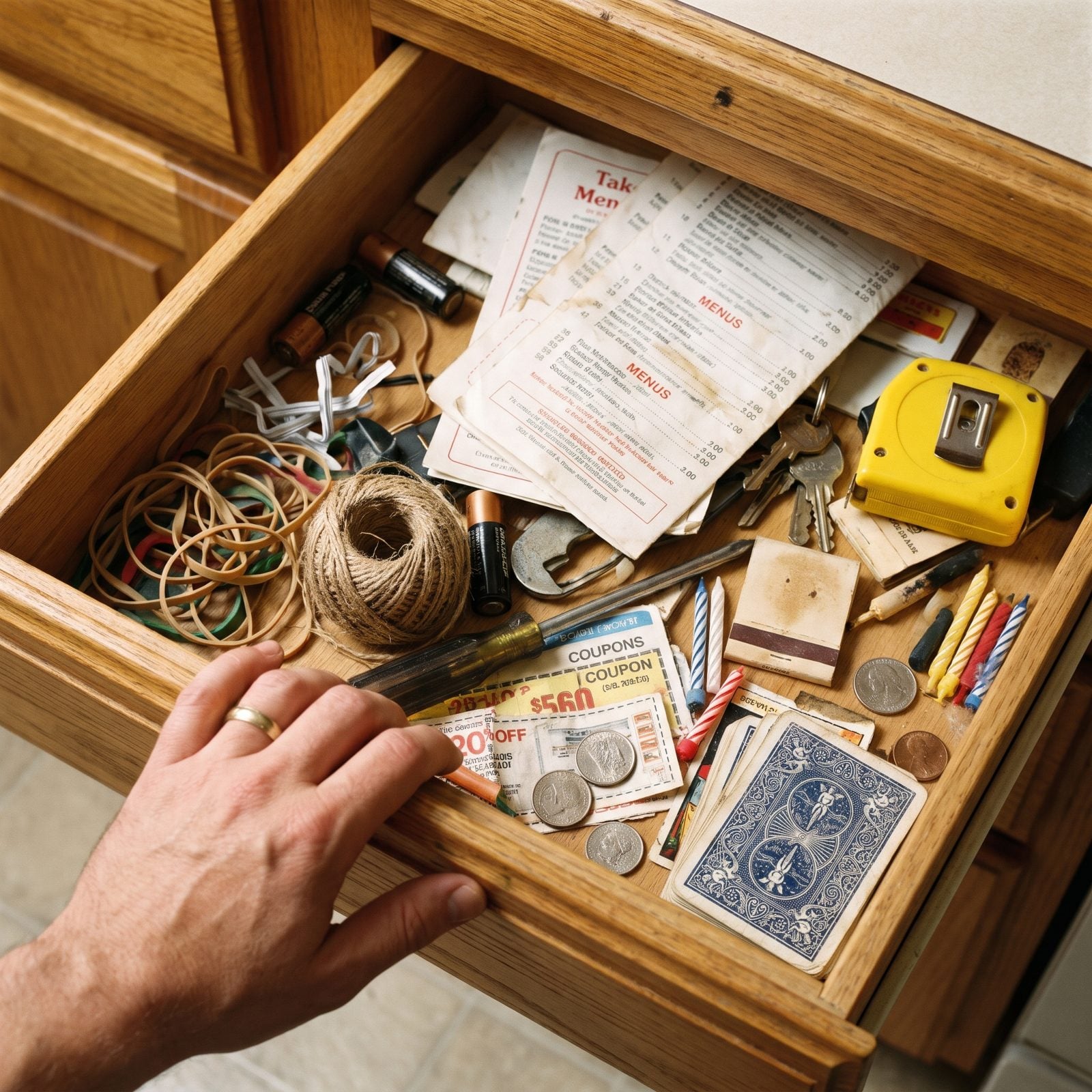
Every house had one. The drawer you opened when you needed a battery with its label worn past reading, a rubber band, a pen that actually worked, or the one screwdriver this family owned.
Twist ties with no bags. Take-out menus so stained and faded you could barely make out a single dish or price. Keys to doors nobody could name. A tape measure, birthday candles, a deck of cards missing the two of clubs. It looked like chaos but it wasn’t. Someone knew roughly where things lived in there, and that someone could pull the stamps in four seconds flat while you stood there helpless.
24. The Growth Chart Penciled Onto the Doorframe
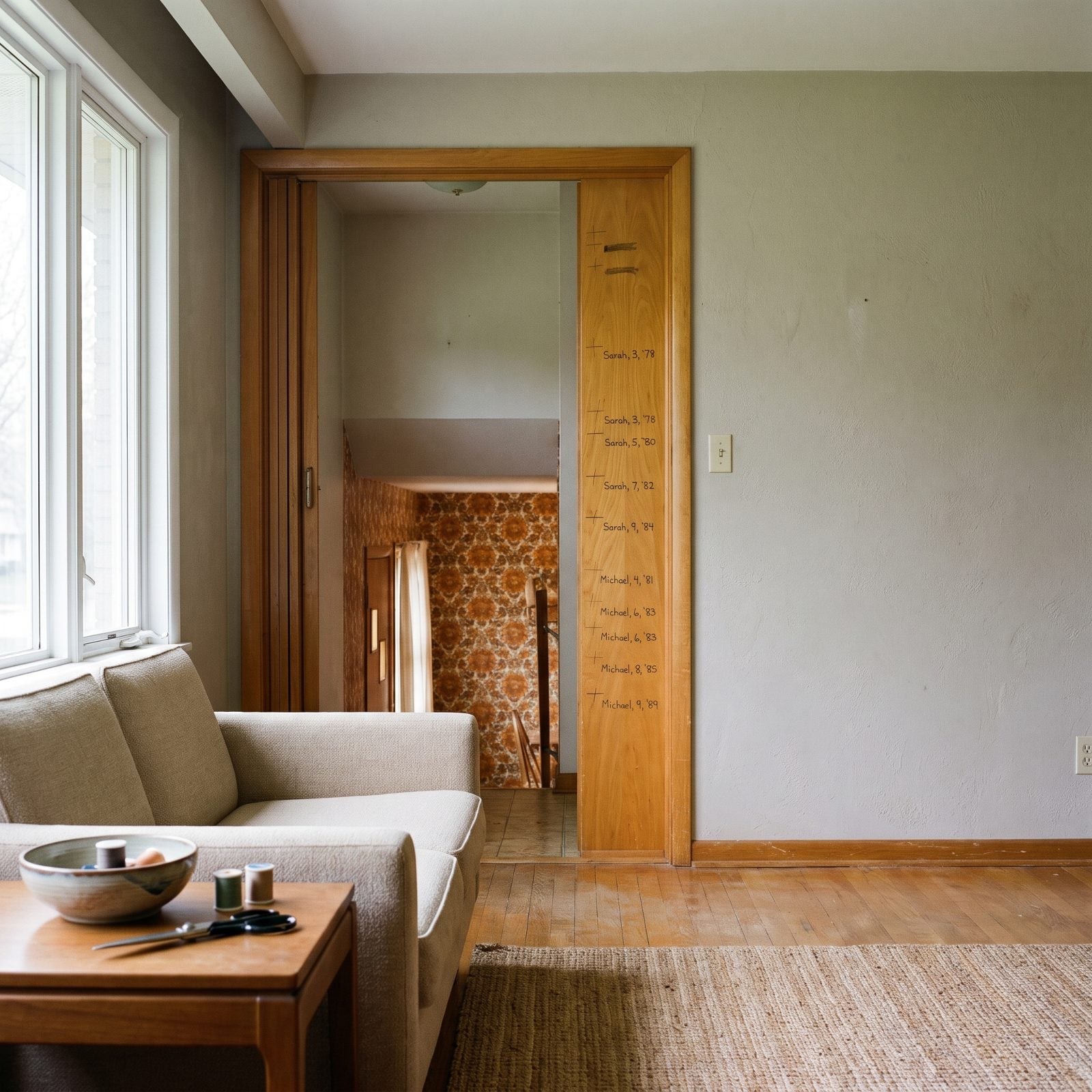
Back against the frame, heels flat, no cheating on your tiptoes. A book flat on your head, a pencil mark, a date scribbled beside it.
Those little lines turned a doorframe into a timeline. You could see the year you shot up and the year you barely moved. And here’s what makes it ache: that wood couldn’t come with you. Families painted over it, or moved, or sold the house. The one thing nobody wanted to lose was the one thing you couldn’t take.
If your parents measured you against a wall, they were paying attention. That’s all it ever meant.
23. The Hallway Lined With Framed Family Photos
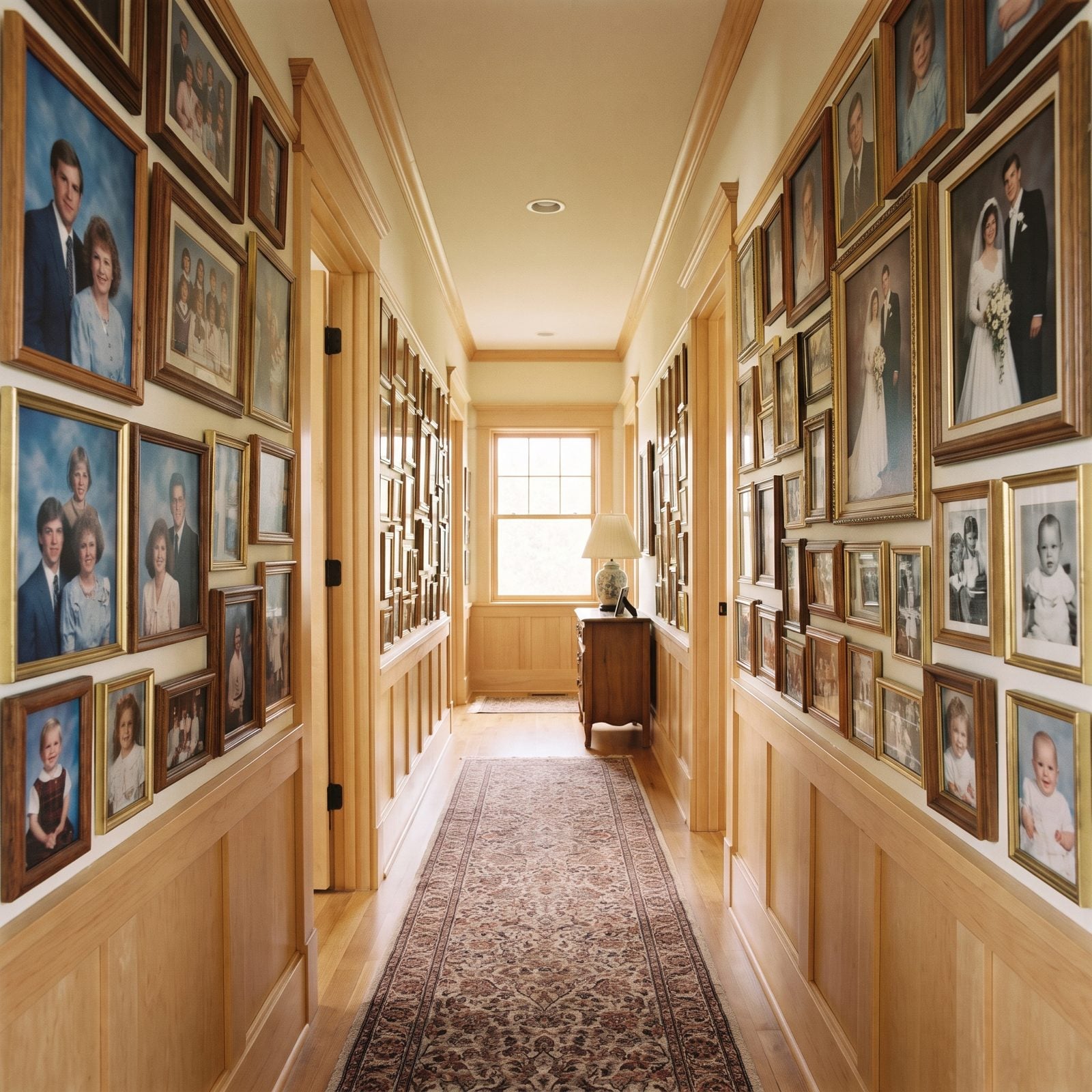
School pictures with the laser-beam blue backdrop. A wedding photo. A baby photo of someone who was now shaving. The frames never matched and nobody cared.
You walked that hall a thousand times without looking. But it did its job the whole time, reminding you that you belonged to a long line of people who kept showing up for the camera and for each other.
22. The Worn-Out Recipe Box Living on the Counter
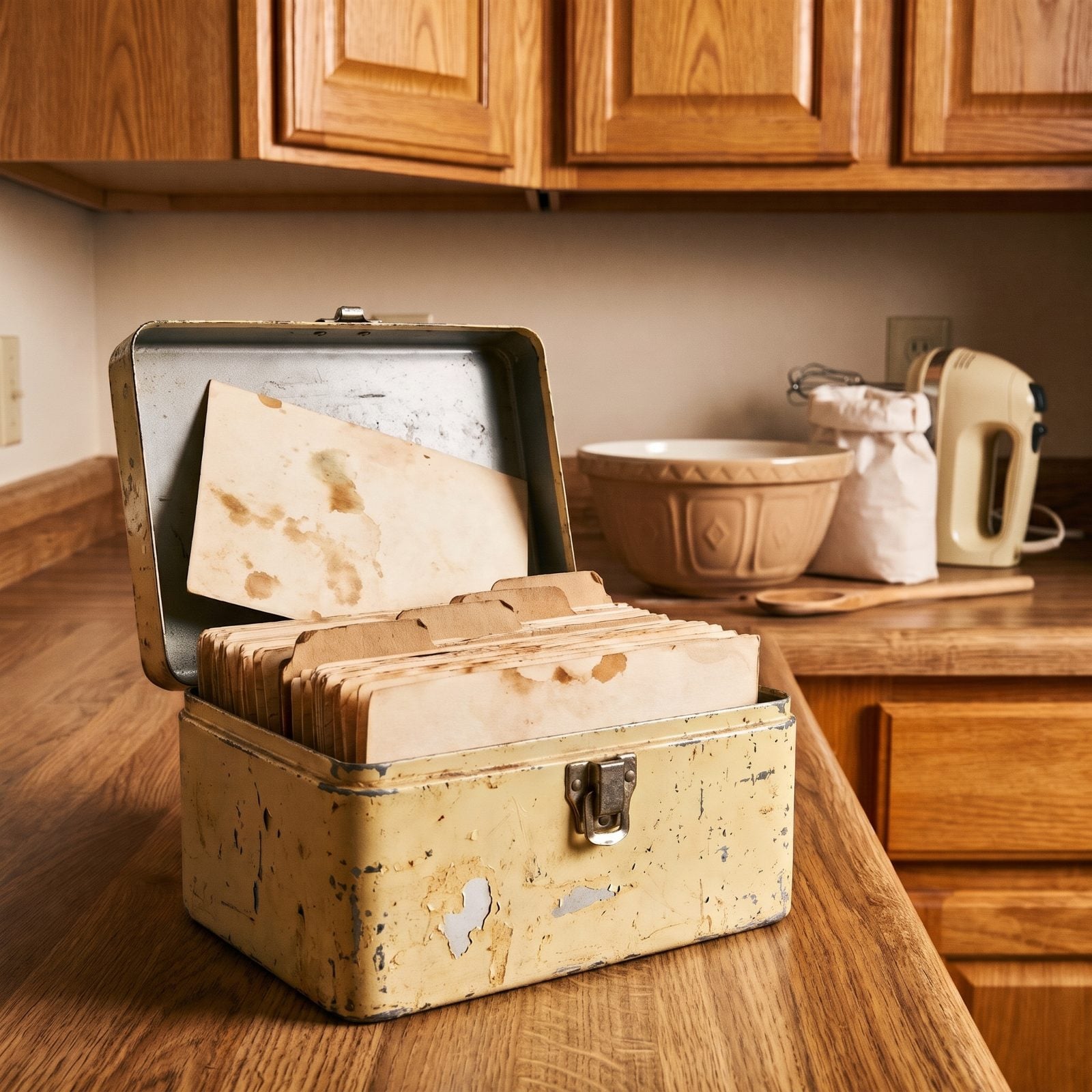
The lid never fully closed anymore. Too many cards jammed in, half of them in different handwriting, some from a grandmother who’d been gone for years but whose banana bread lived on in splatter-stained cursive.
The best cards were the dirtiest ones. Grease spots and flour smudges were a rating system. A clean card meant nobody loved that recipe; a card you could barely read meant it got made every holiday without fail.
That box was the family history written in food. Somewhere in there was the one thing you’d end up calling home to ask for, the second you tried to make it yourself and couldn’t.
21. The Sunday Roast That Filled the Whole House With Smell
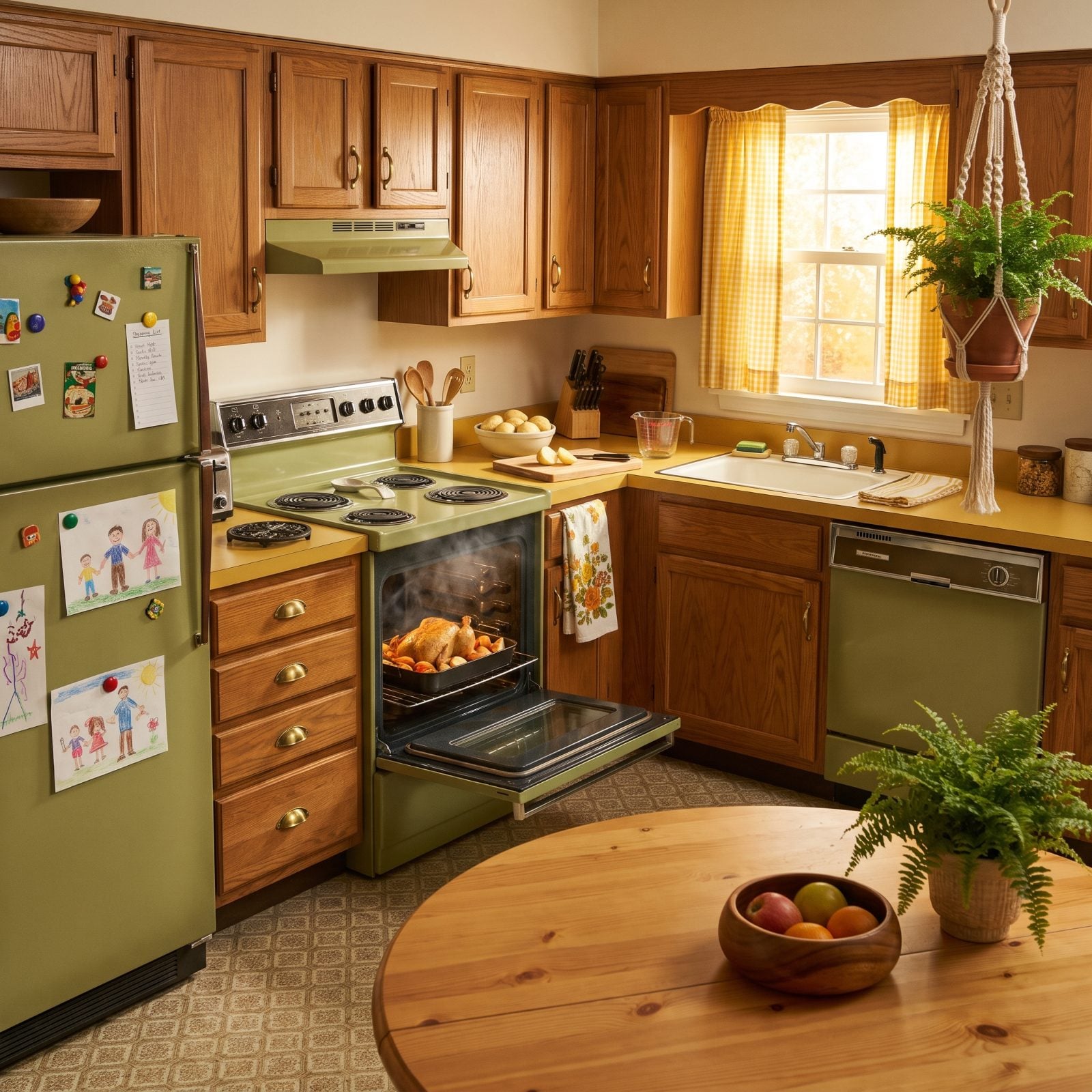
You could smell it from the top of the stairs. Rosemary, the fat crackling, something that told your whole body it was Sunday before you’d even opened your eyes.
The roast was never really about the meat. It was about the clock everyone bent around it — potatoes going in, the table set with the good napkins, someone sent out to drag the stragglers home. A house that pulled off a Sunday roast was a house that still ate together on purpose.
20. The Brown Paper Bag Lunch With Your Name On It
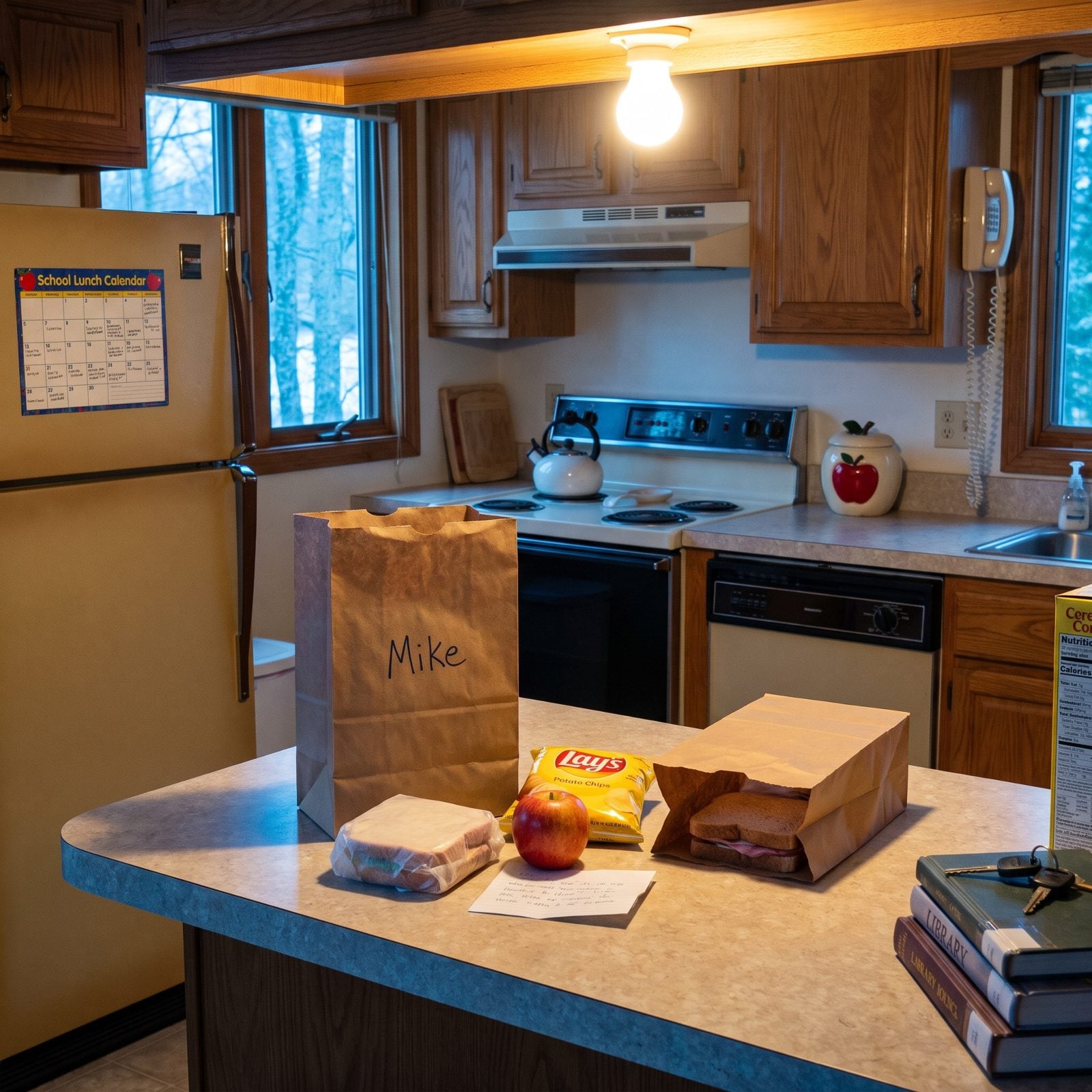
By the time you got to school the bag was soft and creased, because it had ridden under a textbook in your backpack all morning. Your name on the front in your mom’s handwriting. Inside, the sandwich cut the way you liked it, and sometimes a note you pretended to be embarrassed by and secretly kept.
Nobody was packing gourmet. Same four things on rotation, more or less forever. But someone did it every single morning before you were even properly awake, and that’s the part that sticks.
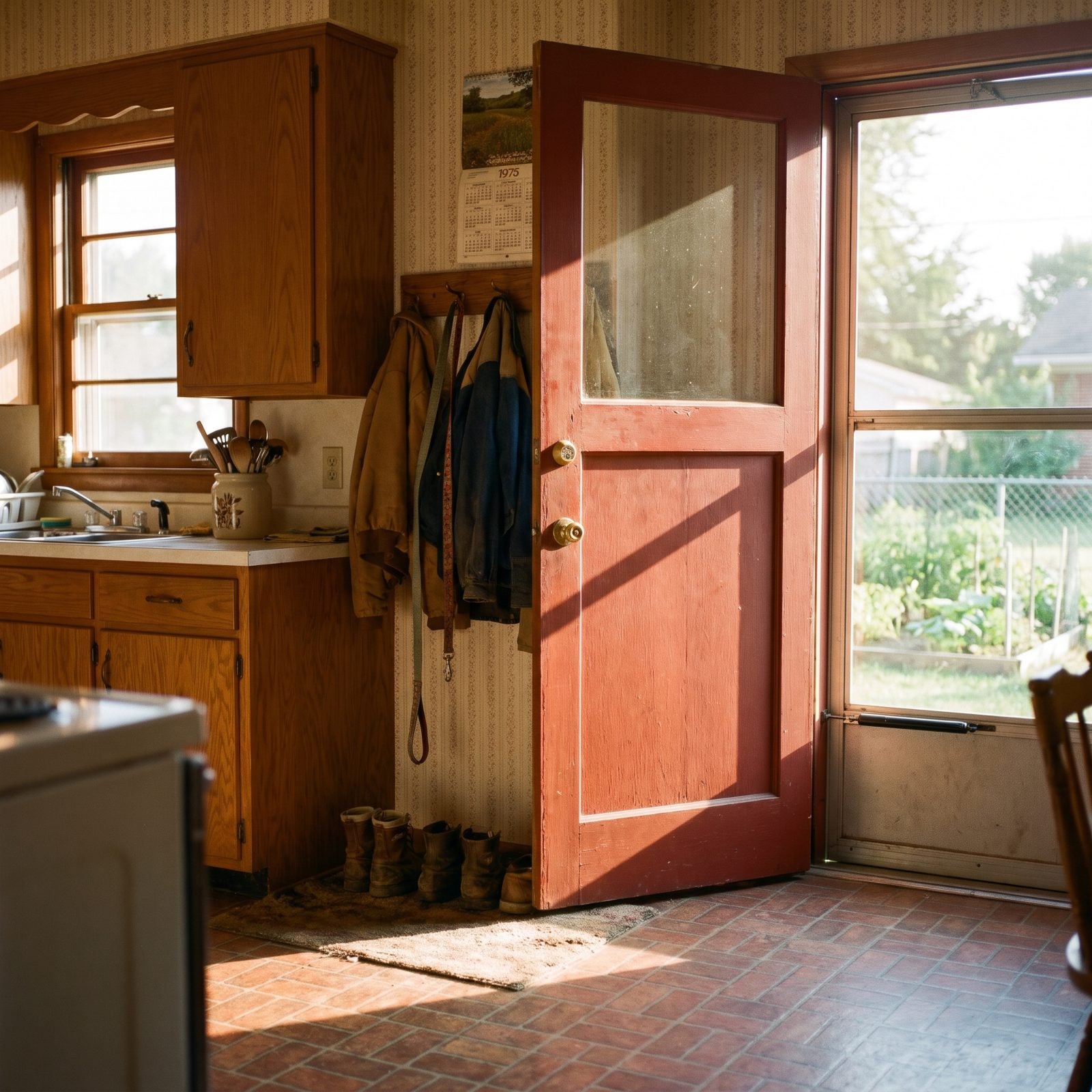
19. The Back Door Nobody Ever Really Locked
🔥 Would you like to save this?
The front door was for strangers. The back door was for everyone else.
Family came through the back, neighbors came through the back, and the kids banged in and out of it forty times a day with the screen slapping shut behind them. Want to know who was home? You didn’t knock. You walked in and called out.
Somewhere along the way we all added deadbolts and cameras and the habit of locking up behind ourselves. That’s not wrong. But a house where the back door swung open all day felt safe in a way that had nothing to do with hardware.
18. The Shoe Pile by the Door That Told You Who Was Home
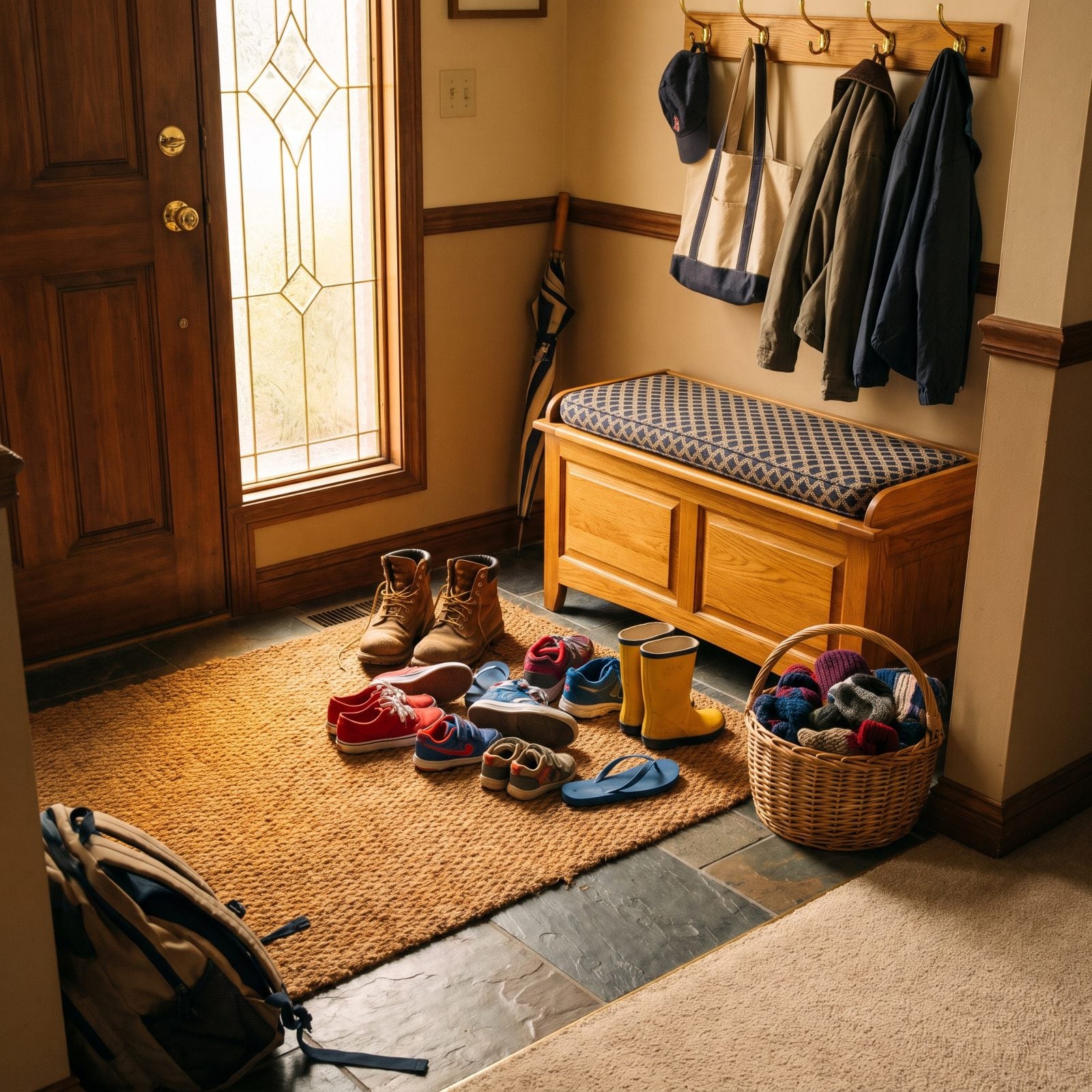
You could read the whole house by the pile. Dad’s work shoes meant he’d come home early. Three extra pairs of sneakers meant your brother had friends over again, and the little velcro ones by the front meant everybody was in.
Nobody wore shoes past the mat. There was a bench, or a step, or just a spot on the floor where everything landed in a heap — and your mother threatened to throw the lot of it out roughly once a week and never did. That heap was the house breathing.
17. The Front Porch Where Neighbors Stopped to Talk
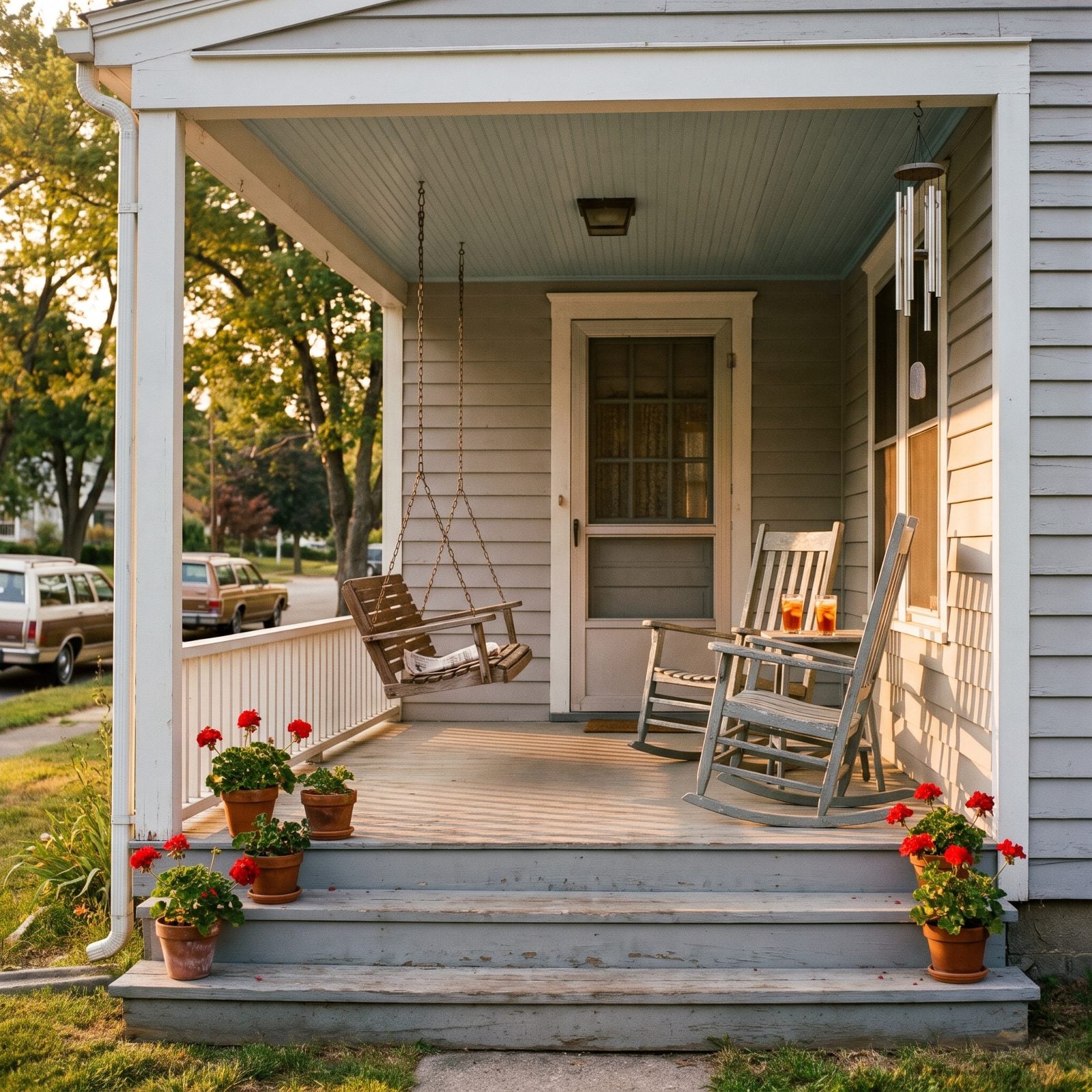
The porch did a job no room inside the house could touch. You sat out there in the evening while the whole neighborhood walked by, and half of them stopped. Somebody mowing their lawn would wander over. A kid on a bike would skid to a halt at the bottom of the steps.
There was always iced tea sweating in a glass and a chair nobody minded you taking. The porch was the house’s handshake with the street. We traded it for backyard decks and privacy fences, and something quiet got lost in that swap.
A front porch is an invitation you don’t have to send. You just sit on it, and the neighborhood knows you’re home and willing.
16. The Bedtime Story and the Nightlight That Stayed On
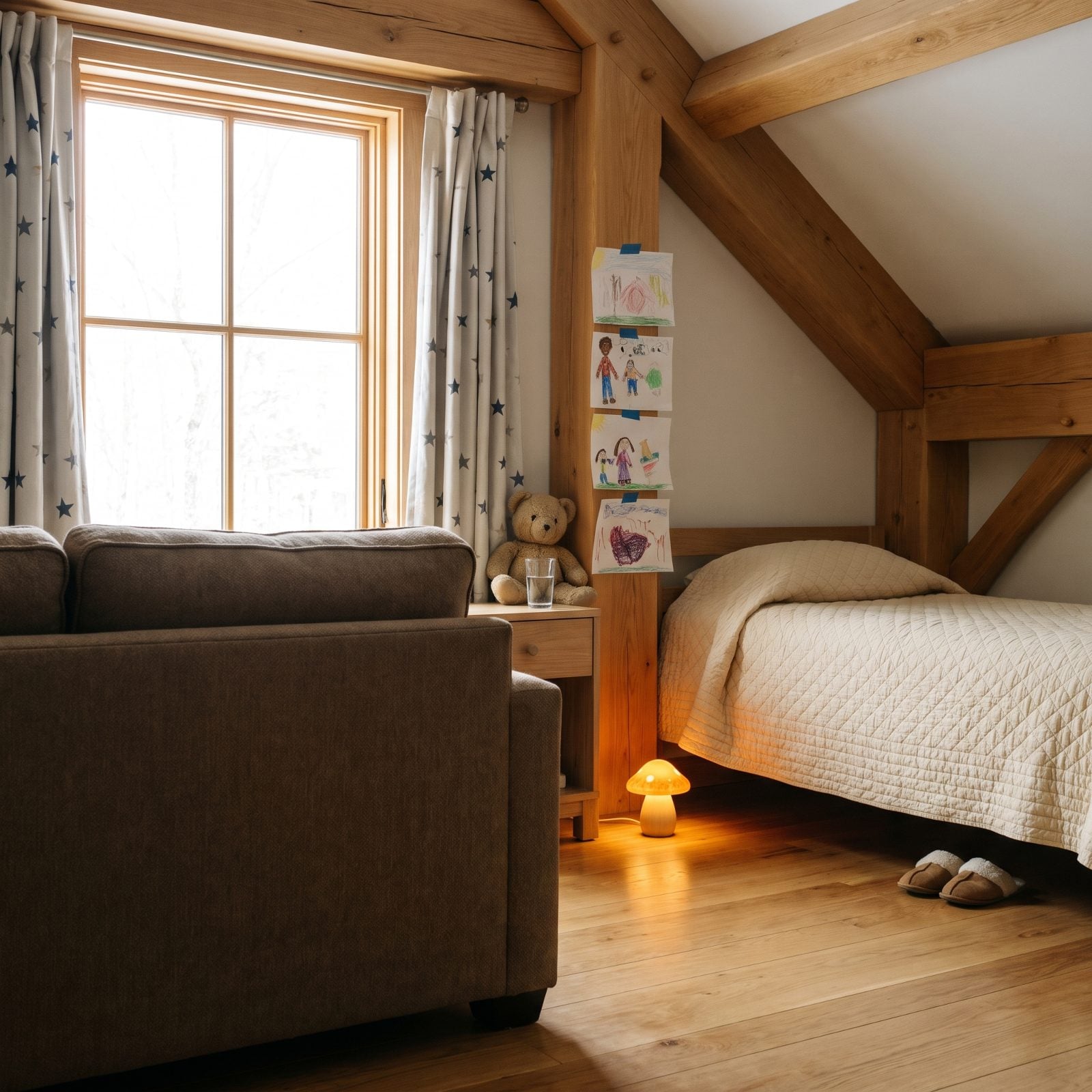
The same book, read the same way, with you correcting any word the reader tried to skip. The lamp clicked off and the nightlight took over, that little mushroom or seashell casting its amber glow into the corner so the dark never got all the way dark.
You weren’t falling asleep because you were tired. You fell asleep because the house went quiet and soft and someone sat on the edge of your bed until your eyes gave up. That routine told you the day had an ending, and the ending was safe.
15. The Big Soft Couch Everybody Piled Onto
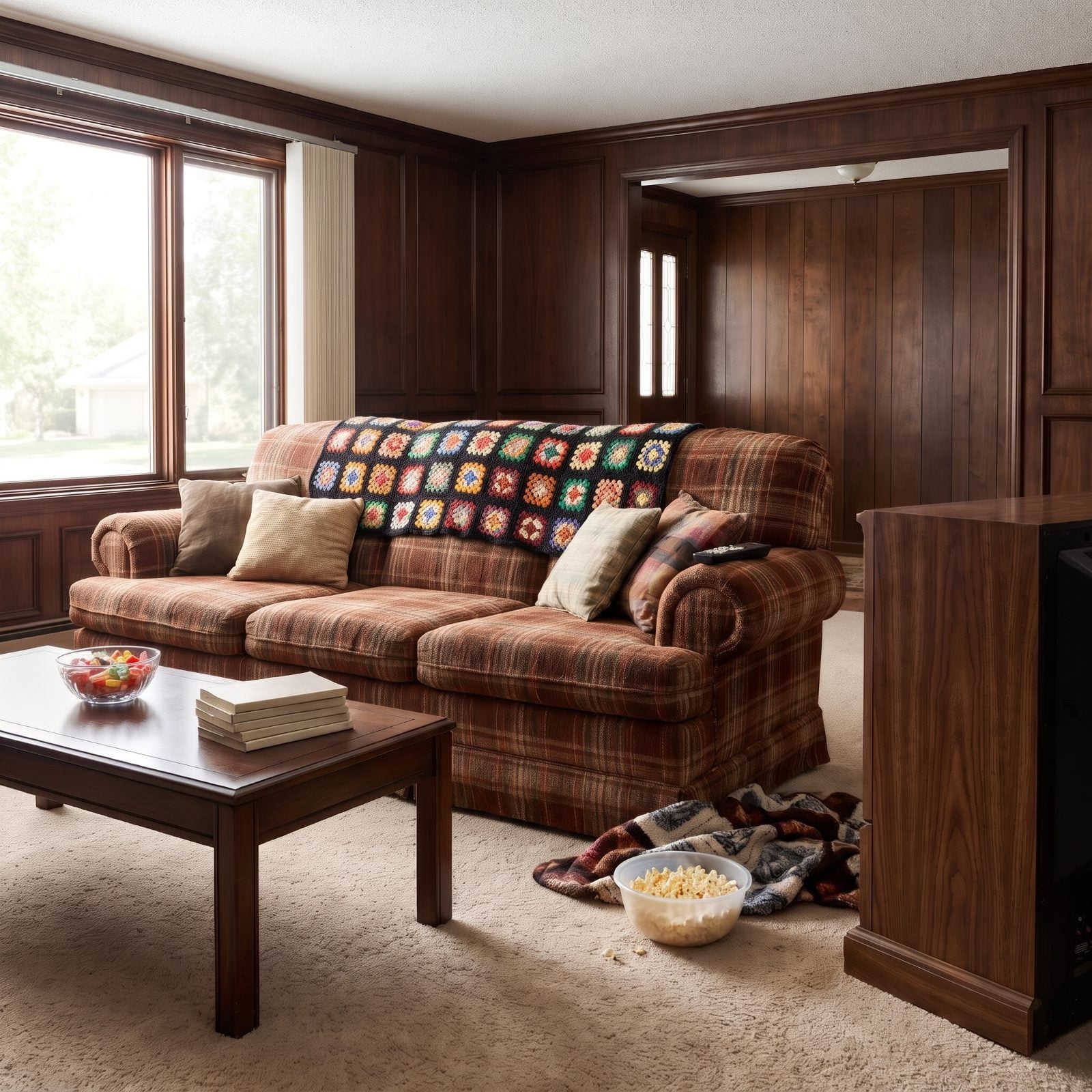
This couch had a smell. Not a bad one. Just the particular warm scent of a thing that had been sat on and slept on and cried on by the same people for a decade, until the cushions gave up fighting your weight and let you sink into the exact dent your body had made.
On a good night everyone ended up on it at once — somebody’s feet in somebody’s lap, the afghan fought over, the one person who grabbed the good corner lording it over the rest. A couch that can hold four people in a comfortable argument is doing more for a family than most furniture ever will.
14. The Fireplace That Got Lit the First Cold Night
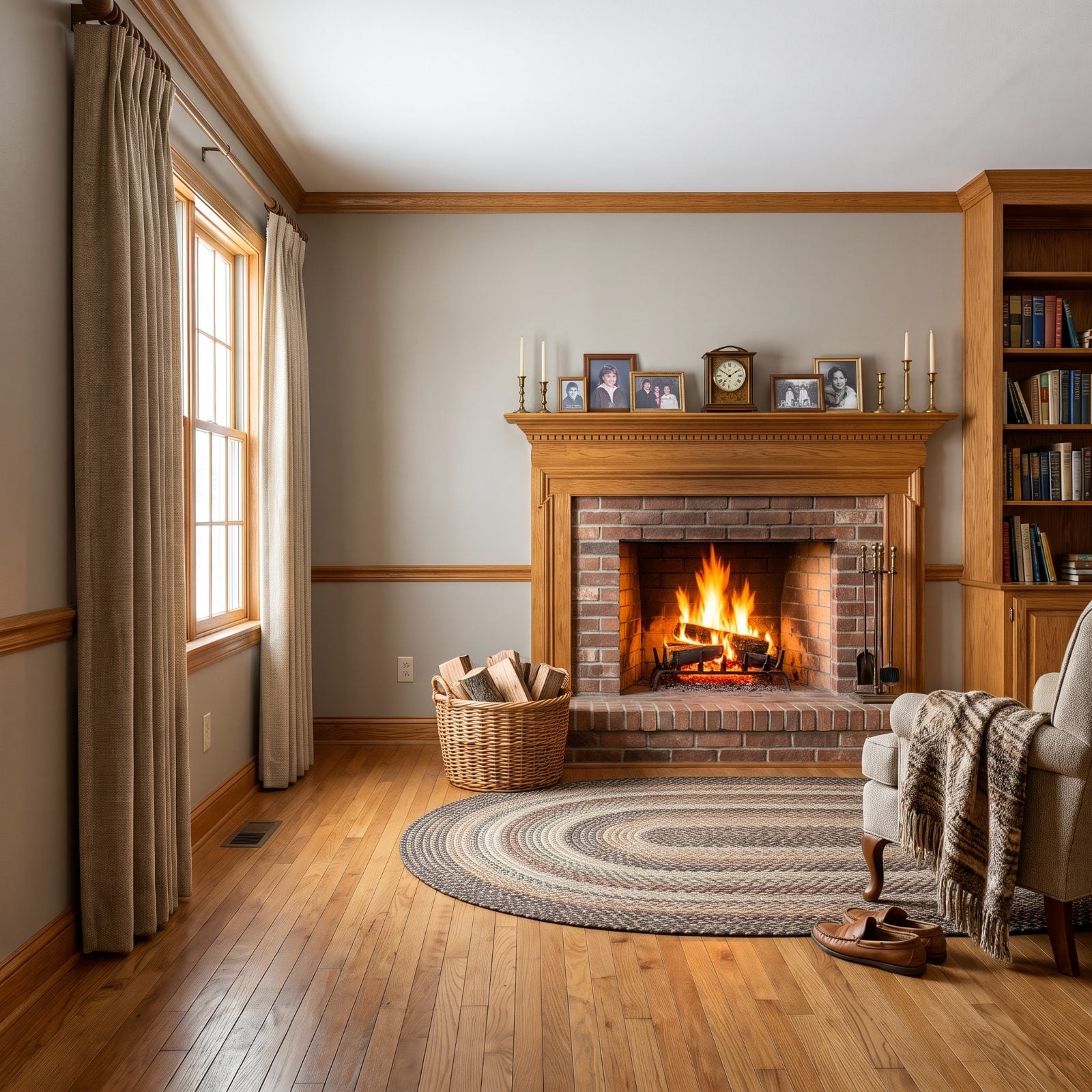
There was a specific night every autumn when someone said it’s cold enough, and the fire got lit for the first time since spring.
The first few minutes smelled faintly of dust burning off. Then it caught, and the whole room reorganized itself around the hearth. Chairs pulled closer. Homework migrated to the rug. The crackle and the shifting orange light did something no central heating has ever managed.
Lighting a fire is work — you haul the wood, build it right, tend it, sweep up after. A house that bothered to do all that on a cold evening understood the difference between being warm and feeling warm.
13. The Board Games Stacked Precariously in the Hall Closet
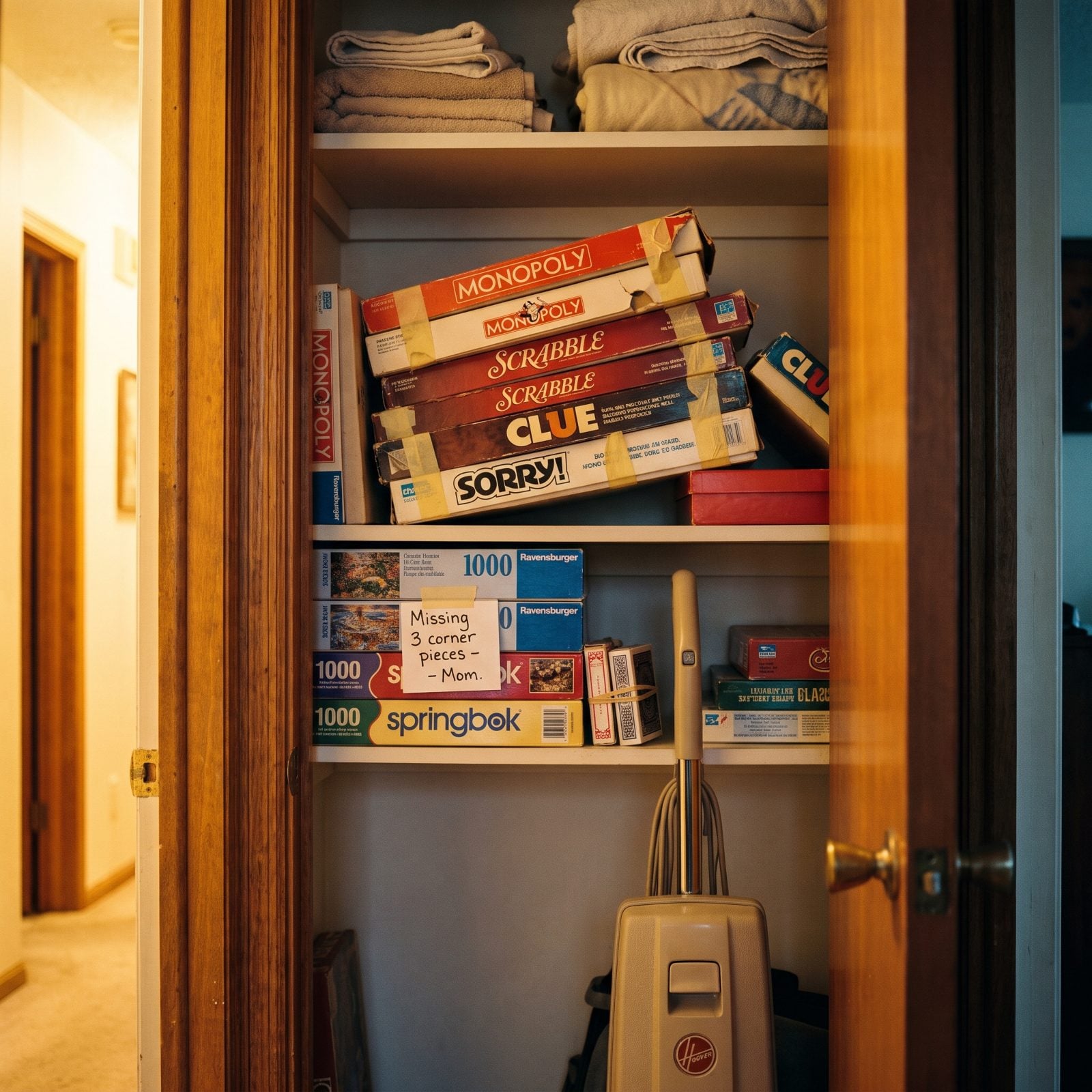
You pulled the Monopoly box out and the lid was held together with tape gone brown. Half the money inside was wrong because somebody had merged it with a second set years ago, and the thimble had been missing since before you were born, so someone played as a button.
Game nights happened when the power went out, when it rained all weekend, when nobody could agree on the TV. Somebody always flipped the board. Somebody always cheated at Monopoly and got loudly accused of it. The boxes were beaten up because they’d been used — a closet full of taped-together lids is the archaeology of a family that actually spent time in the same room.
12. The Bookshelf Full of Spines Cracked From Rereading

The spines told you everything. Books nobody touched stood crisp and straight. The ones that mattered were cracked down the middle, dog-eared, a little swollen from being read in the bath. Some had a kid’s name printed in careful pencil on the inside cover.
A house full of worn books is a house where reading was just something people did, not a thing anyone made a show of. The shelf overflowed, doubled up, stacked sideways where it ran out of room. You learned which book was your mother’s favorite by how destroyed it was.
Those were the ones that got read aloud, lent out, fought over, and quietly reread in your twenties when you missed home. A worn bookshelf is a love letter nobody meant to write.
11. The Cozy Reading Chair Parked Right Under the Lamp
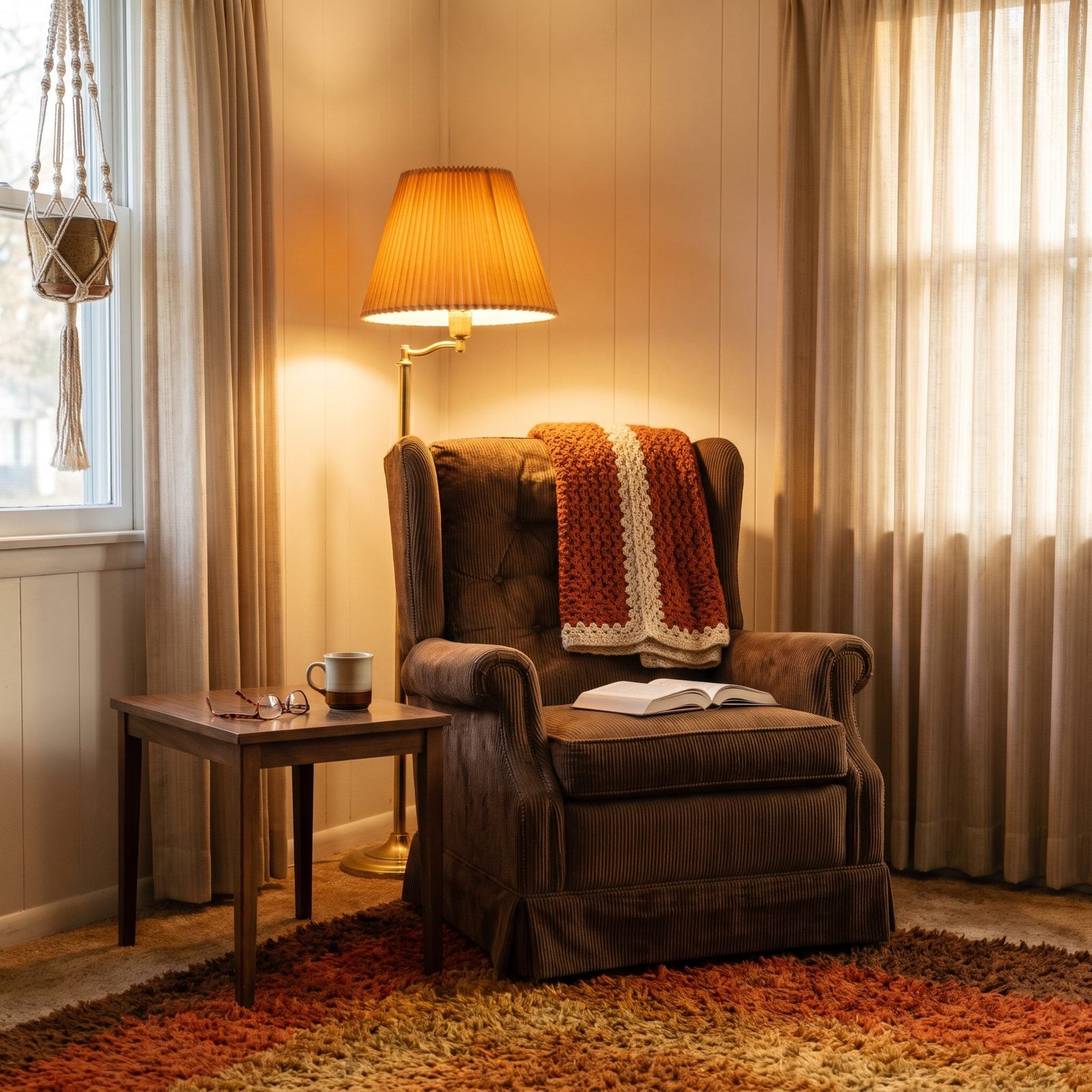
Every well-run house had one chair that belonged to a reader, and you knew not to sit in it. The seat cushion had memorized the exact shape of someone, the armrest wore a shiny patch where a hand always landed, and the lamp beside it stayed on long after everyone else went to bed.
That little circle of amber light did something to a room. It said somebody lived here on purpose, that there was time carved out for sitting still. A brass floor lamp and a corduroy wingback chair were all it took. A house with a chair like this still says a lot about the people in it.
10. Hand-Me-Down Quilts That Smelled Faintly of Cedar
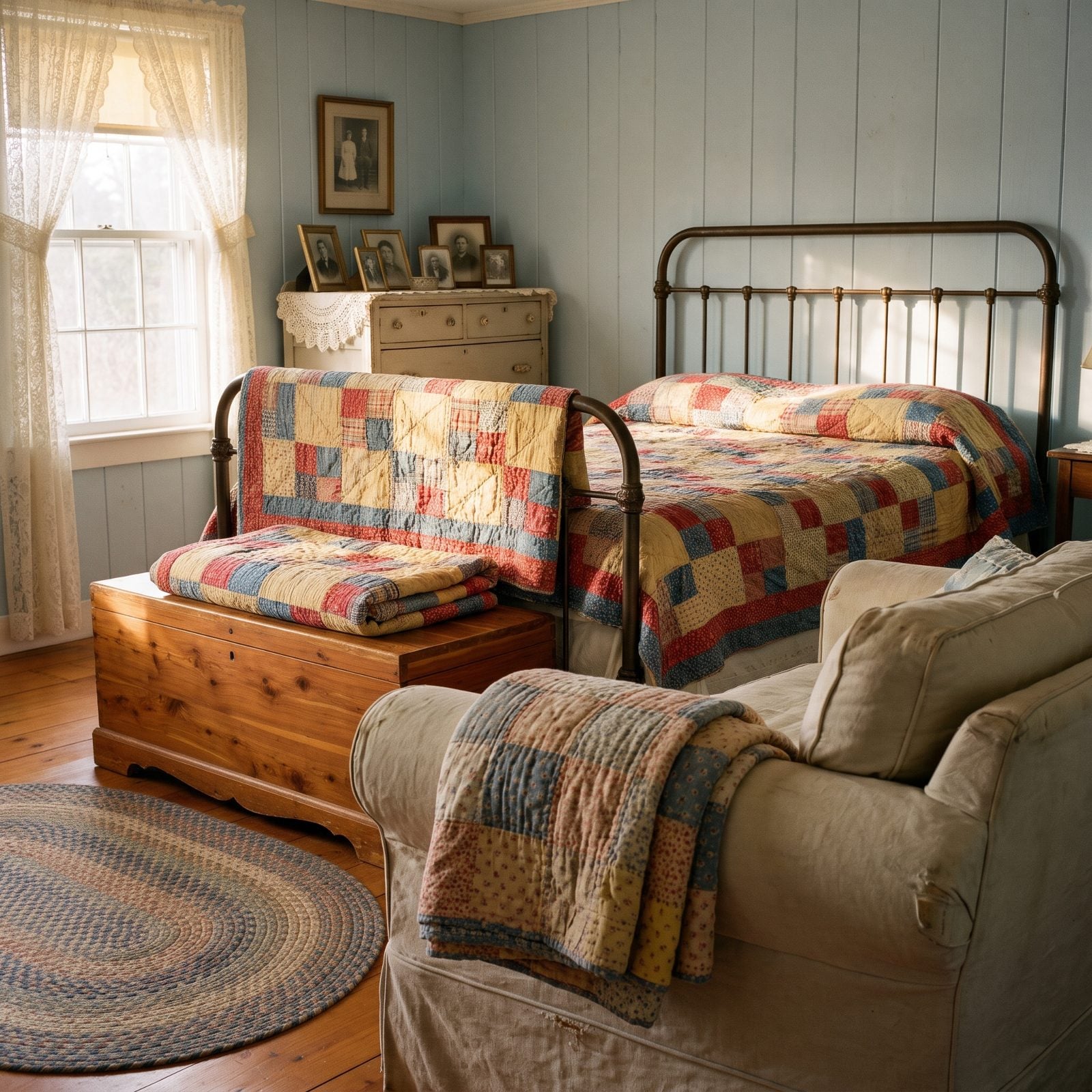
These weren’t bought, and that mattered. A hand-me-down quilt had a story stitched into every square, and if you were lucky, somebody could tell you which dress or which pair of curtains each scrap of fabric used to be.
They came out of the cedar chest smelling of wood and time — heavier than anything you’d buy today, a little lumpy, occasionally patched where the batting gave out. You slept under one and you were sleeping under three generations of hands.
9. The Chalkboard by the Phone Covered in Family Notes
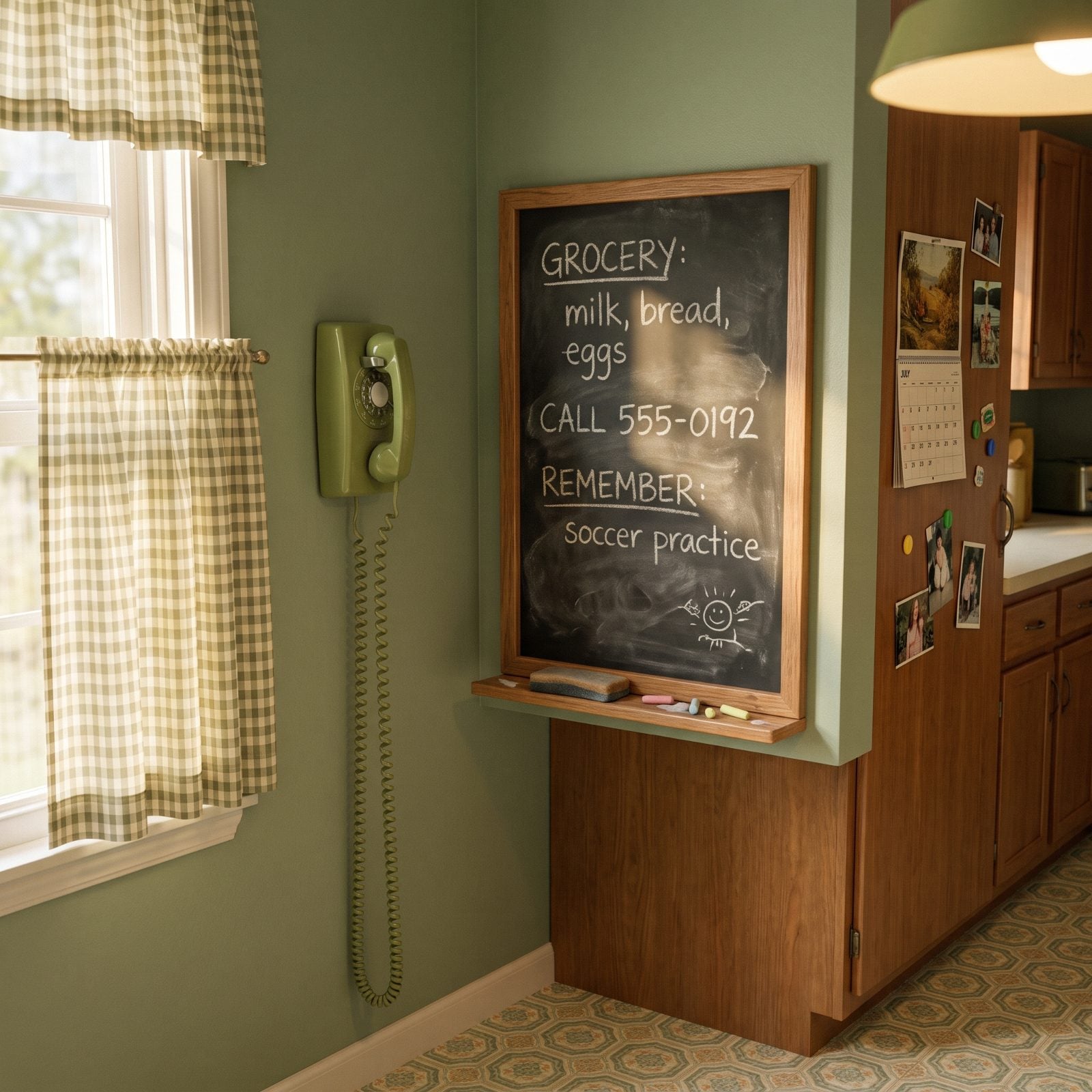
The chalkboard was mission control. Right next to the phone with the cord stretched halfway down the hall, it held the whole household’s brain — milk, eggs, a dentist appointment, a phone number scrawled sideways because whoever answered couldn’t find real paper.
Nobody ever fully erased it. There was always a ghost of last week’s list under this week’s, a half-smudged reminder, a doodle somebody added when they got bored. Running a busy house meant one surface everyone checked, and this was it. A phone app does the same job and somehow feels colder.
8. The Kitchen Clock You Could Actually Hear Ticking
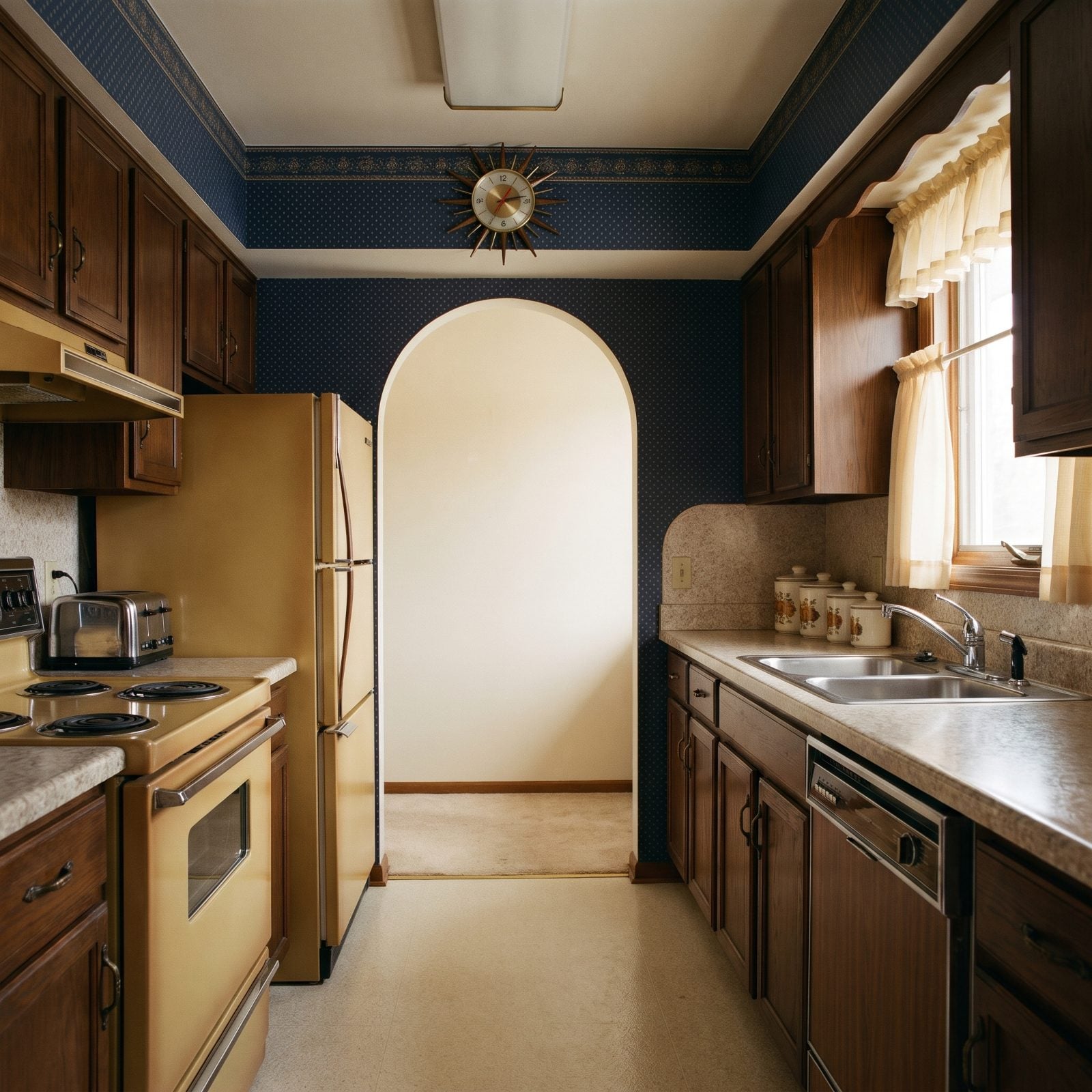
You never noticed it until the house went quiet. Then the ticking filled the whole kitchen — steady and a little loud, counting down to dinner or up from breakfast. That sound meant everyone was somewhere they were supposed to be.
A well-run kitchen ran on that clock. Meals landed on time, the oven timer answered to it, and at 3 a.m. when you snuck in for water it was still going, keeping the house honest. Then silent digital clocks took over, and they took something with them.
7. The Record Player or Radio Humming in the Background
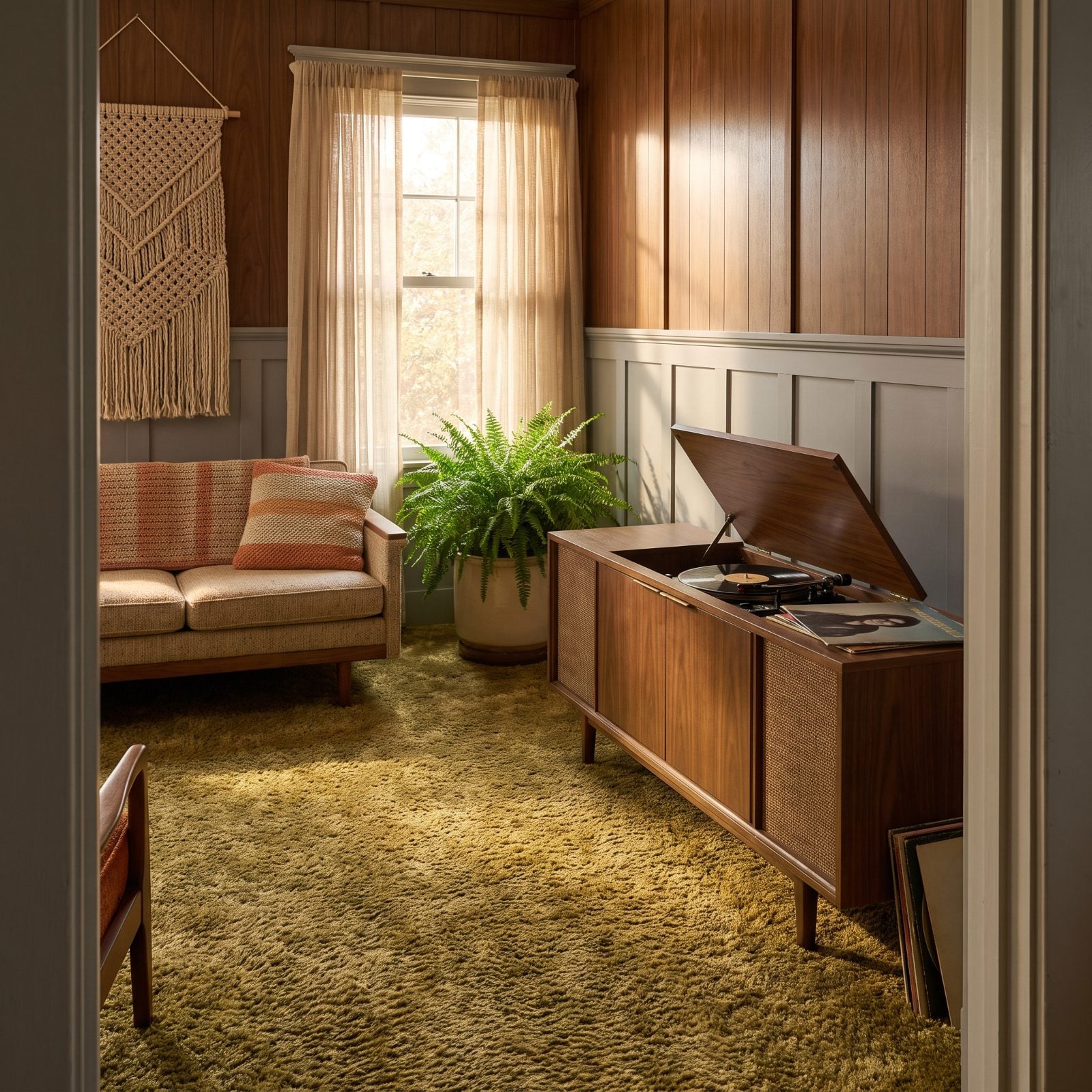
🔥 Would you like to save this?
There was almost always something playing. Not loud, not a performance — just a record spinning or the radio murmuring from the console while somebody vacuumed or peeled potatoes. Music was the sound of the house being awake.
Saturday mornings had their soundtrack. So did Sunday dinners. You learned every crackle and pop of your parents’ favorite album, the little skip on track four nobody ever fixed. A house that played music was happy to be lived in — loud enough to feel full, soft enough to talk over.
6. The Holiday Kitchen That Smelled of Cinnamon and Cloves
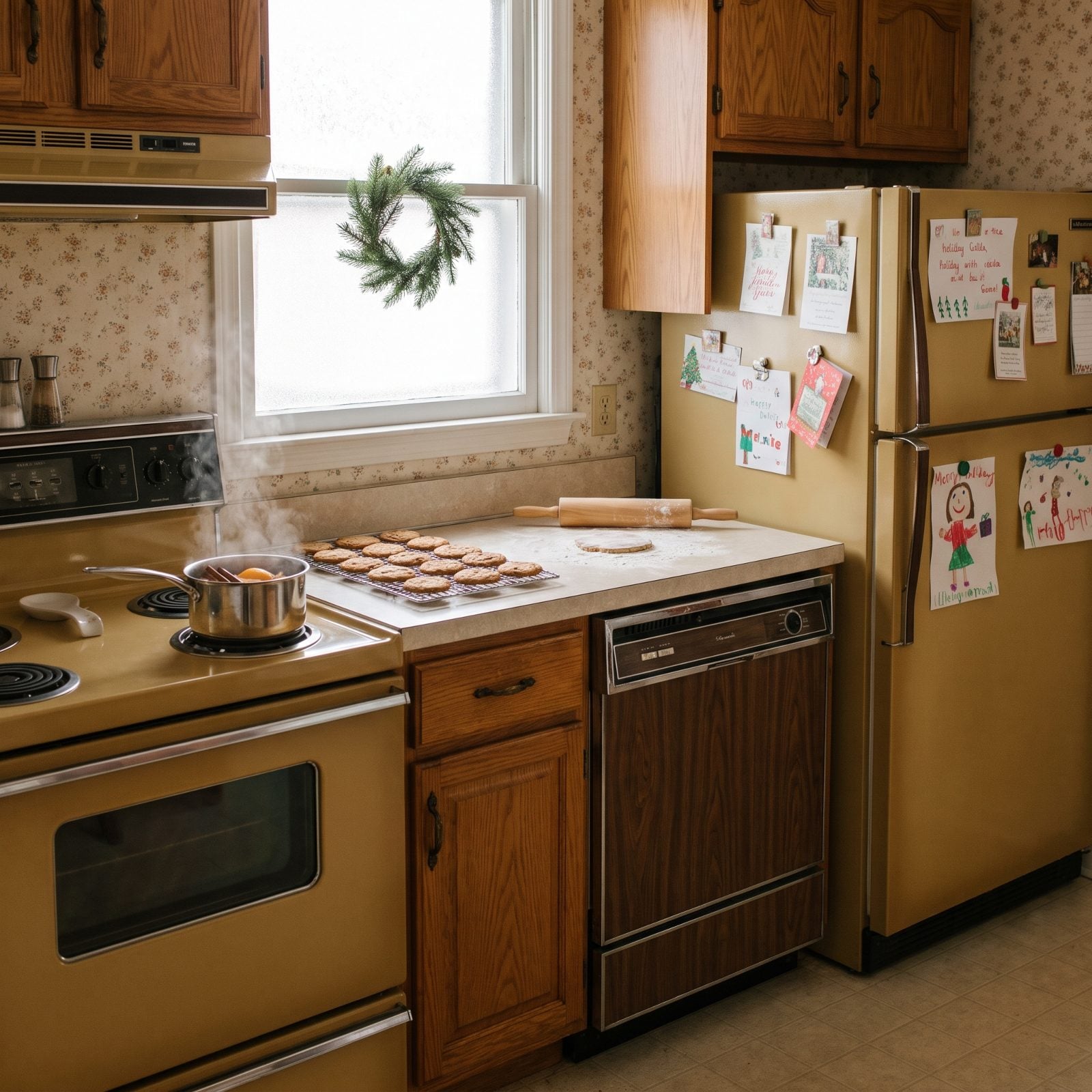
You could smell it from the driveway. Cinnamon, cloves, orange peel, something baking that filled every corner of the house and clung to your sweater for the rest of the day. That smell was the holidays before anyone said a word about them.
Somebody was always elbow-deep in it — flour on the counter, a tray of cookies cooling, a pot of cider going on the back burner for no reason except the way it made the whole place feel. A scented candle tries to fake this. It never quite gets there.
5. The Pantry Lined With Homemade Jams and Canned Everything
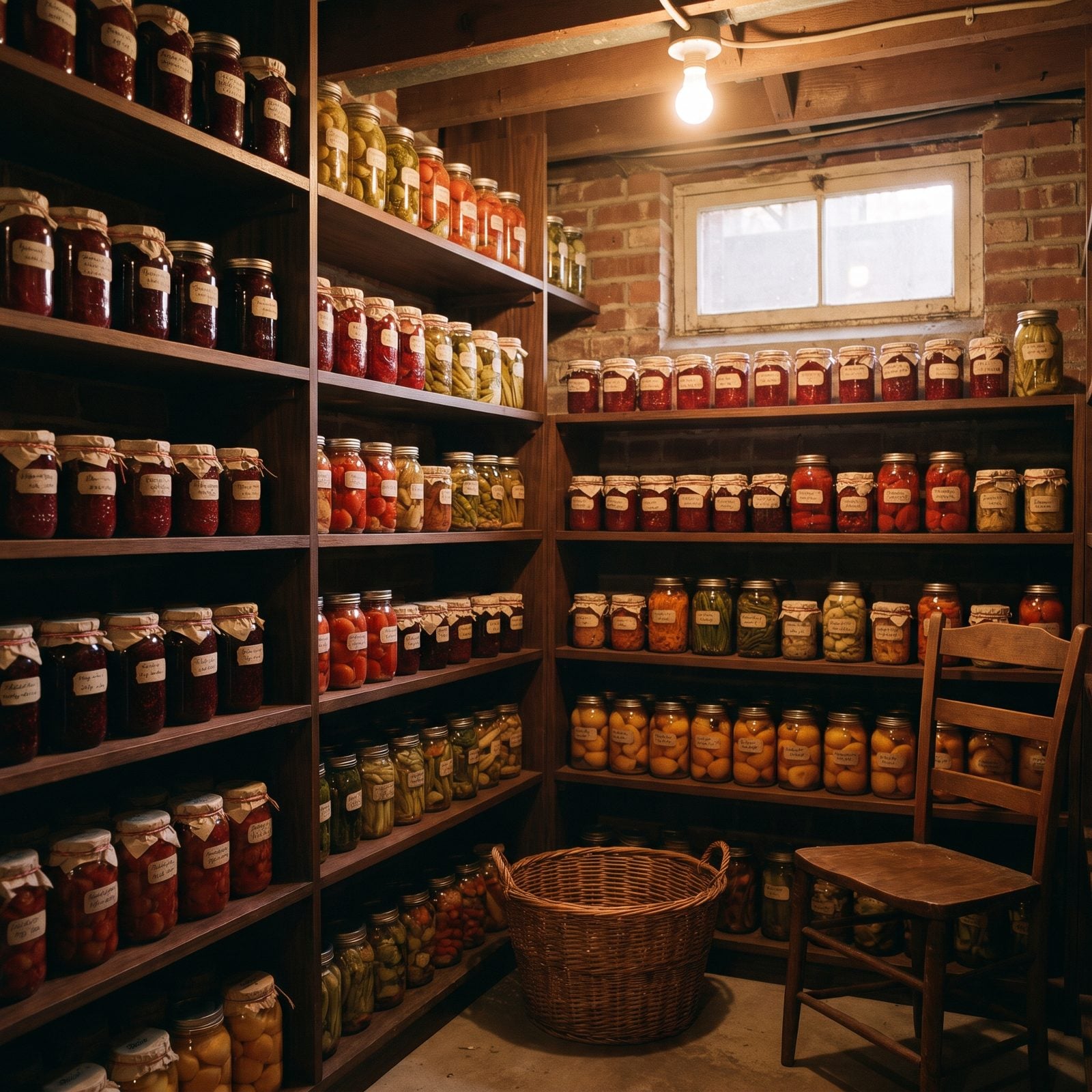
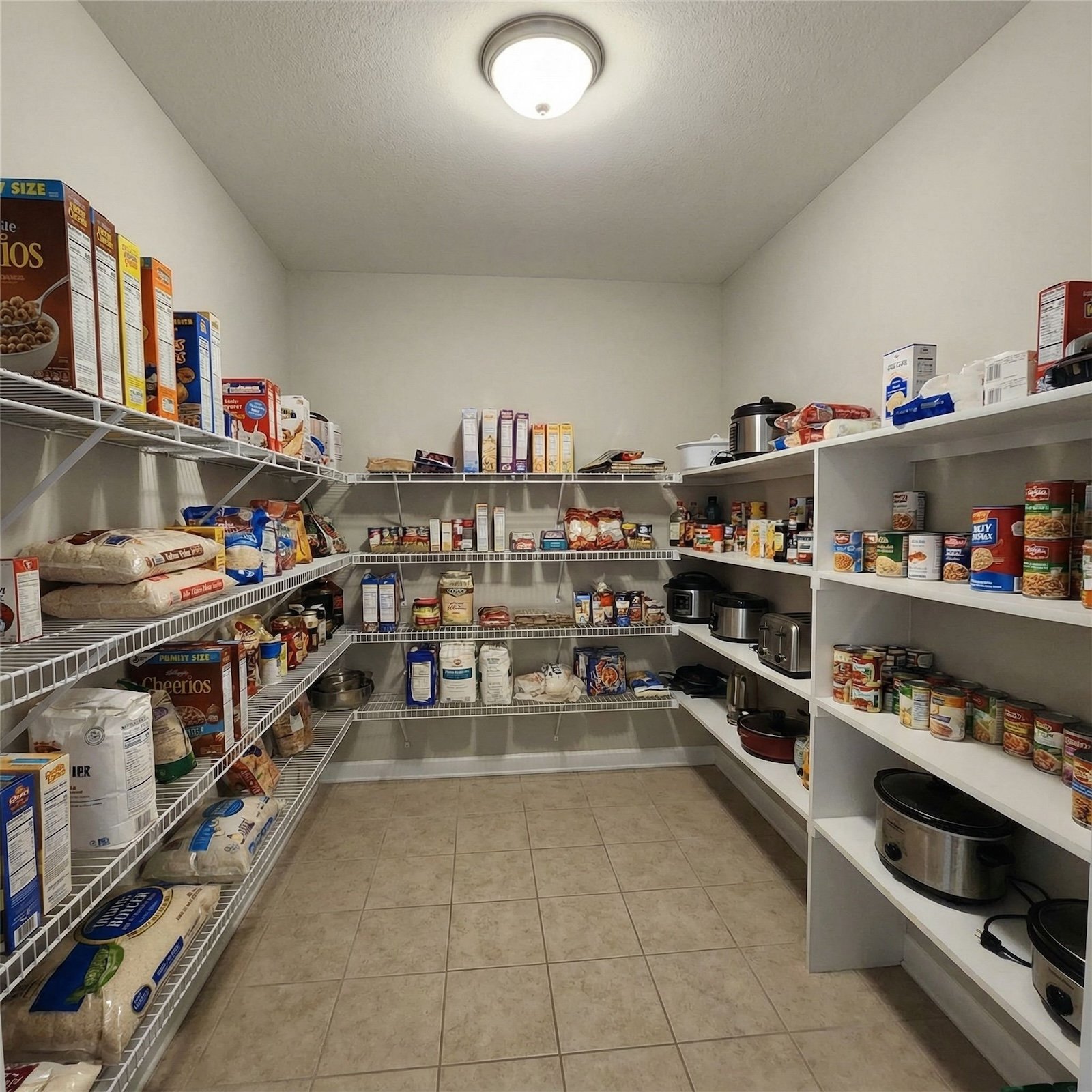
Row after row of mason jars glowing like stained glass when the pantry light hit them. Strawberry jam, pickled beets, peaches swimming in syrup, tomatoes from a garden that had long since frozen over. Each lid had a date written on masking tape in careful handwriting.
This was proof somebody planned ahead. A full pantry meant you were ready for anything — a surprise guest, a long winter, a kid who came home hungry at the wrong hour. There was real pride on those shelves, and a little showing off too. Store-bought jam never tasted the same once you’d had the homemade stuff.
4. The Backyard Garden Somebody Actually Tended
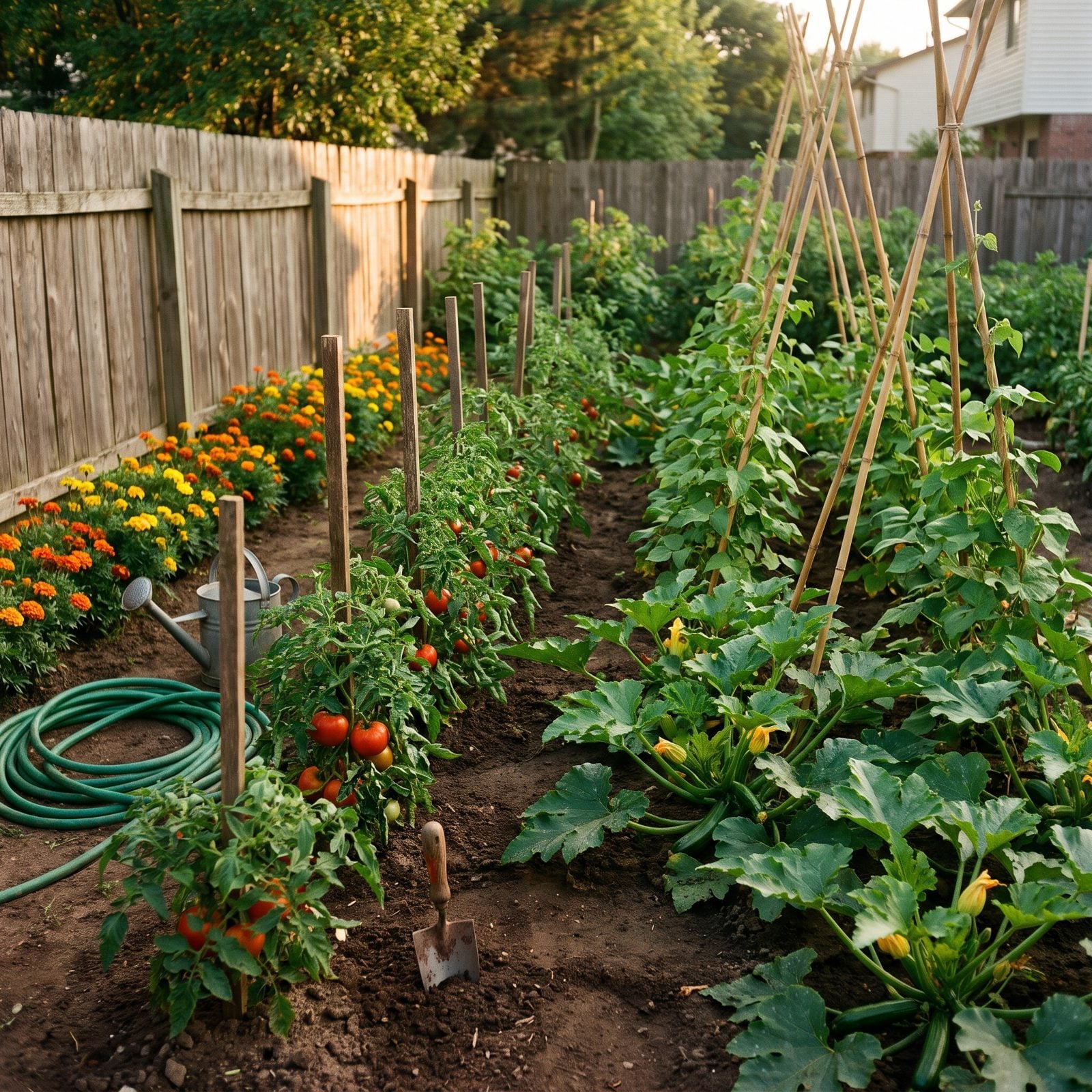
Staked tomatoes leaning heavy, a zucchini plant plotting world domination, marigolds along the edge to keep the bugs off. A tended garden meant somebody went out there every evening, hose in hand, checking on things.
You got roped into picking beans whether you liked it or not. And that first ripe tomato, warm from the sun, eaten standing right there in the dirt, ruined you for grocery-store tomatoes forever. A garden like this took real patience, as anyone who has murdered a basil plant through sheer neglect can confirm.
3. Fresh Flowers or a Stubborn Plant on the Windowsill
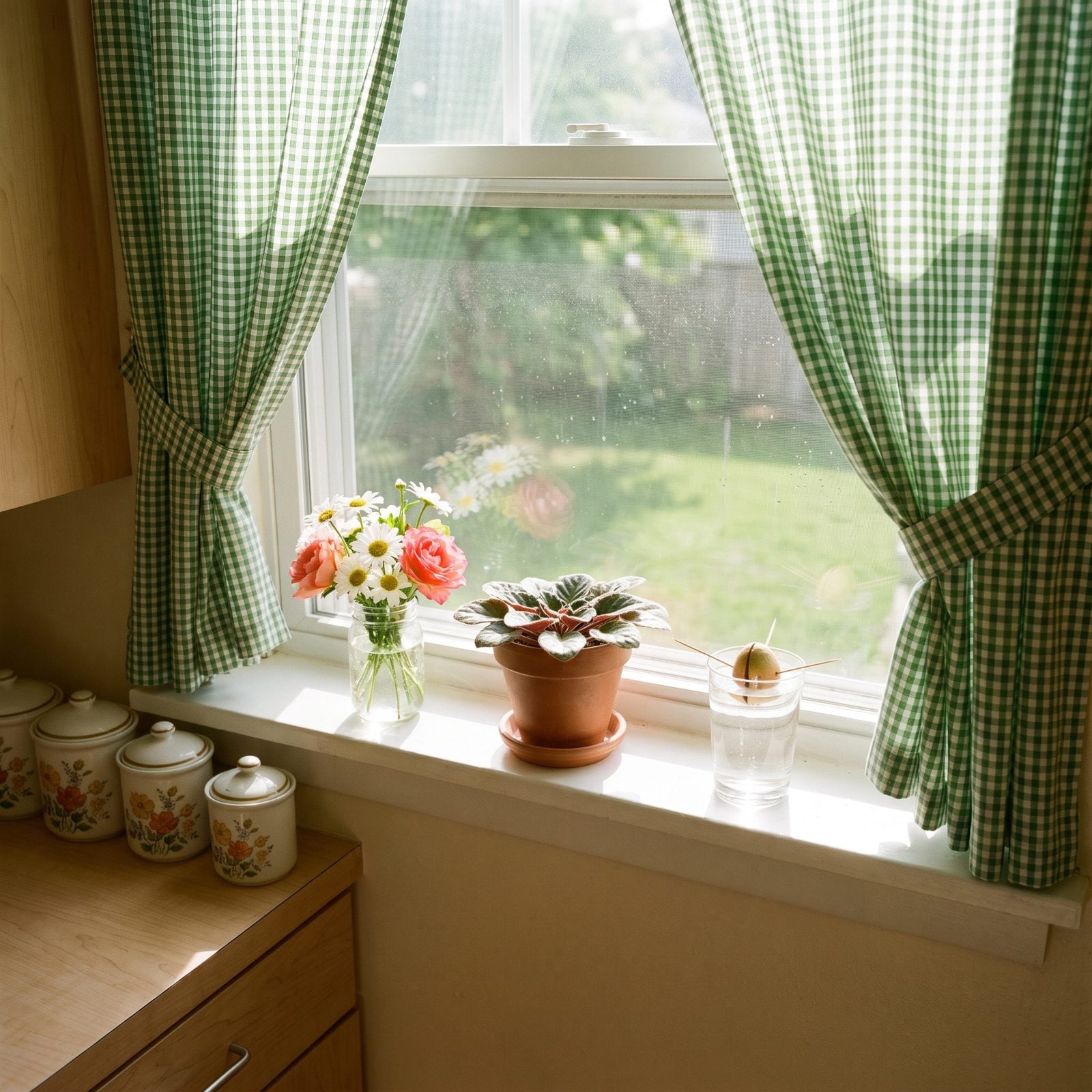
A jam jar of daisies and roses on the sill by the counter. An African violet somebody kept going, all leaves and no blooms yet. An avocado pit suspended on toothpicks in a glass of water, going nowhere for months but hanging on anyway. Small green things lined up where the light came in.
None of it was fancy, and that’s what made it mean something. A house with a plant on the windowsill was a house where someone cared enough to tend to something that gave nothing back but a little color. The window view was the best seat in the place.
2. The Cookie Tin That Was Absolutely Full of Sewing Supplies
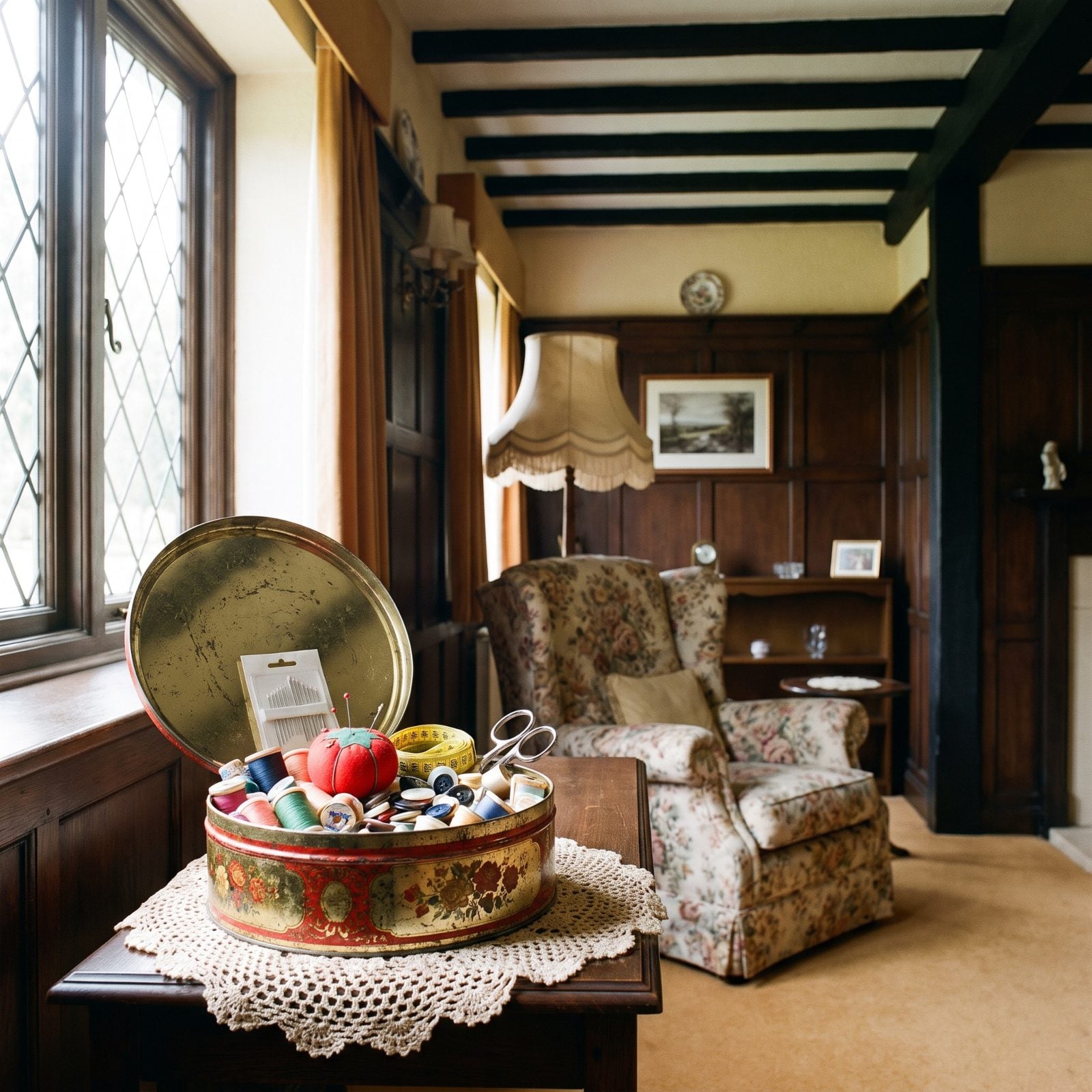
You opened it hoping for cookies. You got a pincushion shaped like a tomato, forty spools of thread, a tangle of buttons, and a tape measure that snapped back and bit your finger. Every household had this tin. The betrayal was universal and somehow never got old.
But look at what it actually meant. Somebody in that house fixed things instead of throwing them out. A missing button, a split seam, a hem coming down — all handled at the kitchen table in ten minutes flat. The tin was quiet proof that this was a home where things got mended, not replaced. That’s the part worth missing.
1. The Welcome Mat Worn Soft at the Front Door
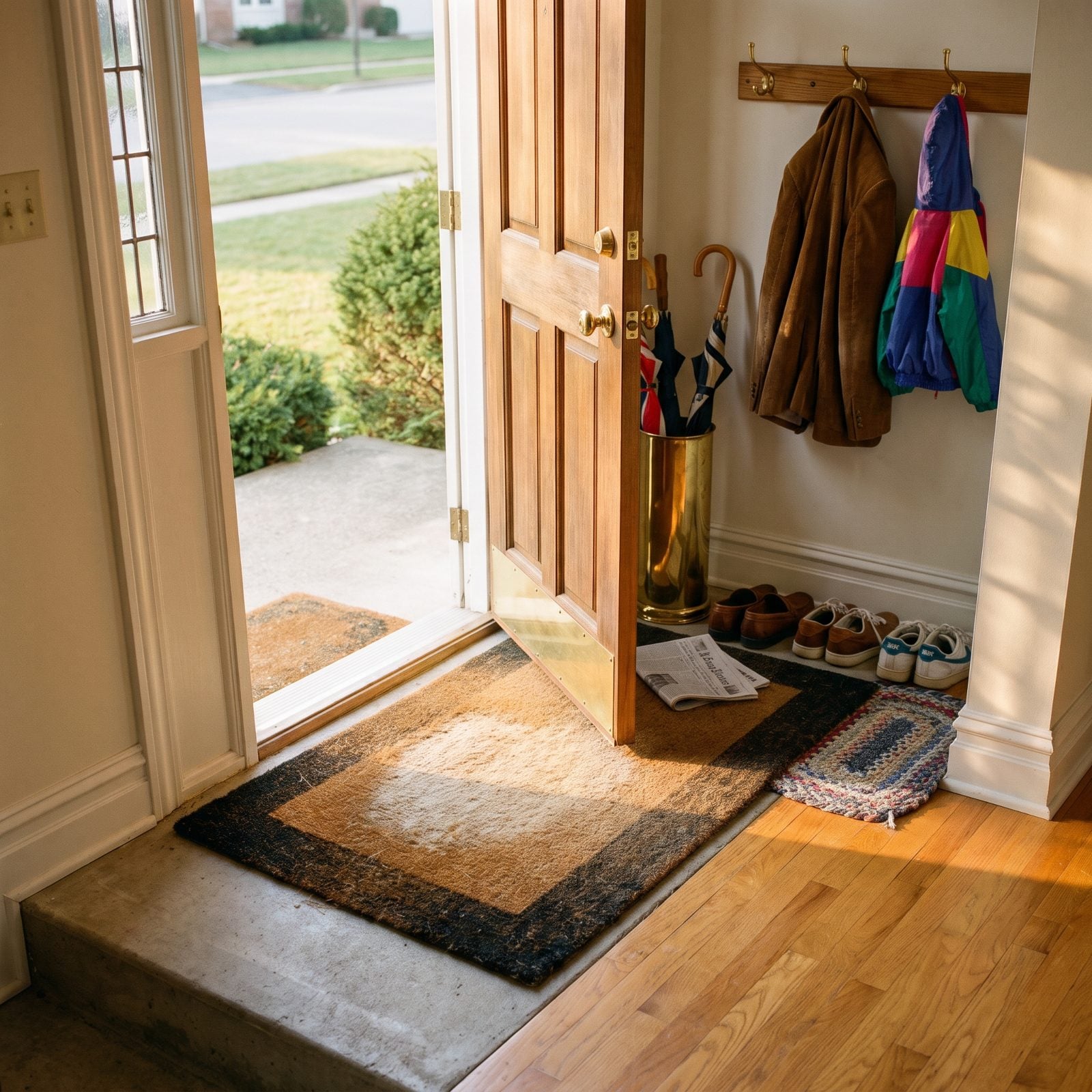
You could read the whole family off that mat — the worn spot dead center where everyone wiped their feet without thinking, the coir gone soft and pale after the stiff bristles surrendered. Nobody bought it to make a statement. It just showed up one day and stayed for a decade.
What it actually meant was simpler: somebody in that house cared whether you tracked mud onto the clean floor, which meant there was a floor worth protecting, and a routine to go with it. Shoes off, feet wiped, come on in.
The best ones said WELCOME in letters you could barely make out anymore, the paint scuffed away by boots and sneakers and the dog’s nails. A mat wears out because people keep coming home.