🔥 Would you like to save this?
In order to come up with the very specific design ideas, we create most designs with the assistance of state-of-the-art AI interior design software. Also, assume links that take you off the site are affiliate links such as links to Amazon. this means we may earn a commission if you buy something.
French country kitchens evoke timeless elegance through their perfect balance of rustic charm and refined sophistication. These ten remarkable transformations showcase how outdated spaces evolved into stunning examples of European-inspired design, proving that authentic French aesthetic transcends fleeting trends.
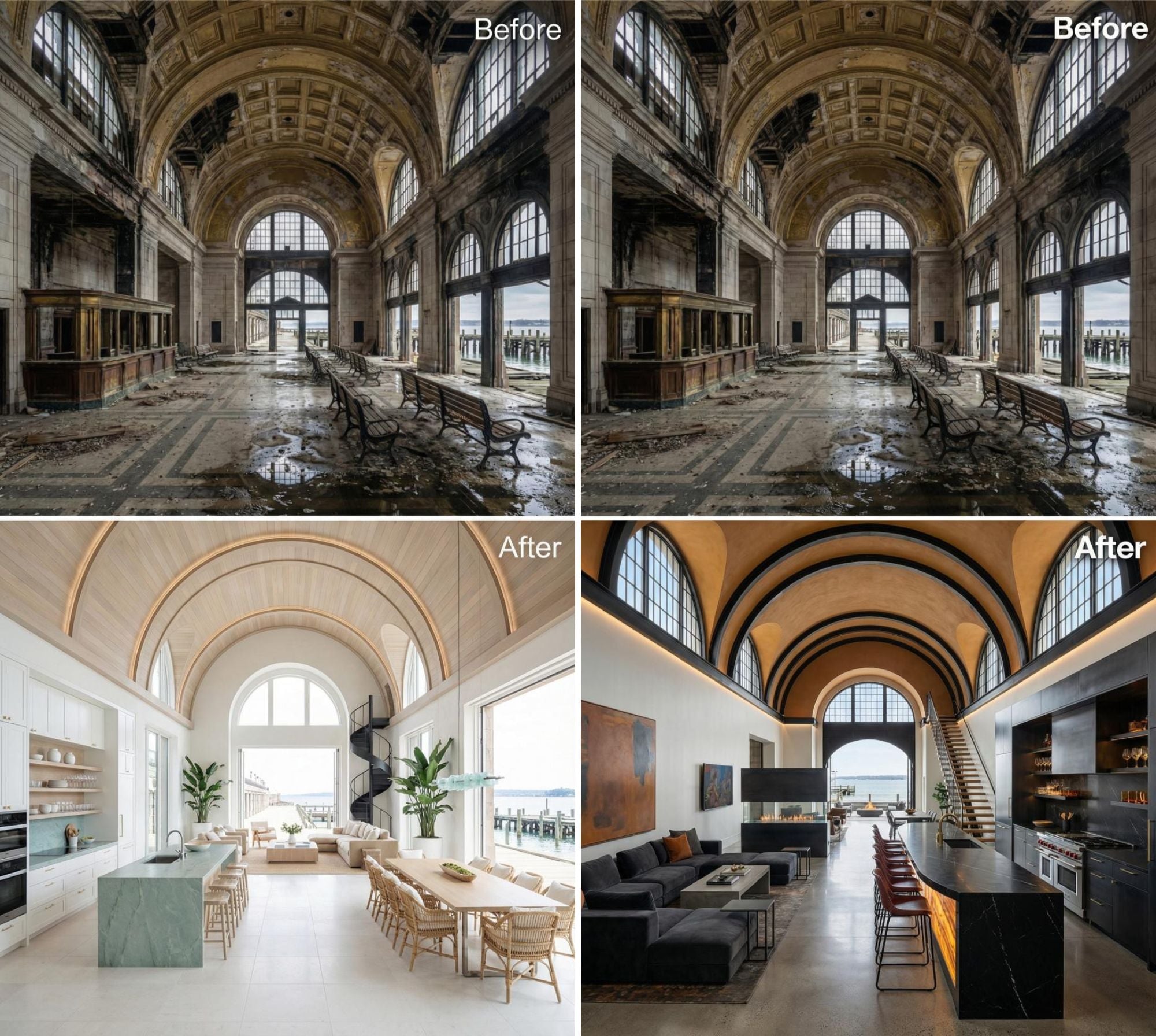
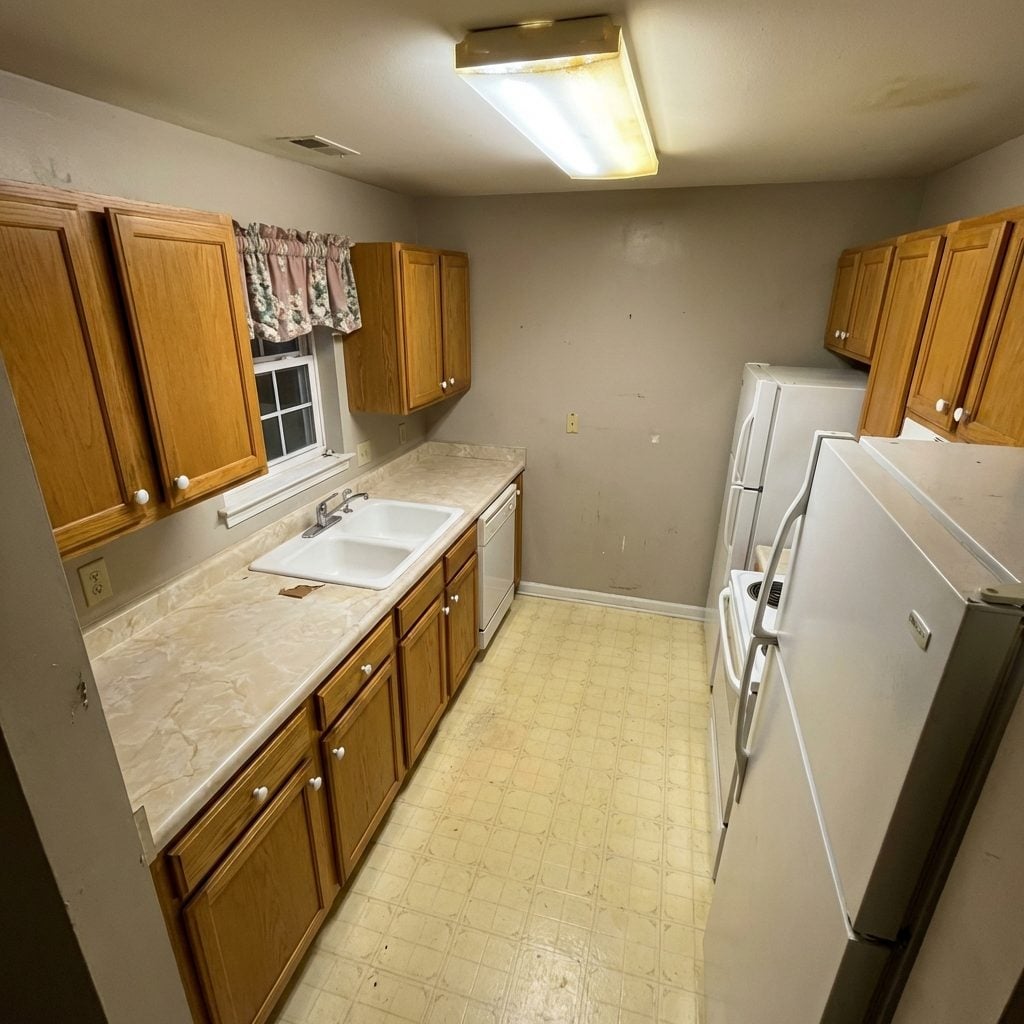
1. Dark ’90s Kitchen → Airy French Country with Marble Countertops
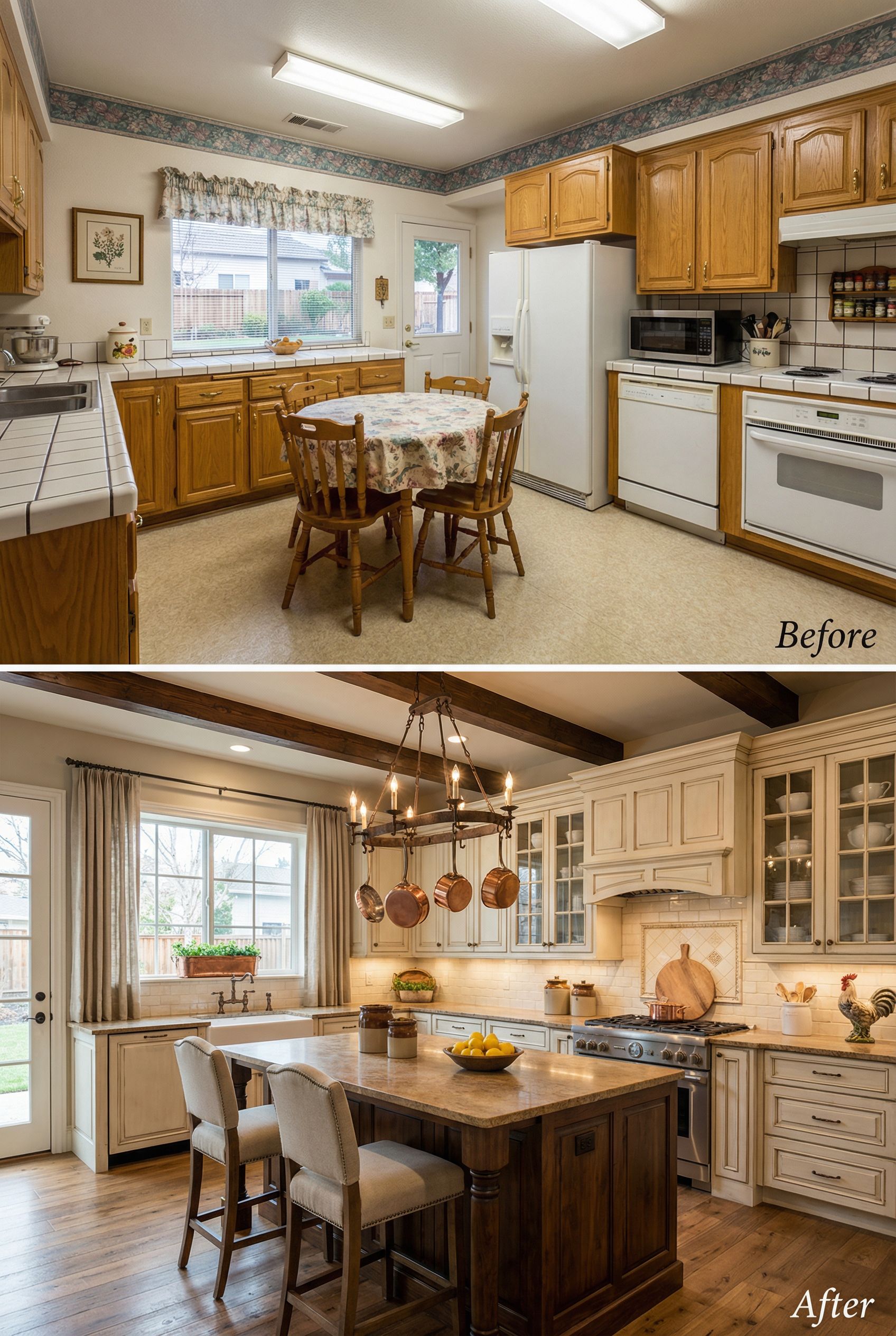
Soft white perimeter cabinets maximize light reflection, contrasted by a sage green island with fluted details. Calacatta marble countertops introduce luxurious veining throughout. The ceiling was raised and fitted with whitewashed wood planks. Arched cabinet doors echo classic French architecture, while polished nickel hardware adds subtle shine. A pot filler faucet above the professional-style range enhances functionality. Pale blue subway tiles create a soothing backsplash. This transformation achieves “luminous sophistication”—spaces that breathe while maintaining refined elegance through material quality.
2. Early 2000s Builder Kitchen → Vintage French Cottage Style
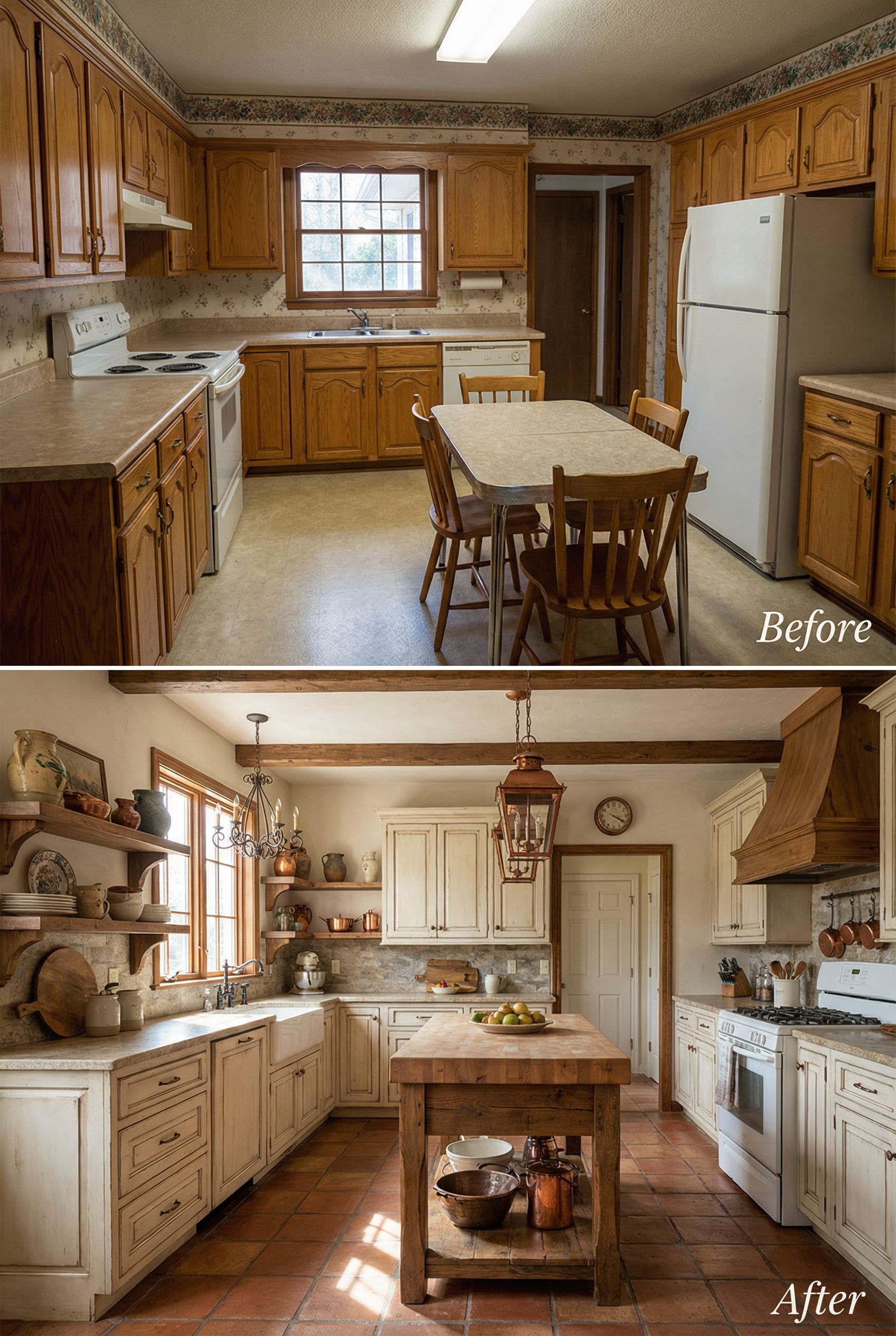
Two-tone cabinetry combines butter cream uppers with weathered blue-gray lowers, all featuring beadboard panel inserts. Soapstone countertops develop natural patina over time, embracing imperfection. A vintage French stove in cream enamel commands attention as the culinary centerpiece. Open shelving with ornate iron brackets displays transferware collections. Wide-plank pine flooring was installed and distressed by hand. Leaded glass cabinet doors and a copper farmhouse sink complete the look. This embodies “collected charm”—design that appears gathered lovingly over generations rather than installed overnight.
3. Dated ’90s Kitchen → Romantic French Country with Open Shelving
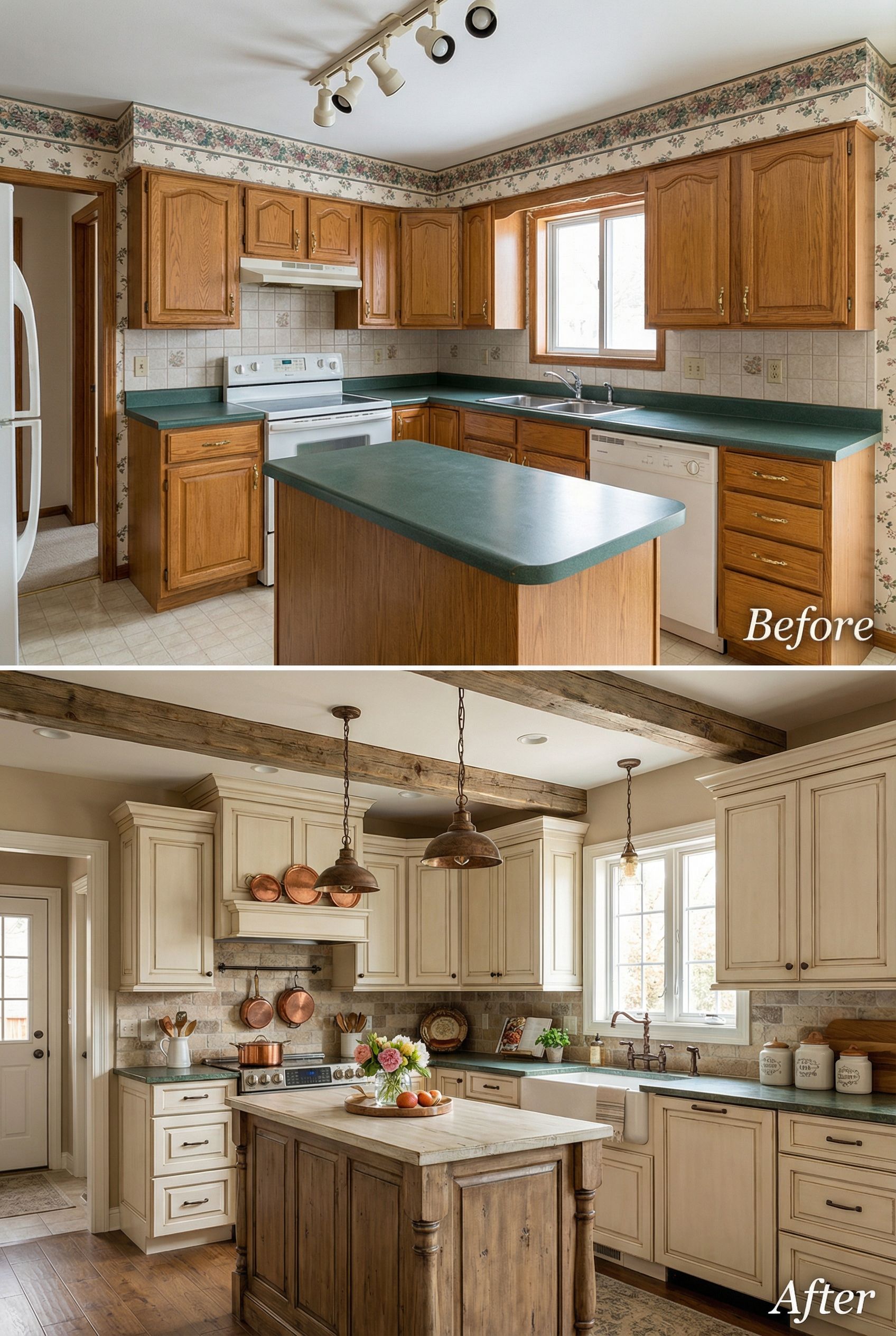
Open shelving in reclaimed wood replaced upper cabinets, displaying French pottery and linens. Lower cabinets feature soft gray paint with decorative carved details and crystal knobs. White marble countertops contrast beautifully against the gray base. A vintage-style range with brass accents becomes the room’s jewel. Subway tiles laid in a classic brick pattern create timeless appeal. Pendant lights with seeded glass shades hang above the prep area. A small writing desk nook was incorporated, creating “kitchen intimacy”—spaces that invite lingering beyond mere cooking tasks.
4. Early 2000s Dark Wood Kitchen → Airy Provençal White
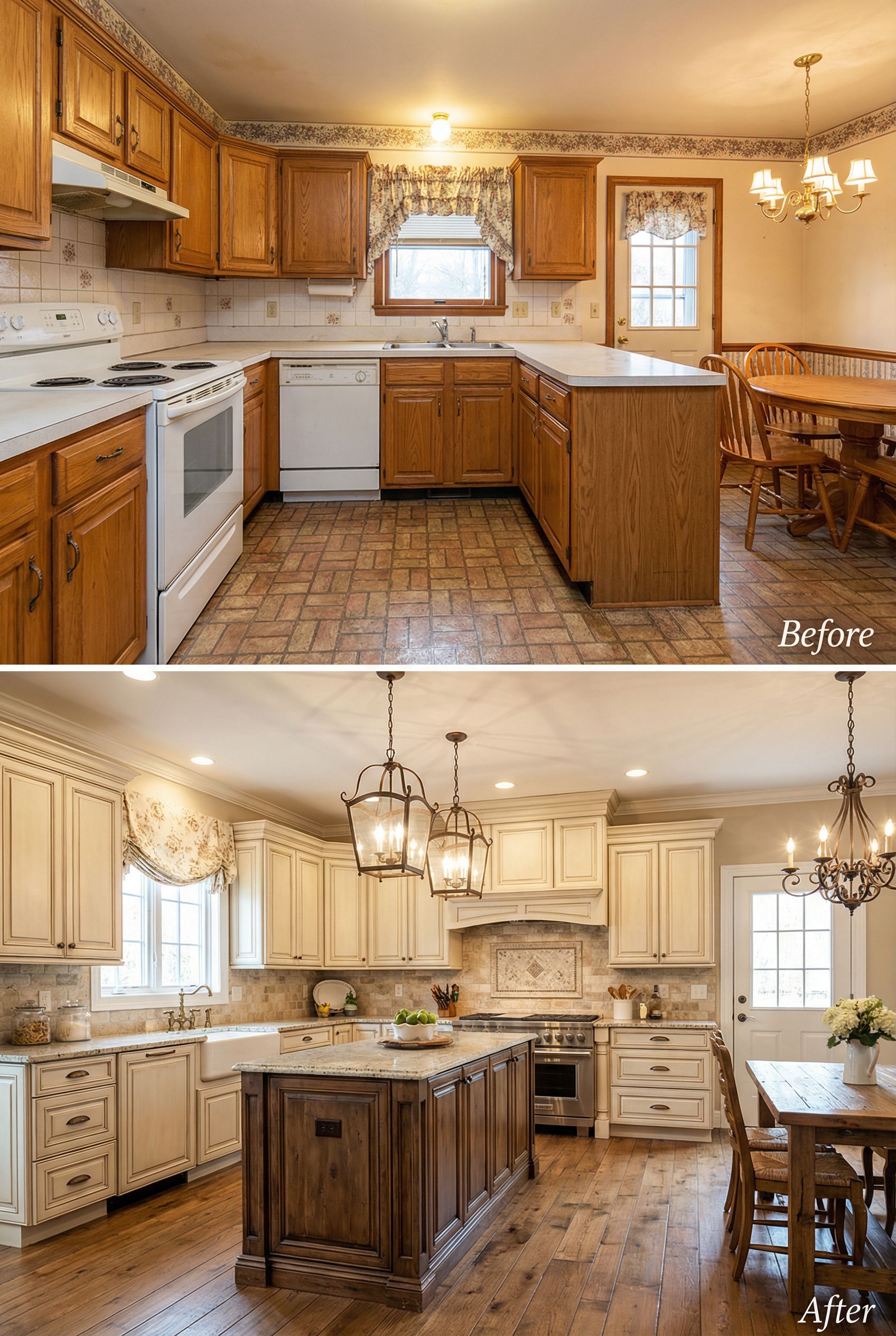
Floor-to-ceiling white cabinetry with glass-front uppers transformed the oppressive space into an light-filled sanctuary. Limestone countertops and a matching farmhouse sink established authentic French materiality. Open shelving displaying ironstone collections replaced upper cabinets on one wall. Pale blue painted beams crossed the ceiling while terracotta floor tiles grounded the palette. This transformation exemplifies “Breathable Design”—spaces that psychologically expand through strategic material choices, allowing inhabitants to exhale tension upon entering.
5. ’80s Oak Cabinet Kitchen → Romantic French Cottage
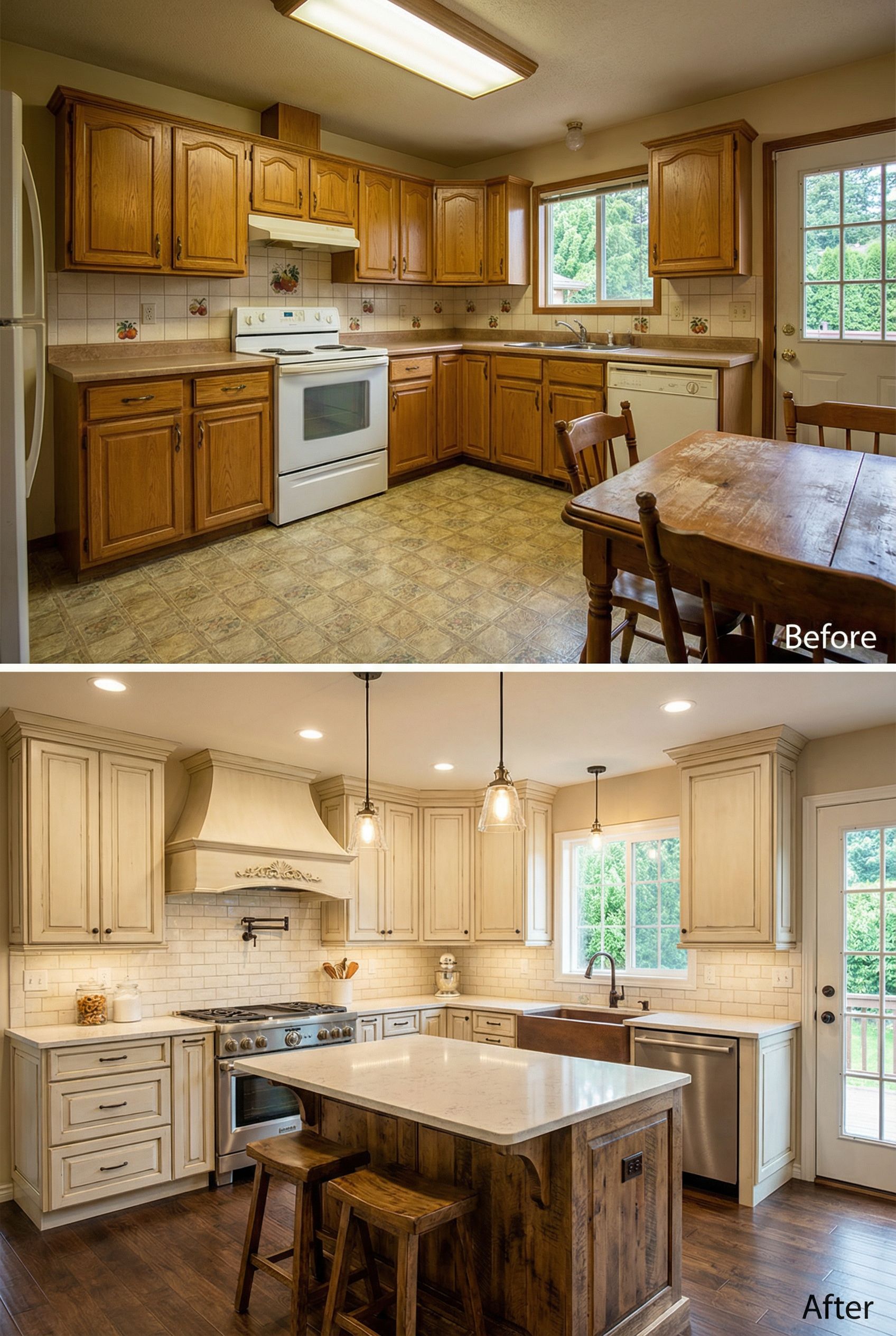
Soft sage-green painted cabinets brought garden-inspired tranquility indoors, complemented by butcher block countertops that introduced warmth. A vintage chandelier replaced fluorescent lighting, casting romantic ambient glow. White subway tiles with dark grout created classic backdrop while copper pots hanging from a ceiling rack added functional artistry. Floral linen curtains and a distressed wooden table completed the transformation. This design demonstrates “Nostalgic Modernism”—honoring historical aesthetics while meeting contemporary lifestyle needs.
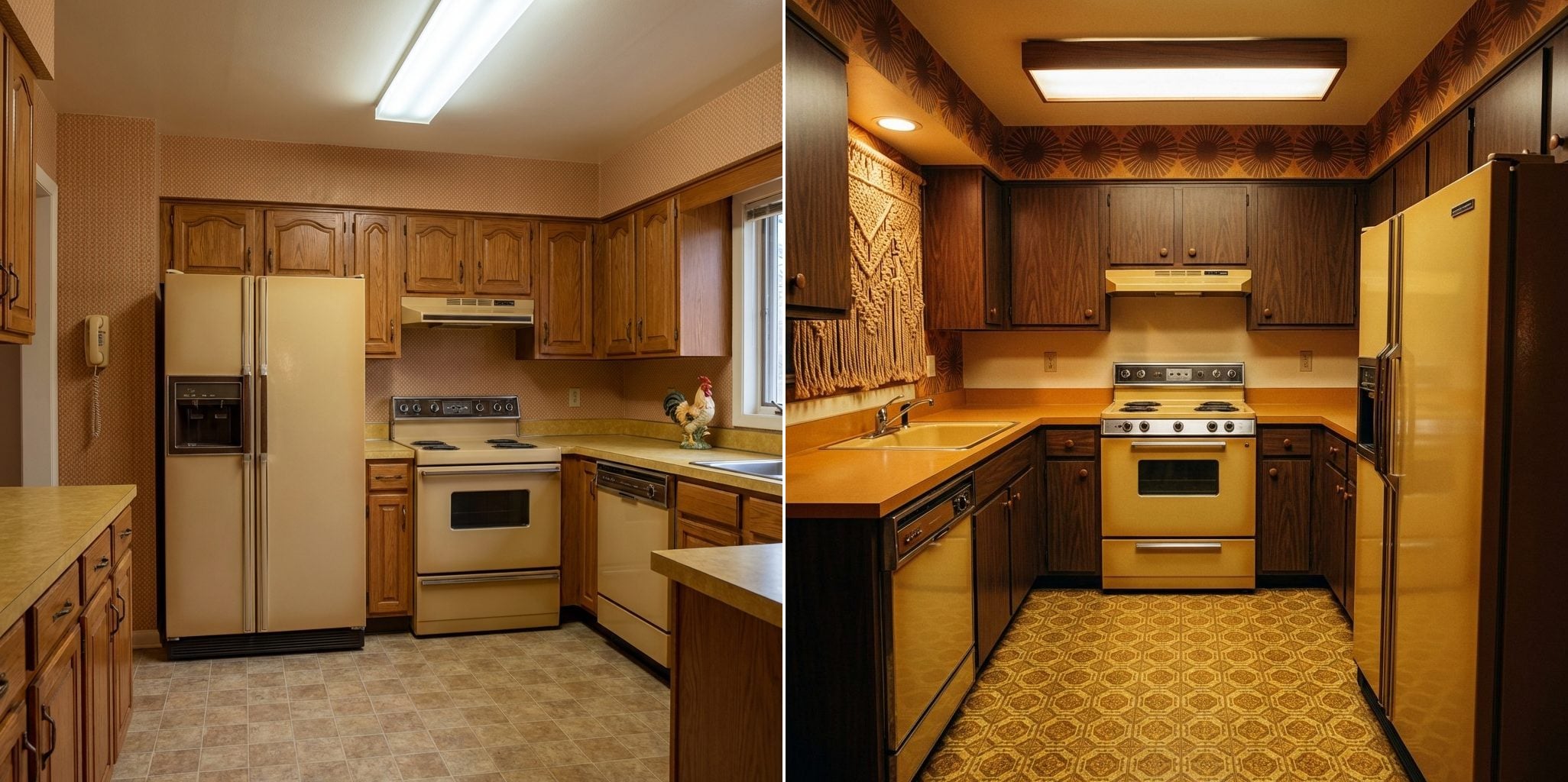
6. Dated Rooster-Themed Kitchen → Refined French Farmhouse
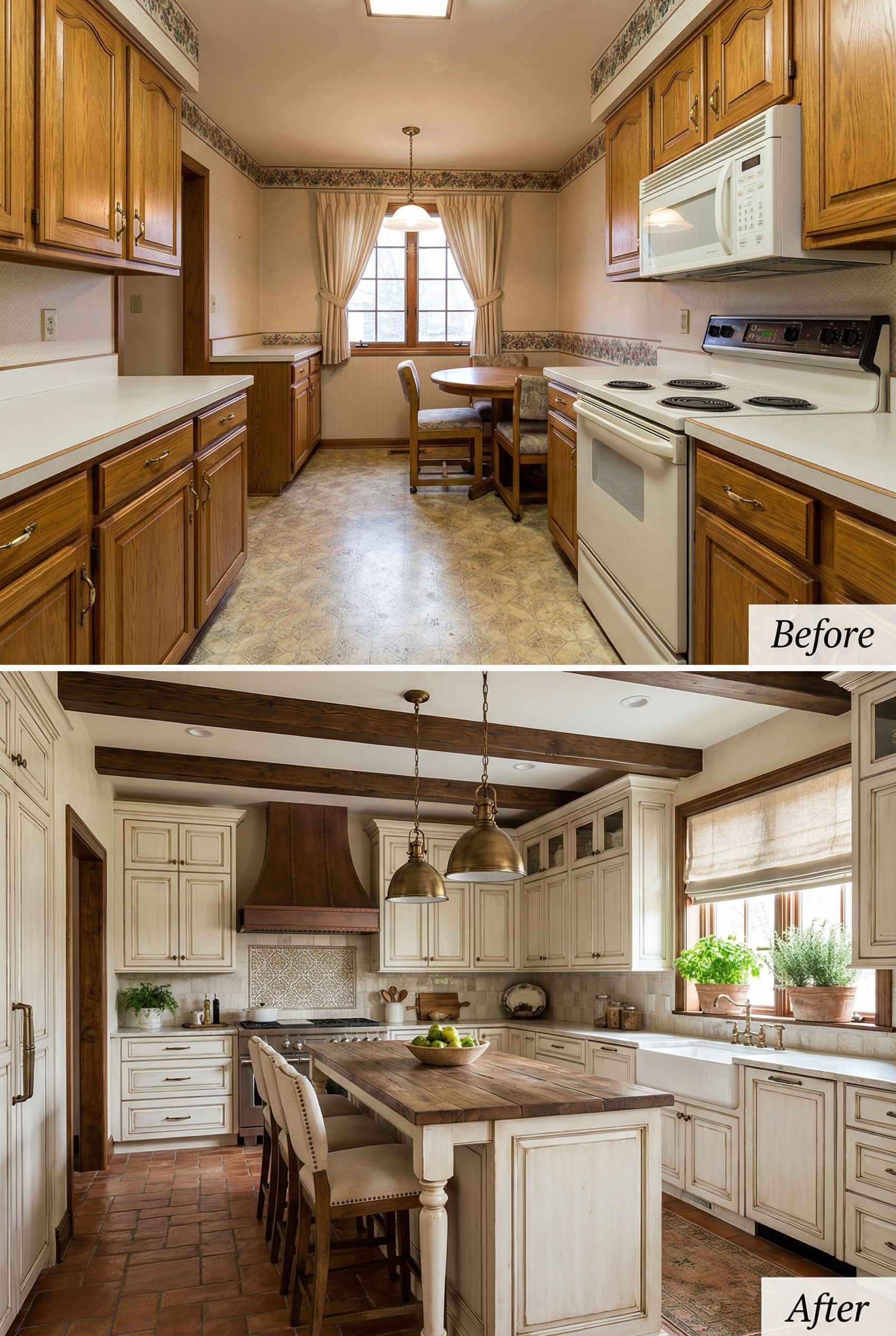
Sophisticated two-tone cabinetry—cream uppers with charcoal lowers—replaced the thematic chaos. Honed black granite countertops provided durable elegance while a porcelain farmhouse sink became the focal point. Wrought iron pendant lights and matching cabinet pulls introduced architectural metalwork. Whitewashed brick backsplash added texture without distraction. Natural linen window treatments softened edges. The result embodies “Curated Restraint”—a design philosophy where fewer, better-chosen elements create more psychological impact than abundant themed decorations.
7. Early 2000s Faux Finish Kitchen → Authentic French Rustic
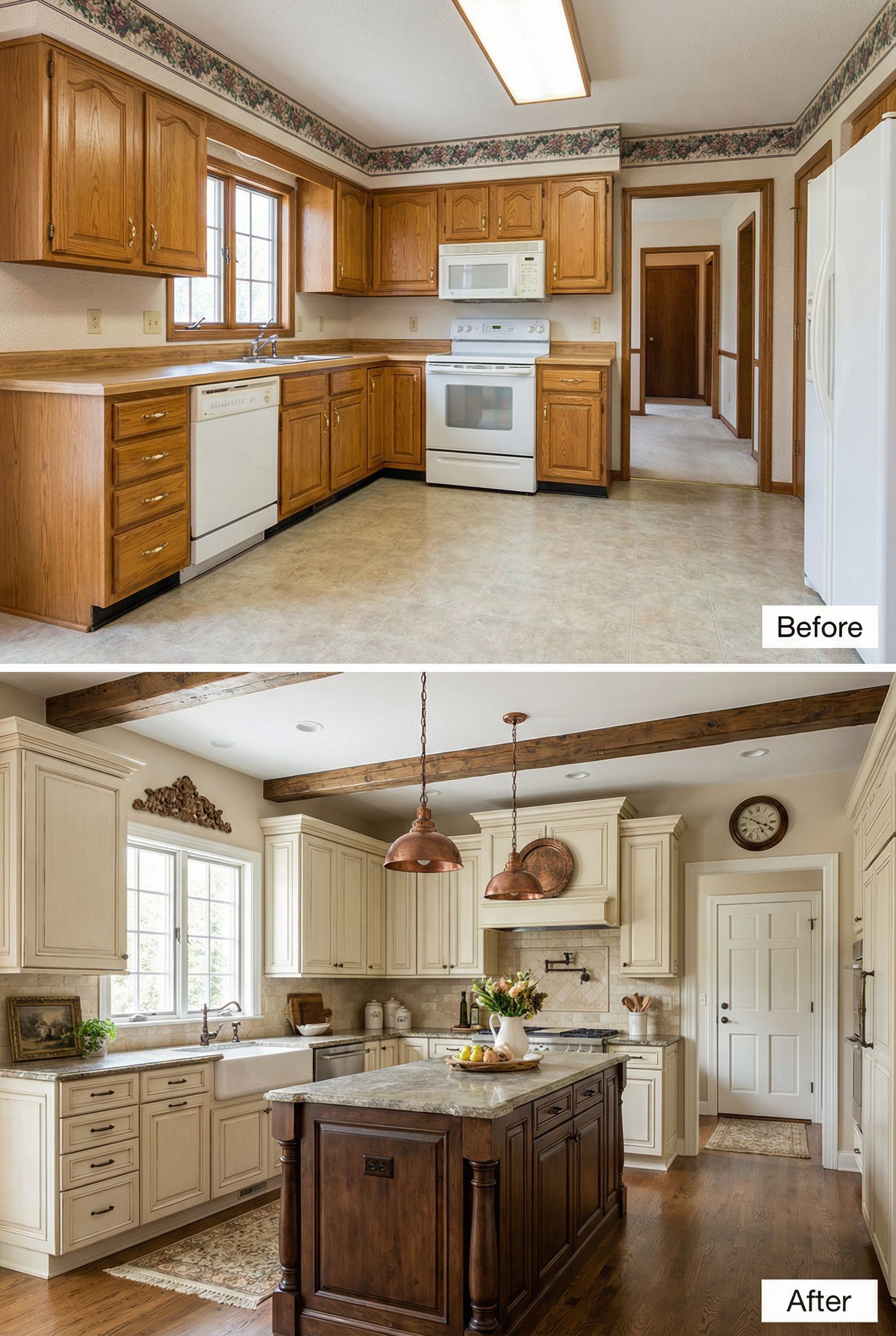
Genuine reclaimed wood cabinets with natural patina replaced artificial finishes, bringing honest materiality forward. Soapstone countertops developed character through use while a copper farmhouse sink added living finish. Exposed ceiling beams and rough-hewn floating shelves emphasized authentic texture. Hand-painted cement tiles created an intricate floor pattern. Wrought iron fixtures completed the material story. This exemplifies “Truth in Materials”—a design approach where authentic surfaces create psychological comfort through their genuine, evolving nature.
8. ’80s Brass & Laminate Kitchen → Elegant French Provincial
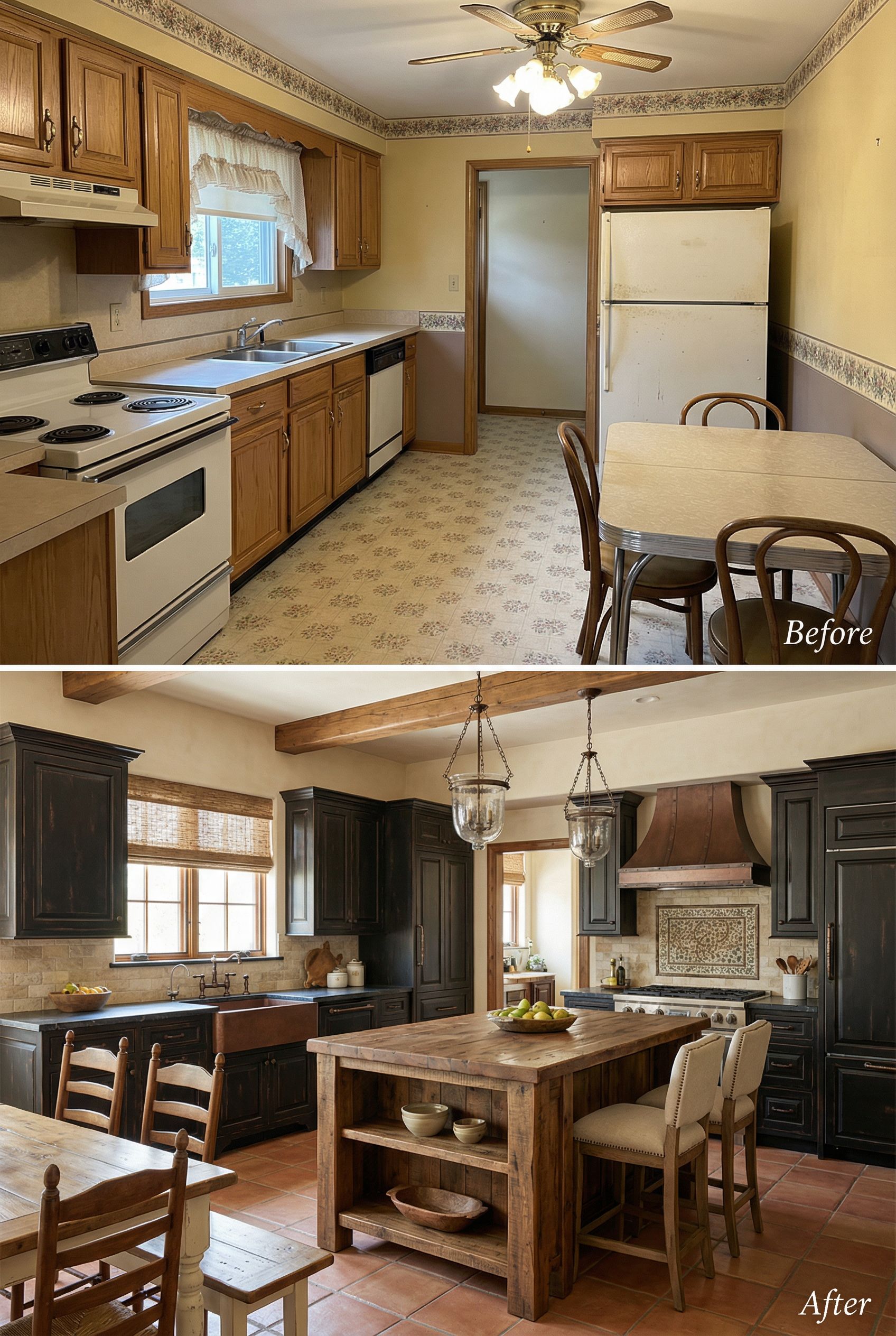
Custom cream cabinets with ornate molding and corbels established refined elegance. Calacatta gold marble countertops introduced luxurious veining patterns. A professional-style range with decorative hood became the culinary focal point. Polished nickel hardware and faucets replaced tarnished brass. Crystal chandelier and matching sconces provided jewelry-like illumination. Herringbone marble backsplash added geometric interest. This transformation embodies “Accessible Grandeur”—bringing château-inspired sophistication into everyday living without psychological distance or pretension.
9. ’90s Terra Cotta Kitchen → Modern French Country Charm
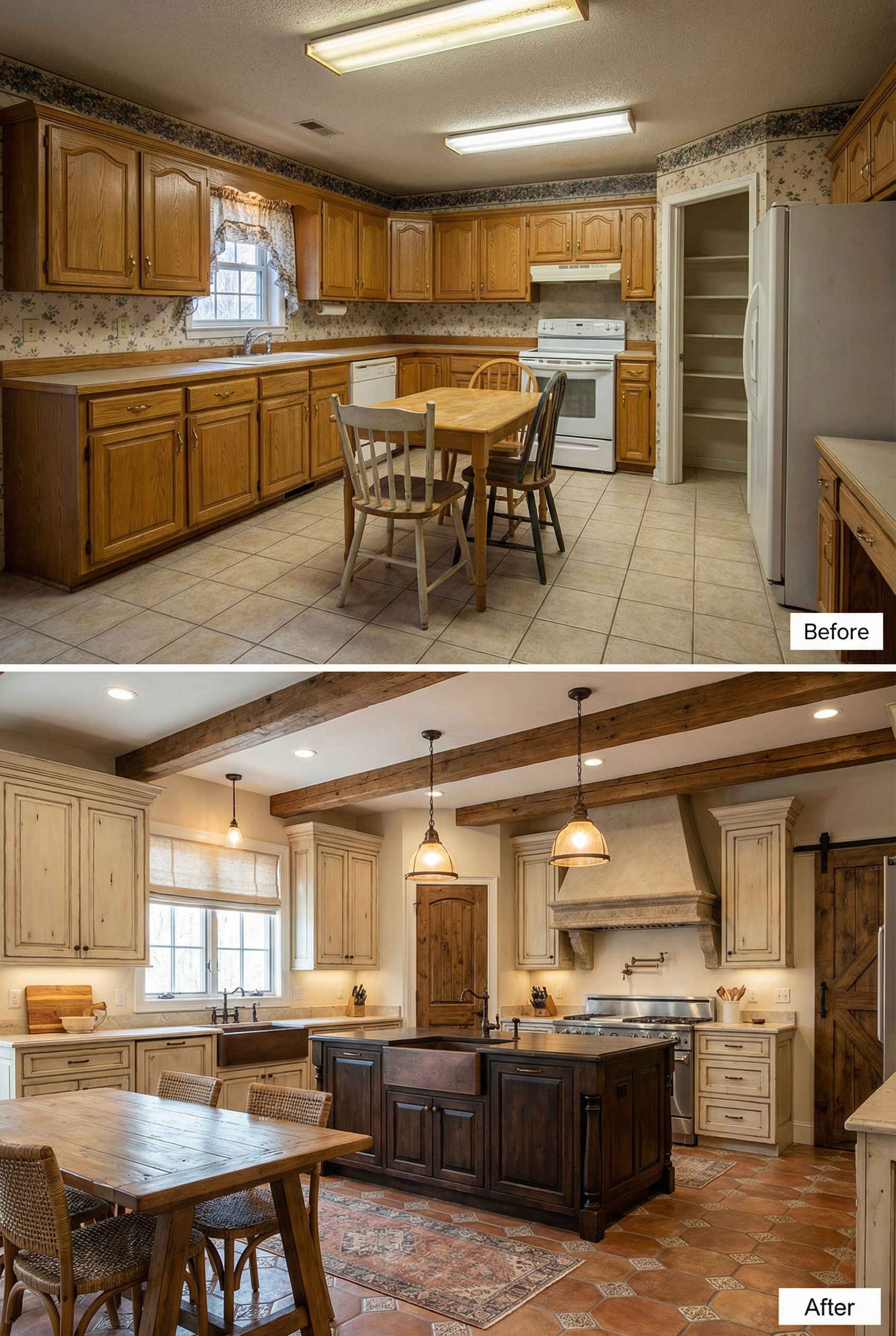
Sleek white flat-panel cabinets balanced traditional elements with contemporary lines. Warm walnut countertops and floating shelves introduced organic contrast. A minimalist range hood in white plaster maintained clean geometry. Matte black hardware and fixtures provided graphic punctuation. Pale gray zellige tiles created subtle backsplash texture. This transformation represents “Contemporary Heritage”—a design philosophy merging French country soul with modern sensibility, psychologically bridging our need for both tradition and progress.
10. Early 2000s Heavy Wood Kitchen → Fresh French Coastal Style
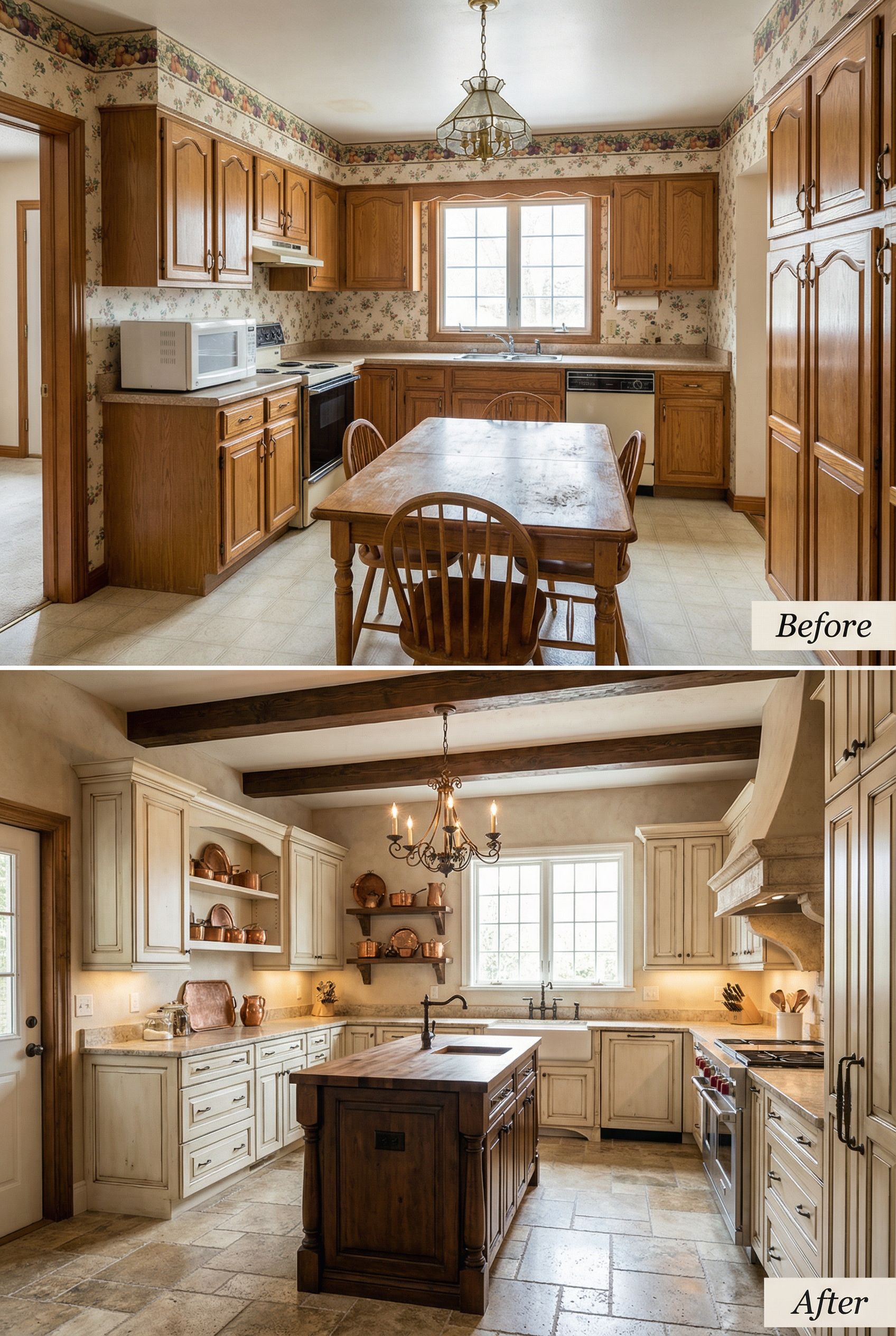
Weathered white cabinets with rope molding details evoked seaside charm. Pale blue-gray quartz countertops suggested coastal waters while maintaining durability. A farmhouse sink with gooseneck faucet anchored the workspace. Driftwood-finish open shelves displayed white ceramics. Seagrass pendant lights and woven bar stools introduced natural texture. Wide-plank floors in pale oak completed the breezy aesthetic. This embodies “Tidal Tranquility”—design that psychologically transports inhabitants to calmer shores, reducing stress through coastal-inspired serenity.