🔥 Would you like to save this?
The fireplace already has the best wall in the room. It has architecture, flame, texture, history — sometimes stone all the way to the ceiling. Then somebody spots the empty space above the mantel and thinks: television. Efficient. Symmetrical. Practically begging for a mounting bracket. Until the screen goes up and one tidy decision starts rearranging everything around it.
Suddenly the television is too high, the mantel is too crowded, the stone disappears behind a black rectangle, the sofa retreats across the room, the chairs turn their backs on the windows, and the cables begin looking for somewhere to live. These 31 rooms follow that domino effect from awkward proportions and tortured floor plans to the layouts that finally let fire and television stop competing for the same few square feet. By the end, the fireplace gets its wall back — and looks suspiciously pleased about it.
In order to come up with the very specific design ideas, we create most designs with the assistance of state-of-the-art AI interior design software. Also, assume links that take you off the site are affiliate links such as links to Amazon. this means we may earn a commission if you buy something.
31. The TV Mounted So High Everyone Has to Look Up to Watch It
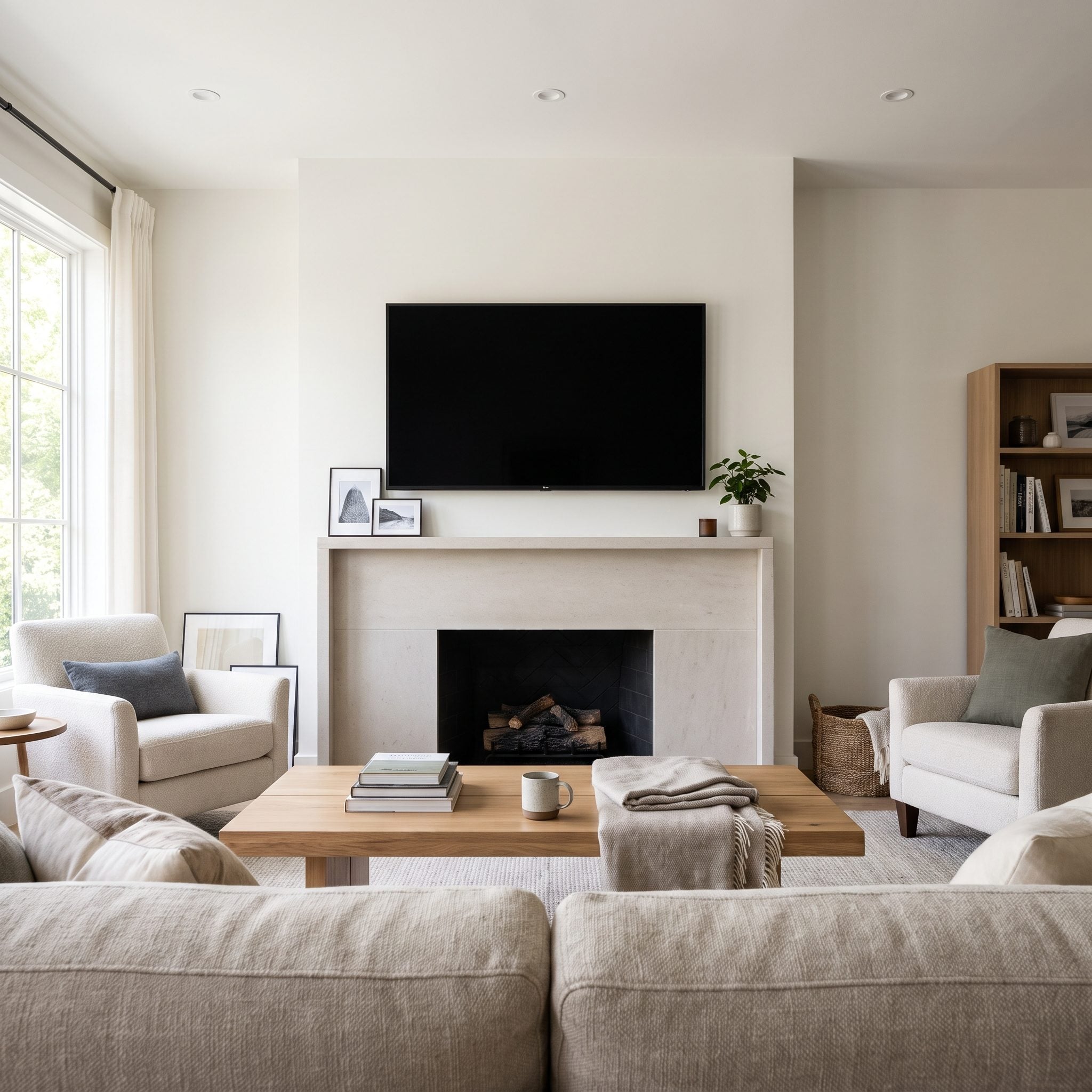
Sit on that sofa for ten minutes and your neck starts filing a complaint. The screen center sits well above the natural sightline from the low seating, so watching television means tipping the head upward instead of looking comfortably ahead.
Everything else here is right, which makes the problem more irritating. Limewashed walls, a floating oak mantel, a low-slung linen sofa you would happily disappear into. Then the fireplace sends the television into the architectural penthouse.
30. The Recliner That Makes a High TV Seem Fine, Until Everyone Else Sits Down
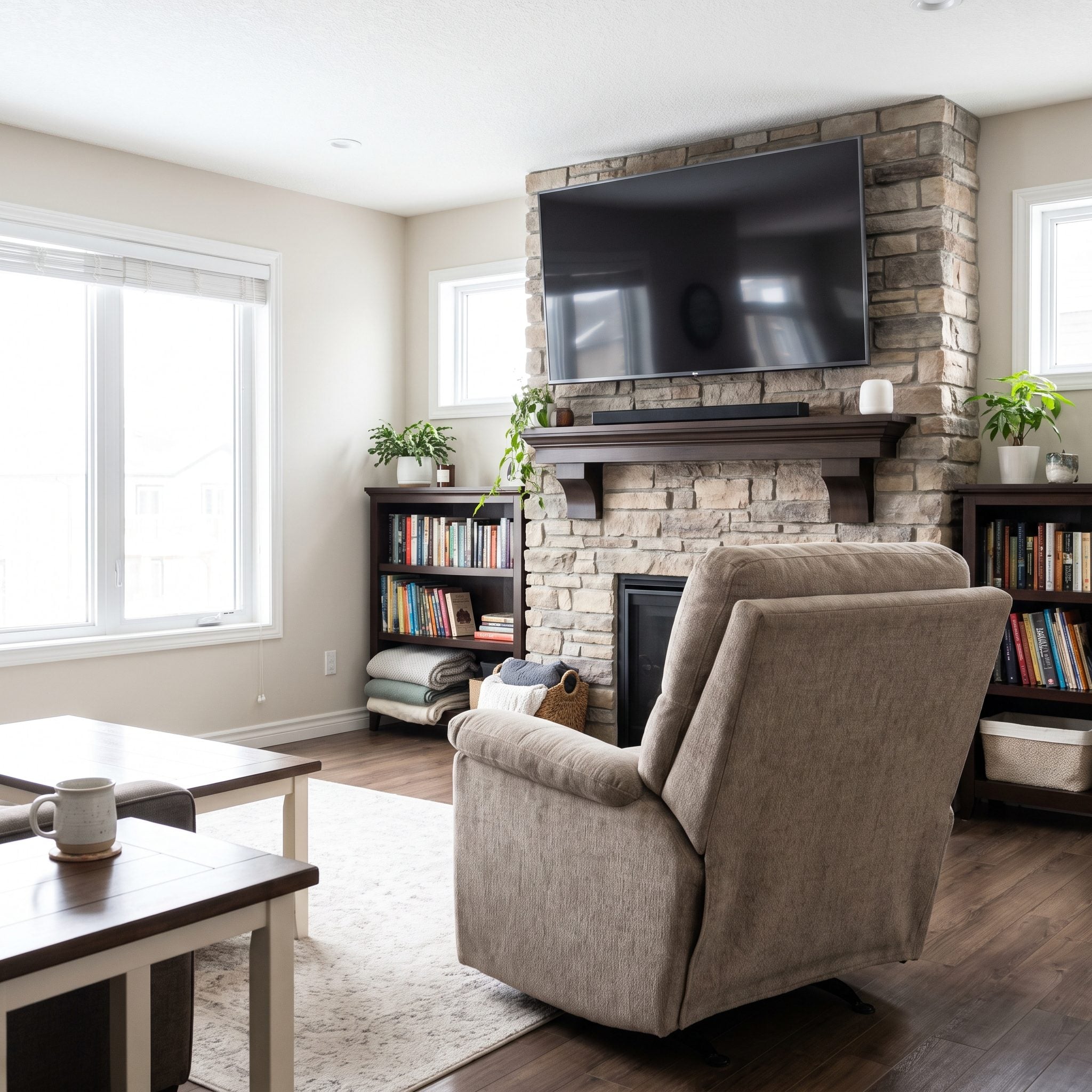
Here is the loophole that keeps the high-TV argument alive. Recline far enough and suddenly that elevated screen feels perfectly reasonable. Your head is already tilted back, so the television meets you halfway.
Then everybody else arrives and sits upright. The loveseat and side chairs inherit an angle designed around one person in one position. The leather recliner may be wonderfully comfortable. It just should not be allowed to dictate the viewing geometry for the entire room.
29. The Giant TV That Makes the Fireplace Look Tiny
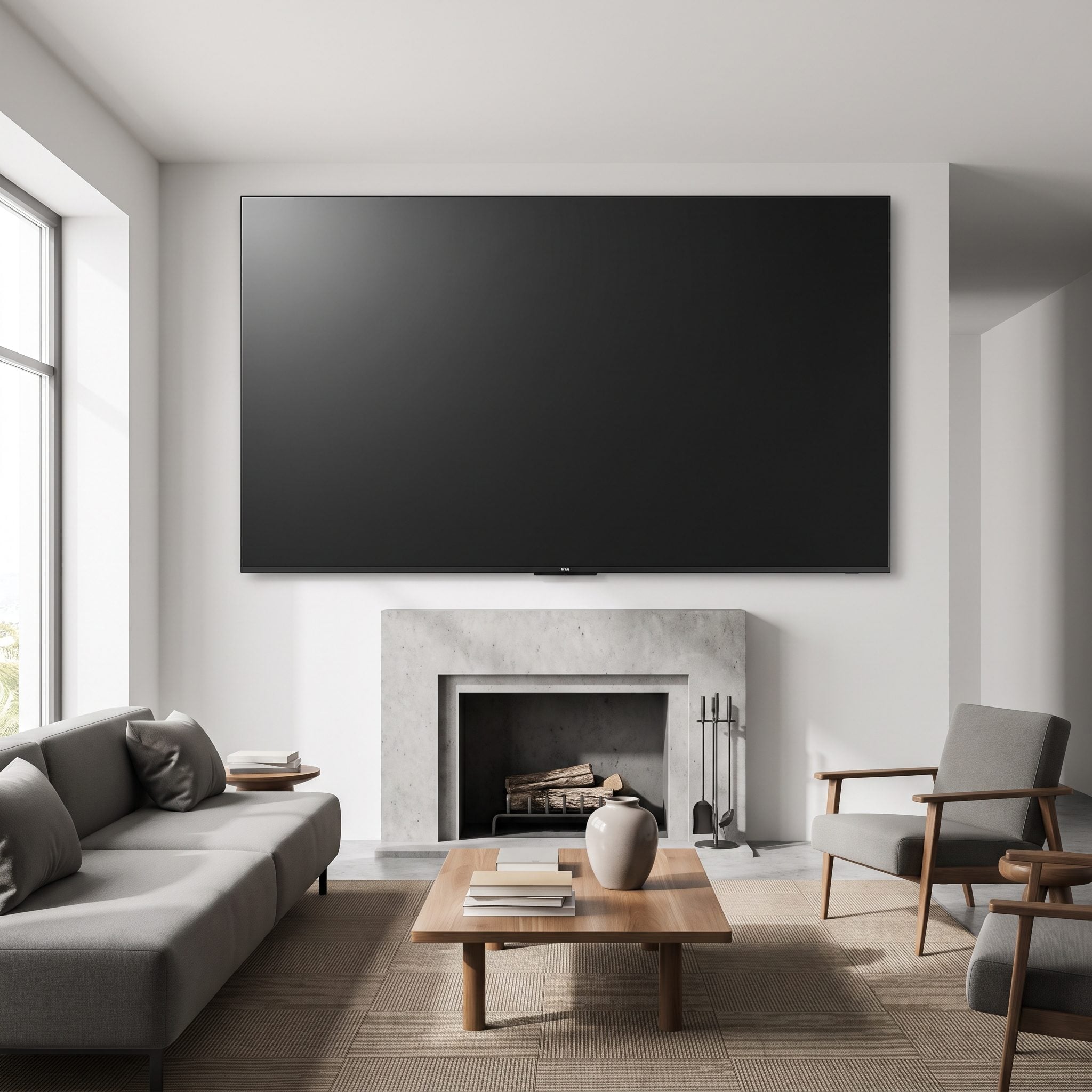
The fireplace shrinks. Not literally, but park a huge black screen over a modest concrete surround and the hearth suddenly looks like an accessory underneath the television.
Scale runs the show here. A fireplace needs enough visual weight to anchor its wall. Instead, the charcoal sectional and marble table settle nicely into the lower half of the room while everything above them gets commandeered by screen.
28. The Small TV Floating Awkwardly Above a Massive Mantel
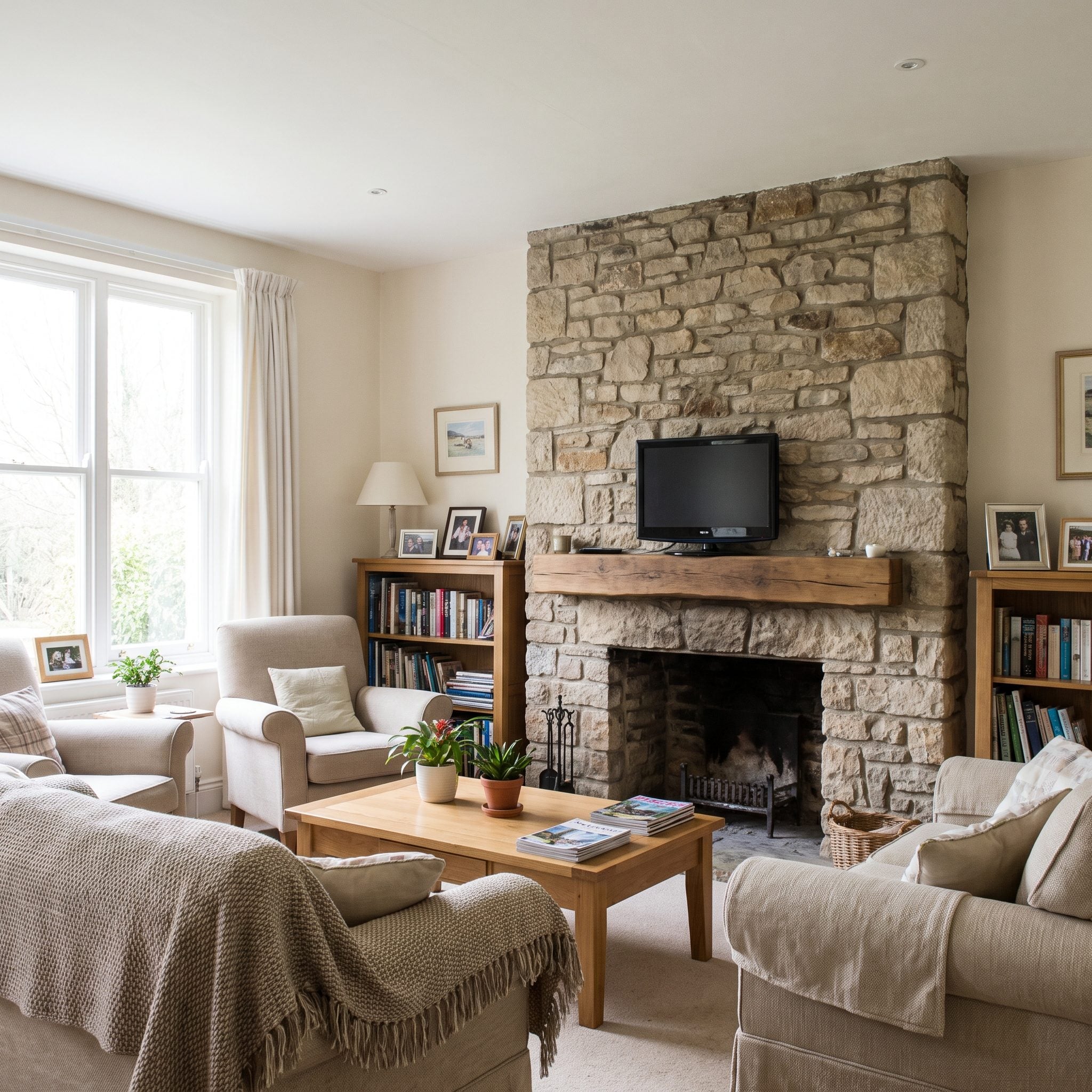
Then comes the opposite problem. A small screen marooned on a broad stone wall can look less like a focal point than a postage stamp somebody forgot to move.
The sage green velvet sofa, wingback chairs, brass chandelier, and carved mantel all have presence. The little black screen hovering above them does not. Bigger is not automatically better, but proportion still gets a vote.
27. The Fireplace and TV Fighting to Be the Room’s Focal Point
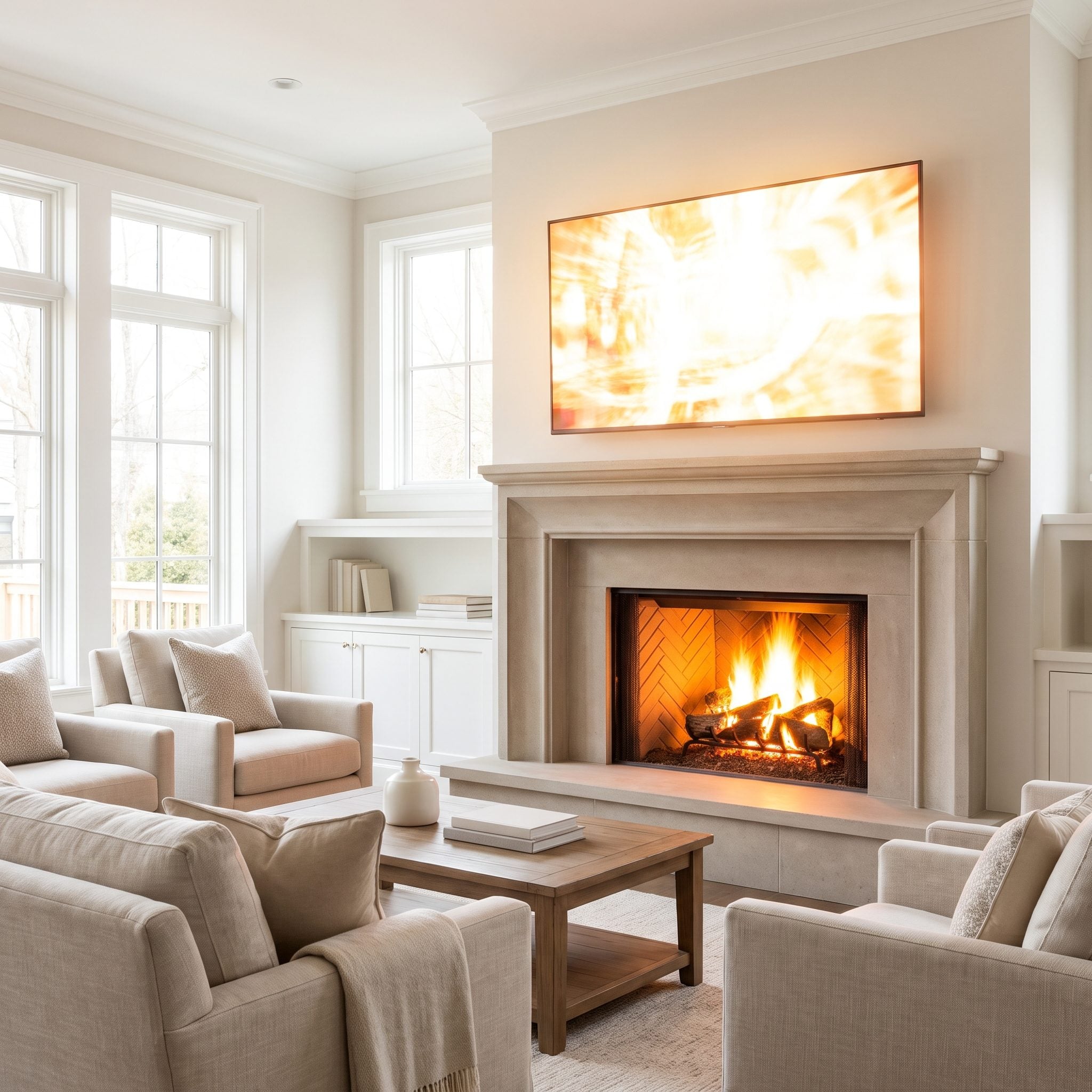
A room can handle more than one interesting thing. What it struggles with is two dominant things occupying exactly the same visual territory. Fire flickers below. Screen glows above. Both want the first look.
The cream bouclé sofa and caramel leather chairs establish a calm conversation area, then the fireplace wall starts arguing with itself.
26. The TV That Covers the Stone or Brickwork Worth Showcasing
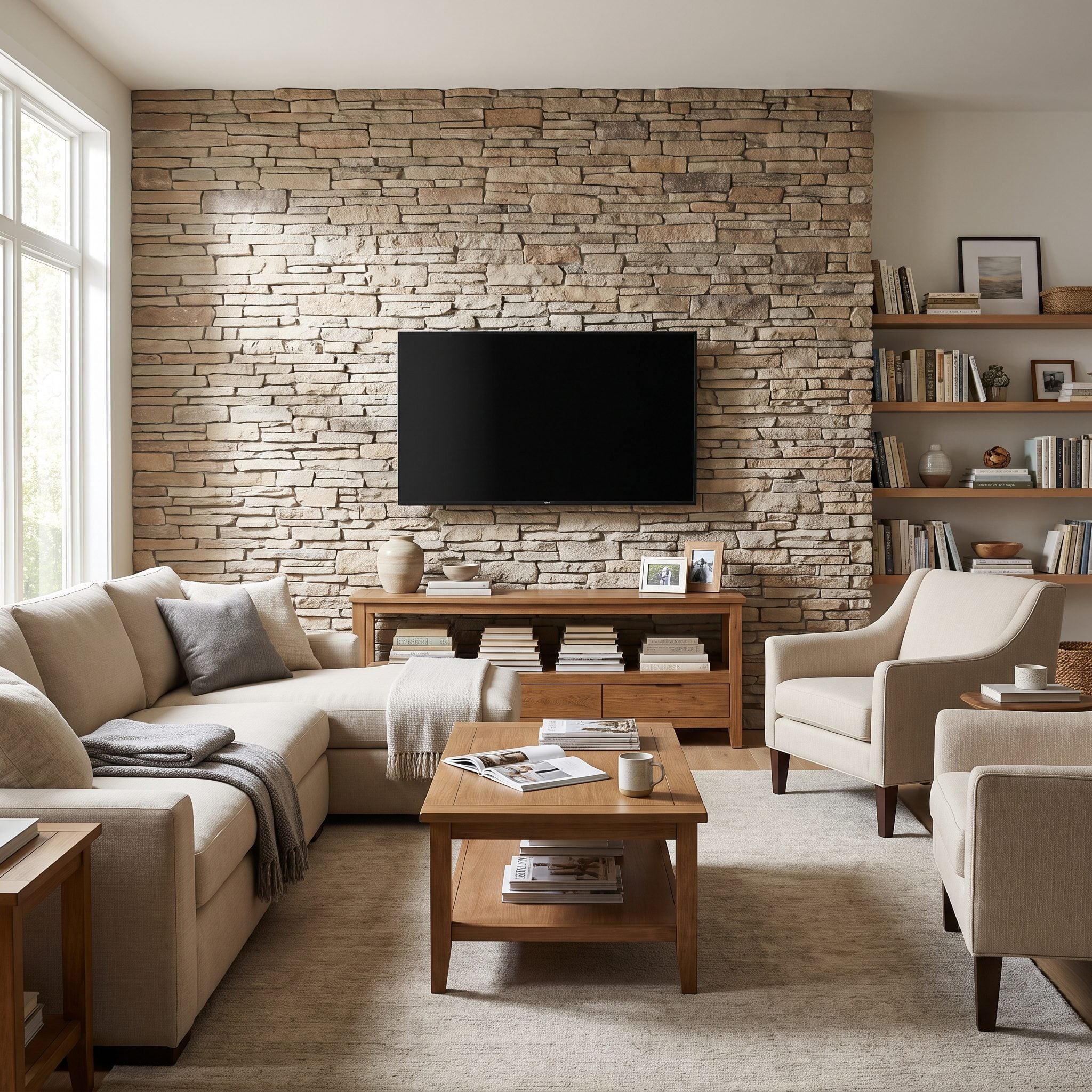
Stacked stone wants to run. Floor to ceiling, warm grays and browns catching the light, texture changing every few inches. Then the screen lands squarely in the middle and stops the movement cold.
Natural materials are most convincing when enough surface remains uninterrupted for the variation to register. Here, the cognac Chesterfield and reclaimed wood table understand the assignment. The television behaves like a roadblock.
What Our Readers Say
- In our reader polls, stone was the favourite fireplace finish by a wide margin, picked by 52% of readers, compared with 25% for a traditional mantel.
- Living room photos featuring brick earned more hearts from Home Stratosphere readers than the other images in the same articles.
From Home Stratosphere reader polls and votes.
25. The Oversized Mantel Forcing the TV Even Higher
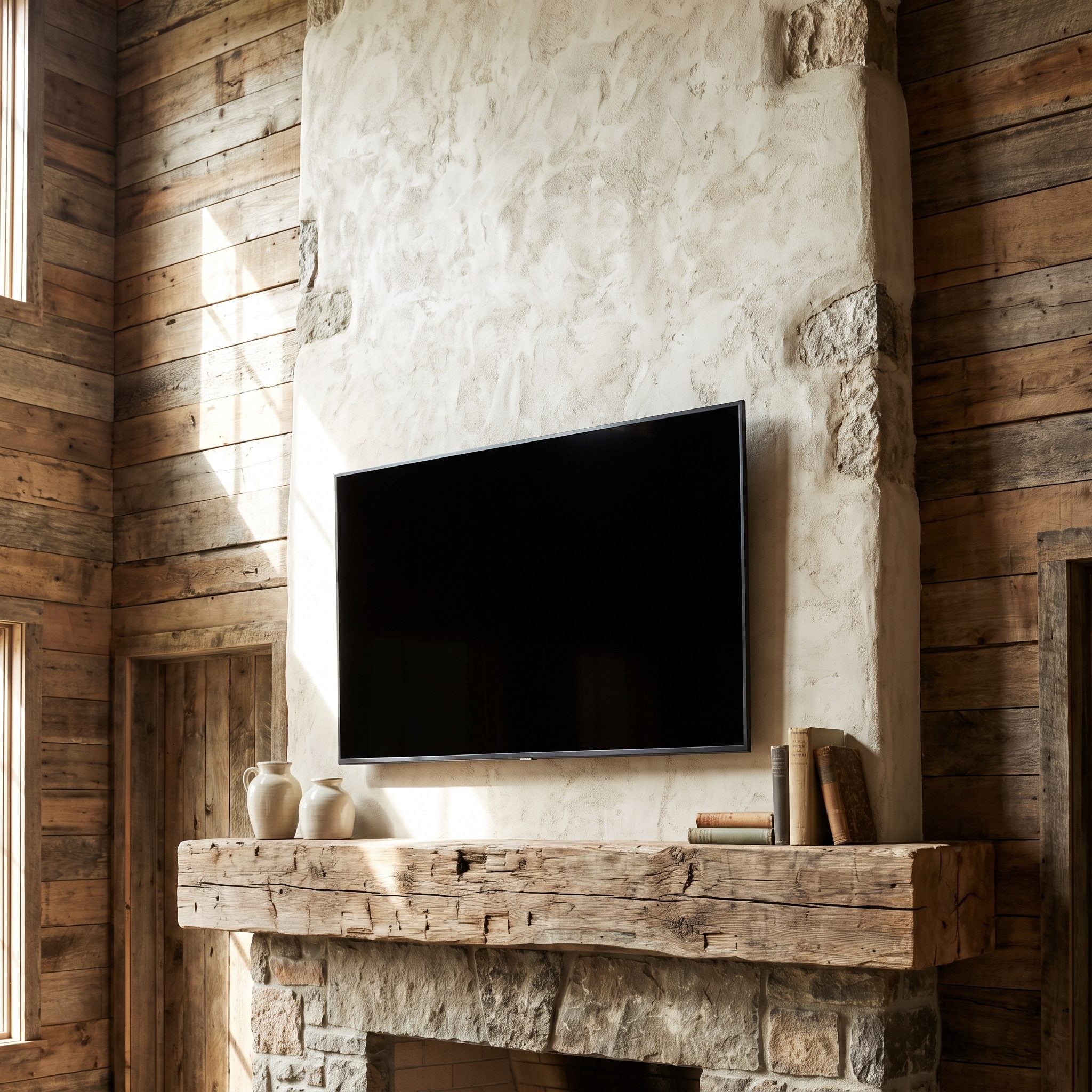
That reclaimed timber beam is gorgeous. It is also making a difficult equation worse.
A substantial mantel claims precious vertical space between the firebox and television. The thicker the beam, the farther the screen tends to climb. What looked beautifully hefty in the material sample can become one more obstacle once a television has to clear it.
This is where fireplace planning and television planning need to happen at the same time, not six months apart.
24. The Decorative Mantel Display Squeezed Beneath the Television
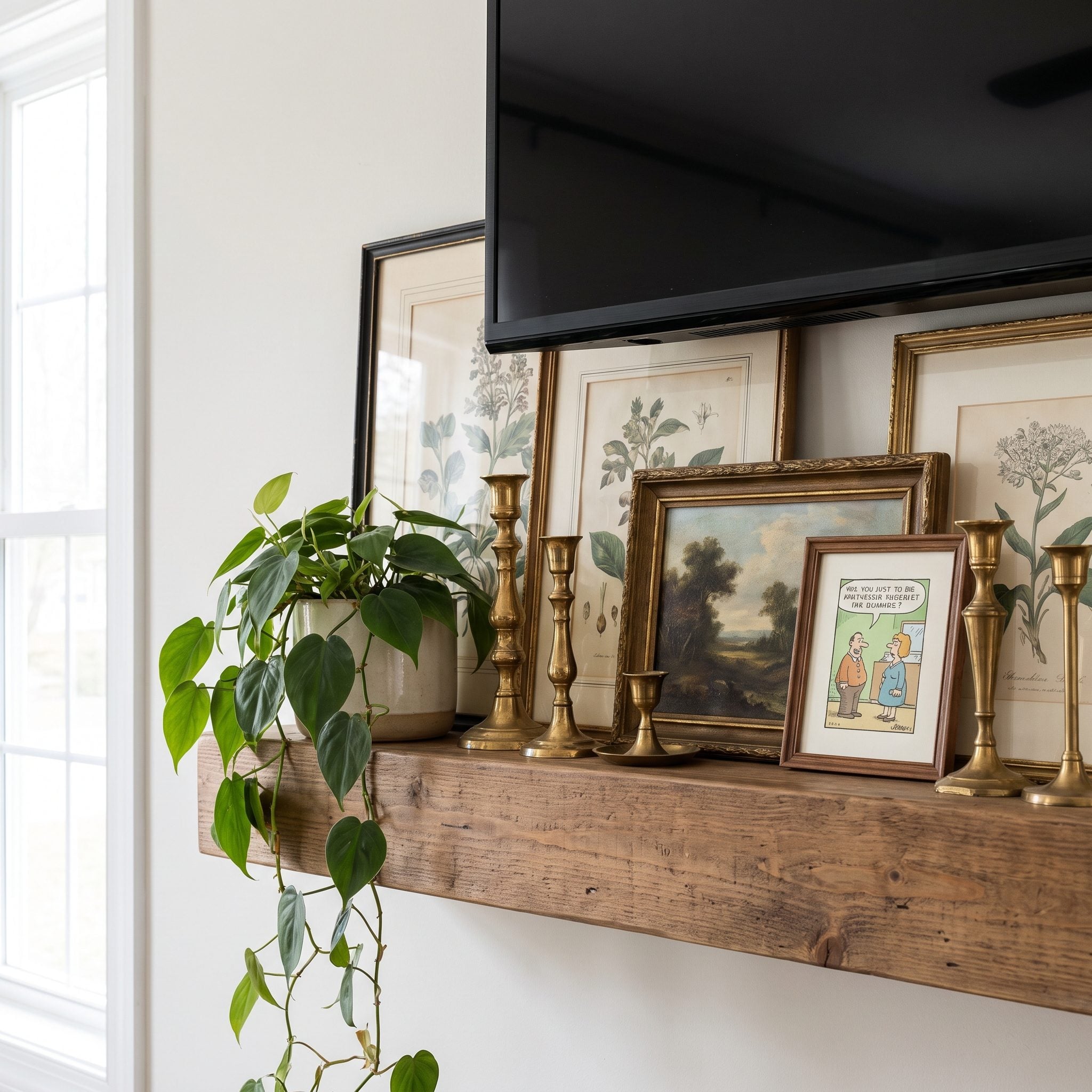
Look at the mantel styling trying to survive down there. Leaning art, trailing greenery, brass candlesticks — all the ingredients are good, but they are trapped beneath the television with barely enough room to become a composition.
Mantel displays need negative space. Drop the screen too low and the objects feel pinned underneath it. Raise the screen and the viewing angle gets worse. Suddenly decorating the mantel becomes a negotiation between the neck and the candlesticks.
23. The Mantel That Isn’t Deep Enough to Do Much About Rising Heat
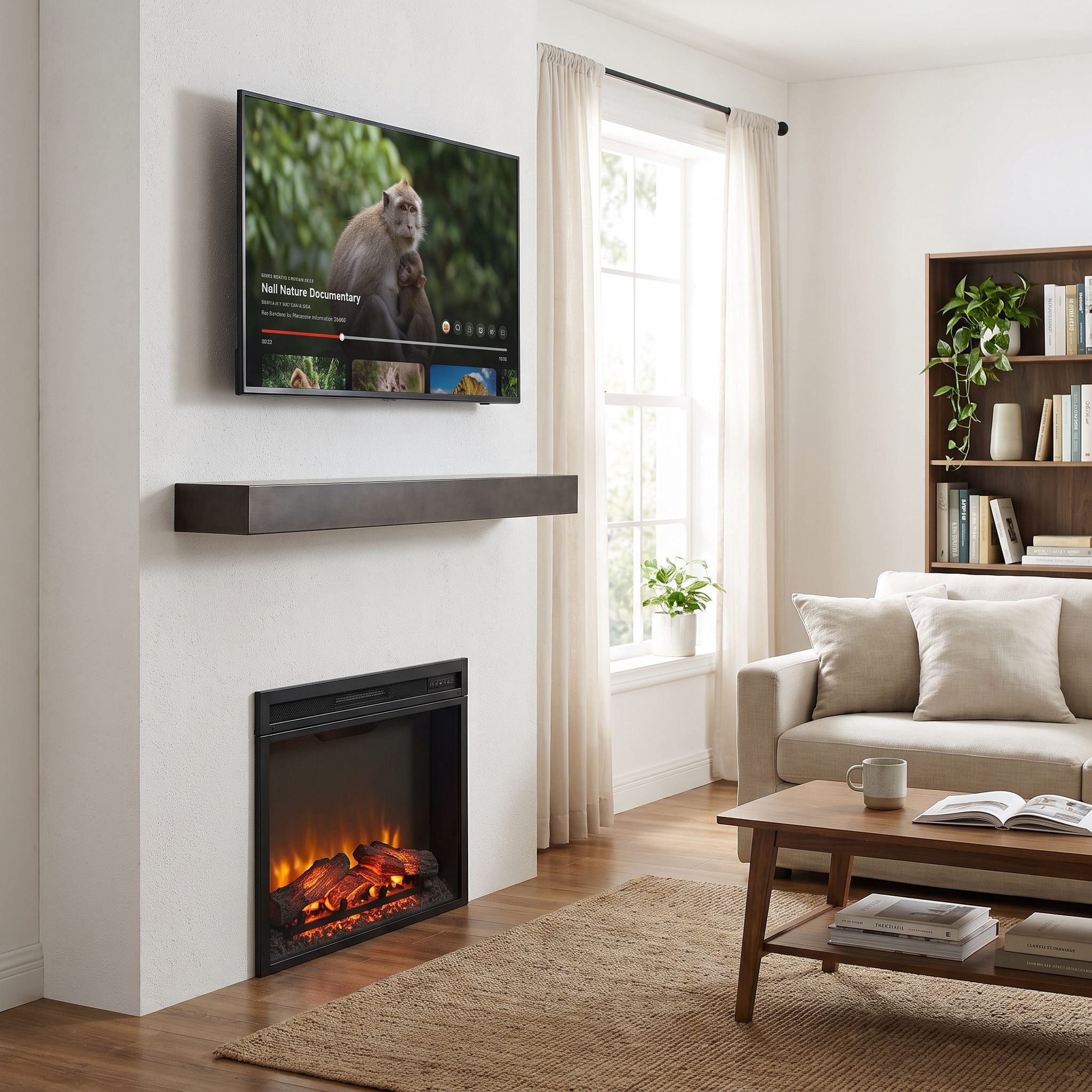
A slim mantel can look wonderfully clean while providing very little separation between the fireplace and the electronics above it. Whether that becomes a problem depends on the fireplace, its venting, the mantel configuration, and the television itself.
The room is lovely: an oatmeal linen sofa, a walnut coffee table, an arched window. The TV placement is simply the one decision that needs engineering rather than eyeballing.
22. The TV Above a Wood-Burning Fireplace With More Heat and Soot to Consider
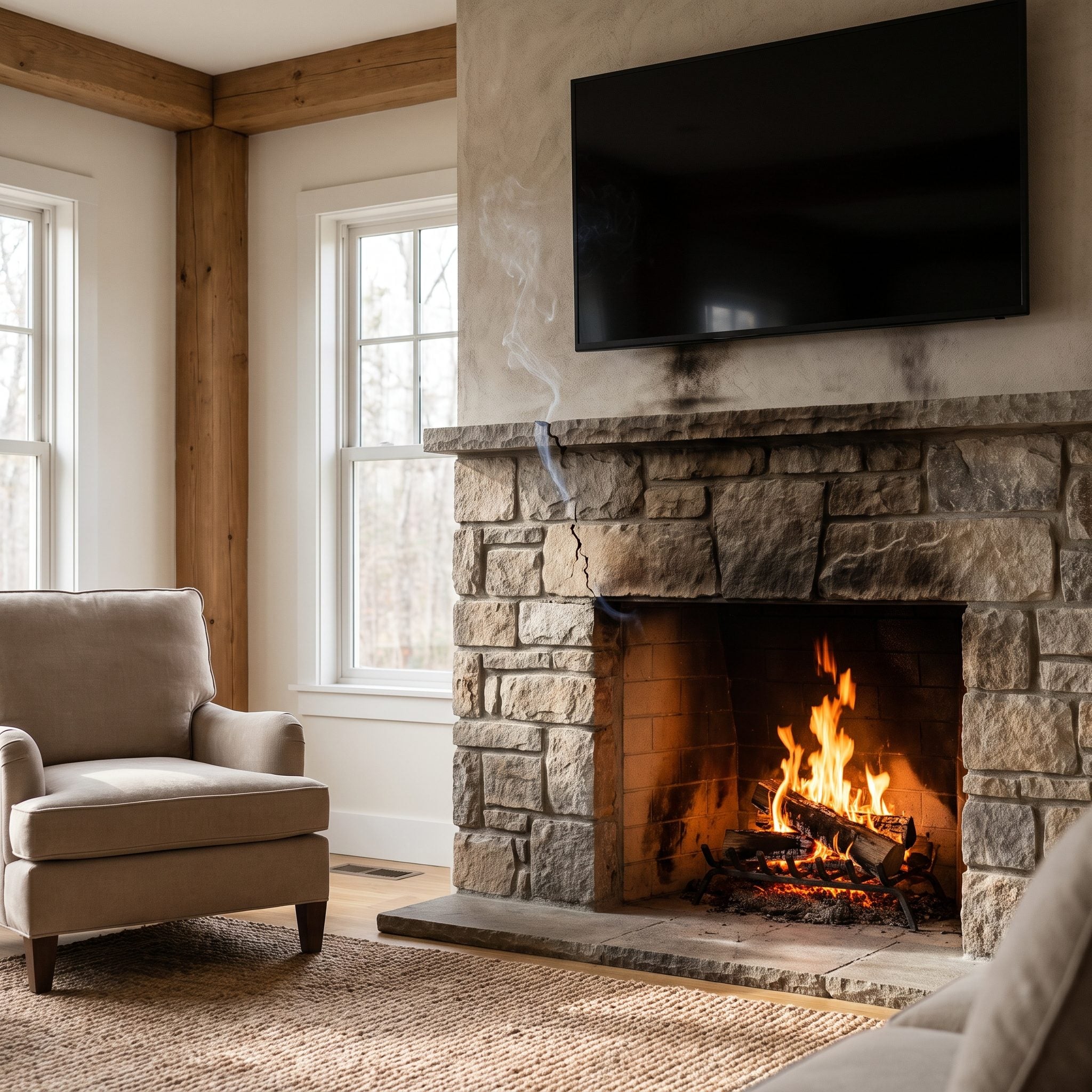
A wood-burning fireplace introduces another complication: combustion residue. Along with heat, smoke and fine ash can become part of the environment around the hearth, particularly when draft or maintenance is less than ideal.
The tan leather sofa, cast-iron log holder, timber beams, and rough stone make a convincing rustic room. They also make the fireplace feel like something that will actually be used rather than merely photographed.
That makes the television’s position above it worth considerably more thought.
21. The Sofa Pushed Too Far Back Just to Make the Viewing Angle Bearable
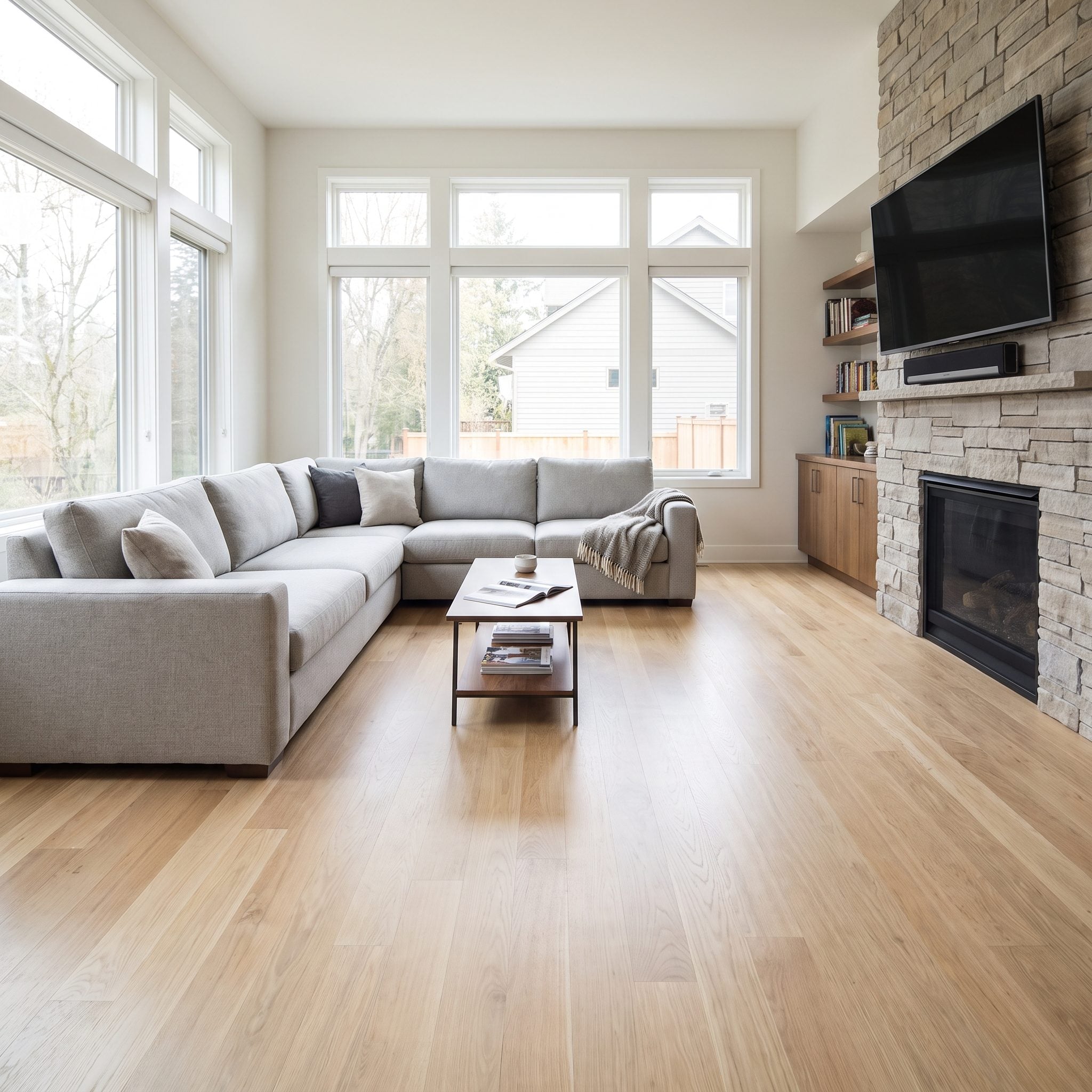
Watch what happens when one wall decision starts rewriting the entire floor plan.
The sofa has retreated to the far wall, which may soften the upward viewing angle but creates another problem: a lake of unused floor in the middle and seating marooned beyond the rug.
The brass arc floor lamp and round marble side table are doing their part. The rug failing to reach the sofa is the giveaway. The room is stretching itself around the television.
20. The Sectional Positioned Around the TV Instead of the Room
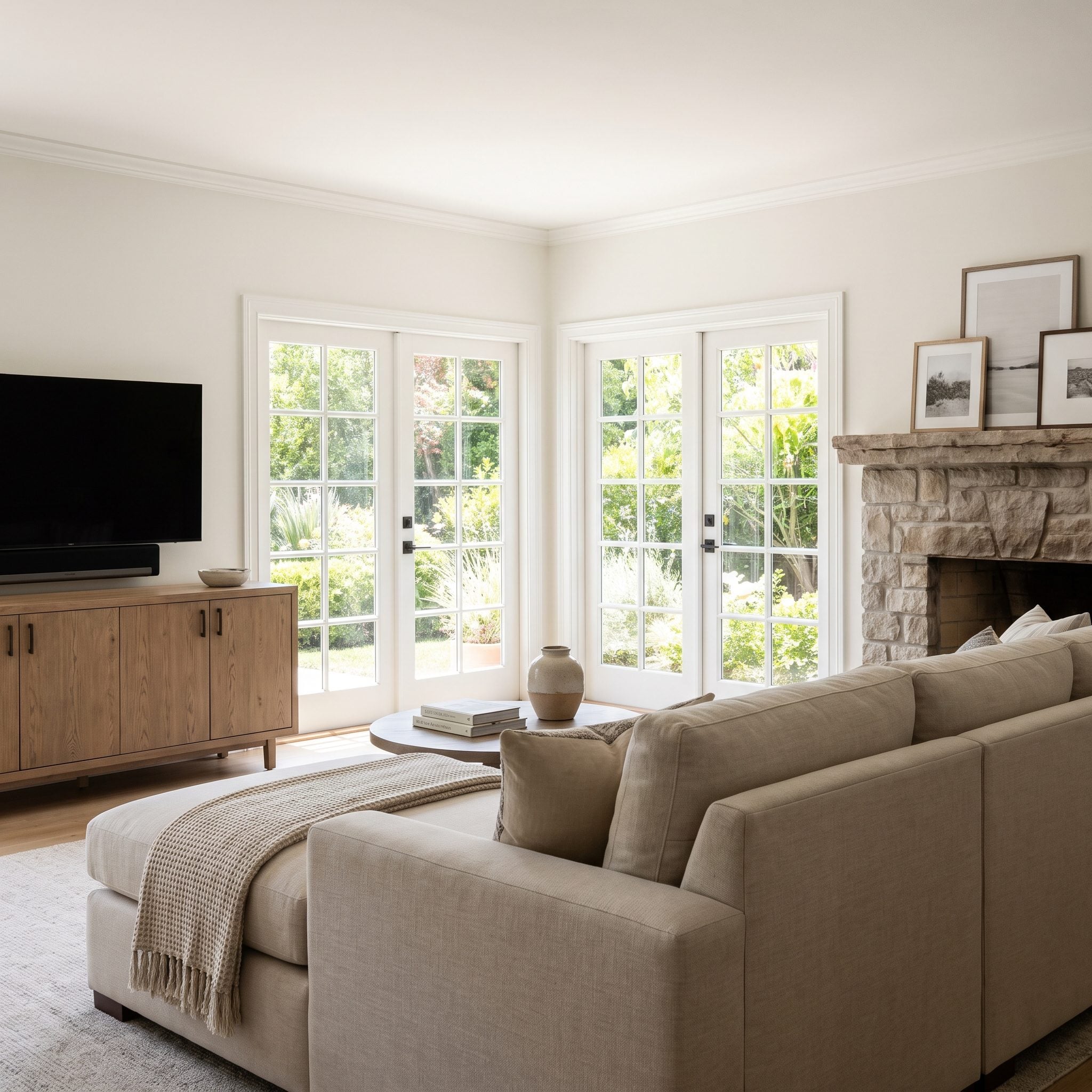
The sectional in this room made a choice. It faces the television and turns its back on French doors opening toward the garden.
That is the quiet cost of letting the fireplace wall become the TV wall by default. Every seat starts aiming toward it whether that orientation makes sense for the light, circulation, windows, or view.
The greige sectional and rattan lounge chair are perfectly good pieces. They have simply been conscripted into the wrong plan.
19. The Furniture Arrangement That Makes Conversation Awkward
🔥 Would you like to save this?
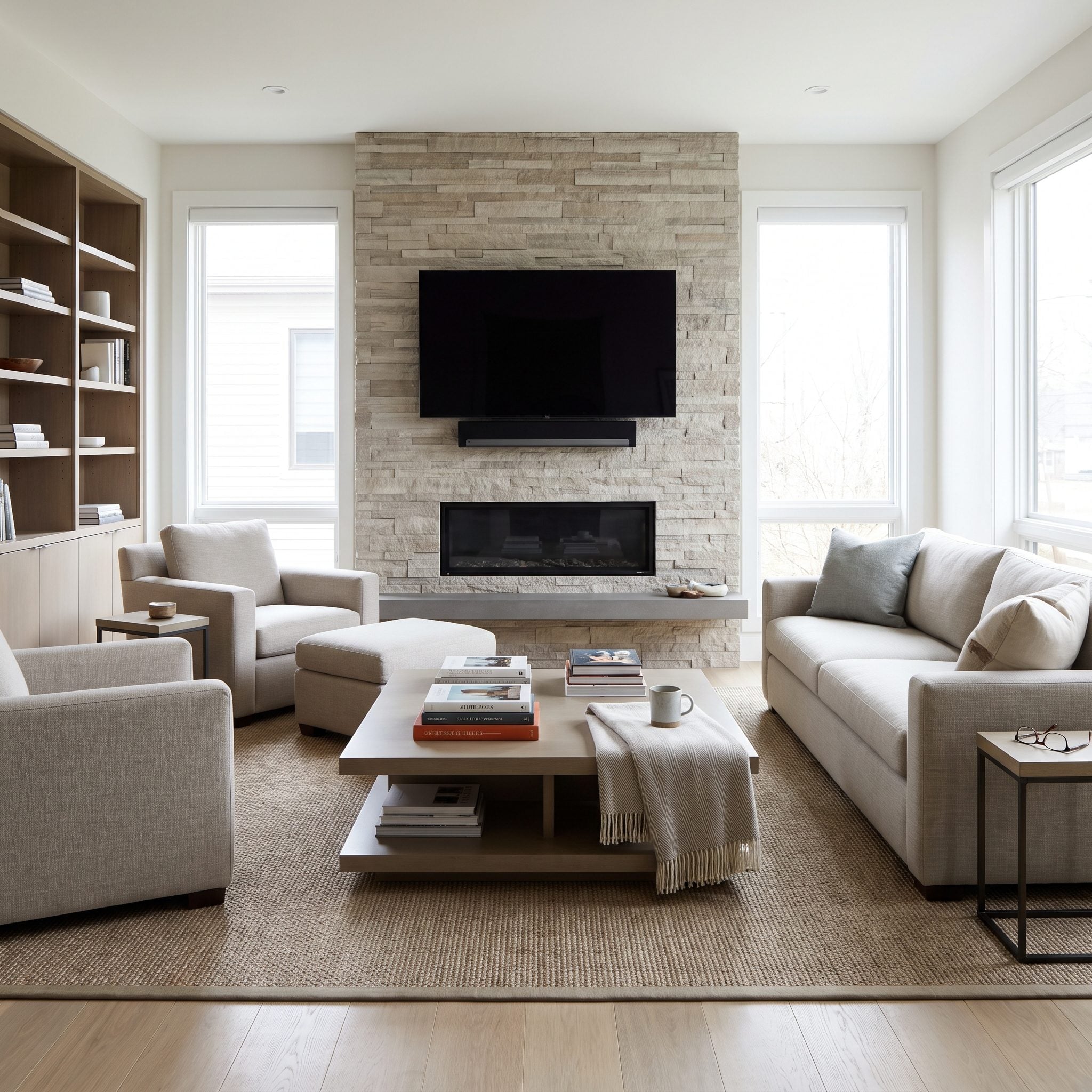
Everyone in this room sits shoulder to shoulder in one long theater row. Excellent if the only agenda is a movie. Less useful if anyone plans to speak.
When the television becomes the unquestioned destination, furniture tends to line up toward it. What disappears is the conversational cluster: chairs angled toward one another, faces visible, room for someone to join without feeling as though they just entered Row F.
The Persian-style rug, ceramic table lamps, and built-in bookcases deserve a room that works when the television is off too.
18. The Open-Plan Room Where the Fireplace Wall Wasn’t Actually the Best TV Wall
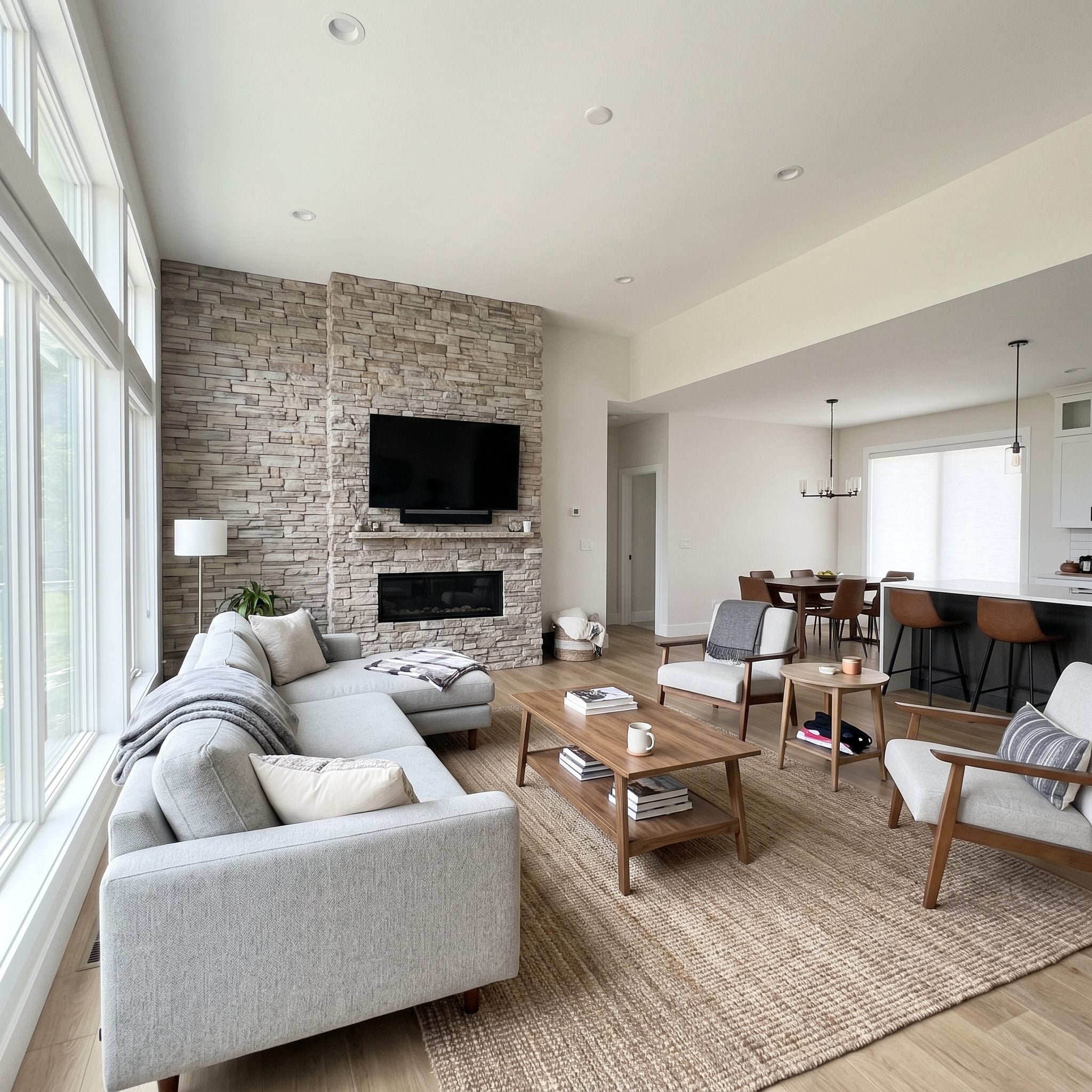
Open-plan rooms give you options. This one ignored them.
The television climbs above the stone fireplace while a longer, flatter wall across the space sits largely unused. That wall could accommodate a low media console, useful storage, and a screen closer to seated sightlines. Instead, the fireplace won through habit.
The quartz island, stainless appliances, and cream sectional already define the living zone. In a room this generous, the fireplace can be the architectural focus without carrying every electronic responsibility too.
17. The Off-Center Fireplace That Makes the TV Look Accidentally Misaligned
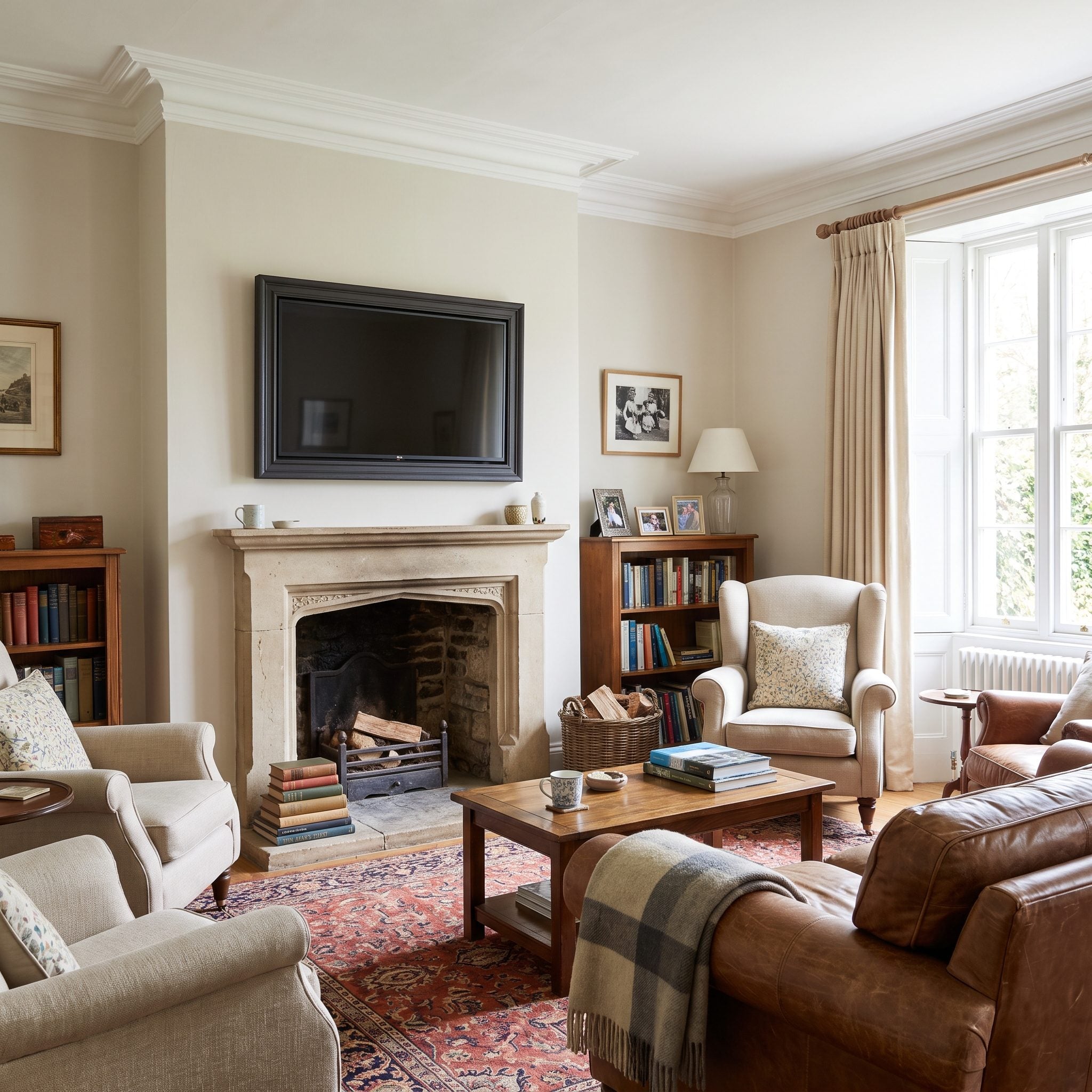
Something feels wrong here before you can quite identify what. The fireplace sits off-center on the wall, so centering the television above it leaves the screen off-center to almost everything else.
The eye notices those unequal margins. Shelves, windows, sofa, and screen all appear to be obeying different grids.
Meanwhile the navy sofa is centered on the room rather than the hearth. The marble-topped console and brass picture light cannot negotiate peace between competing centerlines.
16. The Fireplace Between Windows That Leaves the TV Visually Cramped
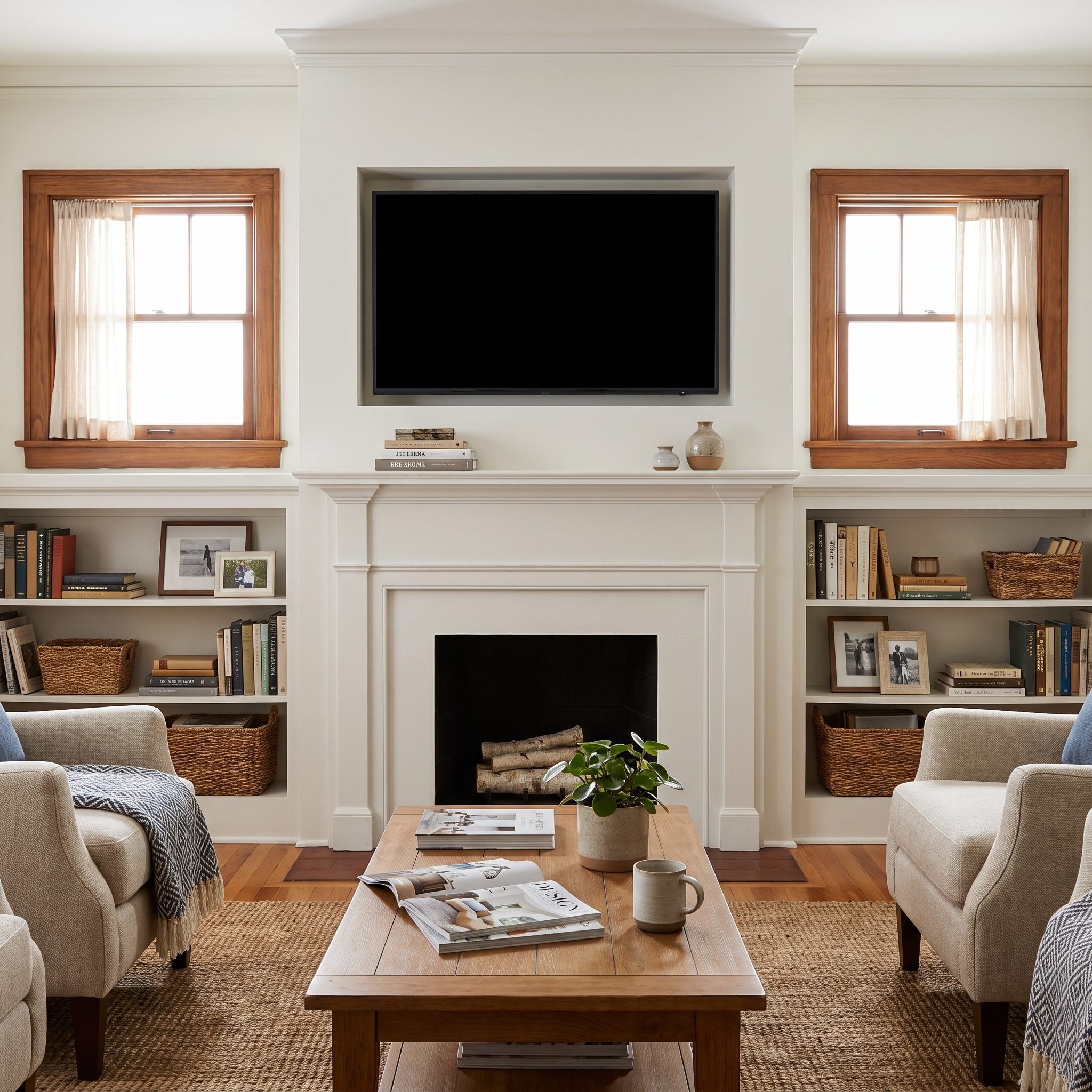
The television has nowhere to exhale. Windows squeeze from both sides, crown molding presses from above, and the fireplace claims the territory underneath.
The issue is not that any individual element is wrong. The wall already contains plenty of structure before the television arrives. Add another strong rectangle and a normal-size screen suddenly looks oversized because the negative space has vanished.
15. The TV Competing With Built-Ins on Either Side of the Fireplace
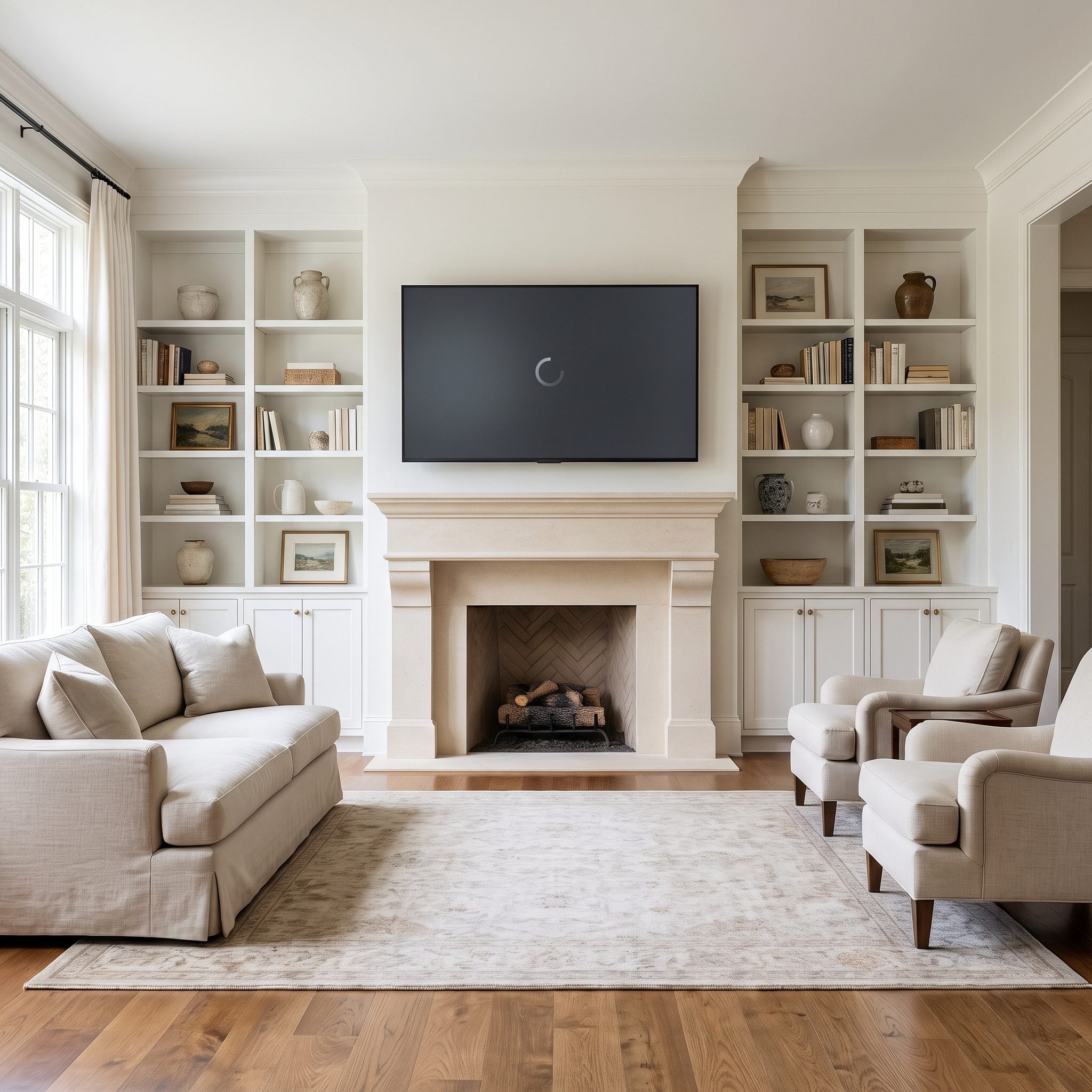
Books arranged by color, brass sculpture, a pair of pleated ivory lamps — somebody gave those built-ins plenty of attention. Then the television arrived and became the loudest object on the wall.
That is what black screens do particularly well when elevated and centered: they pull focus. The navy velvet sofa and kilim runner hold their own below, but the shelving becomes supporting cast around a screen that was never supposed to be decorative.
14. The Cords and Components With Nowhere Elegant to Go
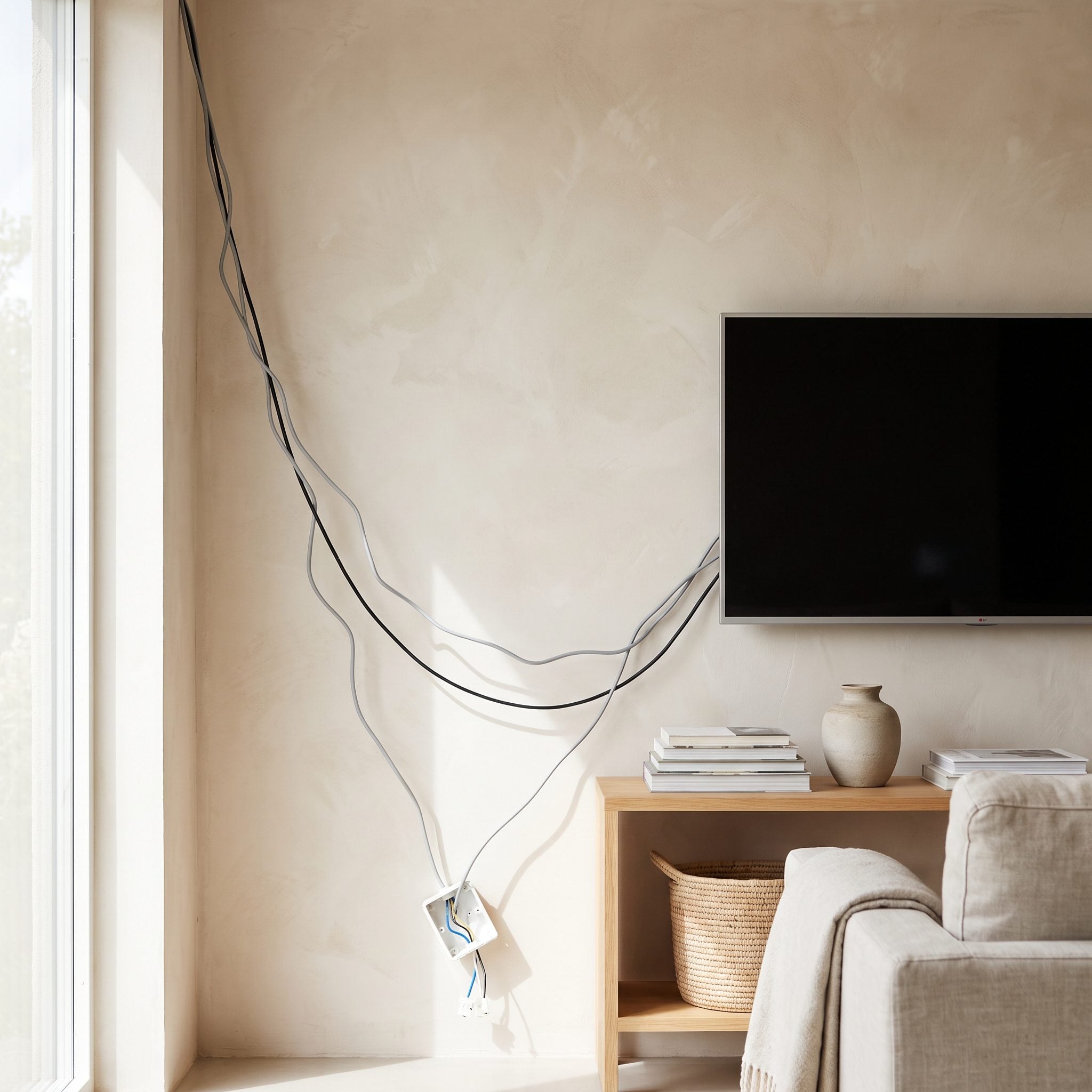
The rendering showed a television floating serenely above the mantel. Real life brought cables, power, streaming hardware, adapters, and the mysterious little box nobody remembers buying but nobody is allowed to unplug.
A fireplace occupies the exact territory where a conventional media cabinet would normally solve those problems. With no cabinet directly beneath the screen, equipment gets pushed sideways, onto a shelf, or toward the hearth.
13. The Soundbar Squeezed Between the Mantel and Television
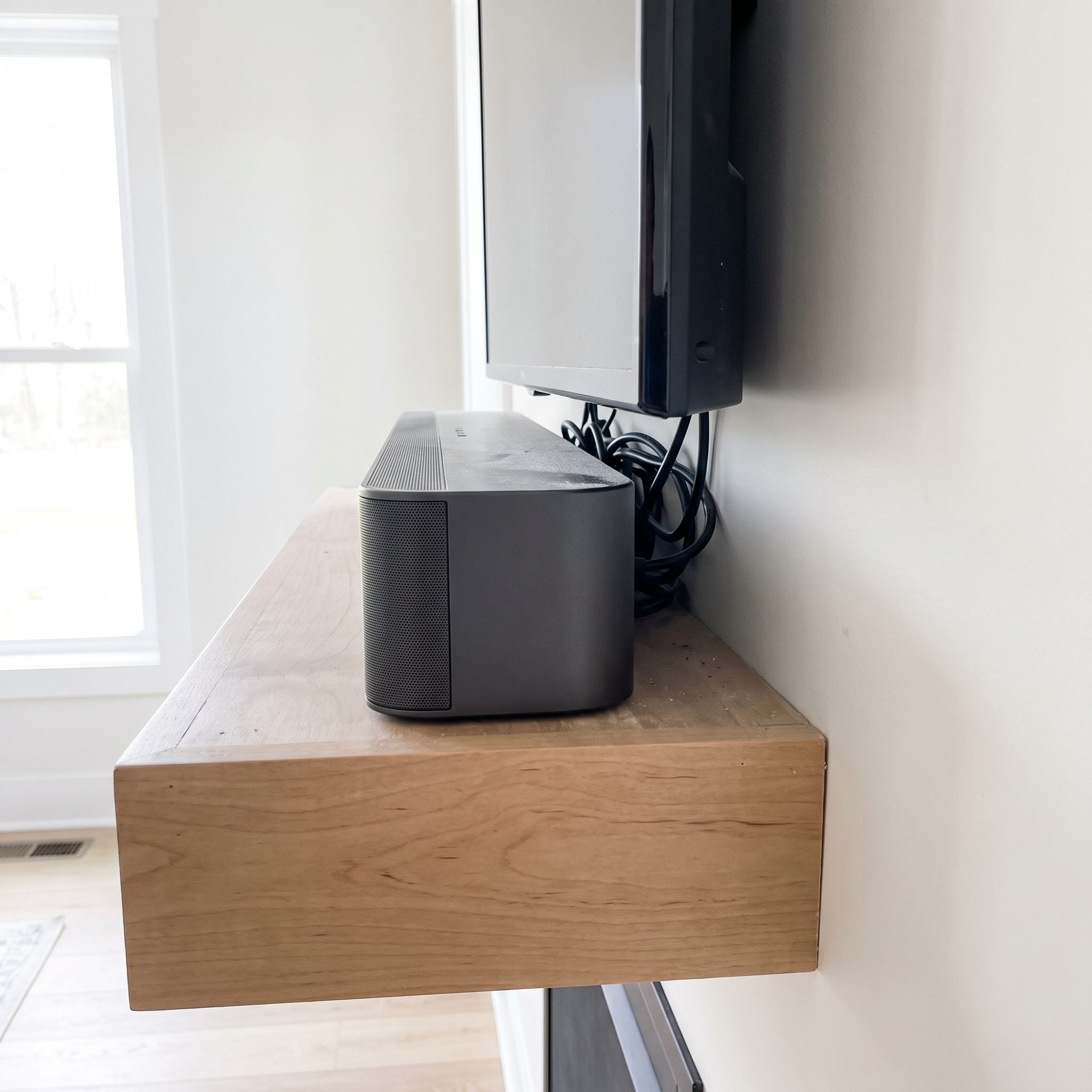
Then the soundbar joins the negotiations.
It lands on the mantel or hangs directly beneath the television, consuming another strip of already scarce wall. The mantel loses its decorative role, the screen gains another piece of visible hardware, and the installation starts looking more like an equipment rack.
The sage green sofa and Persian rug keep the room grounded. Above them, technology has annexed the ledge.
12. The TV on a Low Media Console Beside the Fireplace Instead
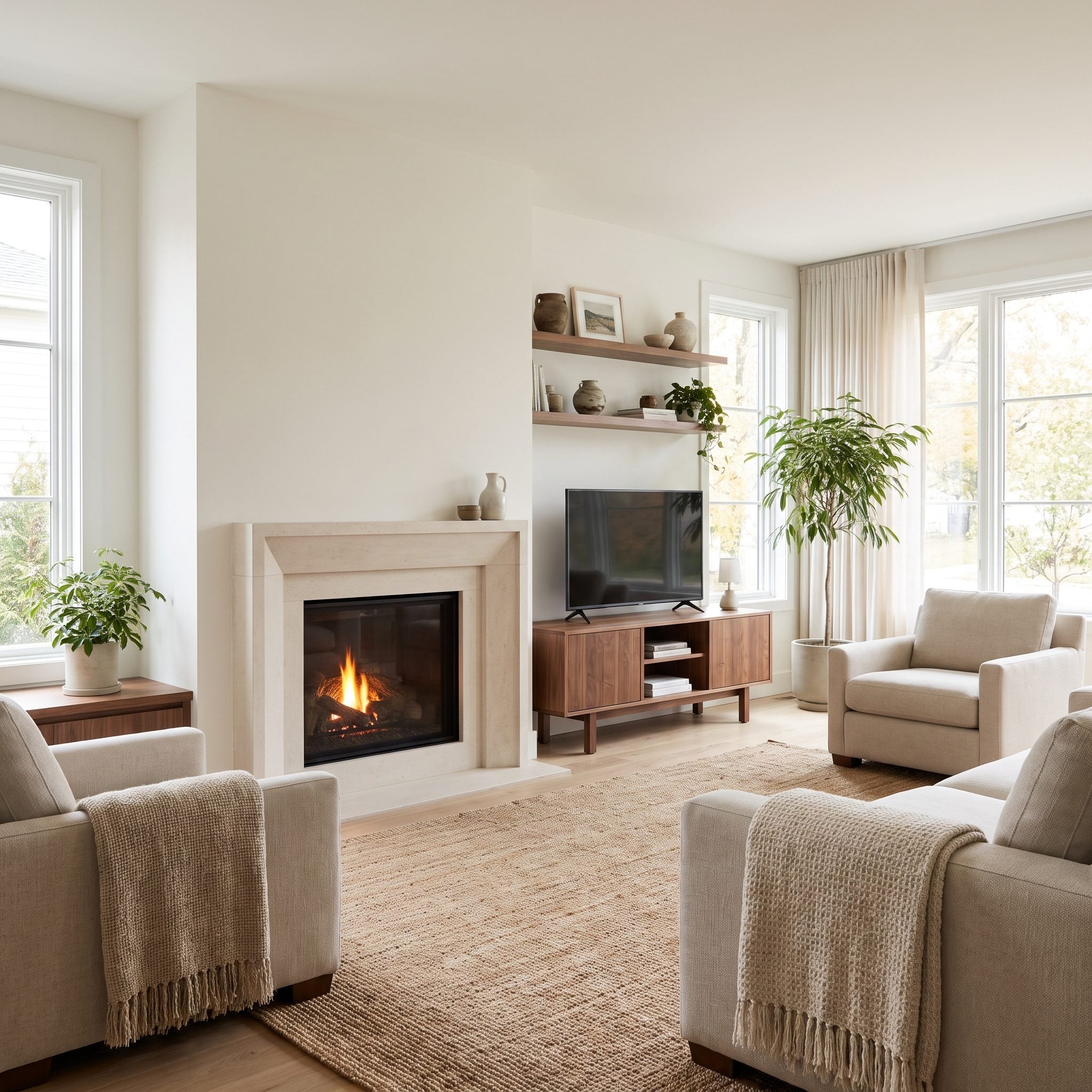
Now the room stops fighting back.
The fireplace keeps its wall presence while the television drops onto a walnut console beside it, much closer to the height at which people actually watch. Nothing needs to tower over anything else.
The console also earns its floor space. Doors and baskets swallow components, chargers, controllers, and cables while the linen slipcovered sofa and rattan chair face a wall that finally understands division of labor.
11. The TV on the Opposite Wall at a Comfortable Viewing Height
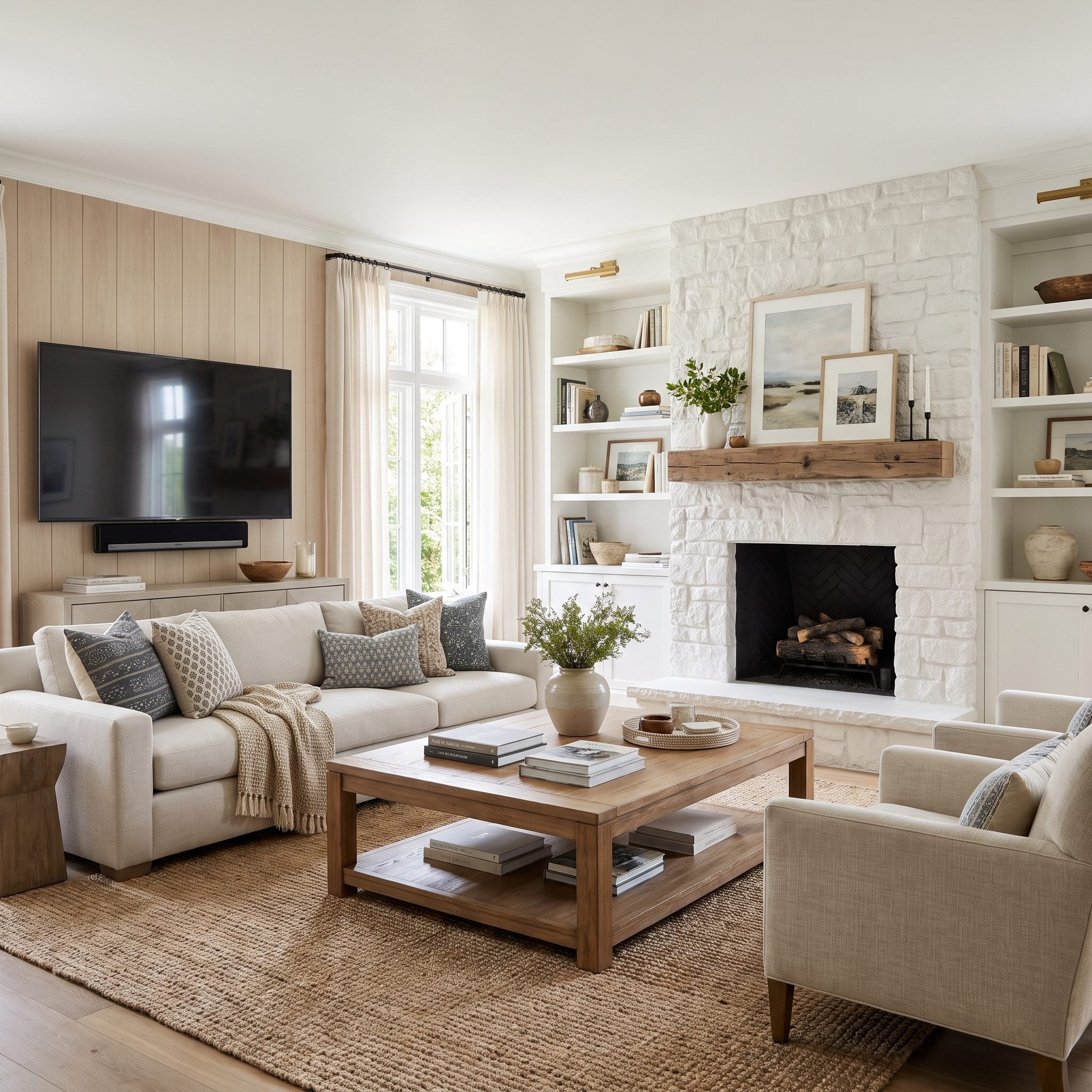
Sometimes the radical solution is simply using another wall.
The television settles over a teak credenza at a comfortable seated height while the fireplace remains intact elsewhere in the room. Neither object has to become subordinate decoration for the other.
The sofa can face the screen when television is the point and still participate in the fireplace zone when people gather. Two focal points are not a problem when they are allowed to occupy two places.
The best TV wall is usually the one that works with the seating, not automatically the one containing the fireplace.
10. The Fireplace Kept as the Focal Point While the TV Moves to a Secondary Wall
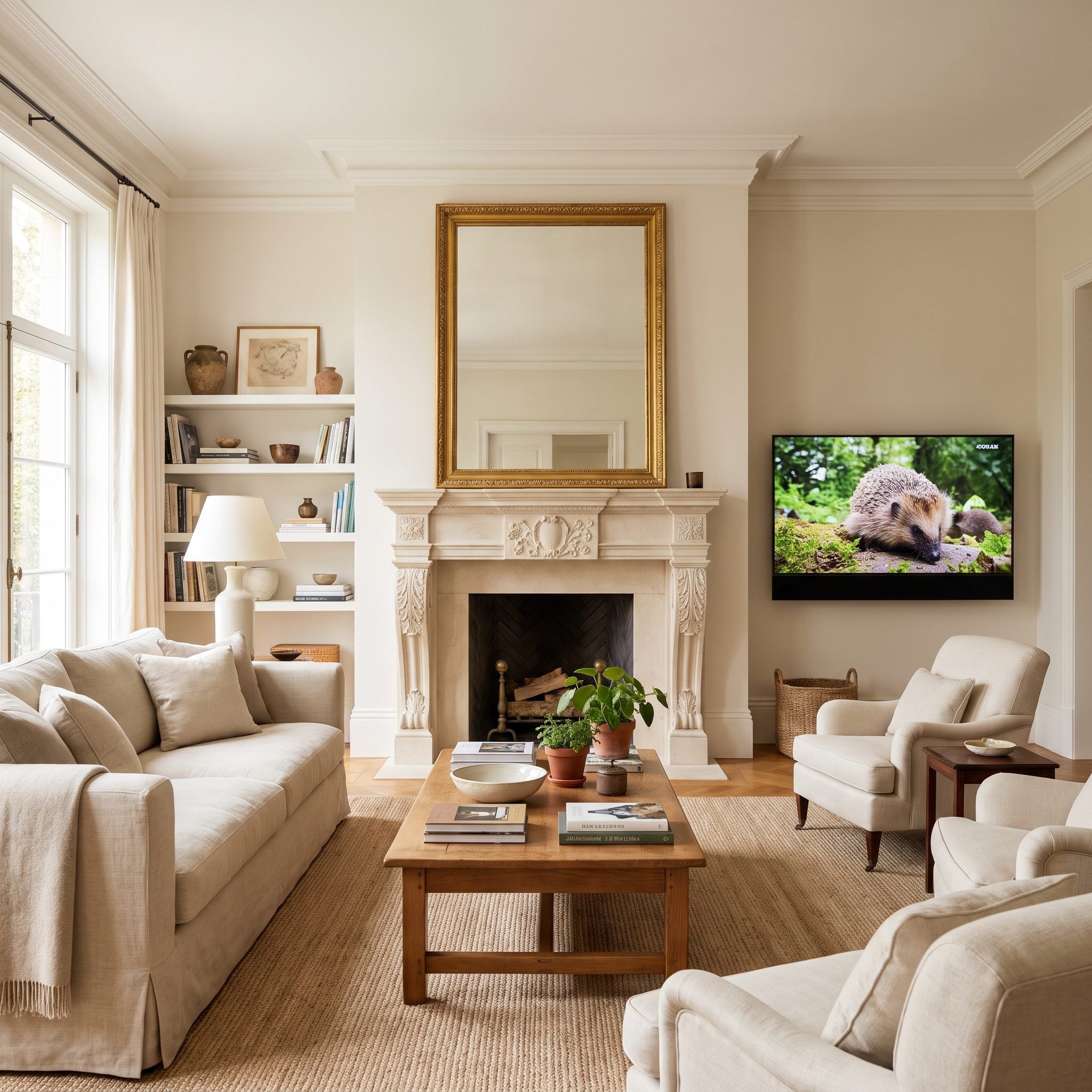
Some fireplaces are simply too good to bury. This carved limestone surround with a gilt mirror already has more visual authority than most televisions could ever muster.
So the screen takes a secondary position on a slim console in the adjoining nook. The cognac chesterfield can orient toward the fire while a leather club chair catches the television when needed.
Nothing disappears. Nothing has to win. The architecture simply gets first billing.
9. The Side-by-Side Fireplace and TV Layout That Gives Each One Breathing Room
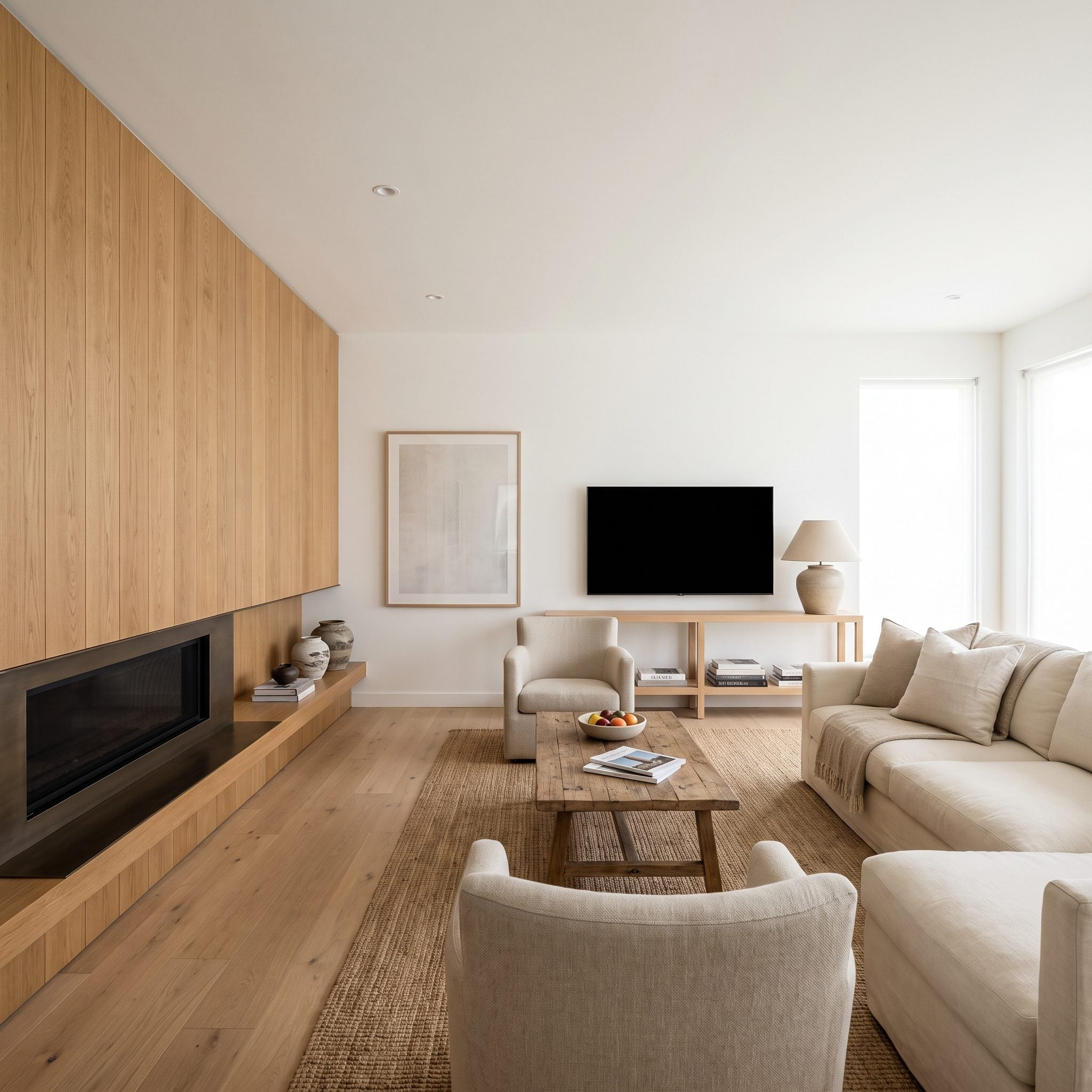
If they absolutely must share a wall, stop stacking them.
A linear fireplace occupies the warm wood paneling on one side while the television sits above a walnut console on the other. A clean strip of wall between them turns two competing rectangles into separate zones.
The greige modular sofa can address both without forcing anyone to stare upward. A brass arc lamp bridges the composition overhead without pretending the two functions are one.
Same wall. Different jobs. Much better manners.
8. The TV Built Into Cabinetry Beside the Fireplace
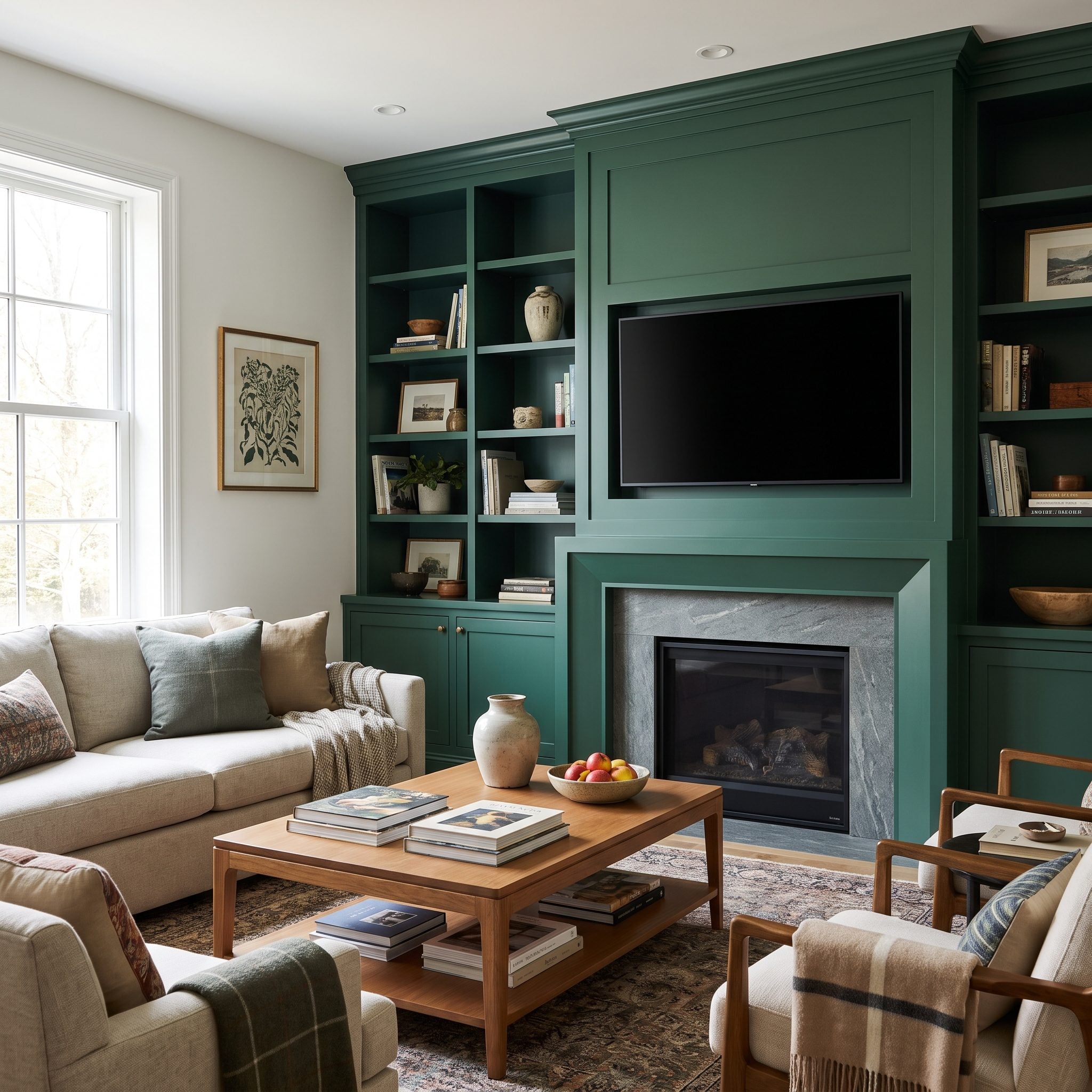
This is how you make a television quieter without pretending it does not exist.
Recessed into deep green cabinetry beside the marble fireplace, the screen becomes one element inside a larger composition. Closed lower doors hide components. Open shelves bring books and objects into the picture. The television no longer has to carry an entire wall by itself.
Those forest green cabinet fronts with brass hardware have enough character to keep the screen in its place, while the curved bouclé sofa faces something that looks designed rather than merely installed.
Our readers are firmly on board with this approach: 85% said yes to built-ins around the TV when we asked.
7. The Corner TV Arrangement That Works Better Than Expected
🔥 Would you like to save this?
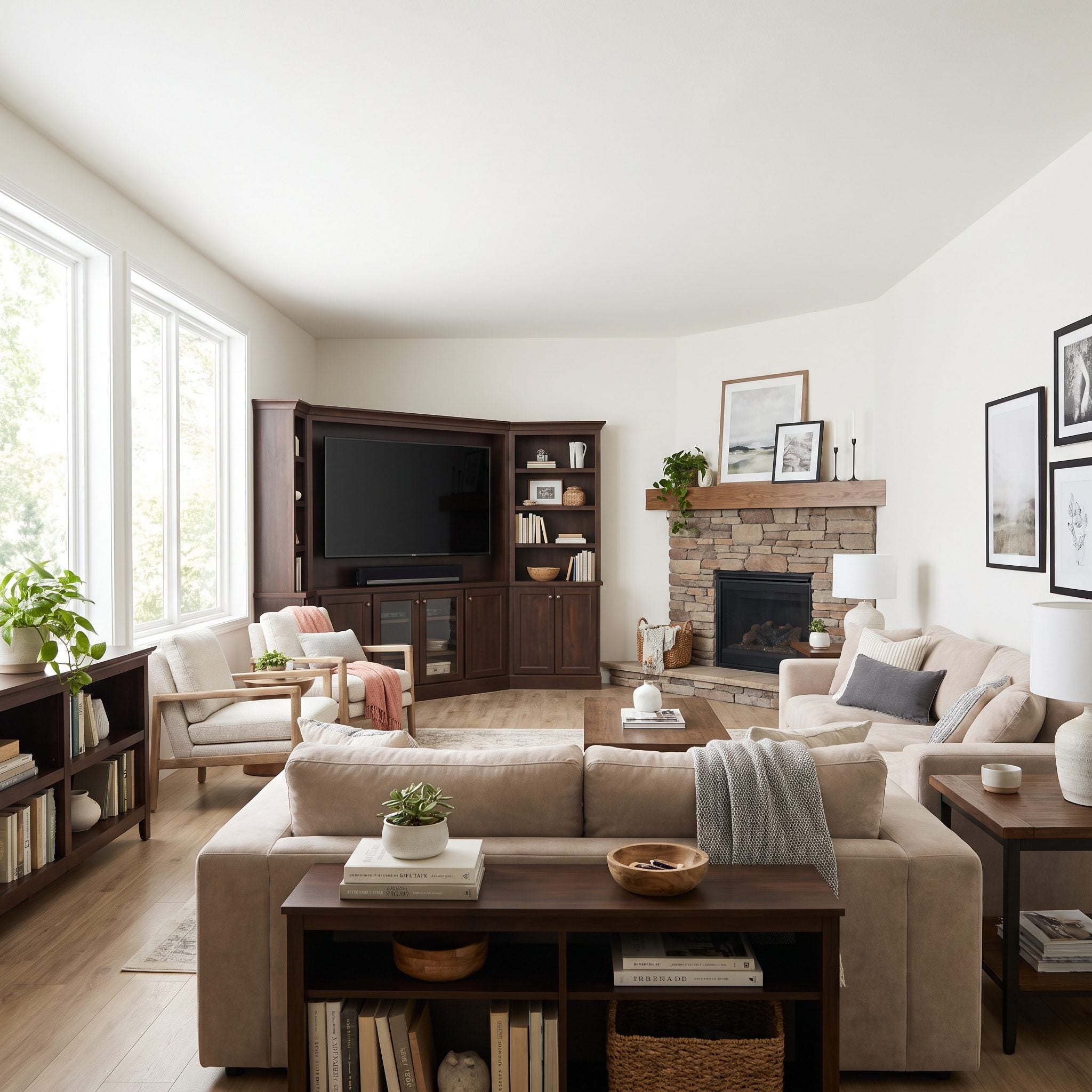
Corners get blamed for plenty of bad television layouts. Sometimes they are exactly what saves one.
Angle a low console across the corner and the screen can address the seating group without occupying the fireplace wall at all. The cream bouclé curved sofa helps enormously here, wrapping the viewing area instead of forcing the room into a rigid front-facing line.
Meanwhile the whitewashed brick finally gets to be texture rather than mounting hardware.
6. The Low Media Wall That Lets the Fireplace Remain Architectural
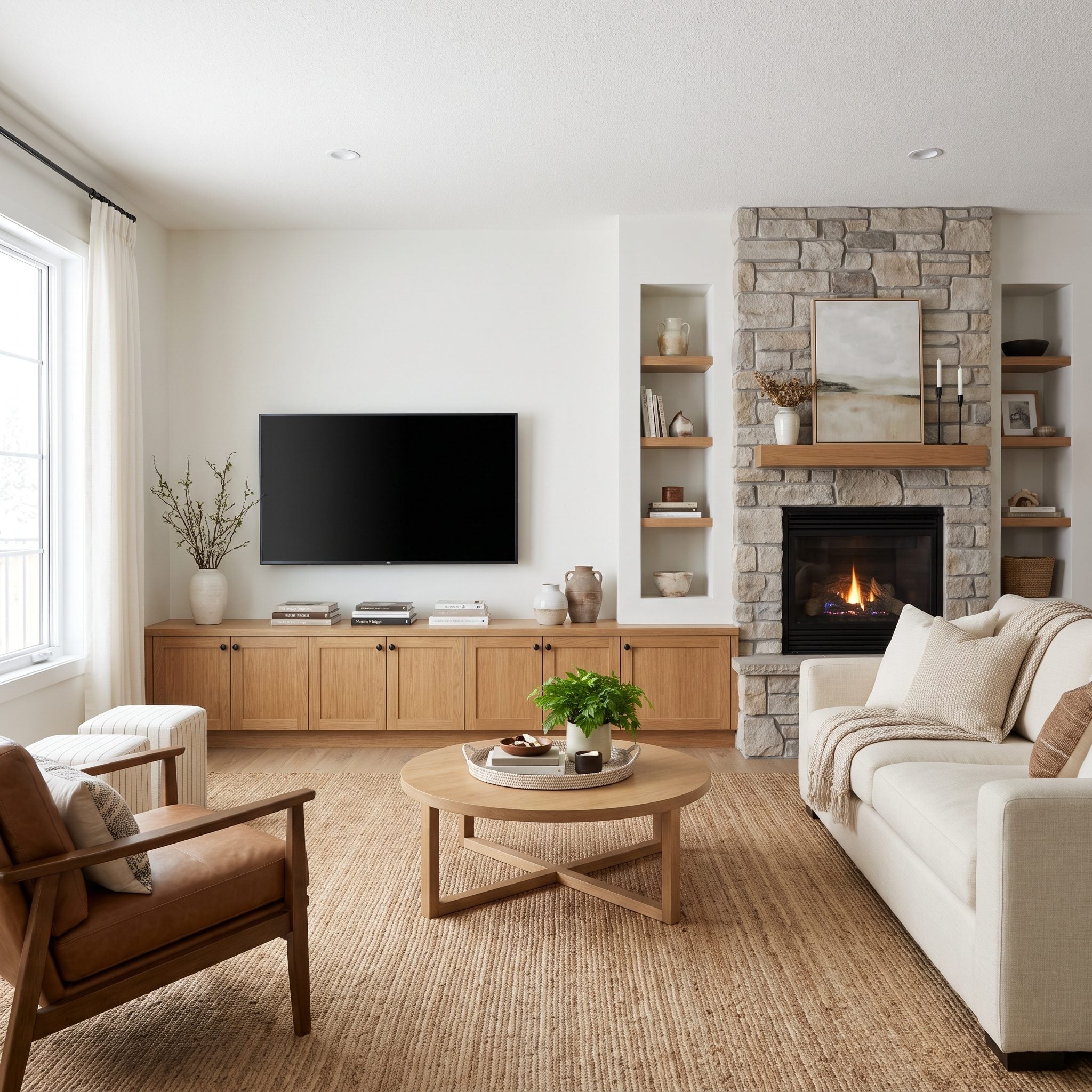
This room treats the television as furniture rather than a monument.
The screen sits low over an oak media wall, keeping the setup horizontal and visually grounded. Across the room, the fluted travertine fireplace is free to behave almost like sculpture: vertical grooves, a clean flame line, nothing bolted above it.
The contrast makes the plan feel deliberate. One feature runs low and long. The other rises. Neither is forced to wear the other as a hat.
5. The Furniture Layout With Separate Fireplace and TV Sightlines
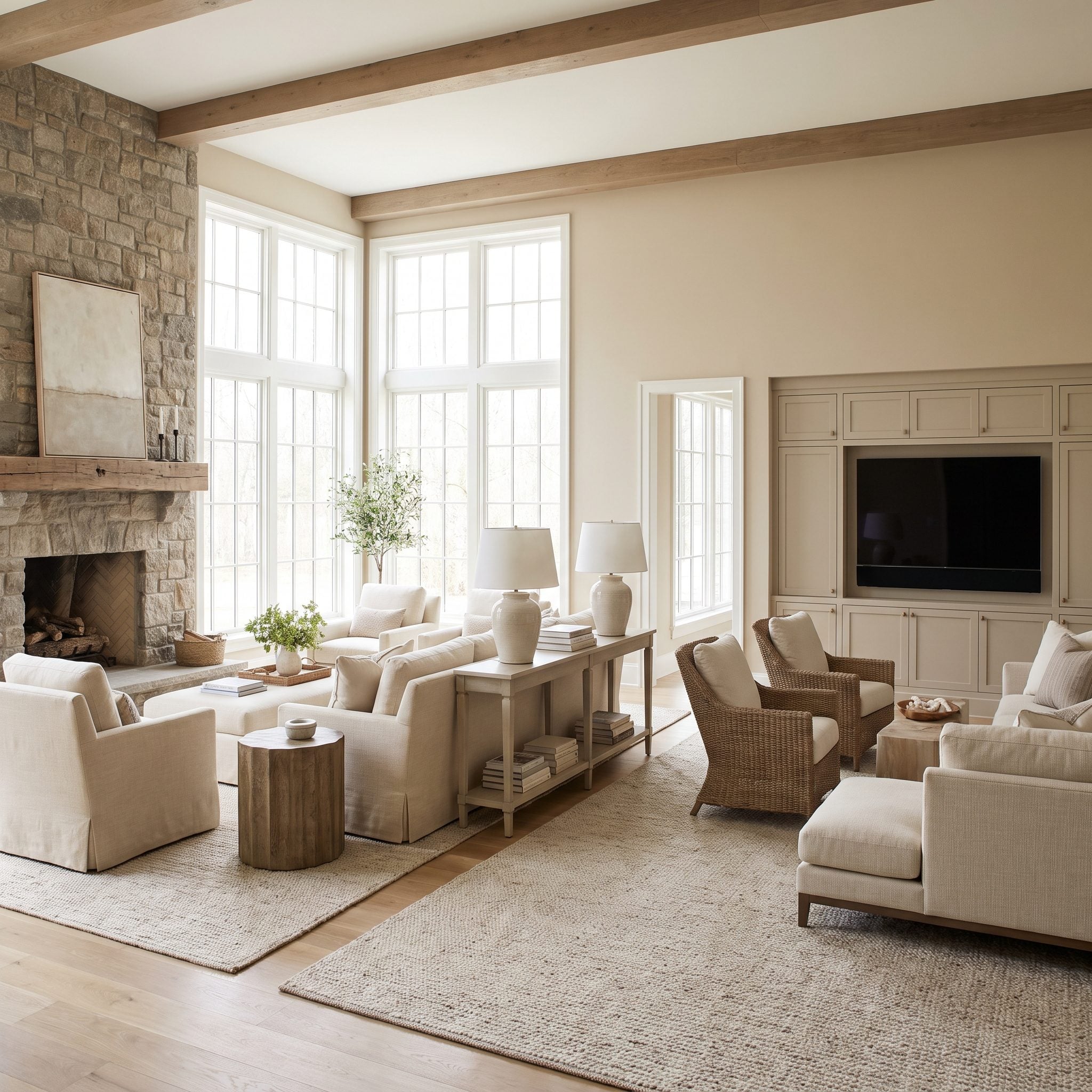
Who decided the fire and the television had to share an axis?
This room gives the hearth its own conversation nook with two teal velvet armchairs, while the sofa addresses a television on the perpendicular wall. One rug links everything, so the zones feel connected rather than chopped into separate rooms.
The clever part is that the seating supports two kinds of use without making either one awkward. Talking happens around the fire. Watching happens toward the screen. Nobody has to pretend those are exactly the same activity.
4. The Fireplace Heat the TV Manufacturer Never Intended It to Handle
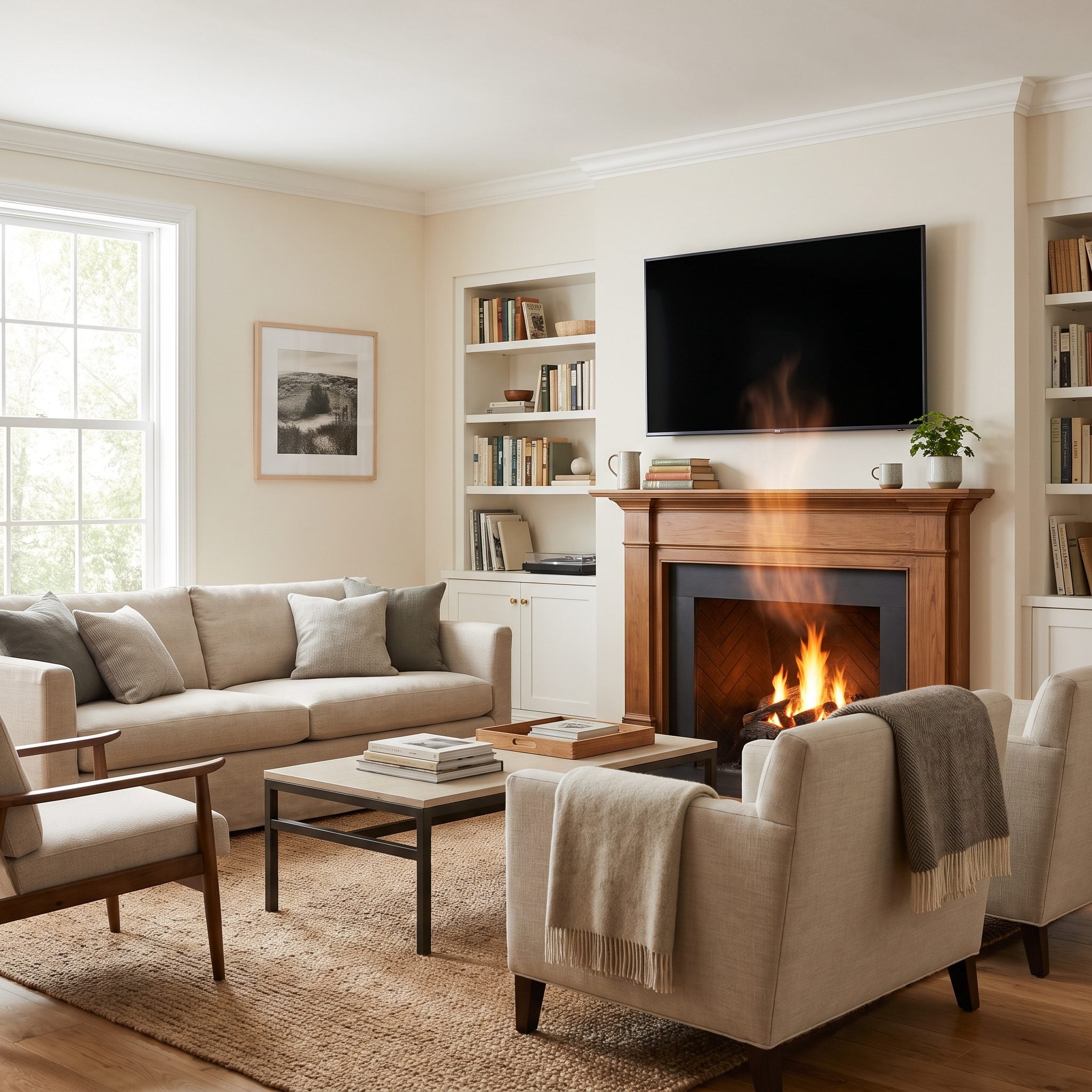
After all the arguments about proportion, sightlines, furniture, stone, shelving, and cords, there is still one objection that does not care what the room looks like: heat.
A working fireplace sends hot air and radiant heat into the room, and a television mounted directly above it may end up sitting in a much harsher environment than the same screen on an ordinary wall. This terracotta brick room is exactly the sort of place where you would want to use the fireplace properly — cold night, brown leather sofa, knit throw, fire going strong — which is precisely why the installation requirements matter.
This is not the place for guesswork. Check both the television manufacturer’s guidance and the fireplace manufacturer’s specifications before deciding where the screen can safely live. The most beautifully composed wall in the house is not improved by cooking the electronics on it.
The fireplace already has a demanding job. It doesn’t need to double as a television stand.
3. The Pull-Down TV Mount That Lowers the Screen for Viewing
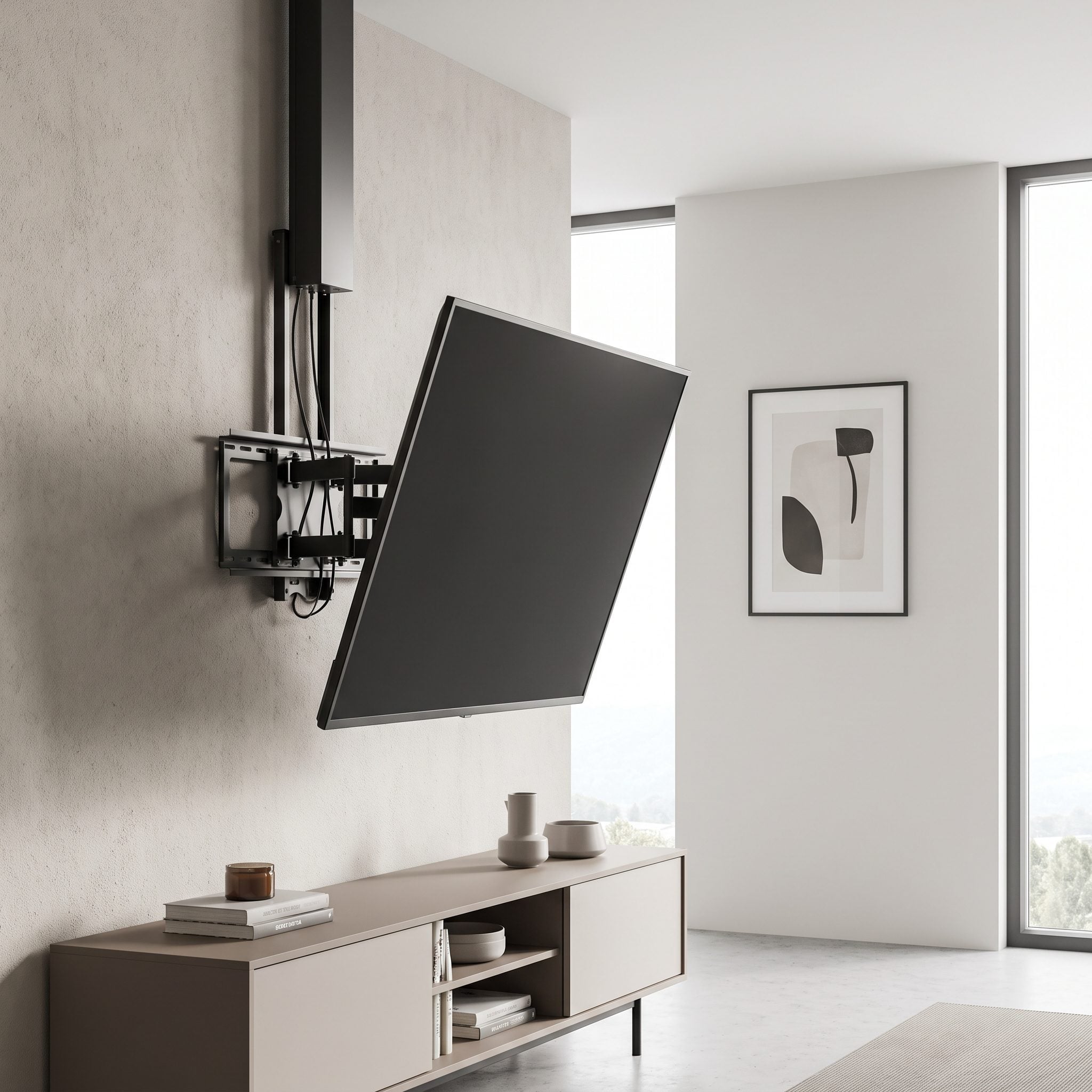
When the architecture refuses to negotiate, hardware sometimes will.
A pull-down mount keeps the television higher on the wall when parked, then lowers and tilts the screen toward the seating for viewing. That can dramatically improve the angle without rebuilding the fireplace wall.
It does not erase fireplace-clearance requirements, however. The mount solves position; the fireplace and television manufacturers still determine whether the installation is appropriate around heat. Think of this as a compromise with moving parts, not diplomatic immunity.
2. The Room Where Skipping the TV Above the Fireplace Creates Space for Real Art
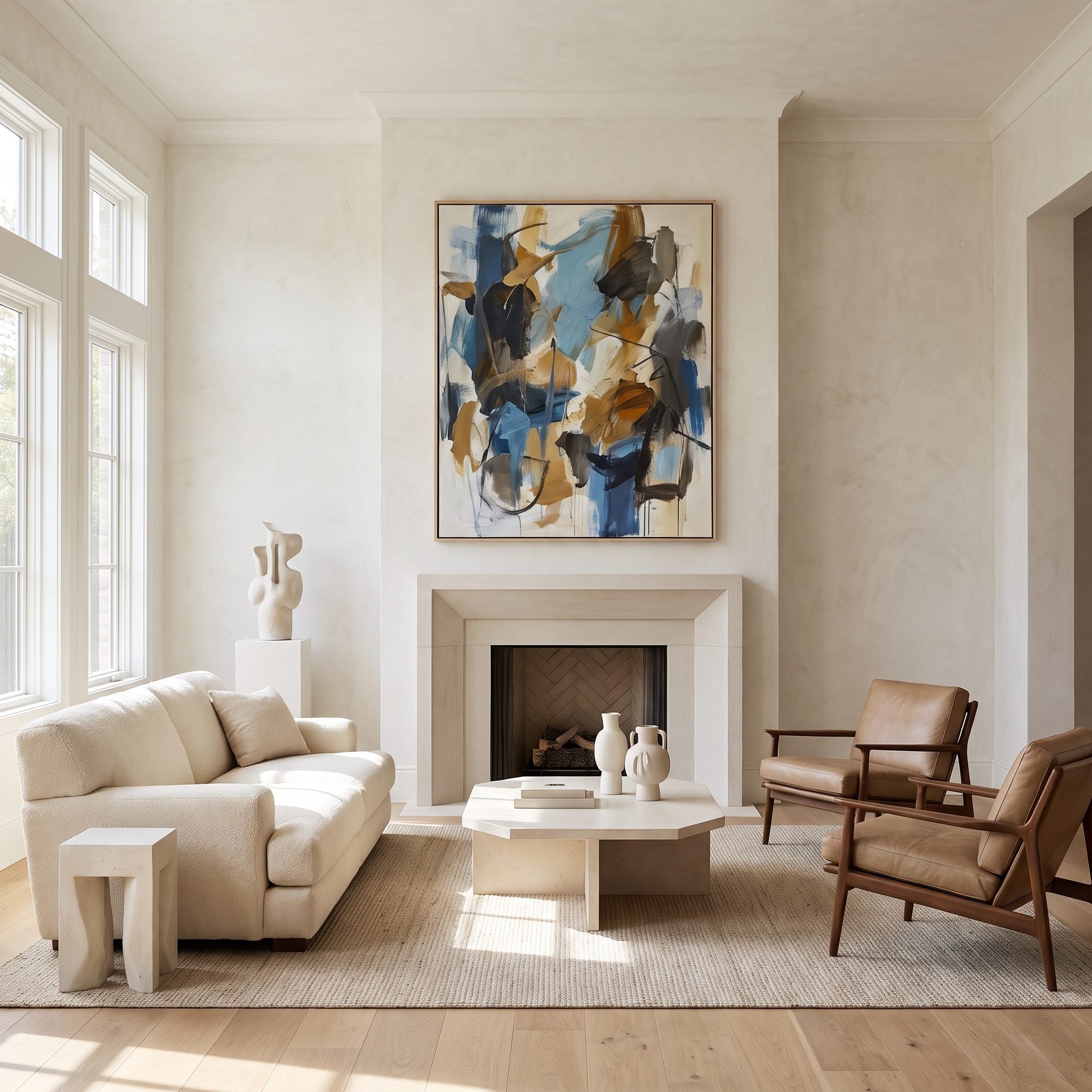
Then there is the thing that used to go over fireplaces before every wall needed an HDMI strategy: art.
A large abstract in ochre and deep blue takes the prime position here, giving the room color, depth, and something worth looking at even when nobody is streaming anything. The moss green velvet sofa and caramel leather club chairs form a proper circle around the hearth rather than an audience facing a machine.
The confidence can travel. Carry that same saturated approach into a green dining room nearby and the house starts feeling composed as a whole rather than arranged around screens.
When we asked readers what they would hang on a big empty wall, one large piece won with 53% of votes, well ahead of a gallery wall or mirror.
1. The Living Room Where the Fireplace Finally Looks Like a Fireplace Again
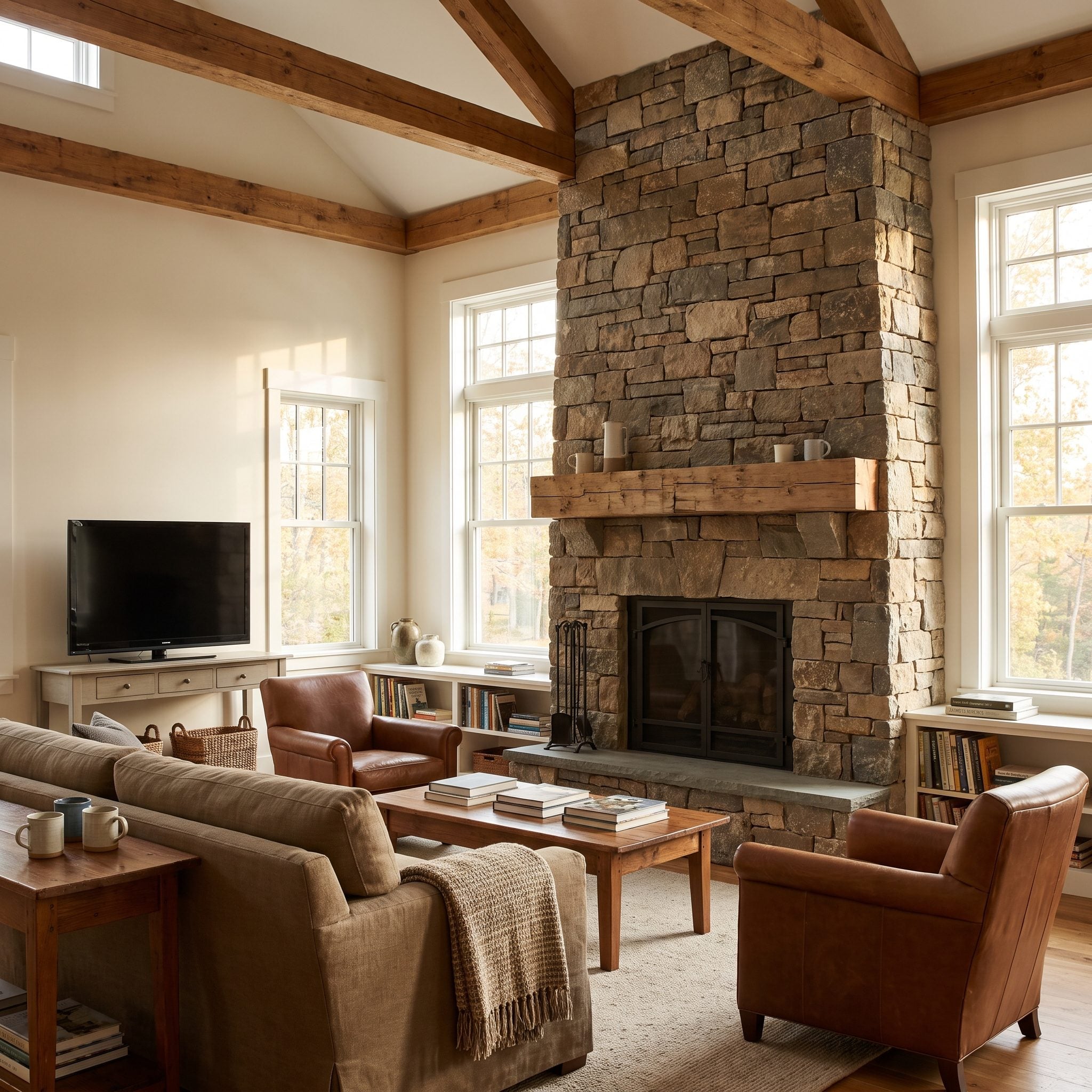
This is what all that restraint was protecting. Floor-to-ceiling stacked stone climbs into the beams. A chunky reclaimed timber mantel crosses it once. Two forged-iron sconces provide the only interruption. The fireplace is the hero, and for once nobody has asked it to share billing with Netflix.
Two cream sofas face each other perpendicular to the hearth, giving people a reason to look across the room rather than all in the same direction. Firelight gets the stone. Conversation gets the seating. The architecture gets to finish the sentence it started.
Look at the stone continuing all the way to the ceiling without a black rectangle stopping it halfway. There is the argument. Leave the fireplace alone. Put the television somewhere your neck, your furniture, and your mantel will all thank you for.