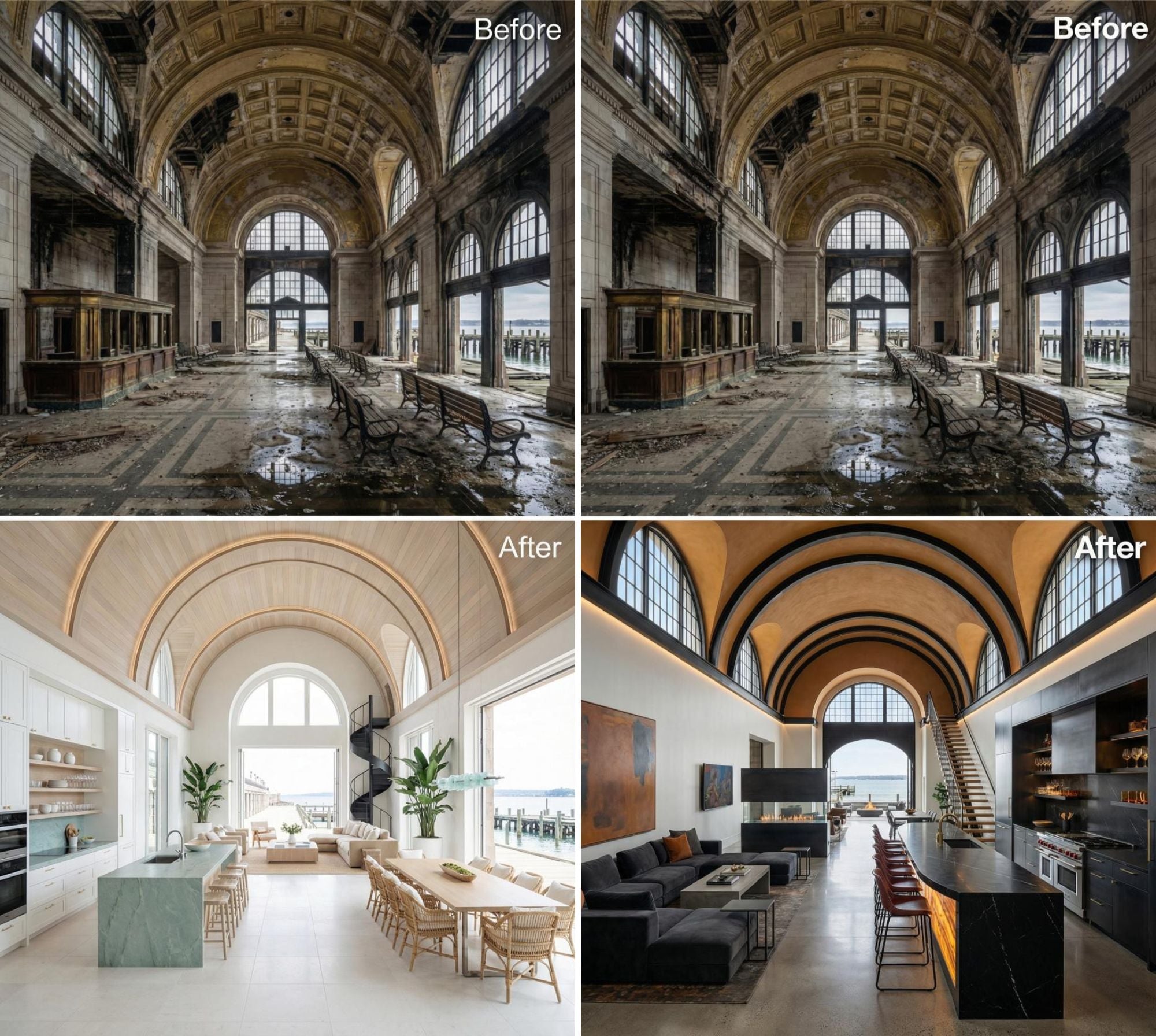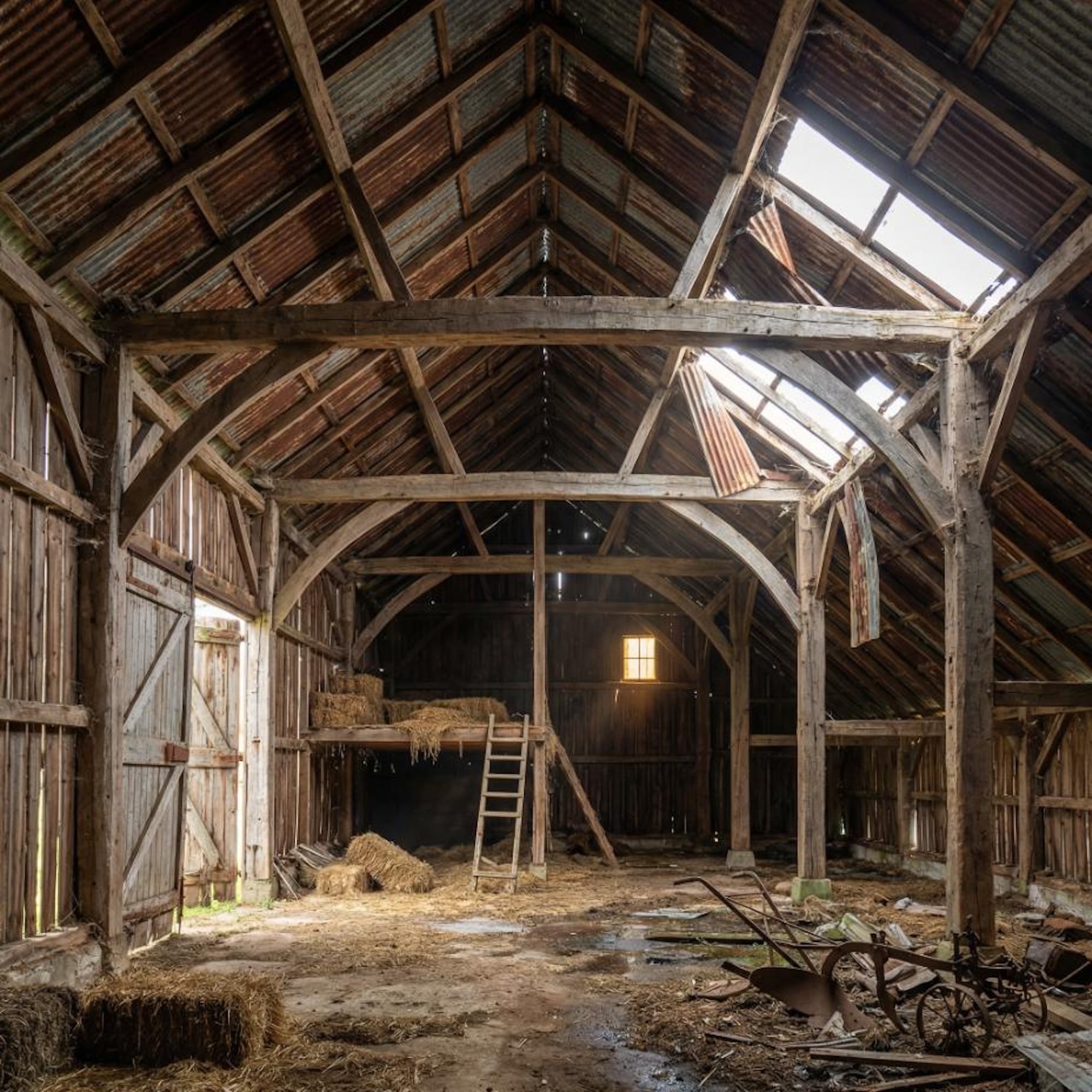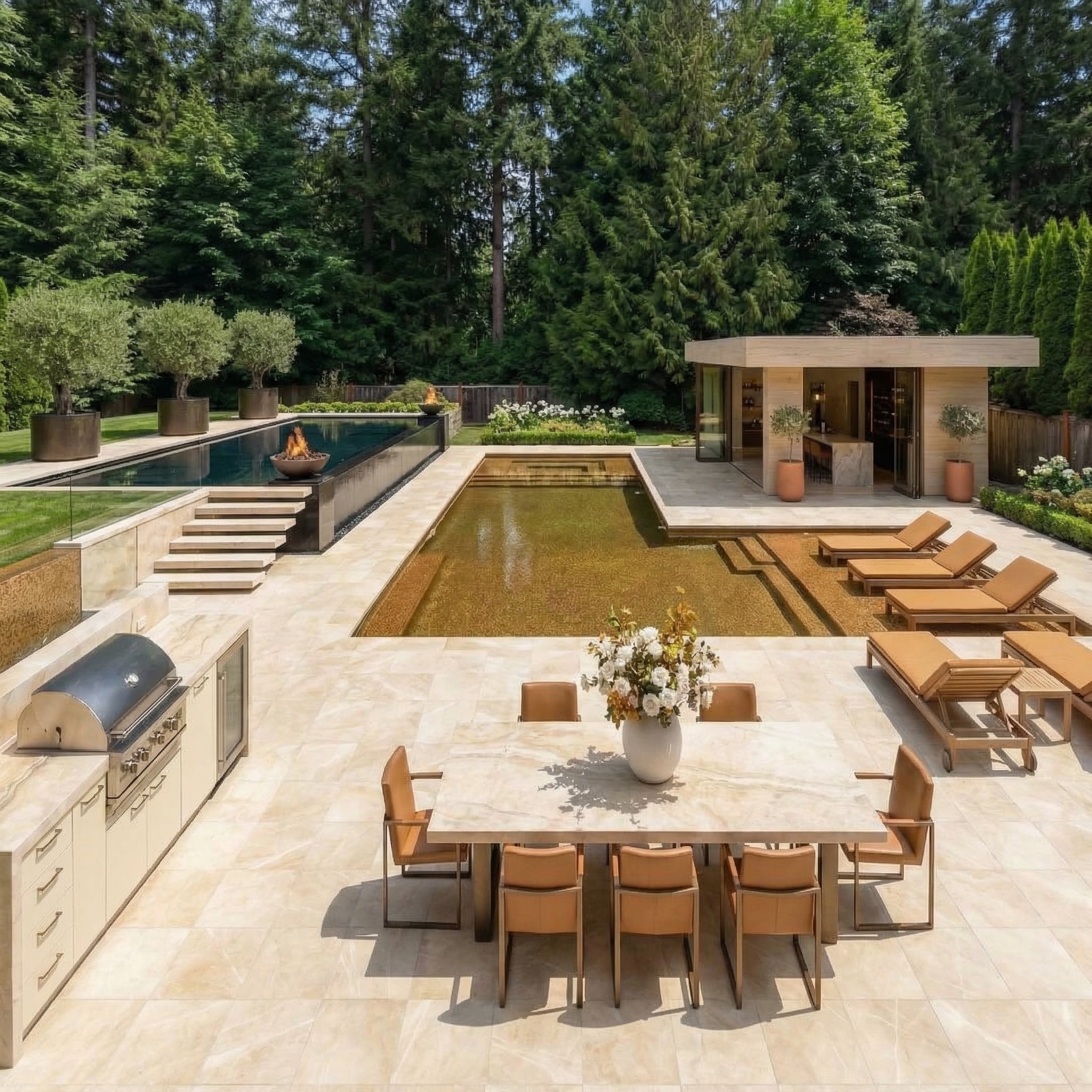
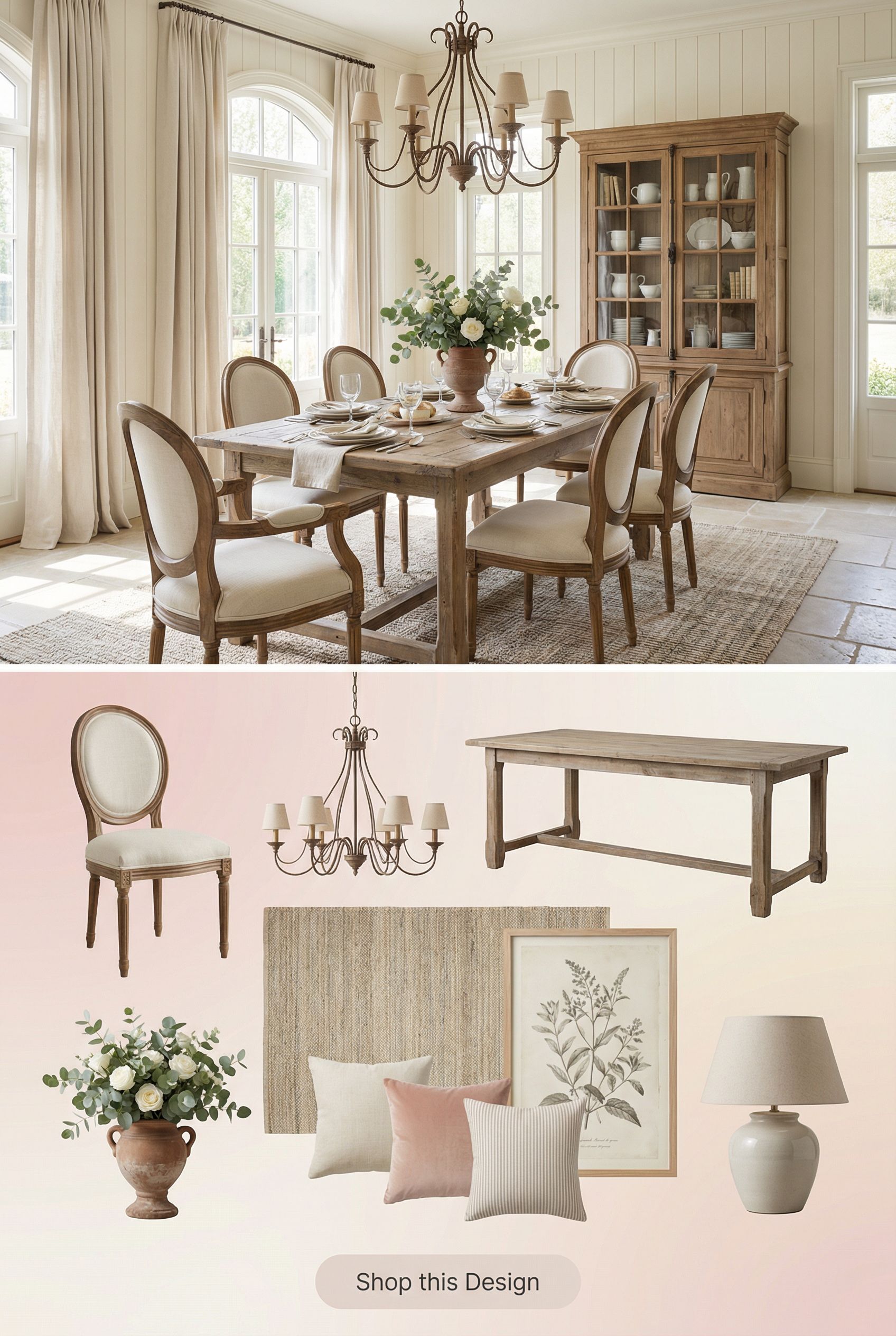
Embodying “Château Simplicity,” this luminous space proves that drama can be achieved through restraint and perfect proportions. Floor-to-ceiling vertical shiplap in crisp white creates clean architectural lines that draw the eye upward, while a long farmhouse dining table in natural oak stretches generously through the center. Mixed seating includes a backless linen-upholstered bench on one side and four cane-back dining chairs opposite, all in natural oak frames. The palette maintains purity with crisp white walls, natural linen in oatmeal tones, raw oak finishes, and matte black iron accents. A simple black iron chandelier with Edison bulbs hangs above. Flowing floor-length linen curtains in natural beige frame tall windows. Accessories feature potted olive trees in tall ceramic urns, white ceramic serving platters, black iron candlesticks, linen napkins with frayed edges, a wooden dough bowl centerpiece, vintage French books, and simple glass water carafes. Scroll down to shop this look.
In order to come up with the very specific design ideas, we create most designs with the assistance of state-of-the-art AI interior design software. Also, assume links that take you off the site are affiliate links such as links to Amazon. this means we may earn a commission if you buy something.
1. French Country Dining Chair
The rounded cane back creates what I call “conversational architecture”—a gentle curve that psychologically invites lingering dinner discussions. Natural distressed wood paired with cream upholstery strikes that elusive balance between formality and farmhouse ease, transforming dining spaces into gathering sanctuaries where guests instinctively relax.
2. Farmhouse Trestle Dining Table
Trestle construction isn’t merely structural—it’s spatial psychology at work, eliminating corner legs that create subconscious barriers between diners. This light wood finish embodies what I term “approachable elegance,” substantial enough to anchor your dining room yet warm enough to welcome weeknight homework sessions and weekend brunch gatherings alike.
3. Wagon Wheel Chandelier
Industrial romance meets rustic charm in this statement piece that demonstrates my “candlelit contrast” principle—fabric shades soften the iron’s edge while golden tones add unexpected glamour. Oversized proportions command attention without overwhelming, creating a focal point that draws eyes upward and makes standard-height ceilings feel remarkably more generous.
4. Natural Jute Area Rug
Hand-woven jute introduces tactile grounding—literally anchoring furniture while psychologically connecting interiors to earth elements. This natural fiber exemplifies “textural minimalism,” my philosophy that pattern-free foundations allow decorative layers above to shine. The warm beige undertone prevents the starkness that sisal sometimes creates, offering organic sophistication underfoot.
5. Botanical Wall Art
Vintage botanical prints tap into biophilic design principles, satisfying our innate craving for nature indoors. The light wood frame creates what I call “breathing room”—visual space between art and wall that prevents heaviness. This verdant landscape offers calming green tones that scientifically lower cortisol, transforming blank walls into wellness tools.
6. Ceramic Table Lamp
Greyish-brown ceramic grounds spaces with earthy authenticity while the tapered linen shade diffuses light in that coveted warm glow I describe as “ambient embrace.” Table lamps create intimate lighting zones essential for layered illumination—my cardinal rule for spaces that feel professionally designed yet personally inviting throughout evening hours.
7. Terracotta Decorative Vase
Wide-mouth urns with classical handles embody “curated imperfection”—intentionally aged finishes that suggest history and soul. Terracotta’s porous texture and warm undertones complement both fresh and dried botanicals beautifully. This sculptural piece functions equally well empty as displayed, offering dimensional interest that flat décor simply cannot achieve on shelving or tabletops.
8. Cream Linen Throw Pillow
Burlap-linen blends introduce essential textural variation without color commitment—what I call “neutral layering.” These foundational pillows anchor more decorative cushions, preventing that overly-precious look while adding touchable warmth. The natural fiber’s slight irregularity brings organic authenticity that synthetic fabrics lack, creating approachable comfort on sofas and beds.
9. Blush Velvet Throw Pillow
Dusty rose velvet introduces my “whisper color” concept—hues present enough to register emotionally yet subtle enough to avoid overwhelming. Velvet’s directional pile catches light dynamically, creating visual interest through sheen variation rather than pattern. This soft blush activates warm undertones in neutral schemes, adding dimensional sophistication to monochromatic foundations.
10. Striped Throw Pillow
Classic stripes provide rhythmic visual structure—the graphic element that prevents all-solid pillow arrangements from reading flat. Beige and white colorways offer pattern without busy-ness, exemplifying my “structured serenity” approach. Cotton’s breathability and washability make these practical workhorses that maintain their crisp lines through countless seasonal refreshes and everyday living.