🔥 Would you like to save this?
The smell hits first. Lemon Pledge on a mahogany table, roast beef down the hall, coffee percolating in the kitchen. Grandma’s china is already out, and it’s 4 p.m. on a Sunday in 1980, and the dining room is about to do the thing it was built to do. Forty-five years later, that same room in most houses is a homework station, a laptop dock, or a place the dog naps. What happened in between is a story about how family schedules changed—and how designers scrambled to make the dining room useful again.
25. Sunday Dinner Was a Standing Appointment. Now the Room Sits Empty.
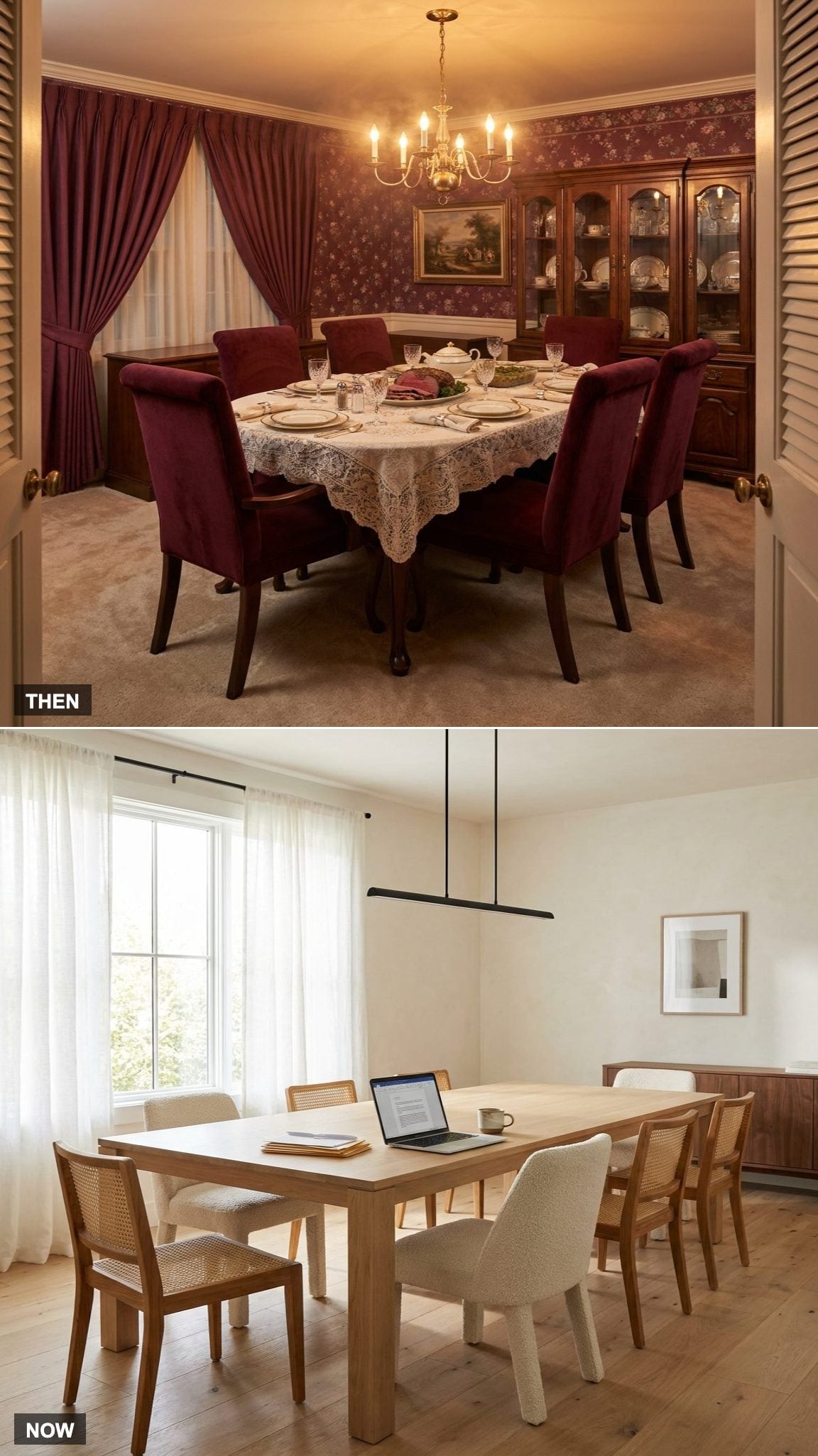
The 1980 dining room had a job, and it showed up for work every Sunday at four. Roast in the oven. Table set the night before. Grandmother’s chair at the head. That room existed for one reason, and everybody in the house knew what it was.
In order to come up with the very specific design ideas, we create most designs with the assistance of state-of-the-art AI interior design software. Also, assume links that take you off the site are affiliate links such as links to Amazon. this means we may earn a commission if you buy something.
Now the same square footage is a drop zone where mail piles up, someone’s laptop lives permanently, and dinner happens in shifts around sports practice and work calls. The chairs get pulled into the living room during movies and never quite make it back. The room did not change because designers wanted it to. It changed because family schedules did.
24. The Heirloom Table Was Built to Outlive the Family
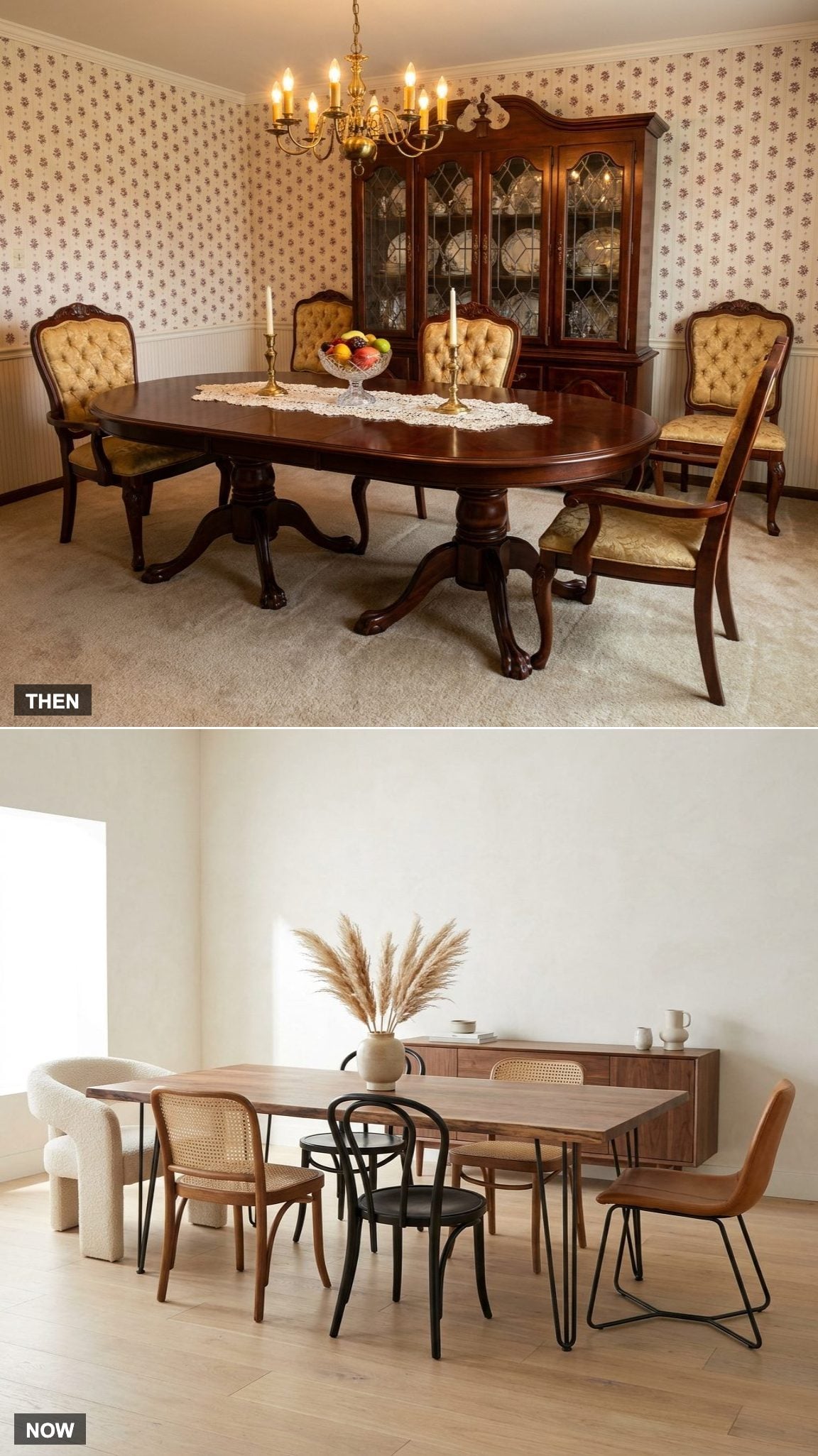
That mahogany set your grandparents bought was going to your mother, then to you, then to your kid. Nobody asked. It was assumed. The wood was heavy and the finish was serious and the whole thing weighed about six hundred pounds on purpose—a piece of furniture engineered to outlive the family that owned it.
The live-edge walnut table that replaced it reflects a different relationship with furniture. Pale oak and lighter finishes make compact rooms feel less crowded, while dark mahogany, walnut, and cherry can dominate when the light is weak. The best quarter-sawn white oak still has real grain and staying power, but it is usually bought for the room people have now rather than for descendants they have not met.
23. The China Cabinet Was a Trophy Case. Open Shelves Confessed Everything.
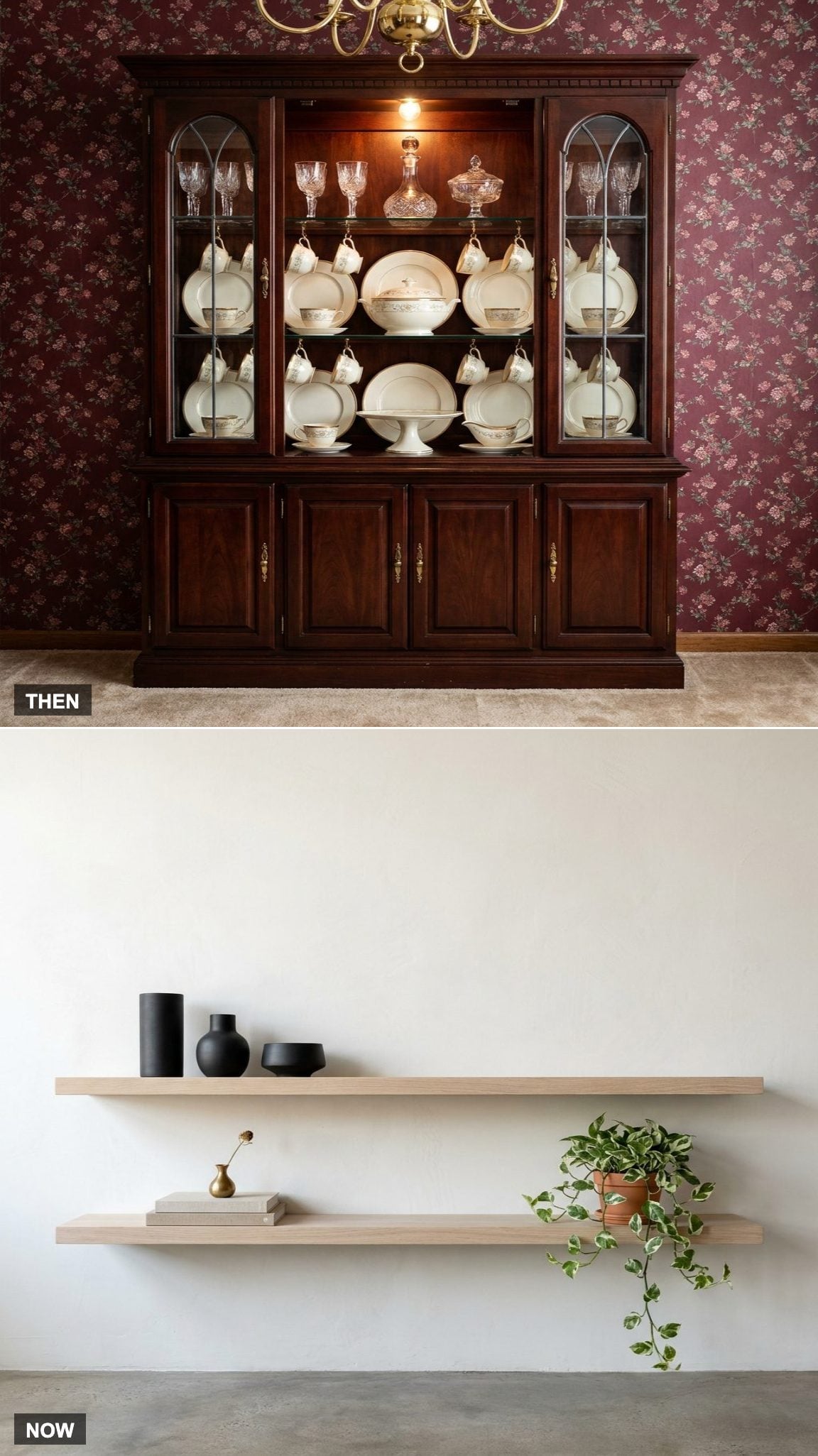
Everything in the china cabinet was a signal. The Lenox meant something, the crystal meant something, and the little Hummel figurines your aunt sent one at a time for Christmas meant something. A stranger could read your entire family from six feet away.
Open shelving and flush cabinetry do not work that way. Three pots and a plant. Maybe a book. Push-to-open doors hide the rest, while a single recessed shelf holds a controlled vignette. Rooms stopped narrating the people who owned them and started performing a mood instead—whether that is an upgrade depends on what you thought the room was for in the first place.
22. Floral Wallpaper Covered Every Wall in the Room
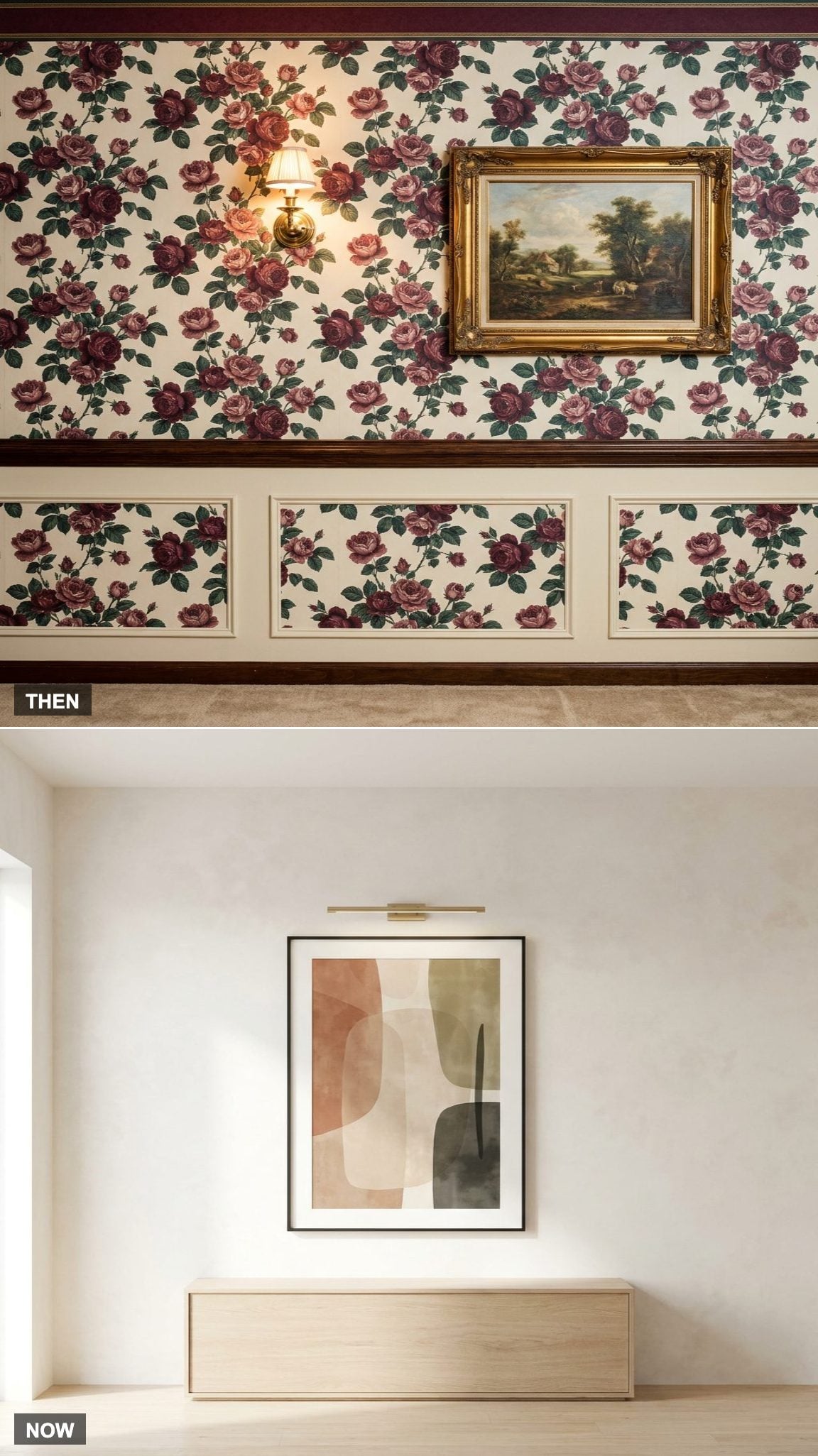
That wallpaper was doing so much. Roses, leaves, a border, a coordinating chair rail, a matching sconce shade—every visual surface earned its keep, and nothing was allowed to be quiet.
Modern dining rooms figured out that quiet is a feature. A warm white limewash gives the room somewhere to breathe. The tradeoff is exposure. With less pattern competing for attention, wall texture and imperfections become easier to see.
21. The Brass Chandelier Crowned the Room With Fake Candles
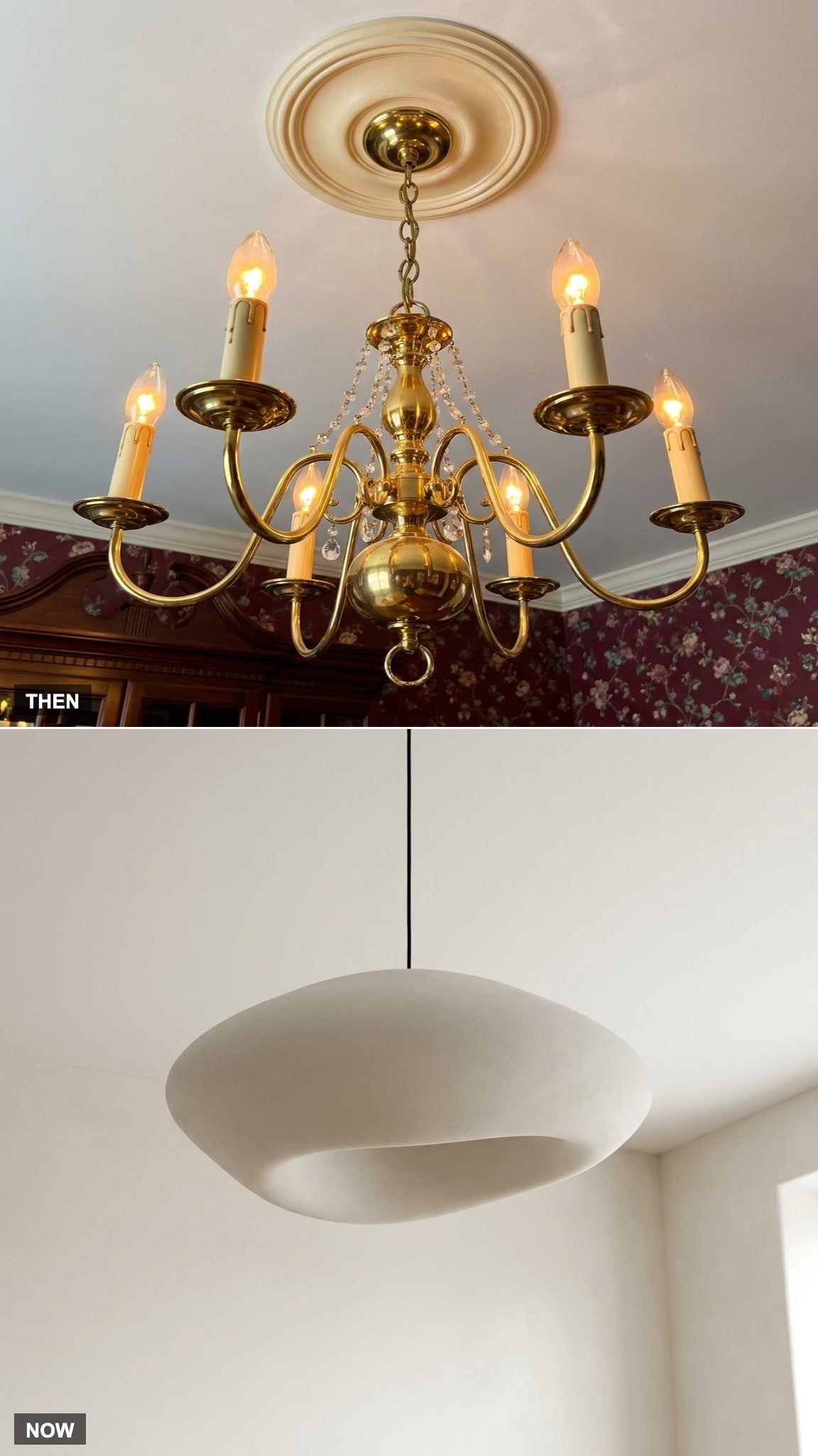
The brass chandelier with the fake candles and fake wax drips crowned the room. Six bulbs, warm amber, slightly dusty, permanently on a dimmer nobody used. It matched the sconces, which matched the drawer pulls, which matched the picture frames, which matched the coordinating napkin ring finish if you looked hard enough.
The sculptural plaster pendant that replaced it doesn’t match anything, on purpose. It’s an object first and a light source second, and the room reorganized itself around that single choice.
20. The Window Wore Three Layers of Wine-Colored Fabric
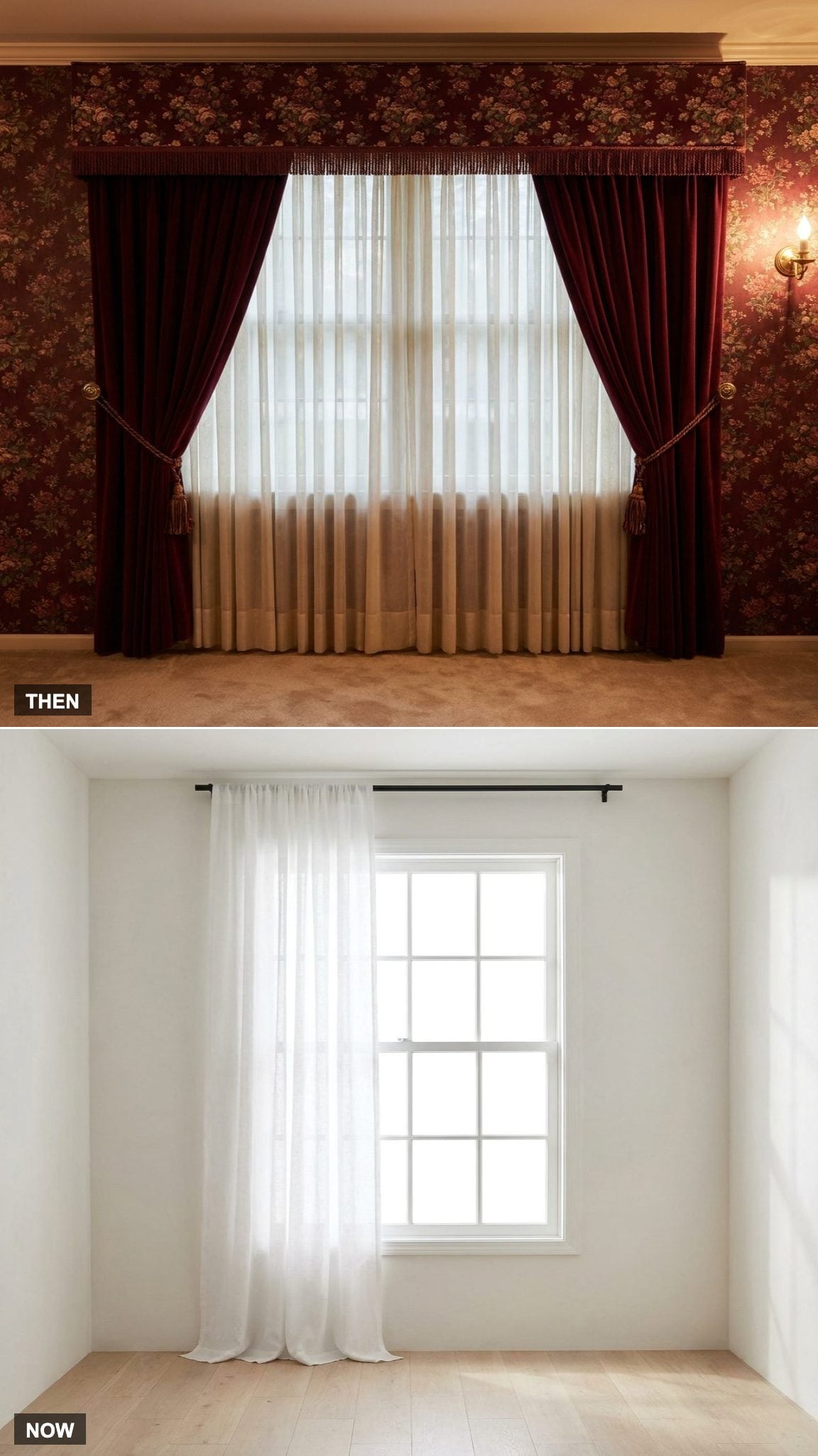
Three layers of fabric, a valance, tassels, and a tieback—the 1980 window was working overtime. Some of that was privacy, some was insulation, most was the honest belief that a window without a valance was a window that hadn’t been finished.
Sheer linen is almost aggressive in its restraint. You see the glass. You see the trees. You see the neighbors, and the neighbors see you, and everyone decided that was fine.
19. Owning the Matching Set Was the Whole Point
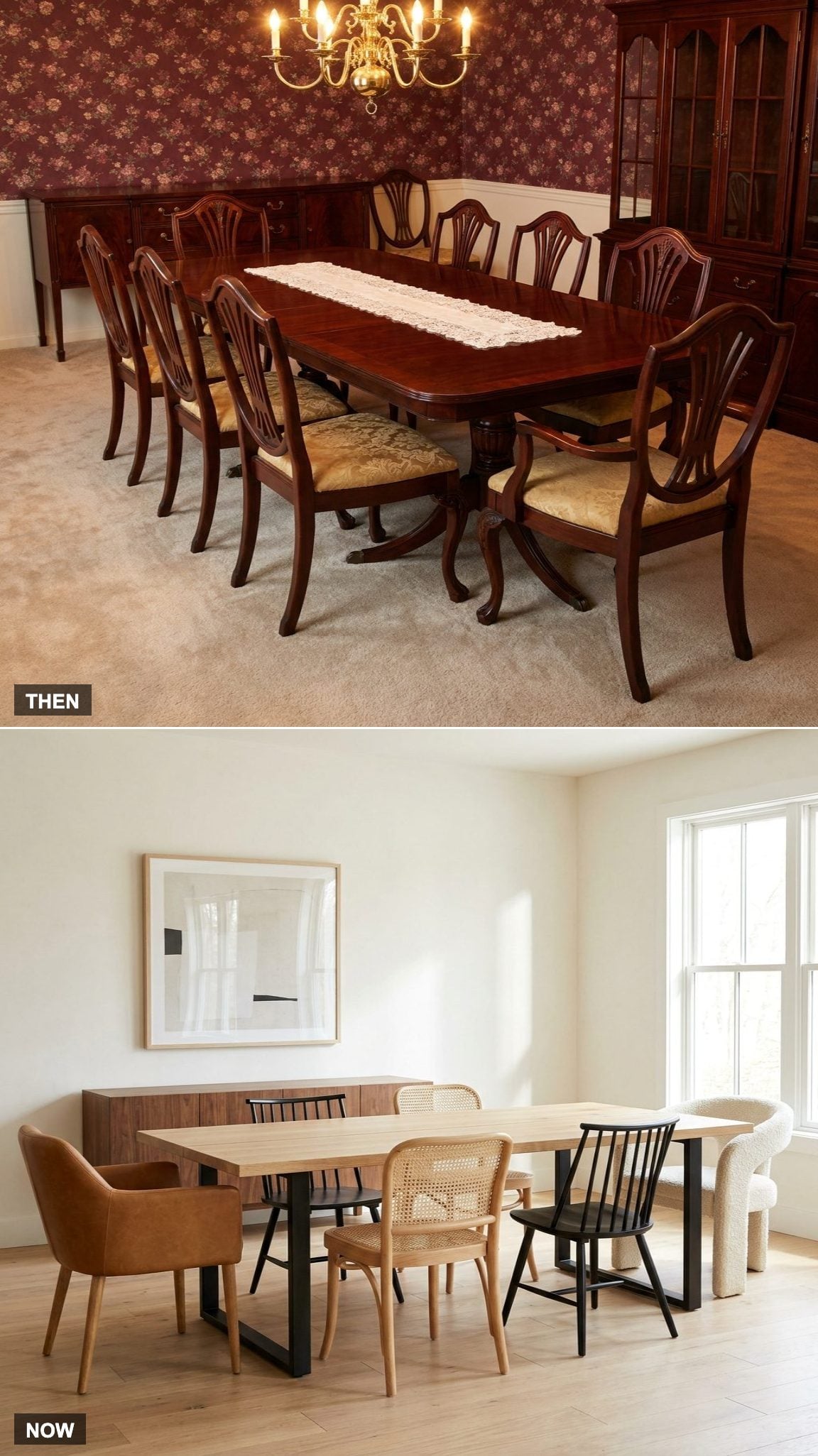
The matching set was a status thing. You didn’t own a table—you owned the set: table, chairs, sideboard, hutch, corner cabinet, all bought together, all in the same finish, delivered in one truck by two guys who resented every stair.
Over time, coordinated suites gave way to deliberately mixed seating. Current logic might pair two cane-back dining chairs with black metal seats, a bench along one side, and a different chair at each end. The mix reads collected instead of catalogued, while the bench adds one more place when the table fills up.
18. Beige Plush Carpet Ran Wall to Wall Under the Table
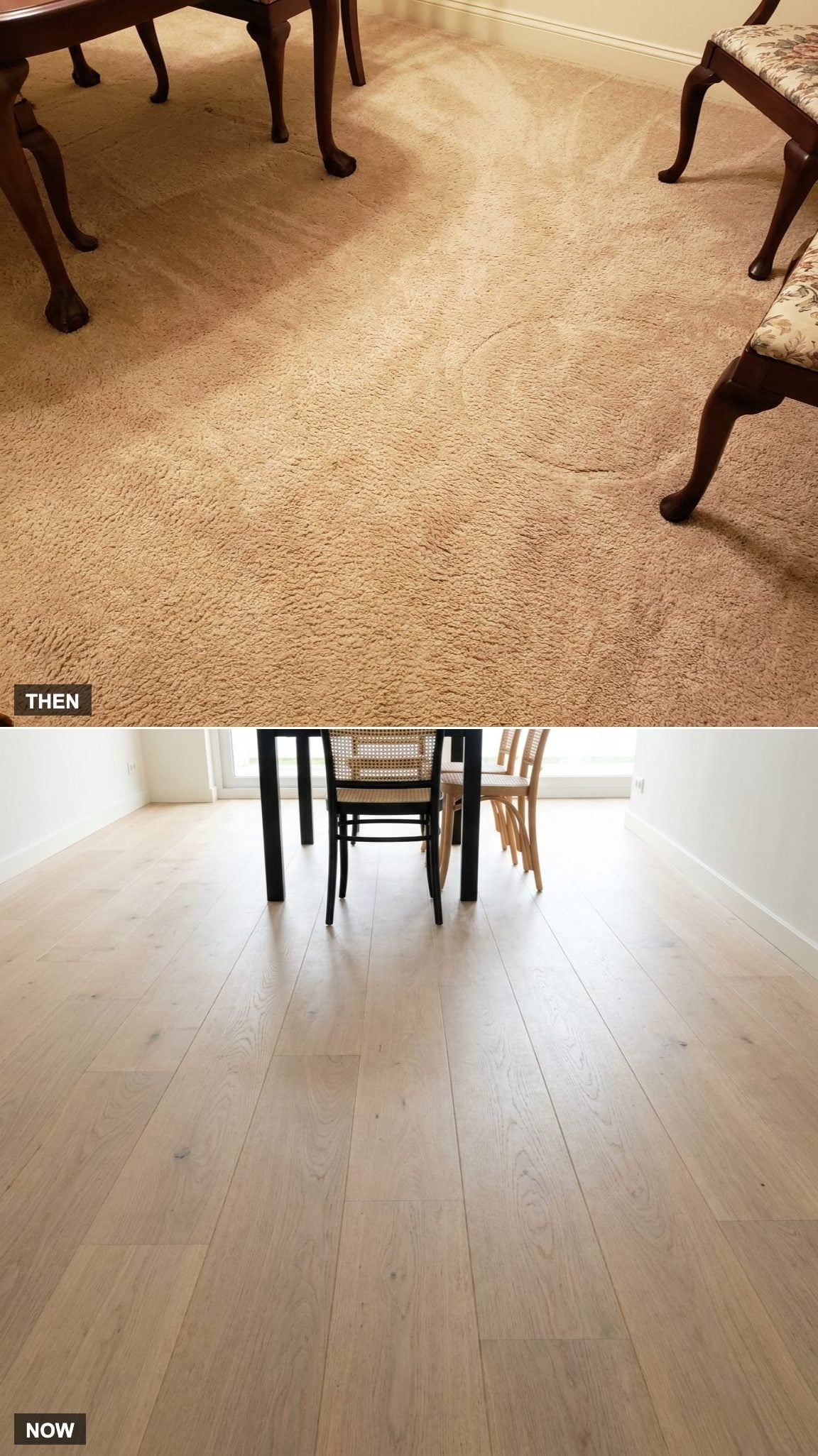
Beige plush carpet under a dining table sounds like a crime scene now. In 1980 it was normal—warmer feet, quieter meals, less scraping—and everyone accepted the tradeoff that a dropped glass of red wine was a permanent memorial to the dropped glass of red wine.
White oak floors won because they solved the wine problem, made rooms feel taller, and photographed like a dream. The tradeoff went the other way. Dining rooms got colder, louder, less forgiving. Rugs came back to fix half of that.
17. The Good China Came Out Twice a Year. Now It Never Comes Out at All.
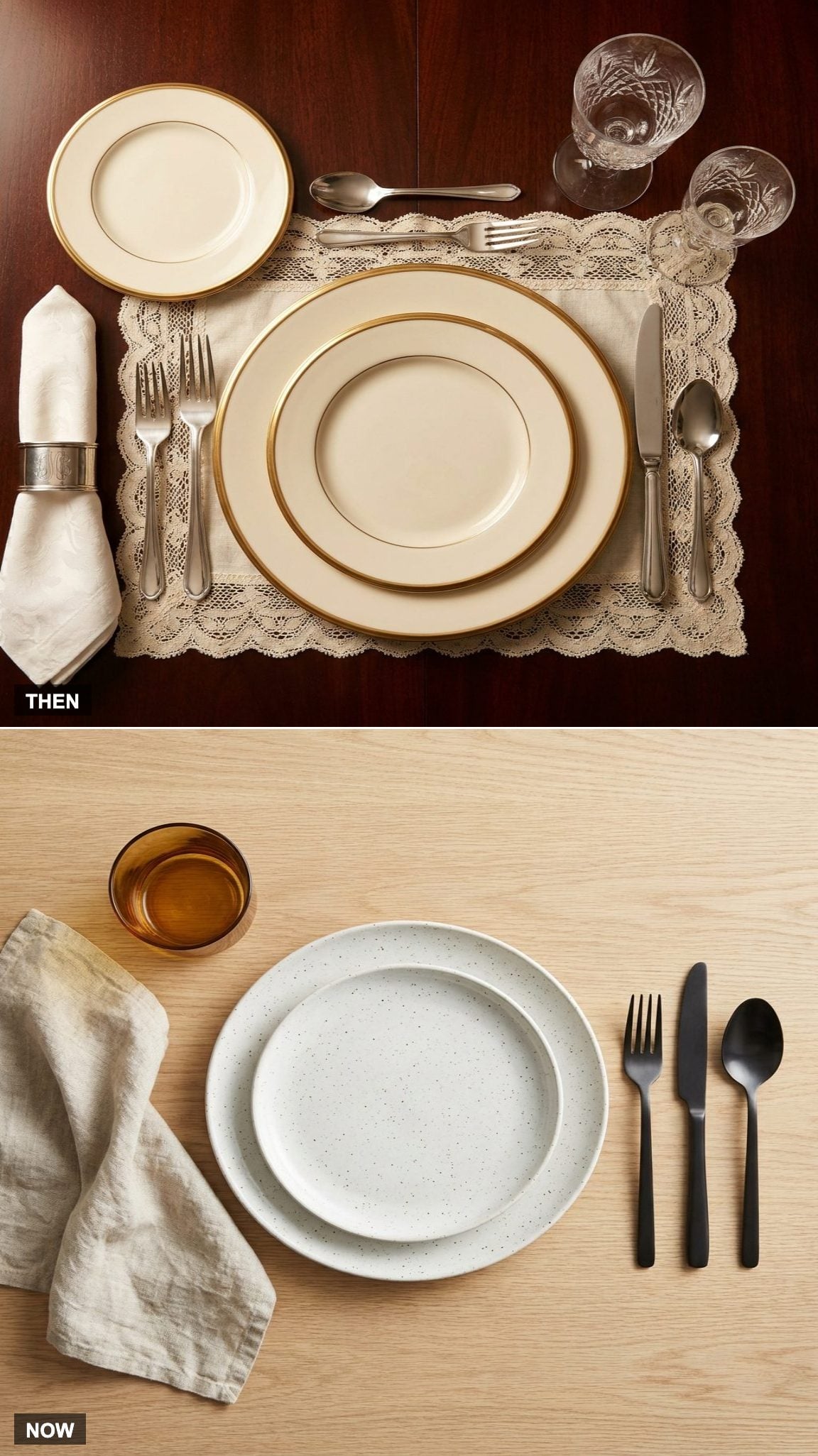
The good china had rules. Never the dishwasher. Never stacked wrong. Never used unless there were at least eight people at the table and one of them was your mother-in-law. It sat in the cabinet for months, waiting for a Thanksgiving to justify its existence.
Everyday speckled stoneware plates ended that whole system. Dishwasher safe, microwave-safe, nice enough that when a friend drops by unannounced you don’t apologize for the plate. The good china became a category without a job.
16. Velvet-Lined Silver Chests vs. the Drawer With the Bamboo Divider
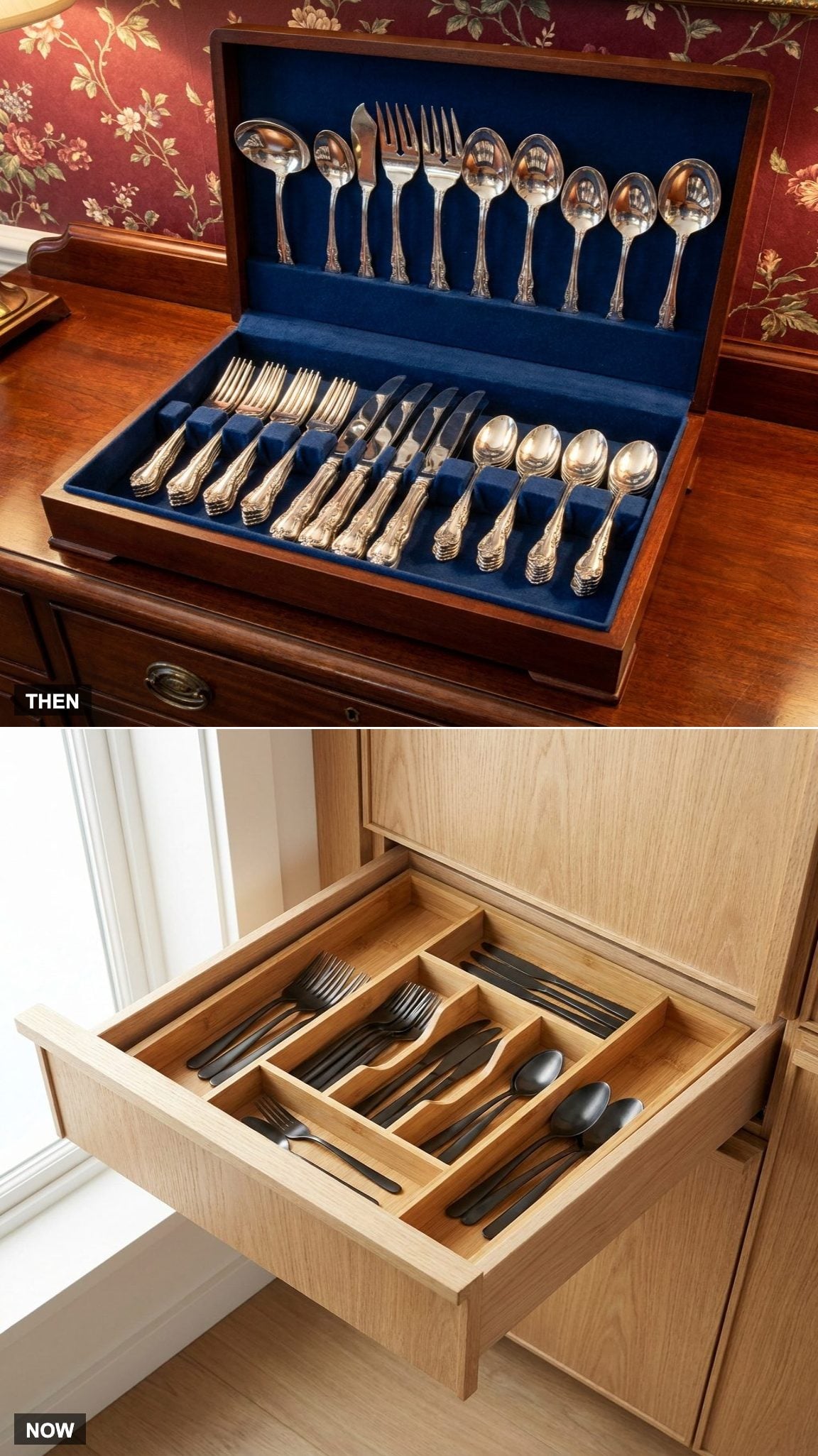
The silver chest had a ritual all its own. Pull it out before Thanksgiving. Polish every piece. Set the table. Polish everything again after dinner. Back into the buffet drawer with the anti-tarnish cloth. Repeat at Christmas, repeat at Easter, and that was the price of owning silver.
Everyday stainless flatware now lives in a bamboo drawer organizer and goes into the dishwasher after tacos on a Tuesday. No polishing. No chest. No ritual. Just forks in a drawer.
15. The Family Photo Gallery Wall Became the Statement Art Moment
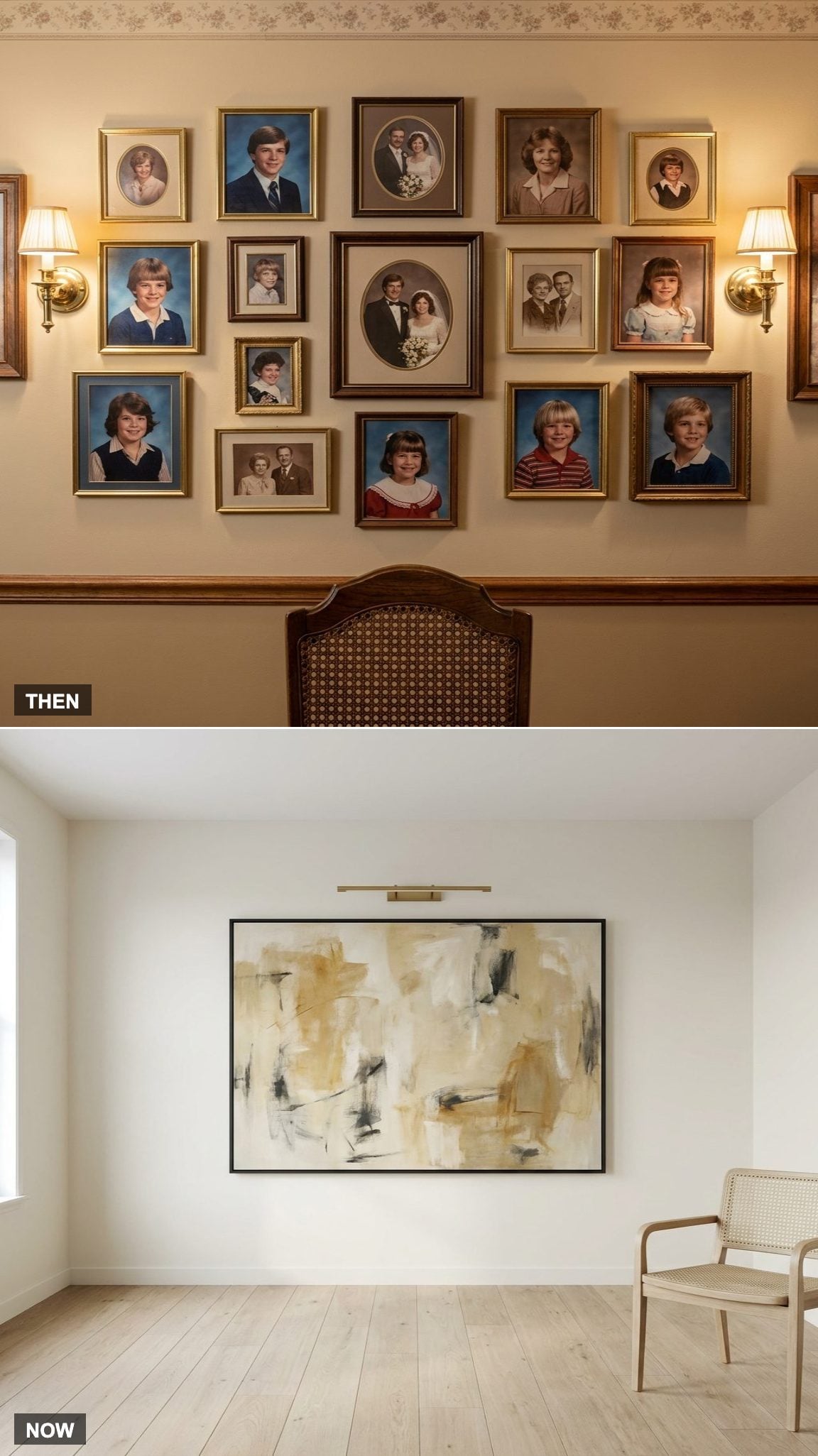
The 1980 dining room wall was a family scrapbook hung with a hammer. Graduation photos next to First Communion portraits next to a wedding shot from 1962, frames that never matched and were never meant to. It said: here we are, here’s the proof.
The current version says less on purpose.
One large canvas. One confident gesture. The wall stops competing with the table, the photos moved to phones, and the art moved up in scale. Whether that’s a trade worth making depends on how much you liked looking at your cousins during dinner.
14. The Sunday-Best Room Turned Into an Everyday Room
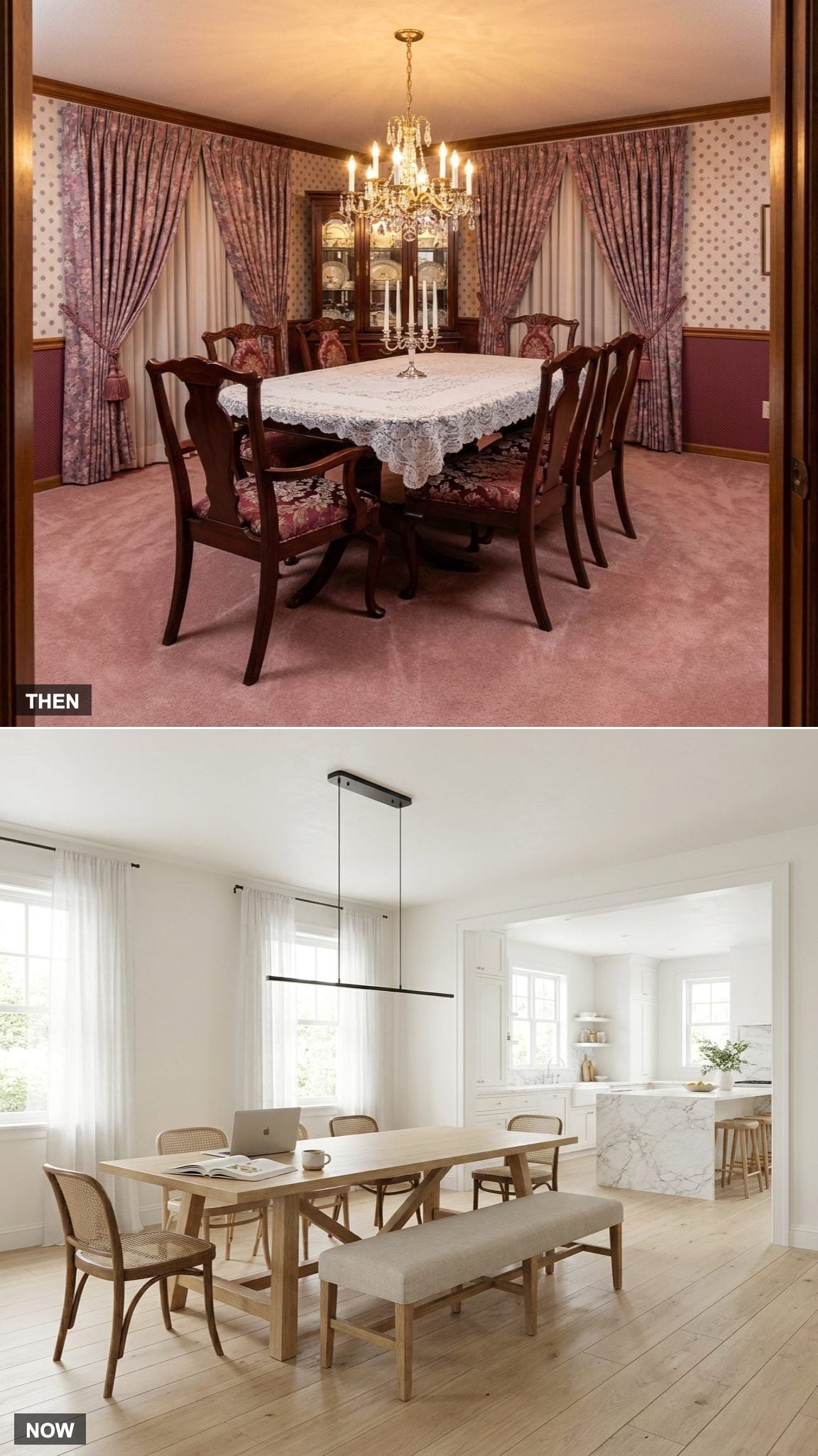
In 1980 the dining room was the good room. You walked past it on the way to the kitchen for thirty years and sat in it maybe four times a year, when the plastic came off the chairs for Thanksgiving and went back on by Sunday night.
In many renovations, the walls that separated that ritual from everyday life are gone. A mid-2020s dining area often bleeds into the kitchen, the kitchen bleeds into the living room, and dinner happens wherever the light is best. The formal dining room didn’t die—it just stopped pretending to be a museum.
13. Seasonal Centerpieces Gave Way to Almost Nothing at All
🔥 Would you like to save this?
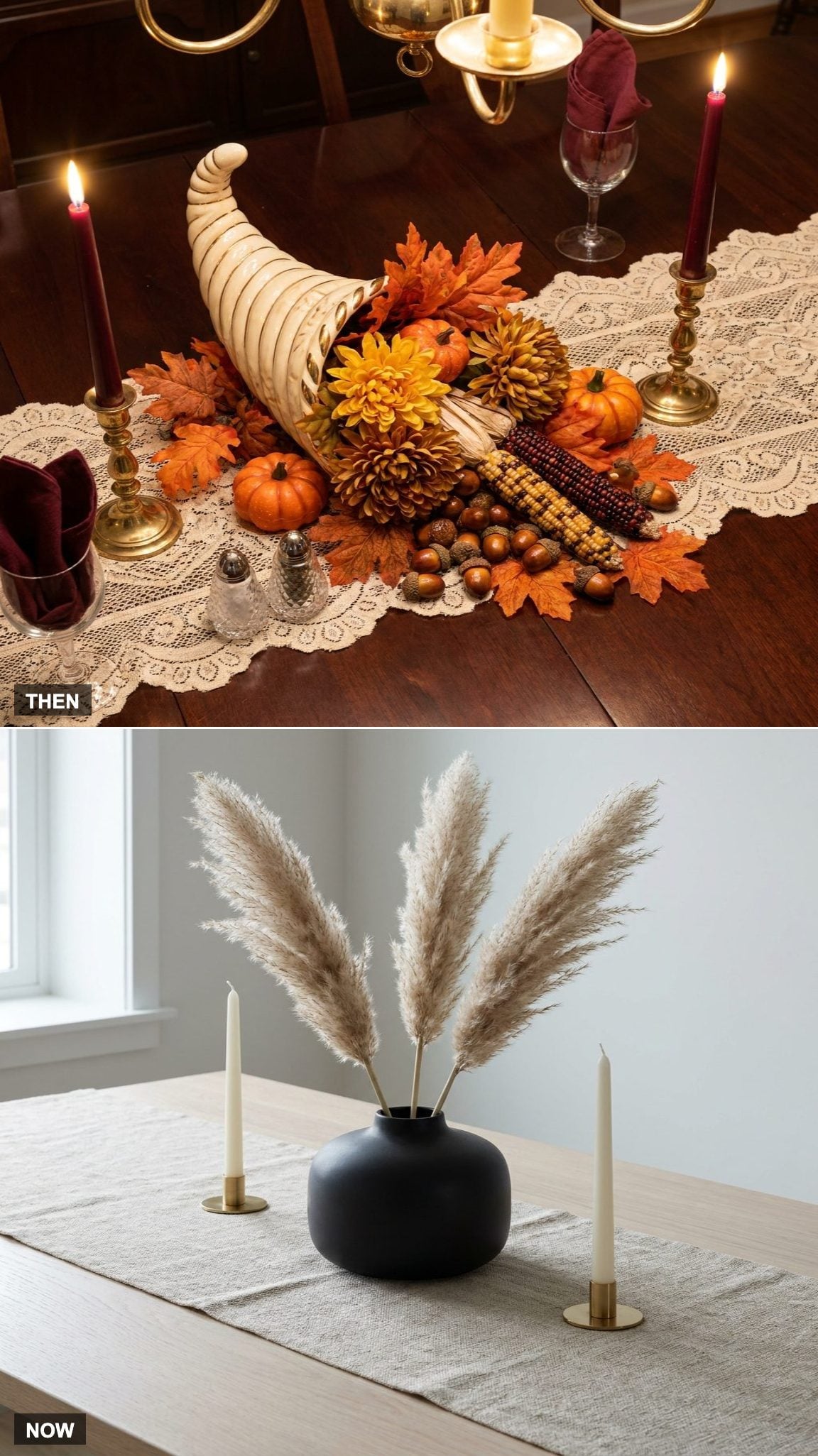
The 1980 centerpiece was a project. Autumn meant plastic gourds and shellacked acorns; Christmas, a poinsettia the size of a toddler; Easter, a nest of pastel eggs and a ceramic bunny that had been in the family since the Nixon administration. Somebody spent a Saturday building it, and somebody else spent a Saturday putting it away.
The current table holds a matte black vase, some dried pampas grass, and a strong opinion about restraint. The vase photographs beautifully. The room asks less of you now.
12. The Walled-Off Dining Room Dissolved Into the Floor Plan
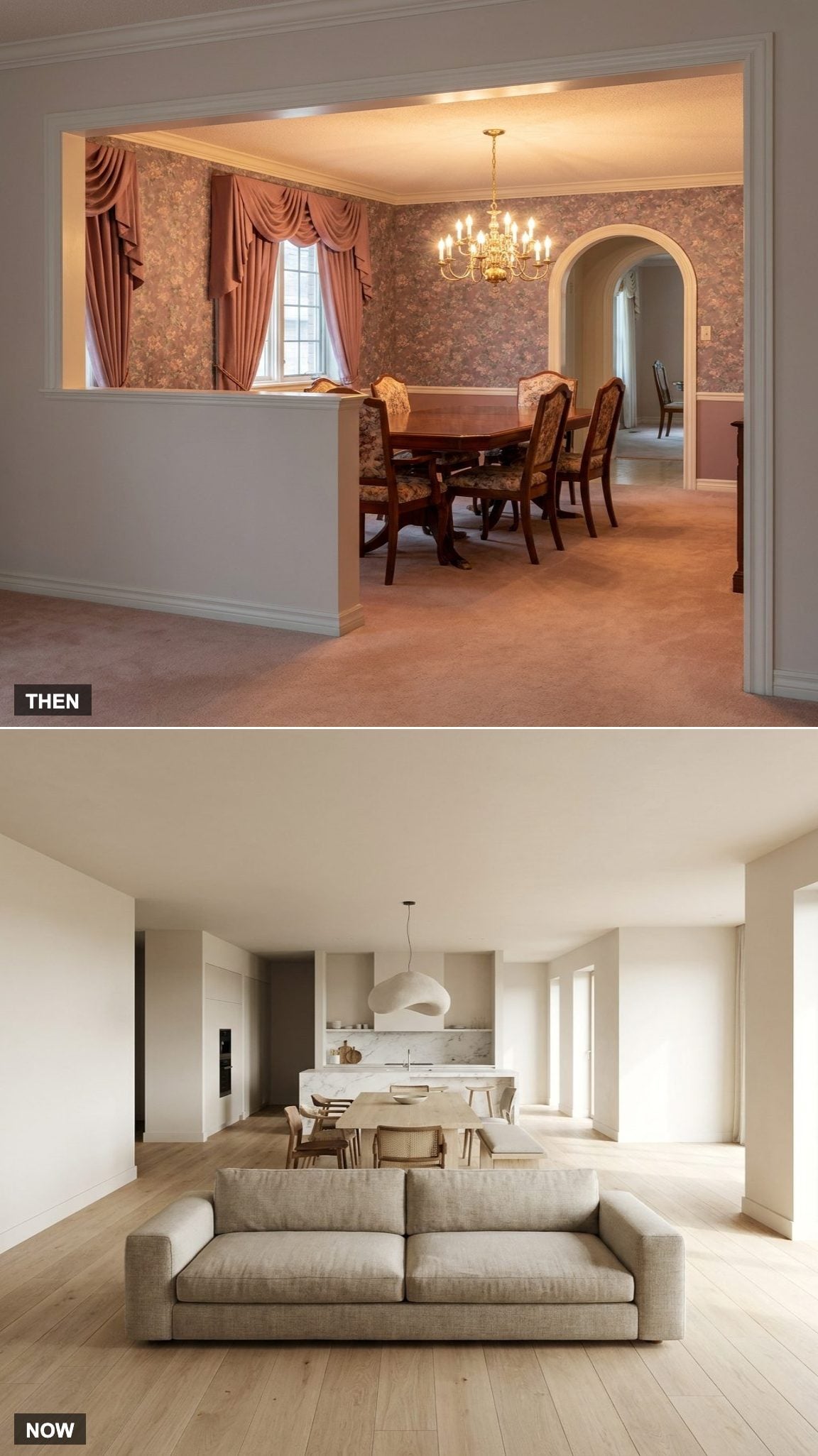
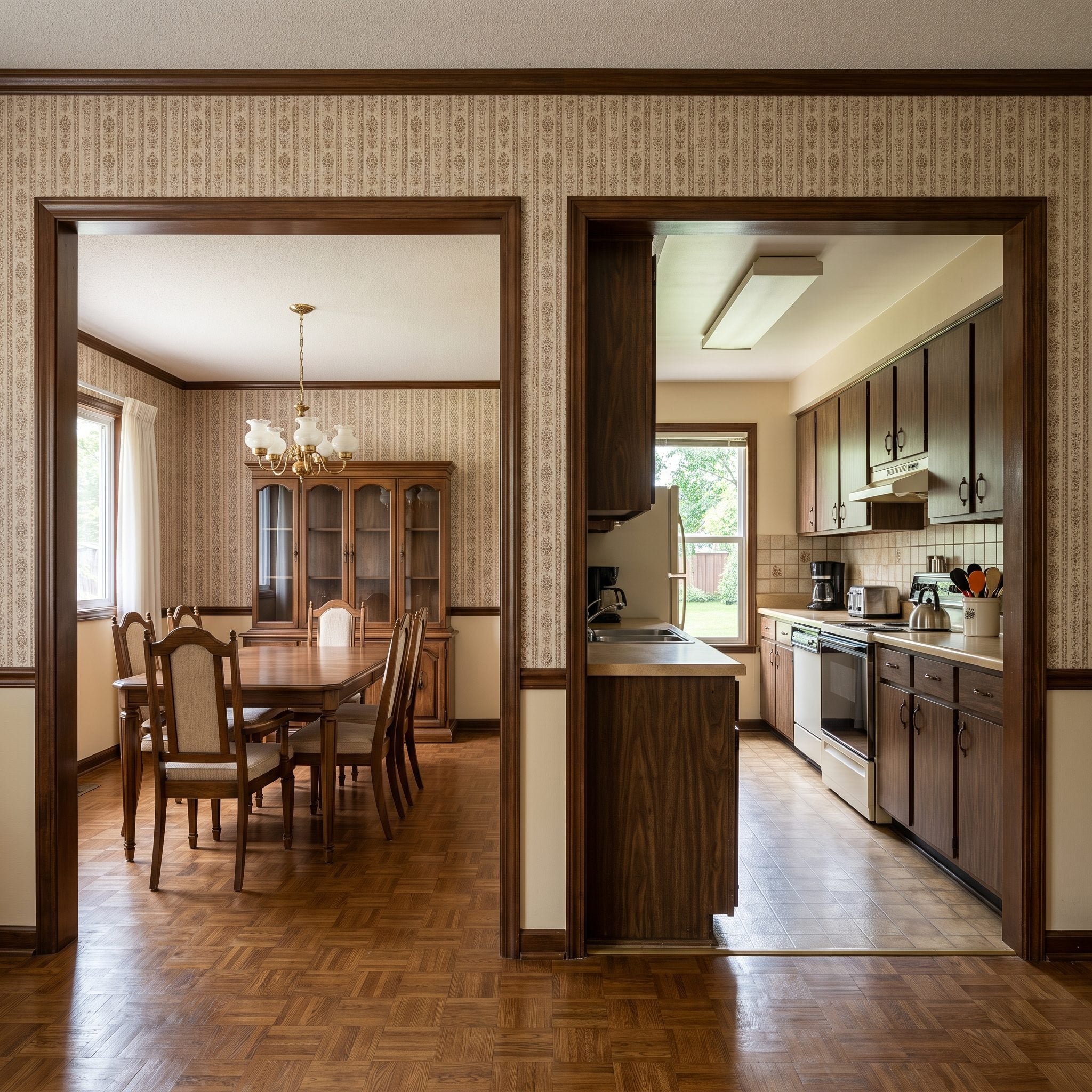
The 1980 house had rooms with doors and purposes. This is the living room. That is the dining room. Beyond it, the kitchen—and you didn’t stand in it while someone cooked. Each room had a job and stayed in its lane.
Then somebody knocked out a wall and everyone else followed. Open plans gained appeal because they made shared spaces feel larger and kept cooking, dining, and family activity visually connected. What got lost was the sense that eating dinner was a distinct event happening in a distinct room. What got gained was the ability to see the TV from the salad bowl.
11. Lace Tablecloths Came Off and Never Went Back On
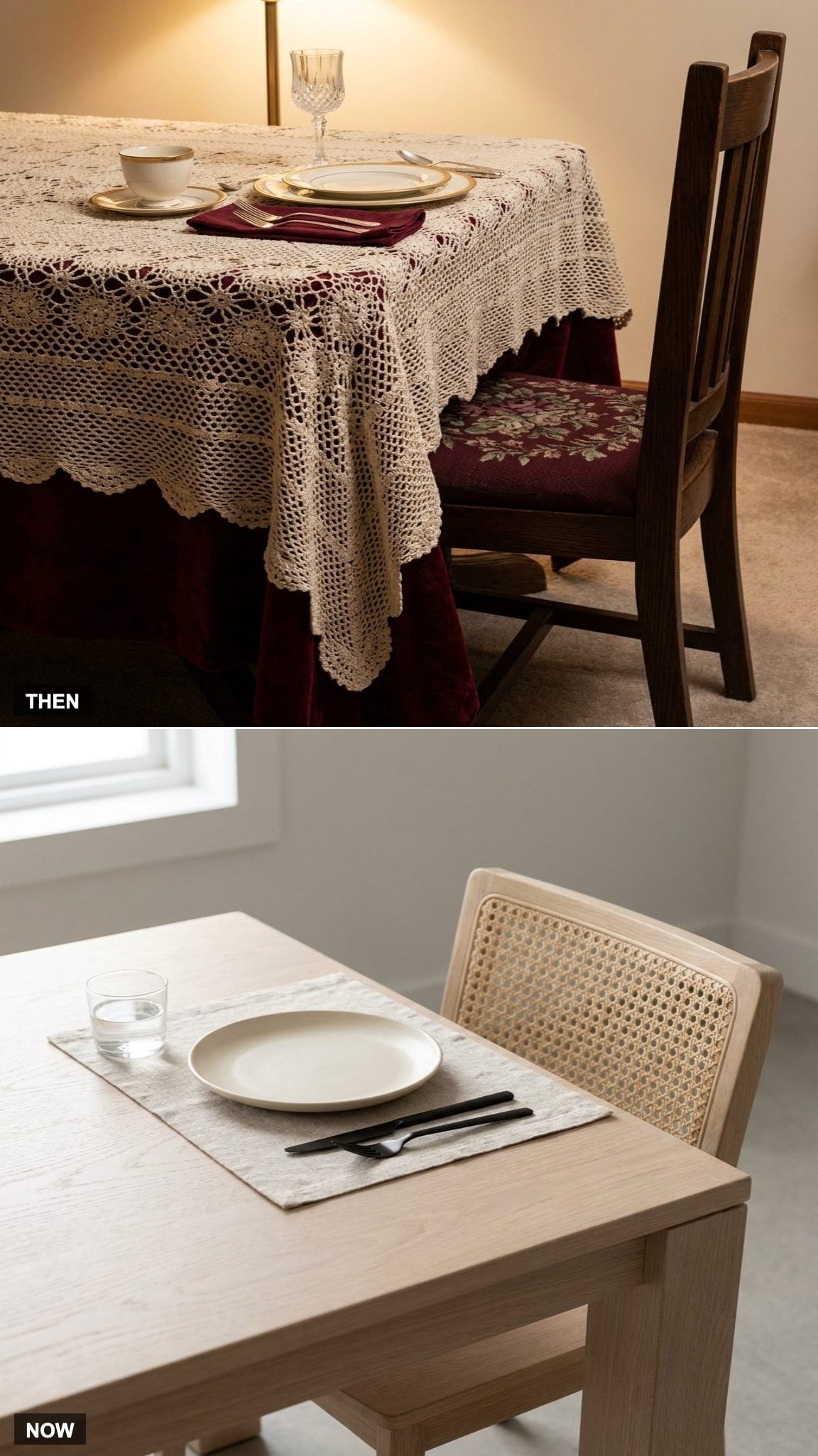
Lace tablecloths dressed furniture considered too formal to leave completely bare. They came out for company, went back into a cedar drawer, and got hand-washed by someone who resented the whole operation. The furniture underneath was worth hiding, at least in theory.
Now the tabletop is the point. Pay for a beautiful piece of wood and put nothing on it. Show the grain, add a linen runner if you must, and skip the rest. The tablecloth industry did not see this coming.
10. Candles Stopped Being an Occasion and Became the Lighting
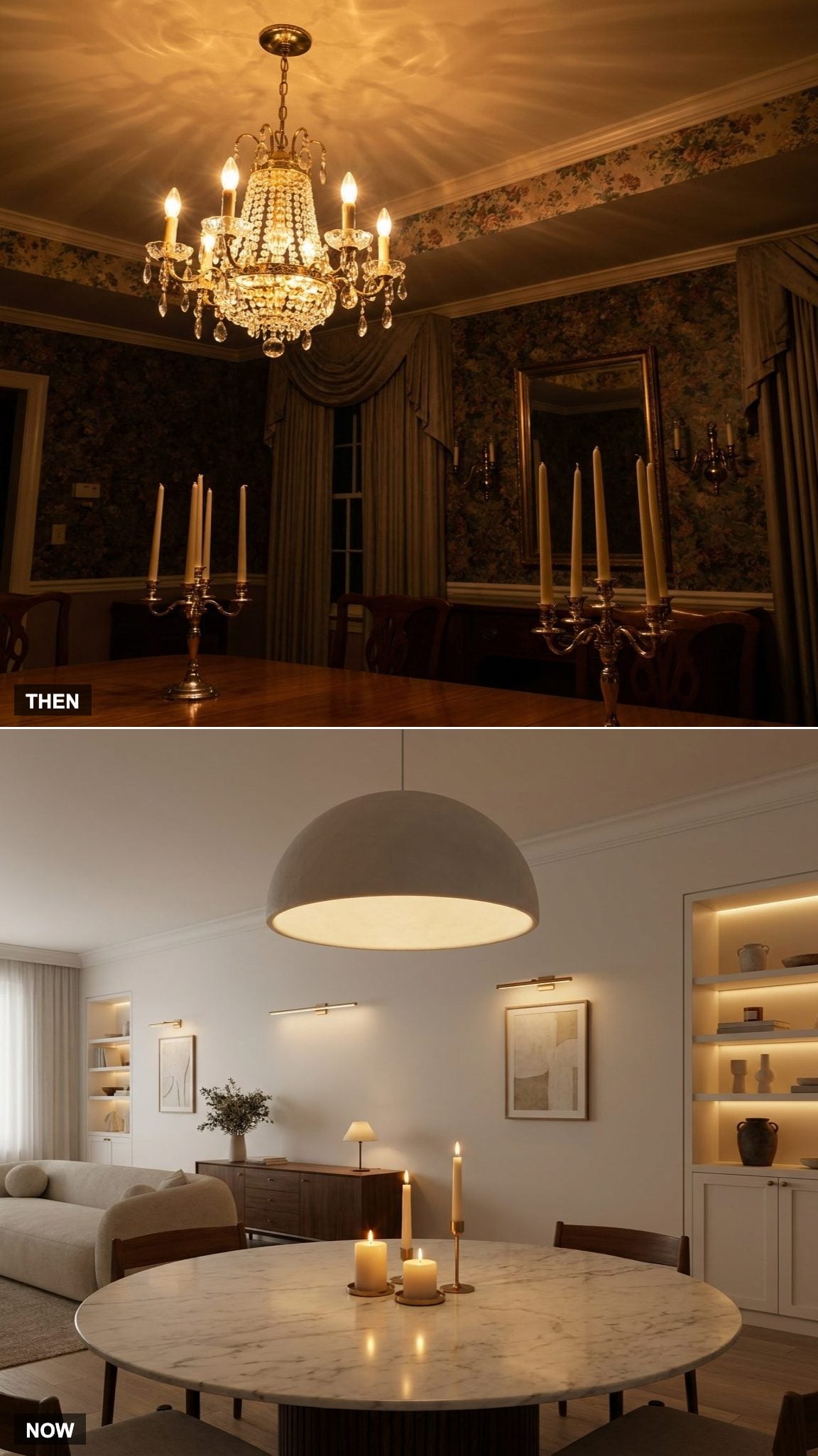
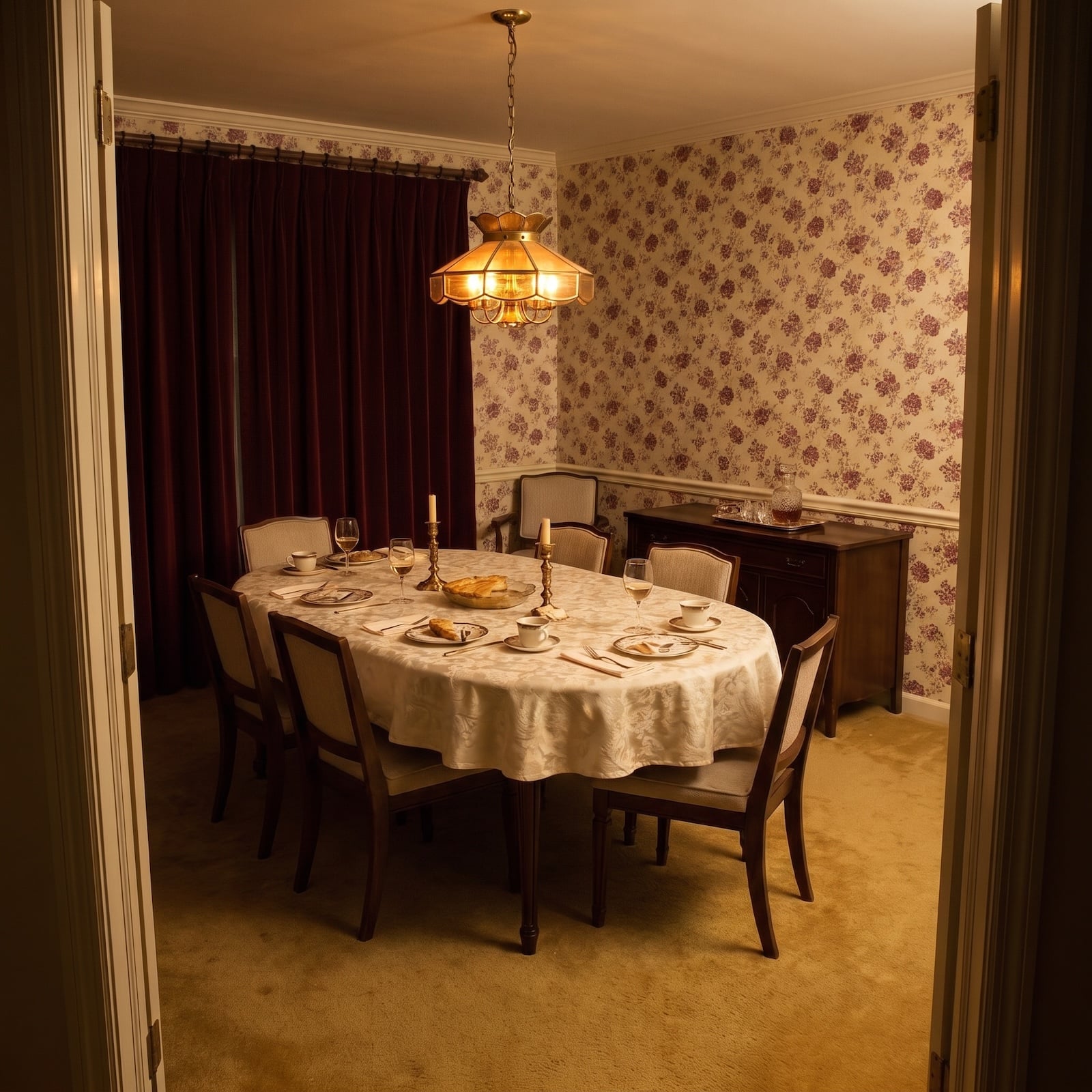
In 1980 you lit the candles when the good silver came out; otherwise they stayed in the drawer or gathered dust in the candelabra as decor that never did its job. The chandelier did all the work—overhead, yellow, unflattering.
Lighting is layered now. A dimmed pendant, a picture light, a sconce, a candle burning on a Tuesday because ambiance is the point of dinner and not a reward for having guests. One of the design shifts that actually made daily life better.
9. The Dining Room Lost Its Crown to the Kitchen Island
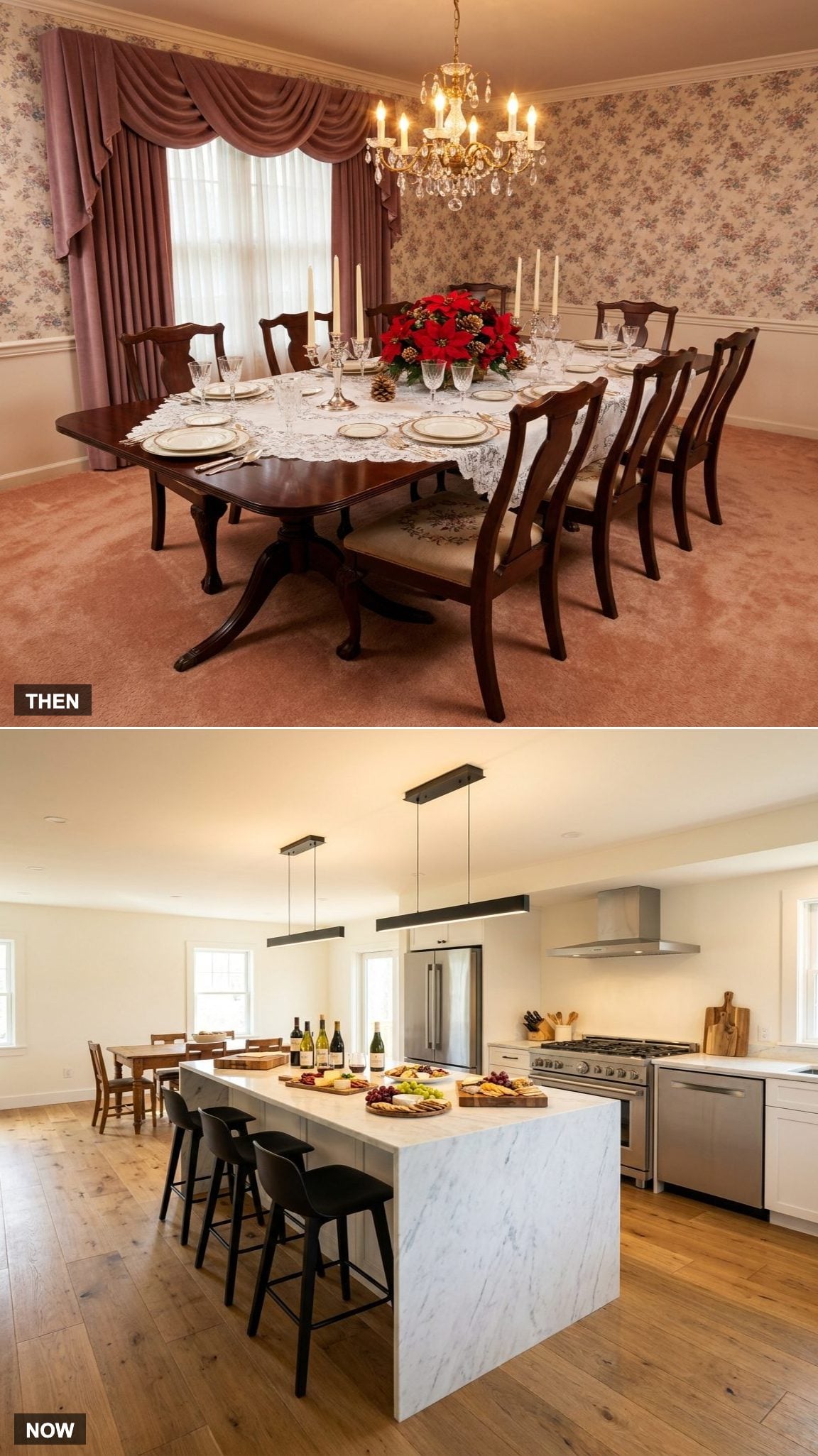
In 1980 the dining room was where the year peaked—Thanksgiving, Christmas, Easter, the good anniversary. The table got extended, the leaves came out of the closet, the plastic came off the chairs, and for one afternoon the room justified its existence.
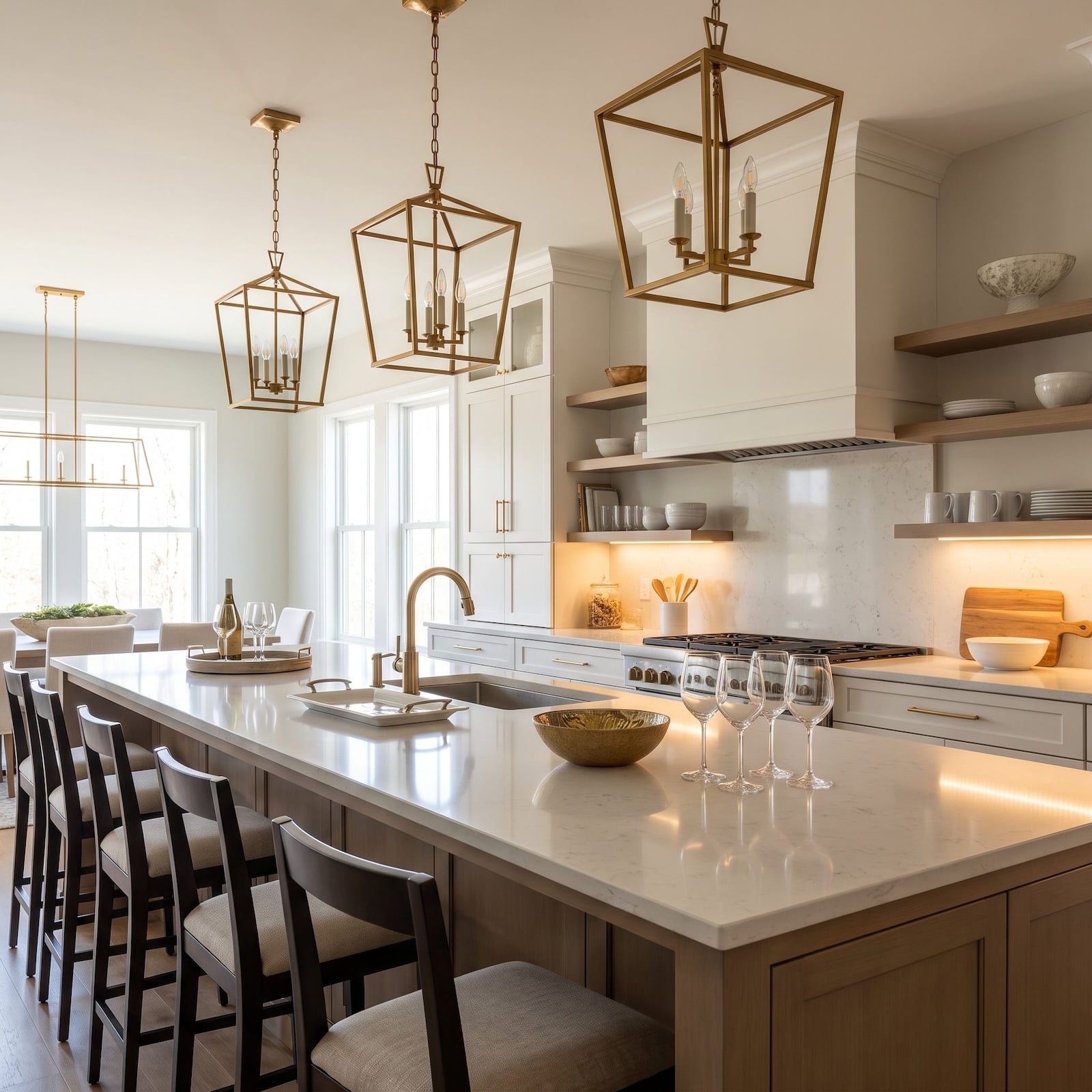
Now everyone stands around the island. The turkey is on the island. The wine is on the island. The kids gather around the island. The dining table is still there, and people do eventually sit at it, but the center of gravity moved twenty feet and never moved back.
The kitchen won slowly, then all at once. The dining room still matters, but it no longer controls the center of gravity.
8. A Wall of Collector Plates Announced Everything You Owned
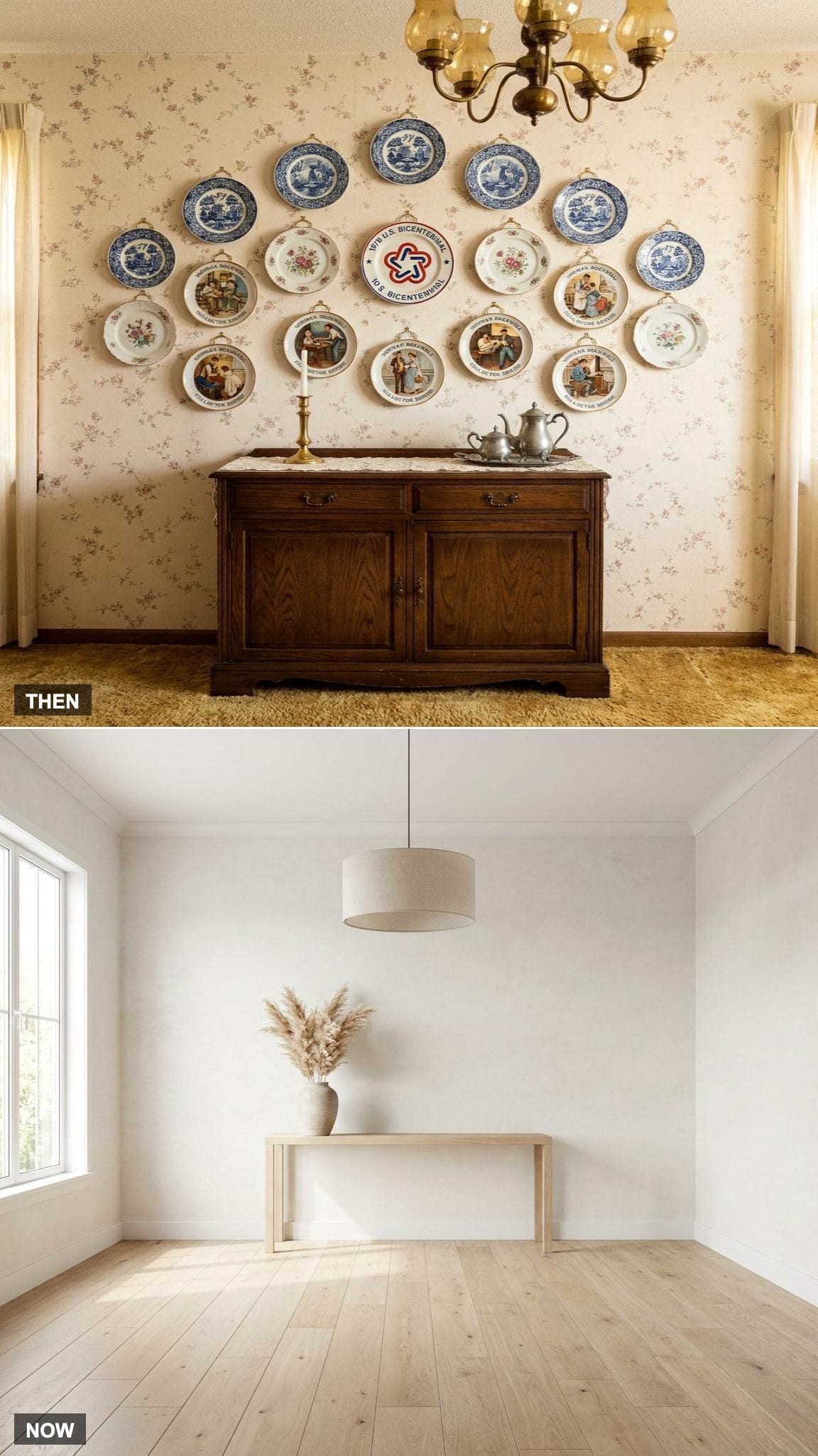
A wall of collector plates was a resume. Every piece announced that you traveled, you inherited, you cared about china—and the wall never got to rest. Neither did your eyes.
The current version trusts the room to hold interest without decoration doing all the talking. One white oak console and a single vase say more than twenty plates ever managed. The wall becomes a pause.
7. Crystal Only Came Out for Company
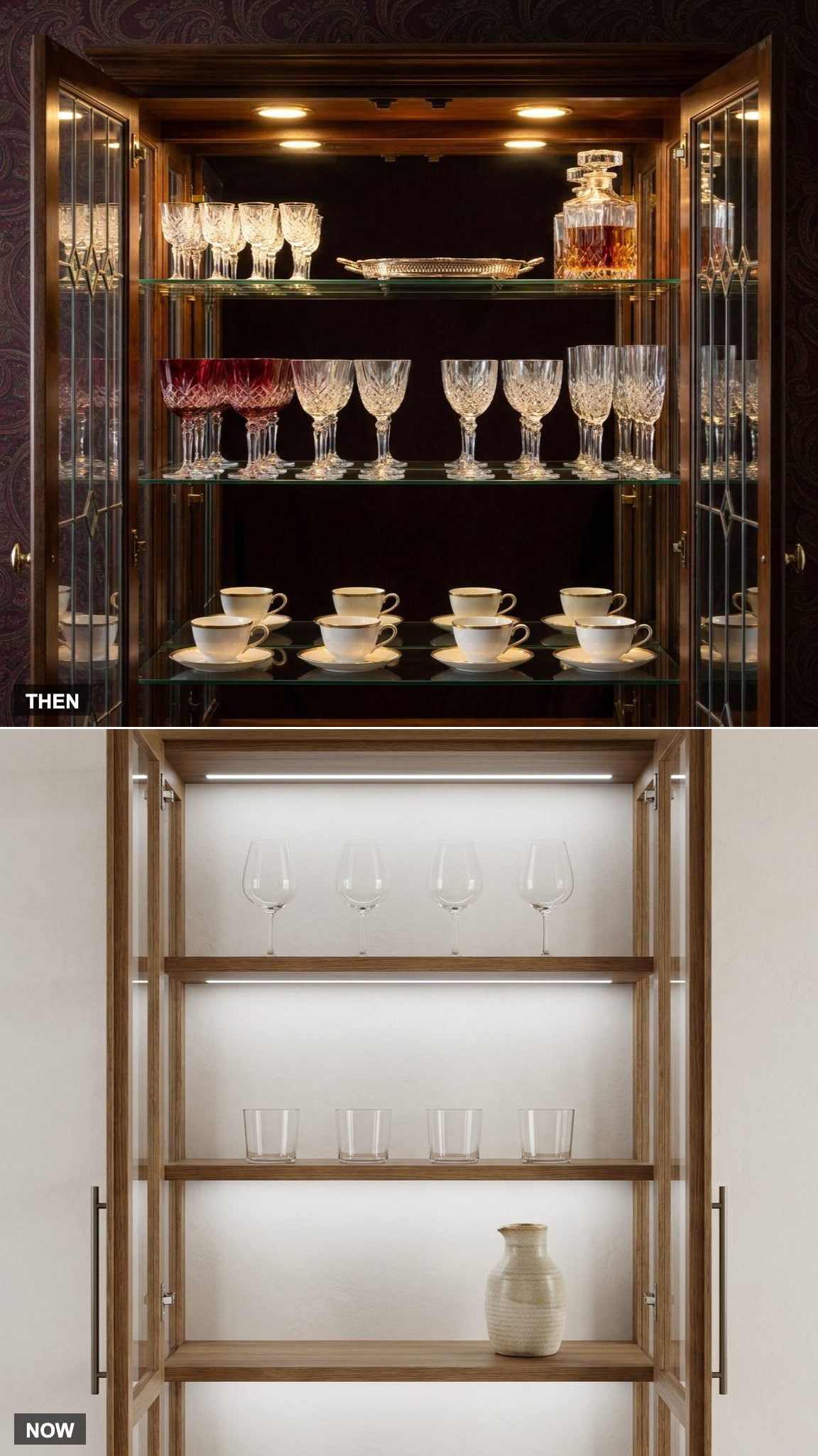
Crystal was aspirational cargo—wedding gifts, anniversary upgrades, one piece added every Christmas until the set was complete. You washed it by hand with a specific towel and used it maybe four times a year.
Then the universal wine glass ended all of that. One shape, dishwasher-safe, works for a Tuesday pizza or a dinner party. Some cabinets still exist, but they hold fewer things now, and more air.
6. Table Pads Under the Tablecloth Under the Runner
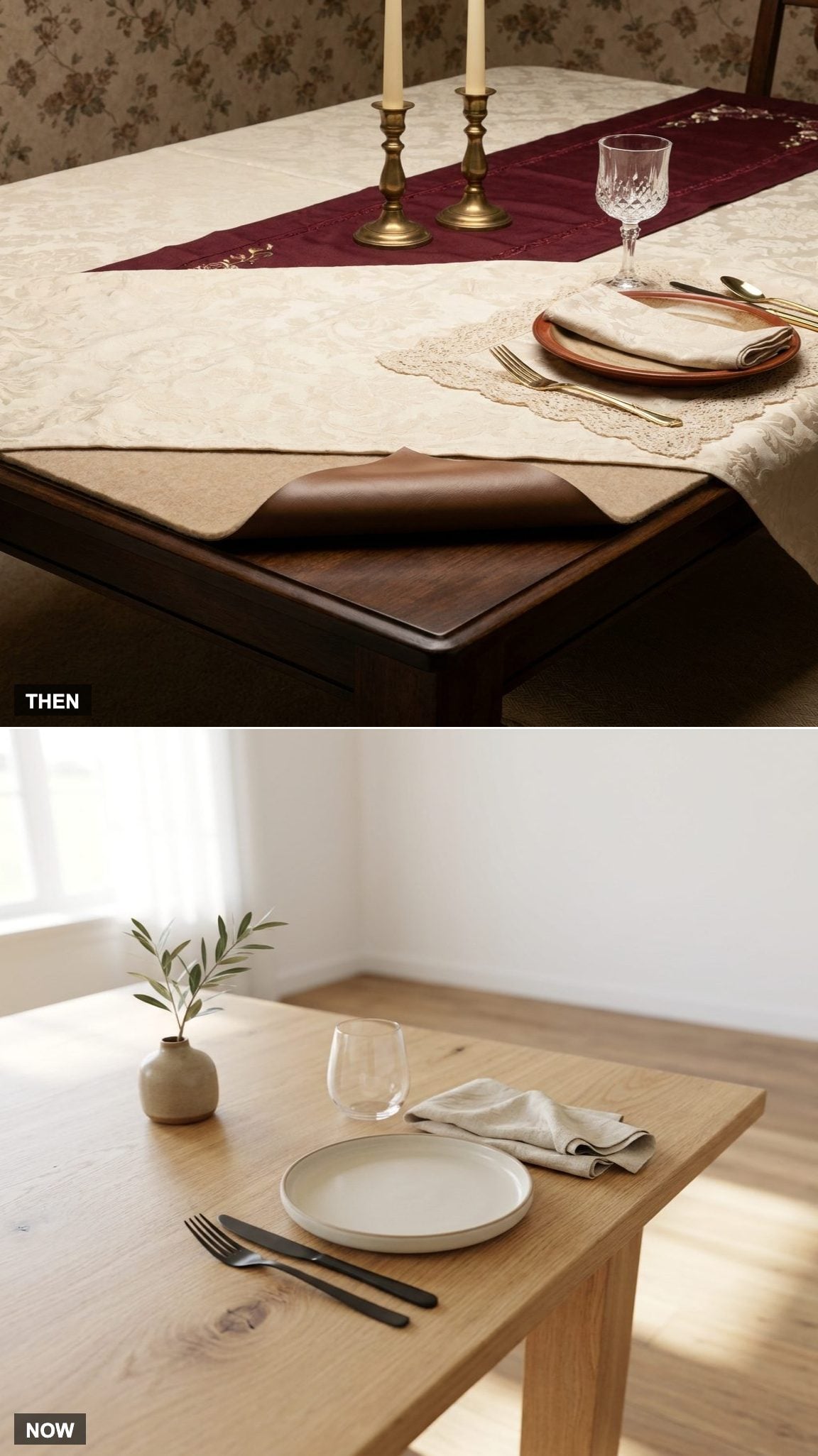
The table pad was insurance—a fitted protective panel placed beneath the tablecloth, runner, and placemats. It shielded the finish from heat, spills, and the bare glass nobody trusted near the wood.
Modern white oak dining tables are more often left exposed. Matte finishes make minor wear less alarming, so scratches and rings are more likely to be accepted as use rather than disaster.
5. Harvest Gold and Avocado Committed to a Palette
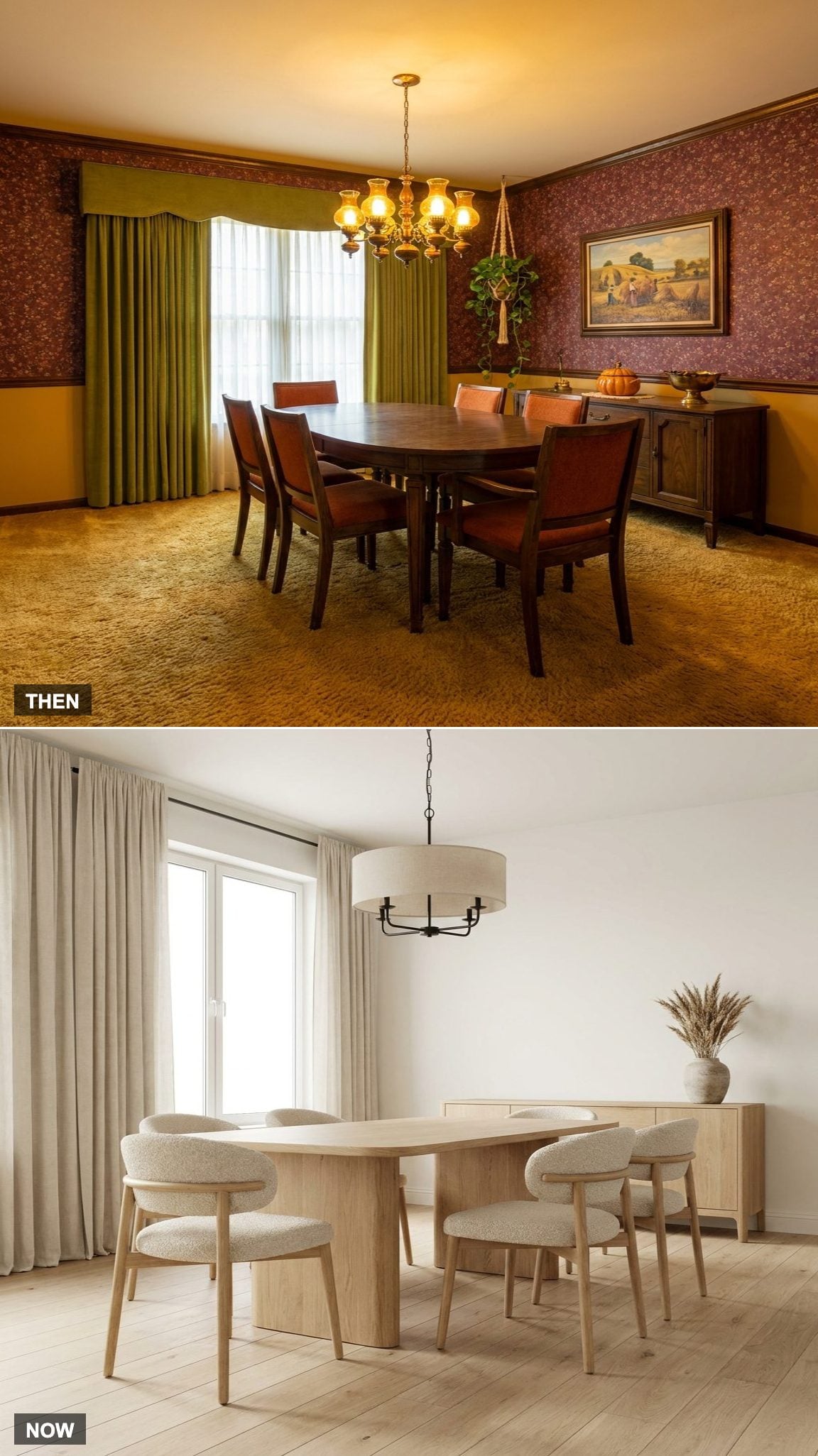
1980 dining rooms committed—harvest gold, avocado, burnt orange, burgundy paisley on the walls. The palette said autumn even in July.
Today’s rooms have gone quiet to the point of near-silence: bone, oat, mushroom, warm white, the occasional black accent for contrast. Some people miss the swagger of the old palette, and honestly, I get the impulse. I’m still not putting shag back down to prove a point.
4. Plants Used to Be Small, Cheerful, and Scattered
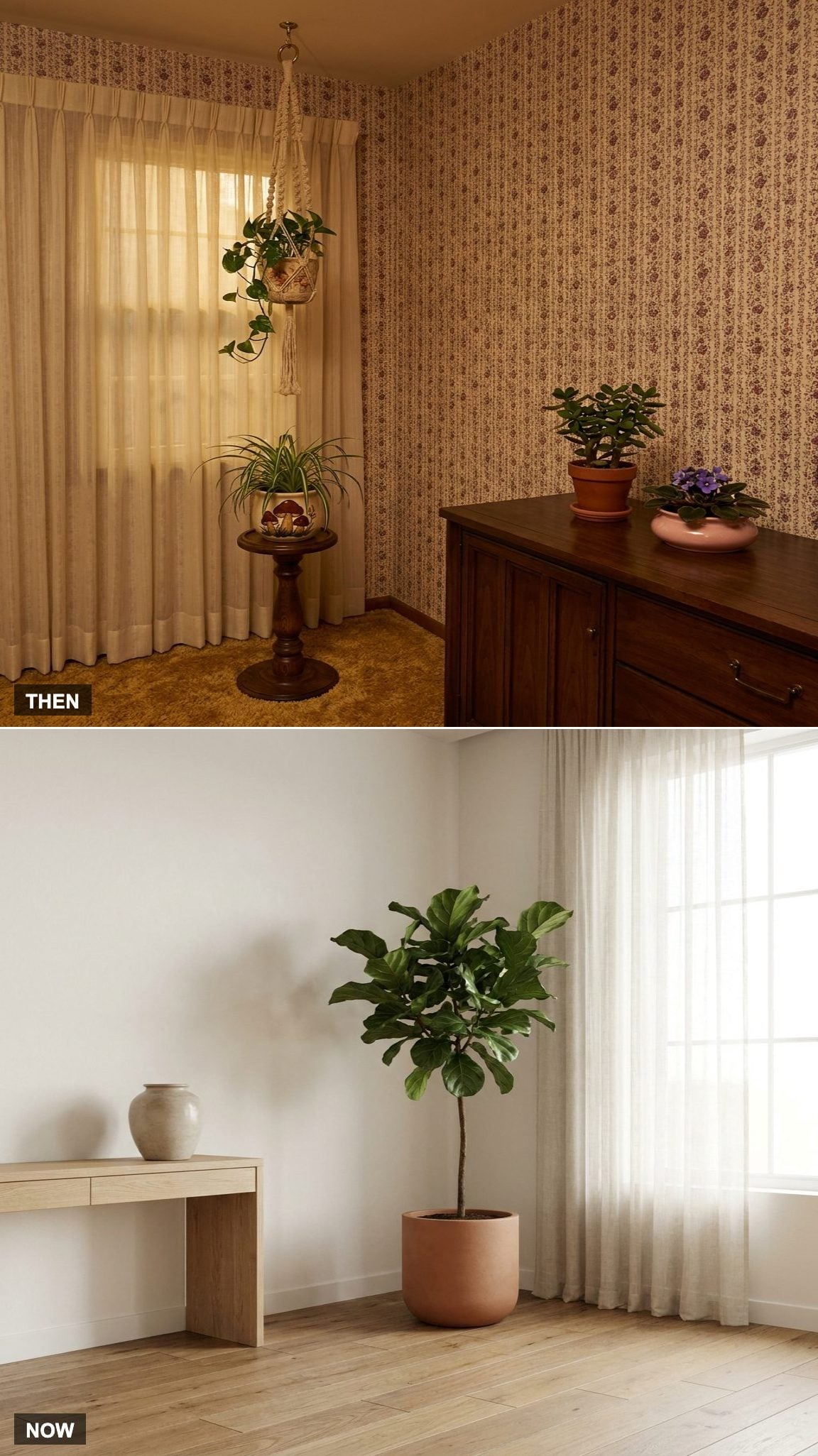
Plants in 1980 were small, cheerful, and scattered everywhere—a pothos in a macramé sling, an African violet on the sideboard, a jade plant by the window. They were accents, not statements.
The current move? One enormous plant that acts like furniture. A fiddle leaf in a terracotta drum, a rubber tree in the corner, a bird of paradise reaching for the ceiling. The plant does the work of a painting. One enormous plant now carries the visual weight a dozen small ones used to share.
3. Every Seat at the Table Once Pointed Inward
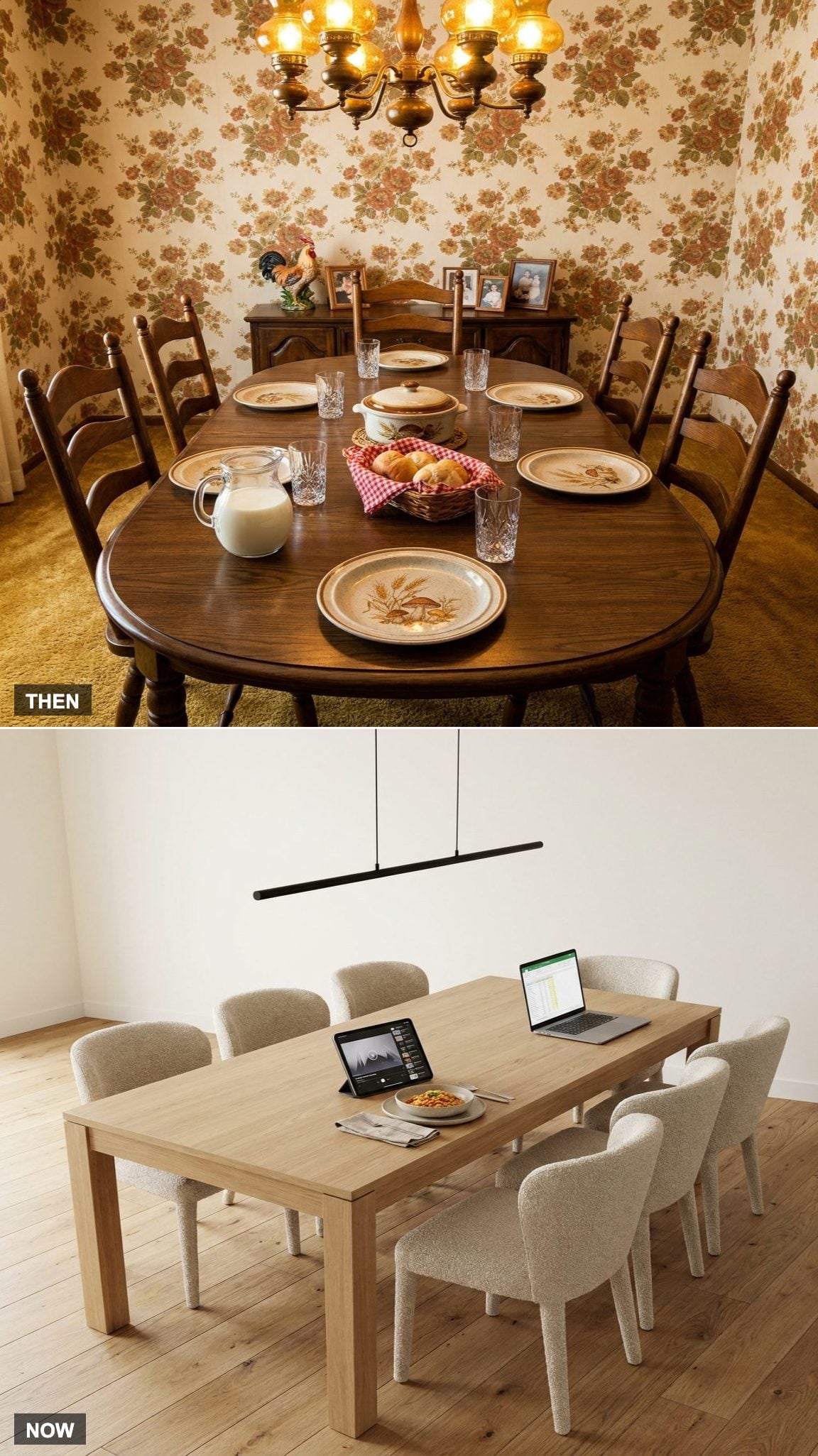
Every seat pointed inward. The table was the point, and you looked at the person across from you because there was nothing else to look at.
Today one chair faces a laptop, another faces a tablet propped on a stack of cookbooks, and the third person is taking a call in the other room. The room does more jobs and the original one less often. Something got gained. Something got traded.
2. The Recipe Box Was the Only Archive on the Table
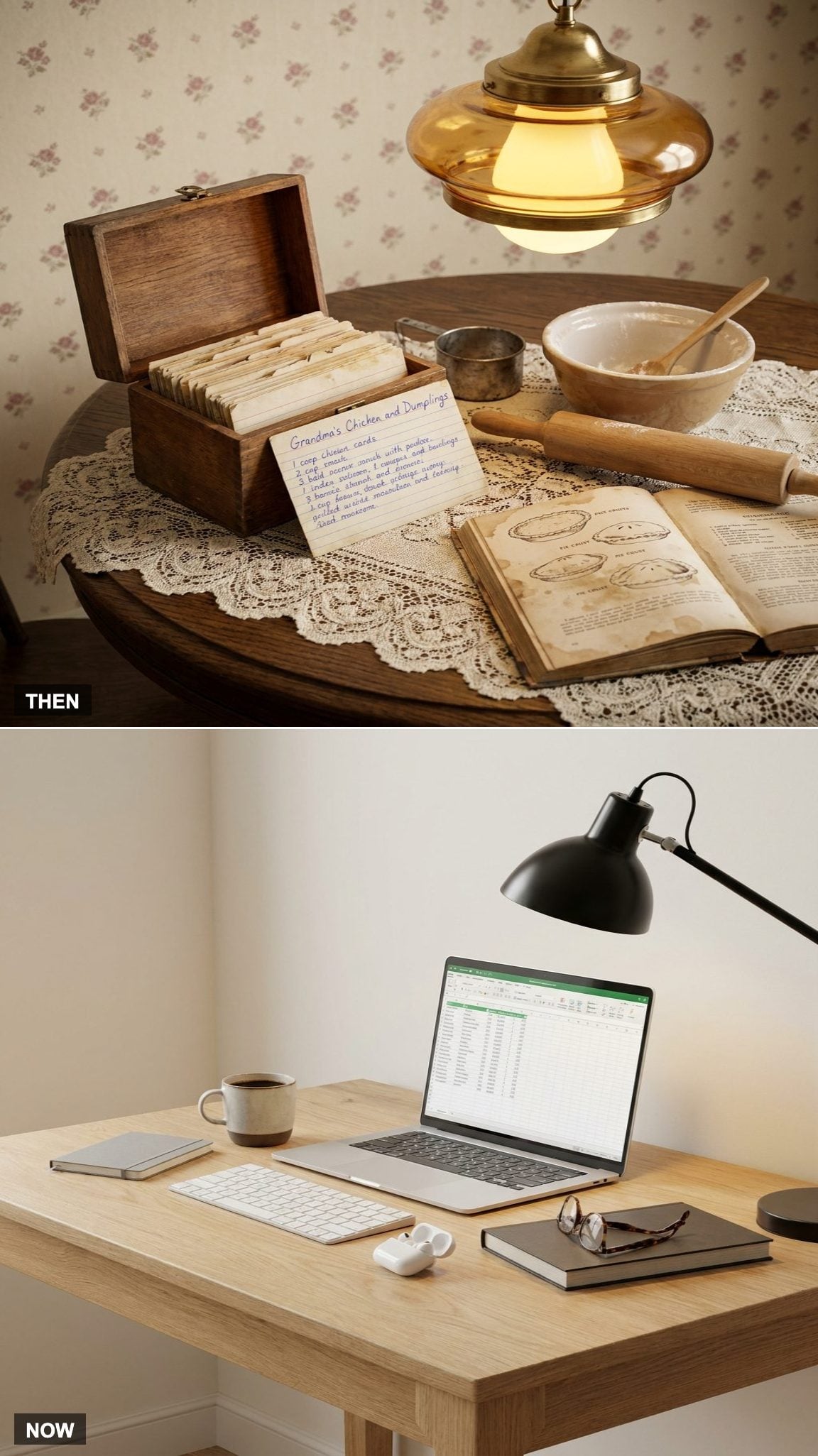
The wooden recipe box was a family archive—grandma’s chicken and dumplings, an aunt’s pie crust, a splattered card in your mother’s handwriting. The dining table doubled as prep surface for the meals that eventually landed on it.
Now the same surface holds a laptop, a second monitor for remote work, and a small pile of books that used to live in the office nobody has anymore. The dining room became the office because everything became the office.
1. The Dining Room Was Built for One Slow Activity
🔥 Would you like to save this?
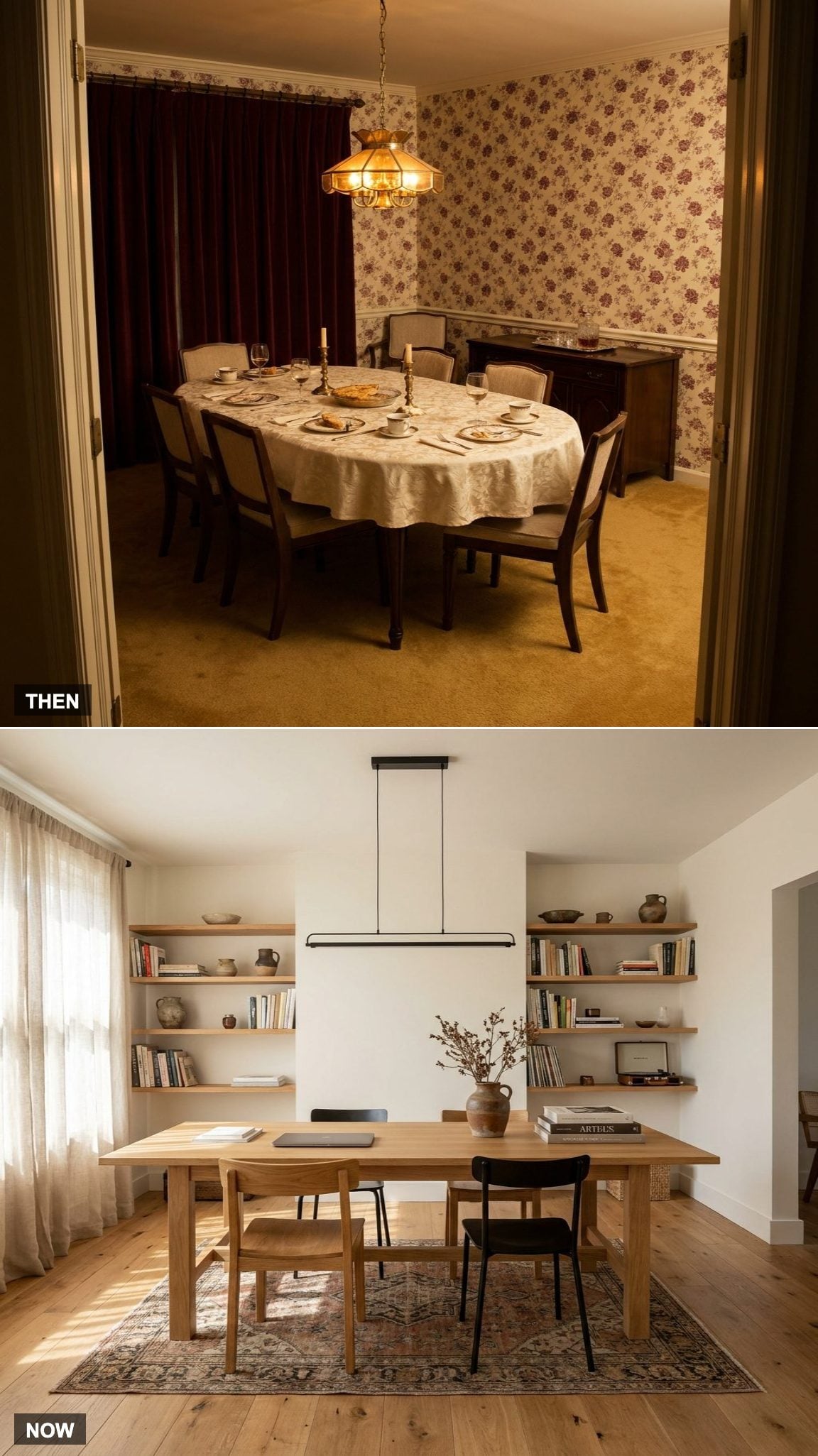
The 1980 dining room existed for one activity, done slowly. Candles burned down, coffee came out, and somebody eventually brought pie.
Today’s dining room is asked to handle dinner, homework, tax returns, holiday wrapping, book club, and the occasional formal meal. It is more useful and less ceremonial, and that trade feels fair. The candles still come out—just less often.