🔥 Would you like to save this?
The family room had a smell. Warm dust off a hot TV tube, a little cigarette smoke, whatever was baking two doors down in the kitchen. The console TV clicked on with a static pop, and the whole family drifted toward the same square of shag like it was gravity.
Nobody planned it. The room just pulled everyone in and kept them there. Kids could play without being sent somewhere else. Adults could read, talk, listen to records, answer the phone, or fall asleep in the recliner without leaving the action. Nothing was precious enough to make you nervous.
In order to come up with the very specific design ideas, we create most designs with the assistance of state-of-the-art AI interior design software. Also, assume links that take you off the site are affiliate links such as links to Amazon. this means we may earn a commission if you buy something.
These 26 things explain why the room worked so well — and why, decades later, people can still remember exactly where they sat.
26. The Wood-Console Television the Whole Family Gathered Around
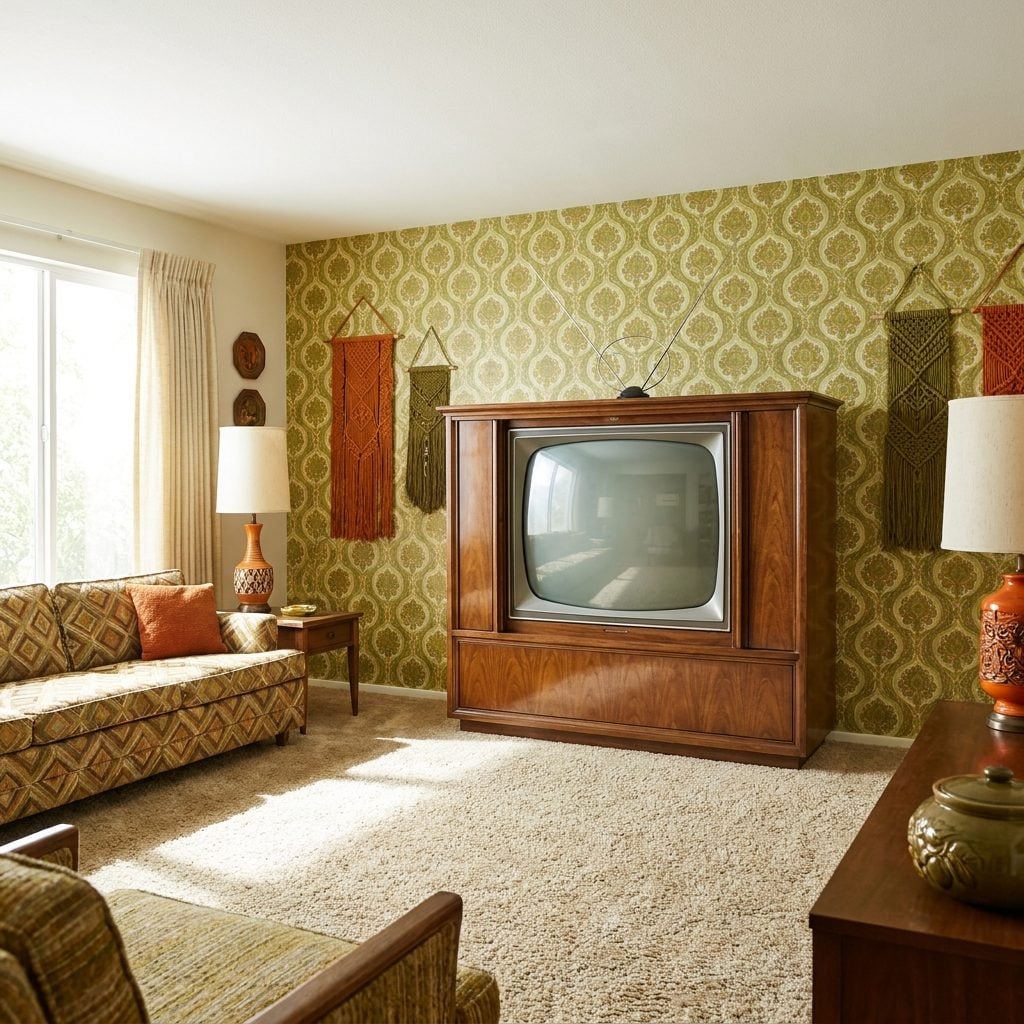
It weighed as much as a small refrigerator and nobody casually rearranged the room around it. The wood-console TV wasn’t just an appliance. It was furniture, focal point, evening schedule, and household authority packed into one walnut-colored box. You got up to change the channel, and the designated dial-turner was usually whichever kid happened to be closest to the screen, operating under strict supervision from the sofa.
When the program started, everybody watched together because there was no pausing, no streaming it tomorrow, and no second screen glowing in somebody’s lap. The cabinet top became another shelf for framed photos, a doily, maybe a plant discovering too late that television light wasn’t sunlight. A good small family room still chases this same magnetic pull today, just with a much thinner centerpiece.
25. The Deep Patterned Sofa Everyone Could Pile Onto
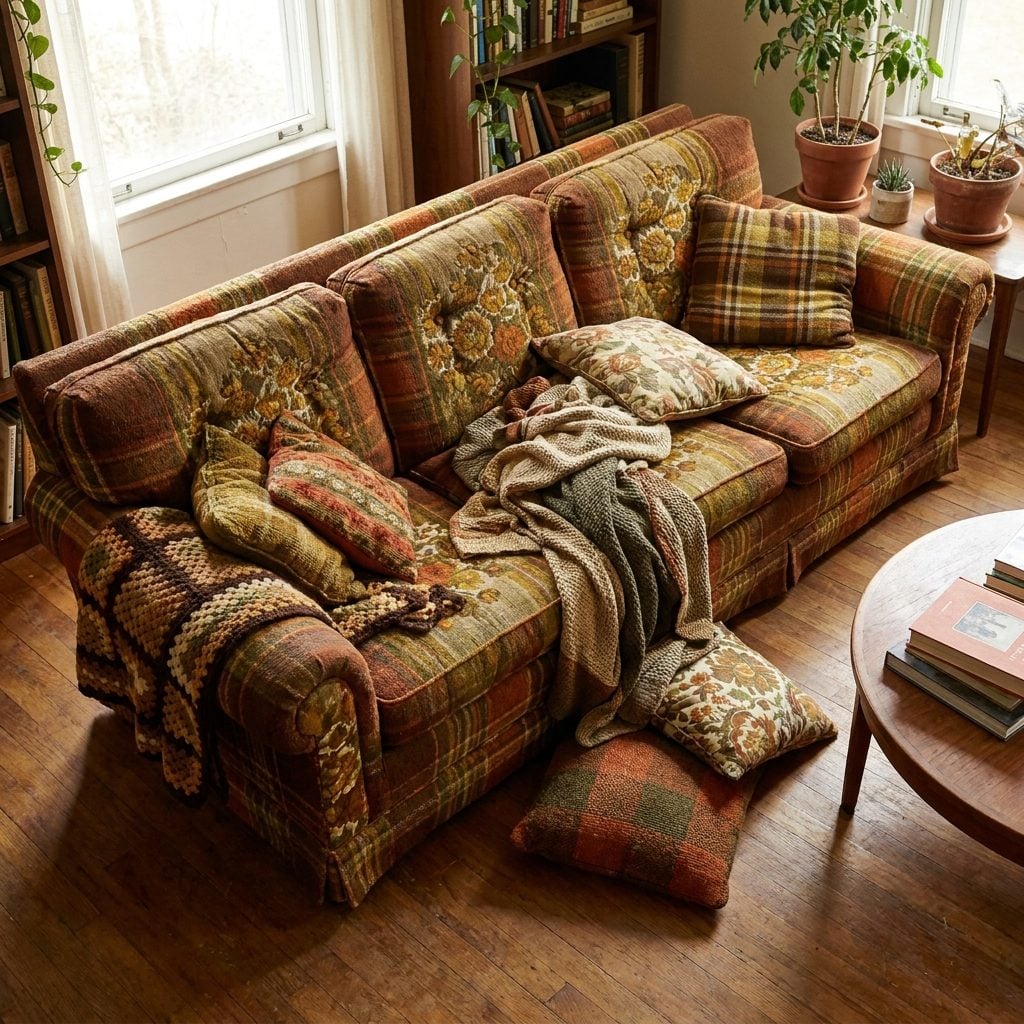
That sofa was built for a crowd, and it usually got one. Deep seat, soft arms, cushions that had surrendered their original shape to whoever occupied them most. You didn’t sit ceremoniously. You sank in, kicked your feet up, and stayed. Three kids could occupy one end while the other held a parent, a magazine, a sleeping baby, and the crocheted afghan nobody had bothered folding since Easter.
Then there was the pattern. Rust, brown, gold, olive, maybe enough flowers to cover a municipal park. It hid Kool-Aid, dog hair, cracker crumbs, and whatever happened with the orange Popsicle last July. A cottage living room can still borrow the same idea: choose upholstery that forgives real life and everybody relaxes a little faster.
24. The Shag Carpet Kids Actually Sat and Played On
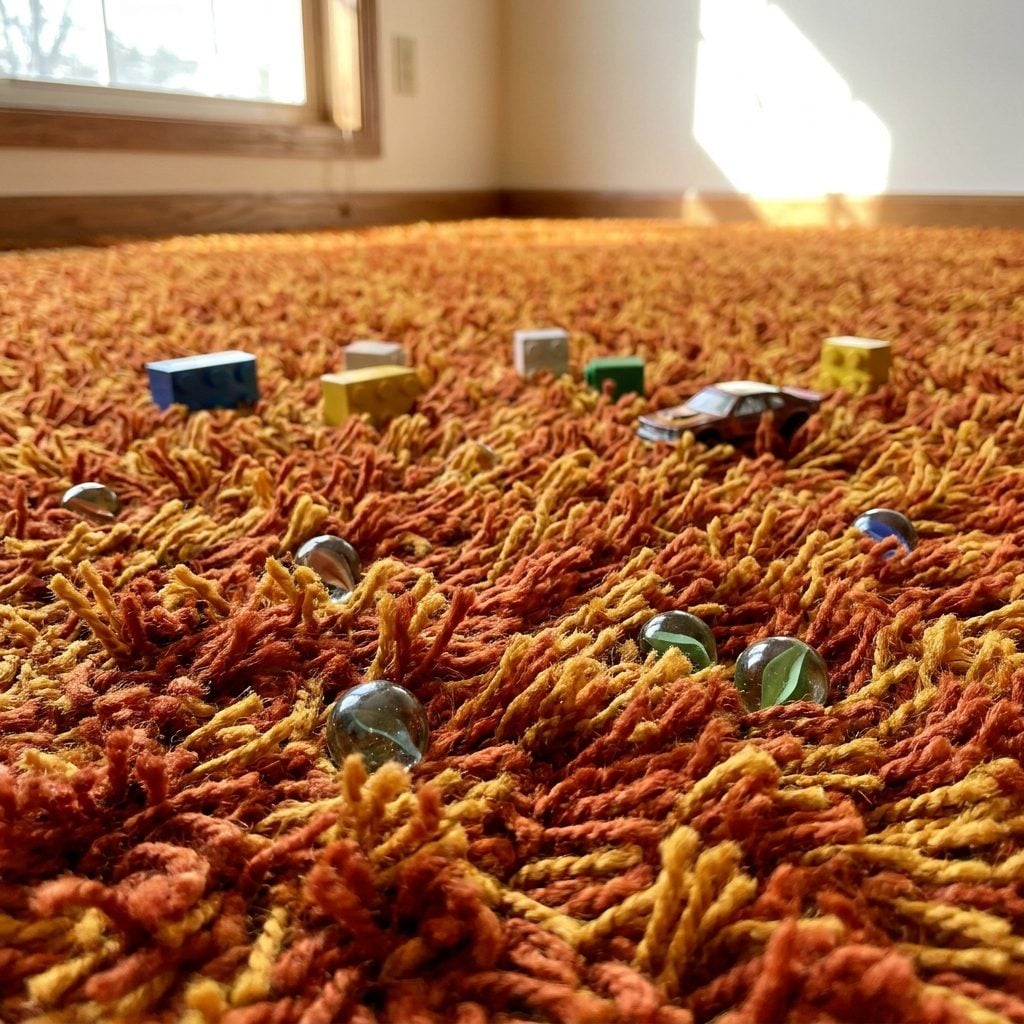
The carpet swallowed everything: marbles, Lego pieces, barrettes, the earring your mother searched for all week. Anything dropped into serious shag entered a soft synthetic wilderness and might not come back until spring cleaning. Deep pile could be groomed with a carpet rake, which sounds invented until you’ve seen one, leaving neat rows across the floor like a mustard-colored wheat field.
For kids, that carpet was another piece of furniture. You flopped on it, rolled across it, spread games over it, built forts on it, or watched cartoons upside down with your feet hanging off the sofa. Nobody told you not to sit on the floor because the floor had clearly been designed for sitting.
23. The Recliner That Was Always Somebody’s Favorite Seat
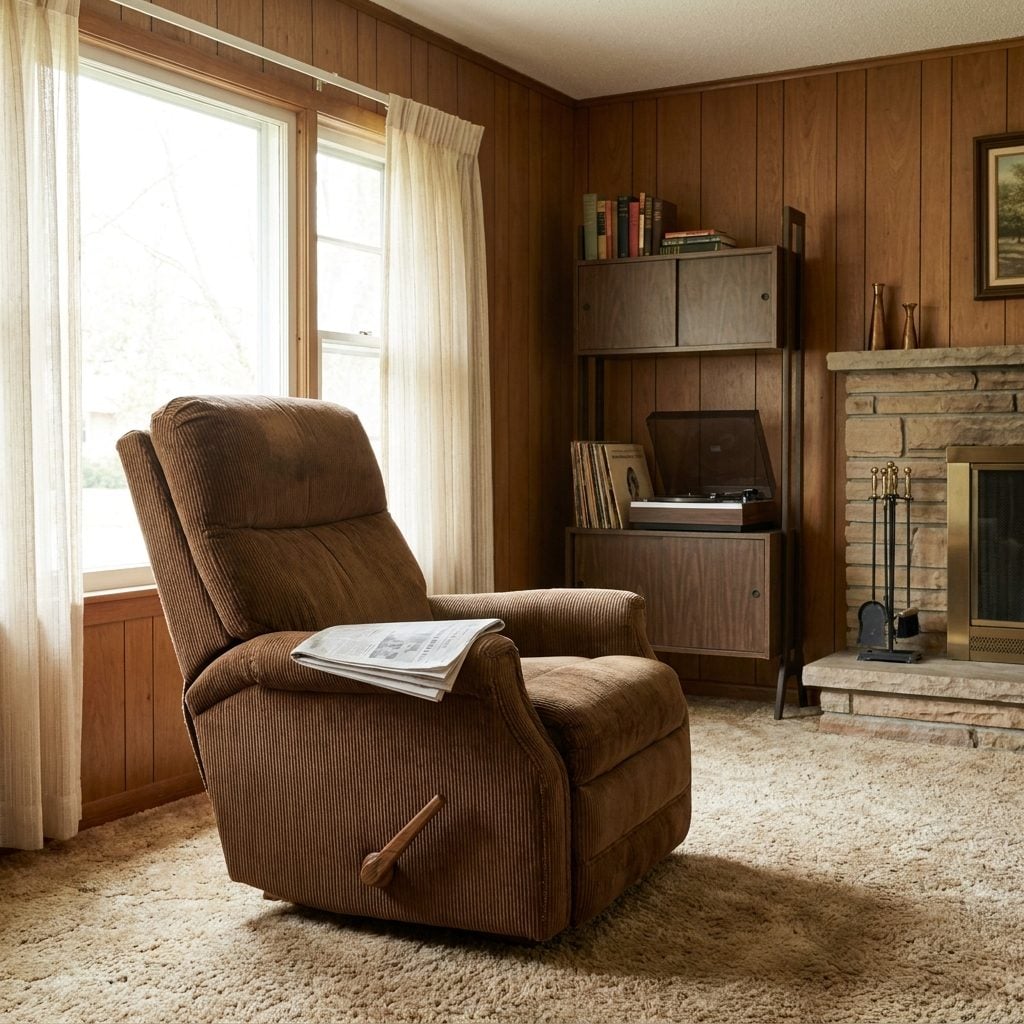
Everybody knew whose chair that was. You could occupy it while its owner was at work, but the sound of the car in the driveway started the evacuation. Nobody had written the rule down. Nobody needed to.
Pulling the lever produced that magnificent ka-chunk as the footrest shot forward and the chair tipped into recovery position. Years of elbows polished the armrests, one cushion sagged more than the other, and the whole thing gradually became a topographical record of one human body. Best seat in the room. Most heavily defended piece of territory in the house.
22. The Folding TV Trays That Let Dinner Move Into the Family Room
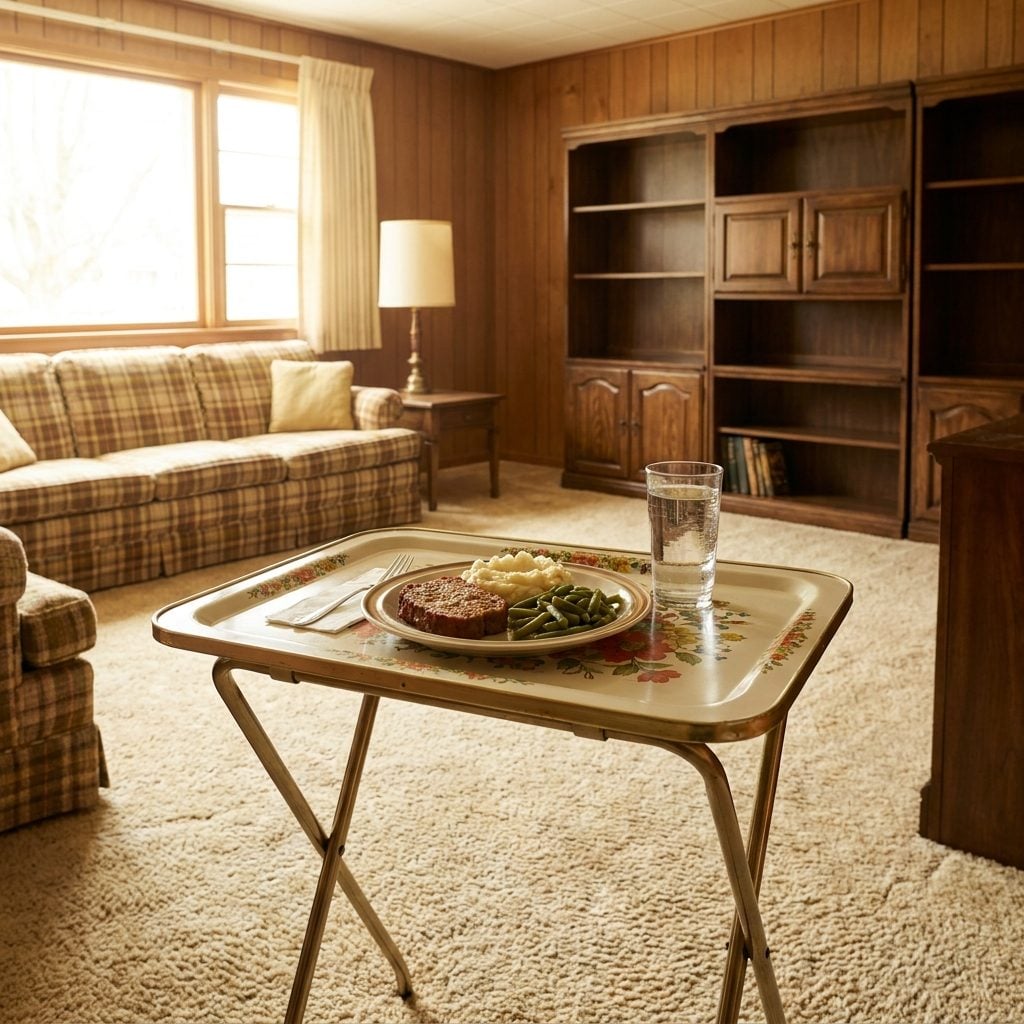
Dinner in front of the television felt like getting away with something, and the folding tray made the crime official. Four of them lived in a wire rack in the closet or stood permanently leaned against a wall. Faux woodgrain tops never quite matched the real furniture, and the folding legs had just enough wobble to turn a full glass of milk into a concentration exercise.
They came out for a Sunday movie, a big game, or anything important enough that nobody wanted to abandon the family room for the kitchen table. Plates on trays, feet buried in shag, everybody facing the console instead of one another and somehow still spending the evening together.
21. The Stereo Console That Was Practically Another Piece of Furniture
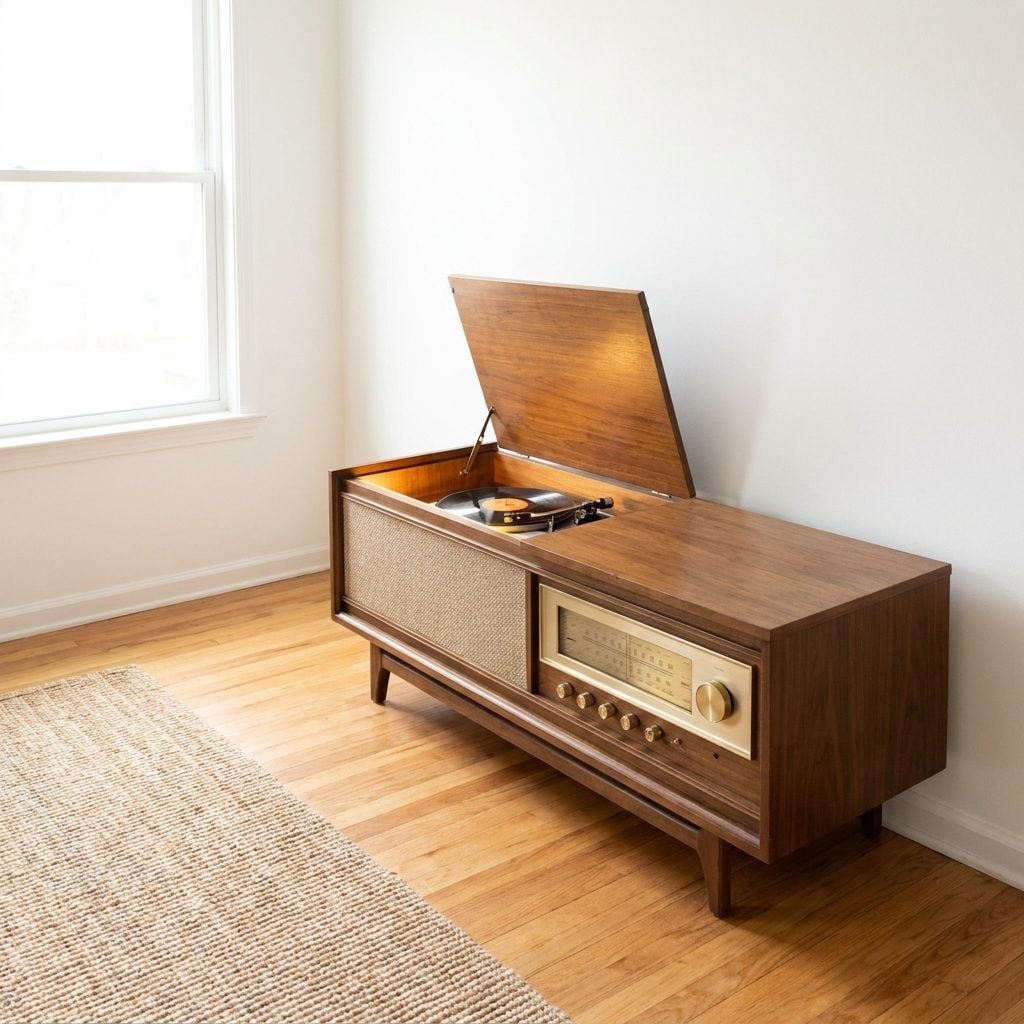
It looked like a sideboard until somebody lifted the lid. Underneath sat the turntable, radio dial, controls, and sometimes record storage, all packaged inside a long wood cabinet substantial enough to hold a lamp, framed photographs, and the inevitable doily. Speakers hid behind woven grille cloth at the ends, so the entire sound system arrived domesticated into one large piece of furniture.
Putting on a record became a small ceremony: lift the lid, slide the disc from its sleeve, handle the edges, lower the needle. Then music came out of something that looked fully capable of storing your grandmother’s good china.
20. The Board-Game Cabinet Everyone Raided on Long Evenings
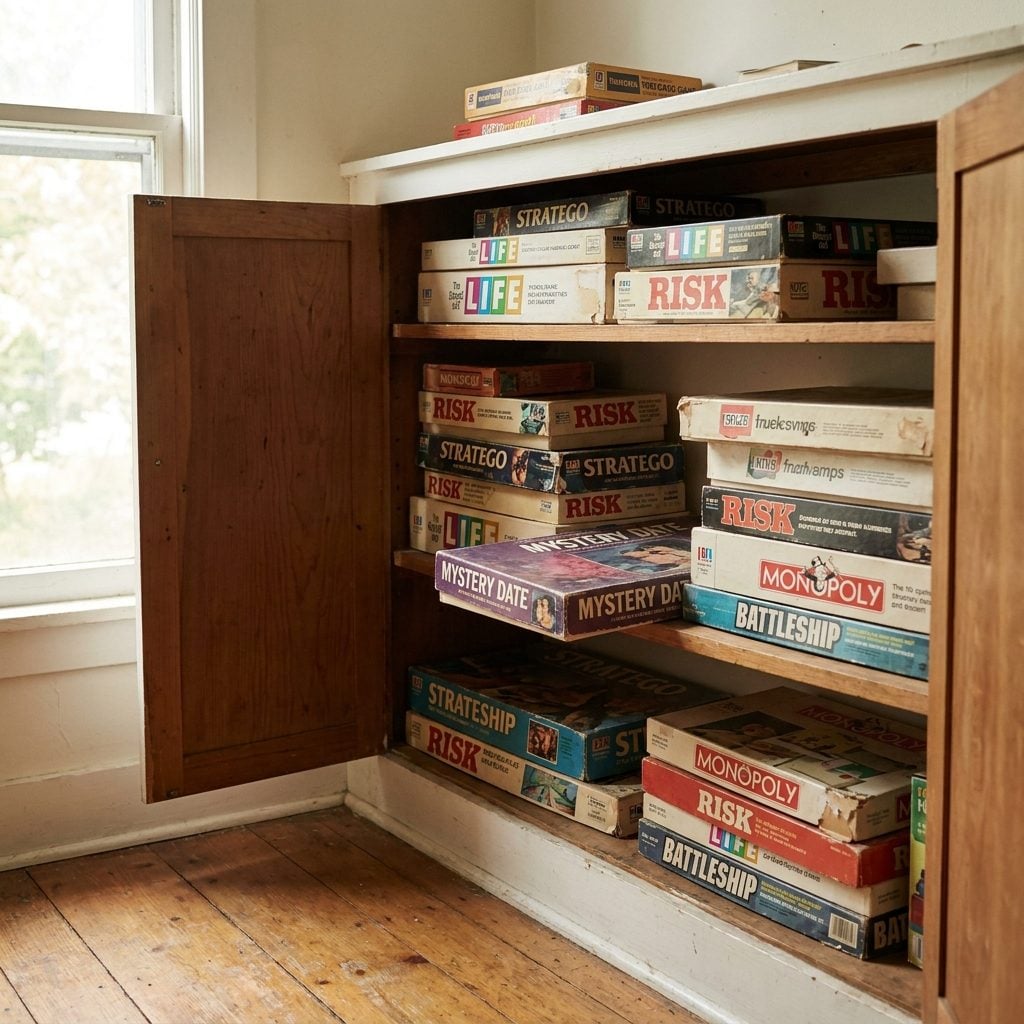
The Monopoly lid never fit correctly. Somebody had sat on it sometime around 1974 and the crushed corner remained family history. Sorry! contained pieces from at least two unrelated games. The Life spinner occasionally clicked when nobody had touched it. You knew the cabinet: low door, slightly warped hinge, instant smell of old cardboard.
Rainy Saturdays lived there. One kid wanted Trouble, somebody else insisted on Clue, and fifteen minutes disappeared arguing about what to play before anybody actually played anything.
19. The Crocheted Afghan Permanently Draped Across the Sofa
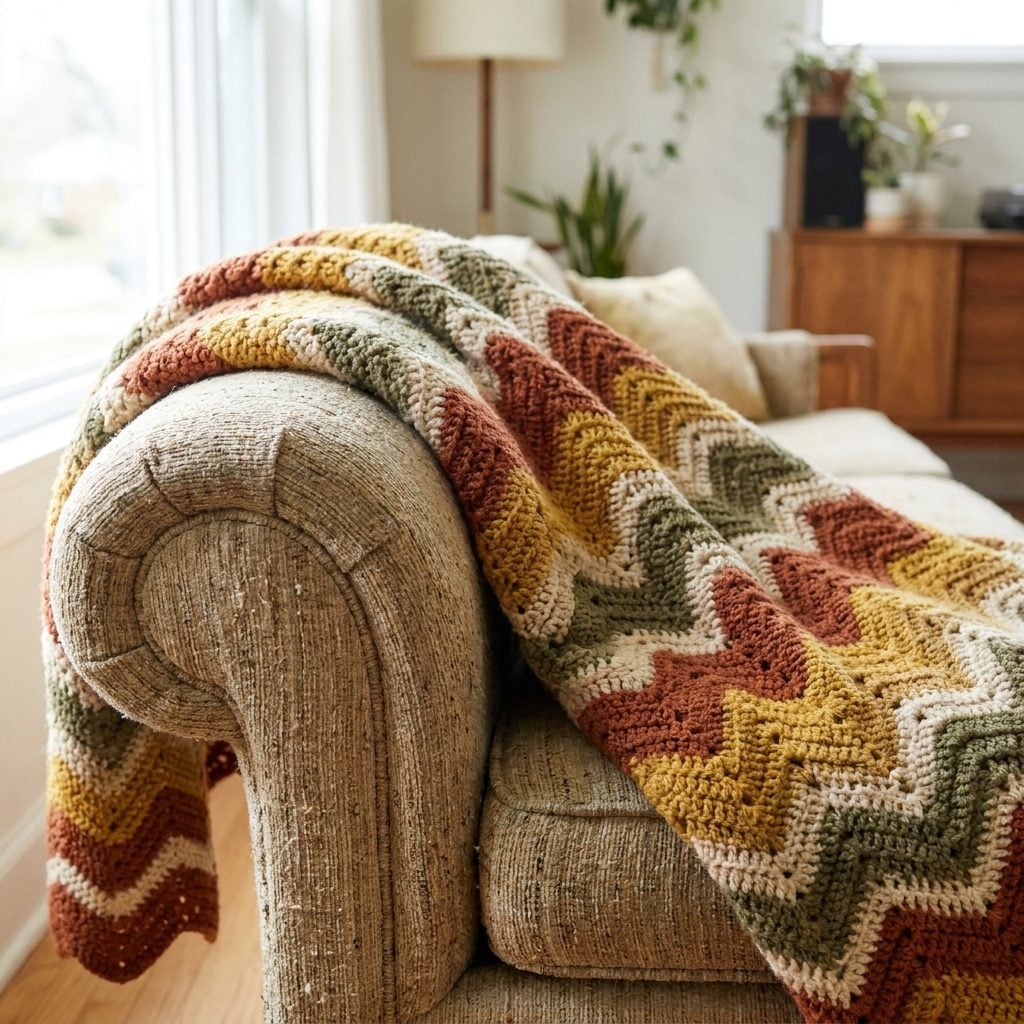
It spent half its life draped across the sofa and the other half shoved into a collapsed heap at one end. Somebody’s aunt, mother, or grandmother had made it in colors that had no business getting along and somehow did: burnt orange beside mustard beside a brown that apparently vanished from the visible spectrum sometime around 1983. The yarn could be scratchy. The holes caught toes. Nobody cared.
Afternoon movie? Blanket. Child with ambitions? Cape. Two dining chairs pushed together? Fort roof. Eventually the thing smelled faintly of the room itself, which may be the highest rank a household textile can achieve.
18. The Magazine Rack Stuffed With Newspapers, Catalogs and Magazines
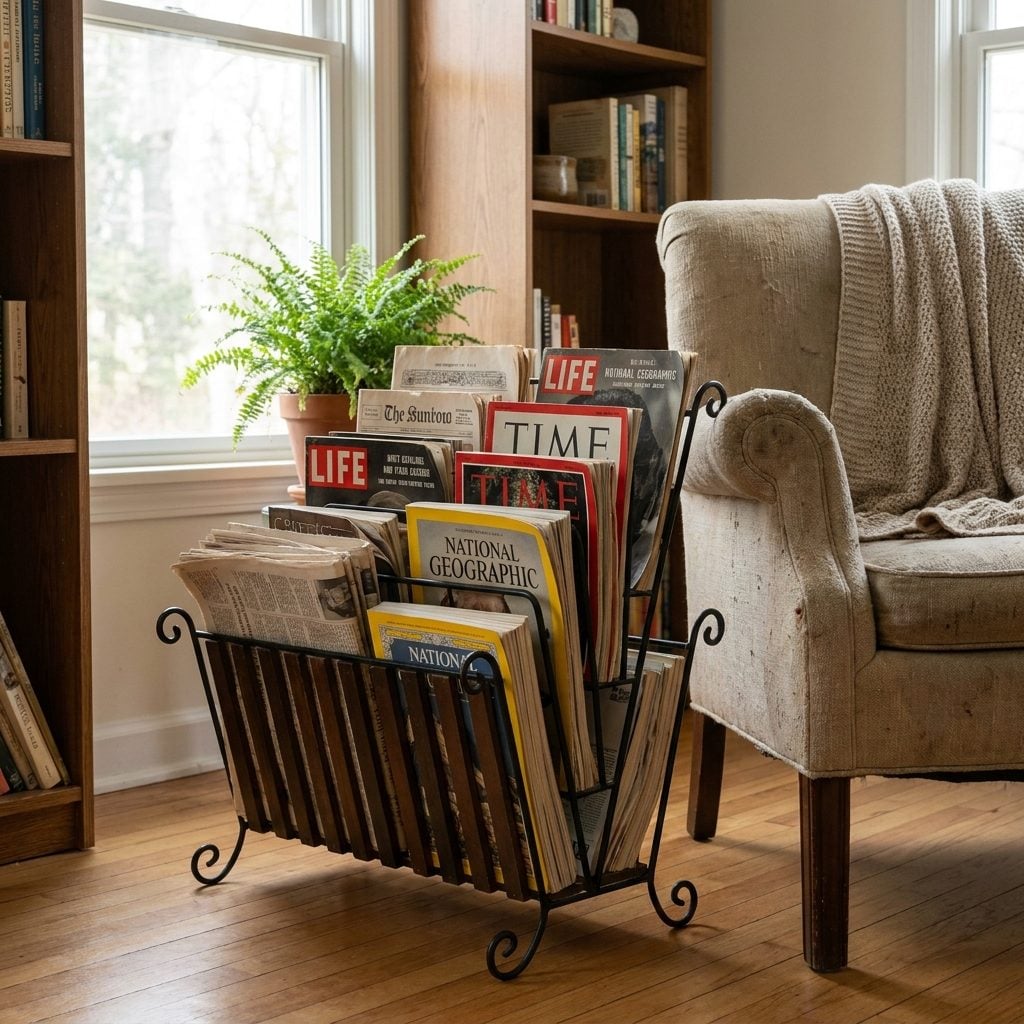
It leaned beside the sofa, wicker or brass, permanently losing a structural battle against its own contents. Sunday paper folded to the crossword. A Sears Wish Book with circles drawn around half the toy section. Last month’s Reader’s Digest. A stack of National Geographic issues nobody would throw away because throwing away National Geographic apparently required federal authorization.
During commercials somebody dug through for the TV listings. Catalog corners went soft from repeated trips through shoes, appliances, Christmas toys, and things nobody actually intended to order. Nothing was filed. The rack filled, spilled, got purged, and began filling again.
17. The Brick or Stone Fireplace Everyone Gathered Around
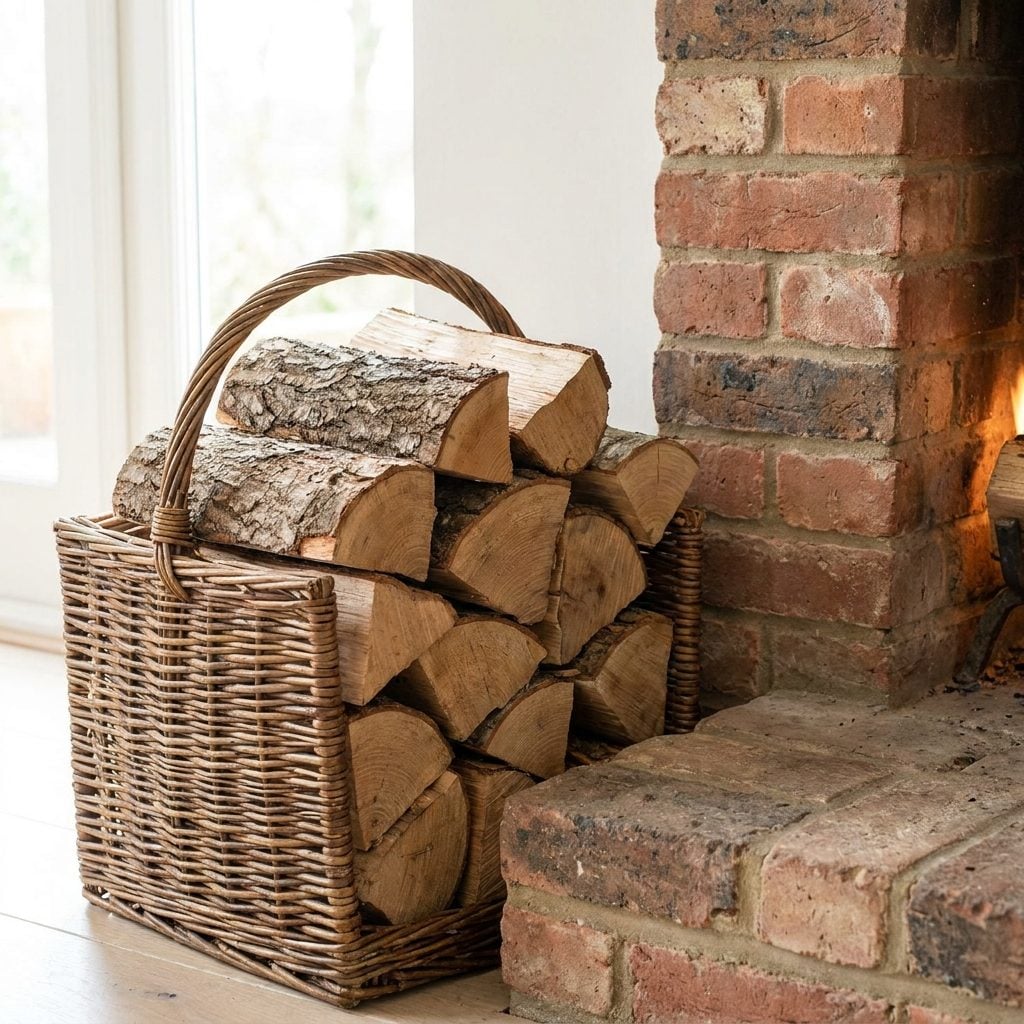
Come January, the fire could reorganize the room without asking permission. Chairs edged closer, somebody stretched out on the shag, slippers migrated toward the hearth, and the best seat acquired an owner for the evening. 1970s family rooms loved enormous masonry-looking fireplace walls — full brick in some houses, brick or stone facing in others — because the fireplace wasn’t meant to whisper from a discreet opening. It was architecture with flames in it.
Moving fire gave everyone a common focal point, threw warm light across faces, and made sitting still unusually easy. Some nights the TV never got switched on at all. A glowing picture tube had formidable competition when the other screen contained actual fire.
16. The Record Collection Everyone Flipped Through
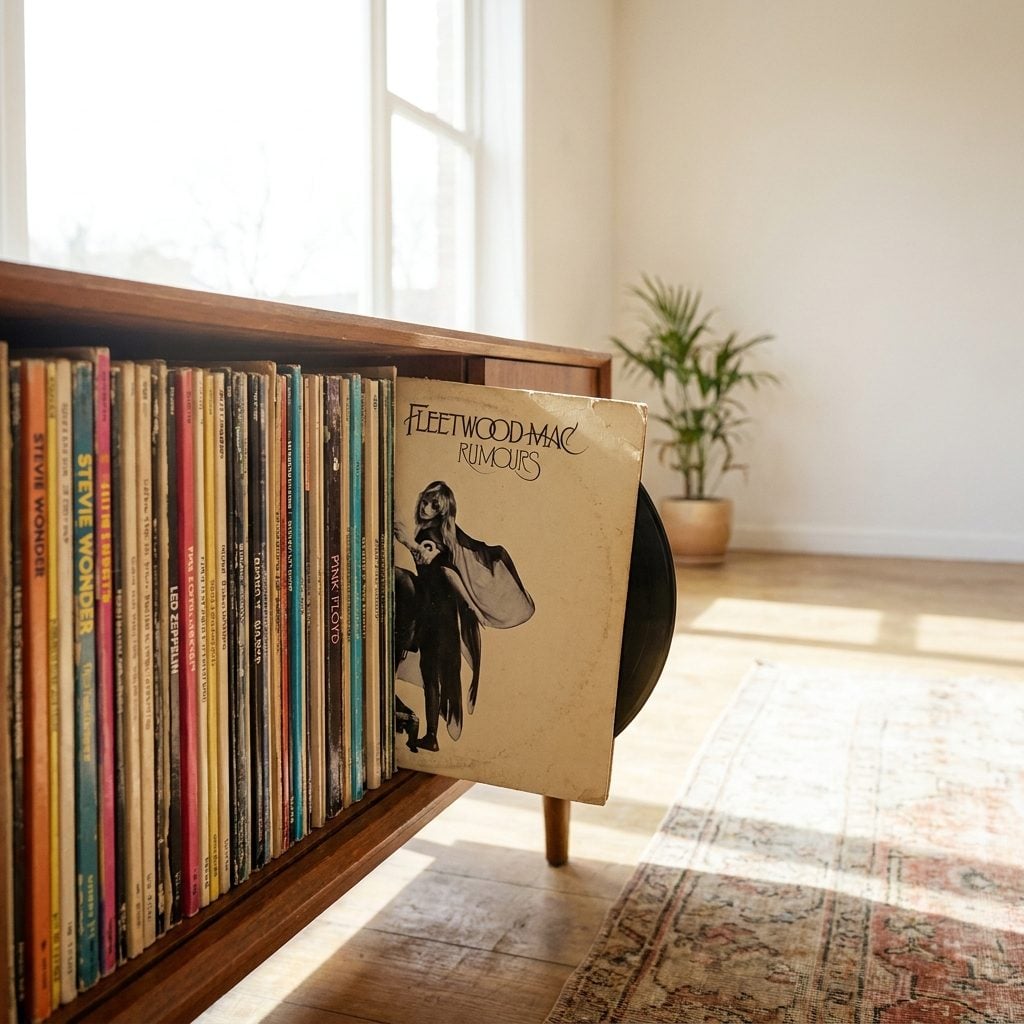
The collection stood upright in a low cabinet, spines out. Running your fingers through it produced that soft thwack-thwack of cardboard sleeves falling against one another. Some households alphabetized. Others relied on archaeology. Records migrated into the wrong jackets, empty sleeves went back on the shelf, and one album had a scratch everybody denied causing.
Browsing together was part of listening. A sibling knelt beside you, rejected three choices, argued for a fourth, and eventually somebody won. The music hadn’t started yet and the room was already doing what a family room was supposed to do.
15. The Toy Basket That Let the Kids Play Where the Adults Were
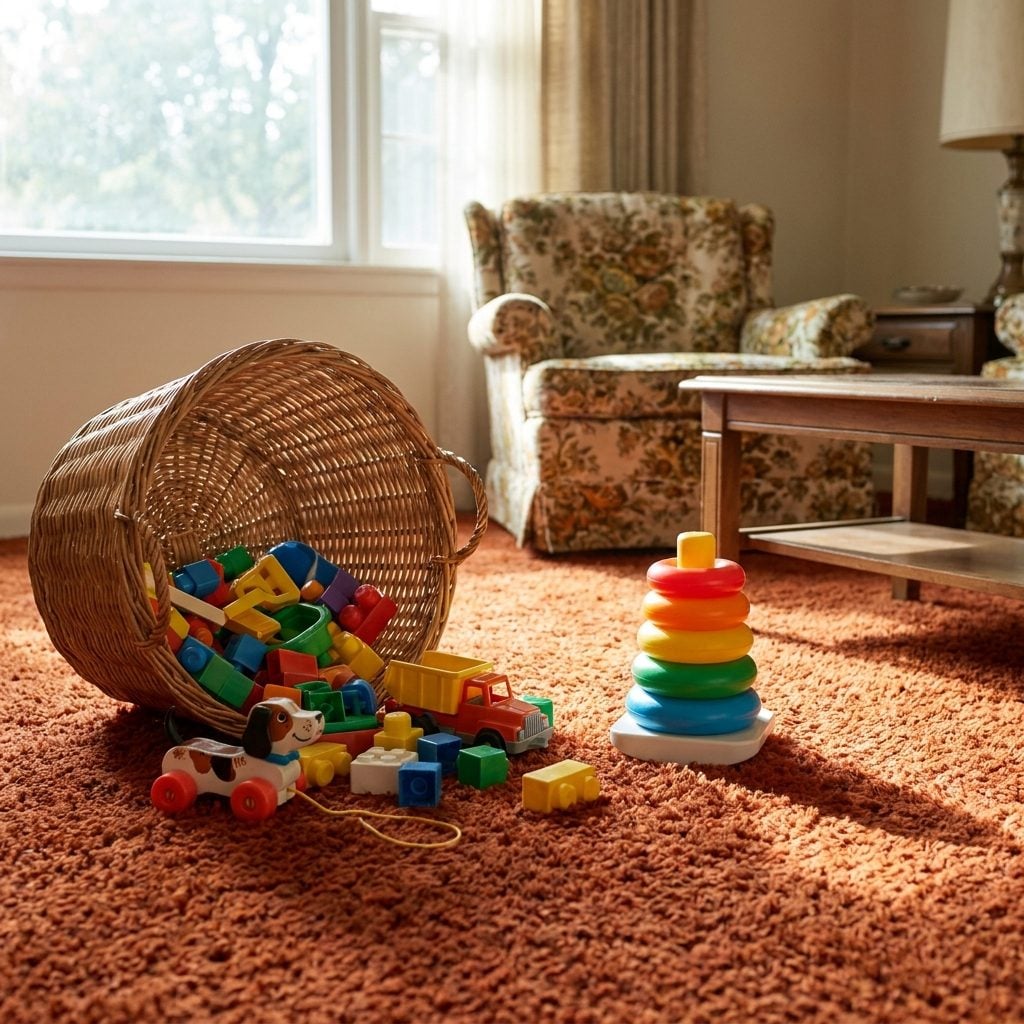
A wicker or plastic basket sat near the sofa with one handle gradually giving up. Inside lived Matchbox cars, blocks, a headless action figure, crayons without a box, and a Slinky whose best days were clearly behind it. Kids dumped the whole thing onto the shag and established civilization while the adults watched television or talked nearby.
That arrangement mattered. The room allowed adults and children to occupy the same space without requiring them to do the same thing. Nobody needed a beautifully styled separate playroom because play was already happening in the middle of family life.
14. The Corded Telephone That Rang Right in the Middle of Everything
🔥 Would you like to save this?
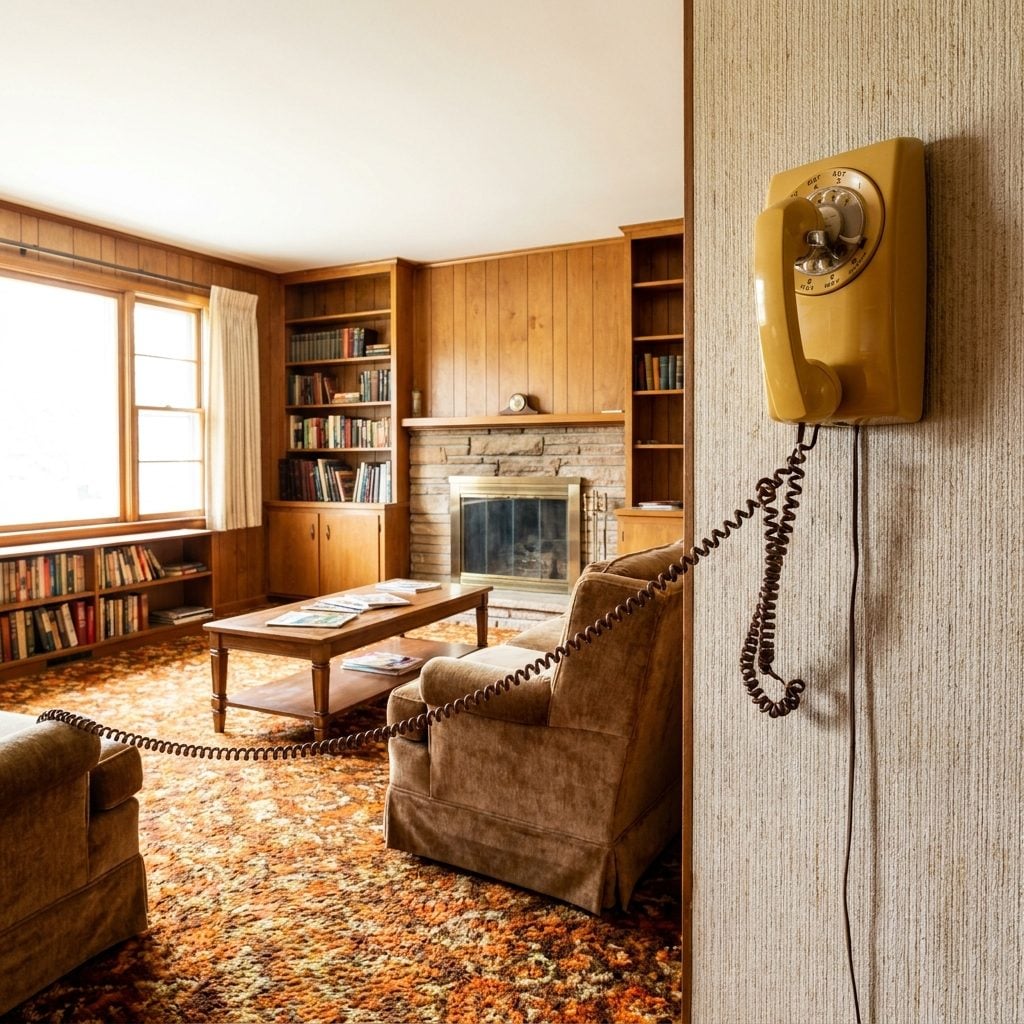
When the telephone rang, the whole room knew. Somebody lowered the television. Somebody shouted, “I’ll get it.” Whoever actually reached the receiver first might discover that the call was for somebody else and begin the ritual yell through the house.
The coiled cord deserves its own museum exhibit. It stretched into the kitchen, wrapped around chairs, snagged doorways, developed mysterious kinks, and allowed teenagers to attempt privacy while remaining physically tethered to the family room.
13. The Floor Cushions That Appeared Whenever More People Came Over
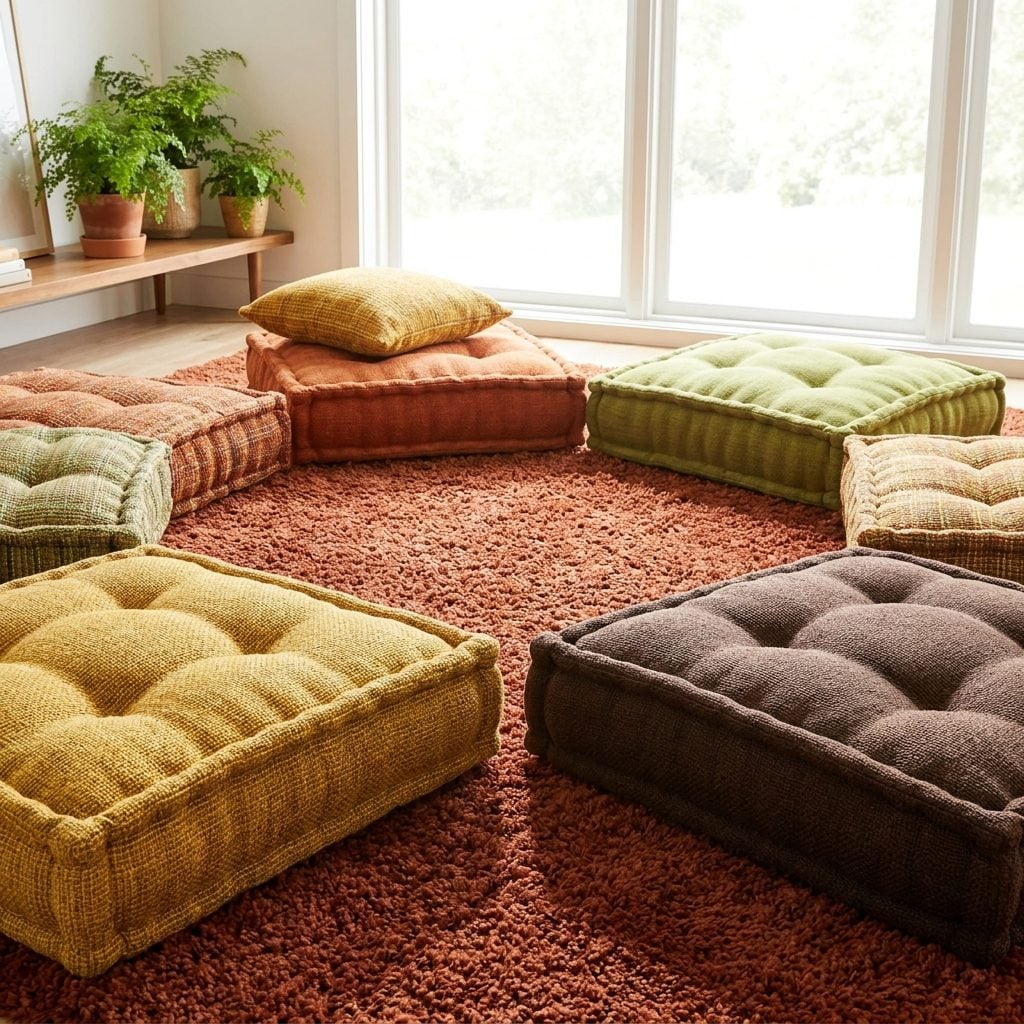
They waited behind the sofa or in a hall closet: big square cushions upholstered in corduroy or nubby fabric the color of paprika, mustard, or dark avocado. Then relatives arrived, out came the cushions, and suddenly a room designed for six could absorb twelve.
Kids took the floor. Cousins went cross-legged in front of the television. Somebody leaned against the sofa base and somebody else claimed the carpeted step. Formal seating capacity stopped mattering.
12. The Big Stereo Speakers That Filled the Whole Room With Music
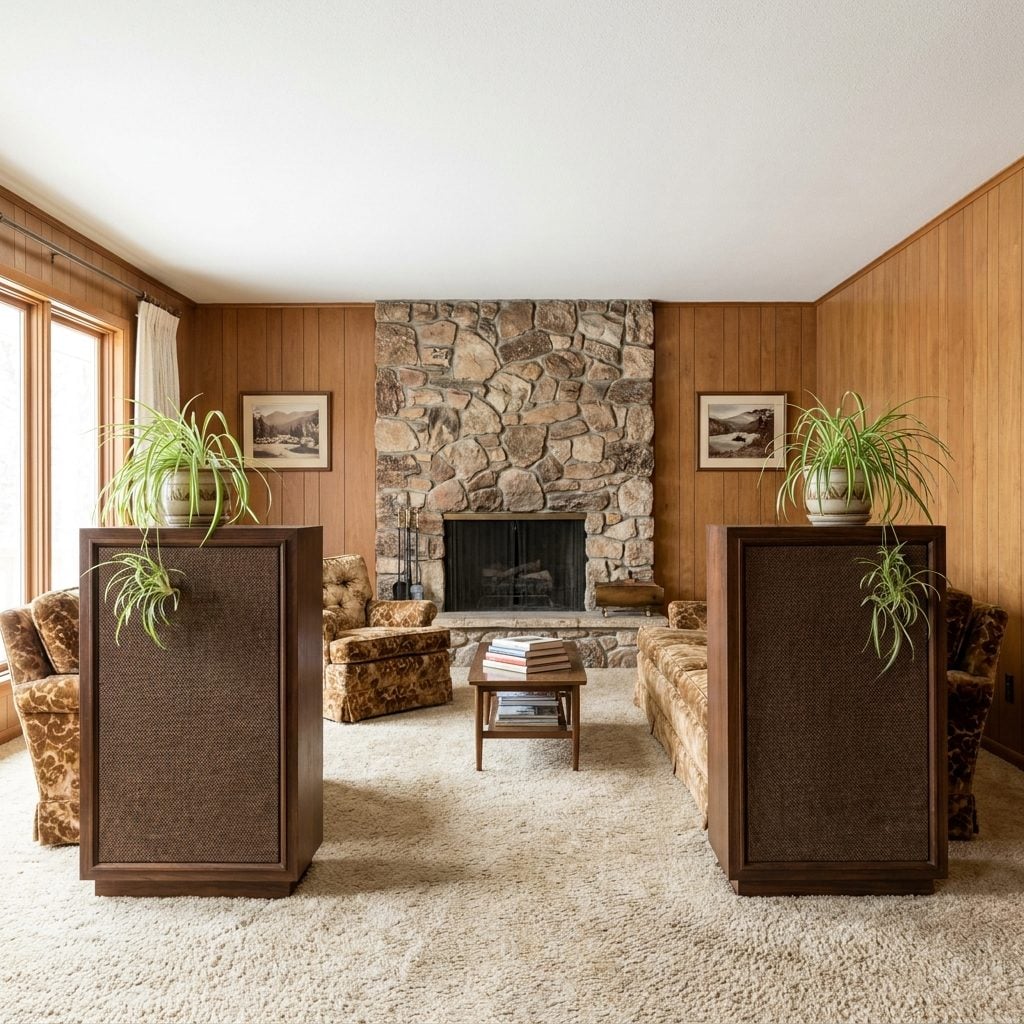
The speakers were almost end tables and occasionally got treated as such. Plants appeared on top, a photograph leaned against one, and someone rested a drink there exactly once before being told what vibration and liquid could do to expensive equipment. Turn them up and the bass arrived through the shag before your ears had finished processing the song.
Music wasn’t private. One person selected the album and everybody in the room inherited the choice. Somebody danced, somebody complained, somebody asked for the next record.
Music wasn’t something you kept in your ears. It filled the room, and everyone in it, whether they asked for it or not.
11. The Half-Finished Jigsaw Puzzle Everyone Kept Coming Back To
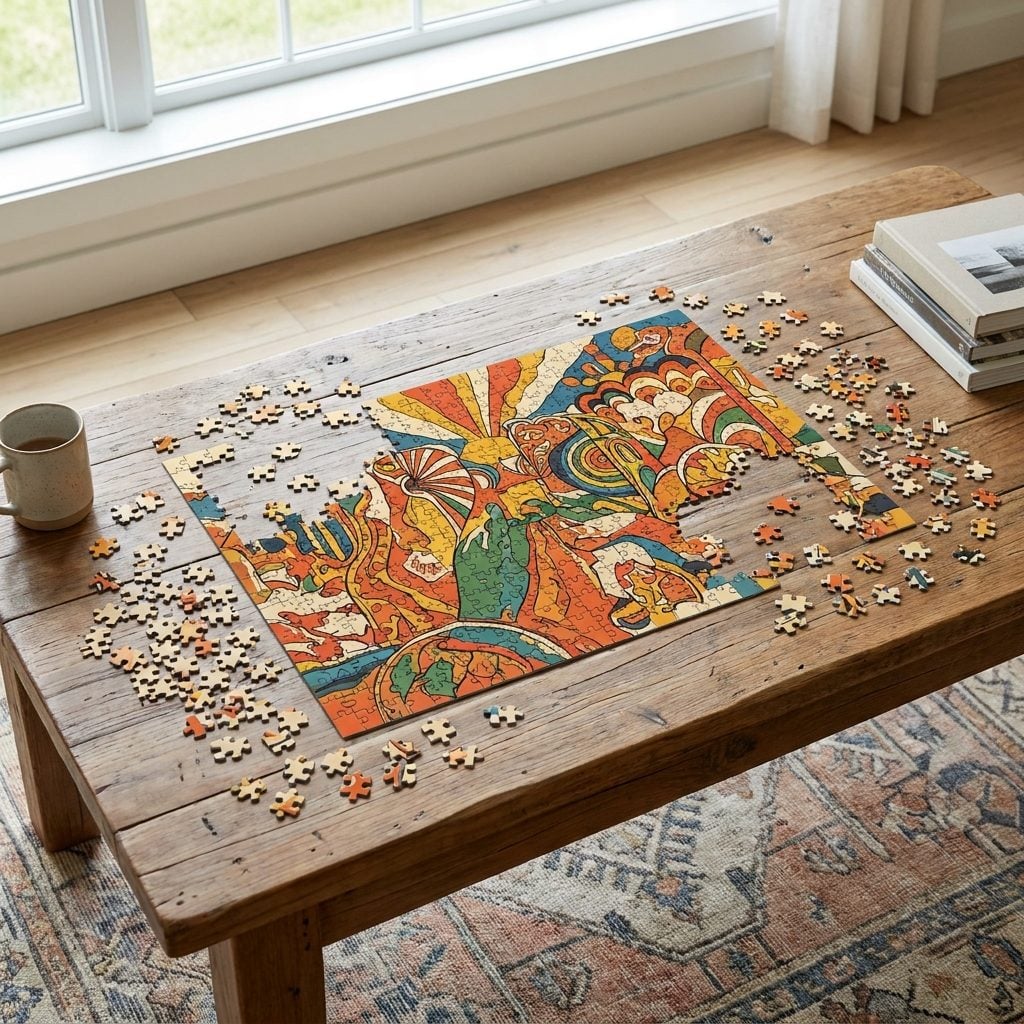
First somebody dumped the box, then came the universal first strategy: find the edge pieces. A card table opened in the corner and remained there until further notice. For the next week, people wandered past on their way somewhere else, stopped, found one piece of maddening blue sky, felt briefly brilliant, and continued into the kitchen.
The puzzle didn’t require everyone to sit down together at one appointed time. That was its charm. It belonged to the room, waiting for whoever happened to pass.
10. The Big Reading Lamp That Made One Corner Impossible to Leave
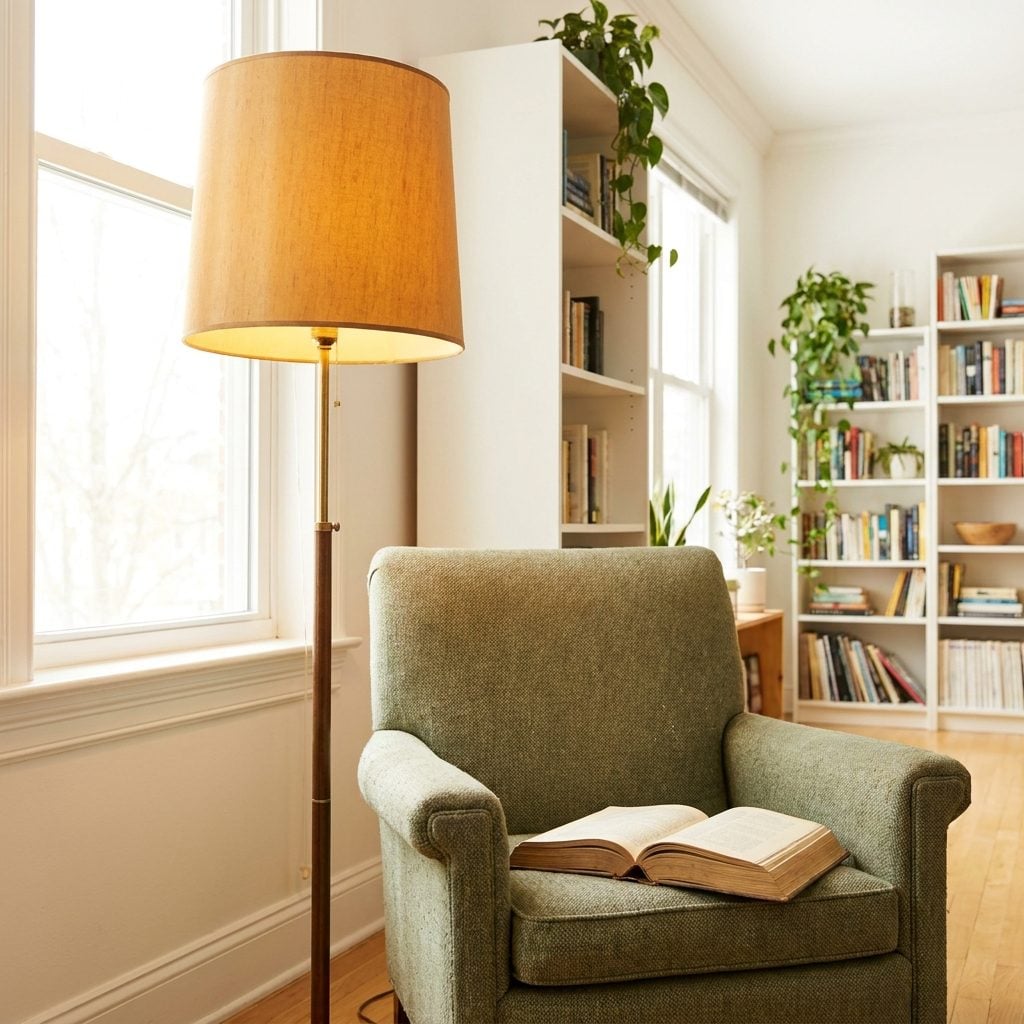
One corner belonged to the lamp, maybe a tall pole model with an amber shade, maybe a heavy ceramic base in butterscotch, brown, or avocado. Switch it on and the chair underneath entered its own little room inside the larger one. The newspaper moved there. So did the crossword, a paperback, homework, knitting, whatever required enough light to see without turning on the overhead fixture and destroying the evening.
A localized pool of warm light made one chair feel visually separate even in a crowded room. That was the trick: privacy without isolation.
9. The 8-Track Player and the Stack of Cartridges Beside the Stereo
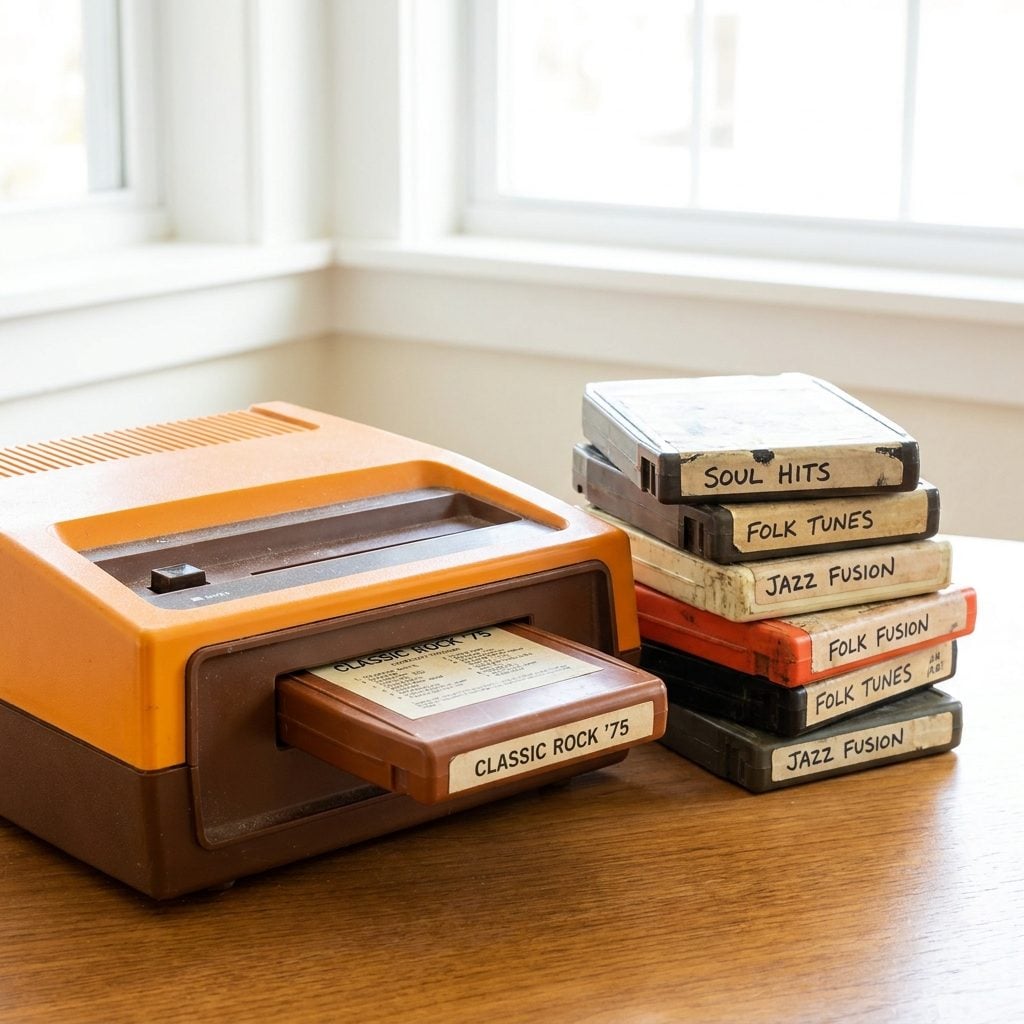
That satisfying ka-chunk as the cartridge locked into place was almost worth what happened next. A song sailed toward the chorus, stopped abruptly, clicked to another program, and resumed as though nobody involved in designing the format had ever listened to music.
Cartridges stood beside the stereo with curling labels and scarred plastic shells. A troublesome tape might get a folded matchbook or bit of cardboard wedged underneath to improve alignment, one of those household repair techniques nobody remembers learning. You couldn’t rewind an 8-track in the ordinary sense; the endless loop kept moving forward, so hearing something again meant waiting for it to come around. Cassettes steadily pushed the format aside, but the mechanical clunk survives in memory with unreasonable clarity.
8. The Family Photos Covering End Tables, Shelves and the TV
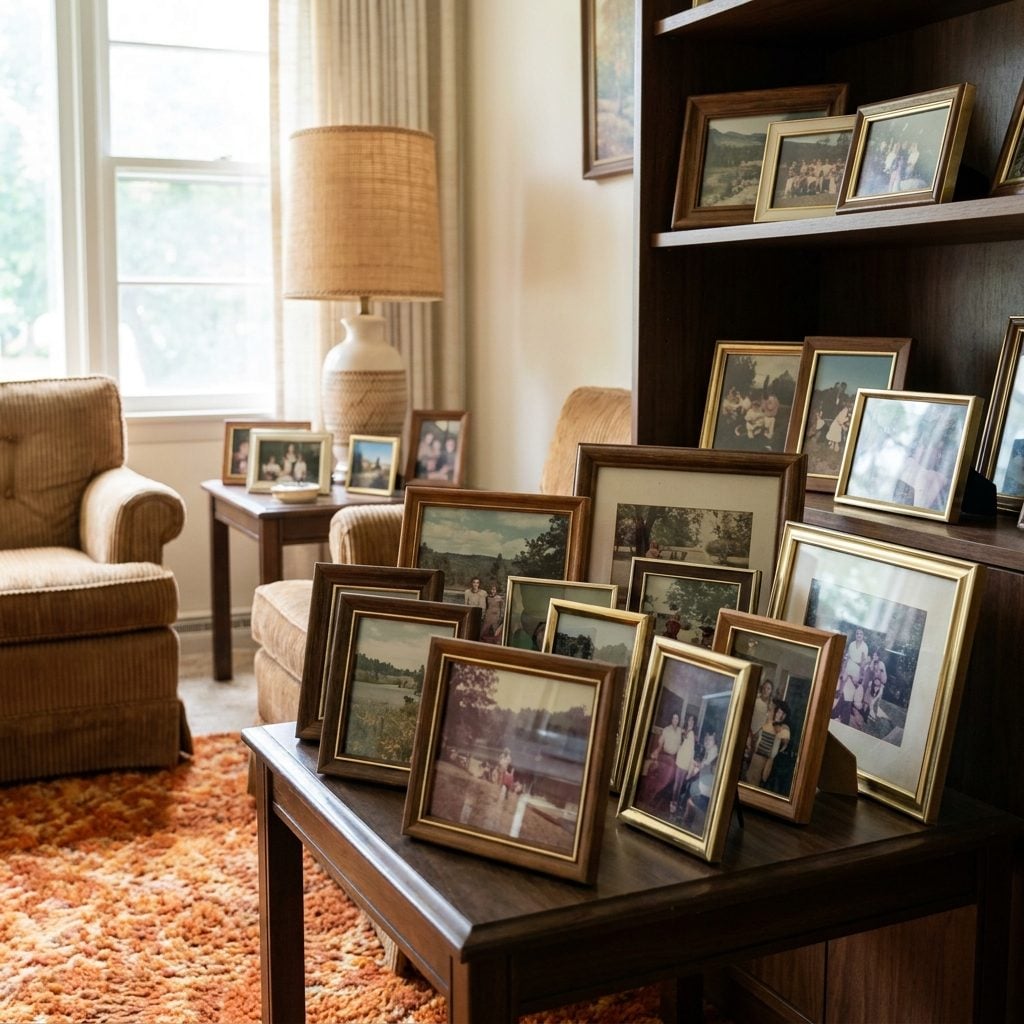
They began on the end tables and multiplied: school portraits, wedding pictures fading amber at the edges, Grandpa in uniform, first Christmas, graduation, a cousin nobody had seen since 1968 still holding permanent real estate beside the lamp. Frames came in brass, silver, faux wood, plastic pretending to be brass, and plastic pretending to be wood.
Eventually photographs colonized the stereo console and television cabinet too. You dusted around them and could identify every face from across the room.
7. The Deck of Playing Cards That Was Never Far Away
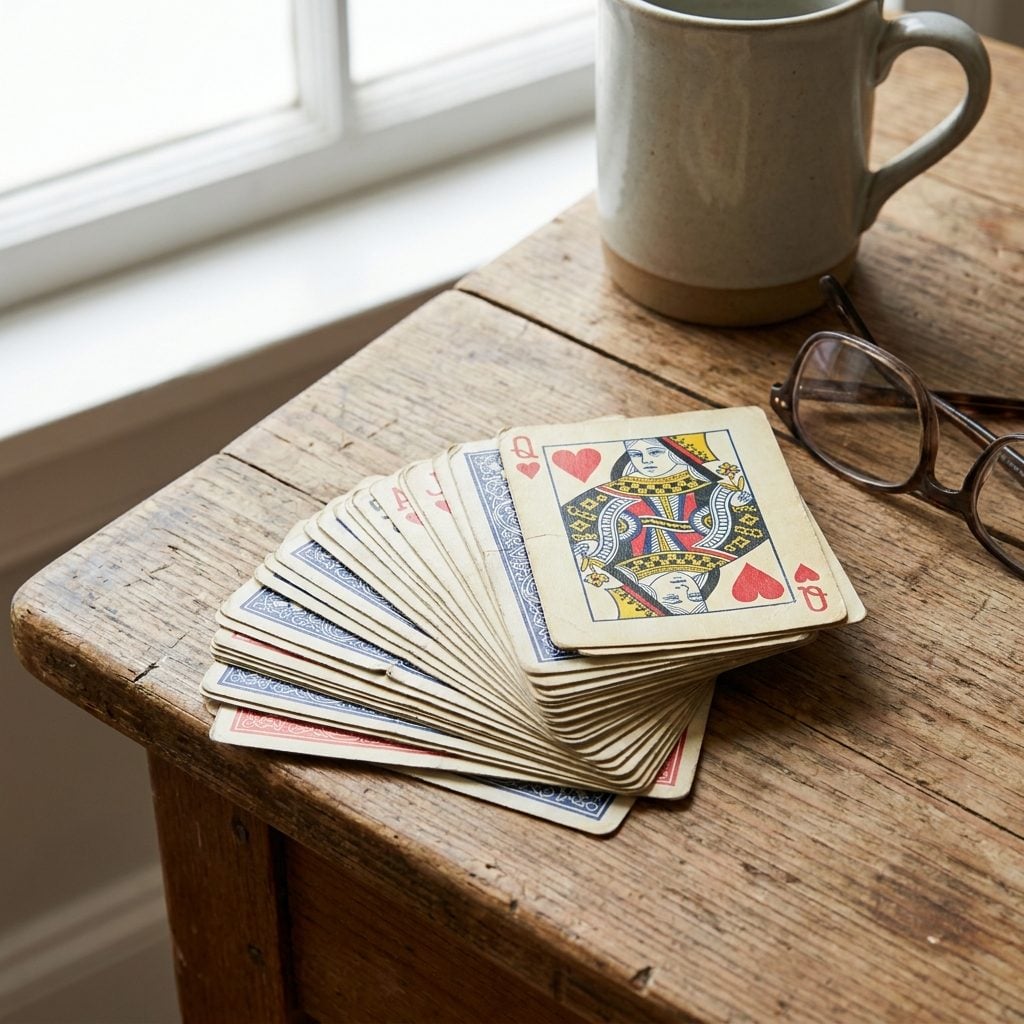
Red Bicycle backs or blue, box softened at the corners by years of use. The deck lived in a drawer, on a shelf, beside the recliner, or wedged somewhere everybody somehow knew to look. Rainy Sunday meant gin rummy, company could arrive and find itself holding cards before the coffee finished percolating, and kids learned to bridge-shuffle badly enough to launch half the deck into the shag.
Completeness was negotiable. One bent card, one worn corner, perhaps a missing two of clubs replaced by a handwritten scrap of paper. Nobody discarded fifty-one perfectly good cards because one had gone exploring.
6. The Houseplants and Hanging Planters That Made the Room Feel Alive
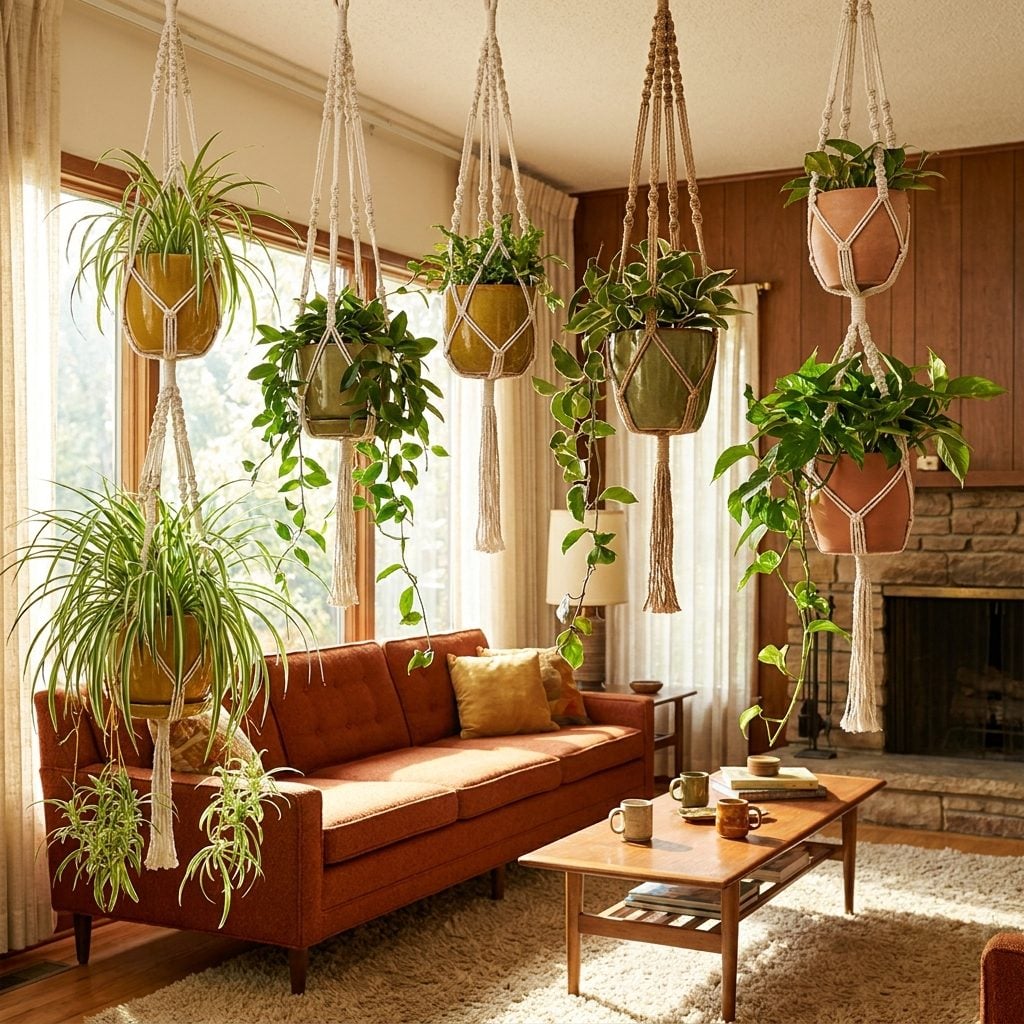
A spider plant occupied the windowsill and launched babies into space on long green runners. Pothos wandered across shelving. Somewhere near the window, a Boston fern slowly deposited itself onto the shag one dead frond at a time. Then came the macramé: jute rope, wooden beads, ceramic pot, plant hovering in a corner that furniture couldn’t quite reach.
Plants were decoration and household hobby at once. Somebody watered them. Somebody forgot. Repotting produced a remarkable amount of soil anywhere except the new pot.
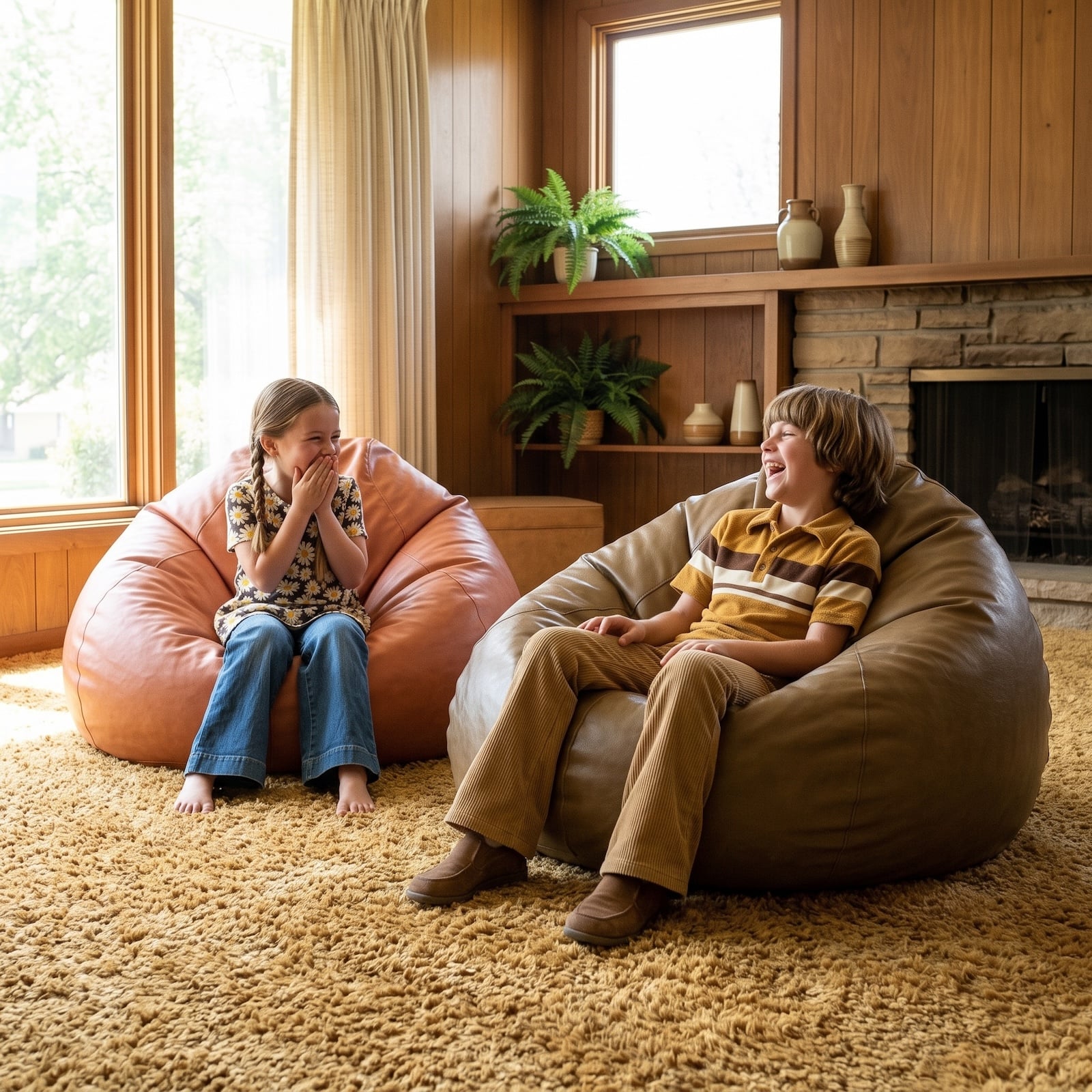
5. The Beanbag Chairs That Gave the Kids Their Own Seats
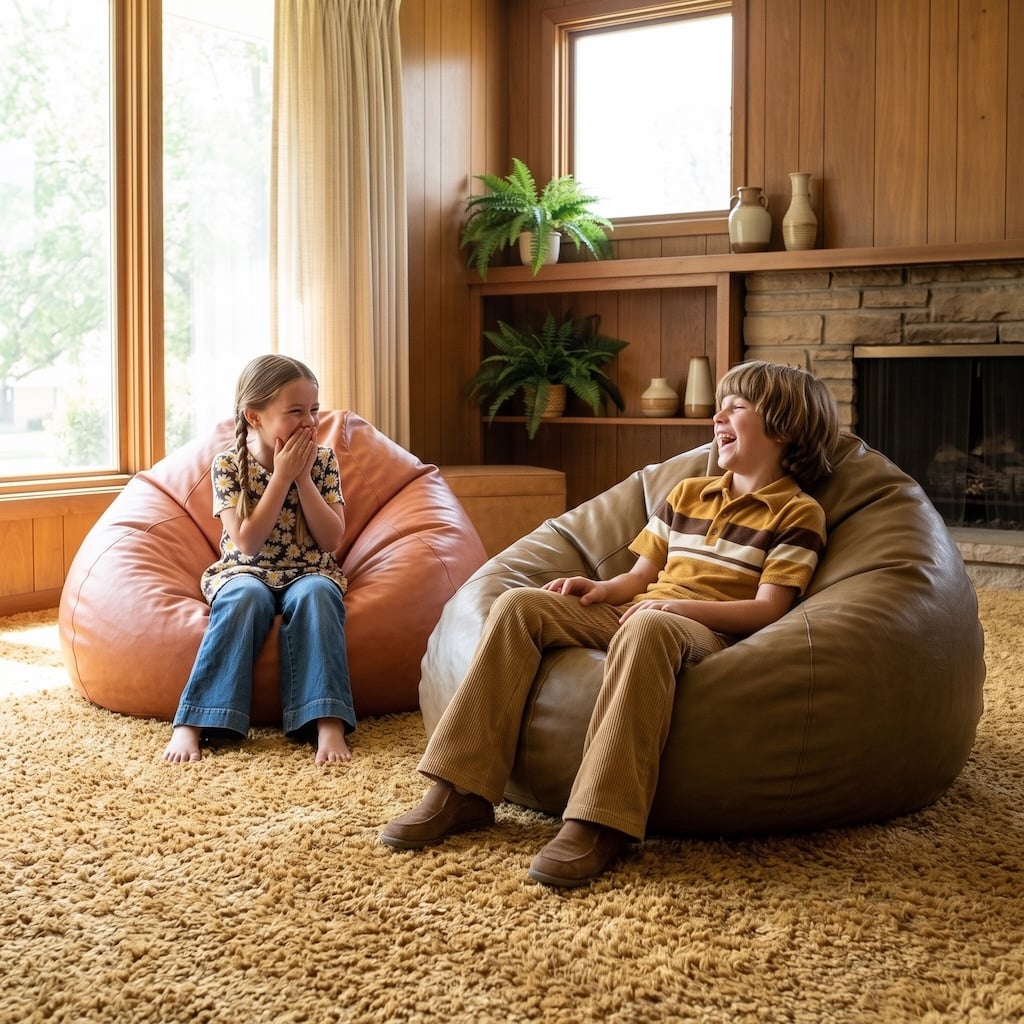
You heard a beanbag moving before you saw it: that dry avalanche of tiny filling beads as somebody dragged the thing toward the best position in front of the television. Kids got beanbags because adults had already claimed the sofa and recliner, which was an excellent arrangement. You could flop into one sideways, fold yourself almost in half, or disappear so deeply that standing up required a plan.
The landing mattered. Hit the center and the chair wrapped around you; come in crooked and it redistributed its filling with malicious speed and deposited you onto the shag. By now everybody had found a place: adults on the sofa and recliner, guests on floor cushions, kids in the seats that looked the least respectable and were therefore the most fun.
4. The Basket of Firewood Beside the Hearth
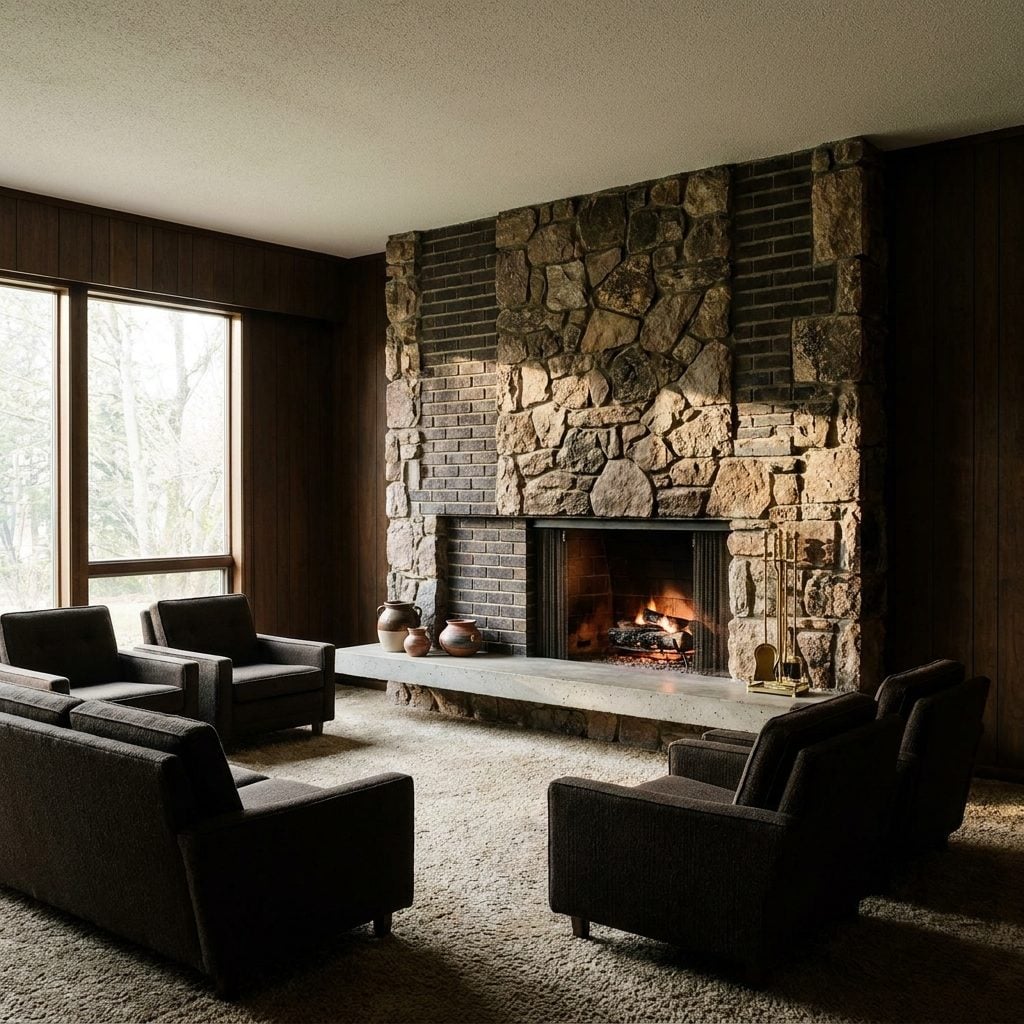
Before anybody lit the fireplace, the wood announced itself by smell: bark, resin, a trace of damp earth. Wicker and bent-willow baskets held split logs, kindling, and often one photogenic piece of birch placed on top as though the firewood had a stylist.
The basket shed continuously. Bark scattered across the hearth, somebody swept it up, and the next person added a log and restored the mess within thirty seconds. Refilling it often fell to the child standing nearest the door, which was how you discovered that an armful of firewood was much heavier halfway across the room than it had appeared outside.
3. The Wood-Paneled Walls That Made the Family Room Feel Like a Cozy Den
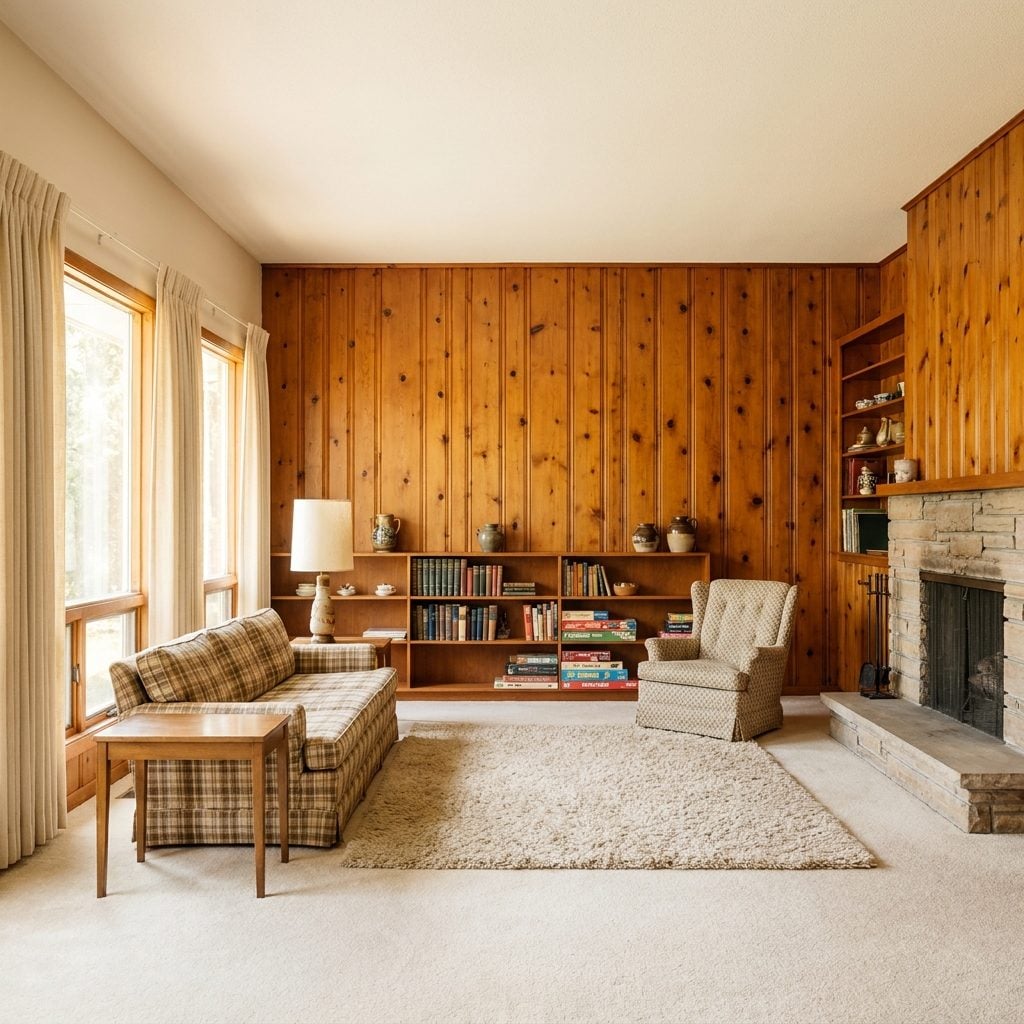
Knock on some of it and the wall answered with a hollow thunk. Plenty of 1970s paneling wasn’t solid walnut or lovingly fitted tongue-and-groove boards. Thin wood-grain sheet paneling, often made from plywood or hardboard with printed or laminated surfaces, could go up over an existing wall quickly and transform a plain room before dinner. Look closely and the same printed knot might appear several times across the wall.
Nobody cared at night. Low lamps and television light turned all that brown into a warm envelope. White walls belonged to another part of the house. The family room wanted to feel like a den, a cabin, or a suburban hunting lodge where the most dangerous wildlife was the dog asleep beneath the TV tray.
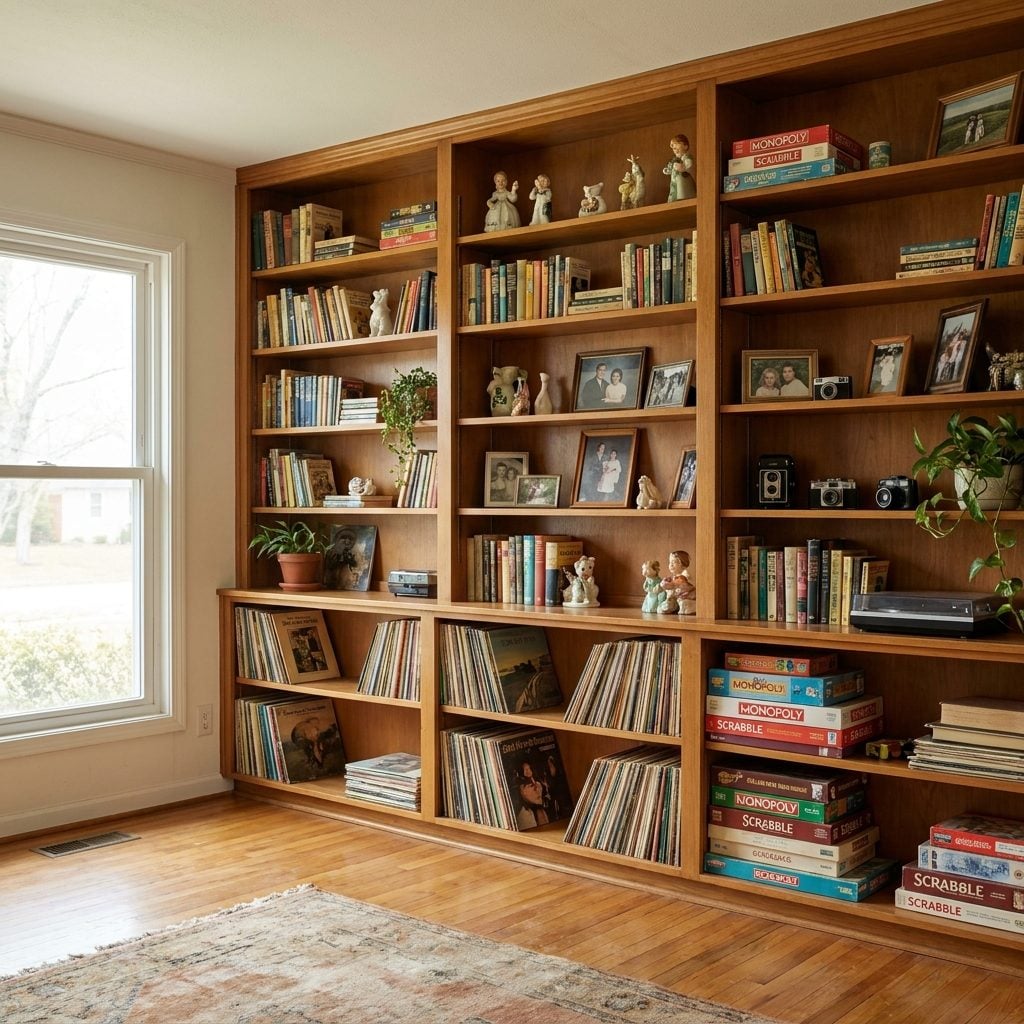
2. The Built-In Shelves Holding Books, Records, Games and Family Stuff
🔥 Would you like to save this?
One wall eventually had to surrender: books, encyclopedias from A to Z, board games balanced at dangerous angles, records, fishing trophies, ceramic animals, a macramé owl, several years of National Geographic. Nothing matched, and somehow the wall looked better for it.
Some family rooms had true built-ins. Others used freestanding or modular wall systems that produced much the same effect: one large storage landscape where the household could put everything it wasn’t ready to throw away. The shelves became an accidental family portrait, displaying what people read, played, collected, won, made, and refused to discard.
1. The Conversation Pit or Sunken Seating Area Everyone Wanted to Sit In
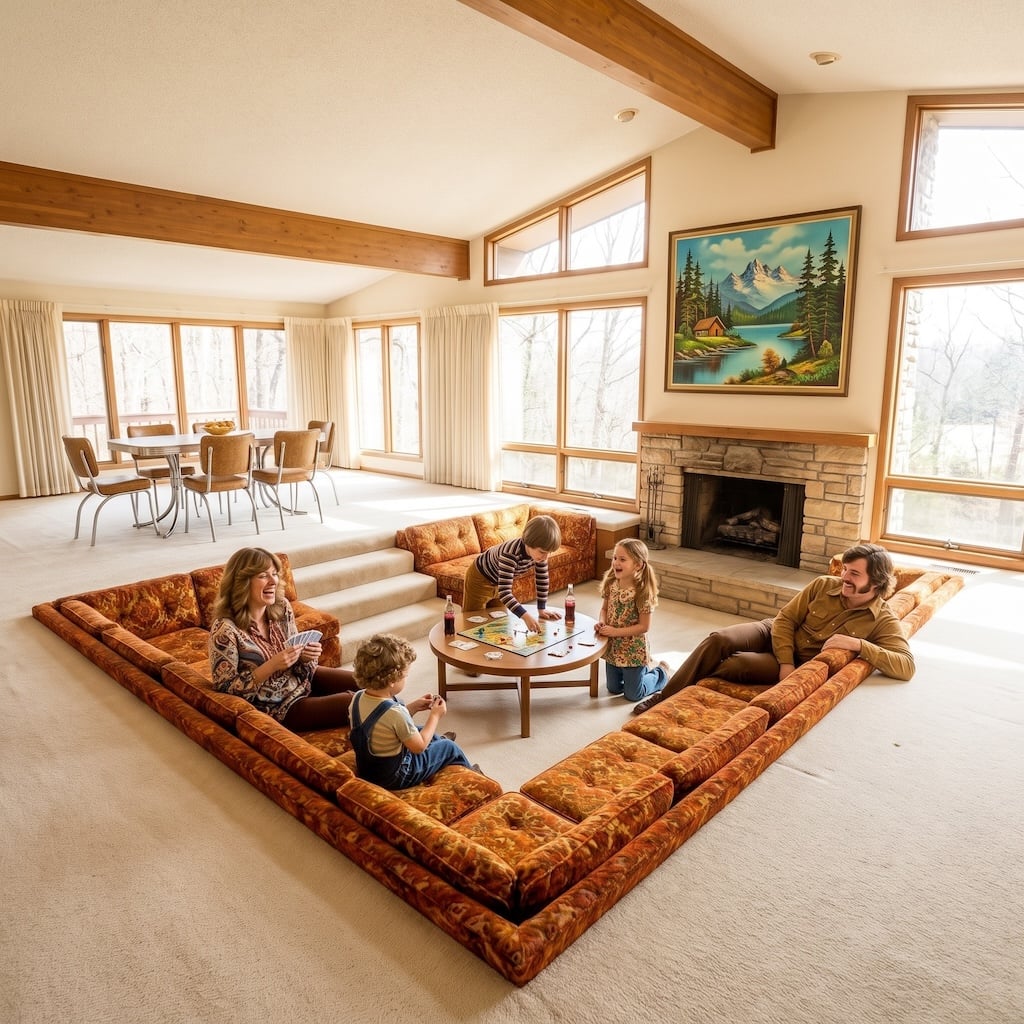
Two shallow steps down and suddenly you were somewhere else. The conversation pit didn’t ask furniture to create intimacy because the floor itself had already done it. Built-in seats turned inward, a low table occupied the middle, perhaps a brick fireplace burned nearby, and everybody dropped below the surrounding room and faced everybody else. Kids claimed the carpeted step, adults sank into corners, and Grandma could preside from the edge without moving a chair an inch.
The arrangement was almost comically committed to togetherness. Adults and children could sit inside the same sunken zone with cards or a game spread across the table, every seat aimed toward the middle rather than toward some distant wall. The room wasn’t merely decorated for gathering. It was built around the assumption that gathering would happen.
The sunken floor did what no amount of furniture arranging quite could: it made the room turn inward and look at itself.
This is where the whole 1970s family-room idea reaches its logical extreme. The console TV, shag carpet, records, toys, games, afghans, lamps, fireplace, and beanbags all encouraged people to linger together. Then somebody looked at an ordinary level floor and decided even the architecture should join in.
Conversation pits faded for more than one reason: changing tastes, inflexible layouts, accessibility and trip concerns, and a preference for rooms that could be rearranged more easily. Yet they never completely disappeared from the design imagination. Want the same gather-round effect without excavating the house? A cottage living room with inward-facing seating can borrow the important part.