
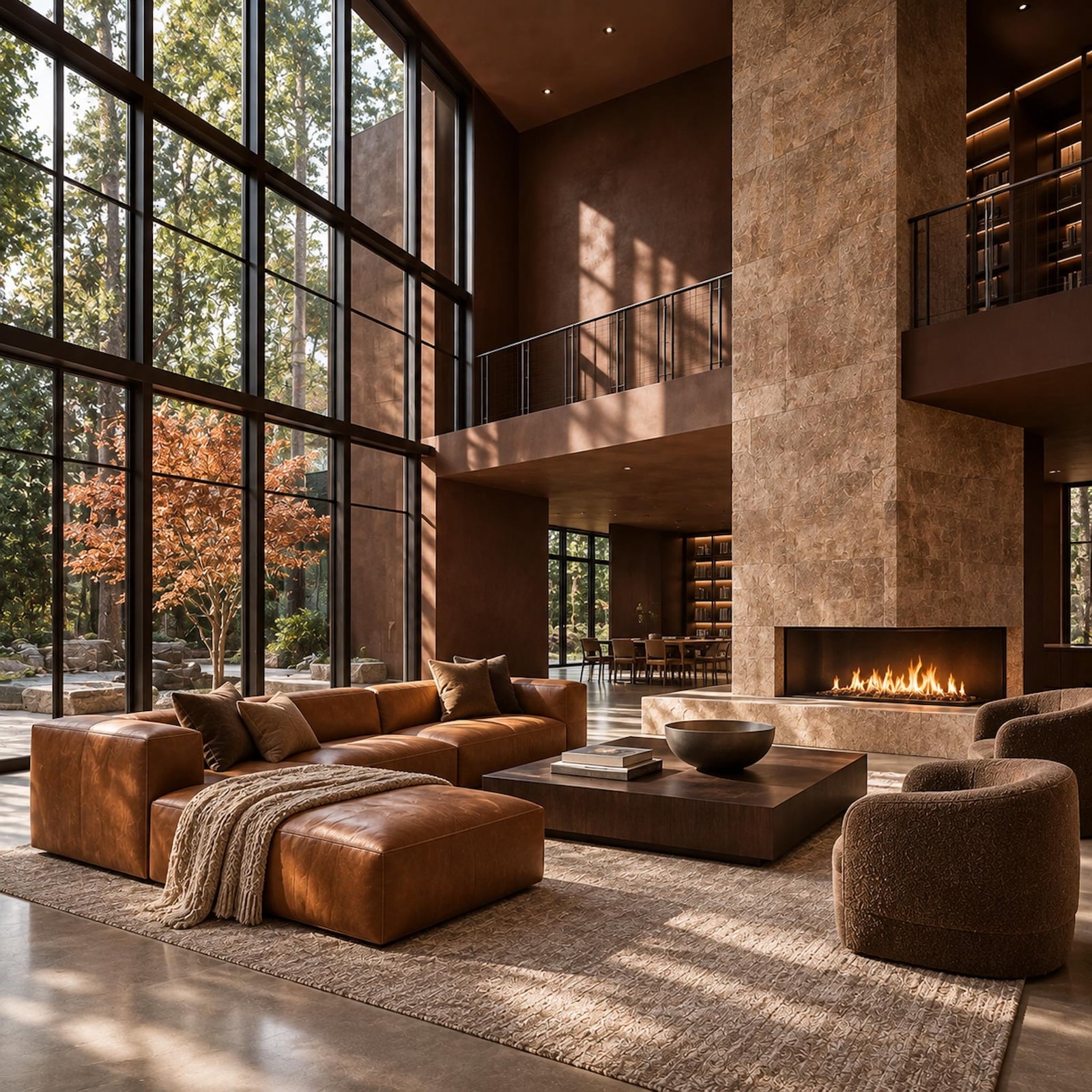
White had a magnificent run. It conquered the kitchen, colonized the living room and turned expensive houses into places where a spilled espresso could feel like a financial emergency. Chocolate brown has rather different ambitions. It wants the walls, the ceiling, the cabinetry and occasionally the entire sofa. Subtlety is negotiable. Good lighting isn’t.
In order to come up with the very specific design ideas, we create most designs with the assistance of state-of-the-art AI interior design software. Also, assume links that take you off the site are affiliate links such as links to Amazon. this means we may earn a commission if you buy something.
Brown, however, is hardly one color. Espresso lacquer can reflect an entire garden, while cocoa plaster absorbs the glare. Walnut contributes its own intricate grain; suede, velvet and leather bring three entirely different kinds of softness. Then come the accomplices: powder-blue upholstery, polished stainless steel, pale limestone, butter-yellow velvet and the occasional audacious piece of marble. A room can be thoroughly chocolate without resembling the inside of a truffle.
The real possibilities emerge when color and architecture begin working together. A soaring fireplace gives a two-story wall a purpose. A low-slung sofa changes the scale of a vast room. A dark kitchen can be warm, practical and unapologetically contemporary. Across these 33 interiors, chocolate moves between intimate bedrooms, expansive living rooms, sculptural staircases and bathrooms where even the bathtub gets involved. White might have made everything look bigger. Brown makes the interesting parts impossible to ignore.
33. Soak Facing the Ferns While Cocoa Plaster Frames a Travertine Steam Shower
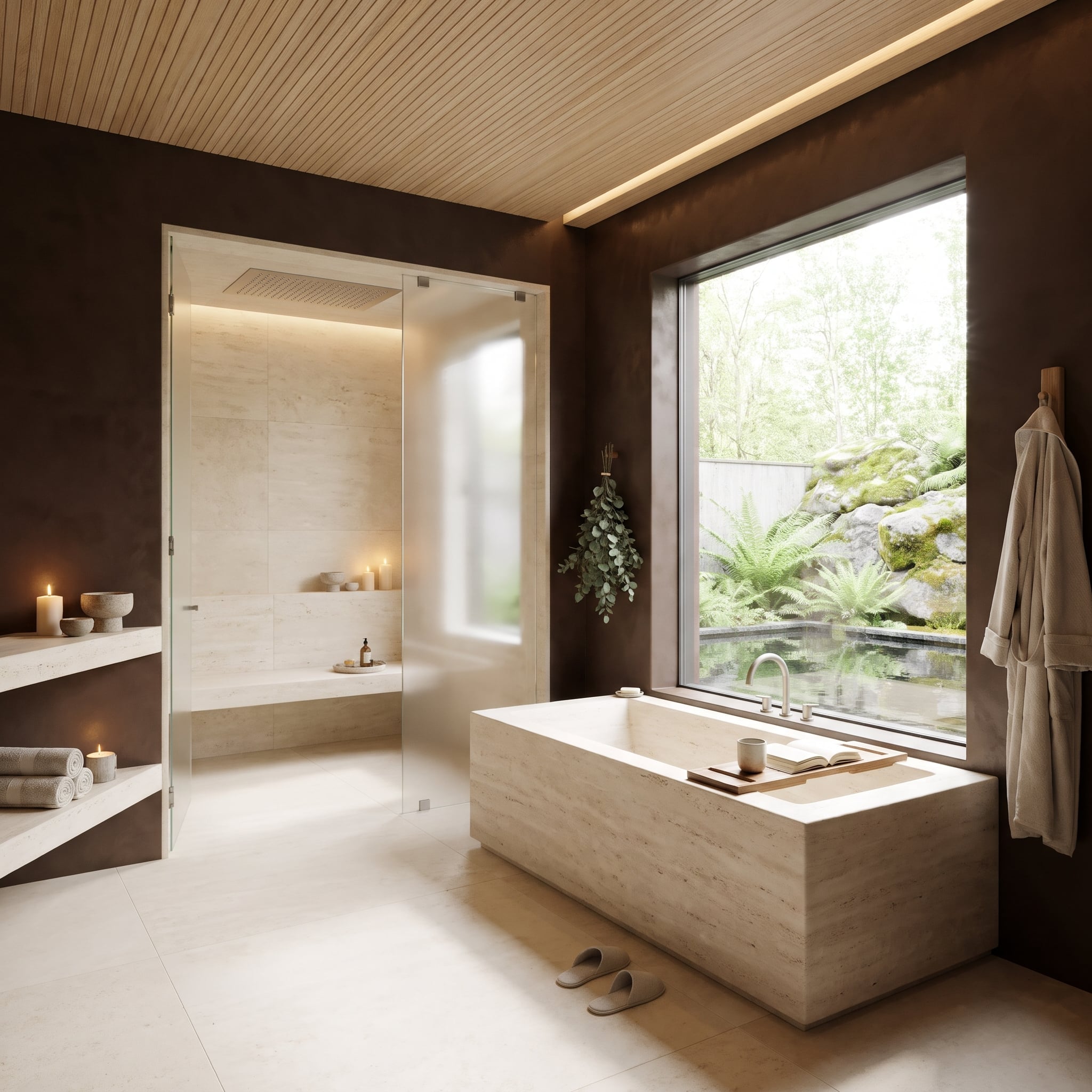
Travertine does nearly everything. It wraps the soaking tub as a blocky volume, lines the steam shower and extends into thick floating shelves for candles and rolled towels. Against plaster the color of dark cocoa, the pale stone feels warm rather than clinical.
The window is the room’s great extravagance. Dropping nearly to the tub rim, it frames ferns, mossy boulders and a still pool. The chocolate plaster acts like a dark picture mat around the view. Slatted oak overhead picks up the stone’s honey coloring, while a recessed light strip follows the window wall. A eucalyptus bundle hangs from a single peg. Small move, right call.
Design Idea: A low bathroom window can make a garden view part of the bathing experience. Consider sightlines, privacy, glazing requirements and the relationship between the tub rim and sill before adopting the arrangement.
32. Stainless Steel Meets Chocolate Cabinetry, and the Kitchen Finds Its Edge
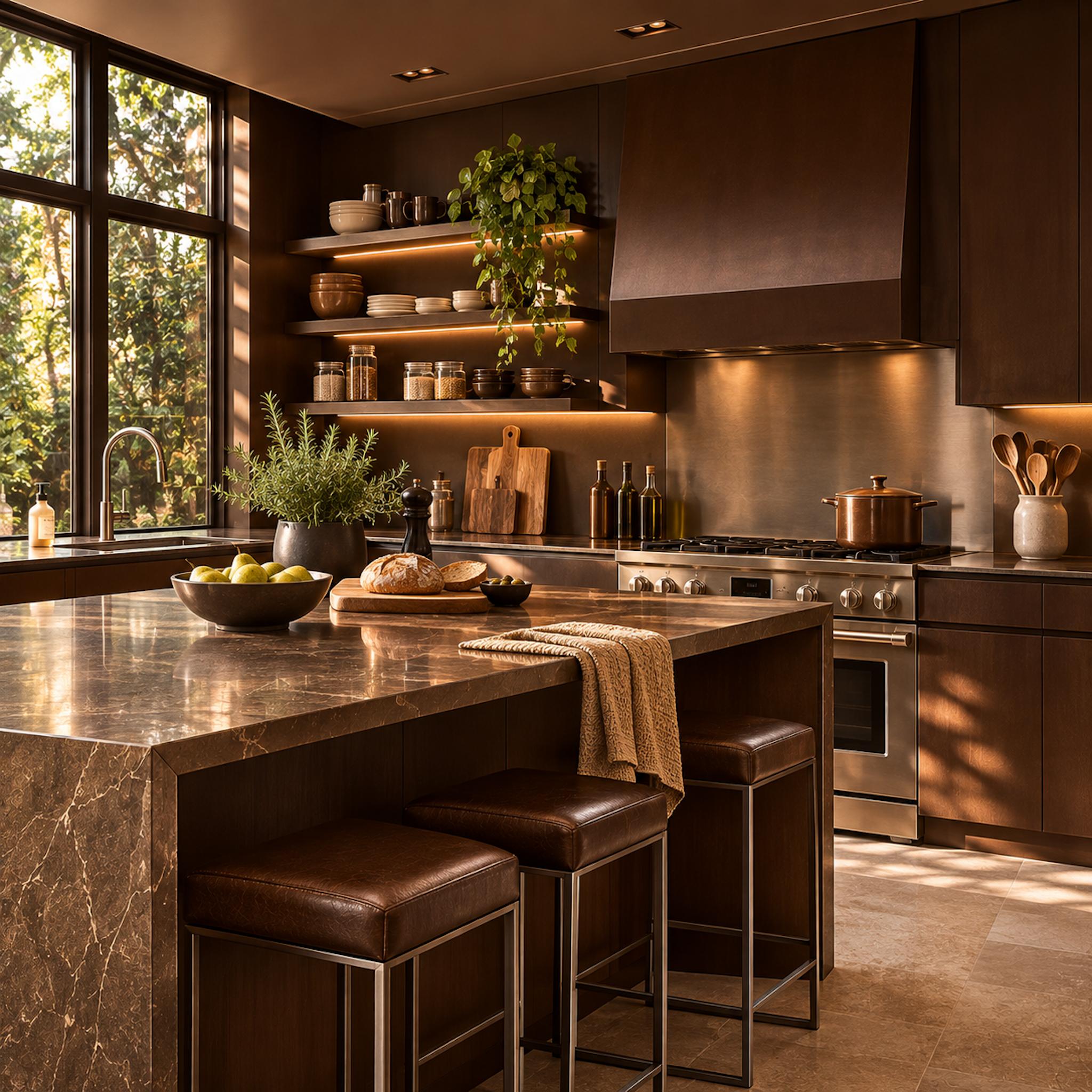
Brushed stainless steel brings a distinctly different attitude to chocolate cabinetry. The broad cooking range, metallic backsplash and substantial island introduce a cool industrial precision, while the brown cabinet fronts supply warmth that an all-steel kitchen might struggle to achieve.
Open shelves carry stacked dishes, jars and everyday kitchenware. Cutting boards lean against the backsplash, herbs occupy the counter, and a folded towel hangs casually over the island. These details matter. The room has the material discipline of a professional kitchen without pretending that nobody ever cooks. Sunlight from the tall window catches the steel, revealing a lively relationship between polished surfaces and dark wood.
Stainless is also the finish our readers would most likely choose for a new fridge, picked by 47% in our poll, ahead of white and black.
31. Tucked Into the Shelving, an Arched Mustard Nook Steals the Whole Library
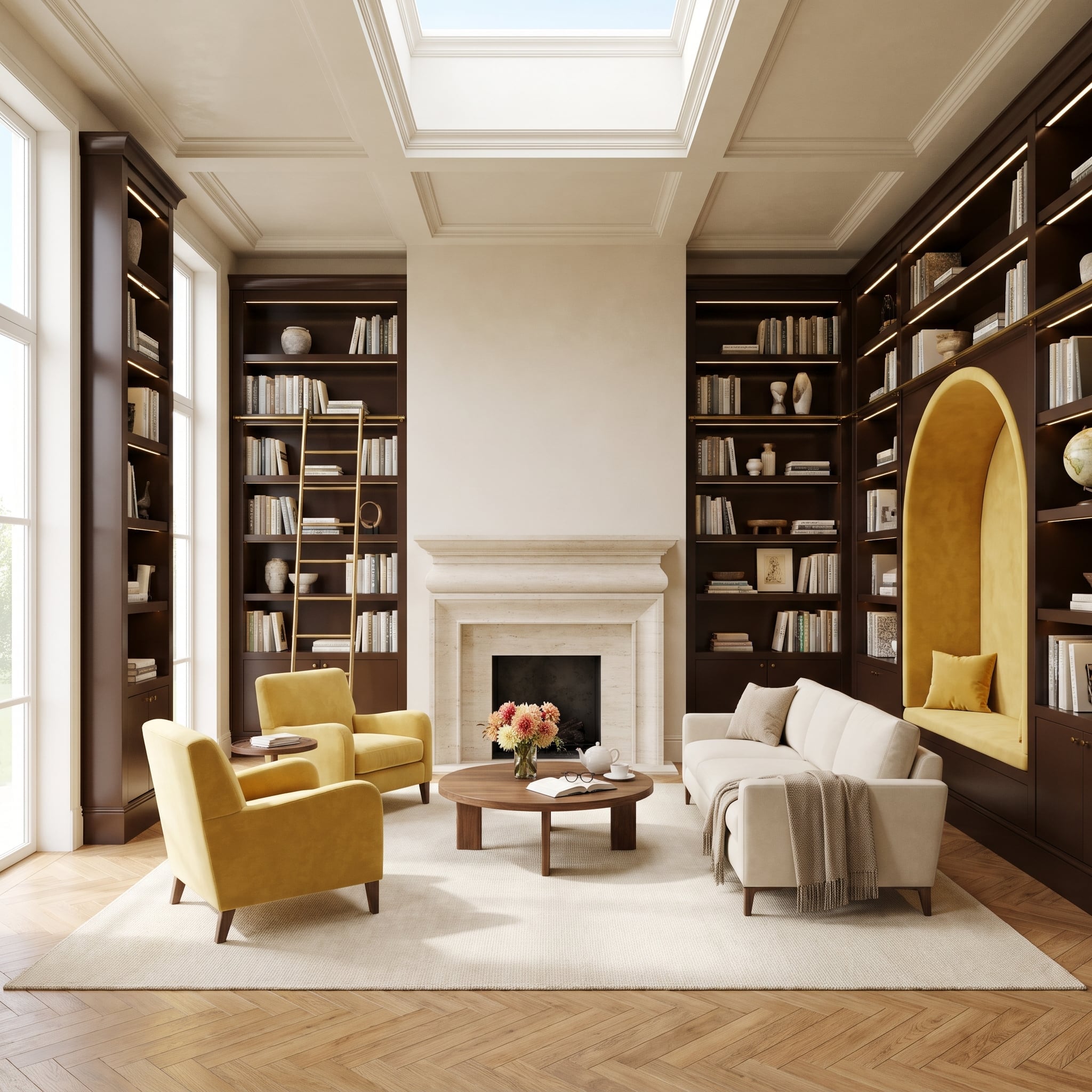
Mustard velvet fills an arch cut into the right-hand shelving, covering its back, curved surround and bench cushion. Best seat in the room, easily. Across the rug, two armchairs repeat the yellow, turning the reading nook into part of a larger color scheme rather than a solitary flourish.
A brass library ladder travels along the opposite bookcase. Concealed lighting beneath the shelves illuminates the books and gives the chocolate cabinetry a warm glow. The combination is wonderfully old-fashioned in spirit and thoroughly contemporary in execution. A library ought to make staying home feel like an excellent decision.
Lighting Detail: Linear lighting beneath individual shelves makes book spines easier to read and reveals the depth of dark-painted cabinetry. Warm illumination also brings out the richness of the mustard velvet.
30. Look Up: High-Gloss Chocolate Coffers Mirror the Rose Garden Over a Blush Bedroom
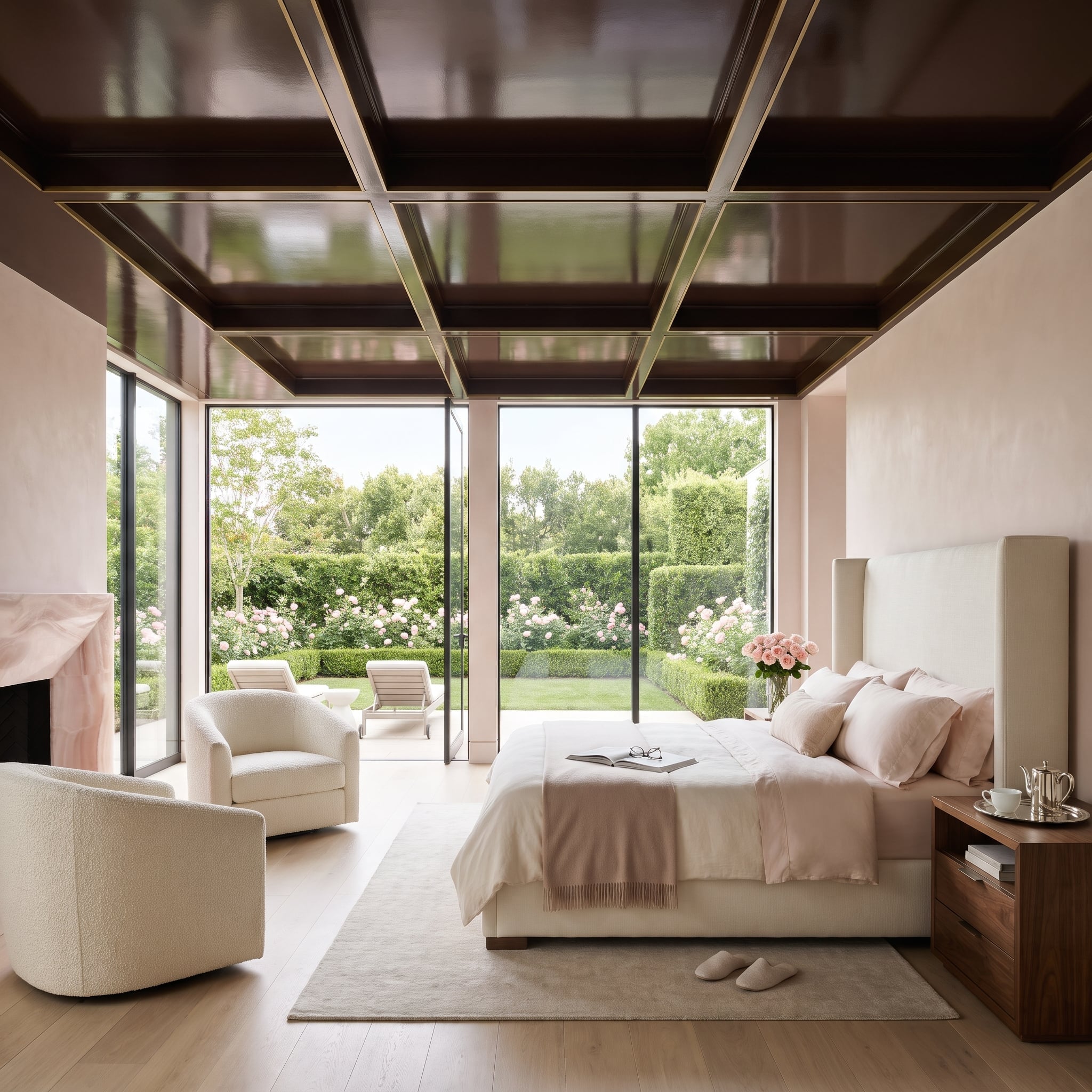
The gloss sells this room. Lacquered chocolate coffers edged in brass catch reflections from the garden, while pink onyx introduces another polished surface below. The ceiling is dark, but its finish is anything but subdued.
Blush plaster keeps the walls comparatively quiet, allowing the ceiling to behave almost like an inverted piece of furniture. Unlike matte cocoa plaster, the lacquer incorporates the surrounding colors into the architecture through reflection. A rose garden has acquired an unexpected second address.
29. Only the Island Goes Dark, and a Walnut Dining Ledge Seats Four
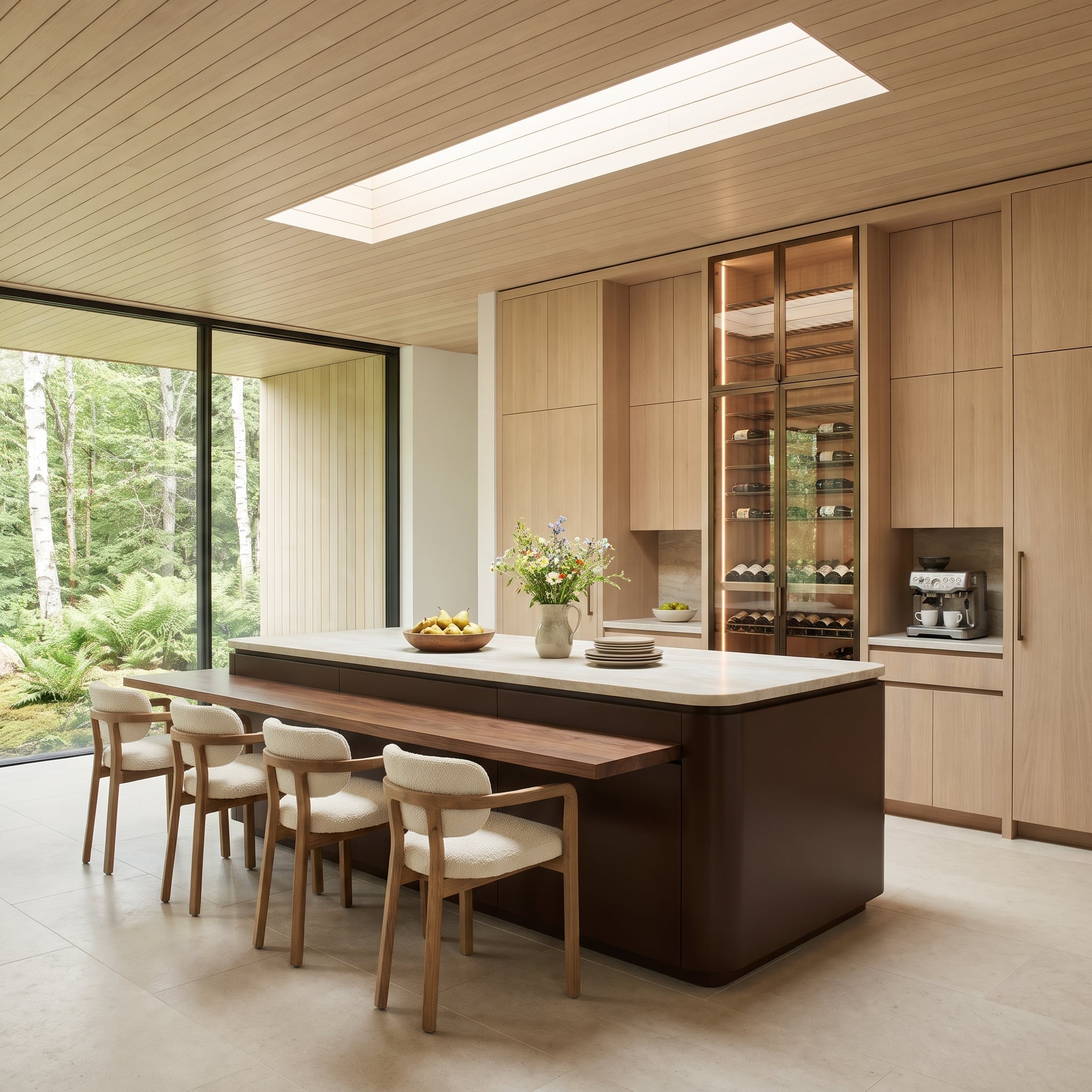
Against a full wall of pale oak, the island is the kitchen’s only substantial block of chocolate. Its corners are rounded like furniture rather than conventional cabinetry, and a walnut dining extension projects beneath the stone countertop at table height.
Four bouclé armchairs gather around it, eliminating the need for high stools. That change in seating height matters: a proper dining chair encourages a longer stay, while the island still handles the business of preparing food. A bronze-framed wine cabinet illuminates the oak wall behind. Kitchen, dining room and conversation area have negotiated a remarkably civilized arrangement.
Style Tip: Rounded island corners soften a large cabinet volume and can reduce sharp edges along circulation routes. A contrasting table-height extension also distinguishes dining space from the main work surface.
28. Chocolate on Chocolate, With Enough Tonal Variation to Make Every Surface Count
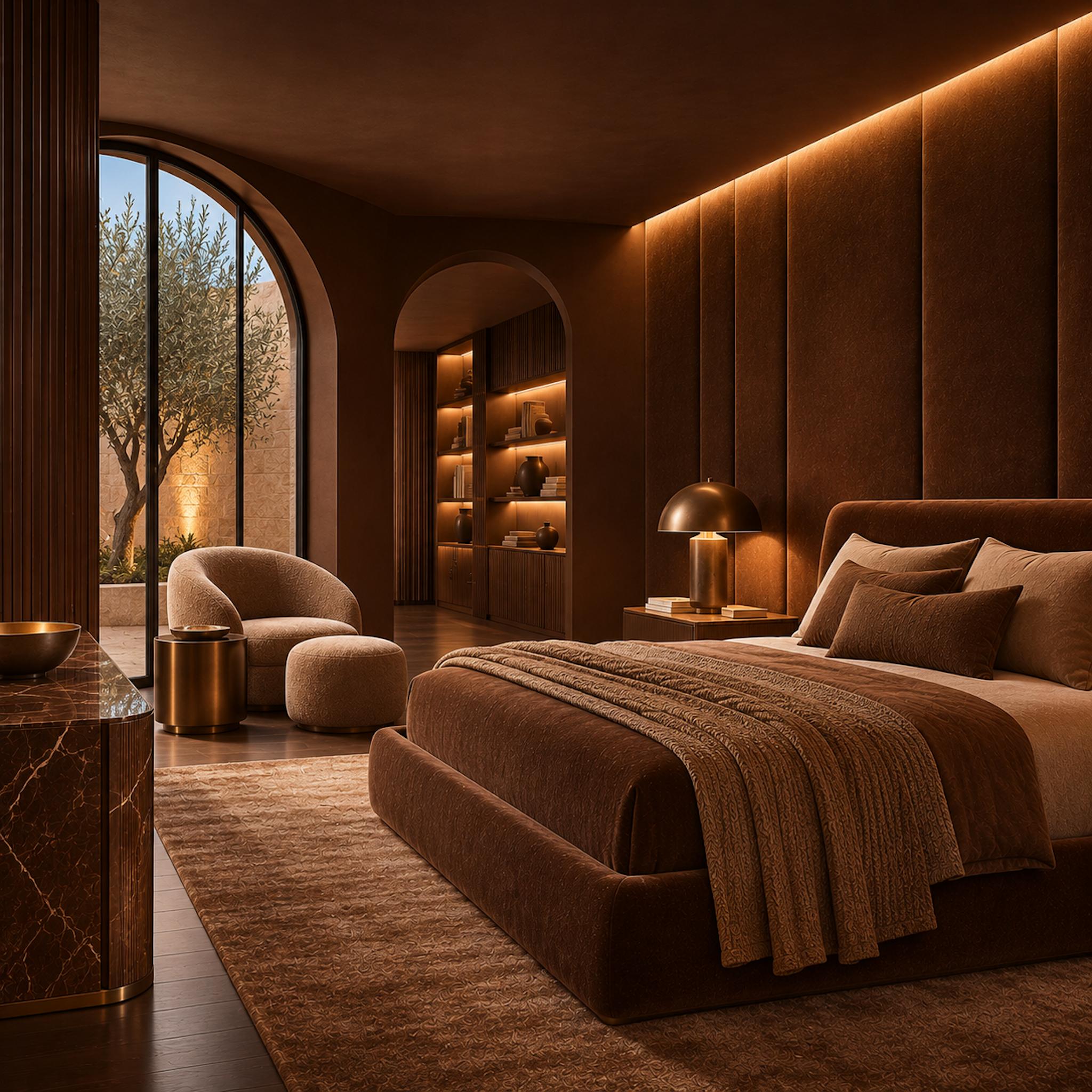
Chocolate dominates from the ceiling to the upholstered bed, but the shades refuse to stand still. The walls carry a warmer reddish-brown undertone, the bed reads as deep cocoa, and the rug moves toward a softer, sandy taupe. A textured throw introduces another layer of brown without resorting to a contrasting accent color.
The architecture is restrained: a broad upholstered headboard, low furniture and a simple ceiling with concealed perimeter lighting. An arched opening leads toward illuminated shelving, while the large window frames an olive tree outside. The success of the room rests on differences in texture and value rather than decorative objects. No flowers, no brightly colored cushions, no obligatory statement chandelier. Brown has enough range to manage without them.
What Our Readers Say
- Home Stratosphere readers gave rooms with brown accents more hearts than the other images in the same articles: 75% versus 65%.
- White isn’t finished yet, though: when we asked which trim paint they would buy, 75% of our readers picked white and 19% went dark.
From Home Stratosphere reader polls and votes.
27. Espresso Marble Slabs Enclose the Shower While Bamboo Fills the Window
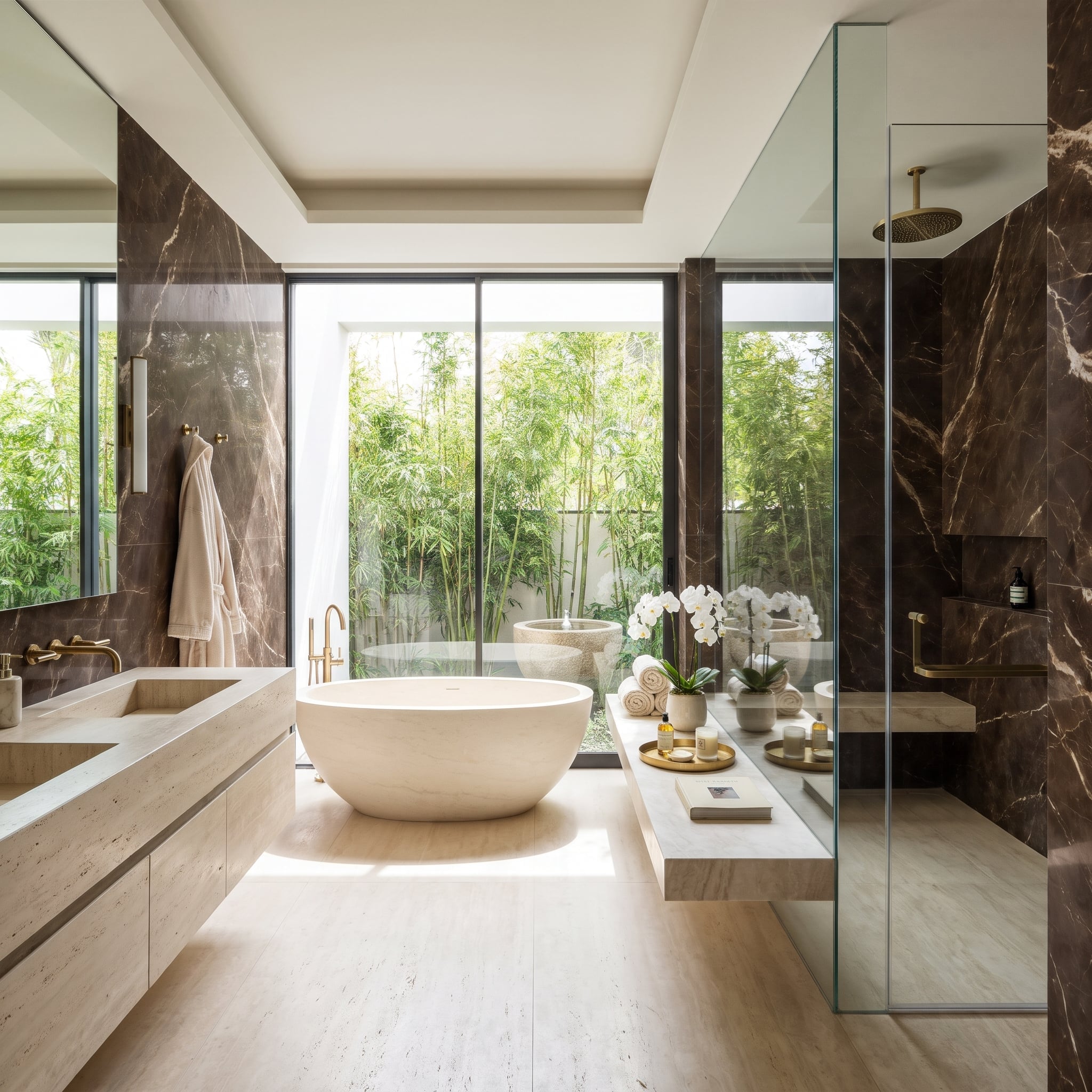
Large slabs of espresso marble climb the shower and vanity walls, their pale veining cutting through the dark surface in dramatic streaks. Outside, bamboo fills the window with a completely different kind of vertical pattern.
Brushed brass appears on the faucets, hooks and shower fittings. Pale travertine covers the floor and vanity, providing a quieter counterpoint to the marble’s restless veining. A floating stone ledge beside the tub holds towels, candles and orchids without occupying the floor. The combination has the richness of a private spa and the composure of a carefully edited room.
26. Sculpted Cocoa Balustrade Curls Past an Olive Tree on Its Climb Toward the Light
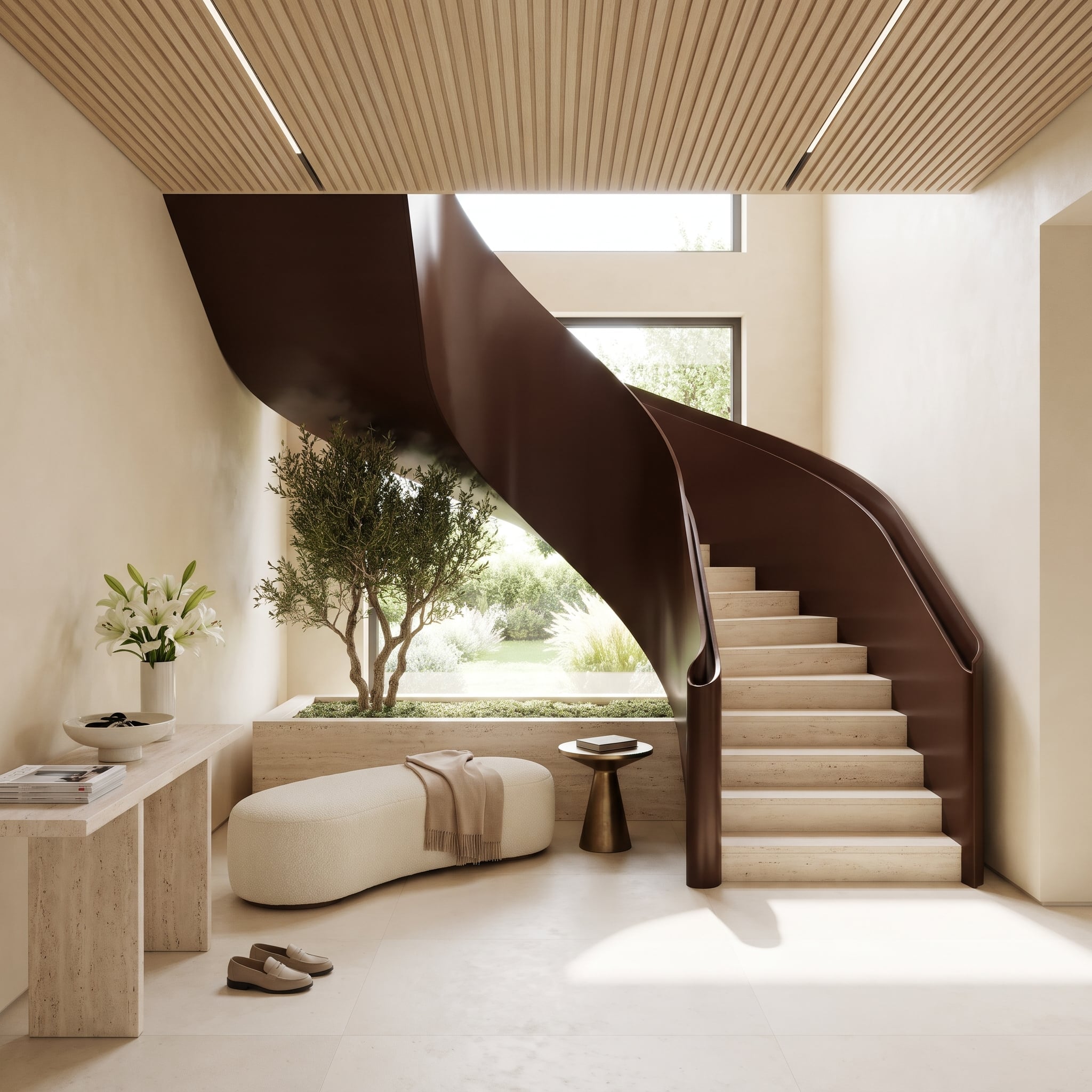
No spindles here. Not one. The balustrade is a continuous chocolate surface that twists upward, its upper edge folding into an integrated handrail. Against pale travertine treads and cream plaster, the dark ribbon reads as sculpture before it registers as a staircase.
An olive tree rises from a travertine planter beneath the curve, turning an awkward under-stair space into a focal point. Slatted oak overhead brings a quieter, natural rhythm to the composition. Even the brass side table seems almost unnecessary. The staircase has already claimed the room’s entire allowance of drama.
25. Fluted Espresso Doors, Fluted Travertine Island, and Butter Leather to Break the Echo
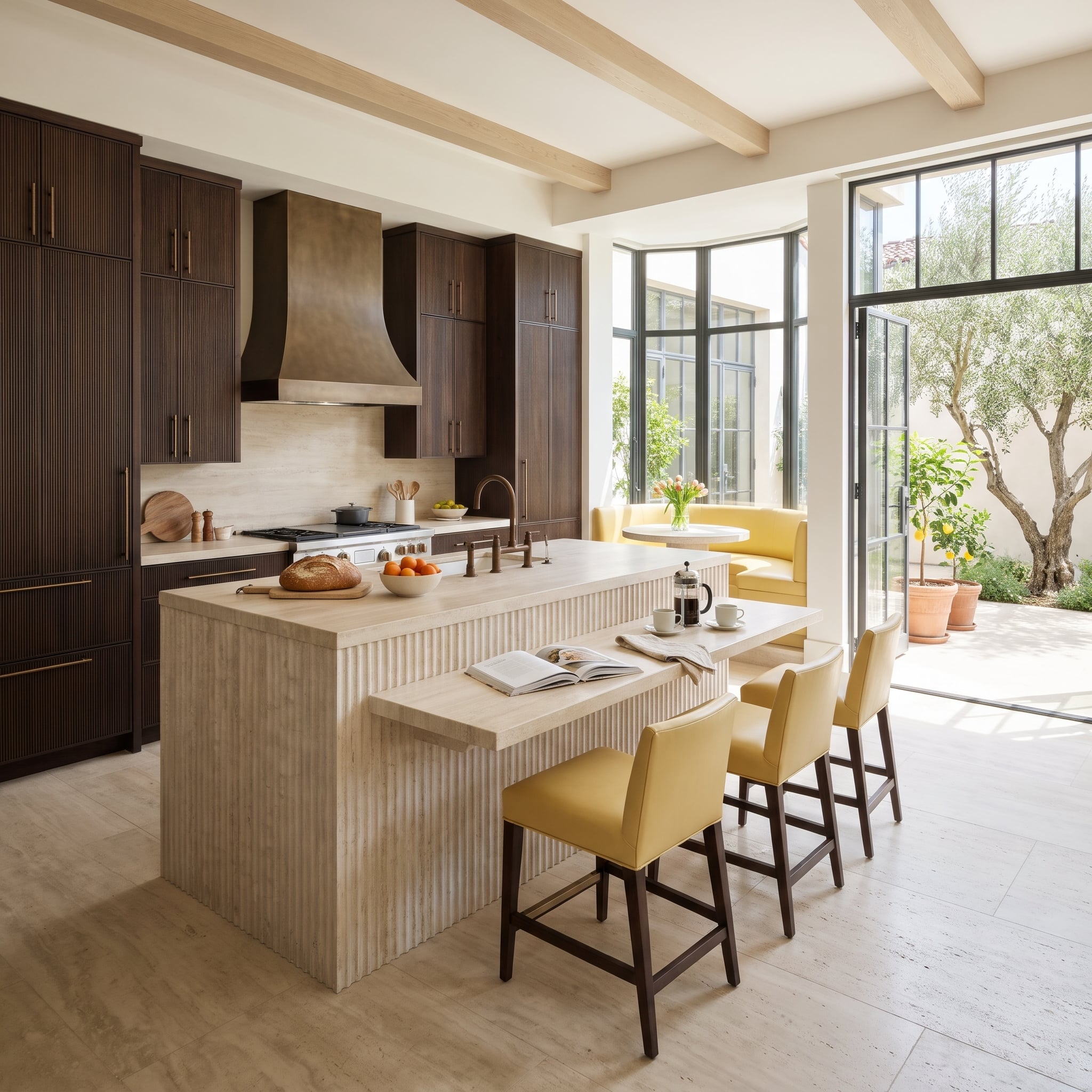
Reeding, twice over. Vertical fluting travels down the espresso cabinet fronts, then reappears across the pale travertine island. The same rhythm connects two materials that otherwise have little in common.
Butter leather on the stools and banquette introduces a third texture, smoother and warmer than either the wood or stone. Its color picks up the courtyard lemons, a small detail that makes the yellow feel entirely at home. Repeating a shape can be more persuasive than repeating a color, particularly when the materials have such different personalities.
24. From Floor to Cove Light, Channel-Stitched Cocoa Walls Turn a Bedroom Into a Headboard
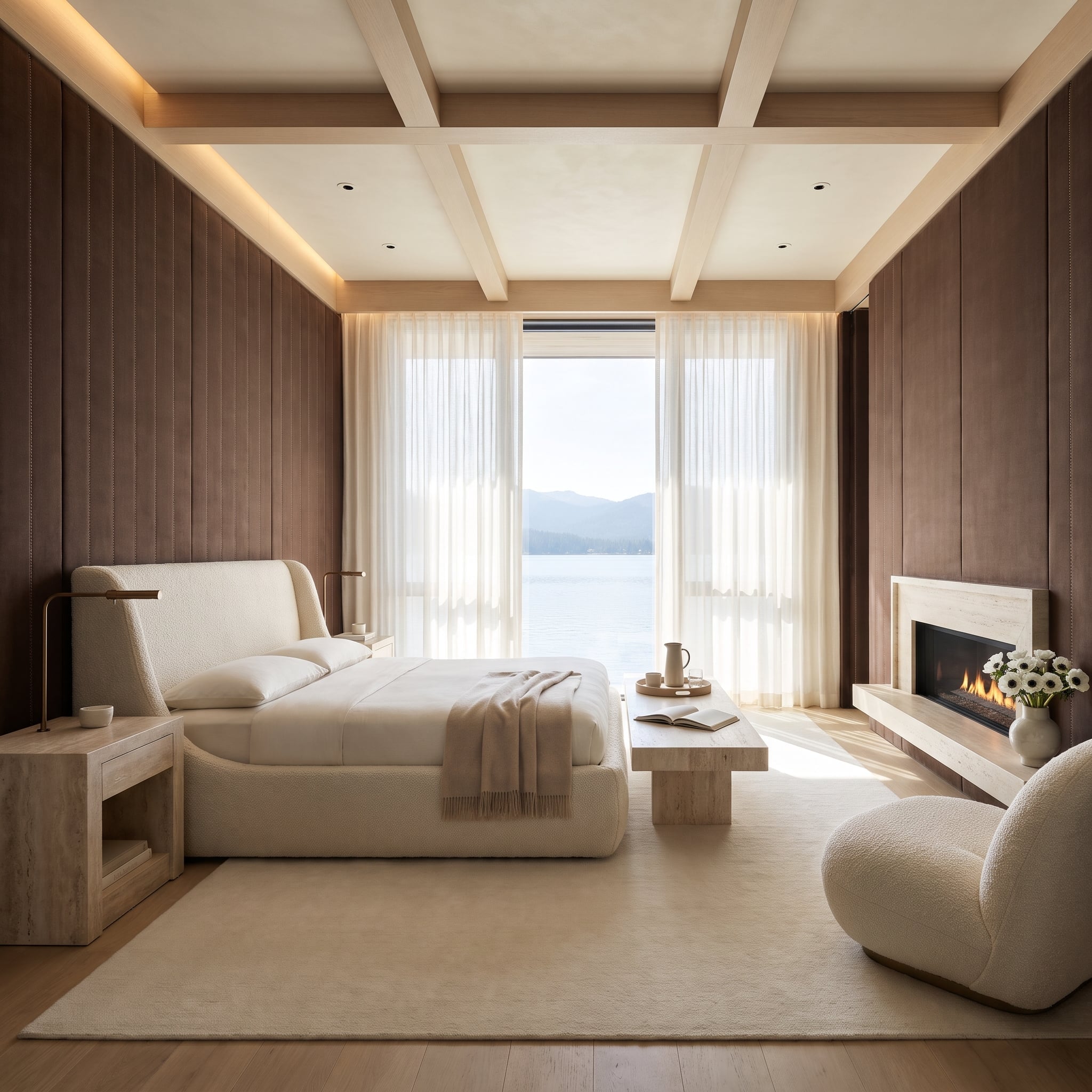
Channel-stitched cocoa panels climb the walls toward a continuous band of warm cove lighting. The upholstery turns the room’s perimeter into one enormous soft backdrop, giving the bouclé bed and swivel chair a sculptural presence.
Travertine repeats on the nightstand, bench and fireplace surround, connecting separate pieces through one material. Pale oak beams overhead introduce a more linear element above all the stitching. Slim brass reading lamps nearly disappear against the dark panels. The room has no shortage of texture, yet the limited palette keeps it remarkably controlled.
Why It Works: Concealed cove lighting emphasizes the channels in the upholstered walls after dark. Properly constructed upholstered panels can also contribute to sound absorption, depending on their backing and installation.
23. A Chocolate Entrance Hall Trades Decorative Excess for Art and Architecture
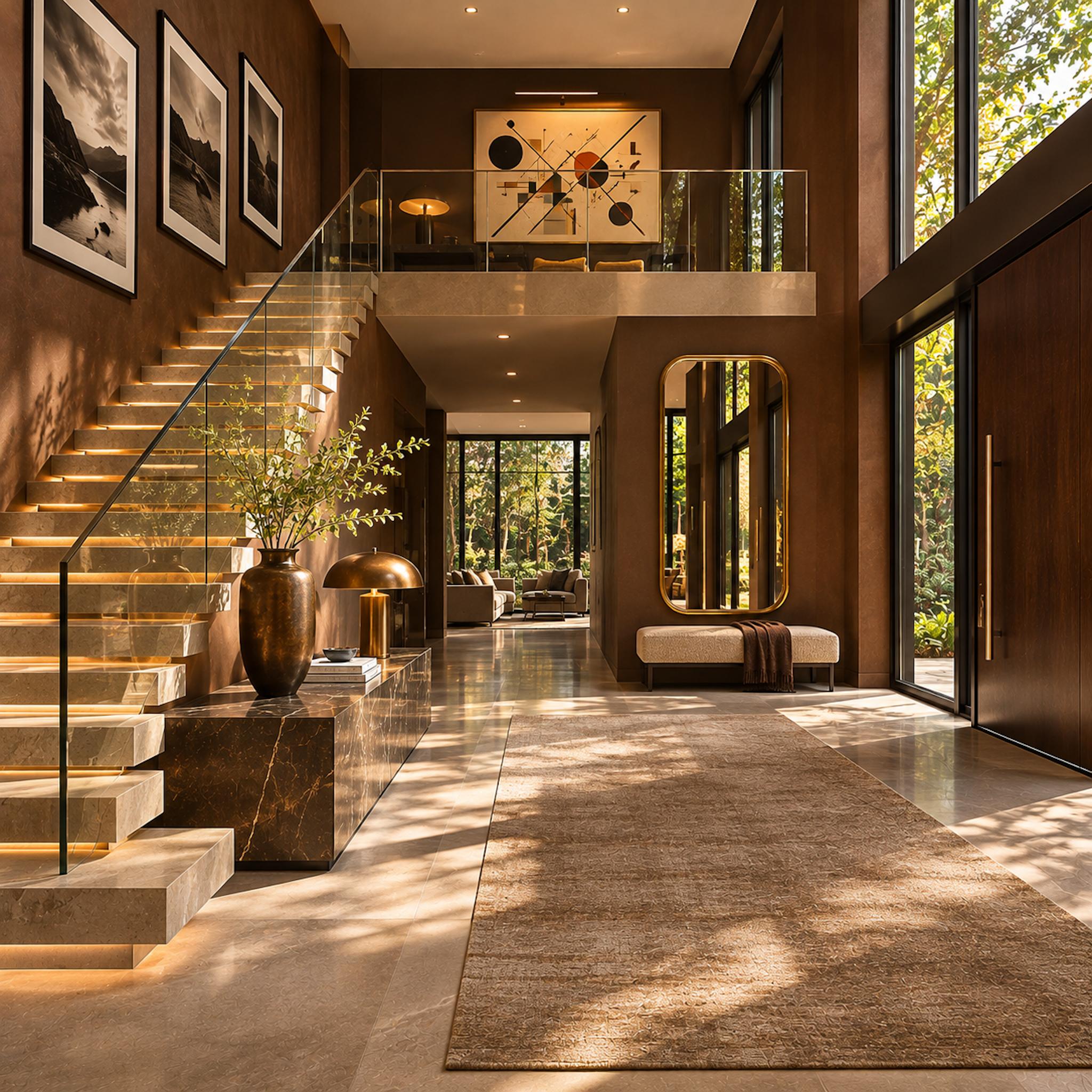
A double-height chocolate wall provides a commanding backdrop for three black-and-white landscape photographs. Their crisp white mats and dark frames establish a disciplined gallery arrangement beside the floating stone staircase, while a large geometric abstract painting introduces a different visual language on the upper level.
The floor is pale stone, softened by a long textured runner. Beneath the staircase, a low dark-marble console holds a bronze lamp and a substantial ceramic vessel. Across the hall, a tall rounded mirror hangs above a compact upholstered bench. Nothing competes with the architecture. The enormous glazed entrance supplies daylight, the artwork gives the walls a purpose, and the chocolate finish provides the common thread between two levels.
22. Burgundy Marble Climbs From Waterfall Island to Hood Band While Mocha Cabinets Step Back
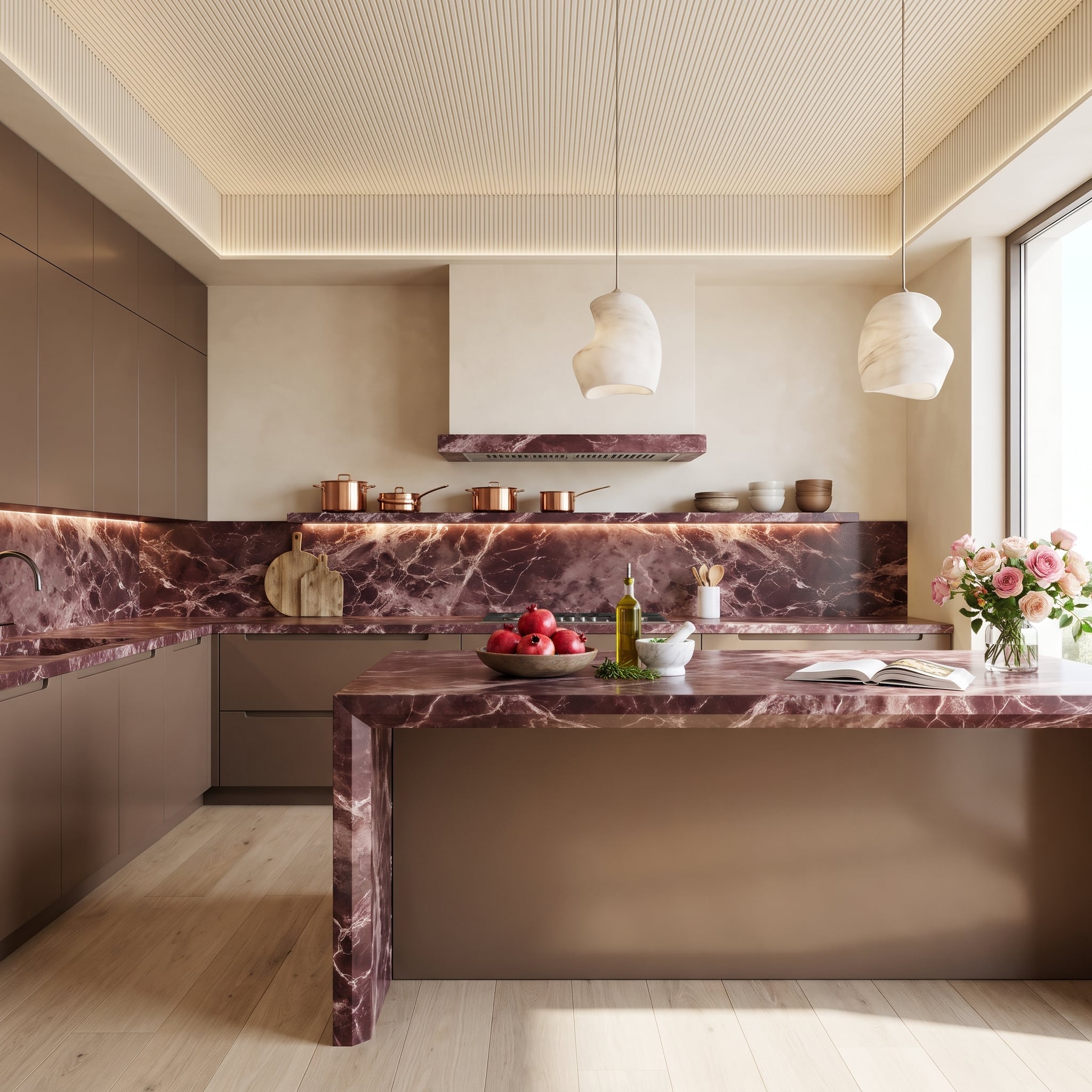
Wine-red marble makes the first move, climbing from the waterfall island to the backsplash and range hood. Its veining introduces streaks of pink and cream, while the mocha cabinets recede into a comparatively quiet background. Recessed pulls keep the cabinet fronts uninterrupted.
Copper pots pick up the stone’s warmer tones. Pale oak flooring and cream plaster provide a different texture and temperature, allowing the richly patterned marble to remain the principal attraction. The kitchen’s most expressive material is also its most architectural, moving from a horizontal work surface to the wall and then overhead.
21. Shopping Your Own Closet Gets Easier When Smoked Glass Fronts the Espresso Wardrobes
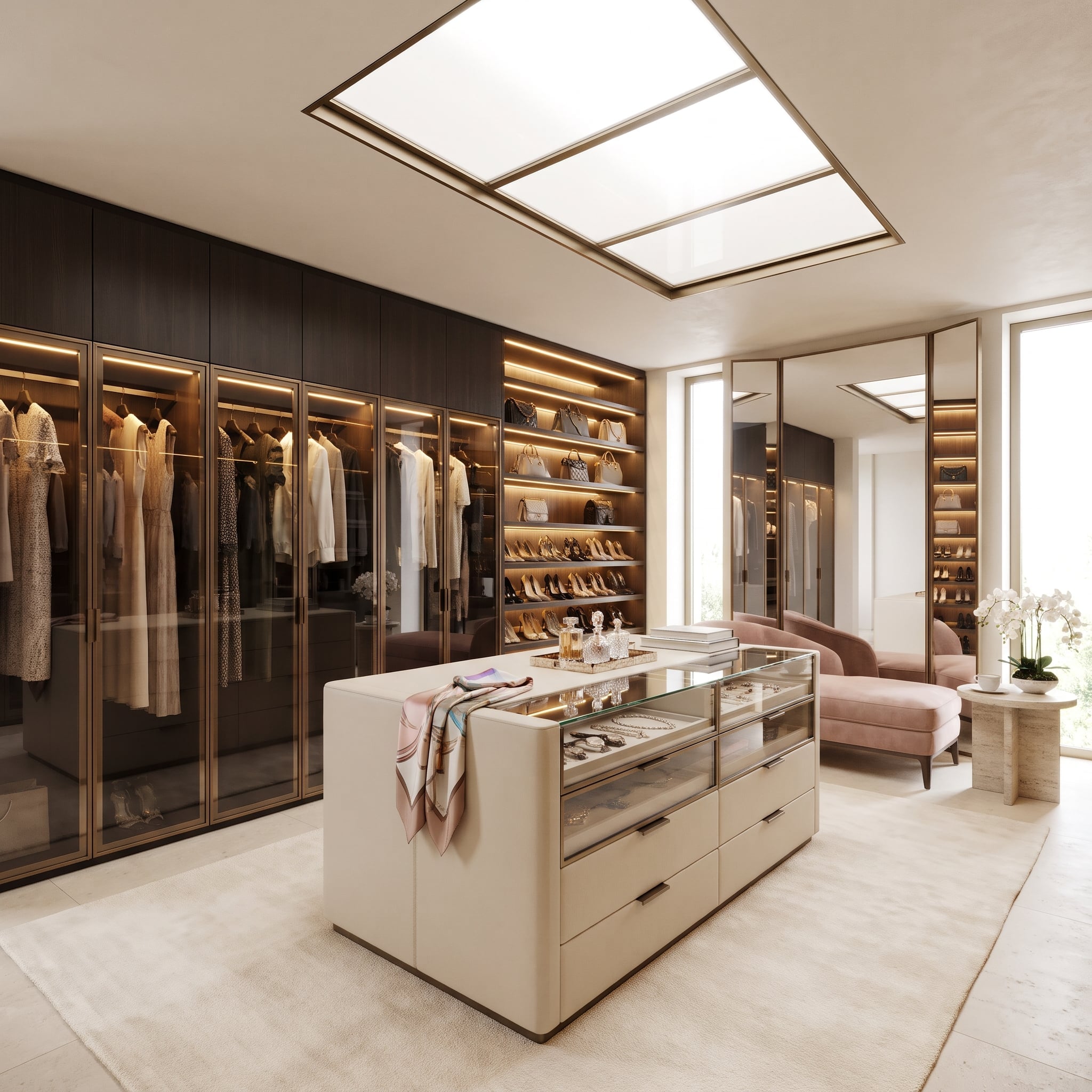
Smoked glass framed in bronze gives the espresso wardrobes depth. Clothes remain visible behind the tinted doors, their colors subdued rather than concealed entirely. The result is less like a bank of storage cabinets and more like a carefully arranged display.
A cream leather island with glass-topped jewelry drawers occupies the center beneath a skylight. Nearby, a blush chaise offers another soft surface among the dark cabinetry. Tall mirrors extend the visual rhythm of the wardrobe doors, while illuminated shelves make the contents easier to distinguish. A dressing room that treats choosing clothes as a pleasure rather than a logistical emergency.
20. Emperador Marble Anchors Twin Blush Sofas Beneath a Fluted Mocha Soffit
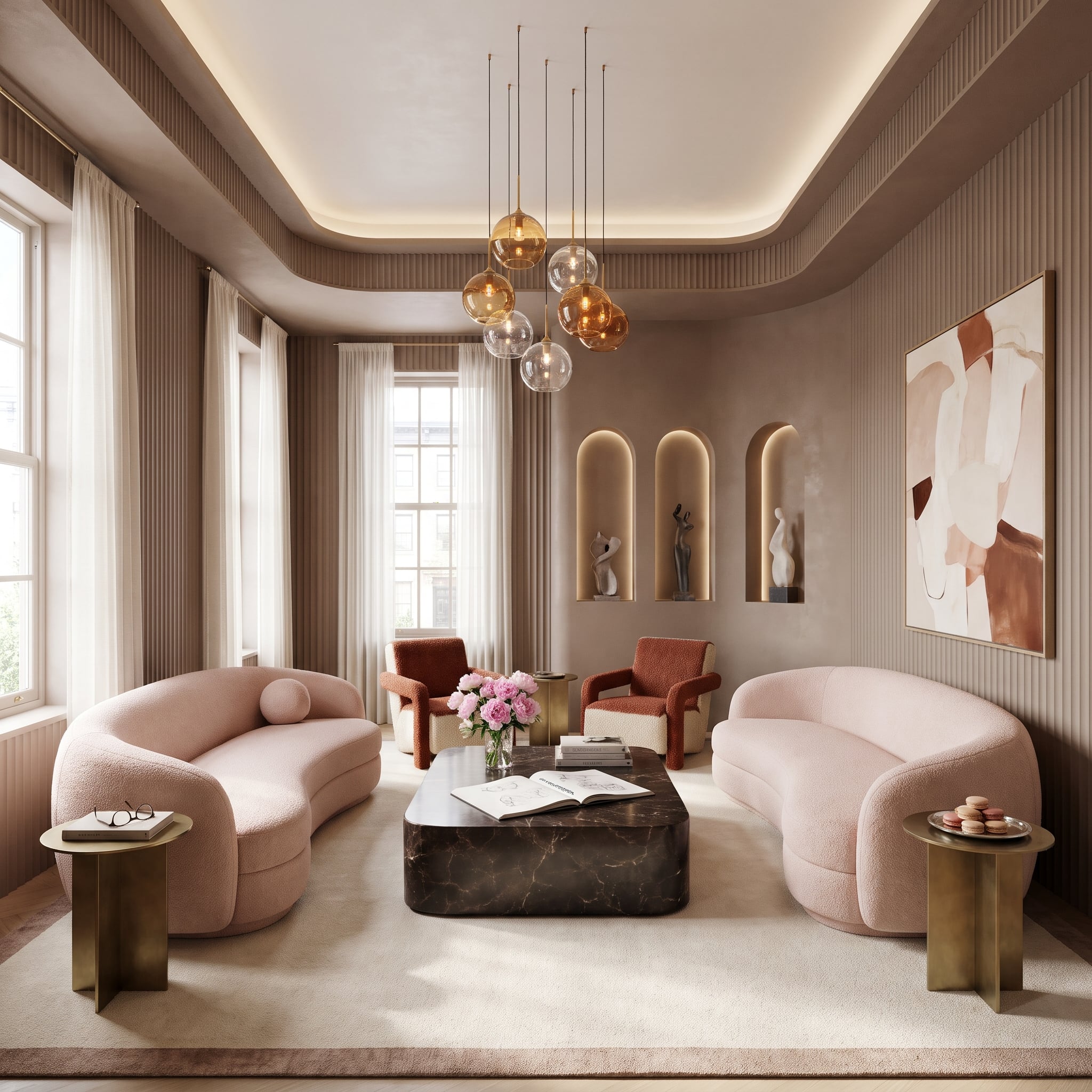
A single slab of Emperador marble carries the center of this room. Its chocolate veining grounds two blush bouclé sofas that curve toward one another, while fluted mocha walls introduce a disciplined vertical rhythm behind the seating.
Rust armchairs add another warm tone without straying from the palette. The marble’s strong pattern gives the otherwise soft composition a necessary point of resistance. Everything around it seems designed to invite lounging; the stone makes sure the room retains its dignity.
19. A Chocolate Marble Bathtub Turns the Entire Bathroom Into a Study in Brown
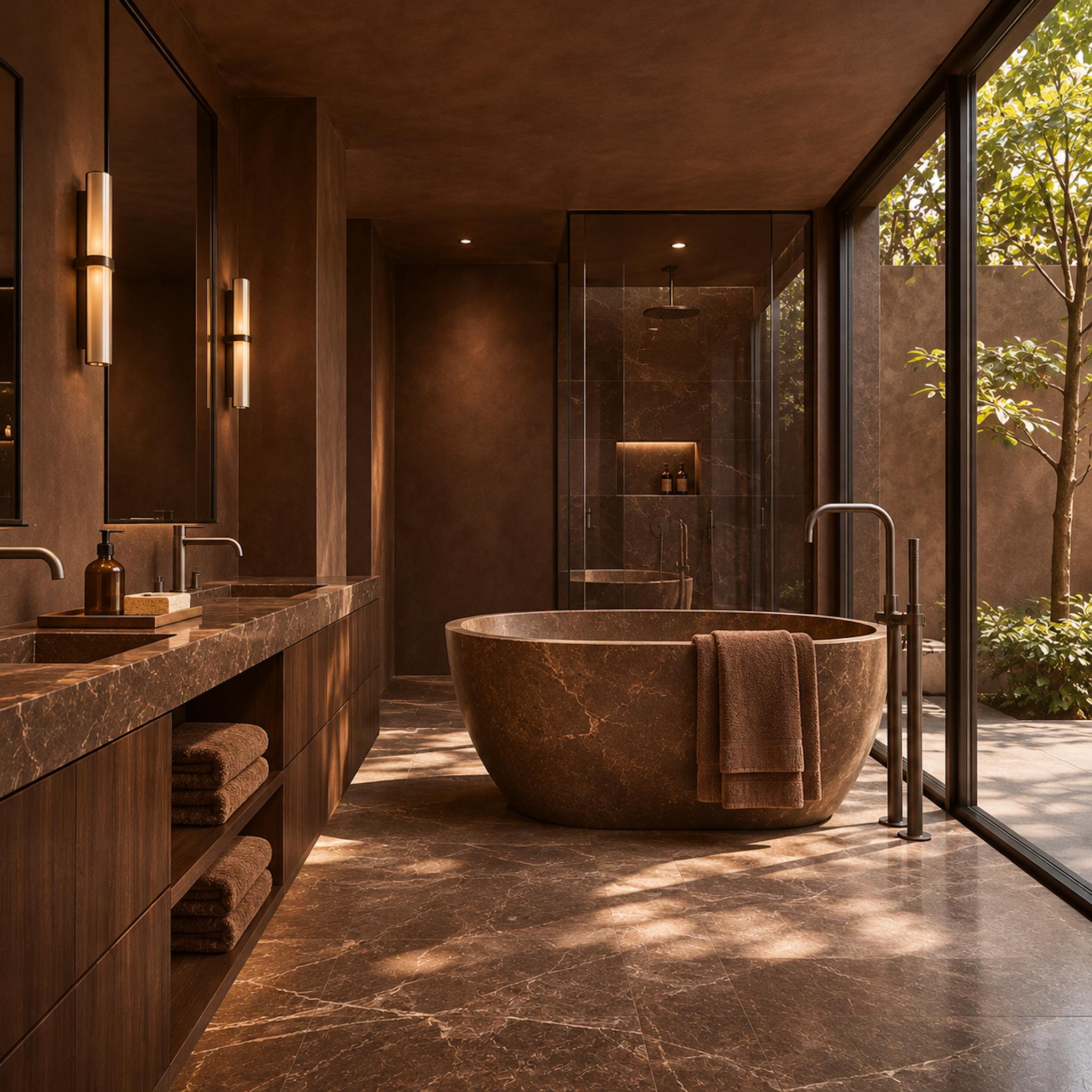
The freestanding bathtub is the centerpiece, carved in appearance from richly veined brown stone and positioned beside a wall of garden-facing glass. Its rounded silhouette contrasts with the crisp lines of the floating double vanity, where the same family of brown stone continues across the countertop.
Chocolate-toned walls and ceiling establish an almost continuous envelope, while the floor introduces lighter veining that catches the daylight. A glass shower occupies the far end of the room, its fittings kept deliberately restrained. Towels, soap and small bottles give the vanity a lived-in quality without cluttering the composition. Rather than using pale marble to rescue dark walls, the design allows several shades and textures of brown to carry the entire room.
18. Who Needs a Corner Office When Backlit Onyx Glows From Inside the Paneling?
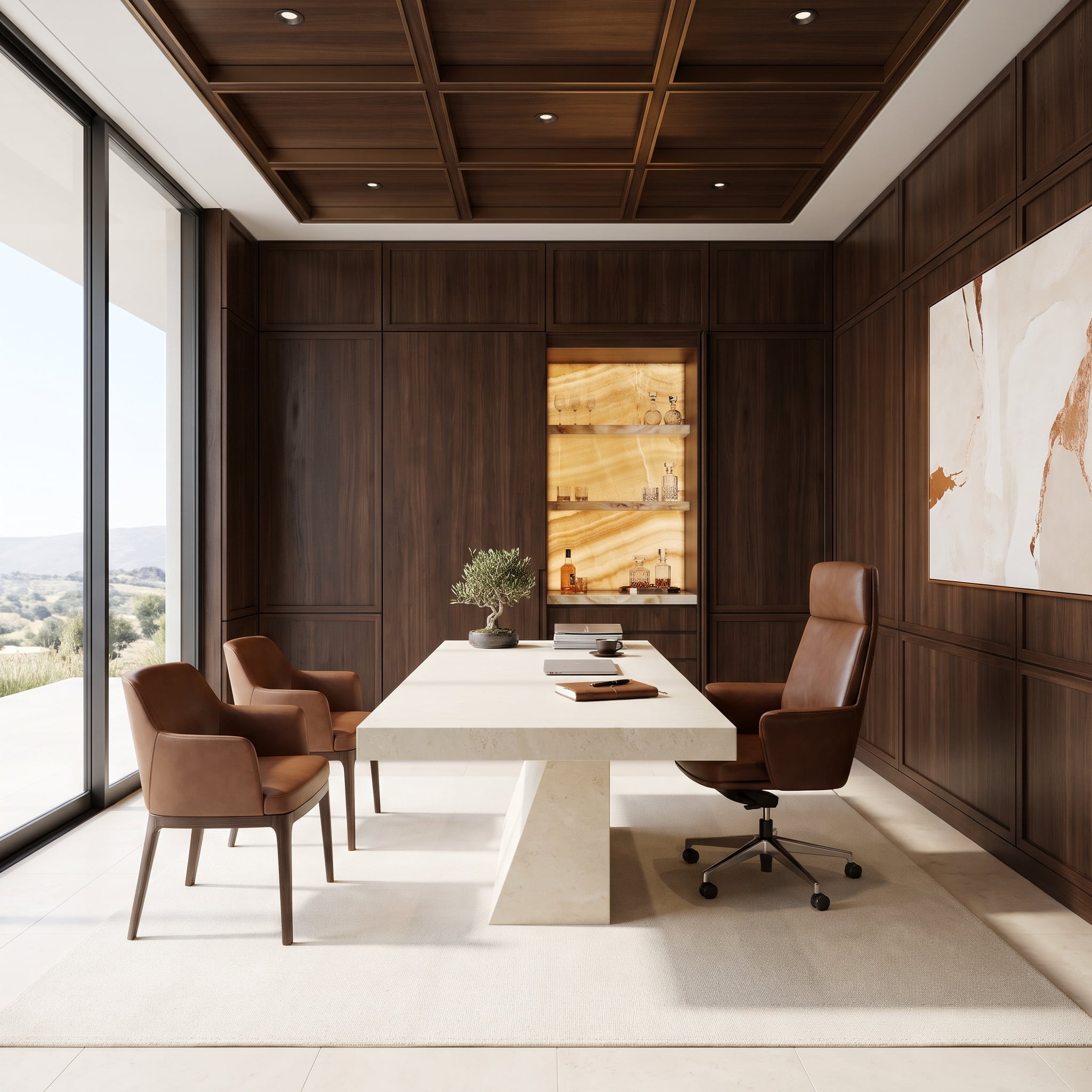
A backlit onyx niche glows inside the chocolate wood paneling. Amber bands illuminate decanters and glassware, creating the impression of a small jewel box embedded in the cabinetry. The dark walls give the stone’s translucency an especially dramatic setting.
The desk holds its own: a broad slab of pale stone supported by a tapered pedestal, its light surface standing out against the paneled walls. Cognac leather chairs pick up the warmer tones in the onyx. The result has the authority of an executive office without the usual intimidation tactics. Even the bar seems to understand discretion.
17. Travertine Projects From a Brown Plaster Wall While the Garden Answers in Stone
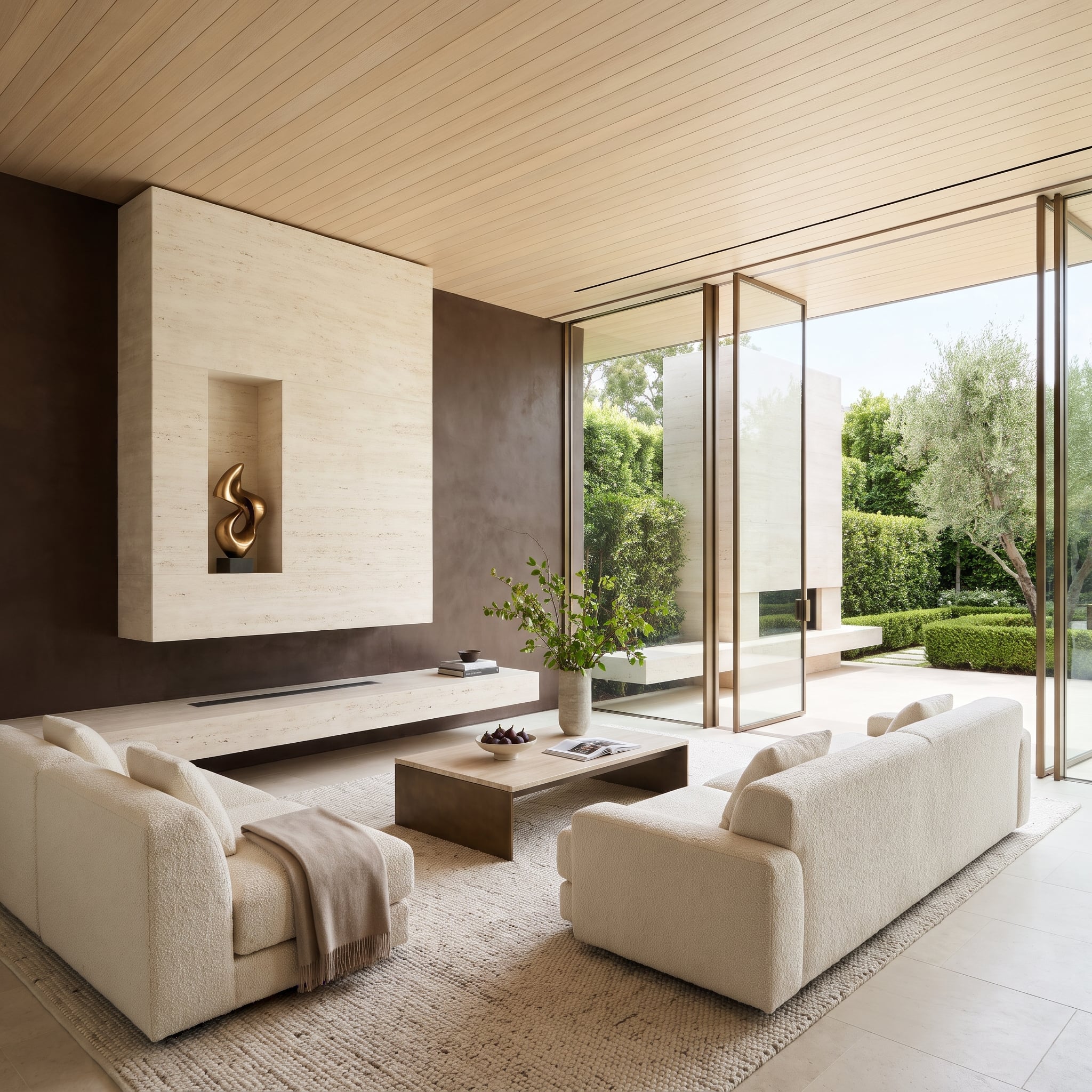
Travertine provides the room’s architectural punctuation. A projecting stone fireplace surround and long ledge stand proud of the chocolate plaster wall, their pale surfaces sharply defined against the darker background. A narrow linear fire introduces a horizontal accent beneath the stone.
Beyond the bronze-framed pivot doors, another travertine fireplace repeats the material in the garden. The relationship between inside and outside is unusually precise: the same stone, similar geometry, and two distinct settings. The chocolate wall acts as the backdrop that makes the connection legible.
16. Keep the Chocolate Low and Let Reeded Brass Cabinets Carry the Upper Walls
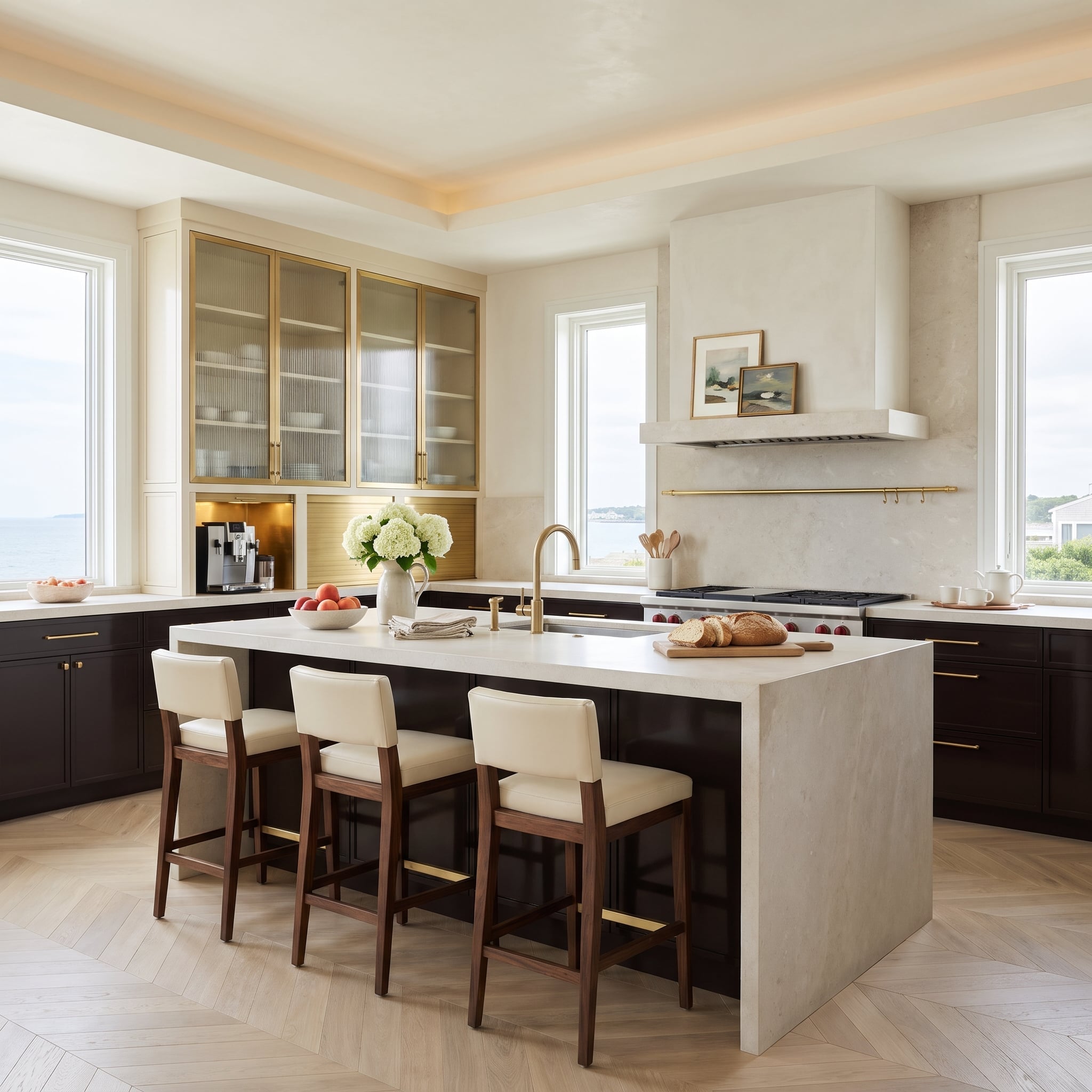
Below the counter, the cabinets are dark chocolate. Above, cream stone, plaster and reeded-glass cabinetry take over. The division is particularly effective in a kitchen with three windows facing the water, where the upper walls have plenty of daylight to work with.
Thin brass pulls echo the frames of the glass-fronted cabinets. A brass-lined appliance garage introduces a warm metallic accent behind the coffee machine, while pale stone wraps the island’s countertop and waterfall end. Walnut stools with cream leather seats repeat the relationship between dark wood and light upholstery at a smaller scale.
A kitchen doesn’t need chocolate on every surface to make the color its defining feature.
15. Brass Portholes Keep Watch While a Curved Cocoa Shower Skips the Glass Entirely
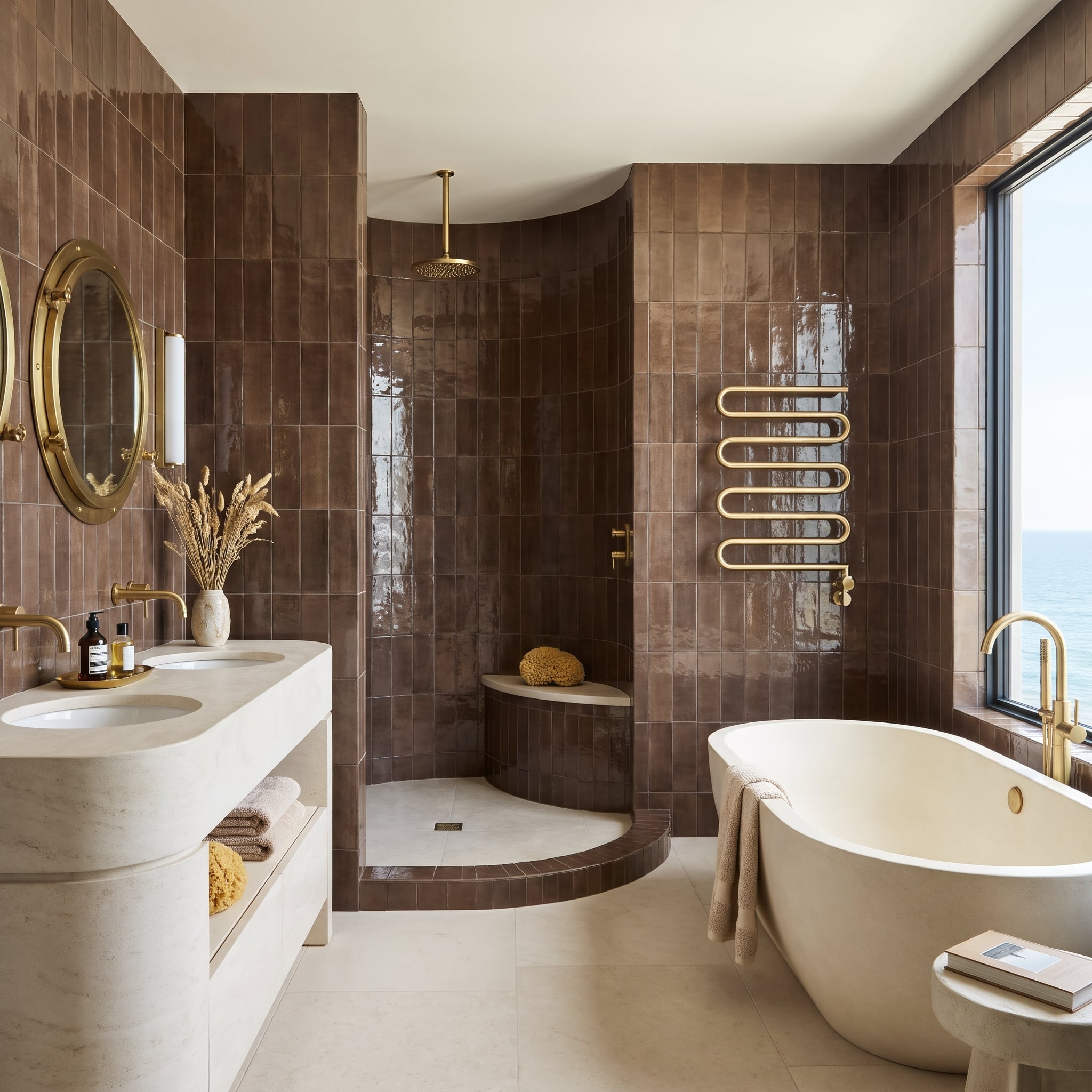
No glass, no visible shower door. A curved wall wraps the bathing area, its glossy vertical cocoa tiles following the bend and catching the light in narrow, irregular highlights. The enclosure looks more like a piece of architecture than a conventional shower stall.
Brass porthole mirrors give the vanity a slightly nautical character, reinforced by the metal shower fittings, tub filler and serpentine towel warmer. Cream stone provides a calmer surface beneath all that polished chocolate. The result is theatrical, certainly, but the curved wall has a practical purpose: screening the shower from the rest of the bathroom.
Design Detail: A curved walk-in shower can eliminate the need for a glass enclosure when its dimensions and entrance arrangement contain splashing. Showerhead position, floor slope, waterproofing and drainage must all be designed together.
14. Why Sit Anywhere Else When Cocoa Velvet Curls Halfway Around the Breakfast Table?
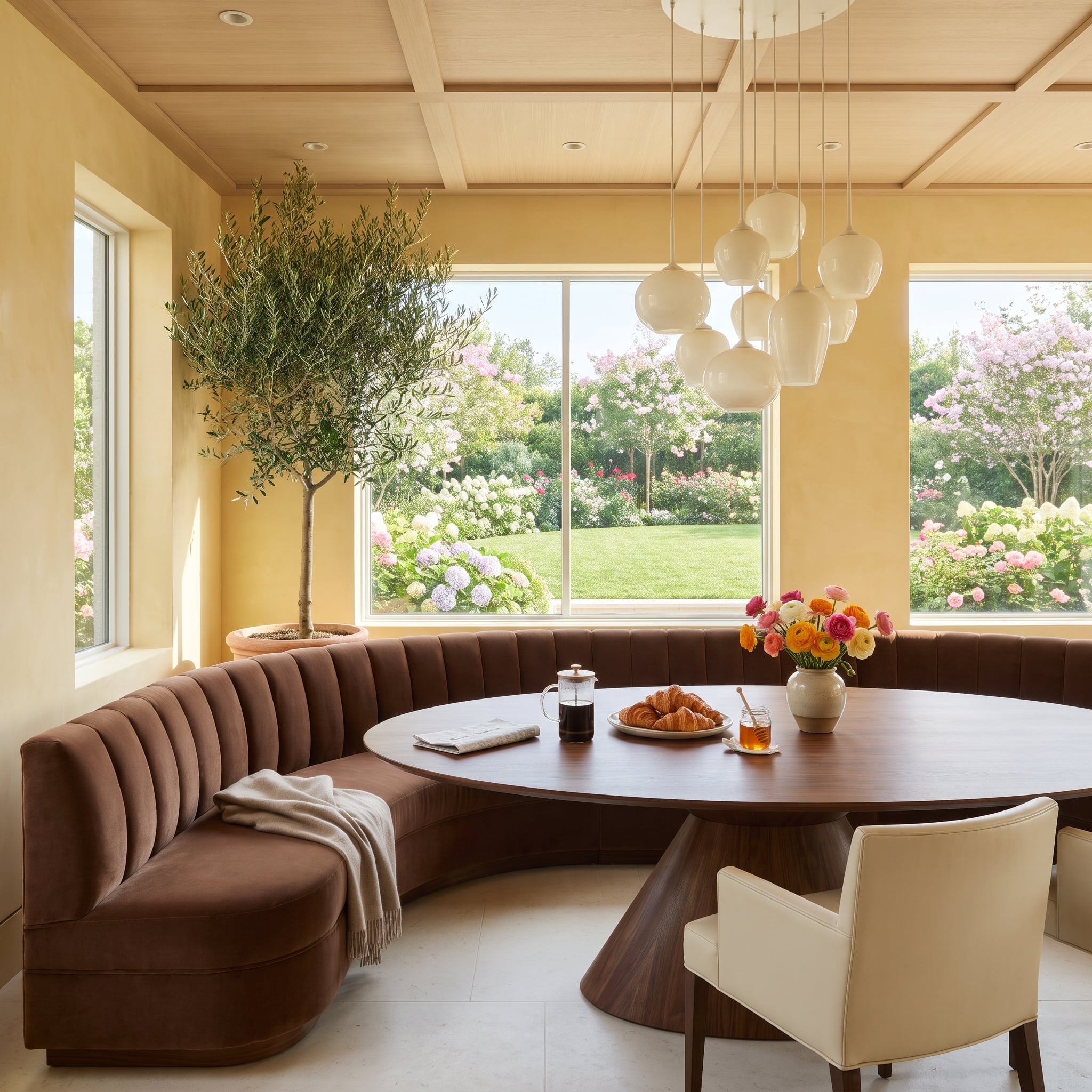
Channel tufting gives the long cocoa banquette a steady rhythm, each vertical rib catching light from the garden windows. The seating curls around a walnut table supported by a cone-shaped pedestal, leaving generous space for legs beneath the tabletop.
A cream leather chair closes the arrangement without turning it into a complete upholstered circle. Overhead, milk-glass pendants provide a softer counterpoint to the dark velvet. The result is more intimate than an ordinary breakfast table and considerably more inviting than a row of chairs pushed against a wall.
13. A Pale Stone Fireplace Holds Its Own Against Wall-to-Ceiling Walnut
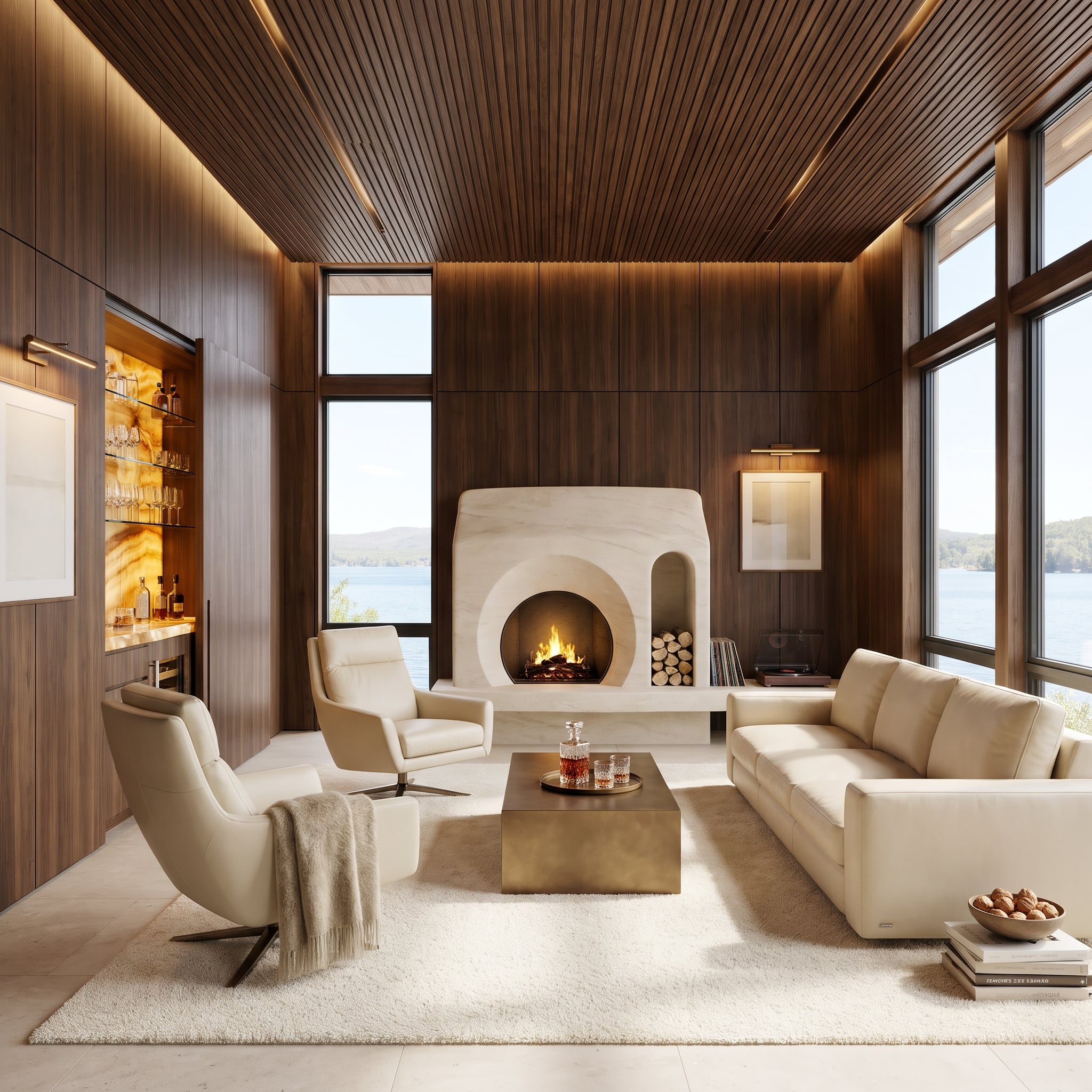
Walnut wraps the walls and continues overhead in tightly spaced slats. Against that uninterrupted field of wood, the pale stone fireplace reads almost like sculpture. Its arched log niche repeats the curve of the firebox, introducing a softer shape into the room’s otherwise linear architecture.
A backlit onyx bar contributes another warm focal point. Cream leather seating and a pale shag rug establish a relaxed setting around the fireplace, while the walnut’s pronounced grain gives the surrounding walls a sense of movement. The stone chimney breast commands attention through its shape rather than ornamental detail. No elaborate mantel required.
12. Lemons on the Sill Explain Why a Butter Velvet Bed Works Against Mocha Plaster
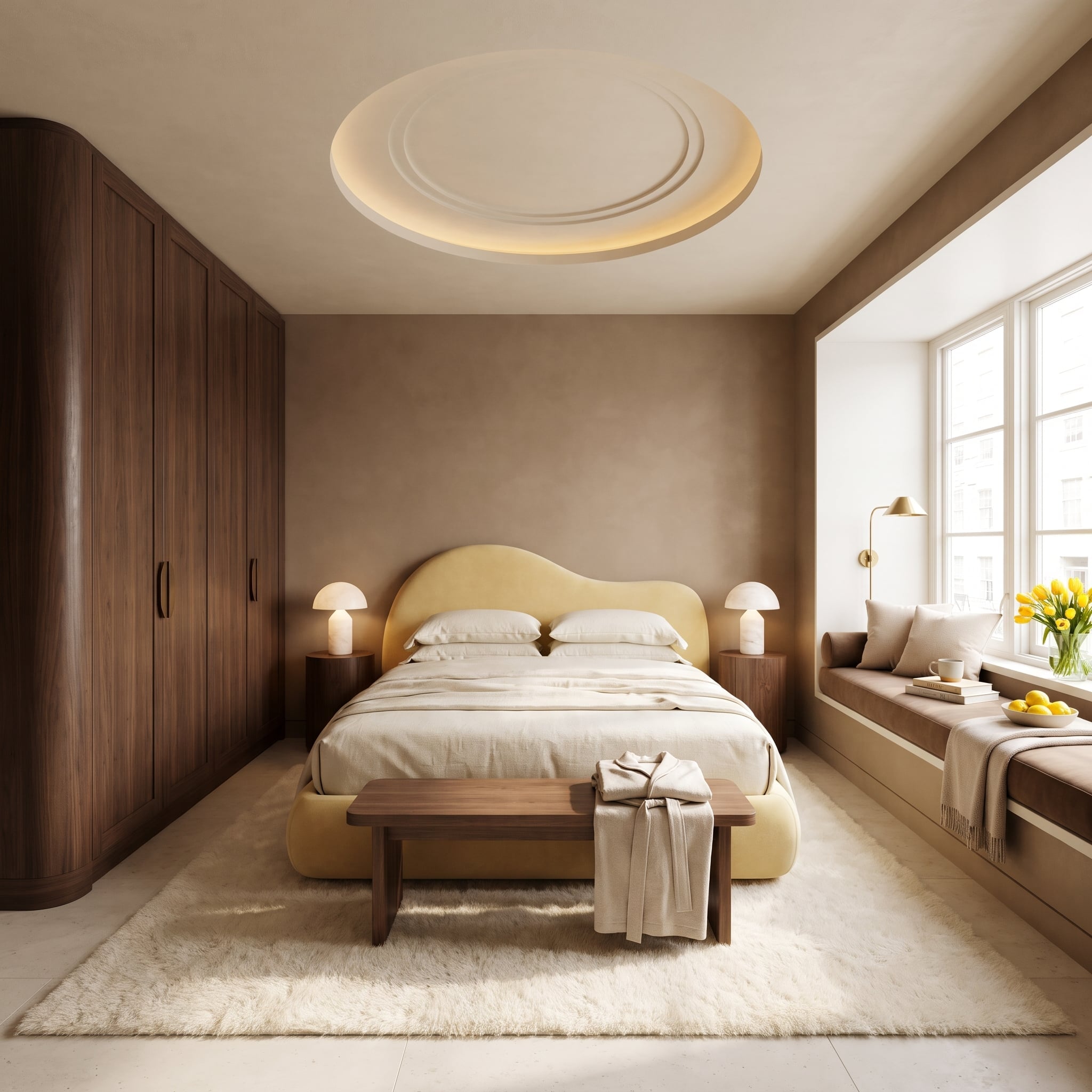
Curves carry the room. The wardrobe wall bends around its end rather than stopping at a hard corner, and the velvet headboard rises in one lazy wave. Even the ceiling joins in, with a recessed circular feature edged in warm light.
Yellow is the inspired interruption. The butter velvet bed, tulips and bowl of lemons repeat the color at three different scales, giving the room a lively counterpoint to its mocha plaster and dark walnut. Stone mushroom lamps ought to feel twee beside such elaborate furniture. Somehow, they don’t.
Material Matters: Velvet reflects light differently depending on the direction of its pile. Across a curved headboard, that creates subtle shifts in tone without introducing a pattern.
11. Behind One Espresso Door Sits a Mirrored Bar the Brass Pinstripes Never Give Away
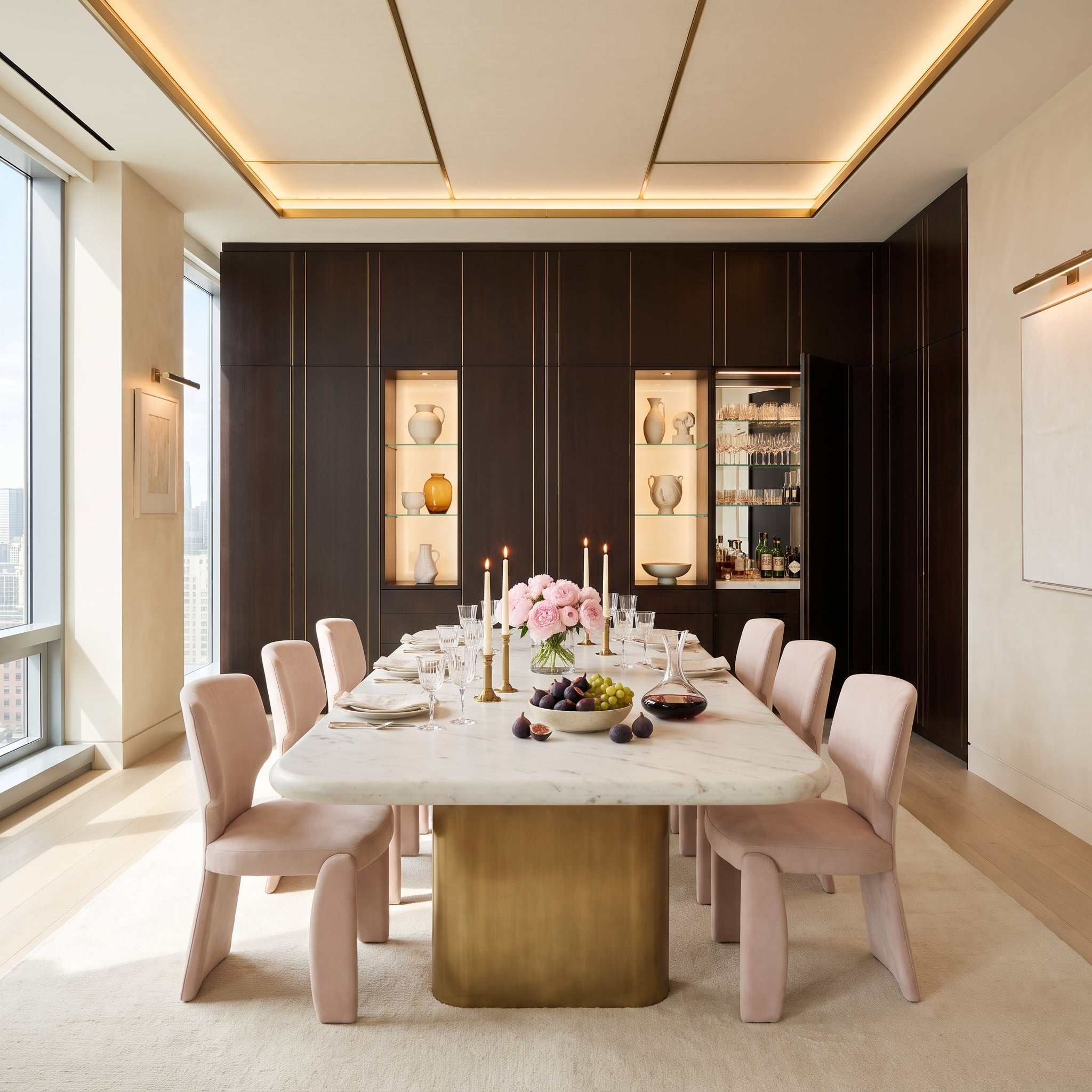
Thin brass inlays travel across the espresso cabinetry, disguising the door divisions within a larger decorative pattern. Then one door opens to reveal a mirrored bar stocked with stemware. A wall that looked purely architectural suddenly has other plans.
Blush suede chairs loosen the formality of the dark paneling. A marble tabletop with a generous rounded edge rests on a brushed brass pedestal, repeating the metal used throughout the cabinetry. The hidden bar is the clever detail, but the chairs give the room its personality.
10. Bronze Reading Lights Mounted Through Velvet Free the Travertine Nightstands From Lamps
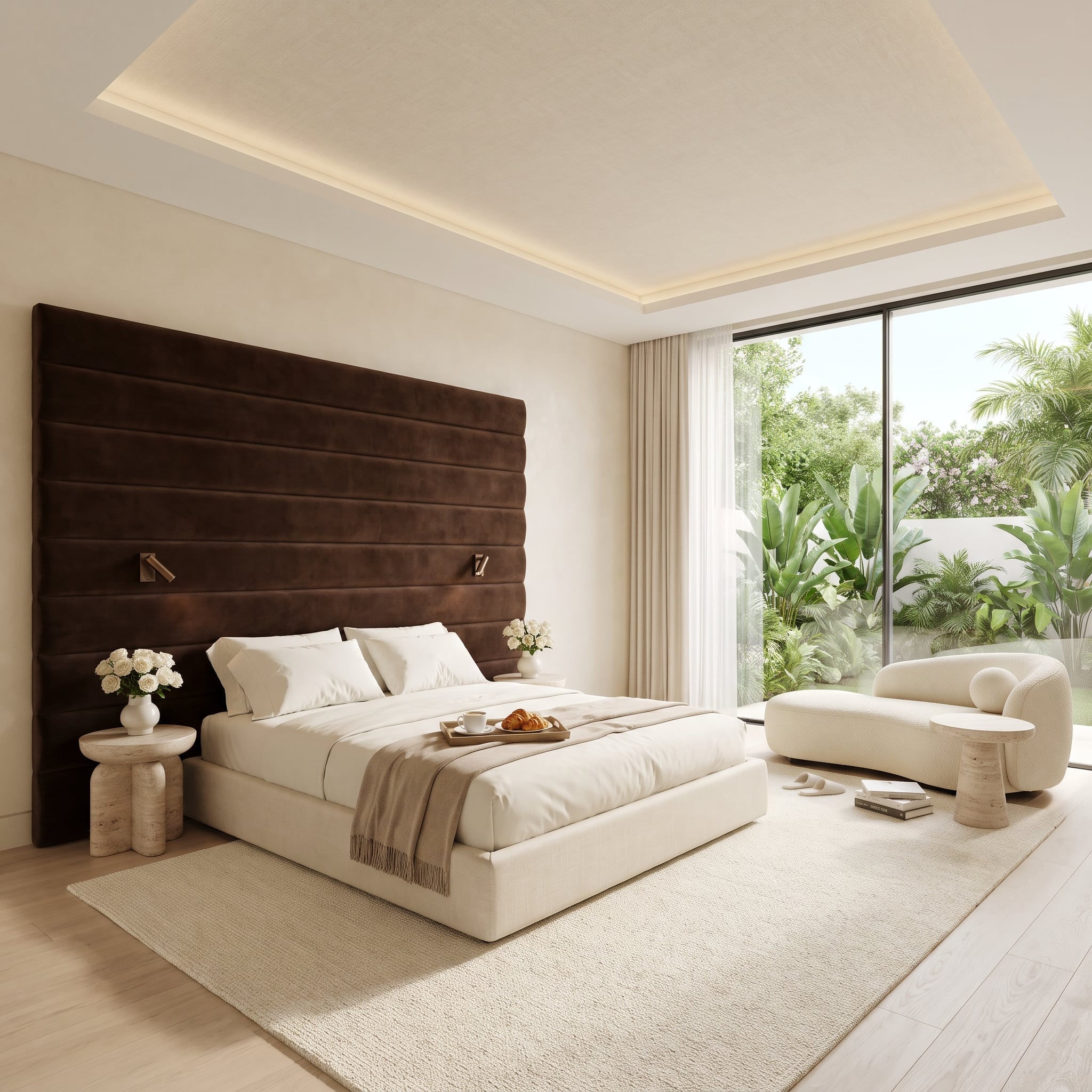
Two bronze swing-arm reading lights are mounted through the upholstered headboard, leaving the travertine nightstands free for flowers and smaller objects. Their dark finish sits comfortably against the velvet rather than competing with it.
The headboard extends well beyond the bed but stops short of the ceiling. A full-height upholstered wall would compete with the tray ceiling and its warm perimeter lighting, while the existing arrangement preserves a band of cream plaster above. Across the rug, a bouclé chaise faces the palms, its pale curve providing a graceful counterweight to the long brown headboard.
9. Hammered Bronze Halo Hangs Above Eight Bouclé Chairs in a Chocolate Dining Room
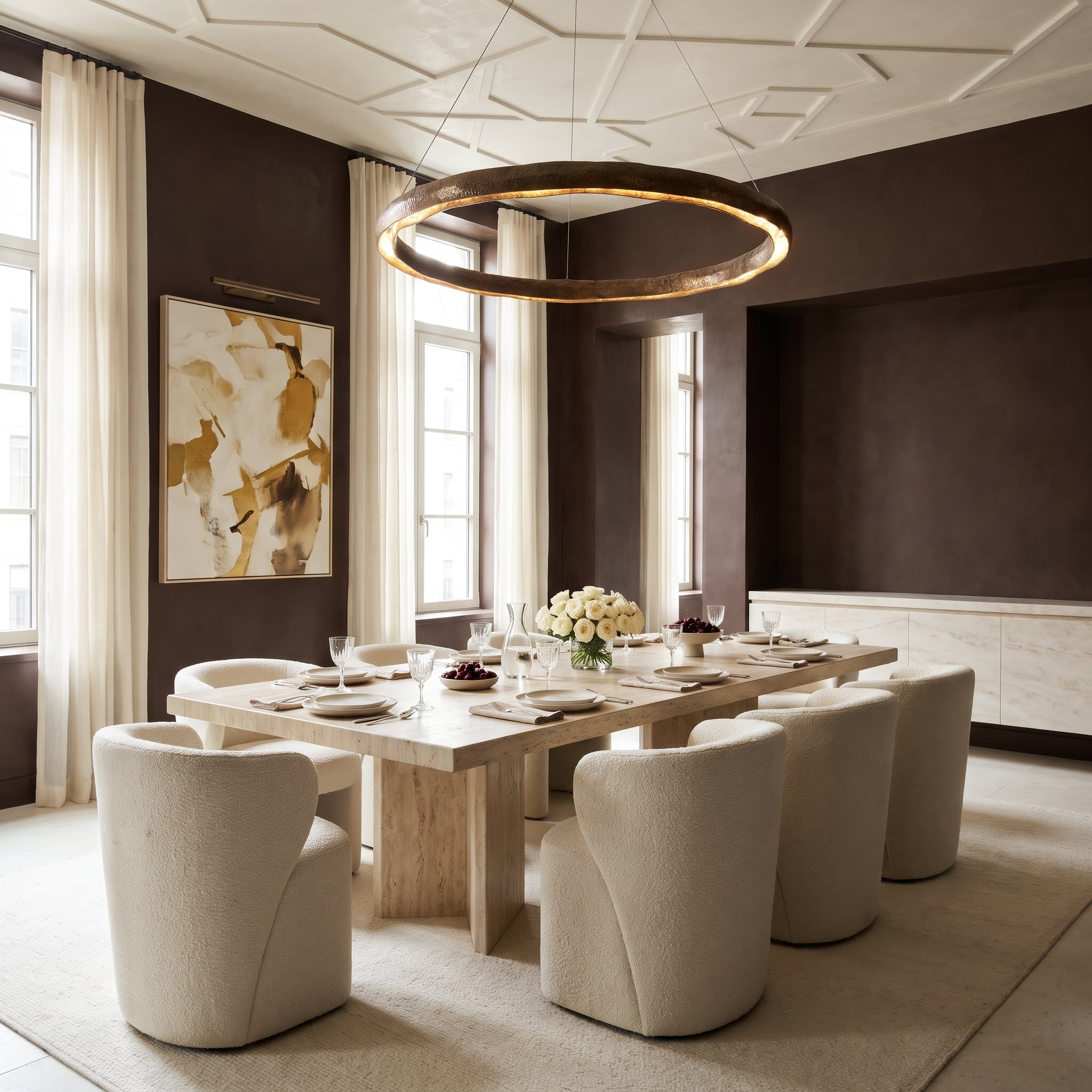
The hammered bronze chandelier hangs like a giant piece of jewelry above the dining table. Eight bouclé chairs circle the travertine beneath it, their soft upholstery contrasting with the precise geometry of the overhead ring.
Cocoa plaster stops at the ceiling line. Above, white geometric molding provides a bright backdrop for the chandelier. A pale stone sideboard occupies a recessed alcove along the back wall, keeping the circulation space clear. The chocolate plaster continues around the alcove’s inner surfaces, while the cabinet fronts echo the travertine at the center of the room. The bronze ring presides over the arrangement with considerable confidence.
8. Brass Sink, Brass Rings, Brass Pinstripes, and Glossy Chocolate Lacquer Reflecting All of It
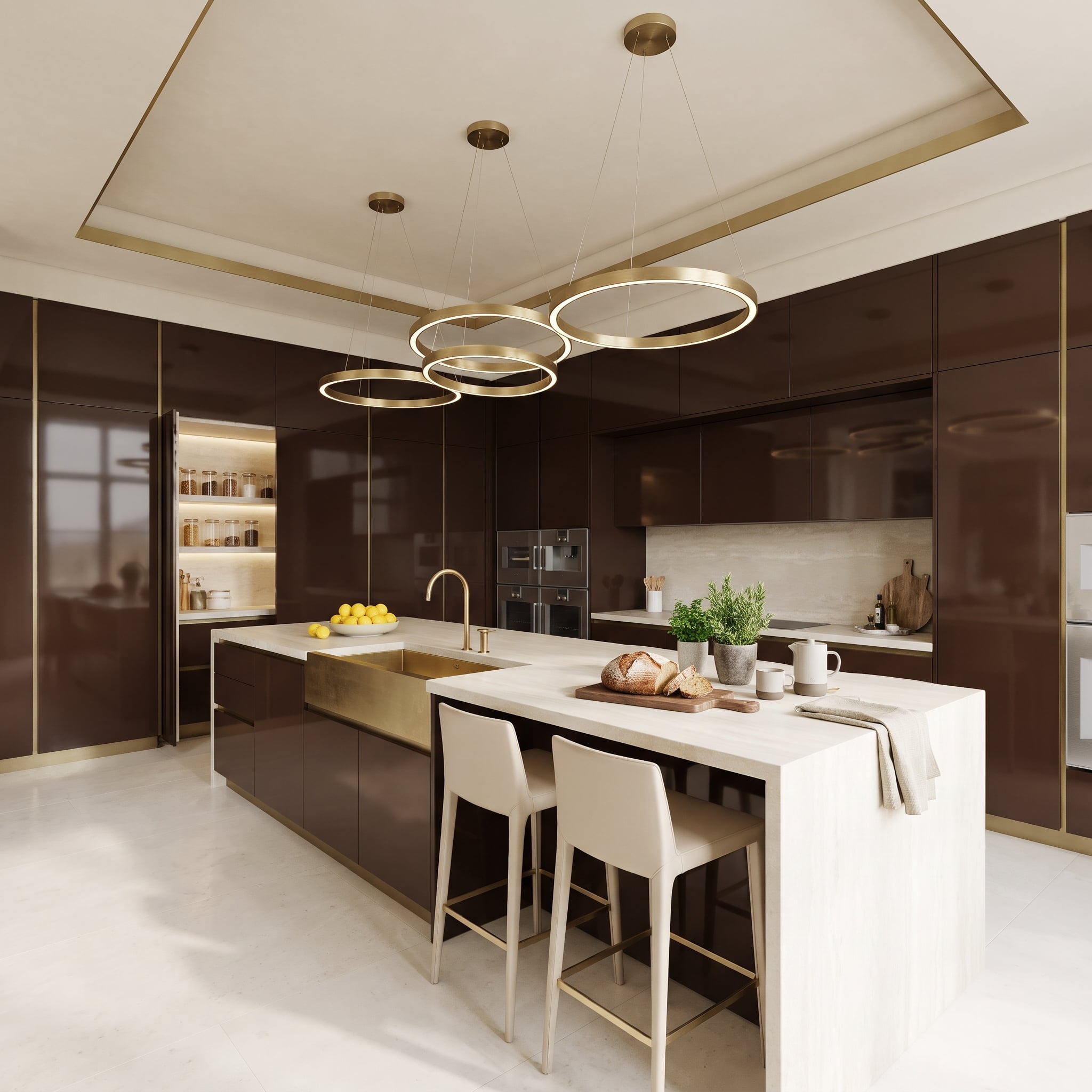
Brass takes command of this kitchen, beginning with an apron-front sink set into the chocolate lacquer island. Above, ring pendants repeat the metal’s warm glow, while fine brass inlays give the glossy cabinet fronts a tailored finish.
The travertine countertop changes level across the island, stepping upward at one end and descending in a waterfall at the other. Off to the side, a concealed pantry opens behind a cabinet door, revealing illuminated shelves stocked with glass jars. The cleverness lies in making so much equipment disappear into a continuous wall of lacquer when the doors are closed.
7. When the Walls Reflect the Hills, Chocolate Lacquer Becomes a Second View
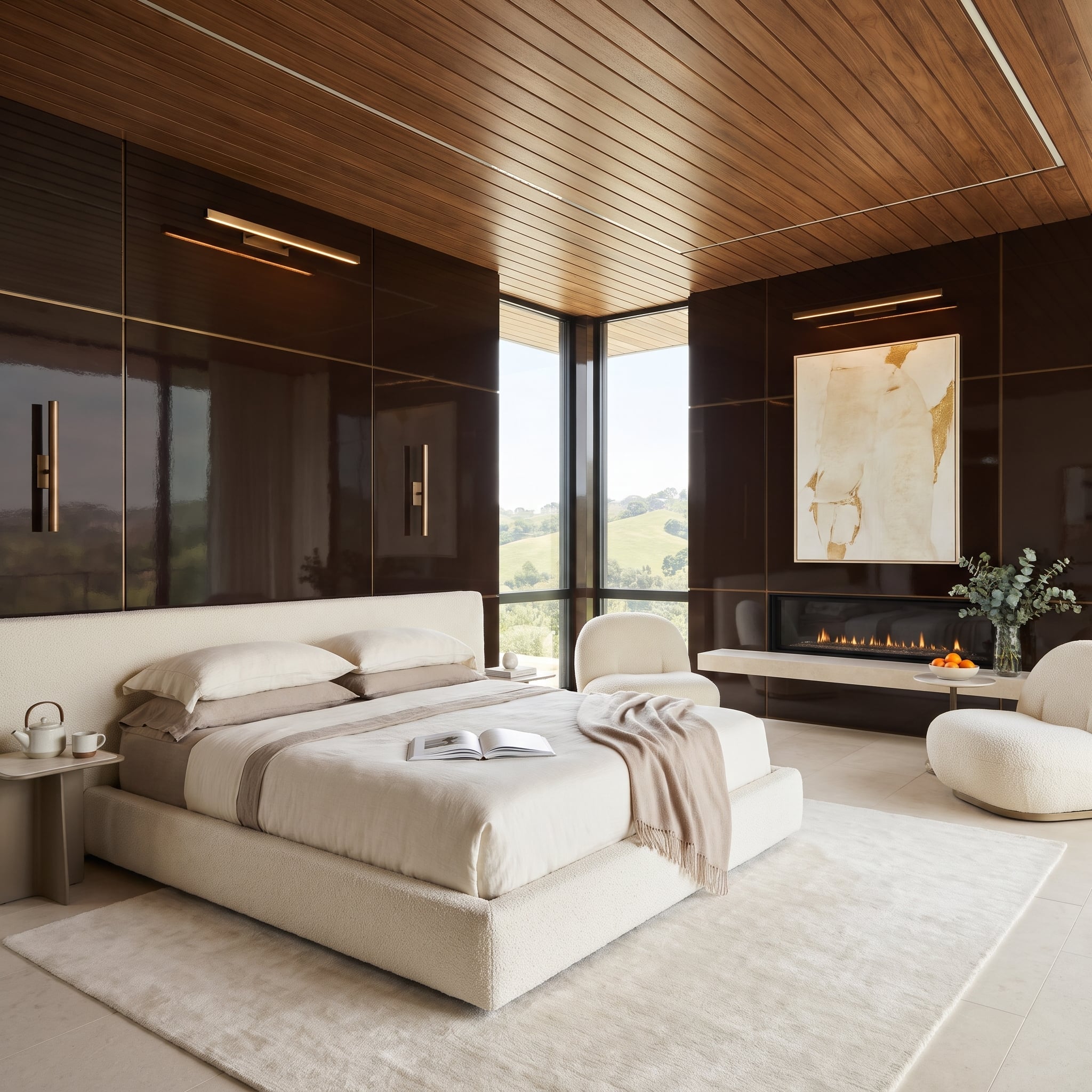
The hills appear twice. Once through the corner glazing, and again in the high-gloss chocolate panels behind the bed. Slim brass seams divide the reflective wall, turning the landscape into a series of dark, shifting impressions.
Walnut slats overhead carry recessed lighting toward the glass. Below, a bouclé bed, rounded swivel chairs and cream stone fireplace surround offer a tactile contrast to the lacquer. The polished wall changes character with the light, while the soft upholstery and warm wood keep the bedroom comfortable rather than overly formal.
6. Clay Jugs in a Glowing Niche Give a Slab of Brown Marble Somewhere for the Eye to Rest
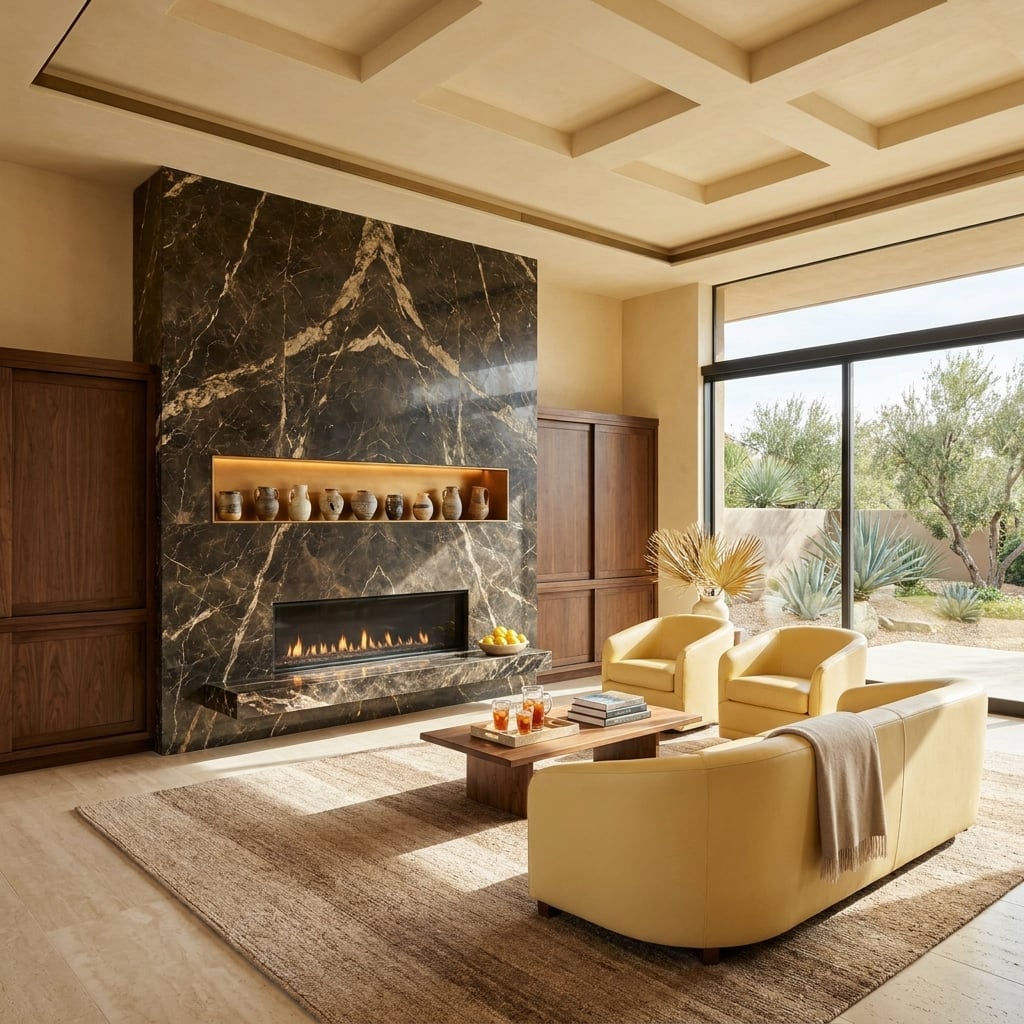
High on the chimney wall, book-matched marble veins meet in a chevron and draw the eye toward the ceiling coffers. An illuminated niche interrupts the stone, holding a row of clay jugs against a warm background. Without that modest display, the marble might read as one enormous cliff face.
Butter leather on the sofa and rounded chairs introduces a softer color and texture, while walnut cabinets frame the composition without competing with the stone. The jugs are the least expensive-looking objects in the room and arguably the most important. They give all that marble a little humanity.
5. Powder Blue Against Chocolate Brown Proves Opposites Can Be Impeccably Dressed
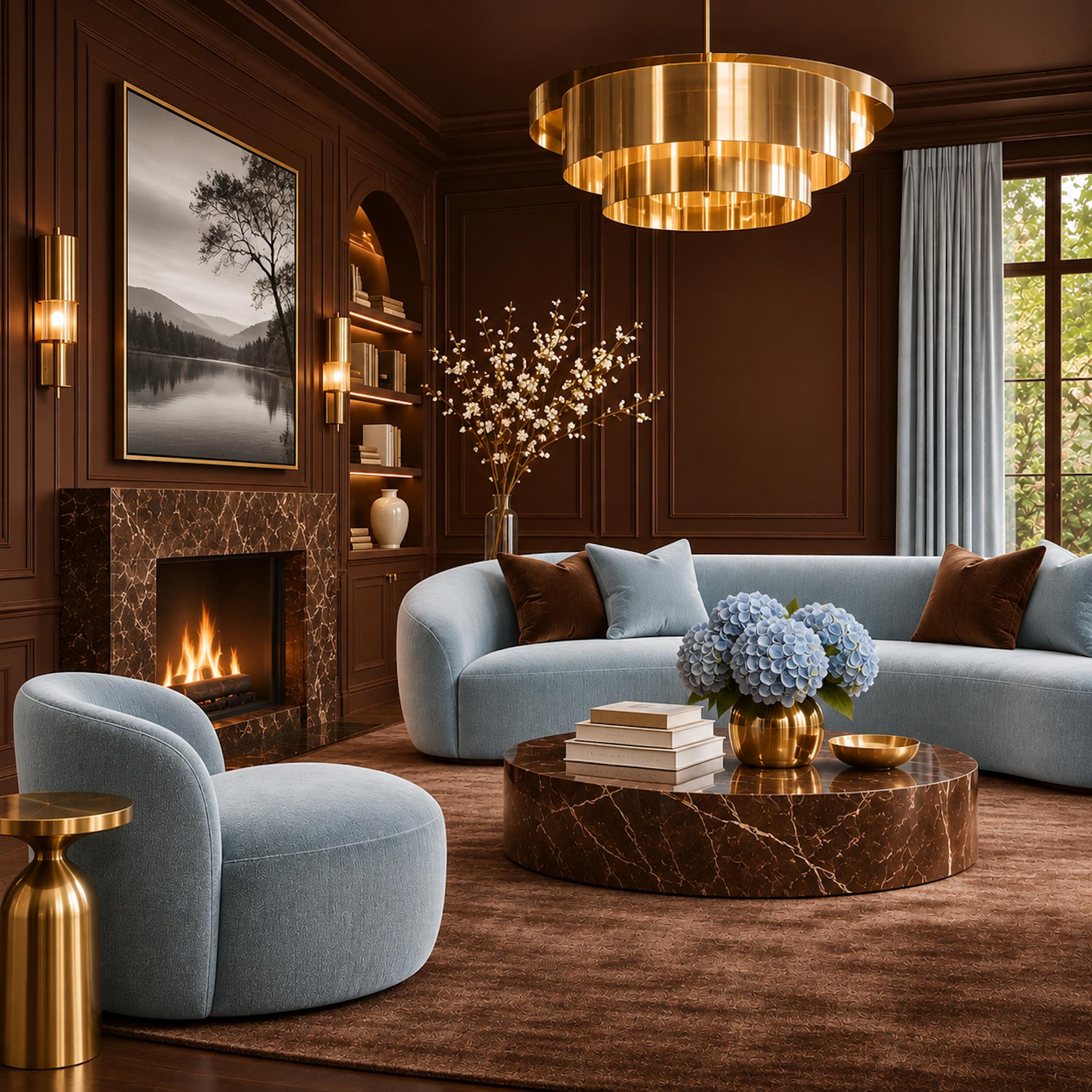
Powder-blue upholstery introduces an unexpectedly cool note against the chocolate-paneled walls. A generously curved sofa and matching lounge chair soften the room’s traditional moldings, while the dark marble coffee table establishes a visual anchor beneath the seating arrangement.
Above the fireplace, a black-and-white landscape photograph refuses to take sides in the color debate. Its monochrome composition brings a welcome graphic clarity to a room otherwise dominated by warm brown and pale blue. Brass lighting and a layered brown rug supply warmth without requiring another accent color. The combination is sophisticated precisely because the blue isn’t trying to brighten the chocolate. Each makes the other look richer.
4. Skylight Above, Dark Wood Below: How a Single Vanity Carries All the Chocolate
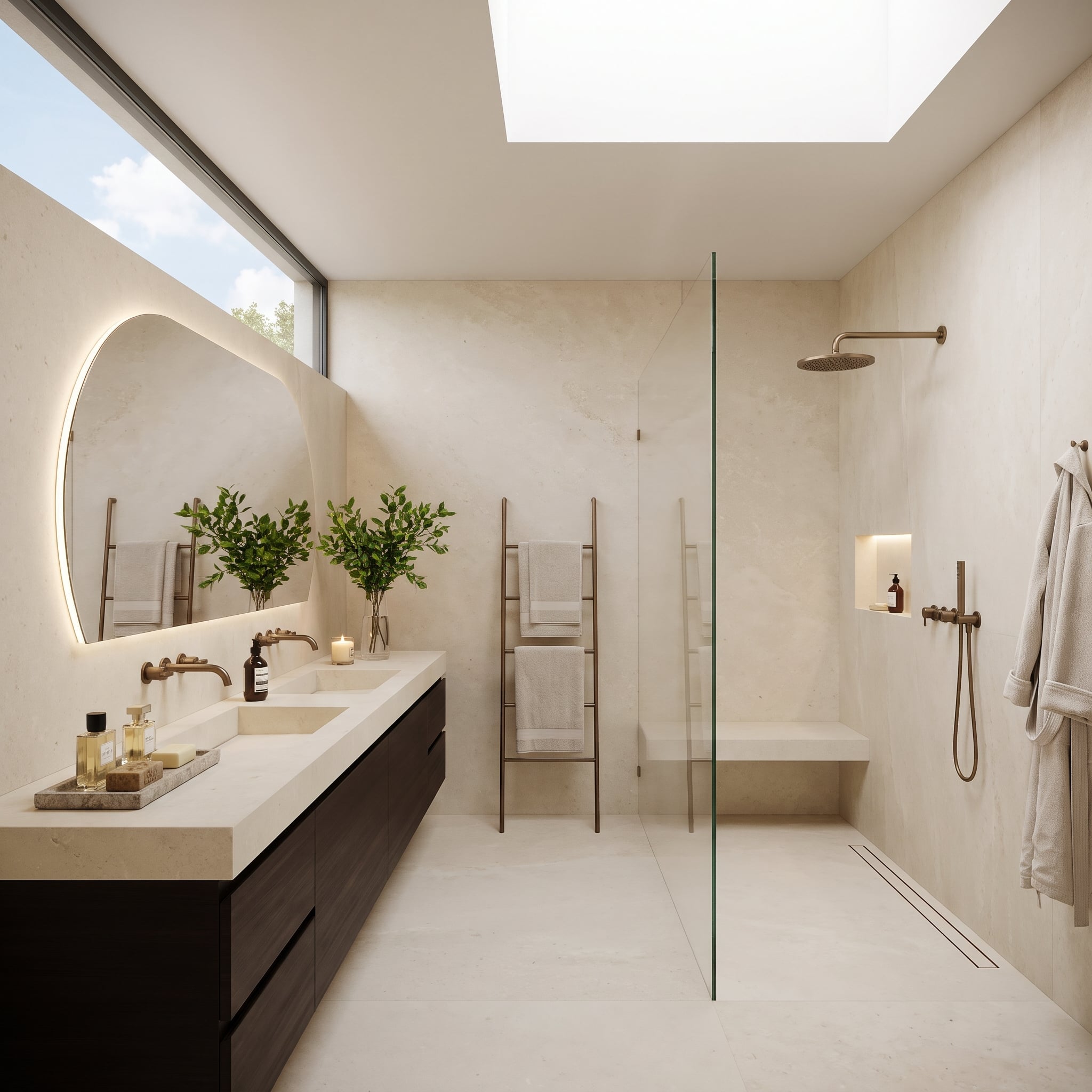
Almost everything is pale except the vanity. A long run of dark-stained wood with handleless drawers floats beneath a substantial cream limestone slab, its integrated basins appearing carved into the stone. Bronze wall-mounted faucets rise above each sink, their finish repeated on the shower fittings and towel ladder.
Daylight enters through a skylight above the shower and a clerestory window near the mirror. One fixed glass panel separates the shower from the rest of the room without enclosing it completely. A linear drain runs beside the shower wall, allowing the floor to slope toward one edge. The curbless appearance depends on carefully planned elevations, waterproofing and drainage. Against the nearly continuous pale stone surfaces, the chocolate vanity becomes a single, deliberate anchor.
In our reader polls, wood was the top vanity pick, with 40% saying they would buy it over white or navy.
3. Two Stories of Chocolate Plaster Meet a Monumental Limestone Fireplace
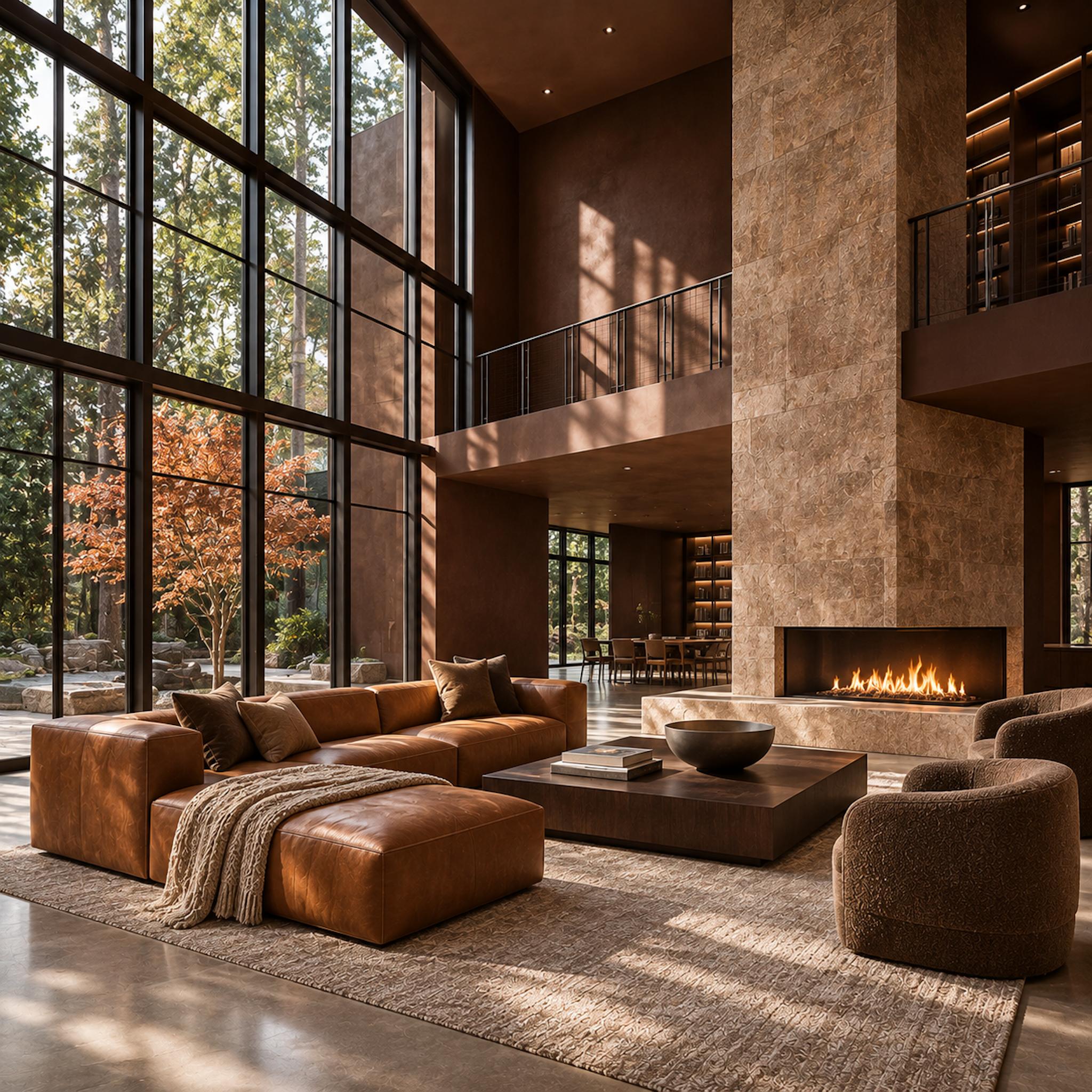
The limestone fireplace rises through two stories, its broad chimney breast establishing the scale of the room before the furniture has a chance to compete. Chocolate plaster surrounds the monumental stone volume, while an upper-level gallery cuts across the far wall. A vast grid of windows opens the opposite side to the garden.
Down below, cognac leather seating gathers around a low rectangular coffee table. A textured brown lounge chair and pale rug introduce enough tonal variation to prevent the furnishings from disappearing against the architecture. The most successful decision is the restraint: no chandelier hanging through the void, no elaborate ceiling treatment, no decorative installation competing with the fireplace. The room’s extravagance lies in its proportions. Chocolate gives the height definition; limestone gives it a destination.
2. Where Smoked Lacquer Mirrors the Skyline, a Honey Onyx Bar Lights Up From Inside
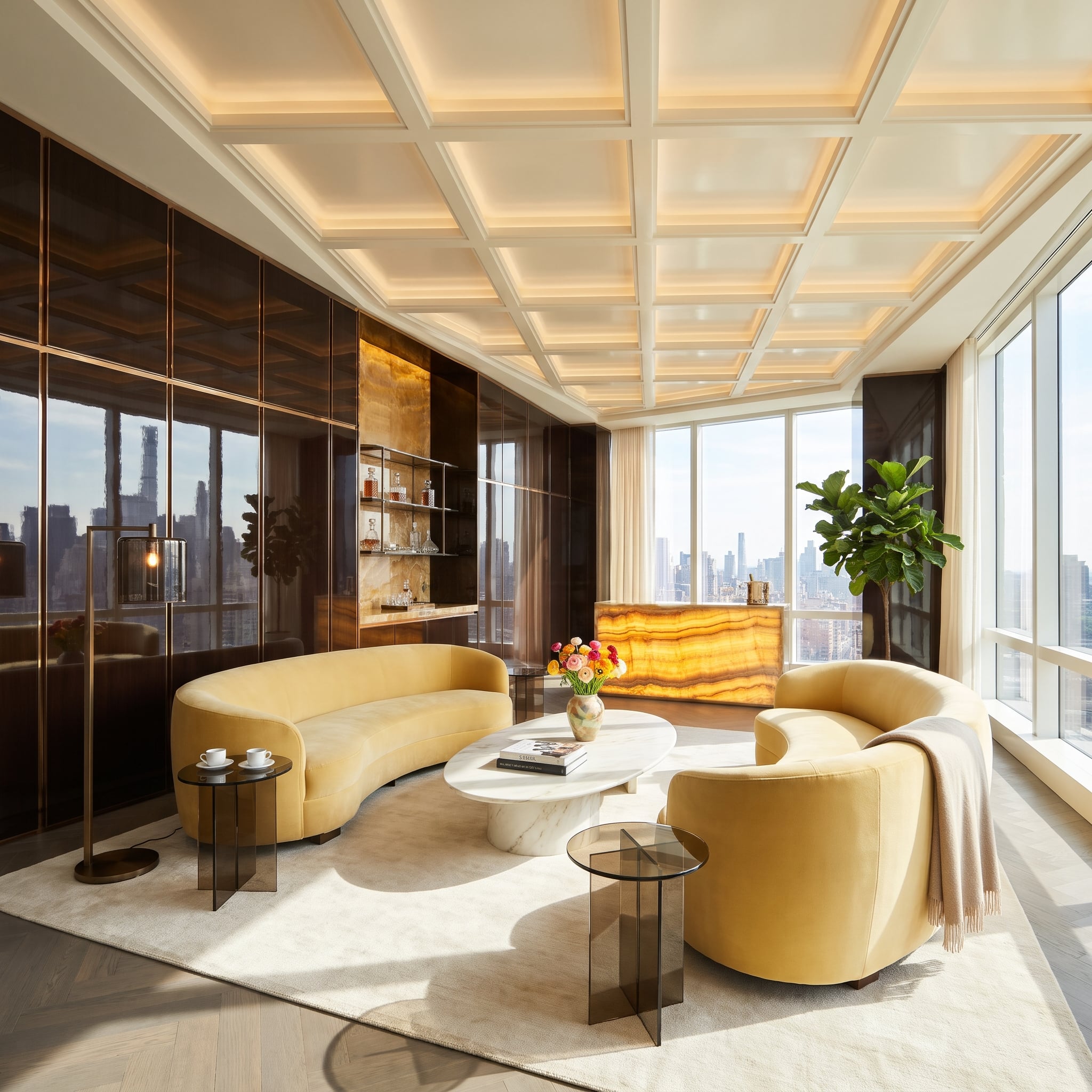
Honey onyx lines the bar niche and wraps a freestanding counter illuminated from within. The repetition ties the two features together, while chocolate lacquer panels capture the skyline in dark, shifting reflections. The city becomes part of the wall finish.
Butter velvet sofas curl toward one another, establishing a relaxed seating area beneath all the polished drama. Smoked-glass side tables are the quiet achievement here. They carry the room’s brown tones into the furniture arrangement without introducing another bulky object. After so much lacquer, stone and light, their restraint is refreshing.
1. Chocolate Velvet Sofas Nest Like Parentheses Under a Row of Skylights
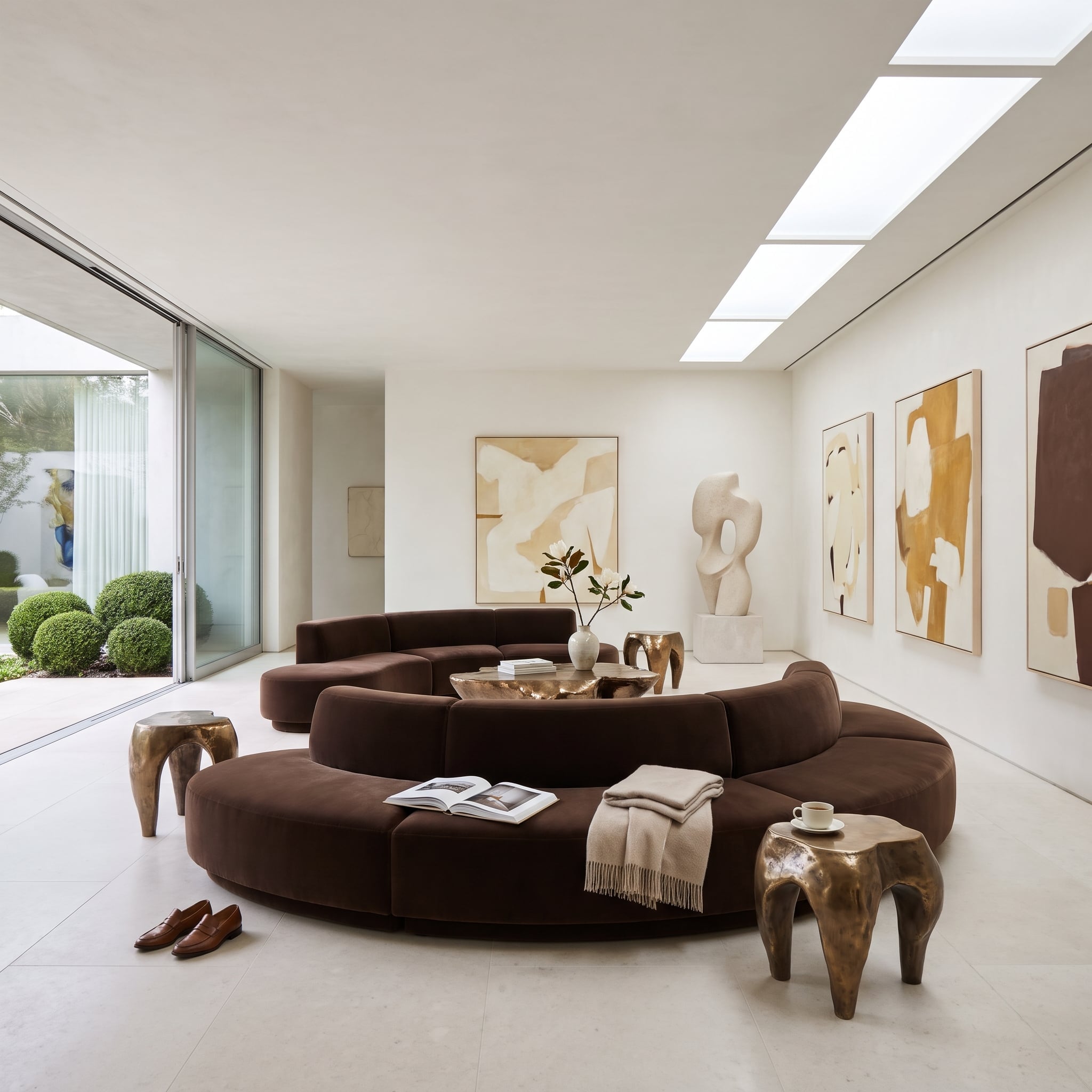
Long rooms are notoriously awkward to furnish. Here, the solution is a pair of chocolate velvet sofas whose curves face one another across a molten-bronze coffee table. Their shapes create an intimate conversation area within a much larger rectangular space.
Cast-bronze stools at either end repeat the brown and ochre tones of the gallery wall. Above, a row of skylights introduces a strong linear rhythm that contrasts with the rounded furniture below. The sofas behave almost like a pair of enormous parentheses, enclosing the most sociable part of the room without erecting a single partition.