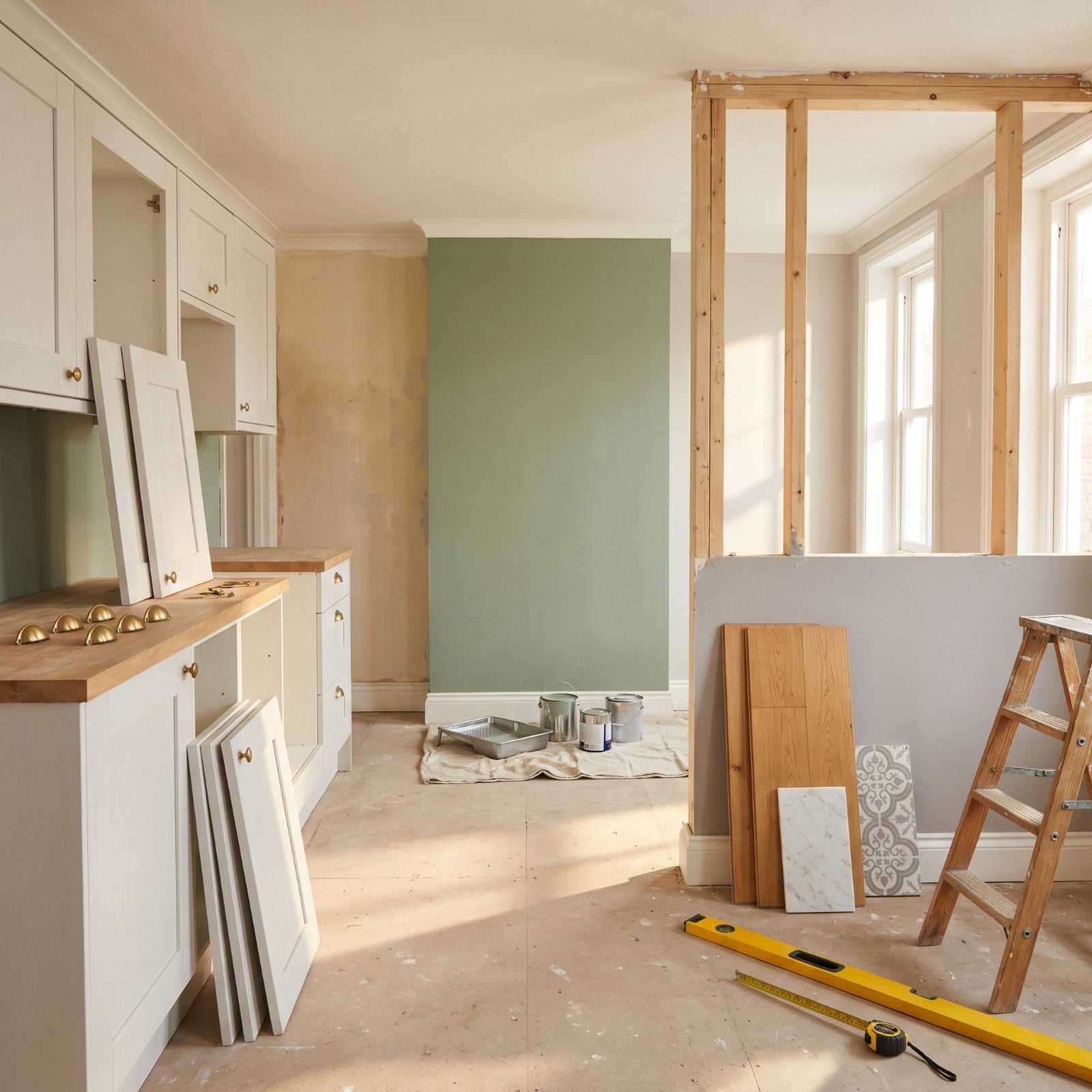
You walk into your own kitchen and feel a small itch. The cabinets are fine. They close, they hold dishes, and yet something about them has stopped feeling like you, the way a job can still pay well and still feel wrong on a Tuesday morning.
Renovating a home and changing jobs run on the same wiring. The same restlessness, the same hope that the next layout or the next title fixes what the last one couldn’t. We keep tearing out and starting over for reasons that have almost nothing to do with the drywall.
In order to come up with the very specific design ideas, we create most designs with the assistance of state-of-the-art AI interior design software. Also, assume links that take you off the site are affiliate links such as links to Amazon. this means we may earn a commission if you buy something.
Below are the remodeling moments you’ve lived, each one holding up a mirror to the career you’ve been quietly rebuilding alongside it.
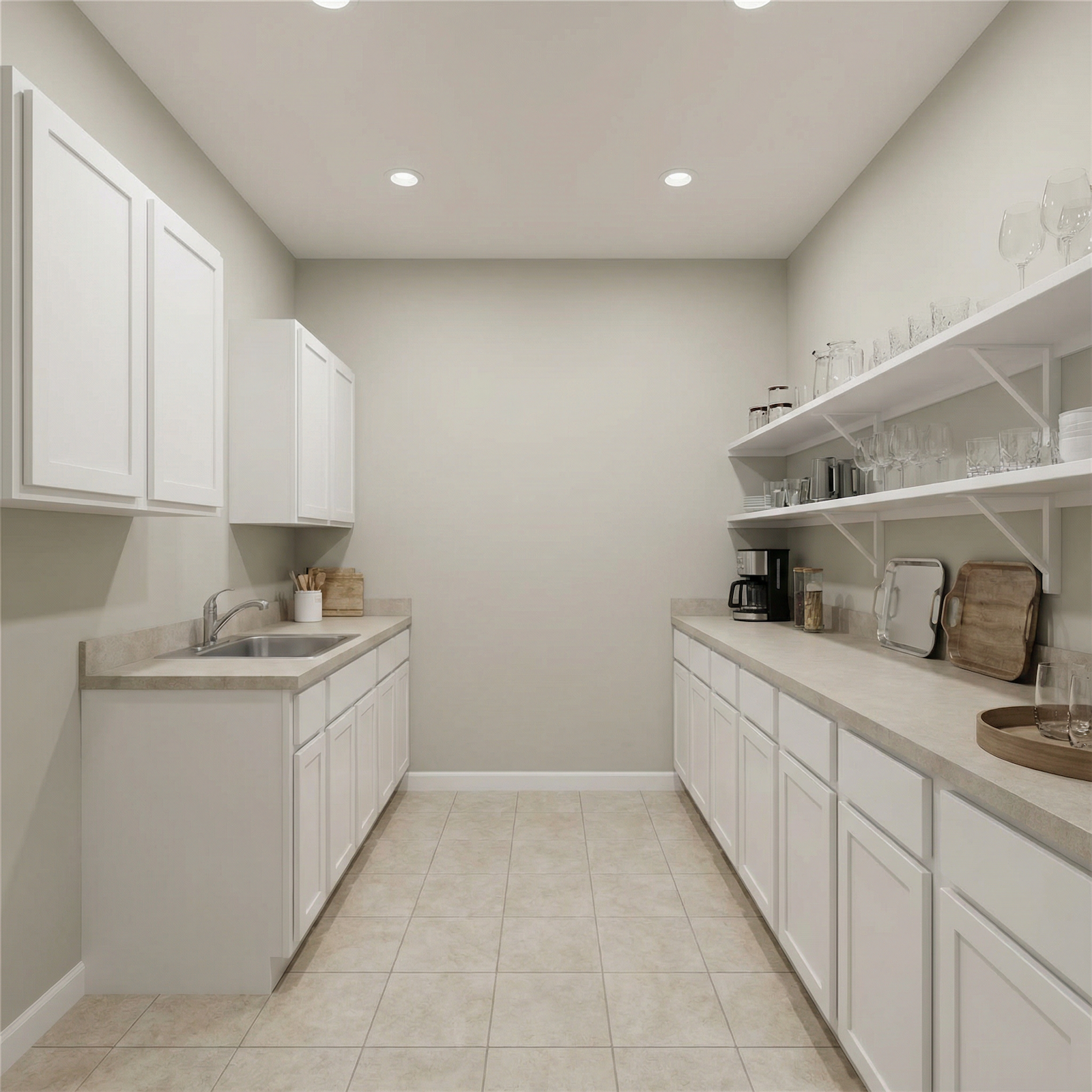
12. You Replace Cabinets That No Longer Feel Like You
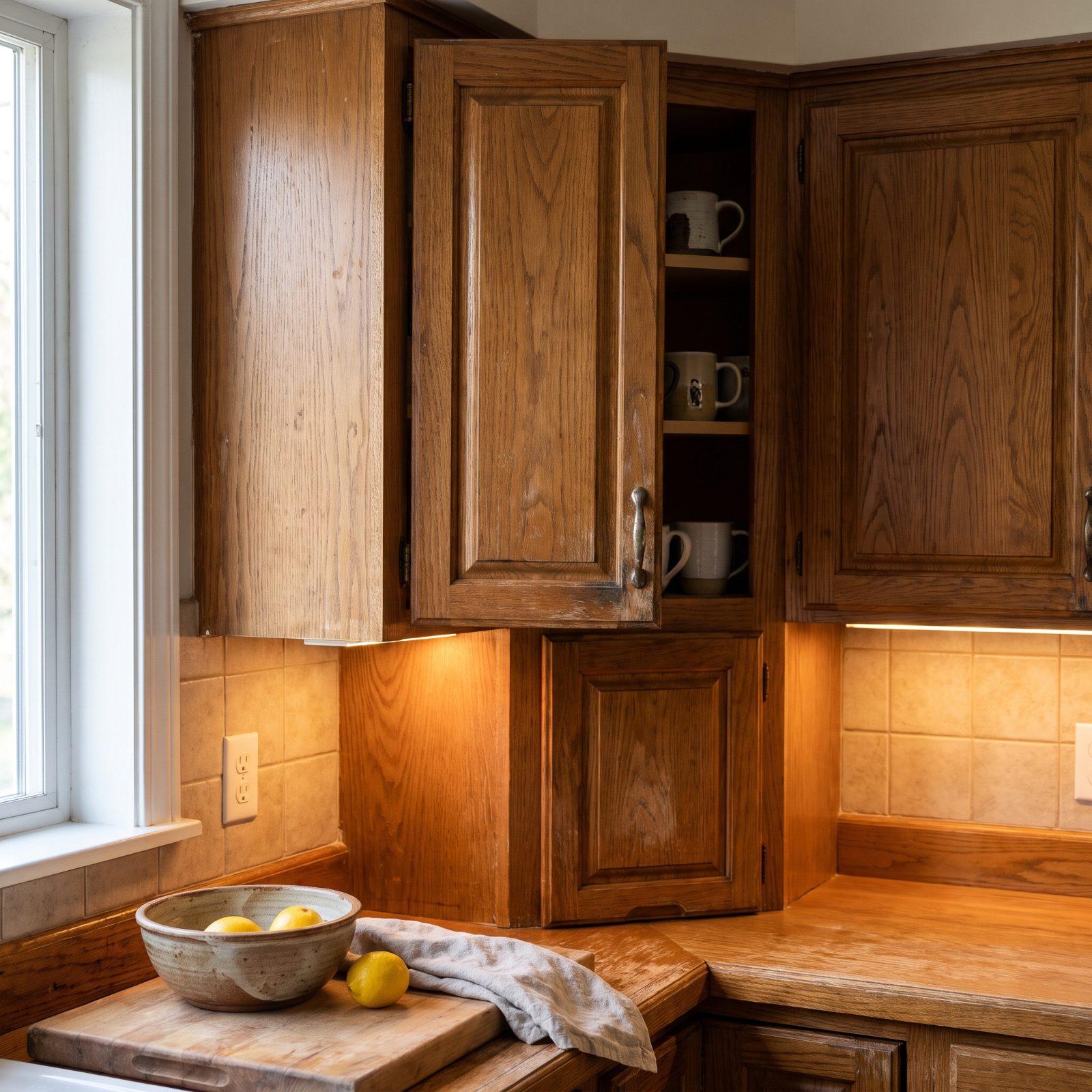
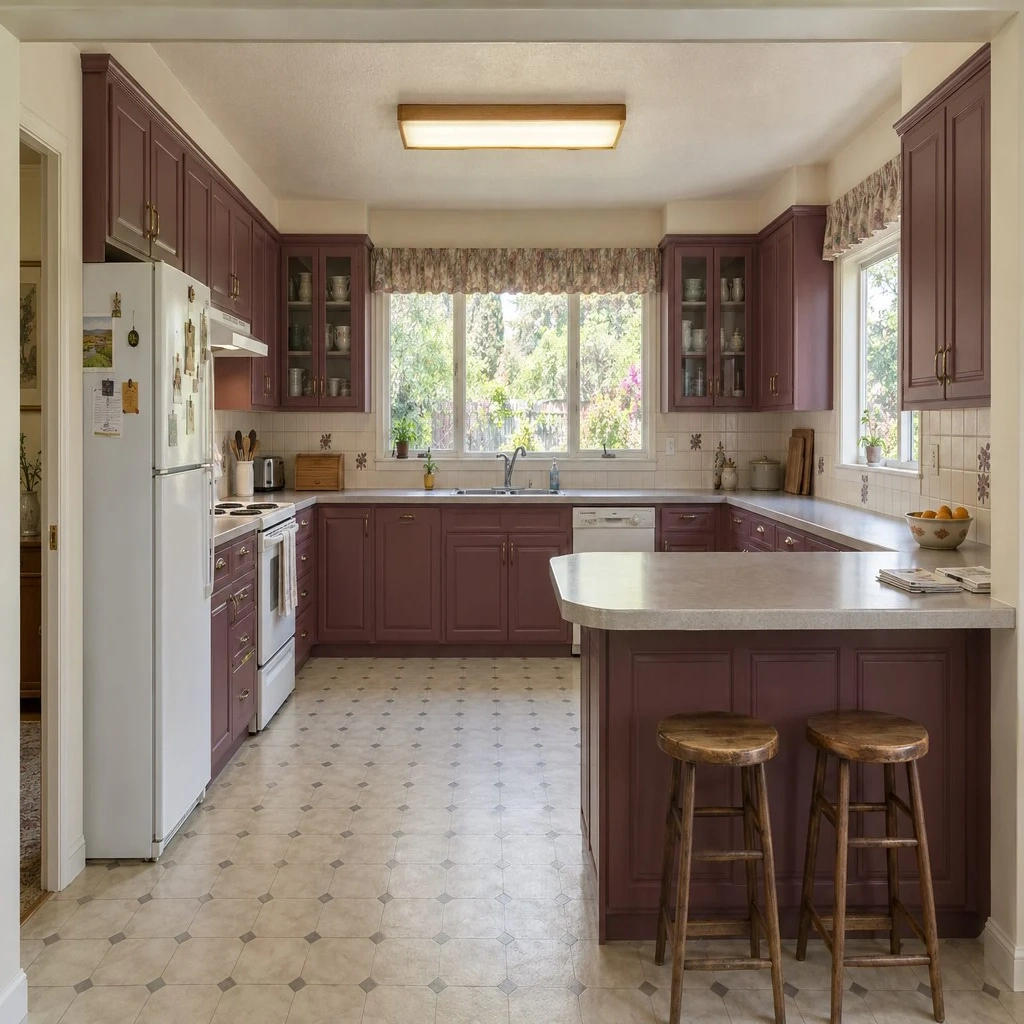
The cabinets mostly work. One door hangs a little askew, the mug shelf beside it has lost its door entirely, but they still hold the coffee mugs and you keep telling yourself it’s fine. And still you stand there one evening and think, these aren’t me anymore. Same feeling hits around year four at a job you were proud to land. The paycheck clears, the desk is fine, but you’ve outgrown the version of yourself who said yes to it.
Psychologists call it identity signaling. We treat our surroundings as a statement about who we are now, and when the statement goes stale, the object starts to grate even when it still functions. The oak cabinets aren’t ugly. They’re just last-you. Swapping to white shaker cabinets with brass bar pulls is the same move as updating your title to match who you’ve become.
11. A New Paint Color Makes Everything Feel Possible Again
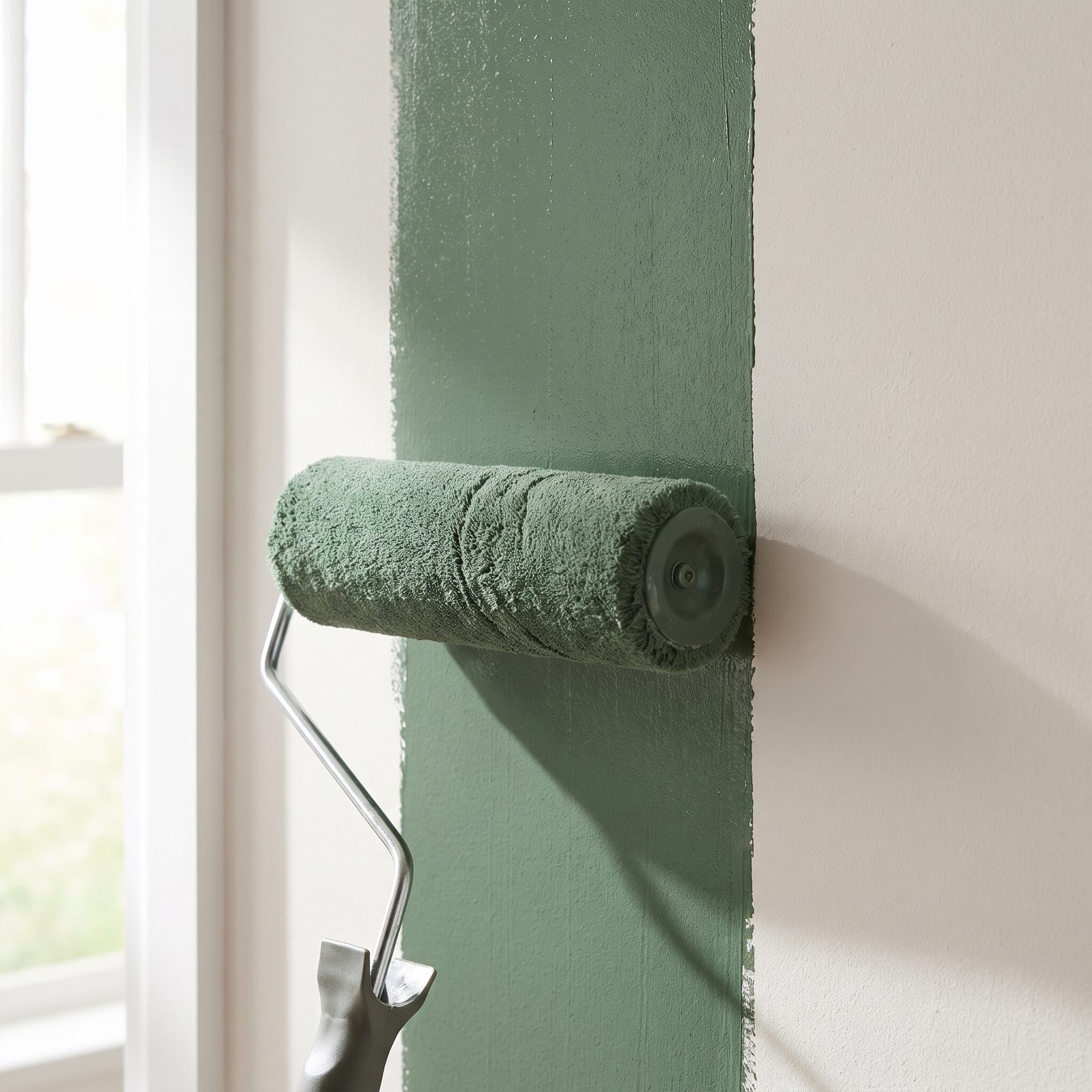
Thirty dollars of paint and suddenly the whole house seems fixable. You roll one wall in a moody green and your brain lights up like you’ve solved something structural. You haven’t. You’ve changed a surface. But the lift is real.
Same rush as a fresh start at a new company before you’ve met anyone difficult. Everything feels possible because nothing has gone wrong yet. Researchers call this the fresh-start effect: a clean slate, even a symbolic one, resets our sense of what we’re capable of. A new wall color and a new start date both work because they move the clock back to zero.
What Our Readers Say
- When we asked Home Stratosphere readers which can of trim paint they would buy, about three out of four picked white over a dark shade.
From Home Stratosphere reader polls and votes.
10. The Dream Kitchen Becomes Ordinary Faster Than Expected
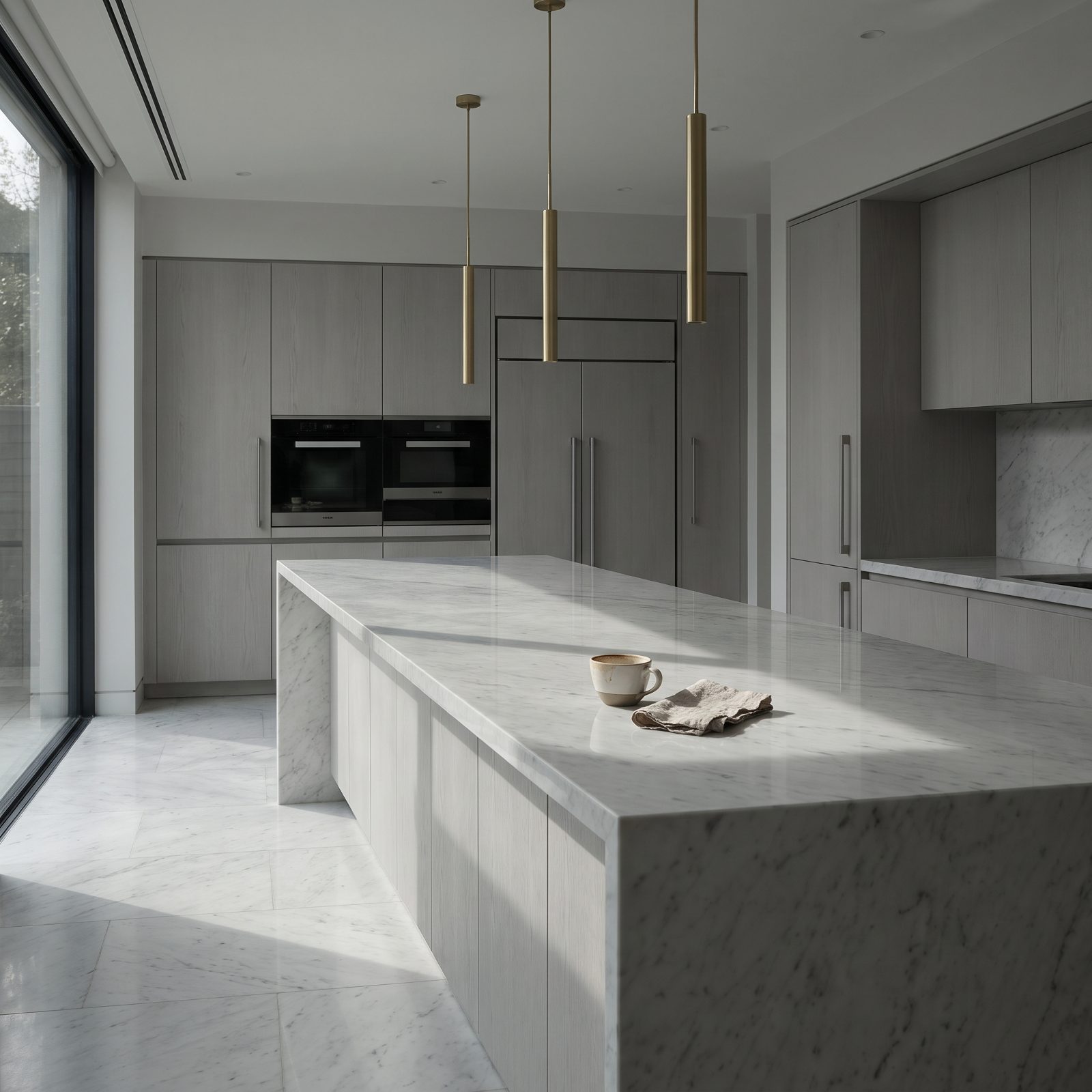
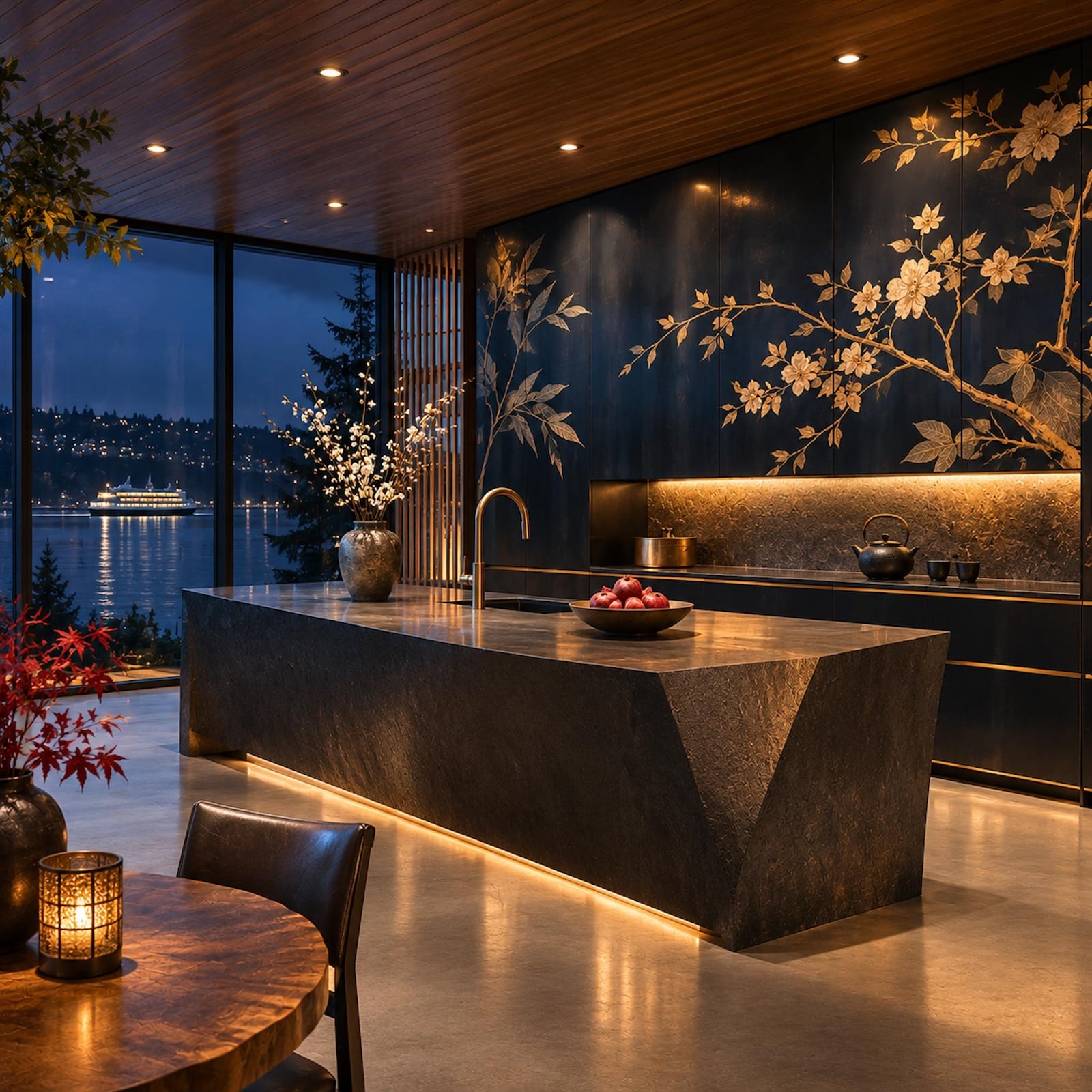
You wanted this kitchen for three years. The marble island, the brass pendant lights, the range that cost more than your first car. For about six weeks it felt like a miracle every morning. Then it became the place you stand to make coffee while the mail piles up on the counter.
That’s hedonic adaptation, and it’s brutal. We adjust to a new baseline almost as fast as we reach it, and the thing we were sure would make us happy stops registering the moment it becomes normal. Exact arc of the dream job you chased for two years and were bored inside of by the second spring.
The kitchen didn’t fail you. Your brain just recalibrated, the way it was always going to. Knowing that won’t stop the next craving, but it might make you pause before you blame the countertops.
9. You Add a Home Office When Life Changes
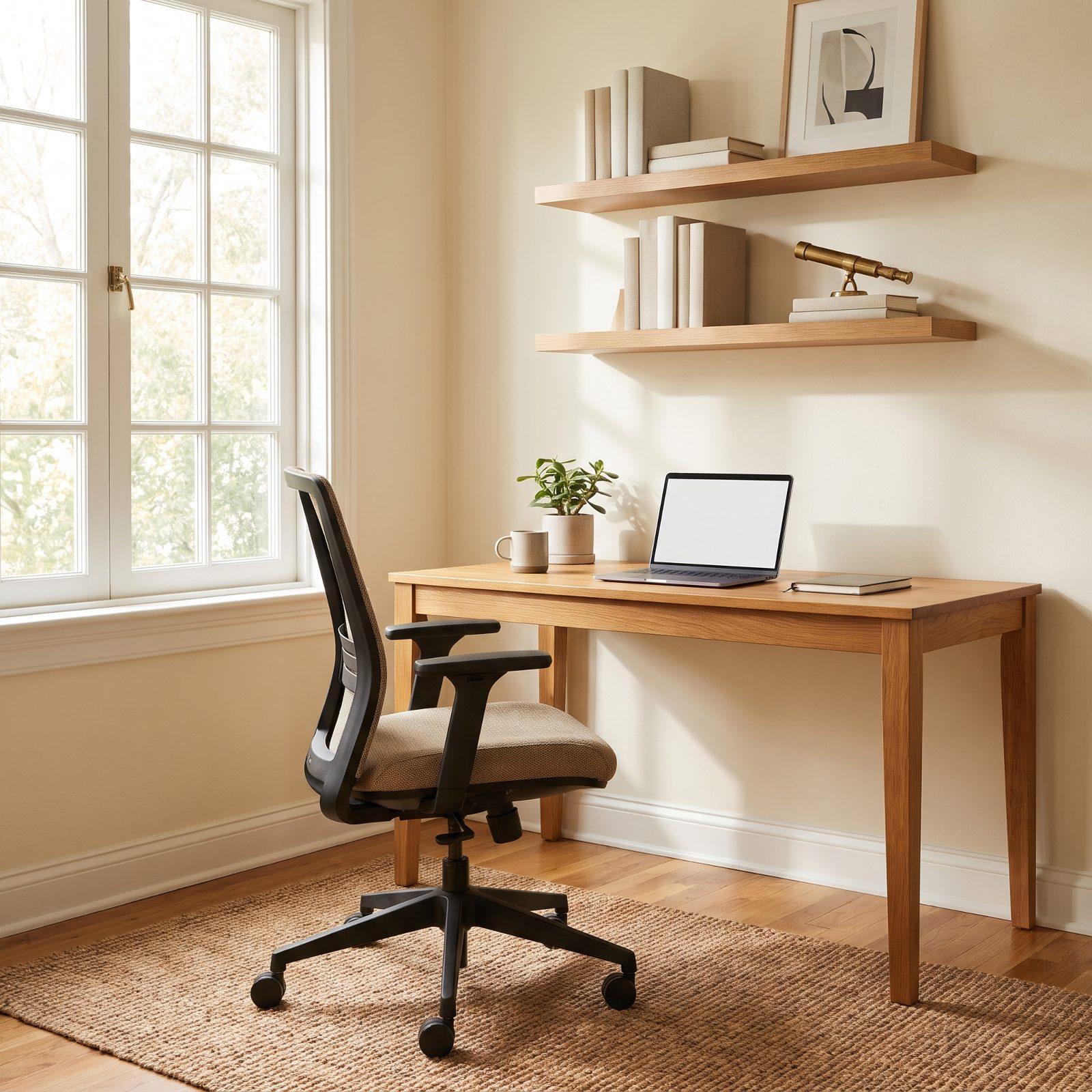
Something in life shifted. The commute ended, or a side thing got serious, or the kids left a room empty. So you build a japandi home office with a warm honey oak desk and shelves that finally match how you want your days to feel.
Adding a room because life changed is the house catching up to a decision you already made internally. It’s the same instinct that pushes a career pivot after a big birthday or a hard year. The external change makes room for the internal one that was already brewing.
We underestimate how much our environment follows our identity rather than leading it. You don’t build the office and then become the person who works from home. You become that person, and the room shows up to confirm it. A bright home office is less a renovation than a declaration you’ve already made to yourself.
When our readers loved a home office and told us why, overall style came first, followed closely by how cosy the room felt.
8. Your Neighbor’s Addition Makes Your House Feel Smaller
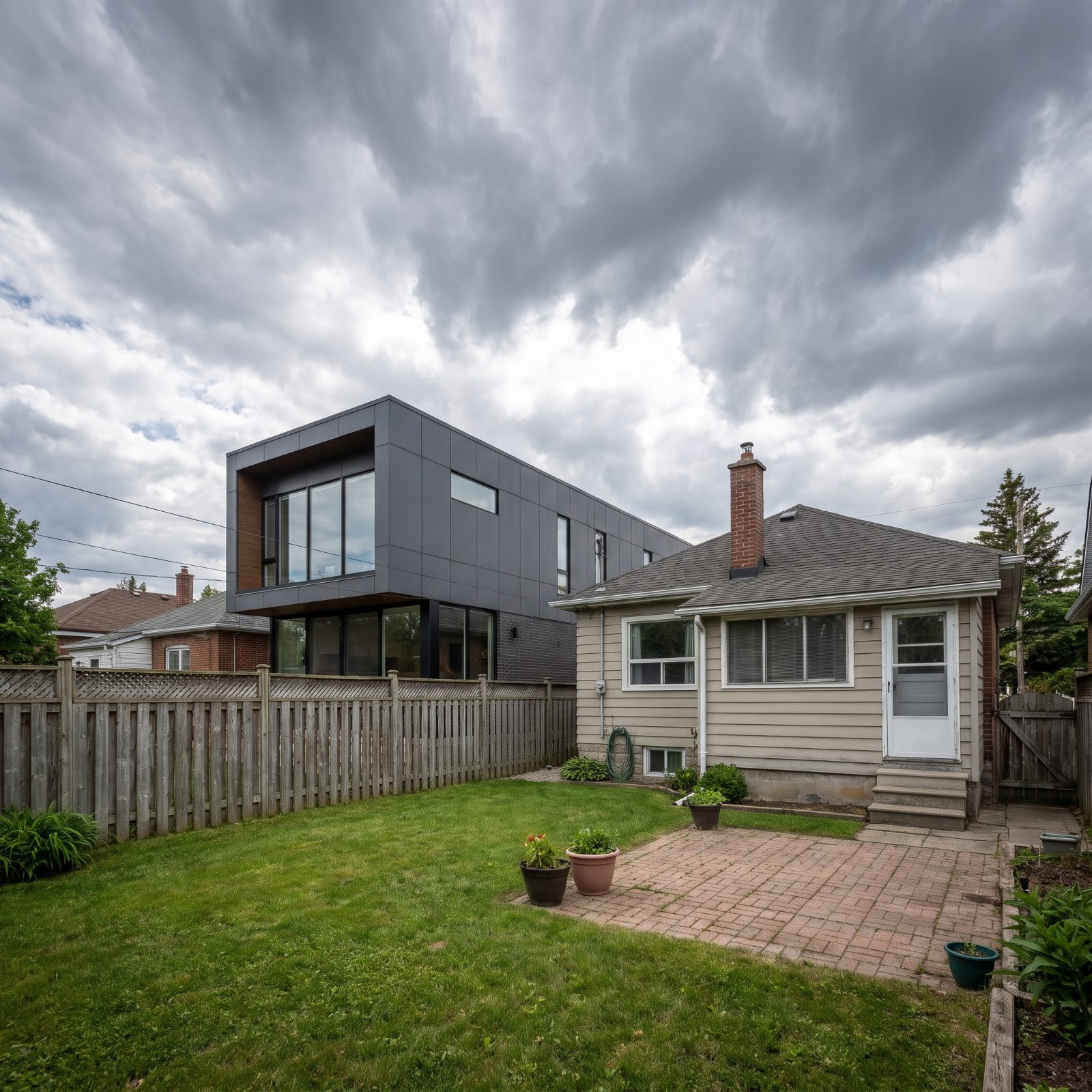
Your house was plenty until the people behind you built up. Now their second story looms over the fence, and the single-story that felt cozy on Monday feels cramped by Thursday. Nothing about your home changed. The reference point moved.
This is social comparison, the same engine that makes a fine salary feel insulting the week a colleague’s number leaks. We don’t measure what we have against what we need; we measure it against what’s next to us. The addition you now want isn’t about square footage. It’s about the fence.
Your house didn’t shrink. Your neighbor’s just grew in your peripheral vision.
The career version is watching someone two years behind you land the title you wanted and feeling the floor drop. Same wiring, different fence.
7. The Leaky Shower Makes Demolition Feel Like Relief

The shower had been leaking for a year. You caulked it twice, laid a towel down, told yourself it was fine. Then one Saturday you picked up the sledgehammer and the first swing felt like exhaling. Finally dealing with the thing you’d been managing around.
Tearing out the broken shower is the renovation version of quitting the job you’d been tolerating one quarter at a time. The relief isn’t about what comes next. It’s about ending the low-grade drain of pretending the problem wasn’t there.
We’re wired to avoid loss, which keeps us patching leaks and rewriting the same resignation email we never send. Demolition breaks that loop. It’s not that the new tile will be better, though it will. It’s that you finally stopped living with the drip.
6. You Knock Down a Wall to Feel Some Momentum
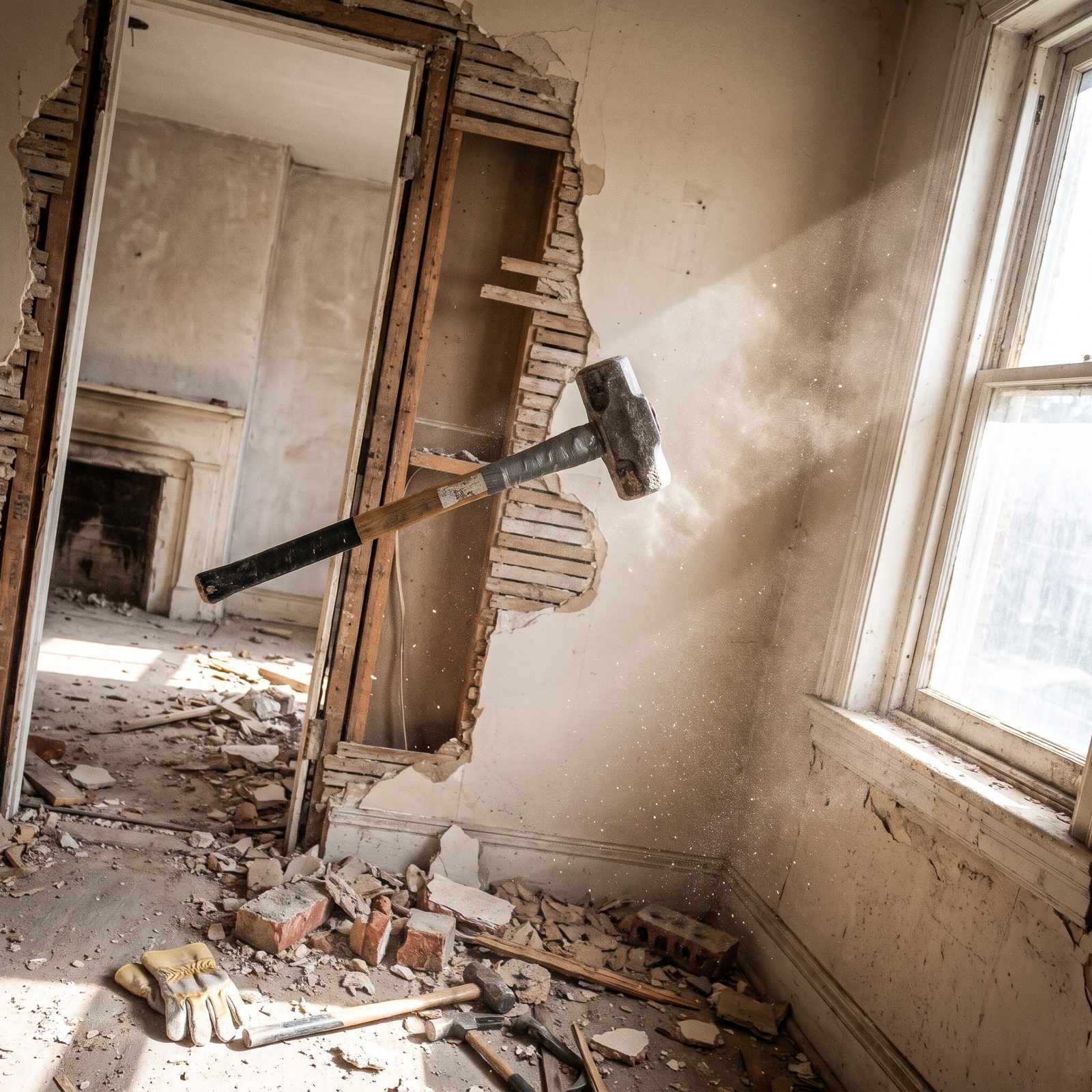
Open-concept gets sold as a design choice. Often it’s a mood. The rooms were fine separately, but you wanted to feel like something was moving, so you knocked out the wall between two empty rooms and watched the light from their windows rush into both.
Removing a wall gives you a big, visible, irreversible result fast. That matters more than we admit. When progress feels stalled, we reach for the move that produces the most obvious change, whether or not it’s the smartest one. It’s the same pull behind taking a new job less because the role is better and more because you needed to feel forward motion.
Momentum is its own drug. The open floor plan delivers a jolt of it, and the jolt is often the real goal. Just worth knowing that’s what you were buying.
5. Better Appliances Make the Daily Grind Less Draining
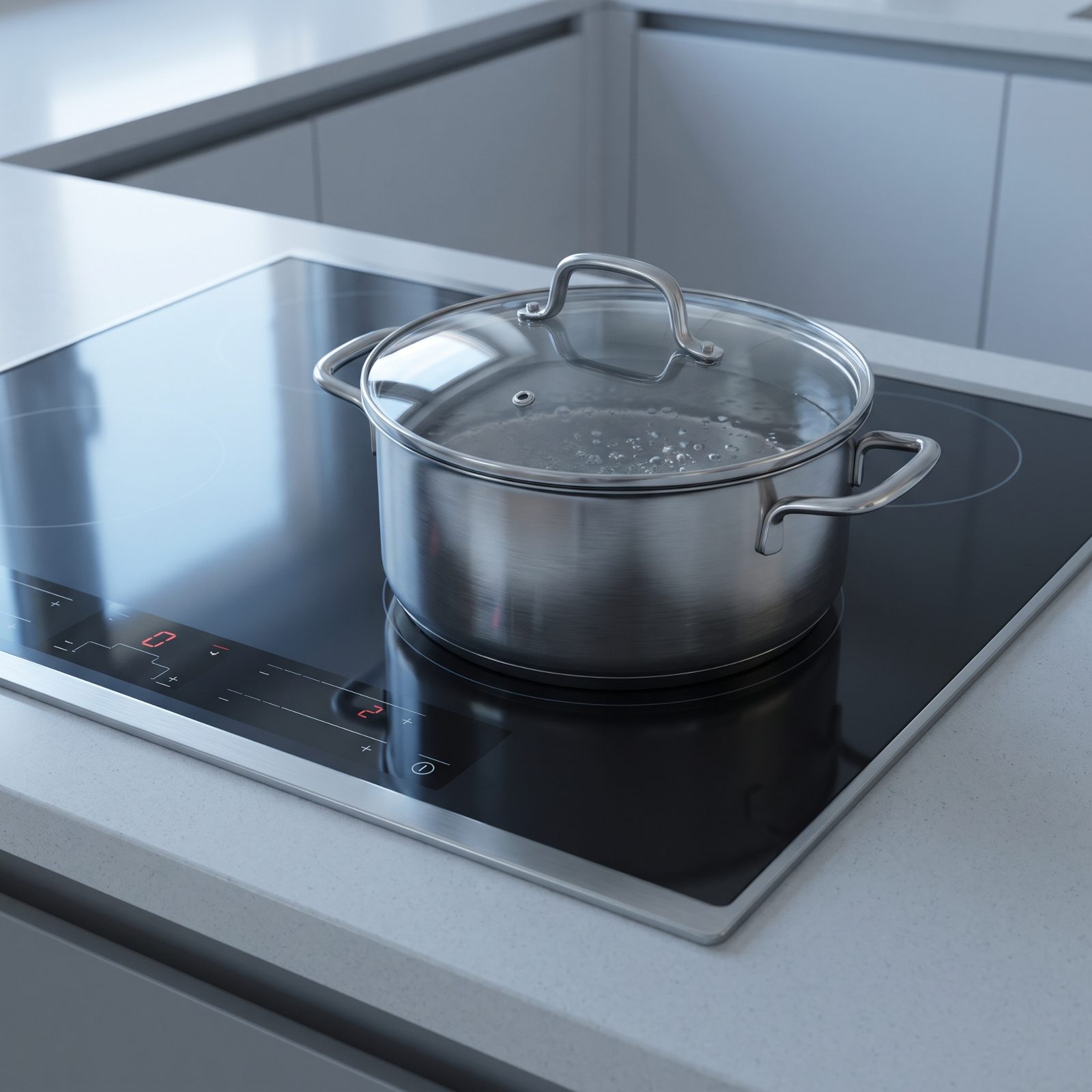
A new dishwasher that actually runs silent. A fridge that doesn’t hum like a lawnmower. An induction range that boils water before you’ve found the pasta. None of it is glamorous, and all of it quietly takes a daily toll off your shoulders you didn’t know you were carrying.
Upgrading the tools you touch every day is the renovation equivalent of leaving a job for one with better systems and less friction. Not more prestige. Just fewer small frustrations, repeated hundreds of times a month. We chronically undervalue this trade because friction stays invisible until it’s gone.
The quiet dishwasher won’t impress a single guest. It’ll just make your Tuesday better, which is the one that counts.
If a new fridge is on your list, our readers can’t settle the finish: stainless, white and black split their votes so evenly it’s basically a coin toss.
4. The Unfinished Basement Starts Looking Like Wasted Potential
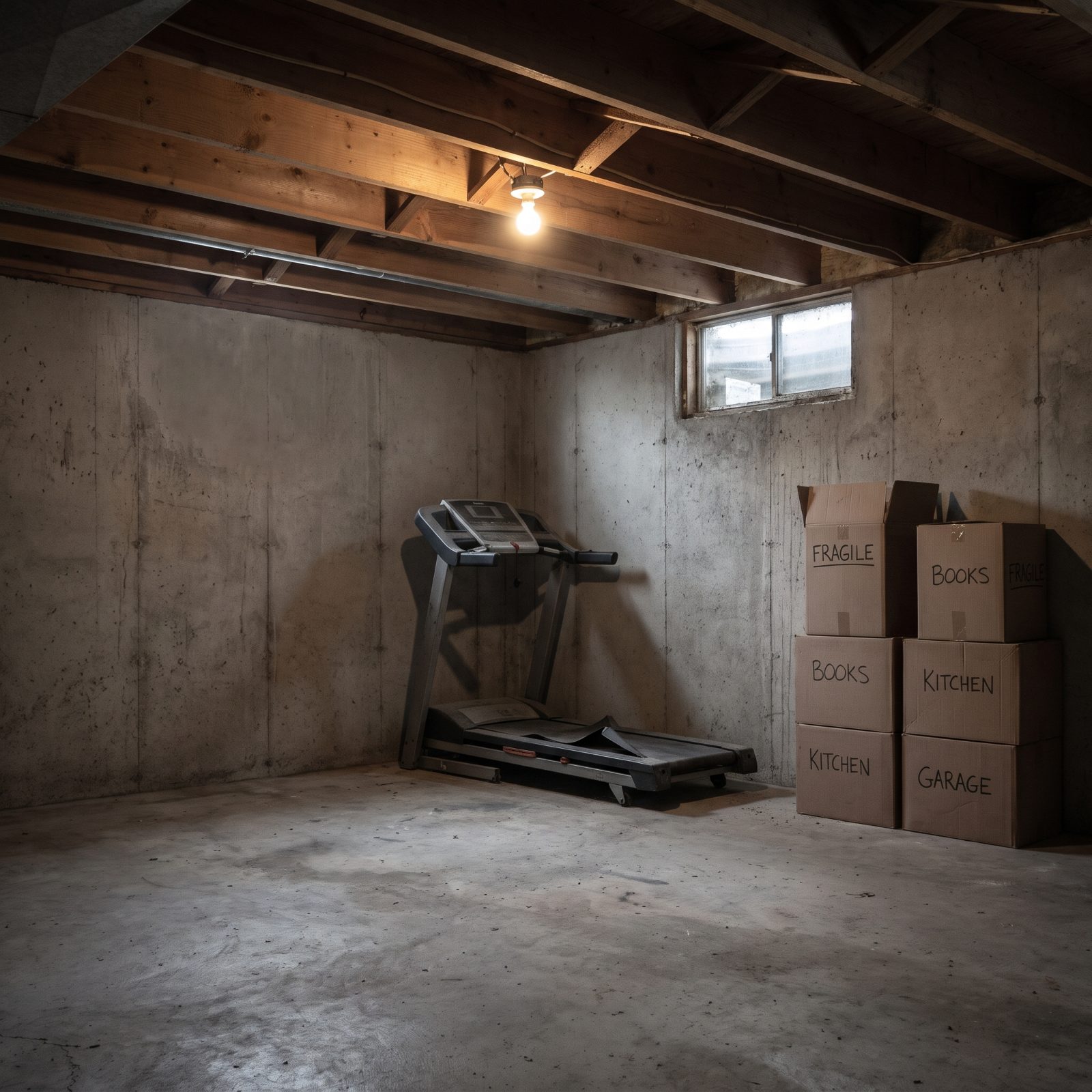
You’ve walked past the unfinished basement a thousand times. Boxes, a dead treadmill, that ping-pong table nobody plays on. For years it was just storage. Then one day you stand at the bottom of the stairs and see wasted square footage, a farmhouse home gym or a guest suite trapped inside the concrete.
Unused space nags at us the way an underused skill does. It costs you nothing to leave the basement raw, yet the potential itself starts to feel like a debt. Psychologists tie this to loss aversion applied to possibility: untapped potential registers as something slipping away.
Same ache behind leaving a stable role because you’re not growing. Nothing’s wrong. You’re just aware of what you could be doing with the space and aren’t. A retro home gym or a finished den doesn’t just add rooms. It silences the quiet accusation at the bottom of the stairs.
3. New Windows Win Once You Calculate the Payback
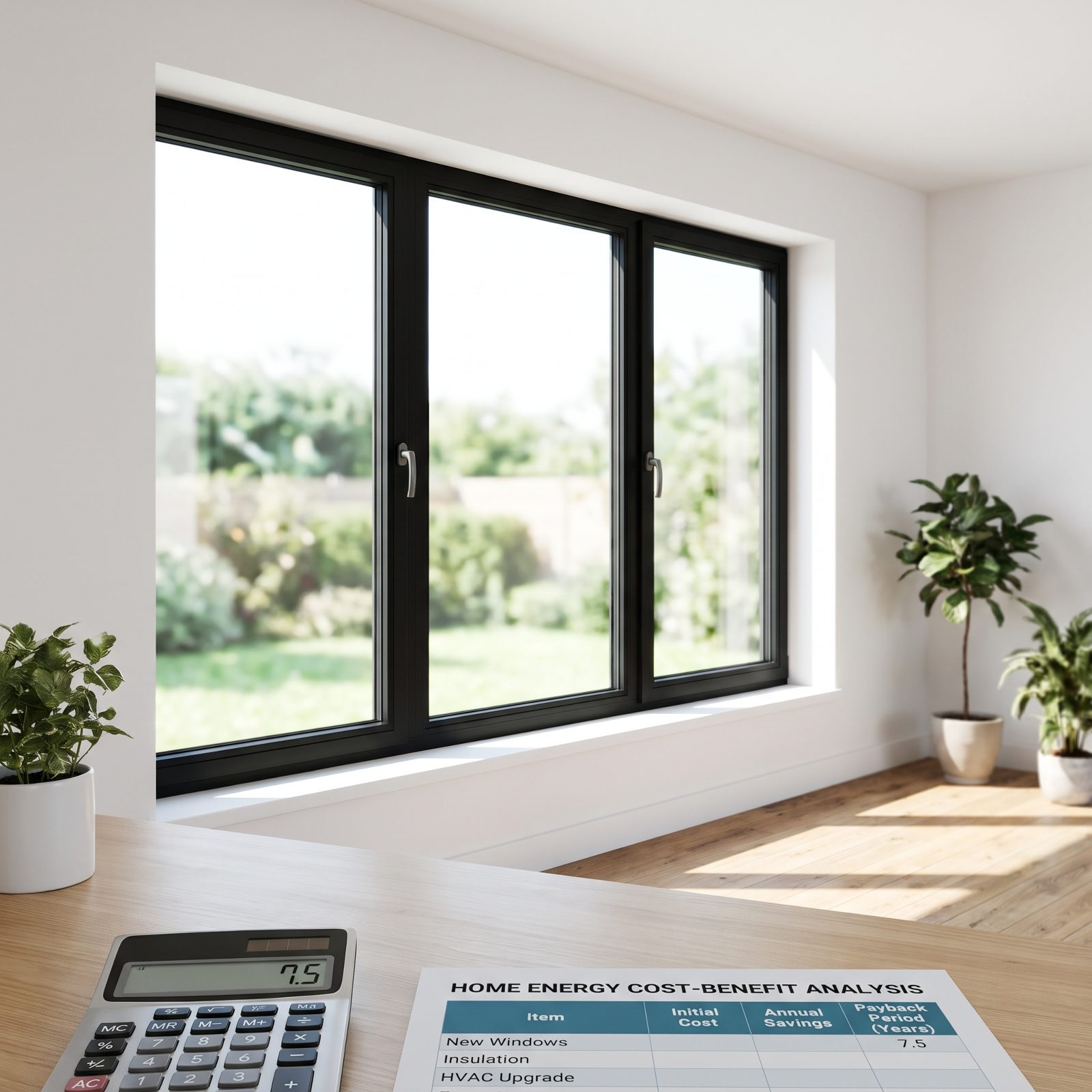
Not every renovation is driven by restlessness. Some are driven by a spreadsheet. The old windows leaked heat, the drafts made the thermostat work overtime, and once you ran the numbers the new ones paid for themselves over a stretch of years. Cold logic, warm house.
This is the career move made on paper instead of impulse. The job you take because the math works, the benefits are real, and the long game is clearly better, even if it doesn’t come with the thrill of a wall coming down. Less dopamine, more sense.
We tend to romanticize the dramatic renovations and dismiss the boring, rational ones. But the people who stay comfortable over decades are usually the ones who occasionally choose the payback over the rush. New windows don’t photograph well. They just make every winter afterward quietly cheaper and more comfortable, which is a kind of win that compounds.
2. A Bigger Island Feels Like Proof You’re Moving Up
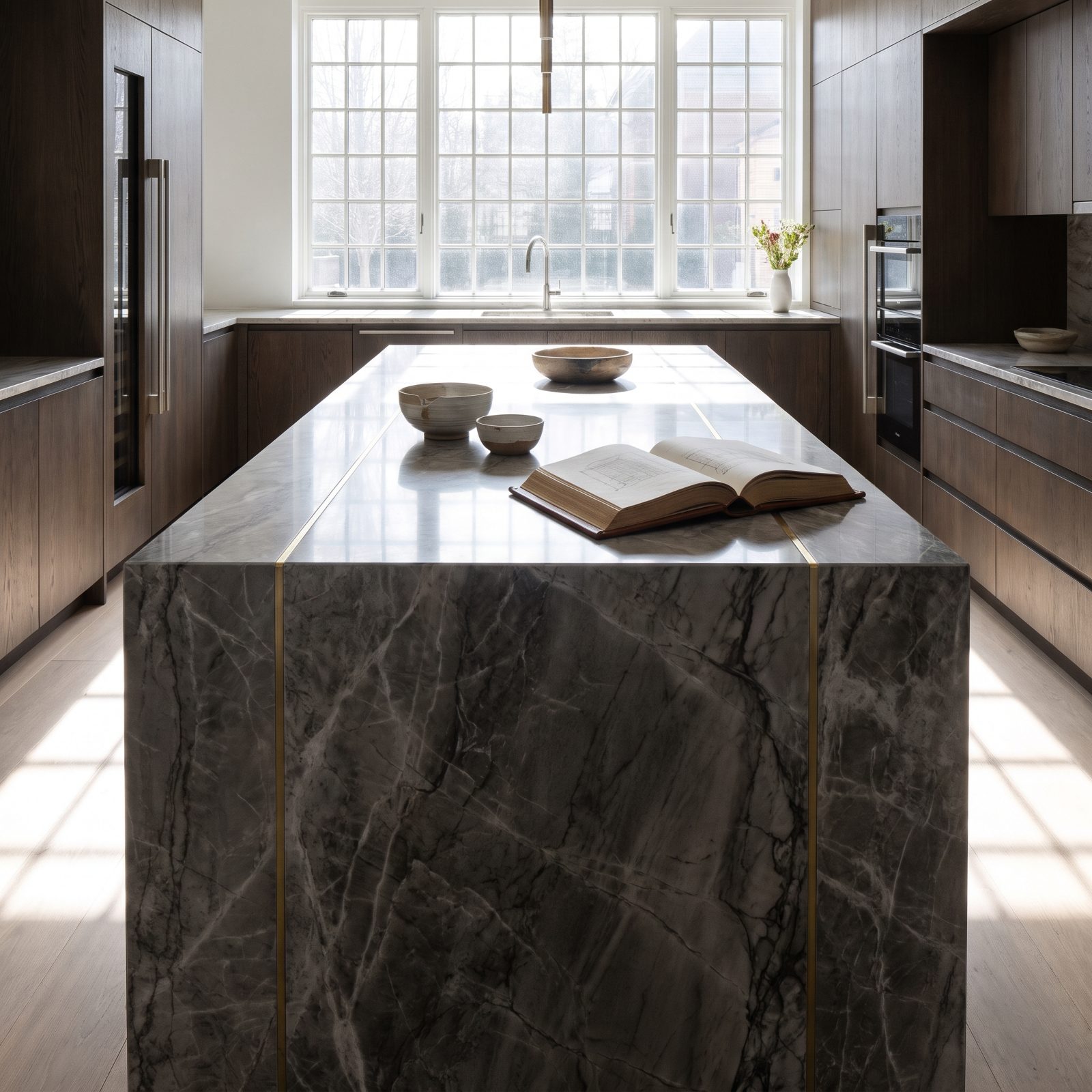
The old island was fine. It held a fruit bowl and the mail, and nobody complained. Then you stood in a showroom, watched your hand drift across a slab twice the size, and something clicked: a bigger island means a bigger life. Suddenly the kitchen that fed your family for a decade looked like a starter kitchen you’d apologize for.
That upgrade itch runs on the same wiring as the better-title-every-eighteen-months habit, where the square footage of the island quietly becomes a scoreboard. Status signalling, plain and simple. An eight-foot waterfall quartz island says you’ve arrived the way a fancier business card used to. Here’s what nobody admits at the design appointment: you don’t cook any differently on eight feet of stone than you did on four. But it feels like proof, and feelings win.
And the thrill fades fast.
Researchers keep running into this. Hedonic adaptation means that enormous island feels ordinary by Thanksgiving, same as the raise you forgot you got. Then you’re eyeing the next thing before the grout’s even dry.
1. Cheap Financing Turns the Wish List Into Demolition

It started with a leaky faucet and a reasonable quote. Then the lender offered a low rate and a line of credit with a limit that felt an awful lot like permission. Within a week the plumber’s visit had ballooned into a full gut — two walls gone, a window punched where no window had ever been.
Cheap money does to a wish list what a signing bonus does to a job offer: it reframes a lateral move as the obvious leap. In your head the borrowing isn’t the cost, it’s the opportunity, so every want quietly promotes itself to a need. Call it mental accounting shaking hands with a soft case of commitment escalation. Once the drywall is open anyway, the island, the open plan, the second oven all feel practically free by comparison.
The rate made the demolition feel smart, the way a bigger salary can make a riskier role feel inevitable. Low cost of entry lowers your guard on scope. That’s the trap, and it’s a pleasant one to fall into.