🔥 Would you like to save this?
The nail hole stays on the wall for weeks after the picture comes down. You keep walking past it. You keep not filling it.
Decorating a home you suddenly live in differently is strange work. The furniture didn’t change and the rooms didn’t move, but everything feels off by a few degrees, like a song in the wrong key. The choices you make with paint and lamps and rugs start to track, almost eerily, with the slower work of figuring out who you are now. The same wiring runs both: loss aversion, identity signaling, the urge to fill a void before you’ve felt it. Below are the decorating behaviors that mirror that quiet rebuild, and the psychology underneath them. You’ll laugh. You’ll wince. You’ll recognize yourself in at least three.
In order to come up with the very specific design ideas, we create most designs with the assistance of state-of-the-art AI interior design software. Also, assume links that take you off the site are affiliate links such as links to Amazon. this means we may earn a commission if you buy something.
19. You Finally Take Their Art Off the Wall
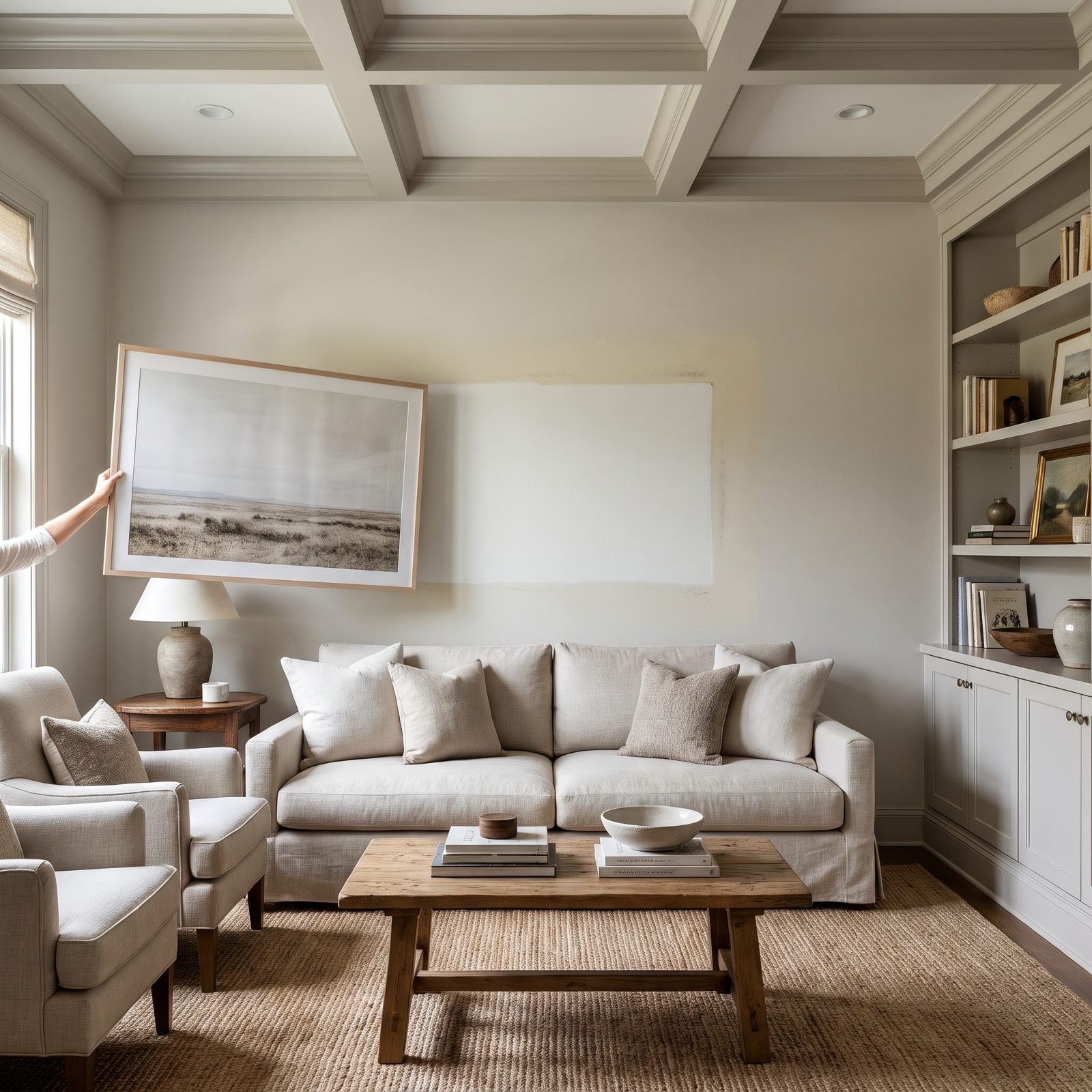
That giant print you never liked but never fought over. Down it comes. And behind it, a rectangle of paint the color the room used to be, framing a blank stretch of wall like a tiny open window.
The blank space is the hard part. Taking the art down is a decision; looking at the brighter patch every day is grief you didn’t schedule. We cling to objects because they hold identity, and the empty wall is proof the old arrangement is actually gone.
Nobody tells you the ghost rectangle fades. You stop seeing it. One afternoon you walk past and the patch is just paint, not a monument. That’s the moment the wall becomes yours.
18. The Old Layout Serves a Life You No Longer Live
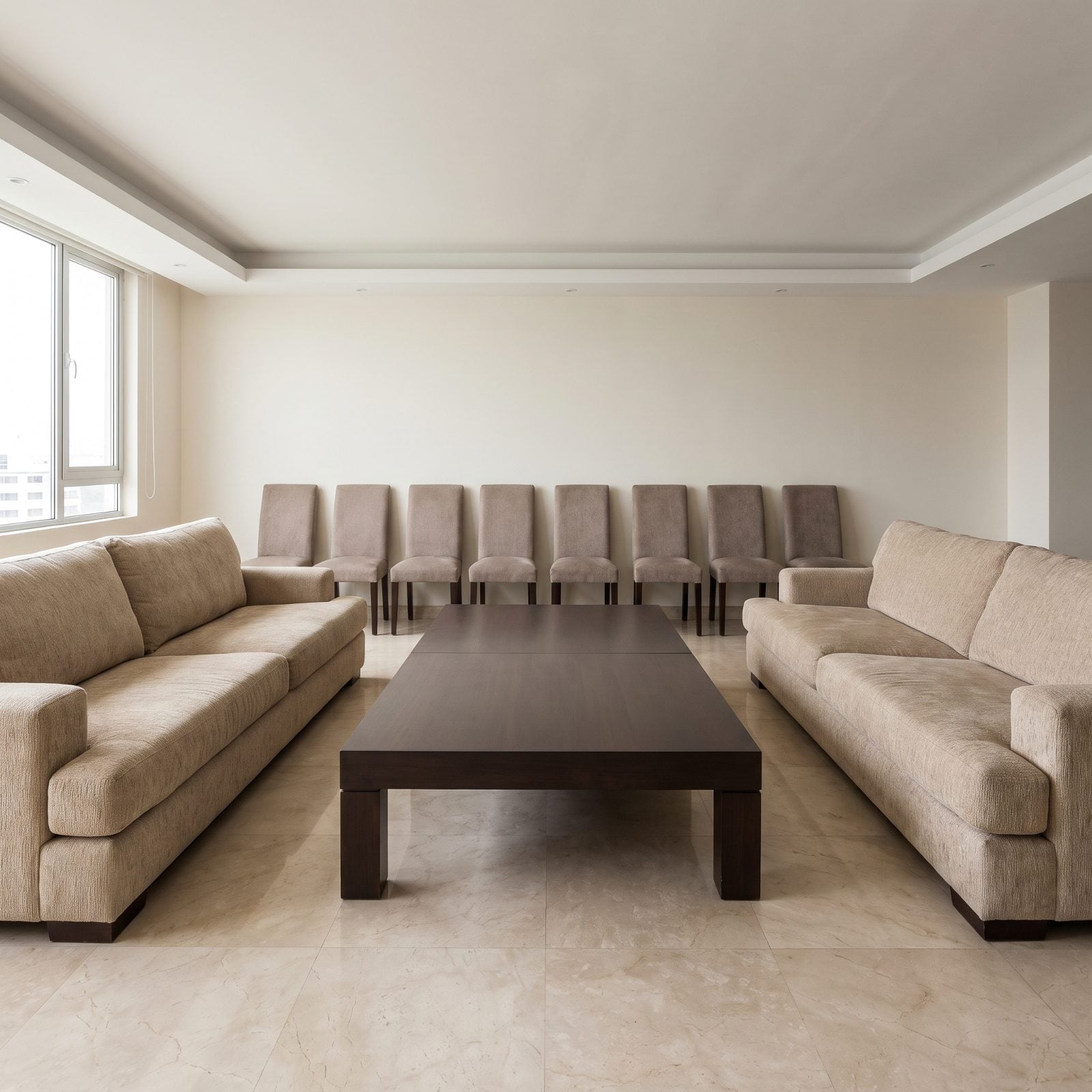
Two sofas facing off across a coffee table the size of a raft. Eight dining chairs for dinners that don’t happen anymore. The room is set for a cast that got smaller, and it shows.
You arranged this space for entertaining as a couple, for a routine you ran on autopilot. Now the layout quietly argues with your actual day. You eat at the counter. You read in one chair by the window. The formal setup is a stage for a play that closed months ago, and keeping it up is its own small act of denial, the furniture insisting on a household that no longer exists while you cook dinner for one three feet away.
Pulling one chair to the window and ignoring the rest is the first honest move. Your furniture should serve the life you have, not the one you’re mourning.
A modern den rethink helps here. Smaller zones, one good seat, nothing arranged for ghosts.
17. You Rush to Fill Every Newly Empty Corner
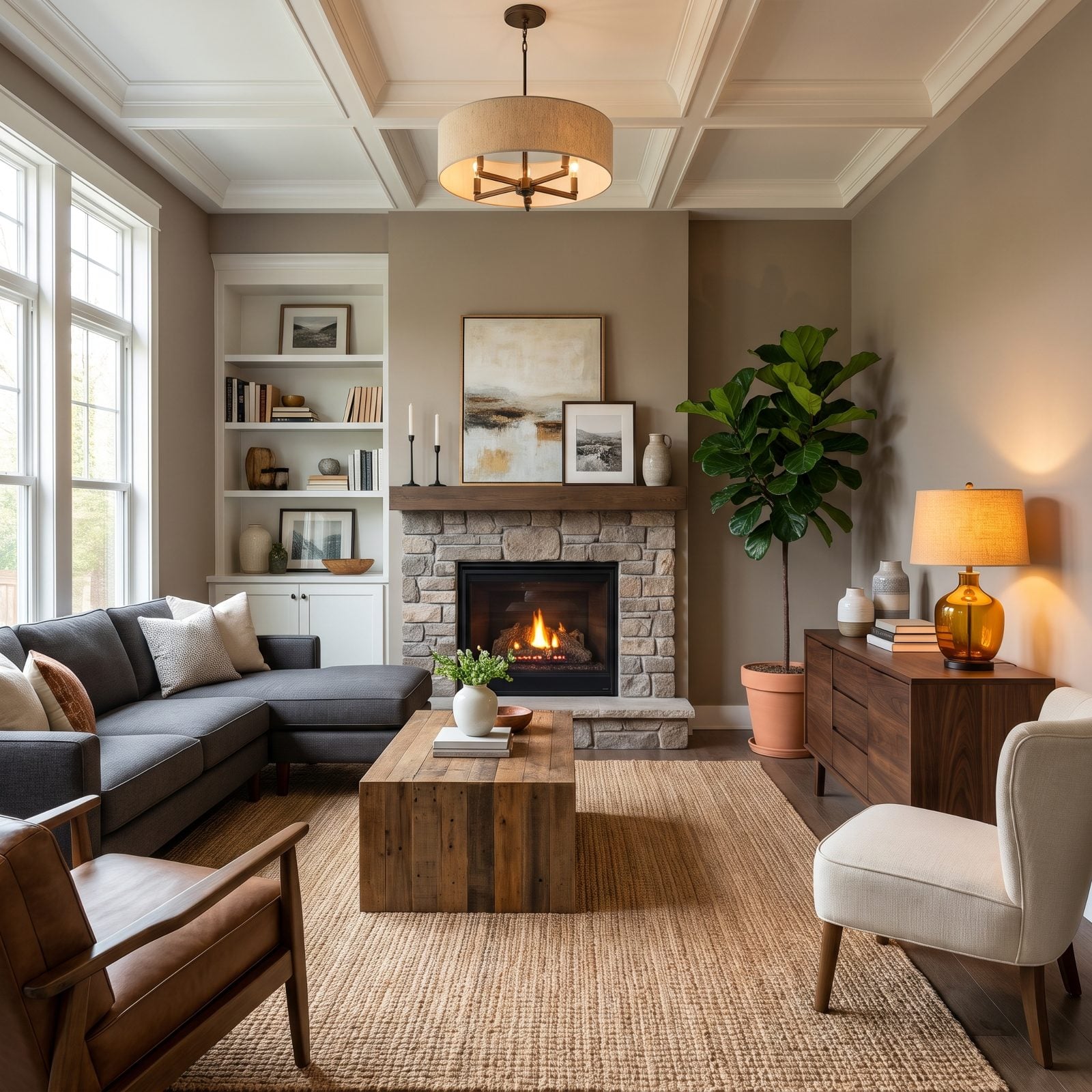
The empty corner is unbearable, so you fill it in a weekend. A plant, a console, a lamp, an accent chair, three books you’ll never open. Suddenly every wall and corner of the room is styled, with not one spot left open.
Empty space reads as loss, and we hate loss more than we love gain. So we buy fast to make the quiet stop. The cream armchair and the fiddle-leaf fig aren’t choices. They’re bandages.
Give the corner a few weeks. Let it be empty. The piece you actually want tends to arrive only after you’ve stopped panicking about the hole it’s filling.
16. Decluttering Exposes Every Version of You That Shopped
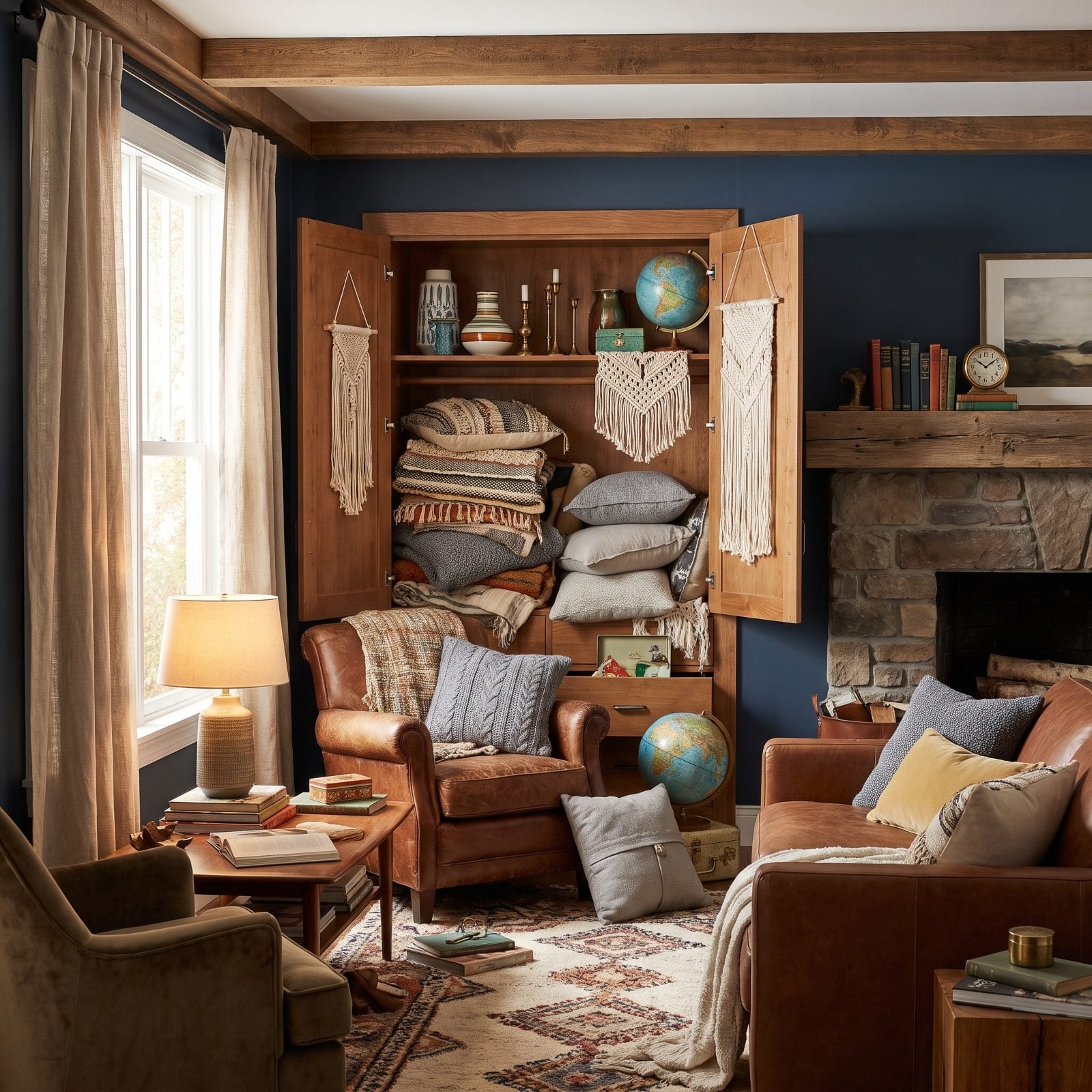
You open the storage closet and out spills a timeline of yourself. The boho phase. The all-grey phase. The phase where you bought whatever matched the sofa you both picked. Decluttering isn’t tidying. It’s an inventory of every person you’ve been.
Some of it was you pleasing someone else’s taste. Some of it was you, genuinely, three personalities ago. Sorting it forces the uncomfortable question of which version you’re keeping.
Plenty of us keep a hideous teal vase for years purely because we spent money on it. That’s sunk-cost reasoning in ceramic form. The money’s gone whether you keep the vase or not. Let the past-you who bought it off the hook, and donate it.
15. Your Pinterest Board Starts Living Someone Else’s Life

The board fills up with sun-drenched villas, a reading nook over the sea, a life that is suspiciously not yours. You’re not pinning rooms. You’re pinning an escape.
After a split, the aspirational self goes feral. You collect images of a person with no clutter, no history, no shared mortgage. Call it confirmation bias working in reverse: you gather proof of a cleaner identity you haven’t earned yet.
None of it’s wasted. Sift the fantasy and you’ll find the real signal underneath. Maybe it’s not the villa at all. Maybe it’s the bright mirror ideas that keep reappearing, or the craving for light you never prioritized before.
14. Choosing the Paint Alone Suddenly Feels Like a Referendum
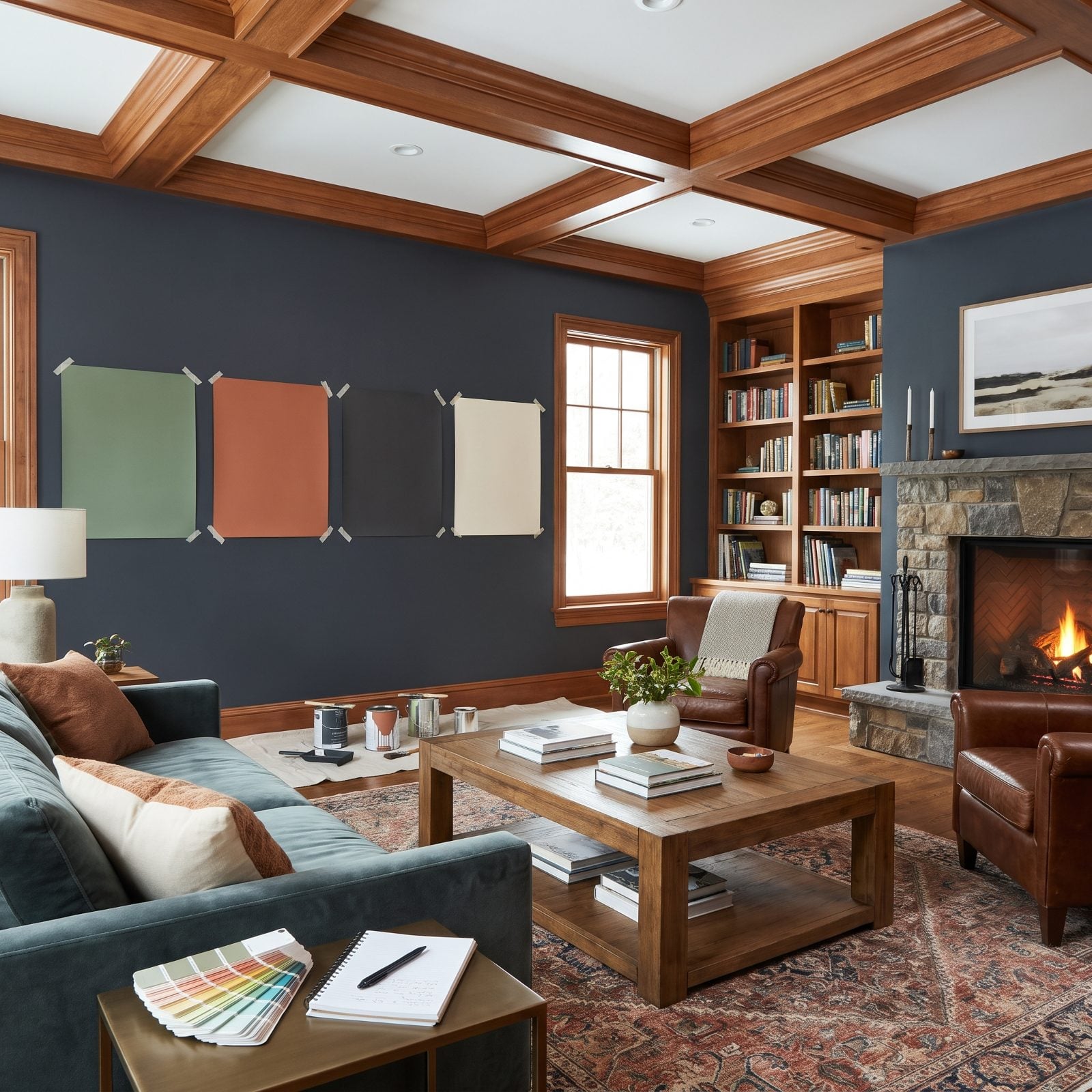
It’s just a wall. It’s just paint. So why does standing in front of four test squares feel like signing a legal document?
Because for the first time, nobody has to agree with you. No negotiating down to a safe beige neither of you loved. The decision is entirely yours, and that freedom lands heavier than it should.
Decision paralysis spikes when a small choice becomes a stand-in for a big one. This isn’t really about terracotta versus sage. It’s about whether you trust your own taste now.
Pick the one you keep glancing back at. That glance is the answer. The referendum you’re actually holding is about permission, and you already have it.
13. Paint Swatches Change Personalities When You Bring Them Home
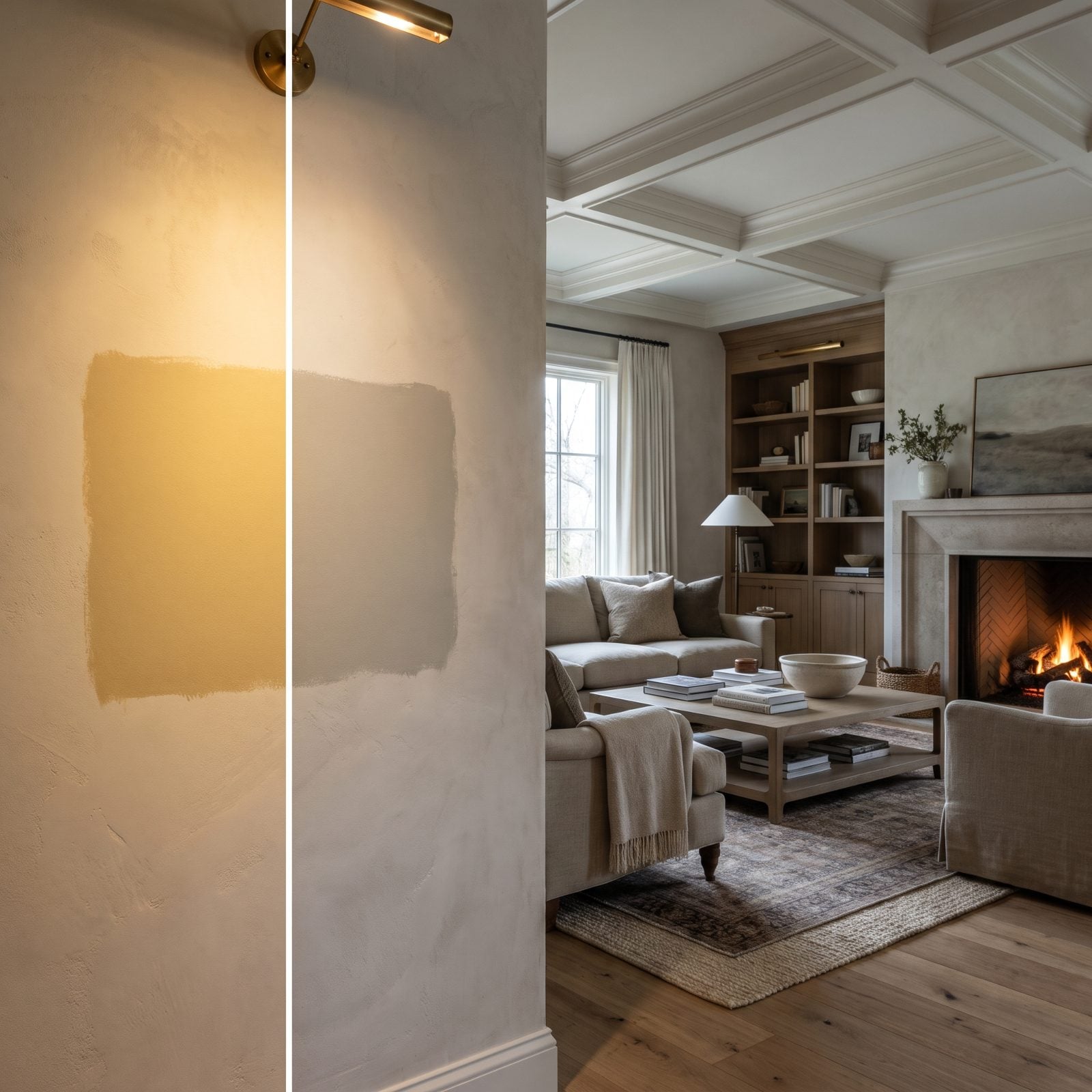
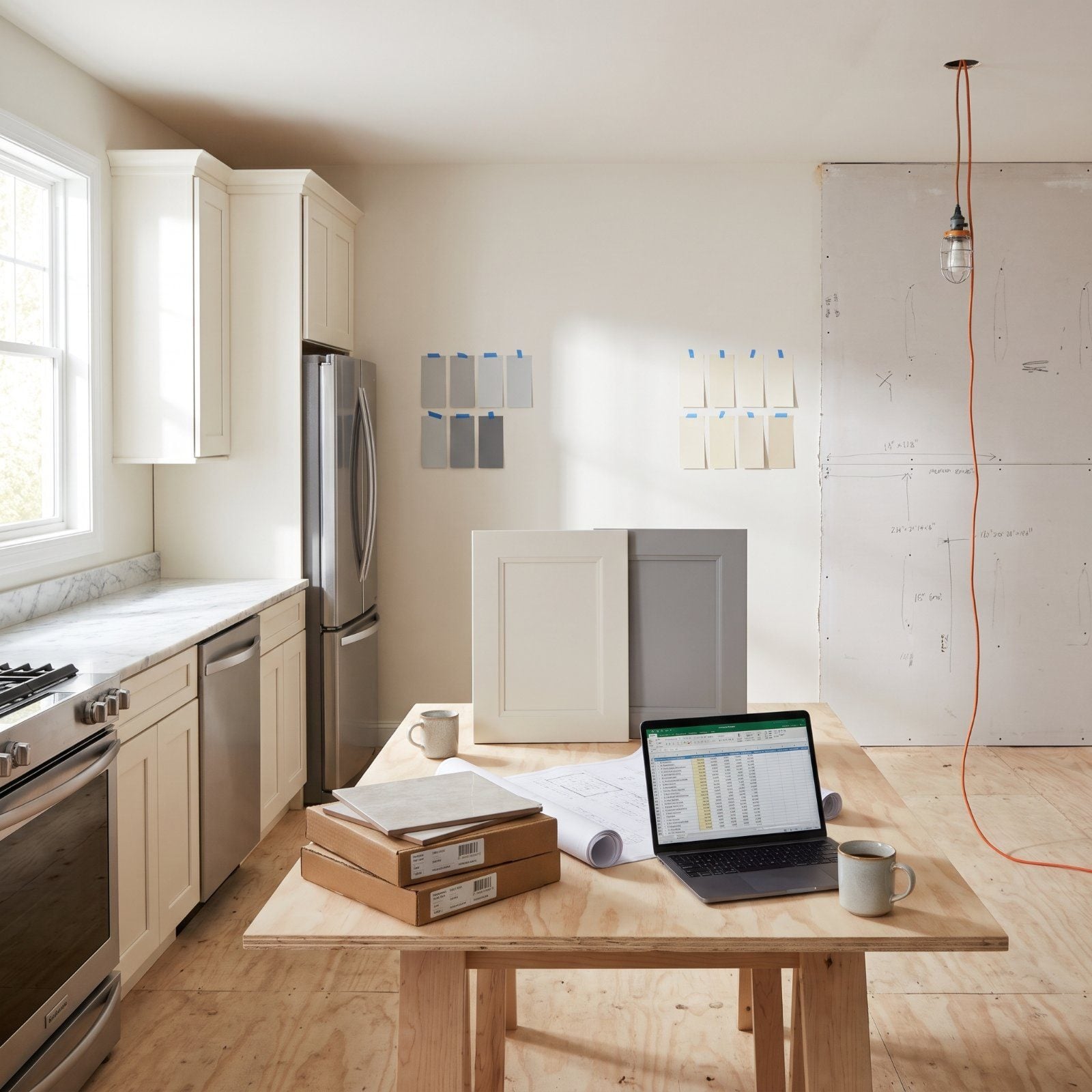
The chip looked warm and welcoming under the store’s fluorescent lights. You paint it on your wall and by 4 p.m. it’s gone lilac-grey and faintly clinical. Same paint. Different light. Different truth.
Nothing behaves the way it promised in the showroom. A color you commit to in one context reveals its real character only once it’s living in yours, all day, through every hour of light.
Tape the sample up and watch it for three days before you decide. Morning, noon, that unforgiving late-afternoon slant. What charms you at the store isn’t what you live with at home, and learning to wait out that gap is a skill worth having everywhere.
12. Everybody Has an Opinion About Your New Wallpaper
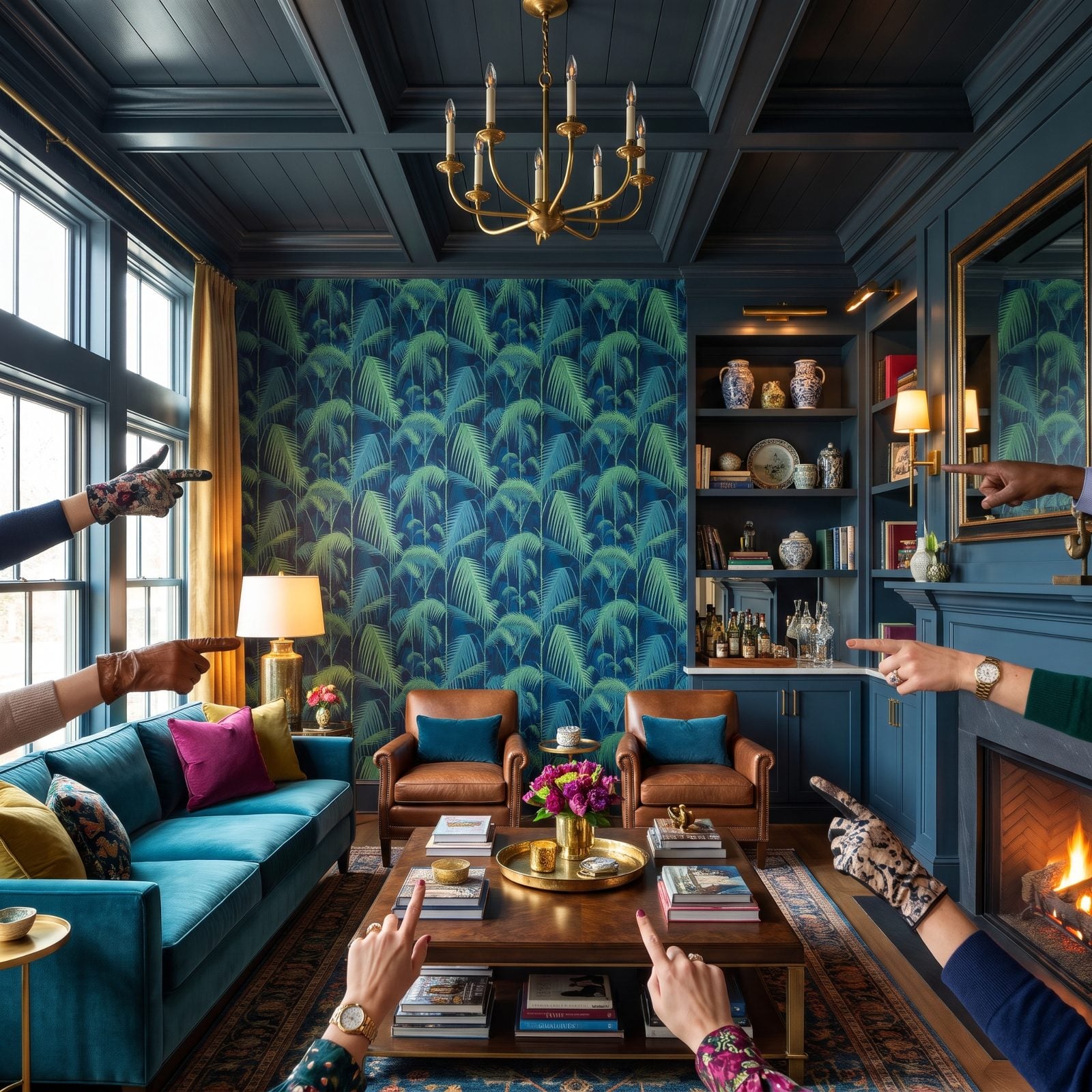
You hang the ink-blue palm-leaf wallpaper and within a week, everyone weighs in. Your mother thinks it’s dark. A friend calls it brave in a tone that isn’t a compliment. Someone asks if you’ll regret it when you sell.
Nobody had this much to say when you lived under safe beige. Pick something with a point of view and the opinions arrive like weather.
What’s really happening? Social proof pressures us to keep choices inside the group’s comfort zone. A bold wall breaks the unspoken rule, so people nudge you back toward the middle. The pushback isn’t about the wallpaper. It’s about you no longer asking permission.
The opinions get loudest exactly when you stop needing them.
Keep the wallpaper. The comments fade. The wall stays.
11. One Wild Lamp Lets You Test a Bolder Taste
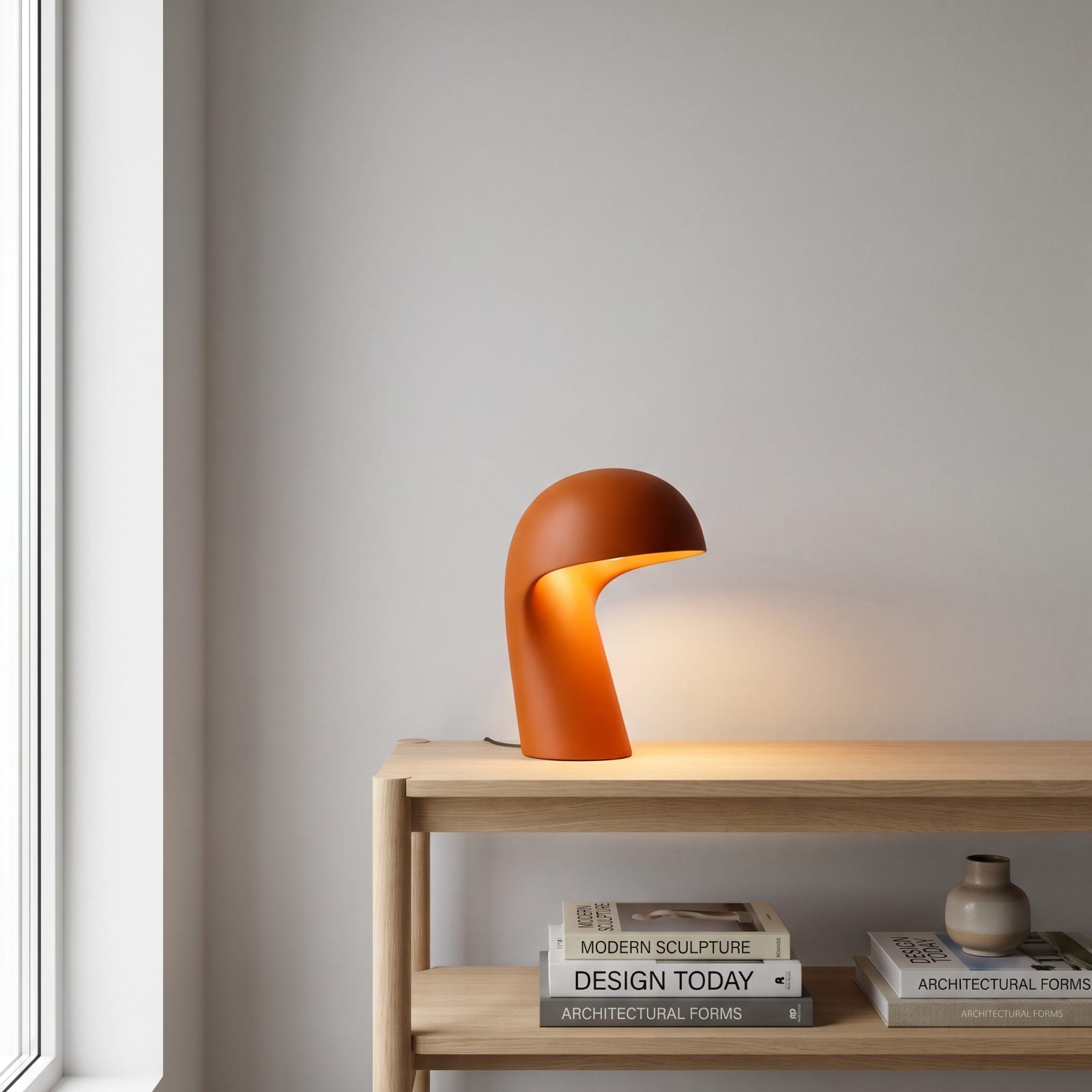
You can’t commit to a whole room in a color you’ve never tried. But a lamp? A lamp you can risk.
So the burnt orange ceramic table lamp comes home, loud and curvy and nothing like anything the old house allowed. It sits on a calm oak console against a pale grey wall, one jolt of a person you’re auditioning.
Confidence rebuilds this way. Not in one dramatic leap, but in small reversible tests. If the lamp’s too much, it’s a lamp. You moved a few dollars, not your whole identity. If you love it, you’ve learned your taste runs bolder than you thought.
10. The First Wrong Rug Teaches You What Fits
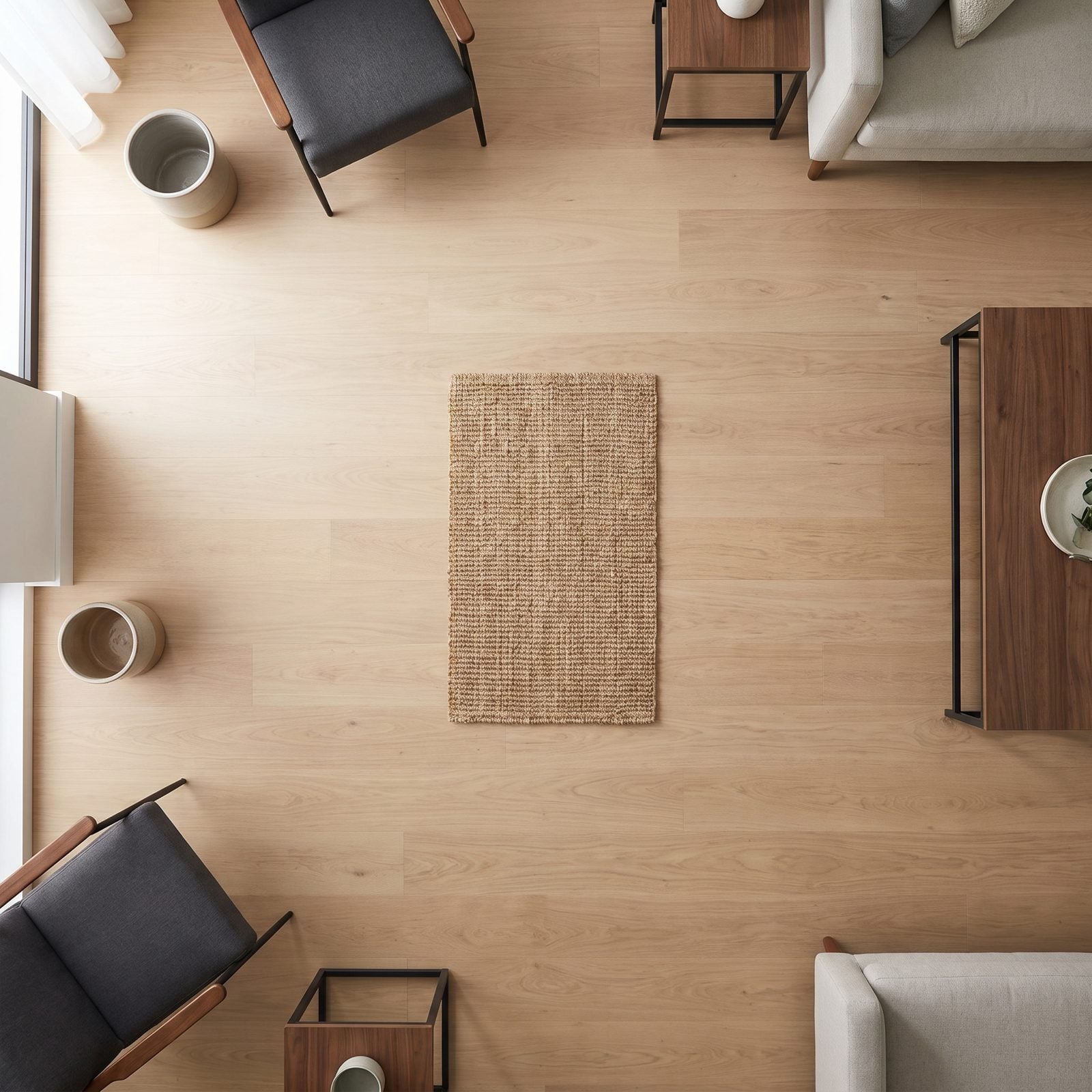
The first rug seemed perfect online. It arrived, you rolled it out, and it floated in the middle of the floor like an island nobody could reach. Every chair leg landed on bare wood. Too small. Obviously, now, too small.
You’re annoyed. Then you learn the actual rule, which is that a rug should sit under the front legs of your furniture, anchoring the whole room instead of marooning it. You only know that because you got it wrong first.
That’s the real work of rebuilding. The first wrong choice isn’t failure, it’s the lesson you couldn’t get any cheaper. Nobody develops taste from a catalog. You develop it by living with a mistake until you understand exactly why it doesn’t fit, and what would.
The second rug is always better: big enough to reach the front legs of the sofas and chairs, instead of floating alone in the middle like this one. So is the second everything, once you’ve stopped expecting the first try to be right.
9. New Lighting Changes What You Thought Needed Replacing
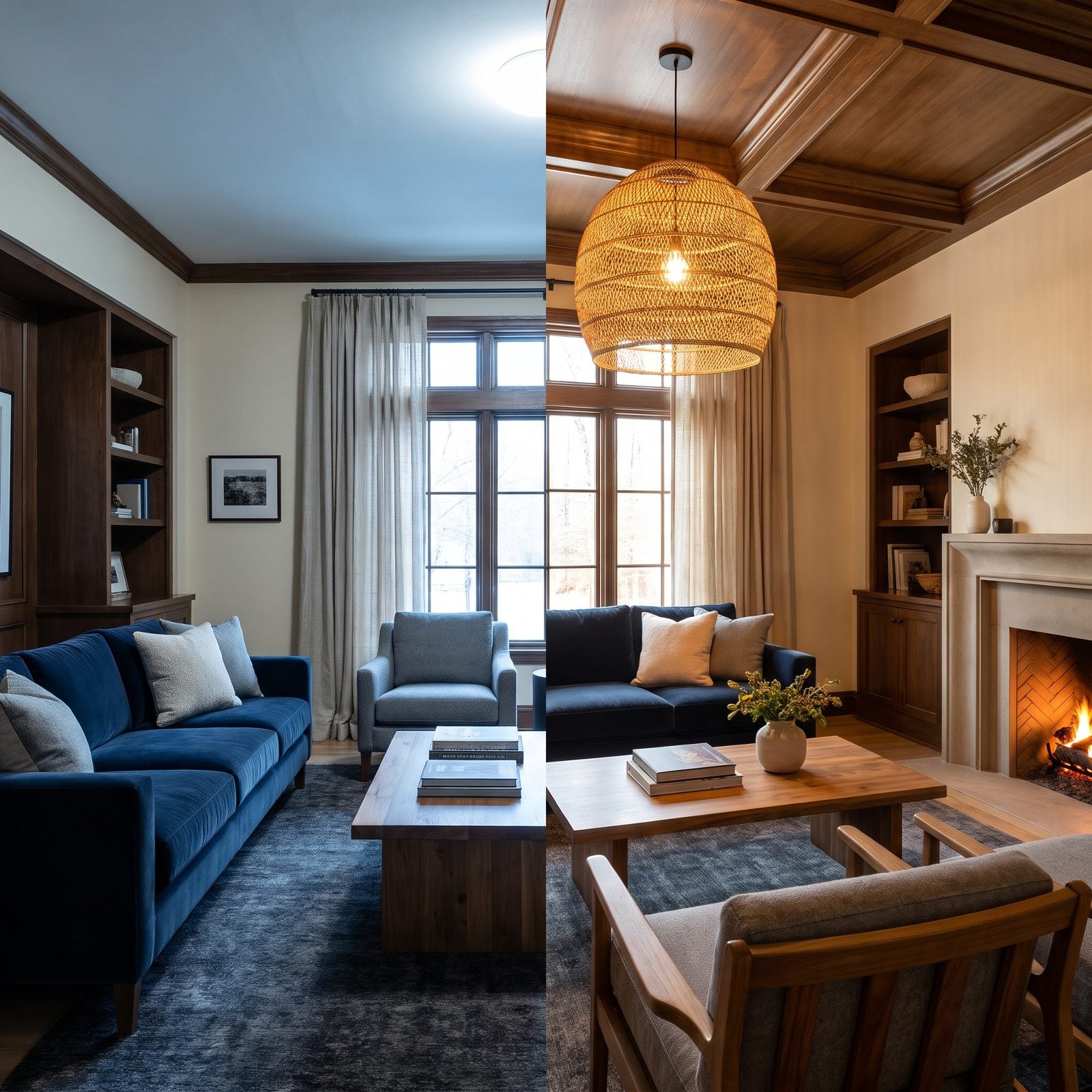
You walk in ready to gut the whole room. Then someone swaps the dead overhead fixture for a warm woven rattan pendant and suddenly the linen curtains you called drab glow, the walls you called dingy read as soft and deliberate. The warm light is what makes it all read as home.
This is the first thing people get wrong after a big life reset: you assume the furniture is broken when the atmosphere was off the whole time. Switch from cold-blue to warm amber and your brain rereads the entire space as calmer, safer, yours. We judge a room by its glow before we judge a single object in it.
The psychology is straightforward. Harsh light makes everything feel temporary and clinical, while warm light signals settled. You stop seeing what’s wrong and start seeing what could stay.
8. Moving the Sofa Makes the Whole Room Feel Possible
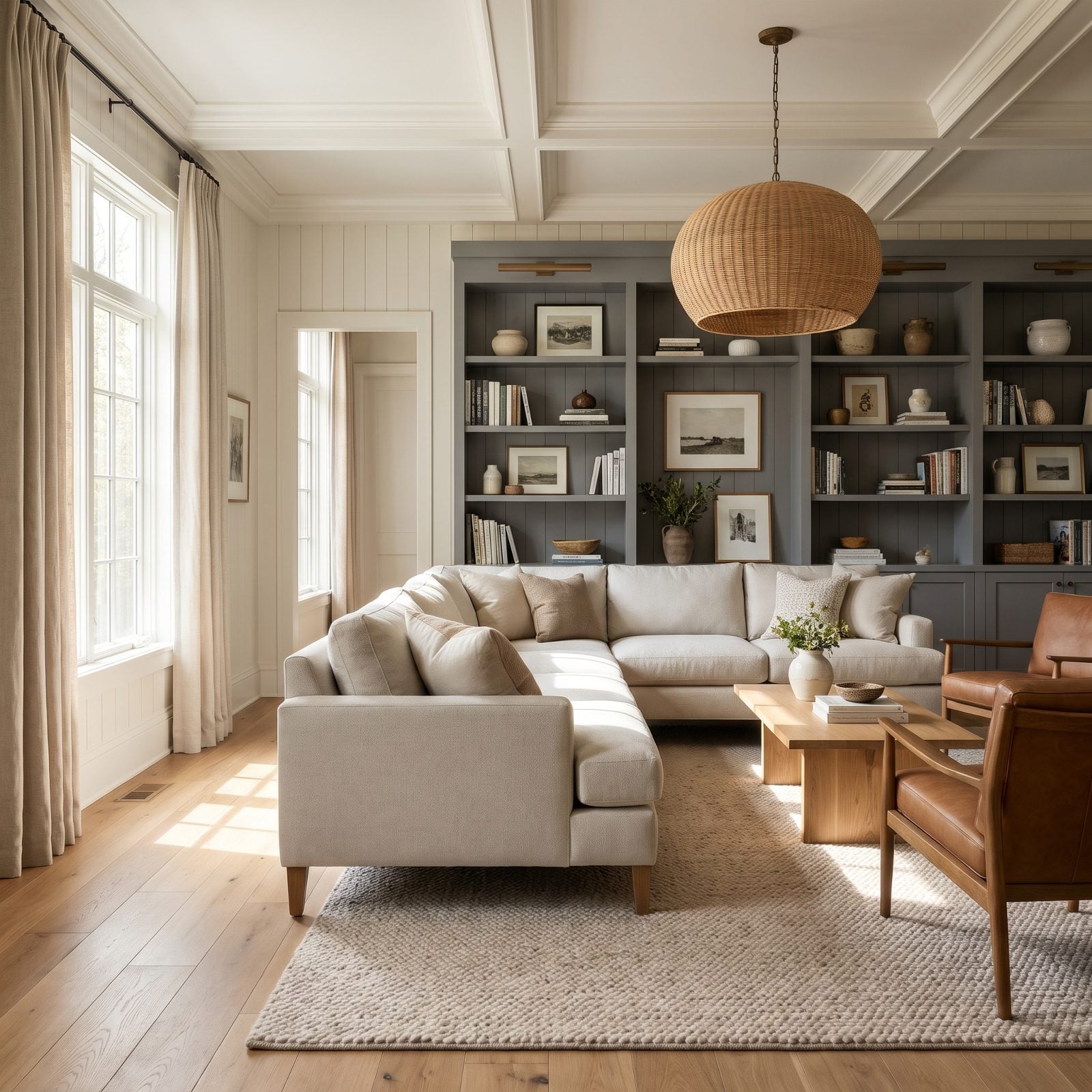
Push the sofa off the wall it’s hugged for seven years and the room stops being a waiting room. The flattened carpet lines underneath look like a confession. You stand there thinking, wait, it could face the window?
Rearranging what you already own is the lowest-risk way to feel like a new version of the place arrived. No money spent, no commitment — just the small shock of seeing a familiar thing behave in an unfamiliar way, which is exactly what makes the whole room suddenly negotiable.
We stop noticing objects we’ve walked past a thousand times. Move the grey linen sofa and your attention wakes right up. Now the room becomes something you’re authoring again instead of inheriting.
7. The Old Sofa Survives on Pure Sunk Cost
🔥 Would you like to save this?
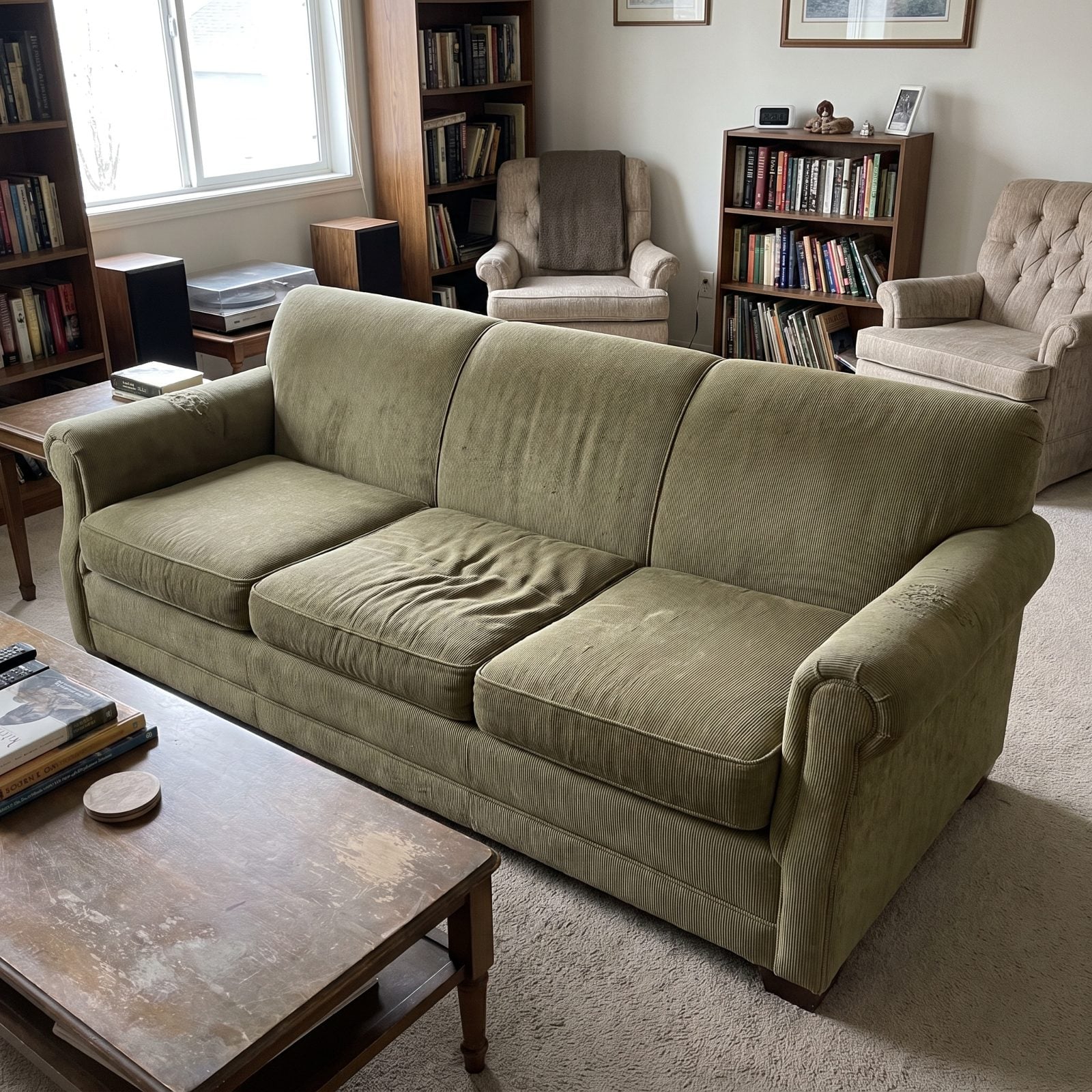
The sofa is sagging and the middle cushion has a crater. You know it should go, and yet it stays, parked in the middle of your lightened-up room like a holdout nobody consulted.
The real reason it survives? It was expensive once, and you can still hear the price in your head. Getting rid of it feels like admitting that money is gone, so the brain keeps the sofa to avoid feeling the loss. Sunk-cost fallacy — the most expensive form of loyalty there is.
But the money left the day you bought it. Keeping a failing piece doesn’t recover a dime; it just means your new room has to orbit an old decision you’ve outgrown.
6. One Familiar Chair Keeps the New Room Grounded
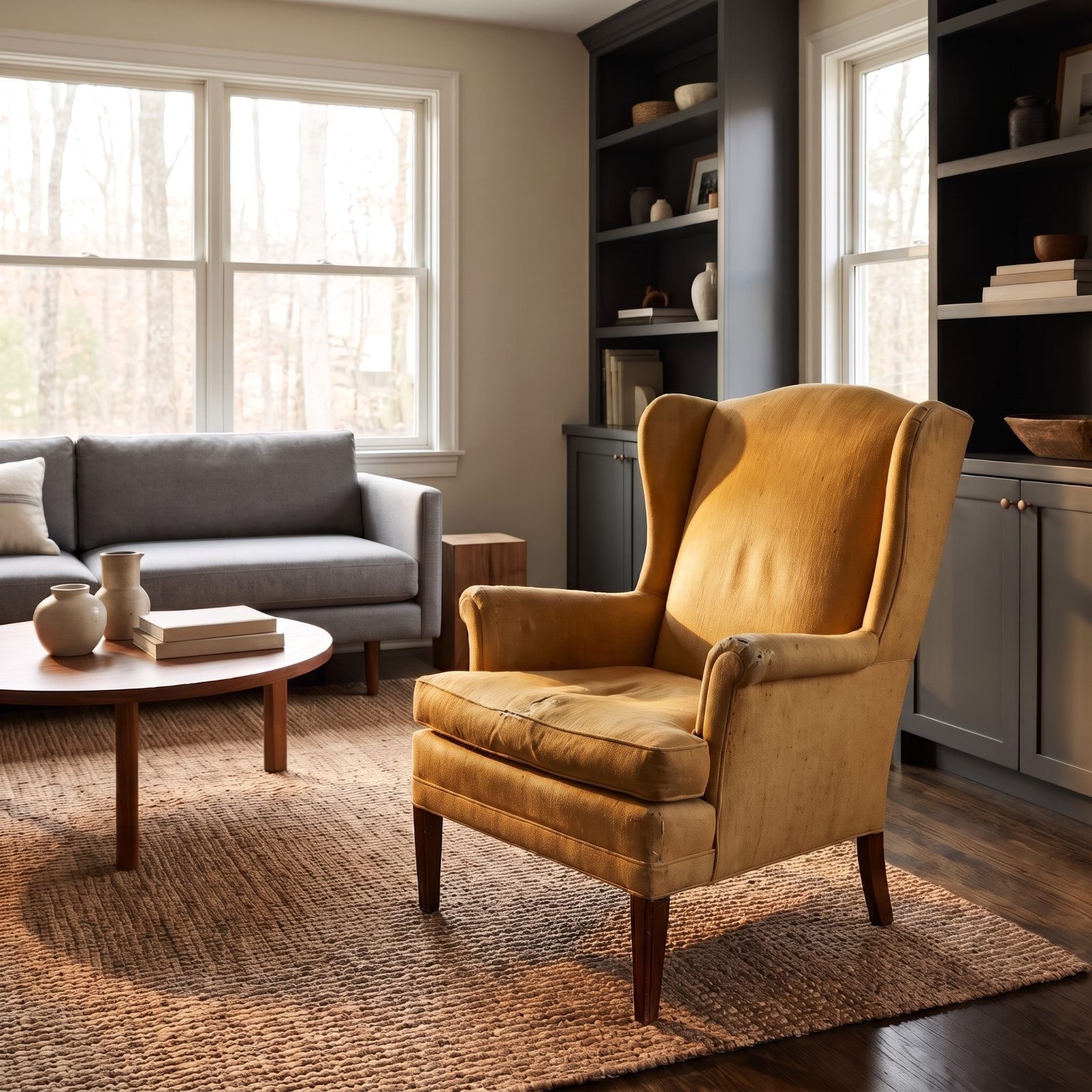
Everything in the room is new except one chair — the faded mustard wingback with the dent shaped like years of sitting. You could replace it. You keep it on purpose.
That one familiar object does something new furniture can’t. It tells your nervous system the place is still yours. A room where nothing is recognizable feels like a hotel, and one beloved holdout turns the refresh into continuity instead of erasure.
Designers call it an anchor piece. Your brain calls it proof you didn’t lose everything. Set it near a bright mirror and the worn linen picks up light it never had before.
5. The Showroom Table Doesn’t Fit Your Tuesday Nights
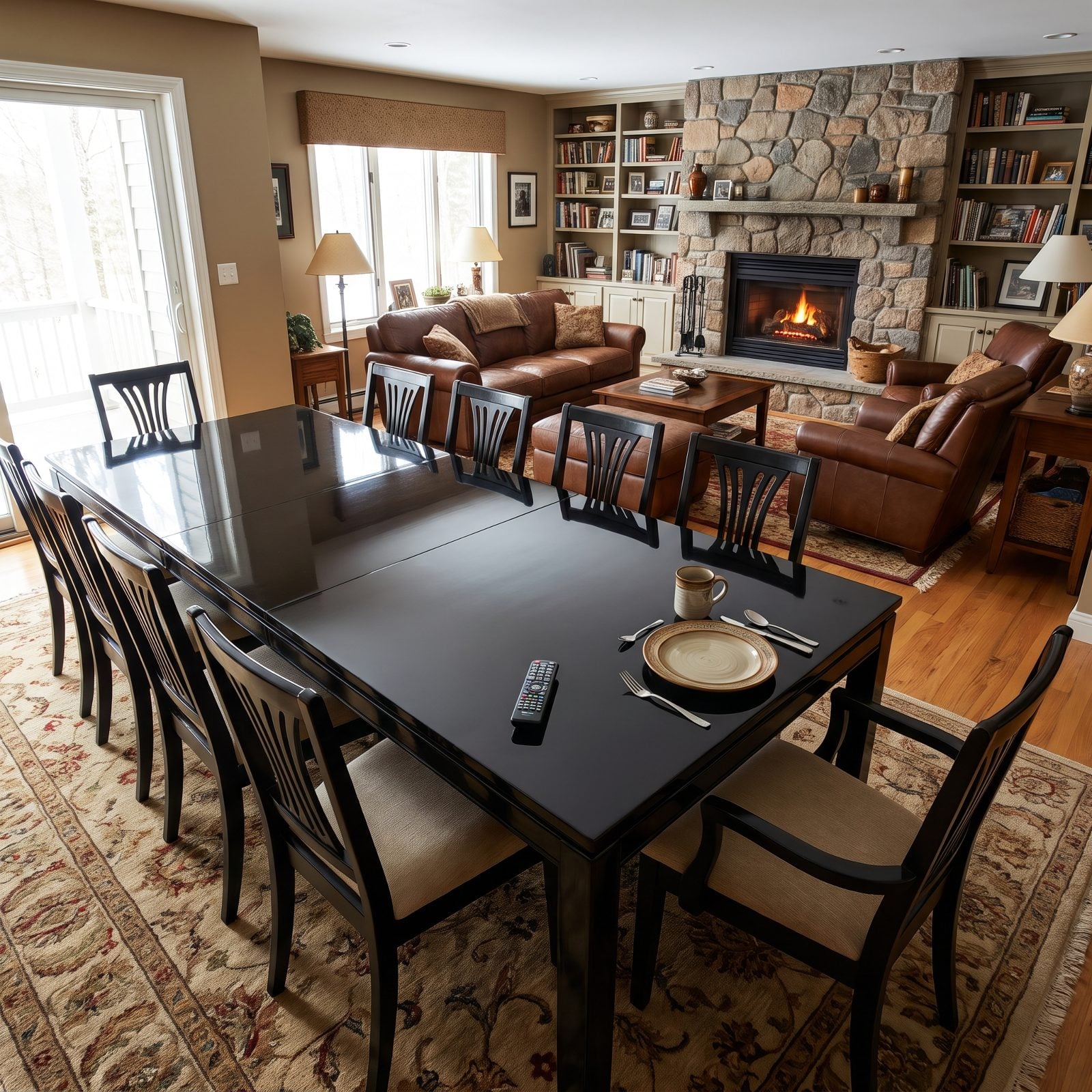
You bought the table for the dinner parties — the ten-seater, high-gloss, the kind that photographs well. Now it’s Tuesday and you’re eating over a laptop in the one corner you actually use, mail stacked where guests were supposed to sit.
This is the trap of decorating for an imagined life instead of the real one. We furnish the aspiration, the version of ourselves who hosts eight people on a weeknight, and then daily reality shows up and uses six square inches of it.
Design for your Tuesdays, not your fantasy Saturdays. A smaller round oak dining table that fits your actual nights beats a showroom monument you edge around. Comfort lives in the ordinary days.
4. You Spend First on the Room You Actually Use
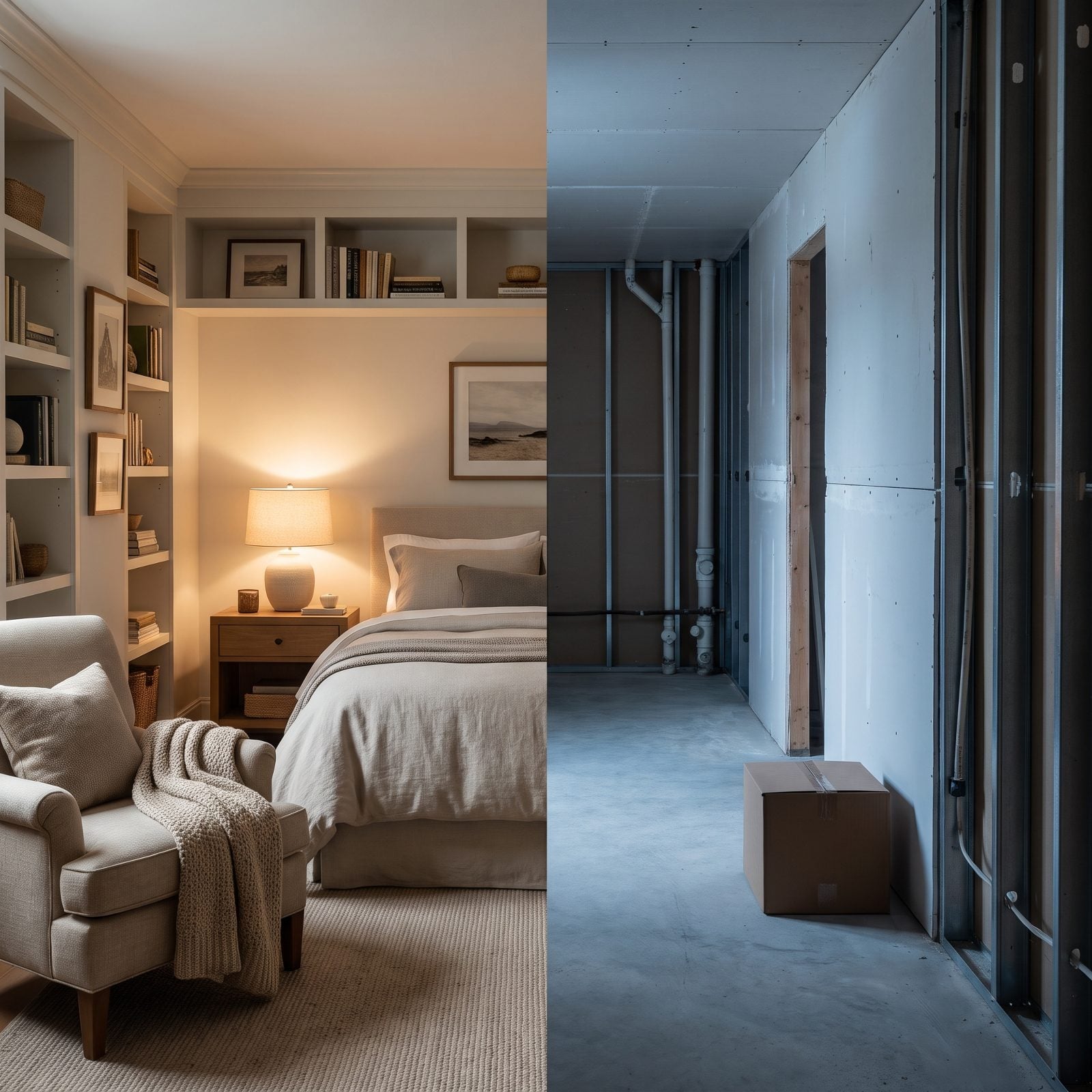
The hallway’s still bare. There’s a cardboard box that’s been in the corner since you moved. But the bedroom? Finished — layered linen, two lamps that actually match, a rug underfoot in the morning.
Spending first on the room you live in most is smart economics and smarter psychology, because you feel the payoff daily instead of banking it for a living room you pass through. One finished sanctuary does more for your sense of stability than five half-done spaces.
Call it return on emotional investment. The bedroom bookends every day, so a done bedroom resets you twice over. Put your money where your actual hours go. A warm linen upholstered bed earns its cost in sleep alone.
3. You Redecorate in Stages, Not One Heroic Weekend
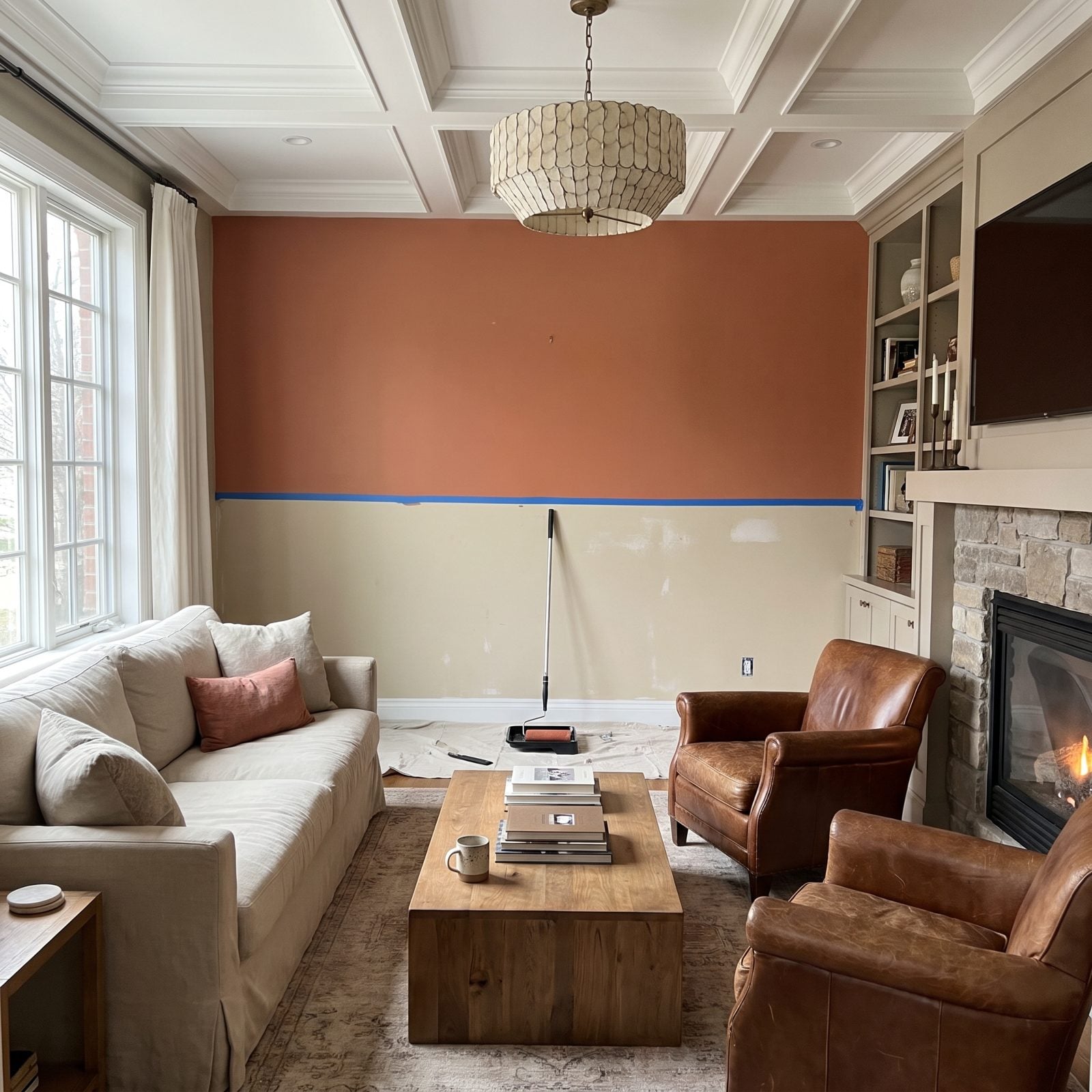
Half the wall is clay, half is the old beige, the painter’s tape still up — and you’re calling it a day anyway. The project isn’t abandoned. It’s paced.
We’re sold the single-weekend makeover, the dramatic reveal, the whole room done by Sunday night. Real rebuilding doesn’t work like that. It goes one decision at a time, which isn’t a failure to finish — it’s how durable change actually sticks.
Stages beat the heroic blitz for a reason the brain understands: small wins compound. Each finished piece hands you the confidence to choose the next, instead of panic-buying a whole room you’ll second-guess by spring.
2. You Measure the Doorway Before Bringing Home Anything Huge
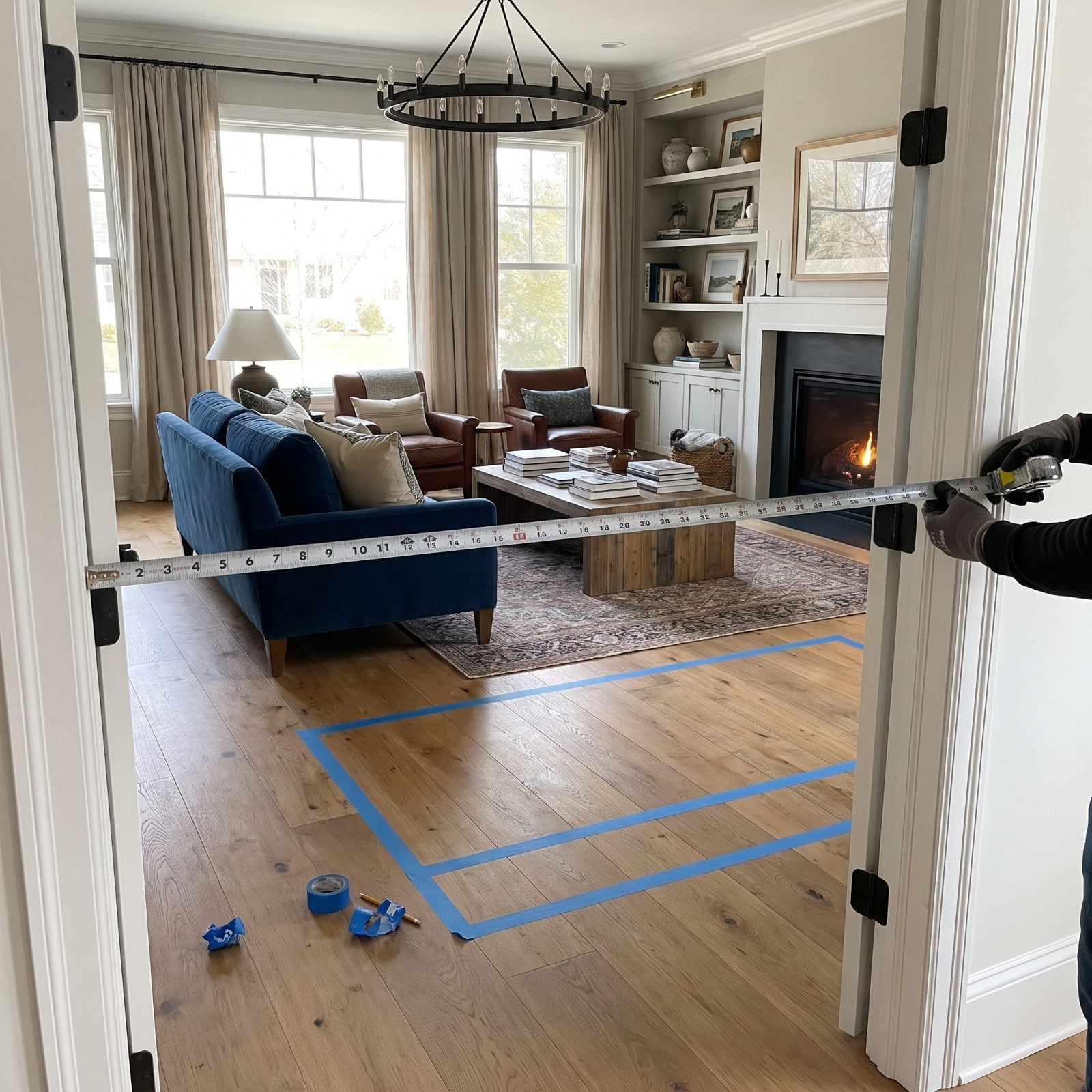
Before anything big comes home, you measure the doorway. Then the turn into the living room. Then you tape the sofa’s footprint on the floor and stare at it for a day. You’re not being fussy. You’re someone who got burned once.
Everybody has a story about the thing that wouldn’t fit — the couch wedged in the stairwell, the dresser that lived in the garage. After that, you stop trusting your eye and start trusting the tape.
This is the planning fallacy, defeated. We chronically assume things will go smoother than they do, that it’ll probably fit. The measuring habit is you refusing to be optimistic on a point where optimism costs you a delivery fee and a ruined weekend.
1. Inviting Friends Over Makes the Place Feel Officially Yours
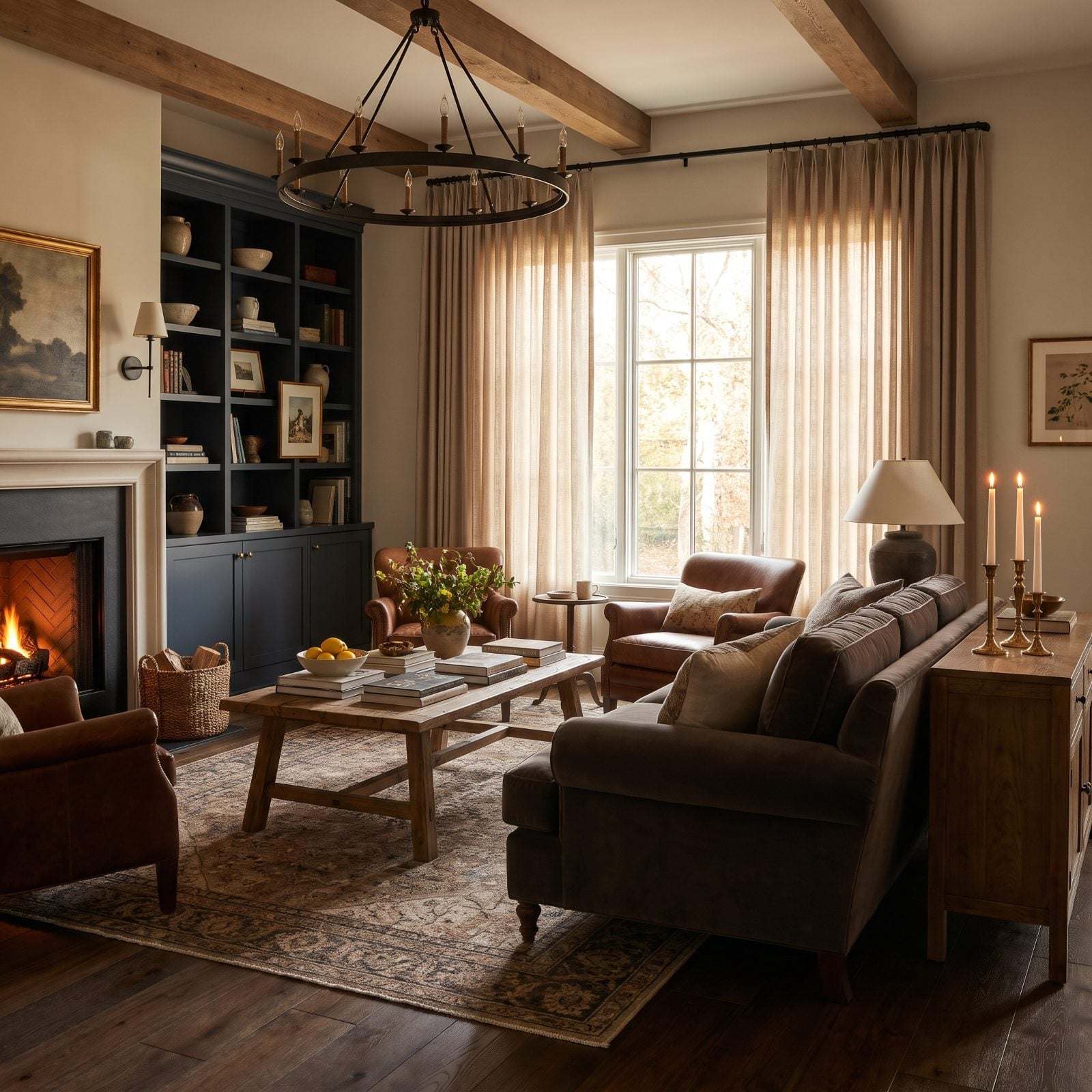
The table’s set. Candles lit. Lemons in a bowl because you saw it somewhere and liked it. Nobody’s arrived yet, but getting ready for people is the moment the place clicks into home.
You can live somewhere for a year and still feel like you’re house-sitting. Then you host. You watch someone else sink into your sofa and compliment the room, and their reaction makes it real in a way solo evenings never did.
We define ourselves partly through other people’s eyes, so a home witnessed by friends gets confirmed as yours. The farmhouse den you kept circling in photos finally becomes the room where your people gather. Which is the reason you rebuilt the space at all — not to impress, but to open the door and mean it.