
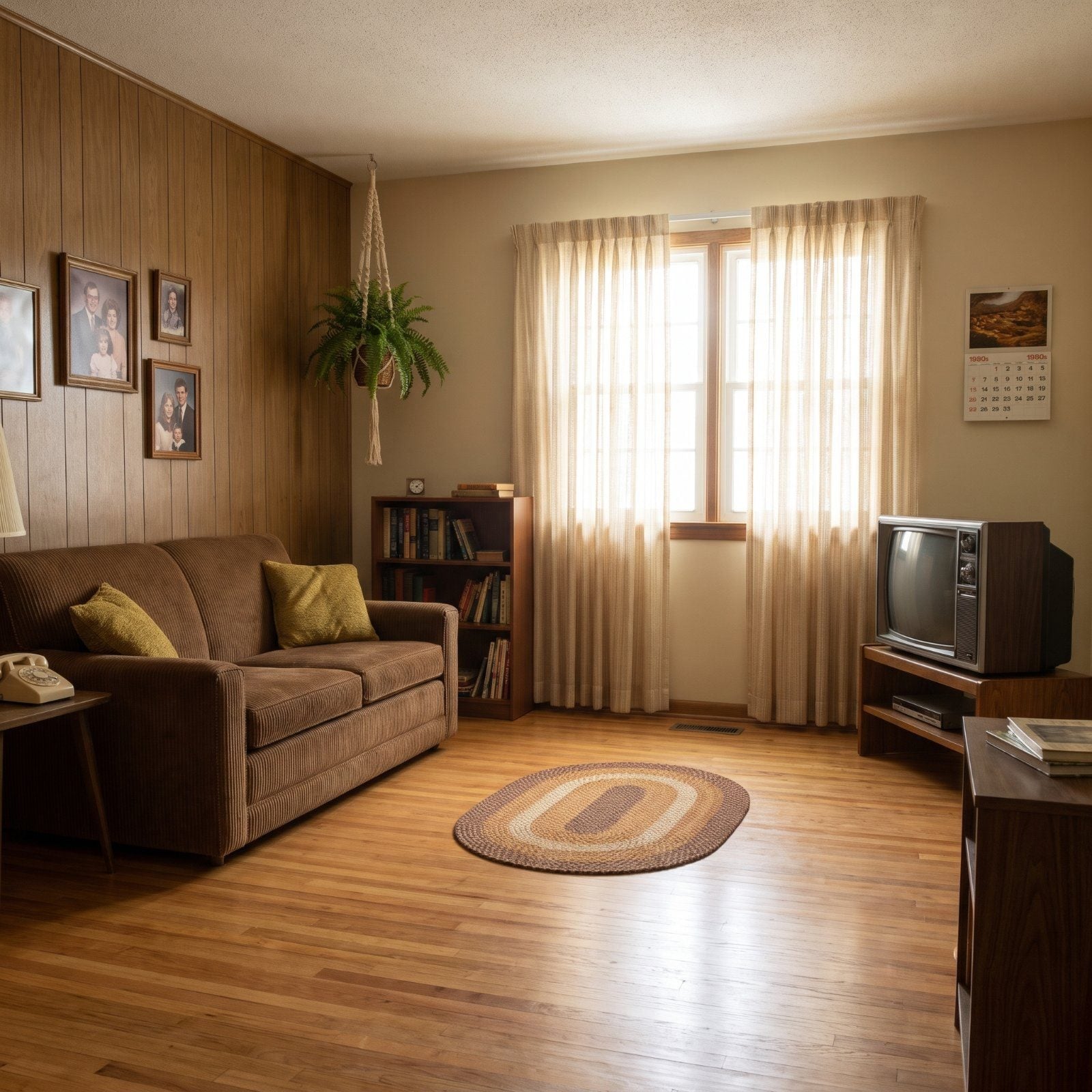
You can move into a place with room to spare and still walk the furniture straight to the walls on day one. Nobody taught you that. The small house did, soaking the habits in while you were young, back when every square foot got counted and a cleared walkway meant the whole room worked.
Years later, in a bigger place, the old reflexes show up uninvited. The ones below are quiet proof that a tight childhood home never really lets go.
In order to come up with the very specific design ideas, we create most designs with the assistance of state-of-the-art AI interior design software. Also, assume links that take you off the site are affiliate links such as links to Amazon. this means we may earn a commission if you buy something.
38. Push Every Large Piece of Furniture Against the Perimeter
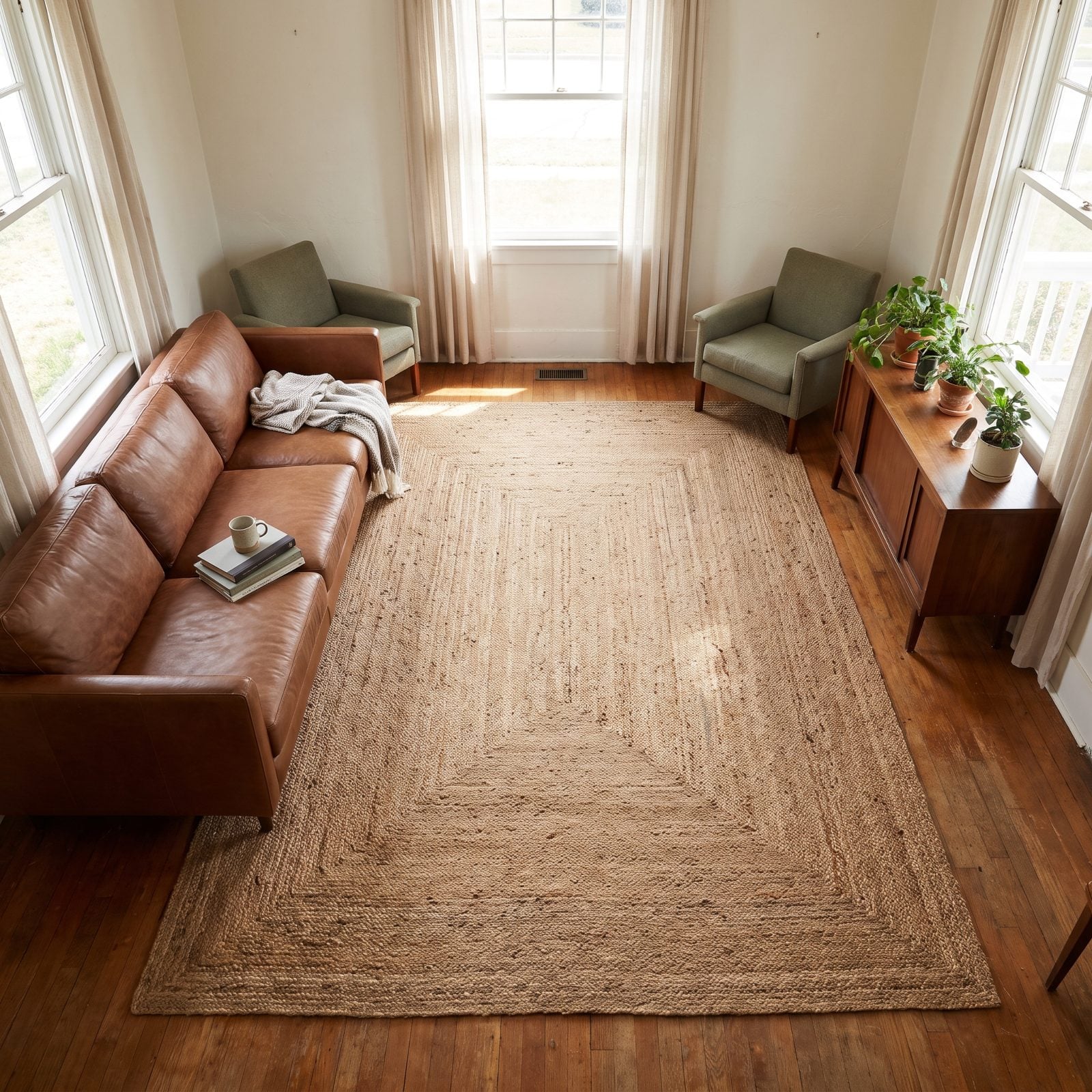
You don’t decide to do this. Your hands do it. The couch goes to the wall, the chairs follow, and the middle of the room opens up like a clearing. In a small house that center was the walkway, the play space, the spot where you set the ironing board, so it had to stay empty.
Designers will tell you to float furniture off the walls for intimacy, and you hear them. You even nod. Then you shove the sofa back anyway, because an open floor still reads as safe to you in a way no conversation pit ever will.
37. Measure the Floor Footprint Before Buying Furniture
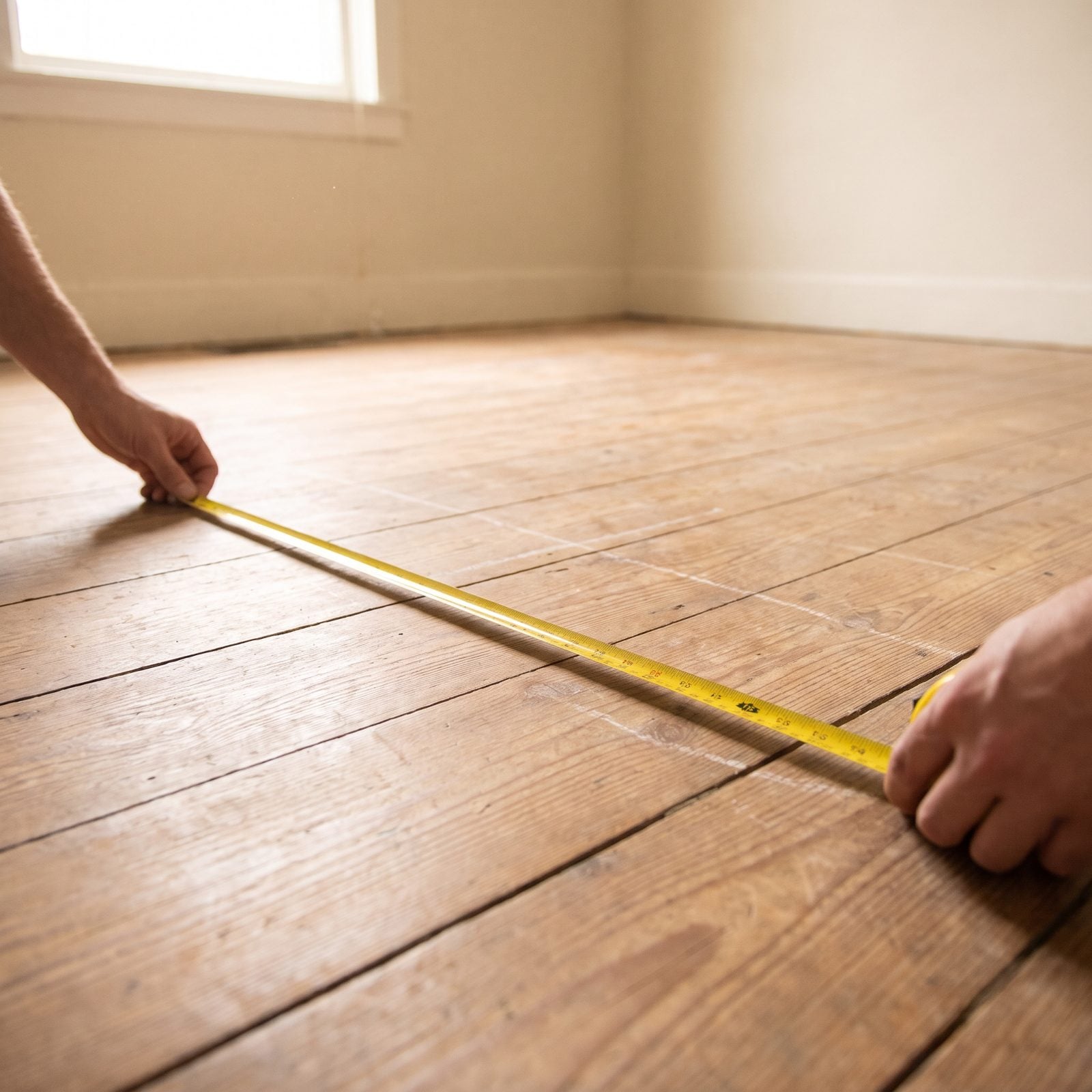
The tape measure lives in the junk drawer, and it comes out before anything gets ordered. You know the footprint of the empty spot before you know the price. Width, depth, and the swing of the door it might block.
This is the habit that saves you from the couch that won’t make the corner. You grew up watching a sofa get wedged through a doorway sideways, and you never risk it again. Planning a mediterranean home office or wrangling any tight corner, the same reflex kicks in: measure twice, buy once, never guess.
36. Tuck Every Chair Completely Under the Table
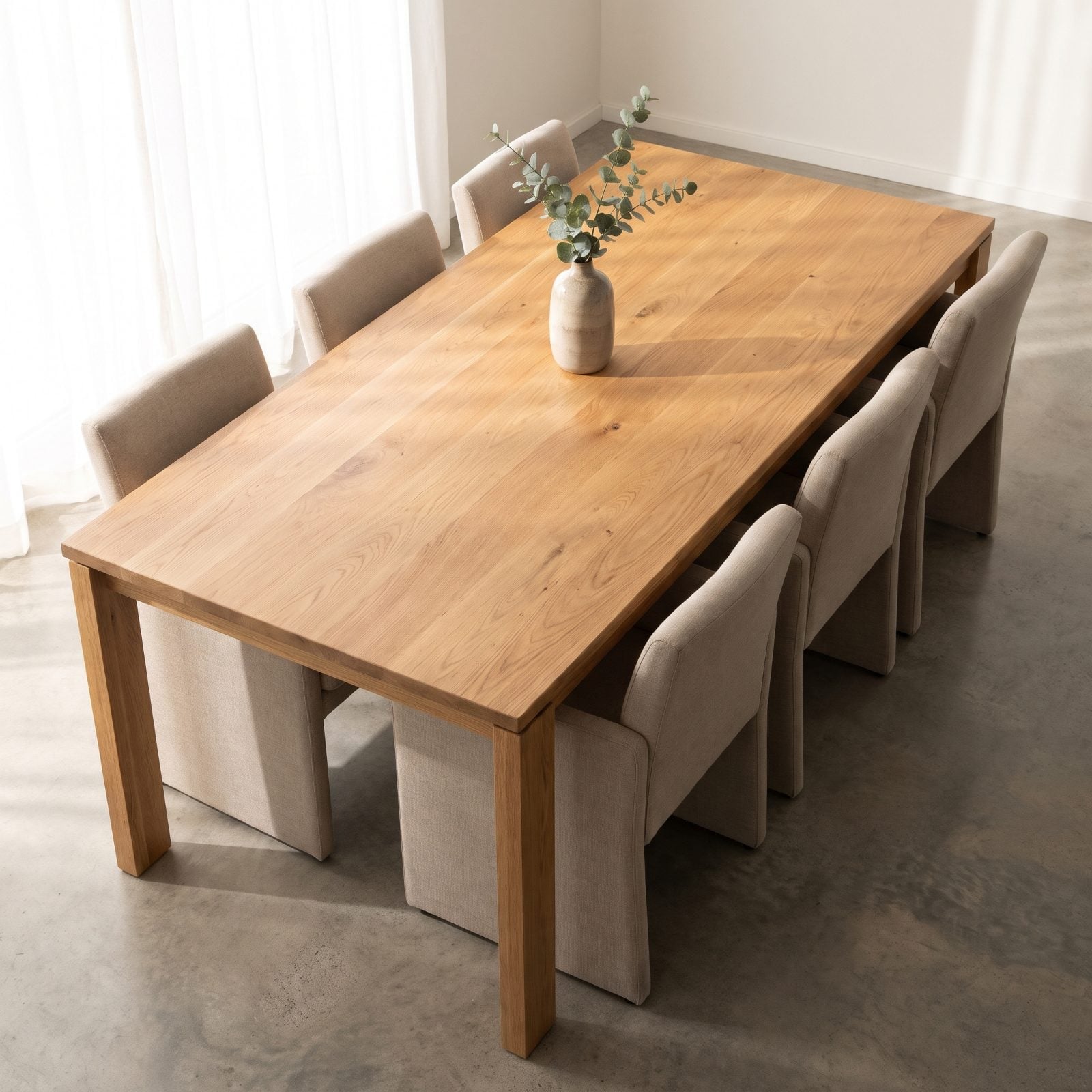
A chair left pulled out is a shin waiting to happen. You learned that in a kitchen where the gap between the table and the fridge was exactly one person wide. So every chair goes back, all the way, legs under the apron of the table, every single time you stand up.
Guests think it’s manners. It isn’t. It’s traffic control, and the walkway reappears the second the last chair tucks in.
35. Buy an Ottoman That Opens for Storage
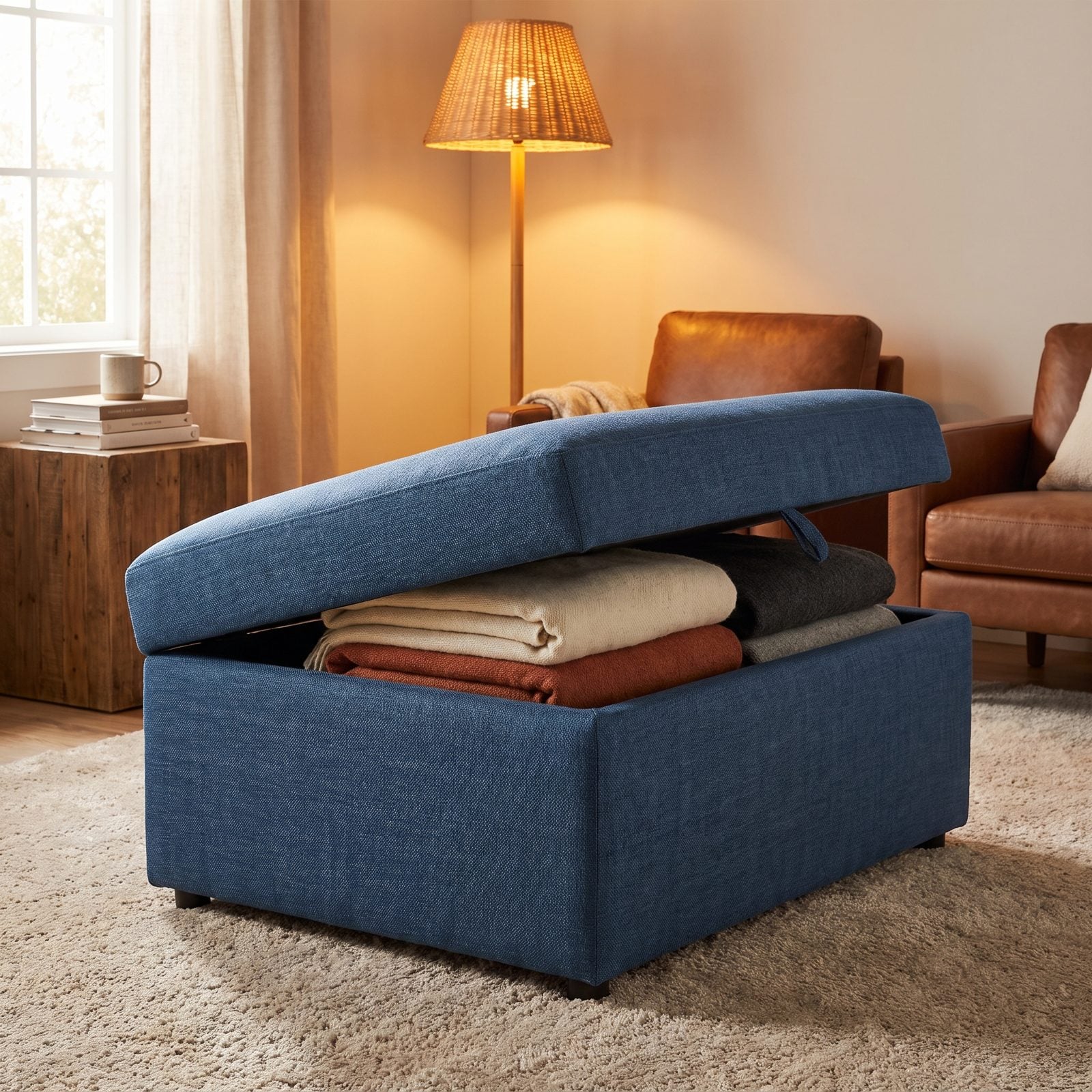
If a thing can hold your feet and your winter blankets at the same time, that’s the one you buy. An ottoman that’s just an ottoman feels like a waste to you, and you can’t quite explain why to people who grew up with closets to spare.
Lift the lid and there’s the extra bedding, the remote controls that migrate, the puzzle with four pieces missing. Double-duty furniture isn’t a trend in your book. It’s the only kind that earns its square footage.
34. Prefer a Drop-Leaf Dining Table
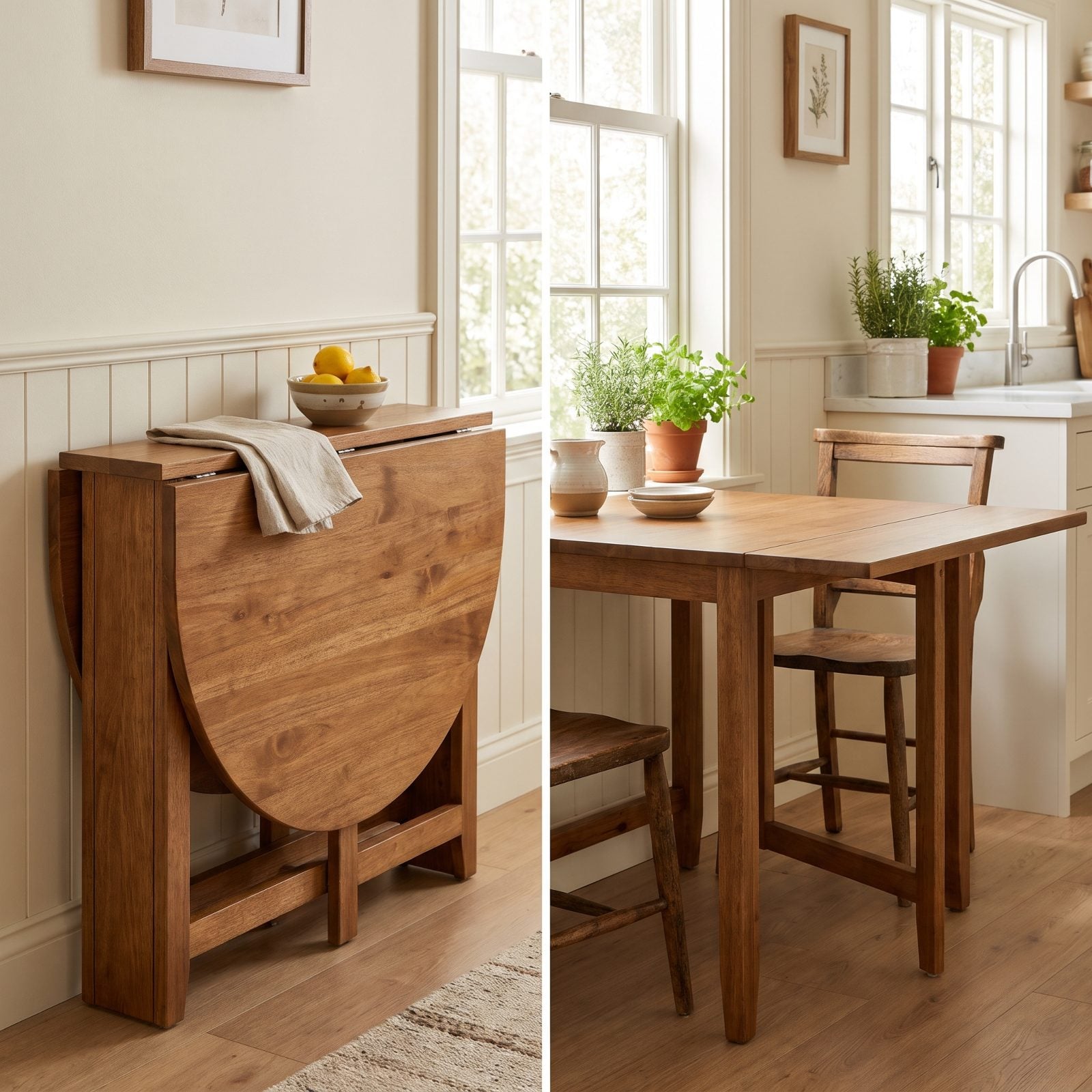
Half the table against the wall, half pulled out when company comes. The drop-leaf gets you, because you grew up subtracting the dining room from the living room and back again, sometimes twice in one evening.
Big enough for Sunday, small enough for Tuesday. You folded that leaf down a thousand times as a kid to make room for homework, and the mechanism still feels like a small act of good sense every time you do it.
33. Keep Nesting Tables Instead of a Large Coffee Table
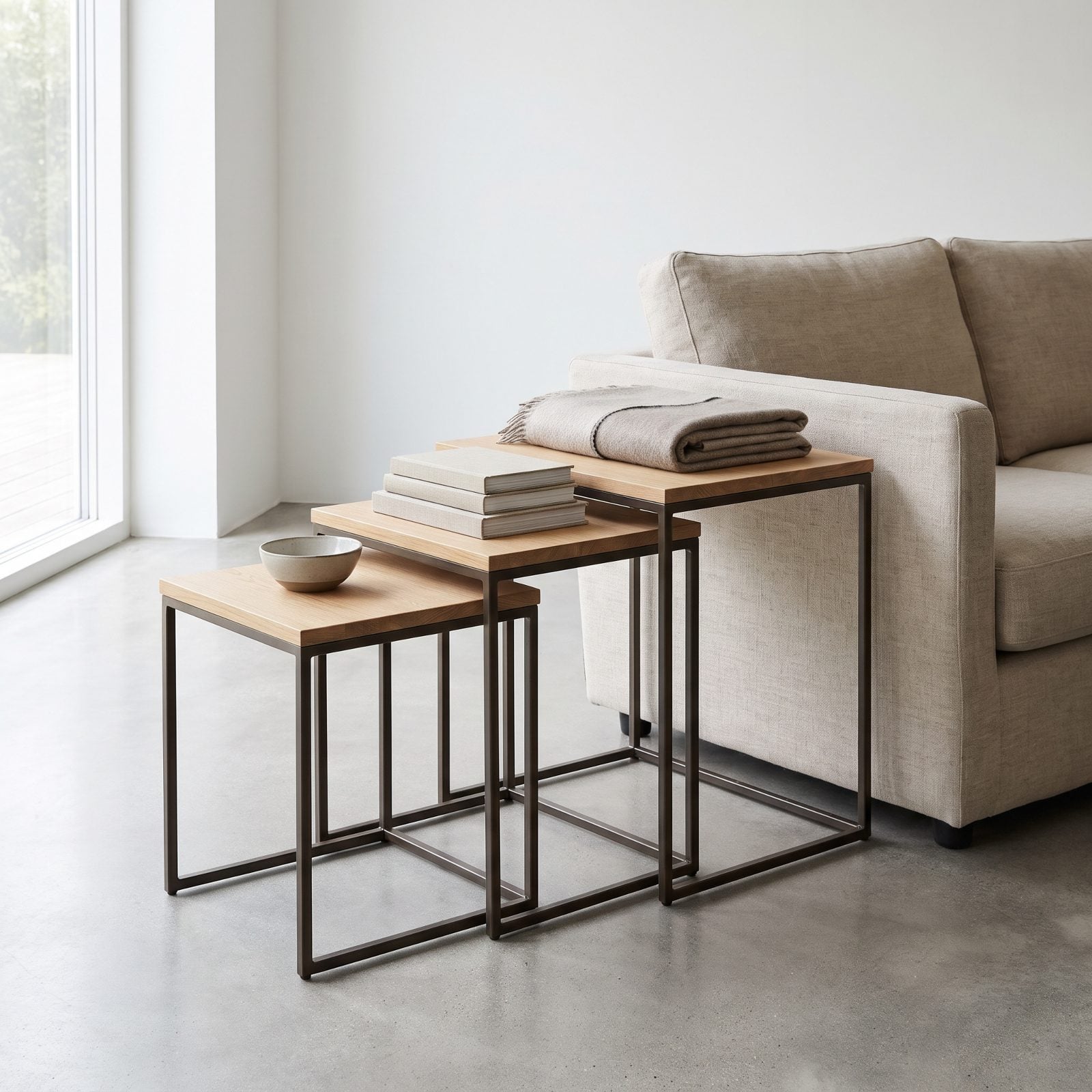
One table becomes three when the room fills up, then folds back into one when it empties. A big slab coffee table never made sense to you. It just squats there hogging the middle, the one place you were raised to keep clear.
Nesting tables scatter when guests arrive and reconvene when they leave. That flexibility is why you keep them. You can serve four people drinks and reclaim your walkway inside of a minute.
32. Store Folding Chairs for Extra Guests
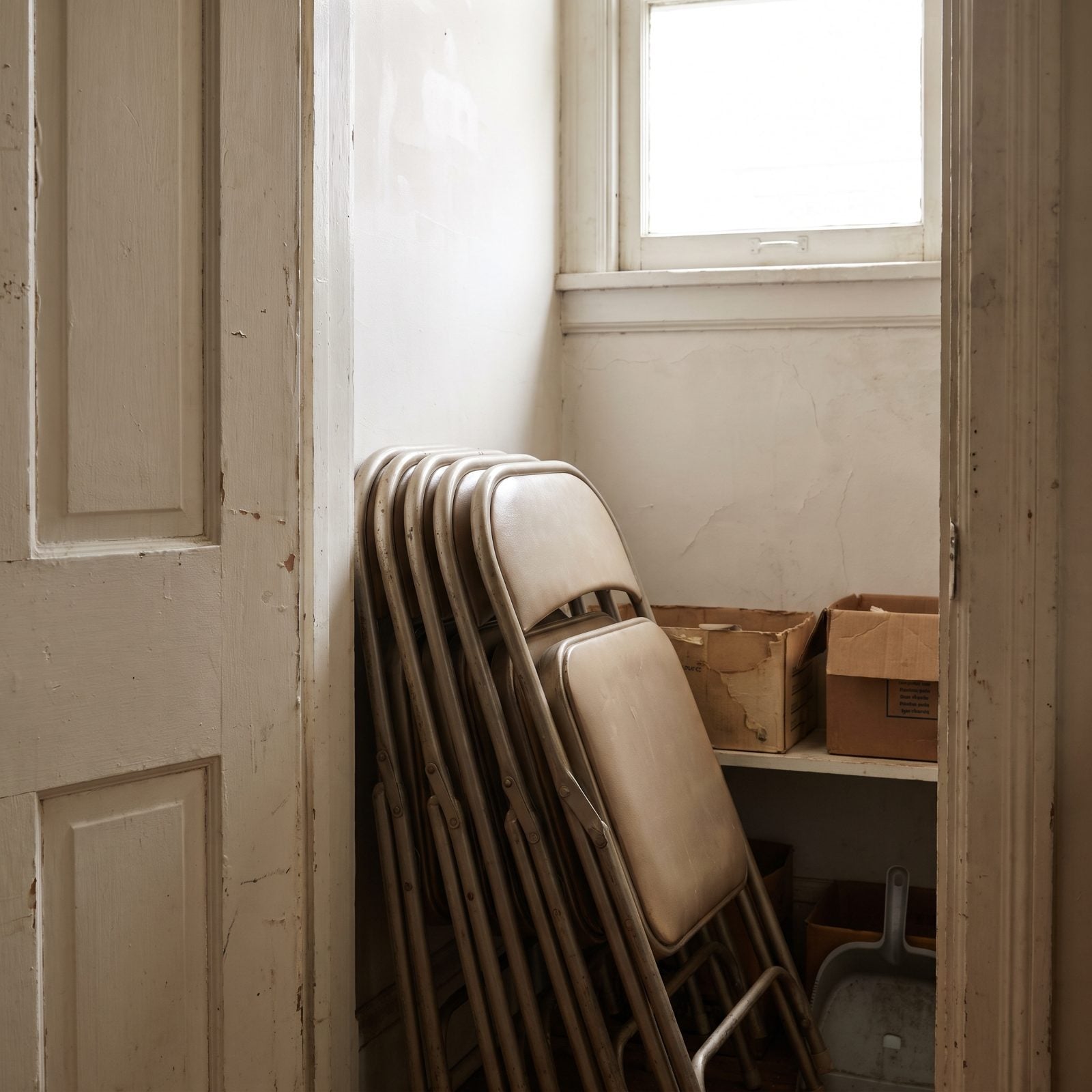
There’s a slot behind a door or in the back of a closet where the folding chairs live, flat and patient, waiting for the holidays or the card game. You never buy enough permanent seating for a crowd. You buy exactly enough for your actual life and keep the overflow collapsed.
It’s the logic of a house that couldn’t afford to seat twelve every day for the two days a year it needed to. Pull them out, snap them open, put them away by midnight.
31. Mount the Television Instead of Using a Media Console
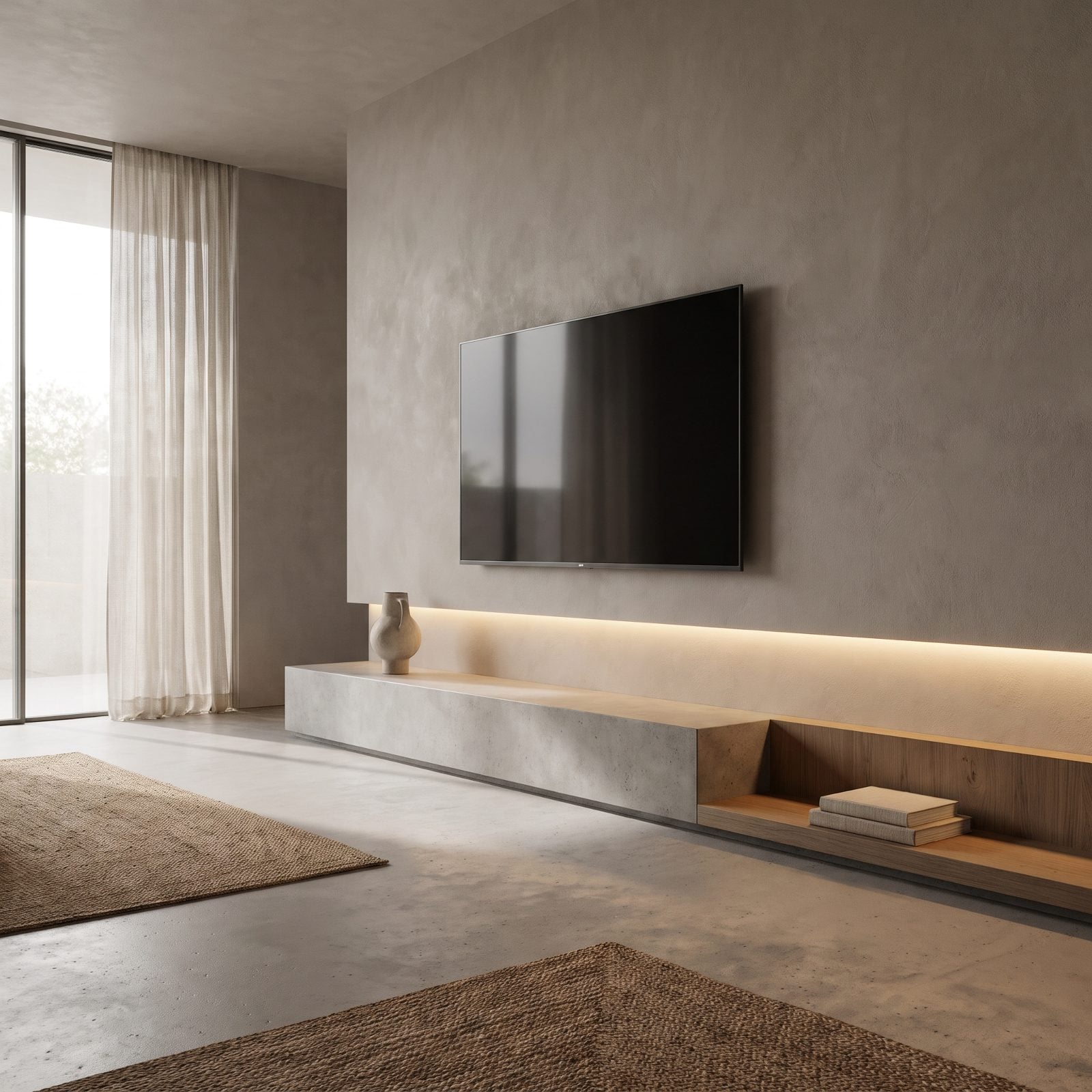
The screen goes on the wall, and underneath it runs only a long, low concrete-and-wood ledge washed in soft LED light. A tall, bulky media cabinet was a thing that ate a whole wall in a room that didn’t have walls to spare, so you trade it for something that barely rises off the floor.
No tall cabinet means less bulk crowding the wall, just a low surface kept to a single vase and a short stack of books, nothing tall to walk around. Mounting it is the grown-up version of an old instinct: get it off the floor so the room stays yours. The same thinking carries into a big home gym, where every inch of cleared floor matters.
30. Install Wall Sconces to Free Up Tabletops
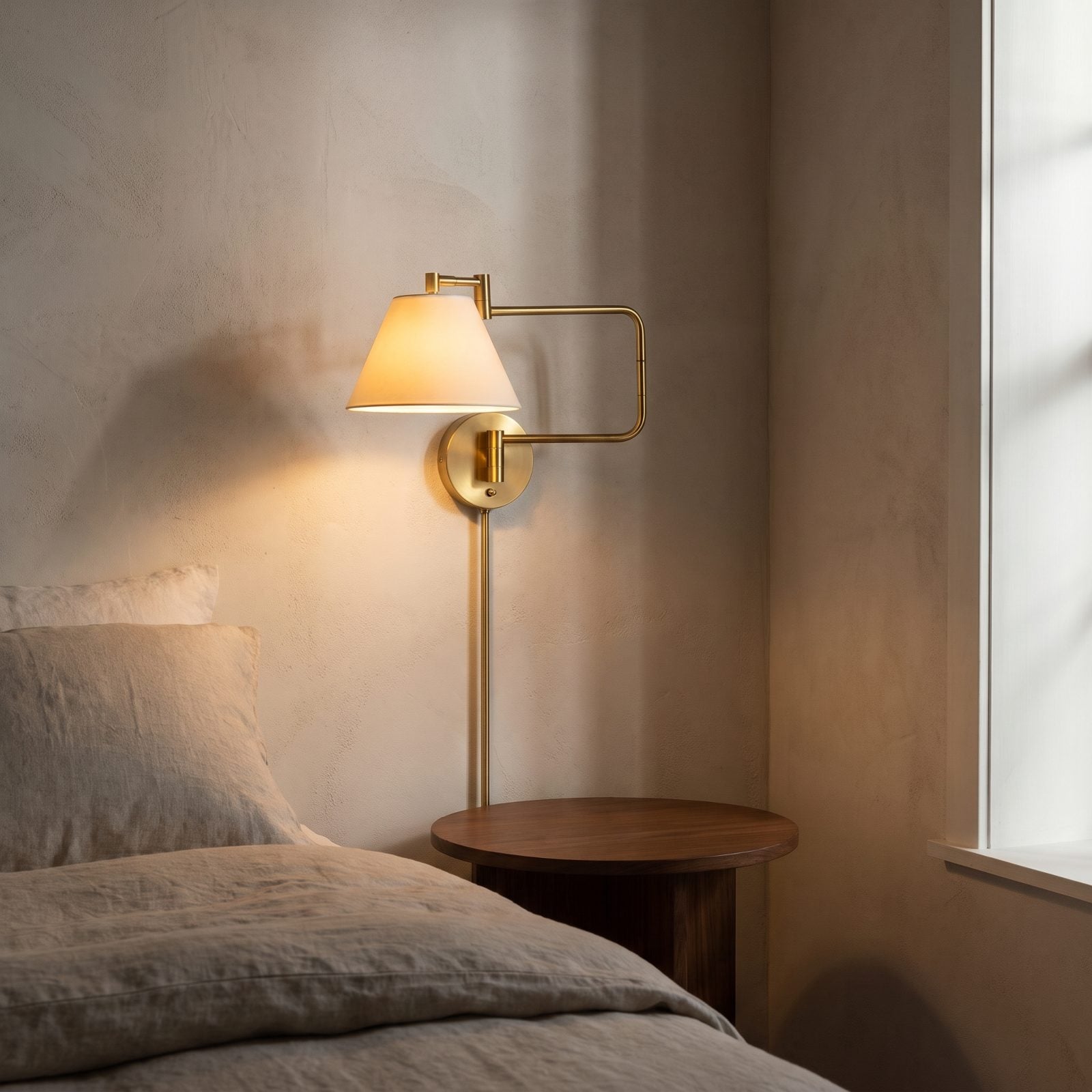
Light comes off the wall, not off the table. A lamp eats a quarter of every surface it sits on, plus a cord to trip over, so you hang the sconce instead and leave the nightstand clear for a book and a glass of water.
Swing-arm sconces by the bed, a pair flanking the sofa, each one buying back a tabletop you’d otherwise lose to a lamp base. The surface stays usable. Call it the quiet arithmetic of a small house, carried into rooms that don’t technically need it.
29. Run Bookcases Nearly to the Ceiling
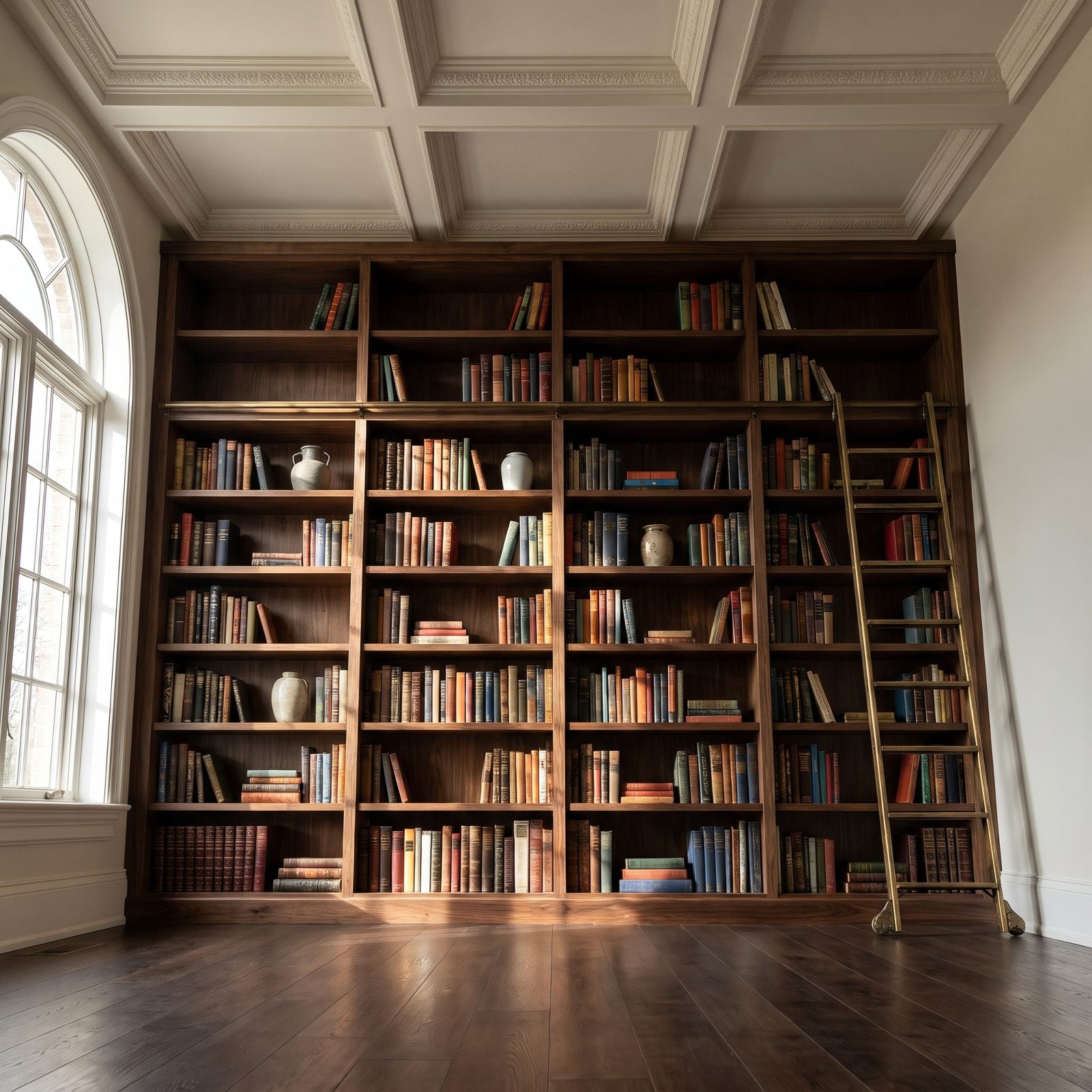
You build up because you can’t build out. The bookcase doesn’t stop at eye level like the showrooms want it to. It climbs almost to the ceiling, because in the house you grew up in, vertical space was the only space nobody else had claimed.
The top shelf needs a stool or a ladder and holds the things you reach for twice a year. Fine by you. Every inch of wall going up is an inch of floor you got to keep. You looked up for storage before you ever looked around, and you still do.
A small house teaches you the ceiling is just a wall you haven’t used yet.
28. Add a Shelf Above the Doorway
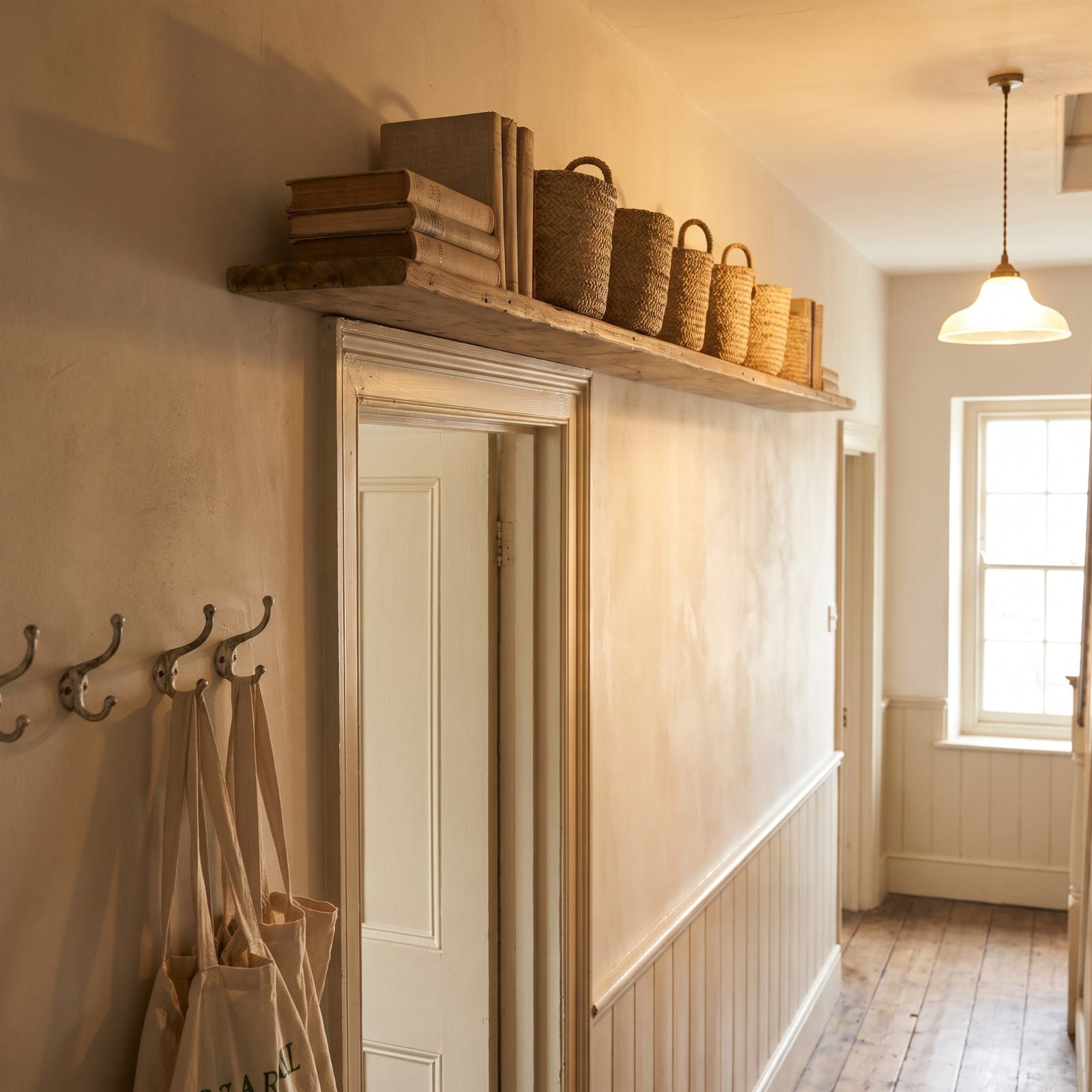
Everyone else sees a door. You see the strip of blank wall above it, the one nobody has touched since the house was built. A single shelf goes up there, frame to frame, and suddenly the room has storage that takes zero floor and blocks zero light.
Growing up, that ledge held the extra blankets, the board games, the photo albums nobody looked at but nobody would toss. Now it holds baskets of whatever you need least and can’t quite part with. Guests rarely notice it. That’s the point. The best storage in a small house was always the kind that hid in plain sight above everyone’s heads.
27. Put Hooks on the Backs of Doors
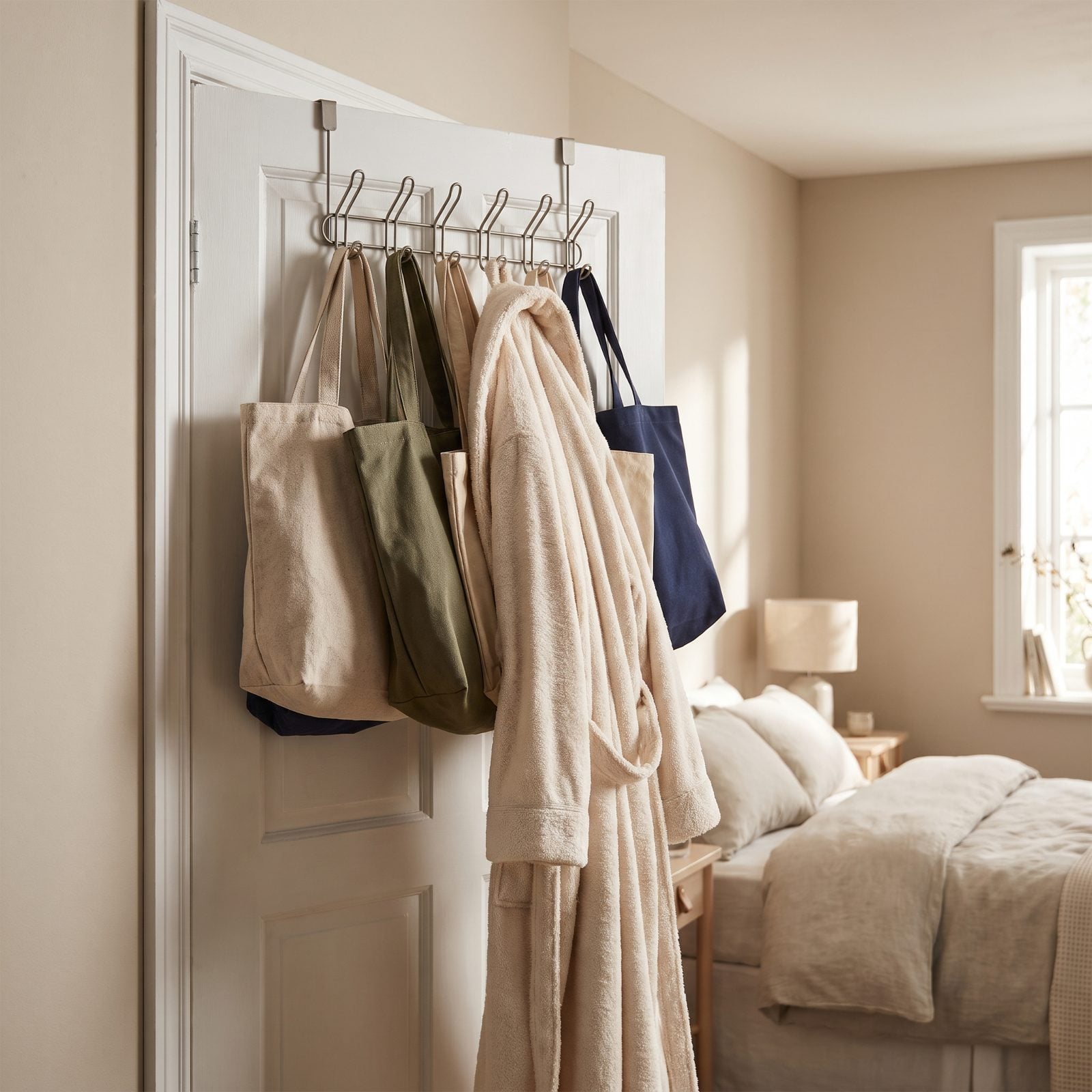
A door swings through a slice of the room that can’t hold anything else anyway. So you make the door itself work. Robes, towels, tomorrow’s bag, the jacket you’ll wear again before it needs washing. Every door in the house gets a row of hooks or an over-the-door rack within the first month.
In a small house, the back of the bathroom door was the linen closet and the back of the bedroom door was half the wardrobe. You learned early that a flat surface doing nothing was a flat surface wasted. Even with a coat closet down the hall now, you still reach for the hook first.
Not everyone reaches for a hook, though: asked how they would store towels, about two out of three of our readers would choose a bar, and 27% would pick hooks.
26. Slide Storage Bins Under the Bed
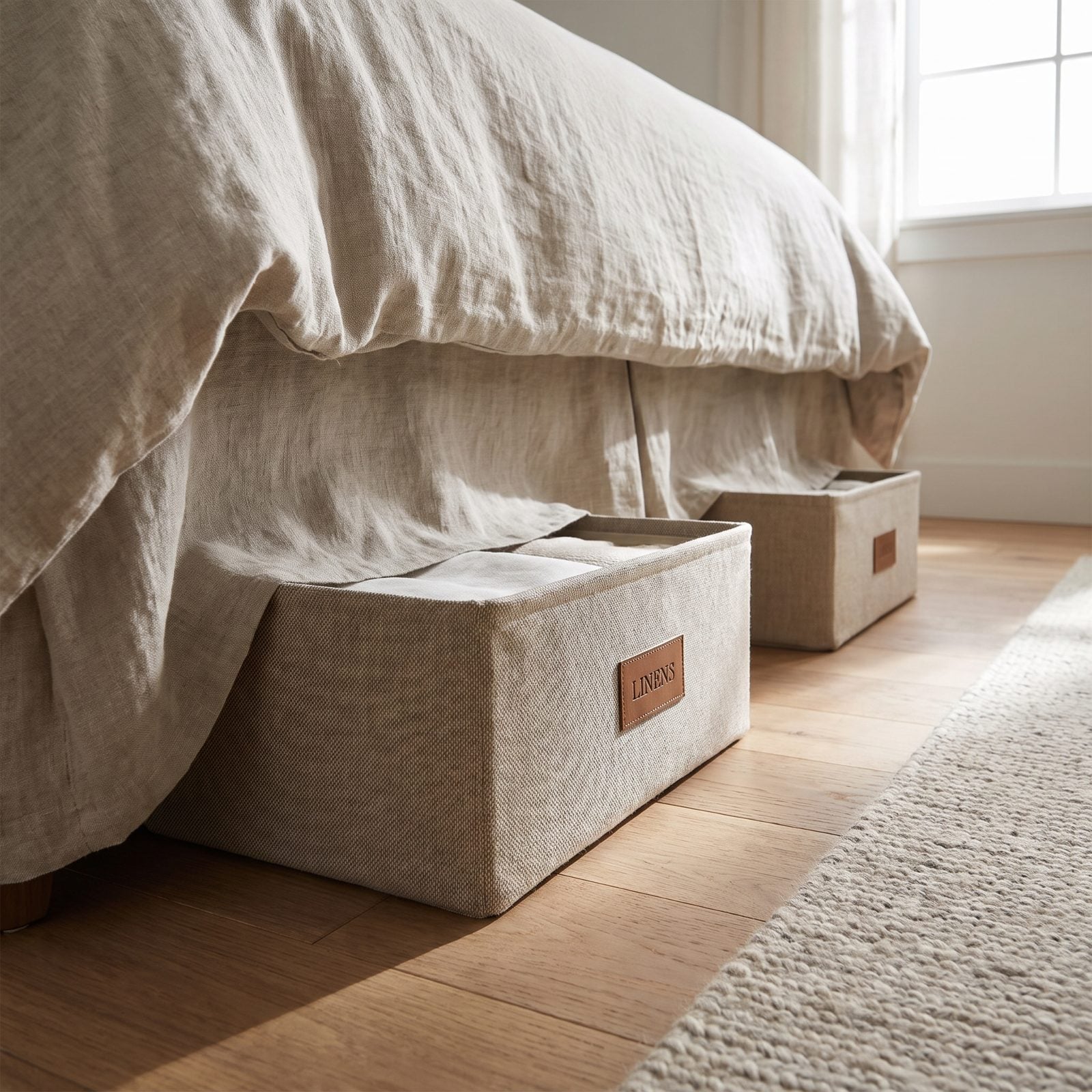
The bed is the biggest piece of furniture most people own, and the space under it is the biggest piece of storage most people ignore. Not you. Low bins slide under there before the sheets are even on, packed with spare linens, gift wrap, shoes you wear twice a year.
You even shop for bed frames differently. Clearance underneath matters more to you than the headboard, and a platform that sits flat on the floor feels like a waste of good real estate. As a kid you probably pulled a bin out from under your bed to find your summer clothes. You still know exactly what’s down there, and you’d notice if anything went missing.
25. Store Smaller Suitcases Inside Larger Ones
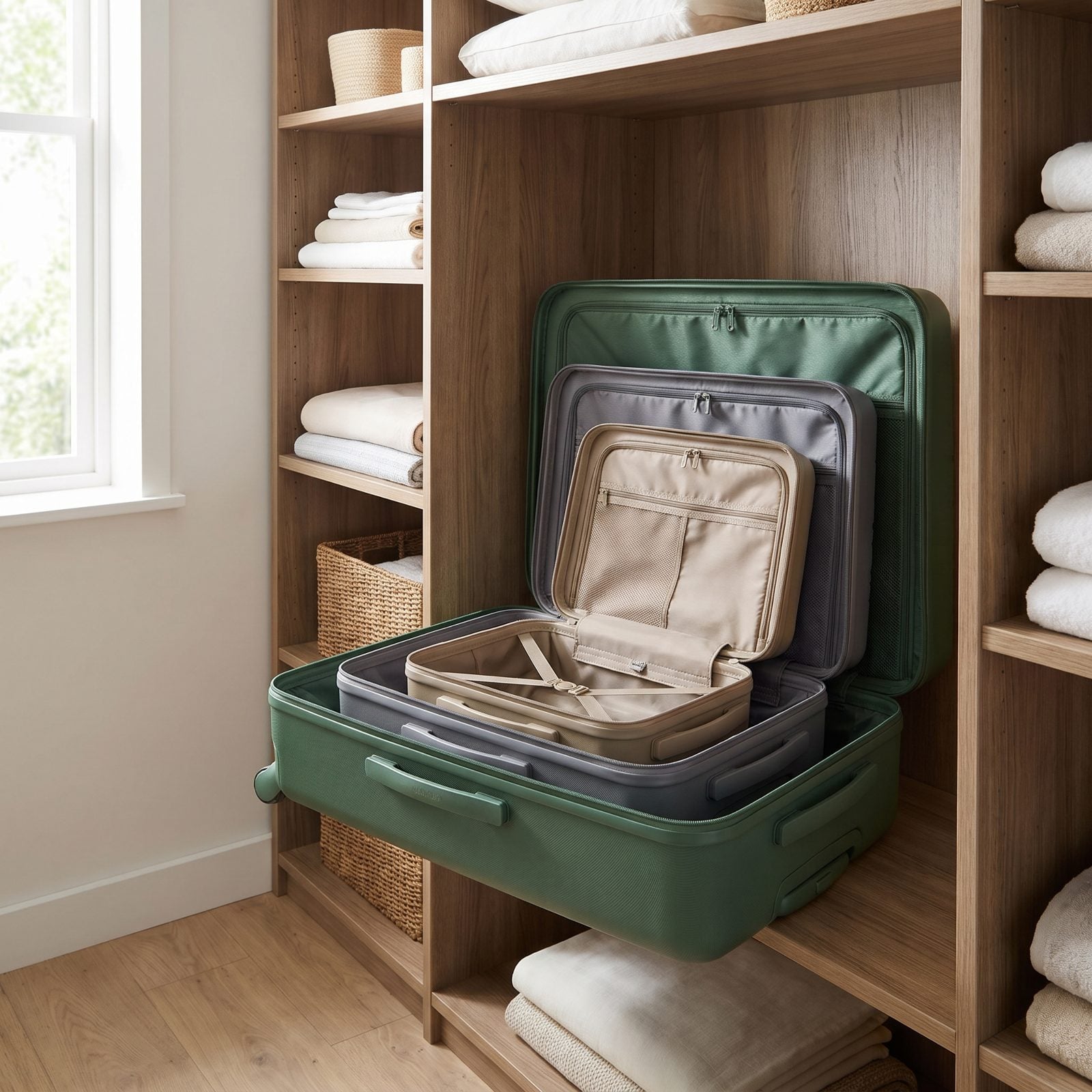
Luggage is the worst offender in any closet. Huge, hollow, used a few times a year, and taking up the same space whether it’s packed or empty. So yours stacks like a set of nesting dolls: the taupe carry-on tucked inside the gray bag, and the gray bag tucked inside the open green case, the biggest of the three.
One footprint for the whole set. Someone in your childhood home figured that out because there was exactly one spot for luggage and it had to share with the vacuum. You watched it done, and now storing suitcases any other way looks to you like paying rent for air.
24. Vacuum-Pack Off-Season Bedding and Clothes
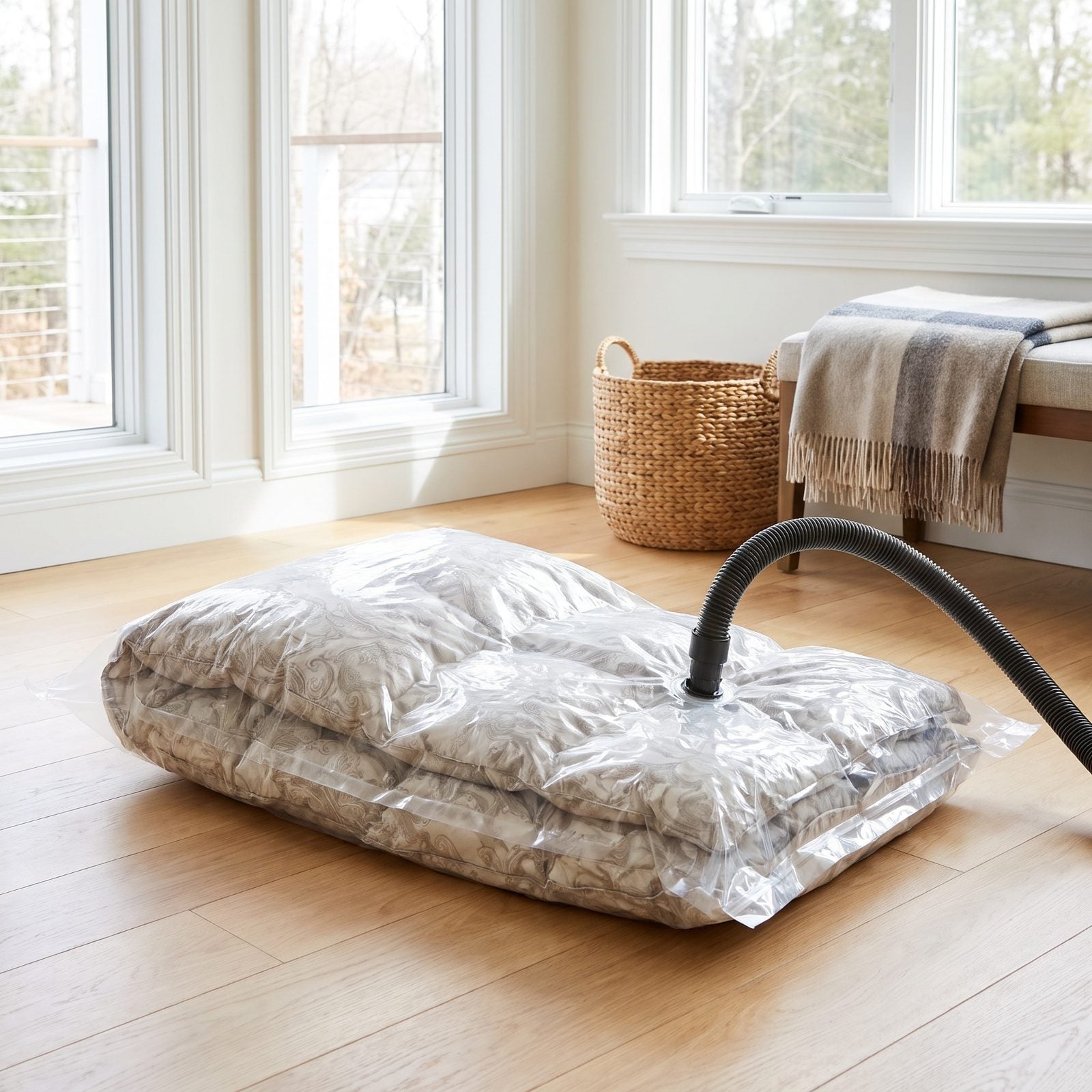
There’s a deep satisfaction in watching a puffy winter comforter collapse into a flat slab as the vacuum hose pulls the air out. You learned to love that sound young. Bulky bedding and heavy sweaters shrink down to something that slides under a bed or stacks on a high shelf, and the closet breathes again.
Bigger house, same ritual. When the season turns, the bags come out, the vacuum hums, and half a closet’s worth of bulk becomes a few neat bricks. It still feels a little like a magic trick, and you still do it whether you need the space or not.
23. Rotate the Closet With the Seasons
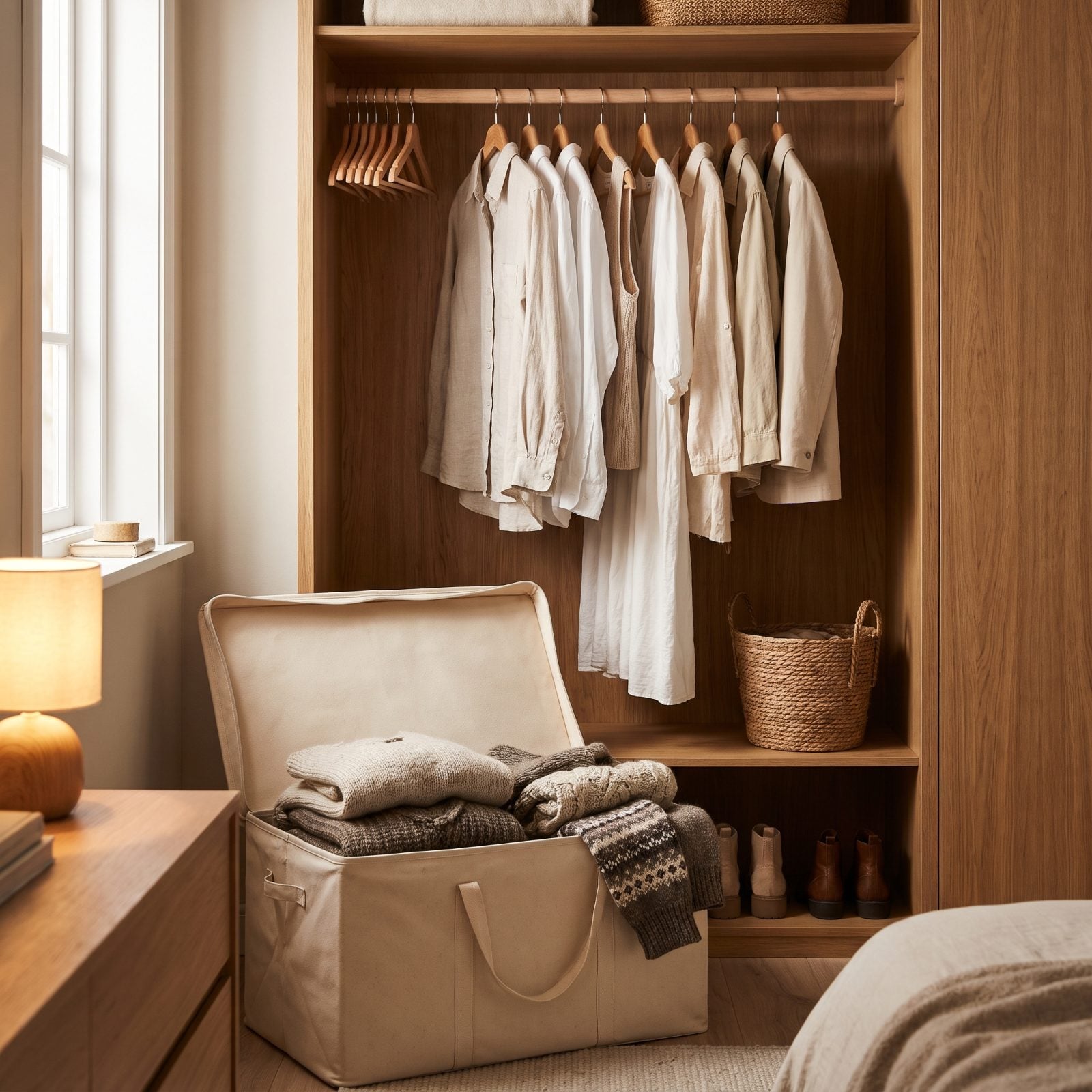
Twice a year the closet turns over. Sweaters come down and shorts go up, or the other way around, and the clothes you won’t touch for months get boxed and moved out of the way. In a small house there was never room to keep every season hanging at once, so the swap was a family event.
You could fit everything now. You don’t. Seeing only what you’ll actually wear this month makes getting dressed easier, and the swap forces a look at every piece you own. Anything that sat untouched all season gets questioned on its way back into storage. The closet got bigger. The calendar stayed in charge.
22. Add a Second Hanging Rod Below the First
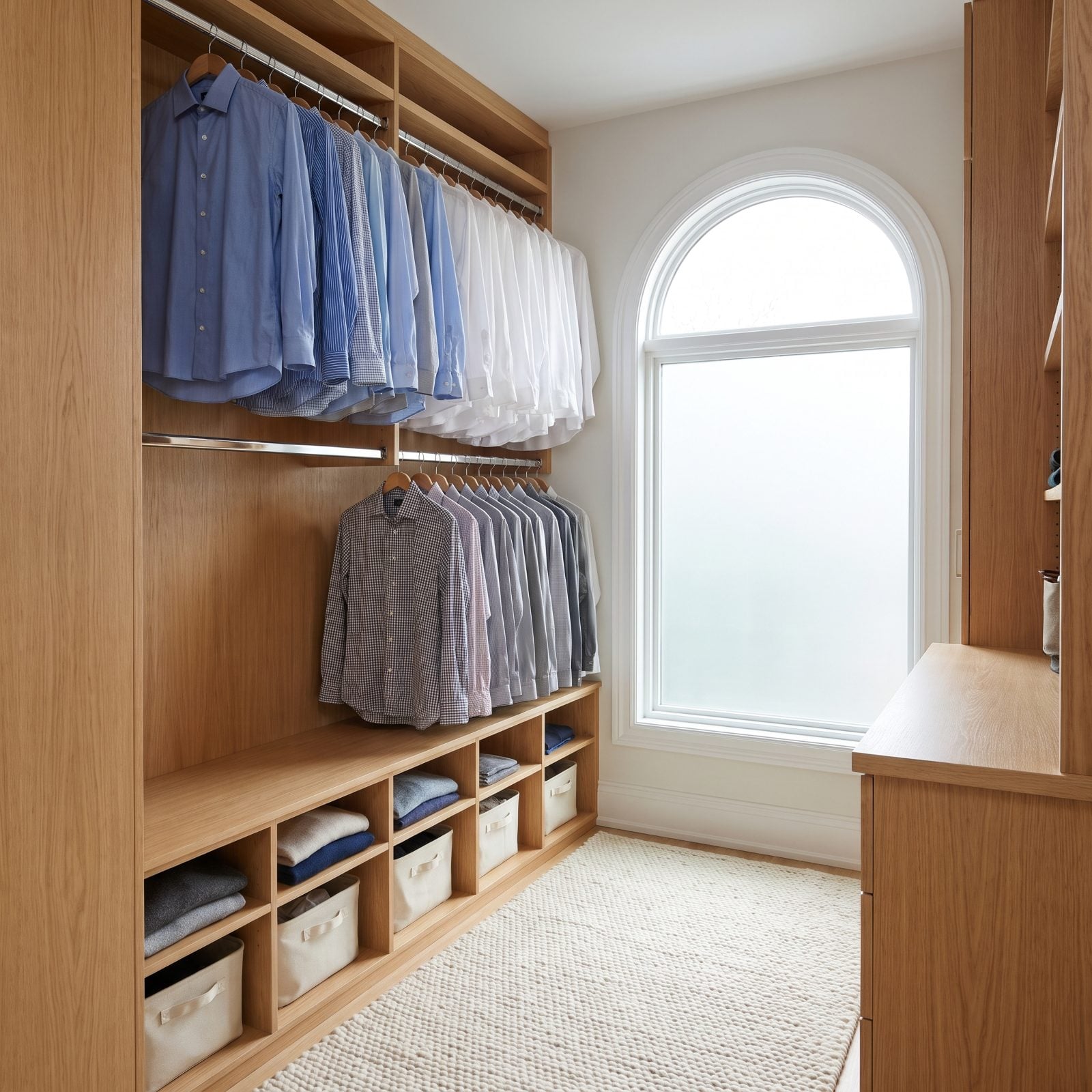
Shirts and jackets hang short, which leaves a whole band of empty air beneath them. You spot that gap instantly. A second rod goes in below the first, whether it’s a proper install or a simple bar hooked to the upper rod, and suddenly one closet holds two rows of clothes.
Tops above, pants and skirts below. Long dresses and coats get their own single-height section at the end. It’s the arrangement you grew up with, probably in a closet shared with a sibling, where every inch was negotiated. A single rod running over all that wasted space still looks unfinished to you, no matter how big the closet is.
21. Make the Bed as Soon as They Get Up
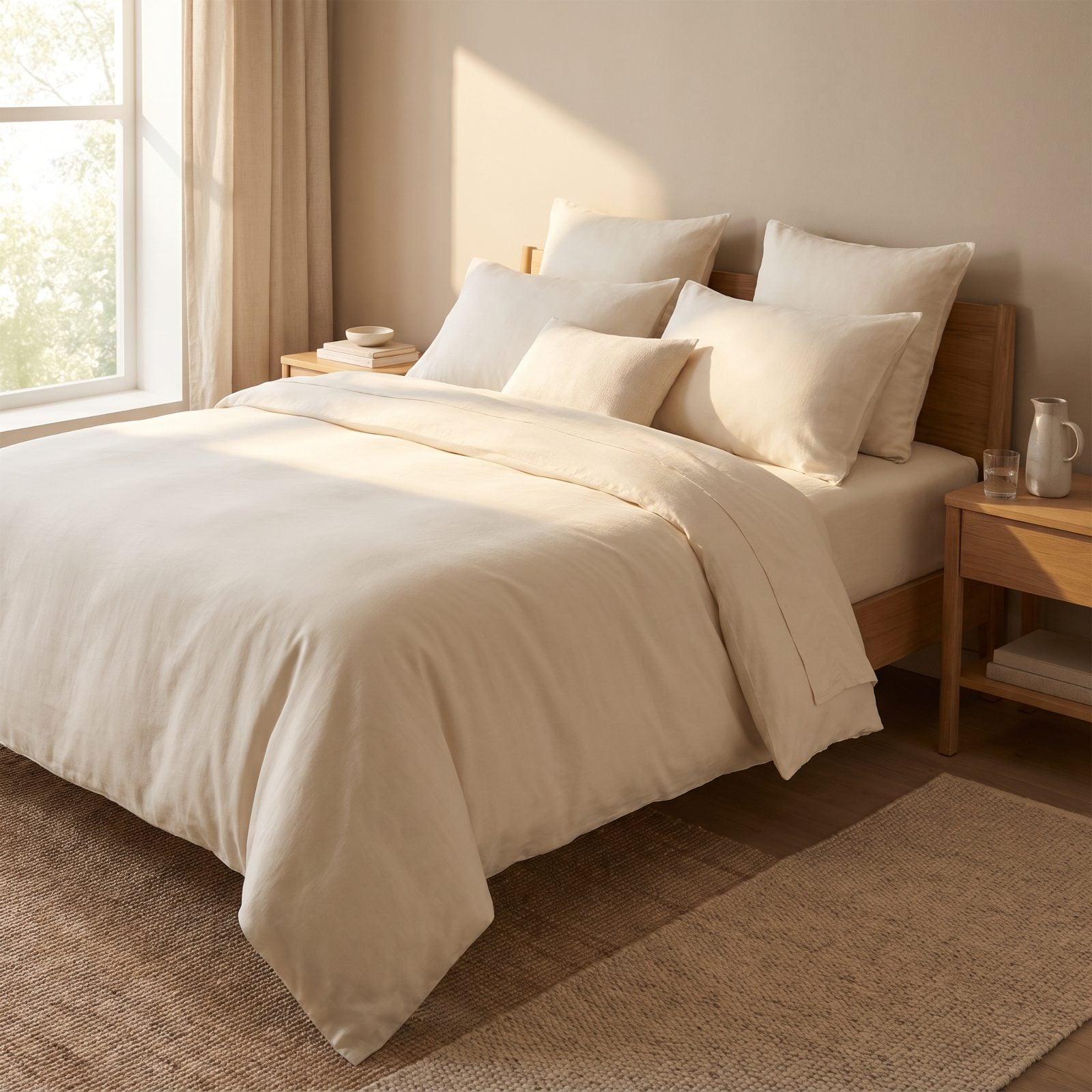
Feet hit the floor, covers get pulled up. Before coffee, before the phone, before anything. In a small house the bedroom often doubled as something else, a sitting spot, a homework desk, a place to fold laundry, and an unmade bed swallowed the whole room with it.
A made bed turned the space back into usable space. You could sit on it, spread things out on it, close the door on it without feeling like you were hiding something. Now you might have a bedroom nobody else ever sees, and it doesn’t matter. Leaving the sheets tangled feels like starting the day already behind.
20. Fold Laundry Before It Can Become a Pile
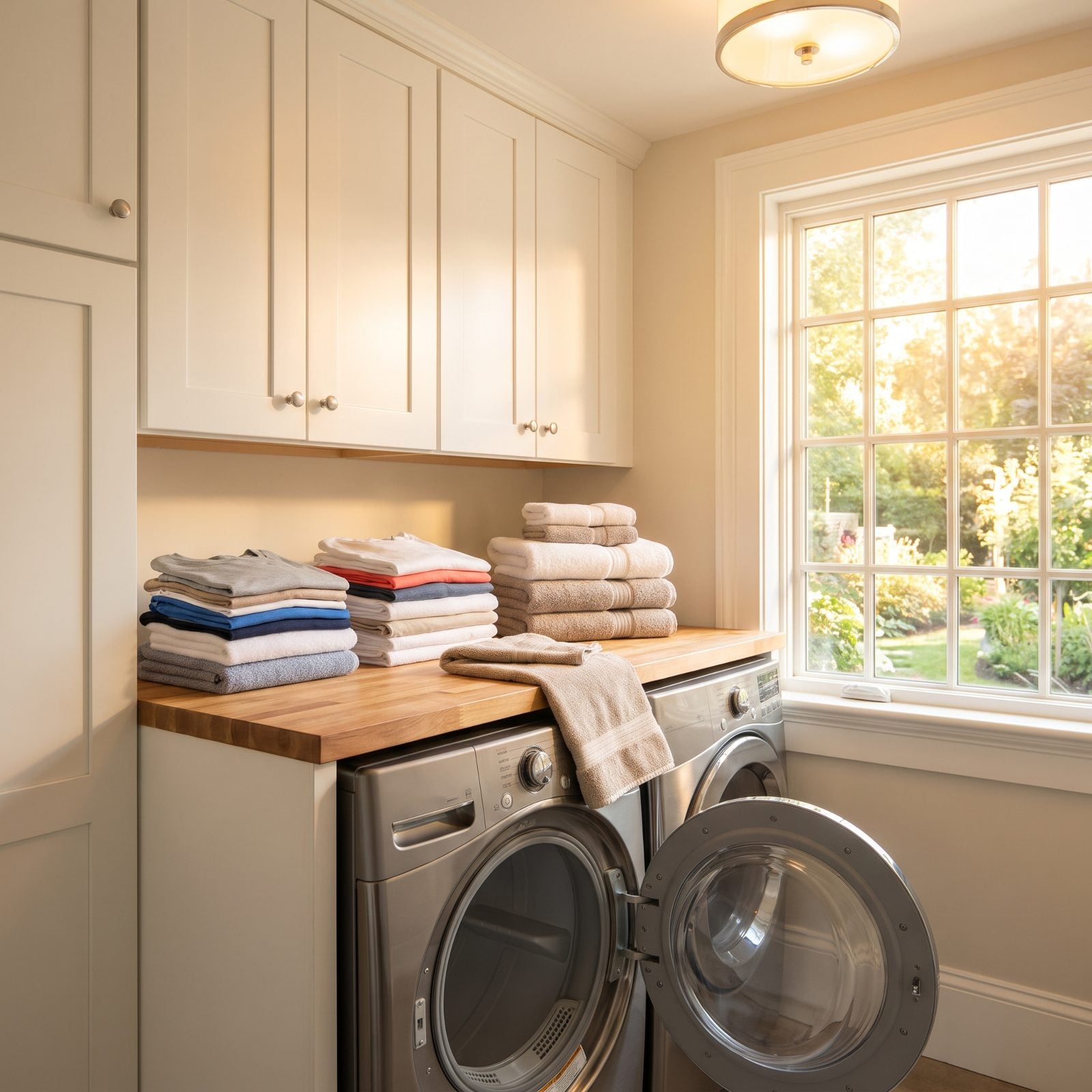
The dryer buzzes and you’re already there. Clean clothes don’t get dumped on the bed to deal with later, and they definitely don’t live in the basket for a week. They get folded while they’re still warm, which also happens to be when wrinkles are easiest to smooth out.
Growing up, an unfolded load had nowhere to go. It sat on the only bed, the only couch, or in the only clear path through the room, and somebody always had to move it to sit down. You learned that laundry left alone multiplies. A pile of clean clothes is still a pile, and in a small house, piles had a way of taking over.
19. Refuse to Let a Chair Become a Clothes Dump
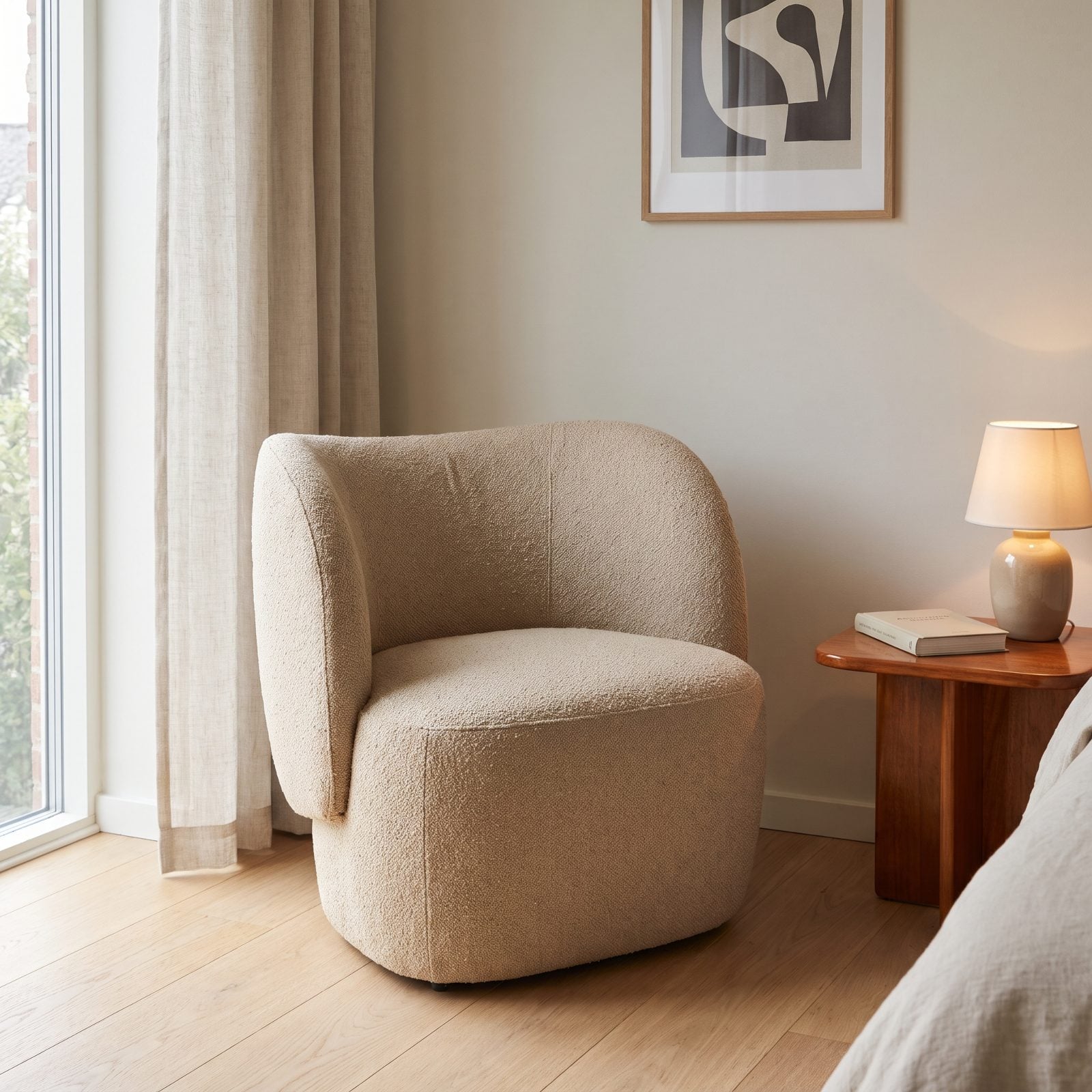
You know the chair. Every house has one, and it exists to catch the shirt you wore for twenty minutes and the jeans that aren’t dirty yet. Growing up in a small place, there was no room for a piece of furniture that only pretended to be a chair.
So the rule got burned in early. Clothes go back on the hook, in the hamper, or in the drawer — never on the chair. The chair is for sitting, full stop.
It sounds rigid until you’ve lived it. A clear chair is the difference between a room that reads calm and a room that reads like a slow surrender, because the second something lands there, three more things follow within a day. That’s just physics.
Here’s what nobody warns you about: the habit outlasts the small room by decades. People move into places with four spare chairs and still can’t bring themselves to let one become a dump. Call it stubborn. It’s really a childhood lesson that never clocked out.
18. Make the Guest Room Earn Its Keep With a Second Job
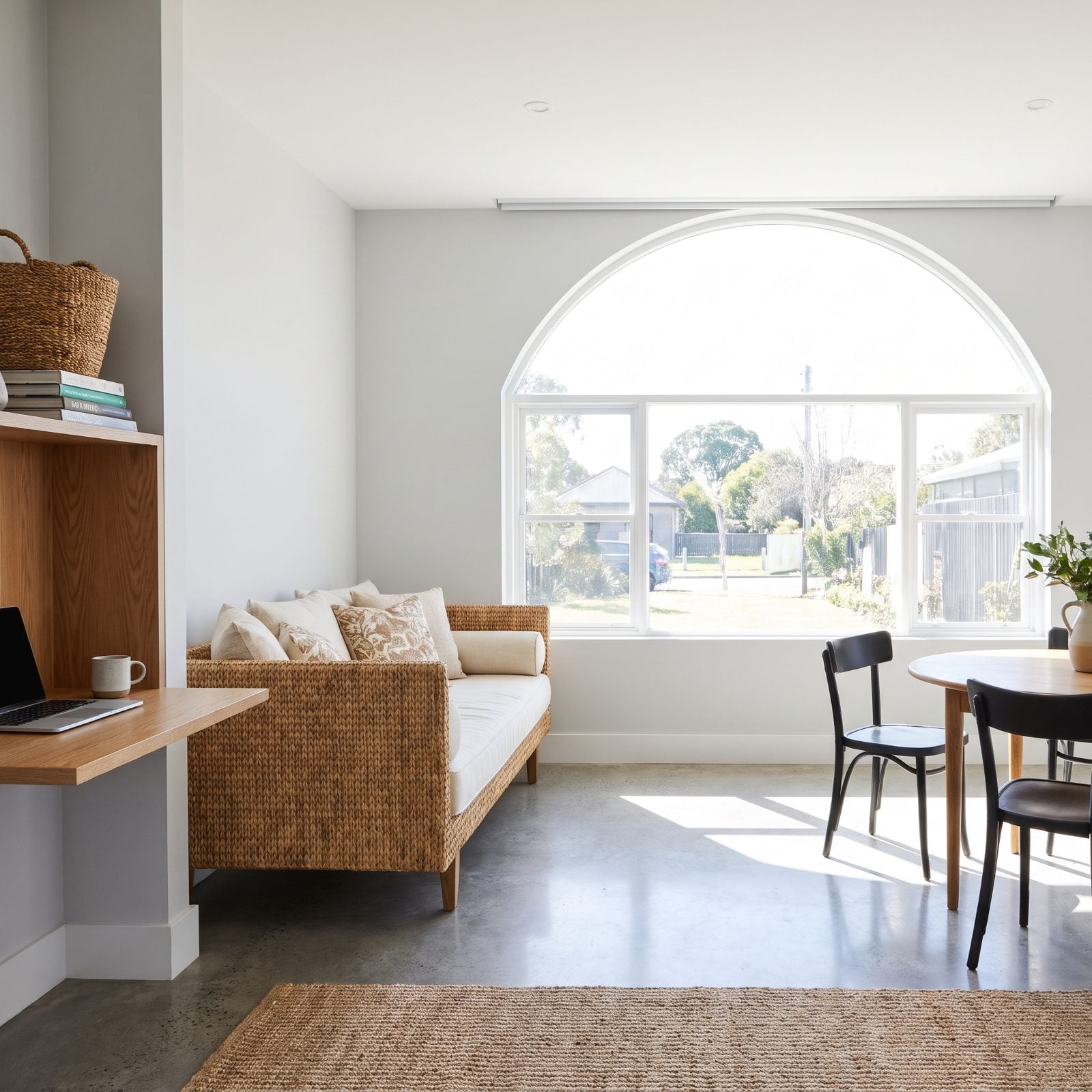
Grow up in a house where no room gets to do just one thing, and it never quite leaves you. The spare room was never only a spare room — it held the sewing machine, the ironing board, the fold-out bed, and a drawer of wrapping paper all at once.
That habit sticks. Even in a bigger place, you’ll catch yourself turning a guest room into a part-time office, a reading corner, a landing pad for folded laundry. A daybed instead of a full bed, a desk that disappears against the wall, and suddenly the room sleeps visitors twice a year while working hard the other three hundred and sixty-three days.
What Our Readers Say
- Asked where they would put a home office, Home Stratosphere readers split almost evenly between a tucked-in desk nook and a dedicated room, 46% to 45%, a true coin toss.
From Home Stratosphere reader polls and votes.
17. Let the Dining Table Pull Double, Triple, Quadruple Duty
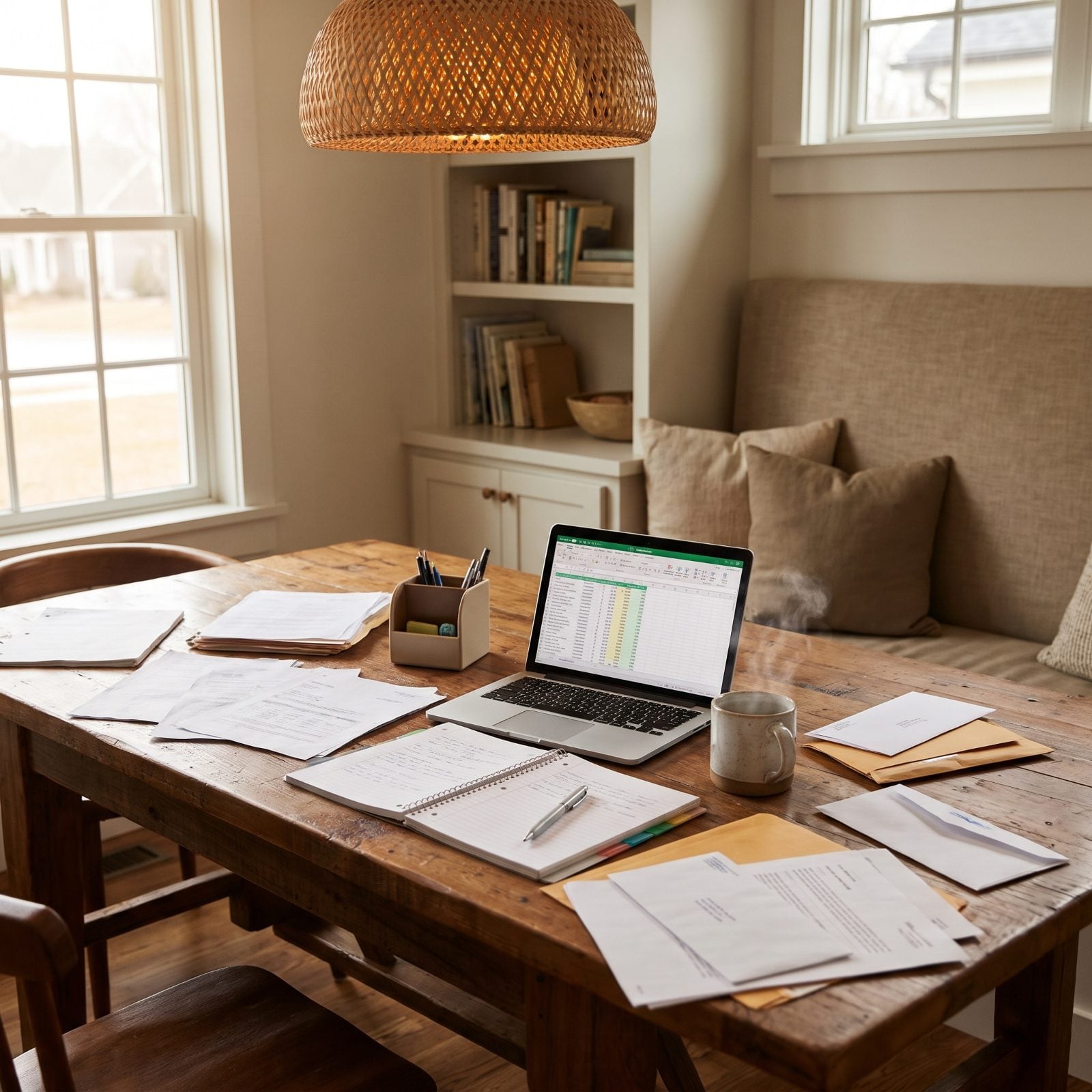
In a small house, the dining table was the office, the homework desk, the craft station, the bill-paying command center, and, briefly, a place to eat. It cleared off at six and filled back up by seven-thirty.
You carry that rhythm forever. The table never stays set for dinner alone — it gathers tax paperwork in April, puzzle pieces in December, a laptop most weeknights. Some people find that chaotic. You find a bare dining table that only ever hosts dinner slightly suspicious, like a tool nobody uses.
16. Never, Ever Block a Window
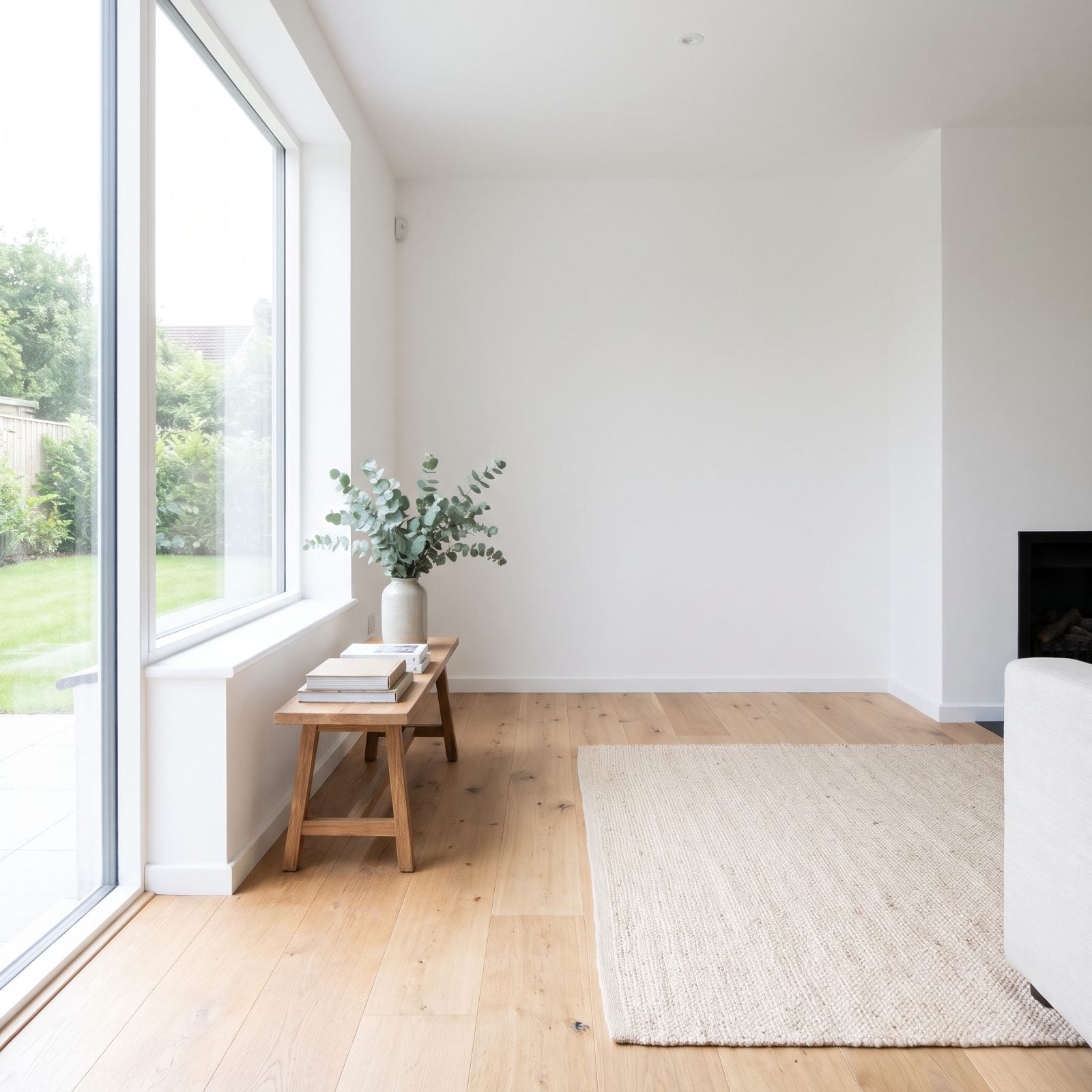
That floor-to-ceiling flood of daylight does all the heavy lifting here, and it only works because nothing stands in its way. In a small childhood home a window was too precious to cover with a bookshelf or a tall dresser. Light was the one free thing that made the place feel bigger.
So you learned the rule without anyone teaching it: keep furniture low, keep the glass clear, let the sun reach the back wall. Decades later you’ll rearrange a whole room before you let a sofa back cut across a window.
15. Hang the Mirror Where It Steals the Light
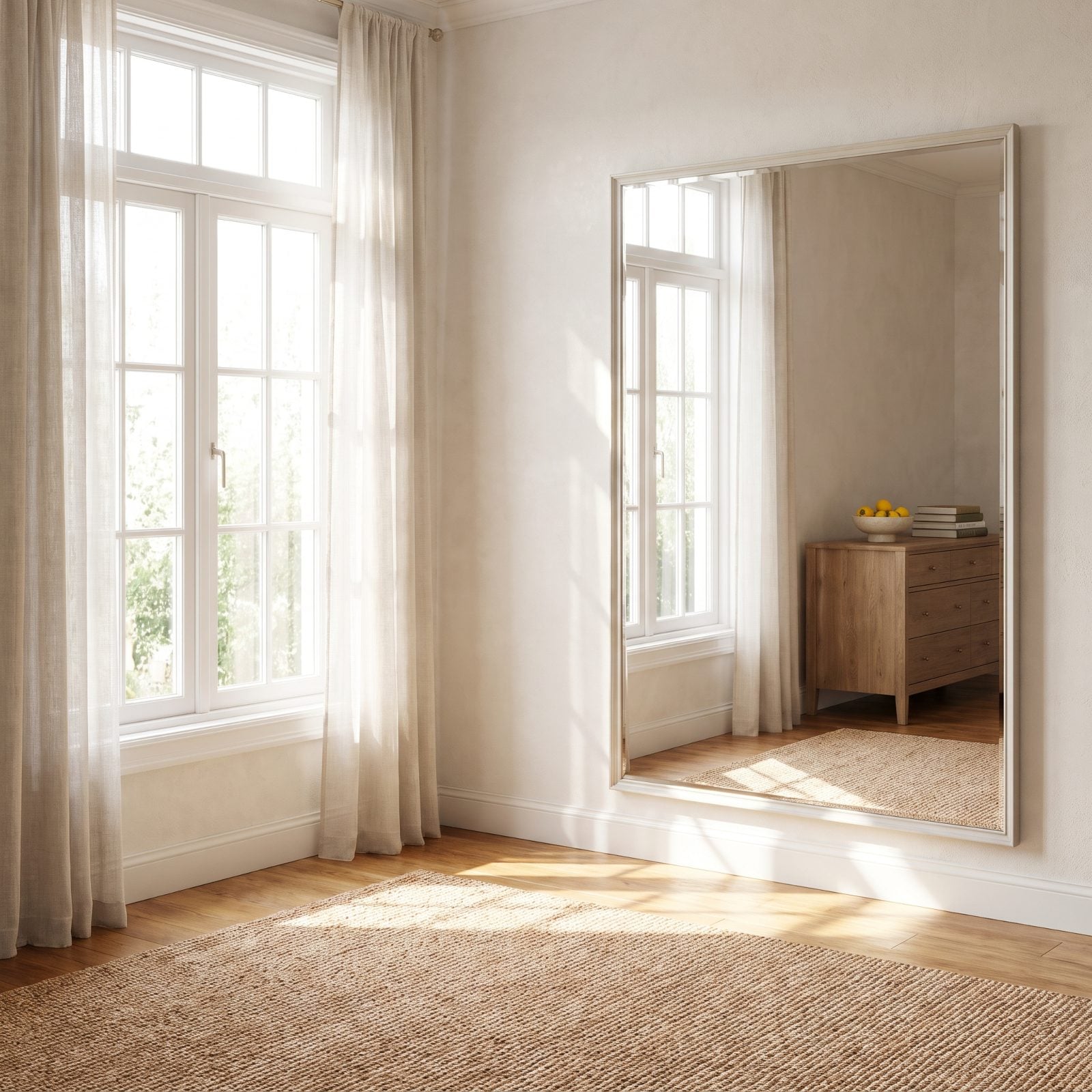
The oldest trick in a cramped house, and still the best one. A mirror hung right beside the window doesn’t just show your face on the way out — it grabs whatever daylight exists and flings it into the dark corner that never got any.
Grow up with that and you’ll place mirrors by instinct for the rest of your life. Not where they look pretty. Where they work. You walk into a dim room and your eyes go straight to the stretch of wall beside the window, already planning.
14. Keep the Counters and Tabletops Almost Bare
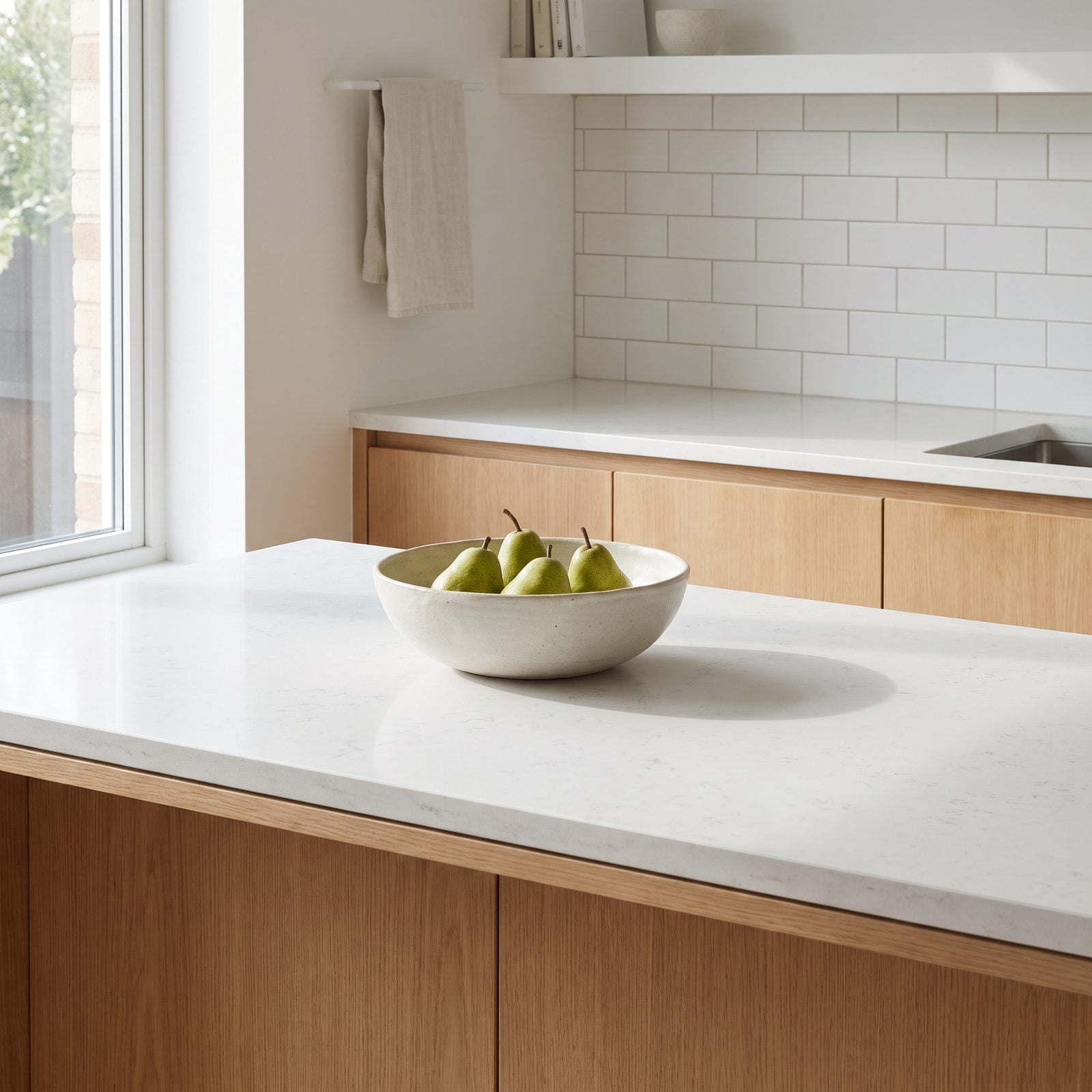
A clear counter in a small kitchen was never about looking minimal. It was survival. You needed somewhere to actually set the cutting board, so the toaster, the mail, and the fruit bowl all fought a daily battle for the same eighteen inches.
The winner was emptiness. You learned to put things away the second you finished, and that reflex never fades — a sprawl of appliances across the counter makes you itch. There’s a reason this kind of bright kitchen decor reads as calm: the surfaces breathe.
In our reader polls, a roll-up dish rack that tucks away was the top pick at 43%, ahead of a countertop rack at 32%.
13. Rotate the Decorations Instead of Showing Them All
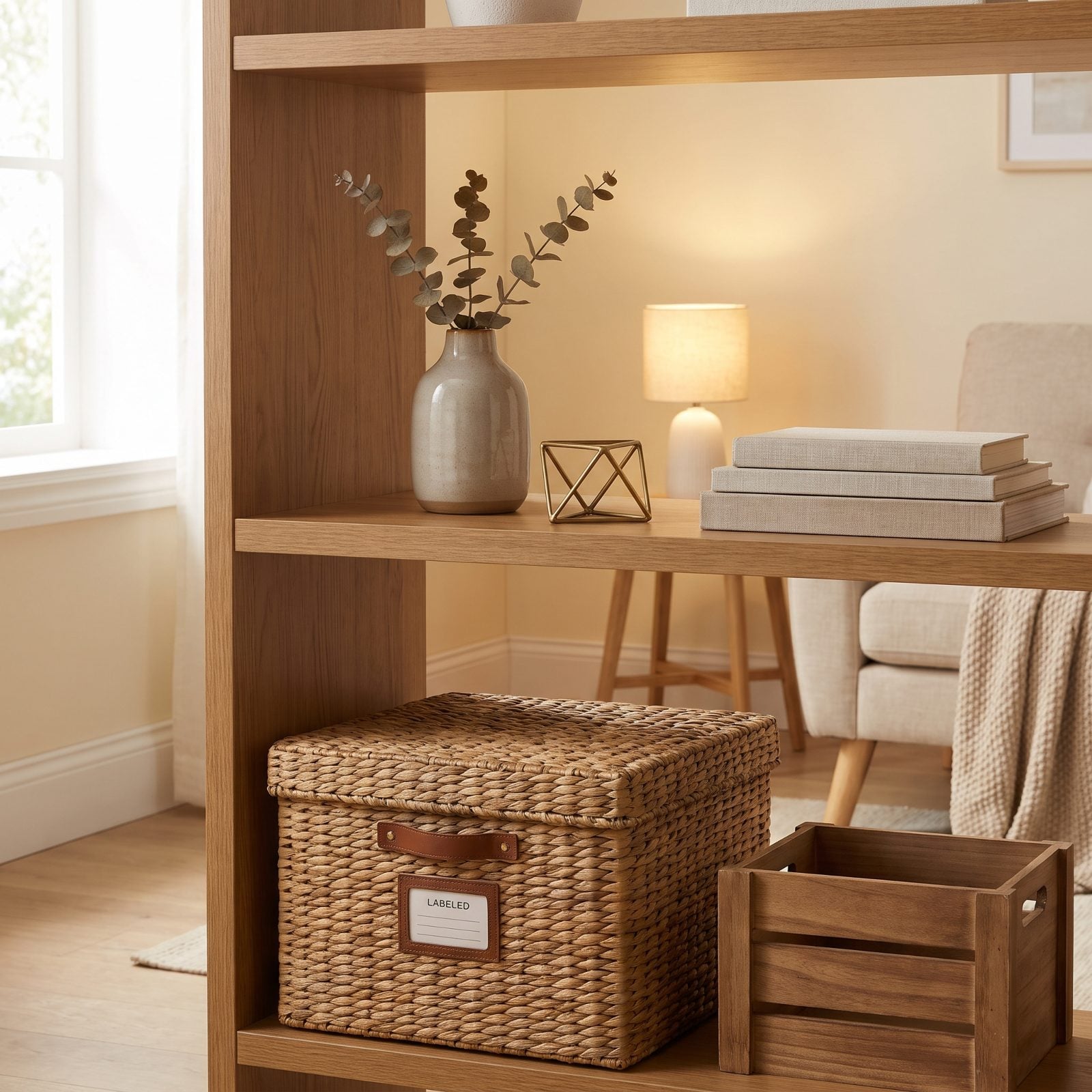
When there’s no room to display everything at once, you learn to curate by necessity. The shelf held a handful of pieces at a time. The rest waited in a box, and every season or so a few came out and a few went back in.
It turns out to be the smartest decorating habit nobody chooses on purpose. Rotating keeps a room from feeling crowded, and it makes each object feel noticed again when it reappears. The holiday figurines, the vacation pottery, the kid’s artwork — everybody gets a turn, and nobody gets lost in the pile.
12. Live by the One-In, One-Out Rule
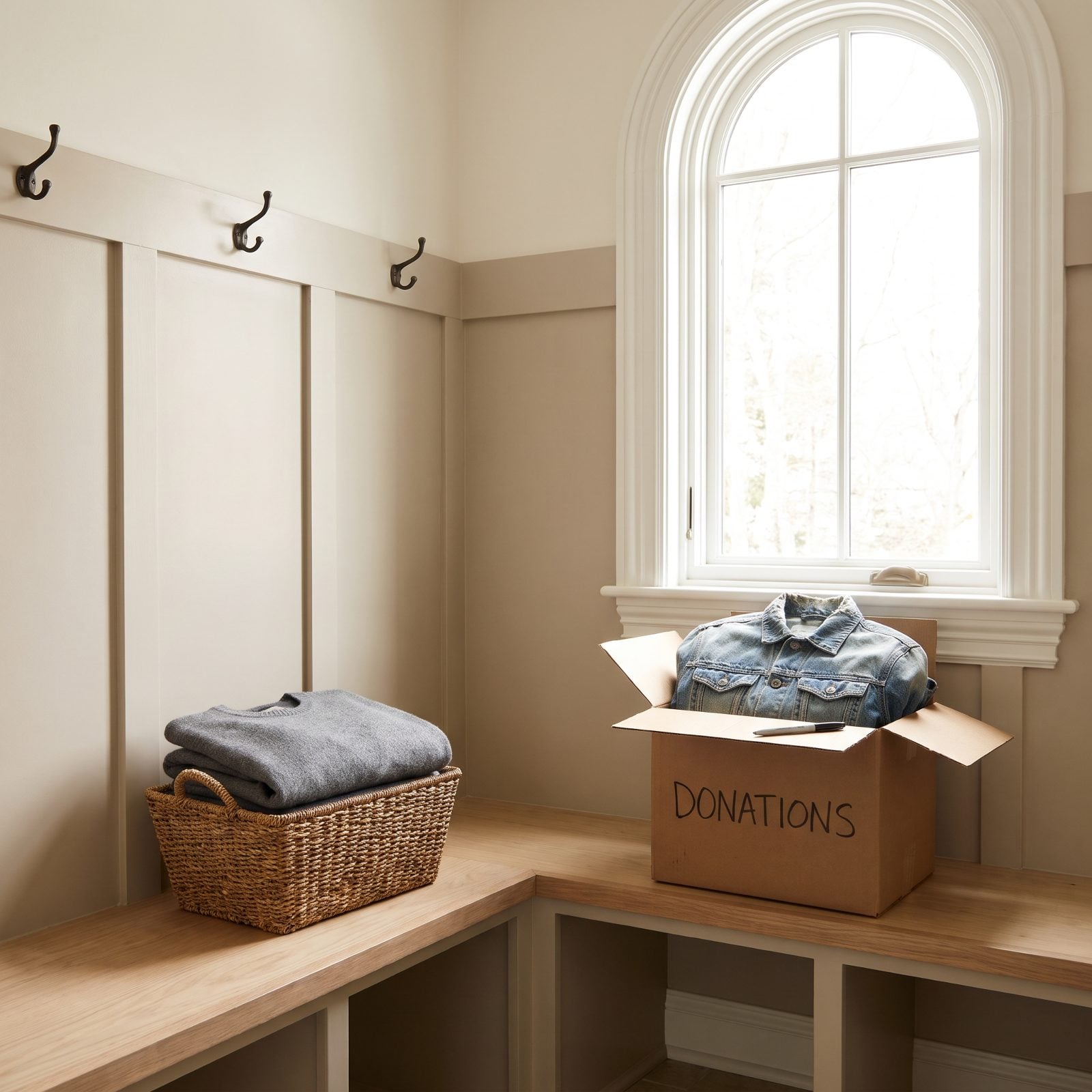
It can take years to understand why this one gets drilled in. In a small house every new thing displaced an old thing, because the shelves and drawers were already full. Something bought meant something gone.
That math stays with you. Buy a sweater, donate a sweater. New pan in, tired pan out. It feels ruthless to people raised with attics and garages, but it’s the only reason a space stays livable — the storage never grows, so the stuff can’t either.
The closet never got bigger. The clothes just learned to keep their numbers honest.
11. Ask Where It Will Live Before You Buy It
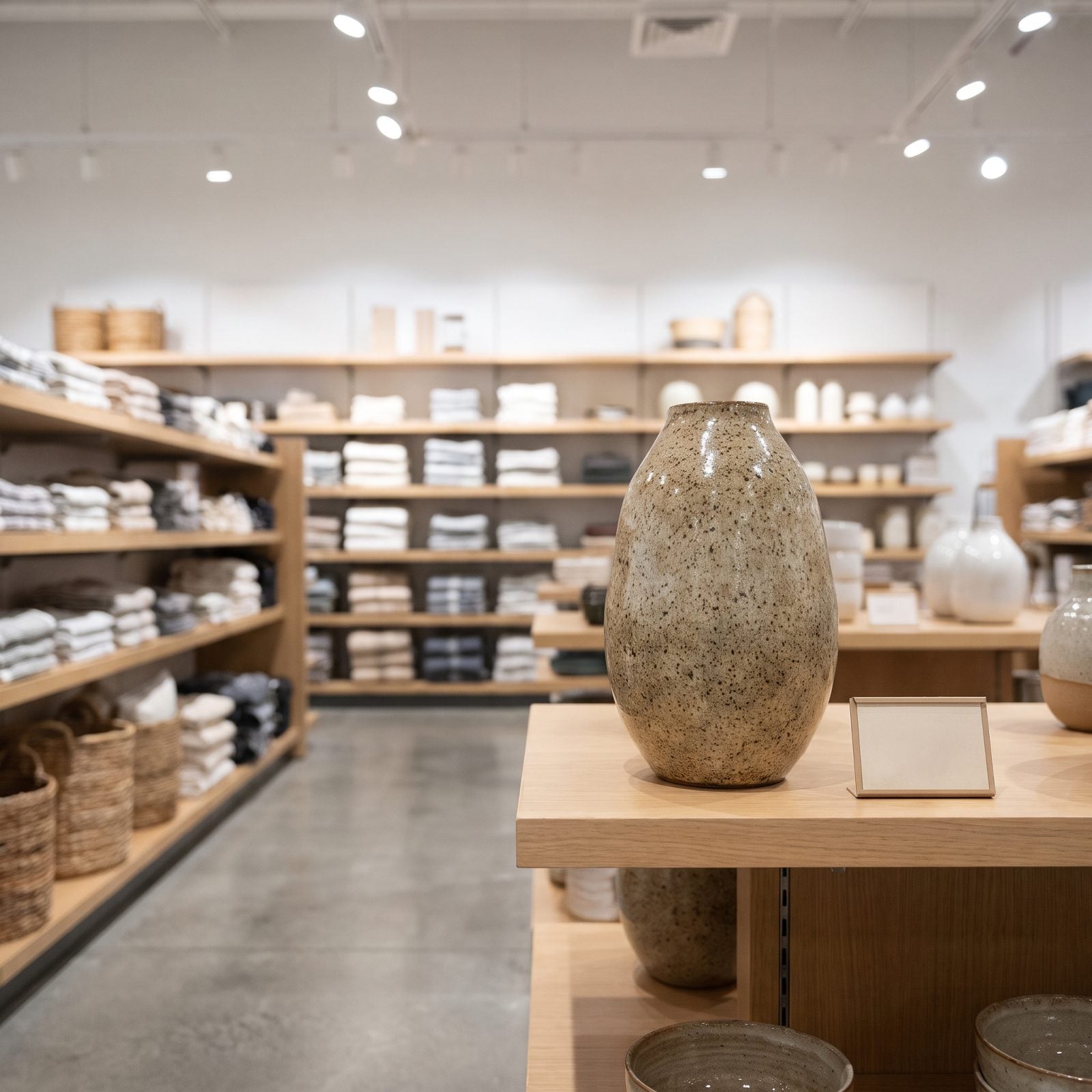
Before anything came home, there was a question: where does it go? Not vaguely. Exactly. Which shelf, which drawer, which corner. If you couldn’t name the spot, you didn’t buy it.
This habit saves more money than any budget ever could. Standing in a store, you run the floor plan in your head and realize the thing has nowhere to be, so it stays on the shelf. People who grew up with room to spare buy first and figure it out later. You never learned that luxury, and honestly, you’re glad.
10. Reset the Living Room Every Night Before Bed
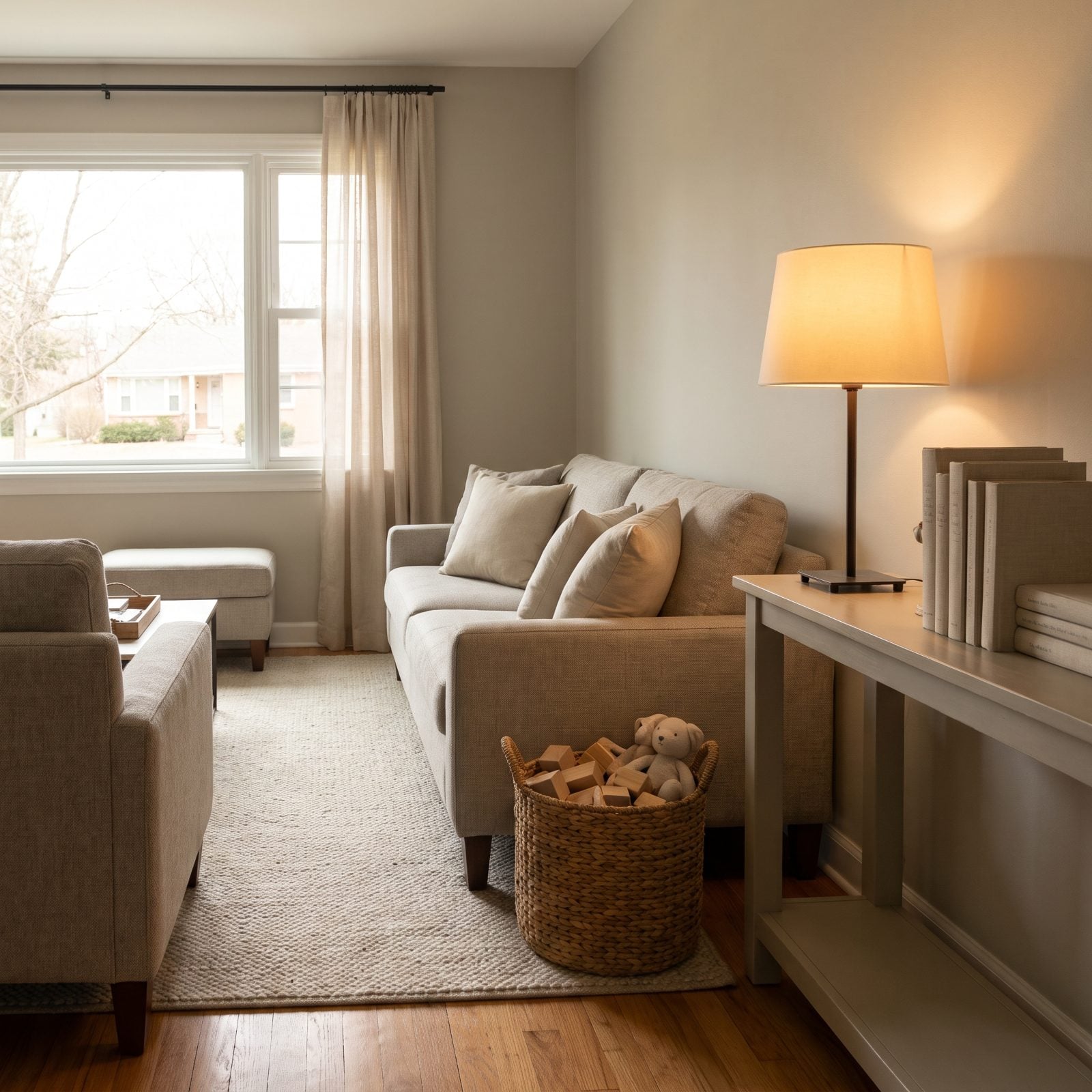
Last thing before bed, the main room got put back together. Cushions straightened, toys in the basket, cups to the sink, blanket folded. Ten minutes, every night, no exceptions.
In a small house there was nowhere to hide a mess, so it couldn’t be allowed to pile up. Morning you deserved a clean room, and the only person who could give it was last-night you.
You still do it. Waking up to a reset living space feels like a small gift from your past self, and skipping it feels like borrowing against tomorrow. The room’s size changed. The ritual didn’t.
9. Sort the Mail the Second It Walks Through the Door
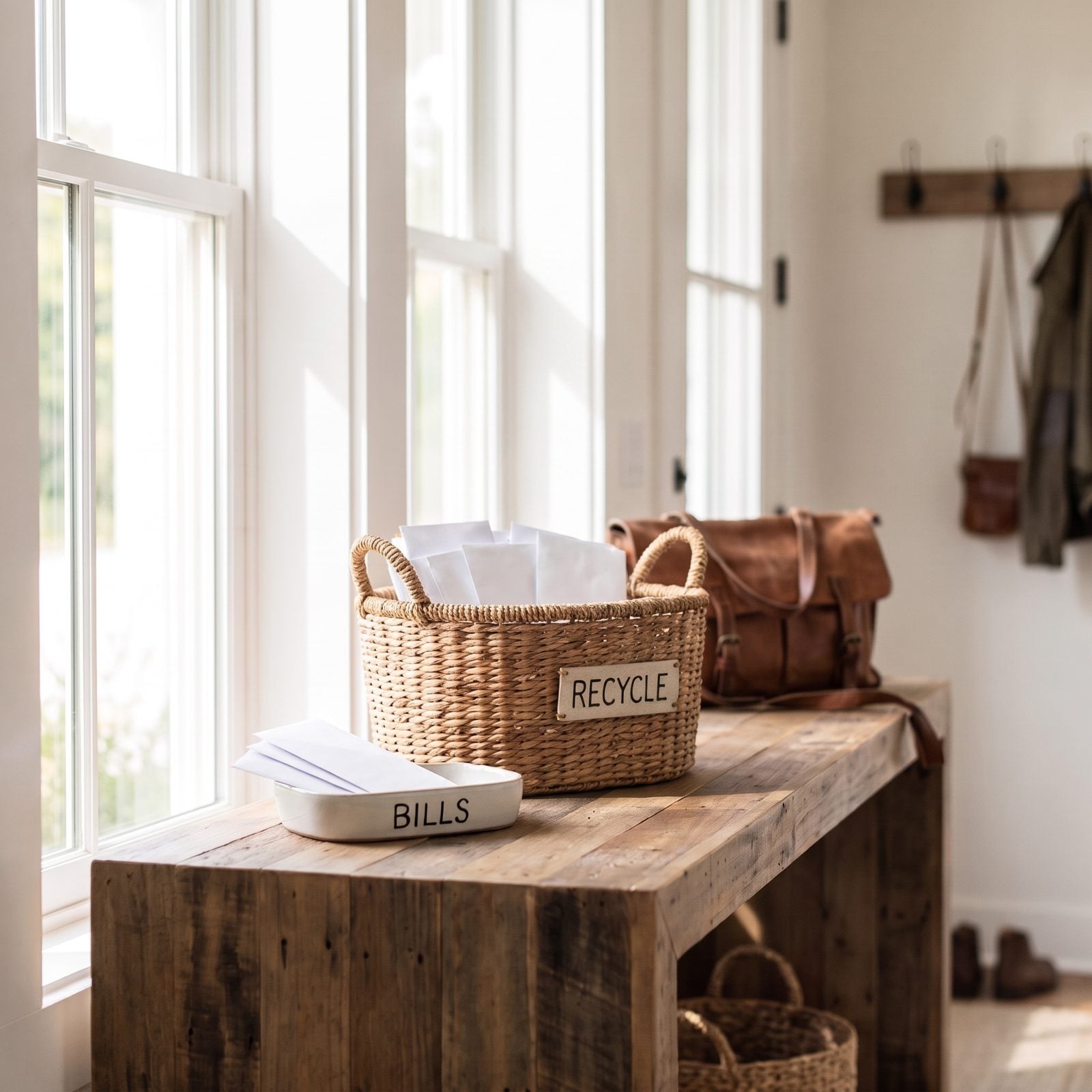
Mail never got to sit. It came in the door and got handled on the spot — junk straight to the bin, bills to one place, the rest sorted or tossed. A pile of paper on the counter was the first sign a small house was losing the war.
You still can’t let an envelope linger. There’s a spot by the door, and the sorting happens before your coat is even off. It takes under two minutes and spares you the drift of paper that swallows every flat surface in a home. Small-house kids know the truth: that pile never shrinks on its own, so you never let it start.
8. Flatten Every Delivery Box the Second It’s Empty
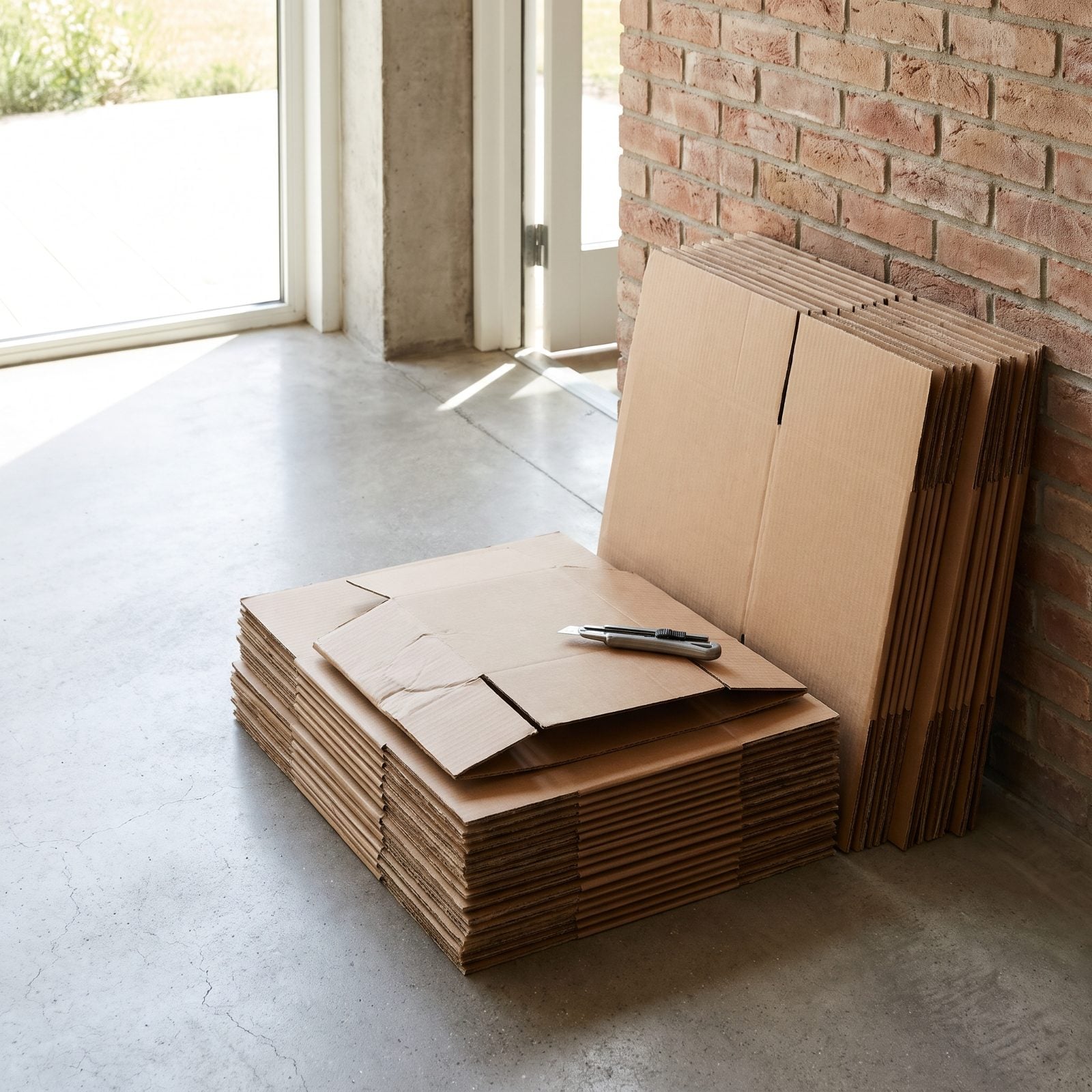
You never let a box sit. The courier’s barely rounded the corner before it’s slit open, emptied, and pressed flat against the wall by the recycling. That reflex came from a house where one unbroken box could swallow a whole walkway for a week.
It stays with you because it works. A flattened box takes up a sliver of the room a puffed-up one does — this is less about tidiness than about refusing to let cardboard win.
7. Finish One Bottle Before You Crack Open Its Replacement

Two open bottles of the same thing on a counter read as a small failure to you. One gets finished to the last stubborn drop before the backup sitting right beside it ever loses its cap. The spare can wait on the counter, sealed. No three half-empty conditioners jostling for the same corner.
Small childhood bathrooms taught this one hard, because there wasn’t room for a bottle and its understudy to both be open. So you emptied things completely, and the backup stayed sealed until it earned its turn.
6. Say No to Any Gadget That Does Exactly One Thing
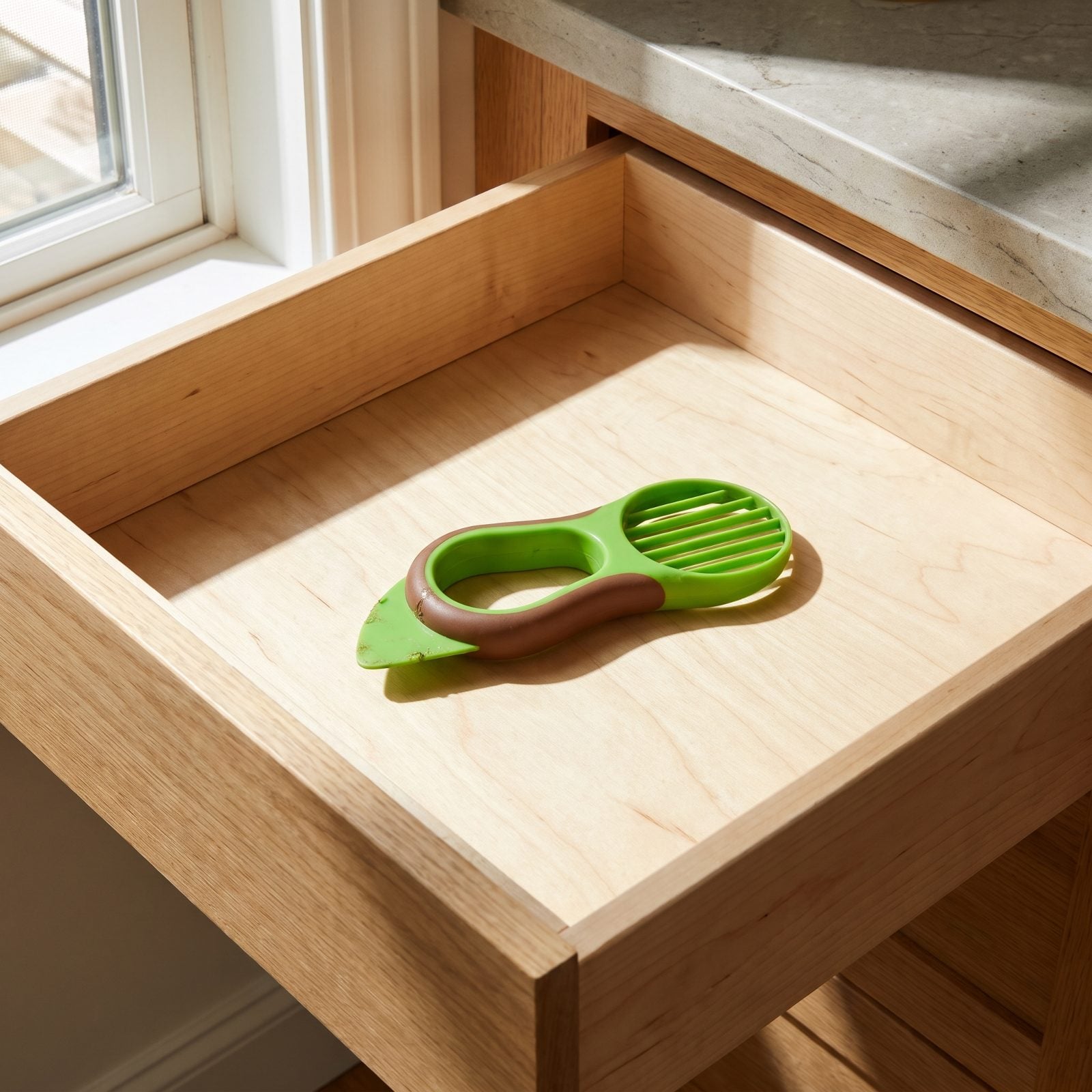
The avocado slicer. The egg cuber. That electric quesadilla press that lived in a cabinet it never fully left. You walk past all of it, because one childhood kitchen with maybe nine inches of usable counter taught you a single, unbending rule: if a thing only does one job, it doesn’t get a home.
A good knife and a good pan handle most of what those gadgets promised anyway. The appeal of bright kitchen decor has less to do with buying more and more to do with keeping the counters clear enough to actually cook.
5. Only Buy Cookware That Nests and Stacks
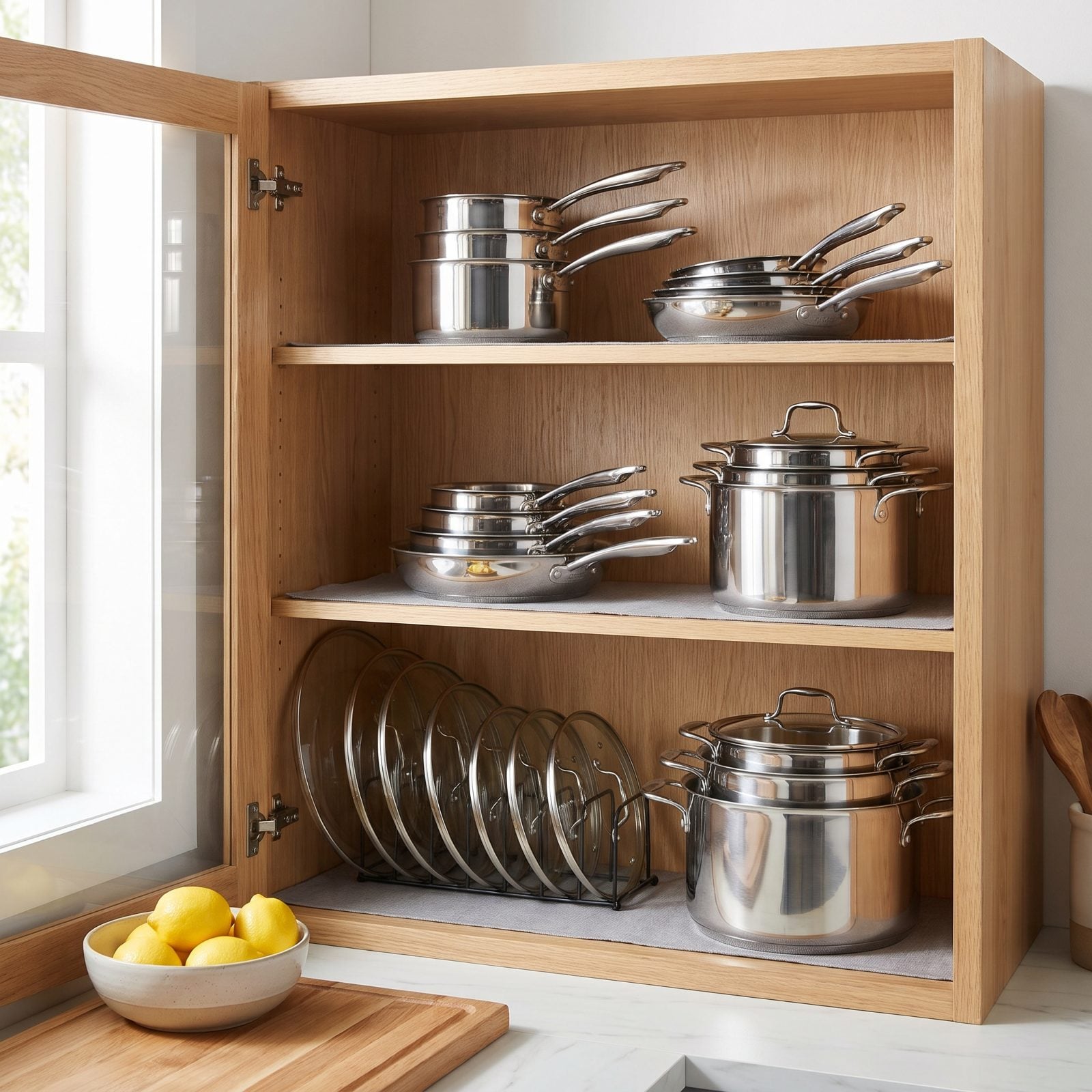
Mismatched pots that refuse to stack make you twitch. You buy sets that nest, lids that rack upright, handles that don’t fight each other in the cabinet. A tower of cookware collapsing into one neat column reads as deeply correct to you, and you know exactly why.
In a tight kitchen, a pot that only stores flat on its own is a pot that costs you a whole shelf. Nesting cookware was never a preference. It was the price of entry.
4. Store Trays and Cutting Boards Standing on Their Edge
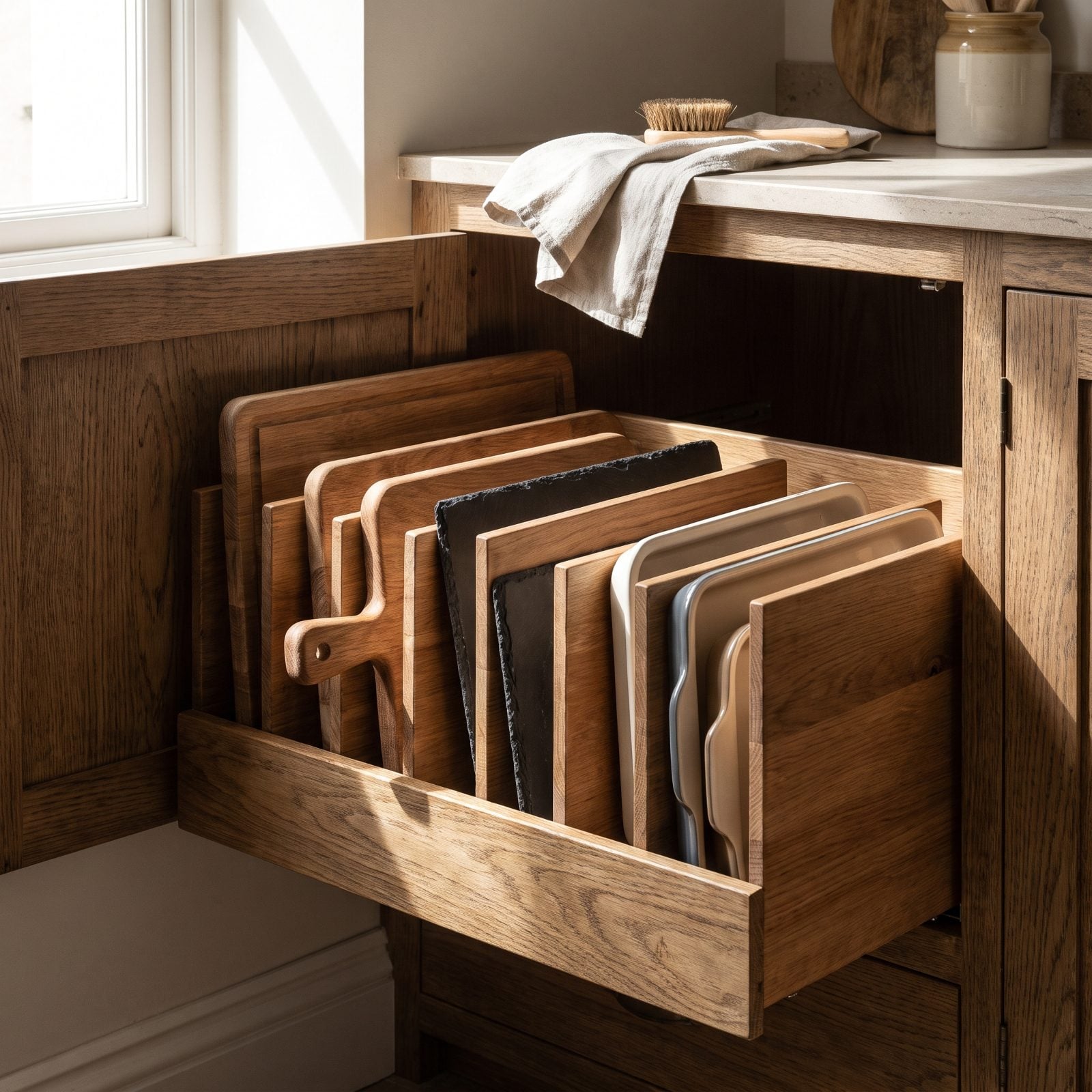
Flat-stacked trays are a trap. Pull the one on the bottom and the whole pile comes down with a clatter that wakes the house. So you store everything vertical — boards, sheet pans, the muffin tin, all standing on their edges like files in a drawer, each one grab-able without disturbing its neighbors.
3. Wedge a Rolling Cart Into the Gap Nobody Else Notices
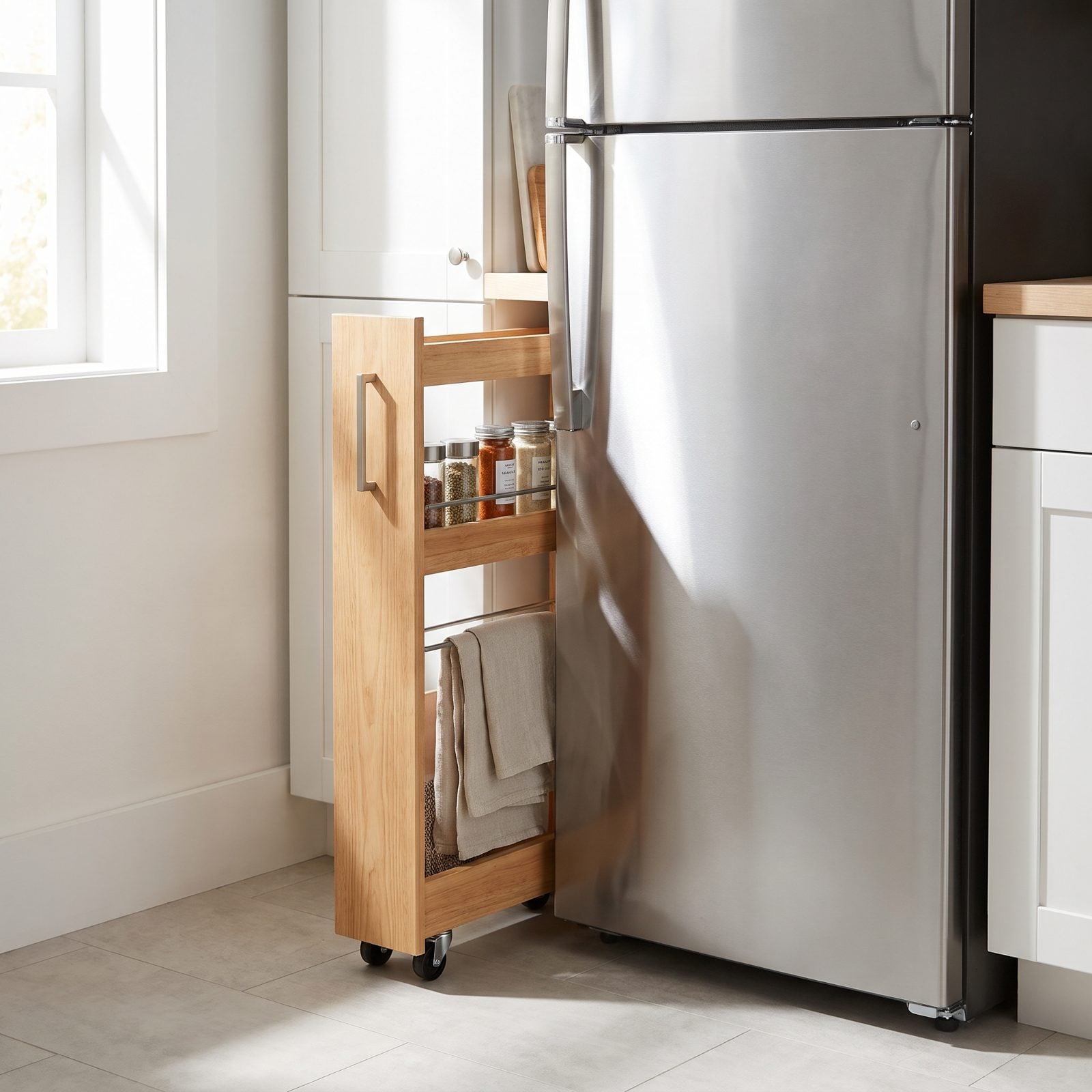
You see a four-inch gap beside the fridge and your brain immediately measures it for a rolling cart. Where other people see dead space, you see storage waiting to be claimed. The cart rolls out when you need it and tucks back flush when you don’t.
This instinct scatters into every room eventually — the gap beside the washer, the sliver next to a desk in a home office inspiration setup. A narrow home trains you to hunt for scraps of unclaimed space, and the habit never really switches off.
2. Keep Only This Season’s Coats by the Door
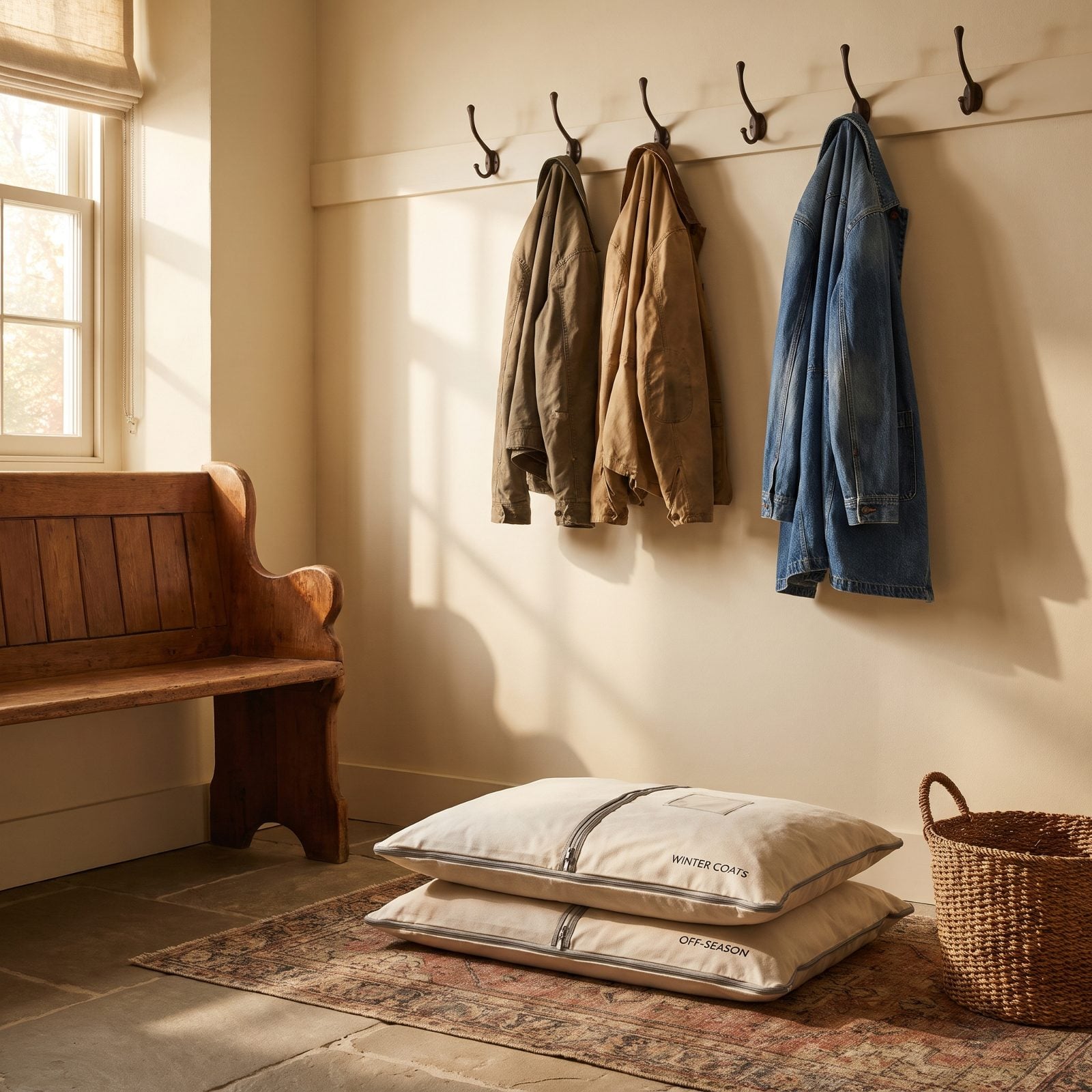
The hooks by your door never hold more than the current season can justify. Come spring, the parkas get bagged and stored, and only the light stuff earns a spot within arm’s reach of the exit. A coat rack crammed with twelve jackets for all weathers makes you faintly anxious.
Pure small-entryway training, this one. When the whole front hall was the width of a closet, you learned to rotate. Only what you’ll actually wear this month lives where you can reach it. Everything else waits its turn, politely, somewhere else.
1. Never Go to Bed With Dishes in the Sink
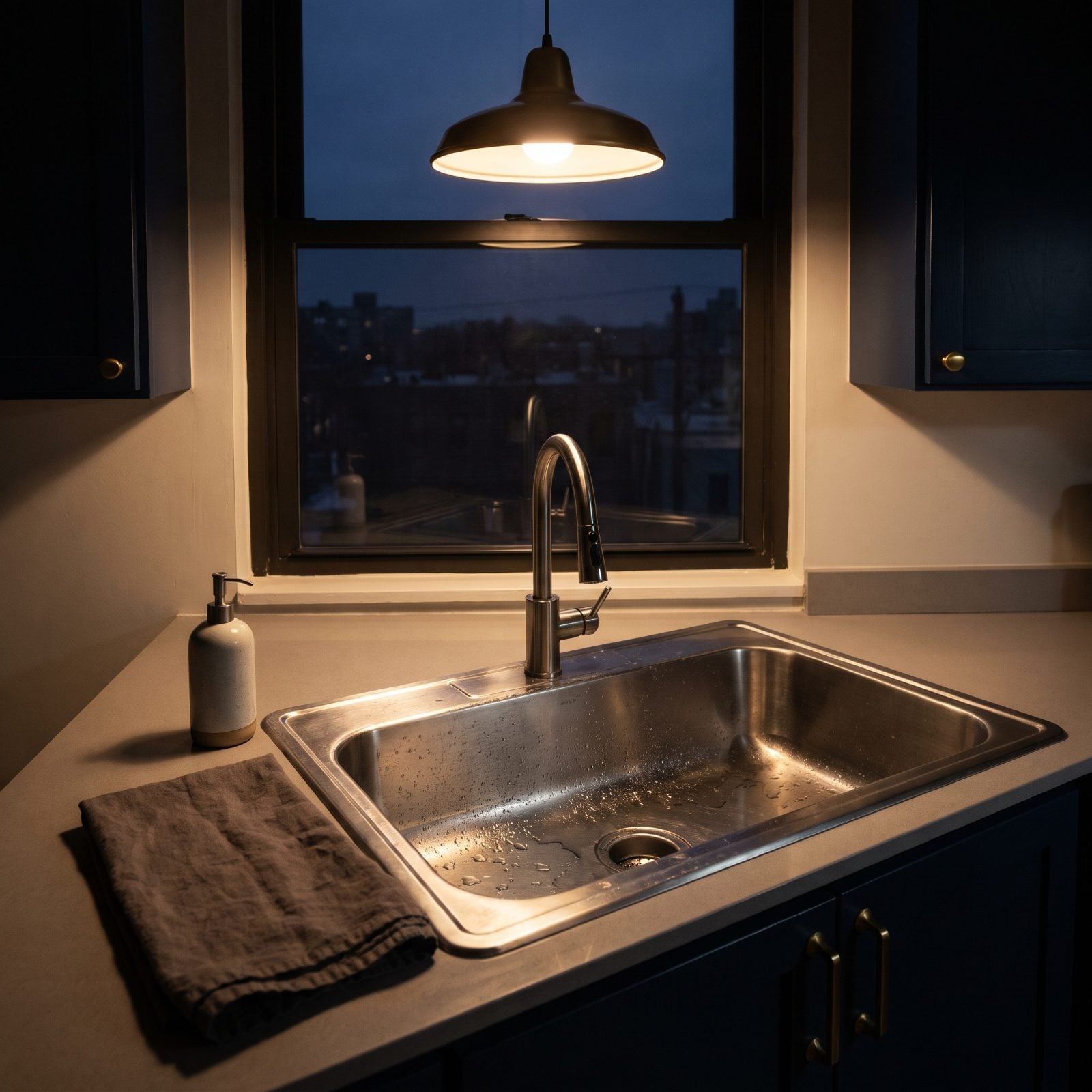
A sink full of dishes is the last thing you’ll let yourself see before bed. Doesn’t matter how late it is. The plates get washed or loaded, the basin gets wiped, the towel gets folded over the faucet — then, and only then, the lights go off.
This one runs deeper than the others. In a small home, a messy sink was the whole kitchen’s mess, visible from the couch, the table, everywhere. Clearing it was how you told yourself the day was properly done.
An empty sink at night isn’t about cleanliness. It’s a quiet message to tomorrow’s you that someone had your back.