
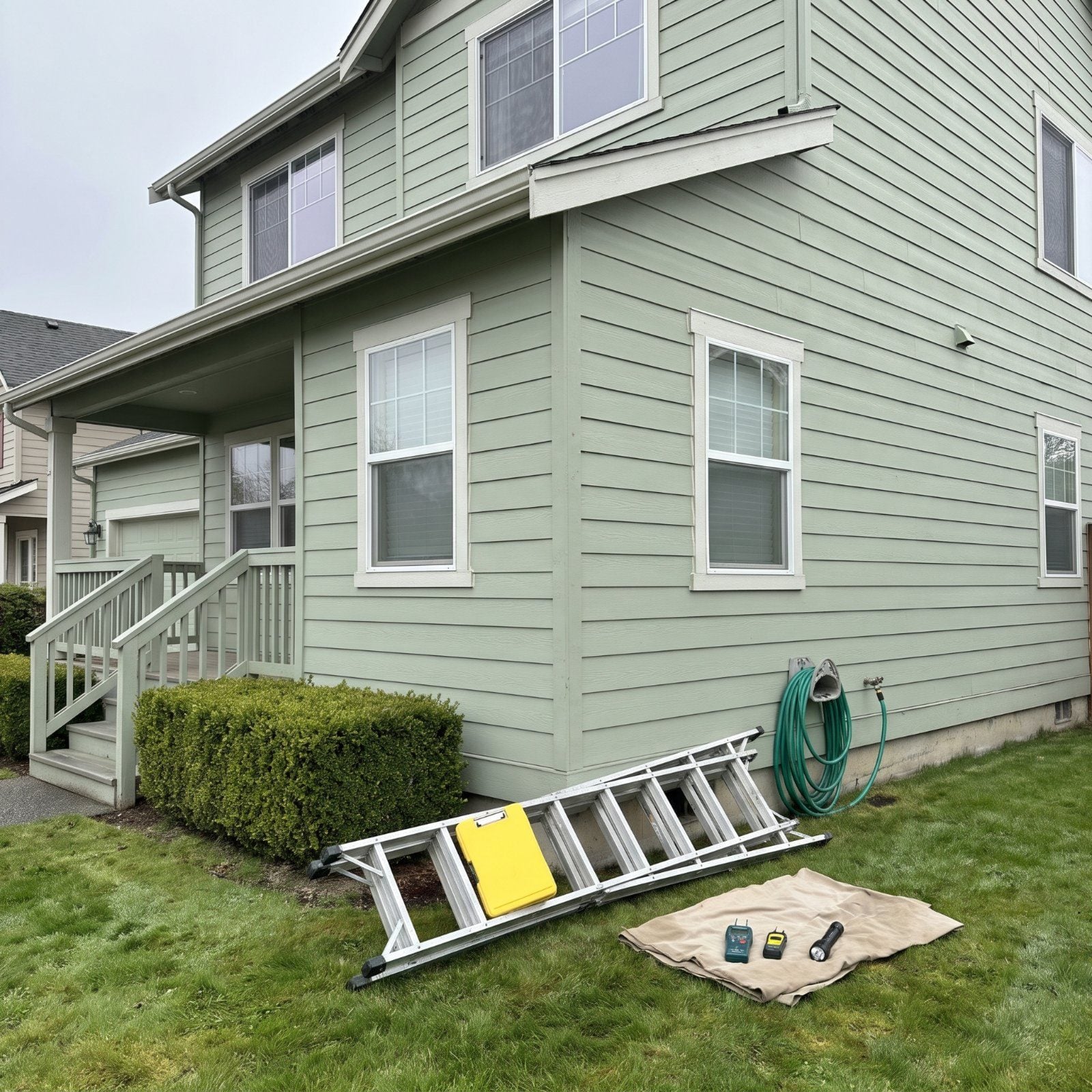
You think the walk-around is about your house. It isn’t. A good painter reads your relationship with maintenance the way a mechanic reads a neglected timing belt, catching the thing you stopped seeing years ago. The caulk line you walked past four hundred times. The corner that goes soft in August. That shrub you let win. None of it is an accident, and none of it is really about paint — it’s about what you decided could wait, and for how long. The estimate they hand you is just the last page of a story they already read off your siding. So here’s what a trained eye catches on that slow lap around your house, and what each thing says about the person who lives inside it. You might recognize yourself before you recognize the damage.
38. Why a Painter Checks Your Siding With a Fingertip Before Saying a Word About Price
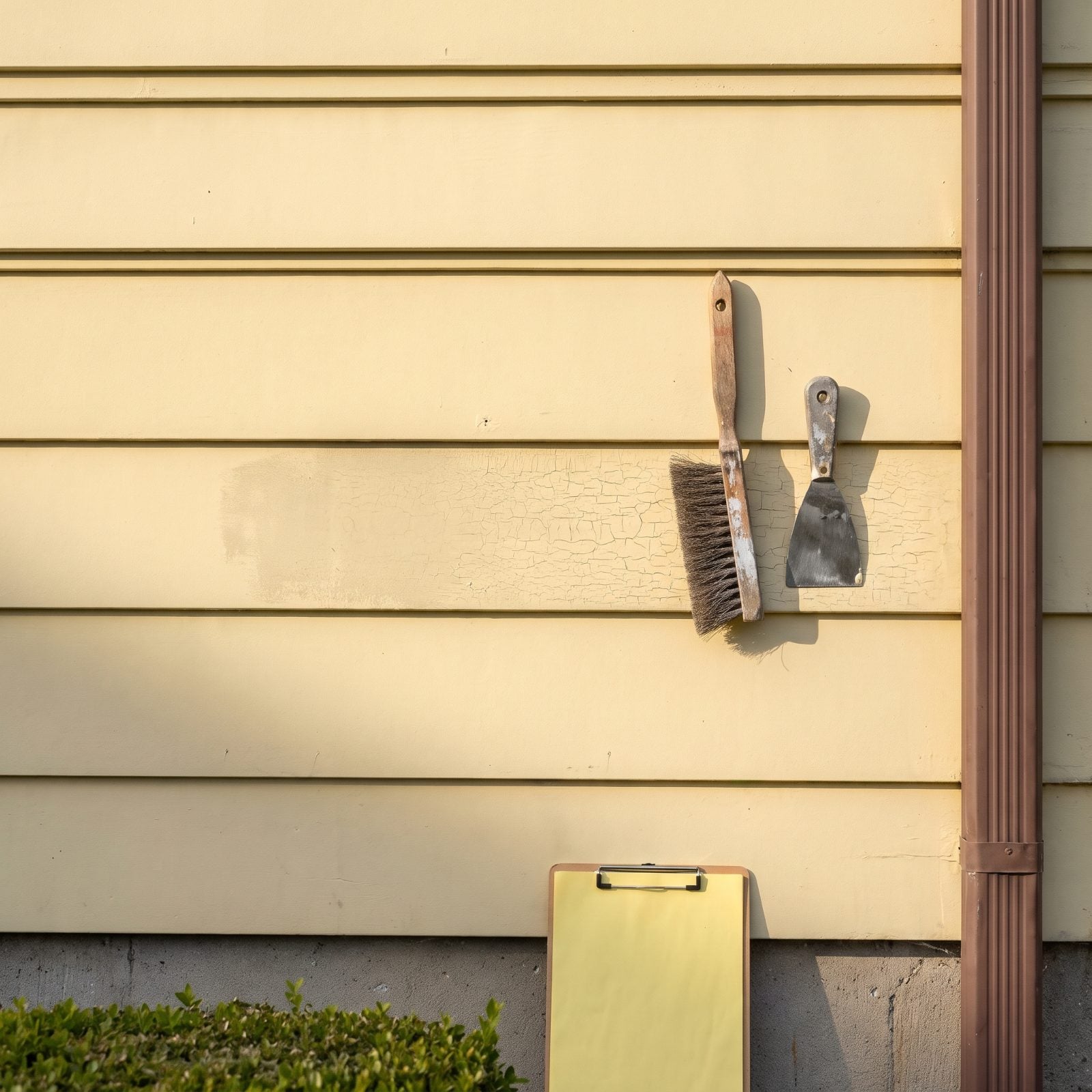
Before a number ever gets quoted, a painter drags a fingertip across your siding. They’re feeling for grit. A surface that comes back clean and firm is a different job than one that leaves a soft, powdery drag on the skin, and that one touch tells them whether the old coating is still bonded or quietly letting go.
In order to come up with the very specific design ideas, we create most designs with the assistance of state-of-the-art AI interior design software. Also, assume links that take you off the site are affiliate links such as links to Amazon. this means we may earn a commission if you buy something.
This is habituation reading backwards. You stopped feeling your own house years ago, which is exactly why the painter — feeling it for the first time — catches what you filed under normal. A fingertip is faster than any speech you’ll give about how the place has held up fine. The siding answers the question before your mouth gets a chance to lie to both of you.
Three things that fingertip finds. A firm, slightly glossy surface means the film is intact and prep will be light. A matte, dusty drag means the binder is breaking down and a wash plus primer is coming. And a surface that flakes under light pressure? Someone — maybe you — painted over a problem instead of fixing it.
37. What the Edge Where Your Paint Is Peeling Tells a Painter About How Long You’ve Been Avoiding This
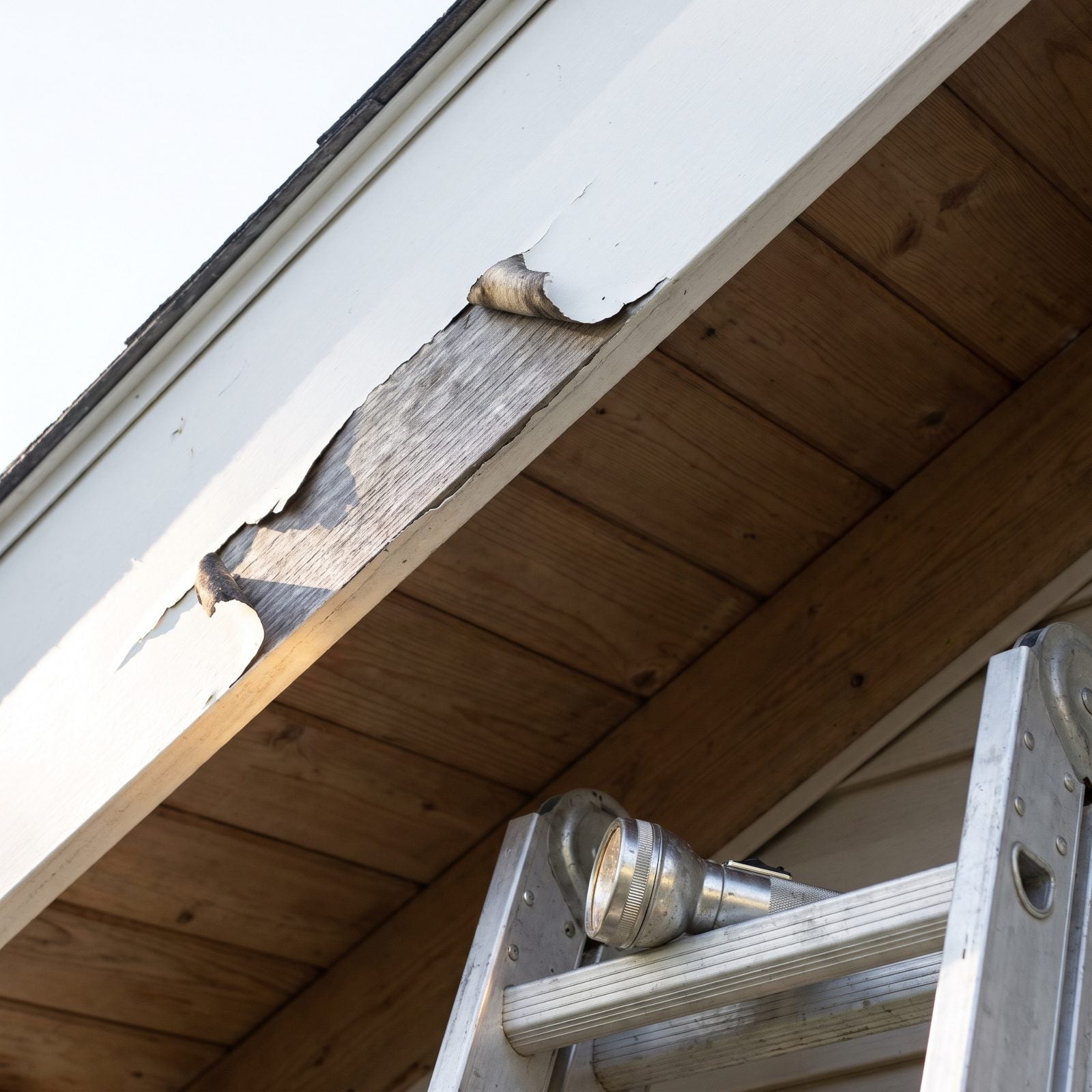
A painter never looks at the middle of a peel. They look at the edge. A clean, sharp edge where good paint meets bare wood is recent failure, while a rolled, cupped, dirt-darkened edge that’s been collecting grime in the crack is old. The weathering on that bare patch is a calendar.
And that calendar reads you. The longer bare wood sits exposed, the deeper the fibers soak up water, and the more it tells a painter about the exact month you decided to stop looking. Nobody peels a patch and leaves it on purpose. You just told yourself it was fine, and the edge quietly counted every season since.
A hairline curl that popped last spring is a quick scrape and spot-prime. A gray, fuzzed edge with checking in the exposed wood means the substrate started to fail, so you’re sanding down to something that’ll actually hold paint. And a peel that spreads in a fan shape, wider at the bottom, almost always means water is getting behind it from above — the paint is the symptom, not the patient.
The paint didn’t fail on a date. You chose the date, one “I’ll deal with it later” at a time.
36. The Chalky White Residue a Painter Rubs Off Your Wall, and What It Says About Your Patience
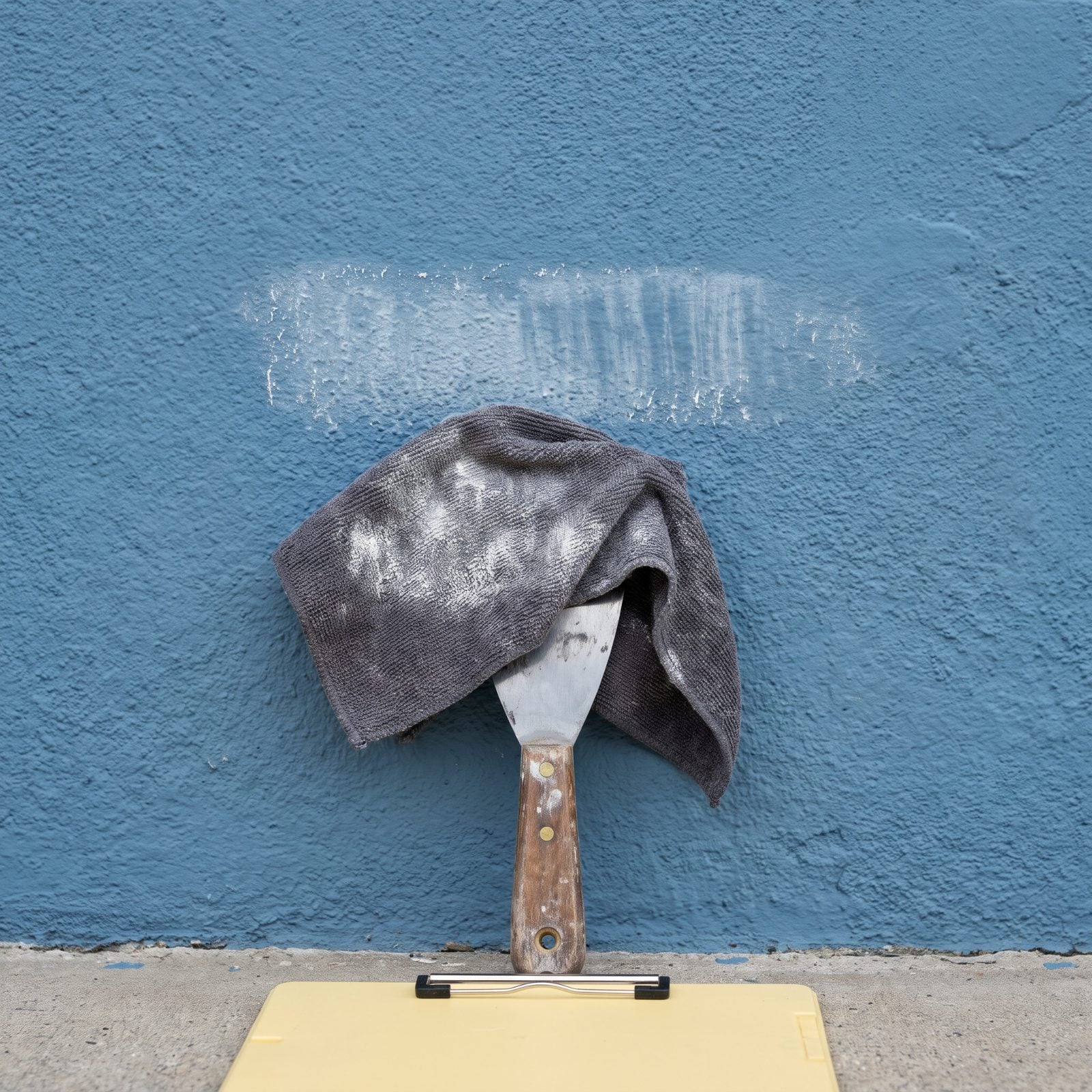
A painter wipes a dark rag flat across a sunny wall and turns it over. If it comes back dusted in chalky white, your old coating is oxidizing — the binder breaking down under years of UV, leaving loose pigment on the surface. The amount on that rag is a measurement of time, not dirt.
Chalking is slow and total. It doesn’t blister or dramatize. It just surrenders by degrees, which is why it survives on the walls of people who confuse no obvious problem with no problem. A chalked wall is the maintenance equivalent of a slow leak nobody hears, because it never once made a sound.
Light chalking that barely marks the rag means a good pressure wash will handle it and paint will stick. Heavy chalking that coats the rag means a bonding primer is non-negotiable, since new paint laid over loose powder is a handshake with a greased hand. And if the chalk is uneven — heavy on one elevation, light on another — a painter already knows which side faces the afternoon sun without checking a compass.
Explaining what that white powder actually is, one exterior painting contractor writes that “As the paint ages, the binder that holds pigment together begins to break down. Consequently, loose pigment forms a fine, powdery residue on the surface.”
35. What Your South-Facing Wall Reveals About You That the Shaded Side Never Will
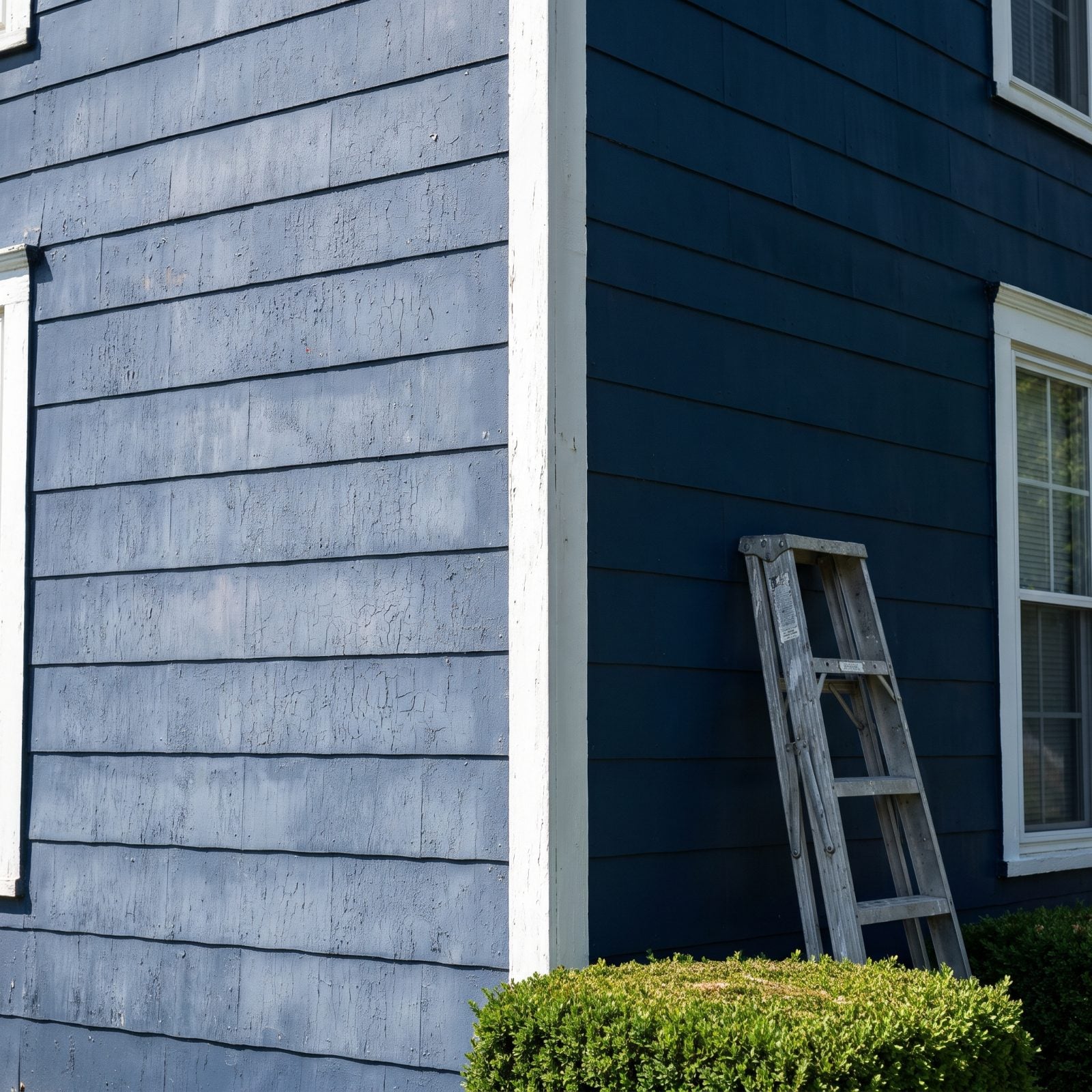
Walk a painter around the corner from the shaded side to the south face and watch their pace change. Same house, same original color, two different stories. The sunny wall is lighter, drier, finely checked, while the shaded wall still looks like the paint you remember buying. The difference between them is a weather log written in pigment.
This is the thing you can’t see because you never see your walls side by side. You see them one at a time, from inside your own assumptions. A painter sees them as a before-and-after shot of the exact same product, which tells them precisely how your climate attacks and where the next failure starts.
A south wall that’s just faded means UV did cosmetic work and you’ve got time. A south wall that’s faded and checked into tiny squares means the film has gone brittle and a recoat is overdue. And if the sunny side shows nail-head rust bleeding through while the shaded side doesn’t? That’s heat and expansion working your fasteners loose — a fix that costs more than paint.
On uneven fading between sides of a home, a residential repaint specialist notes that “When different elevations of the same house show dramatically different color intensity, the paint has reached the point where UV damage is outpacing the coating’s protective capabilities.”
34. The Hairline Caulk Line a Painter Spots at Your Window Trim, and What It Exposes About Last Time
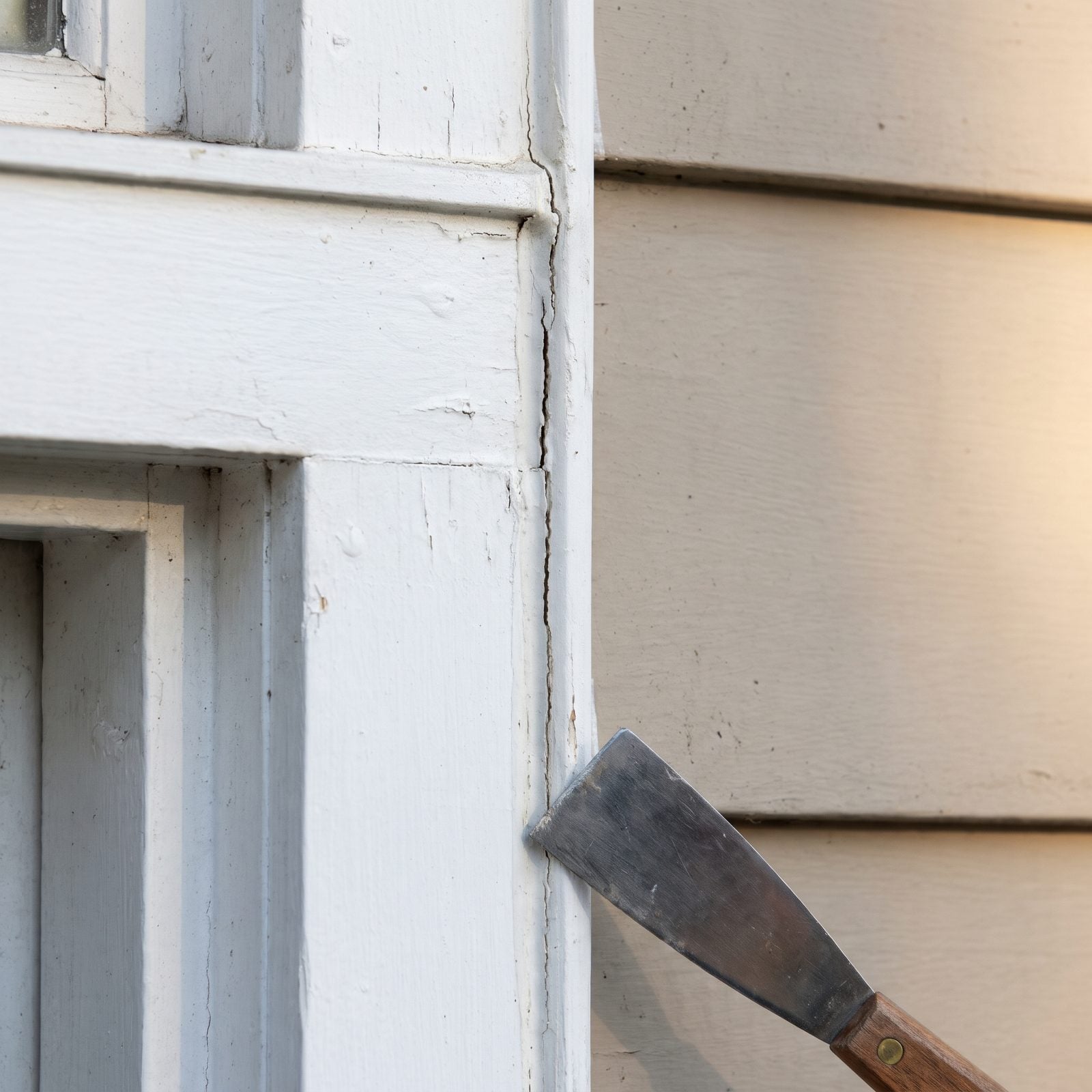
A painter’s eye goes straight to the seam where your window trim meets the siding, reading the caulk like a signature. A continuous, flexible bead means somebody used the right product and respected the joint. A hairline crack splitting the bead from the trim means the last person used cheap caulk, or painted over old caulk, or skipped it entirely and let paint do a job paint can’t do.
That crack is the fingerprint of the last job. Painters can tell a rushed estimate-chasing crew from a careful one by the caulk alone, and they can tell a DIY afternoon from a trained hand. The caulk line is where the last painter’s integrity either held or quietly let water in behind your walls.
A clean, slightly recessed bead is a good sign and a light re-caulk at most. A split bead means the joint is open and moisture has a door. A thick, lumpy bead painted over three times means someone kept burying the problem instead of cutting it out — and under there you’ll often find rot nobody has looked at in a decade.
Caulk is where houses tell on the people who worked on them, including the one holding the gun last time.
33. Why a Painter Presses a Moisture Meter to Your Baseboard Before Opening a Single Can
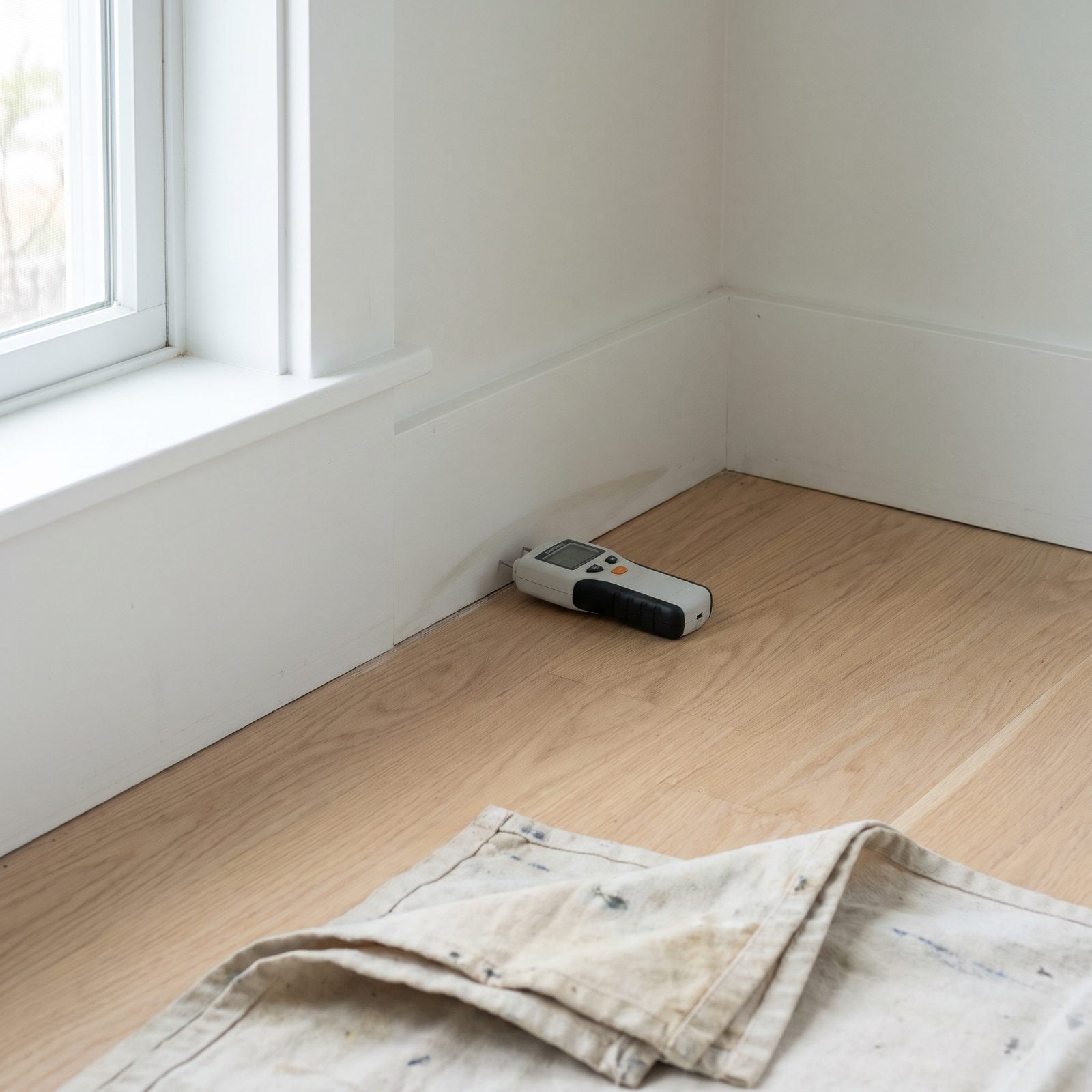
Before any lid comes off, a careful painter presses a moisture meter into your baseboard, the bottom corner of a bathroom wall, the trim under a window. They’re not guessing at damp. They’re reading a number, and that number decides whether today’s a paint day or a bad idea wearing paint’s clothes.
Paint over a wet substrate and it fails in weeks, blistering and peeling like it was never there. Experienced painters know the nicest finish in the world is wasted on wood that’s holding water, so they measure before they commit. It’s the difference between someone who wants your signature and someone who wants the job to still look good next year.
A reading in the safe range means prep moves forward. A high reading with no visible stain means moisture is moving through from somewhere you can’t see, and the honest painter stops to ask why. A reading that spikes only at floor level usually points to a long, slow problem — bad grading outside, a plumbing weep, a spill history — and painting over it just hides the evidence for the next person.
Explaining why he checks wood with a moisture meter before priming, a professional house painter warns: “Painting over wet wood is one of the fastest ways to guarantee paint failure.”
32. What the Water Stain on Your Ceiling Says About a Problem You Decided Was Finished
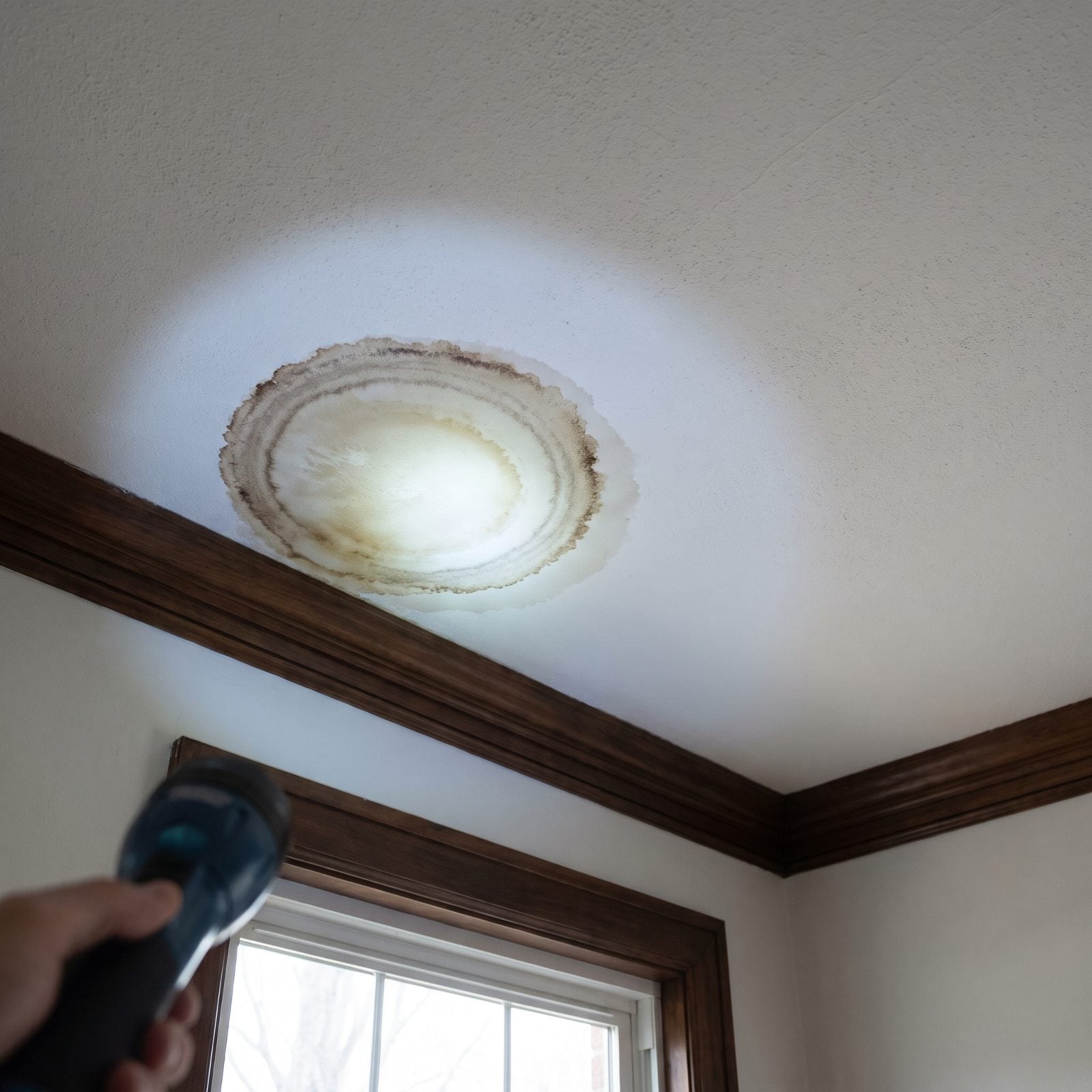
A ceiling stain isn’t one event. A painter reads it like tree rings. That brown blotch with a hard dark line around the outside, then a lighter halo, then another faint ring, is a record of multiple soakings that each dried and left a tide mark. Count the rings and you’ve counted the number of times water came and you decided it was over.
So here’s the uncomfortable part. You painted over it once, or you watched it stop spreading and called the roof fixed in your head. A painter looks at the edges and knows whether the leak is dead or dormant. A single crisp-edged stain is a closed case; a stain with layered rings is a problem that keeps RSVP-ing to storms you forgot about.
One clean ring with no softness means old damage, stain-block primer, done. Multiple rings mean recurring intrusion, and priming over it just resets the clock on your own denial. A stain that feels soft or cool to the touch, or shows fresh darkening at the center, means it’s wet right now — and no primer on earth seals active water. Fix the source or watch your fresh ceiling ghost the stain back through in a month.
31. The Mildew Spots in Your North Corner, and the Story They Tell About Airflow and Denial
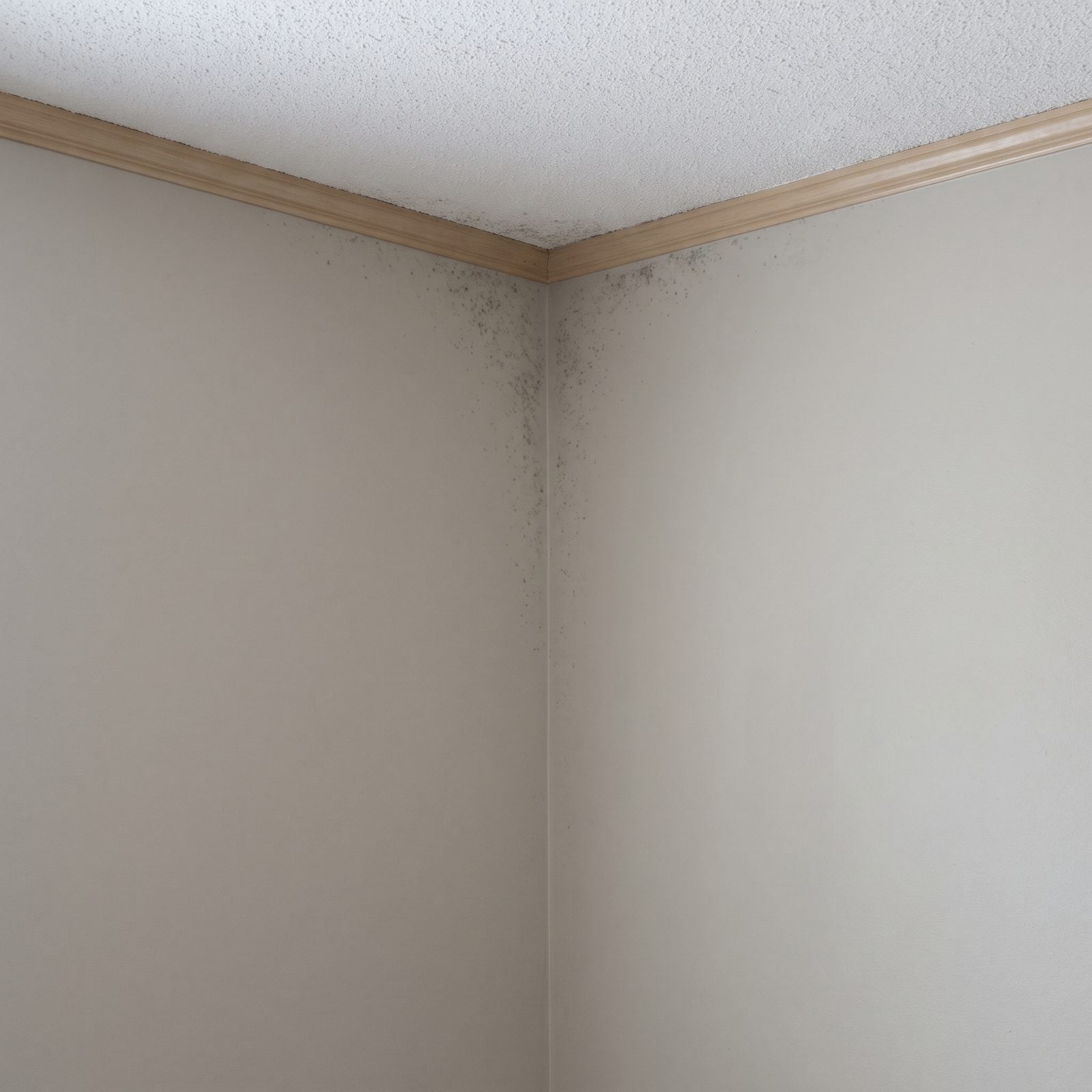
The north corner is where a painter’s flashlight goes without being asked. Those gray-black speckles climbing the join where two cool walls meet the ceiling aren’t dirt, and scrubbing won’t make them stay gone. They’re mildew — a report on how air moves through your house, which is to say how it doesn’t.
North and interior corners run colder, and cold surfaces pull condensation out of warm indoor air. Add a room that doesn’t breathe — a closed door, a dead HVAC return, a bathroom with a fan nobody runs — and you’ve grown it on purpose without knowing it. Painters know that paint over live mildew just gives it a fresh surface to eat.
Light speckling that wipes away with a bleach solution is a cleaning-and-mildewcide fix. Speckling that bleeds back through within days is telling you the source — the humidity and dead air — never left. And a dense black mat in the corner? This has been happening for years while you decided it was a shadow or a smudge.
30. Why a Painter Studies the Overlap Marks From Your Last Paint Job First
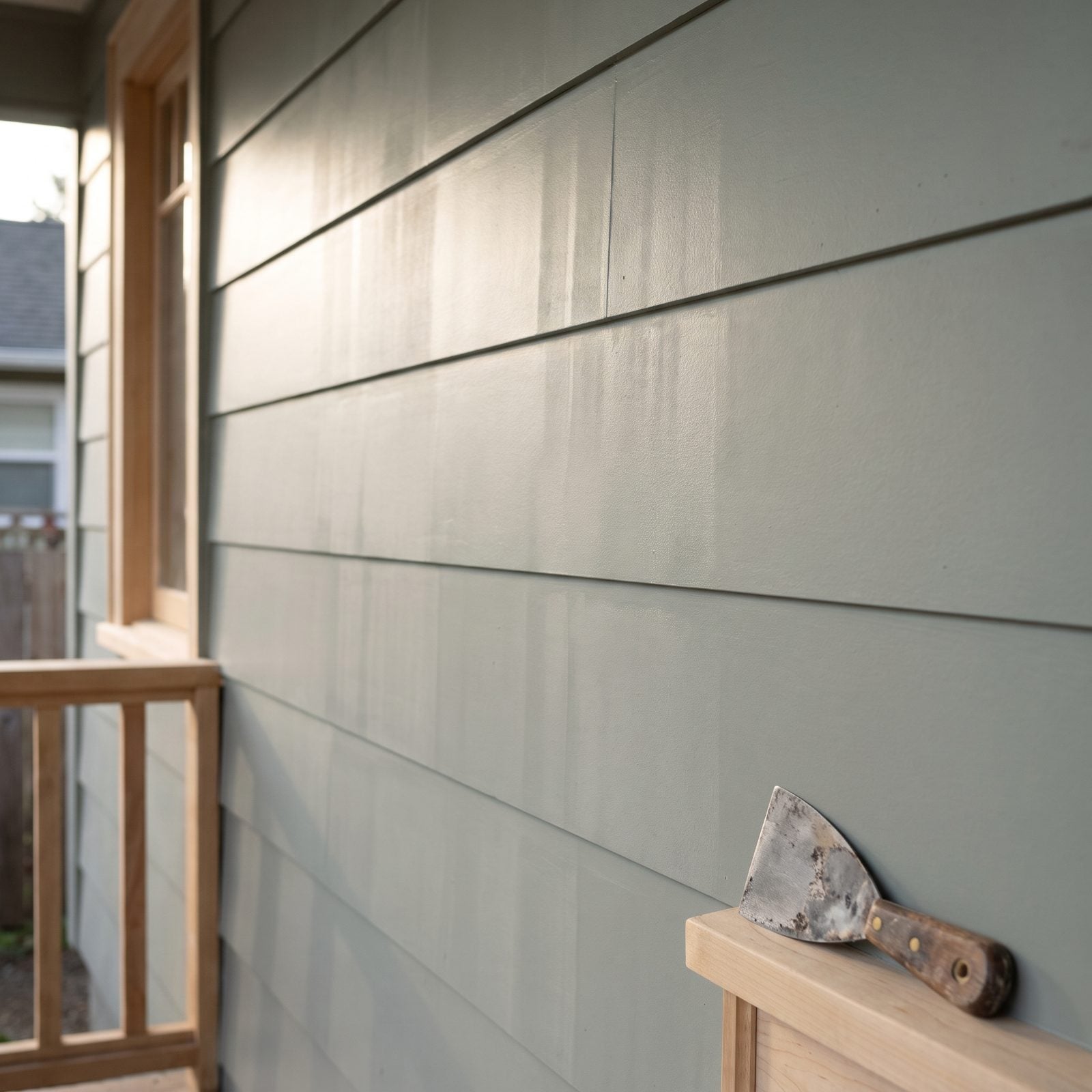
Stand a painter at the right angle to your wall in low side light and they’ll read the last job like handwriting. Faint vertical bands, lap marks where a roller edge dried before the next pass caught it, streaks where someone stretched the paint too thin. These marks are invisible head-on and obvious in raking light, which is exactly how a painter looks.
Why do they care about the last crew’s shortcuts? Because the overlap marks tell them the condition of the film they have to work over — how thin it is, how it was applied, whether it’ll grip a new coat or fight it. The last job’s rhythm, rushed or patient, is still sitting on your wall, and a painter has to inherit it.
Soft, even sheen with no banding means a proper application and an easy recoat. Visible lap marks mean thin, rushed coverage, so the new paint may need two coats just to hide the old pattern. Heavy roller stipple or brush drag means uneven film thickness, which means uneven absorption, which means prep they’ll quote for and you’ll wonder why.
Describing the lap marks he diagnoses on streaky walls, a residential painting contractor explains: “They happen when the roller stops, the paint dries at that edge, and the next pass overlaps onto already-dried film.”
What Our Readers Say
- Asked which bedroom wall paint they would buy, about half of Home Stratosphere readers chose sage, with greige at 32% and plain white trailing at 11%.
- In our reader polls, readers who picked white interior doors were more likely to pick white trim too: 76% of the time, versus 55% of everyone else.
From Home Stratosphere reader polls and votes.
29. What the Shrubs Grown Up Against Your House Reveal About the Years You Looked the Other Way
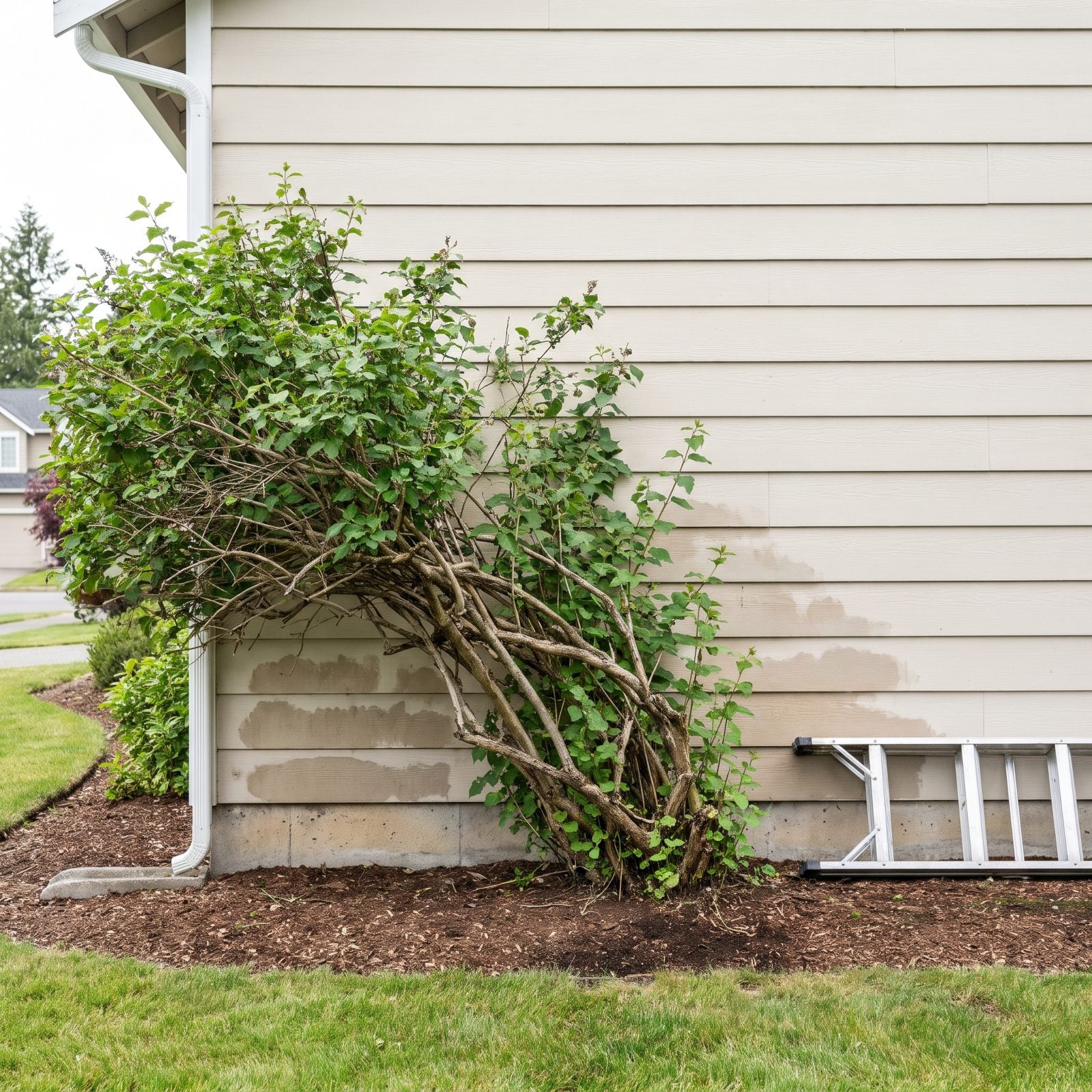
A painter walks the foundation and notes every spot where a shrub leans into the siding. Part of that is access — a brush can’t reach where a boxwood has claimed the wall. But it’s also diagnosis. Where foliage touches paint, air stops moving and moisture stays, and the siding behind it is almost always worse than the siding out in the open.
The size of that shrub is a timeline. Something that’s grown waist-high against the wall didn’t get there last summer, which means the trapped damp behind it has been working for as many seasons as the plant has. You saw a green bush. A painter sees how many years the wall behind it has been held in a wet handshake.
A plant that just needs trimming back to clear a brush path is a note, not a problem. A plant pressed to the siding long enough to darken and soften the paint means the substrate underneath needs checking before anything gets coated. And if there’s a sprinkler head spraying the wall every morning behind that shrub, a painter will find it — paint and a daily shower have never once gotten along.
28. The Gap Between Your Gutter and Fascia That a Painter Clocks From the Driveway
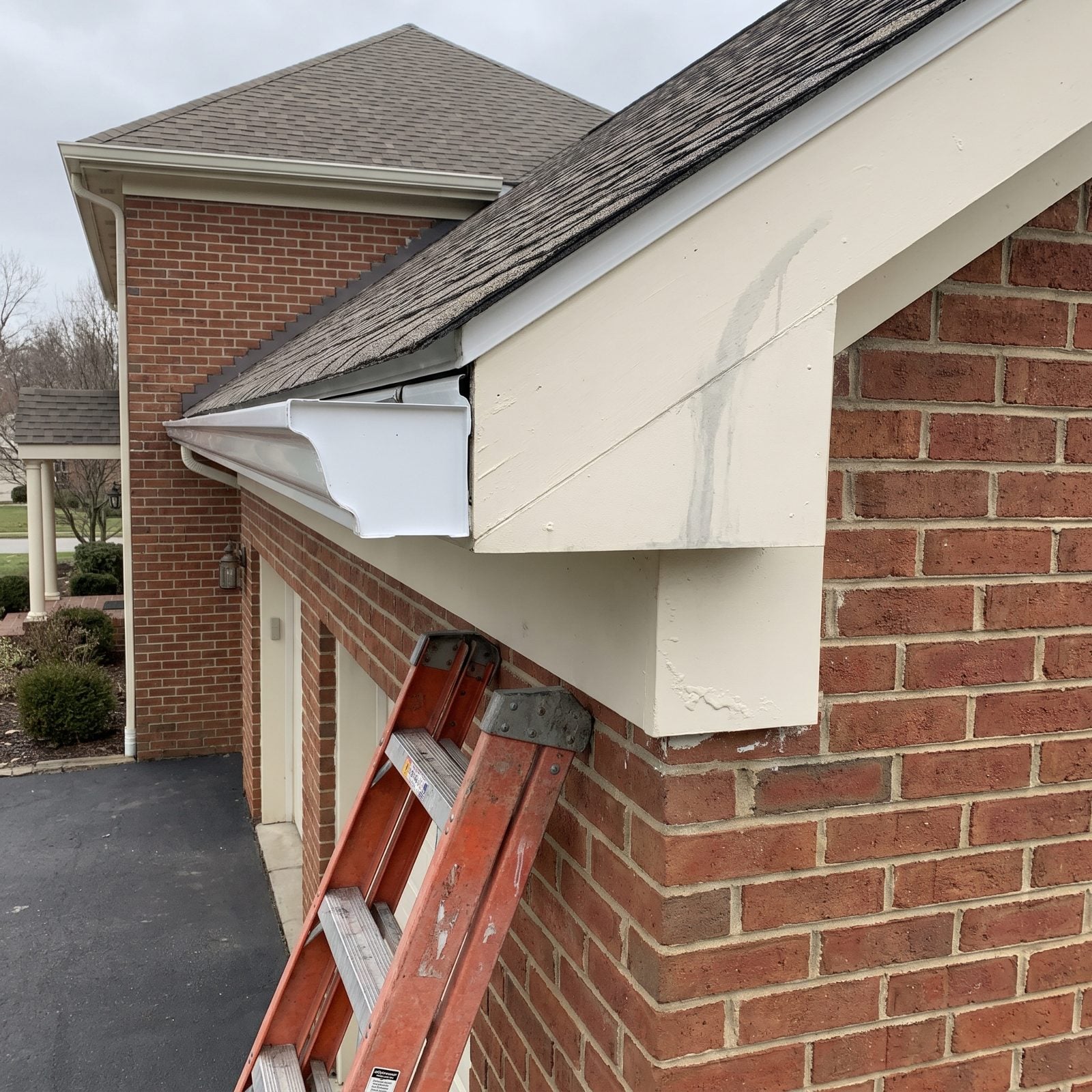
A painter’s eyes go up before they go anywhere. That dark streak running down from behind your gutter isn’t dirt — it’s water that’s been sheeting over the lip and down the fascia for a couple of seasons, and the paint there is already lifting at the bottom edge like a sticker someone started to peel.
Here’s what it tells them. You look at your house from the front door out, never from the street up. The fascia is the one board a homeowner almost never clocks because it lives above the sightline. A gutter gap that’s been weeping for two years isn’t a paint problem, it’s procrastination wearing a paint disguise.
A clean fascia with tight gutters says you climb the ladder. A stained one with a hairline gap says you’ve been meaning to. And a fresh gutter with rotted fascia behind it? That’s the tell that someone already took the cheap route once, hanging new metal over wood that was already going.
27. What a Rusty Nail Head Bleeding Through Your Trim Says About the Shortcut Somebody Took
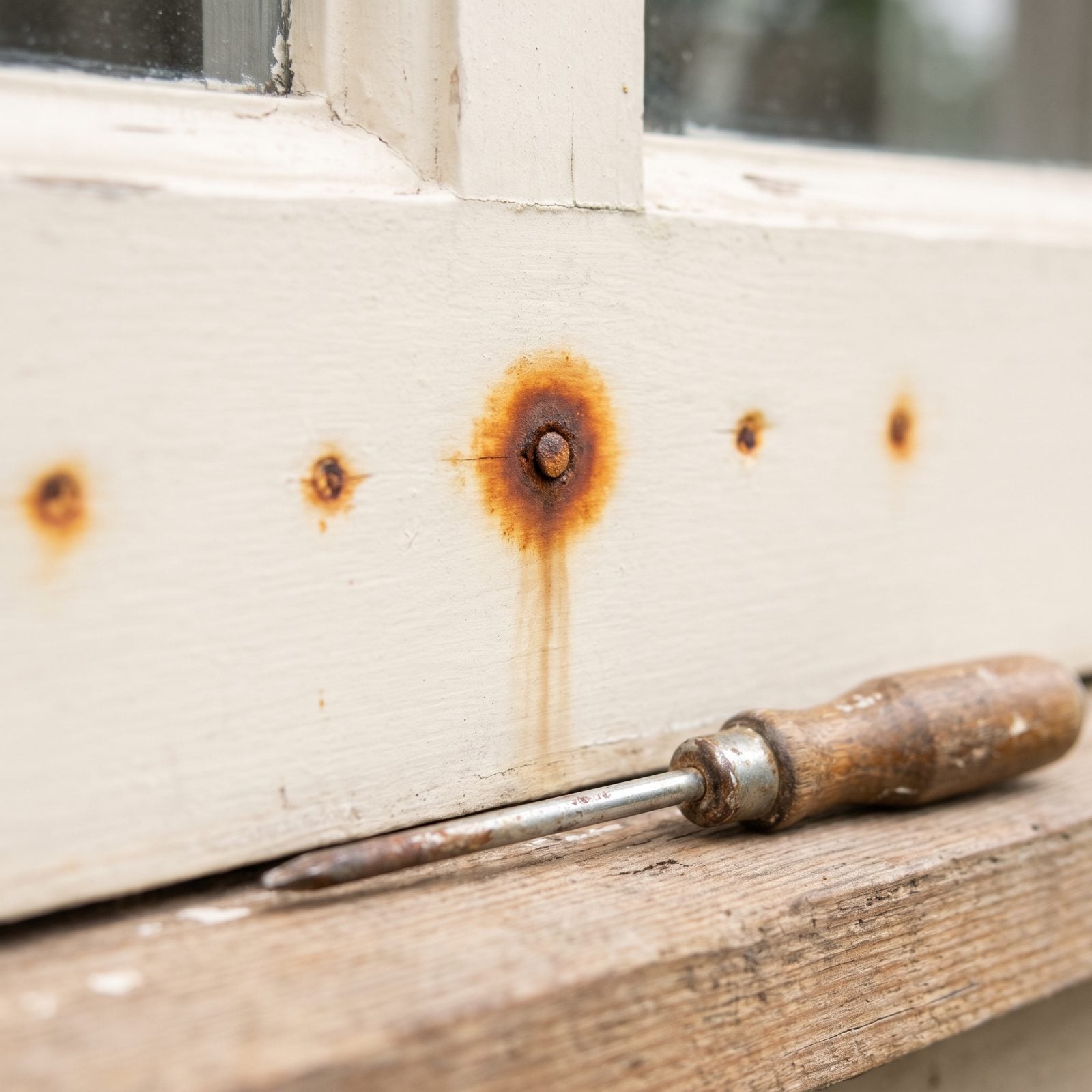
You’ve seen it and read it as grime. A painter reads it as a signature. That brown teardrop bleeding down from a nail head in your trim is rust pushing up through two coats of paint, and it means whoever fastened that board used uncoated steel nails instead of galvanized or stainless.
Somebody took the cheap road — maybe a builder racing a deadline, maybe a weekend fix years ago. The nails were cheaper by a few dollars a pound. Now every one of them is a little rust factory, and no amount of fresh paint over the top will hide them for long. Paint over rust and the stain wicks right back through within the year.
A single rusty nail is a fluke. A whole row marching across your trim is a pattern, and the pattern says the corners got cut on the first go.
Fresh paint hides a lot of history, but a rusty nail always finds its way back to the surface.
The fix isn’t glamorous. Each head gets countersunk, spot-primed with a stain-blocking primer, filled, and sanded before a brush ever touches it. The painter who skips that step is just the next person taking the shortcut.
26. Why a Painter Taps Your Window Sill With a Screwdriver Handle
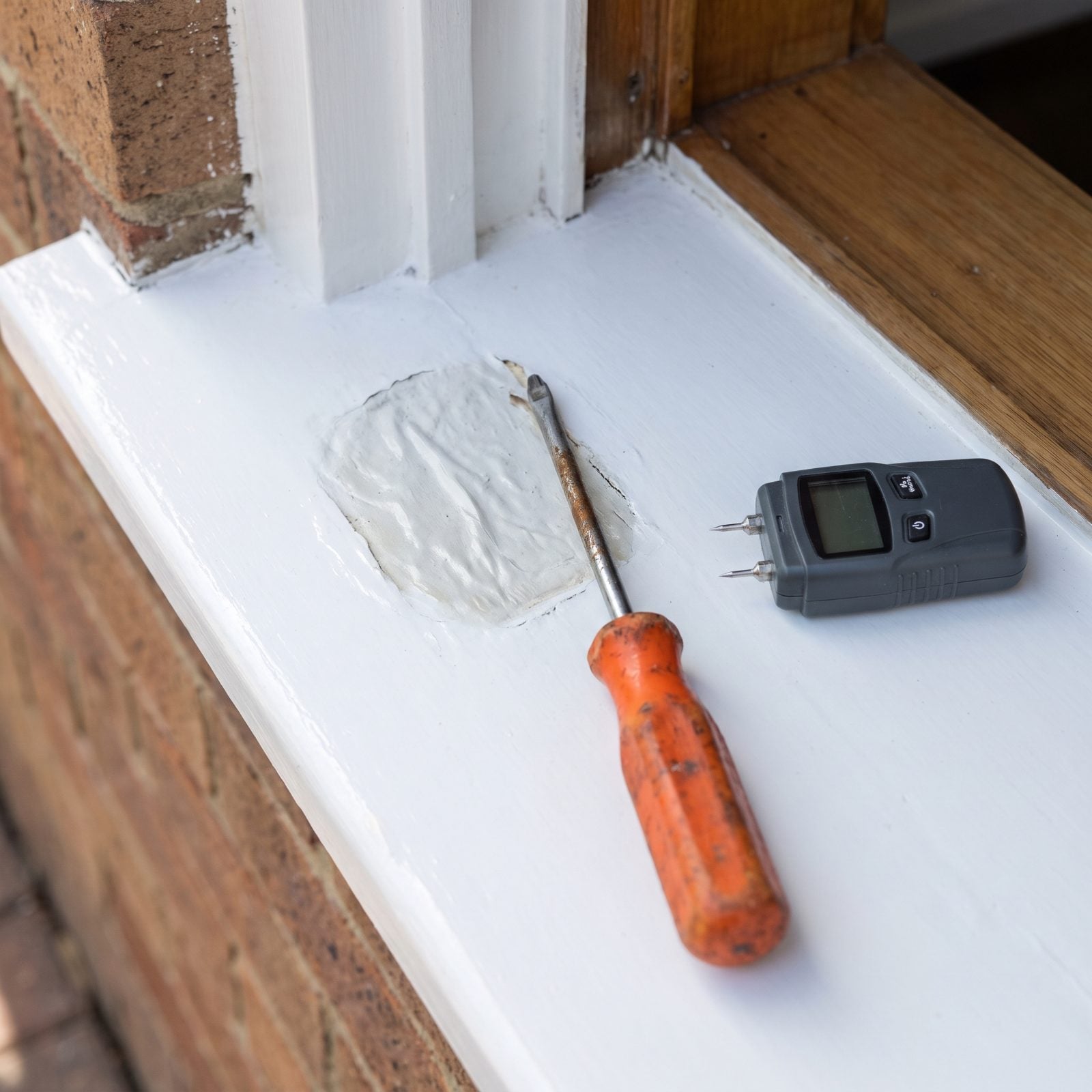
Watch a seasoned painter at a window and they’ll knock the sill with the butt of a screwdriver like a doctor testing a reflex. They’re listening. Firm wood gives a sharp, tight knock. Rot gives a dull thud, and the handle dents in a little where it lands.
Window sills are the lowest horizontal surface on the whole house, so they collect every drop of rain and sit wet the longest. The paint on top can look flawless while the wood underneath has turned to the texture of a wet sponge. You’d never know by looking, and that’s the point of the tap.
What it says about you is quieter than you’d think. A sill that’s soft under good-looking paint means you’ve been maintaining the appearance of the house while the structure of it slipped past you. Not negligence. Just the natural blind spot of someone who trusts what their eyes report.
25. The Sheen Mismatch on Your Walls, and What It Confesses About Touch-Ups Over the Years

Stand where the window light rakes sideways across a wall and the truth comes out. The color might match. The sheen never does. Those faint matte or glossy patches, usually hovering around light switches and doorknob height, are touch-ups — and a painter reads them like tree rings.
Here’s the tell. You kept a can in the garage, and every scuff got a dab from a brush over the years. The color held because it was the same paint. But the gloss level shifted, because old paint settles, because you rolled fresh paint over a surface the original was sprayed onto, because the touch-up went on thicker. Light finds all of it.
What it confesses is actually kind of lovely: you care enough to fix things the moment they happen. You just never redid the whole wall, because the whole wall never felt broken.
A room with no sheen patches was painted recently or never touched. A room speckled with them has been tended for years, one scuff at a time. A planned bright home office refresh usually starts with killing those patches, because a full re-coat is the only thing that resets the sheen to uniform.
24. What the Dust Line Along Your Crown Molding Tells a Painter About Where You Stopped Looking
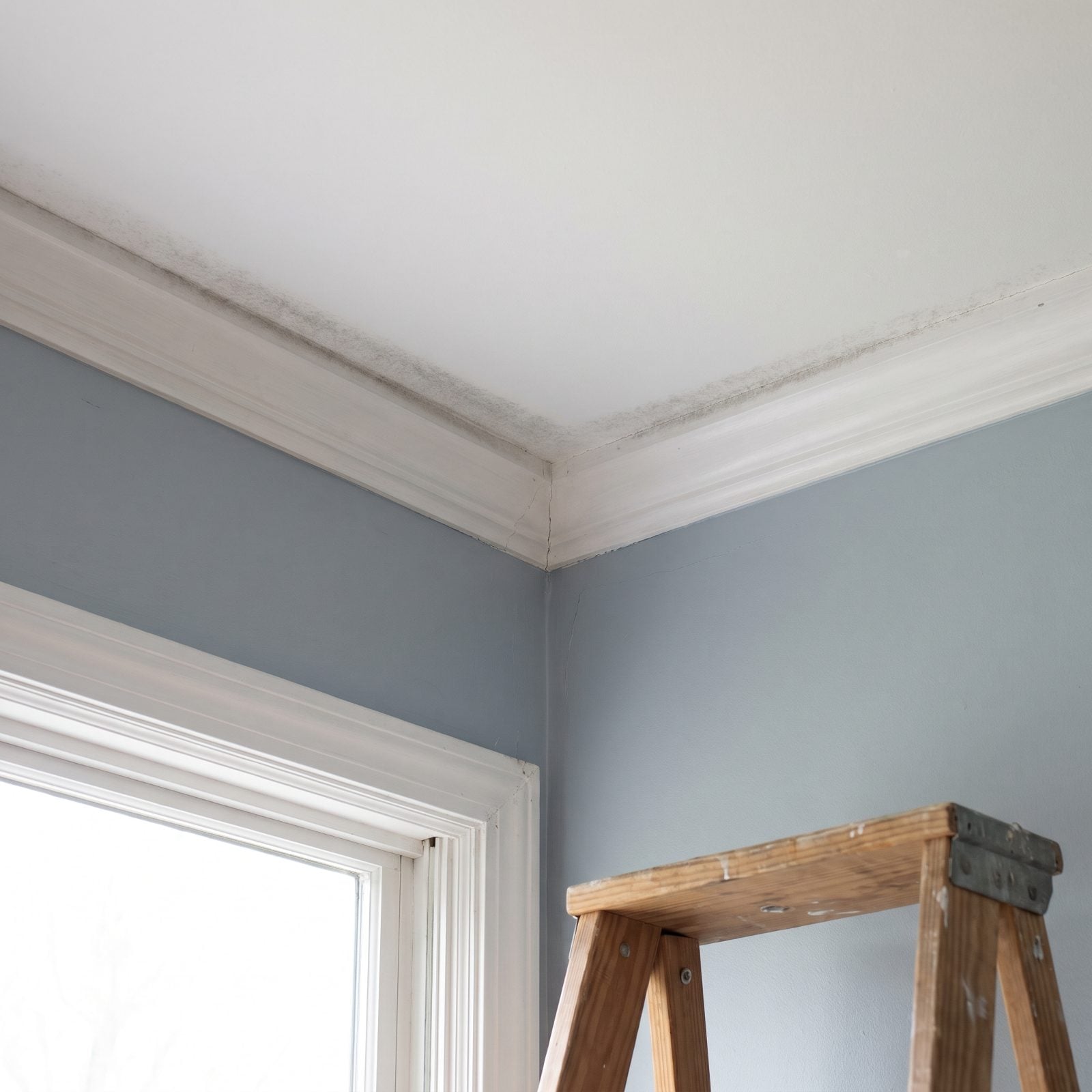
There’s a line only gravity and time can draw. Run your eye along the very top of your crown molding, where it kisses the ceiling, and you’ll often find a soft gray band of settled dust riding the ledge. A painter sees it the second they look up.
It marks the exact altitude where your attention gives out. Most people clean to arm’s reach and a little above. The crown sits in the dead zone — high enough to be out of the daily sightline, low enough that it technically shows. The dust line is the fossil record of where you stopped looking.
None of this is a scolding. It’s physics and habit. The eye scans a room at seated and standing height and almost never tilts up unless something’s wrong.
And it matters practically, too. The dust has to come off before paint, or the new coat traps grime under a skin and the caulk joint cracks right back through.
That dust line is worth chasing, because crown molding has plenty of fans: in our reader polls, 85% of Home Stratosphere readers said yes to having it.
23. Why a Painter Looks for the Spot Where Two Different Paints Meet in the Same Hallway
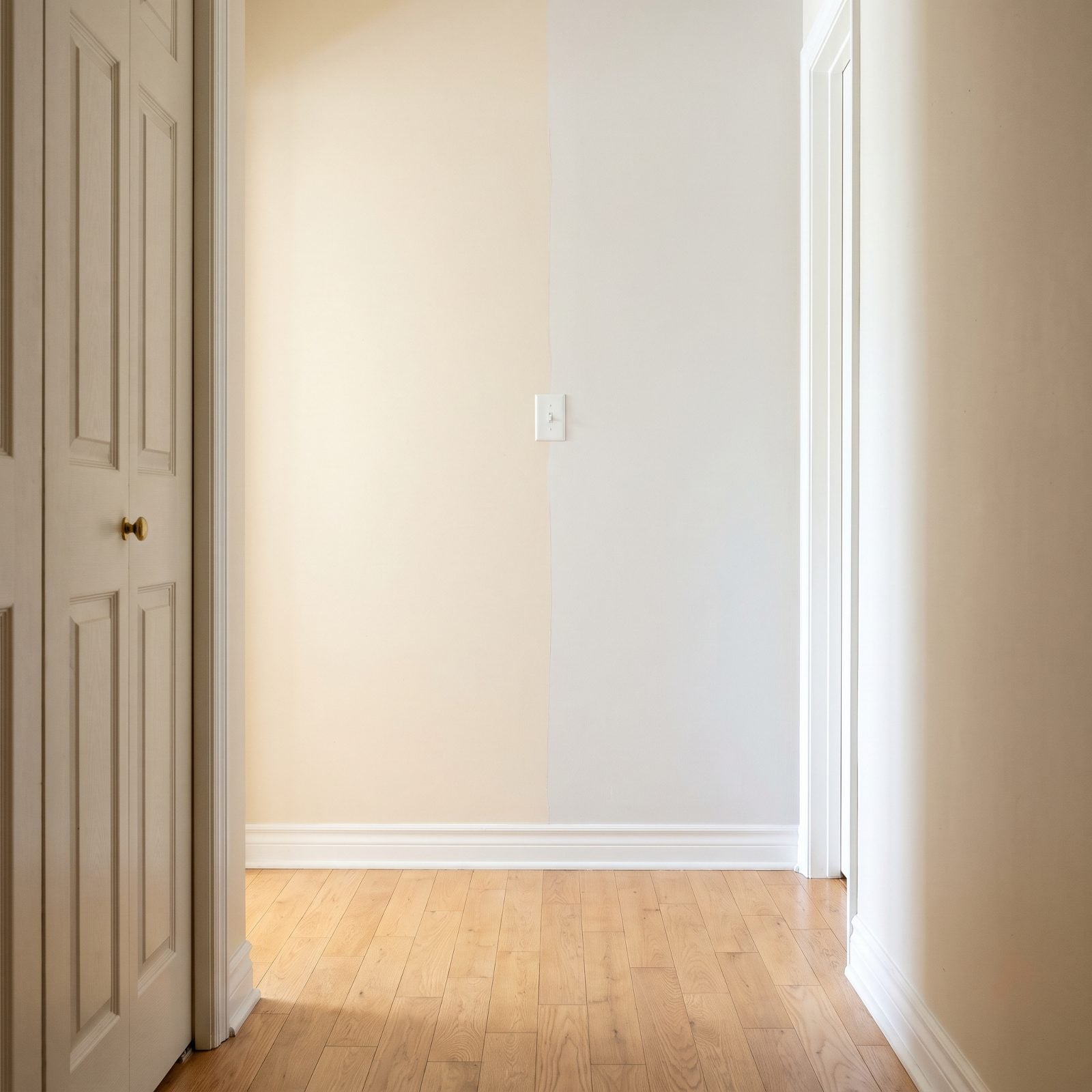
Somewhere in your hallway, two paint jobs meet, and a painter will go looking for the handoff. It usually hides at an inside corner or mid-wall where a previous job ran out of steam, or where one room’s project bled into the hall and just stopped. One side reads a hair warmer. The other, cooler. The seam is faint until the light hits it right.
That junction is a little timeline. It marks where one era of the house ended and another began — who did what, when, and crucially, whether they bothered to blend it. The spot where two paints meet is where you can read whether the people living here finish what they start or just do the part that was bugging them.
A clean transition tucked inside a corner, invisible unless you’re hunting for it, says someone understood that corners break color and planned around it. A seam dead in the middle of a flat wall says someone painted until the roller tray ran dry and called it done.
For the painter it’s also a cost line. A mismatched hallway can’t just get one accent wall touched. To make it right, the whole run usually gets reset to a single color, corner to corner, so the eye never catches the handoff again.
22. The Nail Pops in Your Drywall, and What They Say About the House Settling While You Waited
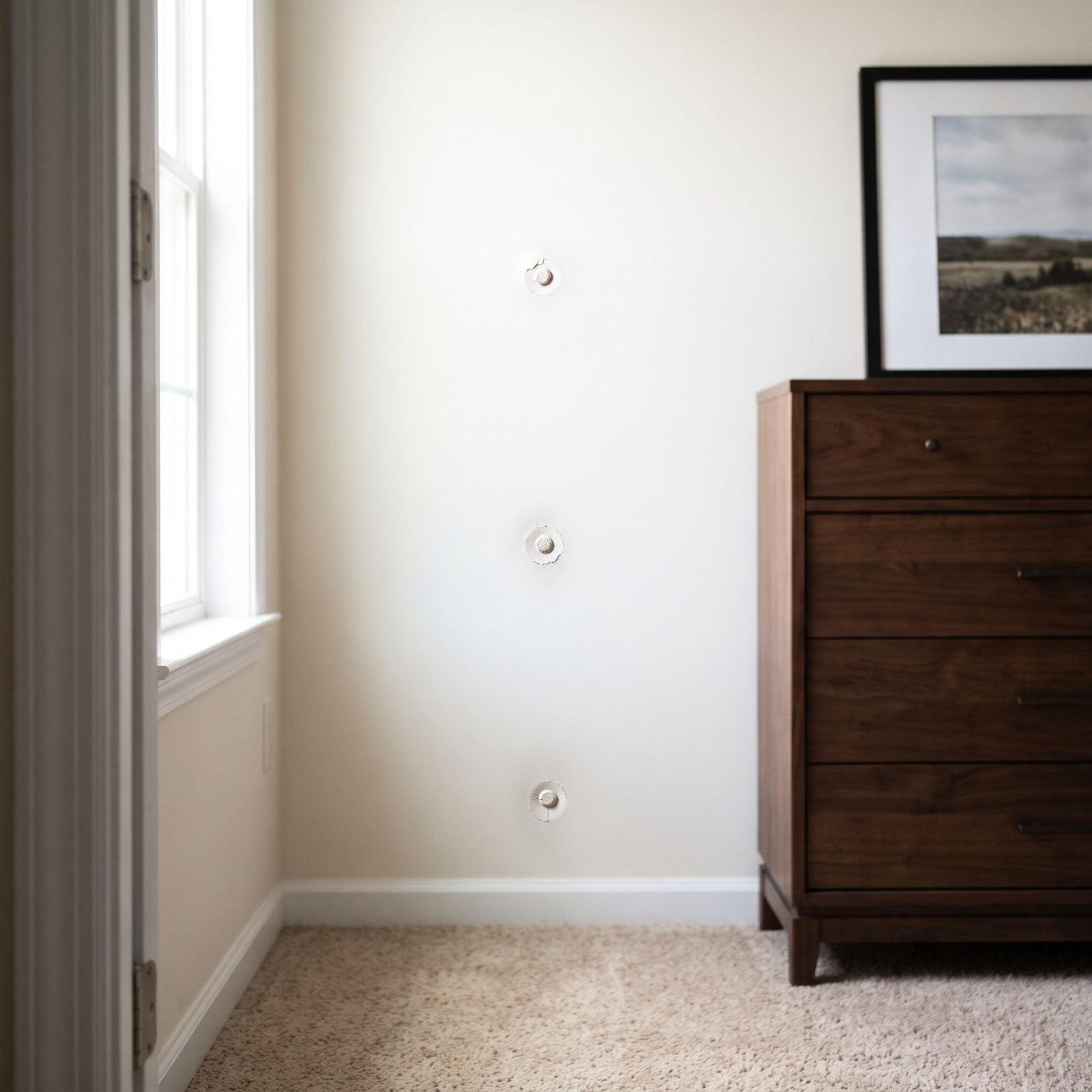
Those three round knobs jutting out of your drywall in a vertical line, each ringed by a cracked, flaking halo, are nail pops. The fastener behind the drywall backed out until it stood visibly proud of the wall as the wood framing dried and shrank, and it took the paint with it. A painter counts them without seeming to.
They’re the house talking. New homes do most of their settling in the first couple of years as the lumber loses moisture, and a cluster of pops along a stud line is the frame telling you it moved while you lived your life around it. You didn’t cause them — you just waited, which is the only reasonable thing to do.
A few scattered pops are normal and harmless. A whole wall of them, all along one vertical line, can mean the framing moved hard or the drywall was underscrewed to begin with. Another corner cut by whoever hung the board.
On why framing lumber shrinks as it dries, one interior painting contractor explains that “Even slight changes in the wood can reduce the grip around drywall fasteners, allowing nails or screws to work their way outward.”
21. What a Painter Reads in the Alligatored Cracks on Your Old Front Door
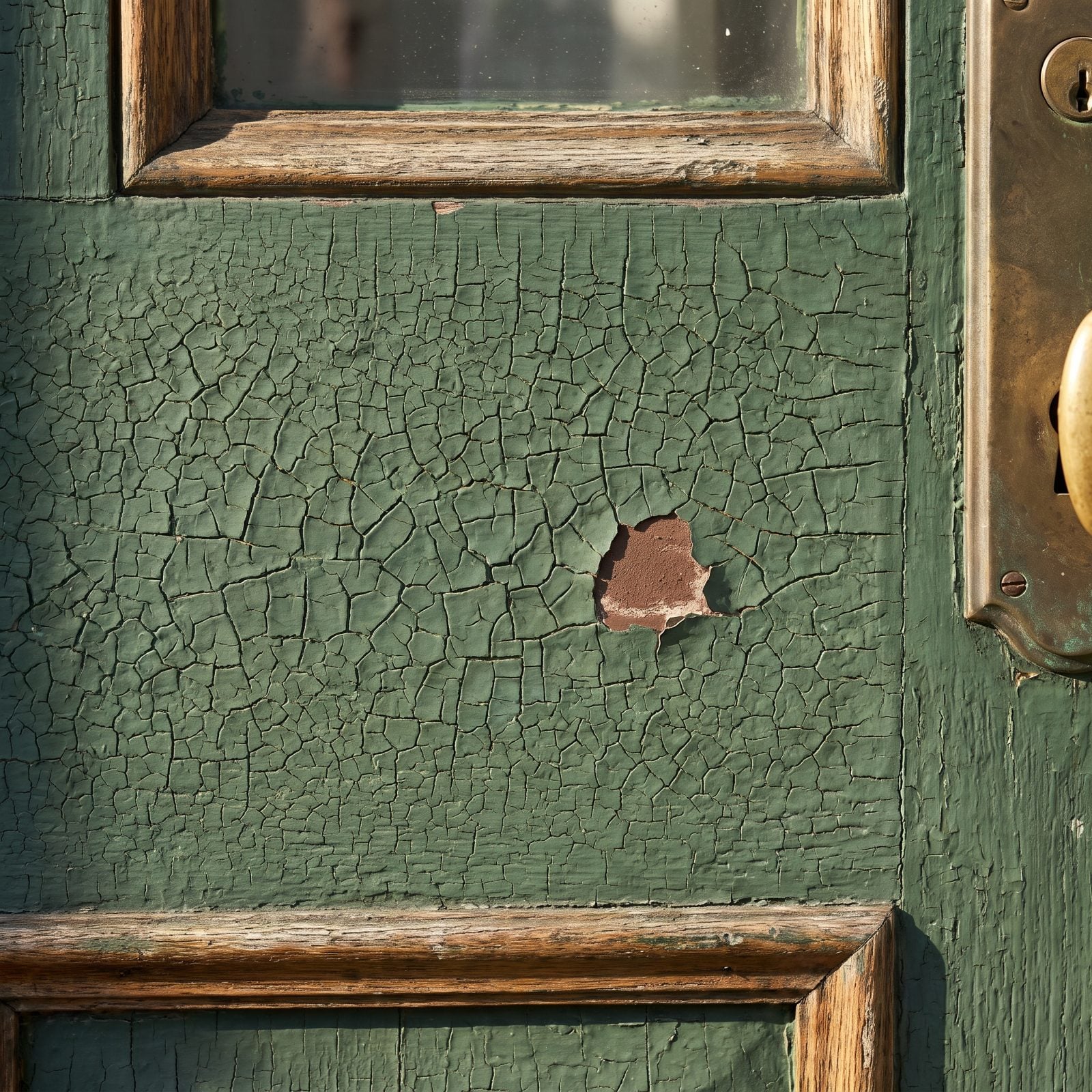
Your front door is the most-touched, most-sun-beaten surface on the house, and when the paint breaks into that fine map of interlocking plates, a painter has the whole backstory in a glance. Alligatoring. The cracks look like dried mud or reptile skin, and they almost always bloom worst on the lower sun-facing panel.
It happens when coat after coat got layered on over the years, each one going on before the last was ready, or a hard glossy coat dropped over a soft flexible one. The layers expand and contract at different rates in the heat, and eventually the top skin can’t hold the movement and splits into islands. Not one bad paint day — a decade of them, stacked.
The read on you is almost tender. The front door is where you make your welcome, so it got repainted more than anything else, every time it looked tired. All that caring built up, layer on layer, until the buildup itself became the problem.
The door you repainted the most is often the one holding the most history, and the most layers to strip.
A painter knows there’s no shortcut here. Alligatoring doesn’t sand smooth. The whole surface comes down to bare wood, gets re-primed, and starts over. On a door, that’s hours, and it’s why the humble front door often costs more per square foot than any wall in the house.
Writing about aging oil-based paint, one old-house restoration contractor says “This makes for a great hard finish on trim, windows and doors, but eventually they become too brittle to keep up with the constant expansion and contraction of wood.”
20. Why the Painter Asks to See Your Attic Before Quoting the Ceiling
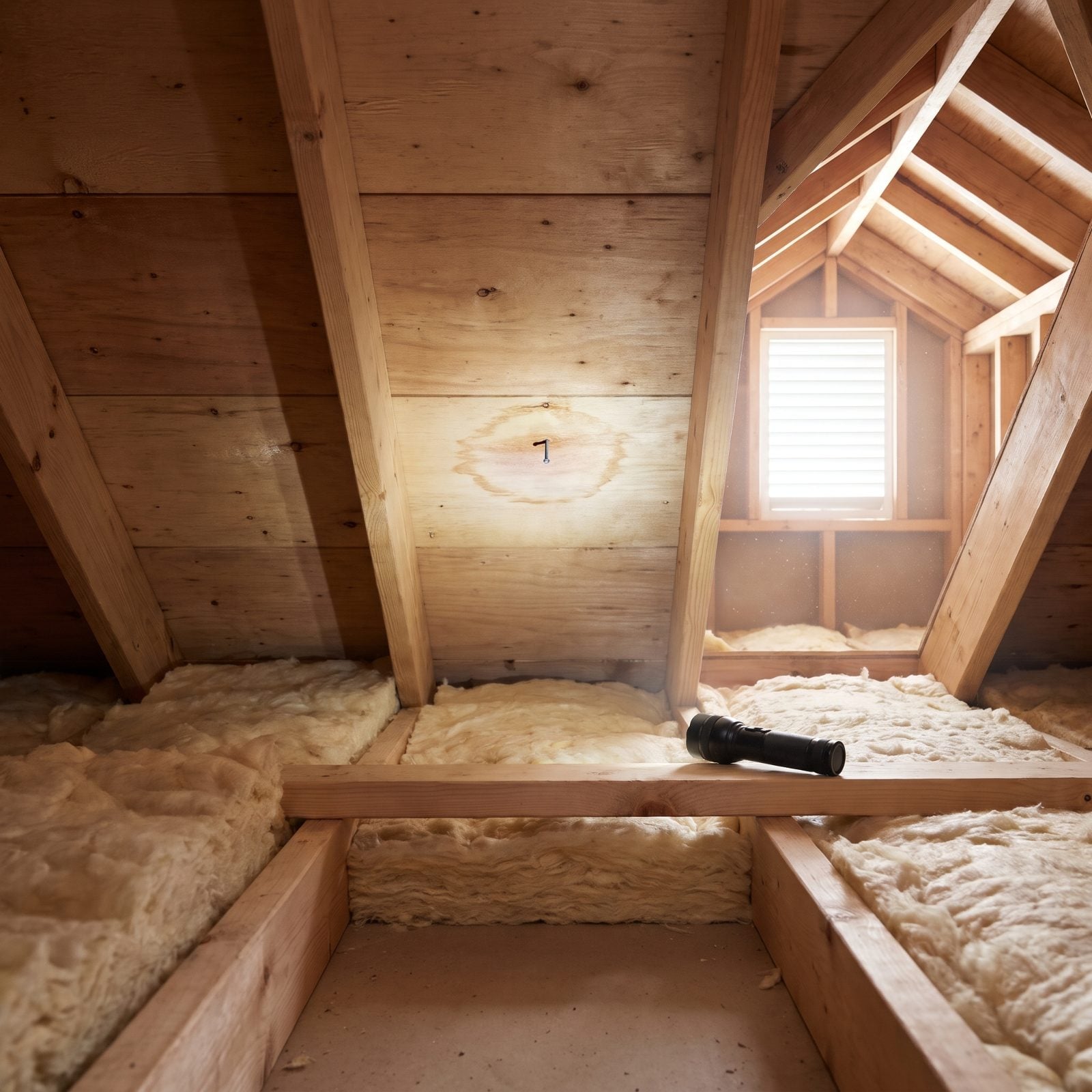
You call about a water stain on the ceiling. The painter asks to see your attic. That throws people, because the stain is downstairs and the attic is up, but the painter isn’t being nosy. They’re refusing to paint over a mystery.
A brown ring on a ceiling is just the exit wound. The real story lives above the drywall — a roof leak that’s active, a pipe that sweated once and dried, an old stain from a problem already fixed. Those are three completely different jobs, and only the attic tells them apart. Stain-block over an active leak and the brown ghost walks right back through the primer within weeks, and now you’re mad at the painter instead of the roof.
What the ask reveals is a certain kind of honesty. A painter who wants to see your attic is telling you they won’t put lipstick on a problem and let you discover it later. The ones who just quote the ceiling and go are hoping it holds till the check clears.
Up there with a flashlight, they’re checking for daylight, damp wood, and fresh versus old staining on the roof deck. If it’s dry and historical, a good stain-blocking primer locks it for good. If the rafter’s still wet, no paint in the world fixes that, and the honest ones say so before they quote.
19. The Sprinkler Spray Pattern Staining Your Lower Siding, and What It Reveals About Daily Habits You Stopped Noticing
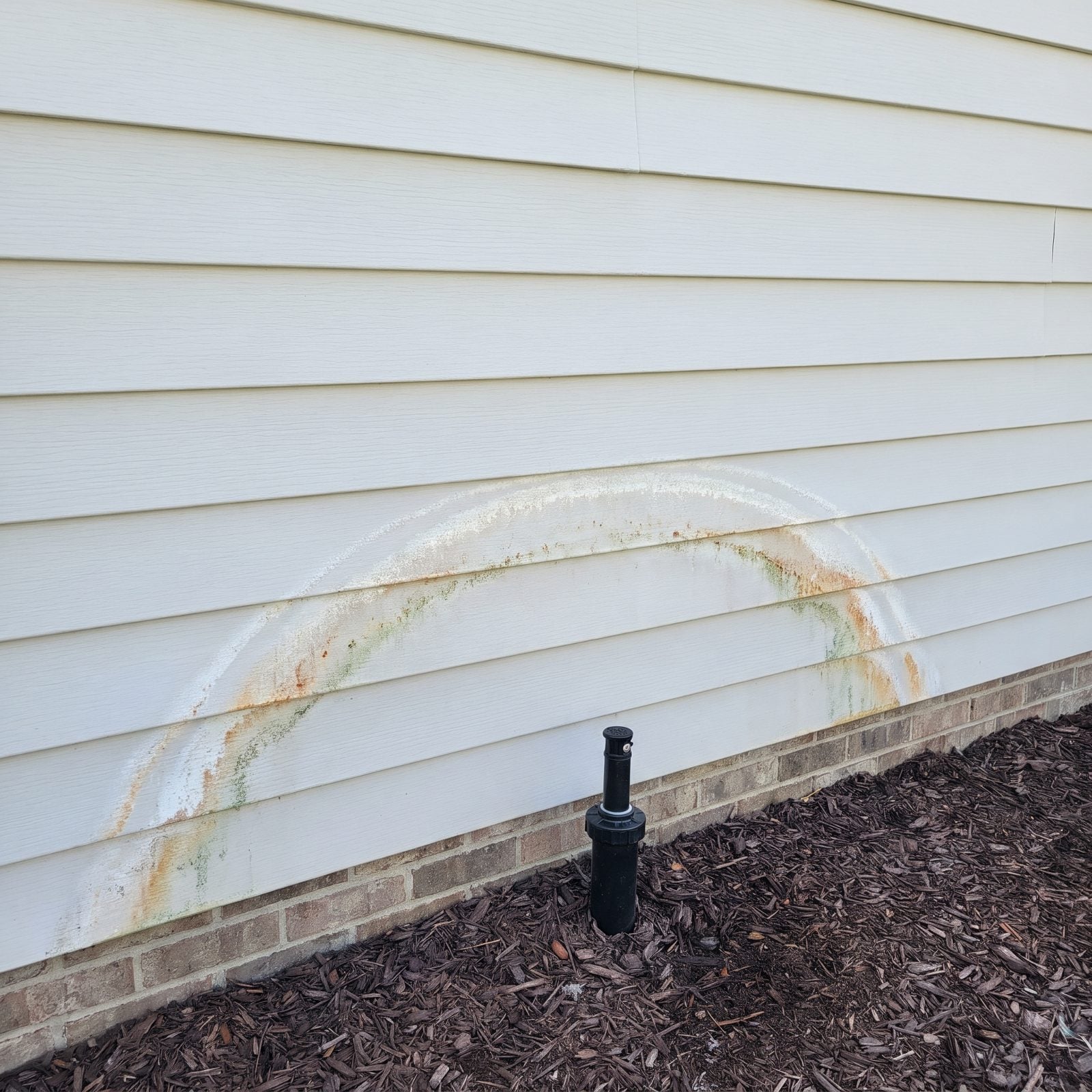
There’s an arc of pale chalky staining climbing the bottom two feet of your siding, crescent-shaped, often tinged rust or ringed with a little green mildew, and it stops at a clean line where the untouched siding above begins. A painter doesn’t even have to ask. That’s a sprinkler, hitting the wall every single morning, year after year.
The water carries minerals and the sun bakes them onto the paint, while the constant dampness at the base feeds mildew. It reveals a habit you long ago stopped noticing — an irrigation head aimed a few degrees too high, throwing the same wall at six a.m. while you slept. You set that timer once, maybe five years back, and never thought about it again.
That’s the real tell. The stain isn’t about neglect. It’s a system running on autopilot, doing a small wrong thing faithfully, forever, below your awareness.
A painter worth hiring points at the head before they point at the wall. The ones who quote the paint and ignore the sprinkler are just booking themselves a repeat visit.
18. What the Exposed Wood Grain on Your Deck Rail Tells a Painter About Weathering and Time
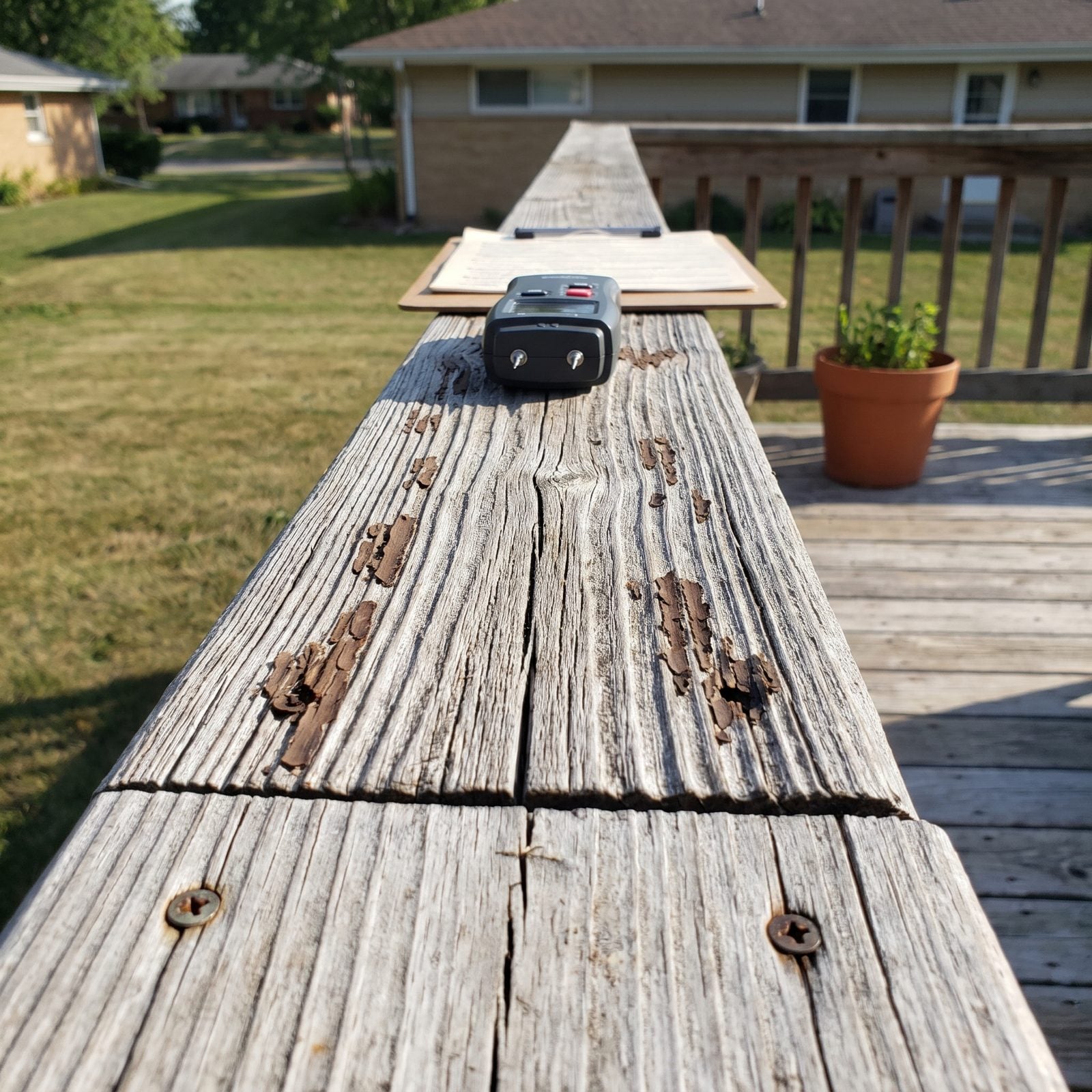
The painter runs a thumb along your top rail and reads a weather report off it. Silver-gray wood, grain raised into little ridges you can feel, flakes of old stain surviving only down in the valleys. That pattern doesn’t lie — the finish failed years ago and the sun has been bleaching bare cellulose ever since.
Wood left out in the UV breaks down at the surface. The lignin that binds the fibers degrades, the grain lifts, and anything you brush over it later struggles to grip. A painter sees that raised grain and knows the real job isn’t painting at all. It’s sanding back to sound wood, and probably a slightly awkward conversation about whether the stain ever got maintained. The condition of your deck rail is a timeline of every year you meant to reseal it and didn’t.
Three things a trained eye separates here. Bare silver wood with raised grain means long neglect and a real prep bill. A chalky but intact film means the finish is tired, sure, but the wood underneath is still protected. And a rail that’s gone soft and spongy under thumb pressure? That’s rot, and no paint on earth fixes rot. That last one stopped being a painting estimate. Now it’s a carpentry one.
17. Why a Painter Walks the Perimeter Looking Down at Your Foundation
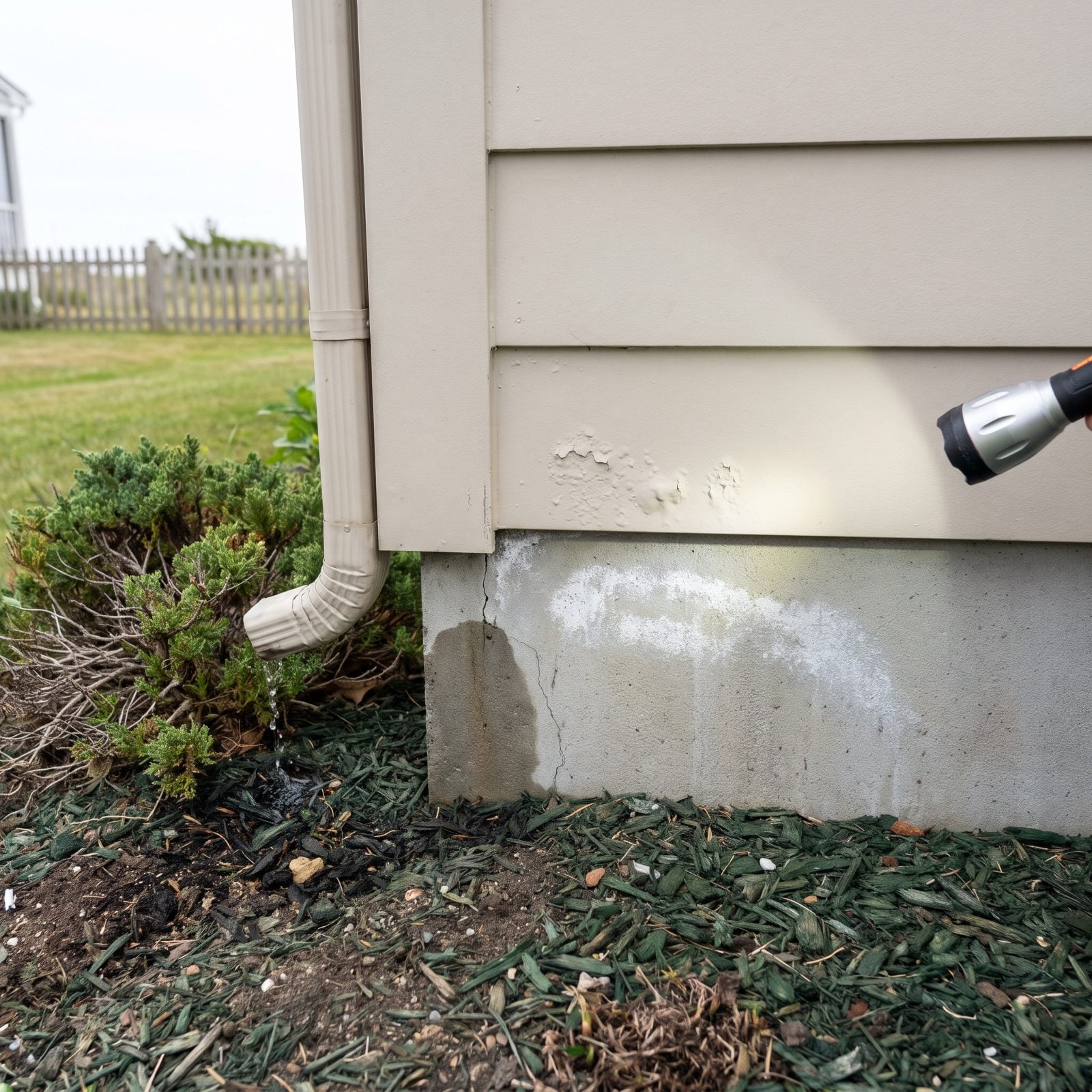
Watch where a painter looks when they first arrive. Not the front door. The ground. They walk the whole perimeter with their eyes pointed down at the bottom six inches of siding, right where it meets the foundation, and they’re reading your relationship with water.
Paint doesn’t fail randomly. It fails where moisture collects, and moisture collects low. A downspout dumping at the base, mulch piled against the siding, soil graded toward the house instead of away — all of it drives water up behind the paint from below. So when a painter spots blistering or white powdery efflorescence near grade, they already know the paint is just the symptom.
Here’s the uncomfortable part. A perimeter walk tells a painter how you handle the slow, invisible problems. The ones with no deadline. A clean, dry base with a gap between mulch and siding says you notice things, that you’re the type who catches a problem before it gets loud. A downspout emptying straight onto the foundation says the opposite: you fix what shouts and ignore what whispers. The condition at the bottom of your walls is a confession about whether you deal with trouble before it announces itself.
A painter who coats over moisture-driven blistering without touching the source is setting you both up to fail. Any honest one stops and points at the ground first.
16. The Bubbled Paint Near Your Bathroom Exhaust, and What It Says About Ventilation You Never Ran
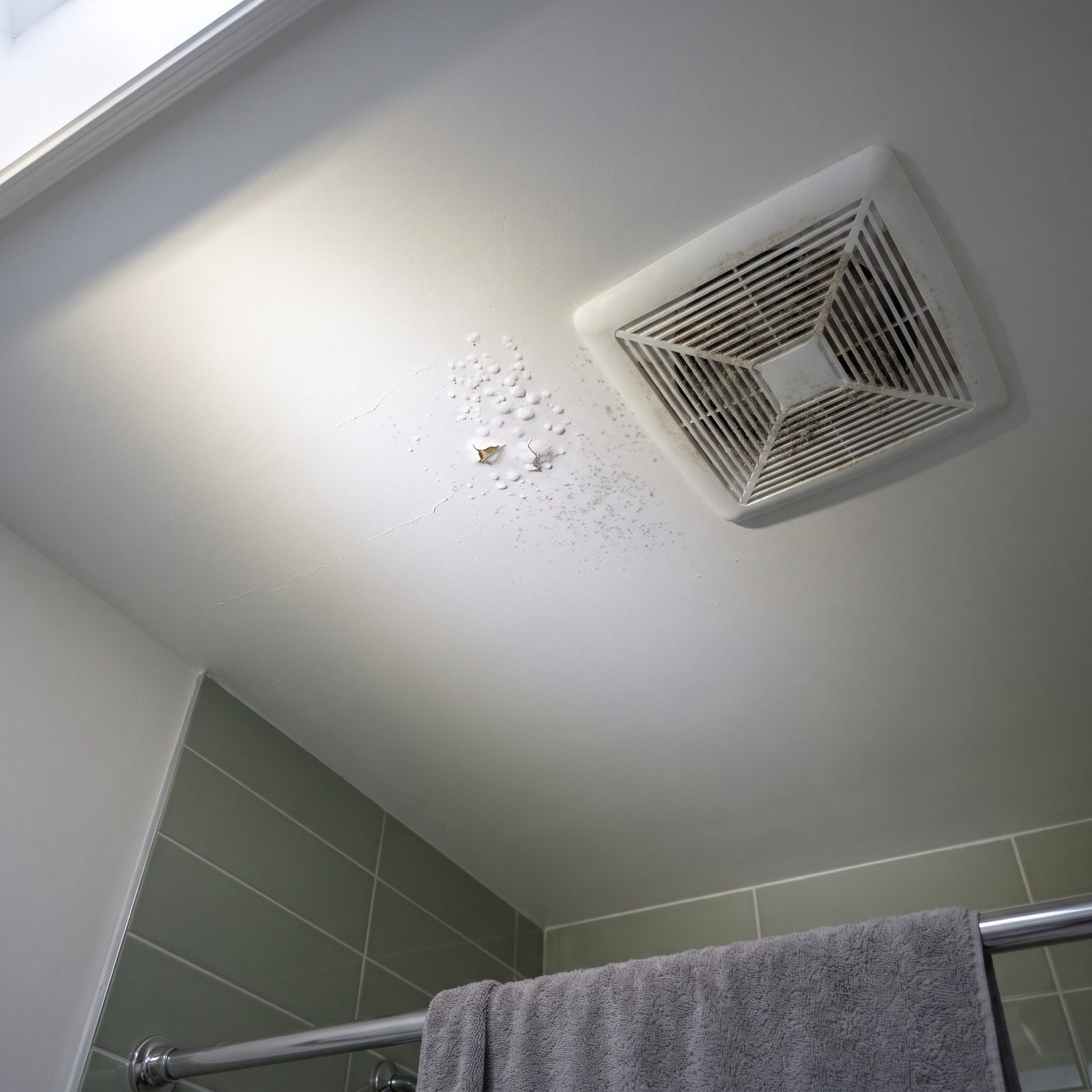
The paint near your bathroom fan is telling on you. Small blisters, a faint gray speckle in the corner, maybe one bubble that’s already cracked open. A painter looks up, glances at the dusty grille, and knows the fan either doesn’t work or never gets switched on.
Steam has to go somewhere. If the exhaust isn’t pulling it out, it condenses on the coolest surface in the room — almost always that ceiling corner. Repeated wetting and drying lifts the paint film off the drywall, and the trapped moisture feeds mildew underneath. Those blisters aren’t a paint-quality problem. They’re a humidity problem wearing a paint costume. That cluster of bubbles is a daily shower you took without ever flipping the fan on.
A painter reads three versions here. Clean paint plus a clean grille means you run it and the system works. Blisters plus a caked, dusty grille means the fan runs but can’t keep up — or it vents into the attic instead of outside, which is its own quiet disaster. Blisters with a grille that’s clearly never moved air? The switch has been off for years. Painting over any of it without fixing the ventilation is cosmetic, and it’ll be back before next winter.
Asked why bathroom ceiling paint bubbles, one veteran house painter says “The single most common cause I see in Tampa Bay? An undersized or non-functional bath fan, combined with the homeowner not running it during showers.”
15. What the Thickness of the Paint Layers on Your Window Muntins Exposes About Previous Owners
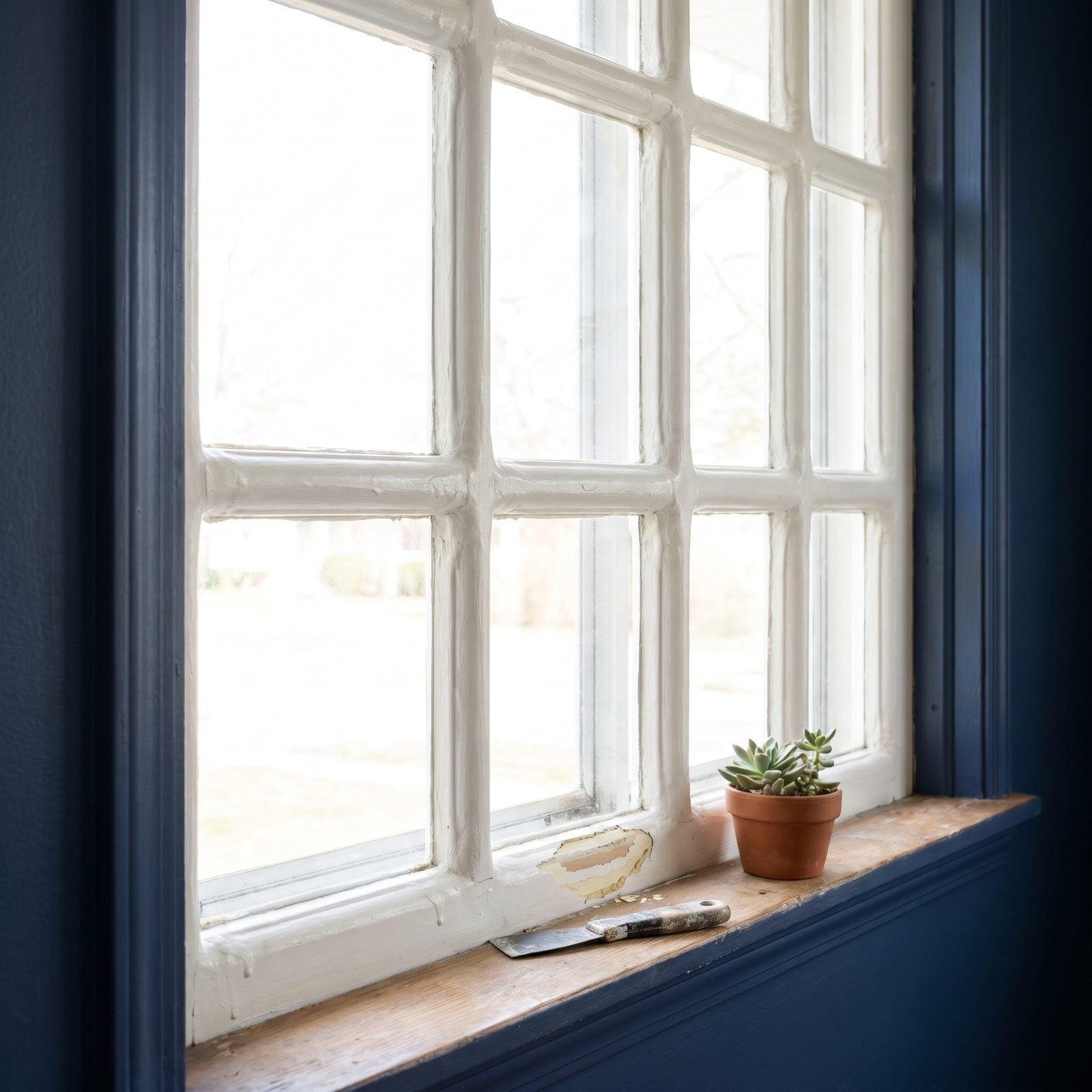
Look at the edges of your window muntins. If the once-sharp wood profiles have gone soft and rounded, like the detail is drowning, a painter is doing math in their head. Each coat adds thickness. Rounded edges mean five, six, maybe ten coats, each one brushed on without anyone sanding the last.
That buildup is an archaeology of everyone who owned the place before you. A painter who nicks a corner and finds a cross-section of stacked layers — cream over white over a faint green over something older still — is reading a decades-long habit of painting the easy way. Nobody scraped. Nobody sanded. They just kept adding. The thickness on your muntins is a record of every owner who chose the fast coat over the right one.
Why it matters now: thick, un-sanded paint cracks at the edges, chips off in sheets, and makes windows stick in their frames. On older homes those bottom layers may be lead, which drags the whole prep process from merely annoying to actually regulated. A painter clocks all of it from the profile alone.
14. Why a Painter Measures the Drop From Your Second-Story Eave to the Ground
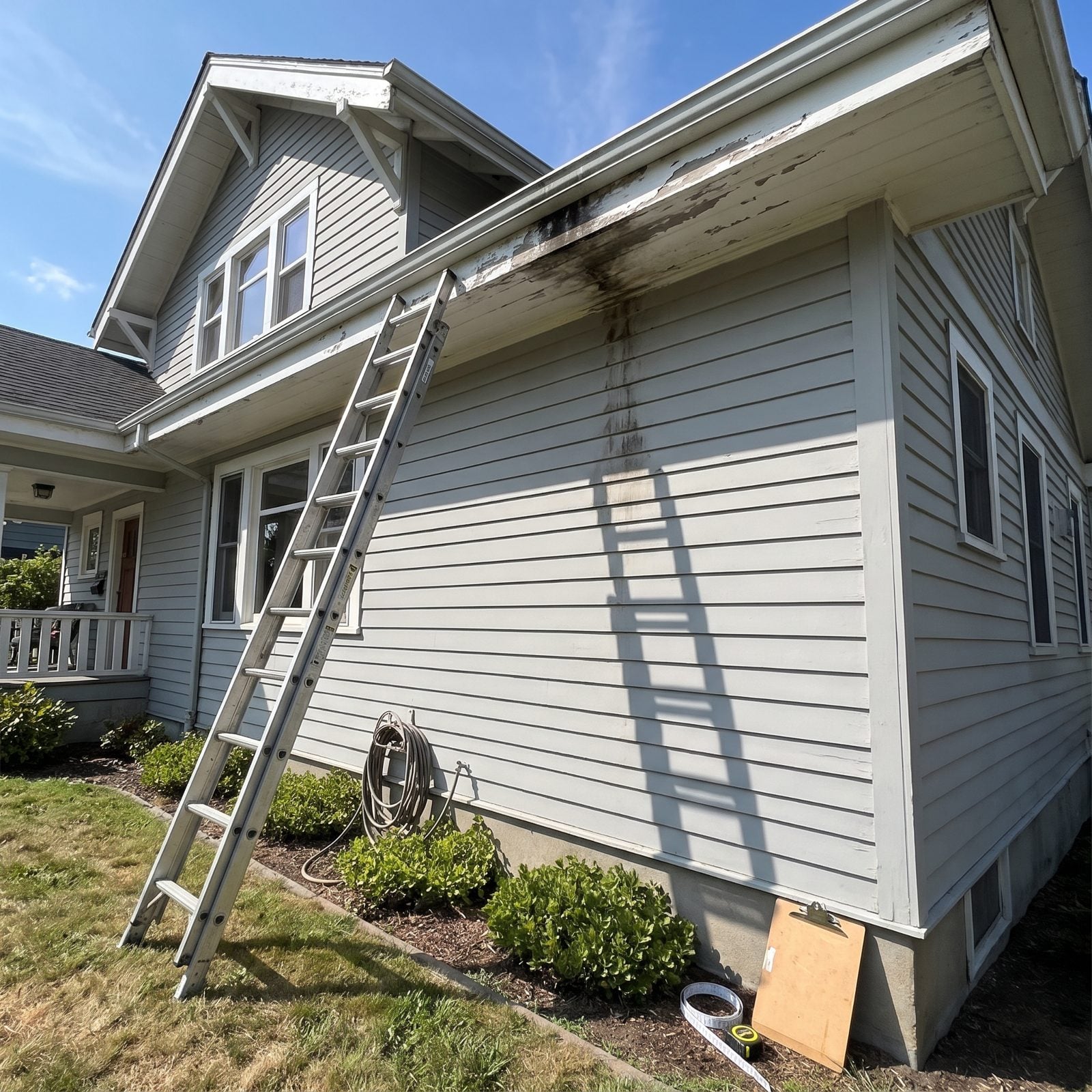
A painter pulling out a tape measure at the base of your house isn’t being fussy. They’re calculating risk, and risk is money. The vertical drop from your second-story eave to the ground, plus whatever’s crammed in the way at the bottom, decides how the job gets reached, how long it takes, and how much it costs before a single brush ever touches the fascia.
Height isn’t the only factor. It’s height tangled up with access. A flower bed packed with shrubs under the eave, a slope, a deck below, a bay window bumping out — all of it keeps the ladder from sitting where it should, which means scaffolding or a lift, which means the estimate climbs right along with the elevation. The hardest part of painting your house is often not the painting. It’s getting a human being safely to the part that needs it.
Skip this measurement and you’re the painter who shows up undersupplied, then either rushes the high work or quietly leaves it. Honest estimating starts with honest reach. When someone walks your perimeter with a tape pointed up, they’re pricing the ladders, the setup time, and the real difficulty of the spots you can’t see wearing out from down on the lawn.
13. The Powdery Film on Your Interior Trim, and What It Reveals About the Last Primer That Was Skipped
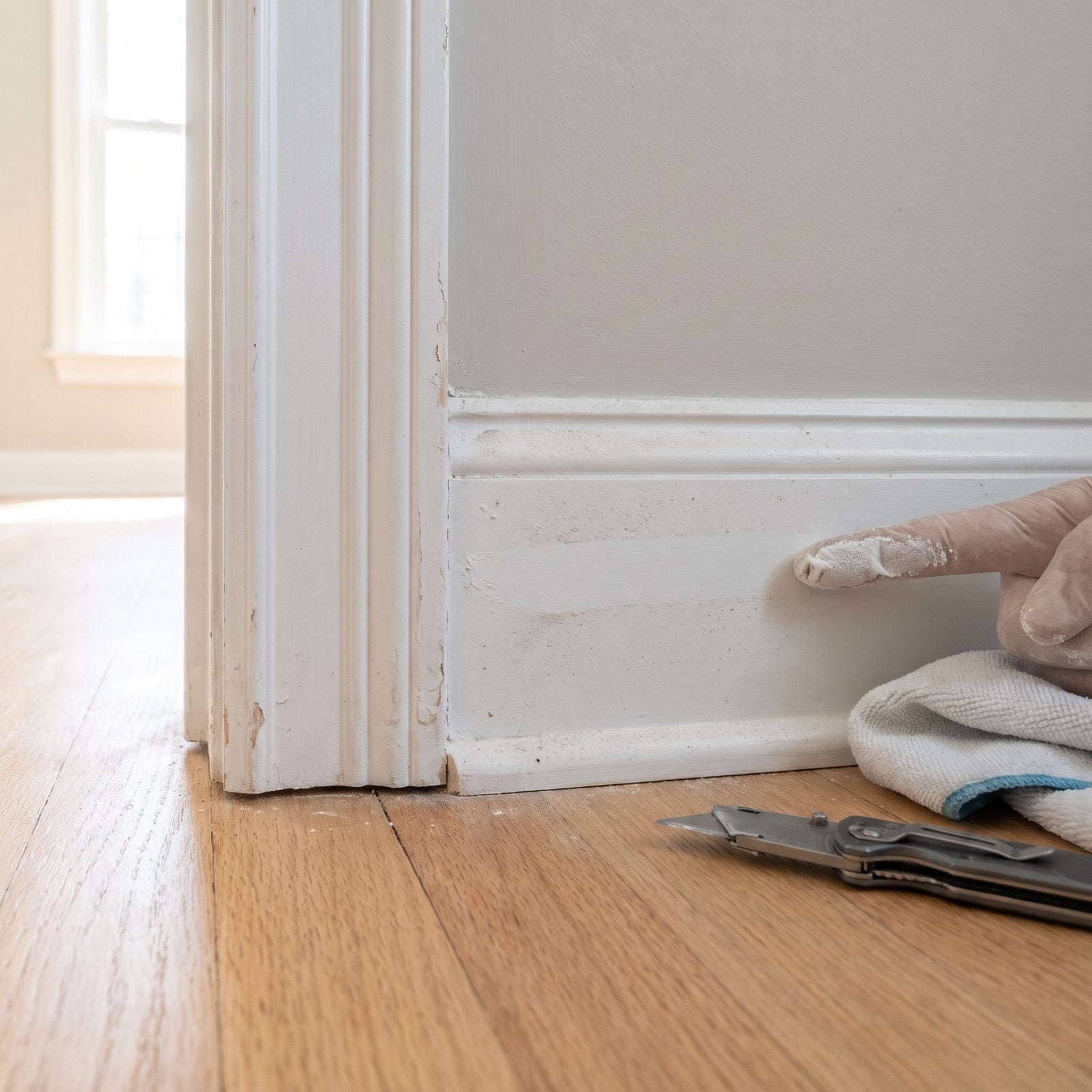
Run a finger along your interior trim and check your fingertip. If it comes away with a faint chalky dust, a painter already knows how your last job went. Somebody put color over a surface that was never primed or properly cleaned, the film never fully bonded, and now it’s powdering off onto your hand.
Chalking on interior trim usually means a glossy, slick old surface got recoated without being dulled and primed first. The new paint sat on top instead of keying in, and over time it degrades into that fine dust. Wipe and find powder, and you know painting over it again, as-is, just stacks a second failing coat on the first. That powder on your fingertip is the ghost of the primer step somebody decided to skip.
The read on you depends on the pattern. Powder everywhere means a whole-trim shortcut — probably a rushed flip, or a DIY weekend that ran out of steam right at the prep stage. Powder in only one room suggests a patch job done fast. Trim that stays clean under a firm wipe? Whoever painted last understood that adhesion is the entire ballgame. A good painter will clean, de-gloss, and prime before putting their name on a finish coat, because they know what the dust predicts.
12. What a Painter Notices About the Return-Air Grille Darkened Above Your Doorway
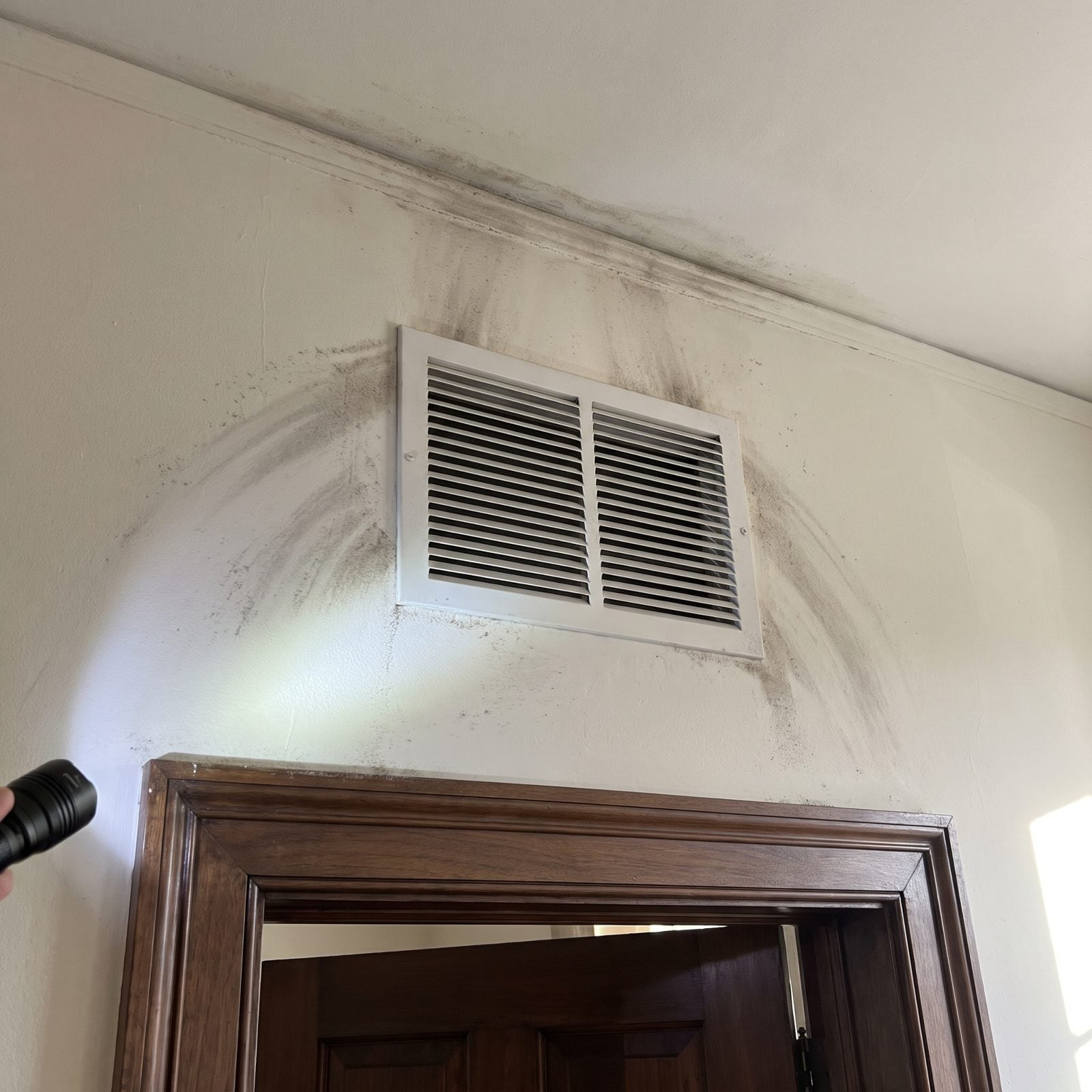
Above your doorway, around the return-air grille, the wall is covered in streaky gray-brown swipe marks that arc downward and outward toward the door casing. Most people stopped seeing it years ago. A painter catches it the second they walk in, and reads it as two things at once: a cleaning problem, and a hint about the air inside your house.
Return grilles pull air, and air carries dust, cooking residue, candle soot, whatever else is drifting around. Over years that particulate settles onto the paint right where the air moves fastest, which is why the staining radiates out from the grille in streaks that sweep down toward the door casing. The painter isn’t judging your housekeeping — honestly, nobody dusts above a door. They’re clocking that the stain will bleed straight through a fresh coat unless it gets washed and sealed first. Those gray streaks are a photograph of every particle your HVAC has pushed past that wall.
The variants matter. A greasy, yellow-brown film near the kitchen reads as cooking residue and needs degreasing before primer. A sooty gray stain reads as candles, a fireplace, or smoking. A light, even dusting? Nothing more than a dirty filter that hasn’t been changed in a while. Each one changes the prep, and a painter who just rolls over it is guaranteeing a callback the moment the stain reappears.
11. Why the Painter Scrapes a Test Patch on Your Garage Door Before Committing to a Color
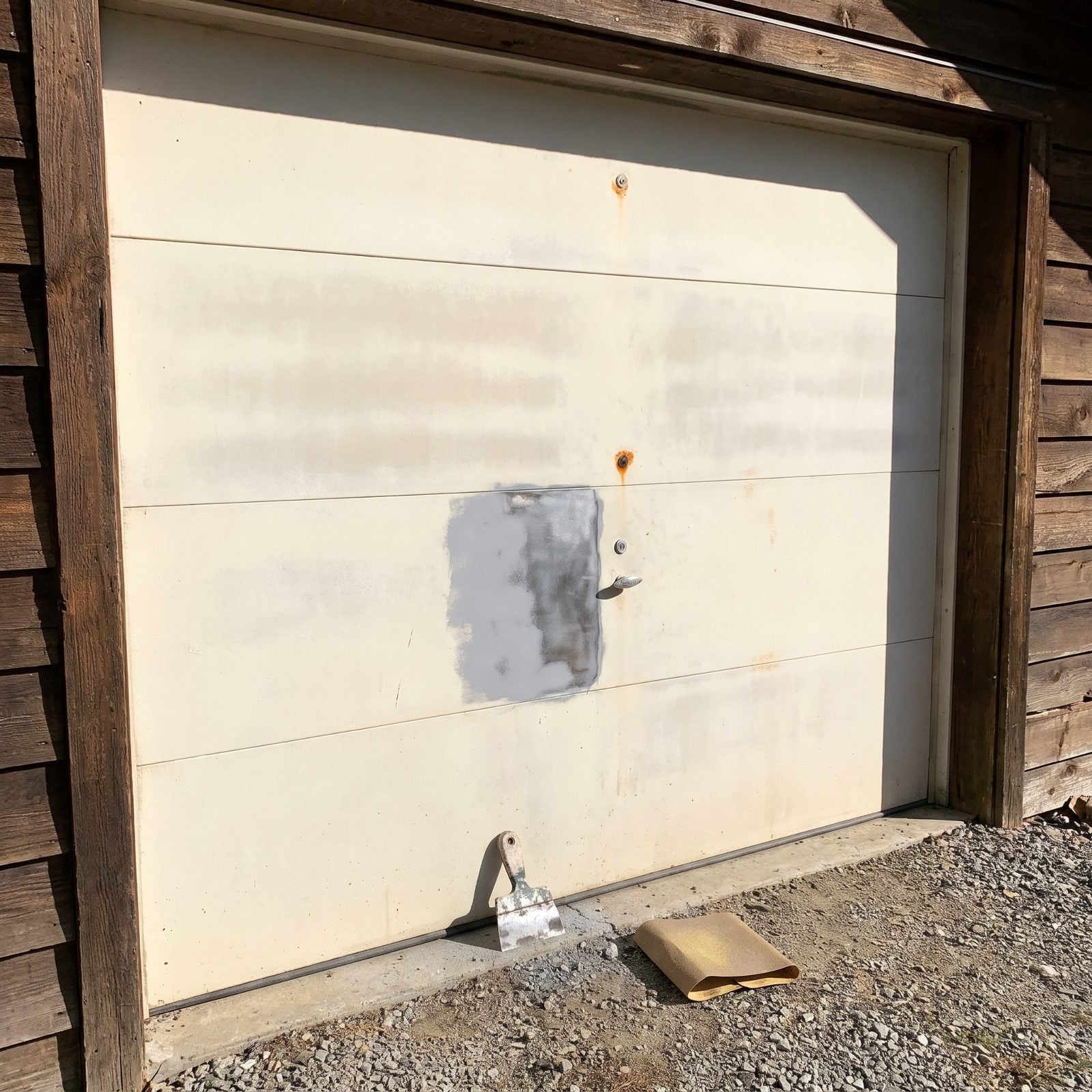
Before anyone talks color, a careful painter scrapes a small bare patch on your garage door. It looks like a shortcut taken backward. It’s the opposite. They’re testing whether what’s already on there will let a new coat stick, and whether the old color is quietly lying about what it used to be.
Garage doors cook. They often catch more direct sun than almost any other surface on the house, and that sun both fades the color and chalks the finish. So a painter scrapes a patch to check adhesion, count the layers underneath, and find the true original color hiding under the faded surface. The paint you think you’re matching has already shifted several shades lighter than the day it was sprayed.
The scrape tells the real story. If the old paint lifts off in the test patch, the whole door needs stripping and priming, and the estimate reflects it. Holds tight and just needs scuffing? Light prep. And if the scrape reveals rust creeping under the film at a fastener, that’s a spot that needs treatment before any color goes near it. A painter who commits to a color without that patch is guessing — and on the surface that takes the most abuse, guessing is how finishes peel within a year.
10. The Cracked Glazing Putty on Your Old Windows, and What It Confesses About Deferred Everything
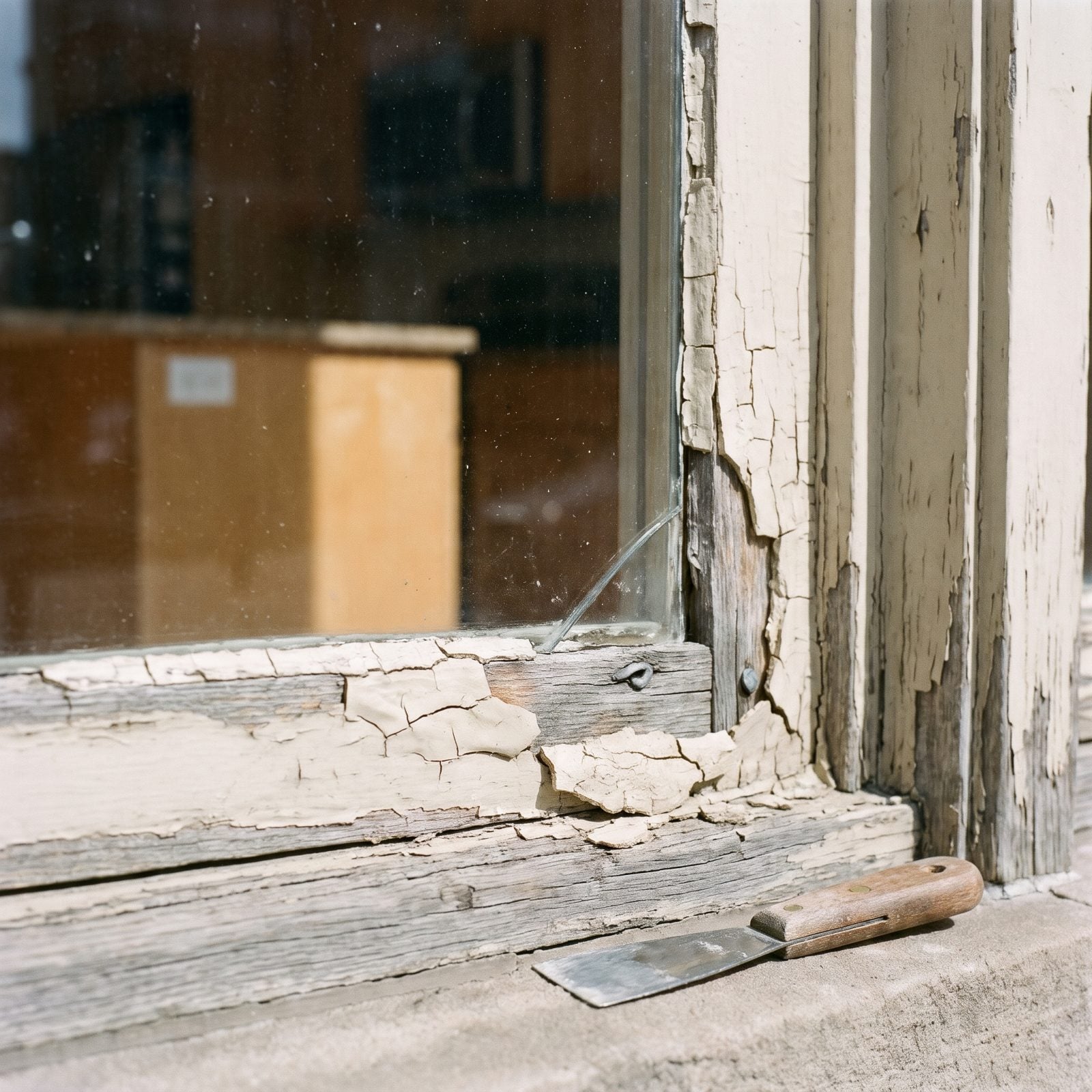
The putty holding the glass in your old windows has cracked, shrunk, and fallen away in places. A painter sees those crumbling beads and knows the windows haven’t been touched in a very long time — and probably a lot else hasn’t either. Glazing putty is the canary. When it goes, it’s usually the oldest unaddressed thing on the whole house.
Putty seals the glass and keeps water out of the sash. Once it cracks and drops out, water works into the wood, the paint fails from behind, and the sash starts to rot from the glass line down. A painter can’t just coat over missing putty. They have to reglaze first: dig out the old, bed new putty, let it cure, then prime and paint. That’s real time, and it surprises people. Cracked glazing is rarely alone, because the mind that let the windows get this far let other slow things slide too.
None of this is a scolding. Old windows are genuinely worth saving, and the putty work is a craft a good painter respects. But those cracked beads are a signal to look harder at sills, sash joints, and the paint on the lower rails, because deferred maintenance travels in packs. It doesn’t arrive one item at a time.
The oldest thing a house has let slide is usually sitting right where the glass meets the wood.
9. What the Stain Ghosting Through Your Last Coat Tells a Painter About the Marker, the Grease, the Smoke
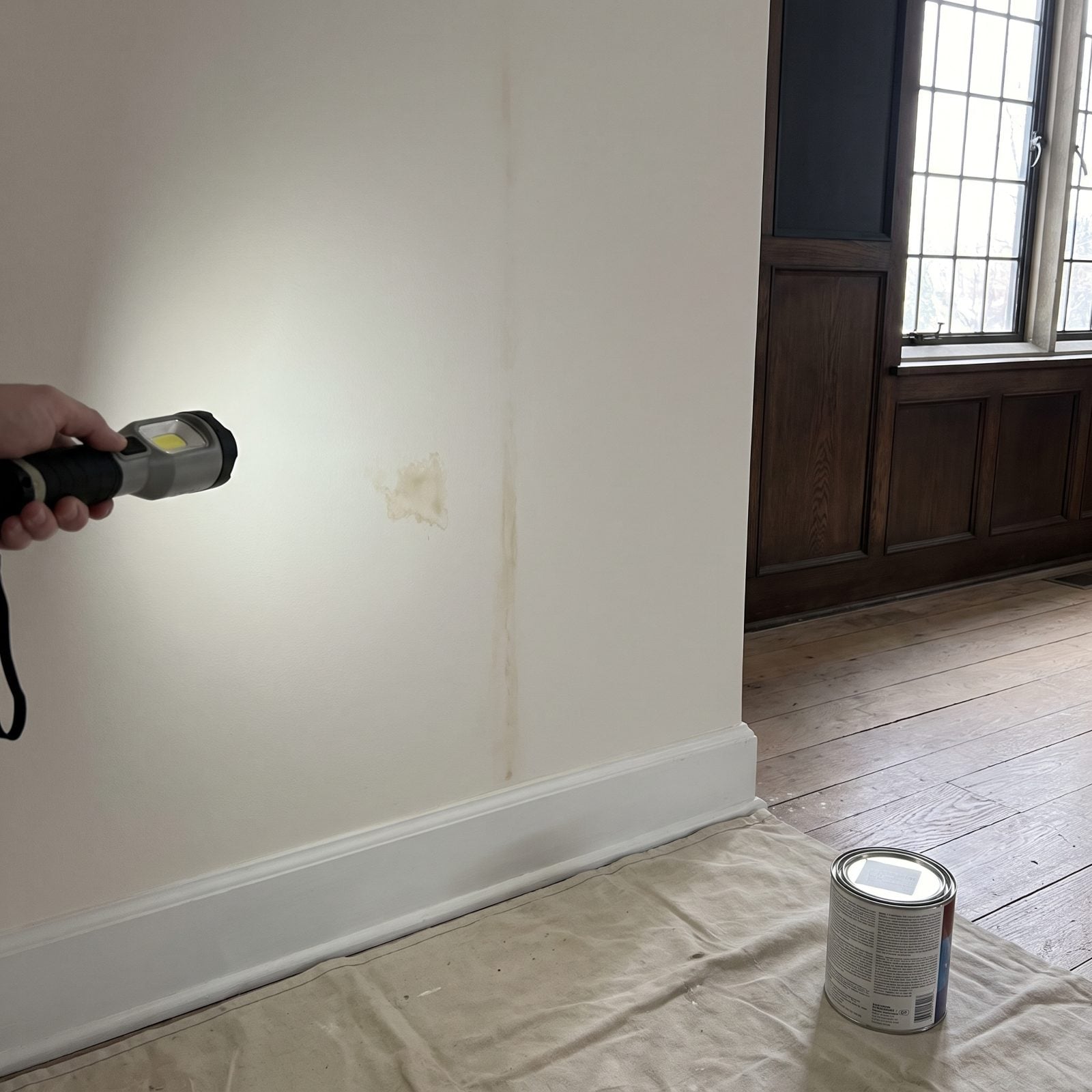
A faint shape is bleeding up through your fresh paint. A brownish streak, a yellow blotch, the outline of something that was supposedly covered. A painter sees that ghosting and knows exactly what happened: someone painted over a stain without blocking it first, and the stain won.
Some stains are water-soluble, so the water in a fresh coat reactivates them and pulls them right back up to the surface. Marker, grease, nicotine, smoke, water damage, tannin bleeding from a knot in wood. Regular paint won’t stop them — not even three coats of it. Only a dedicated stain-blocking primer seals the stain off so it can’t migrate. Every ghost on your wall is proof that someone tried to hide a problem instead of sealing it.
The specific ghost tells its own story. A sharp-edged line is usually marker or ink a kid left behind. A soft yellow-brown wash across a whole wall reads as nicotine from years of smoking. A greasy bloom near the kitchen is cooking oil. A ring with a defined border is old water damage, and that one means the painter should check whether the leak that caused it is actually fixed — because paint over an active leak is just a slower version of the same stain. A painter who understands ghosting primes first, every time. The one thing you can’t paint your way out of is a shortcut the last coat already tried.
8. The Spongy Soft Spot a Painter Finds in Your Window Casing
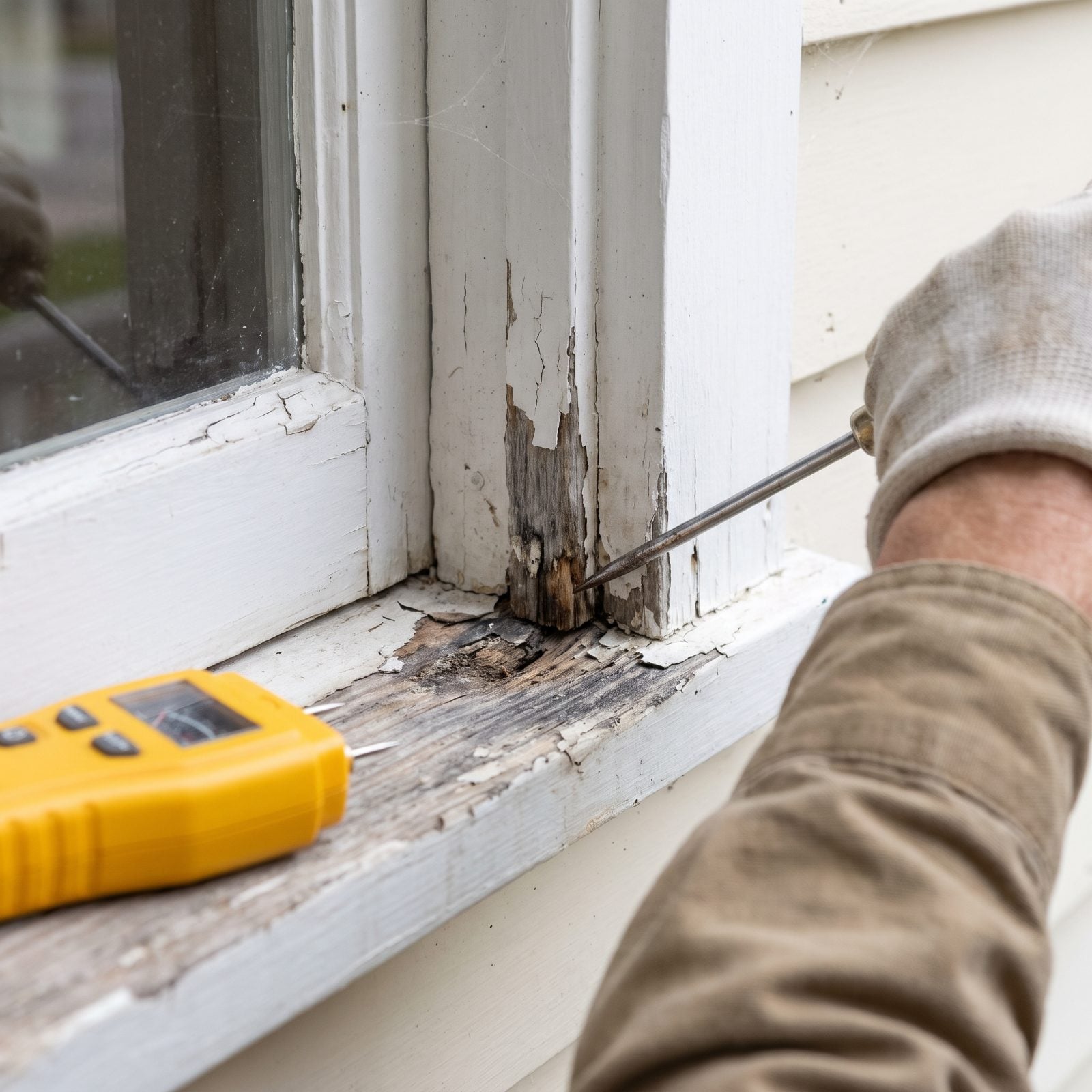
A painter never trusts a window casing by looking at it. They press it. The awl goes into the bottom corner where the sill meets the vertical trim, and if the point sinks like it’s going into cork board, the conversation changes right there.
That sponginess is rot. Rot means water has been getting behind the paint for a long time, probably through a failed caulk joint or a dried-out glazing bead. Paint cannot fix this. Paint over soft wood and you just seal the moisture inside, buying one good-looking season before it bubbles again. The painter who finds that soft spot is already recalculating, because now there’s carpentry, epoxy consolidant, or full sill replacement sitting between you and a finish coat.
Firm wood with cracked paint is the easy case — scrape, sand, prime, done. Wood that reads 18 percent or higher on the meter but still feels solid means you dry it out before painting or you trap the problem. And wood soft enough to crumble under a thumbnail? The casing is past saving, and the honest painter tells you that instead of brushing a pretty lie over it.
7. What the Tannin Bleed on Your Cedar Reveals About the Wood You Painted Too Soon
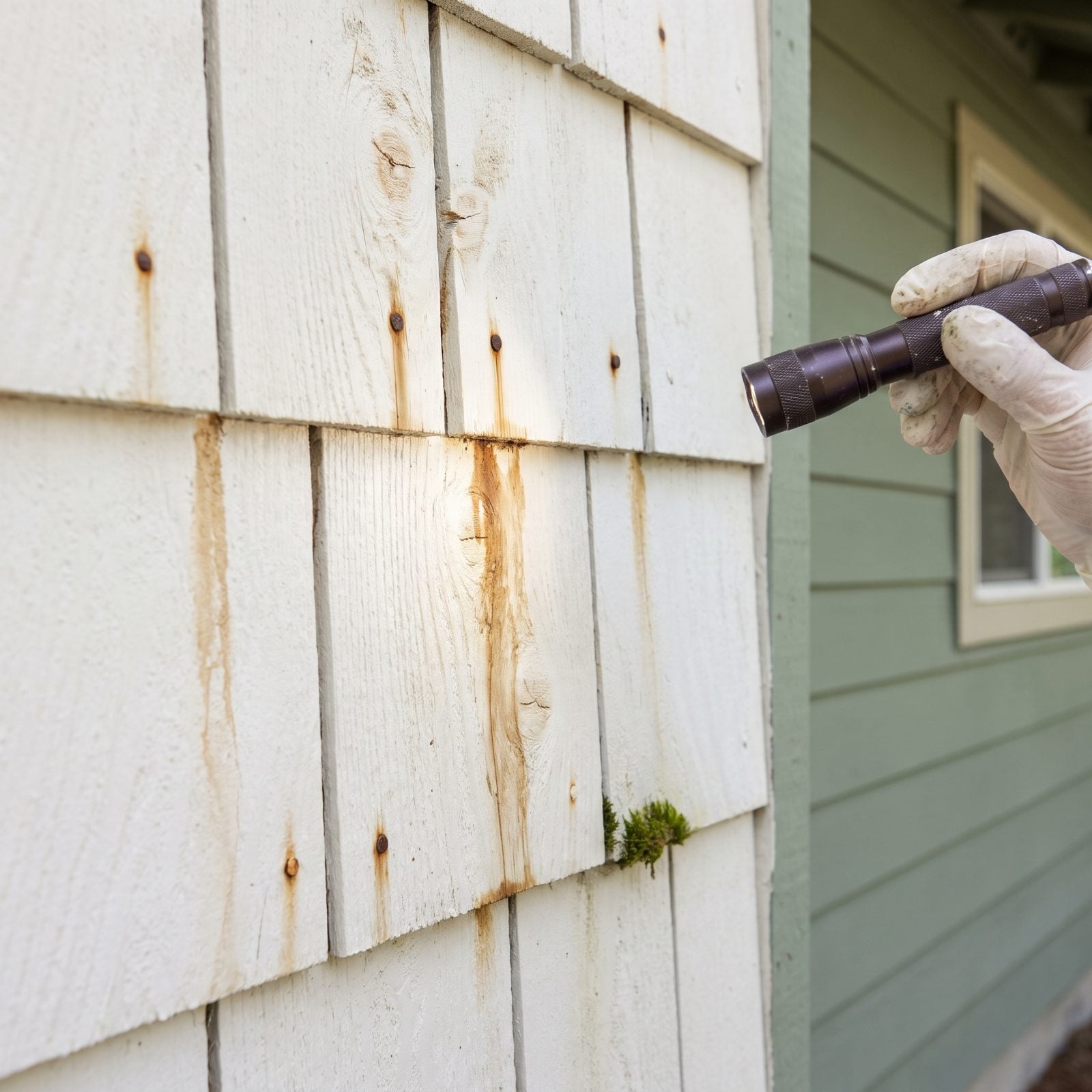
Those amber streaks weeping down your white trim aren’t dirt. A painter reads them in a second: tannin bleed, the wood’s own oils rising straight through the paint and staining it from behind.
Cedar and redwood are loaded with tannins, and tannins dissolve in water. When the wood gets painted damp, or sealed with the wrong primer, moisture carries the tannin to the surface and parks it there as a brown halo around every knot and nail. A painter seeing this knows the previous coat went on too soon — over wet wood, or without a stain-blocking primer. It’s one of the most common screwups on new cedar.
Faint overall yellowing means mild bleed, usually fixable with a shellac-based or oil stain-blocking primer and a fresh topcoat. Sharp brown streaks radiating from knots mean the knots were never spot-primed, and they’ll keep ghosting through until somebody seals them properly. Rust-ringed stains around nail heads? The fasteners are corroding too, and those need priming or replacing before paint goes anywhere near them. Tannin bleed is the wood telling on whoever painted it last, and it never lies.
6. Why the Painter Asks What Year the House Was Built Before Scraping Anything
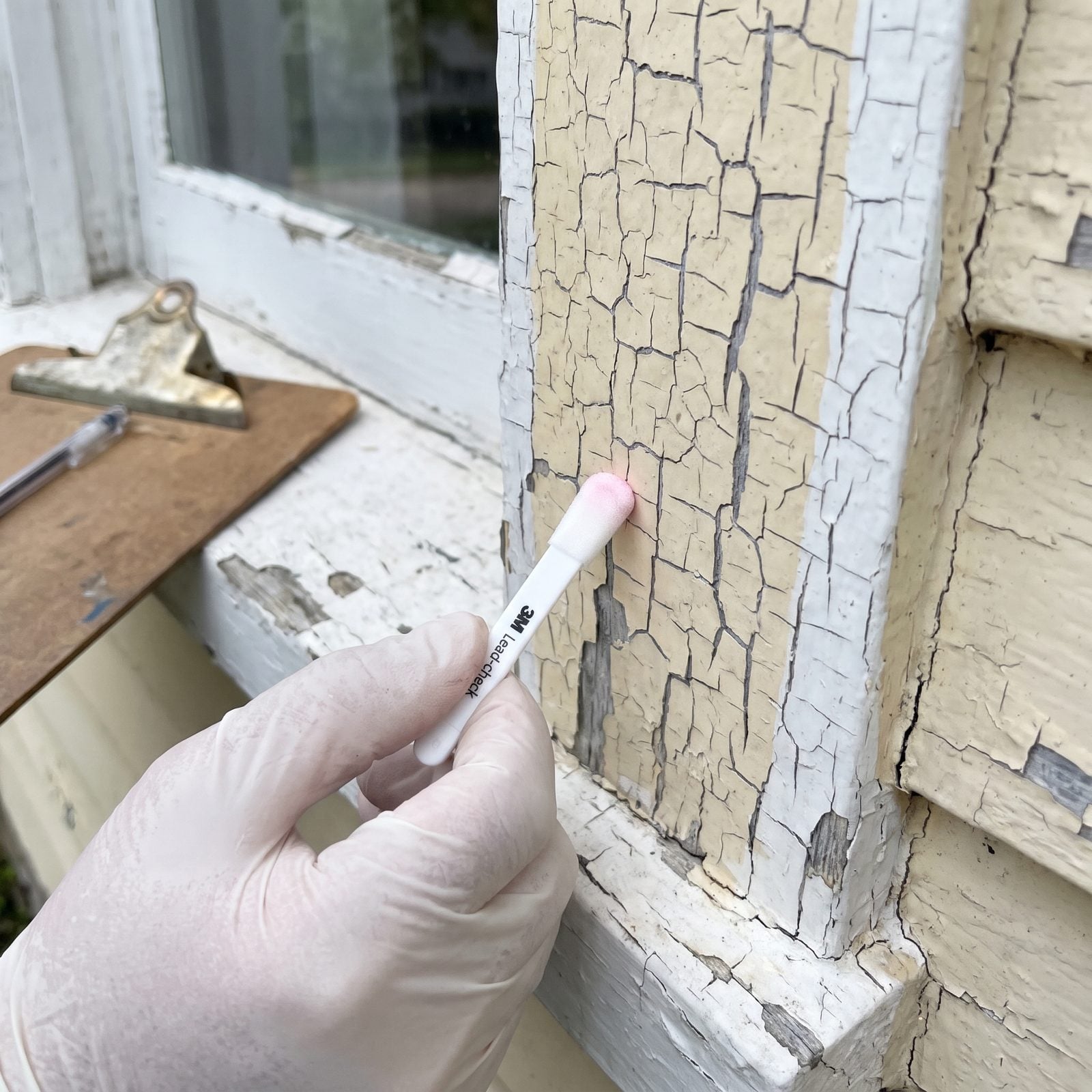
It sounds like small talk. It isn’t. When a painter asks the age of your house, they’re deciding whether the next move is a scraper or a lead test kit.
Homes painted before 1978 very likely carry lead paint under the newer coats, and the federal RRP rule changes everything about how that surface gets handled. Dry-scraping lead paint into your flower beds is illegal for a certified contractor and genuinely hazardous for your family. So the age of the house isn’t curiosity. It’s the fork that decides containment, certified crews, HEPA cleanup, and a whole different line on the estimate.
A house from the 1990s or later usually gets a straightforward prep. A 1950s or 1960s place triggers a lead swab on the exposed layers before any aggressive scraping begins. And that tight alligator cracking in old paint — regardless of year — tells the painter there are many old coats stacked up, which in a pre-1978 home is exactly where lead hides.
The painter who asks about the year is the one planning to keep your kids out of the dust.
5. The Hollow Sound Behind Your Plaster Wall, and What It Says About the Repair You Keep Postponing
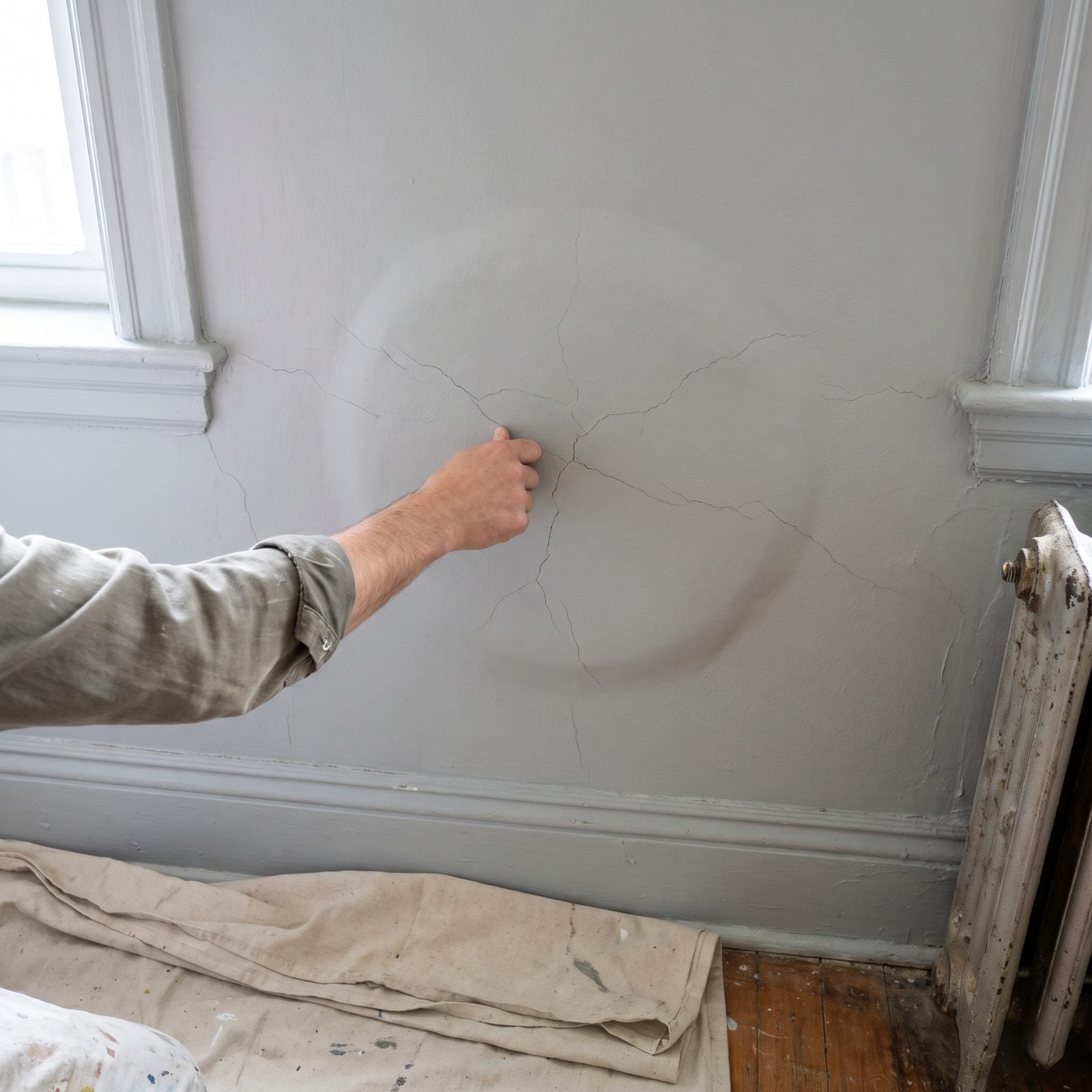
Watch a painter walk a plaster room and you’ll notice they tap. Knuckles to the wall, listening. A solid wall answers with a dull thud. A dead, hollow drum means the plaster has let go of the lath behind it, and no amount of paint hides what’s coming.
That hollow spot is a repair you’ve been deferring, probably for years, because the surface still looks fine from across the room. But loose plaster flexes, and flexing plaster cracks paint on a schedule of its own. A painter who hears that drum knows they can’t just skim and coat. The plaster needs re-anchoring with washers and screws, or a section cut out and patched, before the wall is honest enough to hold a finish.
Tight hairline cracks over solid-sounding plaster are cosmetic — mesh tape and a skim coat handle them. A hollow bulge with cracks radiating out means active separation, structural prep territory. Crumbling edges that rain grit when tapped mean the plaster key behind the lath has failed entirely. The crack you keep painting over isn’t the problem. It’s the receipt for a problem living behind the wall.
4. What a Painter Reads in the Yellowed Film on Your Kitchen Ceiling
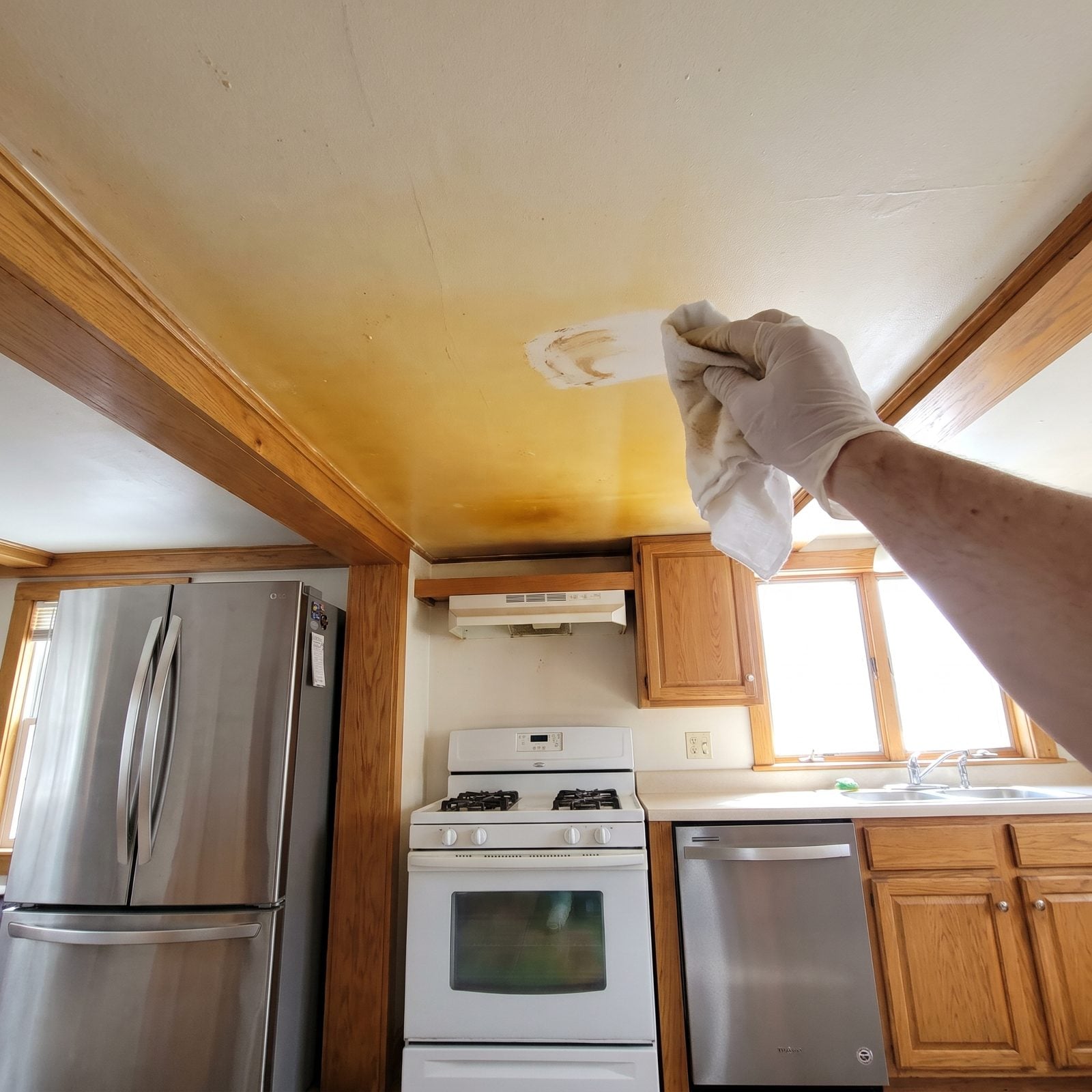
Run a damp white cloth across your kitchen ceiling and it comes back tan. That greasy, nicotine-yellow film above the stove is airborne cooking residue — oil vapor that drifts up and settles over years of dinners. A painter spots it the moment they look up, and that cloth test is the whole story.
Here’s why it matters. Fresh paint won’t bond to grease; it beads and peels like water off a waxed car. The yellow bleeds too, so even a brilliant white coat ghosts back to amber within weeks unless the ceiling gets degreased and sealed with a stain-blocking primer first. A painter who skips that step is painting a ceiling that fails on a clock.
A faint even yellowing across the whole ceiling is general cooking haze — a good TSP wash handles it. A dense amber halo directly over the range means heavy frying and no exhaust fan, and that zone needs real degreasing plus a shellac-based primer. Brown drip streaks near a ceiling fixture mean grease has mixed with condensation, a sign your ventilation gave up a while ago. If the kitchen is the hardest-working room in the house, the ceiling is where it keeps the records.
3. Why the Painter Counts Your Outlets, Sconces, and Railings Before Quoting a Dime
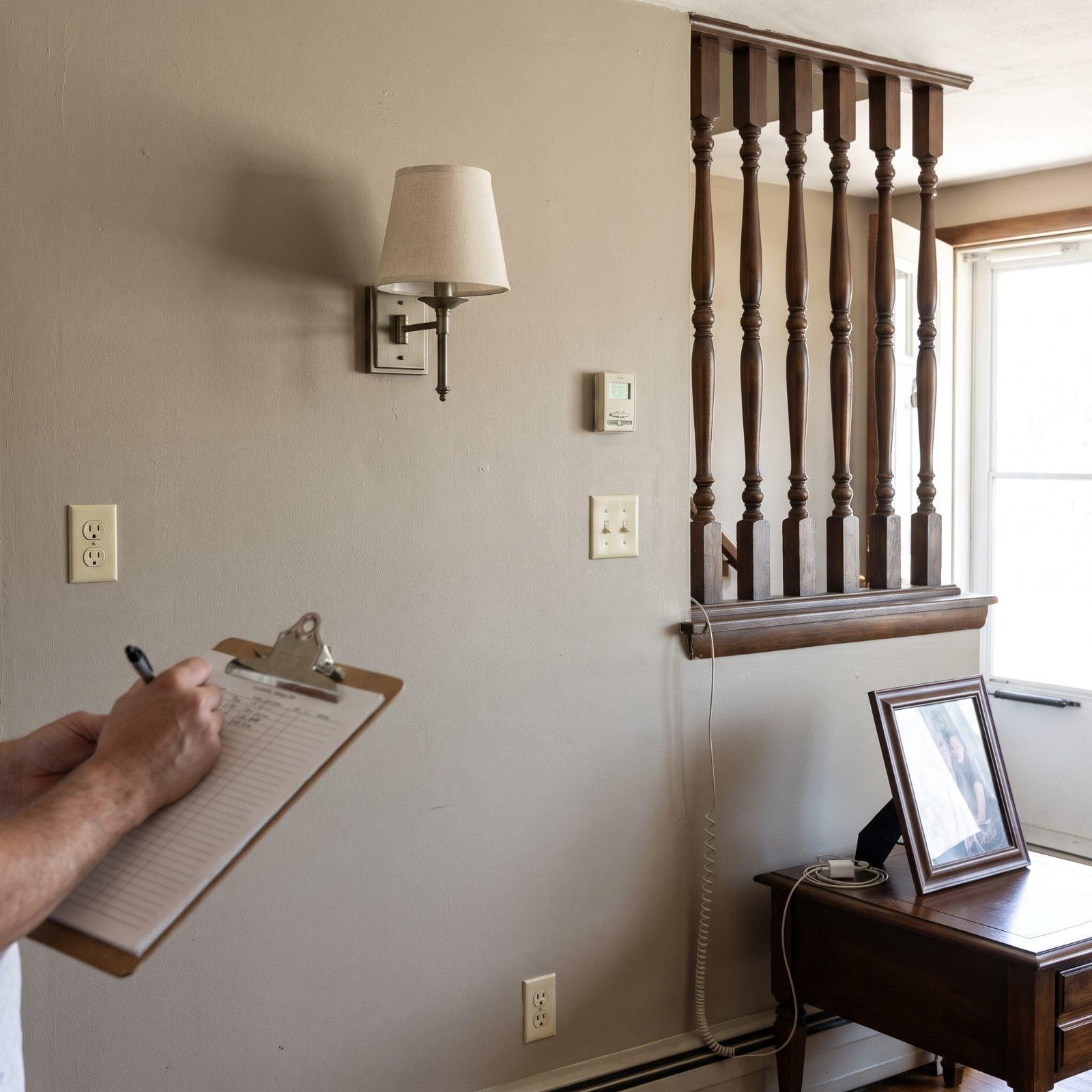
Flat wall is the cheapest paint on earth. Everything sticking out of it is where the money goes. A painter walks your rooms tallying outlets, switch plates, sconces, vents, railings, and every spindle on your staircase, because each one is a cut-in, a mask, a removal, or a brush-by-hand detail no roller can touch.
Why count them? Square footage lies. Two rooms of identical size can differ by half a day of labor based purely on how many objects the painter has to work around. A plain hallway rolls out fast. A staircase with thirty turned balusters is slow, fiddly, hand-brushed work that no sprayer solves cleanly.
A room with four outlets and a ceiling light is a quick quote. Add crown molding, wainscoting, and built-in shelving and it’s a labor estimate, not a paint estimate. A stairwell with spindle railings and a two-story wall is where the painter starts thinking about scaffolding, cut lines, and whether your ceilings are nine feet or fourteen. A reading nook off a bright home office with floating shelves and a picture rail will cost more per square foot than the office itself — and the honest painter can tell you exactly why.
2. The Efflorescence Crusting Your Basement Wall, and What It Reveals About Water You Pretend Isn’t There
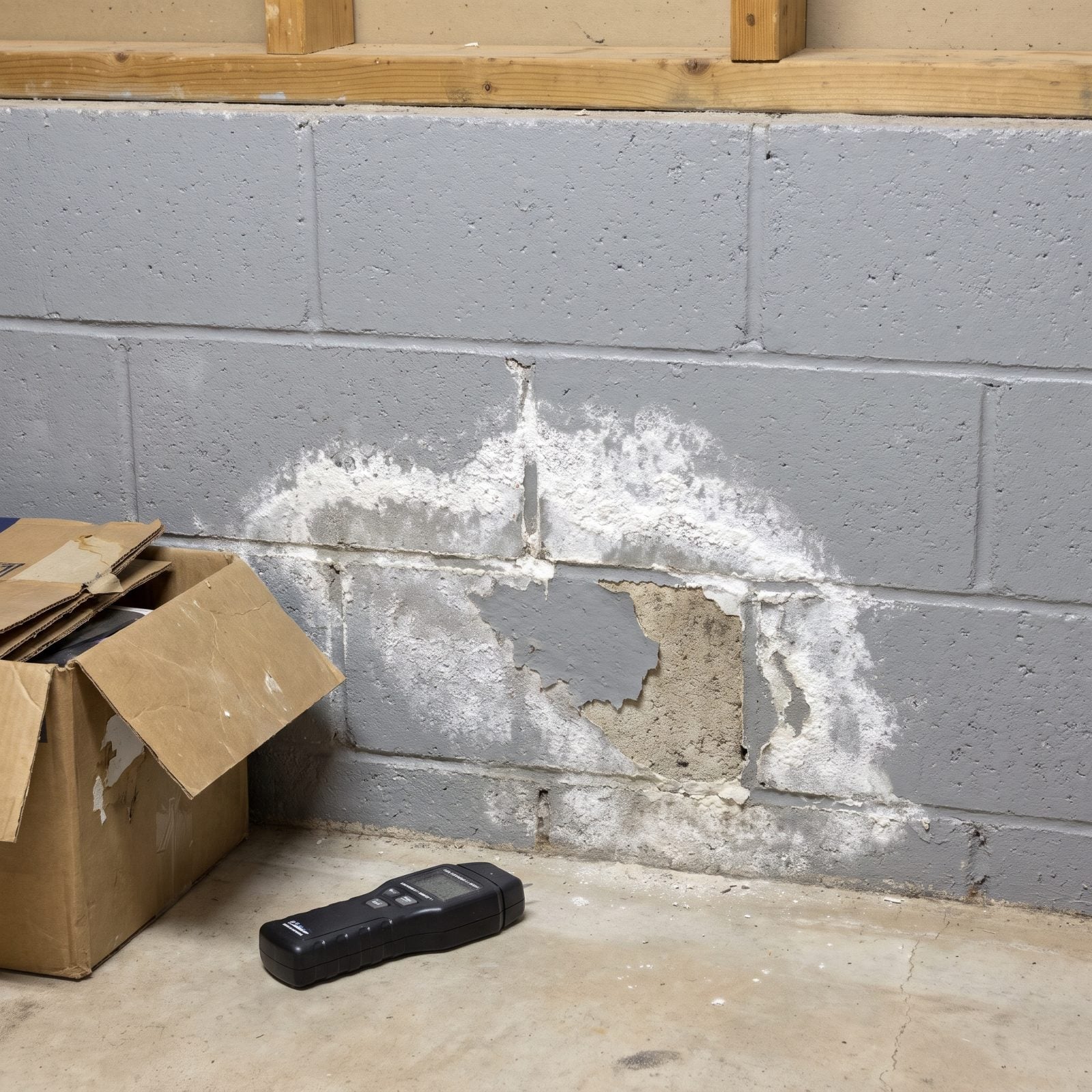
That white powdery crust blooming across your basement block isn’t mold, and it isn’t harmless dust. It’s efflorescence — mineral salts left behind as water moves through the concrete and evaporates on the surface. A painter sees it and knows immediately that water is coming through that wall, whether you’ve admitted it or not.
This is the item people most want to argue about. The basement “isn’t really wet,” the crust “has always been there.” But efflorescence is proof of moisture migration, full stop. Paint over it and the salts keep crystallizing underneath, shoving the coating right off the wall in sheets. Seal efflorescence without touching the water source and you’re signing up to come back in a year.
A light dusting near the floor is occasional seasonal dampness, manageable with a wire-brush cleanup and a masonry waterproofing coating. A thick advancing crust with paint flaking off means active, ongoing water intrusion that painting alone will never beat. Blistered paint with salt rings behind it means hydrostatic pressure, and that’s a drainage and grading conversation, not a paint one. A finished basement rec room or big home gym built over untreated efflorescence is a problem waiting to resurface.
Explaining where that white crust comes from, a masonry painting contractor writes: “Efflorescence happens when water moves through masonry, carrying salts to the surface. Once the water evaporates, those salts stay behind.”
1. Why a Painter’s First Walk-Through Says More About You Than Your Answers Ever Could
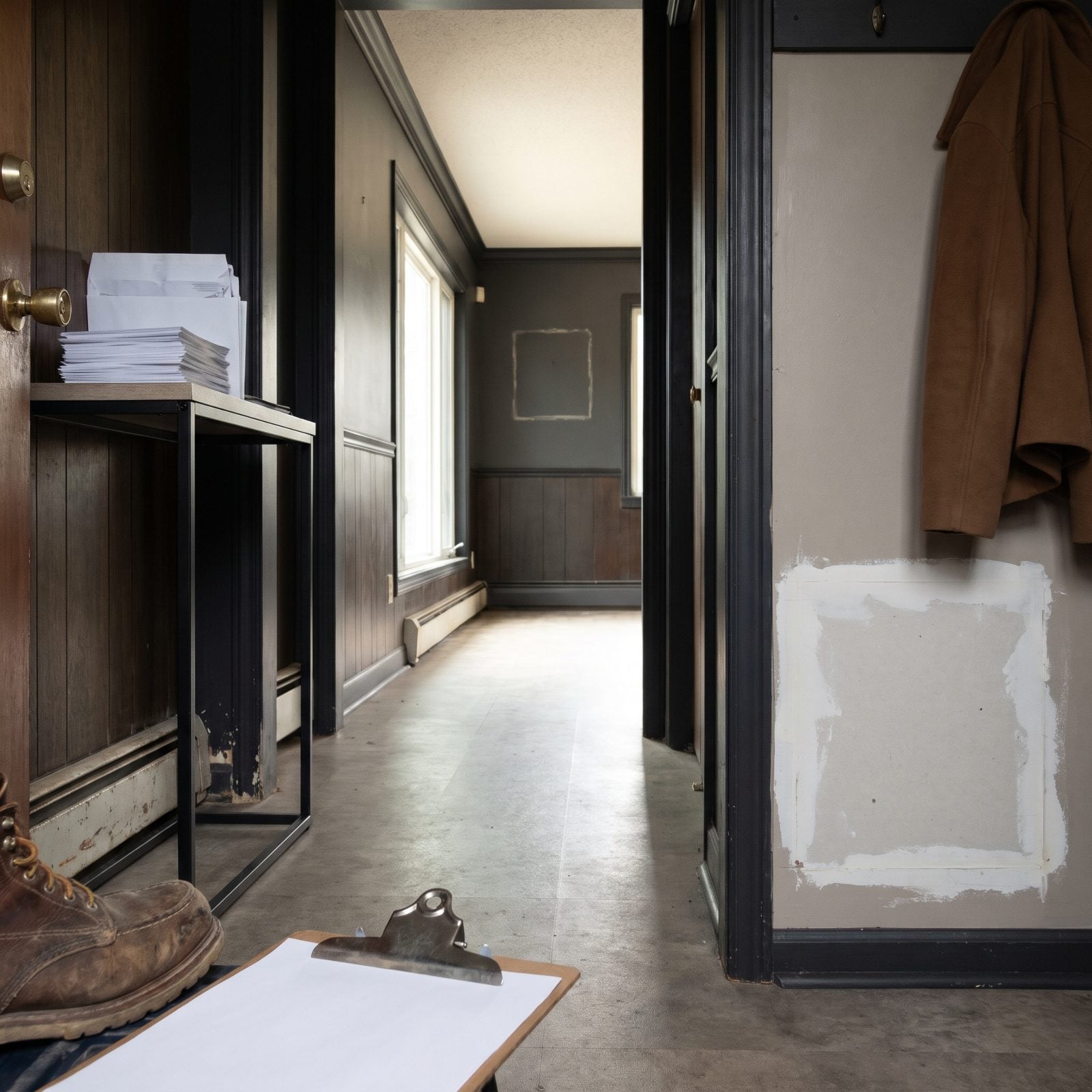
Here’s what no painter will say to your face. By the time they’ve walked from your front door to your kitchen, they’ve already read you. Not from your answers — from your thresholds, your deferred patches, that pale rectangle on the wall where a frame used to hang.
A walk-through is the painter learning what kind of client you are. The sanded-but-unpainted drywall patch tells them you start projects. The fact that it’s still unpainted tells them you don’t always finish them. The scuffed baseboard by the door, the touch-up that doesn’t quite match, the ceiling stain you’ve stopped noticing — each one is a small confession about how you live with your house and what you’ve made peace with.
None of it is judgment. It’s calibration. A client with precise expectations and a spotless home needs a different conversation than one who just wants the place to look alive again. The painter is matching their estimate, their prep, and their honesty level to the person standing in front of them. A home with bold color commitments — a coral home office already pulled off well — says you have taste and opinions. A home of white rentals held in limbo says you’re waiting for permission to commit.
You think you’re interviewing the painter. The painter is reading the house, and the house has already answered.