
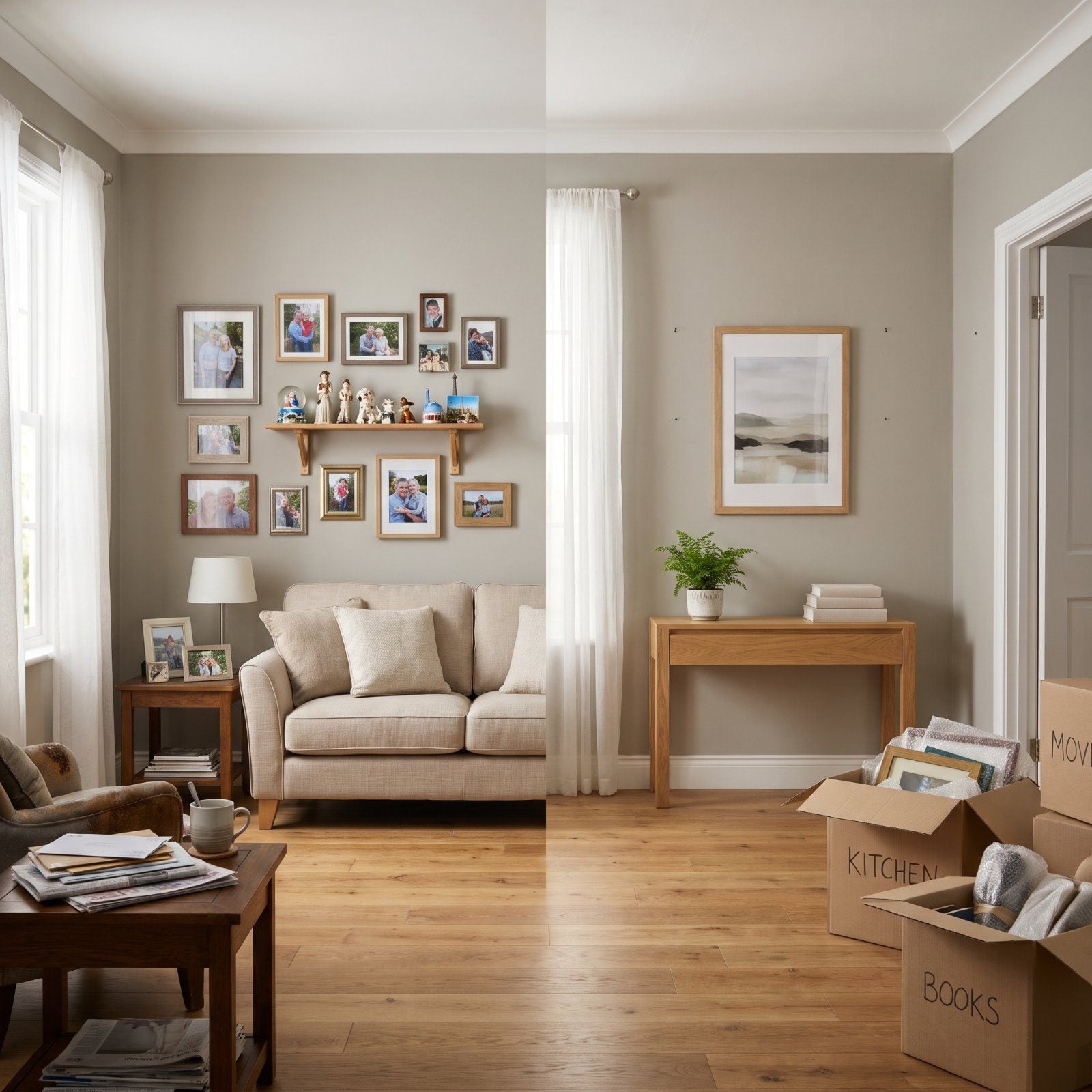
A buyer walks into your living room and meets your face forty times before they notice the crown molding. That’s the problem. Every personal thing on display asks the buyer to be a guest in your house instead of imagining it as theirs, and stagers know this cold. They strip these items out before the first photo gets taken. The goal isn’t to erase you — it’s to hand over a space blank enough that the buyer can picture their own life filling it. Here’s what comes off the shelves, out of the cabinets, and into a box in the garage.
47. The Wall of Forty Faces: Family Photo Galleries
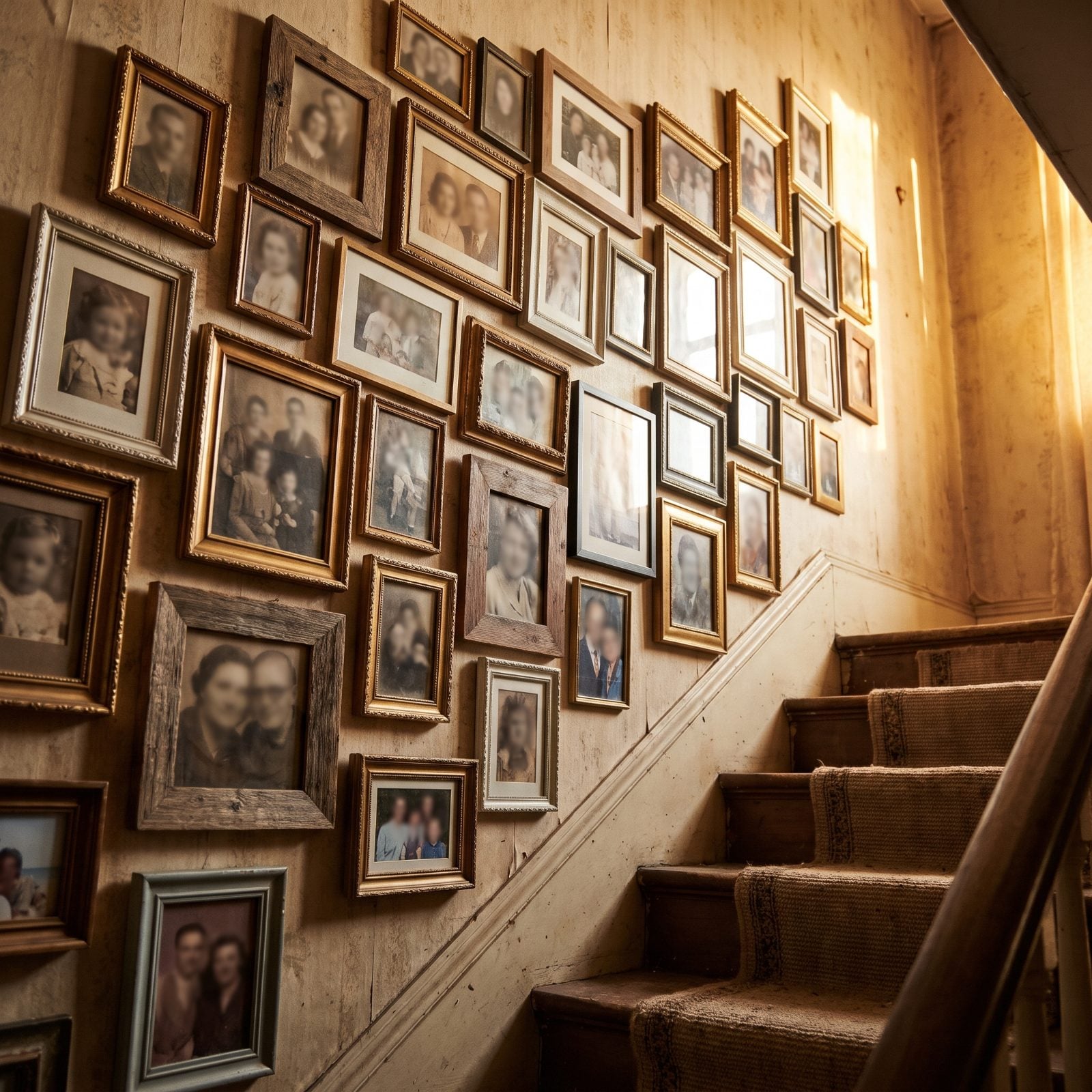
Thirty frames marching up a staircase is a love letter to your family. It’s also the first thing stagers box up, because buyers stop reading the architecture the second they start reading faces. The wall stops being a wall. It becomes somebody else’s biography.
In order to come up with the very specific design ideas, we create most designs with the assistance of state-of-the-art AI interior design software. Also, assume links that take you off the site are affiliate links such as links to Amazon. this means we may earn a commission if you buy something.
Pull the frames, patch the nail holes, and hang one neutral print if the space needs an anchor. Suddenly the eye travels the stair line instead of snagging on your 2009 beach trip, and the space reads as available.
46. Fridge Art and Macaroni Masterpieces: Children’s Projects
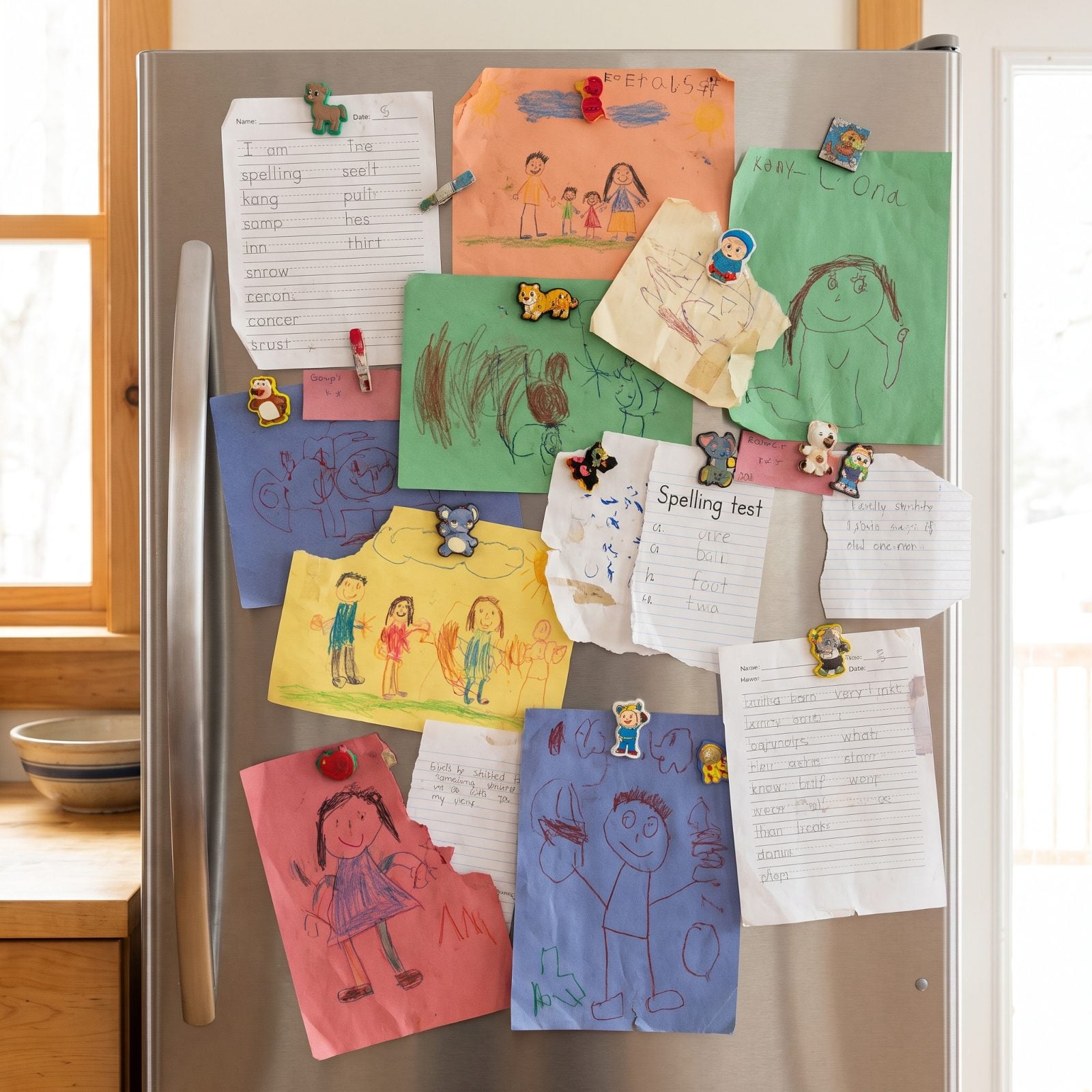
A fridge papered in crayon suns and spelling tests tells a sweet story. The wrong one, for selling.
What buyers actually see is a busy family’s command center, and the clean lines of your appliances vanish behind it. Clear the door, hide the magnets, and that stainless fridge goes back to being a selling feature instead of a bulletin board.
45. Yard Signs and Bumper-Sticker Politics
Half your buyers agree with your yard sign. The other half just decided they don’t like your house. That math never works in your favor.
Anything that signals a side has to go — signs, stickers, framed causes, the mug on the desk. Neutral doesn’t mean you have no beliefs. It means the house isn’t picking a fight with the person holding the checkbook.
44. The Mail Pile and the Paperwork Shuffle
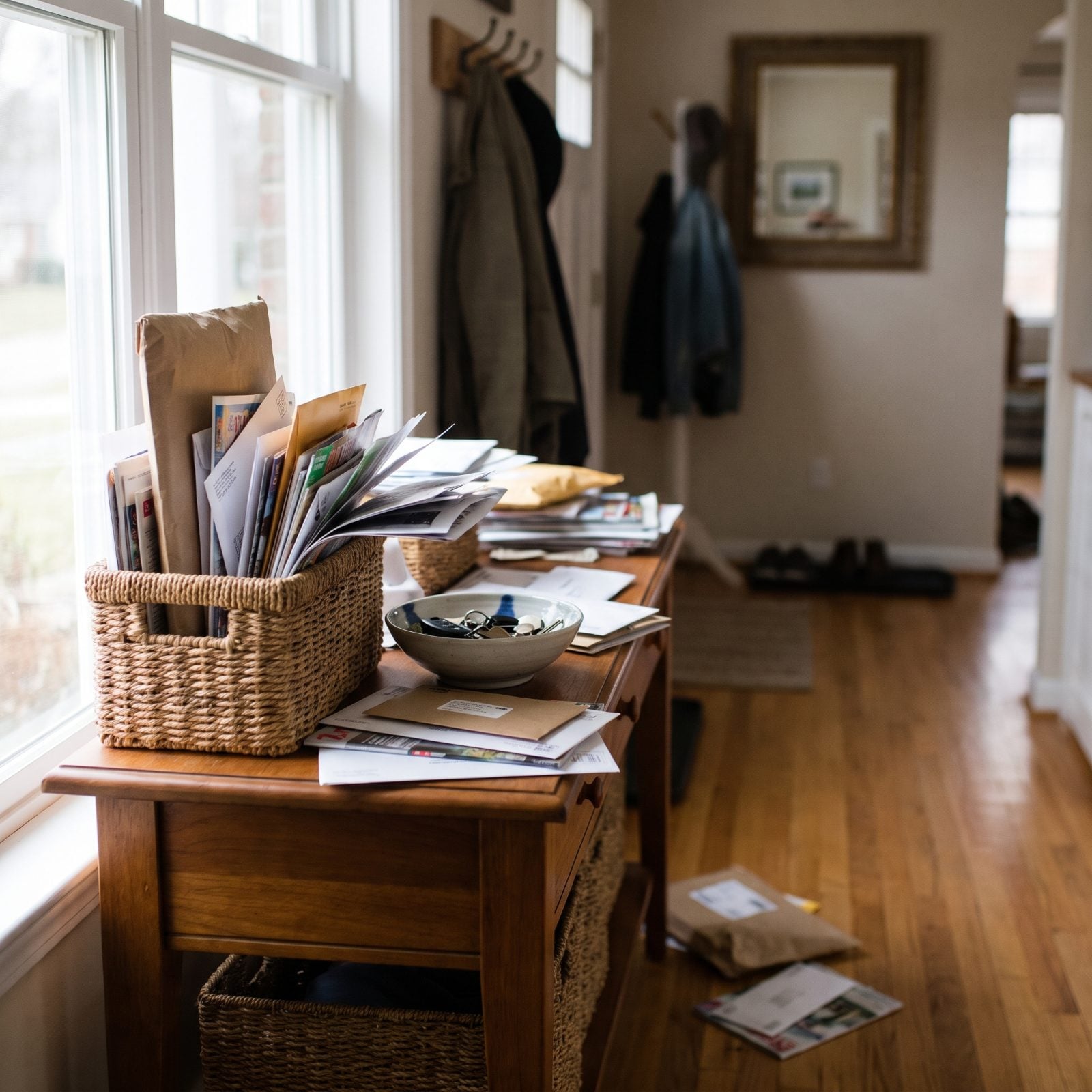
That tidy little mountain of envelopes by the door does two bad things at once. It screams clutter, and it leaves your name, your bank, and your business sitting in every listing photo.
So stagers clear every flat surface of paper. A clean desk reads as calm and capable, and it keeps strangers from reading your mail during an open house — which happens more than you’d think.
43. The Medicine Cabinet Buyers Will Absolutely Open
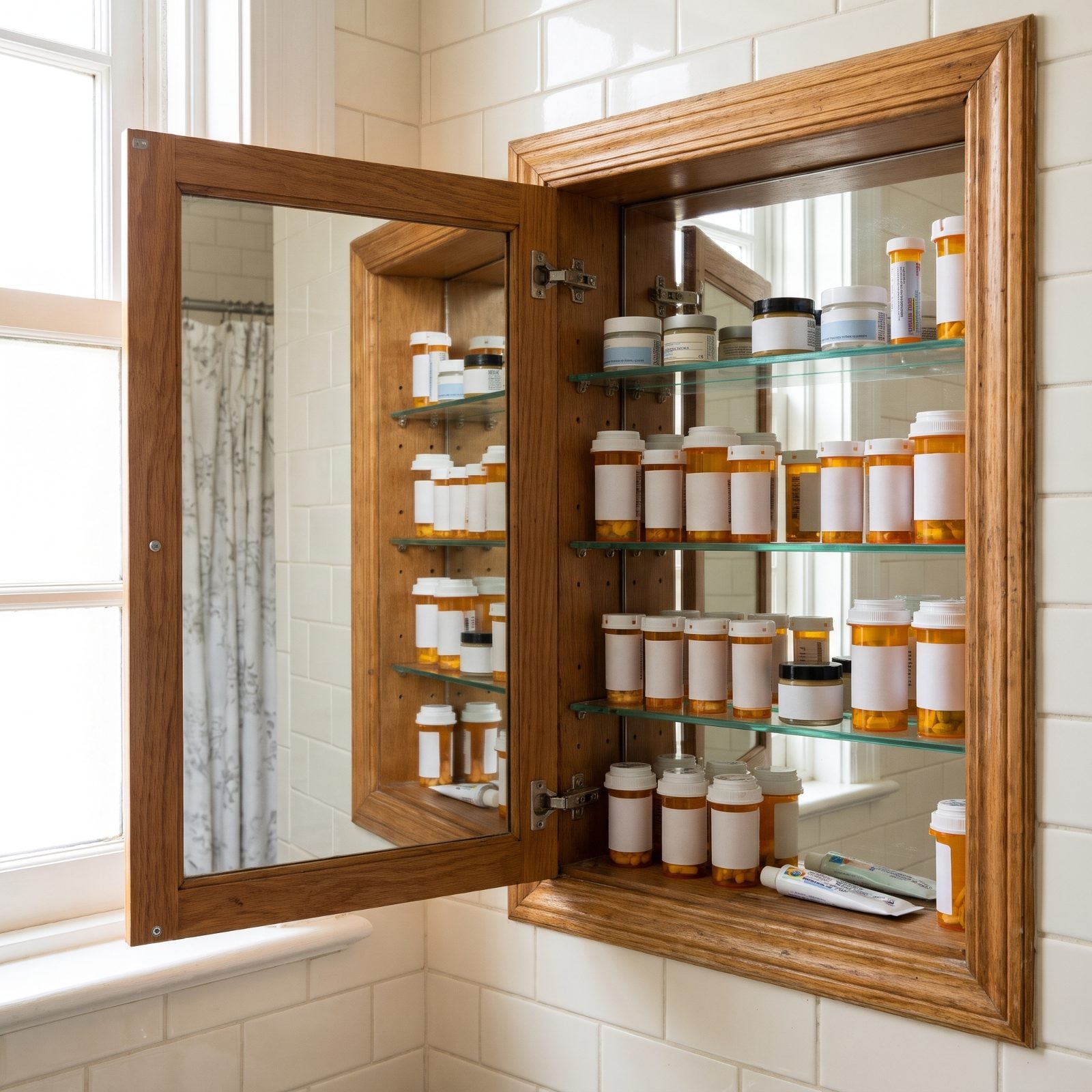
Open houses have a dirty secret: people open the medicine cabinet. Every single time.
Prescription bottles tell strangers about your health, and worse, which pills are worth pocketing. Stagers clear the cabinet down to a few neutral toiletries and move everything else somewhere locked. Privacy and safety, not style.
Warning agents that opioids are a target at open houses, a realtor association writer notes “As a Realtor®, it’s important to remind your clients how imperative it is to remove medications from view during an open house or house showing.”
42. Visible Valuables: Jewelry, Cash, and the Obvious Stuff
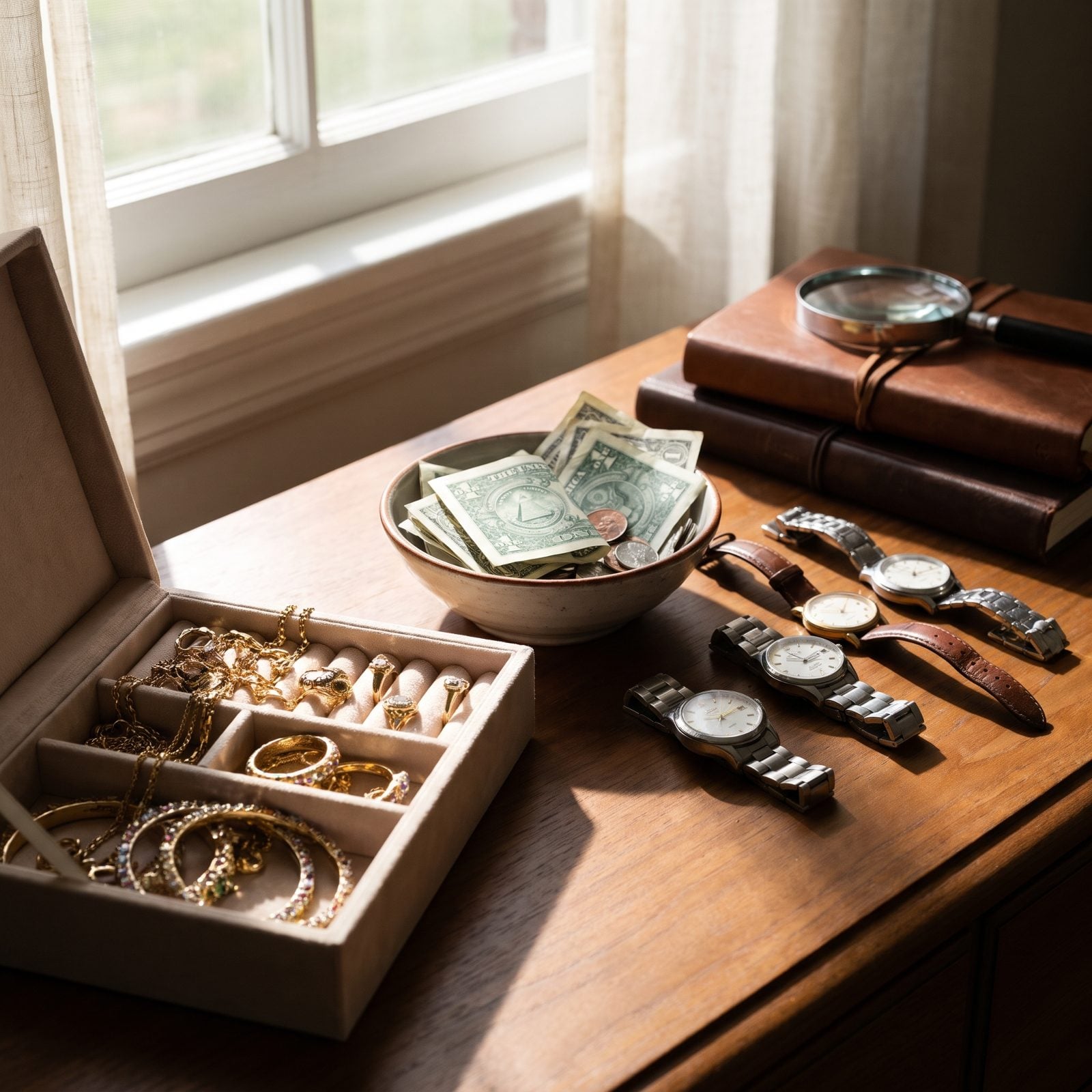
A jewelry box open on the dresser isn’t styling. It’s a shopping list for the wrong visitor.
Watches, cash bowls, loose rings, the good stuff on the vanity — all of it goes before a single showing. Part of it’s security. Part of it is that a gleaming pile of personal treasure pulls the eye straight off the room and onto you.
41. Taxidermy and Animal-Skin Displays
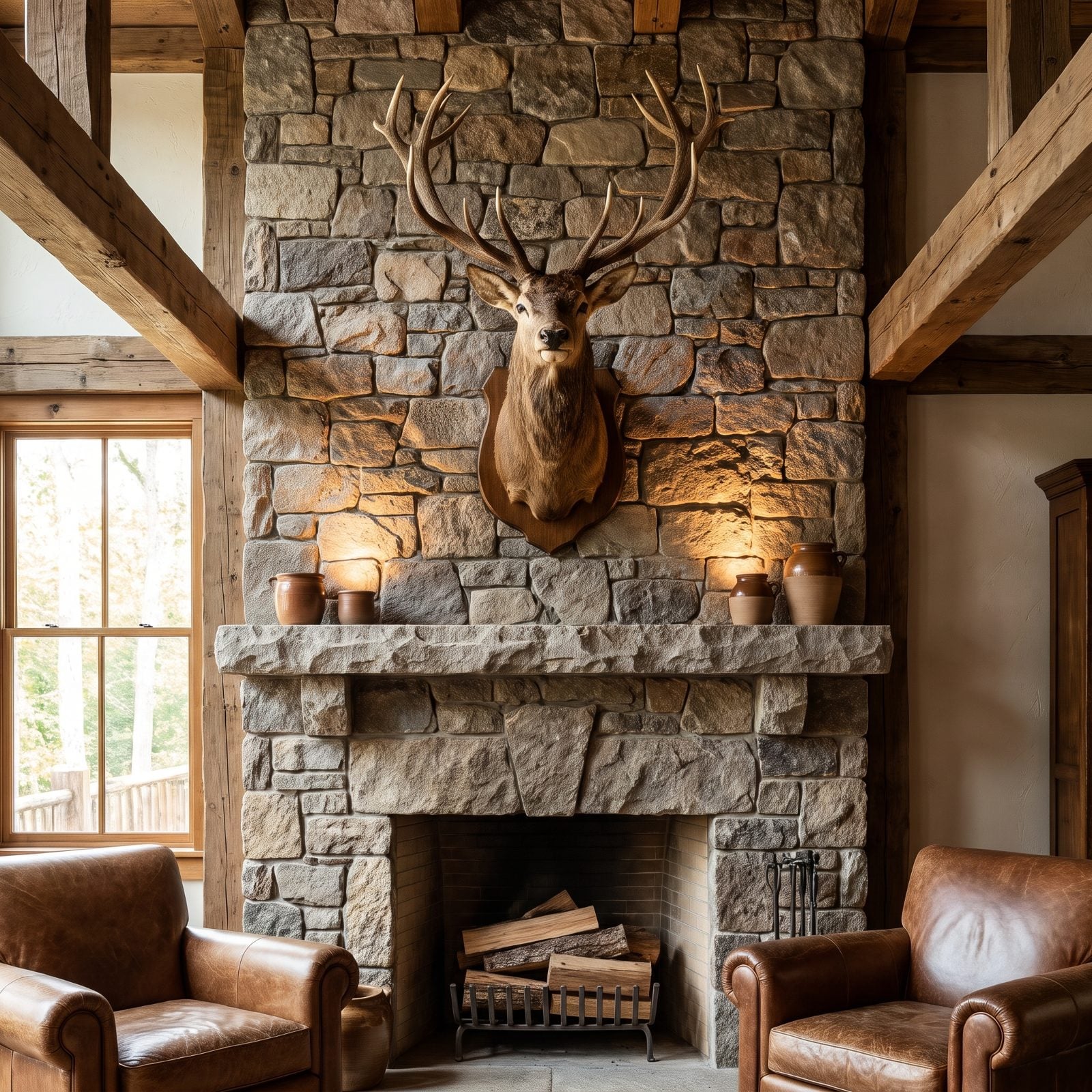
A ten-point buck over the mantel is a trophy to you and a hard no to a solid chunk of buyers. There’s no polite way around it — mounts and skins divide a room before anyone’s had a chance to notice the fireplace.
Stagers take them down, roll up the hide rug, and let the stone hearth carry the character instead. The hunting stays yours. The house just stops speaking for you.
40. Mounted Weapons and Hunting Gear

Mounted firearms do two jobs at once, and neither helps you sell. They distract, and for a lot of buyers they alarm.
Then there’s the obvious problem. Advertising where the guns live during months of strangers touring the house is a security risk, plain and simple. Stagers remove the display, store everything properly, and the wall goes quiet again. Buyers see a room they could use, not a gear closet they have to tiptoe around.
In its safety tips for people selling a home, a regional realtors association advises “It’s important to remove obvious weapons (like guns) before showings, but also not-so-obvious weapons.”
39. Ashtrays, Lighters, and the Smell That Won’t Quit

An ashtray on the coffee table does more damage than it looks like. It tells the buyer the house probably smells, and now they’re sniffing instead of shopping.
Every ashtray, lighter, and accessory disappears — then the real work starts. Air the place out, wash the walls, swap the soft goods that hold smoke. Odor is the one flaw you can’t photograph, and it’s the one buyers remember longest.
38. Souvenir Collections Swallowing Every Shelf
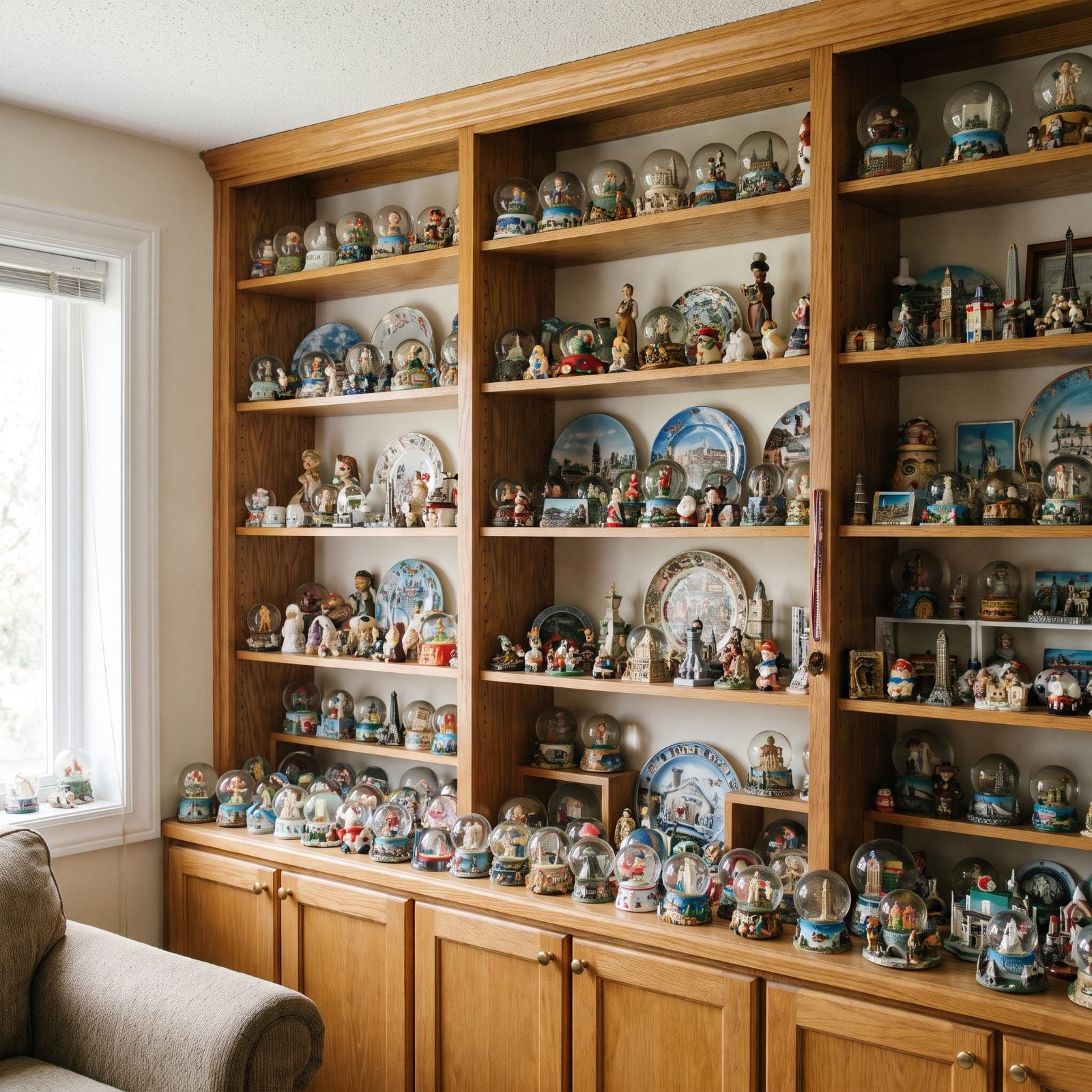
Shelves packed with snow globes from every trip you’ve ever taken make a room feel smaller than it is. The eye has nowhere to rest. It reads clutter even when every piece is dusted and loved.
So stagers pull most of a collection and leave a handful of pieces with breathing room. Empty shelf space actually sells — it tells a buyer there’s room here. Room to grow, room for their stuff instead of yours.
37. Pet Food and Water Bowls
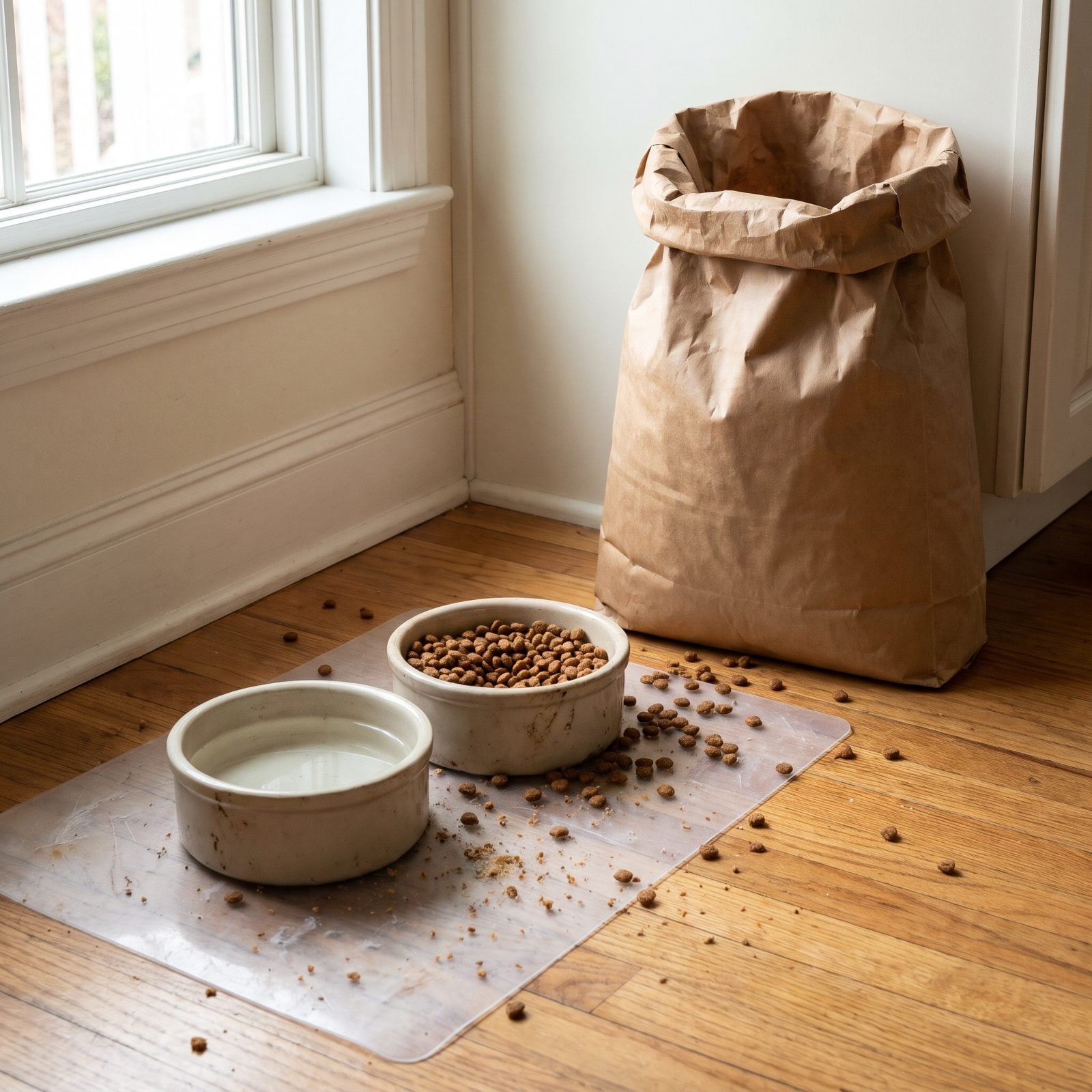
Two bowls on a plastic mat in the corner, a scatter of kibble, a bag of food slumped against the cabinet. Harmless at home. Poison on the market.
Food bowls tell a buyer the house has a resident with claws, and plenty of people walking through have allergies or just don’t warm to the idea. So pack them away during showings. Feed in the garage or a closet for a few weeks — a small annoyance that keeps the kitchen floor reading clean and open.
36. Litter Boxes
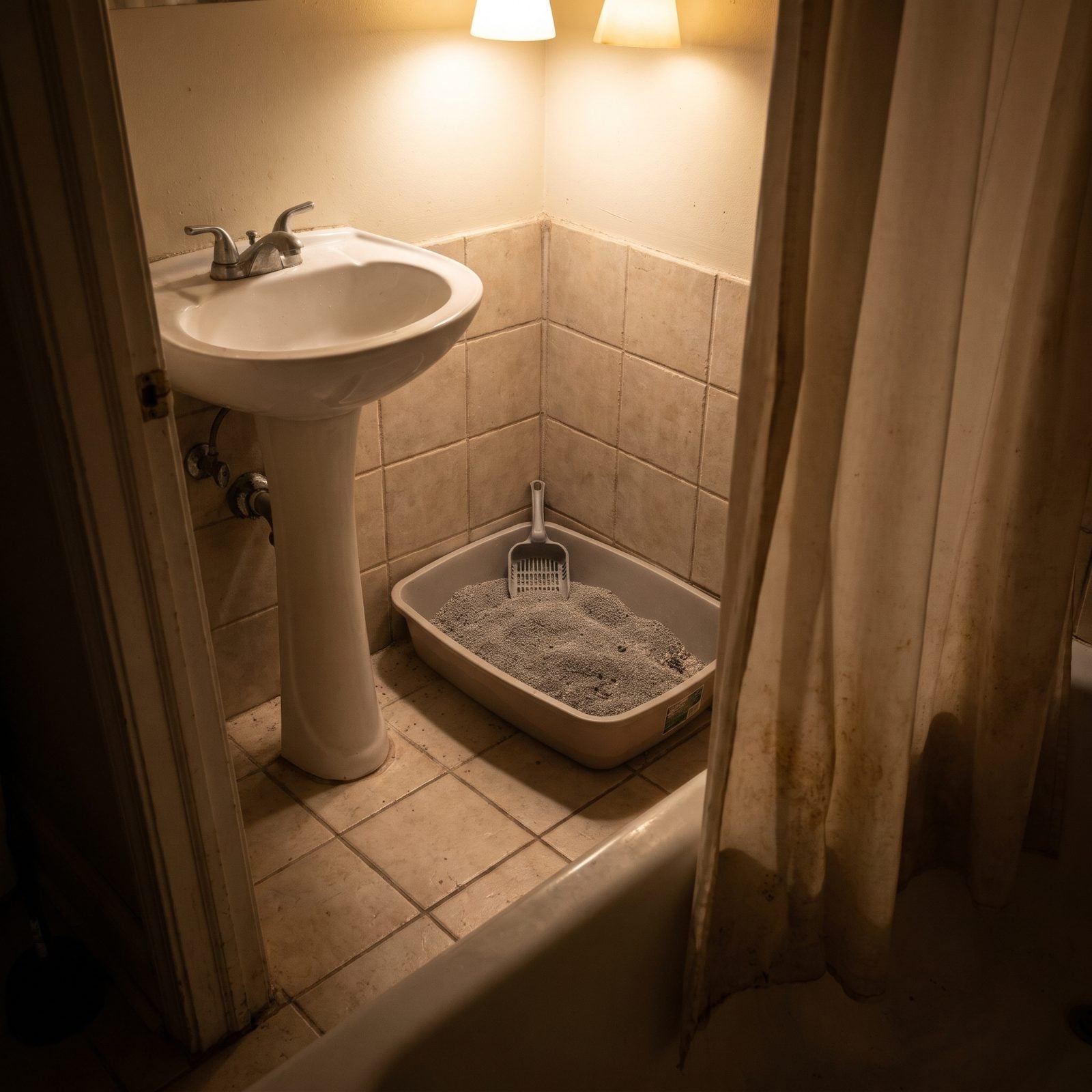
No polite way to say it: nothing kills a showing faster than a litter box a buyer smells before they see it. The nose remembers a house long after the eyes forget it.
Remove it entirely during the selling window. Not tucked behind a door, not stashed in the basement with the lid on — gone. Then deep-clean the spot it lived, because the odor sinks into grout and baseboards and hangs around after the box is long gone.
35. Pet Crates, Oversized Pet Beds, and Bulky Cat Trees
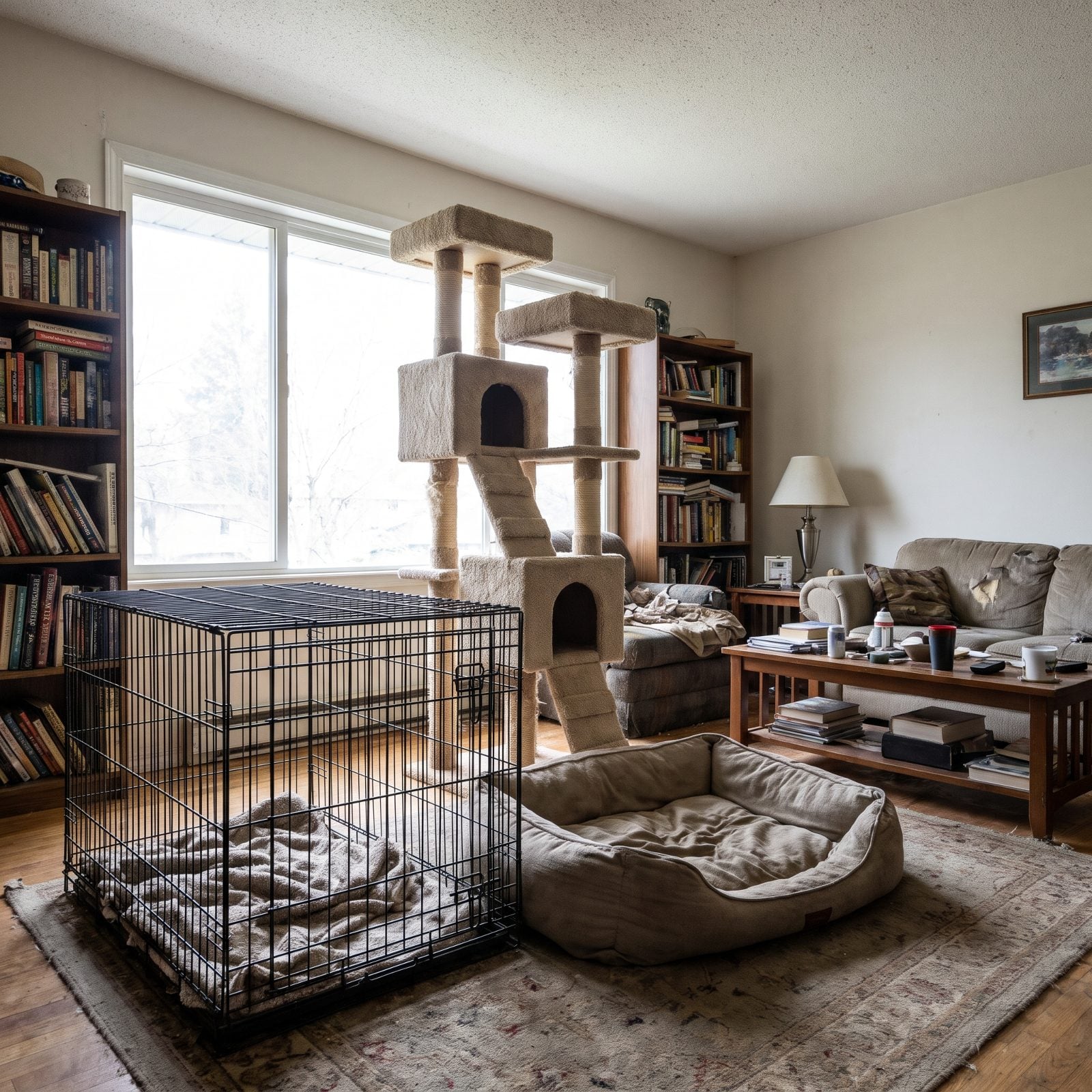
A wire crate in the corner. A sagging dog bed by the couch. And a five-foot carpeted cat tower parked right in front of the window, eating the best light in the room.
These things are furniture-sized, so buyers read them as furniture. Suddenly the living room looks cramped and the floor plan feels tight, when really you’ve just added three objects nobody’s buying. Store the crate, swap the shredded bed for nothing at all, and move the cat tree out so the window can do its job. A neutral bonus room or the garage can absorb all of it for a few weeks.
34. Overflowing Toy Bins
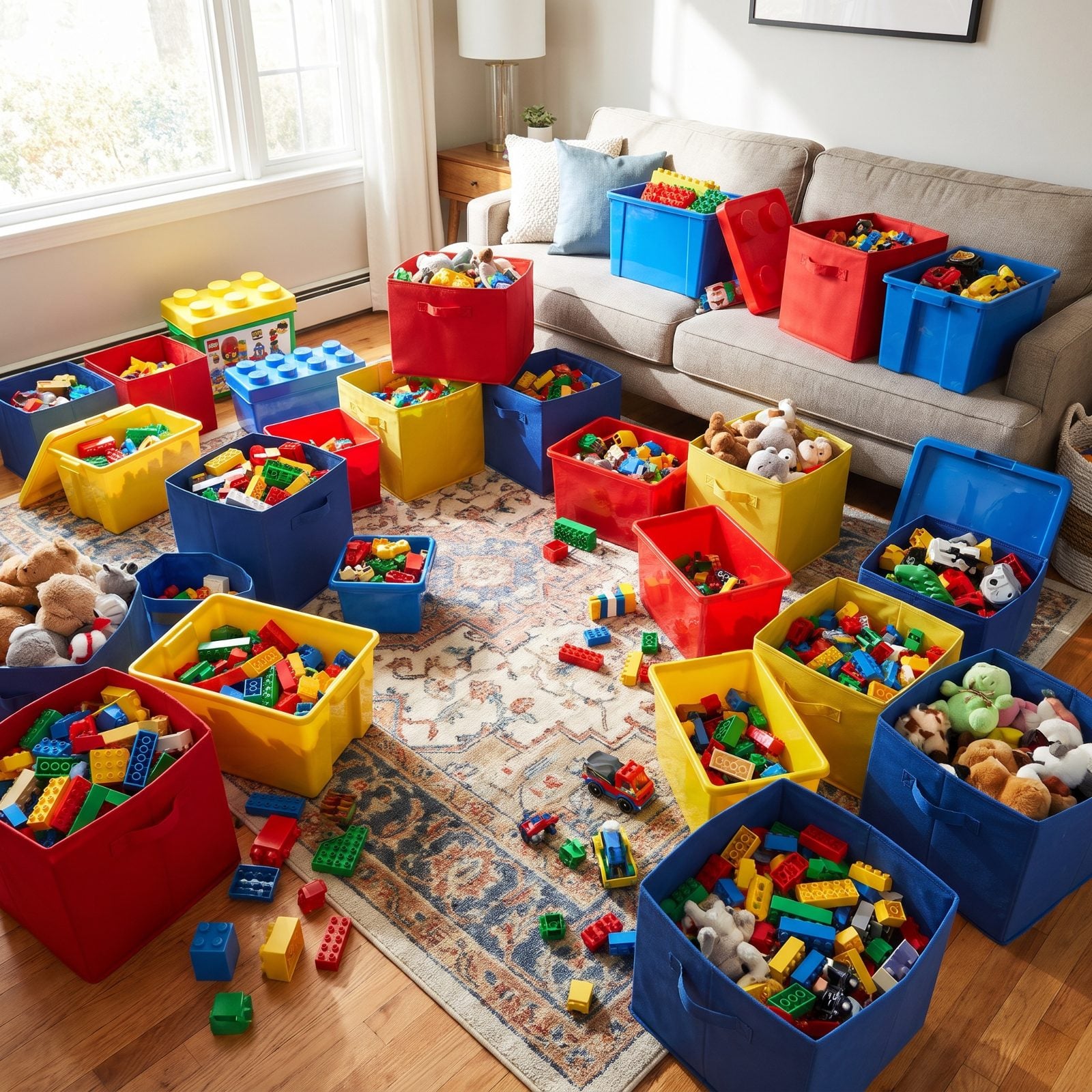
Primary-colored plastic has a way of taking over a room. One bin becomes three, the blocks migrate to the rug, and a neutral living room suddenly reads as a daycare.
Pare it down hard. Keep one tidy bin with a lid, store the rest, and clear the floor completely. Buyers with kids can imagine their own chaos just fine. Buyers without kids? They just see wasted square footage.
33. Playpens, High Chairs, and Baby Swings
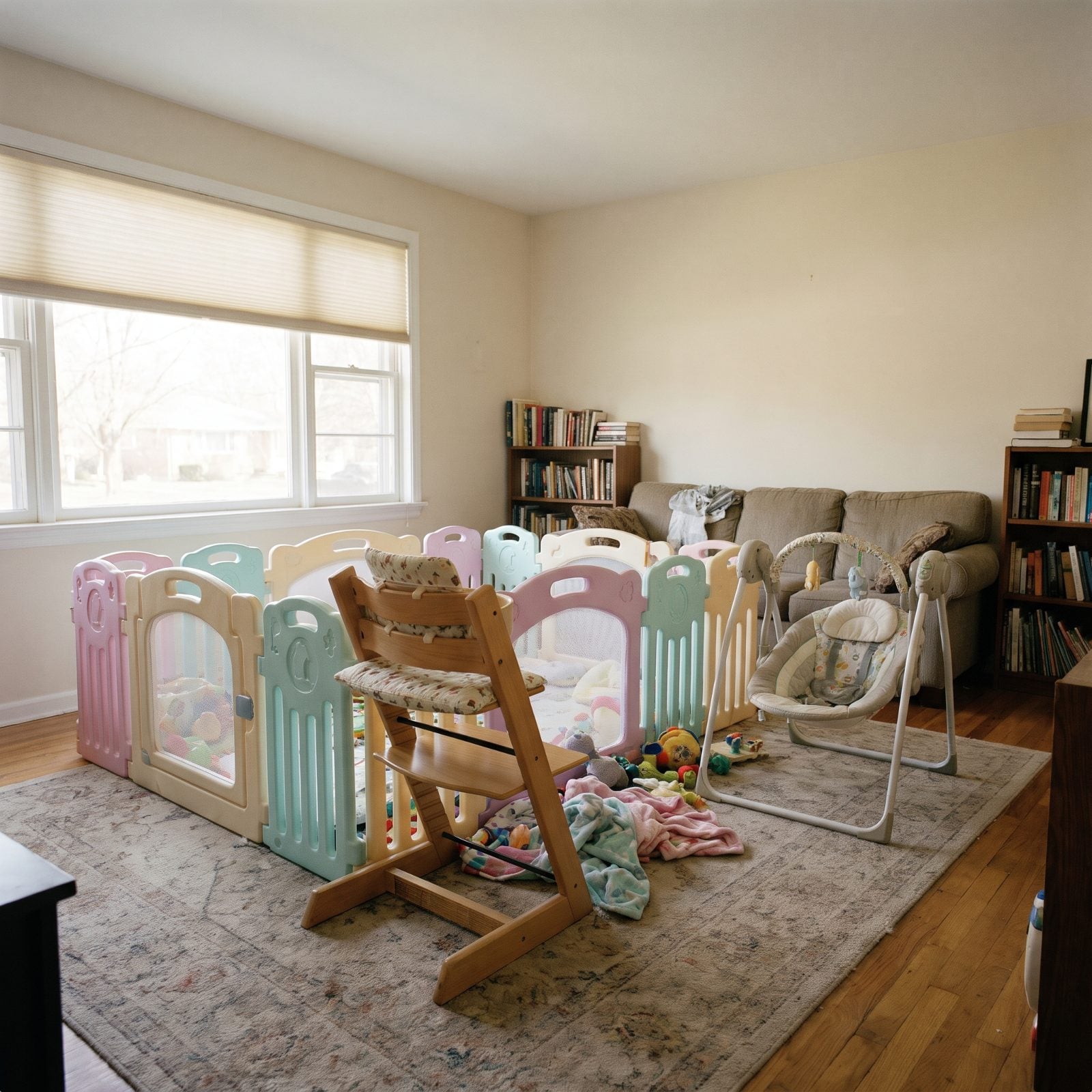
Baby gear is bulky, pastel, and impossible to miss. A playpen eats the center of the living room, a swing crowds the sofa, and a high chair stands right in the middle of the rug everyone’s trying to picture themselves relaxing on.
None of it photographs well, and all of it shrinks the open plan it sits in. Fold it, box it, move it out of the main living zones for showings. You want an empty floor a buyer’s eye can glide across without tripping over someone else’s season of life.
32. Exercise Machines in Main Living Areas
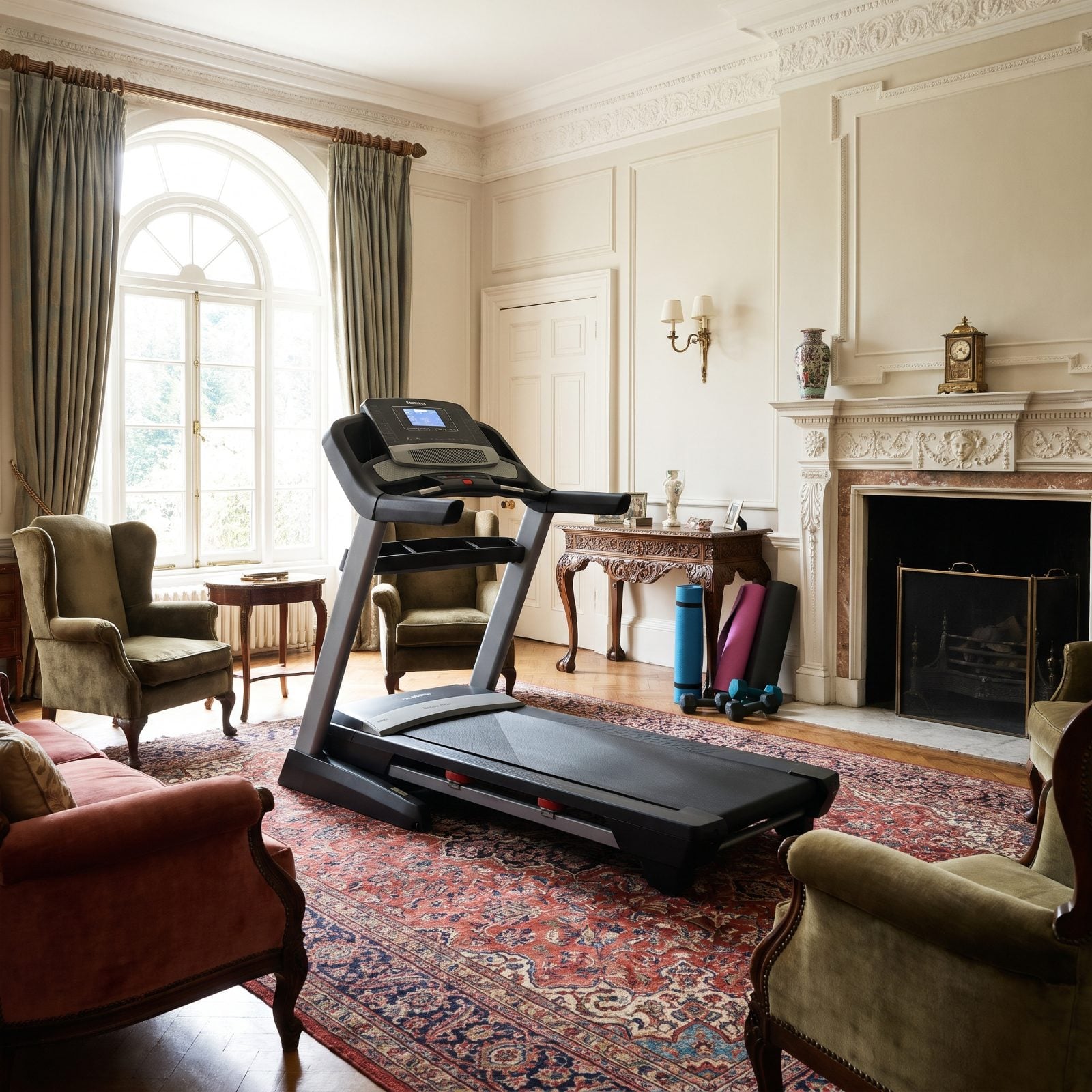
A treadmill in the living room is a confession. It says this room couldn’t land a better job, so it became a gym.
Bulky black machines look like industrial clutter dropped against soft furniture, and they flatten any sense of space. Got a spare room? Make the case for a real workout zone instead — a farmhouse home gym or an olive home gym tucked into a bonus space photographs as a selling point. In the living room, it’s just a machine begging to leave.
Explaining why it moves treadmills and weight stations out of living areas, a professional home staging firm says “Gym equipment can be a big eyesore and make rooms appear a lot smaller than they actually are.”
31. Sprawling Craft and Sewing Supplies
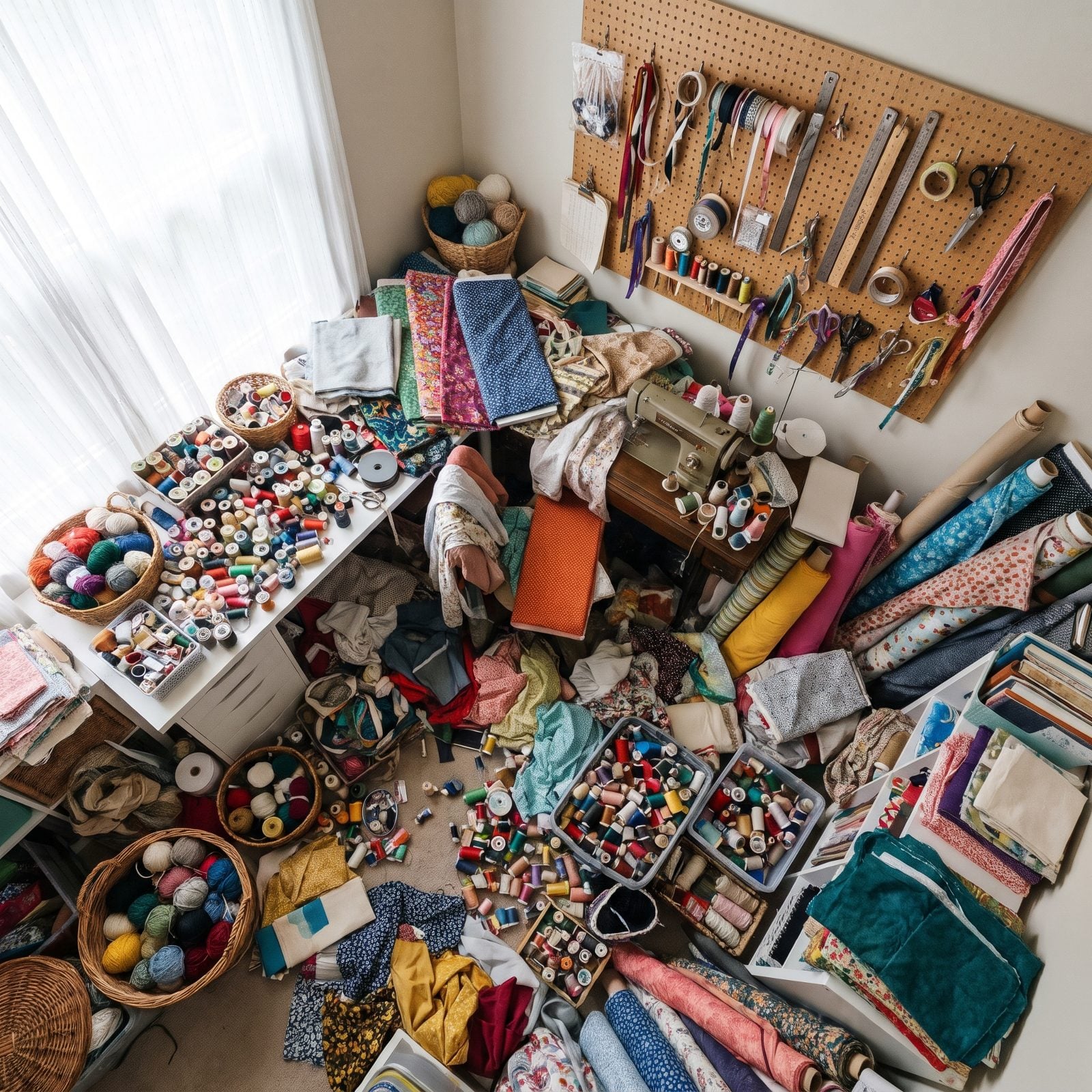
Craft rooms are where good square footage goes to hide under yarn. Fabric bolts, thread spools, a pegboard bristling with scissors, four drawers of supplies you swore you’d use someday. It all adds up to a room a buyer simply can’t read.
Tidying won’t cut it. Clear the whole thing and let the room announce what it actually is — a bedroom, an office, a nursery. Pack the hobby into labeled bins and give the space its identity back. A spare room staged as a calm blue home office sells far better than a craft explosion ever will.
30. Unused Musical Instruments and Stands
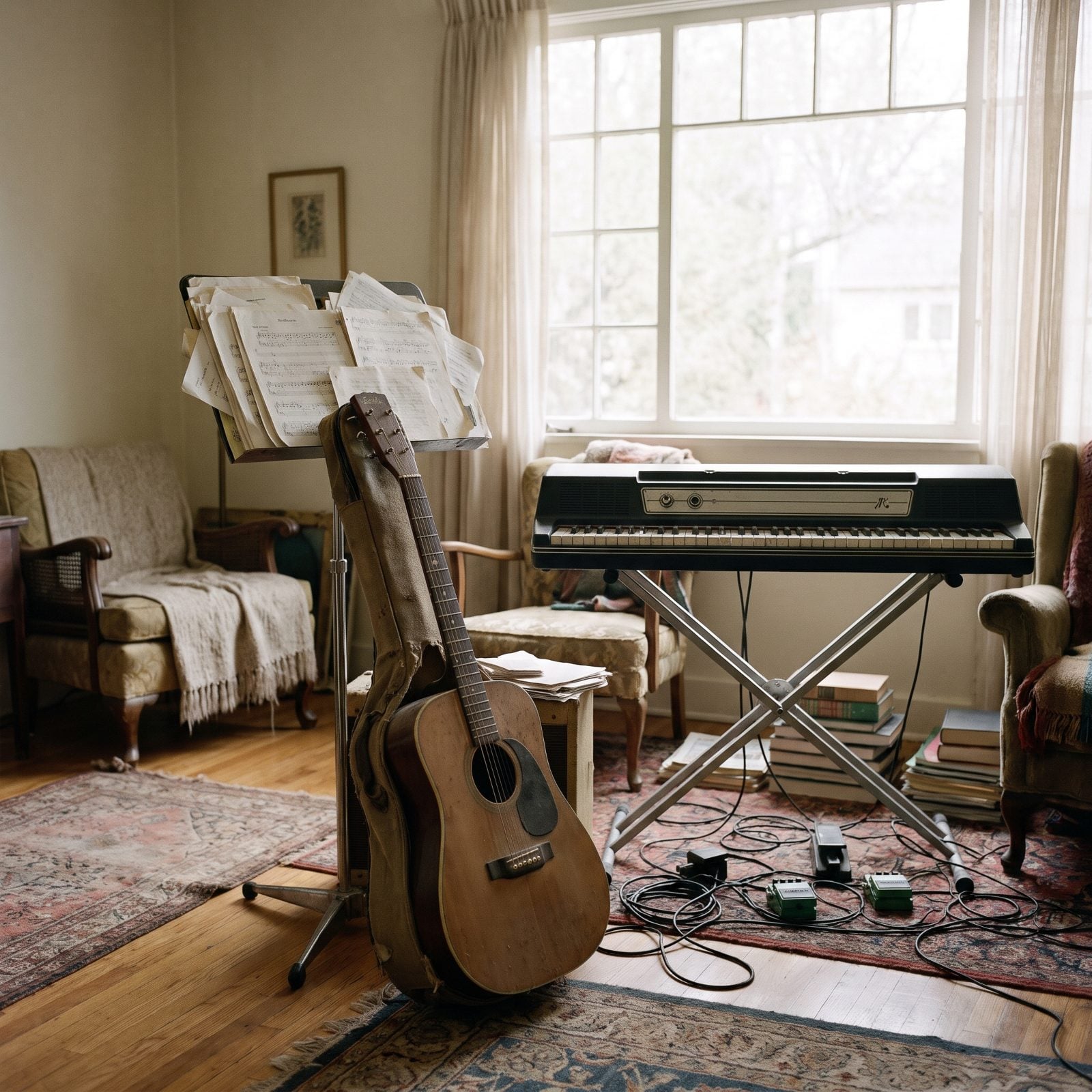
A guitar on a stand, a music stand buried in pages, a keyboard parked under the window. Each one claims a patch of floor, and none of them earns it.
Instruments are deeply personal, and that’s exactly the trouble. They turn a room into someone’s specific hobby instead of the blank canvas a buyer wants to project onto. One well-placed piano can stay if it’s a genuine feature. But the pile of stands and cases? Out it goes.
29. Gaming Consoles and Loose Controllers
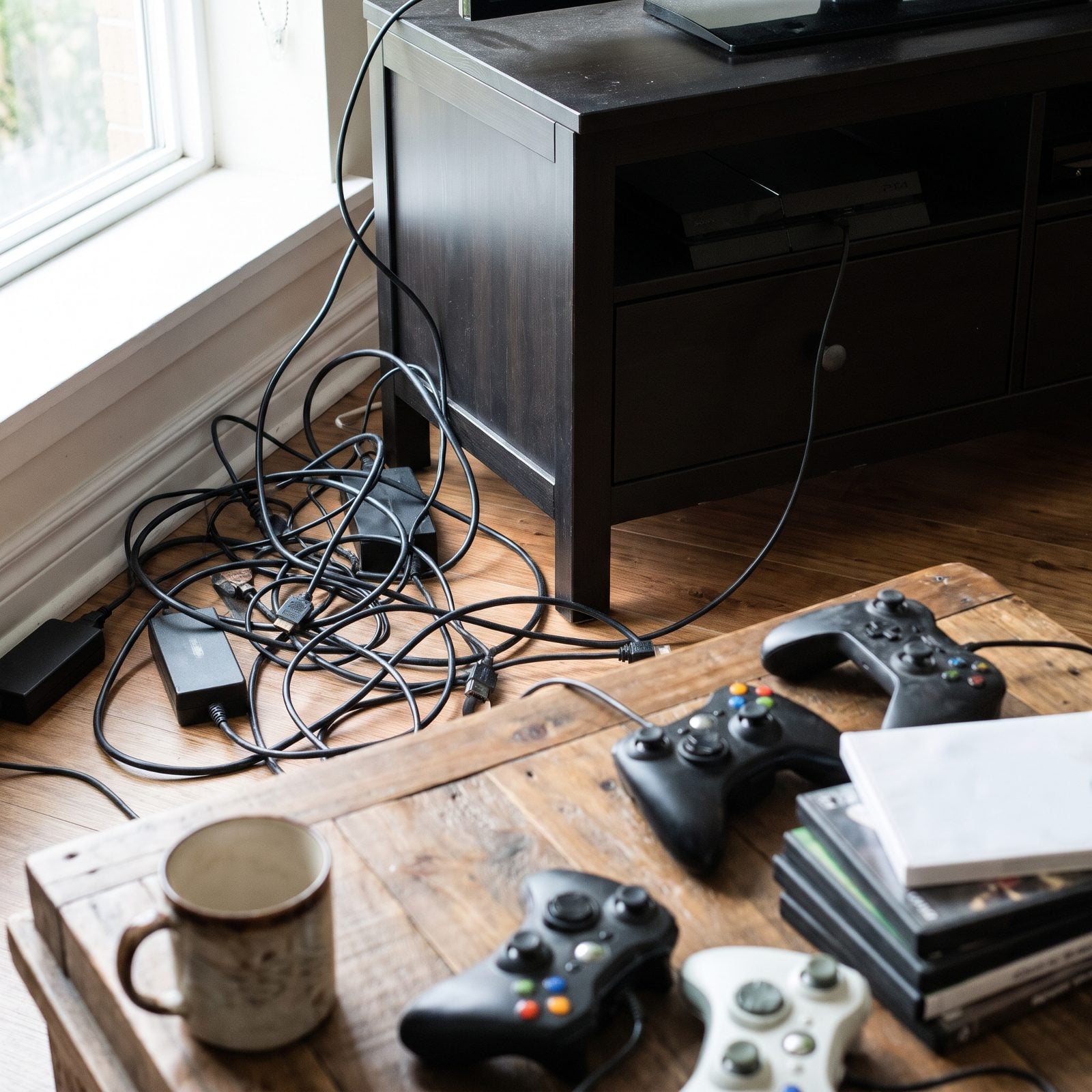
The tell is always the cables. A nest of black cords under the TV, four controllers abandoned on the coffee table, a stack of game cases leaning sideways. It reads as mess before it reads as entertainment.
Box the consoles, coil the cables, wipe down the surfaces. A clean media wall lets a buyer see the room as a place to unwind, not a teenager’s command center. Set it all back up the day you hand over the keys.
28. The Small Appliance Pileup on Your Counters
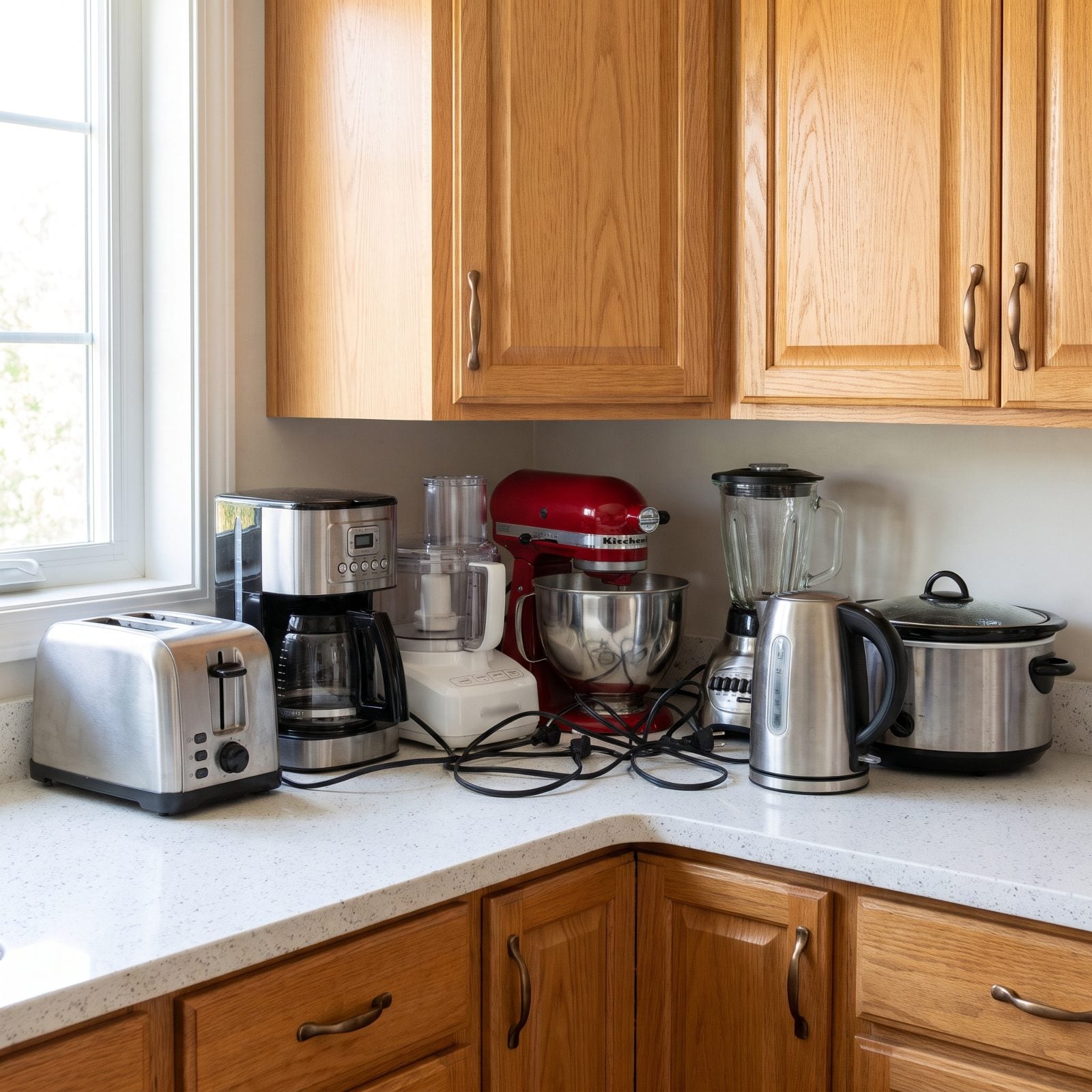
Seven appliances on one counter run tells a buyer there’s nowhere to put anything. That’s the real message — not “this cook is serious” but “this kitchen ran out of storage three gadgets ago.”
Stagers pull everything except maybe the coffee maker, because an empty counter reads as surplus space and surplus space is what sells. Keep a stainless electric kettle out if you must, box the rest, and watch how much bigger the room looks the second the toaster and the stand mixer vanish into a cabinet.
27. That Dish Rack By the Sink
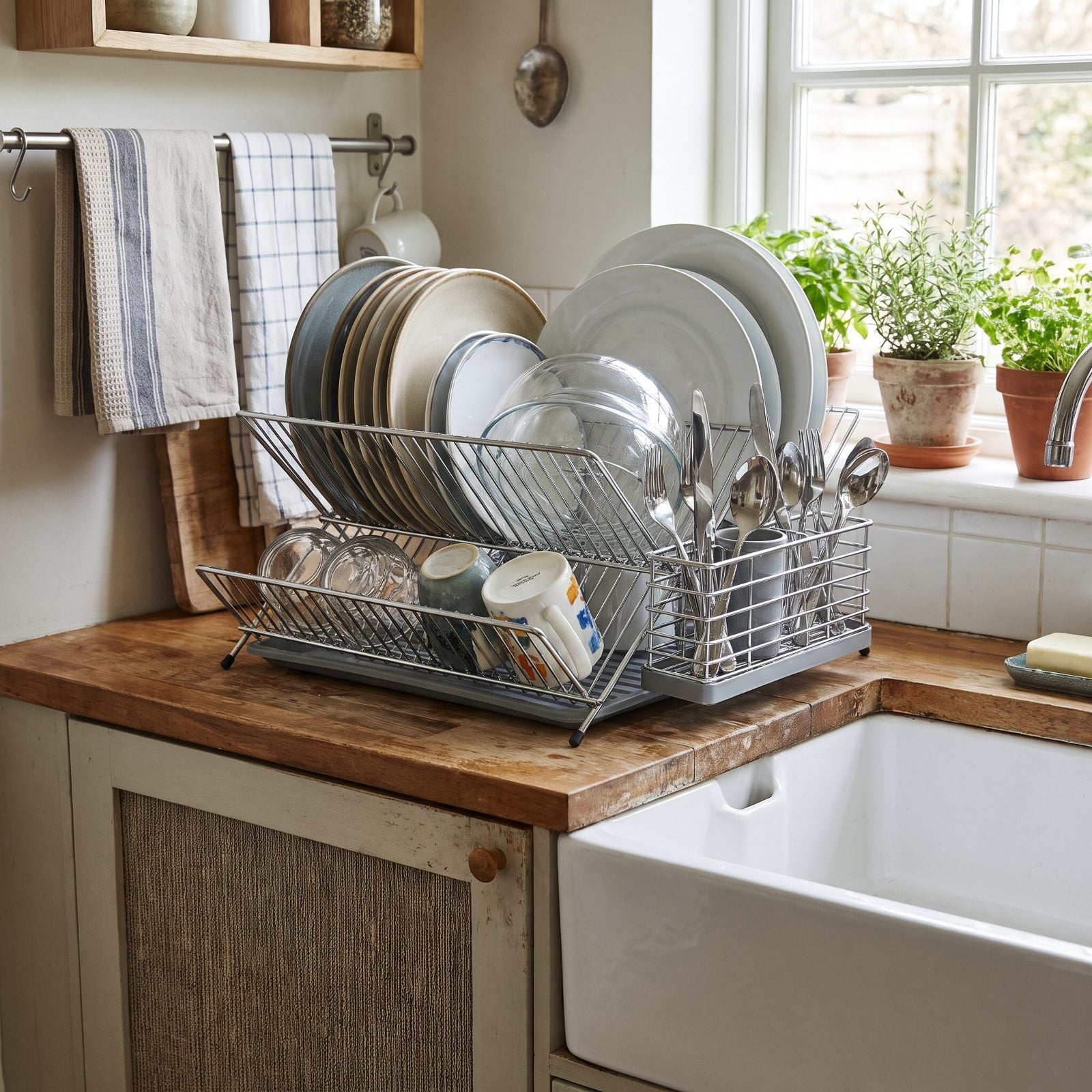
A dish rack is honest in the worst way. It says dishes happen here — which buyers already know — but it drags the fantasy down to the level of a Tuesday night at the sink.
Tuck it under the counter before every showing. Wipe the wet patch where it sat and leave it bare. I’ve seen listing photos where one drying rack made a wide kitchen read half its size.
What Our Readers Say
- Asked which dish rack they would buy, Home Stratosphere readers picked a roll-up rack most often at 42%, ahead of countertop at 33% and over-sink at 19%.
From Home Stratosphere reader polls and votes.
26. The Lineup of Soap Bottles and Sprays
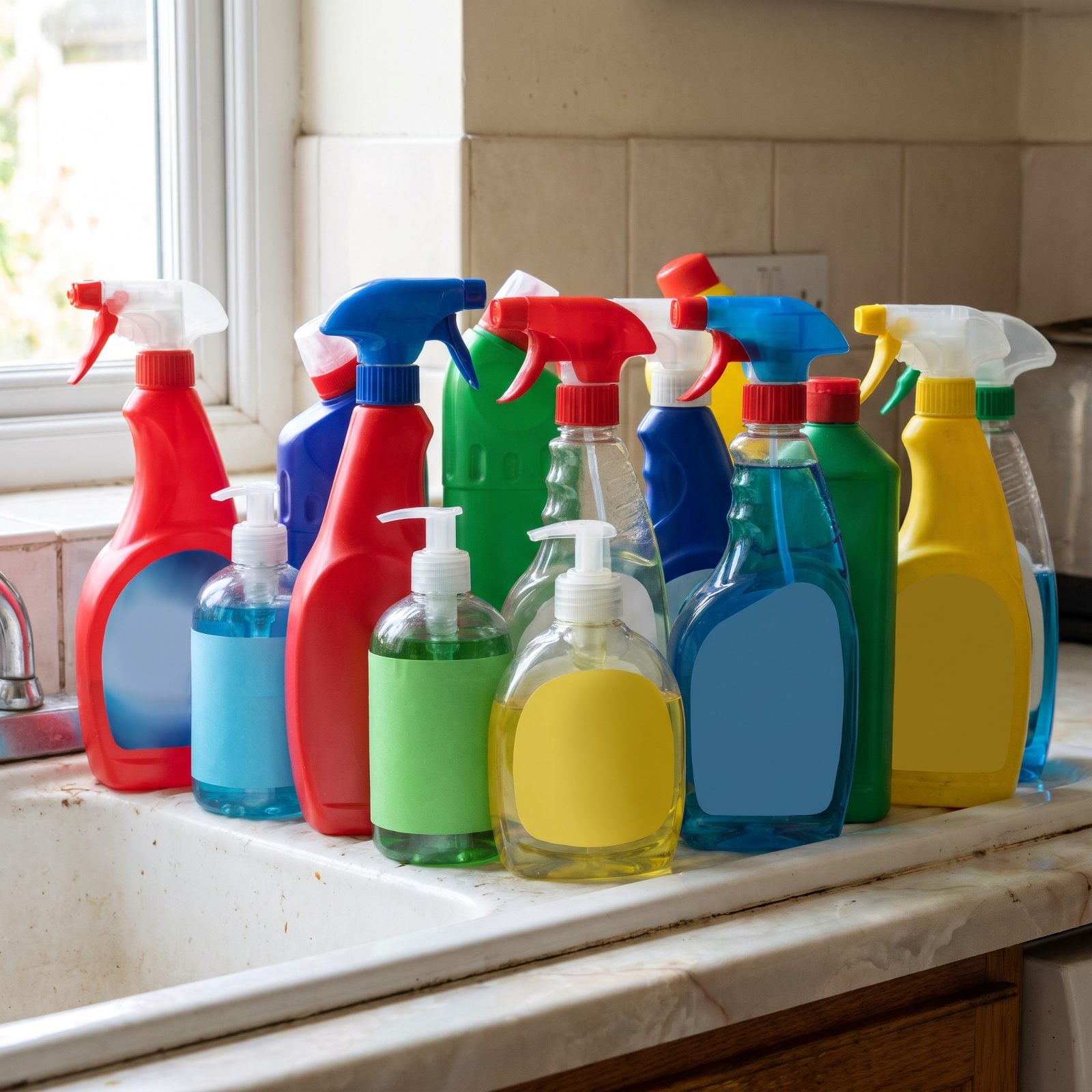
Nothing kills a clean sink faster than a huddle of plastic bottles with loud retail labels. Green soap, yellow soap, a bright spray cleaner — all screaming different brand colors three inches from the faucet.
The fix costs nothing. Everything but one neutral pump goes under the sink. Want a styling trick that survives a dozen showings? Decant hand and dish soap into matching amber or frosted dispensers, and suddenly the sink looks like a boutique hotel instead of a chore station.
25. Trash and Recycling Bins Out in the Open
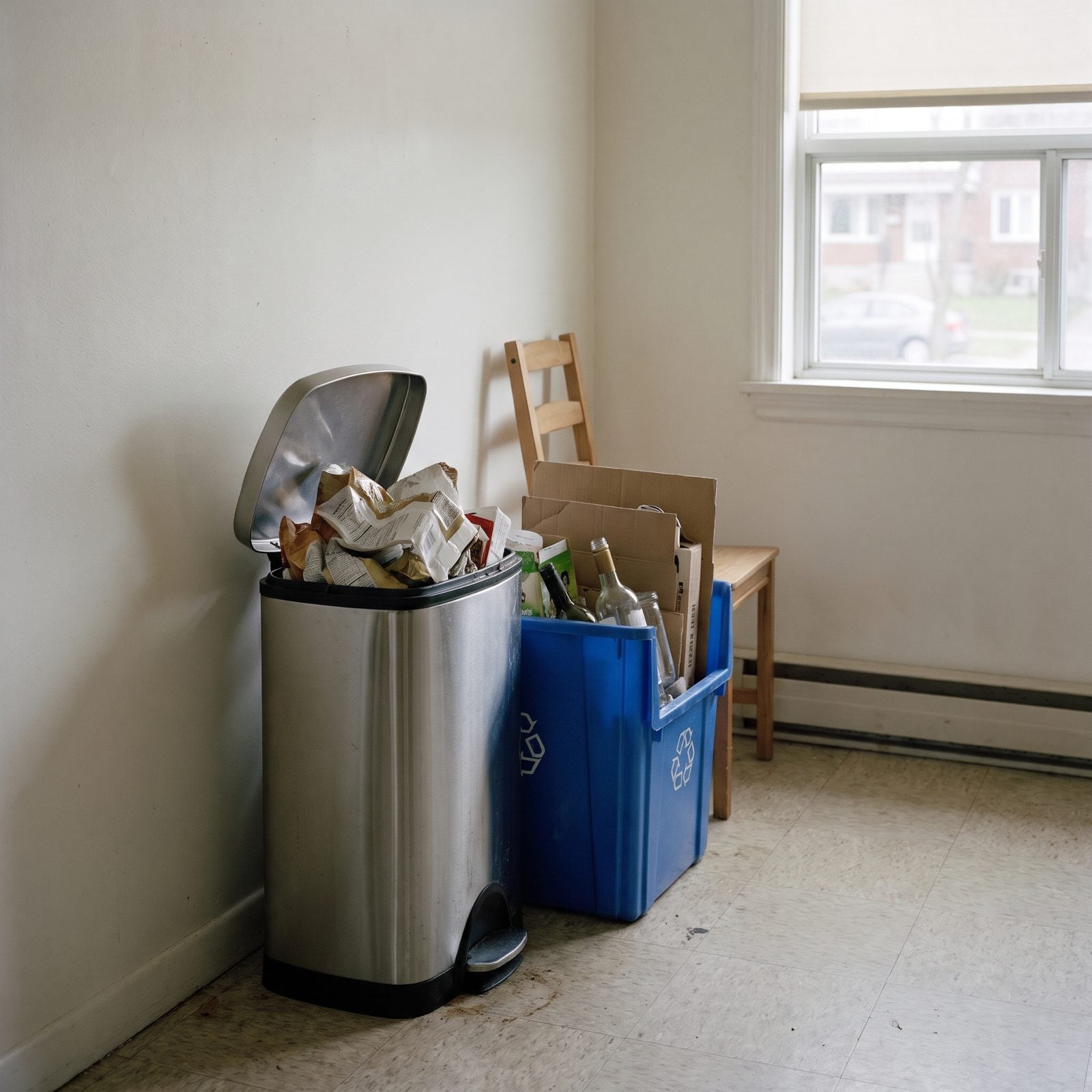
Exposed bins are the thing buyers never mention and always feel. A visible trash can plants a quiet whiff of the unpleasant into a room you want associated with fresh bread and morning coffee.
So relocate them — under the sink, into the pantry, inside a cabinet pull-out, anywhere out of the sightline. The corner they leave behind becomes usable floor again, and the kitchen stops apologizing for itself.
24. Bulk Pantry Goods Stacked on the Floor
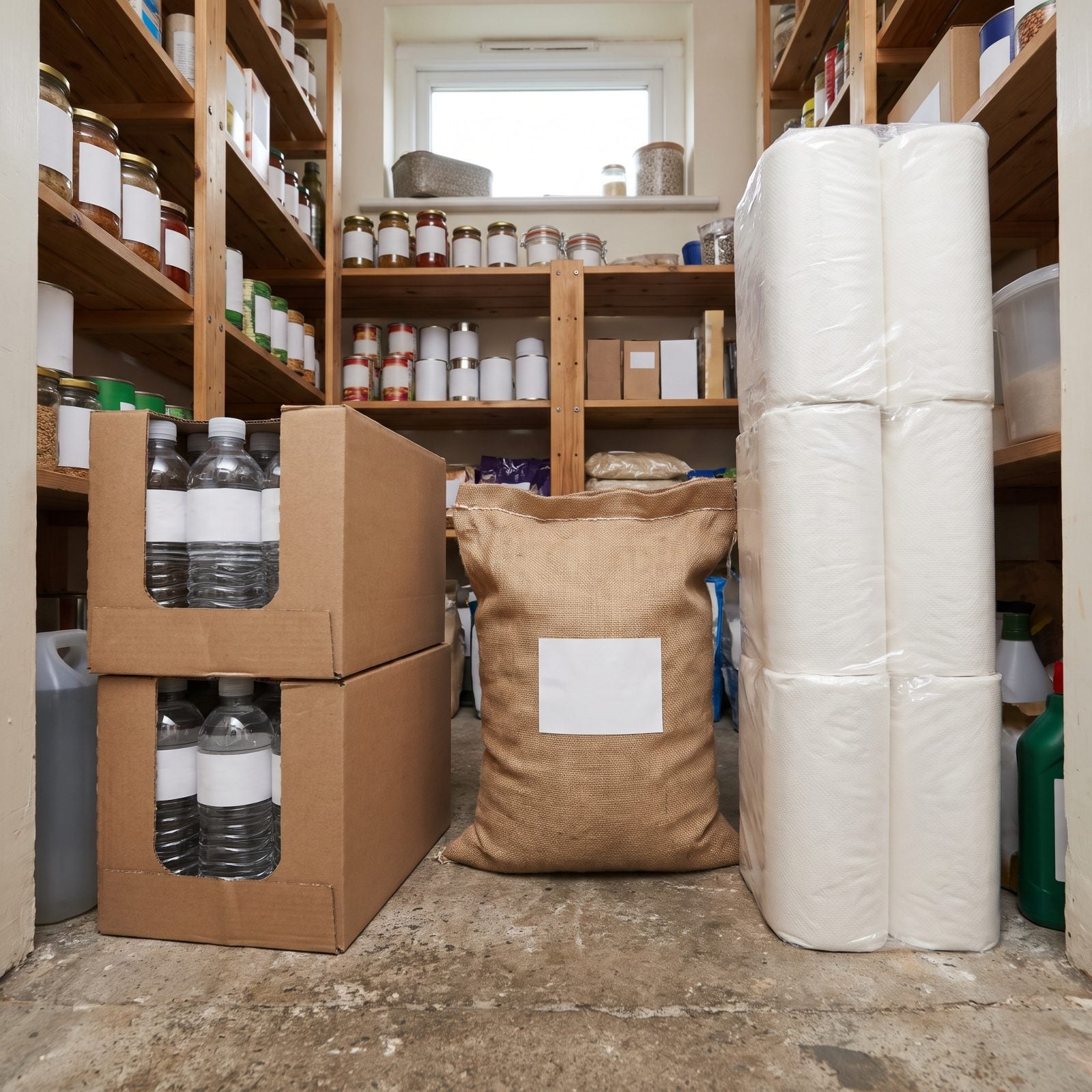
Boxes on the floor read as one message: ran out of room. A flat of water, a warehouse bag of rice, a tower of paper towels parked on the concrete. Buyers see that and mentally shrink the storage they’re paying for.
Get everything off the ground. If it won’t fit on a shelf, it goes in the garage until closing. A pantry with a clear floor feels generous, while one you have to step over feels like a problem you’ll inherit.
23. Spare Chairs and Table Leaves You Forgot Were There
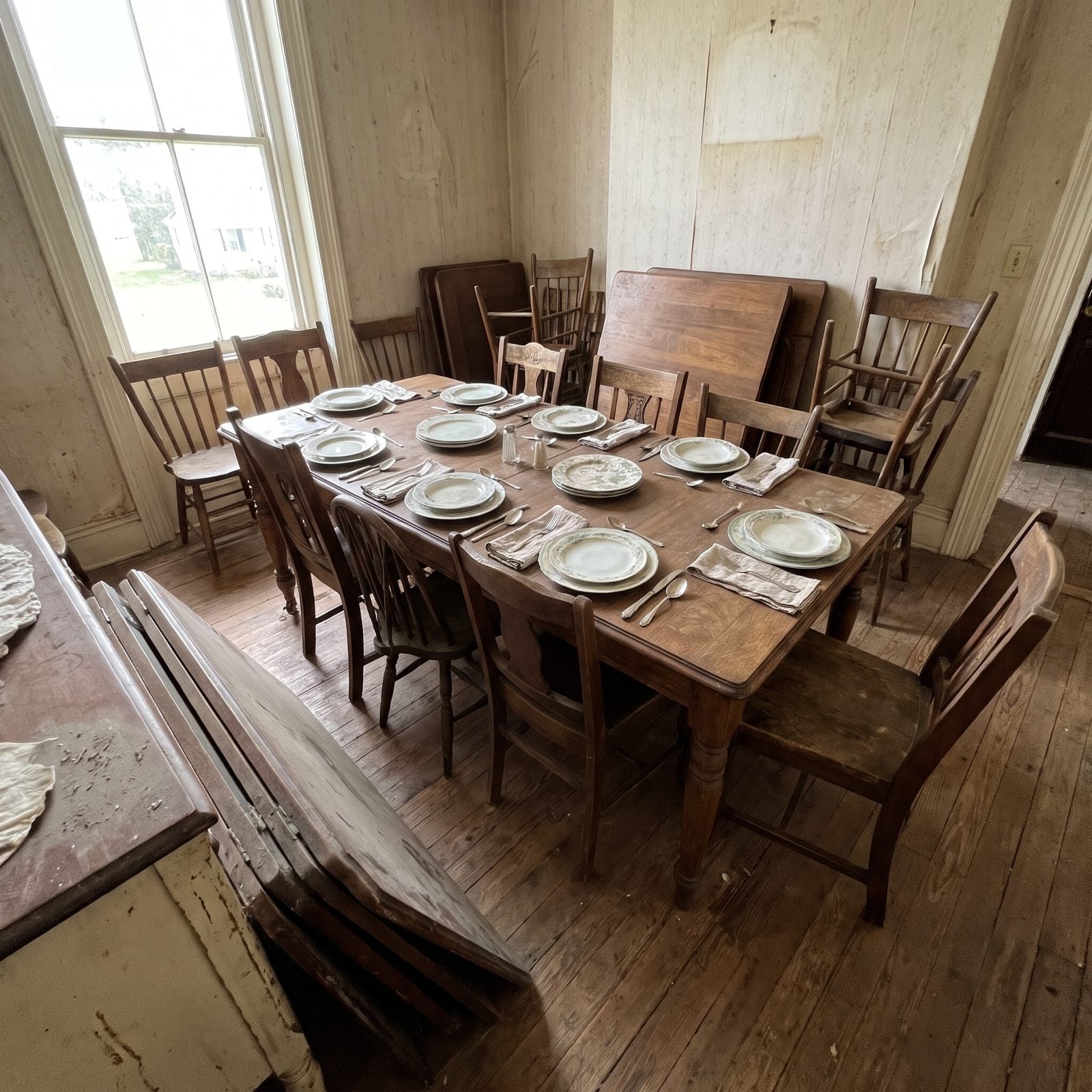
Pull the leaf. Remove the extra chairs. A dining table set for ten in a room meant for six makes the whole space feel like a traffic jam.
Stagers shrink the table to its smallest footprint and keep the chair count tight — usually four. The walkways open up, the proportions snap into place, and the room finally looks like somewhere you’d linger over dinner instead of somewhere you’d squeeze past the buffet.
22. The Sectional That Ate the Living Room
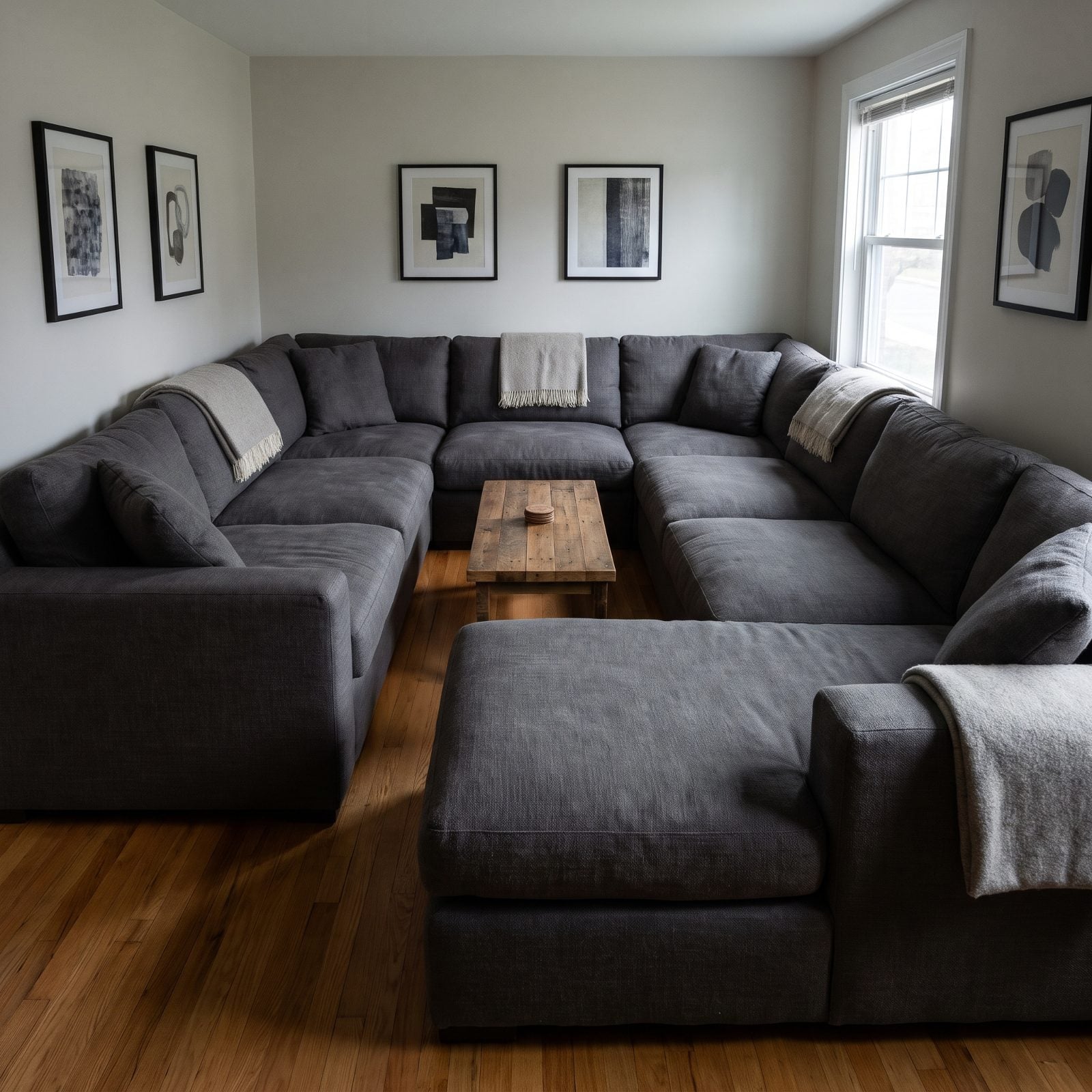
A sectional sized for movie night with twelve people is the fastest way to make a living room feel like a studio apartment. The chaise juts into the walkway, the arms kiss two walls, and there’s no breathing room left for the eye.
Swap it for a standard sofa and a single chair during listing, even if it means renting. Buyers need to see where their own furniture goes, and that’s impossible when yours is holding the room hostage.
Scale is the thing amateurs ignore and stagers obsess over. The right sofa at the wrong size can sink a whole room.
21. The China Hutch Blocking the Wall
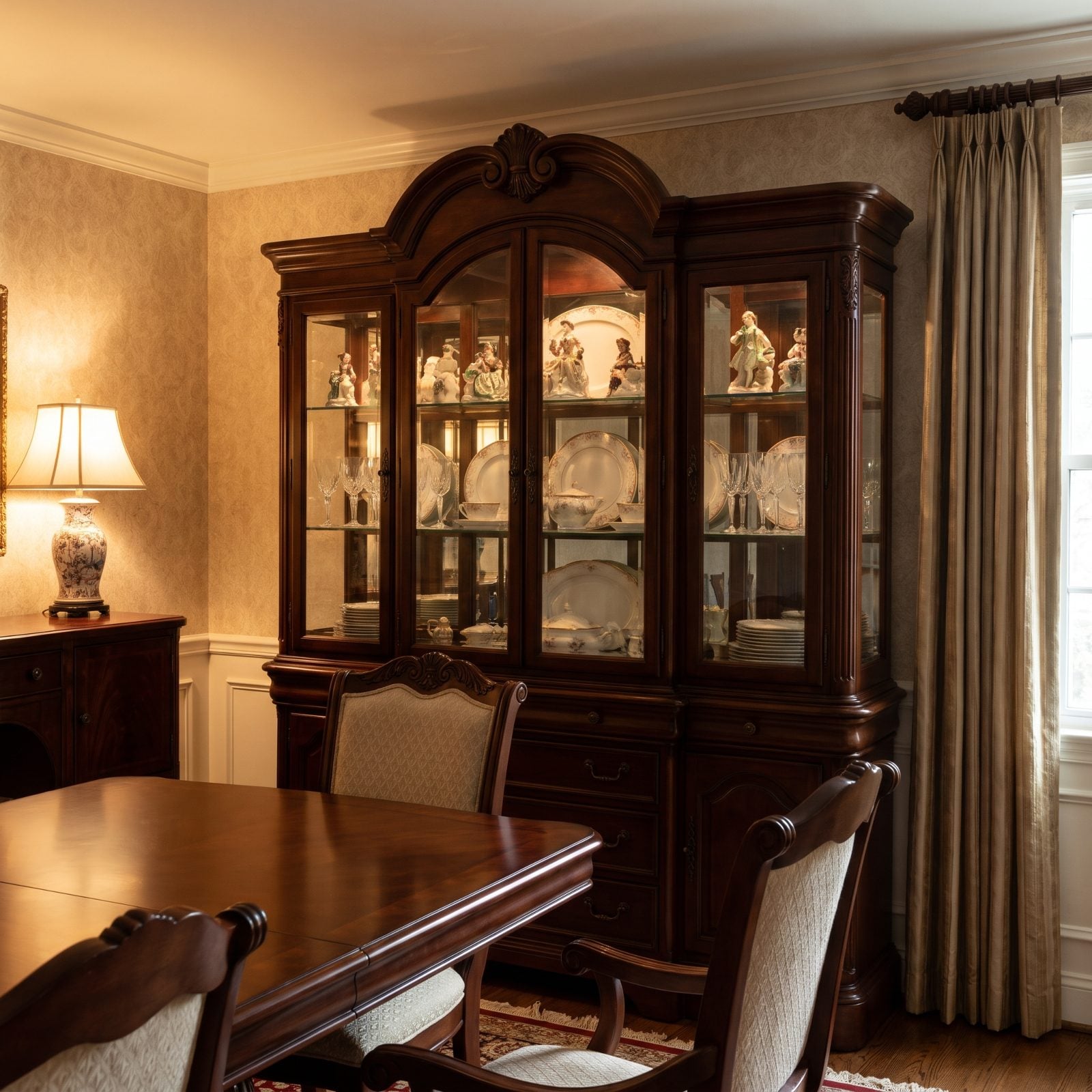
A packed china hutch does two bad things at once. It dates the room to a decade nobody’s shopping for, and it walls off square footage with a wooden monument to dishes you use twice a year.
Out it goes — or at least out comes everything behind the glass. An empty wall where the hutch stood hands buyers a blank canvas, and blank is what sells. Honestly, I’d rather look at bare plaster than a crystal collection that belongs to someone else’s memory.
20. Two Beds Fighting for One Guest Room
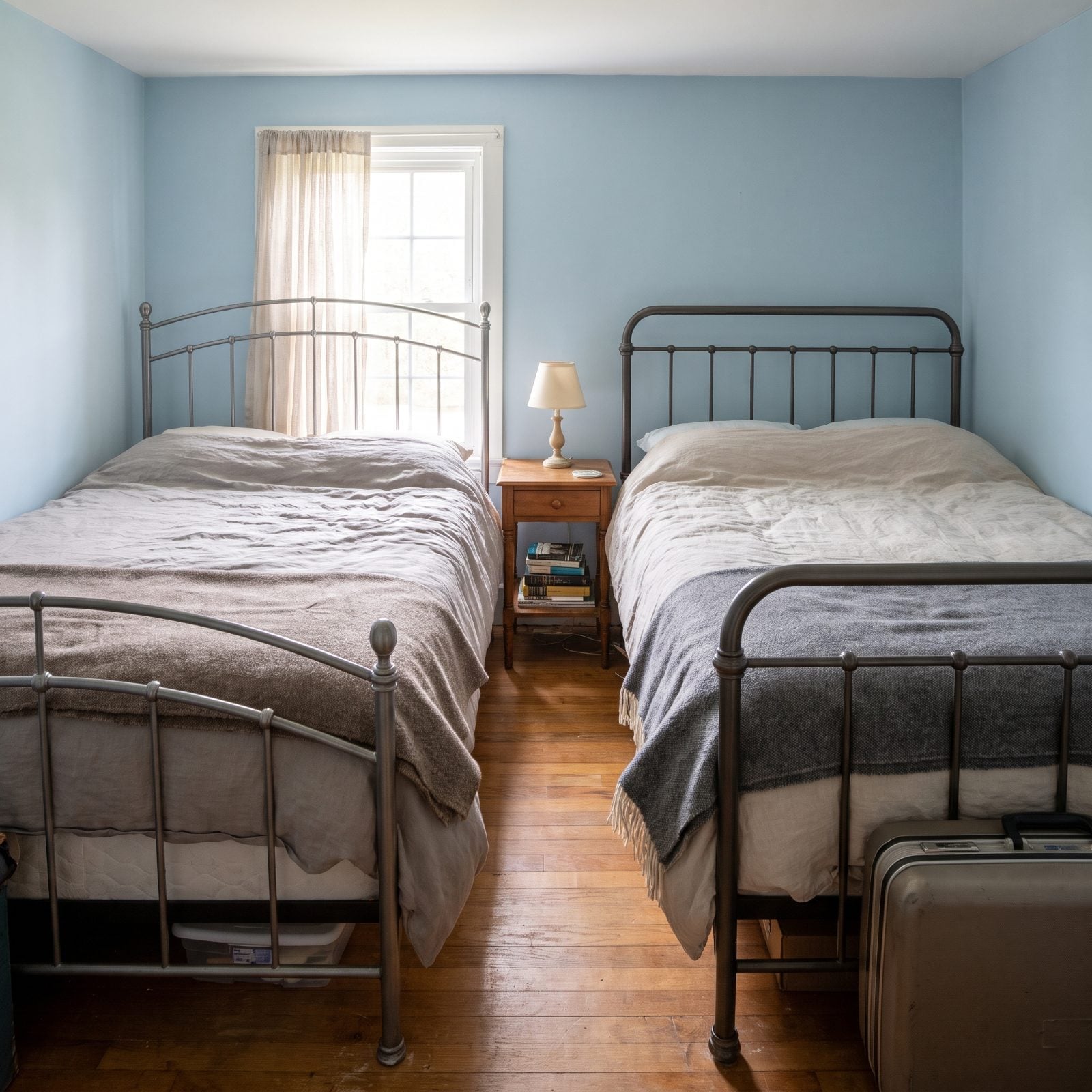
Two beds in one modest room reads as a furniture storage unit, not a guest room. Buyers can’t picture the space working because every square foot is already spoken for.
Pull one bed. One bed, two nightstands, a clear path around it, and the room suddenly has a job it can do. A tidy single setup feels restful. A double-bed squeeze feels like a puzzle you’re being asked to solve.
19. Laundry Hampers Sitting in Plain Sight
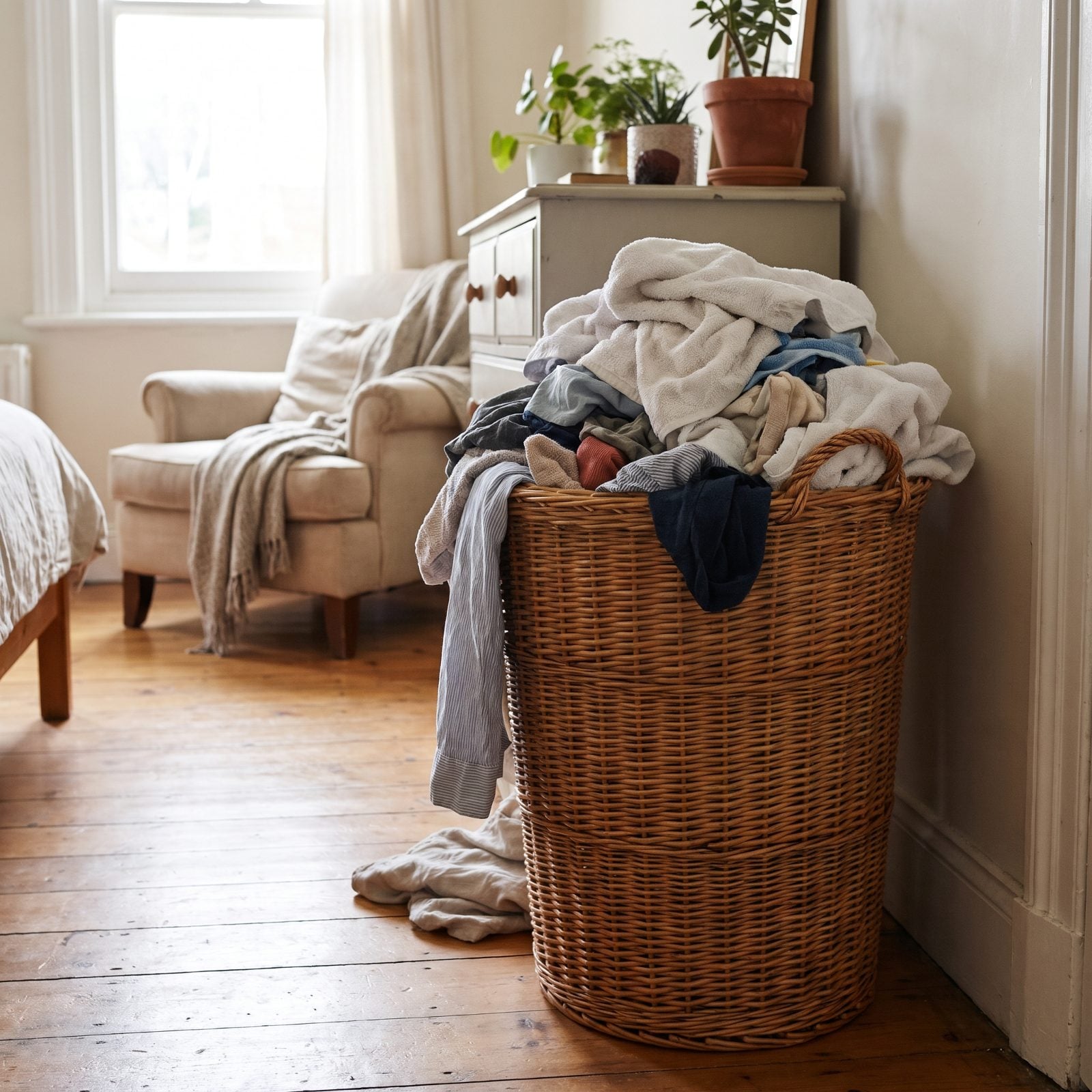
A hamper is the most personal object in the house. It says laundry, and laundry is intimate in the way buyers don’t want to think about while touring your bedroom.
Stash it in a closet before every showing and every photo, no exceptions. Same goes for the towel basket out in the neutral hallway. You want a home that looks like nobody lives there and everybody could, and a visible hamper breaks that spell faster than almost anything else on this list. Hide it and move on.
18. Overflowing Clothes Stuffed Into Closets
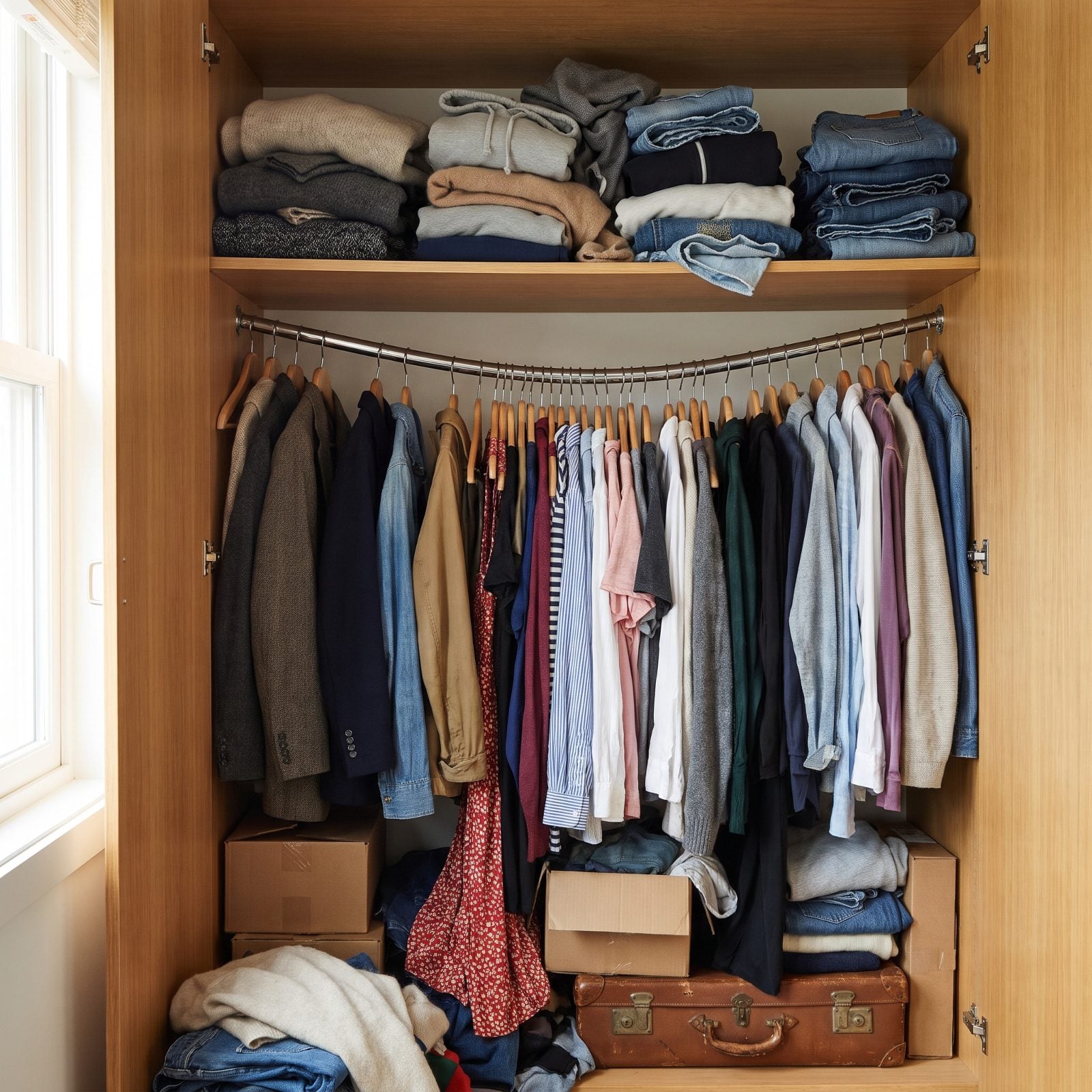
A packed closet tells a buyer one thing: there isn’t enough room here. When the rod is bowing and sweaters are crammed three bins deep, the eye reads shortage rather than storage, and no amount of square footage on the listing sheet undoes that first gut impression.
Stagers pull half of it. Sometimes more. Empty space on a closet rod does quiet sales work, because a buyer imagines their own life sliding into the gap.
Home Stratosphere readers gave closet photos with light wood tones more hearts than the other images in the same articles, 76% versus 69%.
17. The Shoe Pile By the Front Door
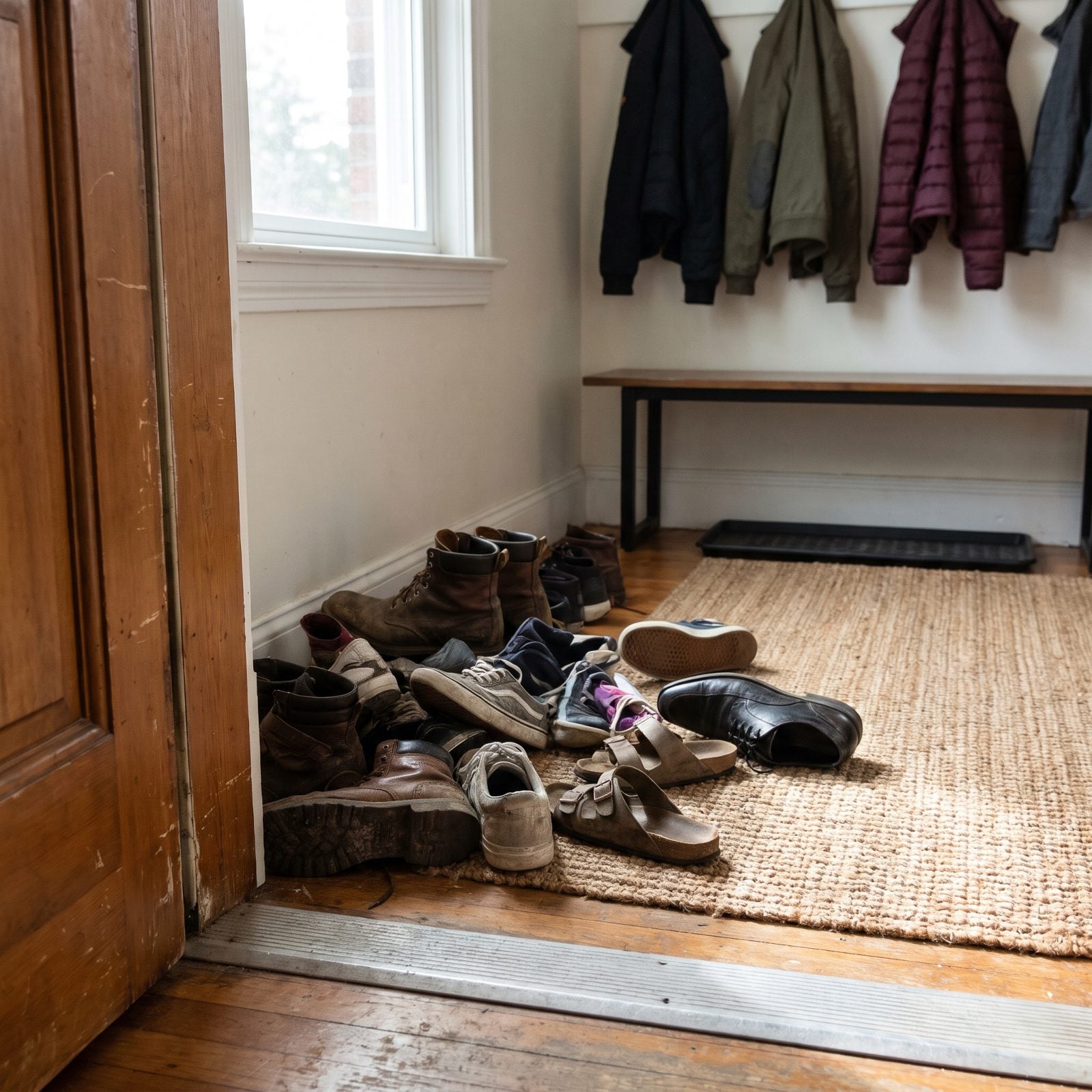
The first thing a buyer sees should not be your shoes. But the entryway is where everyone dumps them, and a dozen pairs by the door makes a foyer feel like a mudroom that gave up.
Clear it to one tidy pair at most, or none. A clean threshold in a neutral hallway lets people walk in and feel the width of the space instead of stepping around someone else’s commute.
16. Daily Toiletries Taking Over the Bathroom Counter
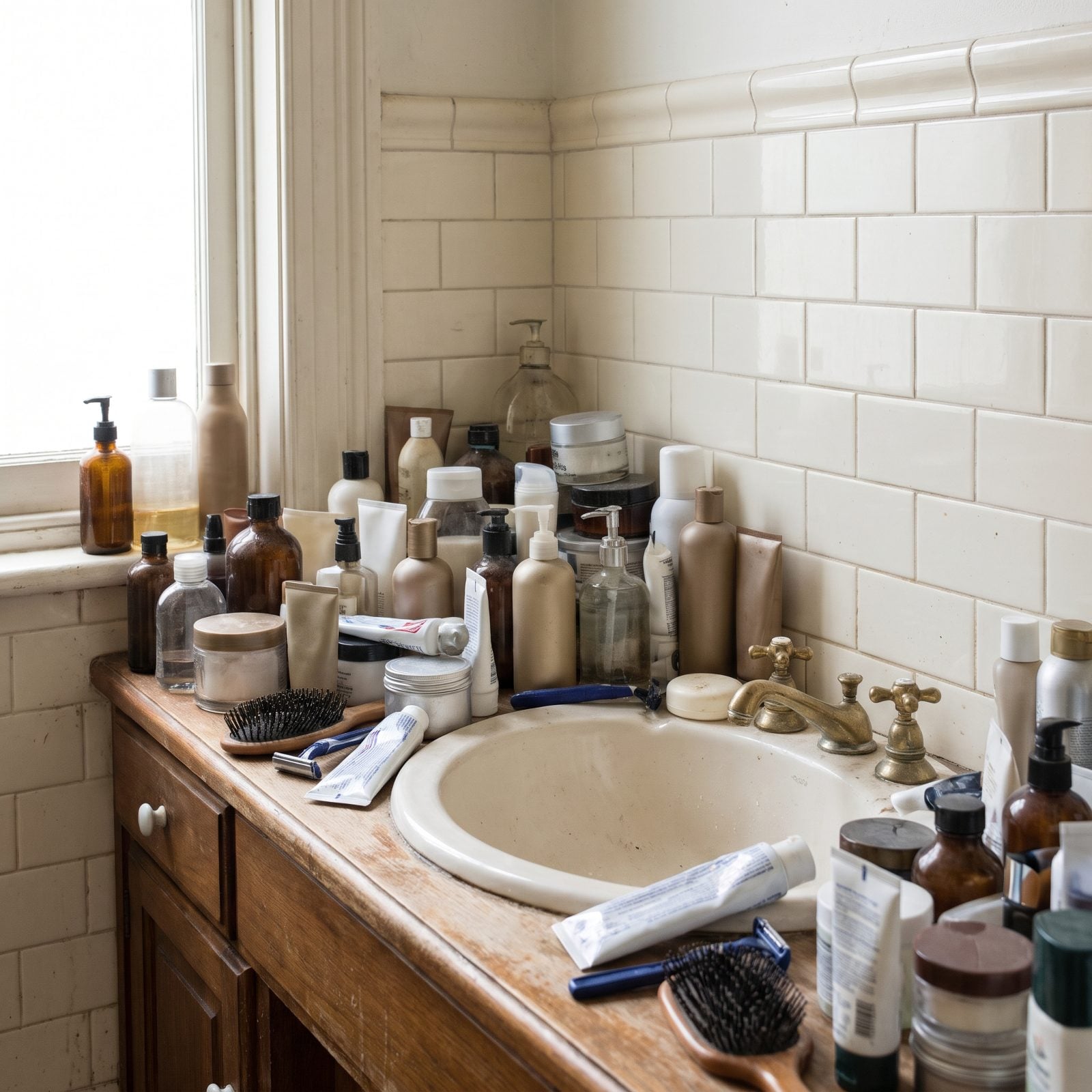
Counter space is a feature. Hidden under a forest of bottles, it stops being one.
A vanity buried in toothpaste, razors, and half-used lotion jars reads cramped even when the bathroom is a good size. Stagers clear everything down to maybe a single plant and a rolled towel.
And here’s what most people miss: a buyer doesn’t need proof that you brush your teeth. They need to imagine their own stuff fitting, which they can’t do around yours.
15. Toilet Brushes and Plungers Left On Display
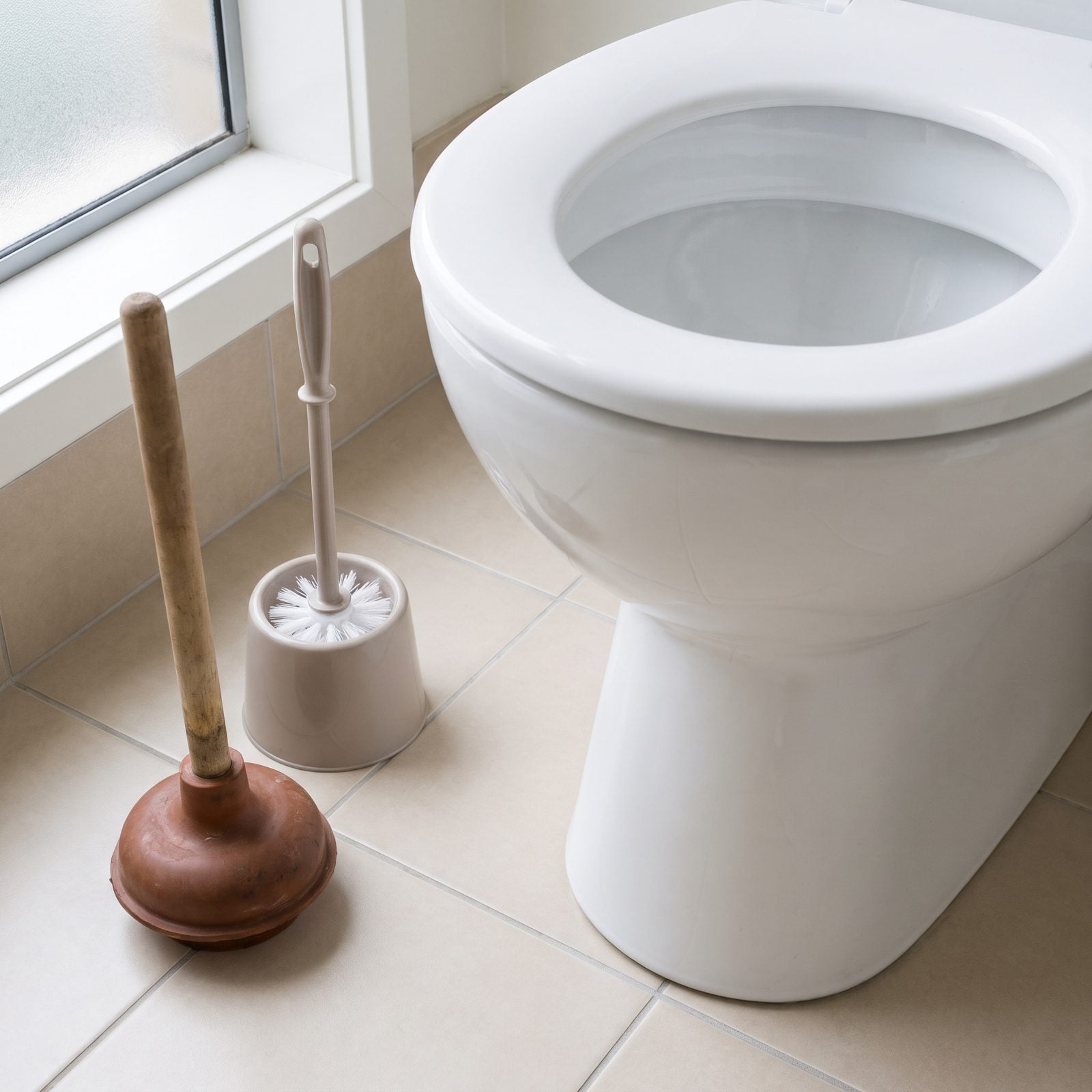
Nobody wants to be reminded of bathroom plumbing while picturing their dream home. Yet the plunger and toilet brush sit right there in the corner, in full view.
Tuck them under the sink or into a closet before every showing. It takes ten seconds and spares buyers a mental picture they didn’t ask for.
14. Freestanding Over-the-Toilet Storage Towers
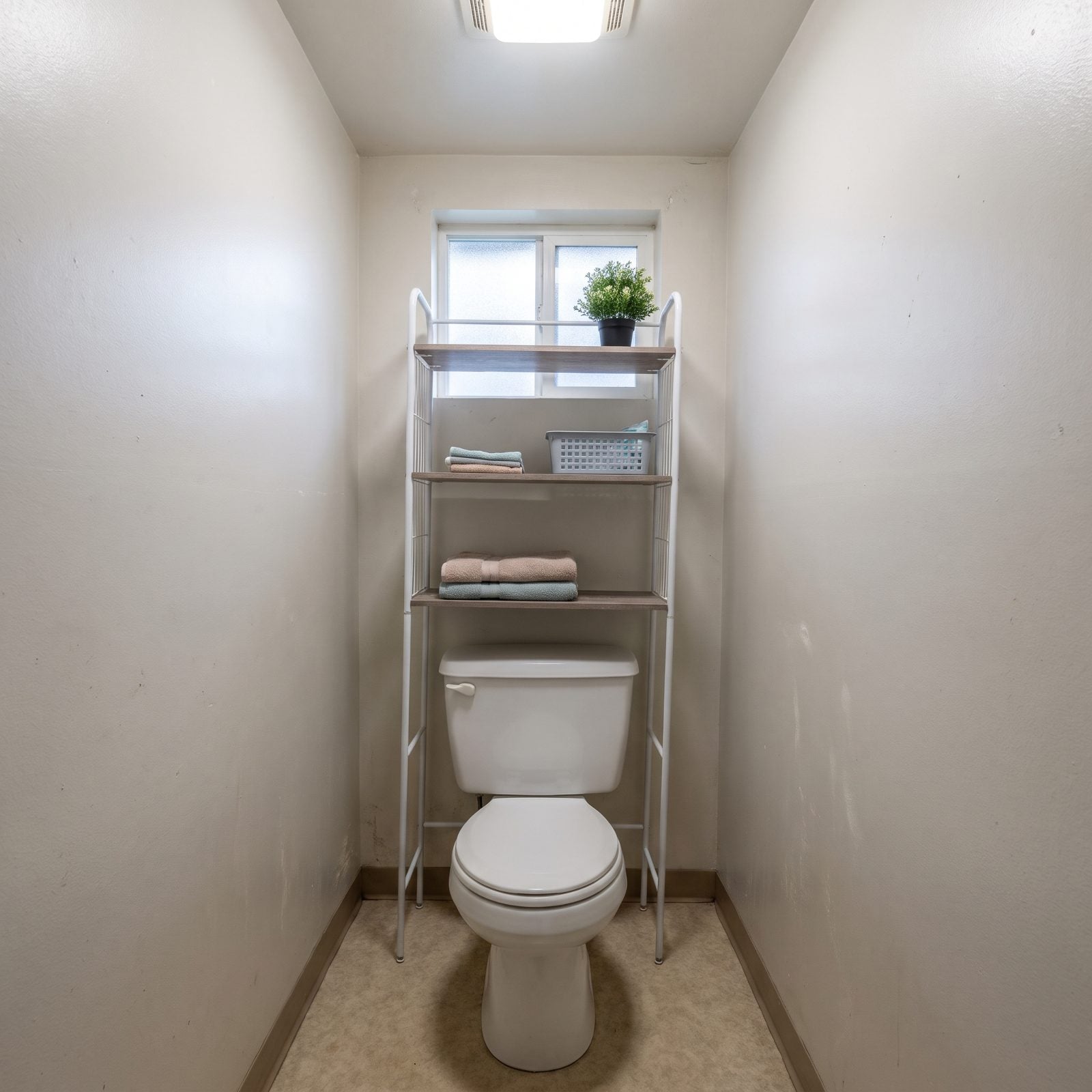
That wobbly étagère straddling the toilet felt like a clever fix the day it came home from the big box store. It isn’t selling the house.
These freestanding towers eat visual space, age a bathroom on sight, and drag the eye straight to the toilet, which is the last place you want anyone looking. Stagers haul them out entirely.
An empty wall above the toilet looks bigger than a full one. Trust that.
13. Pillow Mountains and Overflowing Blanket Baskets
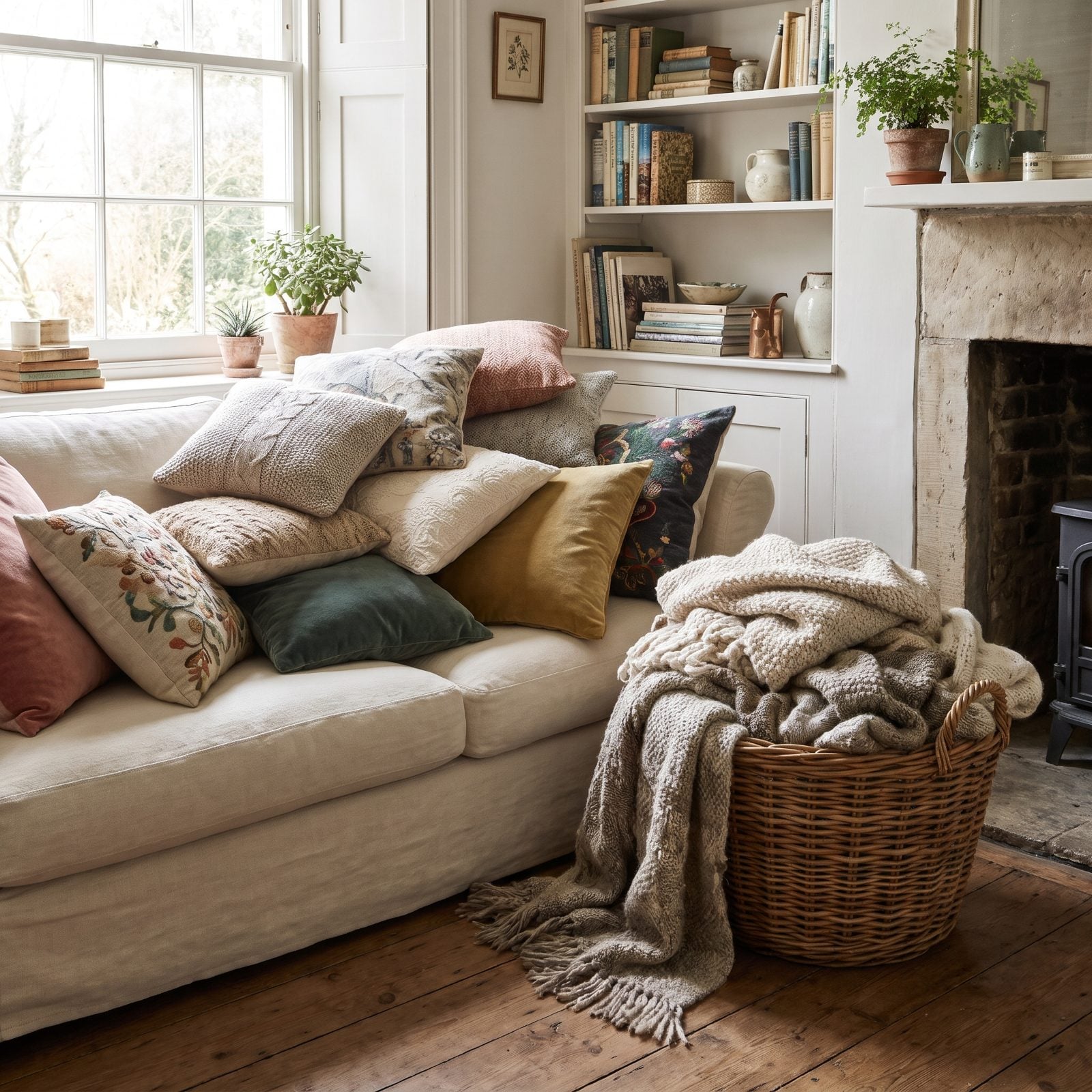
A couple of throw pillows say comfort. A dozen say nobody actually sits here.
When a sofa is so packed a buyer couldn’t physically sit down, the staging works against itself, and the blanket basket spilling knit throws onto the floor only piles on. Stagers edit hard, down to two or three pillows in one or two colors, one folded blanket. Fewer, better textiles let the sofa read as furniture again instead of a laundry situation.
I’ve watched rooms open up the second half the pillows left.
12. Tiny Knickknacks Crowding Every Surface
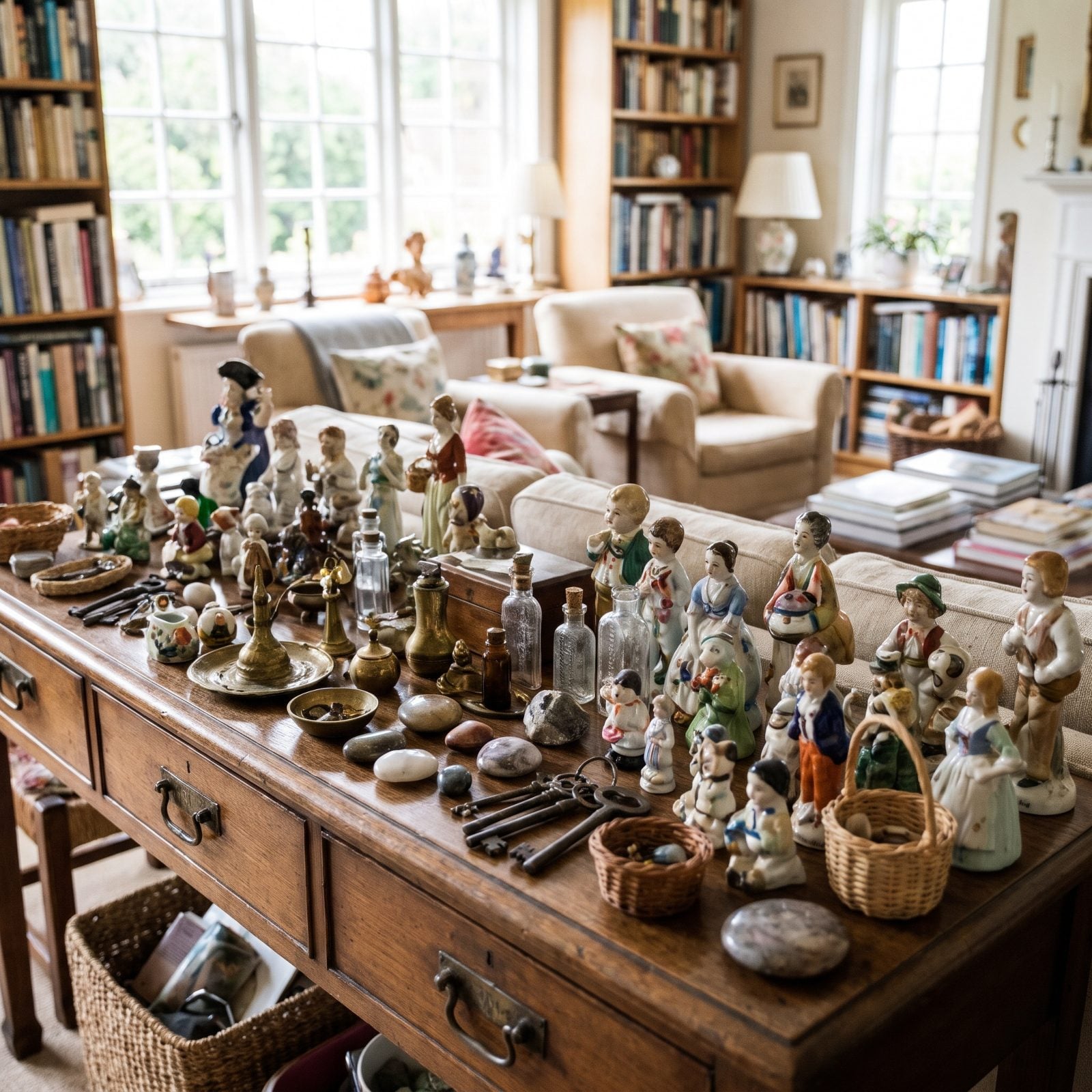
Thirty tiny treasures on a console table turn into visual static. The eye can’t land anywhere, so the whole room feels smaller and busier than it is.
Stagers follow a brutal rule: group in odd numbers, and keep almost nothing. A single large vase beats twelve little figurines every time.
11. Heavy Drapes and Fussy Window Treatments
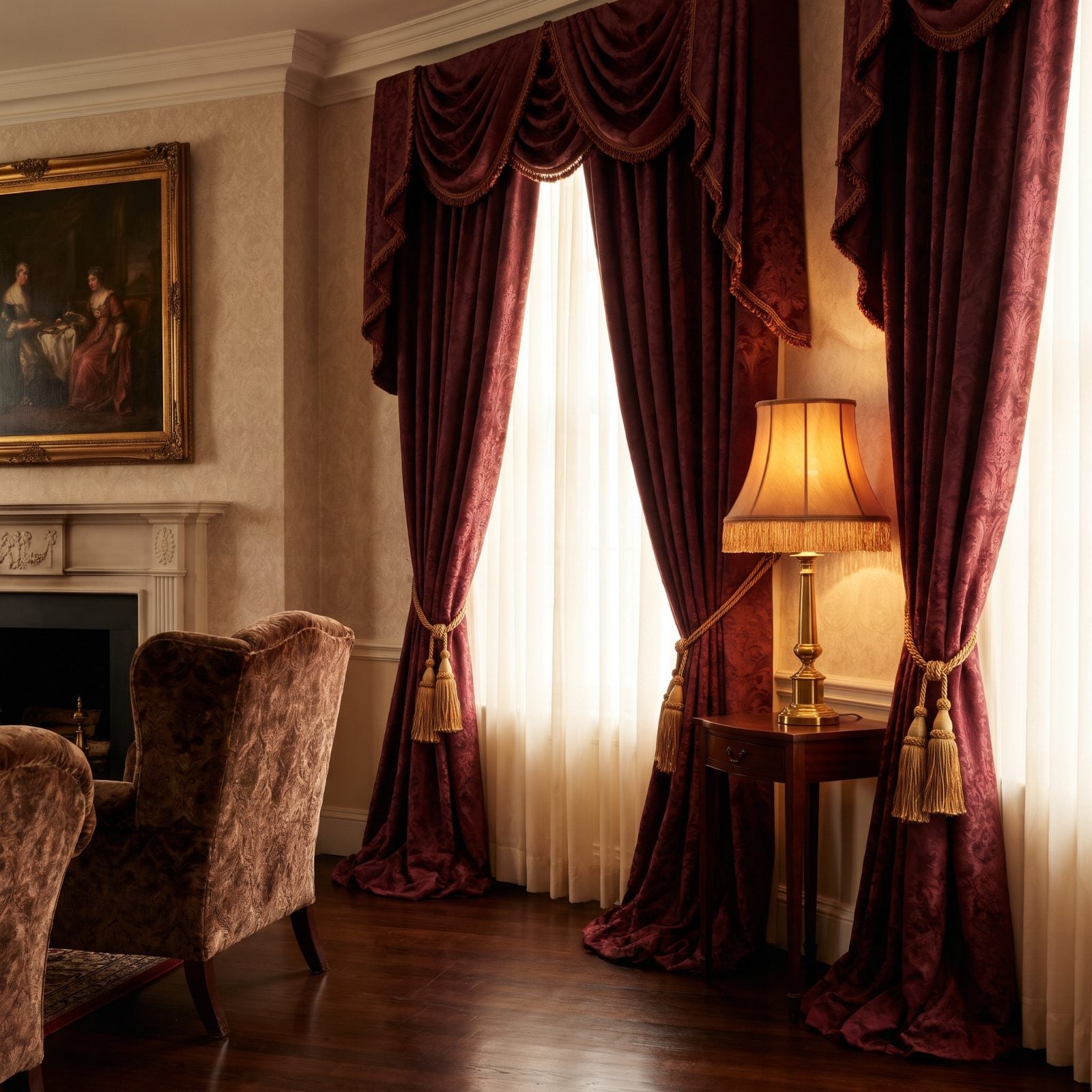
Burgundy damask with a scalloped valance and tasseled tiebacks had its moment. That moment passed decades ago.
Heavy, layered drapes block the single thing every buyer wants more of: light. They age a room faster than almost anything else and shrink the windows besides. Stagers strip it back to simple panels or nothing at all, and once the glass is bare the daylight floods in, so the whole space photographs bigger and sells faster.
Even sentimental sheers, like an heirloom set of lace curtains, have to go.
Light is the cheapest upgrade in the house, and heavy drapes are how you throw it away.
Our readers are split on what belongs on windows in the first place, with curtains, shutters and blinds landing in a near coin toss at 36%, 34% and 31%.
10. Area Rugs Hiding Perfectly Good Floors
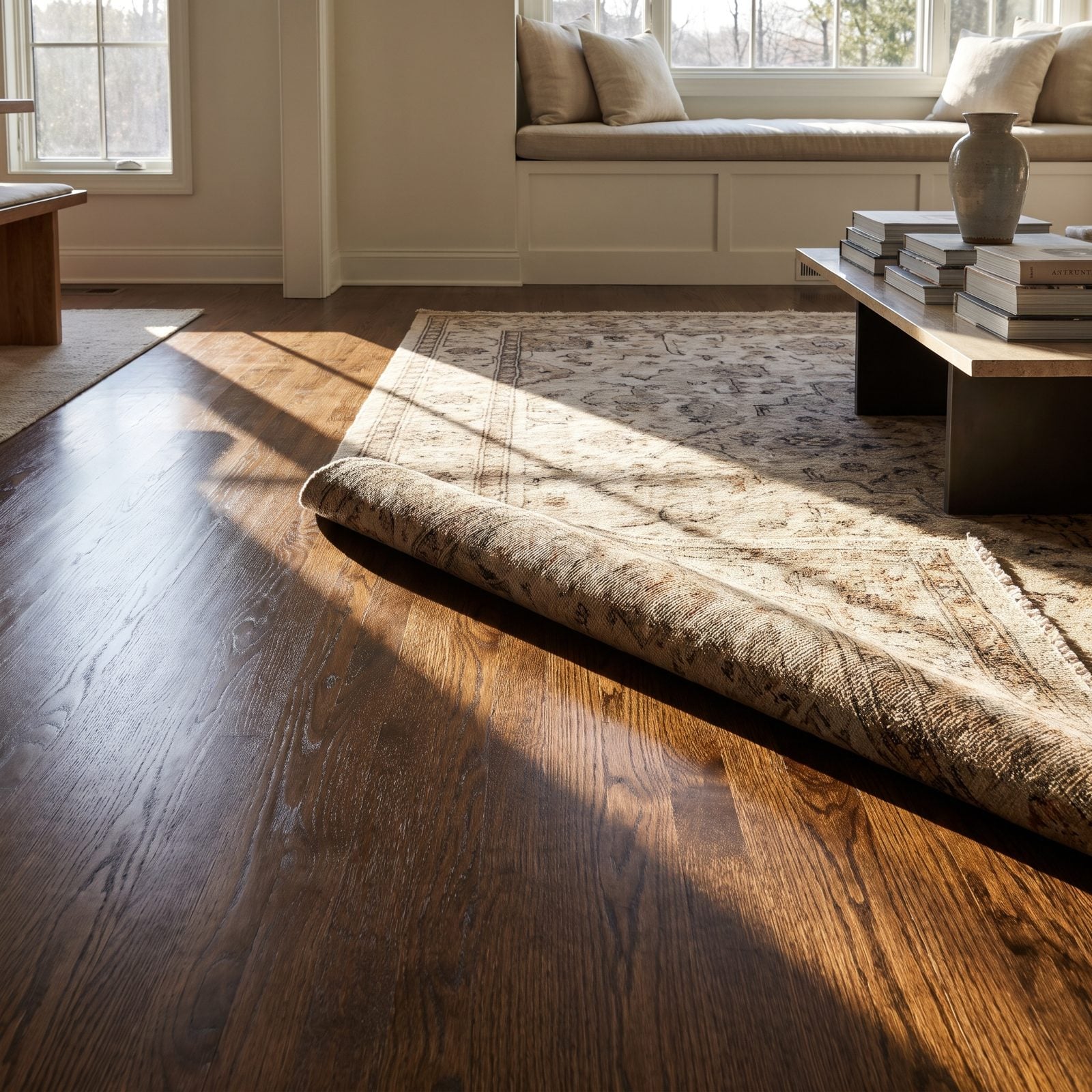
Pull back that busy rug and there’s often gorgeous hardwood underneath. Buyers pay for floors. They don’t pay for your rug.
A dated, patterned rug hides one of the home’s best selling points and chops up the room visually. Roll it up, let the grain show, and the space instantly feels larger and more honest.
Now, if the floor underneath is genuinely rough, a plain low-pile rug in a solid neutral earns its keep. But a good floor should never hide under a loud one.
9. Out-of-Season Holiday Decorations Hanging Around

Nothing dates a listing photo faster than a Christmas tree in a July search. A buyer scrolling listings clocks the stockings and garland and files the house under someone else’s life, frozen in time.
The decor also pins the photos to a date, so anyone who stumbles on them weeks later starts wondering how long the place has been sitting. Stagers strip every seasonal trace.
8. Overpowering Scent Plug-Ins and Fragranced Candles
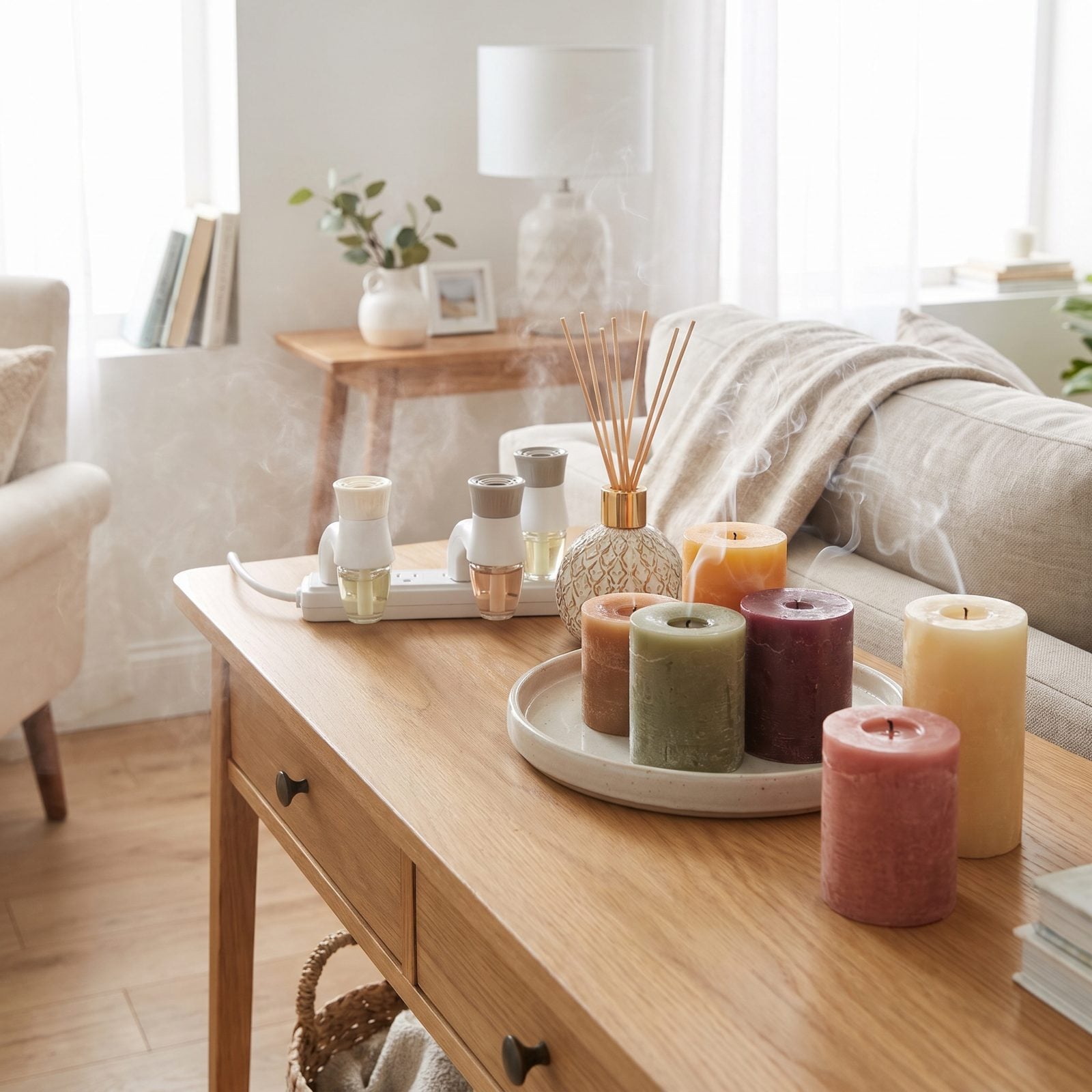
Walk into a home drowning in vanilla-cinnamon plug-ins and your brain does one thing instantly: it starts hunting for what’s being covered up. A heavy scent reads as a cover story, not a welcome.
Stagers pull every diffuser, wax warmer, and half-burned jar candle because the goal is a room that smells like nothing in particular. Clean air beats a signature fragrance every time. The buyer wants to imagine their own life here, not inherit yours.
Having watched qualified buyers turn around in the foyer, a real estate agent warns “Some scented candles are so strong that they feel toxic with each breath you take. Buyers will wonder what you are trying to hide.”
7. Moving Boxes Stacked in Living Spaces
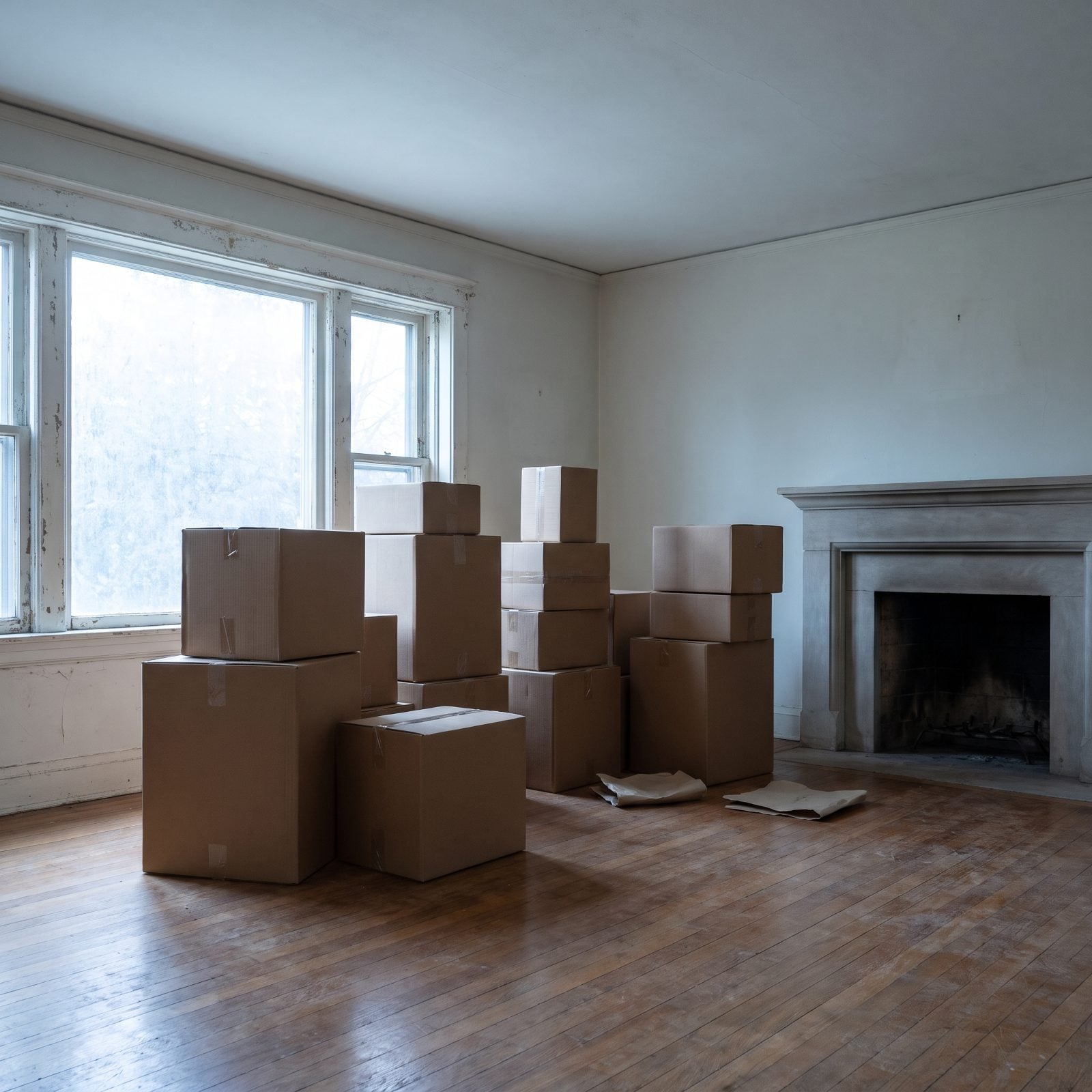
Boxes tell buyers you’ve already left. Worse, they eat floor space and make a generous room feel like a storage unit that happens to have a couch in it.
Every stacked box is a visual wall — the eye stops where the cardboard starts, so a buyer standing in the doorway sees the pile instead of the proportions. Stagers move them out, off-site if possible, into a rented unit if not. An empty corner photographs bigger than a packed one, and square footage is the thing you’re actually selling.
6. Broken Appliances Awaiting Disposal
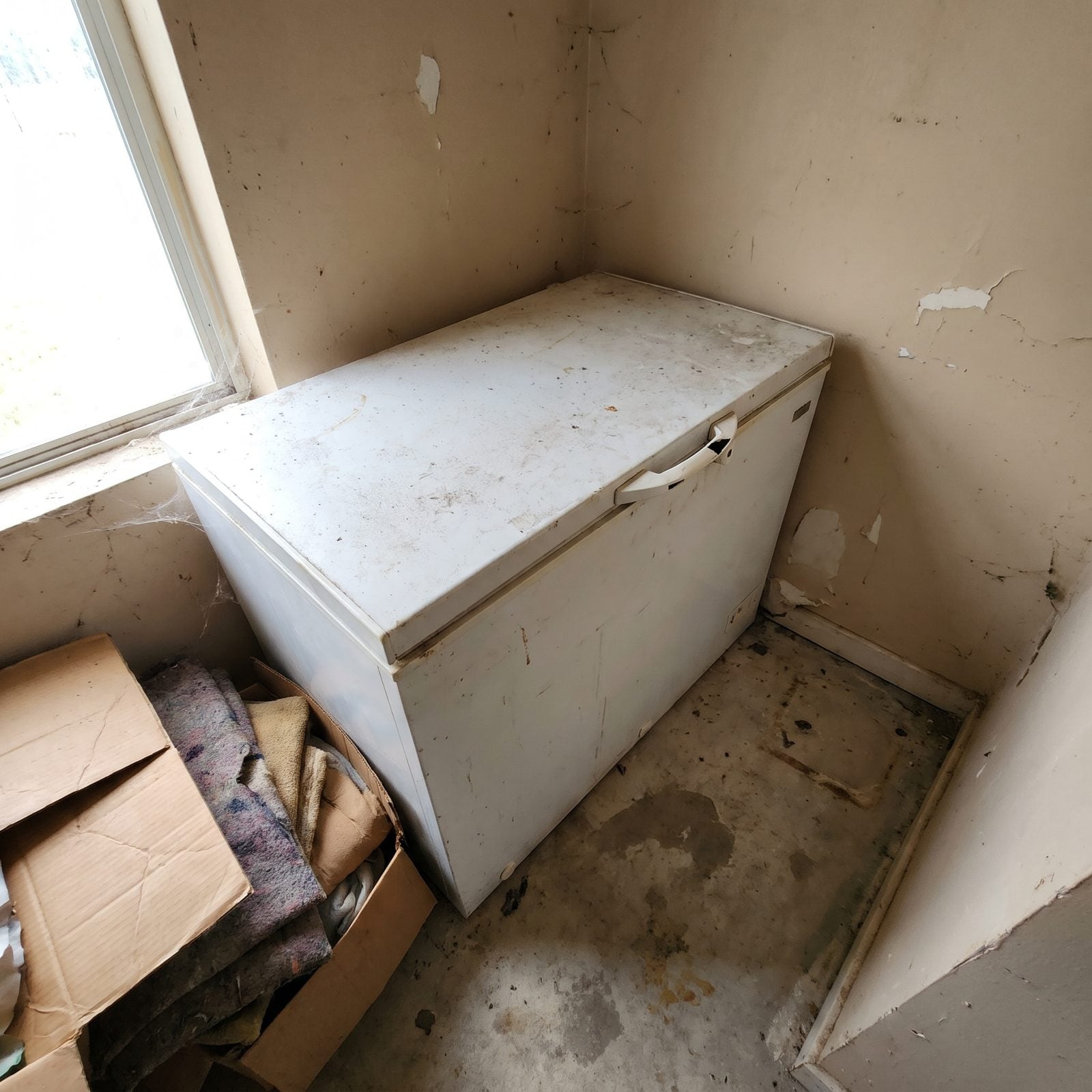
A dead appliance in the corner is a quiet confession. It says maintenance happens late here, and that thought trails the buyer into every other room.
Even a well-run home collects these. The old fridge demoted to the garage. The microwave that quit but never left. Haul them out before the first photo, because one broken thing makes a buyer wonder what else got ignored.
5. Outdoor Playhouses and Scattered Yard Toys
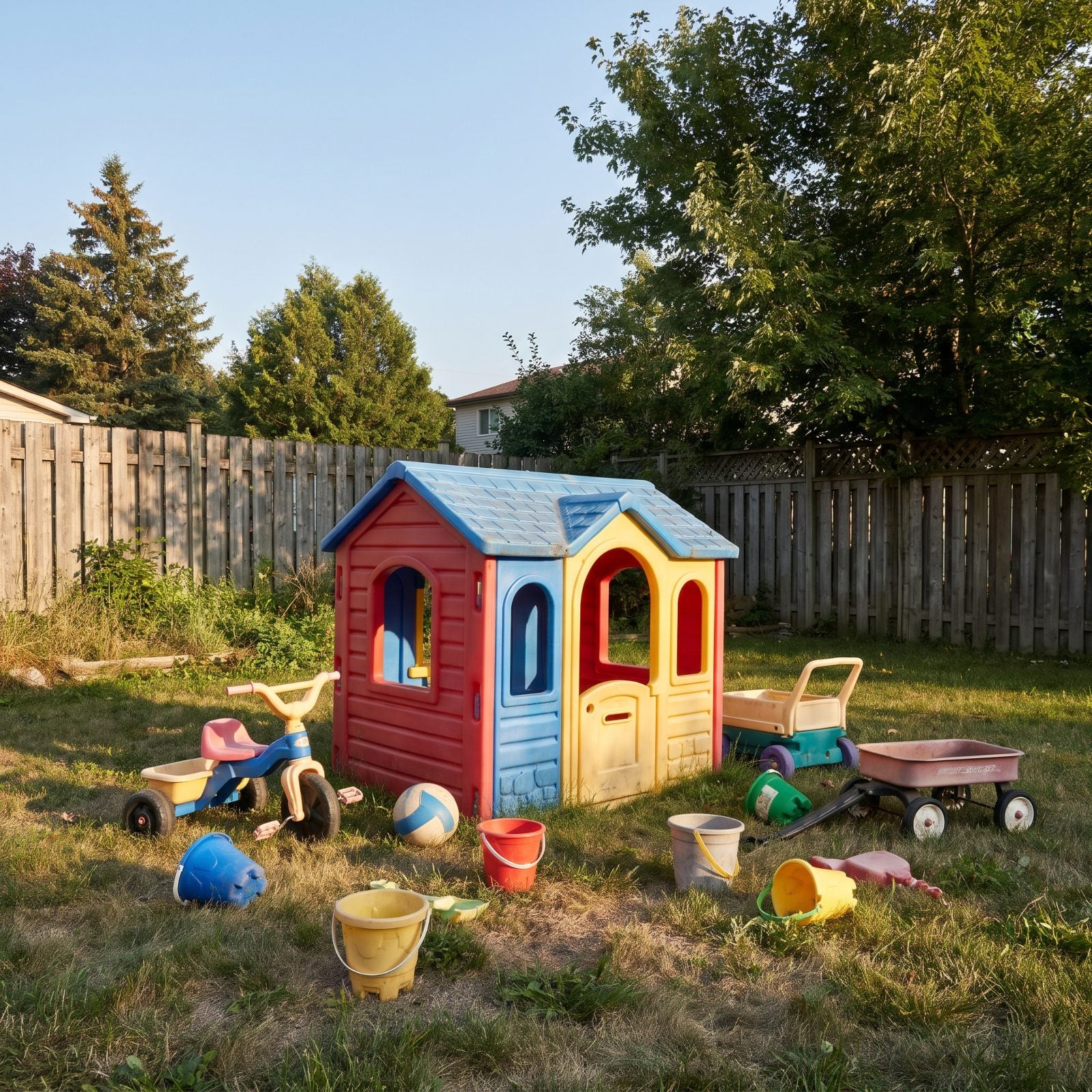
Sun-faded plastic in primary colors reads one way: this yard belongs to someone else’s kids. A buyer with no children sees chaos, while a buyer with children sees a yard that needs clearing before they can picture their own.
Tuck the playhouse, trikes, and sand tables out of sight and let the lawn stretch unbroken. Open green makes a yard feel twice its size.
4. Empty or Dead Porch Planters
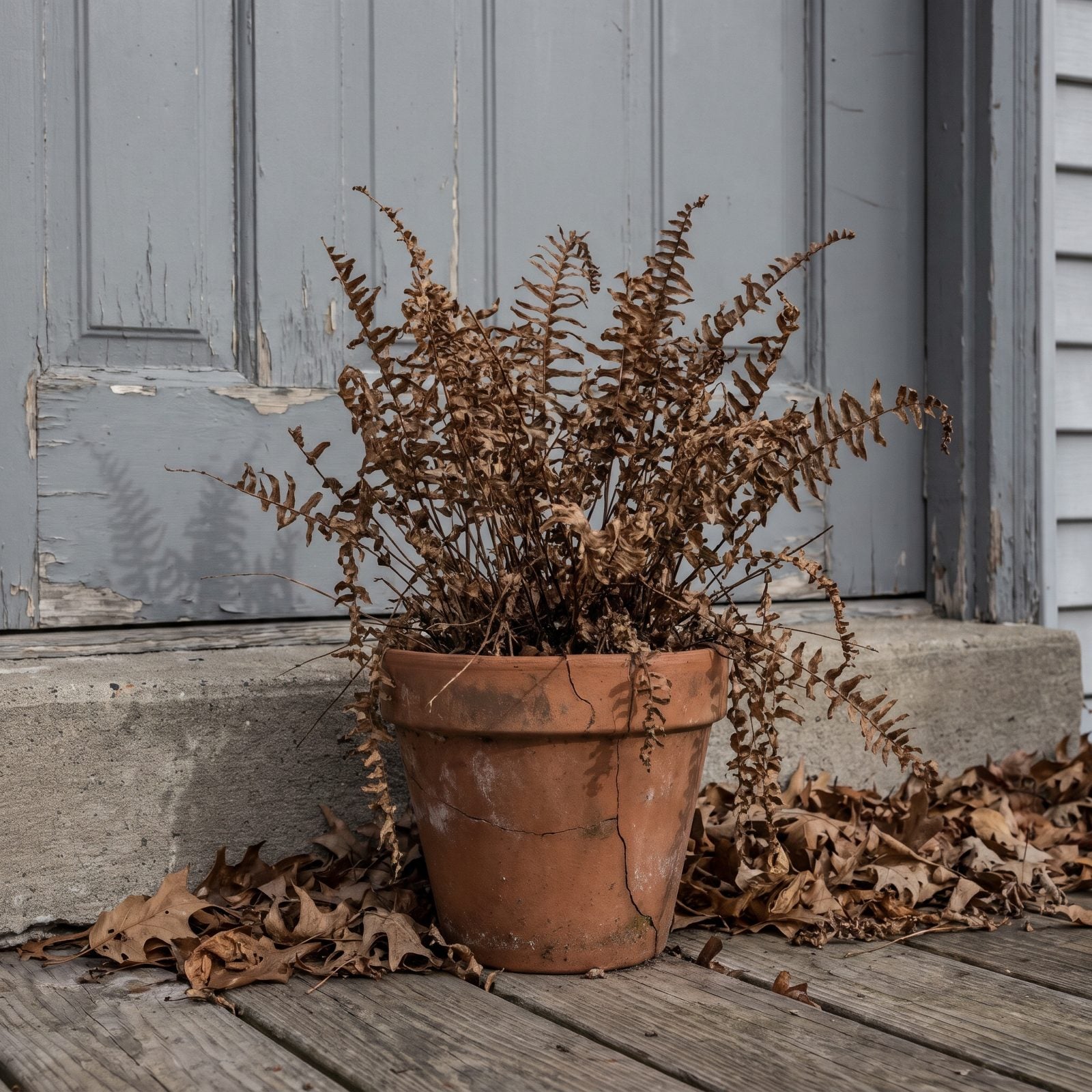
The porch is the handshake. A dead fern in a cracked pot by the front door sets the tone before anyone turns the key.
Most sellers miss this: a buyer decides how they feel about a house while standing on the step, waiting out the agent’s fumble with the lockbox. Brown, brittle, neglected plants poison that moment. Stagers either plant fresh green or pull the planters entirely. A bare porch beats a dead one.
If you replant rather than clear the pots, our readers’ votes lean warm: outdoor photos with terracotta accents got hearts 80% of the time, versus 68% for other images in the same articles.
3. Damaged Plastic Patio Furniture
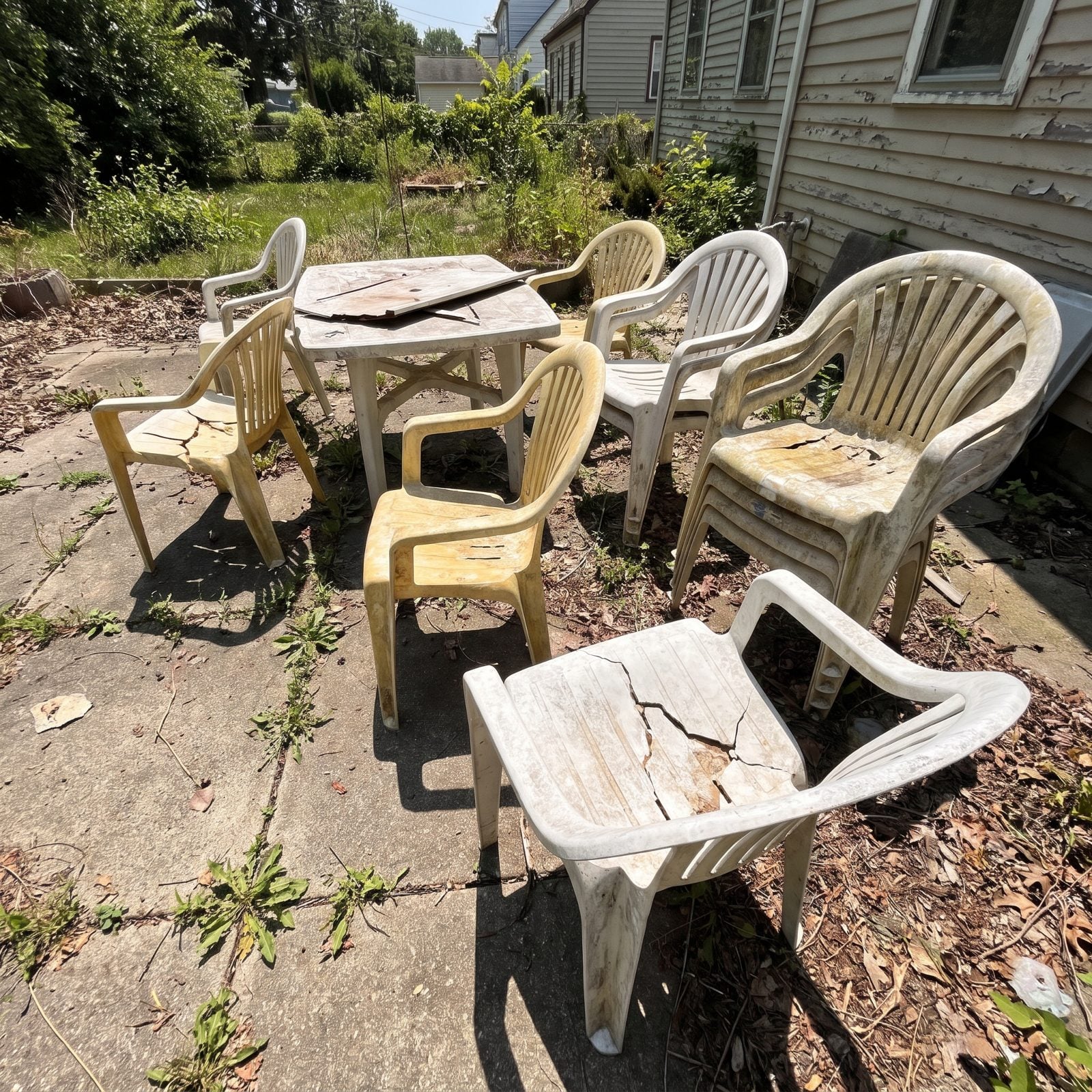
Yellowed, cracked plastic chairs age a patio instantly. They tell a buyer the outdoor space was an afterthought, and that impression sticks.
So remove the sad set entirely, or swap in something simple and intact. Two clean chairs and a small table photograph as a lifestyle. A warped, mildew-stained set photographs as a chore nobody wants to inherit.
2. Pool Floats and Pool-Maintenance Equipment

A pool should sell a daydream. Chemical buckets, a skimmer pole propped on the fence, and a heap of inflated floats sell upkeep instead.
Buyers already suspect a pool is work. Leaving the proof scattered across the deck confirms every fear they walked in with. Stash the hoses, chemicals, and vacuum gear in the shed, clear the floats, and what’s left is clean water and open deck — the only thing a buyer wants to picture.
1. Cars Crowding the Driveway
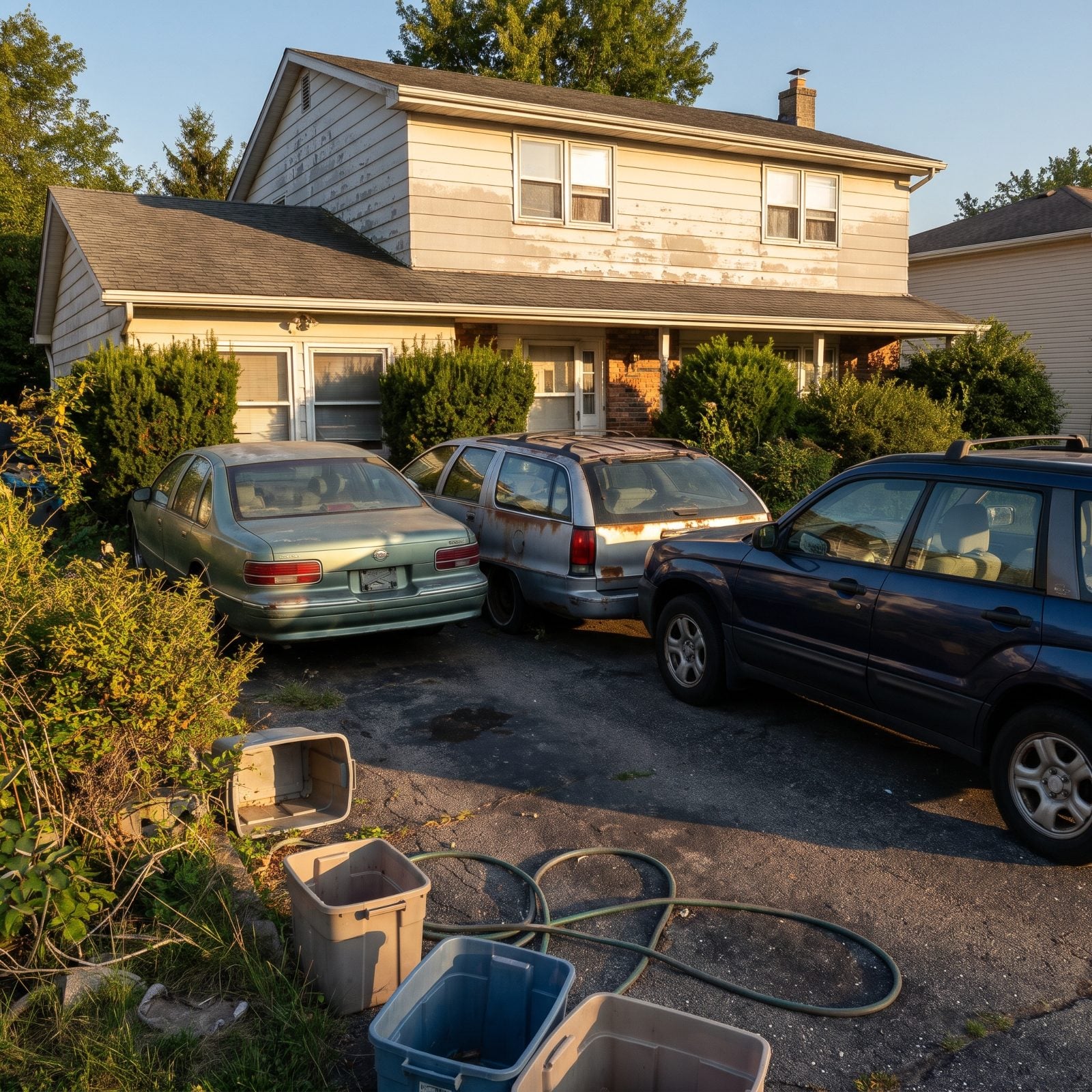
Three cars jammed in the driveway do two bad things at once. They hide the house in every exterior photo, and they shout that parking is tight.
Move the cars — all of them, down the street or around the block, for every showing and every shoot. An empty driveway reads as space and possibility. A full one reads as competition for a spot you haven’t even bought yet.
Topping his exterior prep checklist with clearing the driveway, a real estate photographer explains “Moving your vehicles from the driveway enables flexibility when it comes to composing photos of the front of your house.”