🔥 Would you like to save this?
The best inspectors barely touch a wall before they know something’s off. They read a house the way a mechanic listens to an engine idle. A door that doesn’t close right. A rug in a spot nobody would ever put a rug. A baseboard drifting away from the floor like it’s trying to leave the room. These are the tells a house gives up long before anyone pops an electrical panel, and once you learn to see them, you walk through any property with new eyes. What follows are the small, ordinary clues that mean something much bigger underneath.
44. A Door Shaved at One Corner Suggests Past Movement
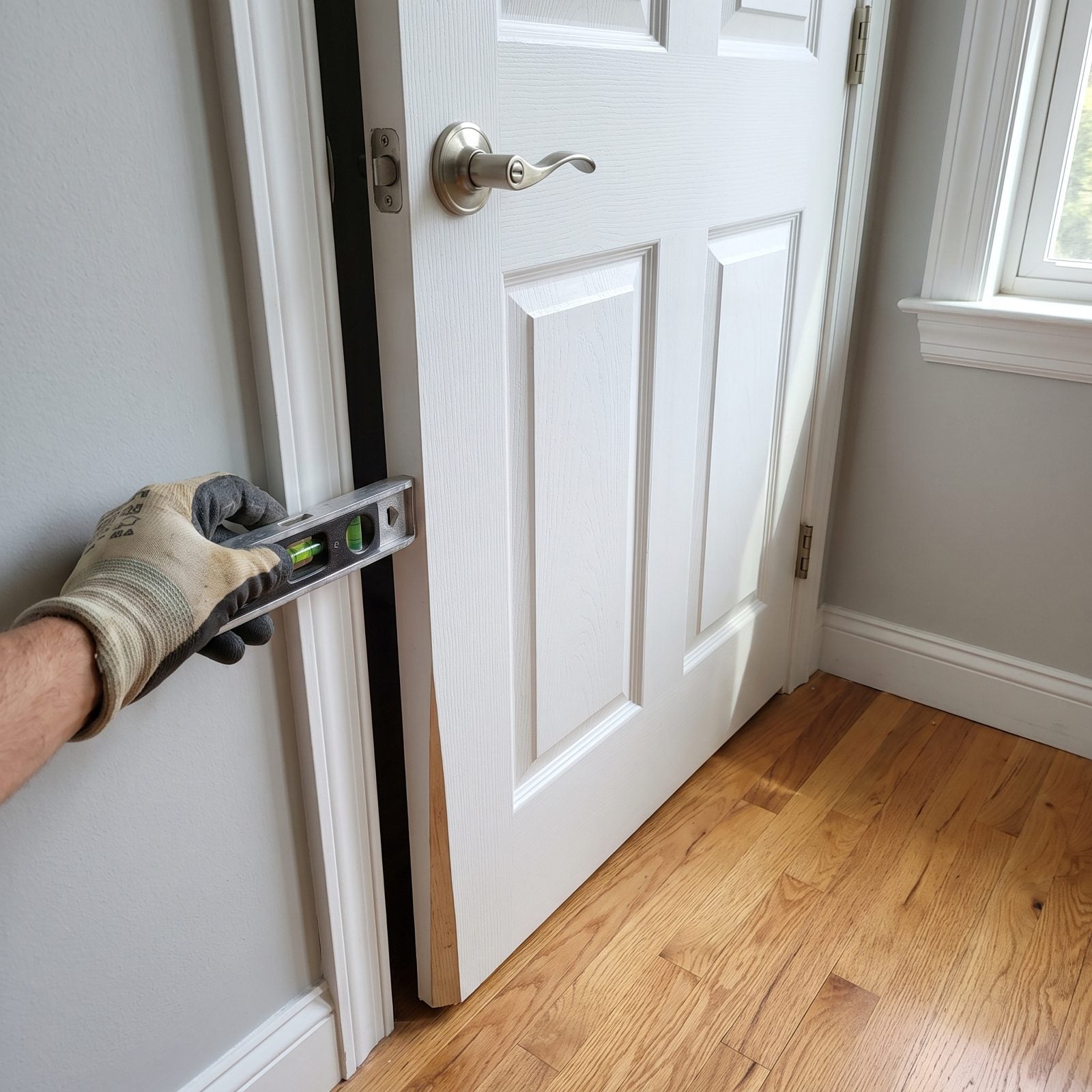
A door that was shaved to close is a door telling on the house. When a frame racks out of square the door binds, and almost everyone reaches for a hand plane instead of asking why. So the corner gets taken down and the problem goes invisible.
In order to come up with the very specific design ideas, we create most designs with the assistance of state-of-the-art AI interior design software. Also, assume links that take you off the site are affiliate links such as links to Amazon. this means we may earn a commission if you buy something.
Inspectors look at the gap line around the whole door. Wider at the top than the bottom? The opening moved. Settling, a sagging header, or foundation shift all read the same way here. One shaved door means a sticky season. But several shaved doors down a hallway usually mean something underneath is still working against the frame, and that’s a different animal entirely.
43. A Baseboard Line That Diverges From the Floor
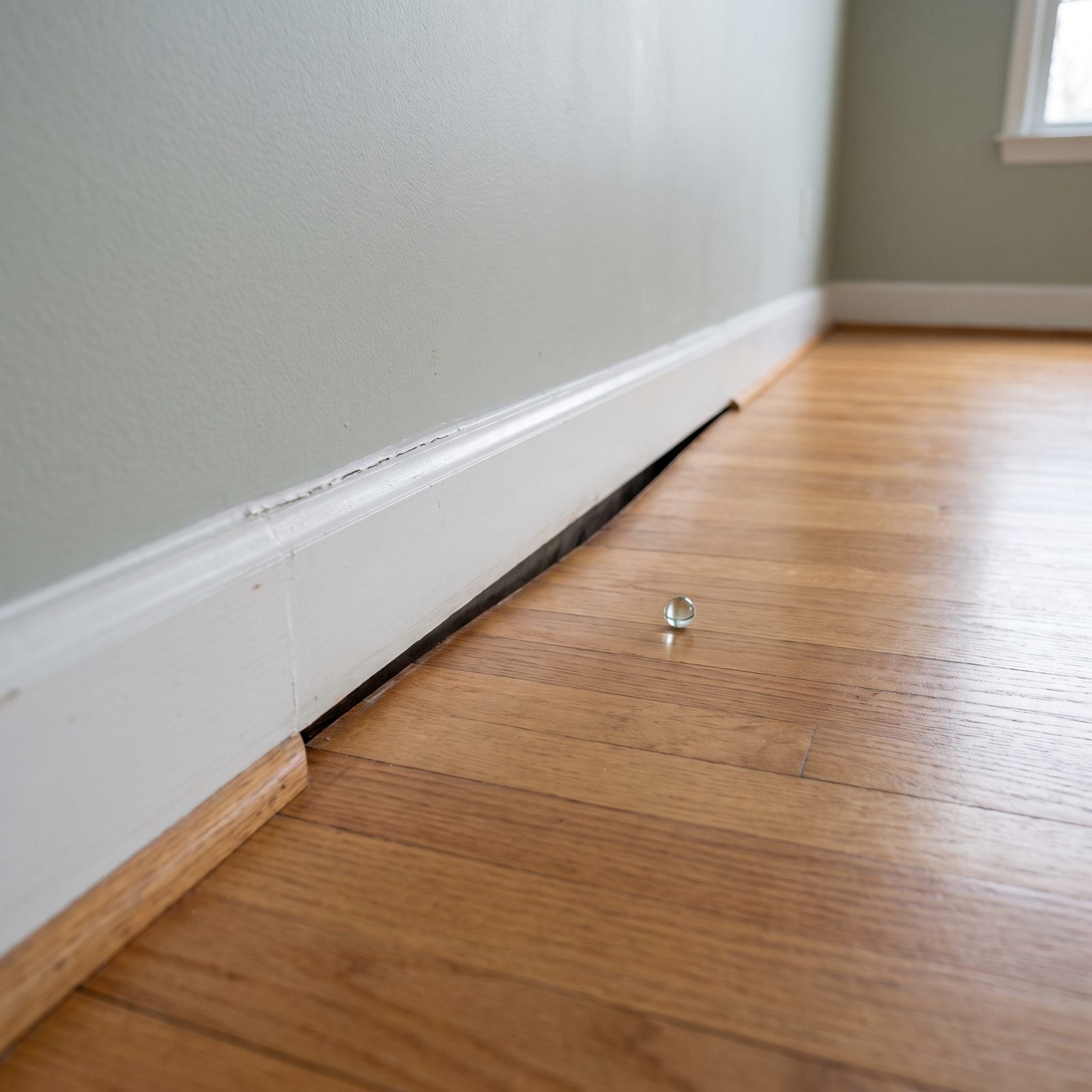
Trim gets installed level and tight, and floors are supposed to stay put. When a straight run of baseboard lifts away from the floor, leaving a wedge-shaped gap that widens along the wall, the structure shifted underneath it after the fact.
Set a marble on the floor near the gap. If it rolls the same direction every time, you’re not imagining the slope. A little movement is normal in an older house. A gap this wide under the trim points toward a settling pier, a failing joist, or soil shifting below.
42. A Patched Crack That Has Already Opened Again
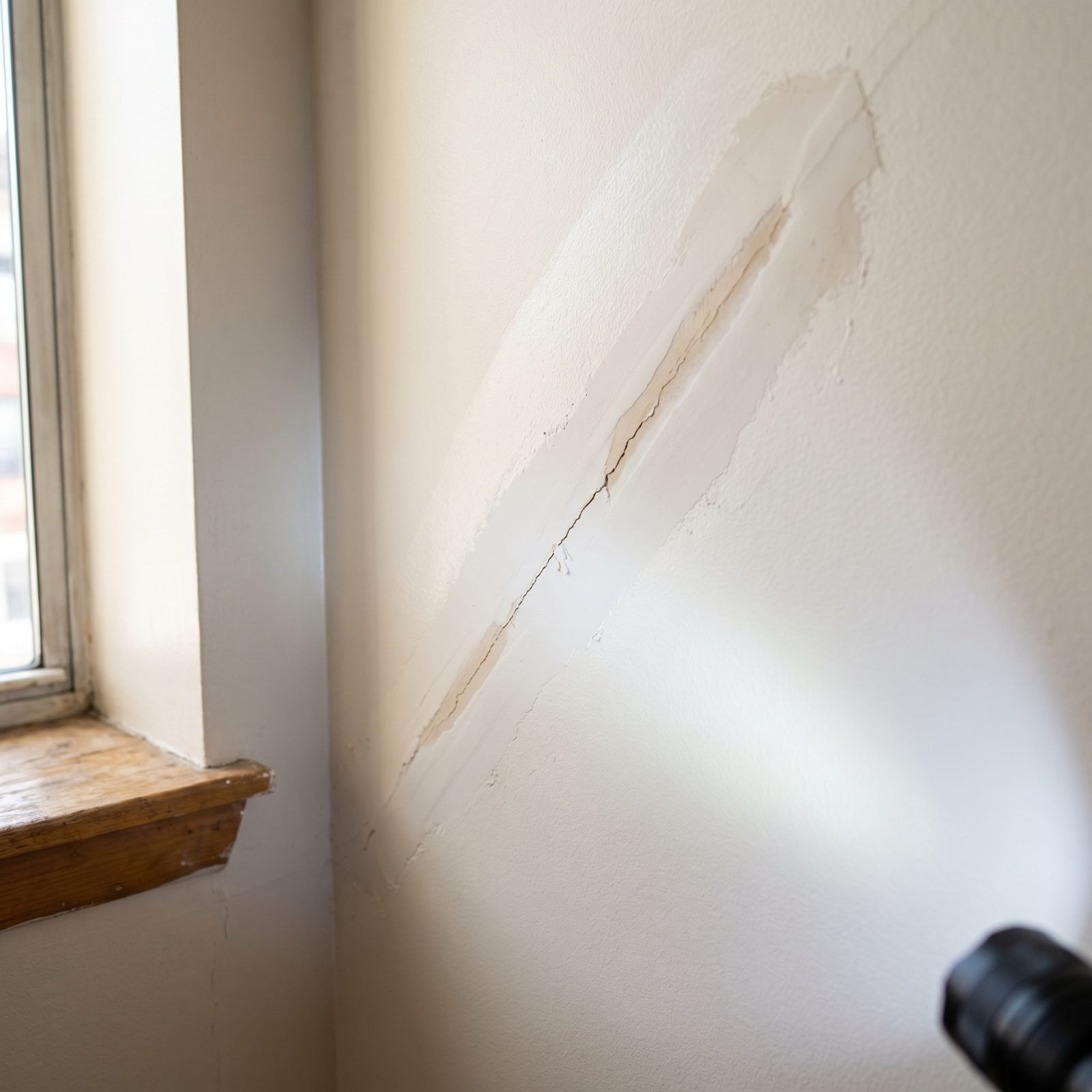
Anyone can skim mud over a crack and roll on fresh paint. Easy. The crack coming back through the patch is the honest part.
A reopened repair tells you the movement never stopped. Cosmetic fixes hide the symptom and buy a little time, nothing more. Inspectors rake a flashlight sideways across suspicious walls to catch the ridge of old compound and the fresh split running clean through it.
A patch that holds is a repair. A patch that cracks again is a confession.
Pay attention to where these cluster. Over doors, at window corners, along the same diagonal on every floor. Patterns point to a cause that’s still active.
41. A Texture Mismatch Beneath an Upstairs Bathroom
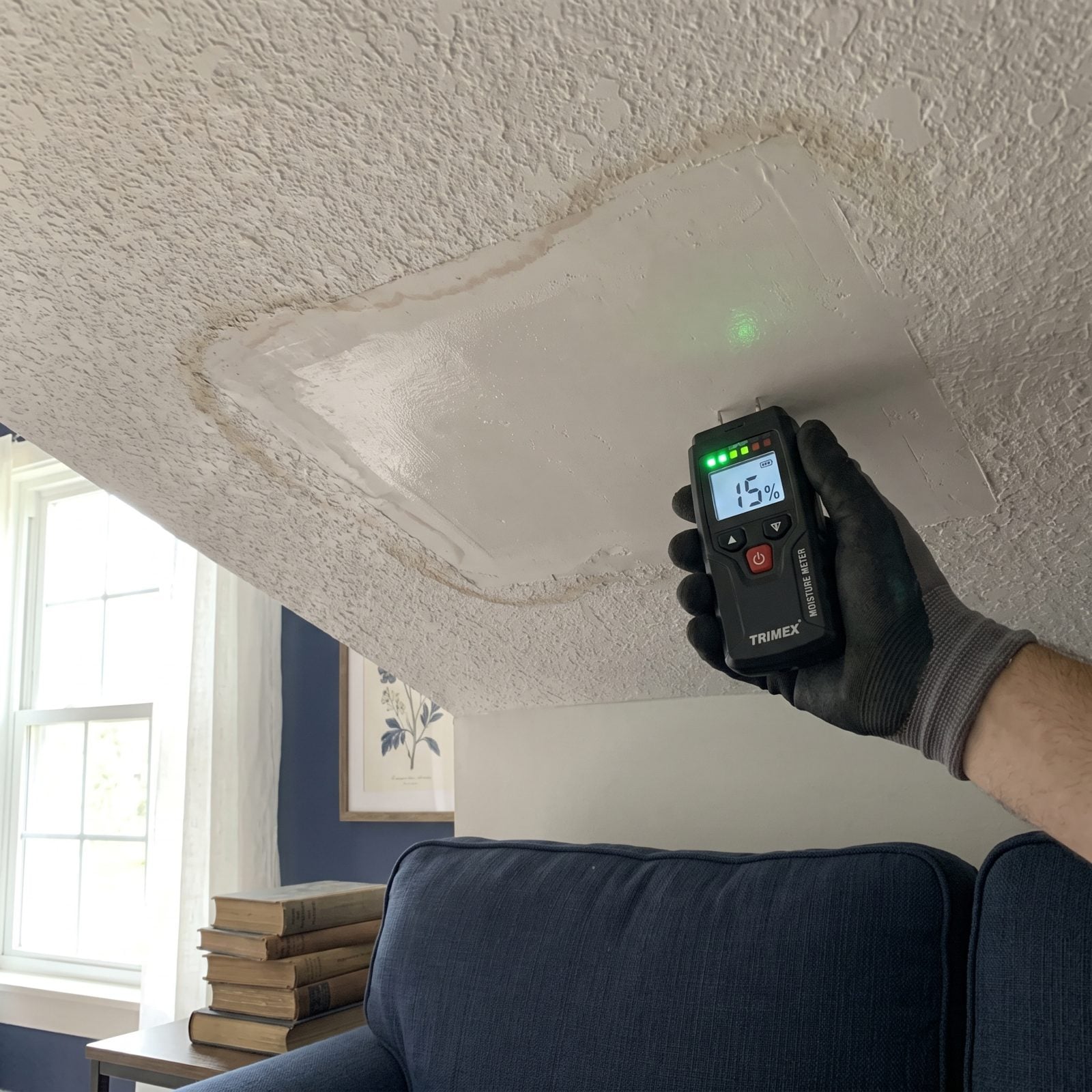
Look up when you’re standing under a bathroom. The ceiling remembers what the floor above has done.
A fresh rectangle of smoother texture, or a patch where the knockdown doesn’t quite line up, often sits exactly under a toilet, a shower pan, or a supply line. Water found its way down, somebody cut out the damage, and the repair never got re-textured to match.
The mismatch isn’t the problem, it’s the receipt. The real question is whether the leak upstairs got fixed or just stopped dripping for now. A moisture meter against that patch answers it fast.
40. A Pristine Shelf Liner Beneath Just One Sink
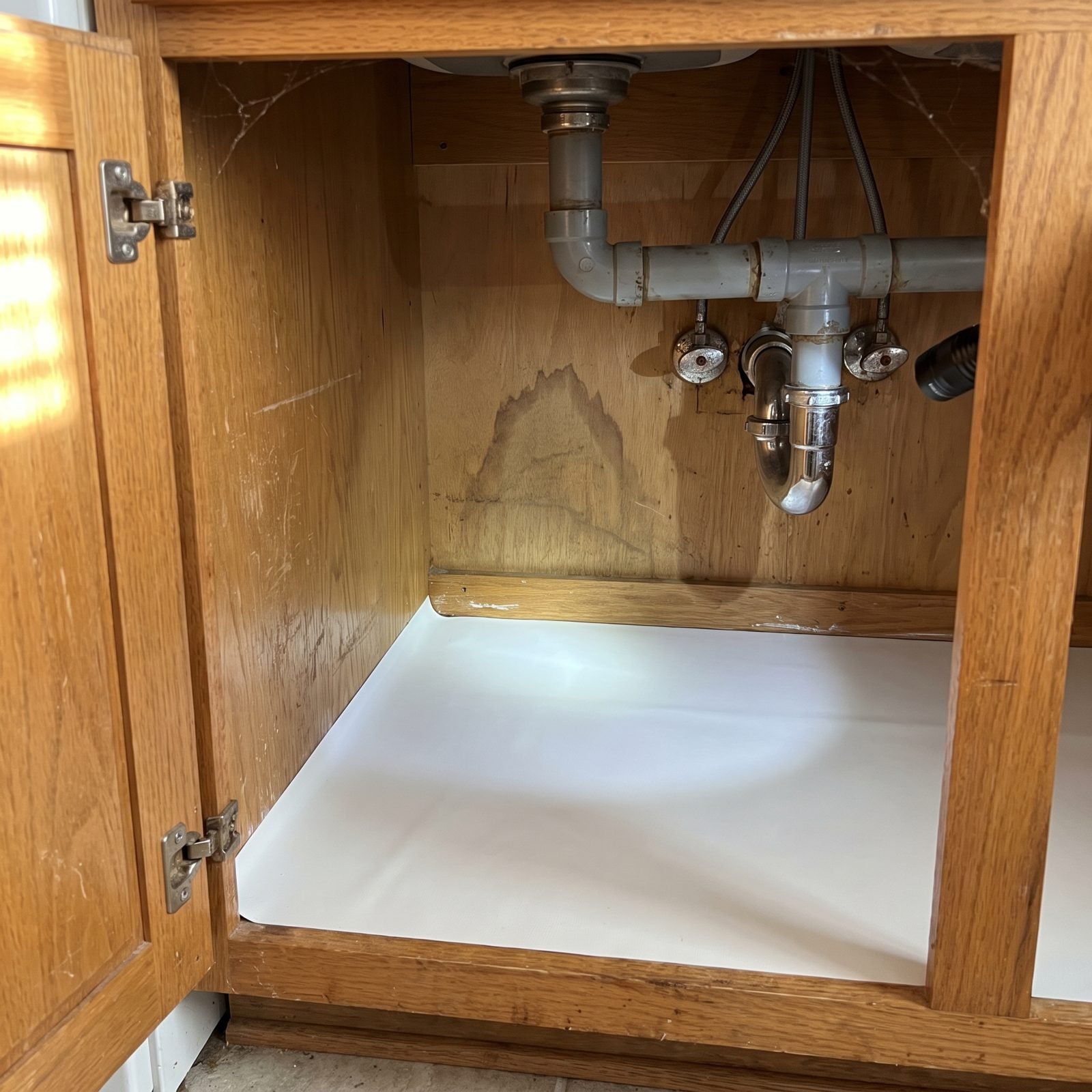
Brand-new shelf liner under one sink, and nowhere else in the house, is a small flag waving.
Nobody re-lines a single cabinet for fun. It usually means a leak got mopped up and the stained, warped cabinet floor got covered over right before showings. The fresh white vinyl hides the swelling, the rot, the old water ghost on the back panel.
Pull the liner back and press the cabinet floor with a thumb. Soft, spongy, or discolored means the drip wasn’t as past-tense as the staging suggests.
39. An Area Rug Placed in an Otherwise Impractical Spot

A rug under a dining table makes sense. A rug marooned in the middle of a hallway, or jammed into a corner where no one walks, makes you curious.
Staging rugs cover things. Stained floorboards, a patched section that doesn’t match, cupping from an old spill, a cracked tile. The placement itself is the tell, because it ignores every rule of how people actually move through a room.
Lift the corner. Floors don’t lie, and whatever the rug is hiding has been there longer than the rug.
38. A Dehumidifier Operating in Finished Living Space
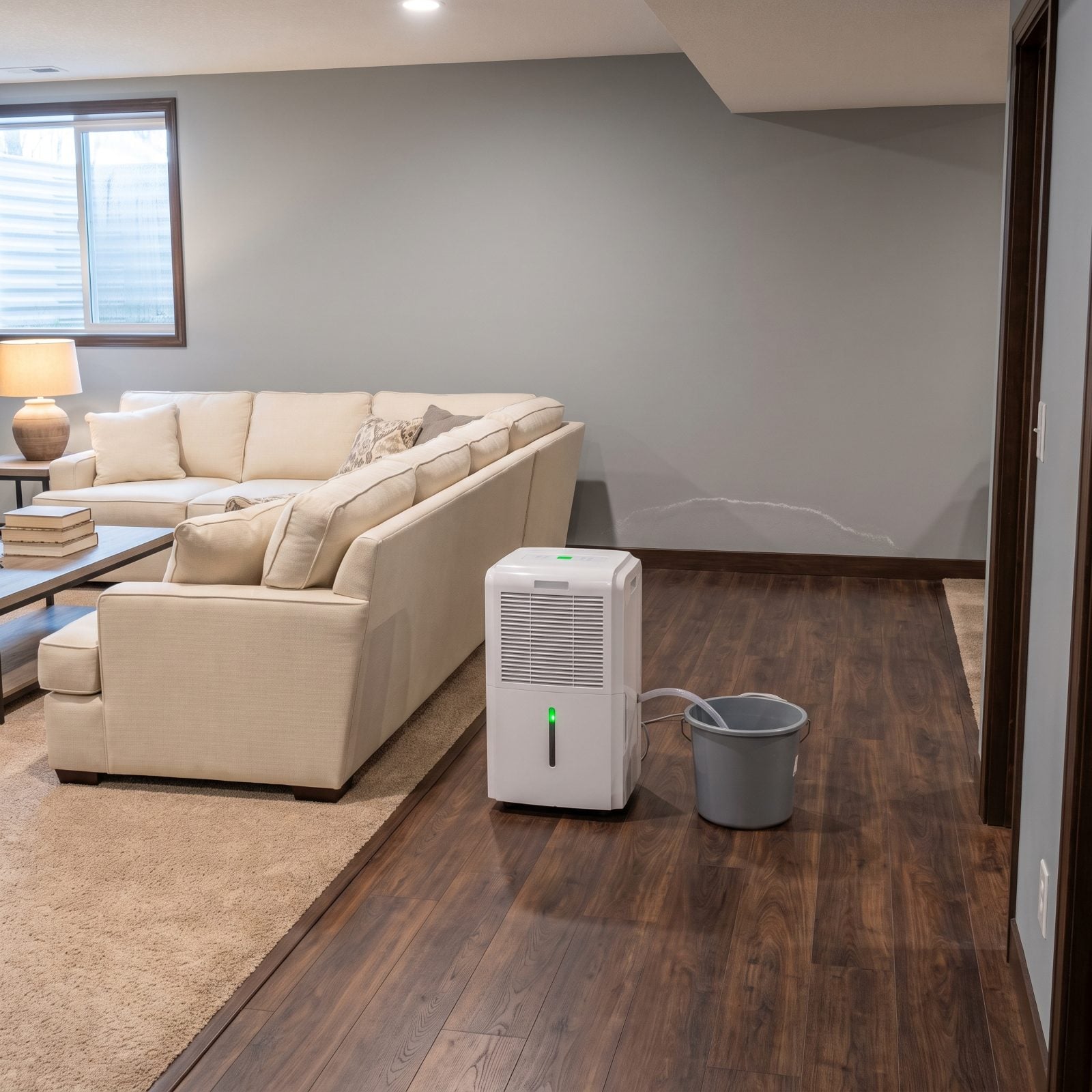
A dehumidifier humming away in a finished room isn’t a convenience. It’s a management plan for a problem nobody ever actually solved.
People run them in basements that take on water, lower levels that smell damp by August, rooms where the drywall keeps wicking up from the slab. The machine keeps the humidity livable, which is also exactly what keeps the trouble from being obvious.
Check what’s low on the walls near it. White chalky efflorescence, a darker baseboard, a wavy bottom edge on the trim. The appliance is treating a symptom the house keeps producing.
37. A Musty Odor Strongest Near the Return Vent
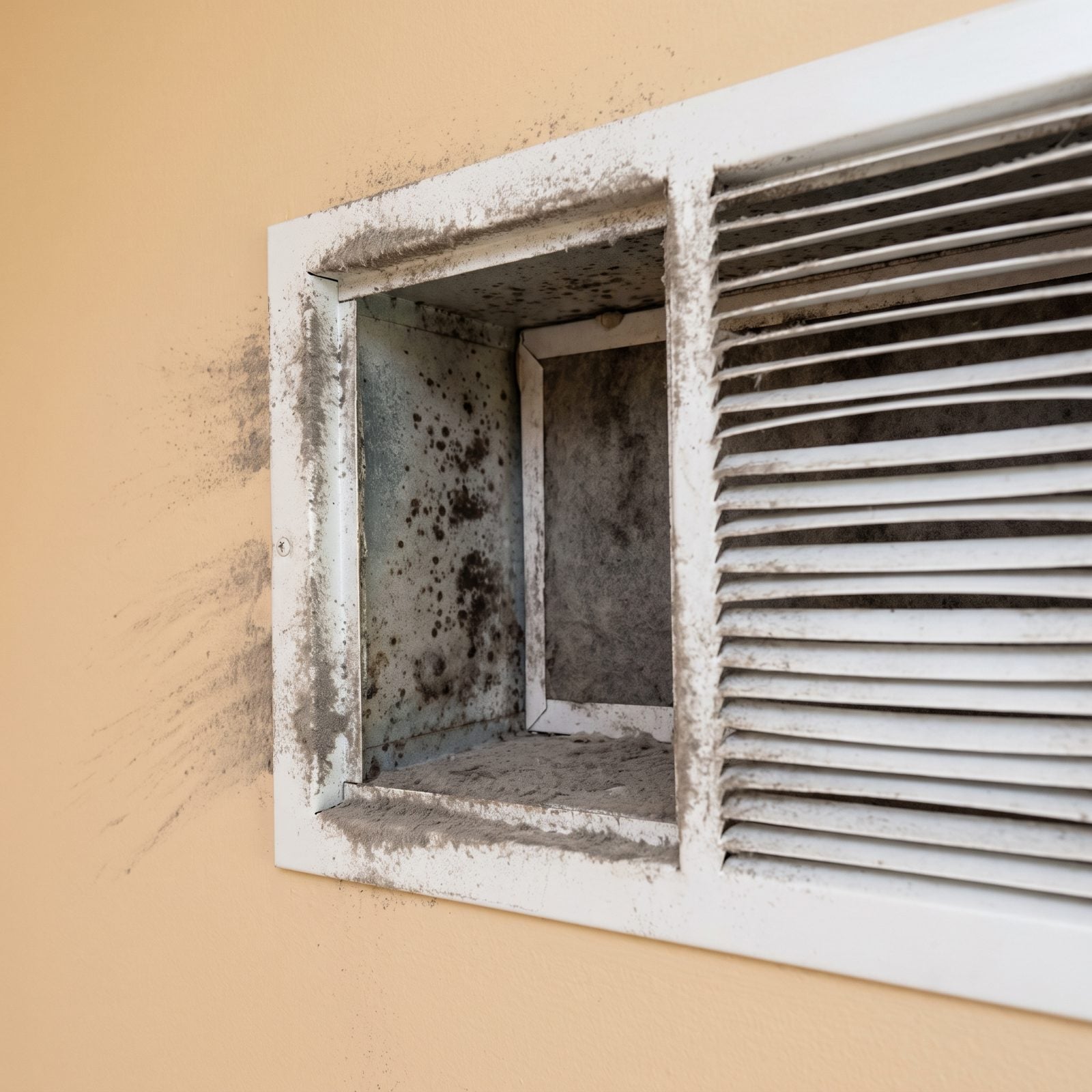
Your nose finds this one before your eyes do.
When the musty smell gets stronger as you walk up to a return vent, the duct system is pulling odor from somewhere and spreading it through the whole house. Mold on a filter, moisture sitting in the ductwork, a damp crawlspace the return is drawing from, any of these could be the source.
Inspectors trust the location of a smell. General mustiness is one thing. A smell that spikes right at the return? That’s the HVAC telling you where to go looking.
36. A Transition Strip Concealing a Sudden Floor-Height Change
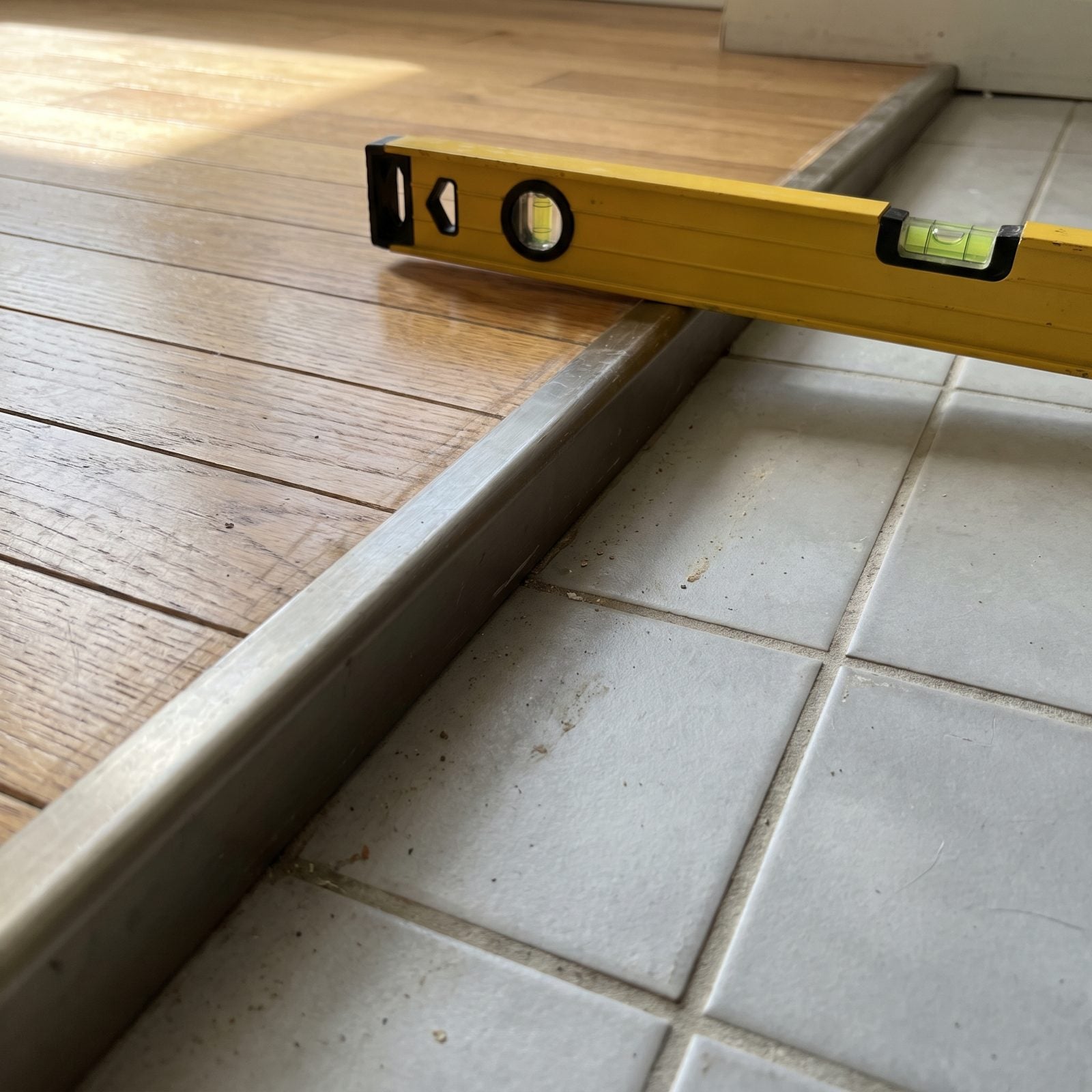
A transition strip is supposed to bridge two flooring types, not disguise a step. When one of these strips is unusually tall or oddly ramped, it’s often covering a floor on one side that has dropped relative to the other.
New flooring goes in level. If two adjacent rooms no longer meet flat, something settled after installation, and the strip is the cheapest way to make a lumpy threshold feel intentional.
Lay a level across it. A bubble that races to one end means the floors aren’t just different materials. They’re at different elevations, and that’s a structural conversation, not a flooring one.
35. A Straight Line of Nail Pops Across the Ceiling
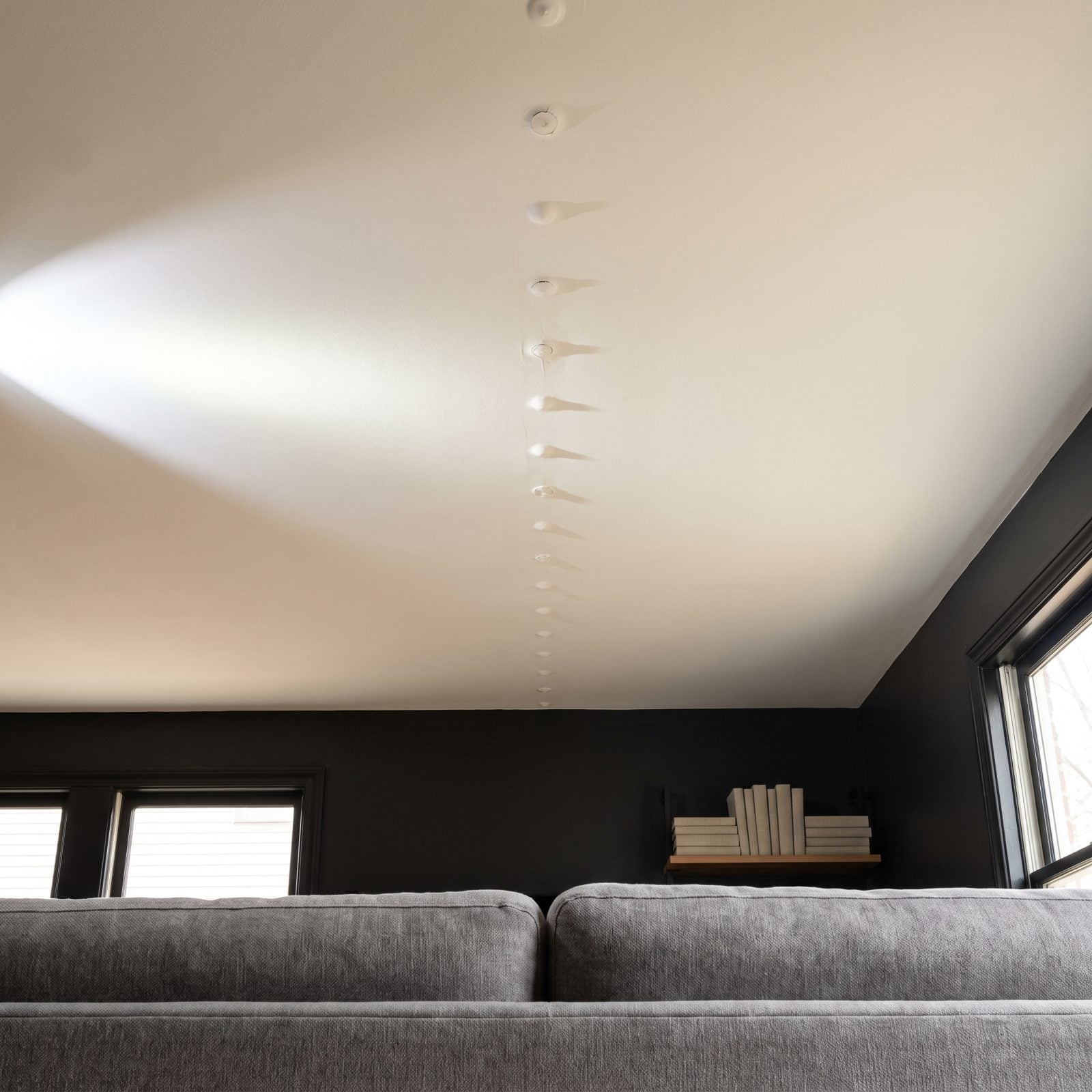
One or two nail pops are nothing. Houses move a little, fasteners back out, drywall shrinks. Ordinary.
A dead-straight row of them across a ceiling is a different story. Those pops are tracing the exact line of a joist or truss, and they popped together because that framing member deflected or the structure above shifted in unison.
Rake a light sideways and the line jumps out. When nail pops organize themselves into a pattern, the drywall is drawing you a picture of the framing behind it. Read it before you repaint and pretend you didn’t notice.
34. An Old Ceiling Stain Bleeding Through New Primer
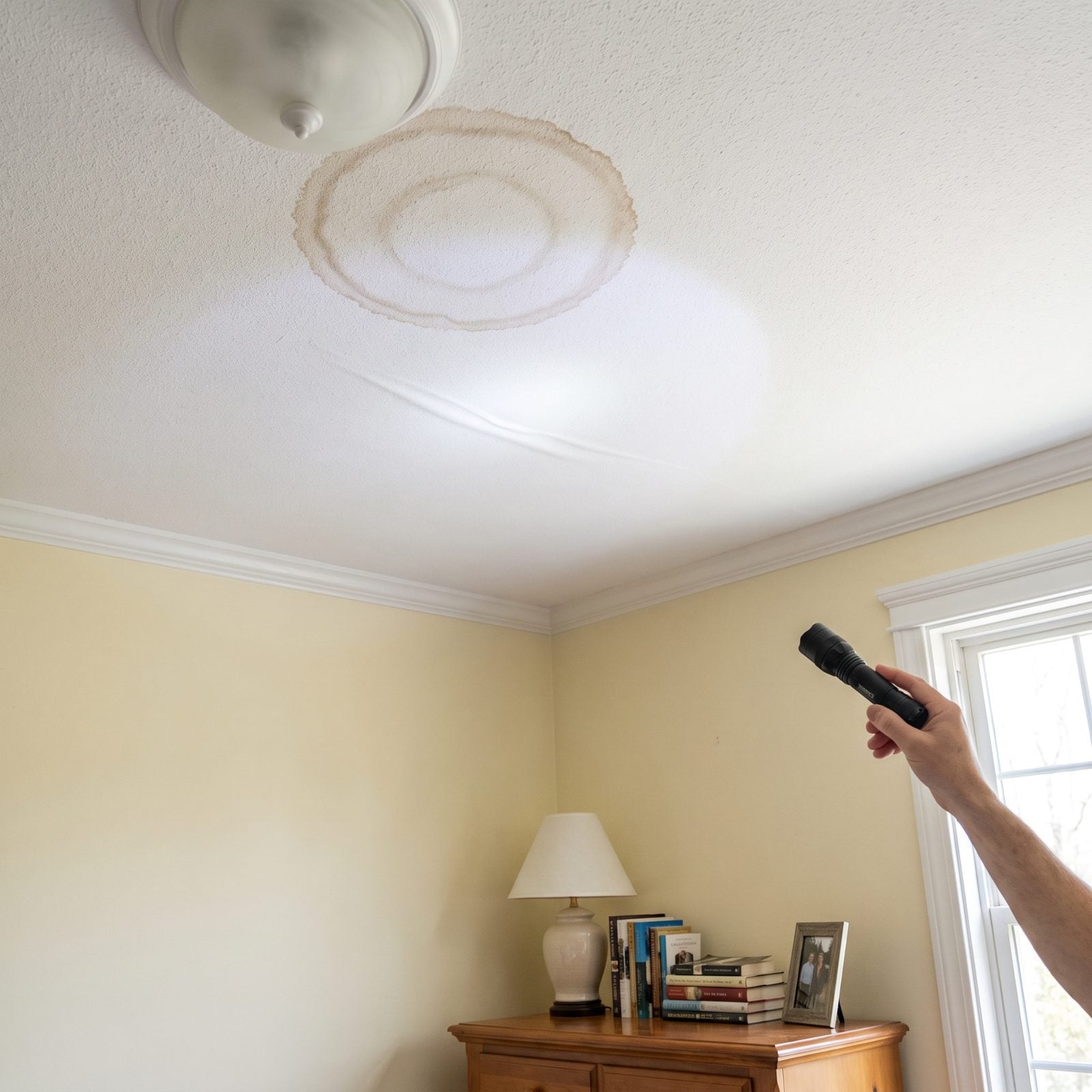
Fresh paint over an old water stain is a tell, not a fix. Tannins and mineral residue from the original leak keep creeping up through ordinary primer, which is why that brown halo comes back like it owns the place. A real repair means stain-blocking shellac primer first, then paint. A quick cosmetic coat says somebody wanted it gone before a showing instead of fixed before a buyer.
So rake a flashlight across the ceiling. If the ring reappears under grazing light and the drywall feels soft, the source may still be dripping somewhere above you.
33. Plug-In Fragrances Operating in Several Rooms
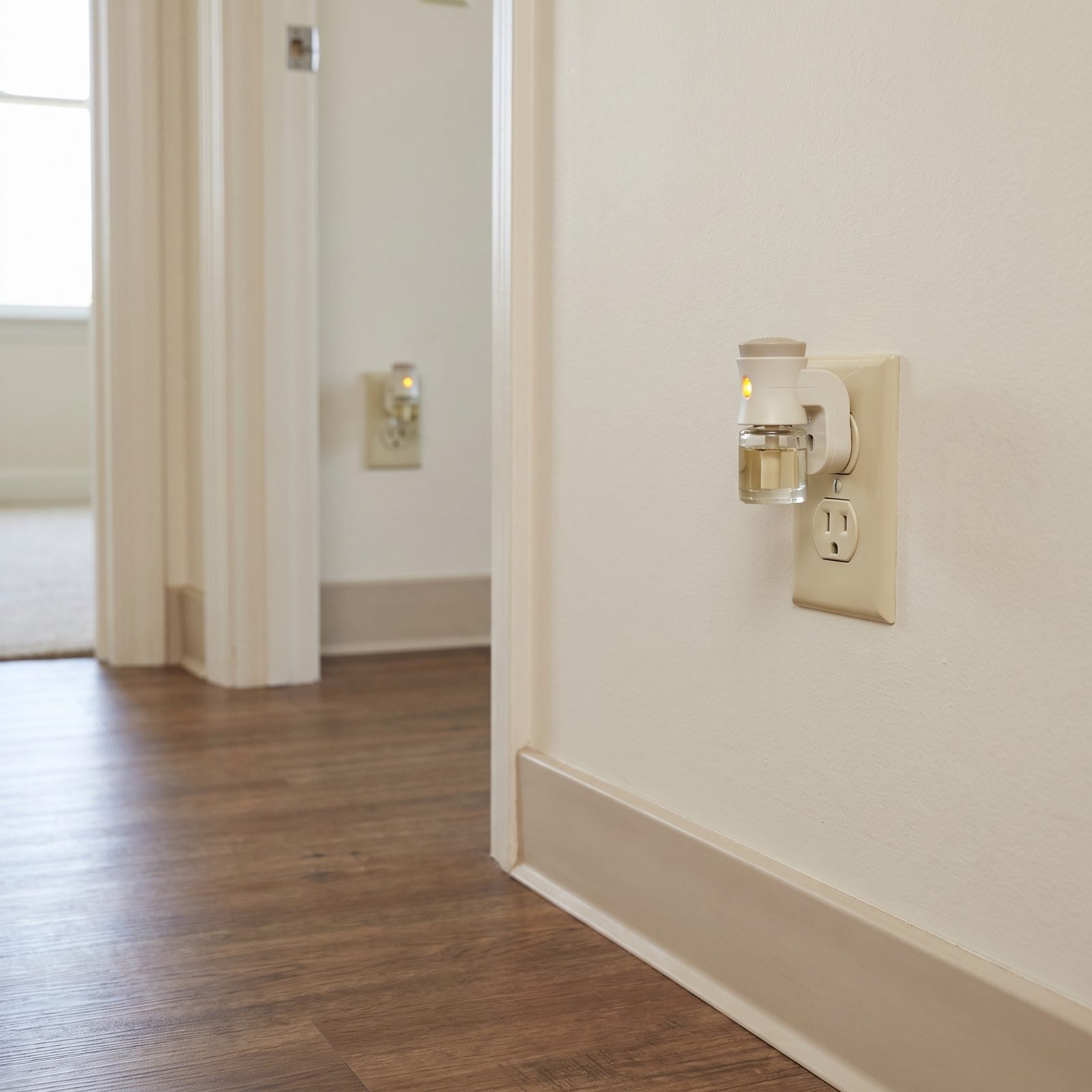
One plug-in means somebody likes vanilla. Three or four scattered through a house usually means somebody is covering something.
Seasoned inspectors read a wall of fragrances as a flag rather than a welcome. Your nose adjusts to a constant scent within minutes, so the masking is really aimed at whoever just walked in off the street. Mold, pet odor, cigarette residue, standing crawl-space water — all of it has a smell that fades behind synthetic apple and linen. Kill the plug-ins if you can, crack a window, and come back in twenty minutes. A house tells the truth on a cold return.
32. A Sewer-Gas Odor Near a Little-Used Drain
🔥 Would you like to save this?
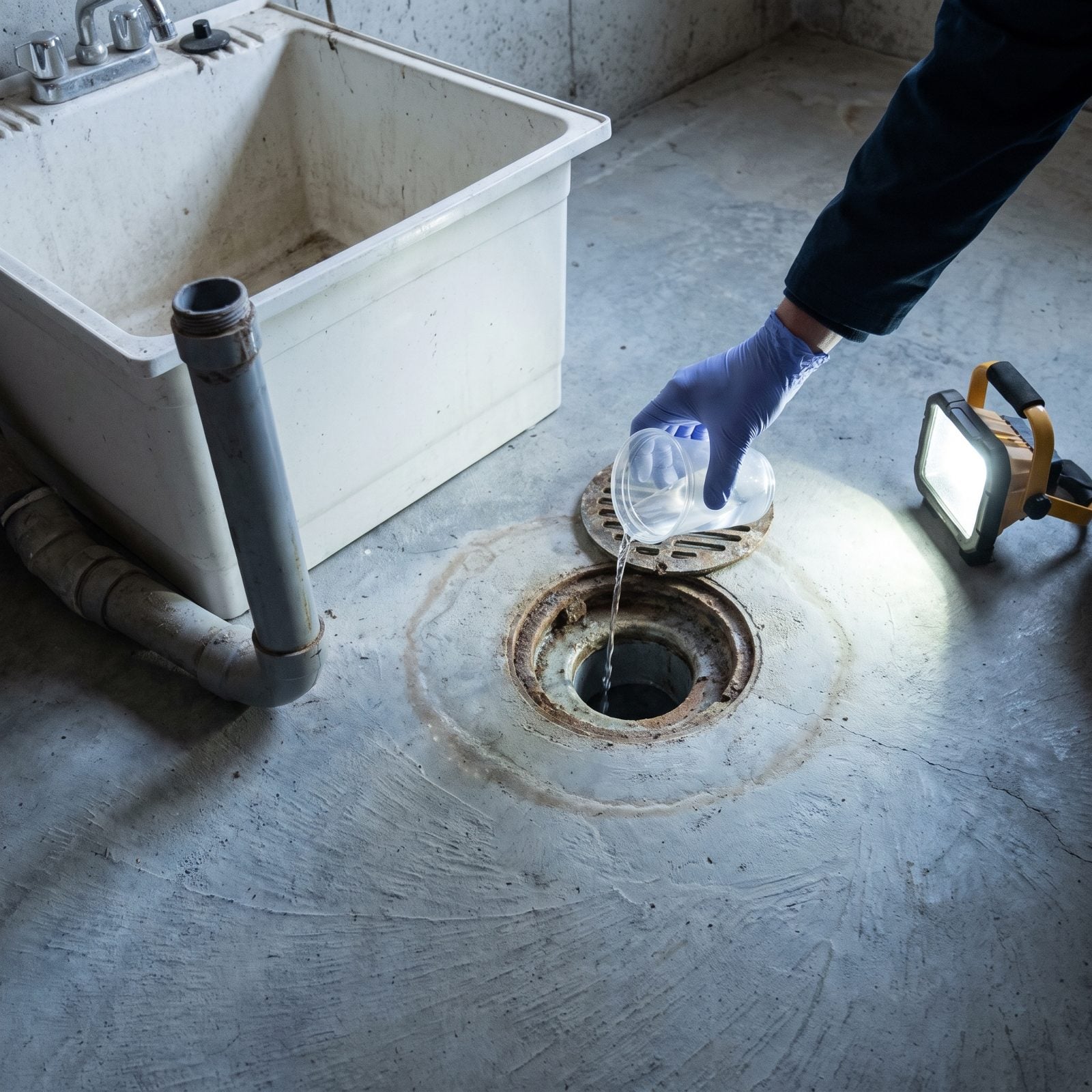
That rotten-egg whiff in a spare bathroom usually isn’t the sewer failing — it’s a dried-out P-trap. The water sitting in the trap’s bend is the only thing blocking sewer gas, and a drain nobody uses evaporates dry in a few weeks.
The test costs nothing. Pour a quart of water down the drain and wait. If the smell clears, you found it. If it lingers, you’re looking at a missing or failed trap vent, and that’s a plumber’s call. Either way, a stubborn sewer smell near a floor drain or a guest shower deserves a note rather than a shrug.
31. An Attic Hatch Sealed Shut With Fresh Paint
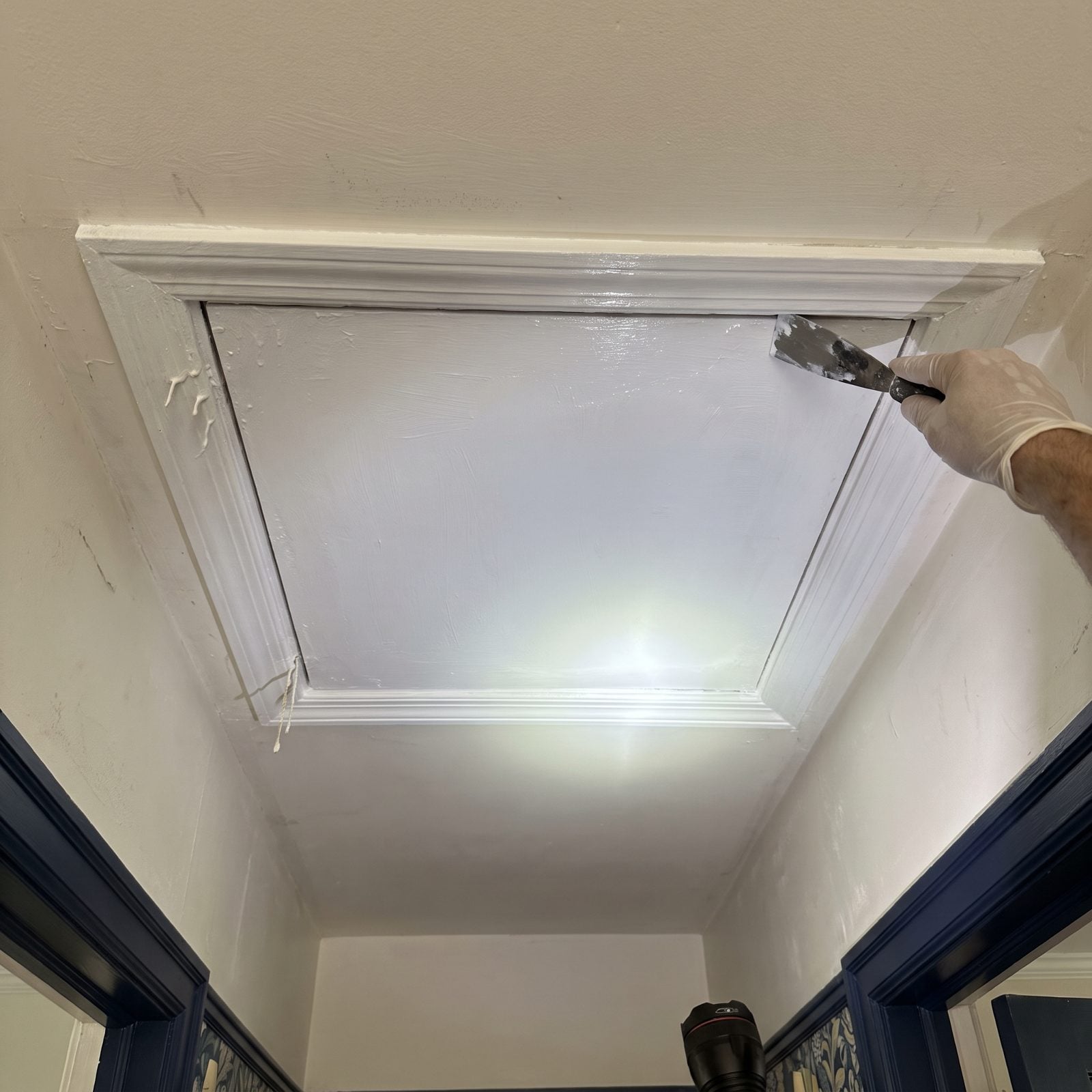
An attic you can’t get into is an attic someone would rather you skip.
When the hatch is painted shut under a coat fresher than the rest of the ceiling, that’s precisely where the inspection needs to go. Up there live the things sellers least want examined: active roof leaks, missing insulation, mold on the sheathing, abandoned knob-and-tube wiring, bathroom fans dumping straight into the space instead of outside. A sealed hatch doesn’t prove any of it. It just raises the odds enough that walking away without a look would be careless.
30. A Pet Door Cut Into the Garage Separation Door
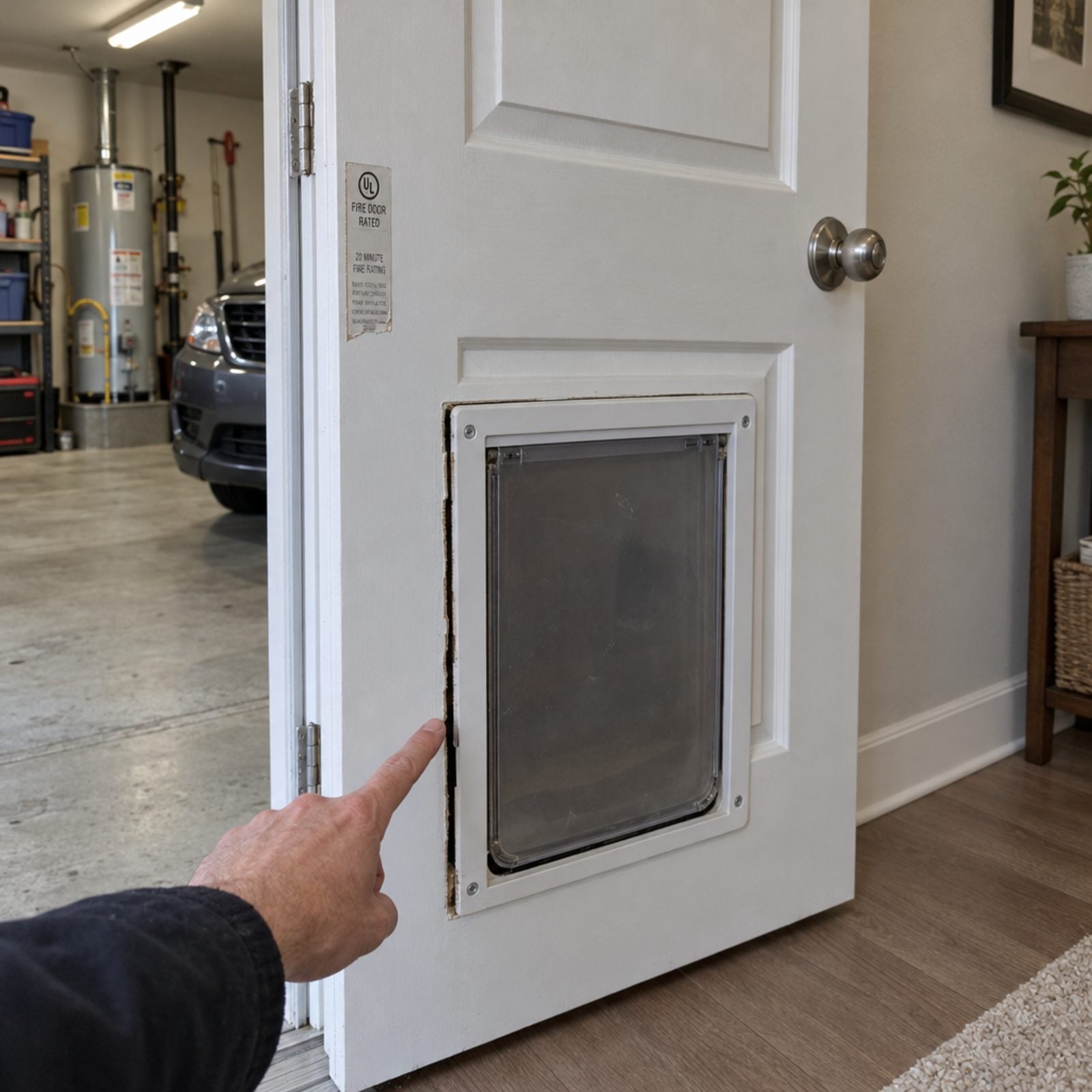
The door from the garage into the house isn’t just a door — it’s a fire and gas barrier, usually rated for twenty minutes, hung on a self-closing hinge with a tight seal for good reason.
Cut a pet flap into it and that barrier is gone. Carbon monoxide from a running car, gasoline vapor, and flame now all have an open path straight into the living space. It’s one of the most common defects flagged on an attached garage, and most homeowners have no clue they created the problem. The fix is a new rated door. You can’t patch your way out of this one.
29. Heat Discoloration Around a Switch or Receptacle
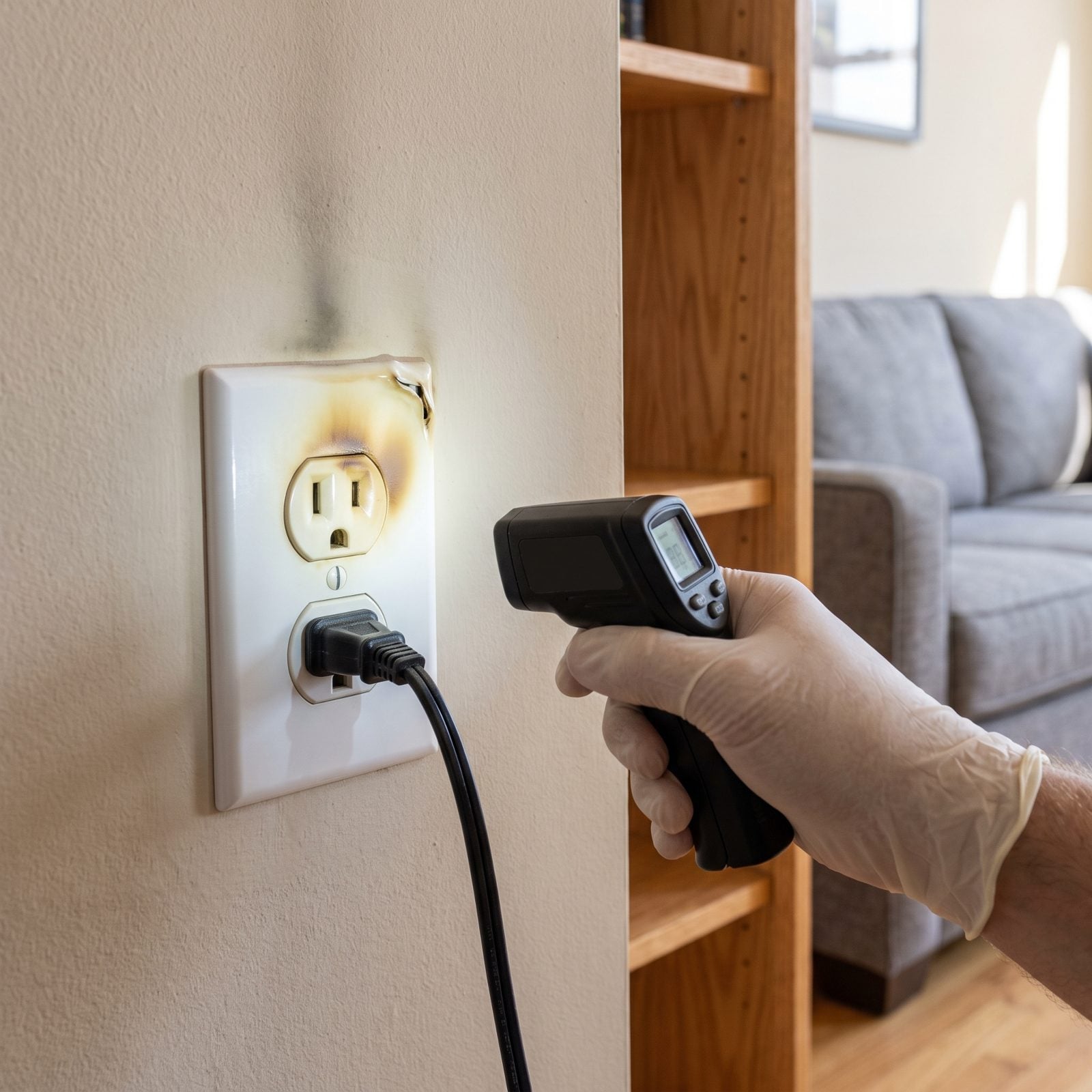
Brown scorching on a cover plate is the outlet’s version of a check-engine light. Something behind it is getting hot enough to discolor plastic, and heat at a connection means resistance — and resistance is how electrical fires start.
Usual suspects: loose wire terminals, a worn receptacle with weak contacts, or a backstabbed connection that’s giving up the ghost. A warm switch plate, a faint plastic smell, a flickering light on the same circuit — all point the same way. Stop using it now. This isn’t a someday repair.
28. Lights That Dim When the HVAC System Starts
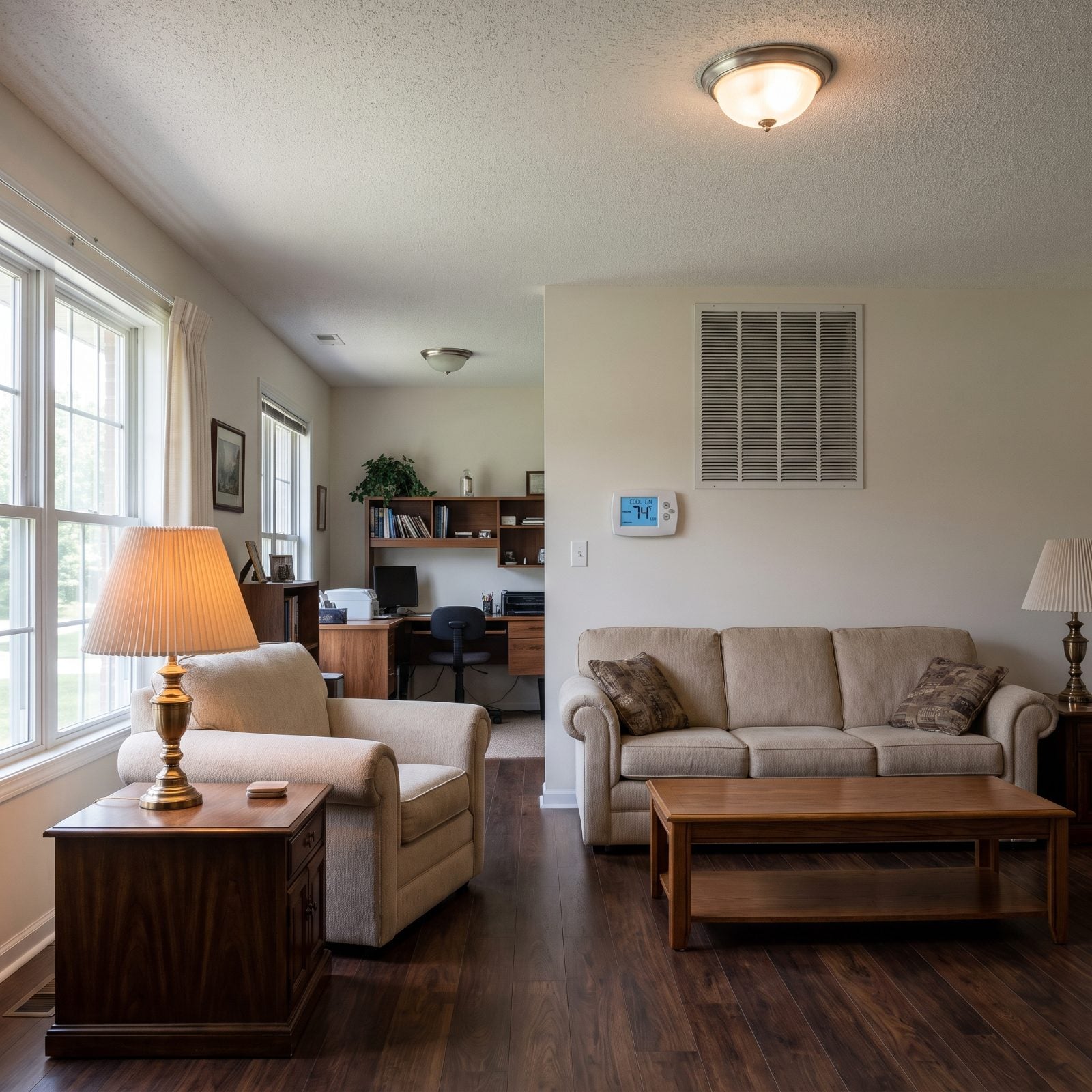
A quick flicker when the air conditioner kicks on is normal. Lights across the whole house noticeably dimming and staying dimmed for a second or two is not.
A big motor yanks a surge of current at startup. If the lights sag hard every single time, you could be looking at an undersized service, an overloaded panel, or a failing neutral connection somewhere in the system. That last one is the scary version. A loose neutral can shove voltage up on one circuit while it drops on another, which is exactly how electronics fry and connections cook themselves. Flag it for an electrician who can measure the sag instead of guessing at it.
Worth watching while the system runs on a hot day — usually when the house is working hardest anyway.
27. A Standard Outlet Beside a Sink Where GFCI Protection Is Expected
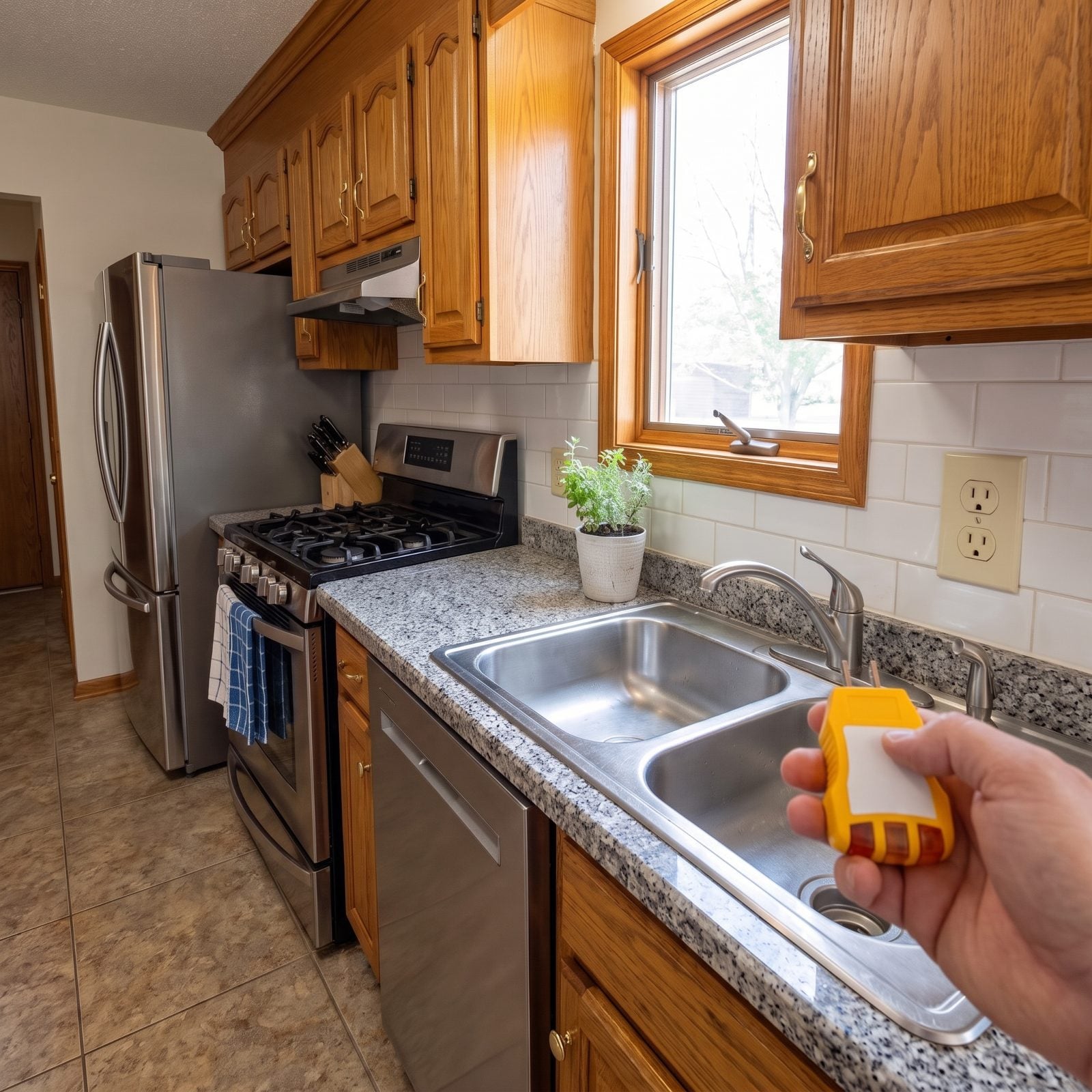
Look at the outlet nearest the sink. No TEST and RESET buttons? Then it almost certainly isn’t ground-fault protected, and every receptacle within reach of a kitchen or bathroom sink is supposed to be.
GFCI protection cuts power in a fraction of a second when current strays into water or a body. It’s cheap, it’s required near water, and its absence is one of the most common safety flags in older homes. The fix is simple — a GFCI receptacle or a GFCI breaker. The risk if you skip it is anything but.
26. Power Strips Plugged Into Other Power Strips
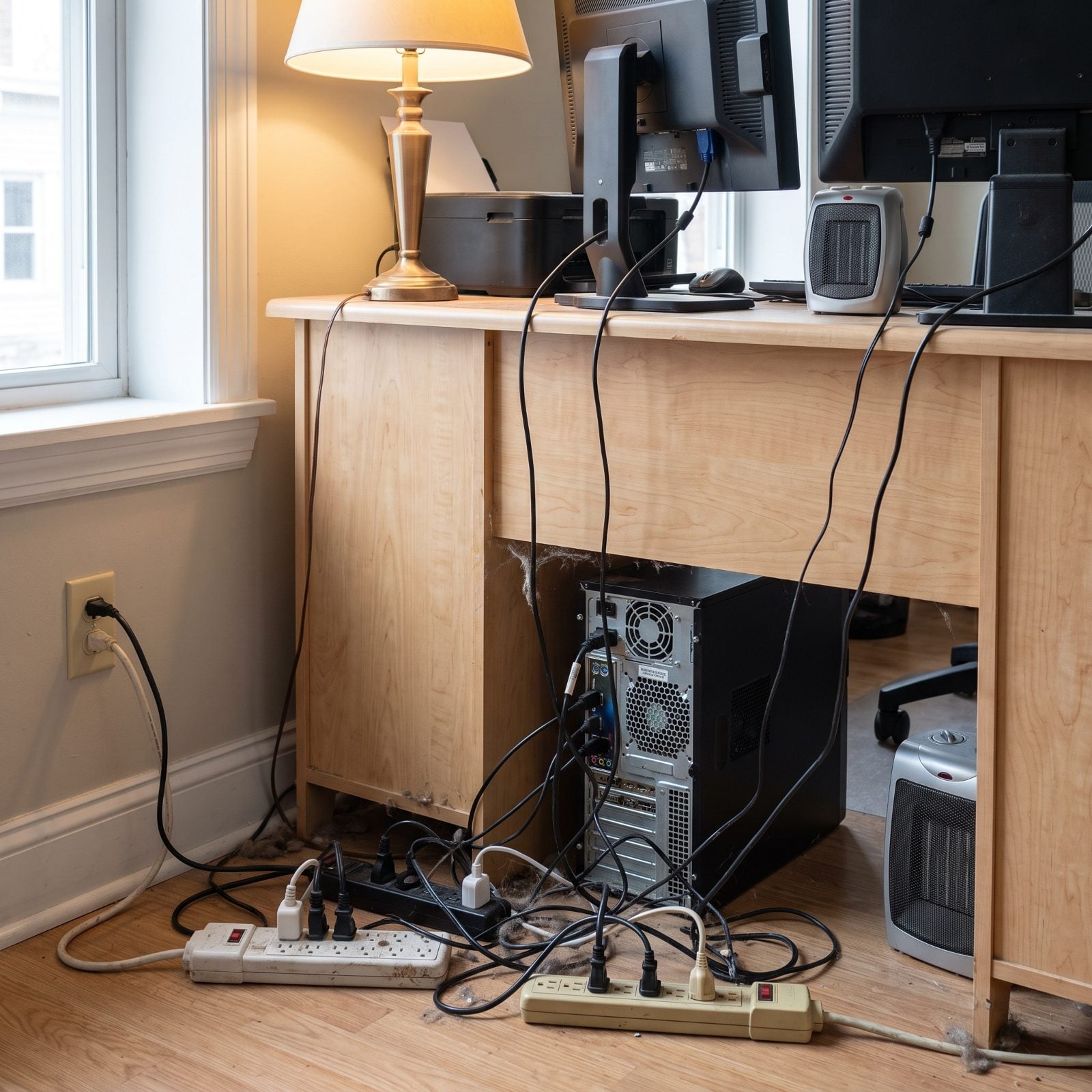
One power strip feeding another, feeding another, is basically a confession. It says the room has more things to plug in than outlets to plug them into, and somebody solved that the cheap way.
Daisy-chaining defeats the surge protection you paid for, overloads a single circuit, and bakes the weakest connection in the chain. Throw a space heater into the mix and it gets ugly fast. Spotting it is easy, and it tells an inspector two things at once: the circuit is probably overloaded, and the house is short on properly placed receptacles. One of those is a habit. The other is a wiring deficiency worth pricing out.
25. An Electrical Panel Boxed In or Blocked by Storage
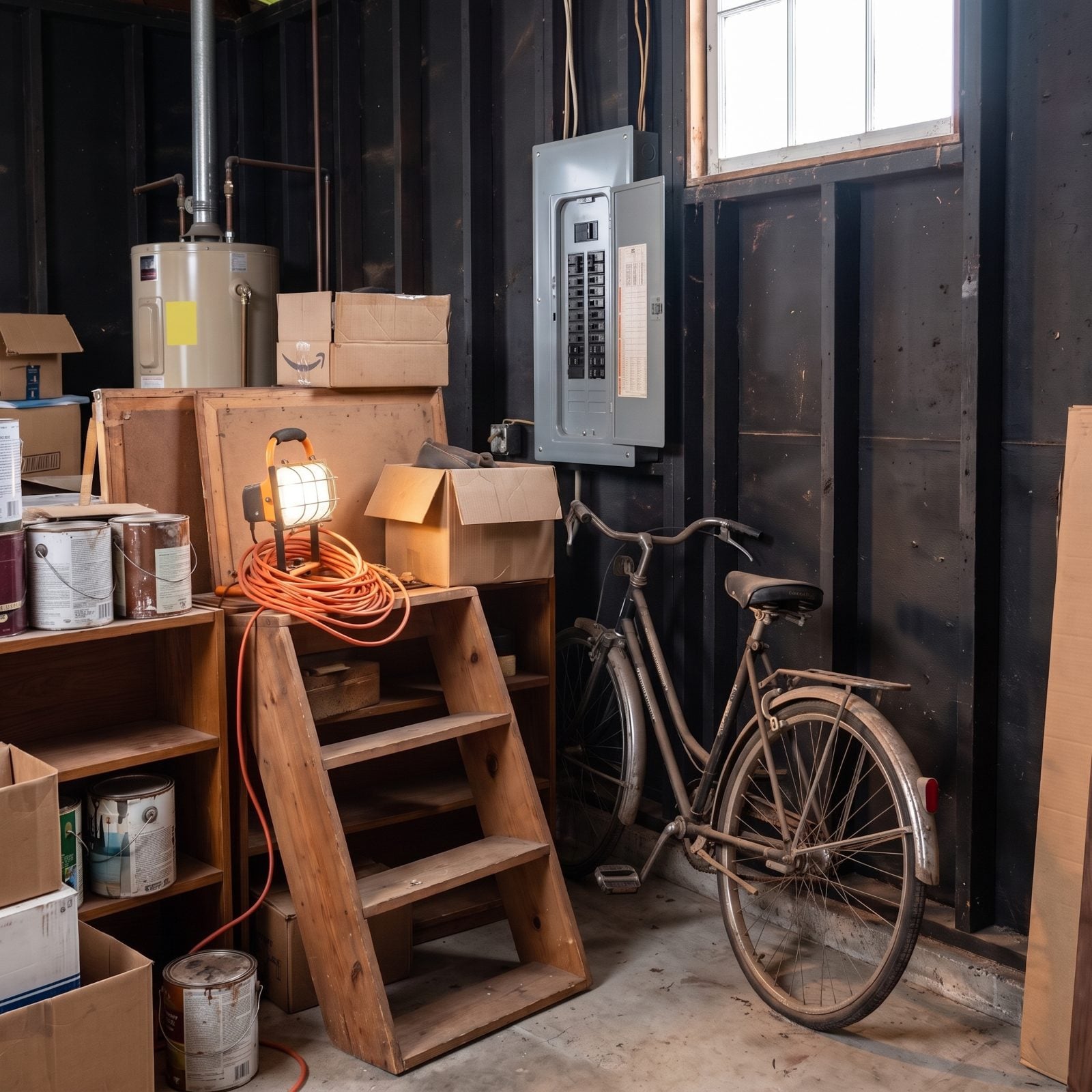
Try standing in front of the panel. If you can’t do it without moving a bike, a few cardboard boxes, and a stack of paint cans, that’s your finding right there.
Code requires clear working space in front of every panel — roughly a three-foot buffer — for a blunt reason. If something arcs or catches, somebody needs to kill the main breaker fast without climbing over the Christmas decorations. A boxed-in panel usually means the breakers haven’t been labeled or even glanced at in years, too. Clearing the space is free. The habit of treating the panel wall as shelving is the real thing to flag.
24. Empty Smoke-Alarm Mounting Rings on the Ceiling
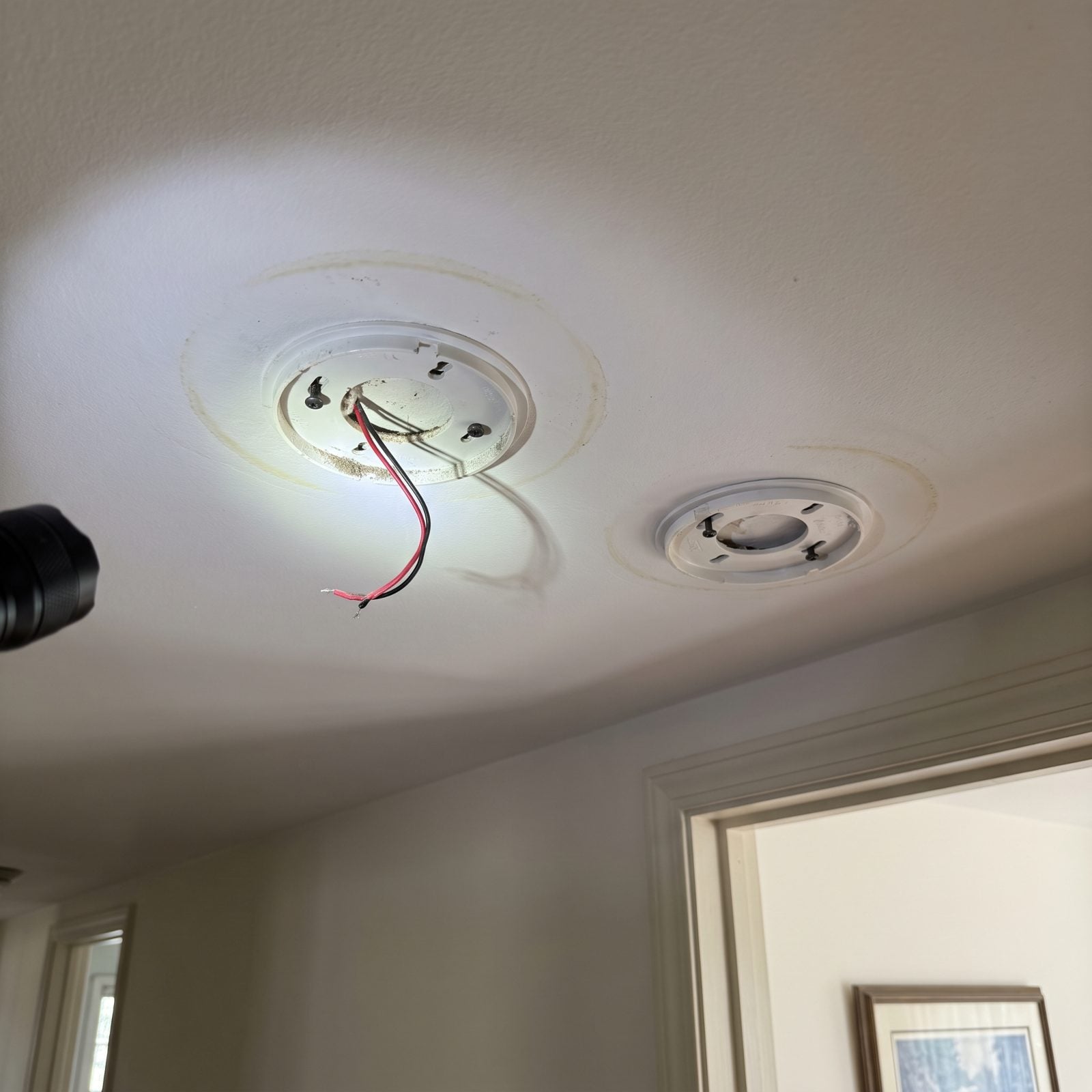
Empty rings are louder than they look. Someone pulled the alarms, probably to silence a 2 a.m. chirp, and never bothered to put them back. That dangling wire pigtail tells you these were hardwired and interconnected, so the whole chain is now dead.
Inspectors clock this in the first thirty seconds because it signals a pattern of deferred fixes, batteries borrowed from one unit to feed another, and maintenance handled by annoyance rather than by any schedule.
23. An HVAC Filter Installed Backward
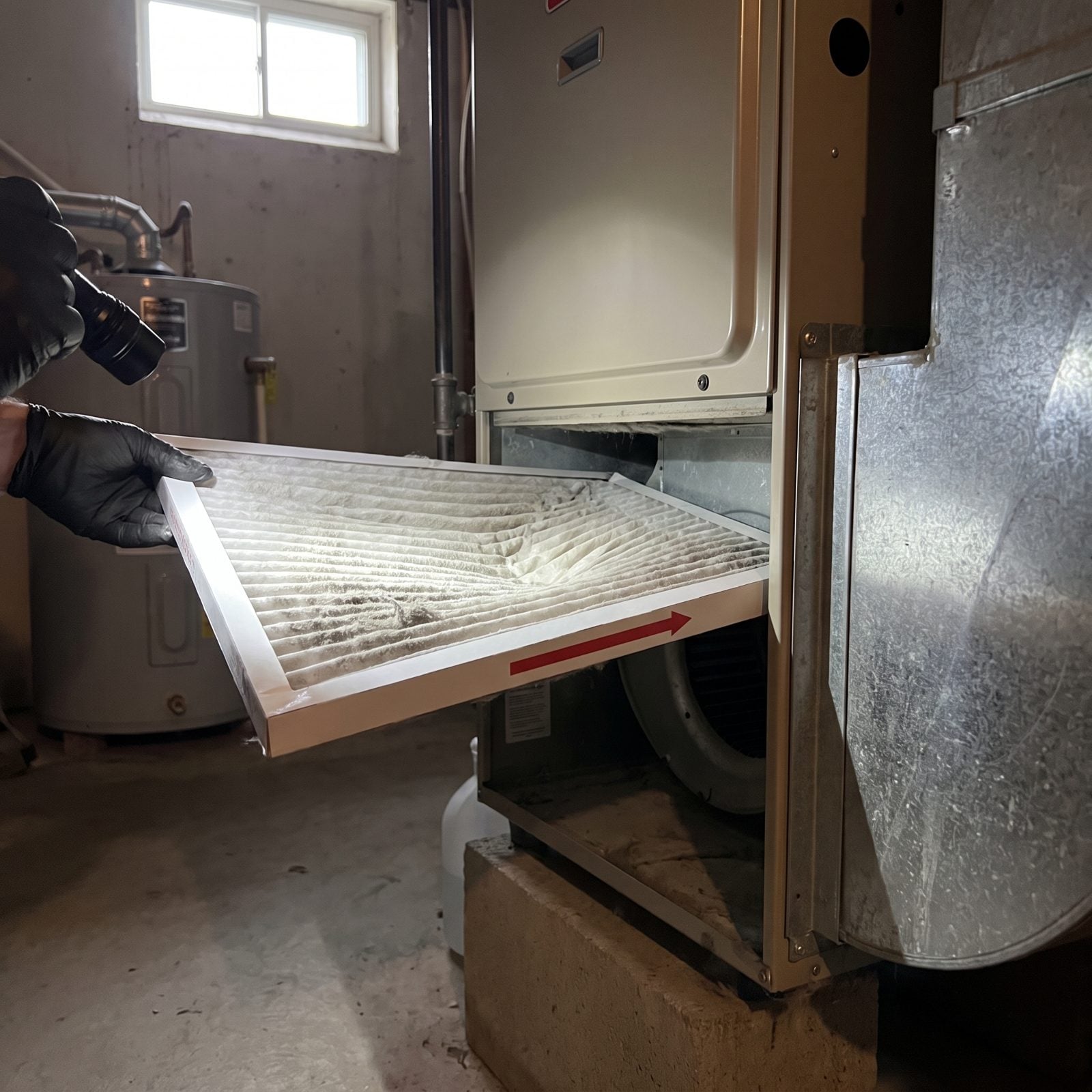
That little airflow arrow printed on the frame points the way the air is supposed to go. This one points backward, and the pleats have caved inward because the system is pulling against the grain of the filter media.
Small thing, bigger story. A backward filter filters worse, strains the blower, and usually means nobody checks it on any kind of schedule. An inspector reads it as a thermostat treated like a light switch rather than a system.
22. Dark Dust Trails Around a Return Grille
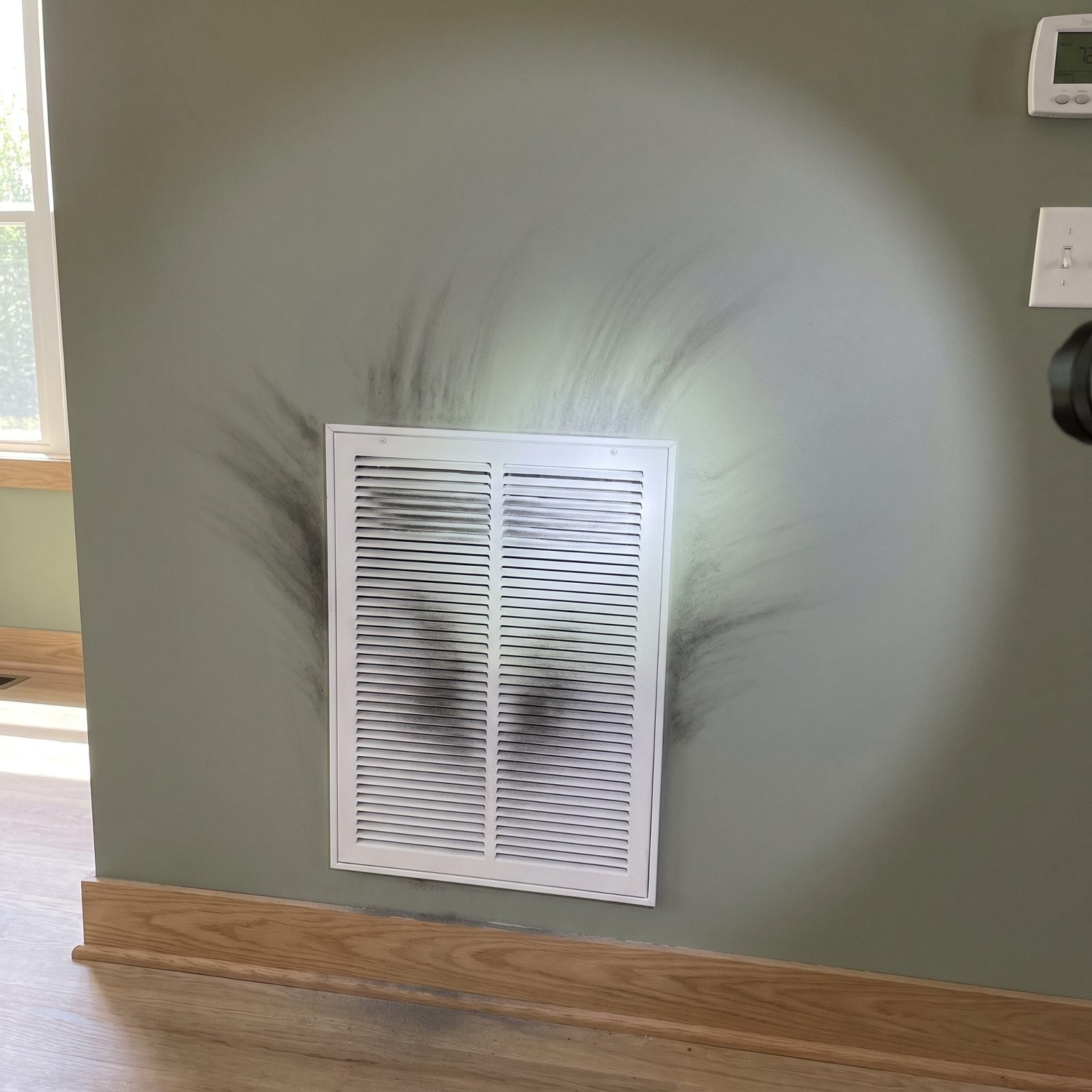
Those grey smudges feathering out from the grille aren’t a cleaning problem. They’re a leak problem.
Air is escaping around the grille frame instead of passing cleanly through the filter, dragging fine dust onto the wall as it goes. The ghosting marks the exact path of unfiltered air. A seasoned inspector reads these stains like tire tracks, following them to where the system is bleeding air, and usually landing on a return duct that was never sealed to the wall cavity behind it.
21. Fog Trapped Between Double-Pane Window Glass
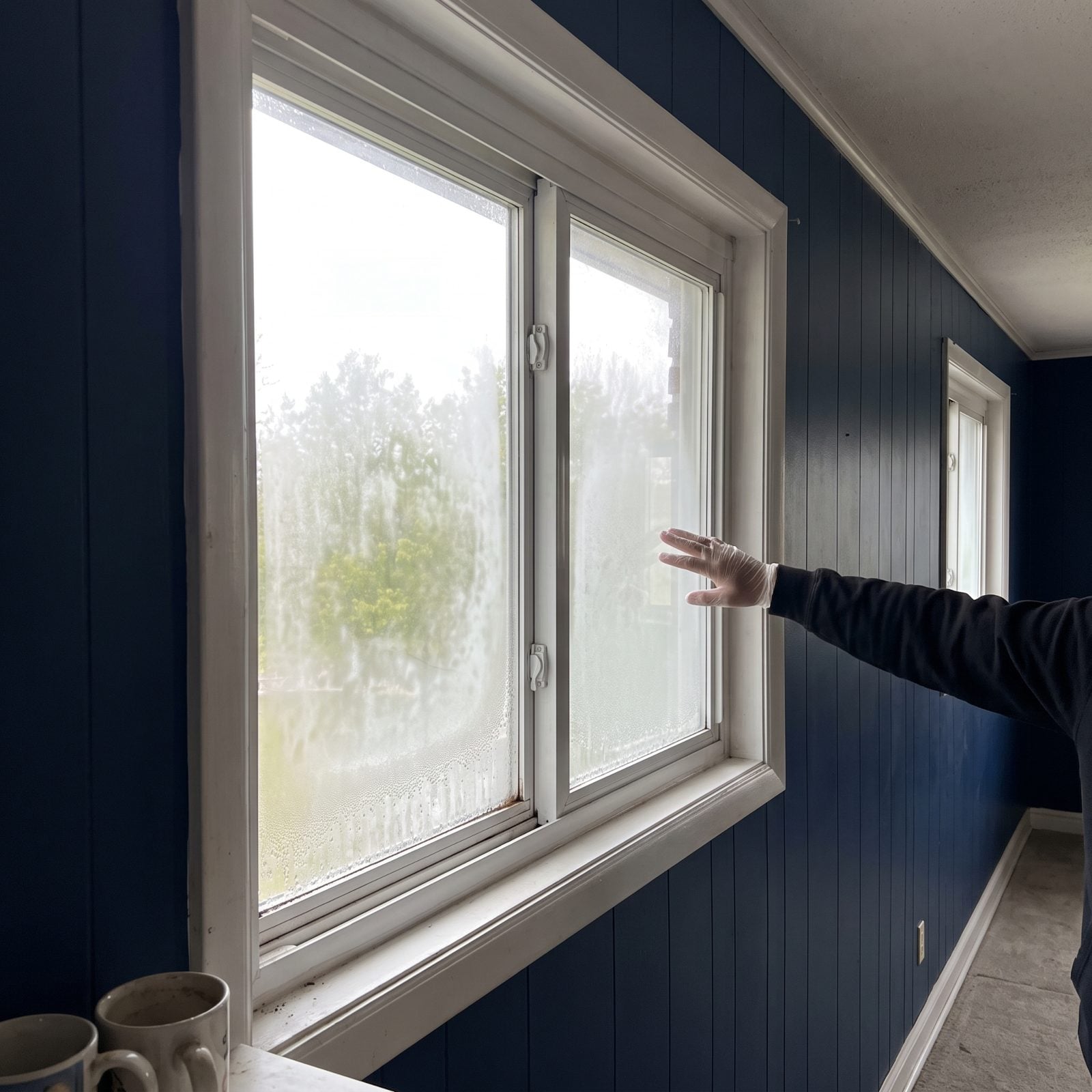
Wipe the glass all you want. The fog is on the inside, sealed between the panes where no cloth will ever reach it, and that tells you the insulating gas seal has failed and moisture has crept into the gap.
Technically the window still works. But it has lost its thermal value and will only grow cloudier from here. One failed unit is a repair line item; a whole house of them tells you the windows are the same age and heading out together.
20. Windows That Have Been Painted Shut
🔥 Would you like to save this?
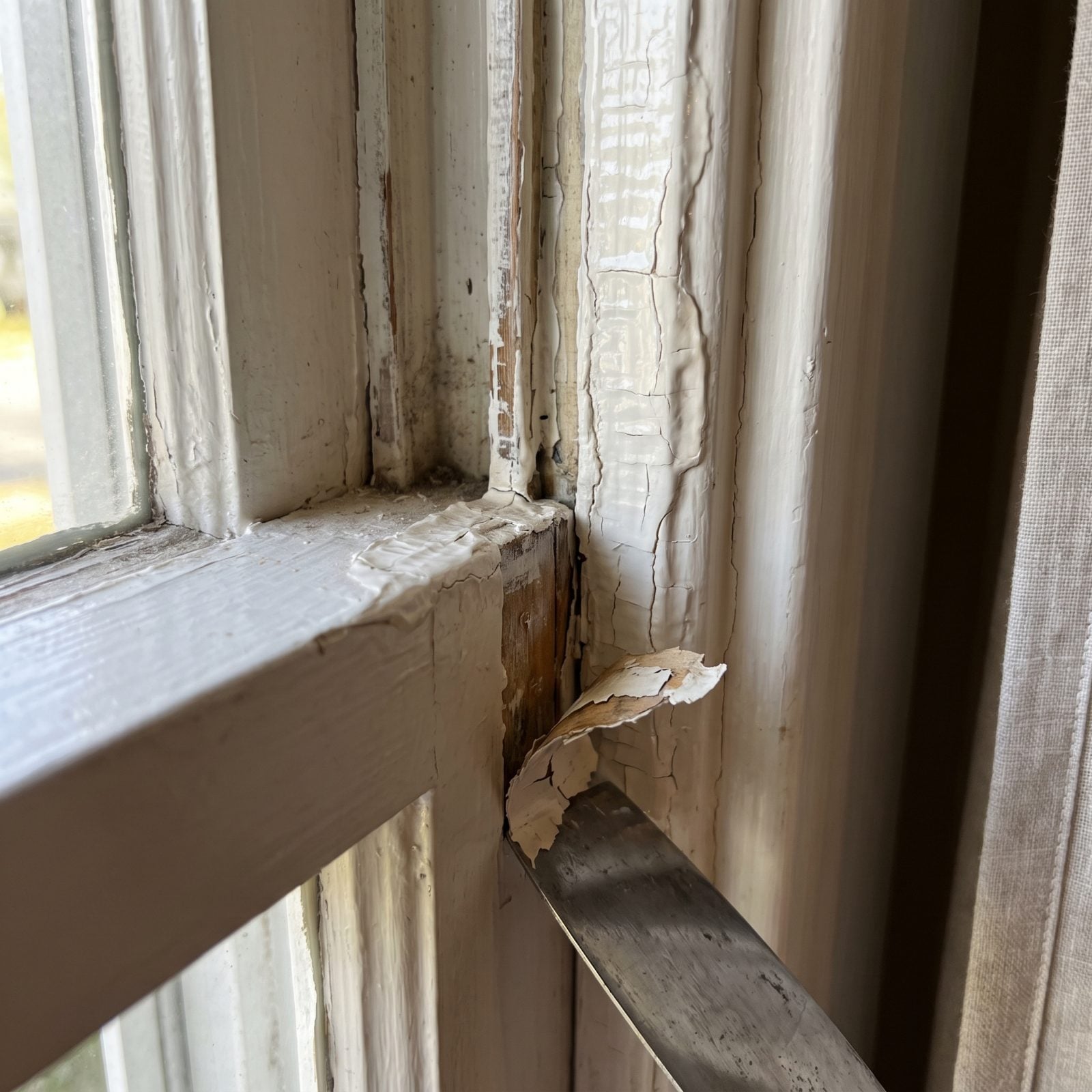
Run a knife along the sash seam and the truth surfaces fast: layers of paint have welded the window to its frame. It won’t open, and forcing it tends to crack the glass or split the sash.
Painted-shut windows mean more than a stuck pane. They flag an egress concern in bedrooms, a ventilation dead zone, and, in older houses, lead paint from a dozen repaint jobs that never once scraped the joint.
19. Daylight Visible Around the Closed Front Door
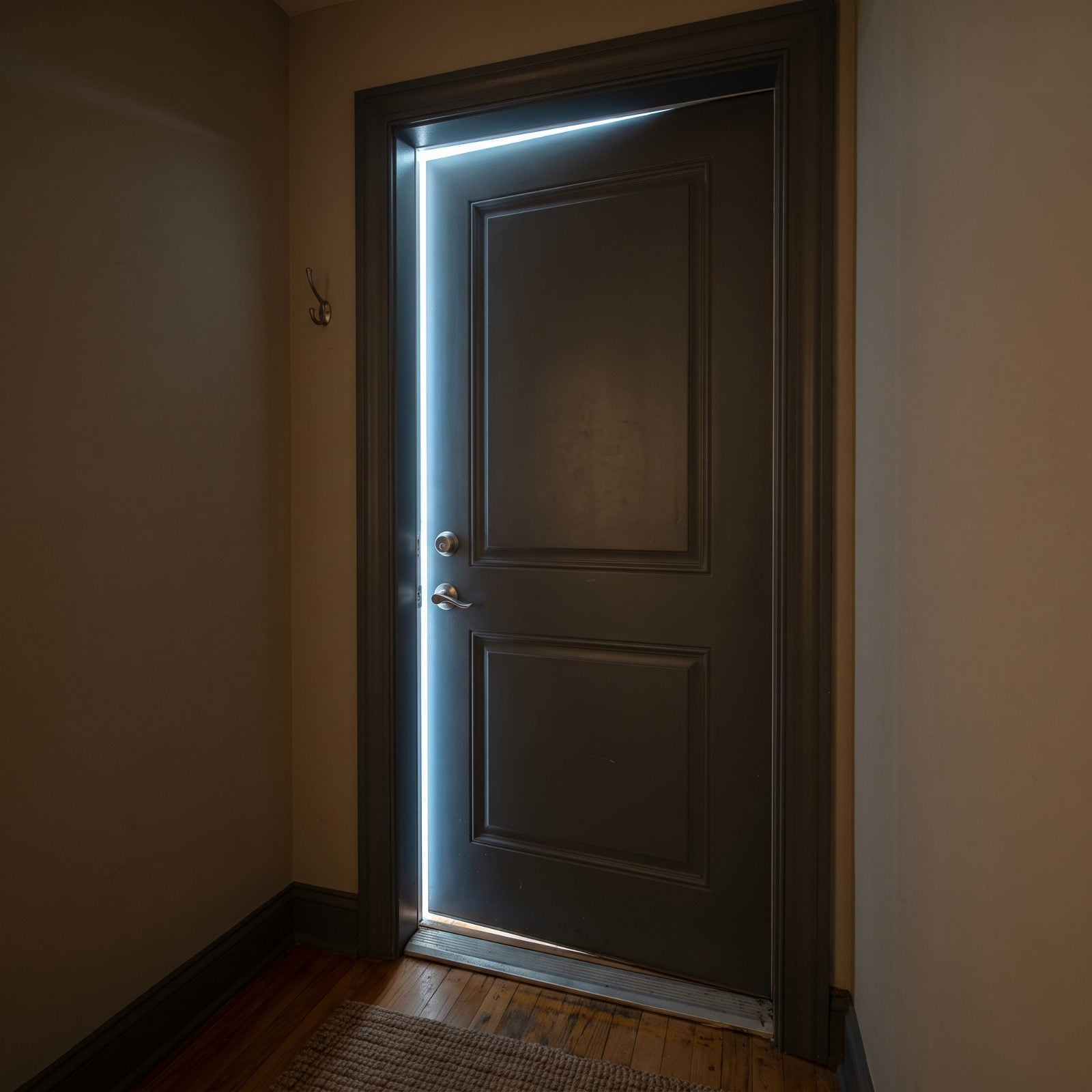
Stand in the foyer with the lights off and look at the closed door. See a bright seam of daylight tracing the top or side? That same gap is leaking conditioned air, letting in drafts, and inviting insects.
A gap along one side points to a door hung out of square, which can signal settling. A uniform gap usually just means worn weatherstripping, the easiest fix on this whole list.
18. A Swollen Lower Jamb Beside an Exterior Door
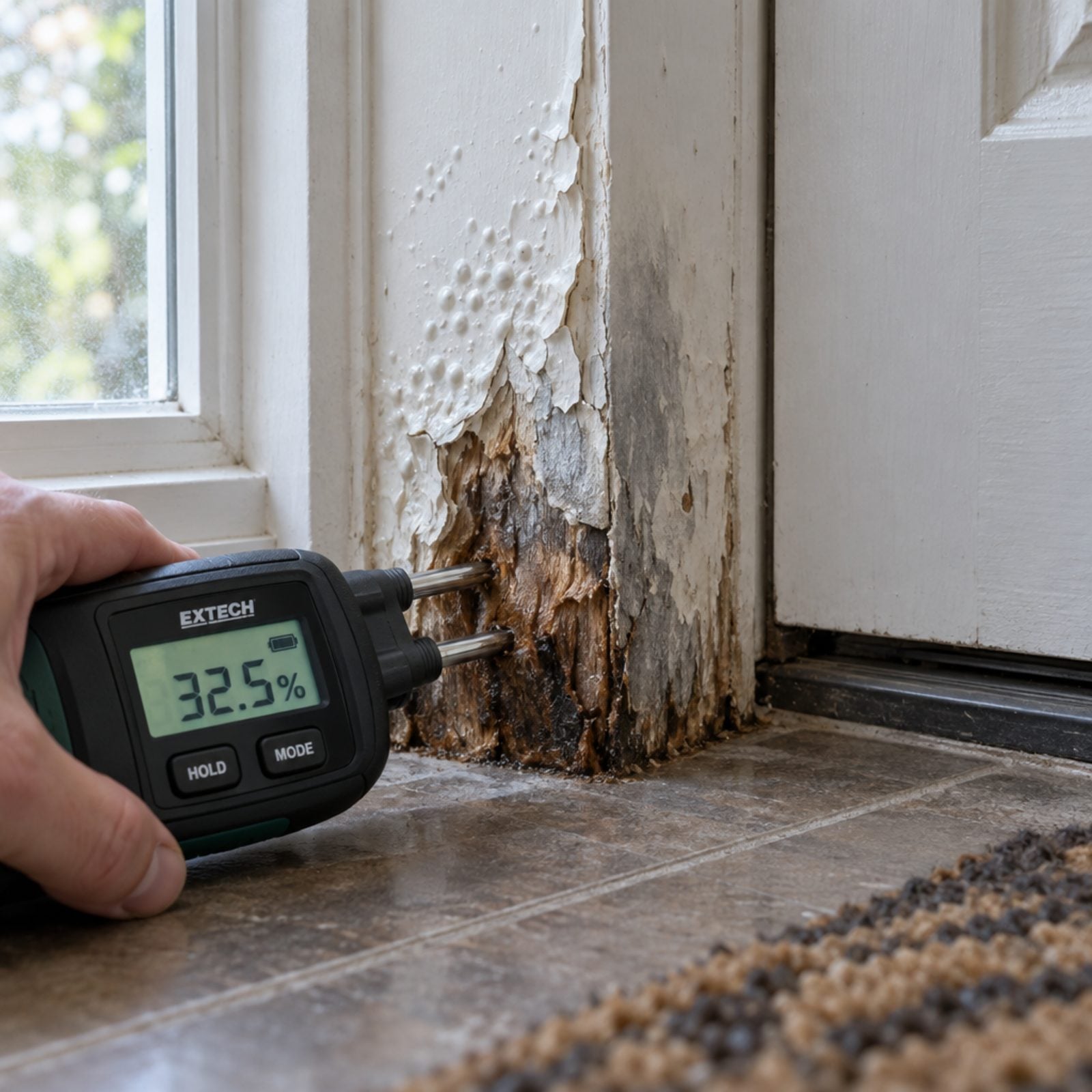
The bottom of this jamb has gone soft. Paint blistering, grain lifting, a grey stain climbing up from the threshold.
Water has been wicking into end-grain wood for a while now, and the swelling you see is the visible tail of rot that usually runs deeper than the surface. A moisture meter settles the question in seconds. Once the lower jamb swells, an inspector looks next at the threshold flashing, the door sweep, and the grade outside, because the water found that wood for a reason.
17. A Tile Crack Continuing in a Straight Line Across the Floor
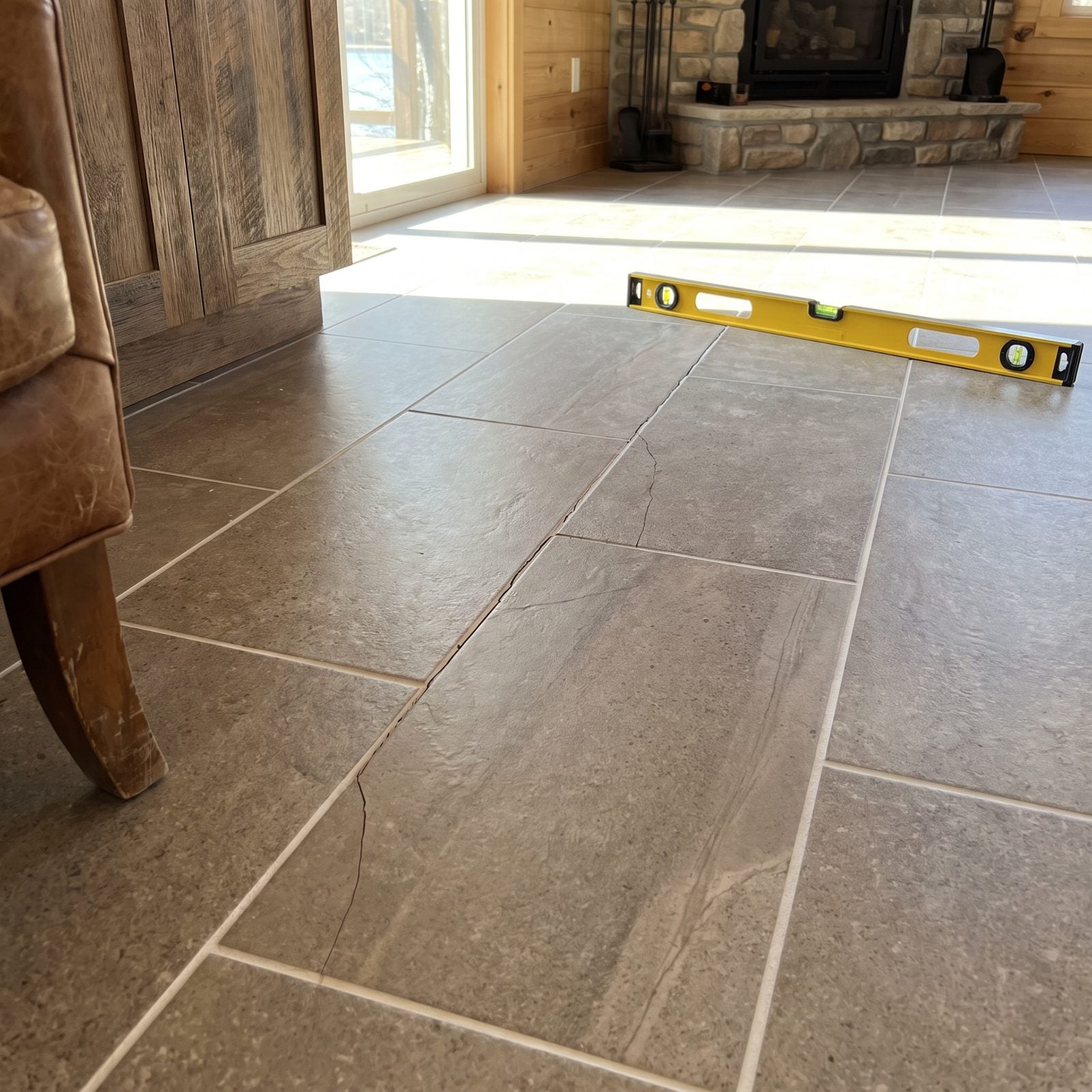
A cracked tile is nothing. A crack that runs in a nearly straight line across several tiles, following the tile edges where the grout has split open and branching off into the tiles themselves, is something else entirely.
Random breaks come from a dropped pan or a tile that was set badly. A straight continuous line means the slab or subfloor beneath it moved, and the tile simply telegraphed it upward. Inspectors trace the direction, check for a dip with a level, and start asking about foundation movement instead of flooring.
16. A Floor That Flexes Along the Main Walking Path
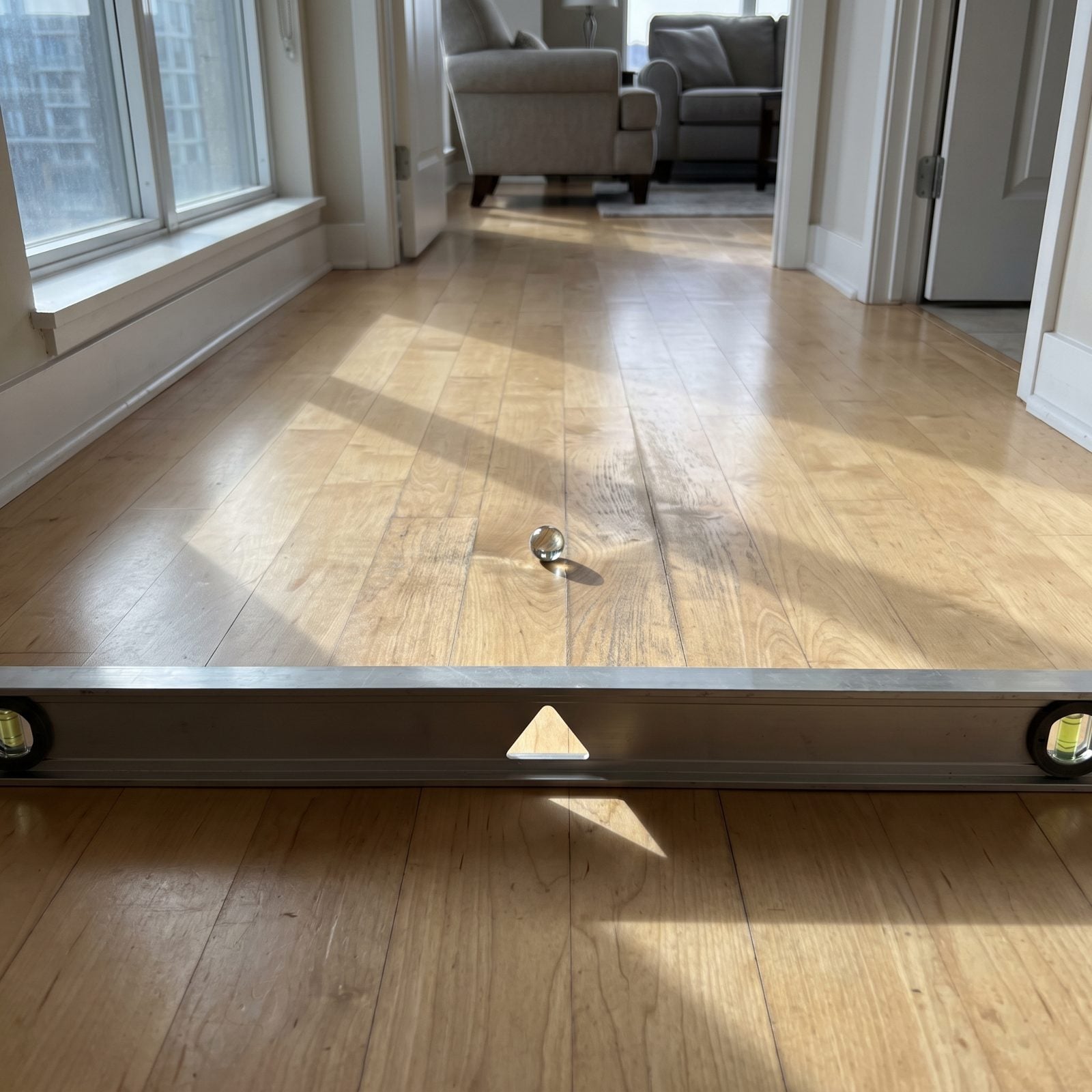
Walk the main hallway slowly and pay attention to your feet. If the floor gives, springs, or rattles the dishes in the next room, something under there isn’t carrying its load.
Flex along the busiest path usually points to undersized or overspanned joists, a failed support post, or subfloor that’s lost its grip. A marble rolls to the low spot. A level shows the dip. It’s rarely cosmetic, and almost always worth a look from below before anyone decides anything.
15. Hardwood Boards Cupping at Their Edges
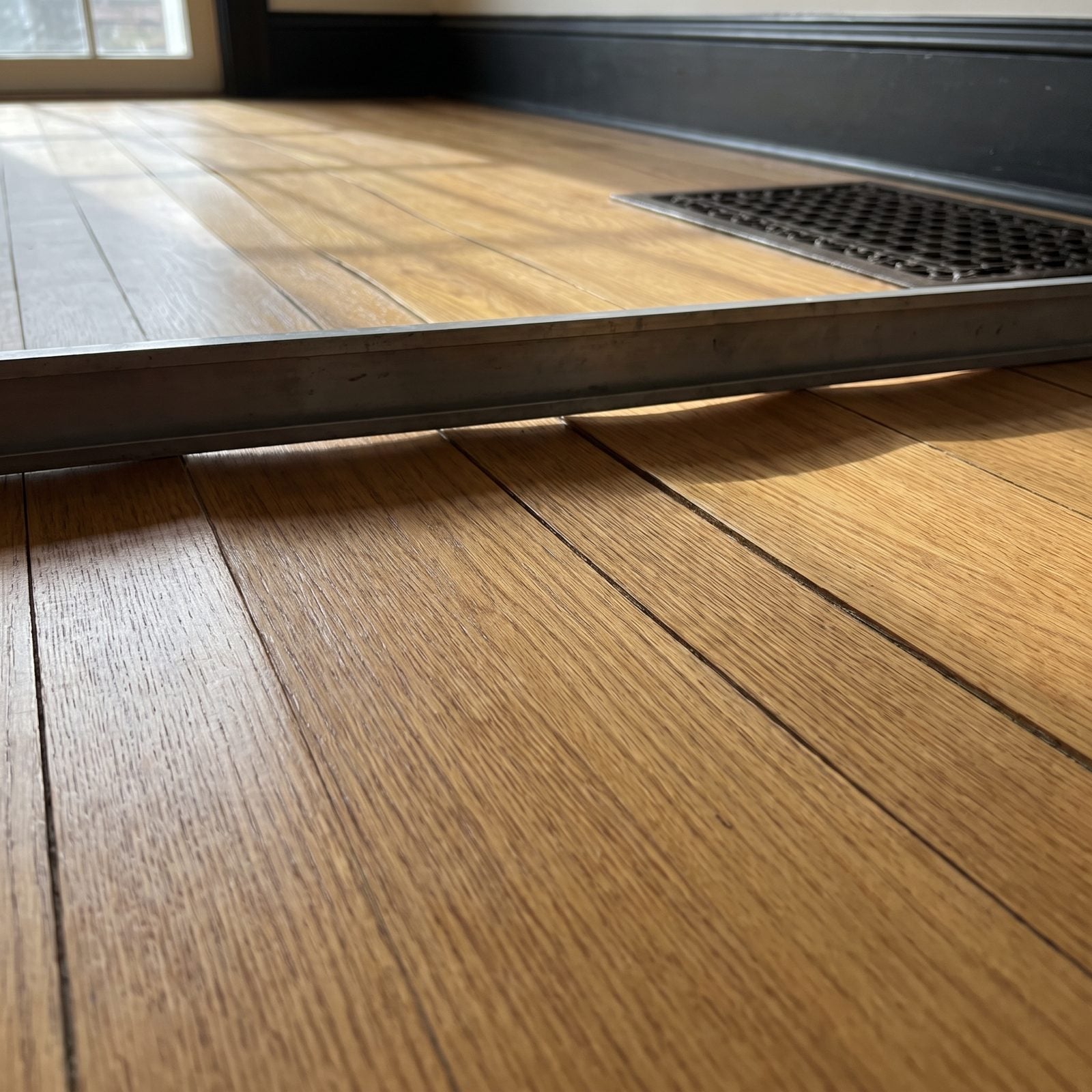
Catch a wood floor in low side light and the story shows up in shadow. When board edges ride higher than their centers in a faint washboard ripple, that’s cupping, and cupping means moisture working up from below.
The underside of each board is drinking more humidity than the top, so it swells and curls. Inspectors hunt for the source: a damp crawlspace, a slab without a vapor barrier, a plumbing leak nearby. Sand it flat too soon and the boards dry into the opposite problem. Find the water first. Fix the floor second.
14. Laminate Swelling Beside the Dishwasher or Refrigerator
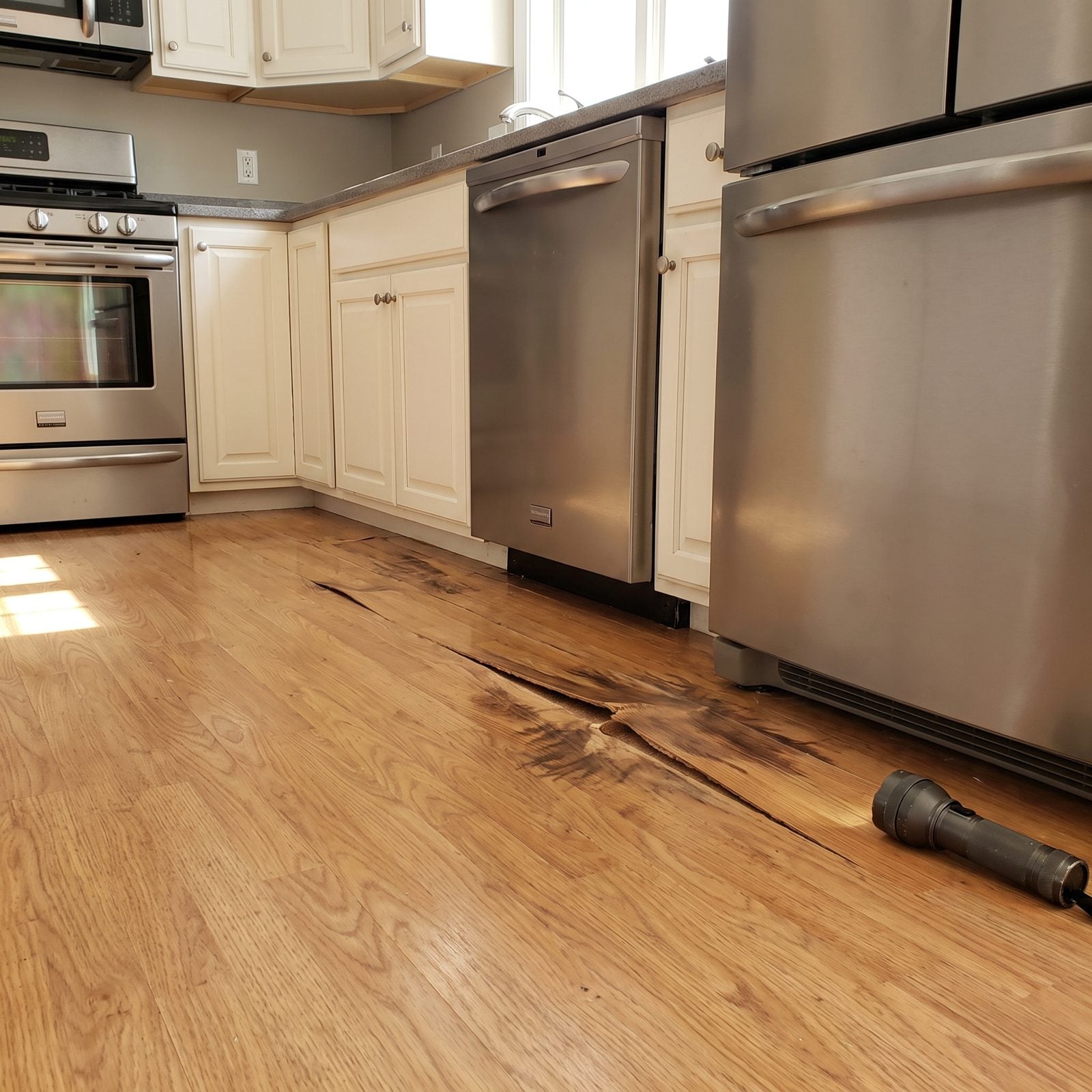
Laminate doesn’t lie. The moment its fibreboard core meets water it swells like a sponge, and it never shrinks back. When you spot those puffed, lifted seams hugging the base of a dishwasher or fridge, you’re looking at a slow leak that’s been running long enough to leave a signature.
Where it swells matters as much as the swelling itself. Both appliances carry water lines, and both fail quietly behind a kickplate where nobody’s looking for months.
13. A Toilet That Shifts When Lightly Pressed
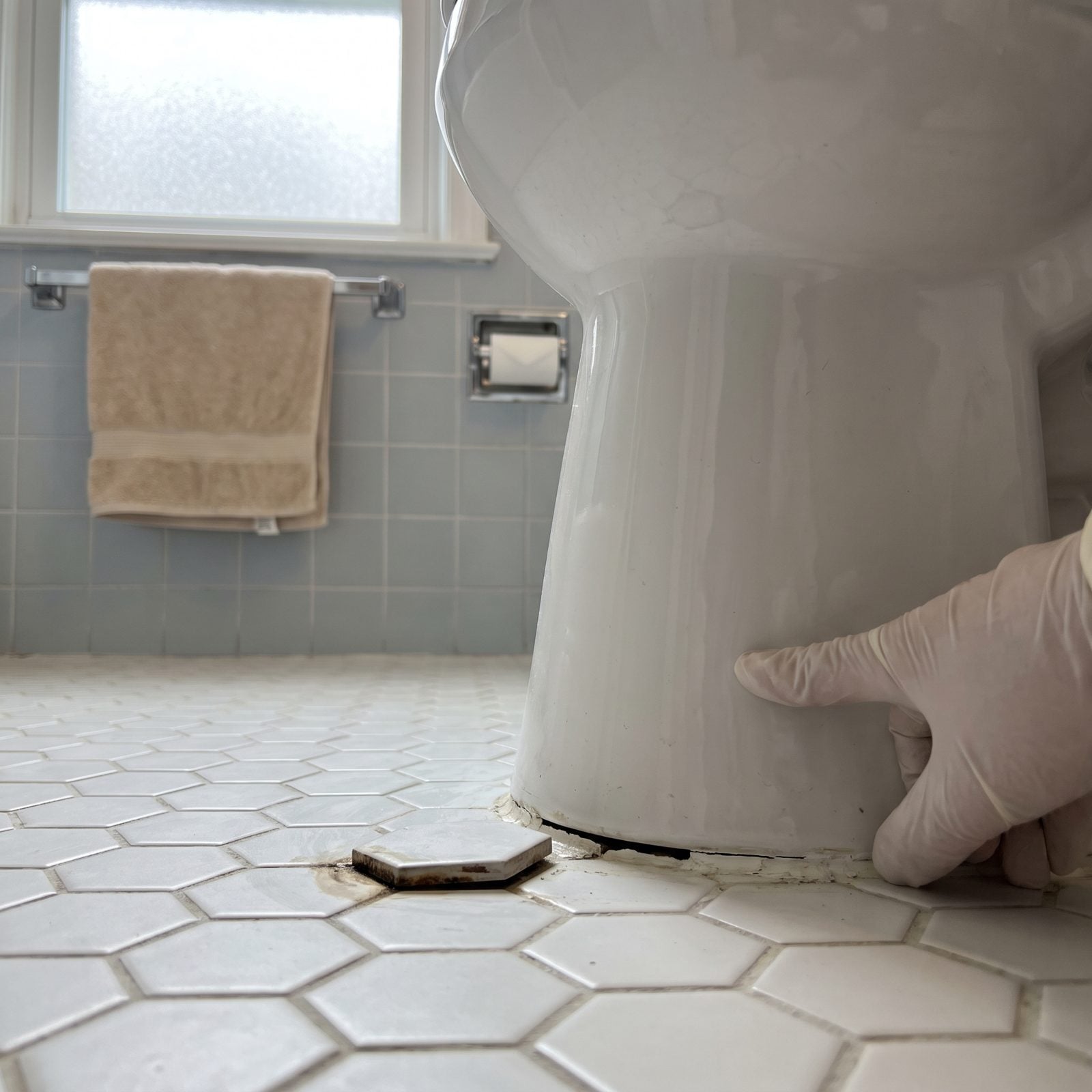
Press a toilet gently at the tank and watch what happens. A whisper of movement is a red flag, because that rock means the flange or the subfloor beneath it has given up.
Every time the bowl shifts, the wax seal underneath breaks a little more, and water seeps out slow and small, right into the floor framing where you can’t see it, until the tile lifts or the ceiling below shows a stain. Nasty little chain reaction, all starting from a toilet nobody bothered to bolt down tight.
12. Green or White Corrosion on Plumbing Shutoff Valves
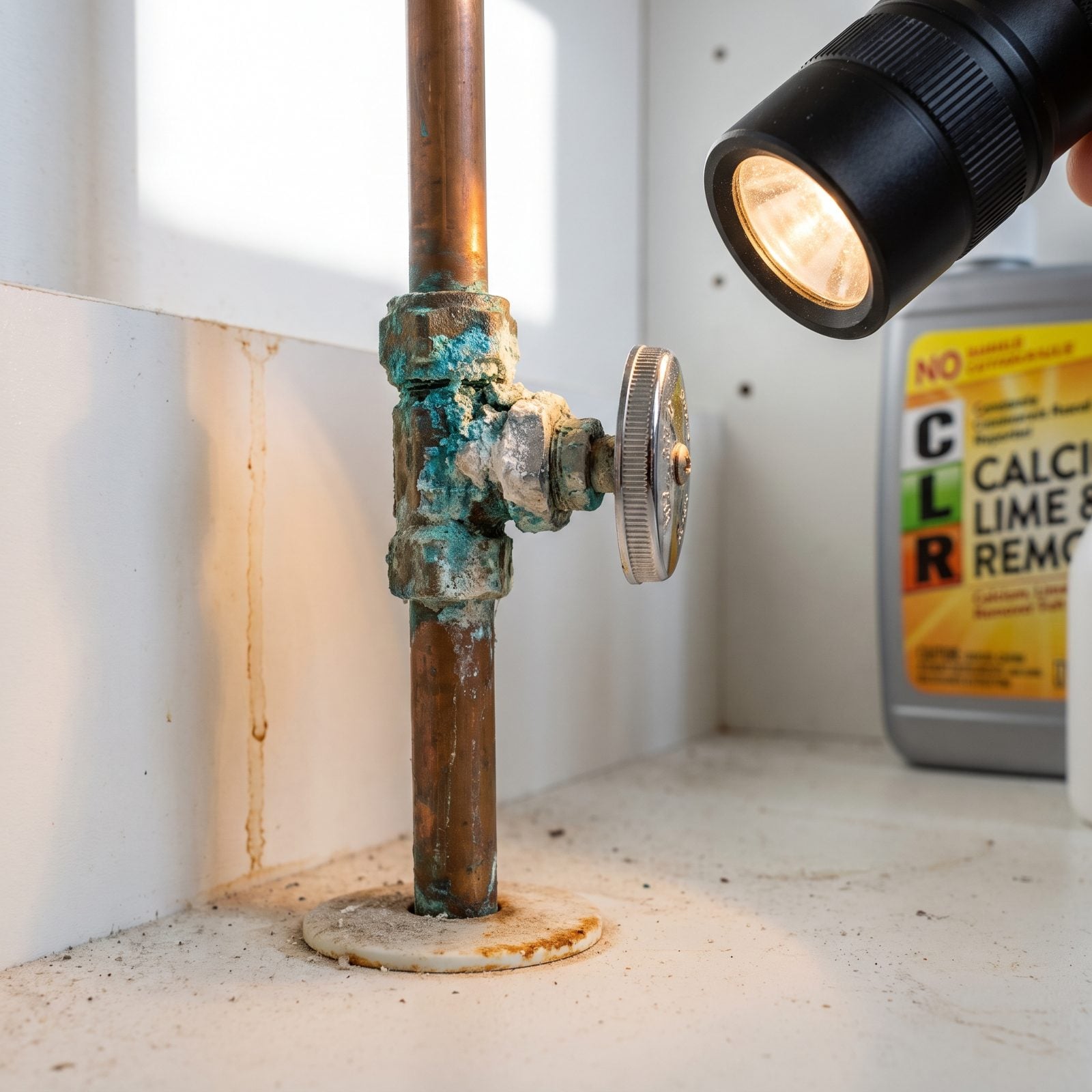
That blue-green crust on a shutoff valve is corrosion telling on a leak you can’t see yet. Copper only blooms like that when moisture has been working on it over time, usually from a weeping compression fitting.
And here’s the part that stings. Those valves are exactly the ones you’ll grab in an emergency. A corroded stem seizes up, or worse, snaps off in your hand the day you actually need to shut the water down.
11. An Accordion-Style Flexible Drainpipe Beneath a Sink
🔥 Would you like to save this?
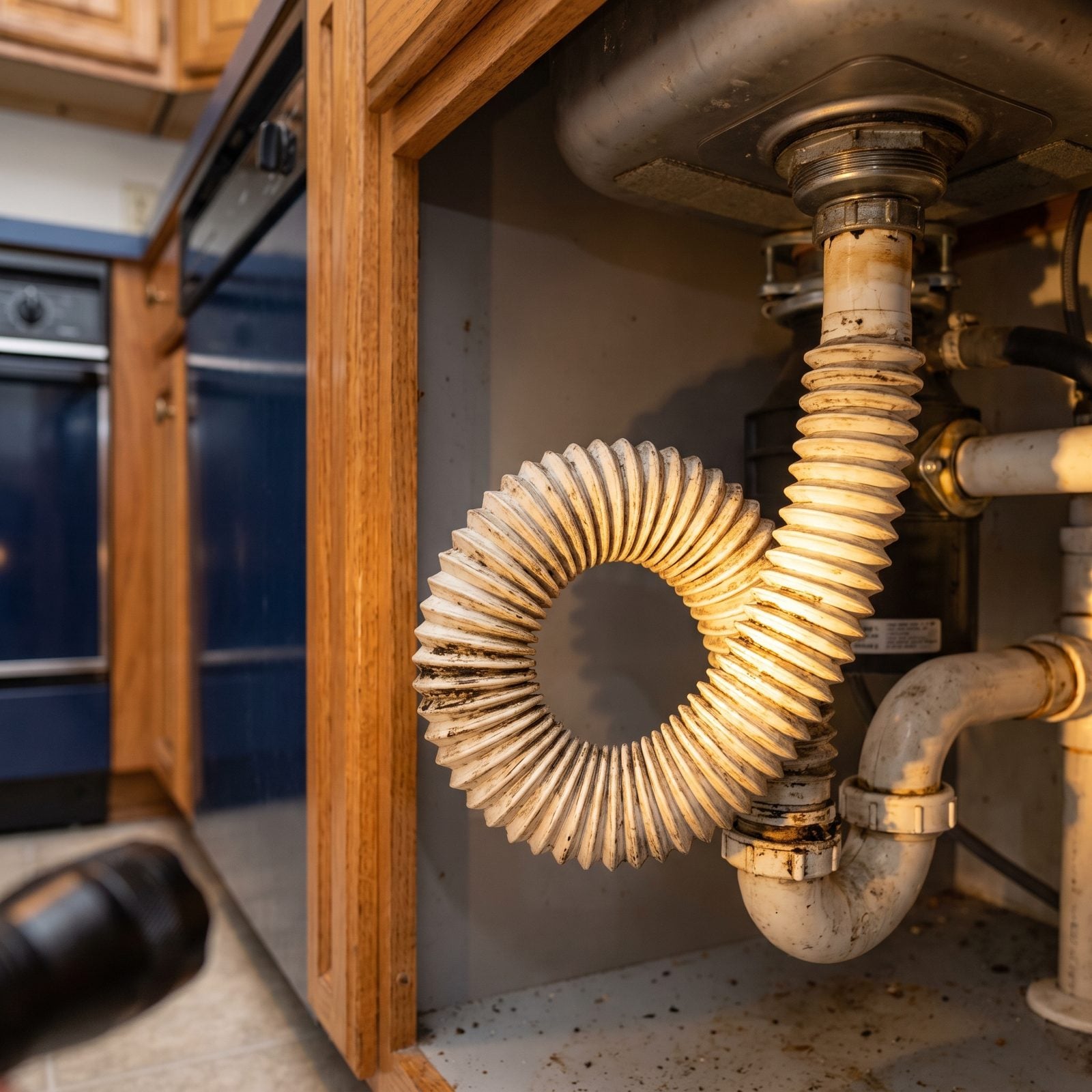
Those ribbed accordion drainpipes look clever and sell for a few dollars at any hardware store. That’s exactly the problem.
Every ridge on the inside catches grease, hair and food, so the pipe clogs faster and smells sooner than a smooth-walled trap. The folds hold standing water that smooth PVC would carry away clean. Find one under a sink and you’ve learned something about the homeowner: they reached for the cheapest fix instead of the right one. That habit rarely stops at the drain.
10. A Dishwasher Drain Hose Hanging Low Beneath the Sink
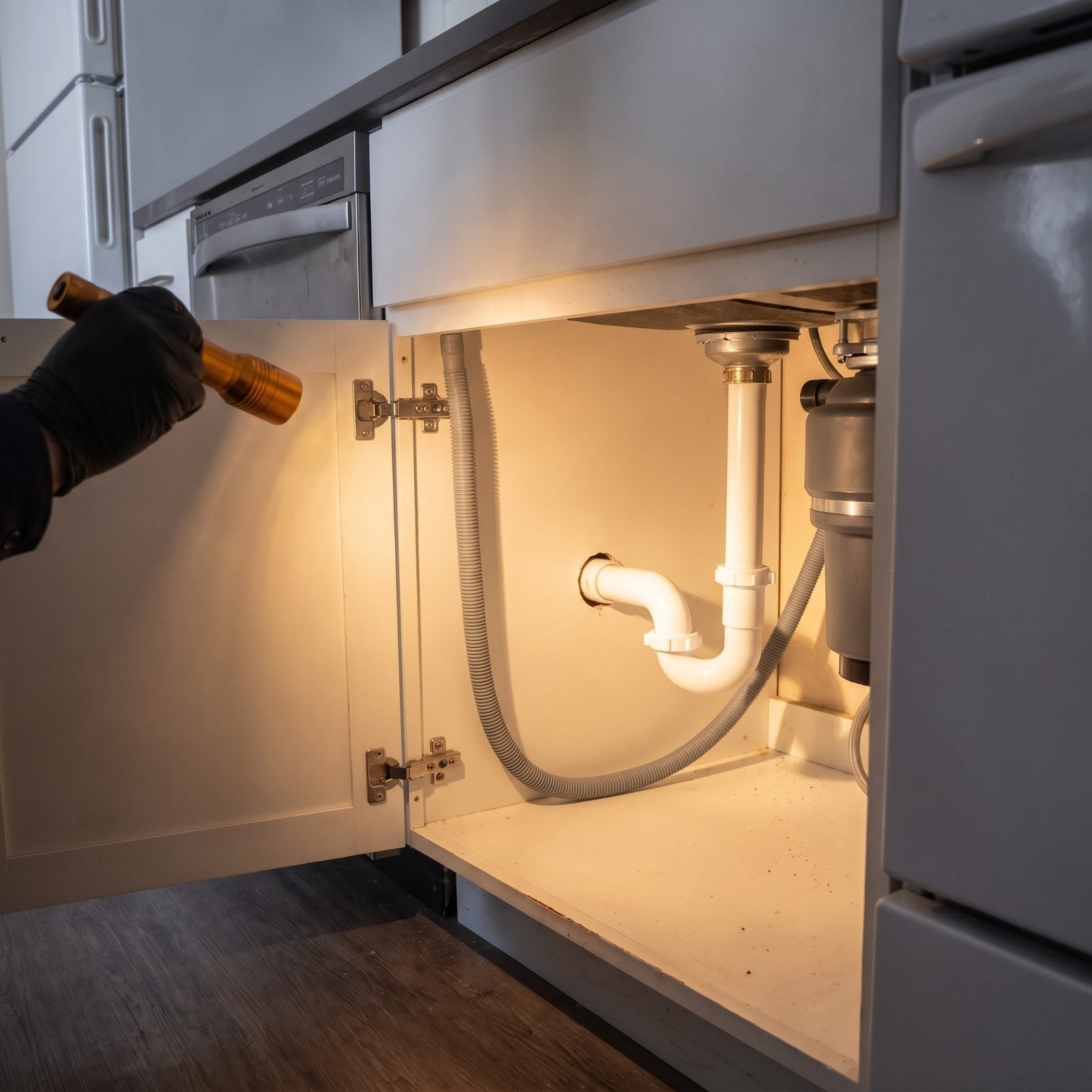
A dishwasher drain hose should rise high under the counter before it drops to the disposal. That’s the high loop. When it sags low instead, dirty sink water backflows straight into the clean dishwasher.
You’ll never catch it in the act. You’ll just notice the dishes smell faintly off and the bottom of the tub never quite dries. One zip tie fixes the whole thing, and most people never knew it was missing.
9. Ground Sloping Toward the Foundation
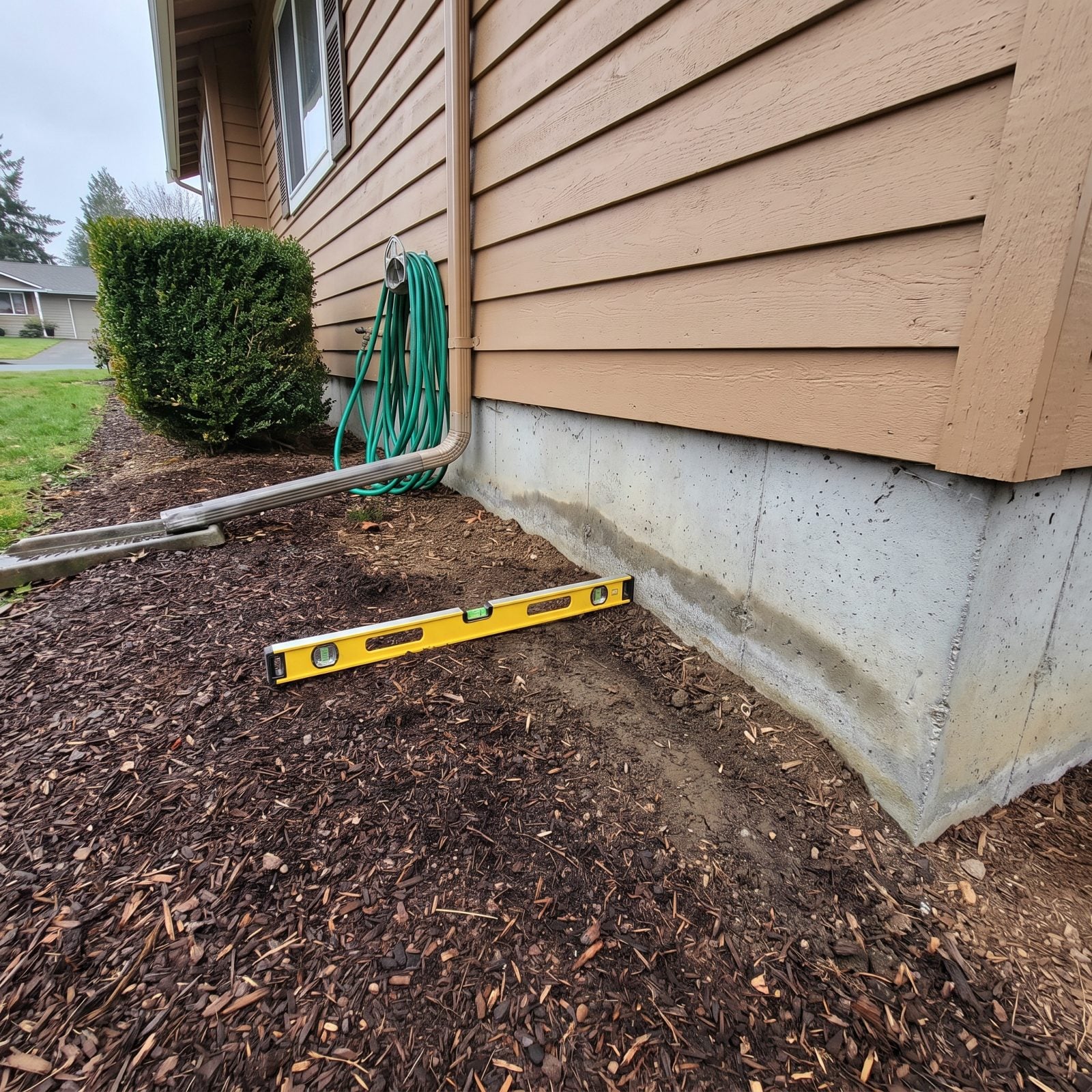
Grade should fall away from a house, dropping maybe six inches over the first several feet. When it tilts back toward the wall, every rainstorm pours its runoff straight at the foundation.
This one’s sneaky because it looks like nothing. Just dirt against concrete. But slope is destiny with water, and water against a foundation finds the basement eventually.
8. Downspouts Ending Directly Beside the House
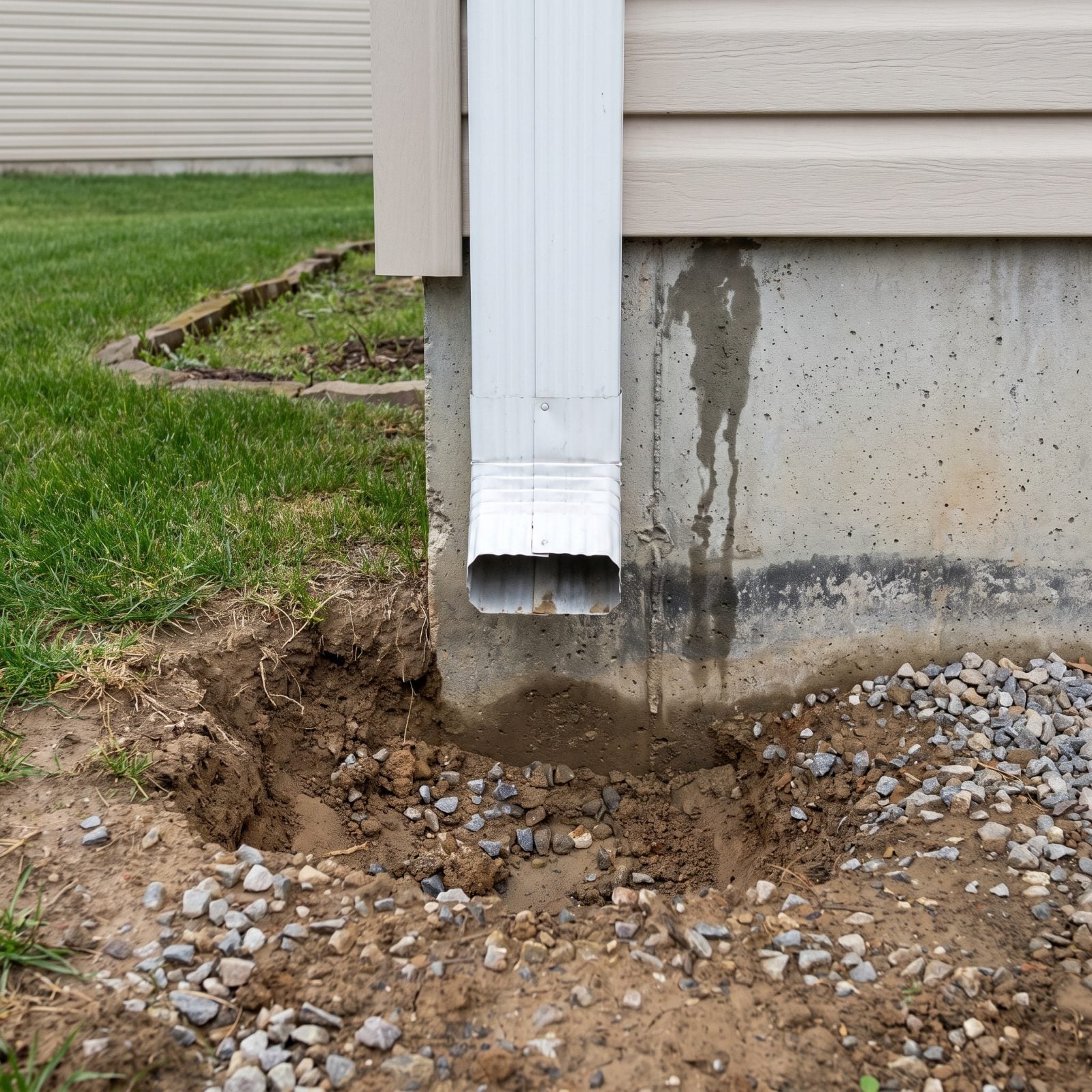
A downspout that empties at the foundation is like aiming a garden hose at your own basement. All that roof water, piling up fast in a single storm, concentrated into one spot against the wall.
The giveaway is the little crater of washed-out soil right under the outlet. Add an extension to carry water a few feet out and the problem’s gone. Skip it and you’re funding a sump pump later.
7. White Efflorescence on Exposed Foundation Walls
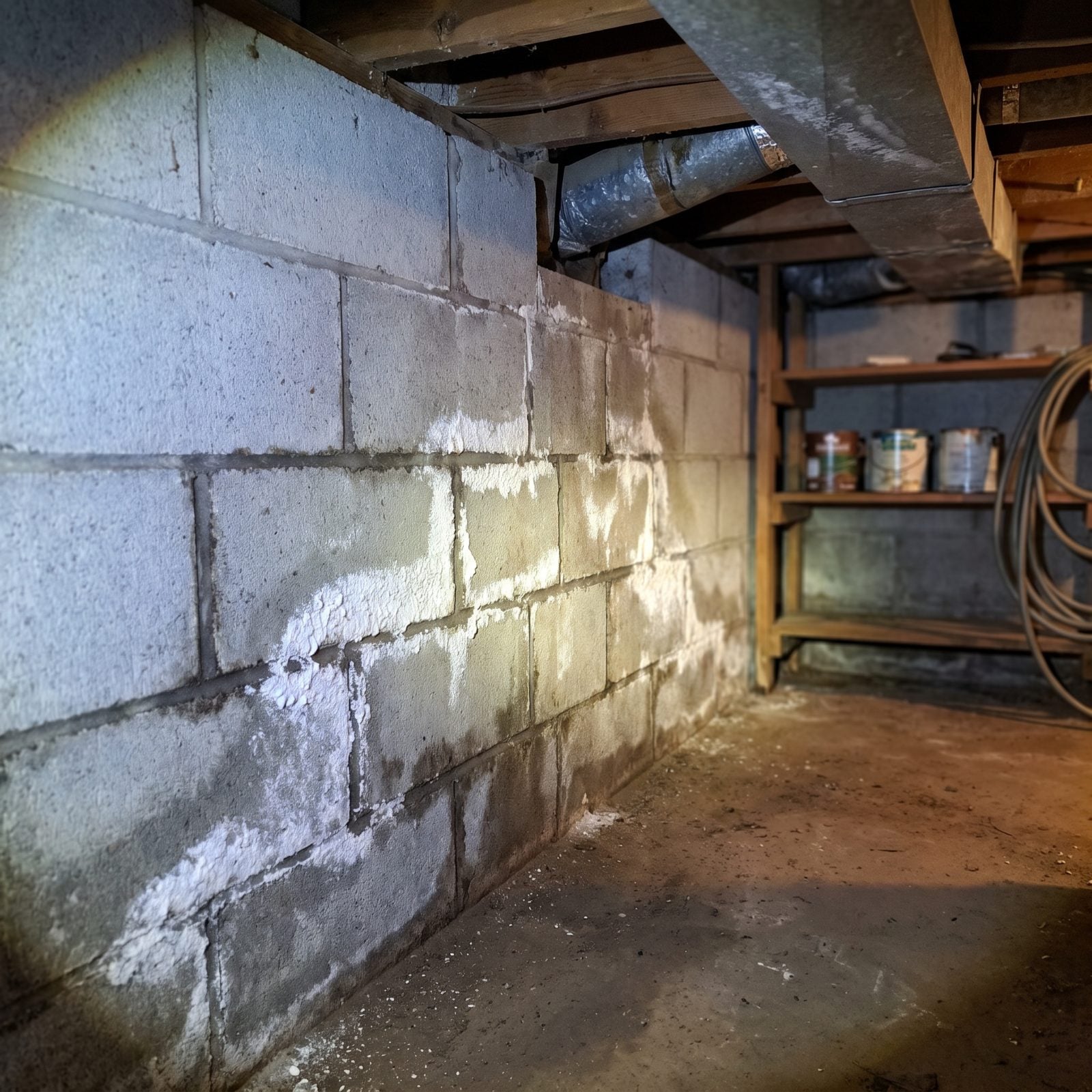
Run your finger across those white chalky patches on a foundation wall and the powder comes right off. That’s efflorescence, mineral salt left behind after water passed through the concrete and evaporated.
The salt itself is harmless. The message isn’t. Moisture is moving through the wall, dissolving minerals on its way in and leaving them on the surface as it dries. Fresh, fluffy deposits mean the water’s still coming. Where there’s efflorescence there’s a path for water, and paths like that only widen.
6. Stair-Step Cracks Running Through Masonry Joints
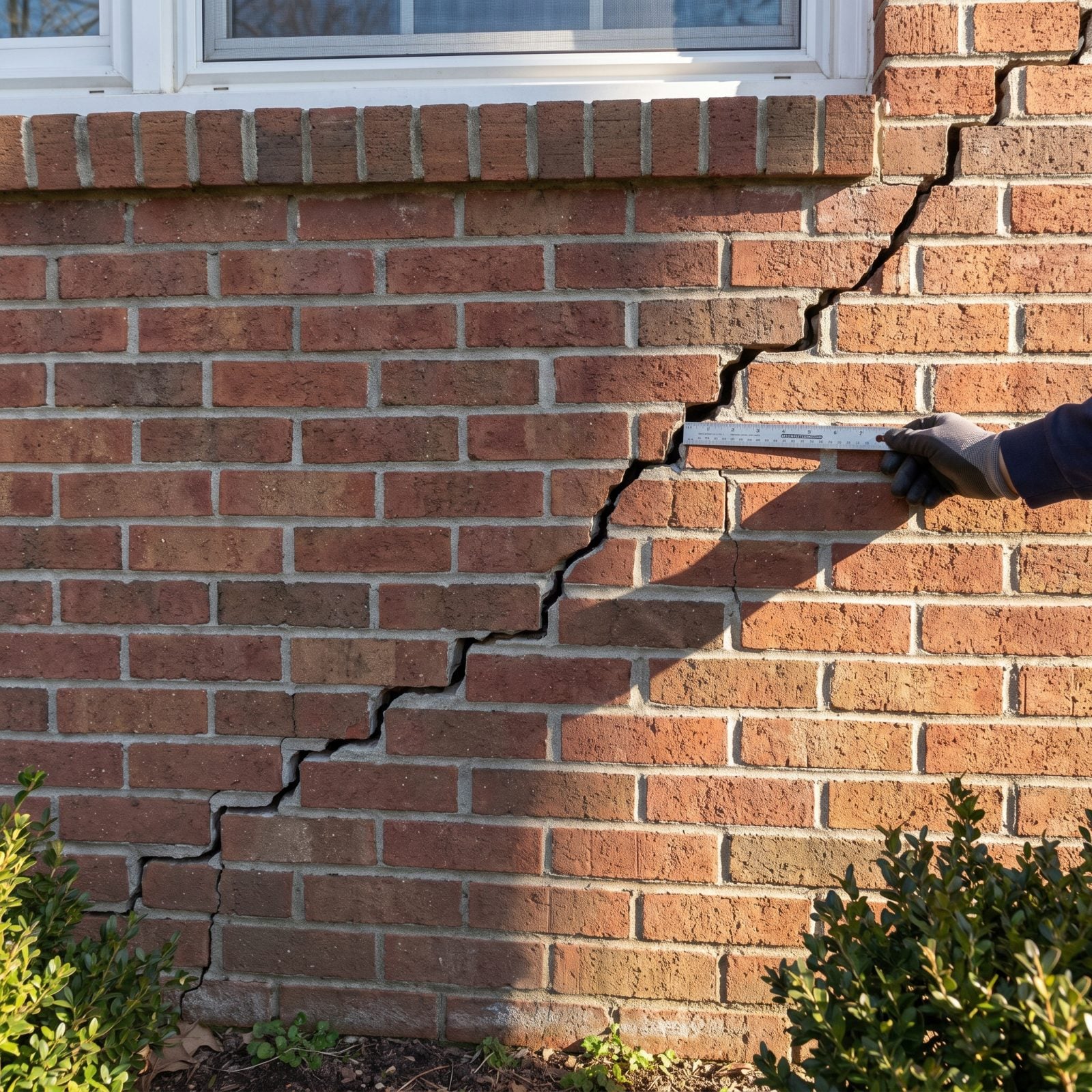
Cracks that zigzag diagonally up the mortar joints of a block or brick wall have a name: stair-step cracks. The stress took the path of least resistance, and the mortar is where that path runs.
They follow the joints because mortar is weaker than the block, so settlement or soil movement opens the seams in that telltale staircase. Hairline versions are common and usually harmless. The ones that worry an inspector are wide, offset, or getting bigger, because those point to the foundation moving underneath.
5. A Visible Gap Above or Below a Porch Column
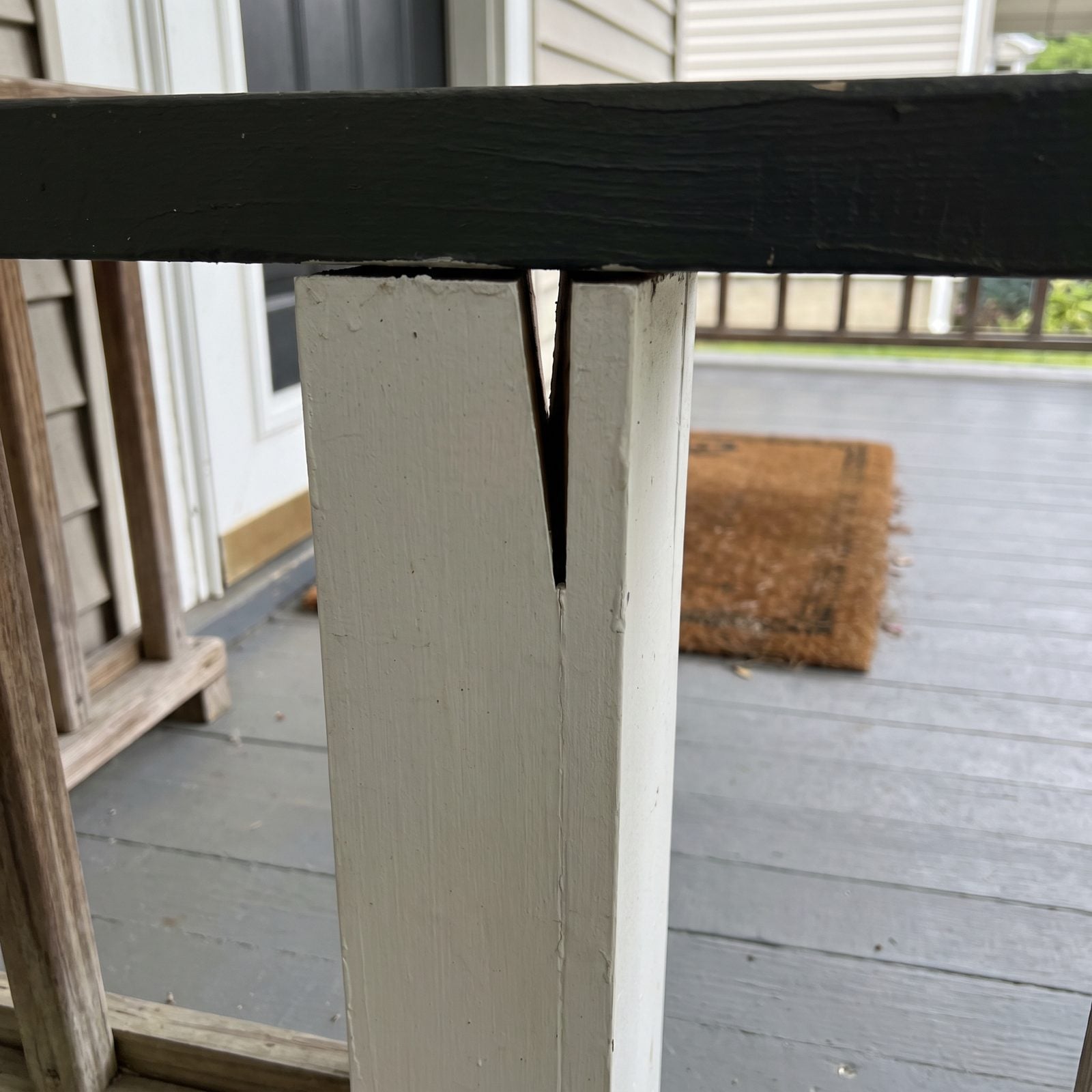
Look closely where a porch railing post meets the handrail cap it’s supposed to hold. A split opening there, even a thin one, means that post is starting to come apart.
Wood dries, shrinks and checks, and water soaking into the end grain at the top swells it and pries the crack wider each season. Any of it leaves a V-shaped split running down from the top, and a split like that means the fasteners holding the cap have less and less solid wood to grip. The rail is telling you one post has quietly stepped out of the lineup while the others cover for it.
4. A Deck Ledger Pulling Away From the House
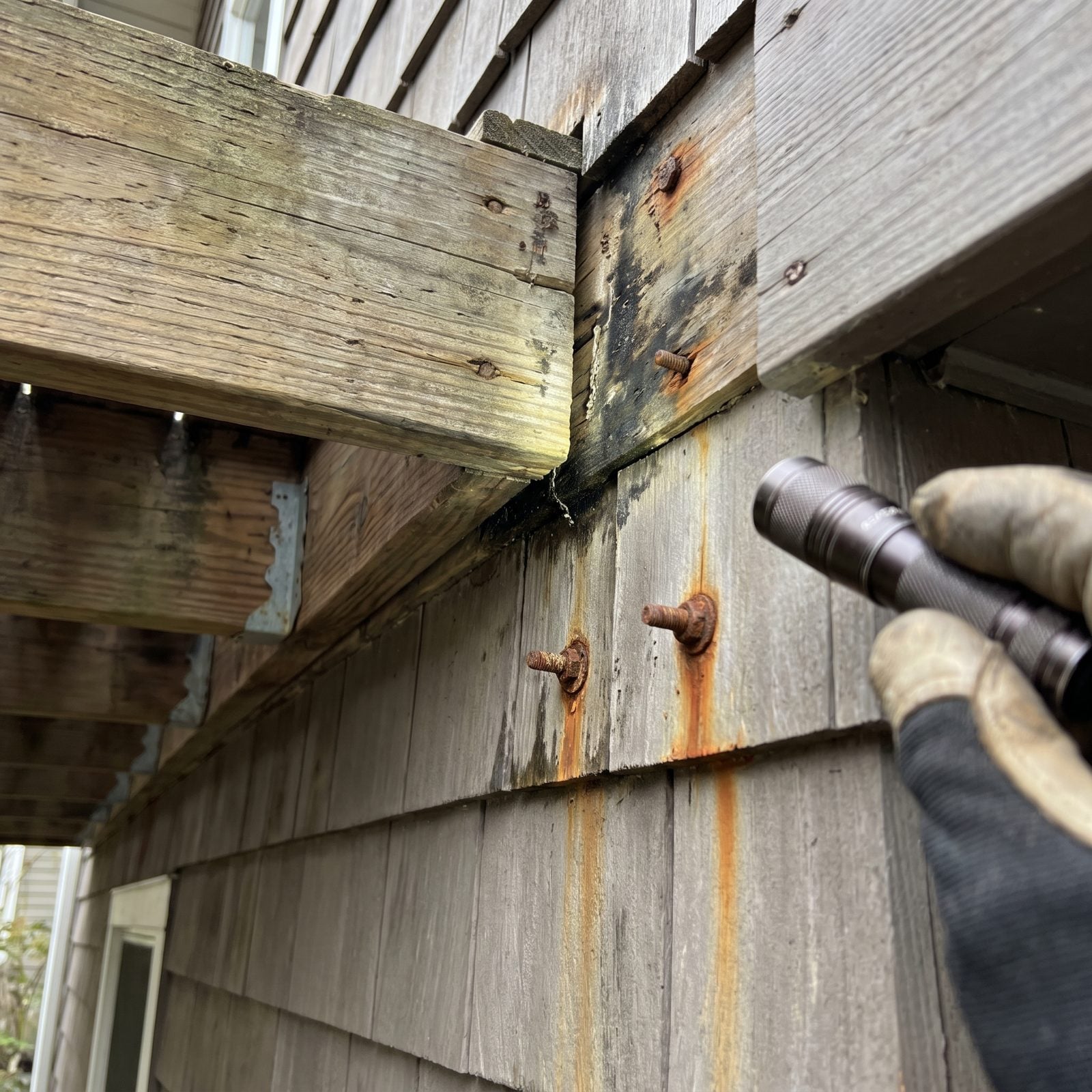
Few defects on a walkthrough scare inspectors more. A ledger pulling off the house is the likeliest cause of a full deck collapse, and it almost always goes unnoticed until someone’s standing on it with a yard full of guests.
Look for the gap. A ledger should sit flush and tight against the band joist, and once it starts to separate you’ll see daylight, rust streaks from failing nails, and mildew where water has been tracking behind the board for years. Nails alone were never enough — proper ledgers get lag bolts or structural screws, with flashing above them.
3. A Roofline With a Noticeable Sag
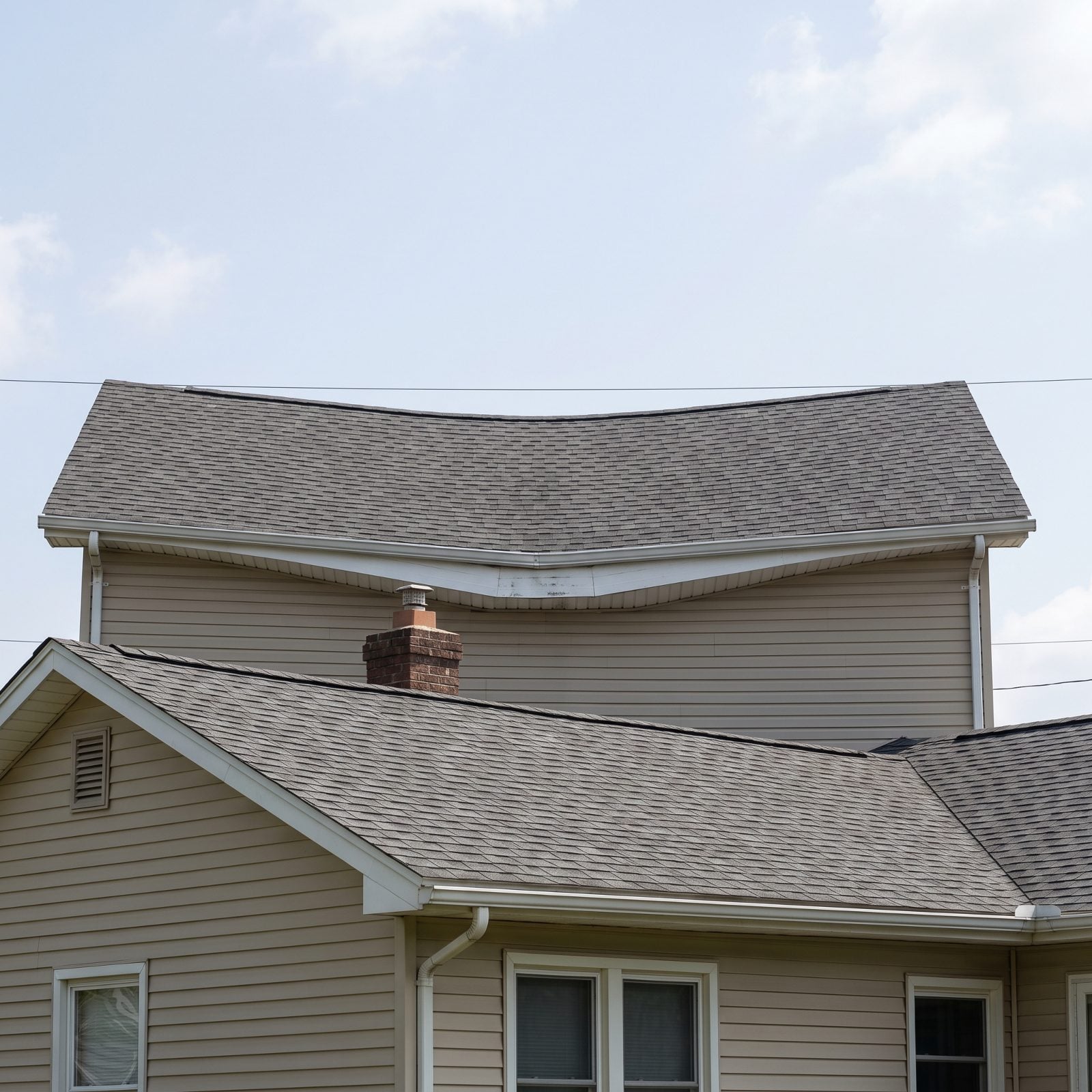
A straight ridge is a bragging right you only notice once it’s gone. Stand across the street, sight down the top of the roof, and compare it to the horizontal line of a neighbor’s house or a nearby power line.
A dip in the middle usually means something structural underneath has given up. Undersized rafters. A failed ridge beam. Years of snow load the framing was never sized to carry. Sometimes it’s just an old house settling gracefully; other times it’s a problem that costs more than a new car to fix.
The roof tells you about the bones before anyone opens the attic hatch.
2. A Small Roof Section With Mismatched Shingles
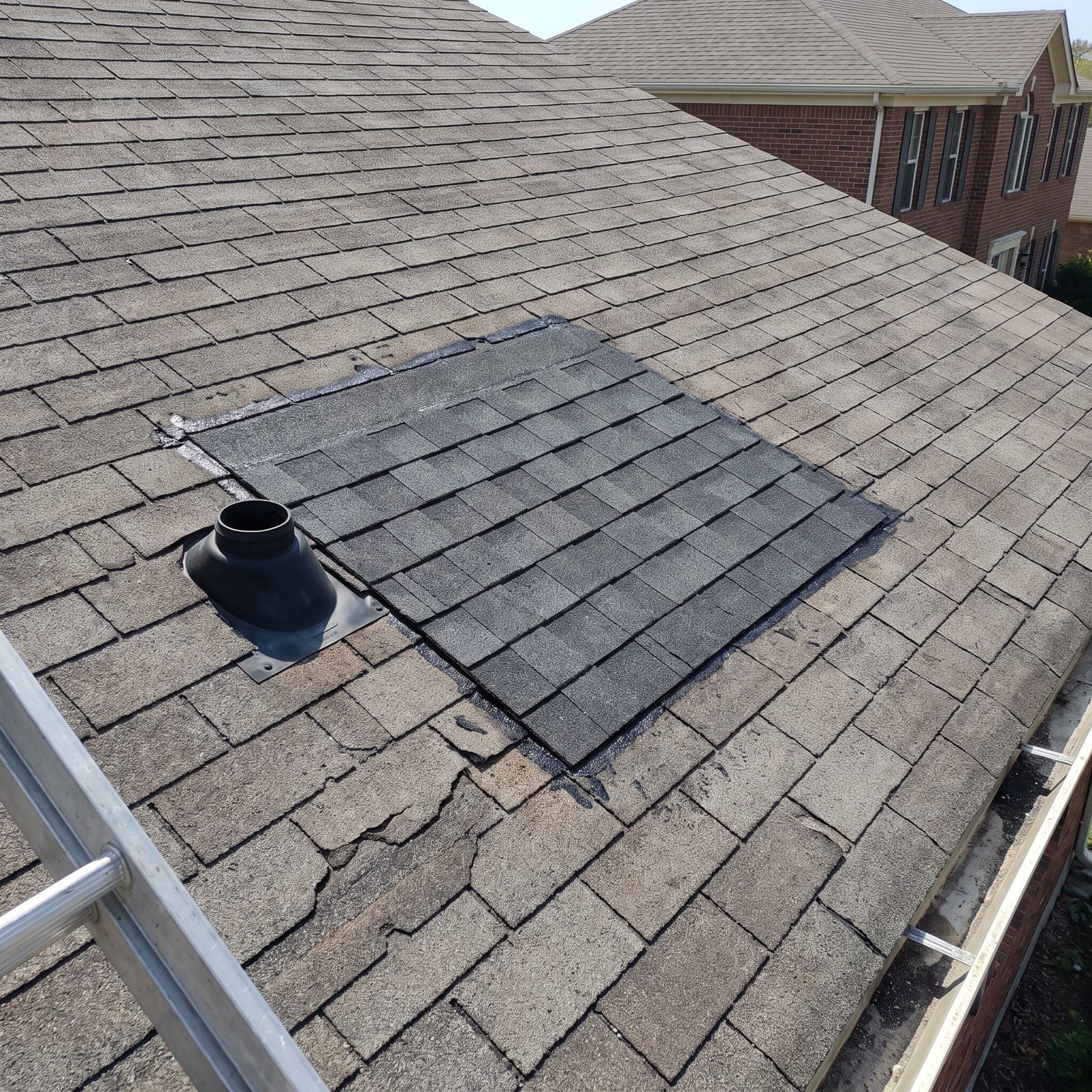
A fresh patch on an old roof is a confession. Somebody had a leak right there, fixed just that spot, and hoped the rest would hold.
The patch itself isn’t the problem. What it raises is the harder question — why there, and what got wet below it? Head indoors and check the ceiling under that section for staining, then ask whether the repair was a quick cover-up before a sale. One patch is maintenance. A roof dotted with them is a roof living on borrowed time.
1. A Chimney Leaning Away From the House
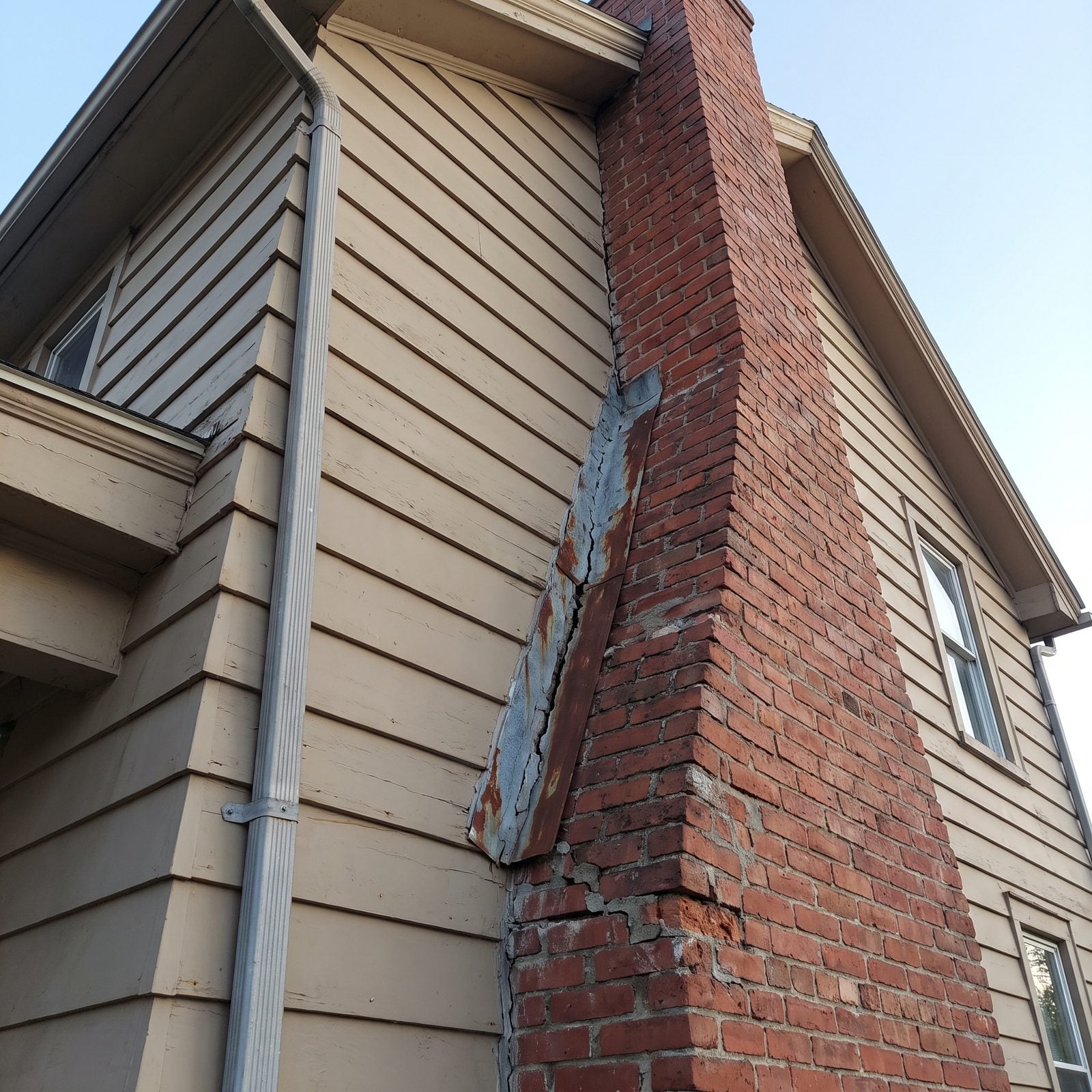
Brick doesn’t lean on its own. When a chimney starts tipping away from the house, something down at the footing has shifted — usually a cracked or undersized foundation pad that’s been soaking up water for years.
The tell is the gap. A sound chimney sits snug against the wall with tight flashing, while a failing one starts pulling loose: the metal flashing rusts and peels away, and a gap you can slide a finger into opens between brick and siding, sometimes only partway up the stack, often half-hidden behind a smear of patching mortar somebody used to buy time. Add crumbling mortar joints and spalling brick, and you’re staring at a repair that runs into real money.
Check the firebox and flue inside, too. A lean out here can mean cracks in the liner you’ll never spot from the yard.