
The scariest thing in most houses isn’t the attic or the basement. It’s a gray metal box on the wall nobody has opened in thirty years. Ask an electrician what keeps them up at night and they won’t name haunted wiring — they’ll name specific brands, specific shortcuts, specific habits that look fine right up until the night they don’t. We pulled together the ones pros quietly rip out of their own homes first. Some are famous. Others are hiding in plain sight behind your couch right now.
33. The Federal Pacific or Zinsco Panel Hiding in Your Basement
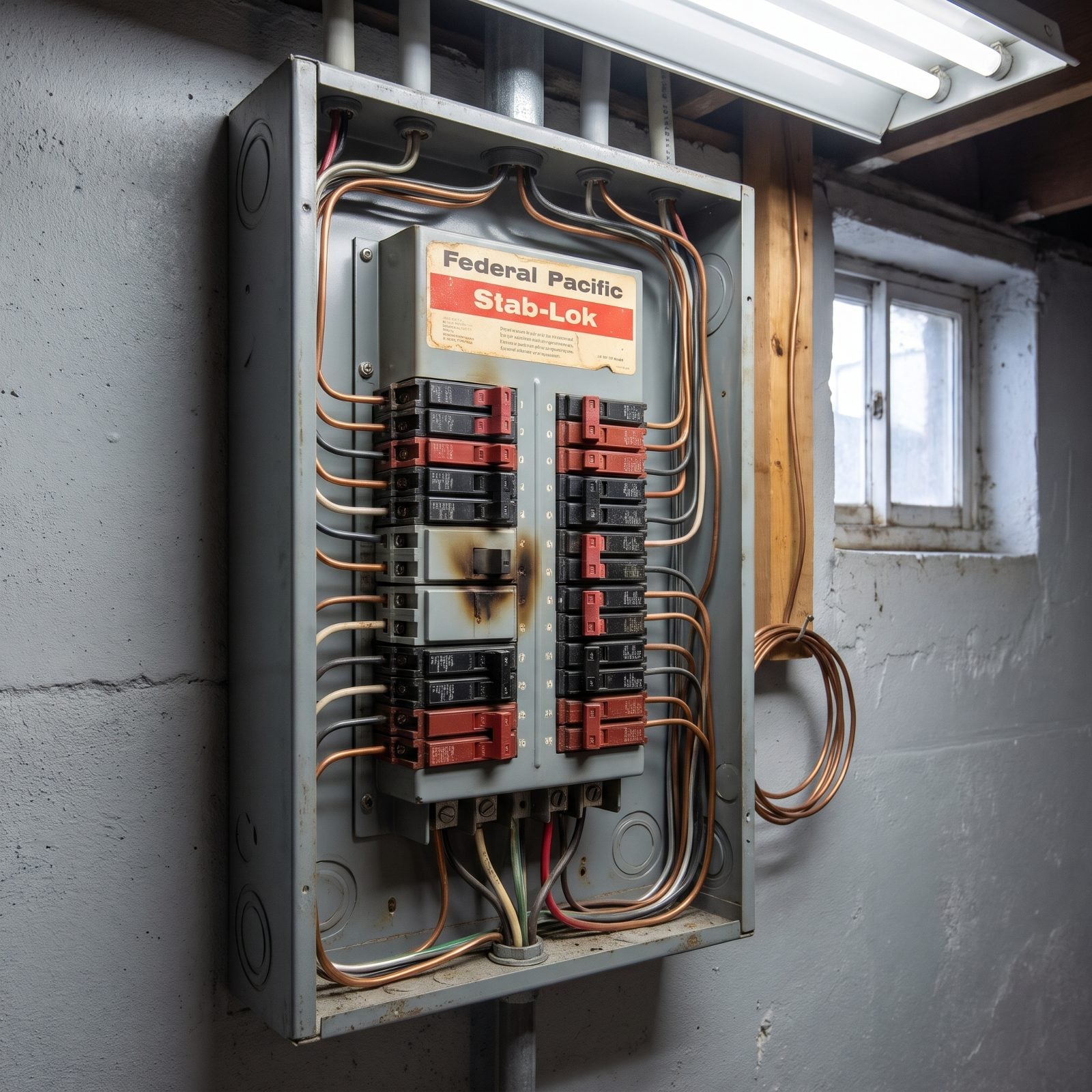
This is the one electricians replace before they unpack a single box. Federal Pacific Stab-Lok and Zinsco panels have a documented history of breakers that don’t trip when they should. The breaker looks fine, sitting there in the on position while it lets the circuit cook anyway.
In order to come up with the very specific design ideas, we create most designs with the assistance of state-of-the-art AI interior design software. Also, assume links that take you off the site are affiliate links such as links to Amazon. this means we may earn a commission if you buy something.
The problem is invisible from the kitchen. A circuit overloads, the breaker fails to do the one job it has, and the heat has nowhere to go but the wires inside your walls. These panels went into millions of homes from the 1950s through the 1980s, so there’s a real chance yours is one of them.
Describing Stab-Lok test failures, an electrician who replaces panels writes “Not only will the panel fail, it would lockup, meaning the breaker would not trip in the future if it encountered an overload.”
32. Extension Cords Doing a Permanent Wiring Job
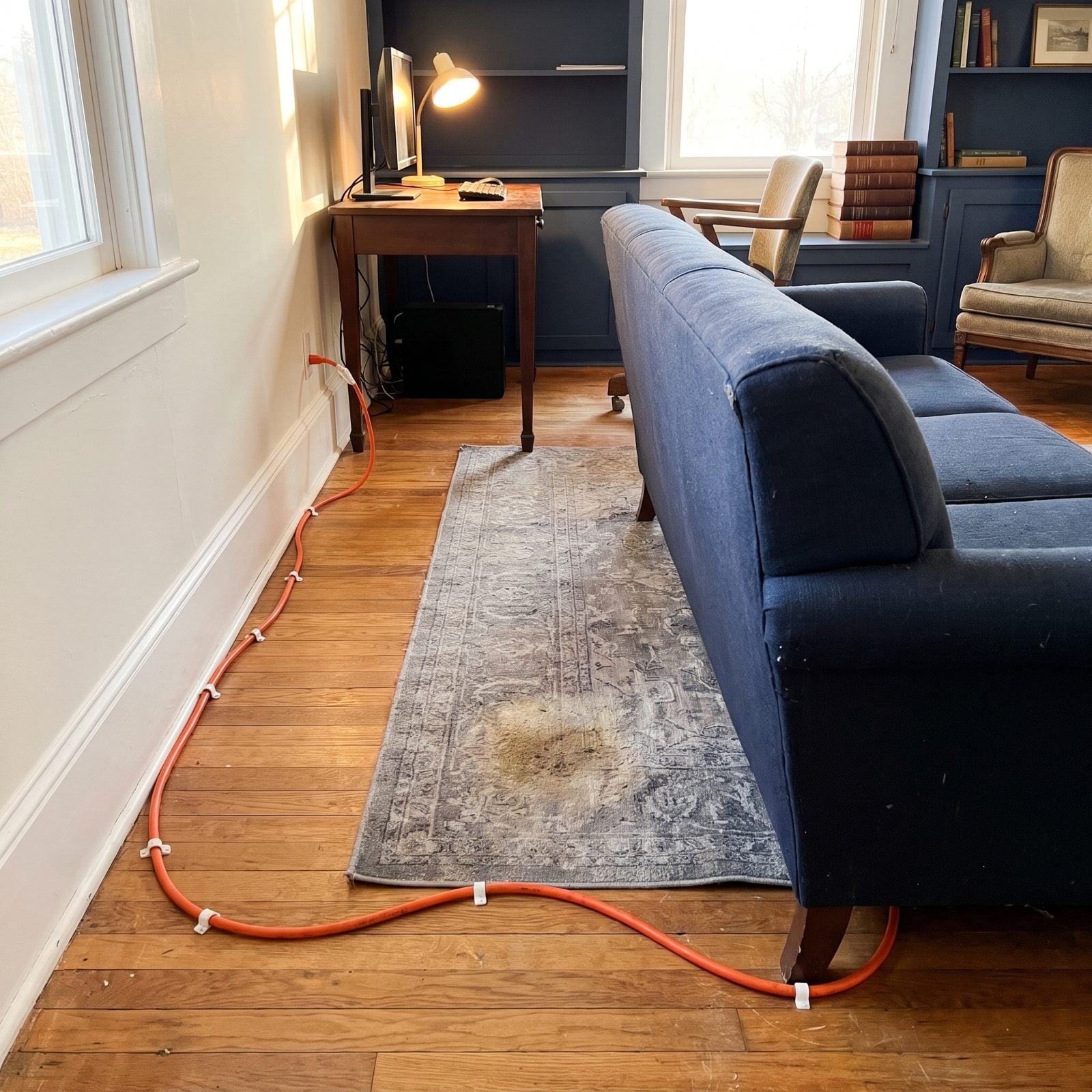
You know the orange cord. It started as a temporary fix and somehow became structural.
Extension cords are rated for short-term, light-duty use. Run one permanently and three things go wrong: the conductors are thinner than in-wall wiring, they overheat under sustained load, and stapling or tucking them under rugs traps that heat with nowhere to vent. A cord buried beneath a walked-over rug is a slow-cooking problem that nobody sees until it’s charred.
Need power somewhere permanently? That’s a request for a new receptacle, not a longer cord. Electricians handle this one in their own homes first because they’ve seen exactly the scorch marks it leaves behind.
31. A Space Heater Running Off a Power Strip
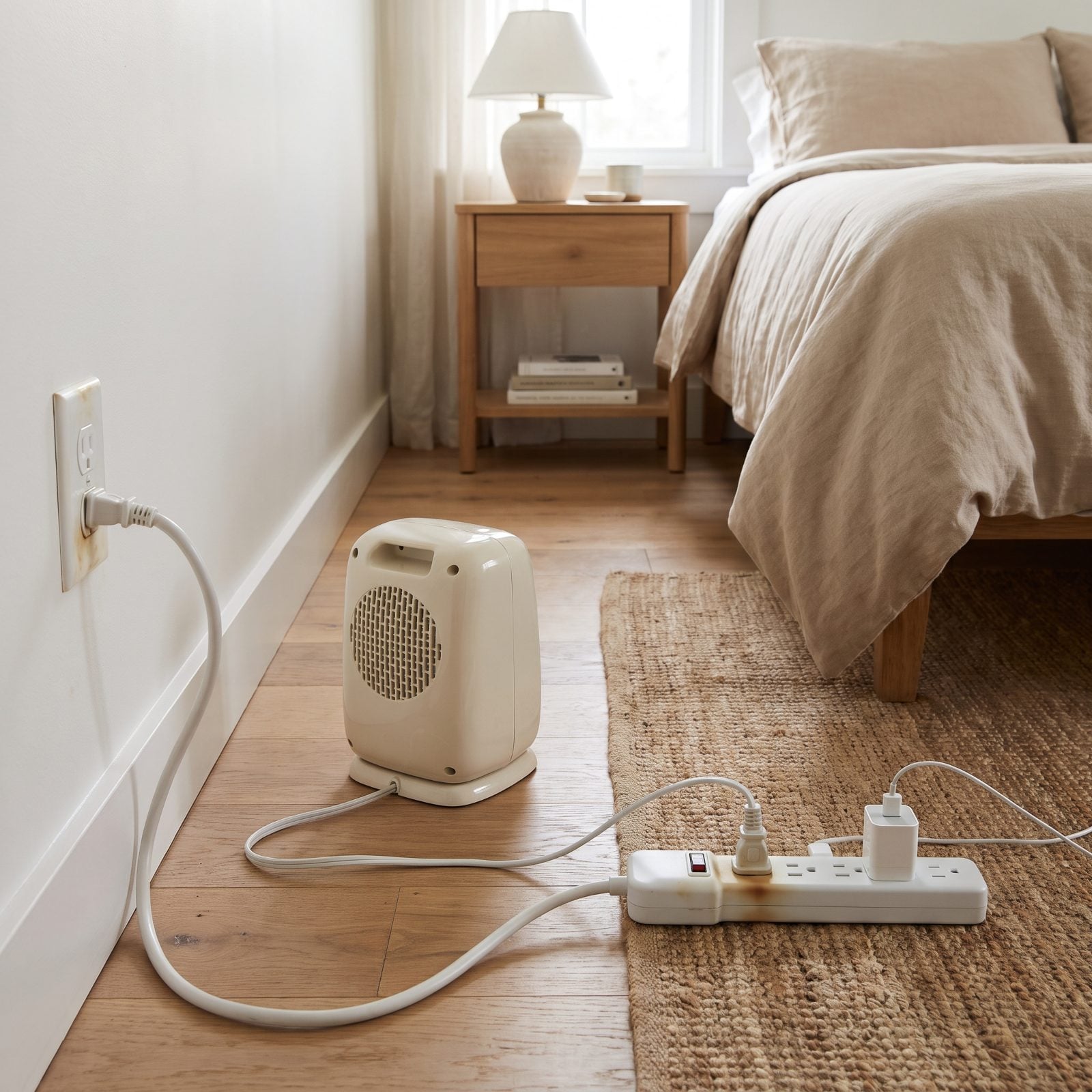
A space heater pulls close to 1,500 watts, which is basically the full capacity of a household circuit on its own. Power strips and most extension cords simply aren’t built to carry that continuously.
So the strip’s internal wiring overheats, the plastic softens, and the connection point becomes the weak link. Every space heater manual says the same thing in bold: plug directly into a wall outlet. Electricians follow that rule at home without exception.
Even if a heater-loaded strip hasn’t failed yet, an electrician and franchise president warns “Over time, this can lead to micro-damages, creating hidden fire hazards even when the strip seems to work fine.”
30. Three-Prong Adapters That Fake a Ground
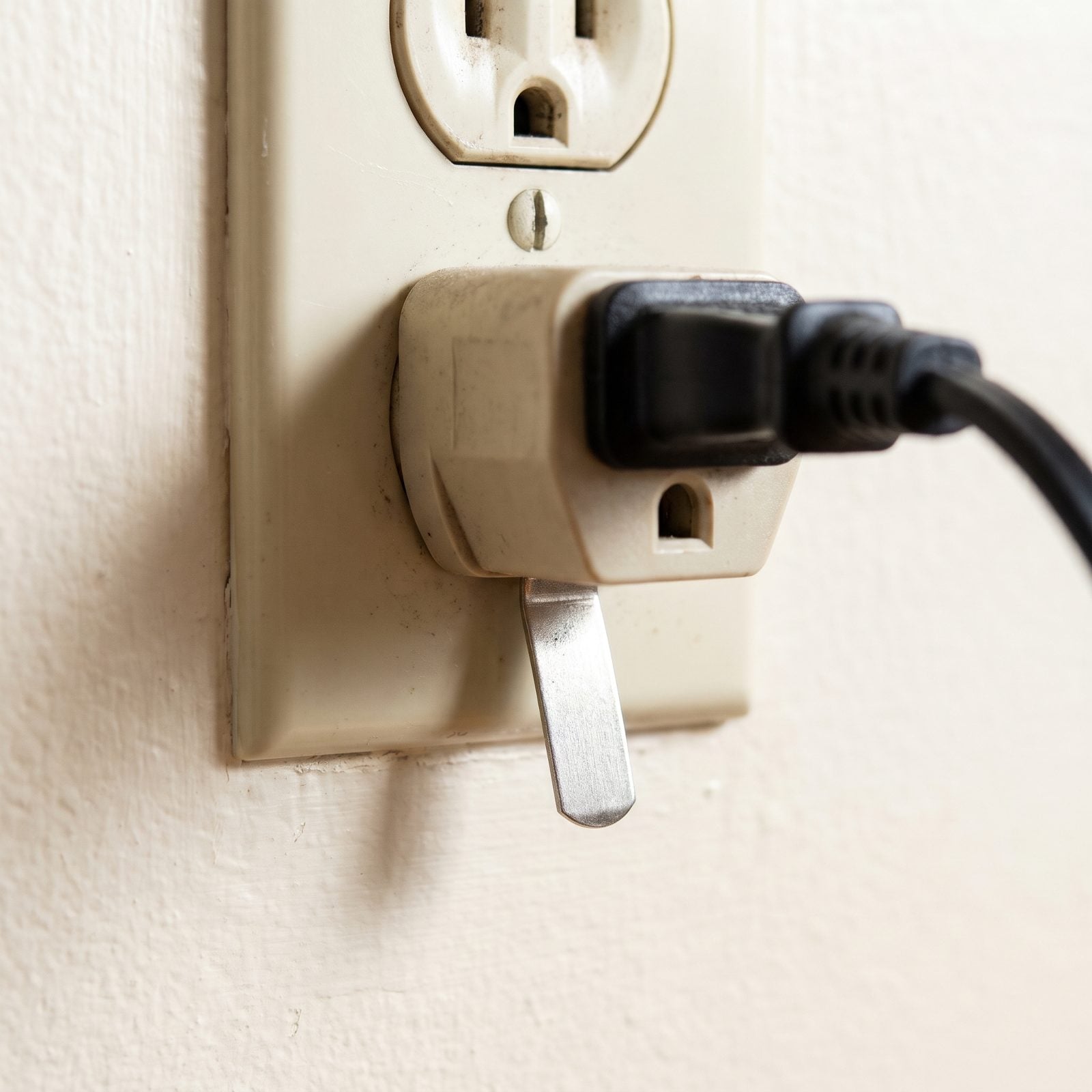
That little beige three-prong adapter is a lie most of the time. The metal tab is supposed to screw into a grounded outlet box to actually connect the ground. In practice, people leave it dangling, or screw it into a box that was never grounded in the first place.
Now your surge protector, your computer, your everything has a ground pin connected to nothing. The protection you think you have is decorative. When a fault occurs, that current goes hunting for a path — and without a real ground, the path might be you.
29. Kitchen and Bathroom Outlets Missing GFCI Protection

Water and standard outlets are a pairing electricians won’t tolerate near a sink. GFCI protection — the outlet with the little test and reset buttons — trips in a fraction of a second when it senses current leaking where it shouldn’t, say through a person standing on a wet floor.
Any outlet within reach of a sink, tub, or the outdoors belongs on GFCI protection. Older homes often have plain receptacles in these spots because code didn’t require protection when they were built. The kitchen is where this matters most, and a kitchen is full of countertop appliances living inches from the faucet.
28. Loose Receptacles That Let Plugs Droop Out
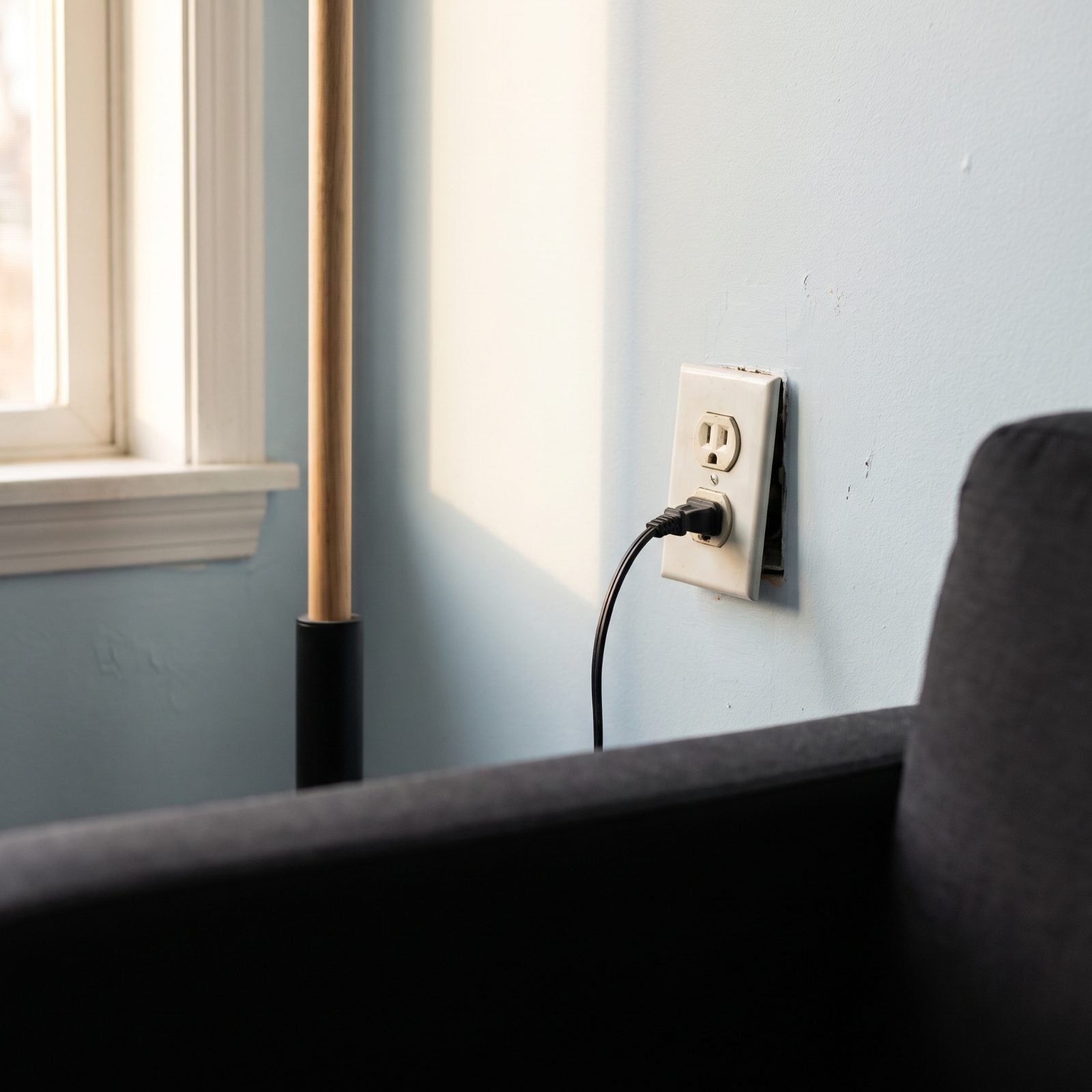
The quiet one. A receptacle gets old, the internal contacts wear out, and plugs no longer grip — they sag, exposing live prongs and loosening the connection just enough to arc.
Loose connections and poor contact generate heat right at the terminals, which is how a tired outlet becomes a hot one. If a plug won’t stay put or the outlet wobbles when you tug a cord, that device is finished. Replacing a receptacle is cheap. Ignoring a loose one behind a running appliance is how the slow problems start. Swap it before you trust it again.
27. Scorched or Melted Outlets Still Doing Their Job
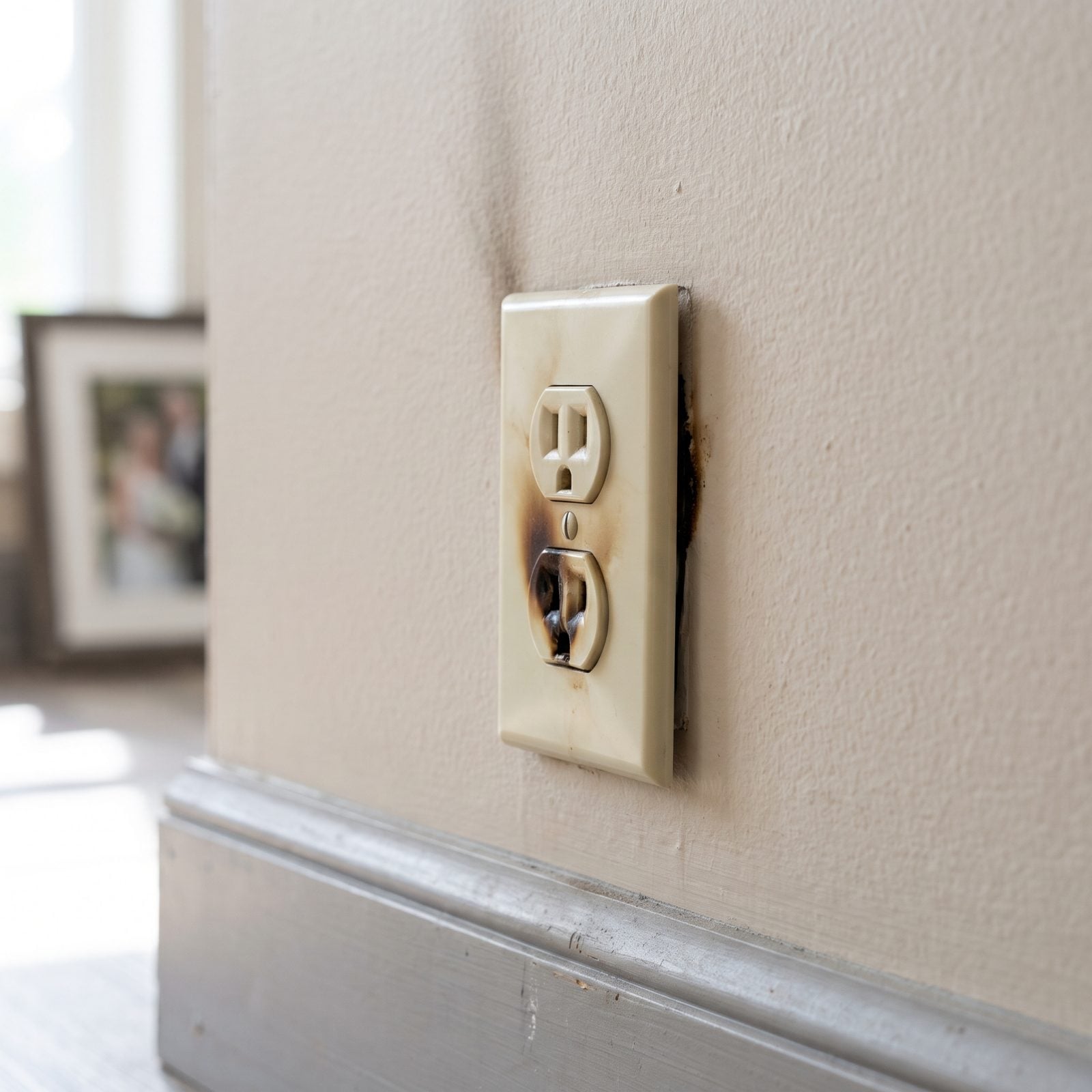
A scorched outlet is telling you something, and it already told you once. Brown halo around the slots, a plug that fits loose now, that faint smell of hot plastic when the hair dryer runs. All of that is heat from a bad connection, and heat that’s shown up once will show up again.
Electricians don’t paint over it or swap the cover plate and move on. They kill the circuit and replace the device, because the damage inside is worse than the scorch you can see.
26. Bootleg Grounds Faking Safety at the Receptacle
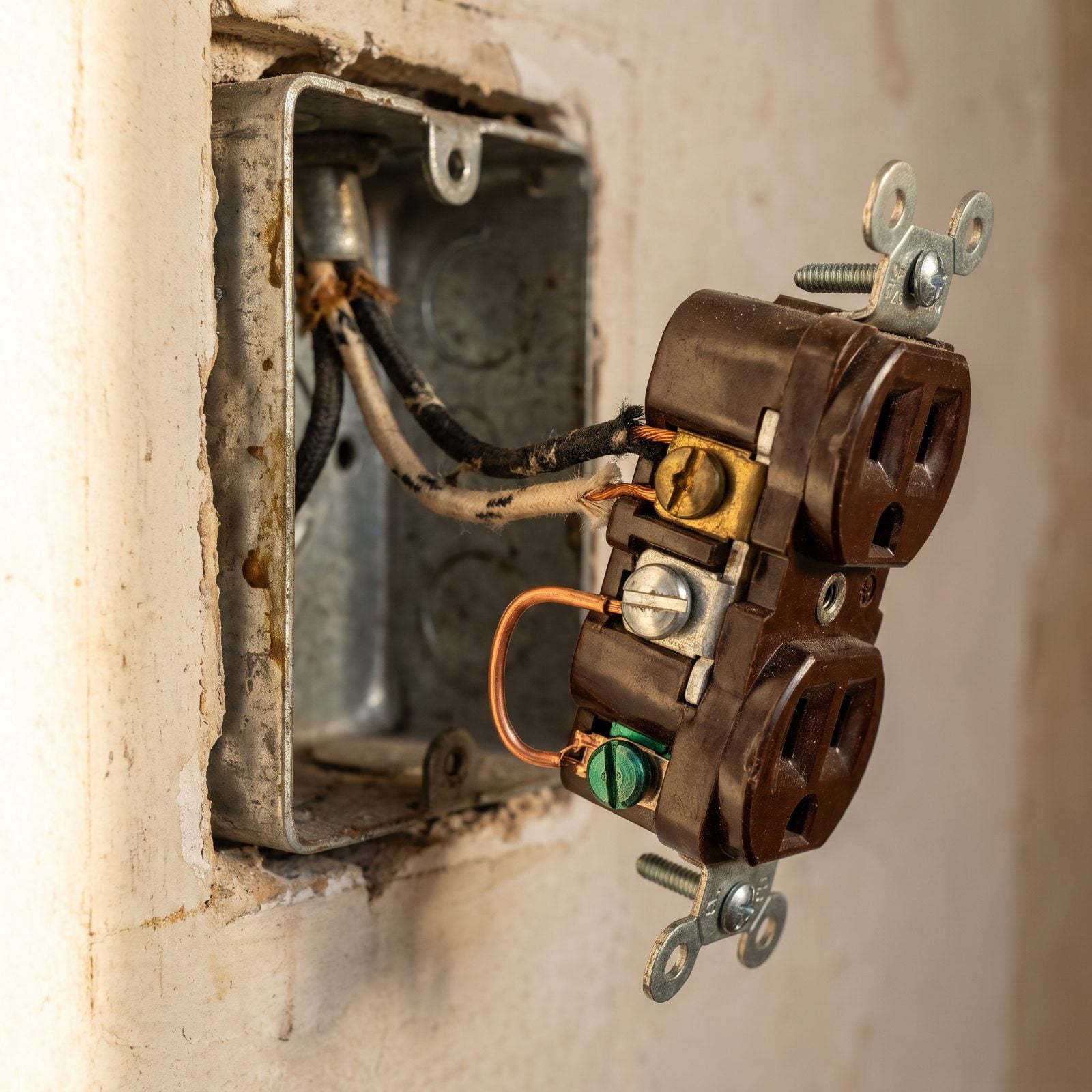
This one passes the three-light outlet tester, and that’s exactly why it’s dangerous. Someone wanted a grounded-looking outlet on a two-wire circuit, so they ran a copper jumper from the silver neutral screw to the green ground screw. The tester lights up correct. The wiring is a trap.
Now the ground path carries current, metal appliance cases can go live, and the person who did it felt clever doing it. Electricians yank these on sight. The honest fix is a GFCI or a real grounding conductor.
Explaining why bootleg grounds slip past a plug-in tester, one home inspector writes “An improper neutral-to-ground connection at a receptacle can make a basic three-light tester display an apparently normal pattern.”
25. Splices Made Out in the Open, No Box in Sight
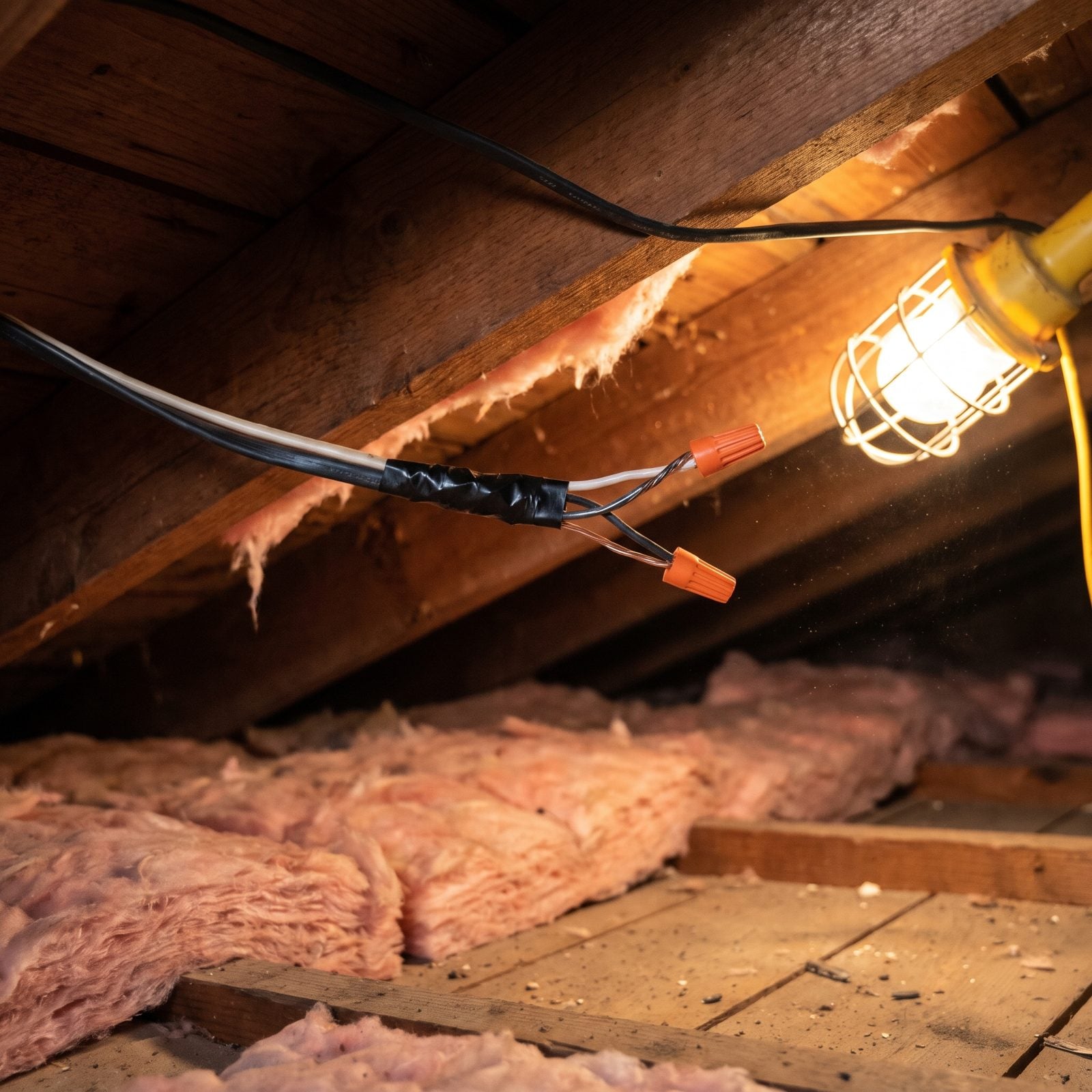
Every connection between two wires belongs inside a box. That’s not a code technicality dreamed up to sell boxes. A splice is where arcing happens, and the box is what contains the heat and sparks if a connection fails.
A wire nut dangling in the attic insulation with a wrap of tape is an open flame waiting for a loose connection. Pink fiberglass makes a fine fuel. Pros find these during attic walkthroughs more than anywhere else, and they stop and box them before going a step further.
24. Junction Boxes Entombed Behind Fresh Drywall
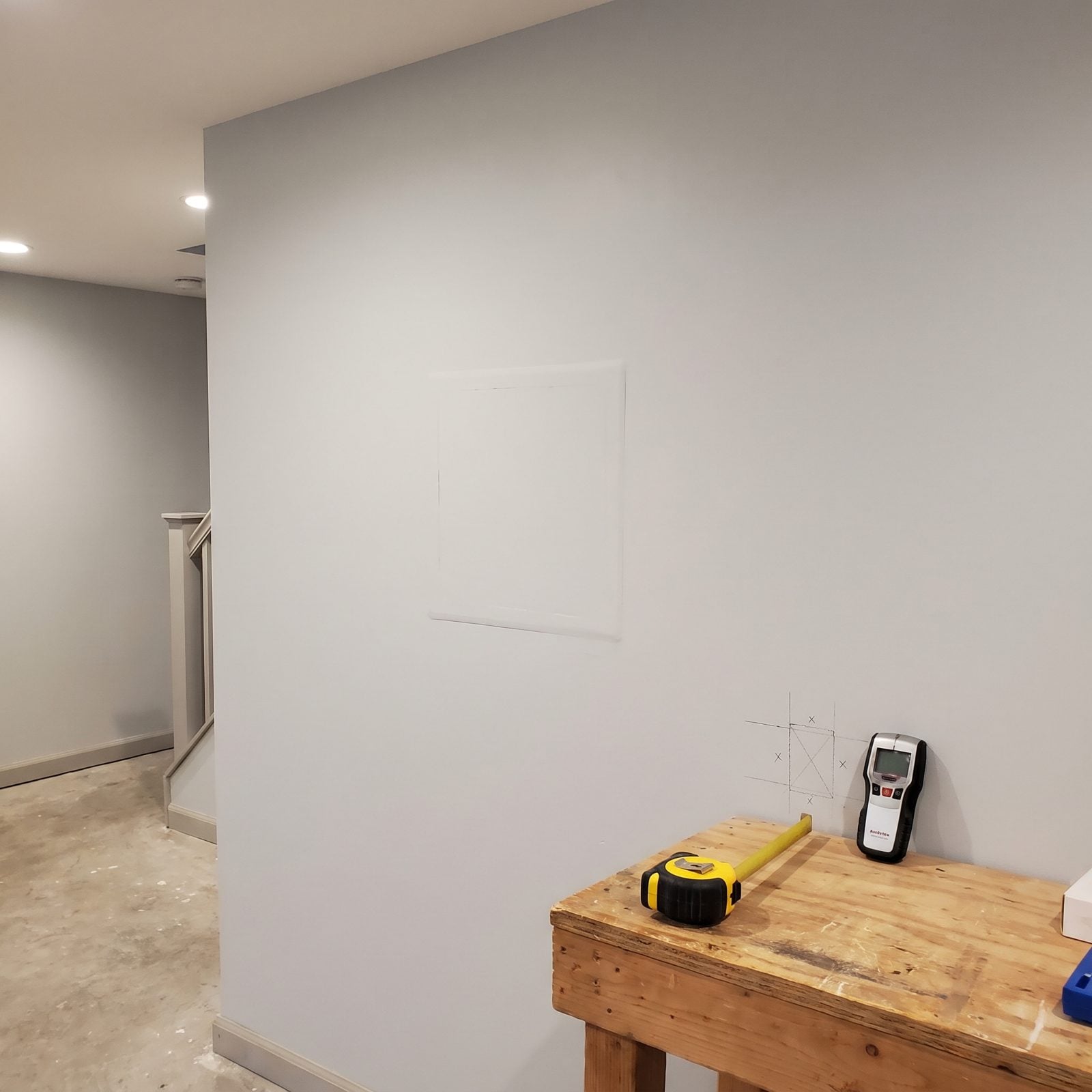
Nobody likes this rule: a junction box has to stay accessible forever. You can’t rock over it, mud it smooth, and forget it exists.
The reason is simple. Connections fail, and when they do, someone needs to open that box without a sawzall and a demolition crew. A buried box is a hidden splice you can’t inspect, can’t maintain, and can’t find when the circuit goes dead. Electricians cut these open when they trace a dead run and hit a box drywalled shut behind a brand new accent wall.
As one residential electrician puts it, “Junction boxes need to stay accessible so the connections inside can be checked, repaired, or replaced without tearing open the building.”
23. Two Wires Crammed Under One Breaker Lug
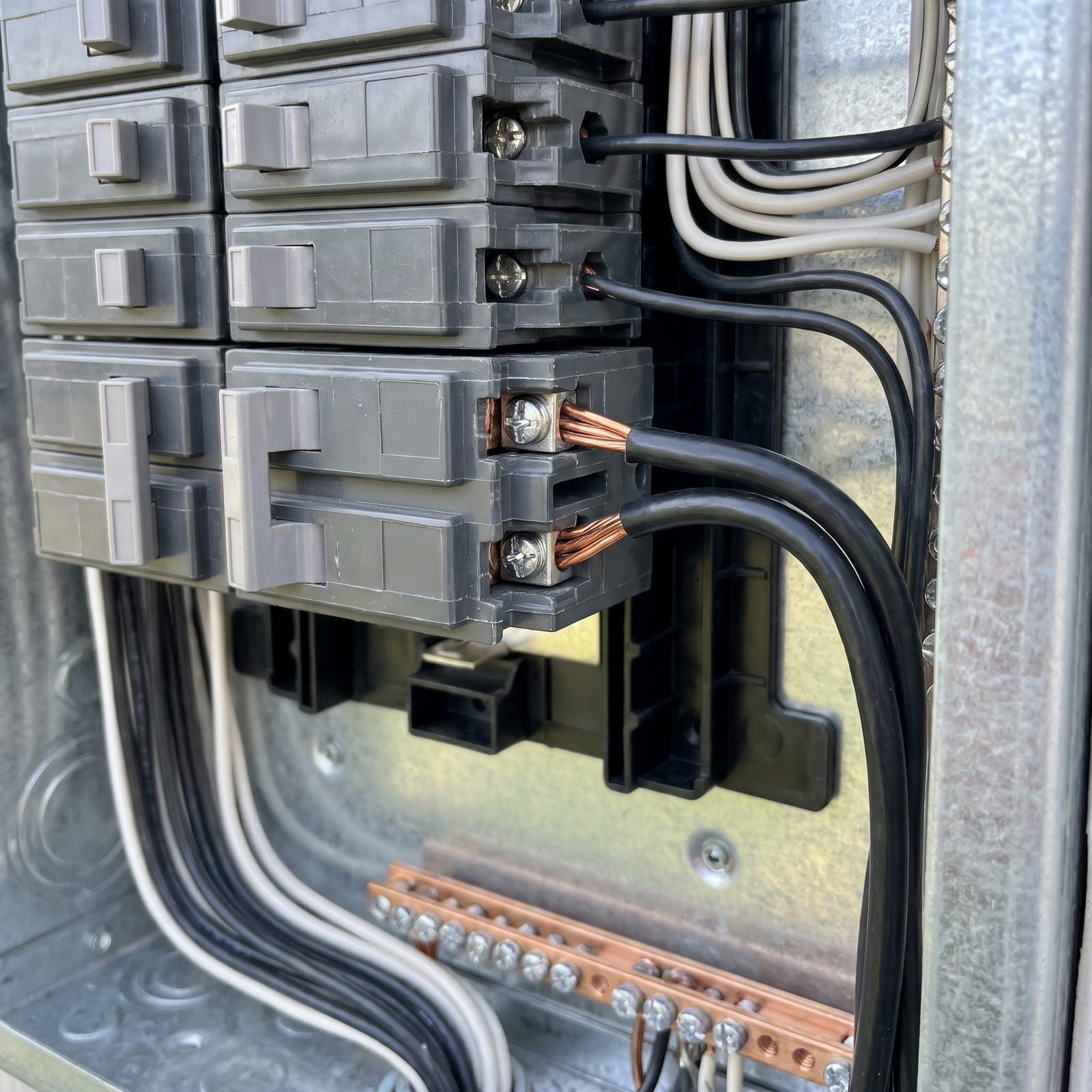
Pop a panel cover and you’ll sometimes find two wires jammed under one breaker screw, like someone needed an extra circuit and improvised. The large breaker shown here is the right way to do it: each heavy conductor sits under its own lug screw, one wire per terminal.
Most breakers are listed for one conductor only. Two wires under a single lug means one of them isn’t clamped tight, and a loose connection under load arcs and heats. A few specific breakers are rated to take two wires, and pros know exactly which ones. For the rest, the fix is a tandem breaker or a proper subfeed.
As an inspector who examines panels puts it, “If two wires are connected to a breaker that is not designed for two wires, it can and may result in overheating or arcing because they cannot be attached tightly enough.”
22. A Main Panel Buried Behind Storage Shelves
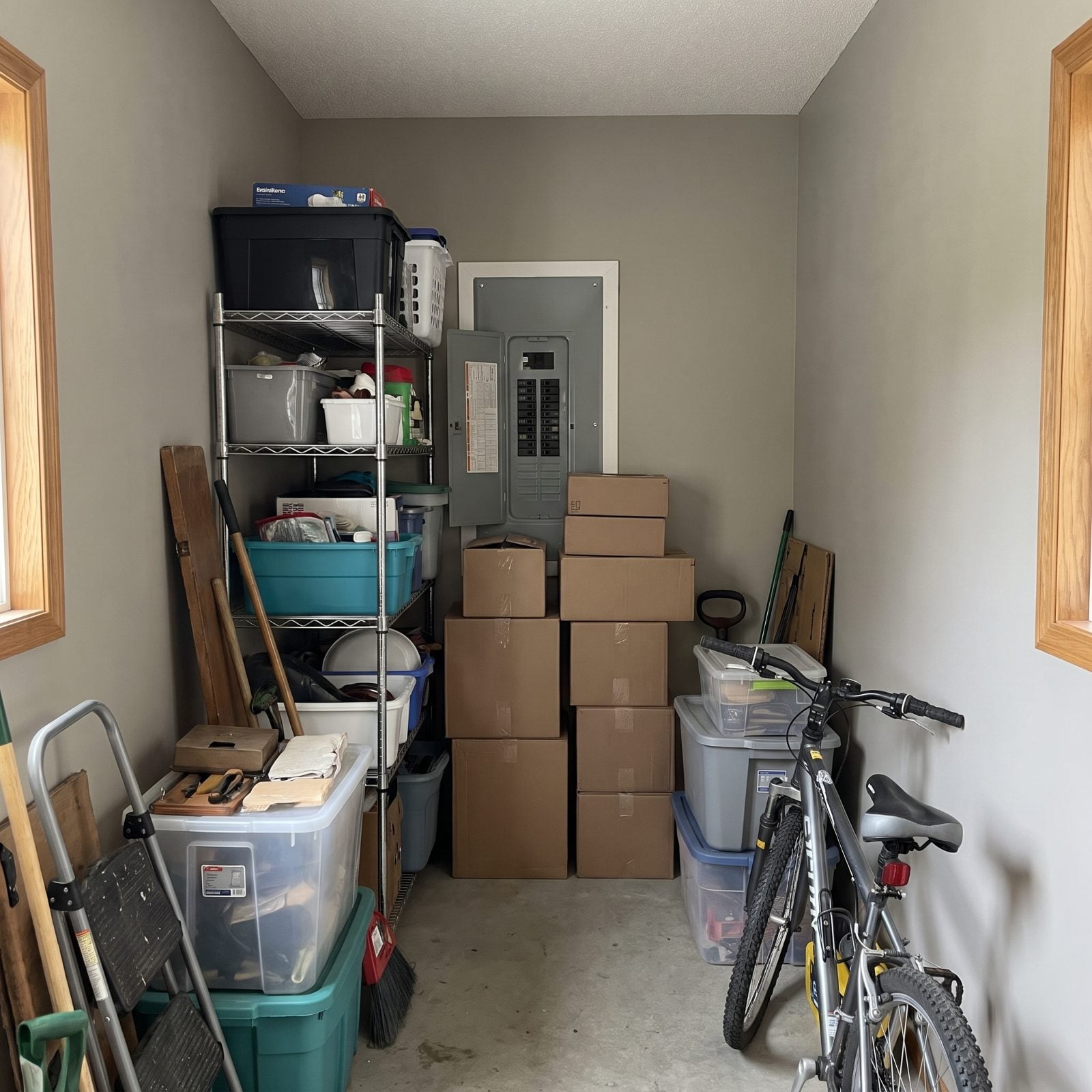
Code requires roughly three feet of clear space in front of a panel, plus working width. That empty rectangle on the floor isn’t wasted. It’s the room an electrician needs to kill power fast in an emergency.
Every garage drifts toward storage, and the panel wall is prime real estate for shelves and boxes. Then a breaker faults at the wrong moment and nobody can reach it. Pros refuse to work on a blocked panel until the clearance is cleared, and honestly, they’re right to.
21. Water Lines Running Directly Over the Panel
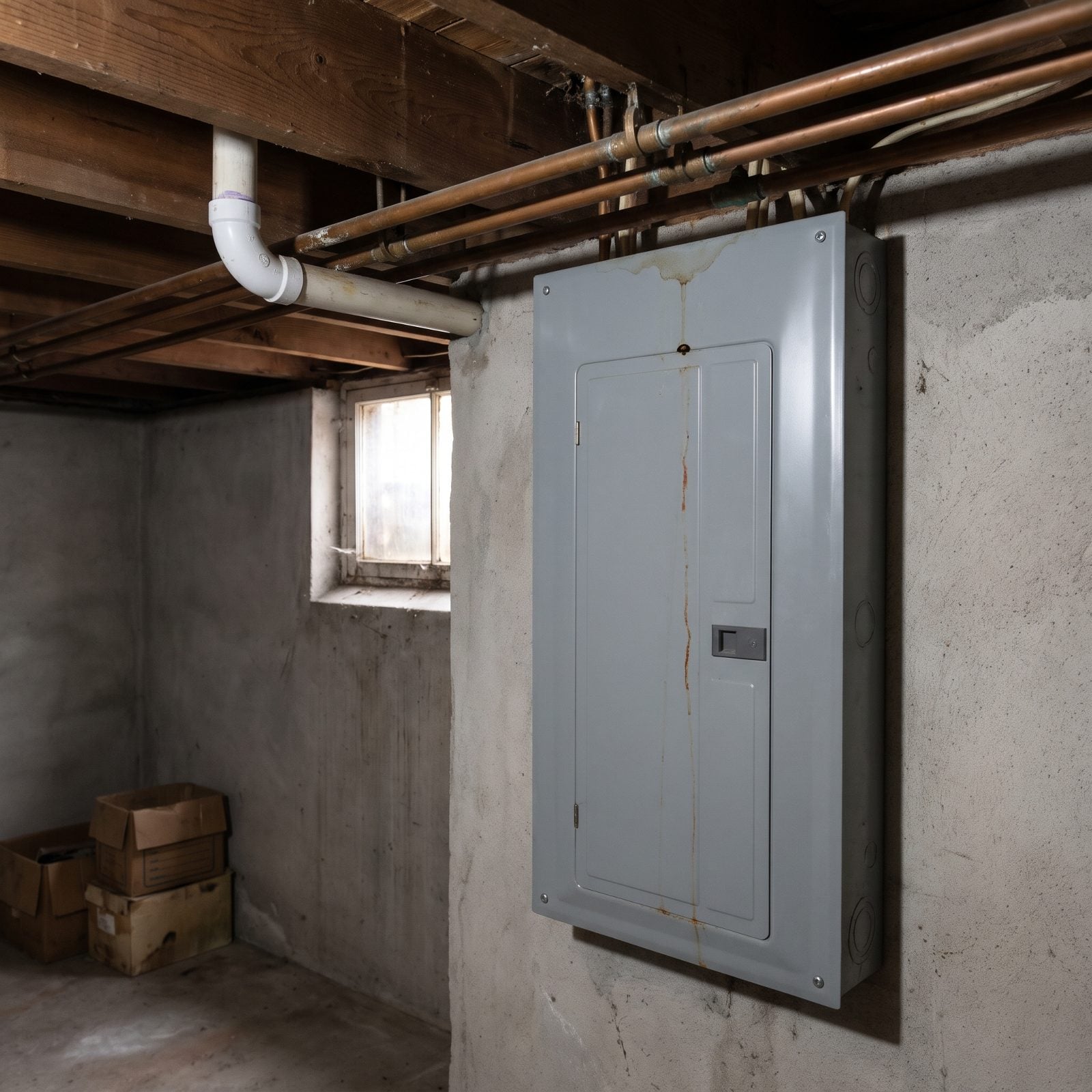
Water and a breaker box have no business sharing the same square foot. Yet basements put them inches apart constantly, with a drain line or a copper supply run crossing right over the panel.
One slow fitting leak, one drip onto the top of the enclosure, and you’ve got moisture tracking into a live electrical panel. Rust on the panel top is the tell. Electricians flag any plumbing over a panel and want it rerouted, or at minimum a drip shield installed, because the day that pipe sweats is the day you find out why.
20. Outdoor Connections Stuffed Into Indoor Boxes
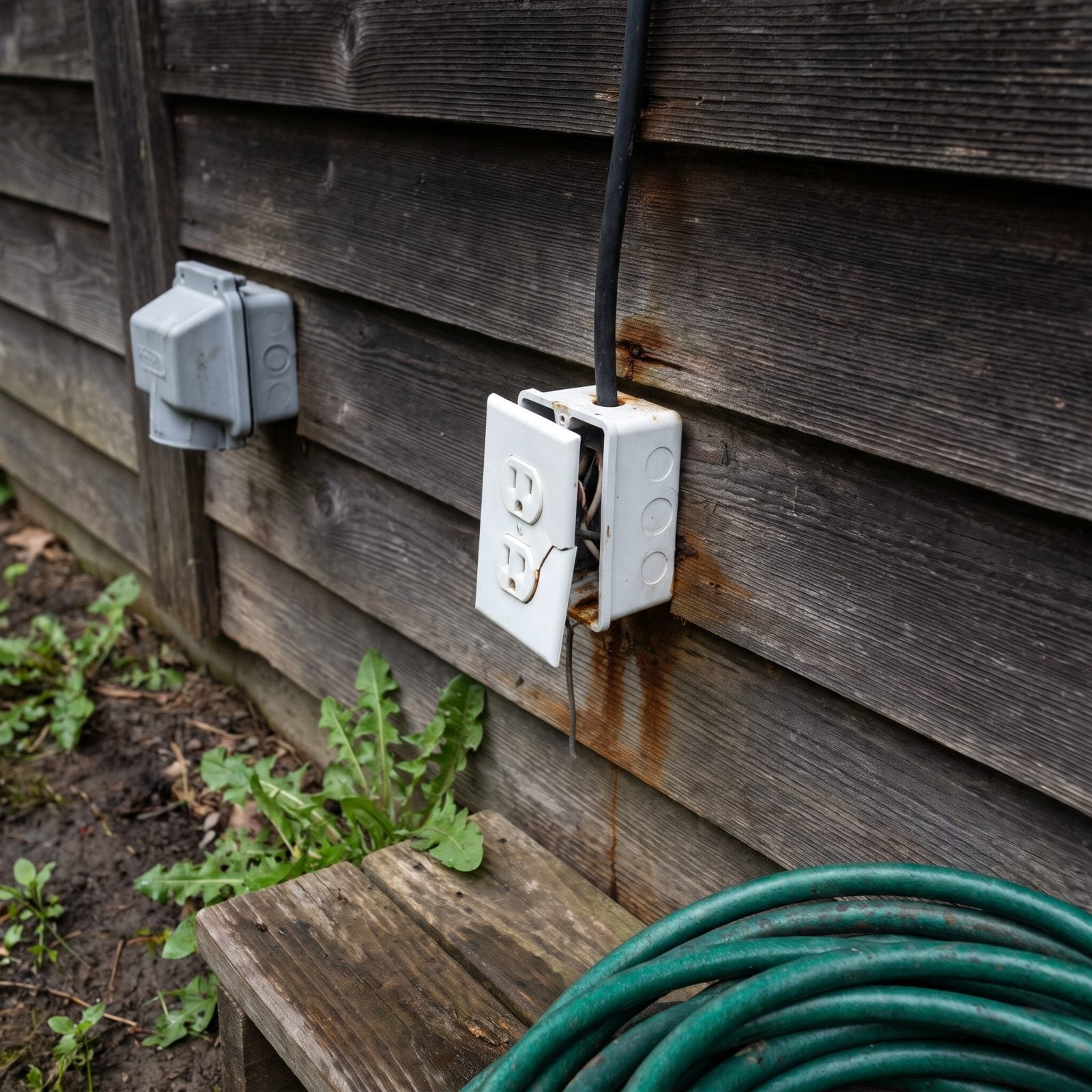
A plain indoor junction box bolted to an exterior wall is a bucket that fills with rain. A non-weatherproof enclosure outdoors looks fine for a season, then fails the first time it storms sideways.
Outdoor boxes need gaskets, weatherproof covers, and fittings rated to keep water out, and anything energized while wet needs an in-use bubble cover. Electricians swap these constantly, because that cracked beige box on a damp wall is shock and corrosion both. Match the enclosure to the weather it actually faces. Alright, go check your outdoor outlets.
19. A Frayed or Sun-Damaged Service-Entrance Cable
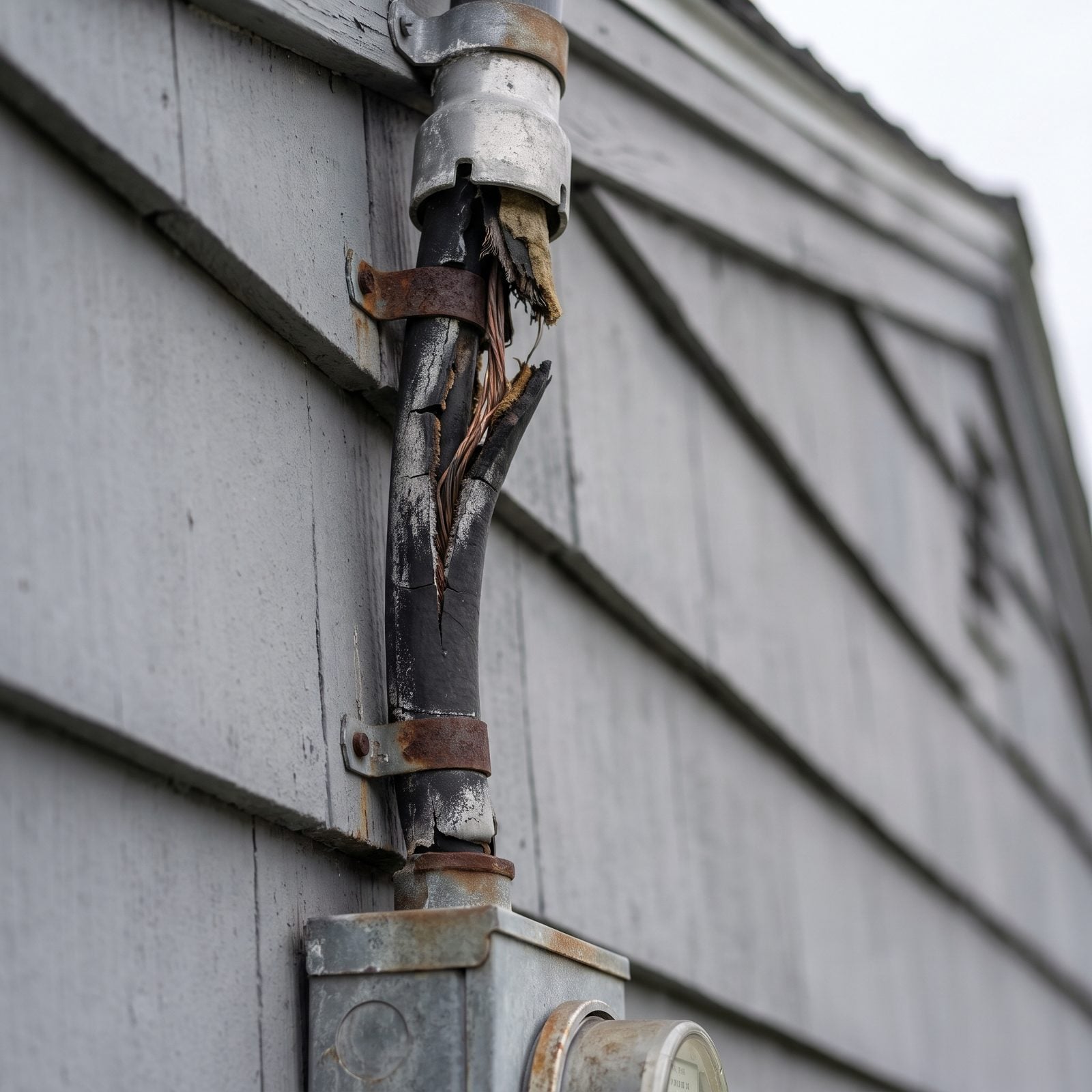
The cable feeding your whole house lives outside, baking in UV all day, and nobody looks at it until it’s already splitting.
When the outer jacket goes chalky and cracks at the weatherhead, that’s not weathering you ignore. Those conductors carry your full service load, and exposed insulation near a roofline means a wet, energized surface waiting for the wrong contact. Electricians flag it on sight because those conductors stay energized even with your main breaker off. Which means you don’t touch it. You call it in.
18. A Generator Backfed With a Double-Male Cord Instead of a Transfer Switch
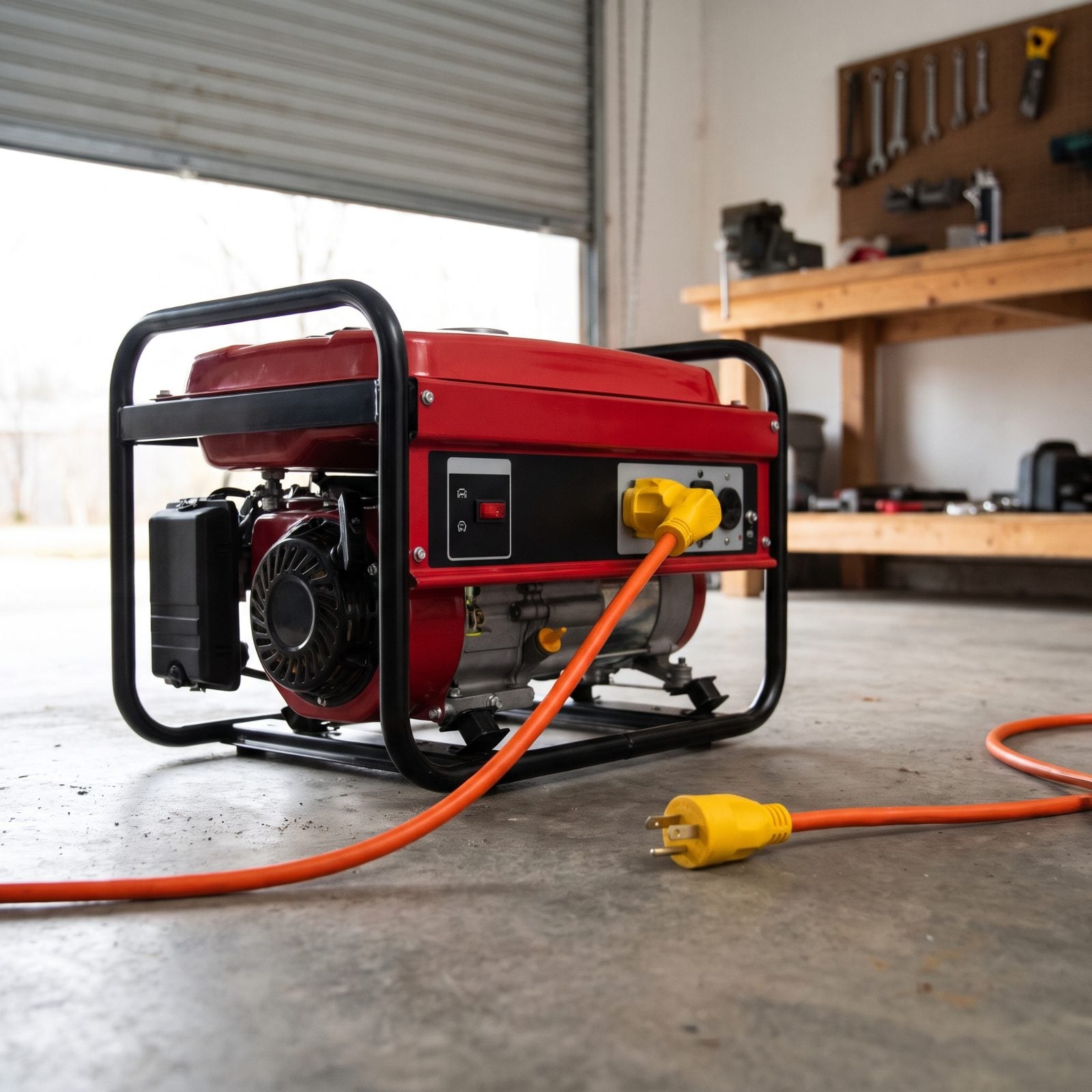
This is the one that kills firefighters and lineworkers. Backfeeding a generator through a dryer outlet with a cord that has male plugs on both ends energizes your home’s wiring backward, and that power pushes out onto the utility lines everyone assumes are dead.
It also energizes every exposed prong on that cord. One slip and you’re the circuit.
The right answer is a proper transfer switch or an interlock kit, installed to code. Not a cord somebody wired in a garage.
On why a double-male cord endangers utility crews, one electrical contractor writes “A backfeeding generator can push stepped-up voltage onto wires a lineworker is repairing a few streets away, out of sight of the person who plugged it in.”
17. A Loose, Heat-Damaged NEMA 14-50 EV-Charging Receptacle
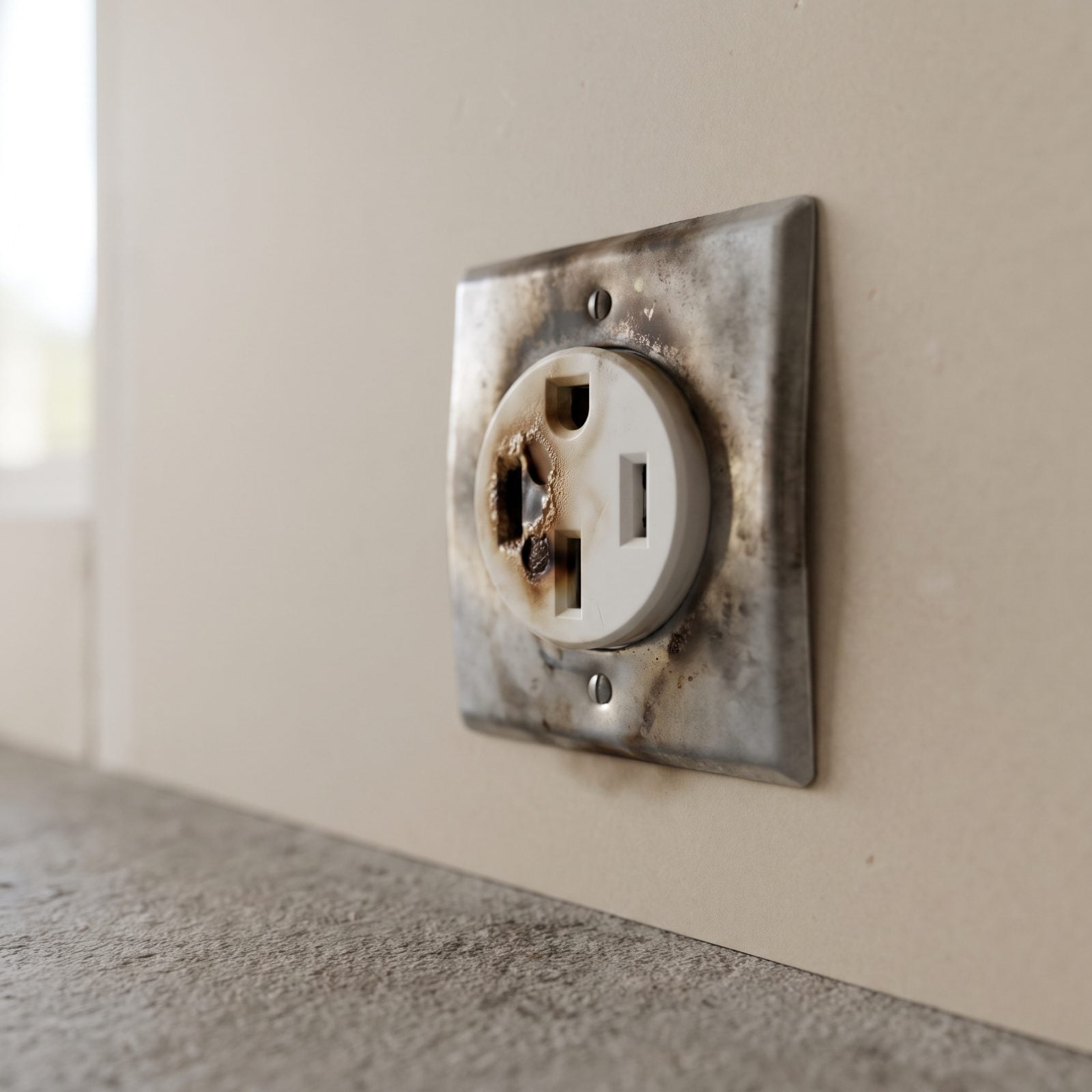
A charred hole burned through the left side of the receptacle face, ringed by browned plastic, tells you everything. That’s a connection that’s been running hot.
Cheap NEMA 14-50 receptacles are a known weak point for EV charging because they weren’t built for a 40-amp load held for eight hours straight. The spade terminals loosen, resistance climbs, heat builds, and the face starts to discolor. By the time you spot the scorching, it’s been happening for a while.
16. A Range or Dryer Connected Through an Extension Cord
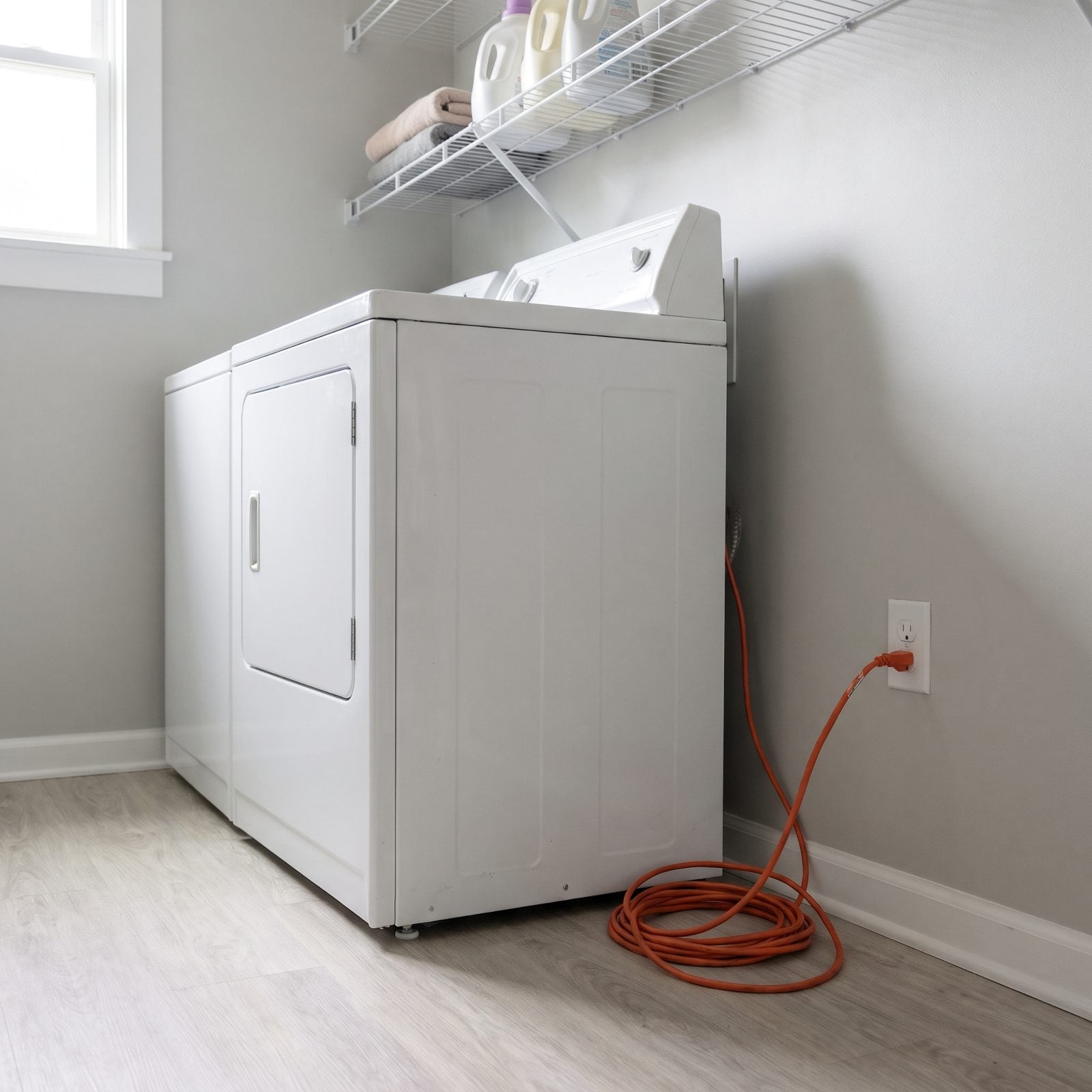
Extension cords are rated for lamps and laptops. A range or dryer wants a dedicated 30 or 50-amp circuit running right to the wall.
Run that load through a household cord and the cord becomes a heating element you never meant to install. It warms where it coils, melts where it kinks, and does it quietly under a laundry pile. The fix is never a bigger cord. It’s a properly placed outlet so the appliance plugs straight into the wall.
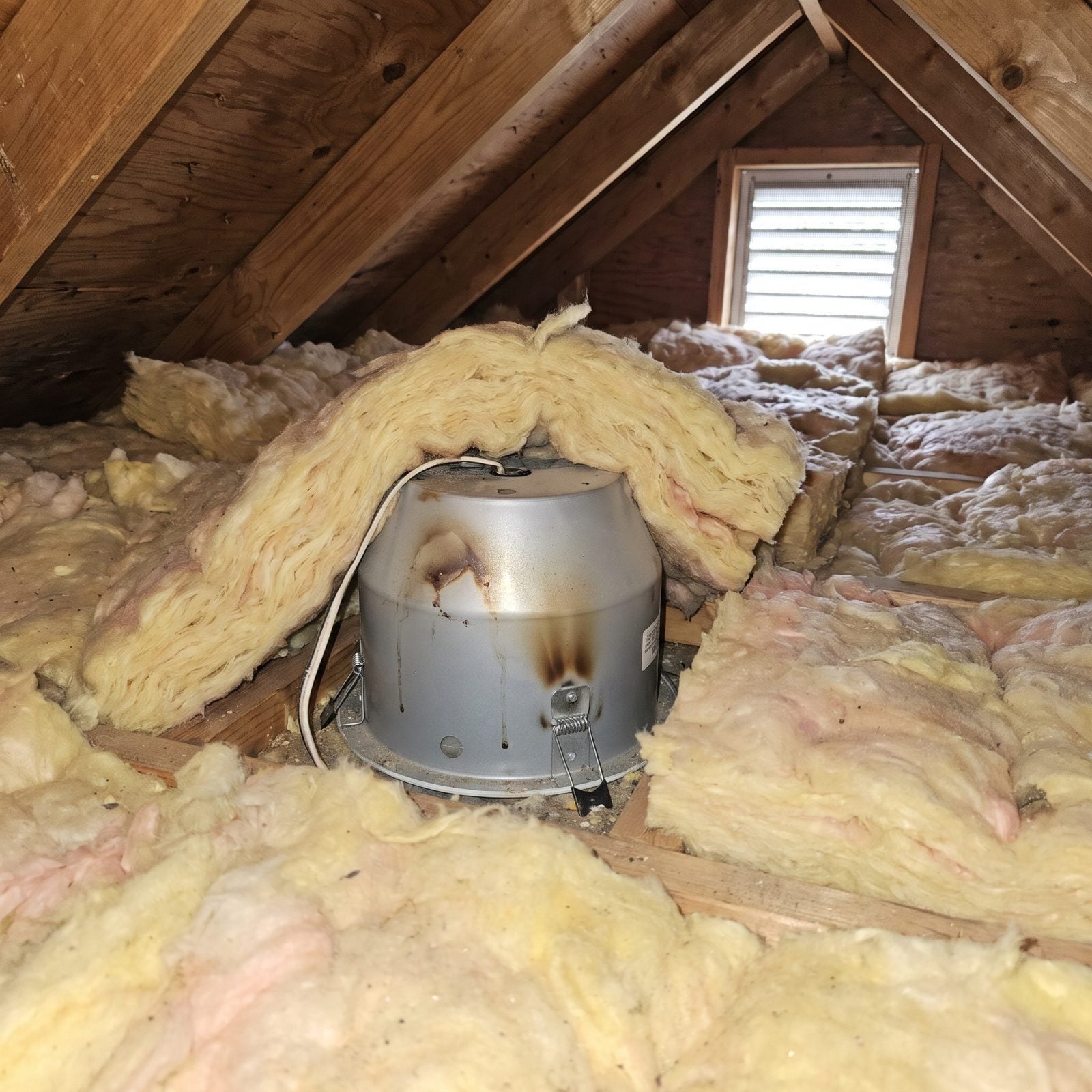
15. Recessed Lights Buried in Insulation Without an IC Rating
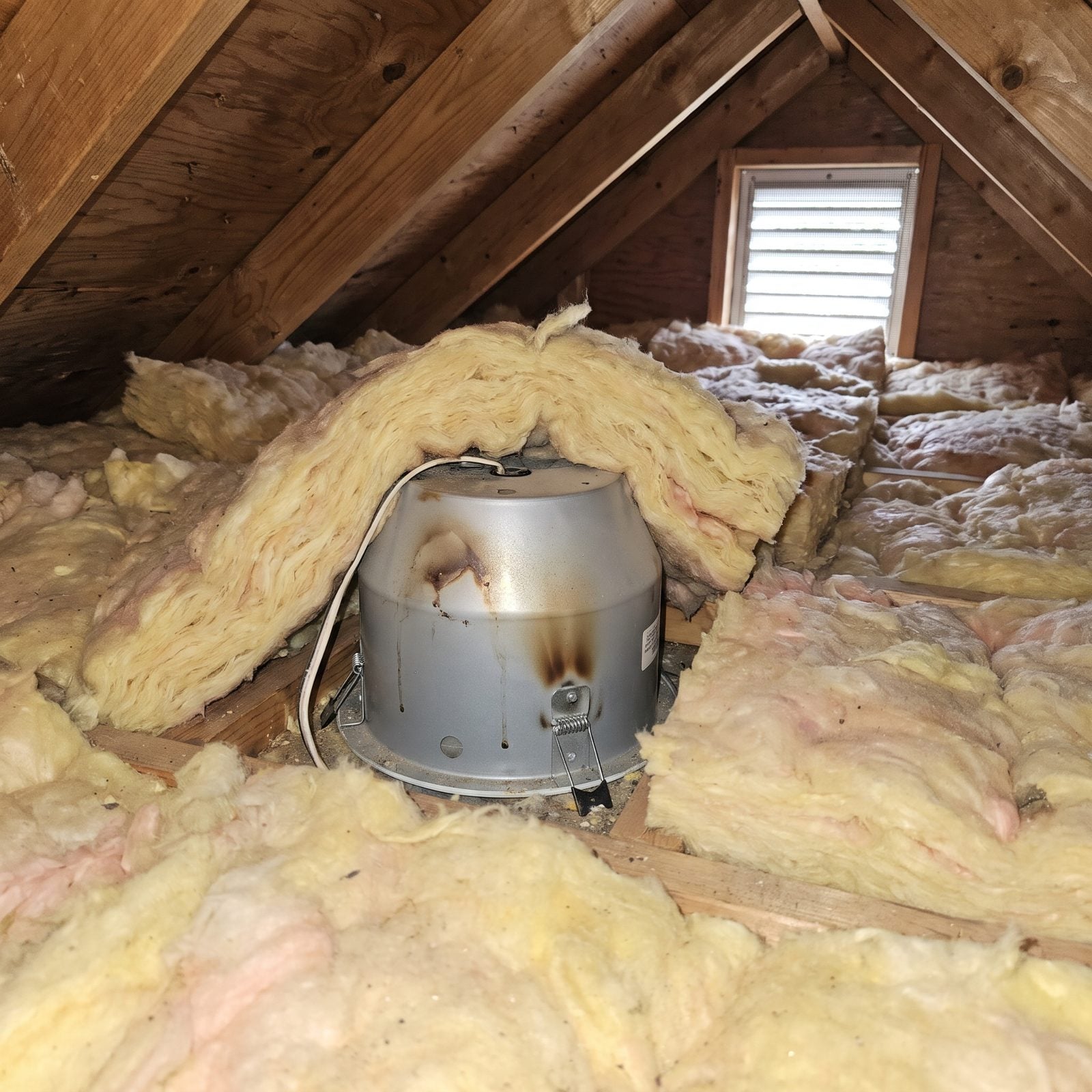
Up in the attic, where nobody looks, is where this one hides.
A standard recessed can throws off real heat, and it’s built to shed that heat into open air around the housing. Pack insulation against a non-IC can and the heat has nowhere to go. The fixture cooks, the wiring insulation hardens and cracks, and over time you’ve got a glowing problem directly under a pile of fuel.
IC-rated housings are designed for insulation contact. If yours aren’t, they need an air gap or a swap.
14. Light Fixtures Fitted With Bulbs Above Their Wattage Limit
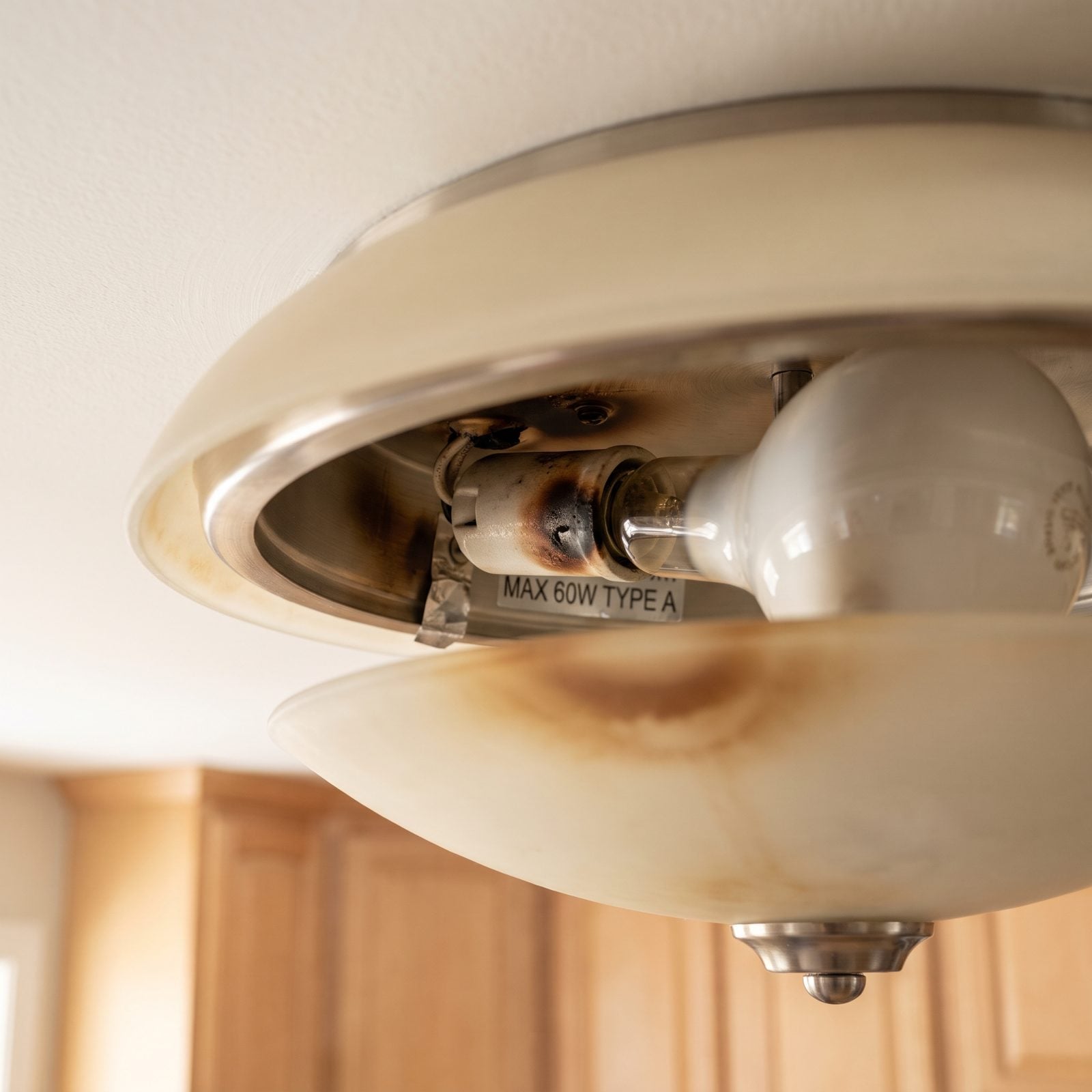
Every fixture has a maximum wattage printed right on it. People treat it like a suggestion.
Drop a 100-watt incandescent into a socket rated for 60, especially in an enclosed dome, and the trapped heat bakes the socket, browns the wiring, and dries out the insulation until it crumbles. Those scorch marks inside the fixture are the receipt.
LEDs mostly dodge this because they run cool at the same brightness. Still running hot bulbs? Respect the number on the label.
13. A Halogen Torchiere Lamp Beside Curtains or Upholstery

These lamps run blistering hot at the bowl. Hot enough to ignite fabric that drifts into them.
The halogen torchiere had a real moment, then a real reputation, because the exposed bulb at the top reaches temperatures that set drapes and lampshades going when they brush the fixture. Park one under a curtain in a breezy room and you’ve built yourself a slow-motion ignition source.
Newer versions ship with guards and lower-temp bulbs. If yours is old and open at the top, retire it, swap to an LED torchiere that runs cool, and lose the worry entirely.
12. An Unprotected Bare Bulb Beside Closet Storage

That bare bulb sitting an inch from a stack of sweaters is the quiet one nobody thinks about. A standard incandescent runs hot enough to scorch cardboard pressed against it, and closet shelves get packed until something touches the glass.
Code moved away from open lamps in closets years ago for exactly this reason. Swap the keyless holder for a fully enclosed fixture, or go LED, which runs cool and settles the whole argument.
11. A Pool Light Without Proper GFCI Protection and Bonding
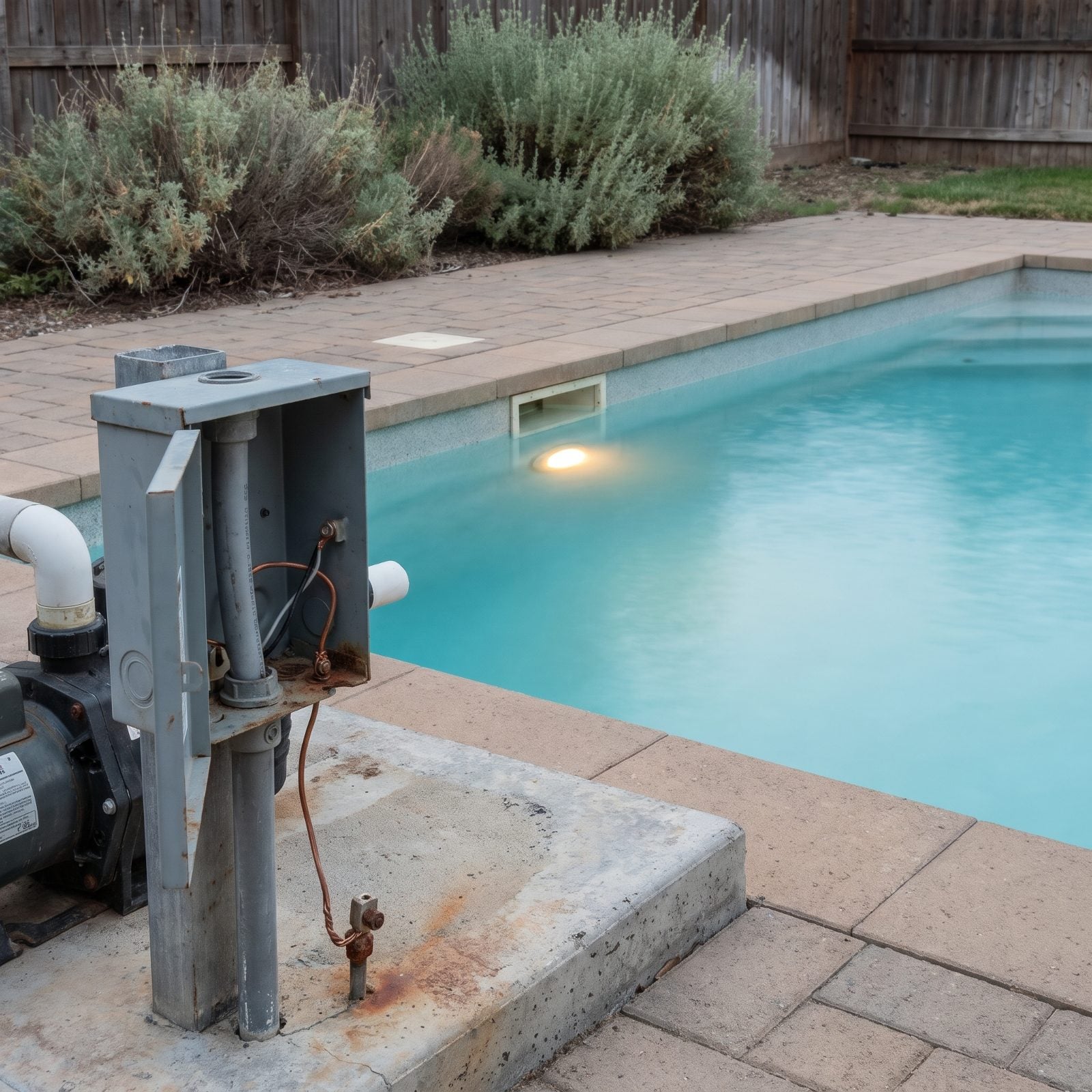
Water plus electricity is the one combination where the margin for a cut corner is basically zero.
A pool light needs GFCI protection, and the whole structure needs equipotential bonding — tying the metal parts together so there’s no voltage difference for a swimmer to become part of. Skip the bonding and a tingling-in-the-water complaint turns into something far worse. This is not a weekend project. Call a licensed electrician who does pools, every single time.
10. Indoor Extension Cords Used Outside

Indoor cords and outdoor cords look almost identical at the store. That’s the trap.
Outdoor-rated cords carry thicker jacketing built to resist moisture and UV. Grab a flimsy indoor one, drag it across dewy grass into an outlet with no GFCI, and you’ve removed every layer of protection at once. The giveaway is the rating stamped on the jacket: look for a “W” and a heavier gauge.
9. Damaged Power Cords Patched With Household Tape
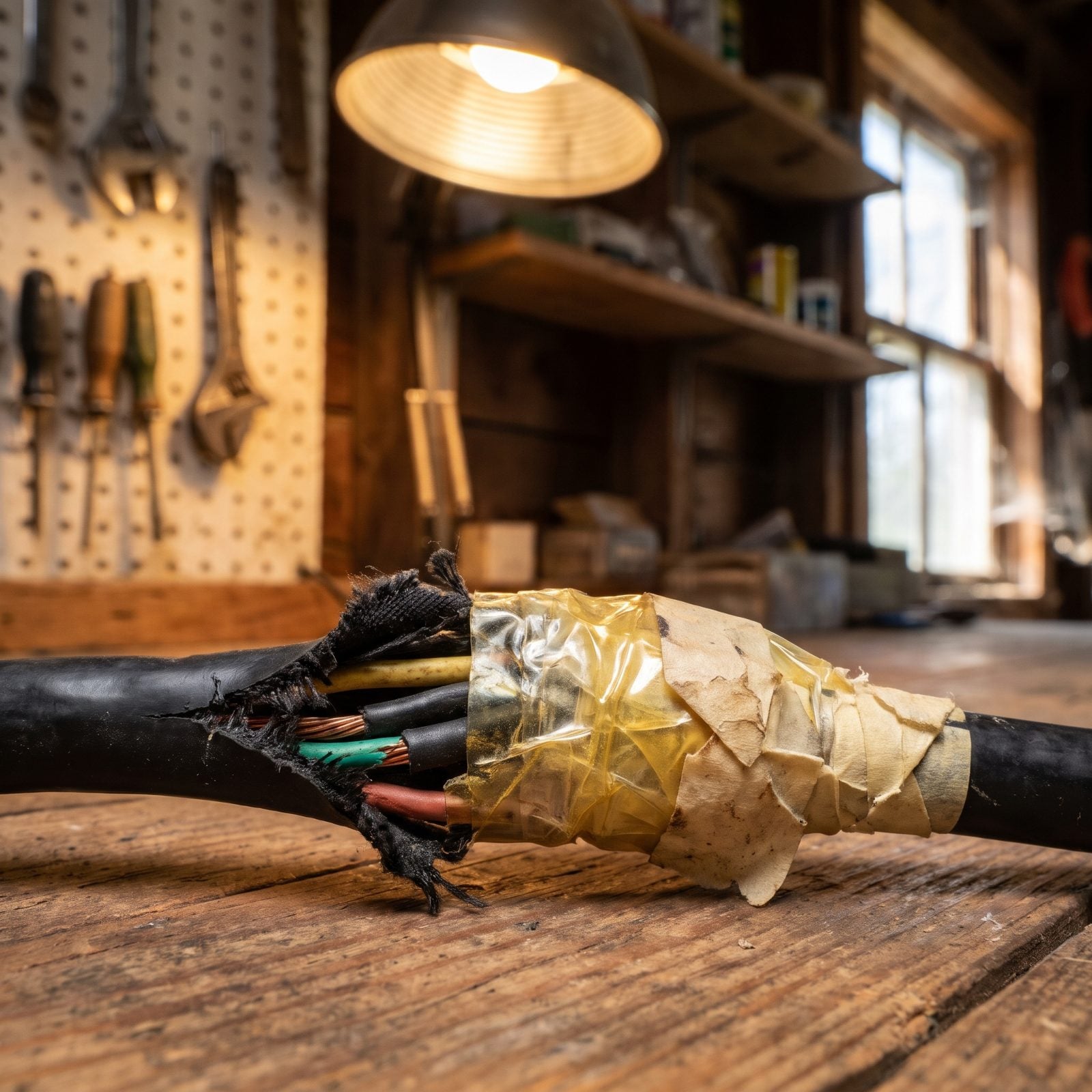
Tape fixes nothing on a cord. It just hides the problem long enough to forget about it.
Household tape and even electrical tape won’t restore insulation. The copper underneath still carries current, closer than ever to whatever sits nearby, and it generates heat at the wound. A cut cord is a replaced cord, or a new plug end if you know what you’re doing. There’s no honest middle option here, and I wish more people believed me on that.
8. Electrical Cords Hidden Under Rugs

Hiding a cord under the rug tidies the room and traps the heat at the same time.
Foot traffic grinds the insulation against the floor until it wears through, and the rug on top works like a blanket, holding the warmth right where you can’t see it building. Run cords along the baseboard with a proper cord channel instead, where air can move and your eyes can check them.
7. Flexible Appliance Cord Run Through a Wall or Ceiling
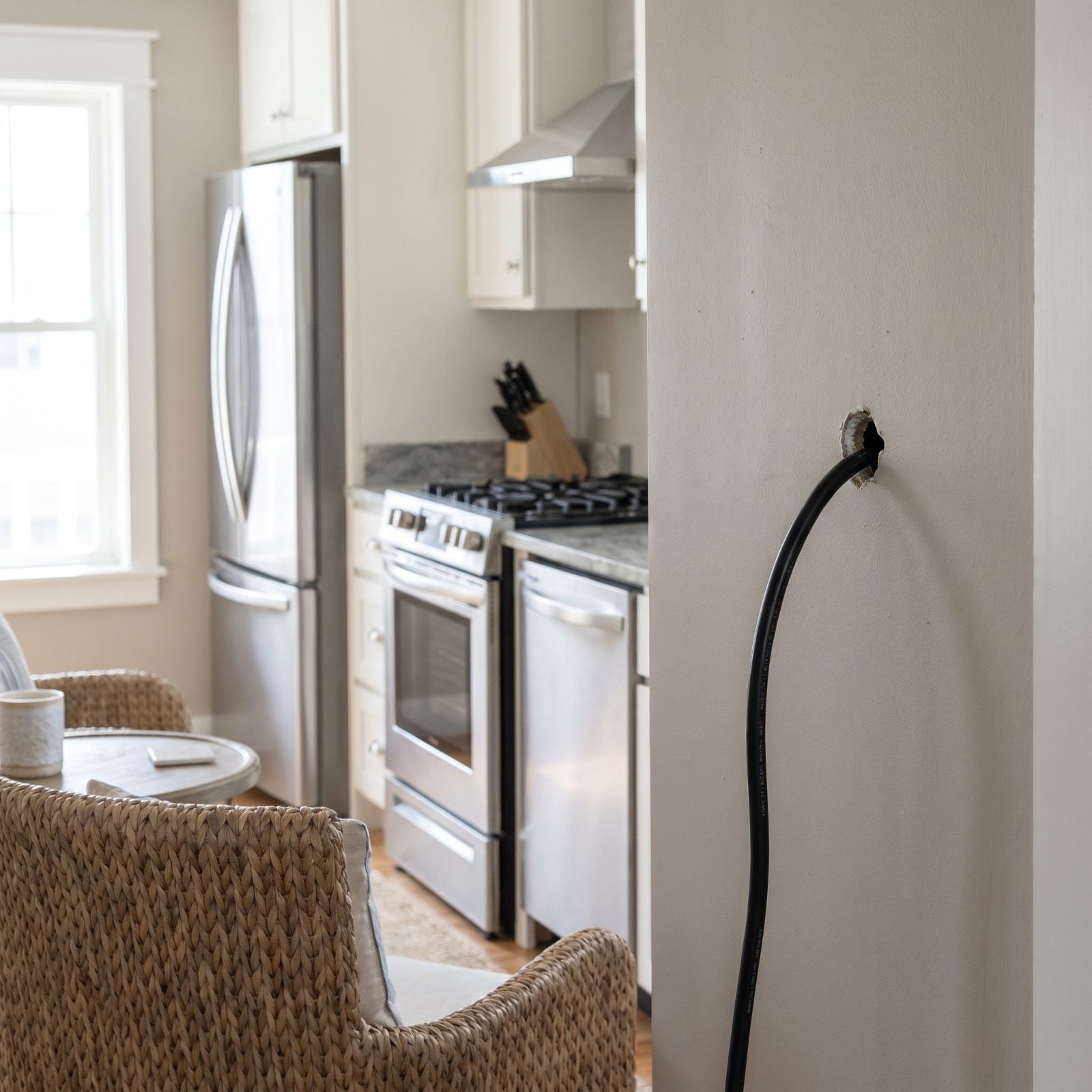
A flexible cord threaded through a wall looks neat. The hidden hole is the whole problem.
Appliance cords aren’t rated to live inside wall or ceiling cavities. They can’t shed heat in that tight space, the drilled edge chafes the jacket over time, and nothing protects the thing from a stray nail or screw later on. Anything running through structure needs proper cable and a junction box. This is the kind of shortcut that makes an inspector wince the moment they spot it.
6. Phone Chargers Left Operating on Beds or Sofas

You’ve fallen asleep with the phone charging on the mattress. Nearly everyone has.
Chargers and phones give off heat while they work, and that heat needs somewhere to go. Bury the brick in a duvet or wedge the phone under a pillow, and you’ve insulated a warm electronic right against bedding. Charge on the nightstand, on a hard surface, where air moves freely. Boring advice, sure — and the kind that actually matters at 2 a.m.
5. Uncertified Replacement Chargers for Lithium-Ion Batteries

The replacement charger cost a fraction of the real one. That gap isn’t a bargain. It’s the safety circuitry someone left out.
Certified chargers manage voltage and cut off when a lithium-ion pack is full. Cheap uncertified units can overcharge a cell, and overcharged lithium is how you end up with a fire that doesn’t wait for anyone to notice. Match the charger to the battery, buy it from the maker, and check for a recognized certification mark molded into the housing.
4. E-Bikes and E-Scooters Charging in the Only Way Out

Park the charging bike anywhere you like, except the one route out of the house. Electricians flag this constantly: a lithium pack on charge sitting across the front door turns a small fault into a trapped-family problem. If the cells vent, they vent fast and hot, and the thing burning is standing between you and fresh air.
Charge the bike in a garage, a shed, or at minimum a room with a second exit. And keep the charger on something hard — never a rug or a couch cushion, where the heat has nowhere to go.
3. The Swollen Battery Pack Nobody Wants to Touch
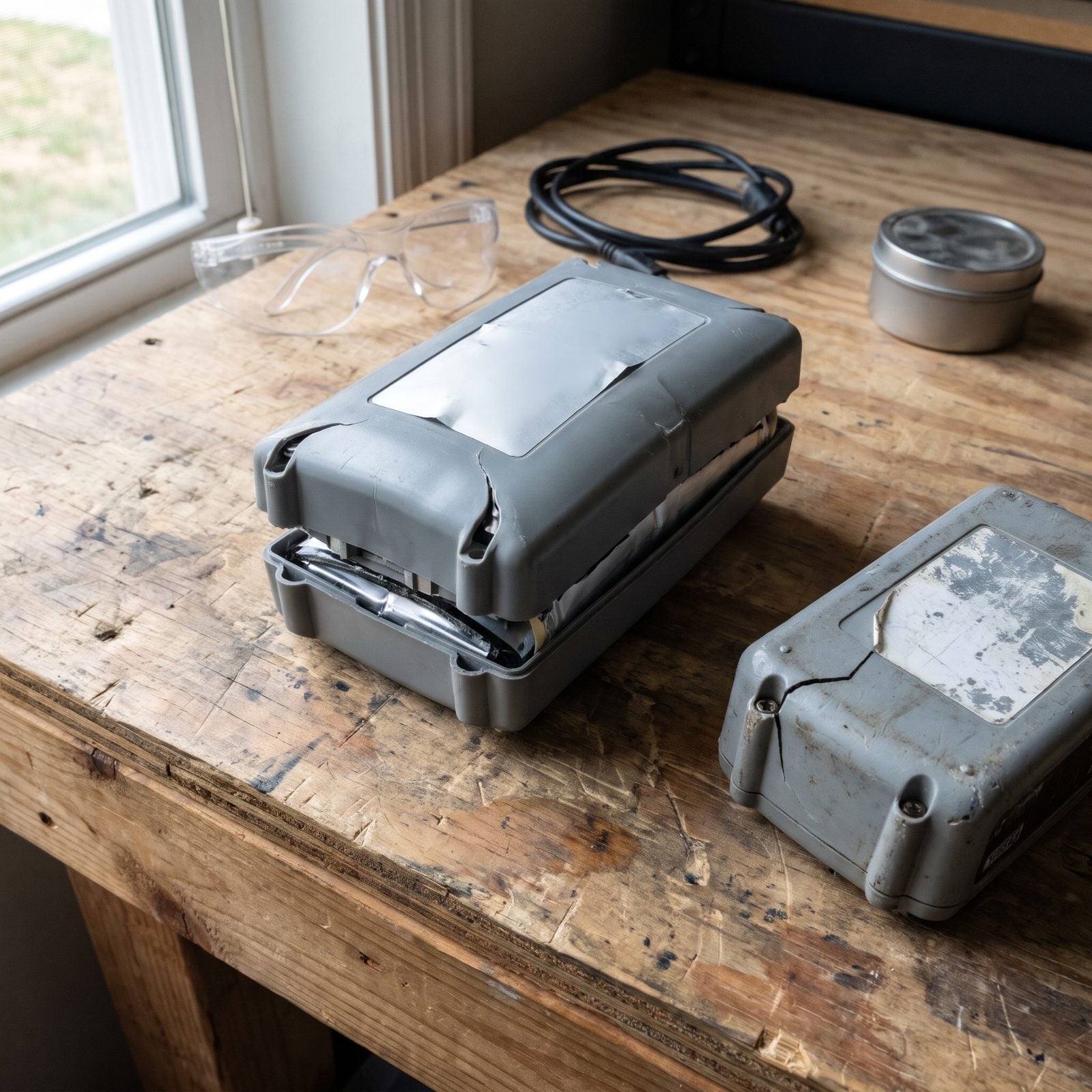
A swollen battery is a battery telling you it’s done. That puffed, pillow-shaped casing means gas is building inside the cells, and the chemistry behind it doesn’t run backward. Electricians treat these as handle-with-caution, not charge-one-more-time.
Same goes for any pack that took a hard drop or has a cracked housing — the damage you can’t see is the real hazard. Stop using it. Keep it clear of anything flammable, and recycle it at a proper battery drop-off instead of tossing it in household trash, where it can short and ignite.
2. An Electrical Panel Hiding in a Clothes Closet
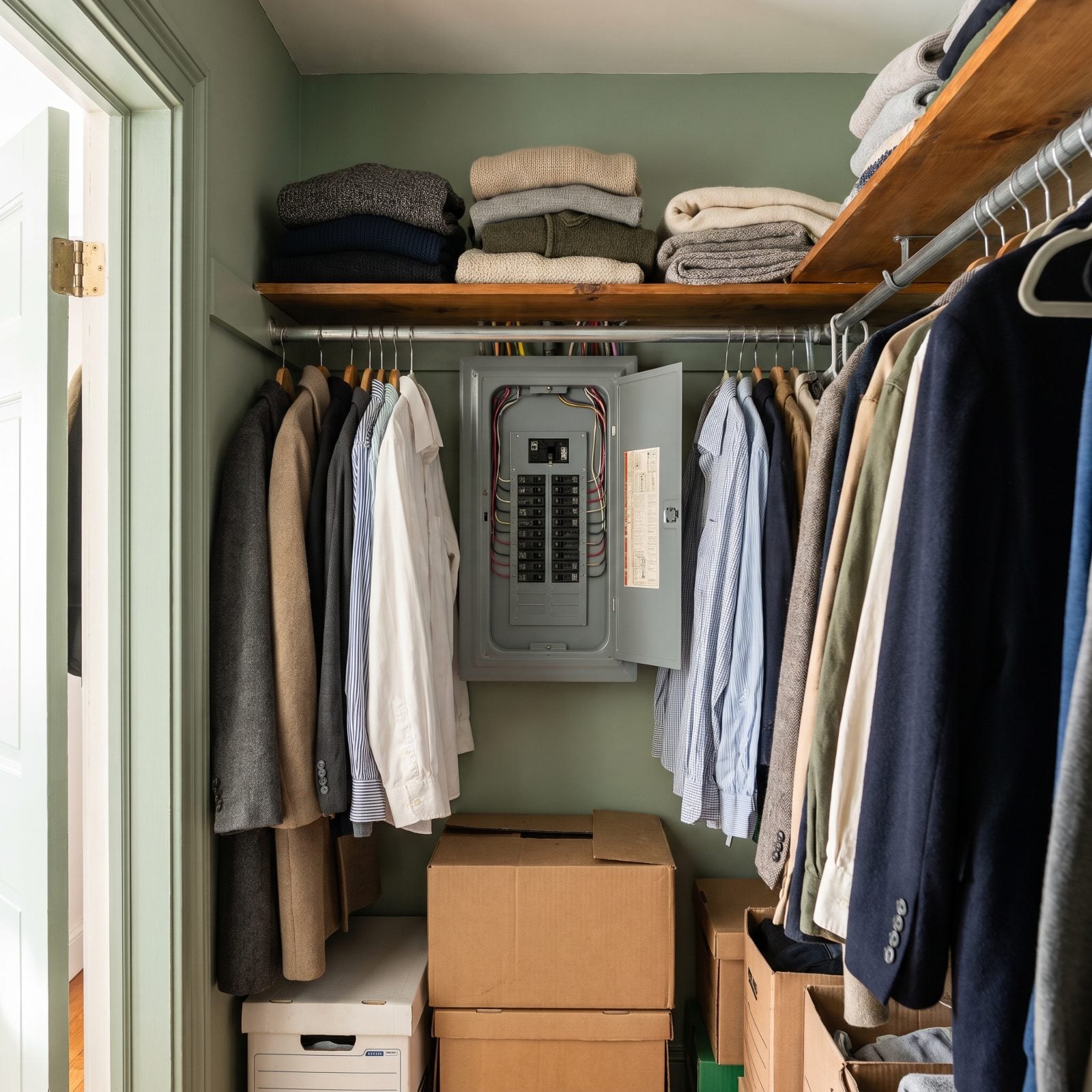
Opening your breaker panel should not involve shoving a coat sleeve out of the way. Panels in clothes closets are a code problem for a plain reason — you’re required to keep a working clearance in front of the panel, and a closet full of combustibles swallows it whole.
There’s a fire angle too. Breakers run warm, loose connections run hot, and a shelf of folded sweaters an inch away is kindling waiting for a reason. If your panel lives in a closet, an electrician can relocate it, or you empty the closet and keep it that way.
1. Romex Run Bare Where a Box or a Bike Will Hit It

That bare yellow cable stapled across open studs at shin height is an accident waiting for a dolly. Romex has a thin plastic sheath and nothing underneath but insulation and copper. In a finished wall, fine. In a garage or basement where boxes slide and bikes roll, it needs protection.
Electricians run exposed cable through conduit or behind nail plates in any strike zone, and they keep it up high or tucked into framing where a cart won’t catch it. A nicked sheath you never notice is how a slow short starts — the kind of fault that smolders behind drywall for a good while before anyone smells it. Cover the vulnerable runs.