
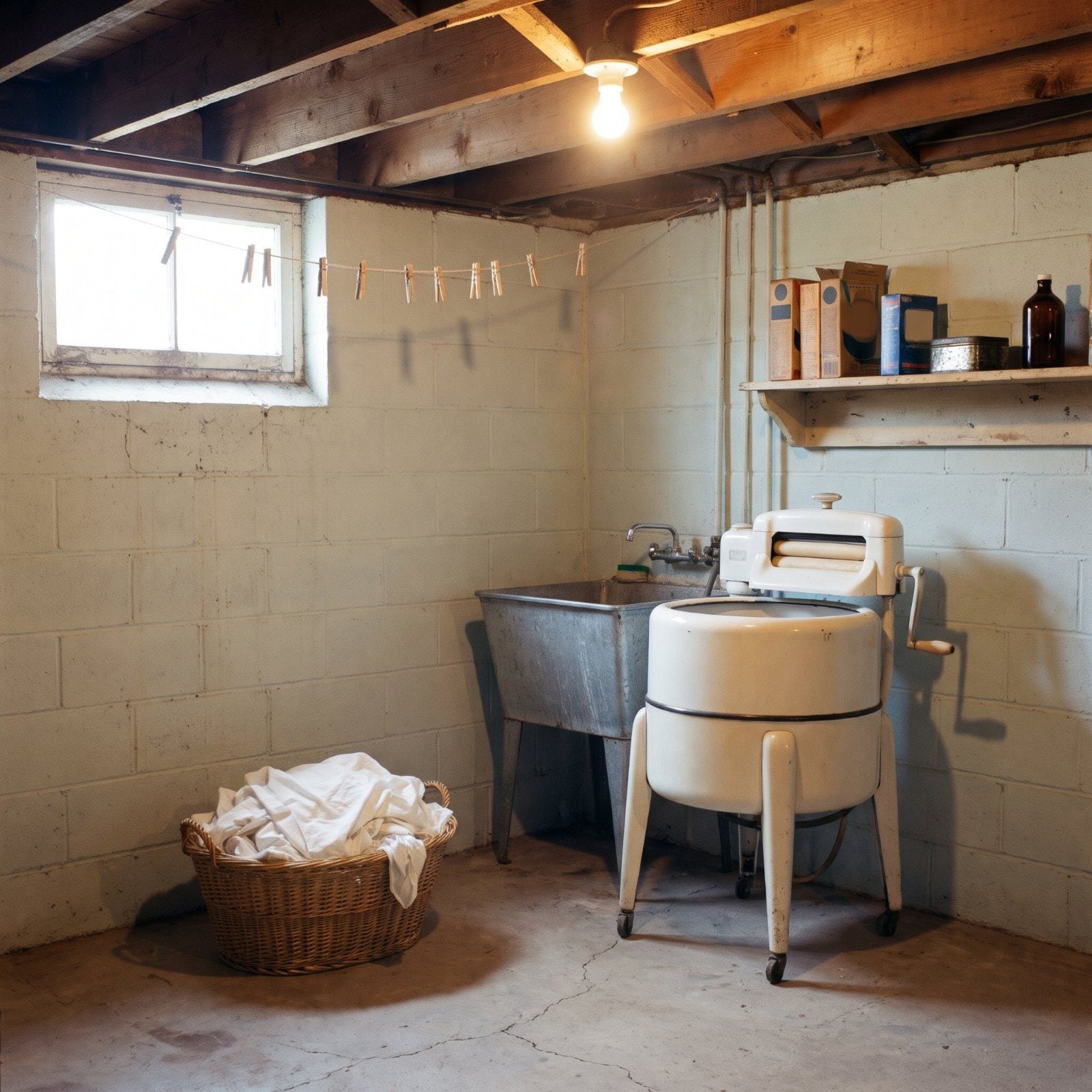
By ten in the morning the whole house reeked of bleach and hot metal. A wringer groaned somewhere, a drain hose slapped against the utility sink, and the water heater was already quietly throwing in the towel for the day. Laundry back then wasn’t a background chore you half-remembered between TV episodes — it was work, the kind that left your arms aching.
What follows are the realities of washday: the machines that bruised knuckles, the rituals built around a single hot-water tank, and the quiet skill it took to get a family’s clothes clean. Nobody gave you a medal for it, either.
In order to come up with the very specific design ideas, we create most designs with the assistance of state-of-the-art AI interior design software. Also, assume links that take you off the site are affiliate links such as links to Amazon. this means we may earn a commission if you buy something.
30. Heavily Soiled Whites Were Sometimes Boiled and Lifted With Tongs
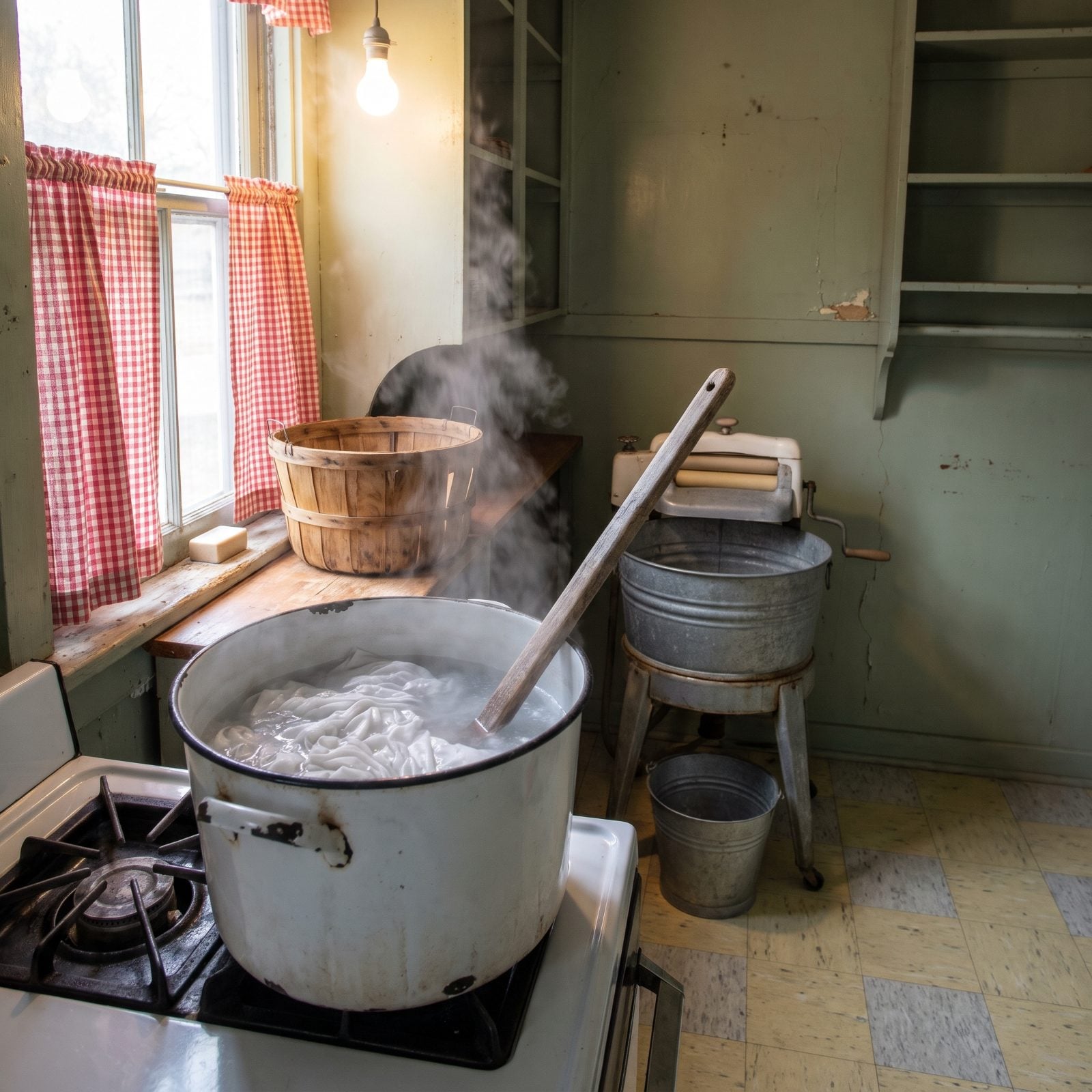
Boiling the wash sounds medieval, but into the 1960s plenty of households still did it for the dingiest whites: diapers, work shirts, kitchen rags that had seen better days. You’d set a big enamel pot on the stove, bring the water to a rolling heat, and fish the scalding cloth out with a long wooden stick or a pair of tongs.
Heat loosened grease and lifted stains in a way a lukewarm machine couldn’t match. Lift, drain, plunge into a cold rinse. The whole kitchen smelled of hot cotton and soap.
29. Washboards Still Came Out for Stains and Delicates
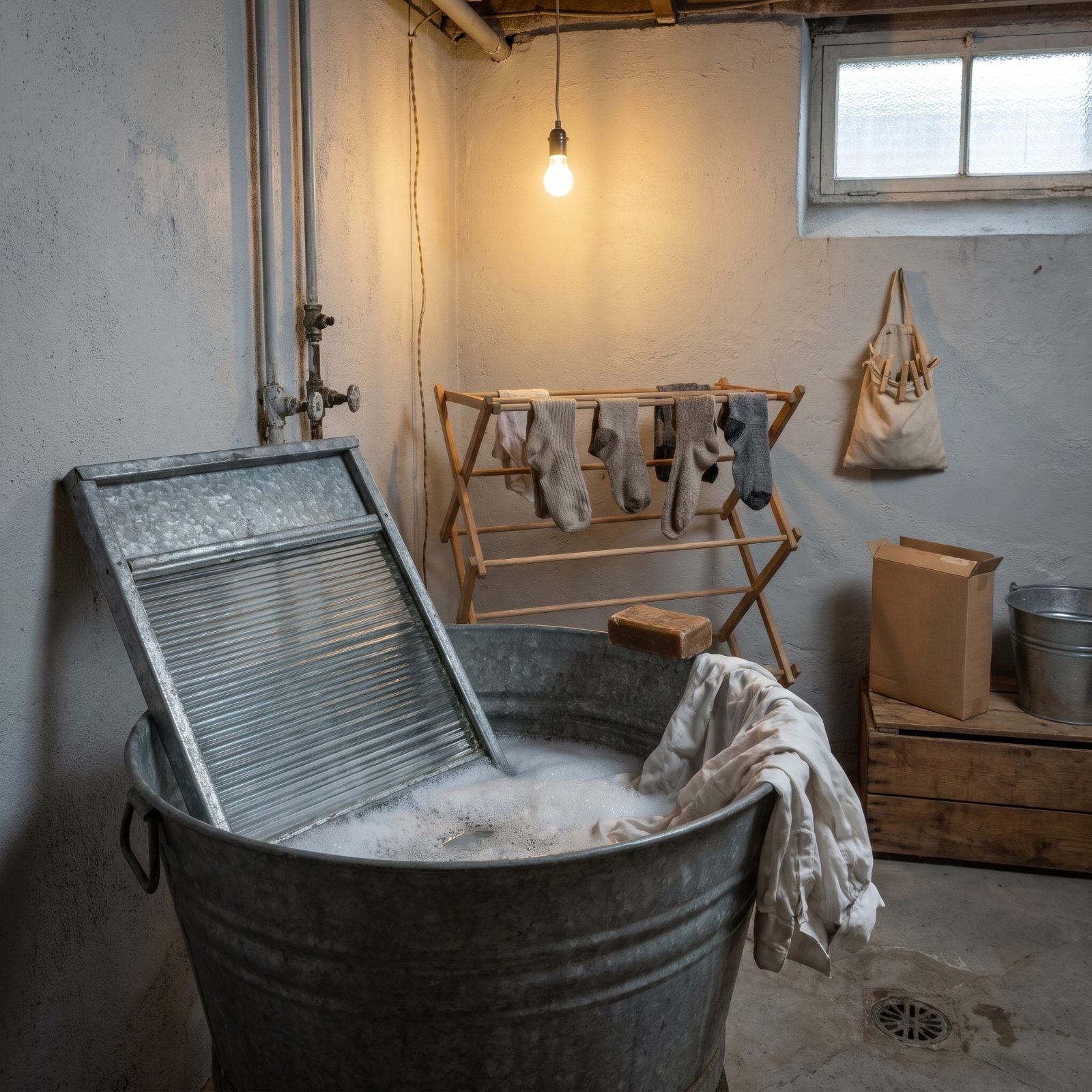
The automatic washer sat right there, and still the washboard came out. Why? Because a machine couldn’t attack a ground-in stain the way knuckles and a ribbed zinc surface could. Grass on a knee, blood on a cuff, grease on a work shirt — those got the board.
Delicates got it too. Nobody trusted a machine agitator with good stockings or a hand-knit sweater, so you worked them gently against the glass or zinc ridges in cool sudsy water, then pressed the water out instead of wringing.
Want that same honest, hard-working feeling in a modern room? A rustic laundry room with deep sinks and open shelving taps right into it.
28. Large Detergent Boxes Sometimes Included Towels and Other Premiums
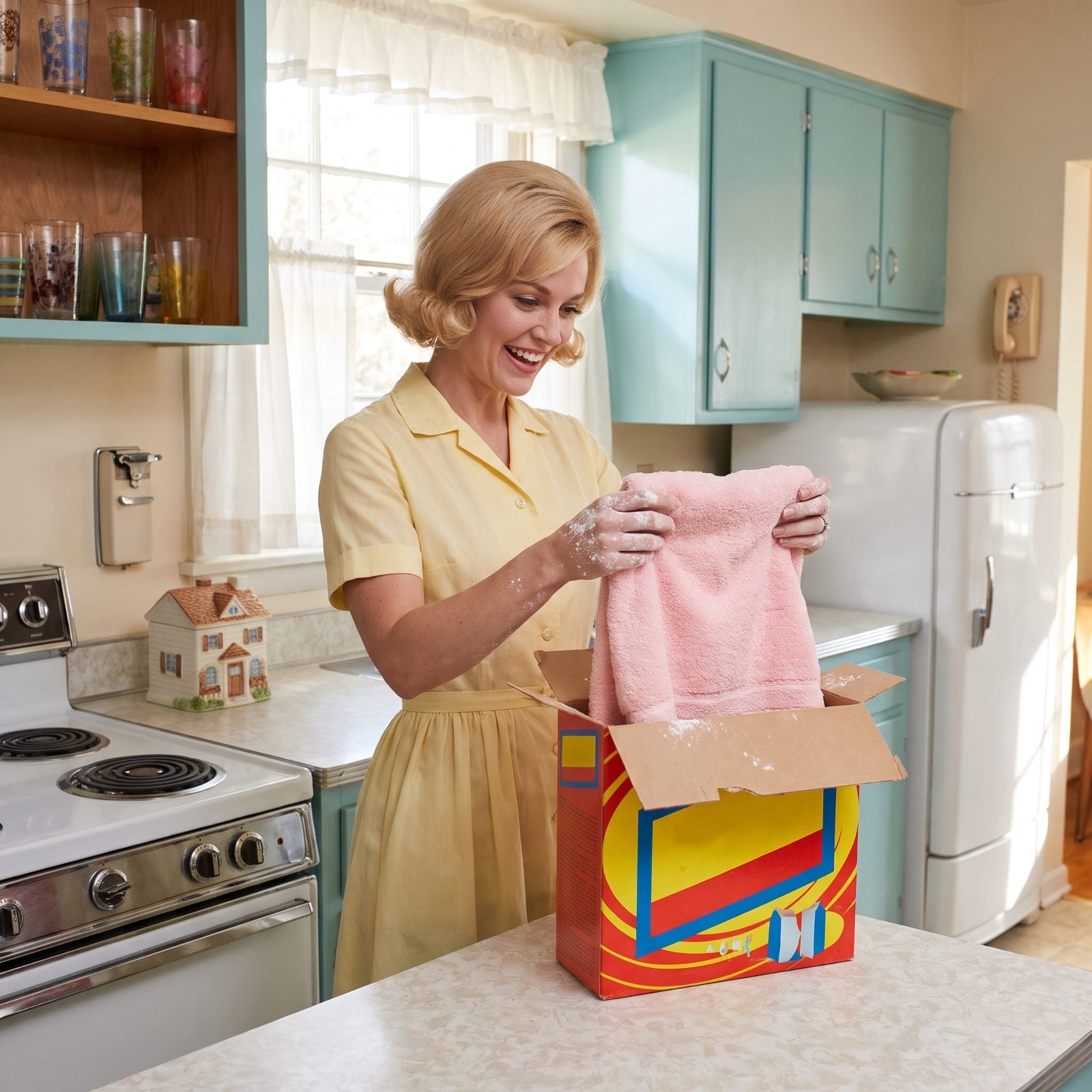
Opening a fresh box of detergent could feel like a lottery scratch. Manufacturers buried premiums right in the powder: a bath towel, a washcloth, a drinking glass, a dish towel printed in cheerful colors. You dug past the soap to find it, powder under your fingernails, half the fun being the surprise.
Families collected whole sets this way, one box at a time, waiting on the matching towel or that elusive fourth tumbler. Shameless marketing, and everybody loved it.
Looking back at towels, dishes and glassware packed into detergent boxes from the 1950s to the 1970s, an antiques auction blogger writes that “Several makers of laundry products put those premiums in their products to boost sales, which was a boon for both them and customers”
27. Mountains of Suds Were Advertised as Proof of Cleaning Power
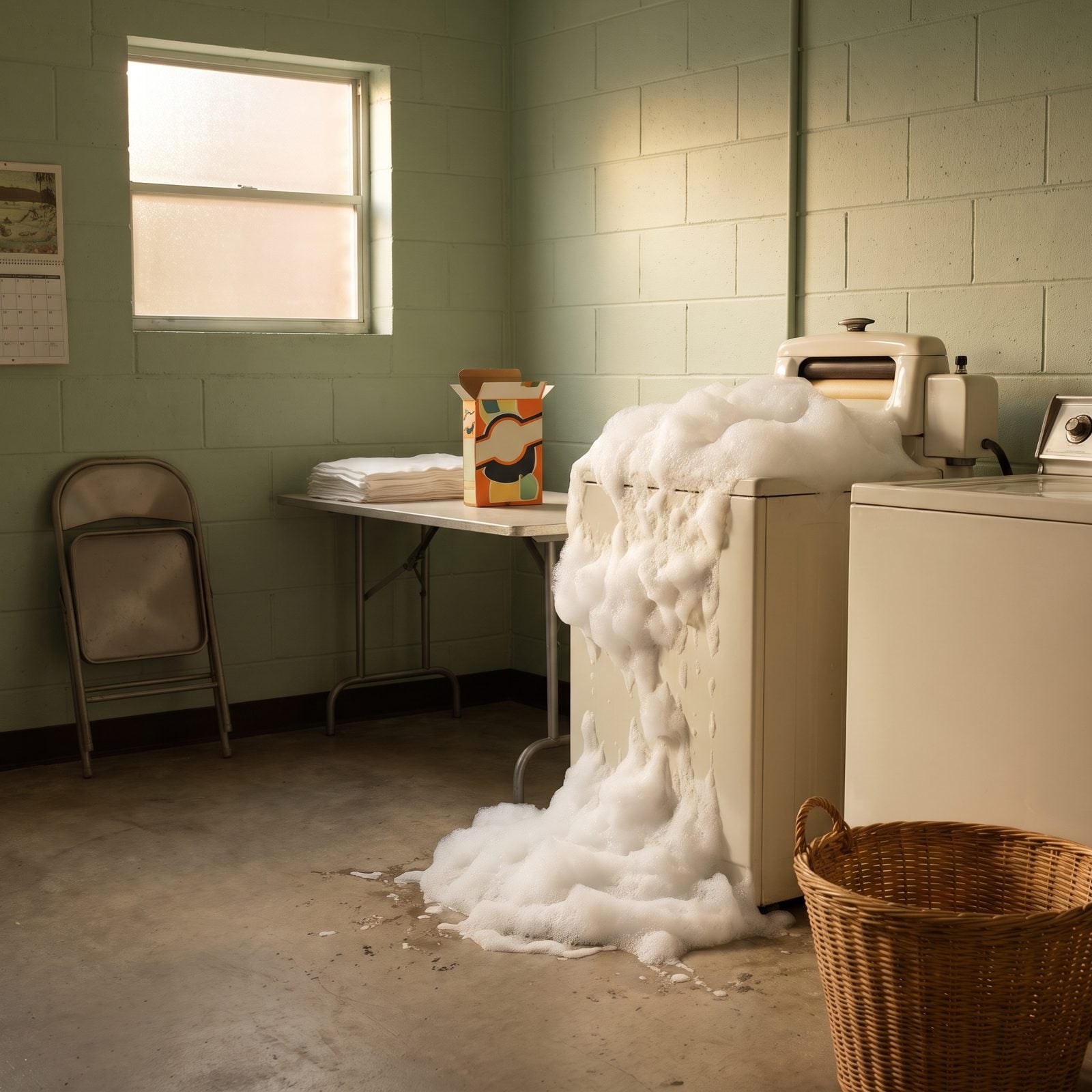
More suds meant cleaner clothes. That was the gospel, and the advertising hammered it home with billowing foam spilling over the tub and housewives beaming at a mountain of white bubbles. Suds became the visible proof you were getting your money’s worth.
Here’s the funny part: suds never cleaned anything. The surfactants doing the actual work don’t need foam to function, so the bubbles were pure theater — a confidence trick played with soap. But try telling that to anyone who grew up measuring detergent by how high the lather climbed.
Low-suds formulas for the new front-loaders would eventually break the spell, and a lot of people distrusted them for exactly that reason.
26. Borax and Washing Soda Were Laundry-Cupboard Staples
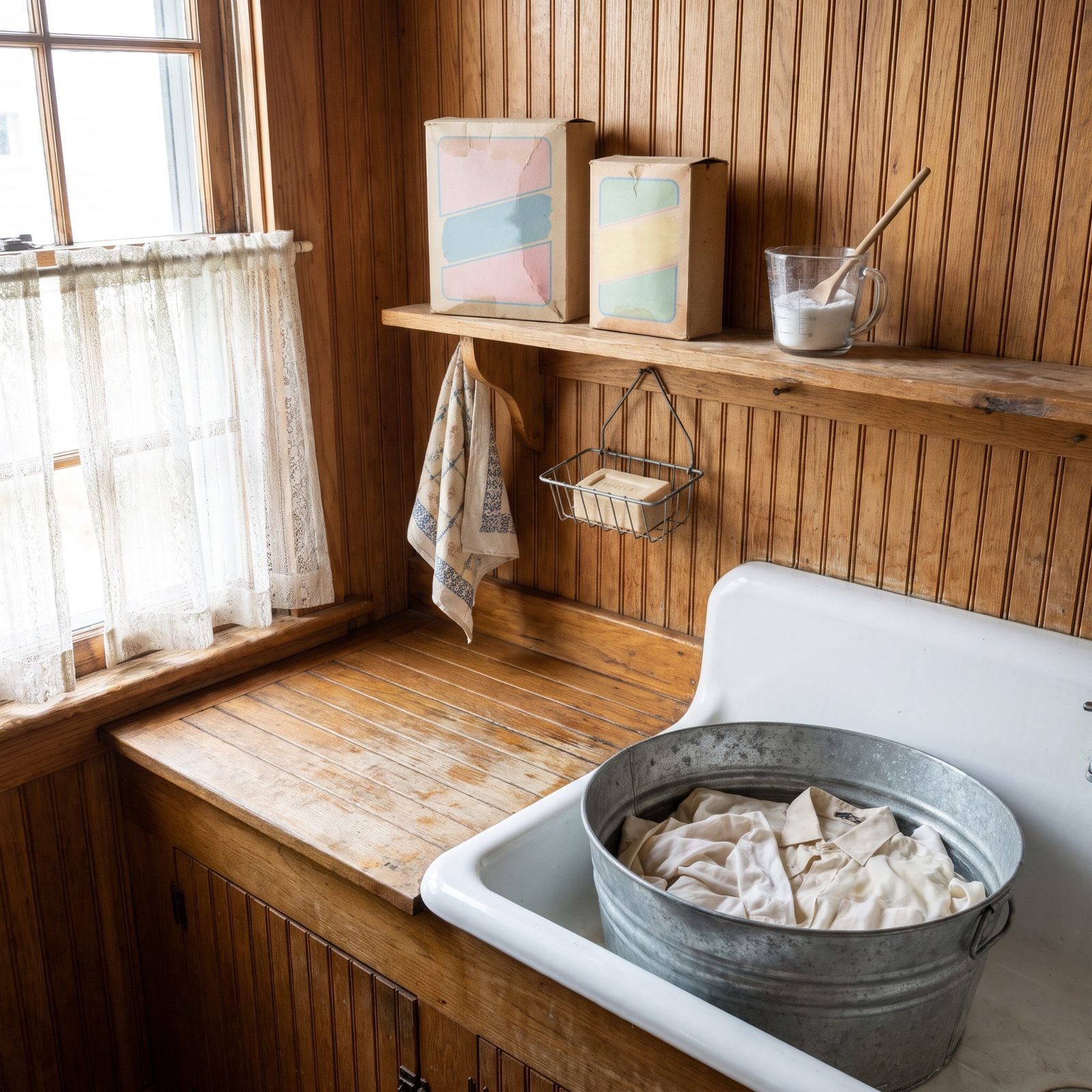
Every laundry cupboard kept them: a box of borax, a box of washing soda, standing like quiet workhorses behind the flashier detergent. They softened water, boosted cleaning, cut grease, and deodorized, all for pennies.
A spoonful of washing soda in the wash loosened grime that soap alone left behind, while borax brightened whites and freshened the whole load. These weren’t fancy and nobody advertised them on television, but a frugal household leaned on them constantly.
Honestly? They never left. You can still buy both in the same humble boxes, and they still do the same unglamorous work.
25. Laundry Bluing Helped Keep White Fabric From Looking Yellow
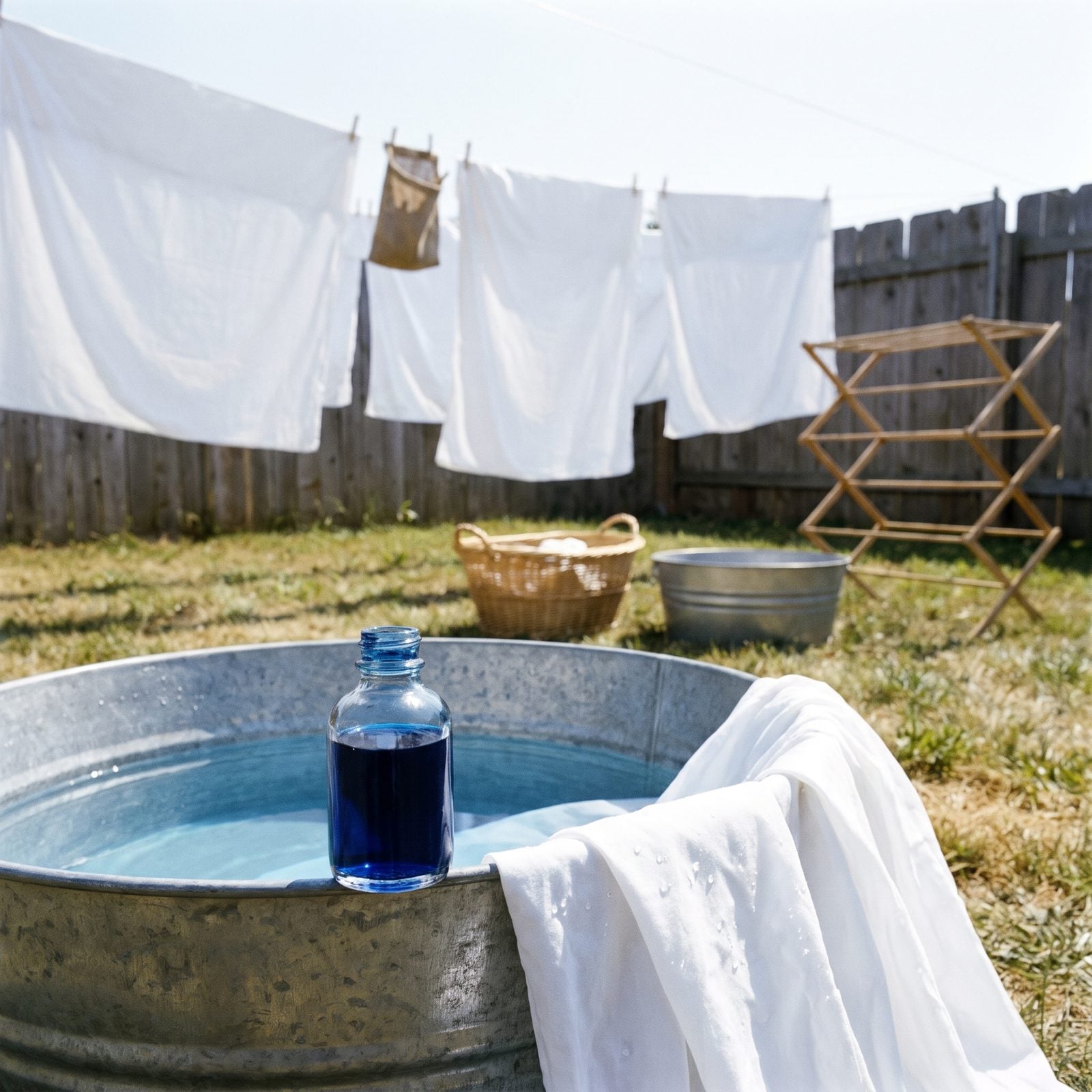
White fabric goes yellow with age and washing. The fix was counterintuitive: add a trace of blue. A few drops of bluing in the rinse tinted the fabric so faintly that your eye read it as brighter, whiter, fresher — optical trickery, old as laundry itself.
Too much and your sheets came out the color of a robin’s egg, a mistake nobody made twice. Done right, the whites on the line looked almost to glow against the summer grass.
Asked how to rescue yellowed whites, one laundry expert explains “So what you need is, believe it or not, is to put a blue tint back into them to make them appear white.”
24. Enzyme Presoaks Emerged for Stubborn Protein Stains
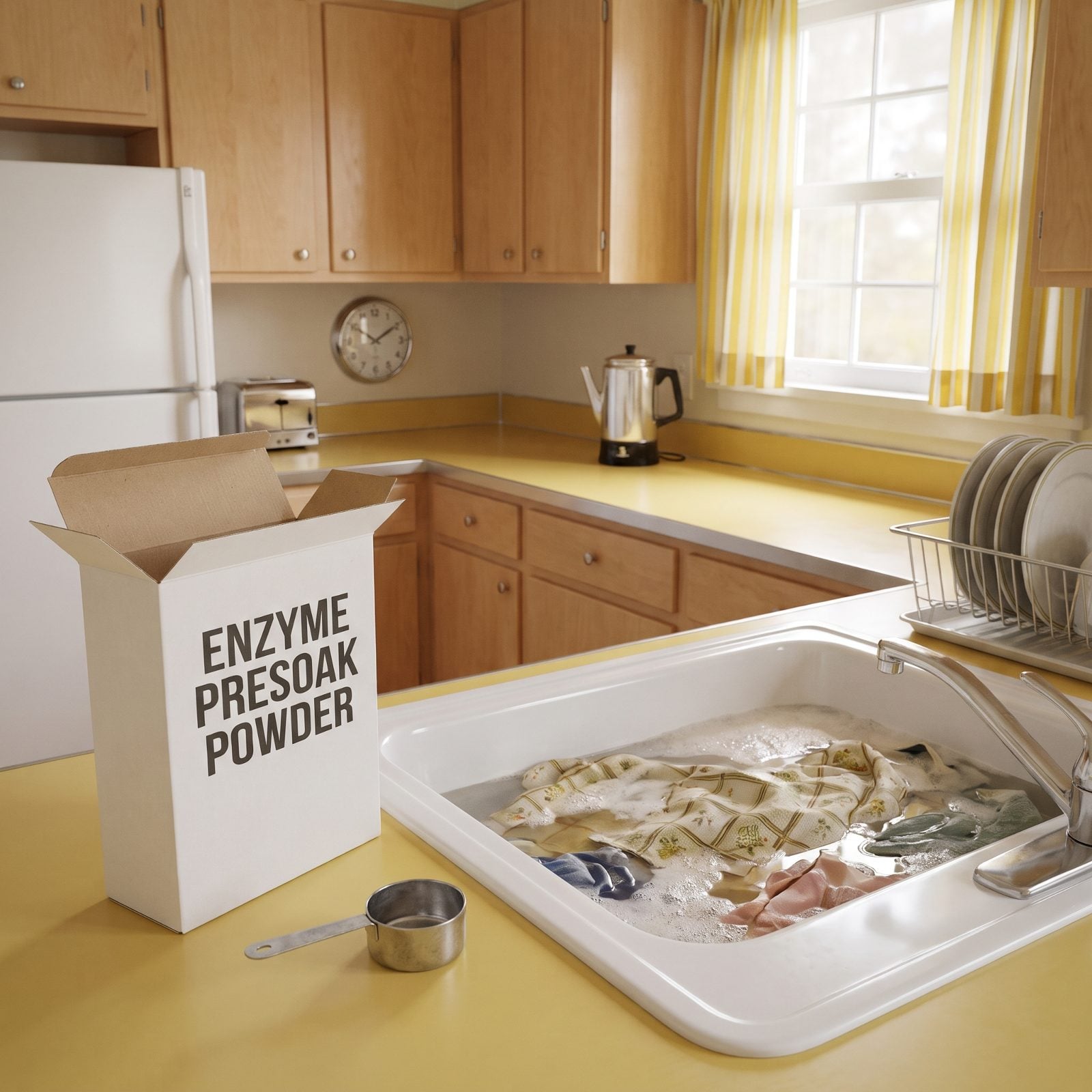
Something new arrived in the mid-decade: enzyme presoaks. These weren’t detergents exactly. They were powders you dissolved in warm water, and the enzymes went after protein stains that regular soap just smeared around — blood, egg, grass, milk, sweat at the collar.
You filled the sink, dumped in a scoop, submerged the stained thing, and walked away for an hour or overnight. Then it washed out like magic. For anyone doing laundry for a houseful of kids, this felt like the future had arrived in a cardboard box.
23. Laundry Soap Bars Were Rubbed Directly Onto Collars and Cuffs
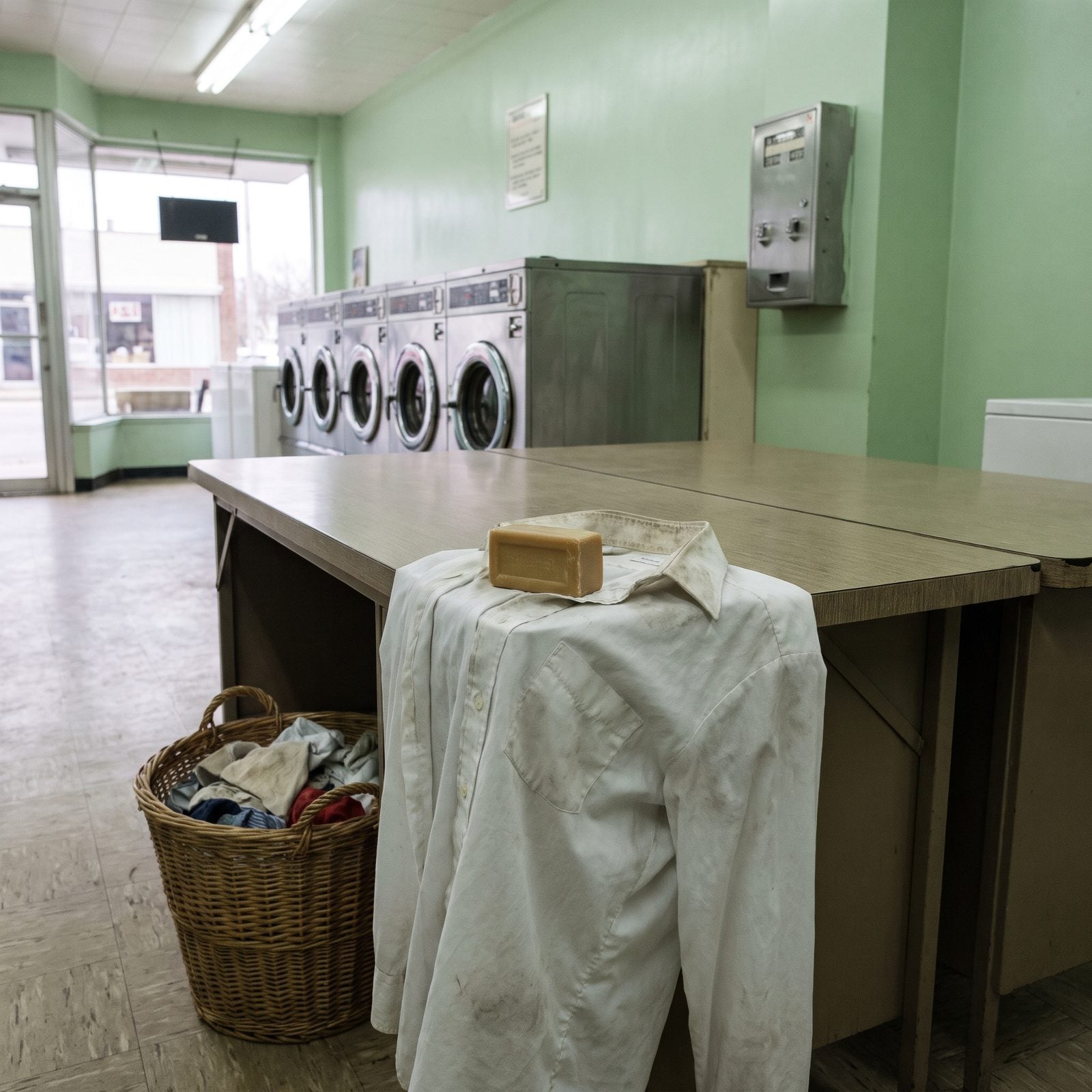
Before anyone bottled a stain stick, there was the bar. A cake of brown laundry soap — Fels-Naptha and its cousins — rubbed straight onto the worst spots: the greasy ring on a shirt collar, the grubby cuffs, a stubborn underarm mark.
You wet the bar, wet the stain, and scrubbed the soap into the fabric hard before the garment ever hit the wash. It cut through body oil and ring-around-the-collar in a way general detergent couldn’t touch.
That bar lasted forever and cost next to nothing. It’s one of those laundry-day habits that quietly worked better than half the products that replaced it, and plenty of people still swear by the exact same bar today.
22. Stain Guides Prescribed a Different Remedy for Every Spill
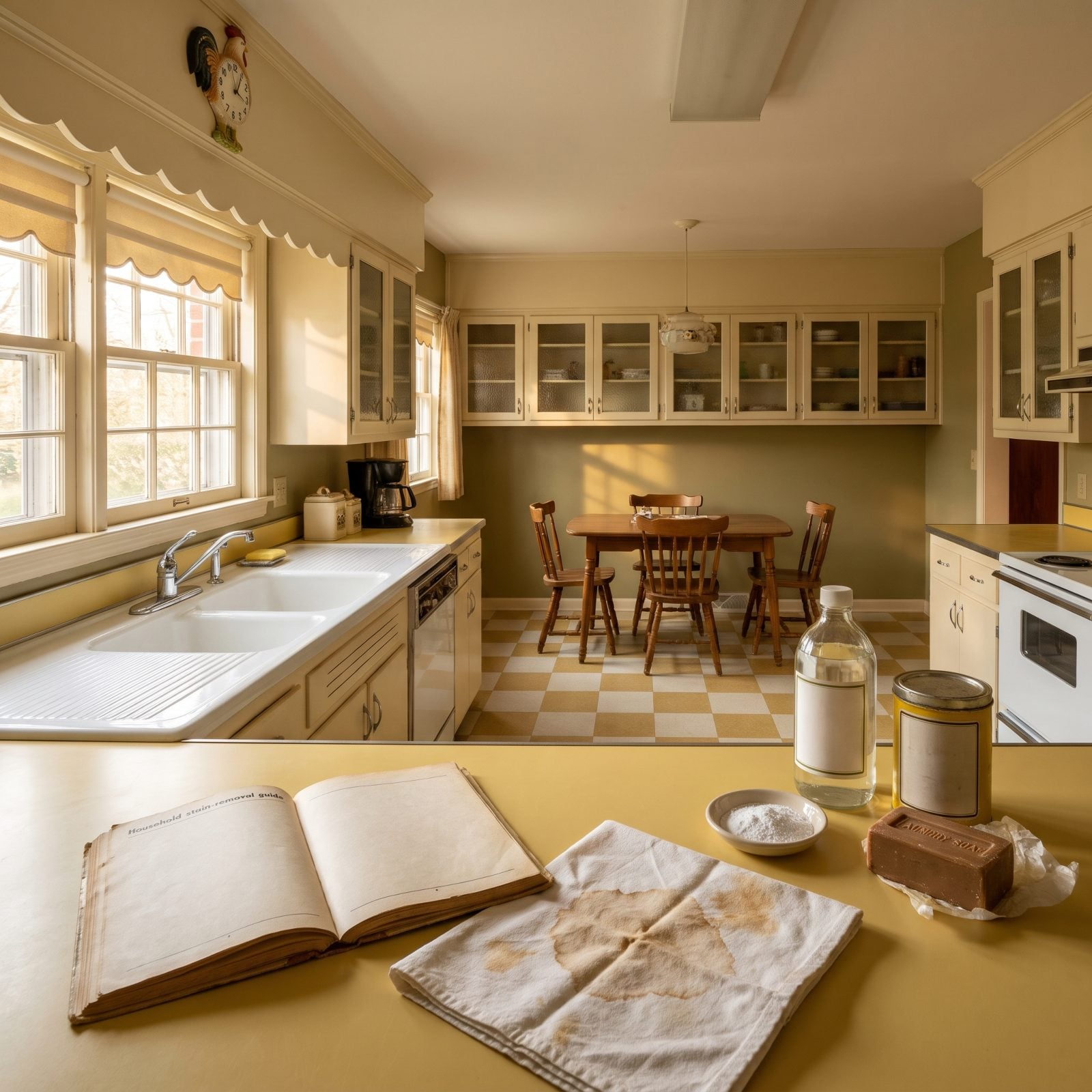
Spill red wine and you reached for one remedy. Grass stain, another. Blood, ink, lipstick, egg yolk — each had its own answer, and those answers lived in a dog-eared booklet tucked in a kitchen drawer.
These guides treated stain removal like chemistry homework. Borax for one thing, vinegar for another, and never hot water on protein stains because heat set them for good. You learned it the hard way, usually by ruining a good blouse first.
21. Careful Color Sorting Mattered Because Dyes Really Did Bleed
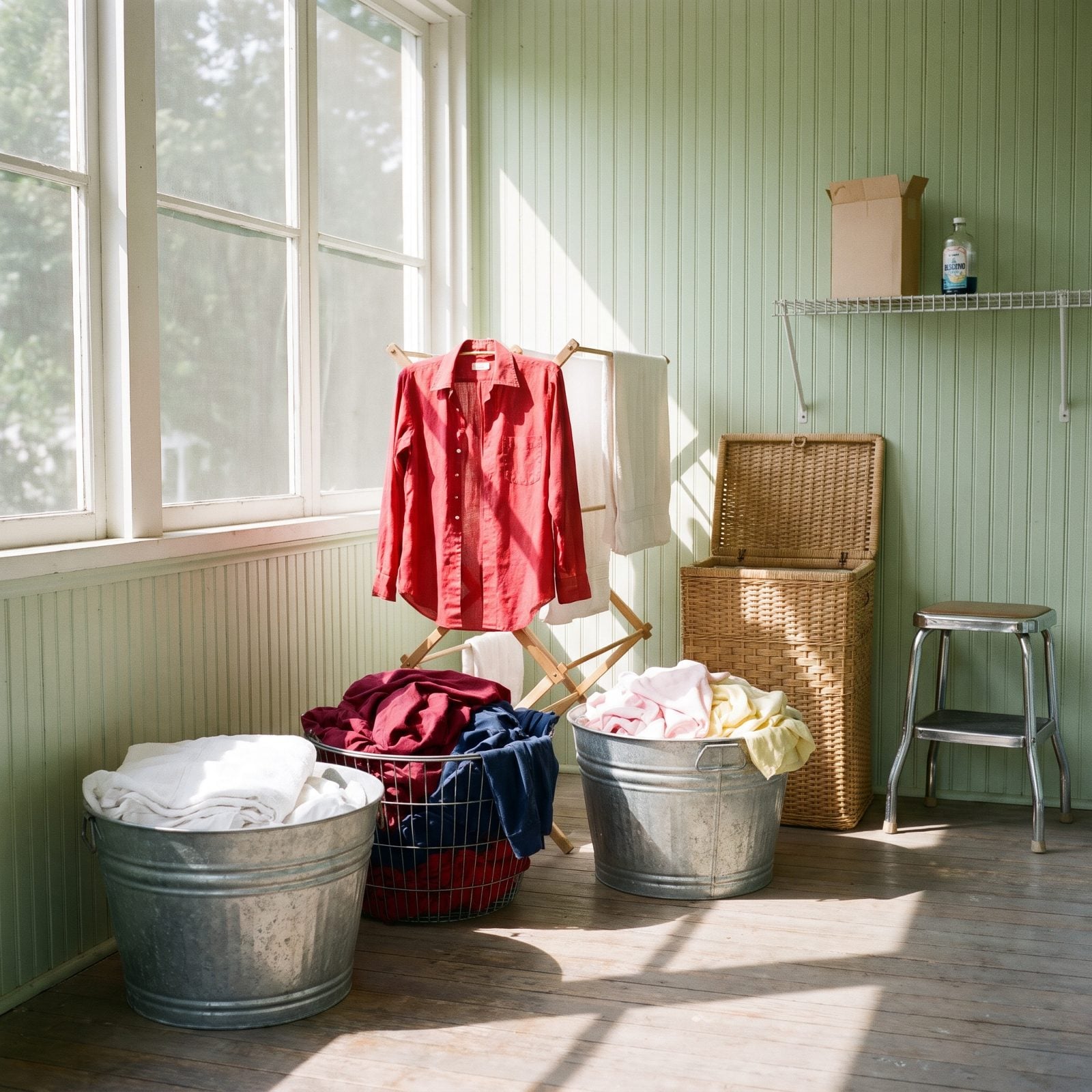
A single new red shirt could turn a whole load of whites pink, and plenty did. Early dyes, especially on budget cotton, weren’t colorfast the way they are now.
So sorting wasn’t fussiness. It was damage control. Whites in one pile, darks in another, and anything new got washed alone the first time or two until you trusted it. You could test the color by dabbing a wet white cloth on a hidden seam, and if it came away tinted, that garment bathed solo until it behaved.
20. Wash-and-Wear Fabrics Were Sold as Domestic Liberation
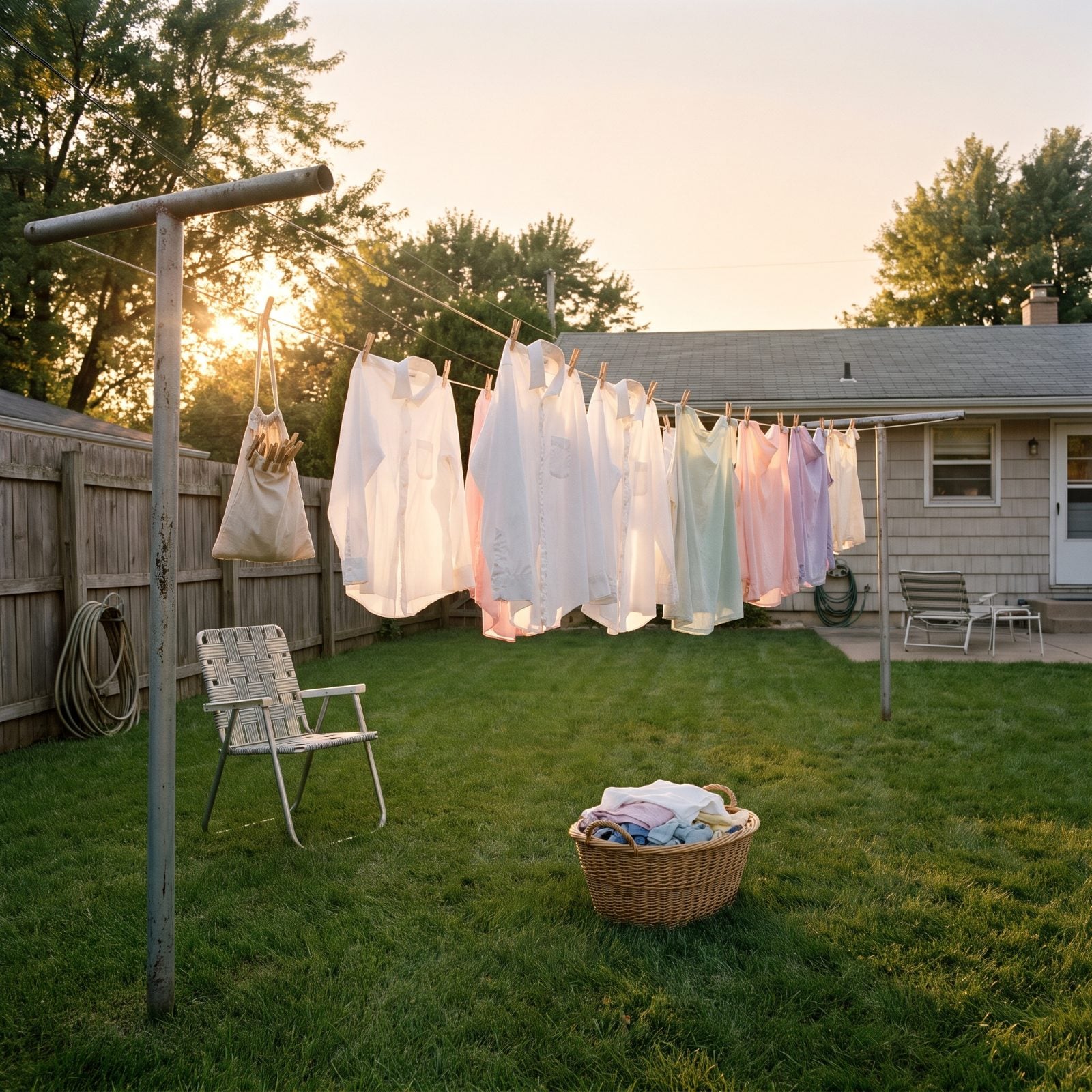
“Drip-dry.” “Wash and wear.” The phrases sound quaint now, but in the ads they read like a promise of free time — hang the shirt wet, let it drip, and skip the iron entirely.
These treated cottons and early synthetics were pitched straight at the woman doing the ironing, which in the advertising of the day meant freedom from an afternoon chained to the board. The reality was softer than the pitch. Plenty of “no-iron” shirts still needed a quick touch-up. But the idea sold, and it sold hard.
19. Pantyhose Got Hand-Washed and Hung to Dry Every Single Night

Nylons were expensive, and they snagged if you so much as looked at them wrong, so they never went in the machine. Ever.
Instead came a nightly ritual at the bathroom sink: lukewarm water, a little mild soap, a gentle squeeze, then draped over the shower rod to dry by morning. Rush it and you’d have a run the length of your calf before noon. People babied these things — and honestly, at those prices, we’d baby them too.
18. Wool Sweaters Were Reshaped by Hand and Dried Flat
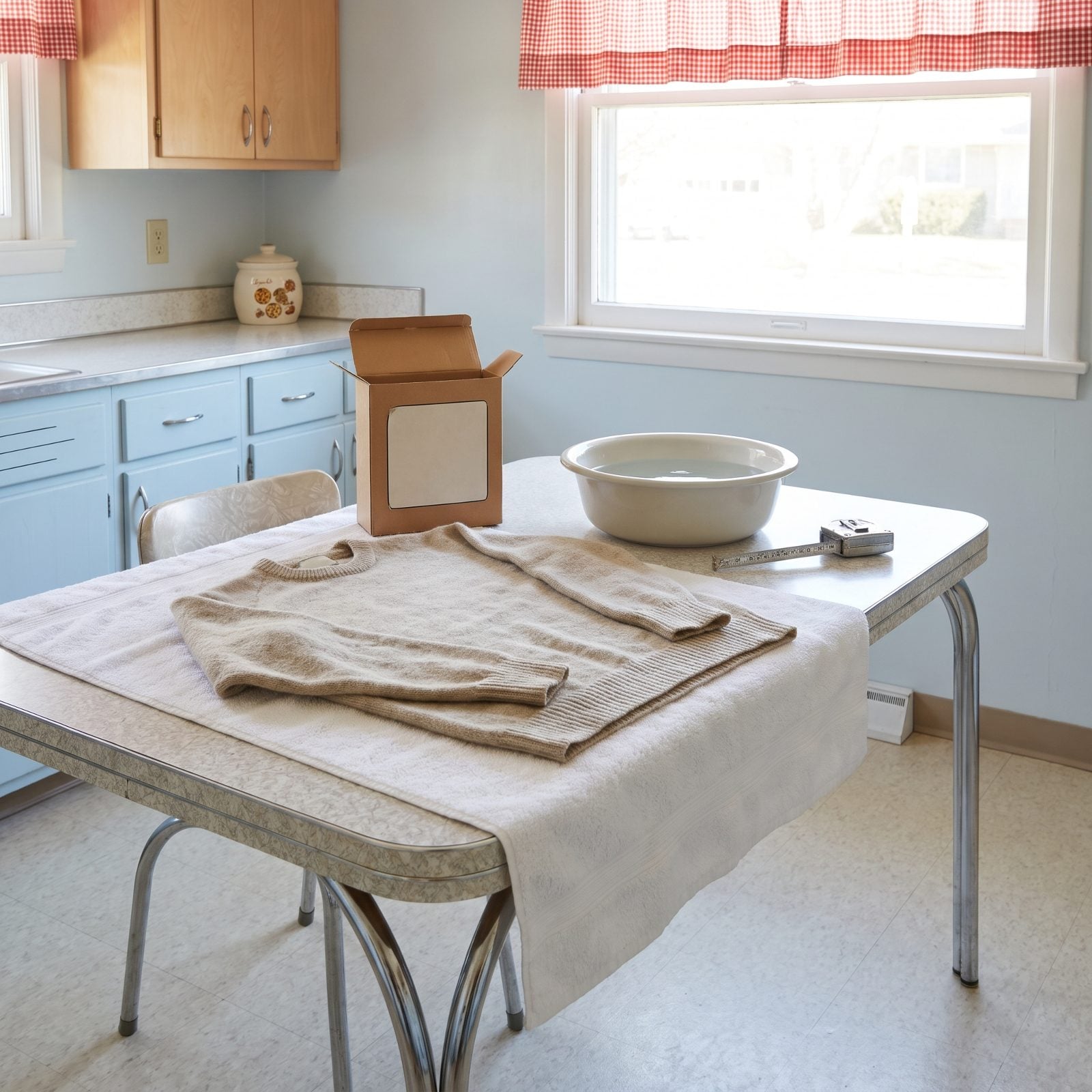
Hang a wet wool sweater and gravity does the rest, stretching the sleeves to orangutan length. So nobody hung them.
You washed wool in cool water with gentle flakes, pressed the water out without wringing, then laid it flat on a towel and nudged it back into its original shape with your hands. Some women traced the dry outline first to copy it. Then it sat there drying over a day or two, slowly, while you resisted touching it.
17. Cloth Diapers Meant a Never-Ending Churn of Laundry
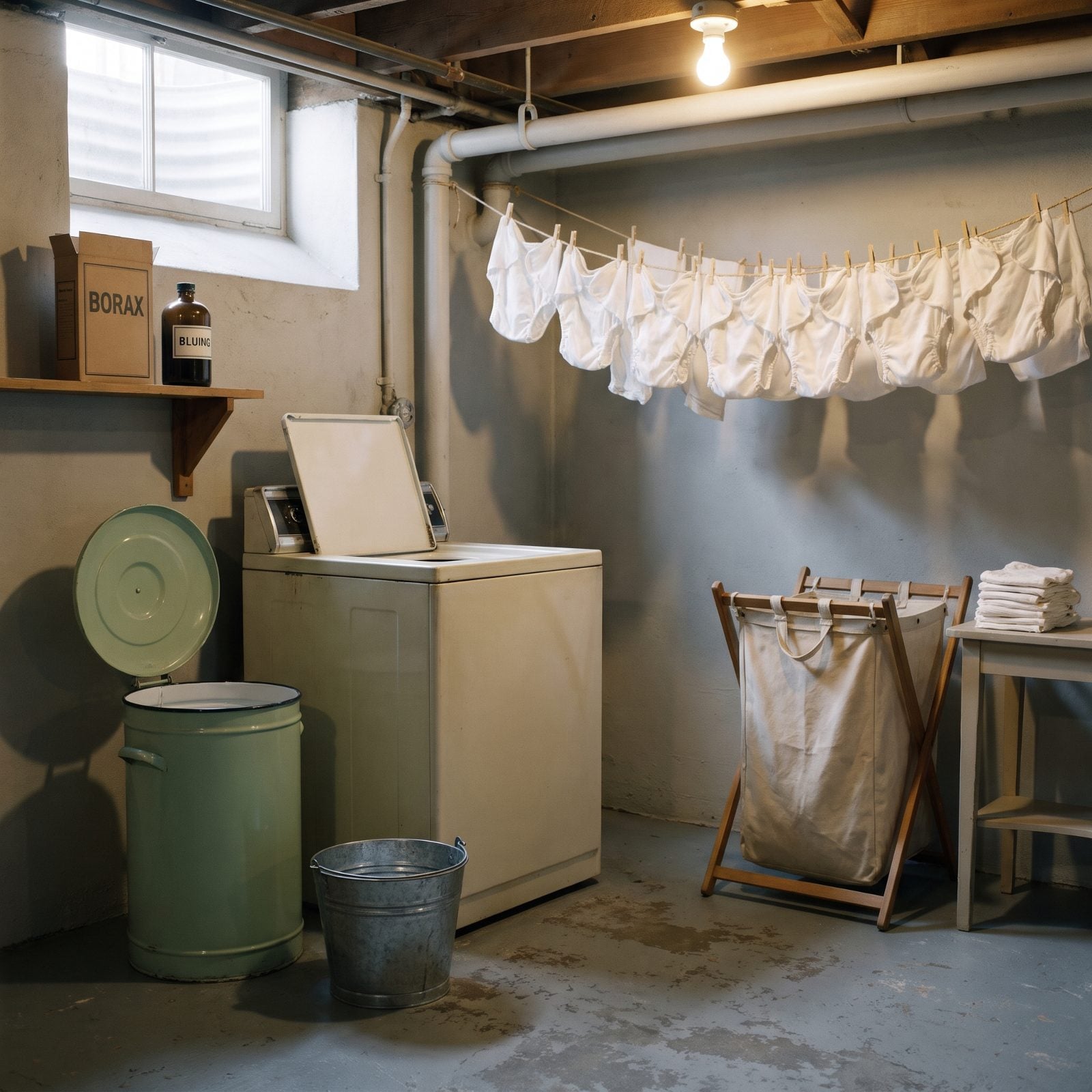
Disposable diapers existed but counted as a splurge, so most families ran on cloth, which meant laundry that never, ever stopped.
The rhythm went like this: soak in a covered pail, boil or hot-wash to sanitize, add bluing to keep them white, hang to dry, fold, and start the pile all over again the same afternoon. A household with one baby might run diaper loads several times a week, every week, for years on end. No wonder the automatic washer felt like the greatest invention of the age to anyone living through this. It gave hours back to a day that didn’t have them.
16. Soiled Diapers Waited in Dedicated Diaper Pails
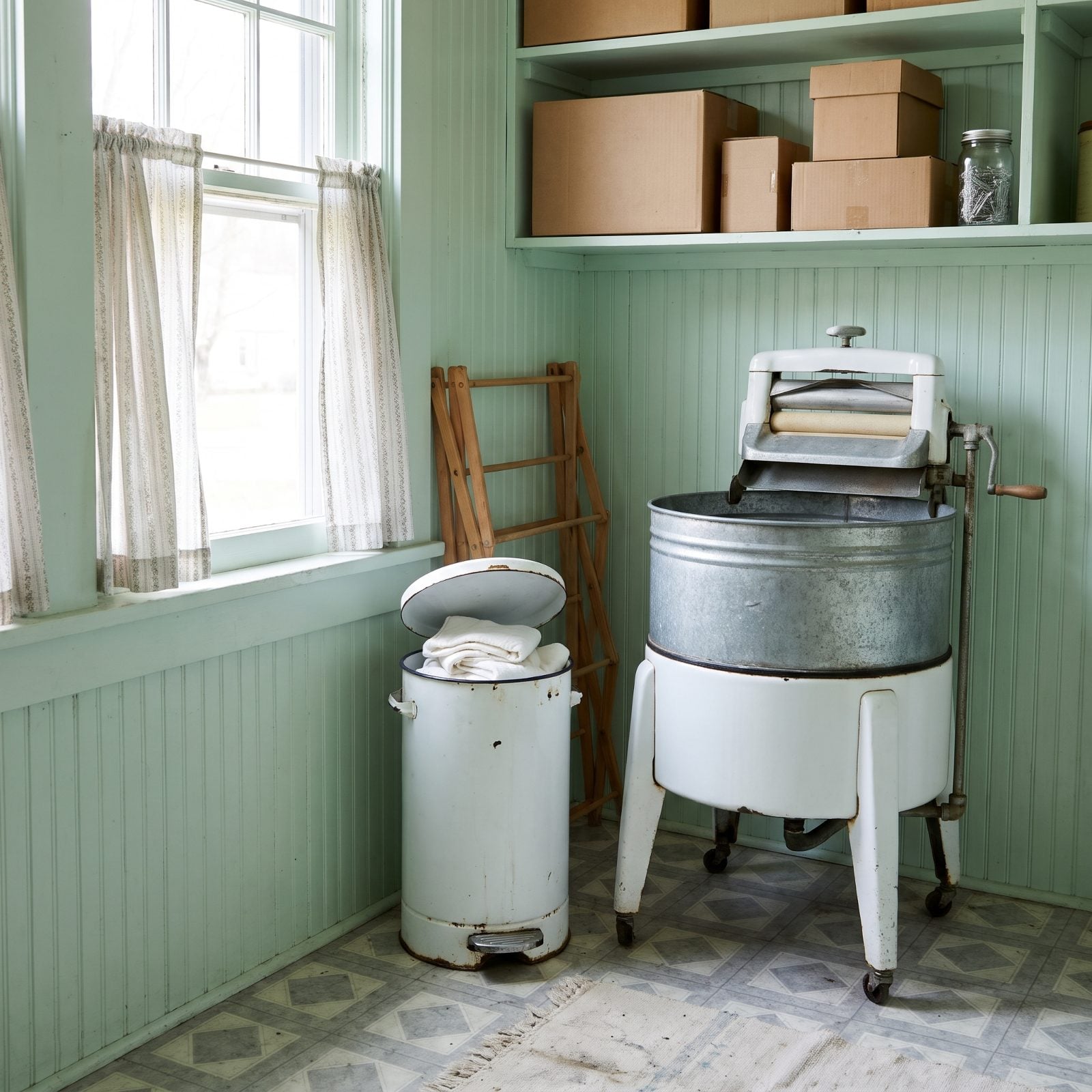
Every house with a baby had one: a lidded enamel step-on pail parked in the laundry room right beside the wringer washer, usually with a scoop of borax or a deodorizing powder nearby. Diapers collected in it until there were enough for a load.
The messy ones got a dunk-and-swish in the toilet first, a step nobody looked forward to. Then the pail sat there for a day or two, and you learned to step on the pedal fast and breathe through your mouth. After wash day, the pail was rinsed out and readied for the next round.
What Our Readers Say
- Today’s laundry rooms are a lot friendlier. Home Stratosphere readers gave laundry room photos with medium wood tones more hearts than the other images in the same articles, 74% versus 59%.
From Home Stratosphere reader polls and votes.
15. Diaper Services Collected Dirties and Delivered Clean Replacements
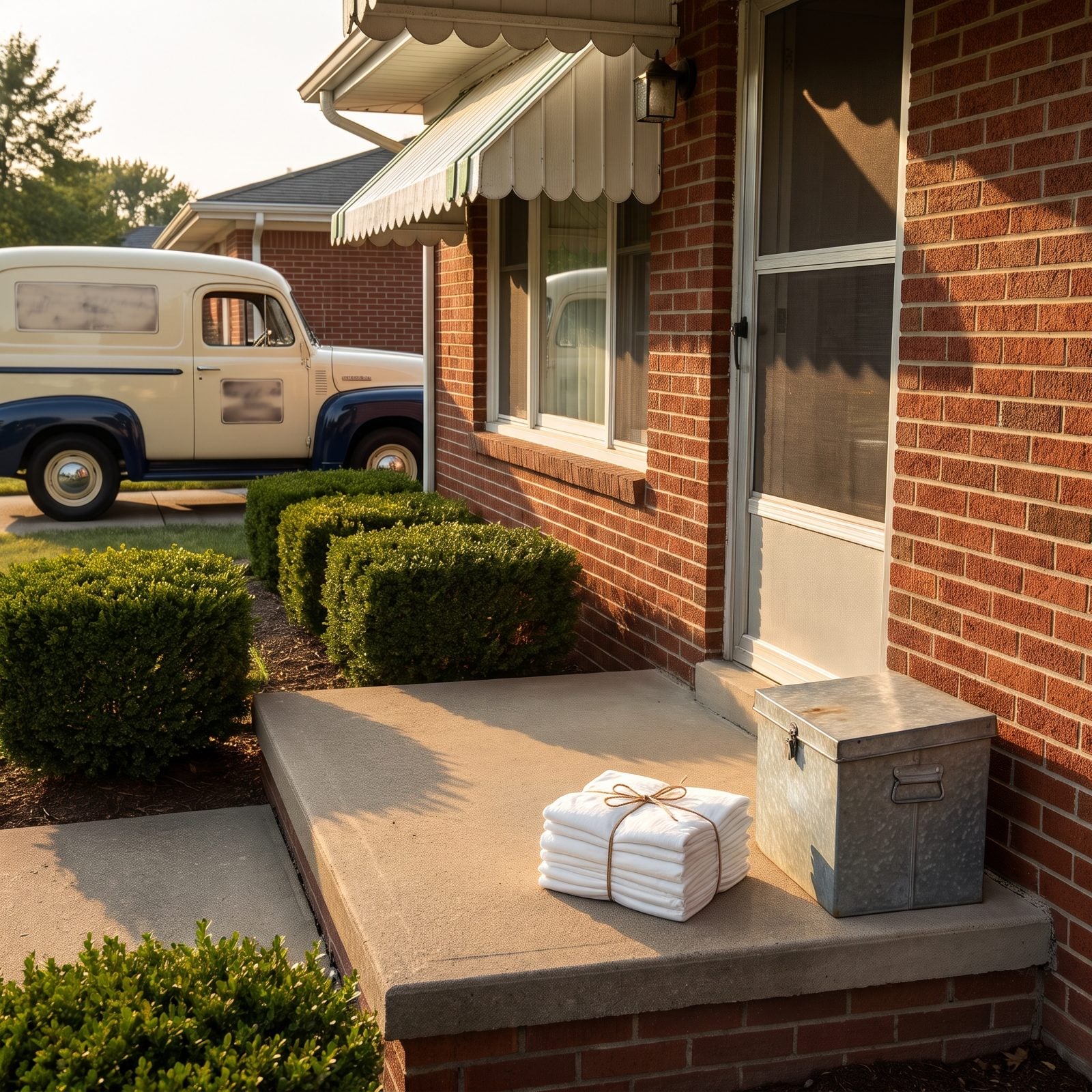
If you could afford it, someone else took on the worst job in the house. Diaper services ran routes much like the milkman. A truck came by on a set schedule, picked up a container of soiled diapers, and left behind a fresh stack, washed and sanitized at a commercial laundry.
For a new mother juggling everything else, that weekly swap felt like a small miracle. It also meant you never ran short, since the service tracked how many went out and how many came back. Plenty of families couldn’t swing the cost and washed their own, which made the delivery truck something of a neighborhood status symbol.
14. Reusable Handkerchiefs and Cloth Napkins Enlarged the Wash Pile
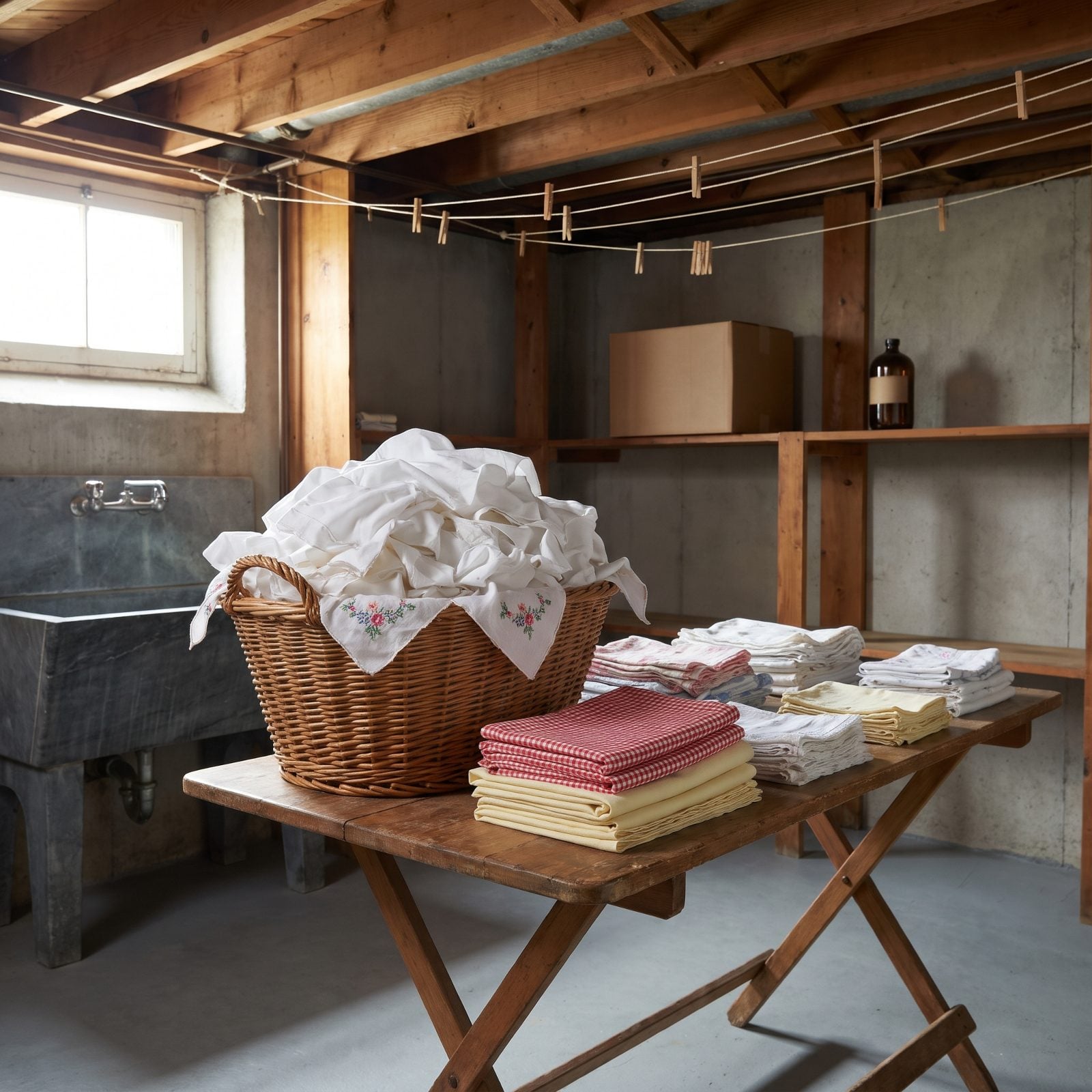
Tissues and paper napkins existed, but plenty of households still treated them as a waste of money. Men carried a folded cotton handkerchief in the back pocket every day. Dinner meant cloth napkins, and the good ones came out for Sunday and company.
All of it ended up in the wash. Used hankies weren’t anyone’s favorite thing to handle, so they often got their own hot, bleachy load. Then came the ironing, because a rumpled handkerchief or a creased napkin looked careless. Folding a stack of crisp squares was a regular Tuesday chore, not a special occasion.
13. Many Households Ironed Bedsheets and Pillowcases
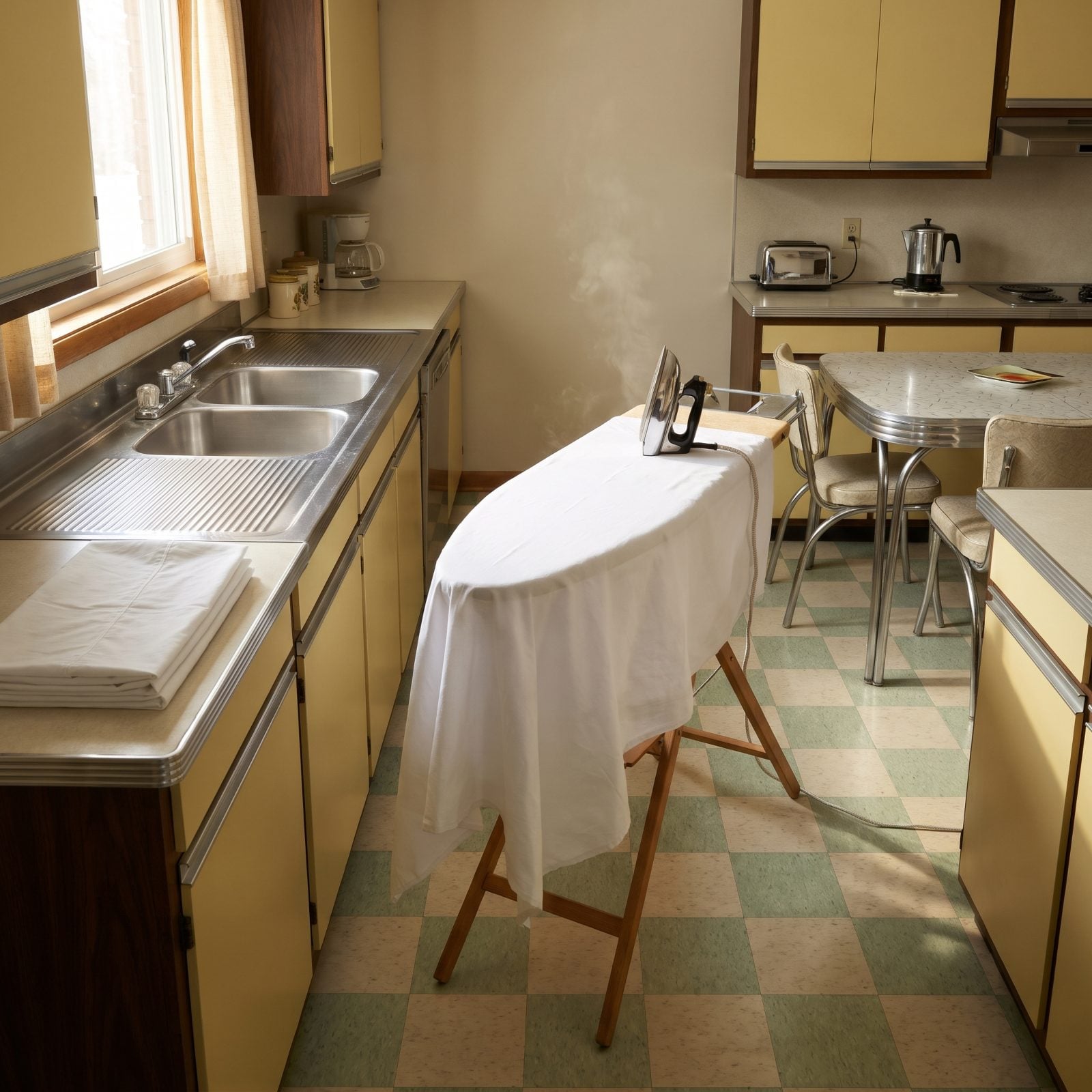
Yes, the sheets. Cotton bedding came off the line or out of the dryer full of creases, and in a lot of homes that simply wasn’t acceptable. Pillowcases got pressed smooth, top sheets were ironed along the fold-over edge at the very least, and some women did the whole thing, corner to corner.
It was slow, sweaty work on a hot afternoon. Permanent-press sheets in cotton-polyester blends started showing up later in the decade and won converts fast. But for many families, sliding into a freshly ironed bed was a standard worth the trouble, and some people still swear nothing feels better.
Ironed sheets may be history, but crisp cotton isn’t: asked which sheets they would buy, 56% of our readers chose percale, well ahead of sateen and linen.
12. Liquid or Cooked Starch Gave Shirts a Crisp Finish
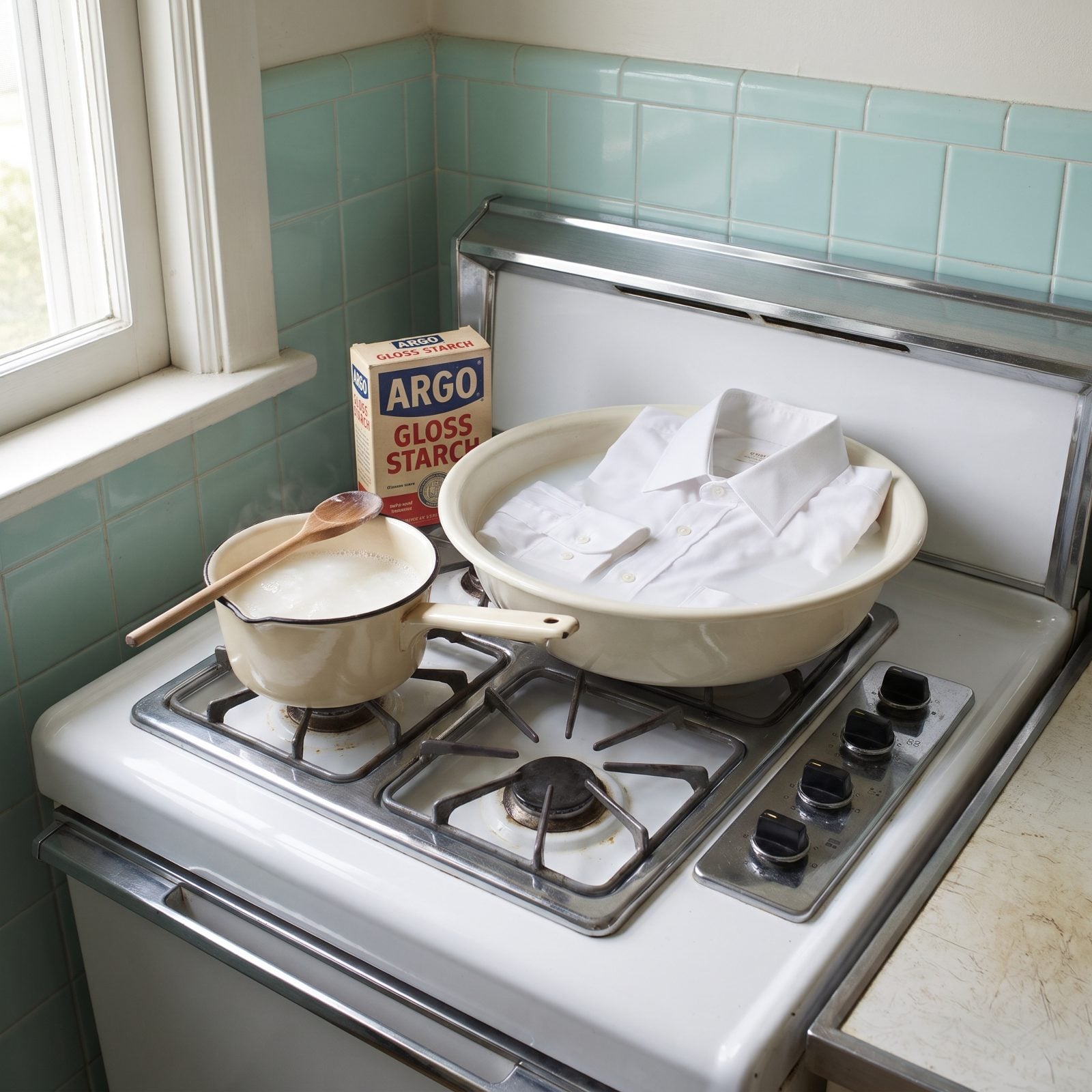
A man’s dress shirt wasn’t finished until the collar could practically stand on its own. To get there, you starched. Some households cooked their own from powdered cornstarch and water, stirring it on the stove until it thickened and turned translucent. Others bought liquid starch in a bottle and thinned it in a basin.
Collars, cuffs, and shirt fronts got dipped or worked through by hand, then dried and pressed. Light starch for everyday, heavy for church. Aerosol spray starch made things easier, but the bowl-and-dip method hung on in plenty of homes, and so did the satisfying crackle of a well-starched shirt.
11. Electric Irons Lacked Modern Automatic Shutoff Protection
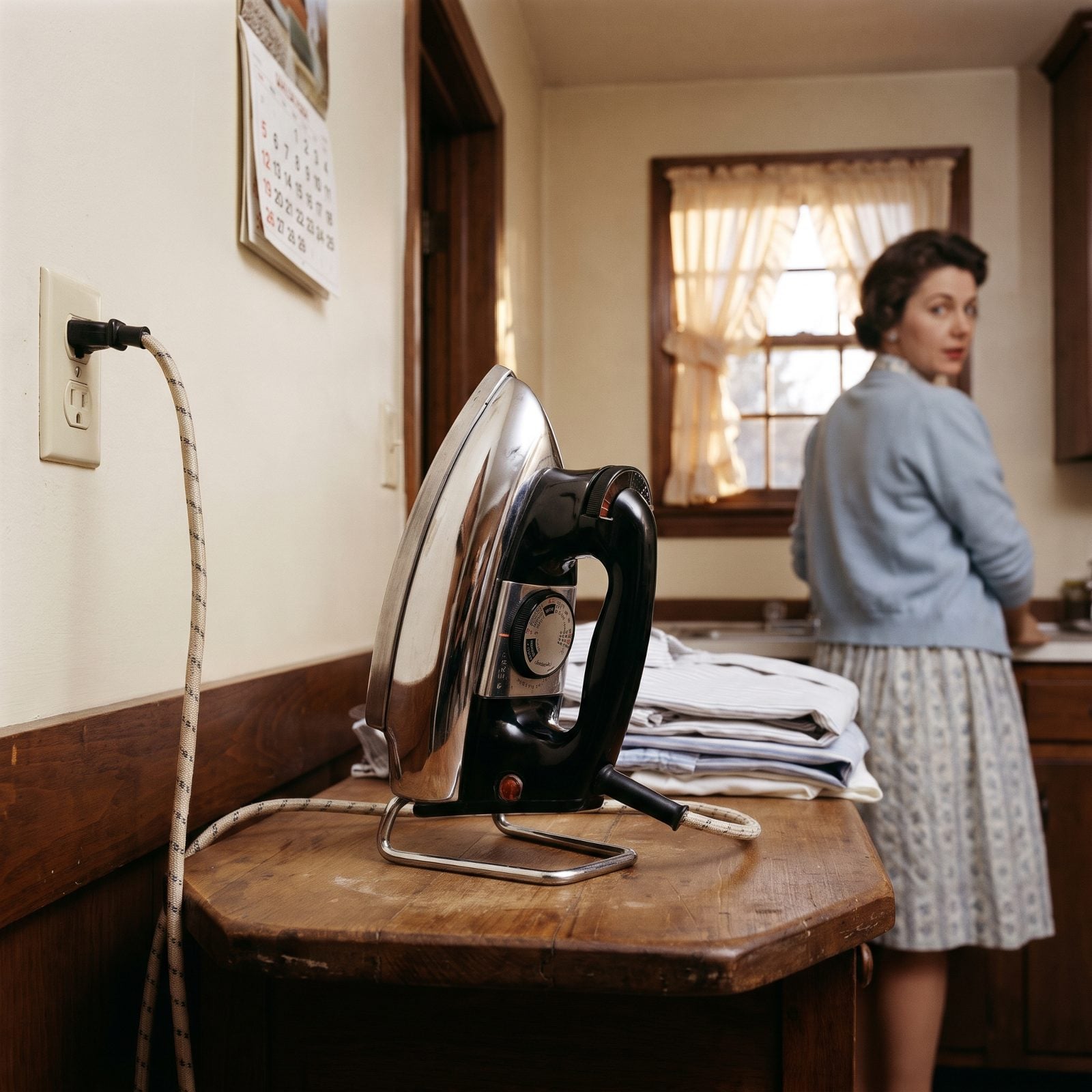
Today an iron left face-down shuts itself off after a few moments. Back then it just kept heating. Irons had thermostats, but no sensor cared whether you’d wandered off to answer the phone or check on a crying baby.
The results were familiar: scorched ironing board covers, brown triangles burned into shirts, and the nagging worry halfway to the grocery store that you’d left it plugged in. Pulling the cord became pure reflex. Automatic shutoff wouldn’t become a standard feature for decades, so you were the safety system.
10. Rotary Ironers Pressed Sheets and Table Linens
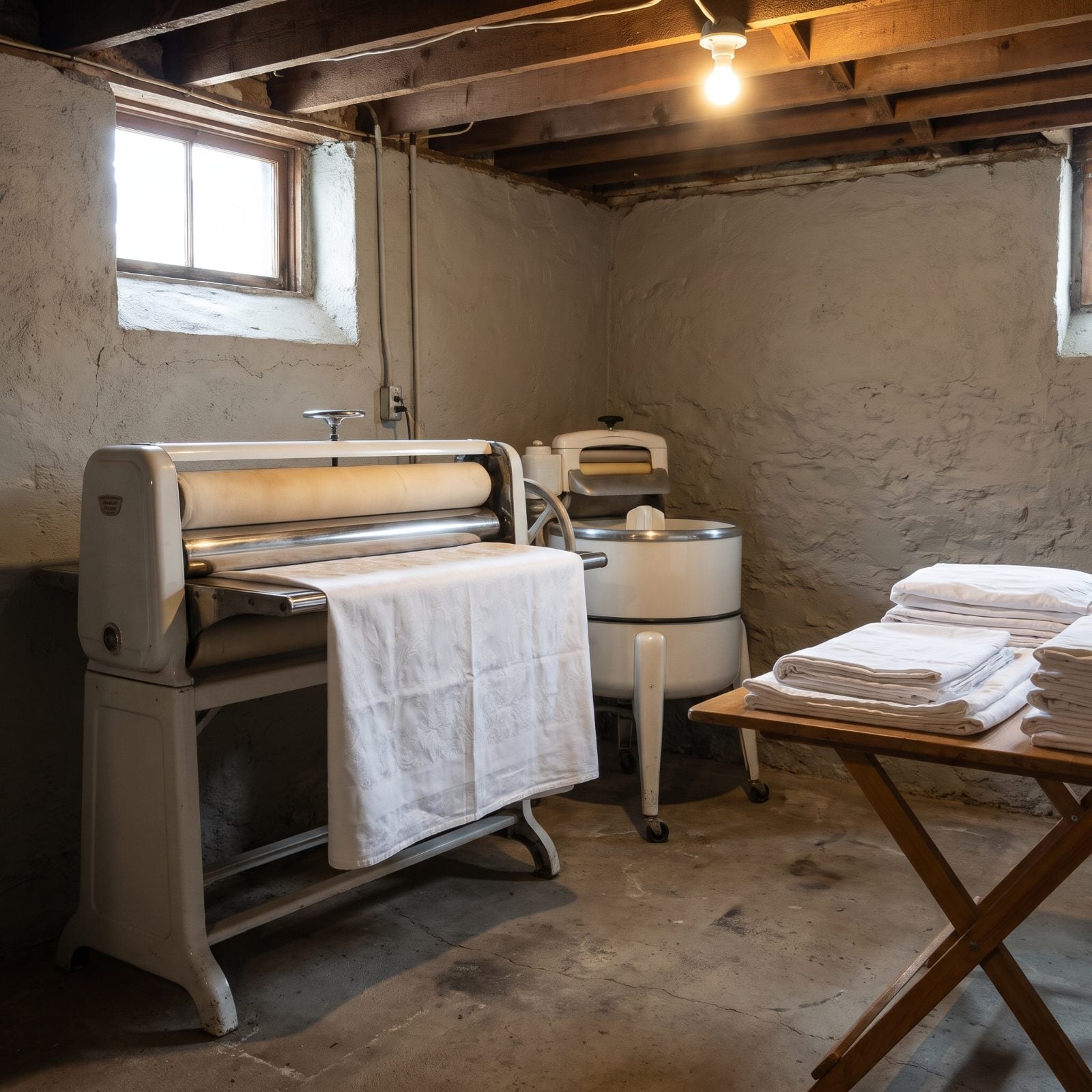
For big flat pieces, some households owned a rotary ironer, sometimes called a mangle. It was a sizable appliance with a long padded roller that turned against a heated metal shoe. You sat in front of it, fed sheets, tablecloths, and napkins through, and worked it with knee or foot controls so both hands stayed free to guide the fabric.
Done well, it turned a basket of linens into flat, crisp stacks far faster than a hand iron could. Done carelessly, it scorched fabric or caught fingers. The ironer was a real investment, and its owners were often fiercely proud of it.
9. Washed Curtains Were Dried on Special Stretching Frames
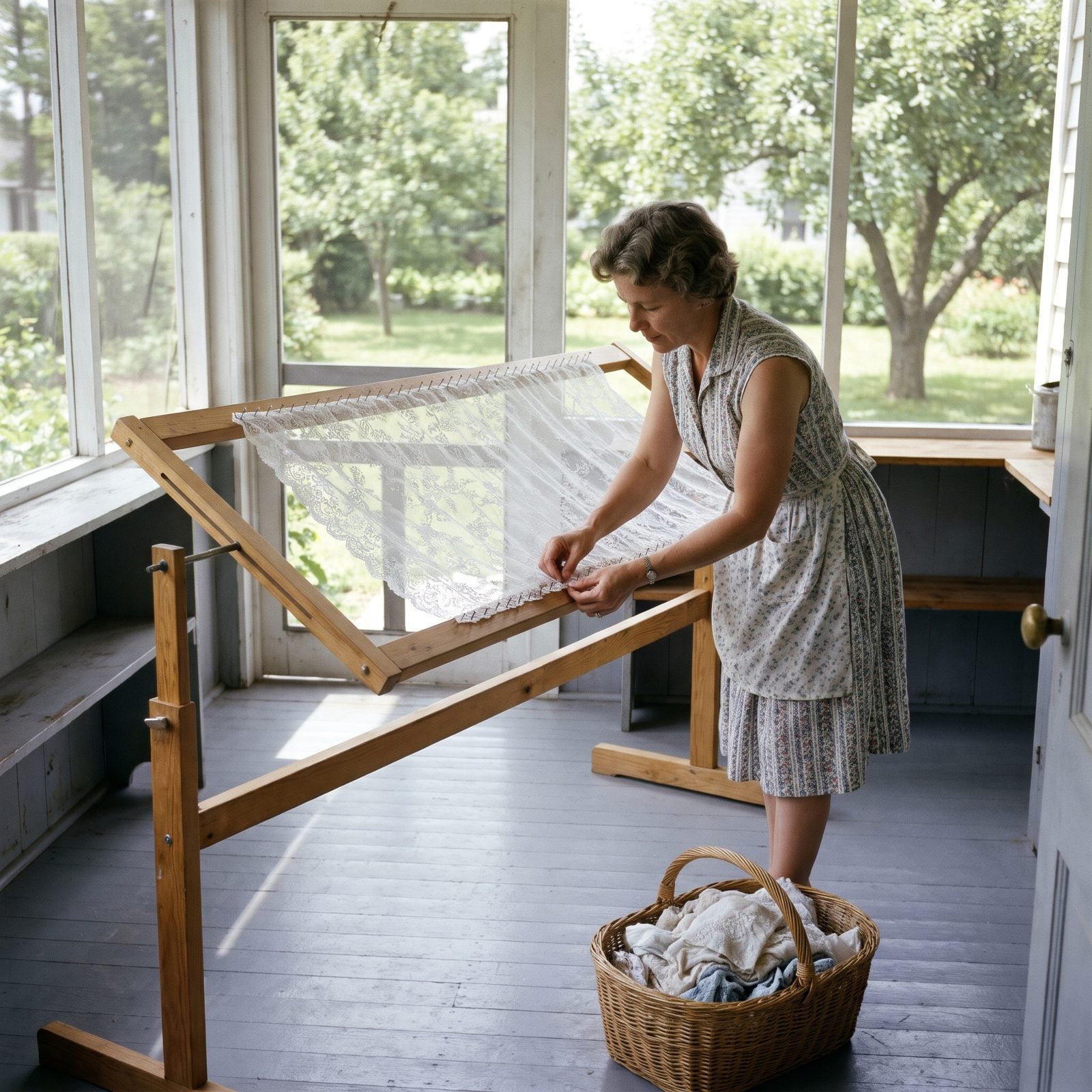
Lace and sheer curtains shrank and puckered if you just hung them over a line, so they went onto a curtain stretcher instead. This was an adjustable wooden frame lined with rows of small pins along the edges. You set it to the curtain’s exact size, then hooked the wet fabric onto the pins all the way around.
It took patience and cost you a few pricked fingertips. But the curtains dried square and taut, ready to hang without ironing. On spring cleaning day, a row of these frames leaning against the house was a familiar sight.
8. Outdoor Clotheslines Often Needed Wooden Props to Keep Laundry Off the Ground
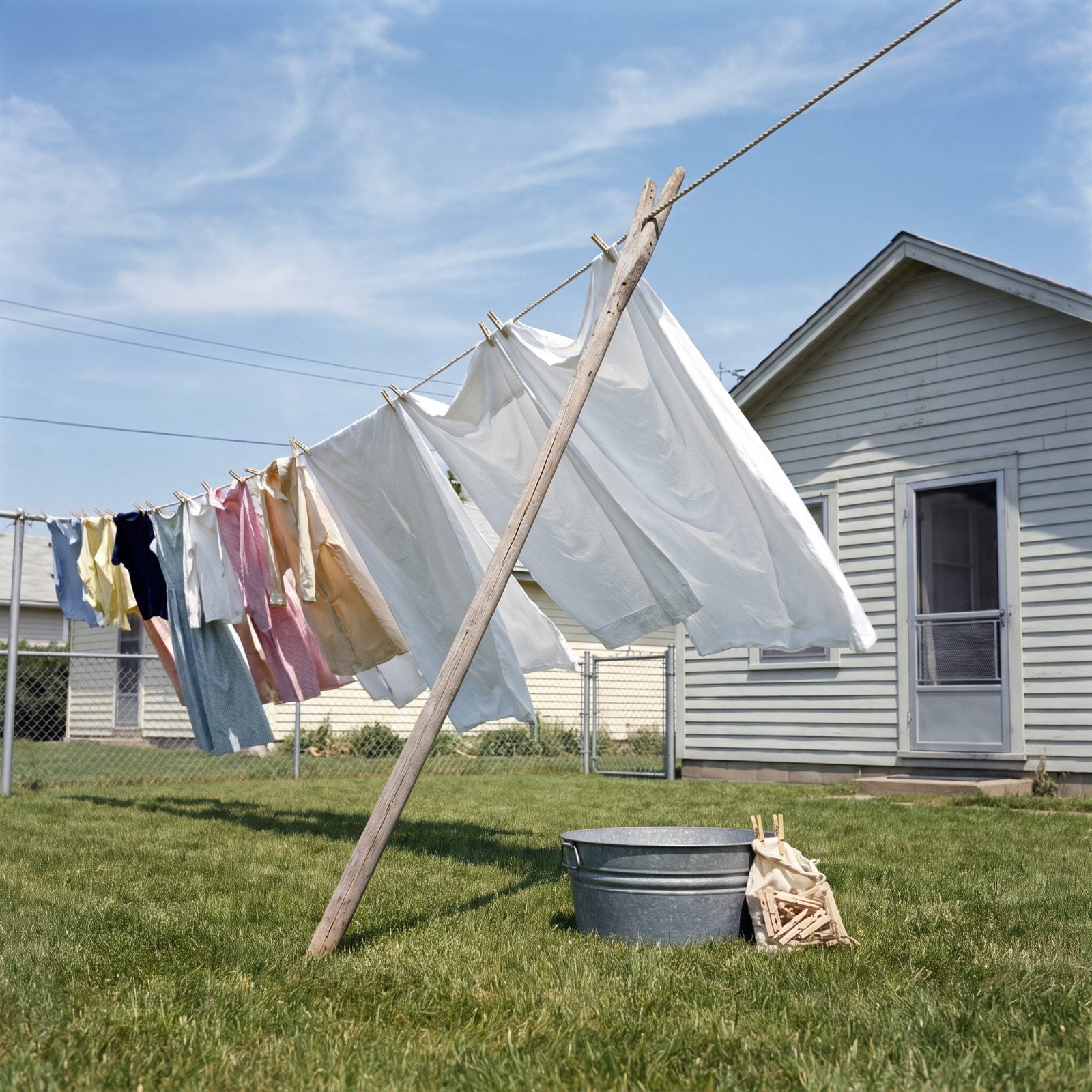
A clothesline full of wet sheets and jeans sagged, sometimes almost to the dirt. The fix was a clothes prop: a long wooden pole with a notch or fork at the top. You hung everything, then wedged the prop under the line and pushed it up, lifting the whole load into the breeze.
Props kept laundry clean and helped it dry faster, since more air could get underneath. They also tipped over in a strong wind, and a fallen prop could mean rewashing half the load. Kids learned early not to play anywhere near them.
7. Pulley Clotheslines Carried Laundry Across Yards and Alleys
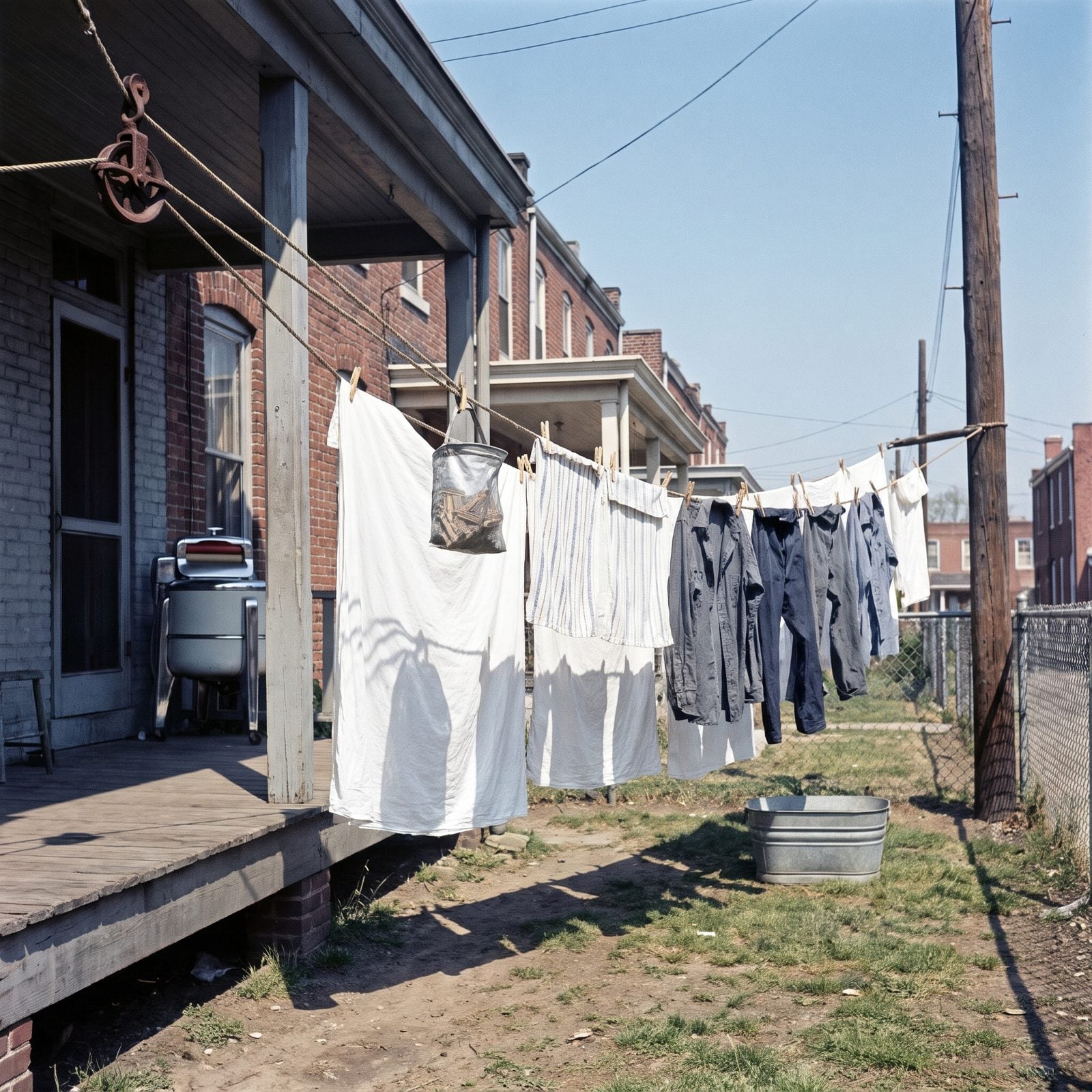
In crowded city neighborhoods, even a small backyard had to work hard. The answer was the pulley line: a continuous loop of rope running from a pulley on a porch post out to a utility pole, stretched clear across a small fenced yard.
You stood on the back porch, pinned up a shirt, gave the line a tug, and sent it creaking out over the grass. Then the next piece, and the next. Bringing it all back in meant reeling every item home by hand, hoping nothing slipped free and dropped into the dirt below.
Look across the yards behind old brick rowhouses in those days and you’d see line after line of somebody else’s sheets and work pants, flapping in the wind.
6. Clothespin Aprons Kept Reusable Wooden Pins Within Reach
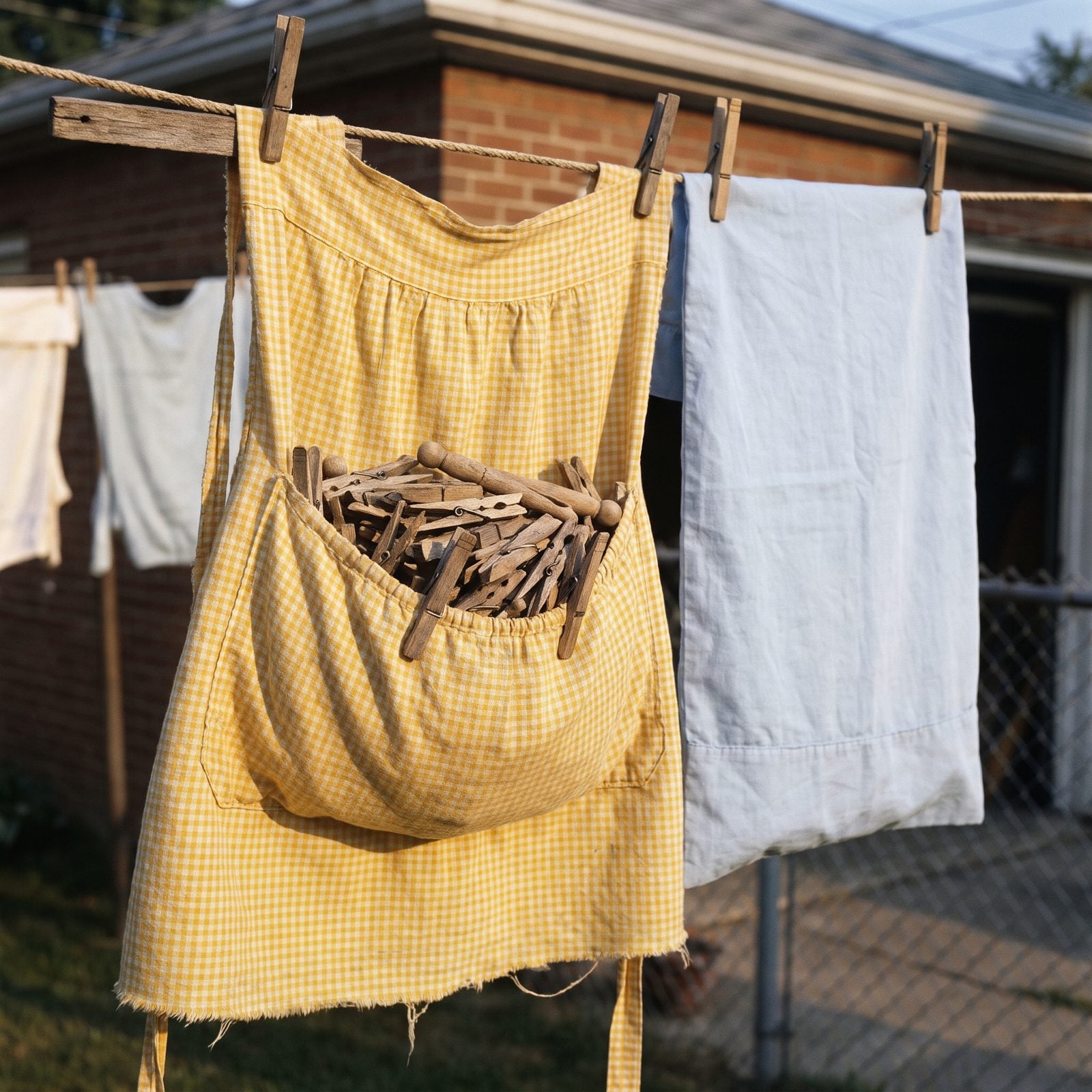
Clothespins were never something you threw away. Wooden spring pins, along with the older one-piece kind with no moving parts, got used and reused until they split, and keeping hundreds of them handy took a system.
That system was the clothespin apron or bag. The apron tied at the waist with deep pockets in front. The bag often hung from a wire hanger hooked right onto the line, so you could slide it along as you worked. Either way, both hands stayed free for wrestling a wet bedsheet in the wind, and nobody had to stoop over a basket for every single pin.
5. Washday Plans Were Made Around the Weather Forecast
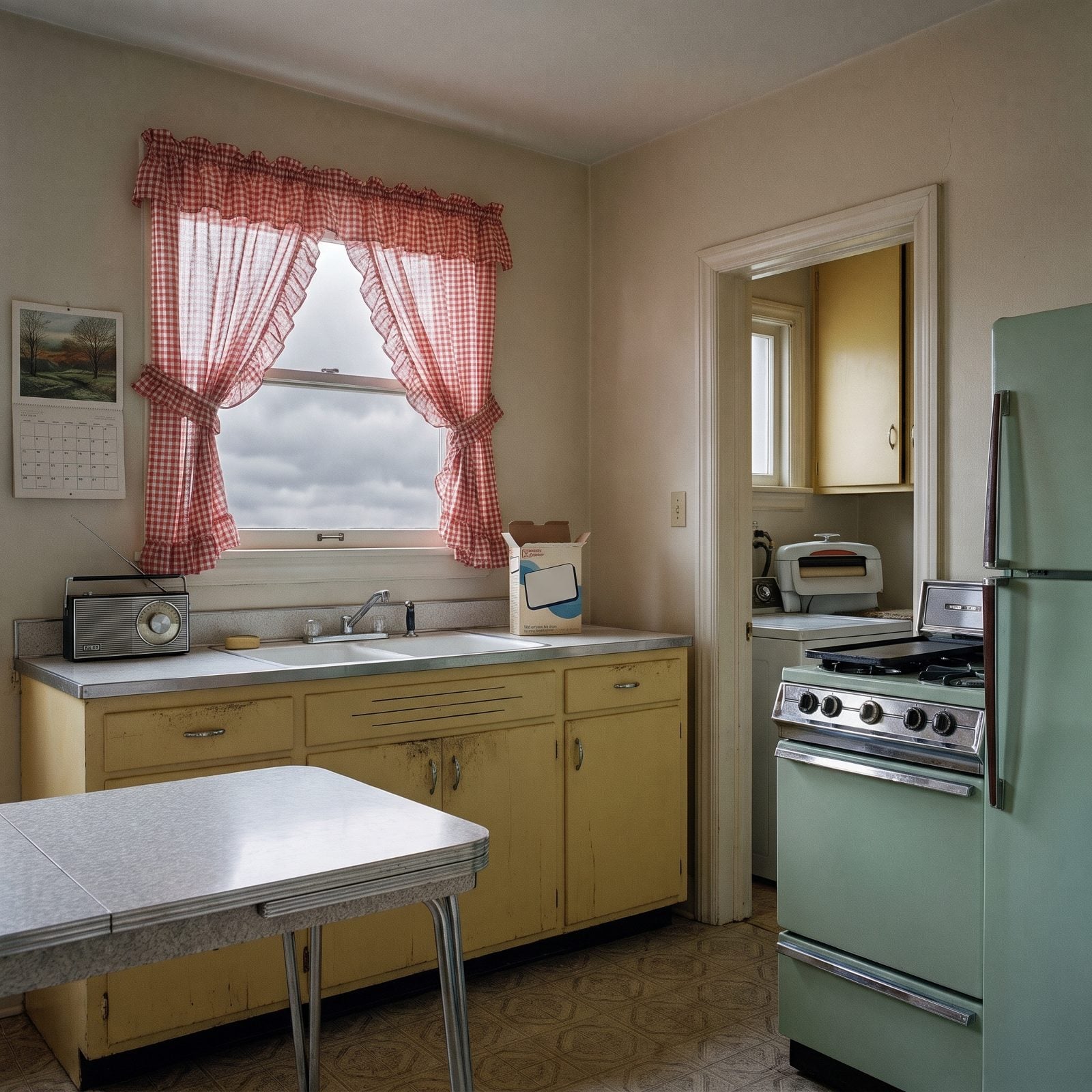
Monday was the traditional washday in a lot of homes, but the sky had the final word. A cloudy morning meant checking the radio forecast, squinting at the horizon, and making a judgment call about whether a full load could dry before the weather turned.
Guess wrong and you were sprinting out the back door at the first raindrops, yanking pins and piling damp laundry into a basket. Guess wrong twice and the week’s wash backed up into a mildewy heap. Sunny, breezy days were treasured, and nobody wasted one.
4. Winter Laundry Could Freeze Stiff on the Clothesline
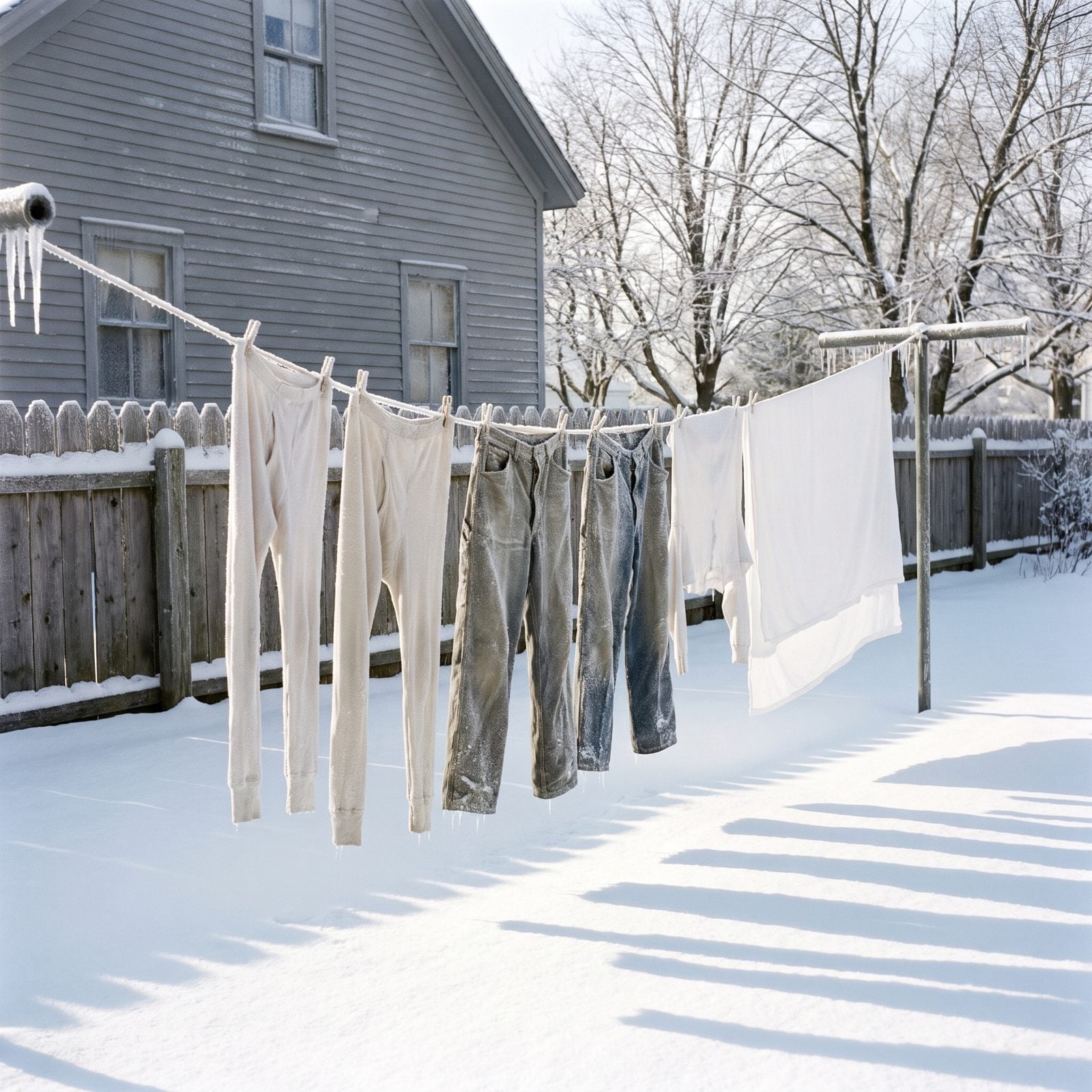
Winter didn’t stop the laundry, so out it went anyway. Within minutes, damp shirts and towels stiffened into hard, crackling slabs. Long johns could stand up on their own, and jeans came off the line like plywood.
Strange as it sounds, the clothes did dry out there. Ice slowly turns straight to vapor in cold, dry air, and on a windy day a load could come in surprisingly dry. Usually, though, the frozen pieces were hauled indoors and draped over radiators or chair backs to finish thawing, filling the house with that sharp, clean smell of cold air.
3. Indoor Clotheslines Crossed Basements, Attics, and Porches
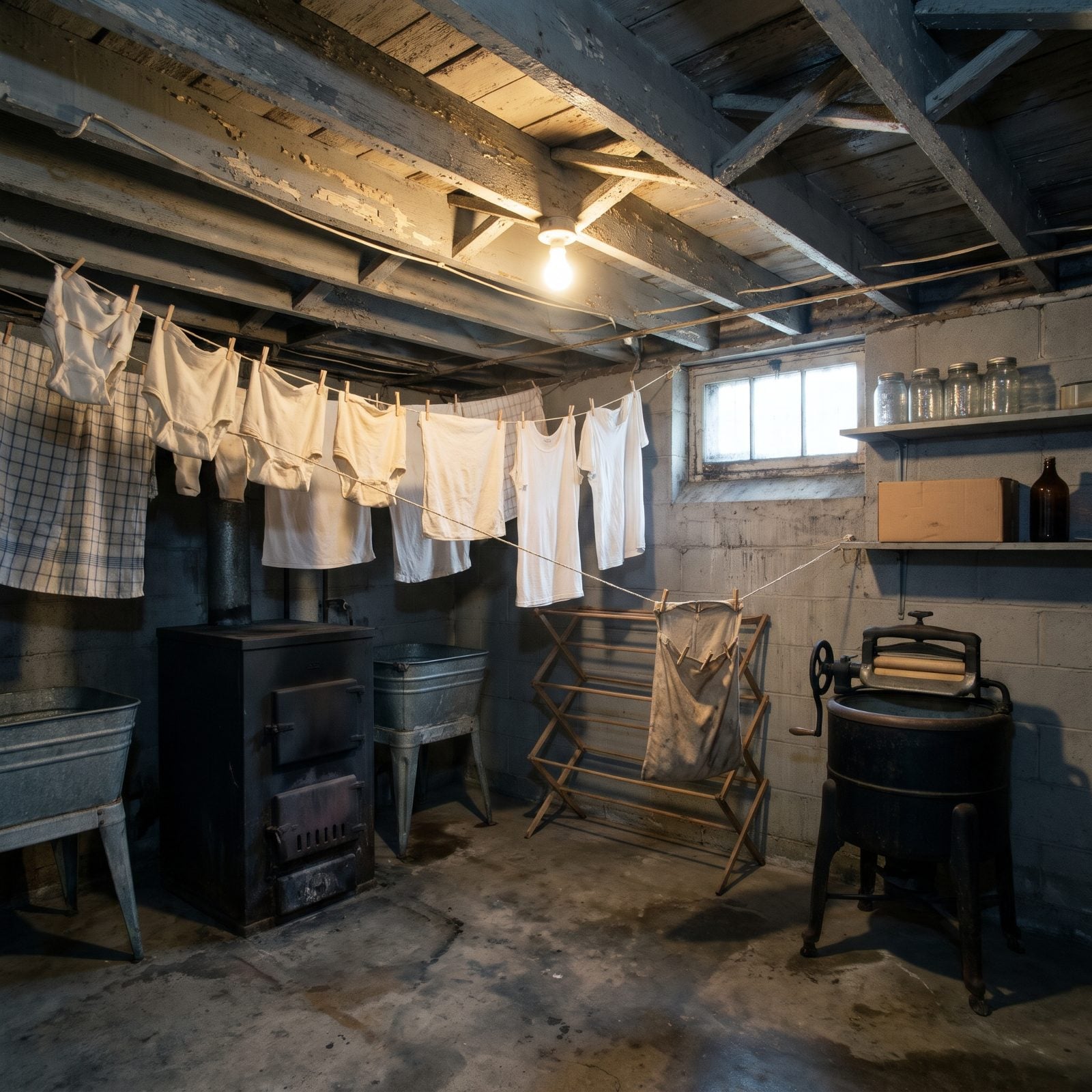
When it rained, snowed, or simply wasn’t the kind of neighborhood where you hung your underwear in public view, the drying moved inside. Lines crisscrossed basements, strung between floor joists or hooks screwed into beams. Attics and enclosed porches got the same treatment.
Walking through a basement on washday meant ducking under damp sheets and pushing past dripping trousers. Folding wooden racks filled in the gaps, set near the furnace or a radiator to speed things along. Things took longer to dry indoors and the air turned muggy, but it beat waiting a week for sunshine.
2. Clothes Dryers Were Far From Universal and Usually Relied on Timed Heat
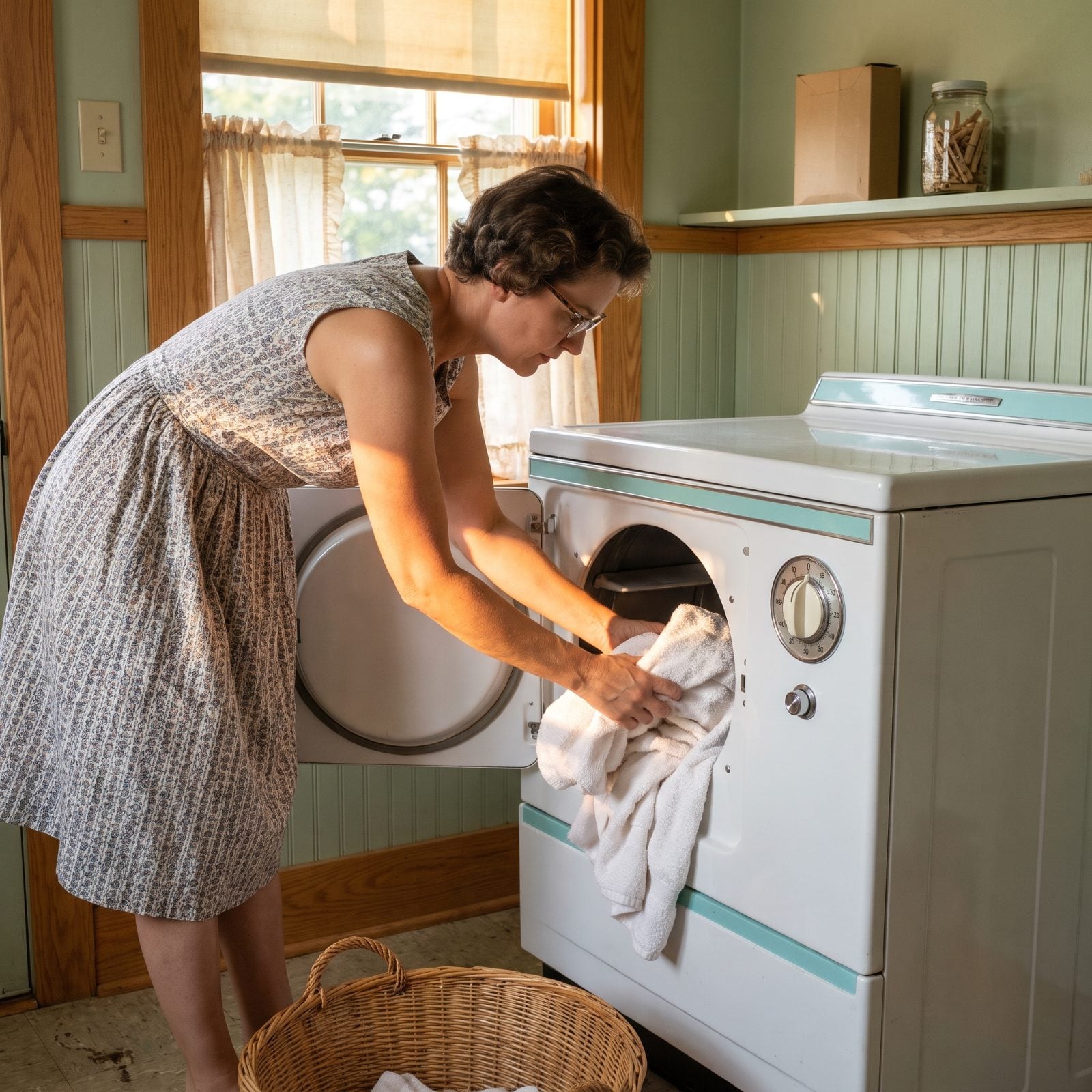
Plenty of families got through the 1960s without an electric or gas dryer at all. A washing machine came first on the wish list, and the dryer was often the appliance you saved up for later, if ever. The clothesline was free.
Homes that did own one usually ran it on a simple timer. You turned the dial to a number of minutes and hoped you’d guessed right. Too short and you pulled out a load of soggy towels; too long and the cotton came out scorched-hot, shrunken, and wrinkled. Sensors that could tell when clothes were actually dry would become common later, so experience had to do the job.
1. Gas Dryers Used Standing Pilot Lights
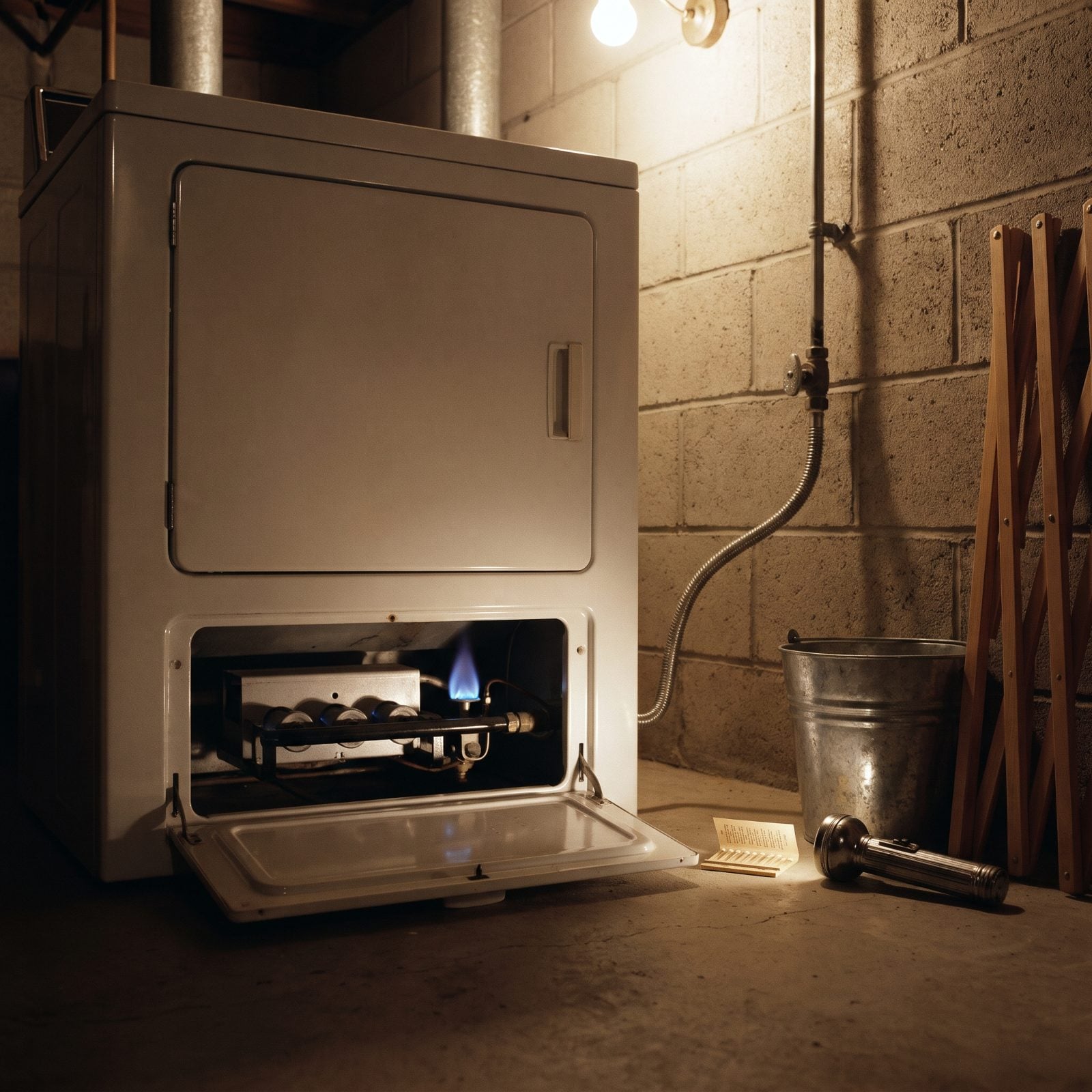
Gas dryers of the era usually lit their burner from a standing pilot, a small blue flame that stayed lit day and night whether anyone was doing laundry or not. It burned a steady trickle of gas the whole time.
Pilots also went out. A draft, a hiccup in the gas supply, and suddenly the drum spun but nothing got warm. Relighting meant getting down on the floor, following the instructions printed inside the access panel, and holding a lit match where the flame should be. Nobody enjoyed that part.