🔥 Would you like to save this?
Pull the door up on any suburban garage in 1994 and the smell hit you before the light did: fresh-cut grass, bicycle tires, gasoline, damp cardboard, and something mysterious happening inside the refrigerator that had been evicted from the kitchen six years earlier but was apparently still too valuable to unplug. A single bare bulb hung overhead on a string. The concrete had oil stains older than some of the children. And somewhere beneath three bicycles, a wheelbarrow, two lawn chairs, a sled, and enough sporting equipment to outfit a small school district, there was allegedly room for a car.
The garage had its own ruthless system of promotion and demotion. New things lived inside the house. Older things moved to the basement. Anything too useful to throw away but too ugly to look at was granted permanent residency out here, where Dad’s pegboard operated under military law and every horizontal surface eventually became storage. Paint cans waited twenty years for a touch-up that never came. Coffee cans held screws that might fit something someday. Christmas decorations shared shelf space with a Coleman cooler, jumper cables, grass seed, and one cardboard box nobody had opened since the first Bush administration. Here are 32 things that turned the 1990s family garage into the most chaotic, useful, weirdly beloved room the house technically didn’t count.
In order to come up with the very specific design ideas, we create most designs with the assistance of state-of-the-art AI interior design software. Also, assume links that take you off the site are affiliate links such as links to Amazon. this means we may earn a commission if you buy something.
32. The Family Minivan or Station Wagon
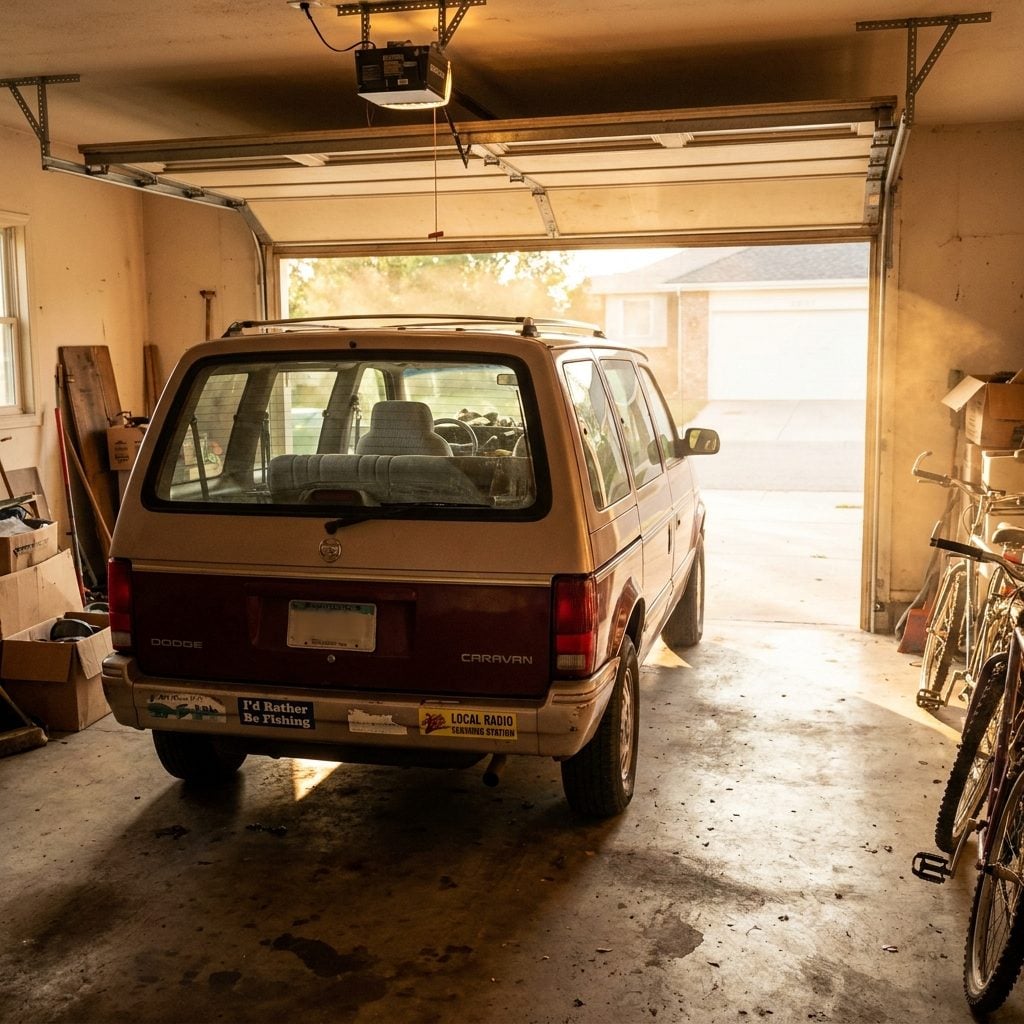
It sat there like the flagship of the whole family. Gray cloth seats that got hot enough in July to leave marks on the backs of your legs. A tape deck that ate cassettes and never gave them back, plus that specific chunk-and-slide sound of the driver’s side door.
The minivan wasn’t really a vehicle. It was a second living room that happened to move, with Cheerios wedged into the seat cracks going back three years and a stray french fry that had achieved a kind of permanence under the bench. This was the ship that ran the whole operation, parked in the garage between missions.
31. Kids’ Bikes Leaning Against the Wall
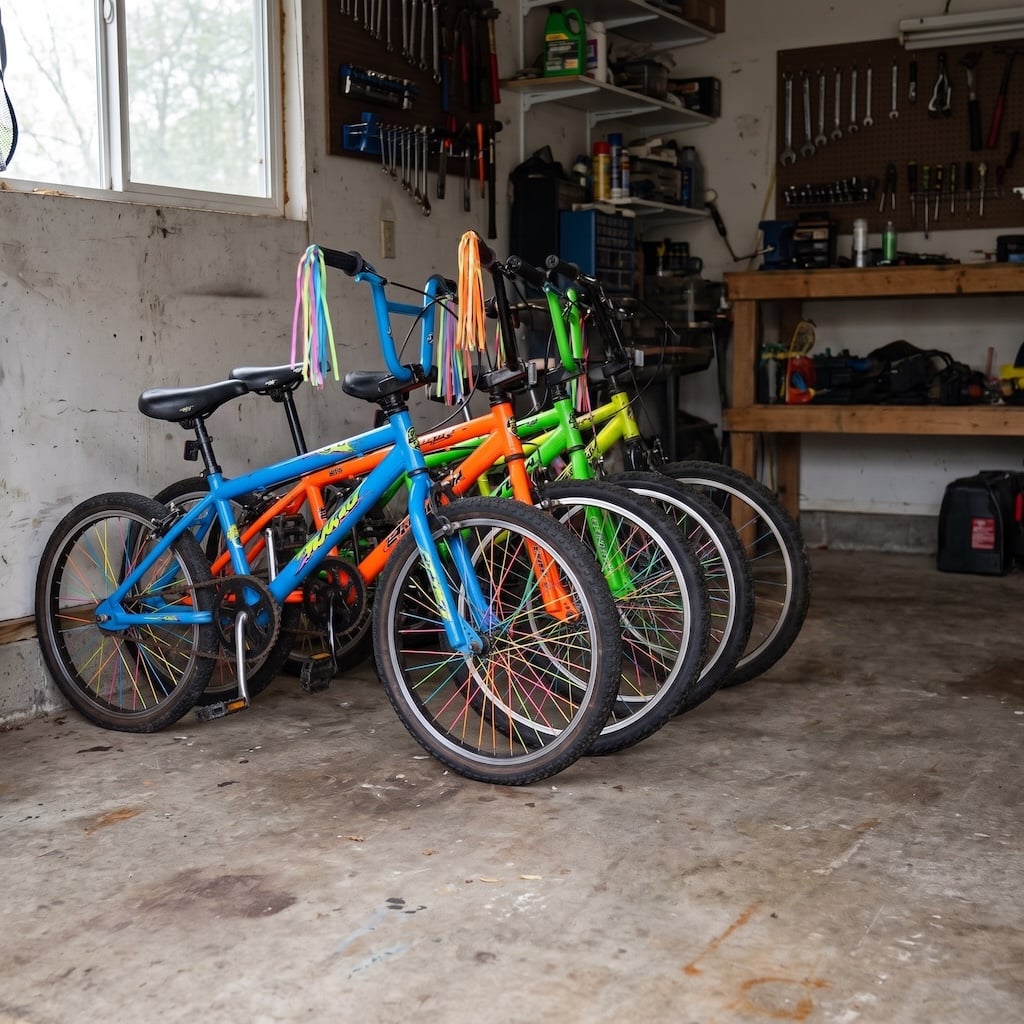
Nobody used a kickstand. The bikes just leaned against the wall in a slow-motion domino, and the whole row came down the second you tried to free yours from the middle.
Chrome and neon everywhere. Streamers on one set of handlebars, pegs on another BMX, and playing cards clothespinned into the spokes so it sounded like a motorcycle if you went fast enough. You knew exactly how far the chain had to slip before it threw itself off, and you knew the grease was going on your leg either way. These things carried an entire childhood of range: to the end of the street when you were little, across town by the time you were twelve.
30. Rollerblades and Inline Skates
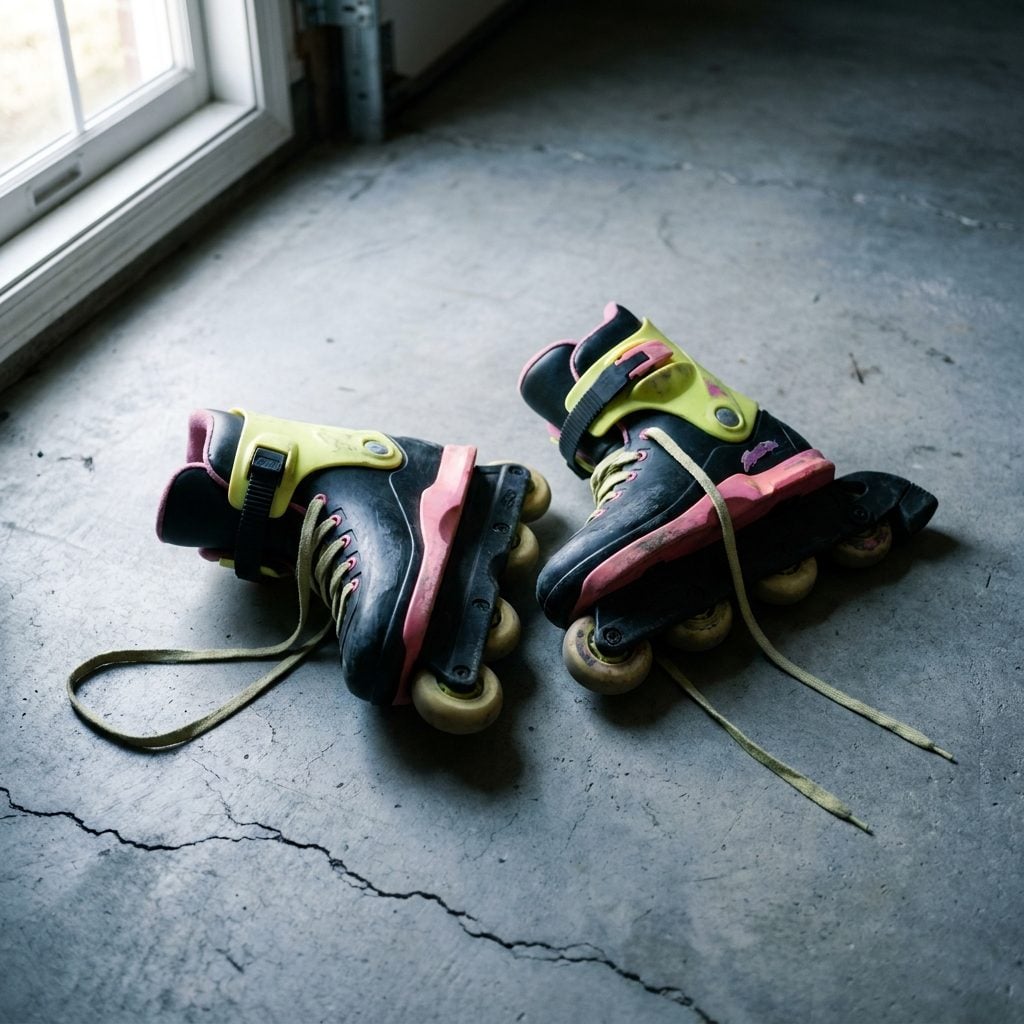
You laced them up sitting right there on the cold concrete, because trying to walk in them on anything less than solid ground was a broken tailbone waiting to happen.
Every kid had the same fantasy of gliding down the street like the people in the commercials, and plenty had the same scab collection to show for it. The wrist guards showed up in the garage too, usually just one of them, the other lost forever. Neon, slightly reckless, completely convinced of itself, the whole decade fit into a single object.
29. Skateboards
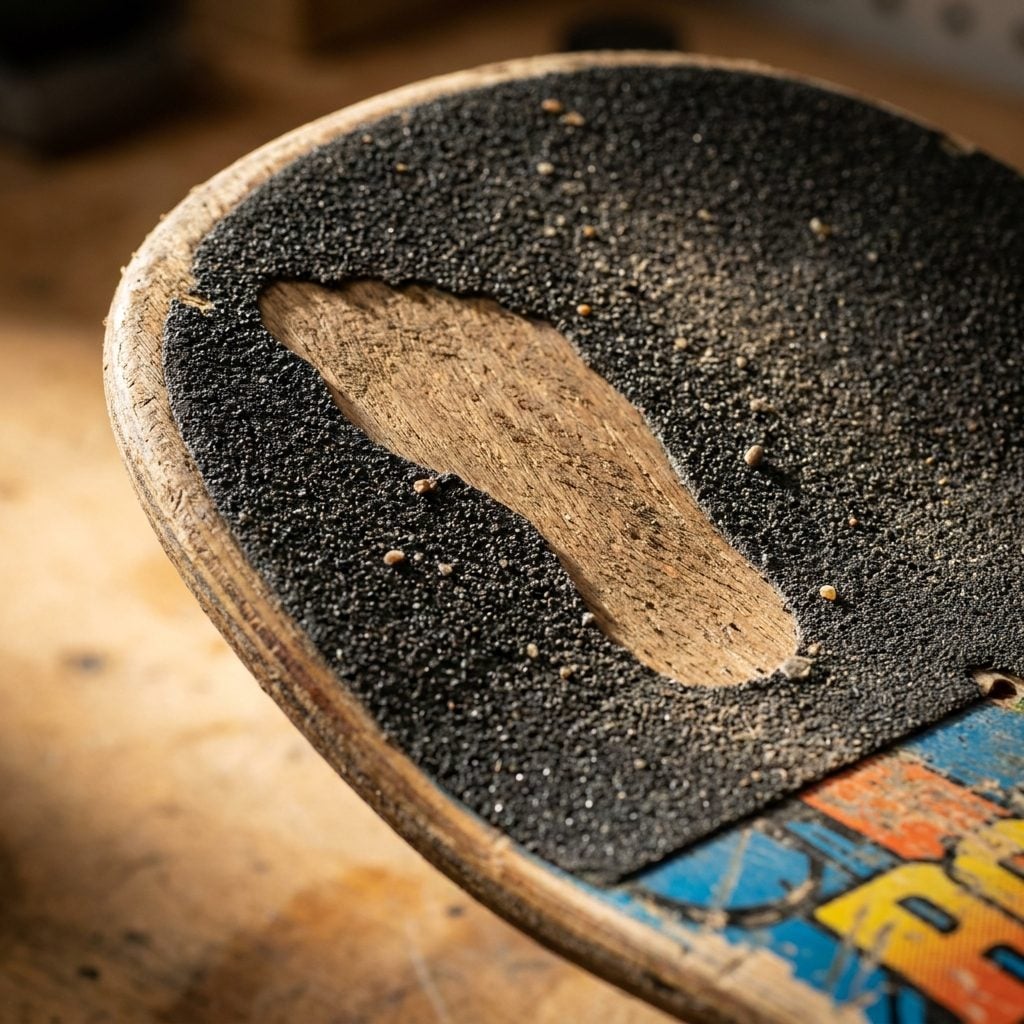
The grip tape wore down in the exact shape of one specific foot. You could tell whose board it was without looking.
Most of these boards racked up more miles going to a friend’s house than doing any actual trick. The bottom got scraped raw from a thousand failed ollies off the driveway lip. Stickers layered over stickers. It lived propped against the bench, ready for the next attempt at the kickflip that never quite landed.
28. Basketballs, Footballs, and Soccer Balls
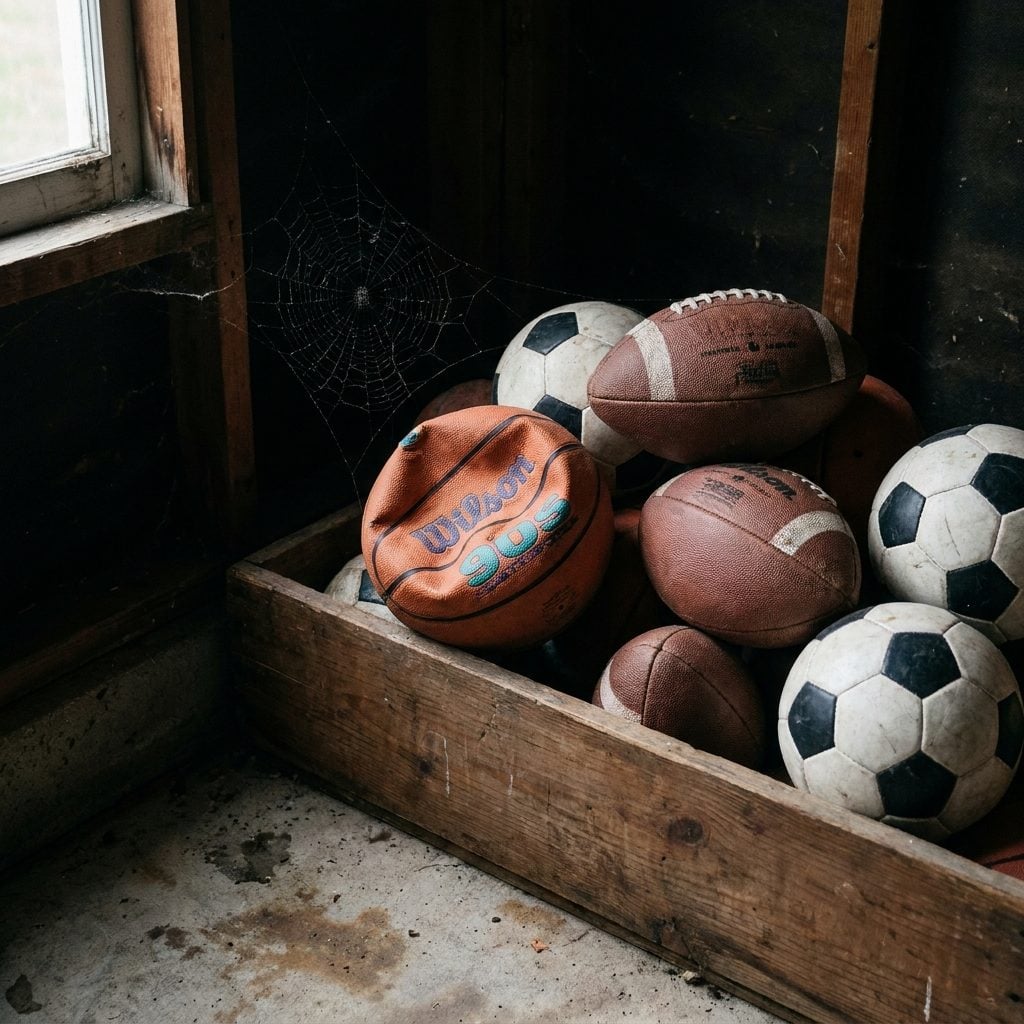
There was always one that wouldn’t hold air. The basketball went half flat by August and everyone just accepted a mushy dribble as the natural order of things.
They collected in a corner or in one of those mesh ball bags nobody ever fully zipped. A soccer ball with the panels peeling. A football with the laces coming loose. The hand pump lived somewhere in there too, needle bent, requiring a spit and a prayer to get it seated. You grabbed whatever was closest on the way out the door, and every ball had a personality earned through years of driveway abuse.
27. Plastic Sleds and Snow Toys
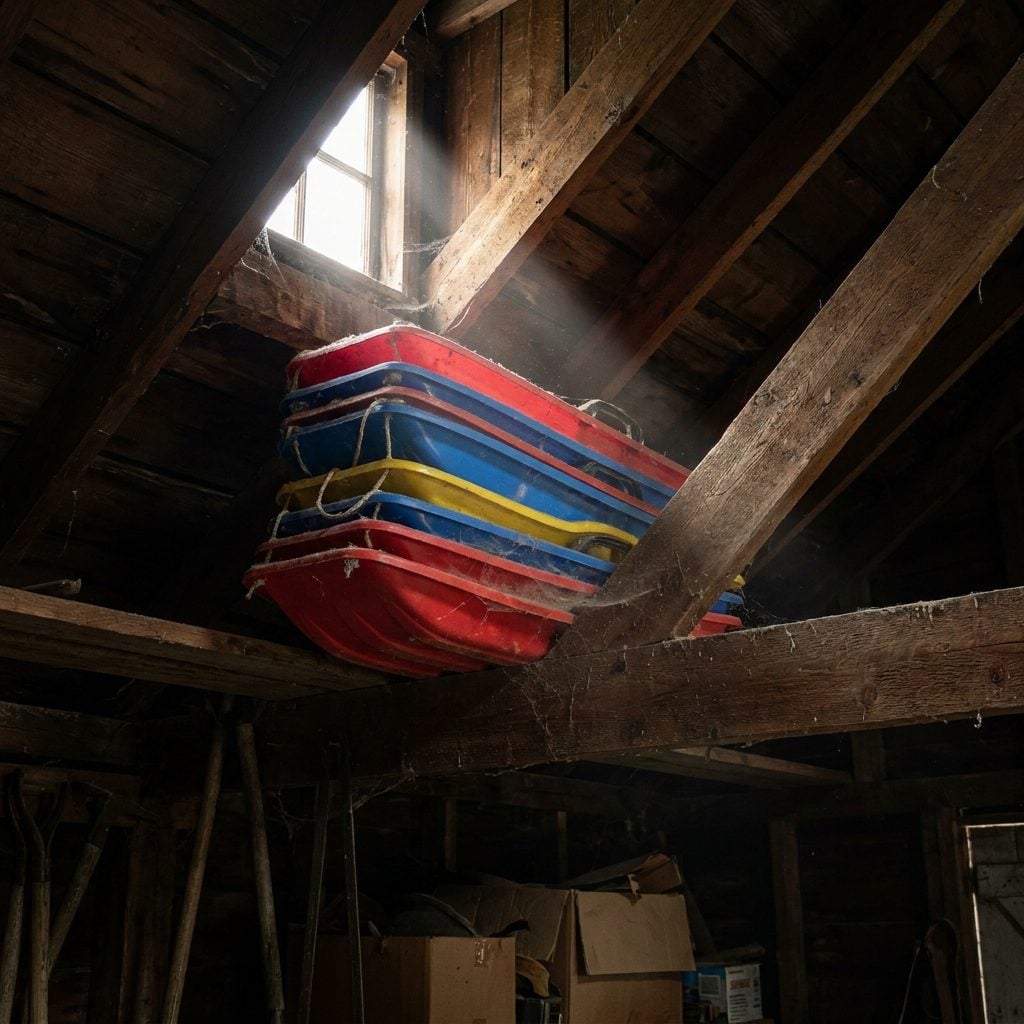
They spent about eleven months of the year gathering dust and one glorious month justifying their entire existence.
The molded plastic saucer with the rope handles that never steered. The red toboggan everyone piled onto until it snapped. That flimsy foam-and-plastic combo that cracked the third time down the hill. When the first real snow hit, the whole family remembered exactly which nail the sleds were hanging on, and digging them out from behind the lawn chairs came with its own specific joy.
26. The Lawn Mower
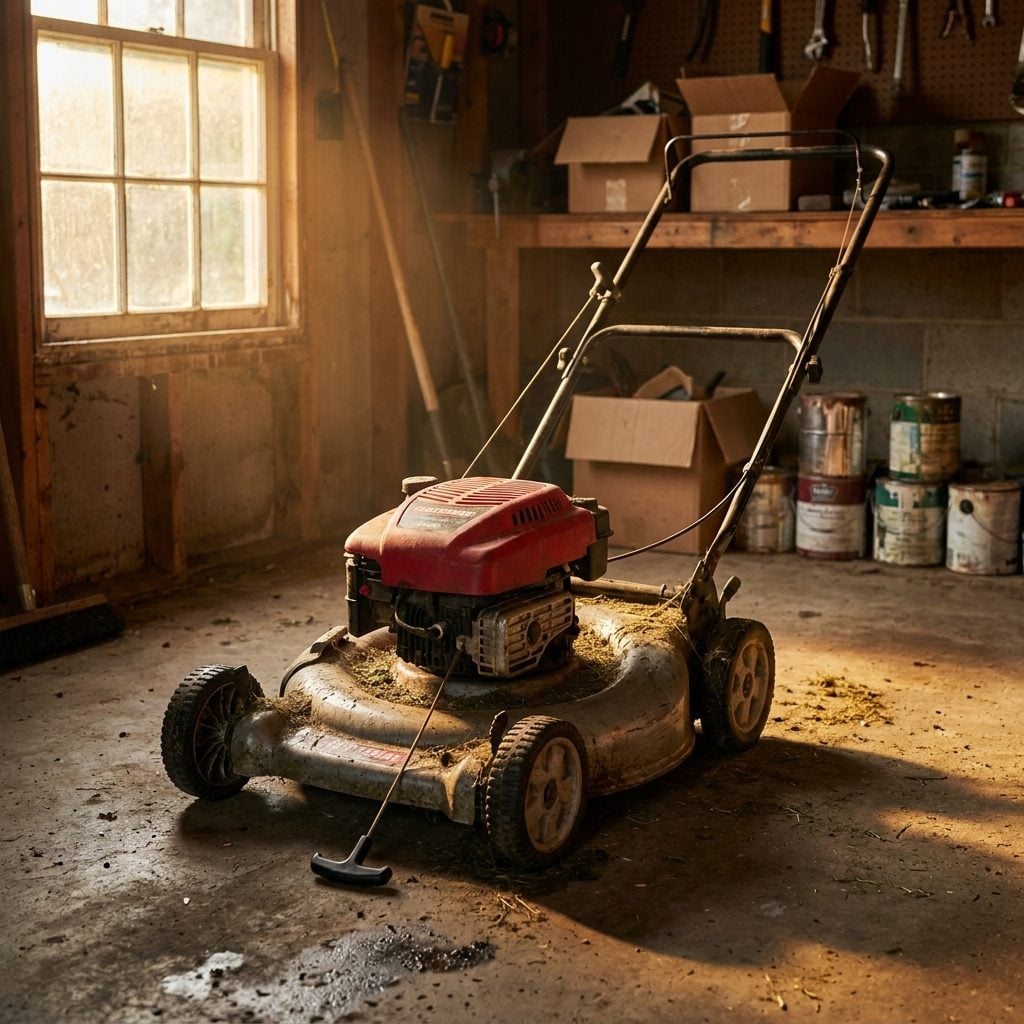
You could read the whole family’s Saturday morning by whether the thing started on the first pull or the fifteenth.
Grass clippings caked onto the underside like green cement. The smell of gas and hot metal. Dad’s specific mix of coaxing and threatening as he yanked the cord and mumbled at it. The mower took up prime real estate, and there was always a red plastic gas can nearby that you were absolutely not allowed to touch.
This corner was pure function. No decoration. Just the tools of keeping the yard from swallowing the house.
25. The Weed Trimmer
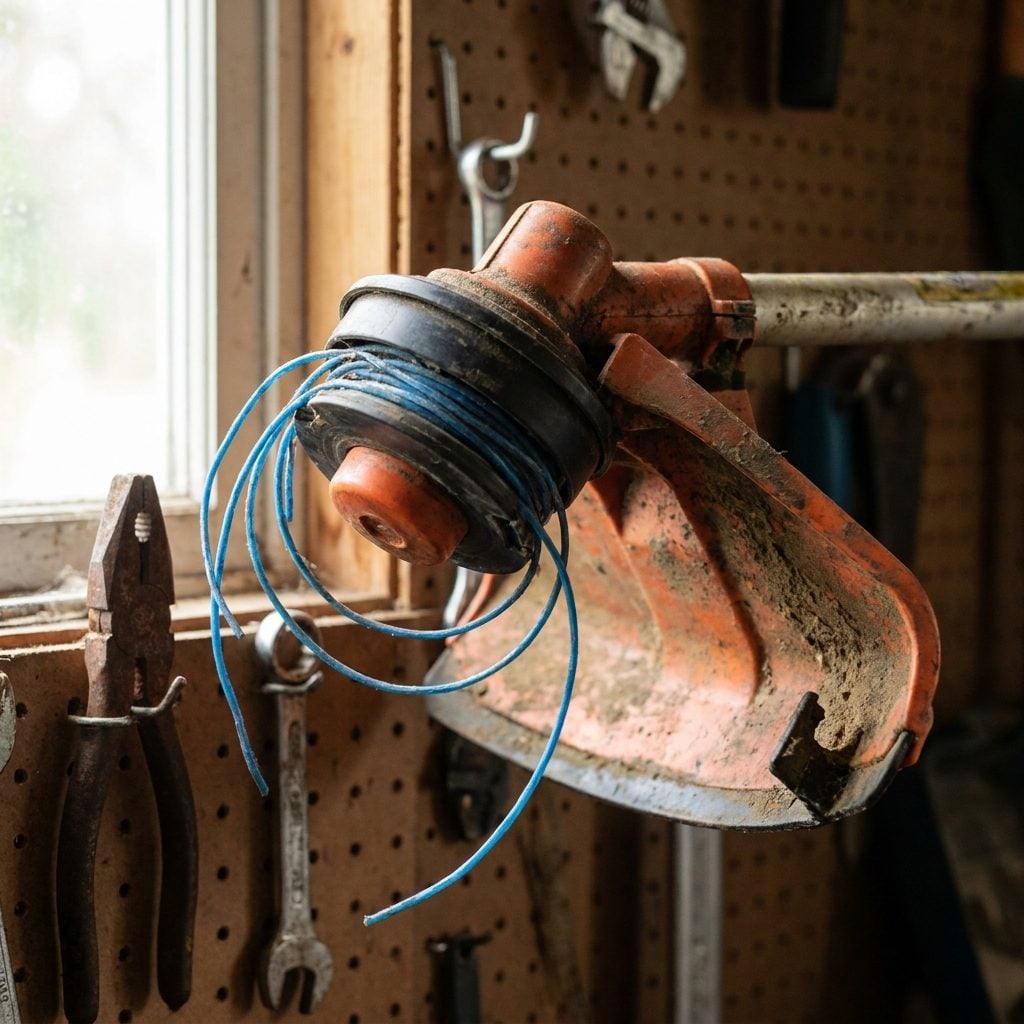
The bump-feed head never fed line when you actually wanted it to, only when you accidentally tapped it against the driveway and let out three feet of the stuff.
It hung on the wall next to the mower, its own little assembly of frustration. Restringing the spool was a rite of passage that made grown adults say words the kids weren’t supposed to hear. Whoever got stuck with edging duty knew they’d come back inside with grass confetti glued to their sweaty shins.
24. The Garden Hose Coiled on the Wall
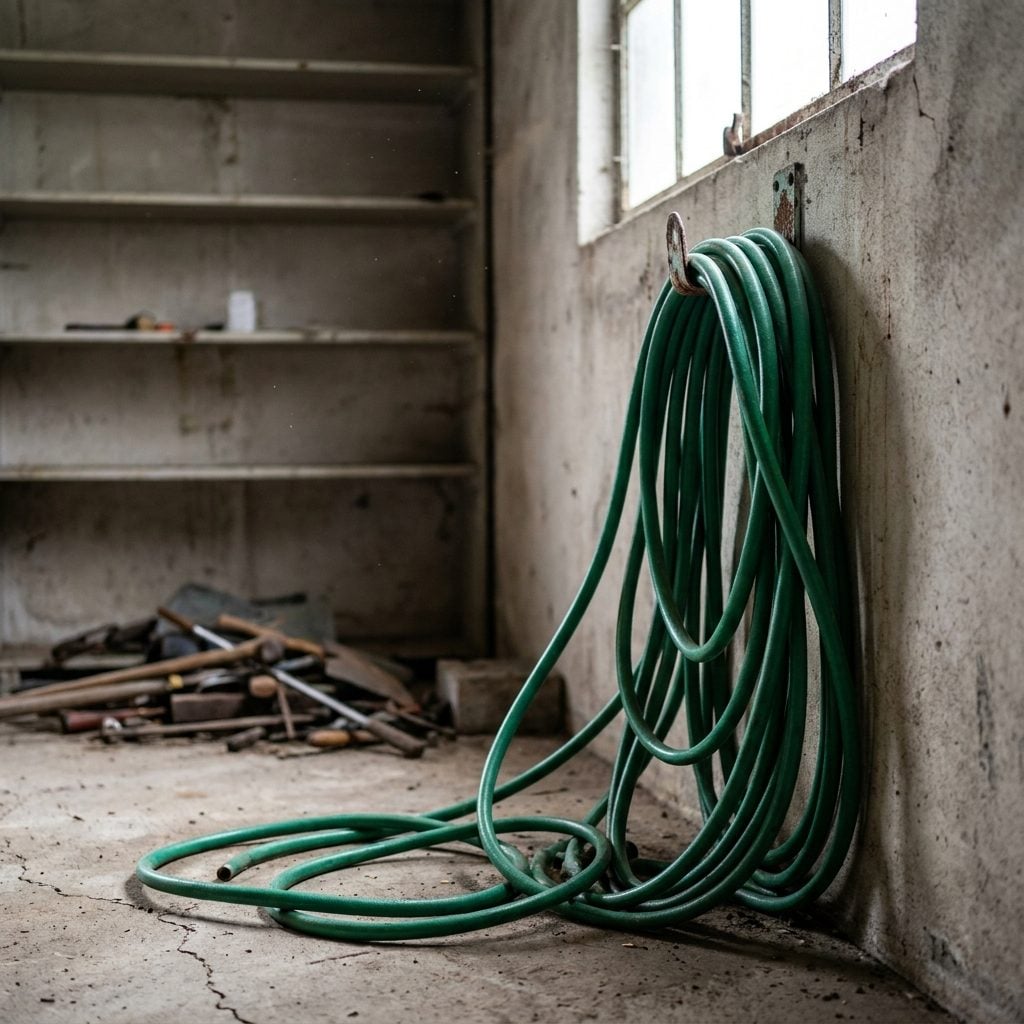
It never coiled right. You looped it over the hook, walked away, and it slowly unspooled itself onto the floor like it had somewhere better to be.
Green rubber, brass fittings gone slightly green themselves, and one permanent kink about ten feet in that cut the water pressure in half no matter what you did. The nozzle had settings nobody trusted past “jet” and “shower.” Half the summer ran through that hose: filling the pool, water balloon fights, and the drink you took straight from the end when nobody was looking.
23. Rakes, Shovels, and Garden Tools
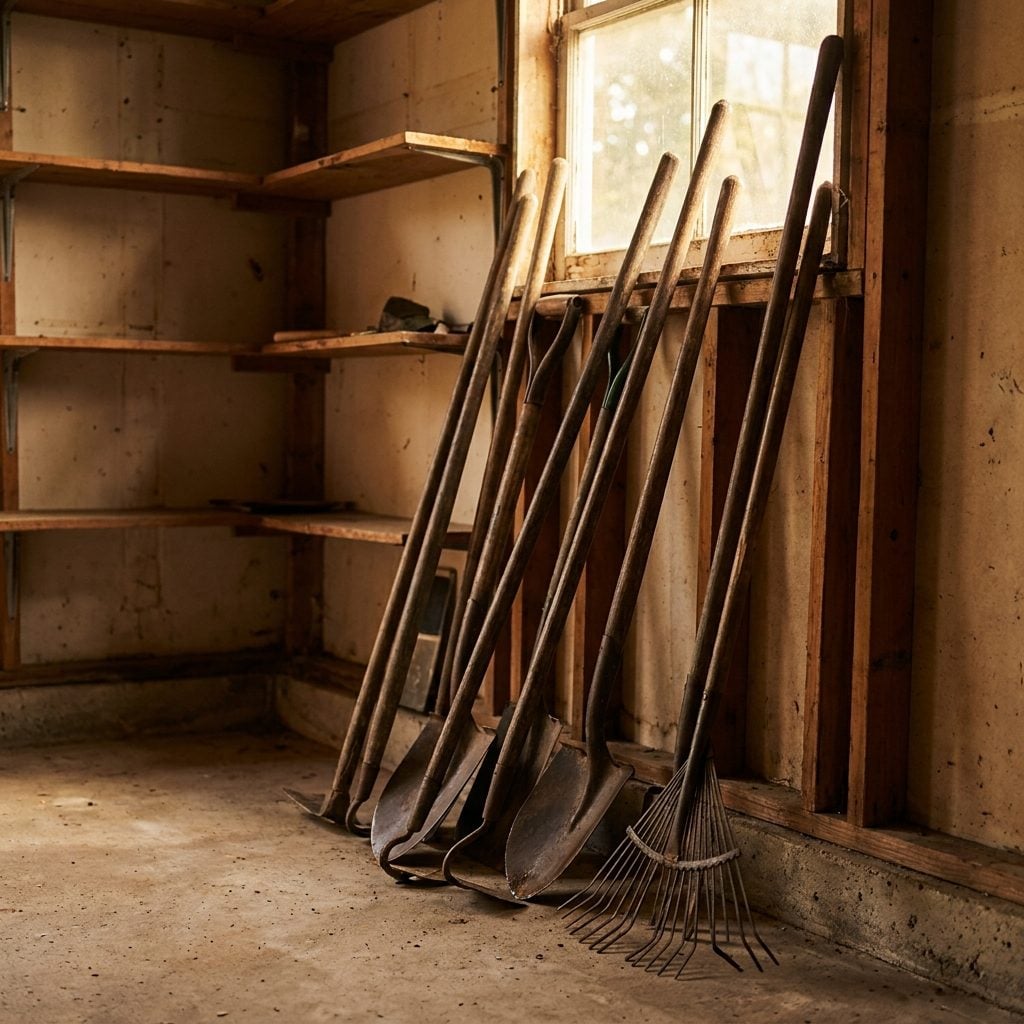
Some of these tools were older than the kids. Wooden handles worn smooth and dark from a decade of grips, a rake missing exactly two tines, a shovel with a bend in the blade from that one time it hit a root.
They hung on the pegboard in a rough order only Dad understood, and heaven help you if you put the rake back on the wrong hook. Fall meant the leaf rake, winter the snow shovel, spring the trowels for the garden bed nobody wanted to weed. No decorating required. Everything in this corner had actually been used.
22. Bags of Fertilizer and Grass Seed Leaning in the Corner
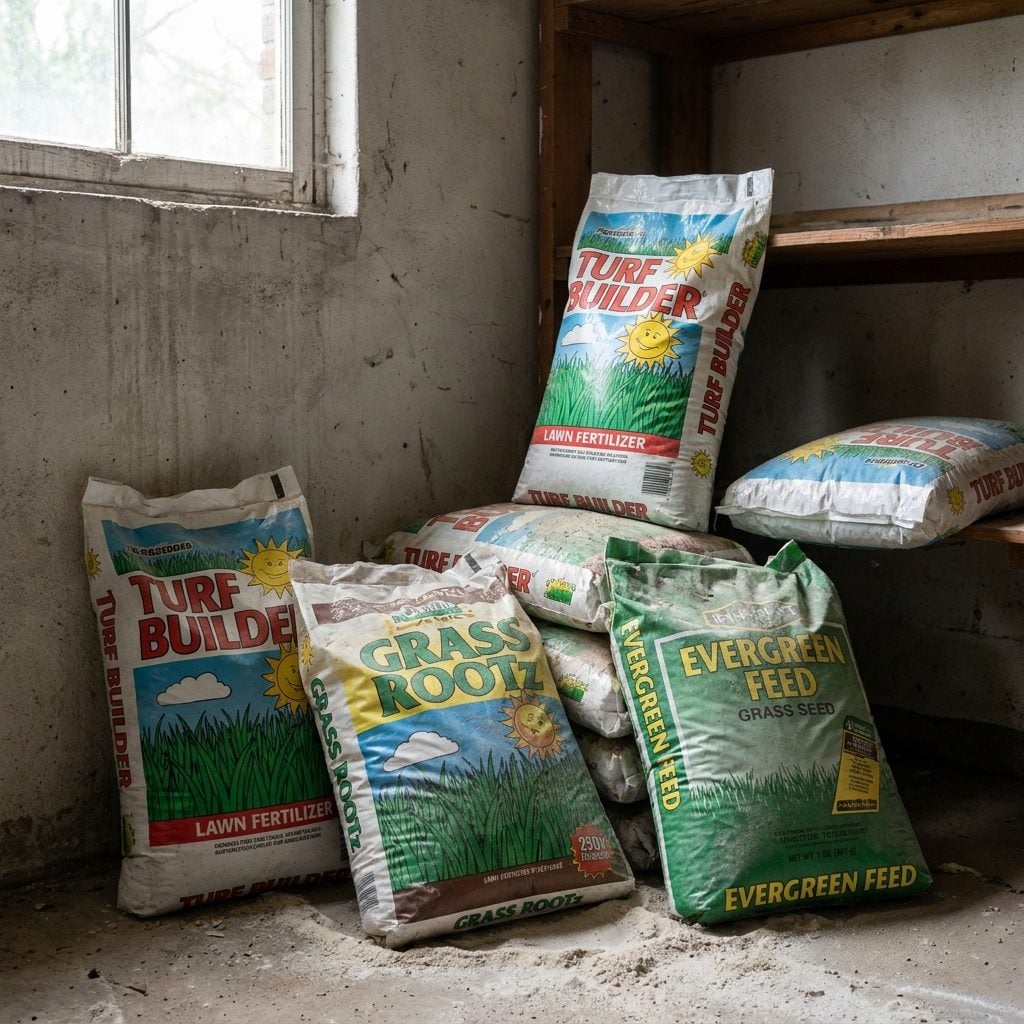
Every spring the smell hit you before you saw them—that damp, mineral, slightly ammonia tang of lawn fertilizer that had been sitting in the corner since last October. The top bag always had its corner rolled down and clipped with a wooden clothespin, and a little constellation of pellets had escaped onto the concrete underneath.
Dad treated the lawn like a second mortgage. Grass seed lived next to it in a cardboard box gone soft at the edges, waiting for the bald patch by the mailbox that never quite filled in.
21. The Wheelbarrow Parked Handle-Up Against the Back Wall
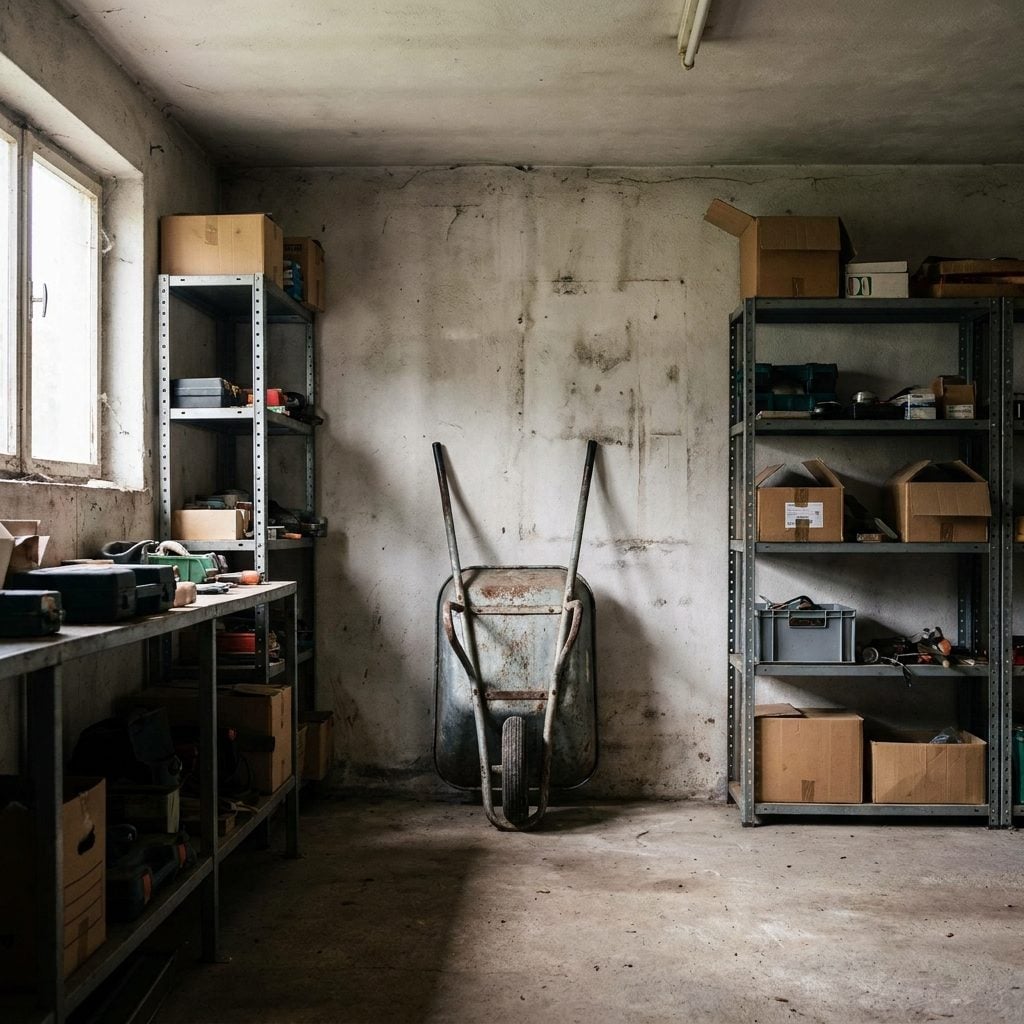
It was never actually put away. It lived on its nose against the wall, handles pointing at the ceiling, because that was the only way it fit. The tray always had a memory of the last job baked into it: dried concrete, a fossilized clump of mulch, the ghost of forty bags of topsoil.
The tire was perpetually half-flat. Each time someone loaded it up, they announced they’d “get around to the tire” and never did.
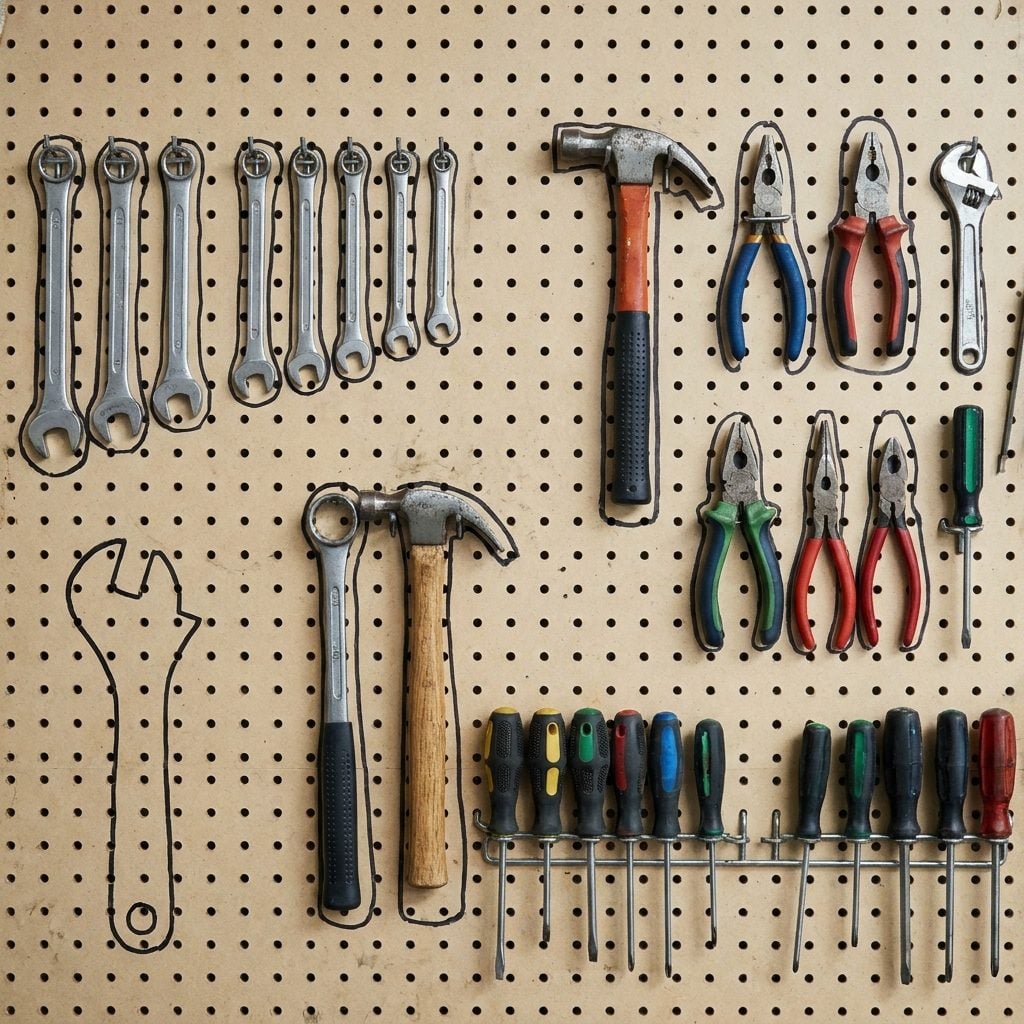
20. Dad’s Pegboard, Every Tool Traced in Black Marker
🔥 Would you like to save this?
The pegboard was a personality test disguised as storage. Some dads had the outlines—black Sharpie silhouettes traced around every hammer and wrench so you knew, at a glance, exactly which tool your teenage self had “borrowed” and failed to return.
The empty outline was an accusation. You’d walk in, see the ghost of the needle-nose pliers where the pliers should be, and feel a low hum of guilt. Nobody enforced it. The board enforced itself.
19. The Heavy Metal Toolbox That Weighed a Ton
Red steel, cantilever trays that swung out like accordion wings, and a weight that made you lean sideways carrying it across the garage. The lid closed with a clank you could feel in your teeth.
Every socket had a home in the top tray, more or less. The bottom was a mystery layer of loose bolts, a broken tape measure, and one wrench that fit nothing anyone owned. Passed down or bought once and kept forever.
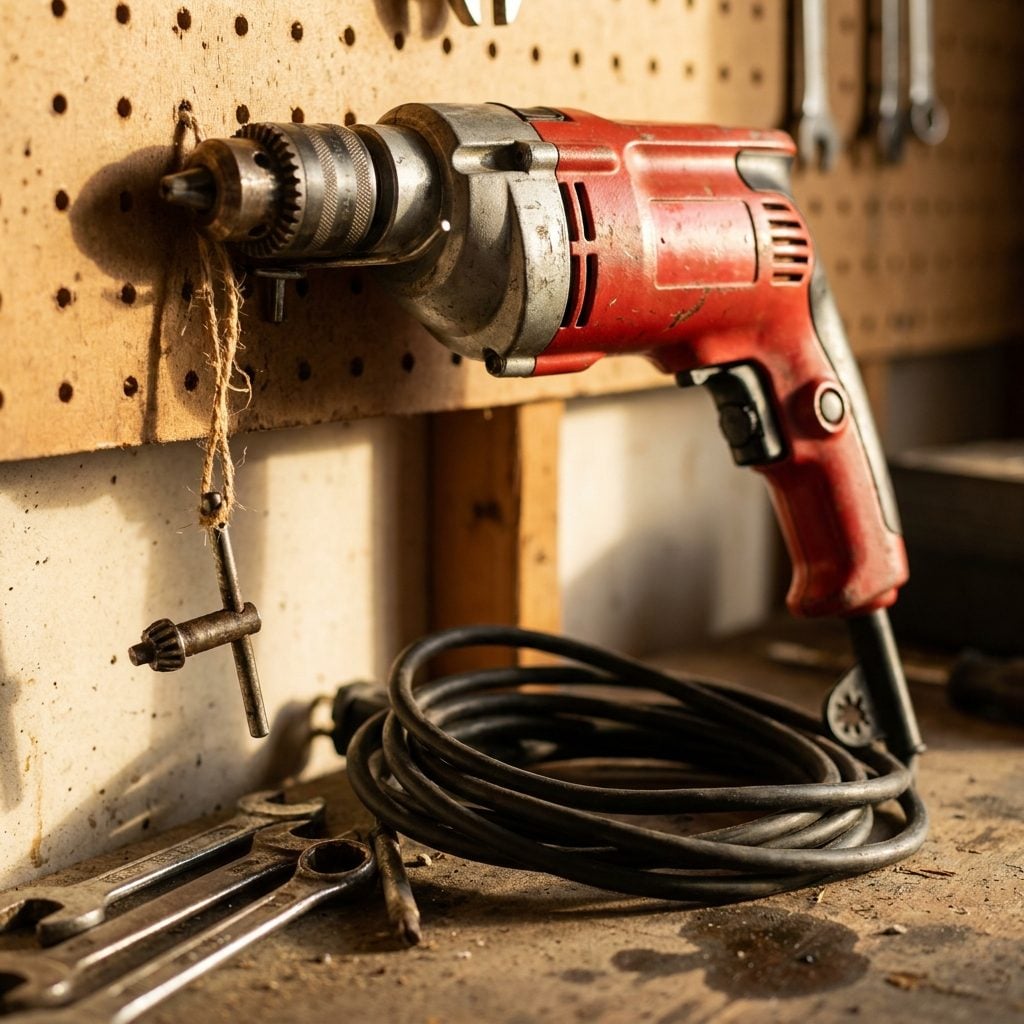
18. The Corded Power Drill With the Chuck Key on a String
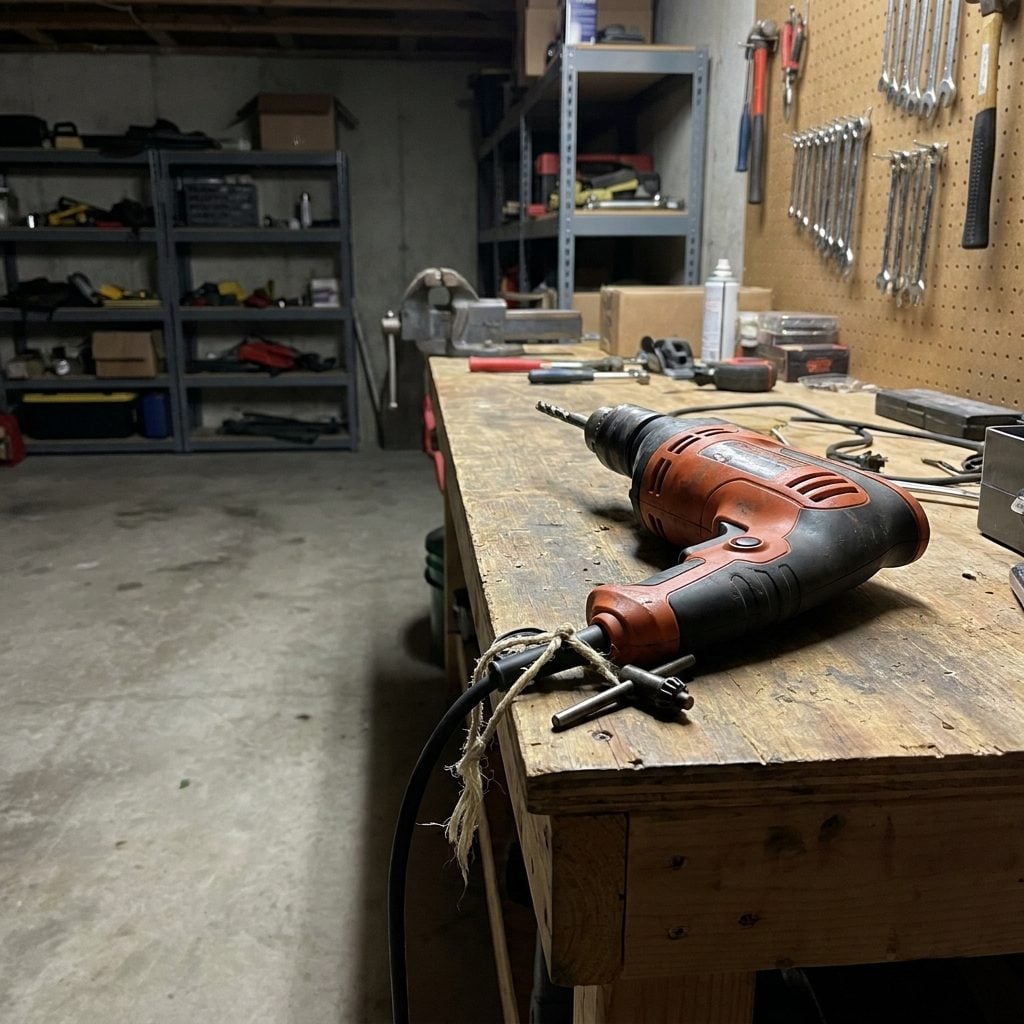
Cordless drills existed. Nobody in the family owned one. This thing had a cord thick as a garden hose and a chuck you tightened by hand with a little key, which meant losing the key was a household crisis.
So someone tied the chuck key to the cord with a shoelace or a zip tie, and that was the fix for a decade. The drill screamed when it bogged down, and you learned exactly how much pressure it would tolerate before protesting. Afterward it smelled faintly of hot electric motor.
17. Extension Cords Coiled (Poorly) on a Nail
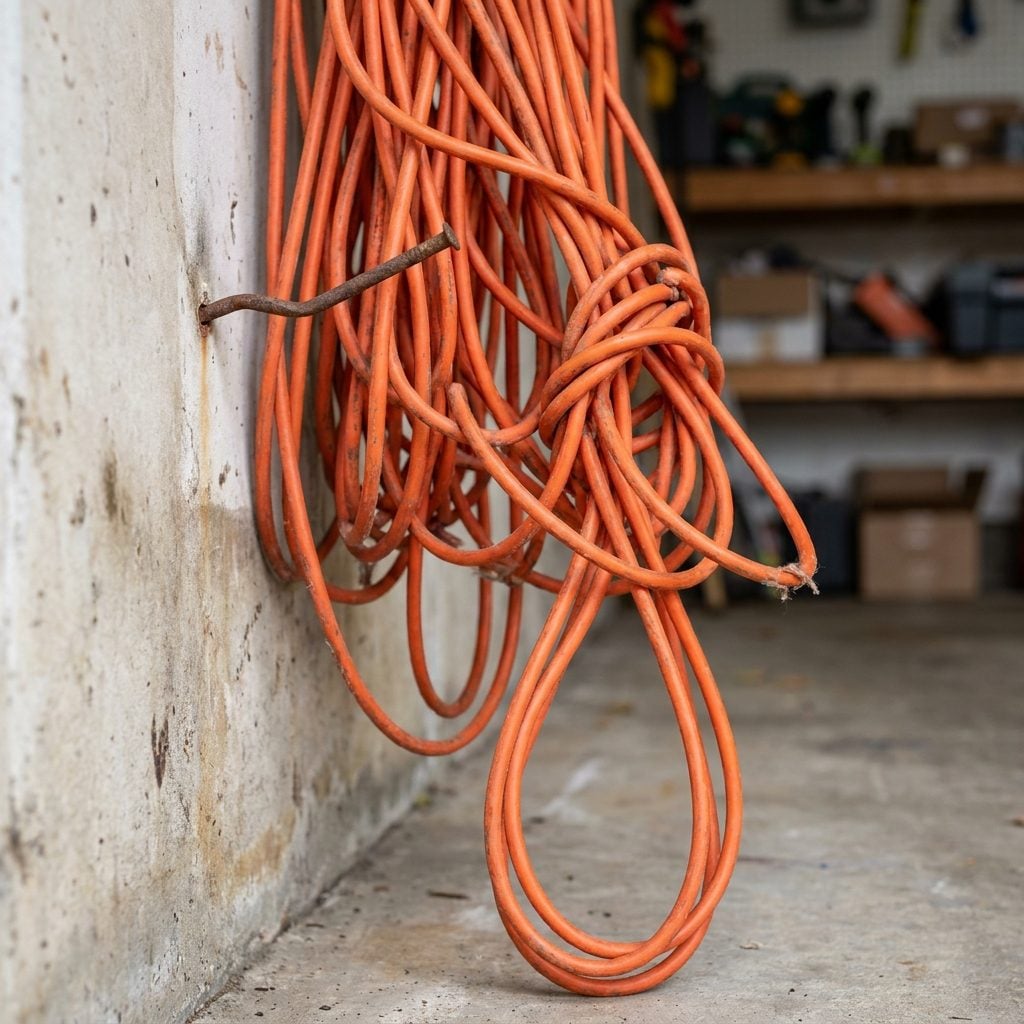
They lived on a single bent nail, coiled with the best of intentions and tangled within a week. There was always the good orange one—heavy-duty, outdoor-rated, treated with respect—and the thin brown one nobody trusted for anything with a motor.
Pulling one down meant pulling all of them down. And somewhere on the good cord, near a plug, there was a wrap of black electrical tape covering a nick that Dad swore was “totally fine.” It wasn’t.
16. The Workbench Buried Under Three Half-Finished Projects
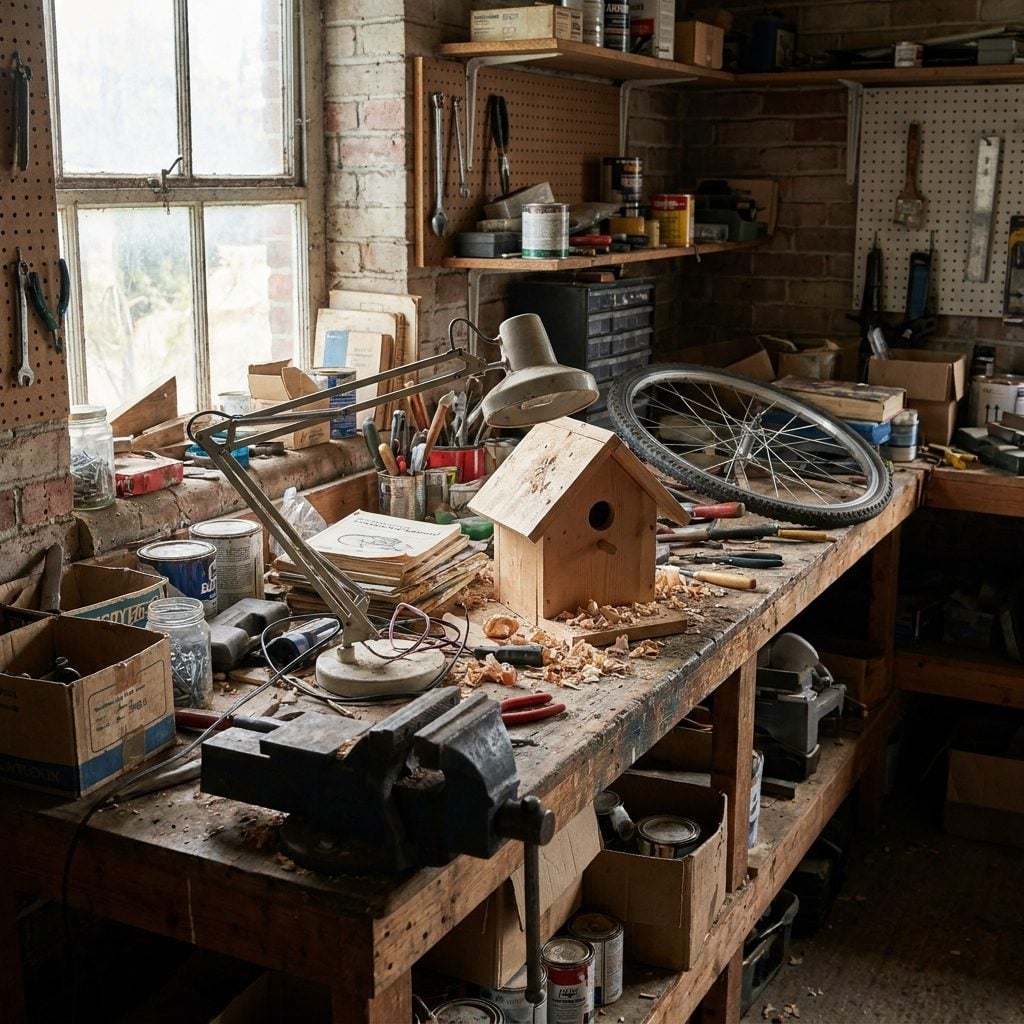
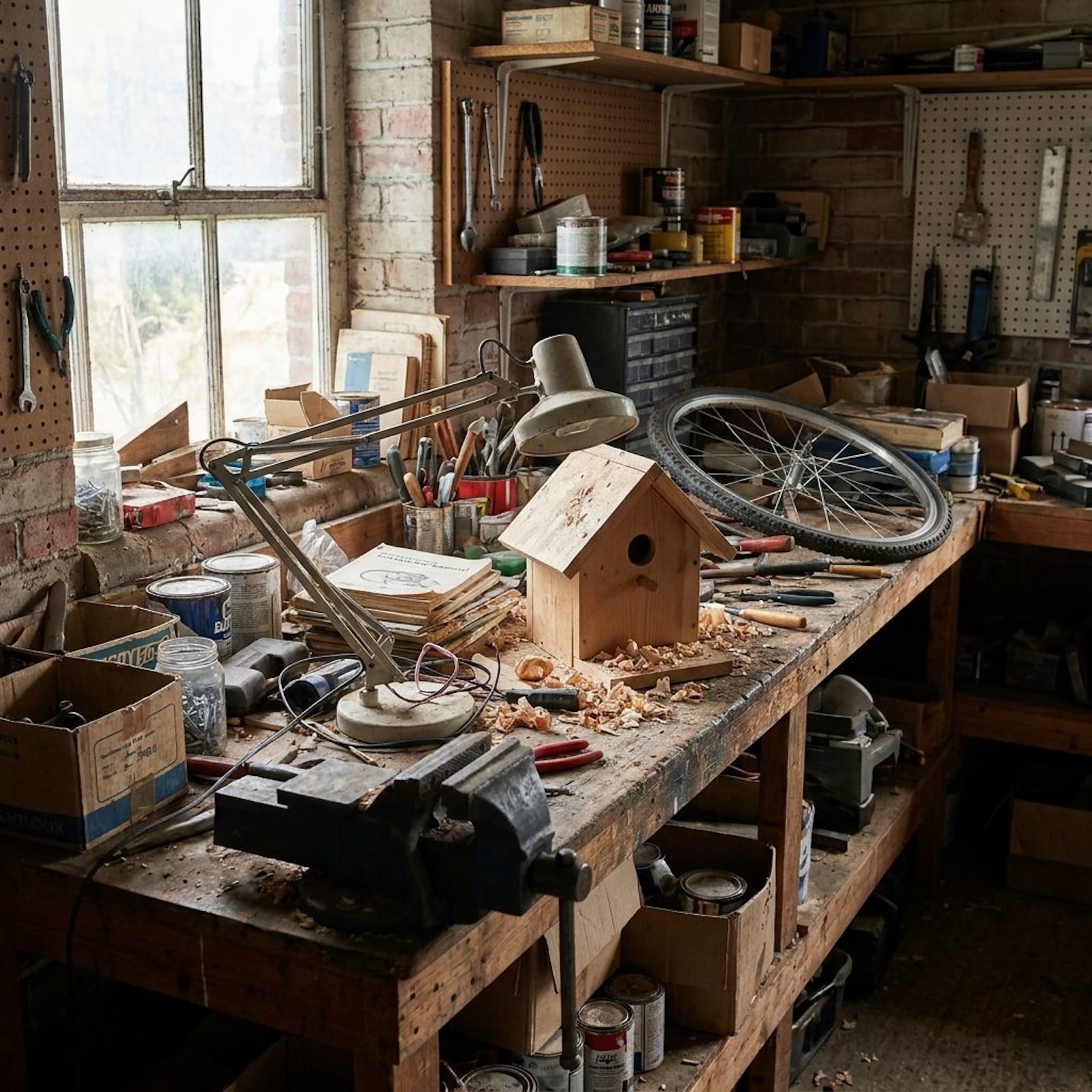
The bench was never clear. A birdhouse waiting on a roof, a lamp mid-surgery with its guts hanging out, a bicycle wheel clamped in the vise since March—every project was 80 percent done and permanently paused at the annoying part.
You weren’t allowed to move anything, because Dad “knew where everything was.” He did not. But the archaeology of that bench told the honest story of every good weekend intention the man ever had, and there’s something genuinely lovely about that.
15. Coffee Cans Full of Nails, Screws, and Mystery Hardware
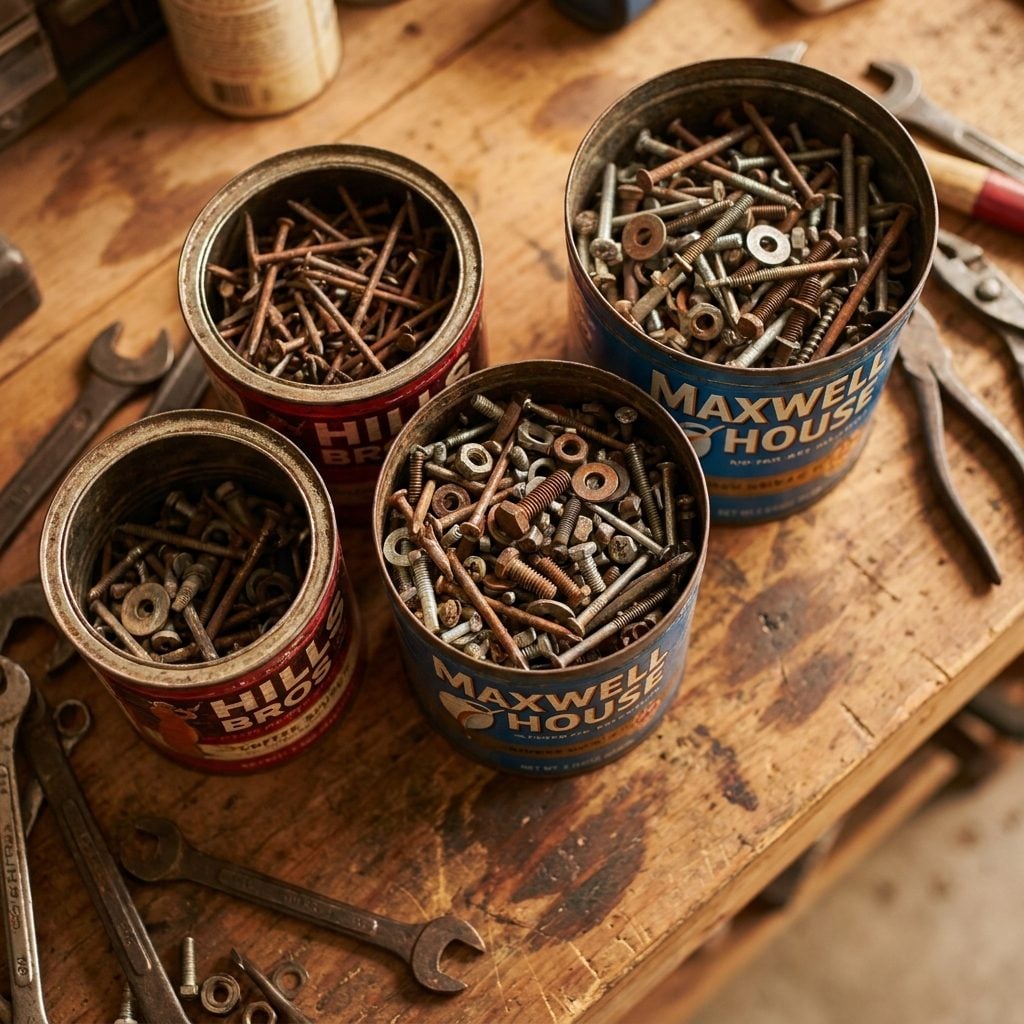
Folgers cans. Maxwell House cans. Whatever came empty got a second life holding hardware—and not sorted hardware, general hardware. You needed one specific 1.5-inch wood screw, and the only way to find it was to pour the whole can onto the bench and pick through it by hand like a jeweler.
Half the nails were bent. Nobody threw out a bent nail. You never knew.
A coffee can of mixed screws is the most optimistic object in any American garage.
14. Motor Oil and a Rainbow of Automotive Fluids
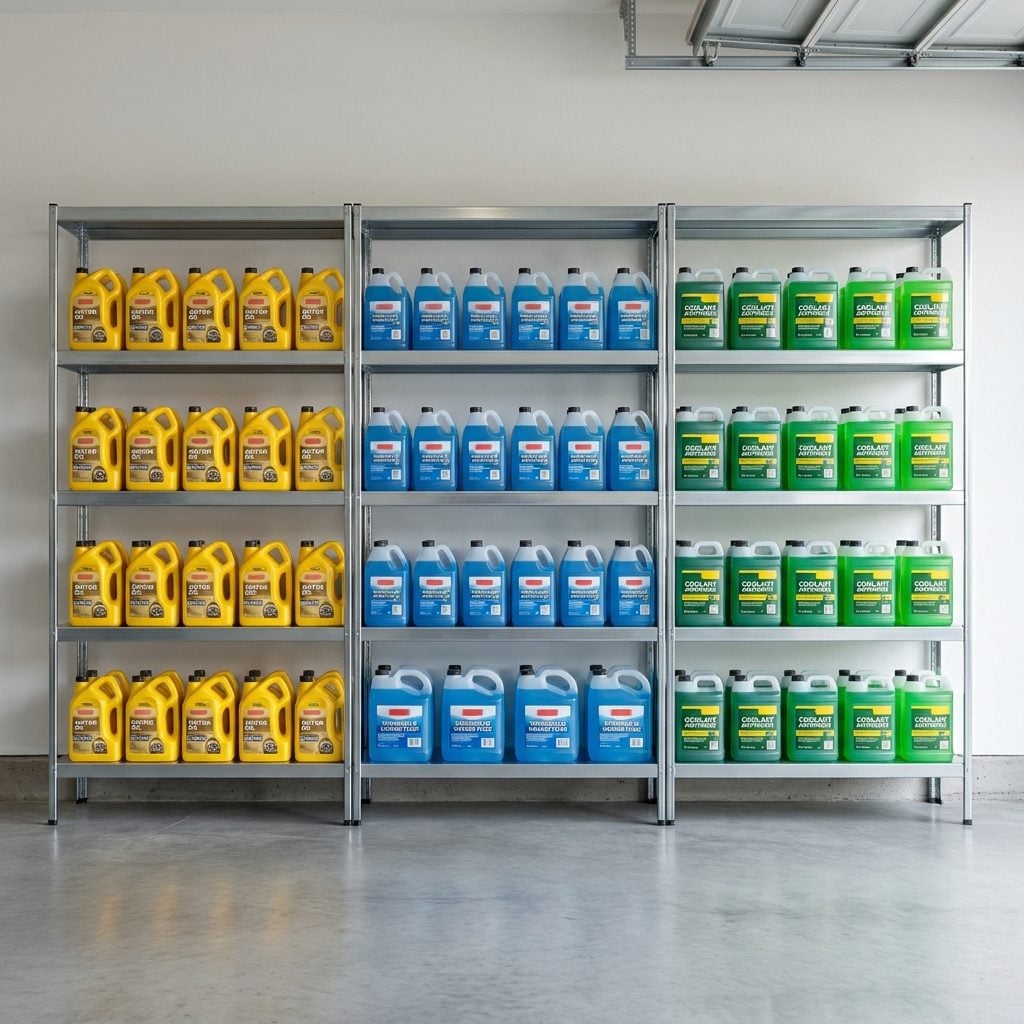
The oil-change shelf was a whole color story before anyone thought to call anything a color story. Yellow oil bottles, unmistakable neon-green antifreeze, the red funnel with a permanent slick around the rim, and a can of WD-40 that somehow got drafted for nearly every squeak, stuck bolt, and household emergency.
Under the car, a flattened cardboard box caught the drips. And under that, on the concrete, sat the permanent dark shadow of every oil change that ever happened there—a stain that outlasted the car itself.
13. The Jumper Cables Coiled in the Trunk (and the Garage, Just in Case)
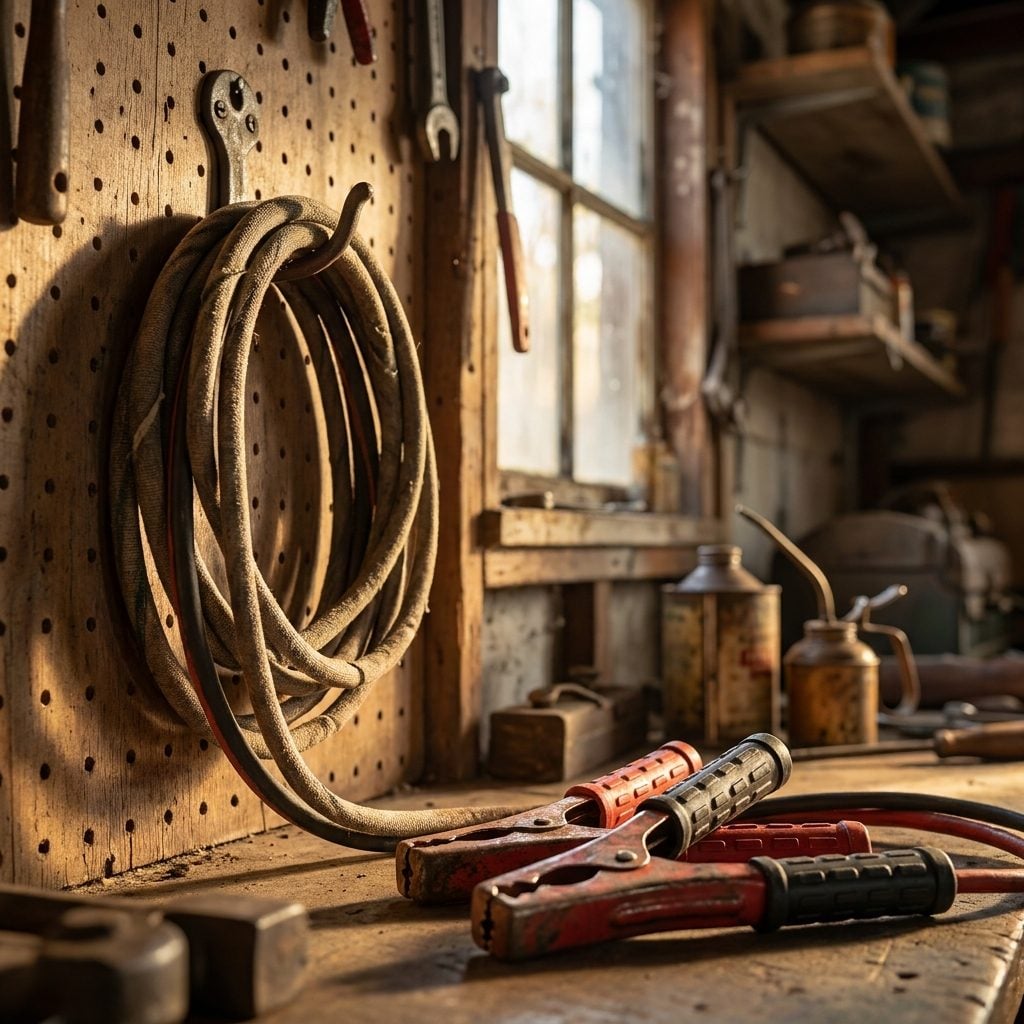
Every family seemed to have a set, and every set was slightly too short. Red clamp, black clamp, somebody leaning over an engine bay trying to remember the sequence, and a moment of genuine prayer before anyone turned the key.
They lived coiled on a garage hook and doubled in the trunk, because a dead battery on a January morning wasn’t an if—it was a when. The clamps were pitted, the copper going green, and somehow the cables were still there when somebody needed them. Which is the thing about the whole garage, really. None of it was pretty. All of it showed up.
12. The Car-Washing Bucket With the Sponge Still Floating In It
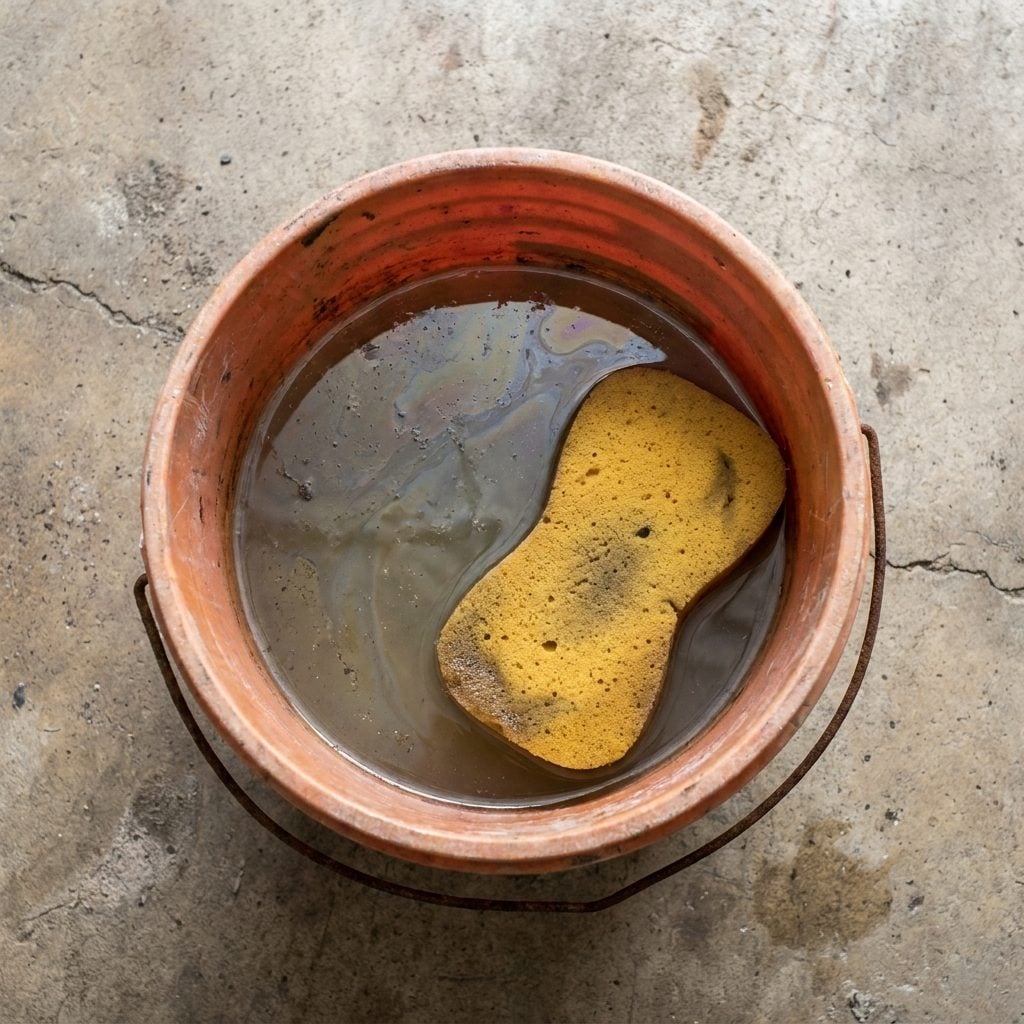
You could smell it before you saw it—that faint mildew tang of a sponge that had spent three weeks half-submerged in gray water nobody bothered to dump. The bucket lived in the corner by the hose bib. Mustard-yellow plastic, usually, with a crescent of chalky soap residue dried hard around the rim.
Saturday mornings meant Dad hauling it out, filling it from the hose, and squeezing in whatever soap the family used for the job. The sponge inside was always torn on one corner, and it floated no matter how you shoved it down. Never sank. And that chamois draped over the edge? Stiff as cardboard, permanently.
History Corner: Before inexpensive automatic washes became as routine as they are now, washing the family car in the driveway was a familiar weekend ritual in countless neighborhoods. The bucket, sponge, hose, and drying cloth had permanent garage territory because they were expected to come out again next Saturday.
11. Spare Tires and a Stack of Hubcaps Nobody Could Match to a Car
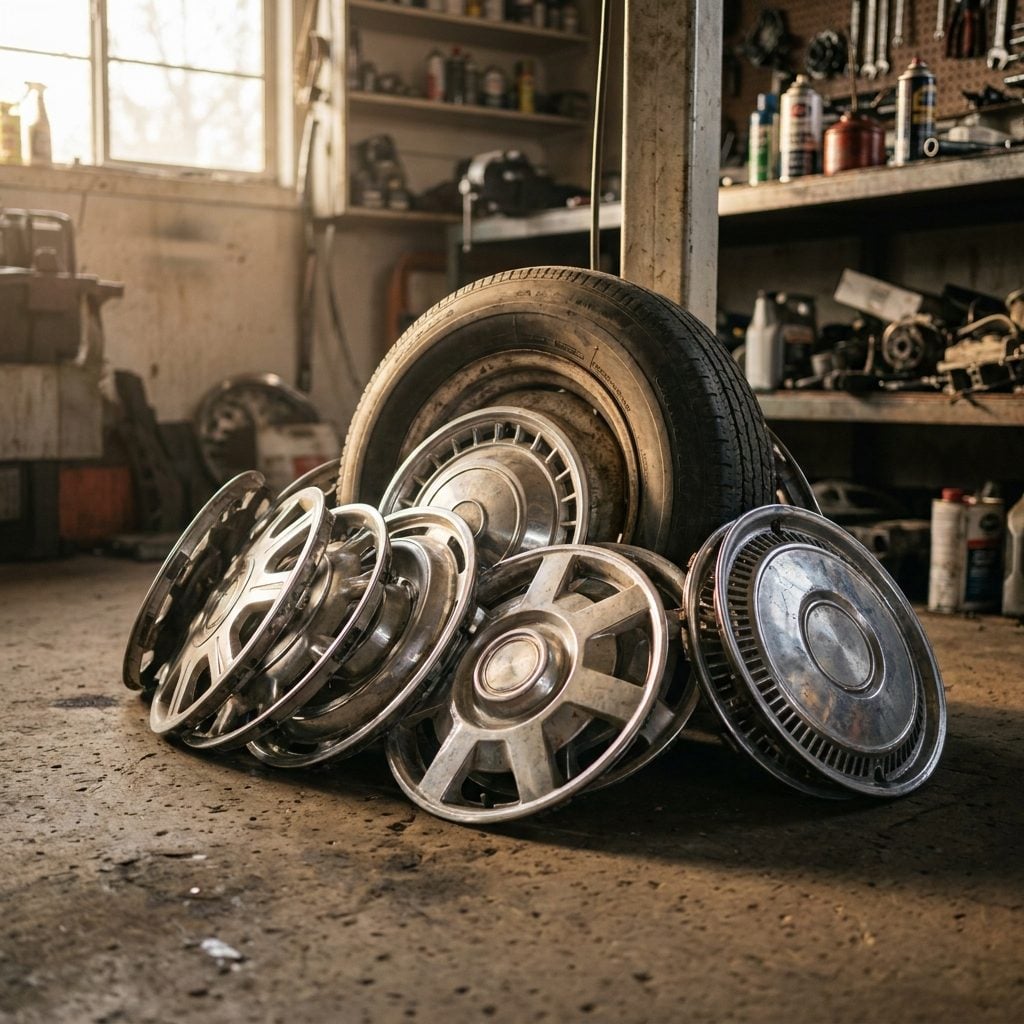
Somewhere in the back corner, propped against the wall like it was sulking, sat a spare tire with maybe fifteen pounds of air left in it. Dad swore it would get you to the shop. You never fully believed him.
Then there were the hubcaps, a leaning stack of them with chrome flaking off, none matching each other and none matching whatever car sat in the driveway. One came off a Buick sold years ago. Another got picked up on the side of the road, because free is free. They multiplied like the garage was breeding them in the dark.
Nobody threw them out. Toss one and you’d guarantee you needed it the following week, so they stayed put, gathering that gray film every garage produces, waiting for a car that no longer existed.
Fun Fact: Compact temporary spares became increasingly common because they saved both weight and trunk space. Their smaller size also came with limitations, which is why the instructions on the tire mattered far more than Dad’s confidence that it was “basically the same thing.”
10. The Red Gas Cans Lined Up by the Lawn Mower
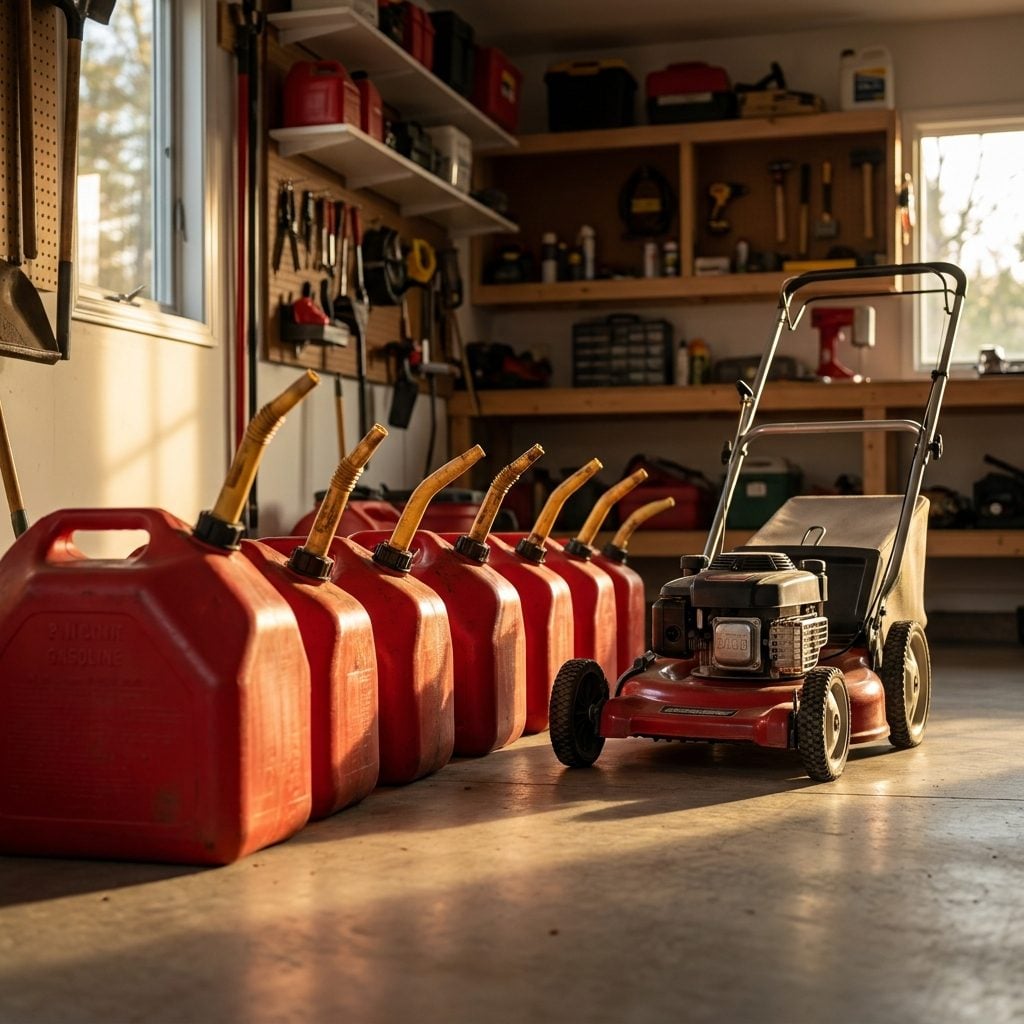
You knew that corner by the smell before you saw it. Two or three red fuel cans stood near the mower, one for gasoline and another sometimes reserved for the trimmer mix. Somebody always seemed to be double-checking which was which.
Older cans and spouts weren’t always as good at containing vapors as later designs, which helped create that unmistakable garage-fuel smell. By today’s standards, the casual way many of those containers were stored feels like another era entirely.
History Corner: Portable fuel cans changed substantially in the 2000s as newer designs emphasized child resistance, spill prevention, and vapor control. The old flip-spout cans are part of the visual memory of the period, but leaking fuel or persistent fumes were never features worth missing.
9. Folding Lawn Chairs With the Woven Nylon Webbing
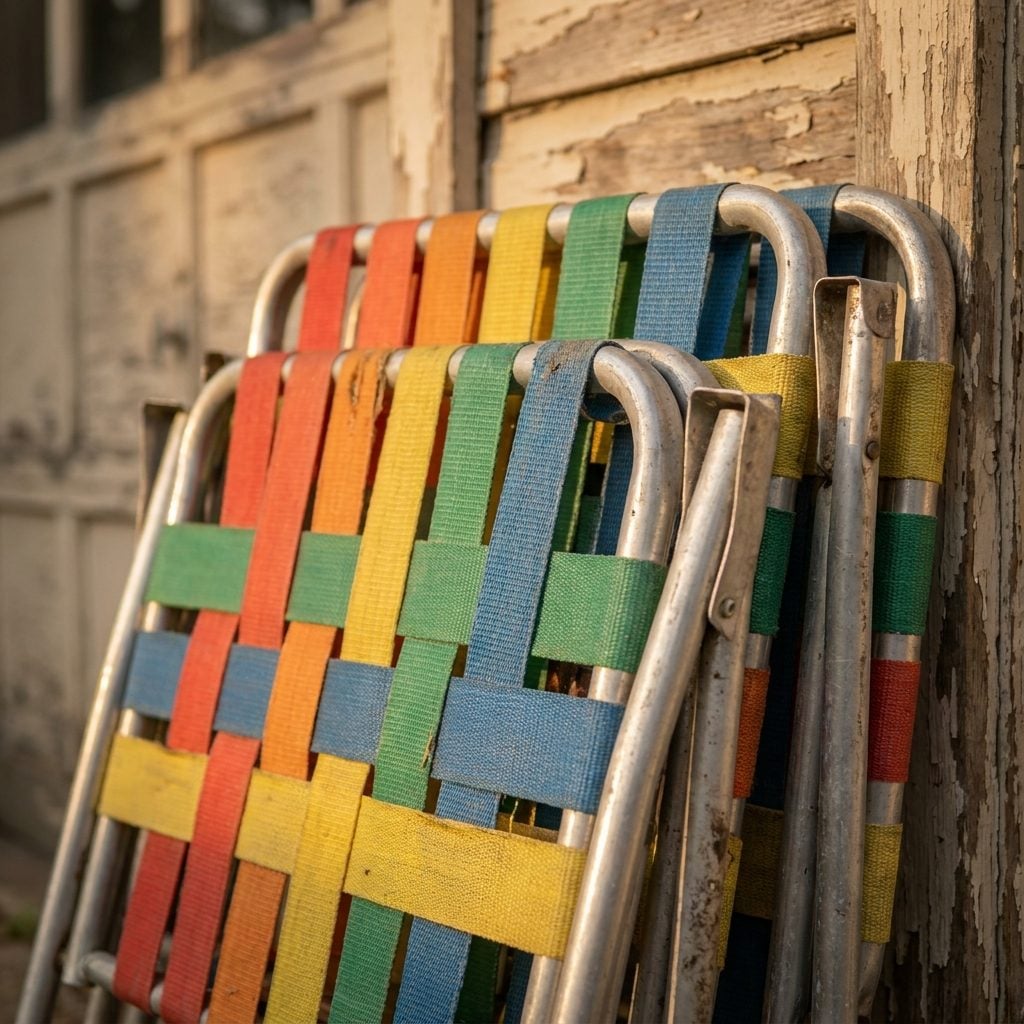
Green and white. Or yellow and white. Every summer the webbing stretched a little more, until the day it finally gave and dropped somebody straight through the seat frame—usually an uncle, usually holding a plate.
They stacked three or four deep in the corner by the second fridge, aluminum arms scratched from years of being dragged across the driveway to face the barbecue. Twenty minutes in one of those and you stood up with red waffle lines pressed into the backs of your thighs.
History Corner: The woven strapping on these chairs was often polypropylene or another durable synthetic webbing. Replacement rolls were inexpensive and widely available, giving plenty of people one more reason to spend a Saturday reweaving the chair instead of finally throwing it out.
8. The Coleman Cooler That Only Came Out for Road Trips
🔥 Would you like to save this?
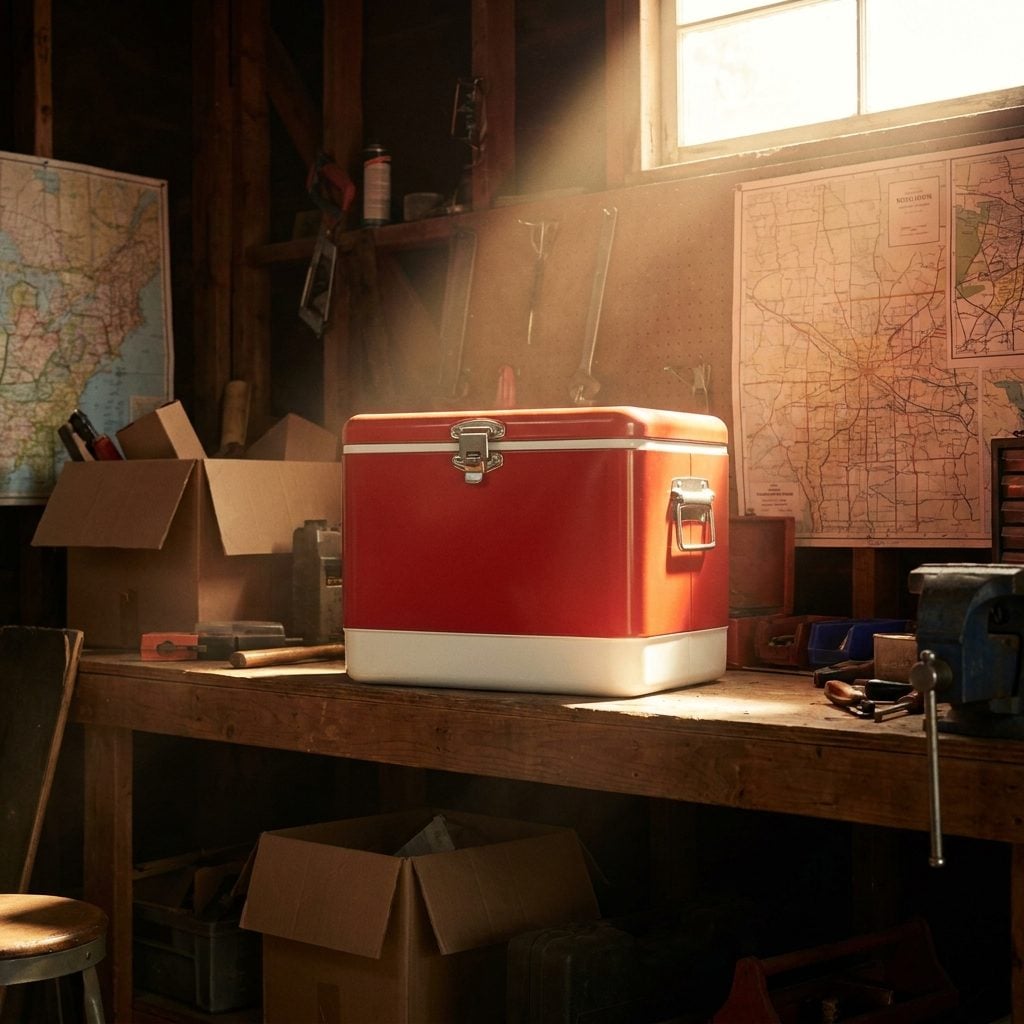
Red lid, white body, a stubby handle on each end. It lived up on the top shelf collecting garage dust, and there it stayed until Dad hauled it down the night before a trip. That was the signal. Vacation was real now.
The routine barely changed. You rinsed it out in the driveway, dumped in a bag of gas-station ice, then layered the sandwiches so they wouldn’t go soggy—pop cans crammed around the edges, a few string cheeses wedged on top. By hour three the ice had gone to slush and the sandwiches were swimming. Nobody cared.
History Corner: Coleman has been making portable coolers since the mid-20th century, and by the ’90s its hard-sided models were already familiar road-trip equipment. Their real achievement wasn’t glamour. It was surviving decades of family vacations, camping weekends, and being dropped onto parking-lot asphalt.
7. The Camping Tent and Sleeping Bags Stuffed Into Their Sacks
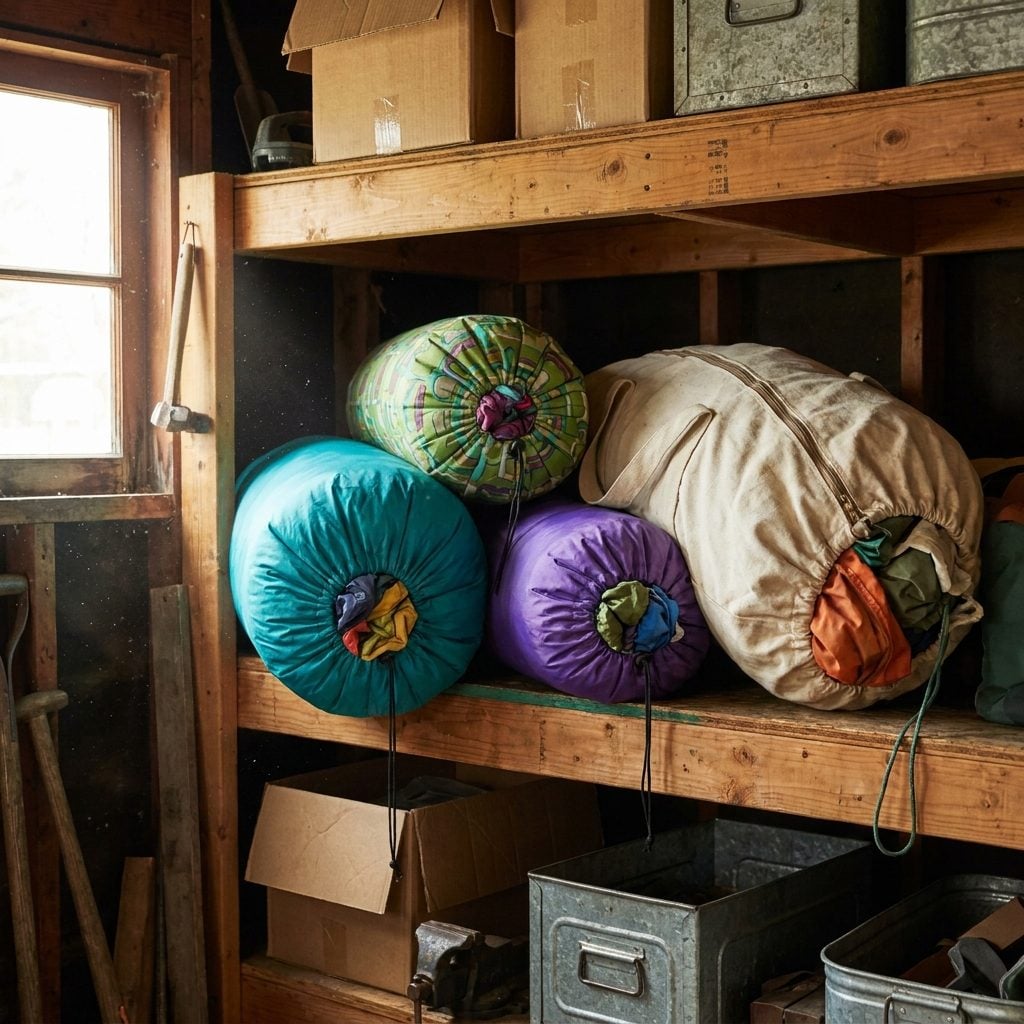
Nylon compressed into a nylon sack, cinched with a drawstring that had lost all its stops. That was the tent, wedged on a high shelf between the Coleman cooler and a box of unknown wires. Nobody could put it back the way it came. You’d wrestle the poles, lose the little instruction card by year two, and somebody always wound up reading the setup diagram by flashlight in a state park at dusk, swearing under their breath while the mosquitoes moved in.
The sleeping bags were worse. You could roll them tight, sit on them, force them into the stuff sack, and they’d still come out looking twice their travel size. Flannel lining printed with ducks or plaid. A zipper that snagged the fabric every single time.
History Corner: Compression sacks eventually made bulky sleeping bags easier to pack, but plenty of family camping gear still lived in simple drawstring bags that seemed mysteriously smaller than the thing they were supposed to contain.
6. Christmas Decorations in Cardboard Boxes Labeled in Marker
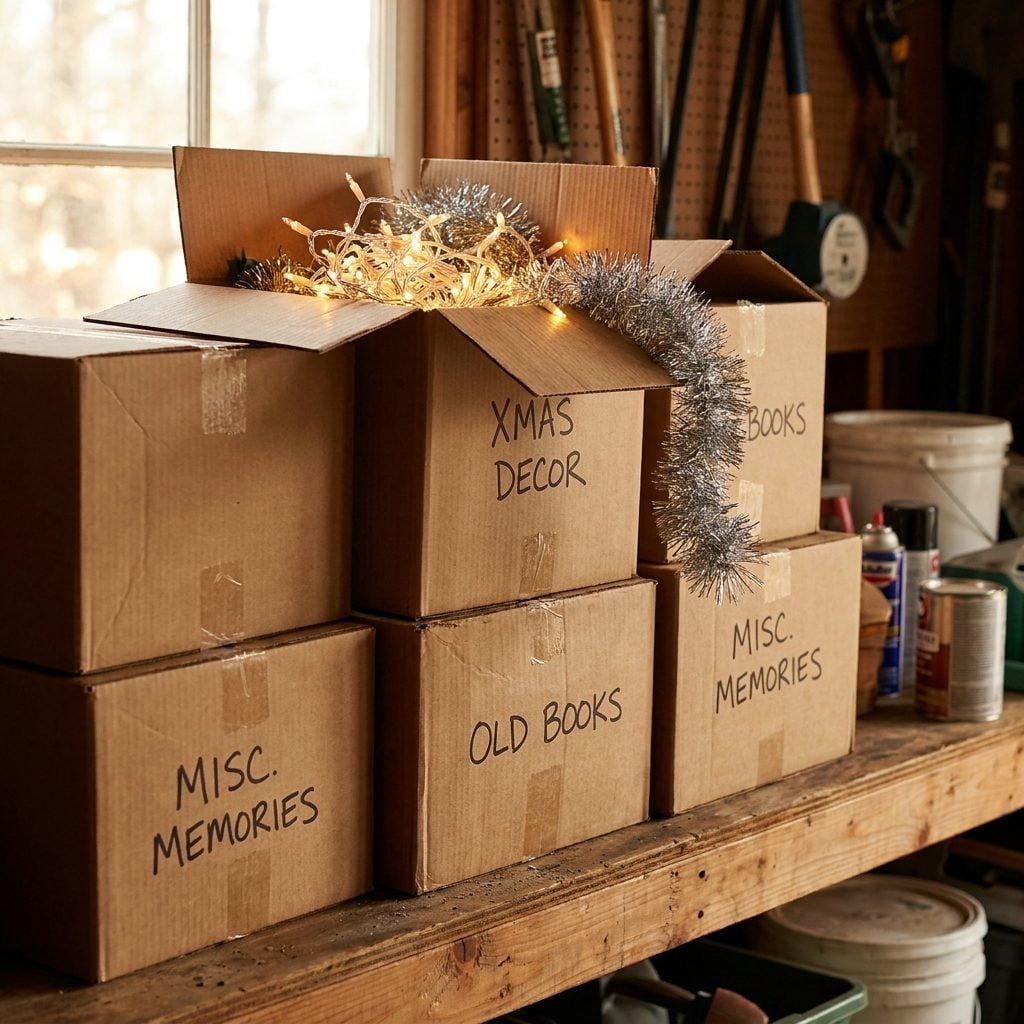
You pulled them down once a year, and every year the tape had already given up. The flaps sprang open on their own. Inside: a nest of tangled lights, half of them dead, and that one strand you swore you’d test before packing it away last January. You didn’t.
The boxes never matched. A liquor store box, a diaper box turned inside out, whatever survived the move three houses back—all of them reading XMAS in the same tired Sharpie, the letters swelling fatter every year as the marker dried out.
History Corner: Incandescent miniature lights dominated household Christmas decorating through the ’90s. LED strings existed earlier but didn’t become a common household replacement until the 2000s, which helps explain why so many holiday boxes from the decade seemed to contain equal parts working lights and dead ones.
Somewhere in there, wrapped in a paper towel, sat the ornament from before you were born. That one you didn’t touch.
5. The Old Appliance Nobody Had Thrown Away Yet
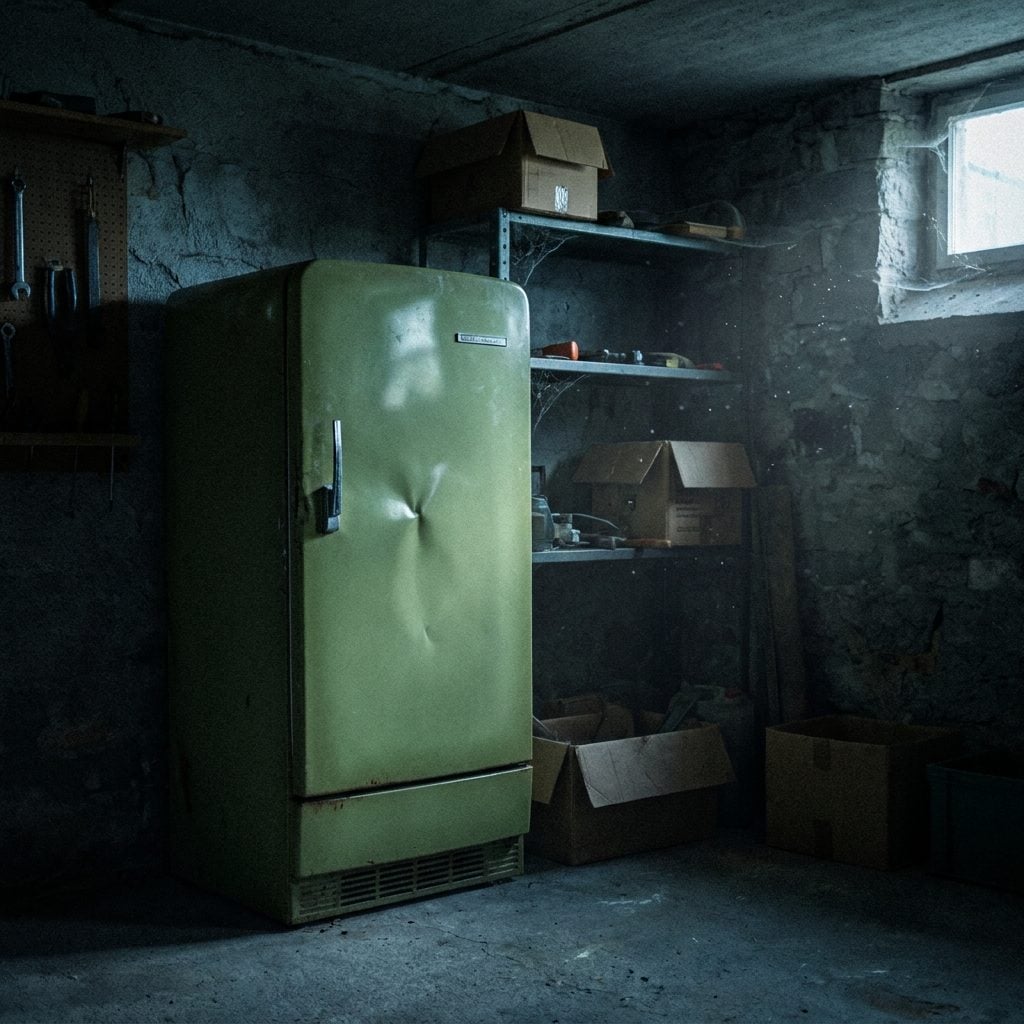
Every garage seemed to acquire at least one appliance in limbo. Maybe it still worked but had been replaced. Maybe it worked only if you jiggled something. Maybe nobody could remember why it was still there. Either way, sending it to the curb felt premature.
That was the garage’s unofficial job: halfway house for household objects that had lost their place indoors but hadn’t quite earned disposal. The appliance might sit there for months or years beneath a blanket of dust, waiting for a basement, a college apartment, a yard sale, or the vague possibility that somebody would need it someday.
4. Paint Cans Left Over From Every Room in the House
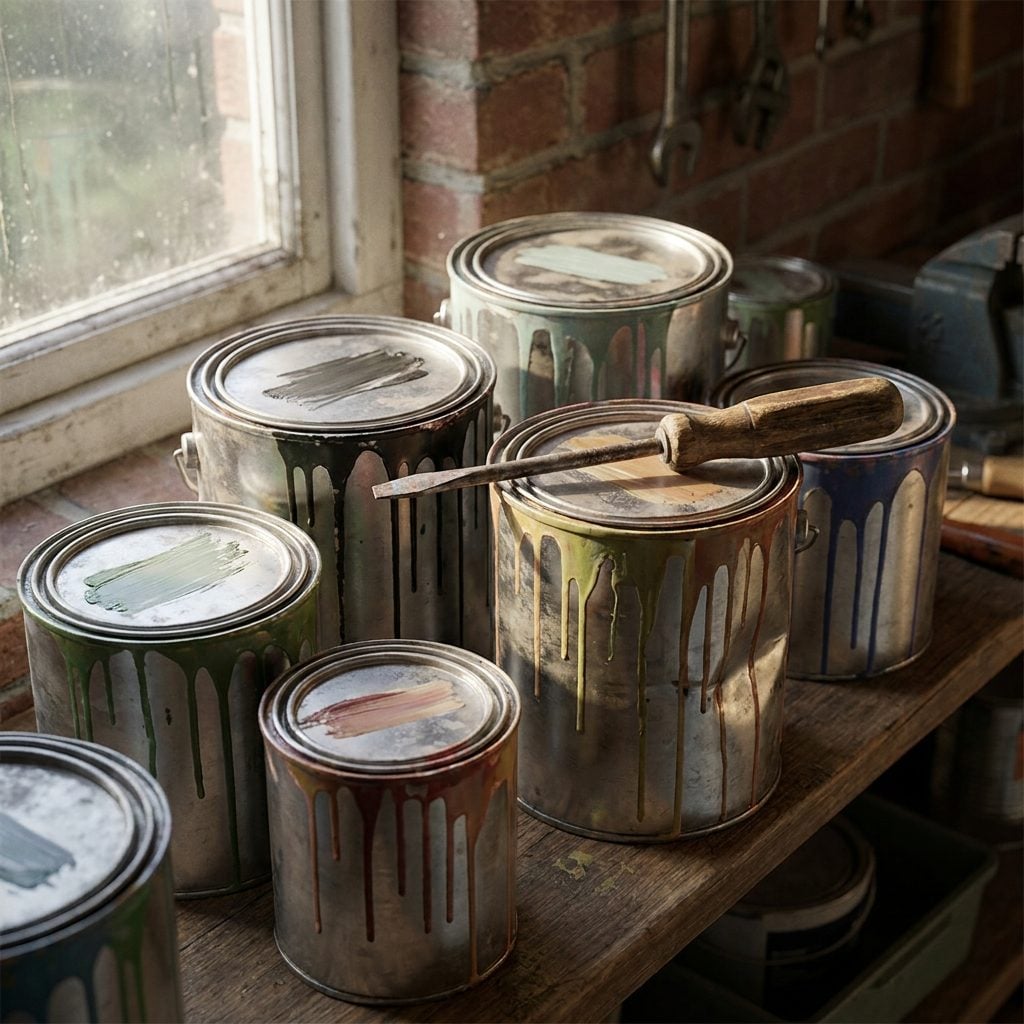
The lids never came off clean. You needed a flathead screwdriver, some leverage, and a willingness to send a chip of dried dusty rose sailing across the garage.
Half those cans held maybe an inch of paint that had gone thick and rubbery under a skin you peeled like a scab. And the color on the label almost never matched anything still on your walls. But you kept them. For touch-ups. Because you might. That inch of paint outlived the wall it was mixed for by a solid decade.
3. The Shelf of Mystery Cardboard Boxes Nobody Dared Open
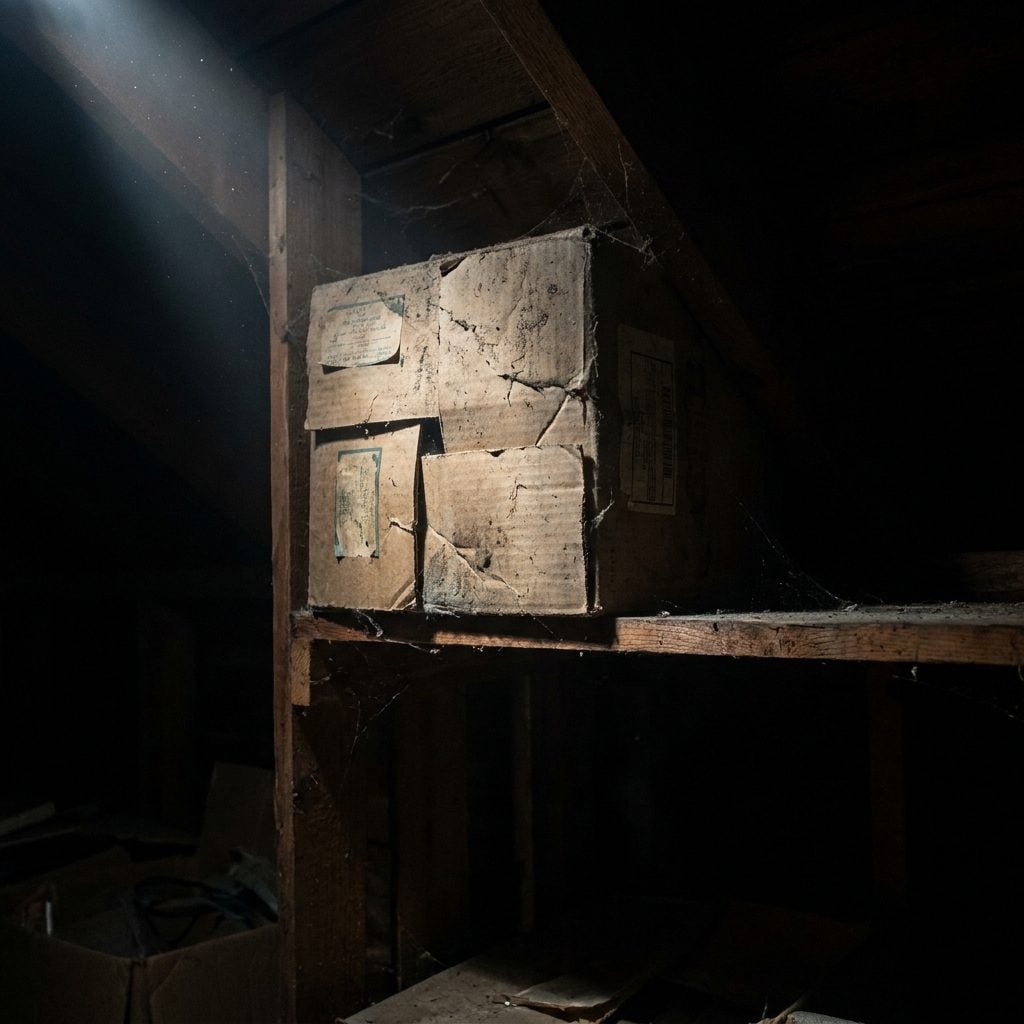
Top shelf, back corner, a box that hadn’t budged in years with its flaps folded into each other in that interlocking way that told everyone nobody was opening it anytime soon.
You never knew what was in there. Old report cards. A rotary phone. Somebody’s college textbooks, or the wedding china that was too good to use and too fragile to store anywhere sensible. Not knowing was the appeal, honestly. Opening it meant a decision, and a decision meant admitting out loud that you didn’t need whatever was inside.
So it stayed put. The family garage had its archive, a paper trail of a life packed away and quietly forgotten. That box is probably still up there right now, gathering the same dust it gathered in 1994.
2. The Blue Recycling Bin and the Sack of Returnable Bottles
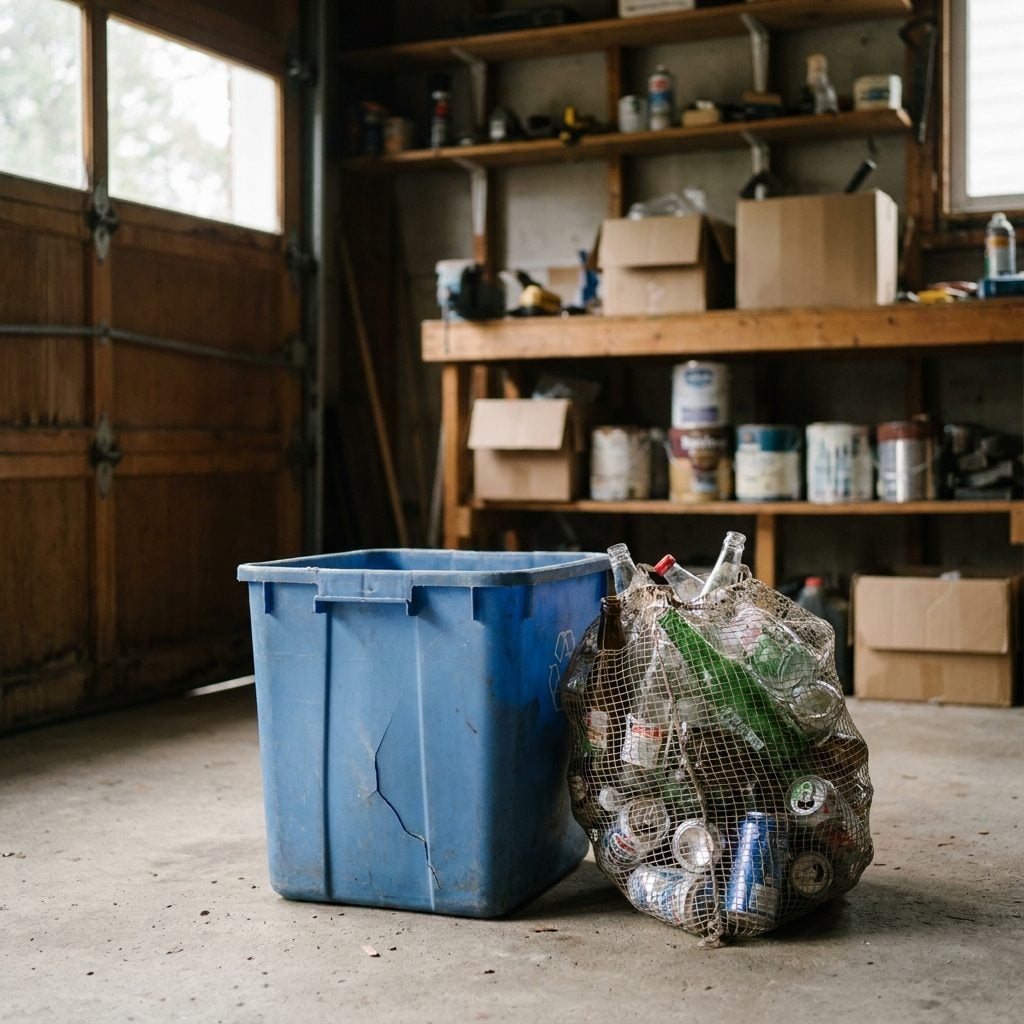
The bin was blue, cracked at one corner from being dragged to the curb one too many times. Inside: cans rinsed but not really, cardboard folded flat because Mom insisted, and glass that clinked every time the door slammed. Curbside recycling was becoming a much bigger part of everyday household life, and the garage was where everything waited until collection day.
Then there were the returnables, which ran on their own little economy. In deposit states, a stuffed bag of pop cans meant a trip to the grocery store machine and a receipt worth actual money. Kids figured that out fast. The crinkled bag in the corner was basically a piggy bank you could carry.
1. The Second Fridge That Only Held Pop, Popsicles, and Whatever Wouldn’t Fit Inside
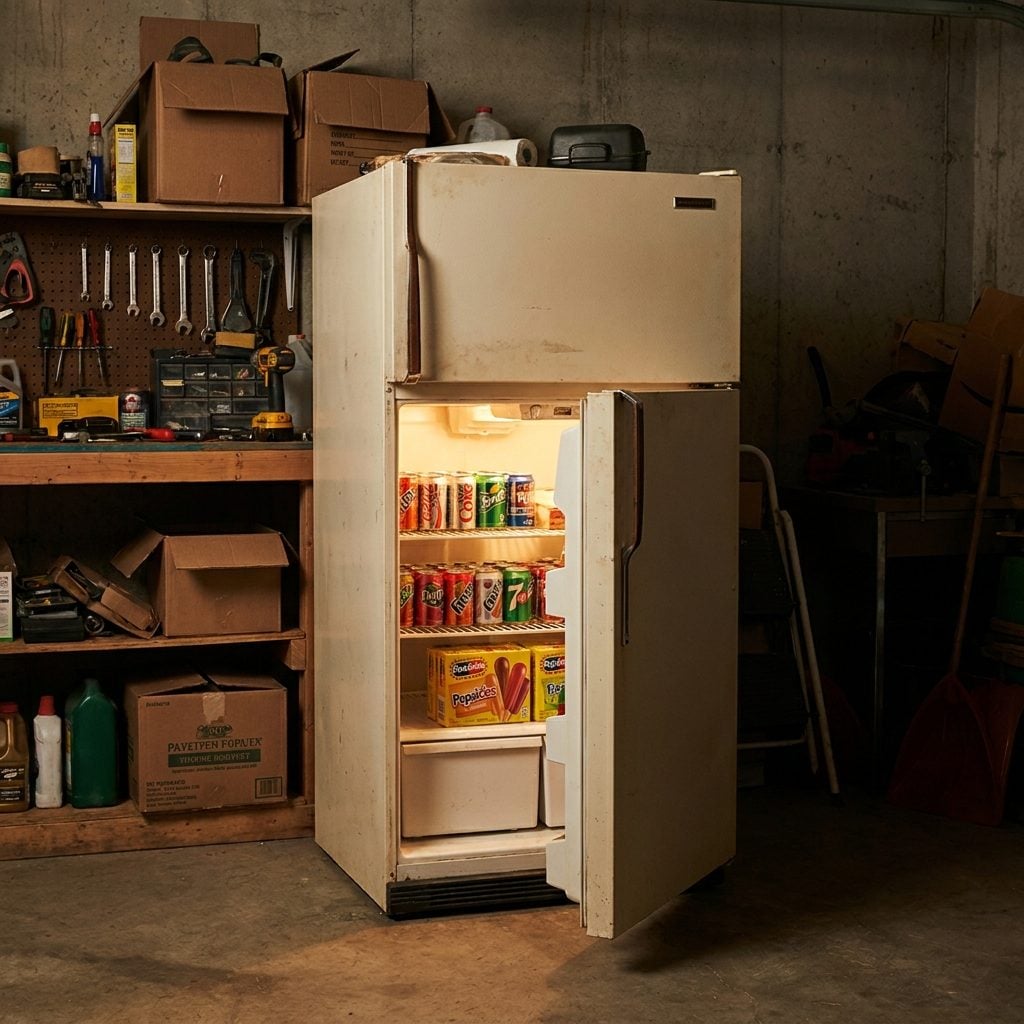
You could hear it from the driveway—that low, steady hum of an aging fridge, demoted to the garage the day the family bought a newer one for the kitchen. Nothing gets thrown out in a 1990s household. It just moves to a colder, dustier career.
This is where the overflow went: cases of pop bought on sale, popsicles wearing a thin skin of freezer frost, the Thanksgiving turkey that needed a home come November. Summer meant a bare-legged sprint across hot concrete for a freeze pop, door slamming behind you.
And the freezer? A museum unto itself. Ice cream from two birthdays back, plus a bag of something labeled in Mom’s handwriting that nobody could read anymore.