Your home is not just where you live. It’s where your nervous system leaves a paper trail. Every pile that never gets sorted, every counter that stays cluttered no matter how many times you clear it, every room you avoid walking into after dark, these aren’t accidents.
They’re data. Psychologists have known for decades that the physical state of a living space reflects the interior state of the person inside it. The relationship runs both ways, too: your spaces shape how you feel, and how you feel shapes your spaces. You’ve been reading your own stress levels wrong this whole time. The answers were never in your mind. They were on your kitchen counter.
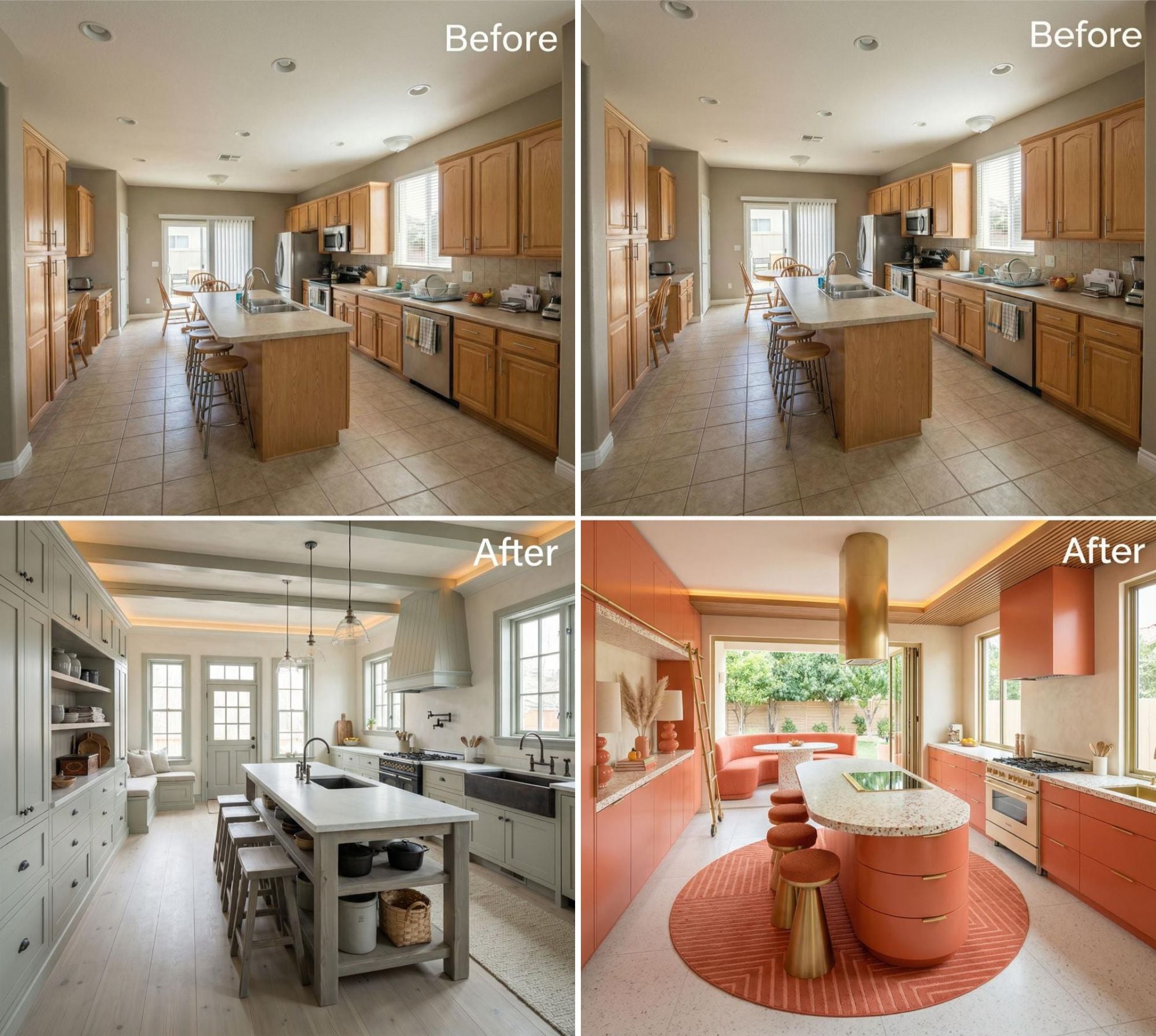
In order to come up with the very specific design ideas, we create most designs with the assistance of state-of-the-art AI interior design software.
Why Psychologists Use Home Walkthroughs in Therapy (And What They’re Actually Looking For)
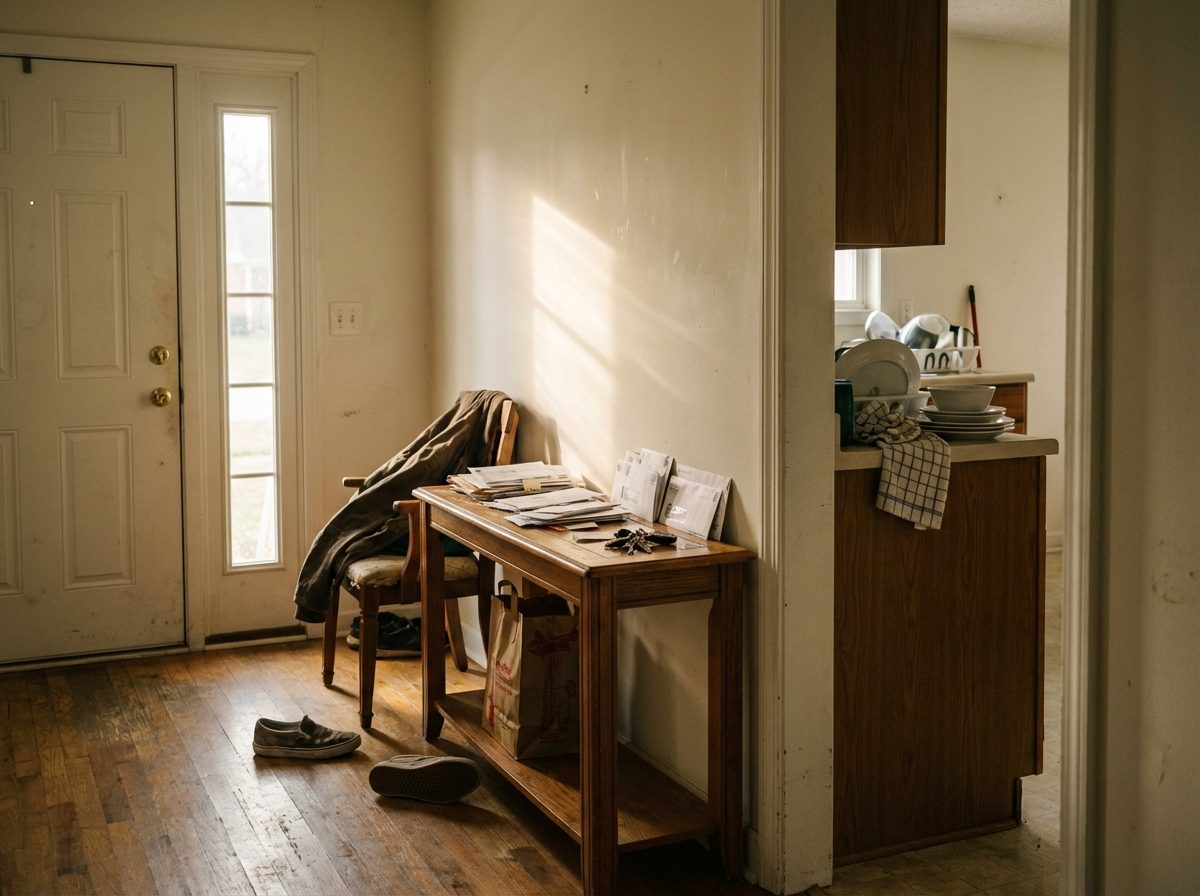
There is a version of therapy that never begins on a couch. It begins at your front door. Psychologists and clinical social workers have long used something called the “home tour” as a diagnostic tool, asking clients to walk them through their living spaces, room by room, describing what they see. The language people use, whether words cluster around comfort and rest or around clutter, unfinished tasks, and chaos, turns out to be medically significant.
In a landmark study published in the Personality and Social Psychology Bulletin, researchers Darby Saxbe and Rena Repetti asked dual-income couples to give video tours of their homes while describing what they saw, then measured their cortisol levels over several days. Women who used more stressful, clutter-related descriptors showed persistently elevated cortisol patterns, skipping the natural daily decline that typically signals the body is recovering. The home tour revealed what no single question could: that these women’s homes were quietly working against them, every single day.
What therapists are listening for, specifically, are the rooms where people pause. The slight apology in the voice. The phrase “I just haven’t gotten to it yet” repeated across three different spaces. Those moments map the invisible terrain of a person’s stress load more accurately than most intake questionnaires. Your home doesn’t lie the way words can.
The Entryway: What You See in the First Three Seconds Back Home
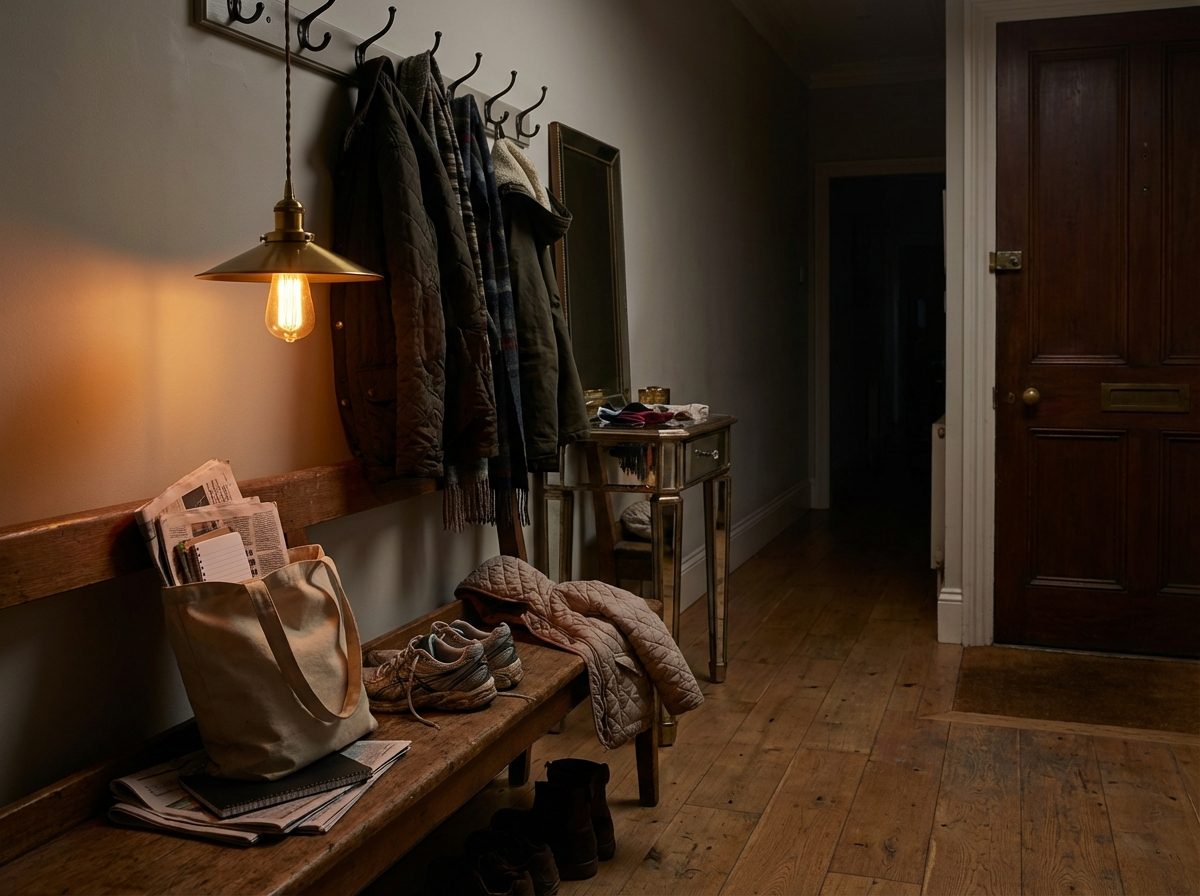
The entryway is a threshold, literally and neurologically. In the three seconds after your key turns in the lock, your brain is already running a rapid scan, not consciously, but automatically, asking: is this safe? Is this manageable? Can I relax now?
Research on first impressions consistently shows that the brain forms rapid, emotionally loaded judgments from very brief sensory input. As EBSCO’s research summary on first impression psychology describes, these “thin slice” judgments are hardwired, biology-based responses that require no conscious cognitive processing. That same mechanism fires the moment you walk into your own home. A cluttered entryway, shoes stacked against the wall, a bag dropped in the middle of the floor, mail forming a geological layer on a side table, signals “unresolved” before your prefrontal cortex has a chance to override the alarm.
The cruel irony is that people who come home most depleted are the least able to process that signal. They step over the pile for the sixteenth day in a row and feel, without knowing why, slightly worse. Research confirms that people have lower stress levels when they enter their homes in a clutter-free space. The entryway is not decorative real estate. It is the nervous system’s reset button, and most of us have it set to “alarm.”
The Kitchen Counter and the Visual Load You’ve Stopped Noticing
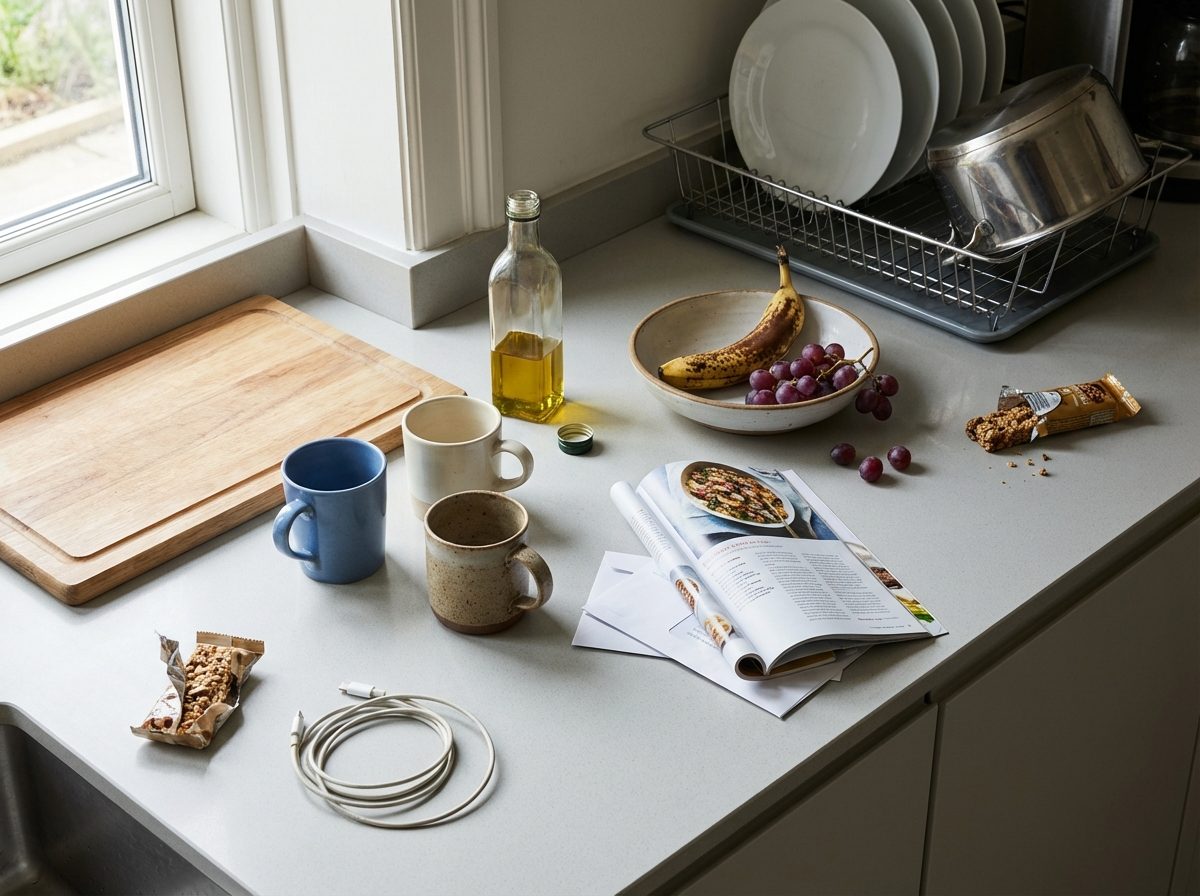
You stopped seeing it months ago. The stack of mail near the microwave, the three water bottles with varying levels of liquid, the vitamins you mean to take, the small appliance you use once a month taking up a third of your usable surface. Your brain adapted by simply filing it under “normal.” But normal doesn’t mean neutral.
Researchers at Princeton’s Neuroscience Institute demonstrated using fMRI imaging that disorganized environments force the visual cortex to process competing stimuli simultaneously, with each object mutually suppressing the others’ neural representations and draining attentional resources. Your kitchen counter, even the one you’ve mentally tuned out, is still running in the background, like forty open browser tabs you’re not looking at but that are still slowing everything down.
A 2016 study published in Environment and Behavior found that when people felt out of control in a chaotic kitchen environment, they ate significantly more cookies than those who felt in control of the space. The counter doesn’t just reflect your stress level. It shapes your decisions while you’re standing there trying to make dinner. That’s a different kind of weight entirely.
The Bathroom Counter as a Self-Care Report Card
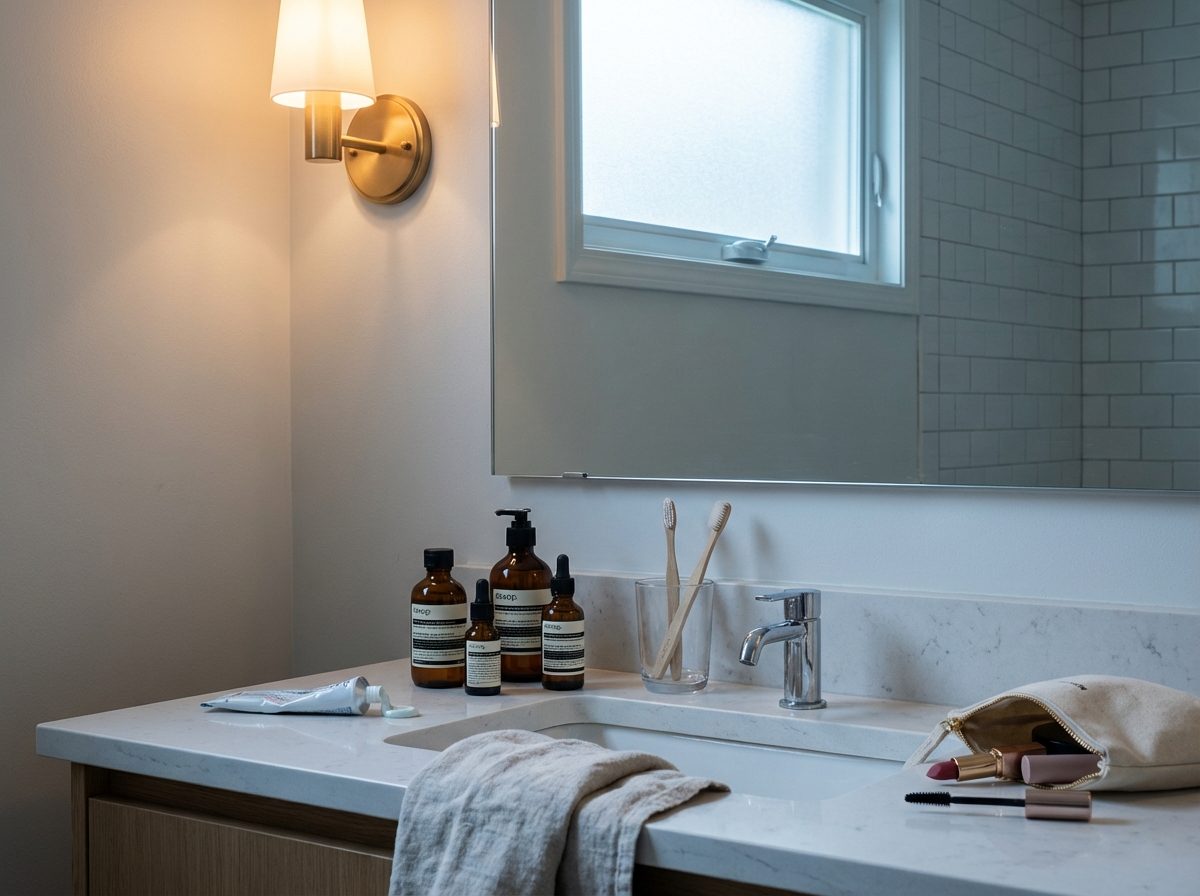
Look at your bathroom counter right now, not in your imagination but actually look at it. What’s there? Three-quarters-empty bottles you’ve been “finishing up” for six months. The moisturizer you bought when you had more optimism about your morning routine. The floss sitting next to the sink instead of inside the cabinet, a small monument to good intentions.
Psychologists studying the relationship between personal space and self-perception have noted that the bathroom occupies a unique psychological territory: it is where we conduct the rituals of self-care, and its condition quietly mirrors how much capacity we actually have for those rituals. As psychologists have observed, intentionally keeping a tidy bathroom can be seen as an extension of how you treat your relationships and your work, while chronic disorder on the counter can indicate a person who wants to appear organized but lacks the bandwidth to follow through beneath the surface.
There is also something specific to the bathroom’s psychology as a private space. Design psychologist Jeff Boico notes that the mind perceives clutter as chaos, and a bathroom that flows, where each fixture and storage space feels intentional, instantly lowers tension. The bathroom is where you’re supposed to decompress. When the counter is a mess, the decompression never fully happens. You’re getting ready for the day, or ending it, inside a space that is itself already overwhelmed.
The Laundry Chair (You Know the One)
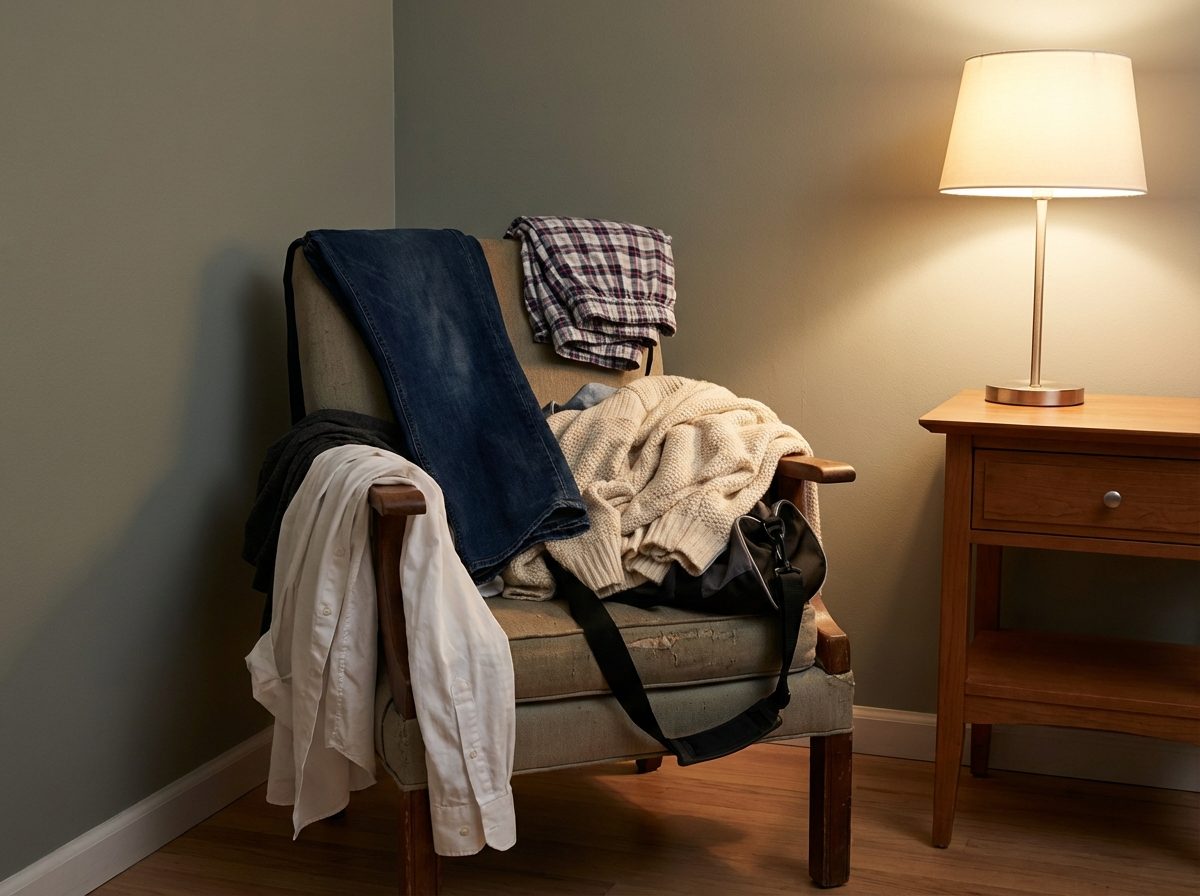
Every home has one. It is rarely called “the laundry chair” but everyone in the household knows exactly which piece of furniture it is. The bedroom armchair. The dining chair closest to the hallway. The back of the desk chair. It is not where laundry lives permanently; it is where laundry lands to wait. And it waits, and waits, and waits.
Psychologists at Florida State University who study clutter and mental health note that the accumulation that happens during stress is not laziness but extreme mental and physical fatigue, a state where the brain simply cannot generate the executive function required to complete a multi-step task like laundry. The chair is not a character flaw. It is a behavioral data point. It accumulates proportionally to how depleted you are.
The term “doom pile” has entered popular vocabulary precisely because it describes something universally recognized: a physical object that represents every task you intended to do but couldn’t. Psychologist Michele Leno has explained that ongoing doom piles are often associated with low motivation and an inability to initiate tasks, which in turn can indicate a deeper issue worth paying attention to. The chair is patient. It will keep your secrets. But it is keeping count.
The Medicine Cabinet Nobody Talks About
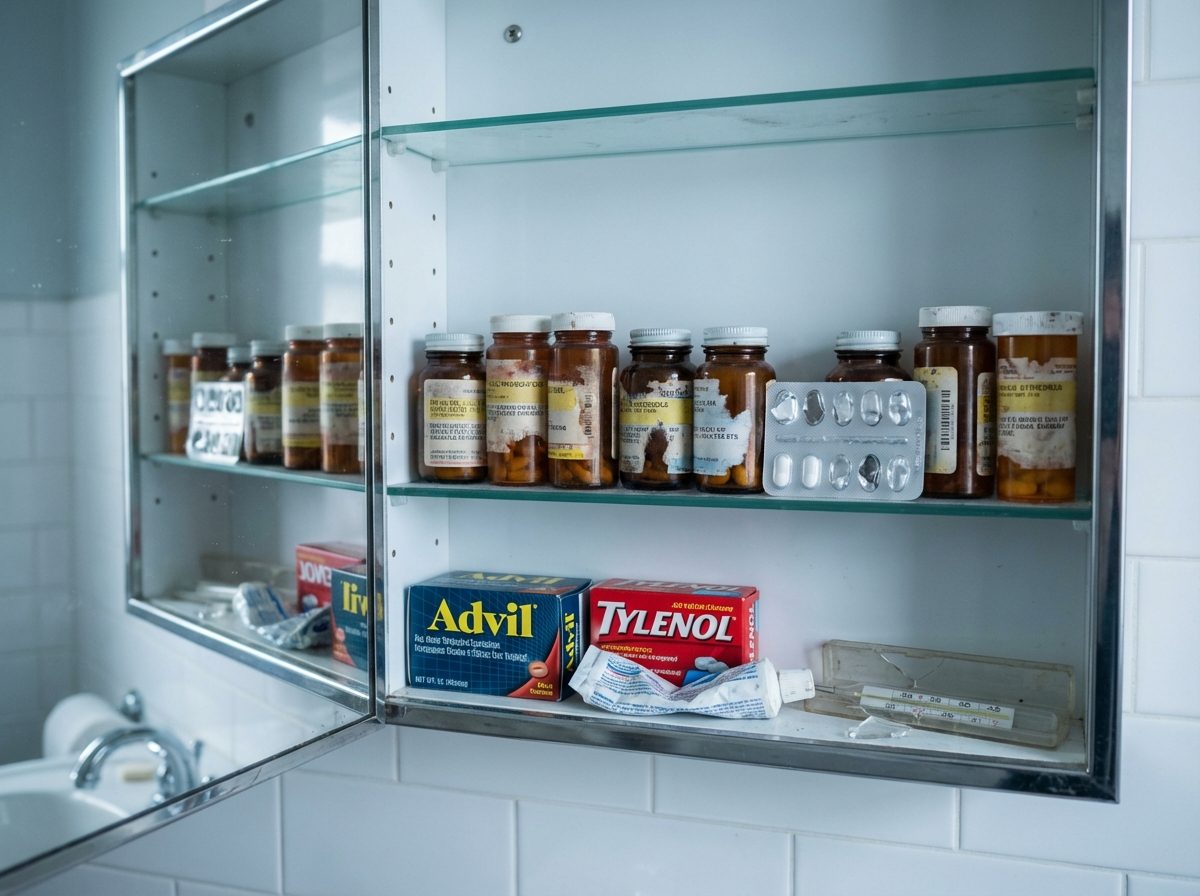
The medicine cabinet is the most private room in the house, and it is not a room at all. It is eight inches deep and holds an archive of every ailment, anxiety, and abandoned routine of the past several years. The prescription you finished but the bottle is still there. The sleep aid you bought during that one bad stretch. The four different antacids at varying stages of emptiness. The cabinet doesn’t judge, but it remembers.
Research consistently links the accumulation of household items to the psychological phenomenon known as the Zeigarnik Effect, where the brain registers incomplete or unresolved situations as persistent background noise. As the Rocky Mountain College of Art + Design’s research on clutter psychology notes, every item represents an unfinished task or unresolved choice, keeping the mind in a low-grade state of activation. An expired prescription from a health scare you never fully resolved, an anxiety medication from a period you don’t like to think about, a protein powder from a fitness goal quietly abandoned: each one is a loop the brain is still technically running.
What you keep in your medicine cabinet, what you choose not to throw away and what you choose never to restock, is a candid inventory of which parts of your self-care you are actively investing in versus the ones you are quietly letting slide.
The Laundry Room: The Chore That Never Actually Ends
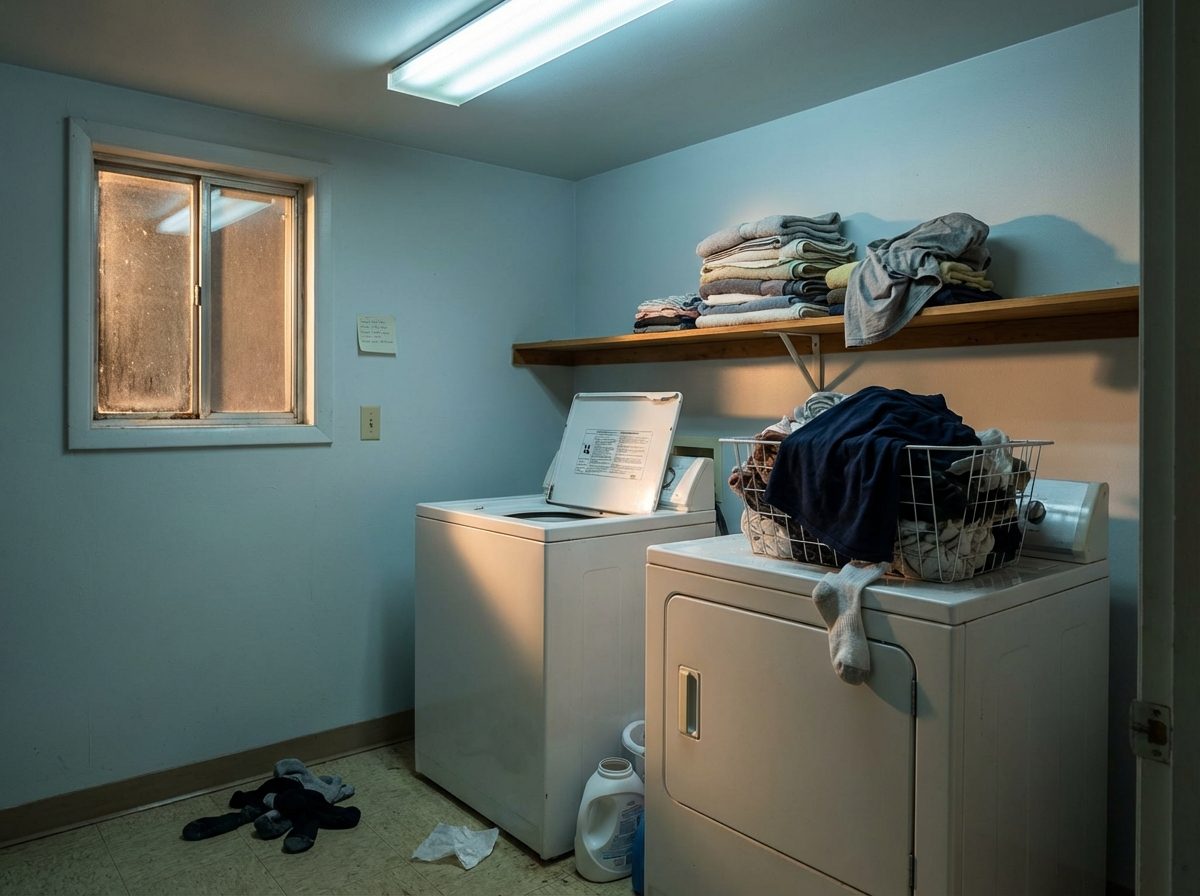
Laundry is the Sisyphean task of domestic life. The moment the last load is folded and put away, two more articles of clothing have been worn and added to the hamper. The cycle has no finish line, only intervals between starting over. For many people, this is the room where a low, chronic sense of futility lives.
The psychological burden isn’t the physical work. It’s what researchers call the “mental load,” the invisible cognitive labor of noticing what needs doing, planning it, and monitoring its completion. Sociologist Allison Daminger, in her 2019 paper in the American Sociological Review, described cognitive labor as the work of noticing, planning, deciding, and monitoring, and found it falls disproportionately on one partner in most households. The laundry room is where cognitive labor becomes visible, literally piled up in the form of a basket that one person almost certainly noticed first.
According to therapist Elizabeth Earnshaw writing in Psychology Today, clutter combined with mental load creates cognitive overload that can result in agitation, overwhelm, and emotional shutdown. The laundry room, humming quietly with its endless cycle, is often the physical address of that shutdown.
The Car: The Room That Tells the Truth You Haven’t Told Yourself
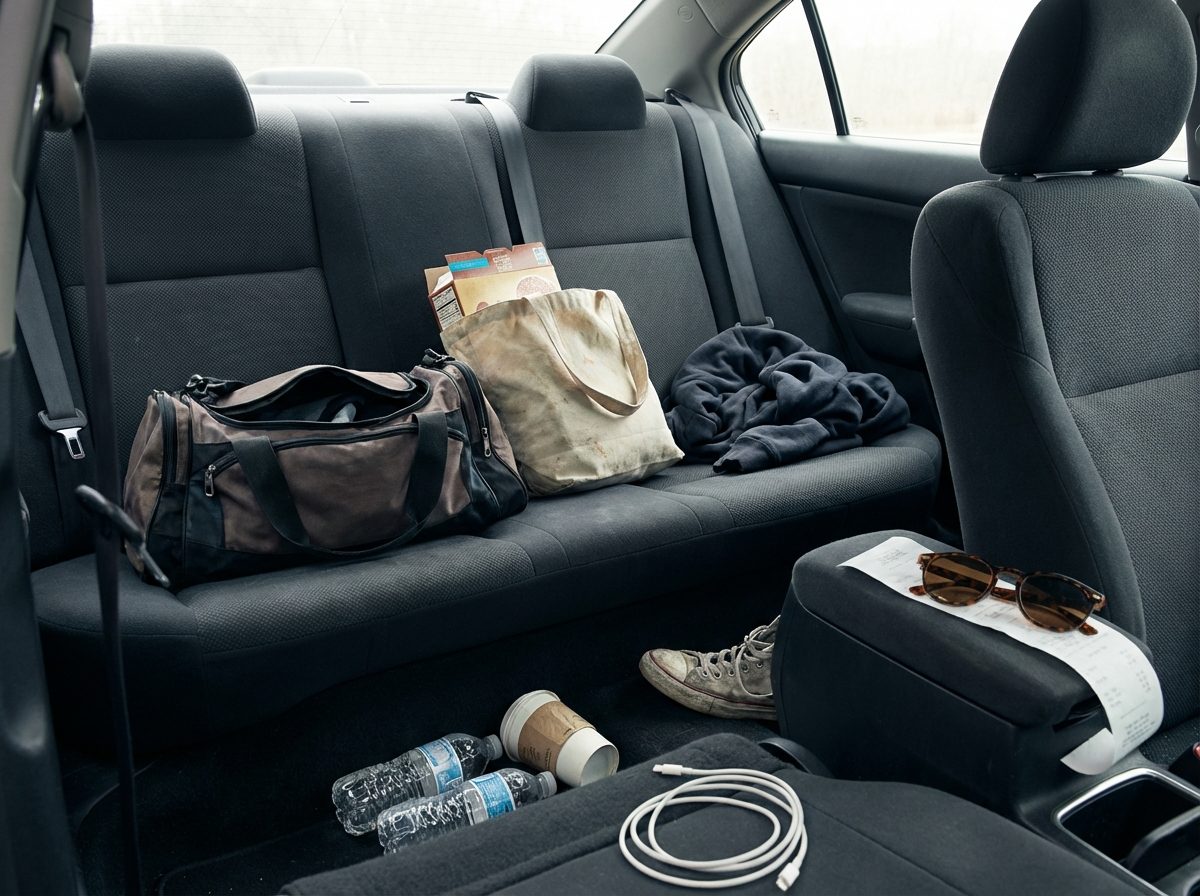
Your car is a room. It is the room you are least likely to consider a room, and therefore the room where the most honest version of your current life tends to accumulate without defense. The water bottle collection in the back seat. The protein bar wrappers in the door pocket. The gym bag that has not been opened since it was placed there. The stack of papers from a school pickup three weeks ago. The car holds whatever you were too tired to carry inside.
Psychologists studying the relationship between environment and stress have found that clutter accumulates as a direct byproduct of a busy, overloaded mind. When cognitive and physical resources are maxed out, the threshold for “dealing with it later” drops dramatically. The car is geographically and psychologically positioned at the boundary of every transition in your day, home to work, work to errands, errands to pickup, pickup to home again. Every stop is an opportunity to let something accumulate instead of resolving it.
The car also has an unusual privacy. Nobody opens your car door uninvited. No guests have to sit with your pile of fast food bags from last Tuesday. That privacy removes the social enforcement that keeps other rooms passably tidy, and so the car becomes a confessional: it holds the evidence of how you are really living when no one is watching. Research on clutter and mental load consistently finds that the spaces we control privately are the ones that fill up fastest under stress, because shame and social consequence are the main external motivators for tidying, and private spaces have neither.
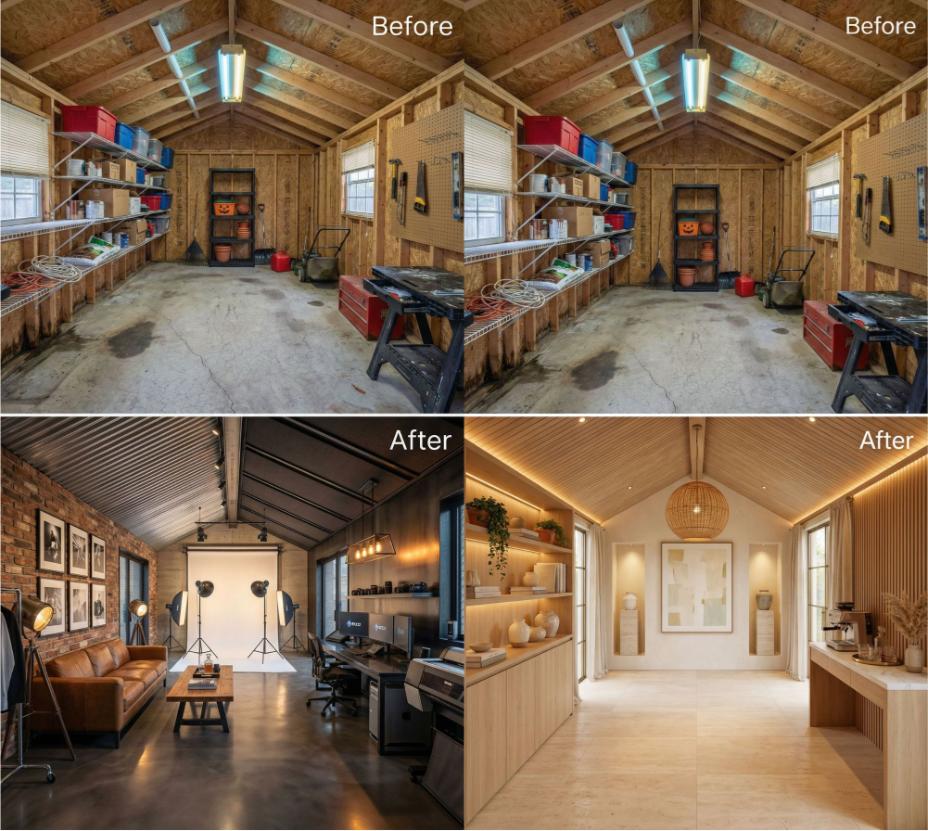
The Garage: Where Decisions Go to Wait

Pull back the garage door on most American homes and you’ll find something more interesting than storage, you’ll find a psychological timeline. The sports equipment from the year you almost got healthy. The half-finished workbench project. Boxes still taped shut from a move three years ago. Every single item is a decision that got made halfway and then stopped. That isn’t laziness. That’s something far more specific.
According to a peer-reviewed study published in PMC examining decisional procrastination and clutter behavior, people who struggle with clutter tend to fall into identifiable cognitive clusters, most notably what researchers call the “Hesitant” and “Deterred” groups, where indecision and the hesitation to initiate challenging tasks directly correlates with how severely clutter impacts their quality of life. Your garage isn’t messy because you’re disorganized. It’s messy because, neurologically, you hit a wall every time you walk in there. Every box without a label is a micro-decision your brain deferred. Every broken tool you meant to fix is an unresolved mental file still sitting open.
Environmental psychologist research consistently frames this as a stress loop: the overwhelm of the space prevents the clearing of the space, which deepens the overwhelm. The garage is often the first room to tip, and the last to recover, because unlike every other room in the house, it carries zero social pressure to perform. Nobody sees it. So it becomes the place where decisions go to wait indefinitely.
Your Desk or Home Office: Stress Archaeology in Layers

Read a cluttered desk like a geologist reads sediment. The bottom layer is oldest, probably papers from a project that ended but never got filed, receipts from a season of your life you were moving too fast through. The middle layer has some urgency: bills, half-read articles, sticky notes with tasks that felt critical six weeks ago. The top layer is fresh chaos, today’s debris still warm. Each stratum marks a period when you ran out of bandwidth and started horizontal-piling instead of vertical-filing.
Princeton University neuroscience research, widely cited by Nuvance Health’s analysis of how clutter affects brain function, found that visual clutter competes directly with your brain’s attentional resources, suppressing neural representation across the visual cortex. In plain terms: every stray object in your sightline while you’re working is consuming cognitive processing power. Your cluttered desk isn’t just uncomfortable, it’s actively degrading your thinking capacity in real time.
The desk is uniquely revealing because, unlike other rooms, its disorder is almost entirely composed of your own unfinished intentions. You made all of this. Each pile represents something you brought in and didn’t resolve. Therapists in organizing psychology note that the desk’s layer system can map directly to periods of elevated stress, a bad month at work, a family disruption, a health scare. If you want to know when things got hard, dig down.
The Junk Drawer as Psychological Metaphor
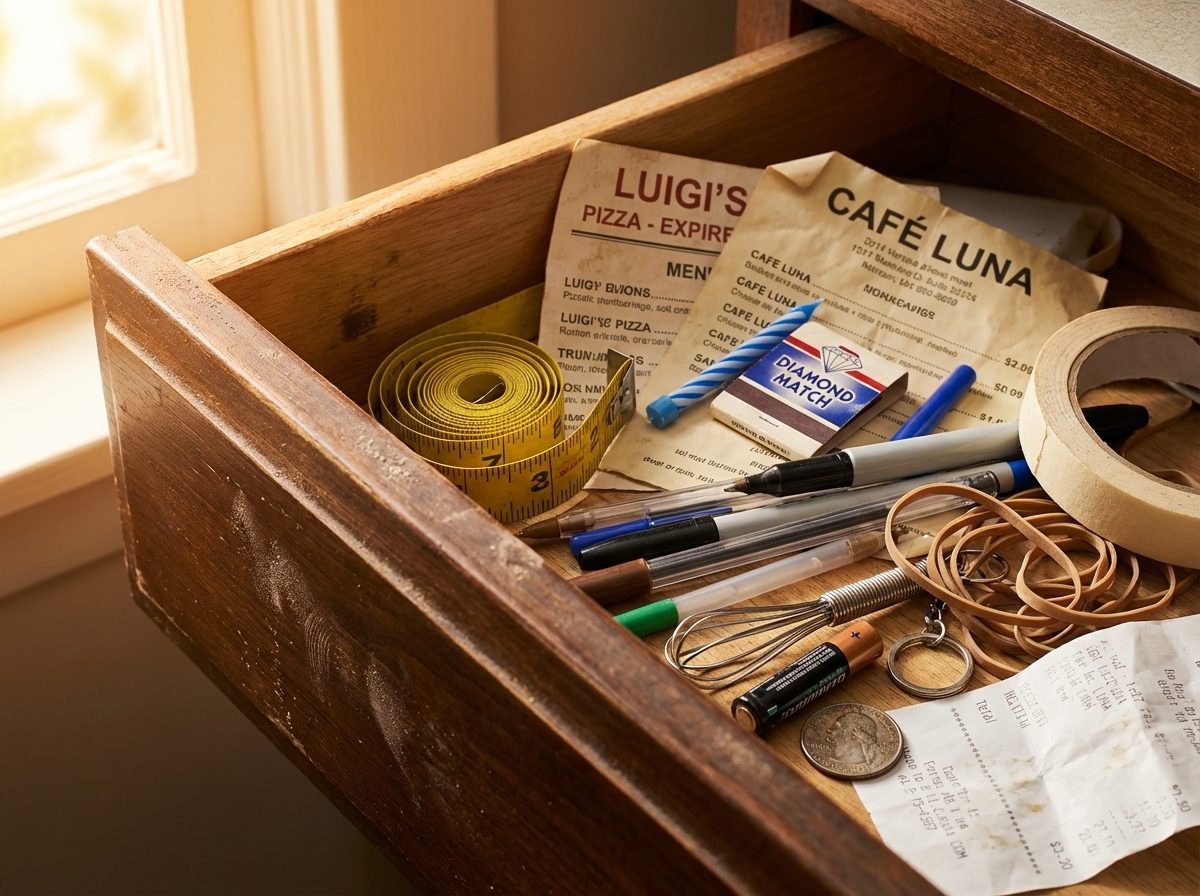
Every home has one. The drawer that requires a specific jiggle and partial lift to open. It contains: a dead battery, two menus from restaurants that closed in 2019, a tape measure, three pens (two dry), a birthday candle, a key to something you can no longer identify, and approximately eleven rubber bands. The junk drawer is the only room in the house we collectively agree doesn’t need to be organized. We name it accordingly and move on.
But psychologists who study object attachment, including research cited in a Psychology Today analysis of why clutter disrupts mental health, point out that the items most resistant to disposal are those we haven’t yet assigned a meaning to. A junk drawer is essentially a holding pen for ambiguity. Every item in it exists in a state of uncertain value: not important enough to have a designated home, but not worthless enough to throw away. That psychological limbo is more significant than it sounds.
Research from the University of New Mexico’s Catherine Roster found that clutter compromises an individual’s perception of home, and that the more people identify with their living environment, the more accumulated ambiguity chips away at their sense of control. The junk drawer is small, but it’s symbolic. It’s where we keep everything we haven’t decided about yet. And the number of things in that category tells you quite a bit about how comfortable someone is making decisions under pressure.
The Refrigerator Door as a Map of Your Mental Load
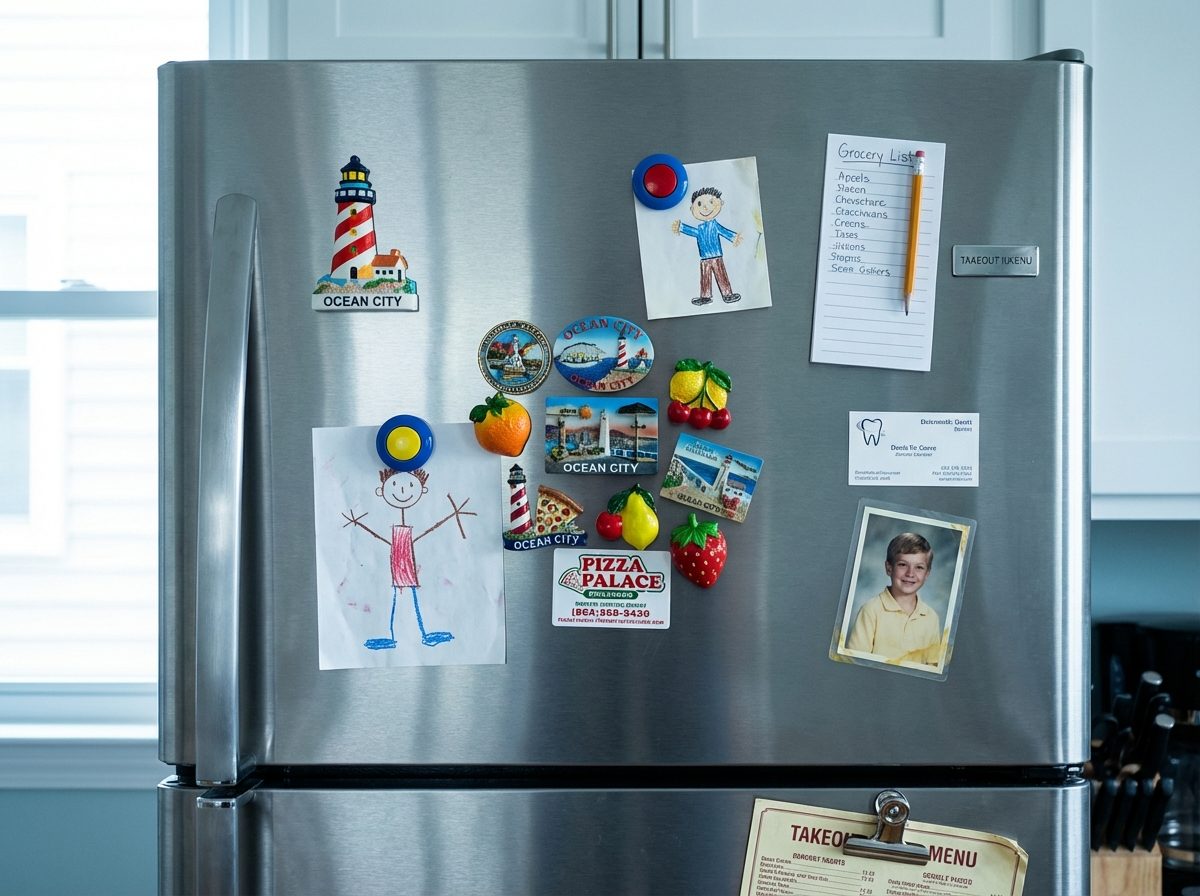
Stand in front of your refrigerator door for sixty seconds and actually look at it. Not through it, at it. What’s pinned there? A child’s drawing. A dentist appointment reminder two months past due. A school photo curling at the corners. A takeout menu for a place you always mean to try. A vacation magnet from somewhere you went before everything got so complicated.
Research published in the journal Annals of Tourism Research by Dr. John Byrom of the University of Liverpool found that fridge magnets function as powerful memory anchors, triggering emotional and affective responses every time people pass them, including, notably, memories associated with grief and loss. Participants in the study reported being reminded of their holidays every time they opened the fridge door, with some magnets having accumulated poignant significance over years. The refrigerator door, it turns out, isn’t decoration. It’s a curated (if accidental) emotional archive.
The mental load angle is harder to see but just as real. Cognitive science research consistently shows that according to a September 2024 Psychology Today piece on clutter and mental load, visual reminders of unfinished tasks keep the brain’s stress circuitry engaged even in moments of supposed rest. The overdue appointment reminder isn’t just a note, it’s a standing cognitive alarm. Multiply that by everything on the door, and you get a sense of just how much the refrigerator is asking of your attention every single time you reach for the orange juice.
What Your Living Room Seating Arrangement Is Quietly Saying
🔥 Would you like to save this?
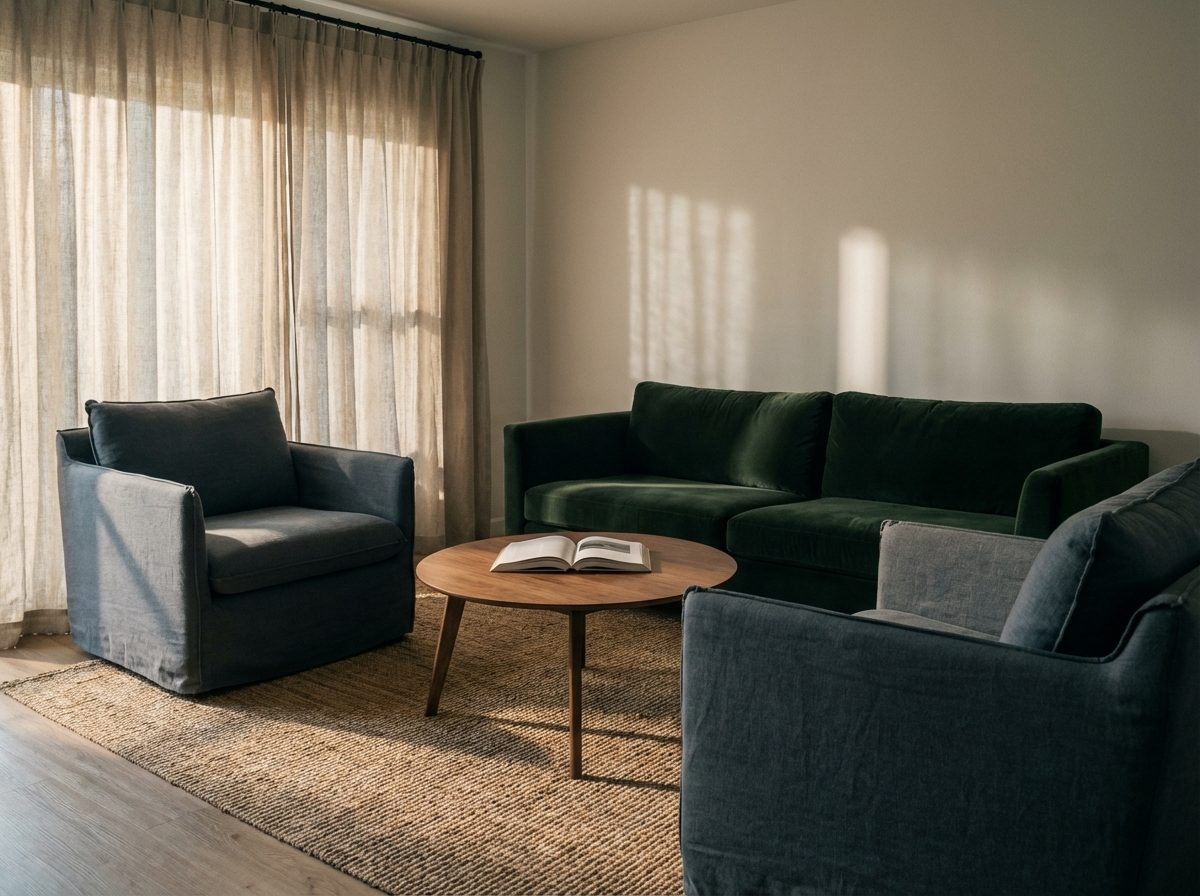
Most people arrange their living room furniture exactly once, when they move in, and then live with the consequences for years without questioning them. But the layout of your seating isn’t neutral. It broadcasts something about how welcome you feel in your own home, and how much connection you actually want.
Environmental psychology has documented this clearly. Research on furniture psychology outlined by Home Interior Warehouse notes that circle-based layouts level the social playing field, no hierarchy, no head of the room, and allow eye contact without effort. When every seat in your living room faces the television instead of each other, the room’s social architecture has made a decision for you: this is a space for parallel experience, not shared conversation. That’s not wrong. But it’s worth knowing you made that choice, even if you didn’t realize it.
The distance between seats matters too. Proximity is warmth. Sofas pushed against opposing walls create a formality that subtly discourages lingering. Conversely, research referenced in Ballard Designs’ piece on mindful home decorating highlights that furniture intentionally arranged to be open and foster social interaction correlates with measurably lower cortisol levels compared to cramped, non-social room configurations.
- Seating that faces a screen signals a household organized around consumption rather than conversation.
- Furniture pushed to the walls signals anxiety about open space, or a room designed to survive children.
- A single dominant chair positioned slightly apart from a sofa can reveal where the household’s emotional authority sits.
The Hallway Nobody Decorates (And What That Reveals)
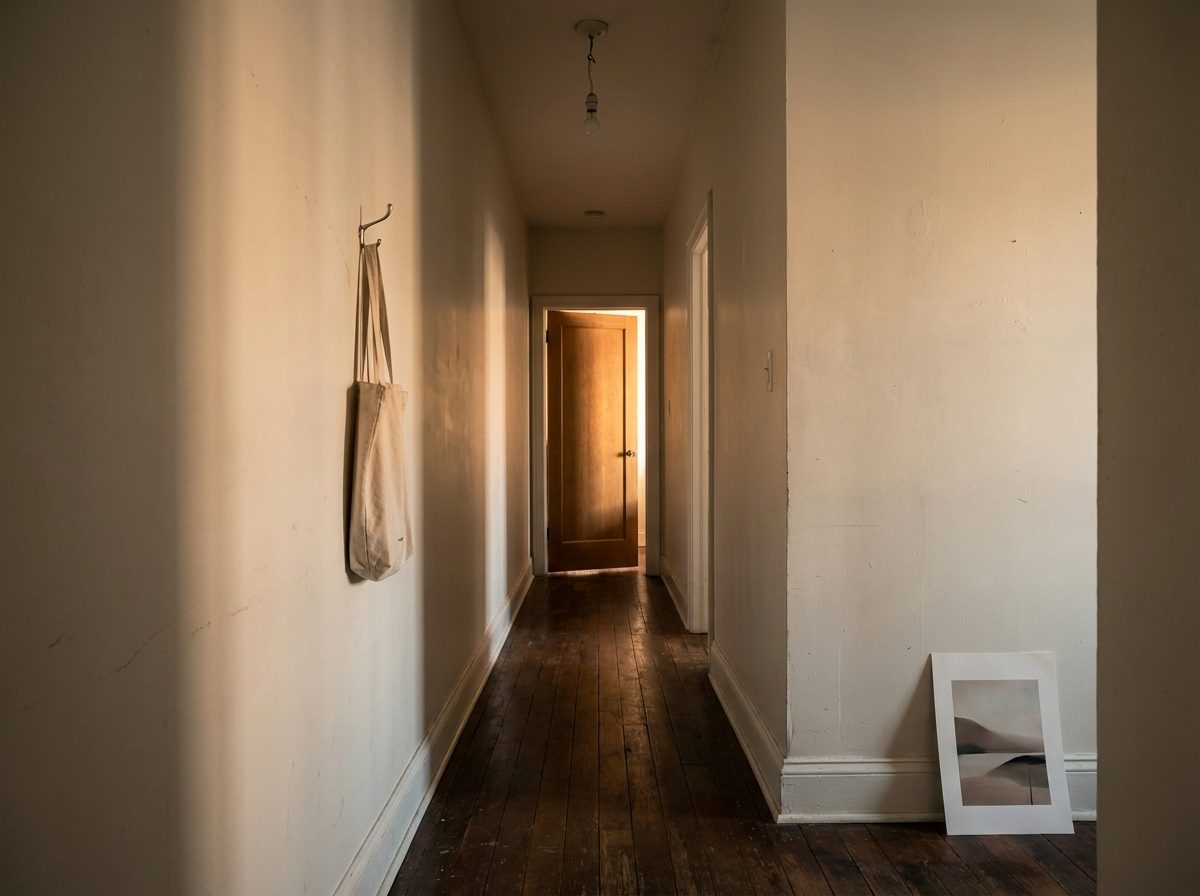
You spent real money on the living room sofa. You repainted the kitchen twice trying to get the undertone right. The bathroom has a diffuser. And then there’s the hallway, the narrow corridor connecting every room you care about, which has exactly one thing on the wall: nothing. Maybe a hook that’s slightly crooked. Maybe a light switch plate that’s been painted over too many times.
The hallway is the transition zone of the home, the space between who you are outside and who you become inside. A design psychology piece from RealCraft on the psychology of entryways frames the entry corridor as the most emotionally influential space in a home, arguing that when the entryway is optimized for your daily routine, it can minimize chaos, reduce stress, and actually provide a brief moment of psychological reset at the beginning or end of every day. Those small pauses, the piece notes, keep you present, wherever you’re headed.
The neglected hallway, then, is a quiet symptom: it says this household never pauses long enough to experience the transition. You move through it without ceremony. That rush, from outside to inside, from work-mode to home-mode without a beat of psychological gear-changing, keeps the nervous system from ever fully landing. Design psychology increasingly recognizes that according to More Space Place’s analysis of entryway psychology, when you walk into an orderly, intentional foyer, your brain receives a signal that you are in a supported environment. The opposite signal, a dim, cluttered, ignored corridor, starts the decompression process late, if at all.
The One Surface in Your Home That Never Stays Clear
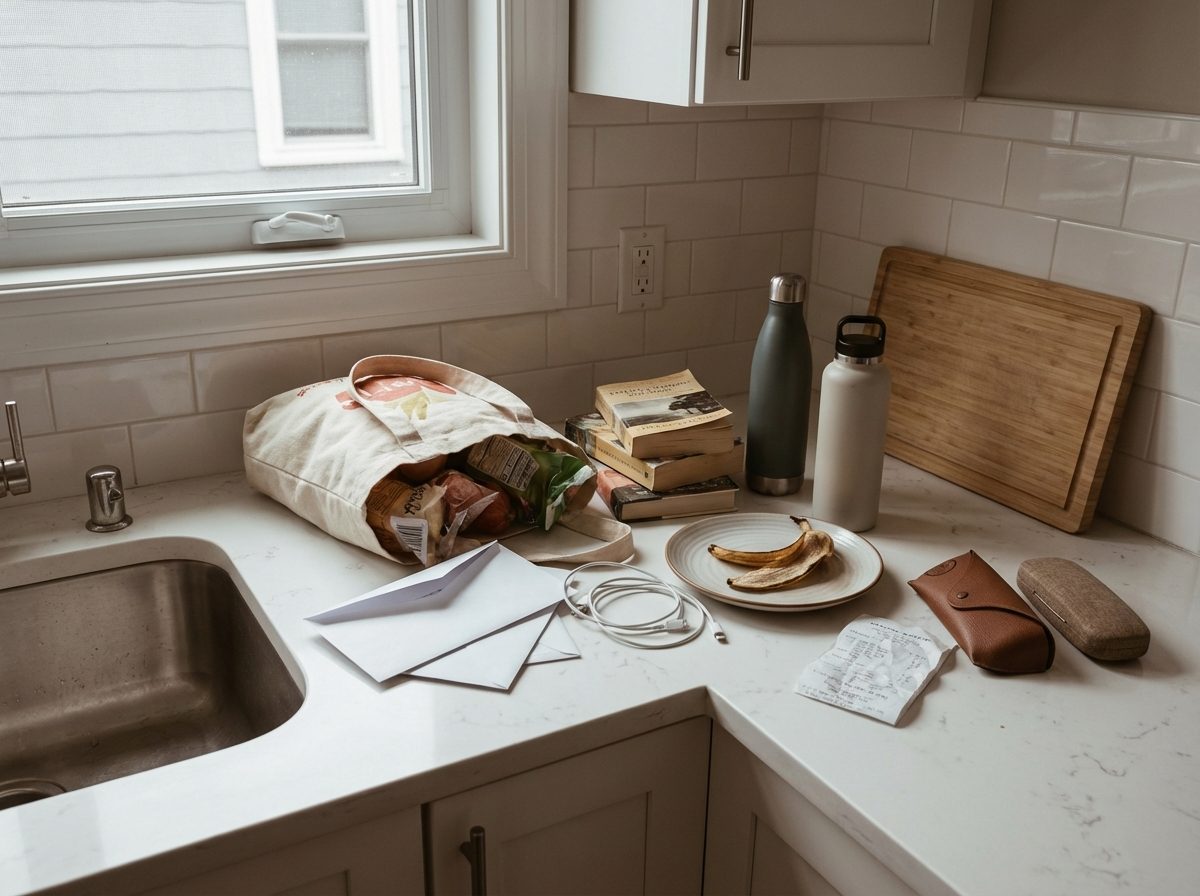
You know the one. It might be the kitchen counter to the right of the sink. The small table by the front door. The corner of the dining table nobody actually eats at. No matter how many times you clear it, it fills back up within days, sometimes within hours. And here’s what makes that surface worth paying attention to: it’s always in the same spot. Because it isn’t random. It’s a behavioral signature.
Rocky Mountain College of Art and Design’s analysis of the psychology of clutter in interior design identifies a key principle: designers who understand habitual accumulation patterns can align storage systems with actual behavior, not idealized behavior, to reduce clutter before it accumulates. Your perpetually cluttered surface is telling you that your home’s organizational architecture is fighting your actual movement patterns instead of working with them. The items pile there because that’s where your brain naturally offloads when transitioning between activities.
That countertop is also a cortisol factory. WebMD’s summary of clutter and health research, drawing on the landmark UCLA study of 32 middle-class families, found that women who described their homes as cluttered showed measurably higher cortisol levels throughout the day, and the stress persisted even when they weren’t actively looking at the clutter. The surface you can never keep clear isn’t a housekeeping failure. It’s a design problem: the wrong place, missing the right solution.
The Last Room We Fix and the First One That Knows
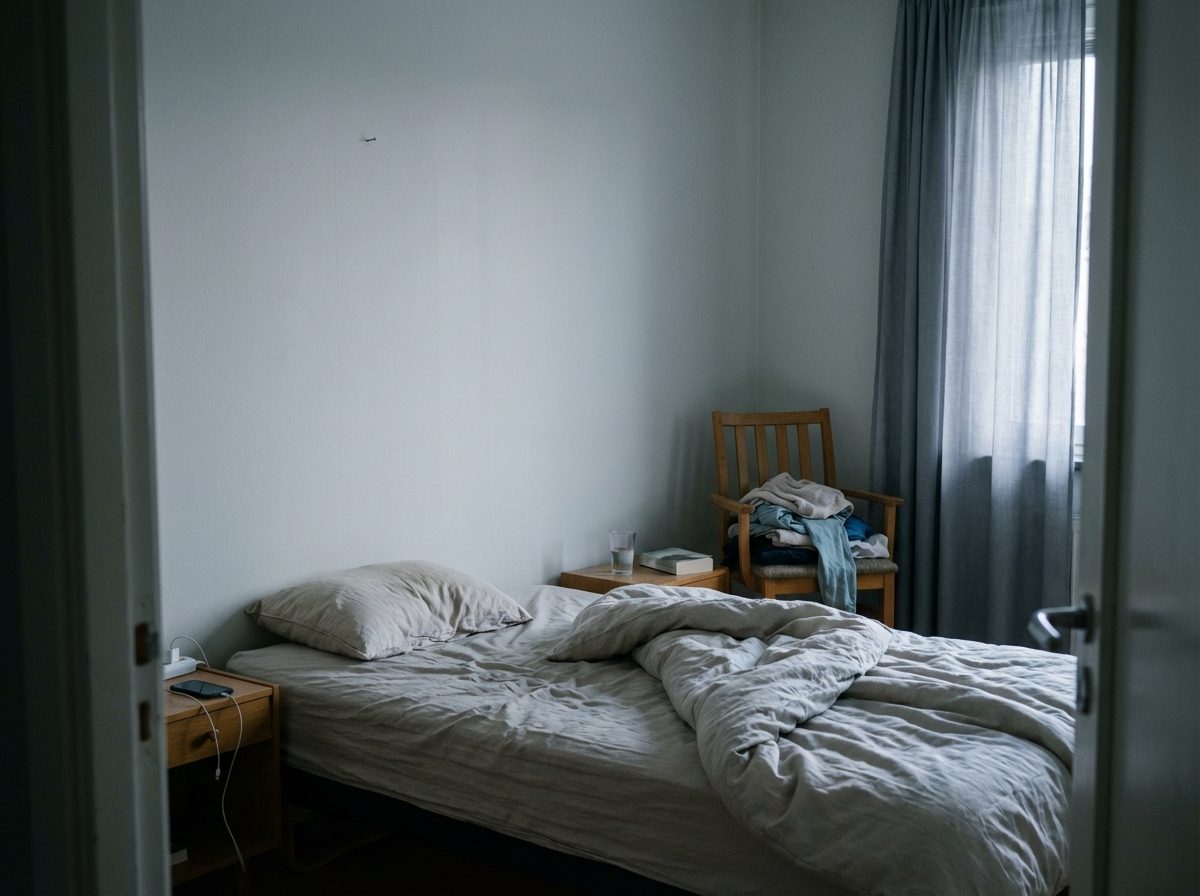
There’s a predictable renovation order in most households: kitchen first, then living spaces, then bathrooms, then, eventually, maybe, possibly, the bedroom. The bedroom is where we sleep, which means it’s the room we see last at night and first in the morning, which means it receives our most fatigued attention and least funded renovation energy. It gets the leftover furniture. The mismatched throw pillows. The laundry chair.
This is not a neutral choice. A 2010 study published in the Personality and Social Psychology Bulletin, “No Place Like Home”, used linguistic analysis of 60 dual-income couples’ self-guided home tours and found that wives with higher stressful home scores showed flatter diurnal slopes of cortisol, a biochemical pattern directly associated with adverse health outcomes, and experienced increased depressed mood over the course of the day. The bedroom’s condition, more than any other room, correlated with how restored or depleted participants felt as time passed.
Sleep researchers add a behavioral layer: Embolden Psychology’s clinical guidance on the mental health bedroom notes that when people engage in multiple activities in their bedroom, working, eating, scrolling, worrying, the brain stops associating the space with rest and begins associating it with activity and stress. The room becomes a place the nervous system can’t fully power down in. The last room we fix quietly becomes the first room that registers exactly how much pressure we’re under. You can renovate the kitchen all you want. But the bedroom is where your stress keeps its most honest records.
The Bottom Line
The room that reveals exactly how stressed you are is whichever one you’ve stopped seeing, the space your eyes slide past because your brain has quietly accepted the chaos as normal. That numbness isn’t laziness; it’s a sign your nervous system has been running on overload long enough to reclassify disorder as background noise. Pick one surface in that room today and clear it completely, not to clean your house, but to practice the small act of noticing again.