
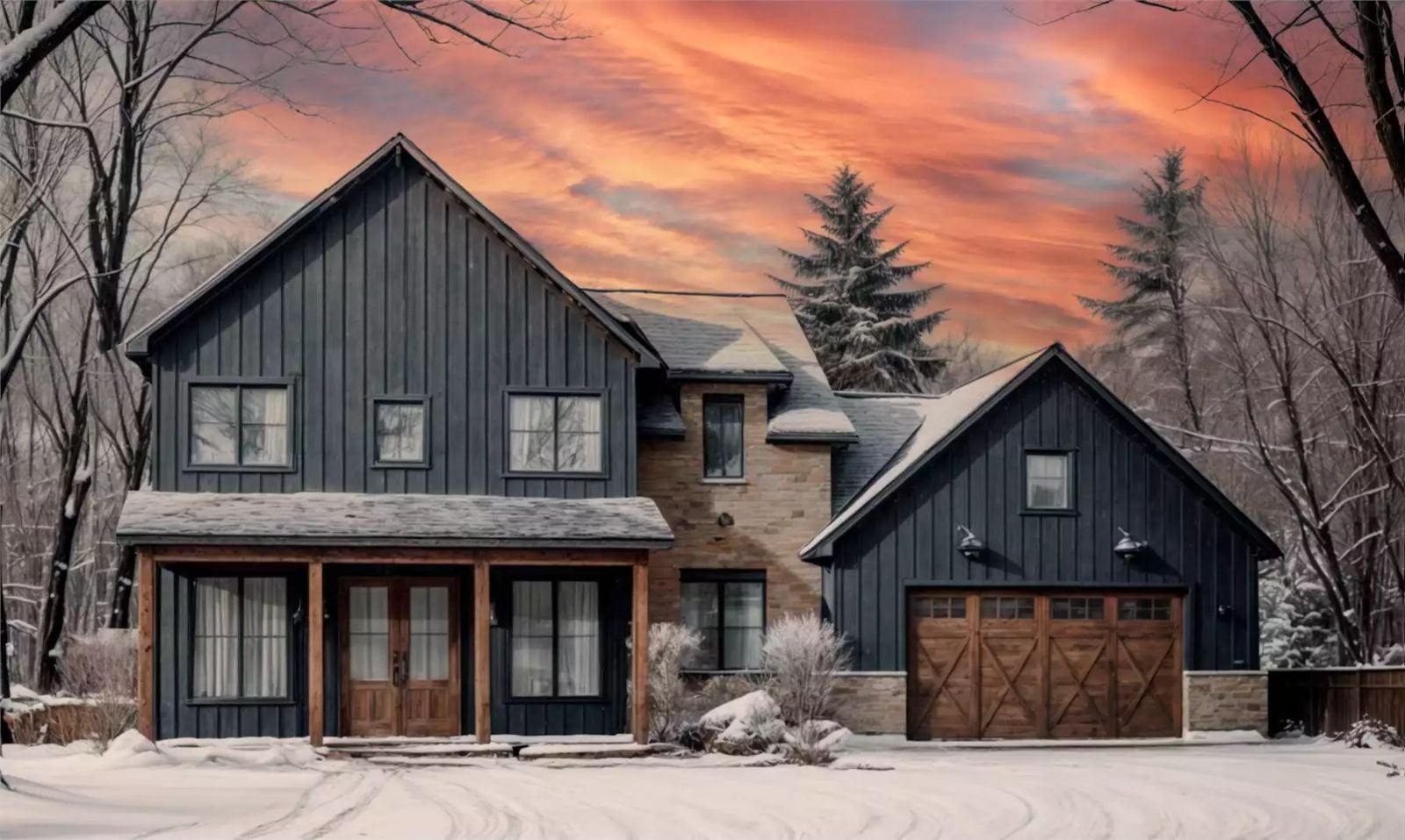
Most family homes treat the outdoors as an afterthought — a sliding door onto a concrete slab that gets used twice in June and ignored until fall — but the Sophia is built around the opposite instinct, with a covered terrace that pulls dinner outside in May and keeps it there through September, an open main floor where a dozen people can spread across the kitchen and still talk to whoever is setting the table, and just enough square footage to be genuinely loud without feeling crowded.
Specifications
- Sq. Ft.: 2,174
- Bedrooms: 3
- Bathrooms: 2.5
Floor Plan – Main Floor
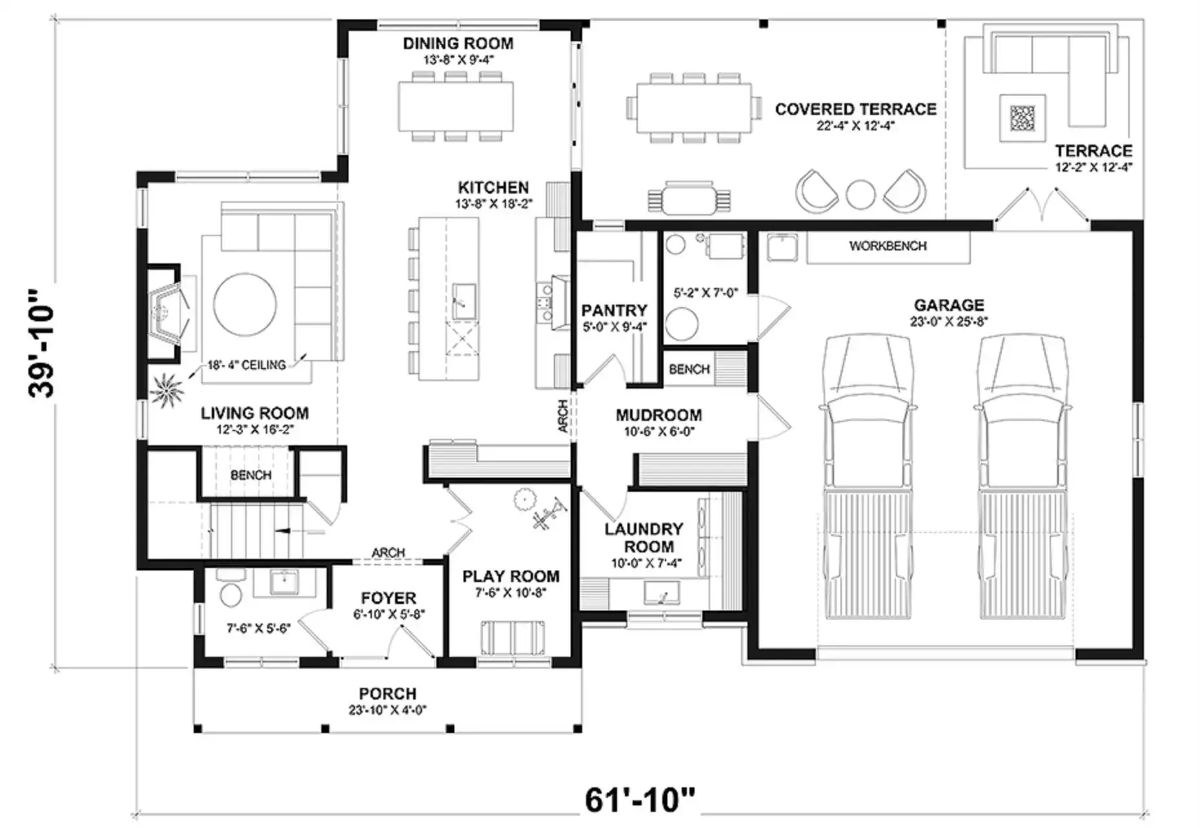
The main floor centers on an open kitchen and dining room that flows directly toward a covered terrace sized for a real outdoor table — not a folding one. A living room with an 18-foot ceiling anchors the left wing, giving the space genuine volume rather than the usual box. The mudroom, laundry, and pantry cluster near the garage entry, which is exactly where they should be: close enough to be useful, far enough to keep the chaos contained.
Floor Plan – Second Floor
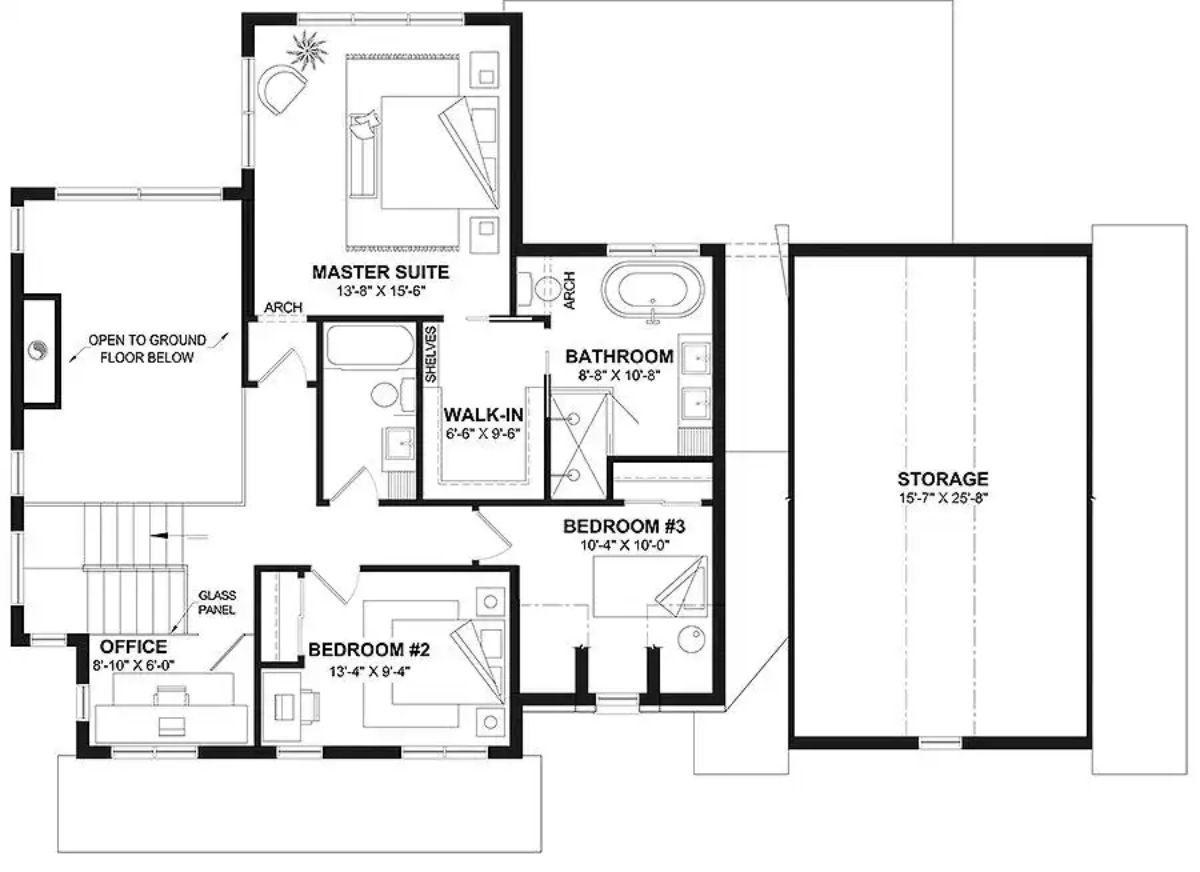
Upstairs: a master suite with walk-in closet, two additional bedrooms sharing a full bath, a small office, and a large detached storage room with its own exterior access.
Arched Entryway with Double Doors That Actually Make an Entrance
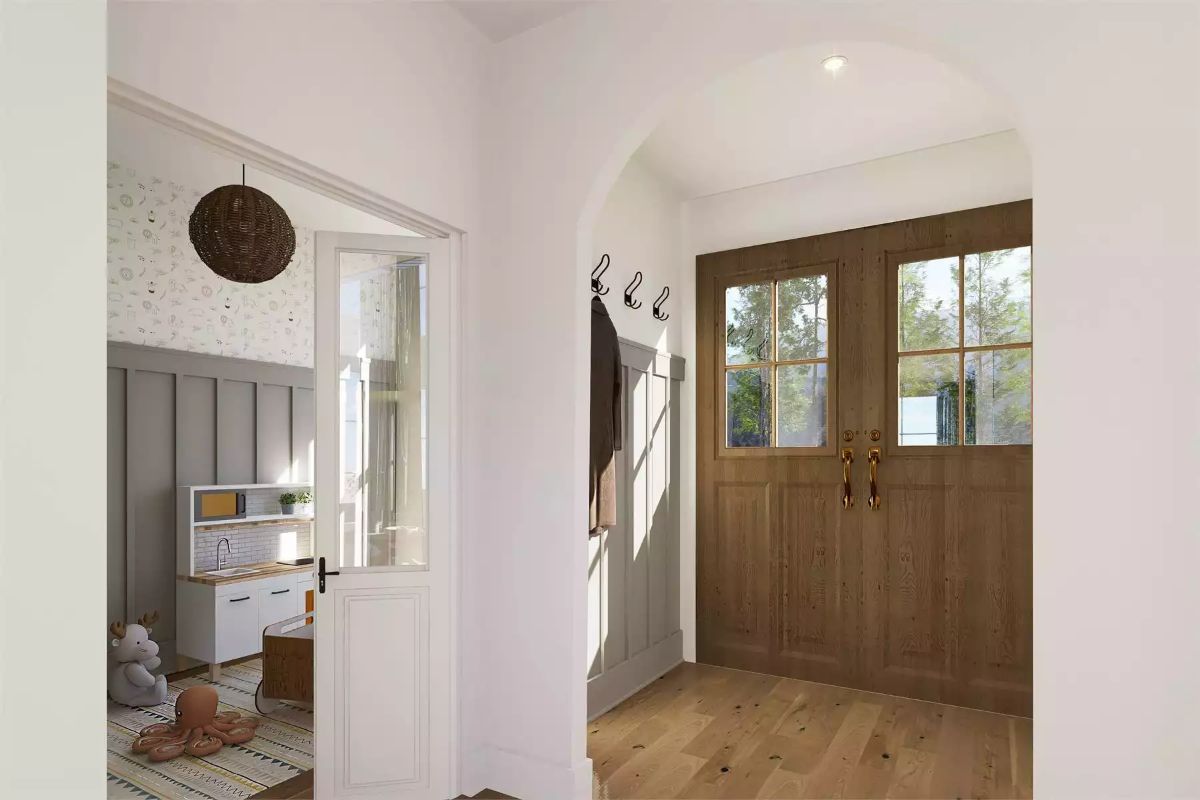
Solid wood double doors with brass pulls anchor the foyer, and light hardwood floors run straight through to the adjacent room without interruption. Black coat hooks line the nearby wall — functional, unfussy, exactly right for a house that actually gets used.
Dark Countertop, Warm Wood Base, and Three Pendants That Mean Business
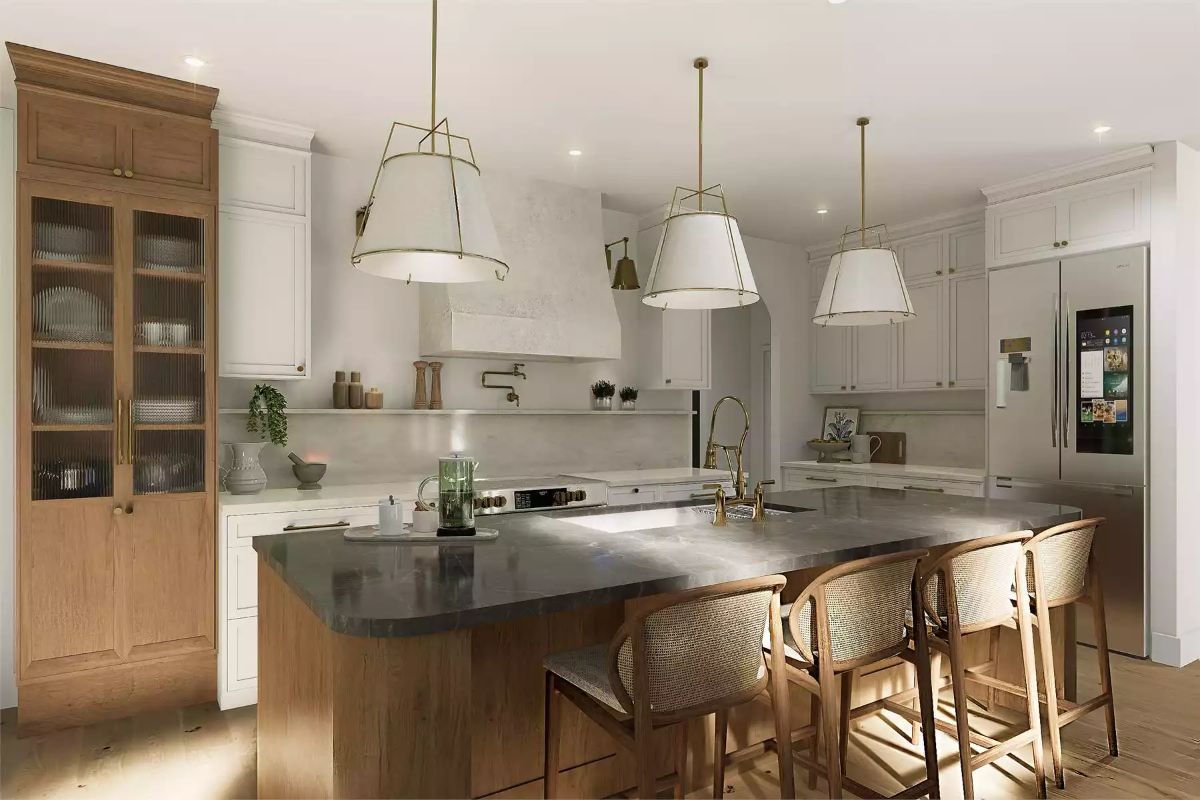
Leathered dark stone island, warm oak cabinetry, brass fixtures, rattan stools. Each piece earns its place.
Trend Alert: Pairing a dark leathered stone countertop with natural wood cabinetry is one of the stronger moves in current kitchen design — warm without sliding into rustic, polished without going cold. Unlacquered brass fixtures only deepen the effect over time as the metal ages and picks up character.
Stone Chimney Tall Enough to Mean It, Fireplace Bright Enough to Feel It
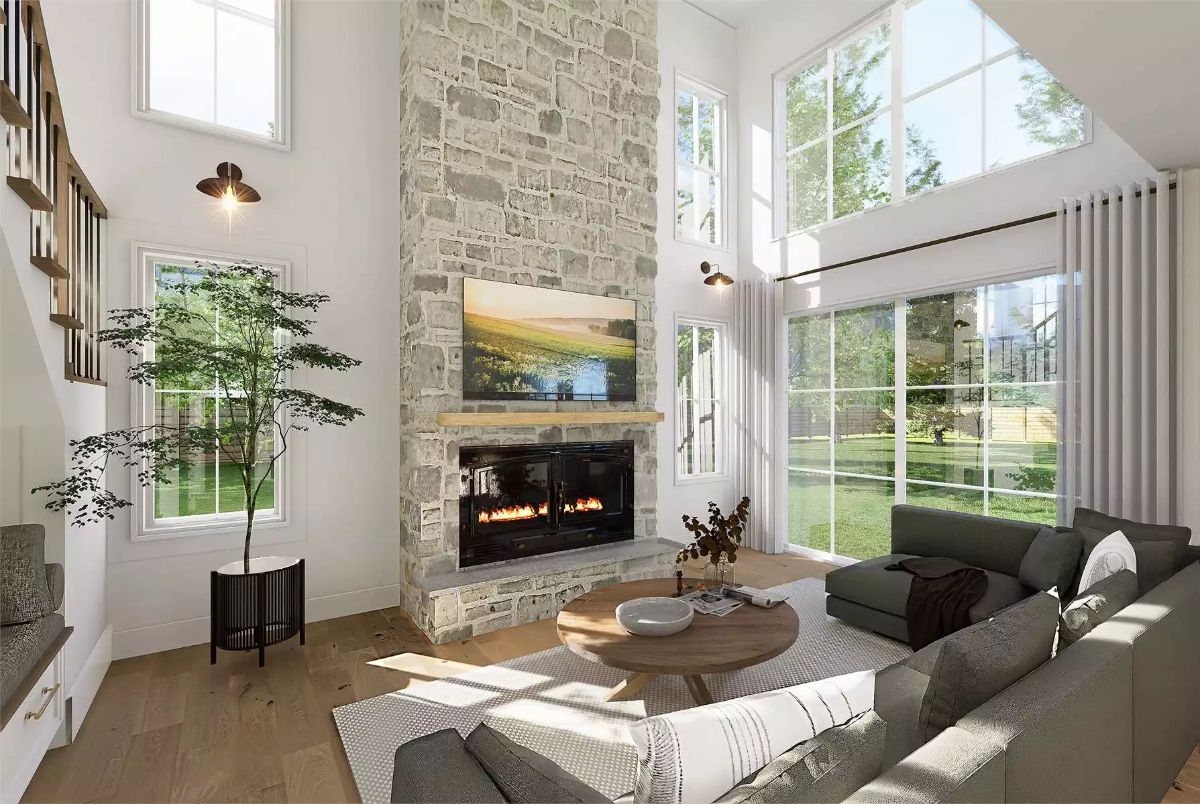
Floor-to-ceiling stacked stone anchors the room without fighting the oversized windows for attention. Gray sectional, round wood coffee table, warm plank floors. Relaxed, but not sloppy.
Try This: Mounting a TV on a stone fireplace surround works best when the screen sits just above the mantel shelf, keeping sightlines comfortable from a seated position. Any higher and necks pay the price after about twenty minutes. A slim, low-profile mount flush to the stone keeps it grounded rather than floating awkwardly mid-wall.
Gold Cage Chandelier, Sheer Curtains, and a Table Built for Staying Awhile
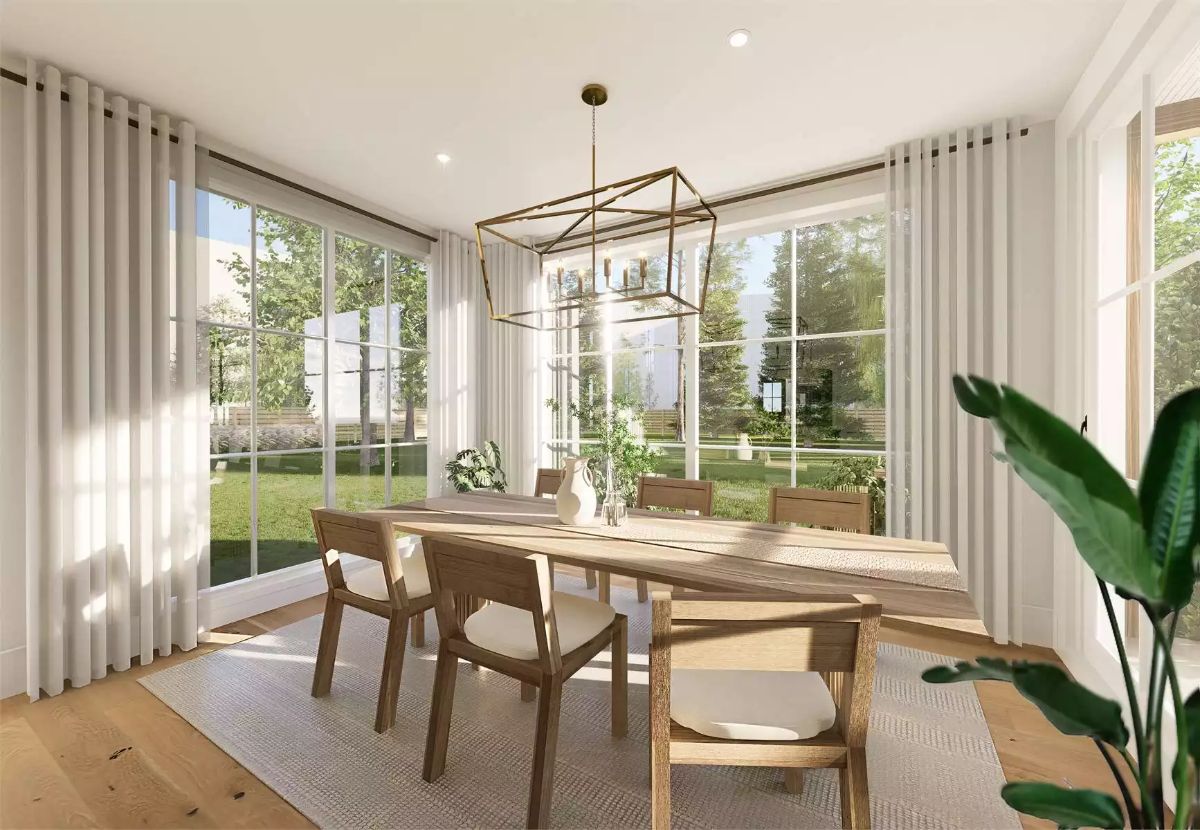
A brass linear pendant hangs low over a live-edge wood table surrounded by cushioned chairs, and sheer panels diffuse afternoon light without blocking the garden view. The whole room feels set up for a meal that runs three hours past the plan.
Long dinners were clearly the whole point here.
Four-Post Bed in Raw Wood That Earns Every Inch of Ceiling Height
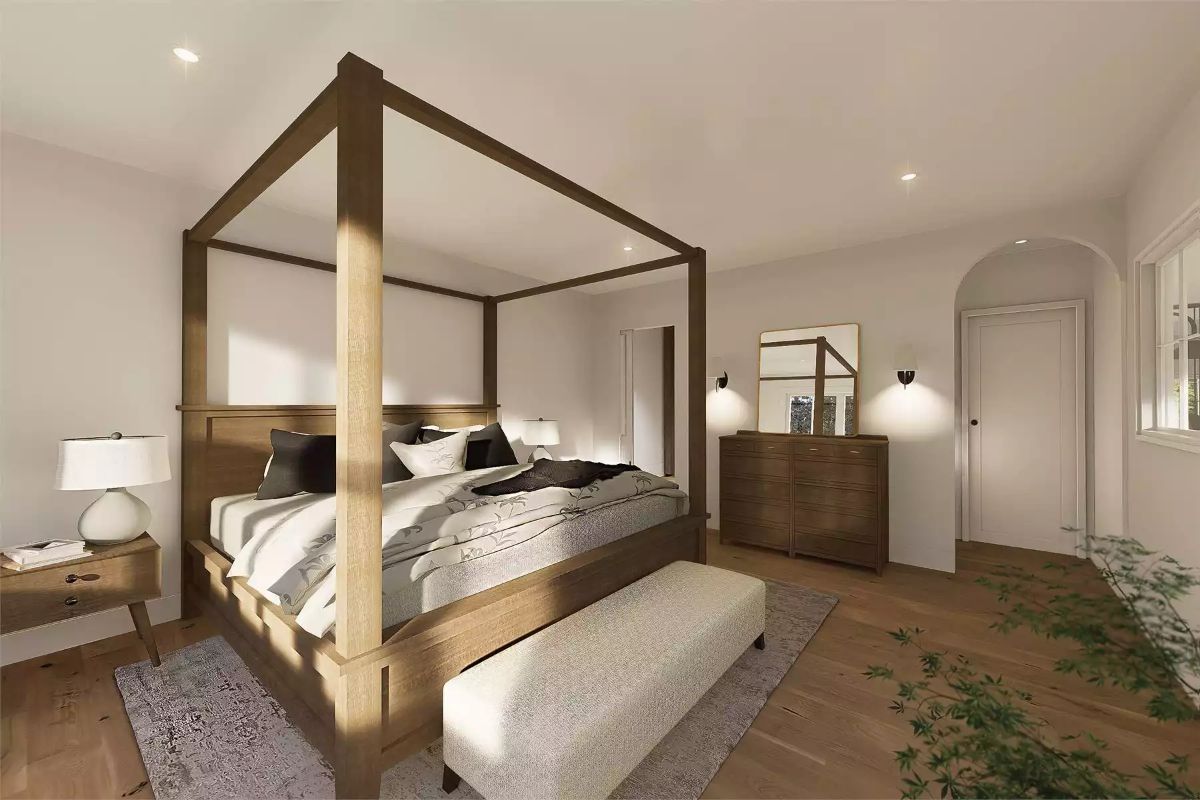
Warm oak tones carry from the four-poster frame through to the dresser and nightstand, giving the room a coherence that doesn’t feel forced. Recessed lighting does the heavy lifting overhead, while wall sconces flanking the mirror add a second layer without crowding the space.
History Corner: Four-poster beds go back to medieval Europe, where the heavy curtains draped between posts had a straightforward job: blocking drafts in stone buildings with no central heat. By the time the style reached colonial America, the curtains had mostly disappeared — but the frame stayed, because people simply liked how it felt to sleep inside one.
Rough Stone, Soaking Tub, and a Window That Pulls the Outdoors In
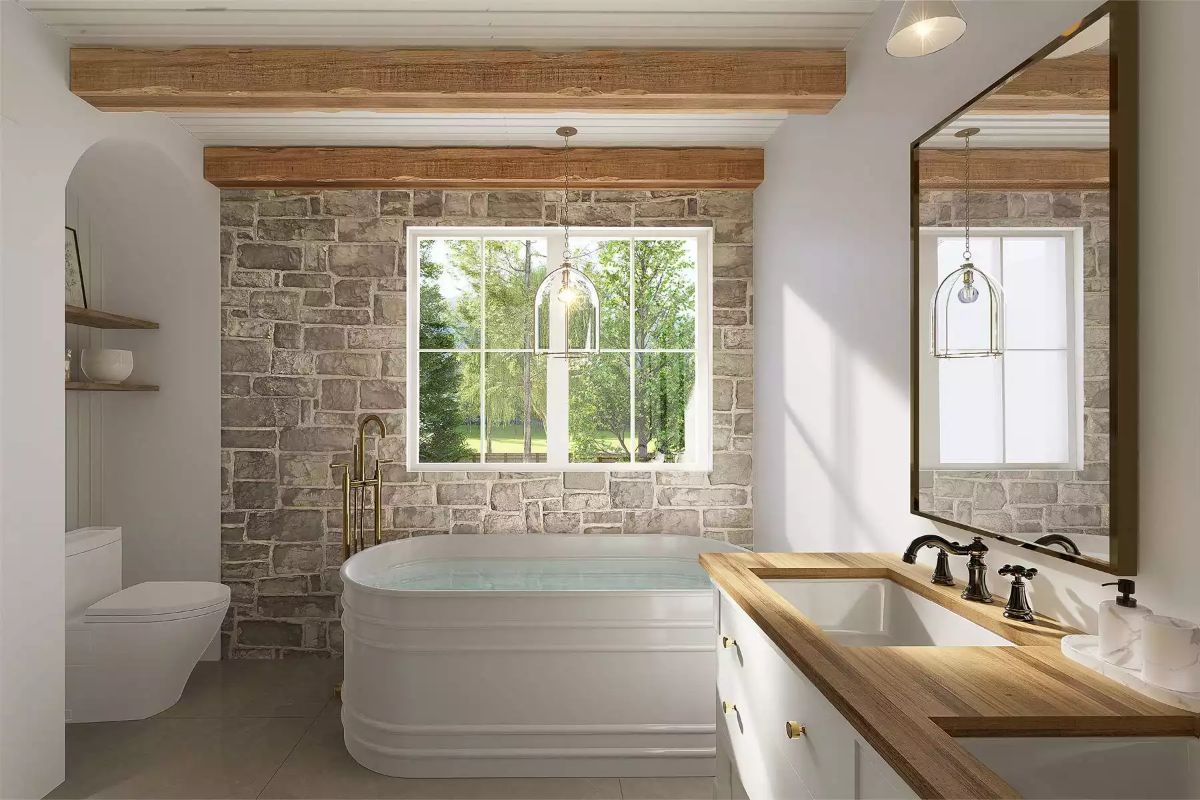
Fieldstone walls don’t belong in bathrooms — until you see one done like this.
Natural stone covers the full accent wall behind a freestanding soaking tub, and the texture alone earns its keep. Exposed wood ceiling beams and a warm wood vanity countertop keep the room from reading cold, balancing the rough stone without softening it into something generic. The pendant light centered directly above the tub is a confident call — the kind of placement that either works completely or doesn’t work at all. Here, it works.
Miele Machines, Farmhouse Sink, and a Window That Makes Laundry Bearable
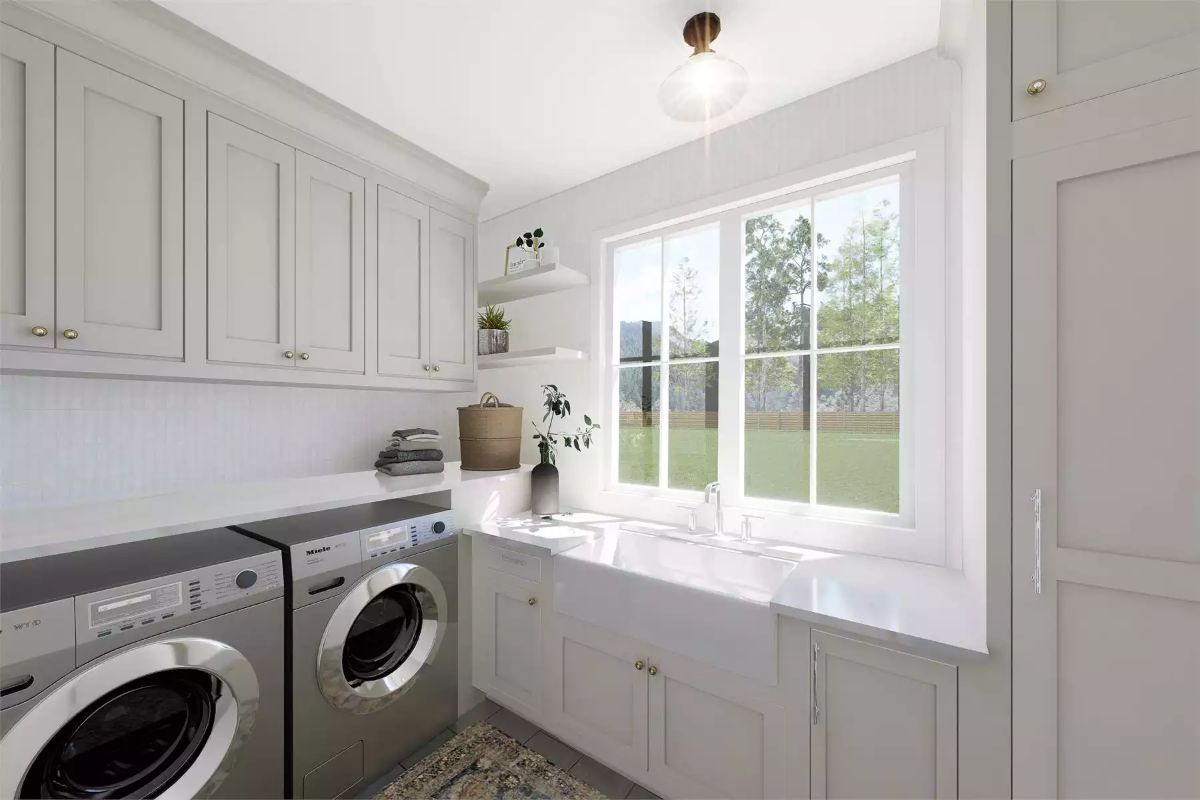
Sage-gray shaker cabinets run floor to ceiling, with brass hardware keeping things from going too clinical. The Miele washer-dryer stack is a sensible move for tight square footage — vertical footprint, serious performance. Floating shelves above hold a plant and a woven basket without tipping into clutter. And the wide farmhouse sink under the window is the detail that makes the room: natural light, a decent view, a task that suddenly feels less like a chore.
Pro Tip: Front-load washers stacked vertically use less water and energy than top-loaders and are generally easier to service when something goes wrong. If you’re planning a laundry room from scratch, rough in a utility sink during the build. Adding one as an afterthought almost always means giving up cabinet space you’ll regret losing.
Pin It
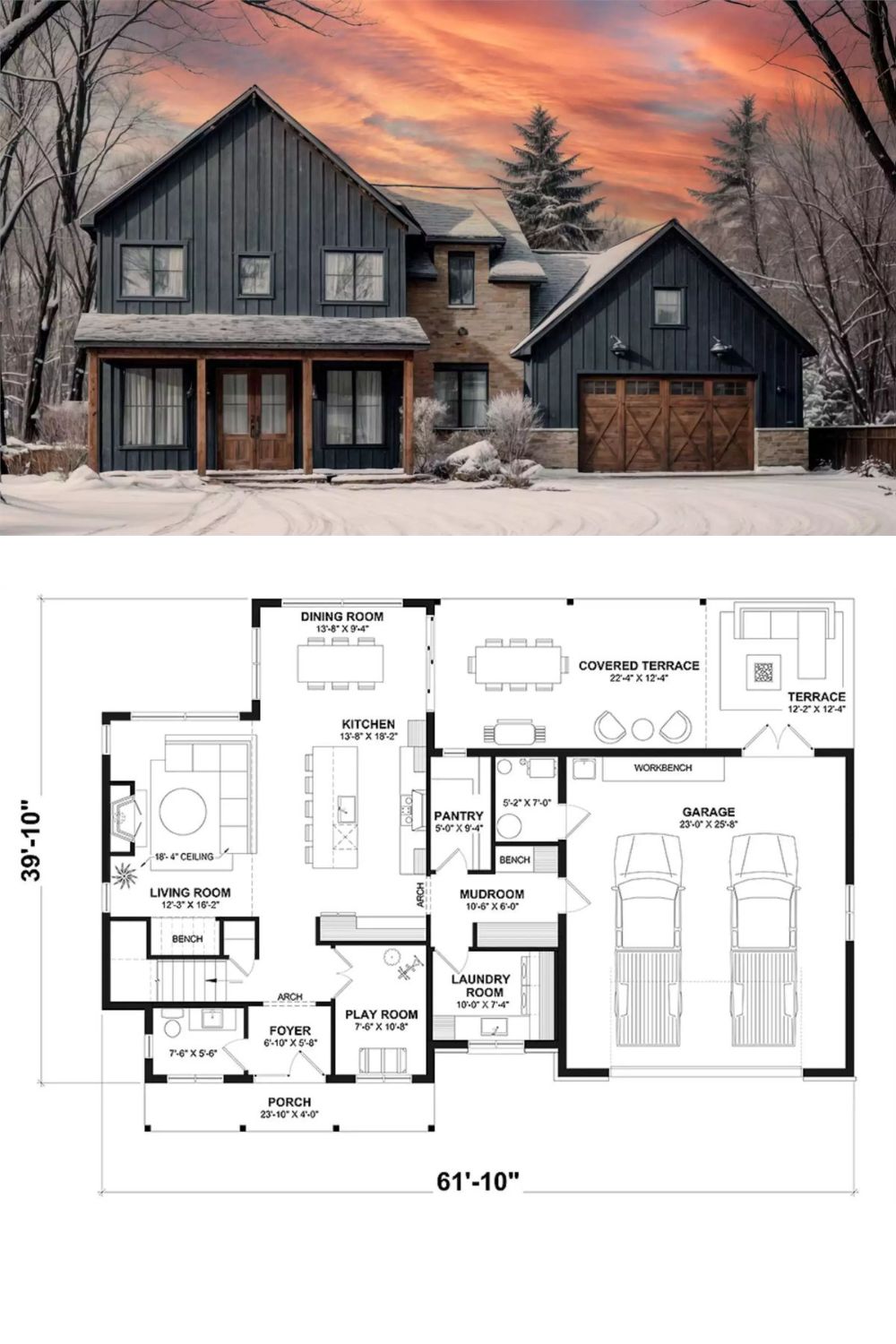
A dark board-and-batten exterior photographed at sunset pairs with the first-floor plan below. The layout spans 61’10” wide and packs in a living room with an 18’4″ ceiling, open kitchen and dining, mudroom, laundry, playroom, covered terrace, and a two-car garage with workbench.
Material Matters: Board-and-batten siding holds paint better than horizontal lap siding because water sheds off vertical seams instead of pooling behind overlapping edges. In climates with heavy snowfall or hard freeze-thaw cycles, that’s a meaningful difference over the life of the exterior — and worth factoring in before you decide based on looks alone.