
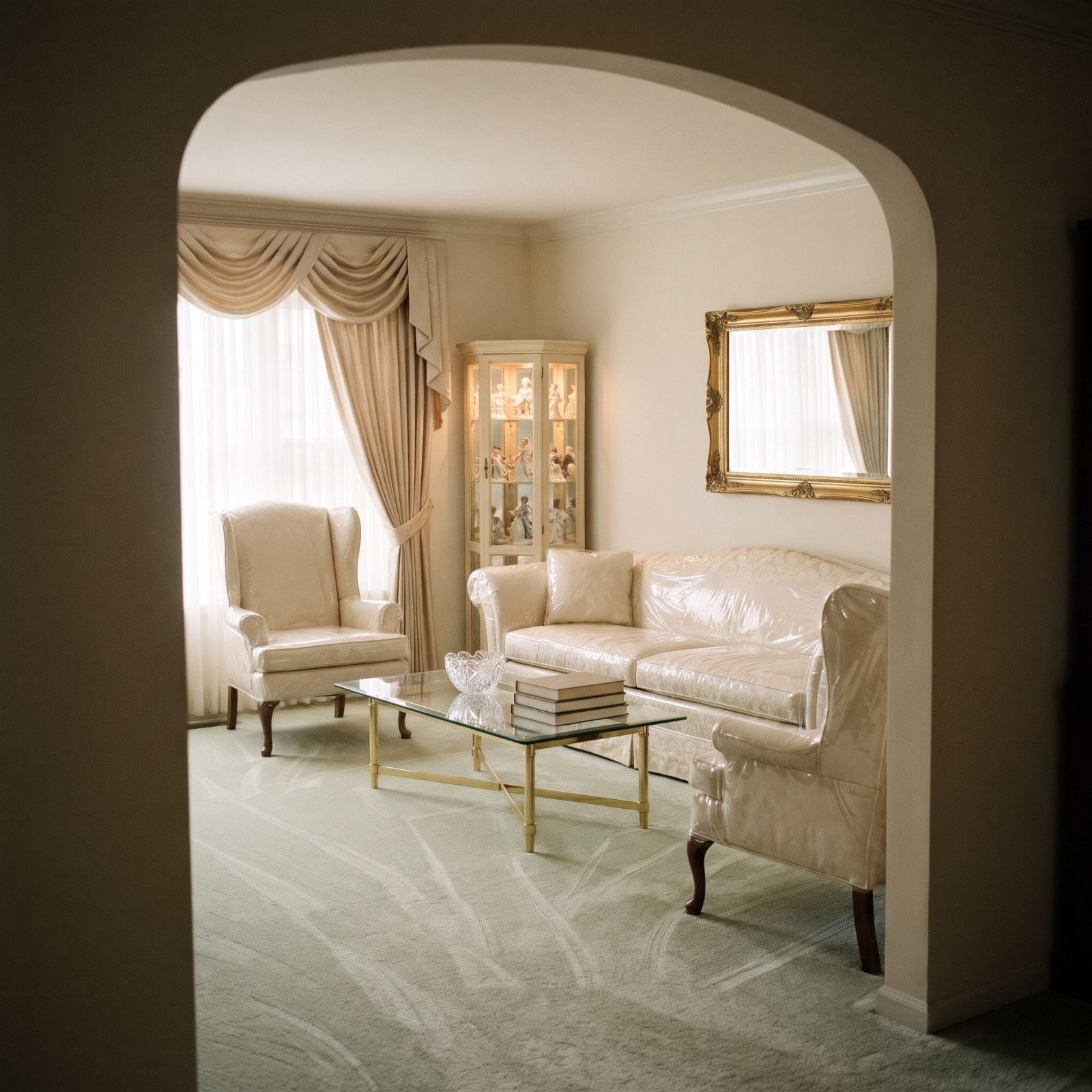
The sound gave it away first. That specific crinkle when you sat down, the one that announced to the whole house you’d committed the crime of using the furniture. The good couch lived under clear vinyl, sealed like a museum piece nobody was allowed to touch. Summer meant your thighs welding themselves to the plastic. Company meant the formal living room finally getting its one night of purpose. If you came up this way, you don’t need to be told. You already remember the smell, the rules, the quiet dread of a spilled grape juice. These are the ones that bring it all back.
21. That Sound the Back of Your Thighs Made in Shorts
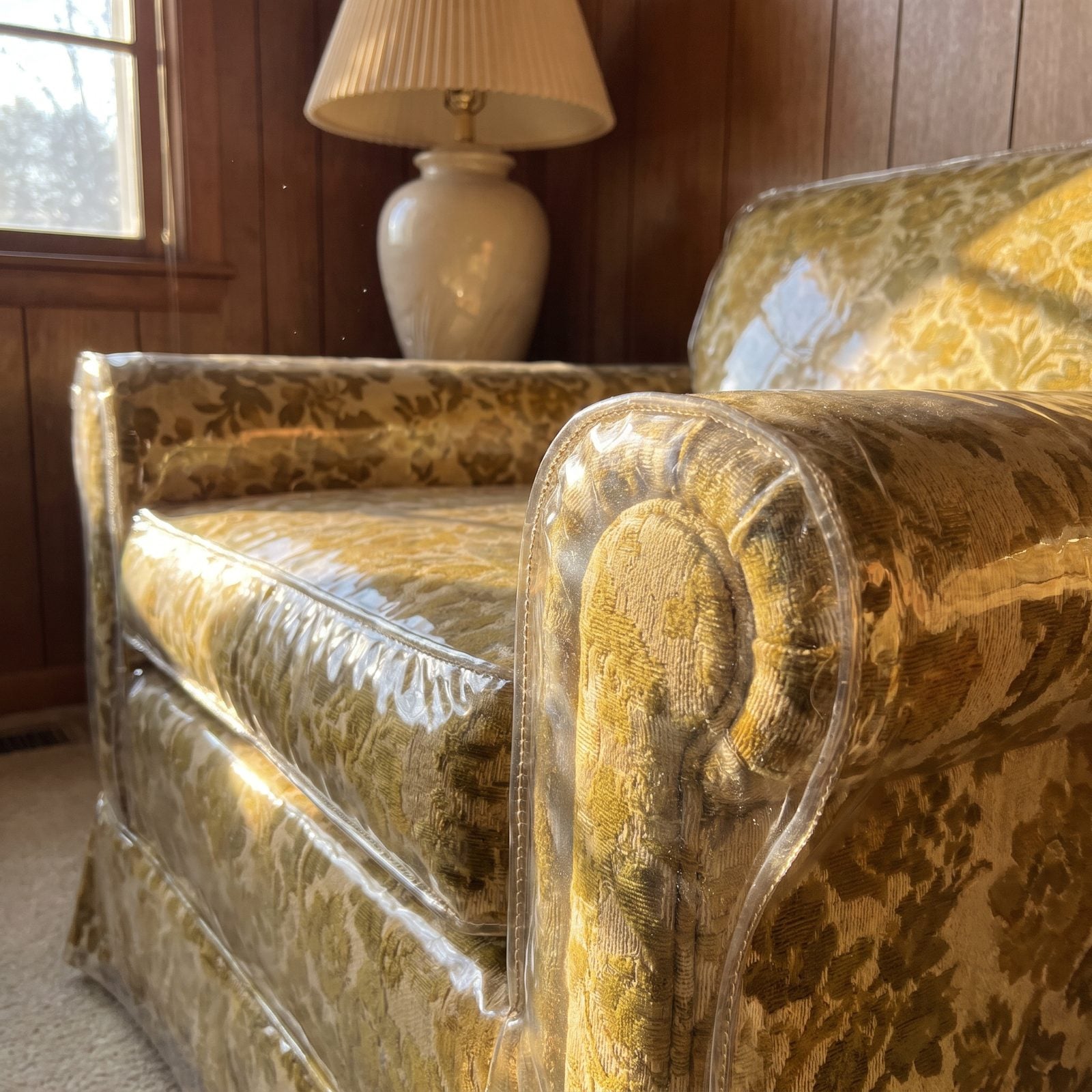
You know the sound. Bare skin on hot summer vinyl, the slow peel when you stood up, that little suction release that announced to the whole house you’d been sitting where you weren’t supposed to linger.
In order to come up with the very specific design ideas, we create most designs with the assistance of state-of-the-art AI interior design software. Also, assume links that take you off the site are affiliate links such as links to Amazon. this means we may earn a commission if you buy something.
In shorts it was worse. The plastic grabbed the back of your legs and left a grid of red lines pressed into your skin, the exact pattern of the seams. You wore that imprint like evidence. Everyone in the family had felt it.
Winter had its own betrayal. The vinyl went cold and stiff, cracking faintly when you shifted, loud enough to turn heads during a quiet moment.
Weighing the old-school plastic slipcover, a home design writer concedes it protects against spills but “it will undoubtedly be less comfortable (especially when it gets sticky on a hot day) and much noisier”
20. The Living Room Nobody Was Actually Allowed to Live In
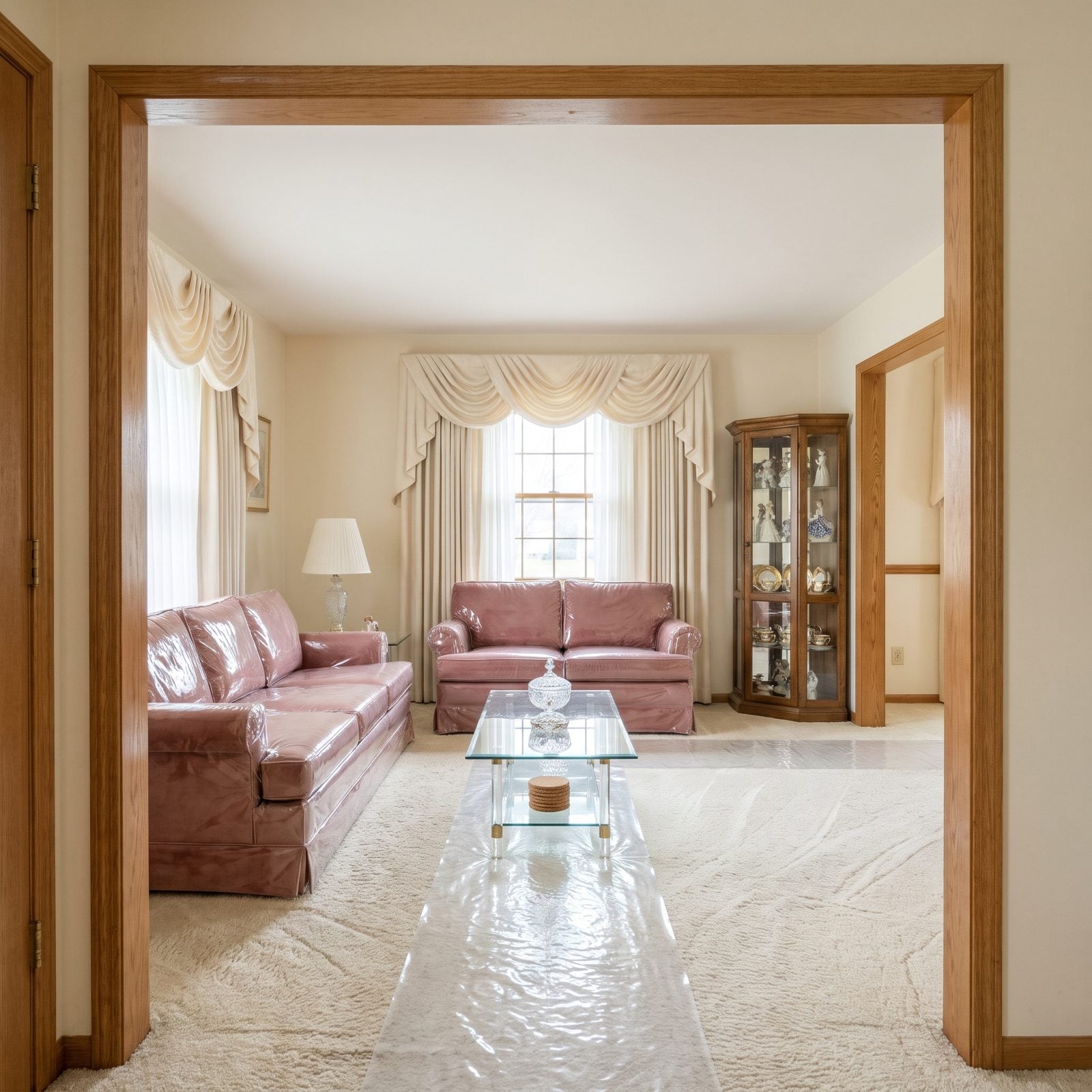
There was a room in your house that functioned like a museum exhibit. You could look. You could not touch. And you definitely could not sit.
This was the good room, reserved for company that mostly never came. The vinyl stayed on the red sofa designs and matching chairs, the shag was vacuumed into pristine rows, and the whole space held its breath waiting for a visit from the priest or an aunt from out of town.
Daily life happened somewhere else. The den, the kitchen, a basement with a TV. The formal living room was a shrine to the idea of having nice things, worshipped from the doorway.
Remembering the plastic-wrapped sitting rooms in friends’ homes, a nostalgia newsletter writer admits she was “Jealous that my home did not have areas that were so museum-like in appearance that they needed to be roped off.”
19. The Towel That Appeared Over the Armrest the Second Someone Sat Down
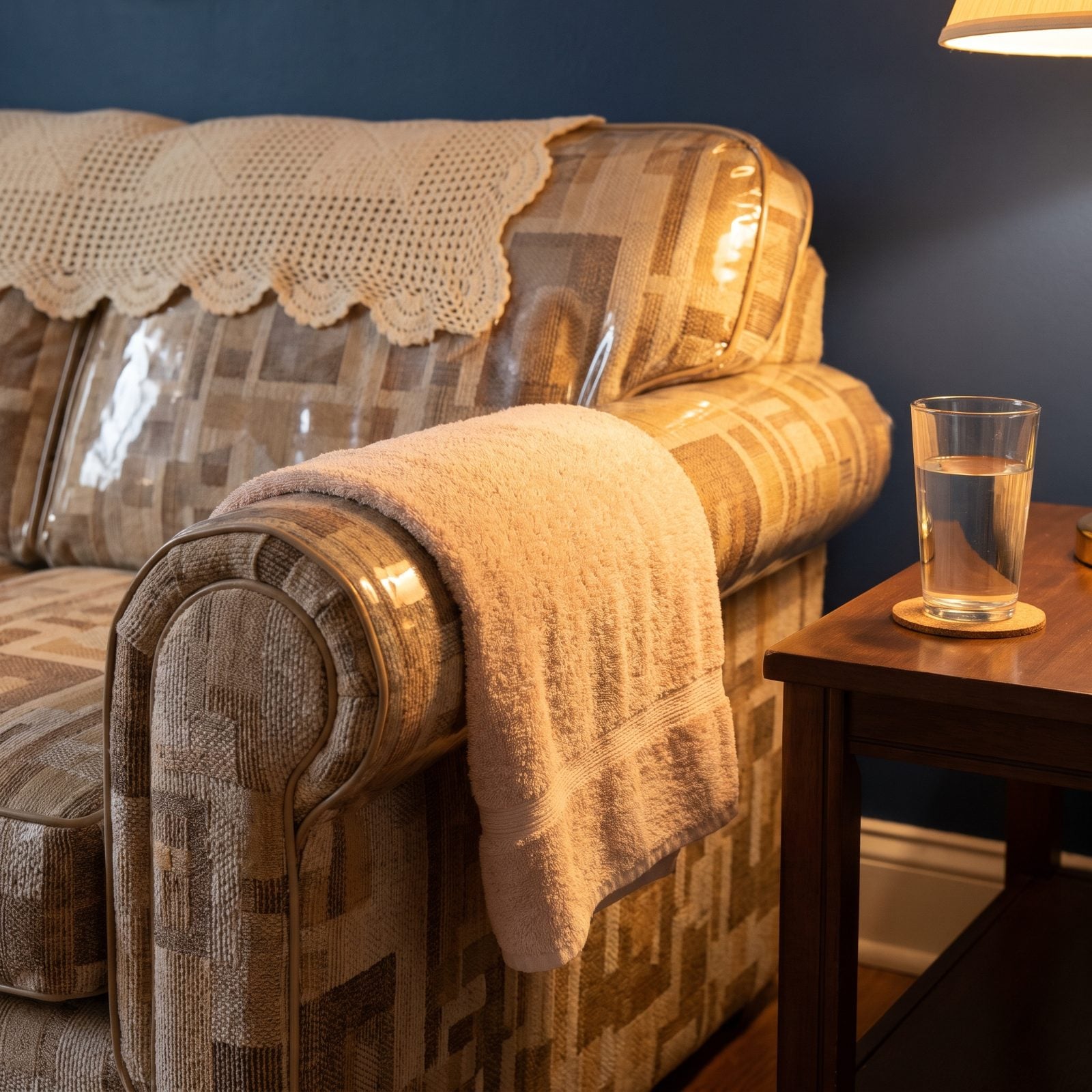
Even the plastic had backup.
A folded towel materialized over the armrest wherever a head or a greasy hand might land, because apparently the vinyl alone wasn’t enough insurance. Doilies guarded the back cushions. A cloth went down before anyone ate. The protection had layers, like an onion of anxiety about stains.
You learned the choreography without being taught. Towel first, then sit. Hands on the towel, not the arm. It was a whole ritual built around a tan family room that was never allowed to look used, performed so many times it stopped feeling strange.
18. Guests Who Visibly Flinched Before Lowering Themselves Onto the Couch
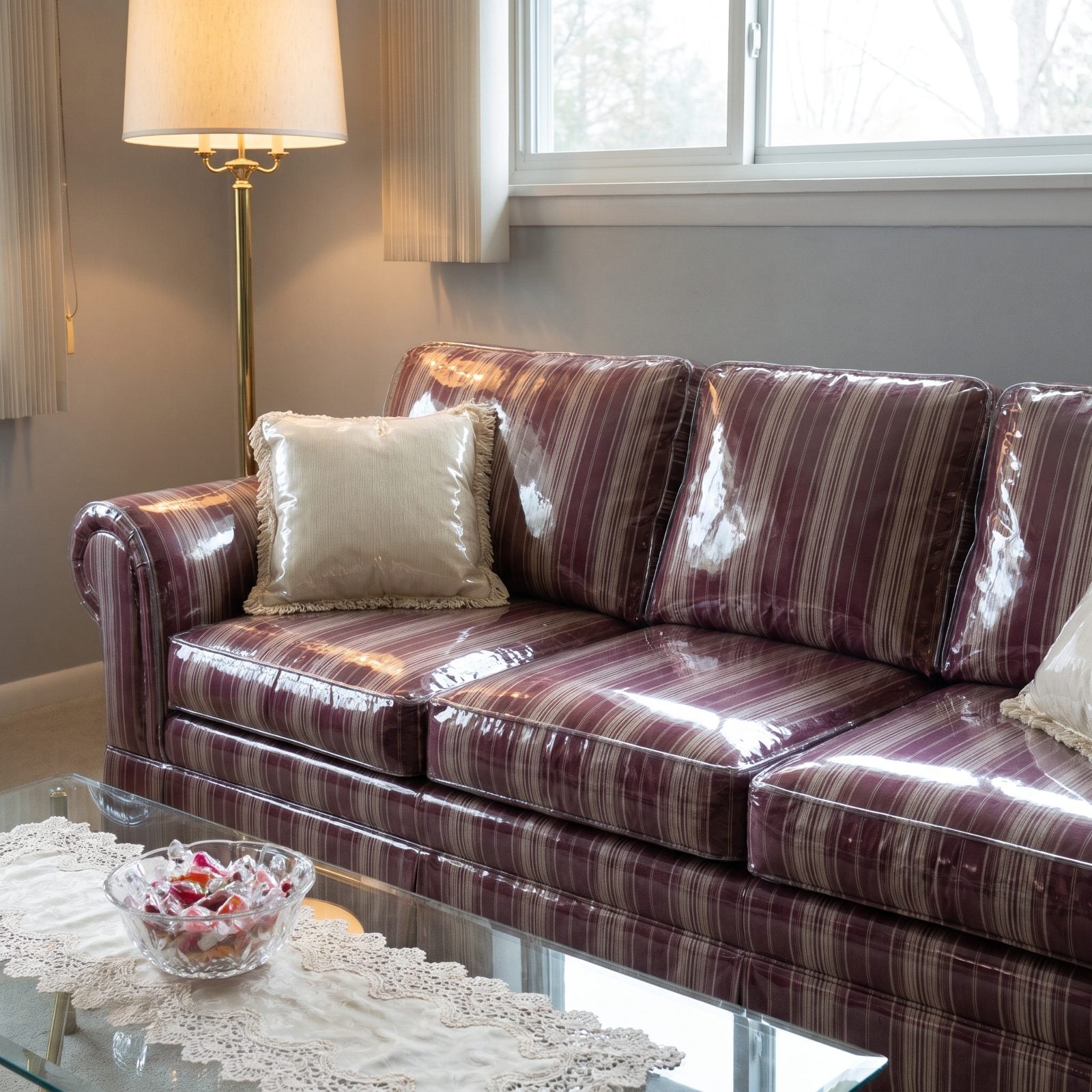
You could always spot the first-time visitor.
They’d approach the sofa, register the glint of plastic, and perform a tiny hesitation before committing. The slow, careful lowering. The polite fidget when the vinyl crinkled under them. Some perched on the edge the whole visit like the cushion might report them.
Regulars knew better. You sat with confidence and let the plastic announce you. But watching a guest negotiate that burgundy-striped couch for the first time was its own quiet entertainment, the flinch before the descent, the surprised little sound the vinyl made in the silence.
17. The Day the Plastic Finally Came Off and the Couch Looked Like a Stranger
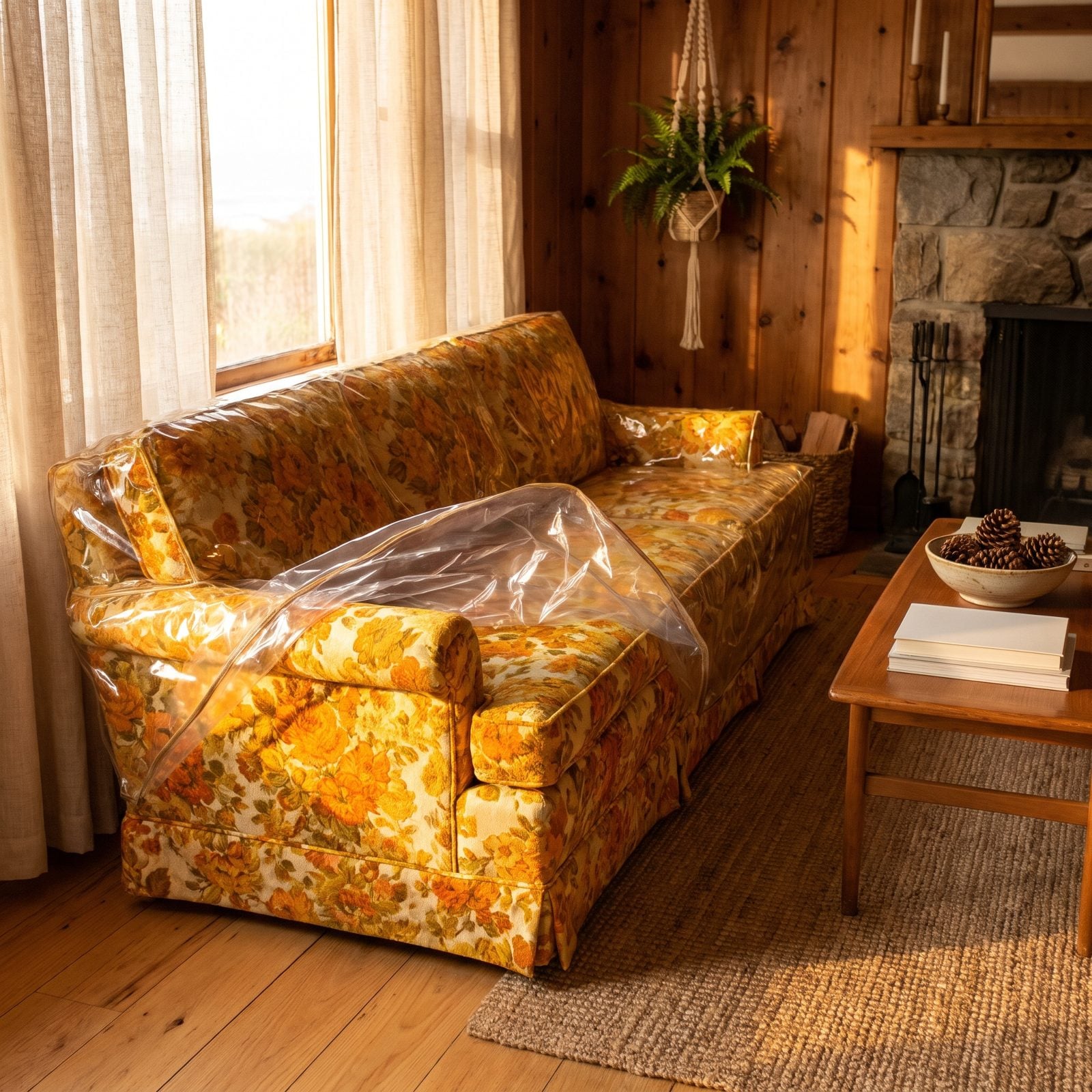
And then, sometimes, it happened. The plastic came off.
Maybe for a holiday. Maybe because it finally cracked and split. Either way, the couch underneath looked impossibly new, the harvest-gold floral as bright and unfaded as the day it arrived, protected for so long it had outlived the decade that made it fashionable.
It felt almost wrong to touch bare fabric. You’d grown up believing the real couch was the plastic one. The soft thing beneath was a mid-century sofa you’d never actually met, preserved like a photograph nobody looked at.
16. The Welt Along the Front Edge That Branded the Back of Every Knee
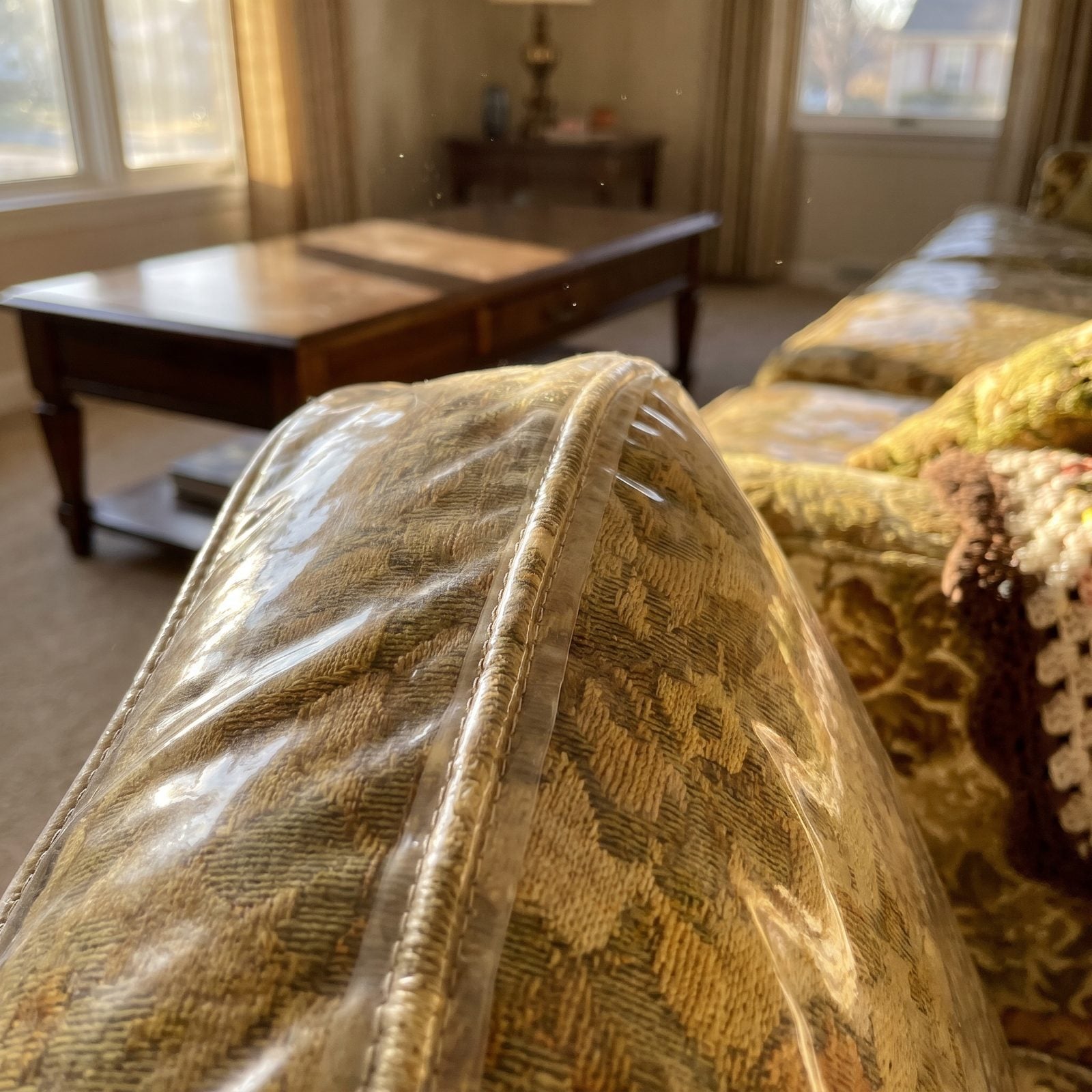
You know the exact line. Sit down in shorts on a summer afternoon and the piped welt along the cushion front pressed a hard crease into the back of your knees. Stand up twenty minutes later and there it was, a red groove stamped into your skin like the sofa had signed you.
The vinyl made it worse. It held the heat, then held the shape. That ridge was the seam where the fitted plastic met the piping underneath, pulled tight enough to bite.
15. The Runner Carpet That Told You Exactly Where Your Feet Were Allowed
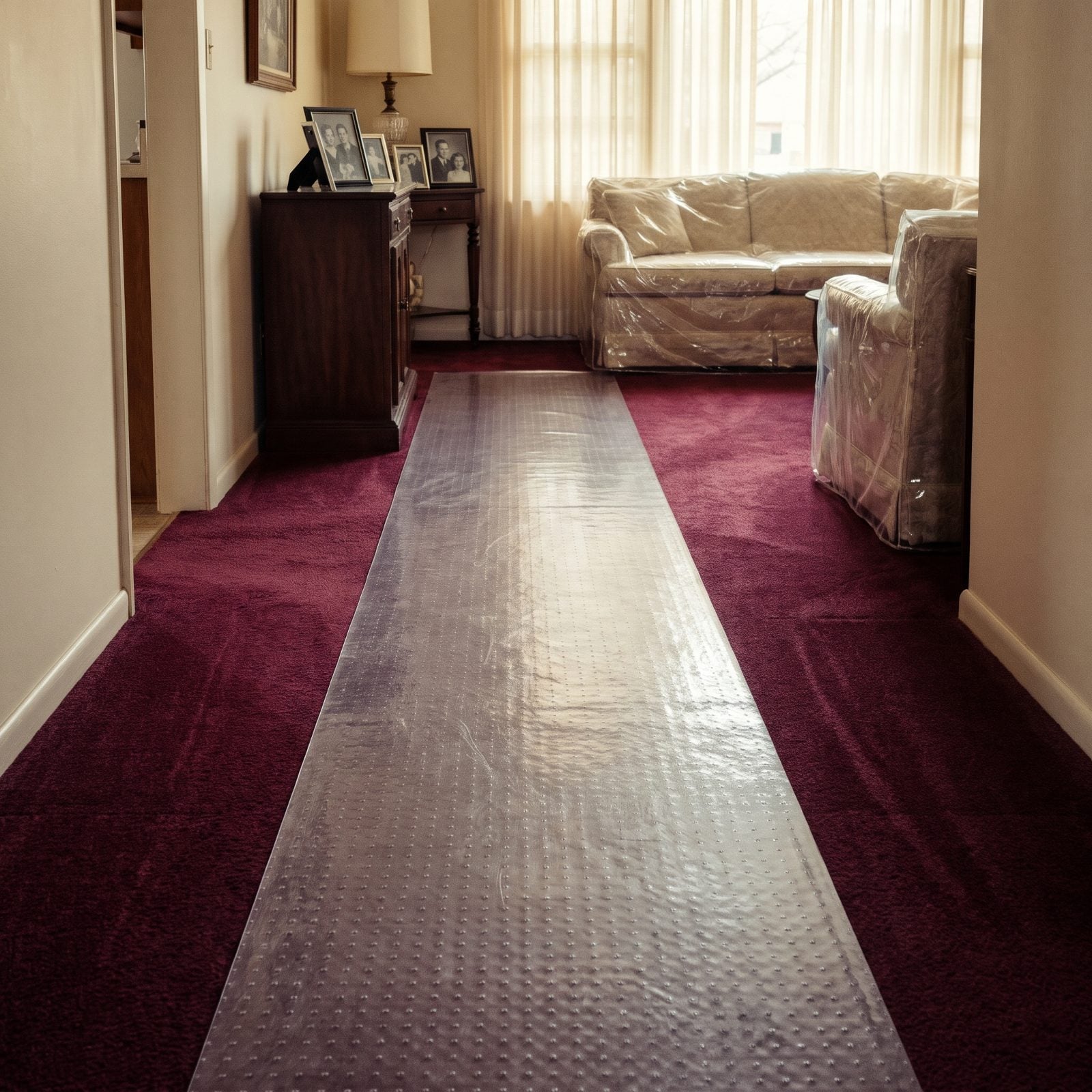
A clear plastic runner cut a path across the carpet like a cattle chute. You walked the runner. You did not stray onto the virgin wool on either side, which was vacuumed into perfect nap lines and reserved for no one.
The runner had a gripped, waffled underside that bit into the carpet and a glossy top that squeaked faintly underfoot. It ran from the front door, down the hall, and stopped just short of the white sofa designs nobody was allowed to touch. The carpet was there to be seen. The runner was there so you wouldn’t ruin it.
14. The Squeak That Announced Every Shift of Your Weight
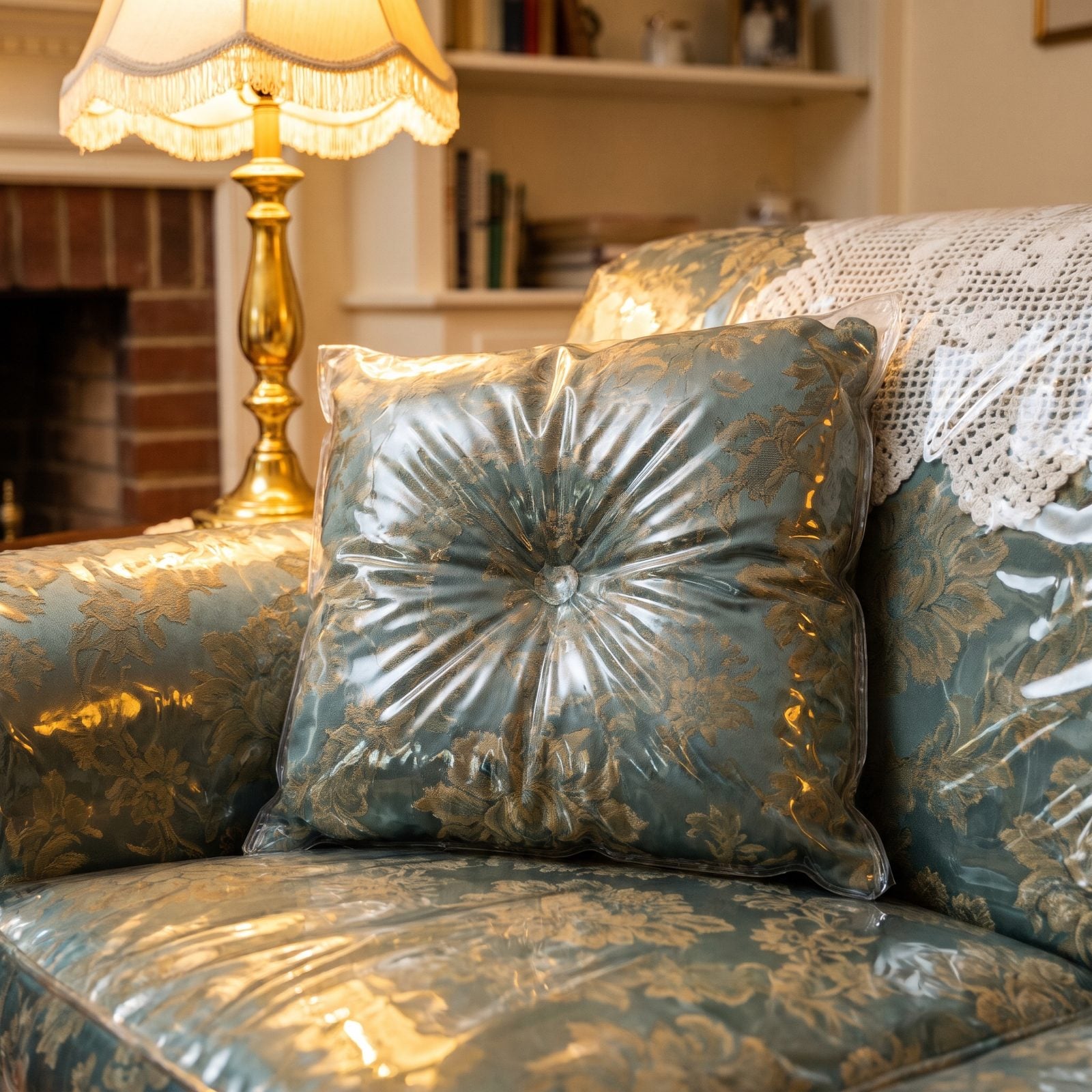
Every sofa in the house had a soundtrack. Shift your weight and the vinyl answered with a drawn-out crinkle and squeak that carried across the room.
You couldn’t sneak a position change. Lean left, the plastic groaned. Cross your legs, it crackled. During a quiet TV show, the whole family’s small movements made the furniture sound like it was breathing.
13. Spilling Something Was a Non-Event, and That Was the Whole Point
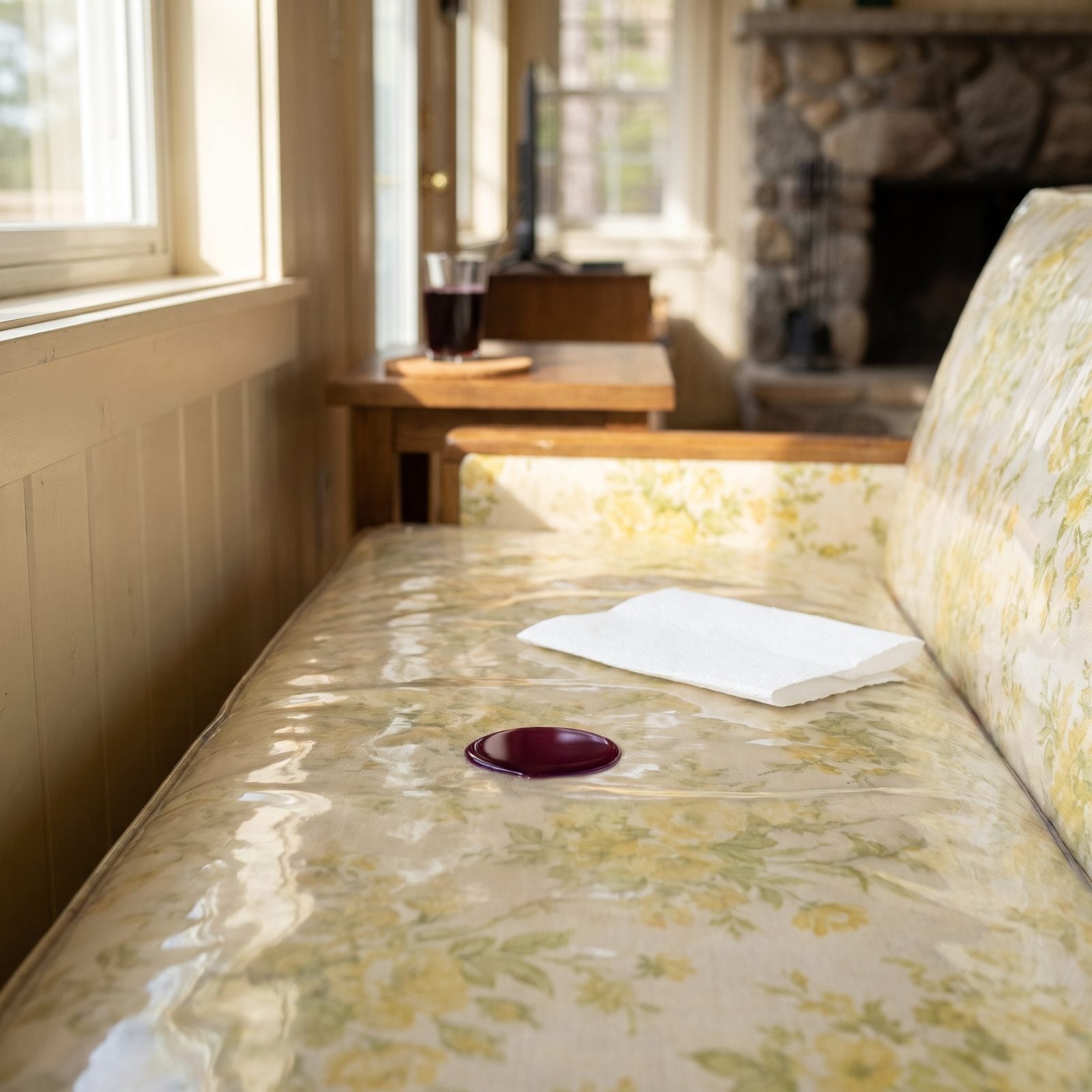
Knock over a glass of grape juice and nothing happened. It beaded up on the vinyl and sat there in a dark puddle, going nowhere, while the floral fabric underneath stayed bone dry.
You wiped it with a paper towel and that was the end of it. No stain, no scolding, no ruined cushion. For all the discomfort the plastic caused, this was its quiet triumph, the reason the whole ritual existed in the first place.
That protected fabric outlasted entire decades. Peel the vinyl off a tan family room sofa in 1995 and you’d find upholstery that looked exactly as it did the day it arrived, colors bright, nap intact, a time capsule nobody ever got to enjoy.
Recounting the day her toddler finger-painted the couch, a longtime plastic-cover owner says “But because I had those plastic covers on, I simply wiped it down, and voilà, disaster averted!”
12. The Sofa Arms Wore Little Lace Caps Like It Was Dressed for Church
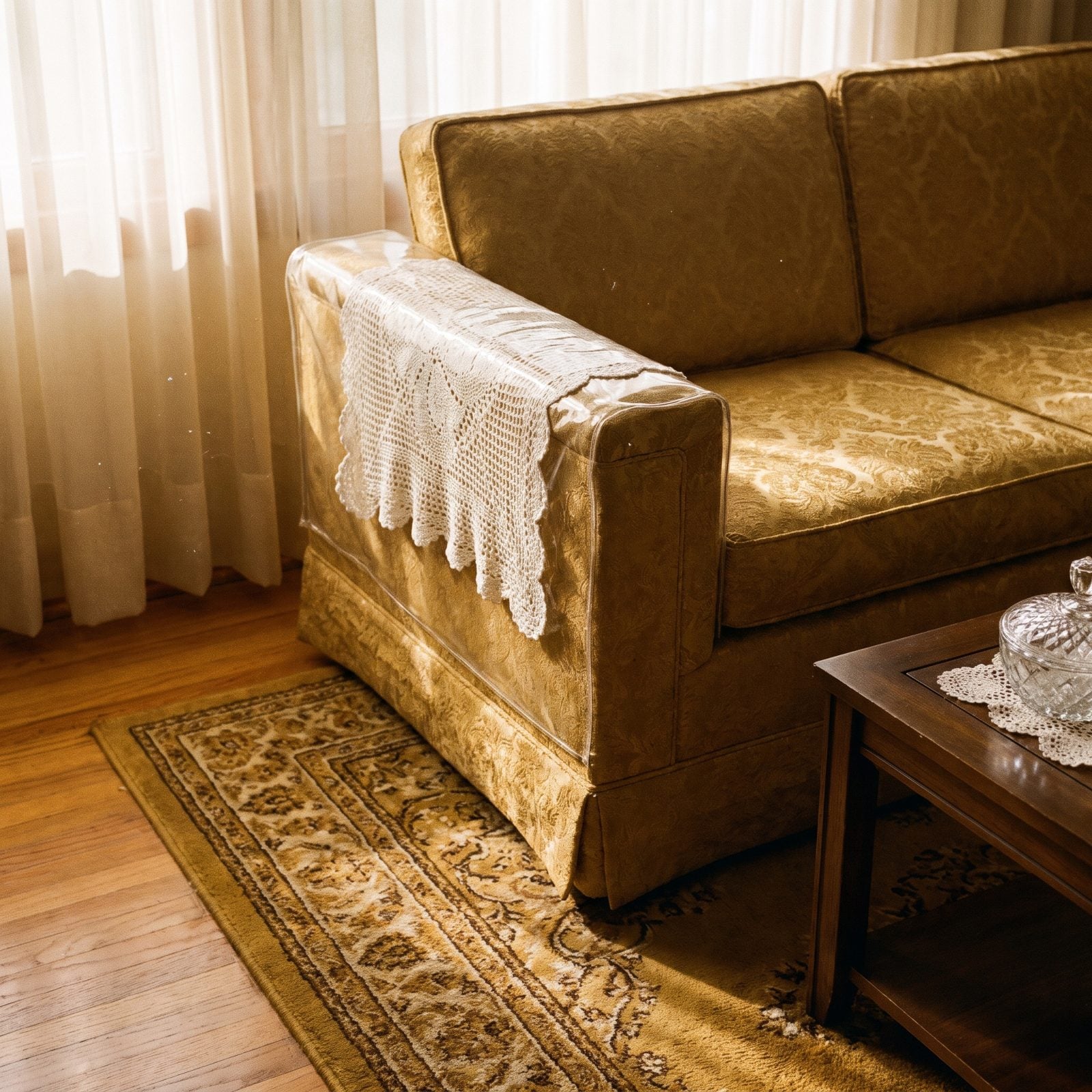
Lace on the arms. Lace on the headrest. Lace under the candy dish. And over the lace, plastic, because even the decorations needed protecting.
The antimacassar started as a defense against hair oil in Victorian parlors. By the time it landed in a vinyl-covered living room it was pure ritual, a little doily hat the furniture wore whether or not anyone’s head ever touched it.
11. Guests Got the Good Room, and the Good Room Was Basically a Museum
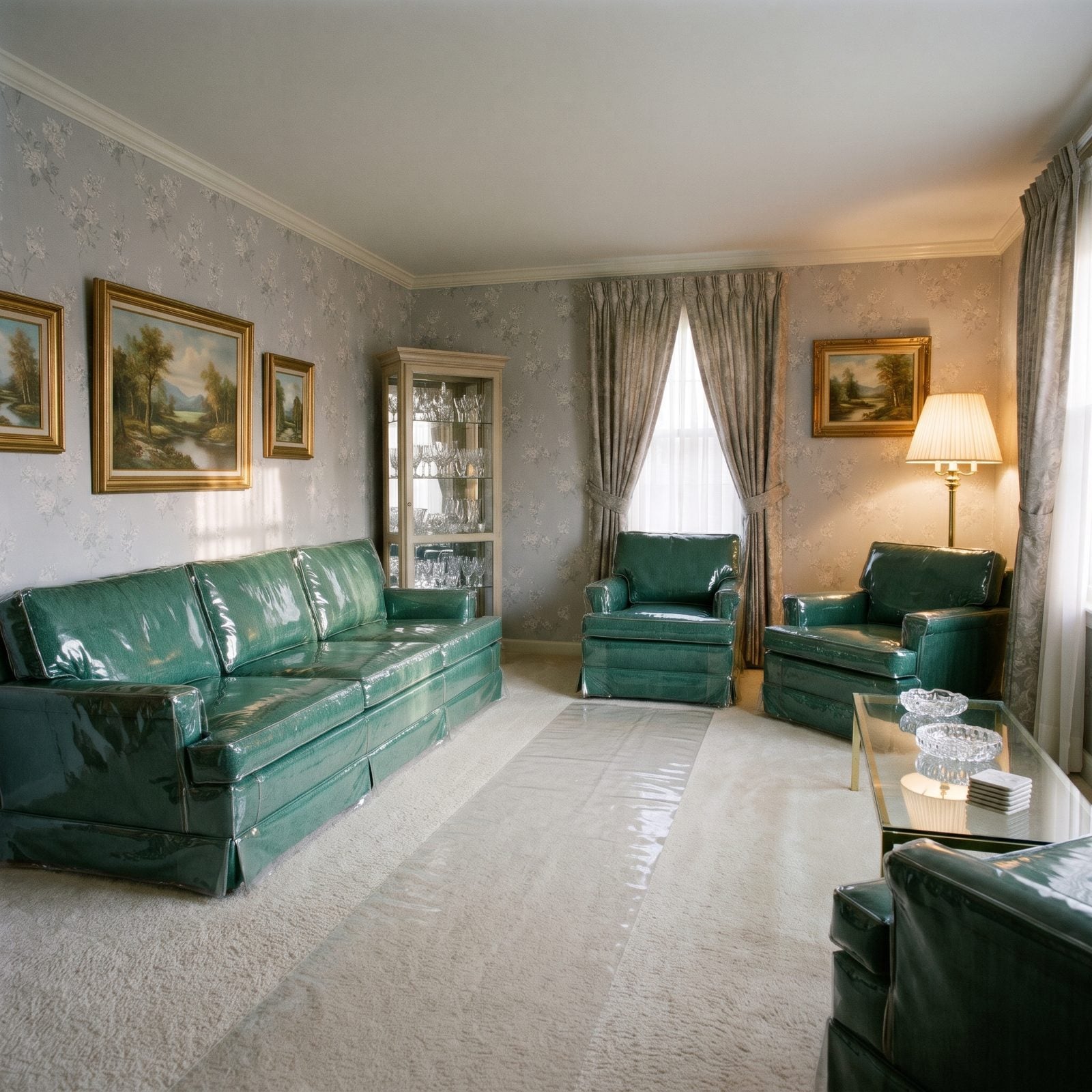
There was a room you didn’t go in. You knew which one.
The furniture was nicer, the carpet was lighter, and a strip of plastic runner told your feet exactly where they were allowed to walk. It opened maybe three times a year. The priest came over. A holiday. Somebody important.
The rest of the time it sat sealed and waiting, a stage set with no performance scheduled. You could admire this glam family room from the hallway. Living in it was a different thing entirely.
The plastic wasn’t protecting the couch from you. It was protecting the couch from time itself.
10. Spill Something and the Whole House Exhaled With Relief
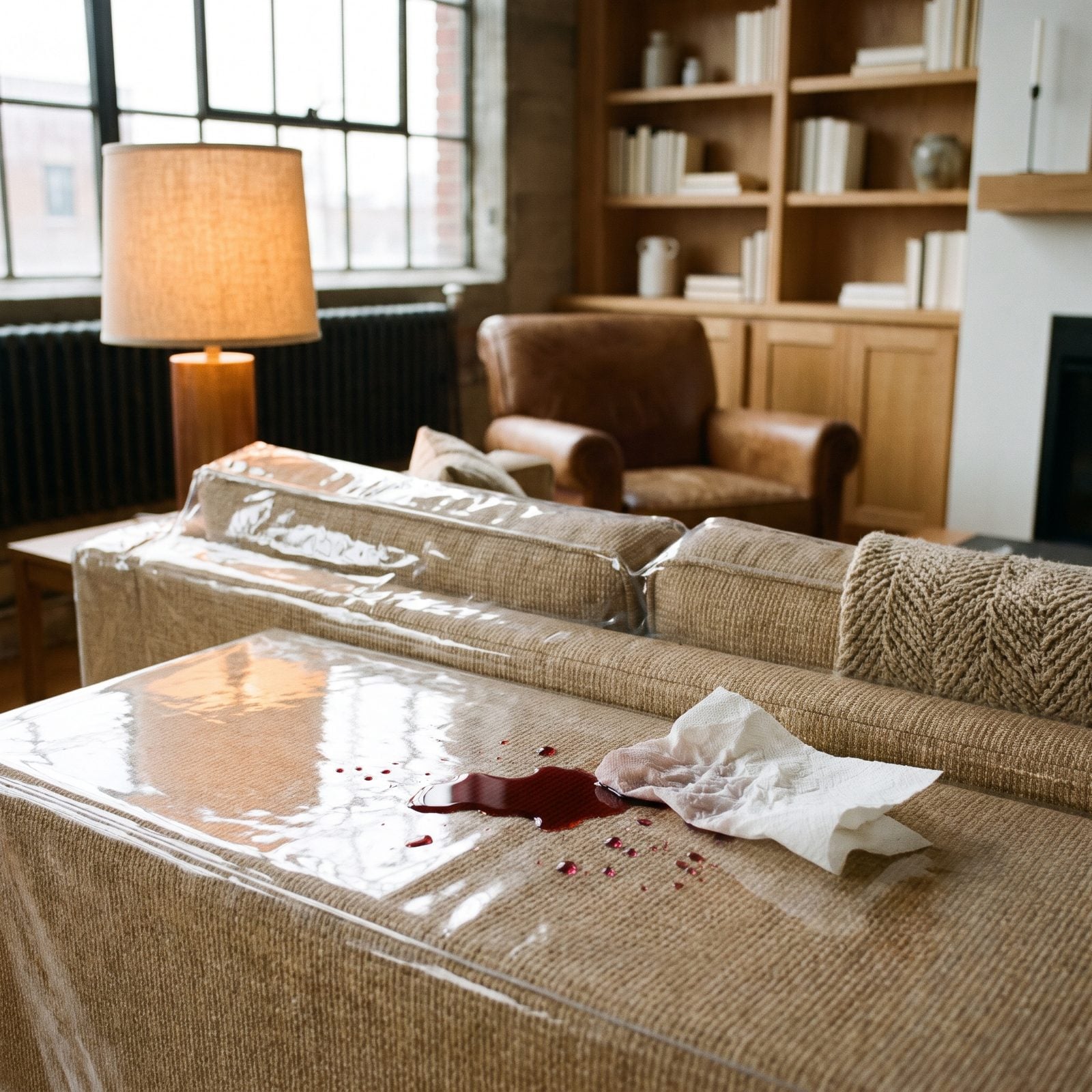
Here’s the quiet genius nobody admits: the plastic actually worked.
A kid knocks over a full glass of grape juice. On fabric, that’s a funeral. On vinyl, the juice just sits there in a little purple puddle, confused, going nowhere. One paper towel and the crisis is over. The sofa in that tan family room stayed perfect for two decades.
9. The Plastic Came in a Roll and the Living Room Became a Workshop
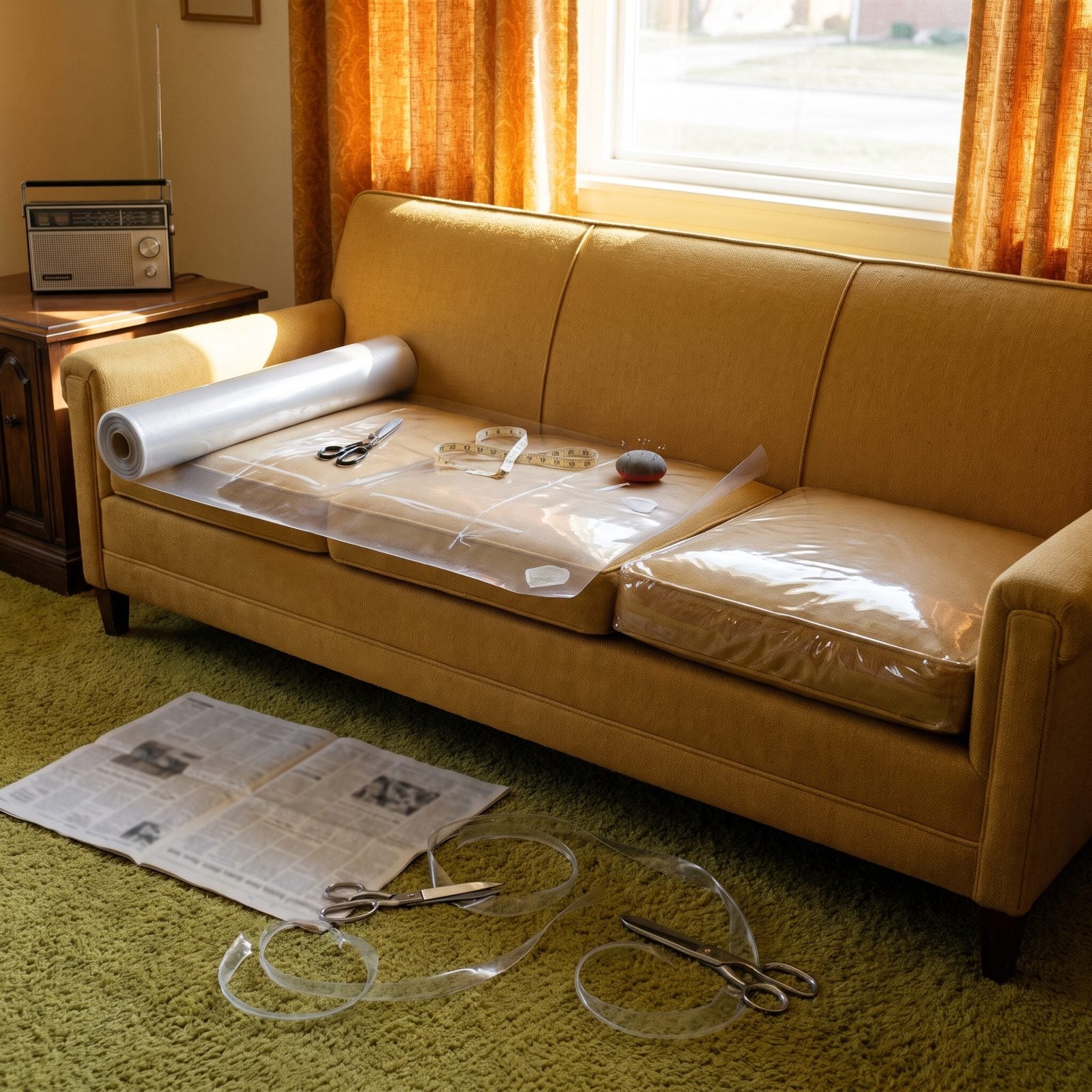
Some families bought the pre-made covers. The serious ones bought the roll.
A guy would come to the house with a tape measure, or the plastic arrived by mail and became a Saturday project spread across the floor. Chalk lines. Straight pins. Scissors that only cut vinyl and would ruin you if you used them on anything else. The smell of fresh plastic filled the whole room.
Getting the corners tight was an art. Too loose and it bagged. Too tight and it strained the seams. You learned early that a well-fitted cover was a point of pride, the difference between a tarp and a tailored skin.
Recalling his parents’ living room, a longtime newspaper nostalgia columnist writes “As I recall, the plastic was ordered at the time the furniture was purchased and a person came to our home to measure the furniture.”
8. You Learned to Sit Like Company Even When Nobody Was Coming

Posture was a house rule you never saw written down.
No feet on the cushions. No flopping sideways. No eating over the good seat. You sat upright, both feet near the floor, the way you’d sit in a waiting room, because the furniture demanded a certain respect and everybody knew it.
That training outlasted the plastic. Grown now, people from these homes still perch a little carefully on nice furniture, still glance at a drink before setting it down near upholstery. The white sofa designs and cream sofa styles we gravitate toward as adults carry an echo of it. The vinyl is long gone. The flinch stayed.
7. The Guest Who Lingered a Beat Too Long Before Sitting Down
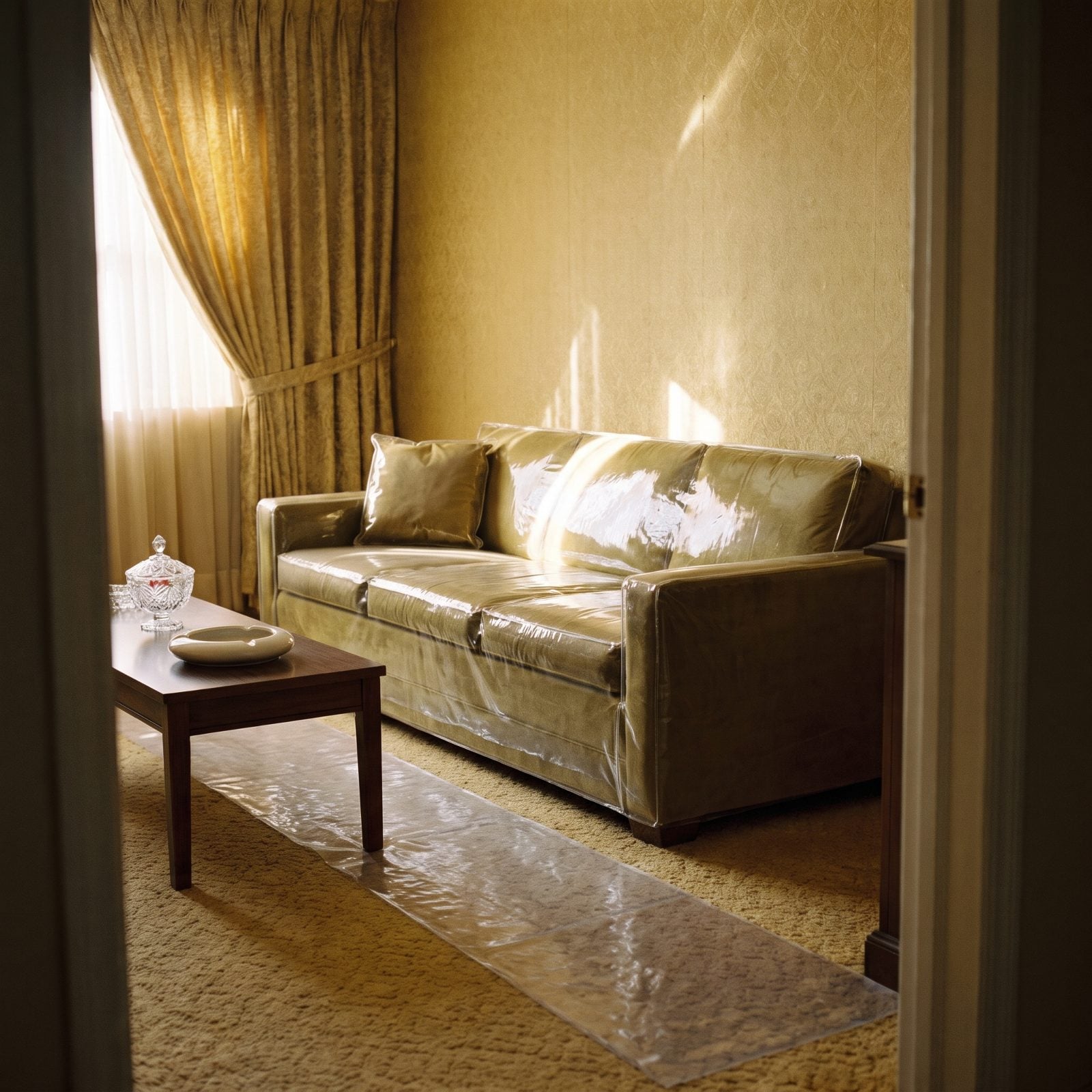
You could always spot the first-time visitor. They’d approach the good sofa, register the plastic, and hesitate. That half-second of recalculation before lowering themselves onto vinyl they weren’t sure they were allowed to touch.
Regulars knew the drill. You sat, you slid a little, you made your peace with the squeak. Newcomers froze. Some perched on the very edge like the cushion might reject them.
6. The Vinyl Got Changed Out Before the Upholstery Ever Did
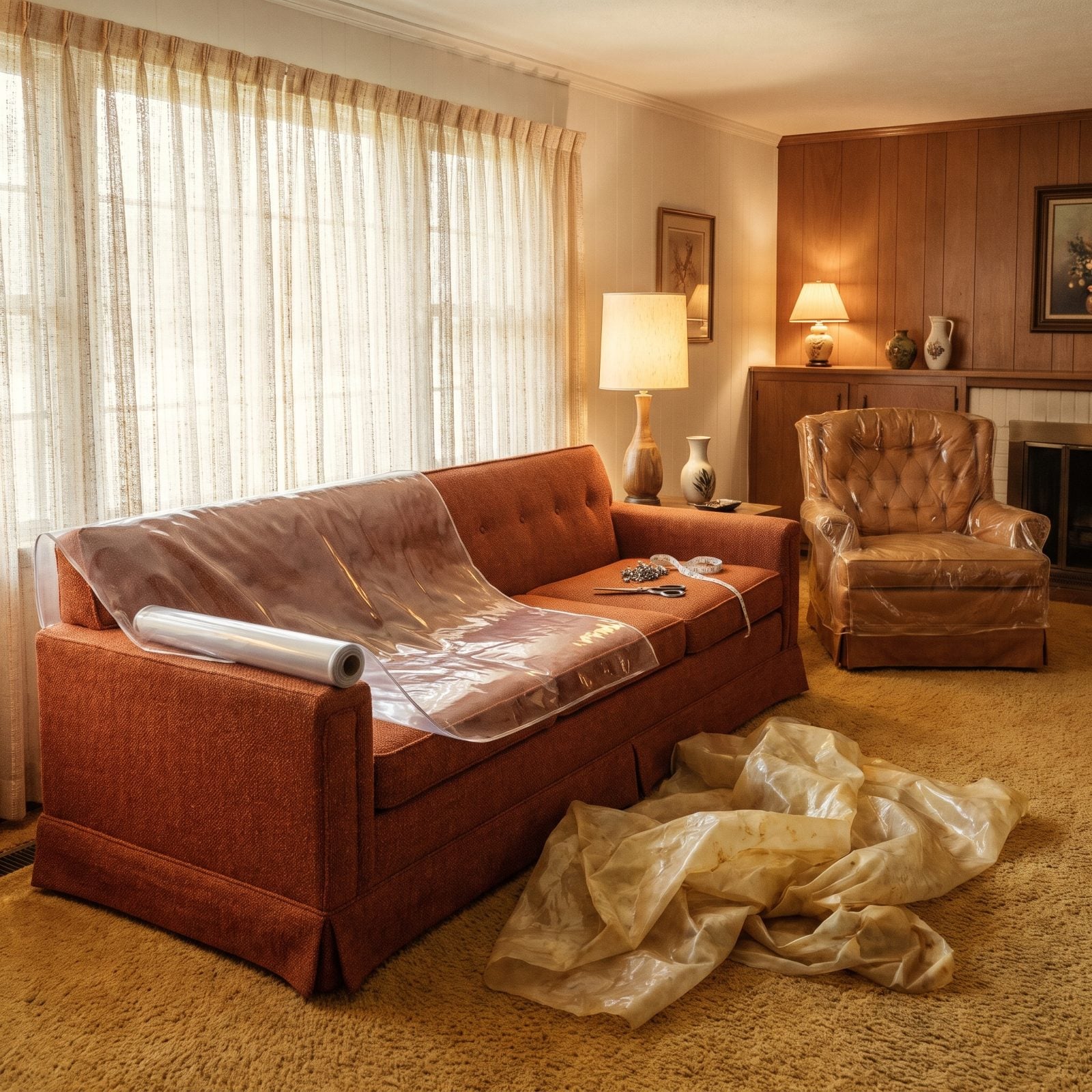
Here’s the part outsiders never understood. The sofa fabric underneath could be twenty years old and look brand new, because nobody had ever actually touched it.
What wore out was the plastic itself. It yellowed. It clouded. It cracked at the seams and went brittle. So every few years the vinyl got replaced while the upholstery stayed pristine, a rust-orange tweed frozen at the moment of purchase.
If you want fabric you can actually live on, look at a durable mid-century sofa built for daily use instead.
5. Company Coming Meant the Towels Nobody Was Allowed to Dry Hands On
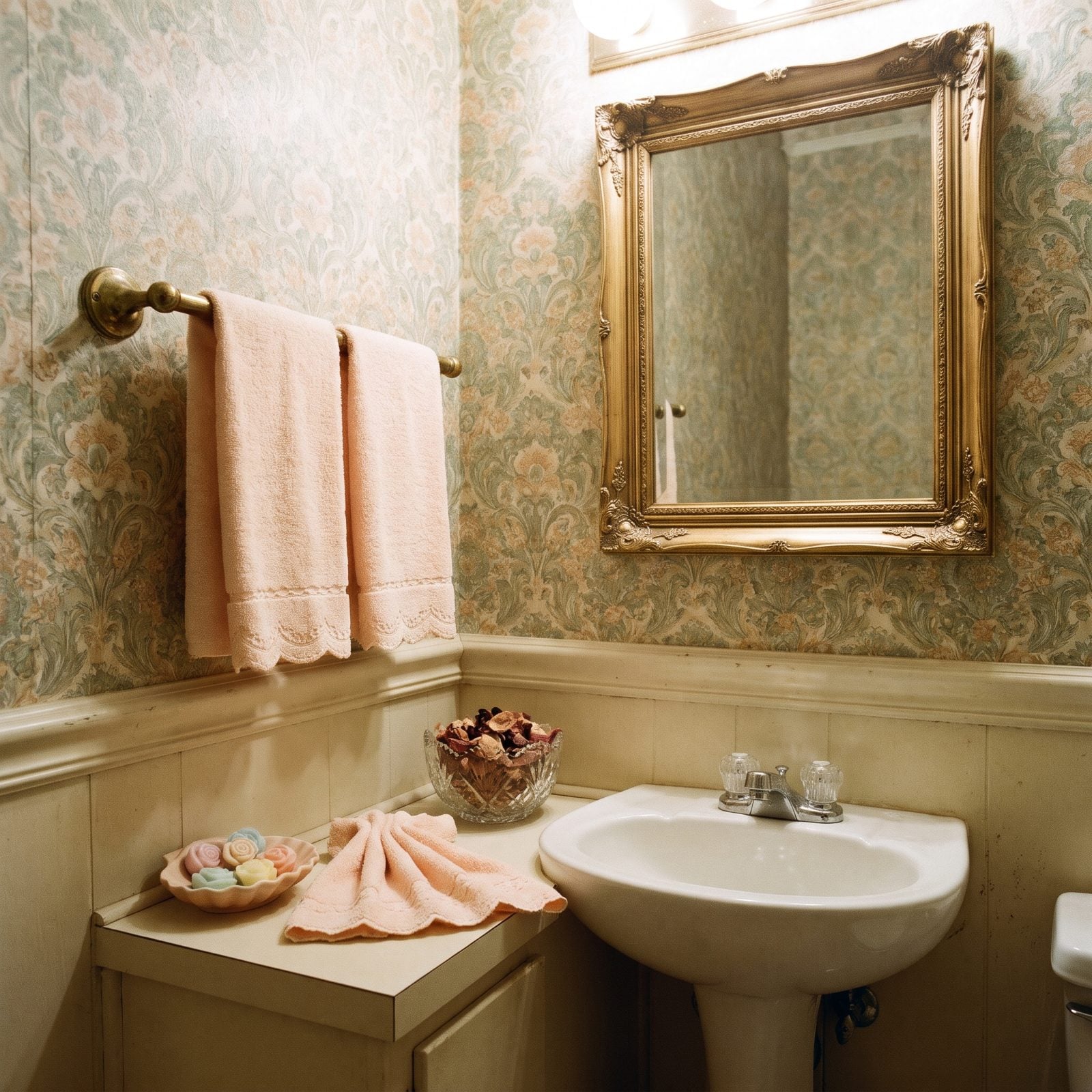
The plastic sofa had cousins all over the house. The guest towels were one of them.
Fluffy, embroidered, folded into perfect thirds, and absolutely off-limits. You dried your hands on the frayed everyday towel and understood that the pretty ones existed purely to be looked at by people who were also forbidden from using them.
Same logic ran through the house. Plastic on the lampshades still bearing the manufacturer’s sticker. The good dishes behind glass. A whole category of objects preserved for an occasion that somehow never quite arrived.
4. The Formal Living Room You Walked Past for Years
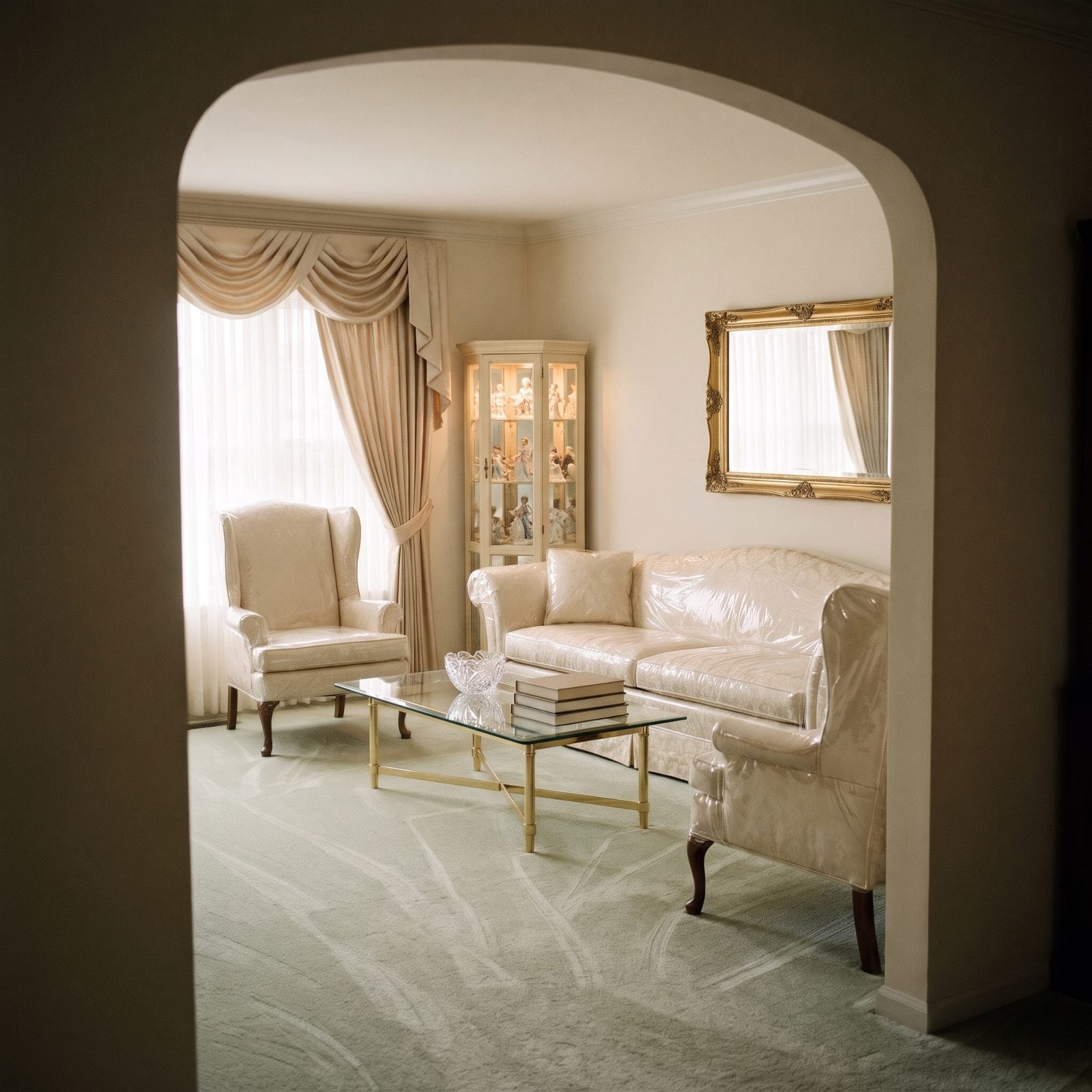
Every house had one. The room you were not allowed to enter.
Vacuum lines combed into the carpet. The plastic-wrapped sofa catching the only sunlight the room ever got. You passed that doorway a thousand times a year and set foot inside maybe three. Christmas. A funeral reception. The priest coming over.
The family lived crammed into the den on a worn-out cool family room couch while the good room sat sealed and sparkling a few feet away. Nobody questioned it. If you wanted that preserved elegance without the velvet rope, soft cream sofa styles get you the look you’re meant to actually sit on.
3. The Sound That Announced Someone Had Sat Down Two Rooms Away
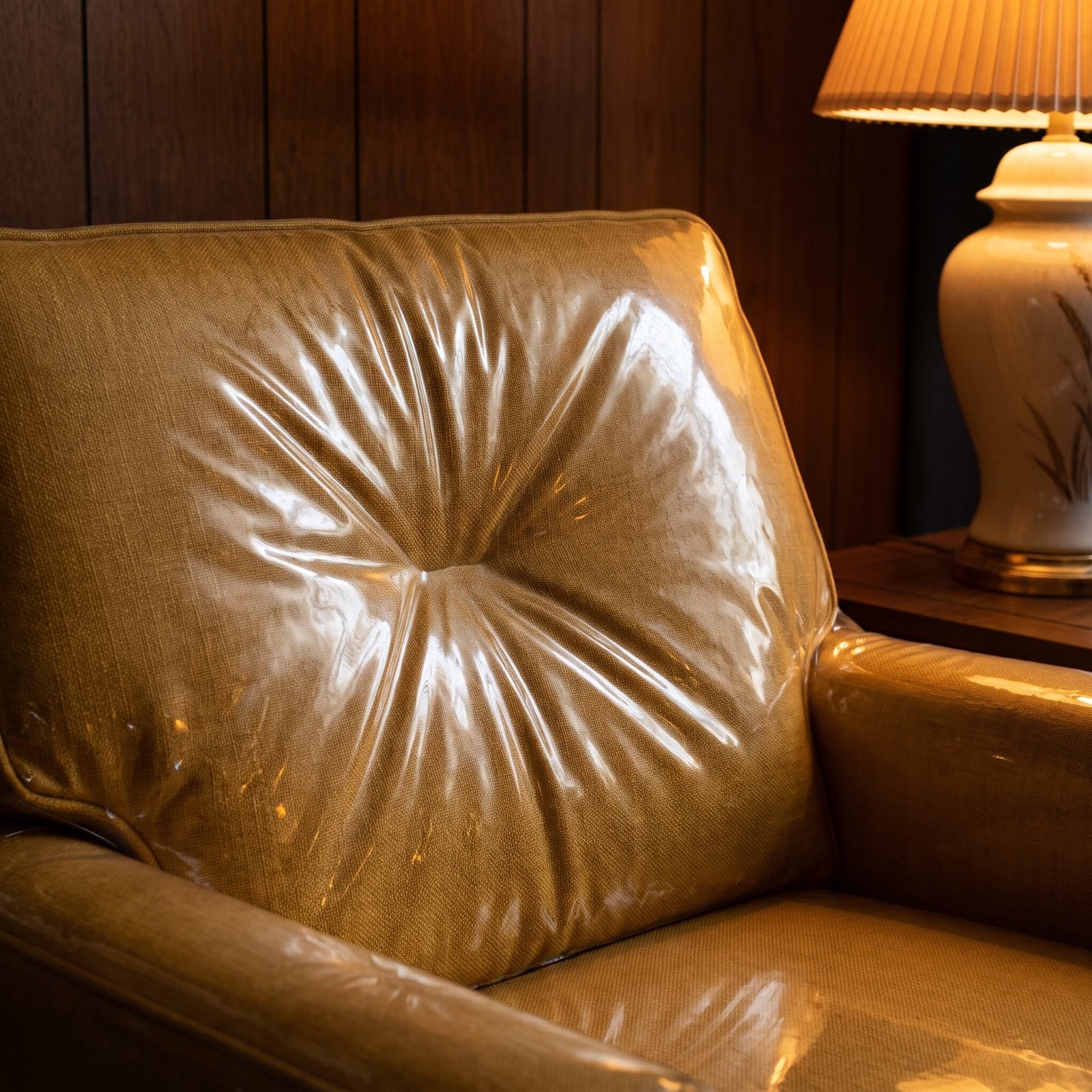
You never had to ask who came home. The sofa told you.
That crinkle-crunch of a body hitting vinyl carried through walls. A soft sustained squeak as someone shifted their weight. The pop of plastic releasing when they got up. An entire soundtrack of household life performed by a couch.
Decades later you still flinch at it. Someone sits on a plastic-wrapped anything and your whole nervous system fires. That sound is lodged in you permanently, filed somewhere near your own name.
2. The Sofa Outlived Three Presidents and Still Looked Like the Showroom
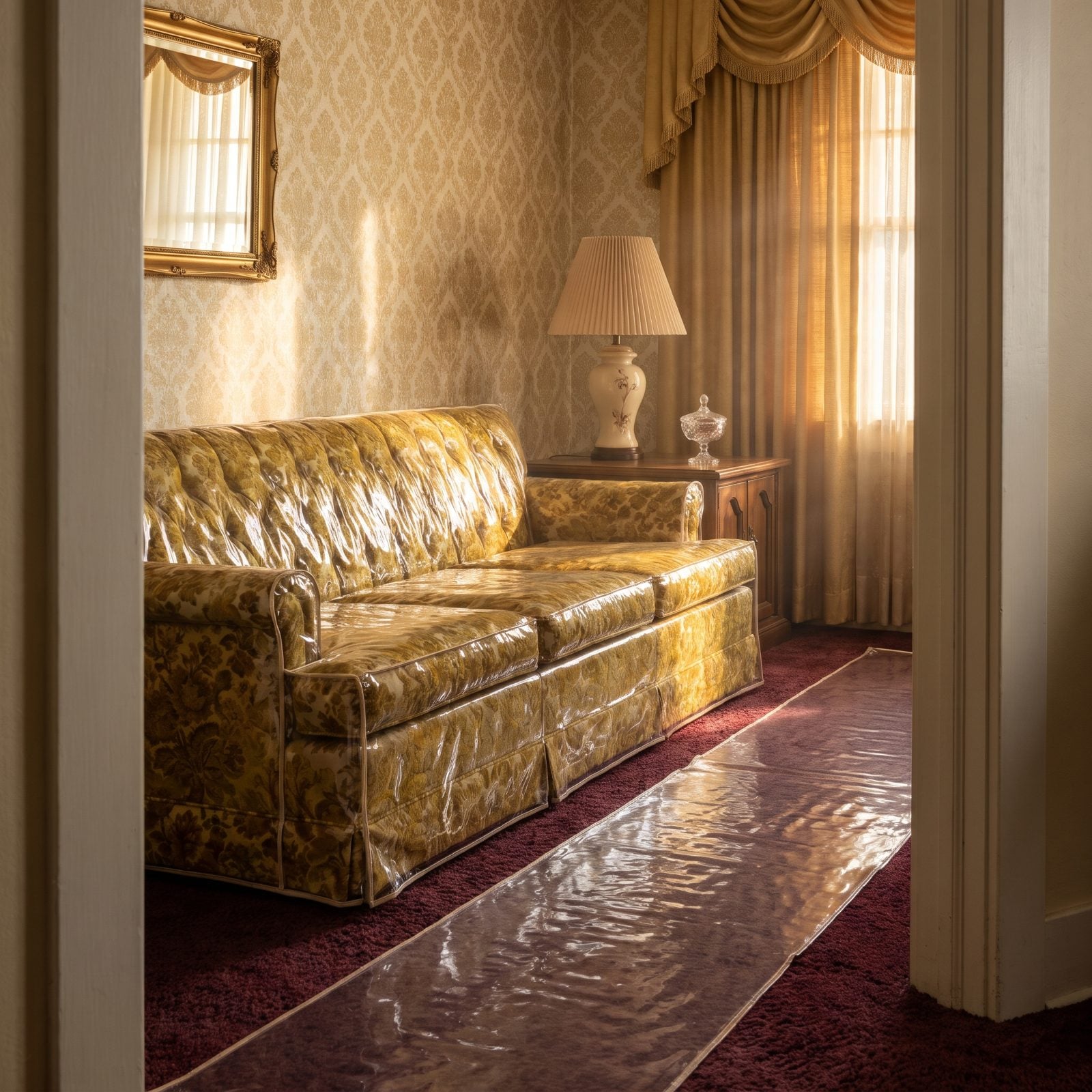
The couch underneath was never the point. The vinyl was. Thirty years in, the brocade still held its color like the day it arrived on the truck, no sun-fade, no wear line where anyone actually sat. That was the whole bargain. The plastic took the beating so the fabric never had to.
You could date the house by everything else and never date that sofa. Presidents came and went. Hemlines rose and dropped. The sofa stayed sealed, mint, waiting for a company that mostly never came.
These days the look lives on in reverse. People hunt down red sofa designs and vintage brocade specifically because that preservation worked. The furniture survived.
Making the case for plastic covers today, a custom upholsterer argues that “The protection afforded by using plastic slipcovers on your furniture will keep it in mint condition for years to come and greatly extend its lifespan.”
1. The Day the Plastic Finally Came Off Felt Like a Holiday
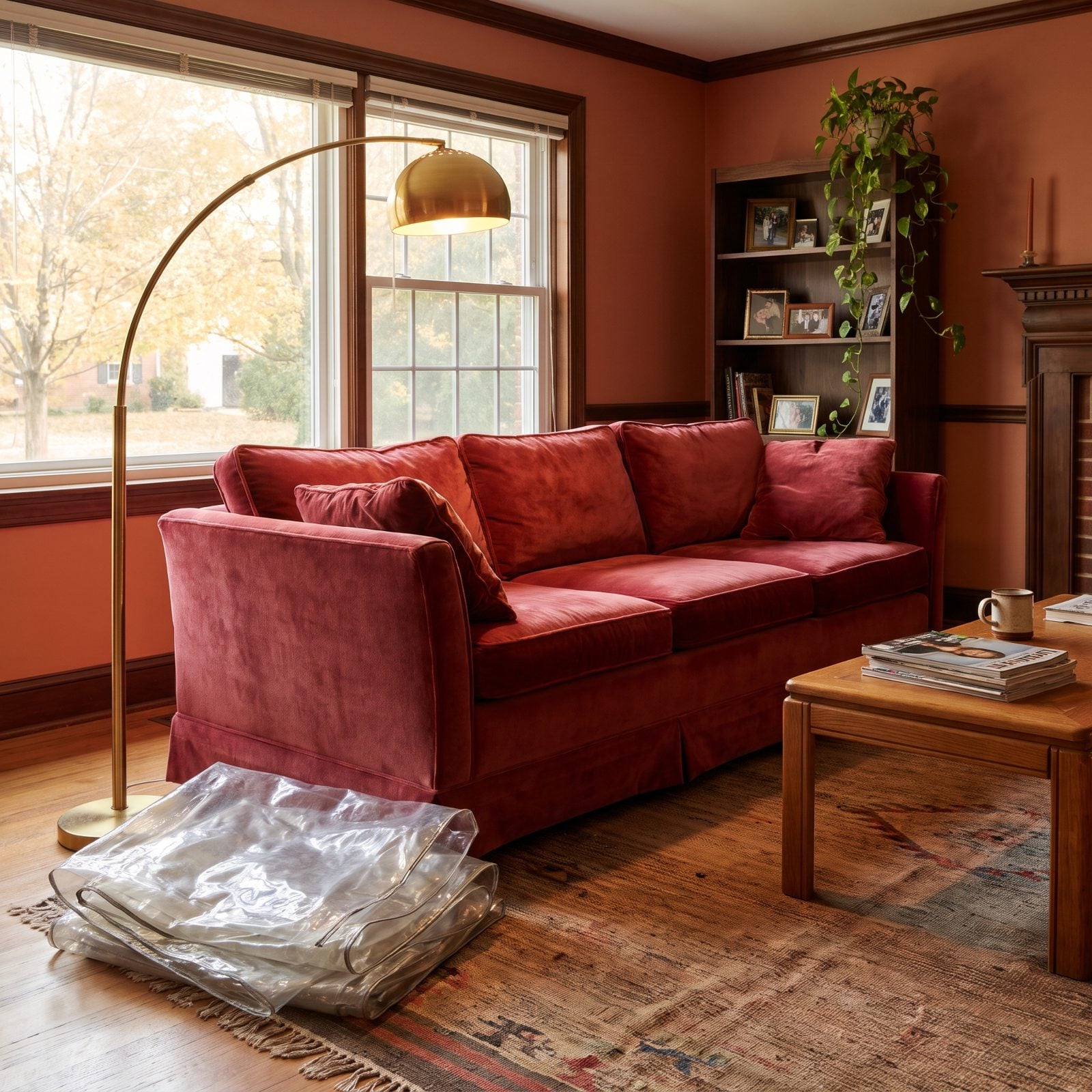
There was always a reason it couldn’t come off yet. Wait for the kids to get older. Wait for the holidays to pass. Wait until the good company stopped visiting.
Then one ordinary day it did. The vinyl crinkled into a heap on the floor and the velvet underneath got touched for the first time in years, still perfect, still soft, finally allowed to be furniture.
That release is exactly what a terracotta family room gets right today. Rooms built to be lived in, not guarded. A deep cranberry velvet sofa under a warm brass arc floor lamp, meant to be sat on hard.
Honestly, that was the lesson the plastic never meant to teach. Protecting a thing too well is just another way of never getting to enjoy it.