
The tree was silver and it didn’t apologize for being metal. A spotlight sat on the floor beside it, spinning a wheel of colored plastic, washing the whole thing red, then blue, then amber, then green. Nobody thought this was strange. The living room smelled like pine from a candle, not an actual pine, and the radiogram in the corner played Andy Williams until someone flipped the stack. We pulled these signs from old snapshots, catalog pages, and the kind of memory that comes back the second you see the right serving dish. See how many you remember.
22. The Aluminum Tree That Caught the Light Like Nothing Alive Ever Could
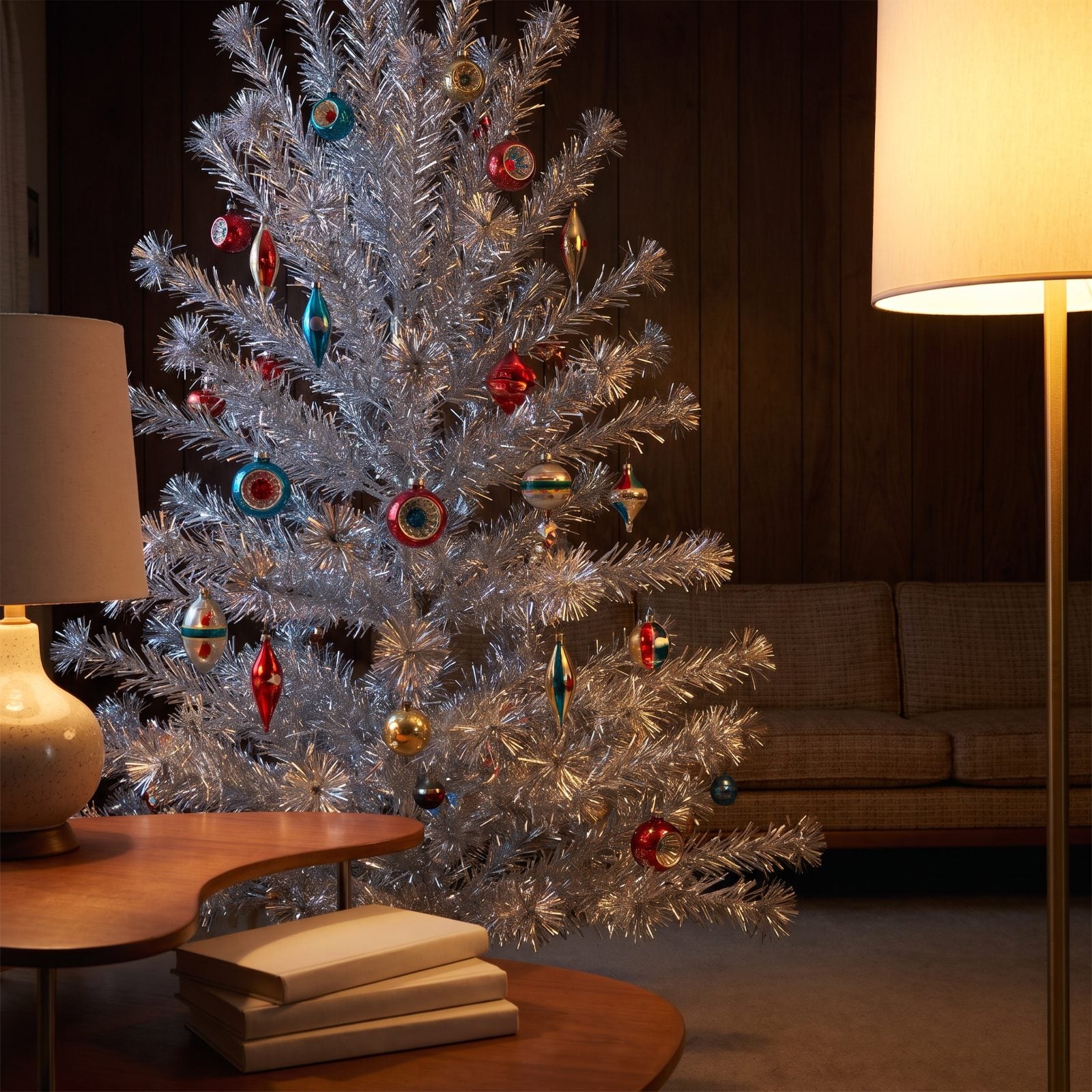
Nobody put lights on an aluminum tree. You couldn’t. Metal branches and electric strings made a fire marshal’s nightmare, so the tree glowed a different way: a rotating color wheel on the floor and the lamps nearby doing all the work.
In order to come up with the very specific design ideas, we create most designs with the assistance of state-of-the-art AI interior design software. Also, assume links that take you off the site are affiliate links such as links to Amazon. this means we may earn a commission if you buy something.
The Aluminum Specialty Company in Manitowoc, Wisconsin cranked out around a million of these between 1959 and the late sixties. They came in a long flat box, each branch sleeved in its own paper tube to keep the pom-pom tips from crushing. Assembling one was a whole ritual. You matched the color-coded holes, fanned every branch by hand, and stepped back to watch it throw light like a disco ball nobody had invented yet.
What people forget is how cold and deliberate they looked. A mixed jumble of ornaments in red, turquoise, gold, silver and stripes, teardrops, spinners and indented balls all hung together. The tree wasn’t trying to look like a real tree. It was trying to look like the future.
21. The Rotating Color Wheel Turning the Whole Room Red, Then Gold, Then Green
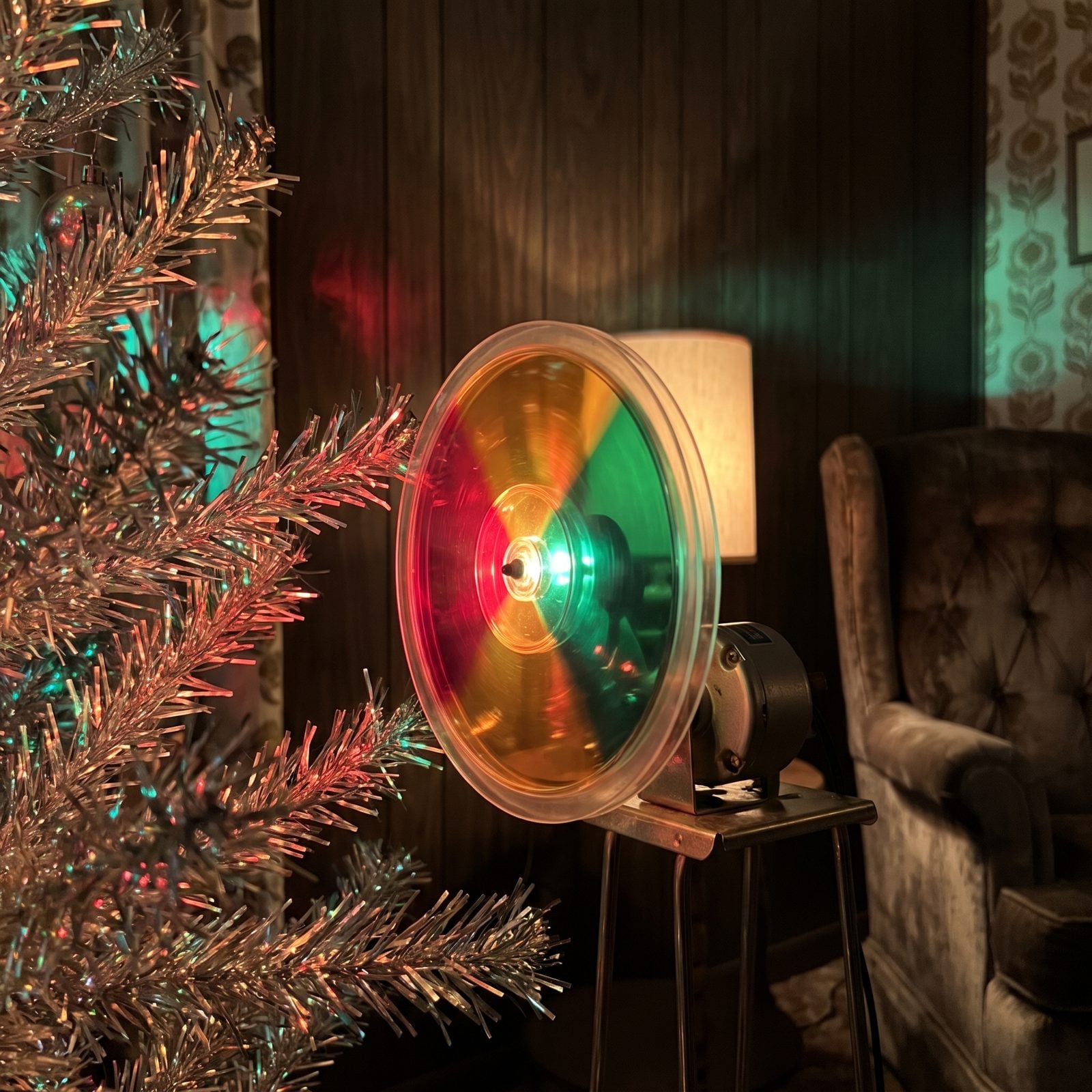
You remember the hum before you remember the color. That little motorized disc turning behind its four plastic gels, and the slow ache of the room shifting from red to gold to green to gold, then back again, forever.
The aluminum tree couldn’t safely wear a string of lights, so the color wheel gave it something more. One floodlight, four rotating panels, and suddenly the silver branches drank up the color and handed it back. Kids would lie on the carpet and watch it the way you’d watch a fire. Hypnotic in a way nothing on the television could match.
Half the magic of a sixties Christmas was sitting in the dark on purpose, waiting for the room to turn green.
Spin too long and the little motor got hot and smelled faintly of warm plastic. Nobody minded. That smell was Christmas too.
In a guide to collecting aluminum trees, a midcentury design writer notes that homeowners often paired the trees with rotating color wheels that threw colored light onto the branches.
20. The Mantel Buried Under Shiny Brite Ornaments and Real Icicle Tinsel
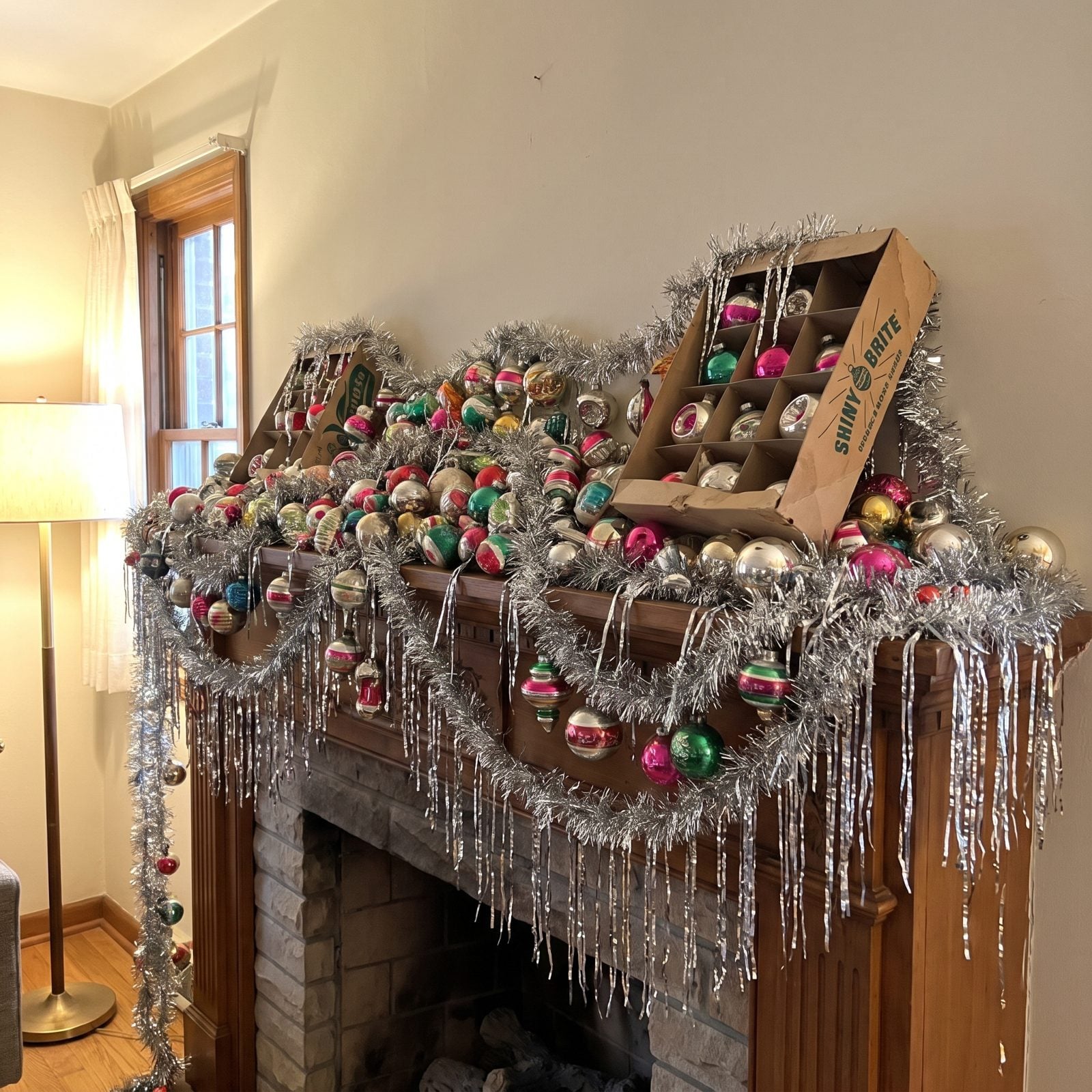
Shiny Brite was the name on the box, and the box mattered as much as the ornaments. Those divided cardboard cartons, usually with a little cellophane window, got hauled out of the closet every December and shoved back up there every January, a few ornaments lighter each year.
Max Eckardt founded the company, and during the war American factories took over production when German imports dried up. The result was a ball ornament so associated with the era that the stripes and mica frost still read instantly as “old Christmas.”
Then the tinsel. Real lead foil icicles, heavy enough to hang straight down instead of flying everywhere. You draped them one strand at a time if you were patient, or flung them in clumps if you were eight. Both approaches lived on the same tree.
19. The Hard Candy Ribbon Nobody Was Allowed to Eat Yet
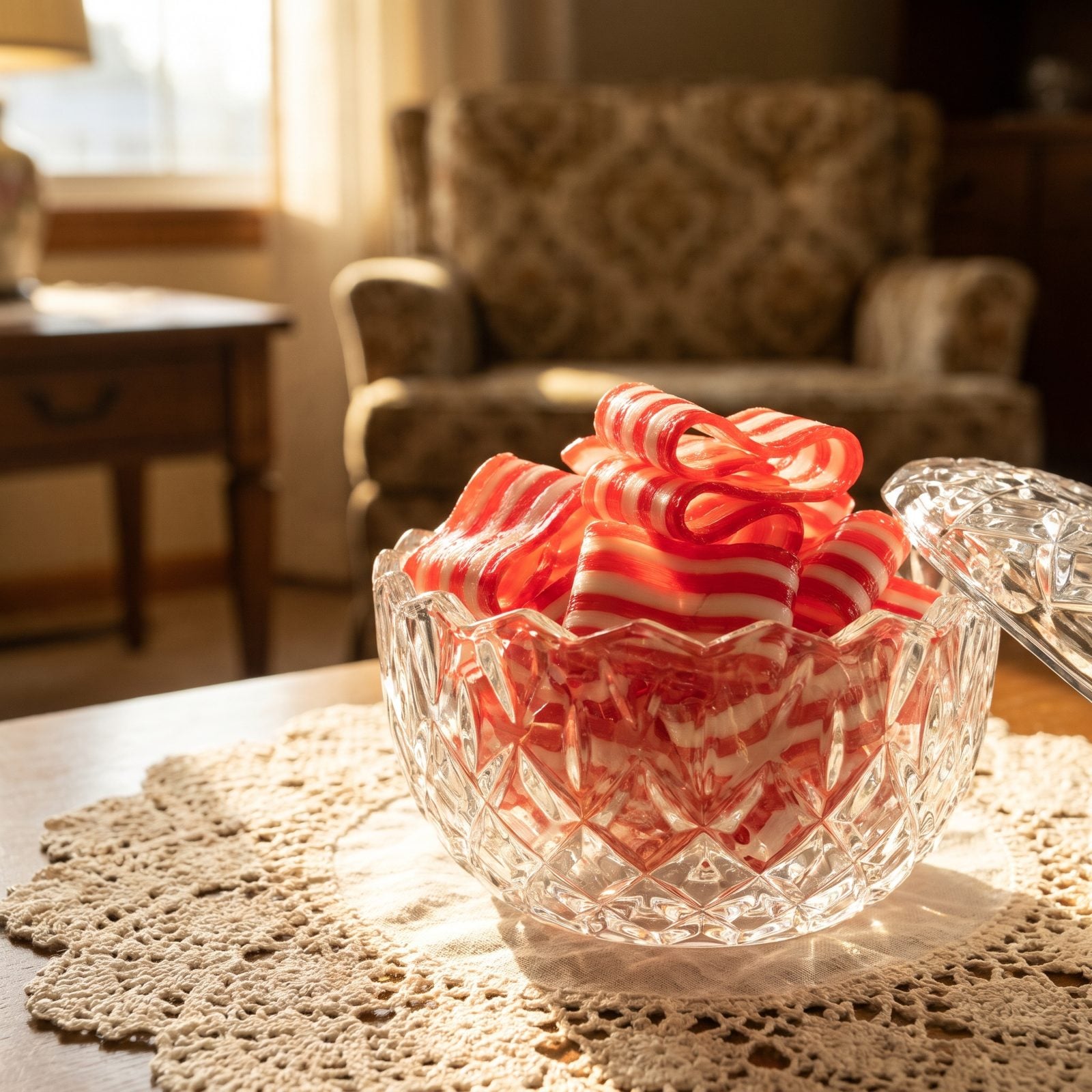
Every living room had the dish. Cut glass, usually, sitting on a doily where the good light hit it, loaded with ribbon candy so brittle it shattered into shards the second anybody bit down.
Here’s the thing about that candy. It was mostly for looking at. The ribbon candy went stale and fused into one solid sugar brick by New Year’s, and you ate it anyway because it was there and it was Christmas.
Peppermint starlights, those pastel butter mints, the hard candies with the soft fruit centers that your grandmother swore were her favorite. The dish said the house was ready for company, even when company meant the neighbors stopping by for fifteen minutes.
What Our Readers Say
- When Home Stratosphere readers love a food photo and tap a reason, comfort comes out on top at 27%, just ahead of simply looking good at 26%.
- Red-heavy rooms are a harder sell today: in our readers’ votes, images where red dominates got hearts 40% of the time, vs 46% for other images in the same articles.
From Home Stratosphere reader polls and votes.
18. The Window Scene Spray-Painted with Snow That Wasn’t Snow
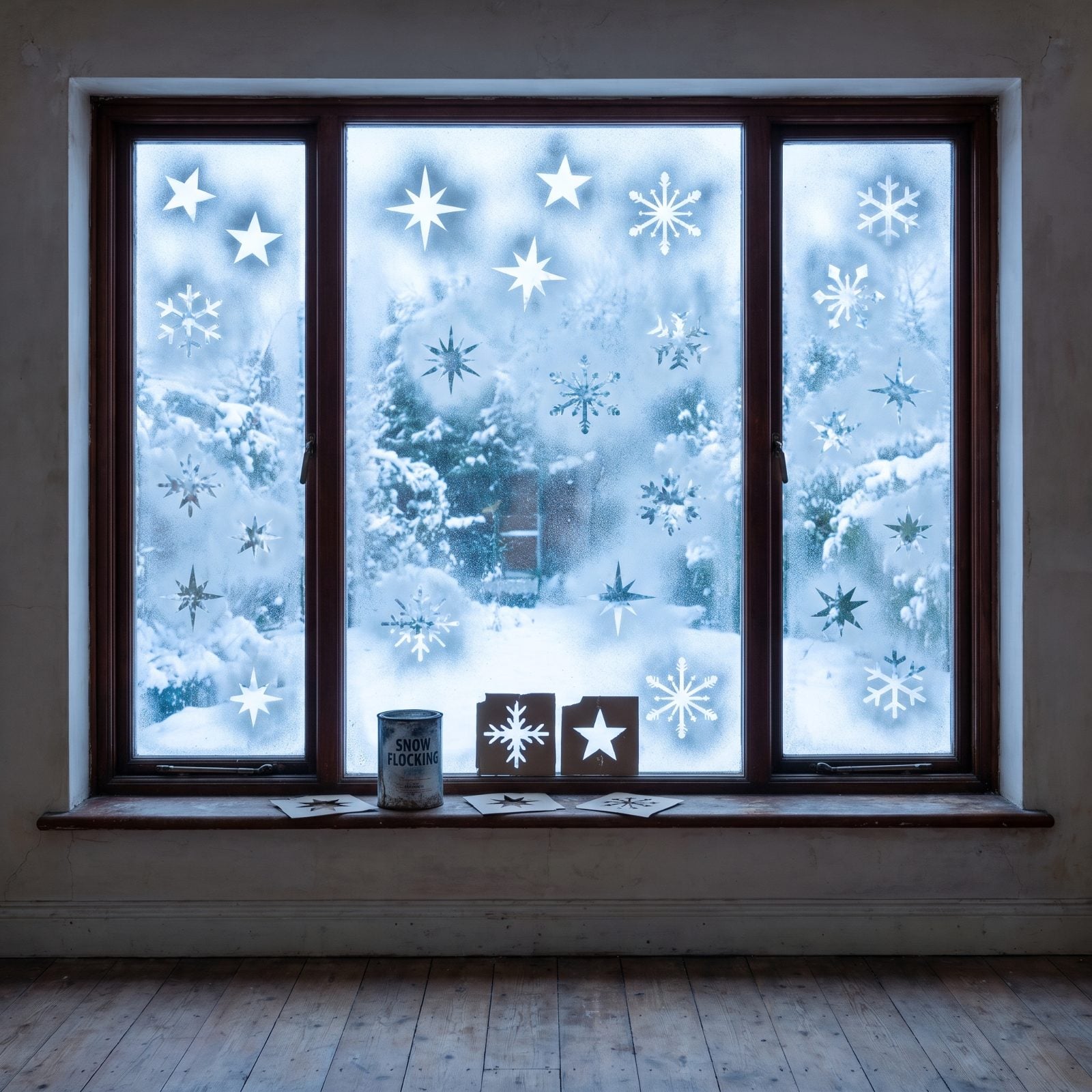
Spray snow in a can was everywhere, and families went at the picture window with cardboard stencils like it was a contest. A frosted tree in the corner, a snowman, a cheerful Noel that would be a nightmare to scrape off in January.
It never looked like real snow. It looked like white foam clinging to glass, which is exactly what it was. But with the plastic electric candles glowing orange on the sill and a foil garland taped across the top, that window told the whole street the house was celebrating.
The flocking stuck to everything. Your sleeve, the curtains, the dog if you had one. Come spring you’d still find a stubborn snowflake in the top corner of the pane that nobody had the patience to remove.
17. The Record Player Spinning The Same Four Christmas Albums On Repeat
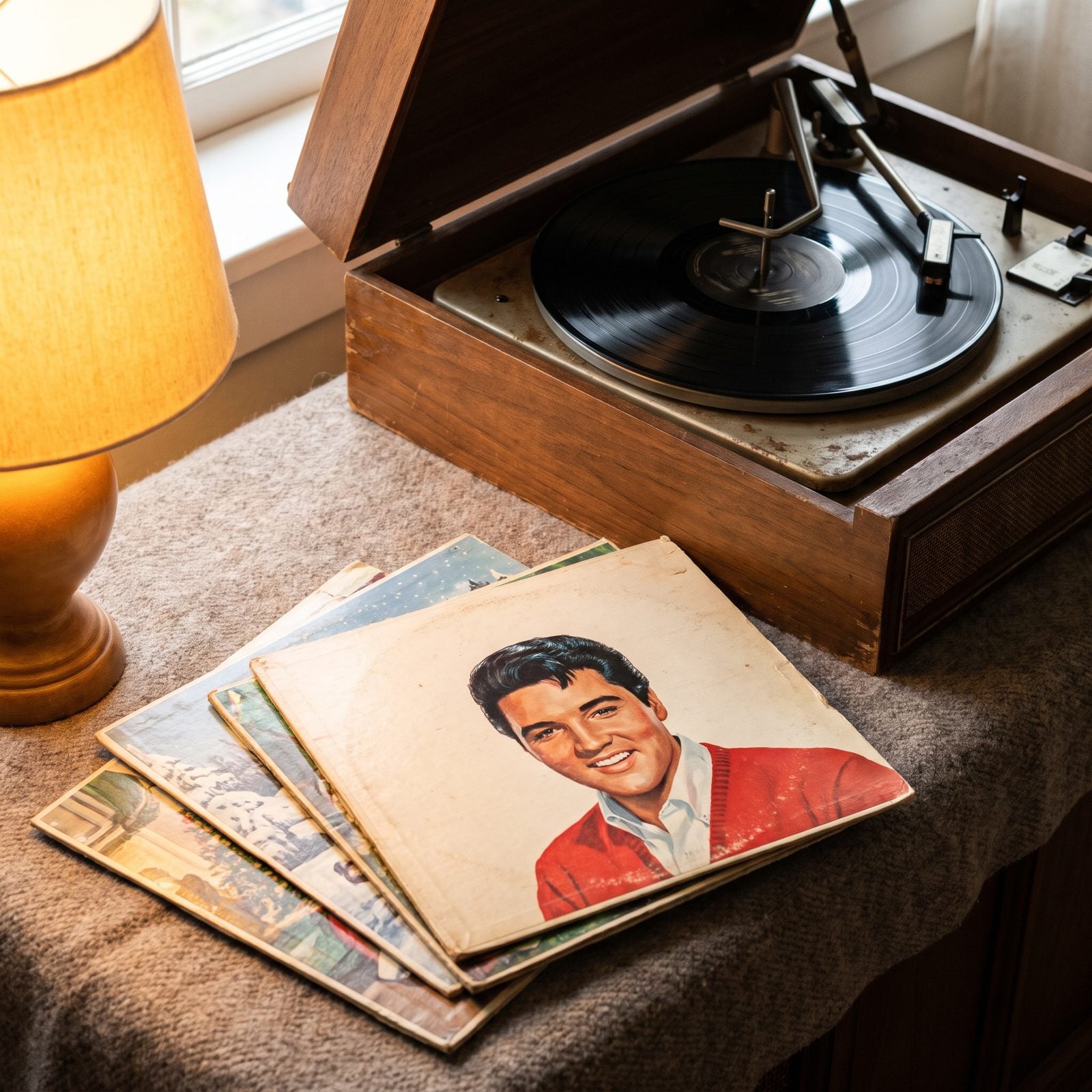
Four albums carried the whole house through December, and you knew every crackle and skip on all of them.
Elvis sang Christmas songs. Nat King Cole owned The Christmas Song and nobody argued. Bing Crosby’s White Christmas, already two decades old by the sixties, still spun. And A Christmas Gift for You from Phil Spector dropped in 1963 to a muted reception before becoming a classic years later.
The console stereo was a piece of furniture too, like the TV. You stacked the LPs on the spindle and let them drop one after another, the mechanical thunk of the next record landing part of the soundtrack. The same songs, the same order, every single year. Repetition wasn’t a flaw. It was the whole comfort of the thing, the way a certain opening note could unfold the entire season in your chest before the first line even started.
16. The Flocked Tree That Shed Fake Snow All Over The Carpet
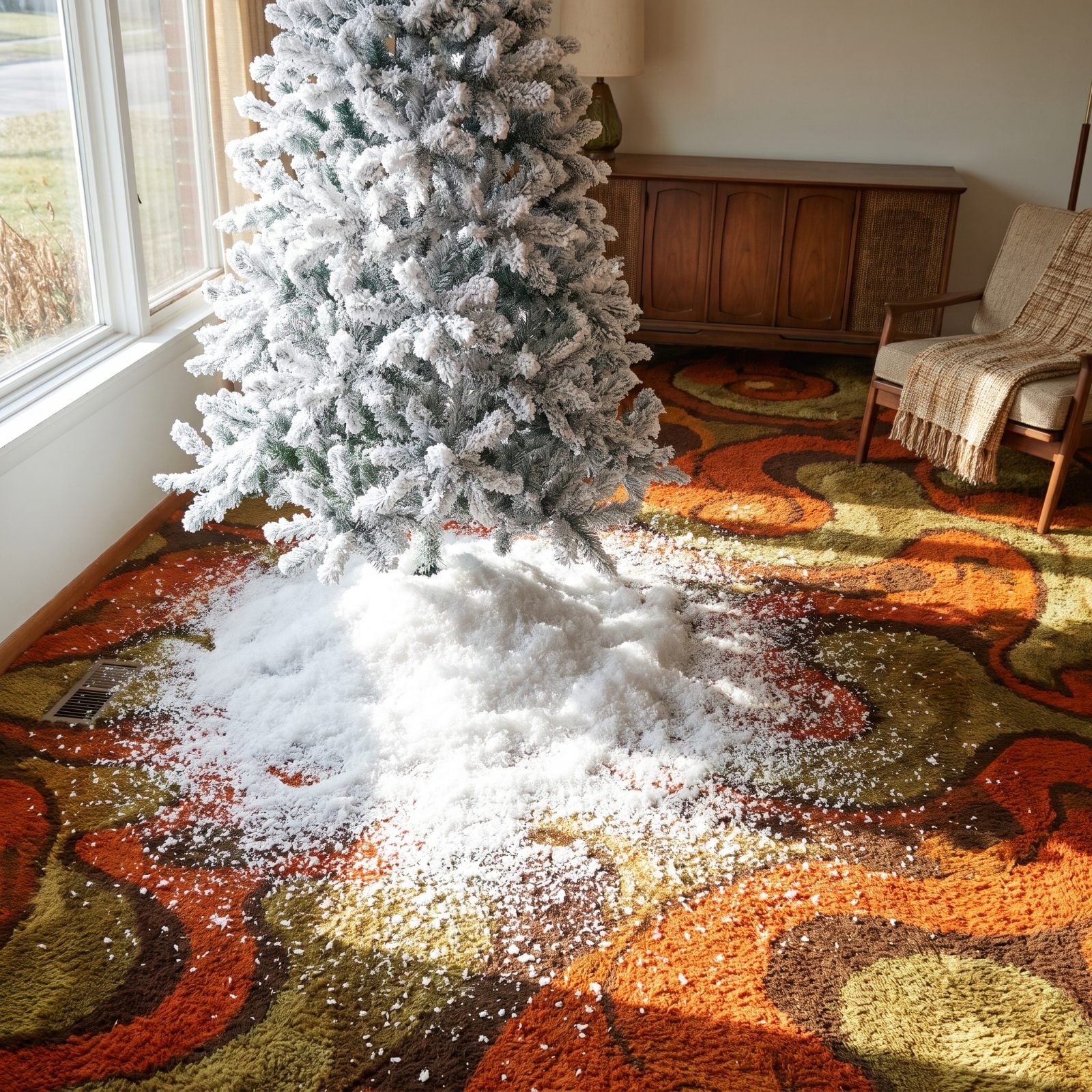
White flocking looked like magic in the store and like a mess on your carpet by December 26th.
The flocked tree was a status move, artificial snow sprayed or applied thick over the branches so the whole thing read frosted. Some families bought them pre-done. Some did it themselves with a box of powder and a garden sprayer and a lot of regret.
It shed constantly. A fine white dust settled on the tree skirt, worked into the rug, and stuck to your socks. You could trace where the tree stood for weeks after it came down.
Paired with pastel Shiny Brite ornaments in powder blue and pink, the flocked tree pushed the whole room toward a soft, almost dreamy look that fit the decade’s taste for anything frosted and pale. Impractical, a little ridiculous, and genuinely lovely once the lights were on.
15. The Mantel That Sagged Under the Weight of Everybody’s Stocking
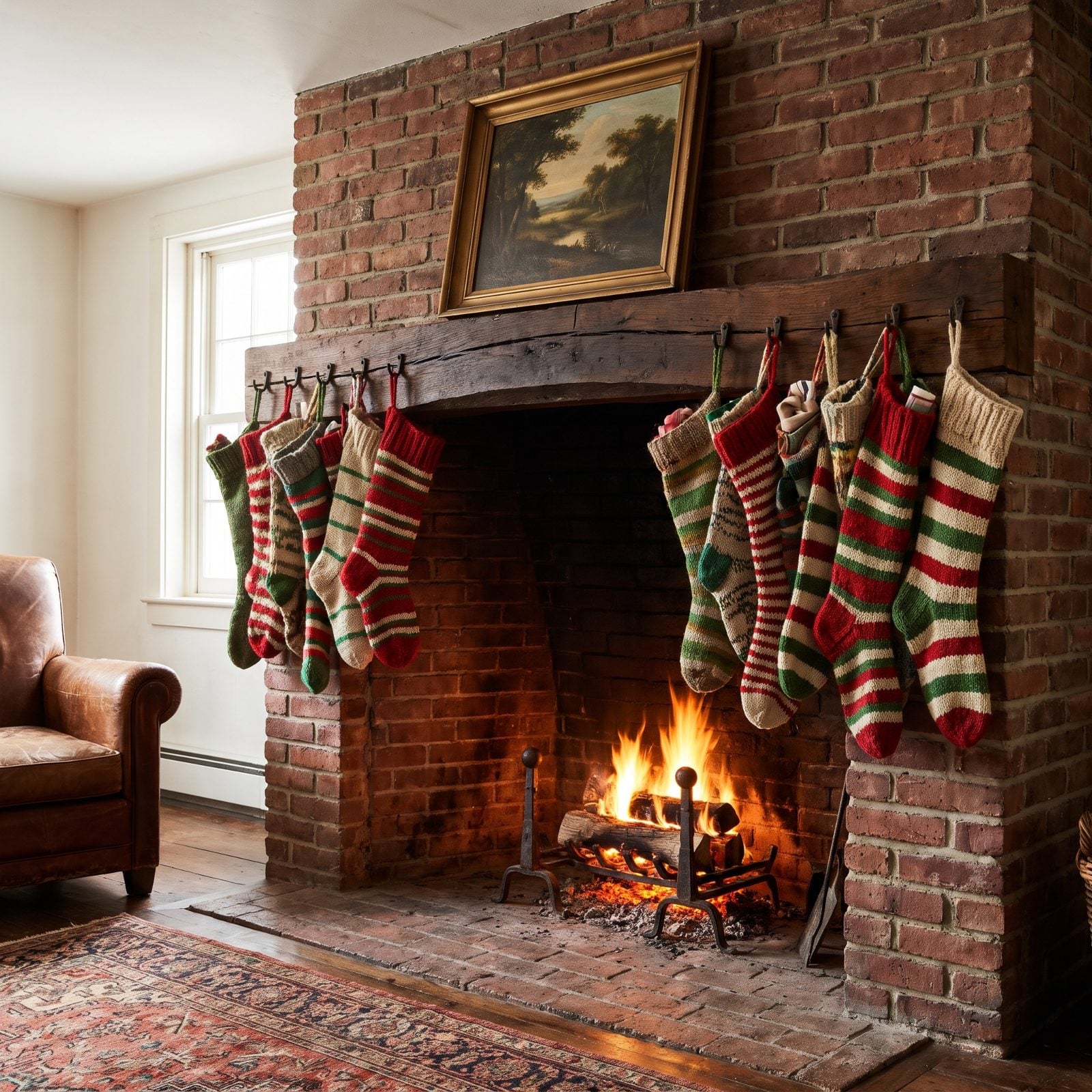
Stockings weren’t matching back then. Somebody’s grandmother knit them, which meant one was always bigger, lumpier, or a slightly wrong shade of brown. You knew whose was whose without reading a name.
They hung from the mantel by their own knit loops, tucked up against the old wooden beam. By Christmas Eve the whole shelf looked overloaded, a long line of striped and plain knit socks catching the glow from the fire below.
14. The Percolator Going All Day Because Company Was Coming
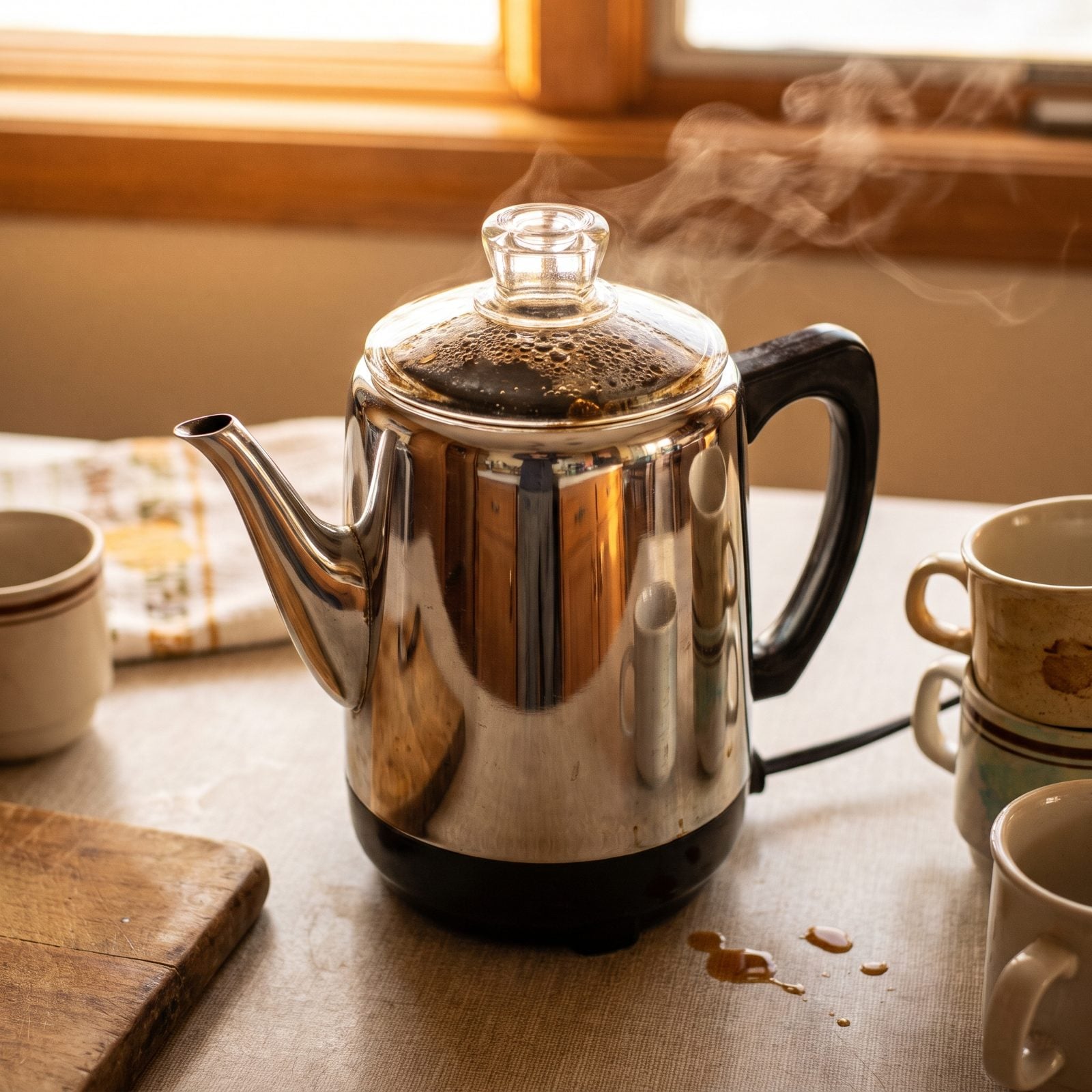
You could hear it before you smelled it. That slow glug glug glug of the percolator working itself up, the little glass knob on top going from clear to amber as the coffee got stronger.
On Christmas it ran basically nonstop. Aunts arrived, cups came out, the pot got refilled. The good cups with the gold rims, not the everyday ones. Nobody drank weak coffee in 1964. The percolator made it strong enough to stand a spoon in, and that was the point.
13. The Nativity Set Where One Sheep Had Been Glued Back Together
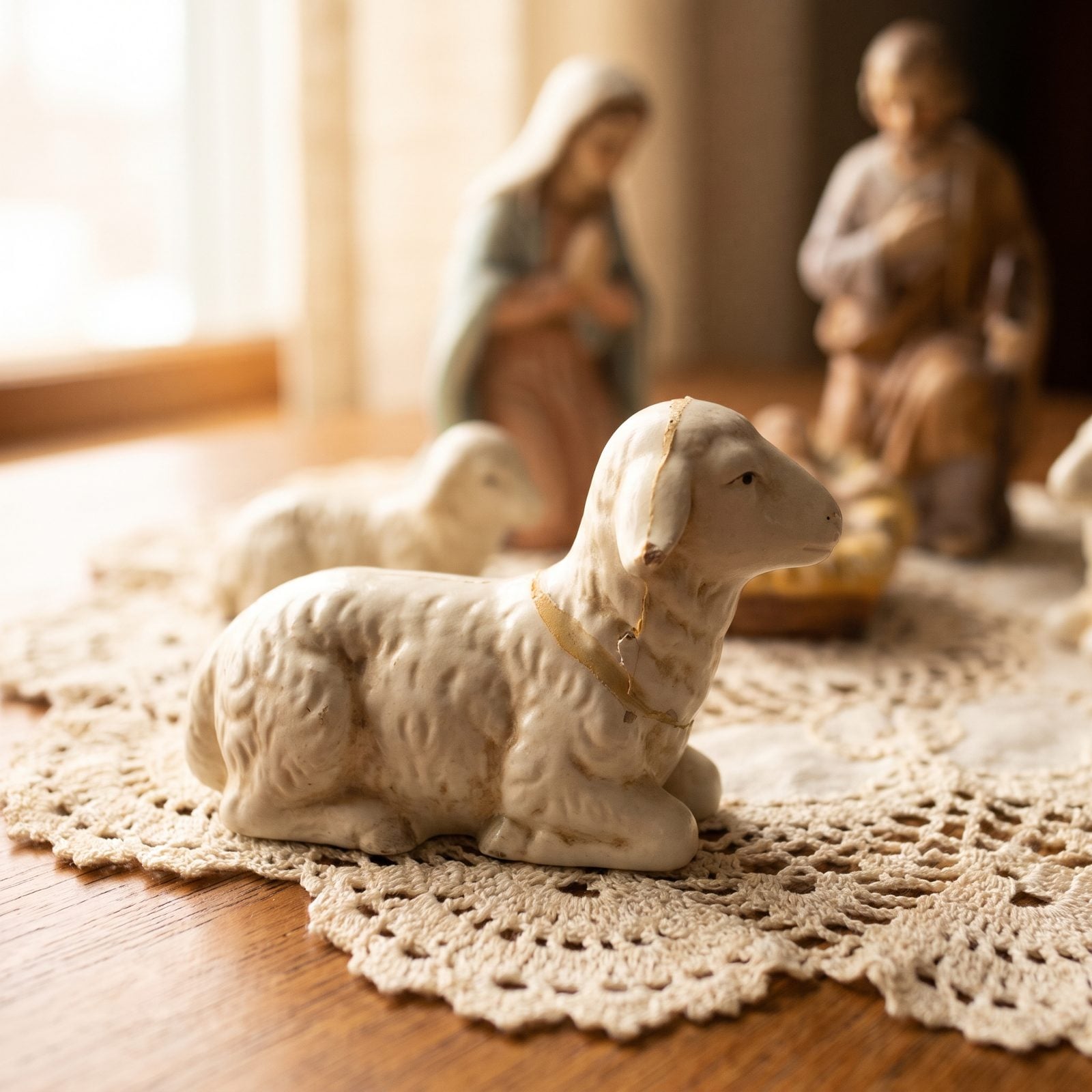
Every family had the broken piece. A shepherd missing a hand, a wise man whose crown had chipped, a sheep that had taken a fall off the TV set and come back with a visible glue line down its spine.
Nobody replaced it. The set came out once a year, got arranged on a bed of cotton batting meant to look like snow, and the broken sheep went in the back where it still counted.
The imperfection was the whole thing. A flawless set would have meant nobody ever touched it.
These ceramic sets, often from Italy or Japan, were handed down and added to over years. You can build a terracotta family room around that same warm, lived-in instinct today.
12. The Bowl of Mixed Nuts Nobody Could Actually Open
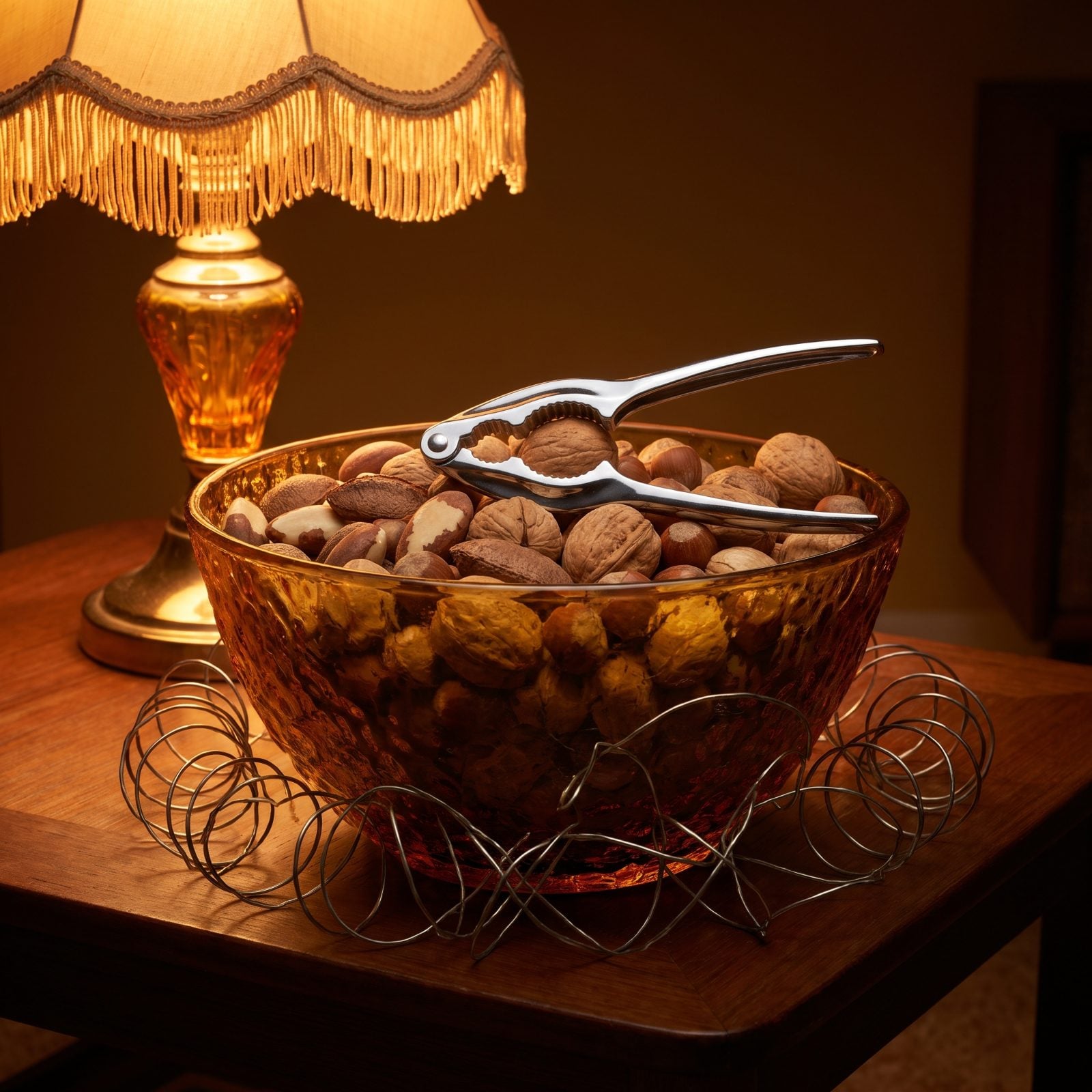
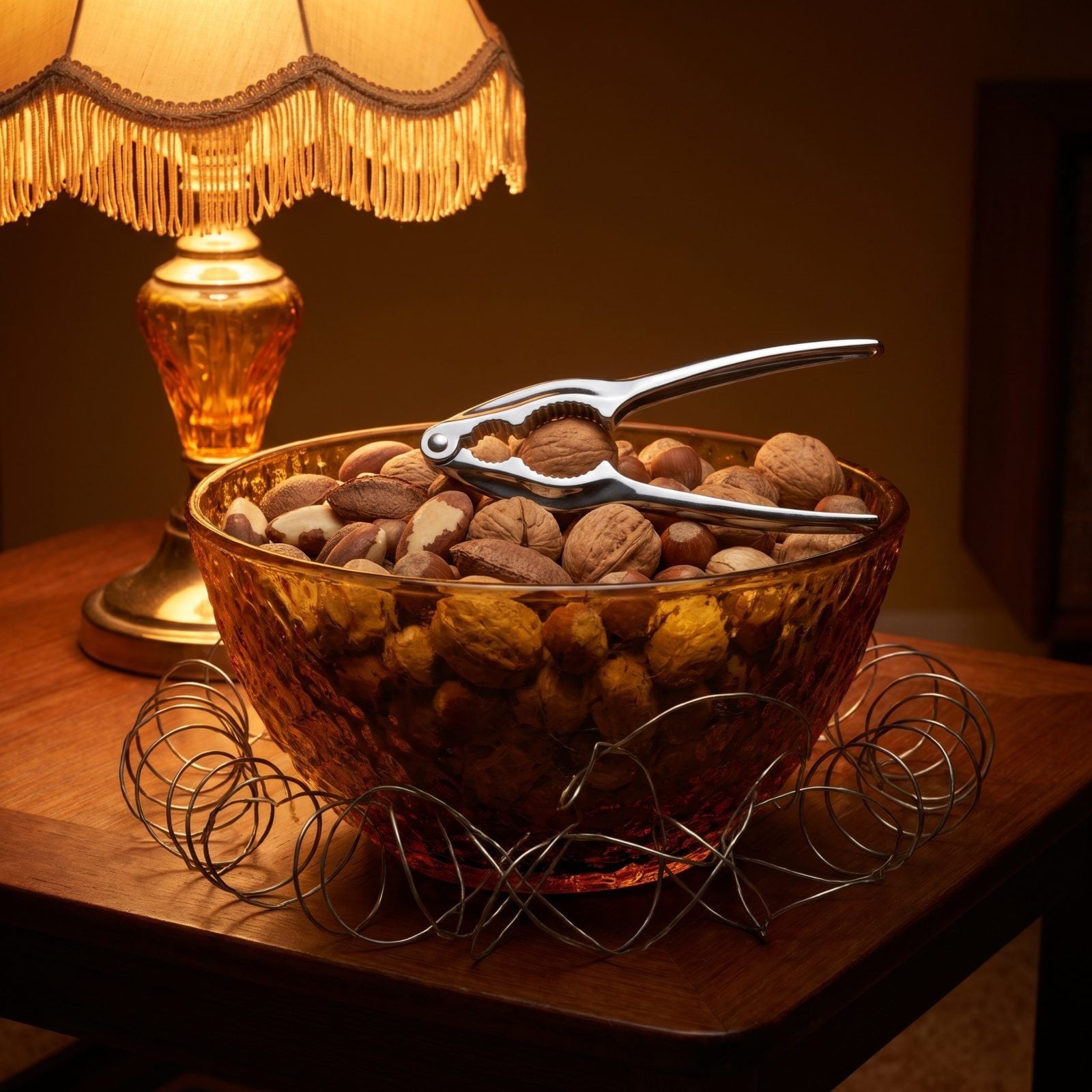
The nut bowl was a trap and everyone knew it. That amber glass dish mounded with Brazil nuts and walnuts, the chrome nutcracker lying across the top like a dare.
You’d spend ten minutes wrestling one open, send shell fragments flying across the coffee table, and get maybe half an almond for your trouble. The Brazil nuts were basically impossible. They sat at the bottom all season, untouched, because nobody had the arm strength.
11. The Record That Had to Be Flipped Halfway Through Dinner
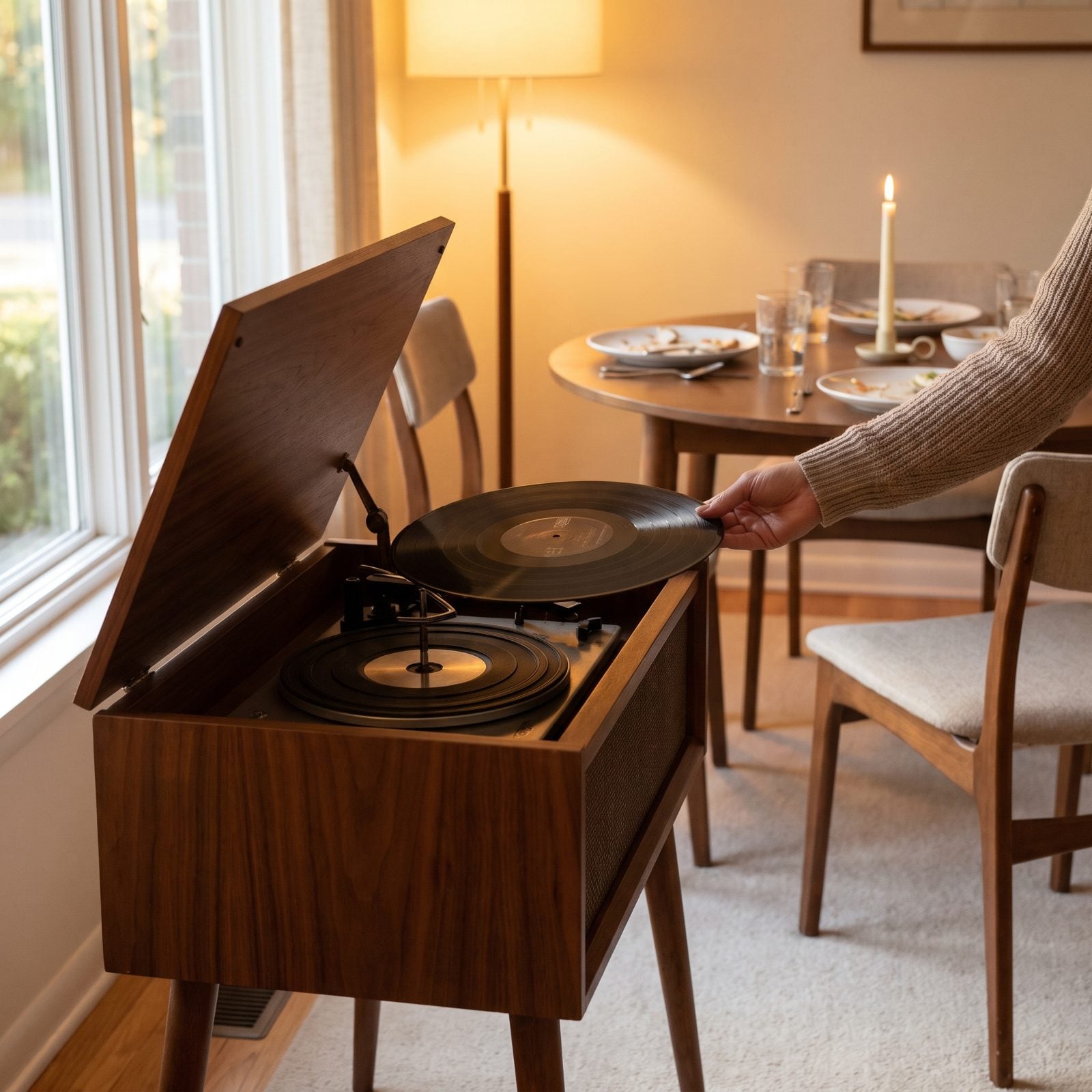
The console stereo was furniture first, electronics second. A big wooden cabinet with tapered legs that took up half a wall, and a lid you lifted to find the turntable underneath.
Christmas records spun all day on it, but somebody always had to get up mid-meal to flip the LP. One side ran maybe twenty minutes before the needle hit the center and started that patient thunk… thunk… thunk. You’d be passing the potatoes and someone would say “the record’s done,” and that was a job that fell to whoever was closest.
10. The Aluminum Foil Icicles That Ended Up Stuck to Your Socks
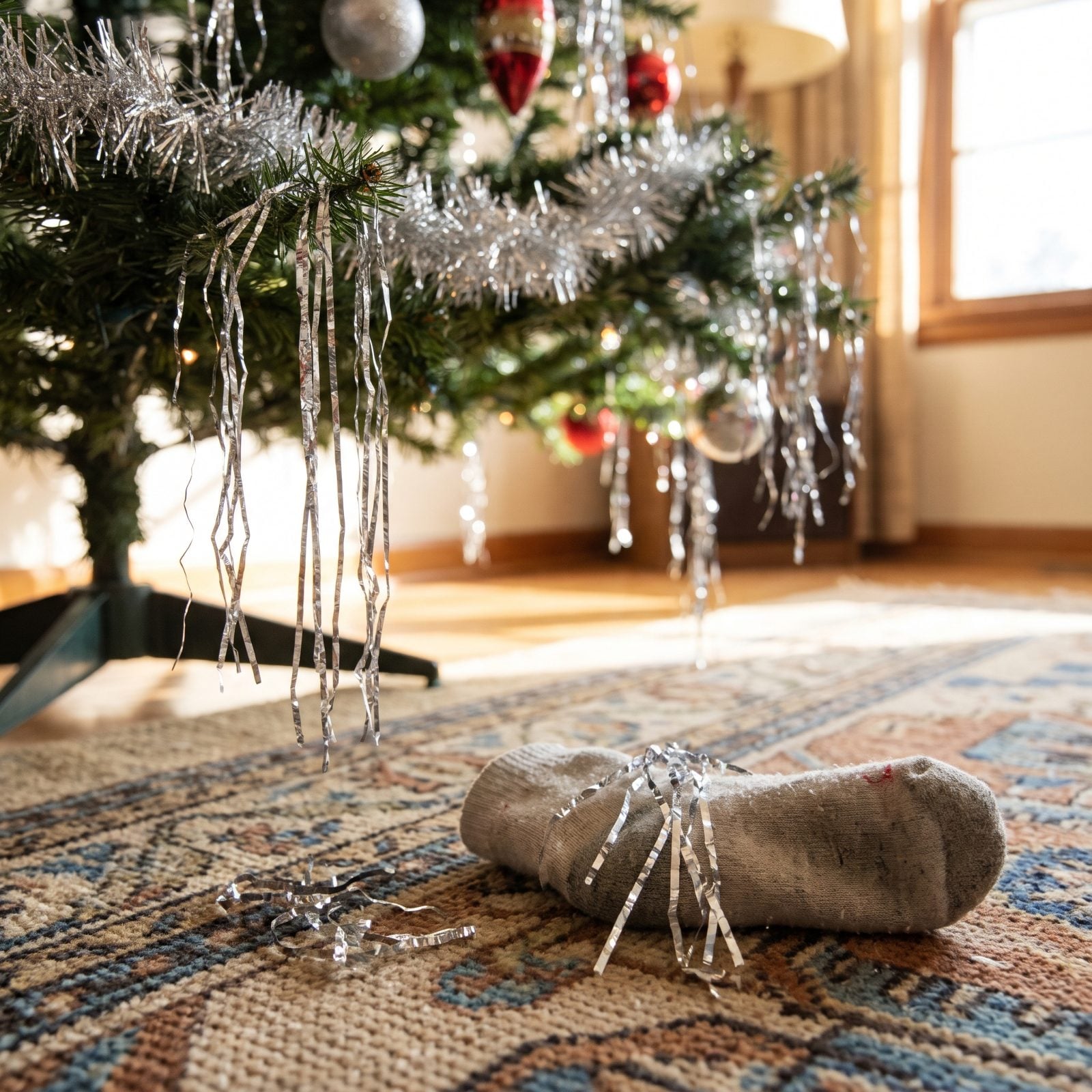
Lead tinsel hung different than the cheap stuff. It had weight, so it draped in straight silver lines instead of tangling into clumps. The trick was hanging it one strand at a time, which no kid ever had patience for, so half the tree got the careful treatment and the lower half got handfuls thrown at it.
It migrated everywhere. You’d find strands stuck to your socks in March, pressed into the rug, trailing out the door on a package. The tree shed silver all season long.
9. The Divinity Fudge That Only Appeared Once a Year
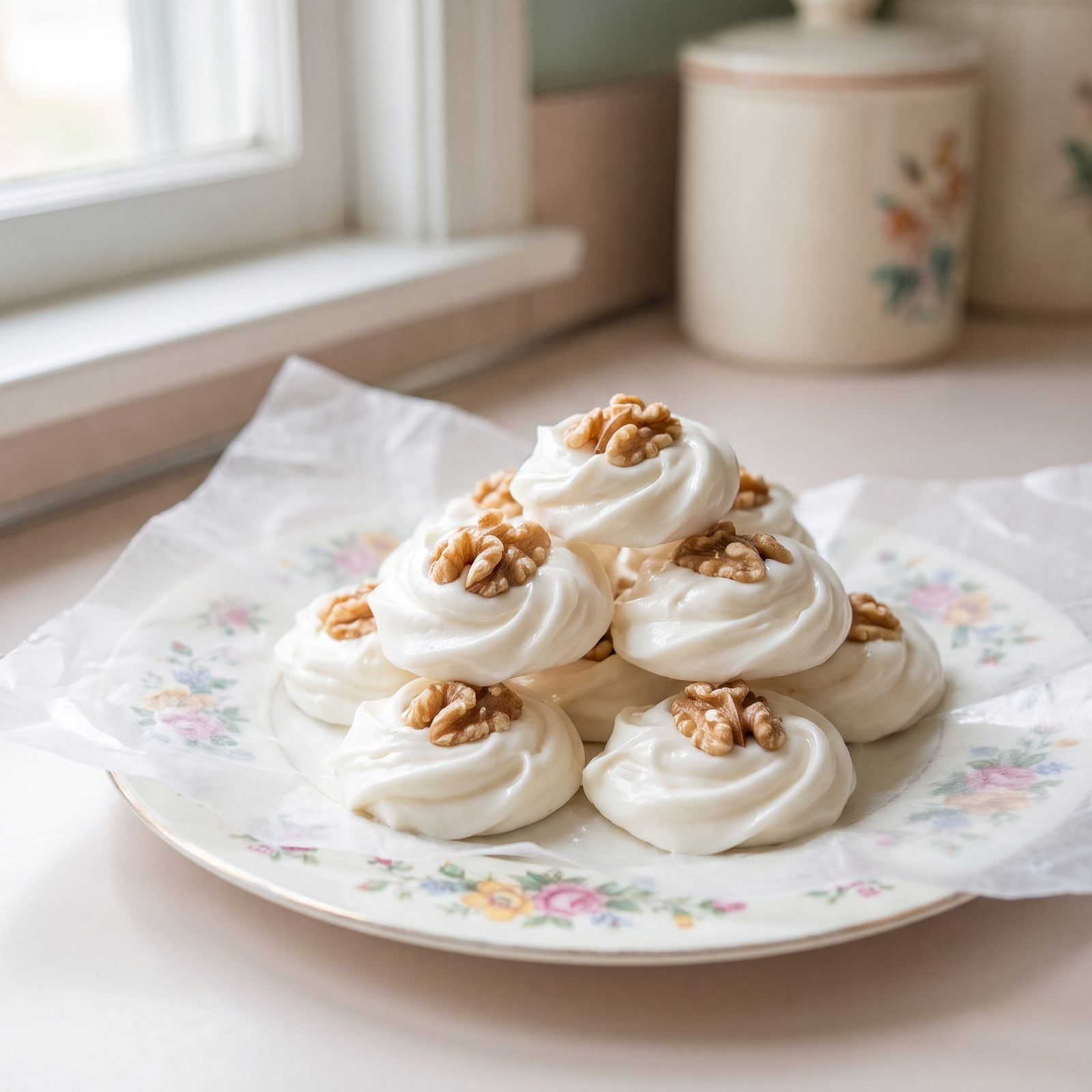
Some foods belonged entirely to December. Divinity was one of them. A whipped confection of egg whites, sugar, and corn syrup that only a steady hand and a dry day could pull off. Humidity ruined it. Everyone knew the risk.
You’d see it on the gold-rimmed floral china plate next to the fudge and the ribbon candy, white and cloud-soft, flecked with walnuts. It wasn’t fancy. It was the opposite of a bakery. It tasted like somebody’s kitchen in winter, and the recipe lived on a stained index card nobody dared change.
8. The Station Wagon Backseat Full of Presents From the Five-and-Dime
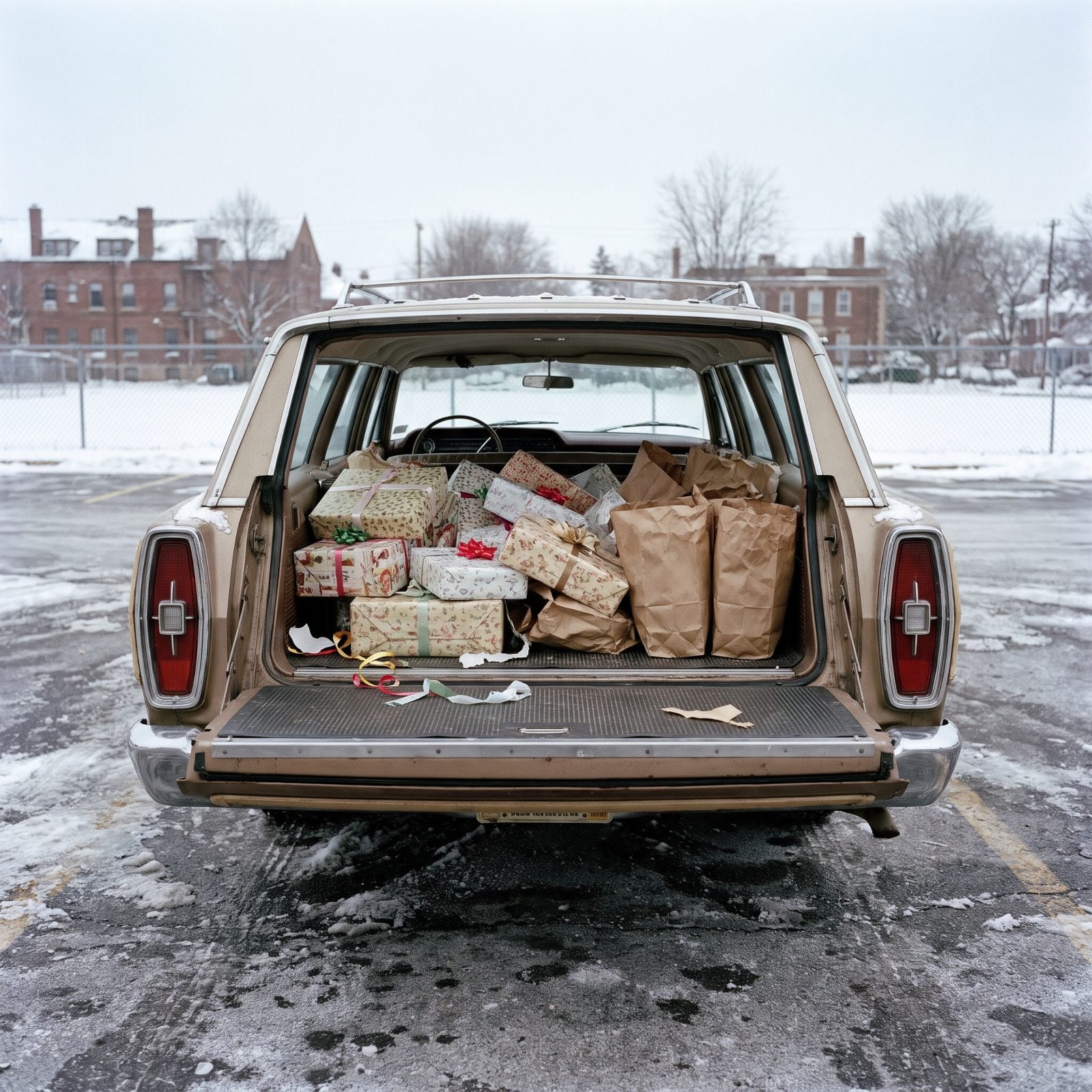
The haul came home in the back of the wagon. Woolworth’s, Kresge’s, maybe a trip downtown if the family was feeling ambitious.
Gifts wrapped in foil paper, holly-and-bell patterns, curled ribbon done by the counter clerk for free. The whole backseat smelled faintly of cold air and cardboard. You weren’t allowed to look too closely, which of course meant you memorized the shape of every box.
Half the magic was the restraint. You saw the pile grow for weeks and had to wait.
7. The Divinity and Fudge Set Out on Wax Paper to Harden
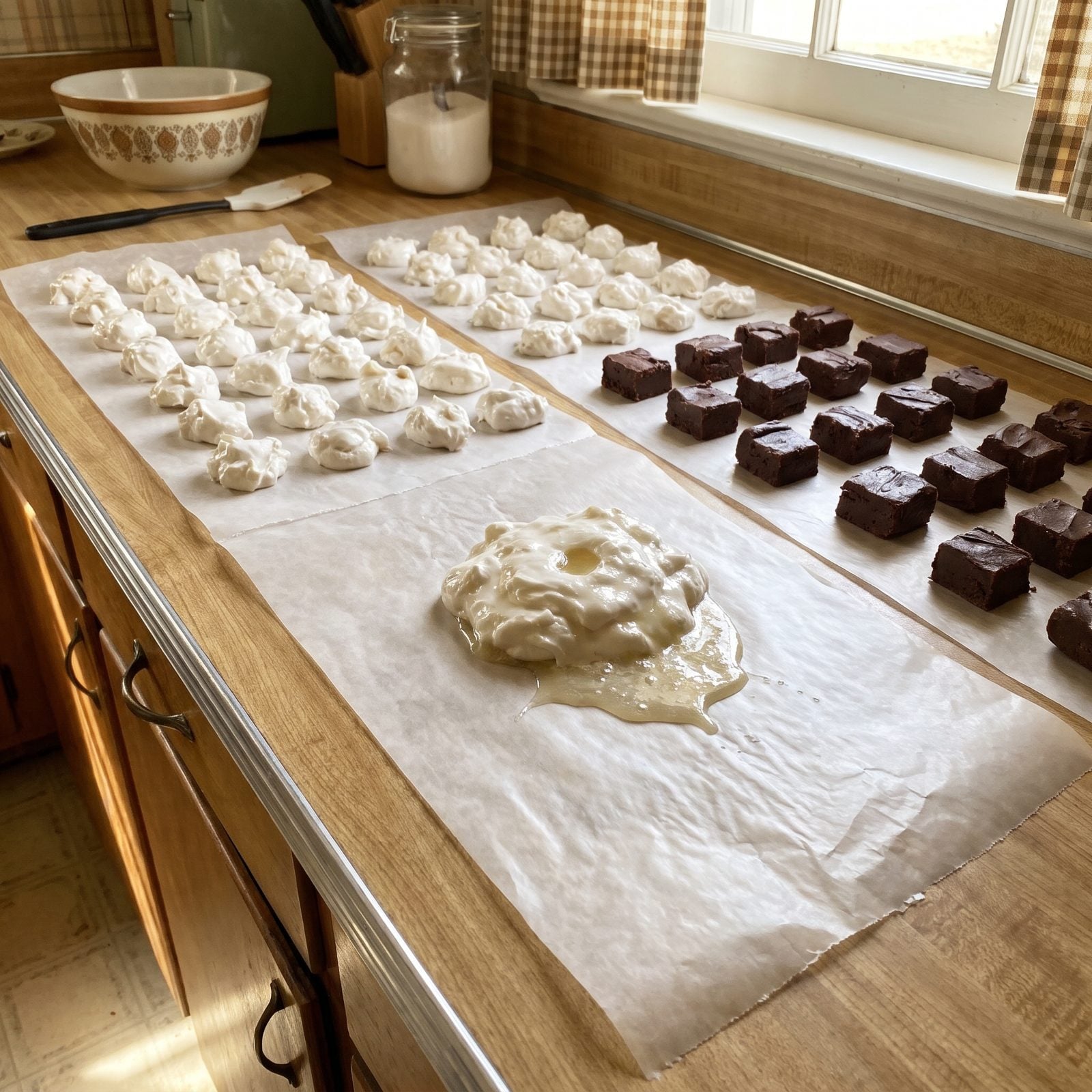
Divinity was the terror of the batch. Too much humidity and it never set, just sat there weeping on the wax paper while everyone pretended not to notice. When it worked, it was snow white, studded with walnuts, and gone within a day.
Fudge was the reliable cousin. Chocolate, sometimes with a layer of peanut butter swirled through, cut into squares nobody could resist pinching. The wax paper covered every flat surface in the kitchen while things hardened, and a kid who swiped a corner too early got a warm, half-set mess on their fingers.
6. The Mantel Stockings Held Up With a Single Thumbtack Each
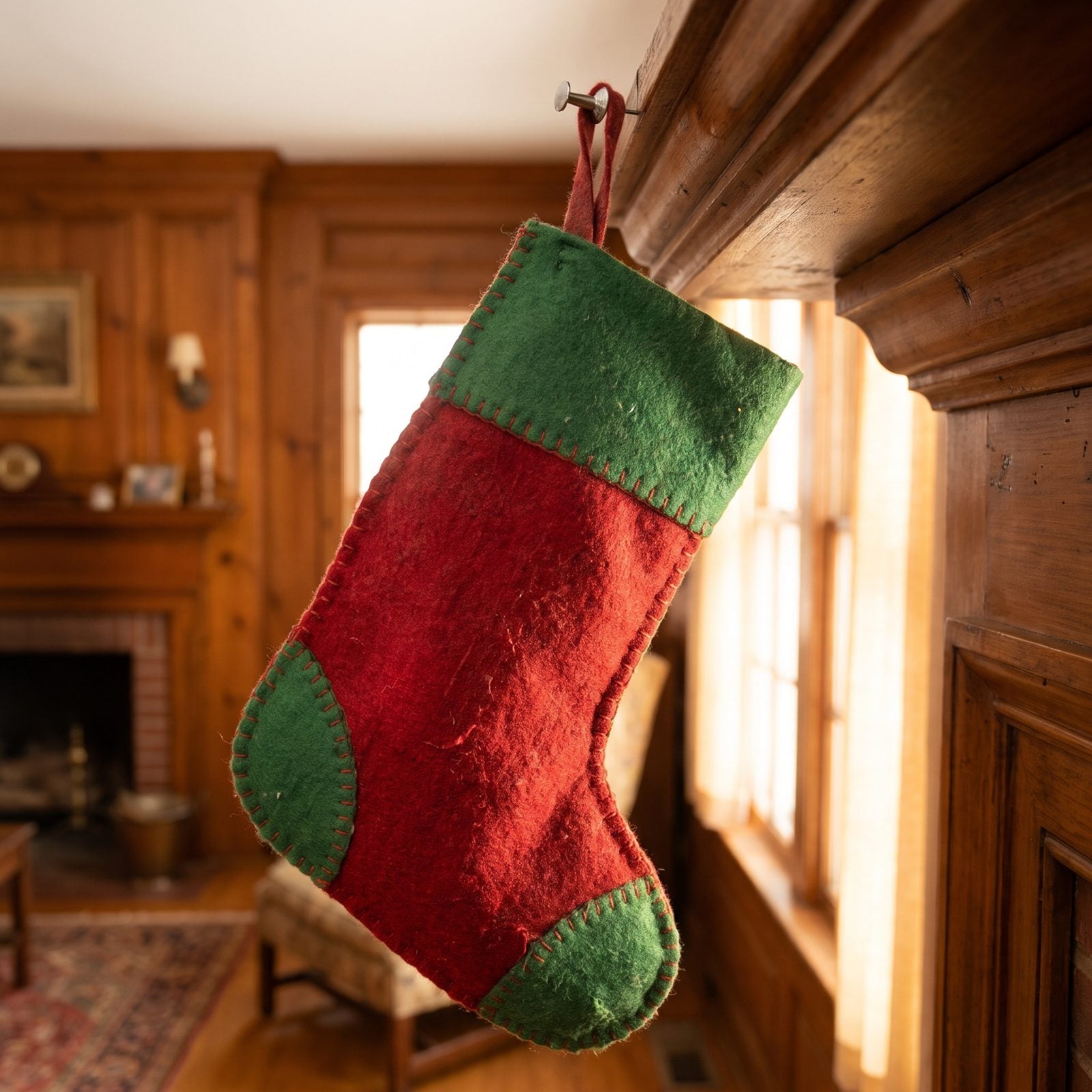
Nobody had those matching store-bought sets back then. The stockings were handmade, knitted by a grandmother or cut from felt and blanket-stitched by hand, red with green cuffs, heels and toes, the felt pilling a little more every year.
They hung flat and empty for weeks, waiting for Christmas Eve to fill them with an orange in the toe, hard candy, a pack of jacks, maybe a small toy if the year was good. And every one of them was held up by a single thumbtack pushed into the wooden mantel, hooked through a felt loop, which meant one tug sent it to the floor. Your own house probably had a version of this exact mantel setup, wood paneling and all.
5. The View-Master Reels That Showed Santa in 3D
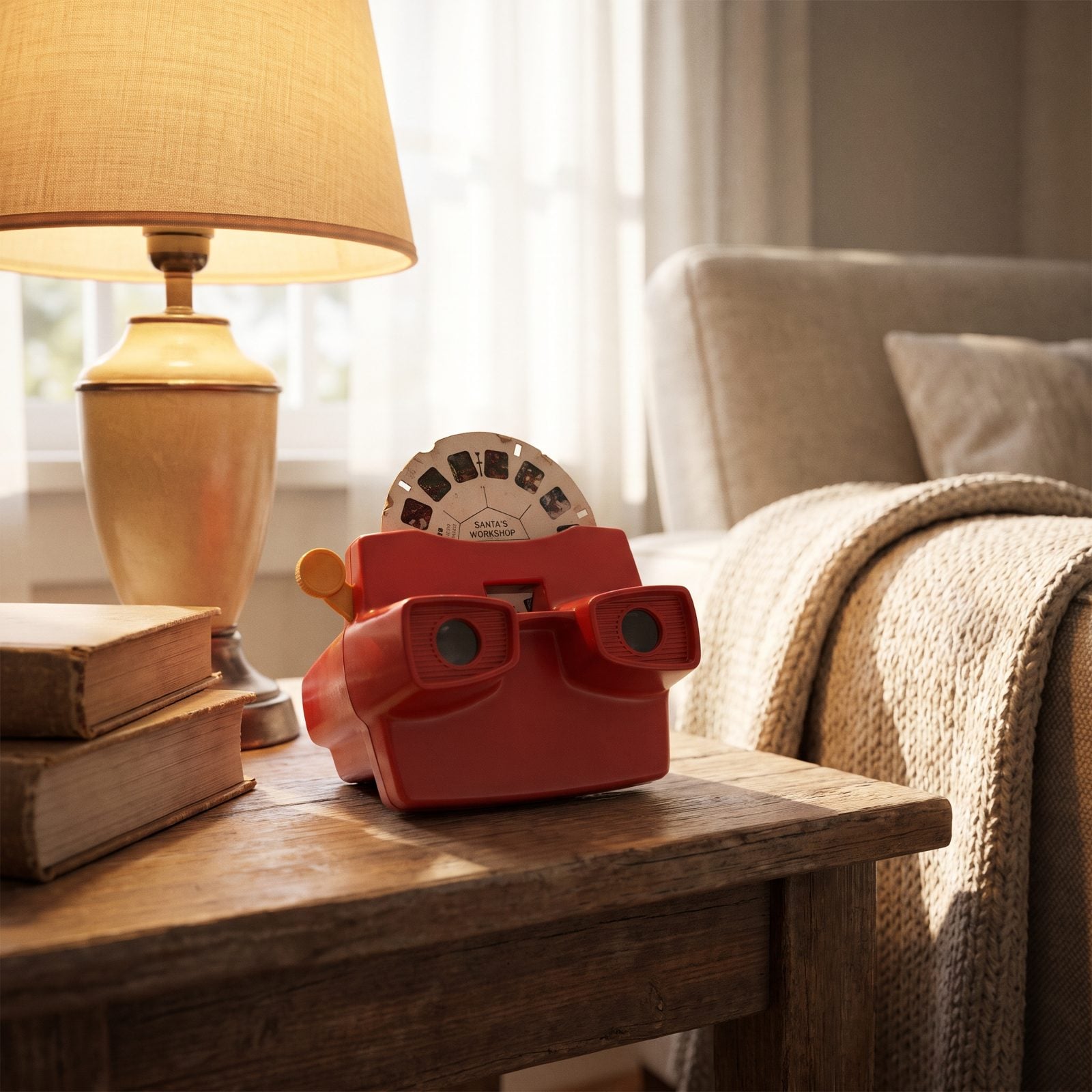
Click, and the reel advanced. Hold it up to a lamp and the flat cardboard disc became a little diorama with real depth, Santa’s sleigh floating in front of snowy rooftops you felt you could reach into.
These were a staple under the tree and in the stocking both. Christmas reels, nursery rhyme reels, the ones that scared you a little. A kid could burn an entire afternoon clicking through the same seven frames, and the viewer always ended up warm in your hands from the flash of the window light.
4. The Jell-O Mold That Arrived at the Table Shivering
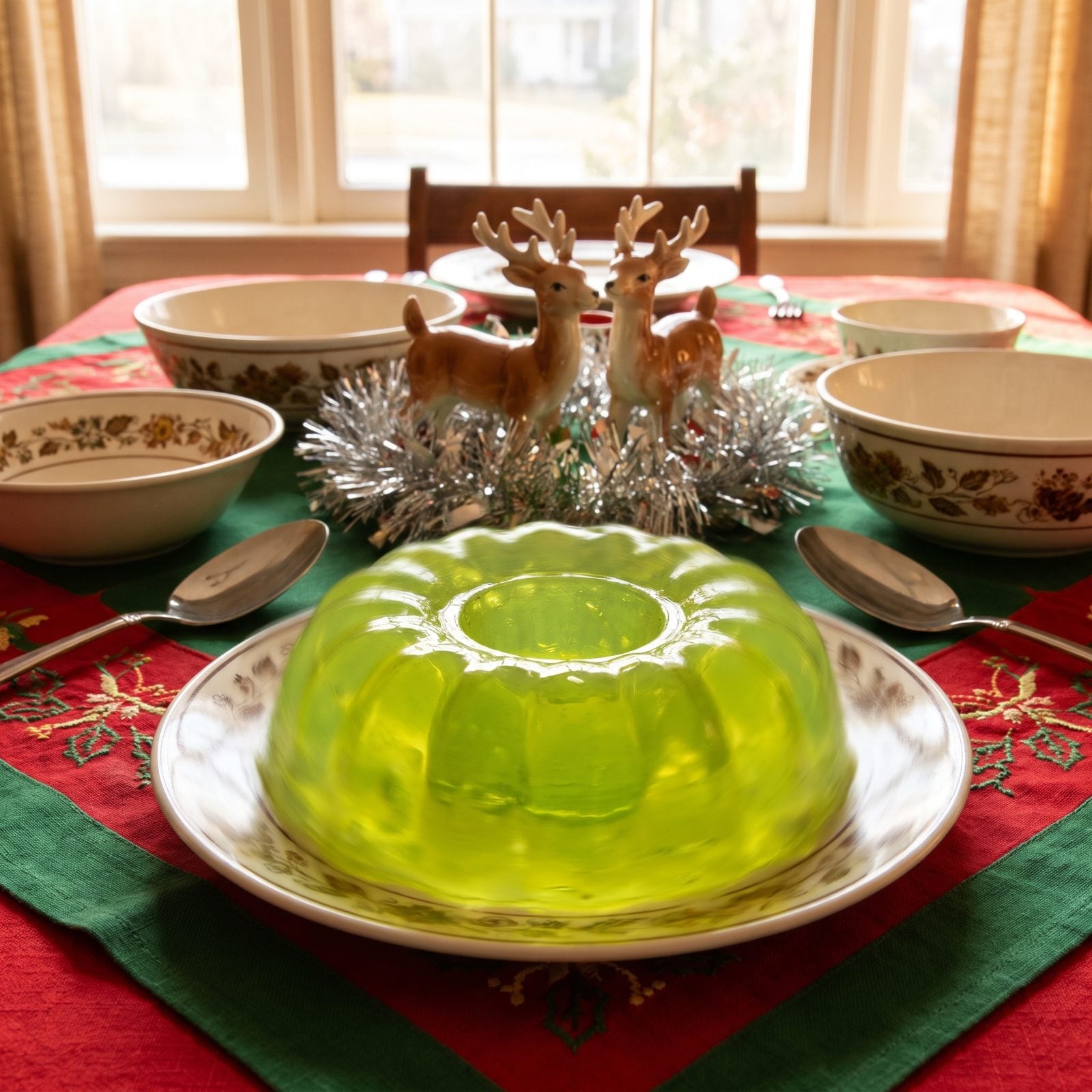
It came to the table shivering, that unmistakable wobble when someone set the plate down a little too hard. Lime green, usually, with fruit cocktail and marshmallows suspended inside like insects in amber.
Congealed salads were a point of pride. The fancier the mold, the more impressive the cook, and a ring mold with something trapped in the center was peak ambition. Some kids loved it. Some picked out the fruit and left the gelatin trembling on the plate.
3. The Scotch-Taped Wrapping Paper You Smoothed and Saved for Next Year
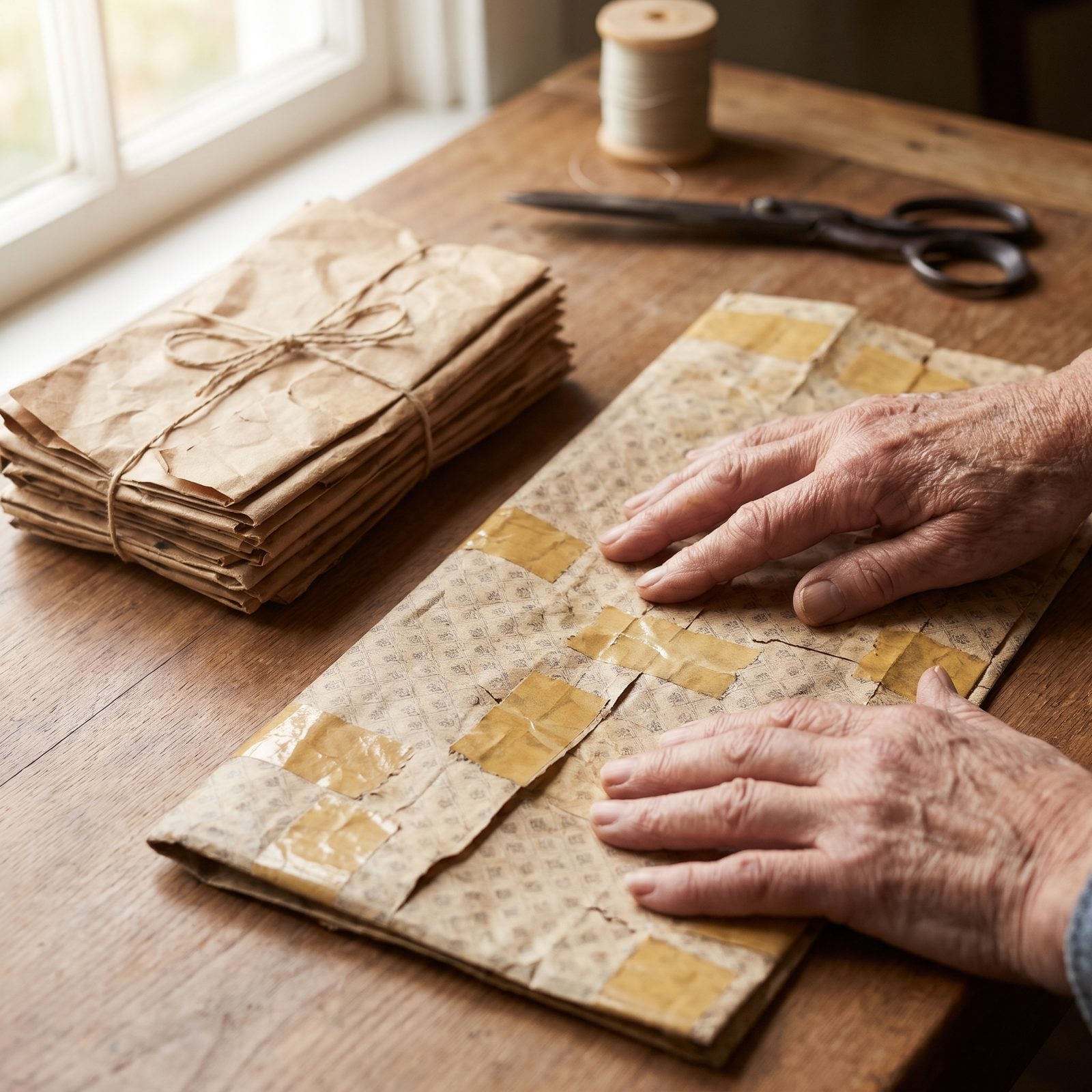
Not everyone did this, but in plenty of households the paper never got thrown out. The careful openers slid a finger under the tape instead of ripping, then handed the flattened sheet to a mother who smoothed it on her knee and folded it into a growing stack for next year.
This was Depression-raised thrift, still fully operational decades later. Ribbon got wound back onto itself. Bows went into a shoebox. The wrapping paper on your gift might be older than you were, and nobody thought that was strange at all.
2. The Nativity Scene That Lived on Top of the TV All Season
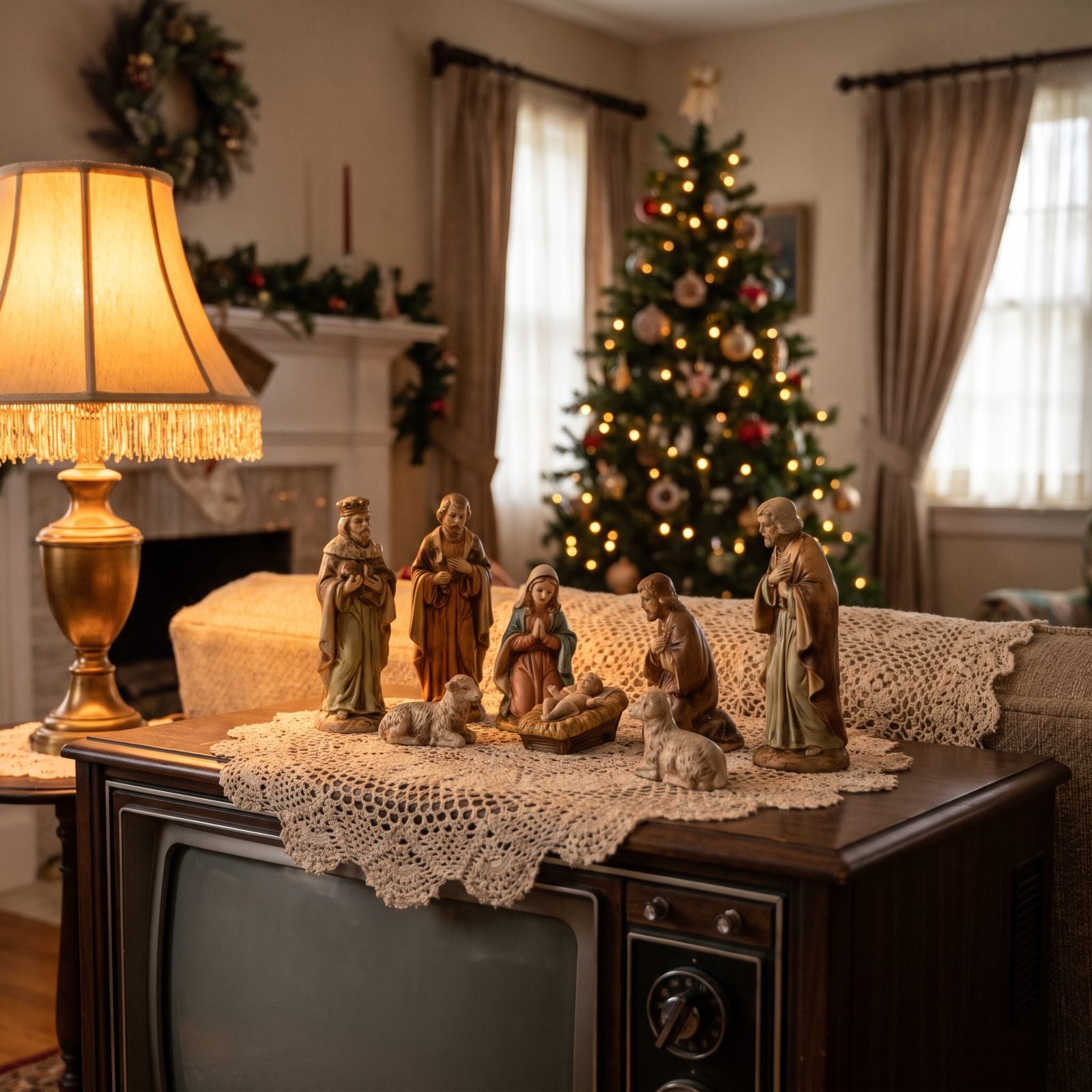
The television earned a second job every December. The nativity went up top, on a doily your grandmother made, and stayed there until Epiphany whether anybody dusted it or not.
Half the figures had chips. The baby in the manger was often a different scale than everybody else, like He’d been bought separately years later to replace a lost one. Nobody minded. You knelt the shepherds a little closer each week.
1. The Hard Candy Dish You Were Allowed to Raid Exactly Once a Day
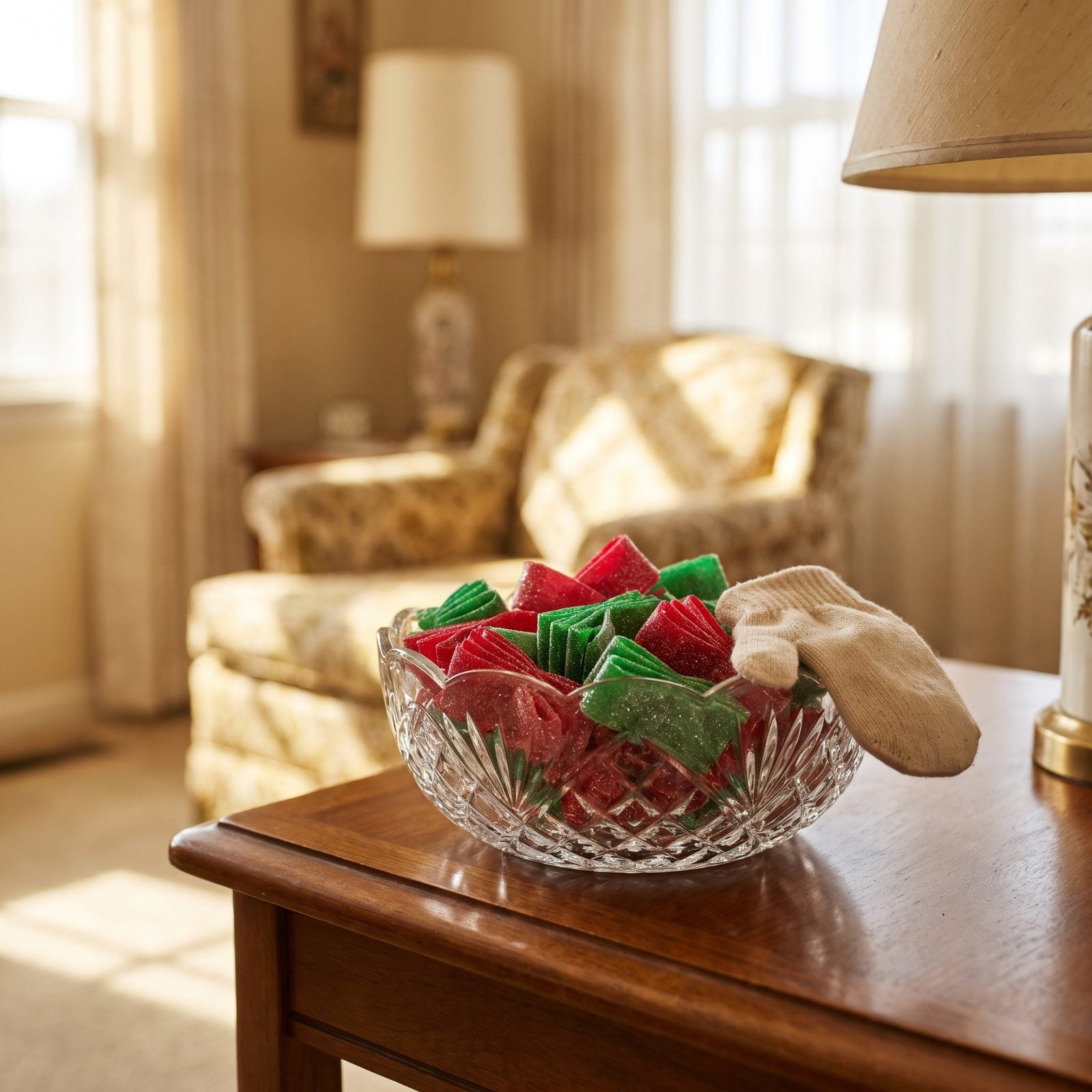
Ribbon candy was prettier than it was good. Those folded sugar accordions in red and green cracked like thin ice and cut the roof of your mouth, and you ate them anyway because they came out once a year.
The cut-glass dish sat on the coffee table all season, next to the nuts nobody could open without the metal cracker. You could take one piece. Everyone knew the real count was closer to four.