🔥 Would you like to save this?
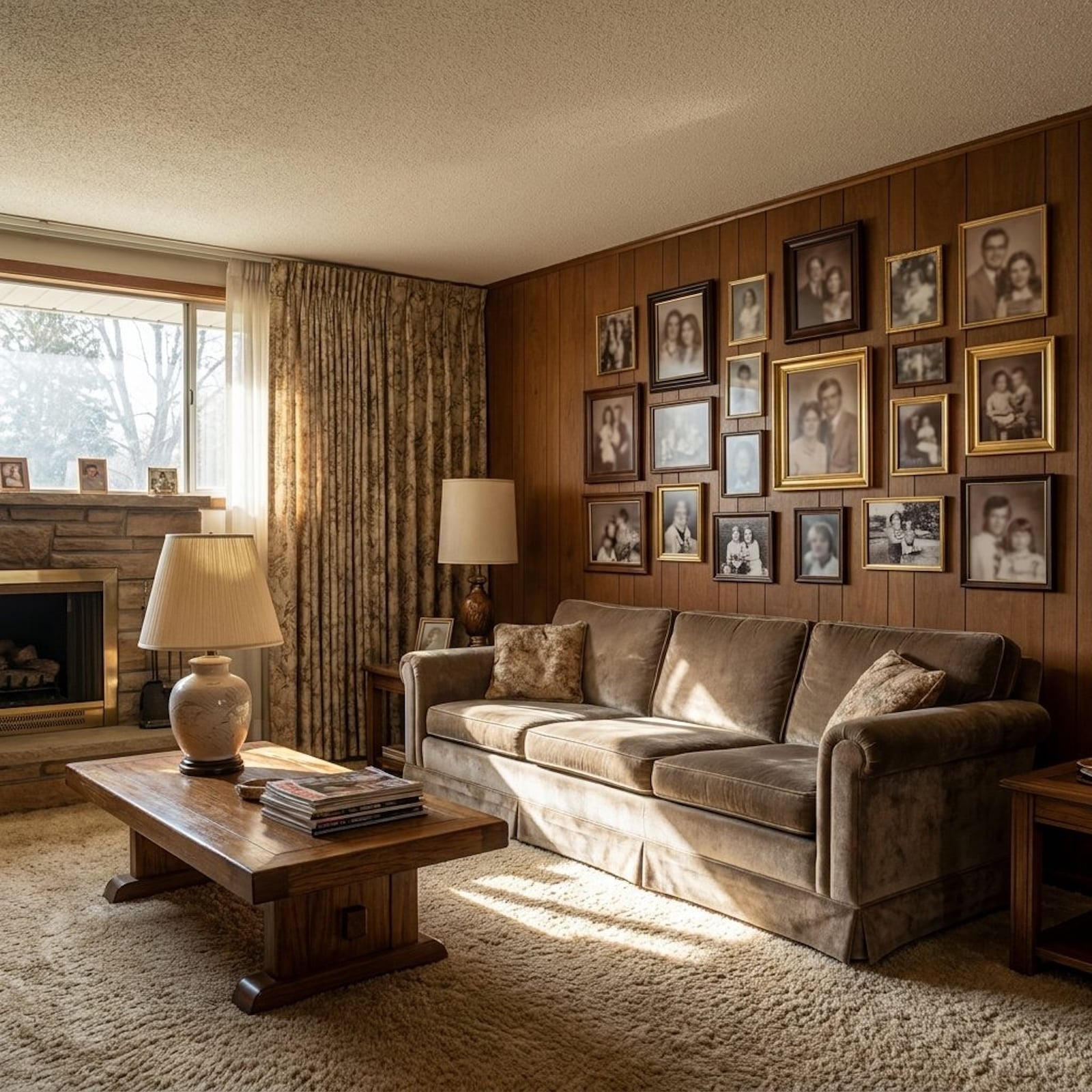
By 1975, the family room had stopped pretending to be the nice room. That was what the living room was for. The family room was where the TV hummed, somebody’s dad had permanent rights to the recliner, the shag carpet ate small toys for sport, and every surface seemed to come in brown, rust, avocado, or some heroic combination of all three.
It was also a room built for staying put. The sectional wrapped around half the wall, the stereo had the footprint of a sideboard, the speakers could qualify as furniture, and the fireplace was often large enough to influence local weather. Add a wet bar, a spider plant, a swag lamp hanging from a chain, and one piece of macramé made by an aunt who had discovered jute, and the decade had pretty much moved in.
In order to come up with the very specific design ideas, we create most designs with the assistance of state-of-the-art AI interior design software. Also, assume links that take you off the site are affiliate links such as links to Amazon. this means we may earn a commission if you buy something.
These 34 signs bring that room back piece by piece: the console TV everyone faced, the plaid sofa that refused to die, the 8-track cartridges stacked beside the stereo, the fondue pot waiting for company, and the family photo wall that somehow mattered more than all of it. Some of these things deserved to disappear. A surprising number deserve another look. And a few can still make you smell warm dust and hear Dad’s recliner snap open from three rooms away.
34. The Sunken Conversation Pit You Had to Step Down Into
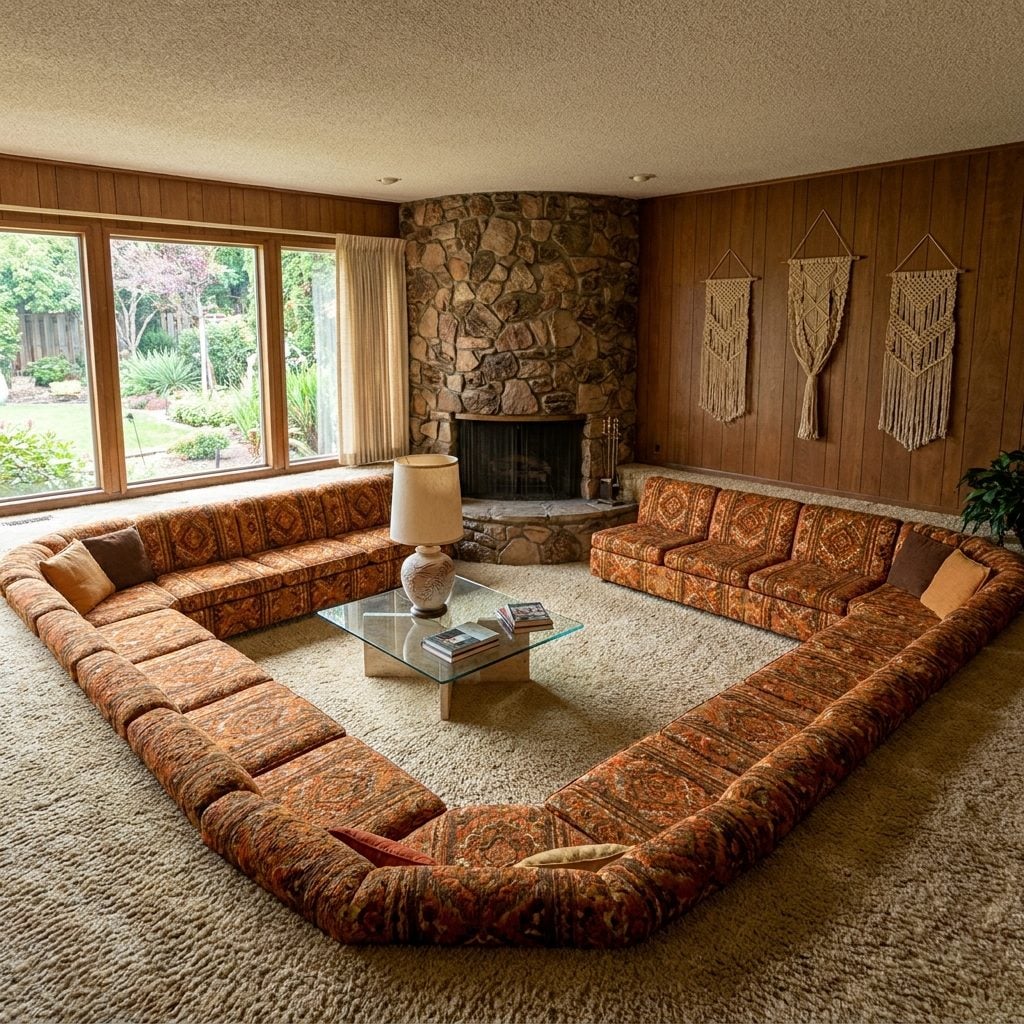
Nothing said a house had money and ideas quite like a floor that dropped away in the middle. You stepped down into it. Guests parked their drinks on the ledge and everyone sat facing each other, knees almost touching, which was the whole point. Conversation pit, they called it, and it delivered.
It was also a small ankle hazard in the dark and a genuine nightmare to vacuum. Nobody cared. When the built-in sofa hugged you on three sides and the shag climbed the steps, the room felt like a nest you willingly climbed into.
33. The Wood-Console Television the Whole Room Faced
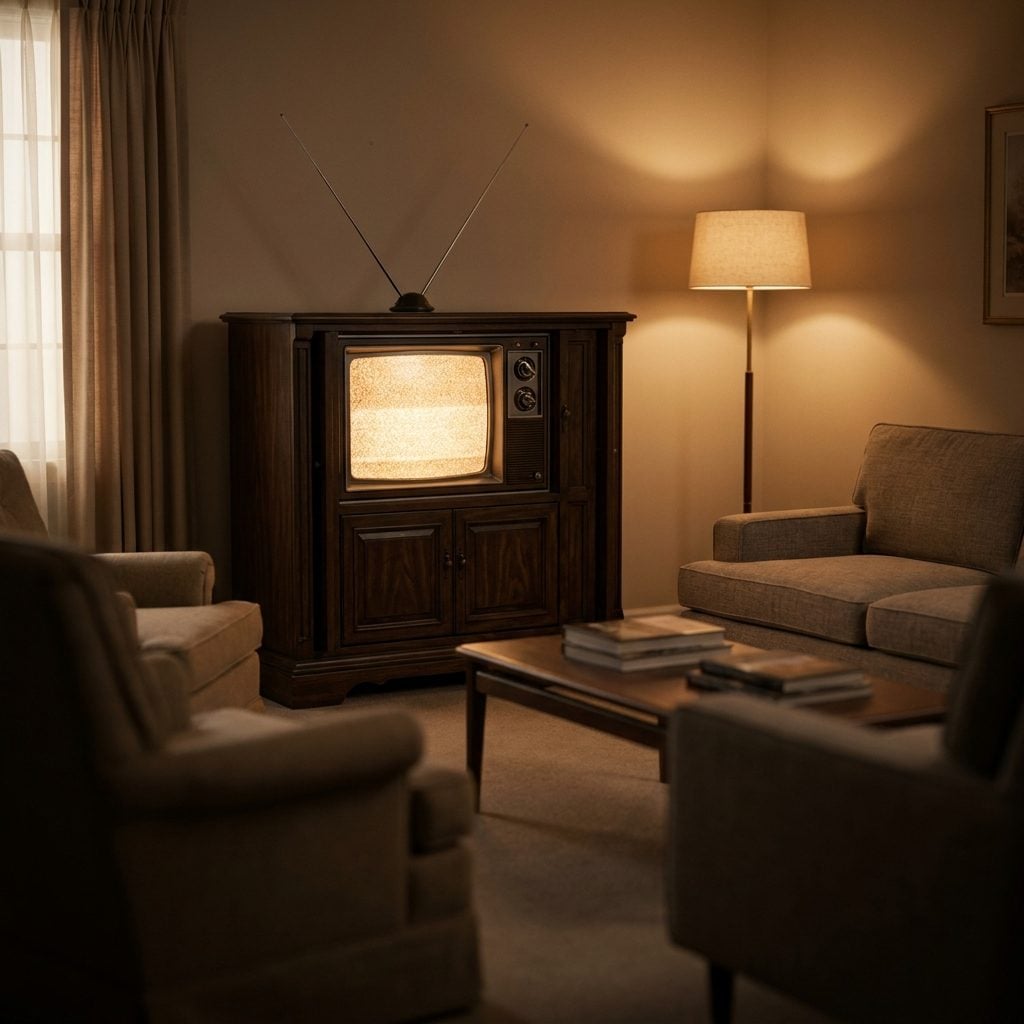
You could hear it warm up. A soft electric hum, a moment of waiting, and then the picture finally arrived. This was no wall-mounted flatscreen. It was furniture, a long low cabinet of fake walnut you dusted and set a lamp on.
The top became prime real estate: a doily, the good family photo, a bowl of hard candy. Changing the channel meant getting up and turning a dial with a satisfying clunk. Four channels, and a snowy fifth if you held the antenna right and stood very still.
32. The Shag Carpet That Needed Its Own Rake
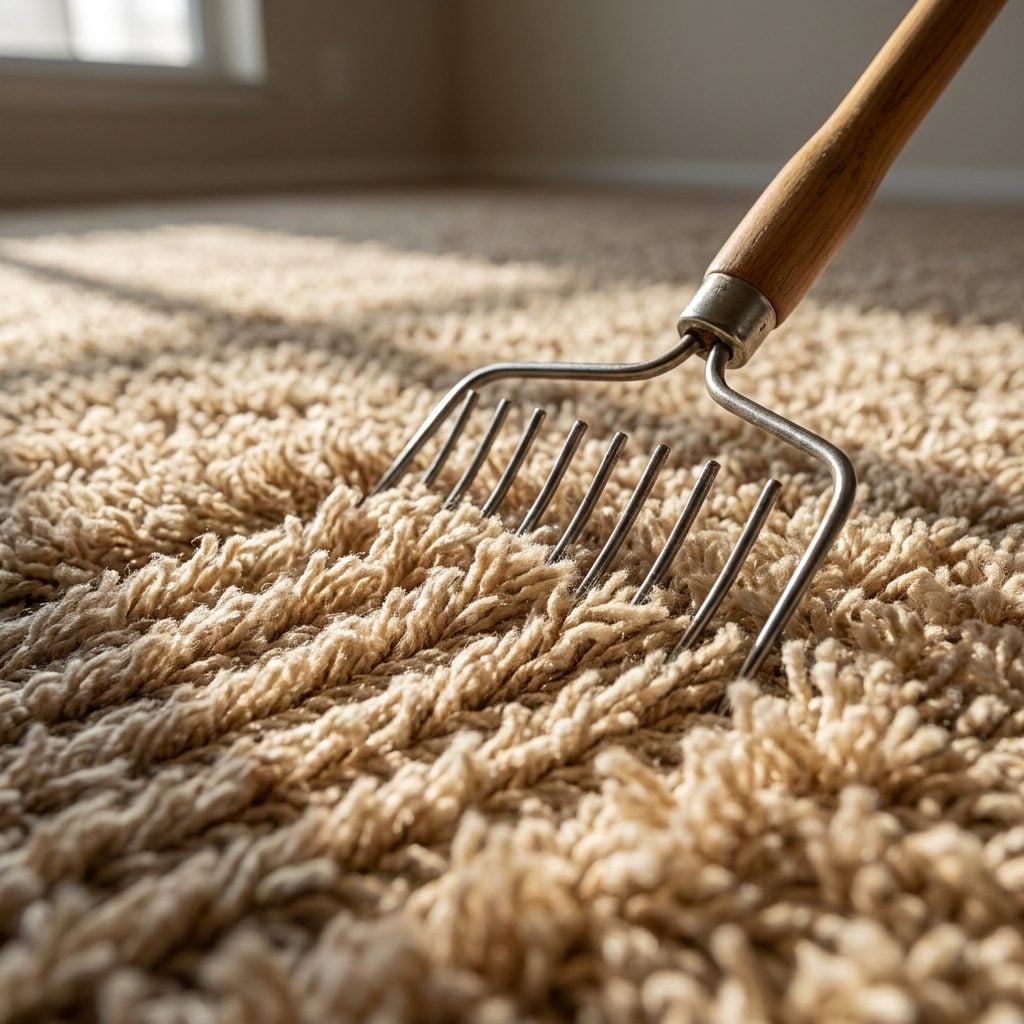
You didn’t walk on it so much as wade. The pile was long enough to hide small objects with alarming efficiency, and there was a rake, an actual carpet rake, that lived in the closet so you could lift the fibers after vacuuming and restore those clean, satisfying rows.
Barefoot, it was heaven. Drop an earring or a small Lego in it and the thing was gone to the void. Warm underfoot, murder to keep clean, and sitting on the floor in it could feel better than half the furniture.
31. Dad’s Recliner, the Throne With a Footrest
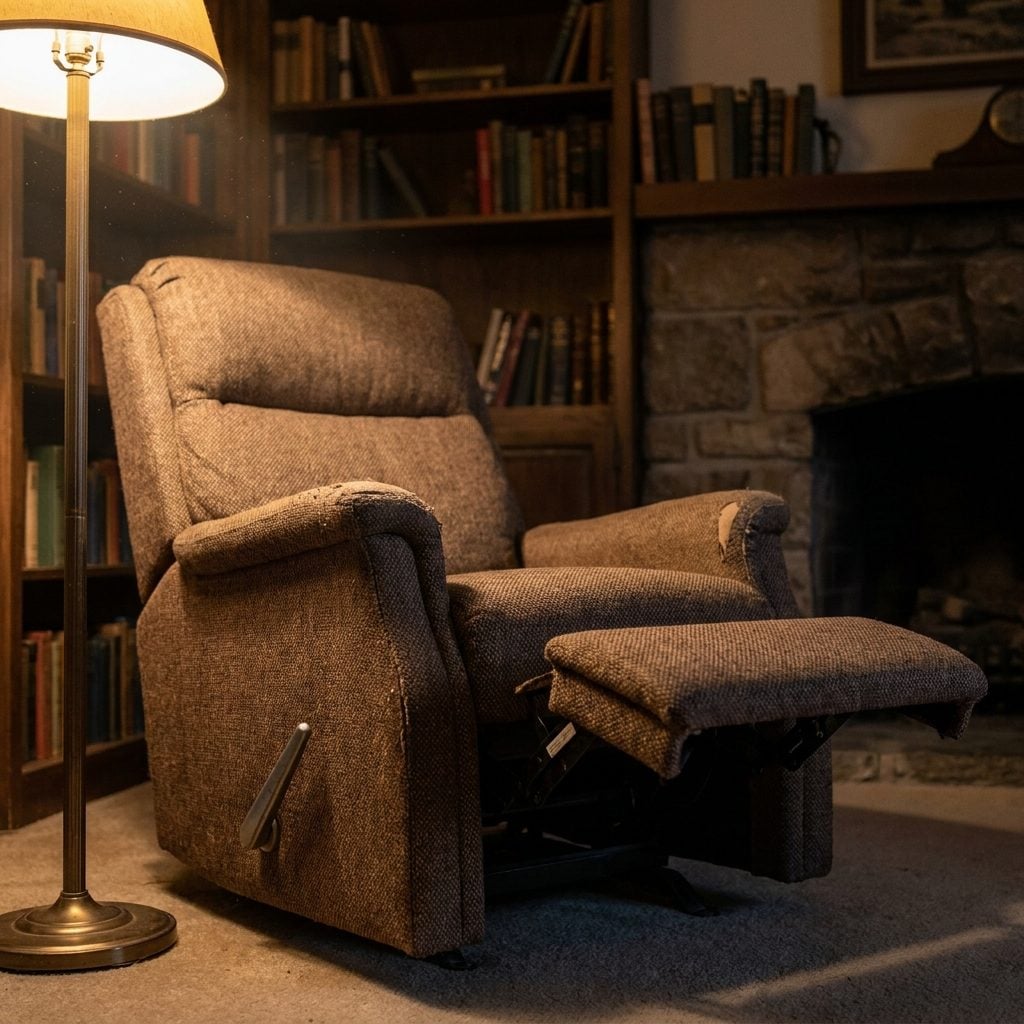
The lever was on the side and the sound it made was unmistakable. A firm clunk, the footrest launching up, the whole chair tilting back, and then a contented sigh from whoever had claimed it. Usually Dad. Always Dad, actually.
Warm vinyl in summer, cold in winter, and it made a specific noise when you sat down in shorts. Nobody else sat in it while he was home, and if you were caught in it, you evacuated fast. Most comfortable seat in the house and the most spoken-for.
30. The Dark Wood-Paneled Walls
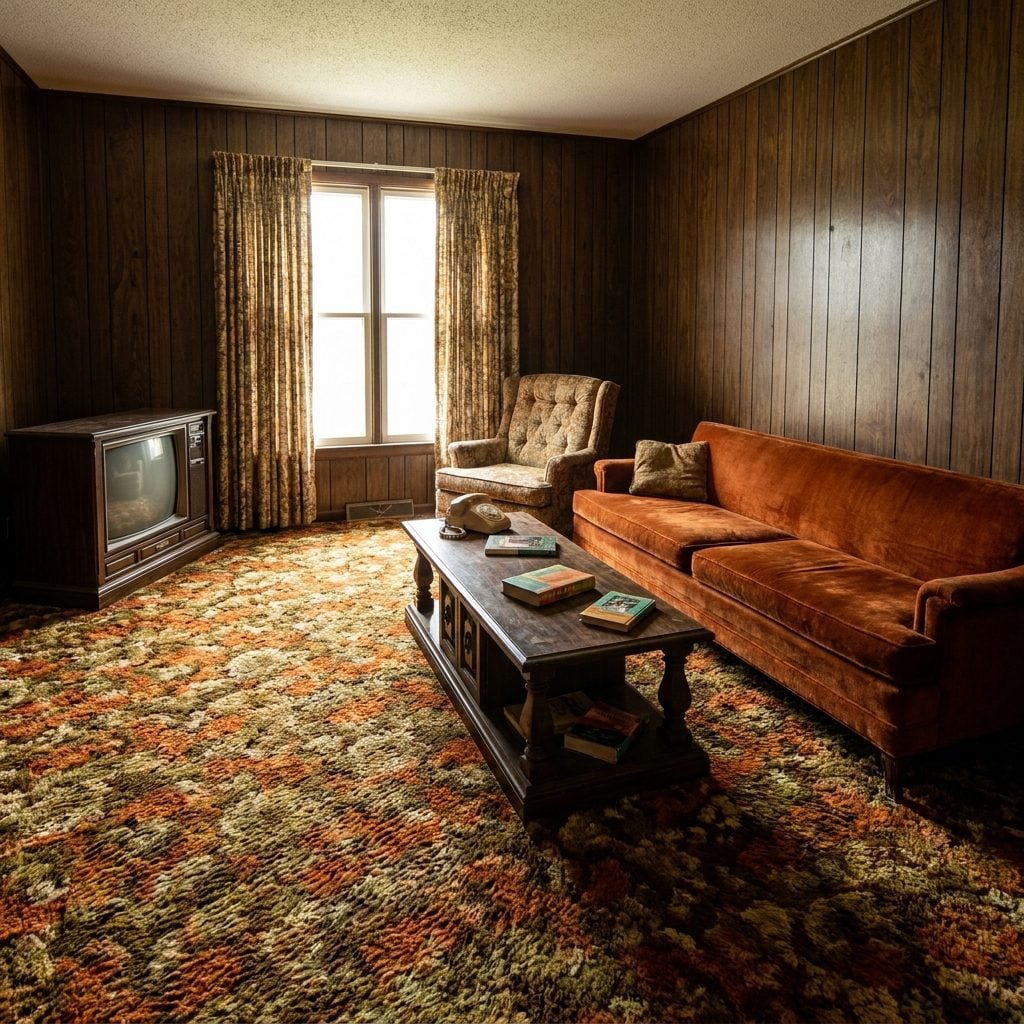
You couldn’t escape it in 1975. Wood paneling climbed family-room walls from floor to ceiling, those grooved vertical seams soaking up the afternoon light and turning everything amber. Inexpensive versions used printed or veneered sheet goods; better versions could use genuine wood veneer or solid wood.
Either way, the effect was unmistakable: a room that felt a little like the inside of a cabin, exactly where a plaid tweed sofa and harvest-gold shag rug looked at home. Paneling also took daily scuffs better than a pristine painted wall. We spent years covering it up or tearing it out, and eventually started looking at warm wood walls with interested eyes again.
29. The Stereo Console That Looked Like Furniture
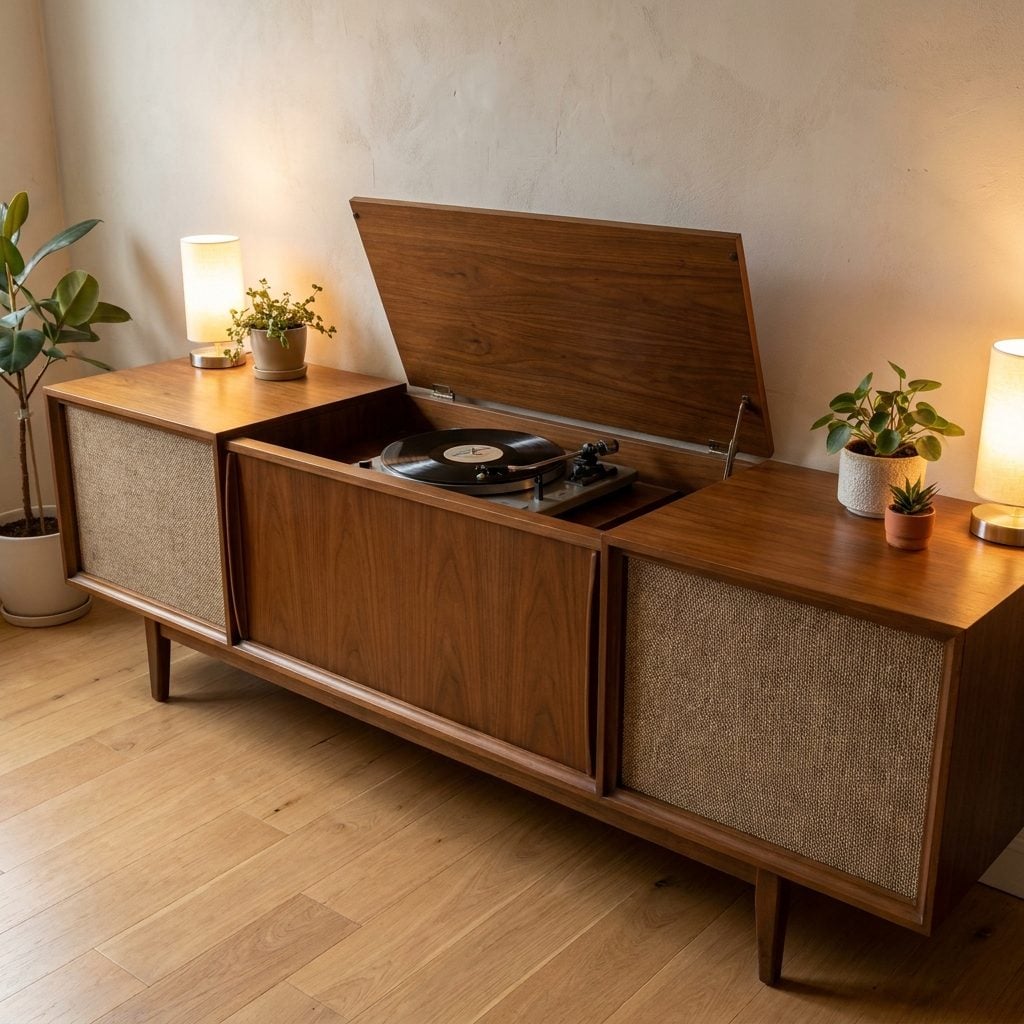
A stereo console could occupy nearly as much wall as the sofa, and nobody tried to hide it. You showed it off. Lift the top and there sat the turntable, cloth speaker grilles built into each end, tuning controls behind a panel, and record storage tucked below.
On top went a ceramic lamp, a leaning stack of LPs, and a framed family photo. It was a stereo pretending to be a sideboard, and nobody was fooled. That was fine. Furniture you could dance to.
As component systems became more popular, plenty of consoles migrated to basements, spare rooms, and thrift stores. Now some of the survivors get hauled right back upstairs.
28. The Floral Armchair That Belonged to Nobody and Everybody
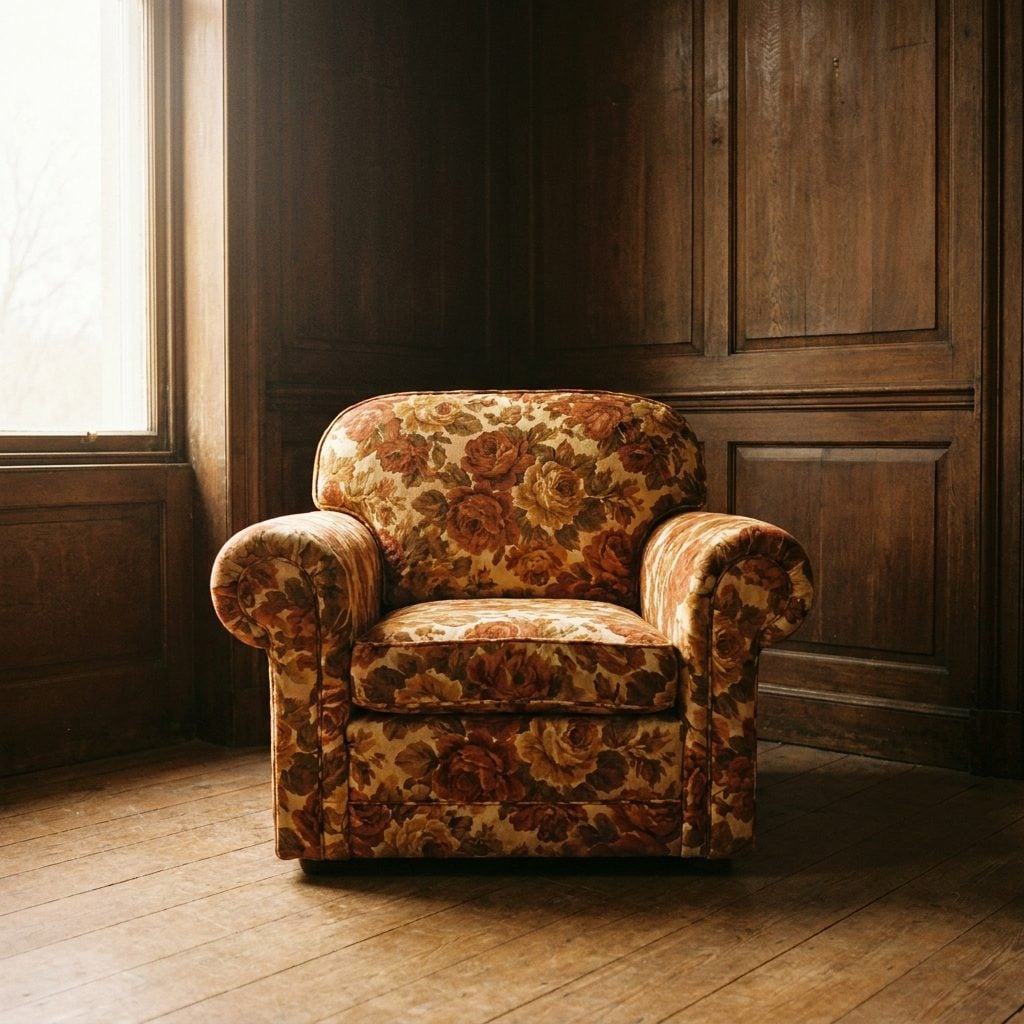
Every family room seemed to have the one chair with the big blowsy flowers on it, usually rust and gold roses the size of dinner plates. It sat in the corner near the good lamp, and there was an unspoken rule that Grandma got it whenever she visited.
The rest of the time it held folded laundry, the newspaper, or nothing at all, just waiting. The wooden arm caps went shiny from decades of hands. It never matched the sofa and it never had to.
27. The Stone Fireplace Stretching Across One Wall
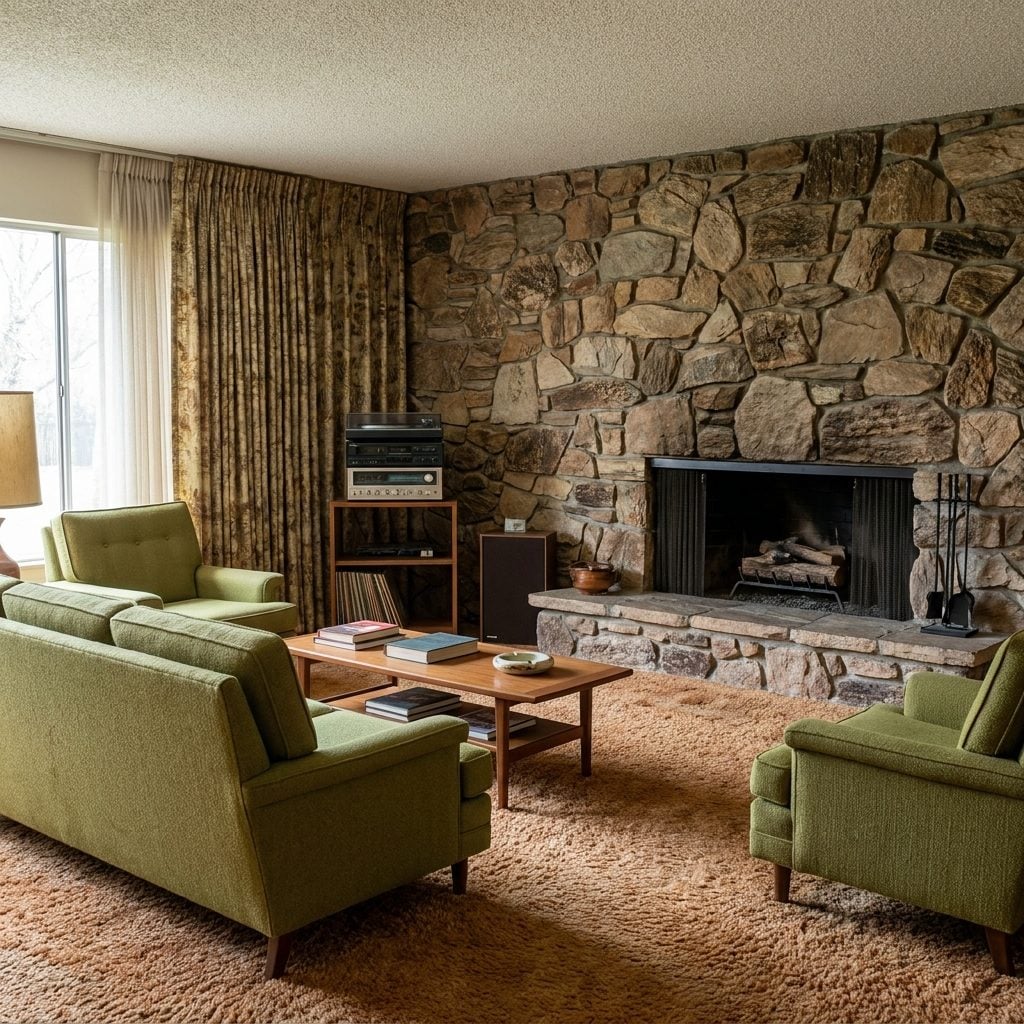
This was the flex. A fieldstone fireplace running floor to ceiling across an entire wall, irregular tan and gray stones stacked with deep mortar joints, a rough timber mantel loaded with candlesticks and greenery.
You built the seating arrangement around it because ignoring something that large was impossible. Firelight threw shadow into every joint and rough edge, making the stone look different after dark than it did in daylight. With a mustard sectional and cream shag nearby, the fireplace wasn’t decoration. It was architecture with flames in it.
26. The Avocado Green Carpet That Ran Wall to Wall
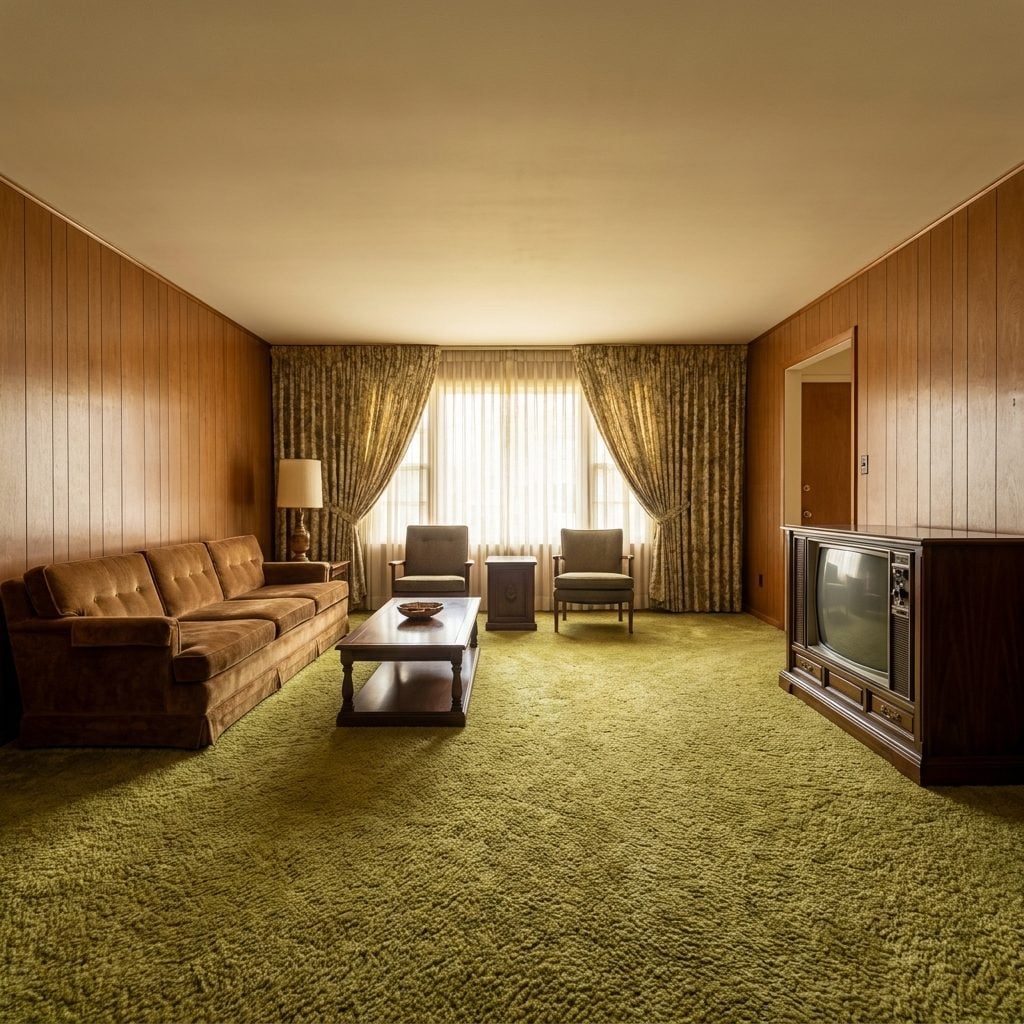
Avocado wasn’t just a fridge color. It went on the floor, wall to wall, and flowed right down the hall and sometimes into the bathroom too. The green pulled the earth-tone scheme together, tying the olive drapes to the gold lamp to the brown sofa.
It hid a shocking amount of daily life. Grass clippings tracked in from the yard vanished on it, which was either brilliant or slightly disturbing depending on how you thought about it. When it finally got pulled up in some 1990s renovation, the color underneath the furniture could be so vivid it looked like a different carpet entirely. Nothing dates a room faster — and not much brings the decade rushing back quite like it.
25. The Built-In Wet Bar
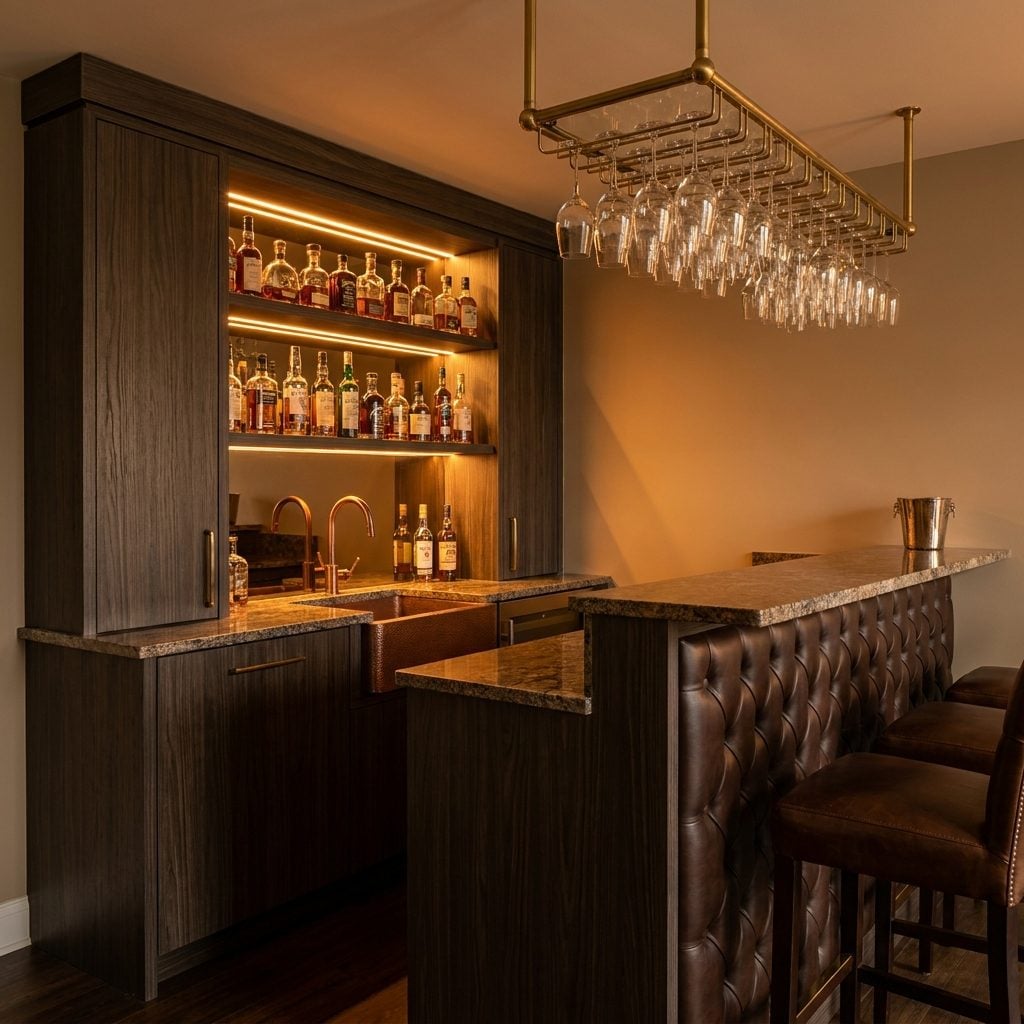
Somewhere along the line the wet bar became shorthand for a house ready to entertain. Tucked into a corner, it might have a faux-teak laminate counter, a little stainless sink for water and cleanup, and open shelves stocked with amber and green decanters and a soda siphon nobody quite knew how to use.
A smoked-mirror backsplash doubled the glint of the bottles. Chrome-based stools tucked underneath. An amber-glass swag lamp finished the scene overhead. It was theatrical and slightly ridiculous, and it made Saturday night feel more important before the first guest even arrived.
24. The Speakers in Giant Wood Cabinets
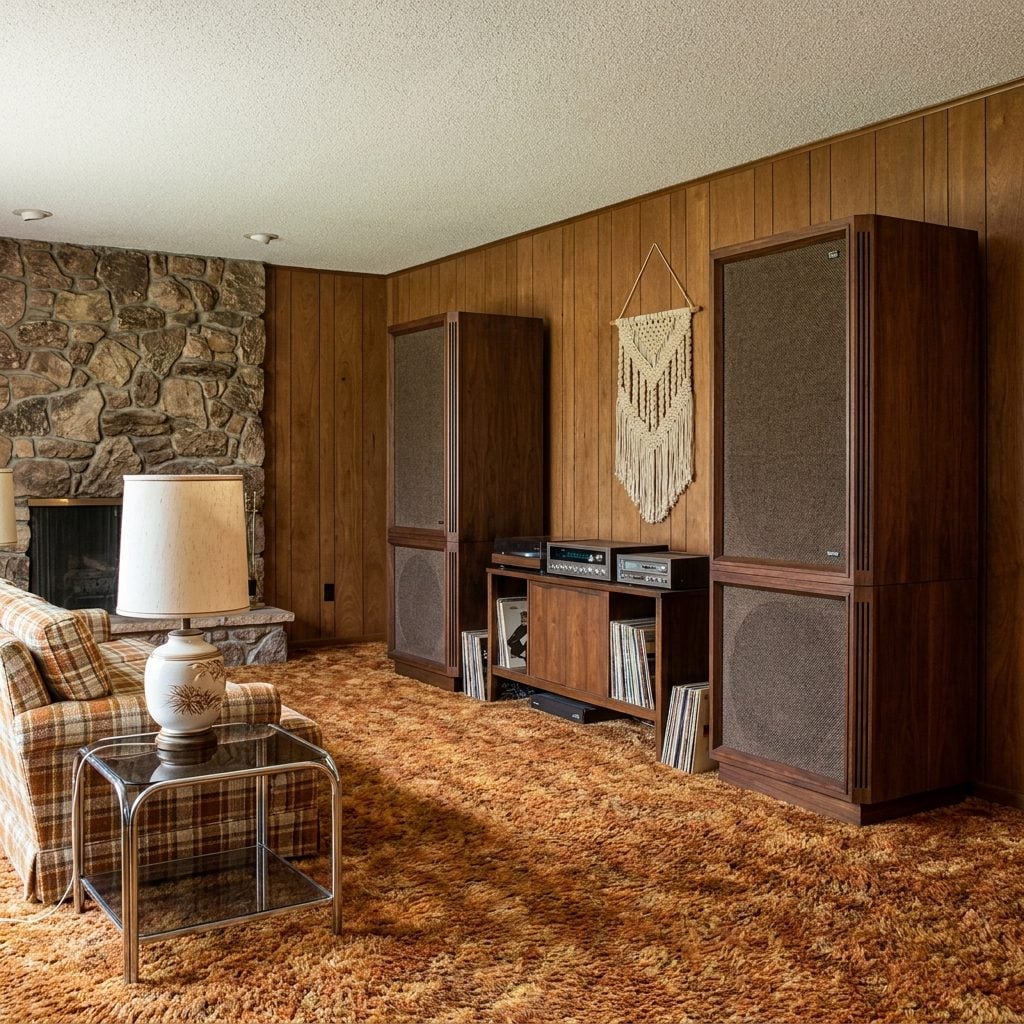
The speakers feeding those stereo systems could be enormous. Substantial walnut cabinets, woven brown grille cloth stretched across the fronts, a small badge in one corner announcing the brand.
Large cabinets gave speaker designers room for bigger drivers and substantial enclosures, and the visual message was equally clear: this stereo meant business. A pair could flank a fireplace like matching pieces of furniture.
Once they landed, they tended to stay put. For the person in the household who cared most about the stereo, those two wood boxes could easily outrank every other object in the room.
23. The Swag Lamp Hanging on a Chain
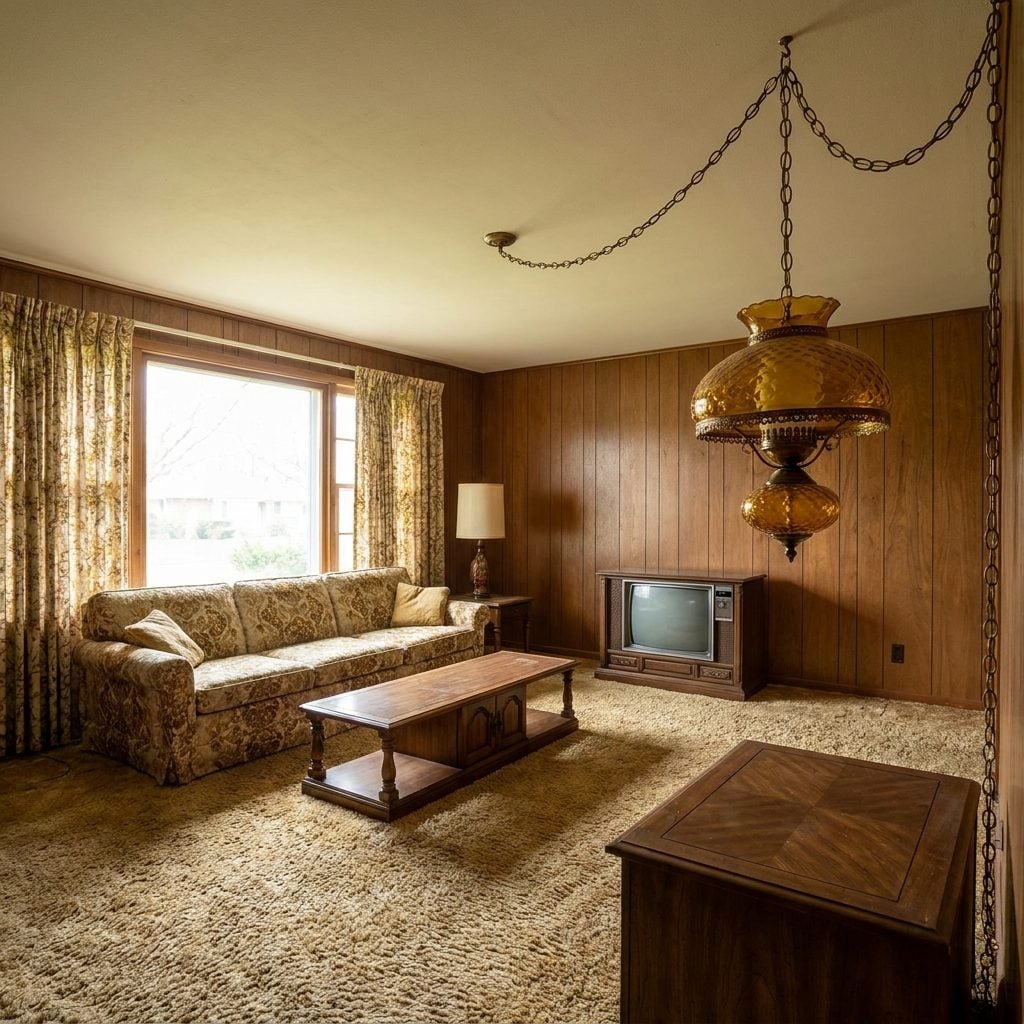
It hung from a chain hooked into the ceiling, then the cord swagged lazily across the room to reach the outlet. Nobody thought this was strange. The chain was the design feature.
The shade might be amber pebbled glass or a big pierced metal globe, throwing a warm patterned glow over the corner where everyone actually sat. The low light made the end of the sofa feel entirely different from the middle of the room.
22. The Sectional Sofa That Ate an Entire Wall
🔥 Would you like to save this?
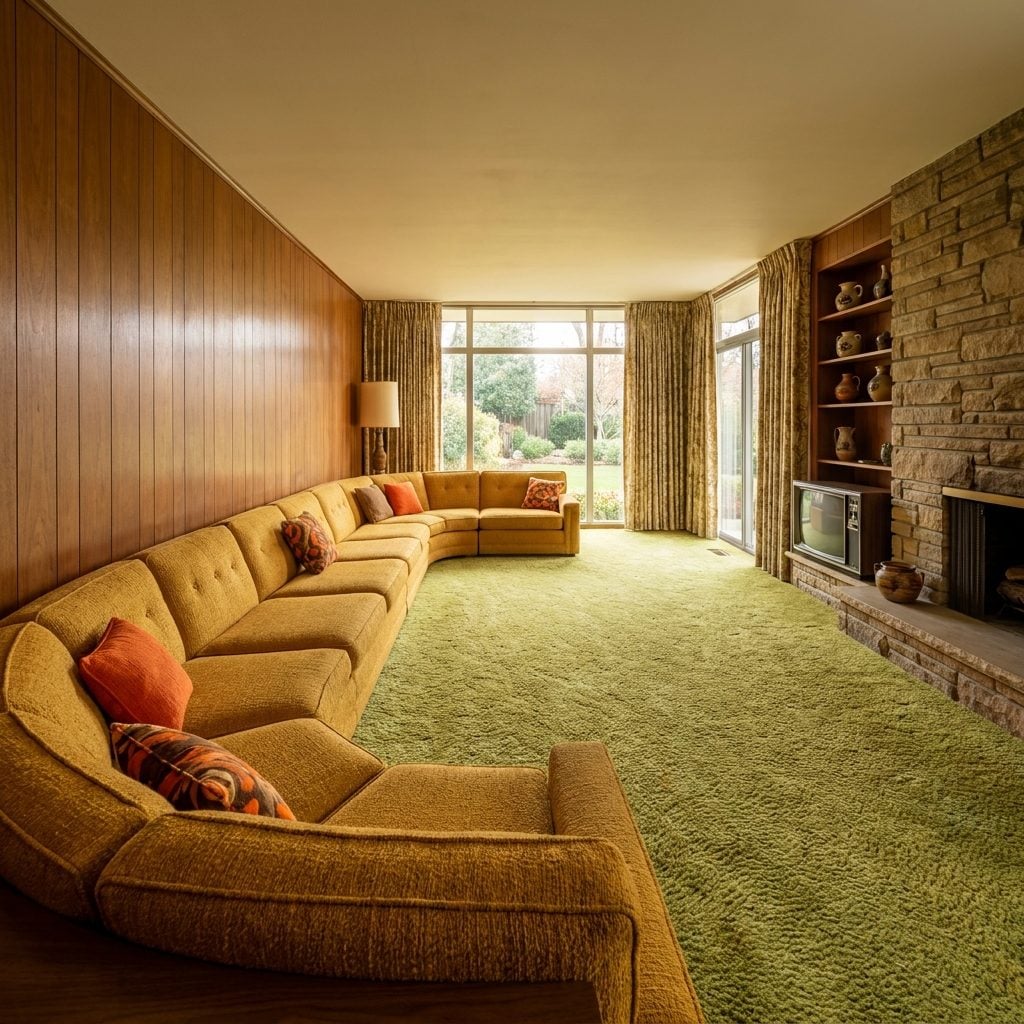
It came in pieces and once you had it arranged, it never moved again. The sectional ran along two walls, low and deep and endless, the kind of oversized sectional that a family of five could disappear into on a Sunday and not be found until dinner.
Firm the first year, then the cushions gently gave up and formed permanent hollows where Dad always sat. You knew the whole household by the dents. Slide the modular corner piece to another spot and there’d be a rectangle of unfaded fabric underneath, brighter than the rest, a little archaeological record of everywhere the sun had touched.
21. The Faux-Brick Accent Wall
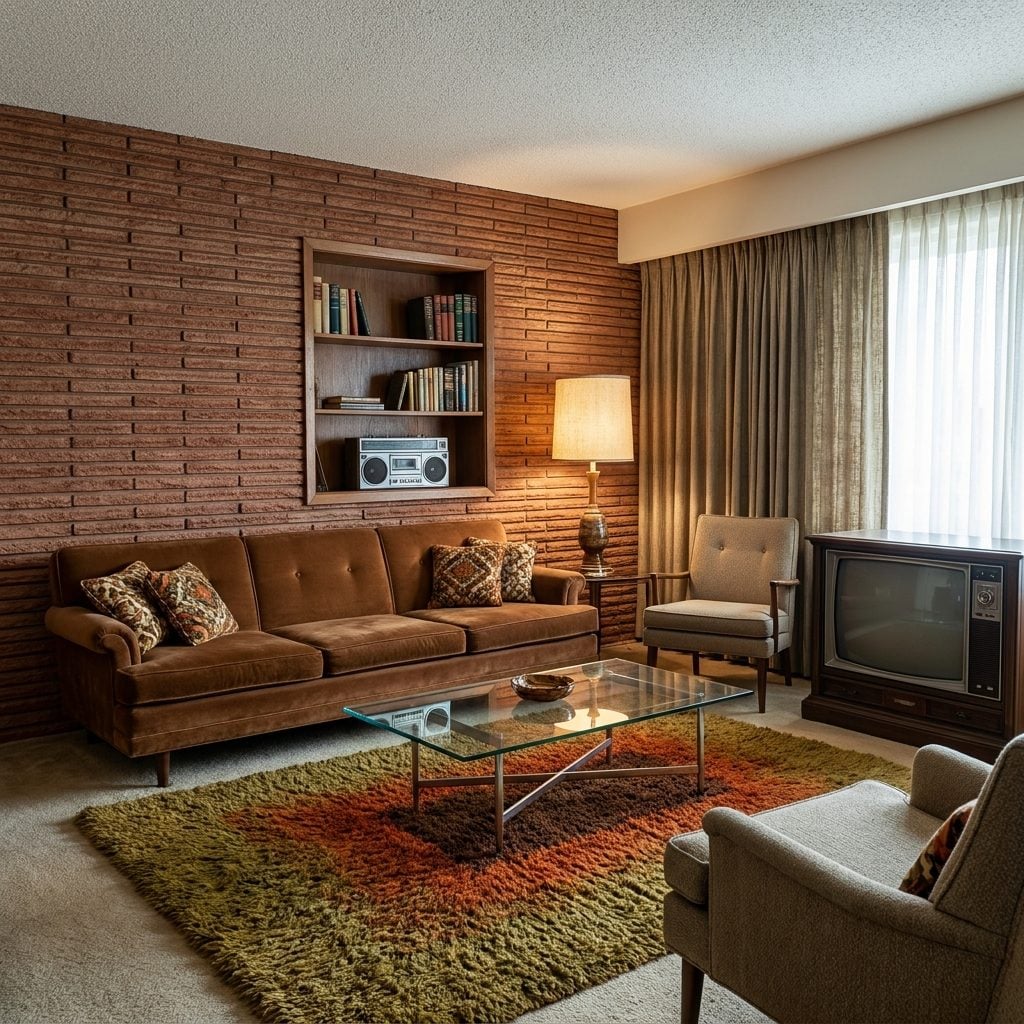
You usually knew it wasn’t masonry, and that was hardly the point. Faux-brick panels delivered rows of red-brown brick and tidy mortar lines without the weight, mess, or construction of building the real thing.
Against a low olive-green sofa it read as rustic charm rather than a shortcut. Add a starburst clock, a brass étagère stuffed with ferns, maybe a macramé owl in the corner, and the wall had done its job: it broke up all that paneling and gave the room another texture.
20. The Spider Plant Dangling From the Ceiling
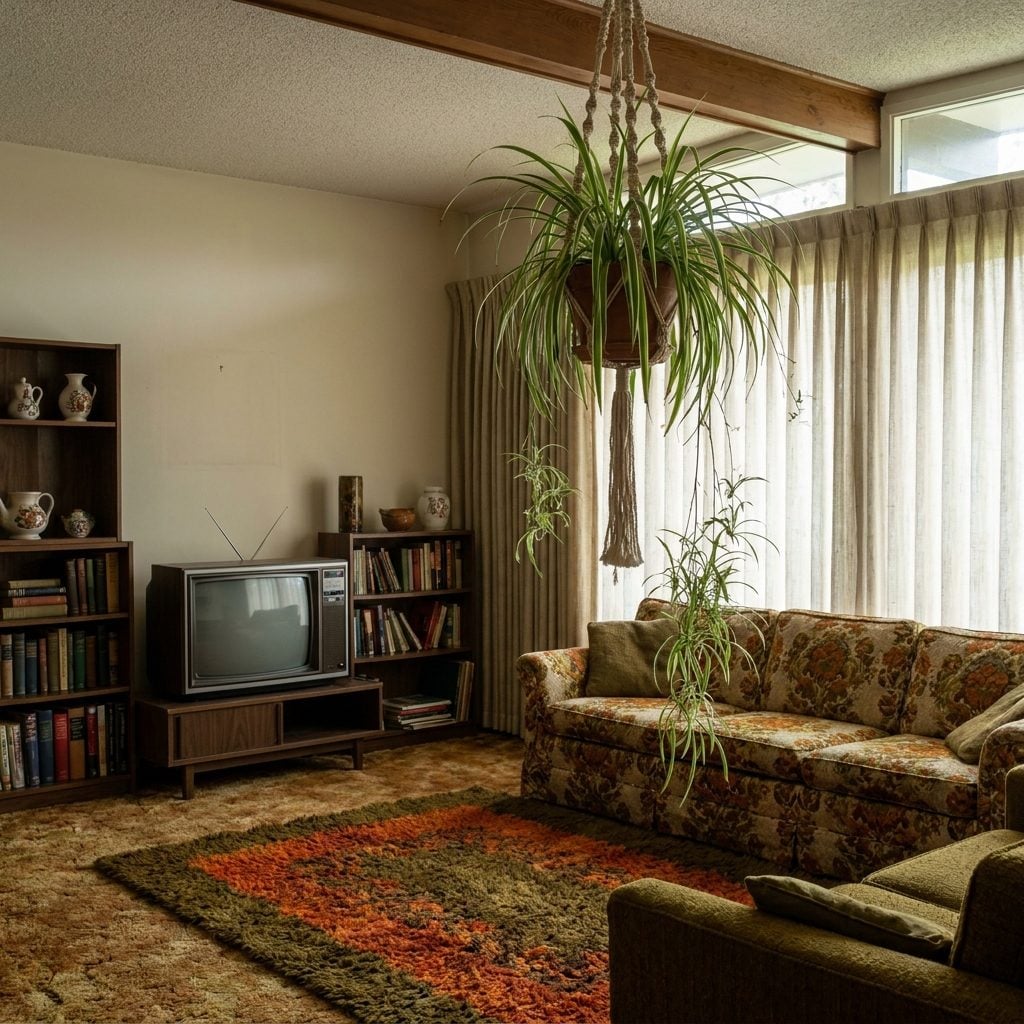
The spider plant was practically obligatory. It hung in the window, threw out long arching runners, and made little baby plants on the ends that you could snip off and root in a jelly jar of water.
Everybody’s mom seemed to have rooted one from a friend’s, which means half the spider plants in the country back then were technically cousins. They tolerated an impressive amount of household neglect, which helped explain why they appeared in family rooms, kitchens, and bathrooms whenever there was enough light to keep one going.
Striped leaves spilling out of a hanging pot in front of a sunny window — that image just is the decade.
19. The 8-Track Player Beside the Stereo
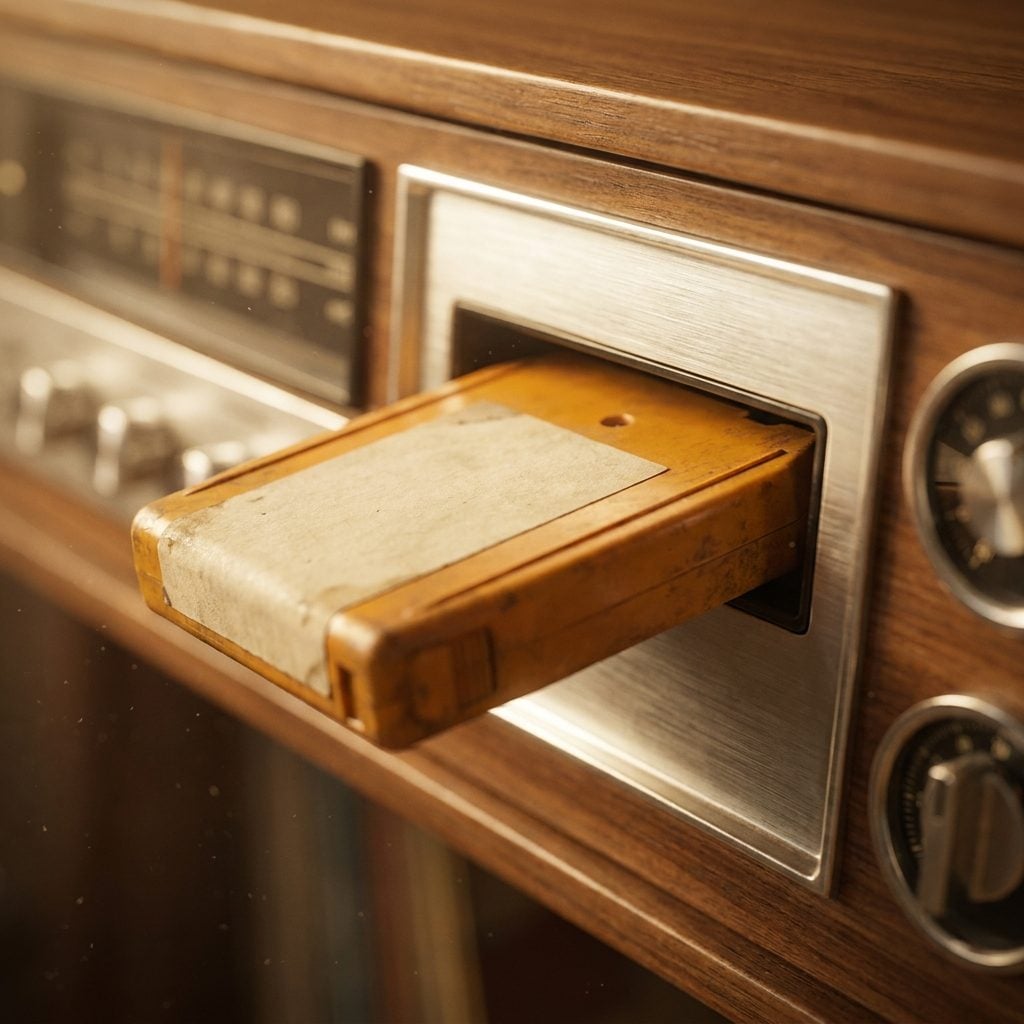
That satisfying clunk when the cartridge dropped into the slot, then the music. And who could forget the fade-out during a program change, that awkward interruption when the player switched programs right in the middle of your favorite song.
A shoebox or rack of cartridges sat nearby. Fleetwood Mac, Chicago, a Carpenters tape somebody’s mom bought. They were fatter than they had any right to be, and they never quite sat straight in the pile.
18. The Raised Hearth Everyone Sat On
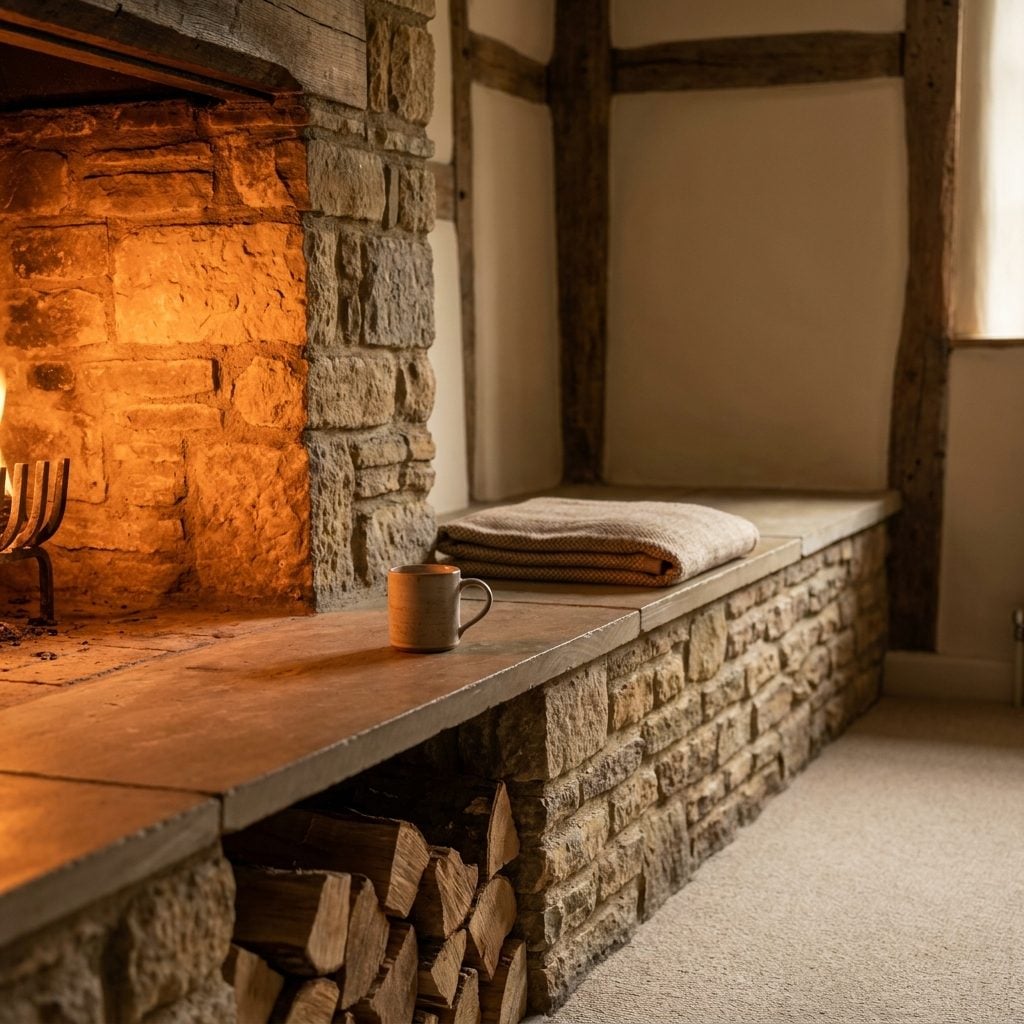
The raised hearth was accidental furniture. It projected from the fireplace as a long low ledge, usually stone or brick, and people sat on it whether anyone had designed it for that purpose or not.
Kids parked there to warm up. Guests took it when the sofa filled. Throw cushions migrated over during parties. The closer you sat to the fire, the hotter your back got and the colder the rest of the room seemed when you finally stood up. It was extra seating hiding in plain sight.
17. The Heavy Patterned Drapes
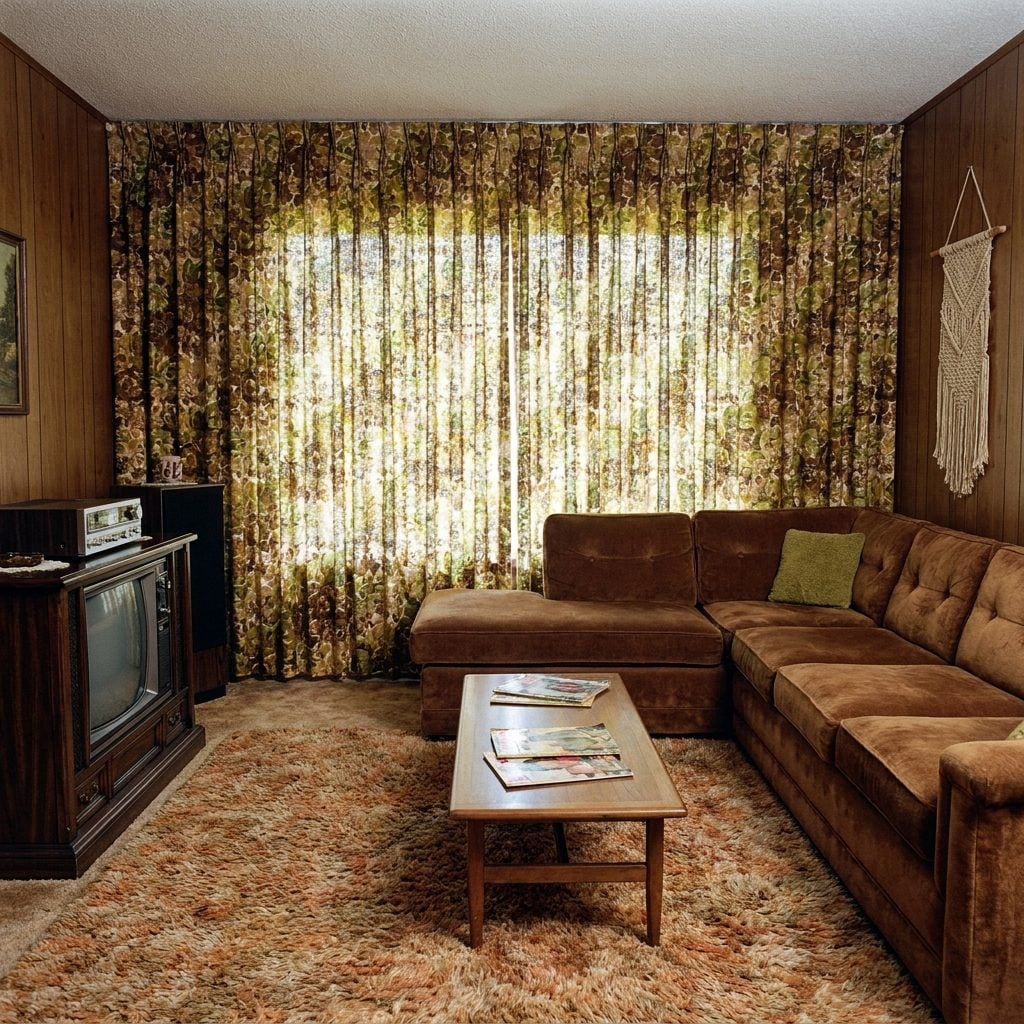
These drapes meant business. Floor to ceiling, pinch-pleated, lined so heavily you could feel the weight when you pulled them, in patterns of enormous stylized flowers and swirls — gold and rust and olive on cream.
Closing them at night was a ritual with a satisfying whoosh, and the room changed immediately. A sheer layer behind them handled daytime privacy while the patterned fabric waited at the sides like scenery.
Bold patterned textiles still turn up in spaces such as a Victorian dining room. The instinct wasn’t necessarily wrong. Seventies drapes simply had no interest in whispering.
16. The Wood-and-Brass Bar Cart
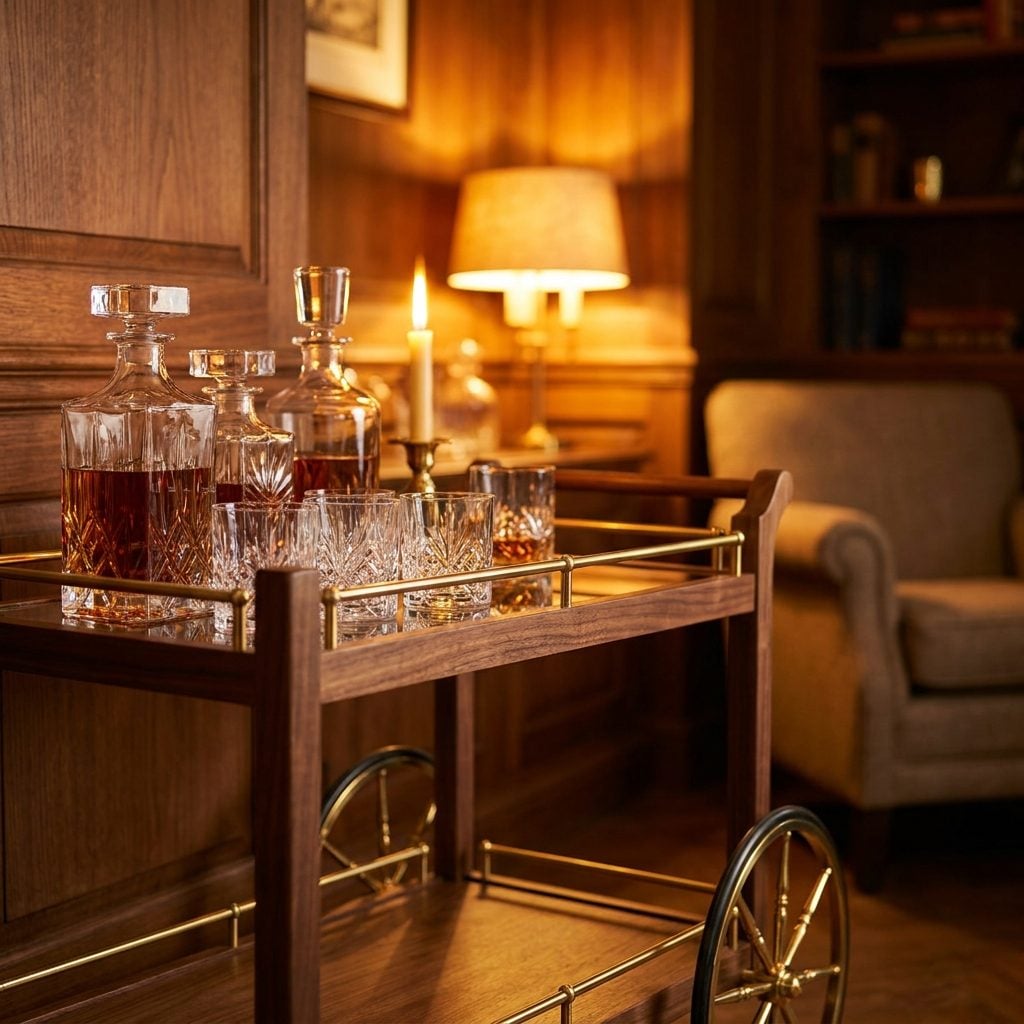
If the built-in bar was too much commitment, the cart did the same job on wheels. Walnut frame, brass rails, casters underneath, two tiers holding decanters, an ice bucket, and whatever bottle came out when company arrived.
Its advantage was obvious: roll it beside the good chair during a party, push it against the wall when the room needed space. Afternoon light through sheer curtains hit the brass and crystal and turned the whole contraption into a small chandelier on wheels.
Bar carts never disappeared completely. They just became fashionable enough to get expensive again.
15. The Beanbag Chair That Lived in the Kids’ Corner
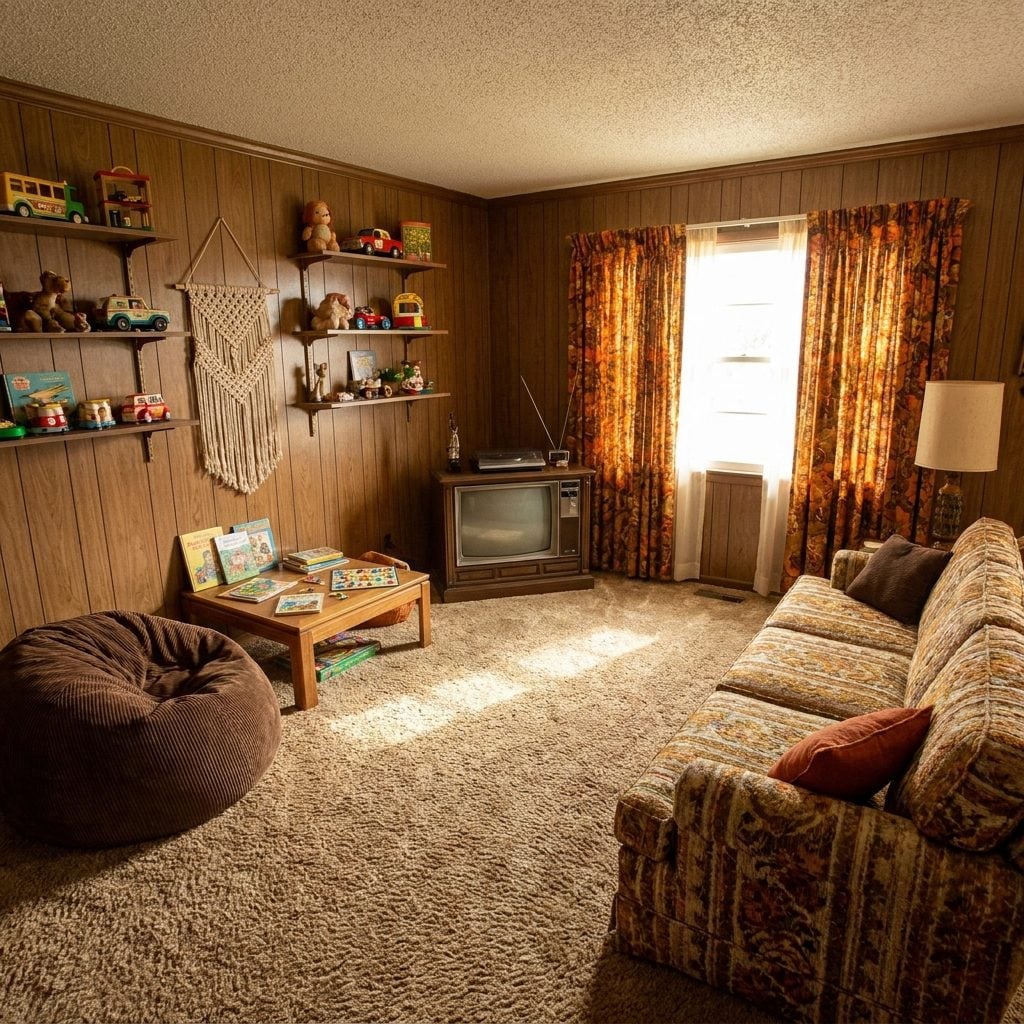
Shiny vinyl, filled with little foam pellets that migrated to one end the second you sat down, so you were forever punching it back into shape. Orange or brown, naturally. It sighed and crunched when you dropped into it and swallowed you whole.
It lived in the kids’ corner near the games and the record player, and sooner or later a seam seemed to give way and leak those beads across the carpet like escaped hamsters. You found them for years. Under the couch, in your socks, everywhere.
14. The Macramé Plant Hanger
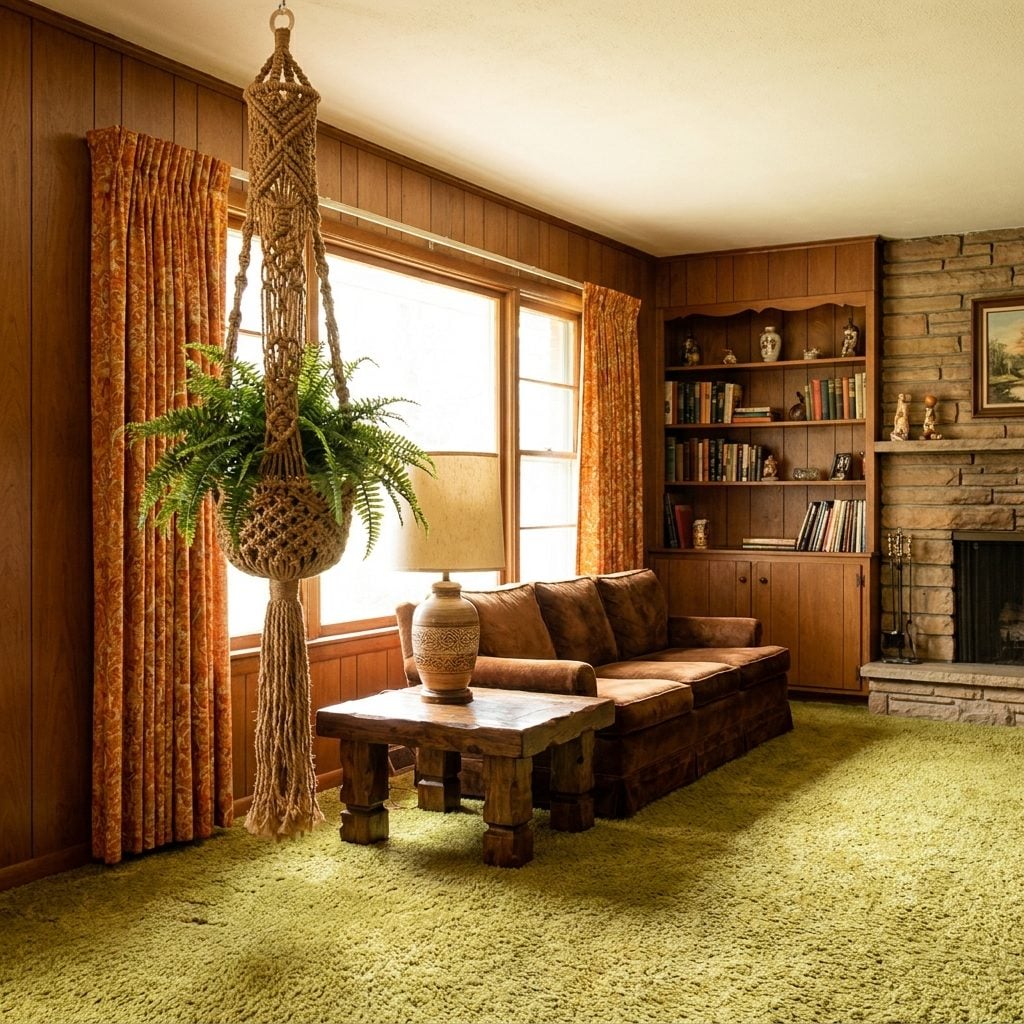
Someone in the family made these. There was usually an aunt or a neighbor deep into a macramé phase, and the results ended up hanging in windows all over the neighborhood. Natural jute cord, knotted into spirals, finished with wooden beads the size of grapes.
They held a terracotta pot, and the whole thing moved gently every time you brushed past. Watering could turn into a balancing act — one hand steadying the pot, the other trying not to soak the carpet. When the hanger eventually came down, the ceiling around the hook often looked suspiciously cleaner.
13. The Record Collection Stacked Nearby
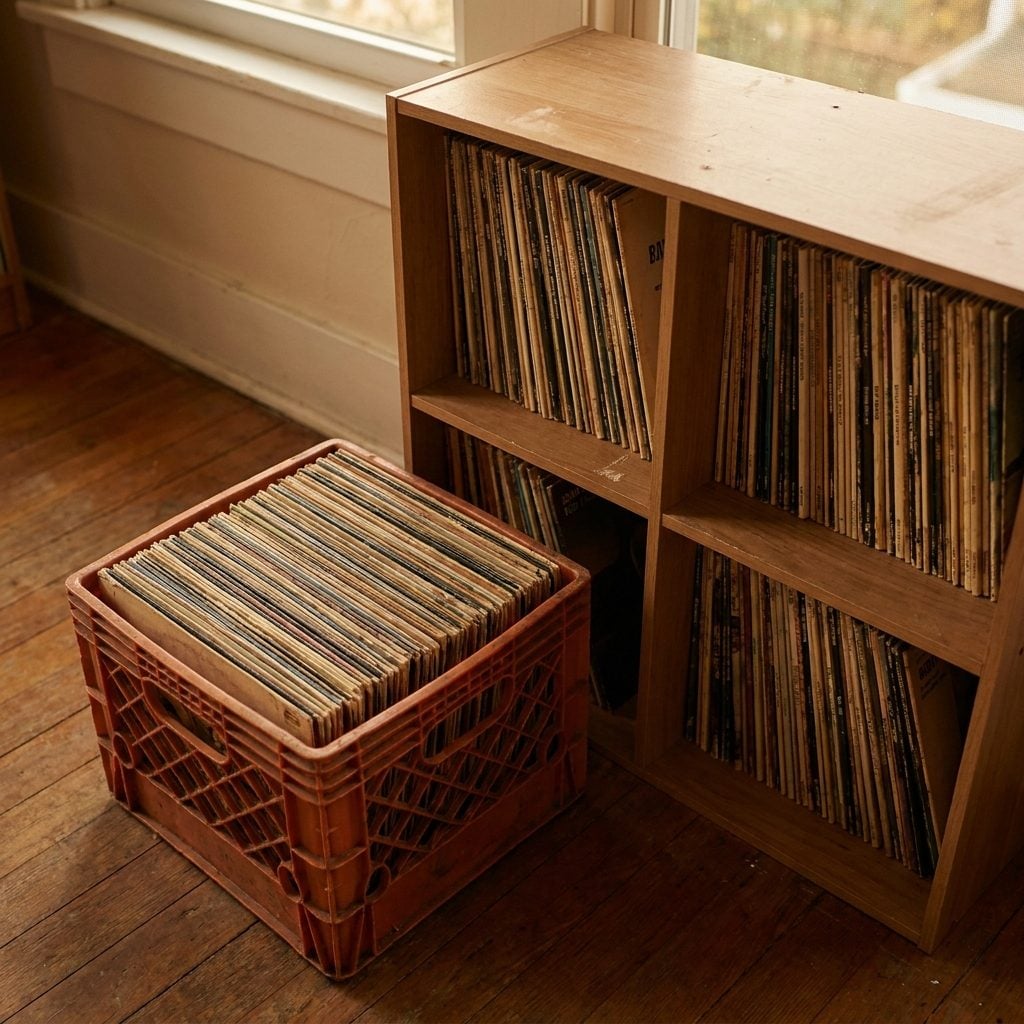
Records lived in a milk crate, or in one of those wooden cube shelves that came flat-packed and wobbled forever after. Spines out, flipped through with the flat of your fingers, that flip-flip-flip sound while you decided what to play next.
The covers were part of the pleasure — twelve inches of art sitting in your hands while the record spun. Somebody left a sleeve on the floor. Somebody stepped on it. And there was inevitably a scratch somewhere on the album everyone wanted to hear.
12. The Freestanding Cone Fireplace
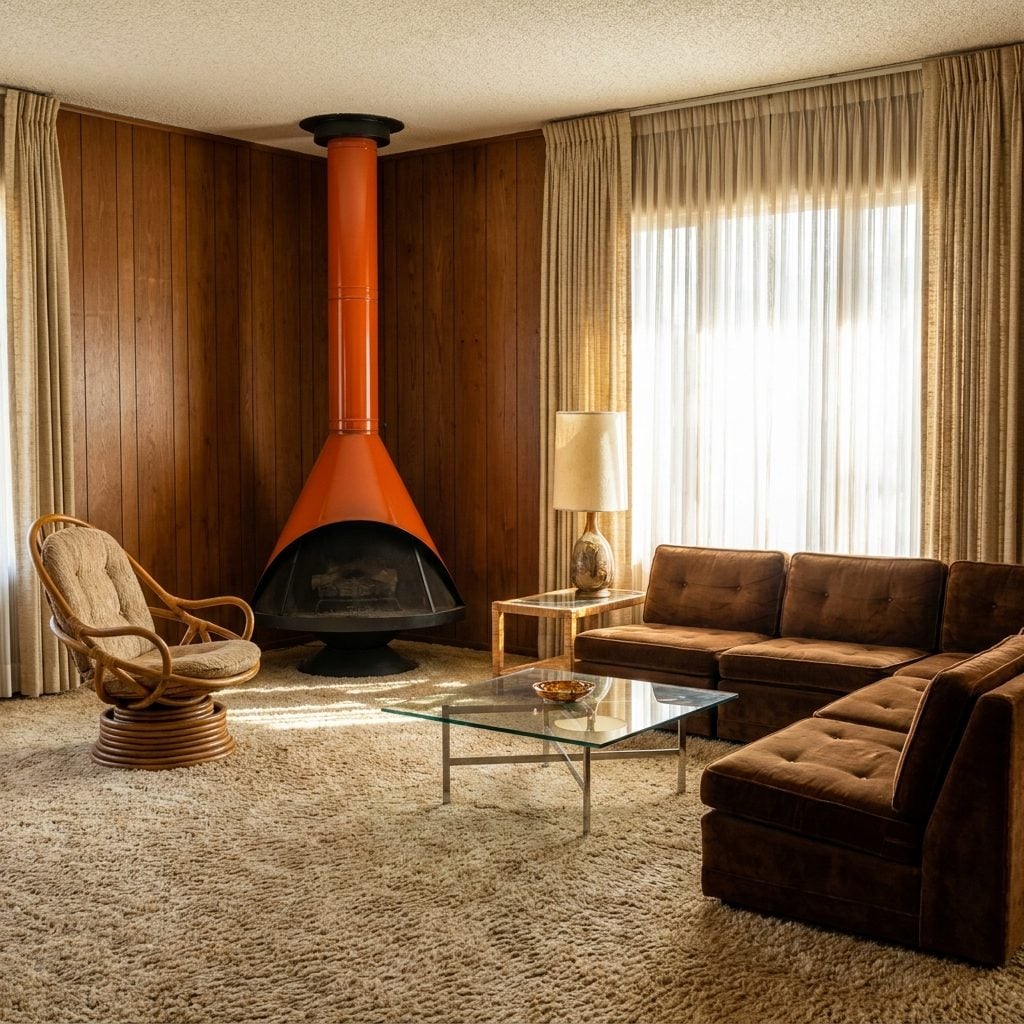
Now this one was a genuine showpiece. A sculptural steel cone in glossy burnt orange, a slim flue shooting toward the ceiling, the rounded firebox glowing in full view instead of disappearing into a masonry wall.
Freestanding cone fireplaces became icons of the mid-century modern era precisely because they treated the fireplace like an object in the room. Low modular seating, shag, chrome, and one of these in the middle could make an ordinary family room look as if a spaceship had landed between the sofa and the sliding doors.
The practical argument was heat. The visual argument was considerably more fun.
11. The Chunky Wood Coffee Table That Weighed as Much as a Small Car
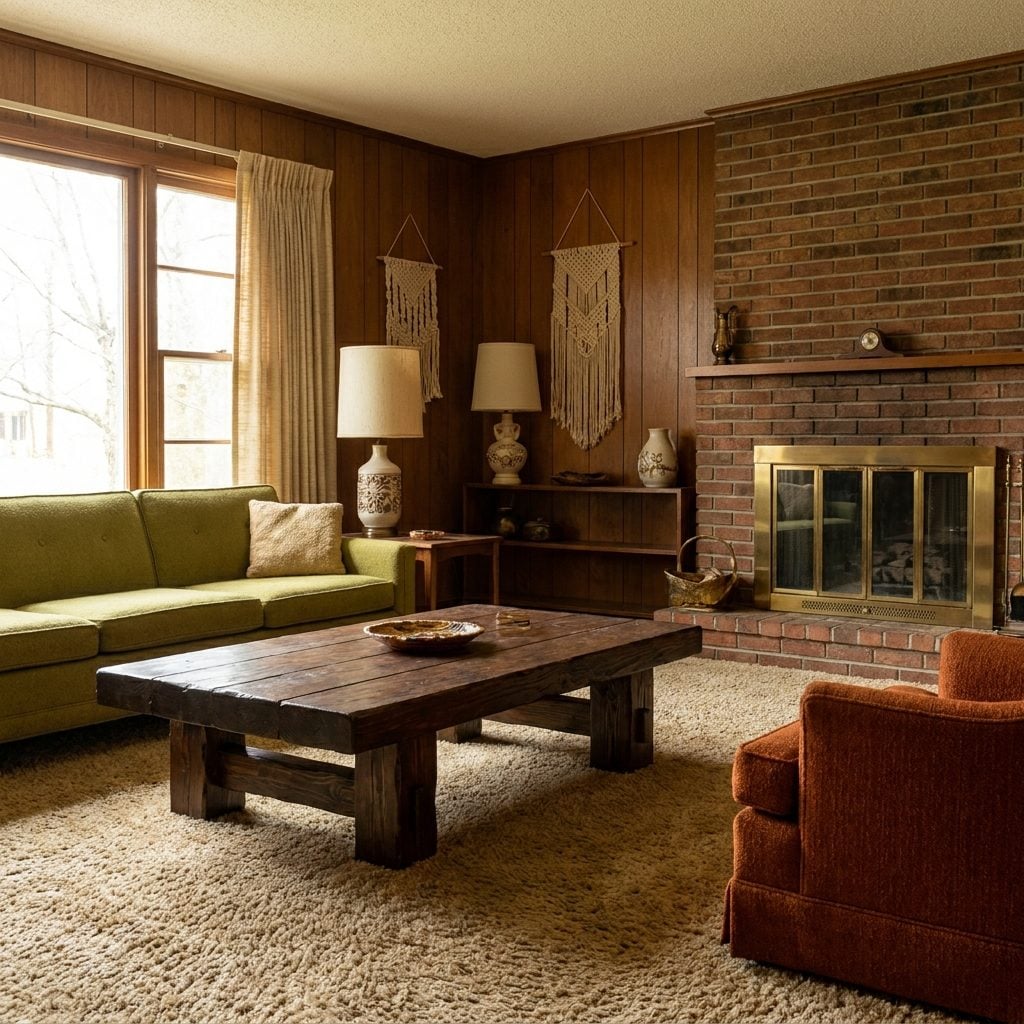
You could stub a toe on that thing and remember it for a week. The 1975 coffee table wasn’t furniture so much as a landmark — a slab of dark wood with legs like fence posts and an edge thick enough to sit on. It didn’t move when the vacuum bumped it, and it didn’t move for much else either.
The scale made sense beside low, substantial seating. It also collected everything: coasters nobody used, a ceramic dish of butterscotch candies, magazines somebody swore they’d get to.
10. The Amber or Avocado Glass Lamp
🔥 Would you like to save this?
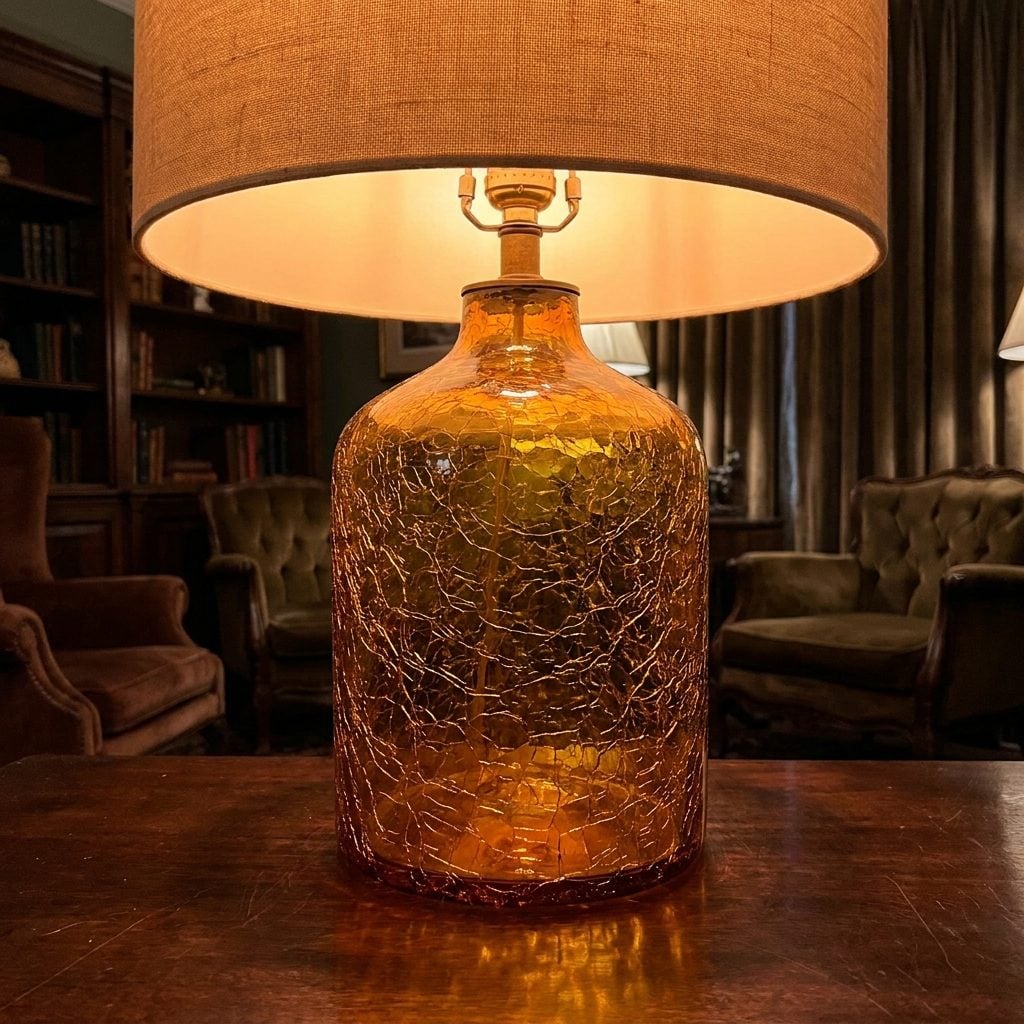
The base was either amber crackled glass, thick as a fist, or that unmistakable avocado green ceramic. Wide, low shade — cream or burnt orange, usually in a coarse woven fabric that collected dust in its texture.
These lamps often came in pairs and split up over the years, one migrating to a bedroom, one staying on the end table beside the sofa. And that little three-way switch had its own rhythm: low, medium, bright, off. Every household seemed to have a preferred setting.
9. The Beaded Curtain in the Doorway
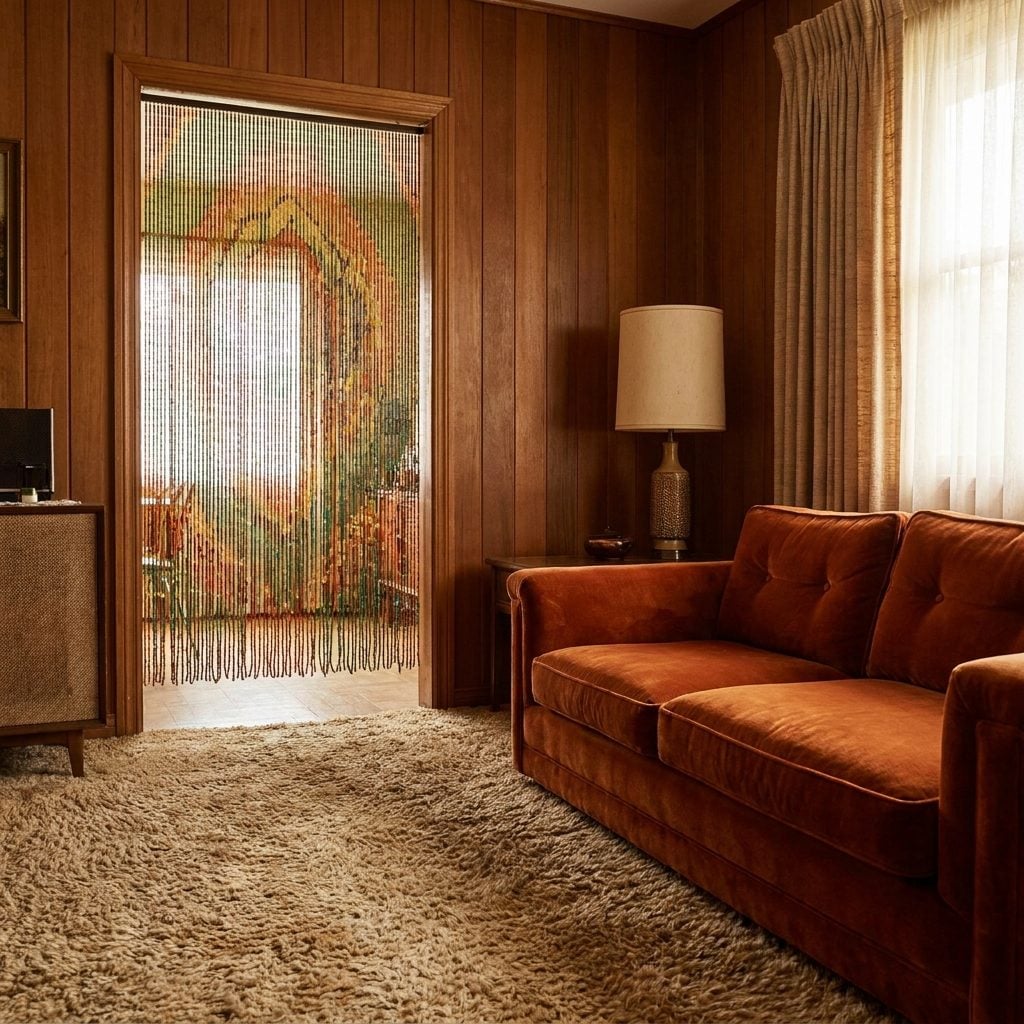
You heard it before you saw anyone coming. That soft clatter of beads swinging back into place, the little clack-clack as someone shouldered through — amber and wood and orange plastic strands hanging in a doorway that hardly needed a door anymore.
They tangled constantly. Somebody got an arm caught, or the strands knotted together and stayed that way for weeks. But walking through one felt like something, a tiny ceremony every time you passed from the kitchen to the den.
Kids had another use for them entirely: grab a fistful, pull them sideways, let go, repeat until somebody yelled from the next room.
8. The Plaid Sofa You Could Not Kill
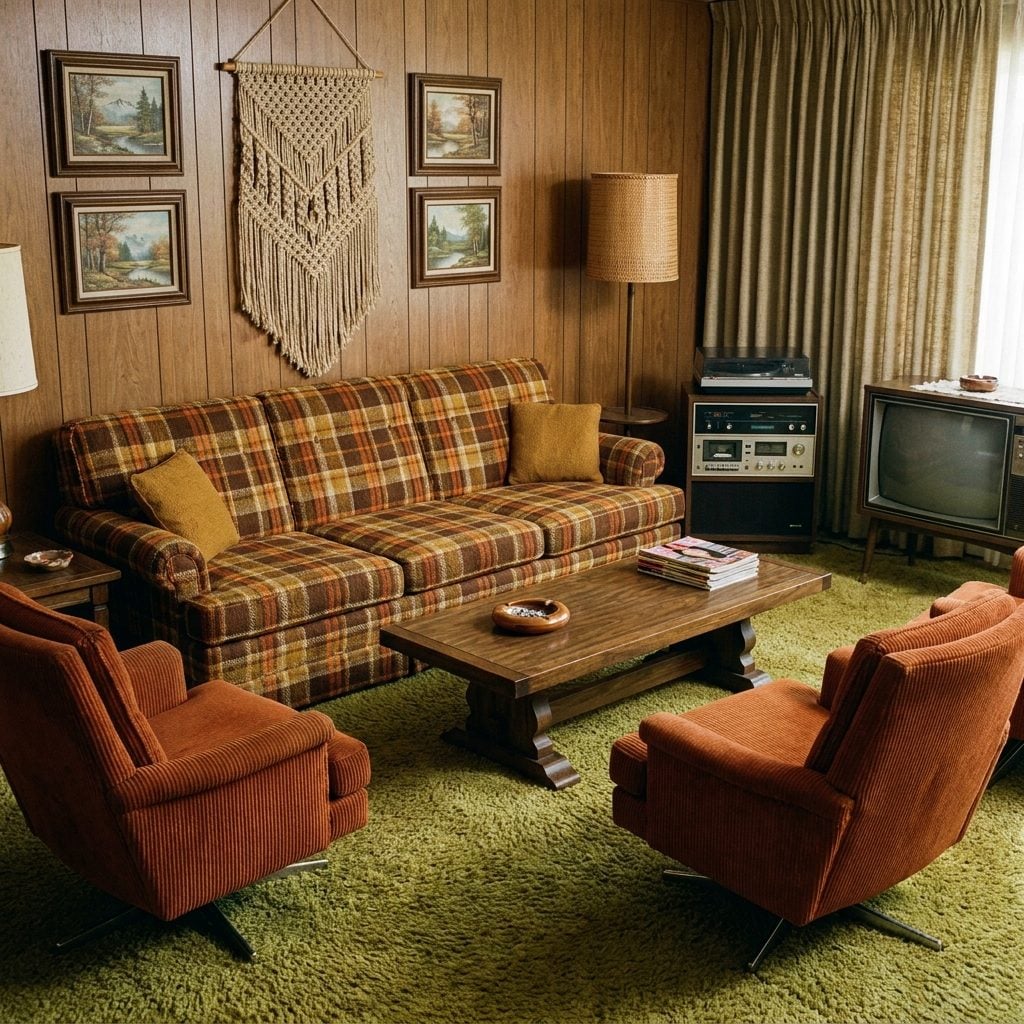
Some sofas were bought to survive a family, and this was that sofa. Brown-and-gold plaid, rolled arms, a wooden base rail that caught your shin. It hid crumbs, stains, and the general chaos of children the way camouflage hides a deer.
There was usually a crocheted afghan folded over one arm, itchy and warm, made by somebody’s aunt. You napped on this thing. You watched Saturday cartoons on it. And when it finally wore through decades later, it had barely aged, because plaid does not show its age — it just quietly keeps score.
7. The Bamboo or Woven Window Shades
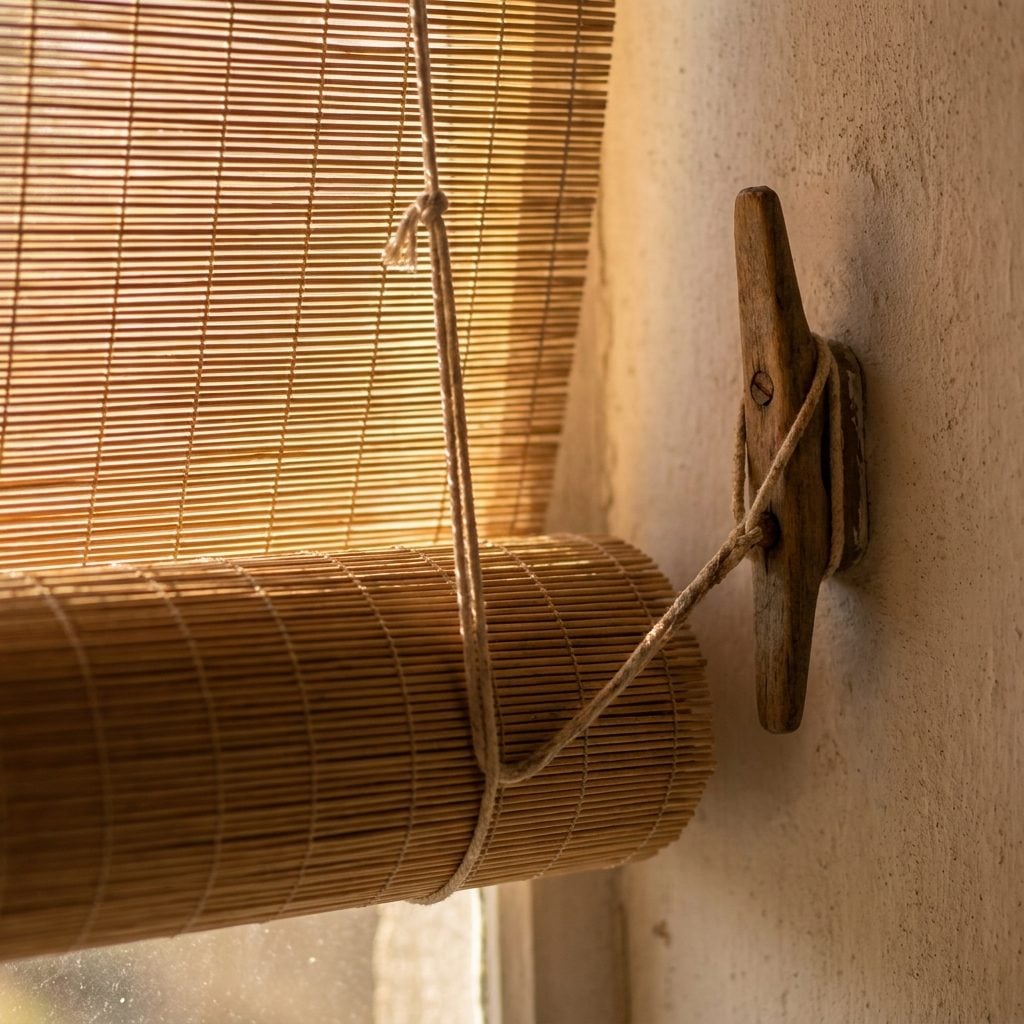
Split bamboo matchstick shades rolled up with two thin cords you looped around a little cleat on the window frame. The light came through in stripes — honey-colored bars laid across the shag carpet in the afternoon.
They were rarely quite level. One side rolled higher than the other, and the cords frayed and knotted where you tied them off. But natural woven shades brought texture without the visual bulk of another set of heavy drapes.
That basic idea still works in bright rooms now: filtered light, visible grain, no enormous floral print required.
6. The Brown, Rust, and Avocado Upholstery on Absolutely Everything
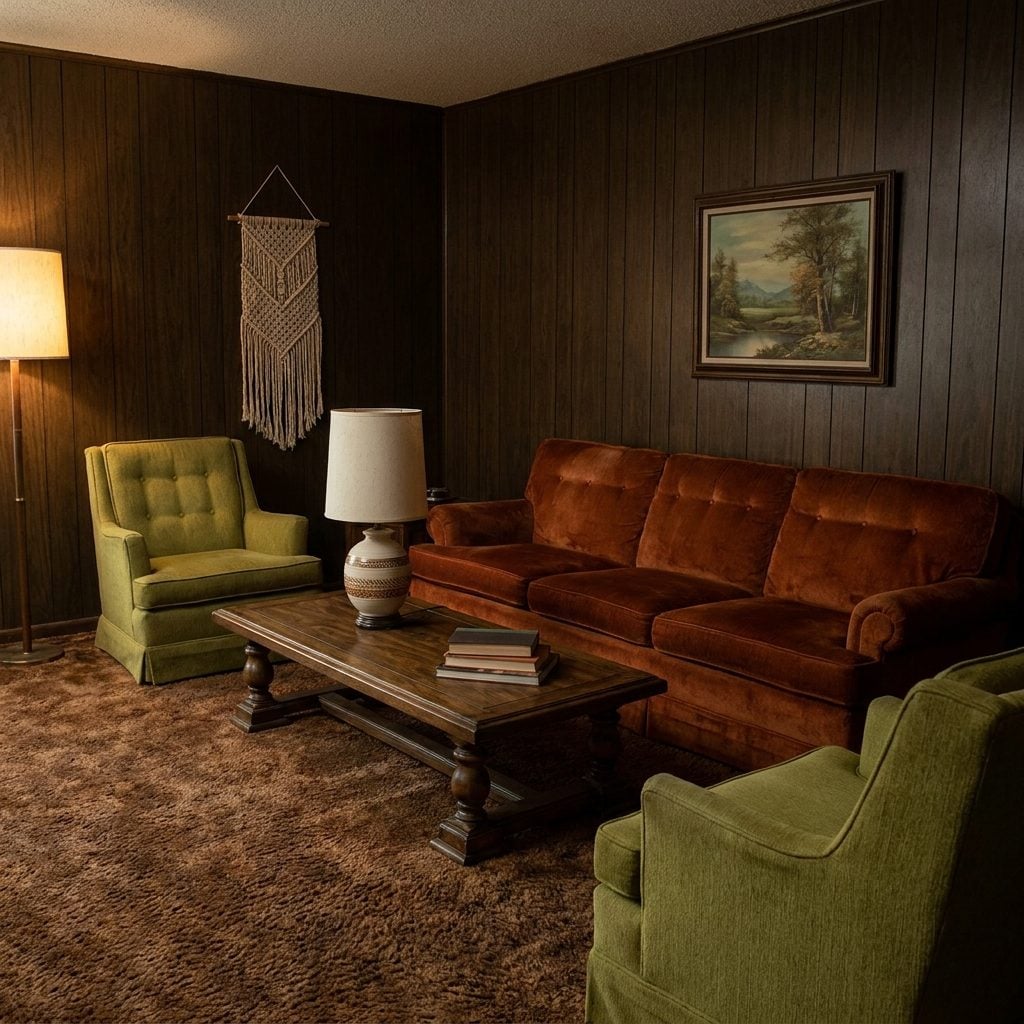
The palette wasn’t a choice so much as a national agreement. Burnt orange, olive going toward avocado, and every brown from tobacco to bark. It showed up on the couch, the ottoman, the curtains, and if the appliances matched, so much the better.
People pick these tones again now and call them an earthy palette like it’s a discovery. In 1975 it was just what the store had. Forgiving colors, too. Spilled coffee, muddy sneakers, a dropped taco — good luck spotting the damage on a rust tweed cushion.
5. The Giant Ceramic Table Lamps With Shades the Size of Drums
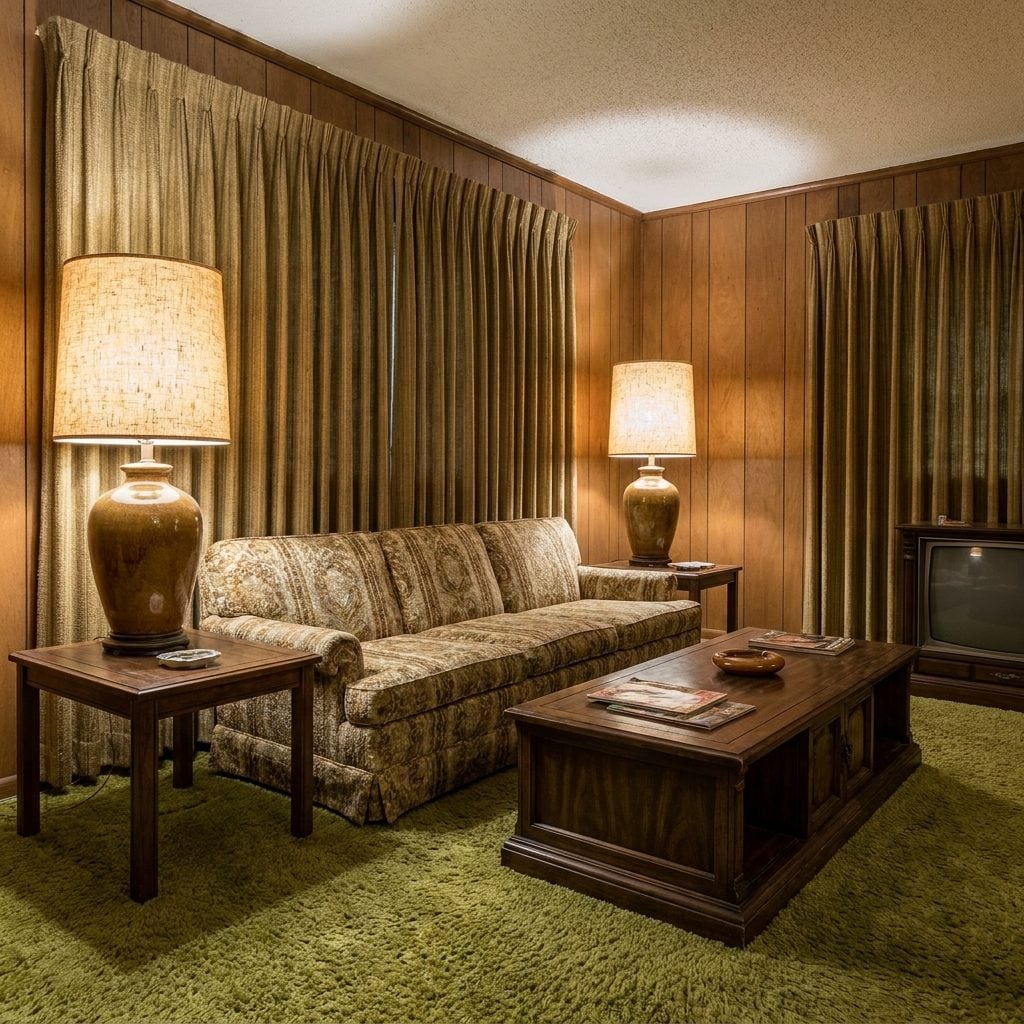
The base could double as a doorstop. Those ceramic lamps showed up in earthy drip glazes — amber, brown, the occasional avocado — with shades so wide they threw a buttery pool of light halfway up the wall.
They often came in pairs, one at each end of the sofa, and switching them on changed the room from daytime family traffic to evening TV territory.
4. The Decorative Ashtray That Was Its Own Piece of Art
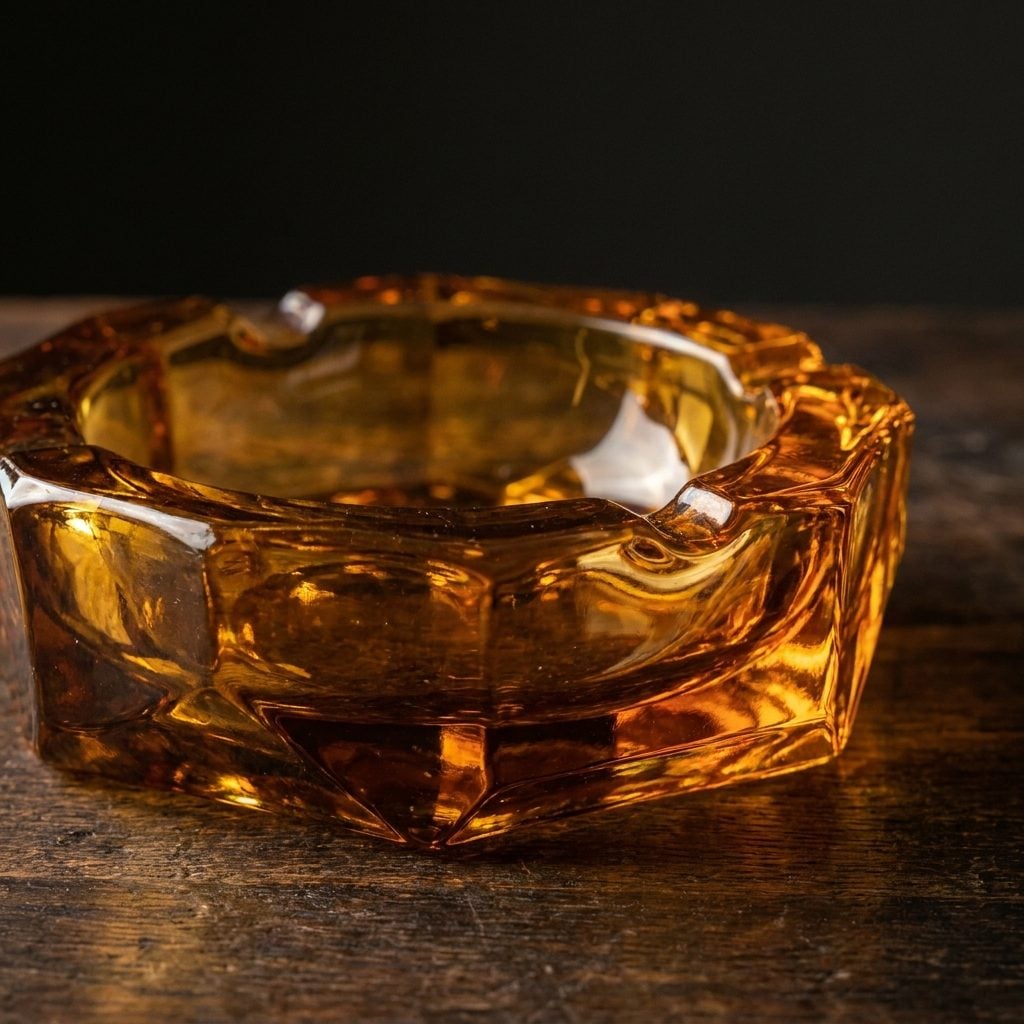
Even in homes where it wasn’t constantly being used, an ashtray could sit there as part of the coffee-table arrangement — big, heavy amber pressed glass with a scalloped edge, planted in the center like a trophy nobody remembered winning. When empty, it caught spare change, paper clips, and anything else small enough to disappear into it.
In a smoking household it might be joined by a chrome table lighter and a dish of matchbooks collected from restaurants. The setup belonged to an era when offering someone an ashtray could be as routine as offering a drink.
By the 1990s, plenty of those heavy glass pieces had been retired to cupboards and garage boxes. Some survived by finding less smoky second careers as candy dishes.
3. The Hexagonal End Tables Nobody Could Explain
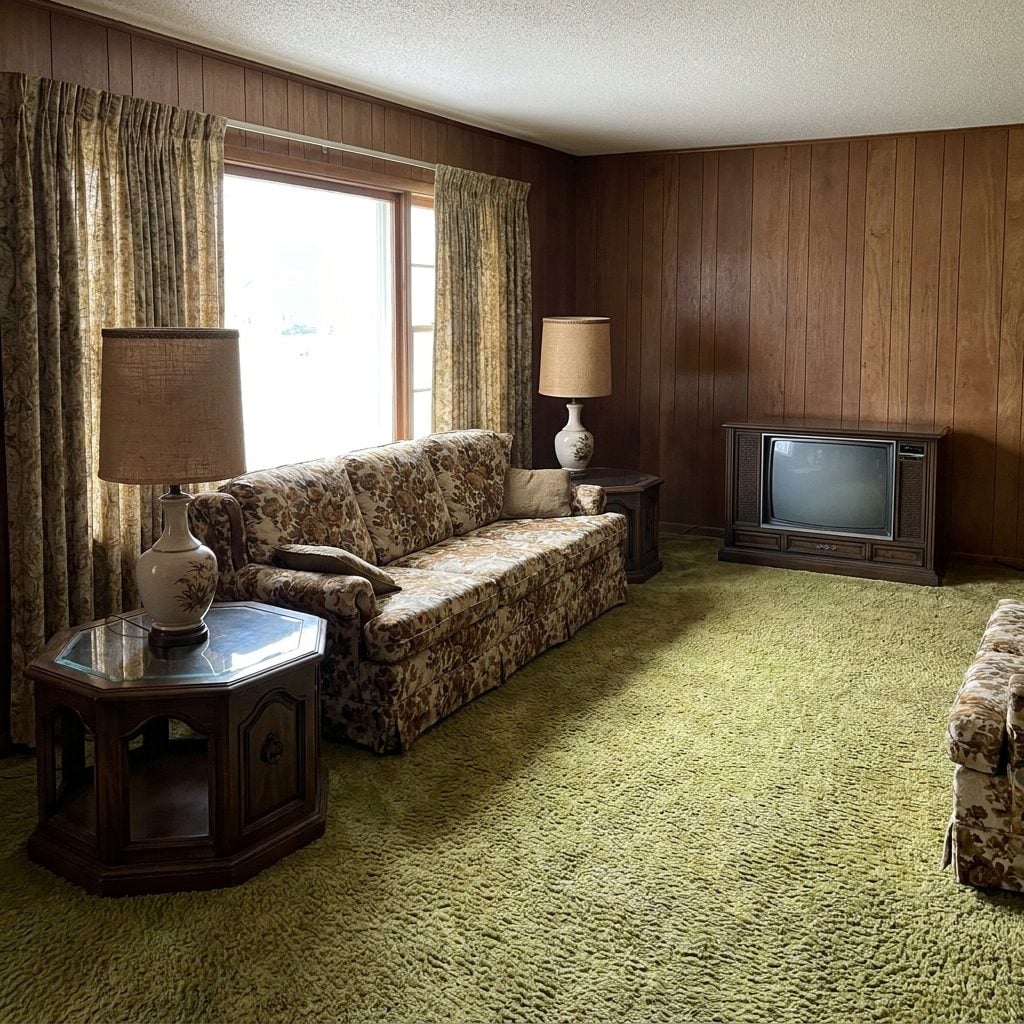
Why six sides? Or eight? Nobody in the family could tell you, and yet those odd little tables kept appearing beside sofas — usually with a tiny cabinet door on the side holding exactly nothing useful. Old batteries. A deck of cards. A church bulletin from 1973.
The angled shape wasn’t entirely foolish. It could tuck beside adjoining seats without presenting the same broad square corner as a conventional table. Practical, in its own strange geometry.
2. The Fondue Pot Waiting Patiently for Company
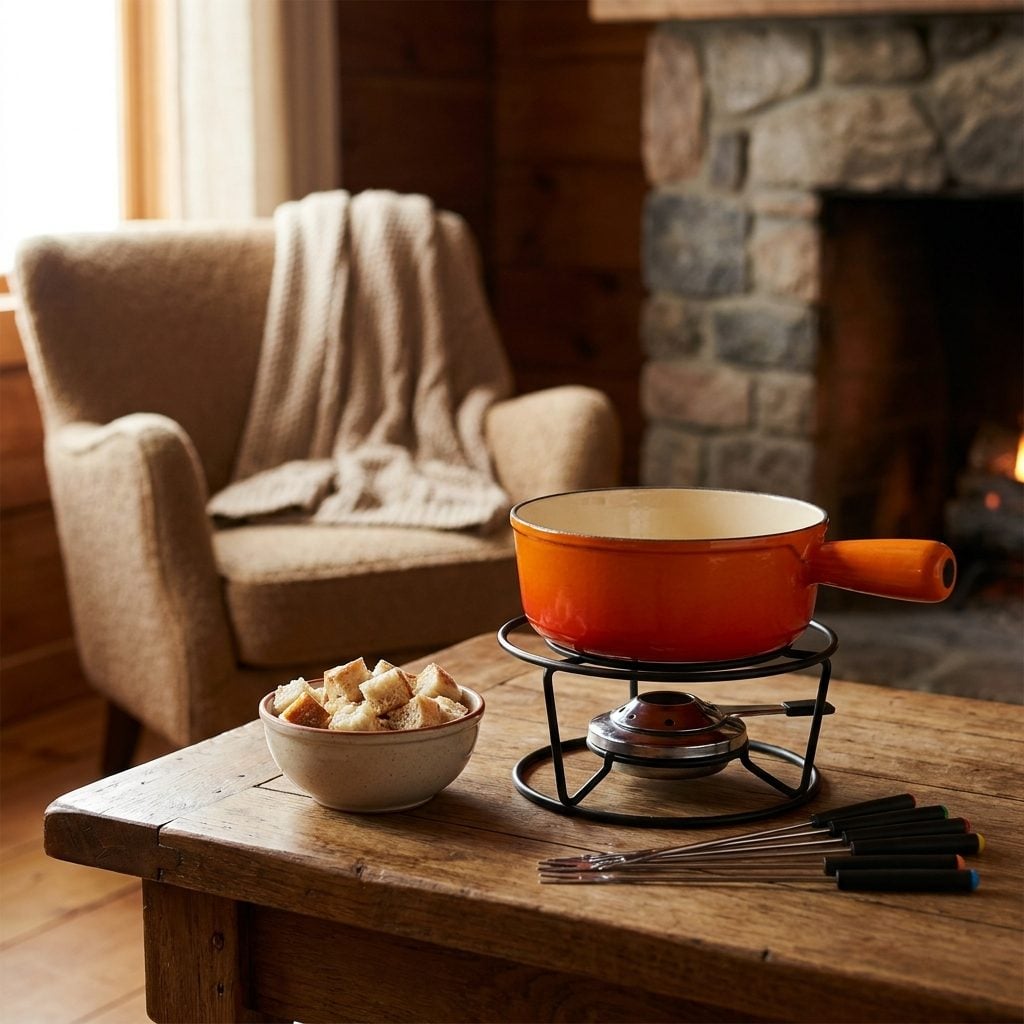
Bright orange or avocado enamel, a little stand, a burner underneath, and a set of color-tipped forks so nobody grabbed the wrong one. The fondue pot hid in a cabinet until somebody said the word “company.”
Then dinner became an event. Everyone crowded around one bubbling pot, dropping bread into cheese, then occasionally dropping the bread itself and fishing for it while somebody remembered the rule about owing a forfeit.
Social cooking didn’t need a modern name. It just needed one pot in the middle of the table and enough forks to go around.
The fondue pot was less an appliance and more a permission slip to slow down and stay at the table.
1. The Family Photo Wall in Wood and Brass Frames
🔥 Would you like to save this?
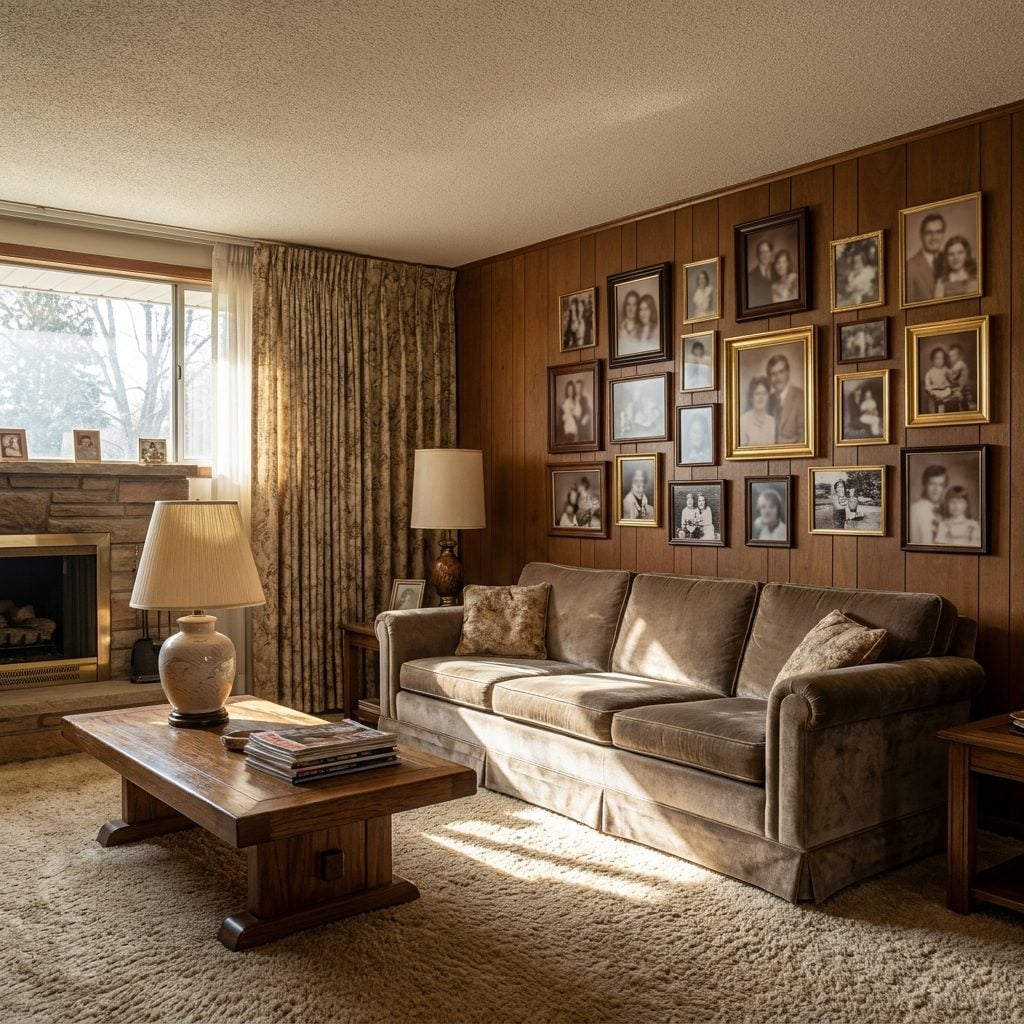
School portraits with the swirly blue backdrop. A wedding photo gone slightly orange with age. Grandpa in an oval brass frame nobody was ever allowed to move. The family photo wall was the heart of the seventies family room, a loose collage of wood and brass climbing up the paneling.
Nobody planned it. Frames got added as babies arrived and kids graduated, so the whole thing grew lopsided and completely honest — you could read an entire family in it if you stood there long enough, tracing who came before whom, whose hair changed, which years everybody wore the same terrible turtleneck for the studio appointment.
And that wall is the thing people miss most. Not the shag. Not the fondue pot. The proof, hung in brass, that everyone was here and everyone belonged.