
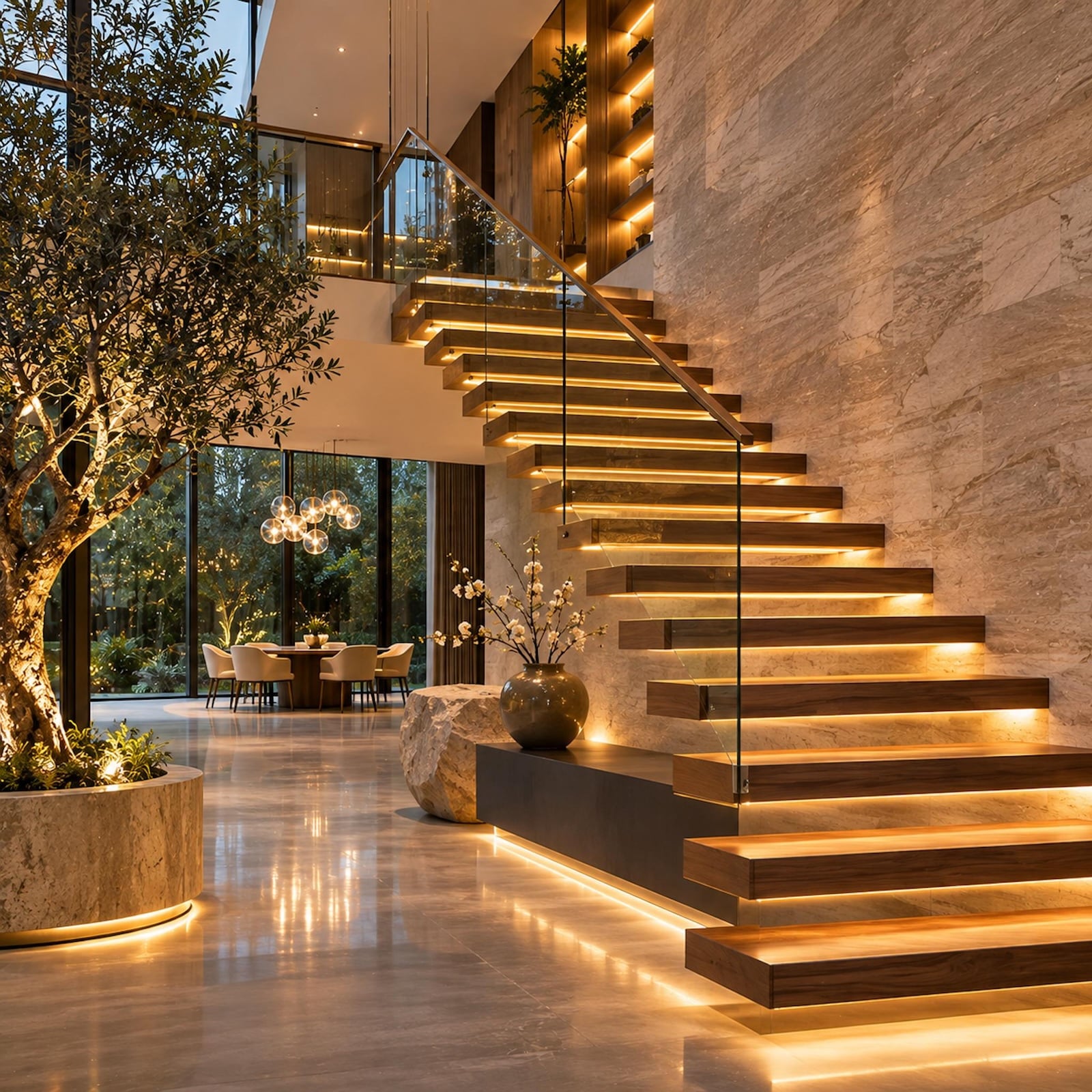
A chandelier announces itself. A concealed strip of light has other ambitions. It can make a staircase appear to hover, send a ribbon of illumination down a stone corridor, or turn an ordinary cabinet into something approaching a jewelry display. The fixture disappears. The architecture takes the applause.
In order to come up with the very specific design ideas, we create most designs with the assistance of state-of-the-art AI interior design software. Also, assume links that take you off the site are affiliate links such as links to Amazon. this means we may earn a commission if you buy something.
Consider the possibilities. Honey-colored onyx glows from within. Walnut shelves acquire razor-sharp illuminated edges. A marble island seems to lift off the floor. Light slips through glass, grazes textured stone, follows the sweep of a ceiling, and transforms the space beneath a floating stair. Suddenly, walls, floors, furniture, and even the gaps between them have something to say.
These 34 designs take integrated lighting well beyond the familiar under-cabinet strip. Kitchens, bedrooms, dressing rooms, bars, hallways, and double-height living spaces reveal what happens when illumination becomes part of the architecture. Some effects are spectacular. Others depend on a razor-thin line of carefully concealed light. Either way, the most interesting fixture in the room may be the one nobody can see.
34. Emerald Lacquer Makes a Jewelry Cabinet Look Like a Private Boutique
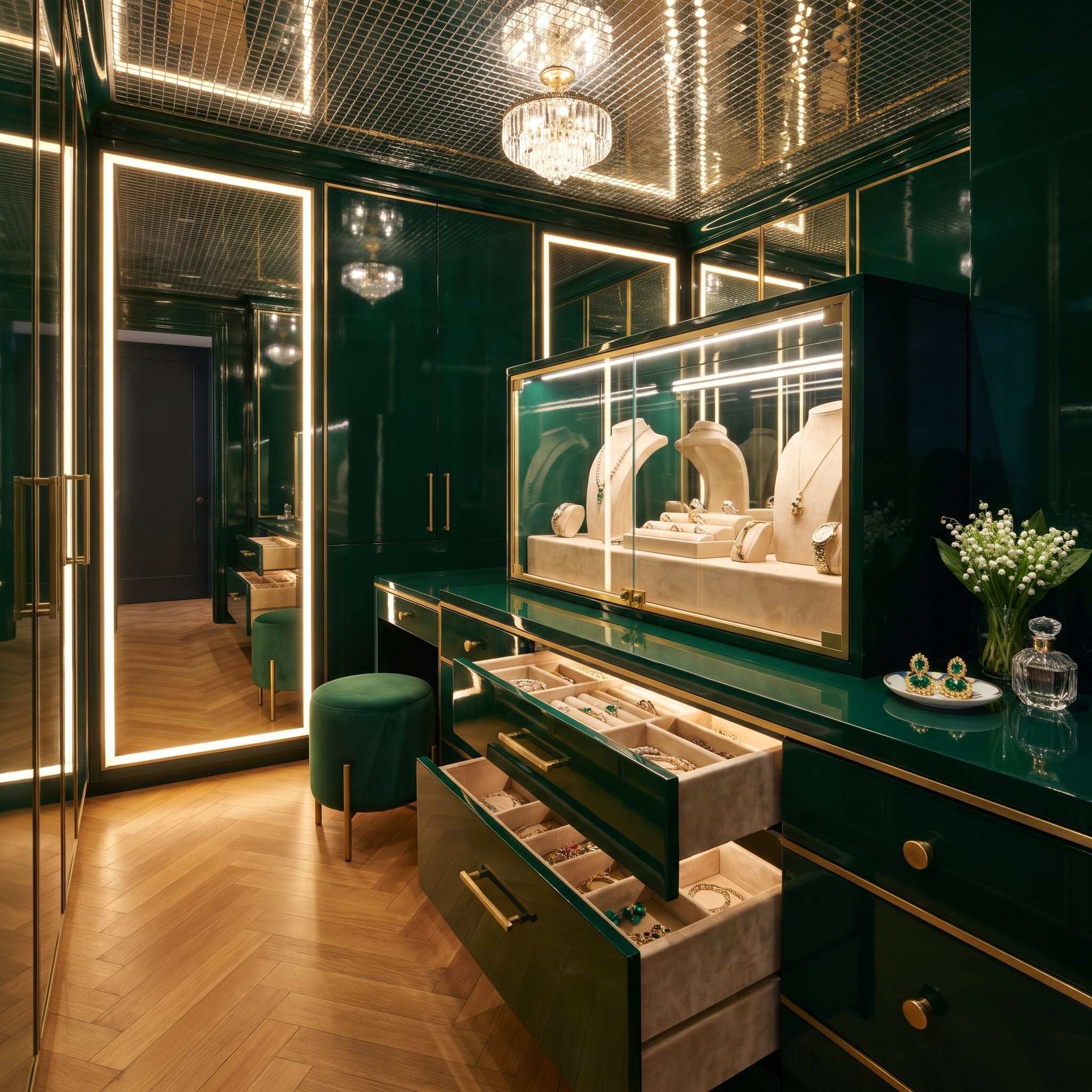
Deep emerald lacquer gives this jewelry room the intensity of a gemstone before a single piece of jewelry enters the picture. Brass edging defines the cabinet fronts, while a glass display case at eye level uses concealed lighting to bring the contents forward against the saturated green.
Below, open drawers reveal pale velvet-lined compartments, their orderly interiors contrasting with the glossy cabinet faces. The combination borrows the presentation techniques of luxury retail while retaining the practical advantages of dedicated storage. Small objects become easier to see, delicate surfaces gain protection, and the cabinetry itself becomes the room’s most extravagant accessory.
33. Spiral Shelves and Rippling Walls Turn White Millwork Into Sculpture
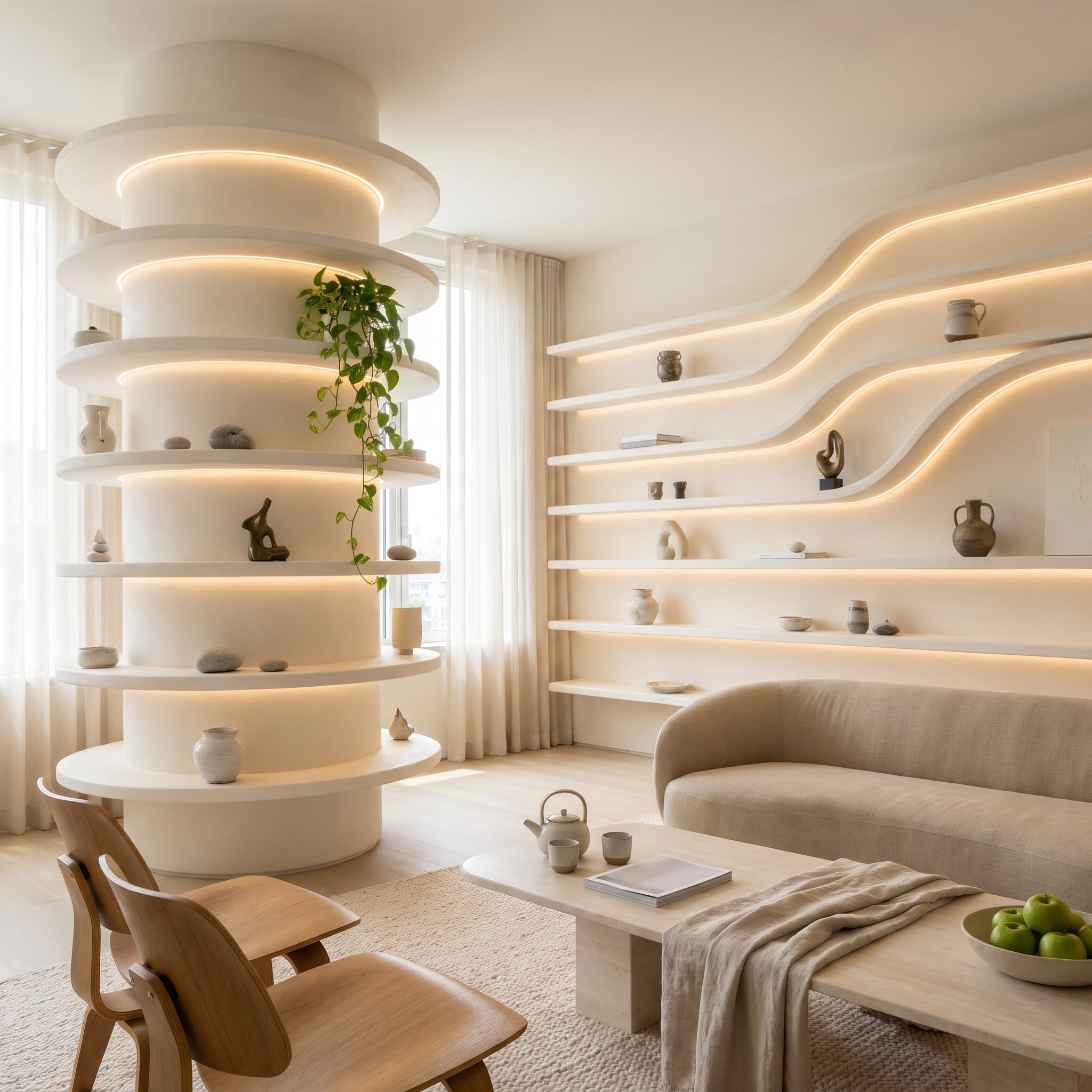
A freestanding tower of circular shelves rises like a stack of oversized white rings, each illuminated along its underside. Ceramic objects and trailing greenery occupy the tiers, but the real attraction is the structure itself. Light emphasizes the separation between the circles, allowing the tower to read as a series of floating forms rather than a solid column.
Across the room, wall-mounted shelves ripple in broad horizontal waves. Concealed LED strips follow their curves, revealing the unusual geometry without interrupting it with visible fixtures. White surfaces, sculptural fabrication, and carefully directed light create a remarkably animated composition. The wall ripples, the tower spirals, and the light refuses to travel in a straight line.
32. Walnut Millwork Meets a Crimson Ceiling That Refuses to Behave
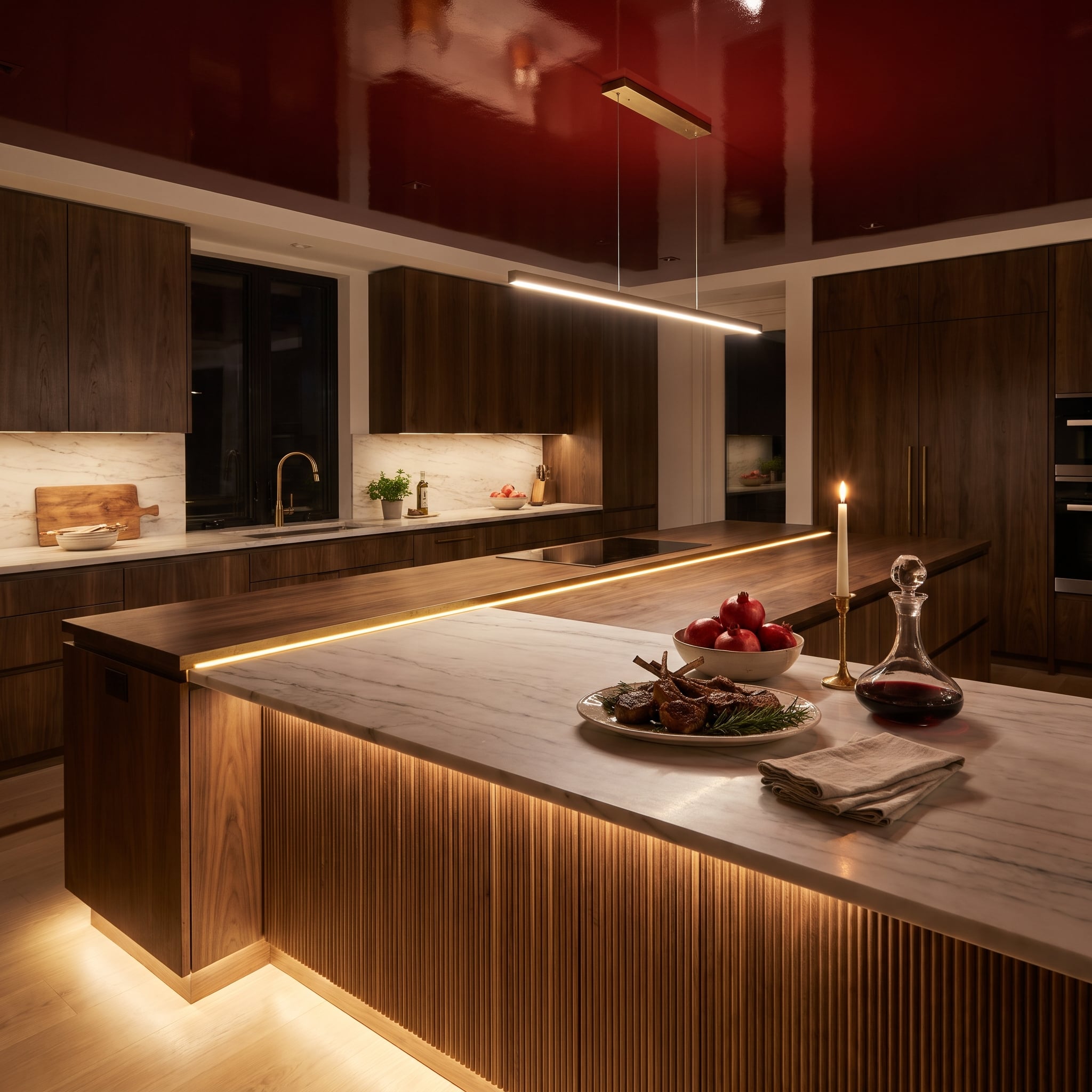
A lacquered crimson ceiling over a walnut kitchen sounds like a spectacular argument waiting to happen. Here, the materials find common ground in their warmth. The glossy red reflects light overhead while the fluted walnut island absorbs it, creating an unusually rich contrast between reflective color and textured timber.
LED strips beneath the island and along its brass-edged countertop pick out the cabinet’s contours. The white marble top interrupts the darker palette with a clean horizontal plane. A linear pendant contributes another layer of illumination, but the most memorable effects belong to the surfaces themselves. The ceiling is emphatically not an afterthought.
31. A Garden Window Interrupts a Stone Bedroom Wall Filled With Glowing Niches
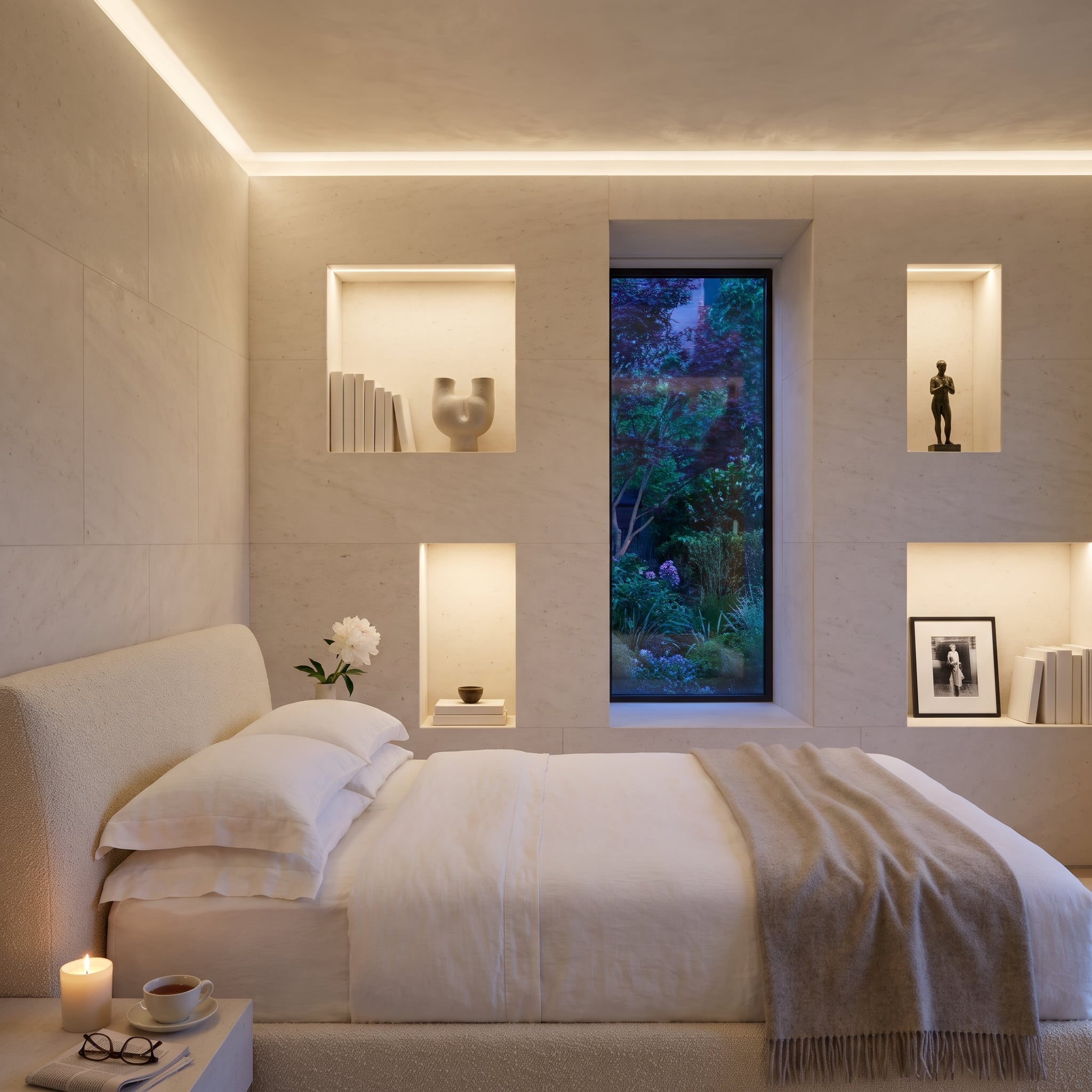
Pale limestone cladding covers the headboard wall, punctuated by rectangular niches at different heights. Concealed strips within the recesses illuminate books, ceramics, and small sculptures, turning ordinary storage into a carefully arranged collection of miniature displays.
A narrow vertical window introduces a different kind of light. Its cool view toward the garden contrasts with the warm glow inside the niches, creating depth and variation across the stone surface. The asymmetry gives the wall its personality. Rather than relying on a large artwork above the bed, the architecture supplies its own arrangement of objects, shadows, and illuminated edges.
30. A Curved Marble Bar Finds Its Match in an Oval Ceiling of Light
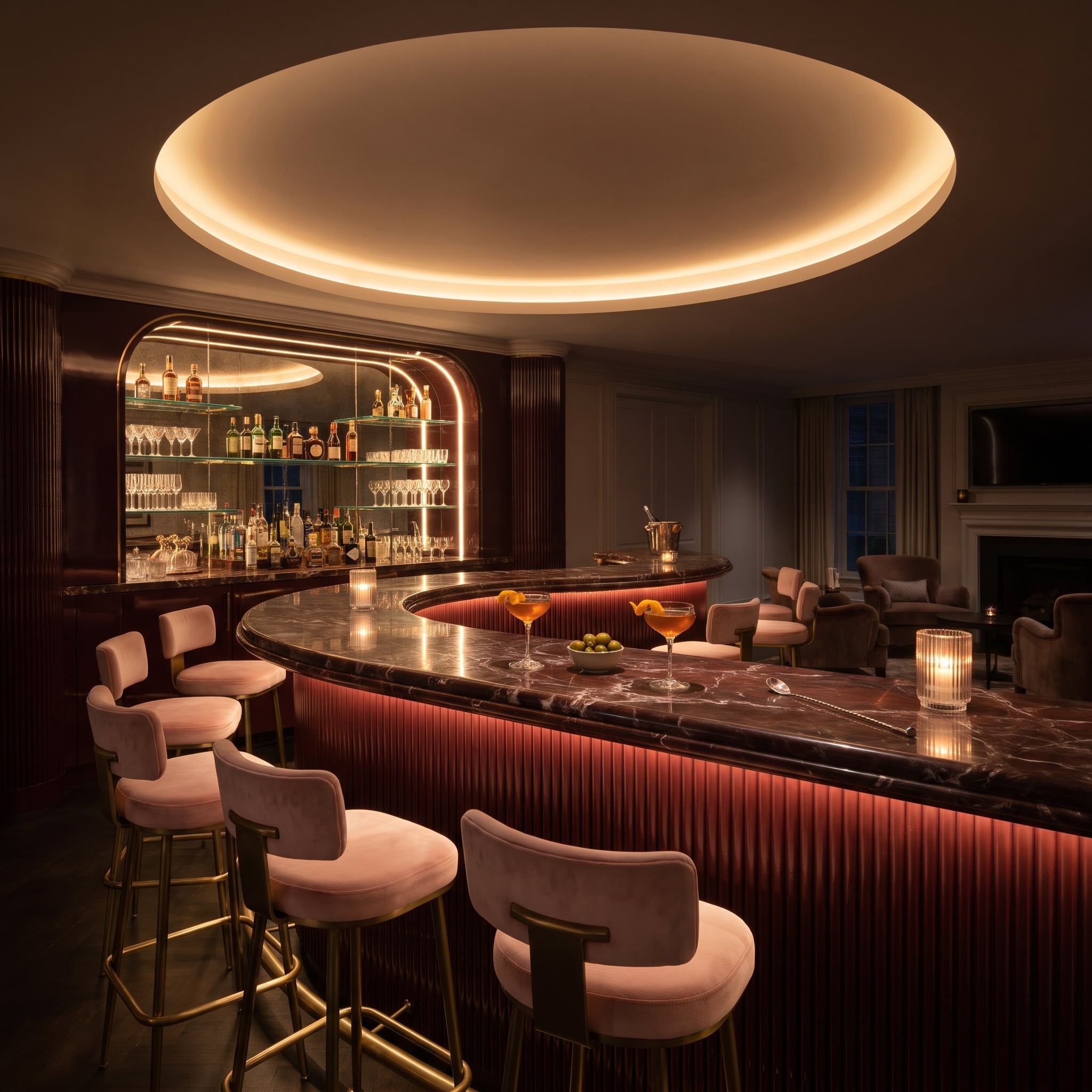
The curved bar wears dark, dramatically veined marble, with a fluted base that catches a ribbon of light near the floor. Above it, an oval ceiling recess repeats the counter’s sweeping geometry on a larger scale. The relationship between the two shapes gives the room a sense of deliberate choreography.
Rose-colored velvet stools with brass legs soften the substantial stone surfaces. The cove provides indirect ambient illumination, while the lit bar base sharpens the outline below. Neither effect competes with the marble’s veining. Curves carry the composition from floor to ceiling, with a generous measure of cocktail-lounge glamour along the way.
29. Bleached Oak and Vertical Light Strips Make a Bedroom Feel Effortlessly Precise
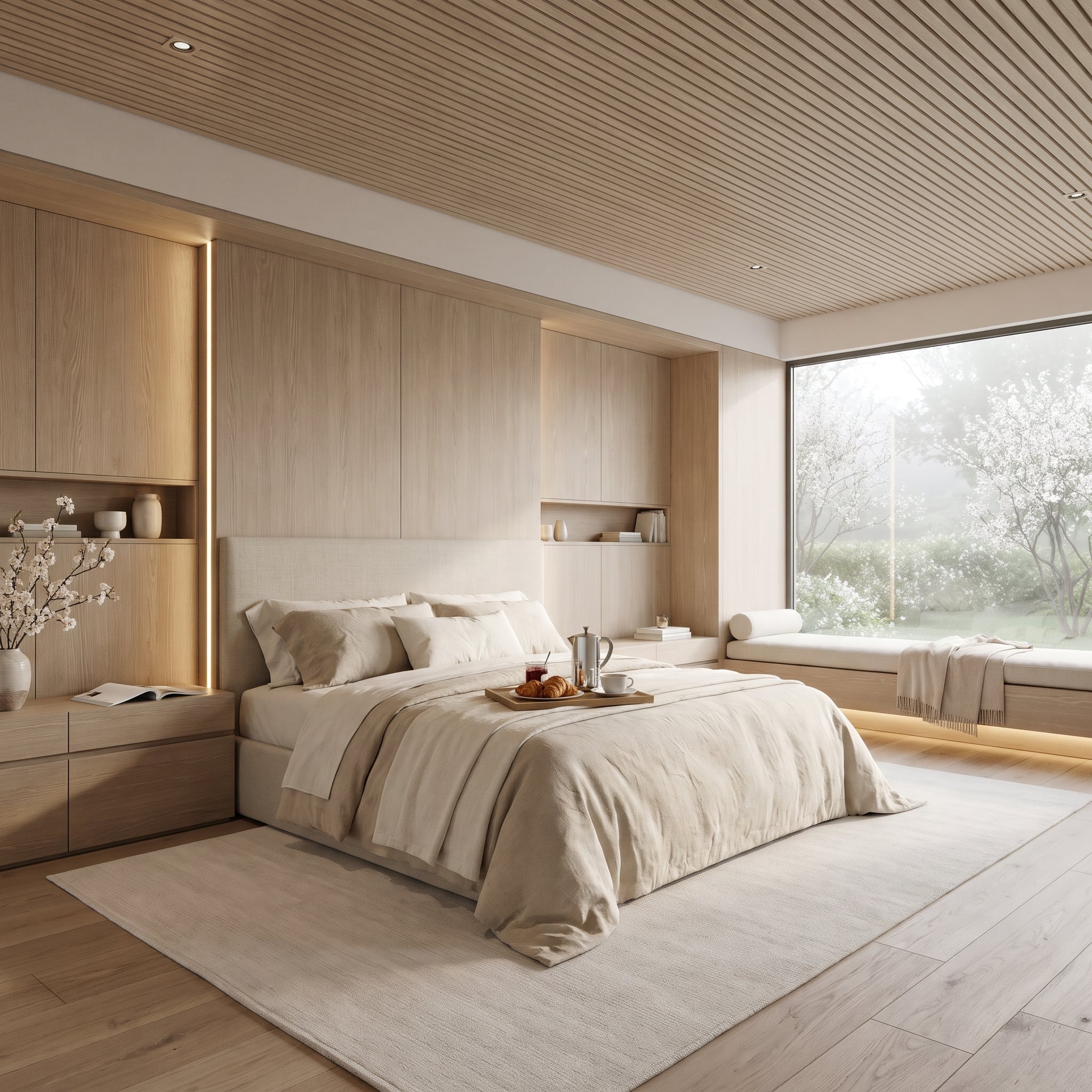
Pale oak panels wrap the headboard wall in a continuous expanse of timber, interrupted by narrow vertical lines of concealed light. The strips emphasize the height of the wall and give the wood grain greater definition without overwhelming the room with brightness.
Shallow display niches introduce useful storage near the bed, while the built-in window bench extends the millwork into another functional element. Above, the slatted ceiling continues the timber theme with a different rhythm. Vertical light, horizontal slats, and a low bed establish a precise balance of directions.
28. Honey Onyx and Black Marble Give This Bar a Remarkable Inner Glow
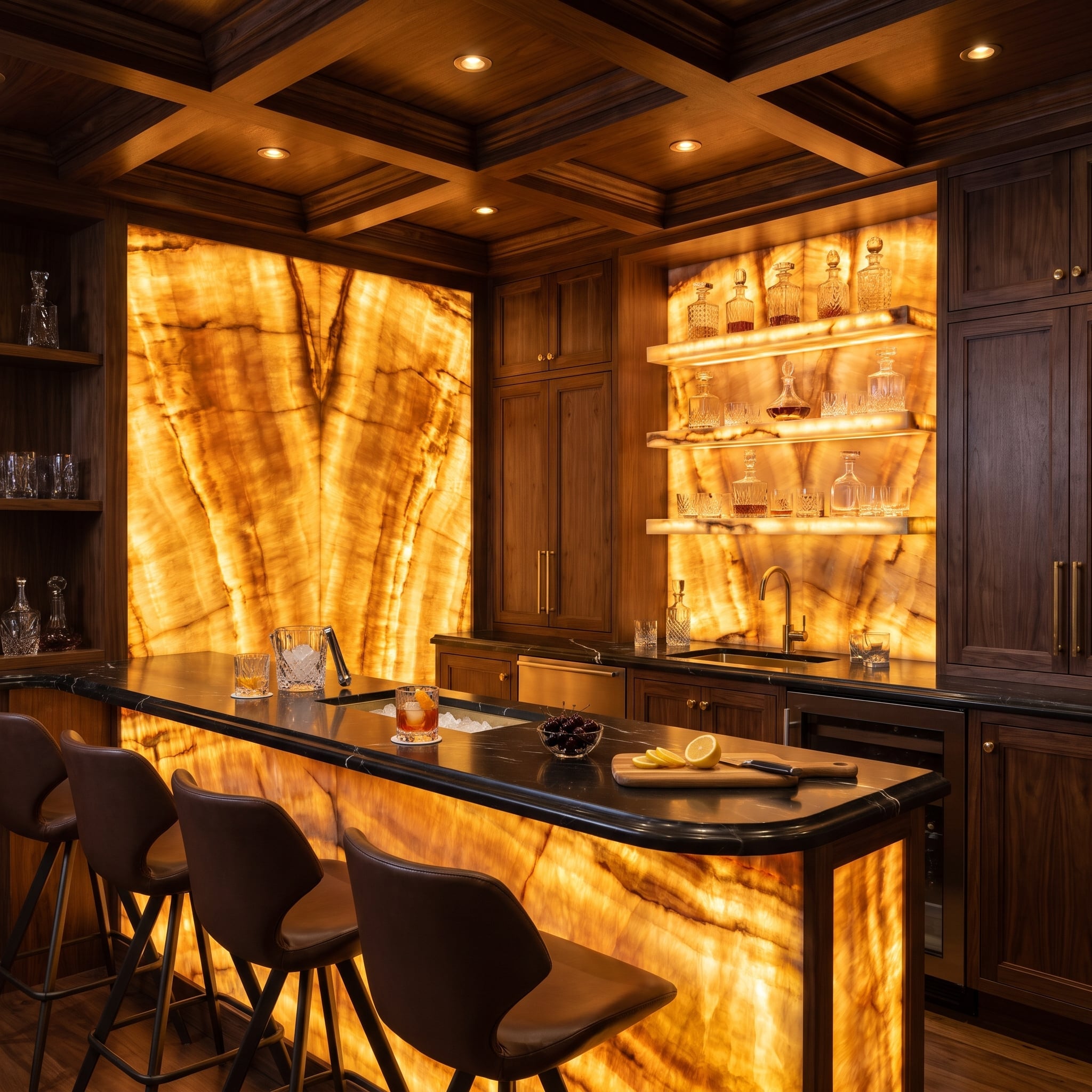
Honey-colored onyx spreads across the feature wall and bar base, its translucent layers illuminated from behind. The stone becomes an expansive field of amber, with darker mineral patterns giving the light depth and variation. Against it, the black marble countertop forms a dramatic horizontal silhouette.
Walnut cabinetry provides a darker frame for the luminous surfaces. Floating shelves hold crystal decanters, their cut glass catching additional highlights from concealed strips. Stone, cabinetry, and illumination behave as parts of one architectural idea. The onyx doesn’t simply decorate the bar. It defines the entire atmosphere.
27. A Hidden Vanity Emerges From Blush Cabinetry With Its Own Halo
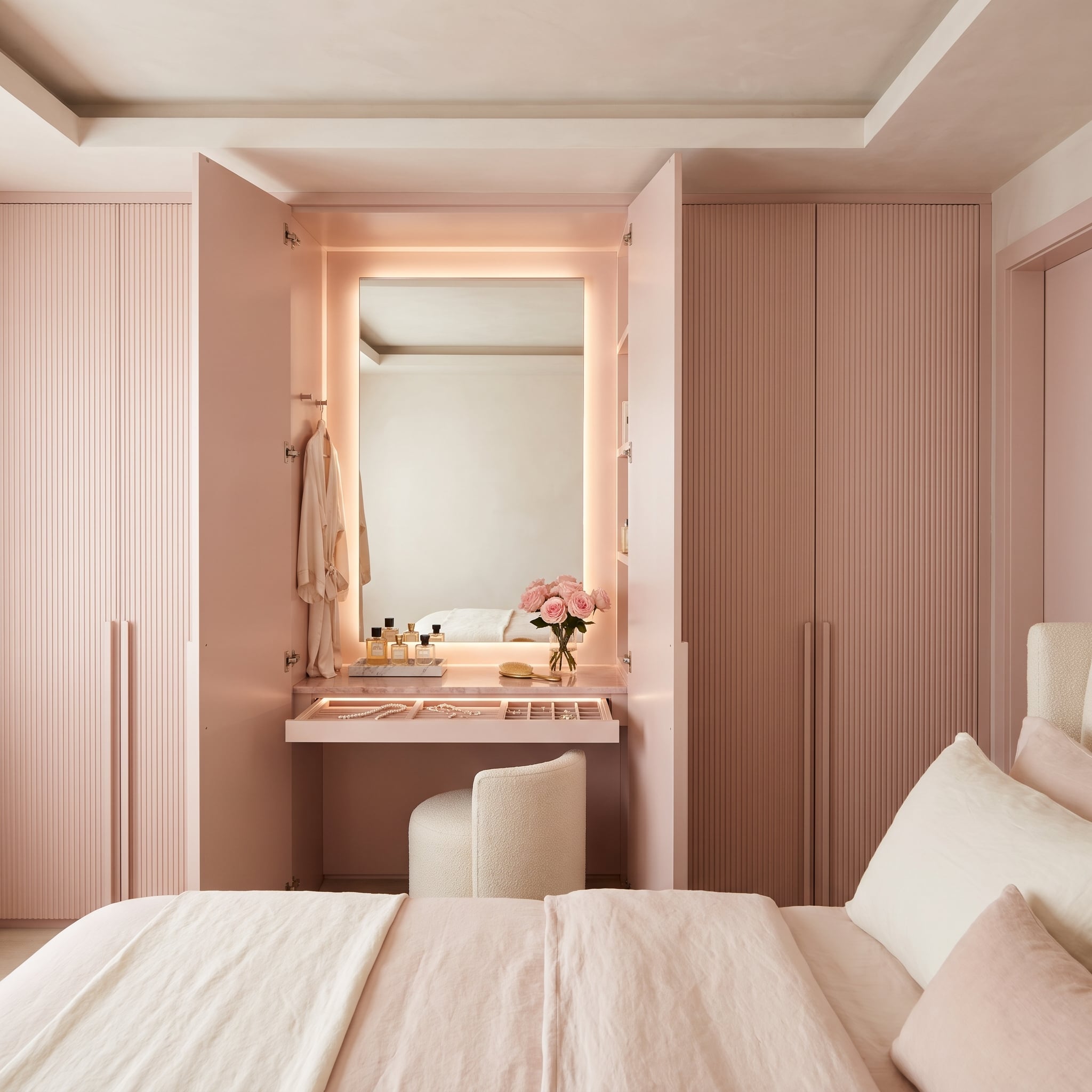
Fluted blush cabinetry forms a continuous wardrobe wall until one section opens to reveal a compact vanity. Inside, a backlit mirror, marble counter, and pull-out jewelry tray transform an ordinary cabinet bay into a carefully organized dressing station.
The concealed arrangement allows the vanity to disappear when not in use, preserving the uninterrupted lines of the millwork. Warm lighting around the mirror illuminates the recess, while the pale cabinet finish and delicate detailing keep the composition light. One moment, a seamless wardrobe. The next, a miniature dressing room with its own illuminated centerpiece.
26. Backlit Onyx Turns a Walnut Kitchen Into a Wall of Amber Light
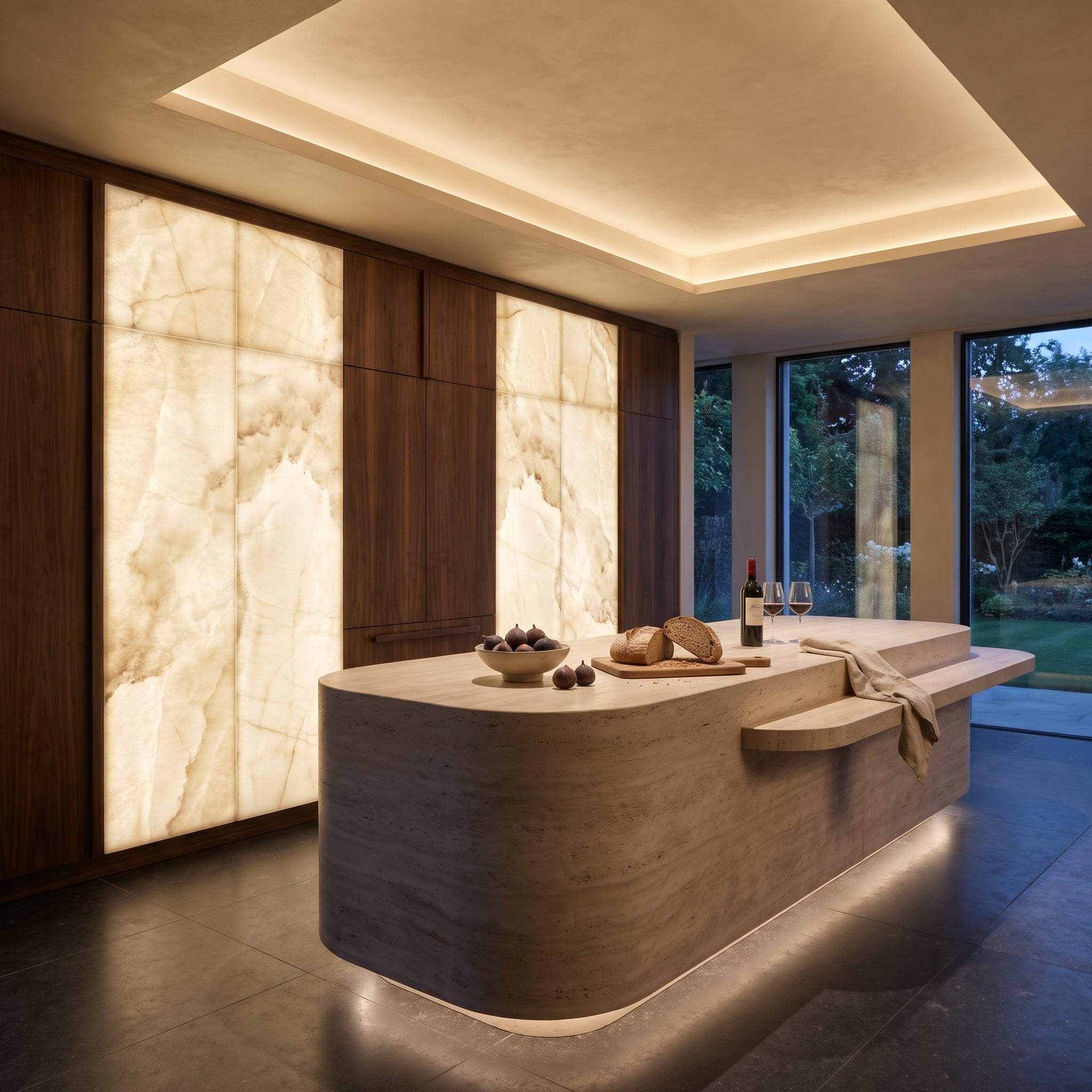
Two broad panels of honey-colored onyx interrupt the walnut cabinetry with an extraordinary display of translucent stone. Concealed illumination brings out the veining and variations in the material, transforming the kitchen wall into a luminous architectural feature. Against the darker grain of the surrounding timber, the onyx seems to generate warmth from within.
A substantial travertine island introduces another kind of stone, this time opaque and quietly textured. Light beneath its base separates the heavy volume from the floor, giving it a suggestion of weightlessness. One stone glows, another appears to float, and the walnut cabinetry holds the entire composition together.
25. A Leather Reading Nook Becomes the Warm Center of an Oak Library
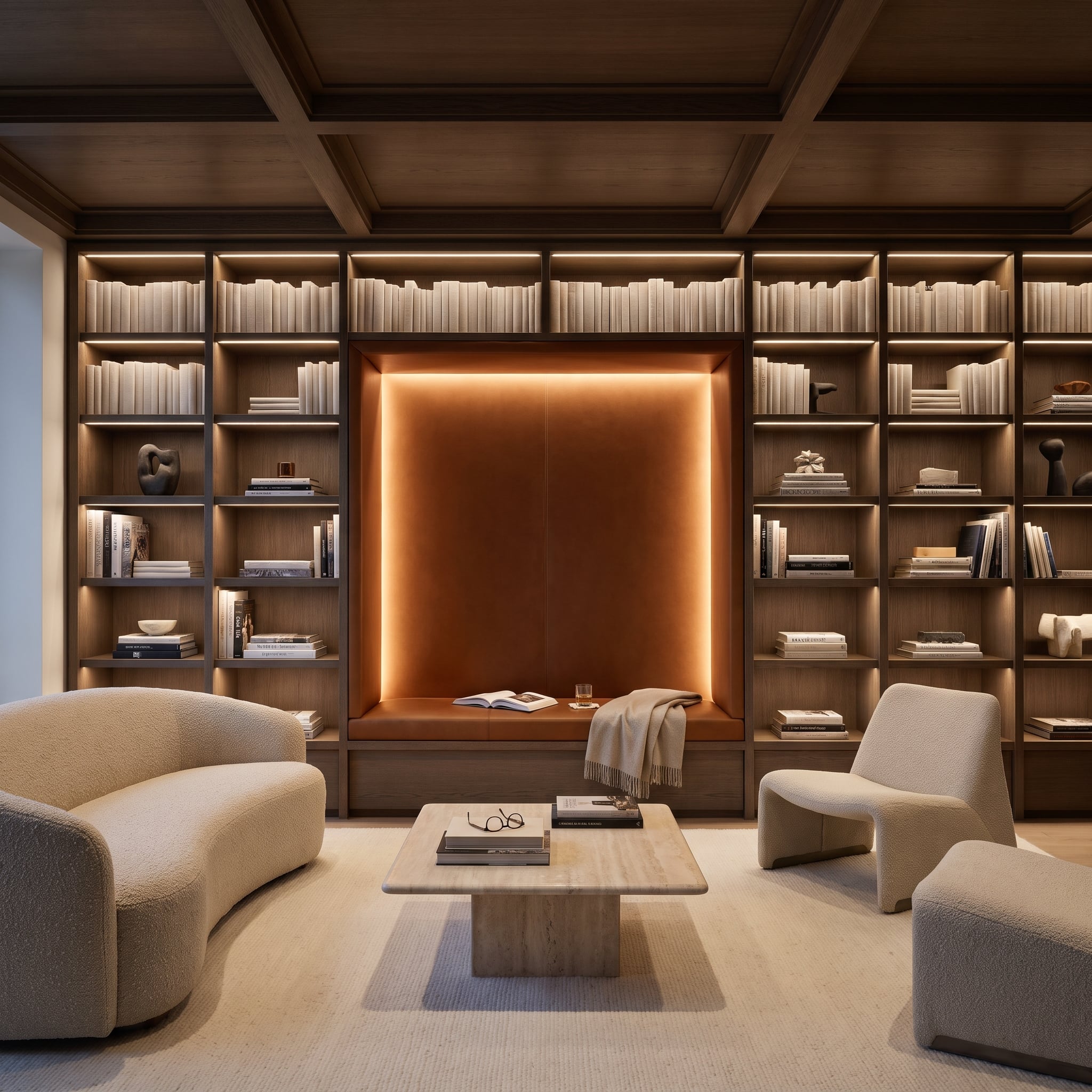
Oak shelving stretches across the wall, each bay softly illuminated to bring books and decorative objects out of shadow. At the center, a cognac leather reading nook interrupts the regular shelving grid with a richer material and a more intimate scale.
A concealed amber halo traces the nook’s frame, emphasizing its recessed position and drawing attention toward the leather upholstery. Bouclé chairs and a travertine coffee table introduce lighter textures in the foreground. Among the orderly rows of books and shelves, the leather recess offers a richly textured place to settle, its amber outline drawing the eye away from the surrounding collection.
24. Dark Oak and Concrete Give Vertical Light Strips a Brutalist Edge
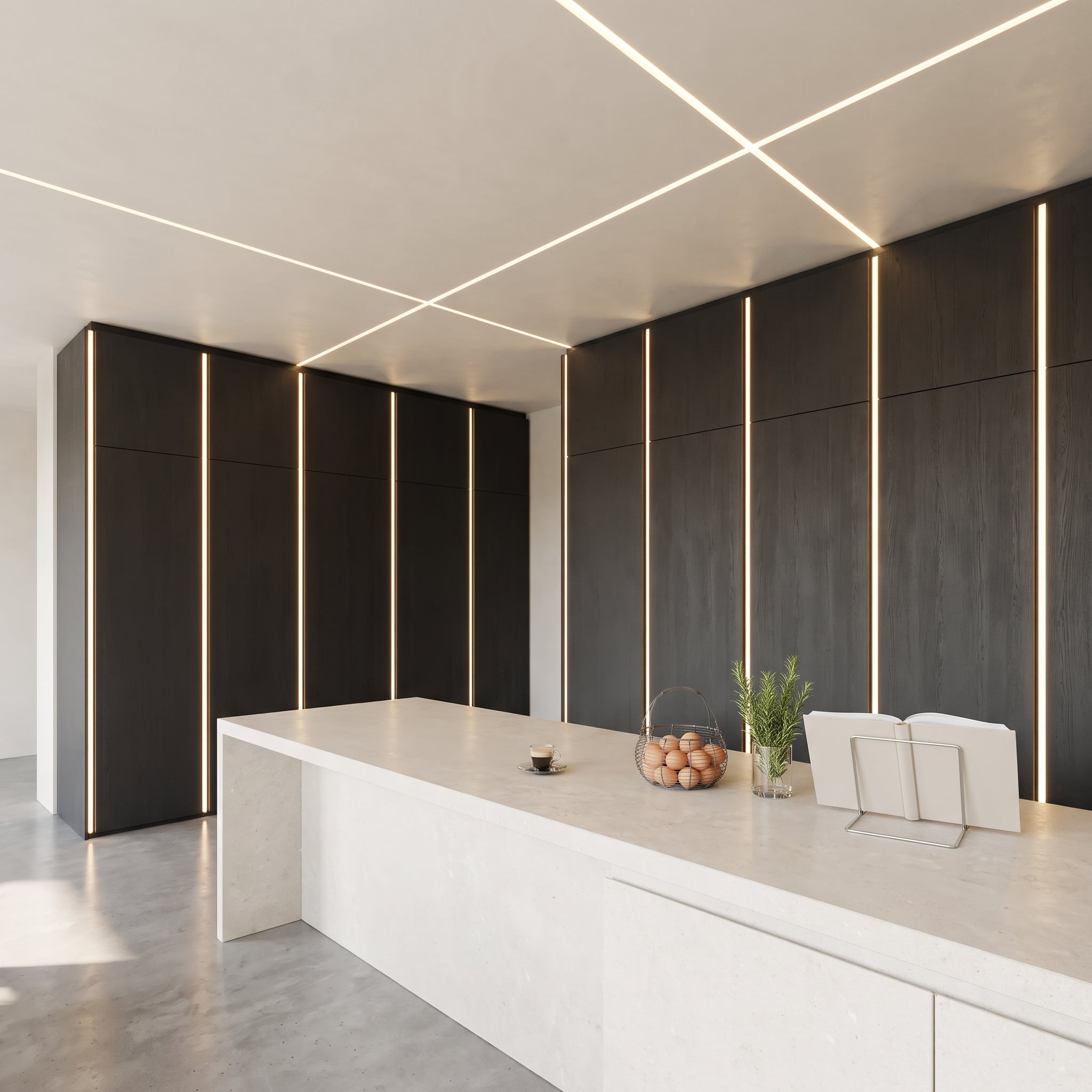
Dark-stained oak panels rise from floor to ceiling, interrupted by slender vertical LED strips that establish a strong architectural rhythm. Above, intersecting ceiling channels echo the geometry, creating a coordinated pattern of illuminated lines across two planes.
A long concrete island brings a cooler, heavier material into the composition. Its broad surface and restrained styling contrast with the intricate wall treatment. The effect is severe in the best possible way: timber, concrete, and precisely positioned light form a disciplined arrangement with very little need for decoration. Even the shadows look carefully measured.
23. Glass Wardrobes and a Marble Island Turn Dressing Into a Display
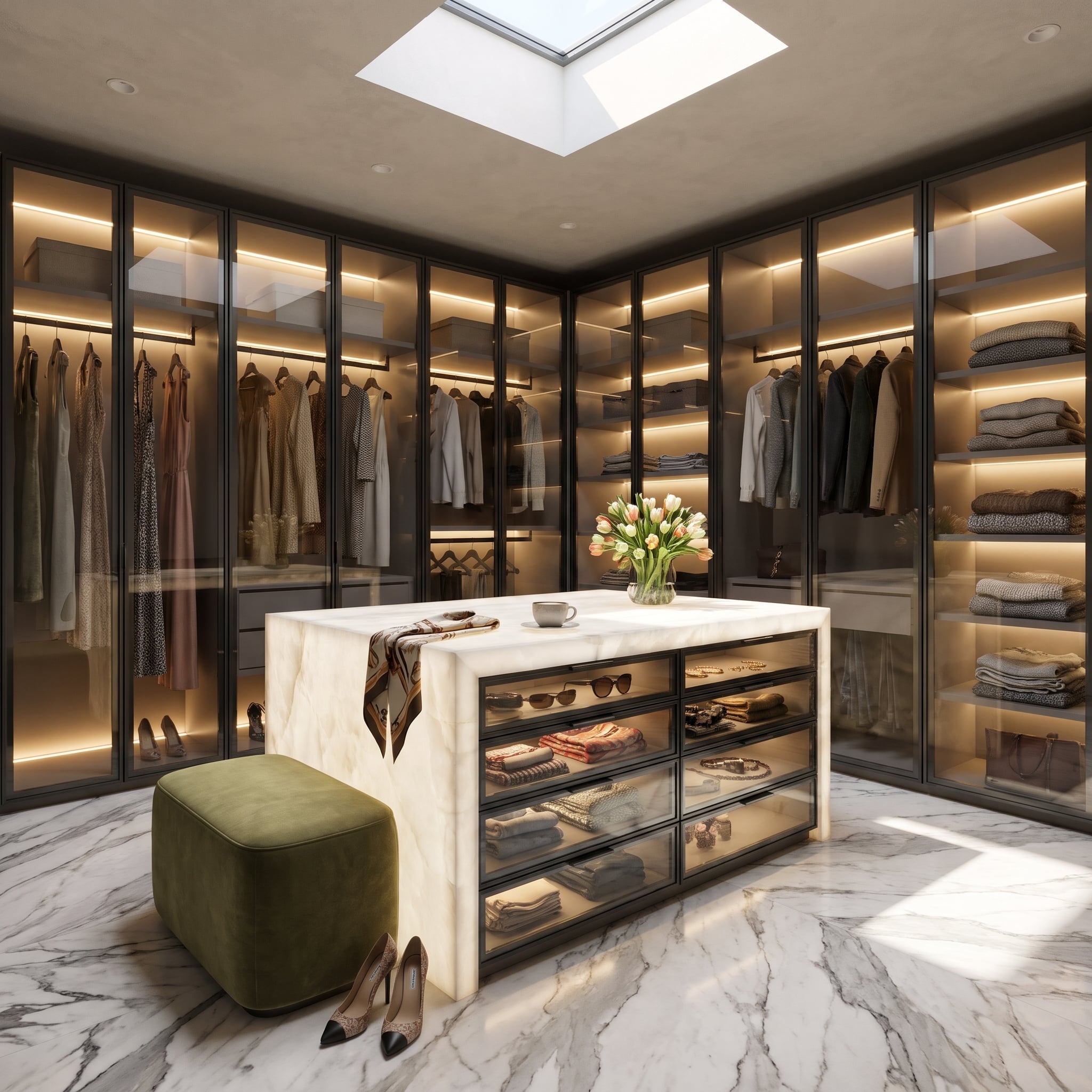
Black-framed glass wardrobes occupy two adjoining walls, their interiors illuminated to reveal hanging garments, folded knitwear, and accessories. The dark framing gives the arrangement a crisp graphic structure, while the light inside prevents the cabinets from reading as solid blocks.
A white marble island introduces a substantial central surface, with glass-front drawers displaying smaller accessories below. Overhead, a skylight contributes daylight, establishing a useful contrast with the warmer cabinet lighting. Natural light reveals the scale of the room; concealed strips bring its contents into focus.
What Our Readers Say
- Closets where white is the main colour earned more hearts from Home Stratosphere readers than the other closet images in the same articles, 75% versus 69%.
From Home Stratosphere reader polls and votes.
22. Navy Cabinets and Brass Details Give a Kitchen the Presence of a Library
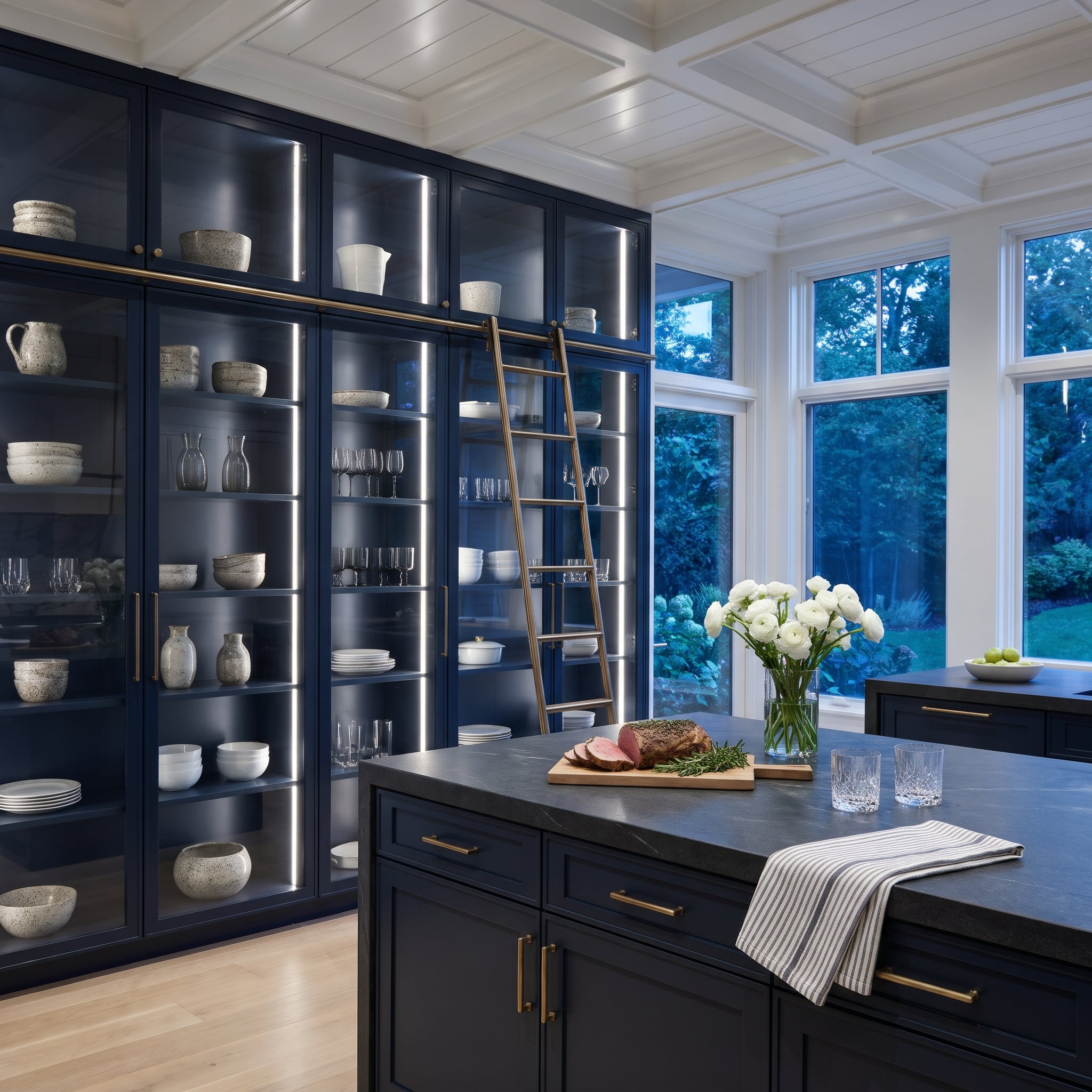
Deep navy cabinetry rises to the ceiling, with brass hardware introducing bright accents against the saturated finish. A rolling library ladder travels along a brass rail, making the upper storage accessible while giving the kitchen the character of a grand book-lined room.
Vertical LED strips integrated into the cabinet frames illuminate the shelves and their contents, bringing white ceramics and crystal glassware into relief against the dark background. A substantial stone island anchors the composition. The ladder supplies the theatrical gesture, while the concealed lighting gives the towering cabinetry its sense of depth.
21. Navy Velvet and a Backlit Headboard Give This Bedroom Its After-Dark Personality
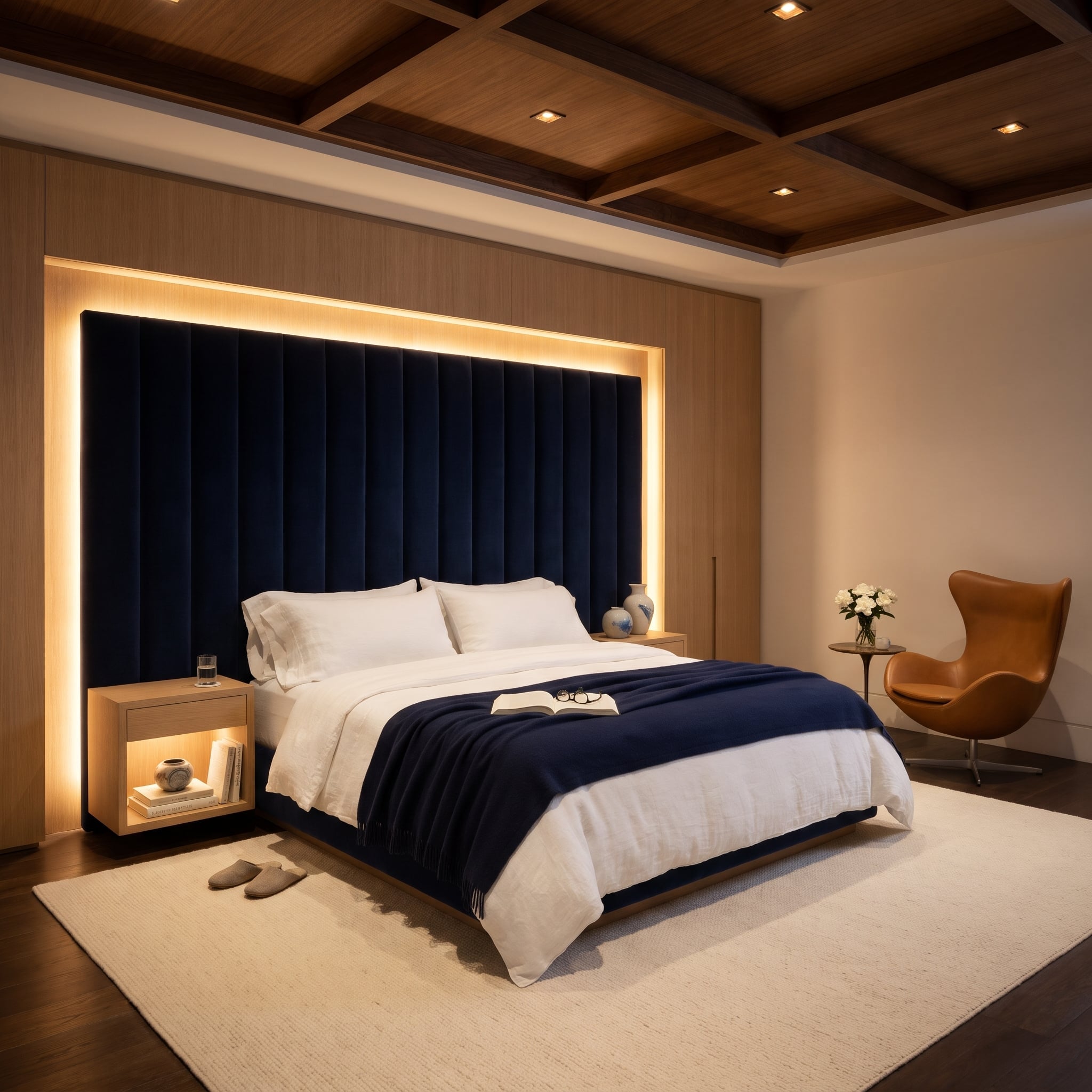
A floor-to-ceiling panel of navy velvet creates a dark, plush backdrop for the bed, while concealed lighting traces the surrounding oak frame. The resulting amber outline emphasizes the headboard’s generous proportions without directing a harsh beam toward the pillows.
Floating nightstands preserve the uncluttered arrangement. Above, coffered walnut adds a second architectural rhythm, its darker timber contrasting with the white bedding. The headboard takes on the presence of a large illuminated panel, with velvet absorbing the light and the surrounding frame defining its edges. The effect is intimate, tailored, and unmistakably dramatic.
20. A Backlit Wine Wall Turns Bottle Storage Into the Dining Room’s Main Attraction
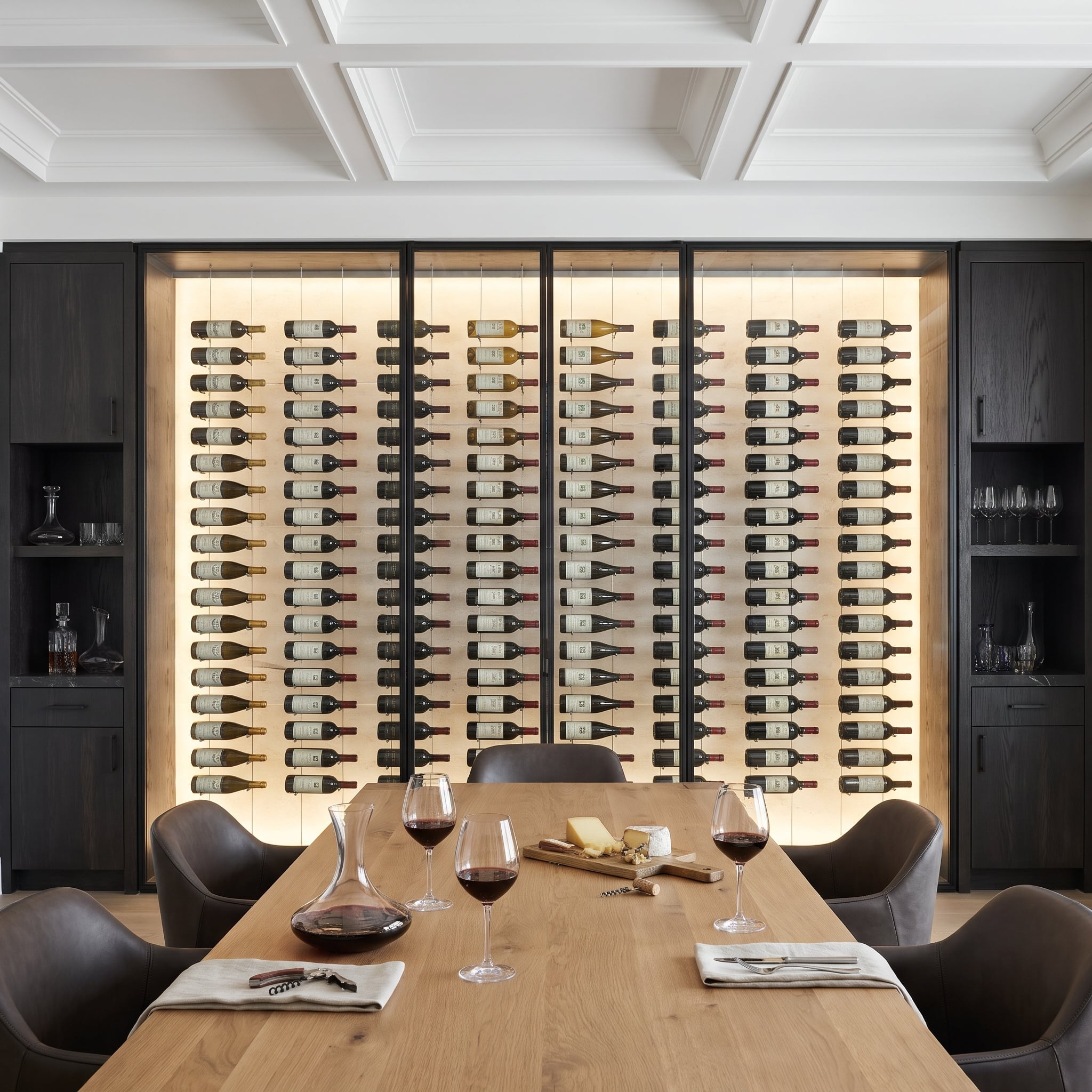
Rows of wine bottles occupy a tall display wall behind the dining table, held within black metal frames against a warmly illuminated timber backdrop. The arrangement gives the collection the visual order of a gallery installation. Each bottle becomes part of a repeating pattern of dark glass, pale labels, and slender supports.
Dark cabinetry on either side houses glassware and decanters, while the natural oak table introduces a calmer surface in front of the display. The backlighting emphasizes the repeating geometry of bottles, labels, and metal supports. A utilitarian storage system acquires the graphic presence of an enormous illuminated artwork.
19. Sage Cabinets and Glowing Toe Kicks Give a Quiet Kitchen Two Personalities
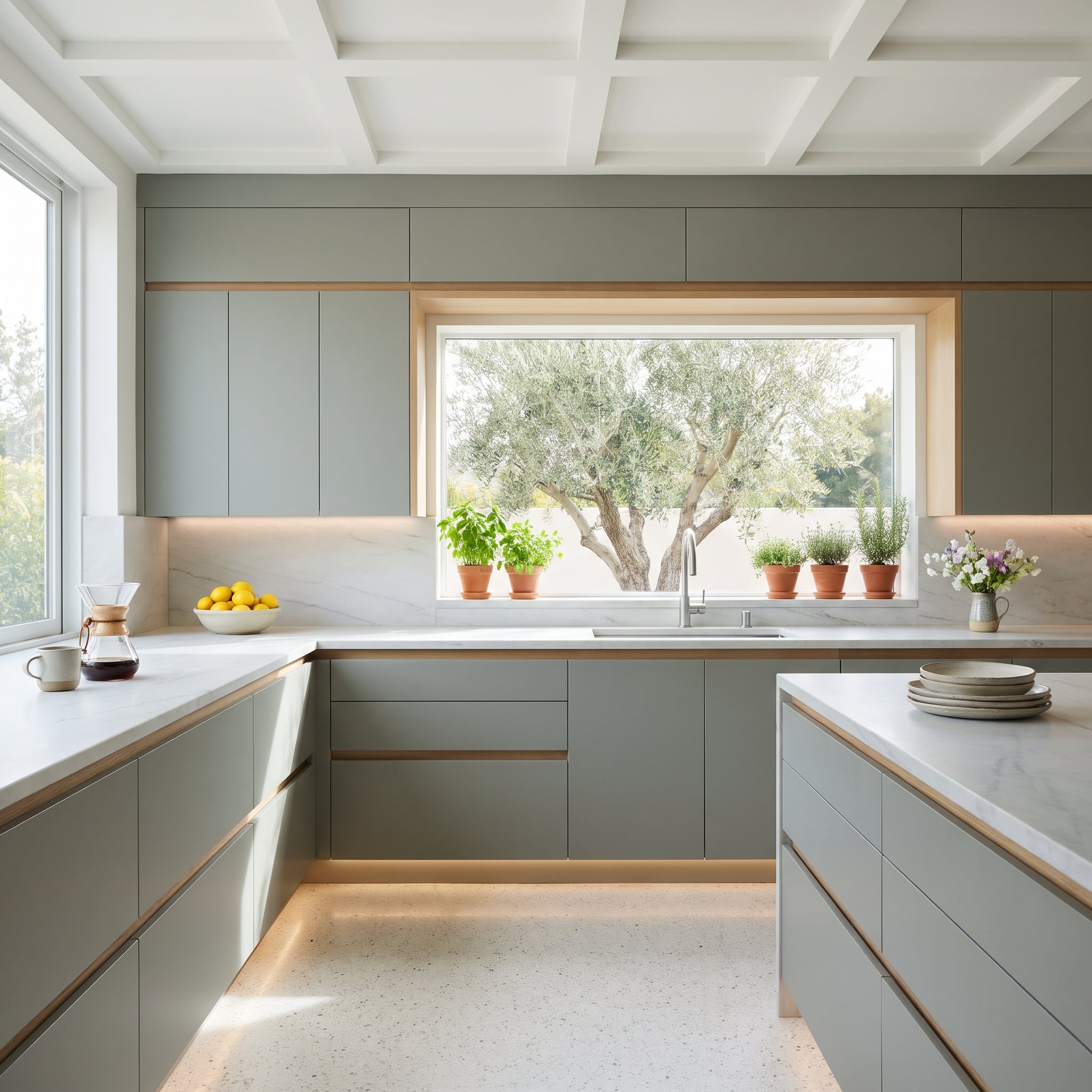
Muted sage cabinetry, pale countertops, and natural wood trim establish a restrained kitchen palette. A broad window over the sink frames greenery outside, while terracotta pots introduce a little warmth along the sill. The overall effect is gentle, almost pastoral.
Concealed strips beneath the upper cabinets illuminate the work surfaces, while a second line of light at the toe kicks creates a slim glowing separation between the lower cabinetry and terrazzo floor. One layer brings the countertops into focus; the other defines the cabinet bases. A modest intervention gives this quiet kitchen an unexpectedly sophisticated after-dark personality.
18. Black Display Niches Turn a White Living Room Wall Into a Private Gallery
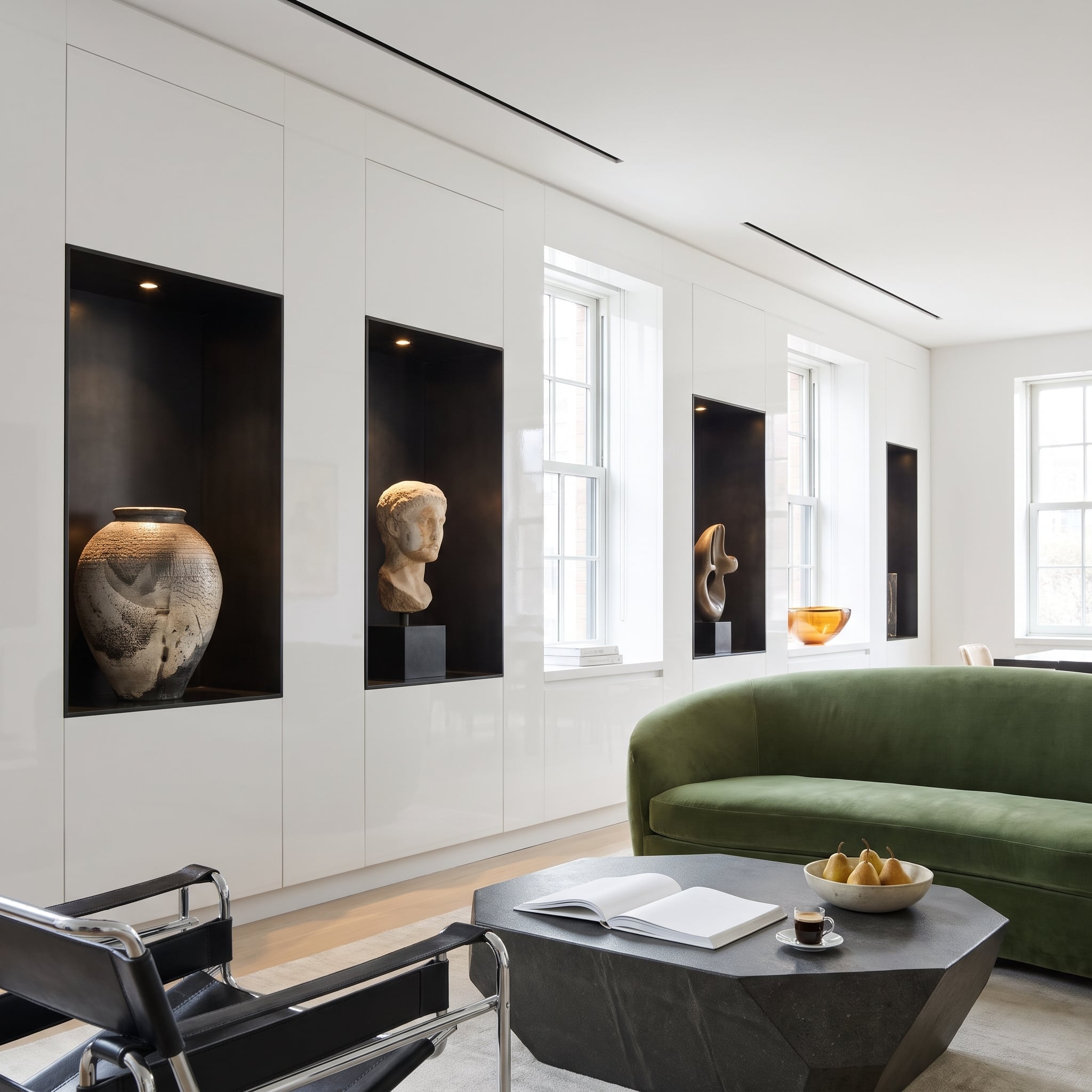
Four rectangular niches interrupt a glossy white wall, each lined in matte black and illuminated by a concealed spotlight. The dark recesses provide a striking backdrop for a ceramic vessel, marble bust, bronze sculpture, and amber glass bowl. The objects acquire the visual importance of a small curated exhibition.
A curved green velvet sofa adds a broad sweep of color in front of the angular display wall. Nearby, a chrome-and-leather chair introduces a contrasting furniture silhouette, while a dark stone coffee table anchors the seating arrangement. Bright white against black recesses, hard surfaces against velvet, concentrated light against shadow: the contrasts give this living room its energy.
17. A Stone Hallway Draws the Eye Toward an Illuminated Sculpture
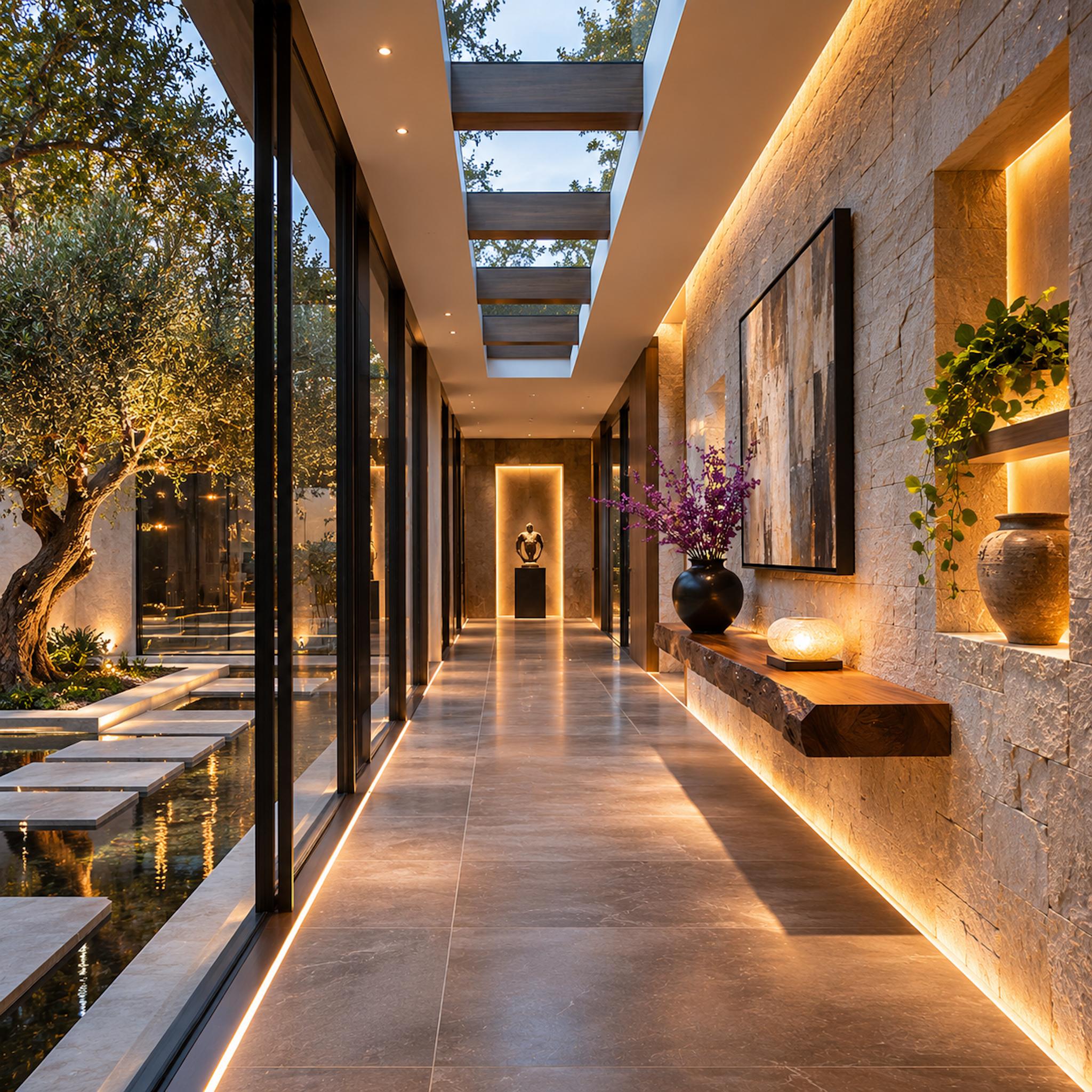
A long stone corridor becomes an exercise in perspective, with continuous lines of concealed light running along the base of the glazing and beneath a floating timber console. The illuminated edges draw the eye toward a sculpture at the far end, where another glowing recess supplies the architectural full stop.
Overhead, a succession of skylights introduces daylight between substantial roof beams. Floor-to-ceiling glass opens the opposite side toward an olive tree and reflecting pool, giving the corridor a second, more organic rhythm. The contrast between warm artificial light and cool natural illumination keeps the long passage visually alive. Even the journey between rooms becomes an architectural event.
16. A Walnut Shoe Closet Gives Every Pair Its Own Stage
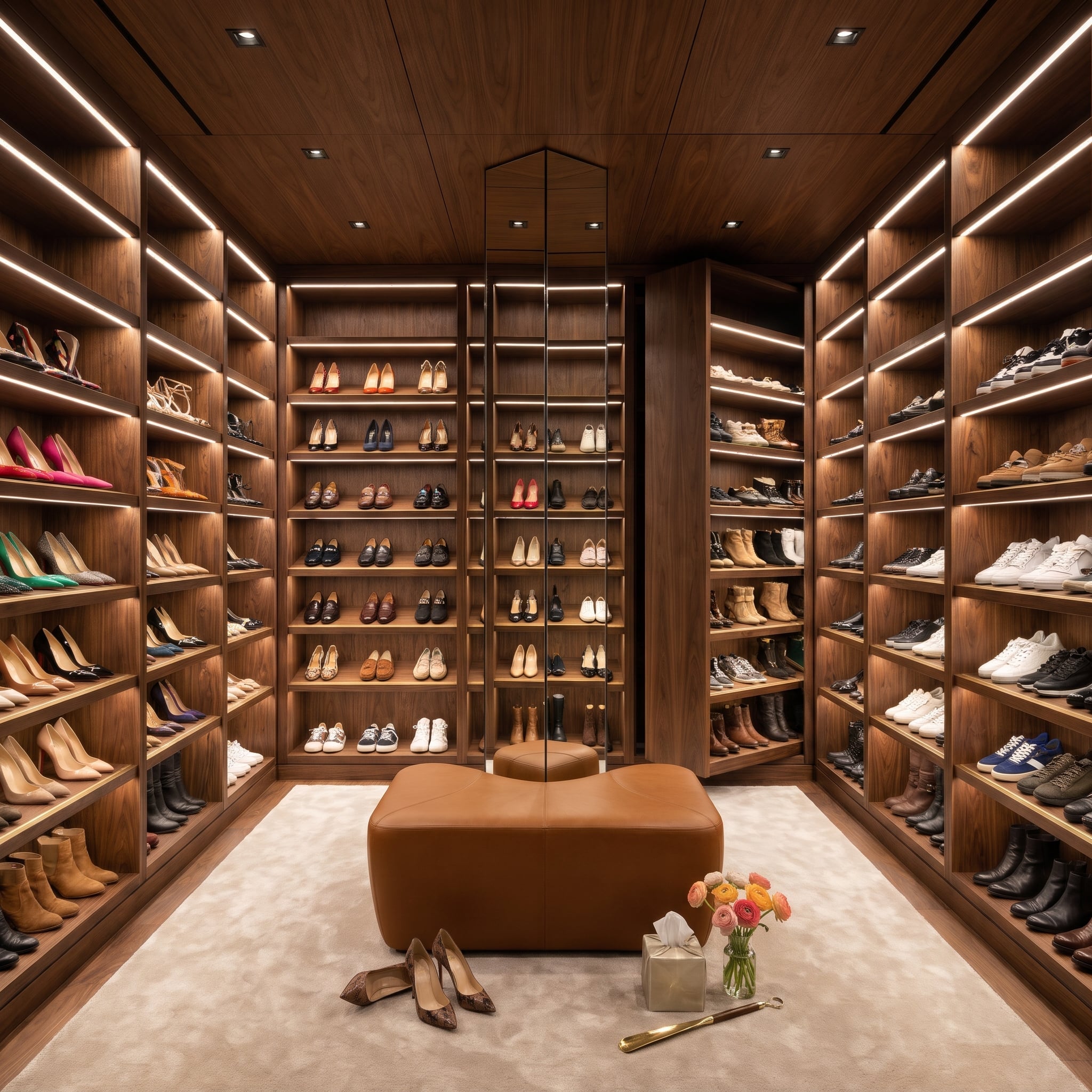
Warm walnut wraps the shoe closet in continuous cabinetry, with closely spaced shelves providing individual display positions for footwear. LED strips concealed beneath the shelf edges direct light onto the shoes rather than allowing the upper rows to cast deep shadows across those below.
The arrangement turns a practical collection into a repeating composition of shapes, colors, and materials. Walnut gives the display warmth and consistency, while the illumination sharpens each silhouette. Shoes that might disappear into a crowded closet instead occupy a remarkably orderly architectural grid.
15. Bookmatched Marble Makes a Fireplace Wall Impossible to Ignore
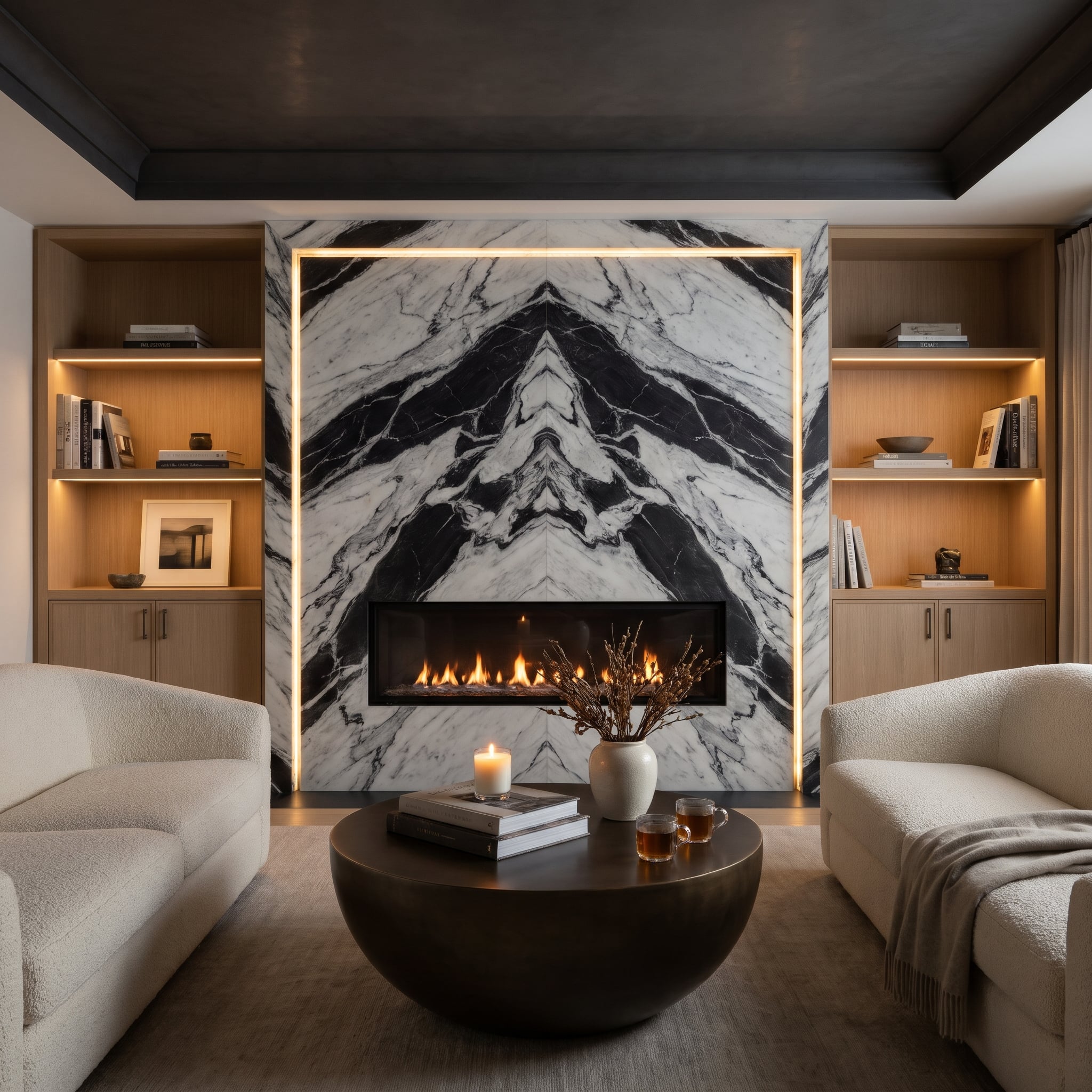
Black-and-white marble spreads across the fireplace wall in a mirrored arrangement of veining, creating a pattern that seems almost too intricate to have come from stone. A narrow linear fireplace sits beneath it, providing a strong horizontal interruption to the swirling surface.
Oak shelving flanks the marble, its recessed lighting warming the edges of an otherwise dramatic composition. The illuminated cabinets frame the central stone rather than competing with it. A dark ceiling reinforces the contrast, allowing the marble to command attention while the timber introduces a welcome measure of warmth against the swirling black-and-white stone.
14. Bronze-Framed Wardrobes Bring Tailoring Into the Spotlight
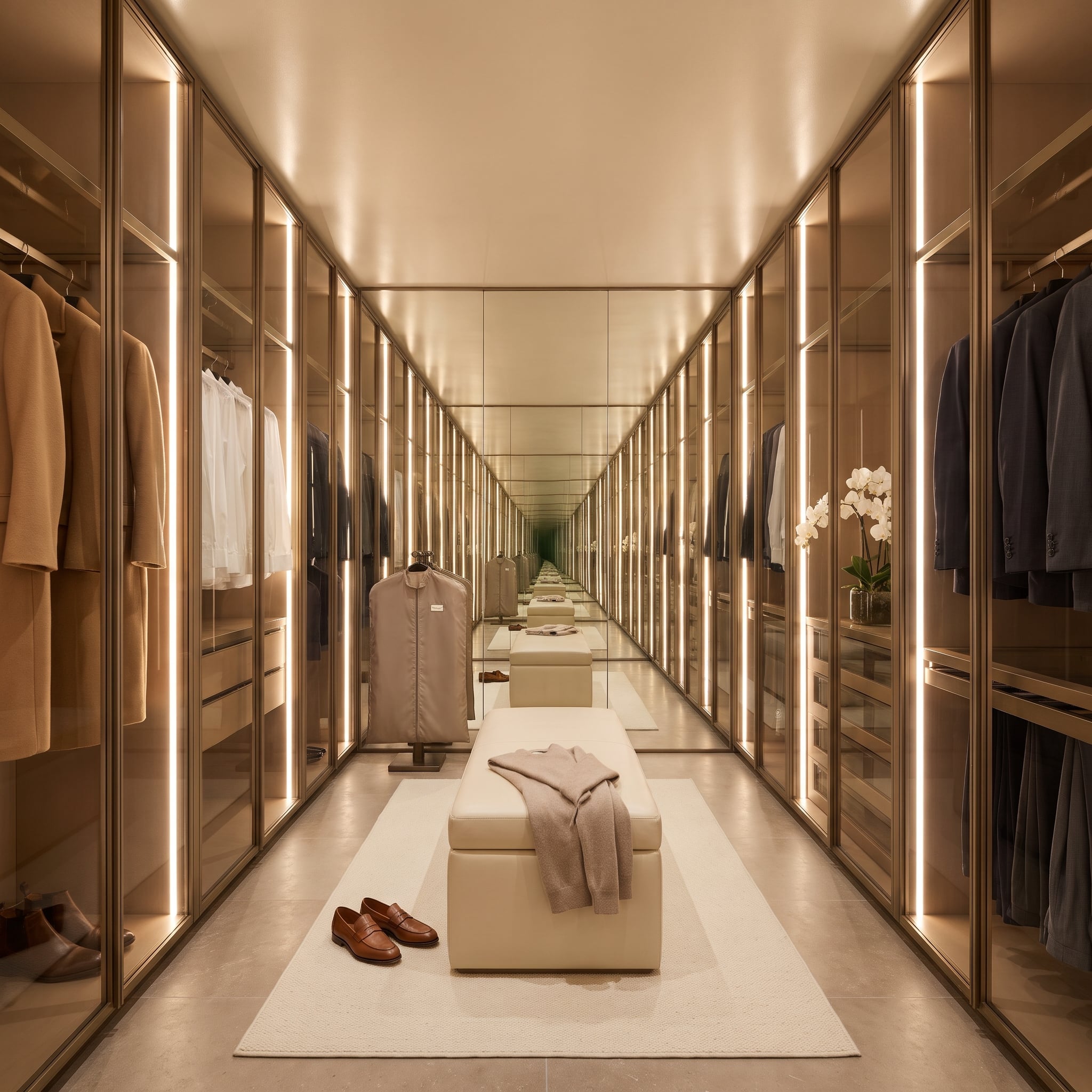
Bronze-framed glass cabinets give this dressing room a precise, tailored appearance. Vertical LED strips follow the cabinet interiors, illuminating hanging suits and folded knitwear while emphasizing the slender metal divisions between each section.
A cream leather bench occupies the center, providing a soft counterpoint to the orderly wardrobe walls. A freestanding valet stand introduces another practical element, while white orchids lighten the restrained palette of bronze, dark clothing, and stone. The illuminated cabinet interiors give every garment a clear place within the composition, as disciplined as a beautifully cut suit.
13. Green Marble and Glowing Glass Shelves Give a Coffee Cabinet Serious Presence
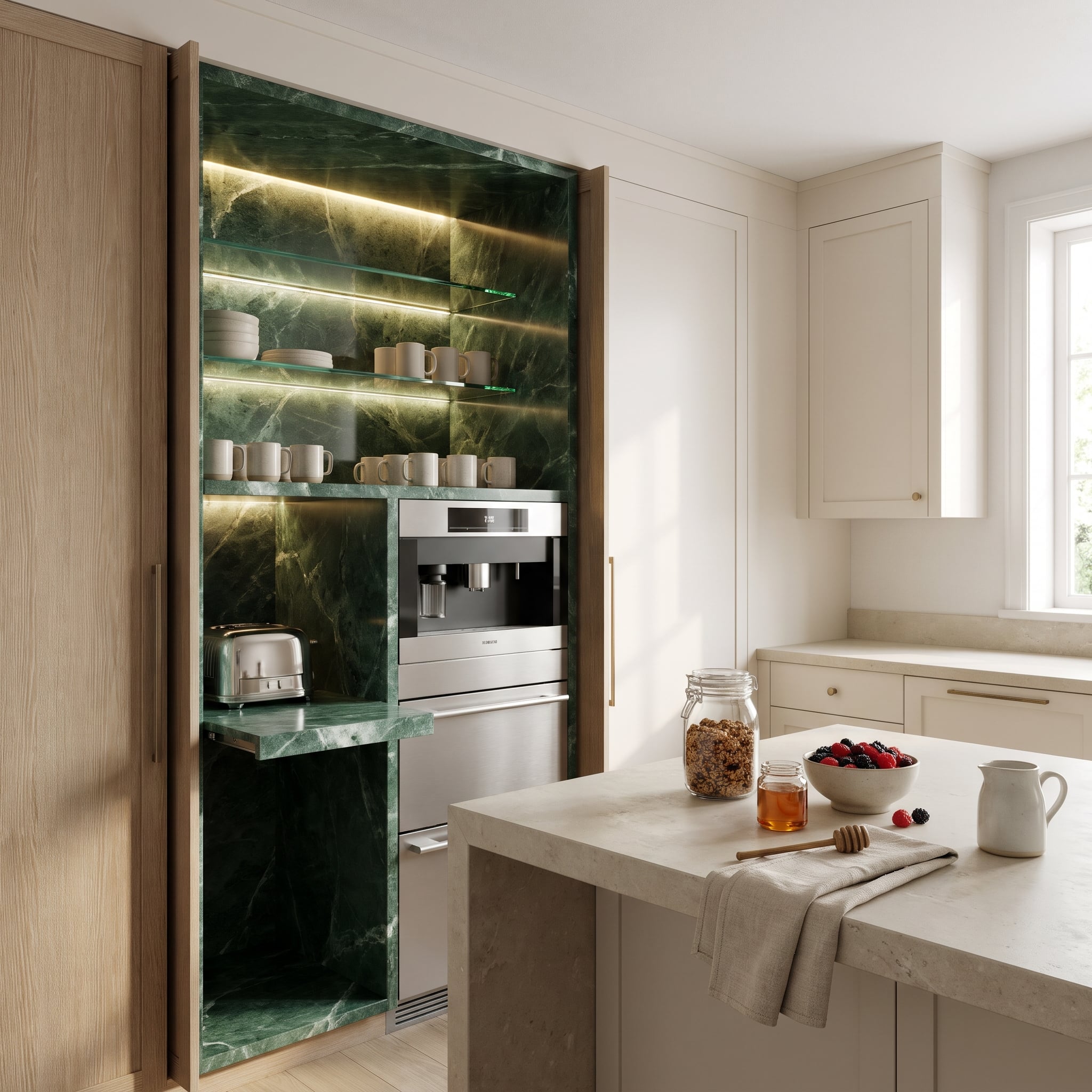
Green marble lines the interior of this cabinet, its pale veining catching warm light from concealed shelf strips. Glass shelves appear to float against the richly patterned stone, supporting cream-colored mugs and white dishware that offer a visual pause.
A pull-out shelf accommodates the toaster, giving the compact arrangement a practical dimension beyond its decorative appeal. The illuminated recess concentrates attention on the marble while the surrounding cabinetry remains subdued. One carefully finished cabinet interior delivers more visual impact than an entire wall of ordinary storage.
12. A Leather Headboard and Floating Nightstands Build a Bedroom From Horizontal Lines
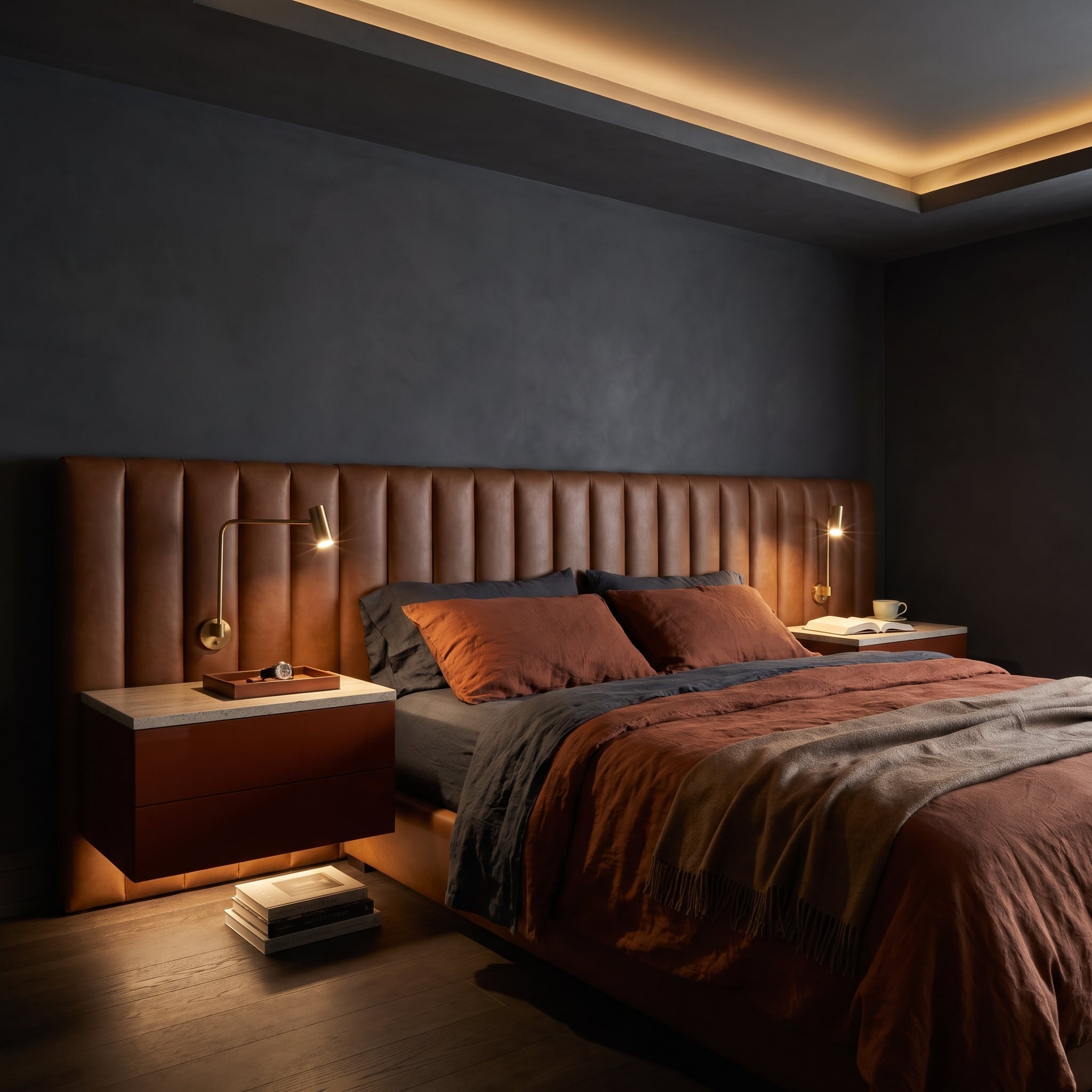
Cognac leather gives the headboard a warm, substantial presence, while floating walnut nightstands extend the composition horizontally on either side of the bed. Concealed lighting beneath the cabinets emphasizes their separation from the wall and adds a low, gentle glow.
The appeal is in the disciplined layering. Leather contributes softness and color; walnut introduces grain and structure; illuminated reveals sharpen the furniture’s outline. The nightstands seem to hover beside the bed, their dark undersides giving way to thin bands of amber light. Few details are required when the proportions are this deliberate.
11. A Dark Walnut Room Divider Lets Light Travel Between Living and Dining
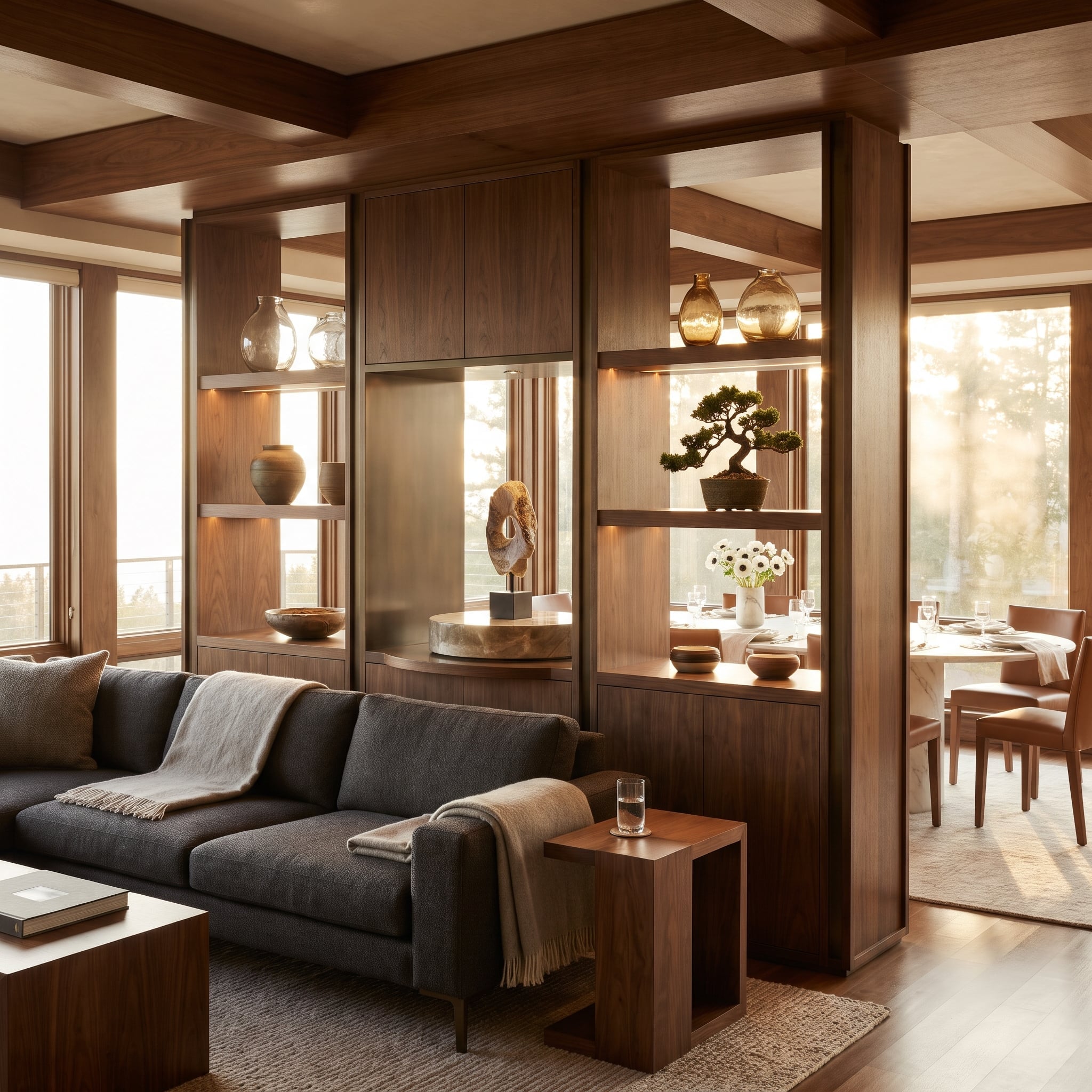
This walnut shelving unit has two jobs: dividing the living and dining areas and keeping them visually connected. Its open grid allows views through the structure, while concealed light beneath individual shelves picks out a bonsai, glass vessels, and a stone sculpture.
The charcoal sofa and woven rug establish a quieter foreground. Beyond the shelves, the dining area remains visible, giving the room a layered sense of depth. Furniture, display, and illumination establish a boundary without building a barrier. The light travels between the rooms almost as freely as the view.
10. A Beer Tap and Forest-Green Marble Make This Oak Bar Anything but Ordinary
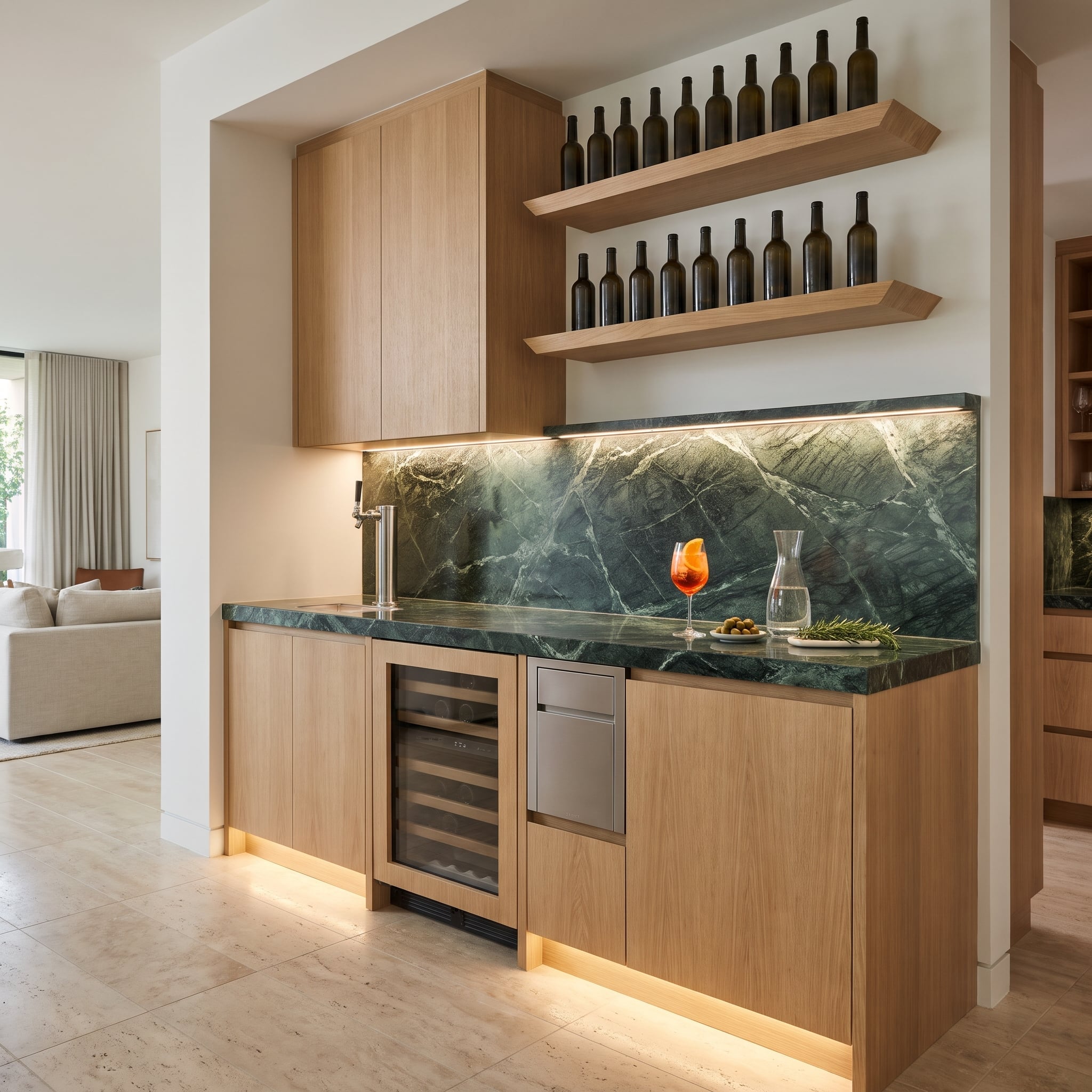
Rift-cut oak cabinetry stretches across the bar in a remarkably consistent display of straight grain. Forest-green marble covers the countertop and rises into the backsplash, its white veining interrupting the warm timber with a richer, more dramatic surface.
Under-cabinet strips wash light across the marble, revealing the veining and illuminating the working counter. Toe-kick lighting creates a second, lower band of light against the pale floor. A dedicated beer tap distinguishes the room from a purely decorative drinks cabinet. The equipment is practical; the surrounding stone and illuminated timber make sure nobody mistakes this for an ordinary kitchenette.
9. Louvered Oak Doors Reveal a Second, Illuminated Room Behind the Bed
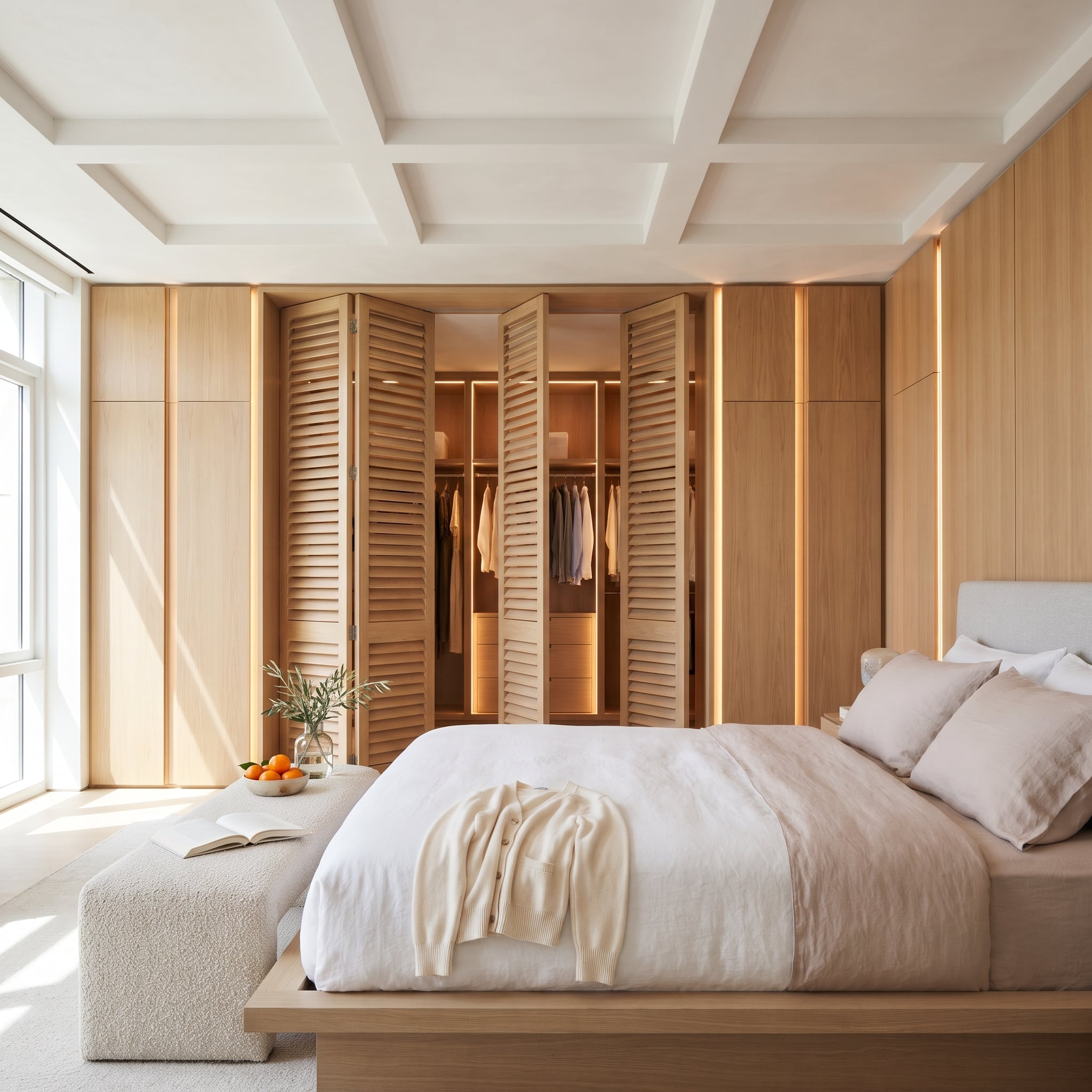
A wall of pale oak cabinetry appears relatively quiet until the louvered bifold doors open. Beyond them, an illuminated dressing area reveals rows of clothing and storage, with warm vertical strips bringing the cabinet interiors into view.
The platform bed remains low and restrained, allowing the wardrobe wall to provide the principal architectural interest. The louvered doors introduce texture even when closed, while the illuminated interior adds depth when open. The room shifts between two distinct compositions: a calm timber wall and a dressing area revealed behind it.
Pale timber seems a safe bet for dressing areas: closets with light wood tones got more hearts from our readers than the other closet images in the same articles.
8. Fluted Travertine and a Floating Walnut Console Give a Media Wall Architectural Weight
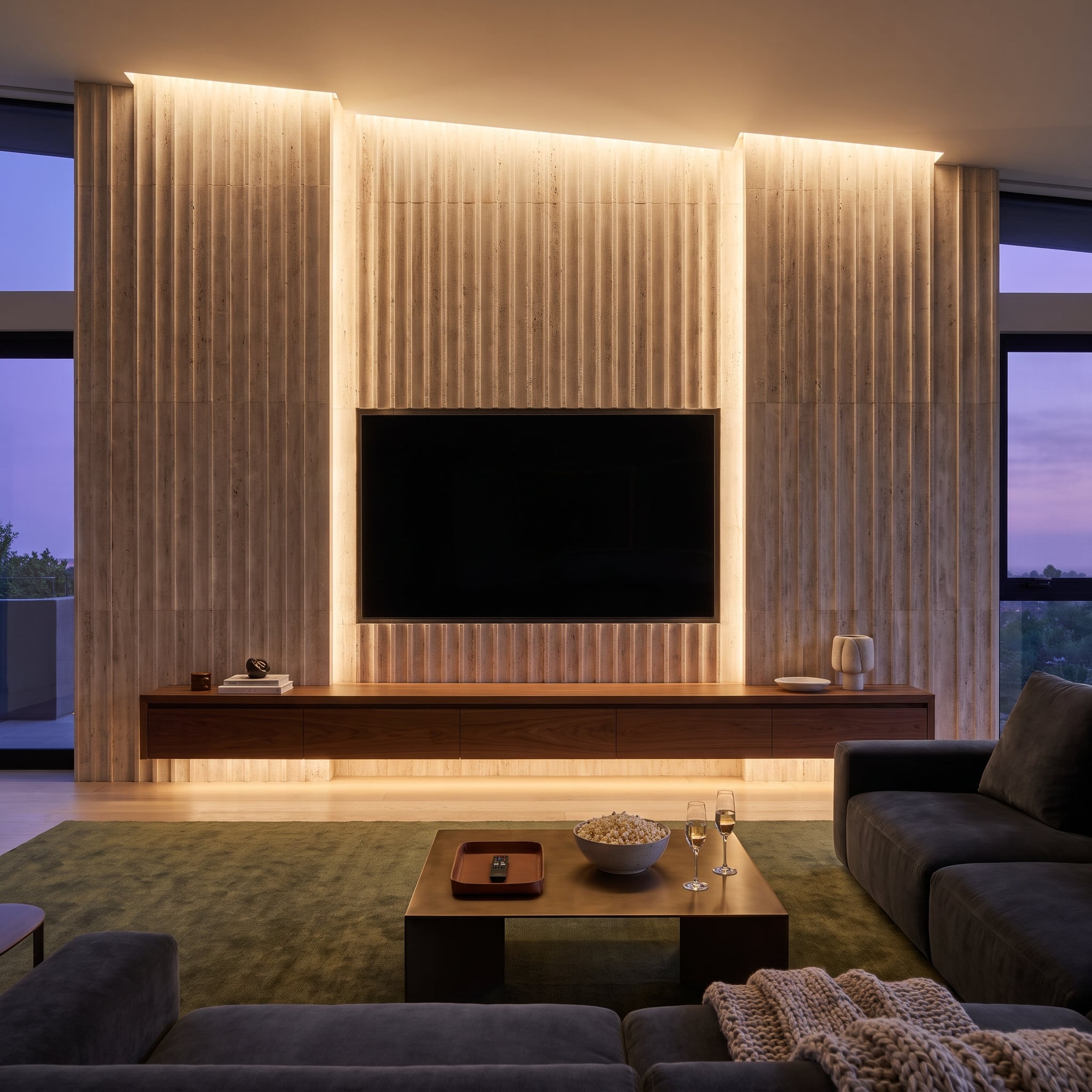
Vertical fluting gives the travertine panels a strong sense of height, with natural variations in the stone adding texture to the repeated grooves. The television sits within a darker central recess, allowing the surrounding material to establish the architectural character of the wall.
A floating walnut console provides a long, low counterpoint to the vertical stone. Light beneath the console separates it from the wall, while a concealed cove above adds a softer upper boundary. Heavy stone, floating timber, vertical grooves, and horizontal light create a carefully controlled tension. The television is present, but the wall has considerably more to say.
7. Glass Shelves and Copper Cookware Give a Pale Kitchen Its Warmest Moment
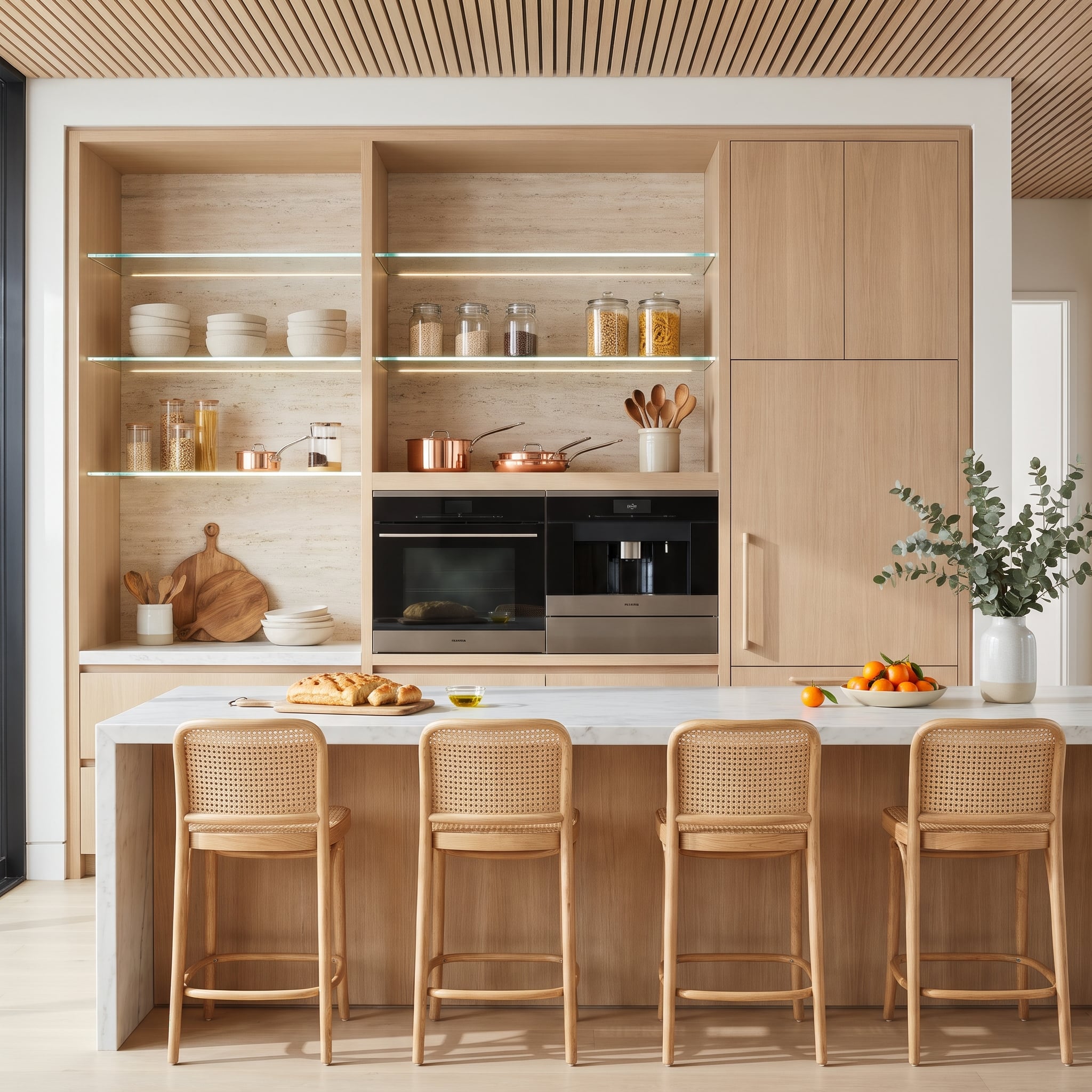
White oak cabinetry and a pale travertine backsplash establish a quiet foundation for open glass shelving. Concealed strips illuminate the shelves and the objects arranged on them, allowing the translucent glass to retain its visual lightness.
Copper cookware supplies the richest color in the room, its warm metallic surfaces catching highlights against the subdued palette. A thick marble island and cane-back stools introduce additional textures without competing with the display. The copper becomes a series of small glowing accents, each one bringing a little fire to the pale timber and stone.
Not everyone would go open, though: when we asked which upper cabinets readers would buy, 73% chose solid doors, with open shelves at 12% and glass fronts at 11%.
6. A Walnut Bar Disappears Into the Paneling Until the Doors Open
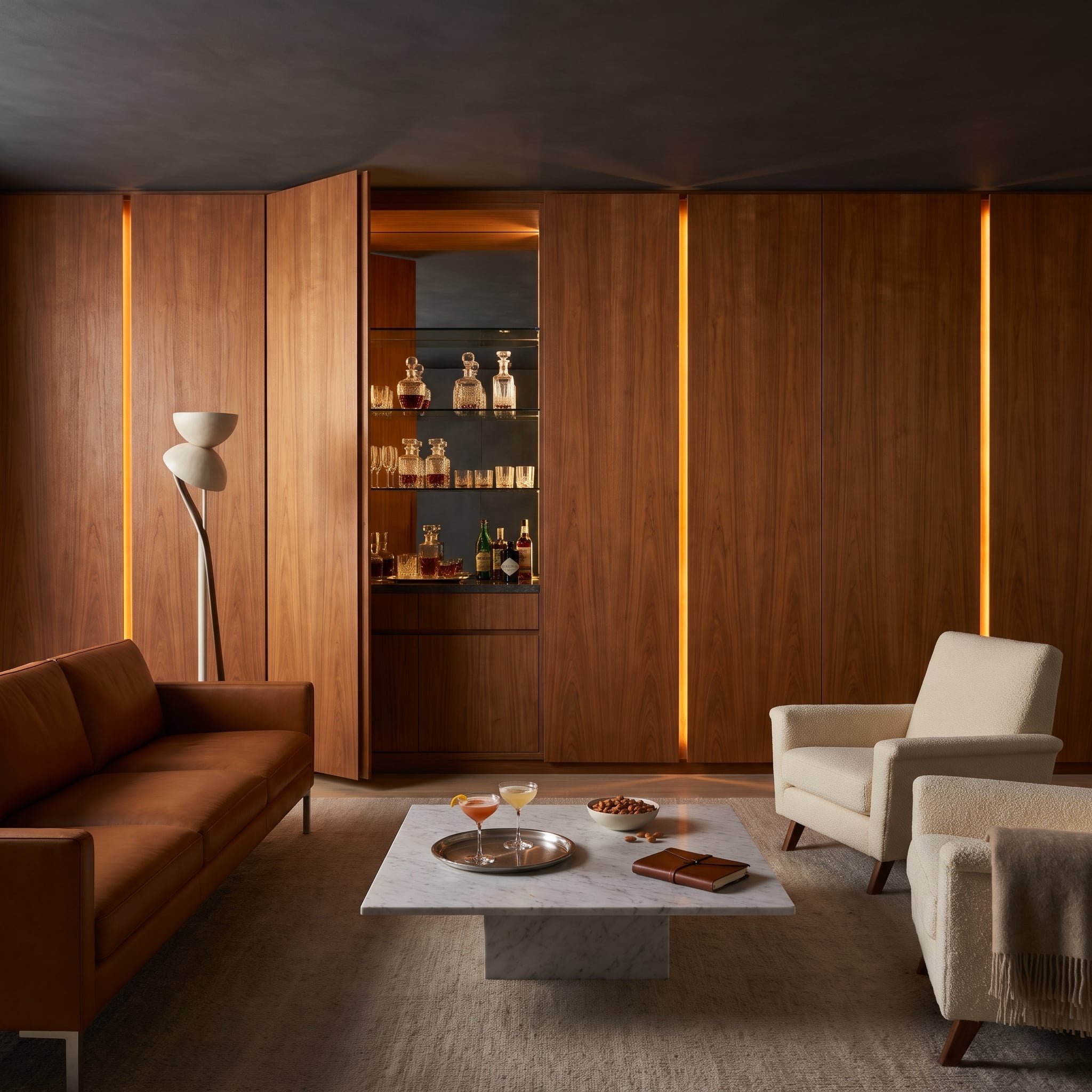
Floor-to-ceiling walnut paneling establishes a richly textured backdrop, with narrow vertical light strips emphasizing the seams. One section opens to reveal a bar cabinet fitted with glass shelves, bottles, and crystal decanters. The transition from uninterrupted timber to illuminated display gives the room an unexpected theatrical moment.
A cognac leather sofa and cream bouclé armchairs sit around a marble coffee table, their contrasting textures softening the extensive woodwork. Closed, the cabinet reads as architecture. Open, it becomes the room’s most elaborate piece of furniture, with illuminated glass and polished metal appearing where a solid wall stood moments earlier.
5. A Glass Handbag Gallery Turns the Dressing Room Into a Showcase
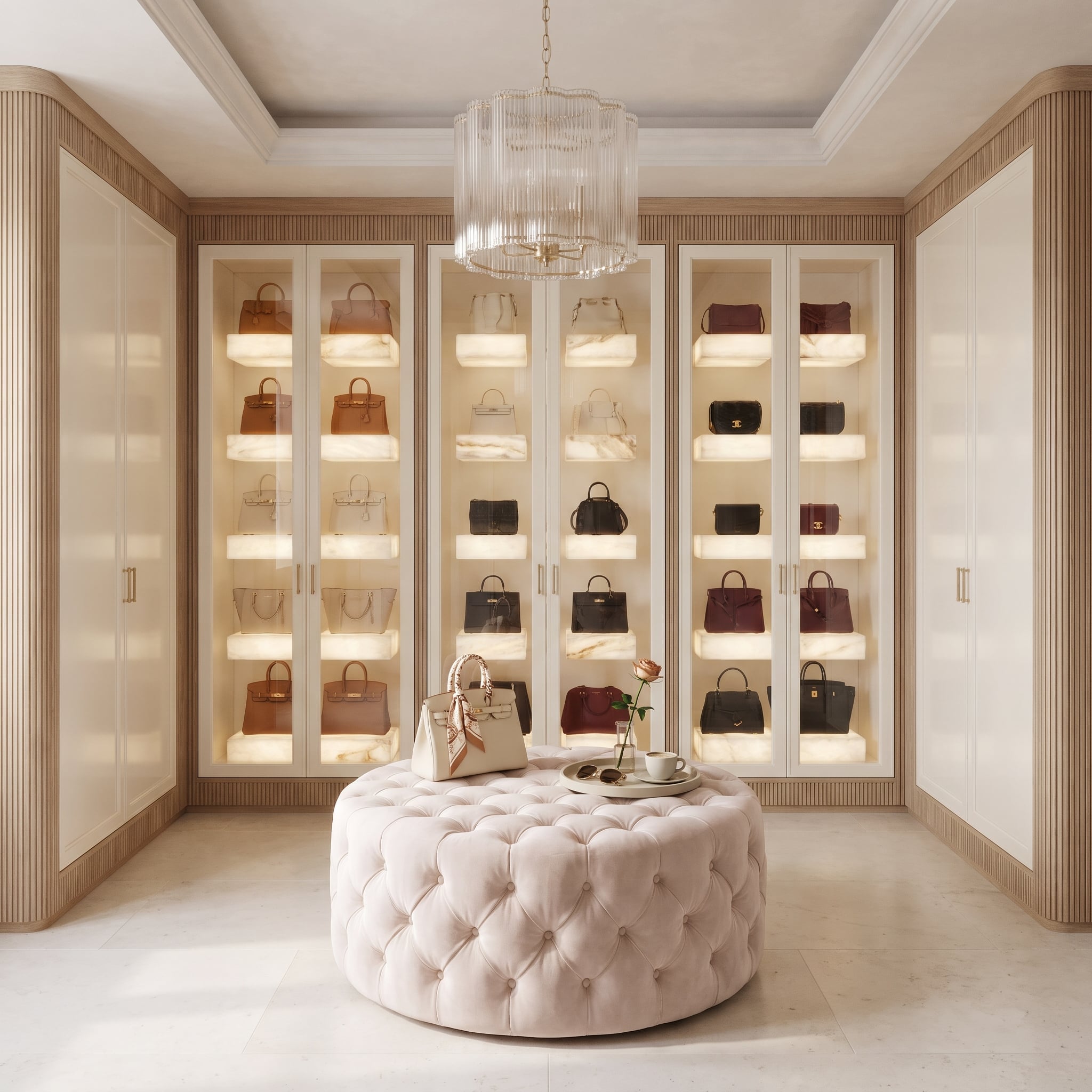
Six glass-fronted cabinets occupy the back wall, their illuminated shelves presenting handbags in cognac, burgundy, and black against softly glowing surfaces. Diffused light spreads across the display in broad, even bands, giving each compartment a clean architectural outline.
A round blush velvet ottoman introduces a softer shape at the center of the room, while a delicate chandelier adds a decorative flourish overhead. The combination has the polish of a luxury accessories boutique, with practical storage concealed beneath the glamour. Every handbag occupies its own illuminated setting, as carefully presented as a piece of sculpture.
4. Steel-Framed Glass Cabinets Bring a Jewel-Box Glow to a Marble Bar
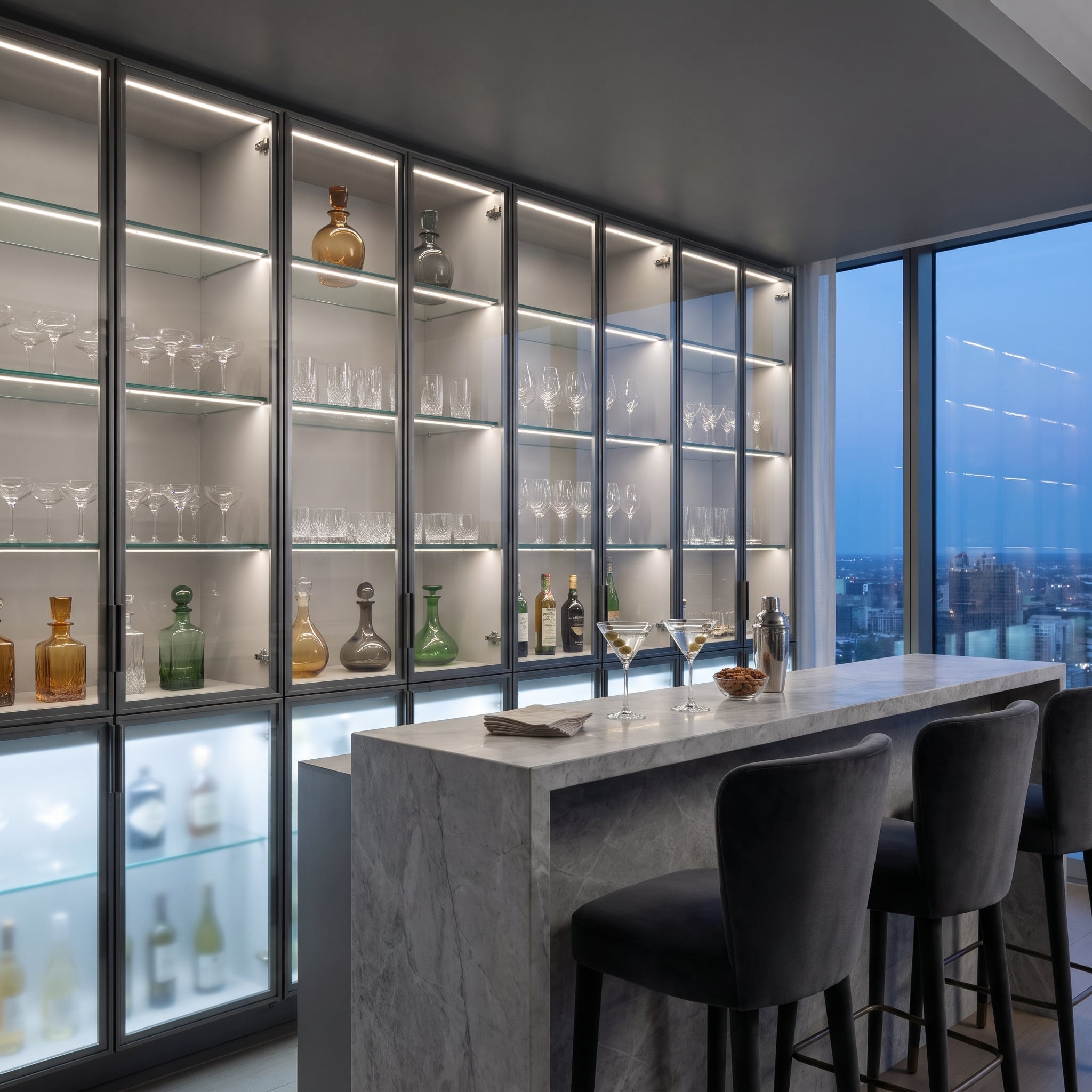
Steel-framed glass cabinets extend along two walls, their illuminated shelves filled with crystal stemware and colored decanters. The repeating metal frames create an orderly grid, while reflections in the glass give the display a layered, almost jewel-like quality.
A marble bar island occupies the foreground, accompanied by charcoal velvet stools that introduce a softer surface against the stone and steel. Beyond, tall windows open toward a city skyline. The meticulously illuminated cabinet interiors contrast with the expansive view outside. One is intimate and controlled; the other gives the room a sense of scale.
3. Fluted Walnut and Smoked Mirrors Give a Bar Cabinet a Double Life
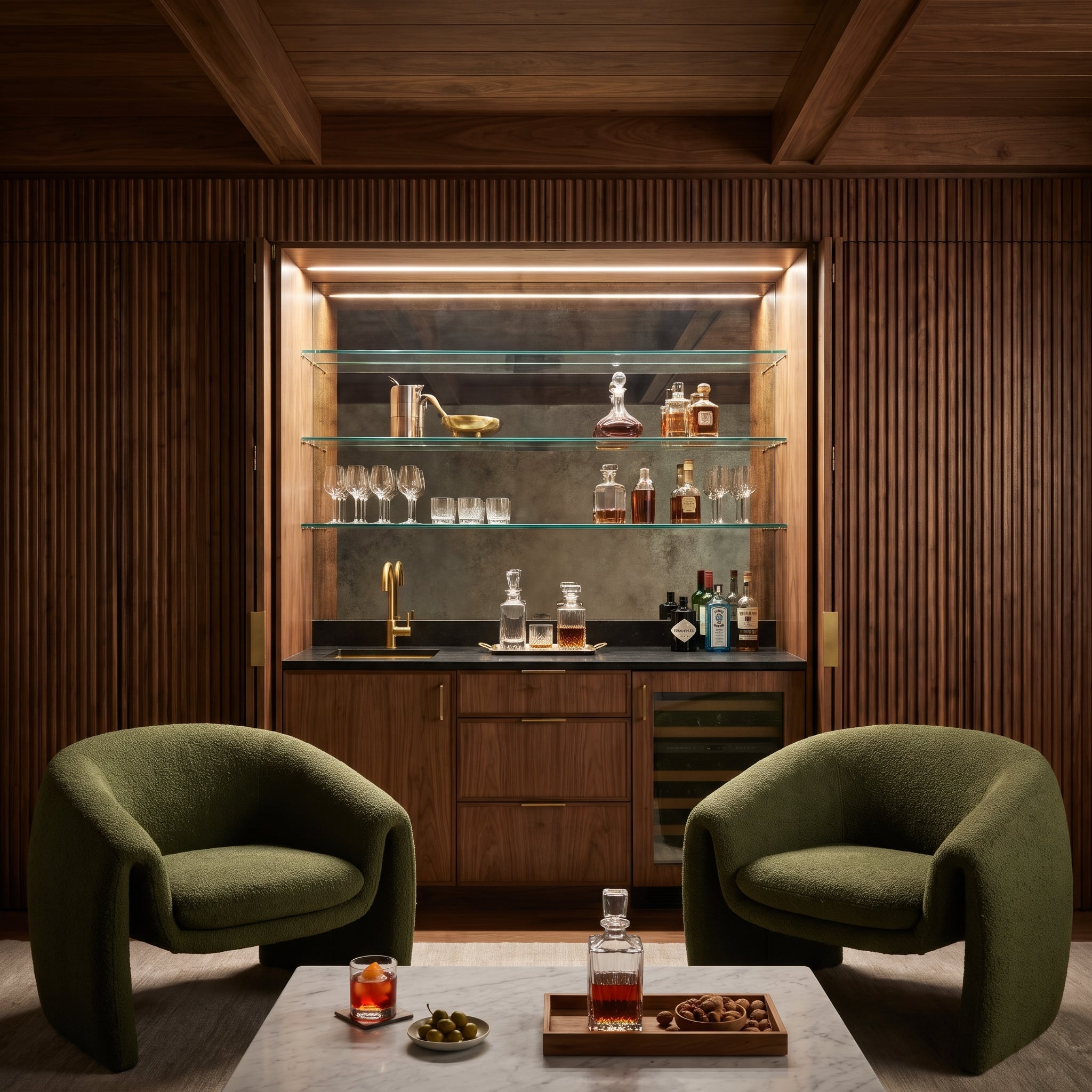
Fluted walnut panels wrap the lounge in dark, closely spaced vertical lines. At the center, a recessed bar cabinet interrupts the rhythm with glass shelves and smoked mirror backing. Concealed amber strips illuminate the display, while the reflective surfaces add visual depth behind the glassware.
Olive-green bouclé armchairs introduce a softer, lighter texture against the dark timber. The smoked mirror catches highlights from the glassware without surrendering the room’s moody character. Behind the warm walnut and orderly vertical grooves, the illuminated bar offers a richly layered surprise.
2. A Whole Dressing Room Glows From Within Its Cabinetry
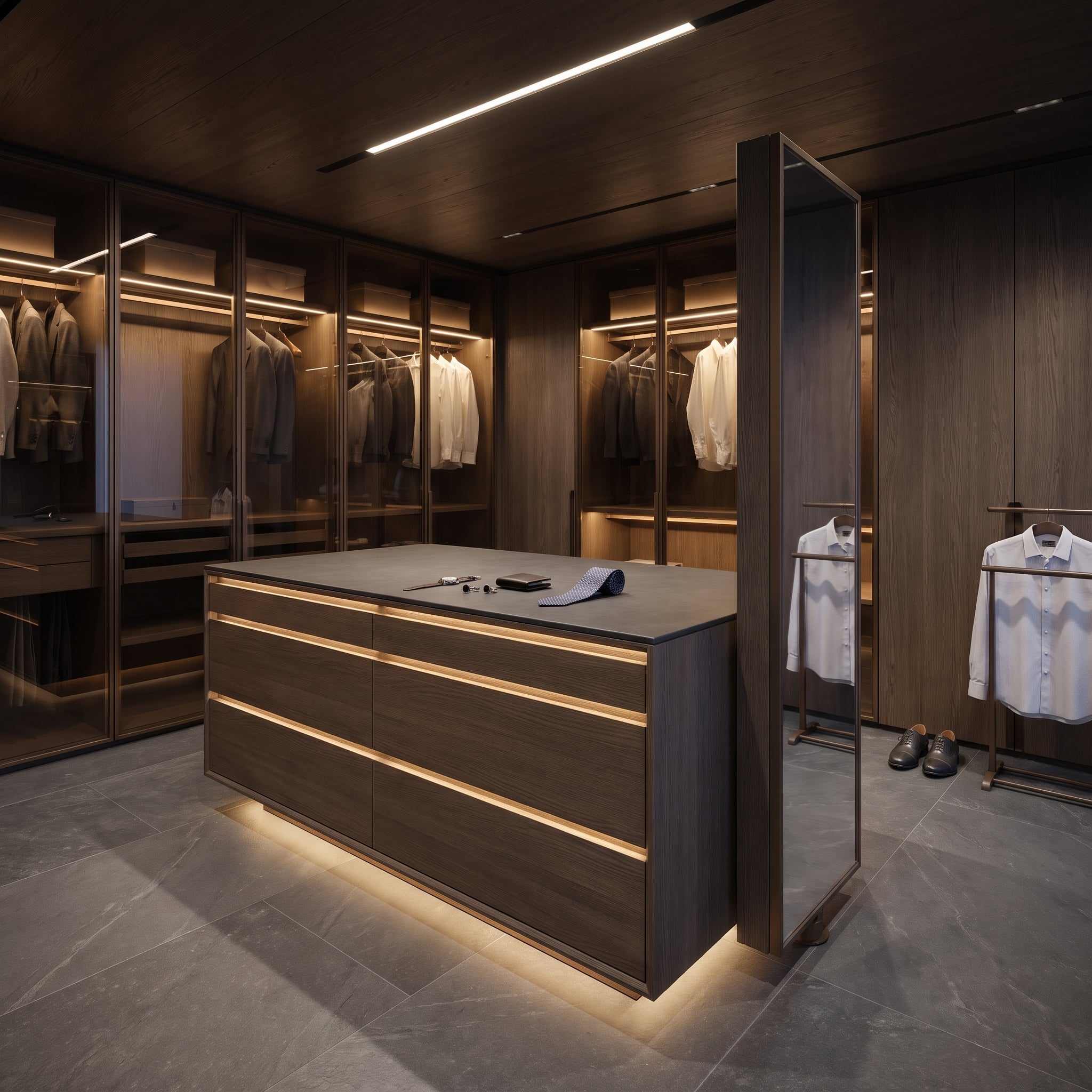
Every wardrobe section is illuminated from within, bringing hanging shirts, dark suits, and folded garments into clear view. The lighting follows the storage rather than relying solely on a general ceiling source, reducing the deep shadows that can develop inside tall cabinets.
At the center, a storage island repeats the idea with a narrow glowing reveal at its base. A dark stone countertop provides a substantial surface, while the surrounding wardrobe walls create a continuous pattern of illuminated compartments. The precision is what makes the room memorable. Each strip has a purpose, each cabinet gains definition, and the architecture itself becomes the fixture.
1. A Floating Walnut Staircase Turns Every Tread Into a Line of Light
Thick walnut treads project from a towering stone-clad wall, each separated by an illuminated gap that emphasizes the staircase’s floating appearance. Concealed lighting follows the undersides of the steps, producing a sequence of warm horizontal lines against the textured stone. A glass balustrade preserves the open silhouette, with a slender handrail tracing the ascent toward the upper gallery.
The staircase becomes the dominant architectural feature in a double-height interior framed by expansive garden-facing windows. An illuminated tree, polished stone flooring, and warm timber details reinforce the layered lighting scheme. Substantial wooden treads appear to hover against the stone wall, their illuminated undersides turning an everyday ascent into a dramatic architectural procession.