
Marble gleams. Glass soars. Concrete makes its architectural statement. Then someone pulls out a chair, drops a fork or starts a conversation, and the room reveals something the photographs never could: how it sounds. A spectacular interior can become an echo chamber when every surface insists on having the last word.
In order to come up with the very specific design ideas, we create most designs with the assistance of state-of-the-art AI interior design software. Also, assume links that take you off the site are affiliate links such as links to Amazon. this means we may earn a commission if you buy something.
The answer isn’t to bury the architecture beneath carpeting and curtains. Some of the most compelling solutions are hiding in plain sight: perforated timber ceilings, walls upholstered like bespoke furniture, sculptural screens, deep wool rugs and bookshelves with enough irregularity to break up a flat surface. Others make a spectacle of softness, wrapping entire rooms in velvet, cork or fabric while stone and glass continue to provide the drama.
Sound absorption, diffusion and isolation are different disciplines, and not every beautiful texture performs an acoustic miracle. A decorative wood slat isn’t automatically a sound absorber; a thick curtain doesn’t make a glass wall soundproof. These 32 interiors explore what happens when acoustic thinking enters the architectural conversation. From intimate libraries to soaring dining rooms, the most compelling designs make room for sound without sacrificing visual drama.
32. Emerald Velvet Takes Over a Dining Room With a Glass-Fronted Wine Wall
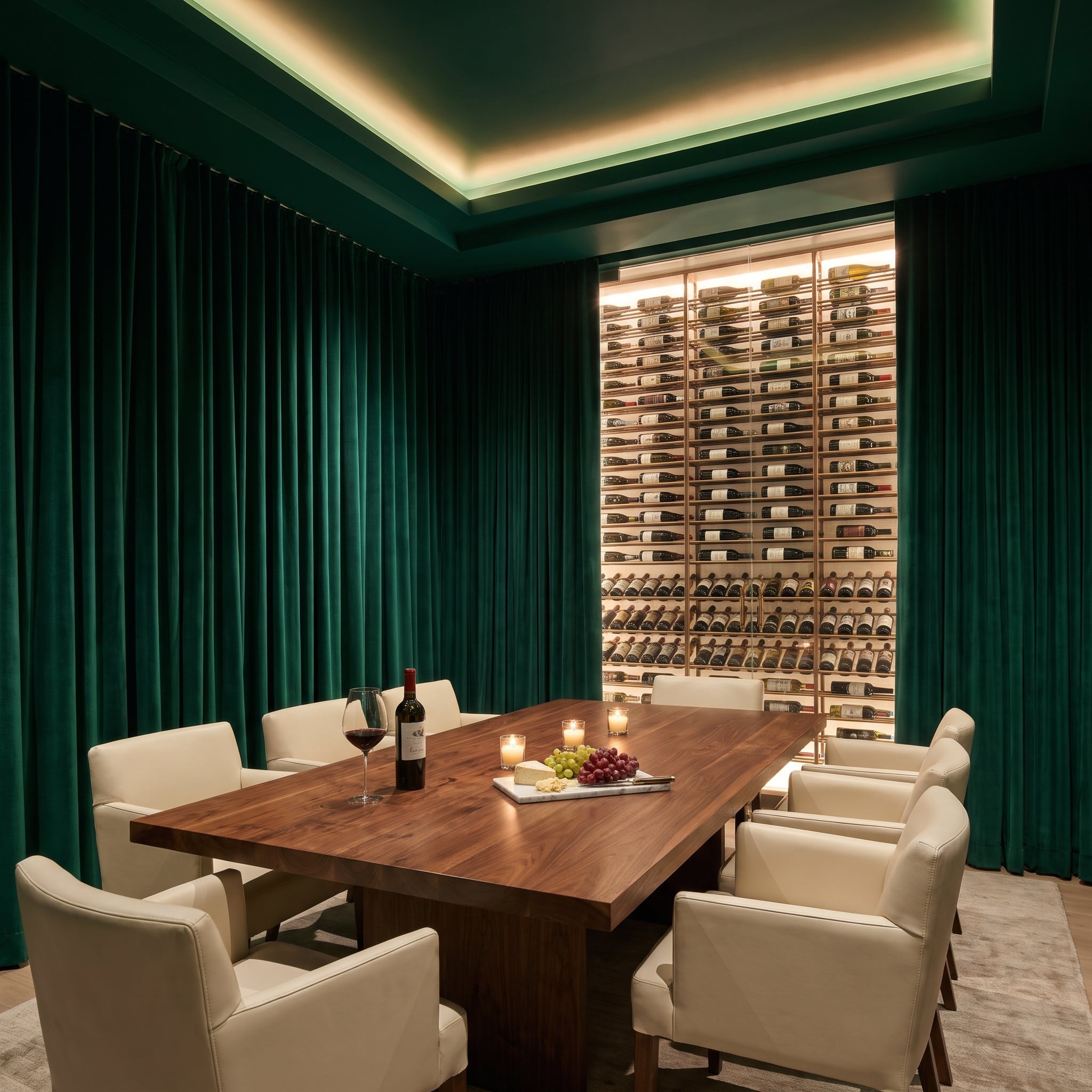
Emerald velvet climbs from floor to ceiling, interrupted by a glass-fronted wine display that has no intention of disappearing into the background. The curtains fall in generous folds, a thick rug anchors the dining chairs, and cream leather brightens the composition without diluting its intensity. Glass and walnut retain their polished presence, while the generous textiles help take the edge off the reflections that can make lively dining rooms exhausting. The atmosphere belongs to a private club with a particularly extravagant decorating budget.
31. A Ceiling Full of Pinholes Gives This Shared Office Its Finest Detail
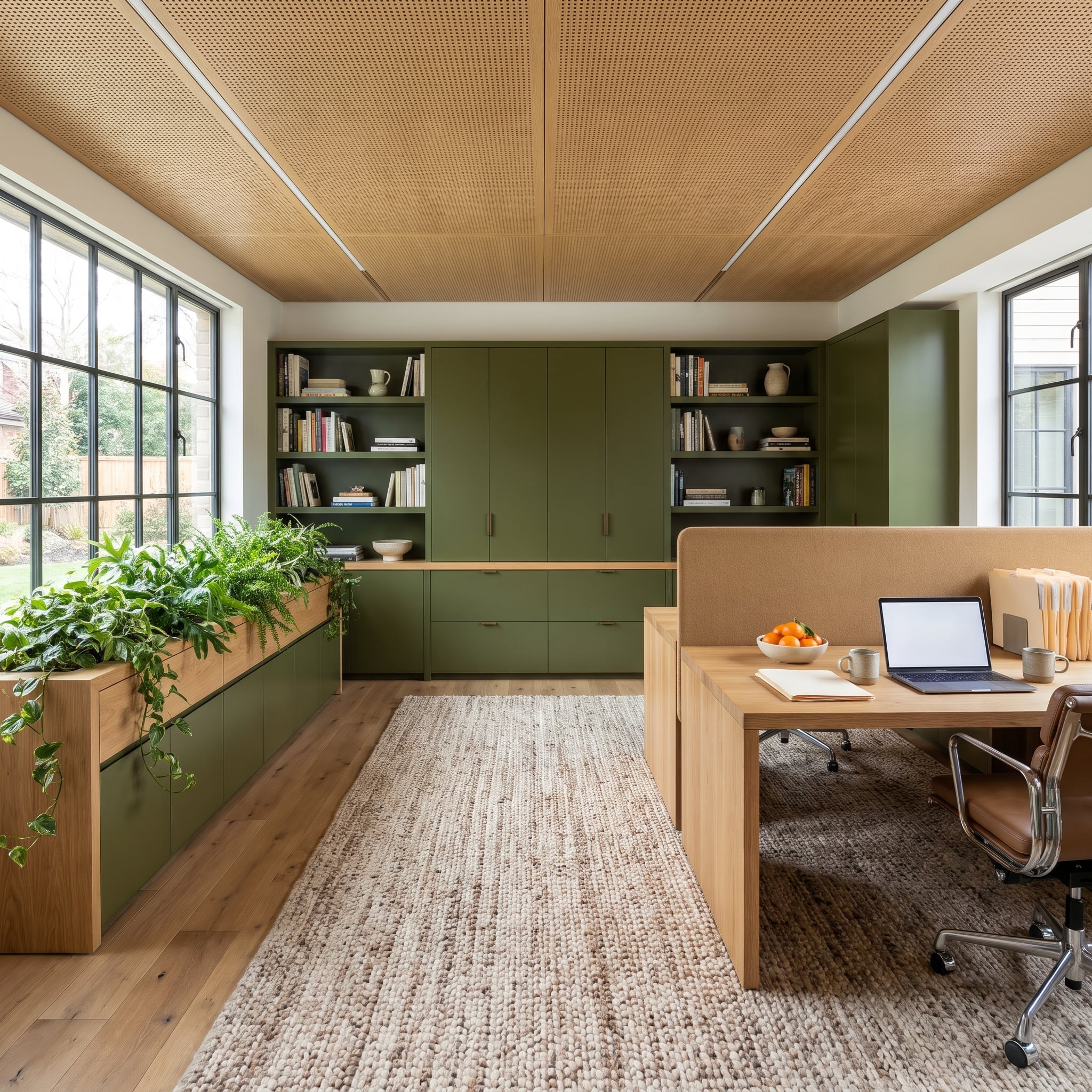
The ceiling’s tiny perforations almost disappear until the light catches them. Unlike ordinary decorative paneling, perforated timber can allow sound to reach absorbent material concealed behind the wood. A properly designed installation gives the ceiling a practical acoustic role without advertising the engineering. Below, a tan felt screen separates two workstations, while a substantial wool rug covers the floor. Olive cabinetry keeps the palette grounded. Two people can share an office without sharing every visual distraction, although the garden beyond the windows may still have other ideas.
30. Walnut, Navy Lacquer and a Shag Rug Give the Bar Its After-Dark Personality
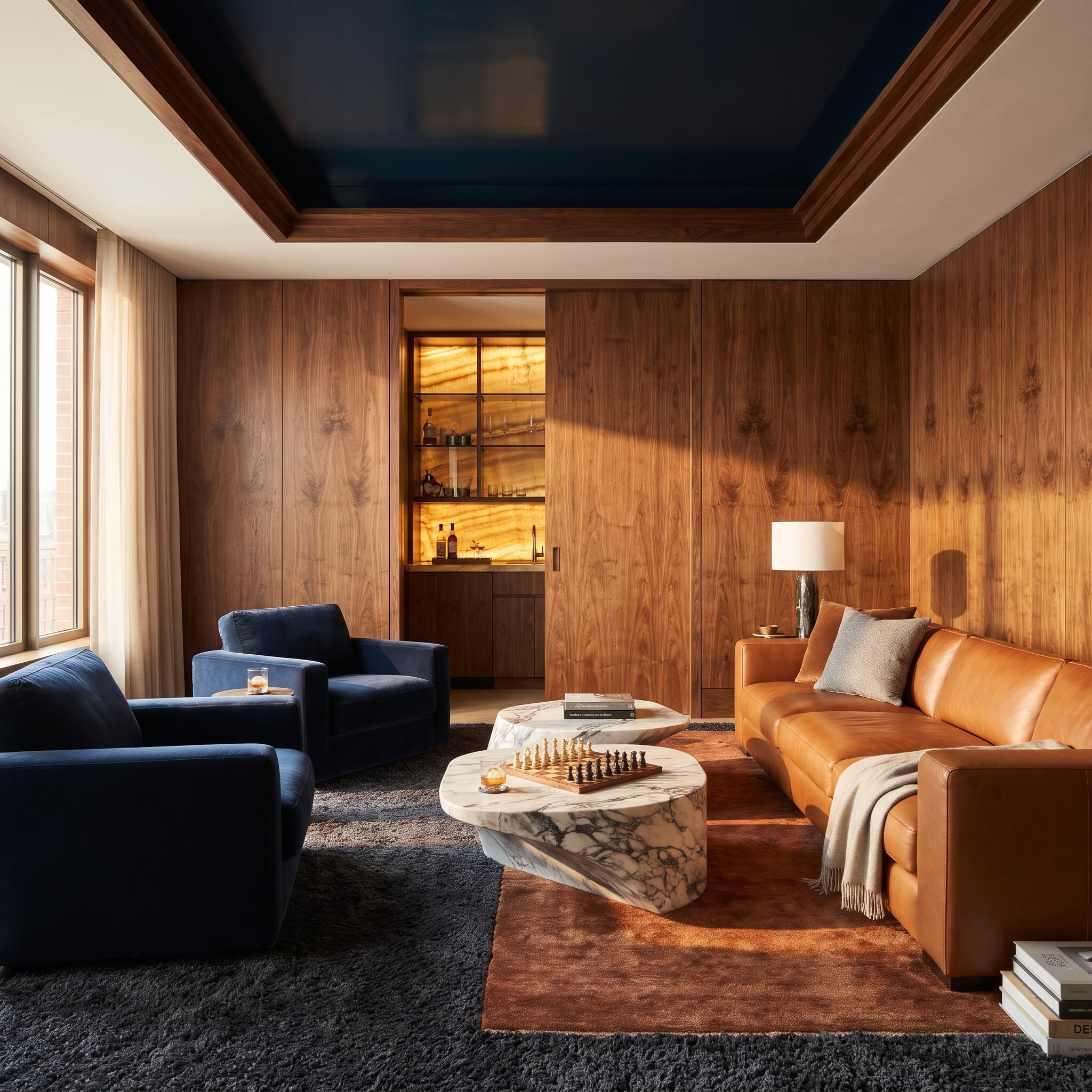
Dark walnut wraps the walls, charcoal shag covers the floor, and a rust-colored rug adds another layer beneath the seating. The backlit onyx bar supplies the spectacle, glowing against a palette that otherwise prefers the shadows. Navy lacquer overhead is unapologetically reflective, making the deep-pile textiles especially useful for absorbing some of the sound bouncing around the room. Polished stone and glossy ceiling above, tactile furniture and thick rugs below: the contrast is deliciously deliberate. The lighting knows exactly when to make an entrance.
What Our Readers Say
- When Home Stratosphere readers disliked a dining room, “too cold” was one of the top reasons they gave, picked 15% of the time, behind “not my style” and “too busy.”
- In our heart votes, interiors with brown accents got hearts 77% of the time, compared with 66% for the other images in the same articles.
From Home Stratosphere reader polls and votes.
29. A Wool Rug and Bouclé Chairs Meet the Challenges of a Round Room
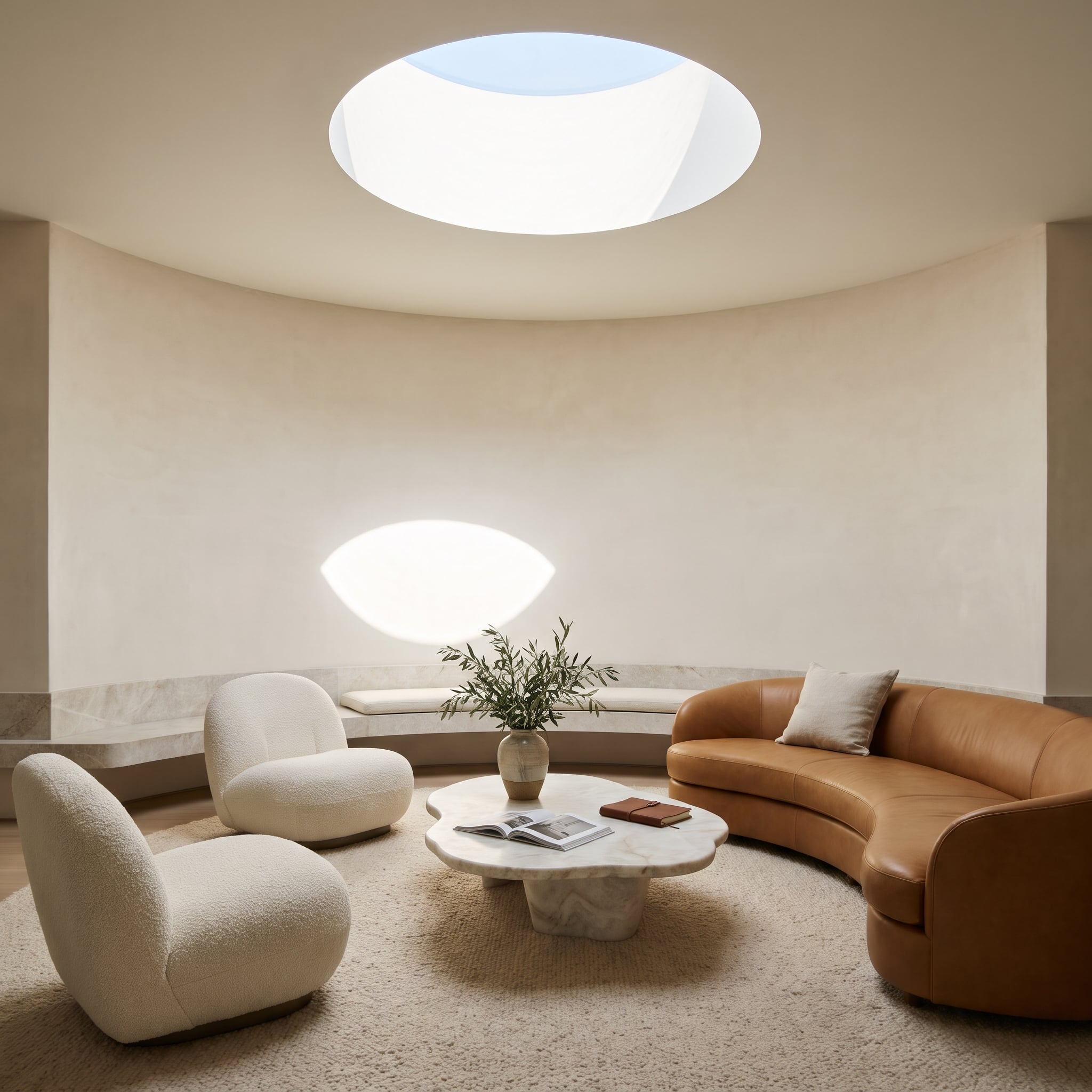
A circular room beneath an oculus has drama built into its geometry, along with an acoustic complication. Curved surfaces can concentrate sound reflections in particular locations, depending on their shape and finish. The broad wool rug and low bouclé chairs absorb some of that reflected energy, although furniture alone cannot resolve every consequence of the architecture. Cognac leather introduces warmth against pale plaster, and the stone bench preserves the monumental character. The remarkable enclosure remains the star, but the furnishings bring its enormous scale back toward the people occupying it.
28. Five Shelves of Herbs Interrupt a Kitchen of Marble and Glass
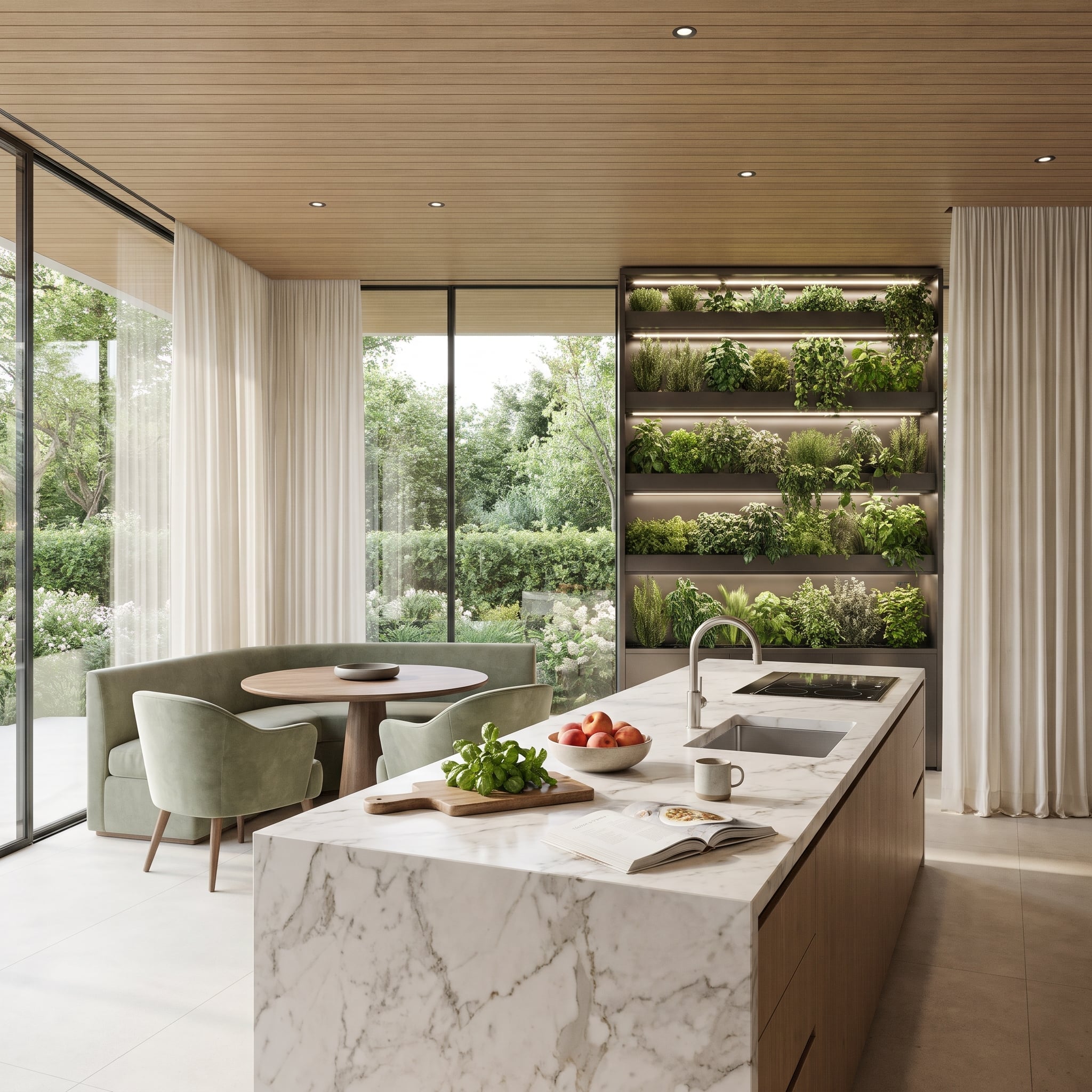
Marble, glass and large-format tile give this kitchen a hard, gleaming vocabulary. Five illuminated shelves of herbs interrupt the precision with greenery, irregular leaves and the unmistakable suggestion that someone might actually cook here. A sage upholstered banquette and full-height curtains bring substantial textiles into an otherwise reflective interior, while timber slats overhead add warmth and linear order. With acoustic backing, the ceiling could also help manage reverberation. The herbs supply the visual mischief; the furnishings handle the softer side of the room. Architectural discipline survives without turning the kitchen into a laboratory.
27. A Moss-Green Screening Room Lets Its Walls Ripple
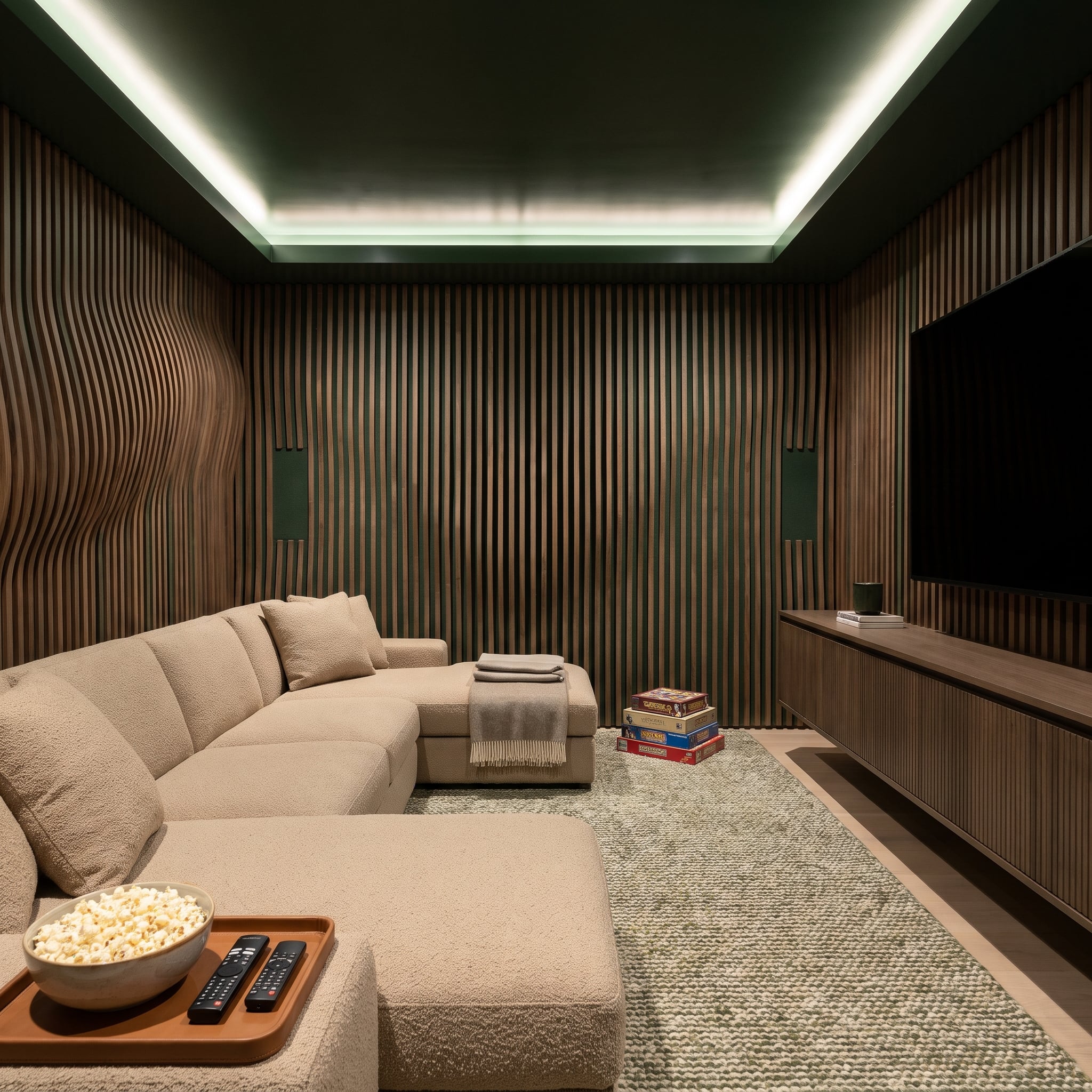
Dark wood slats bend into a slow ripple along the wall, turning a screening room into something closer to a sculptural interior. Changing surface depths can scatter sound reflections, although effective acoustic diffusion requires carefully considered dimensions rather than an attractive wave pattern alone. Moss-green fabric panels introduce opportunities for absorption behind the upholstery, and a thick rug and generous bouclé sectional complete the layered interior. The stack of board games beside the chaise is a welcome interruption to all that architectural precision. Not every evening needs a film.
26. A Glass-Walled Desk Nook Finds Its Counterweight in Slate-Blue Felt
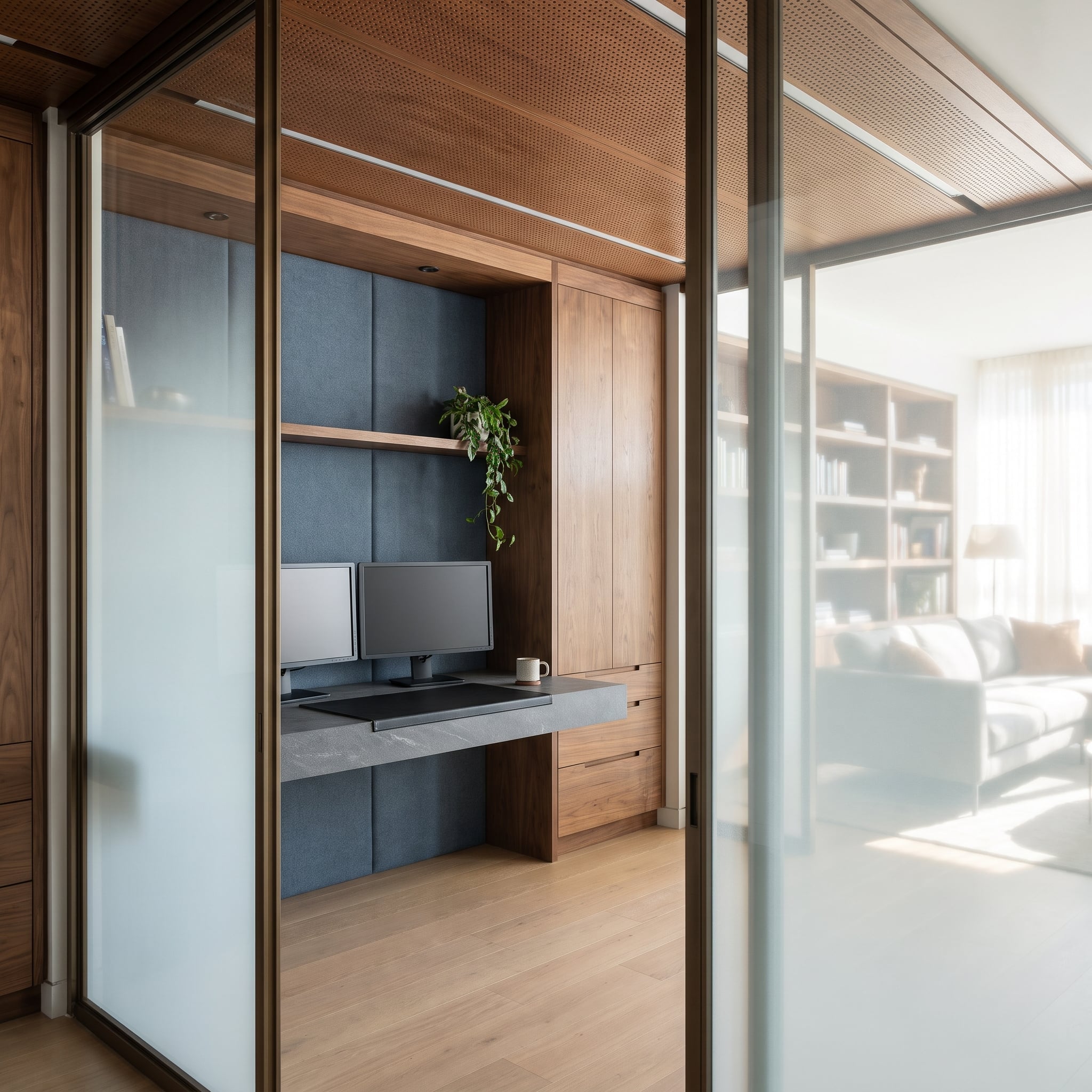
Bronze-framed glass sliders separate a walnut desk nook from the adjoining living space without surrendering the view. Slate-blue felt panels behind the floating stone desk establish a concentrated field of color against the glazing. With absorbent backing, those panels can reduce reflections within the workstation; the glass enclosure addresses a different problem, limiting sound transmission according to the performance of its framing and seals. Transparency and acoustic privacy aren’t mutually exclusive, but neither comes automatically with a handsome partition.
25. Eight Upholstered Chairs Face a Two-Story Wall of Glass
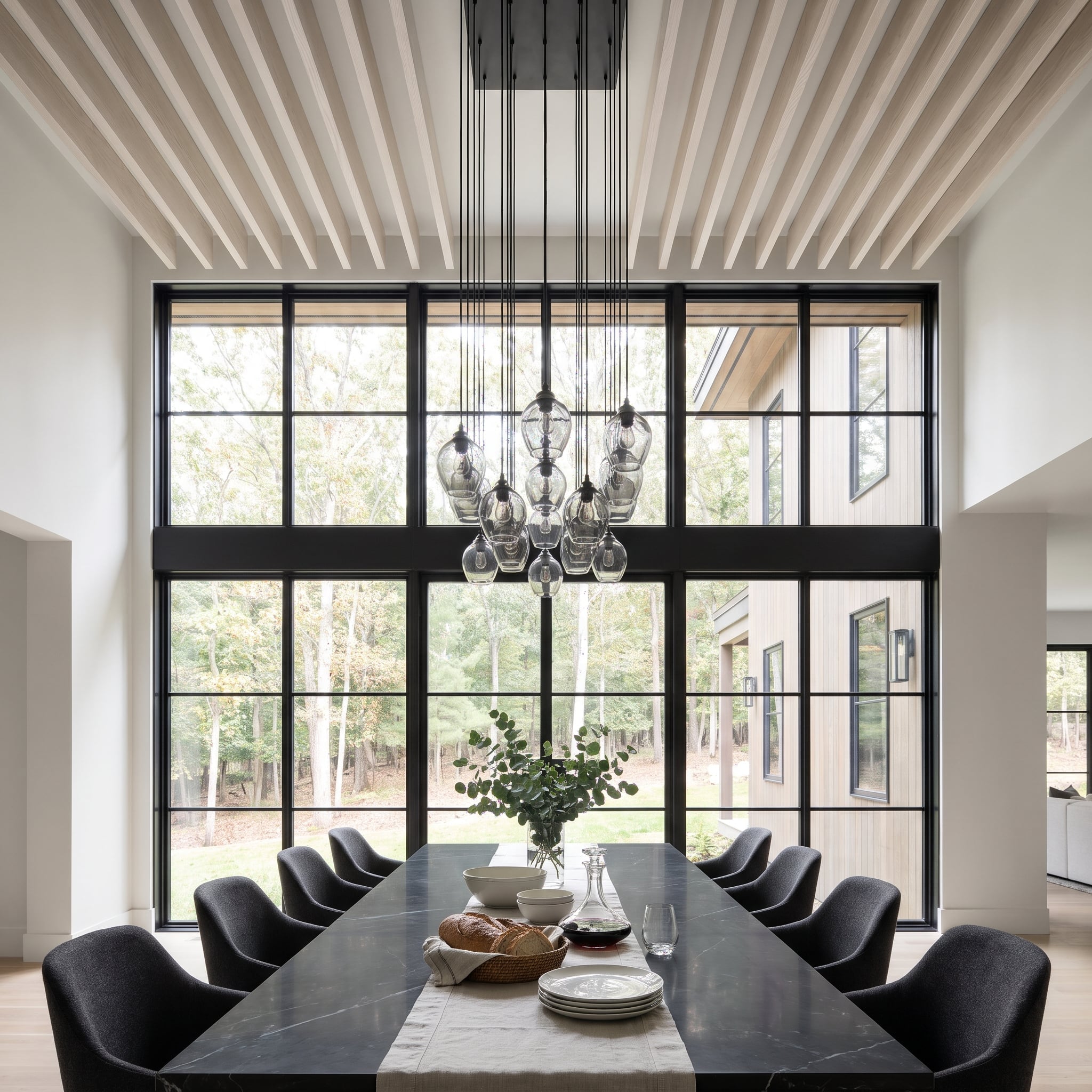
Black-framed glazing rises two stories beside a long dining table, giving the architecture as much presence as the furniture. Enormous glass surfaces, a high ceiling and a bare floor leave plenty of opportunity for sound to linger. Eight charcoal upholstered chairs offer some absorption, while the pale oak slats overhead could contribute considerably more with an appropriate acoustic backing. The scale is exhilarating, but the furnishings have a formidable assignment: eight chairs against two stories of glass is hardly an even contest.
Asked which set of four dining chairs they would buy, 55% of our readers chose upholstered over wood.
24. Mustard Felt Screens Turn an Onyx Desk Into an Architectural Composition
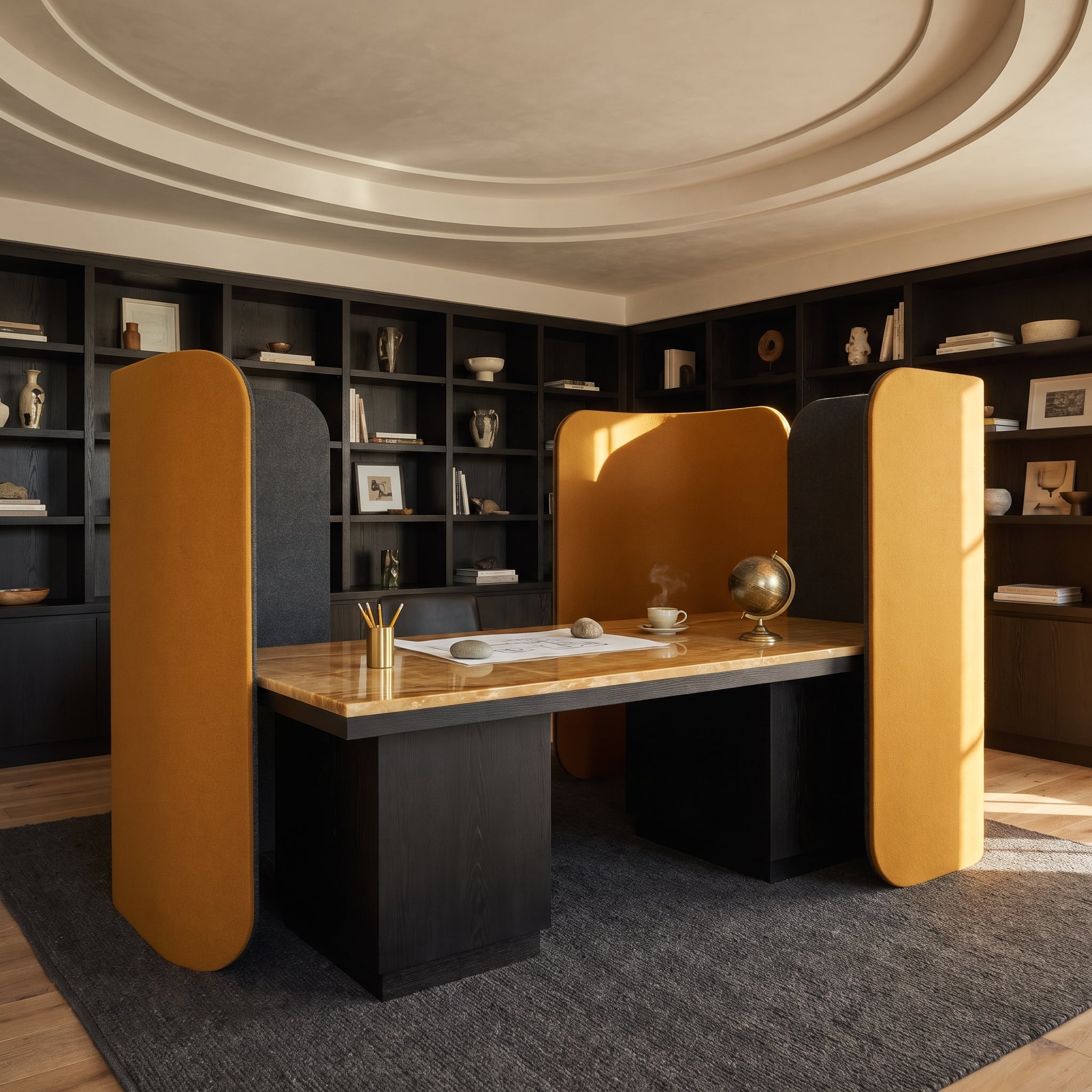
Freestanding felt screens curve around a polished honey-onyx desk, their mustard faces and charcoal backs turning a practical partition into a striking piece of furniture. Their shape creates a more intimate working zone without permanent walls. Substantial absorptive material within the screens would also help reduce nearby reflected sound, although an open partition cannot provide the isolation of a sealed enclosure. Dark shelving carries books and pottery, while an oval plaster ceiling supplies an extravagant overhead flourish. The desk appears to have acquired its own architecture.
23. A Stone Kitchen Island Meets Curtains That Run Beyond the Windows
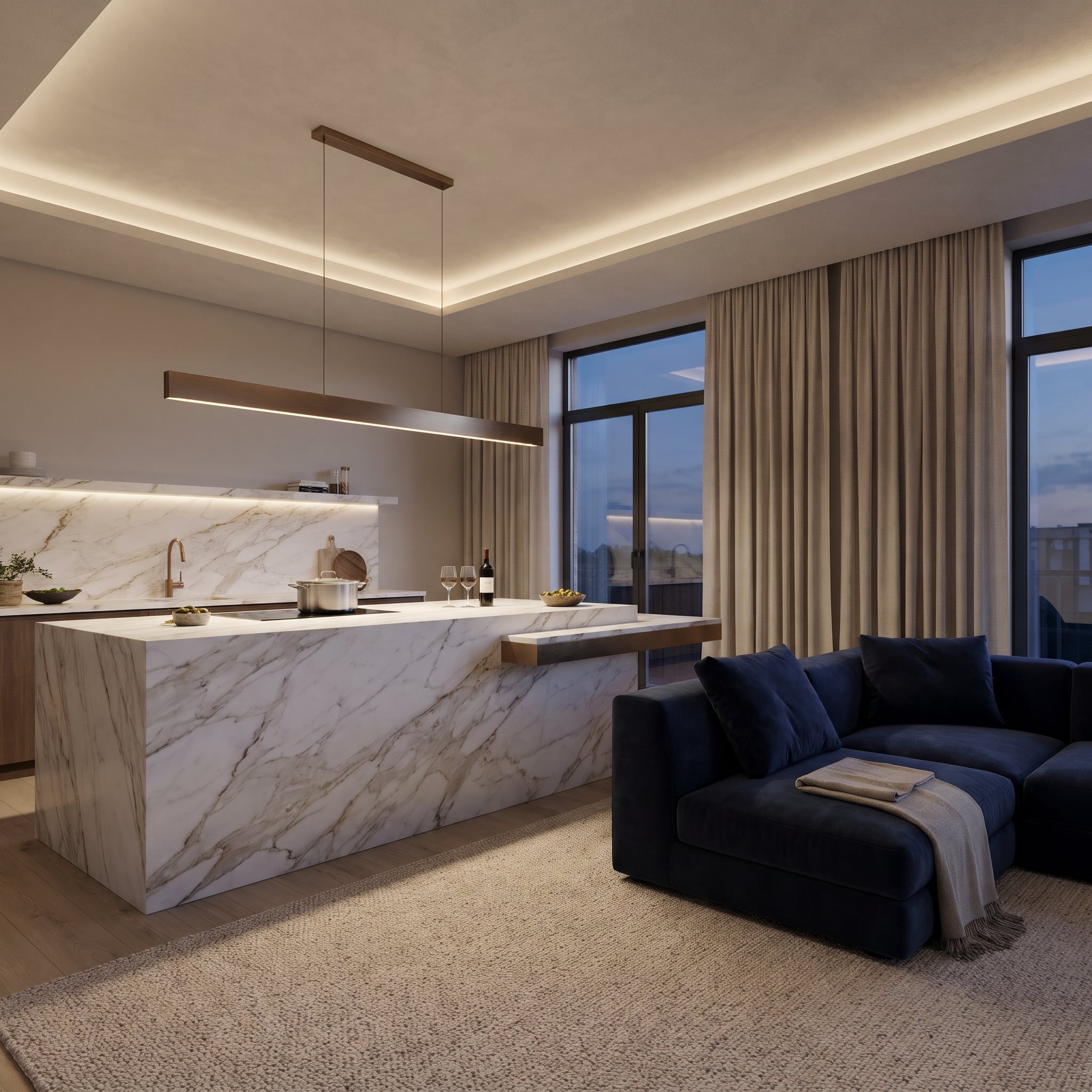
Polished stone needs a soft opponent, and this kitchen has chosen linen. Curtains fall in generous folds across the glazing and adjoining wall, extending the textile treatment beyond the window itself. Substantial, loosely hung fabric can absorb more sound than a thin, tightly stretched curtain, particularly at higher frequencies. A nubby rug defines the neighboring seating area without interfering with the kitchen floor. The stone retains its practical authority, but the drapery changes the character of the surrounding space. The most unexpected architectural gesture arrives on a curtain track.
22. Blush Velvet Softens a Circular Dining Room Beneath a Dome
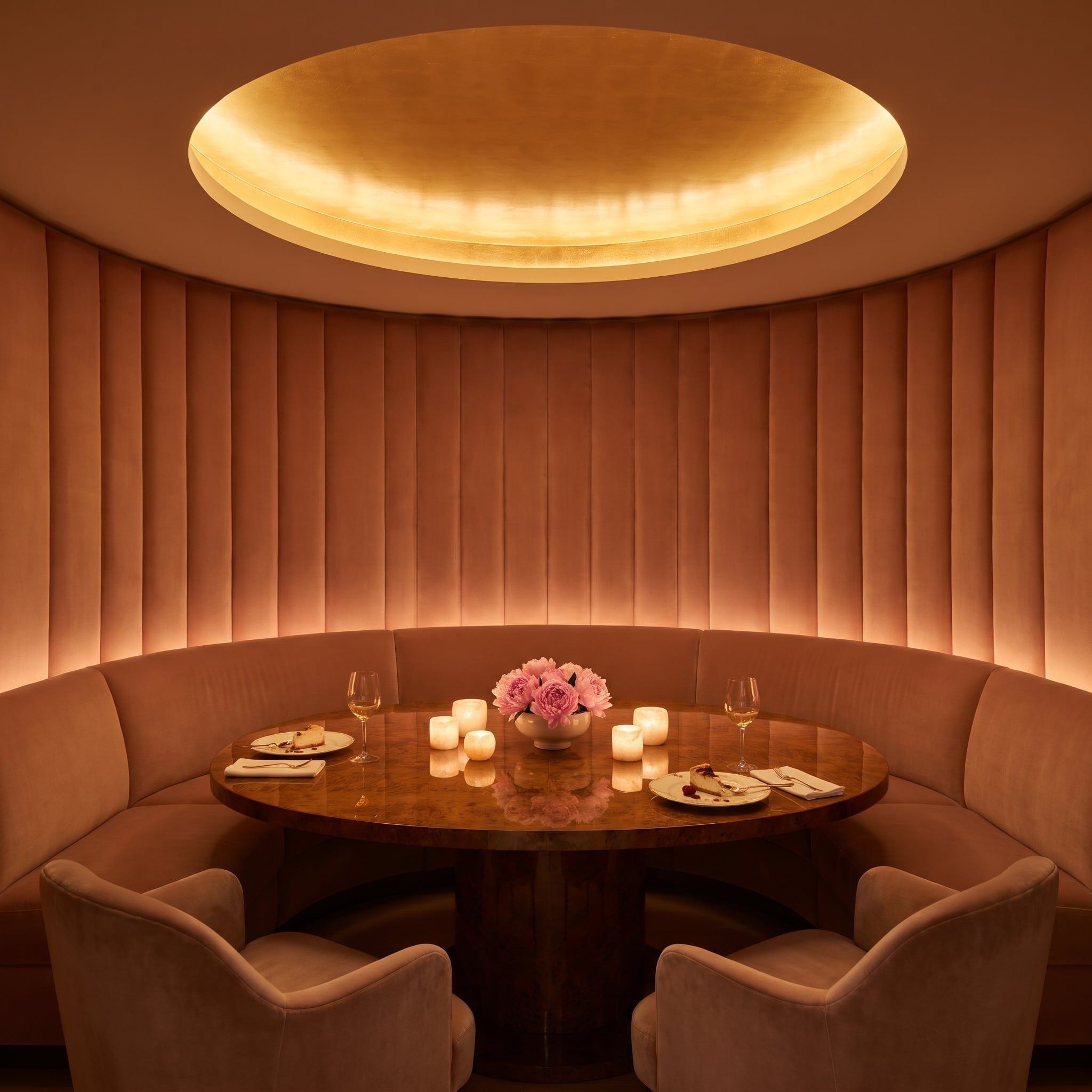
Round room, round table, domed ceiling: almost every major line in this dining space follows a curve. Blush velvet upholstery brings a generous concentration of soft surfaces to the seating, helping moderate the lively acoustics that can accompany hard, curved enclosures. The circular table reinforces the geometry rather than fighting it, and the repeated forms give the room a remarkable sense of completeness. Dining becomes an exercise in perfect circles, with the velvet providing the one element that refuses to look quite so disciplined.
21. A Concrete Loft Gets a Suspended Timber Canopy Above the Sofa
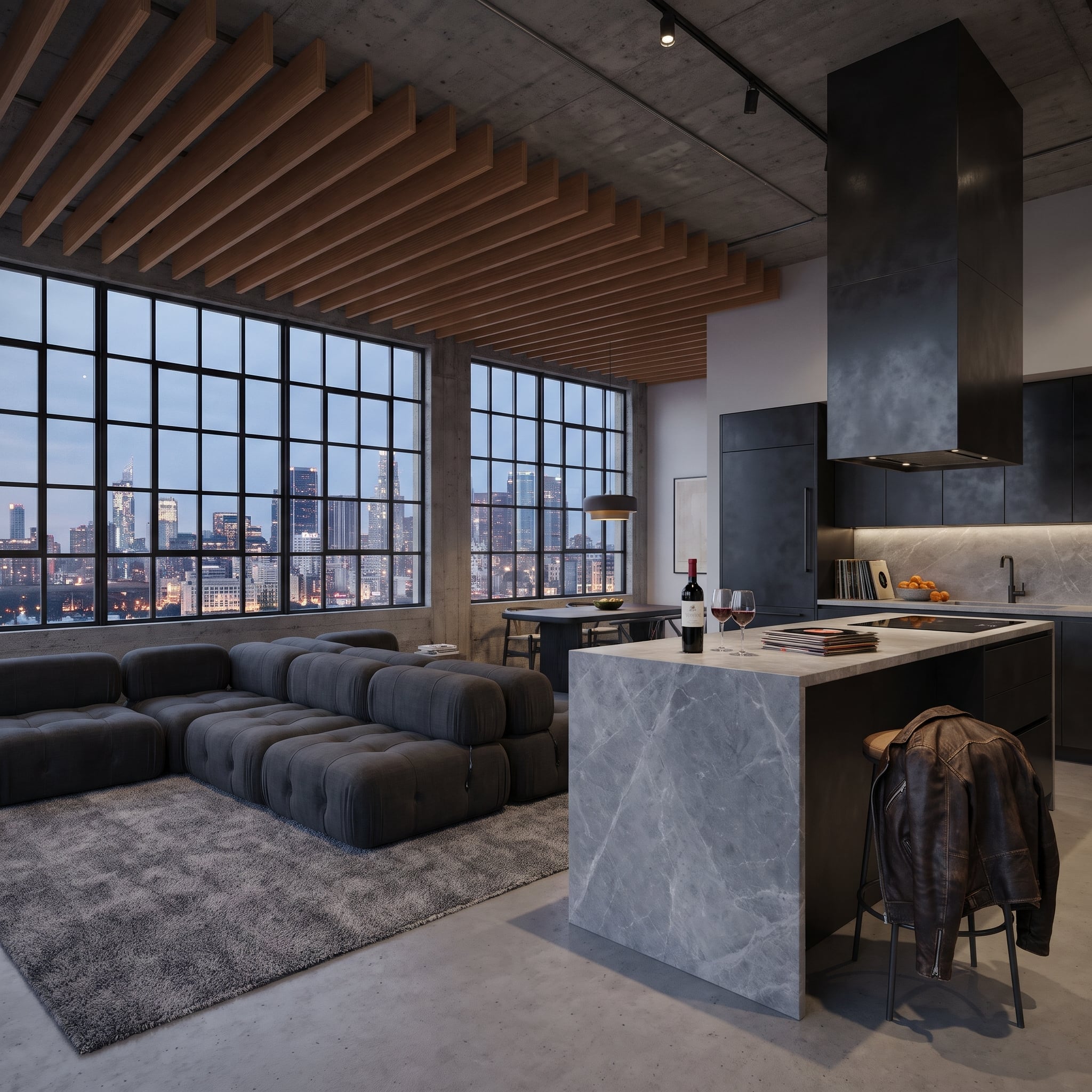
Concrete above, concrete below, and steel-framed glass along the perimeter: this loft has no shortage of hard surfaces. Suspended timber elements establish a distinct ceiling zone above the sofa, bringing a sense of enclosure to an otherwise expansive room. Their acoustic value depends on whether the installation includes sound-absorbing components; bare timber remains largely reflective. The thick rug and upholstered sectional provide a more immediate counterweight to the concrete. Without building a wall, the design creates a destination within the open floor plan.
Concrete interiors got fewer hearts from our readers than the other images in the same articles, 59% versus 68%, so warmer materials overhead have an appeal beyond acoustics.
20. A Bay-Window Banquette Gives Breakfast Its Own Upholstered Corner
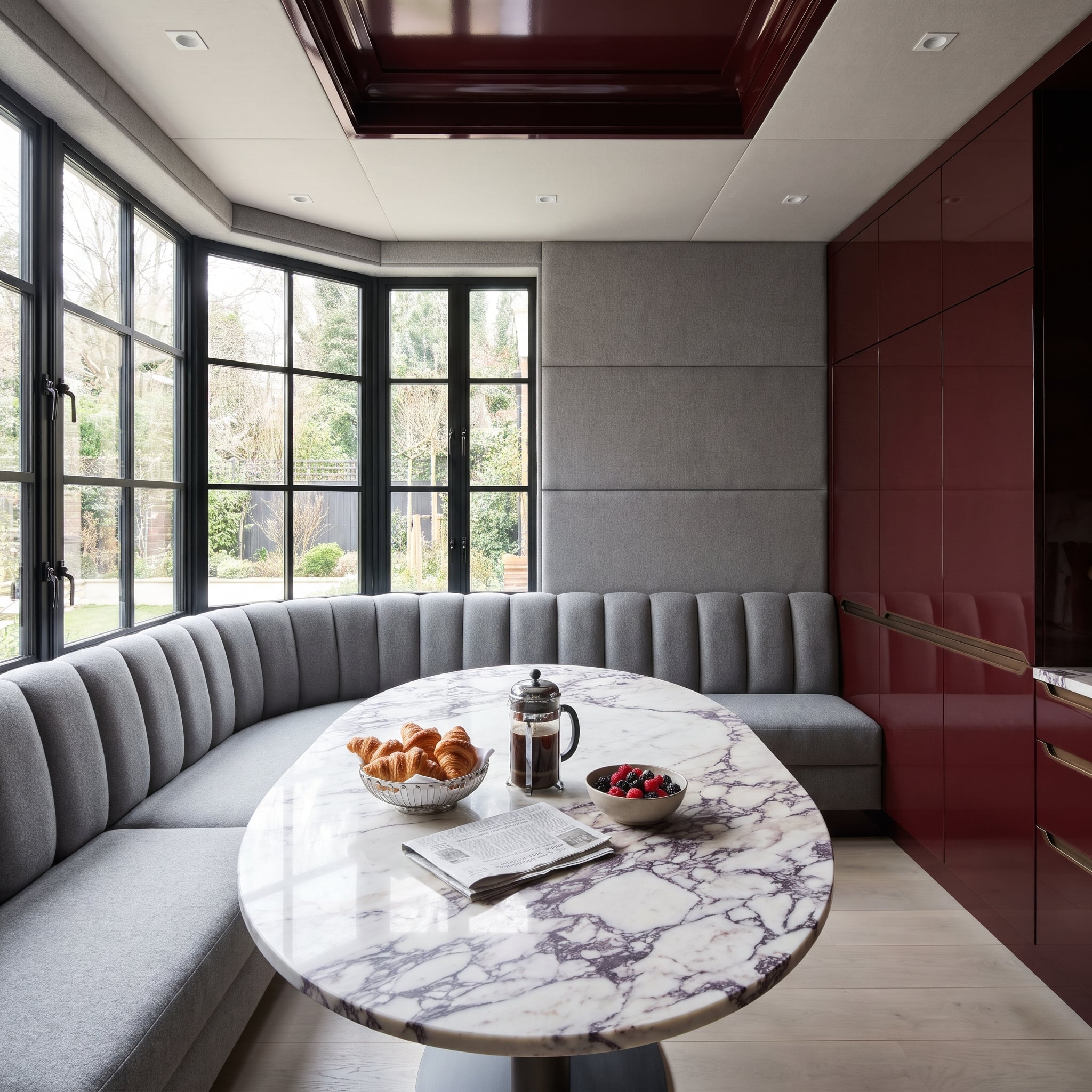
Channel-tufted upholstery follows the steel-framed bay, transforming a potentially hard corner into a generous place to sit. Padded wall panels extend the treatment above the banquette, creating opportunities for sound absorption opposite the reflective glazing. A textured ceiling adds another layer of detail, while oxblood lacquer brings a glossy counterpoint to the soft seating. The contrast gives this breakfast nook the confidence of a cocktail lounge, even with coffee and croissants on the table.
19. Dark Wood Blocks Turn a Listening Room Into a Geometric Landscape
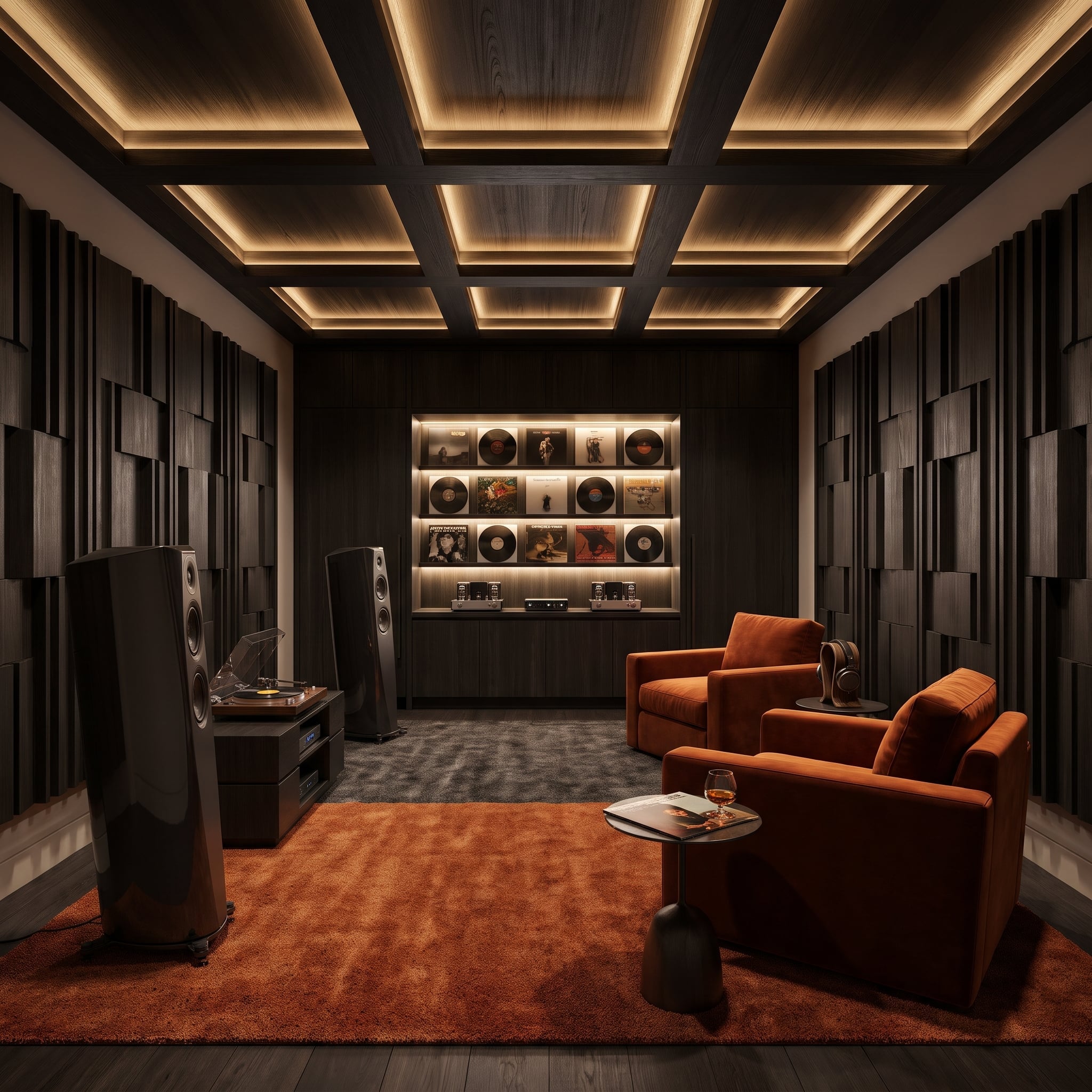
Stepped blocks of dark-stained wood cover the side walls, creating a sculptural pattern that looks almost pixelated. Their varied depths suggest the geometry of an acoustic diffuser, although effective diffusion requires carefully calculated dimensions and placement. The distinction matters in a listening room: diffusion scatters reflections, while absorption reduces their energy. A rust shag rug sits over gray carpeting, and velvet armchairs repeat its warm color. Tall speakers and a turntable make the room’s purpose unmistakable. Here, the architecture is part of the listening experience rather than a neutral backdrop.
18. A Corner Writing Desk Looks Out on Birches Through Glass
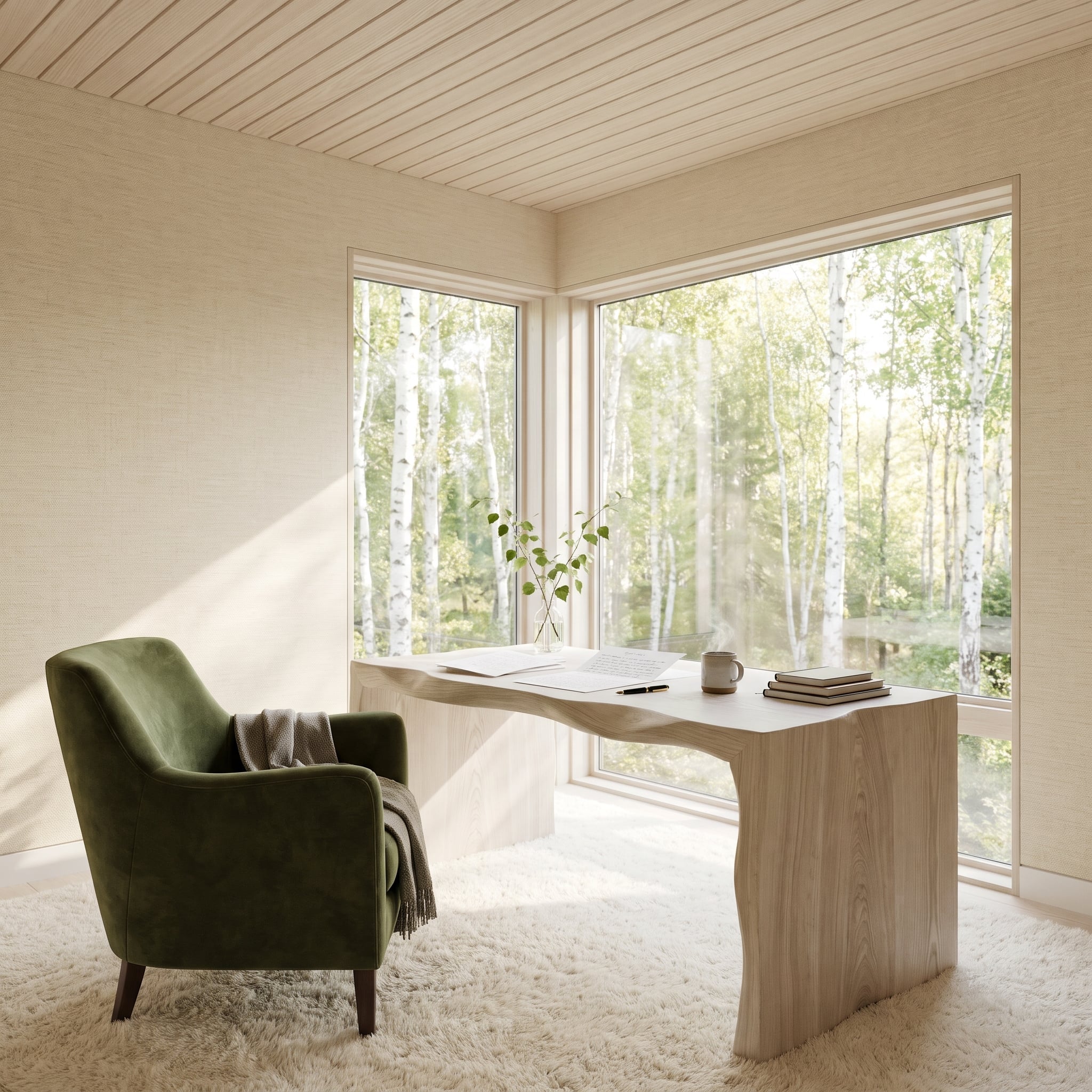
A corner of glazing frames the birches outside, while woven wallcovering and deep shag give the writing room a richly textured interior. The rug absorbs some reflected sound and softens footfalls, while velvet upholstery adds another generous fabric surface. The woven walls introduce pattern without the hard reflections of glass or polished stone, although their acoustic contribution depends on the material beneath the decorative finish. The desk faces the garden, but the interior has its own attractions: warm furniture, tactile walls and a floor that makes every footstep a little less conspicuous.
17. Cork Climbs the Walls and Fills a Walnut Grid Above the Dining Table
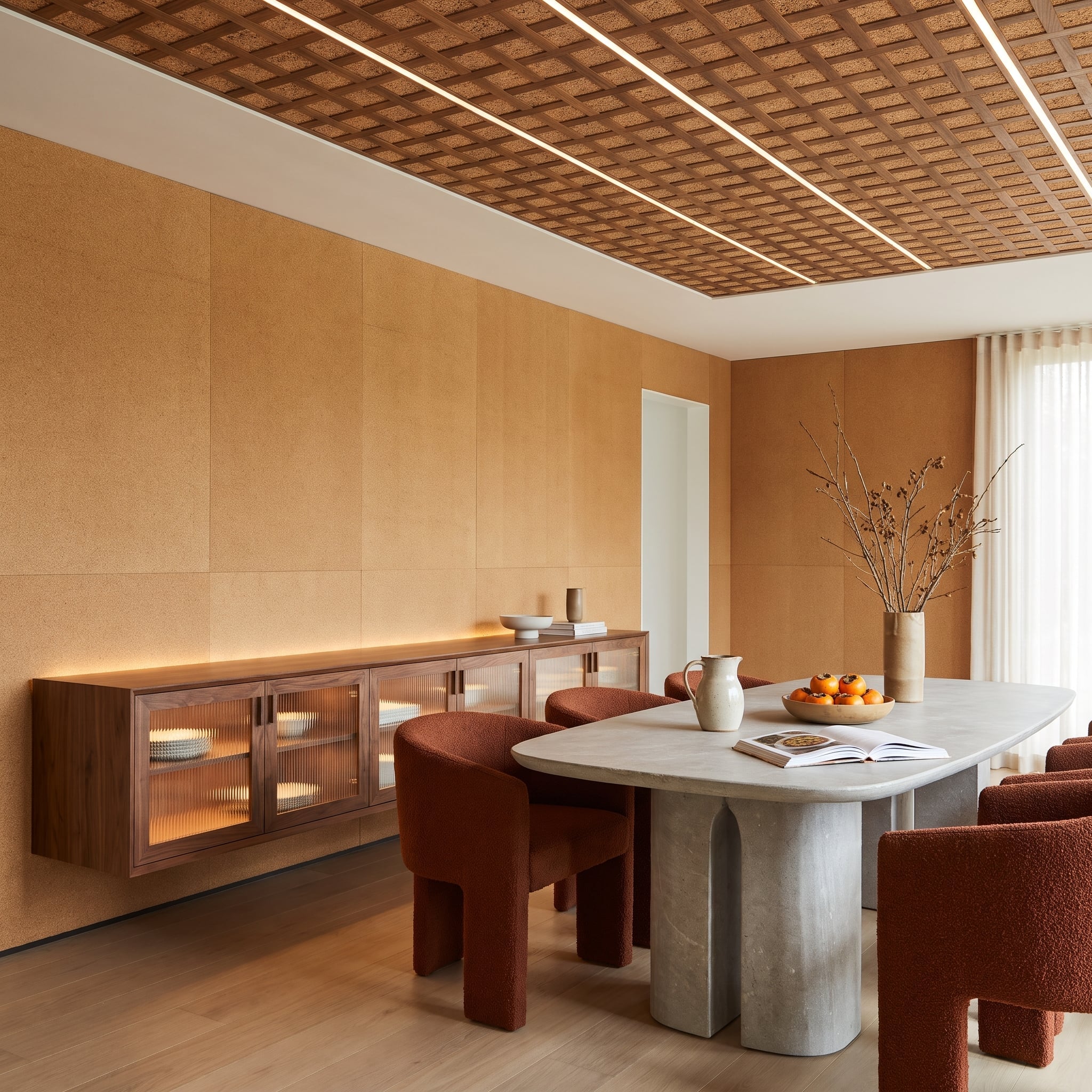
Cork covers the walls and fills a walnut ceiling lattice, giving this dining room a rich, granular texture. Its contribution to sound control depends on thickness and installation, with substantial acoustic assemblies performing differently from thin decorative coverings. Bouclé chairs bring additional absorption around the stone table, while reeded glass introduces a contrasting finish at the sideboard. The palette stays close to natural wood and earth, creating an enveloping atmosphere without burying the room beneath fabric. Cork gives the walls a character somewhere between architecture and landscape.
16. A Glass-Walled Lounge Relies on Deep Pile and Velvet for Softness
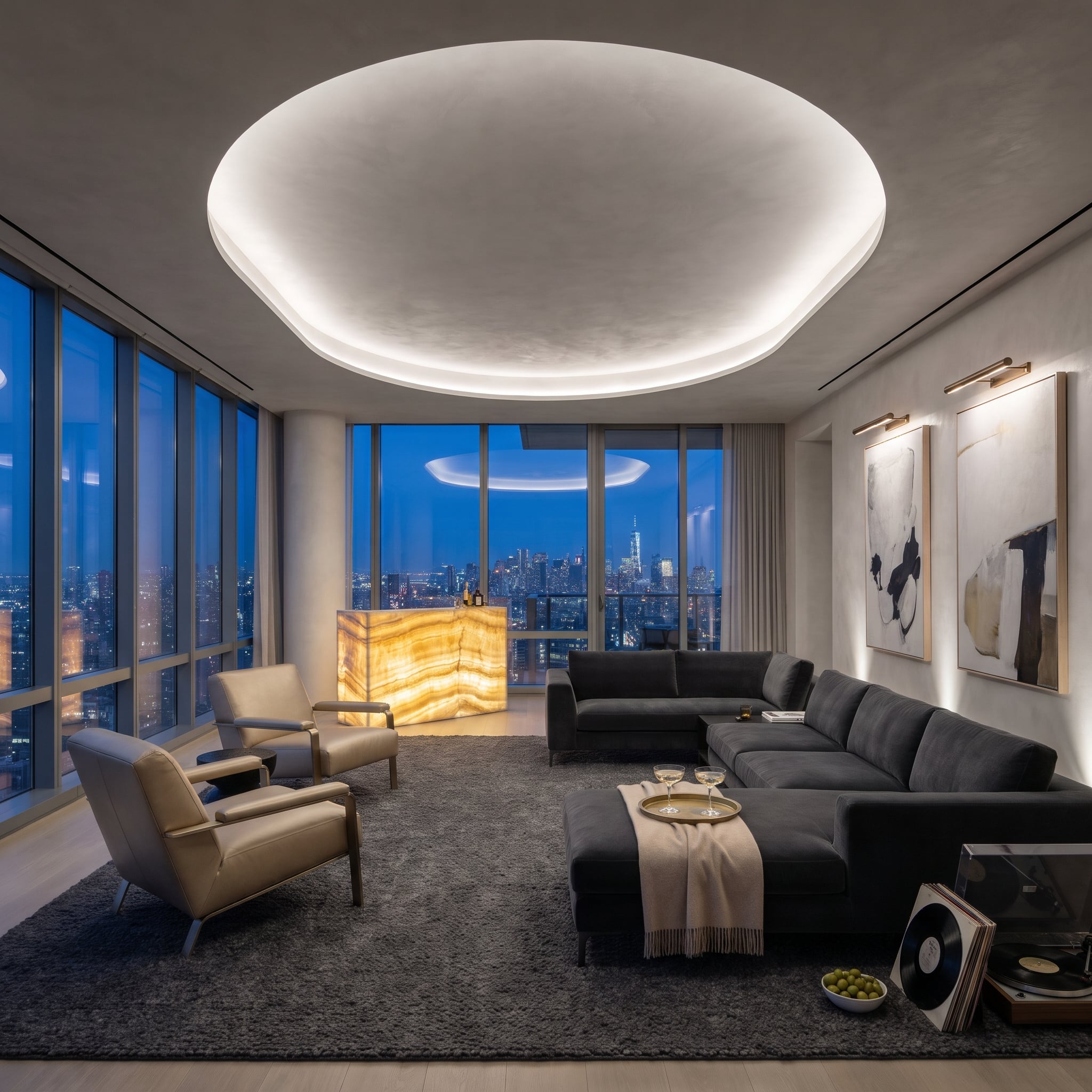
Full-height glazing gives this lounge its extraordinary view, along with broad surfaces that reflect sound back into the interior. A deep charcoal shag rug and velvet sectional introduce substantial absorptive furnishings without obscuring the landscape. Above, a glowing plaster dome supplies architectural drama, while the dark furniture anchors the seating beneath the expansive windows. The ceiling refuses to be ordinary, and the view has no intention of taking second place.
15. Contrast-Stitched Panels Turn an Office Into an Upholstered Interior
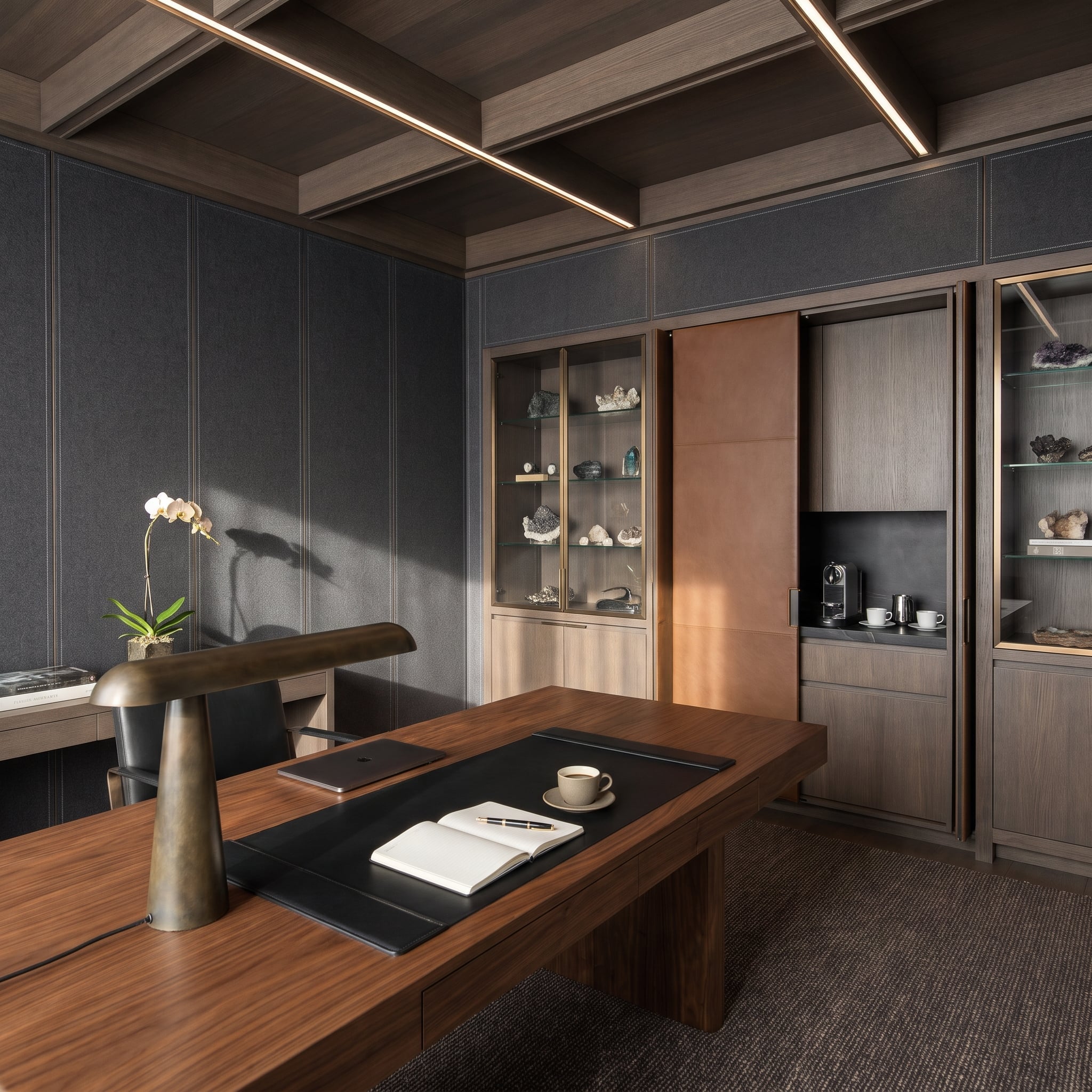
Gray stitched panels cover the office walls, their seams giving the surfaces a measured, almost sartorial pattern. A cognac leather slider conceals the coffee station, introducing a warmer and smoother finish. Absorptive cores could be integrated behind the upholstery, allowing the walls to control reflections without exposing conventional acoustic panels. Glass display cases and mineral specimens interrupt the tailored surfaces with a collector’s eye for detail. This is less corporate office than private study, complete with its own carefully concealed refreshments.
14. A Slatted Ceiling Draws the Eye Through a Long Kitchen
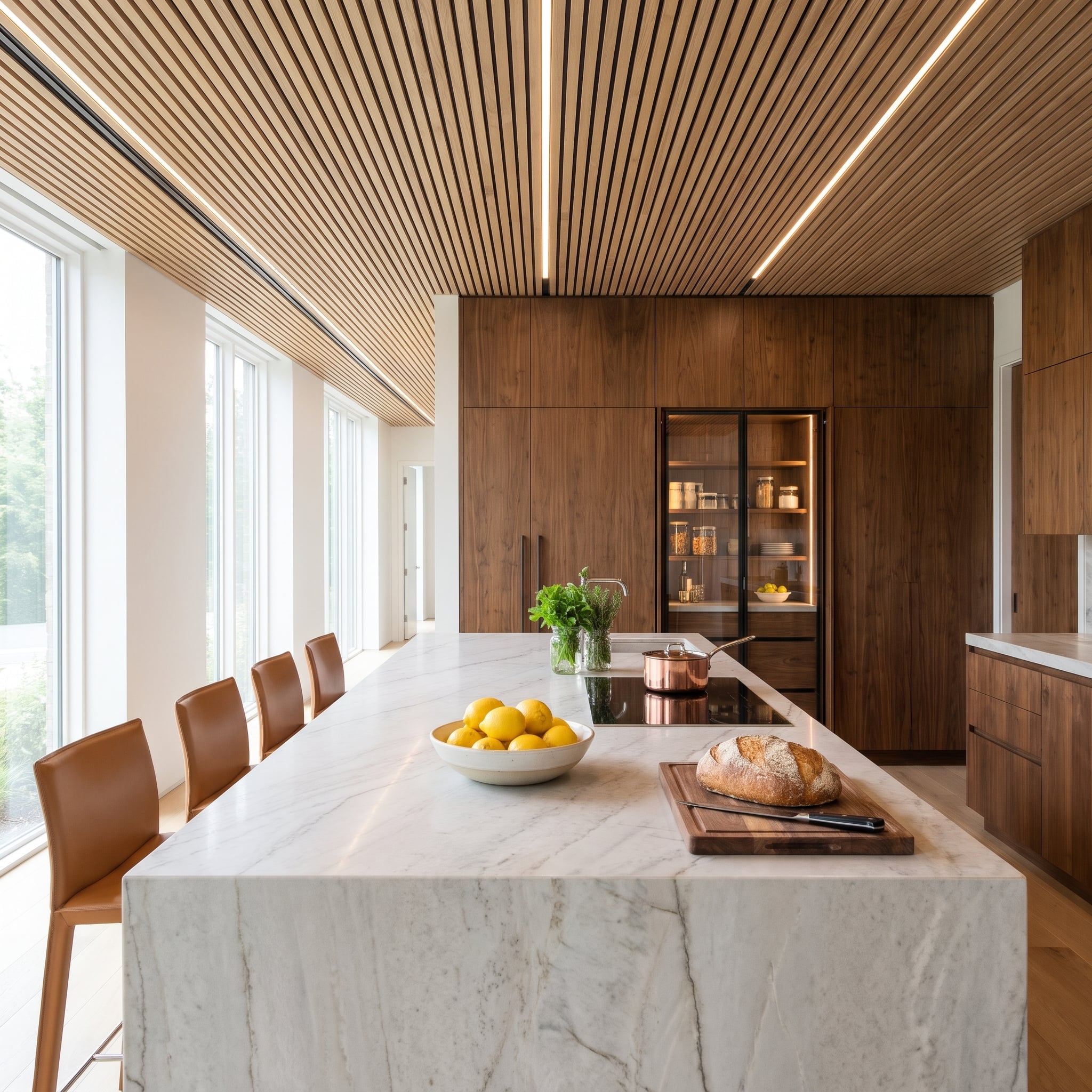
Oak slats run lengthwise above a marble island, pulling the eye toward the walnut wall at the far end. Linear lighting follows the same direction, reinforcing the kitchen’s disciplined geometry. An absorptive backing could give the slatted ceiling an acoustic role, tempering some of the reverberation associated with the surrounding stone and glass. Upholstered stools bring another material into the composition without disturbing its clean lines. Even the lighting follows orders.
13. A Fireside Lounge Gives Its Walls the Tailoring of a Fine Suit
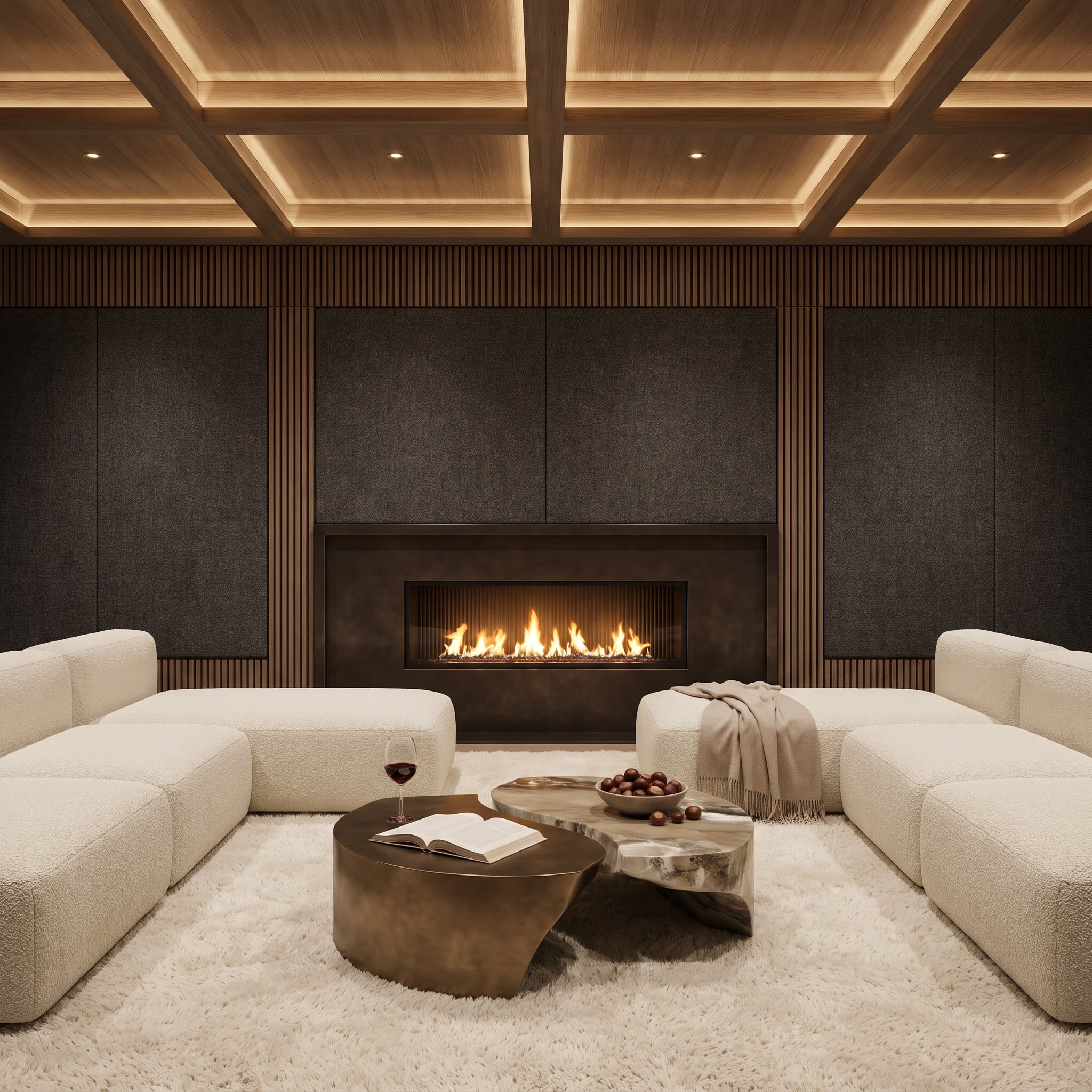
Charcoal fabric panels frame a linear fireplace, divided by narrow wood battens that establish a precise architectural rhythm. Two bouclé sectionals face one another across an ivory shag rug, concentrating generous textiles around the conversation area. The wall panels offer another opportunity for acoustic absorption, while bronze around the fireplace supplies a harder, warmer accent. The fireplace may command the center of the composition, but the upholstered walls give the room much of its character. The result is a lounge dressed for conversation rather than ceremony.
12. Green Marble Sets the Table, but a Sage Rug Changes the Mood
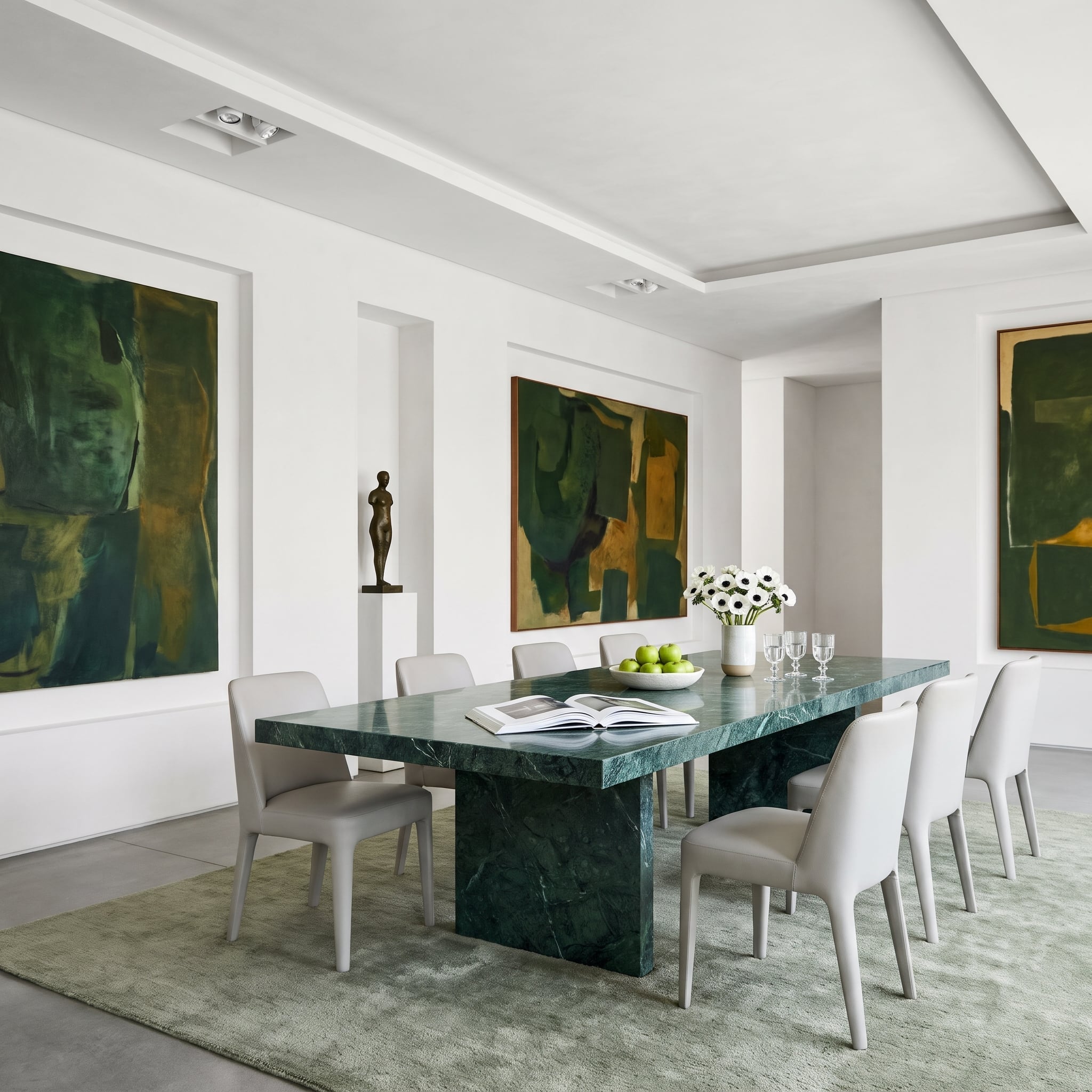
Green marble gives the dining table a commanding presence, its polished surface reflecting light and sound with equal enthusiasm. Beneath it, a sage rug introduces a thick textile surface that softens footfalls and absorbs some reflected sound. Upholstered dining chairs extend the softer material palette around the table. The green-on-green combination could easily become overwhelming, but the contrast between polished stone, woven fibers and upholstered seating keeps the composition lively. The marble has all the confidence of a centerpiece; the rug gives everyone else a chance to settle in.
11. A Skylit Kitchen Uses Fluted Stone to Give Its Island a Different Voice
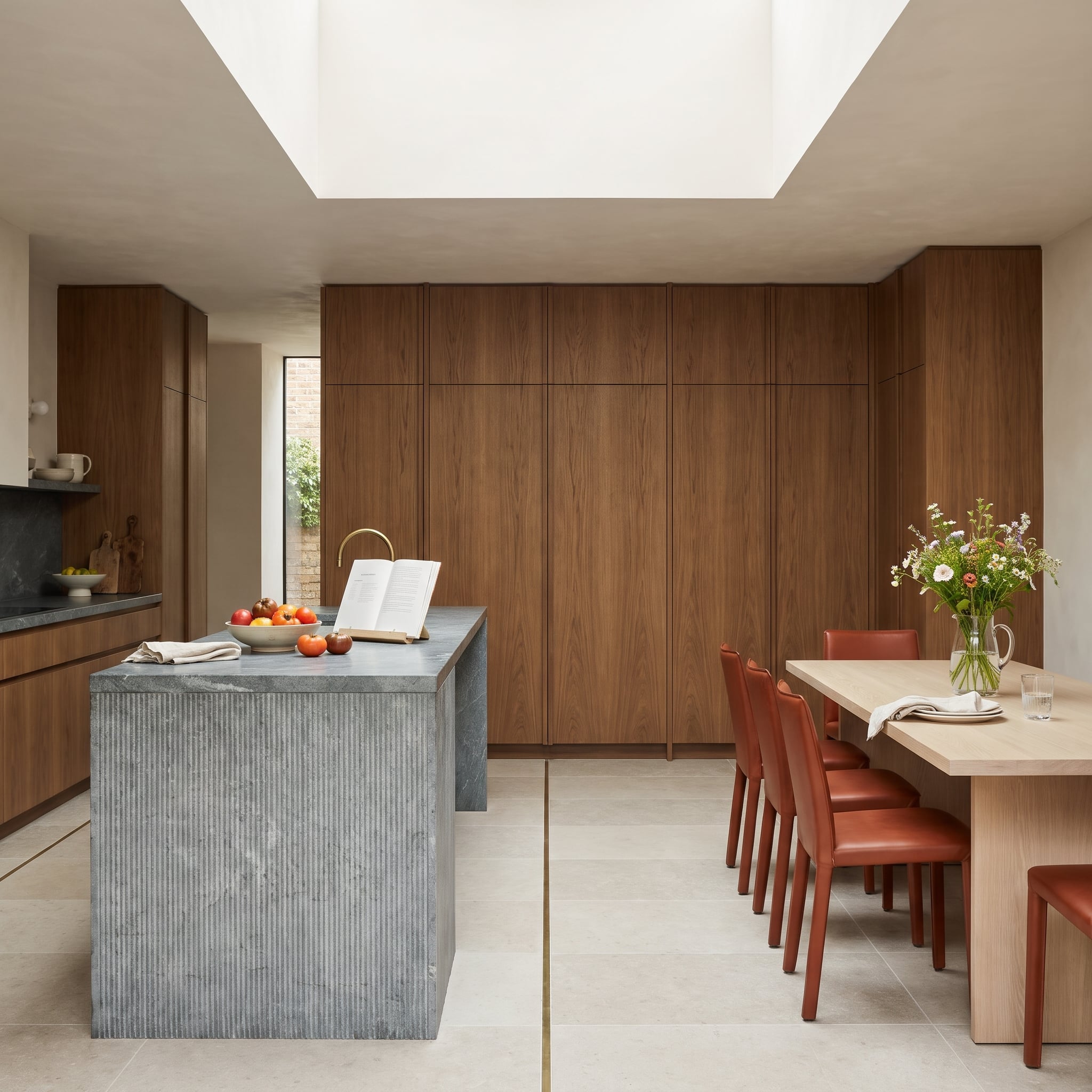
Fluted stone gives the island base a lively vertical texture, while a deep skylight pours daylight into the kitchen from above. The grooves create intricate shadows across the stone, but their shallow profile offers little reason to expect meaningful acoustic diffusion. Walnut cabinetry brings warmth, and leather dining chairs introduce upholstered surfaces among the harder finishes. This is an interior where texture does most of its work visually. The fluted island steals the scene, while the surrounding stone and glass leave sound control as a separate architectural consideration.
10. Cognac Leather Chairs Sit Among Books and Dark Ceiling Slats

Books rise to the ceiling on three sides of this library, surrounding two cognac leather chairs with a wonderfully uneven landscape of spines. The irregular shelving can scatter some sound reflections, while a wool rug and throw introduce softer surfaces beneath the dark ceiling slats. The leather chairs supply a handsome counterpoint to the crowded shelves, their smooth finish standing apart from the surrounding textiles. The brass rolling ladder is a practical flourish with enough theatricality to deserve its own spotlight. A room designed for reading has no obligation to look restrained.
9. Layered Curtains and Coffered Oak Give Gray Stone Some Company
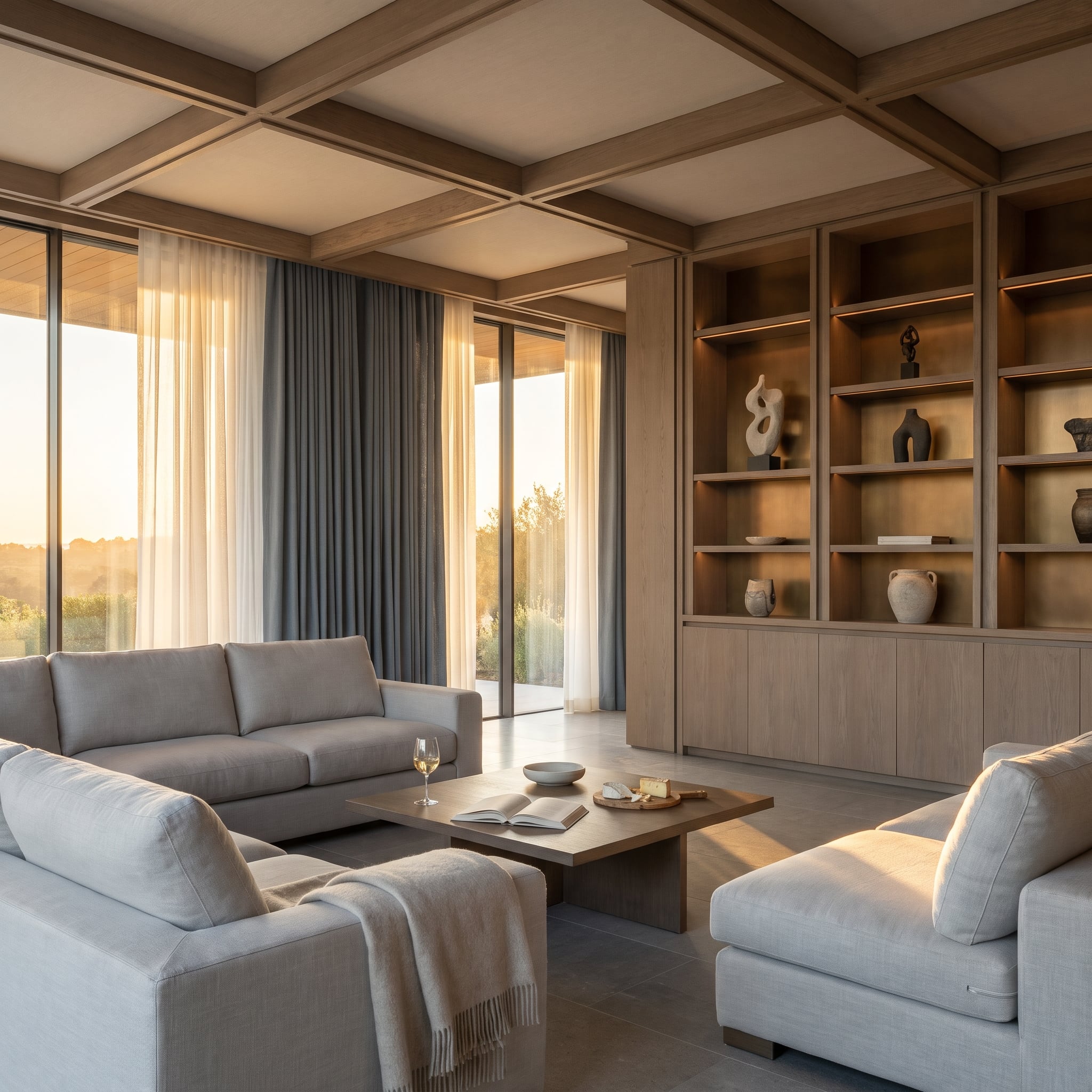
Gray stone underfoot, a disciplined oak ceiling grid overhead and curtains layered across the glass: this room refuses to surrender its architectural edges. The heavier drapery provides a substantial textile surface capable of absorbing some reflected sound, particularly when gathered generously. Coffers add depth and shadow above, while the absence of a rug preserves the floor’s crisp character. Rather than softening every surface, the design concentrates its textiles along the glazing and lets the rest of the architecture remain uncompromising.
8. Amber Glass Globes Hover Above Velvet Chairs and Carved Wool
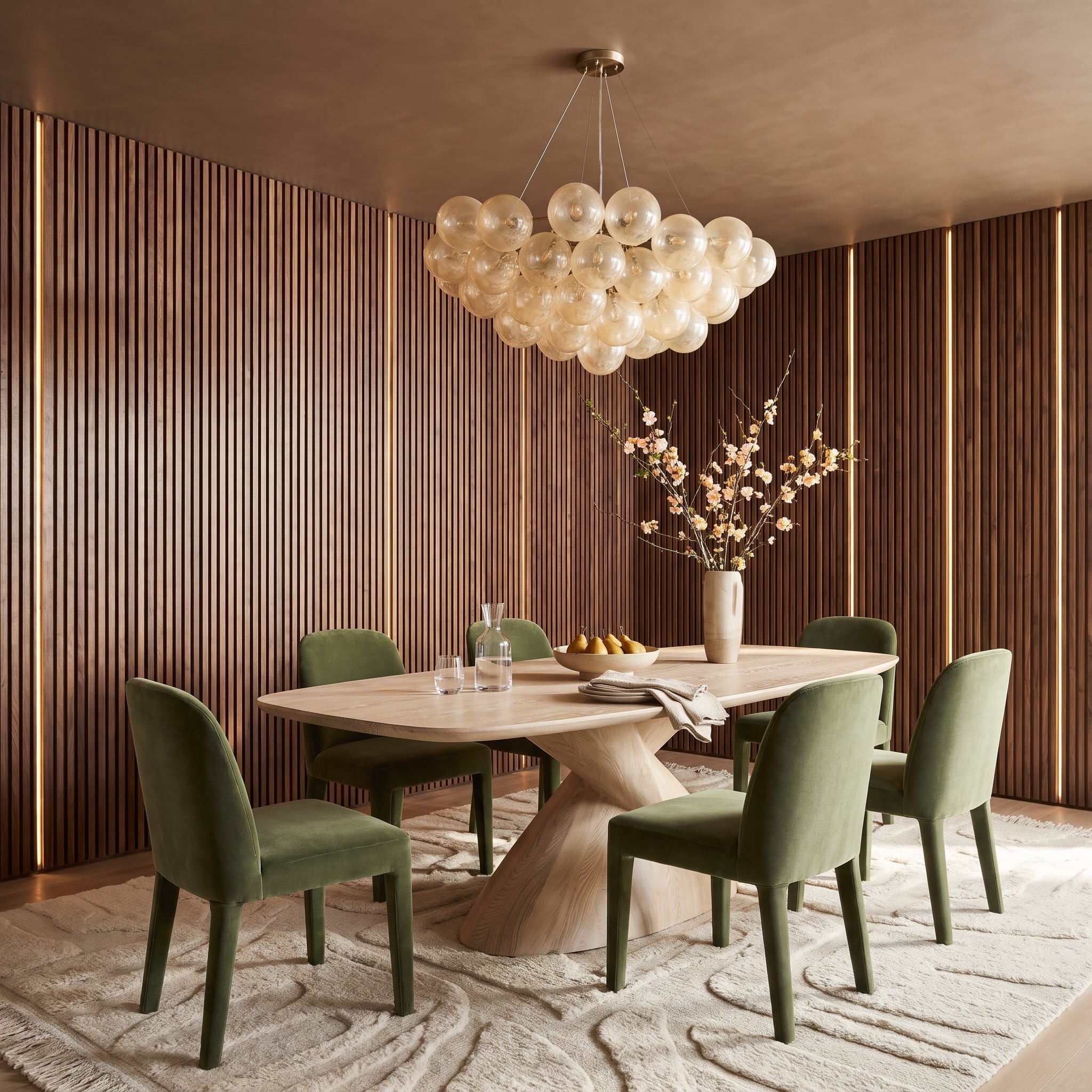
A cloud of amber glass globes hangs above the dining table, giving the room a warm, theatrical glow. Beneath the lights, velvet-wrapped chairs and a carved wool rug introduce substantial textile surfaces that can absorb sound within a lively dining space. The sculpted pile adds pattern without another hard finish, while the upholstery surrounds the table at the level where conversation happens. The chandelier gets the applause, but the quieter work takes place much closer to the floor.
7. Fabric-Wrapped Walls Bring a Tea Room Down to a Human Scale
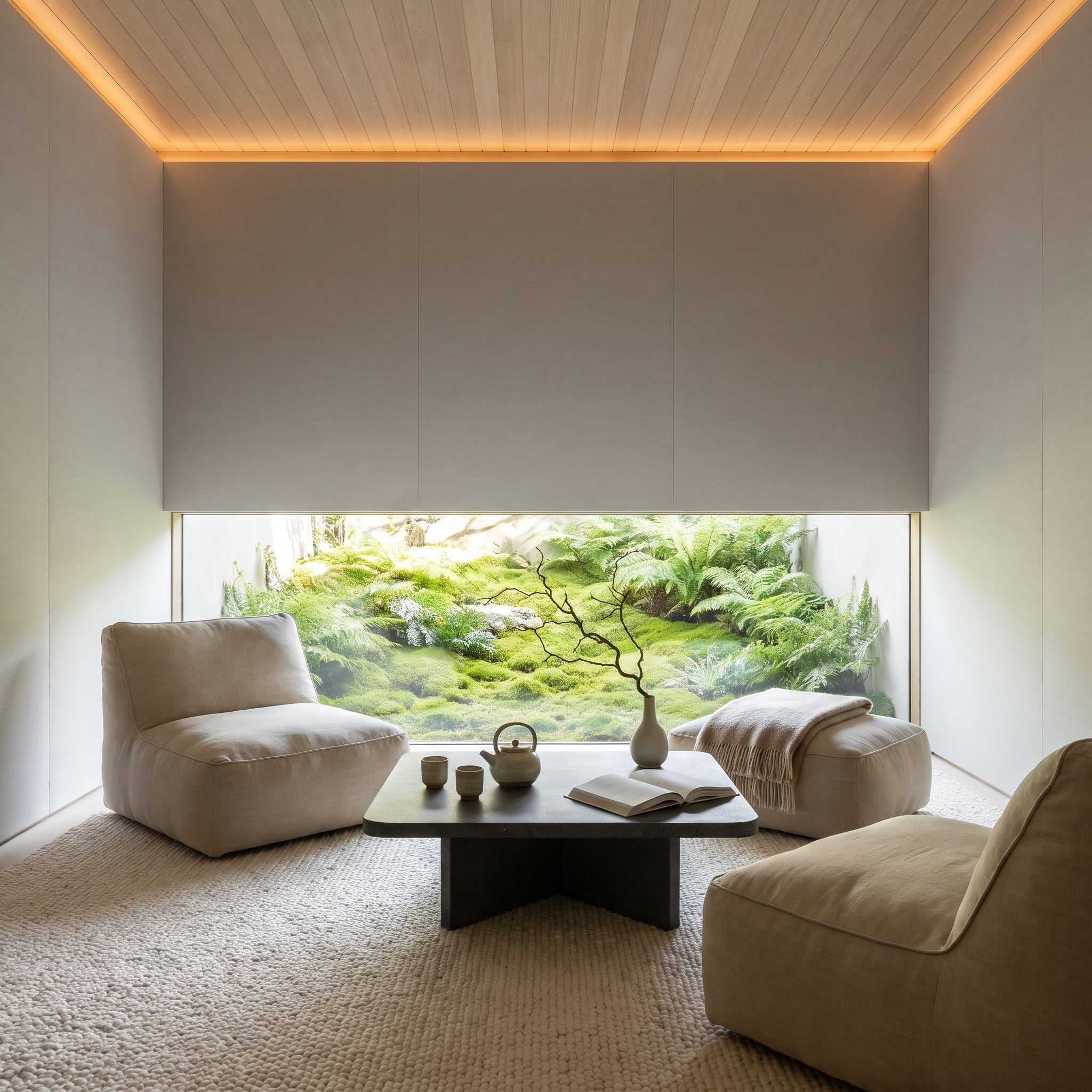
Fabric-wrapped panels rise to a glowing ceiling cove, while a low horizontal window frames moss and ferns beyond the seating. The walls offer generous space for concealed acoustic absorption, and a pebbled wool rug covers much of the floor. Deep linen chairs continue the material treatment, but the unusual window gives the room its most distinctive feature: a narrow, horizontal view of the garden that draws attention toward the ground rather than the sky. The architecture encourages lingering over another cup without relying on grand gestures.
6. An Illuminated Onyx Table Takes Center Stage Between Navy Fabric Walls
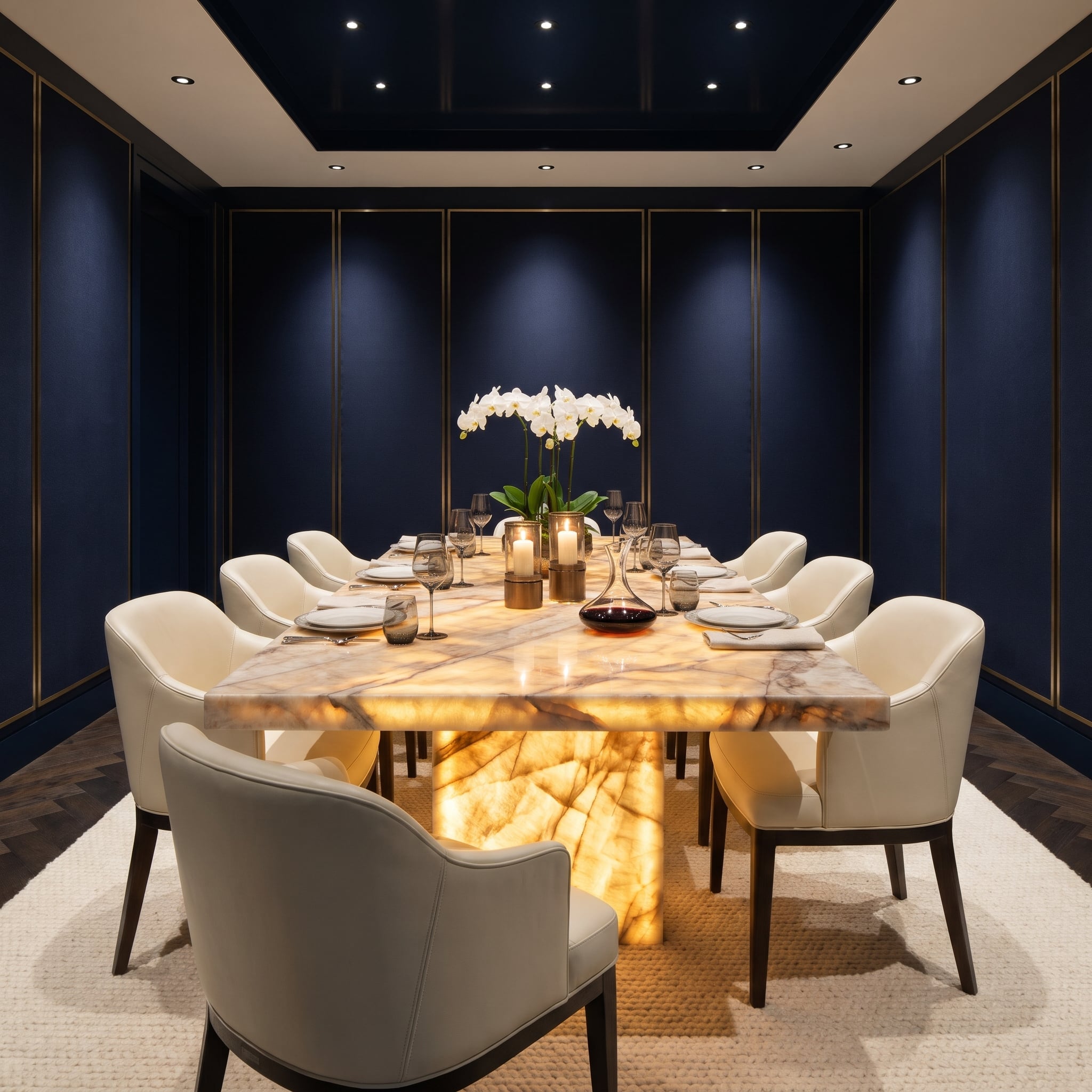
The onyx dining table glows from within, turning its natural veining into the room’s principal source of drama. Navy fabric walls surround the luminous stone, their dark upholstery creating an unusually intimate enclosure. With suitable acoustic backing, those panels could help control reverberation around the highly reflective table. A chunky wool rug adds another substantial textile surface beneath the arrangement. The illuminated mineral commands attention, but the navy walls make its extraordinary veining appear even more luminous. Few dining tables have ever looked quite so determined to become the chandelier.
5. Oak Slats, Felt and Limestone Set Up a Poolside Balancing Act
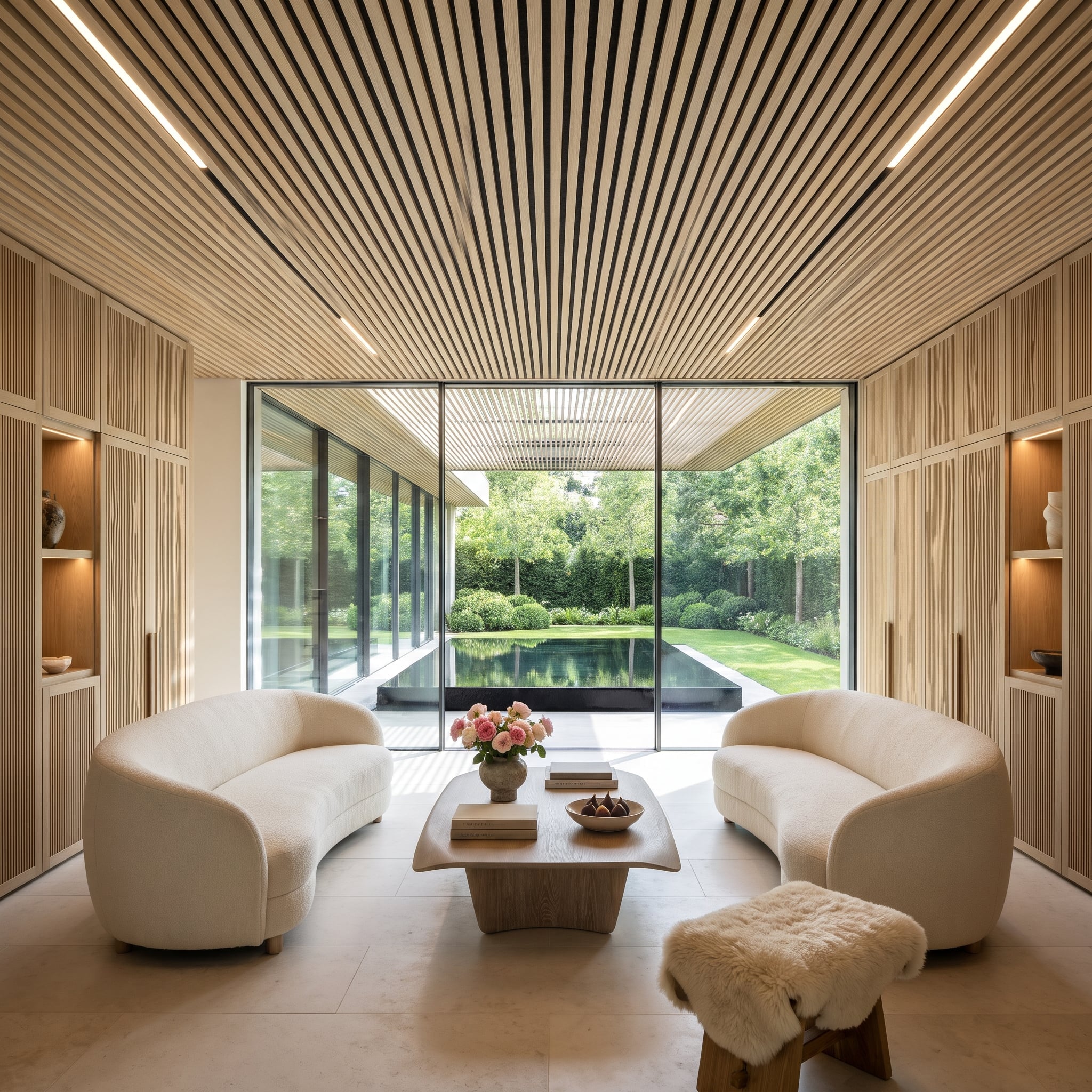
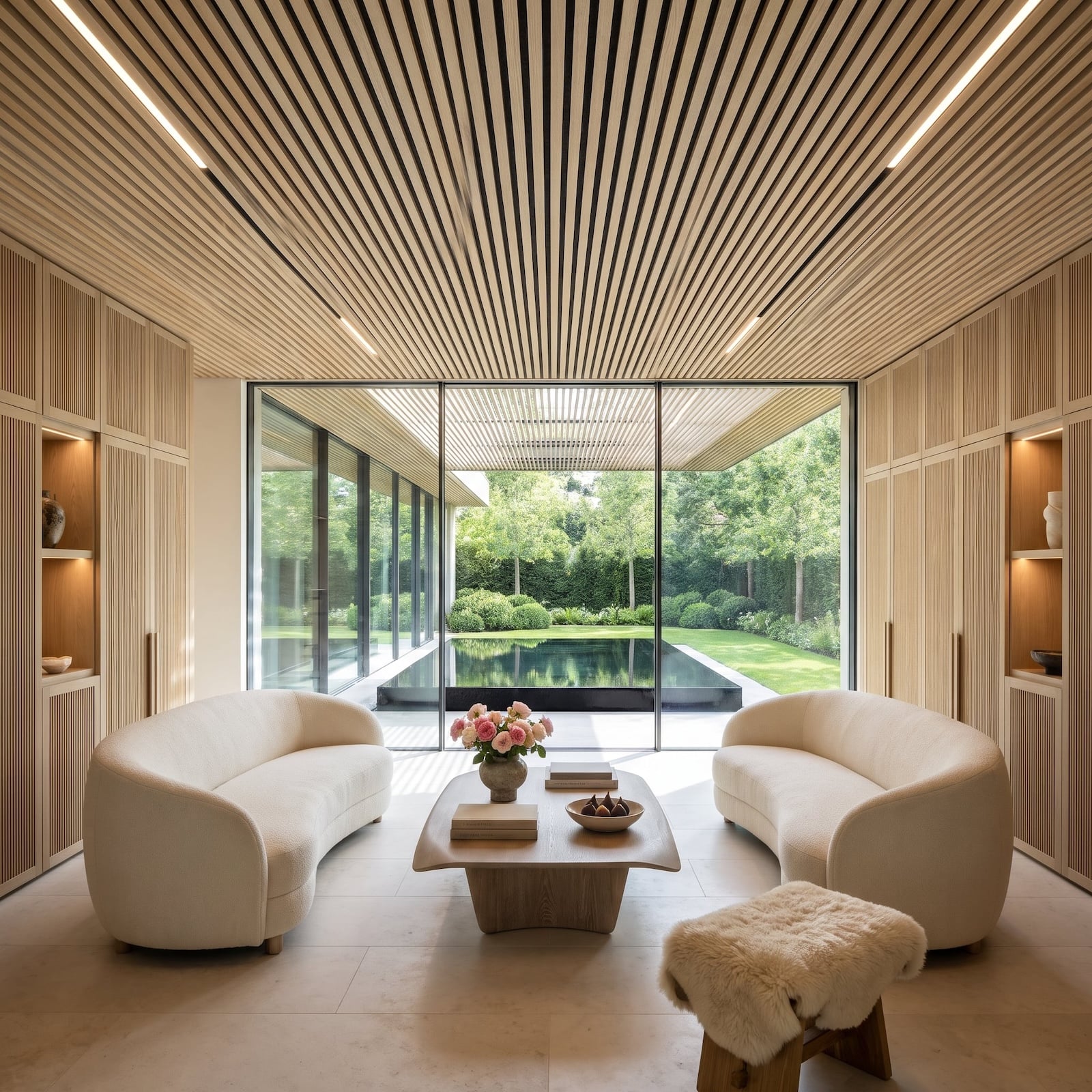
Pale oak slats run across the ceiling above a limestone floor, establishing a crisp architectural framework for the furnishings below. Felt between the slats introduces a darker rhythm and, as part of a properly designed acoustic assembly, can help absorb sound that would otherwise reflect between the hard surfaces. Bouclé seating and a substantial rug contribute additional softness around the conversation area. The limestone remains cool and uncompromising, while the pool beyond the glazing gives the room its expansive outlook. Above it all, the oak ceiling makes a compelling argument for putting acoustic thinking into the architecture rather than adding it afterward.
4. Backgammon, Quilted Leather and a Ceiling That Ripples
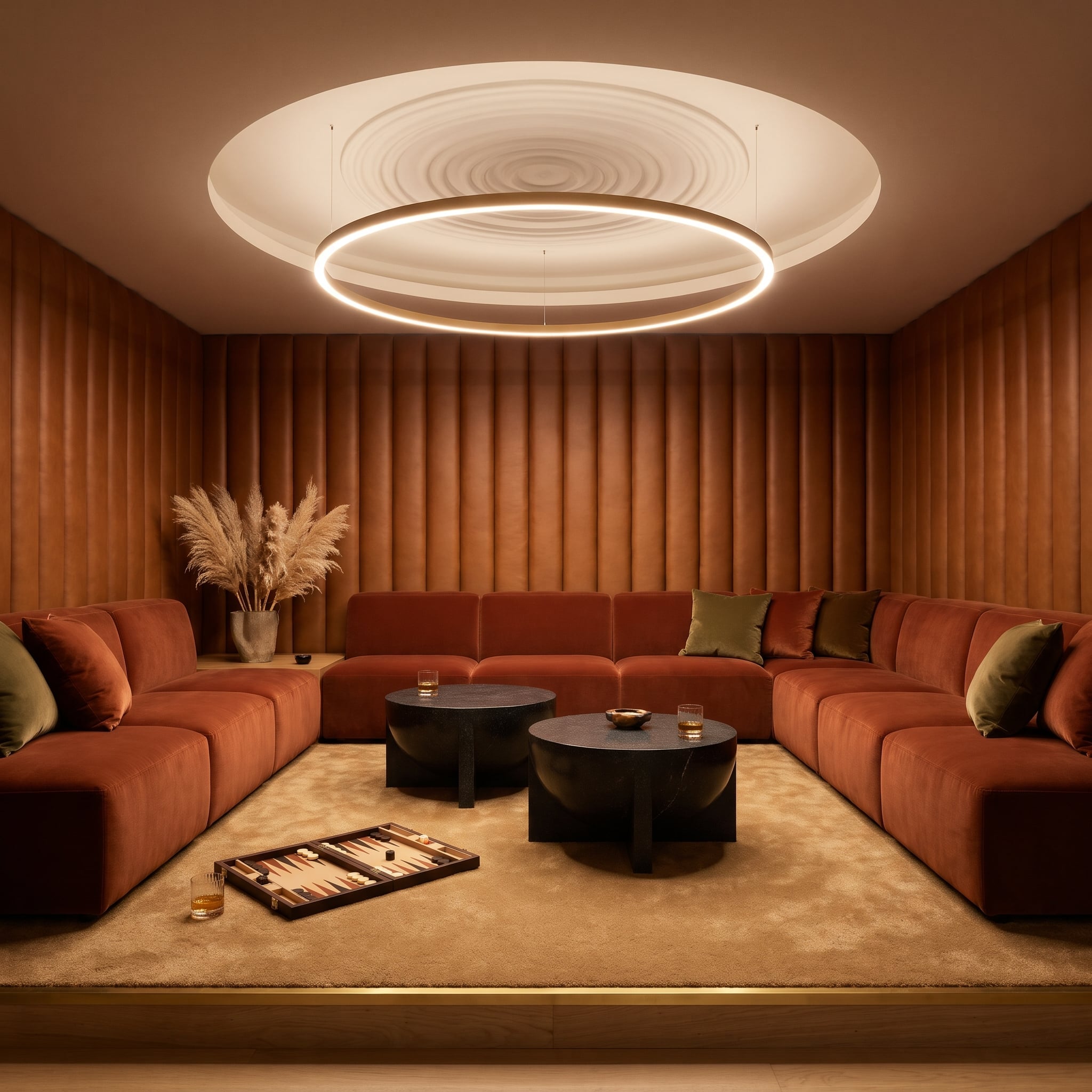
A backgammon board rests on deep pile beneath a ceiling rippled like water. Channel-quilted cognac-colored wall panels and a rust velvet sectional give this game room a richly tactile character. The wall treatment could provide useful absorption with appropriate acoustic material behind the leather, while the concentric plaster pattern introduces movement and shadow overhead. Leather, velvet, wool and plaster all compete for attention, yet the restrained palette keeps the room coherent. The most extravagant move isn’t on the backgammon board. It’s the ceiling.
3. Sage Fabric Fills Every Ceiling Square Above a Glass Corner
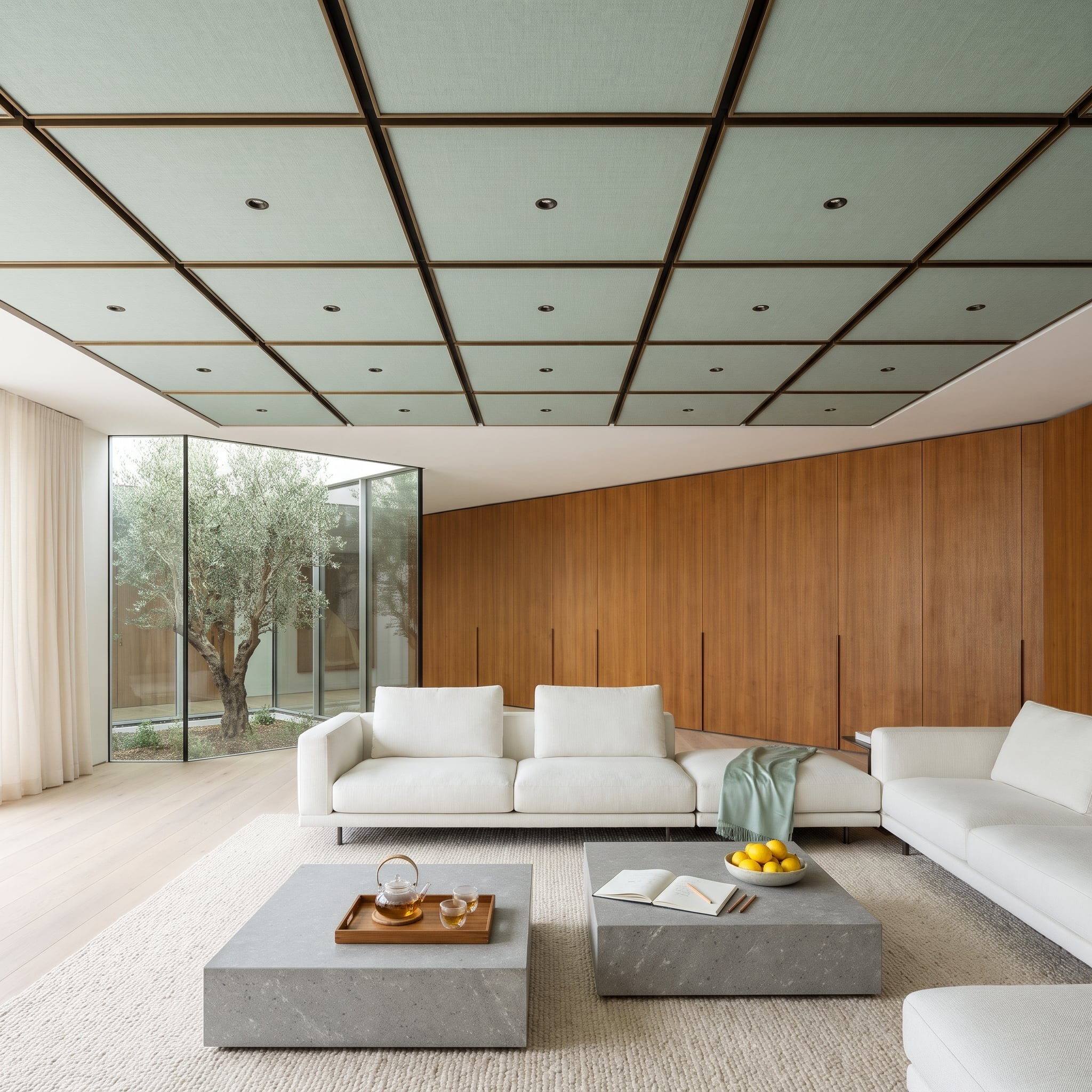
Bronze strips frame sage-colored ceiling squares, each with a small downlight at its center. The overhead grid turns a potentially anonymous ceiling into one of the room’s defining features. Fabric-covered panels can provide substantial acoustic absorption when built around appropriate cores, countering some of the reflections from the glass and stone below. A thick rug and deep white sofas establish another concentration of soft surfaces around the seating. The olive tree outside supplies the final note of green. The ceiling has the precision of a geometric drawing and the tactile character of upholstered furniture.
2. Plum Velvet Surrounds the Card Tables Beneath a Lacquered Dome
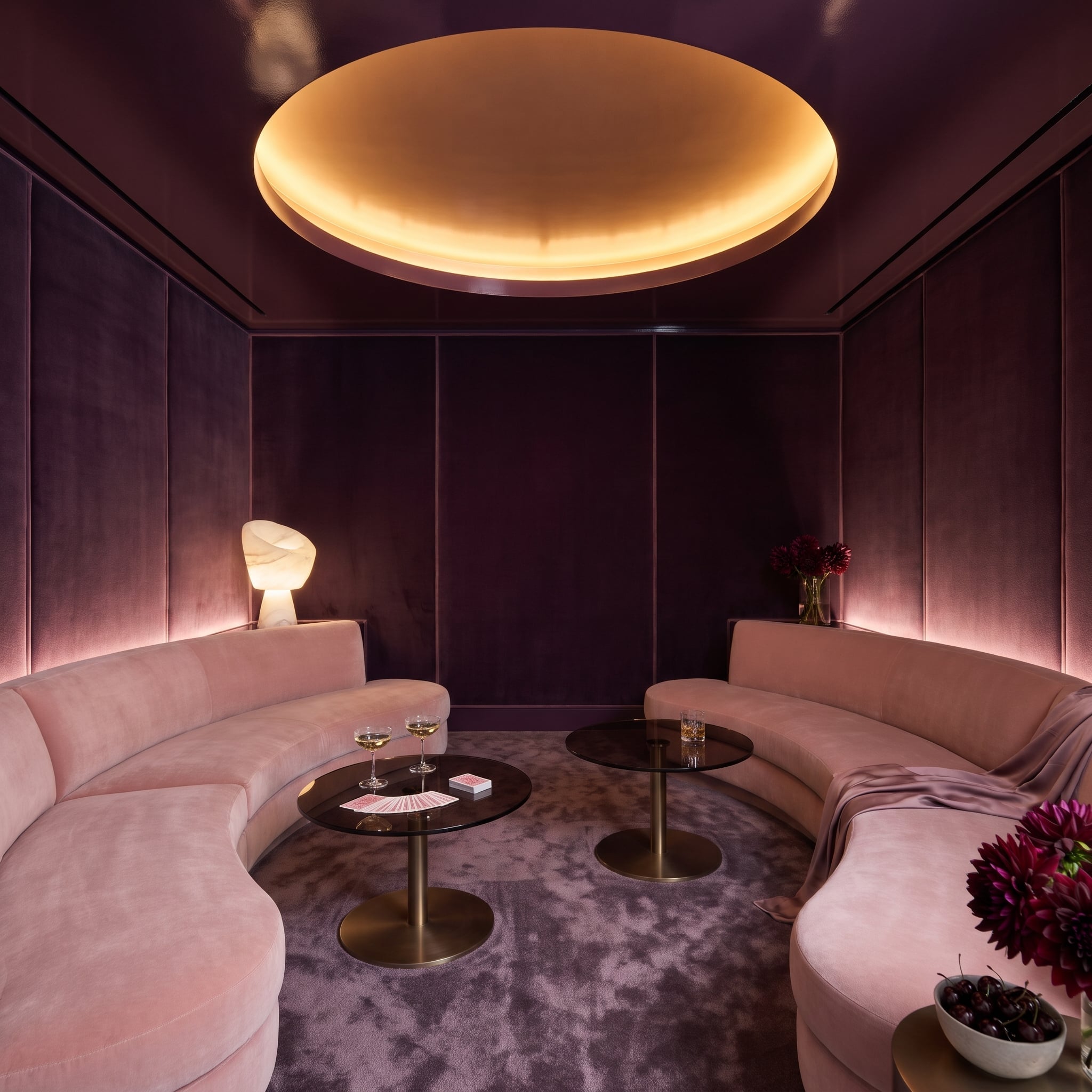
Blush velvet banquettes face one another across card tables, surrounded by plum-colored wall panels. The upholstery creates an enveloping setting and offers opportunities for sound absorption, particularly if the walls conceal suitable acoustic backing. Above, a glossy ceiling and glowing dome introduce a distinctly reflective surface, preserving some liveliness in a room otherwise dominated by textiles. The tension is delightful: a space arranged for a quiet game that refuses to surrender its theatrical streak. Velvet handles the intimacy; lacquer provides the applause.
1. Even the Door Wears Taupe Fabric Beside Travertine Cubes
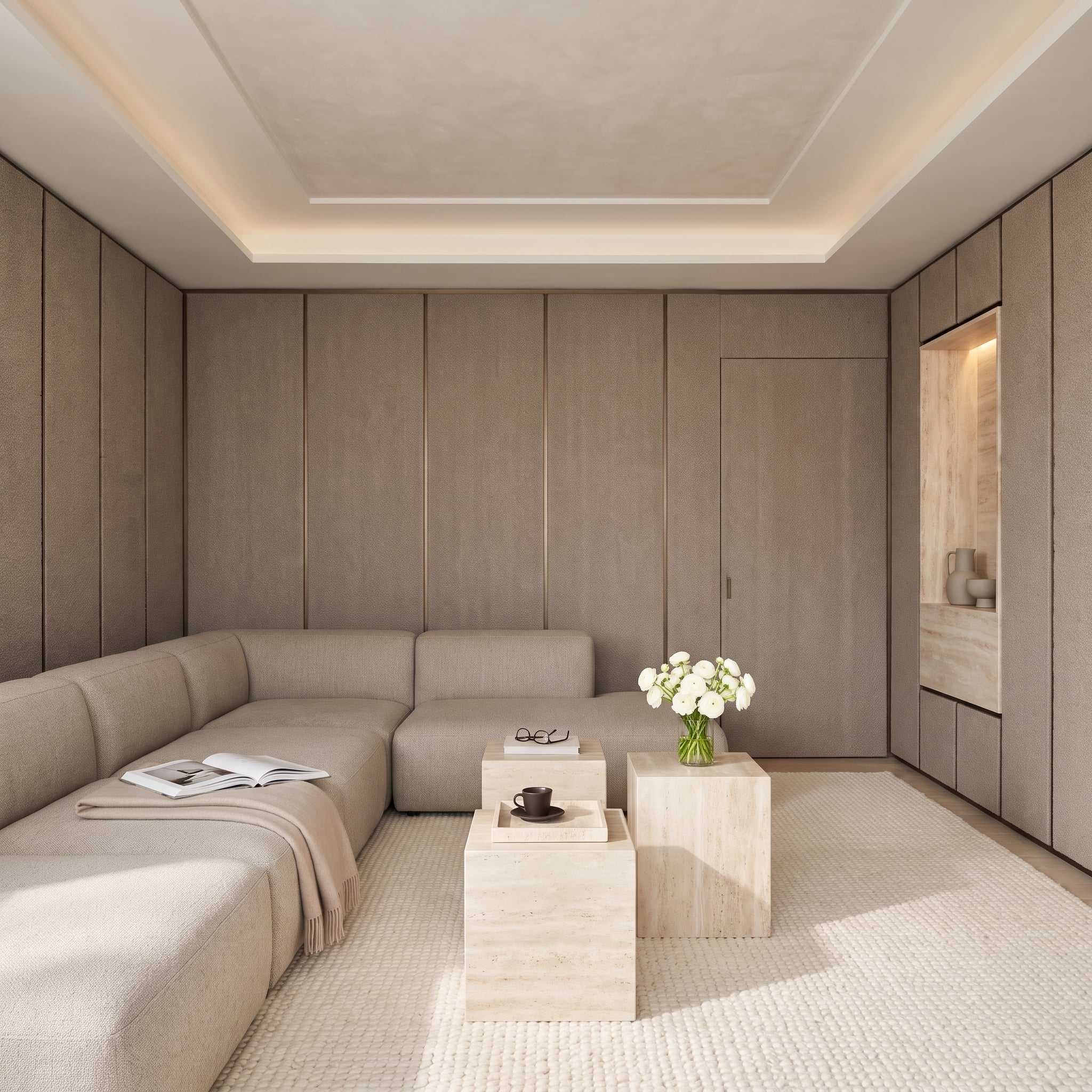
Taupe upholstery climbs every wall and continues across a nearly invisible flush door. Bronze reveals give the panels a measured cadence, while a pebbled wool rug spreads beneath a deep sectional. The continuous fabric treatment offers the opportunity to integrate acoustic absorption across an unusually large area, although the concealed door’s sound isolation would depend on its seals and construction. Pale travertine cubes provide the room’s sharpest shapes, cool stone against an almost uninterrupted field of upholstery. The plaster tray ceiling remains crisp overhead, but the walls have abandoned the usual distinction between architecture and furniture. Here, softness is the architecture.