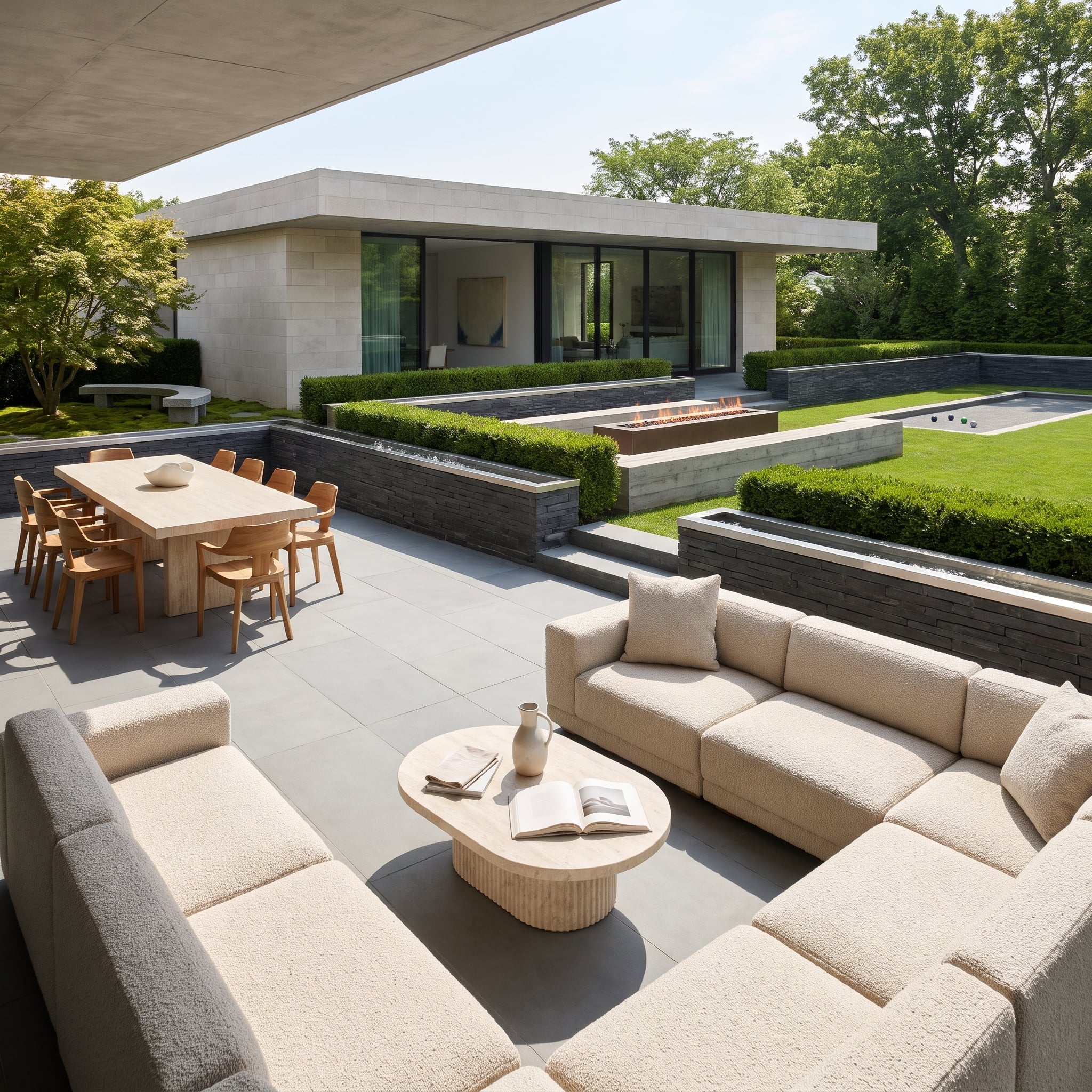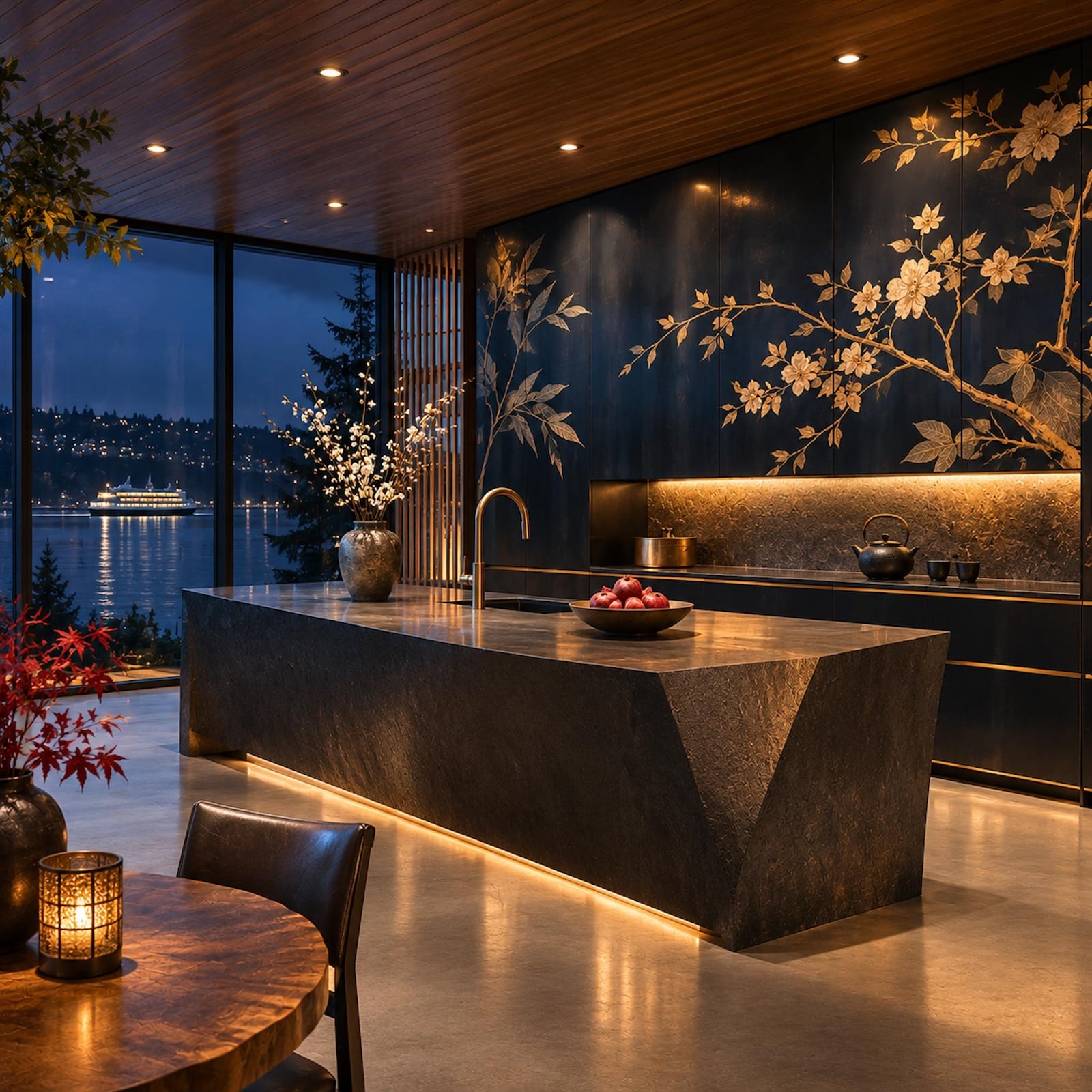
Somewhere along the way, the television became the most important piece of furniture in the house. Sofas lined up to face it, entire walls surrendered to it, and the possibilities for what a room might actually do began to shrink. These 35 designs have rather more ambitious plans.
In order to come up with the very specific design ideas, we create most designs with the assistance of state-of-the-art AI interior design software. Also, assume links that take you off the site are affiliate links such as links to Amazon. this means we may earn a commission if you buy something.
Here, hobbies don’t get relegated to the spare bedroom. They get double-height libraries, marble worktables, custom cabinetry, and occasionally an entire glass dome. A brass telescope commands its own observatory. A photography darkroom glows crimson. A perfumer’s atelier gives hundreds of fragrance ingredients the kind of display usually reserved for priceless jewelry. Even the humble jigsaw puzzle gets a table designed specifically for its peculiar demands.
The architectural ambition is considerable, but the real luxury isn’t the marble, lacquer, or brass. It’s having a room designed around something you love doing. Grand pianos get their own stages, woodworking benches take center stage, and chessboards command rooms that could comfortably accommodate a diplomatic summit. Somewhere between the first sketch and the final brass fitting, a pastime has become a rather magnificent architectural obsession.
35. Concrete Walls, Teal Felt, and a Billiard Room With Serious Intentions
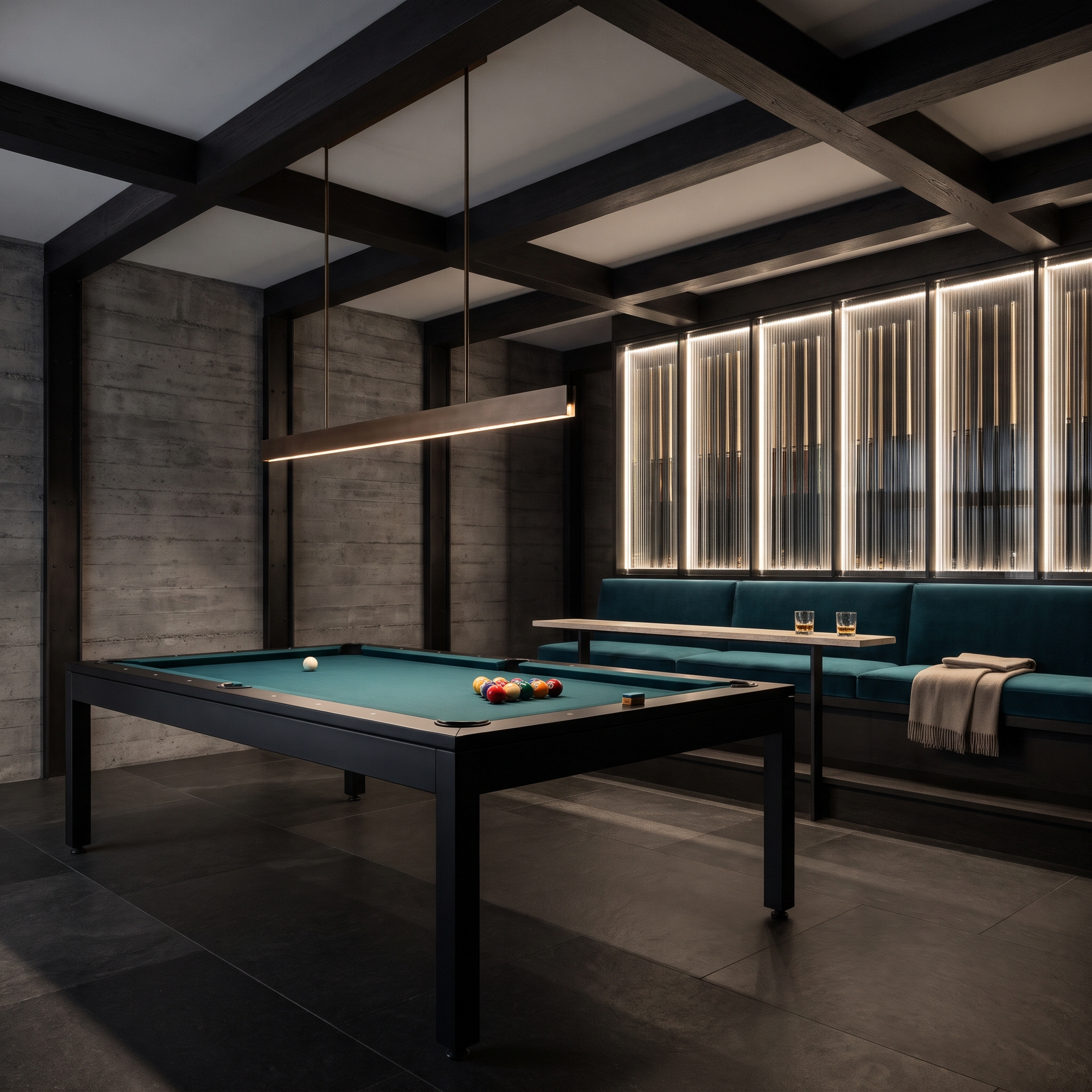
Concrete walls and blackened ceiling beams establish the industrial credentials, but the teal billiard table supplies the room’s real authority. Its saturated felt cuts through the gray surroundings, while the coffered ceiling and substantial pendant lighting give the playing area a distinct architectural presence.
Behind ribbed glass, illuminated cue racks turn equipment storage into a display. Teal velvet seating picks up the table’s color without challenging its prominence, and warm backlighting softens the harder finishes. There’s space to circle the table, somewhere to sit between shots, and absolutely no doubt about which activity gets priority.
34. Amber Bottles, Burgundy Lacquer, and a Private Perfumer’s Atelier
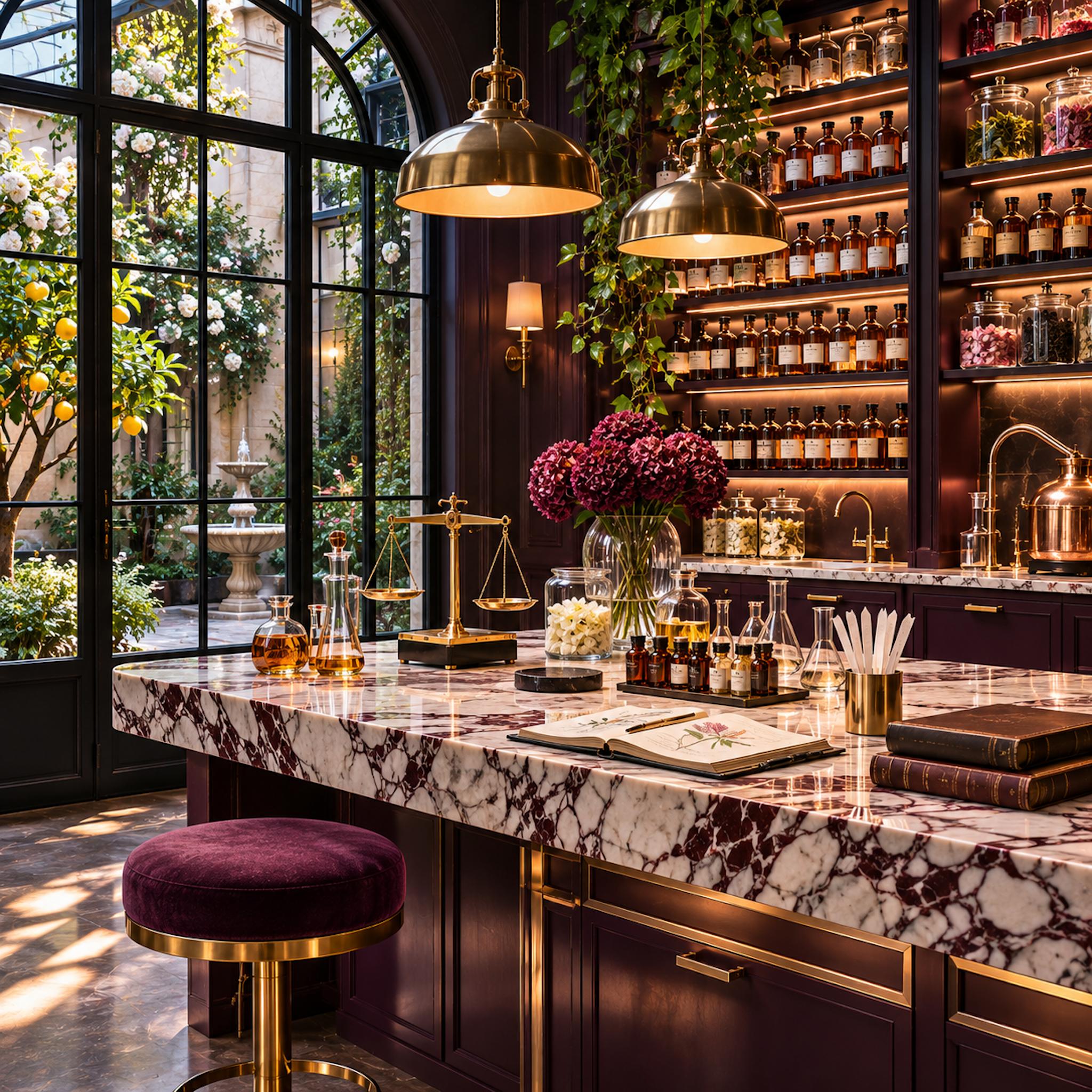
A wall of illuminated amber bottles gives this fragrance atelier the visual richness of a jewel box, but the central marble island is unmistakably a place for work. Glass flasks, precision scales, scent-testing strips, and small mixing vessels occupy the veined stone, while burgundy cabinetry and polished brass fixtures lend the laboratory an unexpectedly sumptuous character.
Tall arched windows look into a limestone courtyard planted with roses and citrus trees. The greenery provides a striking counterpoint to the dark interior, and the abundance of natural light catches the glassware beautifully. This isn’t a perfume shop dressed for customers. It’s a private workspace for composing fragrances, with the ingredients receiving the sort of architectural attention usually reserved for fine art.
33. Green Lacquer, Brass Ladders, and a Library That Takes Two Stories to Make Its Point
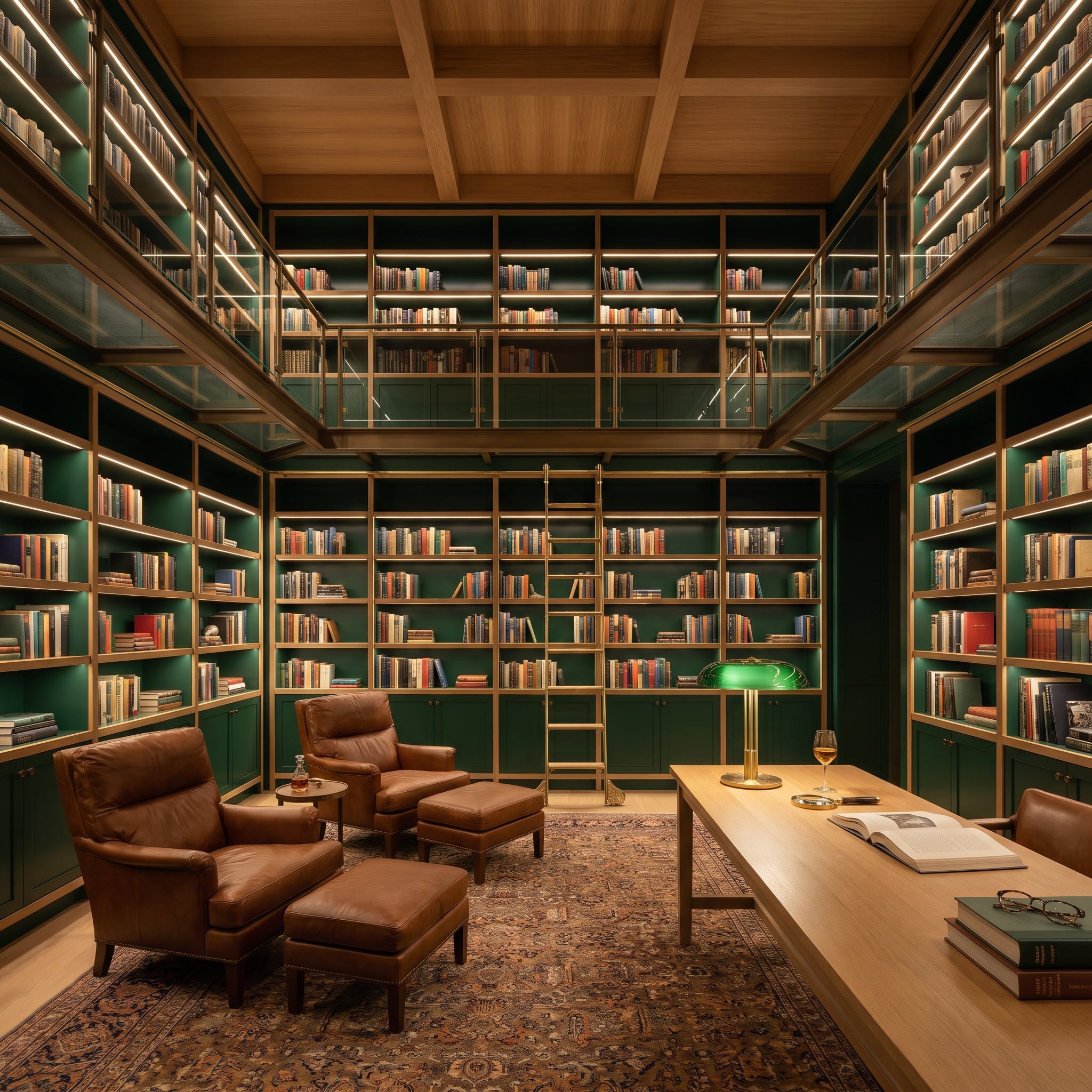
Forest-green lacquer climbs two stories, brass detailing traces the shelving, and a rolling ladder makes the upper collection accessible. Glass railings keep the towering bookcases in full view, allowing the architecture to display its considerable scale without closing off the room.
Downstairs, two cognac leather chairs offer a more intimate counterpoint to the grand proportions. A long wooden table accommodates books and papers, while a green-shaded banker’s lamp and Persian rug bring the composition back to human scale. The library is monumental; the actual business of reading remains comfortably ordinary.
32. Skylights, Hand Planes, and a Woodworking Shop Where the Bench Has the Last Word
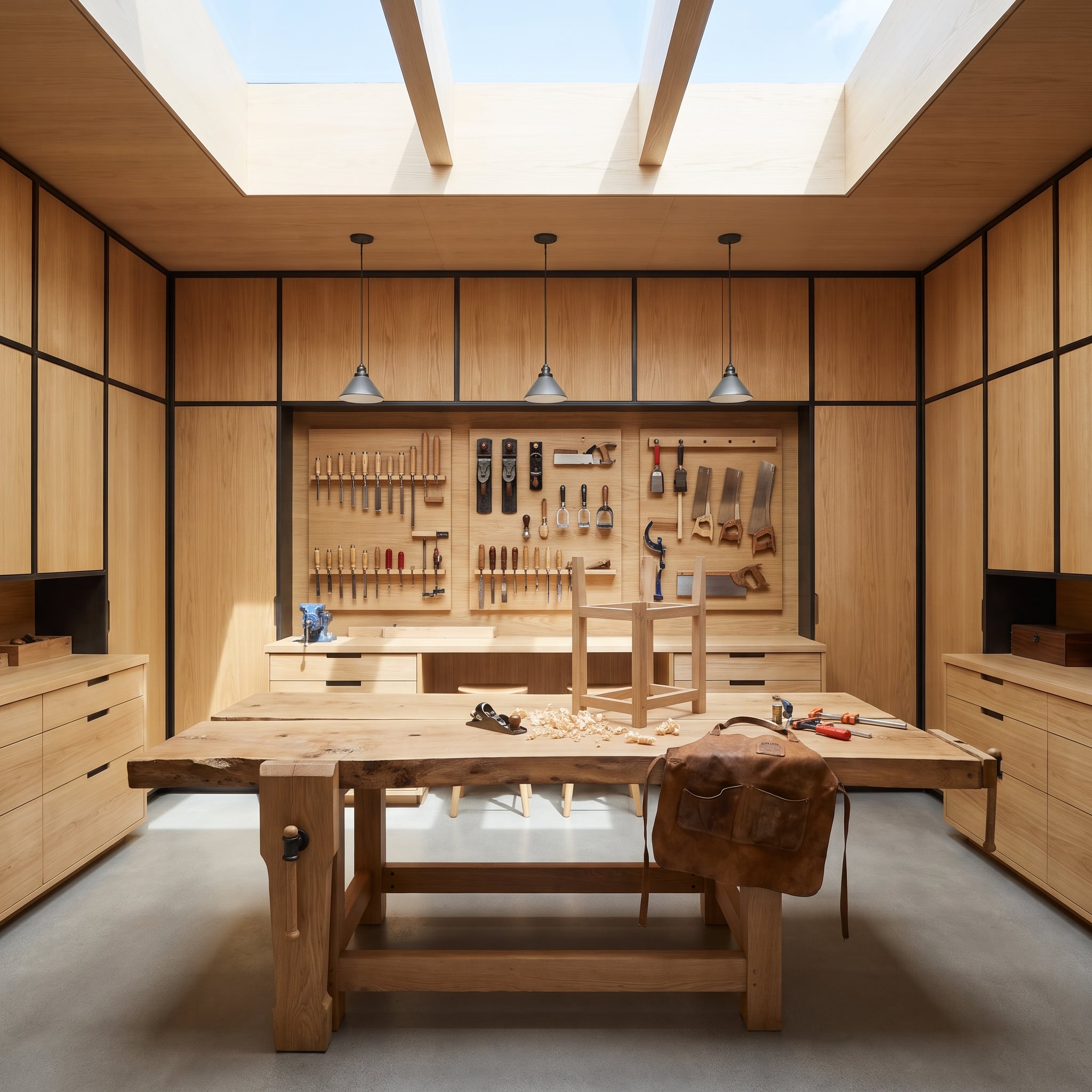
White oak cabinetry gives this woodworking shop the polish of a luxury kitchen, until the central workbench interrupts the proceedings. Its heavily worked surface, scattered shavings, and partially assembled chair frame make clear that immaculate finishes are not the room’s primary objective.
Skylights illuminate the work area, while hand planes, clamps, and other tools occupy an orderly wall-mounted display. Concrete flooring and black steel detailing provide a durable foundation beneath the pale timber. The contrast between pristine cabinetry and the rougher bench is precisely what makes the design convincing: the tools have a place, and so does the mess.
31. Glass Ceiling, Terracotta Floors, and a Conservatory Divided by Water
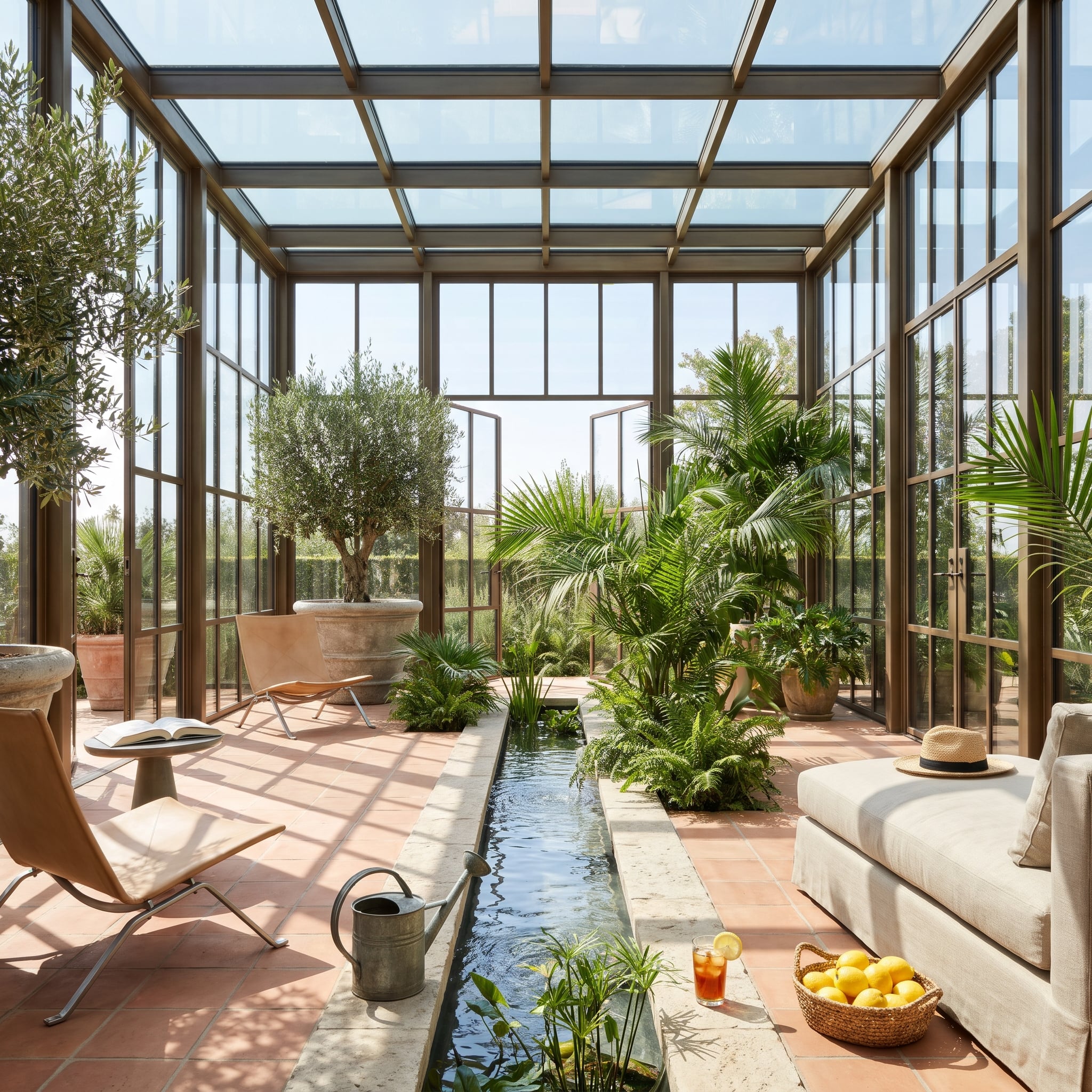
A narrow water channel runs through the center of this conservatory, dividing terracotta flooring beneath a steel-framed glass roof. Palms and ferns crowd the edges, while an olive tree in a substantial stone urn establishes a focal point toward the garden beyond.
A canvas sling chair and linen sofa occupy the available floor space without interrupting the long view. The water provides a strong architectural axis, its reflections changing with the light overhead. Rather than packing the room with furniture, the design gives plants, glass, and moving water the best positions.
30. Red Safelights, Black Marble, and a Darkroom With a Dramatic Side
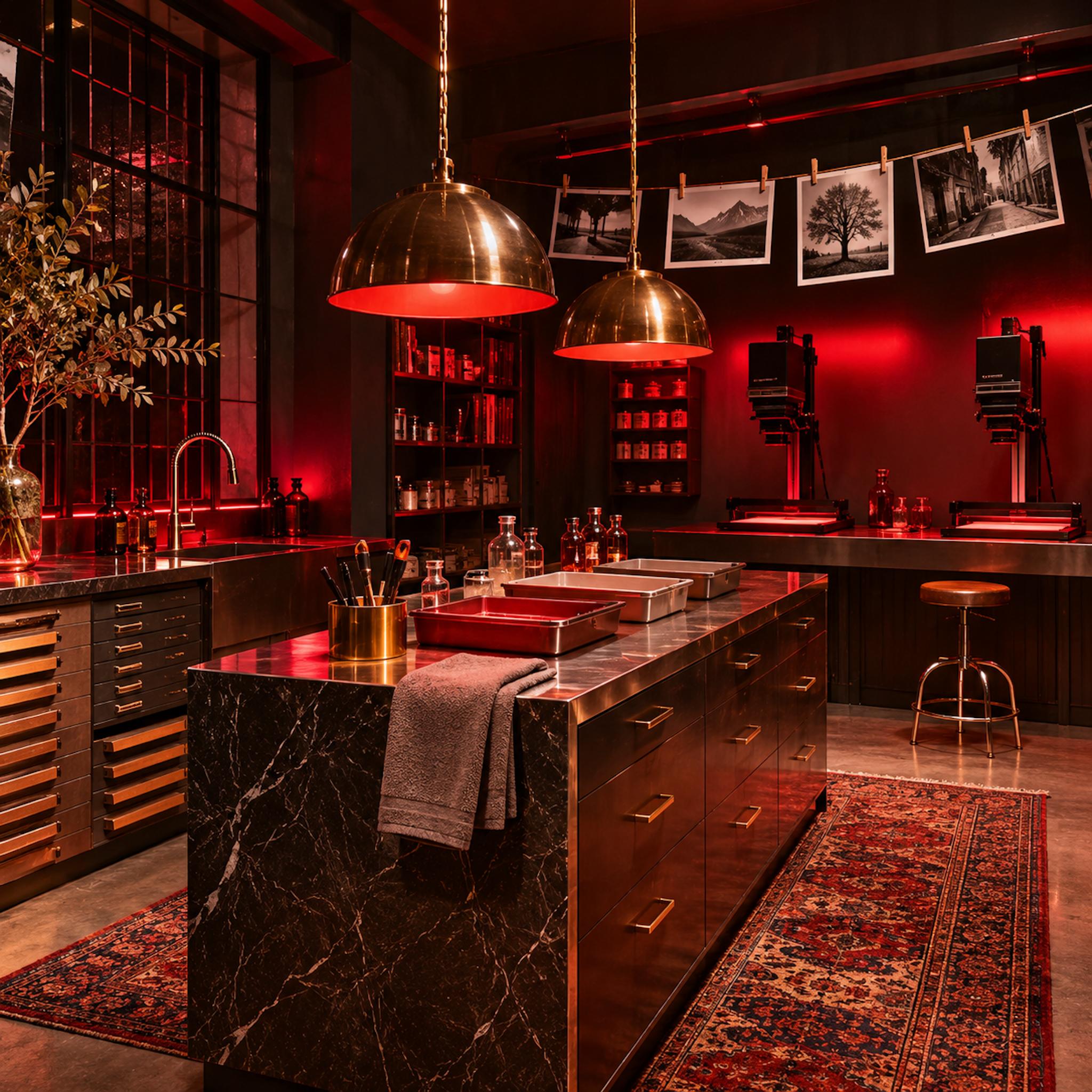
Crimson safelighting transforms this photography darkroom into a study in red, black, and polished metal. Two photographic enlargers occupy the rear workstations, while a substantial black marble-clad island holds processing trays and the smaller equipment of traditional photographic printing.
Black-and-white photographs hang from a drying line above the work area, providing a striking contrast to the saturated red illumination. Dark cabinetry, brass pendant fixtures, and a patterned rug give the room the finish of a private luxury interior rather than an institutional laboratory. The photographic equipment supplies the purpose; the architecture makes the process unusually compelling to look at.
29. Green Marble, Desert Glass, and Backgammon With a View
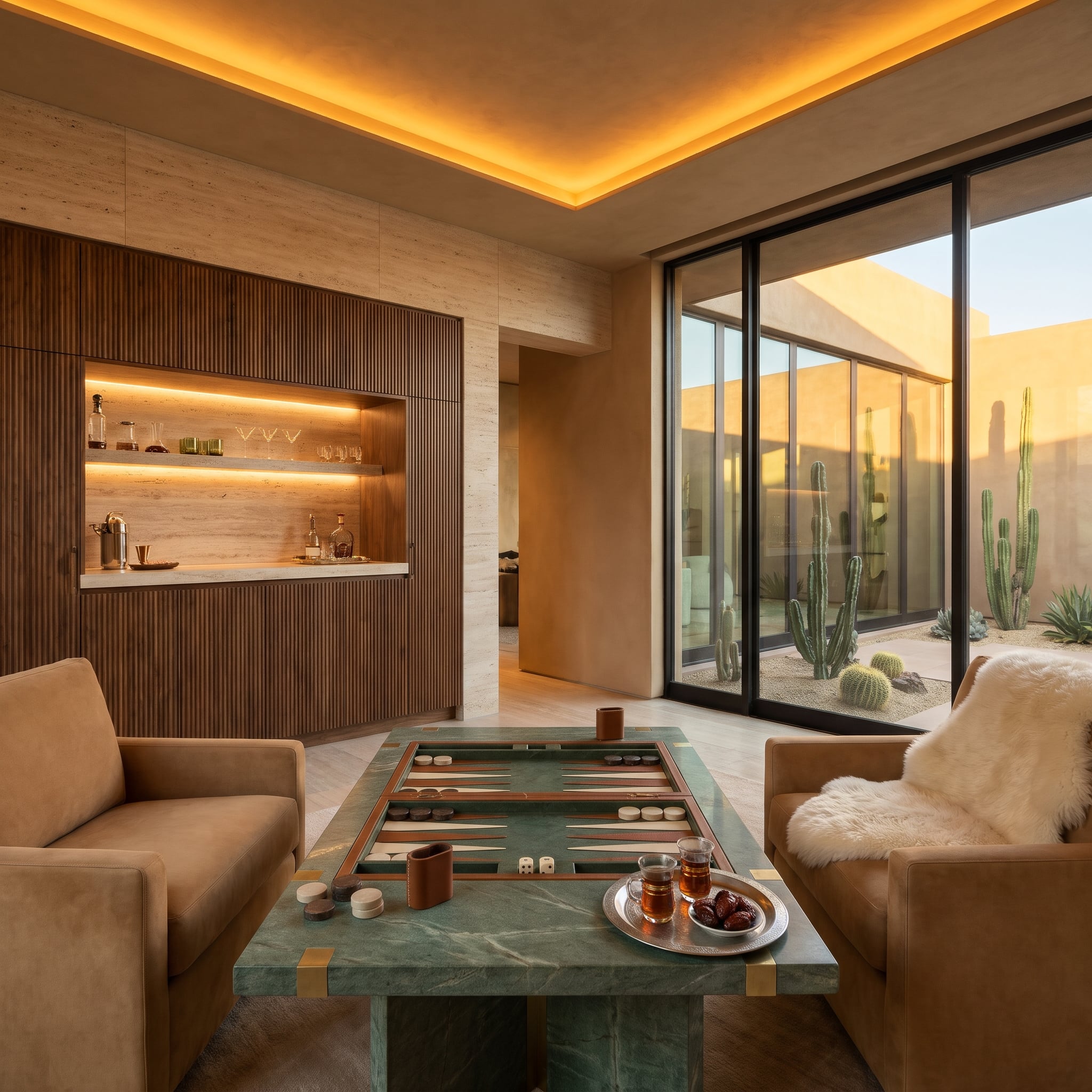
Backgammon occupies a green marble table with brass detailing, surrounded by camel-colored sofas arranged for opposing players. The furniture gives the game a generous amount of space while retaining the intimacy that makes a board game worth playing across from another person.
Fluted walnut cabinetry conceals a wet bar, with illuminated shelving warming the interior. Beyond the glass, a cactus courtyard introduces sculptural plants and pale desert tones. Green stone, leather, walnut, and the landscape outside produce an unusually rich setting for a game that needs little more than a board, counters, and a willing opponent.
28. Floor Loom, Spinning Wheel, and a Wall of Yarn That Refuses to Be Background
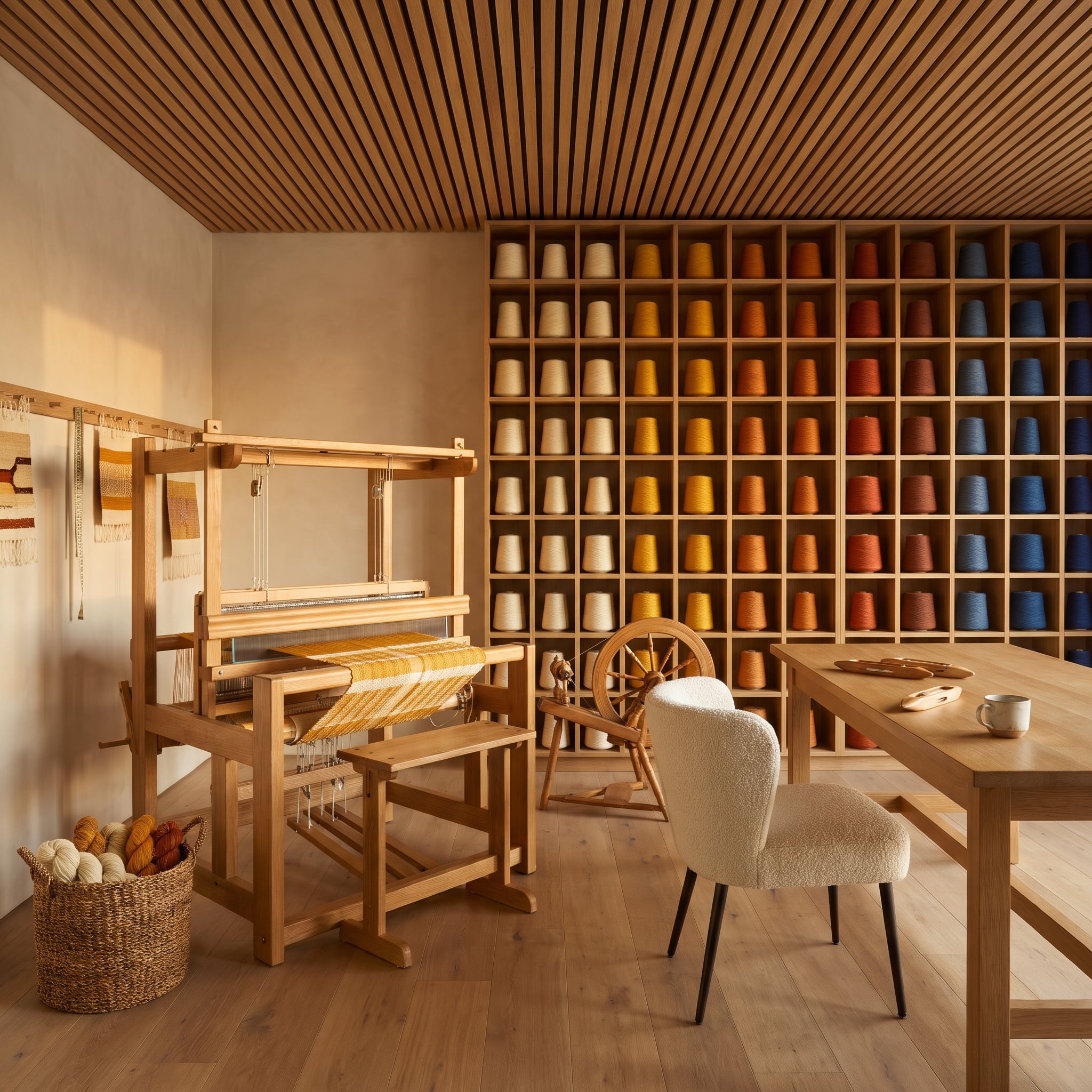
Cones of yarn progress through cream, gold, orange, and cobalt across an entire wall, transforming the studio’s supplies into its most exuberant decorative feature. The orderly arrangement gives each color room to register without sacrificing the practical advantage of visible storage.
A floor loom occupies the central working area, with yellow fabric stretched across its frame. Nearby, a spinning wheel introduces another part of the textile-making process. The equipment has sufficient space to operate, and the materials remain close at hand. No elaborate wall art is required when the raw ingredients already look this good.
27. Ocean Views, a Grand Piano, and a Limestone Stage for One
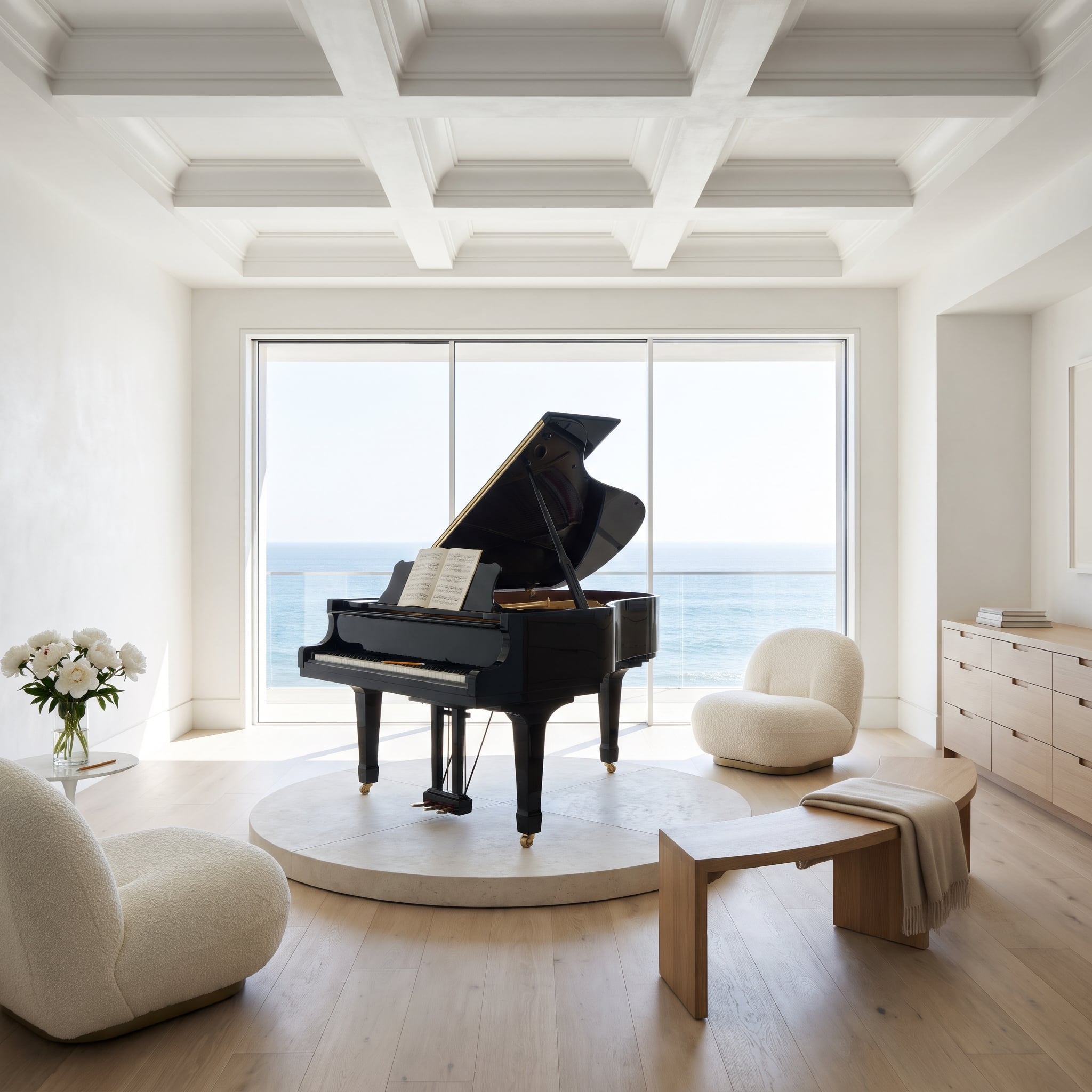
A black grand piano stands on a raised circular limestone platform, its polished silhouette set against an uninterrupted ocean horizon. Floor-to-ceiling glazing opens the room to the landscape, while the curved platform defines the instrument’s territory without enclosing it.
Two rounded bouclé chairs echo the platform’s geometry and soften the surrounding stone and glass. Furnishings are kept deliberately sparse, leaving the piano plenty of physical and visual space. Even an entire ocean struggles to upstage the instrument.
26. Vault Door, Walnut Bench, and a Jewelry Workshop With Boutique-Level Finishes
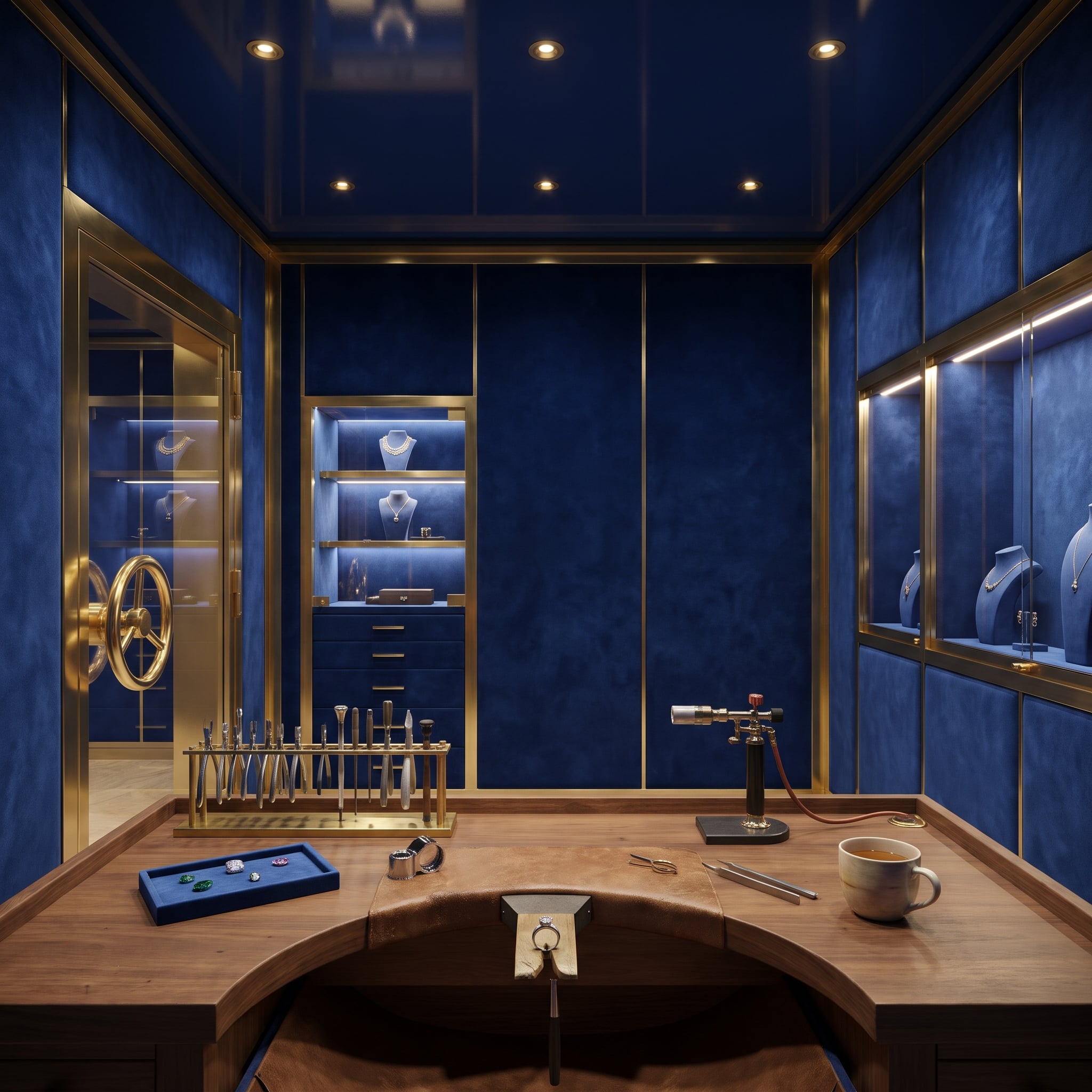
Navy velvet walls and fine brass detailing establish a richly finished setting for jewelry making. At the center, a walnut jeweler’s bench has the curved front cutout associated with close, intricate work. Small tools occupy racks around the surface, with additional equipment arranged within reach.
Illuminated cabinets display finished pieces against the dark interior, while an imposing vault door introduces a theatrical note. The contrast is the room’s strongest feature: tiny components and precision handwork surrounded by materials more commonly associated with a luxury boutique. The bench, however, remains firmly in charge.
What Our Readers Say
- Velvet divides our readers: in heart votes on specialty rooms beyond the usual living spaces, pictures featuring velvet got hearts 30% of the time, versus 49% for the other images in the same articles.
From Home Stratosphere reader polls and votes.
25. Rammed-Earth Tones, a Potter’s Wheel, and Shelves Full of Clay
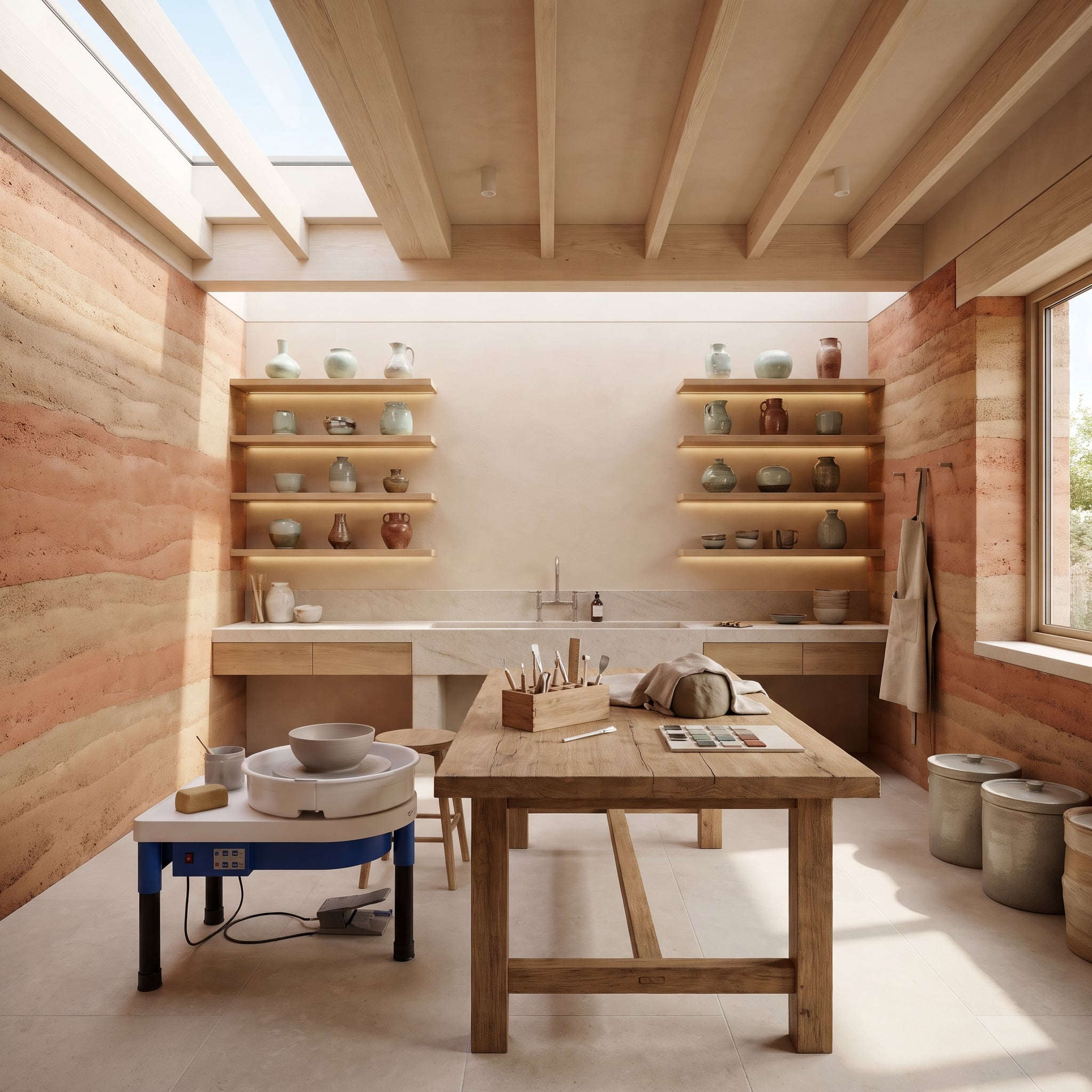
Layered terracotta and sand-colored walls surround a pottery wheel and substantial wooden worktable, bringing the studio’s architecture into close conversation with its working material. The textured surfaces establish an earthy backdrop without relying on decorative motifs.
Illuminated shelves flank the sink, holding ceramic vessels in celadon, rust, and natural clay tones. Tools and glaze samples occupy the worktable, keeping the stages of making visible alongside finished pieces. Variations in glaze, form, and texture supply the ornament, while the wheel has the floor space it needs.
24. Walnut Console, Reel-to-Reel Tape, and a Room for Listening Rather Than Skipping
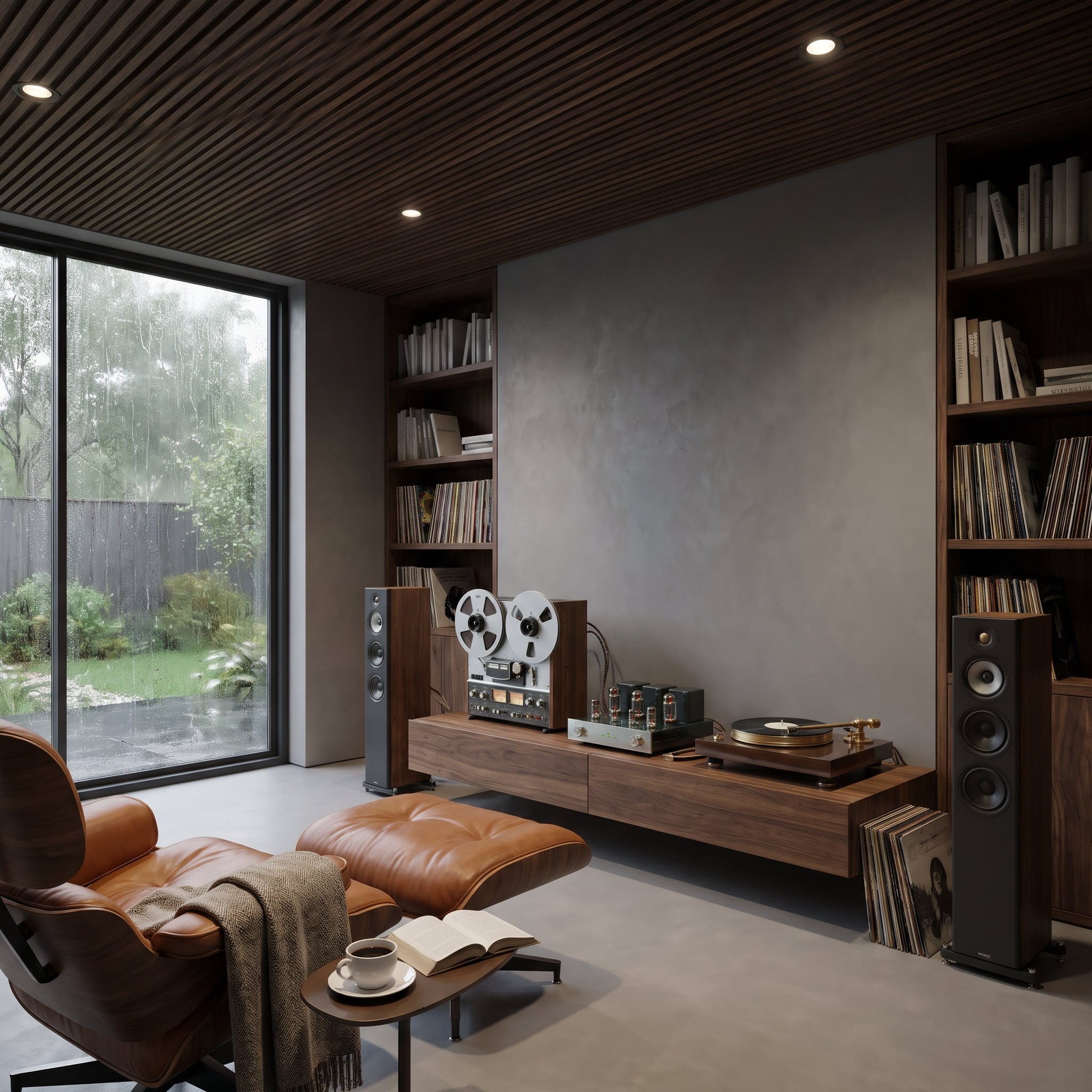
Rain-streaked glazing lends a cinematic backdrop to this listening room, where a walnut console accommodates a reel-to-reel tape deck, tube amplifier, and turntable. Record shelves flank the equipment, giving the music collection an architectural presence rather than relegating it to a cabinet.
A cognac leather lounge chair faces the stereo, establishing a deliberate listening position. Gray plaster provides a restrained background for the metal components, while the walnut cabinetry warms the composition. Vinyl and magnetic tape offer different physical rituals, but both reward the same thing: choosing something to hear and staying long enough to hear it.
23. Copper Sink, Marble Island, and a Flower Room With Room to Work
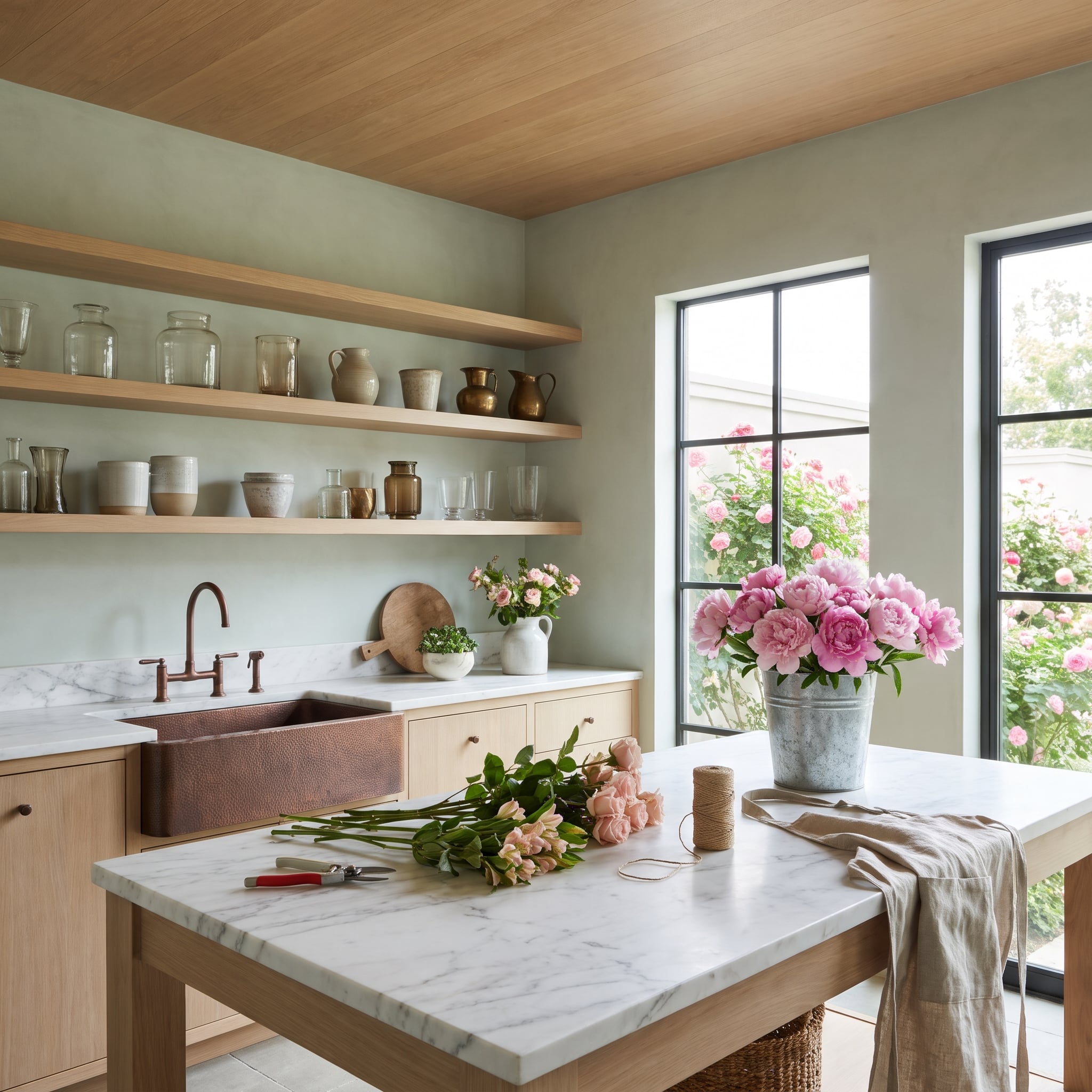
A hammered copper farmhouse sink, expansive marble island, and open shelves filled with vessels give flower arranging a dedicated workspace. Sage-green walls temper the polished stone, while white oak ceiling planks introduce warmth overhead.
The island accommodates trimming stems, sorting greenery, and assembling arrangements without surrendering the entire surface to one bouquet. Pink peonies supply the strongest color, and steel-framed windows look toward a garden beyond. Copper, marble, oak, and flowers make a handsome combination, but the generous working space is what turns this from a decorative room into a useful one.
When it comes to the vessel itself, about half of our readers said they would buy a glass vase for flowers on the table, and most of them said it came down to looks.
22. Brass Chess Clock, Black Marble, and Sixty-Four Squares of Trouble
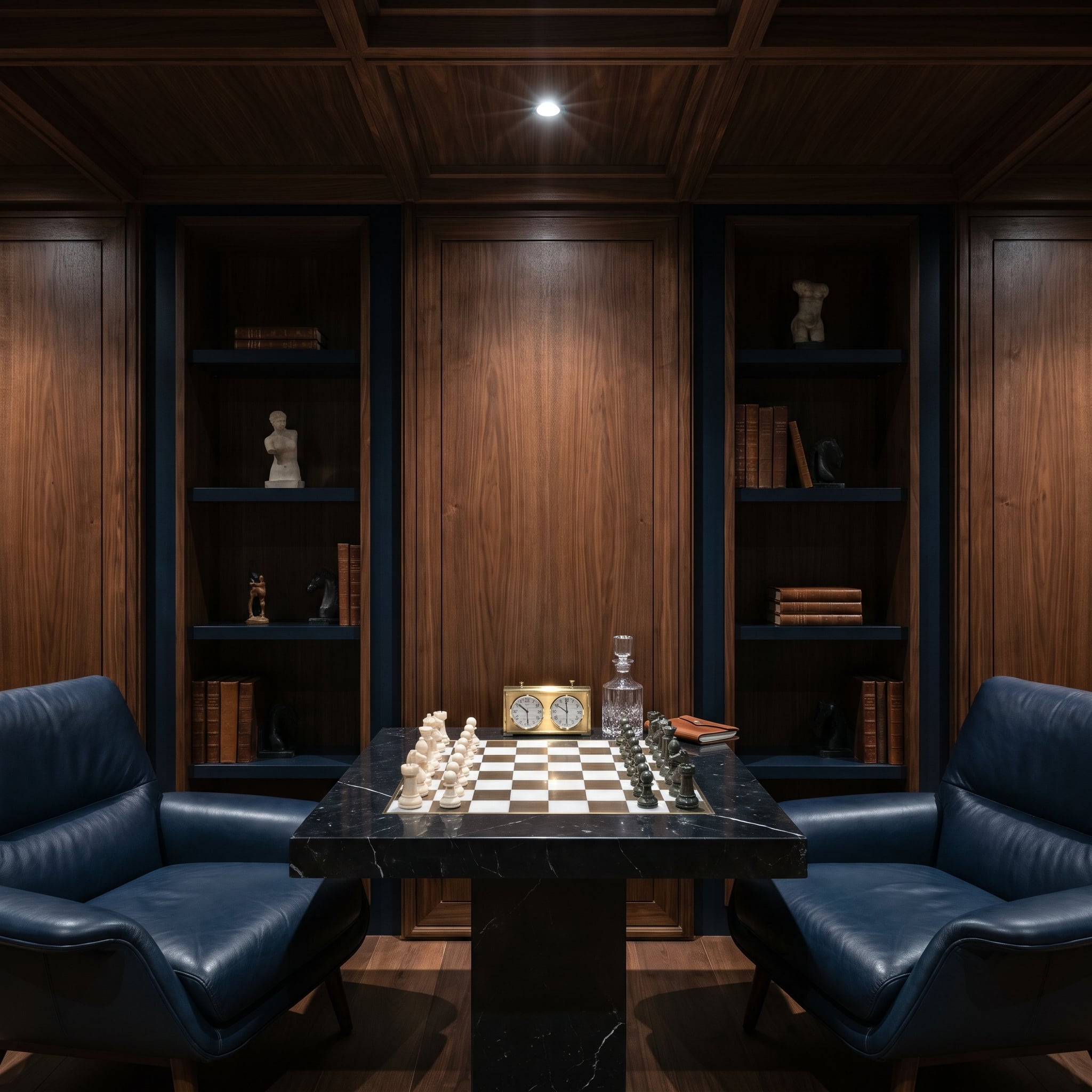
Dark walnut paneling surrounds a black marble chess table, with two navy leather chairs positioned directly opposite one another. A brass chess clock adds a competitive flourish, while the polished stone introduces a cool reflective surface among the warmer timber finishes.
A crystal decanter provides another glint of light, but the furnishings otherwise exercise remarkable restraint. The room gives a single game the importance usually reserved for a formal dining table. Two chairs, sixty-four squares, and enough time for a disagreement conducted entirely without words.
21. Grid Lighting, Magnifying Lamps, and a Model-Making Studio With Precision in Mind
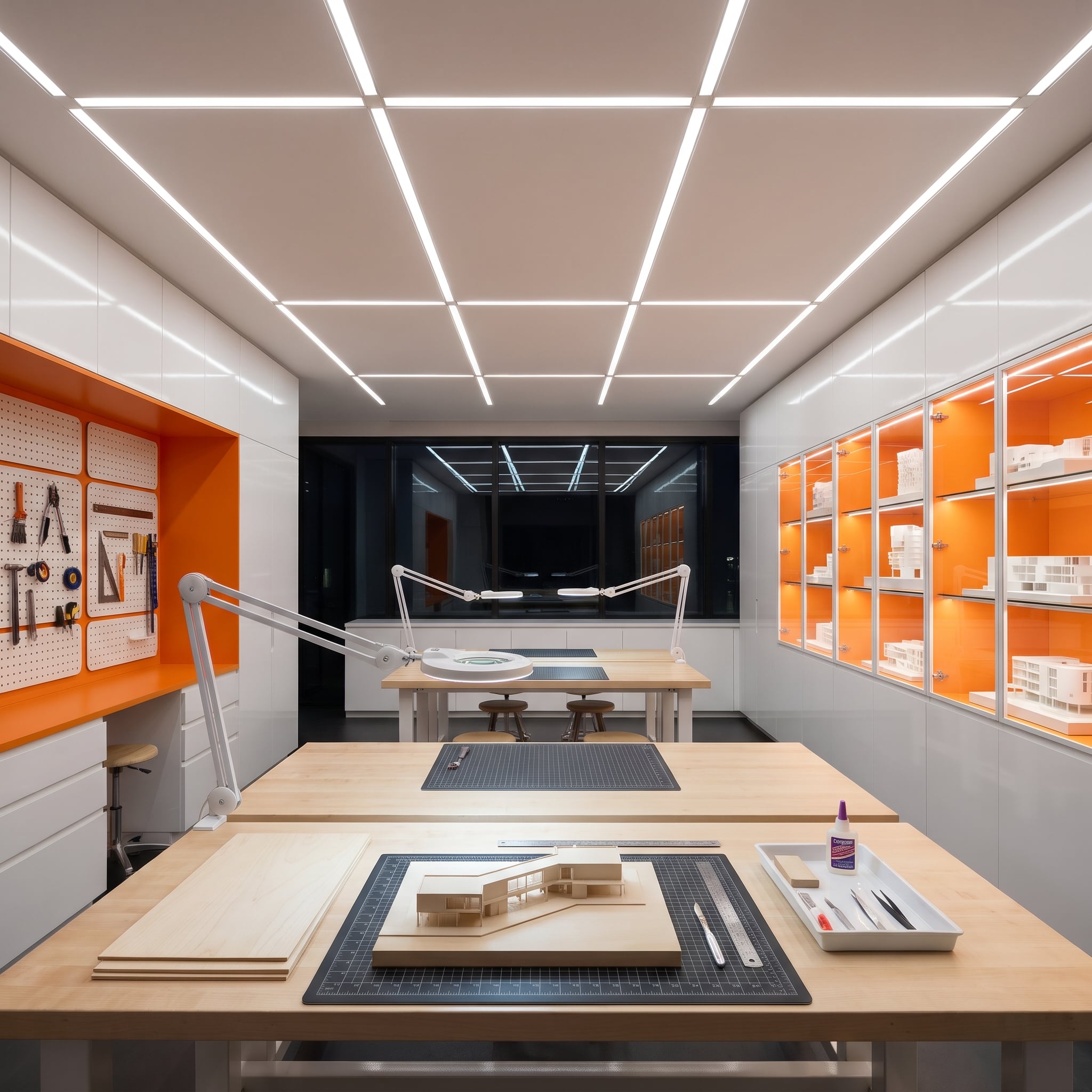
An illuminated geometric grid turns the ceiling into something resembling a technical drawing. Below it, a broad worktable holds an architectural model, cutting mats, rulers, adhesives, and the small tools necessary for precise construction.
Adjustable magnifying lamps serve individual workstations, while pegboard storage keeps frequently used equipment accessible. Orange-backed shelving provides a burst of color behind glass-fronted displays of completed models. The design separates two activities that demand very different treatment: building something delicate and keeping the finished result intact.
20. Cast Iron, Moss, and a Tea Room Framed by Rain
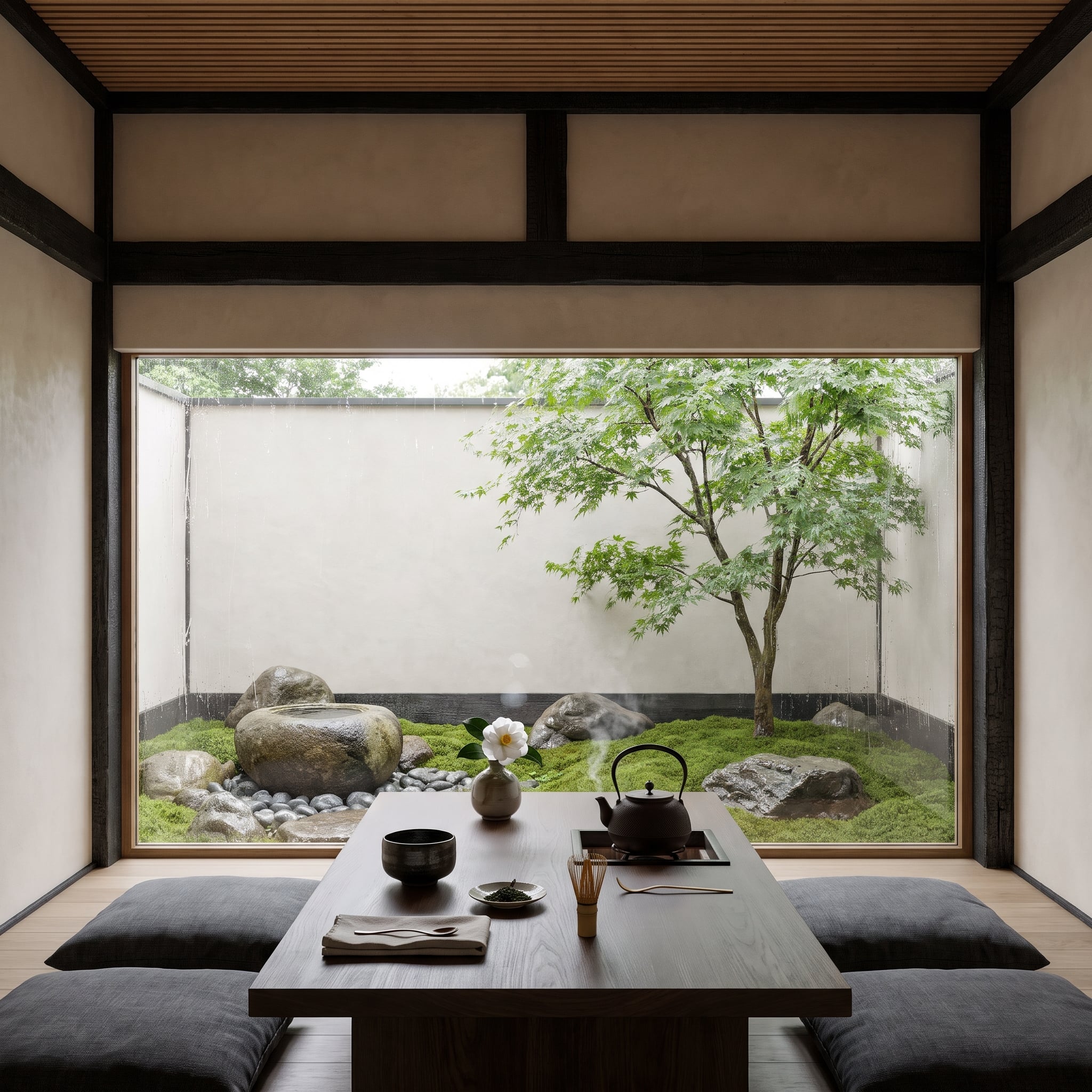
A rain-streaked picture window frames a courtyard of moss, river stones, and a green-leafed maple. Inside, a low dark-oak table holds a cast-iron tetsubin, ceramic tea bowl, and bamboo whisk, with charcoal cushions arranged around it.
Pale timber flooring allows the garden to command attention, while the dark kettle and ceramics provide a concentrated group of objects against the lighter interior. Rounded stones outside echo the simple vessels within. Preparation, serving, and drinking all have their place in a room whose details are deliberately few.
19. Etching Press, Steel Trusses, and a Printmaking Studio With Industrial Muscle
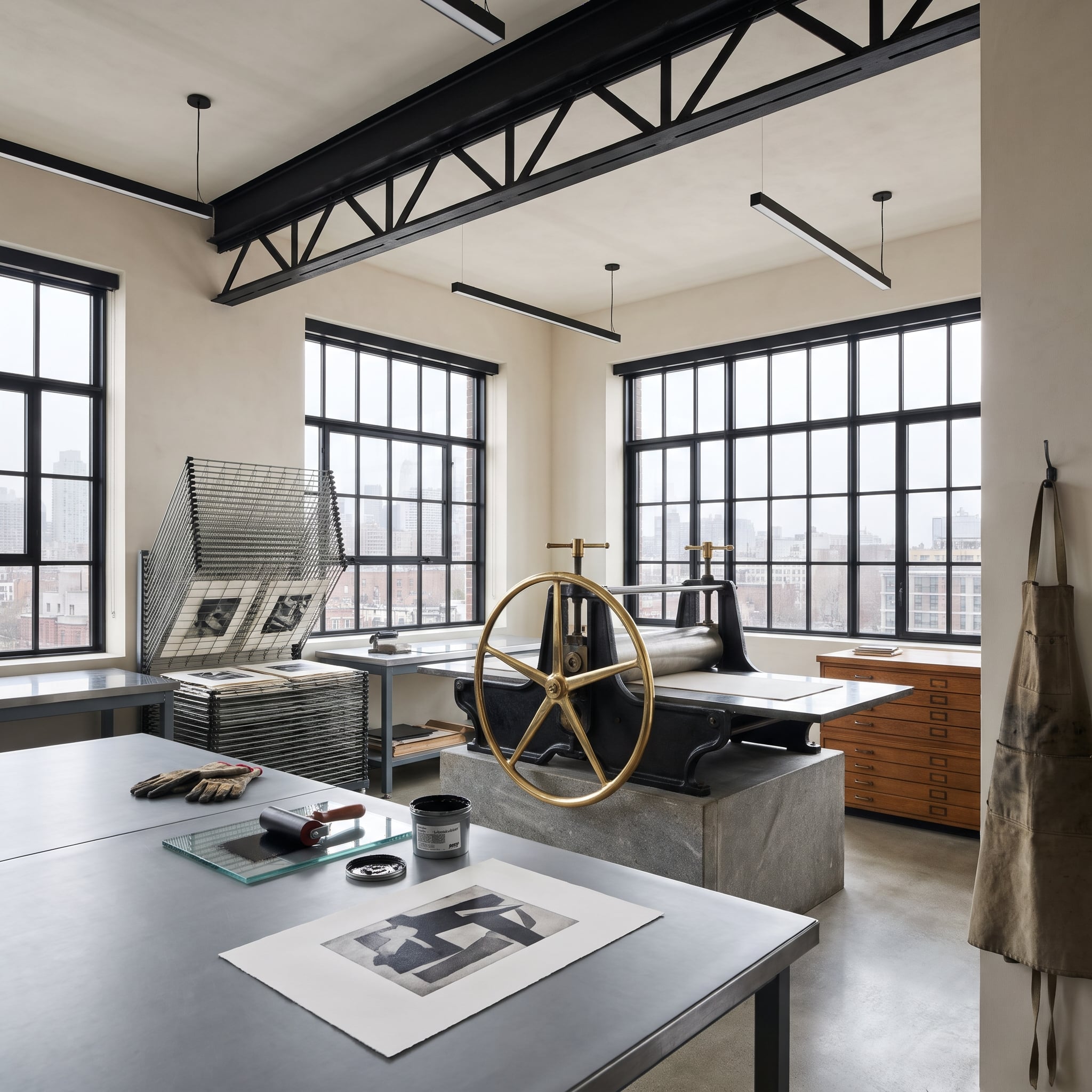
An etching press with a substantial brass handwheel dominates this studio, standing beneath exposed steel roof trusses. Black-framed windows admit daylight across the concrete floor, while the machinery provides a sculptural presence that conventional furniture could hardly rival.
Oak flat-file cabinets store paper and finished prints, a drying rack occupies another part of the room, and a worktable holds rollers and ink. Preparation, printing, drying, and storage each have recognizable territory. The industrial architecture is impressive, but the organization is what makes the space credible as a working studio.
Not everyone is sold on the industrial edge: in our readers’ heart votes, specialty-room pictures with black metal got hearts 43% of the time, versus 51% for other images in the same articles.
18. Cedar Ceiling, Reflecting Pool, and a Reading Pavilion That Almost Floats
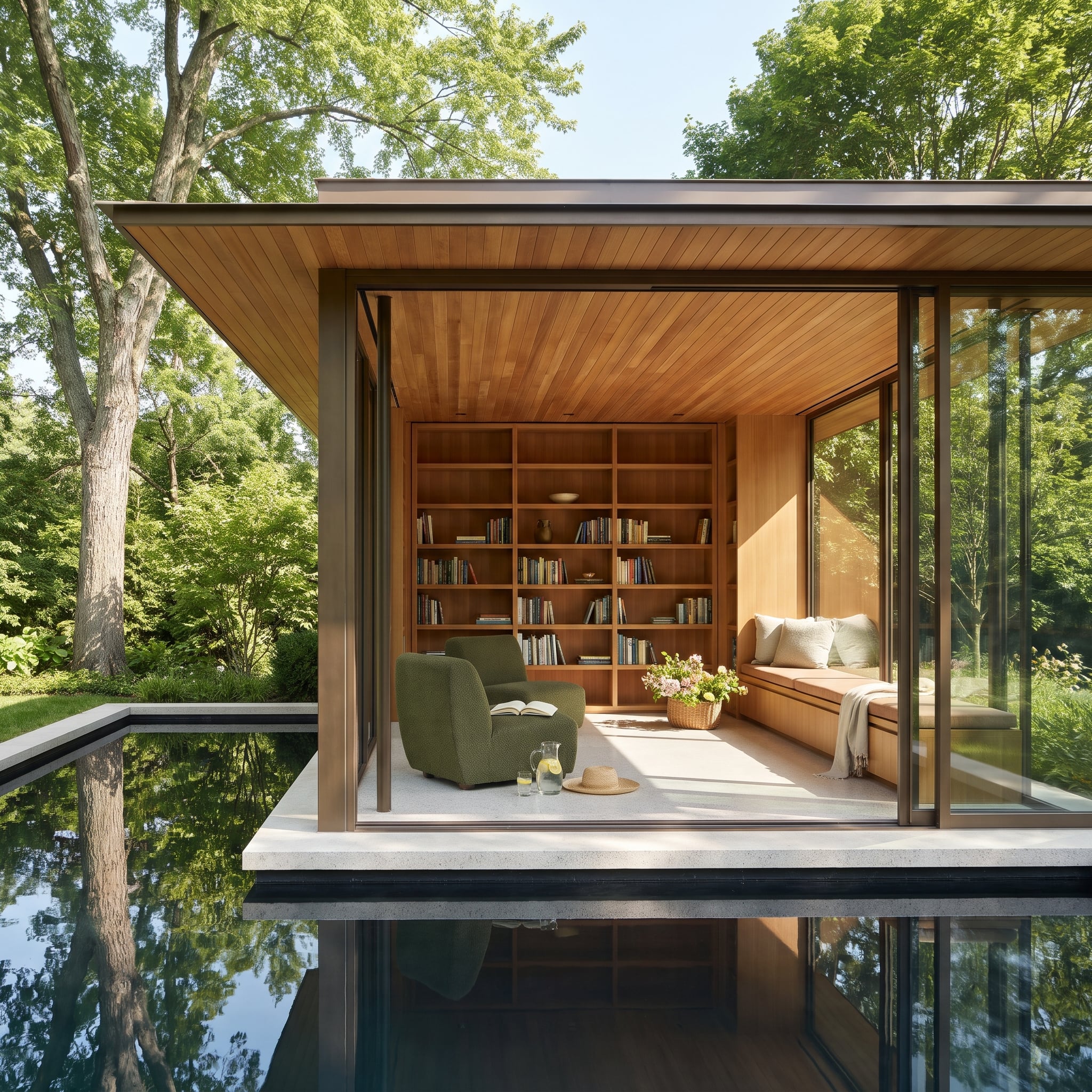
Bronze-framed glass walls surround a reading pavilion that appears to hover above still water. Cedar planks cover the ceiling, with matching built-in shelving across the rear wall providing a permanent architectural setting for the books.
A green bouclé armchair sits near an open glass panel, while a cushioned daybed occupies a more sheltered position beside the window. Pale stone flooring balances the timber and allows the reflections outside to remain prominent. The space combines the enclosure of a library with the openness of a garden pavilion, leaving little visual distance between reading indoors and sitting beside the water.
17. Dress Forms, a Glowing Worktable, and a Sewing Studio With Runway Ambitions
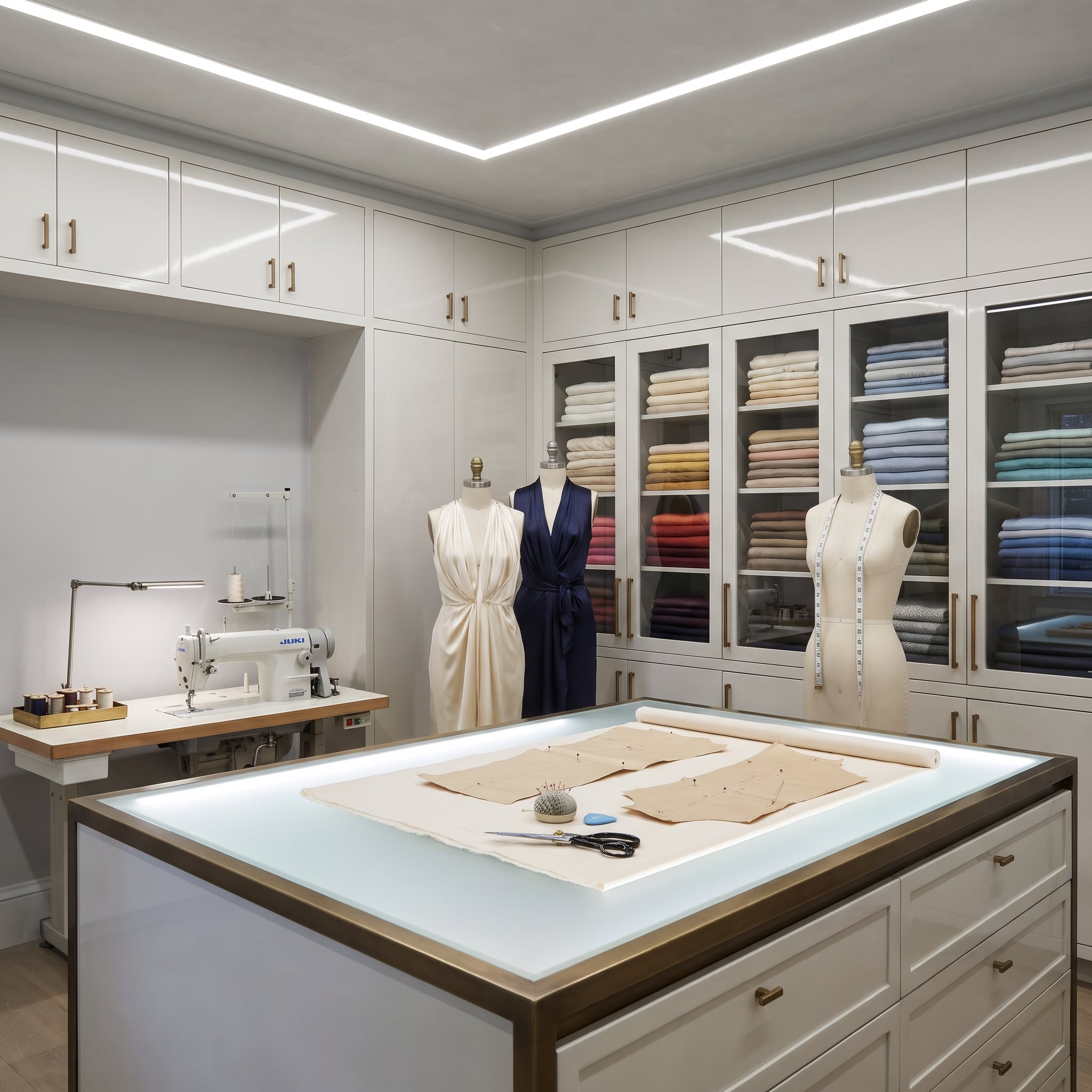
A glowing glass-topped island gives this sewing studio an unusually dramatic centerpiece. Paper patterns and cutting materials occupy its illuminated surface, while dress forms display garments in progress and an industrial sewing machine stands at a separate workstation.
Brass-handled cabinetry keeps supplies organized without sacrificing the generous work surfaces. The layout acknowledges that preparing patterns, cutting fabric, and sewing require different kinds of space. The illuminated table brings visual drama, but its usefulness for tracing and certain pattern tasks prevents the effect from becoming purely decorative.
16. Board Games, Cognac Leather, and Storage That Knows What’s Inside
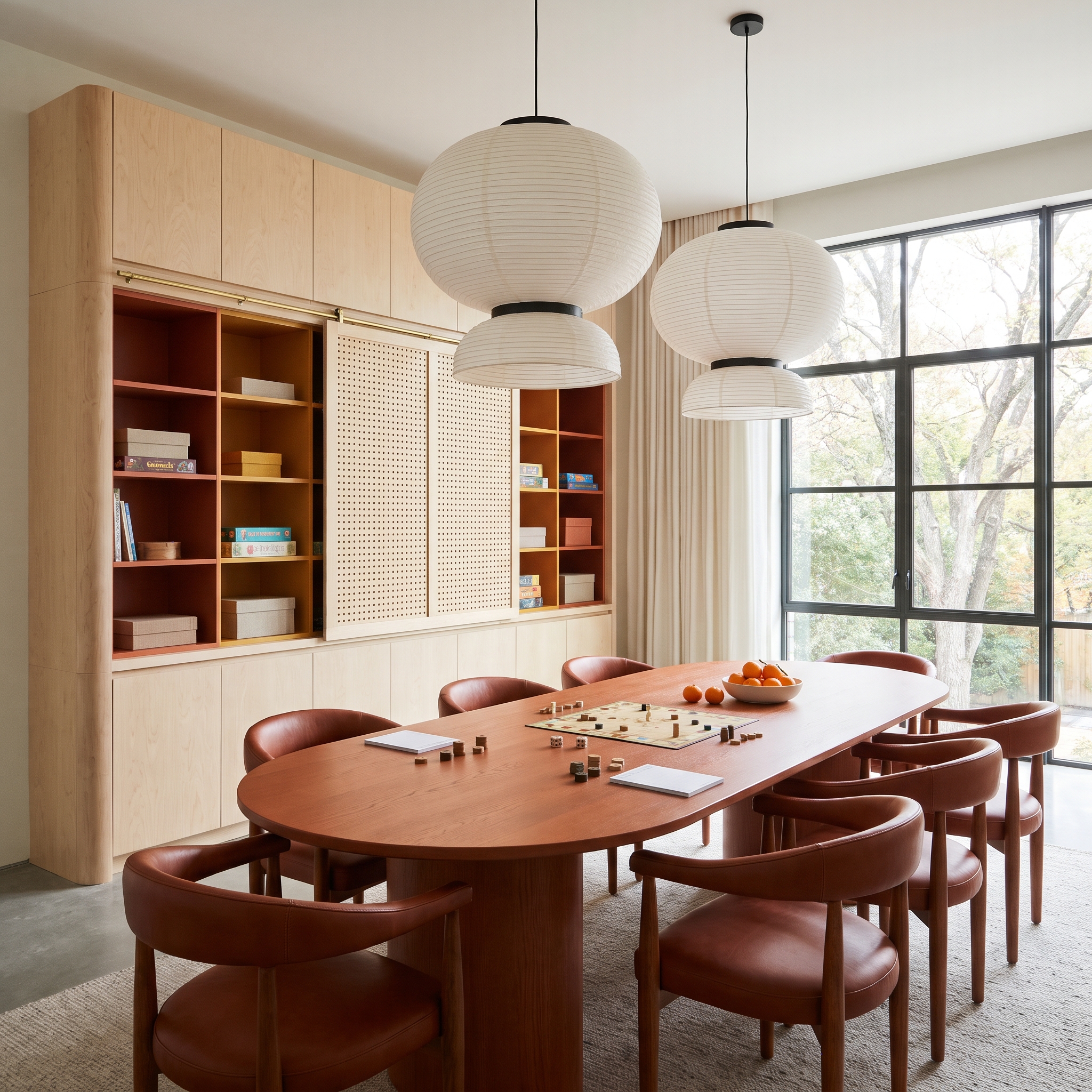
Cognac leather chairs surround an oval walnut table beneath oversized paper lantern pendants. Steel-framed windows introduce a wooded landscape, giving the room an openness rarely associated with traditional basement game rooms.
The storage wall deserves particular attention. Pale maple cabinetry frames terra-cotta compartments, while perforated sliding panels conceal the game collection without burying it. Leather, walnut, and muted orange form a warm, cohesive palette. Even between games, the table remains a substantial piece of furniture rather than a temporary surface waiting to be cleared.
15. Skylight, Stone Wall, and a Meditation Room With Moving Water
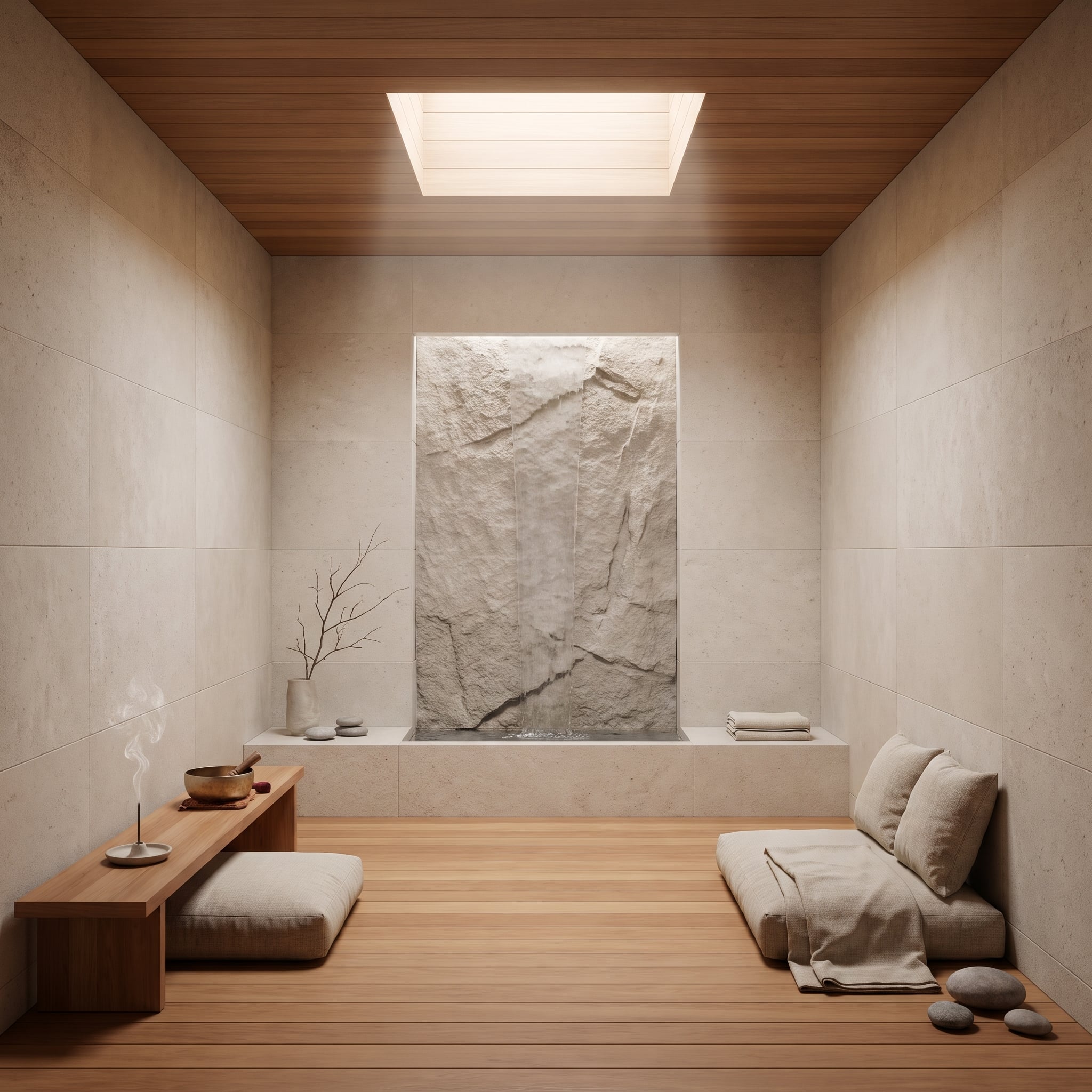
Water descends a rough-cut stone wall into a shallow basin, giving this meditation room a dramatic focal point without introducing elaborate ornament. A recessed skylight directs daylight across the uneven surface, picking out the differences between wet stone, shadow, and smooth water.
Cedar flooring warms the mineral palette. A floor cushion, simple bench, singing bowl, and incense holder provide the few furnishings visible in the space. With so little competing for attention, the stone wall becomes an evolving composition of texture, reflection, and light.
14. Drafting Tables, Cork Walls, and Architecture Before the Computer Takes Over
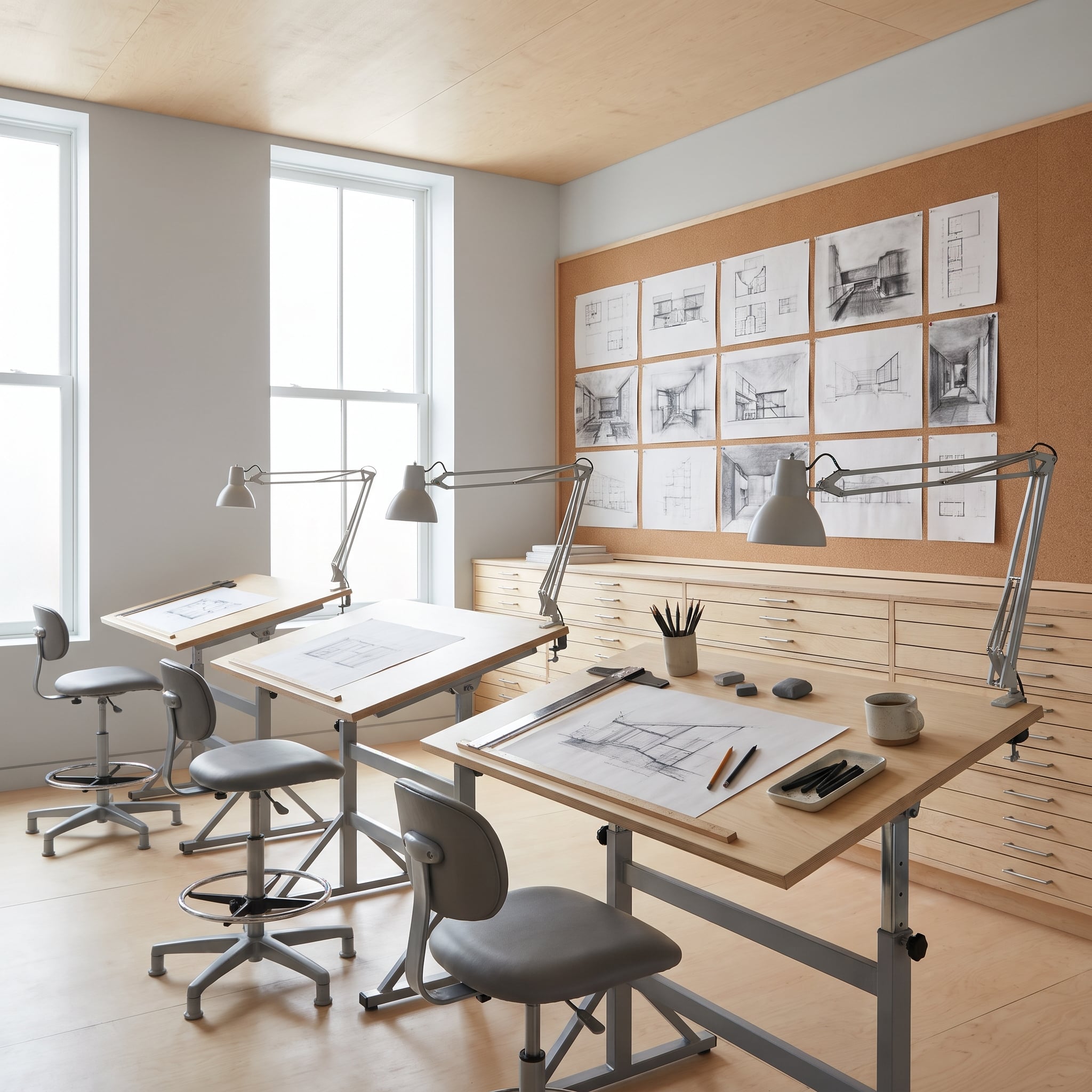
Three adjustable maple drafting tables stand beneath articulating lamps, each paired with a saddle stool. Across the rear wall, an expansive cork surface displays architectural sketches, turning the drawings themselves into an evolving wall composition.
Flat-file drawers keep large sheets protected, while pencils, erasers, and drawing instruments remain accessible at the tables. Pale timber and gray seating establish a quiet palette that allows the sketches to supply the visual detail. The room has the practical clarity of a professional drafting studio without losing the warmth of a residential interior.
13. Walnut Slats, Amber Velvet, and a Record Collection That Gets the Best Wall
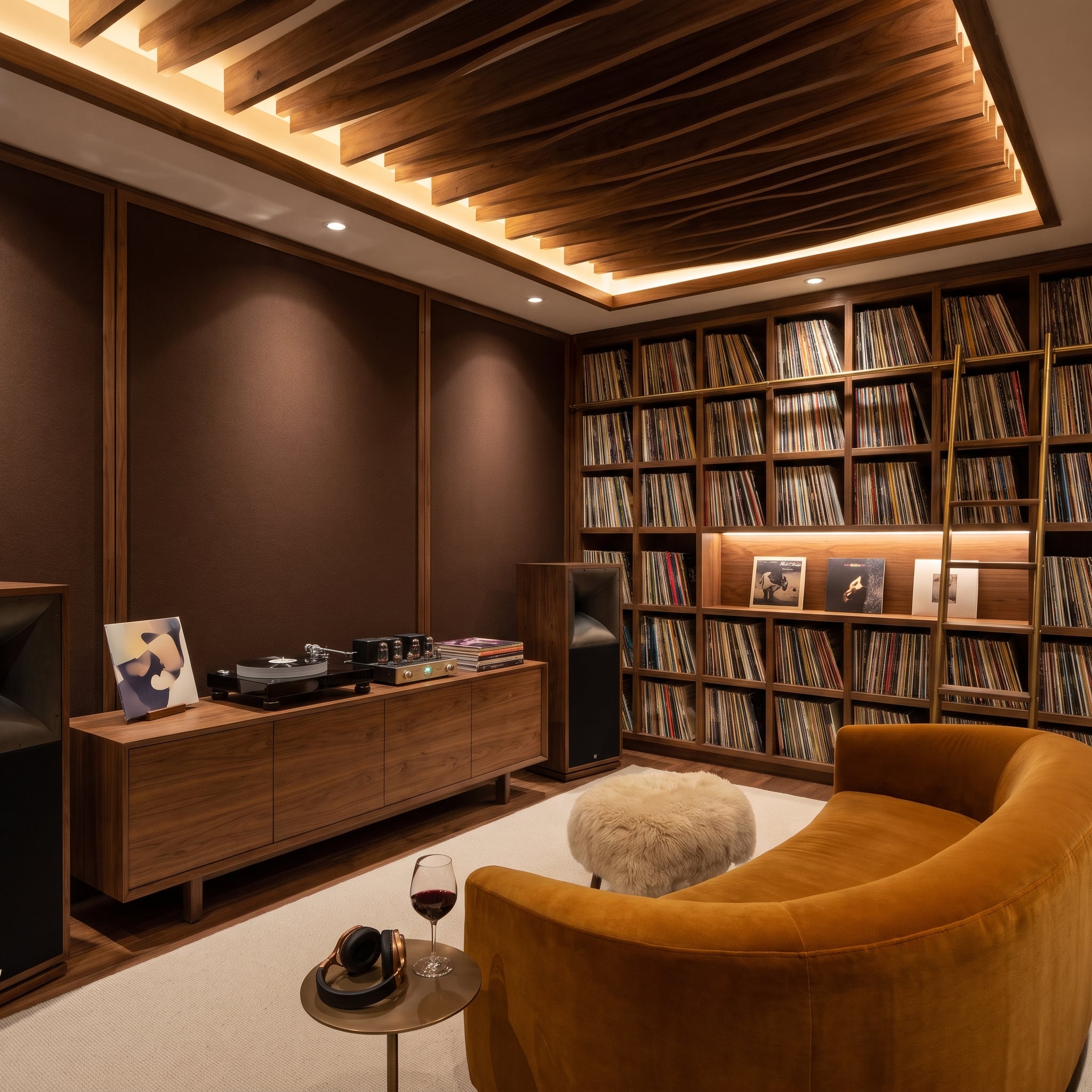
Hundreds of records fill floor-to-ceiling walnut shelving, with a brass rolling ladder providing access to the upper rows. The slatted timber ceiling extends the same material overhead, allowing the collection to read as part of the architecture.
An ochre velvet chair faces a low credenza holding a turntable and tube amplifier. Dark wood, amber upholstery, and brass create an enveloping palette, while the shelves make the records impossible to ignore. This is a room where the collection receives the grand treatment and the listener gets the comfortable chair.
12. Bleached Oak, Brass Lamps, and a Puzzle Table With Its Own Drawers
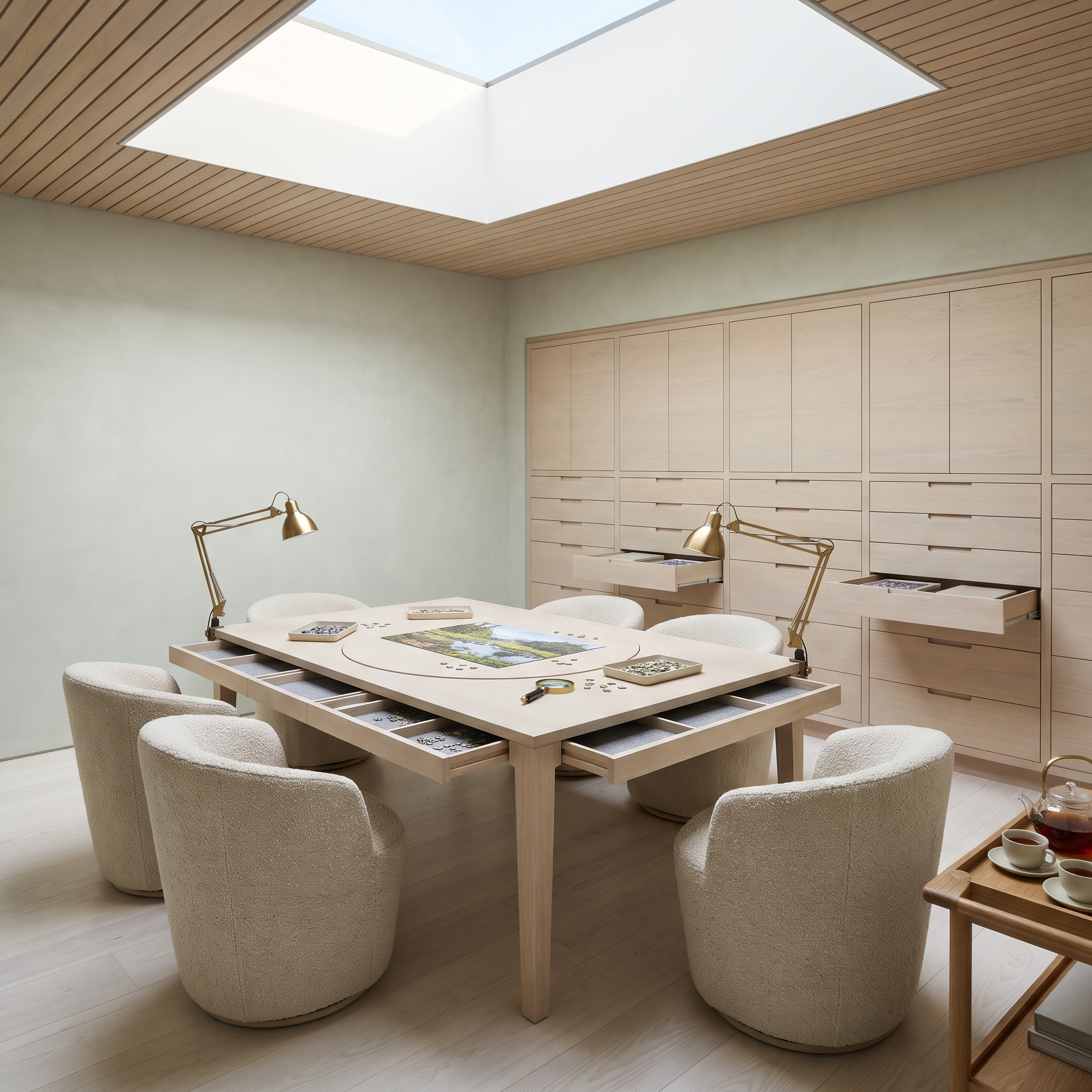
Bleached oak runs from the slatted ceiling to a wall of flat-file drawers, establishing a remarkably consistent material palette. At the center, a purpose-built puzzle table incorporates pullout drawers on all four sides, giving loose pieces somewhere to wait without crowding the main surface.
Adjustable brass lamps provide focused lighting, while six rounded bouclé swivel chairs soften the timber’s straight lines. A skylight supplies daylight and a small tea table adds a practical convenience. Most importantly, a half-finished puzzle can remain exactly where it is without holding the dining table hostage for three weeks.
11. Grand Piano, Burgundy Velvet, and a Recital Room With Twelve Good Seats
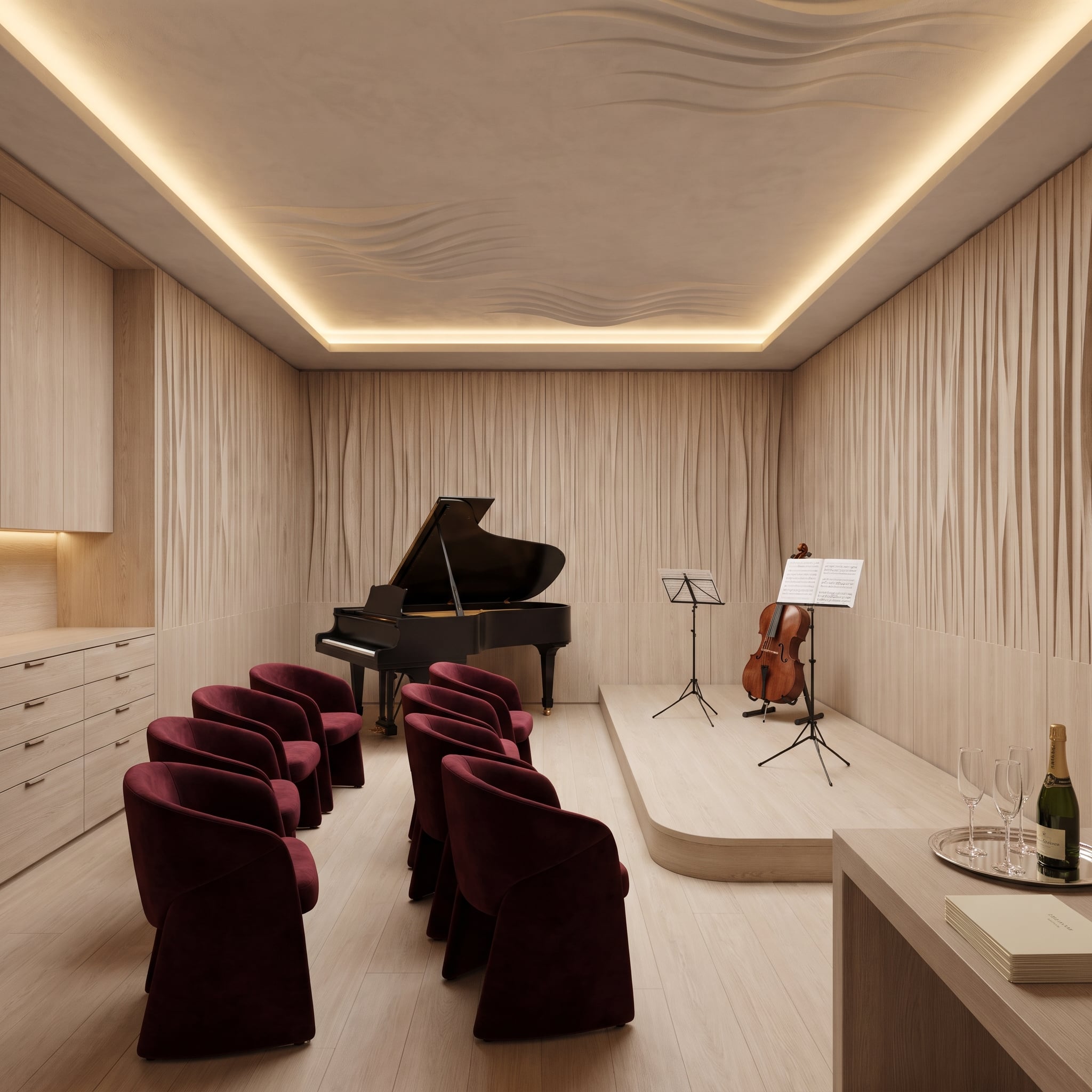
A black grand piano and cello occupy a low platform facing twelve burgundy velvet armchairs. Bleached oak paneling surrounds the space, contrasting with the saturated upholstery and the instruments’ polished surfaces.
The arrangement borrows the logic of a recital hall without requiring a public venue’s scale. The platform distinguishes the musicians’ area, and the seating offers clear views of the instruments. Vertical timber adds texture around the perimeter, while the restrained finishes leave the music-making equipment visually prominent. A private performance needn’t require a crowd.
10. Ink Bottles, Iron Presses, and a Calligraphy Studio With Room for Paper
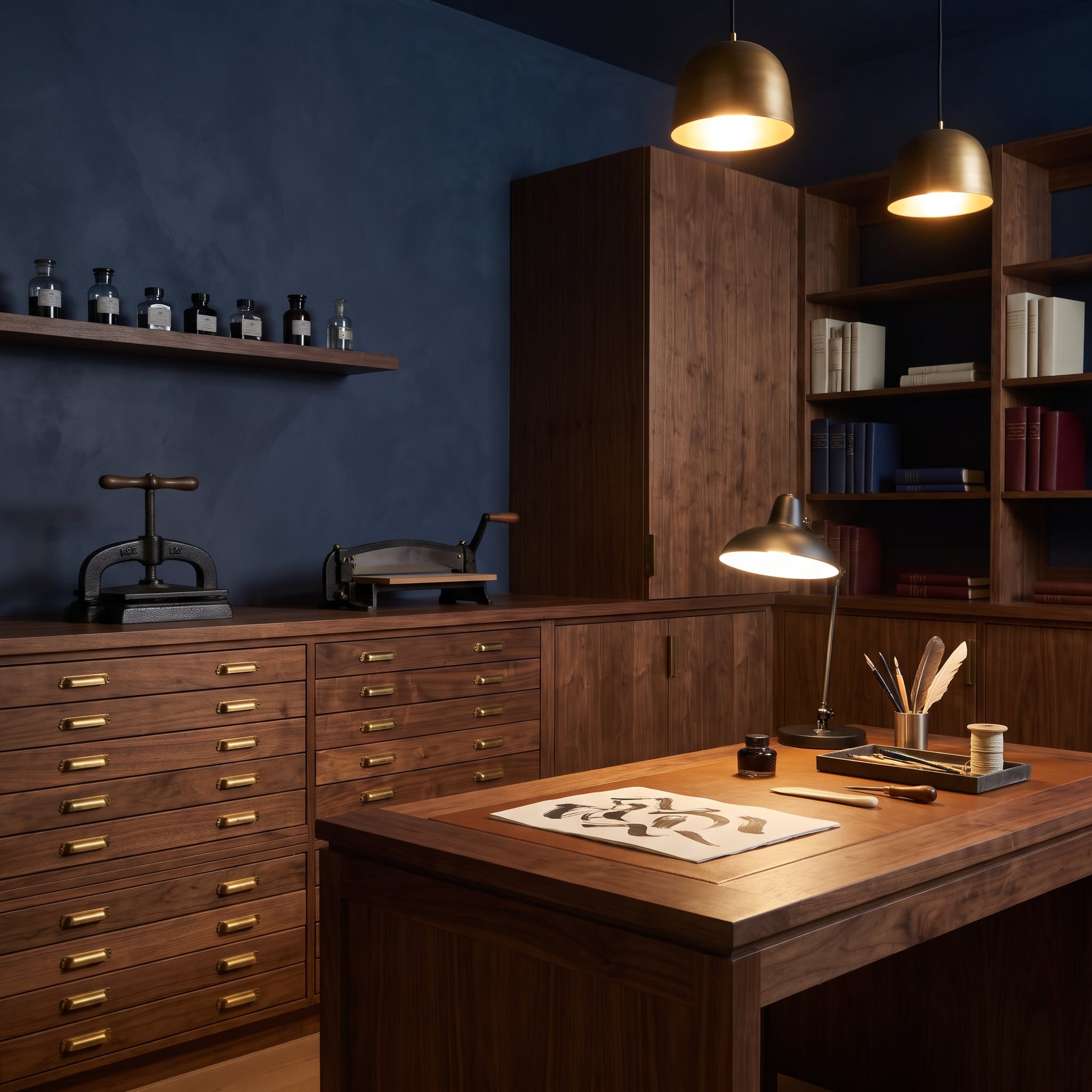
Deep-blue plaster and walnut flat-file drawers create a richly colored setting for a studio devoted to ink and paper. A central work island holds writing sheets and tools beneath an adjustable lamp, while rows of ink bottles occupy the rear shelving.
Two antique iron presses introduce printmaking alongside the calligraphy equipment. Brass drawer pulls provide small highlights against the walnut cabinetry, and the broad work surface leaves space for laying out materials. Shallow storage protects sheets and drawings, giving paper the generous accommodations it rarely receives in an ordinary home office.
9. Coffered Oak, Monopoly, and a Family Room Where the Table Gets All the Attention
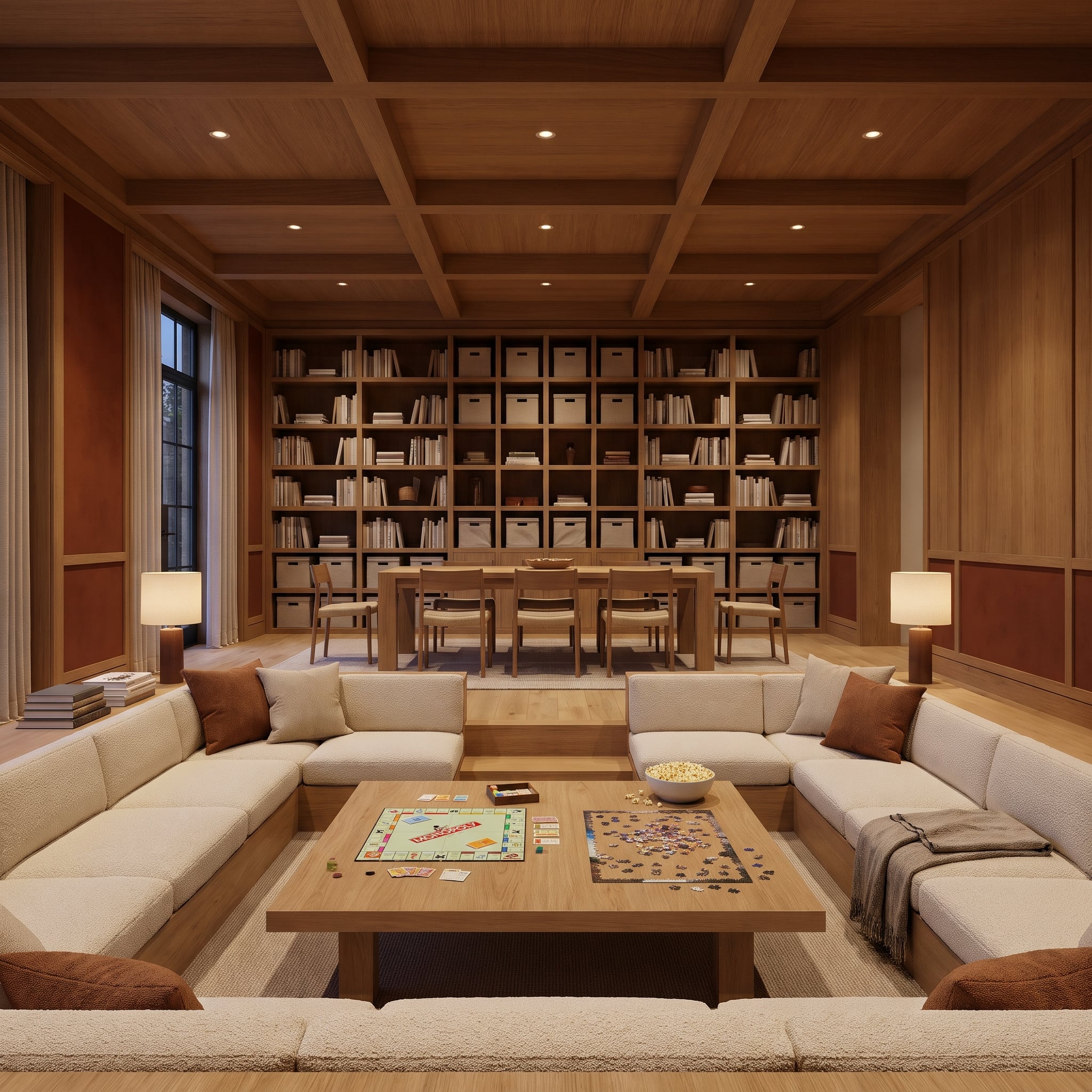
Oak covers the coffered ceiling, shelving, and central coffee table in this expansive family game room. A U-shaped cream bouclé sectional wraps around the playing surface, with rust-colored cushions warming the pale upholstery.
The broad table accommodates board games and puzzles, while a separate dining table offers another place to gather. Open shelves mix books with storage bins, keeping games and supplies nearby. The seating wraps around the central table, giving the room a more participatory character than the familiar sofa-facing-screen layout.
8. Glass Cases, Gold Music Stands, and a Room Where Instruments Are the Art
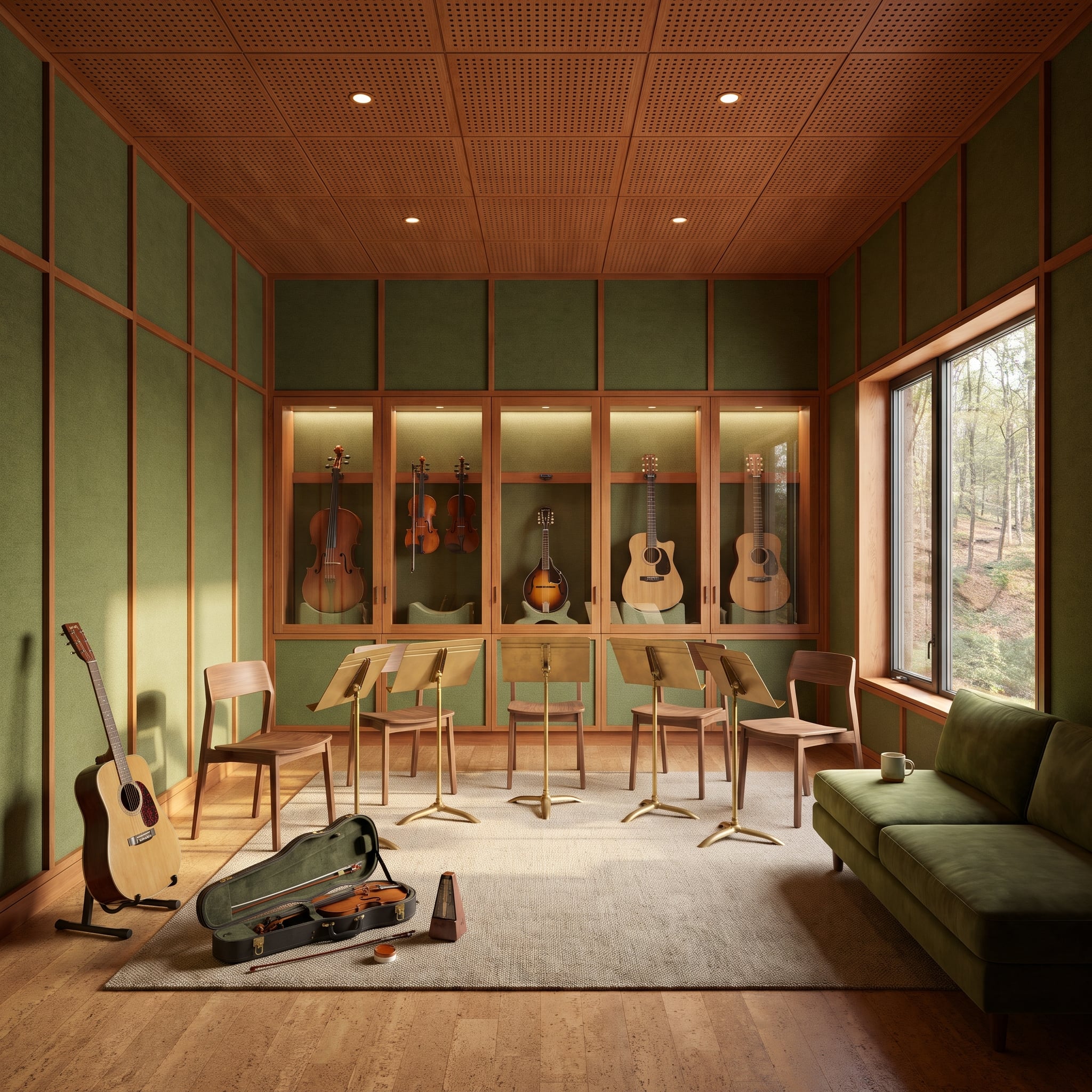
Five illuminated display cases present string instruments with the formality of museum objects. A cello, violin, mandolin, and acoustic guitars occupy individual compartments, their polished wood surfaces glowing against the cabinet lighting.
Four brushed-gold music stands stand among walnut chairs in the central practice area. Perforated timber ceiling panels and fabric-covered walls add texture, while a window introduces winter trees beyond. The design gives the instruments two equally important roles: objects worth displaying and equipment intended to be played.
7. Warm Plaster, an Arched Alcove, and a Writing Room With Somewhere to Think
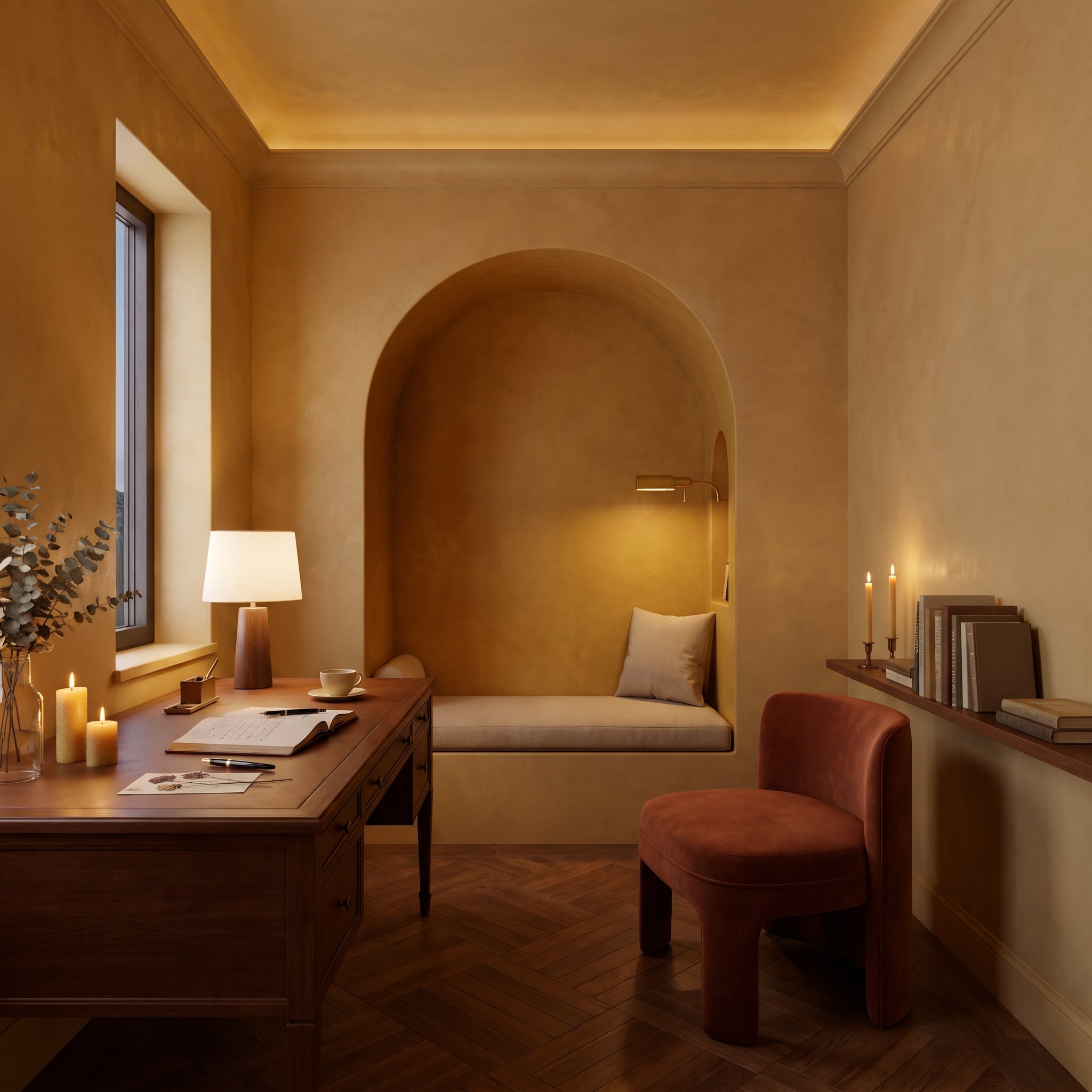
An arched alcove set into ochre plaster contains a cushioned daybed and brass swing-arm lamp. Herringbone parquet provides a crisp geometric pattern beneath the room’s softer architectural curves.
A walnut desk occupies the opposite side, with notebooks and writing materials spread across its surface. Concealed lighting washes the plaster in warm tones, while a terracotta velvet chair reinforces the earthy palette. The desk and daybed accommodate two distinct parts of writing: putting words on paper and spending time figuring out what they ought to say.
6. Skylights, Paint Tubes, and an Artist’s Studio That Can Take a Mess
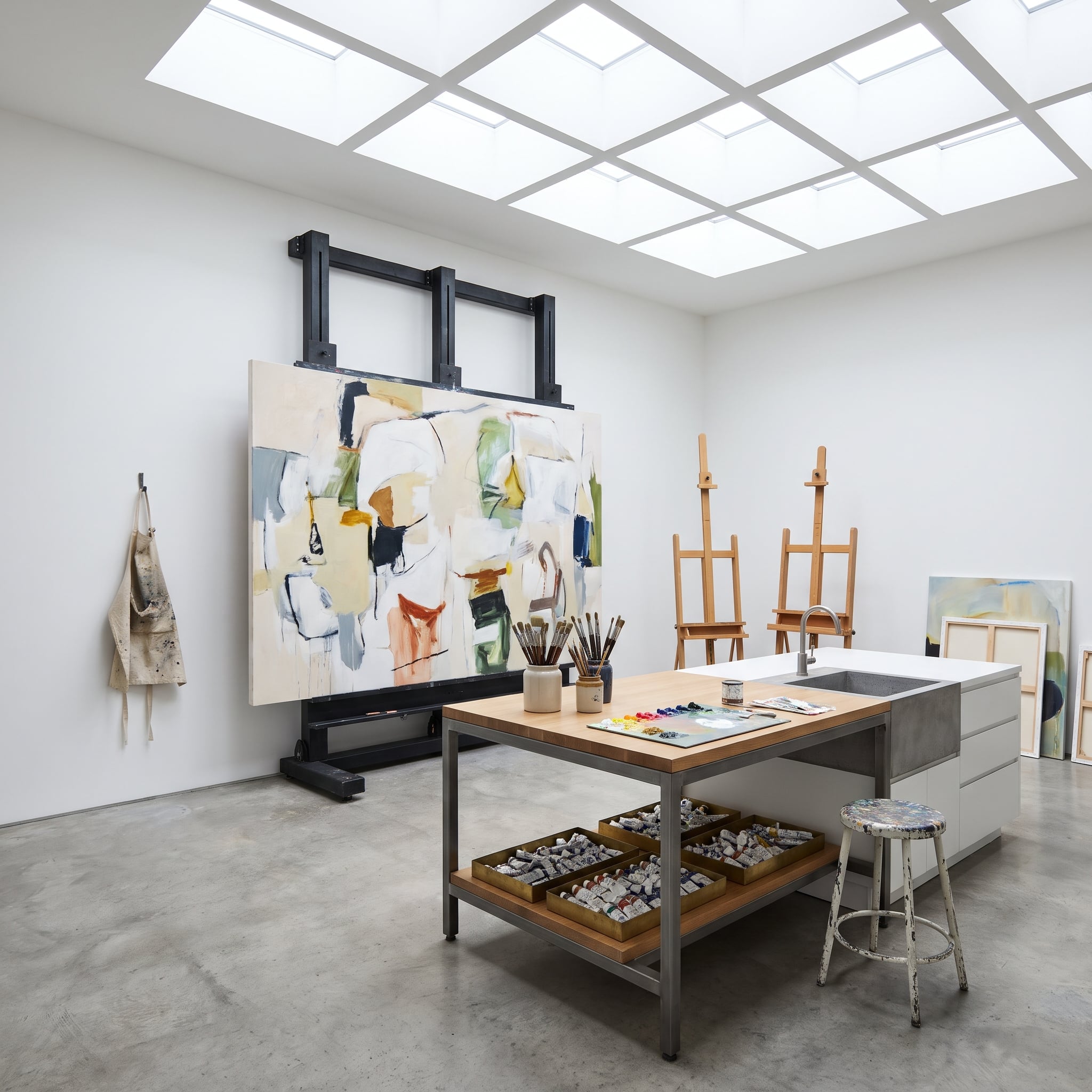
Concrete flooring, white walls, and a substantial easel give this painting studio a straightforward working character. An abstract canvas occupies the main station, with brushes, paint tubes, and other materials arranged around a butcher-block worktable.
Skylights bring daylight into the room, supplemented by artificial illumination. Open storage keeps supplies visible, while the durable floor accommodates the less tidy aspects of painting. The architecture exercises restraint, allowing the strongest colors to come from the artwork and materials rather than the surrounding finishes.
5. Misty Pines, a Window Seat, and a Reading Nook That Doesn’t Need Much Else
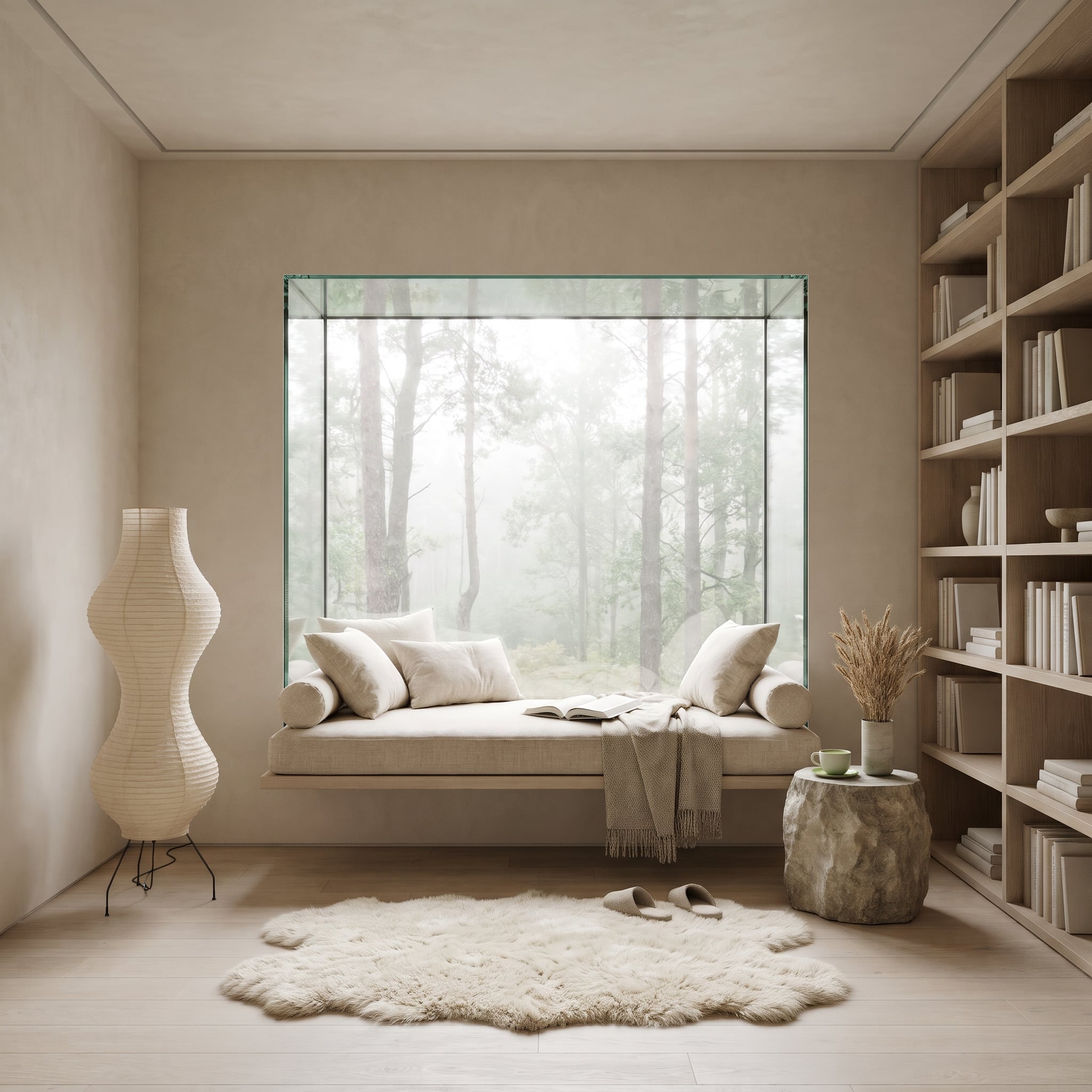
A broad upholstered window seat stretches beneath a frameless picture window, facing a forest of pines fading into morning mist. Bolster cushions soften either end of the seat, creating a sheltered place to read against the expansive landscape.
A pleated paper floor lamp provides a sculptural counterpoint to the rectangular glazing, while a small stone table holds a ceramic cup. Light oak shelving, dried grasses, and a sheepskin rug complete the restrained interior. Larger libraries may contain more books, but few can compete with a reading position this close to the trees.
4. Crimson Lacquer, Backlit Onyx, and a Poker Room That Knows How to Make an Entrance
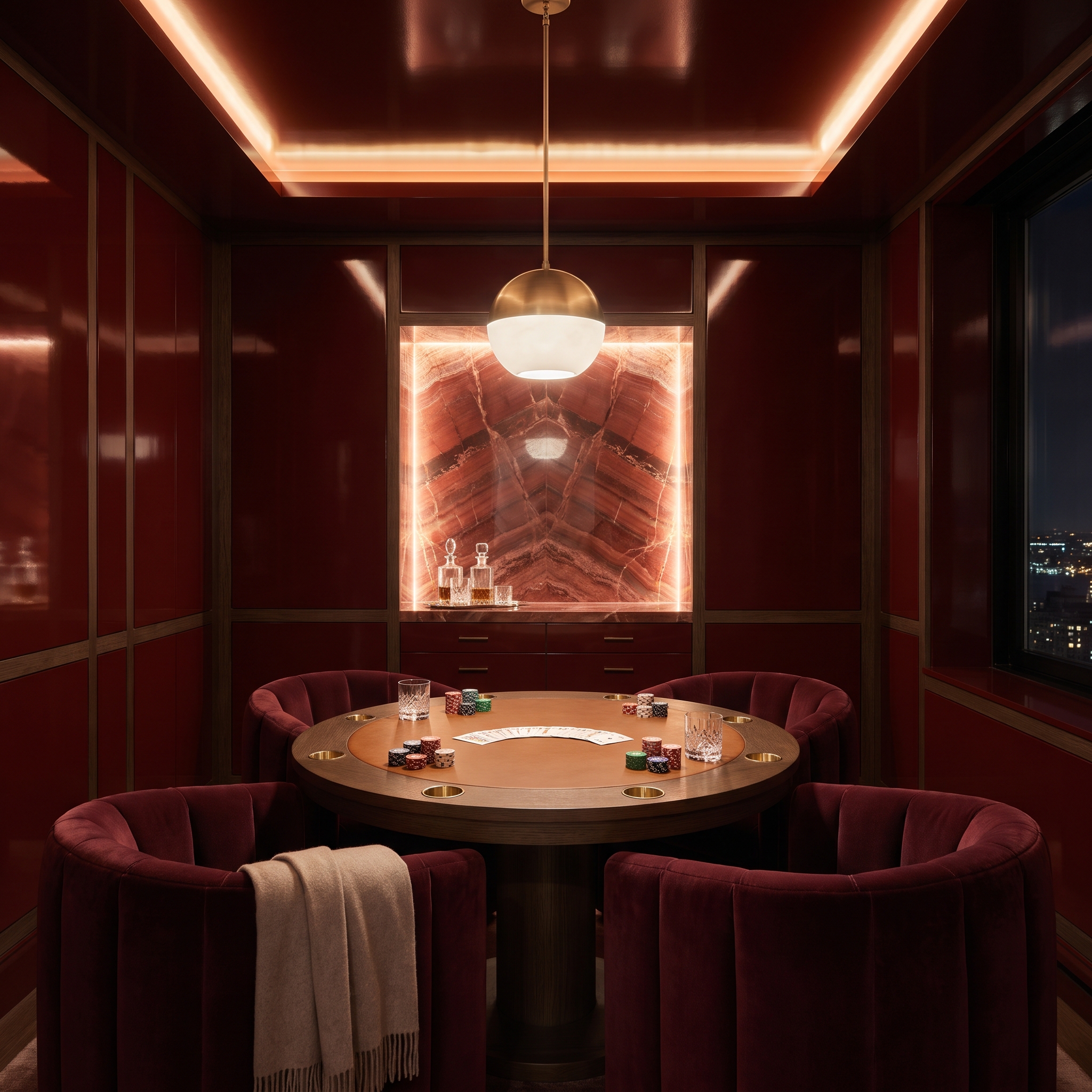
Deep oxblood lacquer envelops this poker room, giving the walls a polished intensity that makes ordinary paneling seem positively bashful. Four burgundy velvet barrel chairs surround a leather-topped table, with brass cup holders set into its substantial wooden rim.
A backlit onyx panel provides the dramatic counterpoint, its bookmatched veining forming a luminous chevron above the credenza. A brass pendant with a milk-glass diffuser hangs over the playing surface, while crystal decanters and warm metallic detailing complete the composition. Crimson, gold, and glowing stone make this a room where even a modest wager receives extravagant surroundings.
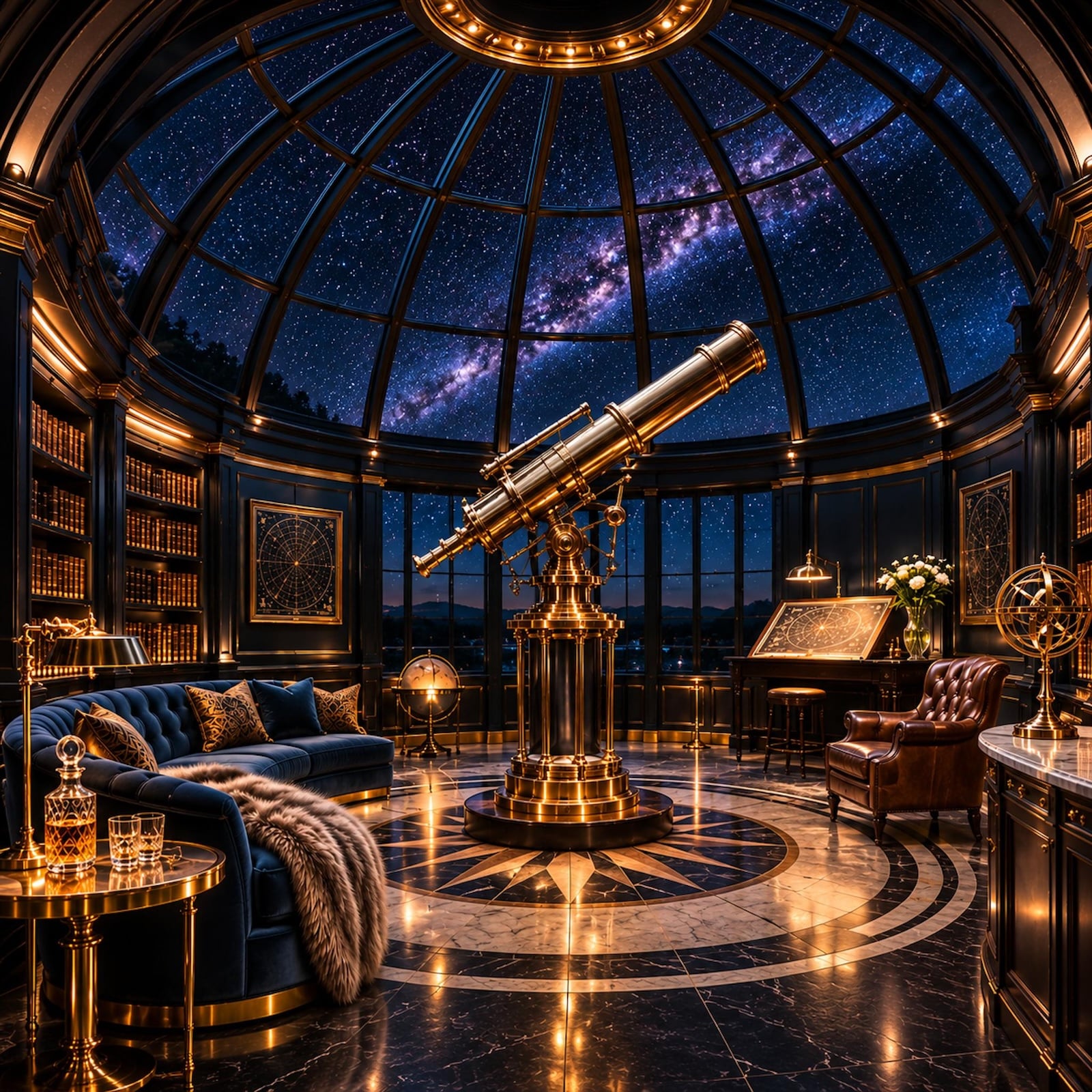
3. Brass Telescope, Glass Dome, and a Private Observatory With the Universe Overhead
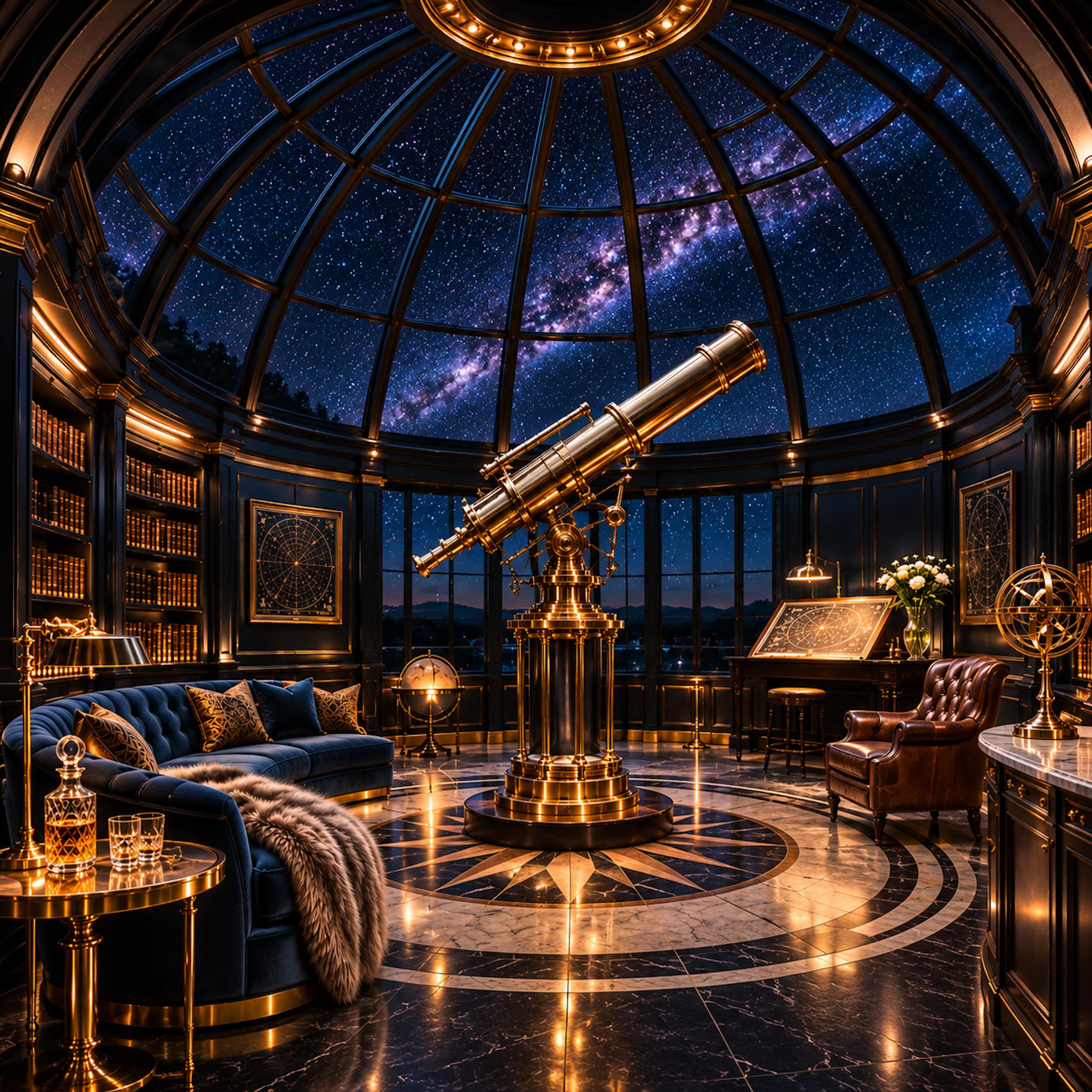
A monumental brass telescope rises from the center of this circular observatory, surrounded by a marble floor inlaid with a compass-rose design. Above it, a sweeping glass dome frames a star-filled night sky, giving the architecture a spectacle no decorative ceiling could reasonably match.
Midnight-blue paneling, gilded trim, and bookshelves filled with reference volumes wrap around the room. A deep-blue velvet sofa and cognac leather armchair offer places to study the sky between observations, while celestial charts and a brass armillary sphere extend the astronomical theme. The telescope is unmistakably the main attraction, although the surrounding interior seems determined to give the heavens some competition.
2. Leather Chairs, Firelight, and a Reading Room With Winter at the Windows
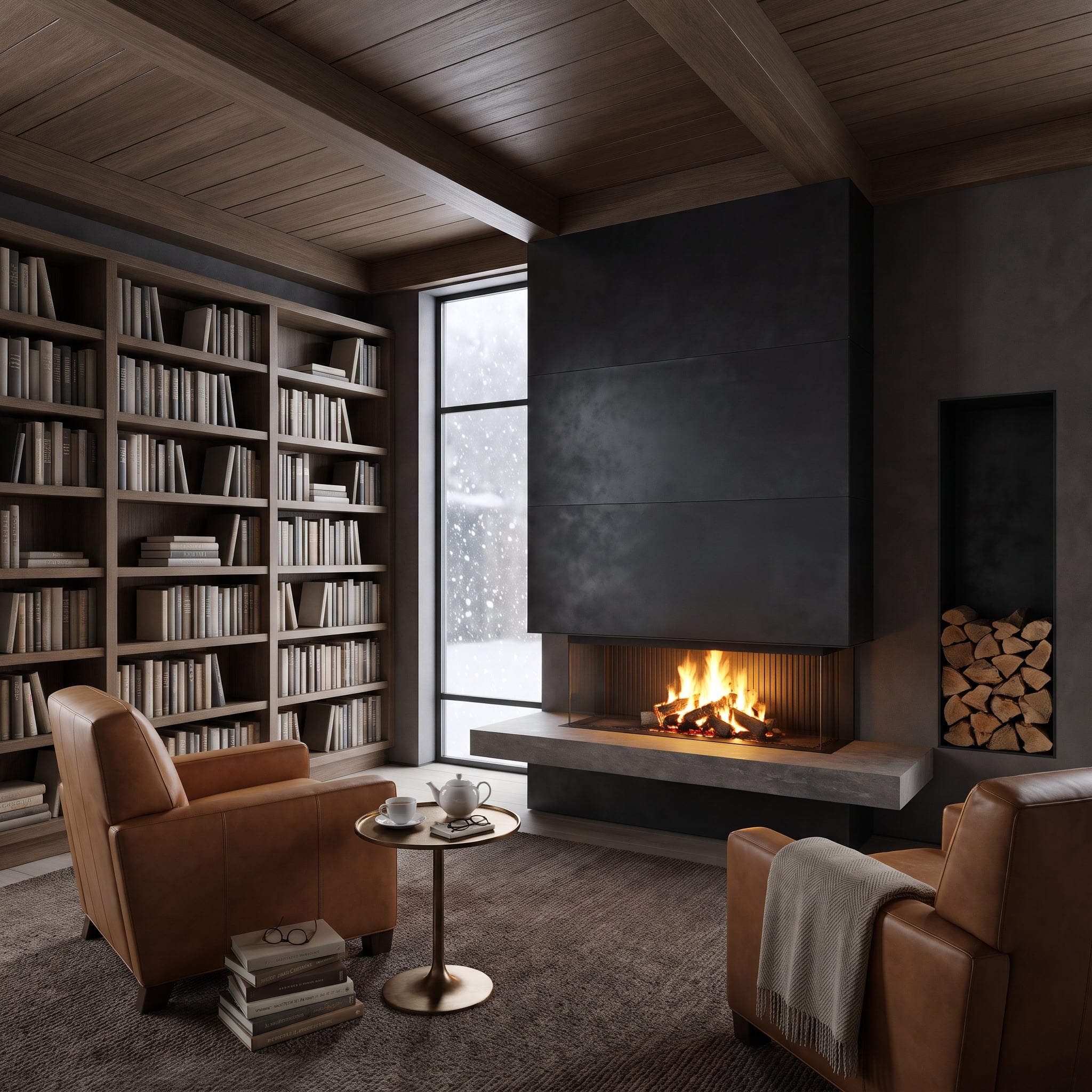
Two cognac leather club chairs face a fireplace framed by dark steel panels, with a broad concrete hearth extending beneath the flames. Snow-covered scenery beyond the tall windows makes the warmth inside particularly inviting.
Floor-to-ceiling oak shelves accommodate the book collection, while a small brass side table provides space for tea and reading essentials. The chairs angle toward both the fire and one another, allowing reading and conversation to share the room without competing for its furniture. Leather, steel, oak, and concrete supply enough texture to make additional decoration unnecessary.
1. Floor-to-Ceiling Oak, a Stone Desk, and a Library That Opens to the Garden
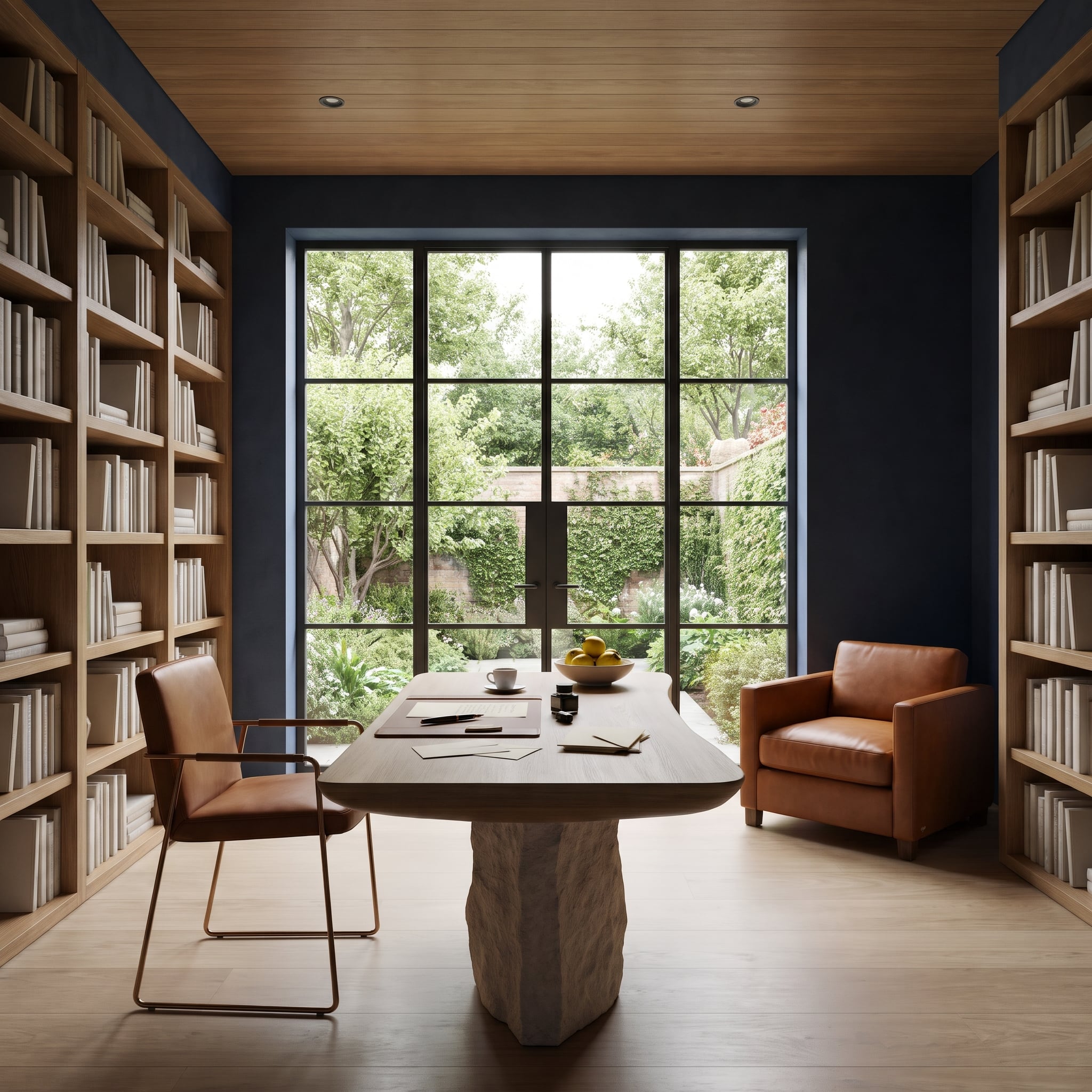
Pale oak bookshelves rise from floor to ceiling along both sides of this library, creating a luminous interior filled with books and neatly arranged textiles. A sculptural stone pedestal desk stands at the center, its rough-hewn base introducing a rugged interruption to the smooth timber surfaces.
Two cognac leather chairs provide different reading positions: one upright and contemporary, the other lower and more relaxed beside the window. Steel-framed doors open toward a walled garden, bringing greenery and daylight into the pale interior. The room has everything it needs for reading, working, and thinking, without turning any of those activities into an architectural performance.