
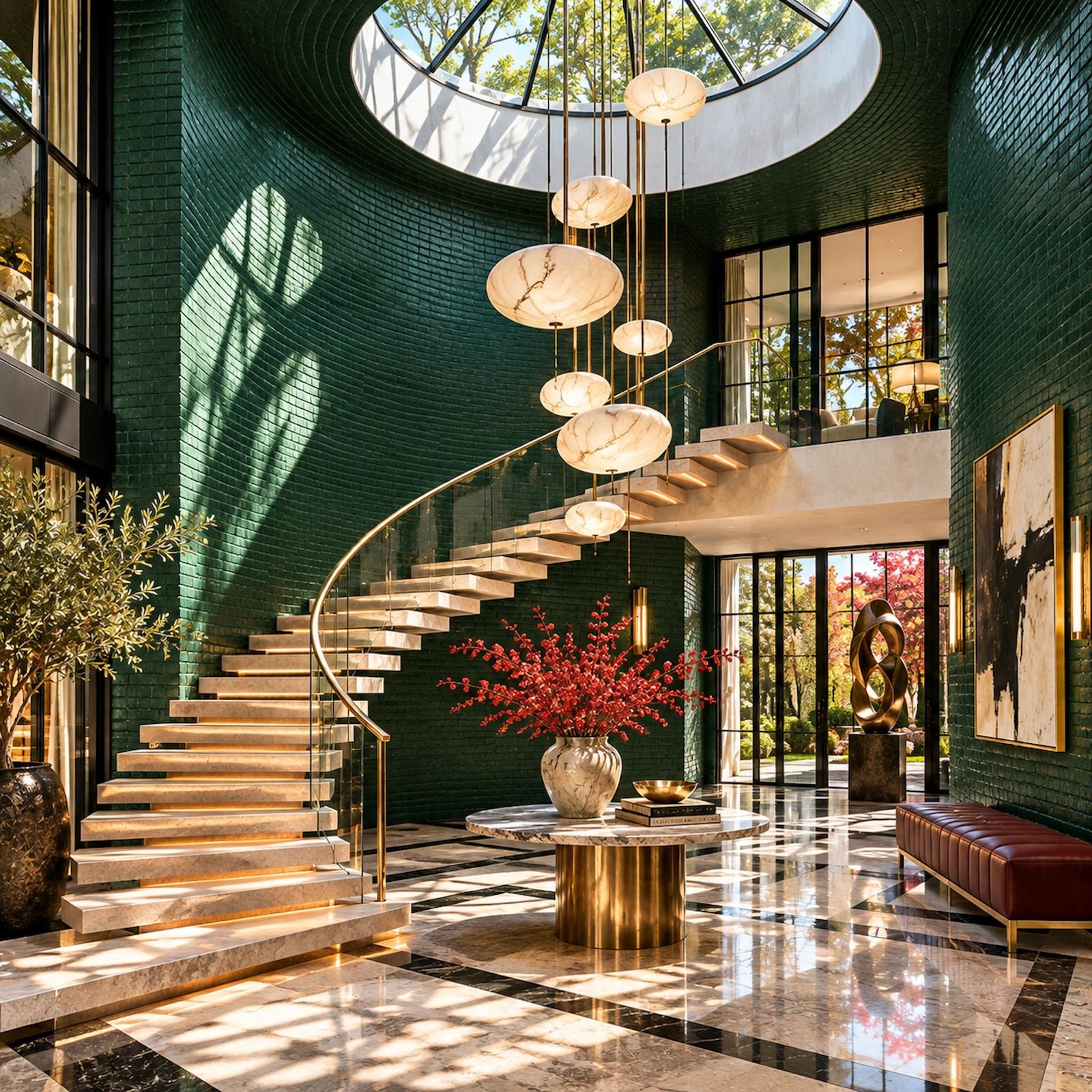
Brick has survived centuries of weather, changing architectural fashions, and some truly regrettable renovation decisions. Yet suggest painting it, and suddenly everyone becomes a preservationist. The objections come quickly: lost character, trapped moisture, irreversible damage. Fair enough. Some brick deserves every bit of that protection. Other brick looks considerably more interesting after someone opens a paint can.
In order to come up with the very specific design ideas, we create most designs with the assistance of state-of-the-art AI interior design software. Also, assume links that take you off the site are affiliate links such as links to Amazon. this means we may earn a commission if you buy something.
Consider the possibilities. An emerald-green brick wall curves around a floating staircase beneath a circular skylight. Midnight-blue masonry turns a vaulted ceiling into a spectacular architectural feature. Oxblood-stained brick gives a contemporary residence a depth that ordinary paint could never quite reproduce. Elsewhere, whitewashed Tudor walls, sage-green fireplaces, and charcoal facades demonstrate how dramatically color can change the way masonry relates to its surroundings.
Then come the exceptions that make the argument interesting. Reclaimed red brick beside bronze windows. Honey-colored London stock brick surrounding a wood stove. Natural masonry whose irregular coloring provides more visual richness than any uniform finish. Between those extremes lie limewash, German Schmear, mineral staining, and combinations of painted and unpainted brick. The choice involves more than color: texture, mortar, moisture behavior, architecture, and light all matter. These 31 designs make one thing abundantly clear. Brick doesn’t need a universal rule. It needs a good eye.
31. Oxblood-Stained Brick Makes a Grand Entrance With Every Brick Still Showing
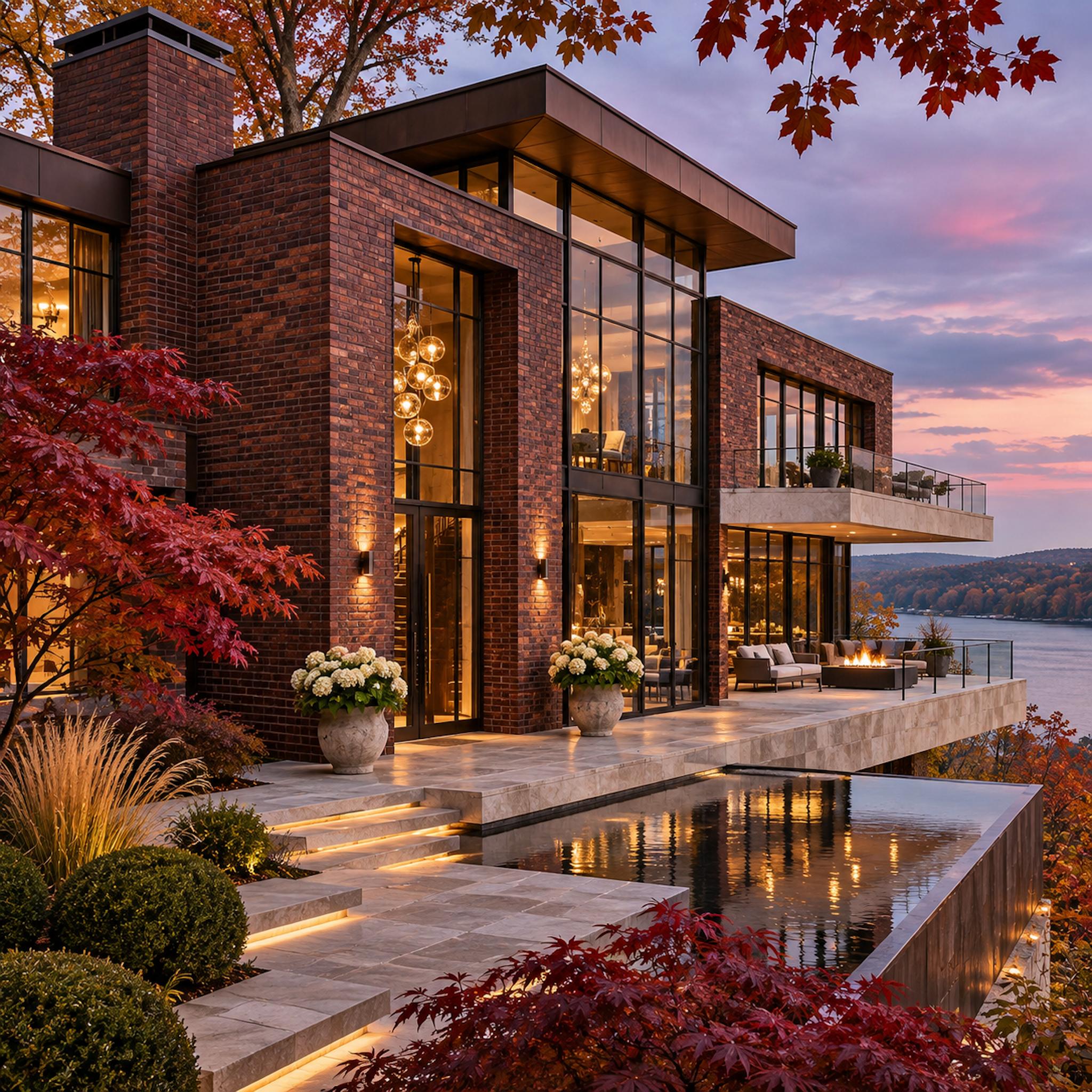
Deep oxblood brick gives this monumental contemporary residence a remarkable sense of depth. Individual bricks range from smoky burgundy to chocolate brown, their natural variations remaining visible across the broad facade. The masonry retains a lively pattern of subtle differences, particularly where the low evening light catches its texture.
Two-story glazing cuts through the brick volumes, revealing warmly illuminated interiors and sculptural pendant lights. A cantilevered limestone terrace extends above the reflecting pool, while Japanese maples introduce brilliant autumn reds around the entrance. The combination of stained masonry, bronze-toned framing, pale stone, and glass feels luxurious without requiring a single ornamental flourish. The varied oxblood coloring gives the facade depth while keeping its individual bricks in view.
30. Charcoal Brick and Cedar Make a Persuasive Case for Going Dark
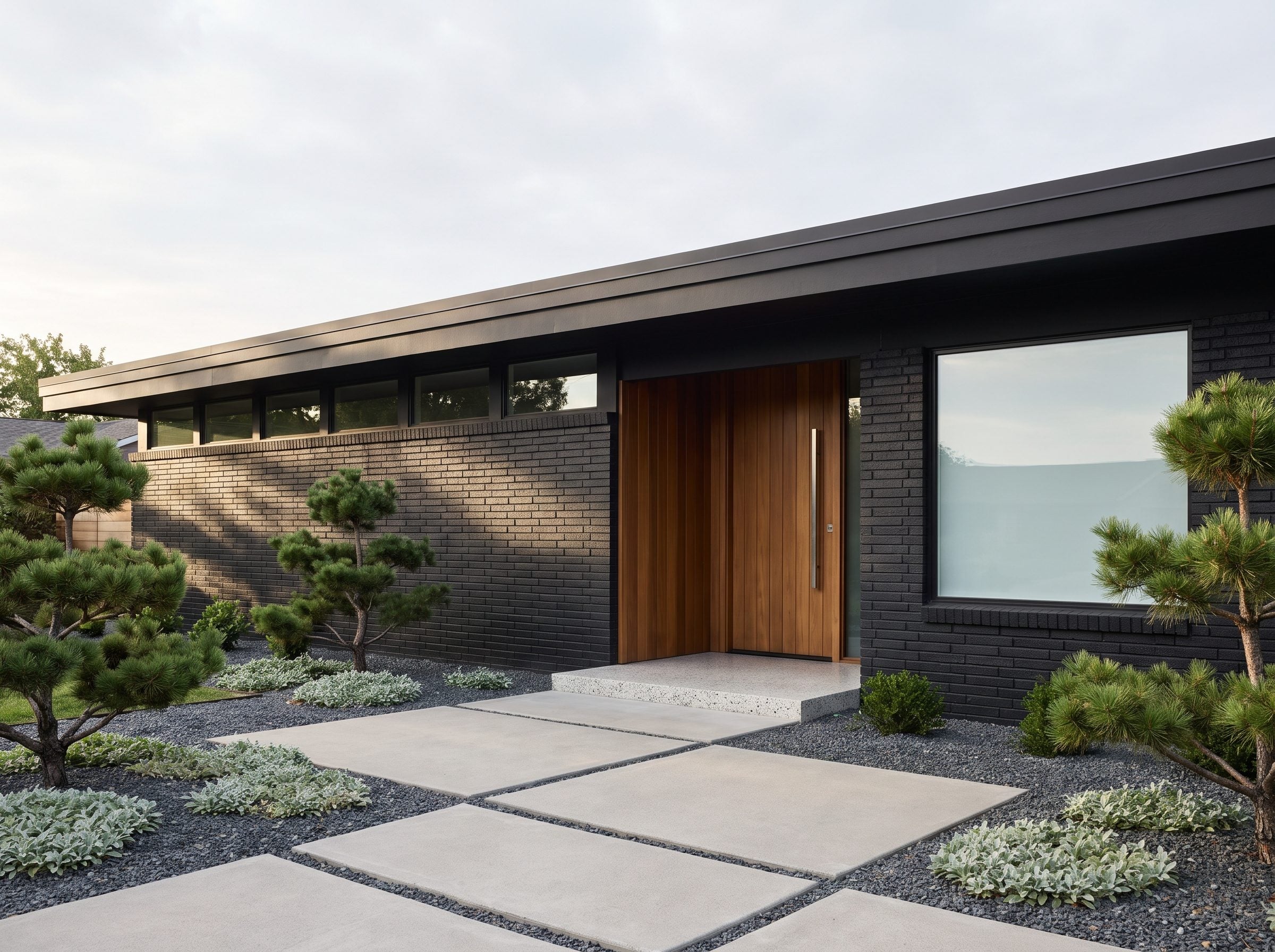
Charcoal brick could have turned this facade into a forbidding slab. Instead, the natural cedar pivot door becomes almost luminous against it, its warm grain standing out more vividly than it would against cream or white. A continuous band of clerestory windows breaks the dark mass beneath the roofline, giving the elevation a horizontal rhythm.
Underfoot, concrete pavers set into gravel continue the restrained palette. Cloud-pruned pines introduce irregular organic shapes against the building’s exact geometry. The dark masonry provides a backdrop that makes every branch and timber surface appear more sharply defined.
29. Honey-Colored Brick and Yellow Cabinetry Find Their Common Ground
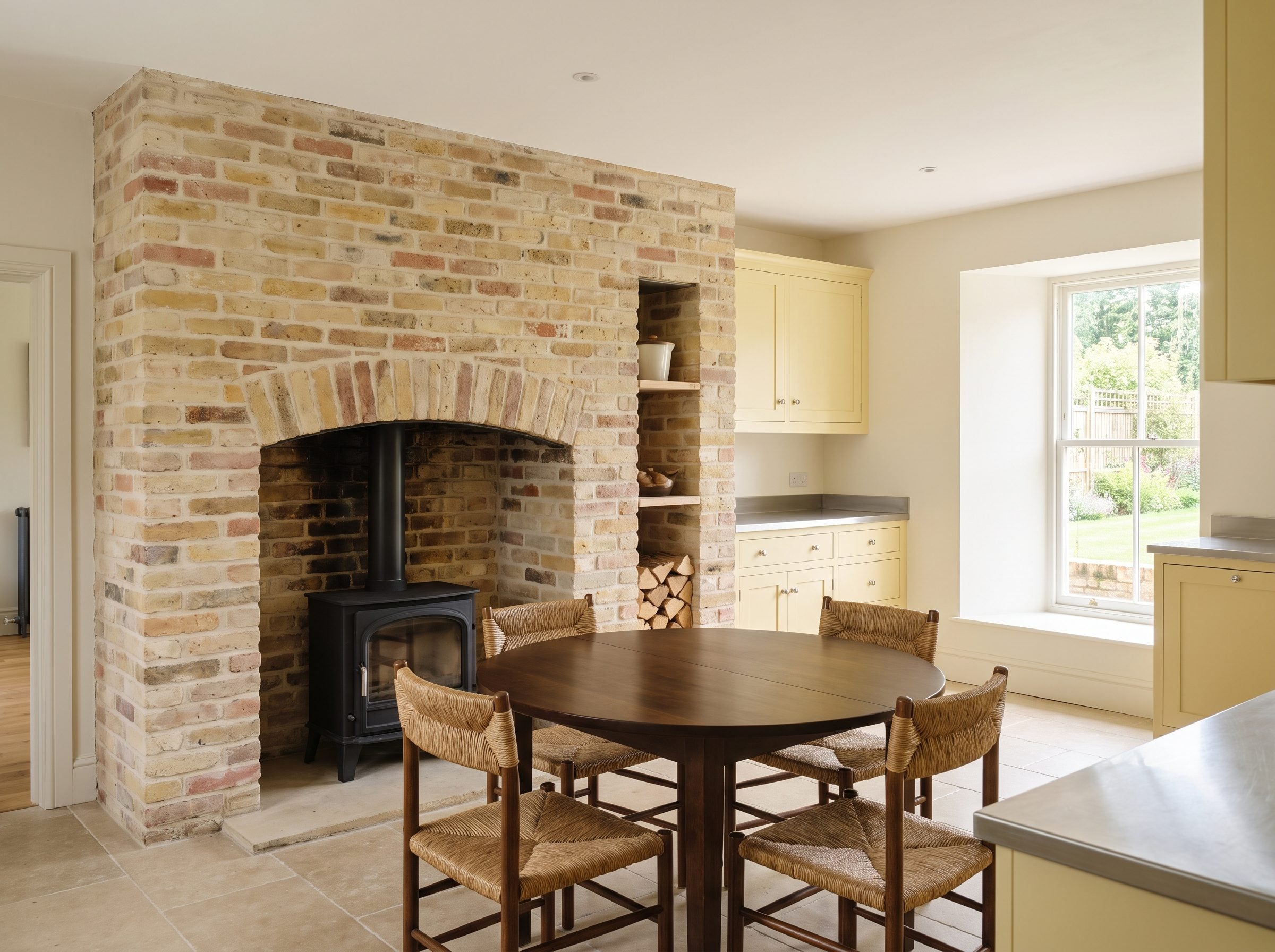
Honey-colored London stock brick brings a range of earthy tones to this interior, its irregular coloring offering more complexity than a single paint shade could supply. An arched recess houses a cast-iron wood stove, with a neighboring niche for stacked logs. The masonry gives the stove a substantial architectural setting without elaborate ornament.
Yellow cabinetry picks up the brick’s golden undertones, while rush-seat chairs and a round walnut-toned table introduce darker wood and woven textures. Rather than covering the masonry, the design builds its palette around the colors already present. The result feels warm without becoming uniformly brown.
28. Black Brick and a Cobalt-Blue Chair Electrify a Concrete Living Room
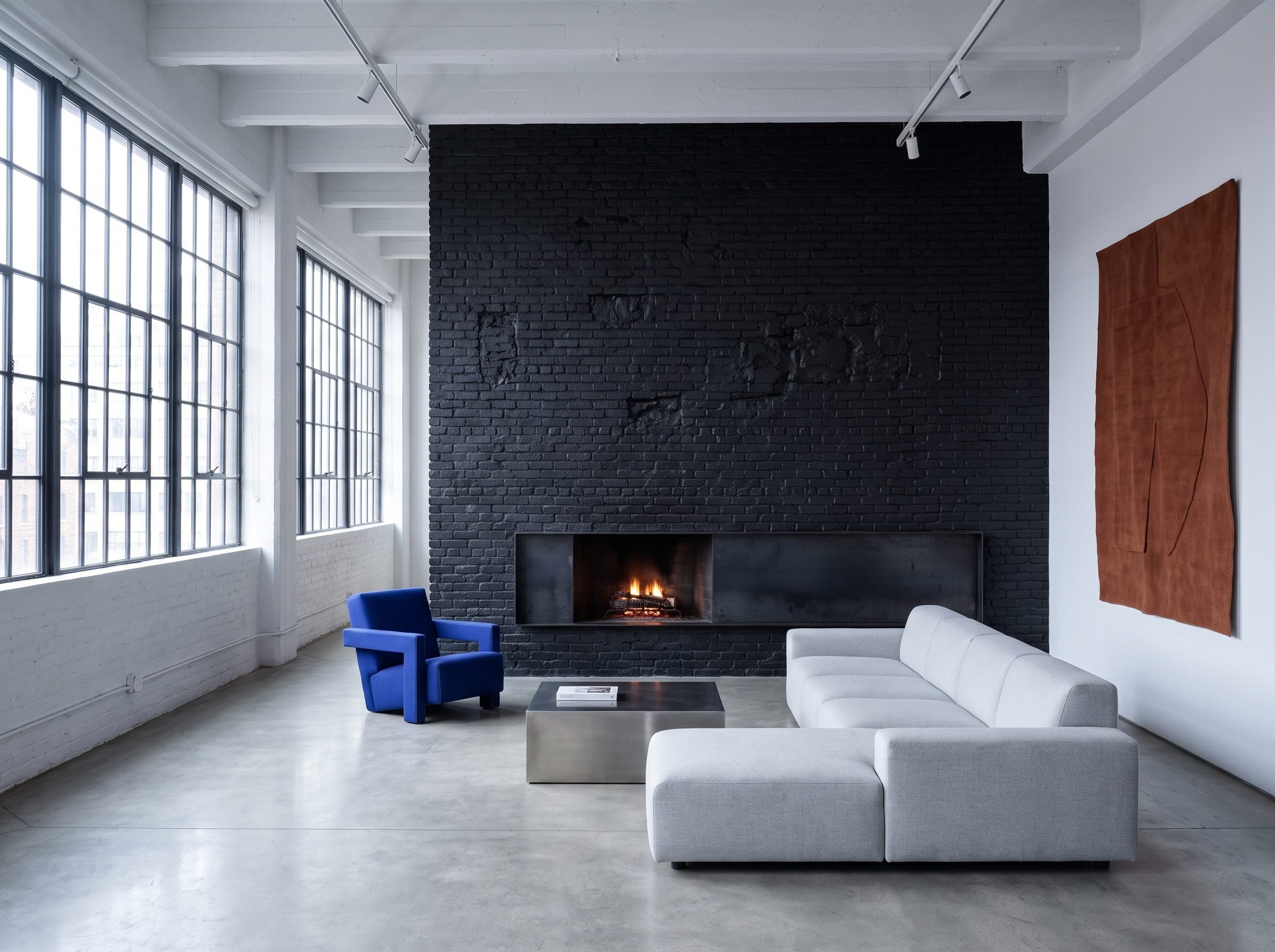
Black-painted brick stretches across the entire fireplace wall, interrupted by a wide steel-framed firebox. The masonry’s regular joints prevent the expanse from becoming visually blank, while polished concrete flooring extends the industrial character across the room.
Against all that charcoal and gray, the cobalt-blue armchair is practically electric. A pale sectional keeps the seating arrangement light, allowing the saturated blue to register as a decisive accent. The chair occupies relatively little space, yet it changes the character of the entire room.
27. Terracotta Brick and a Green Onyx Bathtub Give Waterfront Luxury a Different Look
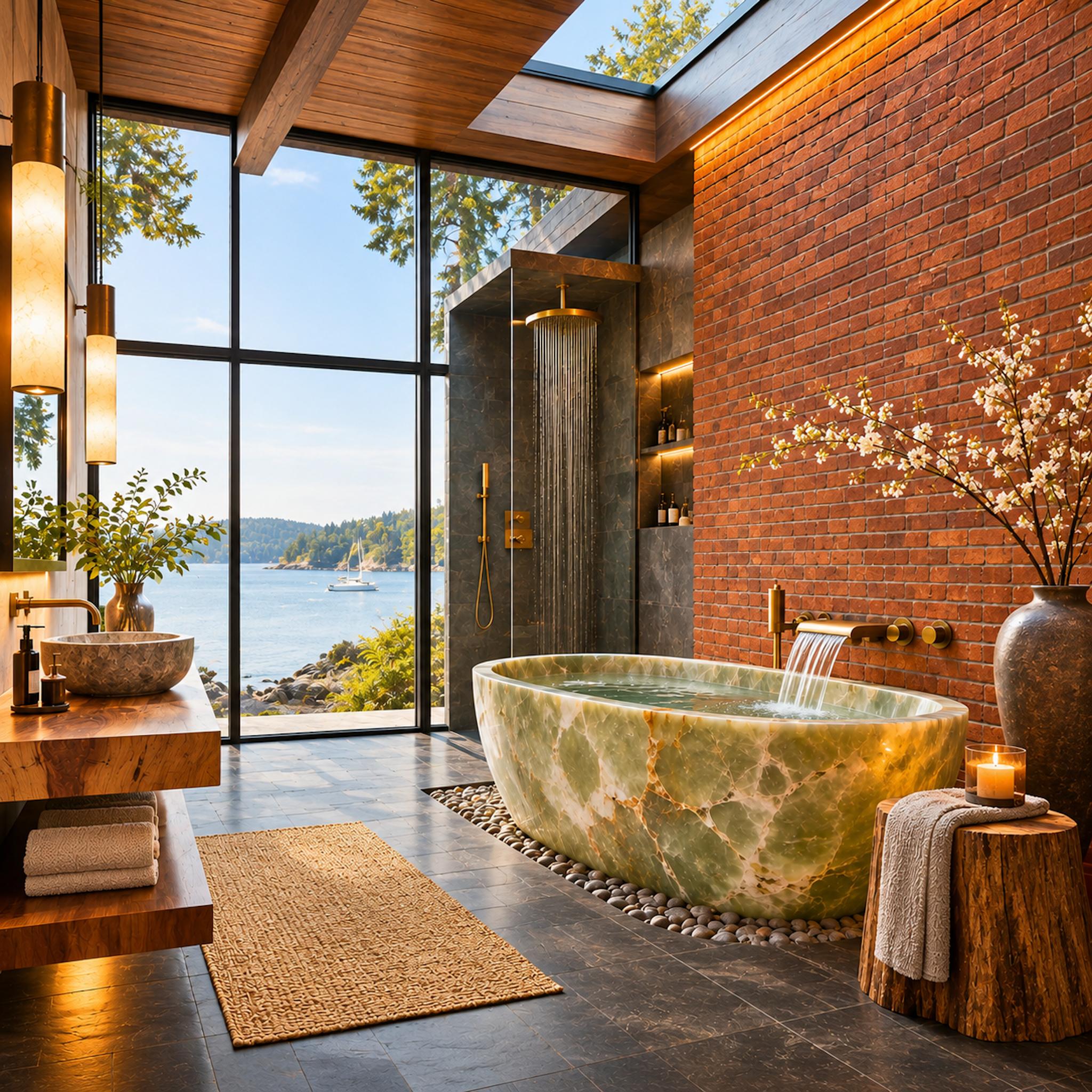
A towering wall of terracotta-red brick brings unexpected architectural weight to this waterfront bathroom. Its running-bond pattern remains unmistakable beside the pale green onyx soaking tub, whose translucent-looking stone and dramatic veining provide a striking contrast to the masonry’s earthy surface. A wall-mounted brass filler introduces a precise metallic detail above the bath.
Floor-to-ceiling glazing frames a quiet expanse of water, wooded shoreline, and a solitary sailboat. Dark stone surrounds the glass-enclosed rainfall shower, while a floating timber vanity, bronze pendants, and a narrow overhead skylight enrich the material palette. The result feels less like a conventional bathroom and more like a private bathing pavilion with a spectacular view.
26. Limewashed Brick, a Red Door, and Rain Chains With Character
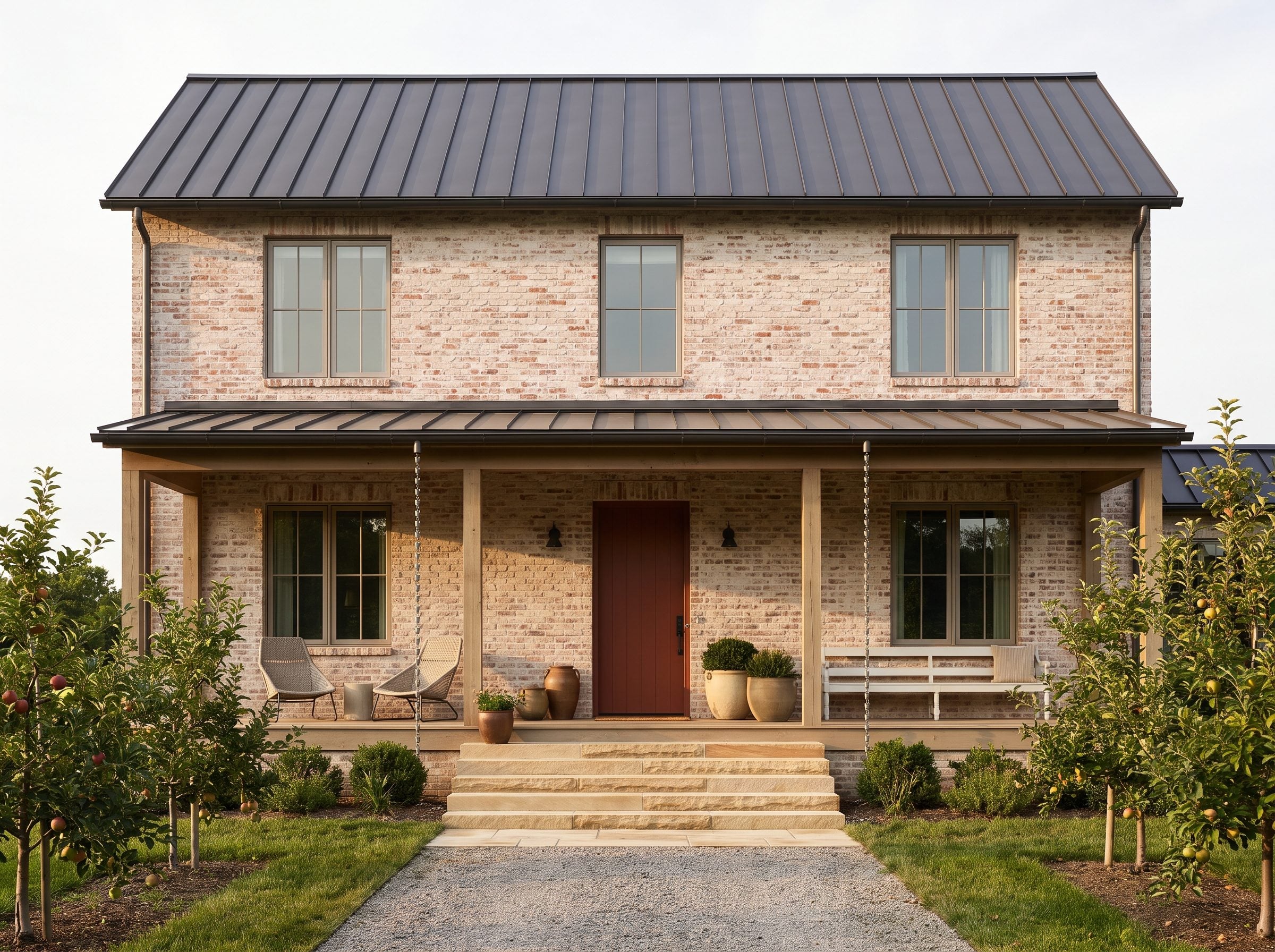
The red front door supplies an unapologetic burst of color against brick softened by a pale, translucent finish. Warm rust undertones remain visible beneath the limewash, preserving enough variation to keep the facade from resembling a uniformly painted surface.
Rain chains descend from the porch roof, offering a decorative alternative to conventional downspouts. Timber columns, a white porch swing, and woven chairs add domestic familiarity without overwhelming the masonry. The bright door gives the house its personality; the weathered brick keeps that personality from becoming cartoonish.
25. Sage Brick and a Steel Mantel Give This Fireplace a Different Vocabulary
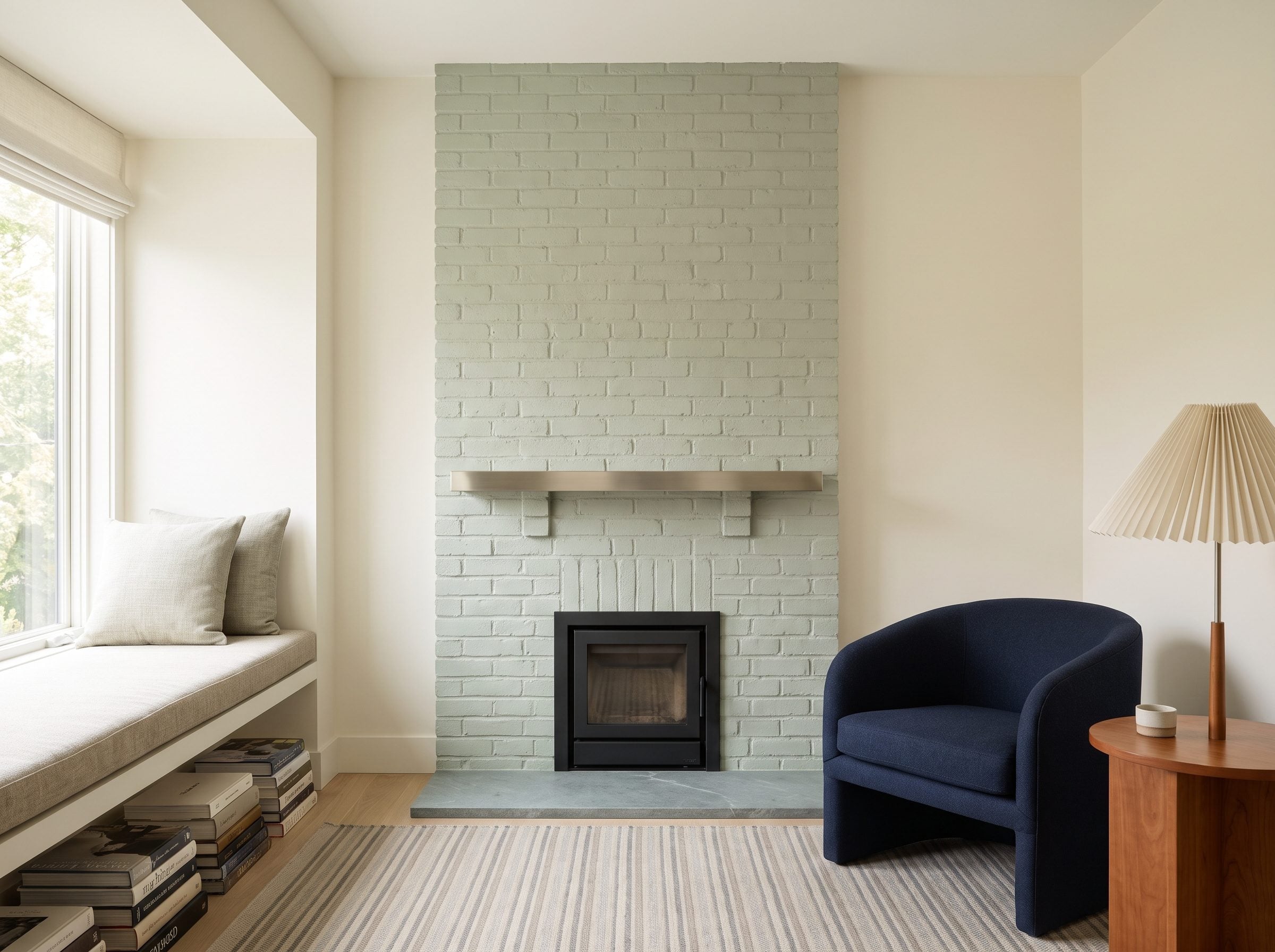
Sage green behaves differently on brick than on smooth drywall. Mortar joints, uneven faces, and subtle surface changes interrupt the color, giving the chimney breast a softness that has little to do with the paint shade alone. A brushed-steel mantel introduces a cool, precise line across that irregular surface.
The navy barrel chair brings a concentrated patch of color into an otherwise subdued room. Behind it, a turned-wood lamp base and pleated linen shade introduce a gentler texture, while a book-filled window bench gives the space a domestic informality. Sage and navy are an unexpected partnership, with the brushed metal providing a crisp dividing line between their softer finishes.
24. Black Brick, a Copper Canopy, and a Tower That Refuses to Disappear
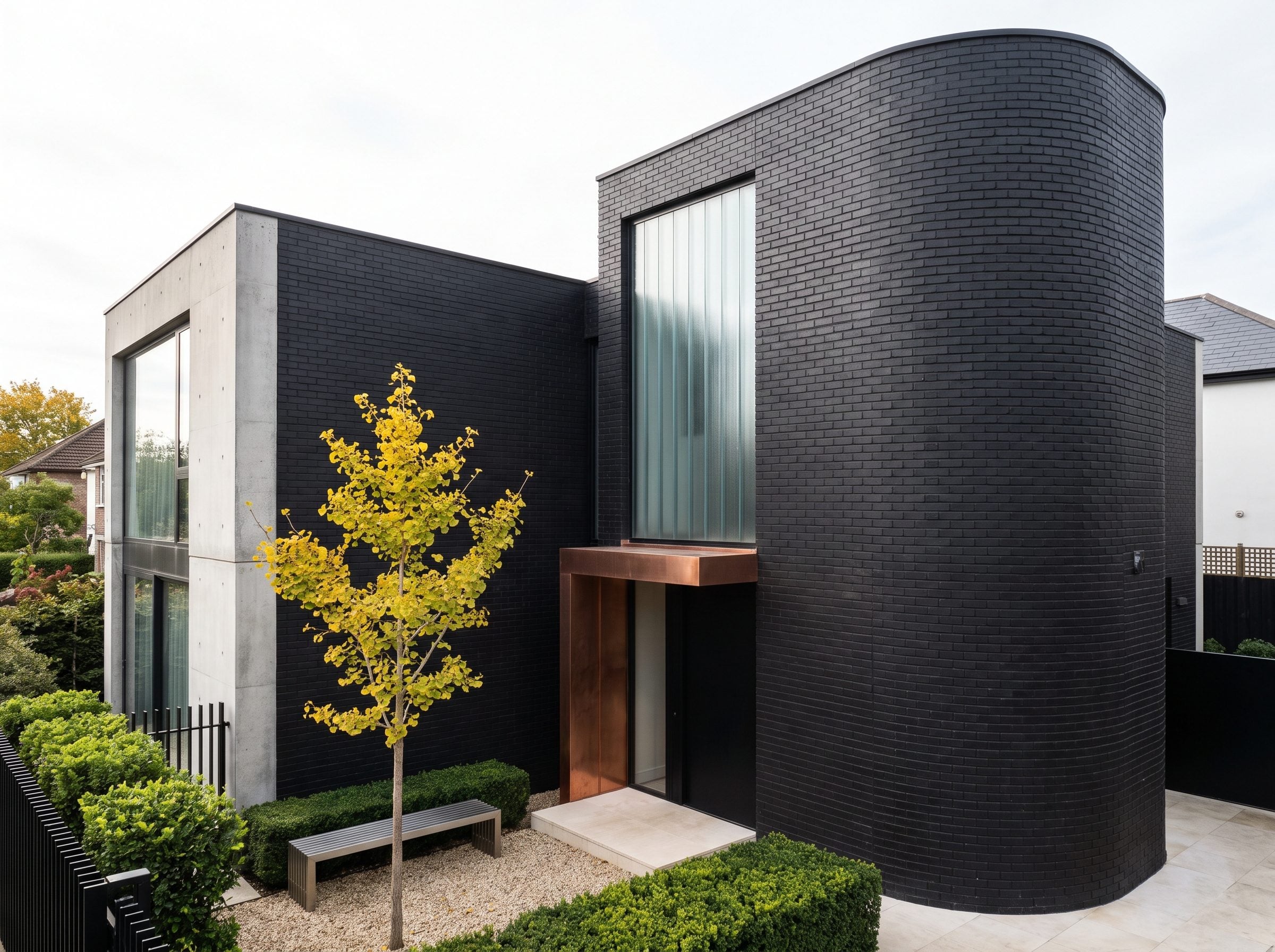
A cylindrical brick tower is hardly the sort of architectural gesture that asks to be overlooked. Its curved courses catch the overcast light differently from the flat walls beside it, giving the graphite-colored masonry a depth that a smooth rendered surface would struggle to reproduce. Concrete panels frame the adjoining rectangular volume, setting up a conversation between curve and straight line.
Then comes the copper canopy, a warm metallic interruption at the entrance that makes the dark brick feel deliberate rather than forbidding. Fluted glazing above the doorway admits light while obscuring direct views. A yellow-leaved ginkgo and a slatted bench complete the forecourt, introducing a little autumn extravagance to an otherwise disciplined composition.
23. White Brick, a Burgundy Door, and a Courtyard With Checkerboard Confidence
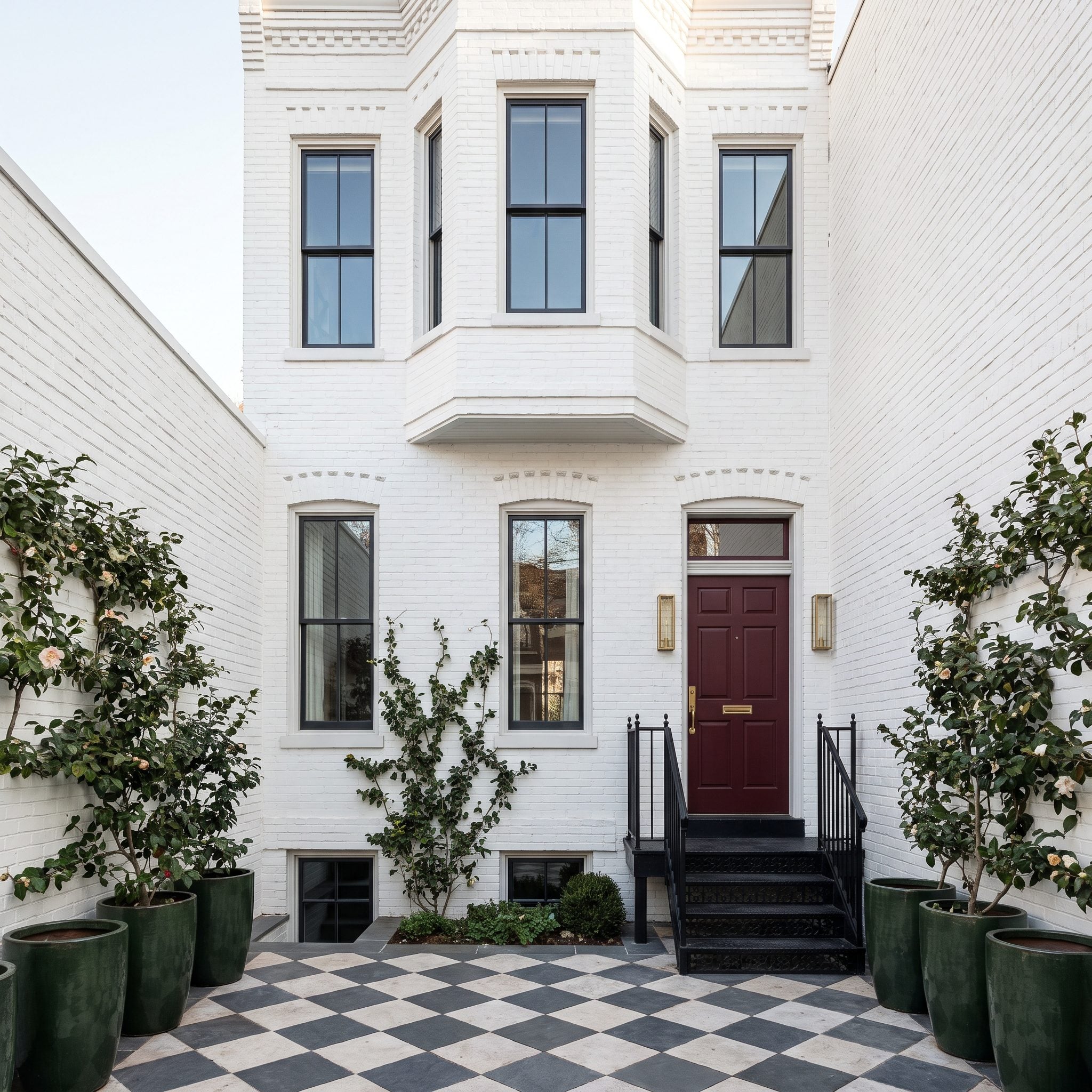
Whitewashed brick wraps this enclosed townhouse courtyard, creating a pale architectural enclosure around a much more assertive ground plane. Black-and-white diamond paving introduces a formal rhythm, while iron railings and brass sconces add darker, finer lines against the masonry.
The burgundy door interrupts the monochrome composition with a deep, wine-colored accent. Brass fittings bring a little warmth to the surrounding white and black, and the courtyard’s paving directs the eye toward the entrance. Every surface contributes to the sense of arrival.
Design Detail: Diamond and checkerboard paving can lend a courtyard a classical, geometric character. Against pale brick, the pattern creates visual structure without requiring elaborate wall decoration.
22. German Schmear Gives This Grand Gabled House a Richly Weathered Finish
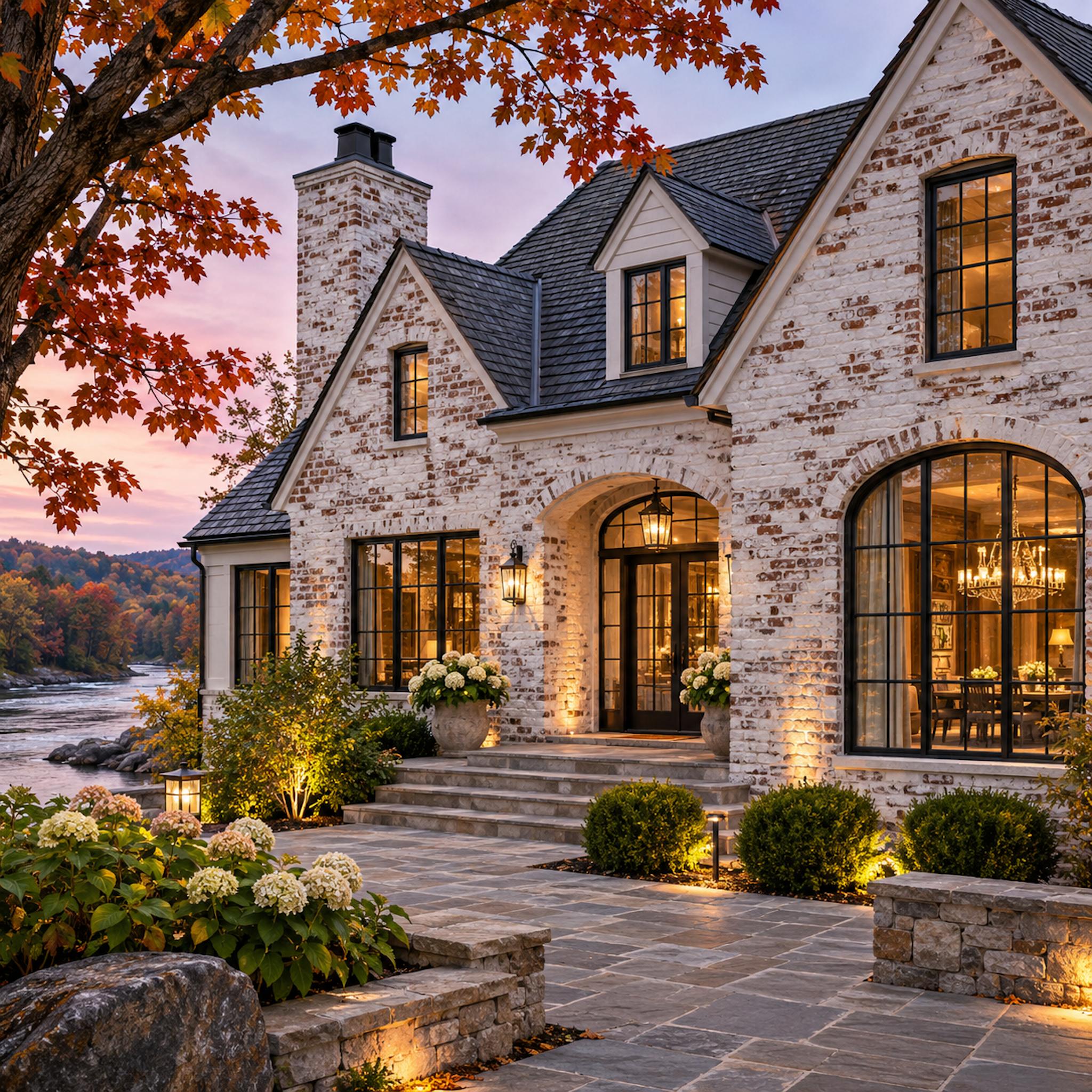
German Schmear gives this steep-gabled residence a beautifully irregular finish, with pale mortar partially covering the brick faces while leaving scattered patches of warm red and brown exposed. Unlike conventional white paint, the treatment creates an uneven, almost stone-like surface that emphasizes the masonry’s texture. The substantial chimney and arched entrance carry the same mottled finish, giving the facade a consistent material character.
Black steel-framed windows introduce crisp geometry beneath the slate roof, while oversized lanterns and warmly illuminated interiors bring the architecture to life at dusk. Autumn maples, clipped shrubs, hydrangeas, and broad stone steps frame the approach. The treatment suits the house’s traditional proportions, offering a more tactile alternative to an entirely white facade.
21. Sage Brick, Concrete Steps, and a Walnut Door at the Top of the Climb
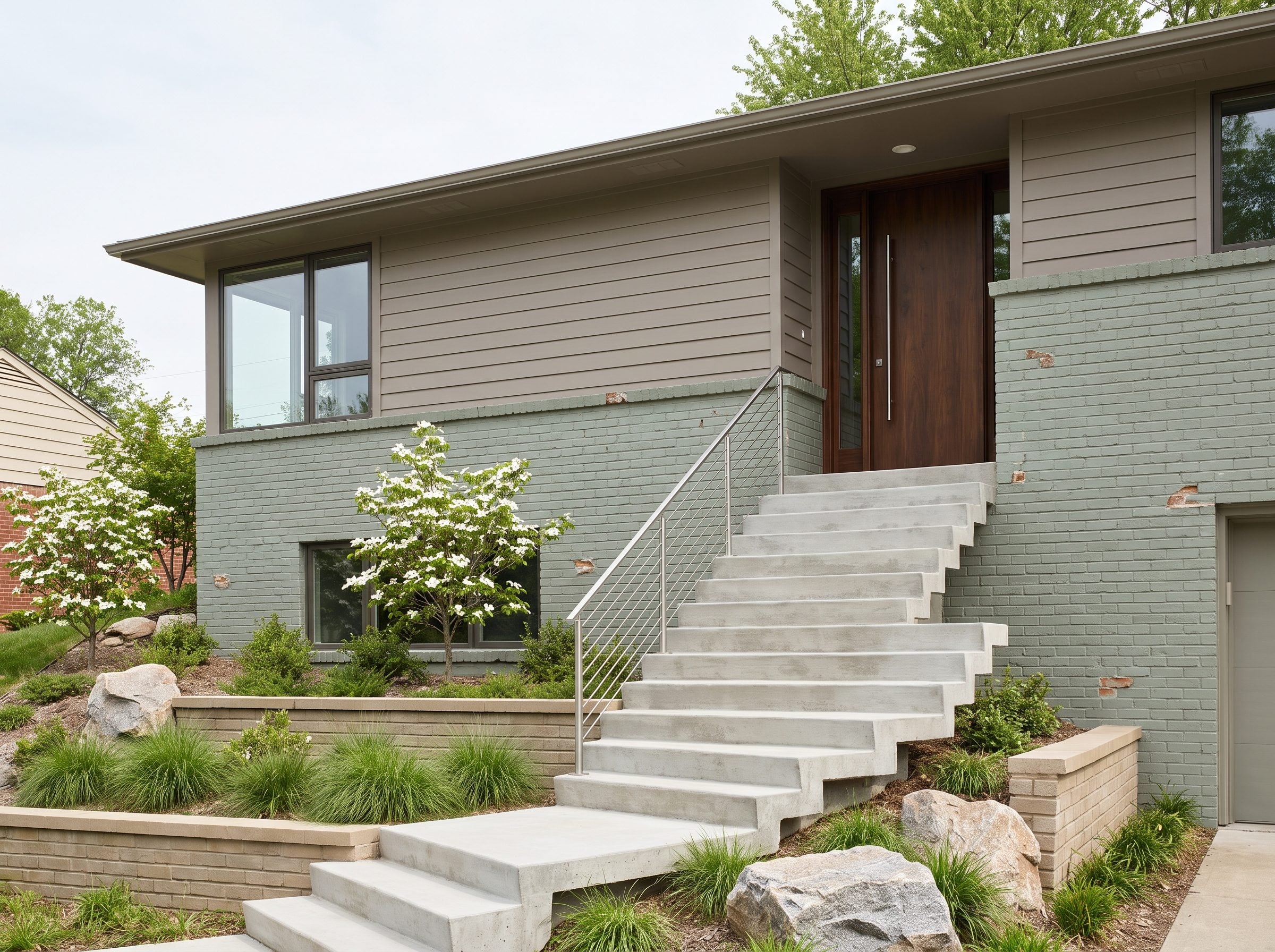
Sage-green brick gives the lower story of this split-level house a distinct identity, while warm greige horizontal siding makes the upper floor read as a separate architectural volume. The color break follows the building’s construction rather than imposing an arbitrary decorative stripe.
Open-riser concrete steps lead toward a walnut entry door, with slender cable railings allowing the facade to remain visible through the approach. The door’s rich brown grain becomes the reward at the end of a procession dominated by cool mineral surfaces. The split-level form, often difficult to unify visually, gains clarity from the deliberate division.
In the Details: Different finishes can distinguish the levels of a split-level house, especially when the transition follows an existing floor line or change in construction. Replacing siding is a more substantial undertaking than repainting, but the architectural effect can be equally significant.
20. Black Brick, a Three-Sided Fireplace, and a Room That Refuses to Be Divided
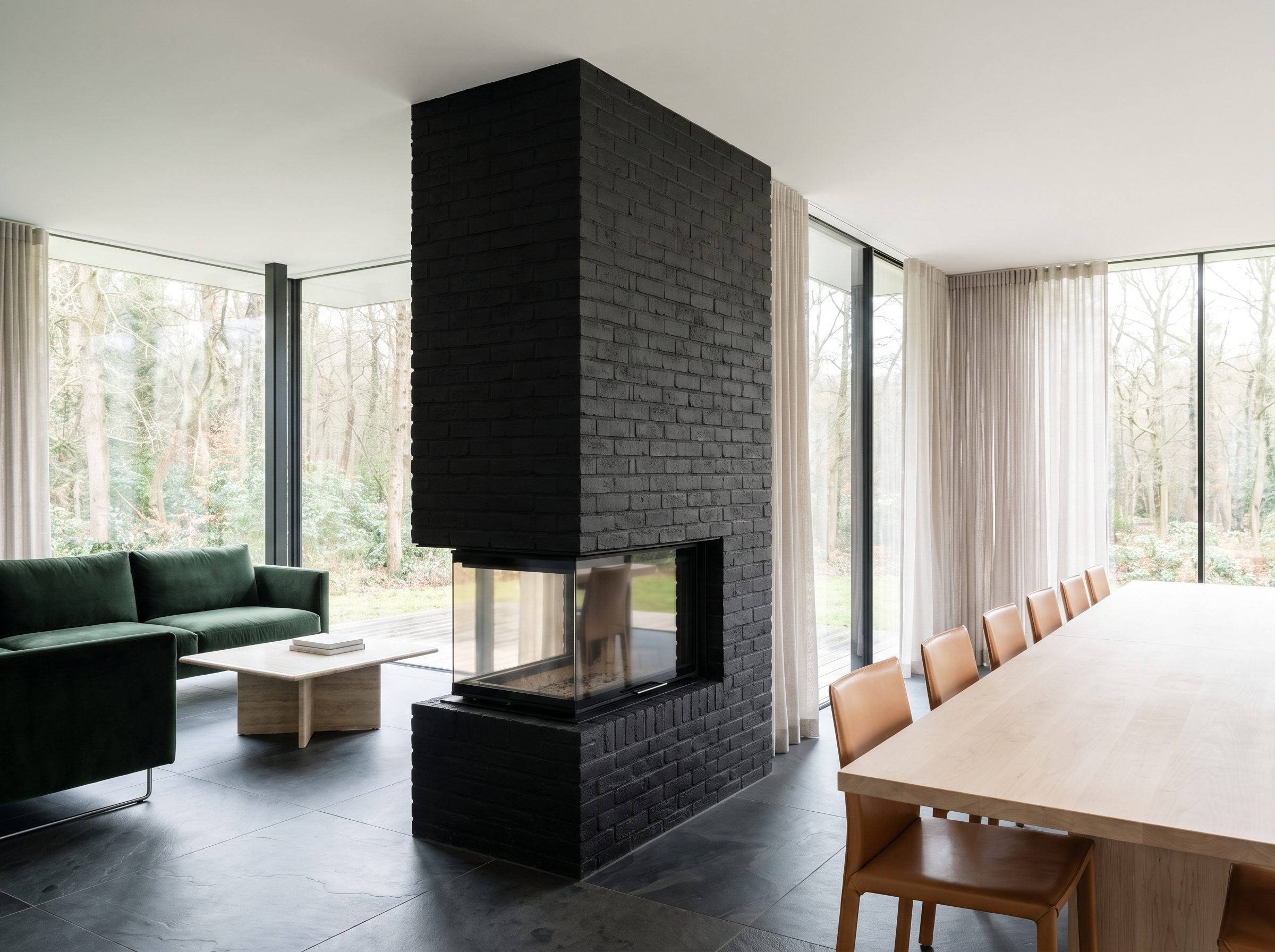
A freestanding mass of matte-black brick defines the boundary between living and dining without closing either space off. The three-sided glass fireplace lets the flames remain visible from multiple directions, turning a substantial dividing element into a shared architectural feature.
Tan leather dining chairs and a long wood table bring warmth to one side of the composition; a green velvet sofa introduces a richer note on the other. Dark slate flooring sits close in tone to the chimney, visually connecting the masonry to the surrounding room. The fireplace establishes two distinct zones while preserving the openness between them.
19. Gray Brick, a Reflecting Pool, and a Courtyard With Almost Nothing to Hide
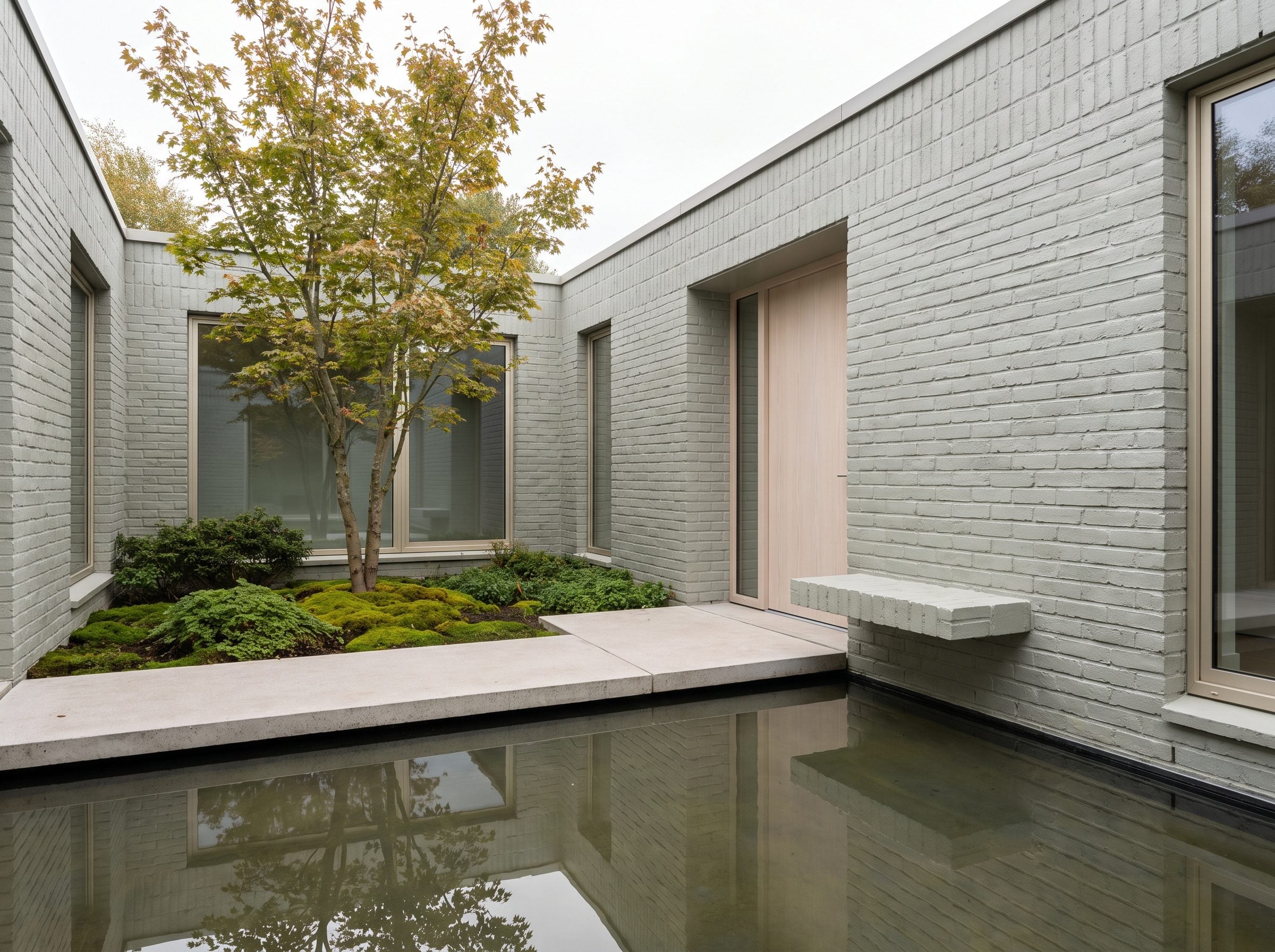
Cool gray paint gives this brick courtyard the quiet presence of weathered concrete without erasing the masonry joints. A shallow reflecting pool lies flush with the surrounding paving, introducing a second, shifting surface beside the fixed geometry of the wall.
Concrete slabs form a spare route to a pale wood door with a pinkish undertone. Moss, ferns, and a multi-stem maple soften the edges, while a projecting brick ledge provides a small horizontal interruption in the wall. The palette is almost severe, yet the interplay of water, foliage, masonry, and timber gives the courtyard an unexpectedly rich range of textures.
18. Reclaimed Red Brick and Bronze Steel Make Paint Look Entirely Optional
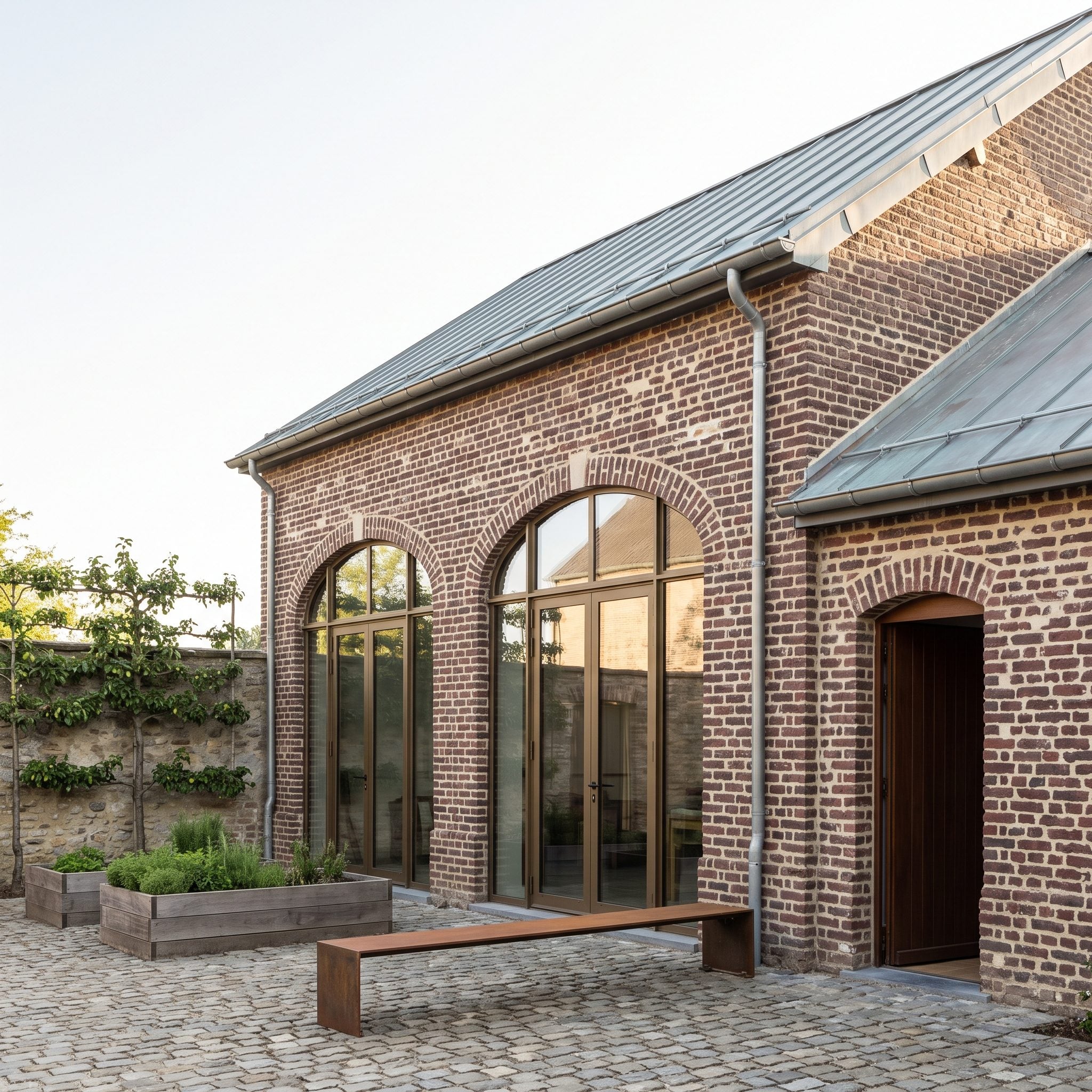
Reclaimed brick carries an uneven mixture of reds, browns, and weathered mortar tones across this facade. The arched window openings give that variation a disciplined architectural framework, while bronze-toned steel glazing picks up the warmer colors already present in the masonry.
Metal roofing introduces a cooler surface above, and a weathering-steel bench sits low on the cobblestone forecourt. The appeal comes from materials that age differently but speak a related visual language. Painting the brick would remove much of the tonal variation that makes the combination compelling.
Restoration Note: Mortar repairs on older brickwork require more than a close color match. Replacement mortar should also be compatible with the brick’s strength and moisture behavior; an excessively hard mortar can damage softer historic masonry.
17. Olive Brick Beneath Glass, With a Pink Sofa in the Middle of the Argument
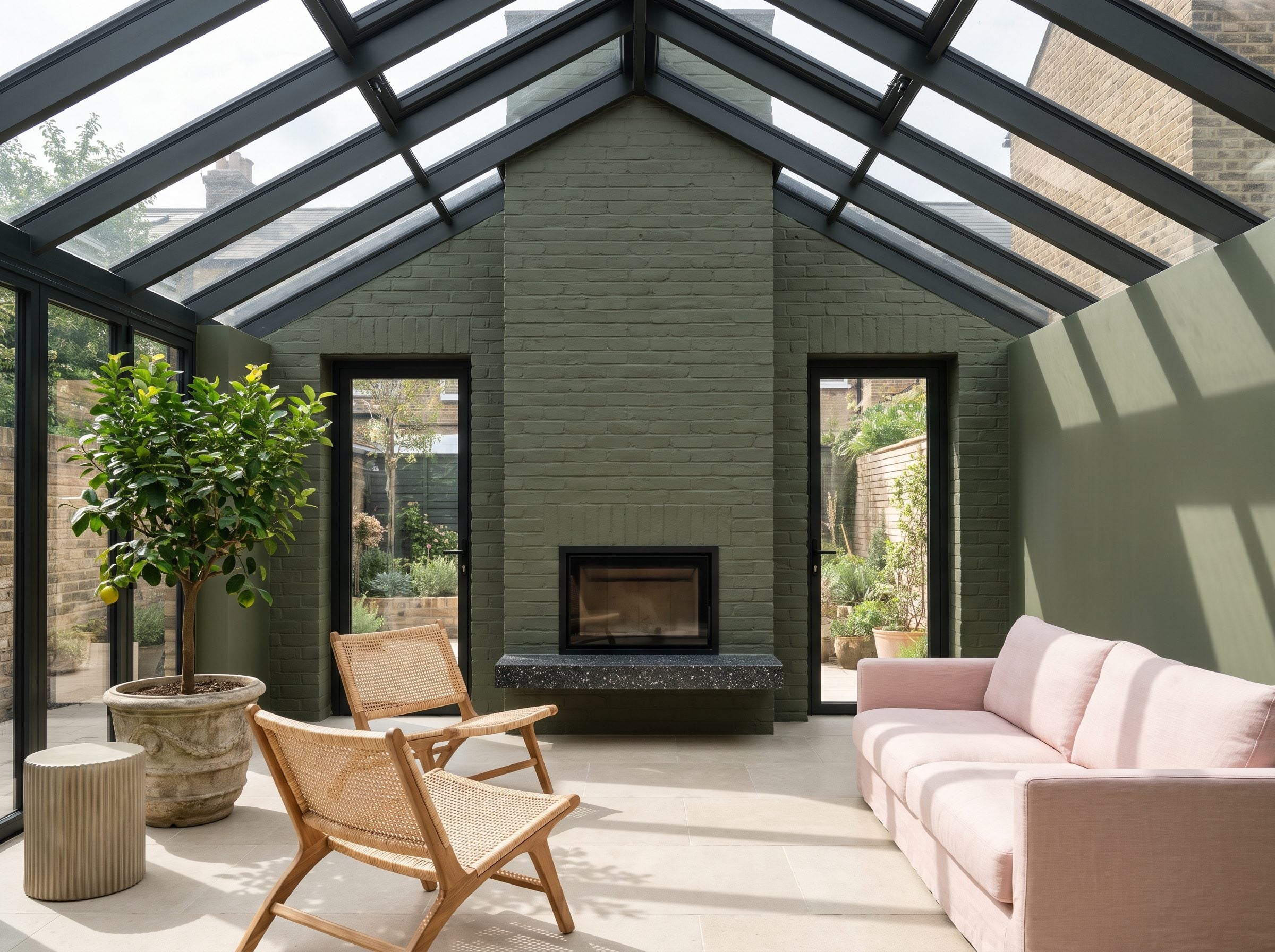
A sage-green brick gable rises beneath the glazed roof of this extension, turning an exterior-style masonry wall into a prominent interior feature. Dark steel rafters trace the glass overhead, while the triangular brick elevation gives the room the unusual appearance of a smaller building enclosed within a larger one.
A pink velvet sofa and a teak-framed rattan chair soften the steel-and-glass enclosure. Black-and-white terrazzo surrounds the hearth, and a potted lemon tree introduces a bright organic silhouette. Steel rafters frame the pink upholstery against the green gable, keeping the exuberant colors within a disciplined architectural grid.
16. Midnight-Blue Brick Vaults Turn a Living Room Into a Spectacle
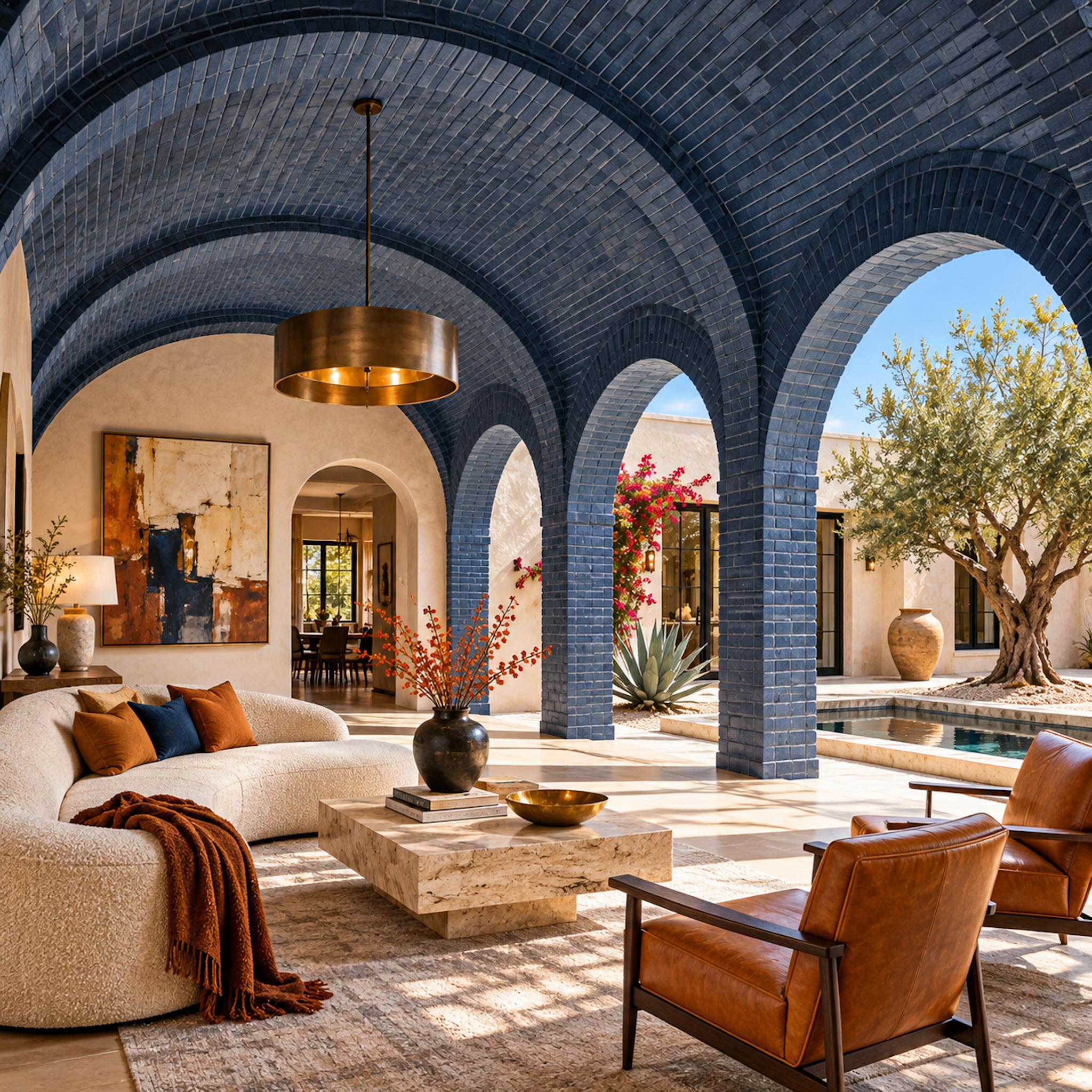
Midnight-blue brick sweeps across a magnificent barrel-vaulted ceiling, its curved courses following the arches with extraordinary precision. Darker brick ribs emphasize the vault’s geometry, transforming the overhead masonry into the room’s defining architectural feature. Against warm ivory plaster walls, the saturated blue appears almost sculptural.
Three monumental arches open toward a sunlit courtyard with an olive tree, agaves, and a shallow reflecting pool. Inside, a curved cream sofa, cognac leather lounge chairs, and a substantial stone coffee table establish a luxurious seating arrangement beneath the vault. A bronze drum pendant adds warmth overhead, while sunlight cuts across the pale floor. The blue vaults pull the eye upward, while the courtyard arches carry their geometry into the landscape.
15. Cream Brick, Barrel Cacti, and a Courtyard Gate With a Graphic Edge
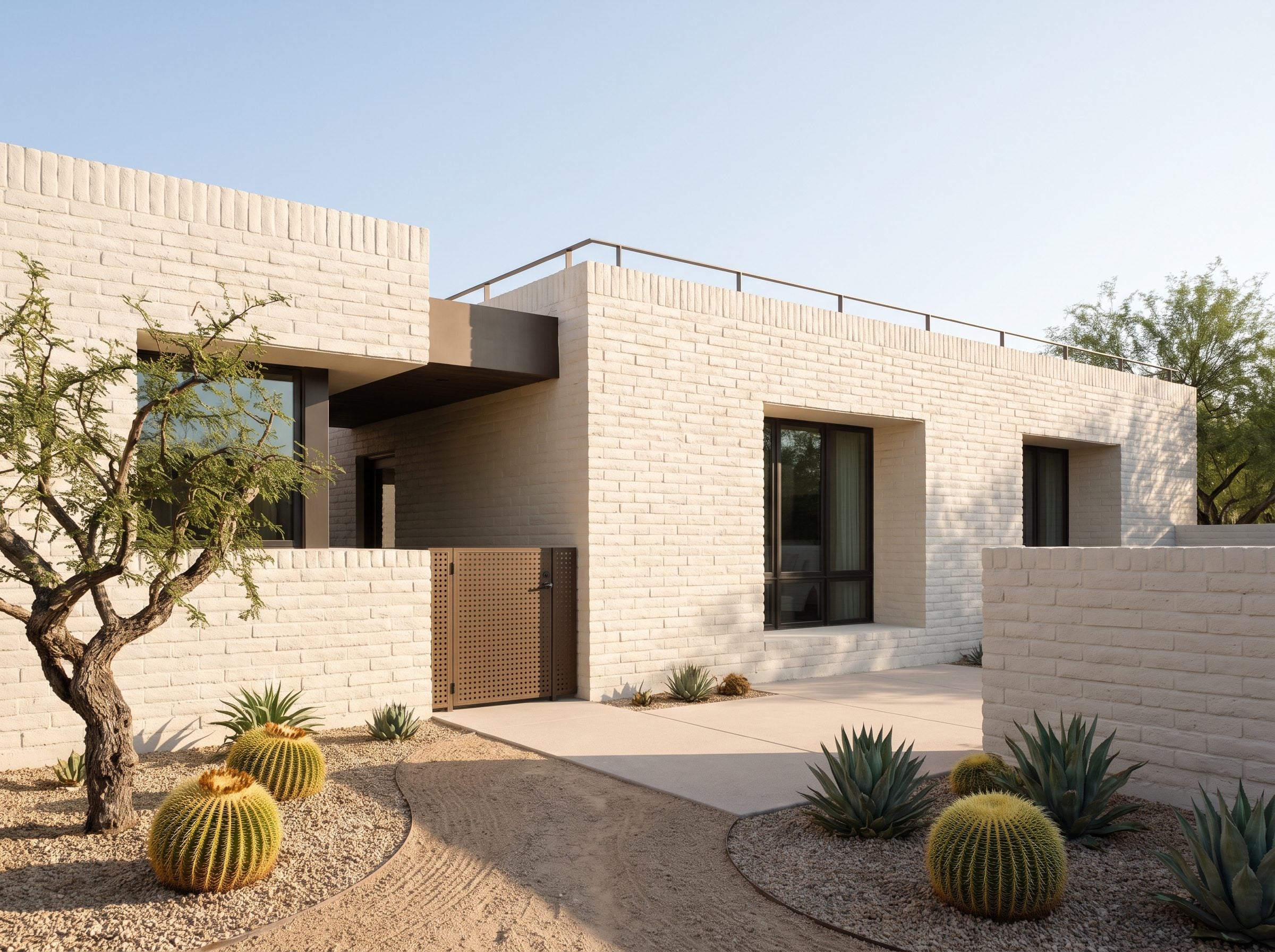
Warm off-white paint gives the brick an almost limestone-like appearance, while deep-set black windows carve crisp openings into the pale walls. A perforated timber gate introduces a geometric pattern that allows glimpses through the courtyard boundary without exposing the entire space.
Gravel, agave, and barrel cacti provide a landscape of compact, sculptural forms. Their greens and blue-grays sit comfortably beside the cream masonry, while the dark glazing supplies the necessary contrast. The architecture feels sunlit and spare, with the brick texture preventing the pale finish from becoming featureless.
14. Art Deco Curves and a Plum Door Give Gray Brick a New Personality
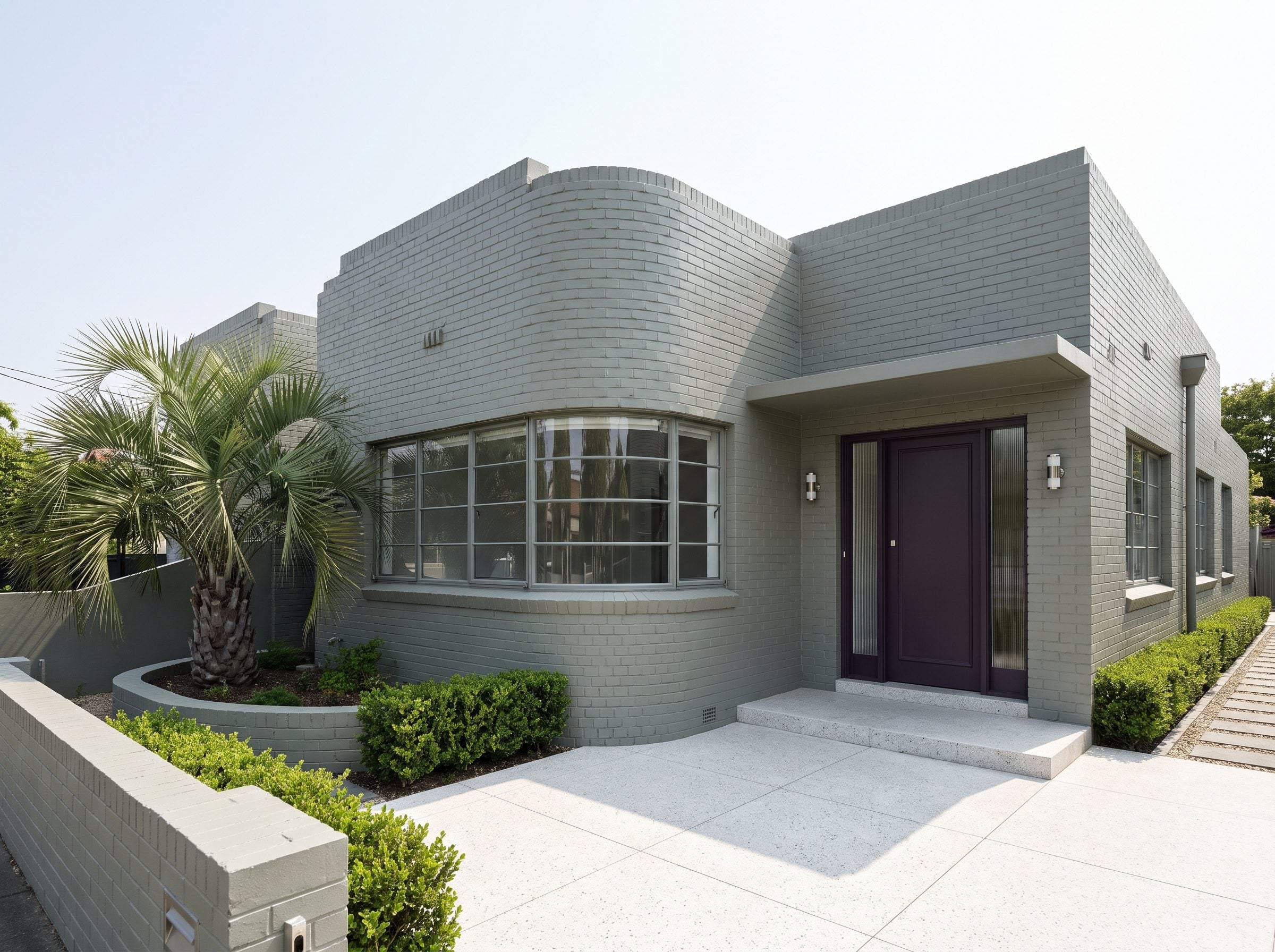
Gray-painted brick wraps a curved bay window, its masonry joints following the rounded geometry rather than disappearing beneath a smooth finish. Steel-framed glazing divides the glass into a precise grid, giving the curve an architectural sharpness that distinguishes it from a conventional bay.
The plum front door introduces a muted warmth into the cool facade. Clipped boxwood hedges repeat the building’s discipline at ground level, their tightly controlled shapes contrasting with the rounded window. The combination has an Art Deco flavor without relying on decorative motifs or elaborate ornament.
13. Pink Brick, Slate-Blue Shutters, and a Screened Belvedere Above the Roof
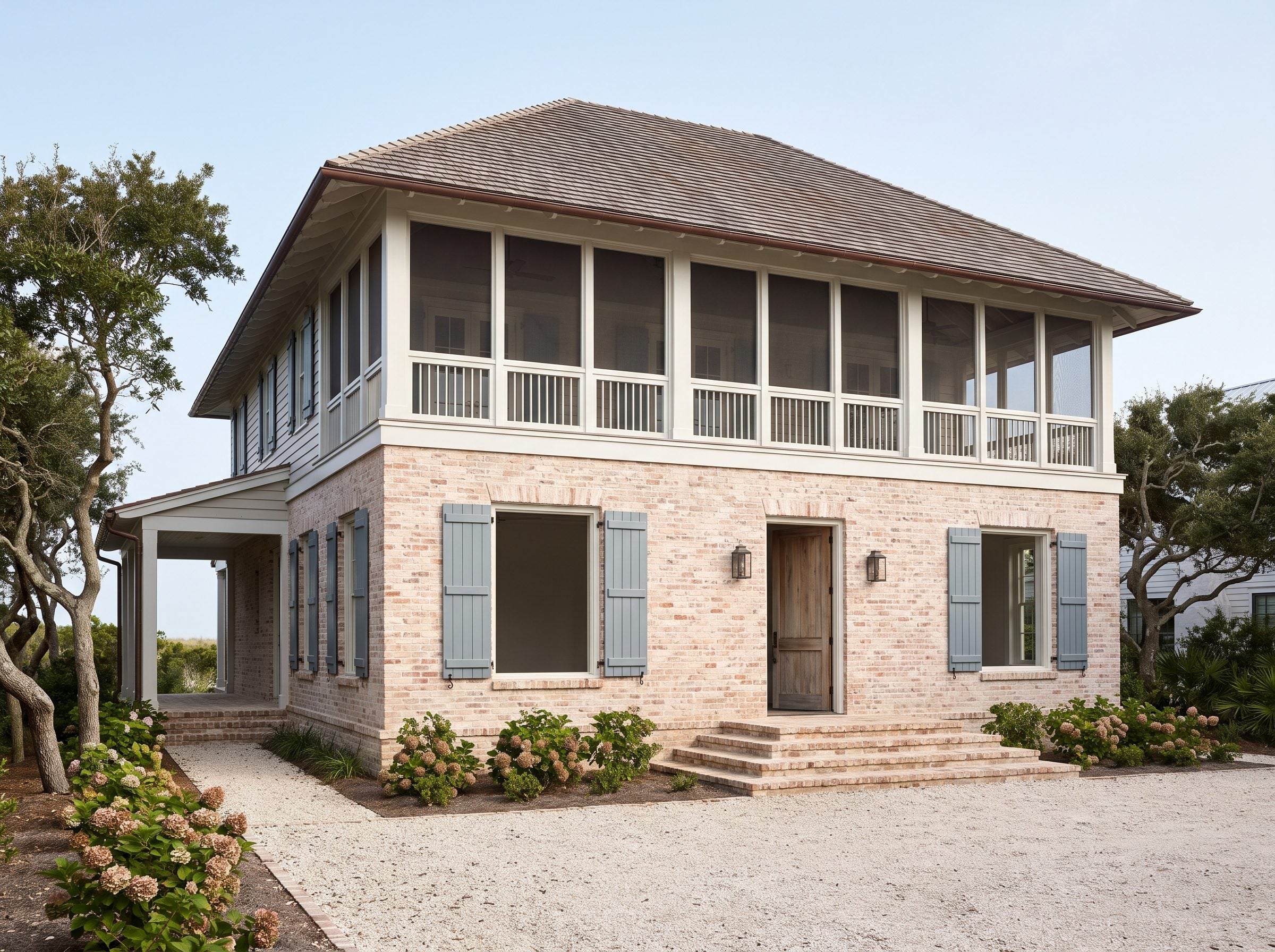
Pale salmon brick and slate-blue shutters create a softer relationship than the familiar red-brick-and-black-trim formula. The weathered wood entrance door introduces a driftwood tone, while matching brick steps extend the facade’s color down to the approach.
Above the main roof, a screened belvedere introduces an entirely different scale of detail. White-painted framing and vertical balusters give the upper structure a light, almost pavilion-like quality against the solid masonry below. The muted pink brick supplies a warm foundation for the cooler blue shutters and bright upper framing.
12. White Brick Meets Natural Terracotta in a Desert-Modern Estate That Plays Both Sides
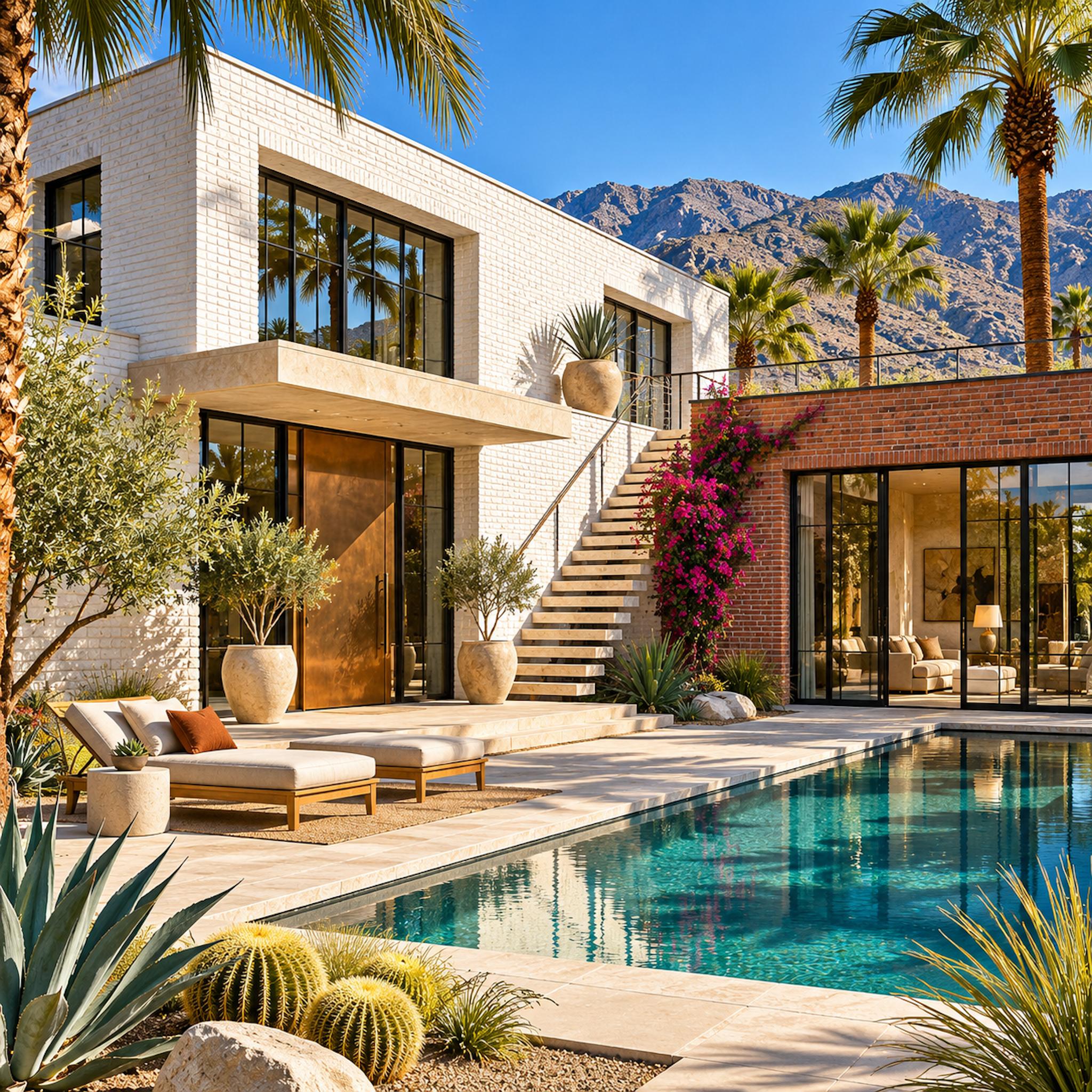
Two distinct brick finishes define this spectacular desert-modern residence. A monumental two-story volume of chalk-white painted brick rises beside a lower wing of natural terracotta-red masonry, with the change in color following the architecture rather than dividing a single wall arbitrarily. Both surfaces retain their brick courses and mortar joints, making the difference between painted and natural masonry especially clear.
An exterior limestone staircase climbs between the volumes, its floating treads and slender railing introducing a dramatic diagonal through the composition. Bronze-toned entrance doors, expansive black-framed glazing, and a long turquoise swimming pool give the estate a distinctly contemporary character. Bougainvillea, palms, agaves, and rugged desert mountains complete the setting. Brilliant desert sunshine makes the white brick almost luminous while drawing out the terracotta’s earthy richness.
11. White Brick, Cane Chairs, and a Concrete Hearth Drawn With a Ruler
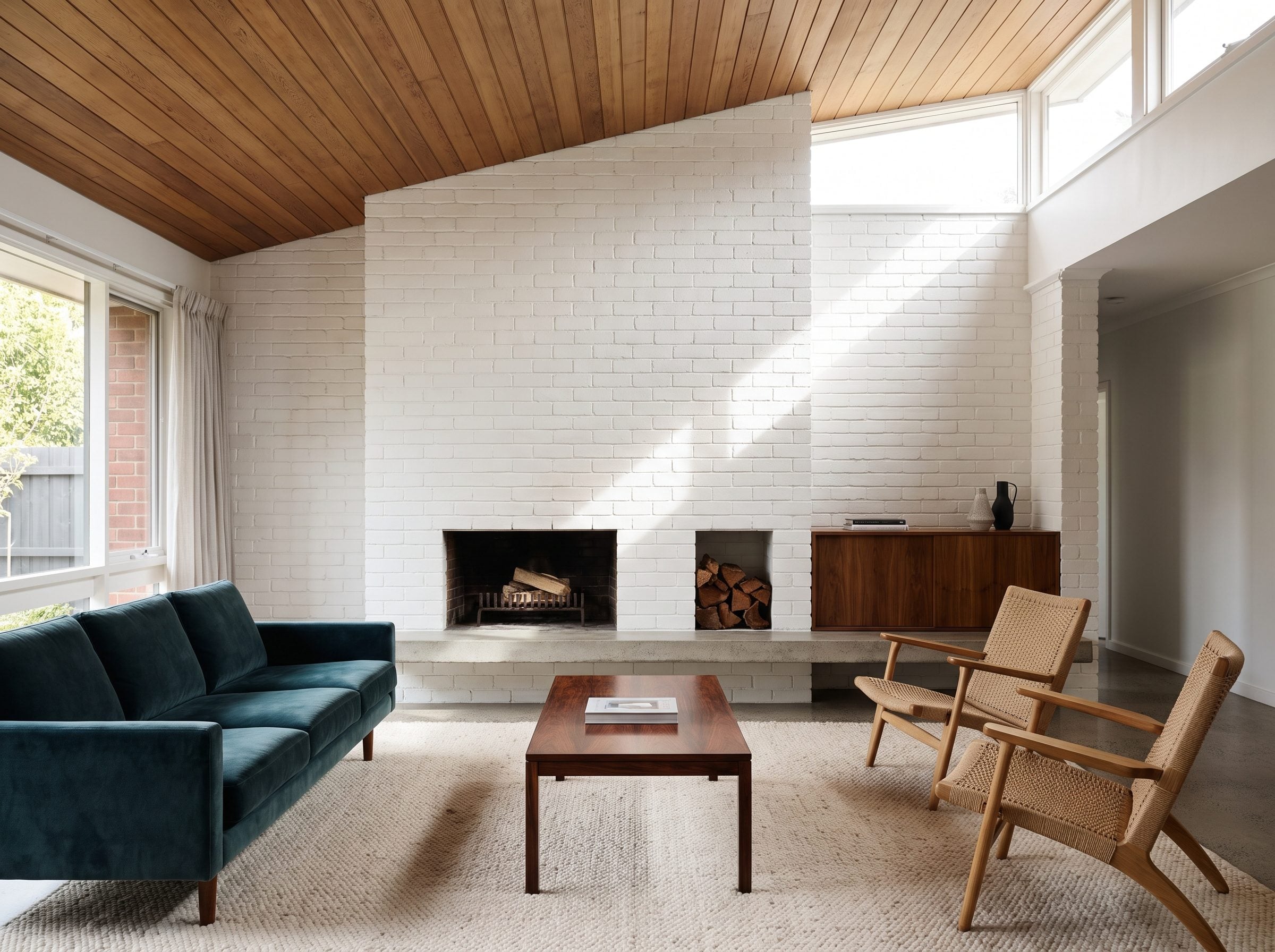
Sunlight cuts diagonally across the white brick fireplace wall, turning the shallow relief of the mortar joints into a shifting pattern. A long concrete hearth extends horizontally beneath the firebox, connecting the masonry to a walnut credenza at one end.
Oak-framed cane lounge chairs introduce an open, woven texture, while a teal velvet sofa brings a richer color and softer surface. The walnut coffee table ties the seating together without repeating the hearth’s hard-edged geometry. Painting the brick simplifies the palette while leaving its texture available for the light to exploit.
Why It Works: A single pale finish can make a large brick wall feel visually continuous while allowing its joints and irregularities to remain visible. Directional daylight then provides much of the surface variation.
10. Ivory Brick and a Copper Pivot Door Make Modernism Feel Warm
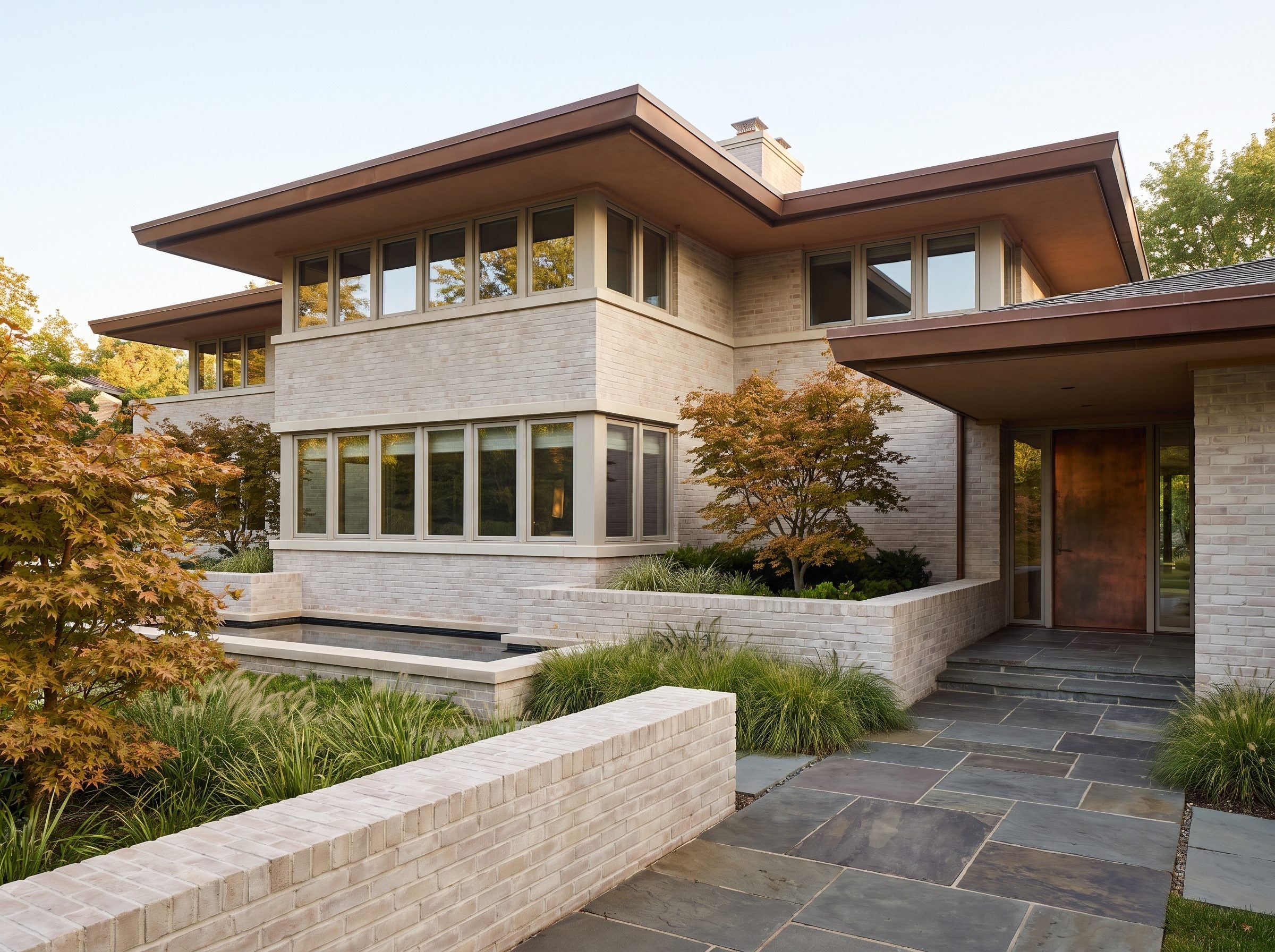
Long, narrow brick courses give this contemporary facade a strong horizontal character, emphasized by bands of clerestory glazing near the roofline. The bleached ivory tone keeps the masonry visually light, allowing the building’s proportions to take precedence over its surface color.
A copper pivot door introduces a striking metallic interruption, with warm brown variations visible across the metal. Irregularly coursed bluestone pavers lead toward the entrance, their cool gray balancing the warmth of the door. The material palette is restrained, but the contrast between masonry, glass, stone, and copper gives the facade plenty to say.
9. Bare Brick and Reclaimed Timber Make a Concrete Hearth Look Almost Delicate
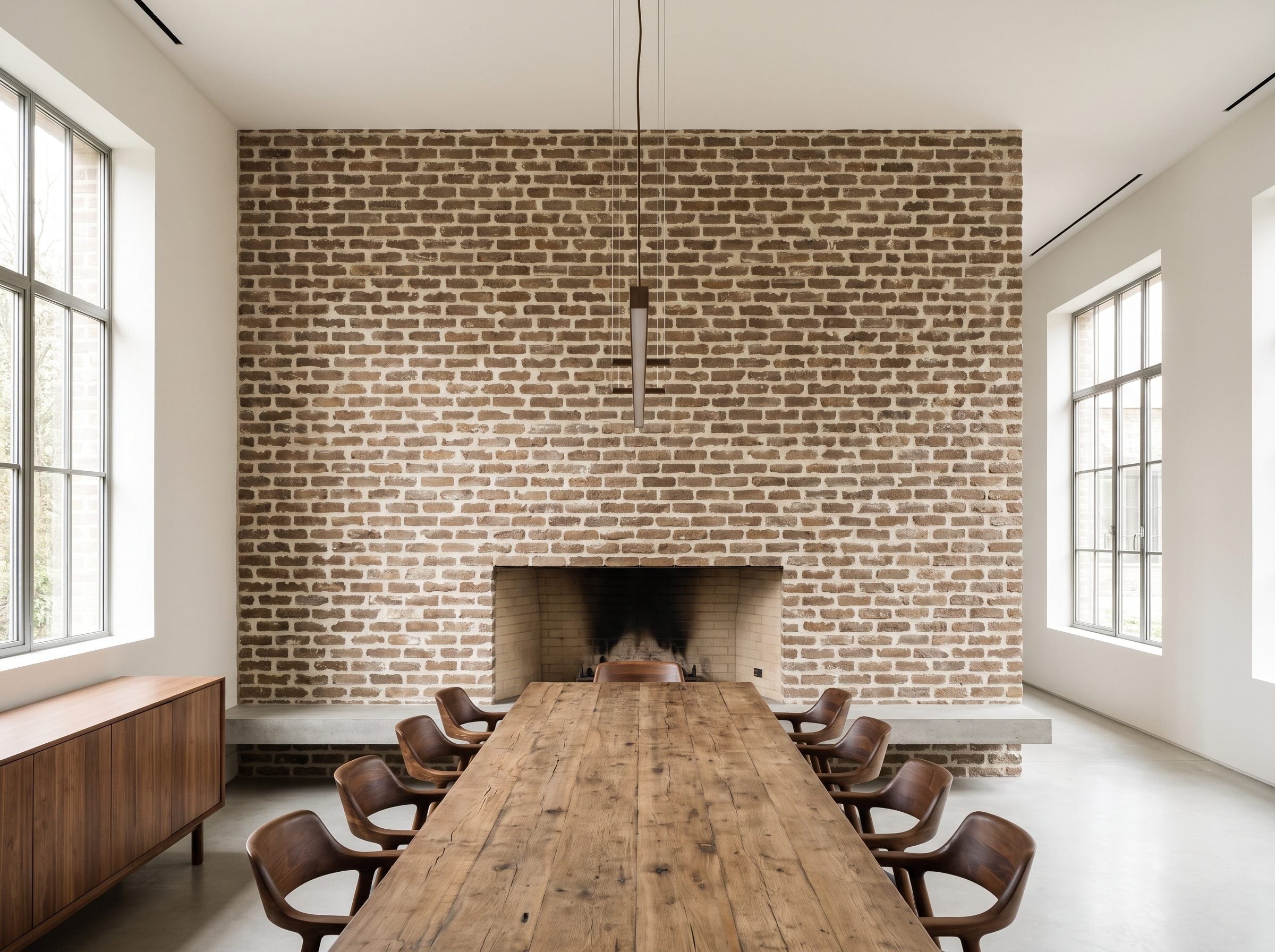
Raw brick rises uninterrupted behind a broad concrete hearth, its warm, irregular surface contrasting with the hearth’s smooth horizontal plane. A reclaimed-plank dining table brings another rough-grained material into the foreground, while curved walnut armchairs offer a more polished interpretation of natural wood.
The brick’s varied tones enliven the timber without turning the room monochromatic, while concrete introduces a cool, crisp counterweight. Rough masonry, weathered planks, and smooth concrete give the room three distinct textures to work with.
Material Matters: Natural brick beside pale plaster or painted walls can become a focal point through contrast alone. Preserving the masonry’s original variation is especially effective when the surrounding finishes are visually quieter.
8. Sage Brick and Dark Timber Give a Covered Porch Its Architectural Backbone
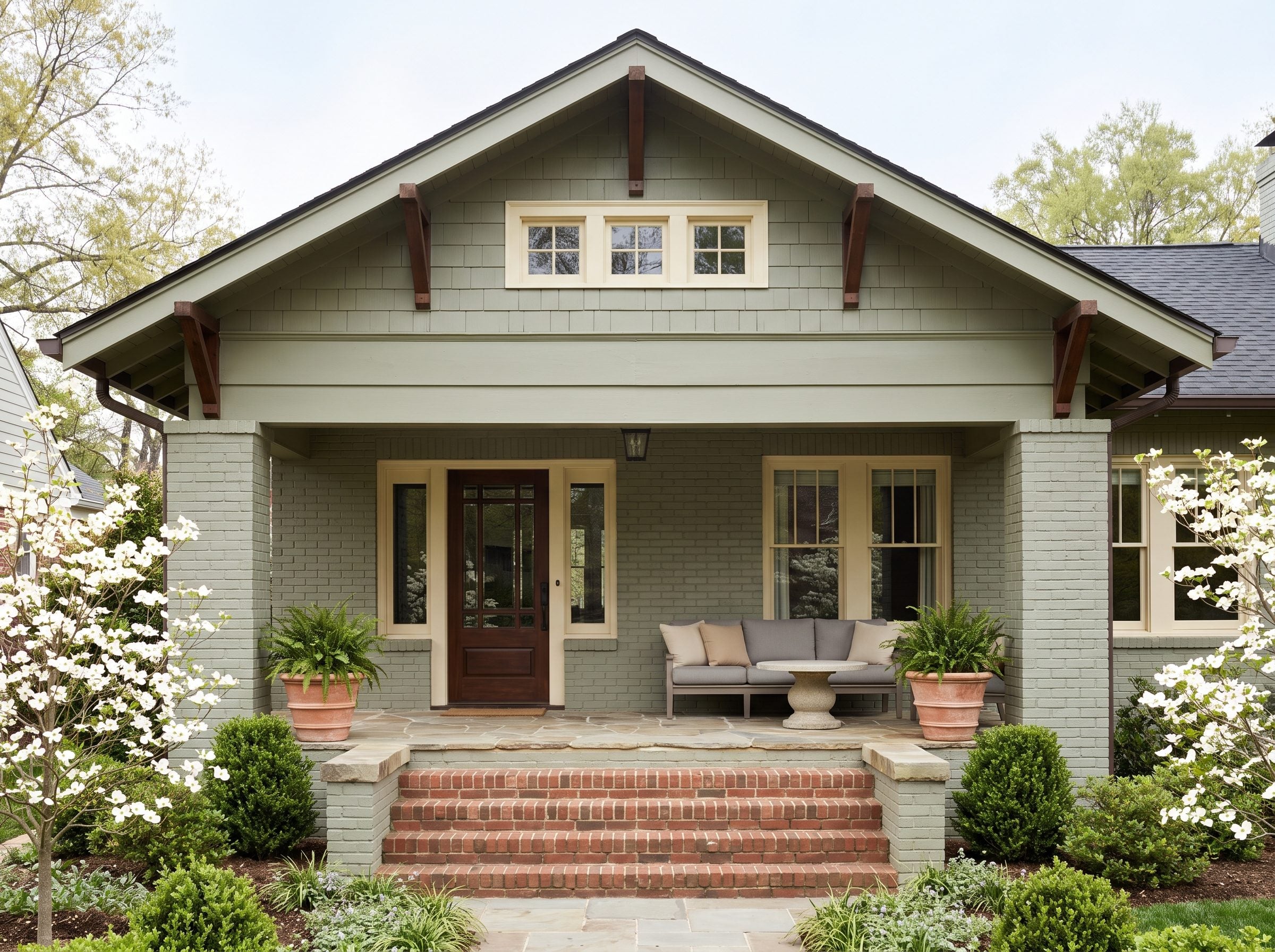
Soft sage paint unifies the brickwork beneath this covered porch, giving the columns and lower facade a calm, consistent appearance. Above, the shingled gable introduces a smaller-scale texture, while dark timber brackets punctuate the roofline with a more substantial structural rhythm.
Cream window trim and a walnut-toned entrance door prevent the green from becoming the only note in the composition. The brackets provide the strongest contrast, drawing attention to the porch roof and its supporting geometry. Sage makes the masonry quieter; the woodwork supplies the definition.
7. Cream Brick and a Cast-Iron Stove Bring an Arched Fireplace Into Focus
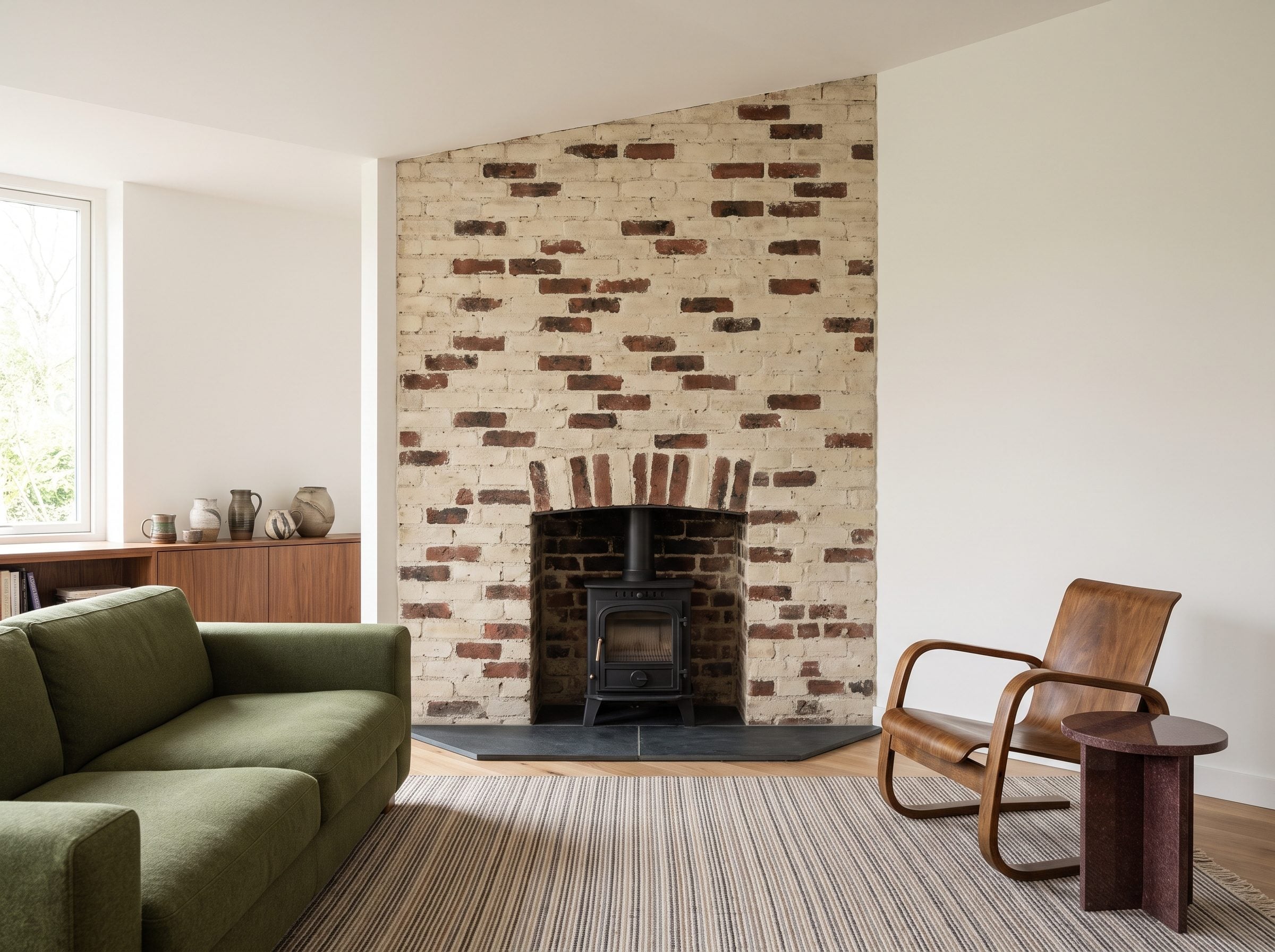
Chalky cream paint covers the chimney breast without completely flattening its brick pattern. Inside the arched opening, darker unpainted masonry frames a cast-iron wood burner, creating a layered treatment in which painted and natural brick work together rather than compete.
A green wool sofa and bentwood walnut armchair bring color and warmth to the surrounding room. The burgundy stone side table introduces a compact, weighty accent, while a striped flatweave rug connects the timber floor with the chimney’s pale finish. The fireplace feels substantial without becoming visually oppressive.
6. A Natural Brick Chimney Reaches the Roof Peak and Refuses Decoration
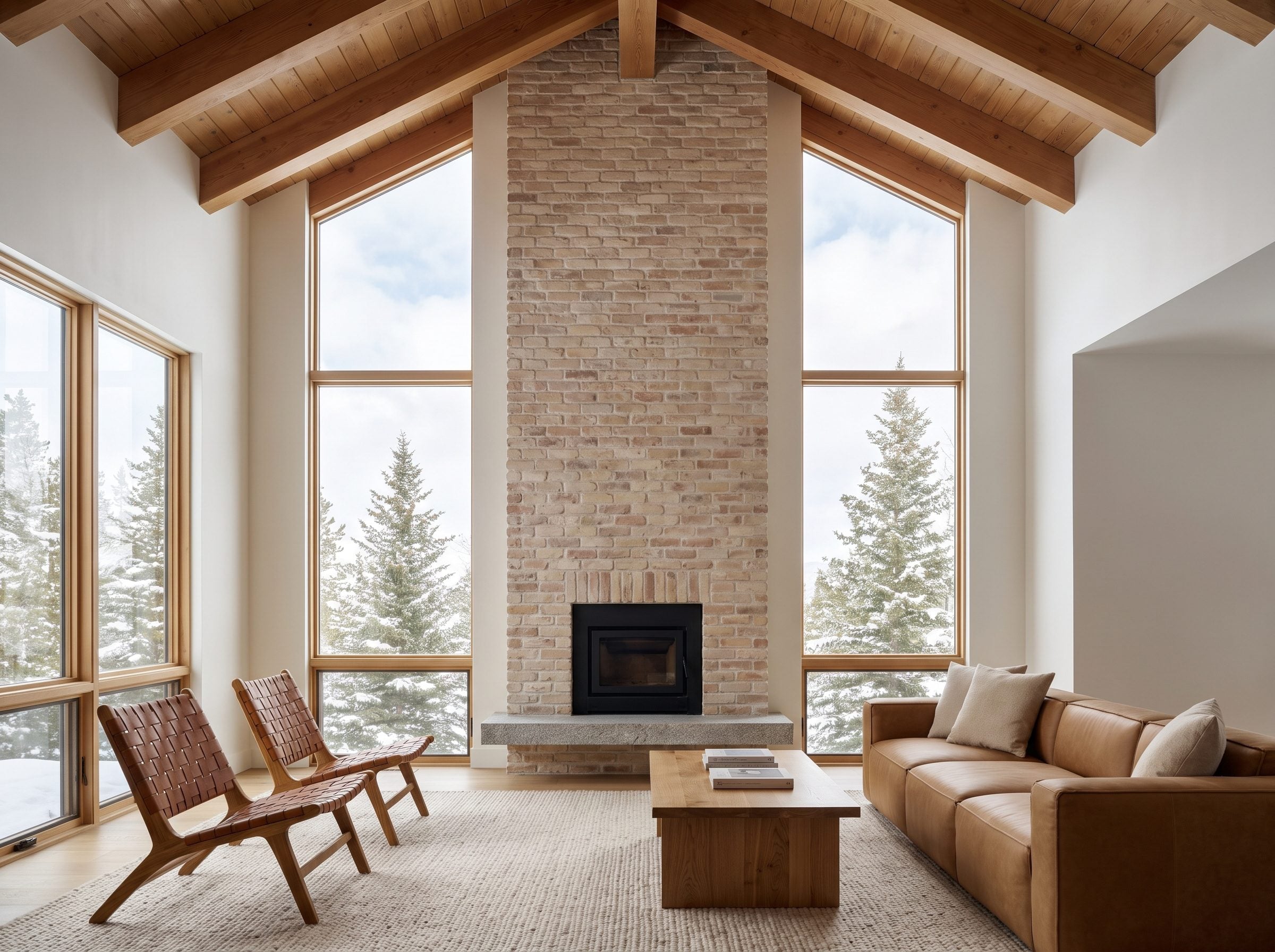
Natural brick climbs from floor to roof peak, its vertical mass emphasized by the pitched ceiling and large windows on either side. Beyond the glass, snow-covered pines provide a pale, irregular backdrop that makes the masonry’s warm color appear especially rich.
Woven leather chairs, a tan sofa, and a simple timber coffee table avoid introducing competing patterns. Light ceiling beams preserve the sense of height without turning the room into a heavy timber interior. The brick’s color and texture are already sufficiently expressive; a painted finish would create a very different, considerably quieter focal point.
5. Dark Espresso Trim Gives This Red-Brick Gothic Revival Its Edge
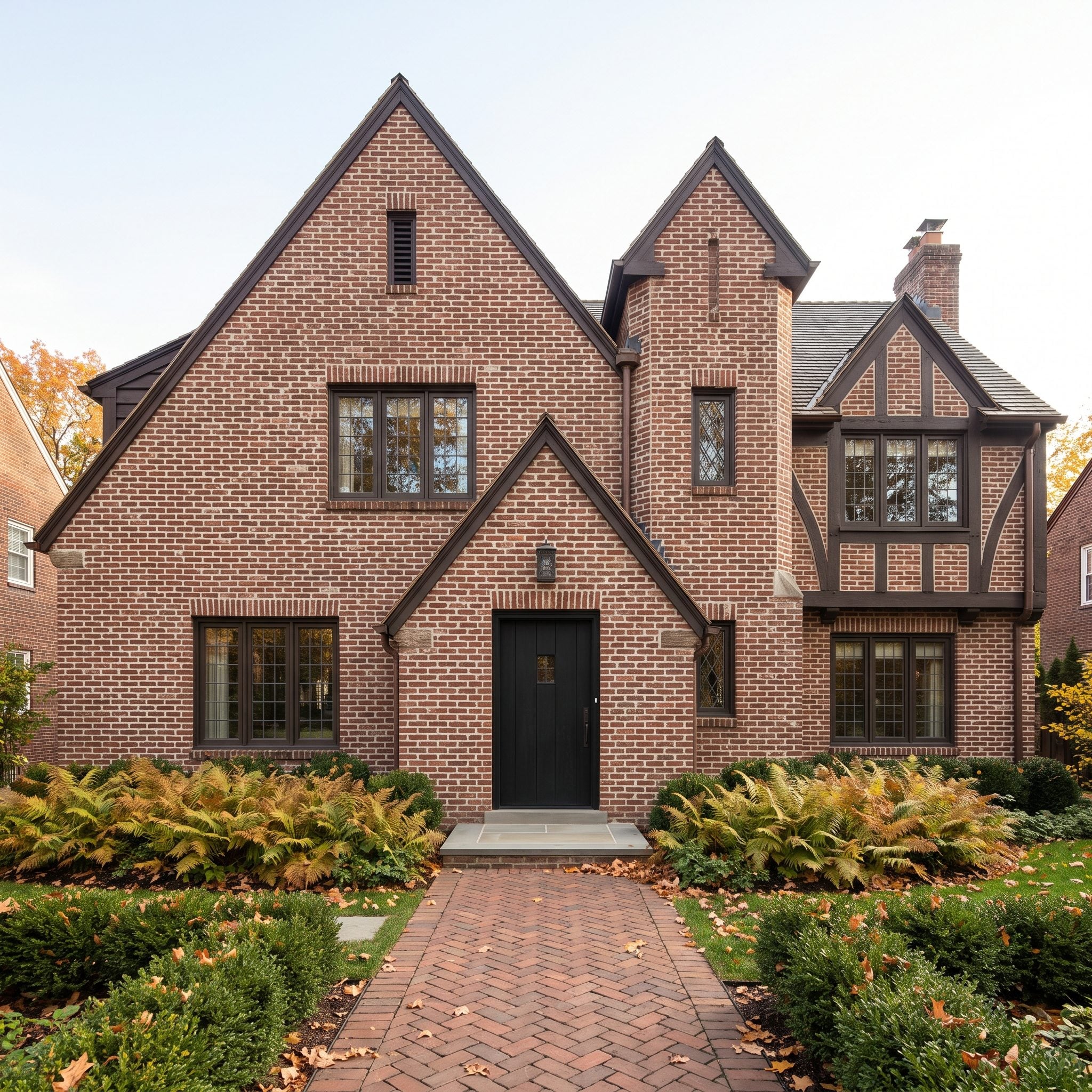
Reddish-brown brick laid in running bond gives this steep-gabled house a warm, substantial presence. Dark espresso trim outlines the windows, gables, and arched entrance, sharpening the Gothic-inspired rooflines without creating an abrupt black-and-red contrast.
A herringbone brick path extends the masonry palette into the front garden, passing clipped boxwood and golden ferns. The dark trim sharpens the rooflines and arched doorway, leaving the brick’s reds and browns to carry the warmth of the facade.
Material Matters: Deep brown trim can complement the warm undertones of red brick, while cooler black creates a more graphic contrast. Neither is inherently better; the effect depends on the masonry’s color, the building’s proportions, and the surrounding materials.
4. Emerald Brick and a Floating Staircase Turn an Entrance Hall Into High Architecture
Emerald-green brick curves around this extraordinary triple-height entrance hall, rising toward an enormous circular skylight. The masonry’s horizontal courses follow the rounded enclosure, giving the soaring walls a rhythmic texture that ordinary plaster could never reproduce. Deep green transforms the brick into something approaching architectural sculpture, particularly where daylight from the oculus throws intricate shadows across its surface.
A sweeping staircase of floating pale stone treads climbs through the atrium, its illuminated undersides and slender brass handrail tracing a graceful curve against the masonry. Suspended alabaster pendants descend through the central void, while a geometric stone floor, sculptural bronze artwork, and an oxblood leather bench complete the composition. Few brick treatments are this ambitious. The color commands attention, but the staircase, circular geometry, and extraordinary height make the effect unforgettable.
3. Sage Brick and Linen Bedding Make a Bedroom Fireplace Feel Entirely Natural
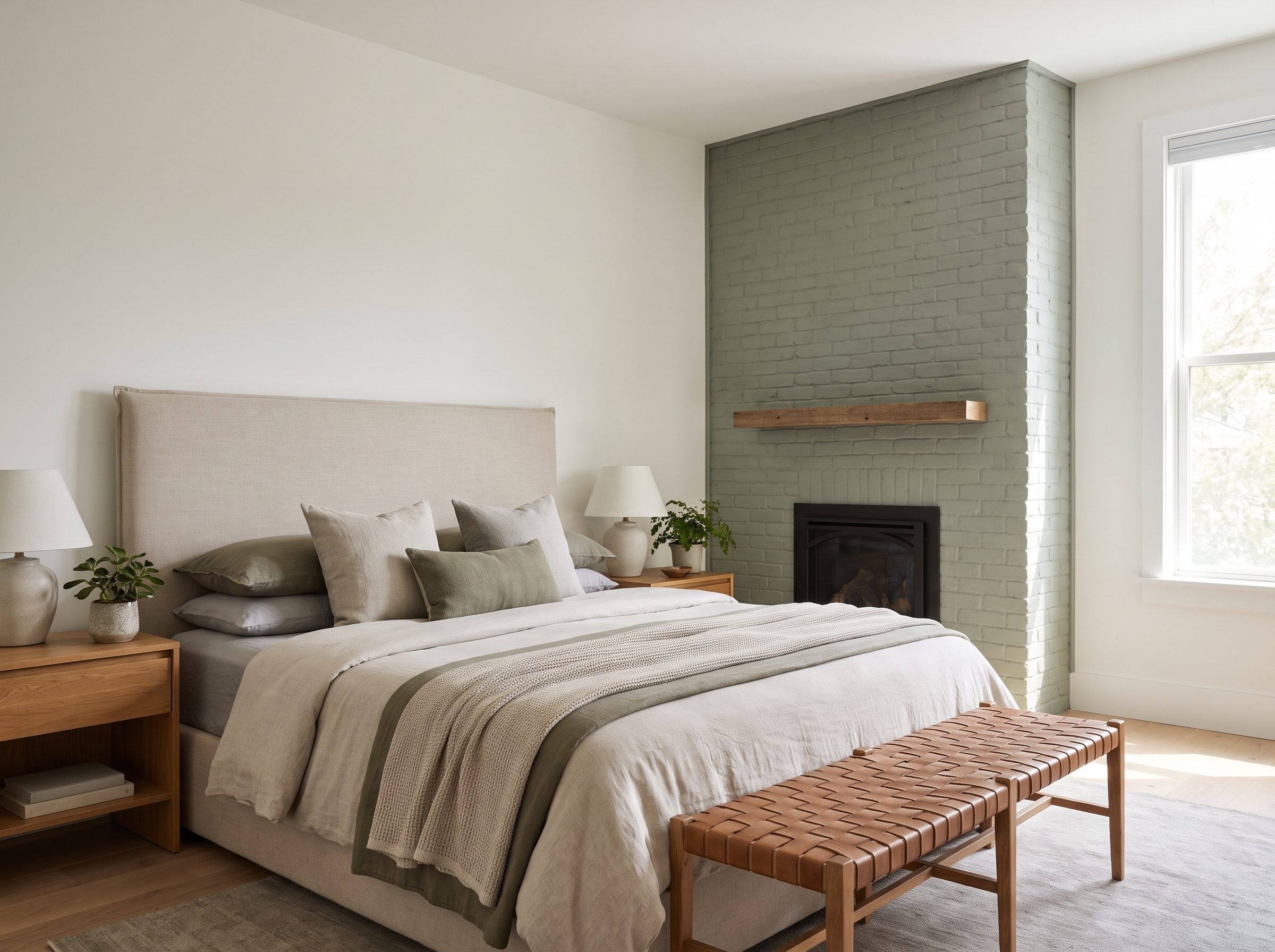
Sage-painted brick rises beside a simple wood mantel shelf, bringing the texture of masonry into a bedroom without the visual intensity of natural red brick. The muted green is especially effective beside the linen headboard, whose softer surface provides a quiet contrast to the regular brick joints.
A woven leather bench introduces another tactile material without making the room feel crowded. The fireplace becomes part of the bedroom’s subdued palette rather than an emphatic architectural centerpiece. Color has changed the brick’s character, but its texture remains unmistakable.
2. Limestone Brick and a Double-Sided Fireplace Blur the Boundary Between House and Terrace
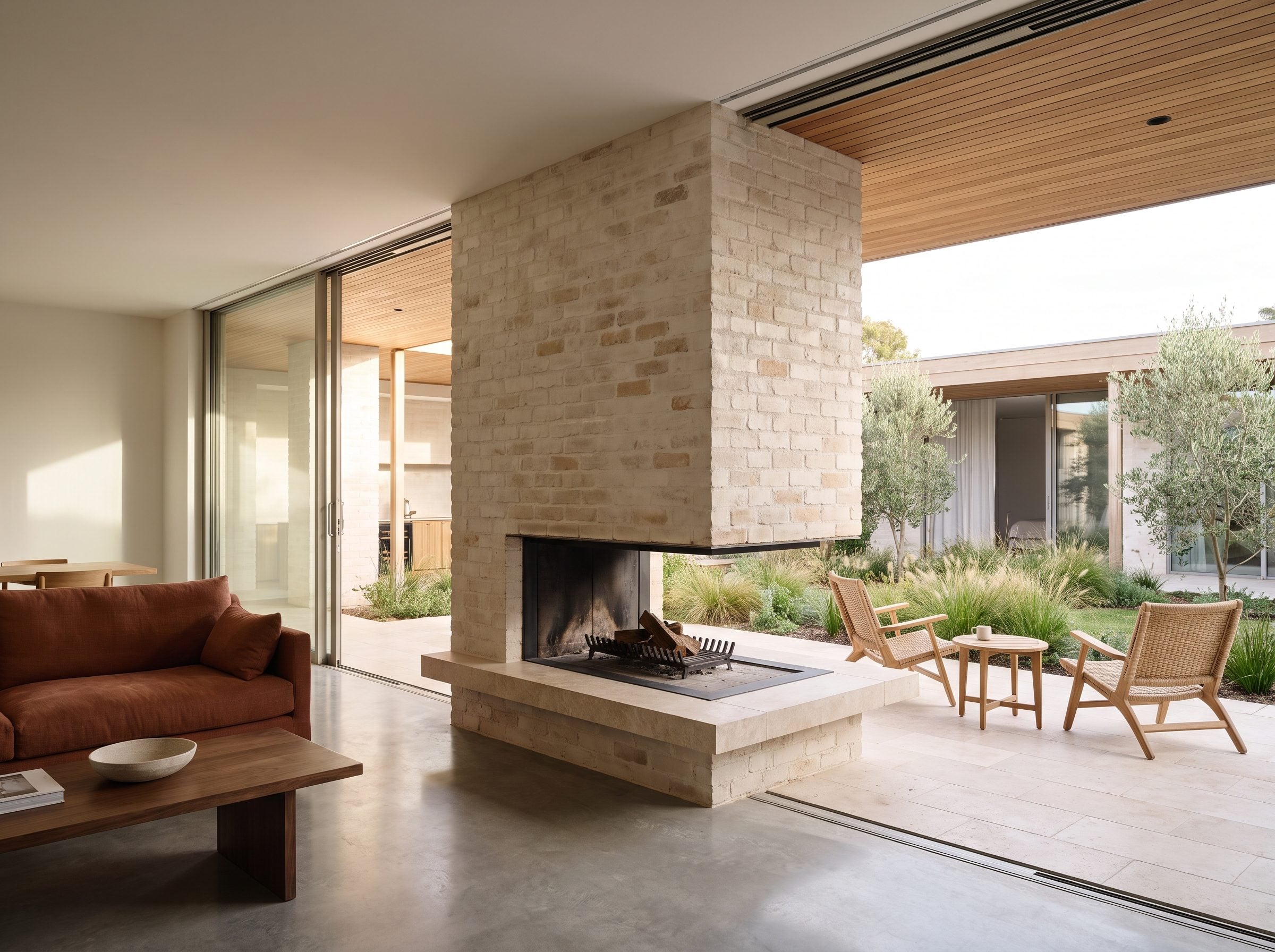
Pale limestone brick forms a substantial chimney mass at the boundary between an interior living area and an exterior terrace. A double-sided firebox connects the two spaces visually, while the continuous masonry makes the fireplace read as a single architectural element rather than separate indoor and outdoor features.
Rattan lounge chairs on the terrace and a rust-colored linen sofa inside share a related warmth without matching. Concrete flooring gives way to exterior stone, yet the brick continues across the threshold. Its natural pale coloring is essential to the composition, offering a reminder that some masonry already possesses the quiet finish designers try to achieve with paint.
1. White Brick, a Slate Roof, and Plum Windows Make the Final Argument for Paint
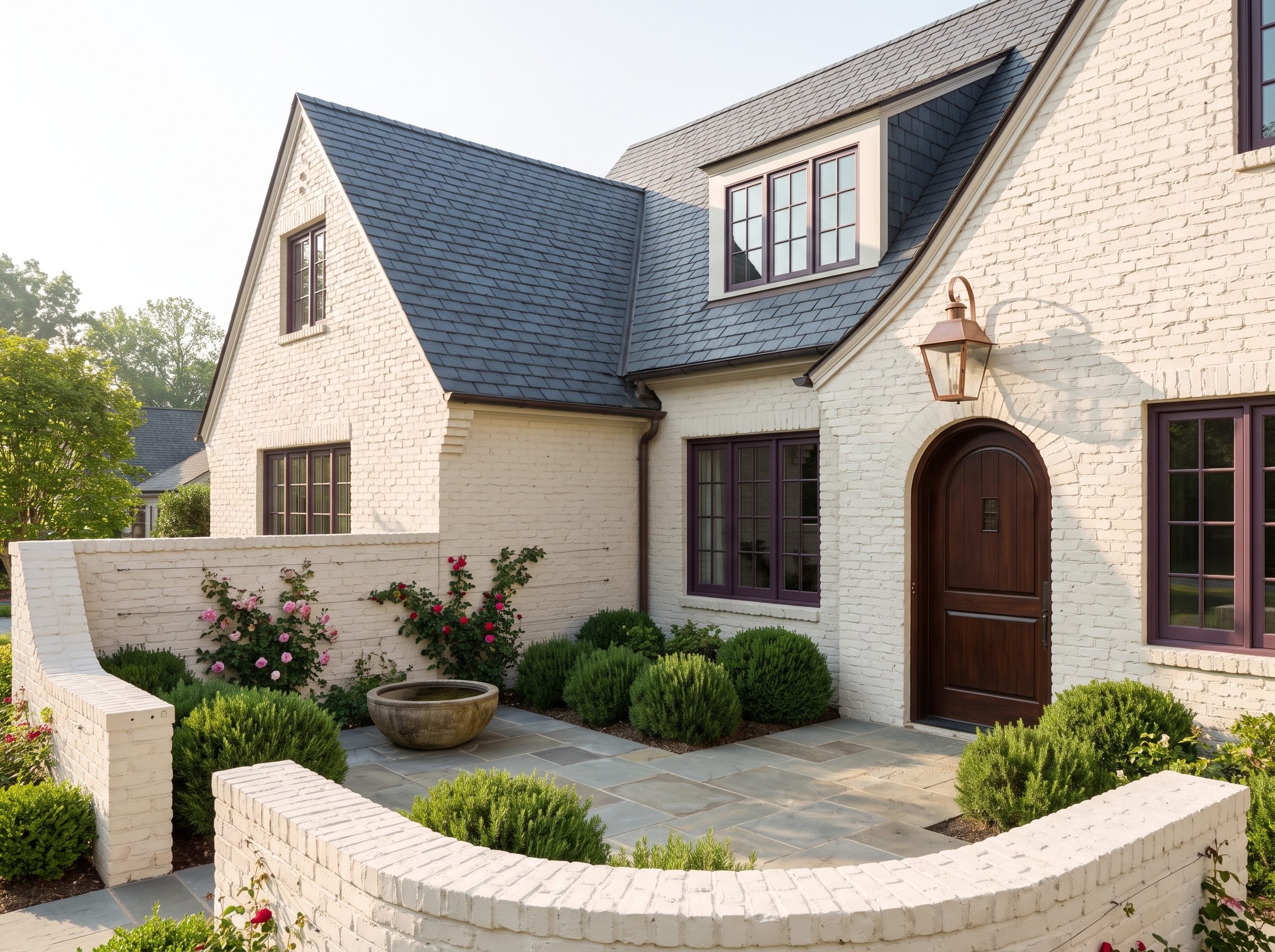
White paint gives this Tudor-style brick exterior an almost sculptural clarity, bringing the roof’s steep angles and the windows’ dark outlines into sharper relief. The brick’s rough surface remains visible beneath the creamy finish, preserving enough material character to prevent the facade from looking like smooth stucco.
The slate roof introduces a cool, weighty contrast, while plum-toned window frames soften the transition between dark roofing and pale walls. Rather than competing with the architecture, the paint allows the building’s strongest features to become more legible. Against the pale brick, the plum frames look almost black at a distance, then reveal their color as the eye moves closer.