
Walnut has impeccable manners. Travertine knows when to keep quiet. Bronze can spend an entire evening looking expensive without attracting attention. Then chartreuse walks in, pulls up a chair, and changes the conversation. One slash of electric yellow-green against those beautifully behaved materials, and suddenly the room has a pulse.
In order to come up with the very specific design ideas, we create most designs with the assistance of state-of-the-art AI interior design software. Also, assume links that take you off the site are affiliate links such as links to Amazon. this means we may earn a commission if you buy something.
Sometimes the provocation is small: a lime chair beside a burgundy bed, an electric-green painting against oxblood lacquer, or a coffee table that looks as though someone poured citron straight from the can. Elsewhere, restraint goes straight out the window. Entire ceilings turn acid green. Velvet climbs bedroom walls. A staircase becomes a ribbon of brilliant yellow lacquer. The color doesn’t always behave like an accent. Sometimes it takes over the architecture.
Across these 29 interiors, acidic greens and yellows collide with walnut, marble, leather, plaster, and bronze. Glossy lacquer throws light around. Velvet absorbs it. Pale stone makes the color look sharper; dark wood gives it depth. The best combinations understand that luxury and good manners aren’t necessarily the same thing. Sometimes a room needs one spectacularly bad influence.
29. A Chartreuse Vanity Interrupts a Bathroom Wrapped in Travertine
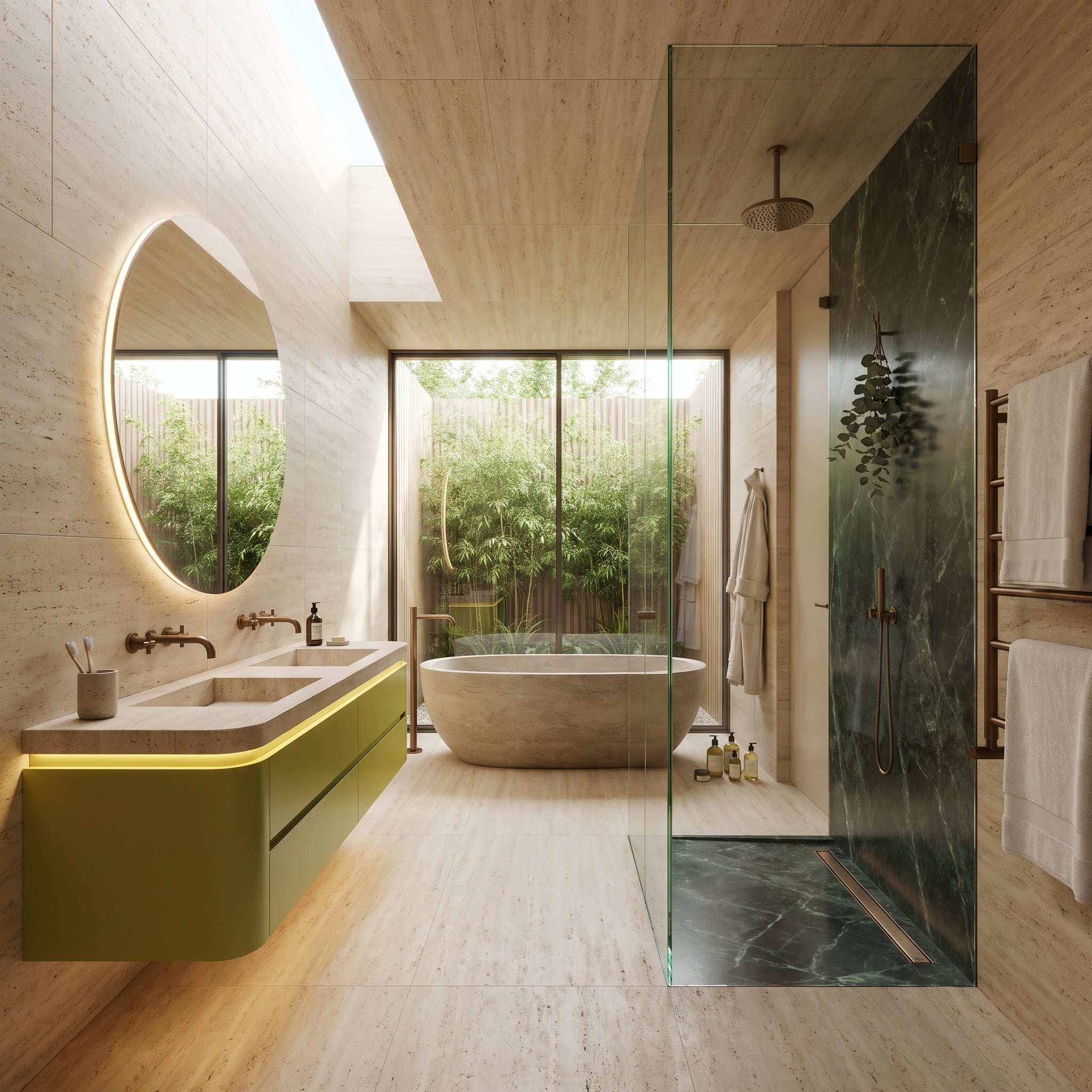
Travertine covers the walls, floor, and ceiling, establishing an almost continuous expanse of pale stone. The floating chartreuse vanity breaks that continuity with a glossy yellow-green finish and a generously rounded end. Concealed lighting beneath the cabinet emphasizes the space between its base and the floor.
Across the room, darker green marble lines the shower behind glass. Bronze faucets and a matching towel rail introduce warmer metallic accents. The two greens are deliberately different: one electric and reflective, the other deep and mineral-rich. Together they give the otherwise restrained stone interior an unexpectedly rich color vocabulary.
28. Acid-Green Drapes Bring a Double-Height Living Room Down to Earth
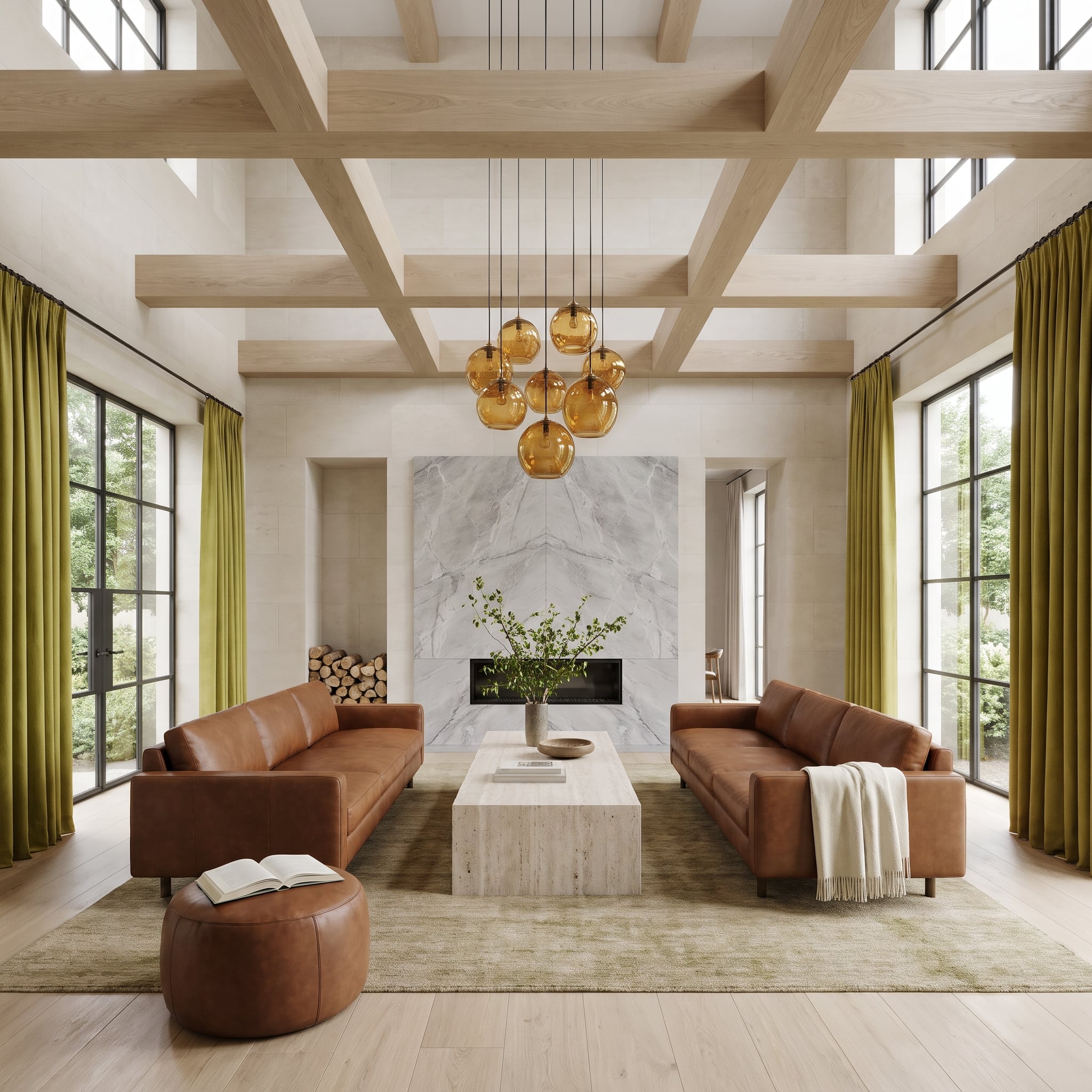
Four long velvet drapery panels in a sharp olive-yellow frame the steel windows of this double-height living room. Their color appears again in the rug, connecting the towering vertical accents with the furniture arrangement below. Bleached oak beams provide a pale architectural counterweight overhead.
Amber glass pendants descend above a substantial travertine table, while cognac leather sofas contribute a warmer, earthier color. Bookmatched gray marble surrounds the linear fireplace. The drapery’s extraordinary length turns a relatively simple fabric choice into an architectural gesture, drawing the eye upward through the full height of the room.
What Our Readers Say
- Asked to pick a wall colour, a quarter of Home Stratosphere readers chose green, while greige still took half the vote.
From Home Stratosphere reader polls and votes.
27. A Chartreuse Waterfall Desk Crashes the Traditional Walnut Library
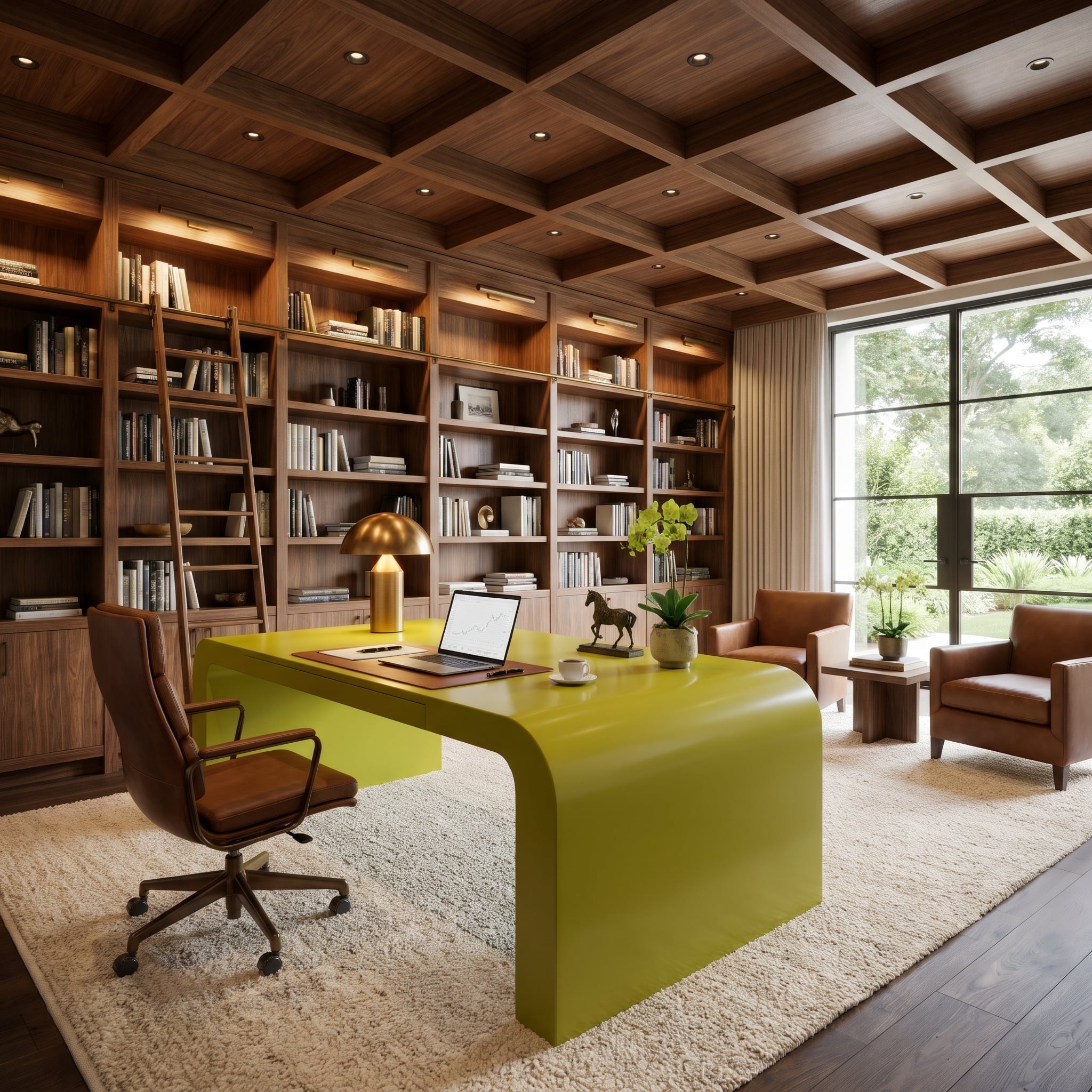
Coffered walnut overhead, floor-to-ceiling bookshelves, a brass-railed library ladder, and cognac leather seating establish the familiar vocabulary of a grand private library. Then comes the desk. Its chartreuse lacquer flows across the top and down both ends in one continuous waterfall form.
Positioned away from the surrounding shelves, the desk can be appreciated as a complete sculptural object. A pale wool rug gives its saturated finish a lighter background, while green orchids repeat the color in smaller doses. A brass mushroom lamp contributes a warm metallic accent. The desk’s crisp contemporary silhouette is every bit as disruptive as its color.
26. A Lime Bouclé Chair Picks a Fight With a Burgundy Bed
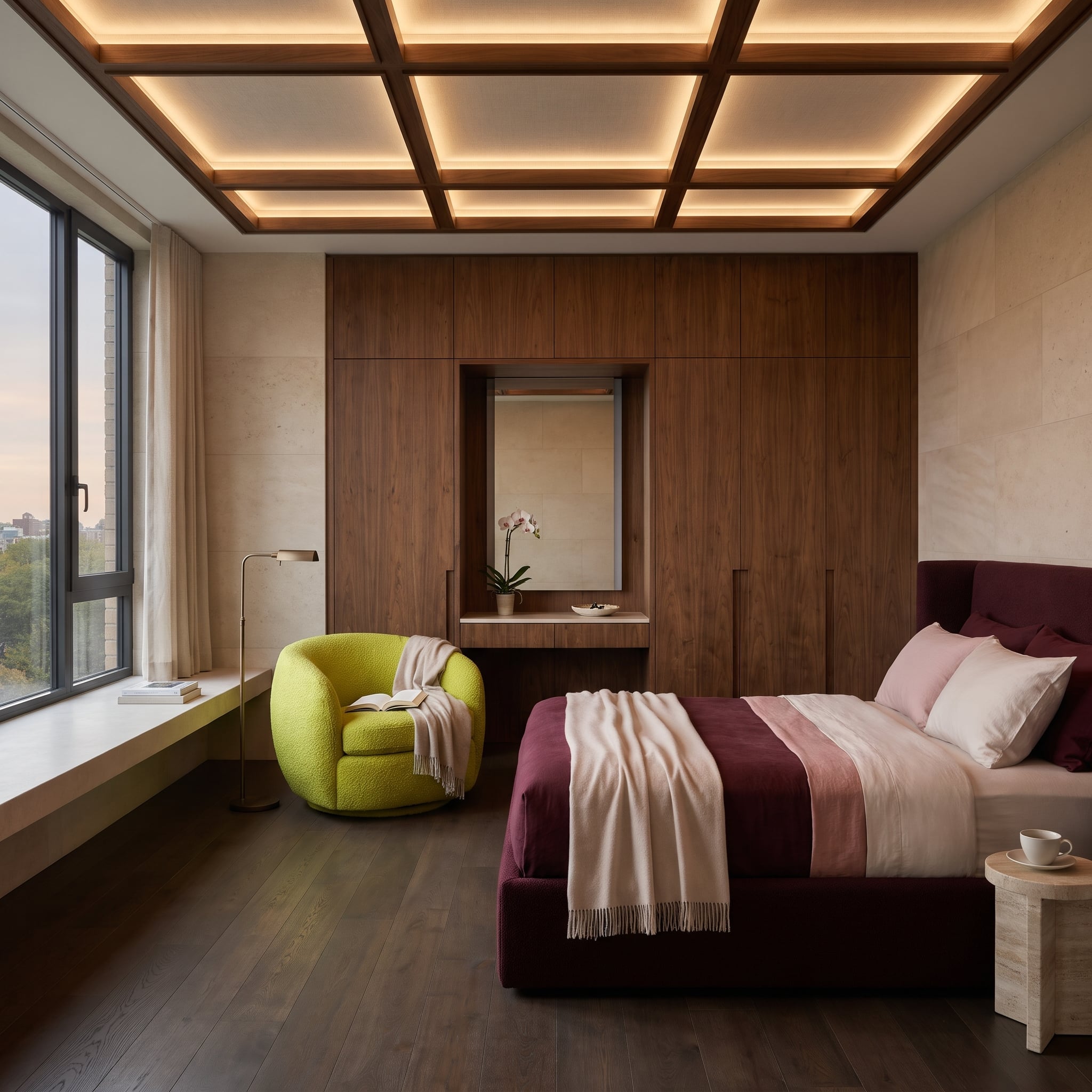
A lime bouclé swivel chair faces a bed upholstered in burgundy wool, bringing two assertive colors into close proximity. Walnut wardrobes and pale limestone walls provide a quieter architectural setting, while cream textiles connect the contrasting pieces.
The wardrobe incorporates a recessed vanity, eliminating the need for a separate dressing table. Flush doors and routed finger pulls preserve the continuity of the walnut grain. The chair’s nubby bouclé adds another dimension to the pairing, contrasting with the smoother wool upholstery and polished stone. One movable piece gives an otherwise composed bedroom a completely different temperament.
Not everyone is sold on burgundy: in our readers’ heart votes, burgundy-dominant images got hearts 41% of the time, versus 47% for the other images in the same articles.
25. A Lacquered Green Ceiling Turns a Walnut Dining Room Upside Down
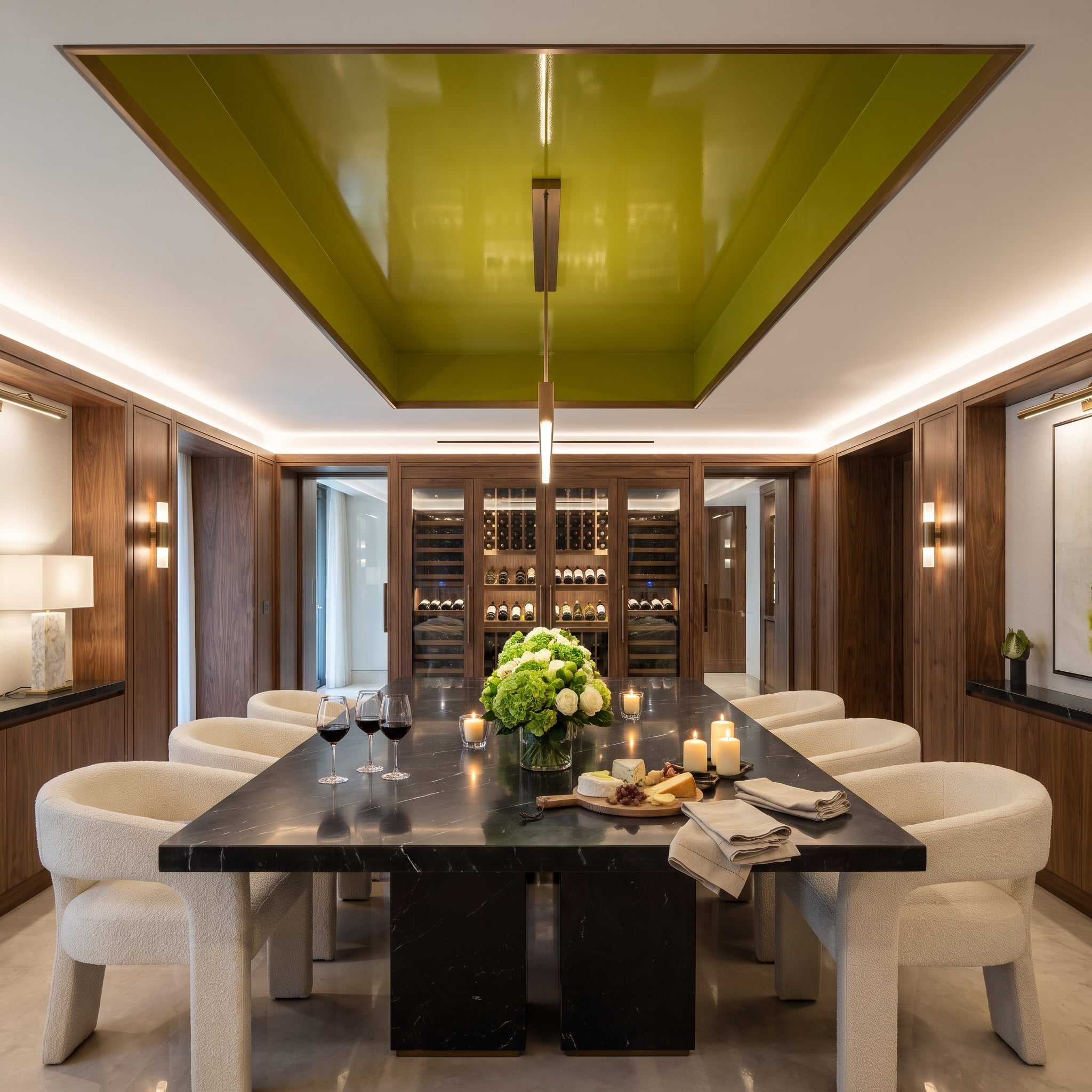
The strongest color in this dining room isn’t on the walls or furniture. Acid-green lacquer fills a large recessed ceiling coffer, its reflective finish introducing a glossy, saturated plane above walnut paneling and a black marble table.
A slender bronze pendant descends from the center, ending in an illuminated vertical element above the flowers. Its narrow silhouette preserves views toward the glass-fronted wine display. Bronze trim outlines the ceiling recess and connects the lacquer with the room’s other metallic details. Instead of hanging something spectacular from the ceiling, the design makes the ceiling itself the spectacle.
24. Acid-Yellow Lacquer Turns a Floating Staircase Into a Ribbon of Color
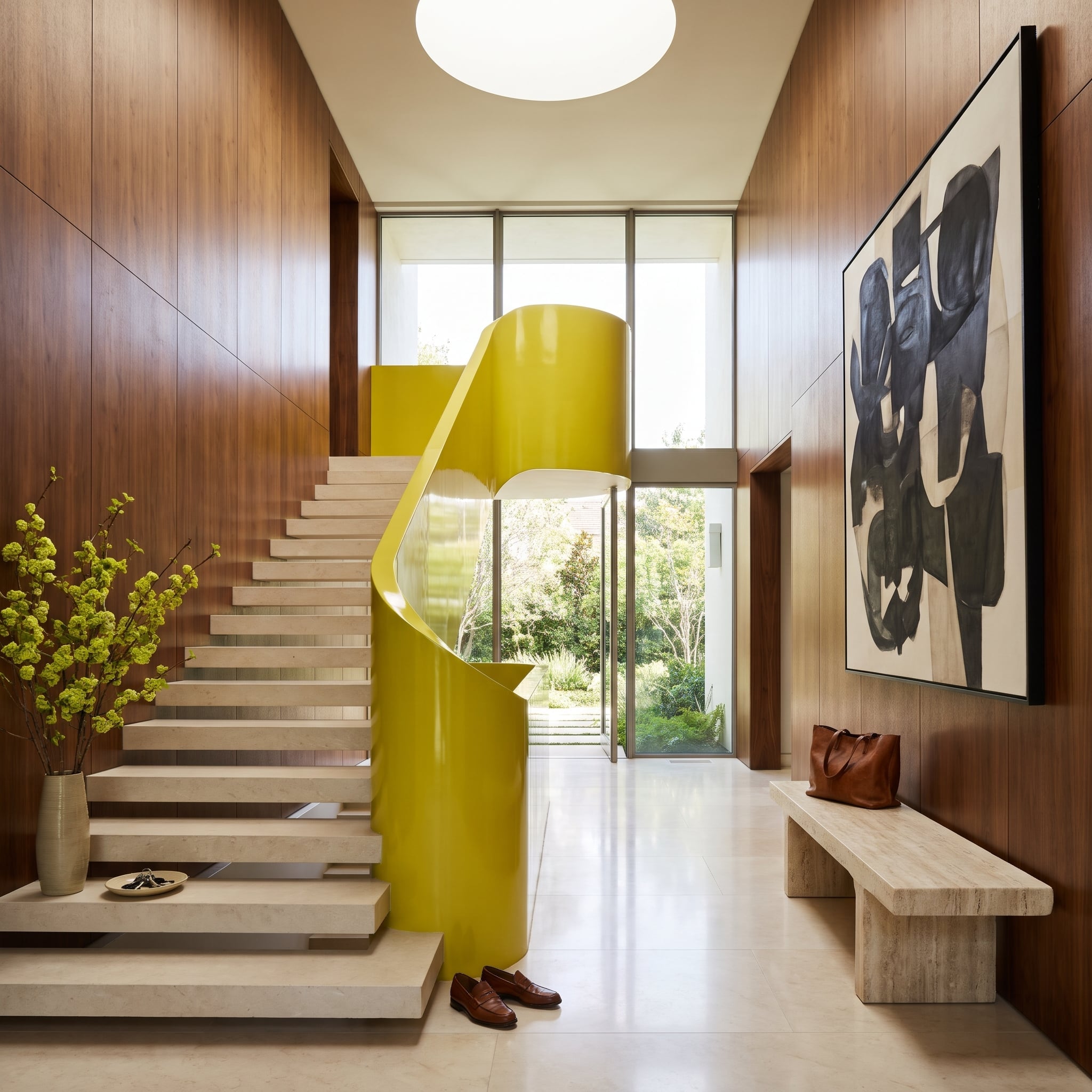
Walnut paneling rises through the double-height interior, creating an uninterrupted timber backdrop for a striking yellow balustrade. Its lacquered surface follows the ascent in one continuous ribbon, while pale limestone treads appear to project from the wall.
A stone bench and matching flooring extend the limestone palette across the lower level. Black-and-cream artwork avoids introducing another competing accent. The yellow railing emphasizes the stair’s upward movement, transforming a practical safety element into a continuous sculptural line. Against the dark walnut, every change in its direction becomes more pronounced.
23. Lime Chairs Make a Plum Dining Room Look Almost Electric
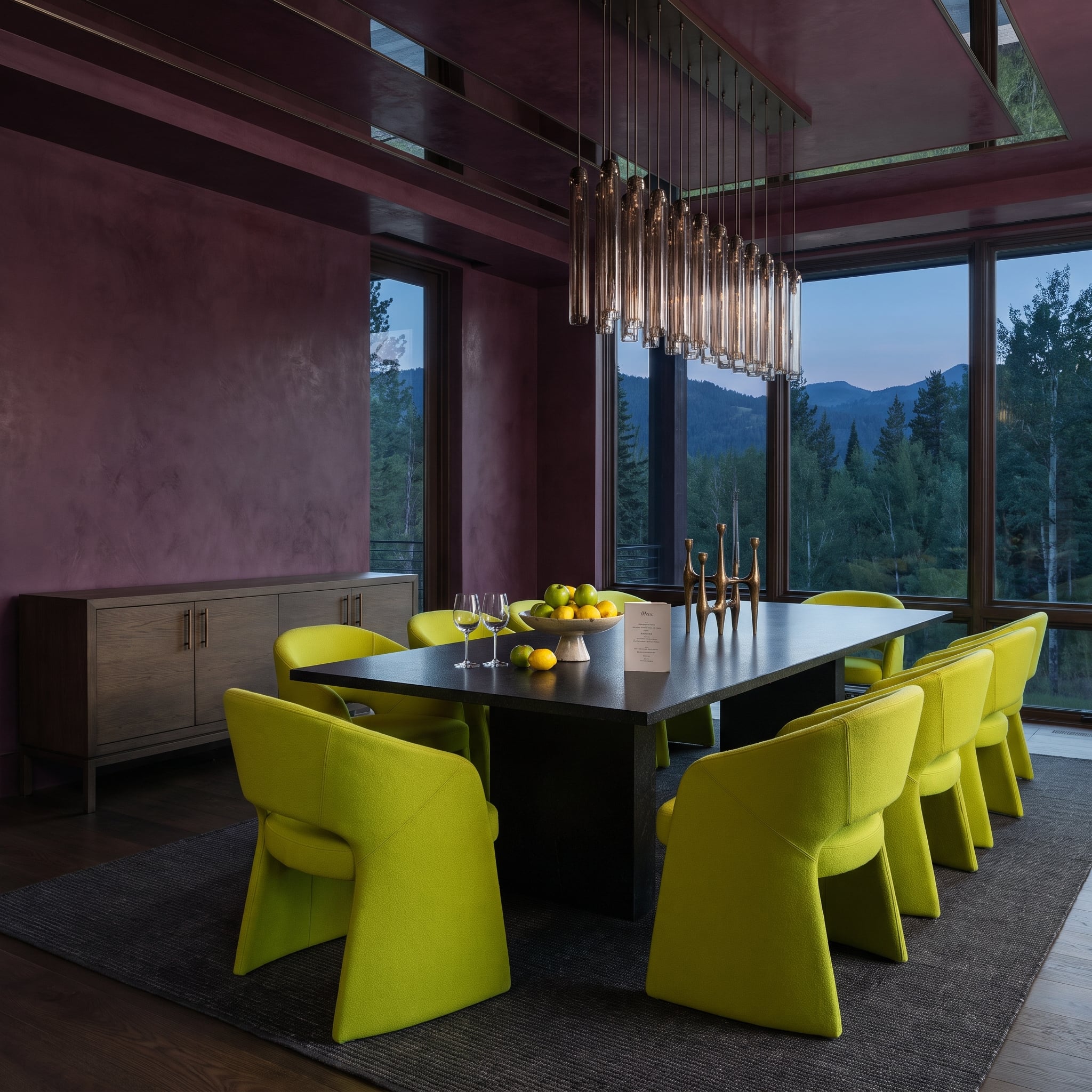
Plum Venetian plaster travels from the walls across the ceiling and soffits, surrounding the dining area in a continuous dark envelope. Against it, lime upholstered chairs acquire an extraordinary intensity. The yellow-green fabric appears brighter because almost everything around it is so deeply colored.
A black stone dining table, supported by substantial slab legs, anchors the composition. Smoked-glass pendants introduce warm points of light above the dark surface, while large windows open the room toward the landscape. The chairs have straightforward silhouettes, leaving the extraordinary color combination to do the heavy lifting.
22. A Carved Acid-Yellow Sideboard Meets Burgundy Leather and Live-Edge Walnut
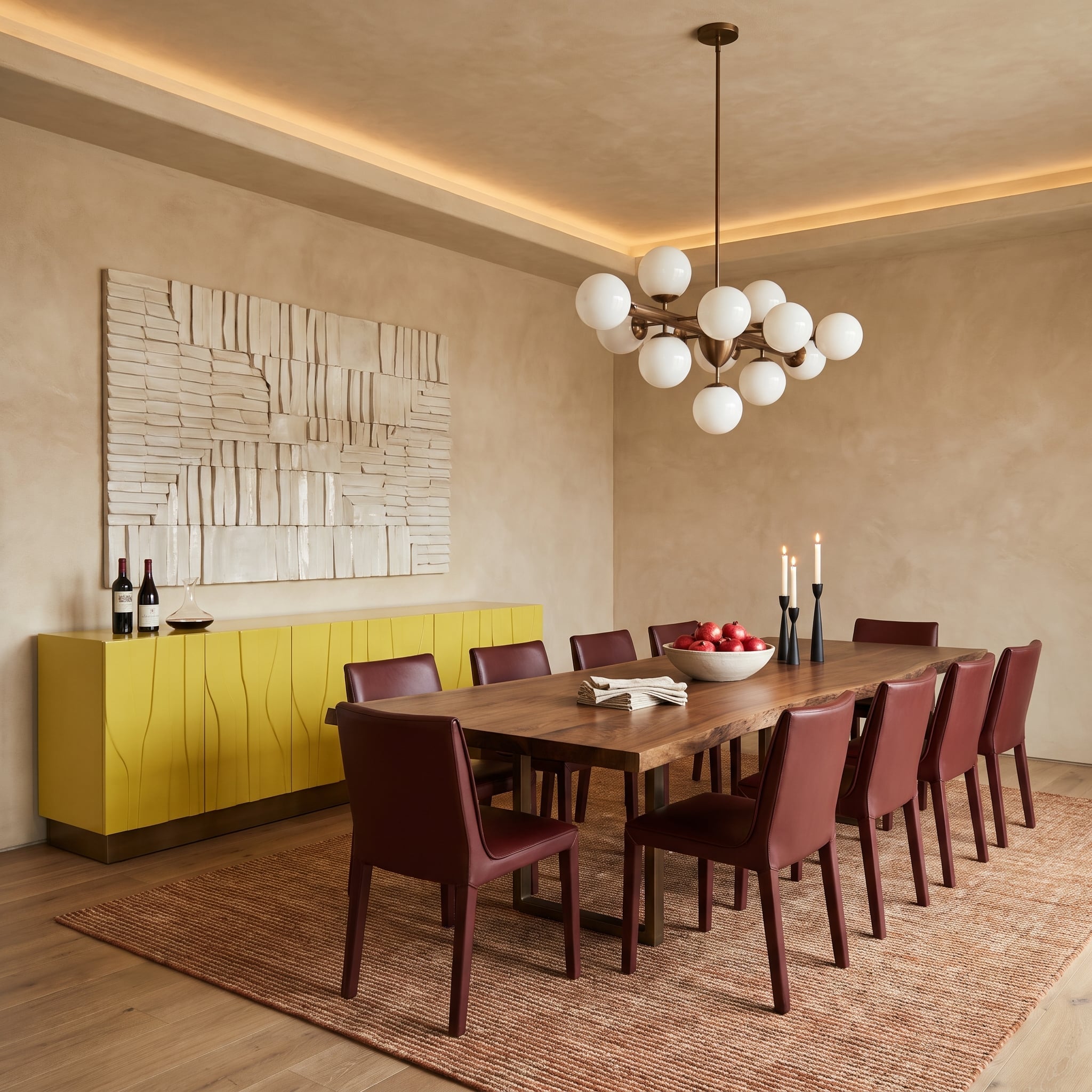
Deep, undulating grooves run down the doors of an acid-yellow sideboard, giving its glossy surface an unusually tactile quality. A bronze plinth lifts the cabinet above the oak floor, emphasizing the difference between its brilliant lacquer and the surrounding natural materials.
Across the room, burgundy leather chairs gather around a live-edge walnut table. Pomegranates and red wine repeat their dark red color in the tabletop arrangement. The sideboard’s carved waves introduce movement into a room otherwise organized around substantial horizontal surfaces. Even the cabinet’s shadow lines become part of the decoration.
21. Acid-Green Velvet Loungers Refuse to Disappear Into a Charcoal Screening Room
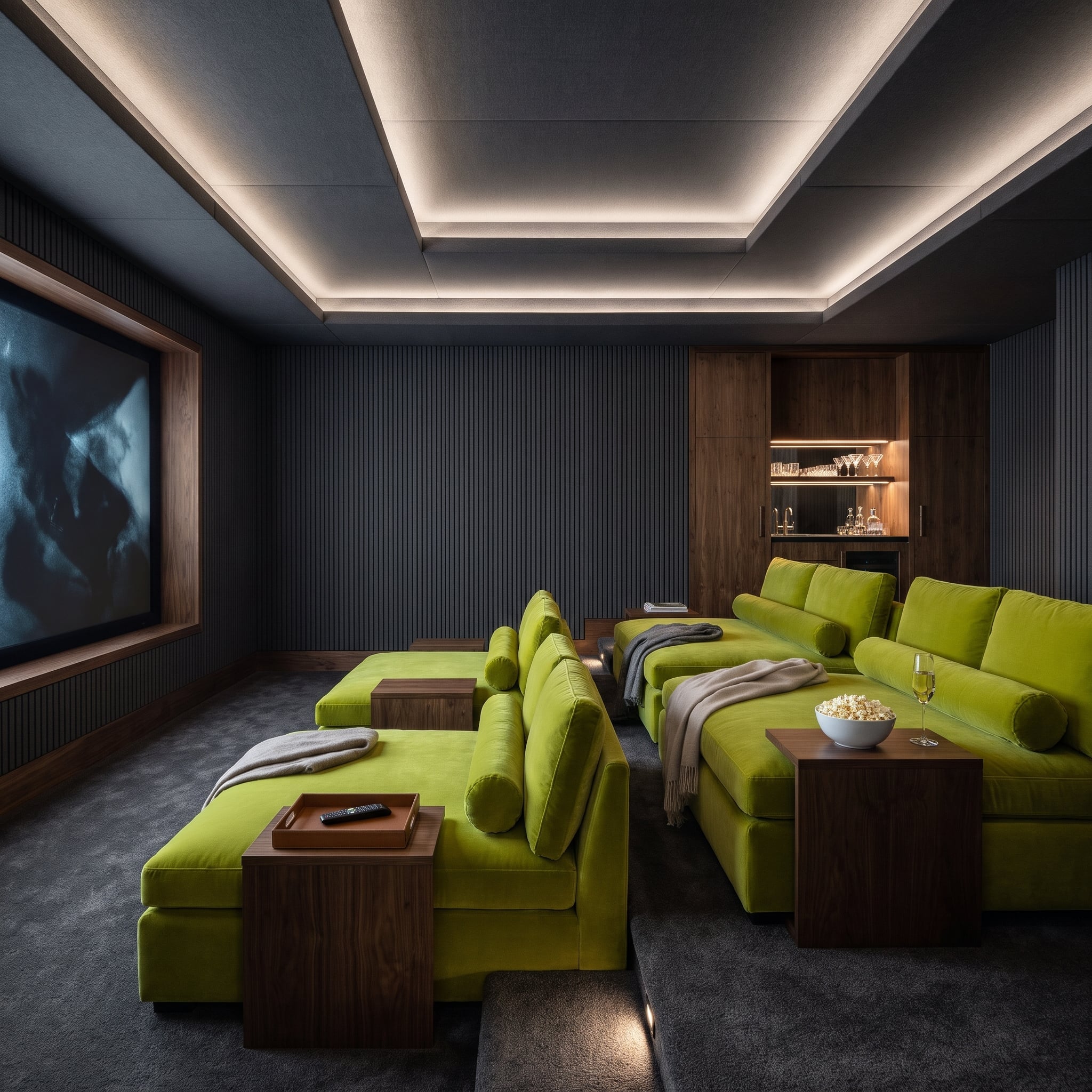
Charcoal acoustic slats, dark carpet, and a gray fabric ceiling surround this screening room with light-absorbing surfaces. Against them, acid-green velvet loungers command attention even in subdued illumination. Their rounded upholstered forms contrast with the strict geometry of the wall treatments.
Walnut frames the screen, wraps the rear bar, and appears again in the small tables between the seats. Concealed lighting in ceiling coves, shelves, and stair risers supplies a series of discreet illuminated edges. Raised seating tiers establish the theater arrangement, while the green velvet gives the room an identity that extends well beyond the screen.
20. Chartreuse Shelves Get an Unexpected Companion in a Cognac Leather Ceiling
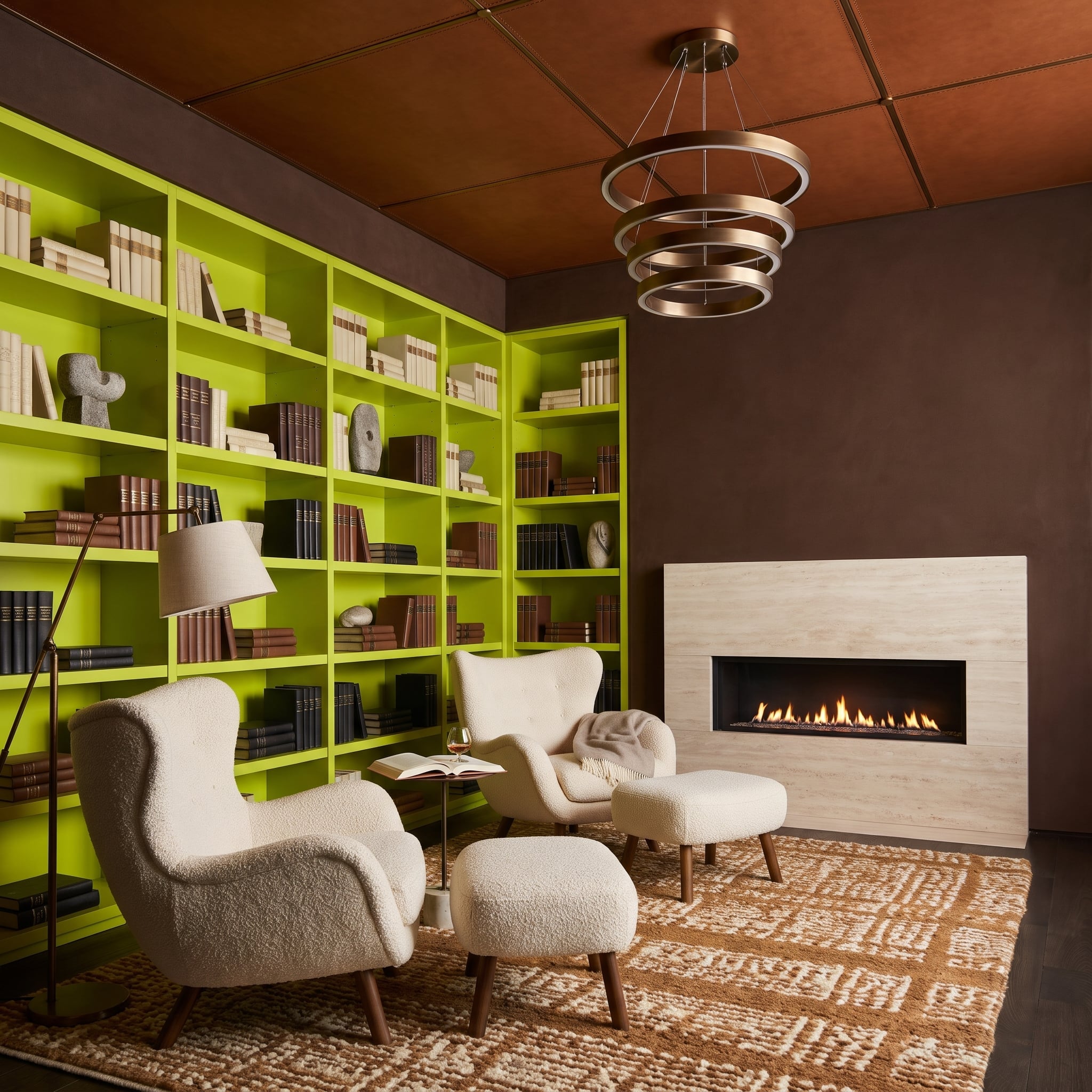
Stitched cognac leather panels cover the ceiling, bringing an unusually rich material to a surface more often finished in plaster or timber. Below, chartreuse shelving cuts sharply across brown walls and a rug woven with similarly warm tones.
Books with cream, chocolate, and black bindings create a relatively restrained display within the bright shelving. A travertine fireplace surround echoes the pale bouclé wingback chairs, while bronze rings on the chandelier catch highlights from the leather overhead. The combination of supple upholstery, rigid shelving, and polished stone makes the library feel richly layered without resorting to elaborate ornament.
19. A Chartreuse Doorway Frames a Limestone Bathroom Like a Painting
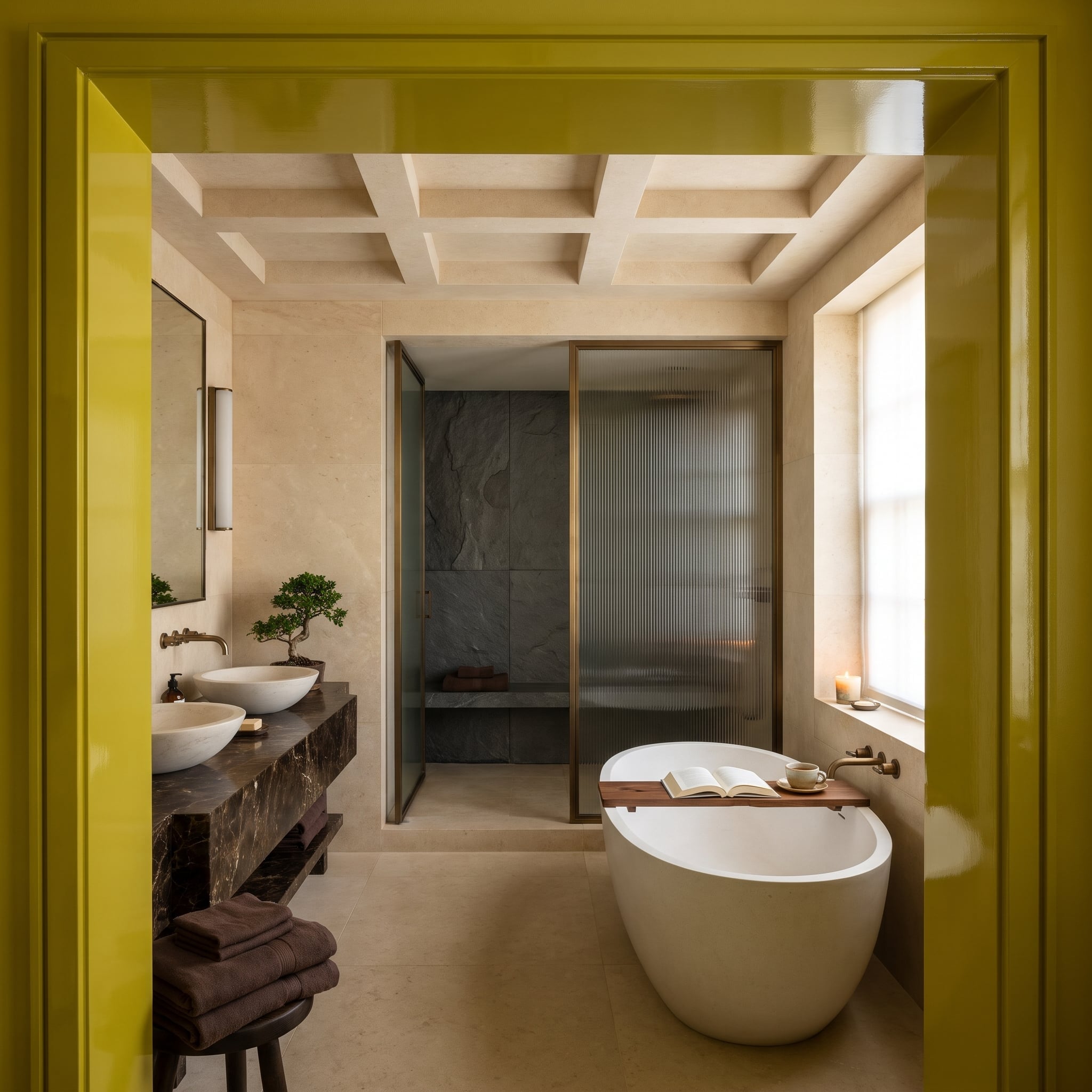
A deep chartreuse lacquered doorway frames the view into a pale limestone bathroom, turning the threshold into a vivid architectural border. The bright casing makes the stone beyond appear almost monochromatic, as though the room were displayed inside an enormous picture frame.
A stone-coffered ceiling adds an unexpected sense of weight overhead, while bronze framing on the reeded shower glass contributes a warmer metallic detail. The deep doorway reveal emphasizes the thickness of the wall. Color becomes part of the transition between rooms rather than something applied to the bathroom’s interior surfaces.
18. A Clover-Shaped Chartreuse Table Interrupts a Wine-Velvet Lounge
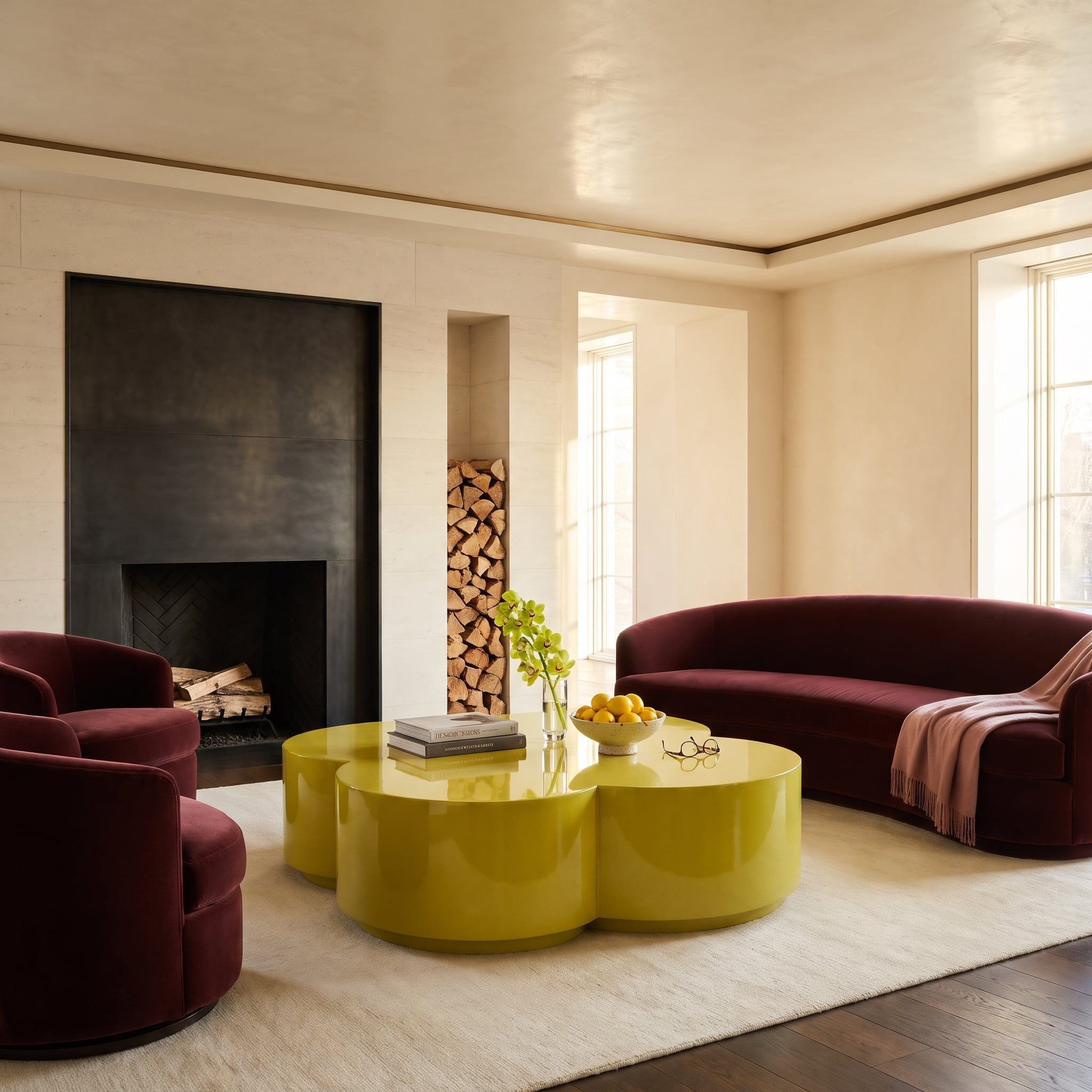
A low coffee table shaped like an oversized clover introduces a glossy yellow-green surface into a room furnished almost entirely in darker tones. Wine-colored velvet covers the curved sofa and swivel chairs, while a blackened steel fireplace provides a sharply contrasting backdrop.
The table’s rounded lobes suit the loose circular seating arrangement, avoiding hard corners between the chairs. Lemons and green cymbidium orchids echo its color in smaller, more organic forms. A travertine wall and adjacent log niche add pale stone and rough timber. The lacquer catches the light while the velvet absorbs it, making the little table appear even more vivid.
17. Chartreuse Velvet Takes Over a Walnut-Paneled Conversation Pit
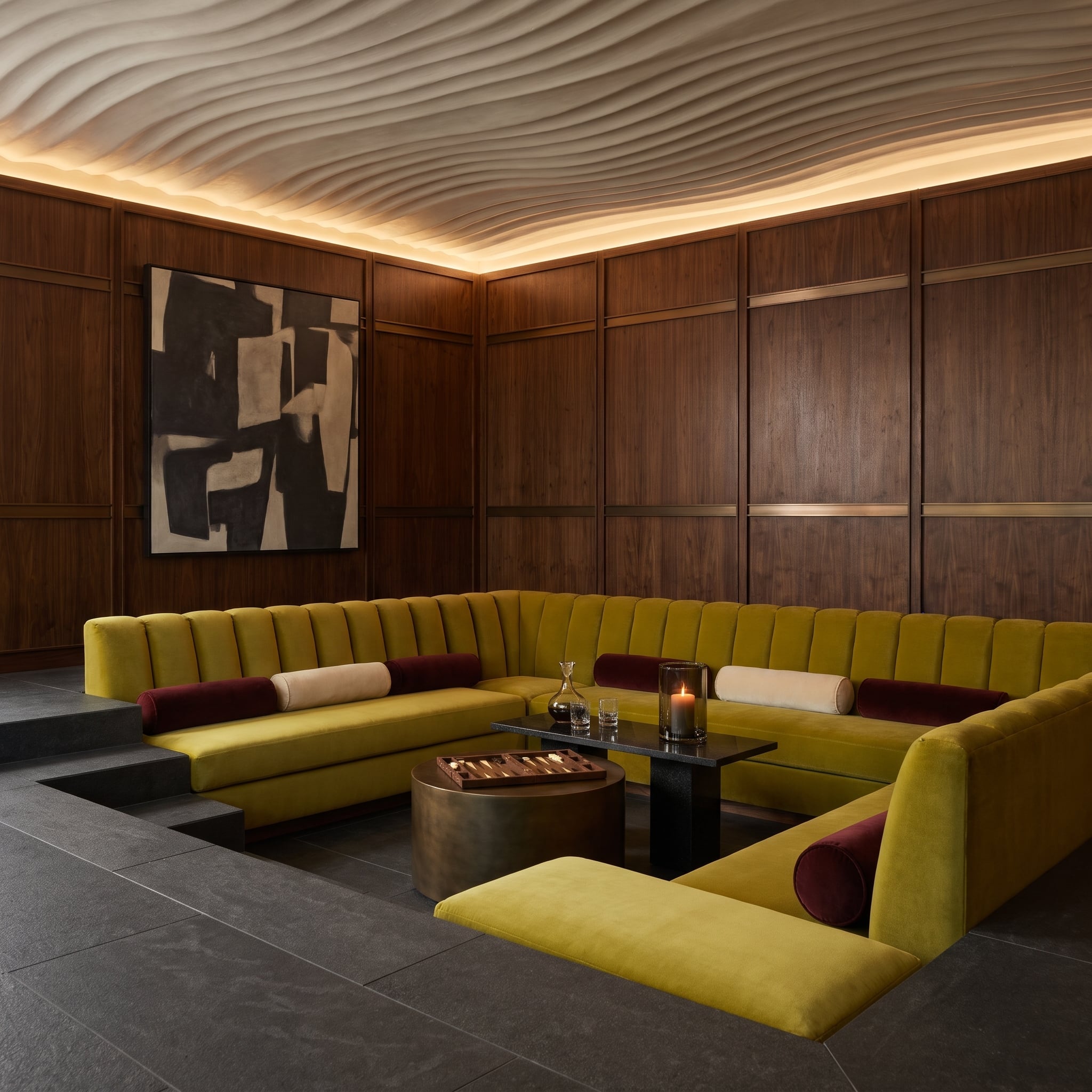
Chartreuse velvet doesn’t usually get invited into a room this buttoned-up. Here it occupies an entire sunken conversation pit, its channel-tufted ribs echoing the vertical grain of the walnut panels behind it. Bronze strips cross the timber at two heights, giving the sharp green a warm metallic framework.
Burgundy bolsters interrupt the long upholstered curves, introducing a darker color that belongs naturally beside the walnut. Above, a sculpted ceiling ripples beneath perimeter lighting, while dark stone steps mark the descent into the seating area. The contrast is extravagant without becoming chaotic: a bright green interior nested inside an exceptionally disciplined architectural shell.
16. A Chartreuse Jewelry Island Glows Beneath a Copper Mosaic Ceiling
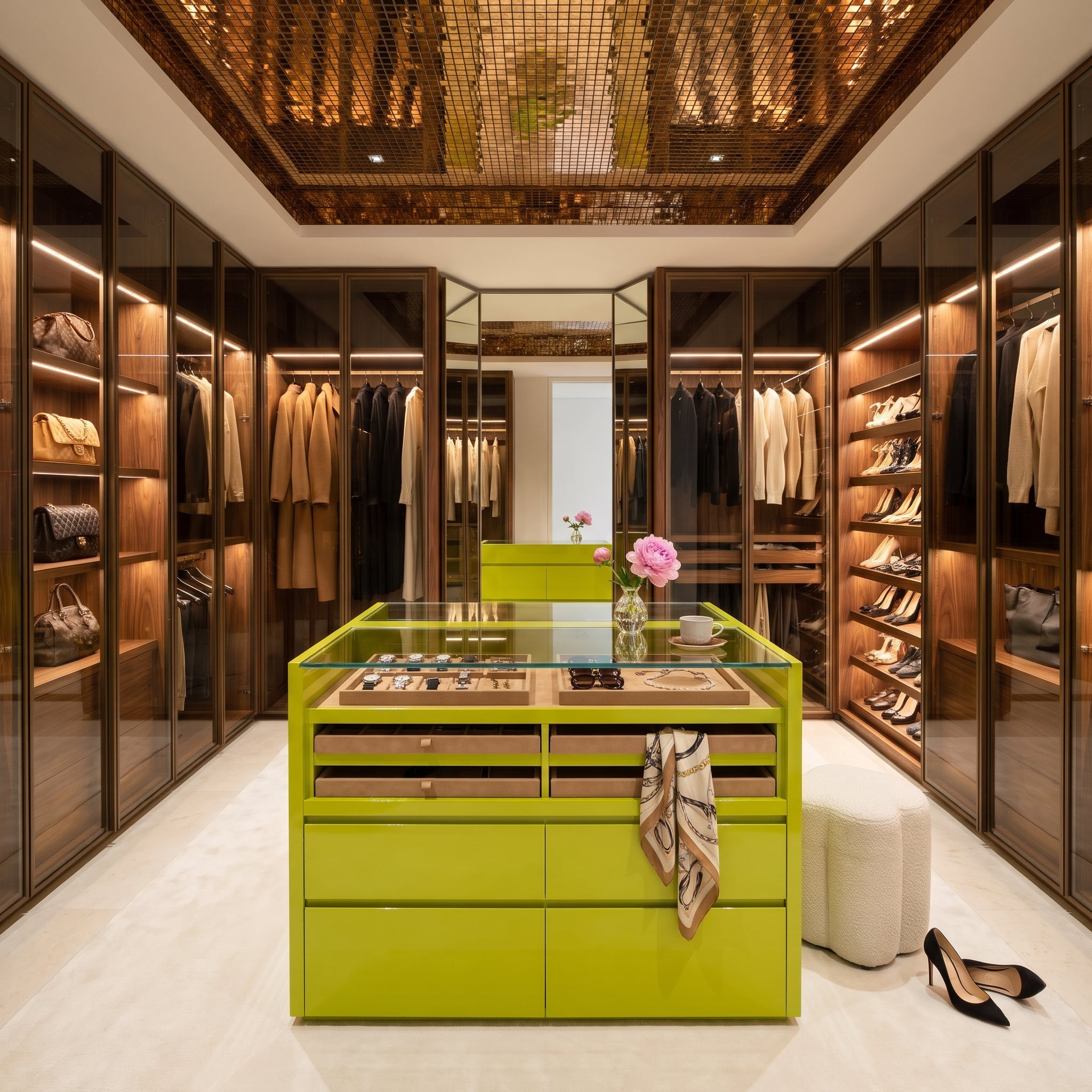
Smoked-glass wardrobes in bronze frames reveal walnut shelving and neatly arranged clothing without exposing every detail at once. At the center, a chartreuse island introduces a far brighter finish. Its glass-topped drawer displays watches and sunglasses on suede-lined trays, combining storage with a boutique-like presentation.
A copper mosaic ceiling spreads warm reflections overhead. Tan suede, camel-colored coats, and leather handbags establish a family of softer brown tones around the central island. The glass, metal, and lacquer each reflect light differently, giving the room a jewel-box quality without sacrificing the warmth of its walnut cabinetry.
15. Acid-Green Tile Brings a Black-and-Steel Kitchen to Life
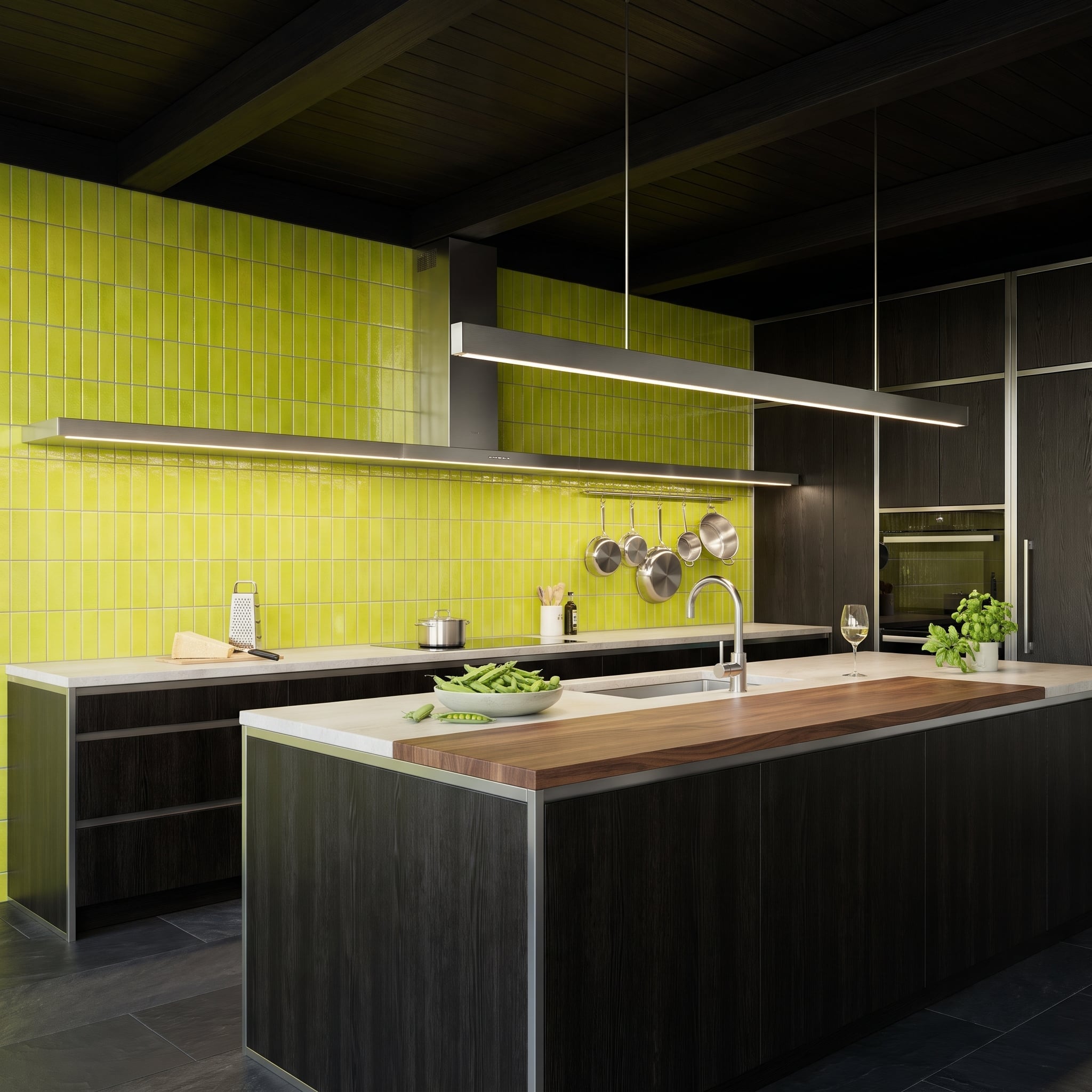
Vertically stacked acid-green tile gives the backsplash an almost liquid intensity, its glossy surface catching light from a long steel fixture above the cooking area. A second linear light hangs over the island, establishing a parallel rhythm across the kitchen.
Ebonized oak cabinetry and a dark stone countertop bring an industrial severity to the composition. A walnut section set flush into the island supplies a warmer working surface, while stainless trim connects the fixtures and faucet. The bright tile interrupts all that disciplined black geometry with hundreds of small reflective surfaces, each catching the light at a slightly different angle.
14. Lime Cubbies Turn a Plaster Wall Into a Graphic Composition
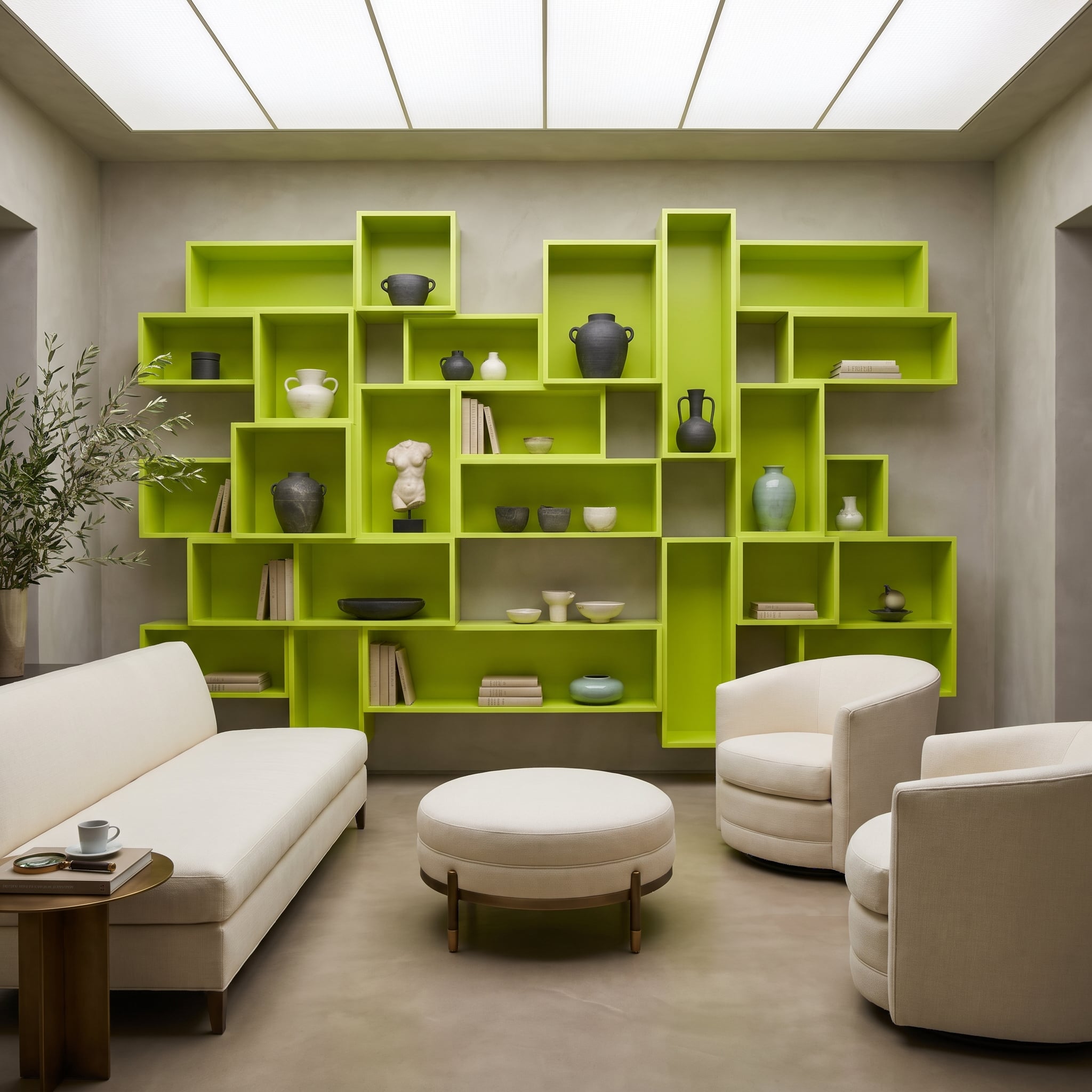
Staggered lime-green cubbies interrupt a pale plaster wall, their rectangular openings establishing a lively arrangement of color and shadow. Charcoal pottery occupies several compartments, its dark silhouettes becoming especially pronounced against the citrus-colored interiors.
Cream upholstery supplies a softer foreground. The design relies on relatively simple geometry: boxes, openings, and carefully spaced objects. Their asymmetrical placement prevents the display from becoming a conventional shelving grid, while the contrast between lime and charcoal gives even modest ceramic pieces considerable presence.
13. Acid Olive Covers a Pantry Wall From Floor to Ceiling
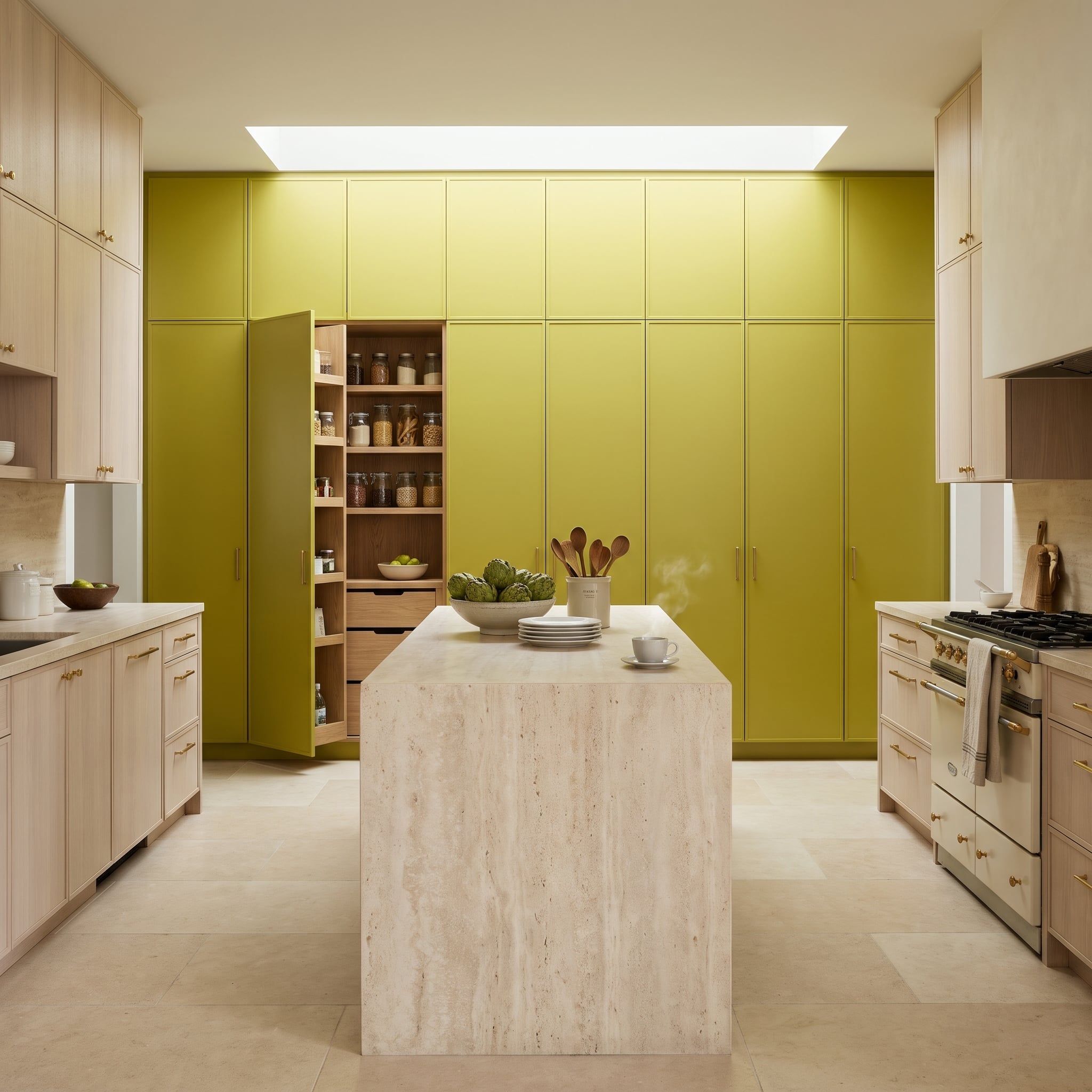
Acid-olive cabinetry occupies the entire back wall beneath a generous skylight. The strong green finish gives what might otherwise be an ordinary storage elevation the presence of a major architectural feature. Behind one of the tall doors, oak pull-out shelves reveal a pantry filled with glass storage jars.
Bleached oak covers the adjoining walls, while a pale travertine island extends toward the limestone floor with waterfall ends. Slim brass handles provide understated metallic accents. The cabinetry’s uninterrupted color gives the wall an almost monolithic appearance, even as its interior accommodates the practical business of kitchen storage.
12. A Mustard-Velvet Window Seat Makes Plum Plaster Look Richer
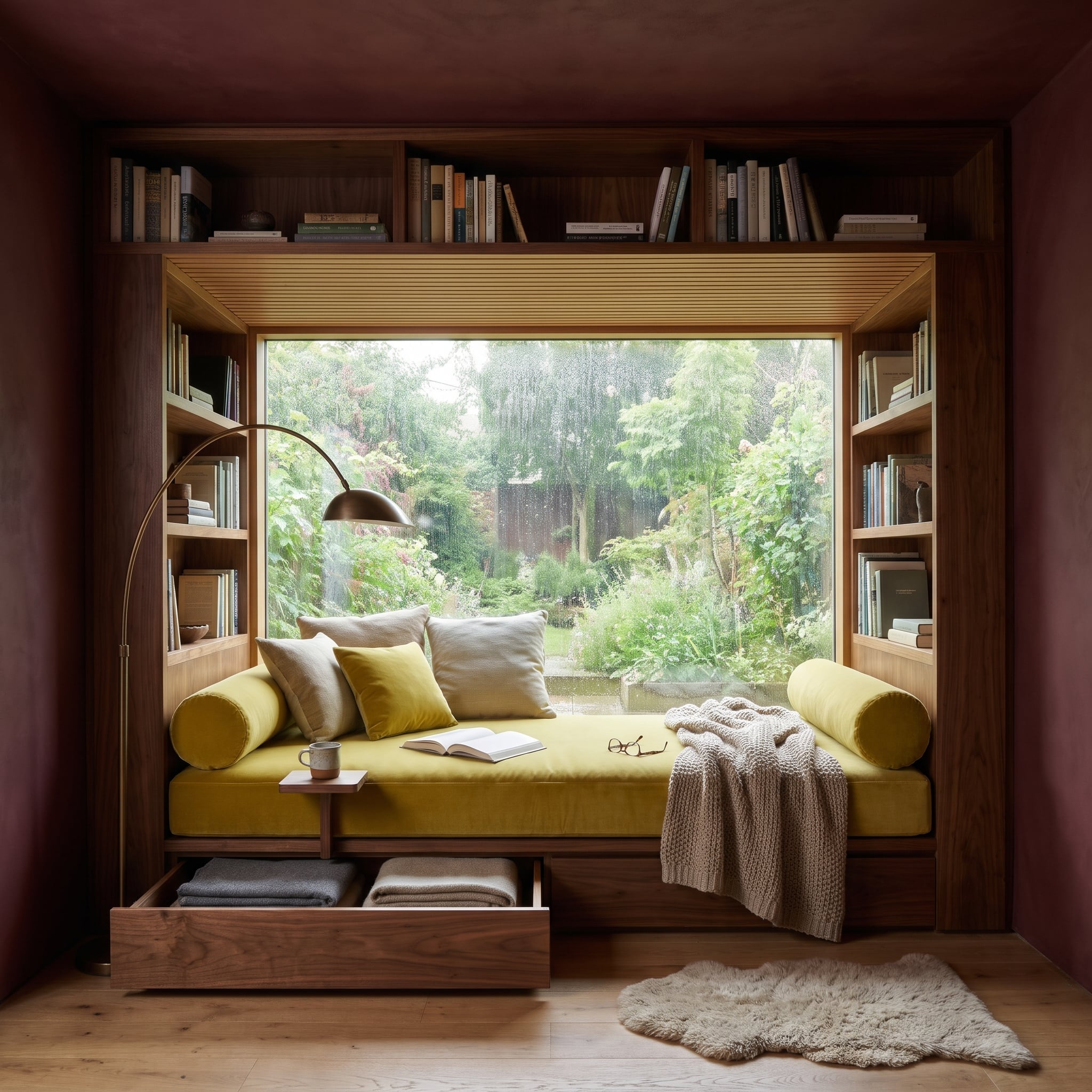
Plum plaster extends across the walls and ceiling, creating a dark enclosure around a deeply recessed window seat. Mustard-yellow velvet covers the mattress and bolsters, concentrating a warm flash of color precisely where daylight enters the room.
A pale slatted soffit frames the window, while a projecting walnut tray provides a convenient surface beside the cushion. A brass arc lamp adds focused illumination, and a drawer beneath the seat accommodates additional storage. The deep plum surroundings give the golden upholstery greater intensity, turning a compact architectural recess into the room’s most inviting destination.
11. A Fluted Acid-Olive Bar Surrounds a Wall of Glowing Onyx
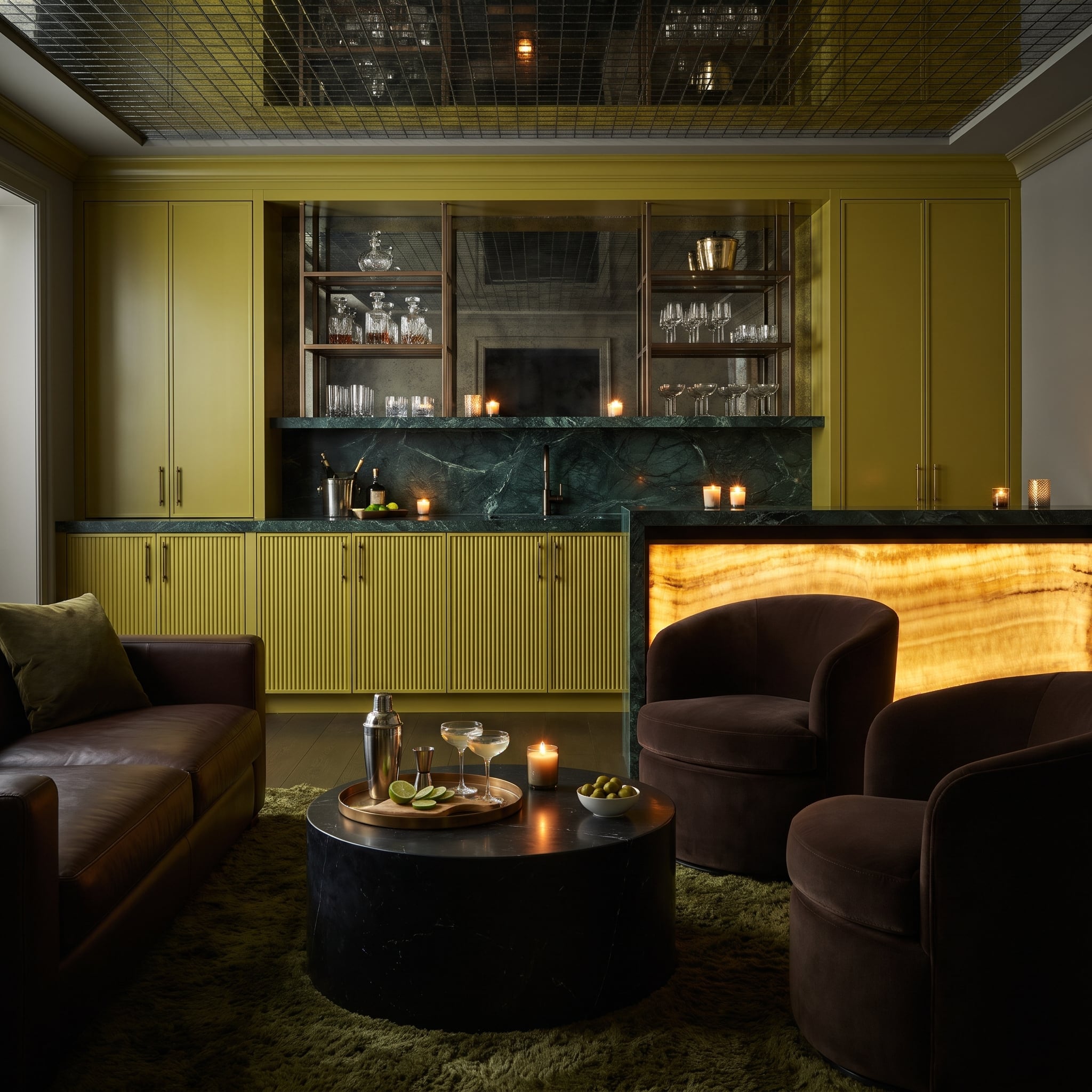
Backlit onyx turns the central bar feature into a glowing expanse of honey-colored stone. Around it, matte acid-olive cabinetry introduces a cooler, more opaque green. The lower doors are fluted, their grooves producing alternating highlights and shadows across the painted surface.
A dark green marble countertop adds another variation to the palette, while chocolate velvet swivel chairs bring in a deep brown accent. Flat upper doors contrast with the textured lower cabinetry. The real intrigue lies in the meeting of materials: translucent golden stone, deeply veined marble, and painted fluting, each with its own response to the light.
10. Chartreuse Velvet Climbs an Entire Bedroom Wall Against Cocoa Plaster
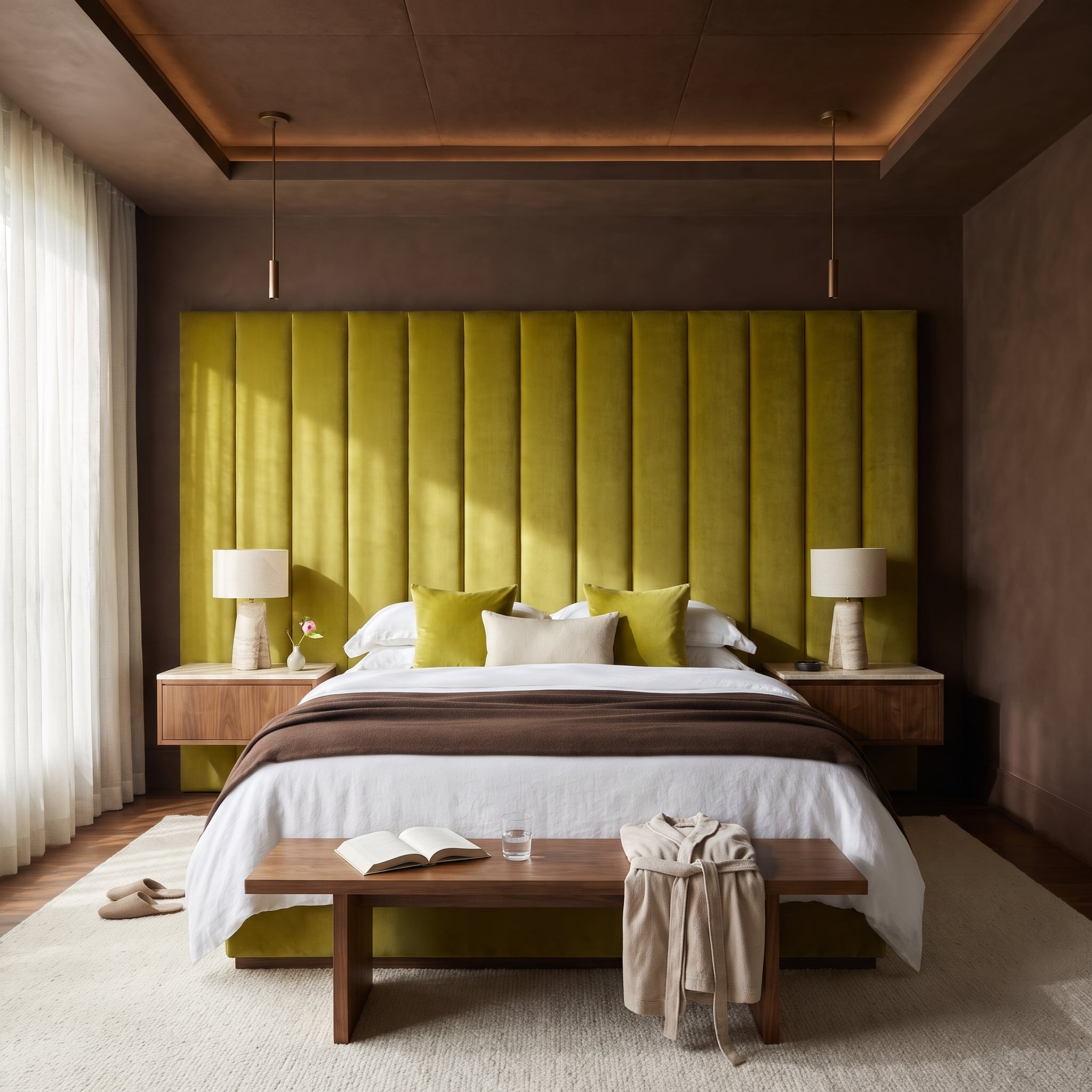
Chartreuse velvet rises behind the bed in tall upholstered channels, stopping beneath a concealed ceiling cove. The same fabric continues around the bed base, connecting the furniture with the architectural treatment above it. Cocoa-colored plaster covers the remaining walls and ceiling.
Floating walnut nightstands with travertine tops maintain a restrained horizontal line on either side of the bed. Daylight catches the velvet pile, producing subtle variations in tone across its vertical ribs. The upholstered wall has the scale of an architectural installation, although its softness keeps the room from feeling overly monumental.
9. A Sculptural Olive-Gold Banquette Wraps Around Violet-Veined Marble
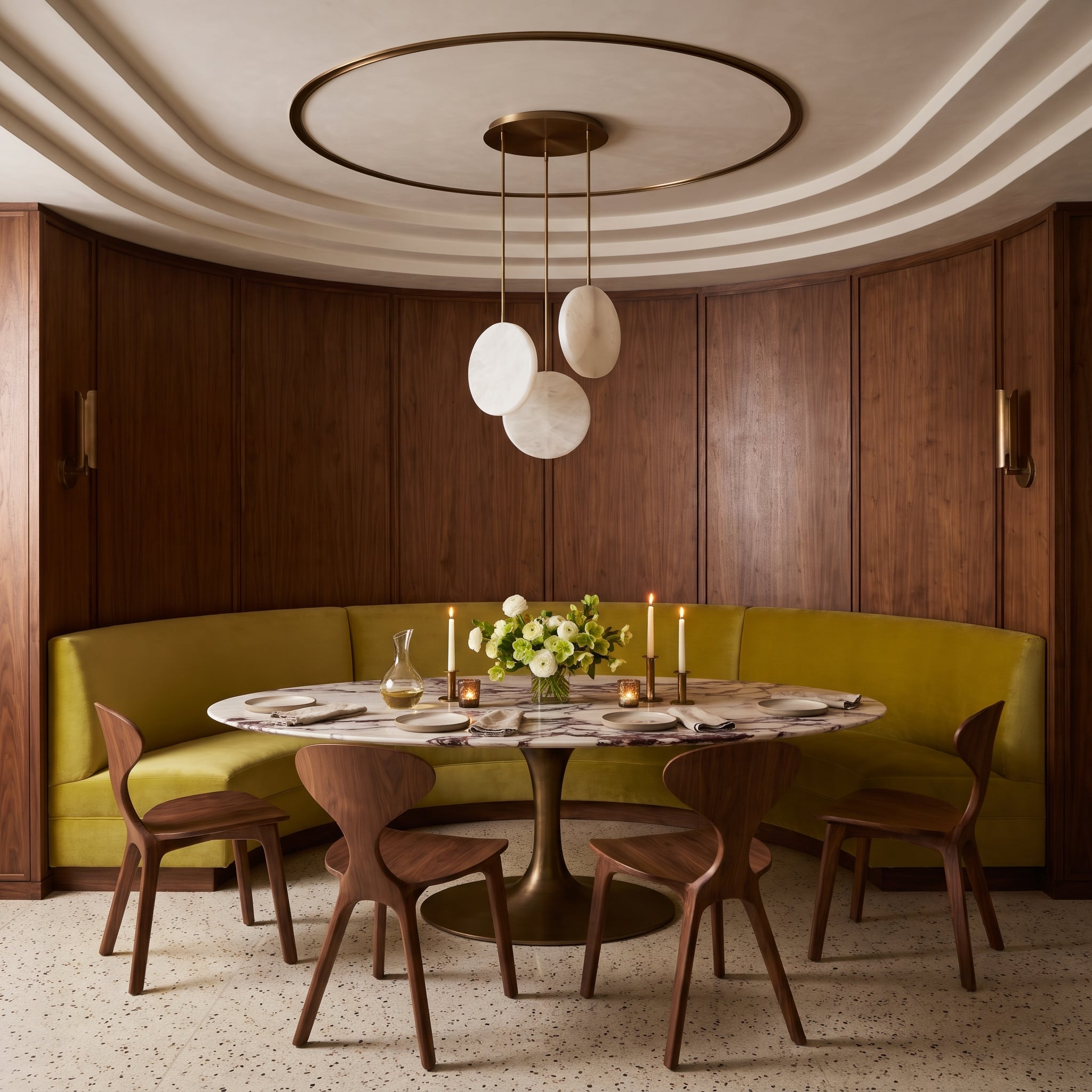
Curved walnut panels embrace an olive-gold velvet banquette, giving the seating a distinctly architectural form. An oval marble table introduces delicate violet veining, an unexpected cooler accent against the warm wood and yellow-green upholstery.
The walnut finish continues into the surrounding paneling, making the seating appear integrated with the room rather than placed against it. Bronze details on the table base, sconces, and ceiling ring pick up the velvet’s golden undertones. Overhead, rippled plaster introduces another broad curve. The faint violet in the marble is the quiet surprise, a cool interruption among all those warm, enveloping materials.
8. Acid-Yellow Wardrobes Make a Cream Bedroom Look Almost Weightless
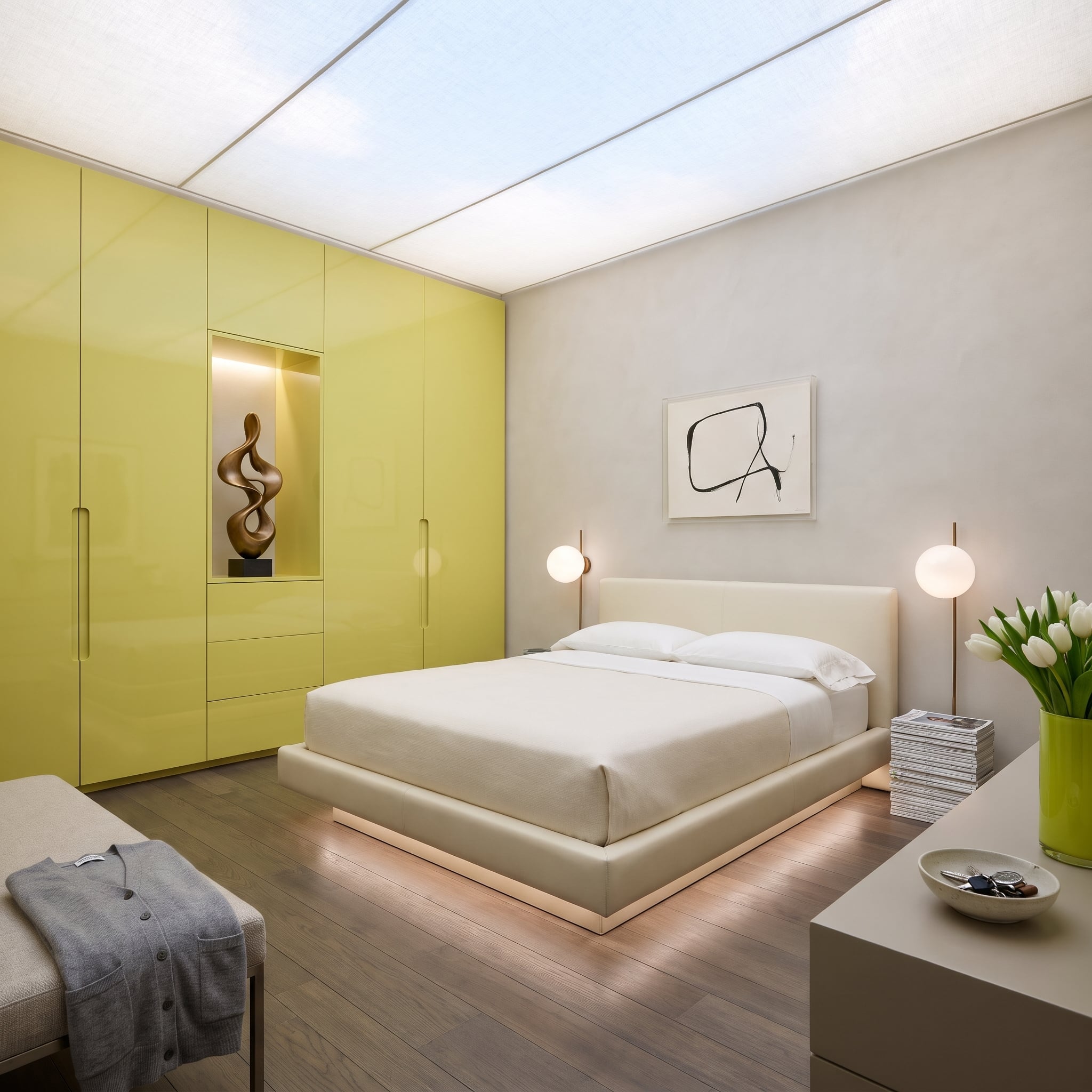
Glossy chartreuse covers the wardrobe wall, with routed finger pulls preserving the uninterrupted lacquered surface. A recessed niche displays a bronze sculpture against a dark background, adding a smaller focal point beside the broad expanse of yellow-green cabinetry.
The cream leather bed appears to float above a concealed band of light, its pale upholstery contrasting with the saturated storage wall. A softly illuminated ceiling provides a broad ambient glow, while globe lamps introduce smaller pools of light. Brilliant, solid-looking cabinetry and a pale bed seemingly lifted from the floor create a striking play between visual weight and apparent lightness.
7. An Acid-Olive Sectional Follows the Curve of a Walnut Ceiling
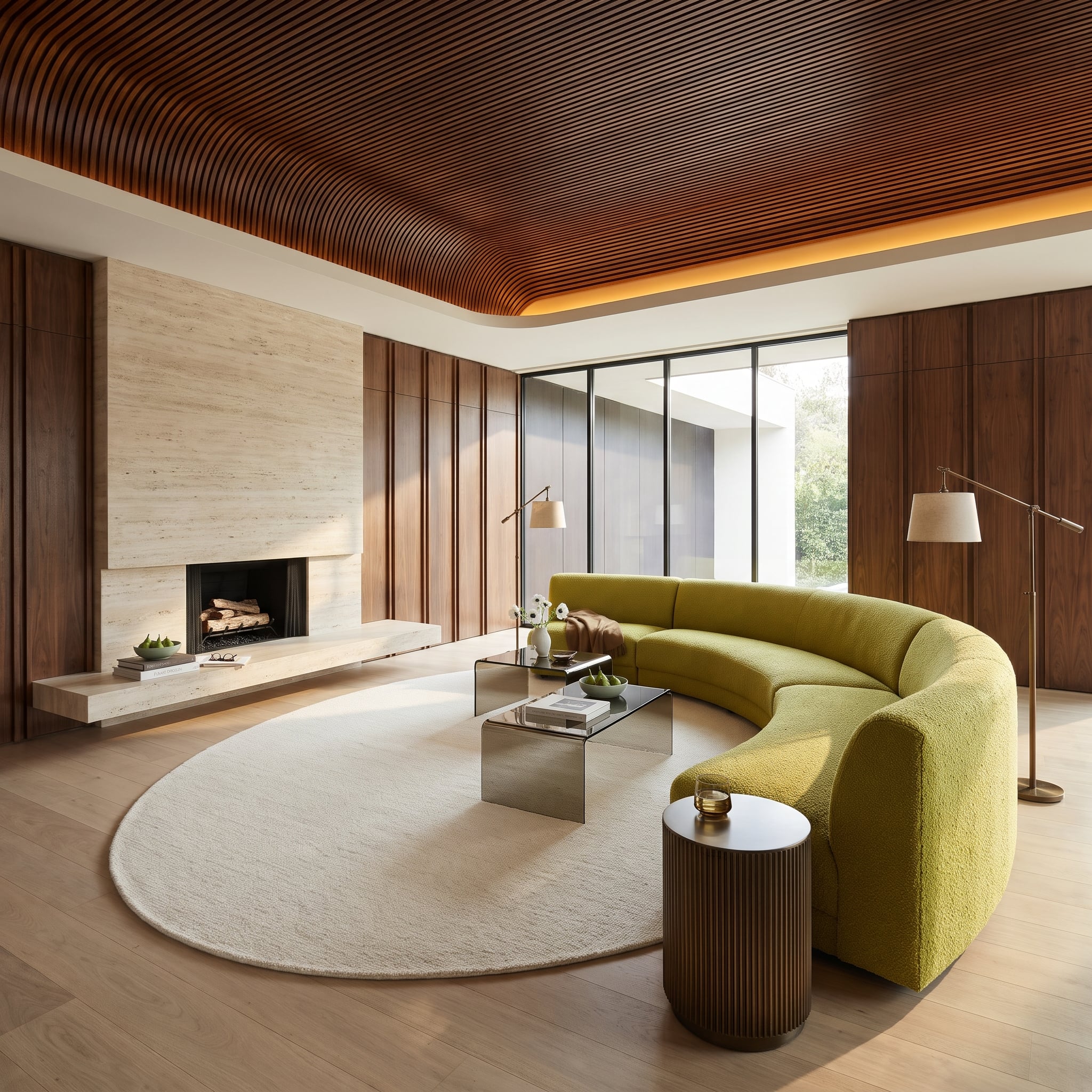
Walnut ceiling slats sweep downward toward an illuminated cove, establishing a broad architectural curve above the seating area. Beneath them, an acid-olive bouclé sectional follows a similar arc, its rounded silhouette reinforced by an oval wool rug.
Travertine surrounds the fireplace, while walnut paneling extends across the adjoining walls. The green upholstery supplies a substantial area of color, although the room’s most distinctive feature is the way its geometry repeats from ceiling to furniture. Each curve reinforces the next, giving the seating arrangement an unusually strong relationship with the architecture above it.
6. Rounded Acid-Yellow Island Ends Give Green Marble an Unexpected Partner
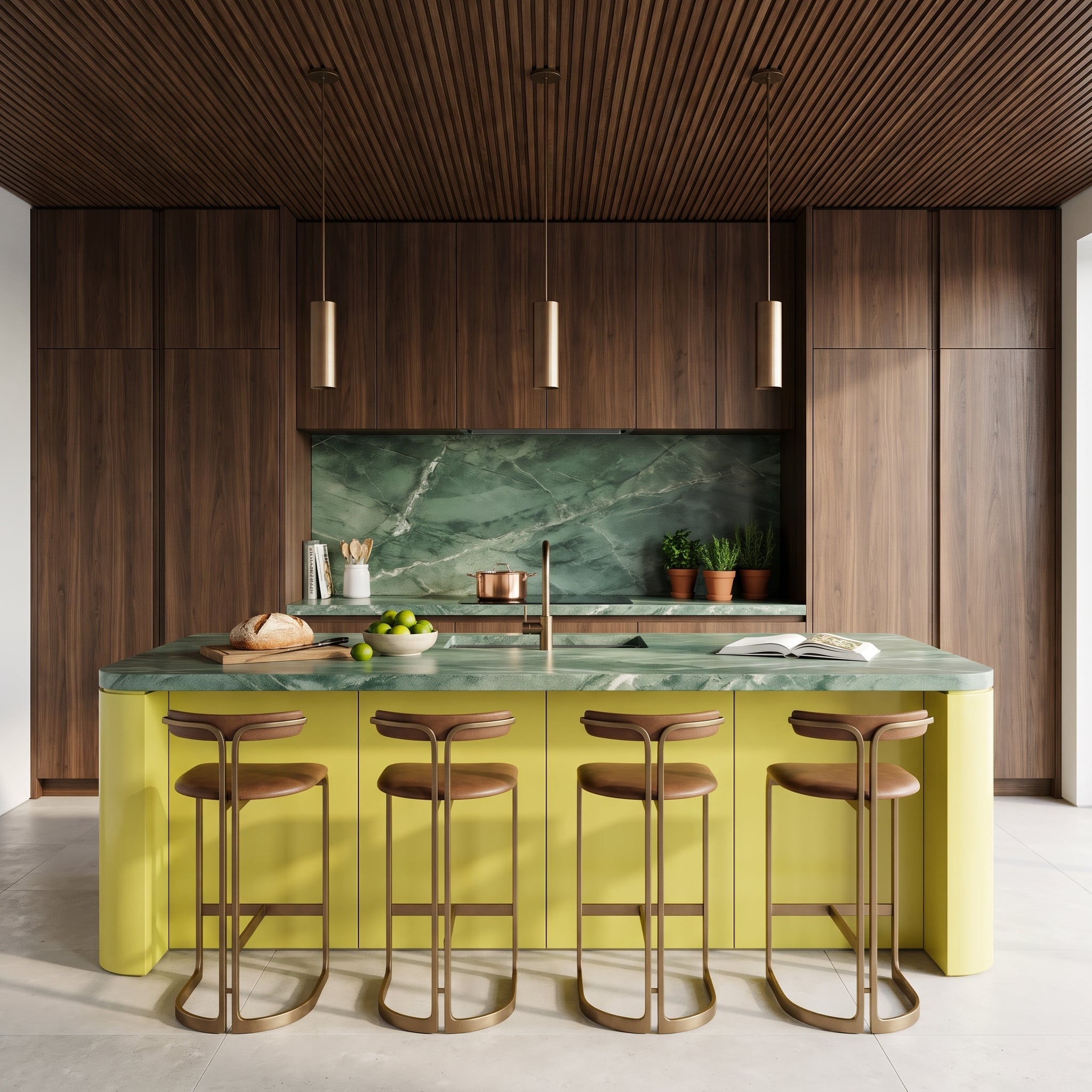
Rounded acid-yellow supports frame the ends of a green marble kitchen island, their curved forms echoing the softened profile of the stone countertop. The glossy yellow-green surfaces bring a playful, almost sculptural character to an otherwise substantial block of stone.
Walnut slats cross the ceiling and continue into flush cabinetry, establishing a strong timber framework around the colored island. Bronze cylindrical pendants and matching fixtures supply warm metallic highlights. Green marble and acid-yellow lacquer meet within the same architectural object, turning the island into a conversation between natural veining and saturated, perfectly smooth color.
5. Oxblood Lacquer Makes an Electric-Green Painting Look Even Brighter
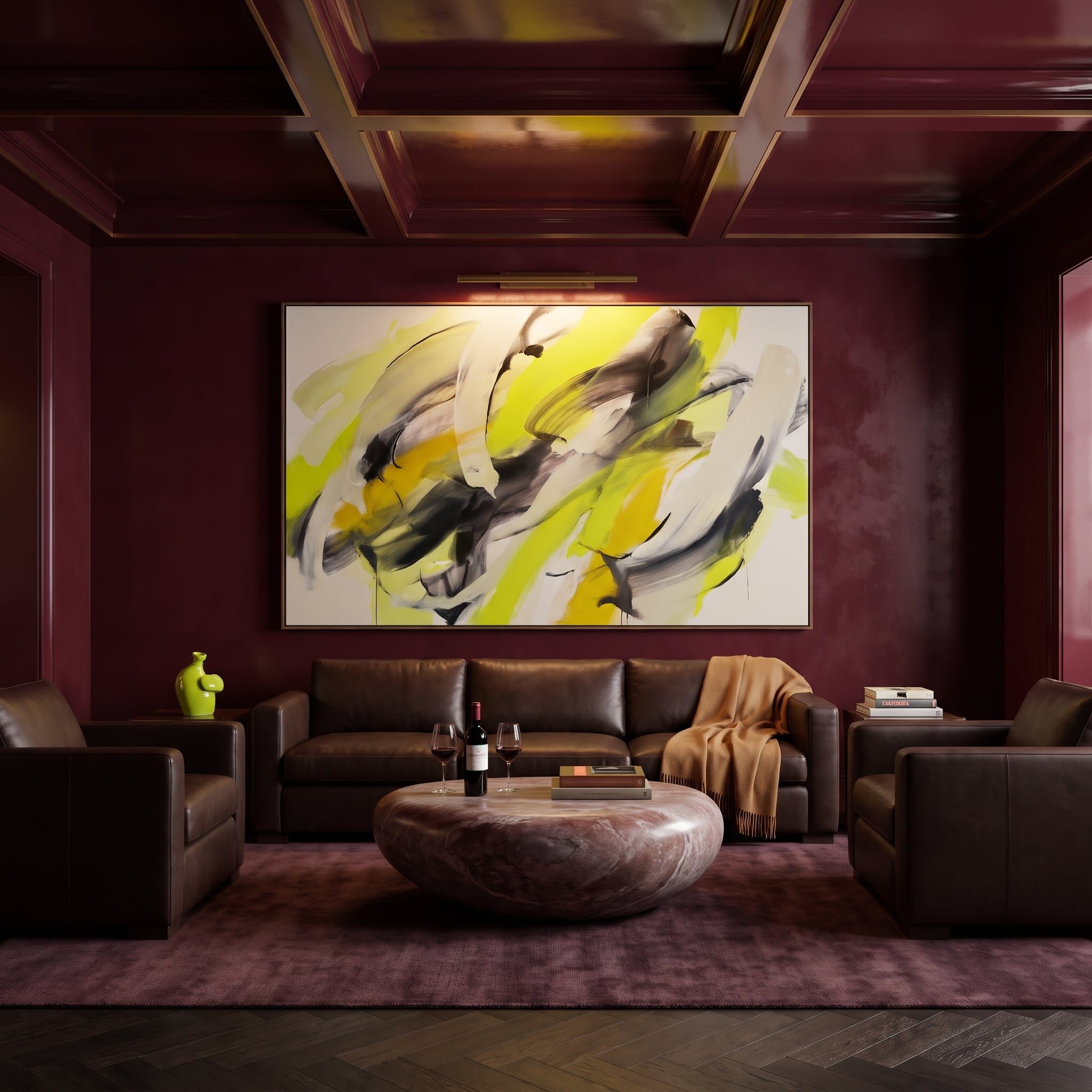
Oxblood covers the walls and climbs into a lacquered coffered ceiling, surrounding the room with a deep, glossy red-brown finish. Against that saturated backdrop, an abstract painting with electric-green passages becomes the obvious focal point. A brass picture light gives the artwork additional definition.
Brown leather club chairs and a pebble-shaped marble table keep the furnishings relatively subdued. A small lime-colored vase repeats the painting’s brightest note at a different scale. The green occupies very little physical space, yet its intensity changes the visual balance of the entire room. A small amount of color can have an outsized effect when its surroundings are this saturated.
4. An Acid-Green Room Divider Draws a Brilliant Line Between Living and Dining
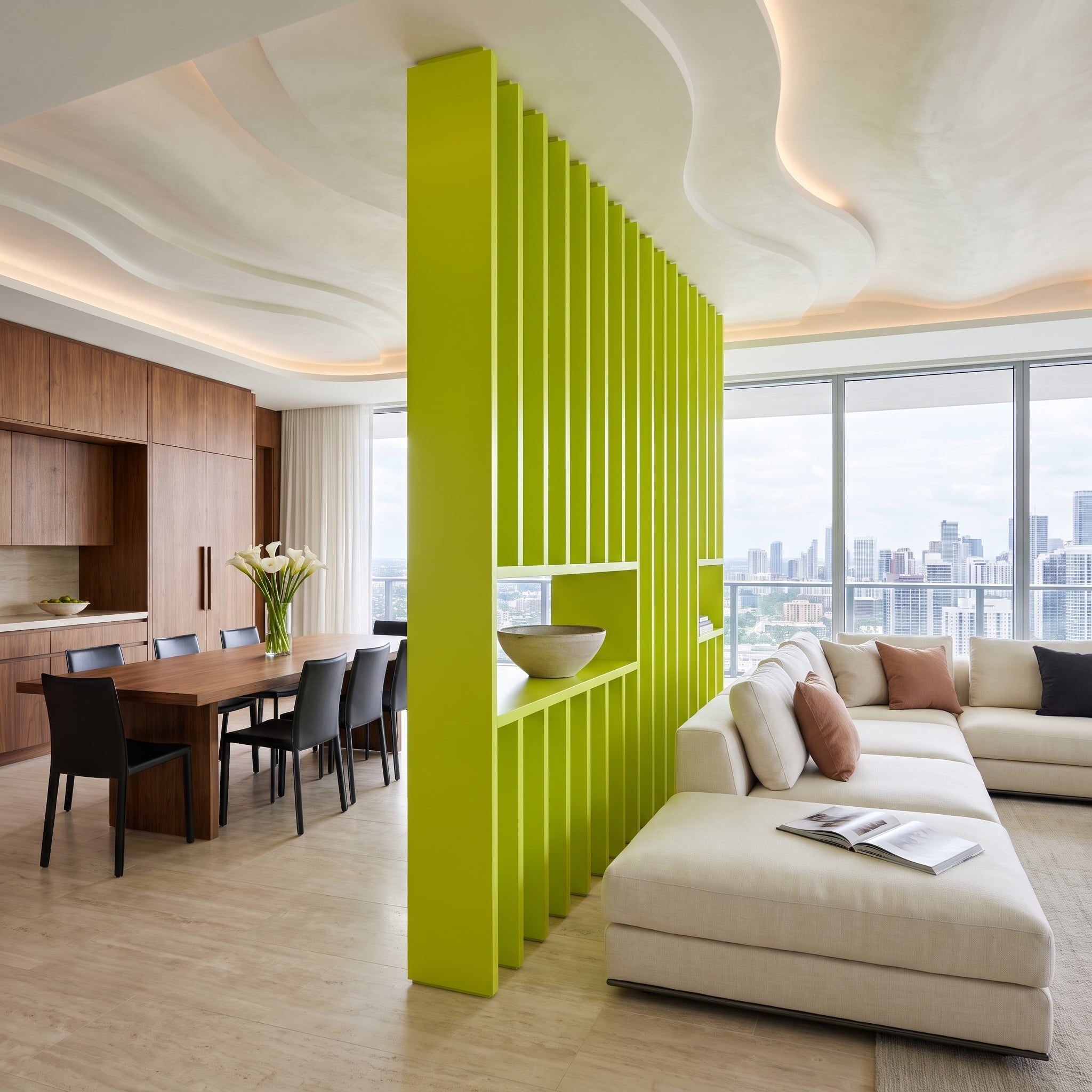
Acid-green lacquered fins rise from the travertine floor to the rippled plaster ceiling, forming a striking partial divider between living and dining. Their staggered depths allow views through the structure while establishing a clear architectural boundary.
Walnut cabinetry and black leather chairs occupy the dining side, while cream upholstery and expansive windows define the living area. An open shelf interrupts the green fins at the center, holding a single stone bowl. Above, the sculpted ceiling and concealed cove lighting continue across both spaces. The divider creates two distinct areas without sacrificing the light or openness that connects them.
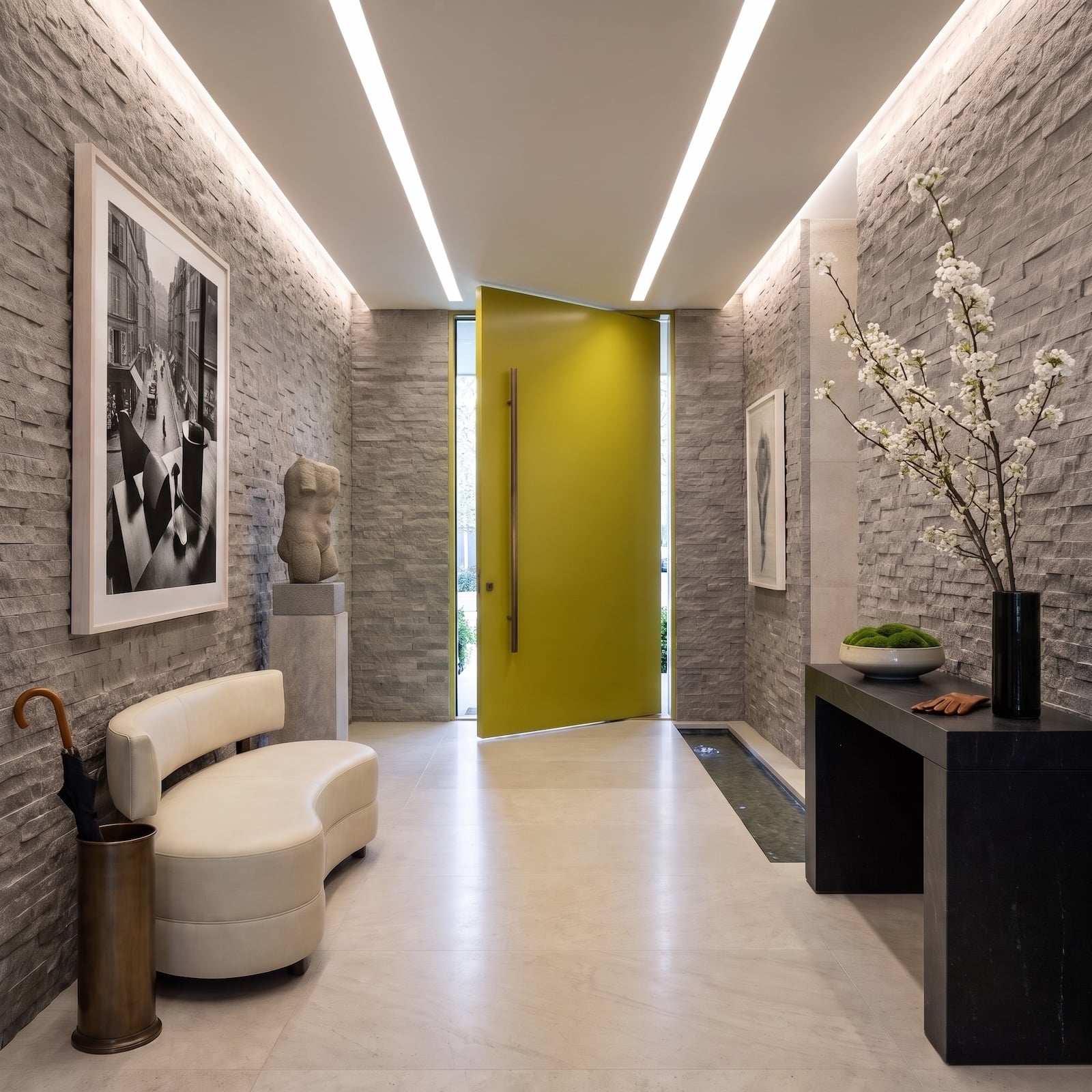
3. An Acid-Yellow Pivot Door Gives a Stone Entrance Its Most Unforgettable Detail
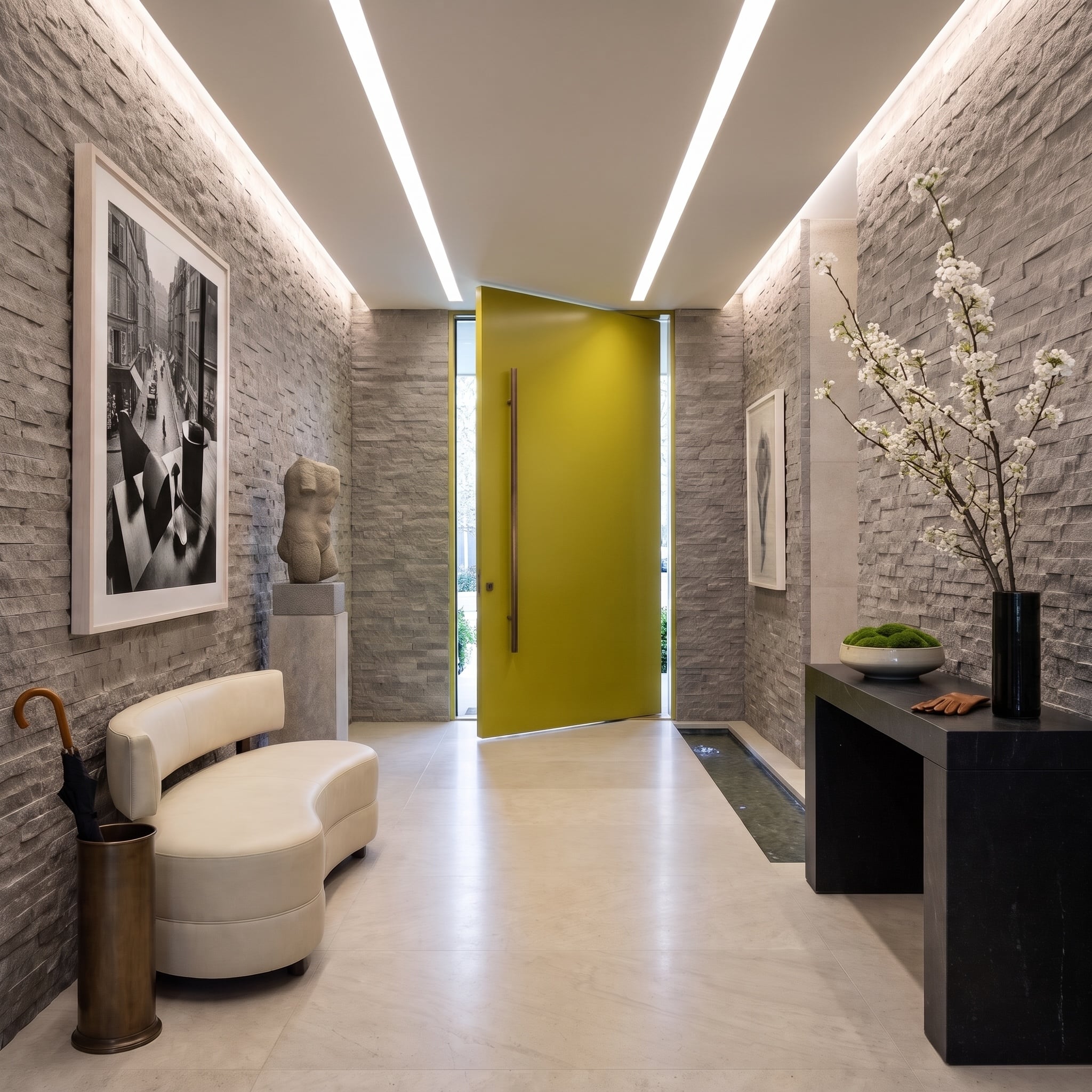
Split-face gray stone lines the entrance hall, its irregular surface picked out by concealed lighting along the ceiling edges. Against this rugged, nearly monochromatic backdrop stands a smooth acid-yellow pivot door with a long bronze pull. Rough stone and glossy lacquer could hardly make a more dramatic pair.
The offset pivot opens the doorway toward the garden, while a narrow water channel interrupts the limestone floor beside a black marble console. Cream leather and flowering branches introduce softer forms. The door remains the unmistakable centerpiece, a single brilliant plane of color that changes the character of the entire entrance.
2. Lime Velvet Chairs Steal the Show From Black Marble and City Lights
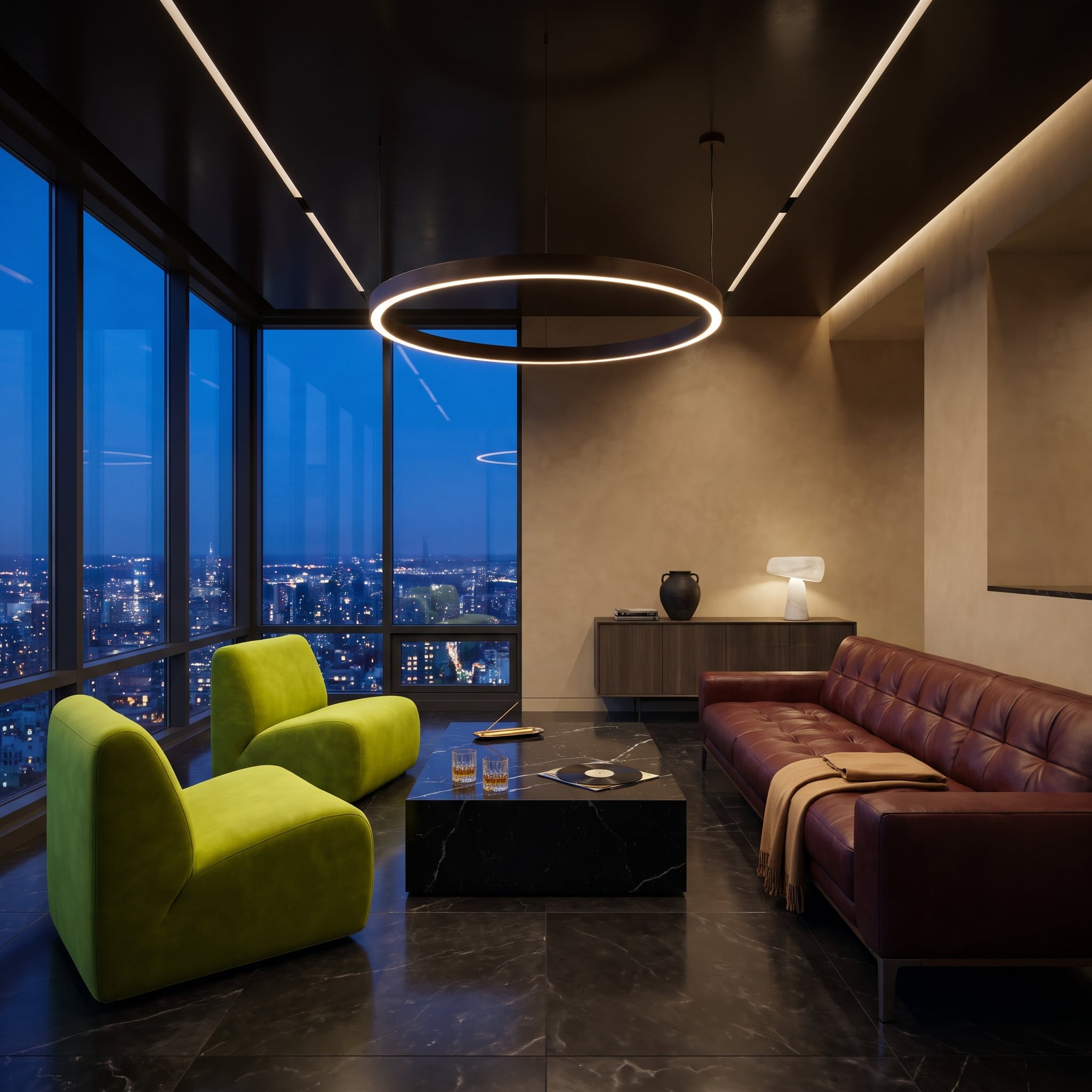
Black marble extends across the floor and rises into a substantial block coffee table, creating a dark foundation for lime velvet lounge chairs. Burgundy leather seating introduces a second saturated color, while the city skyline supplies a distant backdrop of illuminated windows.
A large ring pendant hovers above the furniture arrangement, visually defining the conversation area from overhead. Its circular form contrasts with the angular marble table and broad window grid. Against the polished stone and nighttime view, the lime chairs appear almost luminous, their soft upholstery providing the room’s most immediate color and texture.
For balance, living room pictures with velvet won fewer of their head-to-head matchups in our Hot or Not game than their position alone would predict, so velvet seating remains a bolder bet.
1. An Entire Media Wall Goes Acid Yellow, and the Living Room Will Never Be the Same
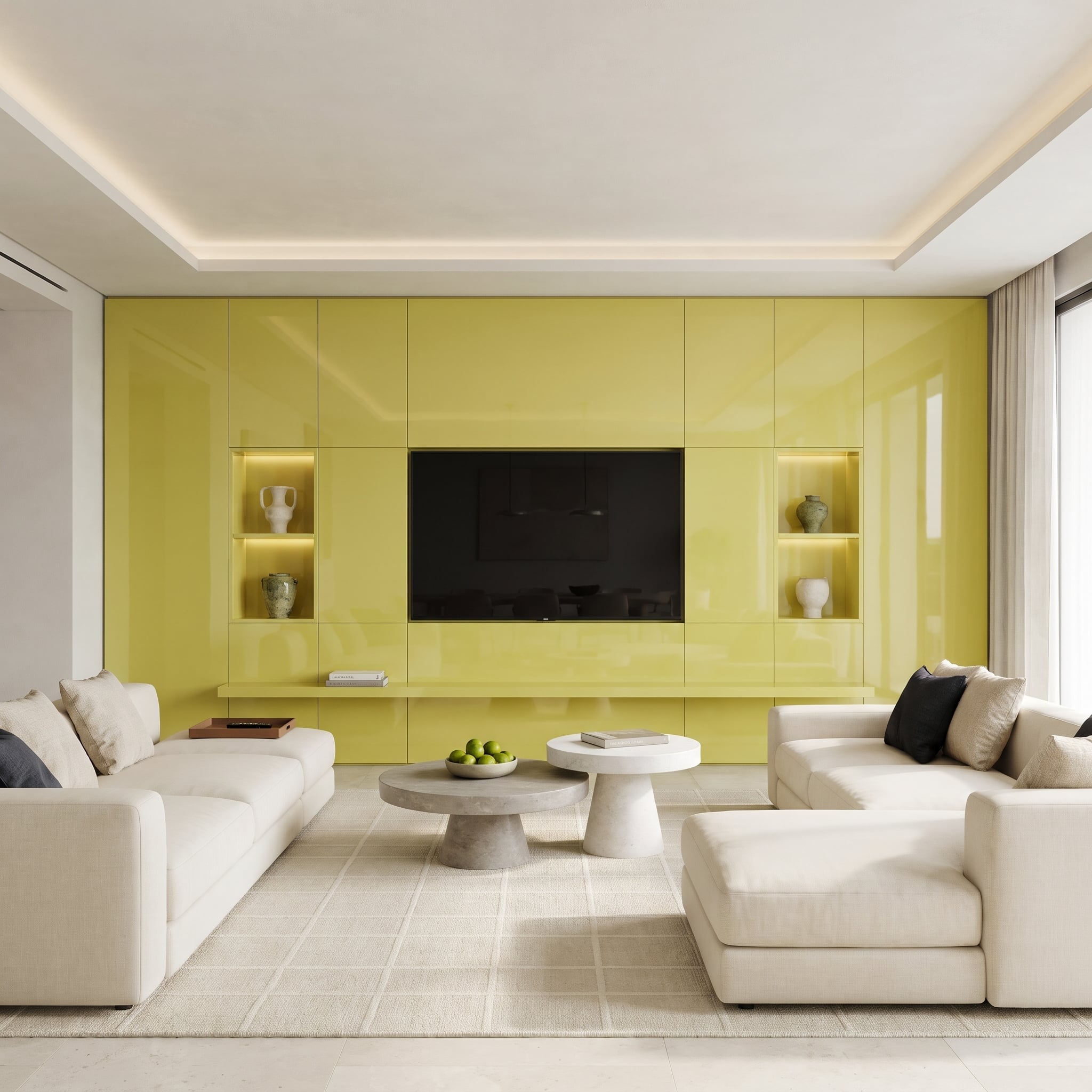
High-gloss acid-yellow cabinetry occupies the entire media wall, turning a large expanse of storage into the living room’s defining architectural feature. Window light reflects across the lacquered doors, while the dark television screen creates a sharply contrasting rectangle within the composition.
Cream sofas and pale furnishings allow the saturated wall to dominate without introducing another major competing color. A bowl of green apples repeats the yellow-green at table height, providing a small, organic counterpoint to the vast glossy surface. The design takes a familiar domestic necessity—storage surrounding a television—and gives it the kind of visual presence usually reserved for an extraordinary piece of art.