🔥 Would you like to save this?
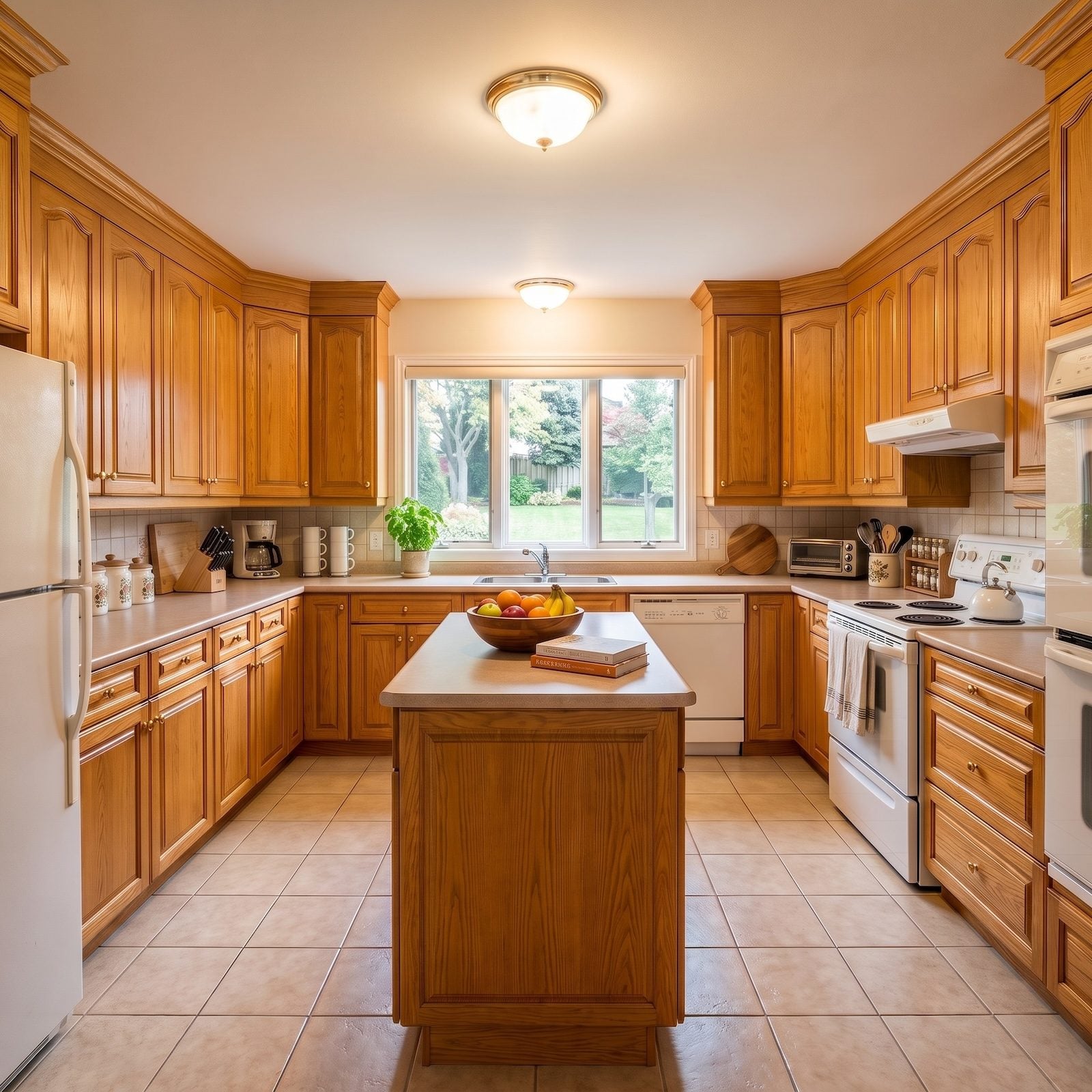
There’s a particular shade of orange that can make an entire kitchen look twenty years older than it is. It settles into the oak cabinets, teams up with the beige countertops and dated hardware, and somehow convinces homeowners that the only sensible solution involves a demolition crew.
But what if the cabinets are the best thing in the room?
In order to come up with the very specific design ideas, we create most designs with the assistance of state-of-the-art AI interior design software. Also, assume links that take you off the site are affiliate links such as links to Amazon. this means we may earn a commission if you buy something.
Behind that aging finish may be beautifully figured oak, solid door frames, and cabinet boxes with decades of service left in them. Not every old kitchen deserves saving, of course. Water damage, failing construction, and a hopeless layout can change the calculation. But when the cabinetry is sound, replacing everything may mean throwing away the very material that could make the renovation exceptional.
And exceptional is exactly where these transformations go. Oak turns silver, chestnut, honey, espresso, and pale wheat. Islands acquire sculptural metalwork, illuminated stone, architectural glass, and surfaces that would look perfectly at home in a contemporary art gallery. Some kitchens become almost unrecognizable. Others need surprisingly little to recover their character.
These 36 designs begin with the same outdated oak kitchen and explore what happens when the original cabinetry becomes an asset rather than an obstacle. The results range from quietly sophisticated to gloriously extravagant. The common thread is that the oak stays in the conversation.
36. Cerused Oak and Bronze-Mirror Penthouse Glamour
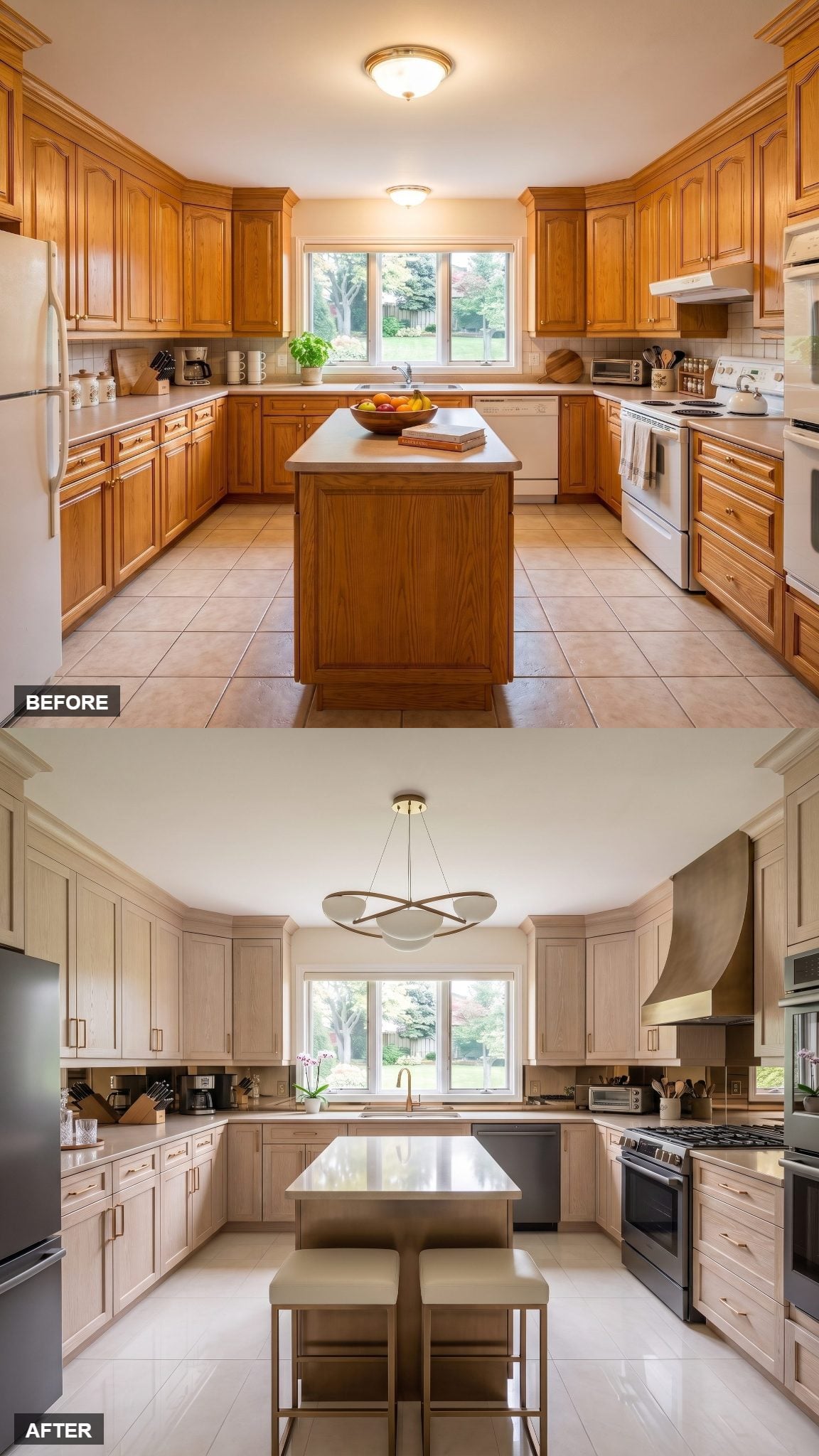
Here’s what happens when the orange disappears but the oak’s personality remains. Cerusing emphasizes the open grain with a contrasting pale finish, bringing out patterns that the original amber stain had nearly buried. The wood becomes lighter, more dimensional, and considerably more interesting.
Then comes the bronze-tinted mirror backsplash, reflecting the garden through a warm metallic filter. Its reflective surface adds visual depth without introducing another busy pattern. The combination is particularly effective because the cabinetry retains its familiar proportions while the finishes give the room an entirely different architectural character.
35. Pale Oak and Crimson Automotive Lacquer
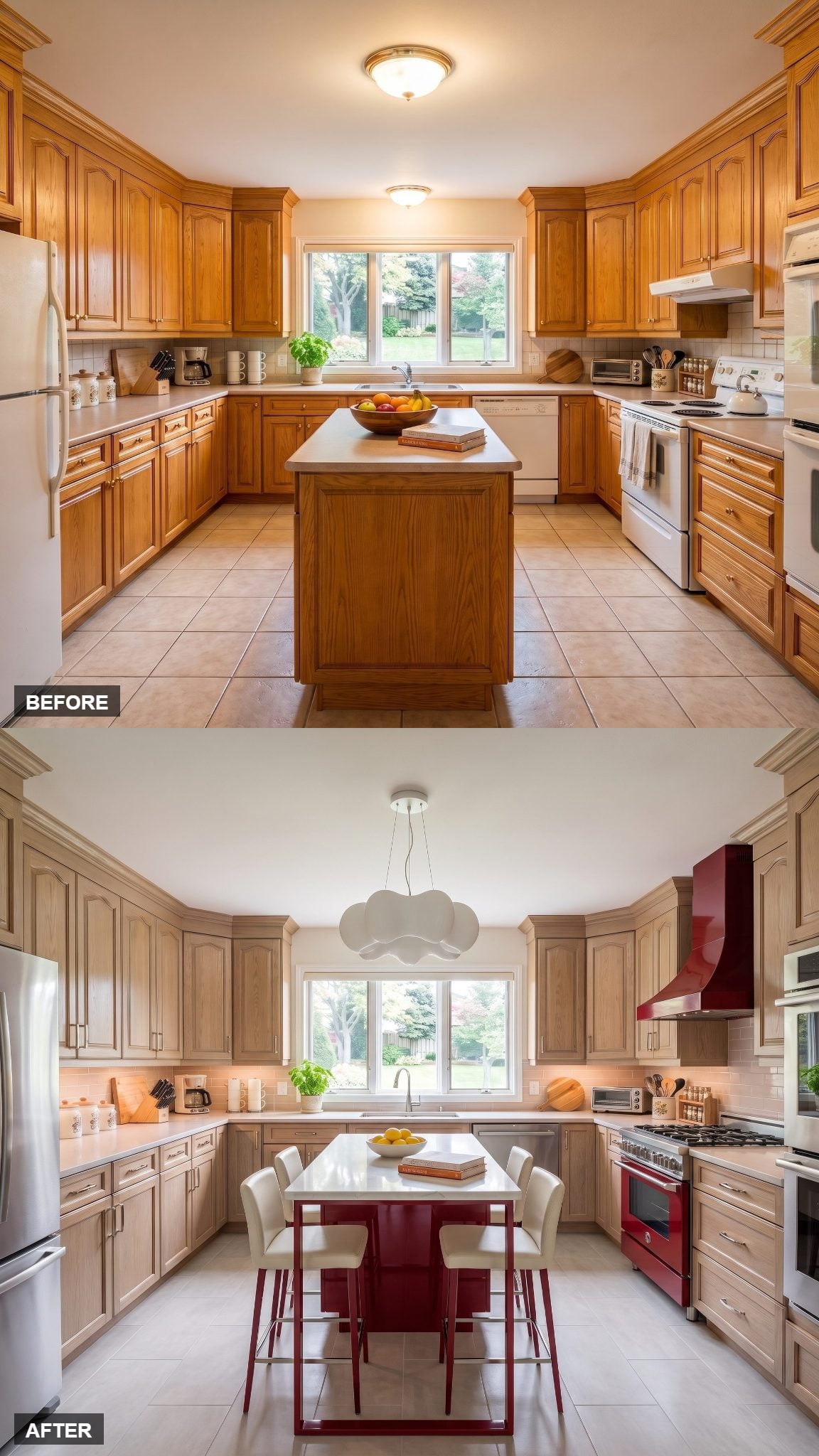
Crimson lacquer arrives with the confidence of a vintage Italian sports car. The glossy island ends catch every passing reflection, their saturated red finish looking almost liquid against the pale oak cabinetry.
What makes the combination convincing is the contrast in surface character. The wood has visible grain and a comparatively quiet finish; the lacquer is smooth, reflective, and intensely colored. White quartzite provides a clean transition between them. Rather than repainting every cabinet red, the design gives the color a specific architectural job.
34. Oak and Blue-Gray Quartzite Grandeur
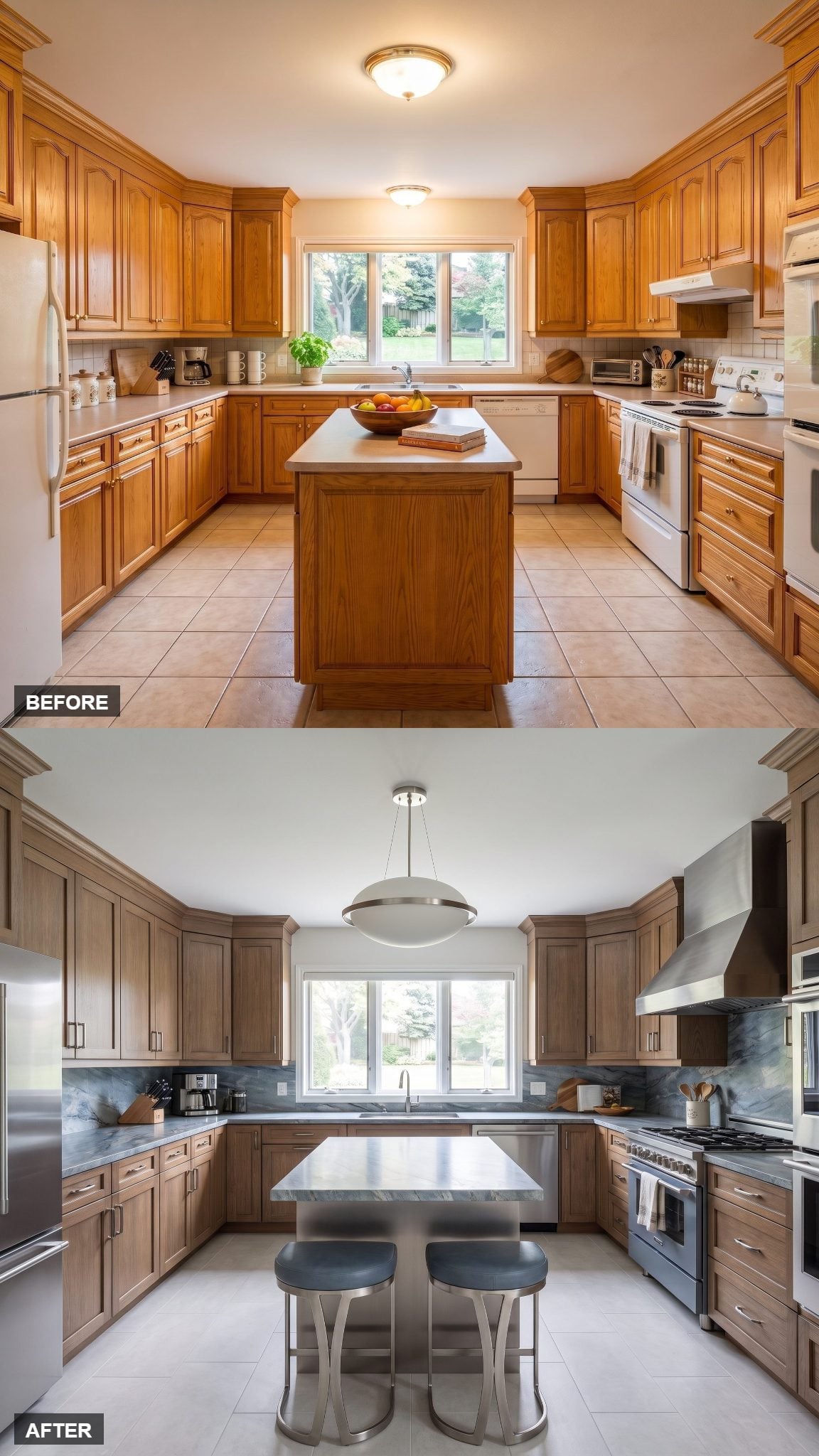
The cooking wall looks as though a storm system has been captured inside a slab of stone. Broad blue-gray mineral patterns sweep across the quartzite, carrying movement from the countertop into the vertical surfaces.
Pewter-toned hardware reinforces the cooler palette, while the retained oak prevents the kitchen from becoming a study in gray. The important transformation isn’t simply the addition of expensive stone. It’s the decision to let the existing wood provide warmth against a material with an entirely different visual temperament.
33. Honey Oak and a Contemporary Malachite Jewel Kitchen
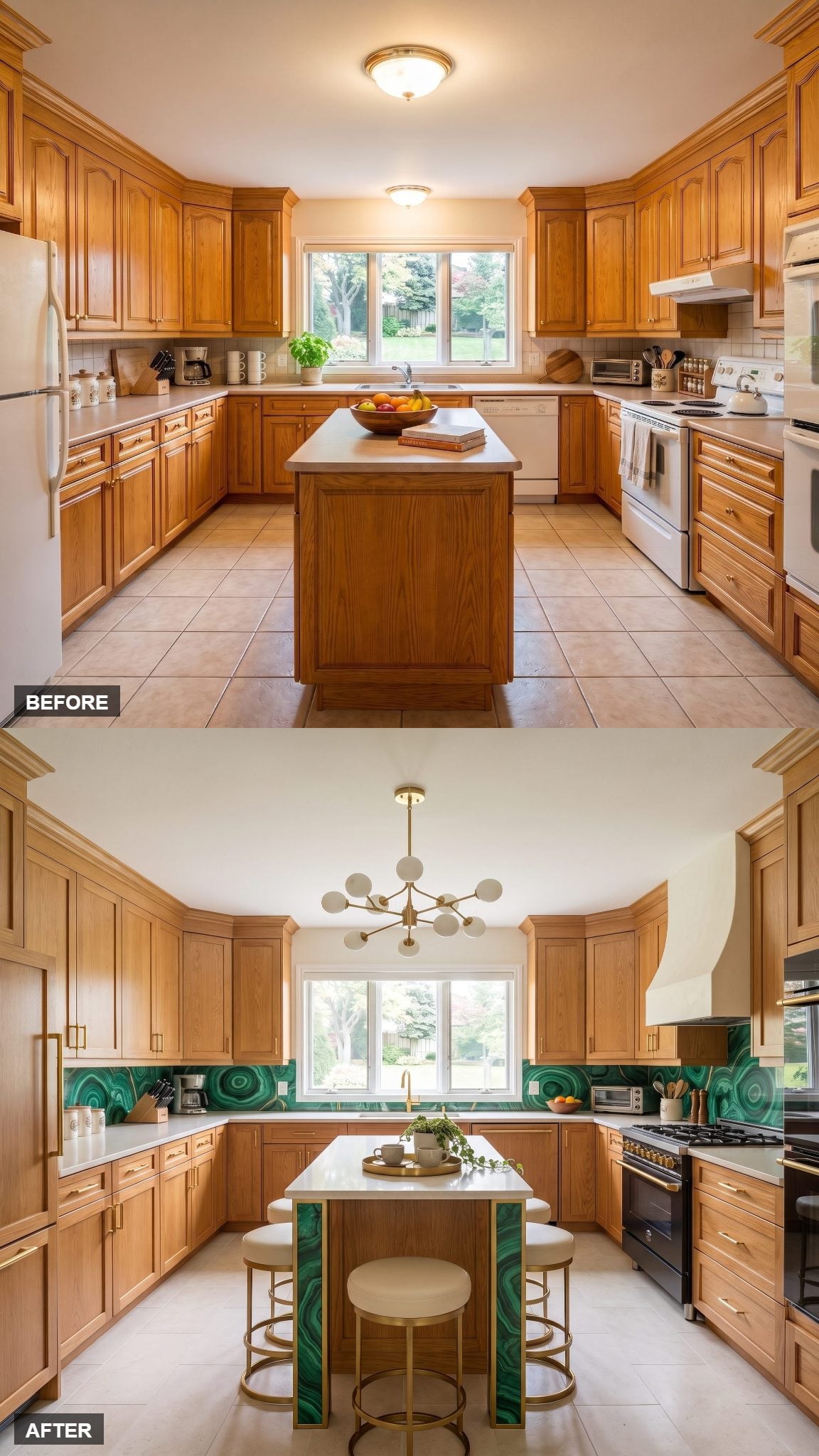
Those enormous concentric green rings look less like conventional backsplash decoration than the cross section of an extraordinary mineral specimen. Inspired by malachite, the patterned surface brings deep greens, irregular bands, and almost hypnotic movement into the kitchen.
Thin brass reveals divide the composition into deliberate architectural panels. Honey oak introduces an amber warmth that works particularly well against the green, creating a connection between the cabinetry and metallic details. The room has the richness of a jewel box without requiring the original cabinets to disappear beneath paint.
32. Taupe Oak and Cashmere-Toned Architectural Luxury
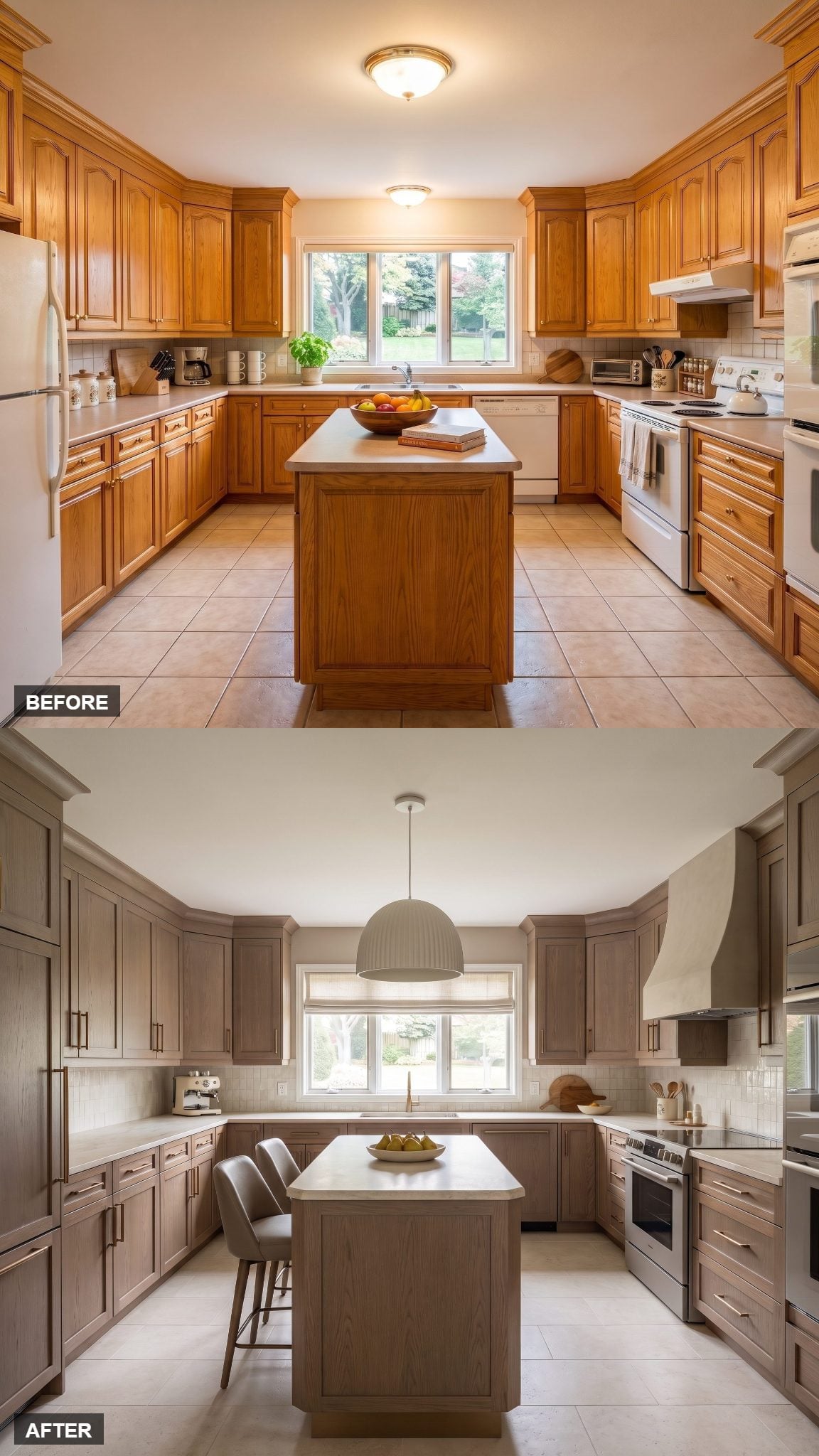
After all that malachite, this kitchen barely raises its voice. Taupe oak, mushroom-colored walls, and cream stone occupy a narrow range of warm neutrals, allowing changes in texture to become more noticeable than changes in color.
A bronze plinth gives the island a subtle shadow line. The ribbed ceramic pendant introduces another tactile surface, while a linen Roman shade softens the window. It’s a sophisticated example of tonal design: the cabinetry doesn’t compete with the architecture because the two have been brought into the same visual register.
31. Restored Oak and a Blue-Cristal Quartzite Showpiece
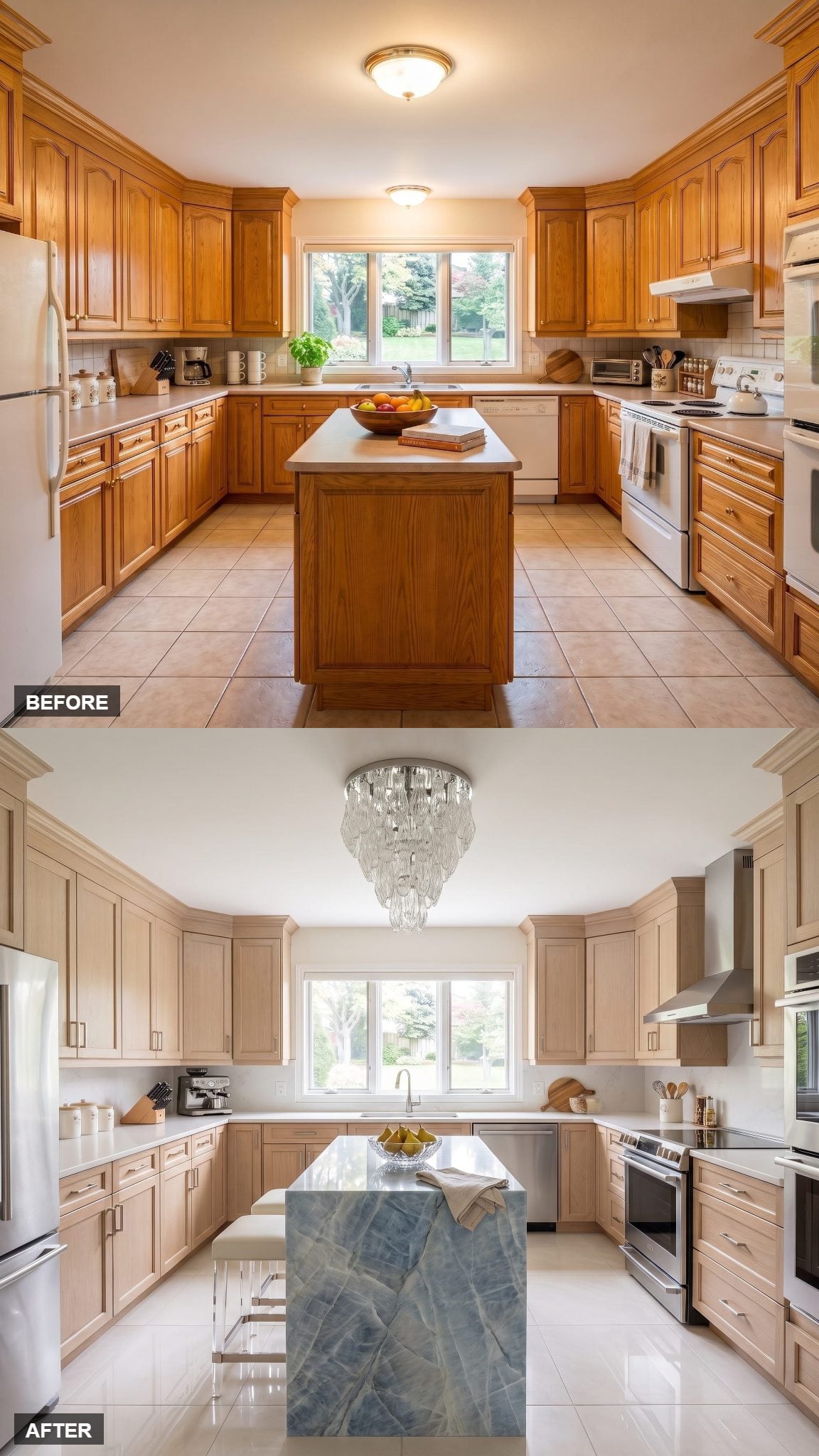
Ice-blue veining cuts through pale stone in sweeping, almost crystalline formations. The dramatic quartzite treatment transforms the island from an ordinary work surface into the architectural centerpiece of the kitchen.
Bookmatched slabs create mirrored patterns where adjoining stone faces meet, making the island ends especially striking. The restored oak provides a warmer, more familiar backdrop, which helps the stone’s unusual coloring stand out. This is a renovation in which the cabinetry supplies continuity while the new surfaces deliver the spectacle.
30. Smoked Oak and Champagne-Pink Glass Luxury
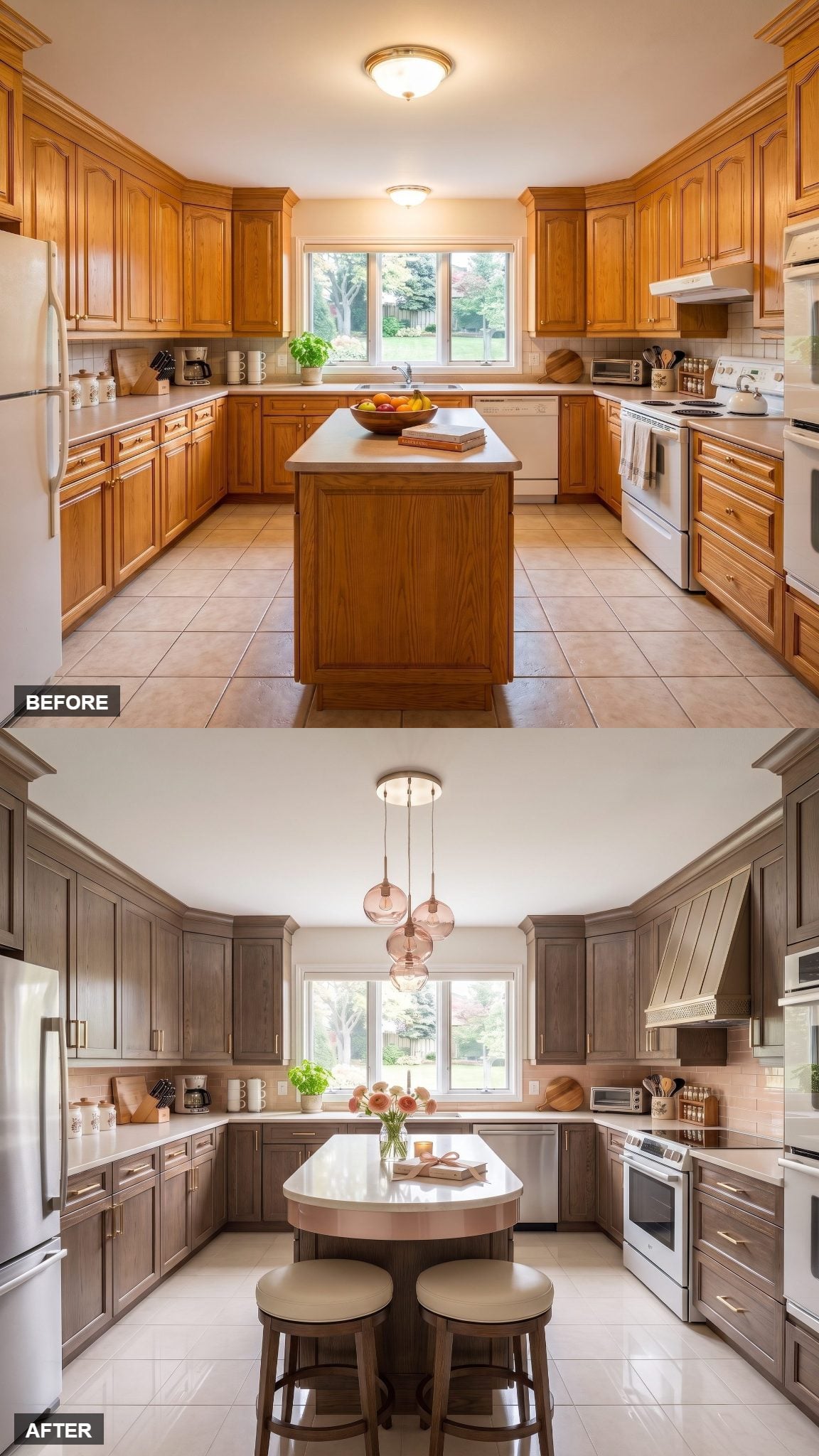
Champagne pink is a long way from the sugary pastels traditionally associated with pink kitchens. Here it has the muted warmth of rosé, intensified by the reflective depth of back-painted glass.
Smoked oak introduces a darker, earthier counterpoint, while the curved lacquered island ends pick up the glass’s smooth finish. The interplay is more interesting than the color alone: reflective against matte, curved against rectilinear, pale blush against deep brown. The result feels tailored rather than decorative.
29. Oak and a Culinary-Performance Show Kitchen
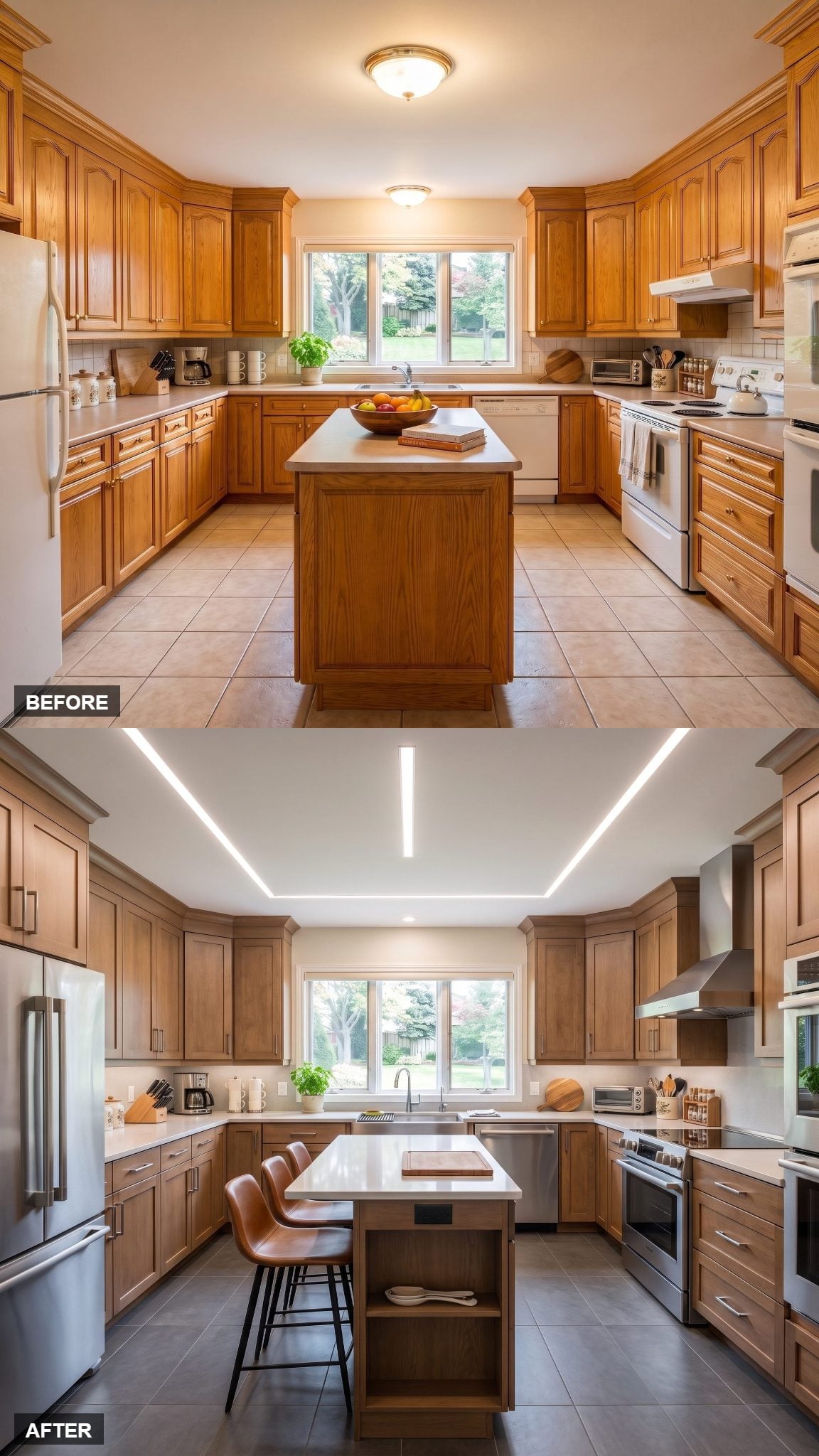
Not every dramatic renovation needs a geological centerpiece. This one puts its money into the mechanics of cooking. A removable chopping inset sits flush with the island, while concealed electrical connections keep the work surface visually uncluttered.
Matte oak cabinetry brings warmth to the steel and charcoal finishes, and machined stainless pulls establish a connection with the professional-looking equipment. The appeal lies in how carefully the practical details have been integrated. The room looks composed even when its working functions are the main attraction.
28. Pale Oak and Violet Lacquer Couture
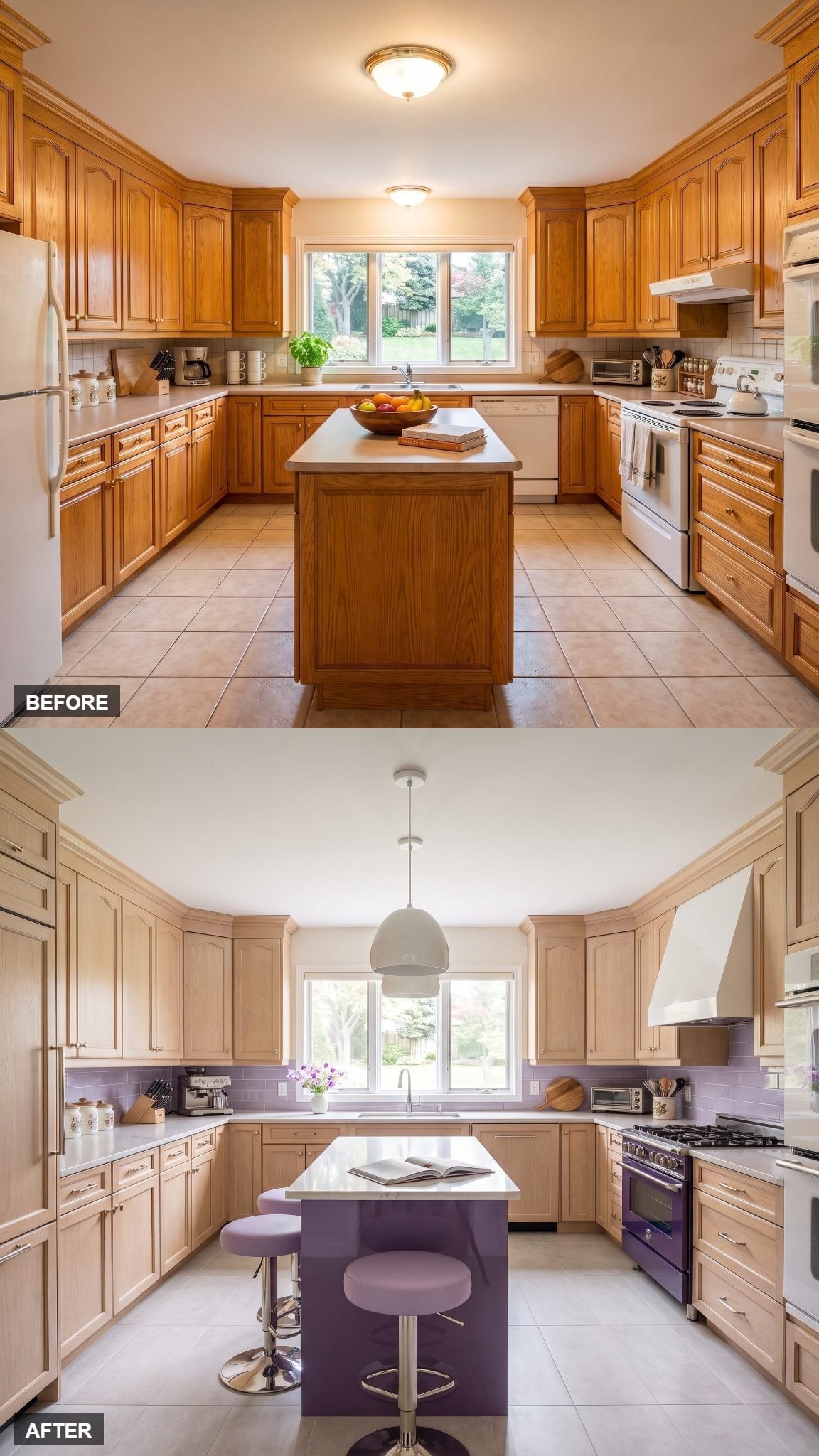
A deep violet range is an unexpected choice in a kitchen, and that’s precisely why this composition is memorable. Against pale oak and pearl-white stone, the appliance becomes a vivid architectural feature rather than another object to blend into the cabinetry.
The lilac glazed backsplash repeats the color at a lighter intensity, giving the violet a companion without duplicating its weight. There’s a satisfying progression from pale wood to white stone to saturated enamel. The design succeeds through carefully related colors rather than sheer visual volume.
27. Oak and Gallery-Scale Terrazzo Architecture
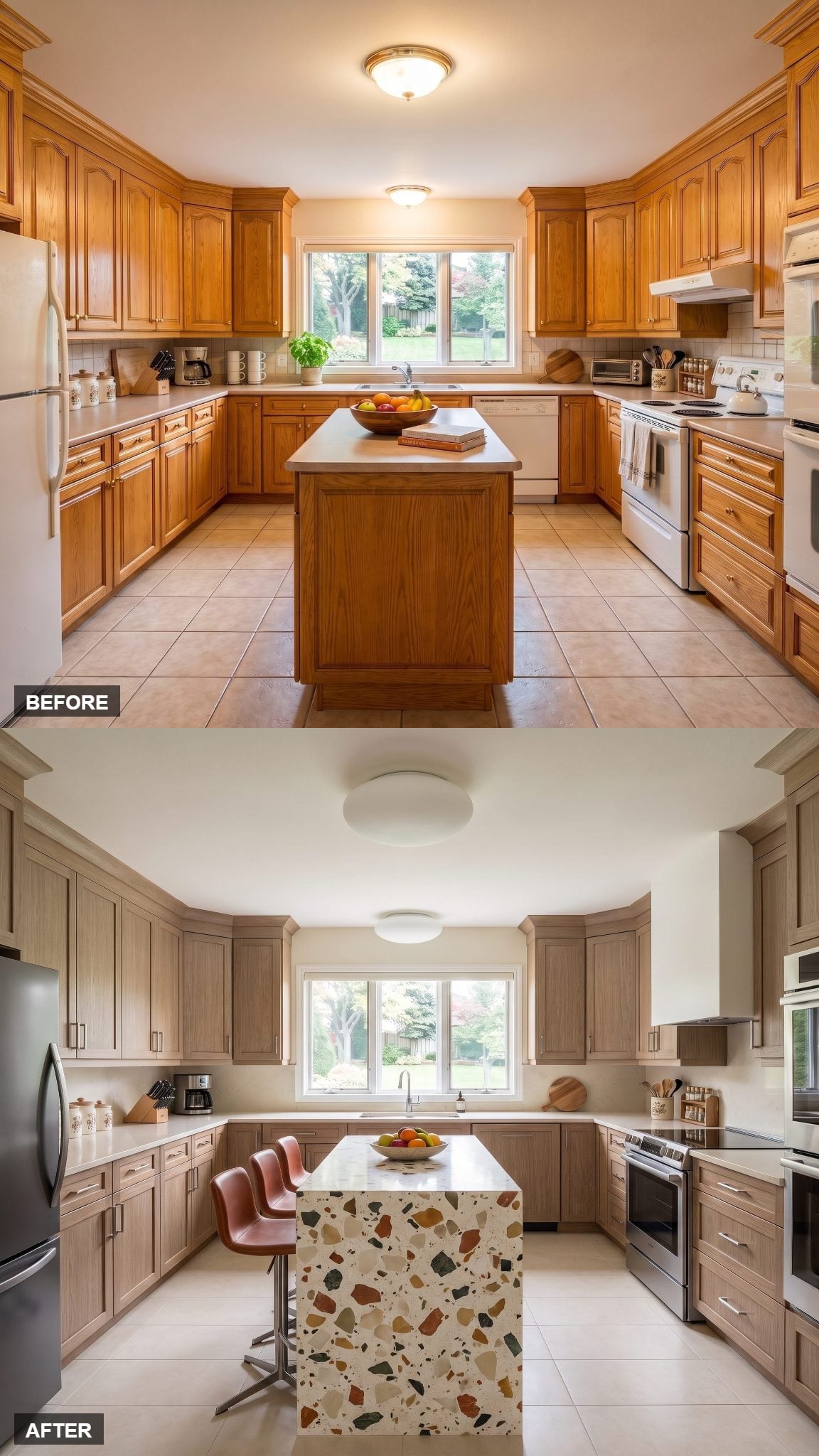
The terrazzo island looks like a piece of abstract art large enough to prepare dinner on. Oversized fragments of cream, rust, and olive interrupt the stone surface, creating a composition that’s irregular without appearing accidental.
Exposed oak on the island’s working face breaks up the terrazzo mass and establishes a visual connection with the surrounding cabinetry. Rust leather stools pick up one of the aggregate colors, carrying it beyond the stone itself. The island becomes the room’s main architectural event, while the original wood helps integrate it into a functioning kitchen.
26. Deep Oak and a Champagne-Metal Sculptural Island
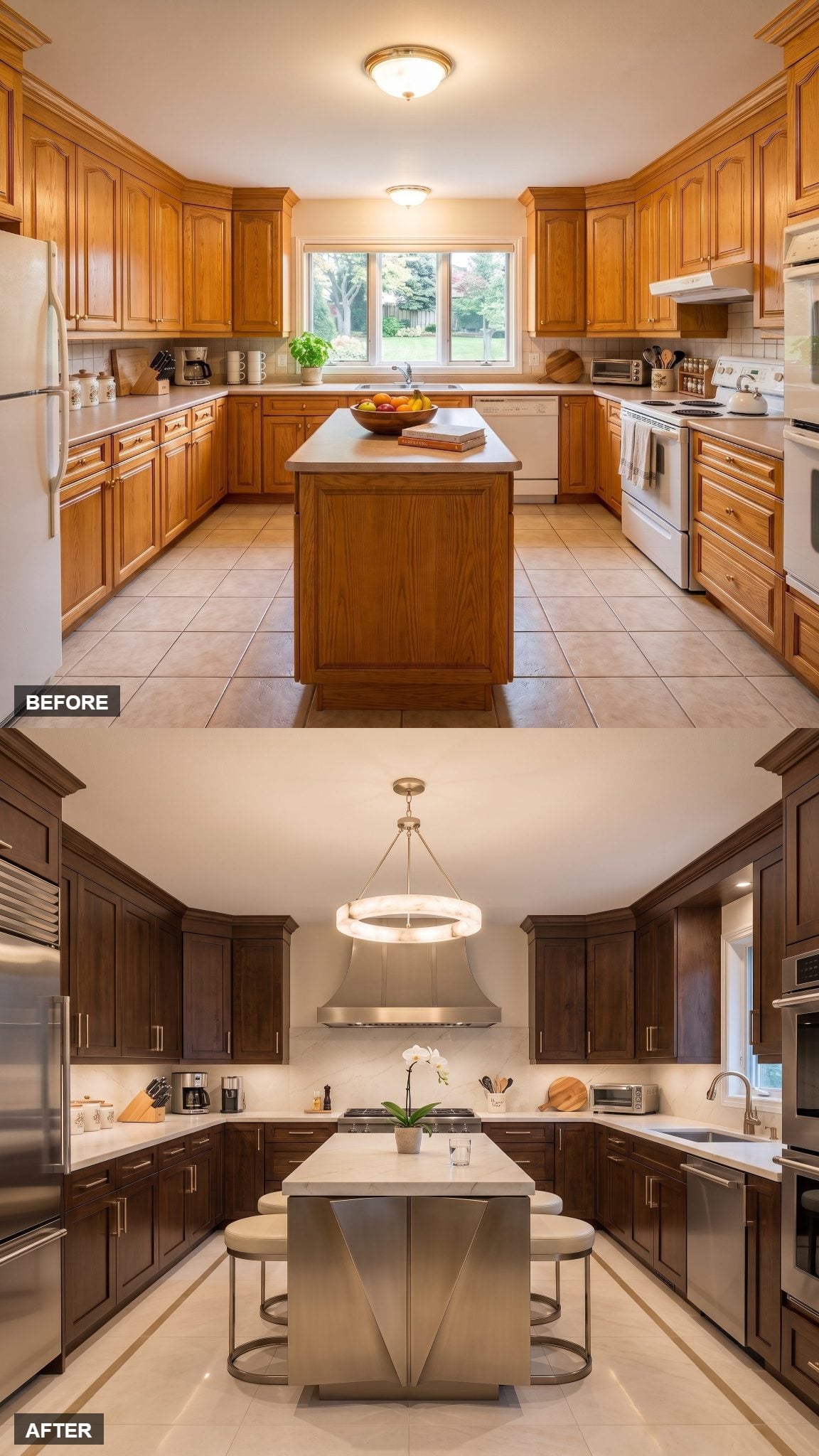
Broad folds of champagne-colored metal give the island the appearance of a carefully formed sculpture. A recessed base creates a floating effect, separating the metallic volume from the floor and making its geometry more prominent.
Deep brown oak cabinets bring a substantial visual weight to the surrounding walls. Above the island, an alabaster ring fixture introduces a softer shape and diffused illumination. The contrast between folded metal, warm timber, and translucent lighting gives this kitchen its unusual richness.
25. Pale Oak and Sea-Glass Riviera Luxury
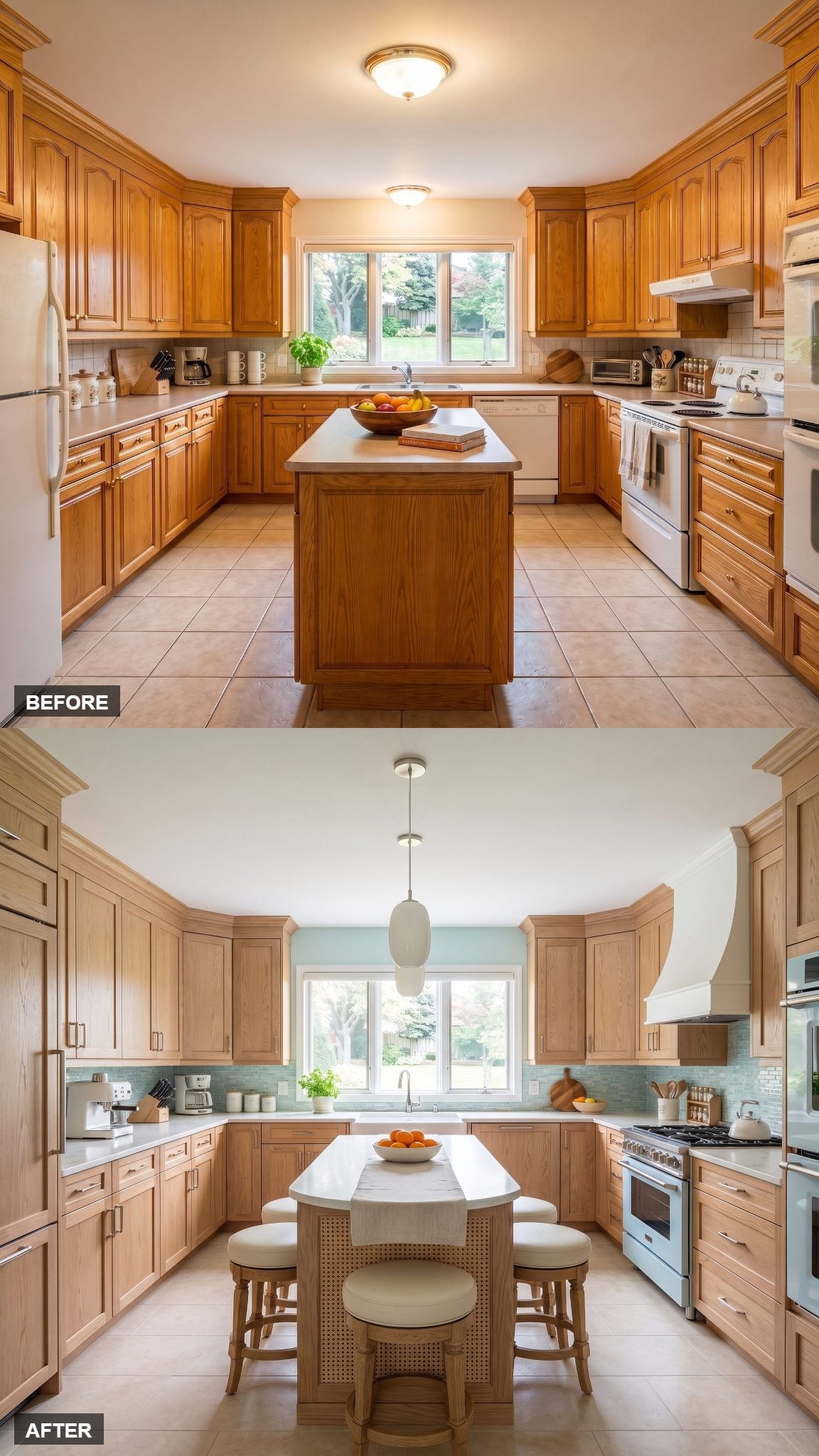
Aqua and pearl glass give the backsplash the shifting luminosity of shallow water. The surface appears almost rippled, catching daylight in a way that makes the wall feel animated without relying on a large-scale pattern.
Cane inserts on the island introduce a dry, woven texture that contrasts with the glossy glass. Carved oak bases reinforce the natural-material character of the room. Together, those elements produce a lighter, coastal interpretation of luxury, with the retained cabinetry providing much of the warmth.
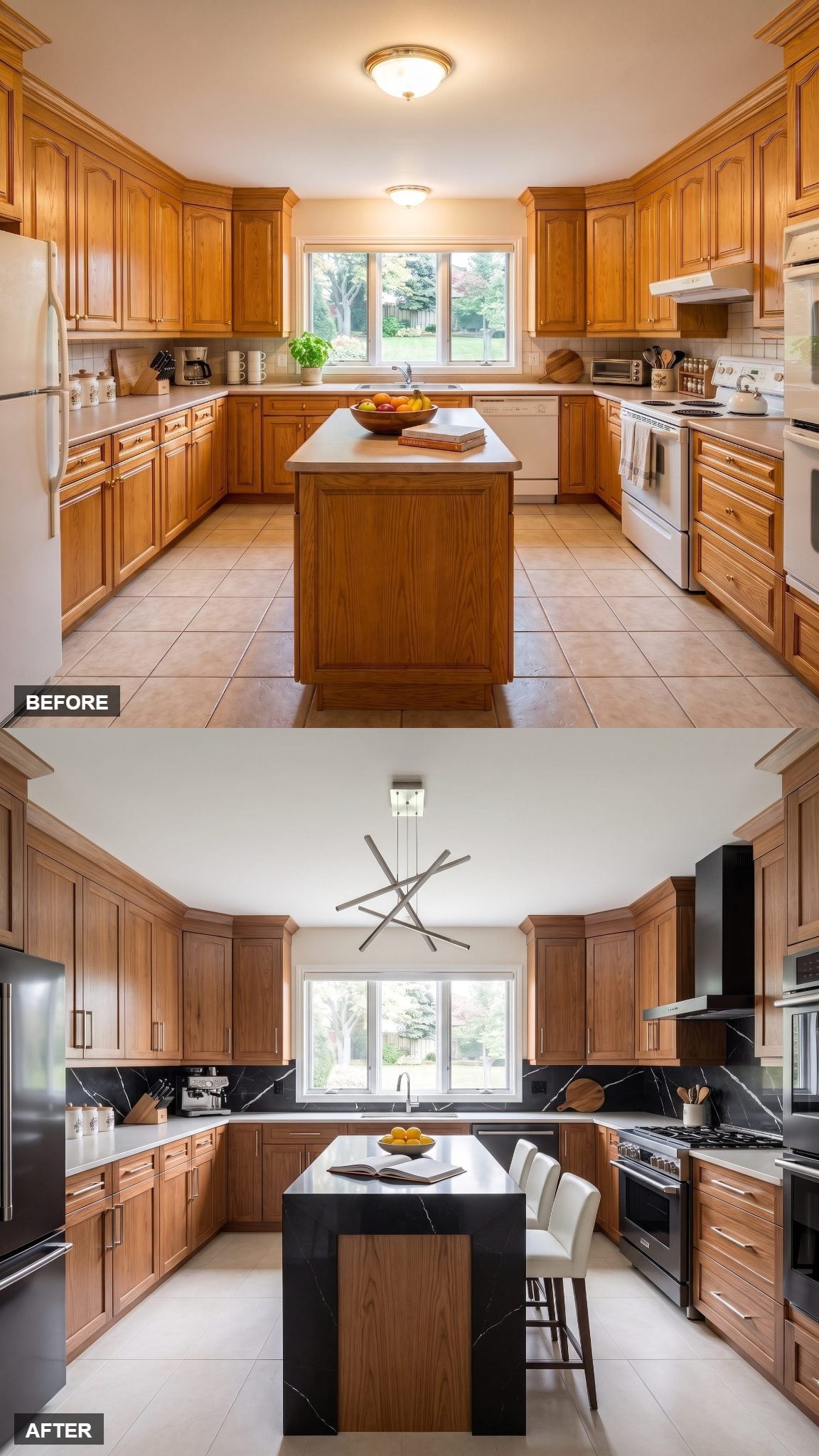
24. Chestnut Oak and Faceted Black-Marble Couture
🔥 Would you like to save this?
The original orange finish concealed much of the oak’s natural character beneath a uniform amber cast. A chestnut-toned refinish gives the grain greater depth, producing cabinetry that feels substantial rather than dated.
Against it, a black marble-look cooking wall with diagonal white veining introduces a dramatic graphic pattern. Faceted island panels catch light across their angled surfaces, preventing the dark composition from becoming visually flat. Brushed-nickel hardware adds a restrained metallic accent between the warm wood and dark stone.
23. Champagne Oak and an Illuminated Glass Collection
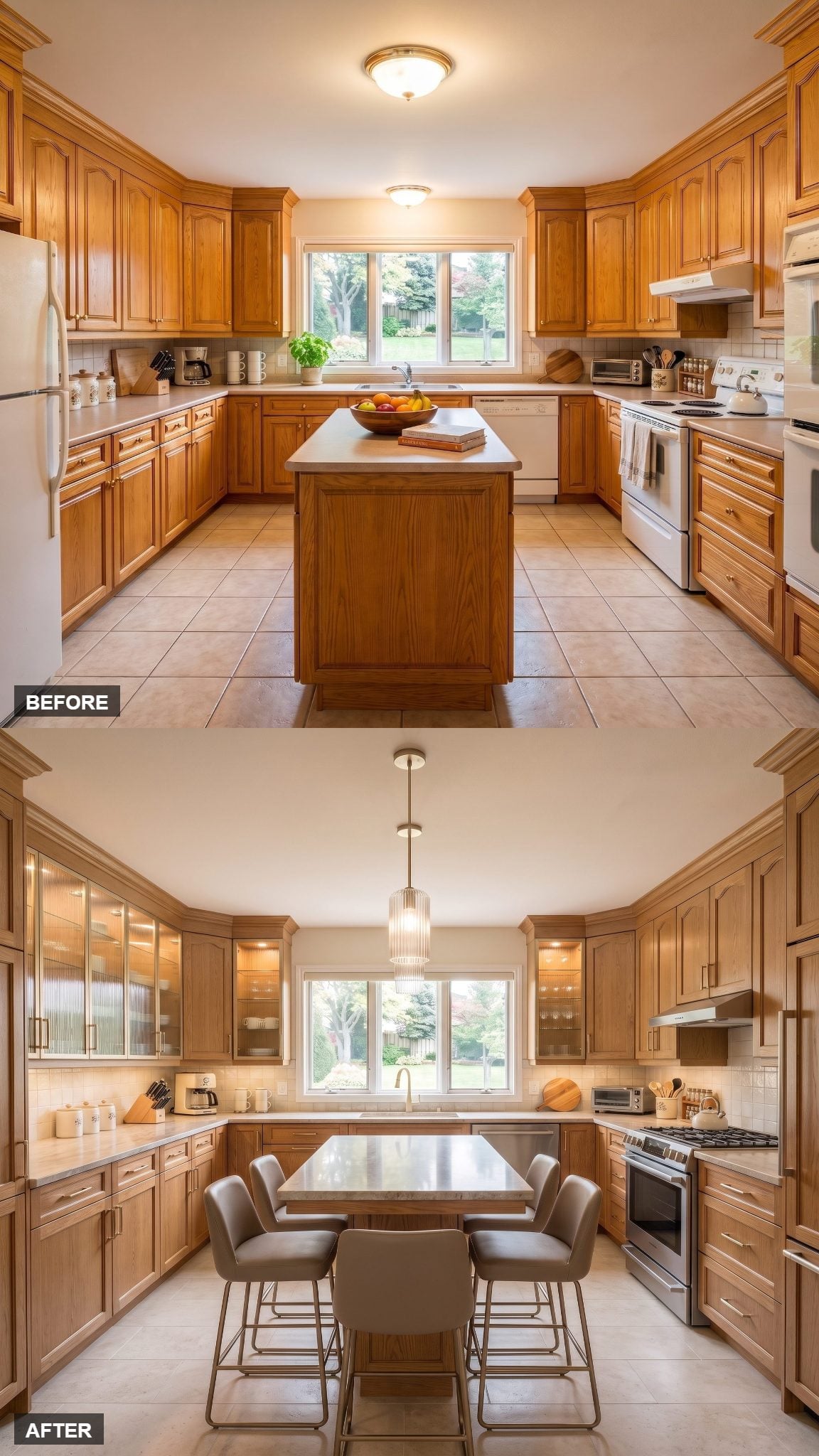
A row of solid cabinet doors can make an older kitchen feel visually heavy, particularly when the wood finish is dark or strongly colored. Here, selected upper doors become illuminated fluted-glass panels, introducing transparency without exposing every detail inside.
The vertical fluting softens the outlines of glassware, while warm lighting turns the cabinets into a subtle evening feature. Champagne oak and mushroom quartzite keep the surrounding palette gentle. It’s a persuasive example of changing the appearance of cabinetry without automatically replacing the entire cabinet structure.
22. Oak and Emerald Glass Jewelwork
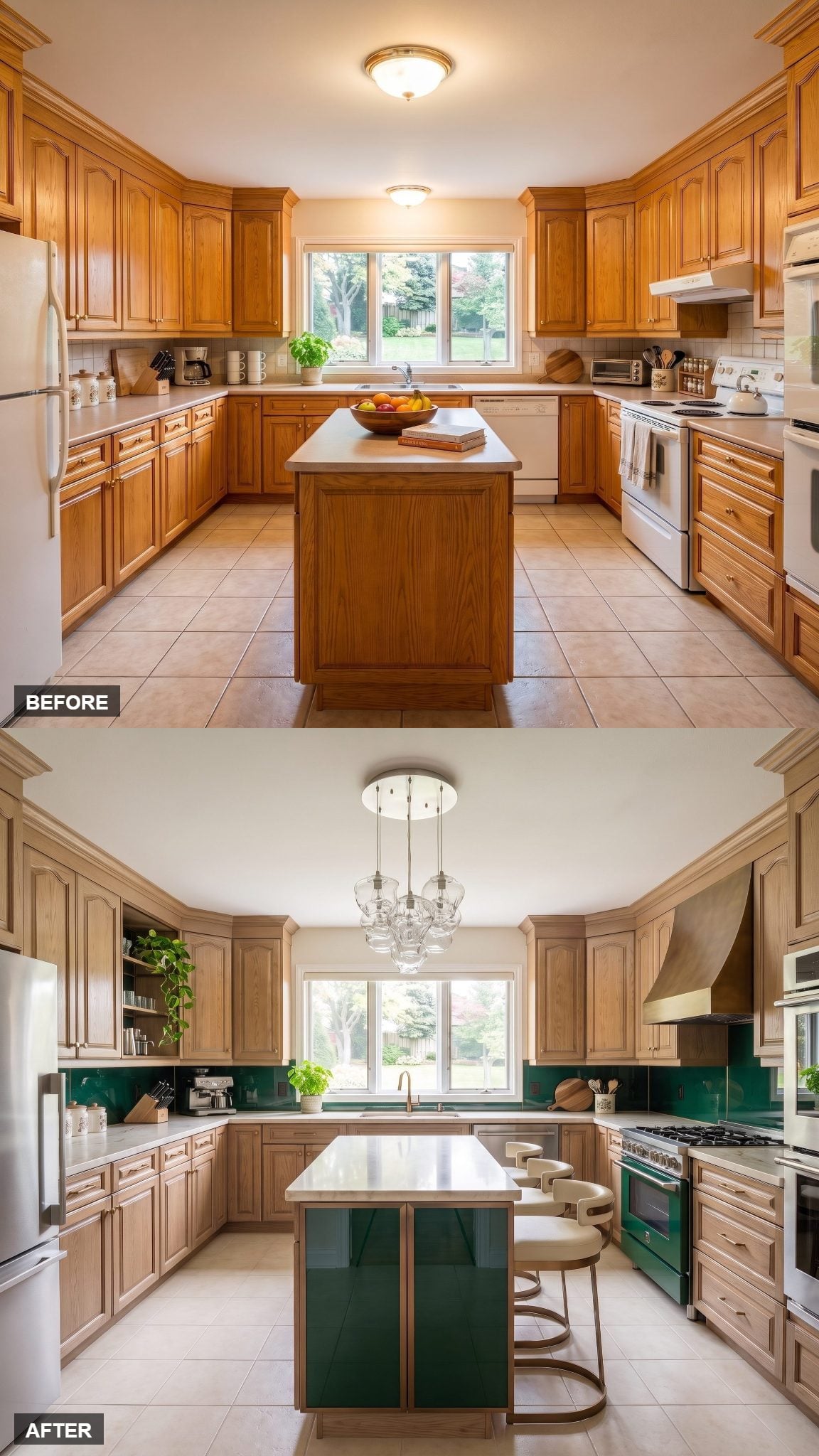
Emerald glass brings a depth of color that ordinary painted drywall cannot quite reproduce. The back-painted surface has a glossy, saturated appearance, giving the cooking wall an almost gemlike quality.
Bronze edging divides the glass into carefully framed panels, while oak cabinetry supplies a natural contrast to the highly finished surface. Unlike heavily patterned stone, the glass offers an uninterrupted field of green. Its reflective quality becomes part of the composition, changing subtly as the light moves through the room.
21. Wheat Oak and Saffron Quartzite Modernism
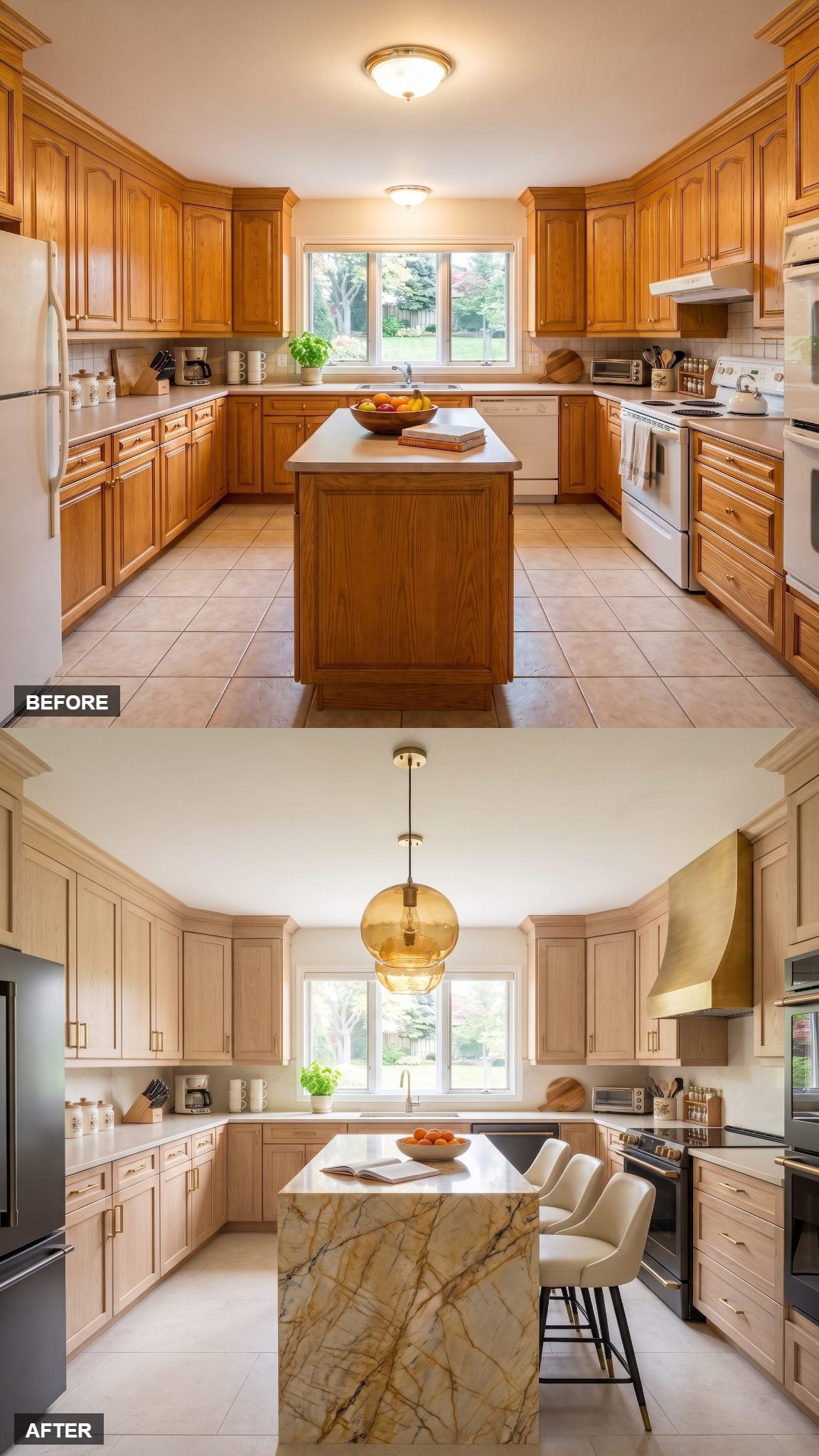
Saffron-colored stone brings the warmth of late-afternoon sunlight into the center of the kitchen. Its golden movement is strong enough to define the room, especially against the comparatively restrained wheat-oak cabinetry.
A matte-black range gives the composition a necessary dark anchor. Brass controls and amber pendant lights repeat selected tones from the stone, establishing connections across different parts of the room. The result is exuberant but carefully organized, with the original oak acting as a natural extension of the golden palette.
20. Oak and Precision Bronze Geometry
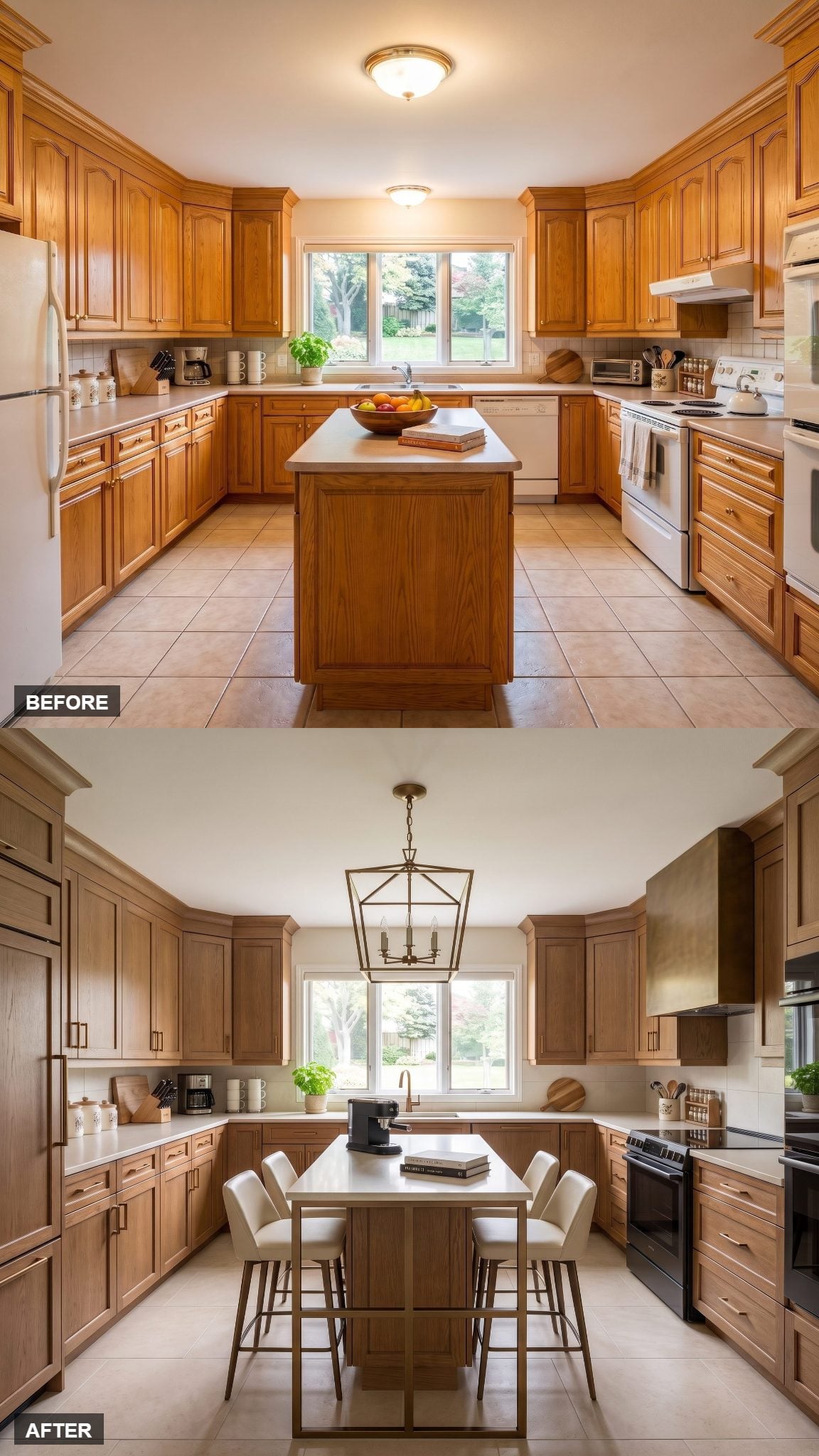
This kitchen finds its drama in alignment rather than color. Bronze framing divides the island’s oak panels into a precise grid, while the floor and tile joints reinforce the same geometric discipline.
Those repeated lines give the space a measured architectural quality. Matte oak softens the effect, preventing the metallic framework from feeling excessively industrial. It’s a particularly interesting transformation because the familiar cabinet material remains visible, but its presentation becomes far more exacting.
19. Silvered Oak and a Mother-of-Pearl Evening Jewel Box
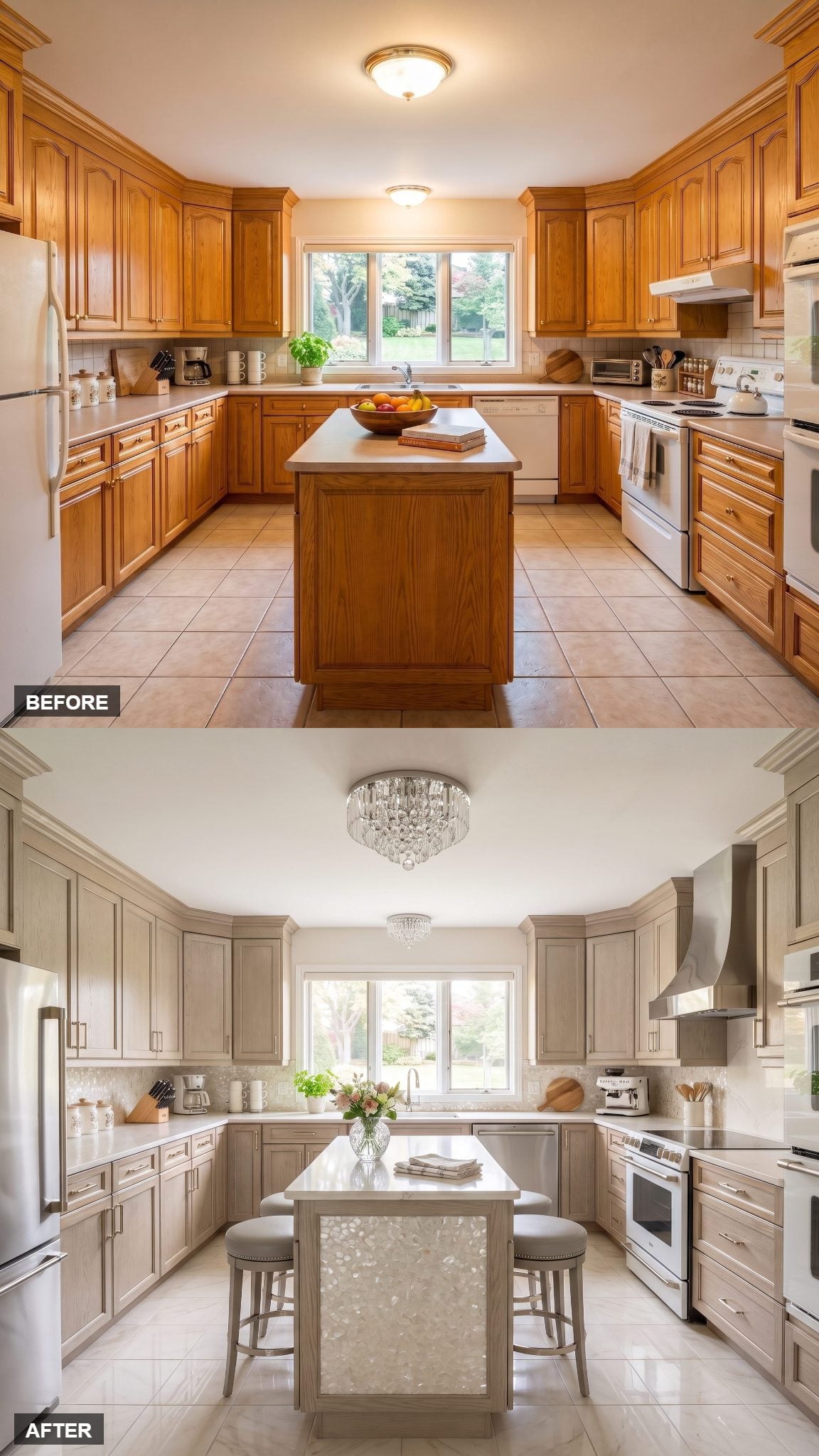
Mother-of-pearl refuses to settle on a single color. Depending on the angle of the light, its iridescent surface moves between cream, blush, and the faintest green, giving the kitchen a remarkable delicacy.
Silvered-beige oak is an effective partner because its grain remains visible without introducing a competing orange cast. The resulting palette is pale but far from flat, with the mother-of-pearl providing movement and the wood supplying texture. It’s a glamorous transformation that depends on subtle changes in light rather than dramatic color contrast.
18. Oak and a Concealed Stone-Lined Barista Suite
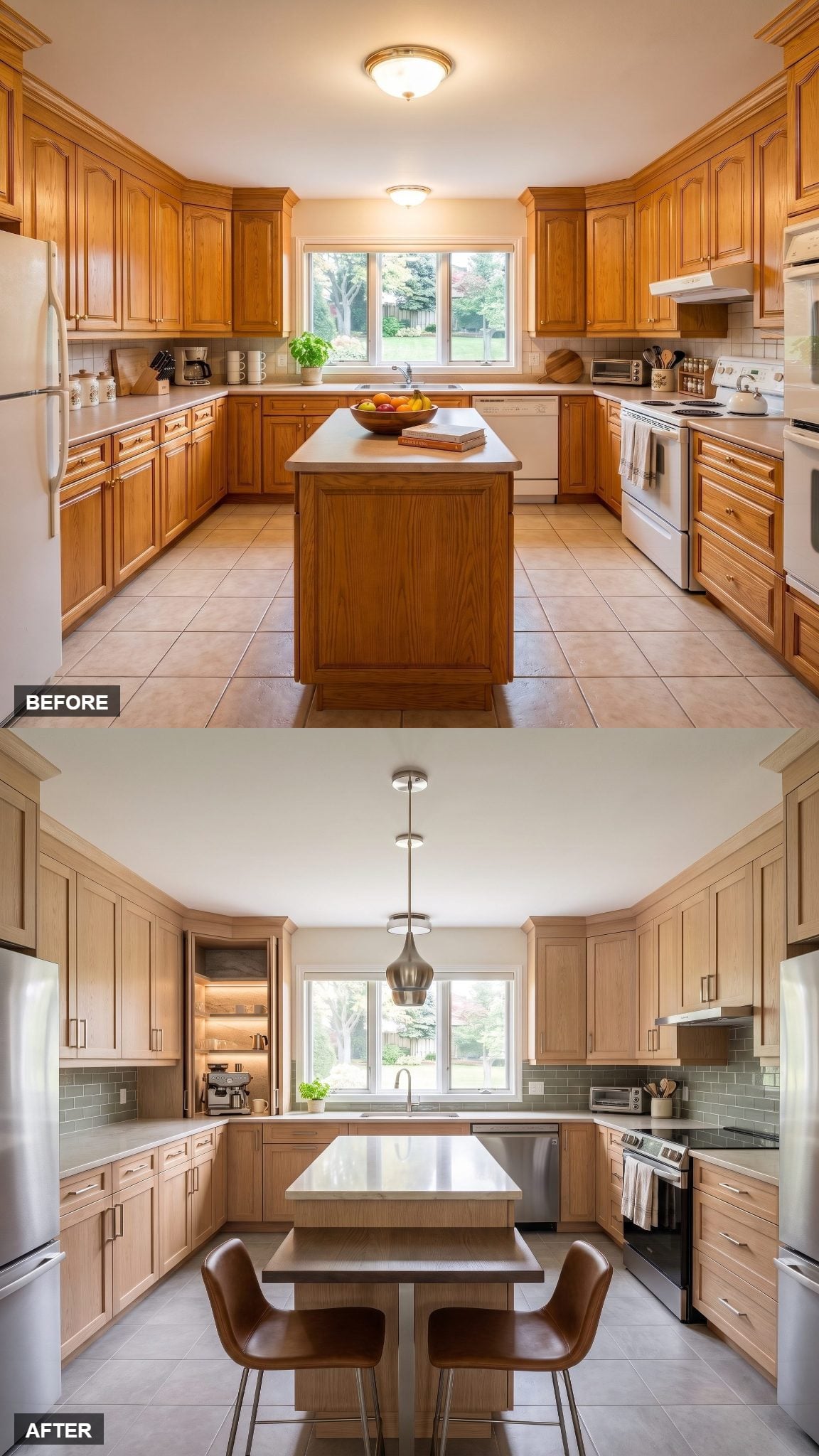
A dedicated coffee station can quickly take over a countertop. This kitchen gives the equipment its own concealed compartment, with folding oak doors that open to reveal a stone-lined barista area and close when the morning routine is finished.
The surrounding cabinetry retains a pale honey-brown finish, complemented by updated hardware. Green-gray ceramic and cream quartzite introduce a cooler material palette, while the dark-oak breakfast extension adds another surface and a different working height. The design’s strongest achievement is making a specialized function disappear into the architecture when it isn’t needed.
17. Restored Oak and Amethyst Quartzite Couture
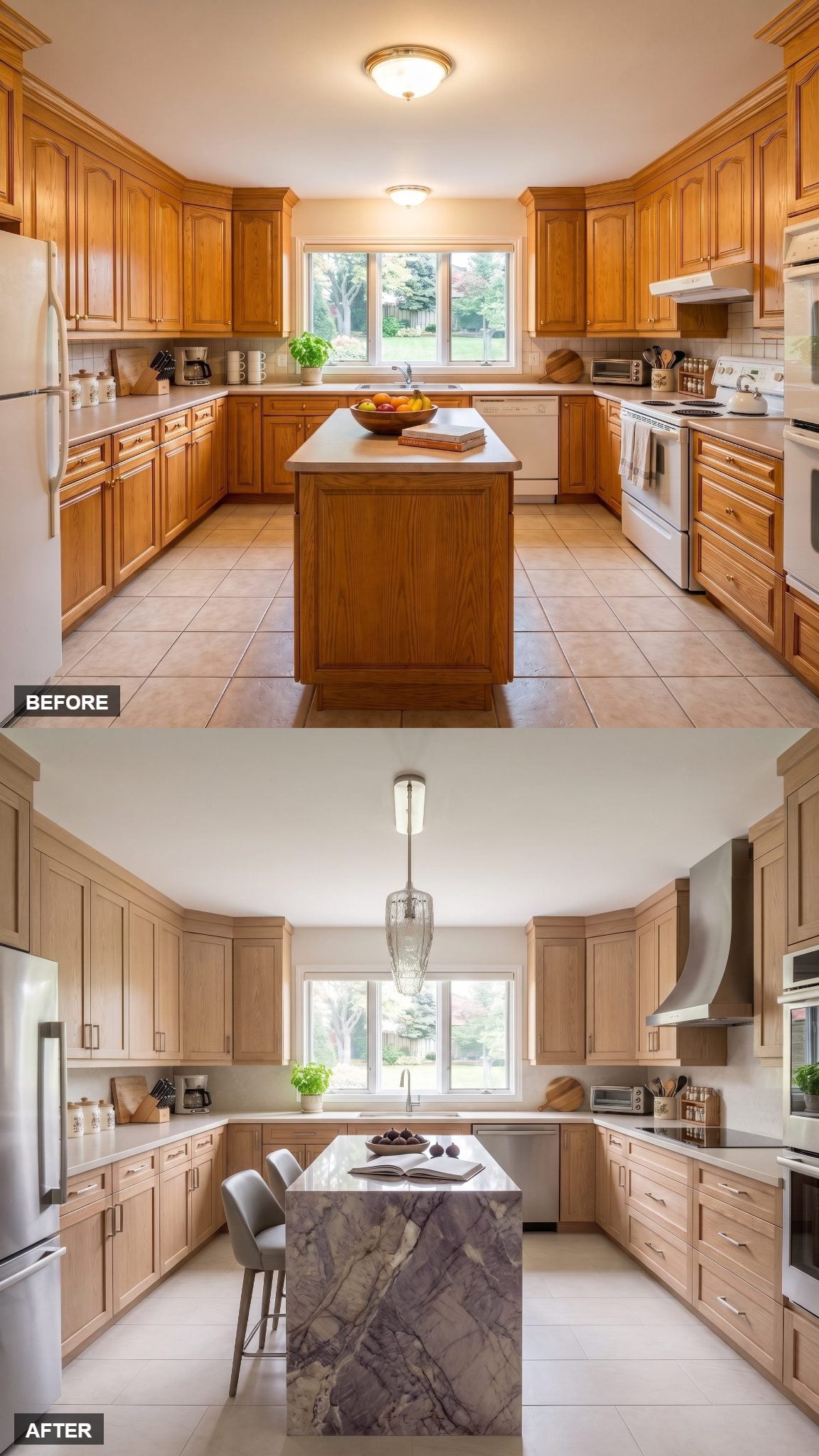
Violet and smoky-gray mineral patterns sweep through the stone with the intensity of an abstract painting. The amethyst-toned surface gives the kitchen an unusual focal point, particularly where the veining becomes most pronounced.
The oak is restored to a pale natural brown, retaining enough warmth to distinguish it from the ivory countertops. That material separation is important: the cabinetry still has a visible identity, even though the stone attracts most of the attention. The transformation demonstrates how a dramatic surface can change the atmosphere of an entire kitchen without requiring the surrounding woodwork to be replaced.
16. Chestnut Oak and a Titanium-Framed Architectural Island
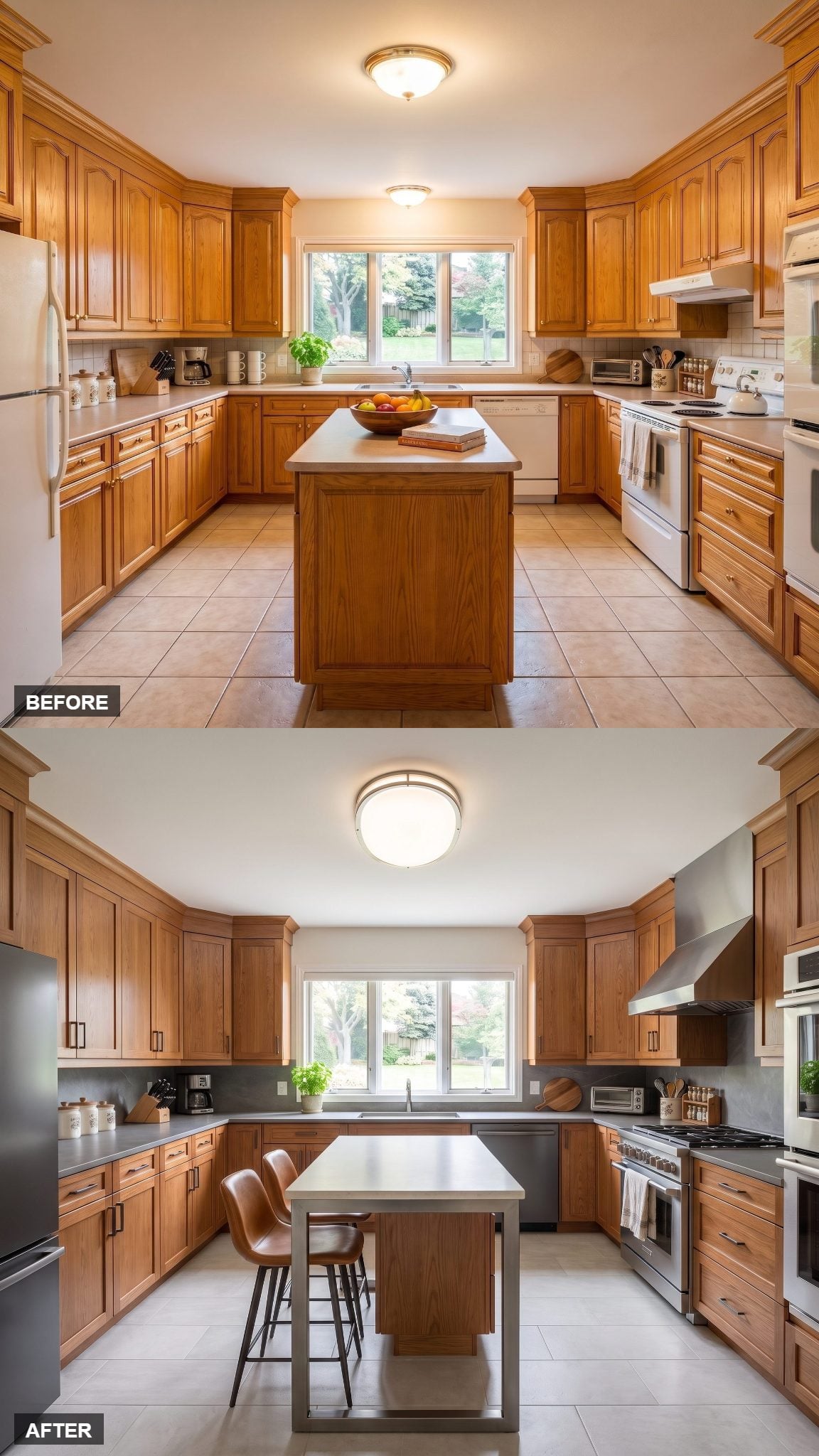
The island’s metallic framework has the crispness of precision engineering. Straight edges and sharply defined connections give the familiar oak panels an unexpectedly industrial setting.
Chestnut grain provides a richly textured contrast to the smooth metal, while the charcoal ceramic worktop introduces a darker intermediate tone. Caramel leather stools repeat the warmth of the wood in a softer material. Rather than disguising the cabinetry, the frame makes its grain part of a distinctly contemporary composition.
15. Pale Oak and Rose-Stone Couture
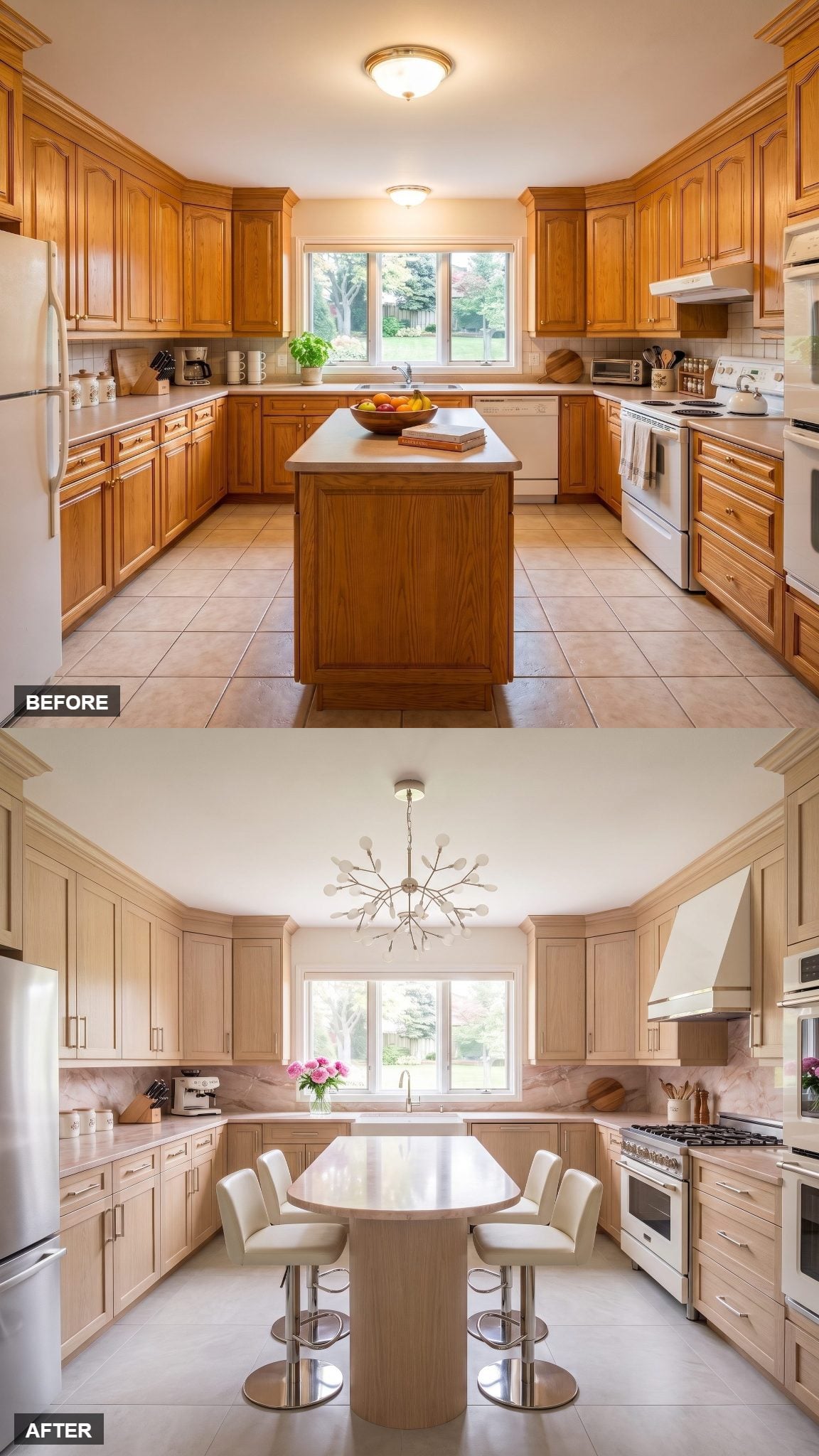
Rose-colored marble brings a surprisingly architectural quality to pink. Its veining moves across the cooking wall in mirrored formations, creating a sense of symmetry that feels more deliberate than decorative.
Polished nickel introduces a cooler metallic note, while pale-wheat oak keeps the room connected to natural materials. The contrast between the marble’s fluid patterns and the cabinetry’s straight lines gives the design much of its character. Pink becomes part of the architecture rather than simply a color applied to it.
14. Smoked Oak and a Sculptural Stainless Cooking Atelier
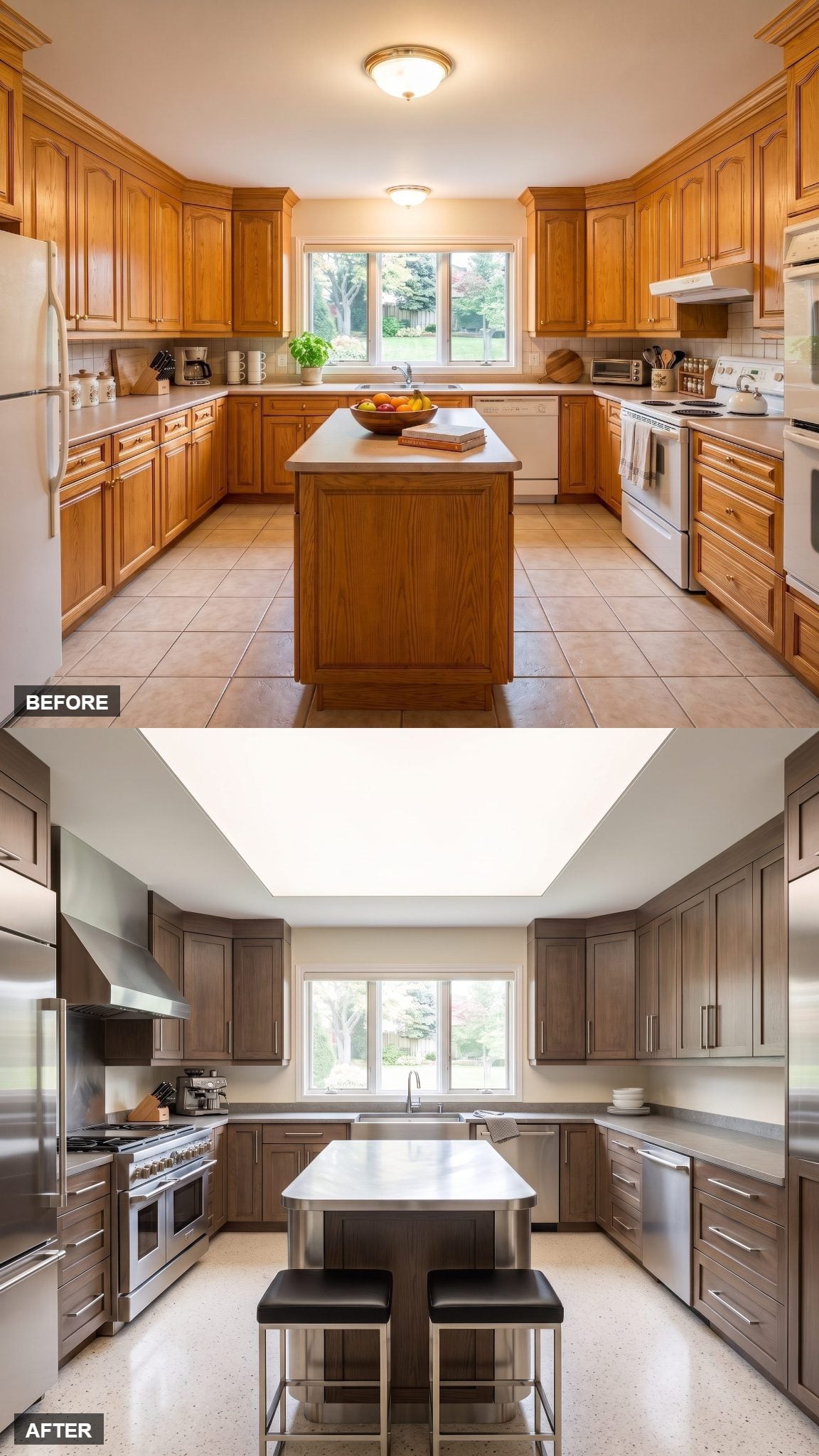
Stainless steel takes on an almost sculptural character when folded into the island’s angular surfaces. Its brushed finish reflects light softly, emphasizing the geometry without creating the mirrorlike glare of polished metal.
Smoked oak gives the kitchen a dark organic counterweight, with the grain remaining visible beneath the tinted finish. An inset oak face breaks up the steel island, while terrazzo flooring introduces a more irregular texture. The composition feels deliberately industrial, but the wood prevents it from becoming impersonal.
13. Natural Oak and a Grand Marble-Mosaic Island
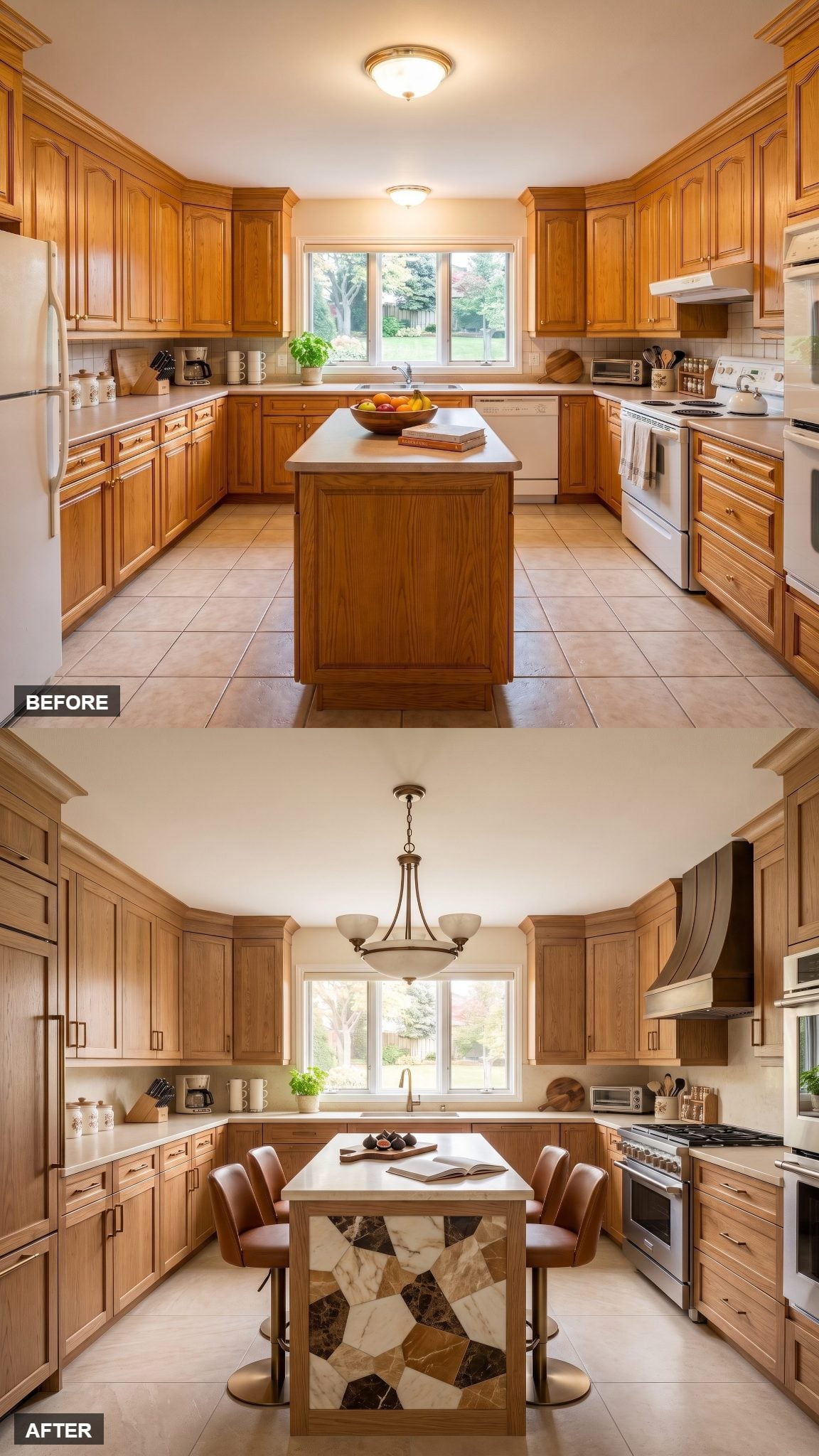
The seating face of this island is assembled like an enormous piece of marquetry, except the material is marble rather than wood. Ivory, caramel, and deep-brown fragments form an intricate composition that gives the island an unmistakable handcrafted character.
The surrounding natural oak offers a quieter, more regular grain pattern, making the mosaic’s irregular shapes particularly noticeable. Because the decoration is concentrated on the vertical island face, the working surfaces remain visually simpler. The result combines the familiarity of timber cabinetry with the detail of a decorative architectural installation.
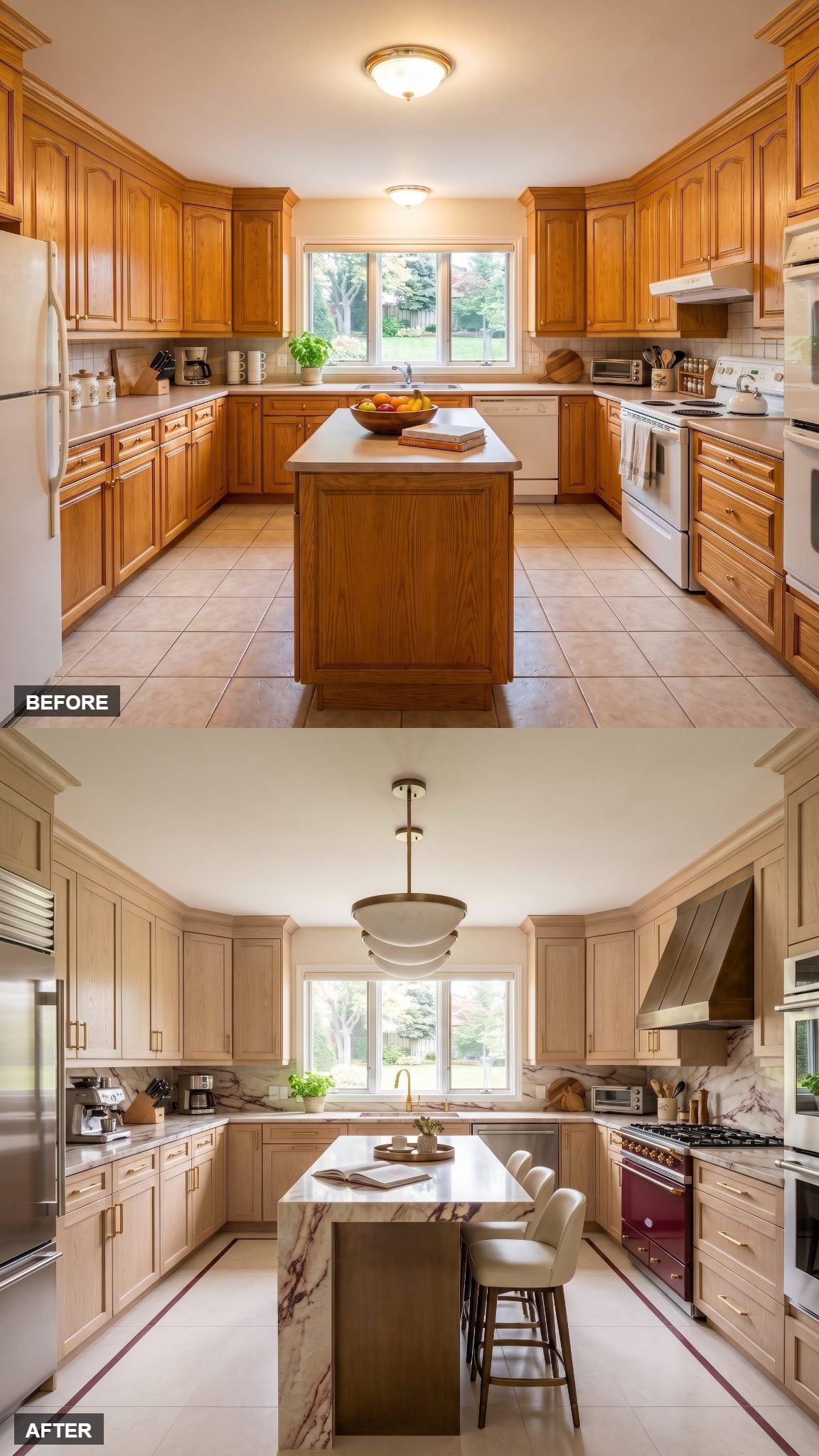
12. Burgundy Quartzite and Bronze Culinary Couture
🔥 Would you like to save this?
Burgundy quartzite transforms the cooking wall into a richly colored geological composition. Cream and oxblood patterns spread across the bookmatched slabs, giving the surface a depth that ordinary painted finishes couldn’t reproduce.
Above the range, a folded-bronze hood adds a second sculptural element, its metallic surfaces responding to the stone’s warm tones. Pale-wheat oak cabinetry provides a lighter framework around the dramatic wall. The transformation is especially effective because the cabinetry still looks like wood, even beside materials that demand so much attention.
11. Oak and Curved Reeded-Stone Sculpture
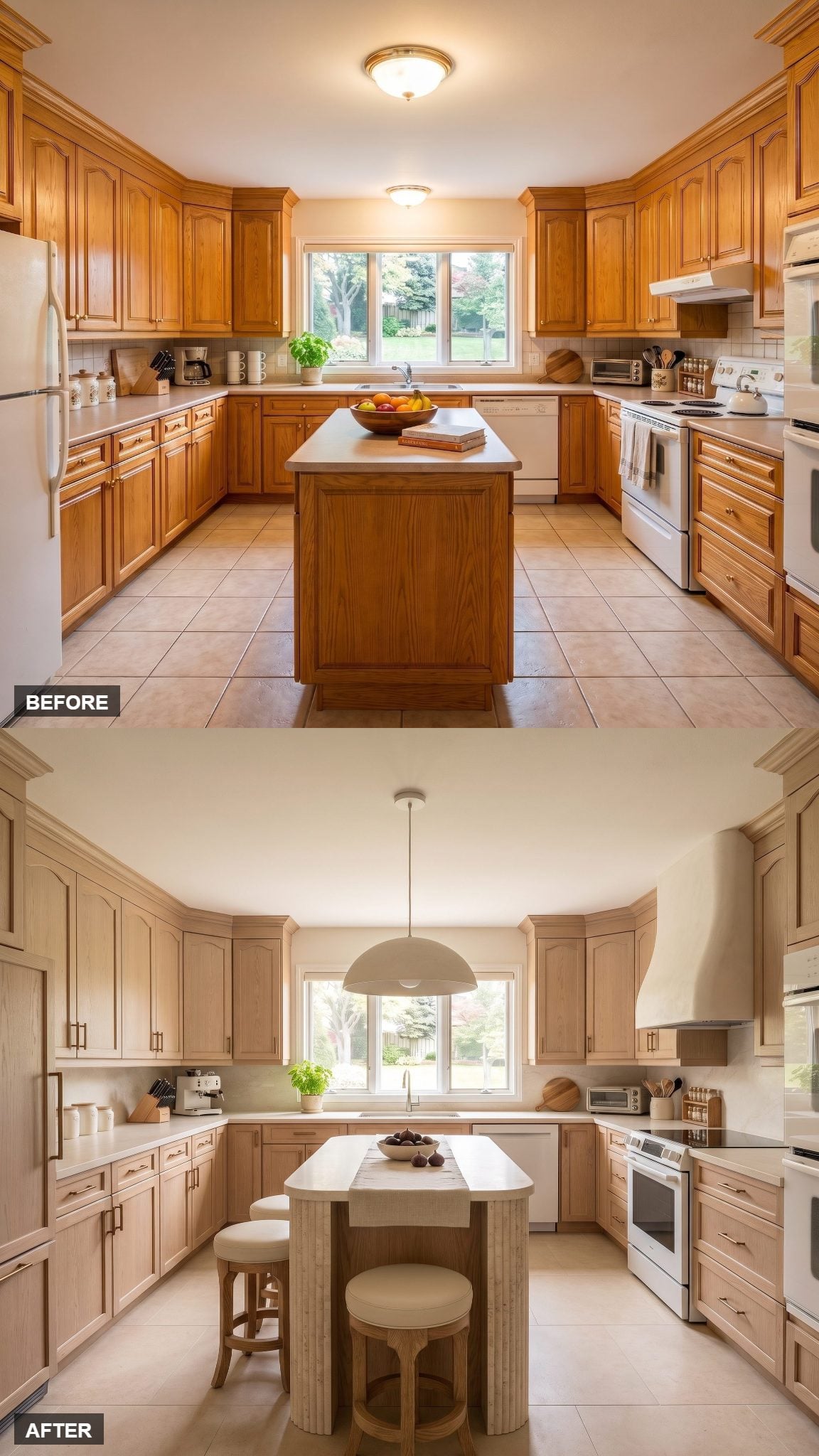
The island’s rounded travertine ends give this kitchen a completely different geometry from its original square-edged cabinetry. Vertical grooves follow the curves, catching light along their ridges and creating a rhythm that changes as the viewpoint shifts.
A softly sculpted plaster hood continues the rounded language above the range. Against these forms, the oak cabinetry provides a useful rectilinear structure. The contrast between straight cabinet lines and curved stone surfaces makes the transformation feel architectural rather than merely cosmetic.
10. Restored Oak and a Monumental Porcelain Art Mural
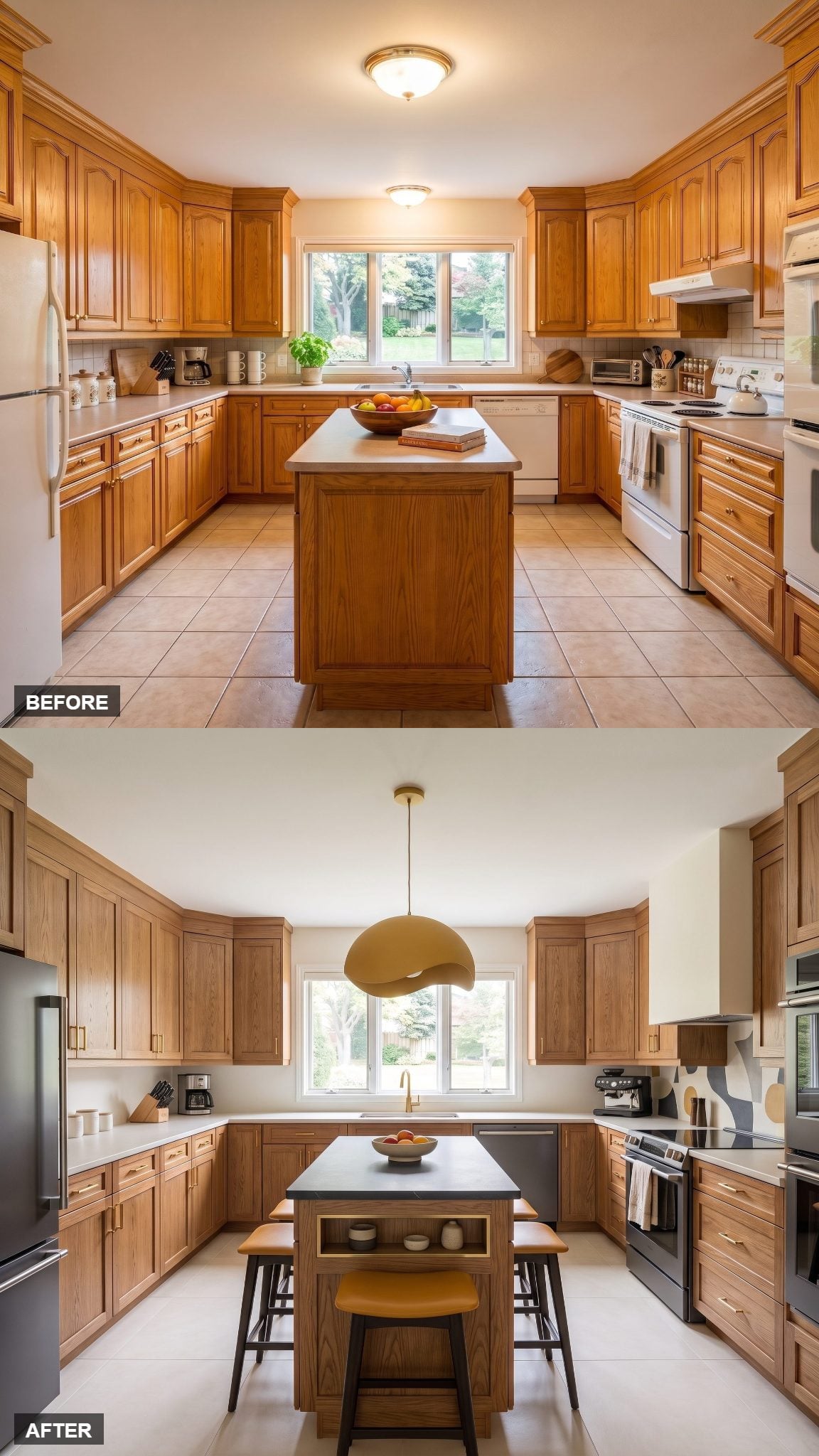
The cooking wall has become a large-scale abstract composition in ivory, charcoal, and muted ochre. Rather than relying on a conventional tile repeat, the porcelain surface presents broad gestures and contrasting shapes that give the room the atmosphere of a contemporary gallery.
Ochre leather stools pick up one of the mural’s warmer tones without duplicating it exactly. The restored oak cabinets provide a natural frame around the artwork, retaining their grain and warmth. It’s an intriguing approach to renovation: preserve the familiar cabinetry, then introduce an entirely new visual identity through the wall behind it.
9. Silvered Oak and Platinum-Glass Architectural Glamour
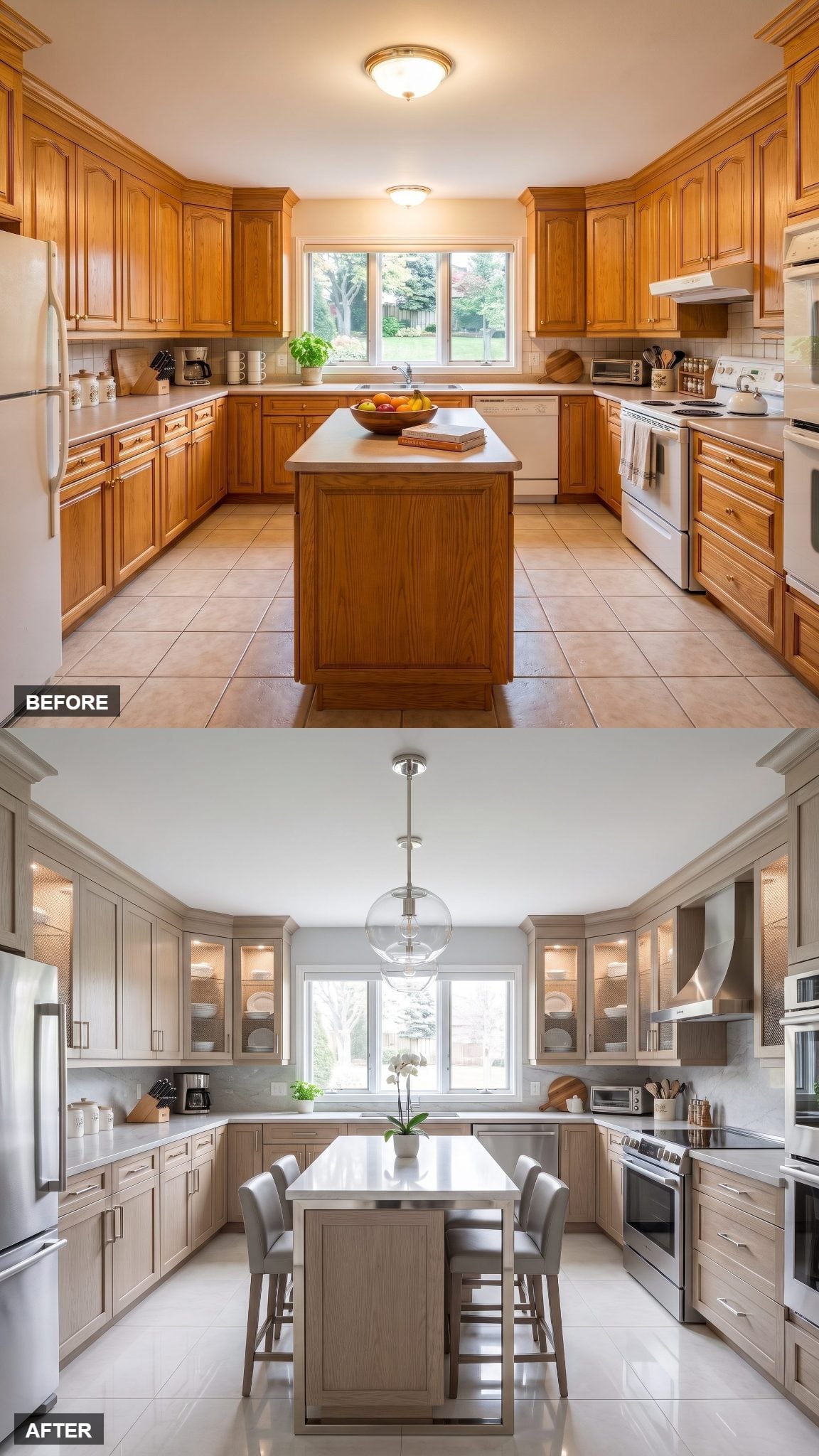
Platinum-toned mesh and glass give the upper cabinets a refined metallic character, particularly when their interior lighting is switched on. Instead of simply revealing the objects behind the doors, the mesh creates a textured screen that changes with the light.
Silvered-beige oak continues the cool palette while retaining the grain that distinguishes natural timber from painted cabinetry. The result has some of the sophistication of a luxury hotel interior, but the underlying cabinet forms remain recognizable. Lighting becomes an architectural material in its own right.
8. Oak and a Concealed Collector’s Library Island
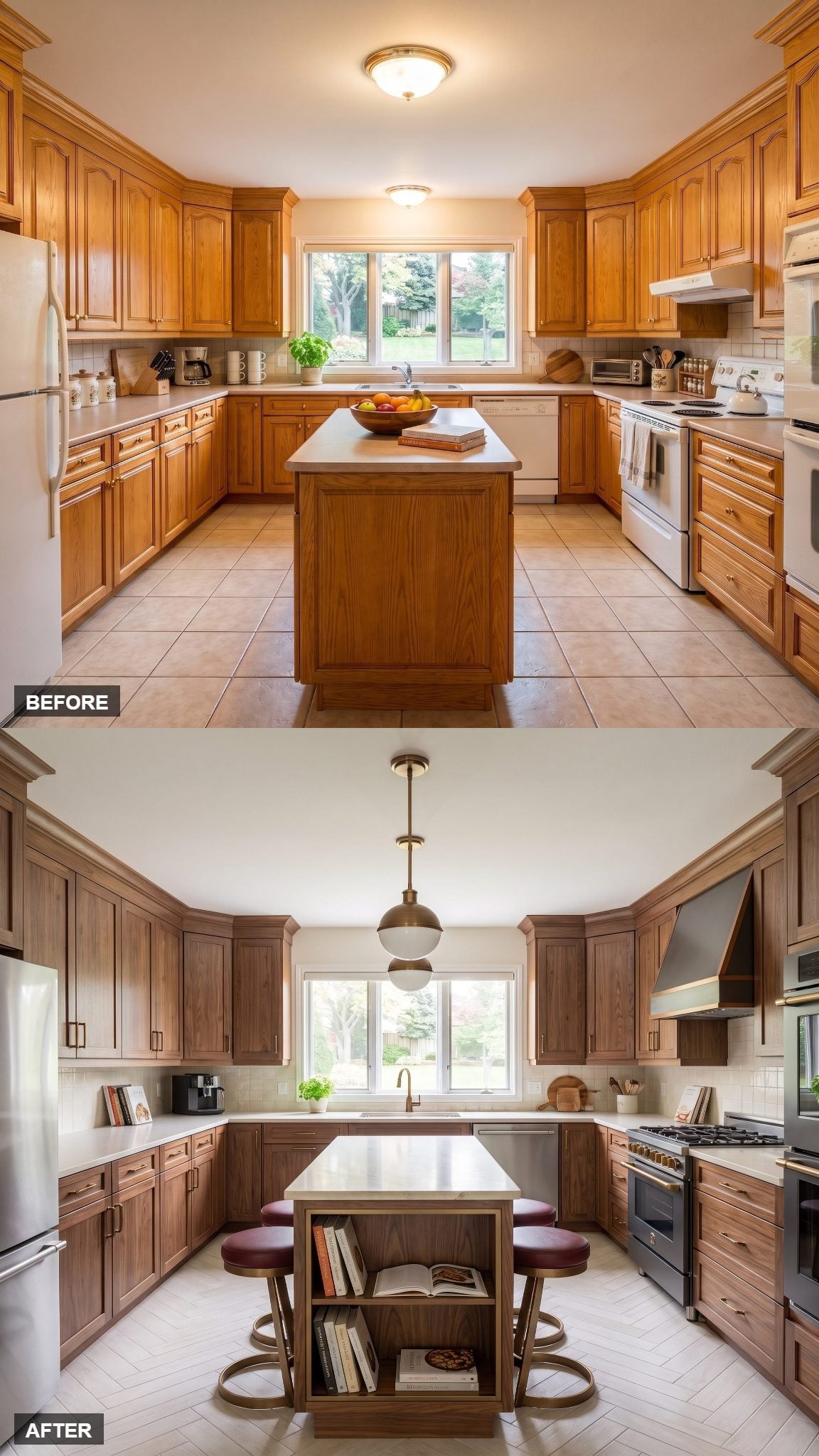
A cookbook collection gives the island a purpose beyond food preparation and seating. Shallow bronze-edged shelves display the books with their spines visible, turning a practical storage requirement into an attractive architectural detail.
Rich-brown oak brings a traditional furniture quality to the island, while burgundy stools introduce a darker, more intimate note. The design feels closer to a beautifully appointed library than a conventional showroom kitchen. It’s also a reminder that preserving cabinetry can be about adapting how the space works, not simply changing how it looks.
7. Olive Quartzite and a Brass-Framed Culinary Wall
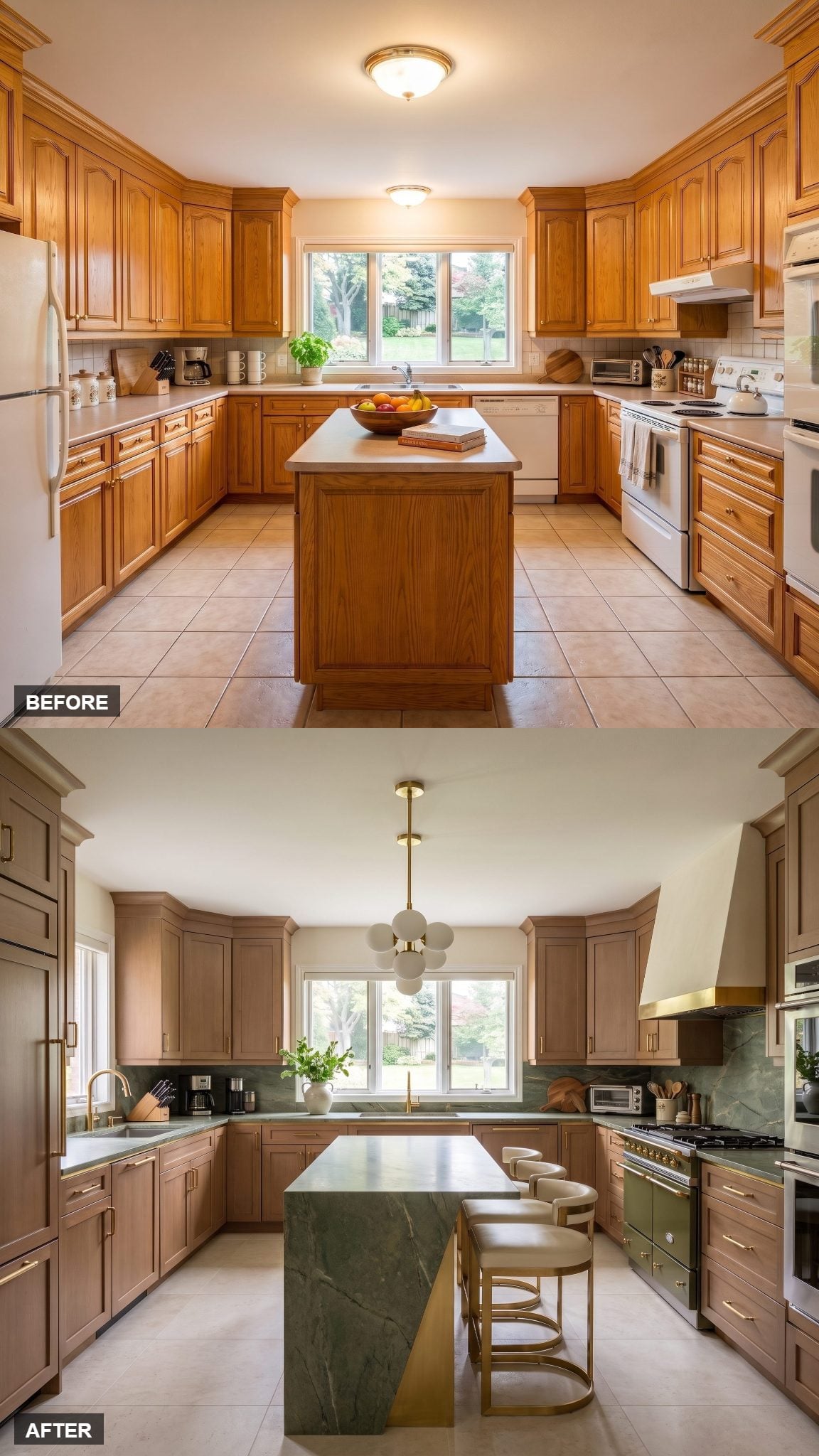
Olive quartzite shifts between gray-green and deeper forest tones depending on the light, giving the cooking wall a subdued but complex color story. Its mineral movement is visible without the high contrast of black-and-white stone.
Slim brass reveals divide the surface into framed sections, emphasizing the size and placement of each slab. The warm metal also connects naturally with the oak cabinetry. Together, the materials produce a kitchen that feels rich in detail without requiring a particularly loud palette.
6. Deep Oak and a Pearl-Enamel Culinary Suite
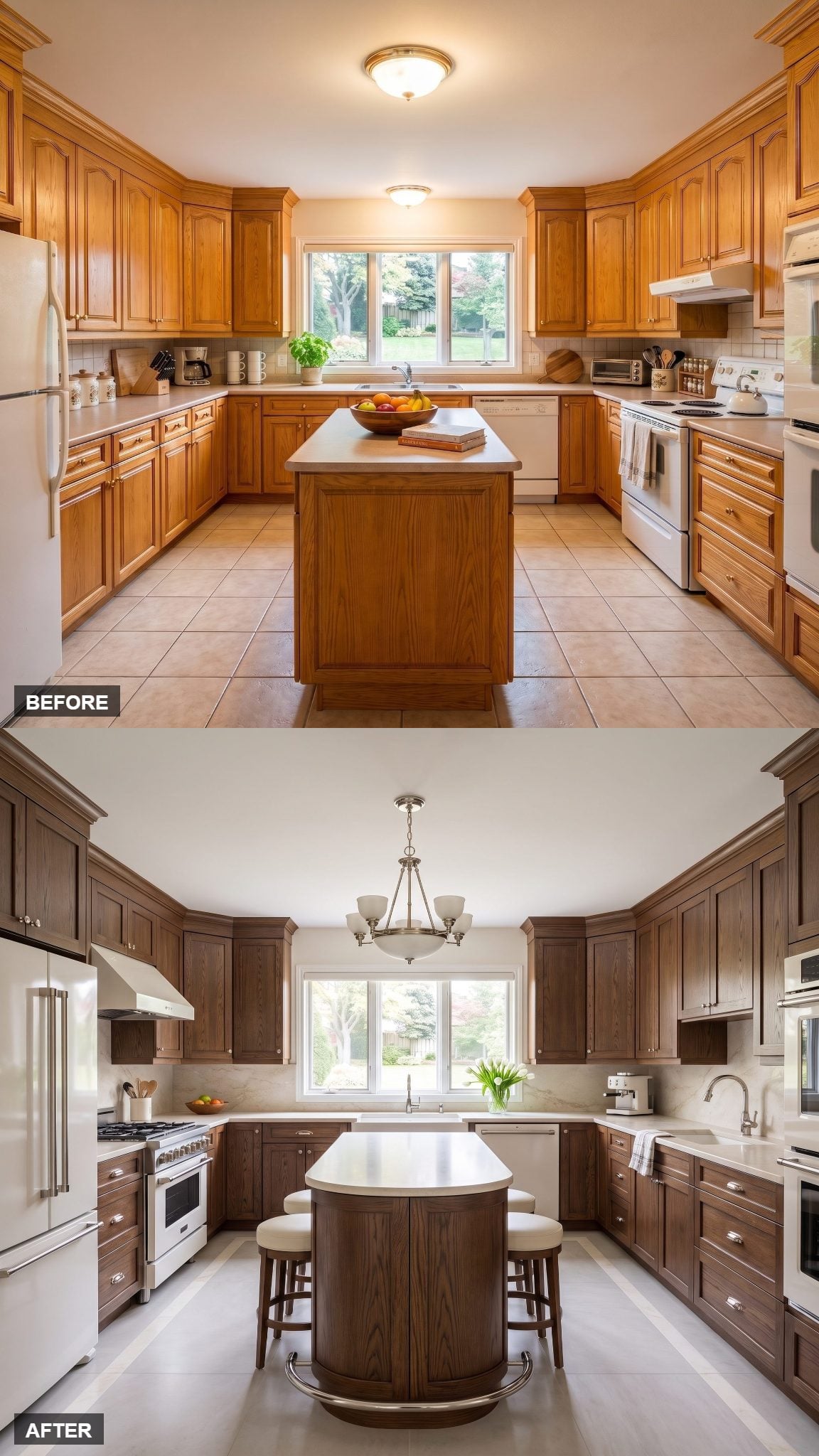
Stainless steel has dominated contemporary appliance design for so long that a pearl-enamel suite feels unexpectedly distinctive. Its pale, softly reflective finish introduces a vintage reference without turning the kitchen into a period reproduction.
Deep-brown oak makes the appliances appear especially luminous. The combination also reverses a familiar kitchen hierarchy: instead of treating the range and surrounding equipment as neutral necessities, the design allows their finishes to become part of the room’s decorative character.
5. Cobalt Enamel and an Ivory-Stone Cantilever
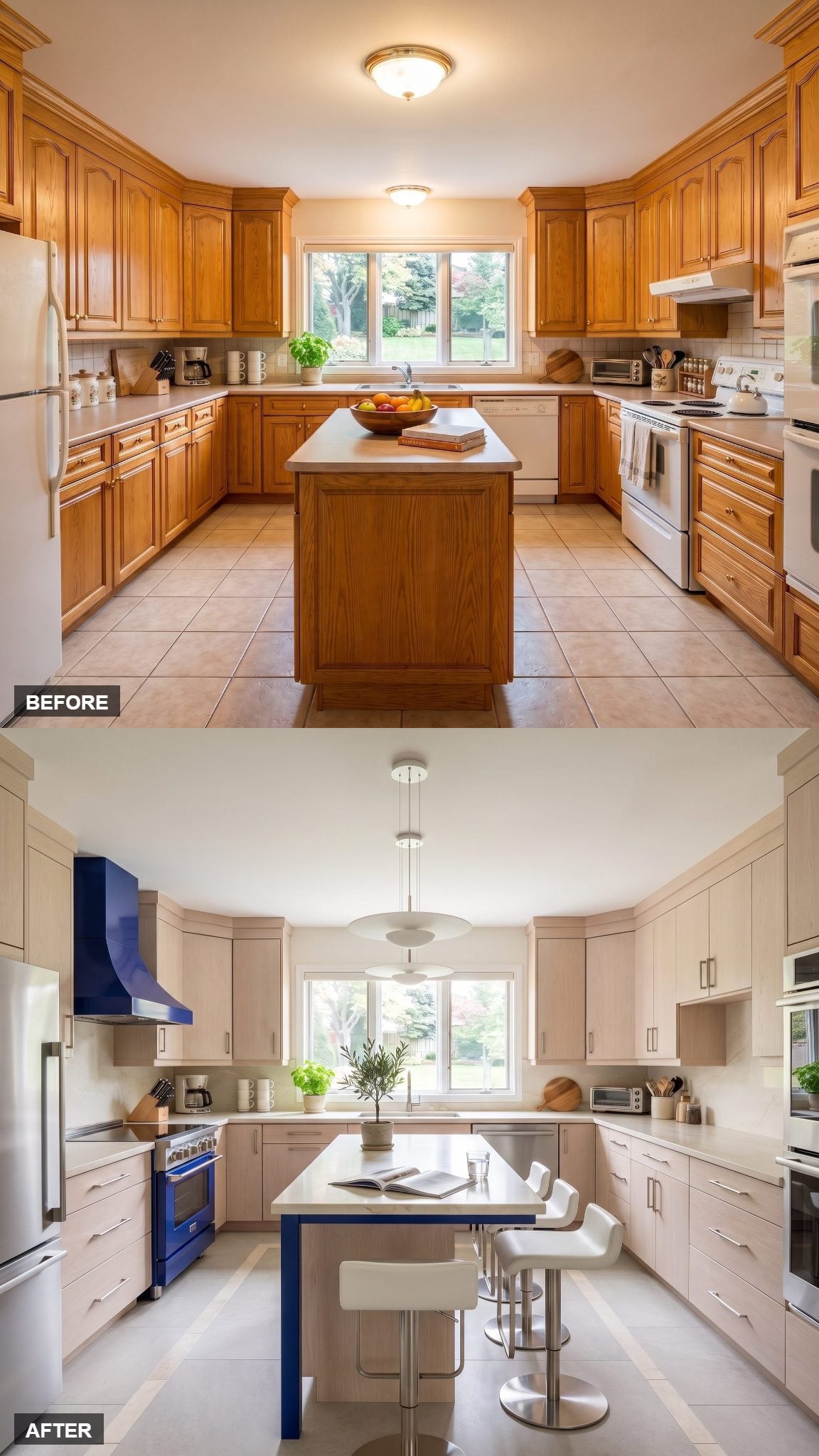
Cobalt blue gives the range an almost electric presence. Its saturated enamel finish is echoed by the sculptural hood, creating a deliberate relationship between the two major elements of the cooking wall.
Ivory stone and pale limed oak provide a much lighter setting. At the island, a projecting stone cantilever introduces another strong architectural gesture, this time through shape rather than color. The kitchen manages to combine a vivid appliance with an ambitious island without losing the natural warmth of its cabinetry.
4. Wheat Oak and Architectural Art-Glass Cabinetry
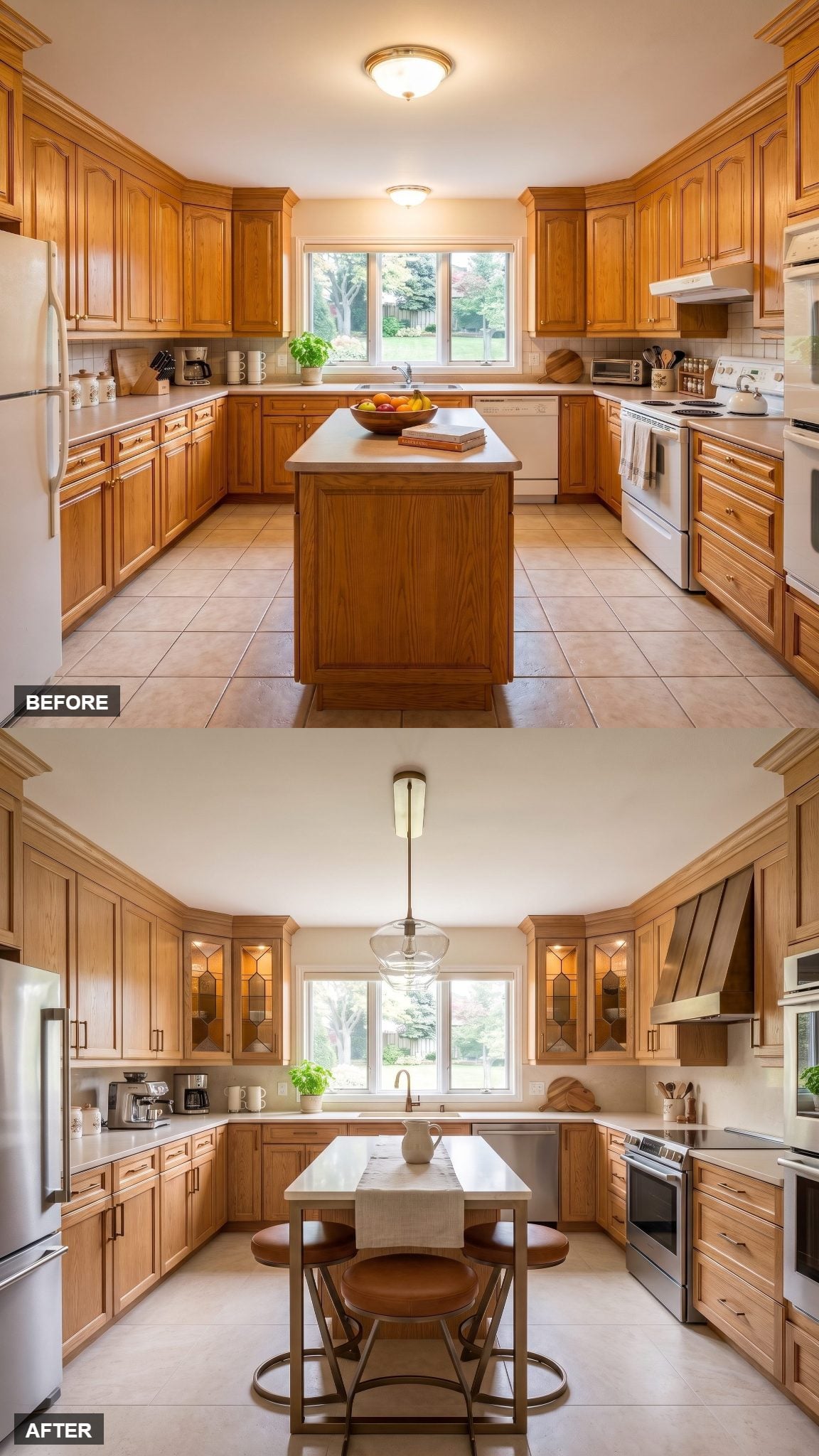
Amber and smoke-colored art glass transforms the upper cabinets into a series of softly glowing panels. Their color and translucency create a more decorative effect than ordinary clear or fluted glass, particularly after dark.
The oak door frames provide a warm border around each illuminated section. Cognac leather stools and a folded-bronze hood reinforce the amber palette, connecting the cabinetry with the larger room. It’s a striking illustration of how much character can be introduced through selected cabinet fronts while retaining the broader kitchen layout.
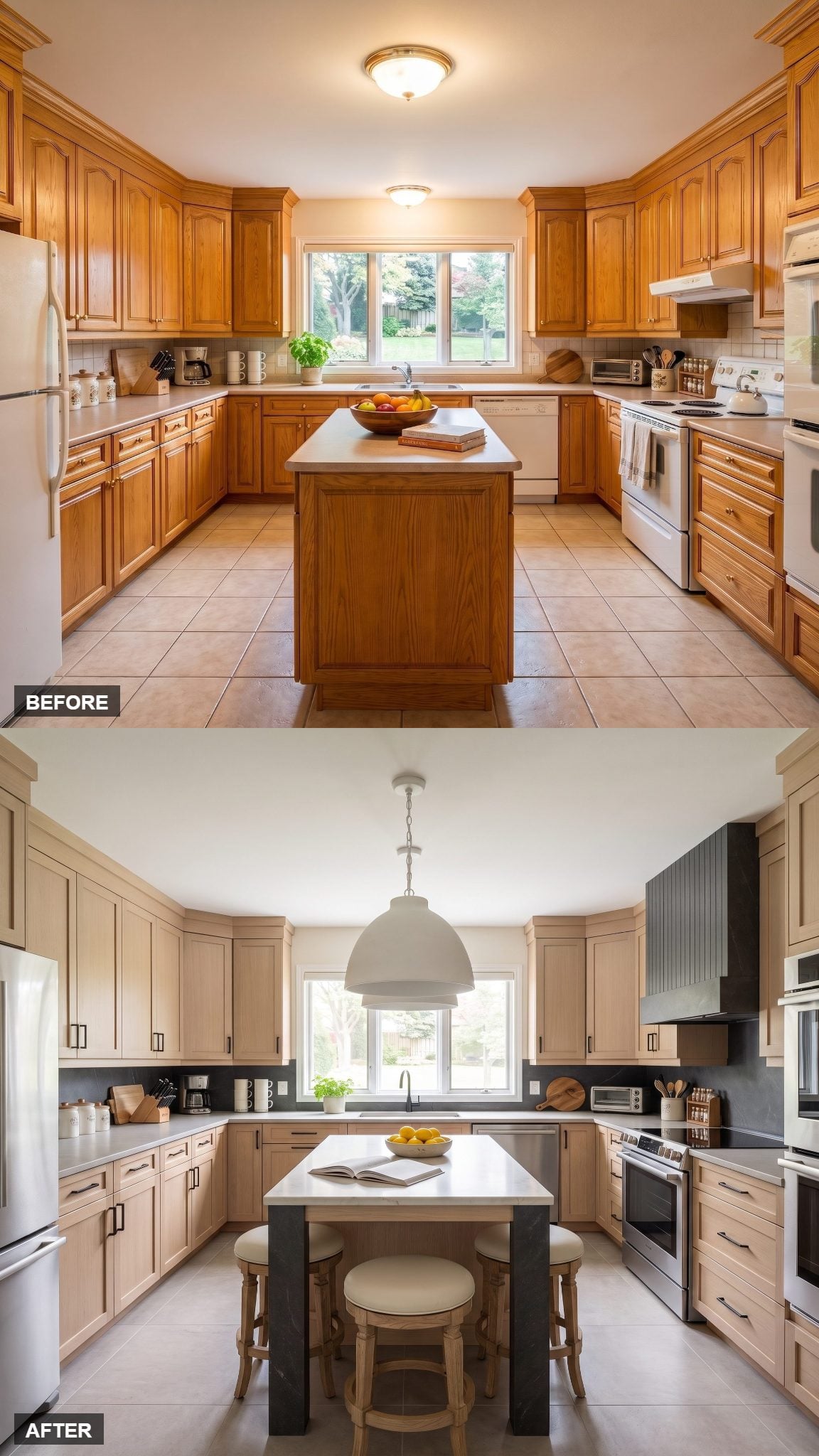
3. Pale Oak and a Sculptural Basalt Cooking Wall
🔥 Would you like to save this?
Charcoal stone gives the cooking wall a commanding presence, its dark surface standing in sharp contrast to the pale wheat-oak cabinetry. The material’s visual weight is considerable, but the surrounding wood keeps the room from becoming oppressive.
Vertical grooves on the upper hood introduce texture at a carefully chosen location, while a substantial white plaster pendant brings brightness and a softer shape into the composition. The design depends on the relationship between dark mass, pale timber, and sculptural light.
2. Espresso Oak and a Luminous Onyx Jewel Island
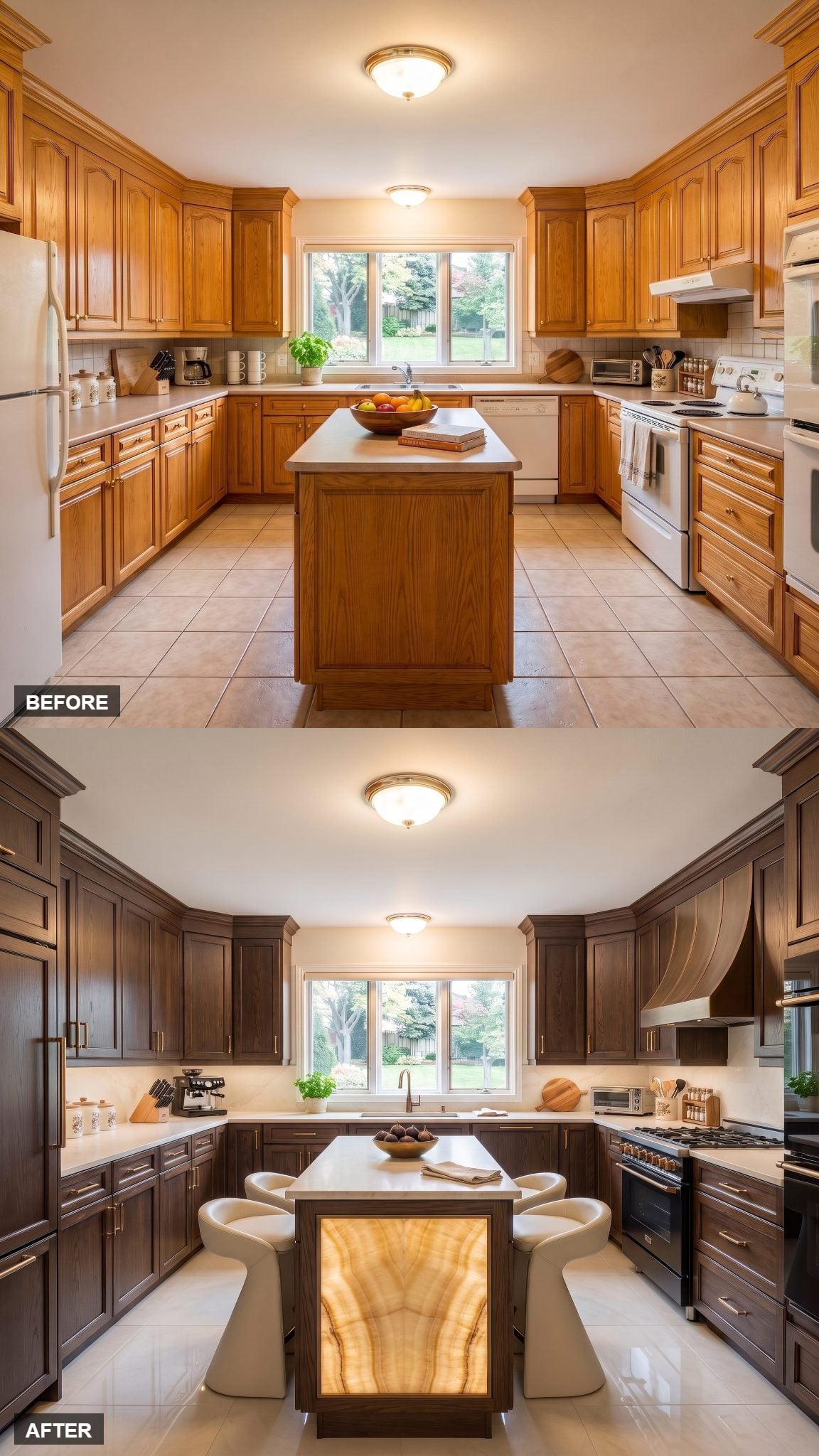
Backlit onyx turns the island into an extraordinary source of color and light. Its translucent mineral patterns become more pronounced when illuminated from behind, creating a warm glow that seems to originate within the stone itself.
Espresso oak gives the surrounding kitchen a deep, substantial character. During daylight, the onyx reads as a richly patterned natural surface; after dark, the illuminated panel changes the room’s atmosphere. Few materials offer such a dramatic transformation between day and evening, particularly when paired with cabinetry that remains deliberately understated.
1. Restored Oak and a Dramatic Breccia-Stone Masterpiece
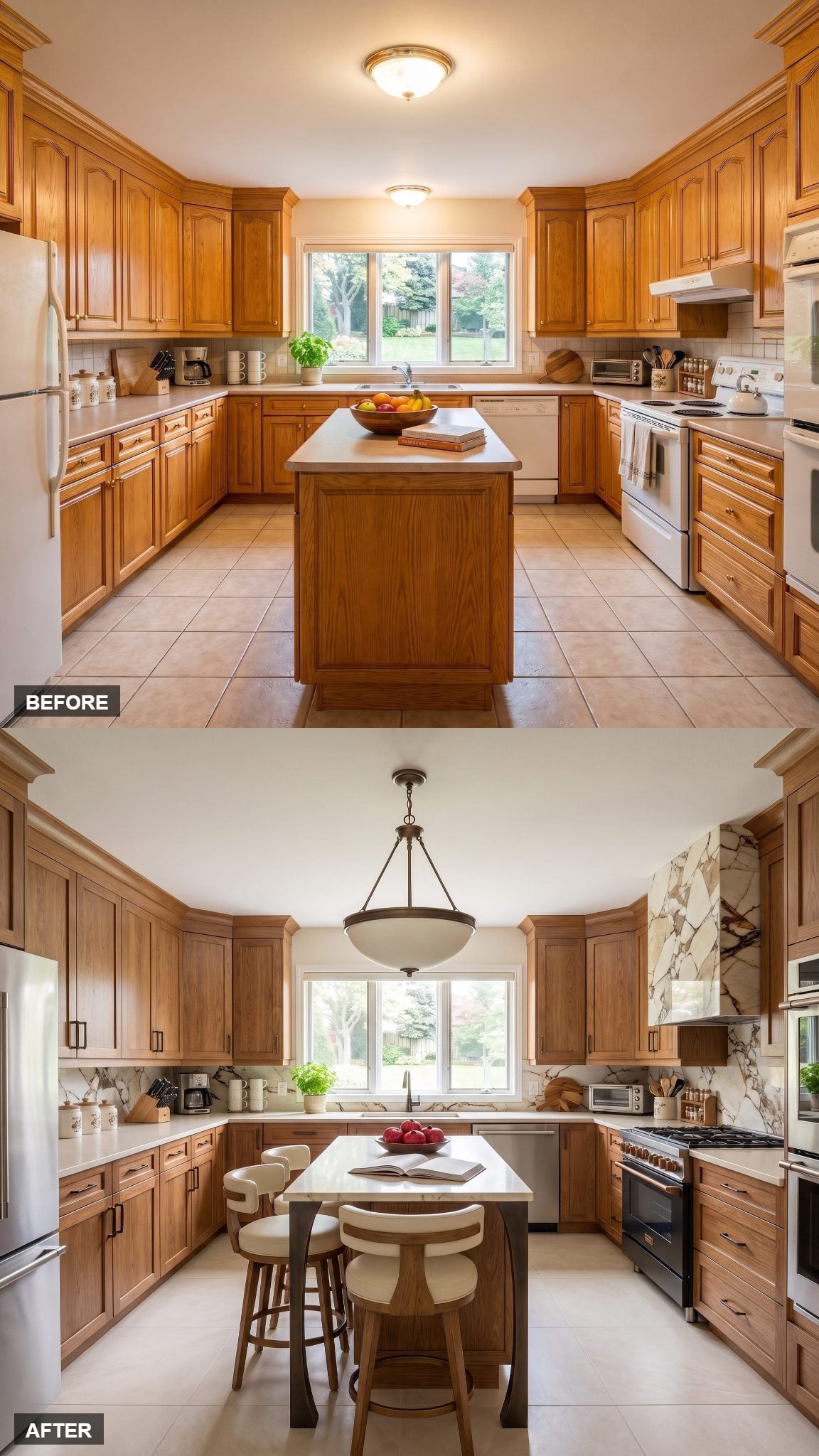
Breccia has a visual character unlike the flowing veins of conventional marble. Its angular fragments appear to have been broken apart and reassembled, producing a dramatic pattern of ivory, brown, and charcoal shapes. Here, that fractured geometry climbs the entire cooking wall and continues across the hood.
Against such an assertive surface, the restored medium-brown oak becomes particularly important. Its grain introduces a different kind of pattern, one that’s smaller in scale and more regular. Plain cream countertops create breathing room between the two materials, while curved oak chair backs add a softer furniture detail.
It’s a remarkable final transformation because the kitchen looks nothing like the dated room that inspired it, yet the oak remains an essential part of the design. The cabinetry hasn’t been treated as something to hide or apologize for. Its warmth, grain, and familiar proportions help make an exceptionally dramatic renovation feel like a place where someone might actually want to cook.