
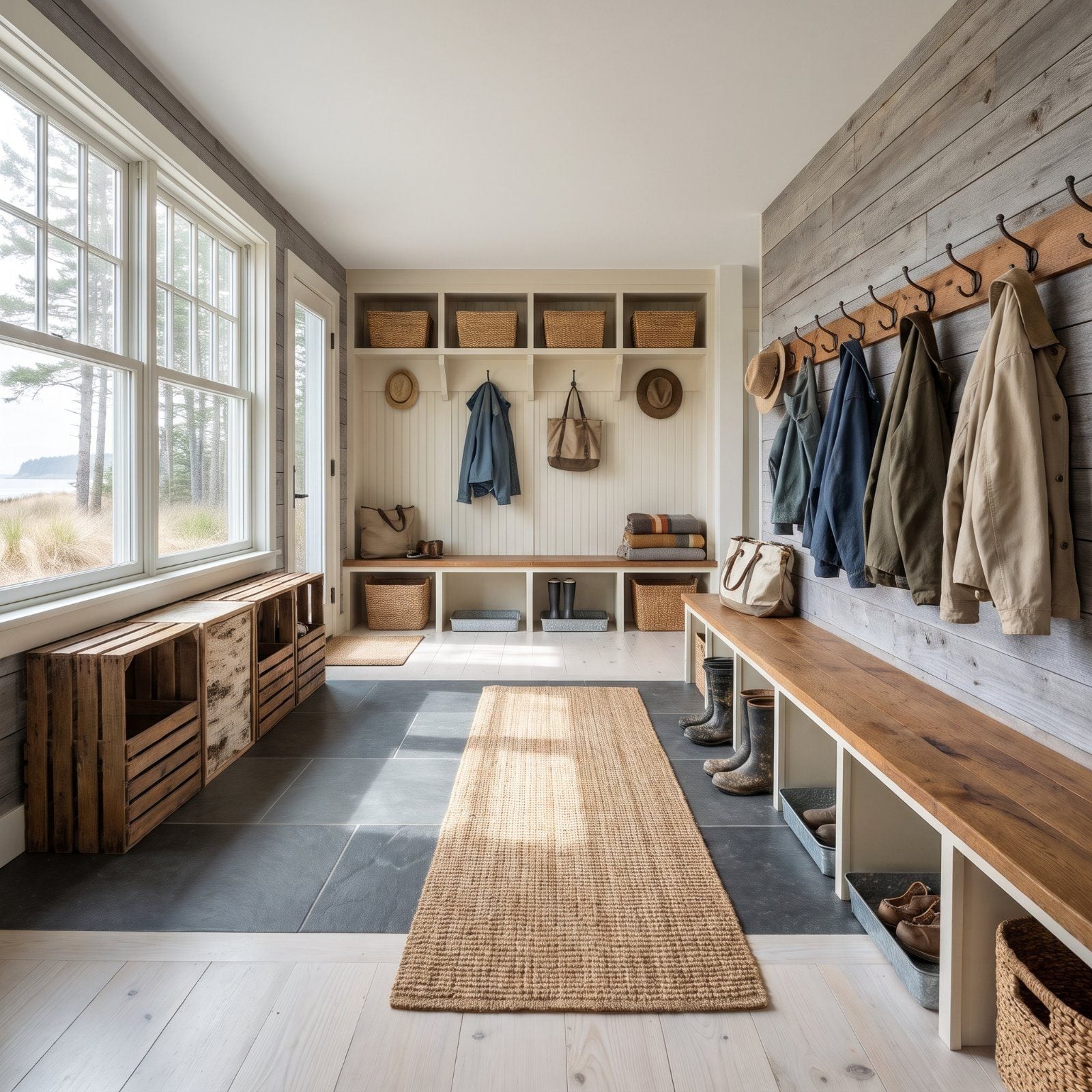
The mudroom is where a house tells the truth about where it lives. A boot room on the Maine coast has nothing to say to a drop zone behind a Manhattan pocket door, and both would laugh at a Chesapeake crab-pot wall. We pulled together entries from different corners of the country, each one shaped by what comes through the door: salt spray, snowmelt, sand, firewood, a dripping umbrella. No two solve the same problem. Every one earns its square footage. Here’s how climate, architecture, and the gear people actually own change what a mudroom becomes.
49. Maine Coast Boot Room With Lobster-Crate Cubbies
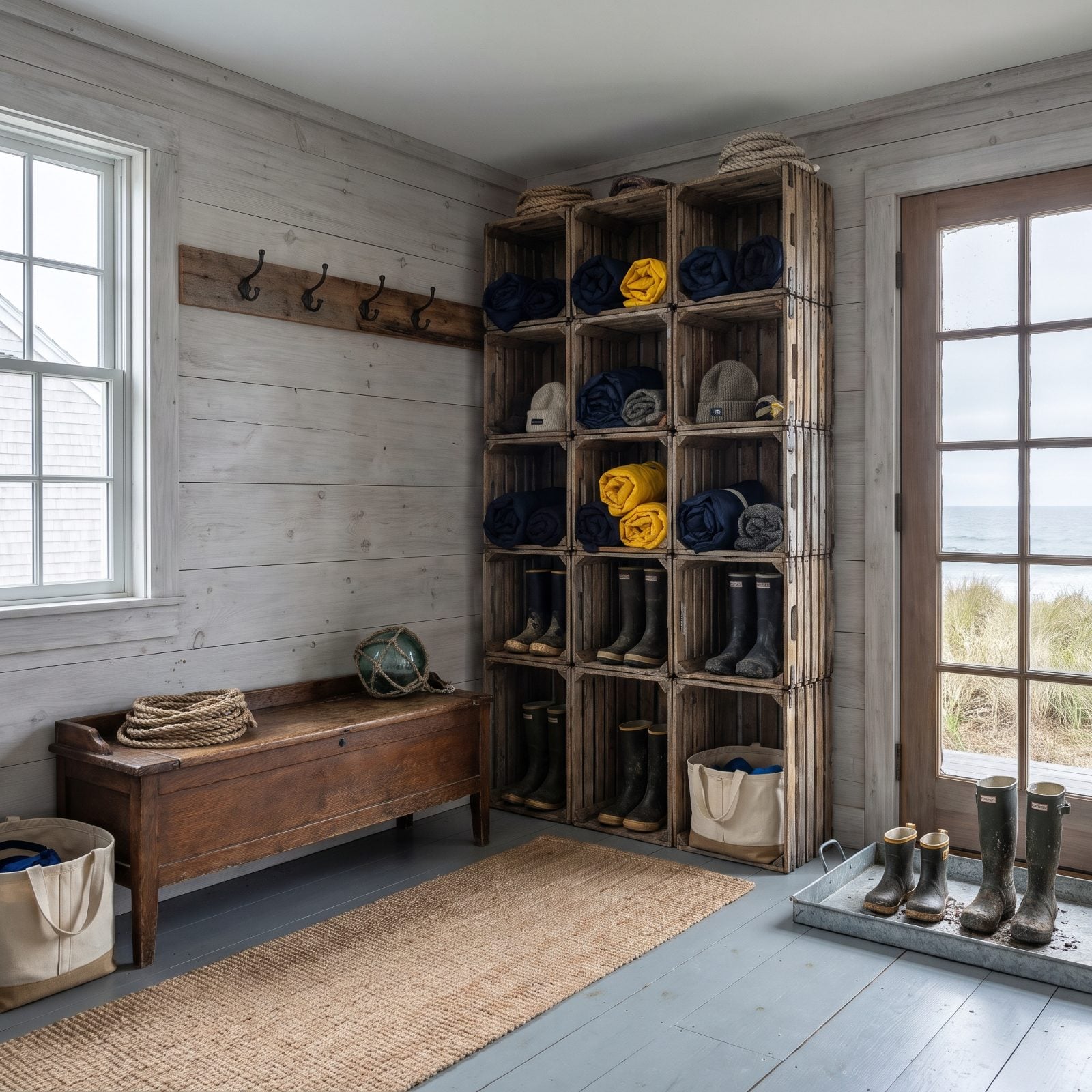
Those lobster crates aren’t a theme. They’re the right size for wet gear and they breathe, which matters when everything through the door arrives damp with salt. The faded gray wood already looks like it belongs, because on this coast it does.
In order to come up with the very specific design ideas, we create most designs with the assistance of state-of-the-art AI interior design software. Also, assume links that take you off the site are affiliate links such as links to Amazon. this means we may earn a commission if you buy something.
The foggy blue floor keeps the room reading soft even under flat overcast light, and that’s deliberate — coastal daylight runs cool and even, so a warmer floor would just pick a fight with it.
48. Vermont Ski-Country Mudroom With Heated Stone Floors
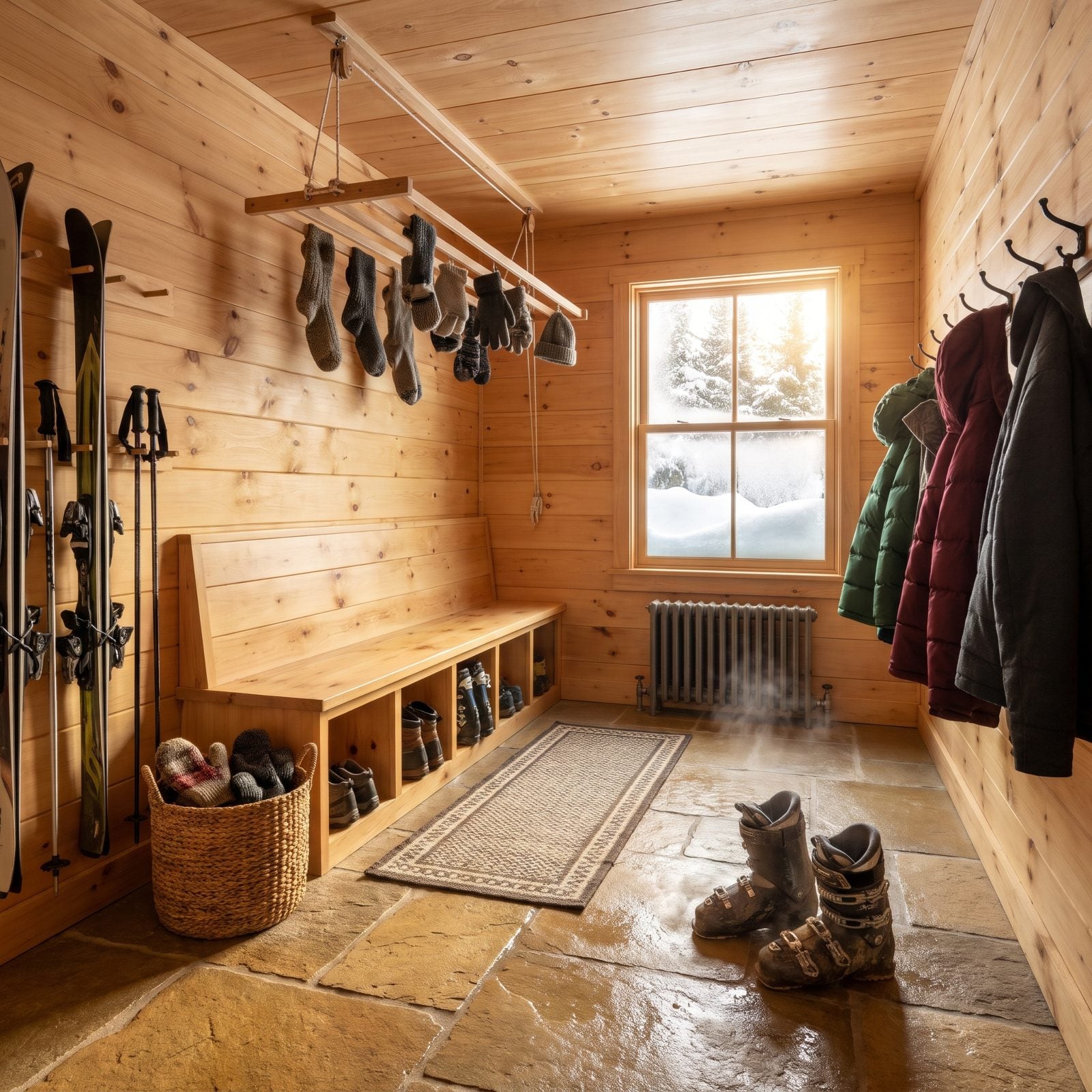
Heated stone is the unsung hero of any house above the snow line. Ski boots come in frozen solid, and by the time you need them again the floor has dried them from the sole up with nobody tracking slush into the kitchen.
The honey flagstone and knotty pine keep everything warm-toned, which matters when it’s gray and white outside for five months straight. A craftsman mudroom like this earns every inch when it’s catching skis, poles, and six pairs of soaked boots.
47. Cape Cod Sand Room With a Beach-Gear Shower
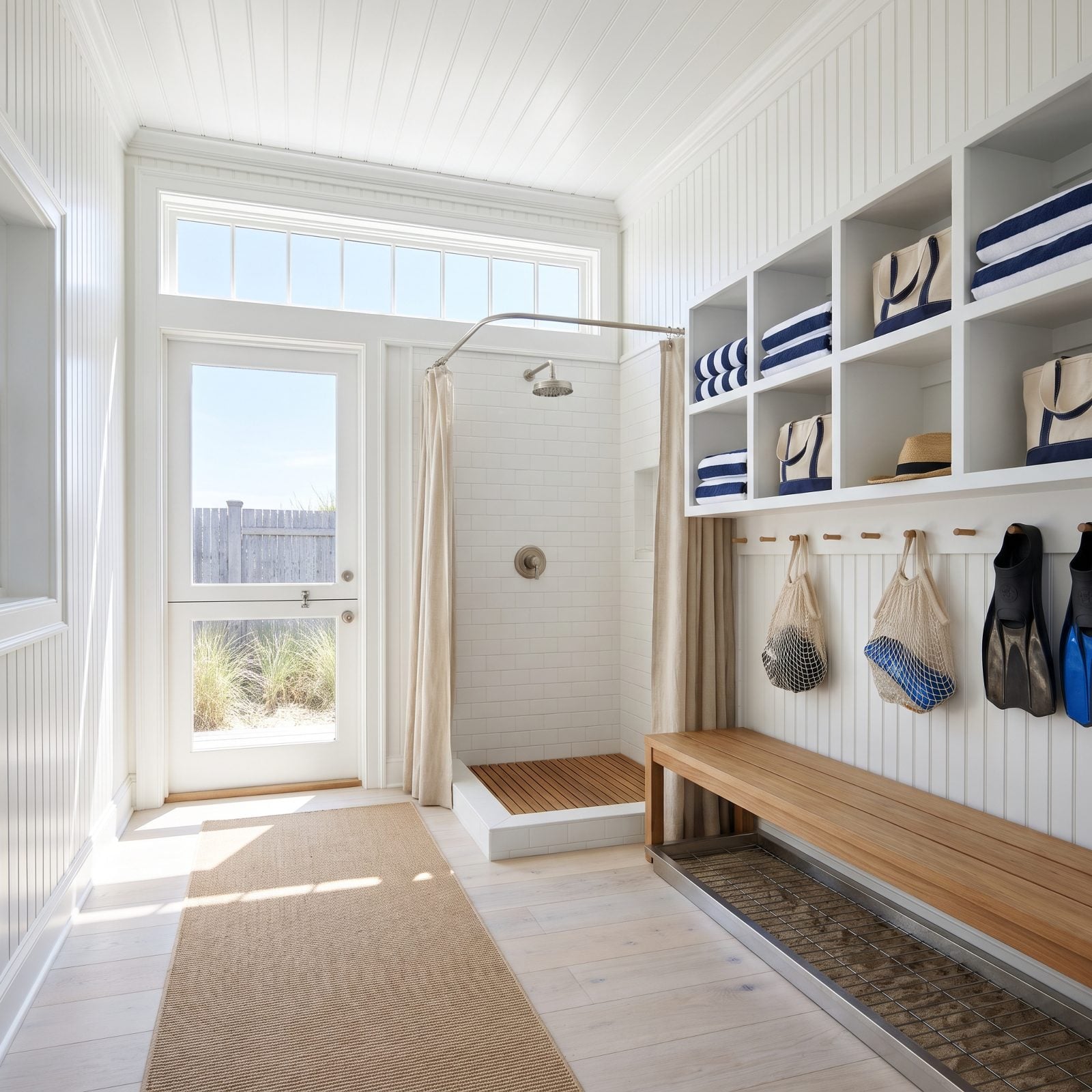
A rinse shower right at the entry is the one upgrade every beach house secretly wants and most never build. Sand, salt, and sunscreen stop at the door instead of migrating to the shower upstairs.
Teak slats drain fast and never rot. White beadboard bounces the Cape light around until the whole room feels like the inside of a shell.
46. Boston Brownstone Micro-Mudroom Beneath the Stairs
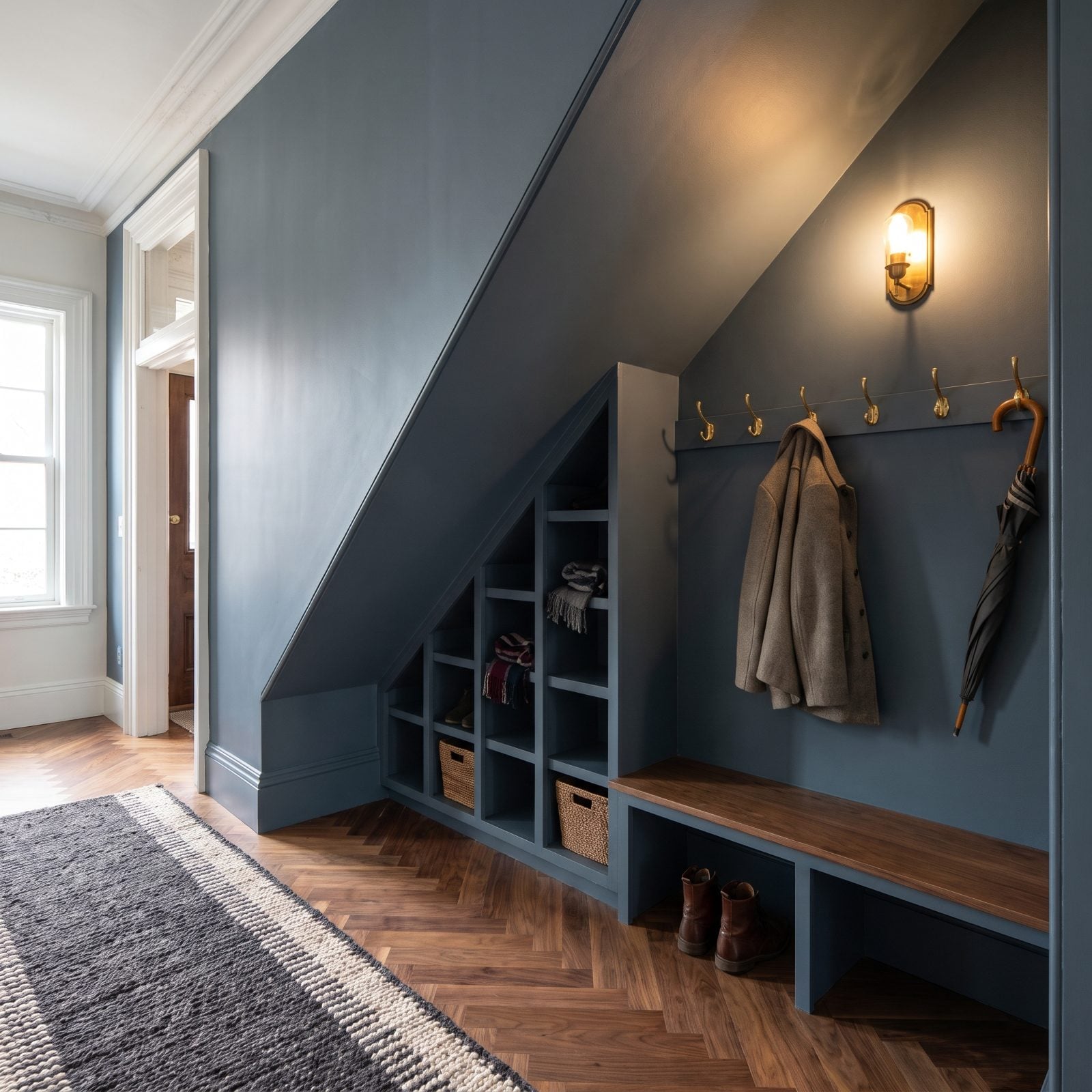
City houses don’t waste a cubic foot, and the space under the stairs is usually the biggest dead zone in the building. Here it becomes graduated cubbies that step up with the staircase, fitted so precisely they look poured in.
That saturated slate blue is the smart move. In a small, dim nook, a deep color reads intentional where white would just read cramped. A brass sconce and some brass wall hooks keep the whole thing feeling finished rather than apologetic.
45. Connecticut Colonial Mudroom With a Boot-Scraping Vestibule
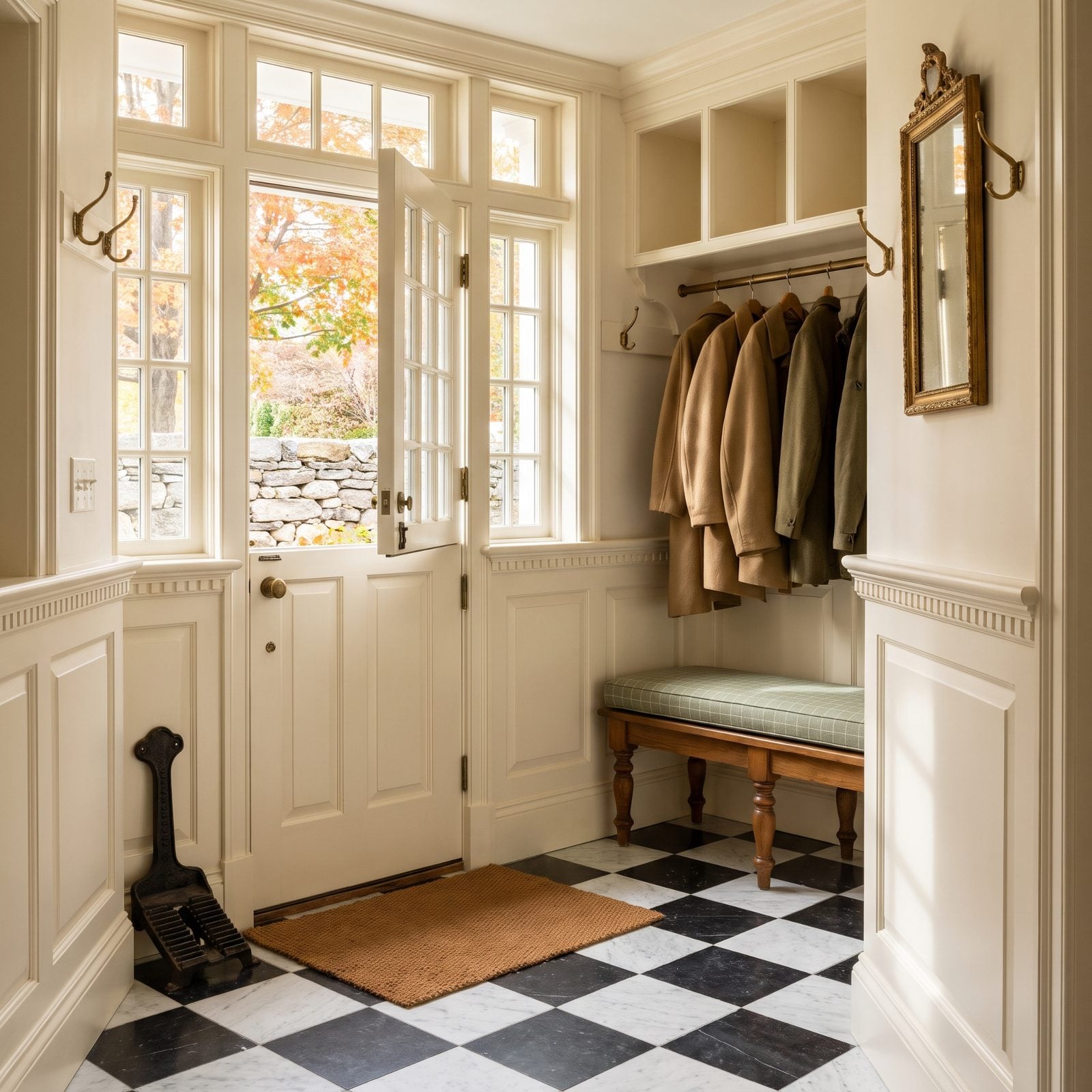
The boot scraper by the door earns its keep — no dress-up here. Connecticut mud in spring and leaf-mush in fall both stay in the vestibule where they belong.
Checkerboard marble is the right floor for a Colonial because it hides nothing and cleans in one pass. Pair it with sage-checked cushions and a Dutch door and the room feels like it’s been standing two hundred years, which is exactly the idea.
What Our Readers Say
- When we asked Home Stratosphere readers which doormat they would put down, rubber, layered and coir came out as a near coin toss, so pick whatever suits your mud.
- Asked which bench they would buy for beside the front door, our readers narrowly leaned toward a hall tree at 35%, just ahead of storage and upholstered benches.
From Home Stratosphere reader polls and votes.
44. Adirondack Camp Entry With Birch-Bark Storage
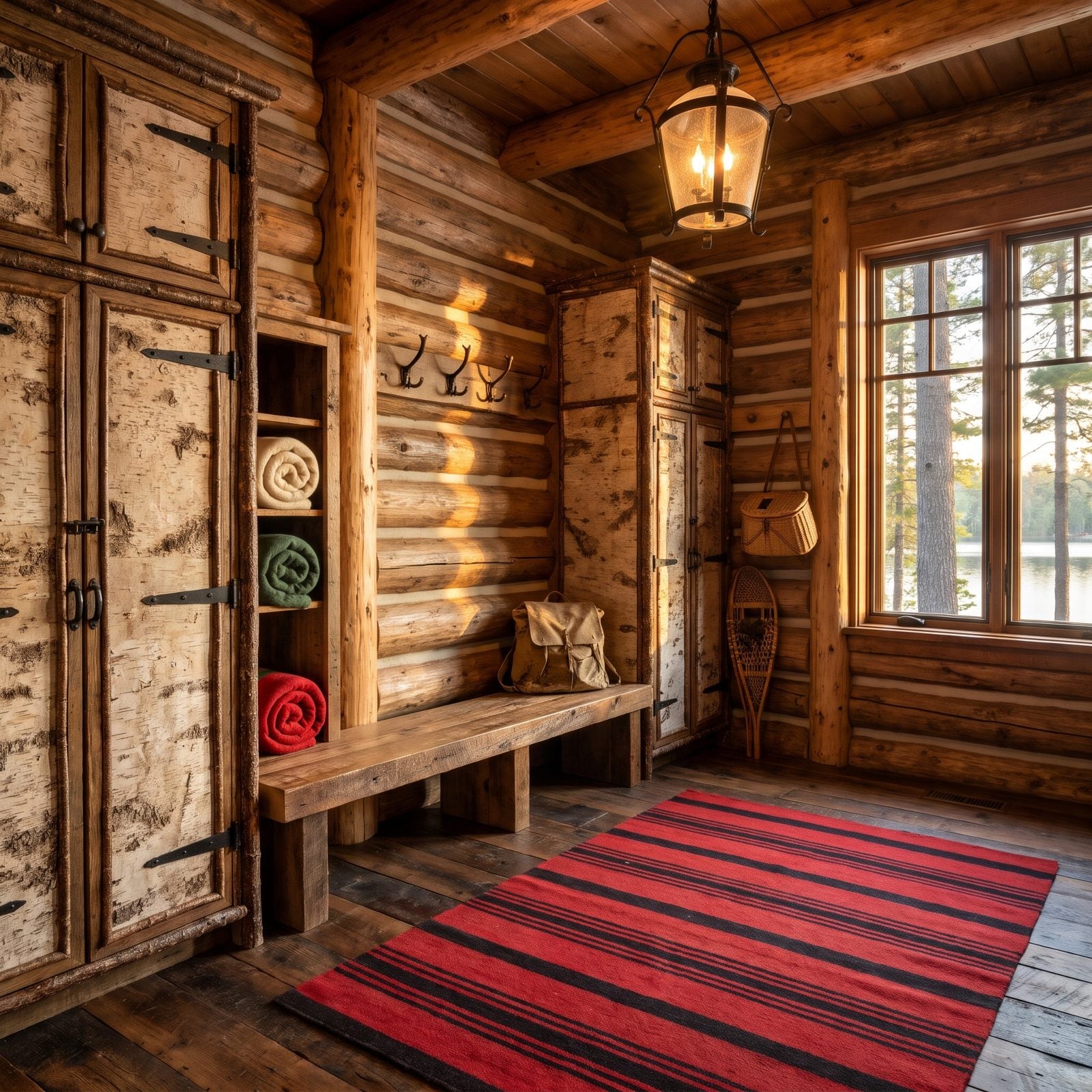
Birch-bark cabinet faces are pure Great Camp tradition, the rustic style the Adirondacks basically invented in the 1800s. That papery texture catches warm light and makes the whole corner feel like a hunting lodge even when it’s only holding snowshoes and a pack basket.
43. New York City Apartment Drop Zone Behind Pocket Doors
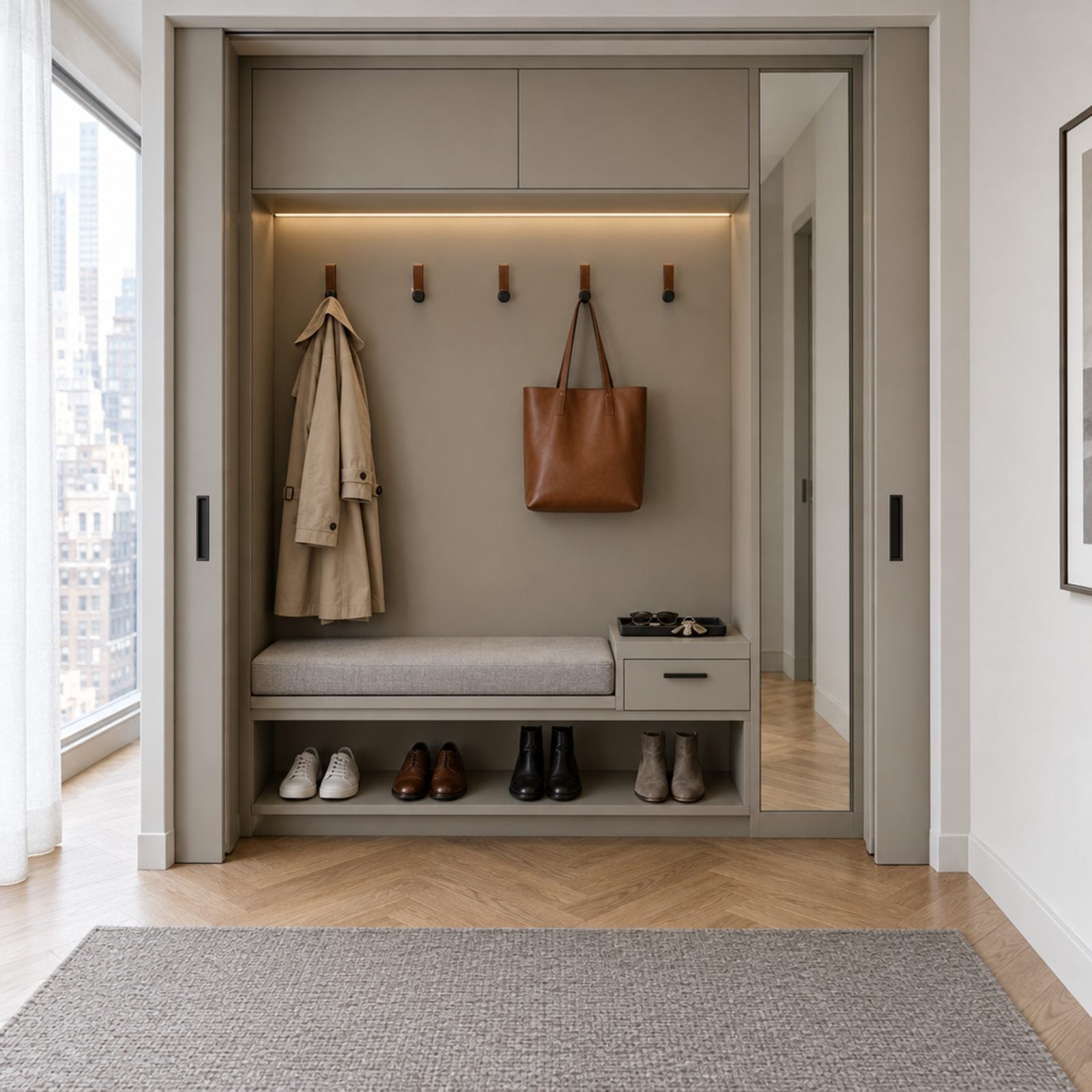
No apartment has a mudroom, so you build one into the wall and hide it. Slide the tall pocket doors open and there’s a bench, hooks, a shoe cubby, a charging drawer. Slide them shut and the entry reads as clean millwork.
The matte greige on both the doors and the unit is what makes it disappear — same color, flush face, and the whole thing melts into the hallway until you need it.
42. Philadelphia Rowhouse Mudroom in a Glassed-In Rear Addition
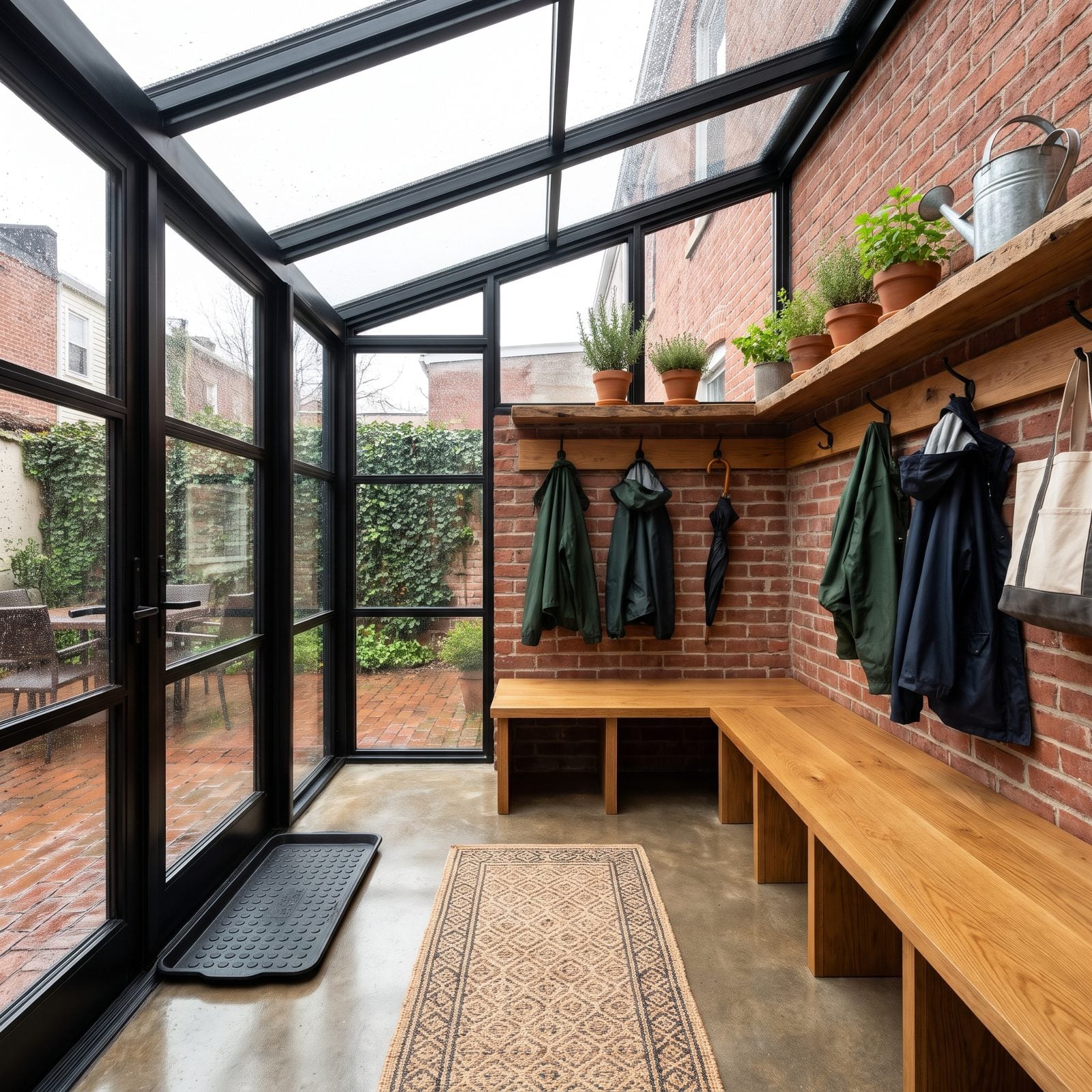
Rowhouses run deep and dark, so bolting a glass box onto the back solves two problems at once: it catches light and it catches the mud before any of it reaches the original floors.
Leaving the old brick wall exposed as the back of the addition is the move here. New steel-framed glass against hundred-year-old brick gives the room its whole character, and the black iron coat hooks tie the two eras together without straining for it.
Glass pays off with readers too: entryways with a wall of windows earned more hearts from Home Stratosphere readers than the other images in the same articles.
41. Pocono Mountains Mudroom With a Woodstove Drying Corner
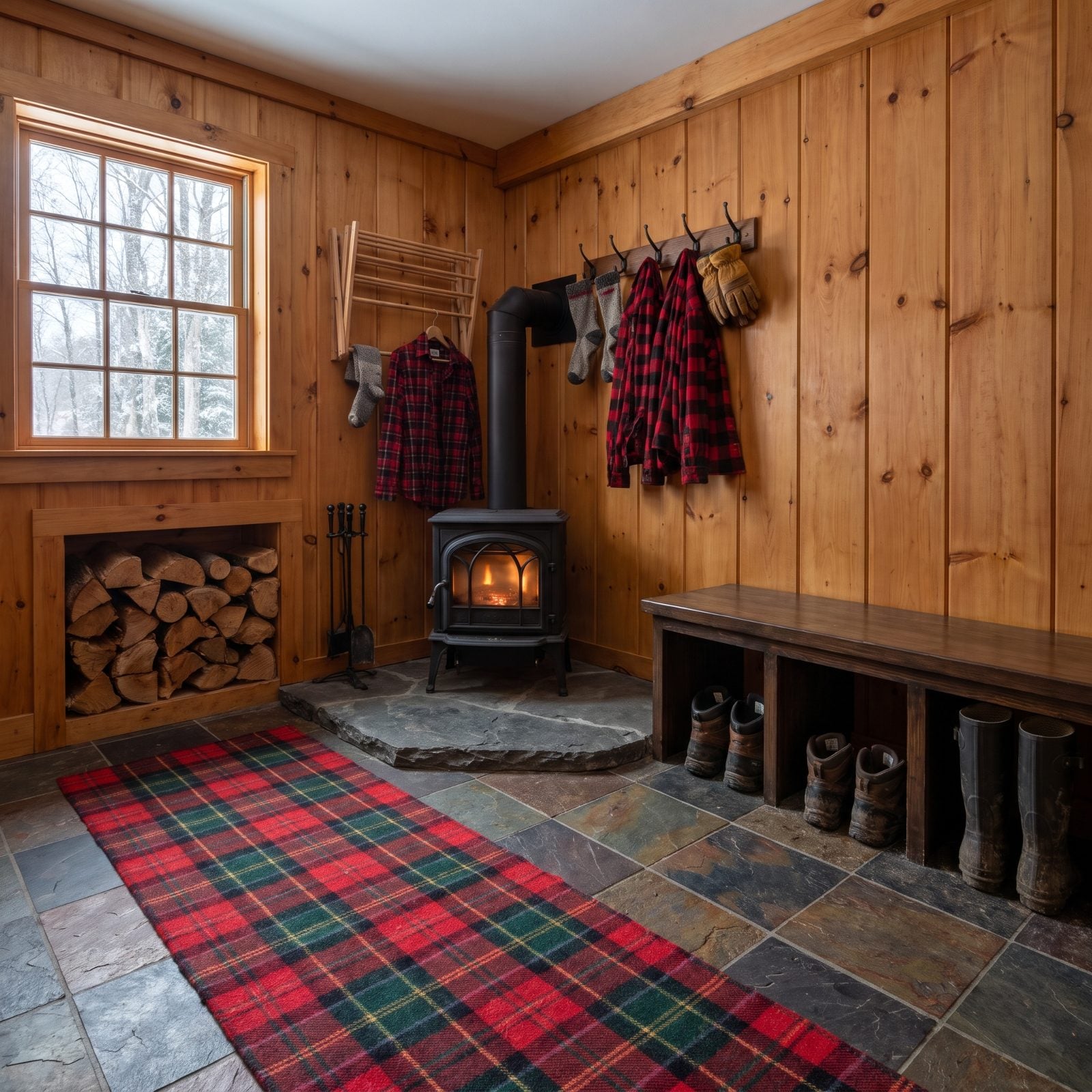
A small woodstove in the mudroom is the most honest heat source you can build. Hang wet flannel and soaked gloves near it after a hike and they’re dry and warm before dinner, and the firewood cubby keeps the next load dry within arm’s reach.
Slate floors shrug off melting snow and wood-chip grit. The plaid runner is the right amount of cabin without tipping into costume.
40. Maryland Chesapeake Mudroom With a Crab-Pot Gear Wall
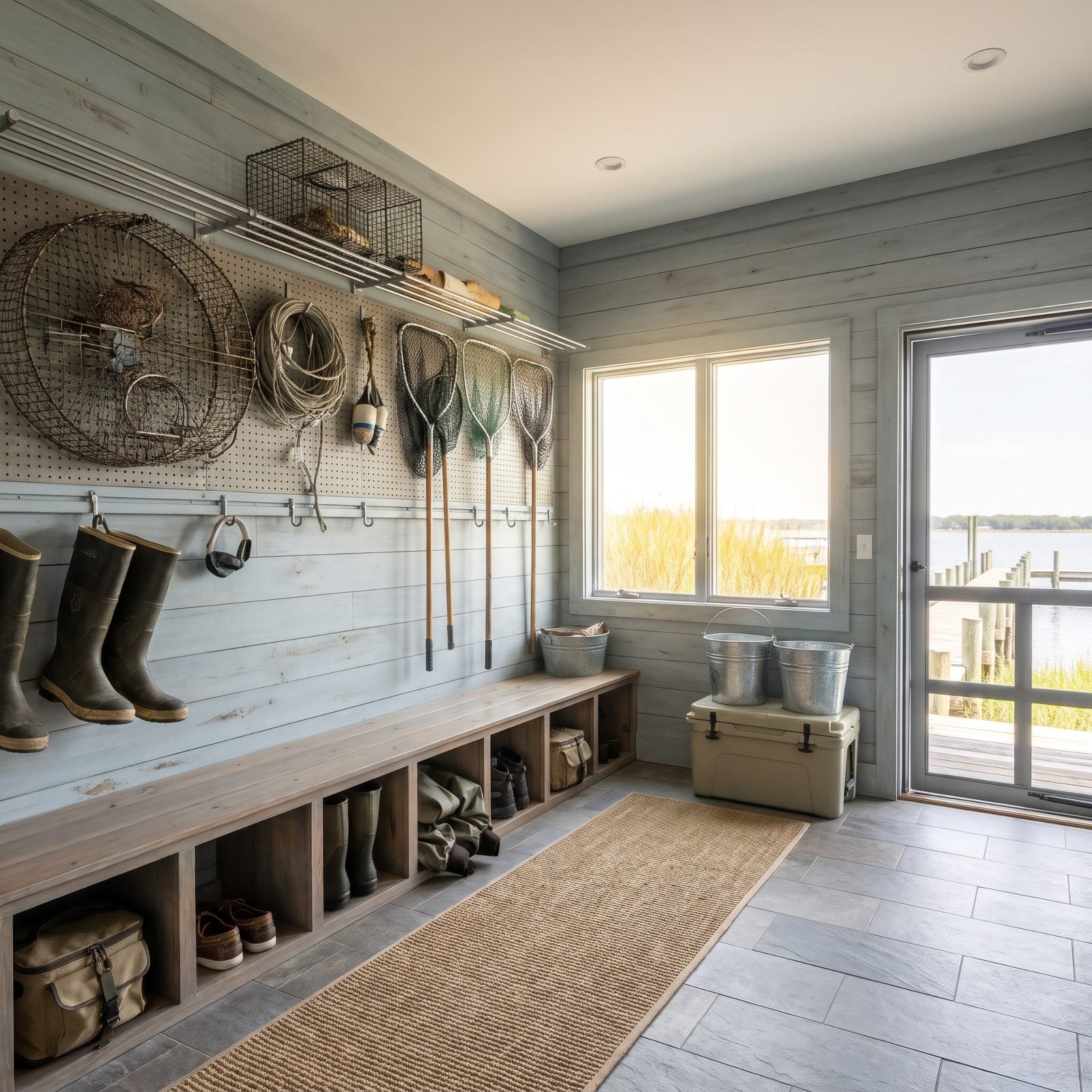
This wall is built around the gear, not the other way round. Crab pots, trotlines, and dip nets all need a place to hang and drip, so a pegboard-and-rail system does the organizing a row of cubbies never could.
The driftwood gray-blue shiplap and seagrass runner keep it calm under bright bay light, and the galvanized buckets read as tools, not décor. On the Chesapeake, a mudroom is really a staging area for the water, and this one admits it.
39. Virginia Hunt-Country Mudroom With Tack-Room Details
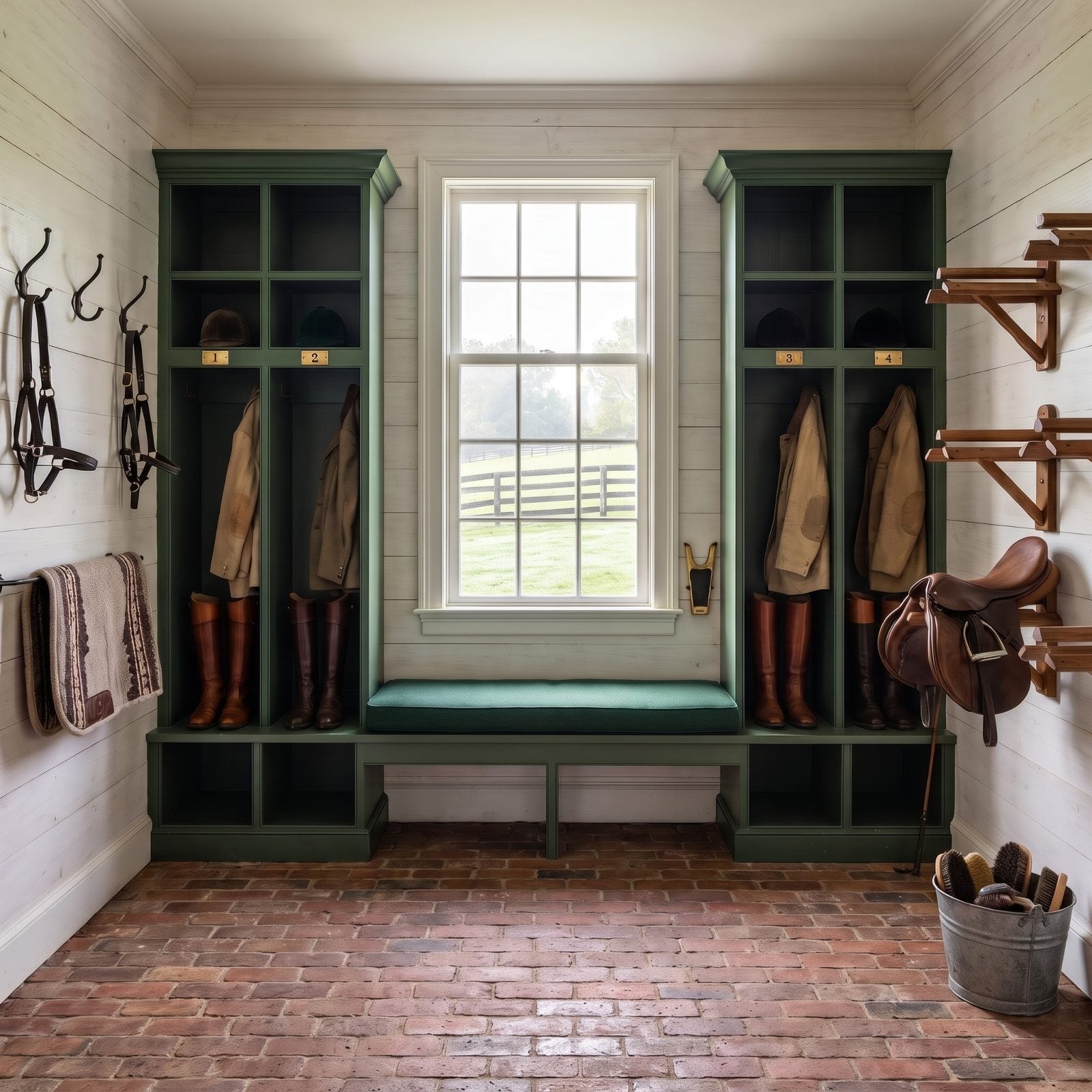
The leather does all the work here. Cognac boots, aged halters, a saddle pad gone soft at the edges — every piece earned its patina in a real stable, not a catalog shoot, and against the forest-green lockers and whitewashed board walls that worn leather reads as the whole point.
Running-bond brick underfoot is the smart call, because it shrugs off mud, wet boots, and dropped tack while aging into something better the dirtier it gets. This is a craftsman mudroom approach with a tack-room accent. Functional first, handsome by accident.
38. West Virginia Mountain Mudroom With Coal-Slate Flooring
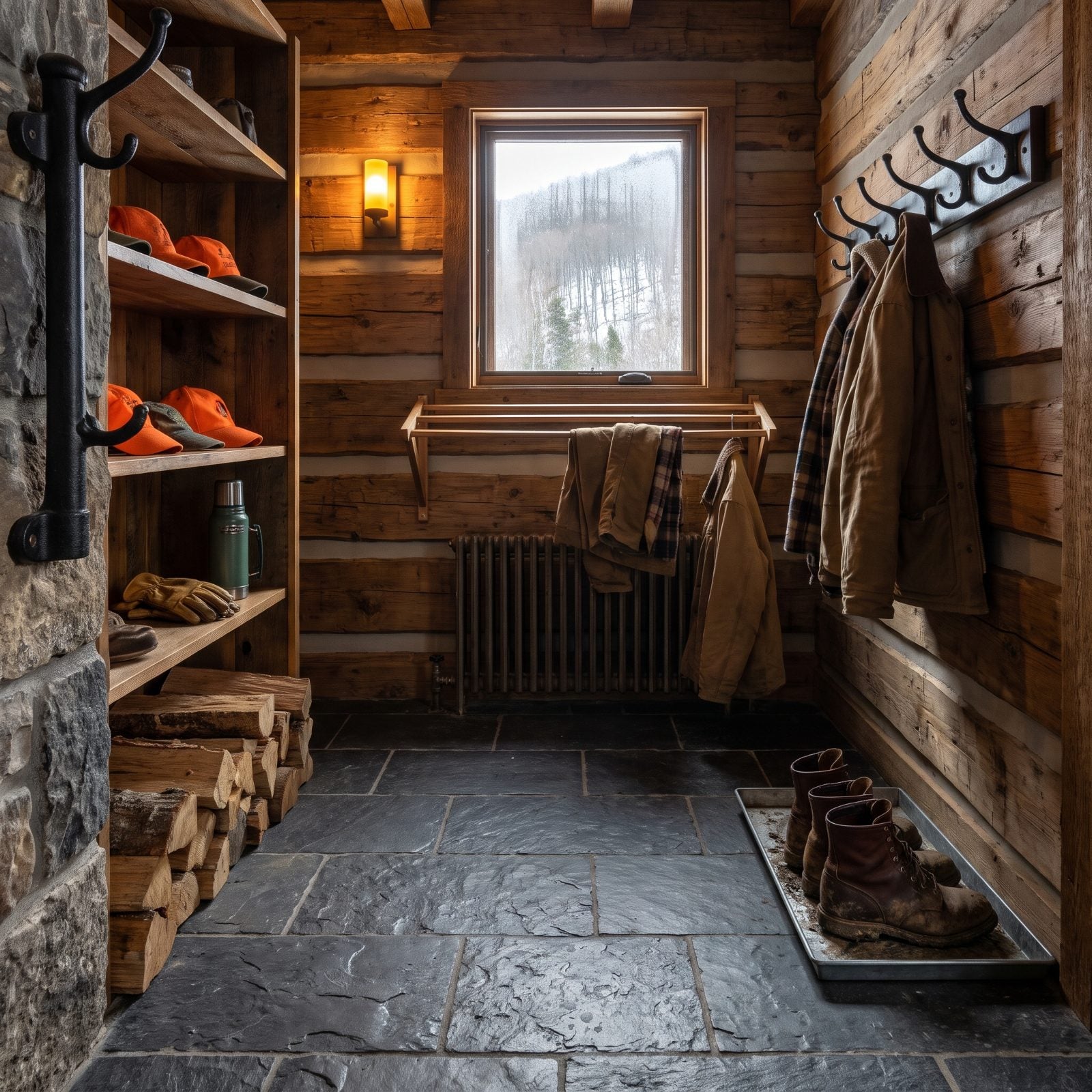
That coal-slate floor is nearly black, and up in these mountains that’s practical, not moody. Snowmelt, boot grit, split-wood bark — none of it shows. You could track a whole ridge in here and the floor wouldn’t tell on you.
Reclaimed hemlock walls and a cast-iron coat rack bolted straight into stone make the room feel like it grew out of the hillside. The drying rack over the radiator is the detail I’d steal first. Wet flannel dries overnight and you’re not fighting a damp pile by the door come morning.
37. Tennessee Smoky Mountains Mudroom With a Dog-Washing Bay
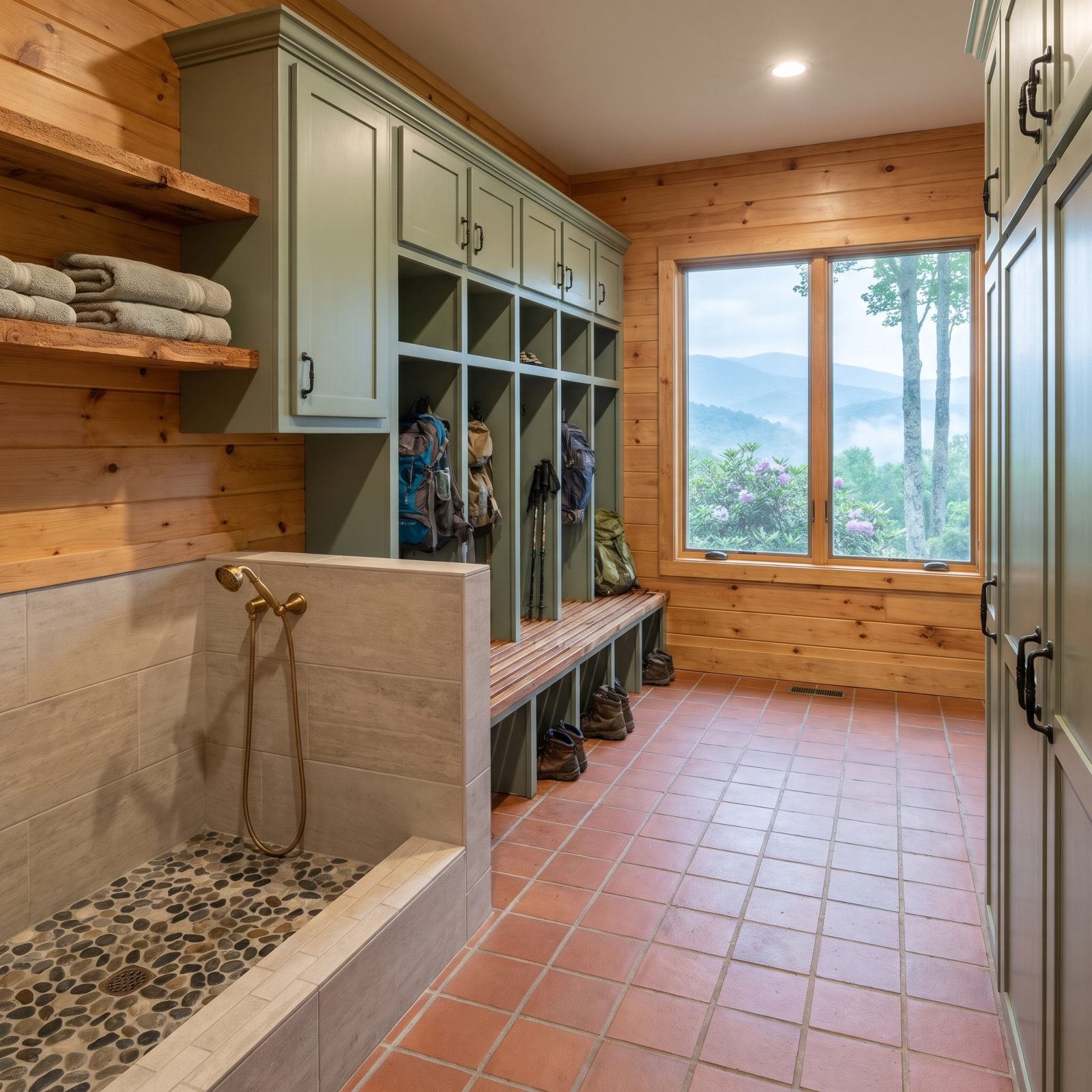
A built-in dog-washing bay is the kind of thing you don’t know you need until you’ve carried a soaked hiking pack and a filthy pup through a clean house. Tiled walls, river-stone floor, a brass sprayer on a swing arm. Smart for trail country, where everyone comes home muddy.
Honey-pine shiplap and sage cabinetry keep it from feeling like a utility closet, and the terracotta quarry tile hides Smoky Mountain red clay without even trying. I love the slatted drip bench for boots. Water falls through instead of pooling.
36. North Carolina Piedmont Mudroom With Tobacco-Basket Storage
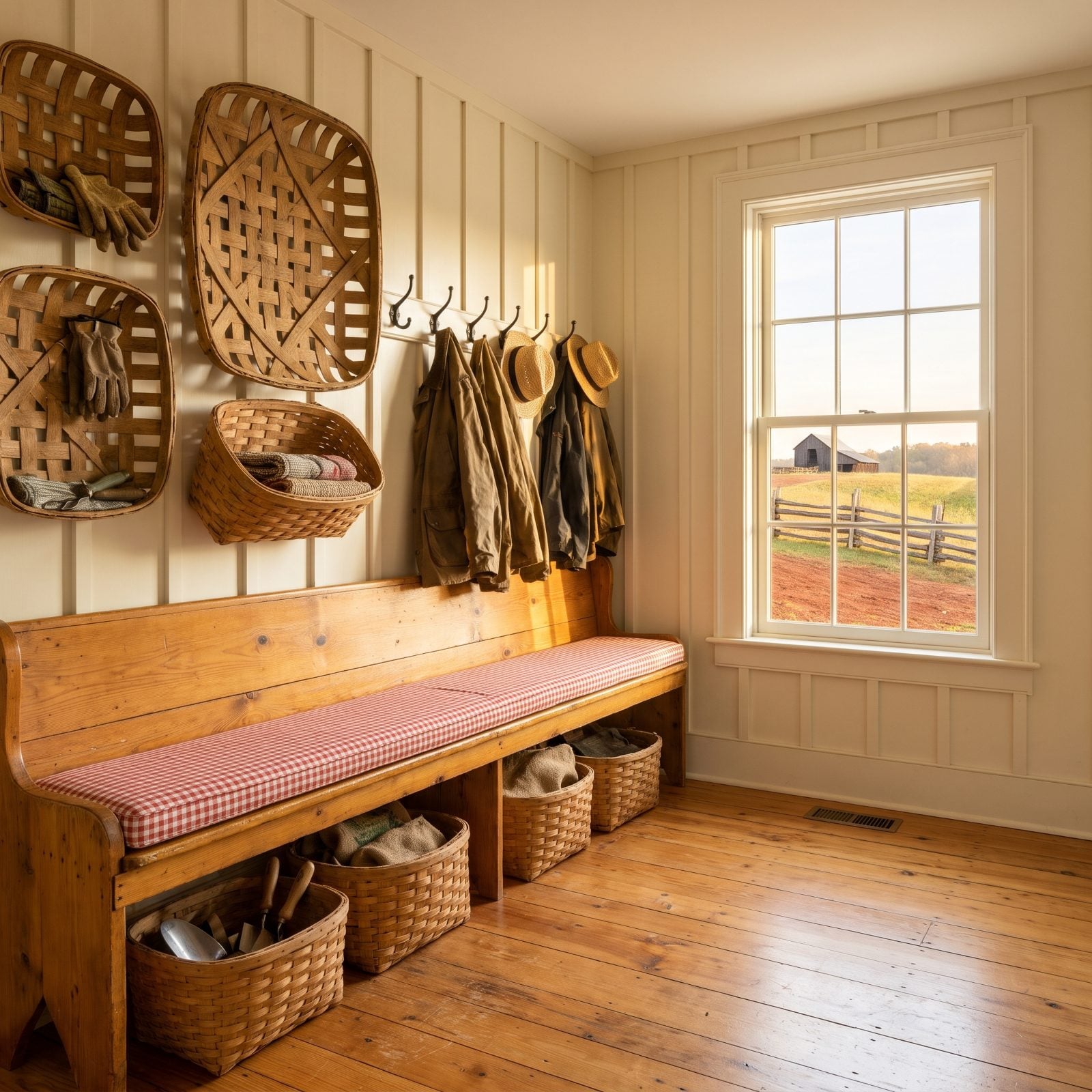
Flat tobacco baskets on the wall aren’t just folk decor here. They’re doing the work of open shelves and a catch-all at once — work gloves, folded towels, a pair of shears, while the straw hats hang from the iron hooks nearby. In the Piedmont, where tobacco barns still dot the backroads, it’s regional memory made useful.
Heart-pine floors and cream board-and-batten keep the backdrop quiet, so the woven texture carries the room. And those split-oak baskets under the bench corral garden tools without looking like a hardware aisle.
35. Outer Banks Mudroom Raised Above the Flood Line
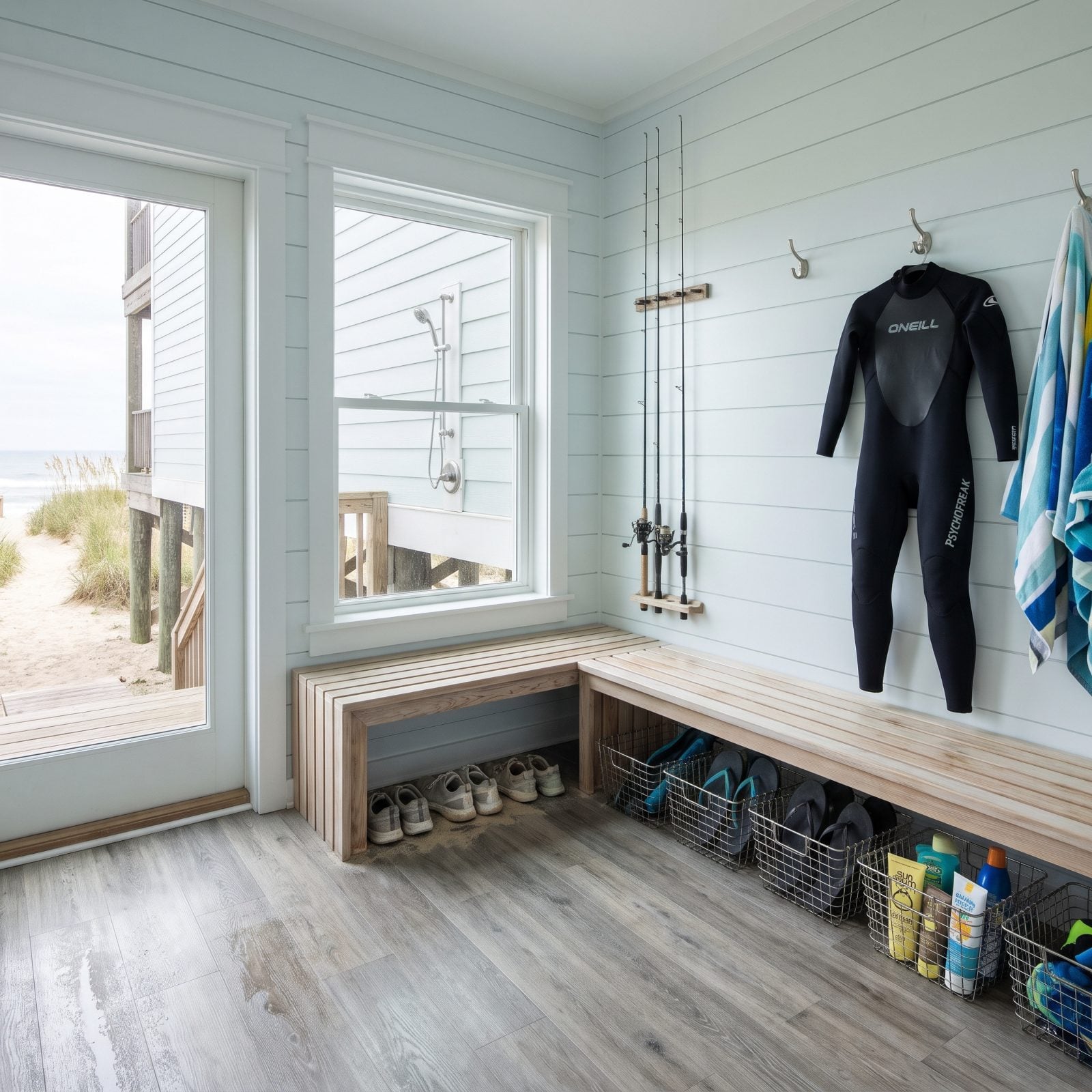
Everything about this entry assumes water will show up uninvited. Raised above the flood line on pilings, driftwood-grey vinyl plank that laughs at salt, a slatted cedar bench that lets sand fall straight through — coastal design here is survival dressed up nicely.
Marine-grade stainless hooks hold wetsuits and towels, a fishing rod stands beside the wooden peg rack, and the open-base bench is the quiet hero, since sand can’t collect where it keeps falling. Pale seafoam shiplap borrows its color straight from the dune grass outside the window.
34. South Carolina Lowcountry Mudroom With Louvered Cabinetry
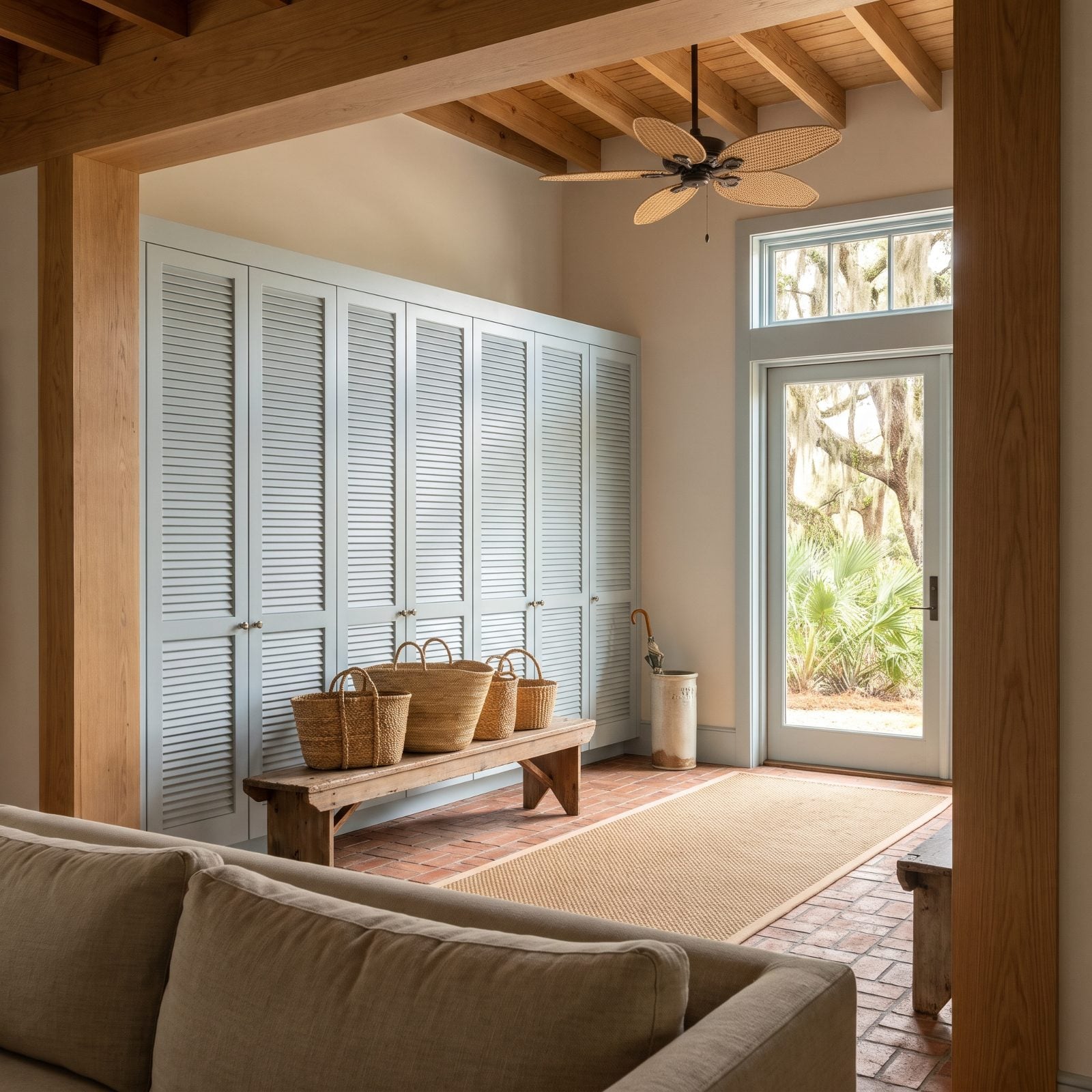
Louvered cabinet doors in the Lowcountry aren’t a style choice. They’re a humidity strategy. Air moves through the slats so damp beach bags and wet jackets actually dry instead of mildewing, and the haint-blue paint is the local tell — a color that’s been calming porch ceilings here for generations.
Sweetgrass baskets and heart-cypress ground everything in the regional craft tradition, while a cane-blade ceiling fan and a transom window handle the rest of the air-moving work.
33. Georgia Red-Clay Mudroom With Brick Floors and a Utility Sink
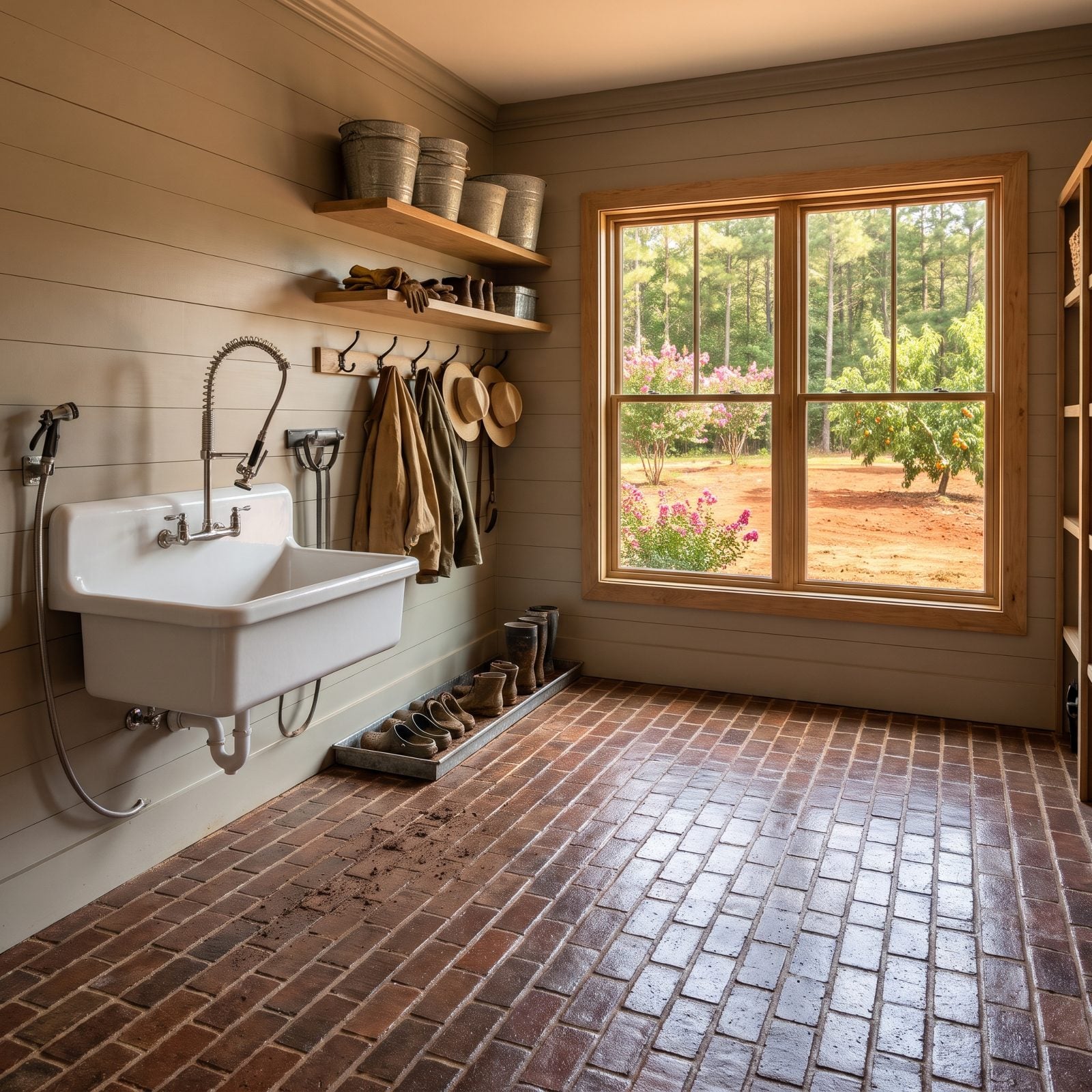
Red Georgia clay stains everything it touches, so this mudroom fights back with its two best weapons: a brick floor the exact color of the dirt, and a deep utility sink with a hose sprayer for rinsing it all off before it gets inside.
The apron-front sink and gooseneck faucet turn gear-rinsing into a real station instead of an afterthought, and greige shiplap keeps the brick from shouting. Honestly, this is one of the most practical rooms on the whole list.
32. Florida Coastal Mudroom With Hurricane-Shutter Storage
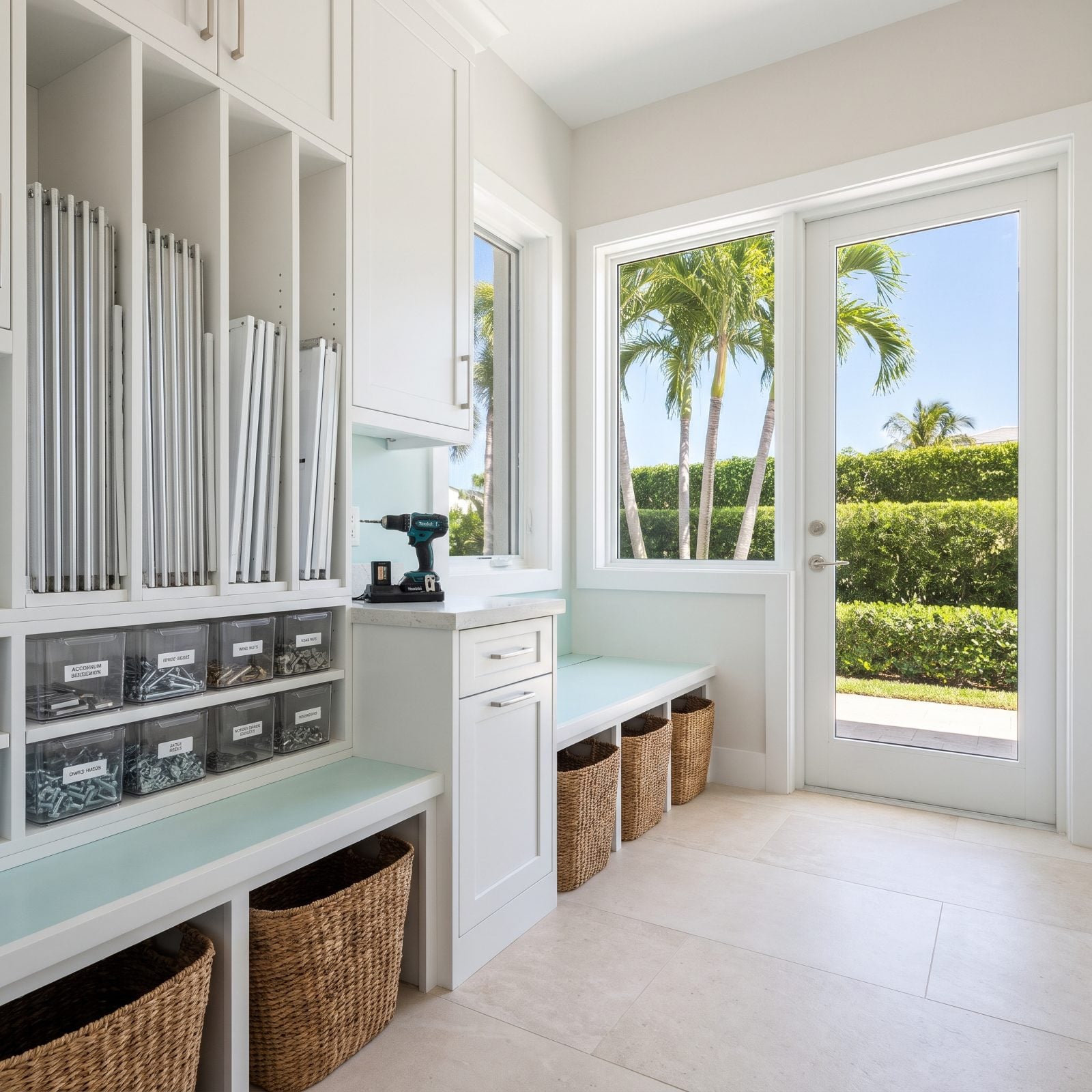
Most people cram their storm shutters behind the water heater and regret it every June. This mudroom gives hurricane panels their own vertical slot cabinet, hardware sorted into clear see-through bins, drill charging and ready. Prep that takes hours instead of a frantic weekend.
White shaker cabinets and a quartz drop zone keep it looking like a normal entry the other eleven months of the year, and the aqua accents nod to the coast without going full beach-cottage. This is design doing the unglamorous work nobody photographs.
31. Florida Keys Open-Air Drop Zone With Dive-Gear Racks
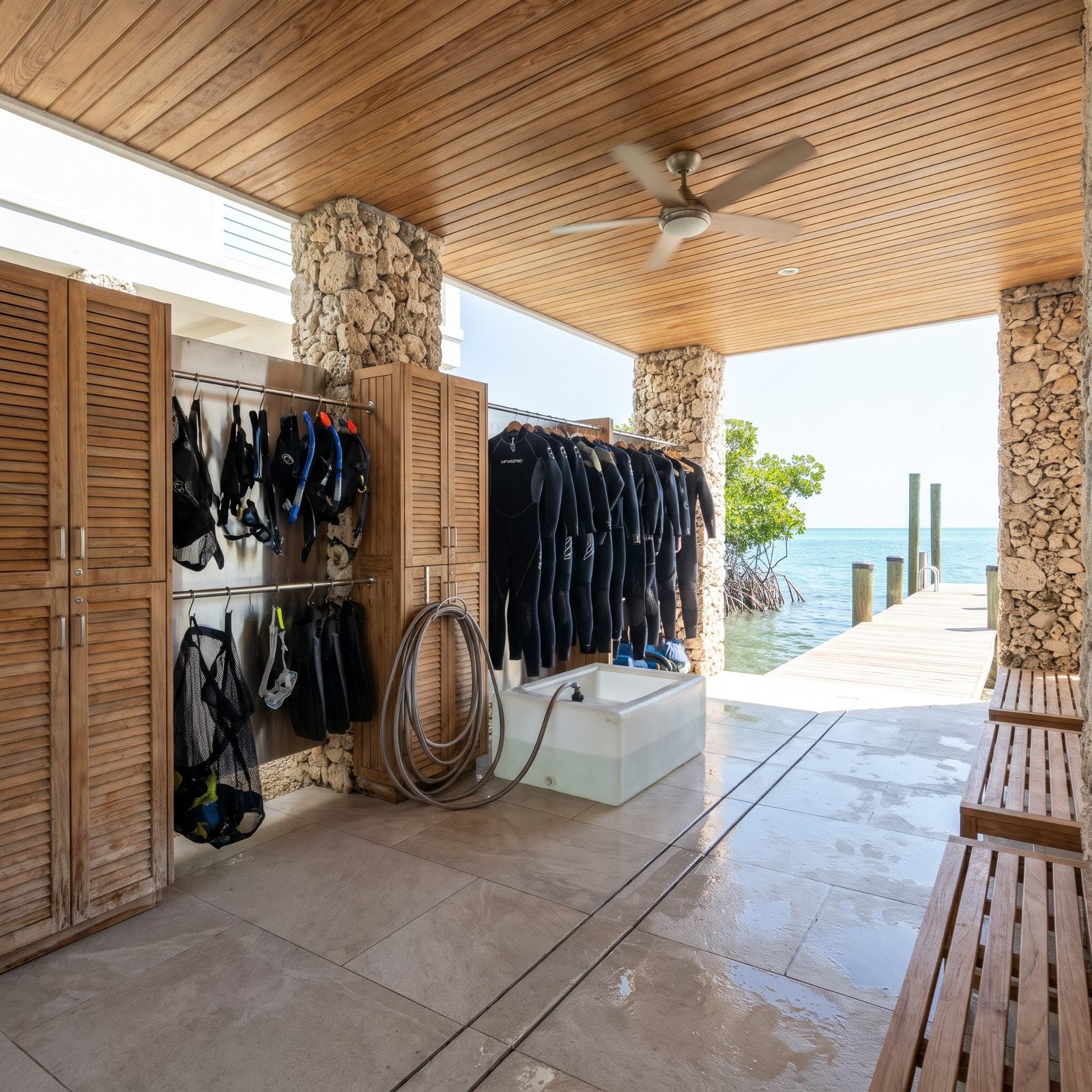
Down in the Keys, a mudroom barely needs walls. This open-air drop zone lives under the stilt house, breeze passing straight through, dive gear hung on stainless racks to drip-dry over porcelain pavers with drainage gaps cut right in.
Teak takes the salt and keeps its looks. A freshwater rinse tank is non-negotiable here — you rinse the salt out of neoprene or you replace neoprene. The whole space is built around one idea: let everything drain and dry on its own.
30. Mississippi Delta Mudroom With Cypress Built-Ins
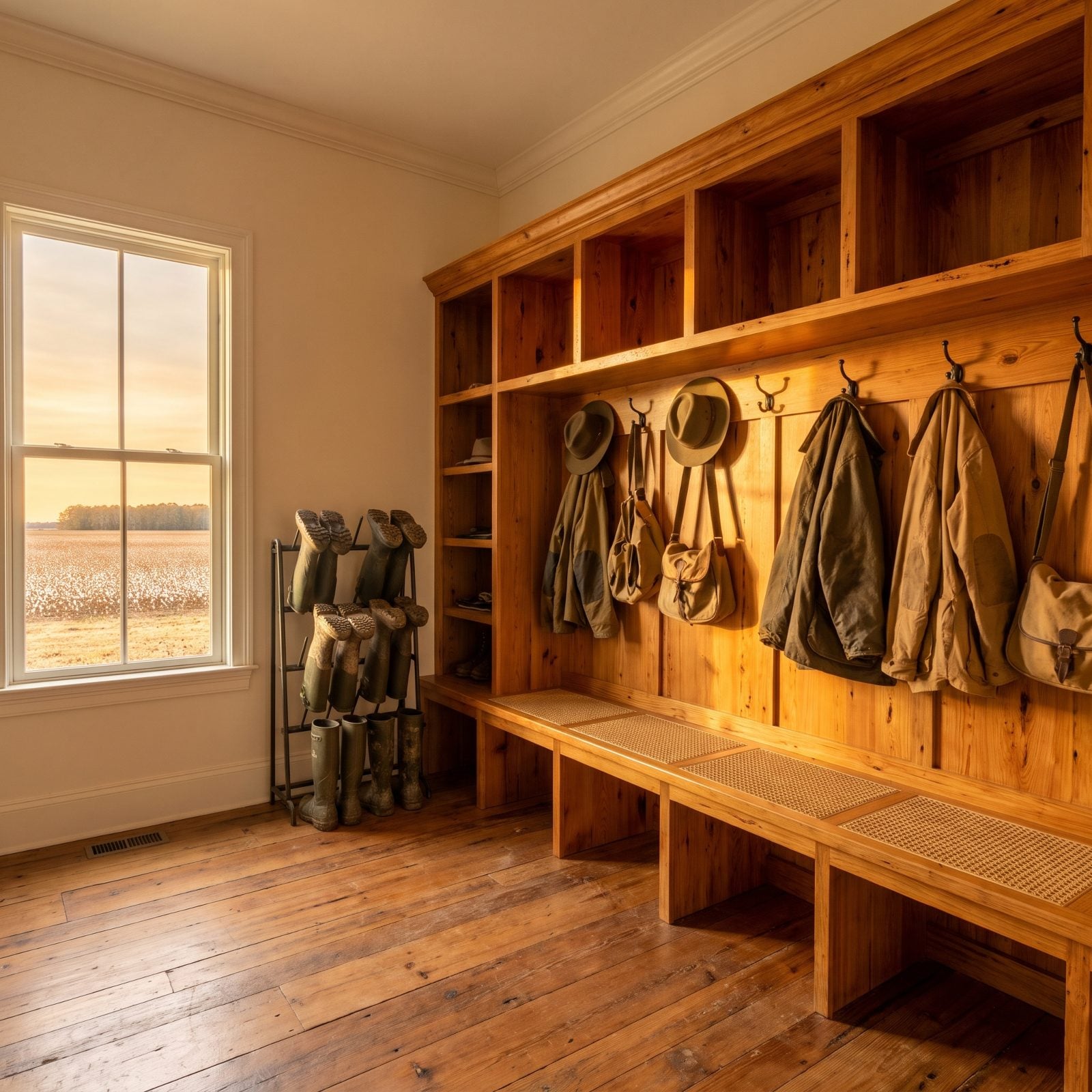
Pecky cypress is the whole story here. That character-marked grain, full of little pockets and swirls, comes straight from the Delta swamps, and it gives these built-ins a texture no factory panel can fake. Floor to ceiling, honey-amber, all of it local wood.
The duck-boot rack and waxed-cotton jackets tell you exactly what this flat, duck-rich country is about. Reclaimed-pine floors keep the palette warm and worn. And against all that cypress, the black iron hooks are the only hard line in the room — enough.
Cypress doesn’t rot, doesn’t warp, and it only looks better the longer it sits in a wet climate. In the Delta, that’s not decoration, that’s just the right wood for the job.
Built-ins tend to win people over in pass-through spaces, as hallway images with built-ins got more hearts from our readers than the other images in the same articles.
29. Louisiana Bayou Mudroom With an Elevated Washdown Floor
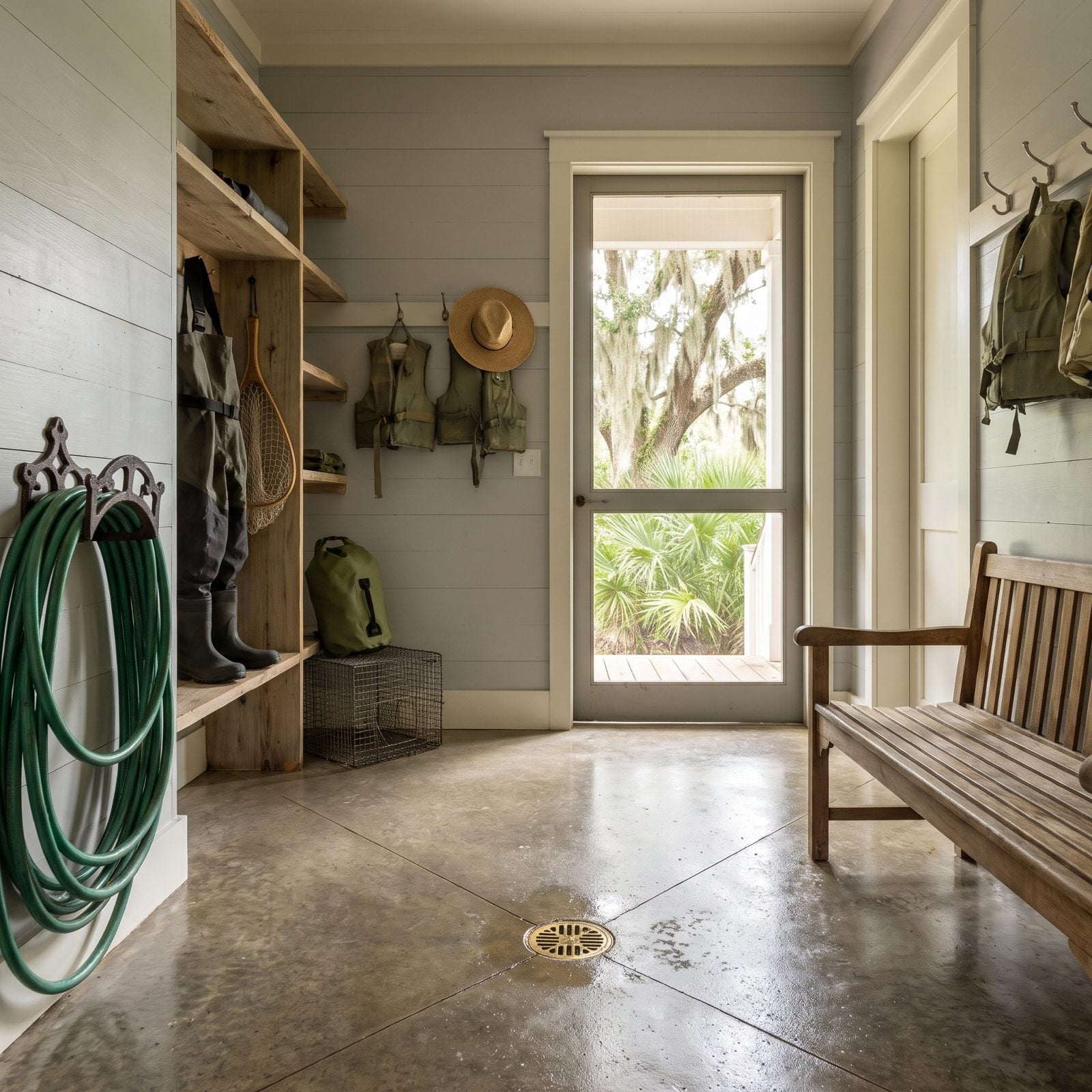
That central brass drain set into a pitched concrete floor is the whole genius here. You walk in soaked, let your waders drip where you stand, and the water goes exactly where it should — no mopping, no mildew battle.
Cypress paneling earns its keep in bayou humidity because the wood shrugs off rot that would ruin pine in a season. Painted dove gray, it keeps the room from reading like a bait shop while the brass hardware and moss-green vests do the color work.
28. Arkansas Ozarks Mudroom With Canoe-Paddle Pegs
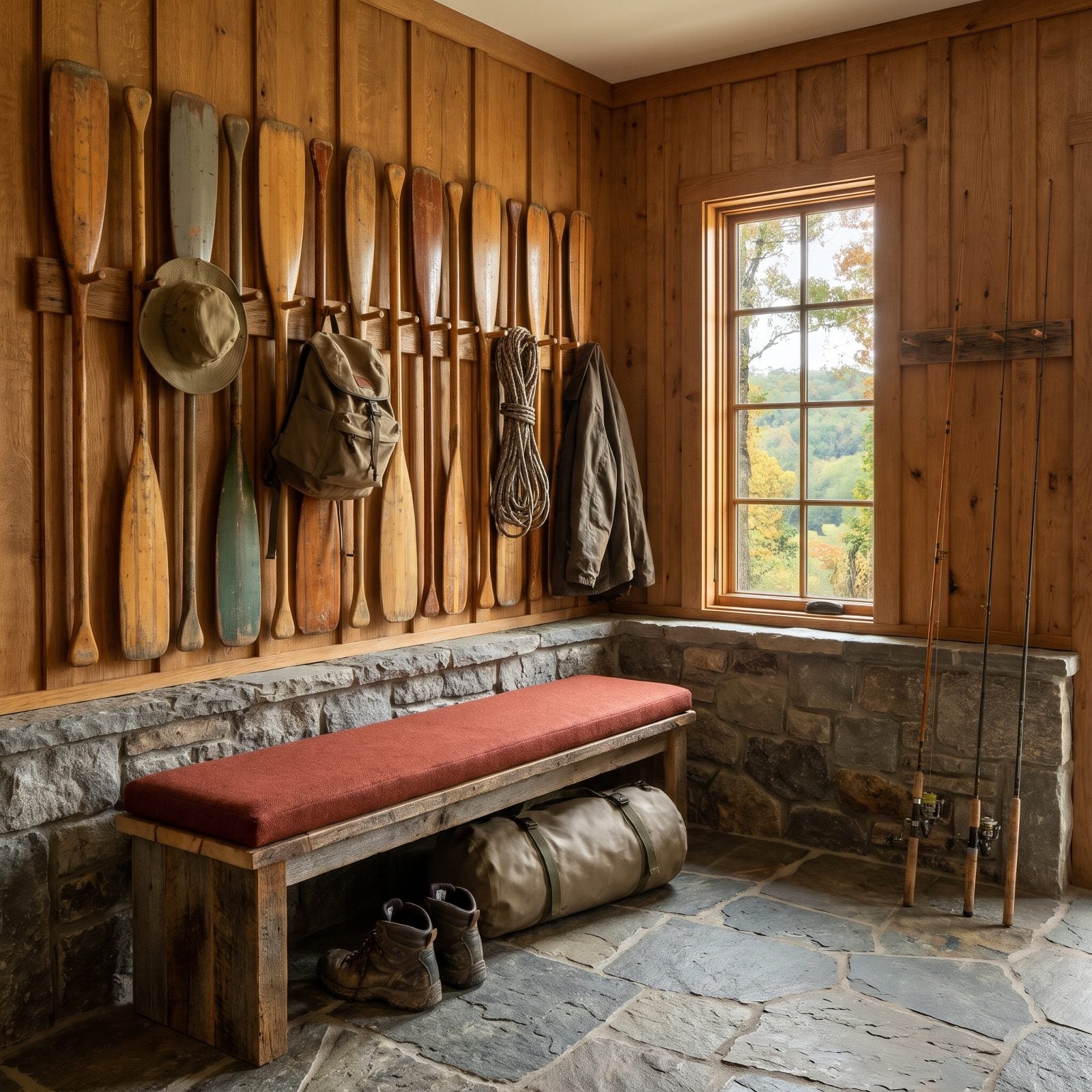
Canoe paddles hung in alternating directions, some blade-up and some blade-down, behind a rail of turned wooden pegs only makes sense in float-trip country, and it works because the paddles stay flat against the boards while the pegs running across their middles do the hooking for hats, packs and rope. Smart display, not decoration for its own sake.
The fieldstone wainscoting does something the paddles can’t: it anchors the room visually and takes a beating from wet boots and dropped tackle. This reads as a proper craftsman mudroom built by people who actually come home muddy. I’d swap the rust-red cushion for something darker, but that’s a quibble.
27. Texas Hill Country Mudroom With Limestone Walls
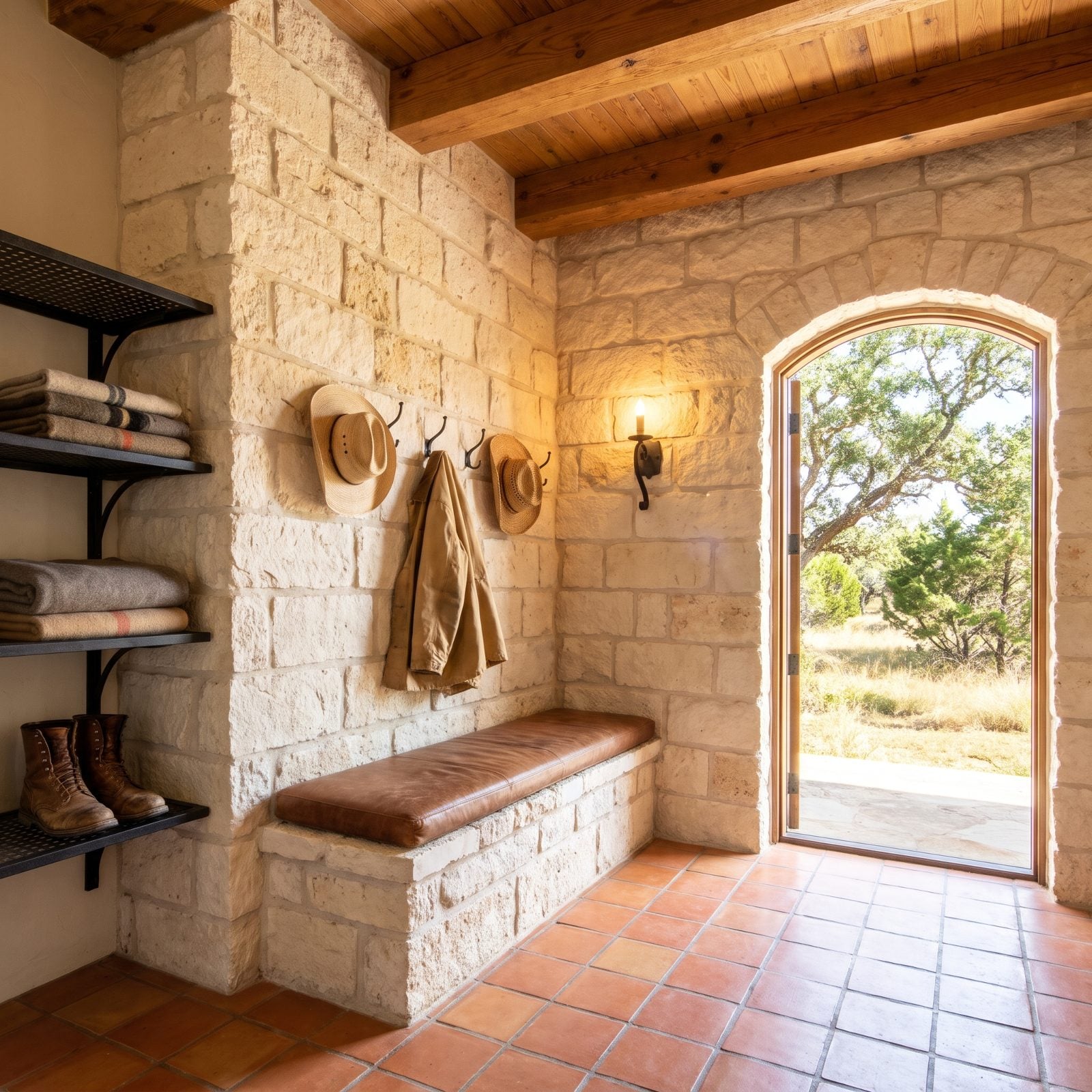
Those cream limestone walls aren’t a veneer. They’re load-bearing block cut from the same ground the house sits on, and they keep the room cool when the Hill Country hits triple digits. Thermal mass, doing its quiet work.
Against all that pale stone, the burnt-orange Saltillo tile and black iron hooks snap into focus. The black iron wall hooks and a single wrought iron sconce are all the hardware this room needs.
26. Oklahoma Ranch Mudroom With Hat Shelves and Boot Jacks
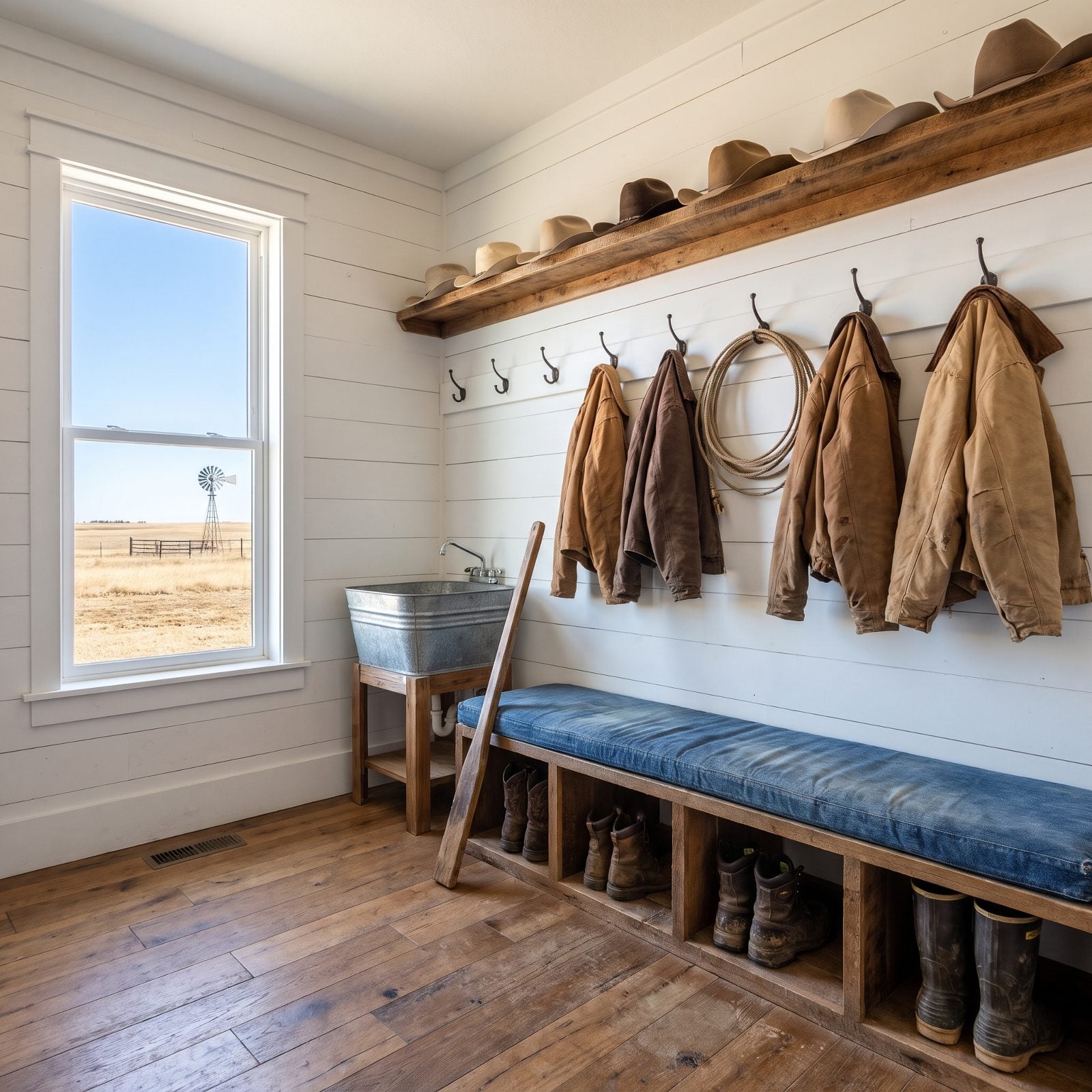
The hat shelf up top solves a problem city mudrooms never have. A good felt hat gets ruined if it hangs by the brim, so you store it crown-down on a shelf, every time. Function dictated the whole top band of this wall.
Boot cubbies below the bench keep the mess corralled, and that galvanized utility sink means you scrub up before you ever reach the kitchen. Honest room. No pretense.
25. New Mexico Adobe Mudroom With Nicho Storage
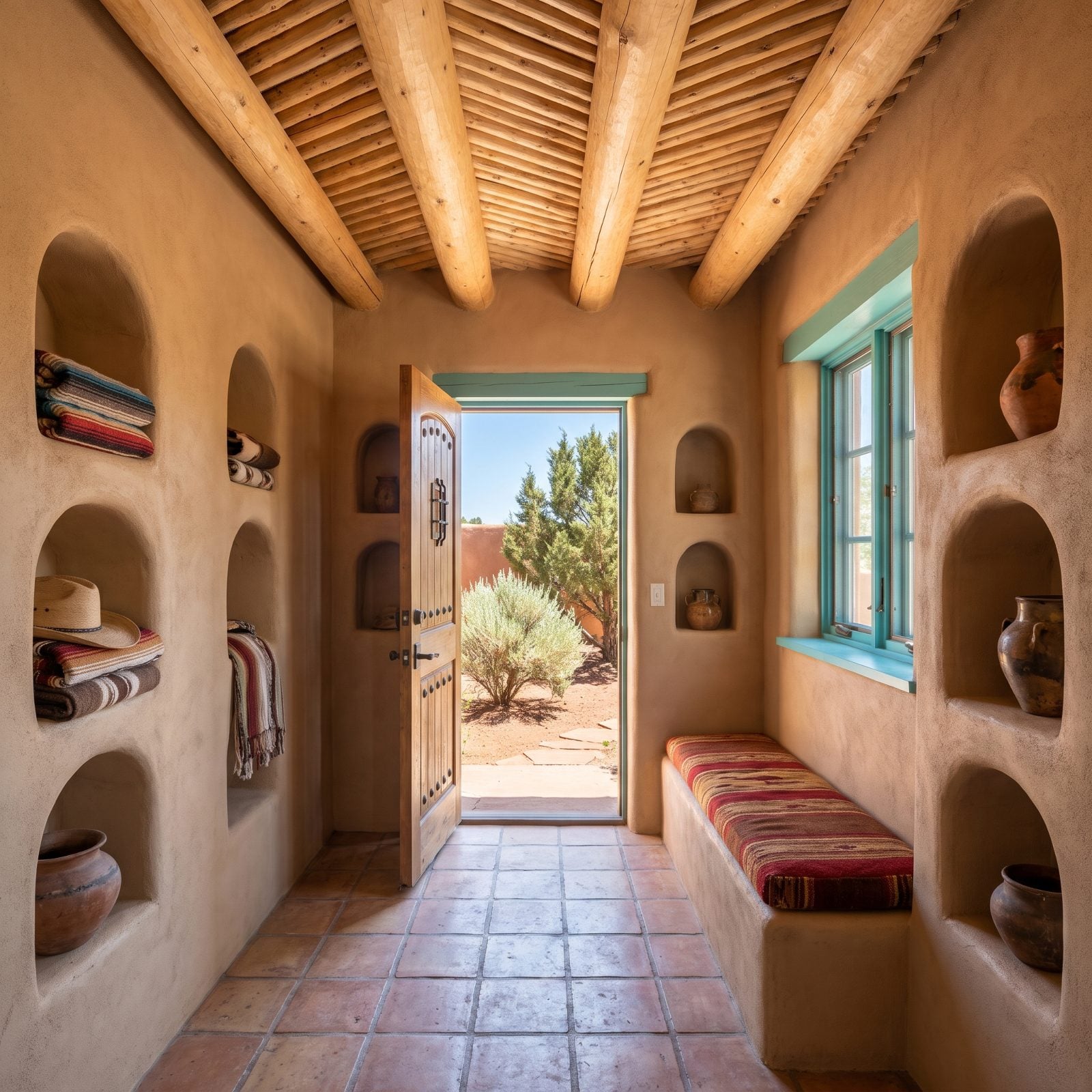
Nichos — those arched niches carved straight into the adobe — turn thick earthen walls into storage you don’t have to buy. Folded serapes, a hat, a clay bowl for keys, all tucked into the wall itself.
Rounded corners and hand-smoothed clay plaster keep the whole room soft to the eye. And the turquoise trim? It’s the one cool note against all that warm tan, and it’s pulling serious weight.
24. Arizona Desert Drop Zone With Mesquite Bench Seating
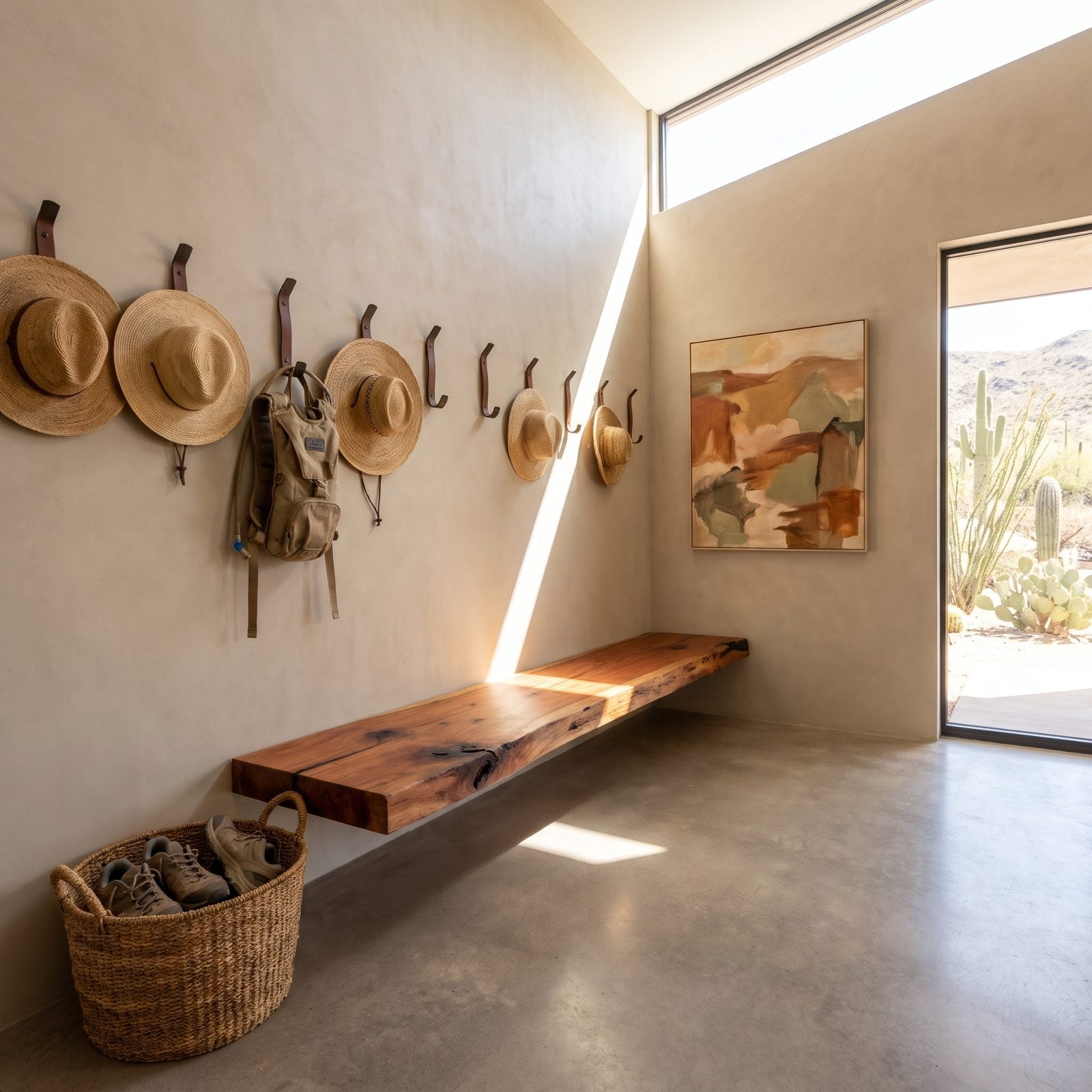
That live-edge mesquite bench is the hero, and mesquite is the right call for Arizona because the wood is dense, hard, and shrugs off desert dryness that would crack lesser timber. The reddish grain against pale micro-cement walls is the entire color scheme.
A single shaft of clerestory light does the rest, slicing across the live-edge mesquite bench and warming the whole corner. Minimal hooks, one basket, nothing fighting the material. If you liked the clean lines of a tan outdoor kitchen, this uses the same restraint indoors.
23. Nevada Desert Mudroom With Dust-Sealed Cabinets
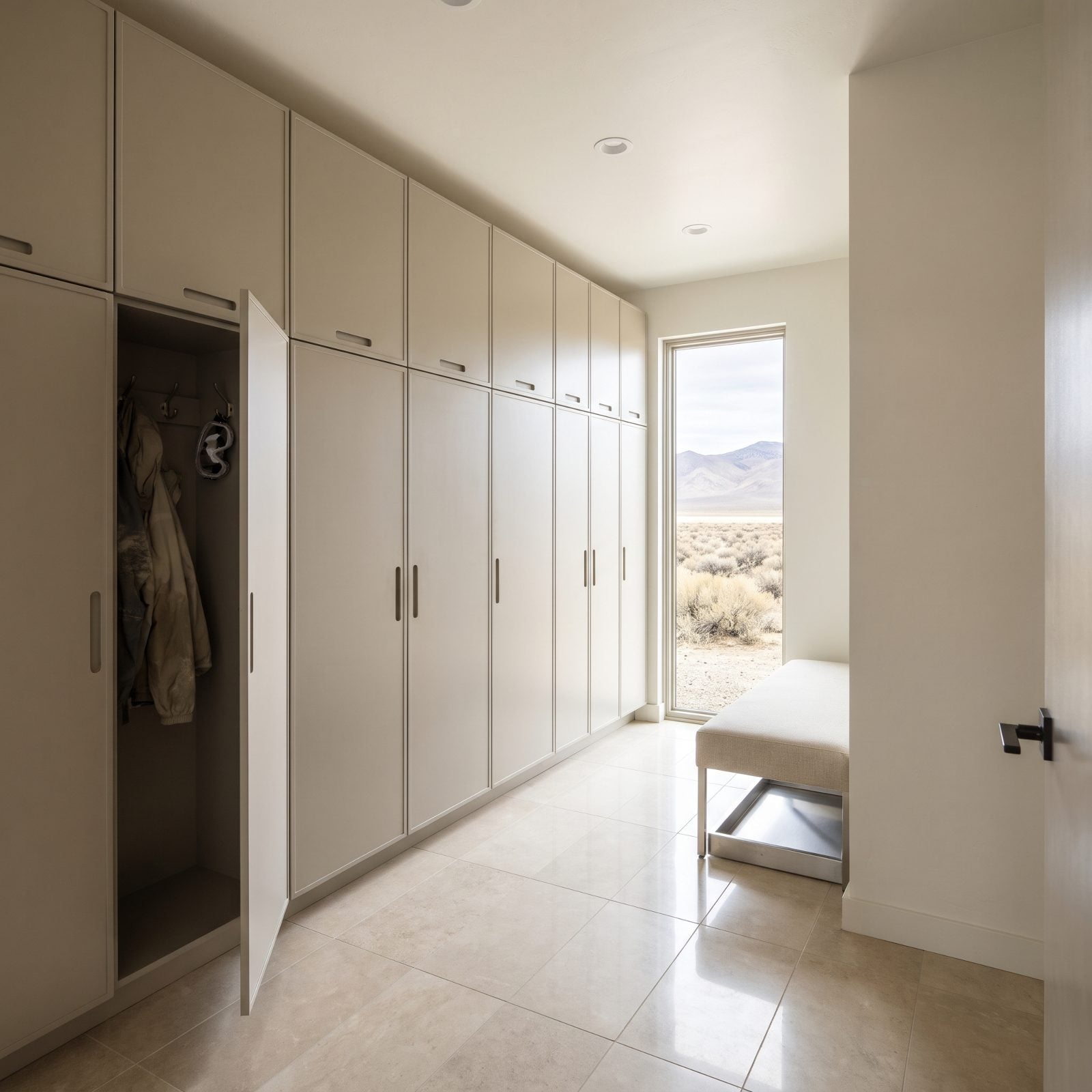
Fine desert dust gets into everything. So every cabinet here closes on a gasket seal, and the handles tuck out of the way so you can wipe a flat front clean in one pass. Form following a very specific nuisance.
The greige cabinetry and sandstone porcelain floor keep dust from showing between sweeps — not laziness, survival in alkali-flat country.
22. Dakota Prairie Mudroom With a Blizzard-Proof Double Entry
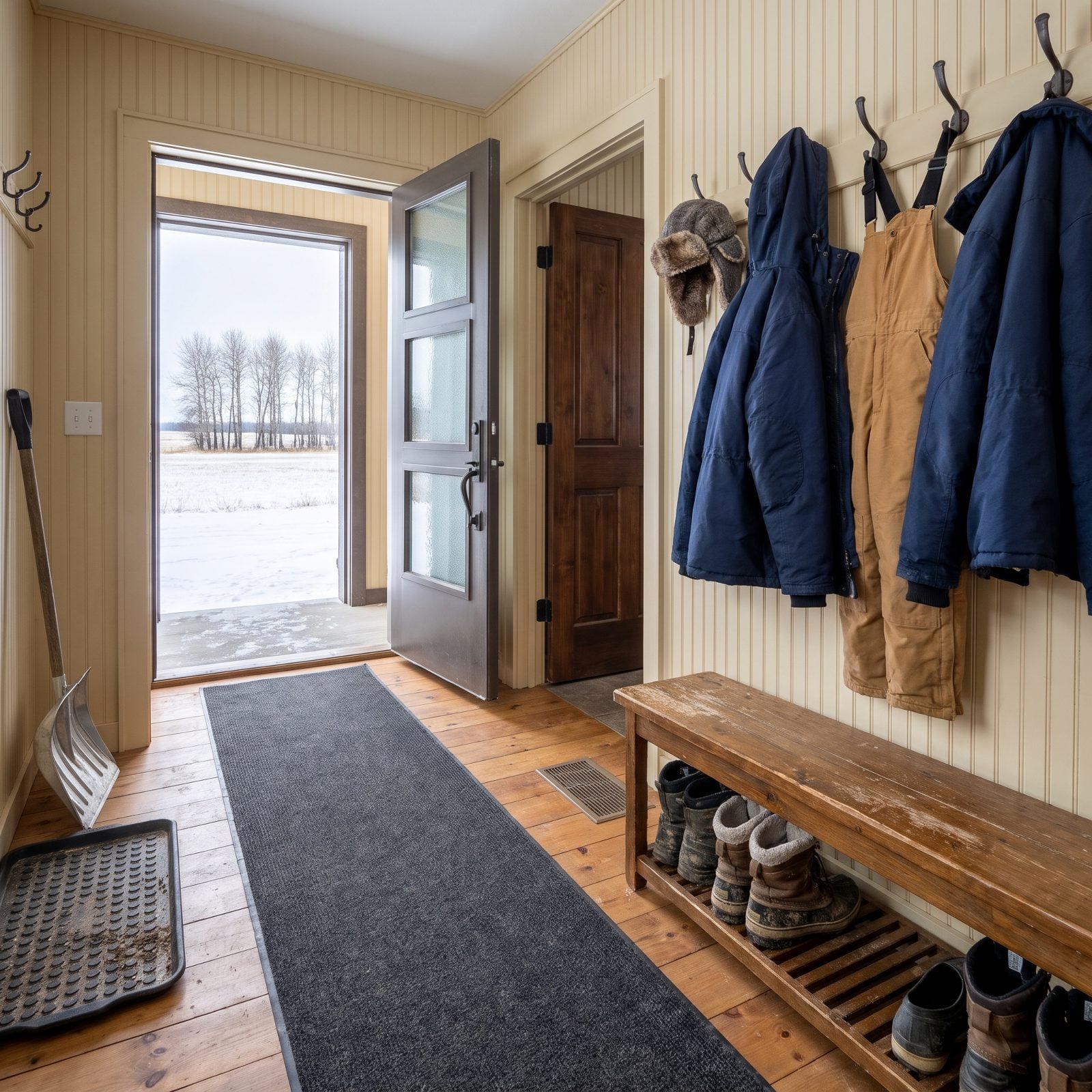
The double entry is the whole idea. An open outer doorway leads to a covered porch, and an inner steel door with frosted glass panels closes off the mudroom, so a blizzard never blows straight into the house when you open up. Prairie winters demand it.
Underneath the boot bench, a slatted wooden shelf lets wet winter boots drain and air out overnight. The charcoal runner hides melt and grit, and the beadboard takes a scrubbing without complaint.
21. Kansas Tornado-Country Mudroom Beside a Safe-Room Door
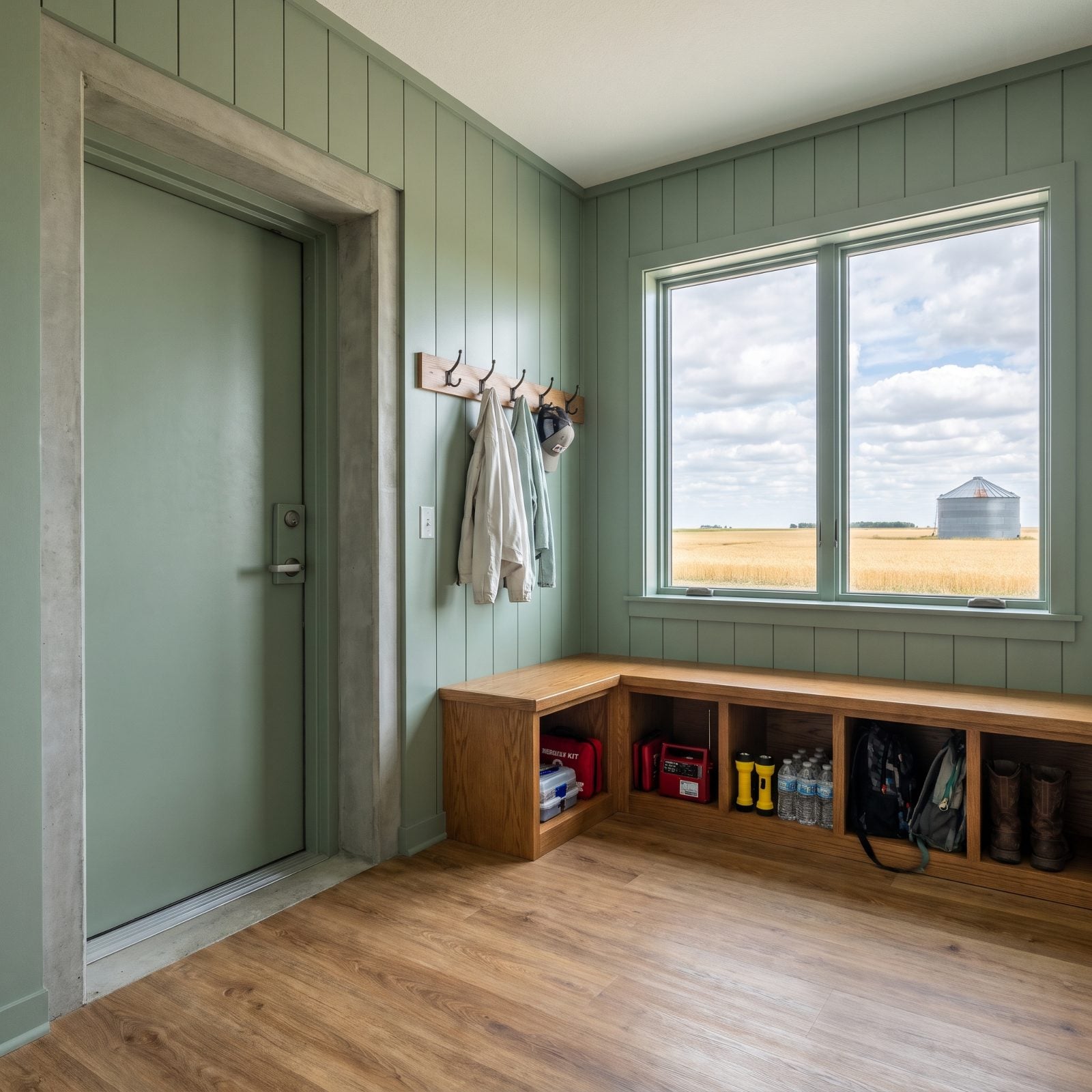
Painting the steel safe-room door the same sage as the walls is quietly brilliant. You get tornado-grade protection that doesn’t turn your entry into a bunker, and the door disappears until the siren goes off.
Cubbies pull double duty here, holding everyday backpacks right beside the weather radio and emergency kits. In tornado country you want that grab-and-go gear where you already pass it twenty times a day.
20. Colorado Ski-Chalet Mudroom With Ventilated Equipment Lockers
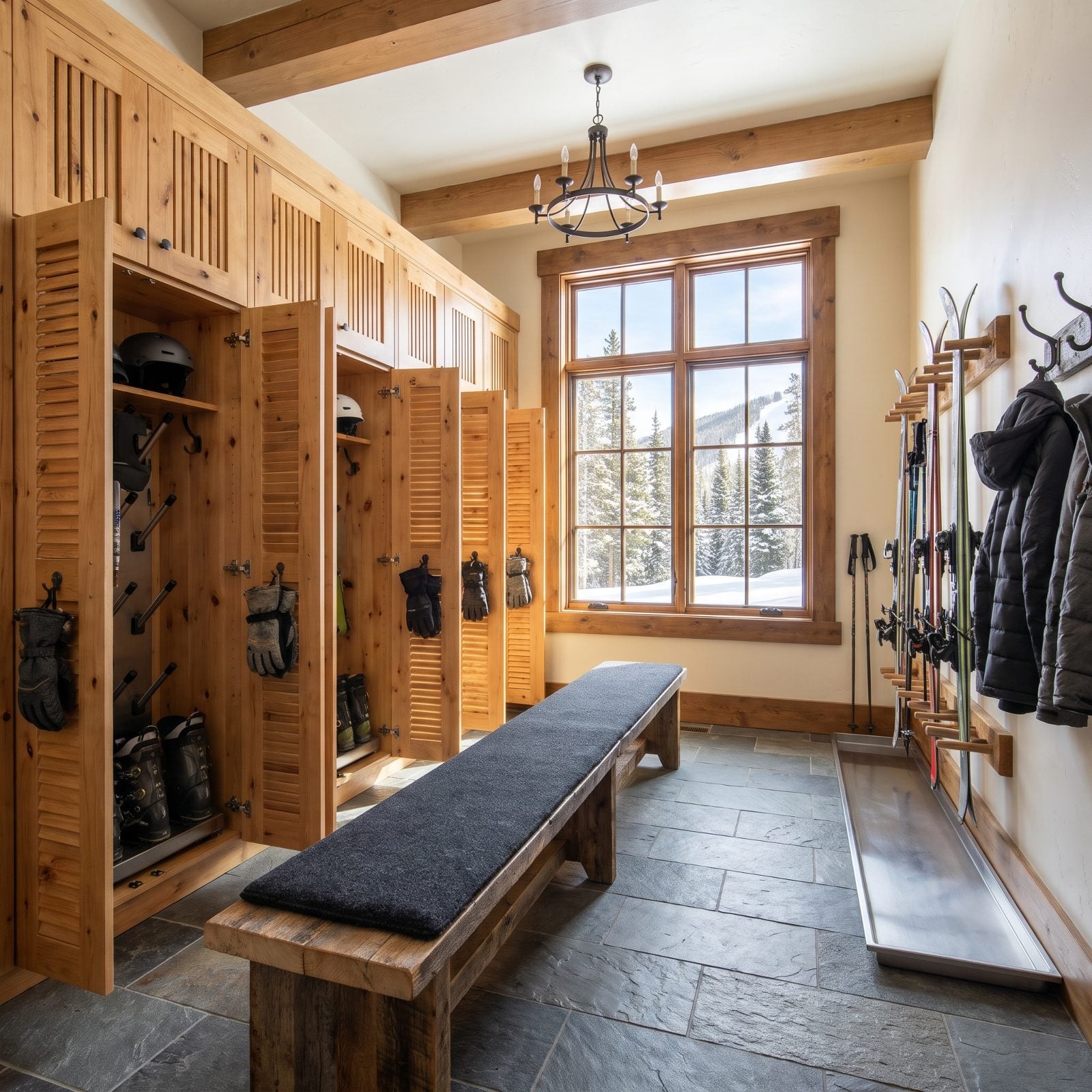
Slatted locker doors are the detail that makes this room function. Wet ski gear needs airflow or it stays damp and starts to stink, so every locker breathes while it dries. Seal those doors shut and you’d regret it by February.
Heated boot dryers inside the lockers and a slate floor with radiant heat mean you come in soaked and leave dry. The knotty pine keeps it feeling like a mountain cabin instead of a locker room, and vertical ski racks free up every inch of floor.
19. Wyoming Ranch Mudroom With a Saddle-Bench Center Island
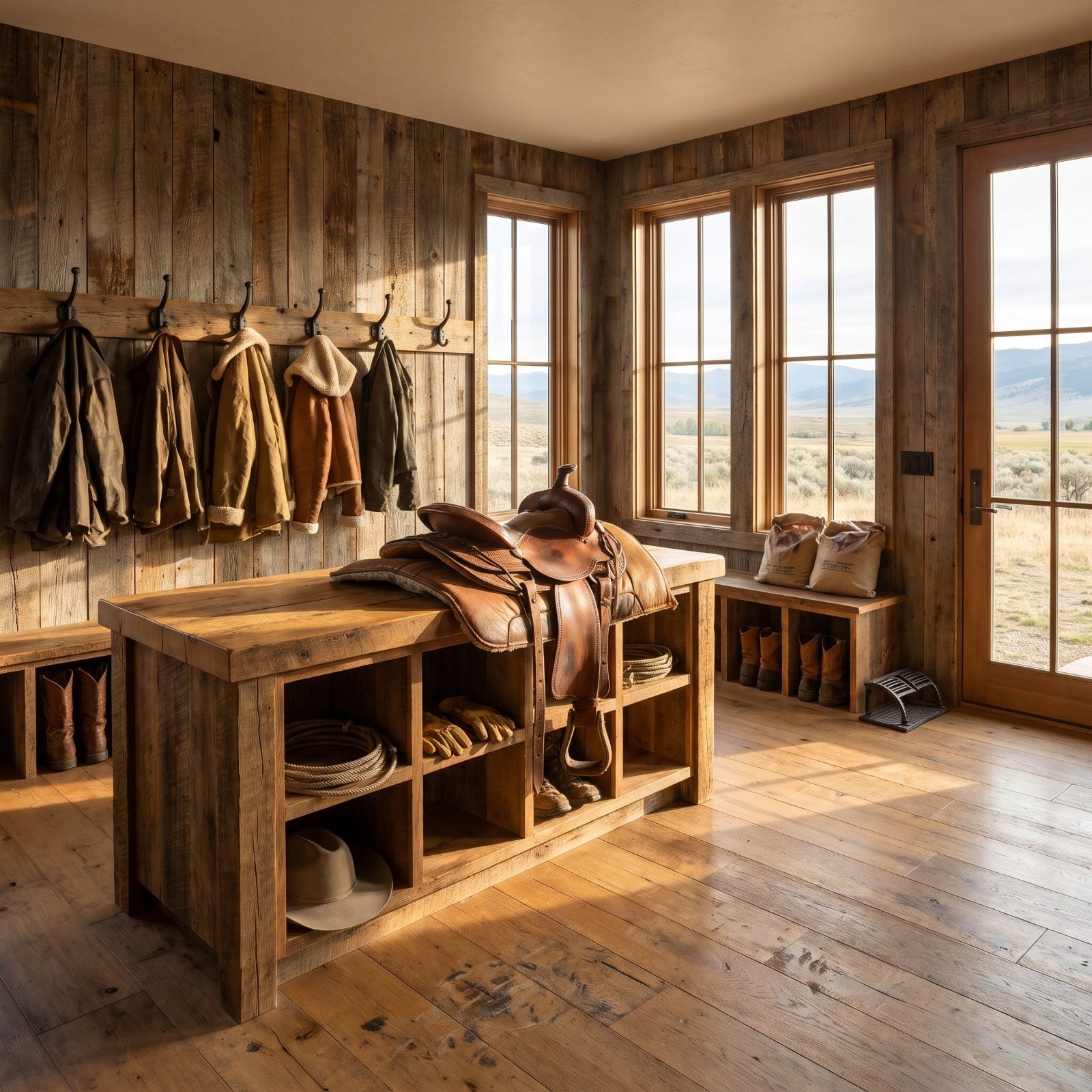
Putting a saddle on the island only works when it’s real, and this one is. The leather’s cracked where someone has sat in it for years, and that honesty does more for the room than any staged prop ever could.
The barnwood walls keep everything quiet so the iron hooks and the coiled rope read as function rather than decoration. And that low eastern light pulling across the oak floor? It’s the whole reason you’d want to stand here at six in the morning nursing a coffee.
18. Montana Fly-Fishing Mudroom With Wader-Drying Rails
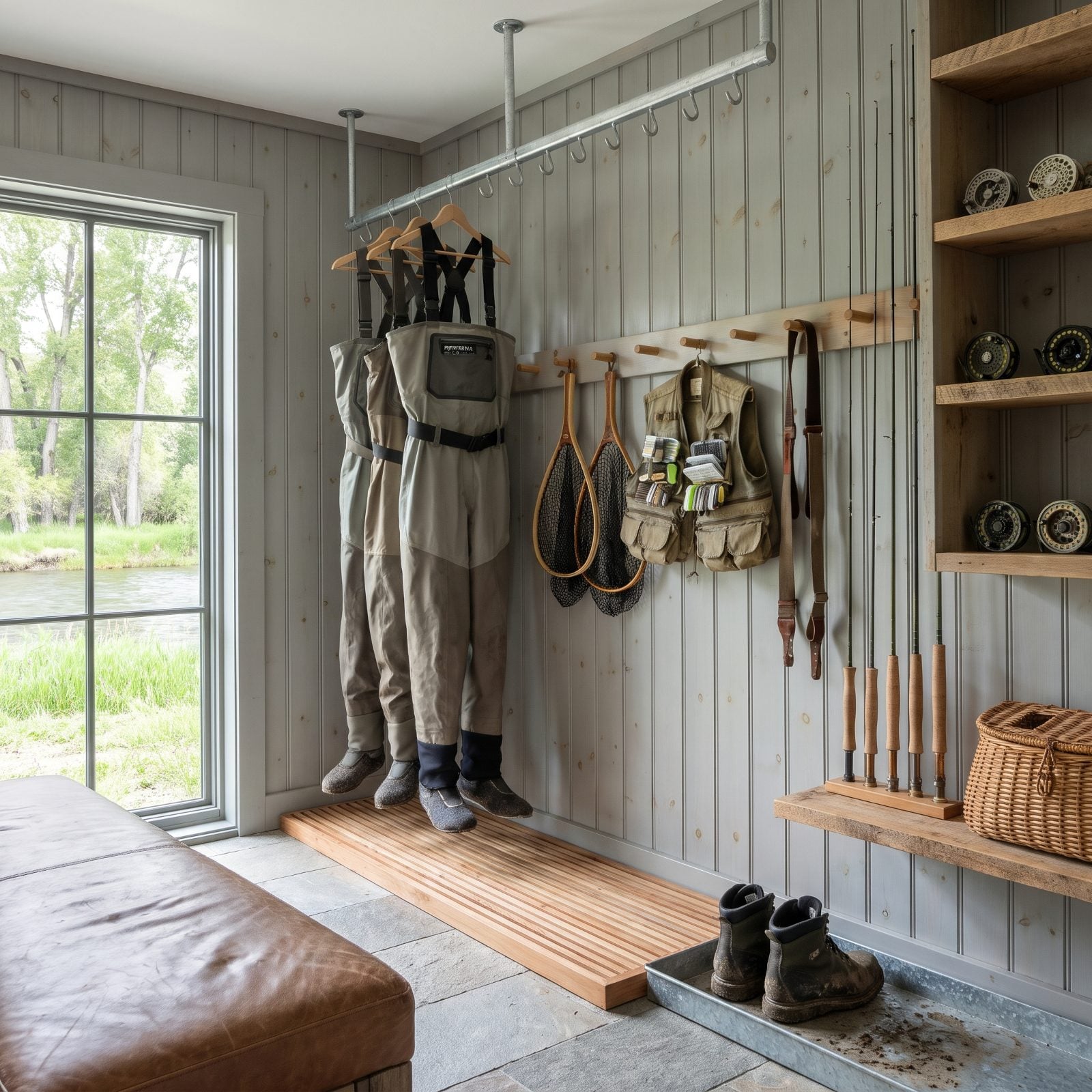
The genius here is the floor. A slatted cedar drip mat laid right on the stone tile lets wet waders hang and drain without soaking the floor or leaving that swampy smell every angler knows and dreads.
River-stone grey paneling keeps the olive gear and cork rod handles looking intentional instead of chaotic, and the cool northern light coming through that steel window reads exactly like the hour before you’d actually leave to fish.
17. Idaho Mountain Mudroom With a Built-In Firewood Bay
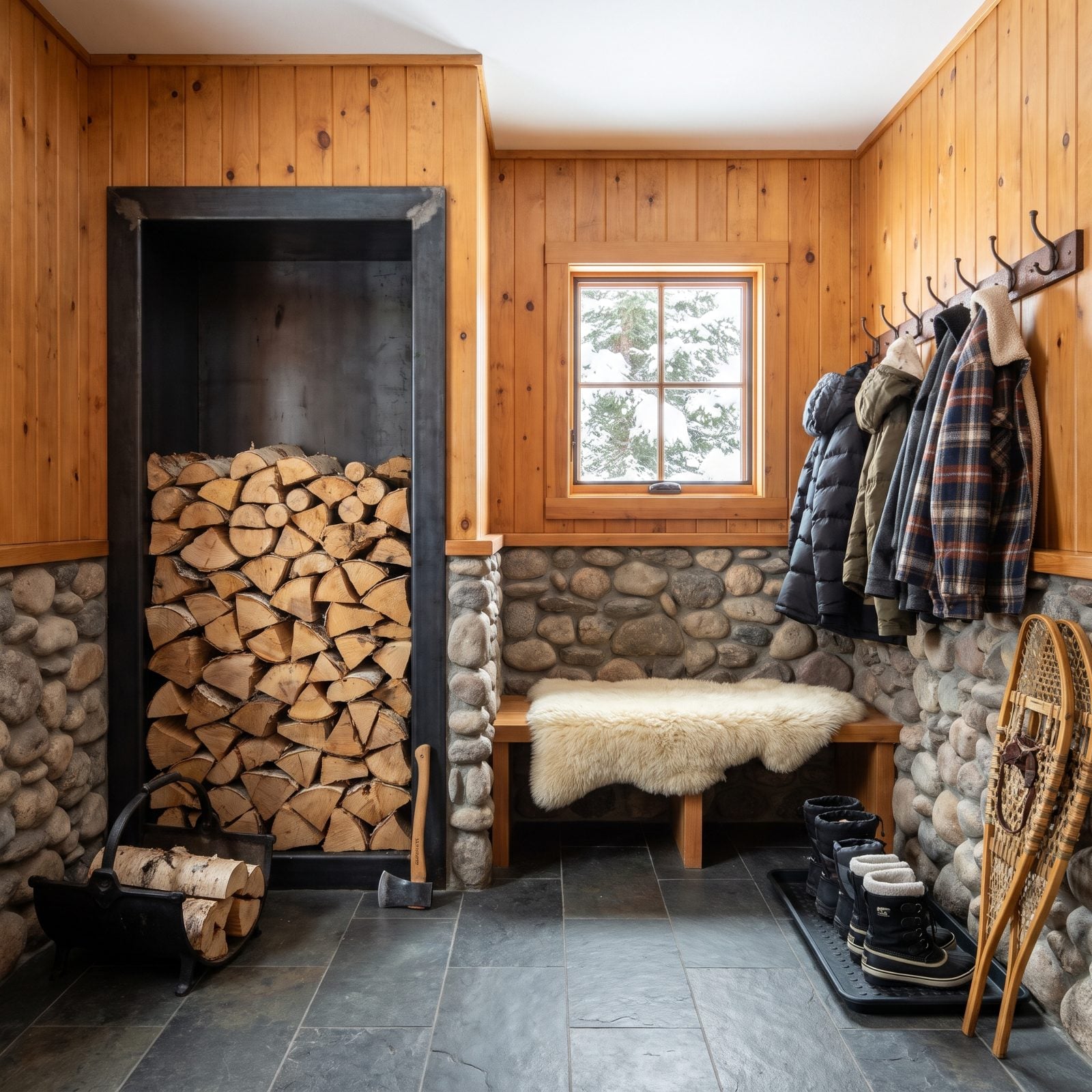
A firewood bay inside the mudroom sounds like a mess waiting to happen. Blackened steel framing solves it. Bark and splinters fall into a contained tray instead of across the floor, and the stacked birch turns into its own graphic element against the pine.
River-rock on the lower wall takes the beating that snow boots and dropped logs would otherwise hand to drywall. That’s not a style choice. It’s survival.
16. Utah Wasatch Mudroom With Climbing-Gear Storage
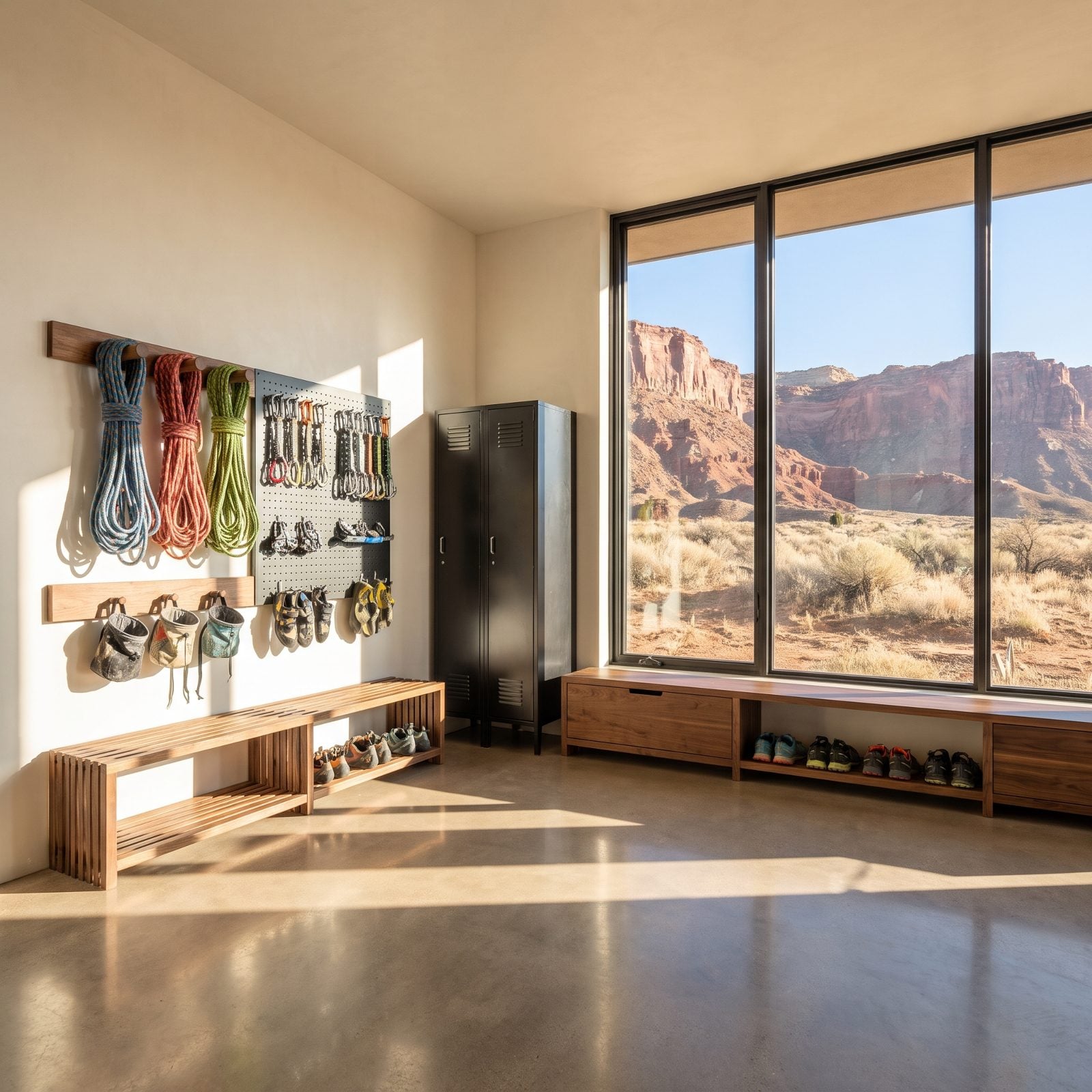
Climbing gear is a tangle by nature, and this room flat-out refuses to let it win. Give rope its own wide wooden dowels, hang the hardware on a steel pegboard, and suddenly what would be a chaotic heap on the floor reads like the tool wall of a serious workshop.
White plaster against that walnut bench keeps everything calm while the red rock outside does the color work for free. Polished concrete underfoot shrugs off chalk dust and desert grit without a second thought.
15. Iowa Farmhouse Mudroom With a Harvest Wash Sink
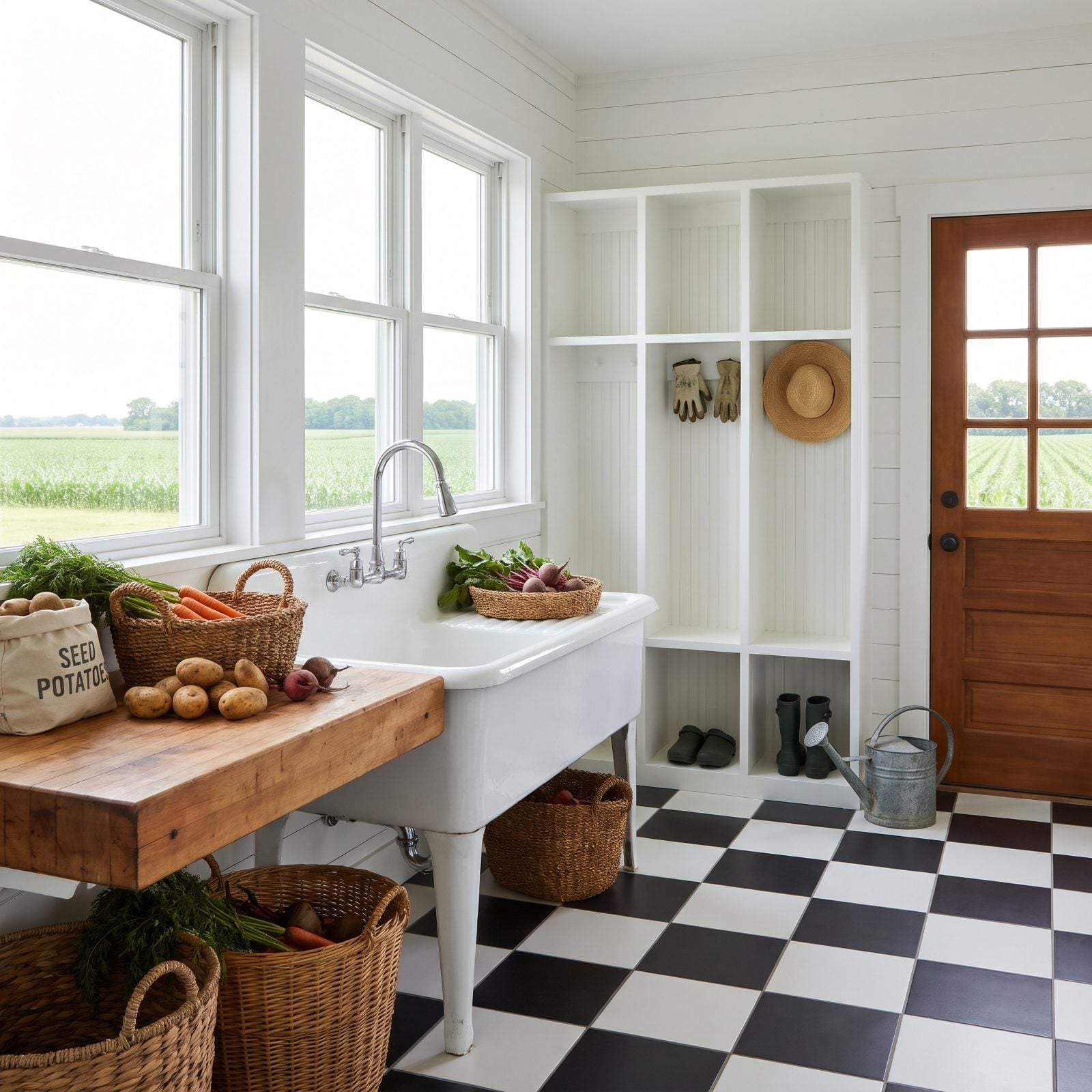
That deep cast-iron wash sink is the whole argument. Pull carrots at seven, rinse the dirt off them right here before they ever reach the kitchen, and the house stays clean while the harvest gets handled.
Shiplap and the checkerboard floor keep it rooted in farmhouse tradition without tipping into cosplay, and the butcher-block counter beside the sink is where the real work happens.
A room like this earns its keep in August. The rest of the year it just looks good doing nothing.
14. Minnesota Lake-House Mudroom With Life-Jacket Cubbies
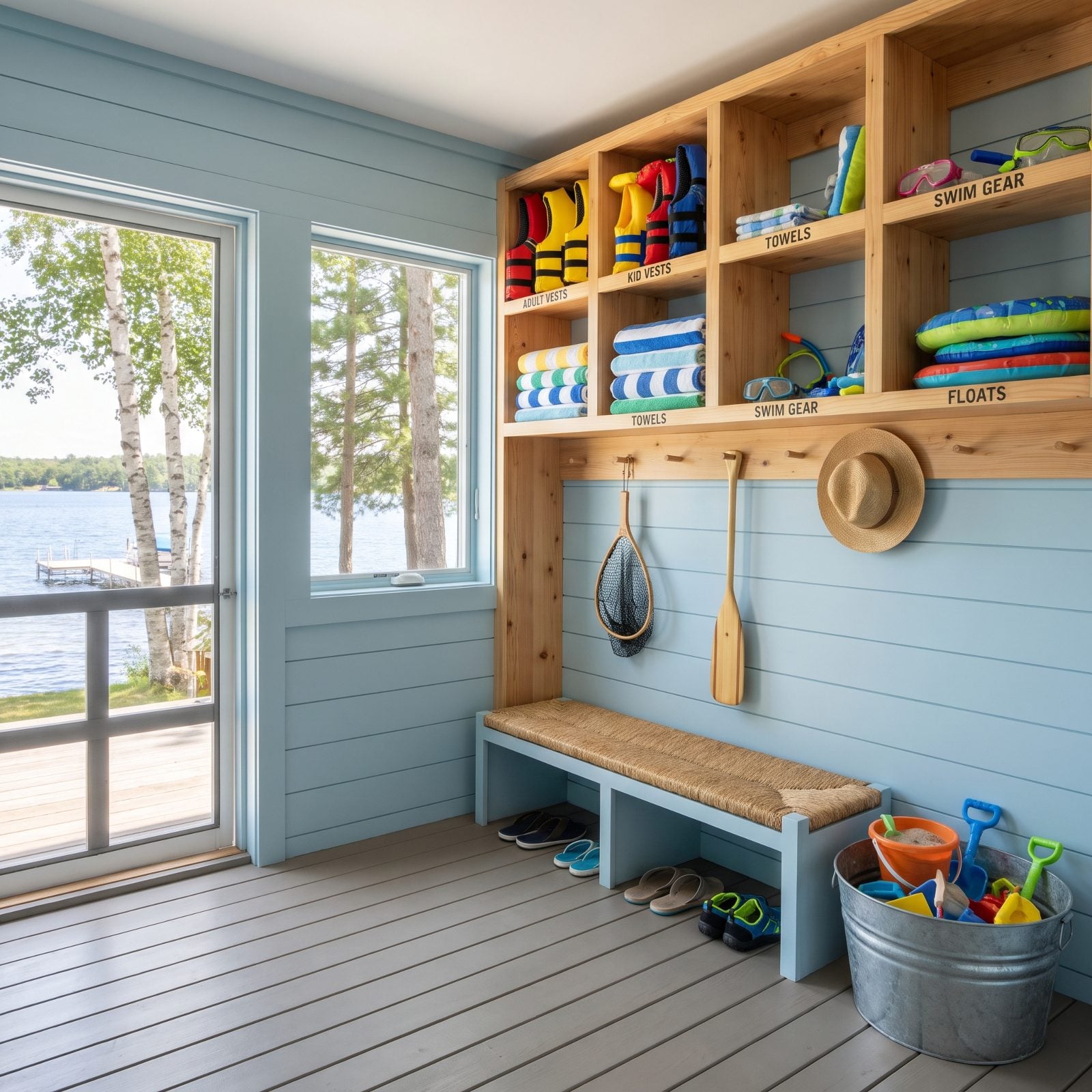
Open cubbies for life jackets solve a problem every lake family knows by heart. Wet vests need air, not a closed closet, and a dedicated, labeled slot for each type of gear means nobody’s digging through a damp pile while the boat idles.
The lake-blue siding and sunny jacket colors handle all the mood-setting here. It’s a room that smells like sunscreen and knows it.
13. Wisconsin Northwoods Mudroom With Snowmobile-Helmet Shelves
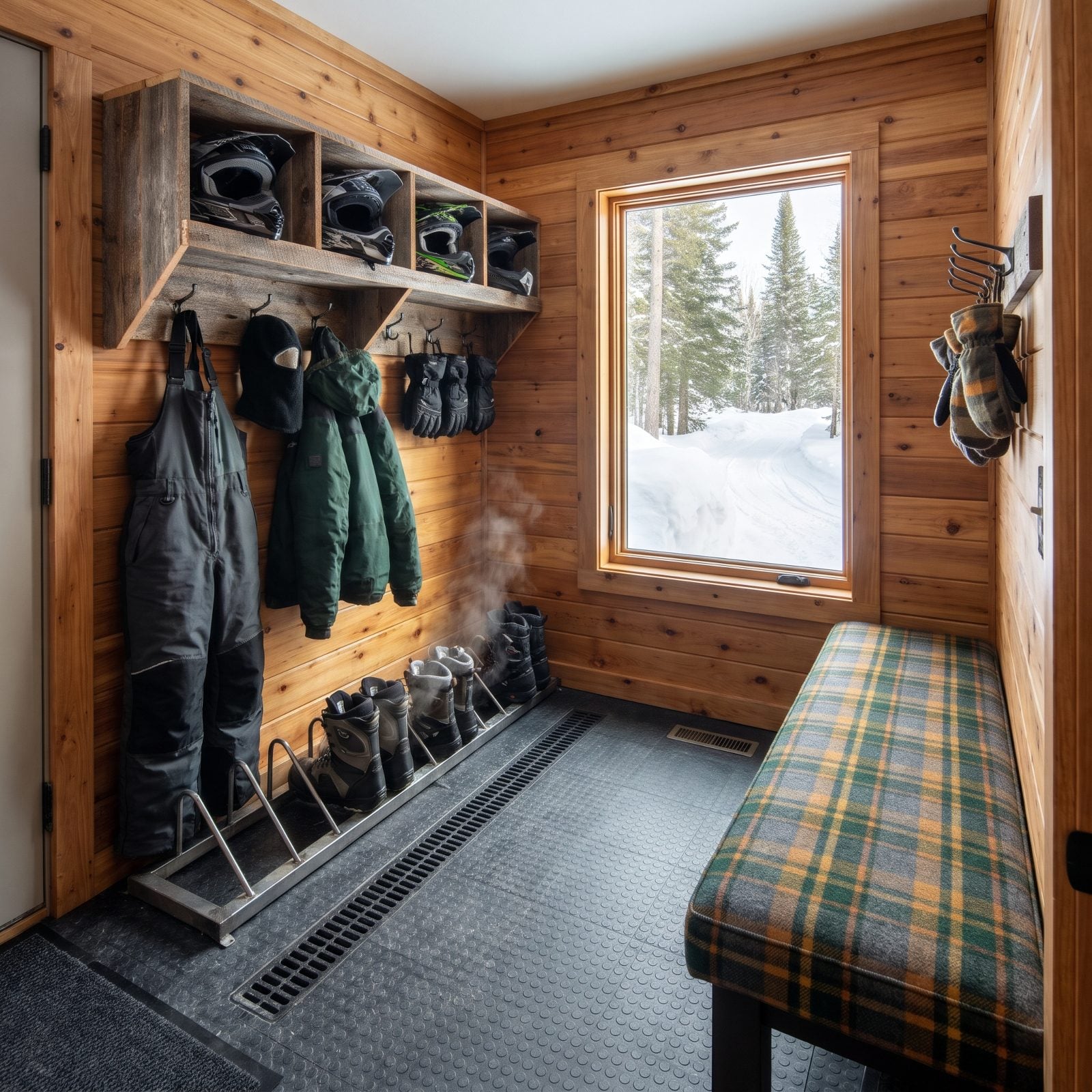
Open wooden cubbies for helmets look like a small detail until you’ve watched someone try to balance one on an open shelf. They roll. They crack visors. These boxed cubbies hold each helmet in its own slot and let the padding air out between rides.
Rubber tile over a recessed drain is the quiet hero of the whole setup. Snowmobile boots drag in slush by the bucket, and this floor just takes it.
12. Chicago Bungalow Mudroom Built Into an Enclosed Back Porch
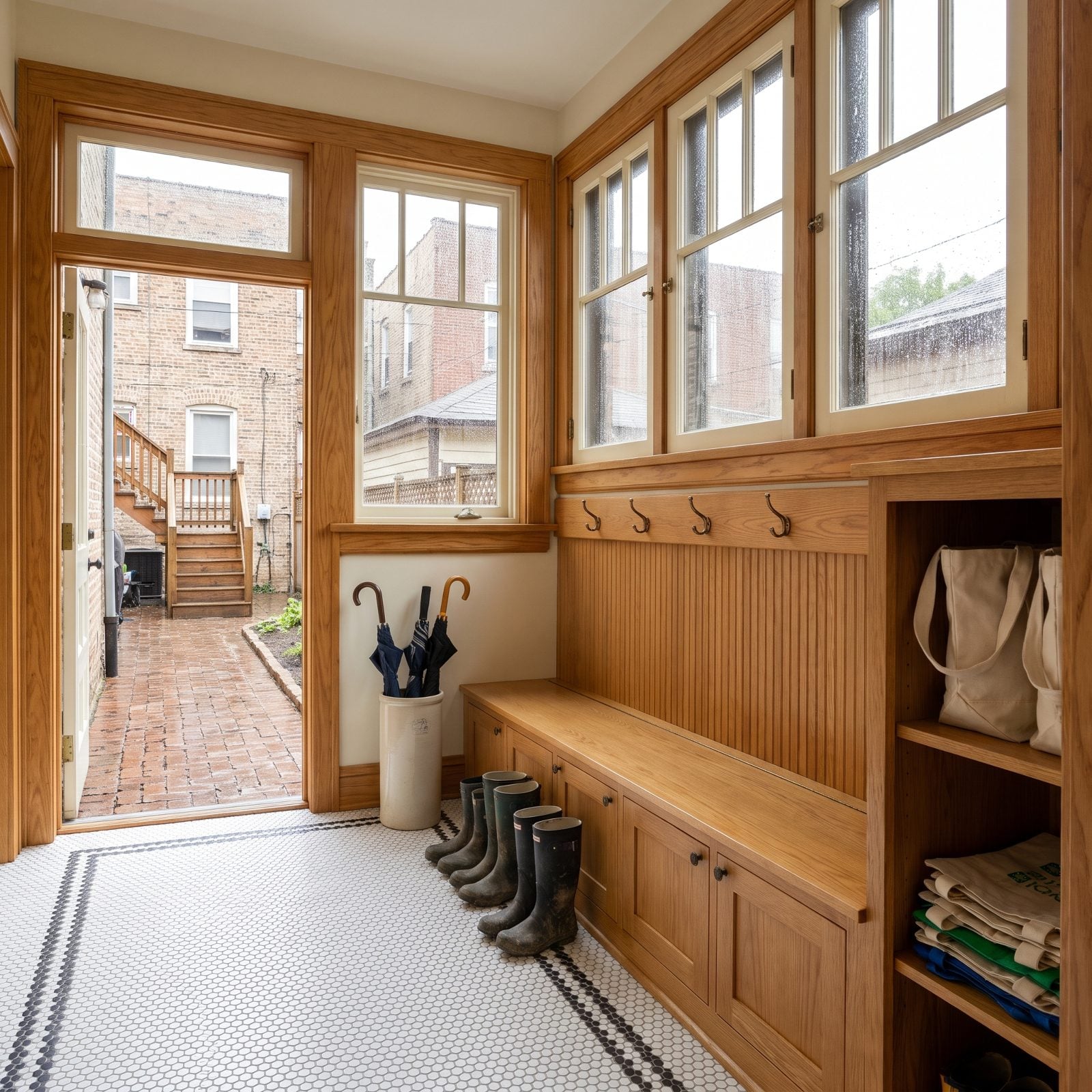
Enclosing the back porch is the oldest trick in the Chicago bungalow playbook, and it still beats building an addition. All that divided-light glazing already existed, so the room starts with light most mudrooms would kill for.
Honey oak trim and the hex-tile floor keep it honest to the house’s 1920s bones, and the brass hooks and bead-board bench feel original even if they aren’t.
Rain streaking those old windows. Boots lined up in a ceramic stand. Bags folded and ready. This is a craftsman mudroom doing exactly what a city back door needs it to do.
11. Indiana Basketball-Family Mudroom With Ball and Sneaker Storage
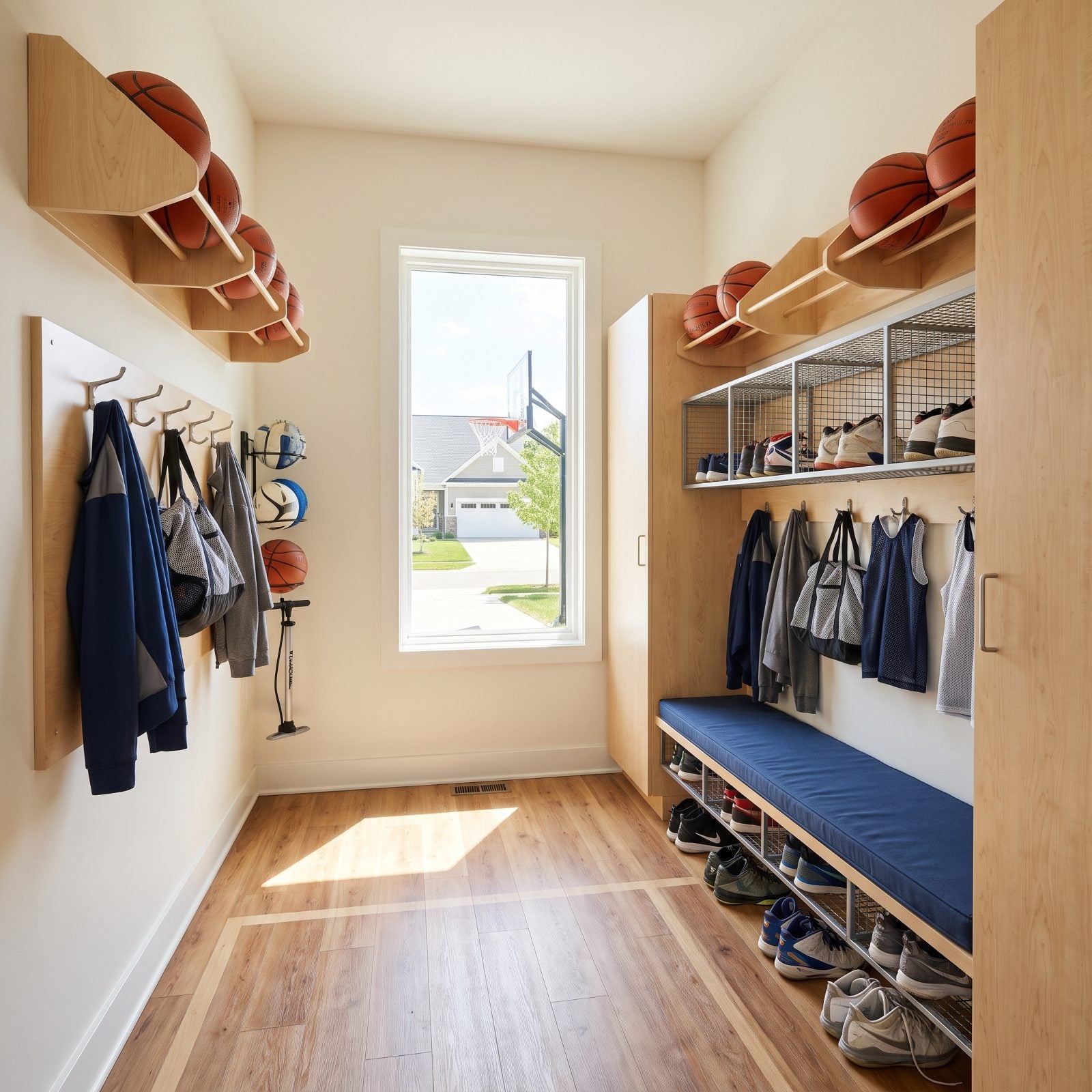
Basketballs roll. That’s the entire problem a basketball household is forever solving, and high wooden wall shelves plus a wall-mounted wire rack end it for good. The balls sit up out of the way, the floor stays clear, and nobody turns an ankle on a stray one at the back door.
Those ventilated lower cubbies for sneakers matter far more than they sound. Gym shoes need airflow or the whole room pays for it by Thursday. And the navy with orange accents nods to the court without going full theme party.
10. Ohio Century-Home Mudroom With Reclaimed School Lockers
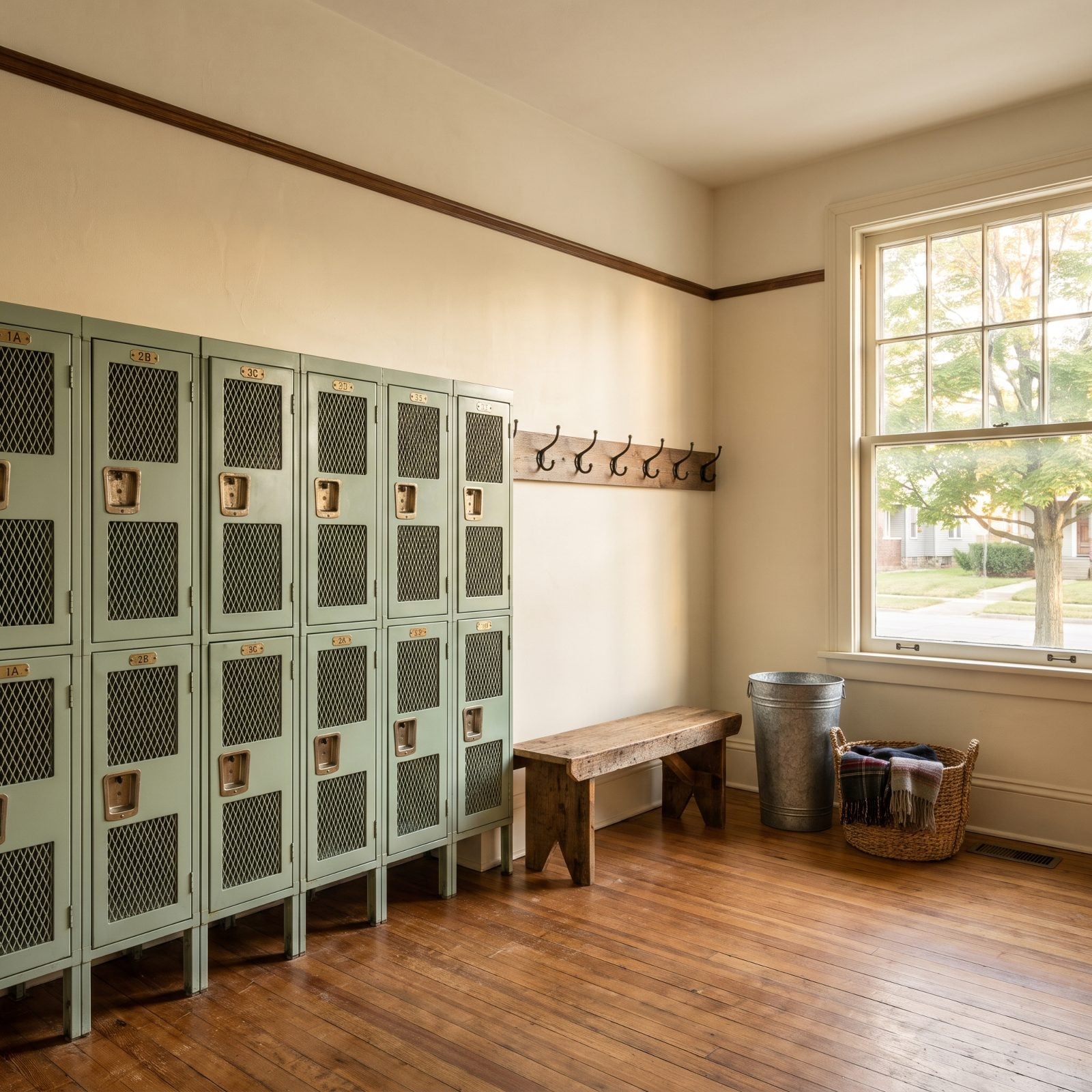
Salvaged school lockers in a century home is a pairing that shouldn’t work and completely does. The sage-green steel and those worn brass latch pulls carry history that matches the house’s own age instead of fighting it.
Wire-mesh fronts are the practical part. Wet coats and sweaty gear breathe behind them instead of molding in a sealed box, and the heart-pine floor underneath has already seen a hundred years of boots. It won’t flinch at a hundred more.
I’ll admit I’m a sucker for reused industrial pieces, and these are the good kind. Not distressed on purpose at a factory. Actually old.
9. California Surf Mudroom With Board Racks and Neoprene Drying Bars
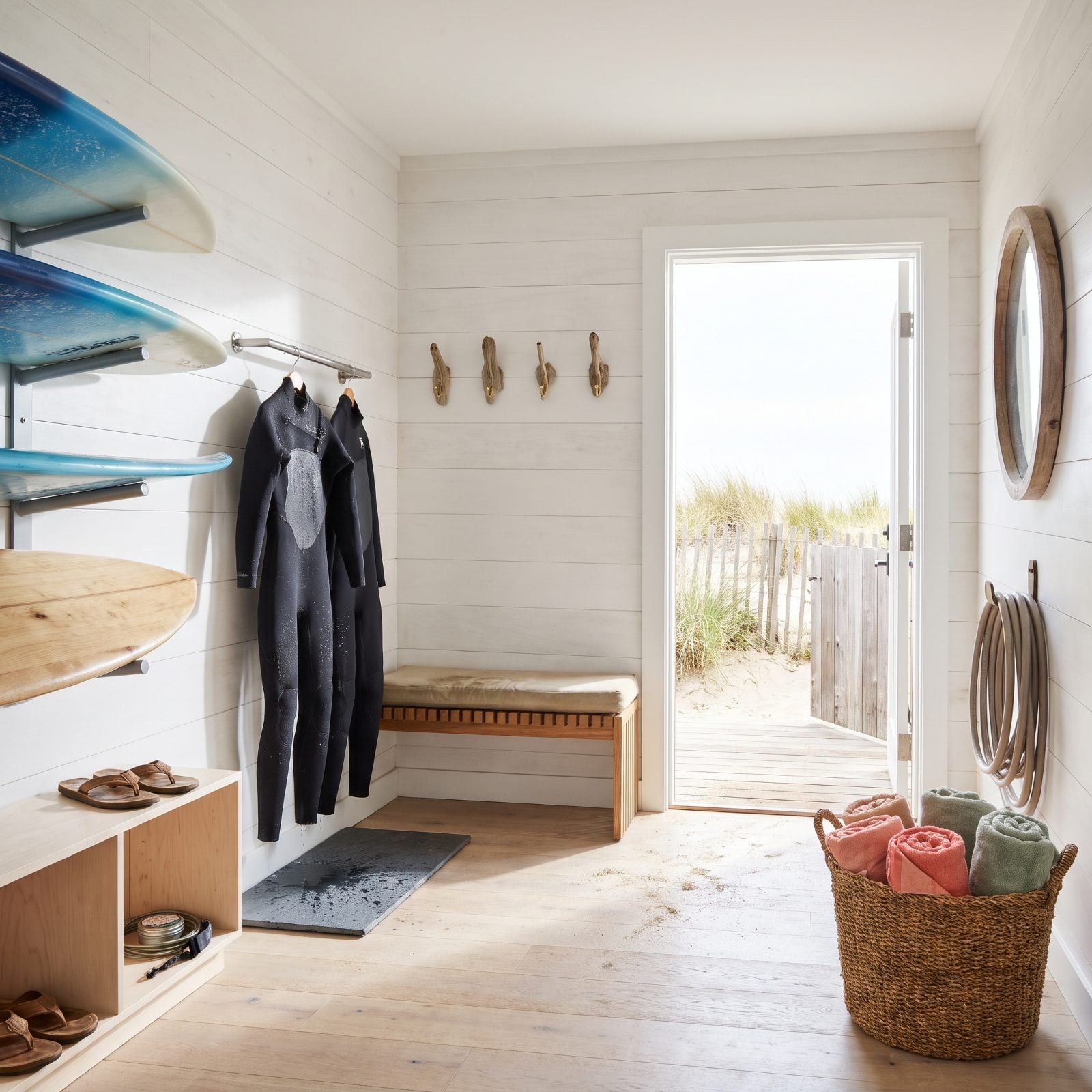
That neoprene drying bar is the whole reason this room functions. Leave a wet wetsuit in a heap and it smells like low tide by morning, so bolting a steel rail where water drips onto sealed oak instead of carpet heads off the problem before it starts.
The teak slat bench and seagrass basket corral sand into one washable zone, and whitewashed shiplap takes the glare off the coastal light while keeping the palette tied to the beach outside.
8. Los Angeles Bungalow Drop Zone in a Breezy Porte Cochère
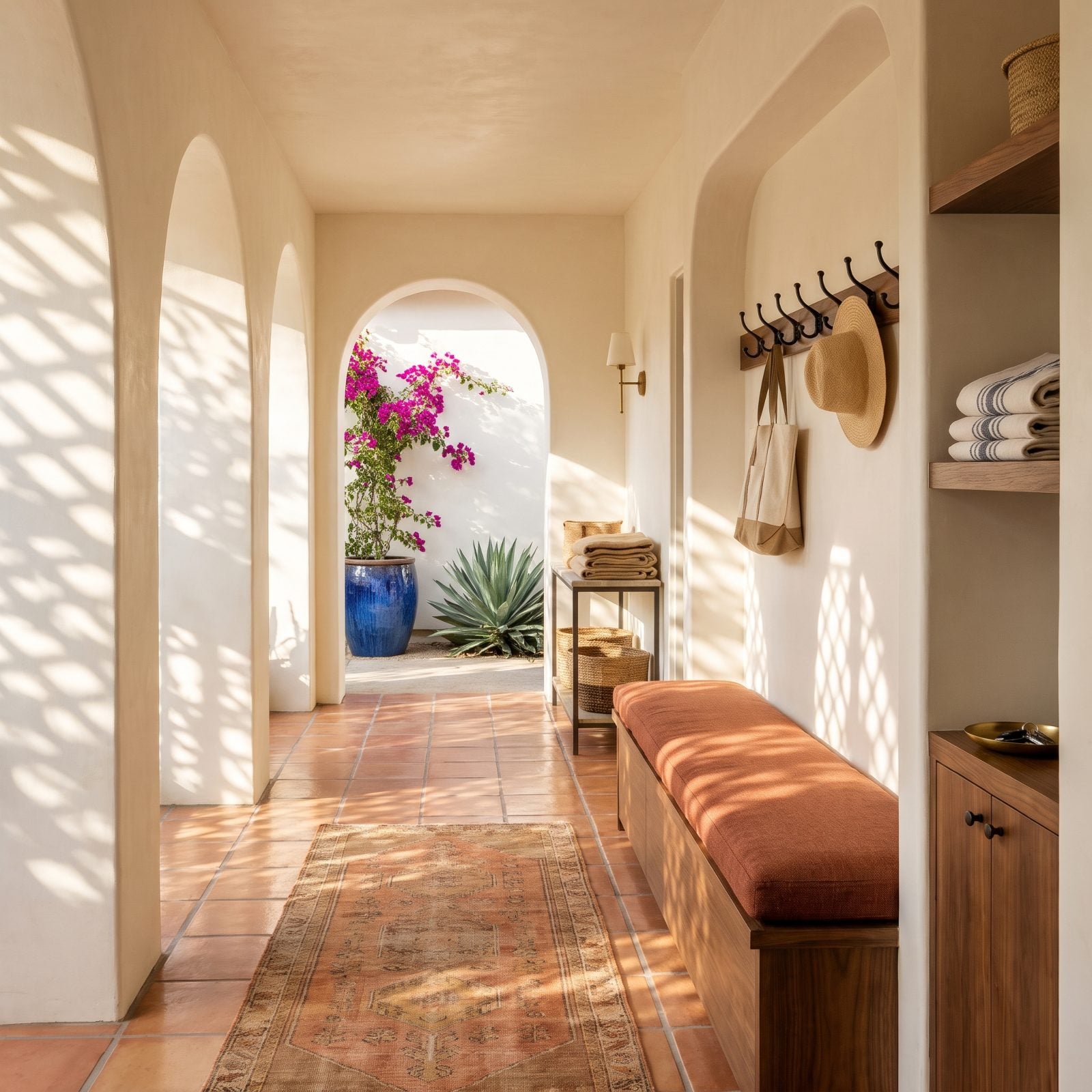
An open-air drop zone only works in a climate that rarely gets cold or wet, and Los Angeles obliges. The porte cochère hands you shade and shelter behind solid plaster walls and a full ceiling, while the row of arches opens one side to the garden, so the whole thing reads as a sunlit hallway with an outdoor view.
Saltillo tile handles tracked-in dust and the odd rain without complaint. That walnut bench paired with black iron coat hooks keeps the trip from car to kitchen quick and honest. And the bougainvillea? Does half the decorating for free.
7. Central California Farm Mudroom With Produce-Washing Counters
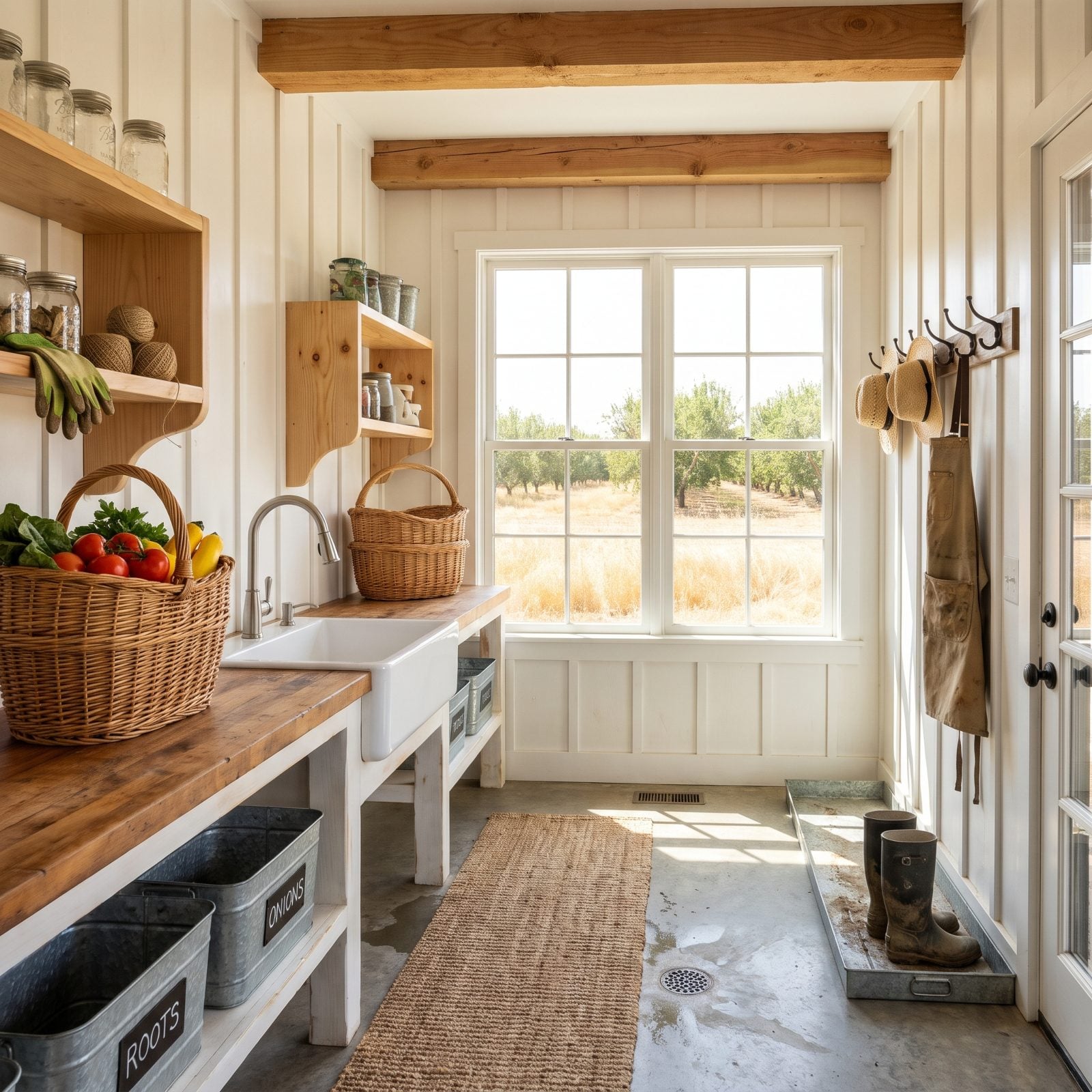
The produce-washing counter is the hero, and it earns the title. When your back forty actually produces something, you need a place to hose dirt off before it reaches the kitchen, and a fireclay apron sink over a drained concrete floor is exactly that.
Butcher block takes a beating and sands smooth again. The galvanized bins hide root vegetables in plain sight. What I love is that nothing here pretends to be precious.
6. Portland Mudroom With Bicycle Parking and Recycling Drawers
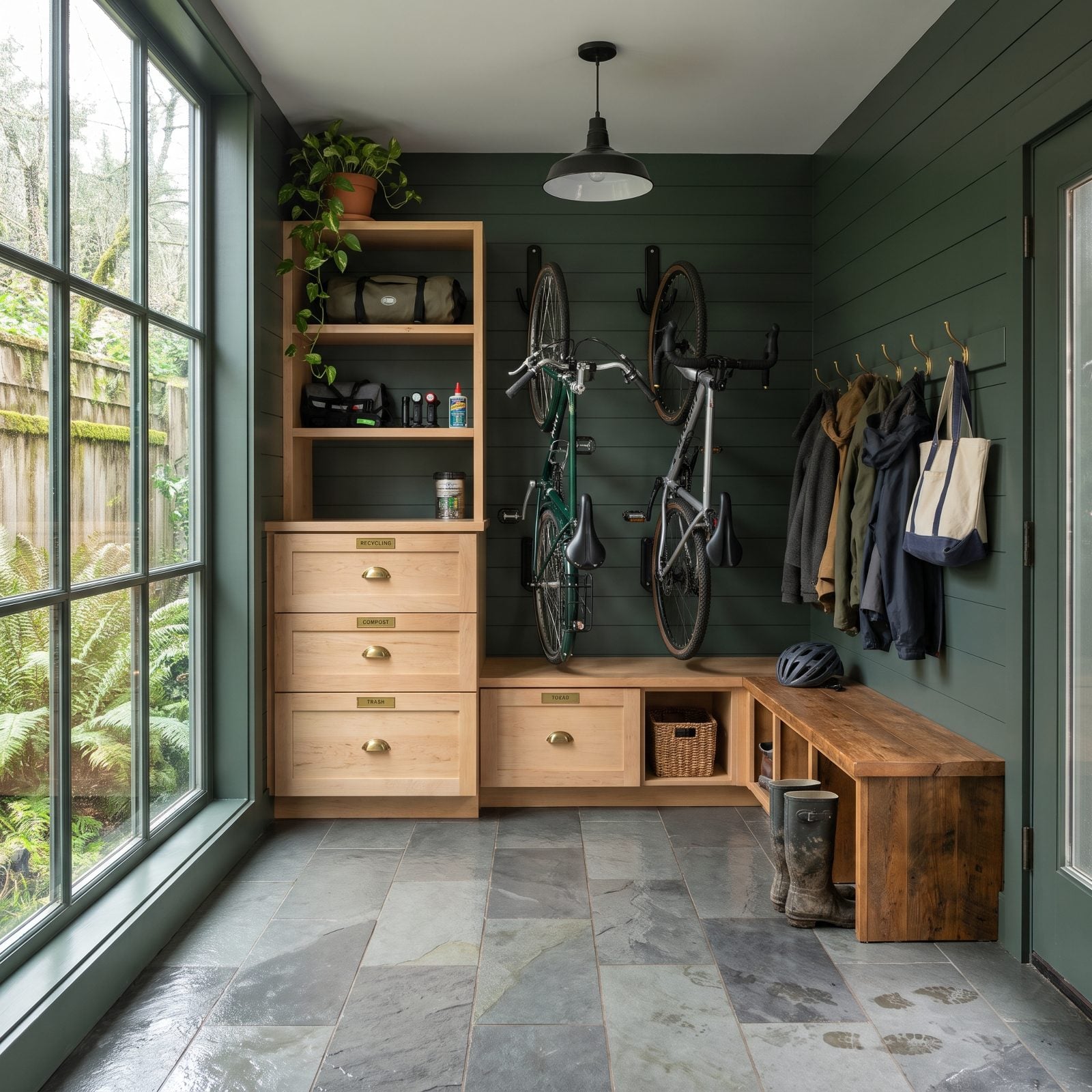
Hang the bikes vertically and a wet, muddy nuisance turns into a wall feature. Portland rides year round, so giving a commuter frame a dedicated spot off the floor is just reading the room right.
Pull-out recycling and compost drawers tucked into maple cabinetry handle a city that takes sorting seriously, and slate tile by the door shrugs off puddles. Add a drip tray under the boots and your subfloor lasts a decade longer.
5. Washington Rain-Country Mudroom With a Full Drying Wall
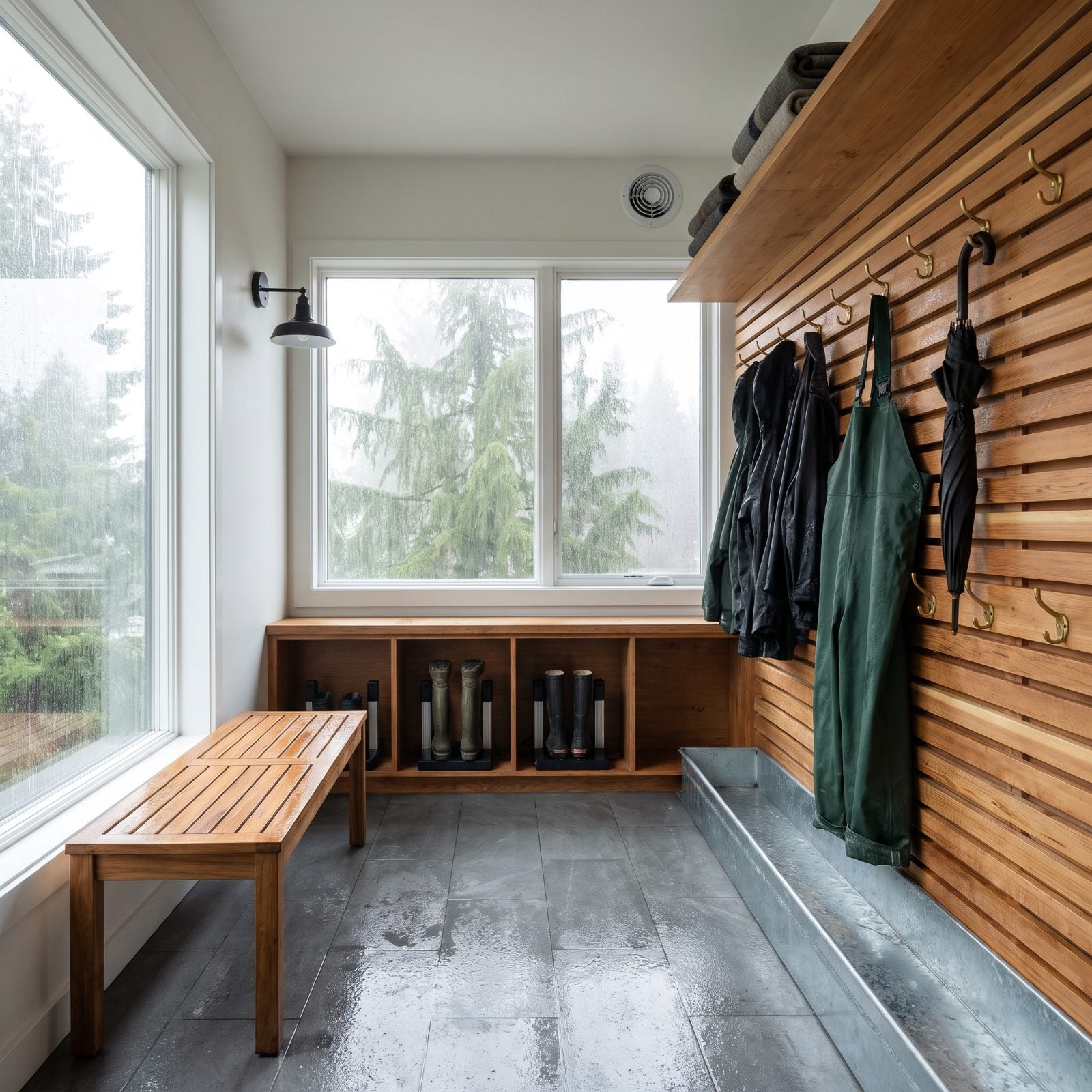
A full drying wall is what separates a real rain-country mudroom from one that just borrows the look. Western Washington gets relentless, soaking rain, and a cedar slat wall lined with hooks over a galvanized drip trough gives every wet thing a place to shed water without soaking the floor.
Boot dryers in the fir cubbies finish the job overnight. The exhaust vent is the part people forget, and skipping it is how you grow mildew in a month.
4. Olympic Peninsula Mudroom With Kayak and Rain-Gear Storage
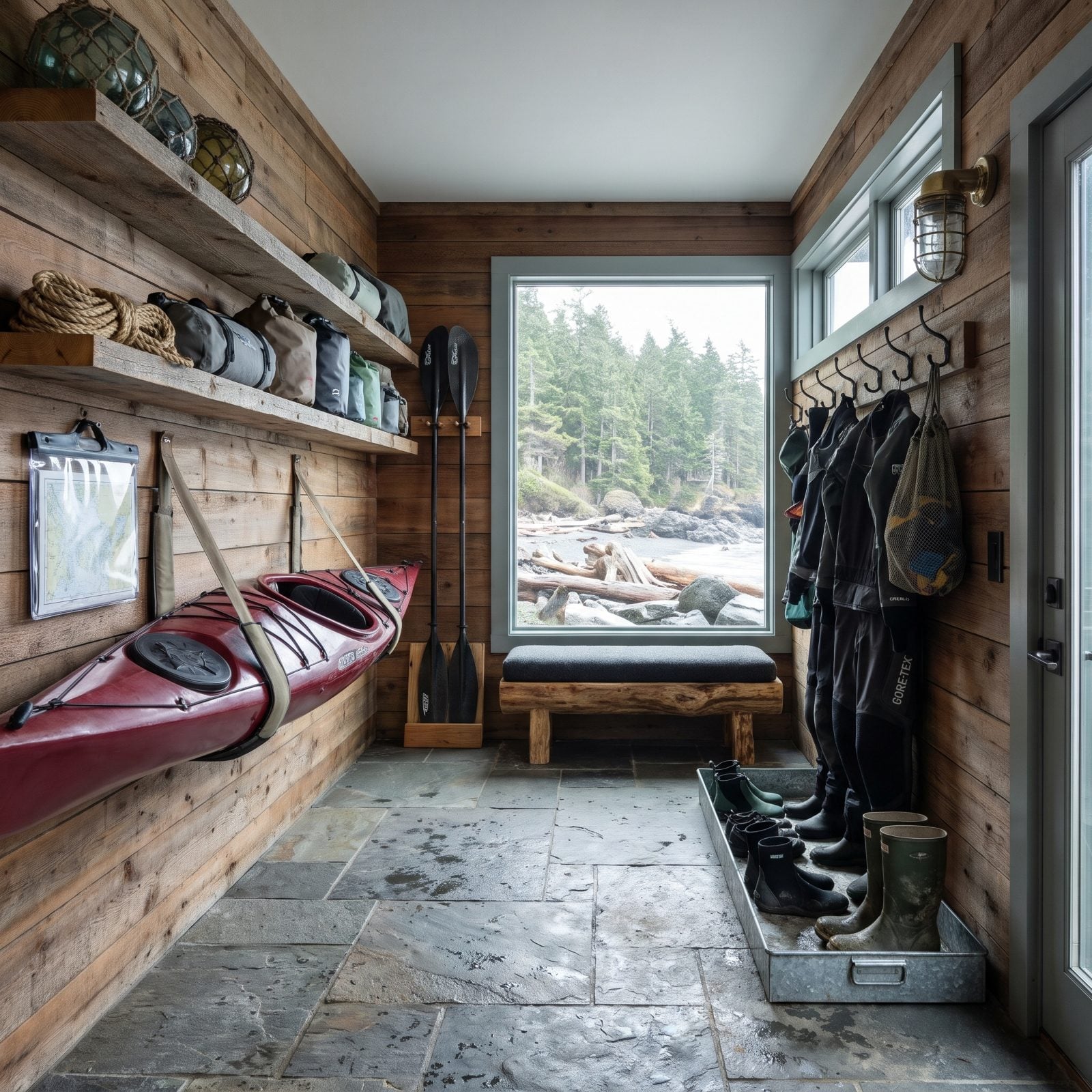
Padded wall straps sling a tandem kayak along the wall at waist height and keep the floor clear for everything else. Out on the peninsula your gear is the point, and racking a boat horizontally against reclaimed cedar reads as intentional rather than cluttered.
Flagstone underfoot handles grit, salt, and dripping dry suits without a shrug. And that marine lantern sconce? A wink at where you are.
3. Puerto Rico Tropical Mudroom With Breezeblock Walls
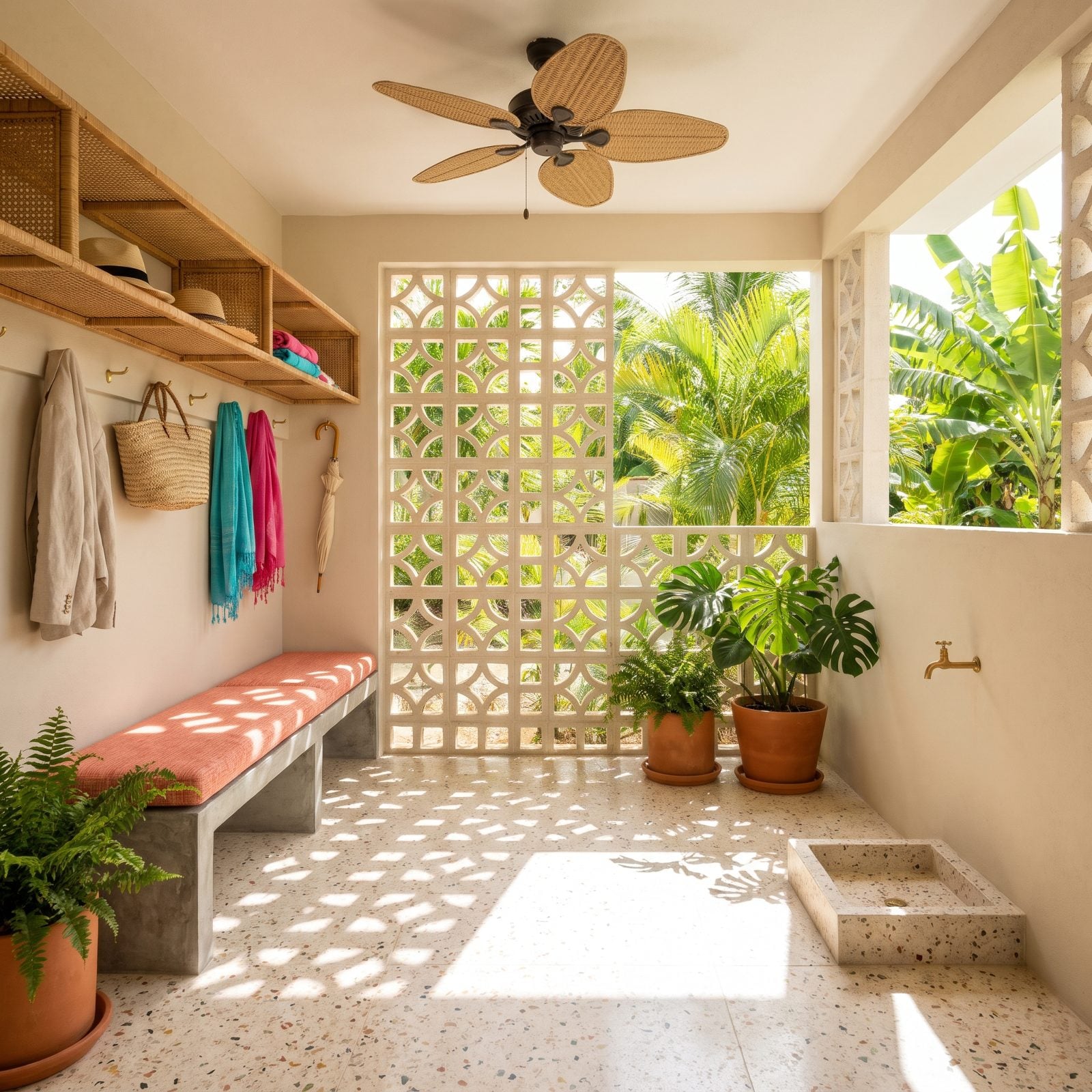
Those breezeblocks are climate control disguised as a wall. In a place this hot and humid, perforated concrete pulls air through the space while scattering geometric shadows across the terrazzo, so the room cools itself and looks good doing it.
Terrazzo stays cool on bare feet and laughs at humidity. The little rinse basin by the door catches sandy feet before they reach the house. It reminds me of an open powder room in the way it flatly refuses to feel boxed in.
2. Hawaiian Plantation-Style Mudroom With Slatted Ventilation
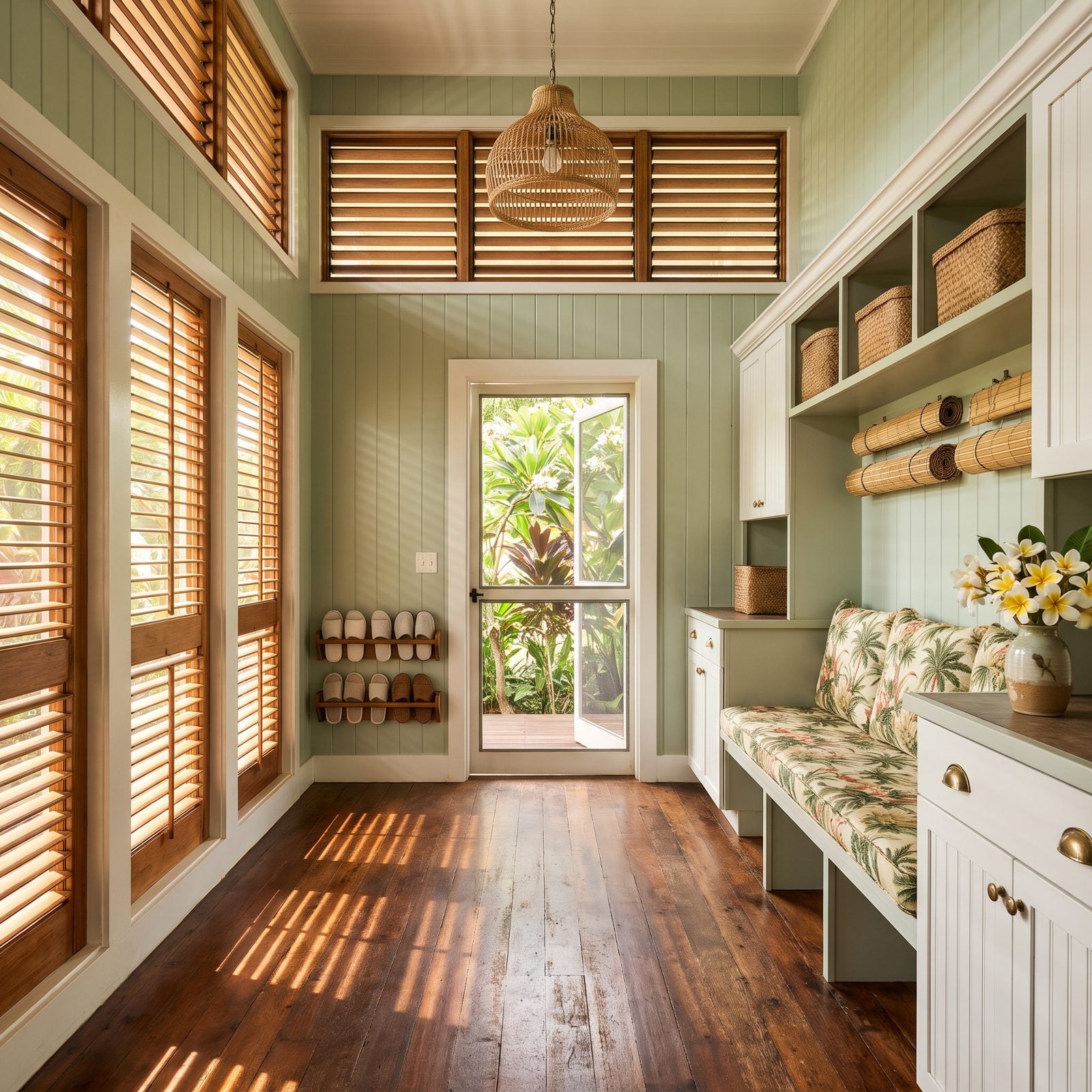
The slatted ventilation panels up high are the signature move, and they make total sense. Hawaiian plantation homes were built to breathe, so high slats vent hot air while louvered shutters pull cooler air through at seat level.
That shoe rack by the door honors the barefoot-indoors custom that runs across the islands. Lauhala baskets and a rattan pendant anchor the palette to place. Sage bead-board with brass cup pulls, though? A pairing I’ll defend to anyone.
1. Alaska Arctic Entry With a Cold-Weather Airlock
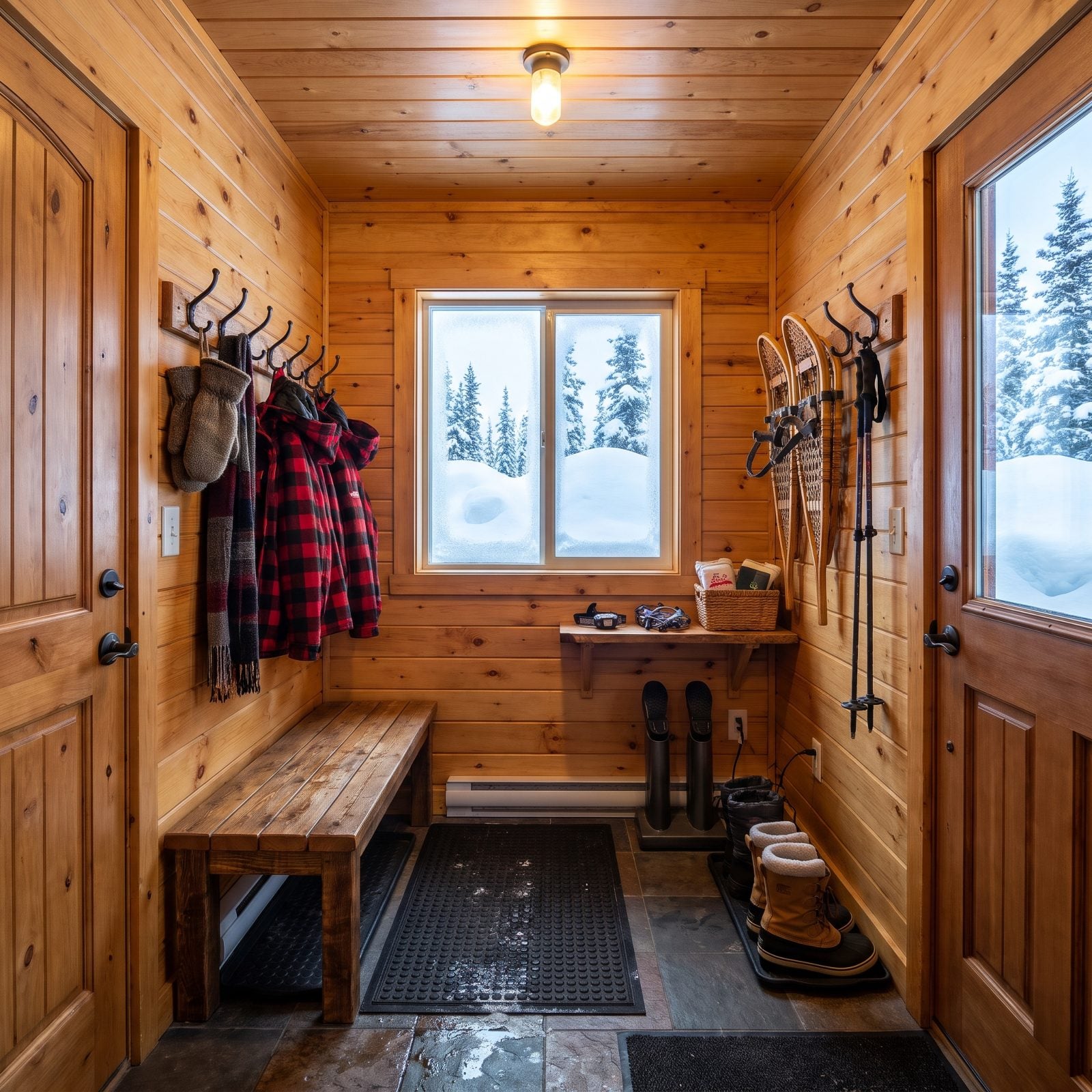
The double-door airlock is doing serious work here. Trap a buffer of air between an outer and inner door and the house’s heat can’t bolt out every time someone comes in from forty below. In interior Alaska that’s not a nice touch. It’s survival math.
Radiant heat under the boot bench dries soaked pac boots overnight, and heated slate tile melts tracked snow into a mat instead of your floorboards.
Knotty pine walls keep the whole thing feeling like refuge against the blue cold outside, which is really the point of prospect and refuge: you want to feel the warmth most when the window shows you exactly what you escaped.