- Modular cube organizer with matching rainbow fabric storage boxes
- White walls and light wood floors for clean backdrop
- Picture labels on bins for pre-readers and activity zone markers
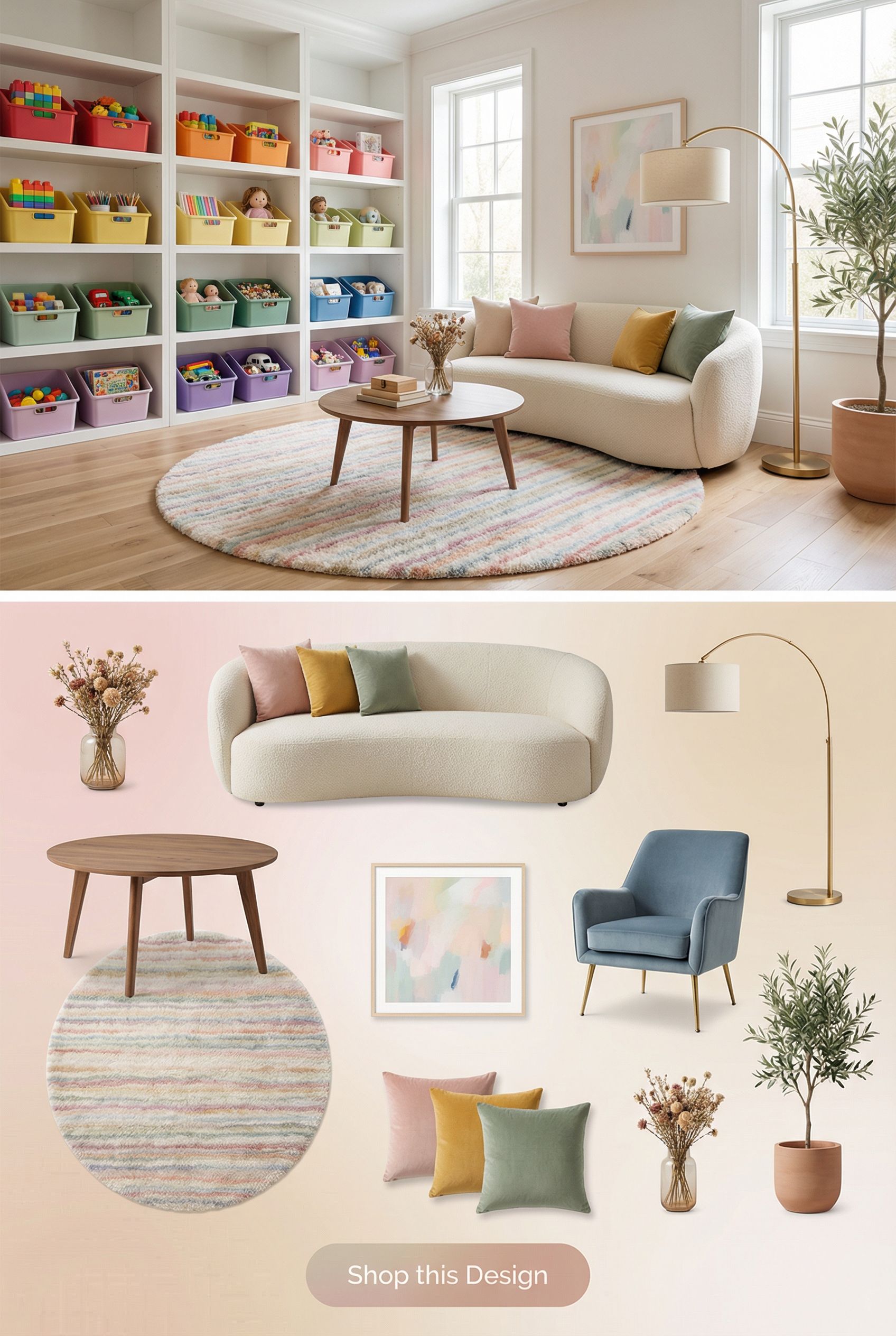
This contemporary organizational masterpiece showcases a white laminate sixteen-cube organizer filled with canvas storage bins in vibrant rainbow sequence—cherry red, tangerine orange, sunshine yellow, emerald green, sky blue, and violet purple. Light maple hardwood floors and crisp white walls provide a gallery-like backdrop. A modern dome pendant light in matte black hangs overhead. Accessories include laminated picture labels with clear typography, a geometric patterned area rug in multicolor, acrylic floating shelves displaying award ribbons, a round mirror with black frame, potted succulents in white ceramic planters, and colorful wooden alphabet blocks arranged decoratively. Scroll down to shop this look.
In order to come up with the very specific design ideas, we create most designs with the assistance of state-of-the-art AI interior design software. Also, assume links that take you off the site are affiliate links such as links to Amazon. this means we may earn a commission if you buy something.
1. Rainbow Rope Storage Baskets
Color psychology meets organizational bliss in these woven wonders. Each hue triggers different cognitive responses in developing minds, making cleanup an unconscious lesson in chromatic association. The rope texture adds tactile dimension while the rectangular shape maximizes shelf real estate—what I call “functional rainbow therapy” for chaotic playrooms.
2. Curved Boucle Sectional Sofa
The curve isn’t merely aesthetic—it’s psychological architecture. This sculptural piece creates conversational intimacy while the boucle fabric delivers that coveted “cloud-sitting” sensation. I’ve coined this look “soft modernism”: where contemporary silhouettes embrace rather than intimidate. The cream palette acts as a visual palate cleanser in overstimulated spaces.
3. Round Pastel Rainbow Rug
Diagonal striping creates subtle movement that guides the eye without overwhelming sensory-sensitive spaces. The circular form softens angular rooms while those boho tassels add just enough texture to feel intentional. This exemplifies “gentle maximalism”—color-rich design that soothes rather than stimulates, perfect for transitional zones between play and rest.
4. Mid-Century Round Coffee Table
Walnut’s inherent warmth grounds airy spaces while the drum silhouette offers flow-friendly navigation—critical in family zones. Those cross legs provide architectural interest without visual weight. This piece embodies “grounded elevation”: furniture that anchors a room’s energy while maintaining lightness, bridging vintage nostalgia with contemporary living patterns.
5. Gold Arc Floor Lamp
Adjustable color temperatures mean this lamp adapts to circadian rhythms—a design detail that honors our biological needs. The rattan shade filters light organically while the arc creates dramatic spatial definition. I call this “biophilic illumination”: lighting that mimics natural patterns, transforming artificial brightness into something psychologically nourishing.
6. Navy Blue Accent Chair
Navy’s psychological weight creates anchor points in lighter palettes while chenille satisfies our primal need for softness. Those scooped arms aren’t just retro charm—they’re ergonomic embrace. This represents “confident comfort”: mid-century lines that command attention while inviting you to sink in, balancing visual authority with physical welcome.
7. Abstract Pastel Wall Art
Texture-forward abstraction allows personal projection—viewers complete the narrative themselves. These pastels create what I term “whisper walls”: art that suggests rather than shouts, perfect for spaces requiring both personality and calm. The dual-piece format enables asymmetrical styling or balanced symmetry, adapting to your psychological comfort zone.
8. Blush Faux Fur Throw Set
Ruched texture multiplies tactile satisfaction while blush pink triggers gentle dopamine responses without the intensity of bolder hues. The matching pillow coordination creates visual cohesion that calms pattern-fatigued eyes. This embodies “layered serenity”: dimensional softness that transforms furniture into emotional sanctuaries, essential for decompression zones.
9. Mustard Corduroy Pillow Covers
Mustard’s golden undertones inject optimism without overwhelming—a sophisticated alternative to primary yellows. Corduroy’s linear ridges add directional texture that plays beautifully against smooth fabrics. I call this “textural punctuation”: small doses of distinctive material that elevate entire seating arrangements, proving accent pieces earn their name.
10. Sage Green Knit Throw Set
Sage’s botanical association triggers subconscious nature connections while cable knit delivers grandmother-comfort nostalgia. The three-piece coordination simplifies styling decisions—what I term “effortless curation.” This green exists in that psychological sweet spot between energizing and calming, making it remarkably versatile across seasons and moods.
11. Faux Olive Tree with Planter
Seven feet of vertical drama without the maintenance anxiety—biophilic design for realistic lifestyles. Olive trees symbolize peace and longevity, embedding subtle psychological anchors into your space. The white planter provides clean contrast while natural wood trunks satisfy our craving for organic irregularity. This is “aspirational naturalism” made accessible.
12. White Ceramic Vase
Sculptural vessels elevate dried botanicals from rustic to refined—a crucial distinction in modern spaces. White ceramic’s neutrality lets texture take center stage while the scale creates focal points on mantels or consoles. This represents “negative space artistry”: simple forms that frame rather than compete, honoring minimalism without sterility.
13. Wood Stain Touch-Up Marker
Design longevity depends on maintenance accessibility. This golden oak marker preserves the psychological comfort of well-maintained spaces—scuffs trigger low-level stress we don’t consciously register. Quick touch-ups maintain what I call “visual integrity”: the seamless appearance that allows rooms to feel perpetually refreshed rather than gradually declining.