🔥 Would you like to save this?
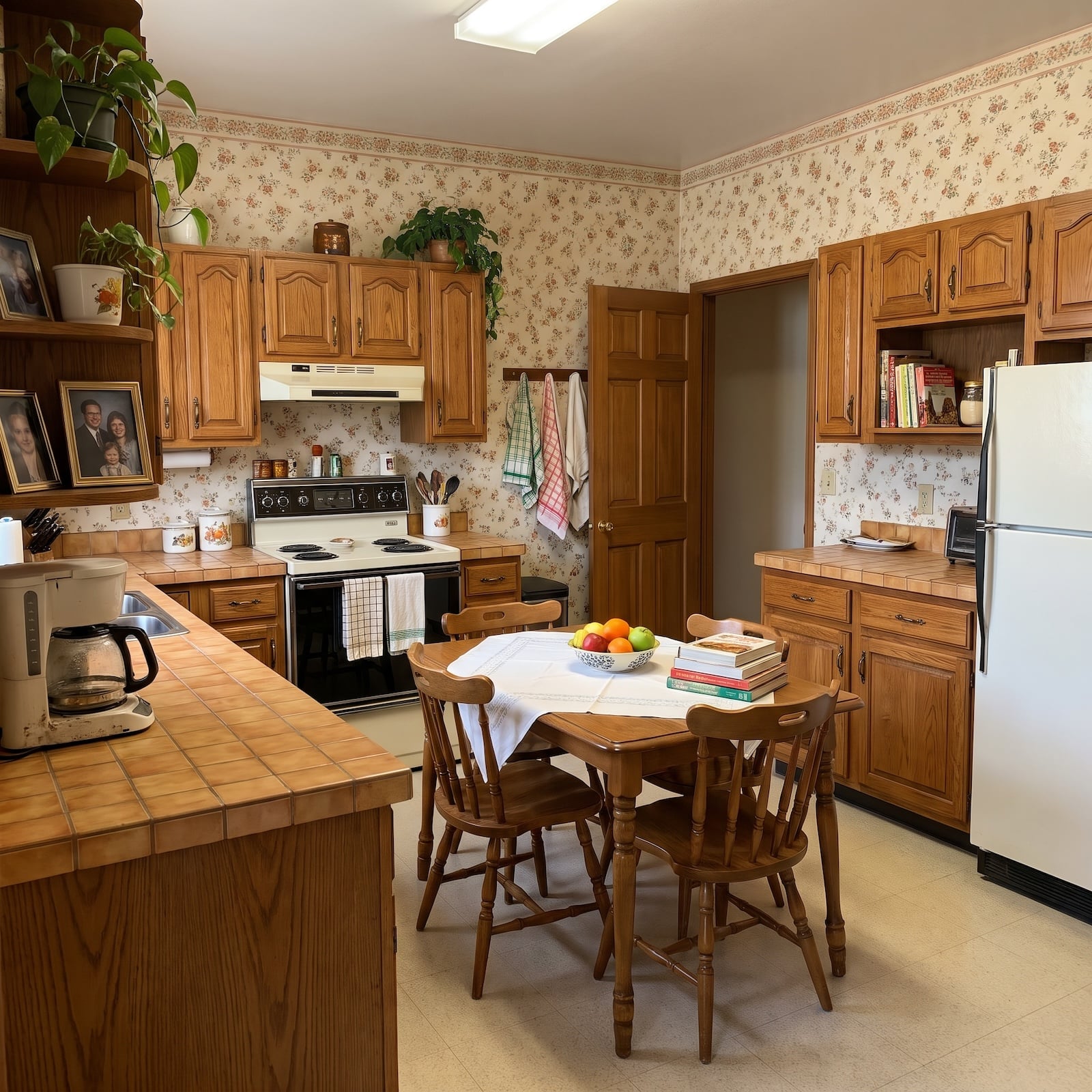
A room can survive a bad sofa. A bad paint color can be covered by Friday. But when the floors, cabinets, ceiling, and furniture all wear the same wood finish, the entire interior can begin to resemble the inside of an expensive cigar box. Beautiful timber, nowhere for the eye to go.
In order to come up with the very specific design ideas, we create most designs with the assistance of state-of-the-art AI interior design software. Also, assume links that take you off the site are affiliate links such as links to Amazon. this means we may earn a commission if you buy something.
The most sophisticated interiors understand that wood has more than one personality. Blackened oak against natural oak creates architectural drama without changing species. Rough reclaimed beams above precision-cut walnut cabinetry turn texture into the main event. Cherry’s reddish undertones can sharpen the appearance of cool gray-washed flooring, while pale ash against dark walnut creates contrast that no matching dining suite could deliver.
The real decisions happen in the details. Grain can run vertically, horizontally, or in unruly patterns. Matte finishes absorb and scatter light differently from polished surfaces. A dark ceiling can make pale furniture appear almost sculptural. Stone, plaster, leather, and saturated color provide the interruptions that prevent an abundance of timber from becoming monotonous. Proportion matters, too: a walnut kitchen and an oak dining table can coexist beautifully when their visual weight is properly distributed.
These 38 interiors abandon the matching rule in favor of something more demanding: composition. Some use three wood species. Others extract remarkable differences from a single one. The results range from quiet sophistication to unapologetic architectural drama, with one principle running through them all. Good design isn’t about making everything agree.
38. Blackened Oak Meets Natural Oak — One Species, Two Extremes
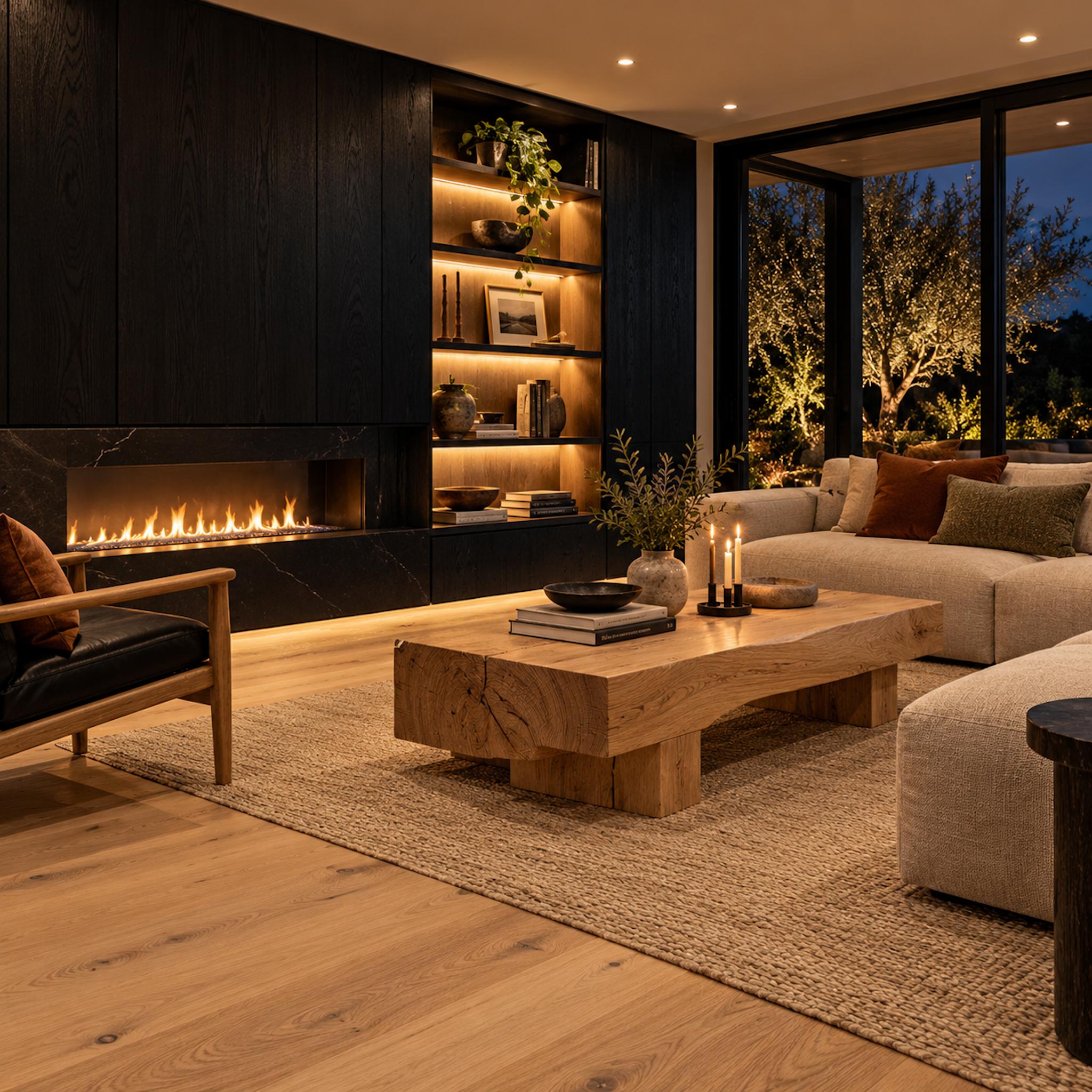
Blackened oak cabinetry stretches across the fireplace wall, its nearly charcoal finish turning the entire elevation into a dramatic architectural statement. Beneath it, natural oak flooring takes the opposite approach, revealing pale grain across the room. The two surfaces share a species, yet their appearances could hardly be further apart.
A sculptural oak coffee table carries the lighter timber into the seating area, while illuminated shelves reveal the warmer wood inside the dark cabinetry. The low linear fireplace cuts a ribbon of fire through the blackened wall. The contrast comes from finishing rather than species: one treatment emphasizes oak’s natural warmth, while the other transforms it into something almost monolithic. Same tree, entirely different architectural ambitions.
What Our Readers Say
- In our Hot or Not photo matchups, living rooms with dark wood tones won 59% of their head-to-head matchups, more than the 53% expected from position alone.
- Home Stratosphere readers who picked wood window frames chose wood interior doors 82% of the time, compared with 29% of readers who picked another frame.
From Home Stratosphere reader polls and votes.
37. Deep Plum Walls Turn a Walnut Dresser and Honey-Toned Bed Into Allies
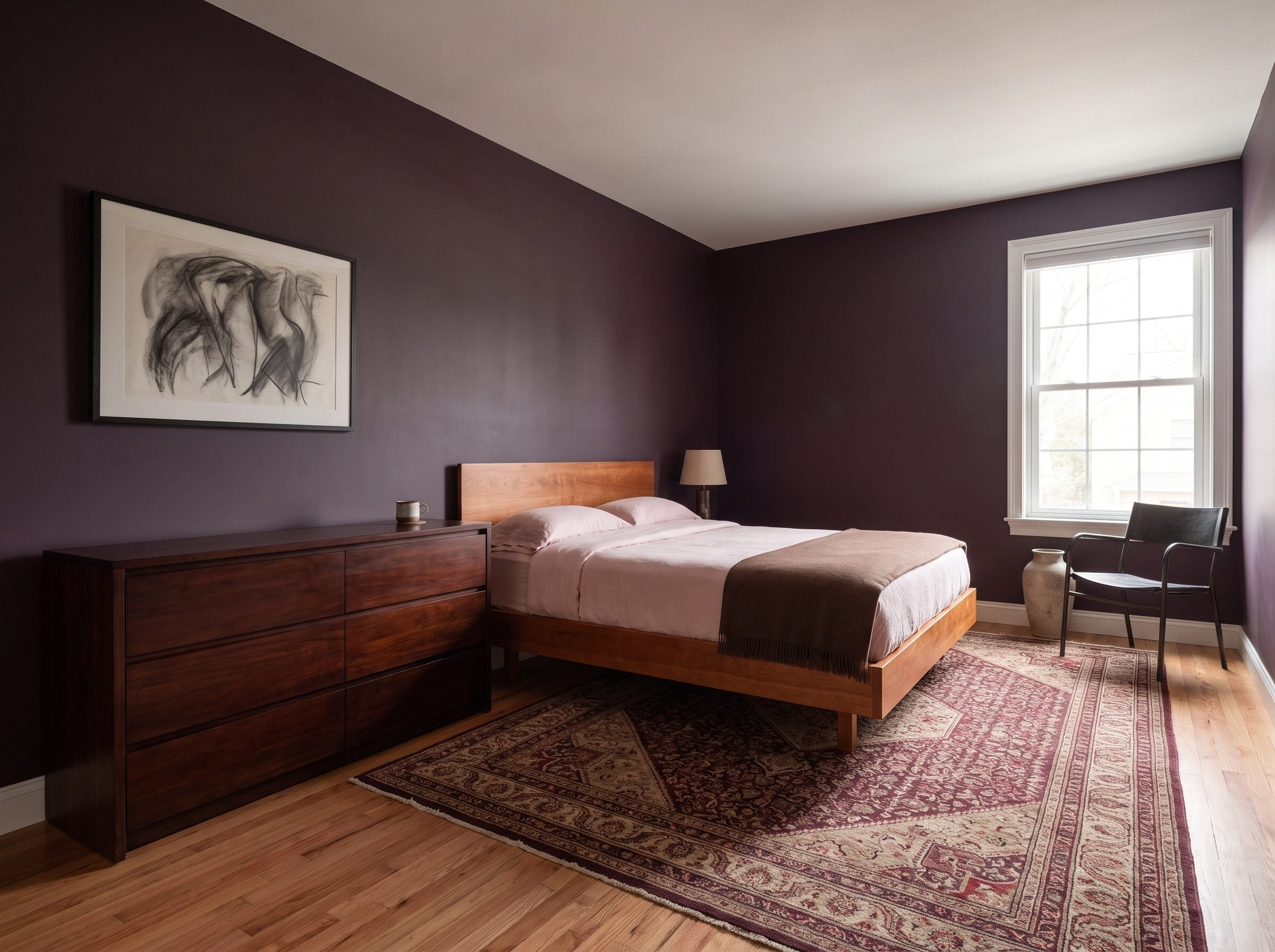
Near-black plum walls give this bedroom its dramatic edge. The honey-toned platform bed emerges brightly from the dark backdrop, while the walnut dresser settles into the shadows. Their differences in finish and visual weight create depth that a matching bedroom suite would struggle to achieve.
A burgundy-and-cream Persian-style rug brings pattern beneath the furniture, with oak flooring supplying another warm register. The charcoal figure drawing adds a quieter graphic element. Dark walls can do more than create atmosphere: here, they sharpen the distinction between two timber finishes that might otherwise appear less remarkable.
36. A Walnut Piano Meets Pale Maple Built-Ins — And Neither Gives an Inch
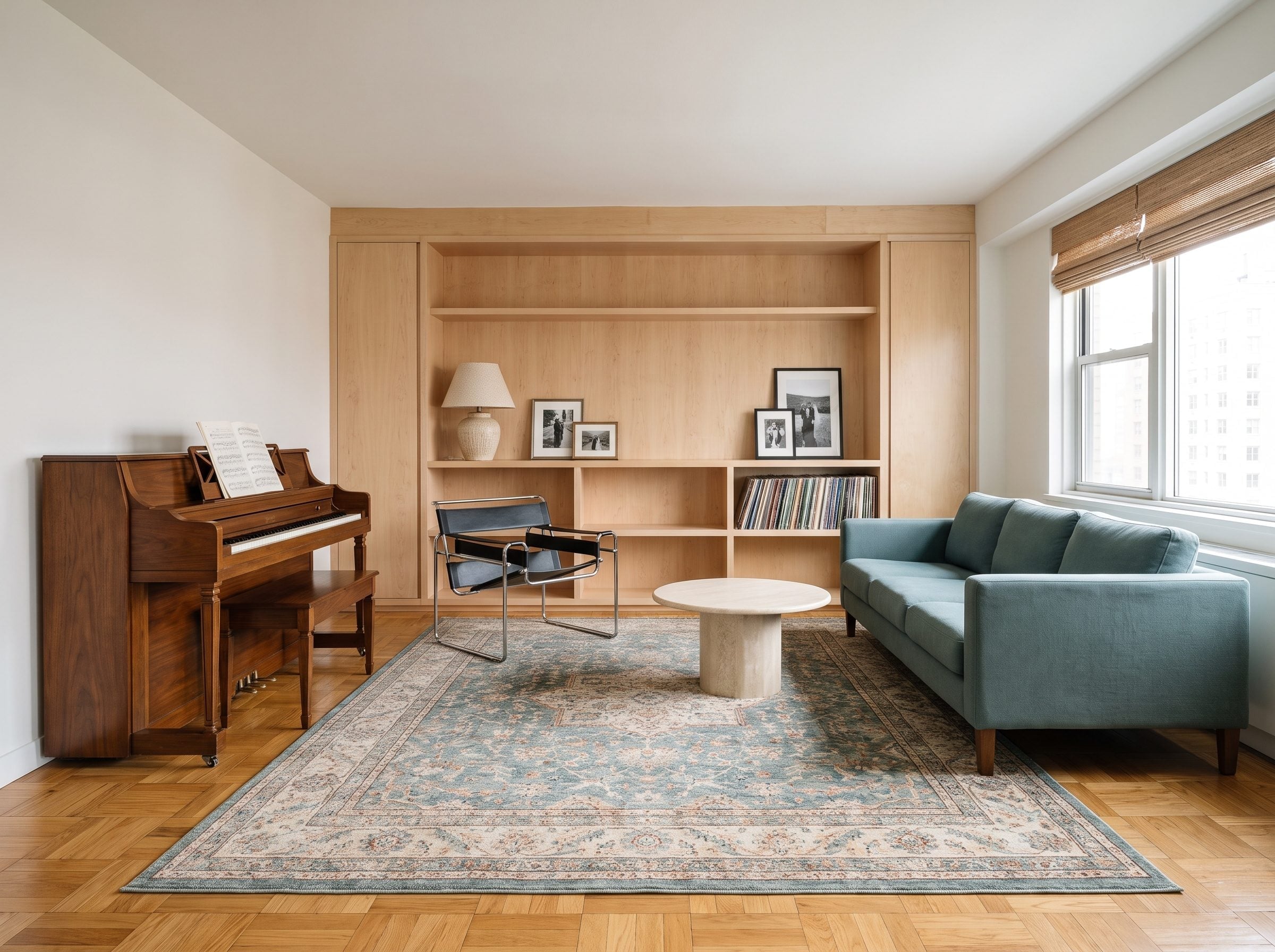
The upright piano brings the visual gravity of dark walnut into a room otherwise dominated by pale maple shelving. One piece feels dense and traditional; the built-ins are light, architectural, and comparatively recessive. Their difference gives the wall an immediate sense of hierarchy.
Black leather and chrome on the tubular-steel chair introduce an industrial note, while the blue sofa establishes a color identity beyond timber. Records stored in the lower shelves provide a scatter of color, and the travertine table adds mineral texture. The piano remains unmistakably the piano. Nobody has tried to disguise its presence with matching cabinetry.
35. Cedar Overhead, Walnut at the Center — A Sunken Living Room Finds Its Balance
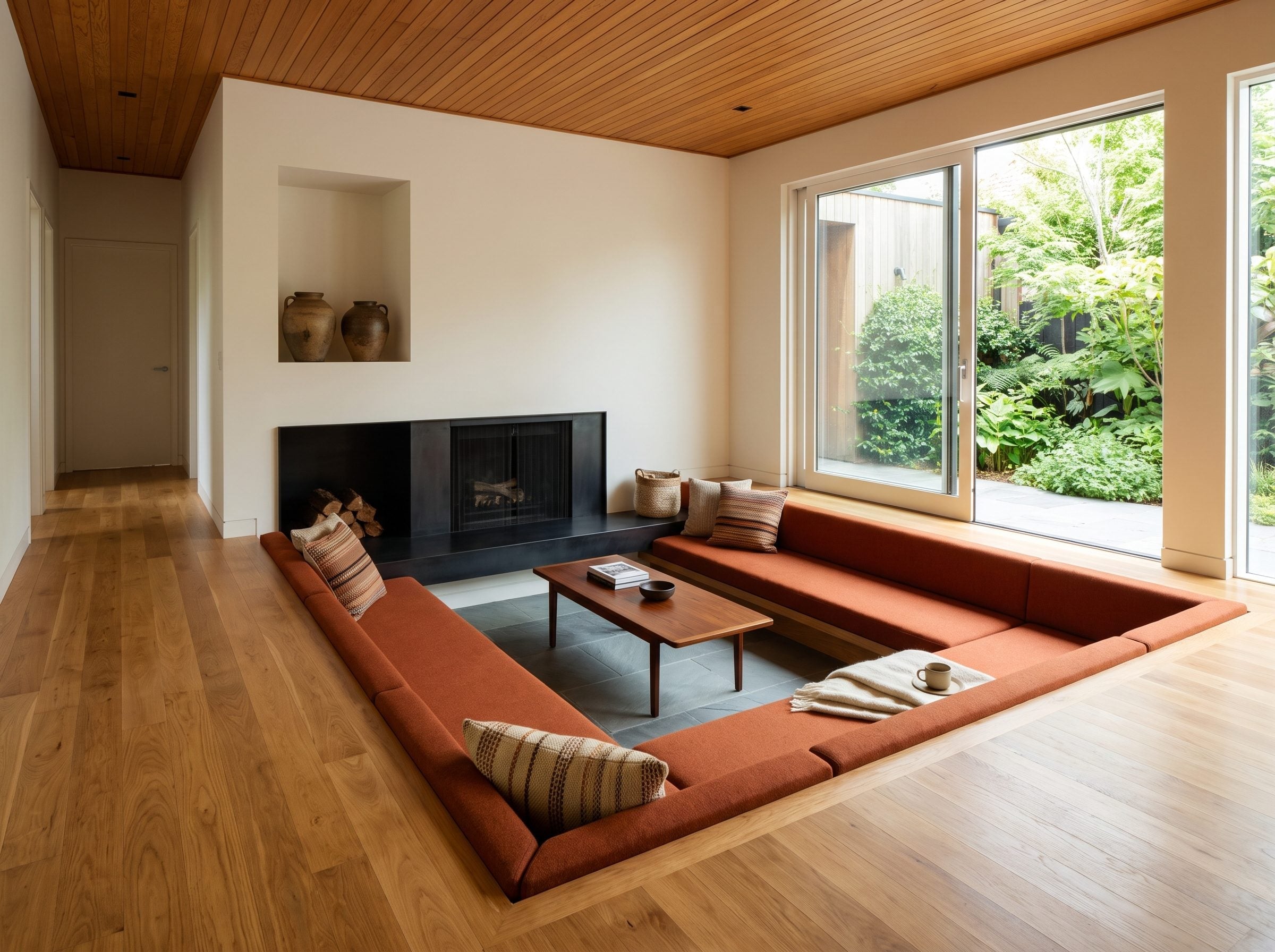
Golden oak flooring meets a warmer, redder wood ceiling in this sunken living room. The two horizontal planes establish a rich envelope before the furniture enters the picture. A walnut coffee table adds darker, more concentrated grain at the center of the conversation pit.
Slate tile at the lower seating level is the decisive interruption. Its cool surface cuts through the amber tones, giving the rust-orange sectional a sharper outline. The sunken architecture makes the contrast especially effective: materials change as the floor drops, turning a decorative decision into a spatial one.
34. Maple Bed, Ash Dresser, Blue Linen — Subtle Grain Beats Strong Color Contrast
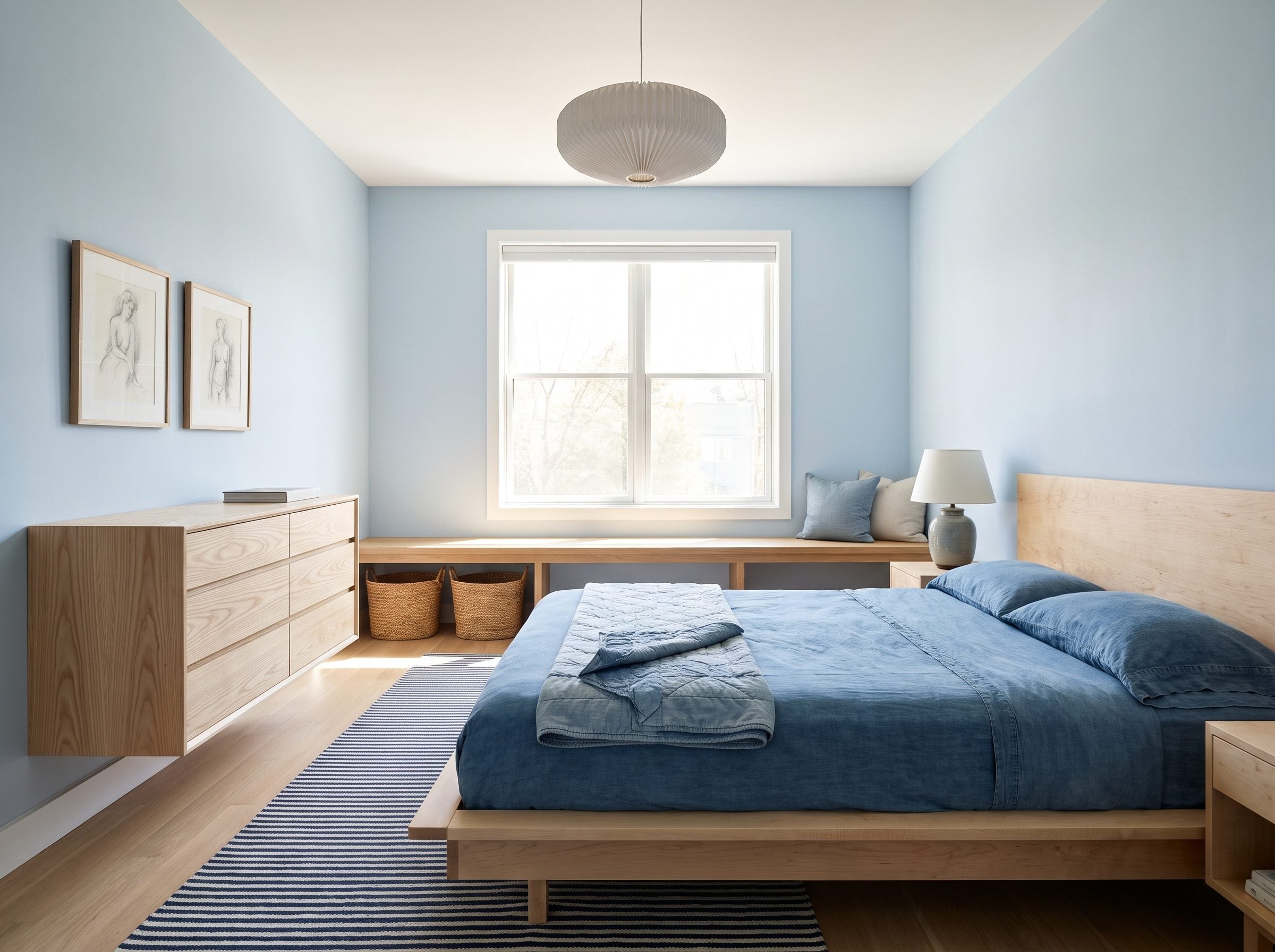
Maple and ash occupy a similar pale color range, but their grain characteristics give the furniture different personalities. The bed frame presents a relatively fine, restrained figure; the dresser displays a more pronounced open-grain texture. Their relationship is subtle enough to reward a closer look.
Blue linen supplies the bedroom’s color identity, while the striped rug brings graphic energy beneath the furniture. Rather than relying on dramatic differences in stain, the room allows grain and surface character to distinguish its pieces. The result is restrained without becoming monotonous.
33. Brick Underfoot, Cedar Overhead — A Dining Room That Refuses to Coordinate
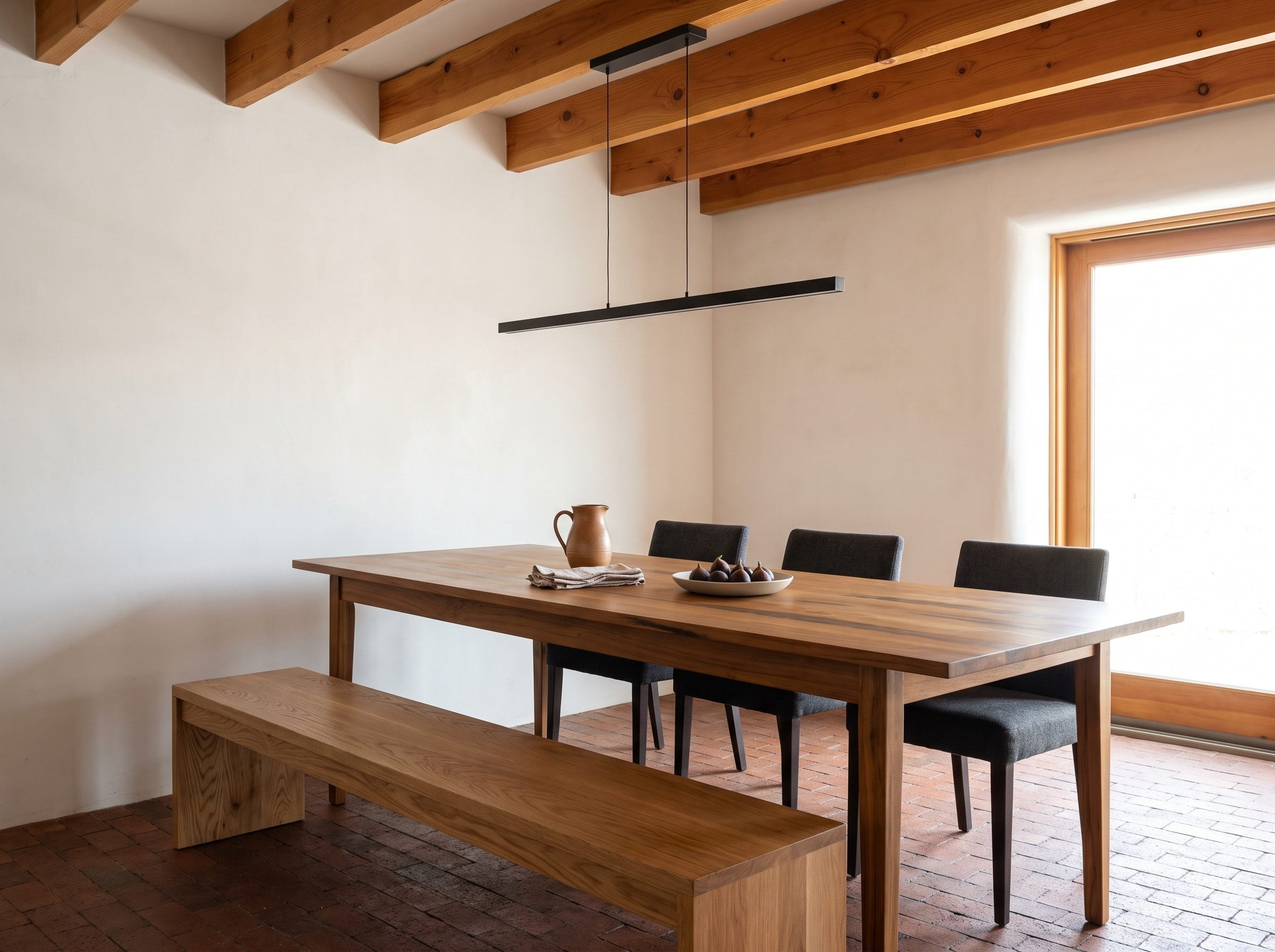
Reddish brick flooring and cedar ceiling beams establish a warm, rustic framework. A walnut dining table introduces a smoother, more refined finish between them, preventing the room from becoming an exercise in rough textures.
The seating is equally willing to break ranks. Three charcoal upholstered chairs occupy one side of the table, while a bench provides a different silhouette opposite. The architecture already supplies plenty of continuity. Identical chairs and perfectly coordinated timber would make the arrangement considerably less interesting.
32. Walnut Slats, Oak Floors, Honey-Toned Dressing Table — A Bedroom With Three Temperatures
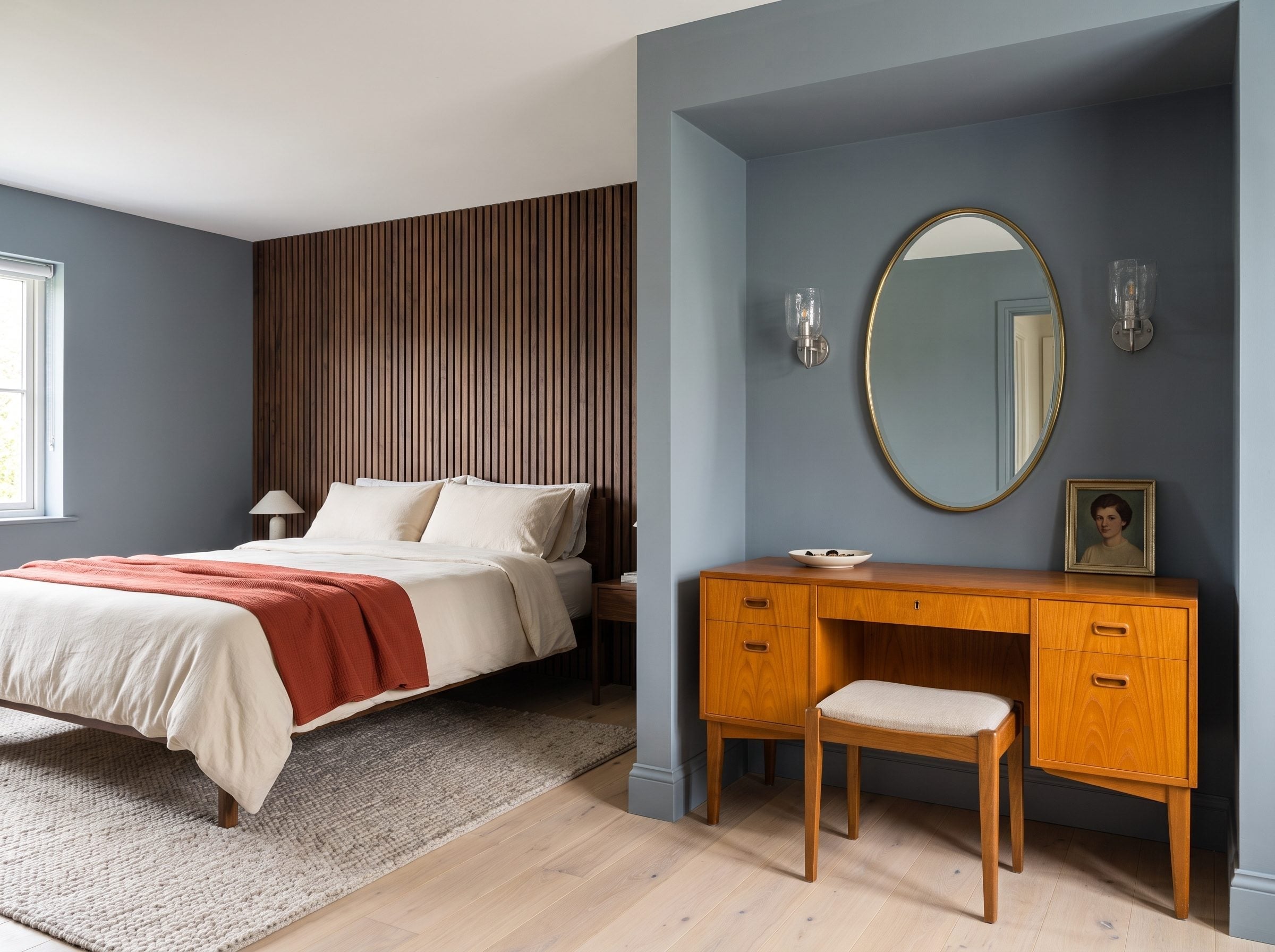
Dark walnut slats rise behind the bed, creating a strongly vertical backdrop against the horizontal expanse of pale oak flooring. The dressing table in the alcove introduces a warmer, more orange-toned finish, giving the composition another point of contrast.
The distinction is spatial as much as chromatic. Walnut belongs to the architectural backdrop, oak defines the ground plane, and the dressing table reads as an individual furnishing. Their different scales and positions allow each surface to register clearly without forcing the colors into agreement.
31. Walnut Credenza, Concrete Floor, Magenta Sofa — Color Takes Command
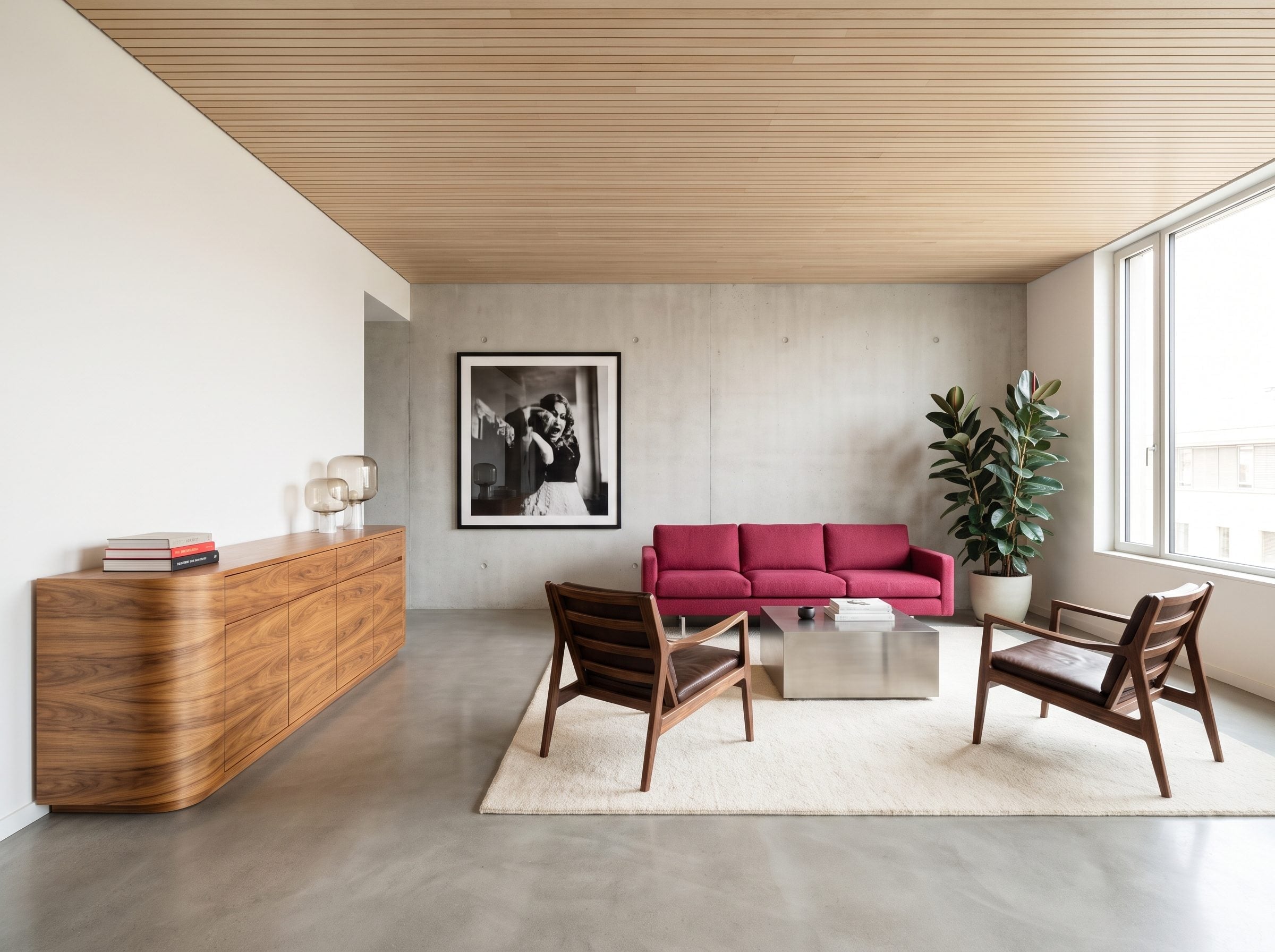
A floating walnut credenza against polished concrete has a strong mid-century character. Nearby walnut armchairs repeat the species without reproducing the cabinetry’s exact grain or finish. Above, a lighter slatted ceiling creates another architectural layer.
The magenta sofa changes the room’s visual priorities. Its saturated upholstery draws attention toward the seating arrangement, while concrete supplies a cool foundation and the steel coffee table adds an industrial edge. The timber warms the composition without becoming its only subject. Color has given the wood permission to be part of a larger story.
30. A Walnut Four-Poster Against Oak Paneling — The Bed Gets the Last Word
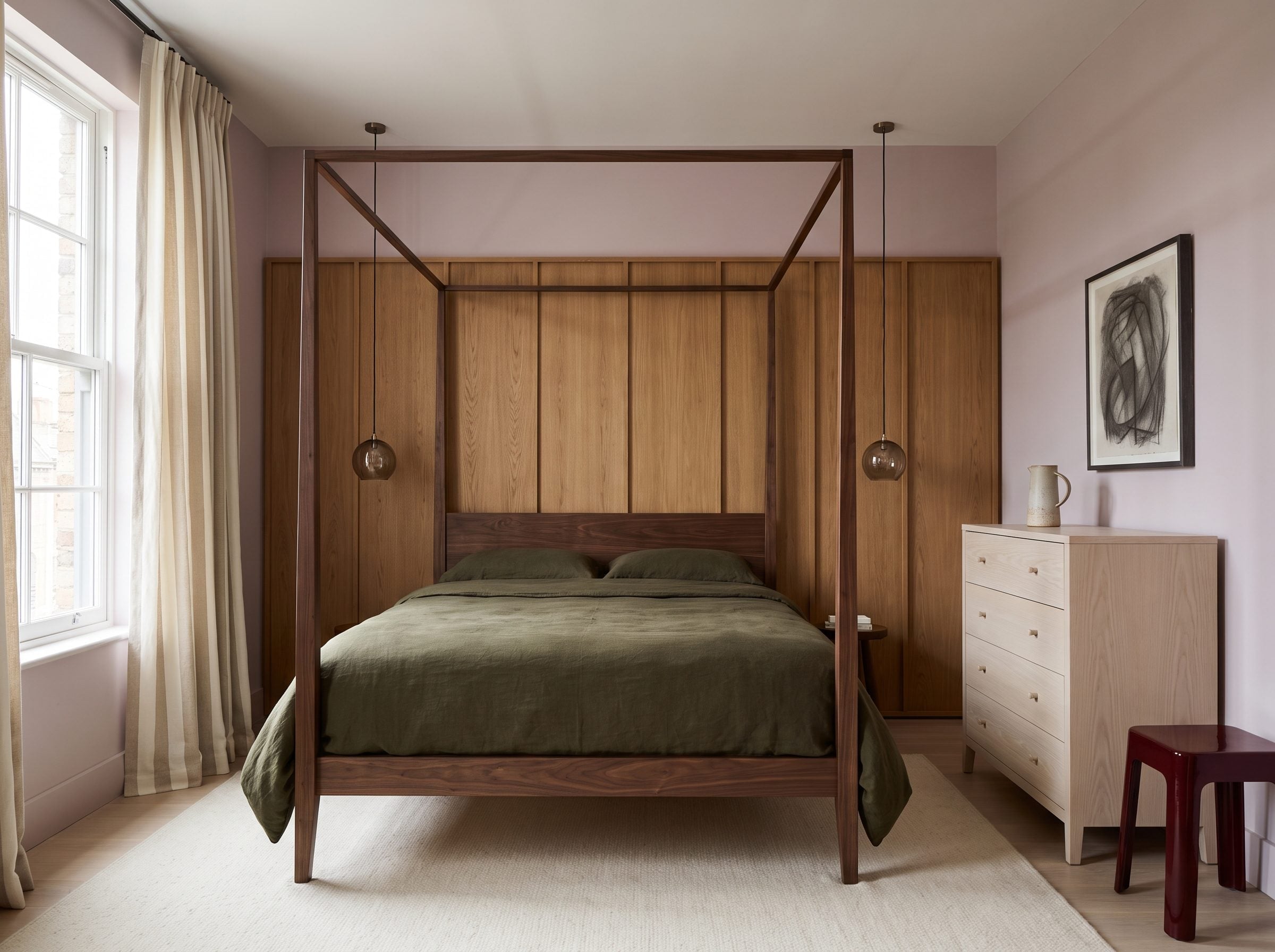
A four-poster bed already commands attention through sheer height. Give it a dark walnut finish and position it against floor-to-ceiling oak paneling, and the distinction between furniture and architecture becomes unmistakable.
The bleached dresser offers a third, much lighter surface, while olive bedding and dusty mauve walls soften the stronger timber contrast. The bed’s silhouette is the principal event. The lighter furnishings keep its substantial frame from overwhelming the room.
29. Sage Walls, Pale Beech, Dark Shelving — A Small Dining Room With Big Contrasts
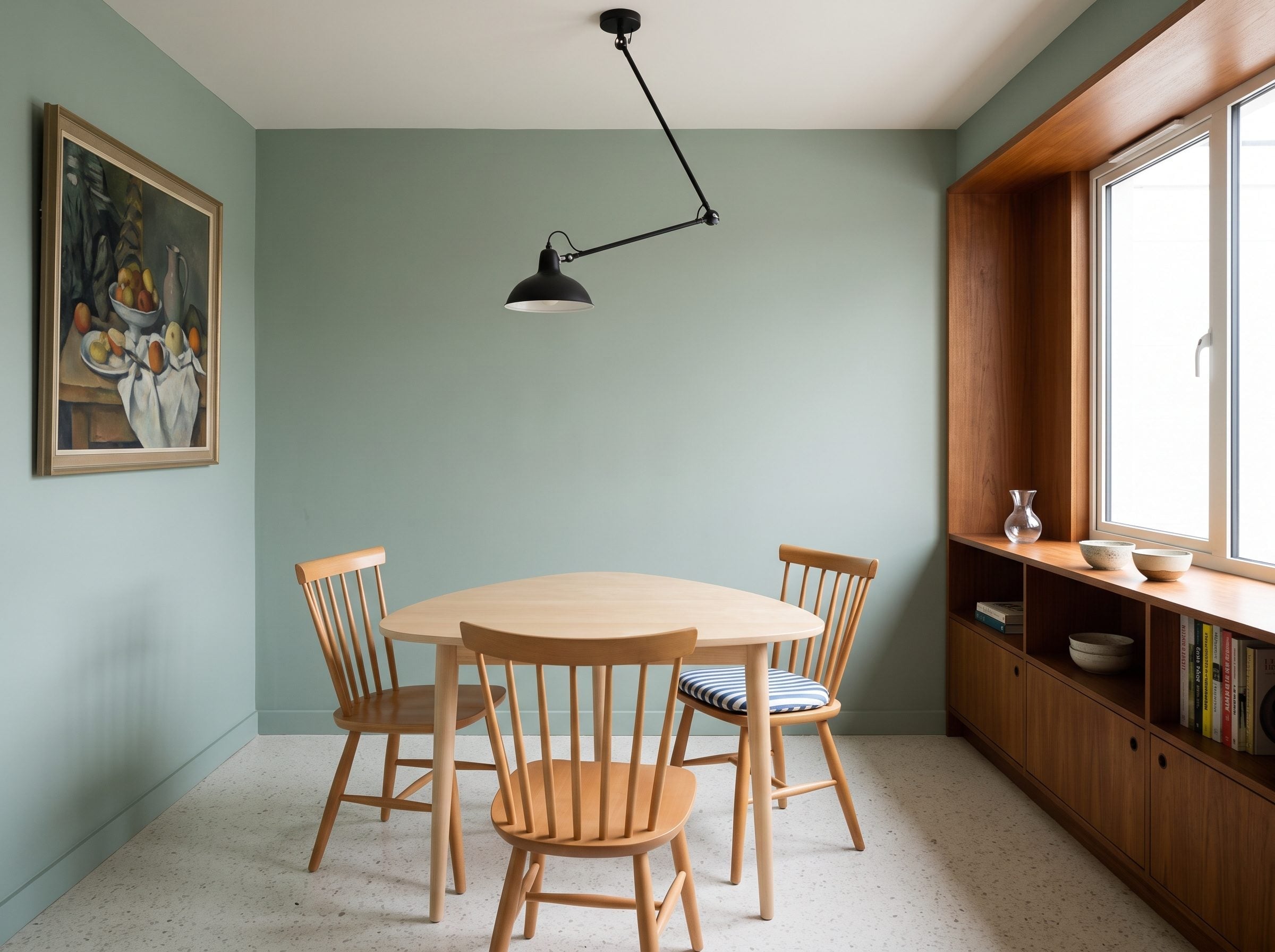
A triangular dining table and pale beech chairs bring an unusually light touch to this compact room. Against sage-green walls, their blonde finish looks crisp and contemporary. The darker built-in shelving establishes a more substantial timber presence along the opposite side.
The difference in visual mass matters more than matching undertones. The table occupies relatively little floor space, while the shelving gives the wall architectural weight. A blue-striped seat cushion adds an unexpected accent, and the articulated black ceiling lamp stretches over the arrangement with the precision of a drawing instrument.
28. Reclaimed Beams, Precision Walnut — Rough Timber Meets Its Sophisticated Opposite
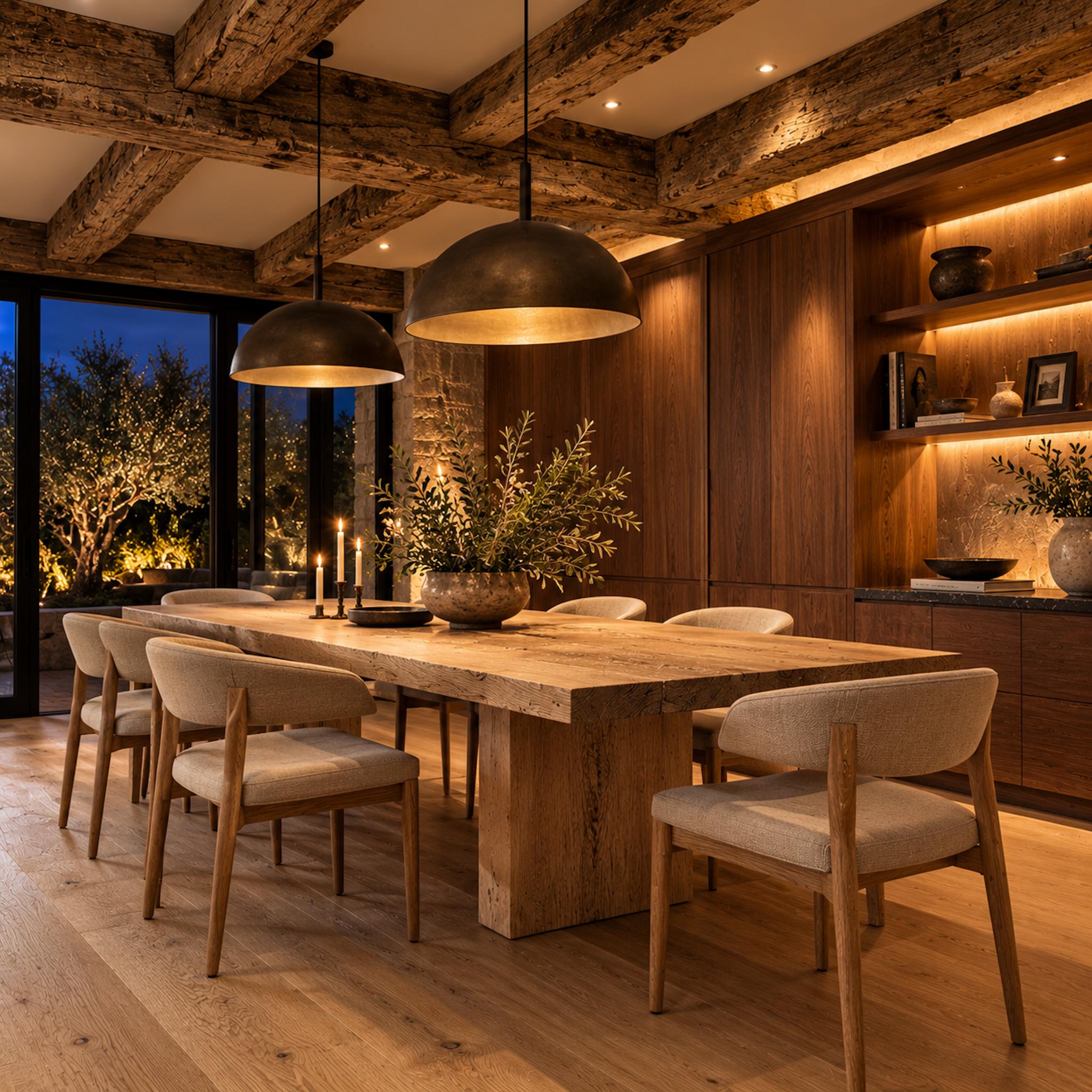
Massive reclaimed beams cross the ceiling, their weathered surfaces marked by knots, cracks, and irregular grain. Below, precisely fitted walnut cabinetry presents the opposite philosophy: smooth surfaces, crisp joints, and uninterrupted vertical lines. The room places weathered character and contemporary craftsmanship in direct conversation.
A pale, thick-topped dining table brings another timber expression, its rugged grain set against refined upholstered chairs. Grazing light catches the beams’ rough texture, while integrated shelf lighting emphasizes the cabinetry’s clean construction. The contrast is less about color than workmanship. Roughness becomes a luxury when surrounded by this much precision.
27. An Elm Trestle Table, Navy Benches, Slate Floor — Grain Gets Center Stage
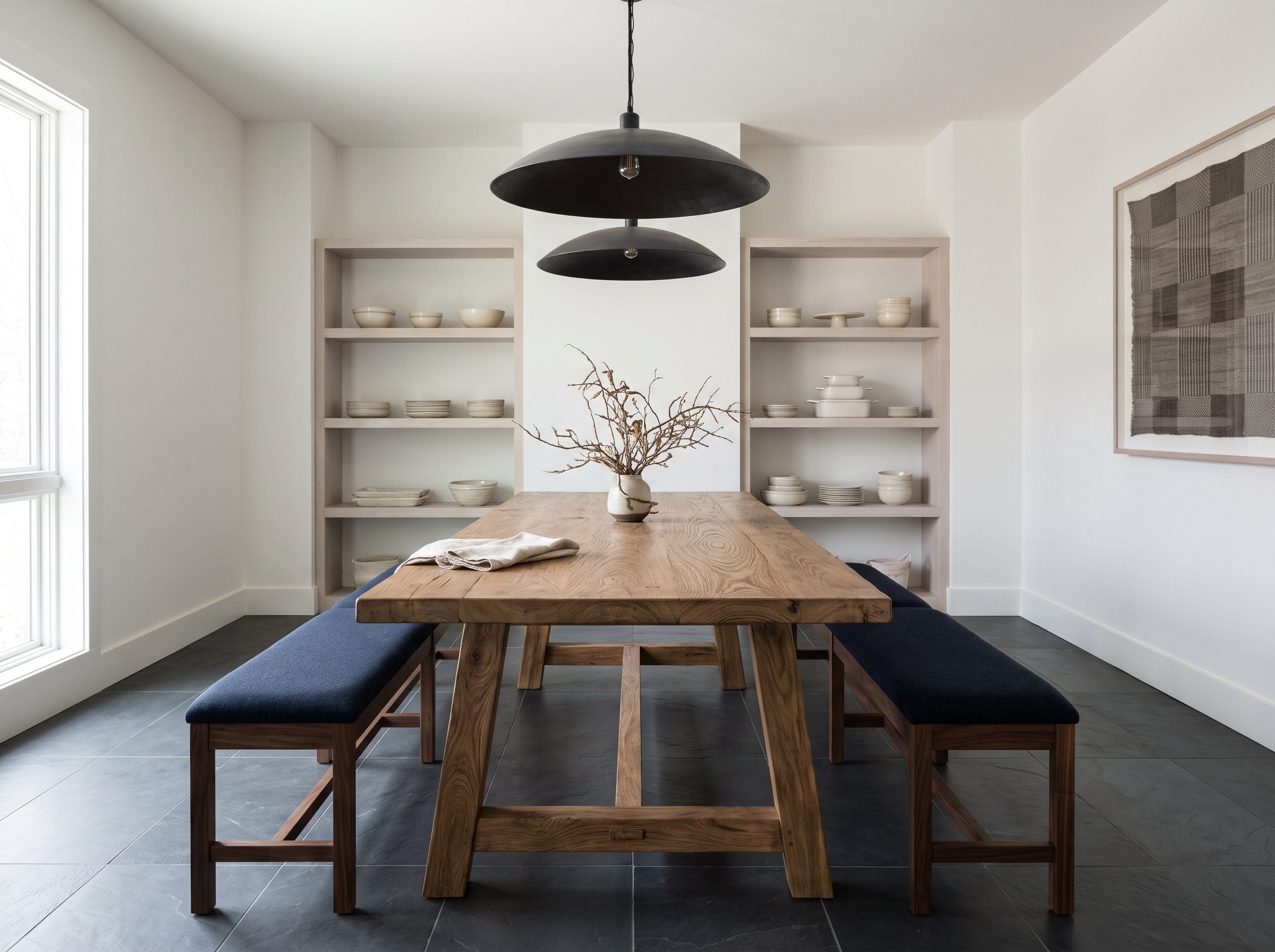
Elm’s lively grain is the main attraction in this dining room. Its trestle construction gives the table considerable presence, while pale built-ins provide a comparatively quiet backdrop for ceramics and display objects.
Deep navy benches sharpen the table’s outline, and slate flooring brings a cool mineral contrast beneath the warm timber. The table’s expressive grain becomes more prominent beside the smooth cabinetry. The lesson is in the distribution of detail: one richly figured surface can carry an entire composition when the surrounding materials show restraint.
In the Details: Highly figured wood benefits from neighboring surfaces with quieter grain. The contrast allows the natural pattern to remain visible without surrounding it with equally busy timber.
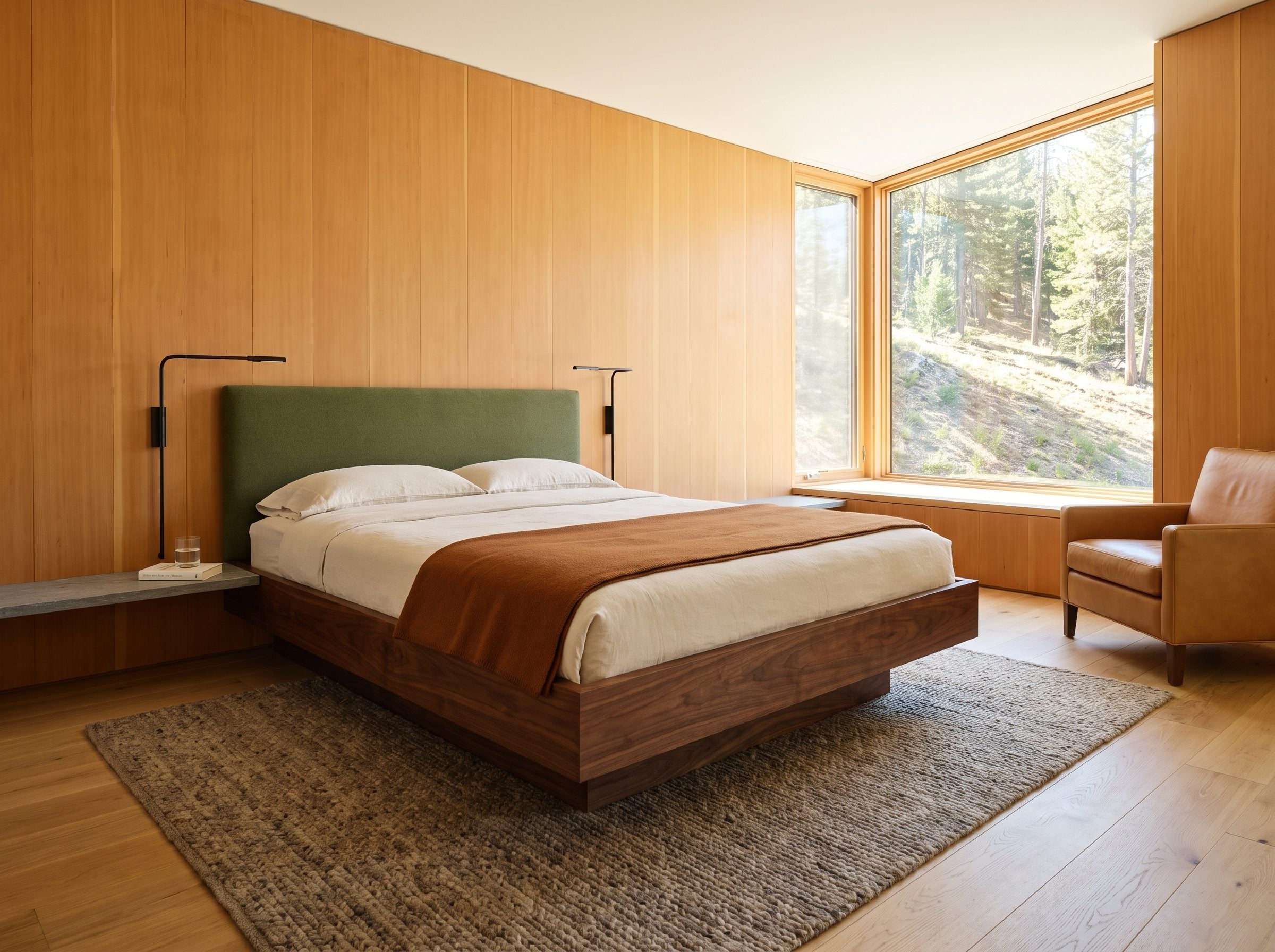
26. Pine Walls, Walnut Platform, Oak Floor — A Cabin Bedroom Escapes the Honey Trap
🔥 Would you like to save this?
Vertical pine paneling wraps the bedroom in amber, creating the sort of immersive timber interior that can easily become overwhelming. The walnut platform bed supplies a much darker form at floor level, while light oak flooring introduces a third variation beneath it.
The bed’s low profile is essential. A tall, heavily detailed frame would add visual congestion against those walls. Instead, the walnut creates a clean horizontal line through the pine’s vertical grain. The room retains its cabin warmth without looking as though every piece came from the same lumberyard.
25. Pink Plaster, Walnut Table, Oak Sideboard — The Walls Change Everything
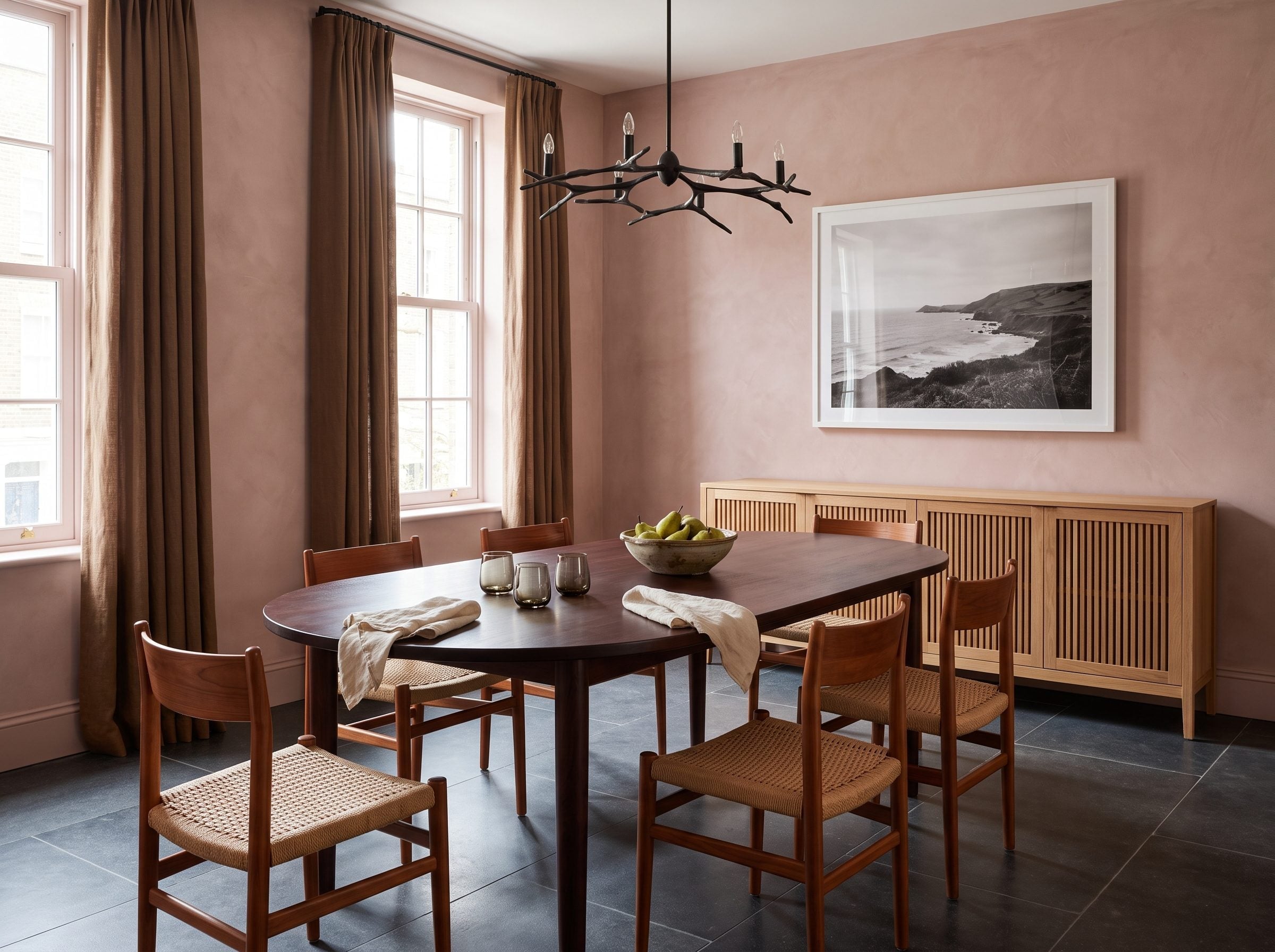
Dusty rose plaster creates a warm backdrop for a dark walnut table and lighter oak sideboard. Their contrasting depths become more apparent against the continuous pink surface, which gives the furniture a common setting without requiring matching finishes.
Rattan-woven chairs contribute another natural texture, lighter and more open than the solid furniture. Polished wood, tactile plaster, and airy cane make the arrangement feel relaxed rather than formal. The strongest unifying element isn’t timber at all. It’s the wall color.
24. Birch Platform, Walnut Desk, Oak Floor — A Bedroom That Doubles as a Workspace
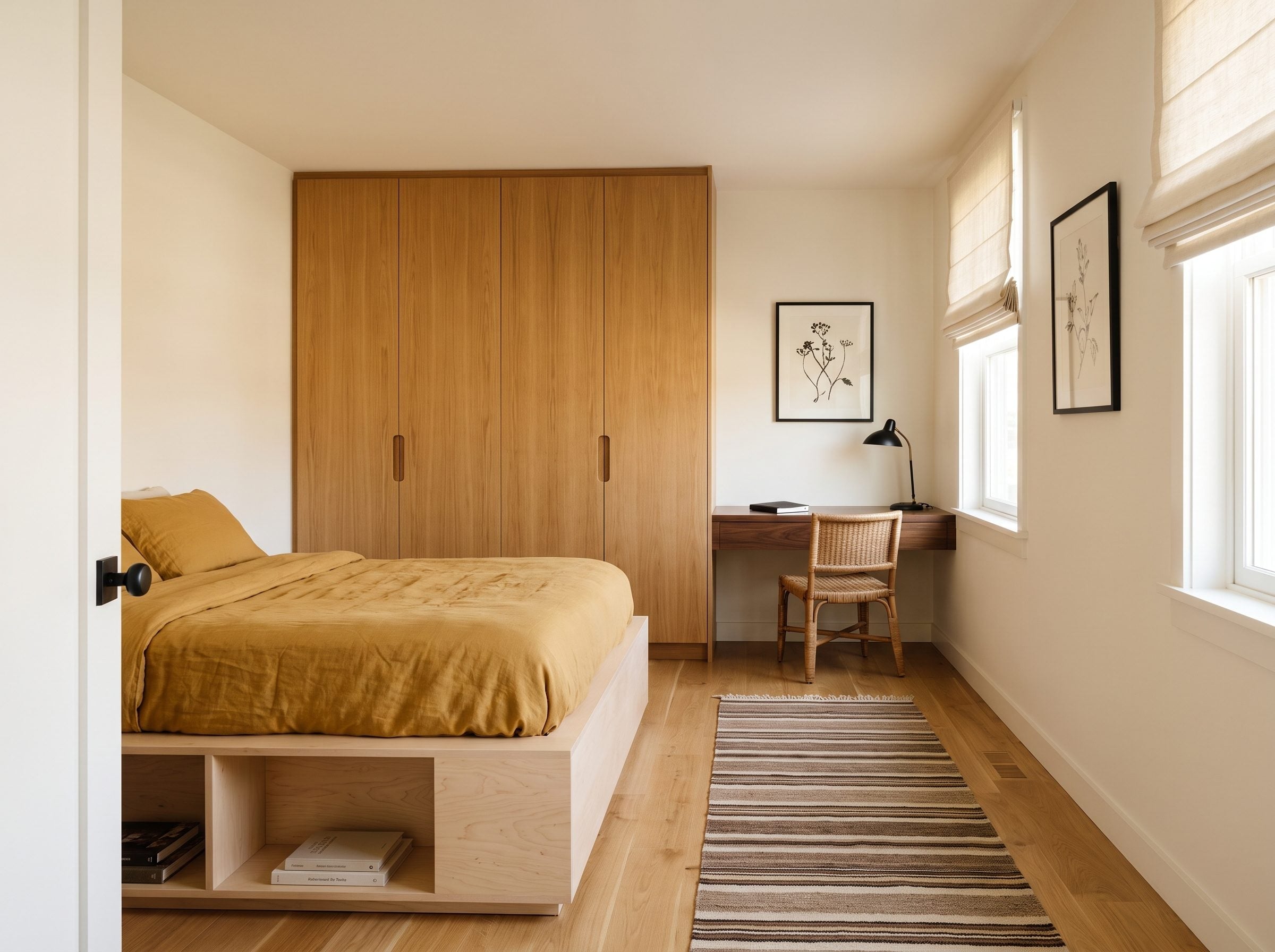
Birch plywood gives the platform bed a clean, pale edge, while the oak floor carries a slightly deeper golden tone. The floating walnut desk at the window introduces a darker element associated with the room’s working function.
Mustard bedding draws warmth from the surrounding materials, but the desk’s position is the more useful design decision. Its darker timber identifies a working zone without requiring a partition. Different wood finishes become a way of organizing activities rather than simply decorating them.
23. Ash Paneling, Walnut Cabinetry, Oak Table — Three Woods, Three Different Jobs
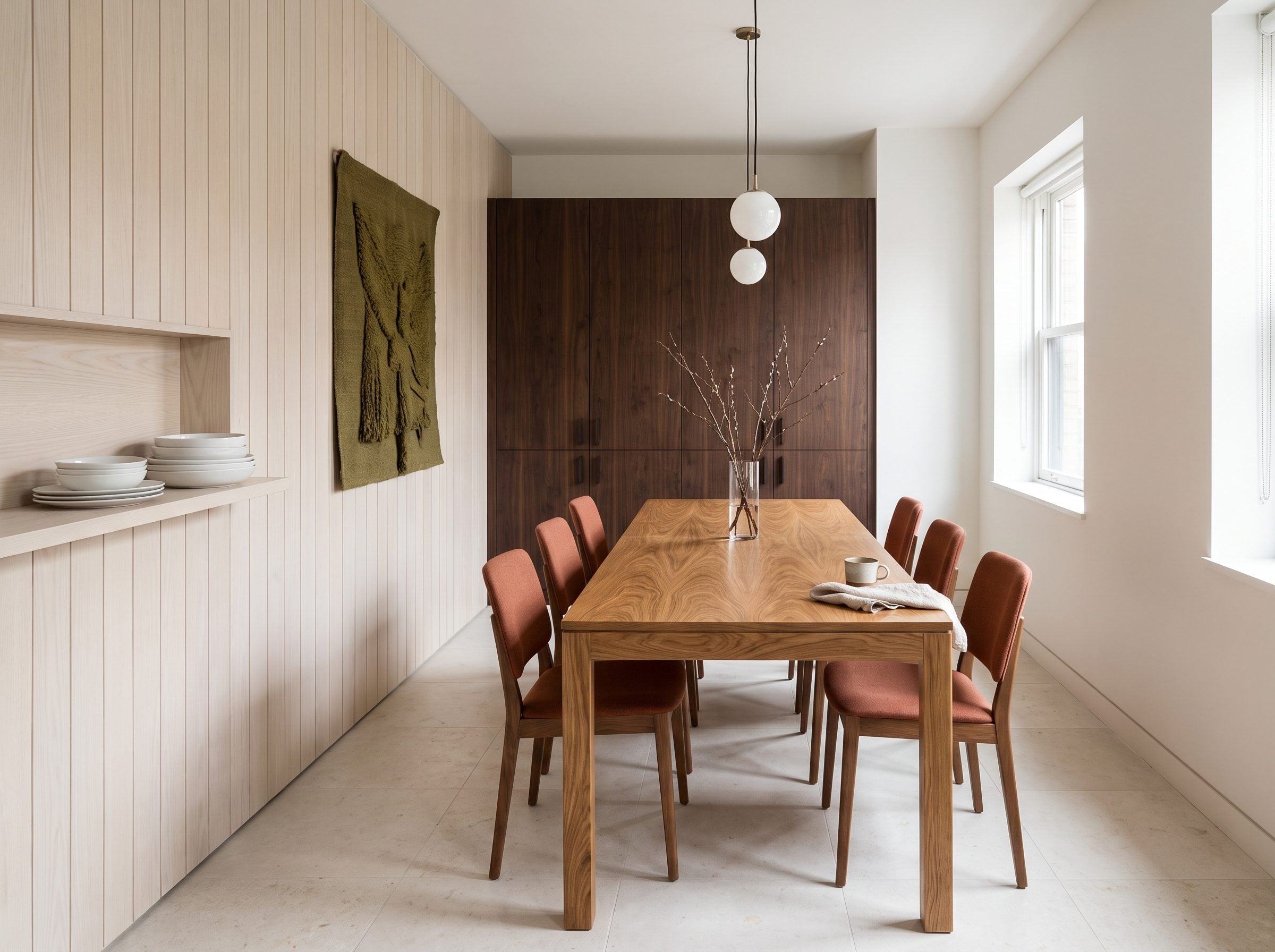
One wall is wrapped in vertical ash paneling so pale it approaches white. At the far end, dark walnut cabinetry creates a solid visual stopping point. Between them sits an oak dining table with a more animated grain, introducing movement where the surrounding millwork is deliberately restrained.
Rust-orange dining chairs bring warmth into the center without adding another timber finish, while the brass-and-glass pendant supplies a little polish overhead. Ash establishes lightness, walnut adds depth, and oak brings texture. Three materials, three different contributions, and an interior with considerably more character than a coordinated furniture collection.
22. A Barrel-Vaulted Cedar Ceiling Meets Walnut Chairs and Navy Bouclé
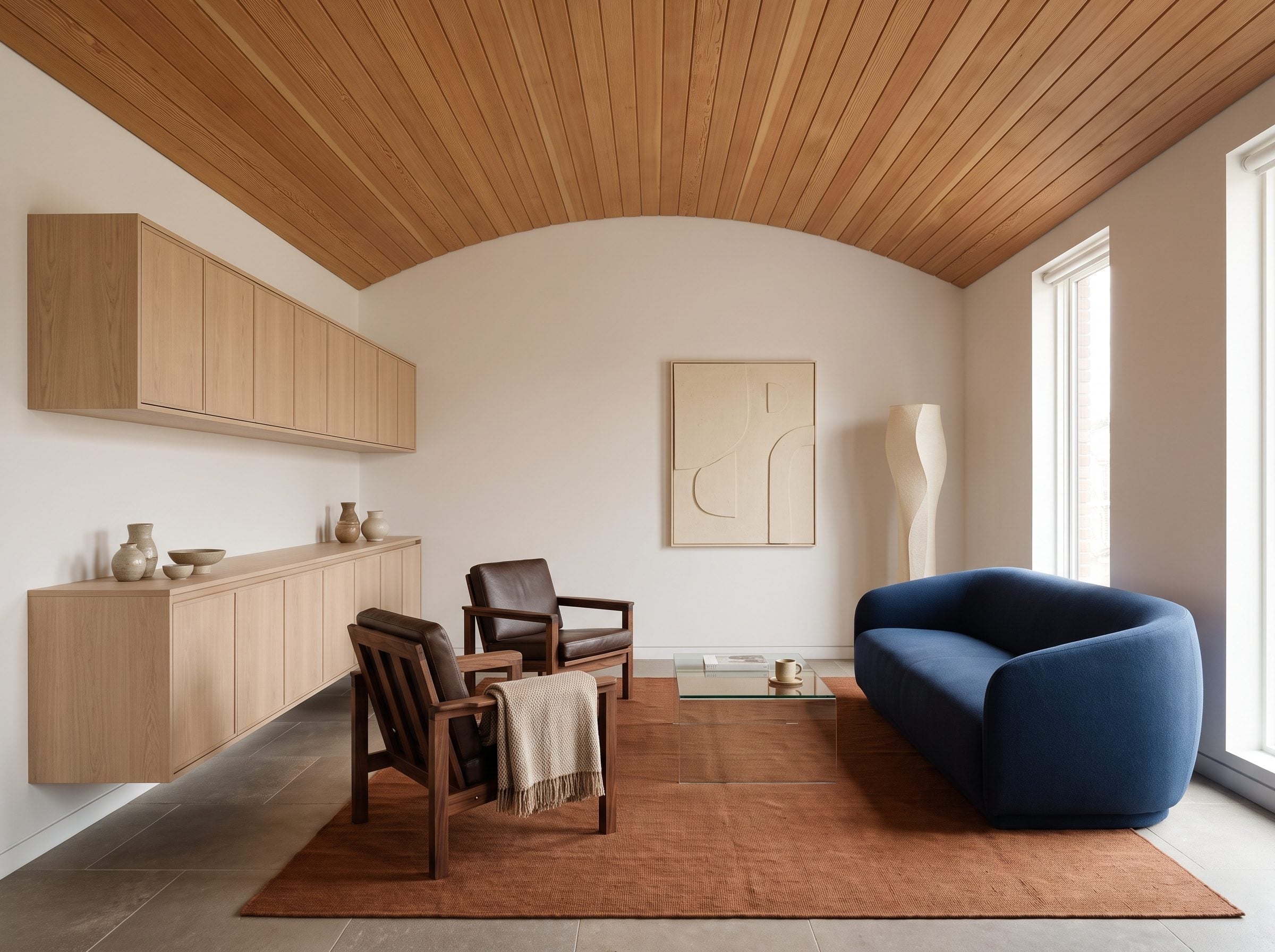
Cedar planks follow the curve of the barrel-vaulted ceiling, creating a continuous warm surface overhead. Pale oak cabinets and a floating sideboard keep the wall below comparatively light, while dark walnut armchairs introduce stronger furniture-scale contrast.
The navy bouclé sofa gives the seating area enough visual weight to stand beneath the dramatic ceiling. Brown leather chair seats establish a softer connection to the surrounding wood. The architecture gets to be expressive; the furnishings answer with cleaner lines and deeper colors.
21. Bleached Oak Table, Walnut Doors, Amber Sideboard — Plum Makes the Introduction
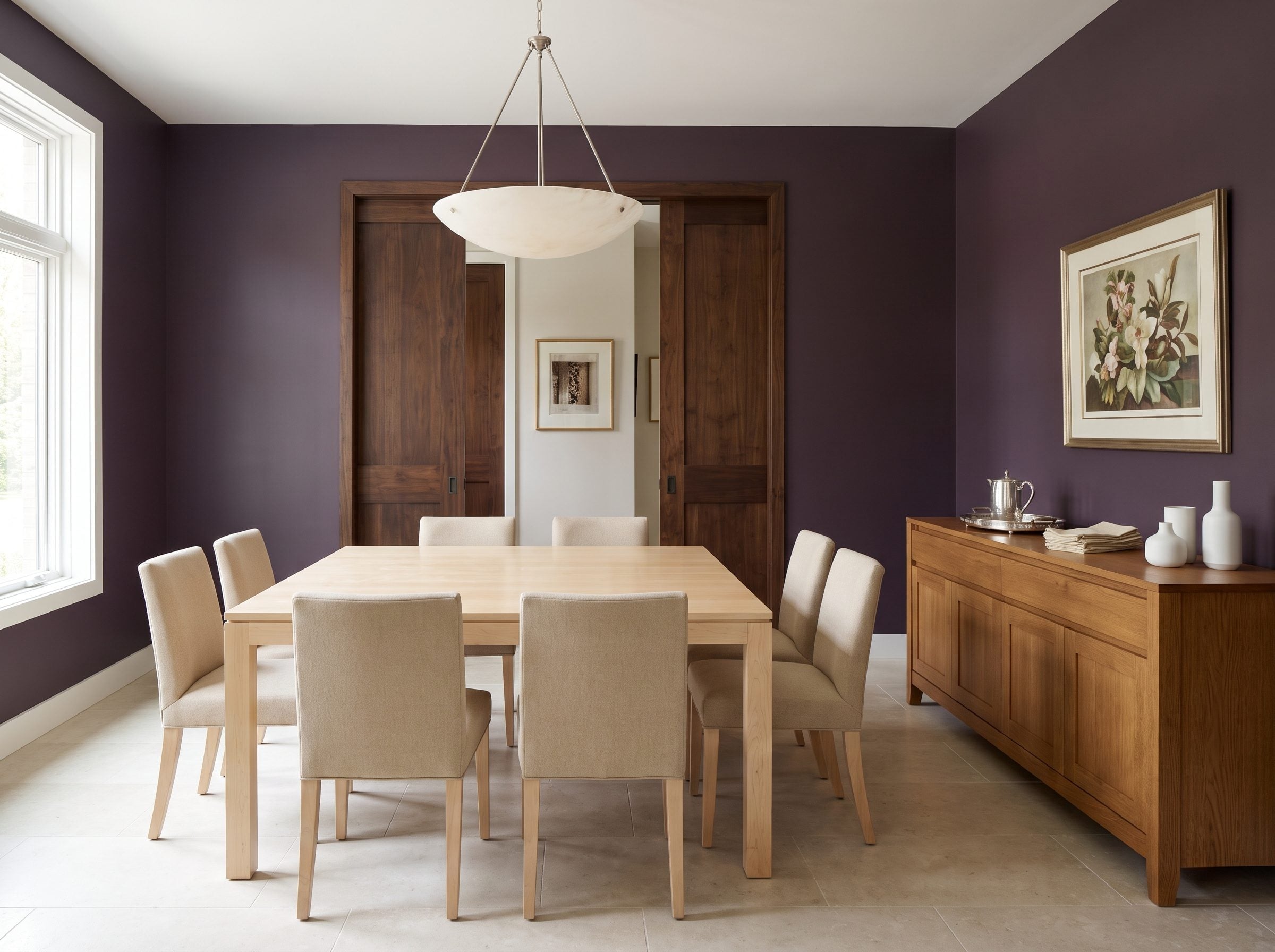
Plum-colored walls establish a richly saturated background for a dining room assembled from very different timber finishes. The bleached oak table looks almost silvery by comparison, while walnut pocket doors and an amber-toned sideboard bring considerably more warmth.
The pale table stands forward against the dark walls, and the warmer cabinetry creates depth around the perimeter. Purple is not simply an accent color here. It changes how every wood surface is perceived, allowing finishes with very different undertones to share the same architectural setting.
20. Birch Plywood, Oak Floors, Dark Wood Frames — Loft Living Without the Matching Set
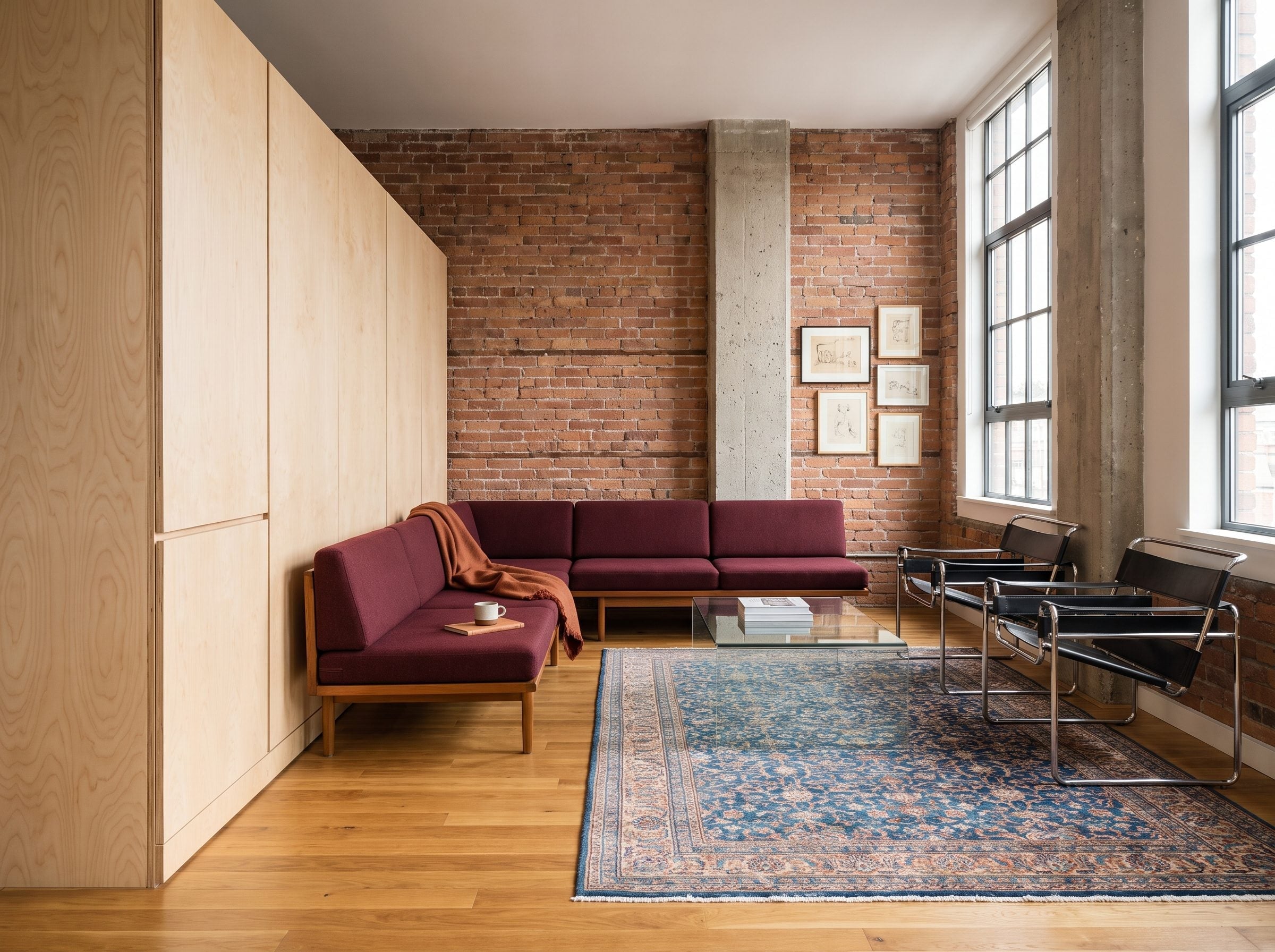
Blonde birch cabinetry rises against the wall, its pale surface contrasting with the warmer honey color of the oak floor. The burgundy sectional introduces a darker timber frame, adding another register without repeating either architectural finish.
A blue Persian rug supplies the room’s most animated pattern, while black leather and chrome tubular-steel chairs bring an industrial counterpoint. Exposed concrete columns establish a neutral backbone. The wood warms the loft, but the concrete and saturated upholstery give it an unmistakably urban character.
Worth Knowing: Birch plywood and oak can be similar in color while displaying different grain patterns. Concrete, plaster, and other visually quiet surfaces help distinguish the timber elements.
19. Red-Toned Cherry Meets Cool Gray Oak — When Warm and Cool Undertones Collide
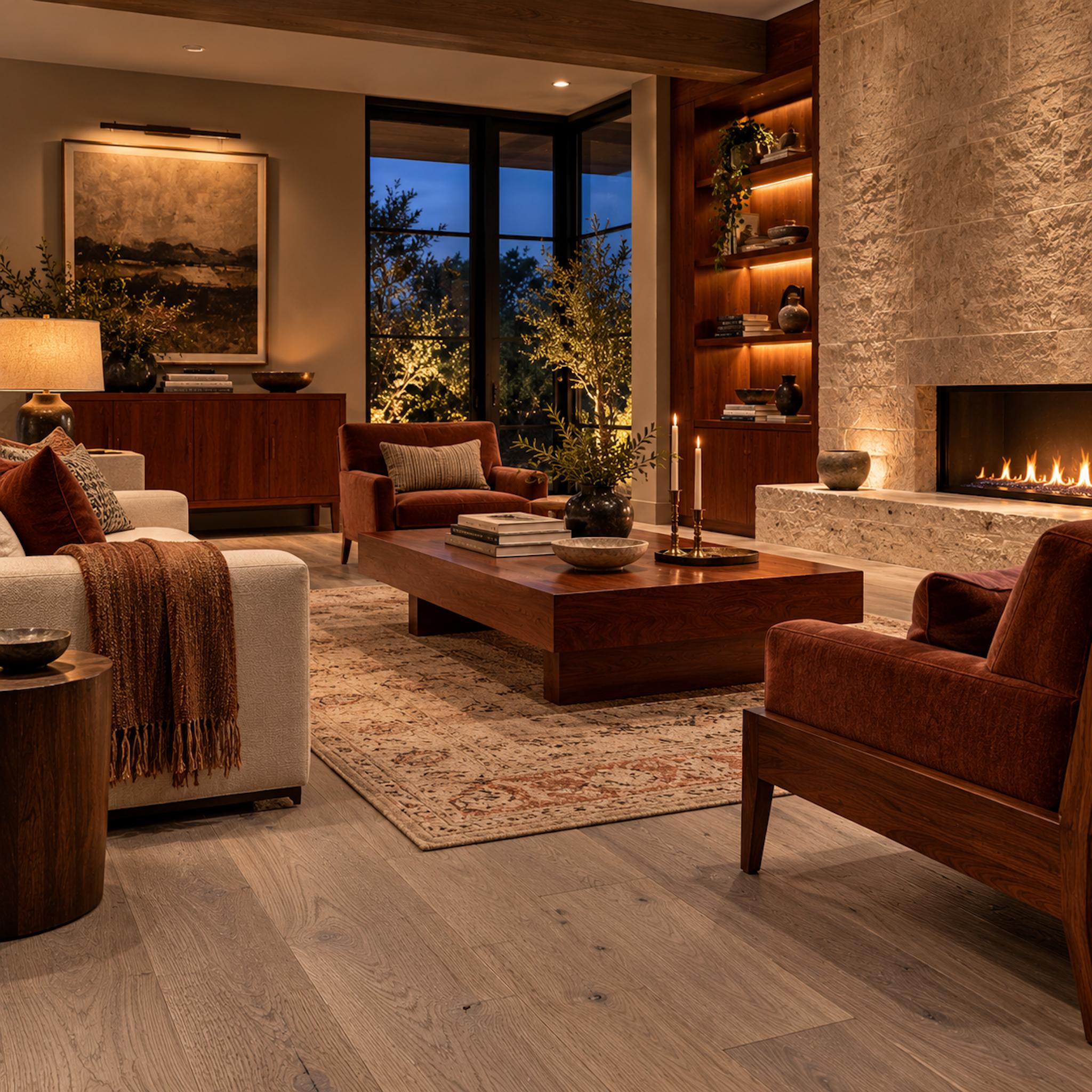
Cherry furniture brings a reddish warmth into a living room grounded by cooler, gray-washed oak flooring. The two finishes occupy different color families, creating a more demanding combination than the familiar pairing of pale oak and dark walnut.
Limestone surrounding the fireplace establishes a neutral architectural anchor between the reddish furniture and gray-washed floor. Rust upholstery reinforces the cherry’s warmth, while the patterned rug introduces intermediate colors that soften the transition. The combination succeeds because the room acknowledges the difference in undertones rather than attempting to disguise it. Warm and cool aren’t enemies. They need a convincing introduction.
18. Walnut Table Beneath an Oak Ceiling Grid — A Dining Room Built on Opposites
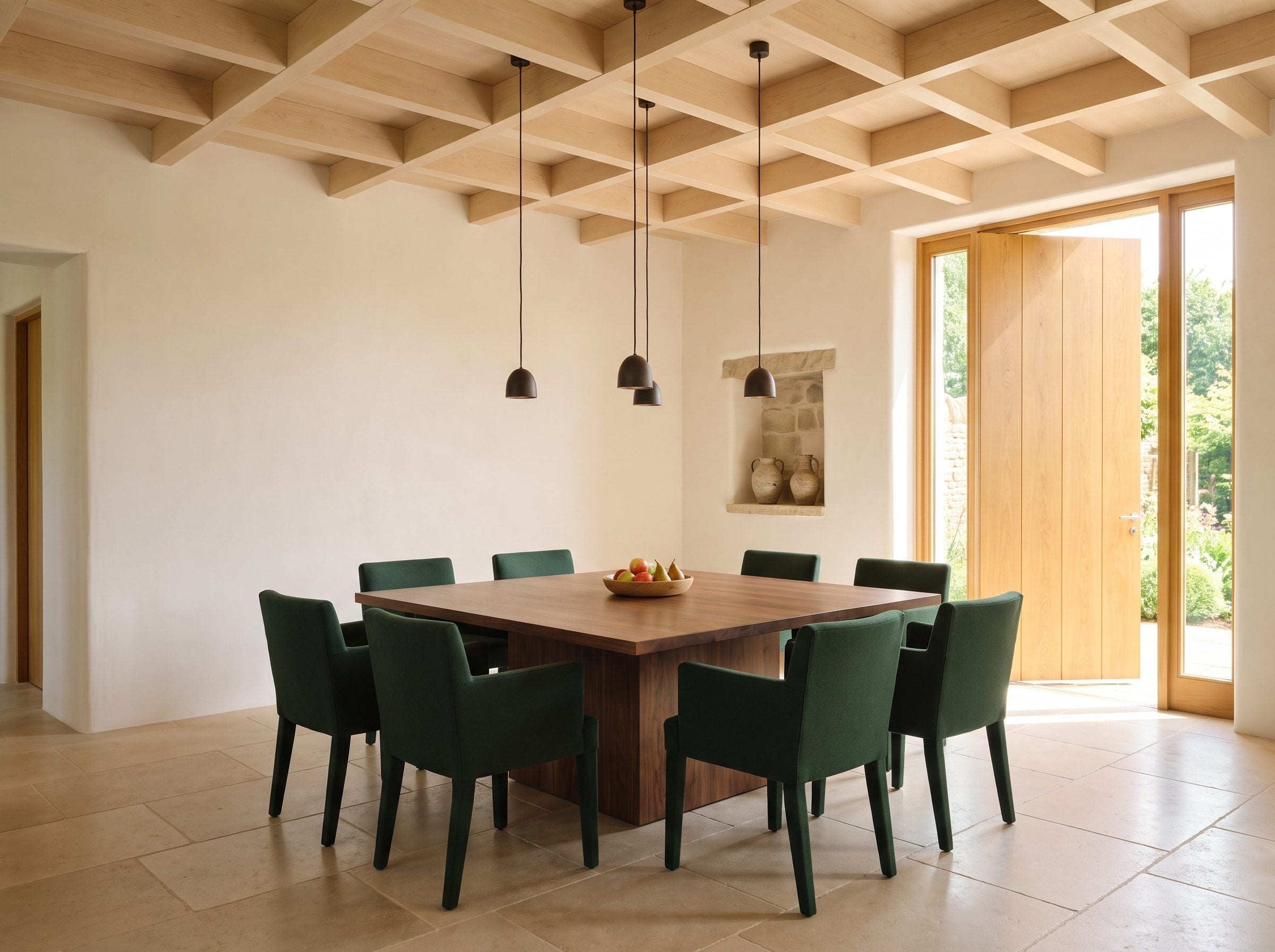
A square walnut pedestal table sits directly beneath a pale oak coffered ceiling. Their relationship is established through geometry rather than matching finishes. The table occupies the center; the ceiling grid frames it from above.
Forest-green upholstered chairs add color without introducing another visible furniture wood, while the stone floor supplies a cool foundation. The vertical alignment gives the room an architectural order that identical timber finishes could scarcely improve. The eye reads the relationship between forms before considering the difference between stains.
17. Oak Banquette, Walnut Table, Birch Chairs — Three Woods Around One Table
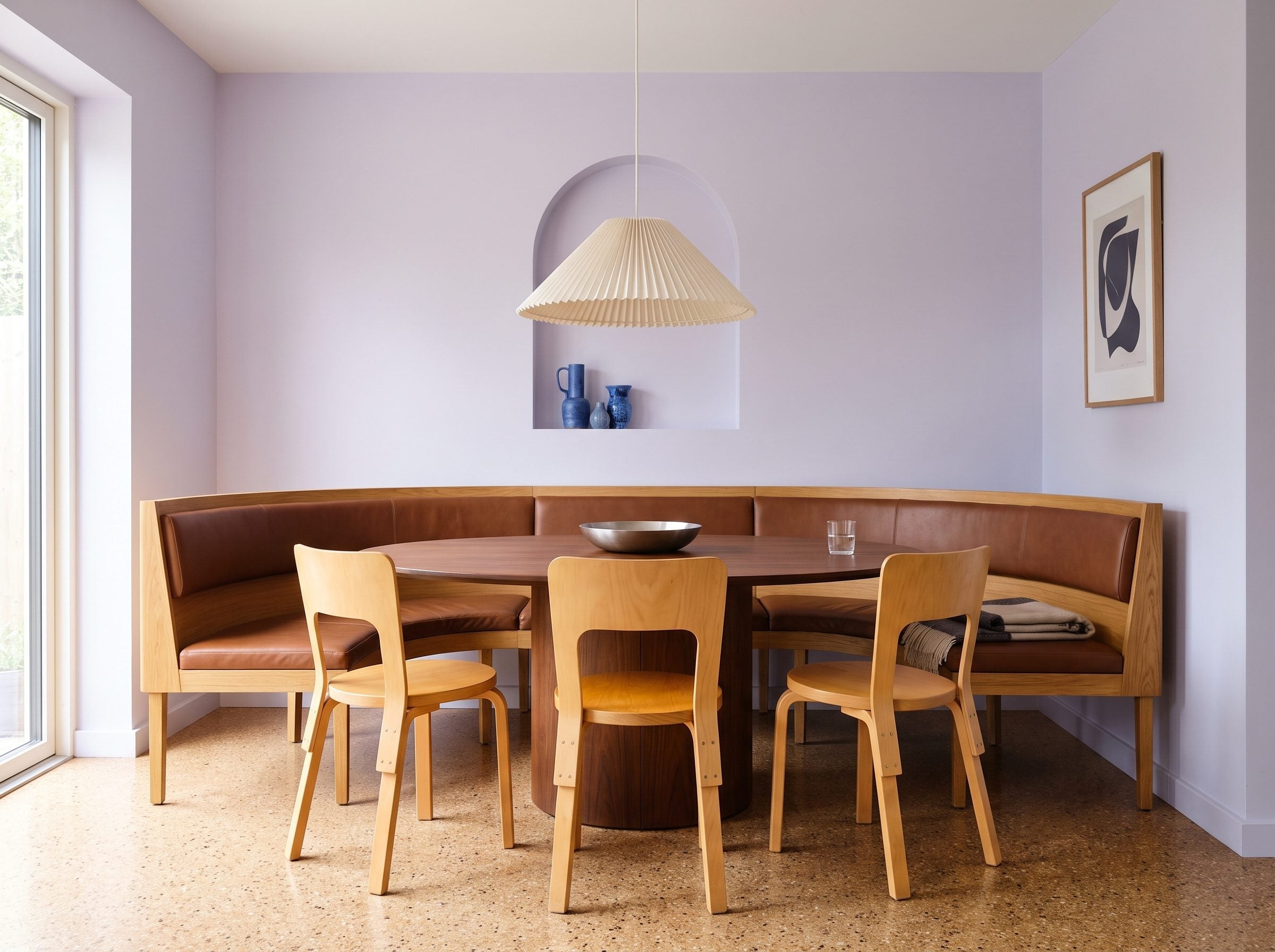
A curved oak banquette upholstered in cognac leather gives this dining nook a strong architectural anchor. The walnut oval pedestal table brings a deeper finish, while lighter birch bentwood chairs keep the arrangement from feeling too heavy.
The contrast is especially effective because each wood belongs to a different furniture form. The banquette follows the room’s perimeter, the pedestal table occupies its center, and the chairs provide lighter, movable elements. Soft accent colors and the speckled floor keep the timber from dominating every surface. The result is a breakfast nook with the sophistication of a carefully composed dining room.
16. Maple Bed, Walnut Wardrobe, Slatted Oak Divider — Three Woods Divide the Room
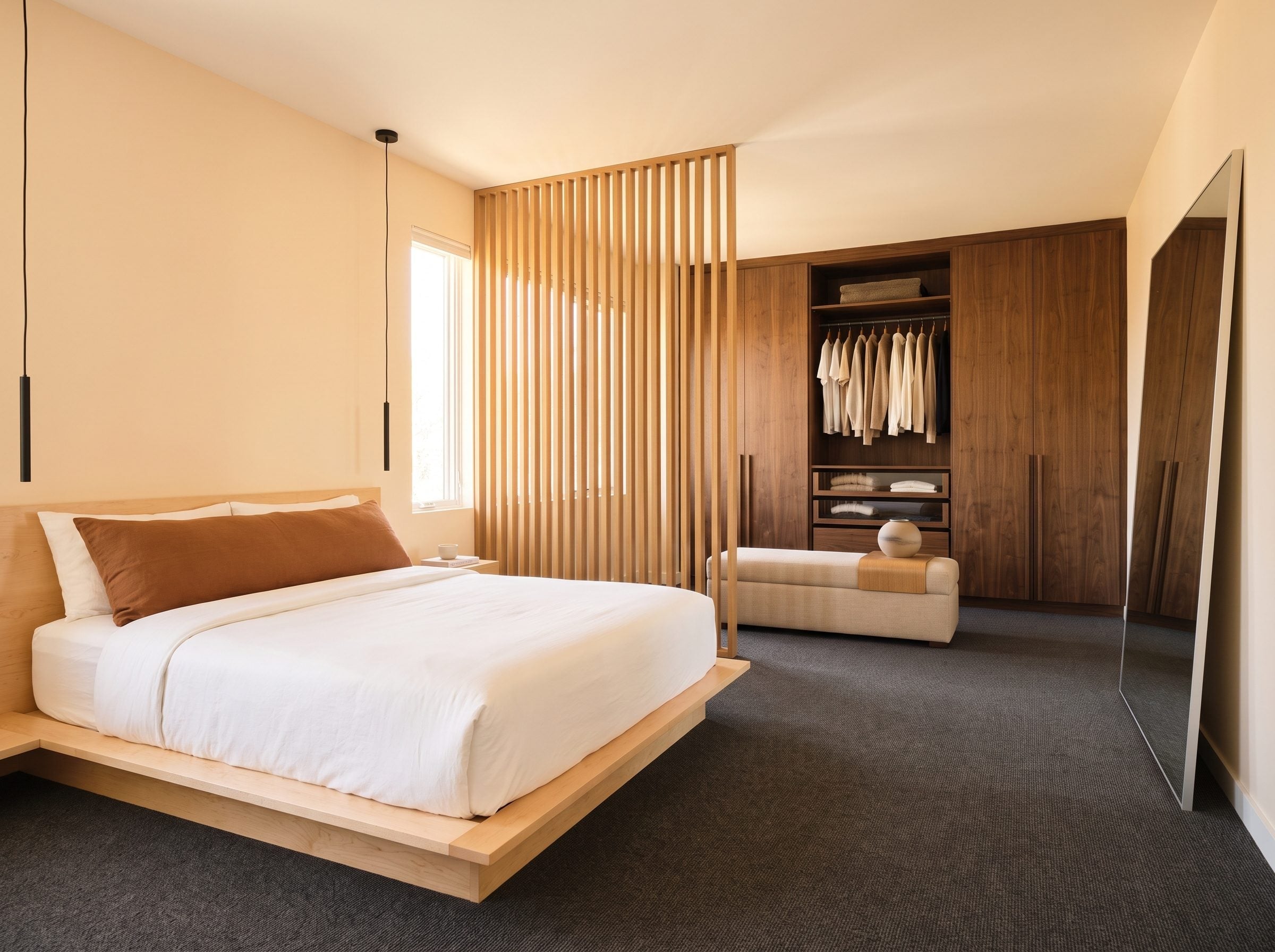
A pale maple platform bed occupies the foreground, while a dark walnut wardrobe gives the far wall a much stronger visual presence. Between them, an oak slatted divider creates a lighter architectural screen.
The divider is the clever move. Its open construction defines the sleeping area without closing it off, and its grain provides a softer transition between the substantial wardrobe and the low bed. Charcoal carpeting keeps the ground plane quiet. The wood combination helps organize the floor plan, proving that contrasting finishes can perform practical architectural work.
15. A Walnut Coffee Table and Rustic Pine Mantel Refuse to Share a Finish
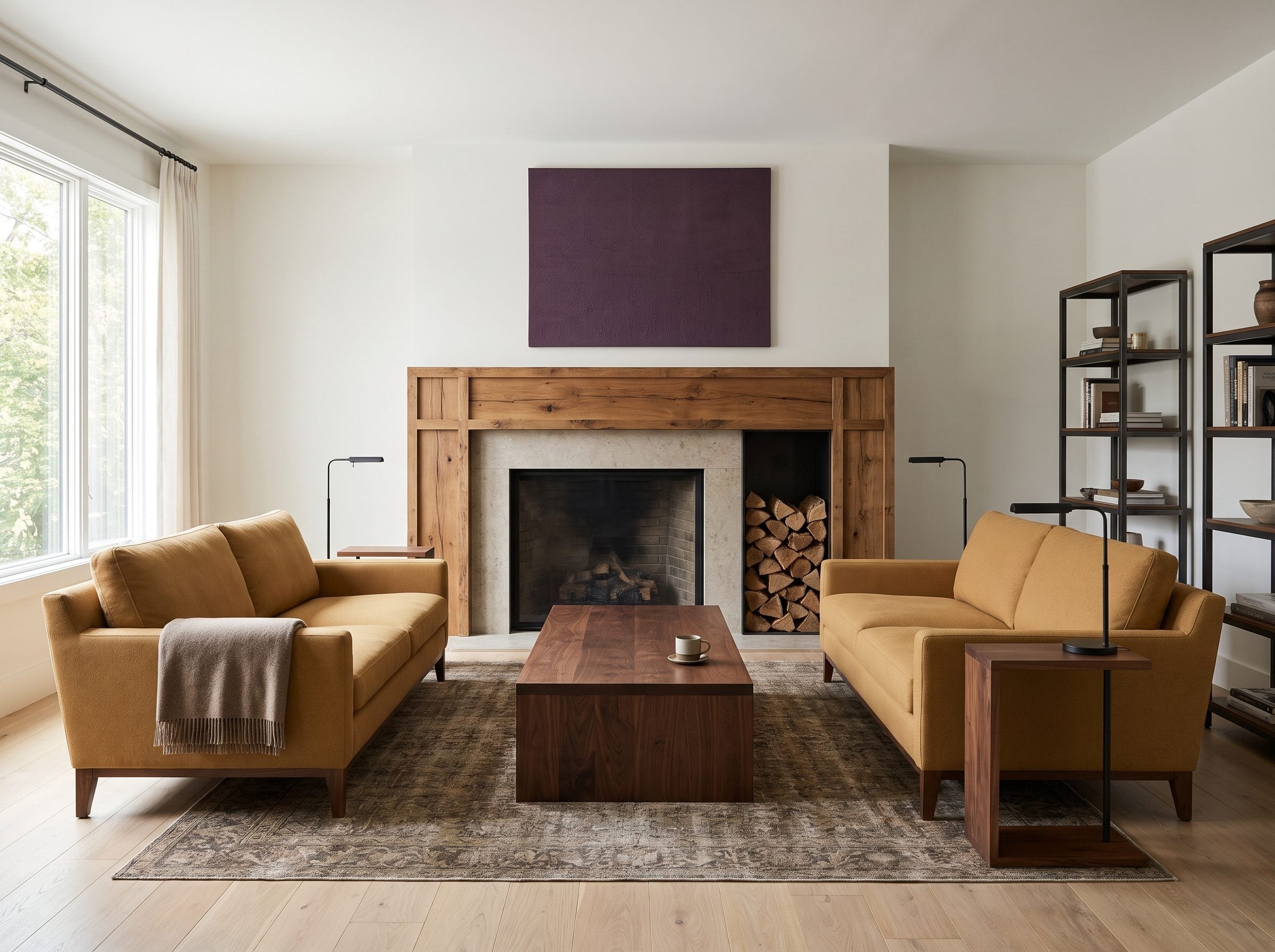
Two amber linen sofas face each other across a smooth walnut slab coffee table. The fireplace surround introduces a rougher, warmer pine finish, bringing a different kind of wood character into the seating area.
The distinction between refined furniture and rustic architectural detail gives the room its personality. The concrete hearth supplies a cool counterweight, while the sofas echo the warmth of the timber through fabric rather than another wood finish. Smooth against rough, polished against weathered: the contrast extends well beyond color.
14. Parquet Floor, Walnut Bookcase, Ash Daybed — Pattern Meets Restraint
🔥 Would you like to save this?
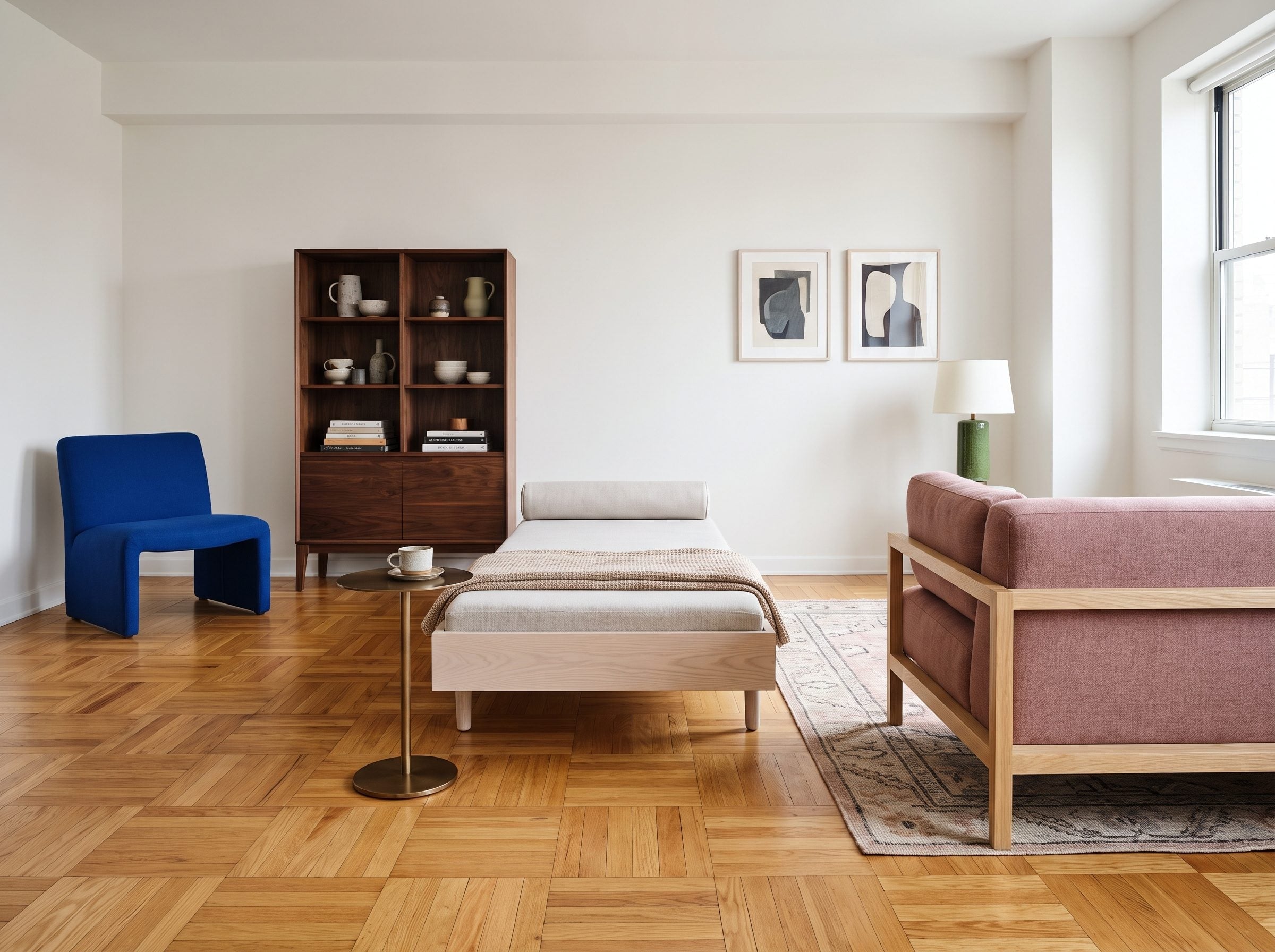
Parquet flooring brings its own geometry to the room, creating a patterned foundation that could overwhelm equally elaborate furniture. The ash daybed answers with a pale, restrained finish, while the walnut bookcase adds a deeper vertical presence.
The cobalt lounge chair interrupts the natural palette with a concentrated burst of color. The strongest contrast isn’t simply between light and dark wood. It’s between intricate pattern and uncomplicated forms. With the floor already doing so much decorative work, the furniture has every reason to exercise restraint.
13. Knotty Pine Walls, Walnut Sofa Frame — Slate Keeps the Cabin From Overheating
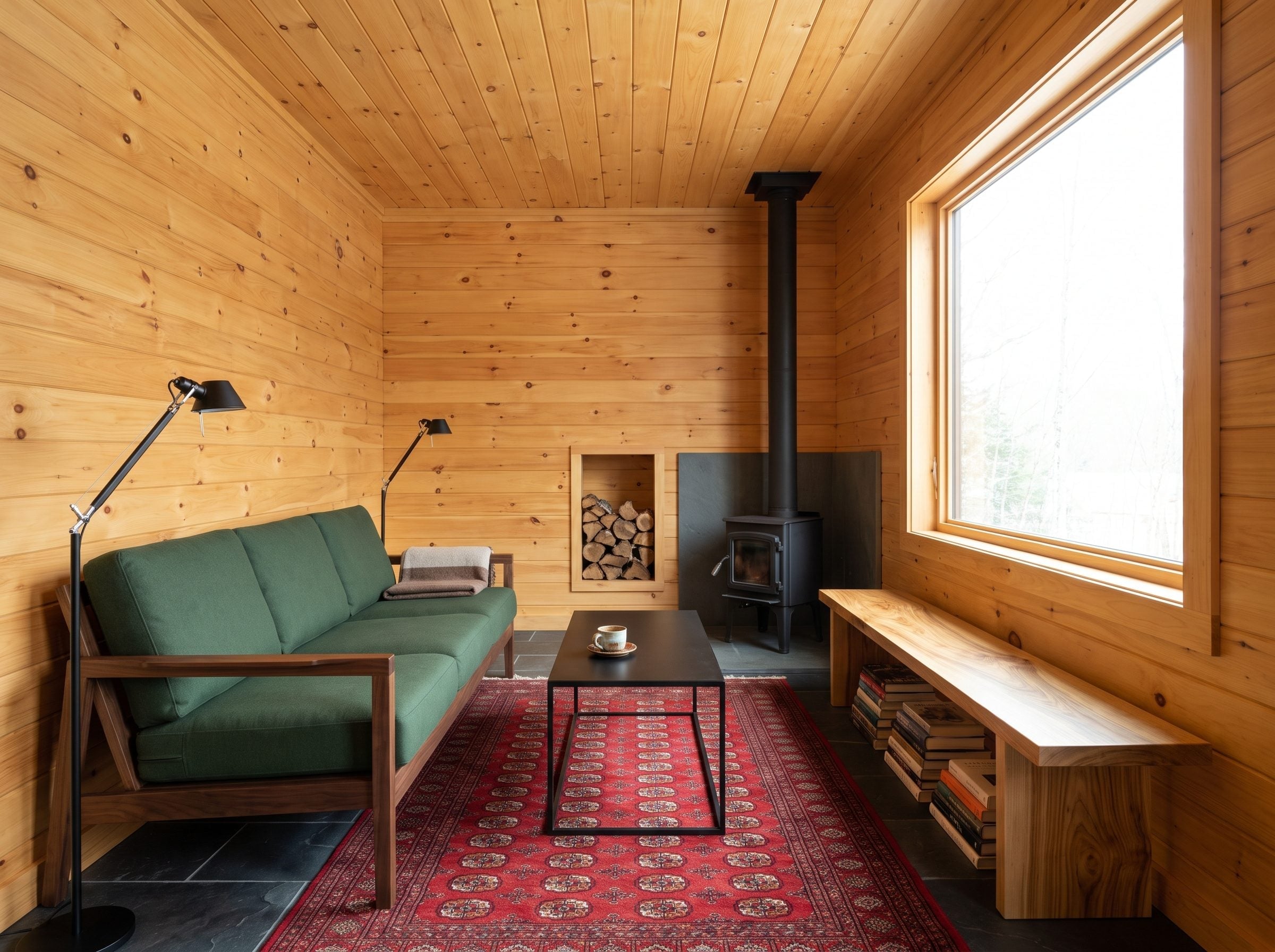
Knotty pine covers the walls, ceiling, and even the niche stacked with firewood. The abundance of grain gives the room an unmistakable cabin character, while the walnut frame of the green sofa introduces a darker, cleaner silhouette.
Slate flooring cuts through the warm paneling. Its cool gray surface makes the red patterned rug more vivid, and the black wood stove supplies a strong graphic accent. The live-edge bench and horizontally stacked books preserve the room’s informal character. Nothing here is especially delicate, which is part of its appeal.
12. Cedar Ceiling, Cherry Bed, Dark Dresser — A Bedroom That Embraces the Difference
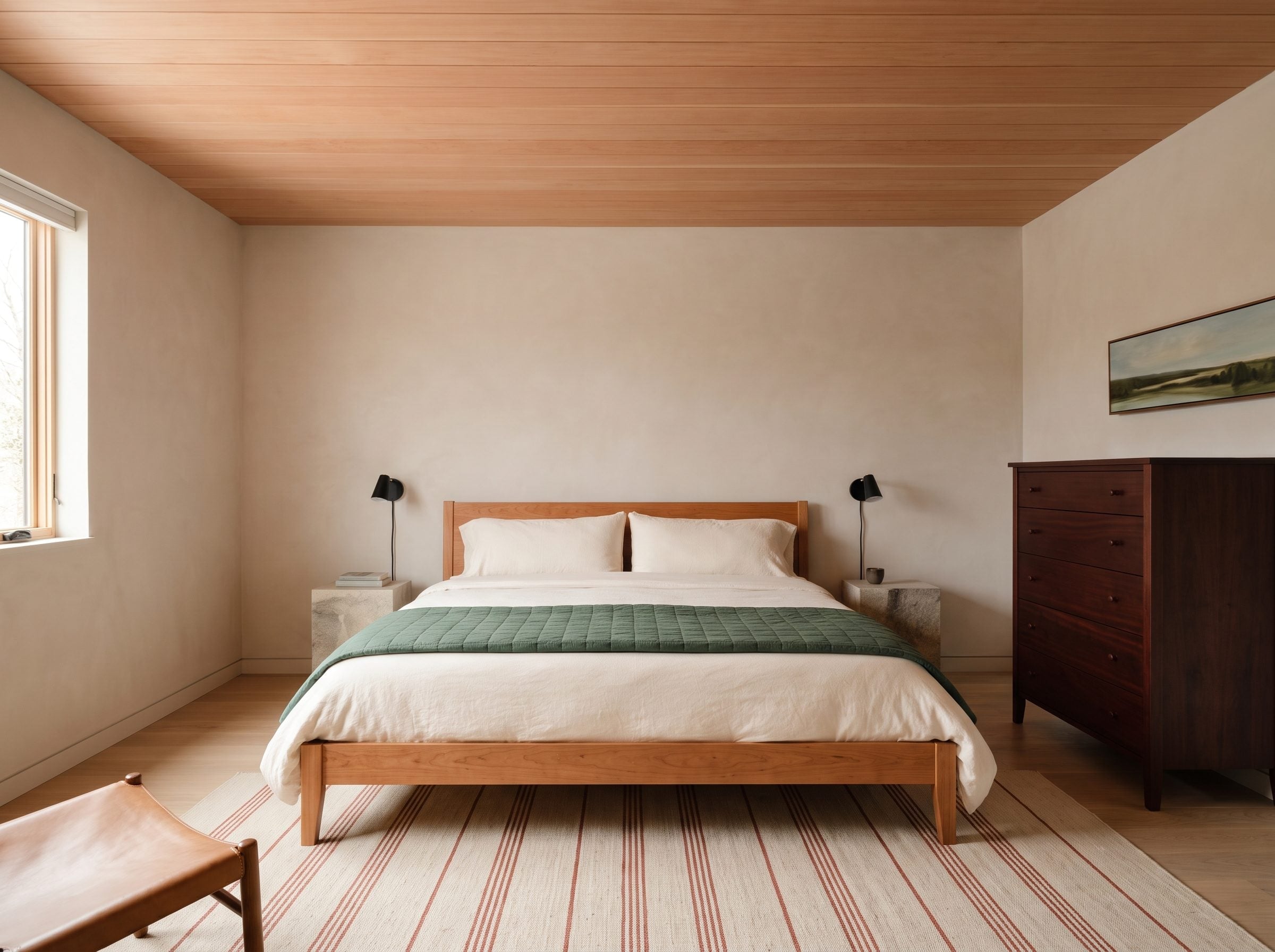
The cherry bed frame brings a warm, honey-colored finish into a bedroom where the darker dresser has considerably more visual weight. Above, cedar ceiling planks extend the palette across the architecture without reproducing either furniture finish.
Stone nightstands create a rougher, neutral interruption, while cream linen and a red-striped wool rug introduce softness and pattern. Smooth furniture, expressive ceiling boards, mineral surfaces, and woven textiles all contribute different textures. The room’s cohesion comes from their arrangement rather than identical stains.
11. Same Oak, Three Finishes — When Texture Matters More Than Color
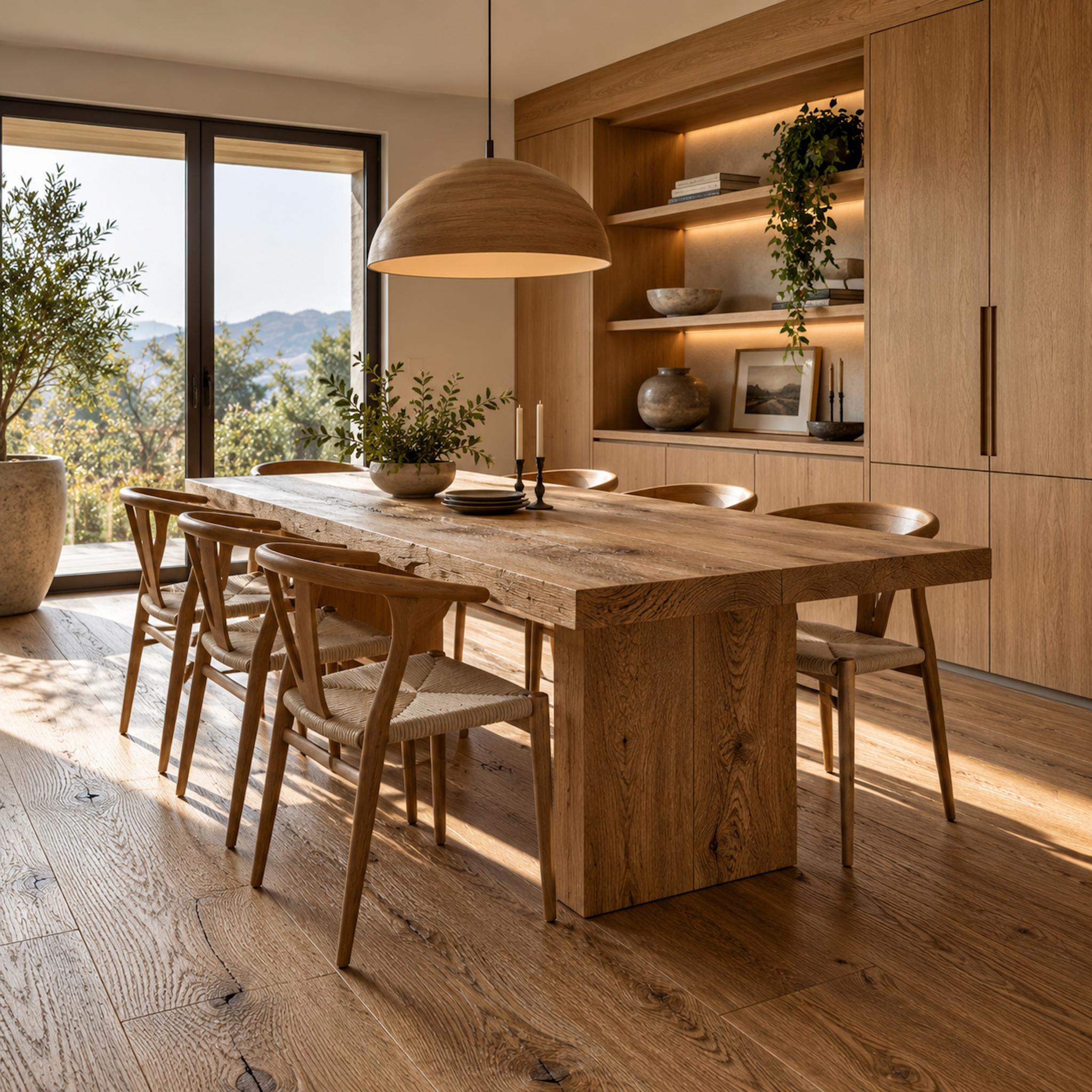
Oak flooring with pronounced grain runs beneath a substantial dining table whose matte surface has a more weathered, tactile character. Behind it, smooth oak cabinetry presents a cleaner, more controlled finish. The species remains consistent, yet the surfaces have remarkably different personalities.
Sunlight from the large glazed doors reveals the floor’s texture and the table’s expressive grain. Integrated shelf lighting emphasizes the cabinetry’s comparatively smooth appearance, while the timber pendant introduces another curved, finely finished surface. One species, several distinct treatments. The floor celebrates grain, the table emphasizes texture, and the cabinetry favors precision. Their differences give an otherwise restrained room its architectural depth.
Style Math: Different finishes can make one wood species appear surprisingly varied. Compare surface texture, grain direction, and sheen before assuming that identical timber will produce an identical appearance.
10. Bleached Oak Beds, Honey Pine Paneling — A Shared Bedroom With Character
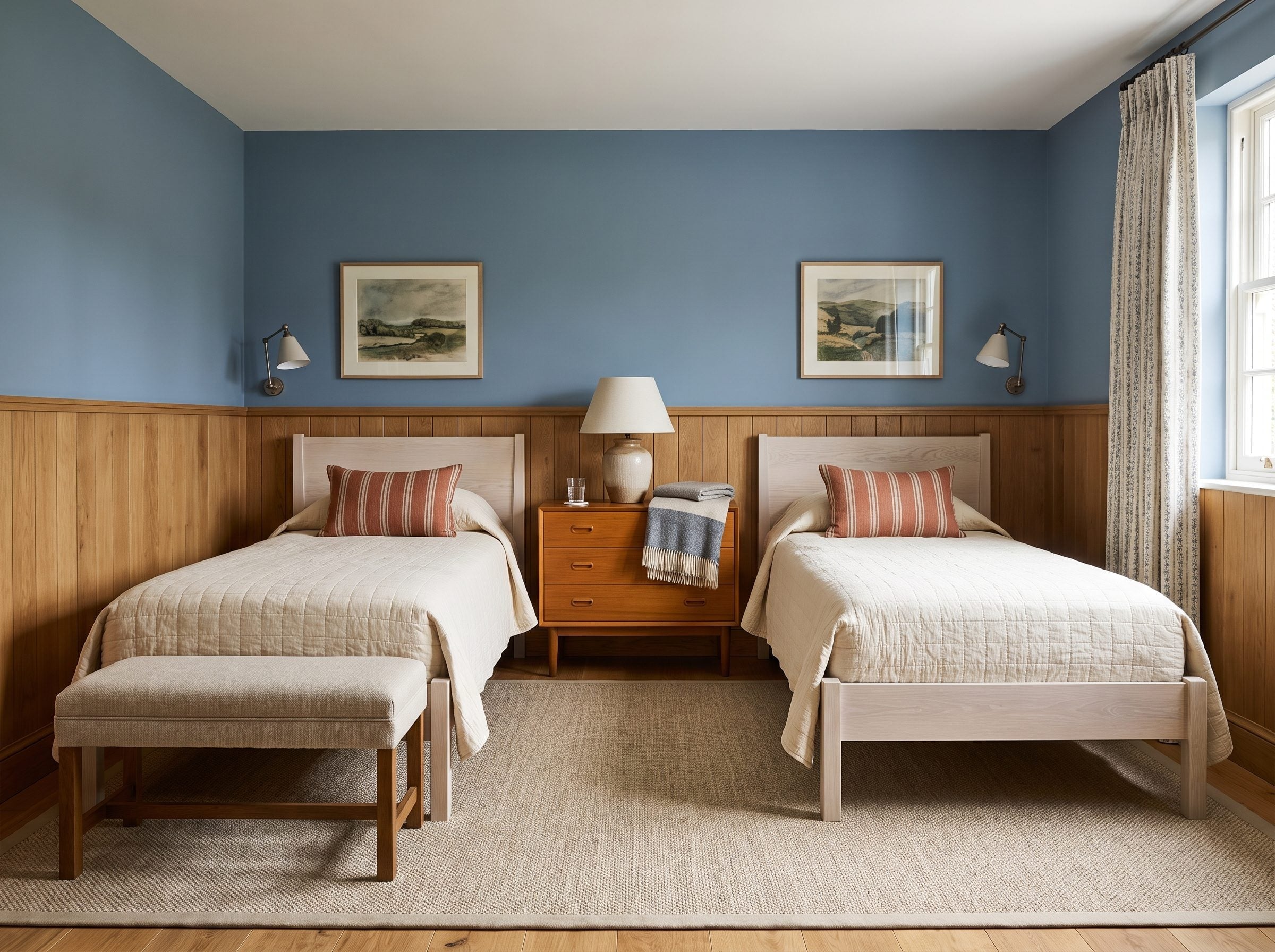
Two pale oak beds sit against warm honey-colored pine wainscoting, creating a clear distinction between furniture and wall treatment. The beds’ cooler, bleached finish appears especially light against the richer paneling.
Between them, an amber nightstand occupies a middle position on the color spectrum, its compact mid-century form contrasting with the simpler bed frames. Cream quilts and striped terracotta pillows repeat across both beds, establishing symmetry through textiles rather than timber. Three warm wood treatments coexist within a disciplined furniture arrangement.
9. Walnut Credenza, Oak Floors, Woven Chair — Green Velvet Breaks the Pattern
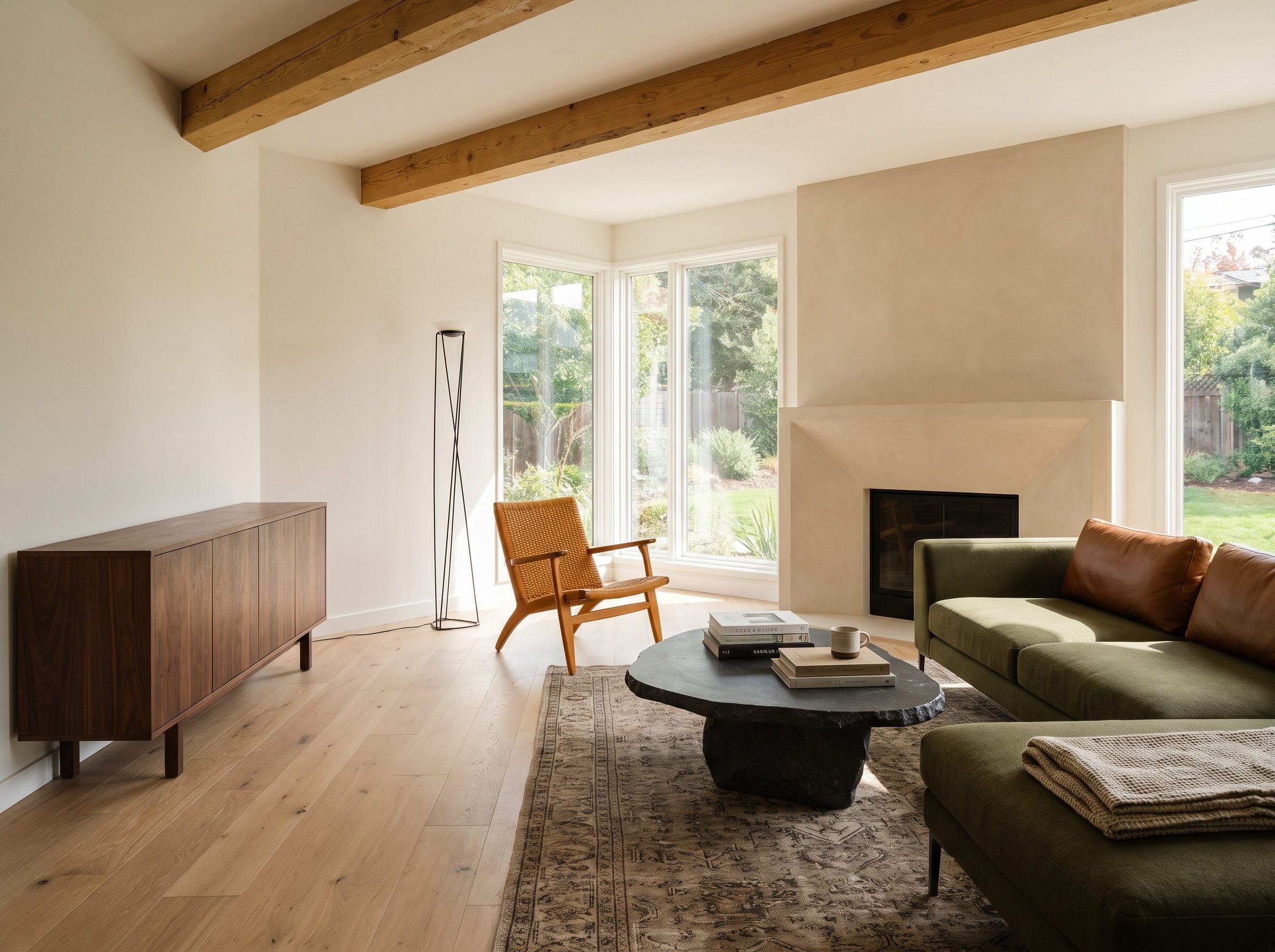
Pale oak flooring provides a bright foundation for a dark walnut credenza, whose nearly espresso-colored finish makes the difference unmistakable. A woven lounge chair brings a lighter honey-colored frame and a more tactile texture.
The olive-green velvet sofa supplies the room’s richest color, while the plaster fireplace surround and exposed ceiling beams add architectural character. The furnishings occupy different points on the warm spectrum, with green upholstery and neutral plaster preventing the timber from becoming visually repetitive.
8. Same Walnut, Wildly Different Grain — The Headboard Steals the Show
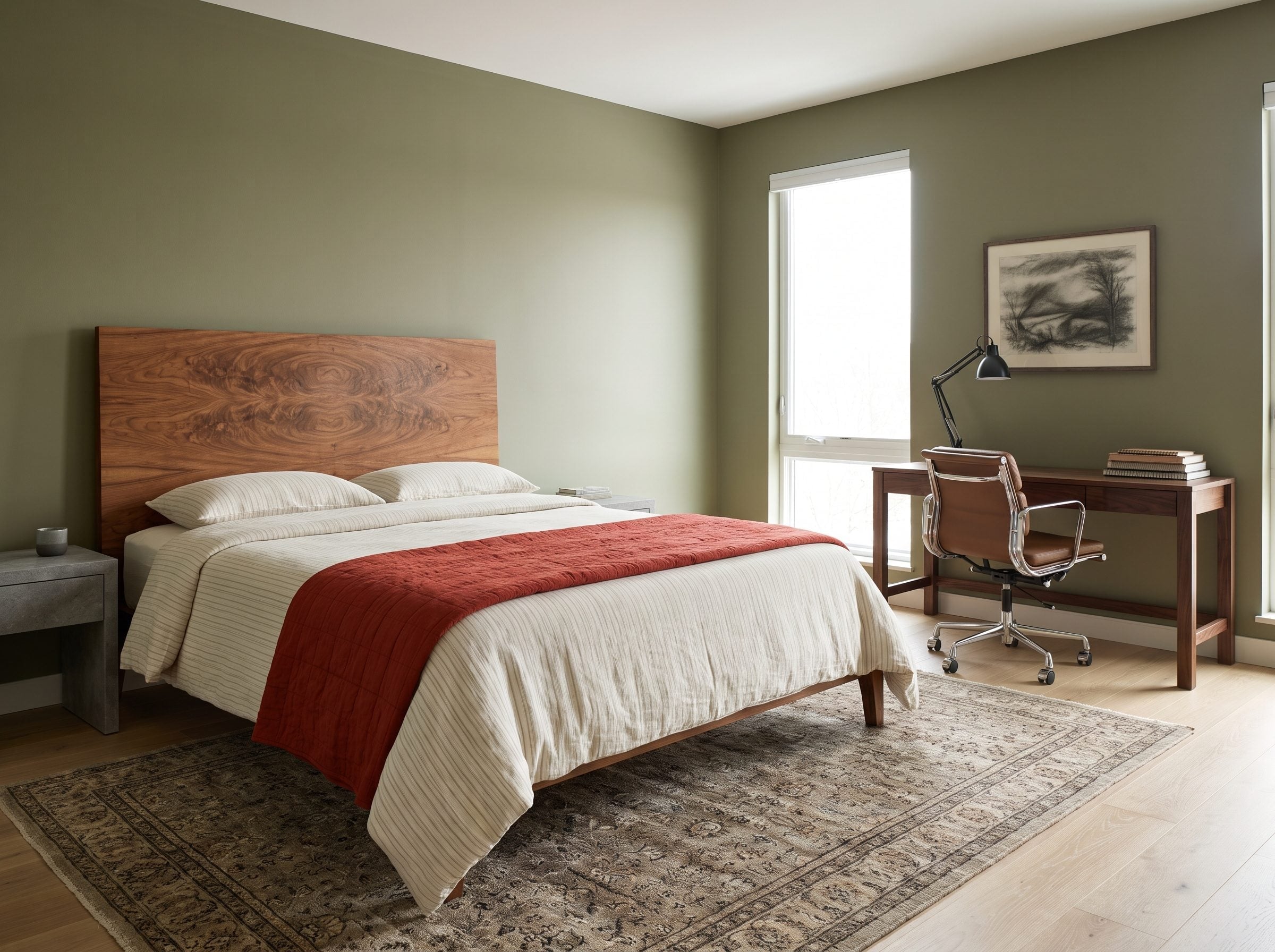
The bed and writing desk are both walnut, yet their grain patterns give them noticeably different personalities. The headboard’s dramatic, burl-like figure commands attention, while the desk near the window is comparatively restrained.
Light oak flooring adds another species and brightens the room beneath the darker furniture. Sage-green walls soften the transition, allowing the red quilted throw to become the strongest color accent. Grain, cut, and finish can make two pieces of the same wood look as different as unrelated species. Here, the headboard gets the starring role, and the desk knows better than to audition for it.
7. Oak Window Bench, Maple Built-Ins, Walnut Table — A Living Room With Layers
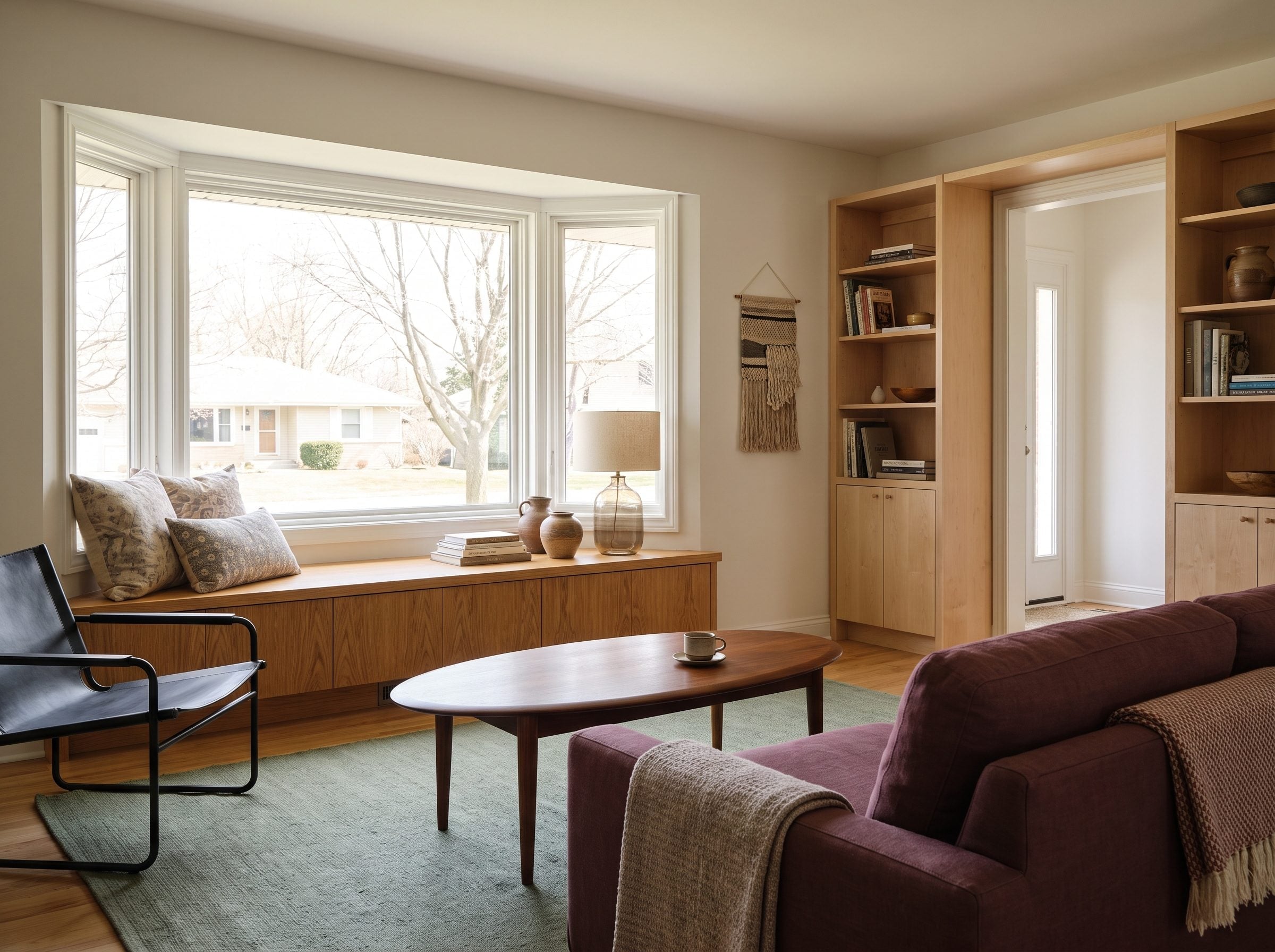
Honey-toned oak defines the window bench, while lighter maple cabinetry frames the same wall. A darker walnut oval coffee table establishes a substantial furniture element in front of the seating area.
The sage rug creates a muted foundation, but the burgundy sofa gives the room its real color identity. With that rich upholstery in place, the woods become secondary layers of interest. The cabinetry feels architectural, the bench inviting, and the table substantial enough to anchor the center.
6. Teal Walls, Walnut Furniture, Birch Chairs — The Dark Backdrop Does the Talking
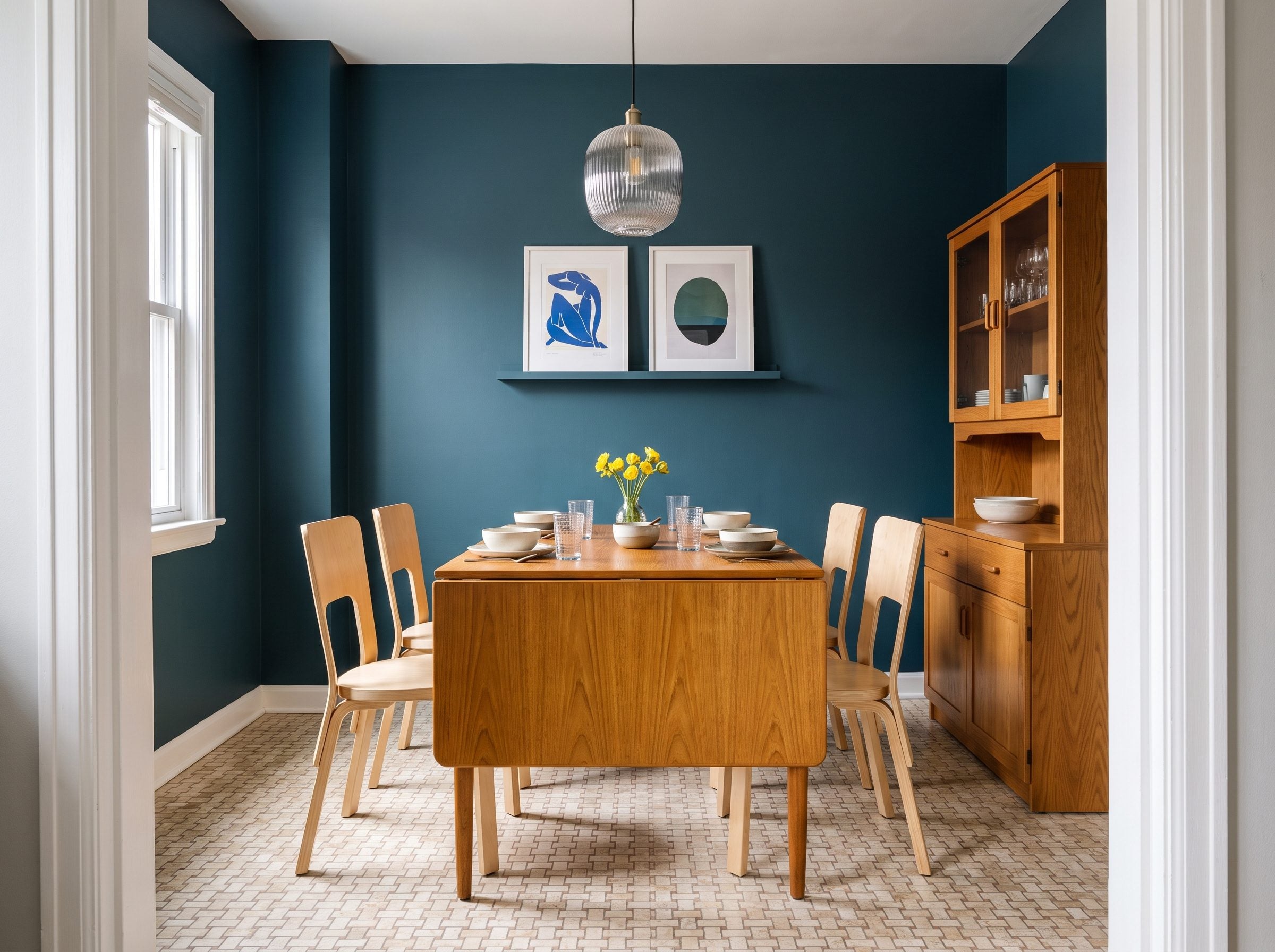
Deep teal walls create a dramatic setting for a walnut drop-leaf table and related dark-toned hutch. Lighter birch chairs introduce a contrasting finish, their pale frames standing forward against the saturated background.
Yellow daffodils bring a small, bright accent to the tabletop, while the pendant establishes a focal point overhead. The dark furniture settles into the room; the light chairs stand apart from it. Teal enriches both finishes, giving the timber a depth that a conventional neutral backdrop might not achieve.
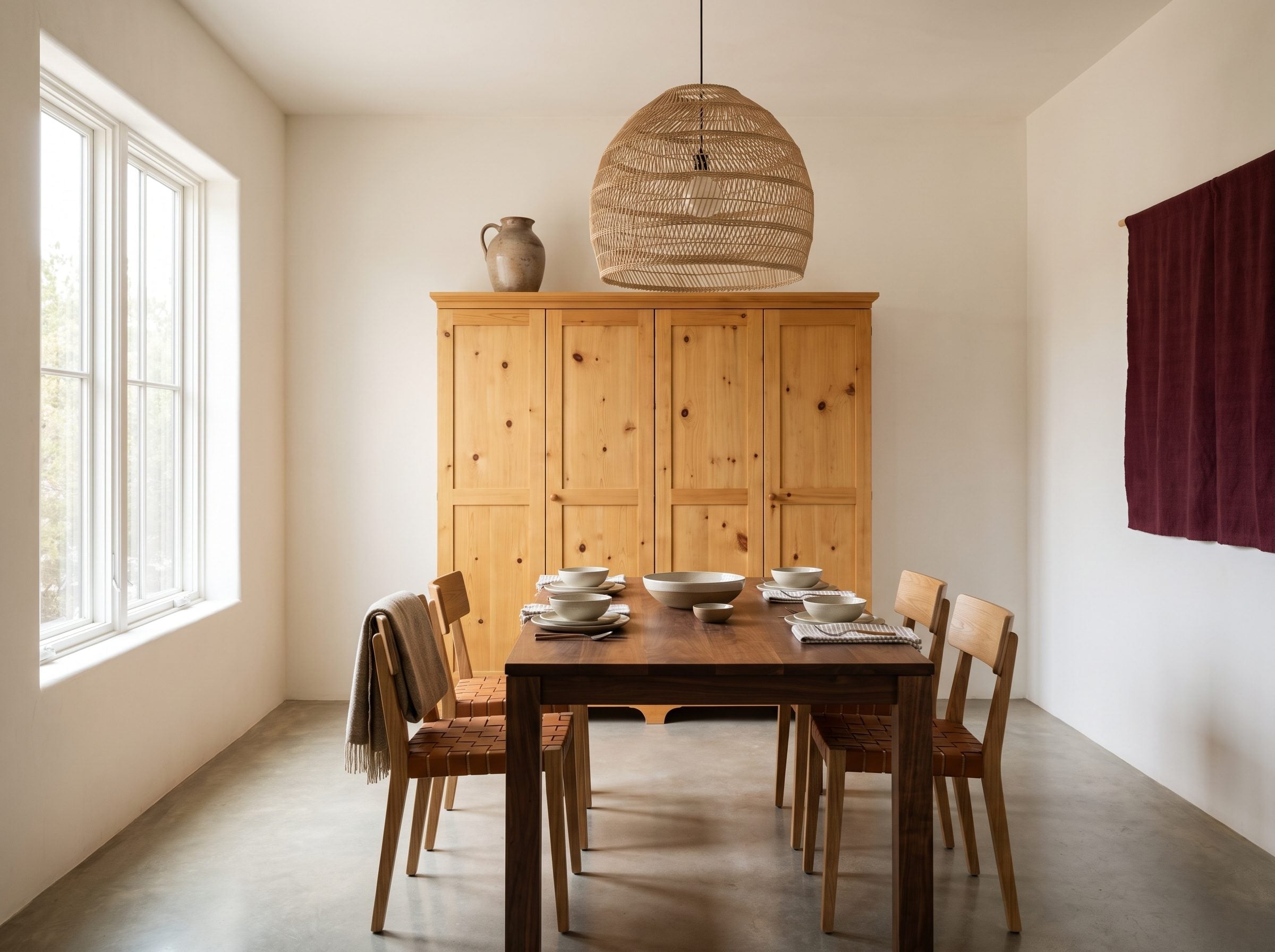
5. Knotty Pine Cabinet, Dark Walnut Table — Burgundy Gives the Dining Room Its Edge
🔥 Would you like to save this?
The knotty pine cabinet brings an abundance of visible grain into this dining room. In front of it, the dark walnut table presents a smoother, more substantial silhouette. The difference between the two becomes the room’s central material contrast.
A woven rattan pendant introduces a lighter texture overhead. On the right wall, a burgundy textile adds depth and color, drawing attention beyond the woodwork. The result is layered without relying on a coordinated dining set.
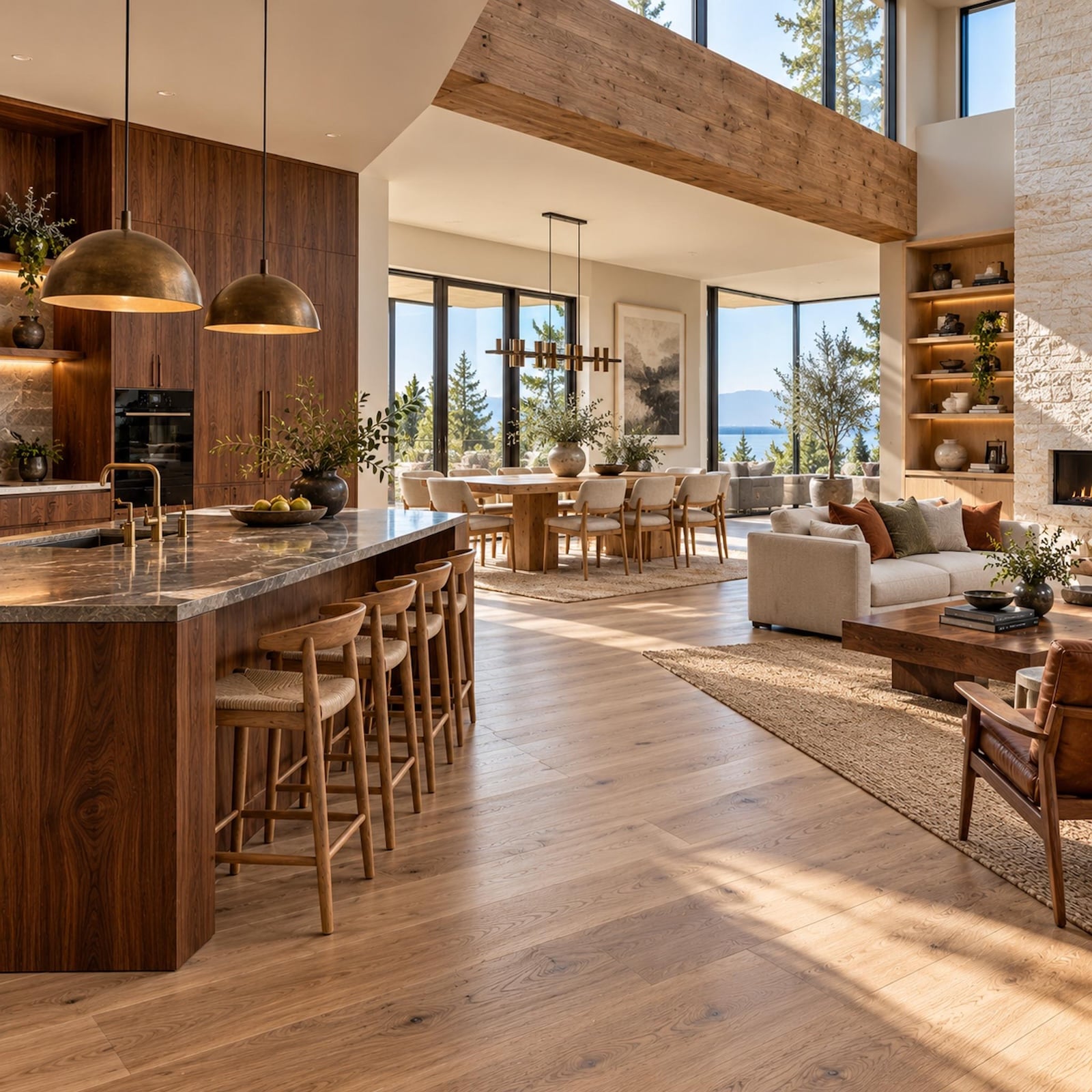
4. Walnut Kitchen, Oak Dining Room, Contrasting Living Space — One Continuous Design
The kitchen begins with richly figured dark walnut cabinetry and a matching island base. Across the open floor plan, the dining table takes a considerably lighter direction, its substantial pale timber top surrounded by upholstered chairs with natural wood frames. Beyond that, the living room introduces darker furniture again, with shelving beside the stone fireplace occupying another warm register.
Continuous pale oak flooring carries through all three zones, establishing a common foundation without forcing the cabinetry and furniture to match. A broad timber beam marks the transition overhead, while generous glazing illuminates the different grain patterns. The architecture remains open, yet the woods help distinguish cooking, dining, and lounging. One continuous interior, several material identities, and a convincing demonstration of how contrasting finishes can organize an entire home.
3. A Double-Height Walnut Library Gets a Lighter Upper Story
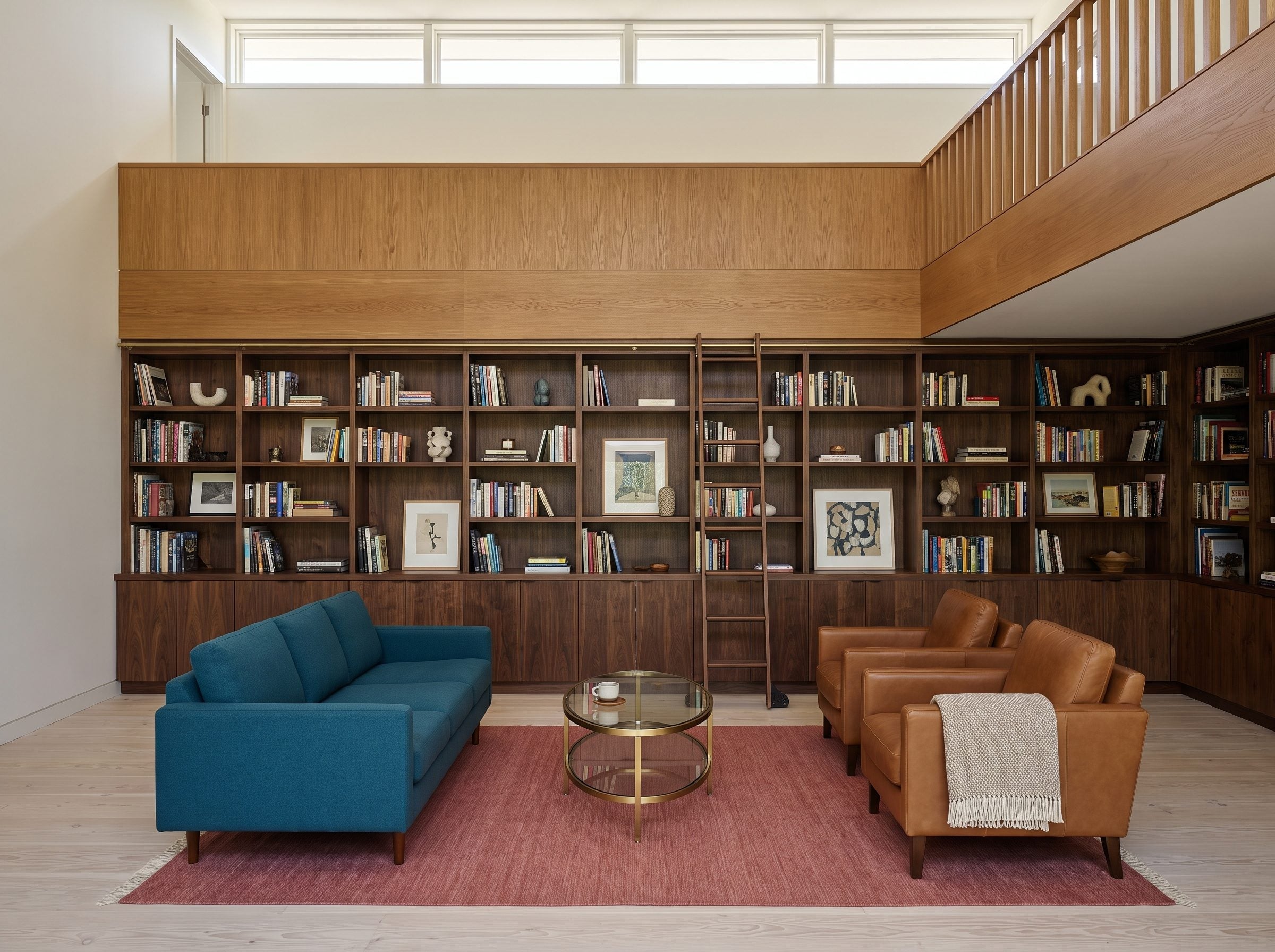
Dark walnut bookcases occupy the lower portion of this imposing library wall, while lighter honey-toned upper cabinet panels break the elevation into distinct sections. A rolling brass ladder connects the levels, giving the composition a functional centerpiece.
Pale flooring prevents the substantial cabinetry from overwhelming the room. Teal upholstery and cognac leather chairs bring color and texture at seating height, while the shelving remains the architectural attraction. The lighter upper cabinets relieve visual mass without diminishing the library’s grandeur.
Design Detail: Tall built-ins can gain definition when their upper and lower sections use contrasting finishes. A lighter upper zone can reduce perceived weight while preserving the continuity of the cabinetry.
2. Cobalt Pendant, Walnut Panels, Bleached Ash Table — Contrast Does the Heavy Lifting
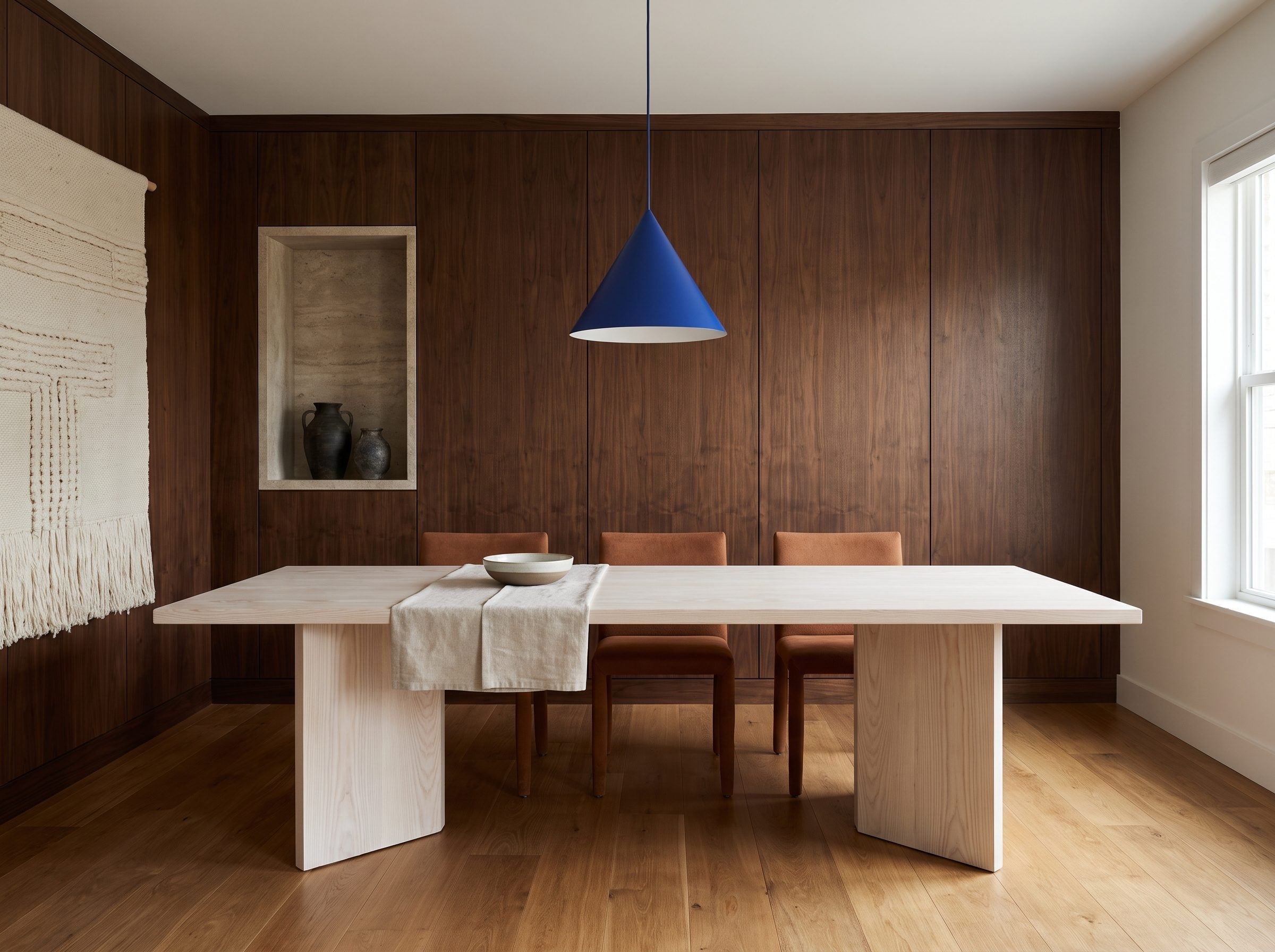
Bleached ash and dark walnut occupy opposite ends of the wood spectrum in this dining room. The pale table stands sharply against floor-to-ceiling walnut paneling, while cognac leather chairs introduce warmth without imitating either timber finish.
Then the cobalt pendant arrives and changes the conversation. Its saturated blue is far removed from the natural wood palette, giving the room an unexpected focal point. Rather than softening the difference between ash and walnut, the fixture celebrates it. Three contrasting elements become stronger through their proximity.
Ask Yourself: Does a room need another matching finish, or would a contrasting color make its existing materials more compelling? A statement fixture can provide a focal point without adding another wood species.
1. Dark Walnut Overhead, Pale Oak Below — A Bedroom Built on Vertical Contrast
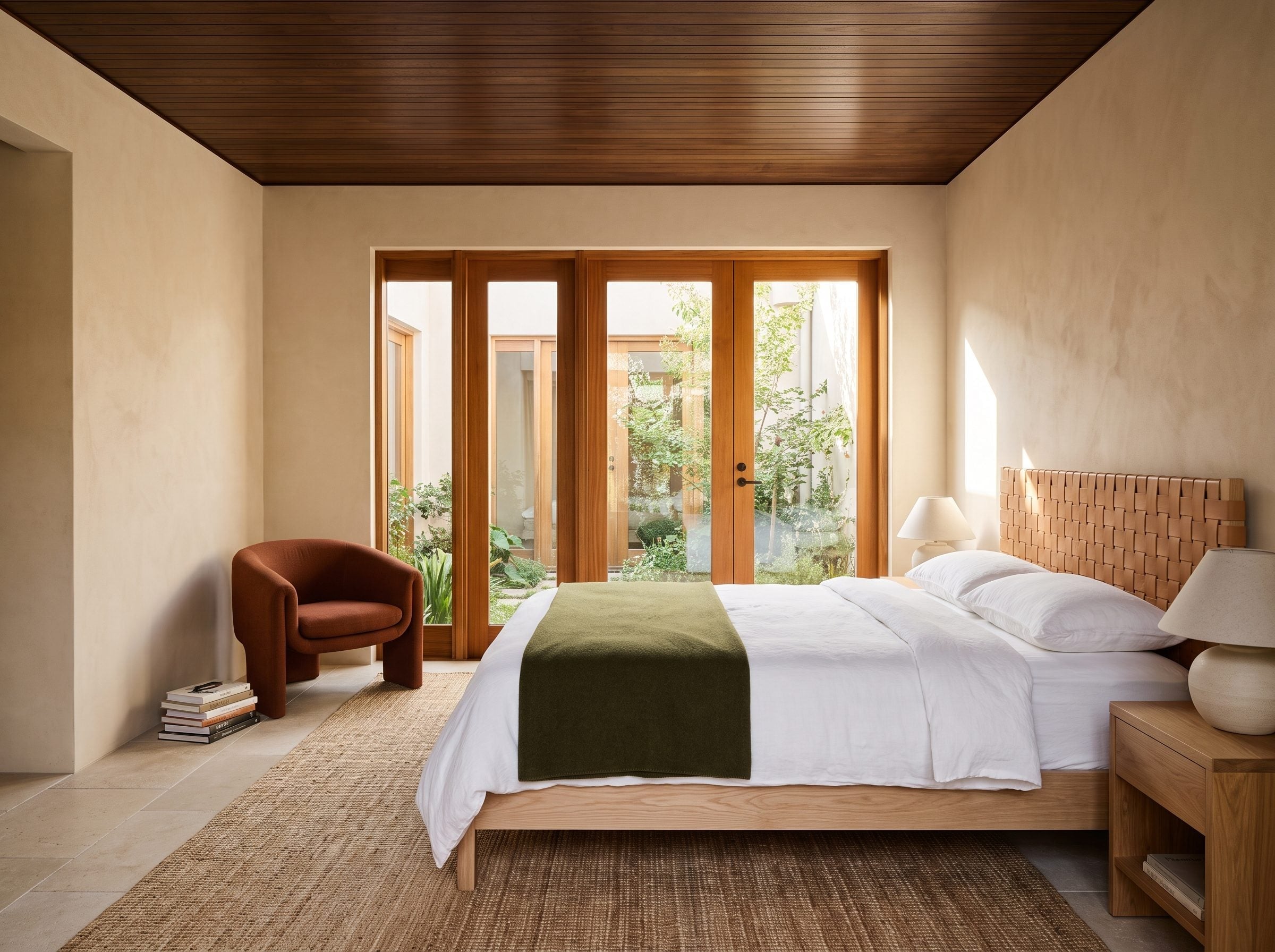
Dark walnut ceiling slats stretch across this bedroom, creating a dramatic overhead plane above a bed framed in warm, natural oak. One wood defines the architecture; the other gives the furniture a lighter, more relaxed character. The contrast is architectural rather than decorative, established across the room’s entire vertical dimension.
The woven leather headboard introduces a third natural material, its caramel-colored strips adding texture without another timber grain. Cream plaster walls, a jute rug, and garden light through full-height French doors prevent the darker ceiling from weighing down the space. An olive throw and terracotta armchair complete the earthy palette.
The walnut ceiling establishes drama, the oak bed provides warmth, and the woven leather supplies tactile interest. None of the materials needs to imitate another. Their differences are what make the composition feel complete.